
news
From Concept to Prototype: How Georgia Tech Students Are Shaping a Sustainable Energy Future
Primary tabs
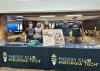
EnergyHack@GT, Georgia Tech’s second annual student-run energy and sustainability hackathon, took place over the weekend of Jan. 23 – 25, 2026. Organized by the Energy Club at Georgia Tech, the hackathon’s mission was to unite passionate students, tackle critical challenges in the energy industry, and foster innovation and collaboration.
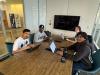
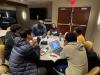
Over the course of 36 hours, participants collaborated in teams to brainstorm, design, and prototype projects that promote sustainable practices based on diverse problem statements, addressing this year’s tracks: renewables; electrification & mobility; and smart grid. These themes targeted urgent issues, from balancing renewable energy supply and demand to safeguarding infrastructure against cyber threats and reducing greenhouse gas emissions. Despite the arrival of a winter storm and the hackathon shifting to a fully virtual format, students persevered and produced top-tier projects, which were evaluated by a panel of judges.
The event kicked off with an engaging opening ceremony featuring inspiring keynote speeches that set the tone for the hackathon’s ambitious objectives. Ann Dunkin, Distinguished External Fellow at Georgia Tech’s Strategic Energy Institute (SEI), served as the first of these keynotes, presenting her experiences as chief information officer for the U.S. Department of Energy. She gave participants, whether newcomers or veterans in the energy space, diverse problems to tackle, ranging from cybersecurity risks in substations to climate concerns in the age of artificial intelligence. Dunkin emphasized that no matter the challenge, a strong team can always develop innovative solutions.
“I was impressed by the quality and completeness of the solutions that the students created over about 40 hours,” said Dunkin. "Students created real solutions that meet market needs, and they conveyed an incredible amount of information in the three minutes they had to present their solutions.”
Despite the switch to a virtual format, participants could still talk to mentors throughout the event. These mentors included a Google lead, startup CEOs, Ph.D. researchers, and other professionals with decades of experience in the energy industry. Mentors provided feedback on participants’ ideas and guided them to think more deeply about the problems they chose. The various workshops also provided participants with a chance to dig deep into specific topics.
Michael Levy, U.S. utilities lead at global consulting firm Baringa, presented his workshop on using data and modeling to shape utility decisions, policy, and regulatory strategy. GE Vernova representatives presented “The Energy of Change,” an interactive workshop featuring climate simulations and team challenges to explore the trade-offs between cost, grid capacity, and carbon impact in the real world. Major League Hacking provided guides on GitHub Copilot and Google AI Studio. The final workshop, “Org Efficiency in Early Startups,” was led by Hunter Harris from the technology incubator complex Atlanta Tech Village. Harris taught participants what to prioritize in an early startup, including how to build a management structure and find the right strategy for attracting customers.
Troy Rice, vice president and general manager of Florida Power and Light under NextEra Energy, gave a keynote speech on utility business models and how to set yourself apart in a large industry. Rice discussed his experience, which began as a Tech graduate from the H. Milton Stewart School of Industrial and Systems Engineering. After learning about NextEra’s business model, he eventually created and taught an internal class called “How NextEra Makes Money.” Rice used this story to explain the importance of becoming an expert in knowledge that others in your company overlook. He also discussed the future of energy generation, emphasizing the growth of renewable energy in utility portfolios and often-overlooked potential career opportunities.
The energy and creativity culminated in the Project Expo, where 22 innovative solutions were showcased. Representatives from the Strategic Energy Institute, Microsoft, NextEra Energy, GE Vernova, and Georgia Tech professors judged projects, offering insights and feedback.
The closing ceremony celebrated the participants’ achievements and the event highlights, featuring Emily Morris, founder and CEO of Emrgy, as the final keynote speaker. Morris shared insights from her experience as a technology startup founder in the energy sector, discussing the unique challenges of navigating a risk-averse industry. She encouraged aspiring entrepreneurs to start by envisioning their future press release to clarify their end goal and avoid getting lost in immediate challenges. Morris emphasized the importance of leveraging your network, whether your Georgia Tech connections or hometown community, regardless of whether you pursue academia, industry, or the startup world.
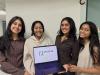
With more than 110 registered participants, 22 project submissions, and leaders from some of the biggest energy and tech companies, EnergyHack@GT served as a platform for innovation and learning, showcasing the potential of student-led initiatives in shaping the future of energy and sustainability. Awards were presented to the top three projects for their creativity and impact, with the winning teams receiving cash prizes provided by the startup Tractian:
- Best Overall Hack: AppliScan
- Second Place: TeraWatt
- Third Place: WattsUp
Take a look at all the projects submitted: https://energyhack-gt-26.devpost.com/project-gallery
Written by Georgia Tech students: Braden Queen, Orit Endalk, Radhika Sharma
Media

Summary
EnergyHack@GT, Georgia Tech’s second annual student-run energy and sustainability hackathon, took place over the weekend of Jan. 23 – 25, 2026. Organized by the Energy Club at Georgia Tech, the hackathon’s mission was to unite passionate students, tackle critical challenges in the energy industry, and foster innovation and collaboration.
Over the course of 36 hours, participants collaborated in teams to brainstorm, design, and prototype projects that promote sustainable practices based on diverse problem statements, addressing this year’s tracks: renewables; electrification & mobility; and smart grid. These themes targeted urgent issues, from balancing renewable energy supply and demand to safeguarding infrastructure against cyber threats and reducing greenhouse gas emissions. Despite the arrival of a winter storm and the hackathon shifting to a fully virtual format, students persevered and produced top-tier projects, which were evaluated by a panel of judges.
Status
- Workflow status: Published
- Created by: pdevarajan3
- Created: 02/16/2026
- Modified By: pdevarajan3
- Modified: 02/17/2026
Categories
Keywords
User Data