
news
Healthcare AI Takes Center Stage at BERD Research Forum
Primary tabs
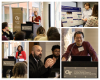
Leaders in medical research and artificial intelligence gathered at the H. Milton Stewart School of Industrial and Systems Engineering (ISyE) for the Biostatistics, Epidemiology, & Research Design (BERD) Research Forum. Part of the Georgia Clinical and Translational Science Alliance (CTSA), BERD provides comprehensive biostatistical and epidemiological support, including study design, data collection and management, and the development and application of statistical methodologies. This year’s forum brought together faculty and students from the University of North Carolina, Emory University, Morehouse School of Medicine, University of Georgia, and Georgia Tech to examine how emerging technologies are enhancing clinical processes and improving patient outcomes.
Xiaoming Huo, A. Russell Chandler III Professor in the H. Milton Stewart School of Industrial and Systems Engineering and Associate Director for Research in the Institute for Data Engineering and Science (IDEaS), served on the event’s organizing committee. He underscored the importance of collaboration in advancing responsible and effective AI tools for medicine.
“The forum provides an opportunity for collaboration and team forming. This is critical in developing AI tools for medical and health care research,” Huo said.
The keynote address was delivered by Hongtu Zhu of UNC, who presented his work on Causal Generalist Medical AI (GMAI). The model integrates multiple data sources to recommend treatments to physicians and incorporates causal reasoning to strengthen reliability. Zhu demonstrated that embedding causal elements into medical AI systems can improve generalizability by supporting evidence-based decision-making rather than relying solely on predictive outputs. He also outlined both growth opportunities and ongoing challenges that must be addressed before GMAI can serve as a robust clinical decision-support tool.
Additional presentations highlighted the range of AI applications in health care. Professor Omer Inan of Georgia Tech’s School of Electrical and Computer Engineering (ECE) shared research from his lab on AI-enabled wearable technology designed to detect heart conditions. The device he demonstrated uses a vibrometer to measure heart timing and subtle vibrations. AI algorithms then filter the signal to identify abnormalities that may indicate deeper cardiovascular concerns, signals that might otherwise go unnoticed.
Students also played a central role in the forum, presenting their research in a poster competition. One project detailed the development of a retrieval-augmented generation (RAG) model designed to answer questions about drug interactions and flag potential side effects when incompatible medications are combined. Researchers found that incorporating a RAG framework can reduce AI hallucinations, an especially critical concern in medical contexts.
Another student team explored how AI can identify candidate proteins that may aid in treating blood cancers. Using data from the Worldwide Protein Data Bank, the researchers trained AI models to predict which proteins could disrupt processes that limit the immune system’s ability to target cancer cells. Given the complexity of protein interactions, AI offers a powerful tool for identifying promising therapeutic pathways that would be difficult to isolate manually.
Across keynote talks and student presentations, BERD illustrated both the breadth and precision of AI applications in medicine. From at-home wearable diagnostics to advanced computational modeling for cancer research, presenters emphasized that AI is already delivering tangible value. At the same time, speakers noted that the field remains in its early stages, with continued collaboration and innovation essential to improving care delivery and advancing healthier outcomes.
Summary
Leaders in medical research and artificial intelligence gathered at the H. Milton Stewart School of Industrial and Systems Engineering (ISyE) for the annual Biostatistics, Epidemiology, & Research Design (BERD) Research Forum.
Groups
Status
- Workflow status: Published
- Created by: ebrown386
- Created: 02/25/2026
- Modified By: Andy Haleblian
- Modified: 03/02/2026
Categories
Keywords
User Data