
news
Communicating During a Crisis
Primary tabs
- written by Seungho Lee
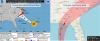
The North American hurricane season is, for many on the East Coast and Gulf Coast, six months of vigilance, and among the resources most likely to be consulted during this time are storm tracking maps. If you learn that your home might be in the path of a storm, you probably actively search for the most current version of one of these maps. Bruce Walker, a professor in the schools of Psychology and Interactive Computing at Georgia Tech, wants to ensure that storm-tracking maps and other emergency and environmental communication tools convey the most important information in the most understandable manner to the largest number of people possible. “Weather and climate affect every single person on Earth,” he said, “so no one can be left behind when it comes to these critical communications.”
Walker is director of the Center for Inclusive Climate Communication (CICC) at Georgia Tech. CICC is a new and growing consortium of researchers, organizations, agencies, and companies whose goal is to ensure that climate information of all types is widely accessible. The center is housed in the School of Psychology but has affiliated faculty from all around campus, and several universities around the U.S. CICC is expanding internationally as well, developing sub-networks in Europe, Africa, and Australia.
As part of its efforts, the CICC is working with the coastal city of Brunswick, Georgia. Situated about 65 miles northeast of Jacksonville, Florida, Brunswick is no stranger to hurricanes and tropical storms. The city is working to develop a comprehensive Community-Based Emergency Warning System, which will include maps and other emergency communications that ensure language, culture, level of education, or other differences in lived experience are not barriers to residents understanding critical safety information. This work is supported by the Brook Byers Institute for Sustainable Systems (BBISS) and the Center for Sustainable Communities Research and Education (SCoRE) through the Sustainability Next Seed Grant Program.
Hurricane maps and related information can come from many sources. Government agencies, municipal emergency management agencies, media outlets, and meteorological organizations all may have their own versions, which vary in how they visually display data. The information used to generate the maps is collected and distributed to the public domain by the National Oceanic and Atmospheric Administration (NOAA) every few hours. The maps that the public sees show the important information that one would expect, but they may not do so with an eye for how different people might interpret, or misinterpret, that info.
“Once we determine the best way to present hurricane data to the most people, we will work with content providers to standardize the way they generate these resources,” says Walker. “Reliable data and what we call inclusive communications lead to better decisions by the public.”
The CICC investigators’ process aspires to the philosophy of Universal Design, but since no design can be 100% universal, they refer to what they create as “inclusive designs.” Inclusive design means adapting to the diverse needs of the broadest possible audience. Since the language skills, education, lived experience, and physical ability of the person in the storm’s path can vary, these maps must present information in many alternative ways.
For those who can see the map, for example, improving the visual design (e.g., a better use of symbols and a clearer visual layout) can help. For those with vision impairment, adding audio layers (called “sonification”) to the map can help. For many people, simply comprehending a map can itself be a challenge. In that case, adding more explanations about how to interpret a map, what different terms mean, and what the storm is likely to do can make it more understandable.
All of these strategies provide multiple means of accessing, understanding, and acting on the data represented by the map. When studying how to design inclusive maps, soliciting input and suggestions from as many different potential users as possible helps the CICC team ensure that vital information is understandable and useful to the most people.
One of CICC’s primary goals is to take lessons from their research projects, such as the inclusive hurricane map, and derive general principles for the effective design of emergency communications tools of all types. While every disaster, from floods and wildfires to tsunamis, tornadoes, and ice storms, will require the distribution of unique pieces of data, the CICC researchers and their community partners are identifying design strategies that will make these communications understandable and actionable to everyone.
Walker and other CICC researchers engage students in this work. Isabella Martincic, a Ph.D. student in engineering psychology, shepherds many of the center’s research and design efforts, including AccessCORPS, a team that makes educational materials more inclusive and accessible. Jessica Herring and Ishan Vepa, students in the M.S. program in human-computer interaction, have led the hurricane map project, including overhauling existing maps from recent storms by applying CICC design guidelines to them. And undergraduate student Cal Price has been the lead researcher on the Brunswick collaboration, engaging with both community members and civic officials.
These efforts — adding more features, revamping existing maps, and consulting with weather experts and end users — demonstrate how seemingly simple changes can lead to significantly better interpretations of the data by the target audience. The research behind the inclusive hurricane maps will be presented at the 23rd International Web for All Conference, which takes place later this year.
CICC researchers are also engaging in partnerships with companies that see the potential benefits of this approach. Data visualization company Highcharts, for example, is a supporter and collaborator. Since their business models revolve around distributing such information, they have a keen interest in the lessons learned from CICC research. CICC does not regard its findings as intellectual property; they prefer that good design guidelines proliferate.
“Ultimately, our goal is for anyone to be able to look at a communication tool, quickly grasp critical pieces of information that may impact their lives and well-being, and take appropriate actions,” Walker said, “whether that be for the daily weather or for an impending natural disaster.”
Summary
The North American hurricane season is, for many on the East Coast and Gulf Coast, six months of vigilance, and among the resources most likely to be consulted during this time are storm tracking maps. If you learn that your home might be in the path of a storm, you probably actively search for the most current version of one of these maps.
Status
- Workflow status: Published
- Created by: Brent Verrill
- Created: 04/22/2026
- Modified By: Brent Verrill
- Modified: 04/24/2026
Categories
User Data