
event
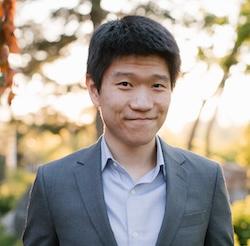
CSE Faculty Candidate Seminar - Jason Kim
Primary tabs
Name: Jason Kim, Postdoctoral Fellow from Cornell University
Date: Thursday, February 12, 2026 at 11:00 am
Location: Coda Building, Room 114 (Google Maps link)
Link: The recording of this in-person seminar will be uploaded to CSE's MediaSpace
Coffee and snacks provided!
Title: Discovering Model Manifolds of Emergent Function from High-Dimensional Data
Abstract: Natural systems of many interacting constituents often organize to produce low-dimensional emergent behaviors. For example, hundreds of thousands of neurons in the brain coordinate to represent and navigate the three-dimensional world around us. Similar emergent behaviors arise in the tens of thousands of genes that coordinate to produce the cellular processes that maintain life. Recent technological advances now allow us to simultaneously measure the activity of tens of thousands of neurons in the brain, and the expression of every gene at the resolution of single cells, giving us the opportunity to model emergent function at an unprecedented scale. How do we take such high dimensional data and discover interpretable and quantitative models of the algorithms that brains use to navigate the world, and cells use to achieve life?
In this talk, I will discuss novel methods I am pioneering that combine differential geometry with deep neural networks to quantitatively model emergent behaviors using high-dimensional, high-throughput data from neuroscience and genomics. I will discuss fundamental problems of model identifiability (degeneracy in model parameters that fit the data), interpretability (mapping discovered emergent variables back to neuron and gene circuits), and predictive power, and how geometry-aware deep learning models ameliorate these problems to enable new discoveries. Finally, I will describe some of the discoveries that we have made using this method about how the neural code is structured and used to accurately represent and efficiently search mental models of the world in mice learning to navigate a maze.
Bio: I am interested in discovering and modeling how articulate and intelligent biological function emerges from simpler parts. My undergraduate degree was in Biomedical Engineering at Duke University, where I did single-unit recordings in behaving macaques under electromagnetic stimulation. I did my graduate work in Bioengineering at the University of Pennsylvania designing articulate and intelligent biological function in mechanistic mathematical models ranging from cooperative energy landscapes in mechanical models of proteins, to mental simulation of video games in dynamical models of the brain. I am currently a postdoctoral fellow in Theoretical Physics, Neurotech, and AI for Science at Cornell University developing novel techniques to discover quantitative, interpretable, and predictive models of the algorithms that brains use to navigate physical and conceptual spaces, and cells use to produce life.
Media
Summary
Name: Jason Kim, Postdoctoral Fellow from Cornell University
Date: Thursday, February 12, 2026 at 11:00 am
Location: Coda Building, Room 114 (Google Maps link)
Link: The recording of this in-person seminar will be uploaded to CSE's MediaSpace
Title: Discovering Model Manifolds of Emergent Function from High-Dimensional Data
Status
- Workflow status: Published
- Created by: Bryant Wine
- Created: 02/06/2026
- Modified By: Bryant Wine
- Modified: 02/06/2026
Categories
User Data
Target Audience