
news
Coastal Resilience Project Secures Nearly $1 Million to Restore Wetlands
Primary tabs
The National Fish and Wildlife Foundation (NFWF) has awarded an interdisciplinary team nearly $1 million in funding through the National Coastal Resilience Fund to restore coastal wetlands in Georgia. It was the only project in Georgia to be selected for funding from the program's 2025 call for proposals.
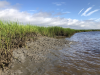
The award will support the design of nature-based solutions including living shorelines and marsh restoration in flood-prone areas of Camden County, Georgia, adjacent to Naval Submarine Base Kings Bay, Cumberland Island National Seashore, and the city of St. Marys.
“Restoring wetlands in Camden County is not just an environmental priority — it’s a resilience strategy for the entire region,” says principal investigator (PI) Joel Kostka, Tom and Marie Patton Distinguished Professor, associate chair for Research in the School of Biological Sciences, and faculty director of Georgia Tech for Georgia’s Tomorrow. “Each acre of restored marshland protects coastal communities from natural hazards like storms and flooding, provides essential marine habitat, and has the potential to aid the Navy and the Army Corps of Engineers in developing management alternatives for dredged materials. When our wetlands flourish, our whole coastline does.”
In addition to Kostka, co-PI’s include University of Georgia (UGA) Skidaway Institute of Oceanography Director Clark Alexander, UGA Associate Professor Matt Bilskie and Professor Brian Bledsoe, The Nature Conservancy Coastal Climate Adaptation Director Ashby Worley, and Georgia Tech alumnus Nolan Williams of Robinson Design Engineers, a firm dedicated to the engineering of natural infrastructure in the Southeast that is owned and operated by Georgia Tech alumnus Joshua Robinson.
A coastal collaboration
The new project, known as a “pipeline project” by NFWF, builds on multiple resilience plans and years of previous research conducted by the established team. “This is a testament to the value of the long-term collaborations and partnerships that enable coastal resilience work,” Kostka says. “We’re working closely with local communities and a range of city, state, and federal stakeholders to ensure these solutions align with local priorities and protect what matters most.”
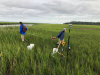
It’s not the first time that the team has brought this type of collaboration to the coastline. Since 2019, Kostka has worked alongside the South Carolina Department of Natural Resources, the South Carolina Aquarium, and Robinson Design Engineers in a $2.6 million effort to restore degraded salt marshes in historic Charleston, also funded by NFWF. Now in the implementation phase, much of the marsh restoration in Charleston involves planting salt-tolerant grasses, restoring oyster reefs, and excavating new tidal creeks — work that is being spearheaded by local volunteers.
“Coastal resilience isn’t something one group can tackle alone,” Kostka adds. “That shared, community-driven vision is what makes these projects possible.”
Media

Summary
The award will support the design of nature-based solutions including living shorelines and marsh restoration in flood-prone areas of Camden County, Georgia.
Status
- Workflow status: Published
- Created by: sperrin6
- Created: 01/12/2026
- Modified By: sperrin6
- Modified: 01/12/2026
Keywords
User Data