<node id="688559">
  <nid>688559</nid>
  <type>news</type>
  <uid>
    <user id="35272"><![CDATA[35272]]></user>
  </uid>
  <created>1772133424</created>
  <changed>1772633161</changed>
  <title><![CDATA[Celebrating Science Through Imagery]]></title>
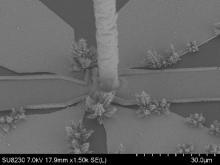
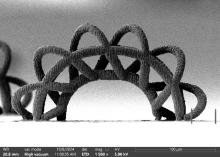
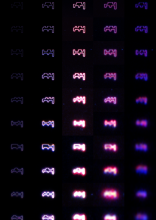
  <body><![CDATA[<p>The&nbsp;<a href="http://matter-systems.gatech.edu/">Institute for Matter and Systems</a> (IMS) announced the winners of its first-ever IMS Users Image Contest. Selected through public voting, the winning images highlight the remarkable science, innovation, and artistry emerging from research conducted in <a href="https://matter-systems.gatech.edu/core-facilities">IMS core facilities.</a></p><p>The contest invited facility users to submit visually compelling images generated through their research—ranging from advanced microscopy and materials characterization to device fabrication and nanoscale analysis. Submissions were showcased in an online gallery, where members of the campus community and broader public were invited to vote for their favorites.</p><p>The image contest was created to celebrate the intersection of science and art. Research images not only serve as essential analytical tools, but also reveal patterns, structures, and phenomena that inspire curiosity and creativity.</p><p>“We were excited by both the quality of submissions and the level of engagement from the community,” said Eric Vogel, IMS executive director. “These images reflect the extraordinary work happening every day in our facilities and the talent of the researchers who use them.”</p><p>The contest also underscores IMS’s commitment to supporting cutting-edge research by providing access to advanced instrumentation, expert staff, and collaborative spaces that enable discovery.</p><p>After a community vote, the following winners were identified:</p><p><strong>Most Creative | "</strong>Carbon Nanotube Candy Cane” By Gabriel Feng</p><p><img src="https://hg.gatech.edu/sites/default/files/styles/media_library/public/2026/02/26/candycane_submission.png?itok=hp2FxC8Z" alt="Close-up of red-and-white candy canes standing upright in white foam, with green tips visible at the base. The shallow depth of field blurs the background, emphasizing the curved stripes and texture."></p><p>This image was captured on the <a href="https://matter-systems.gatech.edu/mcf/tool/hitachi-su-8230-sem">Hitachi SU8230 SEM</a> in the <a href="http://mcf.gatech.edu/">Materials Characterization Facility</a>. This was a failed overgrown sample from Carbon Nanotube Field Emissions Array.</p><p><strong>Most Beautiful | </strong>“Snowy Christmas in Nano-ville” By Isha Lodhi</p><p><img src="https://hg.gatech.edu/sites/default/files/styles/media_library/public/2026/02/26/snowy_christmas_nanoville.jpeg?itok=LSCxIQkq" alt="Scanning electron microscope image showing a central vertical pillar surrounded by small, tree-like crystalline formations. A scale bar indicates features measuring about 30 micrometers."></p><p>Created using the <a href="https://matter-systems.gatech.edu/mcf/tool/hitachi-su-8230-sem">Hitachi SU8230</a> in the <a href="http://mcf.gatech.edu/">Materials Characterization Facility</a>.</p><p><strong>Most Technically Impressive | </strong>“The Lake Monster” By Genaro Soto Valle Angulo</p><p><img src="https://hg.gatech.edu/sites/default/files/styles/media_library/public/2026/02/26/GSVA_monster.jpeg?itok=JWchROdv" alt="Scanning electron microscope image of a tiny, arch-like structure made of looped, rope-textured material. A scale bar indicates the structure is on the order of 100 micrometers wide."></p><p>The image was taken on the <a href="https://matter-systems.gatech.edu/mcf/tool/thermo-axia-chemisem">Thermo Axia SEM</a>. The structures on the image were printed with the Exaddon Metal 3D Printer, out of pure copper with the substrate being a Si wafer coated with a seed layer of copper.&nbsp;</p><p><strong>Best Use of Cleanroom Tools| </strong>“µCodes: A Universal Grid Platform for Microscale Mapping, Microscopy Navigation, and Multimodal Imaging”&nbsp;By Aref Valipour, part of the <a href="https://housleylab.com">Cancer Neurobiology &amp; Nanotechnology Group</a></p><p>&nbsp;<!-- HTML Code --><img src="https://hg.gatech.edu/sites/default/files/styles/media_library/public/2026/02/26/uCodes.png?itok=6Yus5ROM" alt="Grid of glowing micro-scale patterns displayed in varying brightness and sharpness against a dark background. The repeated shapes appear in columns, showing differences in focus or intensity across the images."></p><p>This image was captured on the <a href="https://matter-systems.gatech.edu/cleanroom/capabilities/metrology">Olympus MX61</a> Microscope in the <a href="http://cleanroom.gatech.edu/">IMS Cleanroom</a>.</p>]]></body>
  <field_subtitle>
    <item>
      <value><![CDATA[]]></value>
    </item>
  </field_subtitle>
  <field_dateline>
    <item>
      <value>2026-02-26T00:00:00-05:00</value>
      <timezone><![CDATA[America/New_York]]></timezone>
    </item>
  </field_dateline>
  <field_summary_sentence>
    <item>
      <value><![CDATA[Through its first Users Image Contest, the Institute for Matter and Systems celebrated the creativity and cutting-edge research captured in images produced across its core facilities. ]]></value>
    </item>
  </field_summary_sentence>
  <field_summary>
    <item>
      <value><![CDATA[<p>Through its first Users Image Contest, the Institute for Matter and Systems celebrated the creativity and research captured in images produced across its core facilities.</p>]]></value>
    </item>
  </field_summary>
  <field_media>
          <item>
        <nid>
          <node id="679460">
            <nid>679460</nid>
            <type>image</type>
            <title><![CDATA[The Lake Monster]]></title>
            <body><![CDATA[<p>“The Lake Monster” By Genaro Soto Valle Angulo</p>]]></body>
                          <field_image>
                <item>
                  <fid>263624</fid>
                  <filename><![CDATA[GSVA_monster.jpeg]]></filename>
                  <filepath><![CDATA[/sites/default/files/2026/02/26/GSVA_monster.jpeg]]></filepath>
                  <file_full_path><![CDATA[http://hg.gatech.edu//sites/default/files/2026/02/26/GSVA_monster.jpeg]]></file_full_path>
                  <filemime>image/jpeg</filemime>
                  <image_740><![CDATA[]]></image_740>
                  <image_alt><![CDATA[Scanning electron microscope image of a tiny, arch-like structure made of looped, rope-textured material. A scale bar indicates the structure is on the order of 100 micrometers wide.]]></image_alt>
                </item>
              </field_image>
            
                      </node>
        </nid>
      </item>
          <item>
        <nid>
          <node id="679461">
            <nid>679461</nid>
            <type>image</type>
            <title><![CDATA[µCodes: A Universal Grid Platform for Microscale Mapping, Microscopy Navigation, and Multimodal Imaging]]></title>
            <body><![CDATA[<p>“µCodes: A Universal Grid Platform for Microscale Mapping, Microscopy Navigation, and Multimodal Imaging”&nbsp;By Aref Valipour</p>]]></body>
                          <field_image>
                <item>
                  <fid>263625</fid>
                  <filename><![CDATA[uCodes.png]]></filename>
                  <filepath><![CDATA[/sites/default/files/2026/02/26/uCodes.png]]></filepath>
                  <file_full_path><![CDATA[http://hg.gatech.edu//sites/default/files/2026/02/26/uCodes.png]]></file_full_path>
                  <filemime>image/png</filemime>
                  <image_740><![CDATA[]]></image_740>
                  <image_alt><![CDATA[Grid of glowing micro-scale patterns displayed in varying brightness and sharpness against a dark background. The repeated shapes appear in columns, showing differences in focus or intensity across the images.]]></image_alt>
                </item>
              </field_image>
            
                      </node>
        </nid>
      </item>
          <item>
        <nid>
          <node id="679459">
            <nid>679459</nid>
            <type>image</type>
            <title><![CDATA[Snowy Christmas in Nano-ville]]></title>
            <body><![CDATA[<p>“Snowy Christmas in Nano-ville” By Isha Lodhi</p>]]></body>
                          <field_image>
                <item>
                  <fid>263623</fid>
                  <filename><![CDATA[snowy_christmas_nanoville.jpeg]]></filename>
                  <filepath><![CDATA[/sites/default/files/2026/02/26/snowy_christmas_nanoville.jpeg]]></filepath>
                  <file_full_path><![CDATA[http://hg.gatech.edu//sites/default/files/2026/02/26/snowy_christmas_nanoville.jpeg]]></file_full_path>
                  <filemime>image/jpeg</filemime>
                  <image_740><![CDATA[]]></image_740>
                  <image_alt><![CDATA[Scanning electron microscope image showing a central vertical pillar surrounded by small, tree-like crystalline formations. A scale bar indicates features measuring about 30 micrometers.]]></image_alt>
                </item>
              </field_image>
            
                      </node>
        </nid>
      </item>
          <item>
        <nid>
          <node id="679458">
            <nid>679458</nid>
            <type>image</type>
            <title><![CDATA[carbon nanotube candy cane]]></title>
            <body><![CDATA[<p>“Carbon Nanotube Candy Cane” By Gabriel Feng</p>]]></body>
                          <field_image>
                <item>
                  <fid>263622</fid>
                  <filename><![CDATA[candycane_submission.png]]></filename>
                  <filepath><![CDATA[/sites/default/files/2026/02/26/candycane_submission.png]]></filepath>
                  <file_full_path><![CDATA[http://hg.gatech.edu//sites/default/files/2026/02/26/candycane_submission.png]]></file_full_path>
                  <filemime>image/png</filemime>
                  <image_740><![CDATA[]]></image_740>
                  <image_alt><![CDATA[Close-up of nano tubes modified with red and white stripes to appear as canes standing upright in white foam, with green tips visible at the base. The shallow depth of field blurs the background, emphasizing the curved stripes and texture.]]></image_alt>
                </item>
              </field_image>
            
                      </node>
        </nid>
      </item>
      </field_media>
  <field_contact_email>
    <item>
      <email><![CDATA[amelia.neumeister@research.gatech.edu]]></email>
    </item>
  </field_contact_email>
  <field_location>
    <item>
      <value><![CDATA[]]></value>
    </item>
  </field_location>
  <field_contact>
    <item>
      <value><![CDATA[<p><a href="mailto:amelia.neumeister@research.gatech.edu">Amelia Neumeister</a> | Communications Manager</p><p>The Institute for Matter and Systems</p>]]></value>
    </item>
  </field_contact>
  <field_sidebar>
    <item>
      <value><![CDATA[]]></value>
    </item>
  </field_sidebar>
  <field_boilerplate>
    <item>
      <nid><![CDATA[]]></nid>
    </item>
  </field_boilerplate>
  <!--  TO DO: correct to not conflate categories and news room topics  -->
  <!--  Disquisition: it's funny how I write these TODOs and then never
         revisit them. It's as though the act of writing the thing down frees me
         from the responsibility to actually solve the problem. But what can I
         say? There are more problems than there's time to solve.  -->
  <links_related> </links_related>
  <files> </files>
  <og_groups>
          <item>660369</item>
      </og_groups>
  <og_groups_both>
      </og_groups_both>
  <field_categories>
      </field_categories>
  <core_research_areas>
          <term tid="193652"><![CDATA[Matter and Systems]]></term>
      </core_research_areas>
  <field_news_room_topics>
      </field_news_room_topics>
  <links_related>
      </links_related>
  <files>
      </files>
  <og_groups>
          <item>660369</item>
      </og_groups>
  <og_groups_both>
          <item><![CDATA[Matter and Systems]]></item>
      </og_groups_both>
  <field_keywords>
      </field_keywords>
  <field_userdata><![CDATA[]]></field_userdata>
</node>