<node id="685576">
  <nid>685576</nid>
  <type>event</type>
  <uid>
    <user id="36625"><![CDATA[36625]]></user>
  </uid>
  <created>1759853665</created>
  <changed>1759855315</changed>
  <title><![CDATA[School of Physics AMO/CMP seminar - Prof. Yao Wang, Emory University]]></title>
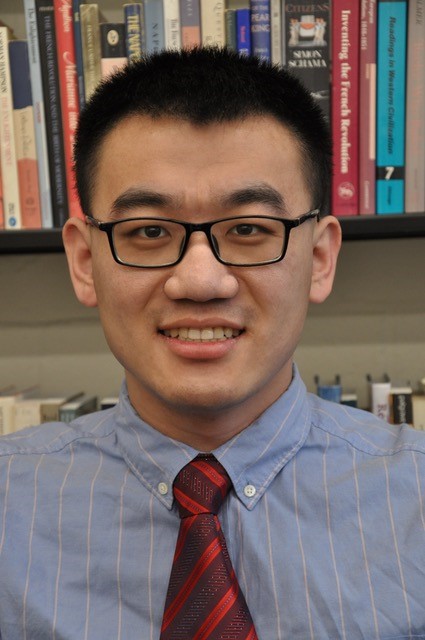
  <body><![CDATA[<p><strong>Speaker: </strong>Prof. Yao Wang</p><p><strong>Title:</strong> Spectral Witness of Entanglement for Quantum Materials</p><p><strong>Host:</strong> Prof. Zhigang Jiang</p><p><strong>Abstract:</strong> The rapidly advancing field of quantum materials demands increasingly precise methods for characterizing and controlling entanglement. While early progress was made in quantum optics, extending these approaches to complex many-body systems in quantum materials remains a major challenge. In this talk, I will introduce the entanglement witness framework for characterizing the bounds of entanglement depth using solid-state spectroscopies. In the first half of the talk, I will begin with the detection of spin entanglement in quantum magnets through the quantum metrology and spin quantum Fisher information (QFI). These metrics can be accessed via inelastic neutron scattering and resonant inelastic x-ray scattering (RIXS). Importantly, RIXS provides a route to extend such probes far out of equilibrium, enabling the control of entanglement with light. In the second half of the talk, I will move beyond entanglement among distinguishable local modes to explore entanglement in systems of indistinguishable fermions. I will present a generalized framework for multi-particle entanglement among electrons, based on the cumulant reduced density matrix and the nonlinear response characteristics of RIXS. In the end, I will briefly discuss the potential connections of these entanglement witnesses to sensing and transport techniques.&nbsp;</p><p><strong>Short Bio: </strong>Assistant Professor, Department of Chemistry,&nbsp;<em>Emory University - </em>Adjunct Professor, Department of Physics and Astronomy,&nbsp;<em>Clemson University - </em>Ph.D. in&nbsp;Applied Physics,&nbsp;<em>Stanford University,&nbsp;</em>2017, Minor&nbsp;in&nbsp;Computational and Mathematical Engineering and B.S. in&nbsp;Applied Physics,&nbsp;<em>University of Science and Technology of China</em>, 2011.</p><p><strong>Selected Awards &amp; Prizes</strong></p><ul><li><strong>2025&nbsp; &nbsp; &nbsp;Scialog Fellow, Research Corporation for Science Advancement</strong></li><li><strong>2023&nbsp; &nbsp; &nbsp;Dean’s Professorship Award, College of Science, Clemson</strong></li><li><strong>2023&nbsp; &nbsp; &nbsp;AFOSR Young Investigator Award, Air Force Office of Scientific Research</strong></li><li><strong>2022&nbsp; &nbsp; &nbsp;DOE Early Career Award,&nbsp;Department of Energy</strong></li><li><strong>2019&nbsp; &nbsp; &nbsp;IUCr Young Scientist Award,&nbsp;Inelastic X-ray Scattering Conference</strong></li><li><strong>2017 – 2020&nbsp; &nbsp; &nbsp;MPHQ Postdoctoral Fellowship, Harvard University</strong></li><li><strong>2012 – 2015&nbsp; &nbsp; &nbsp;Stanford Graduate Fellowship, Stanford University</strong></li><li><strong>2011&nbsp; &nbsp; &nbsp;Guo Moruo Scholarship, University of Science and Technology of China</strong></li></ul><p>&nbsp;</p>]]></body>
  <field_summary_sentence>
    <item>
      <value><![CDATA[School of Physics AMO/CMP seminar - Prof. Yao Wang, Emory University]]></value>
    </item>
  </field_summary_sentence>
  <field_summary>
    <item>
      <value><![CDATA[<p>The rapidly advancing field of quantum materials demands increasingly precise methods for characterizing and controlling entanglement. While early progress was made in quantum optics, extending these approaches to complex many-body systems in quantum materials remains a major challenge. In this talk, I will introduce the entanglement witness framework for characterizing the bounds of entanglement depth using solid-state spectroscopies. In the first half of the talk, I will begin with the detection of spin entanglement in quantum magnets through the quantum metrology and spin quantum Fisher information (QFI). These metrics can be accessed via inelastic neutron scattering and resonant inelastic x-ray scattering (RIXS). Importantly, RIXS provides a route to extend such probes far out of equilibrium, enabling the control of entanglement with light. In the second half of the talk, I will move beyond entanglement among distinguishable local modes to explore entanglement in systems of indistinguishable fermions. I will present a generalized framework for multi-particle entanglement among electrons, based on the cumulant reduced density matrix and the nonlinear response characteristics of RIXS. In the end, I will briefly discuss the potential connections of these entanglement witnesses to sensing and transport techniques.</p><p>&nbsp;</p>]]></value>
    </item>
  </field_summary>
  <field_time>
    <item>
      <value><![CDATA[2025-10-14T14:00:00-04:00]]></value>
      <value2><![CDATA[2025-10-14T15:00:00-04:00]]></value2>
      <rrule><![CDATA[]]></rrule>
      <timezone><![CDATA[America/New_York]]></timezone>
    </item>
  </field_time>
  <field_fee>
    <item>
      <value><![CDATA[]]></value>
    </item>
  </field_fee>
  <field_extras>
      </field_extras>
  <field_audience>
          <item>
        <value><![CDATA[Faculty/Staff]]></value>
      </item>
          <item>
        <value><![CDATA[Postdoc]]></value>
      </item>
          <item>
        <value><![CDATA[Graduate students]]></value>
      </item>
          <item>
        <value><![CDATA[Undergraduate students]]></value>
      </item>
      </field_audience>
  <field_media>
          <item>
        <nid>
          <node id="678293">
            <nid>678293</nid>
            <type>image</type>
            <title><![CDATA[Prof. Yao Wang]]></title>
            <body><![CDATA[]]></body>
                          <field_image>
                <item>
                  <fid>262300</fid>
                  <filename><![CDATA[Prof.-Yao-Wang.jpg]]></filename>
                  <filepath><![CDATA[/sites/default/files/2025/10/07/Prof.-Yao-Wang.jpg]]></filepath>
                  <file_full_path><![CDATA[http://hg.gatech.edu//sites/default/files/2025/10/07/Prof.-Yao-Wang.jpg]]></file_full_path>
                  <filemime>image/jpeg</filemime>
                  <image_740><![CDATA[]]></image_740>
                  <image_alt><![CDATA[Prof. Yao Wang]]></image_alt>
                </item>
              </field_image>
            
                      </node>
        </nid>
      </item>
      </field_media>
  <field_contact>
    <item>
      <value><![CDATA[]]></value>
    </item>
  </field_contact>
  <field_location>
    <item>
      <value><![CDATA[Howey - Room N-110]]></value>
    </item>
  </field_location>
  <field_sidebar>
    <item>
      <value><![CDATA[<p><img src="https://quantum.emorychem.science/wp-content/uploads/2023/10/yao-wang-1.jpeg"></p>]]></value>
    </item>
  </field_sidebar>
  <field_phone>
    <item>
      <value><![CDATA[]]></value>
    </item>
  </field_phone>
  <field_url>
    <item>
      <url><![CDATA[]]></url>
      <title><![CDATA[]]></title>
            <attributes><![CDATA[]]></attributes>
    </item>
  </field_url>
  <field_email>
    <item>
      <email><![CDATA[]]></email>
    </item>
  </field_email>
  <field_boilerplate>
    <item>
      <nid><![CDATA[]]></nid>
    </item>
  </field_boilerplate>
  <links_related>
      </links_related>
  <files>
      </files>
  <og_groups>
          <item>126011</item>
      </og_groups>
  <og_groups_both>
          <item><![CDATA[School of Physics]]></item>
      </og_groups_both>
  <field_categories>
          <item>
        <tid>1795</tid>
        <value><![CDATA[Seminar/Lecture/Colloquium]]></value>
      </item>
      </field_categories>
  <field_keywords>
      </field_keywords>
  <field_userdata><![CDATA[]]></field_userdata>
</node>