<node id="676152">
  <nid>676152</nid>
  <type>news</type>
  <uid>
    <user id="36454"><![CDATA[36454]]></user>
  </uid>
  <created>1724261554</created>
  <changed>1724261590</changed>
  <title><![CDATA[Georgia Tech Partners With UH BRAIN Center]]></title>
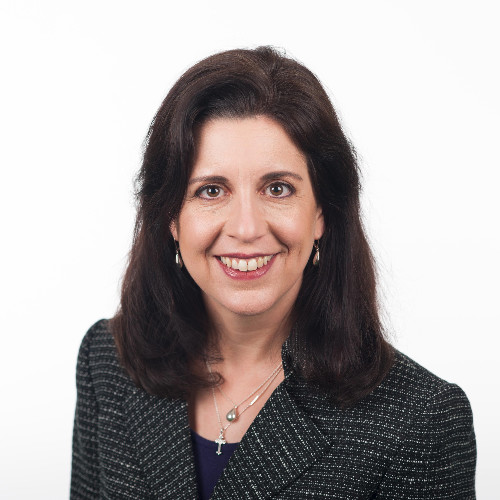
  <body><![CDATA[<div><p>The World Health Organization reports that millions of adults worldwide live with neurological disorders and brain or brain-related injuries. Globally, 5 million people are left permanently disabled each year after suffering a stroke or spinal cord injury, creating a critical need for advances in patient care and support. The IUCRC BRAIN Center (Industry-University Cooperative Research Center for Building Reliable Advances and Innovations in Neurotechnology) was formed in 2017 to address complex challenges and opportunities in the field of neurotechnology.</p><p>Housed at the University of Houston, the BRAIN Center is a collaborative and creative research effort to develop new neurotechnologies. It began as a partnership between the University of Houston and Arizona State University and is supported by the National Science Foundation. The partnership recently expanded to include the Georgia Institute of Technology and West Virginia University.&nbsp;</p><p>“Georgia Tech is very excited to join the BRAIN IUCRC with other leading neuroengineering institutions, all passionate about bringing faculty and students together with industry to collaborate on cutting-edge neurotechnology development,” said <a href="https://bme.gatech.edu/bme/faculty/Michelle-C.-LaPlaca"><strong>Michelle C. LaPlaca</strong></a>, professor in the Wallace H. Coulter Department of Biomedical Engineering. LaPlaca's broad research interests are in neurotrauma, injury biomechanics, and neuroengineering as they relate to traumatic brain injury. “The Center partnerships are an excellent opportunity for small and large companies to invest in pre-translational research that both meets industry needs and harnesses academic expertise in order to ultimately improve patients’ lives.”&nbsp;</p><p>Read more about the partnership and the BRAIN Center in the University of Houston's <a href="https://www.uh.edu/news-events/stories/2023/august-2023/08232023-brain-center-expands-two-universities.php"><strong>press release</strong></a>.&nbsp;</p></div><p><img src="https://research.gatech.edu/sites/default/files/news-images/MichelleLaPlaca.jpeg" alt="Michelle LaPlaca" width="500" height="500"></p><div><div><p><a href="https://bme.gatech.edu/bme/faculty/Michelle-C.-LaPlaca"><strong>Michelle C. LaPlaca</strong></a>, professor in the Wallace H. Coulter Department of Biomedical Engineering</p></div></div><div><div>&nbsp;</div></div>]]></body>
  <field_subtitle>
    <item>
      <value><![CDATA[]]></value>
    </item>
  </field_subtitle>
  <field_dateline>
    <item>
      <value>2023-08-25T00:00:00-04:00</value>
      <timezone><![CDATA[America/New_York]]></timezone>
    </item>
  </field_dateline>
  <field_summary_sentence>
    <item>
      <value><![CDATA[Globally, 5 million people are left permanently disabled each year after suffering a stroke or spinal cord injury, creating a critical need for advances in patient care and support. The IUCRC BRAIN Center (Industry-University Cooperative Research Center f]]></value>
    </item>
  </field_summary_sentence>
  <field_summary>
    <item>
      <value><![CDATA[<p>Globally, 5 million people are left permanently disabled each year after suffering a stroke or spinal cord injury, creating a critical need for advances in patient care and support. The IUCRC BRAIN Center (Industry-University Cooperative Research Center for Building Reliable Advances and Innovations in Neurotechnology) was formed in 2017 to address complex challenges and opportunities in the field of neurotechnology.</p>]]></value>
    </item>
  </field_summary>
  <field_media>
          <item>
        <nid>
          <node id="674673">
            <nid>674673</nid>
            <type>image</type>
            <title><![CDATA[brain-center-and-pepe-newsroom.jpg]]></title>
            <body><![CDATA[<p>The&nbsp;UH&nbsp;Brain Center, supported by the U.S. National Science Foundation, allows research that would not be possible within the traditional silos of academic, industry, regulatory and clinical communities.&nbsp;At right, center director Jose Luis Contreras-Vidal prepares to map brain activity during a creative task.</p>]]></body>
                          <field_image>
                <item>
                  <fid>258225</fid>
                  <filename><![CDATA[brain-center-and-pepe-newsroom.jpg]]></filename>
                  <filepath><![CDATA[/sites/default/files/2024/08/21/brain-center-and-pepe-newsroom.jpg]]></filepath>
                  <file_full_path><![CDATA[http://hg.gatech.edu//sites/default/files/2024/08/21/brain-center-and-pepe-newsroom.jpg]]></file_full_path>
                  <filemime>image/jpeg</filemime>
                  <image_740><![CDATA[]]></image_740>
                  <image_alt><![CDATA[Brain Center]]></image_alt>
                </item>
              </field_image>
            
                      </node>
        </nid>
      </item>
      </field_media>
  <field_contact_email>
    <item>
      <email><![CDATA[swilliamson40@gatech.edu]]></email>
    </item>
  </field_contact_email>
  <field_location>
    <item>
      <value><![CDATA[]]></value>
    </item>
  </field_location>
  <field_contact>
    <item>
      <value><![CDATA[<p>Savannah Williamson</p>]]></value>
    </item>
  </field_contact>
  <field_sidebar>
    <item>
      <value><![CDATA[]]></value>
    </item>
  </field_sidebar>
  <field_boilerplate>
    <item>
      <nid><![CDATA[]]></nid>
    </item>
  </field_boilerplate>
  <!--  TO DO: correct to not conflate categories and news room topics  -->
  <!--  Disquisition: it's funny how I write these TODOs and then never
         revisit them. It's as though the act of writing the thing down frees me
         from the responsibility to actually solve the problem. But what can I
         say? There are more problems than there's time to solve.  -->
  <links_related> </links_related>
  <files> </files>
  <og_groups>
          <item>1292</item>
      </og_groups>
  <og_groups_both>
          <item>
        <![CDATA[Biotechnology, Health, Bioengineering, Genetics]]>
      </item>
      </og_groups_both>
  <field_categories>
          <item>
        <tid>138</tid>
        <value><![CDATA[Biotechnology, Health, Bioengineering, Genetics]]></value>
      </item>
      </field_categories>
  <core_research_areas>
          <term tid="39441"><![CDATA[Bioengineering and Bioscience]]></term>
      </core_research_areas>
  <field_news_room_topics>
      </field_news_room_topics>
  <links_related>
      </links_related>
  <files>
      </files>
  <og_groups>
          <item>1292</item>
      </og_groups>
  <og_groups_both>
          <item><![CDATA[Parker H. Petit Institute for Bioengineering and Bioscience (IBB)]]></item>
      </og_groups_both>
  <field_keywords>
          <item>
        <tid>187423</tid>
        <value><![CDATA[go-bio]]></value>
      </item>
      </field_keywords>
  <field_userdata><![CDATA[]]></field_userdata>
</node>
