<![CDATA[GT Cybersecurity Expert Helping to Chart the Future of AI on the Energy Grid]]>36253 Artificial intelligence (AI) is becoming increasingly vital to the nation’s power grid. However, AI tools meant to help energy companies manage the grid, plan for future needs, and respond to problems also create new security and safety concerns.
Since May 2026, Zonouz has served on the planning committee for an upcoming public workshop on integrating AI into the electricity system. The workshop is scheduled for Oct. 26 and will convene experts to discuss how to safely and reliably use AI across the power grid.
The workshop will explore how AI is used today, the challenges of integrating AI into existing power systems, and how people and AI can work together. The event will also examine relationships between AI and cybersecurity, data centers, workforce development, and future research.
For Zonouz, cybersecurity and resilience are key parts of the conversation.
“AI is both a shield and a target for the grid,” Zonouz said.
Zonouz leads Georgia Tech’s Cyber-Physical Systems Security Research Laboratory. The lab’s research, much of it funded by the U.S. Department of Energy, investigates how AI can protect power systems from cyberattacks.
One recent initiative combines AI with detailed knowledge about power system operations to detect attacks in near real time. Another project sought to identify security weaknesses in solar inverters and other devices that connect energy sources, such as solar panels, to the power grid.
Regardless of the challenge, Zonouz and his lab work to identify and fix these weaknesses before attackers can exploit them. Despite their best efforts, however, Zonouz said that some AI tools meant to secure a system can create new ways for attackers to target a power grid.
The lab has demonstrated in several studies that AI systems can be tricked by false or manipulated data. Attackers can also target the software and systems that AI depends on. As AI becomes more advanced, some systems may even be able to modify grid operations.
This raises an important question: What happens if an AI system fails or is attacked?
“That is why the right frame is resilience,” Zonouz said.
For Zonouz, the goal is not to create an AI system that can never fail or be attacked. It’s to build a trustworthy power grid that can continue operating safely even if an AI system fails or is compromised.
Zonouz will bring his perspective to the National Academies workshop. In addition to helping organize the event, he will lead a session on cybersecurity and resilience. He will also help summarize the workshop’s key takeaways during the closing session. The workshop will be held virtually in late October.
“Lessons learned from the electricity grid can be applied to other critical infrastructure as AI monitoring and control tools continue to advance and become more common,” he said.
]]> John Popham117903442082026-09-25 13:50:0817903444652026-09-25 13:54:2500newsGeorgia Tech researcher Saman Zonouz is helping shape resilient AI practices for the electricity grid. His work connects workshop planning with research on AI-enabled grid protection and emerging vulnerabilities. Zonouz’s laboratory develops near-real-time attack detection and investigates weaknesses in solar inverters and other grid-connected devices. • Research shows AI systems can be misled by manipulated data or compromised software, making resilience essential when systems fail or face attacks.]]>2026-09-25T00:00:00-04:002026-09-25T00:00:00-04:002026-09-25 00:00:00John Popham
Communications Officer at the School of Cybersecurity and Privacy
]]>673306673306image<![CDATA[Saman Zonouz is a Georgia Tech associate professor and lead researcher for the DerGuard project. ]]>image/jpeg17096601042024-03-05 17:35:0417096600542024-03-05 17:34:14<![CDATA[Internship Connects Supercomputing with National Priorities]]>36319 National laboratories play a critical role in advancing science, developing energy technologies, and ensuring national security. This summer, Ph.D. student Tage Burnett contributed to that mission firsthand during an internship at Oak Ridge National Laboratory (ORNL) in Tennessee.
The internship provided Burnett with valuable insight into national laboratory research and reinforced skills he developed through his studies at Georgia Tech. When he returned to campus, we asked Burnett to share more about his internship and what he learned.
Student: Tage Burnett
Research Interests: Fusion energy, computational plasma physics, high-performance computing, and structure-preserving machine learning
Degree Program: Ph.D. in Computational Science and Engineering
Faculty Advisor: School of CSE Assistant Professor Qi Tang
2026 Internship: Oak Ridge National Laboratory, Oak Ridge, Tennessee
Many people are unfamiliar with national laboratories, like ORNL. Could you explain the purpose of these institutions and why they are important?
The Department of Energy (DOE) national laboratories are responsible for moving forward science and technology in the United States and solving high-consequence challenges in science, energy, and national security. They work on both applied and theoretical research with both short-term and long-term returns. ORNL has eight core research areas: biology and environment, energy science, fusion and fission, isotopes, physical sciences, national security, neutron science, and supercomputing. I was an intern in the supercomputing division.
How well did coursework and experience at Georgia Tech prepare you for your ORNL internship?
My coursework at Georgia Tech was vital in my preparation for this internship. I wrote highly parallel code where I leaned heavily on what I learned in CSE 6220: High-Performance Computing. I also worked on numerical methods which required an understanding of partial differential equations and numerical linear algebra which I also learned at Georgia Tech from classes like CSE 6643: Numerical Linear Algebra and a space plasma physics course.
What did you work on while interning at ORNL?
At ORNL, I was a developer on the Adaptive Sparse Grid Discretization (ASGarD) codebase. The code uses adaptive sparse grids and the Discontinuous Galerkin method to beat the curse of dimensionality and solve high-dimensional partial differential equations (PDEs). The code is designed to simulate fully kinetic plasmas in up to 6-dimensional phase space. My project was to implement an iterative method to solve the efficiently solve the Poisson equation within the codebase. This project gave me hands on experience with linear algebra, numerical PDEs, parallel computing and software engineering which was invaluable to my development as a CSE researcher.
Do you have a favorite memory or remarkable achievement from your internship?
My favorite memory from my internship was spending time with the other ORNL interns outside of work. There was an amazing group of interns at ORNL, and it was great getting to know them. One particularly good memory was when we went out to a restaurant with live music and played laser tag during our last week of the internship to celebrate our time at ORNL. The achievement I am most proud of was getting a working, highly efficient version of the Poisson solver into ASGarD. The ASGarD codebase is open source, so I hope other plasma physics researchers will use the code and find it helpful for their research.
While interning, you were selected for a GEM Fellowship, which Georgia Tech and ORNL nominated you for. What does this fellowship mean to you and is there anything you would like to say to your supporters?
To me, receiving the GEM Fellowship indicates that other people recognize the hard work I am doing, and they believe in my ability to meaningfully contribute to the field. Having this support from GEM, ORNL, and Georgia Tech gives me greater confidence in myself and my potential and inspires me to put my all into my work. I would like all my supporters to know that I am so grateful for the opportunity you have given me to be a part of the excellent community of researchers within GEM, ORNL, and Georgia Tech. I will do my very best to make your support worthwhile!
Overall, how helpful was this internship toward your studies at Georgia Tech and career as an aspiring researcher?
The internship was extremely important to both my studies at Georgia Tech and my career as a researcher. The hands-on experience I gained is irreplaceable and it helped me to apply all the skills I have developed throughout my education. I am also optimistic that the internship will open doors for me when I am seeking a job post-graduation.
]]> Bryant Wine117894881762026-09-15 16:02:5617900021172026-09-21 14:48:3700newsNational laboratories play a critical role in advancing science, developing energy technologies, and ensuring national security. This summer, Ph.D. student Tage Burnett contributed to that mission firsthand during an internship at Oak Ridge National Laboratory (ORNL) in Tennessee.
The internship provided Burnett valuable insight into national laboratory research and reinforced skills he developed through his studies at Georgia Tech. When he returned to campus, we asked Burnett to share more about his internship and what he learned.
]]>2026-09-15T00:00:00-04:002026-09-15T00:00:00-04:002026-09-15 00:00:00Bryant Wine, Communications Officer bryant.wine@cc.gatech.edu]]>681151681153681151image<![CDATA[Tage-Burnett-Head-Image.jpg]]>image/jpeg17894882622026-09-15 16:04:2217894882622026-09-15 16:04:22681153image<![CDATA[TB-ORNL-Mentor.jpeg]]>image/jpeg17894882972026-09-15 16:04:5717894882972026-09-15 16:04:57<![CDATA[Georgia Tech and Pacific Northwest National Laboratory Sign Agreement to Expand Strategic Research Partnership]]>36413 The Georgia Institute of Technology and Pacific Northwest National Laboratory (PNNL) have signed a memorandum of understanding (MOU) to strengthen their longstanding partnership and expand collaboration in scientific discovery, national security research, and workforce development.
The agreement was signed during a Sept. 14 visit by PNNL leadership to Georgia Tech’s Advanced Manufacturing Pilot Facility. It builds on years of successful collaboration between researchers at the two institutions.
The enhanced collaboration has three primary goals: solving big problems through multidisciplinary, multi-institutional research; sustaining and engaging human capital by creating opportunities for students, faculty, researchers, and interns to work on complex real-world challenges; and accelerating technology adoption by taking scientific discoveries and innovations into industry and the federal marketplace.
"Strengthening our partnerships with national laboratories is a strategic priority for Georgia Tech,” said Tim Lieuwen, executive vice president for Research at Georgia Tech. "PNNL is an outstanding partner, and we look forward to deepening connections among our researchers and students, expanding opportunities and access to world-class capabilities and facilities, and advancing discovery, innovation, and national impact together."
PNNL is a U.S. Department of Energy national laboratory that advances scientific discovery and innovations that support reliable energy, national security, and economic competitiveness. Georgia Tech is one of the nation's leading research universities, conducting more than $1.5 billion in research annually and pursuing a mission to develop leaders who advance technology and improve the human condition.
"PNNL and Georgia Tech have a long history of working together," said Deb Gracio, laboratory director of Pacific Northwest National Laboratory. “This agreement provides the foundation to take on difficult research challenges and to leverage our complementary expertise and investments in the years ahead.”
The Strategic Energy Institute (SEI) has played a central role in advancing Georgia Tech's engagement with the national laboratory system and connecting researchers with partnership opportunities.
"As SEI takes on a greater role in coordinating Georgia Tech's national laboratory partnerships, this agreement with PNNL demonstrates how we are building stronger pathways for faculty, researchers, and students to engage with world-class national lab capabilities," said Yuanzhi Tang, SEI executive director.
The National Laboratory Partnership Program supports engagement between Georgia Tech and the U.S. national laboratories. SEI now leads the program, with ongoing support from Georgia Tech’s Office of the Vice President for Interdisciplinary Research. The agreement with PNNL is the first formal agreement established through the program since its transition to SEI.
"This MOU formalizes and strengthens relationships that have been growing for many years," said Scott McWhorter, SEI director of national laboratory partnerships. “It leverages the unique strengths of Georgia Tech and PNNL and provides a framework for expanding engagement across areas of mutual interest.”
Georgia Tech and PNNL bring complementary strengths in energy and environmental systems, electric grid resilience, cybersecurity of critical infrastructure, alternative fuels and advanced materials, biofuels, radiation detection, data science and visual analytics, nuclear nonproliferation, and national security. These capabilities will be brough together through two upcoming Genesis Mission projects.
Bill Pike, PNNL's deputy director for Science and Technology, who joined the laboratory’s leadership delegation for the MOU signing, said the projects reflect the growing partnership and expanding collaboration between the two institutions.
About Georgia Tech The Georgia Institute of Technology is one of the nation's leading research universities, with strengths spanning engineering, computing, science, business, design, and the liberal arts. With more than $1.5 billion annually in research awards across its Colleges and the Georgia Tech Research Institute, Georgia Tech is among the nation's most research-intensive universities. The Institute's mission is to develop leaders who advance technology and improve the human condition.
About Pacific Northwest National Laboratory Pacific Northwest National Laboratory draws on its distinguishing strengths in chemistry, Earth sciences, biology and data science to advance scientific knowledge and address challenges in energy resiliency and national security. Founded in 1965, PNNL is operated by Battelle and supported by the Office of Science of the U.S. Department of Energy. The Office of Science is the single largest supporter of basic research in the physical sciences in the United States and is working to address some of the most pressing challenges of our time.
]]> pdevarajan3117897581982026-09-18 19:03:1817897597022026-09-18 19:28:2200newsThe Georgia Institute of Technology and Pacific Northwest National Laboratory (PNNL) have signed a memorandum of understanding (MOU) to strengthen their longstanding partnership and expand collaboration in scientific discovery, national security research, and workforce development.
The agreement was signed during a Sept. 14 visit by PNNL leadership to Georgia Tech’s Advanced Manufacturing Pilot Facility . It builds on years of successful collaboration between researchers at the two institutions.
]]>2026-09-18T00:00:00-04:002026-09-18T00:00:00-04:002026-09-18 00:00:00Priya Devarajan | SEI Communications Manager]]>681199681199image<![CDATA[GT-PNNL-MOU-Signing-Ceremony-21_LR.jpeg]]> Seated, from left: Deb Gracio, PNNL Laboratory Director; Tim Lieuwen, Georgia Tech Executive Vice President for Research. Standing, from left: Yuanzhi Tang, SEI Executive Director; Alexa Harter, Director, GTRI CIPHER Lab; George White, Executive Director, GT Strategic Partnerships; Asha Menon, SEI Program Manager; Scott McWhorter, SEI Director for National Lab Partnerships; Bill Pike, PNNL Deputy Director for Science and Technology; Jess Smith, PNNL Senior Cybersecurity Researcher; Steve Biegalski, Georgia Tech Faculty Liaison for PNNL; Erin Searcy, PNNL Director of Institutional Investments and Research Partnerships; Aaron Stebner, Associate Director of Georgia Tech Manufacturing Institute; Christine Conwell, SEI Director for Strategic Planning and Operations.]]> image/jpeg17897584272026-09-18 19:07:0717897584272026-09-18 19:07:07<![CDATA[Supporting Community-Led Flood Resilience]]>36607 A new research project aims to empower coastal communities. Using advanced AI-based flood modeling, residents will be able to compare flood mitigation strategies and identify the potential solutions that best meet their needs.
The CHORUS (Community Hubs for Optimizing Resilience) project will collaborate with coastal communities in Georgia and New York and will be split into two pieces: technology development and community engagement.
“We’re not just building a simulator and hoping it fits the needs of coastal residents,” explains Alex Robel, project leader and Jean “Chris” Purvis Associate Professor in the School of Earth and Atmospheric Sciences. "By collaborating with community partners from the very beginning, we can ensure that what we ultimately develop will be effective because the people who will be using it are helping design it.”
Putting Flood Modeling in Residents' Hands
The technology development component will include faculty from the College of Sciences and the College of Computing. The College of Sciences team will develop an AI-based flood simulator and the College of Computing team led by Josiah Hester, associate professor and Catherine M. and James E. Allchin Early Career Professor, will create a web platform that allows users to visualize potential flood impacts.
Traditional flood models can take hours or days to generate results and often require specialized expertise and expensive computing resources. The CHORUS platform will be designed to provide easy-to-understand results in seconds, producing building-scale flood maps that show how water moves through streets, yards, and structures during a range of flooding scenarios. Researchers will use the model to test how specific interventions, such as seawalls, restored marshes, or improved stormwater infrastructure, could affect flooding.
Eventually, users will be able to test their own scenarios through the browser-based tool, enabling them to explore how different decisions could change flood impacts in their communities:
“Users will be able to go into a web browser and indicate where a sea wall could go or change a parking lot into a porous vegetated landscape, then click simulate. Within a few seconds, they’ll have a new flood map showing the impacts of these interventions,” says Robel.
Community engagement in Georgia is being led by CEAR and the Pin Point Betterment Association, which represents descendants of the historic Gullah Geechee community near Savannah. In New York, the project team is partnering with the New York Climate Exchange and the Waterfront Alliance to work with communities surrounding Jamaica Bay.
“What makes this partnership meaningful is that it puts community voices at the center,” says Jasmine Smith, president of the Pin Point Betterment Association.“Too often, decisions are made to ‘better’ communities without actually involving the people who live there. We hope this partnership can serve as a blueprint for how communities are included in future sustainability projects from the very beginning.”
The project includes community advisory boards and technical advisory boards in both locations. Community members will help identify priority assets, select flood scenarios for analysis, and shape the design of the web-based tool. They’ll also test and offer feedback. Technical advisory boards made up of local officials, planners, and other experts will help evaluate the feasibility of proposed solutions.
“The aim is to blend information from both groups without allowing the technical perspective to override community priorities,” says Robel.
According to Robel, giving communities direct access to flood modeling tools can help close the gap between public input and infrastructure planning.
“We are putting decision making in the hands of the community. With a tool like this, the community can say: ‘We want to prevent flooding at this community center, this school, or this road,’” says Robel. “They can run the model, produce data, and present it to local governments or the Army Corps of Engineers — advocating for potential solutions themselves rather than relying on outside experts.”
Robel sees this project as just the beginning:
“Funded by two-year grants, CHORUS is meant to be a pilot for how this kind of community-centered project can be done. Once we understand some of the challenges and opportunities involved, it will hopefully make it easier for us to scale this work to additional community partners.”
About Community-Engaged Research at Georgia Tech
Georgia Tech is actively working to foster more projects that foster community engagement. Collaborative groups at Georgia Tech involved in the CHORUS project include:
The CEAR Hub, part of the Institute for People and Technology (IPaT), and housed at the Georgia Tech Savannah campus, advances community-engaged research and planning throughout coastal Georgia, helping communities build resilience to environmental and climate challenges.
The Brook Byers Institute for Sustainable Systems (BBISS) houses SCoRE and is Georgia Tech’s point of contact to the New York Climate Exchange. BBISS forms partnerships like these to fulfill its mission to expand the reach and impact of Georgia Tech’s sustainability research.
]]> ls67117889750402026-09-09 17:30:4017897406472026-09-18 14:10:4700newsThe CHORUS research project will combine advanced flood modeling, artificial intelligence, and community partnerships to help coastal residents in Georgia and New York evaluate flooding solutions and shape resilience planning.]]>2026-09-09T00:00:00-04:002026-09-09T00:00:00-04:002026-09-09 00:00:00Laura S. Smith, writer]]>681109681110681109image<![CDATA[Alex Robel]]> Alex Robel]]> image/jpeg17889750522026-09-09 17:30:5217889750522026-09-09 17:30:52681110image<![CDATA[Jill Gambill, executive director and senior research associate of the CEAR Hub, demonstrates a tide gate engineered to maintain storm sewer outflow capacity amidst rising sea levels to Georgia Tech students.]]> Jill Gambill, executive director and senior research associate of the CEAR Hub, demonstrates a tide gate engineered to maintain storm sewer outflow capacity amidst rising sea levels to Georgia Tech students.]]> image/png17889753212026-09-09 17:35:2117889753212026-09-09 17:35:21<![CDATA[Rare NASA Satellite Data Reveals Major Limits in Flood Models]]><![CDATA[Bringing the Classroom to the Coast]]><![CDATA[The Hidden Cost of Segregation]]>36413 A new study by EPIcenter affiliate Marilyn A. Brown and coauthor Majid Ahmadi examines how racial segregation affects what households pay for basic utilities. Using detailed data from Atlanta, Georgia, the authors investigate whether predominantly Black neighborhoods face higher energy burdens only because of income and housing differences, or whether segregation itself plays a direct role. Their analysis combines mortgage denial data, housing information, utility costs, and household income to show how long-standing discriminatory housing and lending practices continue to shape energy affordability today.
Ahmadi and Brown find that neighborhoods with higher shares of Black residents experience higher energy burdens, even after accounting for factors such as income, renter status, and housing characteristics. In this study, energy burden refers mainly to the share of household income spent on electricity, gas, and water. The authors estimate that an approximately 11 percentage-point increase in a neighborhood’s Black population share is associated with about a 1 percentage-point increase in household energy burden, equal to an average annual increase of about $785 in utility costs. These findings suggest that unequal energy burdens are tied not only to household finances, but also to the lasting effects of segregation and discrimination.
]]> pdevarajan3117895643842026-09-16 13:13:0417895645772026-09-16 13:16:1700newsA new study by EPIcenter affiliate Marilyn A. Brown and coauthor Majid Ahmadi examines how racial segregation affects what households pay for basic utilities. Using detailed data from Atlanta, Georgia, the authors investigate whether predominantly Black neighborhoods face higher energy burdens only because of income and housing differences, or whether segregation itself plays a direct role. Their analysis combines mortgage denial data, housing information, utility costs, and household income to show how long-standing discriminatory housing and lending practices continue to shape energy affordability today.]]>2026-09-15T00:00:00-04:002026-09-15T00:00:00-04:002026-09-15 00:00:00Gil Gonzalez, Program Coordinator, Energy Policy and Innovation Center]]>681162681162image<![CDATA[hiddencostAdobeStock_669231771-1536x1023.jpeg]]>image/jpeg17895643942026-09-16 13:13:1417895643942026-09-16 13:13:14<![CDATA[Full Story on the EPIcenter Webpage]]><![CDATA[Four Challenges to the U.S. Energy Transition]]>35766 Efficiently transitioning from fossil fuels to renewable energy means looking at so much more than just the technology we use.
Reliable energy is required to keep safe in cold winters and hot summers, making it a matter of national security. There are also vying economic policies to consider, political and financial incentives to navigate, and questions of social and economic inequality.
]]> dminardi3117742908962026-03-23 18:34:5617895642922026-09-16 13:11:3200newsReliable energy is required to keep safe in cold winters and hot summers, making it a matter of national security. There are also vying economic policies to consider, political and financial incentives to navigate, and questions of social and economic inequality. Experts in Georgia Tech’s Ivan Allen College of Liberal Arts examine the challenges we face with the U.S. energy transition, and work to help make it safe, fair, and effective for all.]]>2026-03-23T00:00:00-04:002026-03-23T00:00:00-04:002026-03-23 00:00:00Di Minardi — Ivan Allen College of Liberal Arts]]>679717679717image<![CDATA[MERCURY--1-.jpg]]>image/jpeg17742910642026-03-23 18:37:4417742910642026-03-23 18:37:44<![CDATA[As Oil Profits Skyrocket, Calls for Windfall Taxes Rise]]>36413By Tibor Besedeš, Professor of Economics, Georgia Institute of Technology
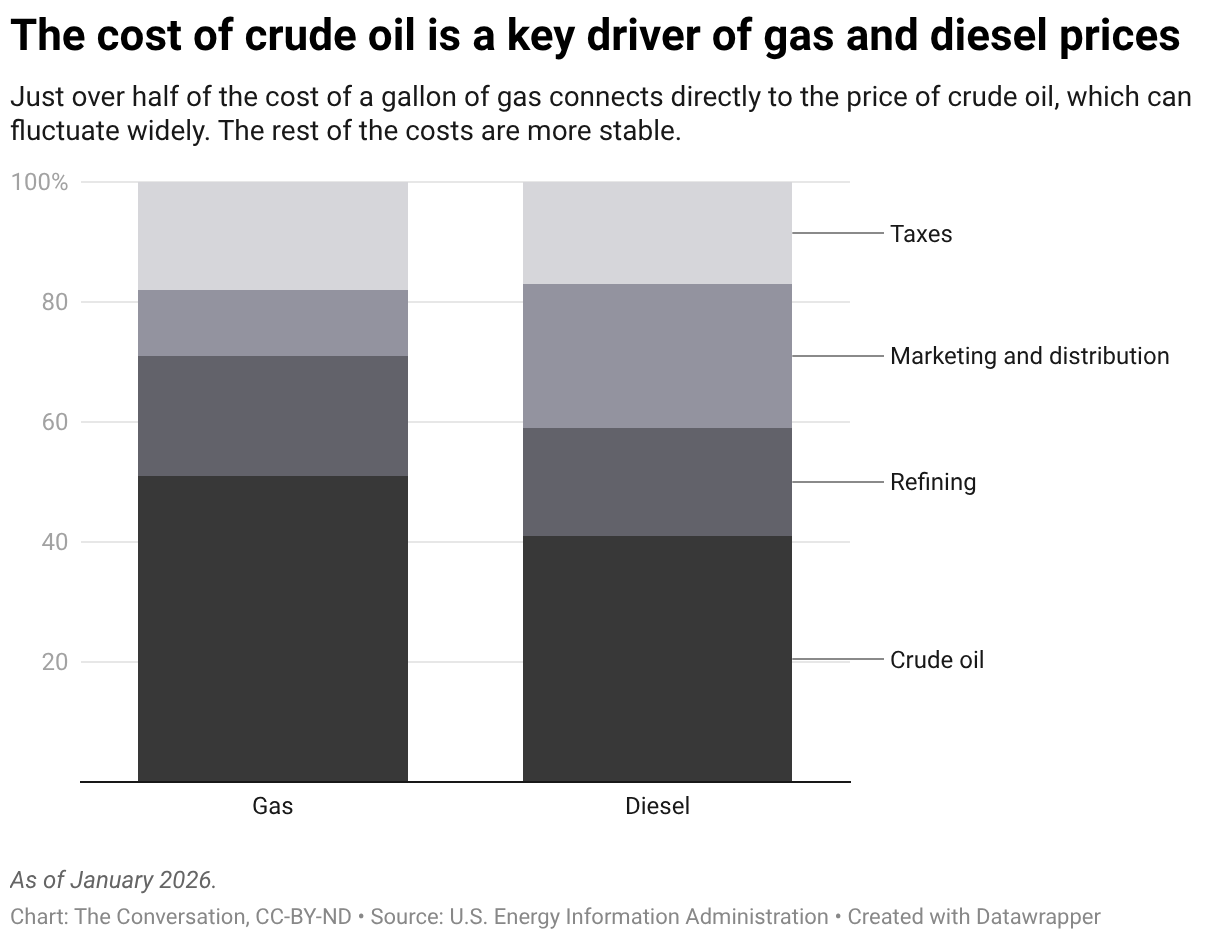
When Chevron reported its highest quarterly profit in six years on July 31, 2026, it was just one detail in a larger picture: Analyst firm Wood Mackenzie estimates the global oil and gas industry is on course for a cash windfall of US$495 billion in 2026. That’s profit above and beyond what the industry expected before the U.S.-Israel war with Iran began.
Three separate bills seeking to tax those profits are now in Congress, and President Donald Trump has even said the oil companies are “making too much money.”
As an applied microeconomist, I am often asked how taxes affect economic activity. Economists have long held a more nuanced view of windfall taxes than either side of the current debate suggests. Advocates often make overly optimistic revenue projections, and opponents often overstate how much such a tax might discourage investment. A 1980s U.S. windfall-tax experiment is instructive on both counts.
]]> pdevarajan3117895642022026-09-16 13:10:0217895642022026-09-16 13:10:0200newsWhen Chevron reported its highest quarterly profit in six years on July 31, 2026, it was just one detail in a larger picture: Analyst firm Wood Mackenzie estimates the global oil and gas industry is on course for a cash windfall of US$495 billion in 2026. That’s profit above and beyond what the industry expected before the U.S.-Israel war with Iran began.
Three separate bills seeking to tax those profits are now in Congress, and President Donald Trump has even said the oil companies are “making too much money.”
As an applied microeconomist, I am often asked how taxes affect economic activity. Economists have long held a more nuanced view of windfall taxes than either side of the current debate suggests. Advocates often make overly optimistic revenue projections, and opponents often overstate how much such a tax might discourage investment. A 1980s U.S. windfall-tax experiment is instructive on both counts.
]]>2026-08-12T00:00:00-04:002026-08-12T00:00:00-04:002026-08-12 00:00:00<![CDATA[Read Full Story on The Conversation]]><![CDATA[New Center Seeks to Unlock the Science of Turbulence for Energy, Flight, and Discovery]]>36319 Most people know turbulence as the force that can make airplane flights bumpy. Scientists recognize it as one of the most important, yet unsolved, problems in physics.
Despite decades of research, the chaotic nature of turbulence makes it difficult to predict and control. This challenge impedes more than smoother air travel. Solving the turbulence problem could lead to advances in areas ranging from sustainable energy to training a smarter workforce for the era of artificial intelligence (AI).
To advance understanding of turbulence, the National Science Foundation is establishing a new, $30 million Science and Technology Center (STC) at Michigan State University. Georgia Tech is among eight universities supporting the center.
Assistant Professor Qi Tang will join the STC for Transformative Explorations in Multi-Physics and Engineering of Scientific Turbulence (TEMPEST). TEMPEST, launching on Sept. 1, aims to build trustworthy, predictive models of real-world turbulence.
Tang will lead TEMPEST’s modeling and scientific machine learning (ML) efforts. NSF will fund Tang and Georgia Tech with over $1 million from the center’s five-year, $30 million award.
By understanding and predicting turbulence, TEMPEST can unlock new applications, with a focus on fusion energy and national security. The center will also generate long-term research projects with applications in air and space flight, manufacturing, chemistry, and broaden science education and AI fluency.
“STC TEMPEST aims to develop a unified, predictive science that advances fusion energy, improves hypersonic technologies, and deepens our understanding of how stars created the elements that make up our world and ourselves. For everyday people, the center points toward abundant clean energy and faster, more efficient flight."
Turbulence is the motion of a fluid characterized by chaotic changes in pressure and speed. Turbulent flows can occur across all scales, from interactions between subatomic particles to astrophysical scales, including supernovas, black holes, and cosmic rays.
While turbulent flows are common and occur naturally, scientists still do not fully understand them. Small changes in a turbulent flow can produce dramatically different outcomes. Combined with the countless interactions across multiple scales of time and space, this makes turbulence extraordinarily difficult to predict.
“Rather than studying individual pieces of this enormously complex problem in isolation, we are bringing together theory, experimentation, computation and artificial intelligence to develop a deeper understanding of turbulence across scales,” said Michael Murillo, an MSU professor and the director of TEMPEST.
“Our goal is not simply to understand turbulence better, but to make it predictable and controllable in ways that will enable new technologies and scientific discoveries.”
Additional partners include Los Alamos National Laboratory, Sandia National Laboratories, Lawrence Livermore National Laboratory, Pacific Fusion, and General Atomics.
Together, TEMPEST researchers will build more accurate and reliable physics-grounded models. The center will test new ideas against real-world observations, then use those results to refine the models.
Tang contributes expertise in ML, scientific computing, and plasma physics to STC TEMPEST.
Earlier this year, Tang received an Early Career Research award from the Department of Energy’s Office of Science. He is using the award to build ML and data science tools that help scientists analyze massive datasets from fusion experiments and simulations.
This interdisciplinary approach is intended to move science from understanding why turbulence behaves as it does to predicting how it will behave. Through prediction and simulation, scientists could eventually engineer solutions to control turbulence in real-world scenarios.
The center will make its data and software broadly available and engage the public through museum exhibitions, immersive media, and educational programs that are expected to reach more than 10,000 K-12 students annually. TEMPEST will also help train an AI-fluent scientific workforce prepared to tackle complex problems across disciplines.
“One reason I am excited to work in TEMPEST is because it aligns perfectly with our School of CSE mission. As a discipline, CSE complements theory and experimentation as a mode of scientific discovery,” Tang said.
“We build computational models to simulate scientific and engineering concepts, like turbulence in this case, so that we can test theories that are too difficult, expensive, or risky for physical experiments.”
]]> Bryant Wine117882797032026-09-01 16:21:4317890668072026-09-10 19:00:0700newsTo advance understanding of turbulence, the National Science Foundation is establishing a new, $30 million Science and Technology Center (STC) at Michigan State University. Georgia Tech is among eight universities supporting the center.]]>2026-09-01T00:00:00-04:002026-09-01T00:00:00-04:002026-09-01 00:00:00Bryant Wine, Communications Officer bryant.wine@cc.gatech.edu]]>681026681027681026image<![CDATA[TEMPEST-Head-Image.png]]>image/png17882797122026-09-01 16:21:5217882797122026-09-01 16:21:52681027image<![CDATA[Collapsing-Star.png]]>image/png17882814002026-09-01 16:50:0017882814002026-09-01 16:50:00<![CDATA[Warming Climate Could Actually Increase Physical Activity, Georgia Tech Economist Finds]]>36413 Hardly anyone loves exercising in the festering crucible of a brutal summer heatwave. So it stands to reason that as global temperatures rise, the kind of physical activity that’s so crucial for our health and economic productivity could fall.
But recent research from Georgia Tech’s School of Economics in the Ivan Allen College of Liberal Arts suggests adding an asterisk to earlier research that makes that conclusion, saying previous studies failed to account for one simple fact: people adapt.
Georgia Tech economist Bobby Harris used a massive database of Fitbit step count data to measure how temperature shapes physical activity and found that extreme heat cuts step counts by 6% when compared to ideal weather. And while residents of the warmest regions cut their activity by an average of only 354 steps on days over 100 degrees, those living in the coldest regions cut theirs by 1,081, according to Harris’ analysis.
To be fair, cold bites, too. On days that stay below freezing, people take roughly 1,000 fewer steps. That’s a 12% drop, enough to pack on a pound over the course of a typical Madison, Wisconsin winter, Harris found.
But as the climate grows warmer, how humanity will respond to warmer temperatures remains a significant concern. In fact, earlier research projected that, by 2050, temperature-driven declines in physical activity could contribute to 500,000 premature deaths a year worldwide and annual productivity losses topping $2.4 billion.
Projections like those typically assume everyone responds to heat the same way, with no capacity to adapt, Harris said.
The Finding: A study led by economist Bobby Harris at Georgia Tech's Ivan Allen College of Liberal Arts reveals climate change could increase average U.S. physical activity by 893 steps per day by 2099 as people adapt to rising temperatures.
By the Numbers: Fitbit data used in Harris’ study show that warm-climate residents are 50% less sensitive to heat extremes than northern neighbors, cutting 354 steps on hot dayscompared to 1,081 in cooler regions.
Expert Insight: "There are still significant dangers to rising temperatures, but we must better factor adaptive capacity into conversations about climate change,” Harris said.
]]>2026-09-01T00:00:00-04:002026-09-01T00:00:00-04:002026-09-01 00:00:00681107681107image<![CDATA[climate-and-activity-paper-harris--1-.jpg]]>image/jpeg17889710732026-09-09 16:24:3317889710732026-09-09 16:24:33<![CDATA[Read Full Story on IAC News Page]]><![CDATA[Matthew McDowell Named to National Academies Committee on Future Battery Technologies]]>36413 School of Materials Science and Engineering (MSE) professor Matthew McDowell has been appointed to a National Academies of Sciences, Engineering, and Medicine committee. The appointed committee will explore current and next-generation battery energy storage technologies for defense applications.
The committee, convened through the National Academies' project Future of Battery Technology Options for Defense Applications, will identify the strengths and weaknesses of future battery technologies, including an examination of performance, safety, and manufacturability across technology and manufacturing readiness levels. The committee will also identify gaps where research investments could potentially improve battery capabilities across technology and manufacturing readiness levels, creating opportunities to leverage commercially available technologies.
With a joint appointment in MSE and the George W. Woodruff School of Mechanical Engineering, McDowell is internationally recognized for his research on batteries and energy storage materials. His work focuses on understanding how materials change during battery operation and using that knowledge to develop safer, more efficient, and more sustainable energy storage systems. McDowell is also co-director of the Georgia Tech Advanced Battery Center. He leads research spanning solid-state batteries, lithium-ion and sodium-ion technologies, and next-generation energy storage materials. “I am very thankful to be selected, and I look forward to working with colleagues on developing recommendations to advance battery technologies in support of our country," said McDowell.
]]> pdevarajan3117884454192026-09-03 14:23:3917884456452026-09-03 14:27:2500newsSchool of Materials Science and Engineering (MSE) professor Matthew McDowell has been appointed to a National Academies of Sciences, Engineering, and Medicine committee. The appointed committee will explore current and next-generation battery energy storage technologies for defense applications.
The committee, convened through the National Academies' project Future of Battery Technology Options for Defense Applications, will identify the strengths and weaknesses of future battery technologies, including an examination of performance, safety, and manufacturability across technology and manufacturing readiness levels. The committee will also identify gaps where research investments could potentially improve battery capabilities across technology and manufacturing readiness levels, creating opportunities to leverage commercially available technologies.
With a joint appointment in MSE and the George W. Woodruff School of Mechanical Engineering, McDowell is internationally recognized for his research on batteries and energy storage materials. His work focuses on understanding how materials change during battery operation and using that knowledge to develop safer, more efficient, and more sustainable energy storage systems. McDowell is also co-director of the Georgia Tech Advanced Battery Center.
]]>2026-08-25T00:00:00-04:002026-08-25T00:00:00-04:002026-08-25 00:00:00681061681061image<![CDATA[McDowell_Crop2.jpg]]>Matthew McDowell, Professor in the School of Materials Science and Engineering and George W. Woodruff School of Mechanical Engineering and Co-director of Georgia Tech Advanced Battery Center]]> image/jpeg17884454242026-09-03 14:23:4417884454242026-09-03 14:23:44<![CDATA[Read Full Story on MSE News Page]]><![CDATA[Ellen Mazumdar Earns NASA Early Career Faculty Award for Spacecraft Heat Shield Research]]>36413Ellen Yi Chen Mazumdar, assistant professor and Woodruff Faculty Fellow in the George W. Woodruff School of Mechanical Engineering, has received a NASA Early Career Faculty (ECF) Award to develop new methods for studying the extreme conditions spacecraft experience during atmospheric entry.
This award is part of NASA’s Space Technology Research Grants Program, which supports groundbreaking projects with the potential to transform space science and technology.
Through the three-year, $750,000 award, Mazumdar and her research team will develop laser-based methods to simultaneously measure temperature, chemical species, gas velocity, and other properties in the gases surrounding heat shield materials.
“We aim to implement our measurement techniques in arc jet or plasma jet facilities, like the ones at NASA, to assist with the evaluation of thermal protection systems for next-generation spacecraft,” Mazumdar said.
The project uses ultrafast lasers, which produce extremely short, high-intensity pulses. These pulses allow researchers to study the behavior of molecules on extremely short timescales and measure properties that can improve understanding of the gases surrounding a spacecraft during atmospheric entry.
Mazumdar said she and her students are excited about this project and hope it will help NASA develop new heat shields for spacecraft traveling to destinations such as Mars, Venus, and Titan.
]]> pdevarajan3117884451372026-09-03 14:18:5717884453072026-09-03 14:21:4700newsEllen Yi Chen Mazumdar, assistant professor and Woodruff Faculty Fellow in the George W. Woodruff School of Mechanical Engineering, has received a NASA Early Career Faculty (ECF) Award to develop new methods for studying the extreme conditions spacecraft experience during atmospheric entry.
This award is part of NASA’s Space Technology Research Grants Program, which supports groundbreaking projects with the potential to transform space science and technology.
Through the three-year, $750,000 award, Mazumdar and her research team will develop laser-based methods to simultaneously measure temperature, chemical species, gas velocity, and other properties in the gases surrounding heat shield materials.
“We aim to implement our measurement techniques in arc jet or plasma jet facilities, like the ones at NASA, to assist with the evaluation of thermal protection systems for next-generation spacecraft,” Mazumdar said.
]]>2026-08-25T00:00:00-04:002026-08-25T00:00:00-04:002026-08-25 00:00:00Tracie Troha, ME Communications]]>681060681060image<![CDATA[Mazumdar_web.jpg]]> Ellen Yi Chen Mazumdar, assistant professor and Woodruff Faculty Fellow in the George W. Woodruff School of Mechanical Engineering]]> image/jpeg17884451712026-09-03 14:19:3117884451712026-09-03 14:19:31<![CDATA[Full Story on the ME Newspage]]><![CDATA[DOE Assistant Secretary Catherine Jereza Visits NEETRAC]]>36172 When Assistant Secretary Catherine Jereza of the U.S. Department of Energy's (DoE) Office of Electricity visited the National Electric Energy Testing, Research and Applications Center (NEETRAC) on August 20, it provided an opportunity for researchers to showcase their latest work and discuss the challenges facing America's electric grid.
]]> dwatson71117882889862026-09-01 18:56:2617884449222026-09-03 14:15:2200newsThe nationally recognized Georgia Tech consortium brings together industry, government, and academia to advance power grid reliability and innovation. ]]>2026-09-01T00:00:00-04:002026-09-01T00:00:00-04:002026-09-01 00:00:00681030681030image<![CDATA[DoE-NEETRAC-Visit-8.png]]>image/png17882889992026-09-01 18:56:3917882889992026-09-01 18:56:39<![CDATA[Open Source, Big Ideas: Scientific Computing Community Heading to Georgia Tech]]>36319 Before building a fusion reactor, designing a new aircraft, or forecasting tsunamis, scientists and engineers test their ideas using computer simulations. The people who create and use the software that powers these simulations are meeting in Atlanta this fall to share best practices and improve their tools.
Georgia Tech is hosting the 2026 MFEM (Modular Finite Element Methods) Community Workshop, Sept. 22-25. MFEM supports research in computational physics, earth systems modeling, engineering, energy, and other fields.
The four-day workshop is being held at the Georgia Tech Global Learning Center and will focus on improving software for scientific computing and discovery. Participants can also attend online. Registration for the workshop is open through Sept. 11.
“We're very excited and grateful for the opportunity to have this workshop at Georgia Tech,” said Tzanio Kolev, a computational mathematician at Lawrence Livermore National Laboratory (LLNL).
“Georgia Tech has a great reputation in our field, and hosting at universities is a great way to connect with students. We see students as our future colleagues who will improve MFEM for generations to come.”
MFEM is an open-source software library for solving equations in computational models. Scientists and engineers use it to build and test virtual designs on some of the world’s most powerful supercomputers before creating real-world prototypes.
In fact, MFEM powered a tsunami early-warning model that ran on El Capitan, the world’s second-fastest supercomputer. The framework completed a simulation in a fraction of a second, 10 billion times faster than conventional algorithms. Kolev was part of the team that won the 2025 Gordon Bell Prize for the project.
MFEM’s impact extends beyond its original developers. The AWS Center for Quantum Computing uses the software as the foundation for a tool called Palace. This project runs 3D electromagnetic simulations to aid in the design of quantum computing hardware.
“These workshops have been very beneficial for both the broader user community and also for MFEM developers,” said Kolev.
“Every workshop, we are surprised by the ways people are building on our work, seeing what incredible, interesting, amazing things they do with it.”
Next month’s workshop at Georgia Tech will connect MFEM users and developers from national laboratories, academia, government, and industry.
The United Kingdom Atomic Energy Authority joins LLNL and Georgia Tech in sponsoring this year’s workshop. Nearly 20 scientists from Department of Energy (DOE) laboratories are attending in person. They represent LLNL, Los Alamos National Laboratory, Princeton Plasma Physics Laboratory, and the Naval Nuclear Laboratory.
The workshop will also host a simulation and visualization contest. Participants can submit images and videos of simulations using MFEM, which will be posted in a gallery. The workshop organizers will select an overall winner.
Further workshop activities include:
MFEM news and roadmap for future projects
Talks from application developers
Student-user lightning talks
In-person poster sessions
Office hours with MFEM experts
The MFEM workshop highlights the role open-source software plays in scientific discovery.
By making tools freely available, researchers can build on each other’s work rather than starting from scratch. This shared approach can accelerate innovation, improve software, and make advanced computing tools accessible to a wider community.
“Hosting its annual community workshop brings researchers from DOE laboratories, universities, and industry to campus, giving Georgia Tech faculty and students direct access to experts from the field.”
]]> Bryant Wine117877492402026-08-26 13:00:4017883760342026-09-02 19:07:1400newsBefore building a fusion reactor, designing a new aircraft, or forecasting tsunamis, scientists and engineers test their ideas using computer simulations. The people who create and use the software that powers these simulations are meeting in Atlanta this fall to share best practices and improve their tools.
Georgia Tech is hosting the 2026 MFEM (Modular Finite Element Methods) Community Workshop, Sept. 22-25. MFEM supports research in computational physics, earth systems modeling, engineering, energy, and other fields.
The four-day workshop is being held at the Georgia Tech Global Learning Center and will focus on improving software for scientific computing and discovery. Participants can also attend online. Registration for the workshop is open through Sept. 11.
]]>2026-08-26T00:00:00-04:002026-08-26T00:00:00-04:002026-08-26 00:00:00Bryant Wine, Communications Officer bryant.wine@cc.gatech.edu]]>680984680985680989680990680984image<![CDATA[Story-Head-Image.jpg]]>image/jpeg17877493132026-08-26 13:01:5317877493132026-08-26 13:01:53680985image<![CDATA[mfem-workshop-2025-comp-news-01-alt.png]]>image/png17877494412026-08-26 13:04:0117877494412026-08-26 13:04:01680989image<![CDATA[vis-contest-2026.png]]>image/png17877679212026-08-26 18:12:0117877679212026-08-26 18:12:01680990image<![CDATA[DSC00310-small.png]]>image/png17877679422026-08-26 18:12:2217877679422026-08-26 18:12:22<![CDATA[Hope Among the Pines: A Field Tour in Southeast Georgia Presents Carbon Exchange as Solution]]>36808 “The people of Georgia depend on forests for clean air, water quality, wildlife abundance, and a multitude of products consumed in our everyday lives. Our forests are also a sustainable and natural resource that can deliver climate benefits,” said Lucas Clay, extension professional at the Ray C. Anderson Center for Sustainable Business at the Georgia Tech Scheller College of Business. This message was a main takeaway from a field tour held January 29-30, 2026, across working forests in Southeast Georgia.
Georgia is the number one forestry state in the country, with more than 22 million of its roughly 24 million forested acres held in private hands. According to the Southern Group of State Foresters, forests and the forest products industry in the Southern U.S. provide for more than 18% of the world’s pulpwood for paper and paper-related products and 7% of the world’s industrial roundwood. The timber industry also supports thousands of rural livelihoods and sequesters enormous amounts of carbon. Yet today, Georgia forests are under pressure due to natural disasters and market changes.
The field tour promoted a Georgia-specific carbon exchange that has the potential to save forests, help companies purchase high quality carbon credits, and provide co-benefits for the entire state.
Pressure Points: Helene’s Wake and Market Headwinds
Across pine-forested Southeast Georgia, the devastation left by Hurricane Helene remains impossible to miss. A year and a half later, the cleanup – which is slow, expensive, and disheartening – is still ongoing across thousands of acres. Downed timber, too old to be sold for profit, lies in heaps. Throughout the field tour, landowners and foresters shared personal narratives that made it easy to feel the weight of what has been lost.
Helene only worsened troubles that were already underway. The markets for timber and pulpwood have been weakening. Demand for paper products has fallen sharply, taking pulpwood prices with it. In the last year alone, three mills have closed in Georgia.
Do I bother to replant? If I plant, will someone actually buy my timber in 20 years? These are the questions landowners across Georgia are wrestling with. Landowners’ decisions today can lead to a future with fewer forested acres, less healthy forests, and forests converted to development – a loss that is permanent.
The pressing question throughout the field tour was: What happens next?
Storytelling Matters: The Power of the Personal
One of the benefits of a field tour is the chance to hear firsthand, personal accounts from the people whose livelihoods depend on forests.
The tour began in Emanuel County at the Willie Hodges Family Farm Estate. Herbert Hodges welcomed the group to the 600-acre property his family has stewarded for four generations. Hodges shows his respect for the land through thoughtful stewardship – for which he was honored when he was named 2025 Conservationist of the Year by the Georgia Association of Conservation Districts. However, Hodges worries whether the fifth generation will keep the land, and he wants to demonstrate to his heirs that the land is worth holding onto. He remembers his father telling him, “Never get rid of the land. As long as you keep it, you have somewhere to live, somewhere to go.”
Matt Hestad, senior vice president of GFF, said, “Mr. Hodges has to identify new opportunities for his property not only to keep his family engaged but also to prove the land is economically valuable, both today and into the future.”
The carbon exchange, if built well, could be exactly that kind of new opportunity.
Building a Georgia Carbon Exchange
The initiative to develop a Georgia Carbon Exchange, launched in 2025, is being led collaboratively by the organizers of the field tour. It’s designed to create a voluntary carbon credit marketplace specifically tailored to Georgia’s forest landscape, Georgia’s landowners, and companies that are interested in purchasing high quality carbon credits.
David Eady, director of industry engagement at the Ray C. Anderson Center for Sustainable Business, described the vision: “We're looking at creating a marketplace for companies doing business in Georgia or headquartered in Georgia, so they can acquire credits that specifically benefit local communities and ecosystems. We want to make sure that we can continue to manage our valuable forest resources that make up well over half of the land in Georgia.”
“Companies are concerned about sustainability because their customers are – and one of the things that that's manifested is a market for carbon credits,” said Leslie Boby, director of the UGA Southern Regional Extension Forestry. “Being in forestry, we have the original carbon sequestration system: trees. And we have a lot of trees in Georgia.”
The foundation for the Georgia Carbon Exchange already exists, waiting to be built on.
All the Players at the Table
The January tour was a pilot that can be replicated for other groups of potential carbon buyers, policymakers, and stakeholders who need to understand what is at stake in Georgia’s forests before they can meaningfully invest in their future.
Hestad described what made this first tour valuable: “We need all the players at the table: academics, buyers, and landowners. I feel like we’ve learned from a variety of people about forest management – from a private family landowner about intergenerational challenges, from a recreation-focused landowner about wildlife management, and from landowners who have been impacted by Hurricane Helene. We’ve been provided with context for how a carbon exchange could serve those different sectors of landowners.”
For industry representatives on the tour, the experience was eye-opening. They joined the tour to learn more about recovery efforts, community support, and the mechanics of a carbon exchange. At the end of the tour, they said they had a clearer sense of both the urgency and the opportunity.
Clay said, “Landowners are focused on the economics of forestry, and buyers are looking for quality credits. I think there's a lot of opportunity for both of these things to happen.”
A successful carbon exchange requires trust, understanding, and shared purpose to be cultivated deliberately. Tours like this one are part of that cultivation.
A Common Goal in Focus
Georgia has everything it needs to make a carbon exchange work: the forests, the science, the institutions, and the will. What it needs now is exactly what the field tour was designed to build: awareness, connection, and shared commitment among the people and organizations whose decisions will shape the future of the state’s forests.
Zach Johnson, procurement manager at Beasley Timber Management, LLC, told the group: “With every one green ton of tree growth, you sequester approximately one metric ton of carbon dioxide from the atmosphere. Let’s find a way to certify this wonderful resource we have and prop up these jobs in Georgia – before it’s too late.”
Maintaining Georgia’s forests is not only about carbon. Well-managed forests filter water, support native wildlife, improve air quality, protect public health, and provide opportunities for outdoor recreation. These are co-benefits that a carbon credit does not fully capture but that are very much part of the value proposition for maintaining Georgia’s private forests. As stated by Yanshu Li, associate professor of forest economics at UGA: “If we take care of our forests, our forests will take care of us.”
Among the pines of Southeast Georgia, a common goal came into focus. The forests are worth saving. And the right people are coming together with the right plan to make it happen.
]]> bmcdonald64117852532832026-07-28 15:41:2317876668982026-08-25 14:08:1800newsBusiness and forestry experts from Georgia Tech, Clemson University, University of Georgia, and the Georgia Forestry Foundation led a field tour in Southeast Georgia that illuminated current challenges facing landowners and the forestry industry. Organizers shared how a Georgia Carbon Exchange can provide economic incentives to help landowners keep and manage their forests for carbon sequestration, with benefits to impact the entire state.]]>2026-07-28T00:00:00-04:002026-07-28T00:00:00-04:002026-07-28 00:00:00To learn more about the Georgia Carbon Exchange and upcoming field tours, contact Lucas Clay.
Photography (unless otherwise noted) by Mike Gregory (Georgia Forestry Association & Foundation)
]]>680696680697680698680699680700680696image<![CDATA[Hope-Among-the-Pines-1.jpg]]> Field tour attendees in Soperton, Georgia. ]]> image/jpeg17852552062026-07-28 16:13:2617852552062026-07-28 16:13:26680697image<![CDATA[Hope-Among-the-Pines-5.jpg]]> Forest in Soperton, Georgia]]> image/jpeg17852552062026-07-28 16:13:2617852552062026-07-28 16:13:26680698image<![CDATA[Hope-Among-the-Pines-4.jpg]]> Touring a recreational working forest in Metter, Georgia. ]]> image/jpeg17852552062026-07-28 16:13:2617852552062026-07-28 16:13:26680699image<![CDATA[Hope-Among-the-Pines-3.jpg]]> Herbert Hodges displays photos: one of his father, Willie Hodges, and the other of his father, brother, and mother (photo credit: Sandra S. Hodges). Hodges leads a tour of the Willie Hodges Family Farm Estate. ]]> image/jpeg17852552062026-07-28 16:13:2617852552062026-07-28 16:13:26680700image<![CDATA[Hope-Among-the-Pines-2.jpg]]> Clockwise from top left: Viewing habitat for gopher turtles. Hurricane Helene damage in Soperton, Georgia, on land owned by Gillis Ag and Timber. Attendees learn about the Georgia Carbon Exchange. Foresters share how Hurricane Helene and market changes have impacted their industry and community. ]]> image/jpeg17852552062026-07-28 16:13:2617852552062026-07-28 16:13:26<![CDATA[EPIcenter Summer Research Program Helps Doctoral Students Advance Energy Research ]]>36413 Four Georgia Tech doctoral students spent the summer working on their dissertation research through the Energy Policy and Innovation Center's (EPIcenter) Summer Research Program. The competitive program provides a full summer-semester stipend, along with mentorship and professional development opportunities, to support emerging energy scholars.
"One of the goals of the program is to give students the time and support needed to make meaningful progress on their dissertation research while helping them understand the broader policy, economic, and societal implications of their work," said Laura Taylor, director of EPIcenter.
The stipends enable participants to focus exclusively on clearly defined research goals. The program also supports peer discussions, communication training, and interdisciplinary learning opportunities designed to strengthen both their research and professional development.
This year's cohort explored topics ranging from electricity markets and air pollution to critical mineral supply chains and grid modernization, highlighting the breadth of energy-related research taking place across Georgia Tech.
Exploring Complex Energy Challenges
Ana Mazmishvili, who studies environmental and energy economics, used the summer to examine how climate policies affect communities across state lines.
"My research measures who is actually exposed to pollution from power plants when some states adopt climate regulations to cut emissions while neighboring regions do not," Mazmishvili said. "Because air doesn't stop at state borders, the key question is what happens once the pollution is emitted, and who ends up breathing it."
Her work focuses on the Regional Greenhouse Gas Initiative (RGGI), a cap-and-trade program in the Northeast, and investigates whether the benefits and burdens of emissions reductions are distributed equitably between regulated and neighboring states.
Mazmishvili said the program provided valuable time to focus on her job-market paper, a central component of her dissertation.
"The regular meetings with the program director and other fellows create useful accountability checkpoints and let me hear perspectives from people in very different fields," she said. "We're also learning how to make academic research understandable to a general audience, a skill I expect to use well past this summer."
Industrial and systems engineering doctoral student Faeze Fahimi Aghda spent the summer developing an optimization model for the U.S. gallium supply chain, a critical component of many advanced technologies.
Her research uses mathematical modeling to examine where and when domestic gallium processing facilities should be established under the threat of supply disruptions.
"Working on my research through EPIcenter has taught me to look at my problem from a policy point of view rather than focusing only on the math," Fahimi Aghda said. "The feedback within the meetings helped me improve my model."
Ryan Anthony, in the Jimmy and Rosalynn Carter School of Public Policy, explored how one of the largest oil shocks in U.S. history affected electricity customers and whether utility ownership influenced the impact on consumers.
"So far, my research suggests that it mattered a lot,” Anthony said. “Municipal utilities held rates down and absorbed many of the costs, while private, investor-owned utilities passed more costs through to their customers."
Anthony said the program provided critical support for the archival research required for the project.
"My project depends on data that only exists in old government reports, and that kind of archival work is difficult to fund," he said. "EPIcenter gave me the time and space to do it properly."
Connecting Research to Real-World Impact
For Samin Alipour, the summer provided an opportunity to explore how electric grids can adapt to growing numbers of distributed energy resources.
"Most electric distribution systems were built like one-way roads, carrying power from a substation to homes and businesses," Alipour said. "Rooftop solar, batteries, and electric vehicles are turning those roads into two-way systems."
Her research examines how these emerging technologies can be coordinated to increase grid flexibility and clean energy adoption while maintaining safety and reliability and ensuring that costs and benefits are distributed fairly.
With support from EPIcenter, Alipour focused on the economic and policy dimensions of those challenges. "I did not want my research to remain only a technical model," she said. "The program has helped me connect the technical results of my dissertation to economic value, reliability, equity and compensation policy."
One study developed during the summer was accepted for presentation at a specialized power systems conference, an achievement Alipour credits in part to the opportunity to focus on the broader implications of her work.
Building the Next Generation of Energy Scholars
Beyond advancing individual research projects, the Summer Research Program encourages students to engage with colleagues from different disciplines and develop skills for communicating complex ideas to broader audiences.
“Through regular cohort meetings, participants build a community of accountability, discuss research challenges, explore interdisciplinary energy topics, and develop communication skills,” said Gil Gonzalez, program support coordinator for EPIcenter. “Students also write a research-focused blog post for EPIcenter and present their work at the program's fall workshop, which allows them to share their research with the broader Georgia Tech energy community.”
As EPIcenter continues to support interdisciplinary energy scholarship at Georgia Tech, the Summer Research Program equips future leaders with the tools to address complex energy challenges through technological innovation, informed policy, and economic analysis.
]]> pdevarajan3117870733392026-08-18 17:15:3917870737032026-08-18 17:21:4300newsFour Georgia Tech doctoral students spent the summer working on their dissertation research through the Energy Policy and Innovation Center's (EPIcenter) Summer Research Program. The competitive program provides a full summer-semester stipend, along with mentorship and professional development opportunities, to support emerging energy scholars.
"One of the goals of the program is to give students the time and support needed to make meaningful progress on their dissertation research while helping them understand the broader policy, economic, and societal implications of their work," said Laura Taylor, director of EPIcenter.
The stipends enable participants to focus exclusively on clearly defined research goals. The program also supports peer discussions, communication training, and interdisciplinary learning opportunities designed to strengthen both their research and professional development.
This year's cohort explored topics ranging from electricity markets and air pollution to critical mineral supply chains and grid modernization, highlighting the breadth of energy-related research taking place across Georgia Tech.
]]>2026-08-18T00:00:00-04:002026-08-18T00:00:00-04:002026-08-18 00:00:00Priya Devarajan | SEI Communications Manager]]>680906680906image<![CDATA[Students-PhotoCollage.png]]>From Top Left (Clockwise): Ana Mazmishvili, Ryan Anthony, Samin Alipour, Faeze Fahimi Aghda]]> image/png17870733572026-08-18 17:15:5717870733572026-08-18 17:15:57<![CDATA[Engineered at Tech: Pinpointing River Pollution]]>36413 Katherine Graham is an assistant professor in the Georgia Tech School of Civil and Environmental Engineering who studies the fate and transport of pathogens and their indicators in water, including E. coli. Her research focuses on what happens when pathogens get into water, where they go, and how it affects public policy decisions related to health. This includes looking at bacteria and conditions in Atlanta’s Chattahoochee River.
Join Georgia Tech undergraduate Harrison Burnside on this latest episode of Engineered at Tech as he tours Katherine Graham's lab and discovers how to track pathogens in the Chattahoochee River. The goal is to help local agencies pinpoint sources of pollution in rivers and reservoirs to protect public health.
]]> pdevarajan3117866531442026-08-13 20:32:2417869818632026-08-17 15:51:0300newsKatherine Graham is an assistant professor in the Georgia Tech School of Civil and Environmental Engineering who studies the fate and transport of pathogens and their indicators in water, including E. coli. Her research focuses on what happens when pathogens get into water, where they go, and how it affects public policy decisions related to health. This includes looking at bacteria and conditions in Atlanta’s Chattahoochee River.
Join Georgia Tech undergraduate Harrison Burnside on this latest episode of Engineered at Tech as he tours Katherine Graham's lab and discovers how to track pathogens in the Chattahoochee River. The goal is to help local agencies pinpoint sources of pollution in rivers and reservoirs to protect public health.
]]>2026-07-15T00:00:00-04:002026-07-15T00:00:00-04:002026-07-15 00:00:00Candler Hobbs, College of Engineering]]>680868680868image<![CDATA[Engineered-at-Tech-Pinpointing-River-Pollution.jpg]]>image/jpeg17866532632026-08-13 20:34:2317866532632026-08-13 20:34:23<![CDATA[Full Story on the COE News Page]]><![CDATA[How Does Wildfire Smoke Affect the Economy?]]>36413 Wildfires in the United States are getting bigger and the season is getting longer, fueled by hotter and drier weather from climate change. Even when fires are hundreds of miles away, the wildfire smoke can still harm people's health and create economic costs through air pollution, said Casey Wichman, an associate professor in Georgia Tech’s School of Economics.
The Air Quality Index (AQI) measures how clean or polluted the air is. A healthy AQI is between zero and 50, but when wildfire smoke blows in and settles over cities, the AQI can reach levels of 500 or more. Poor air quality changes where and how people spend their time and money, reduces productivity (even for those working indoors), and increases healthcare costs.
“Environmental regulations like the Clean Air Act dramatically improved our air quality over the past 40 years, but as wildfire season becomes the new normal, wildfire smoke is eroding those gains,” Wichman said. According to recent research, wildfire smoke has erased about a quarter of the progress made over previous decades, and more than half in many western states.
]]> pdevarajan3117865613512026-08-12 19:02:3117865615672026-08-12 19:06:0700newsWildfires in the United States are getting bigger and the season is getting longer, fueled by hotter and drier weather from climate change. Even when fires are hundreds of miles away, the wildfire smoke can still harm people's health and create economic costs through air pollution, said Casey Wichman, an associate professor in Georgia Tech’s School of Economics.
The Air Quality Index (AQI) measures how clean or polluted the air is. A healthy AQI is between zero and 50, but when wildfire smoke blows in and settles over cities, the AQI can reach levels of 500 or more. Poor air quality changes where and how people spend their time and money, reduces productivity (even for those working indoors), and increases healthcare costs.
“Environmental regulations like the Clean Air Act dramatically improved our air quality over the past 40 years, but as wildfire season becomes the new normal, wildfire smoke is eroding those gains,” Wichman said. According to recent research, wildfire smoke has erased about a quarter of the progress made over previous decades, and more than half in many western states.
]]>2026-08-12T00:00:00-04:002026-08-12T00:00:00-04:002026-08-12 00:00:00680847680847image<![CDATA[CaseyWichmanSQUARE--40-.png]]> Casey Wichman, Associate Professor, Georgia Tech School of Economics.]]> image/png17865613592026-08-12 19:02:3917865613592026-08-12 19:02:39<![CDATA[Read Full Story on IAC News Page]]><![CDATA[As Water Systems Face Cyberattacks, Georgia Tech Research Points to Solutions]]>36253Recent cyberattacks on municipal water systems across the United States have renewed concerns about the cybersecurity of the operational technology that supports critical infrastructure.
For researchers in Georgia Tech's Cyber-Physical Security (CPSec) Lab, however, the vulnerabilities behind many of these incidents are far from new.
Associate Professor Saman Zonouz leads the CPSec Lab and has studied programmable logic controllers (PLCs) for years. These devices automate critical infrastructure, including water treatment facilities, power grids, manufacturing plants, and transportation systems. The lab’s work has revealed widespread internet exposure and software vulnerabilities that leave many industrial control systems vulnerable to cyberattacks.
"Out of the 16 critical infrastructure sectors defined by the Cybersecurity and Infrastructure Security Agency, four are considered lifelines," Zonouz said. "Of those four, communications, energy, transportation, and water, the water sector is the most vulnerable, which is why it is so often targeted."
PLCs serve as the brains of industrial operations, monitoring sensors and controlling equipment that keep essential services operational.
"Imagine you have a thermostat that controls the temperature of your house. That is a type of controller," Zonouz explained. "The professional version does the same thing in industry."
When these controllers are directly accessible from the internet, attackers can exploit them to disrupt operations, manipulate industrial processes, or interfere with the systems that deliver essential services. Controllers may be intentionally exposed to allow operators to monitor equipment remotely. They can also be unintentionally accessible online because of configuration errors.
However, internet exposure is only part of the problem.
The CPSec Lab maintains a collection of PLCs that researchers reverse engineer to better understand their firmware, communication protocols, and security weaknesses. Their research has found that many controllers contain vulnerabilities that attackers can exploit once they gain access.
"Not only can the attackers see the house they want to rob, but the doors are also left unlocked," Zonouz said.
In 2024, Zonouz and his collaborators presented PLCHound at the ACM Conference on Computer and Communications Security (CCS), introducing an automated system that identifies internet-connected PLCs hidden within massive internet-scale datasets collected by services such as Shodan and Censys. The work was led by Ph.D. student Ryan Pickren. Provost and Executive Vice President for Academic Affairs Raheem Beyah, Assistant Professor Frank Li, and Research Scientist Animesh Chhotaray are co-authors of the study.
Rather than relying on traditional scanning techniques, PLCHound identifies subtle network signatures that reveal industrial devices that prior methods often missed. Using the system, the researchers conducted one of the largest studies of publicly reachable PLCs from major manufacturers.
Their findings showed that previous estimates undercounted the number of internet-accessible industrial controllers by as much as 37 times. Even more concerning, nearly 96% of the identified devices exposed protocols linked to recently disclosed critical vulnerabilities.
The researchers did more than document the problem. After identifying exposed devices, the team launched a large-scale notification campaign, contacting more than 7,000 industrial operators to alert them that their systems appeared vulnerable. The effort enabled many organizations to investigate and address security issues before they could be exploited.
The recent attacks on municipal water systems reinforce concerns researchers have raised for years: many critical infrastructure operators continue to rely on operational technology designed primarily for reliability and performance rather than for cybersecurity.
Improving those defenses, Zonouz said, will require more than simply patching individual vulnerabilities.
The researchers cite the energy sector as a model. Compared with other critical infrastructure sectors, electric utilities generally operate under more mature cybersecurity requirements and undergo routine compliance audits, providing organizations with greater visibility into the devices connected to their networks and the risks they pose.
Implementing those improvements will not be easy. Many municipal water utilities operate with limited budgets and aging infrastructure, leaving little funding available for cybersecurity investments. As attacks on critical infrastructure become more frequent, the researchers argue that gaining visibility into operational technology assets and strengthening oversight are essential first steps to protect the systems communities rely on every day.
]]> John Popham117860355822026-08-06 16:59:4217864657322026-08-11 16:28:5200newsRecent cyberattacks on municipal water systems across the United States have renewed concerns about the cybersecurity of the operational technology that supports critical infrastructure.
For researchers in Georgia Tech's Cyber-Physical Security (CPSec) Lab, however, the vulnerabilities behind many of these incidents are far from new.
Communications Officer II at the School of Cybersecurity and Privacy
]]>673306673306image<![CDATA[Saman Zonouz is a Georgia Tech associate professor and lead researcher for the DerGuard project. ]]>image/jpeg17096601042024-03-05 17:35:0417096600542024-03-05 17:34:14<![CDATA[2026 Frontiers in Science: Advancing Space Exploration]]>36583 One day after the historic Artemis II launch, the College of Sciences welcomed more than 150 researchers, students, and community members to its signature Frontiers in Science conference. Held on April 2, the full-day event focused on space research guiding discovery and innovation.
As during previous editions, this year’s conference featured more than two dozen scientists, engineers, policy experts, and thought leaders from Georgia Tech and beyond, illustrating how collaboration across fields – from science and engineering to public policy and international affairs – helps to advance strategic research priorities.
“Frontiers is about discovery and connections across disciplines and generations,” saysSusan Lozier, dean of the College of Sciences and Betsy Middleton and John Clark Sutherland Chair. “This edition provided an inspiring glimpse into the future of space exploration and the many ways Georgia Tech is contributing to research and missions seeking answers to what lies beyond our planet.”
Commitment to Space
Space research is a key institutional priority at Georgia Tech, which is home to numerous academic and research programs in planetary sciences, robotics, mission design, space policy, and other areas.
SRI’s efforts are in line with Georgia Tech’s long-standing contribution to space exploration. Hundreds of Yellow Jacket alumni work in the space sector, including several graduates who are playing key roles in the Artemis program. To date, more than a dozen Georgia Tech alumni have traveled to space.
Exploring the Final Frontier
The conference featured a series of panels and discussions led by faculty and researchers from the Colleges of Sciences and Engineering as well as the Ivan Allen College of Liberal Arts.
Sessions explored how researchers are studying the processes and conditions that support planetary habitability, seeking to answer one of humanity’s greatest questions: Does life exist beyond Earth? Speakers also examined how analog fieldwork in Earth’s extreme environments can inform space exploration, and how space research, in turn, can deepen our understanding of our own world.
Additional conversations centered on building better space missions through improved understanding of team and individual resilience, data collection, navigation, and the development of advanced technologies like the robots developed through the NASA LASSIE Project.
Frontiers also highlighted Georgia Tech’s commitment to preparing the next generation of space scientists, engineers, and leaders. Student training and engagement were recurring themes throughout the day, with speakers emphasizing opportunities for student-led and student-run missions and research. A panel of Georgia Tech alumni shared their own STEM career journeys, challenging the idea of “one right path” to success — and acknowledging the resources and opportunities available at the Institute.
A highlight of the conference was a fireside chat with Atlanta-native, retired U.S. Army Colonel and NASA Astronaut R. Shane Kimbrough (M.S. Operations Research 1998). Kimbrough, who spent a total of 388 days in space and performed nine spacewalks across three missions, reflected on his career and the evolution of spaceflight. He emphasized the expanding role of public-private and international partnerships in advancing ambitious goals, such as creating a permanent human outpost on the Moon.
Policy and Public
The conference also explored how policy influences space discovery and innovation, with discussions touching on such issues as space security, access, governance, sustainability — and the influence of technology and science fiction on public perception and policy.
Panelists described current policy frameworks governing outer space as struggling to keep pace with rapidly advancing technologies and expanding activities. According to these experts, increasing tensions among commercial, research, and recreational uses of space call for greater coordination among private and government entities to balance competing priorities while maximizing opportunities for innovation and exploration.
The conference was punctuated by a networking lunch connecting attendees with Atlanta’s public astronomy community – including partners at several universities and the Georgia Tech Astronomy Club, which set up telescopes for attendees to safely observe the sun. Later that evening, the Georgia Tech Observatory hosted its Public Night, welcoming the broader Atlanta community to campus for telescope views of Jupiter, the Orion Nebula, and other celestial bodies.
The Observatory Night was a fitting conclusion to a full day focused on Georgia Tech’s commitment and contributions to inspiring future generations of space explorers through research, education, and outreach.
]]> lvidal7117754843002026-04-06 14:05:0017861270952026-08-07 18:24:5500newsOne day after the historic Artemis II launch, the College of Sciences welcomed more than 150 researchers, students, and community members to its signature Frontiers in Science conference.]]>2026-04-06T00:00:00-04:002026-04-06T00:00:00-04:002026-04-06 00:00:00Writer: Lindsay C. Vidal]]>679862679861679863679860679858679859679862image<![CDATA[ Retired NASA astronaut R. Shane Kimbrough (M.S. Operations Research 1998) reflects on his career and the evolution of spaceflight.]]>image/jpeg17754844882026-04-06 14:08:0817754844882026-04-06 14:08:08679861image<![CDATA[Joyce Shi Sim, assistant professor in the School of Earth and Atmospheric Sciences]]>image/jpeg17754844882026-04-06 14:08:0817754844882026-04-06 14:08:08679863image<![CDATA[Professor James Wray, professor in the School of Earth and Atmospheric Sciences]]>image/jpeg17754858792026-04-06 14:31:1917754859232026-04-06 14:32:03679860image<![CDATA[ [From left] Professor Glenn Lightsey, Professor Thom Orlando, Moderator Naia Butler-Craig (M.S. AE 2023, Ph.D. AE 2026), Associate Professor Brian Gunter, and Research Engineer I Ava Thrasher ]]>image/jpeg17754844882026-04-06 14:08:0817754844882026-04-06 14:08:08679858image<![CDATA[ The Georgia Tech Astronomy Club set up telescopes for attendees to safely observe the sun.]]>image/jpeg17754844882026-04-06 14:08:0817754844882026-04-06 14:08:08679859image<![CDATA[Georgia Tech Observatory’s April 2, 2026 Public Night]]>image/jpeg17754844882026-04-06 14:08:0817754844882026-04-06 14:08:08<![CDATA[2026 Frontiers in Science: Advancing Space Exploration - Program]]><![CDATA[3.8‑Billion‑Year‑Old Titanium Clue Sheds New Light on the Moon’s Early Chemistry]]><![CDATA[Georgia Tech Pioneers First Space Sustainability Course in the U.S.]]><![CDATA[‘Welcome to the Future!’ Artemis II Set for Launch to the Moon]]><![CDATA[New Space Startups Take Off at Georgia Tech]]><![CDATA[Georgia Tech’s Space Research Institute Announces Inaugural Seed Grant Awardees]]><![CDATA[Rapid Testing Offers Path to More Sustainable Material Choices]]>27338-Written by Seungho Lee
Recycled materials promise a cleaner future, but recycled content alone does not necessarily make a product sustainable. At Georgia Tech’s Daedalus Lab, assistant professor, National Science Foundation CAREER Award recipient, and Brook Byers Institute for Sustainable Systems Faculty Fellow Christos Athanasiou and postdoctoral researcher Danqi Sun are working to provide greater certainty to designers and engineers by rethinking how materials are tested for their fracture characteristics. Their article in Science Advances details a new testing protocol that reduces cost, increases speed, and simulates real-world conditions.
Materials shape nearly every part of modern life, from packaging and consumer products to bridges and medical devices. Choosing the right material involves balancing durability, cost, manufacturability, and environmental impact. Yet those decisions are not always guided by a clear understanding of how materials age and fail under real-world conditions, especially for recycled materials like plastics.
One way that materials frequently fail is by cracking. A small crack can begin almost invisibly. Over time, it can spread from regular wear and tear and exposure to common environmental factors like moisture, temperature fluctuations, or even dirt. Eventually, the crack expands, and the part fails. Engineers have studied fracture for more than a century, but connecting the science of cracking to practical decisions about sustainability remains a major challenge.
The characteristics of recycled plastics often vary from those of the same material in unrecycled, or virgin, form. Products made from recycled plastics may be sold with sustainability claims under the assumption that they will perform as if they were made with virgin material. However, premature failure requiring repair or replacement can quickly change the sustainability equation as well as the acceptance of recycled materials by manufacturers and consumers.
Beyond Conventional Fracture Testing
Materials rarely fail due to a single factor. They may be exposed to several factors simultaneously, such as mechanical loading, chemical environments, temperature changes, moisture, and time. Traditional fracture protocols test one specimen at a time under carefully controlled laboratory conditions, which bear little resemblance to the real world. To move beyond this limitation, Sun developed an in-situ, high-throughput platform capable of studying how materials degrade and fail under more realistic conditions.
The platform changes conventional fracture testing in three important ways. First, it can test multiple specimens simultaneously rather than one at a time. By monitoring samples in parallel, testing time can be reduced by more than 60%. Second, it allows materials to be tested in realistic environments. In this study, researchers examined virgin and recycled plastics in alkaline environments that resemble conditions encountered in applications like landfill liner membranes and geotextiles. Third, the platform incorporates an imaging technique known as photoelasticity, which reveals the formation of stress fields that form around the origin of a newly developing crack. This allows researchers to see cracks develop earlier than before, giving them a clearer picture of the forces that drive crack growth.
The researchers have made the technology available for licensing through Georgia Tech’s Office of Technology Licensing. “Our goal was to make fracture testing not only faster but also more informative,” Sun said. “By combining high-throughput testing, realistic environments, and full-field stress imaging, we can better understand how materials fail under conditions closer to real-world applications.”
An Honest View of Sustainability
Recycled plastics are often viewed as a greener choice. But according to the study, it’s not always so straightforward. If a recycled product fails prematurely and needs to be replaced frequently, its environmental and economic costs can increase despite its recycled content. As Athanasiou puts it, “Failing materials don’t just break products. They can break sustainability promises.”
For example, comparing virgin polyethylene terephthalate (PET) with recycled PET (rPET) in applications such as landfill geotextiles, the researchers discovered that rPET showed lower resistance to environmental stressors, particularly in alkaline conditions over a pH of 9. In this application, specifying rPET over virgin PET would likely eliminate all of the presumed economic and environmental advantages of using a recycled material.
“Recycling is essential, but recycled content alone does not tell the full story. If a material fails too soon, the environmental benefits can disappear,” Athanasiou said.
From Cracks to Circularity
For the researchers, the significance of the work extends beyond recycled plastics. The broader goal is to provide a fast, affordable, and realistic platform for evaluating the sustainability of any material choice. Because current testing protocols are costly, not widely available, and limited in the information they yield, engineers, manufacturers, and policymakers often have little choice but to continue to specify non-recycled materials because they will perform as expected. Having cheap and accurate data on recycled materials will help to accelerate their adoption because matching the engineering properties of recycled materials to their most appropriate applications will become more obvious.
The researchers also hope to expand the platform to simulate even more complex environments and apply it to a wider range of materials. Because the system generates large amounts of detailed data, it may enable opportunities to use computational modeling or artificial intelligence to digitally simulate mechanical testing, driving down costs and expanding availability even more.
The larger vision is a future in which sustainability is judged not by labels or assumptions, but by evidence for how a material performs, how long it lasts, how it fails, and what it costs society and the environment over its full lifetime.
This research was supported by the National Science Foundation CAREER Award No. 2338508.
]]> Brent Verrill117847523132026-07-22 20:31:5317859529642026-08-05 18:02:4400newsChoosing the right materials for manufacturing products involves balancing durability, cost, manufacturability, and environmental impact. Yet those decisions are not always guided by a clear understanding of how materials age and fail under real-world conditions, especially for recycled materials like plastics.]]>2026-07-24T00:00:00-04:002026-07-24T00:00:00-04:002026-07-24 00:00:00Brent Verrill, Research Communication Manager, BBISS]]>680664680664image<![CDATA[Athanasiou_rPET_Fracture_Testing_Screencap.jpg]]>image/jpeg17848365592026-07-23 19:55:5917848365592026-07-23 19:55:59<![CDATA[Mining New Possibilities for Critical Minerals: Mapping a Stronger U.S. Supply Chain]]>36413A new Department of Energy award will help Georgia Tech lead a regional effort to identify, recover, and reuse materials essential to energy, manufacturing, and national security.
Critical minerals power the technologies that define modern life, from batteries and semiconductors to advanced manufacturing systems and defense applications. They are also essential to the nation’s energy future, manufacturing competitiveness, and national security.
Through a major investment from the U.S. Department of Energy (DOE), Georgia Tech is helping accelerate the development of domestic critical minerals from unconventional and secondary resources. The $7.5 million award positions the Institute to advance supply chain solutions that span resource discovery, processing, recycling, and circular materials management.
Selected by DOE’s Office of Critical Minerals and Energy Innovation, Georgia Tech will lead the Critical Minerals in the Atlantic Seaboard Plain (CM-MAP) project. The regional effort builds on DOE’s Carbon Ore, Rare Earth, and Critical Minerals (CORE-CM) initiative and will examine potential resources across the Atlantic coastal plain.
The CM-MAP project will focus on sedimentary deposits, including kaolin, bauxite, heavy mineral sands, and phosphates, as well as legacy mining residues, coal combustion byproducts, and other unconventional and secondary resources that could support future recycling and circular economy opportunities.
Drawing on existing infrastructure, regional assets, industry bases, and scientific expertise, CM-MAP will establish a regional innovation ecosystem that supports domestic critical mineral production, recycling, and advanced manufacturing, while fostering new economic opportunities throughout the Southeast.
“This is a powerful example of how Georgia Tech brings together leading research capabilities and partnerships from industry, government, nonprofits, and national labs to address complex national challenges,” said Tim Lieuwen, executive vice president for Research. “By identifying and domestically sourcing critical minerals, we are helping secure essential supply chains, while enabling the next generation of energy and materials technologies.”
The DOE award builds on a growing network of research, industry, regional, and international partnerships led by Georgia Tech to translate scientific discovery into real-world supply chain solutions, including:
Research leadership — Founded in 2024, Georgia Tech’s Center for Critical Mineral Solutions serves as a hub for interdisciplinary research and technology development across the Institute.
Regional partnerships —Through the Georgia Partnership for Essential Materials, a flagship regional collaboration platform, Georgia Tech, the University of Georgia, Georgia State University, and the Georgia Mining Association convene stakeholders from across the critical minerals sector. The partnership brings together industry, nonprofit organizations, regional economic development agencies, national labs, universities, and technical colleges to connect, collaborate, and stay engaged in the latest developments.
International engagement — A U.K.-U.S. working group extends partnerships across the Southeastern United States and Southwest United Kingdom, connecting researchers, industry leaders, and government agencies working to strengthen global supply chains.
Georgia Critical Mineral Supply Chain Manufacturing Demonstration Center — Supported through congressional funding, the center is developing capabilities and regional supply chain demonstrations that connect resource development, materials processing, recycling, and advanced manufacturing.
As part of CM-MAP, researchers will analyze materials collected from natural deposits and industrial sites throughout the Southeast to identify their critical mineral content. The resulting large datasets will be combined with artificial intelligence and machine learning approaches to better understand and predict where resources exist, optimize extraction pathways, and inform future recovery and recycling strategies.
“This project brings together a highly collaborative team from Georgia Tech, national labs, industry partners, and research institutions across the region,” said Yuanzhi Tang, the principal investigator and Georgia Power Professor in the School of Earth and Atmospheric Sciences, with a courtesy appointment in the School of Civil and Environmental Engineering.
Tang is also the founding director of the Center for Critical Mineral Solutions and executive director of the Strategic Energy Institute.
“Through this award, we are working to build secure and resilient critical materials supply chains, from resource discovery and characterization to processing, recovery, recycling, and advanced manufacturing, while also developing the skilled workforce needed to support these emerging industries,” Tang said. “Our vision is to create a regional innovation ecosystem that embraces both unconventional resources and circular economy approaches to maximize the value of materials already in use.”
Learn more about critical materials research and workforce development efforts at Georgia Tech by visiting the Center for Critical Mineral Solutions webpage.
]]> pdevarajan3117823226252026-06-24 17:37:0517858602242026-08-04 16:17:0400newsSelected by DOE’s Office of Critical Minerals and Energy Innovation, Georgia Tech will lead the Critical Minerals in the Atlantic Seaboard Plain (CM-MAP) project. The regional effort builds on DOE’s Carbon Ore, Rare Earth, and Critical Minerals (CORE-CM) initiative and will examine potential resources across the Atlantic coastal plain.]]>2026-06-24T00:00:00-04:002026-06-24T00:00:00-04:002026-06-24 00:00:00Media Contact: Shelley Wunder-Smith, Research Communications]]>680536680536image<![CDATA[Picture-for-announcement-Final.png]]> United States map showing the eight regions of the CORE-CM Initiative. Courtesy: Department of Energy Core-CM Initiative]]> image/png17828370232026-06-30 16:30:2317828370232026-06-30 16:30:23<![CDATA[Yuanzhi Tang Named Fellow of the American Chemical Society]]>36413 Yuanzhi Tang, executive director of the Strategic Energy Institute (SEI) and Georgia Power Professor in the School of Earth and Atmospheric Sciences, has been named an American Chemical Society (ACS) Fellow.
The ACS is one of the world’s largest scientific societies, and its Fellows Program recognizes outstanding achievements in scientific research, education, leadership, and service to the chemical profession and honors a select group of members each year.
"Election as an ACS Fellow is a significant honor that recognizes not only scientific excellence but also leadership and service to the profession," said Julia Kubanek, Georgia Tech's vice president for Interdisciplinary Research. "Yuanzhi's pioneering research, her leadership within ACS and the Strategic Energy Institute, and her commitment to advancing interdisciplinary collaboration have strengthened Georgia Tech's impact in chemistry, energy, and environmental research. We are proud to celebrate this well-deserved recognition."
Tang was recognized for her contributions to environmental chemistry, biogeochemistry, and energy-related research, as well as for her leadership and service to the chemical sciences.
"Given her exceptionally energetic research program, which spans topics ranging from the basic understanding of chemical cycling on Earth to creative solutions to recover rare elements from wastes, this honor is richly deserved and completely unsurprising," said Jean Lynch-Stieglitz, chair of the School of Earth and Atmospheric Sciences. "We are lucky to have Yuanzhi as part of EAS."
As SEI executive director, Tang leads Institute-wide efforts to strengthen Georgia Tech's energy research enterprise by connecting expertise across disciplines and fostering partnerships with industry, government, and national laboratories. She also maintains an internationally recognized research program focused on understanding the chemical and biological processes that shape natural and engineered environments.
Established in 2008, the ACS Fellows Program honors a distinguished group of scientists who have made exceptional contributions to chemistry and related fields while also demonstrating dedicated service to the society. With this election, Tang joins 17 Georgia Tech ACS Fellows.
"I’m deeply honored," Tang said. "This recognition reflects the contributions of many outstanding students, postdoctoral researchers, colleagues, collaborators, and mentors throughout my career. I am grateful for the opportunity to work alongside such talented people to advance scientific discovery and build interdisciplinary partnerships that address critical energy and environmental challenges."
Founded in 1876, the American Chemical Society represents more than 170,000 members worldwide and is a leading source of scientific information through its journals, conferences, and educational programs.
The ACS is one of the world’s largest scientific societies, and its Fellows Program recognizes outstanding achievements in scientific research, education, leadership, and service to the chemical profession and honors a select group of members each year.
"Election as an ACS Fellow is a significant honor that recognizes not only scientific excellence but also leadership and service to the profession," said Julia Kubanek, Georgia Tech's vice president for Interdisciplinary Research. "Yuanzhi's pioneering research, her leadership within ACS and the Strategic Energy Institute, and her commitment to advancing interdisciplinary collaboration have strengthened Georgia Tech's impact in chemistry, energy, and environmental research. We are proud to celebrate this well-deserved recognition."
]]>2026-07-27T00:00:00-04:002026-07-27T00:00:00-04:002026-07-27 00:00:00Priya Devarajan || SEI Communications Program Manager]]>680685680685image<![CDATA[Yuanzhi-Tang-pic5-cropped.jpg]]> Yuanzhi Tang]]> image/jpeg17851787162026-07-27 18:58:3617851787162026-07-27 18:58:36<![CDATA[Unearthing Climate Solutions]]>36708 From new farming practices to paleontology, meet four Georgia Tech researchers who improve the climate and predict its future.
]]> twilson338117388744542025-02-06 20:40:5417851719102026-07-27 17:05:1000newsFrom new farming practices to paleontology, meet four Georgia Tech researchers who improve the climate and predict its future.]]>2025-02-06T00:00:00-05:002025-02-06T00:00:00-05:002025-02-06 00:00:00676233676233image<![CDATA[0A6A6395.jpg]]>image/jpeg17388745662025-02-06 20:42:4617388745662025-02-06 20:42:46<![CDATA[Researchers Build Stable Solar Panel Without Silicon]]>27255 Solar power as an electricity source is growing in the United States, with 7% of Americans using it to run their homes. But scientists are still trying to make the solar panel production process more efficient.
]]> Josie Giles117400790472025-02-20 19:17:2717851717832026-07-27 17:03:0300newsSolar power as an electricity source is growing in the United States, with 7% of Americans using it to run their homes. But scientists are still trying to make the solar panel production process more efficient.]]>2025-02-24T00:00:00-05:002025-02-24T00:00:00-05:002025-02-24 00:00:00676353676353image<![CDATA[PS Solar_013025-3.jpg]]> For years, Juan-Pablo Correa-Baena’s research group has explored using perovskite crystals as an alternative to silicon. A promising and prevalent replacement, perovskite is made of iodine atoms, lead, and organic elements. It is also as efficient as silicon.]]> image/jpeg17400790722025-02-20 19:17:5217400792842025-02-20 19:21:24<![CDATA[Georgia Tech Startup Targets Building Energy Inefficiencies With AI and Drones]]>27255 Lamarr.AI leverages AI and drones to autonomously diagnose building energy inefficiencies, reducing carbon emissions. The startup, a collaboration between Georgia Tech, MIT, and Syracuse University, raised $1.1 million in pre-seed funding. Their technology provides detailed diagnostics of building exteriors, helping owners save on energy costs and improve indoor air quality.
]]> Josie Giles117405988332025-02-26 19:40:3317851717512026-07-27 17:02:3100newsLamarr.AI leverages AI and drones to autonomously diagnose building energy inefficiencies, reducing carbon emissions. The startup, a collaboration between Georgia Tech, MIT, and Syracuse University, raised $1.1 million in pre-seed funding. Their technology provides detailed diagnostics of building exteriors, helping owners save on energy costs and improve indoor air quality.]]>2025-02-26T00:00:00-05:002025-02-26T00:00:00-05:002025-02-26 00:00:00676410676410image<![CDATA[Tarek-Rakha-on-campus.jpeg]]> Tarek Rakha on the Georgia Tech campus holding a drone in his arms.]]> image/jpeg17405989352025-02-26 19:42:1517405989352025-02-26 19:42:15<![CDATA[The Slow and the Furious: The Researcher Driven to Curb Atlanta’s Soul-Crushing Commute]]>27255 With so many paths to research careers at Georgia Tech, finding the right one can be daunting. In an ongoing feature series, Unexpected Paths, we explore the journeys of 12 research faculty members from across the Institute and learn about their unique paths to research. In this feature, follow Angshuman Guin as he discusses his research into traffic patterns and how faculty serve as the connective tissue of the Institute.
]]> Josie Giles117509735412025-06-26 21:32:2117851709362026-07-27 16:48:5600newsIn this feature, follow Angshuman Guin as he discusses his research into traffic patterns and how faculty serve as the connective tissue of the Institute.]]>2025-06-26T00:00:00-04:002025-06-26T00:00:00-04:002025-06-26 00:00:00677295677295image<![CDATA[Unexpected-Paths_June-Issue_Angshuman-Guin-5.jpg]]>image/jpeg17509735772025-06-26 21:32:5717509735772025-06-26 21:32:57<![CDATA[Nuclear Waste: What It Is — and What It Isn’t]]>27255 When people hear “nuclear waste,” they often imagine glowing green sludge leaking into the ground — a scene straight out of science fiction. The truth is far less dramatic and far more manageable. In fact, all the civilian nuclear waste produced by U.S. power plants so far could fit on a single football field stacked just 10 yards high. Managed under strict safety protocols, this byproduct of nuclear energy poses manageable risk compared to the billions of tons of greenhouse gases from fossil fuels. Today, researchers at Georgia Tech and around the world are working on safer reactor designs, advanced monitoring, and innovative recycling methods to turn nuclear waste into new opportunities — from clean energy to ultra-long-lasting batteries and even power for space missions.
]]> Josie Giles117660869412025-12-18 19:42:2117849212942026-07-24 19:28:1400newsWhen people hear “nuclear waste,” they often imagine glowing green sludge leaking into the ground — a scene straight out of science fiction. The truth is far less dramatic and far more manageable. In fact, all the civilian nuclear waste produced by U.S. power plants so far could fit on a single football field stacked just 10 yards high. Managed under strict safety protocols, this byproduct of nuclear energy poses manageable risk compared to the billions of tons of greenhouse gases from fossil fuels. Today, researchers at Georgia Tech and around the world are working on safer reactor designs, advanced monitoring, and innovative recycling methods to turn nuclear waste into new opportunities — from clean energy to ultra-long-lasting batteries and even power for space missions.]]>2025-12-18T00:00:00-05:002025-12-18T00:00:00-05:002025-12-18 00:00:00Priya Devarajan || SEI Communications Program Manager]]>678901678901image<![CDATA[1.-MarthaGroverTeam.jpg]]>Martha Grover, professor in the School of Chemical and Biomolecular Engineering, with her research team. [Photo by Christopher McKenney]]]> image/jpeg17671067272025-12-30 14:58:4717671067272025-12-30 14:58:47<![CDATA[Sparking New Ideas on How Wildfire Influences Climate]]>27255 Wildfires have spread across the planet for millennia, but they are increasing as the climate warms. Decimated forests, depleted crops, and destroyed buildings are the hallmark of wildfire devastation. Another is the effect on air quality and even the entire climate system. Researchers at Georgia Tech offer solutions for not only surviving — but also benefiting from — fire.
]]> Josie Giles117520887702025-07-09 19:19:3017849152272026-07-24 17:47:0700newsWildfires have spread across the planet for millennia, but they are increasing as the climate warms. Decimated forests, depleted crops, and destroyed buildings are the hallmark of wildfire devastation. Another is the effect on air quality and even the entire climate system. Researchers at Georgia Tech offer solutions for not only surviving — but also benefiting from — fire.]]>2025-07-09T00:00:00-04:002025-07-09T00:00:00-04:002025-07-09 00:00:00677377677377image<![CDATA[climate-fire-thumb.jpg]]>image/jpeg17520887762025-07-09 19:19:3617520887762025-07-09 19:19:36<![CDATA[Richard Simmons Named Interim Director of Student Competition Center ]]>36413Richard Simmons, principal research engineer in the George W. Woodruff School of Mechanical Engineering, has been named interim director of the Student Competition Center (SCC), where he will lead efforts to strengthen experiential learning and support the Institute’s student competition teams.
The SCC is home to seven student engineering competition teams and provides workspace, tools, and resources to help students apply classroom learning to real-world engineering challenges.
In his new role, Simmons will provide strategic leadership and operational oversight for student competition teams, facilities, staff, budgets, sponsorships, and safety programs. He also will teach and mentor students through engineering design and experiential learning courses, helping connect classroom instruction with project-based experiences.
“Richard brings a unique combination of industry experience, research leadership, and deep commitment to student success,” said Carolyn Seepersad, Eugene C. Gwaltney, Jr. School Chair. “As an accomplished engineer and a Georgia Tech alumnus, he understands the value of experiential learning and is well-positioned to lead the Student Competition Center.”
Simmons, ME 1993, joined Georgia Tech in 2016 after spending the first 20 years of his career leading research, technology, and business development initiatives in the automotive industry, energy sector, and federal government. After graduating from Tech, he earned his master’s and doctoral degrees from Purdue University and later became a licensed professional engineer.
Over the past decade, Simmons has held several leadership and research positions within Georgia Tech’s Strategic Energy Institute, including founding director of the Energy Policy and Innovation Center and, most recently, director of Research and Studies. He has also taught a variety of courses at the Woodruff School, including ME 2110, Capstone Design, Energy Systems, and Renewable Energy.
The SCC is home to seven student engineering competition teams and provides workspace, tools, and resources to help students apply classroom learning to real-world engineering challenges.
In his new role, Simmons will provide strategic leadership and operational oversight for student competition teams, facilities, staff, budgets, sponsorships, and safety programs. He also will teach and mentor students through engineering design and experiential learning courses, helping connect classroom instruction with project-based experiences.
]]>2026-07-20T00:00:00-04:002026-07-20T00:00:00-04:002026-07-20 00:00:00Traci Troha, ME Communications.]]>680632680632image<![CDATA[GTMS-RSimmons_26_Sat-617_0.jpg]]> Rich Simmons on a F1-style race car designed by the GT-Motorsports team at the Michigan International Speedway]]> image/jpeg17845970012026-07-21 01:23:2117845970012026-07-21 01:23:21<![CDATA[Read Full Story on ME News Page]]><![CDATA[Building the Energy Workforce of Tomorrow Through Energy Unplugged at Georgia Tech]]>36413 Each summer, Georgia Tech’s campus becomes a destination for eager high school students interested in exploring the future of energy. This year, the highly sought-after Energy Unplugged camp, a collaboration between the Strategic Energy Institute (SEI), the Energy Policy and Innovation Center, and CEISMC, attracted students from across the country, including California and Texas, for an immersive, hands-on experience in real-world energy systems.
Blending engineering challenges, field experiences, and team-based design projects, the weeklong program in June gave students a dynamic introduction to energy, sustainability, and engineering innovation and a rare opportunity to engage directly with the technologies, infrastructure, people, and ideas that help power the world.
“Our goal is to get outside of the classroom, have fun, and demonstrate how a STEM education can literally help turn on lightbulbs,” said SEI’s director of Research and Studies, Rich Simmons, who also directs Energy Unplugged. “Through hands-on learning, field trips, and real-world experiences, these creative students are learning that everyone can play a role in our energy future. Along the way, they are gaining a deeper understanding of the tradeoffs and challenges engineers face and learning from experts about pathways to an energy career.”
Mousetrap-Powered Cars Putting those ideas into practice from day one, the camp began with an engineering challenge in which students designed and constructed mousetrap-powered cars. Using the stored potential energy of a mousetrap spring to propel their vehicles, participants explored how energy is converted from one form to another and identified sources of friction and inefficiency that affect the distance traveled. The activity encouraged students to think like engineers, iteratively testing and refining their designs to improve results.
Engineering Optimization and Tradeoffs Similar problem-solving skills were put to the test during an RC car optimization challenge. Equipped with a battery-powered vehicle and energy-monitoring systems, students were tasked with completing a driving course while maximizing their score by balancing speed, energy consumption, safety, and cargo capacity. Participants had the option to add weights and tennis balls to increase potential points, but doing so increased the risk of penalties from dropped cargo, missed obstacles, or vehicle rollovers. The exercise highlighted the tradeoffs engineers routinely face when optimizing systems under competing constraints.
“The overall interest in green energy among youth is increasing, so having demonstrations and experiments as well as some high-level lectures on the actual science was a great way to engage the students,” said student assistant William Nudd, a senior in mechanical engineering who assisted with the camp. “When I was in their shoes, I had never attended a physics class, so the camp was definitely getting them a step ahead and did a great job introducing and showcasing key concepts related to energy: How does my home get electricity? Where does energy come from? How do power plants operate?”
Trivia, Demos, and Scavenger Hunts Additional activities throughout the week included energy-themed trivia competitions, a steam engine demonstration, a solar microgrid exercise, and a campus scavenger hunt. Together, they reinforced classroom concepts through interactive learning and encouraged students to connect technical principles with practical applications.
Field Trips to Power Plants While these activities taught foundational concepts, a highlight of the camp was a series of field trips that allowed students to observe large-scale energy infrastructure in operation. Participants toured the Georgia Power McDonough-Atkinson Plant, where they learned how combined-cycle power plants generate electricity using both gas and steam turbines to improve efficiency. Students also visited the Morgan Falls hydroelectric facility, getting an up-close view of the massive generators and equipment used to convert the energy of flowing water into electricity.
Campus Tours In addition to exploring regional energy infrastructure, students were introduced to Georgia Tech’s innovation ecosystem through visits to campus makerspaces and research facilities, including the Flowers Invention Studio and The Kendeda Building for Innovative Sustainable Design. Students explored one of the nation’s most advanced examples of sustainable building design during a guided tour of The Kendeda Building, which generates 200% of the energy it consumes. Here they learned how energy efficiency, renewable generation, and resource conservation can be integrated into the built environment.
Final Projects To bring together the concepts explored throughout the week, students worked in teams on a final design challenge centered around a solar-powered disaster relief trailer on loan from the Footprint Project. Equipped with photovoltaic panels and battery storage, the trailer was originally designed to provide off-grid power during emergencies. Students were challenged to identify additional uses for the system during periods when disaster response was not required. Many teams proposed sustainable food truck businesses powered by the trailer’s solar energy system.
Teams also evaluated cooking technologies such as pressure cookers and slow cookers, comparing energy consumption, power requirements, efficiency, and operating costs. Students examined how energy demand aligned with available solar generation and battery storage while conducting economic analyses to determine business viability and profitability. The project integrated engineering, economics, and sustainability principles while encouraging creative thinking and collaborative problem-solving.
“Energy Unplugged is an inspiring demonstration of how hands-on engineering experiences can spark curiosity and passion in the next generation of STEM leaders,” said student assistant Alvaro Hucker, a senior mechanical engineering student. “Working with this group and seeing the fun they were having brought back fond memories of my own childhood. It was an amazing experience.”
Student Contributors: Alvaro Hucker, Senior, Mechanical Engineering and William Nudd, Senior, Mechanical Engineering.
]]> pdevarajan3117845626282026-07-20 15:50:2817845671712026-07-20 17:06:1100newsEach summer, Georgia Tech’s campus becomes a destination for eager high school students interested in exploring the future of energy. This year, the highly sought-after Energy Unplugged camp, a collaboration between the Strategic Energy Institute (SEI), the Energy Policy and Innovation Center, and CEISMC, attracted students from across the country, including California and Texas, for an immersive, hands-on experience in real-world energy systems.]]>2026-07-20T00:00:00-04:002026-07-20T00:00:00-04:002026-07-20 00:00:00Priya Devarajan | SEI Communicatios Program Manager
Student Contributors: Alvaro Hucker, Senior, Mechanical Engineering and William Nudd, Senior, Mechanical Engineering.
]]>680626680627680628680629680630680626image<![CDATA[IMG_1862.jpg]]> Rich Simmons, SEI's Director of Research and Studies, teaches at the Energy Unplugged camp]]> image/jpeg17845627622026-07-20 15:52:4217845974582026-07-21 01:30:58680627image<![CDATA[IMG_1906.jpg]]> Rich Simmons, teaches energy production and consumption with The Footprint Project's solar trailor ]]> image/jpeg17845628932026-07-20 15:54:5317845975022026-07-21 01:31:42680628image<![CDATA[IMG_1918-copy.jpg]]> Group picture of the 2026 Energy Unplugged camp participants with Rich Simmons, camp director and student assistants William Nudd and Alvaro Hucker]]> image/jpeg17845664852026-07-20 16:54:4517845975922026-07-21 01:33:12680629image<![CDATA[IMG_1978.jpg]]> Energy Unplugged camp participants presenting their group project]]> image/jpeg17845667602026-07-20 16:59:2017845976182026-07-21 01:33:38680630image<![CDATA[IMG_2046-cropped.jpg]]> A group project presented at the Energy Unplugged camp]]> image/jpeg17845668852026-07-20 17:01:2517845975332026-07-21 01:32:13<![CDATA[In Memoriam: Sam Shelton, Founding Director of the Strategic Energy Institute]]>36413Sam Shelton, founding director of the Strategic Energy Institute (SEI), longtime professor in the George W. Woodruff School of Mechanical Engineering, and designer of the torch for the 1996 Atlanta Olympic Games, passed away on June 20, 2026.
Colleagues and friends remember Shelton as a dedicated mentor, collaborator, and educator, whose curiosity, generosity, and sense of humor left a lasting impression on students and peers.
“Sam exemplified the very best of Georgia Tech, and his legacy will continue to inspire generations of engineers and educators,” said Tim Lieuwen, executive vice president for Research at Georgia Tech. “I am deeply grateful for his friendship, mentorship, and leadership. My heartfelt condolences go to his family, and to the many students, colleagues, and friends whose lives he touched.”
A nationally recognized leader in energy systems, Shelton founded SEI as an interdisciplinary organization that brought together engineers, researchers, policy experts, and industry leaders to advance high-impact energy solutions. That vision remains central to SEI’s mission and continues to guide its work today.
“Sam was the quintessential engineer and innovator, whose vision was always accompanied by the development and demonstration of actual products instead of leaving them as promising concepts,” said Srinivas Garimella, Hightower Chair in the College of Engineering and professor in the George W. Woodruff School of Mechanical Engineering. “He had the rare ability to see through nebulous ideas and claims and get to the fundamental engineering truths. I am fortunate to have had the opportunity to seek his advice, which he freely gave. I will miss his friendship and counsel very much.”
During a career of more than 35 years, Shelton made lasting contributions to sustainable energy and engineering innovation. His work spanned combustion research, solar energy technologies, and offshore wind systems. He secured more than $30 million in research funding, held eight patents, founded two energy-focused companies, and helped translate research into real-world energy solutions.
In addition to his research, Shelton was deeply committed to education. During his academic career, he developed undergraduate and graduate courses in energy technology, teaching both in person and online. His Energy 101 course reached tens of thousands of learners through a massive open online course platform, covering topics such as energy supply, independence, economics, and society’s energy demands.
“When I first started at SEI in 2016, Sam and I would meet for lunch to discuss the latest research, consider how far we've come since the Carter administration, and grapple over the world’s energy problems,” said Rich Simmons, SEI’s director of Research and Studies. “Sam was genuine and objective, not working backward from a preconceived notion, but working forward with an open mind to understand, appreciate, and apply the first and second law. He was also colorful and witty! We are all privileged to pay these lessons forward to future energy students.”
Beyond academia, Shelton’s engineering expertise reached a global stage as the designer of the Olympic torch for the 1996 Atlanta Games, an enduring symbol of innovation recognized worldwide. “The Olympics represented world peace, mankind coming together, and overcoming adversity. It was an amazing event to think about, to witness, to live through, and be a part of helping to create it,” Shelton said in a 2016 interview.
Shelton is survived by his daughters, Suzie and Stacy, three granddaughters, and a wide network of students, colleagues, and collaborators. His legacy continues through the programs he built, partnerships he fostered, and the people he helped.
A memorial service celebrating Shelton’s life will be held Aug. 1 at 1 p.m. at The 57th Fighter Group Restaurant in Atlanta. The family asks that, in lieu of flowers, memorial gifts be directed to Roll Call, Georgia Tech’s Fund for Excellence. Donations may be made at gtalumni.org/SamShelton.
Colleagues and friends remember Shelton as a dedicated mentor, collaborator, and educator, whose curiosity, generosity, and sense of humor left a lasting impression on students and peers.
“Sam exemplified the very best of Georgia Tech, and his legacy will continue to inspire generations of engineers and educators,” said Tim Lieuwen, executive vice president for Research at Georgia Tech. “I am deeply grateful for his friendship, mentorship, and leadership. My heartfelt condolences go to his family, and to the many students, colleagues, and friends whose lives he touched.”
]]>2026-07-07T00:00:00-04:002026-07-07T00:00:00-04:002026-07-07 00:00:00Priya Devarajan || SEI Communications Program Manager]]>680575680574680575image<![CDATA[SamShelton.jpg]]>image/jpeg17834588622026-07-07 21:14:2217834588622026-07-07 21:14:22680574image<![CDATA[c46785ba-dee7-4ec5-a3fb-b6ad53283937.jpeg]]>image/jpeg17834587082026-07-07 21:11:4817834587082026-07-07 21:11:48<![CDATA[Meet the Expert: Brian An]]>36413 Energy resilience broadens the scope of urban policy
Housing and transportation are top priorities for many city mayors, policymakers and public policy researchers—including Brian An, an assistant professor at Georgia Tech’s Jimmy and Rosalynn Carter School of Public Policy. But in February 2021, soon after Winter Storm Uri wreaked havoc in Texas, an eight-hour power outage at his Atlanta home became an epiphany.
“While housing stability had long been on my mind, losing power drove home the importance of another piece of urban infrastructure: reliable access to electricity,” says An, an EPIcenter faculty affiliate and co-director of the Center for Urban Research. “It sparked my interest in studying the intersection of energy and urban policy to help make cities and communities not only socially equitable but also resilient to extreme weather.”
]]> pdevarajan3117834416092026-07-07 16:26:4917834418632026-07-07 16:31:0300newsEnergy resilience broadens the scope of urban policy
Housing and transportation are top priorities for many city mayors, policymakers and public policy researchers—including Brian An, an assistant professor at Georgia Tech’s Jimmy and Rosalynn Carter School of Public Policy. But in February 2021, soon after Winter Storm Uri wreaked havoc in Texas, an eight-hour power outage at his Atlanta home became an epiphany.
“While housing stability had long been on my mind, losing power drove home the importance of another piece of urban infrastructure: reliable access to electricity,” says An, an EPIcenter faculty affiliate and co-director of the Center for Urban Research. “It sparked my interest in studying the intersection of energy and urban policy to help make cities and communities not only socially equitable but also resilient to extreme weather.”
]]>2026-06-30T00:00:00-04:002026-06-30T00:00:00-04:002026-06-30 00:00:00Story Written by: Silke Schmidt
News Contact: Priya Devarajan, Research Communications Program Manager
]]>680569680569image<![CDATA[Brian-An_IAC-faculty-profile-732x1024.jpg]]> Brian An, EPIcenter Faculty Affiliate and Assistant Professor in Georgia Tech’s Jimmy and Rosalynn Carter School of Public Policy ]]> image/jpeg17834416792026-07-07 16:27:5917834416792026-07-07 16:27:59<![CDATA[Researchers Discover Membrane-Based Approach to More Sustainable Oil Refining]]>27271 Refining crude oil into gasoline, jet fuel, and other everyday products requires enormous amounts of energy. The atmospheric and vacuum distillation processes used in refineries worldwide consume more than 1,100 terawatt-hours of energy annually — roughly enough to power 100 million U.S. homes for a year — while generating millions of tons of carbon dioxide emissions.
Six years after demonstrating that membranes could separate crude oil at the molecular level, Georgia Tech researcher Ryan Lively is part of an international team that has taken the concept a significant step further.
The team, including investigators at the Korea Advanced Institute of Science and Technology (KAIST), discovered that a membrane material widely believed to be non-selective for molecules as small as those found in crude can in fact selectively separate crude oil into lighter and heavier fractions in a way researchers did not expect.
Published in Nature, their findings suggest that using membranes to separate crude oil before distillation could significantly reduce the energy, water, and carbon footprint of petroleum refining.
Lively, the Thomas C. DeLoach Jr. Endowed Professor in Georgia Tech's School of Chemical and Biomolecular Engineering, served as an advisor and corresponding author on the study. Dong-Yeun Koh, an associate professor at KAIST and a former postdoc in the Lively Lab at Georgia Tech, led the study.
Building on Earlier Research
In the 2020 Science paper, Lively and collaborators demonstrated that specially designed membranes could separate crude oil into valuable fractions without relying solely on traditional heat-driven distillation. The work helped establish membrane-based crude oil fractionation as a promising alternative for reducing energy use in refining.
"This work grew directly out of the challenges we identified in our original findings in the 2020 article," Lively said. "One of the key challenges that the KAIST team set out to tackle was the very low oil productivities of the membrane units, which has limited the ability of this concept to leave the lab. Along the way, we not only increased the productivities, but we also uncovered a surprising new mechanism that could make membrane-based crude oil separations even more practical.”
The new study built on that foundation. The researchers investigated polyacrylonitrile (PAN) membranes, a material commonly used as a non-selective support layer in filtration systems. Because the material is porous, the team generally did not expect it to perform precise molecular separations on its own.
But what they found surprised them, Lively said. As crude oil flowed through the membrane, heavier hydrocarbon molecules accumulated within the membrane's pores. Instead of clogging the membrane, the buildup created a stable internal layer that gradually narrowed the pathways through which molecules could travel. Surprisingly, the molecules that caused the buildup in the first place were eventually excluded from entering the membrane, resulting in a steady production of higher quality oil through the narrow pathways that remained.
In effect, the membrane created its own molecular-scale filter. The result was a process that allowed lighter hydrocarbons to pass through while holding back heavier components.
The membrane enriched lighter fractions such as naphtha and kerosene while achieving crude oil flow rates more than 23 times higher those reported in the 2020 paper for whole crude oils
When Buildup Becomes an Asset
In most filtration systems, buildup inside a membrane (or fouling) is considered a problem because it reduces performance.
But according to the researchers, this study demonstrates that something different can happen under the right conditions.
Using a range of analytical techniques, the researchers found that long-chain hydrocarbon molecules accumulated inside the membrane and became an essential part of the separation process. The deposits effectively transformed larger pores into stable transport pathways measuring less than two nanometers across, they deduced based on available experimental evidence.
The membrane maintained consistent separation performance during four weeks of continuous operation, suggesting the filtration pathways remained stable over time.
“The findings challenge traditional assumptions about membrane fouling and may offer new opportunities for designing industrial separation systems that take advantage of similar behavior,” Lively said.
Potential Impact on Refining
Today's refineries heat entire streams of crude oil to separate them into useful products. By using membranes to remove a substantial portion of the lighter hydrocarbons before distillation, refineries could reduce the amount of material that must undergo energy-intensive heating. Alternatively, the refinery can use the membranes to incrementally increase refinery capacity, which is currently not possible using large-scale distillation equipment.
To evaluate the potential impacts of the membrane system, the researchers modeled a refinery process that incorporated a membrane separation step before conventional distillation.
“This study reveals a new scientific principle in which a membrane interacts with a complex mixture and spontaneously forms its own separation channels," Koh said. "Working with real crude oil supplied by HD Hyundai Oilbank allowed us to validate the technology under conditions relevant to industrial operation.”
The team's technoeconomic analysis showed that incorporating the membrane process could reduce distillation energy use by 30%, carbon dioxide emissions by 35%, and water consumption by 20%.
Applied across U.S. atmospheric crude distillation capacity — about 18 million barrels per day — those savings would be equivalent to powering roughly 2.2 million homes, removing about 3 million passenger vehicles from the road, and supplying enough water for approximately 660,000 people each year.
"Turning crude oil into useful products has relied on essentially the same basic approach for more than a century," Lively said. "Membranes offer a path toward achieving those separations with dramatically lower energy requirements and emissions."
The study's findings also suggest that the phenomenon may not be limited to a single membrane chemistry. Researchers observed similar behavior in a second membrane material, raising the possibility that the approach could be extended to other membrane systems.
"This is a terrific piece of research that rewards curiosity," said Andrew LIvington, vice president of research and innovation and professor at Queen Mary University of London, who was not involved with the study. "This work adds significantly to the field of membrane separations of crude oil streams as it tackles the first, hard to achieve separation of heavy hydrocarbons – most work to date has focused on lighter oils – and it uses a simple and readily available membrane."
]]> Brad Dixon117823159462026-06-24 15:45:4617833583822026-07-06 17:19:4200newsPublished in Nature, the researchers' findings suggest that using membranes to separate crude oil before distillation could significantly reduce the energy, water, and carbon footprint of petroleum refining.]]>2026-06-24T00:00:00-04:002026-06-24T00:00:00-04:002026-06-24 00:00:00Brad Dixon, braddixon@gatech.edu]]>680502680503680504680502image<![CDATA[RyanDong-Yeun.jpg]]>Professors Ryan Lively (Georgia Tech) and Dong-Yeun Koh (KAIST). Koh used to be postdoctoral researcher in the Lively Lab.]]> image/jpeg17823162932026-06-24 15:51:3317823162932026-06-24 15:51:33680503image<![CDATA[PAN-Crude---Manuscript---R1---V6.jpg]]>Schematic illustration of the membrane-based pre-fractionation process, showing the selective separation of light hydrocarbon fractions from crude oil feedstock to reduce energy requirements for subsequent atmospheric distillation.]]> image/jpeg17823163232026-06-24 15:52:0317823163232026-06-24 15:52:03680504image<![CDATA[PAN-Crude.jpg]]>Photographs illustrating the distinct color change upon fractionation of crude oils via PAN membrane.]]> image/jpeg17823163572026-06-24 15:52:3717823163572026-06-24 15:52:37<![CDATA[EPIcenter Experts in the News: AI, Prices, and the War]]>36413EPIcenter Faculty Affiliates have recently contributed to more than a dozen news broadcasts, public radio interviews, and national media conversations on energy price trends, the war in Iran, and what these mean for everyday Americans.
Communities across Georgia and the nation are navigating a range of economic and energy-related pressures. Gas prices, inflation, and the rapid growth of data centers are shaping the cost of goods and services, influencing everyday household financial decisions.
At the same time, ongoing geopolitical tensions are driving fluctuations in global oil markets and fuel prices. The expansion of AI data centers is also increasing demand for land, power, and water resources. And conflicts involving energy infrastructure in parts of the Middle East and Europe have affected supply stability.
Responding to these challenges requires careful analysis of emerging trends, supported by strong research in policy and economics. Faculty Affiliates of Georgia Tech’s Energy Policy and Innovation Center study these complex, interconnected issues affecting energy systems, costs, and access. They analyze emerging trends, evaluate policy options, and identify practical pathways forward.
]]> pdevarajan3117830210182026-07-02 19:36:5817830212462026-07-02 19:40:4600newsEPIcenter Faculty Affiliates have recently contributed to more than a dozen news broadcasts, public radio interviews, and national media conversations on energy price trends, the war in Iran, and what these mean for everyday Americans.
Communities across Georgia and the nation are navigating a range of economic and energy-related pressures. Gas prices, inflation, and the rapid growth of data centers are shaping the cost of goods and services, influencing everyday household financial decisions.
]]>2026-07-01T00:00:00-04:002026-07-01T00:00:00-04:002026-07-01 00:00:00Priya Devarajan | SEI Communications Program Manager]]>680549680549image<![CDATA[Adobe-Stock-Image-Collage-600x400.png]]>image/png17830210992026-07-02 19:38:1917830210992026-07-02 19:38:19<![CDATA[Meet the Microbes: What a Warming Wetland Reveals About Earth’s Carbon Future]]>35599 Between a third and half of all soil carbon on Earth is stored in peatlands, says Tom and Marie Patton Distinguished Professor Joel Kostka. These wetlands — formed from layers and layers of decaying plant matter — span from the Arctic to the tropics, supporting biodiversity and regulating global climate.
“Peatlands are essential carbon stores, but as temperatures warm, this carbon is in danger of being released as carbon dioxide and methane,” says Kostka, who is also the associate chair for Research in the School of Biological Sciences and the director of Georgia Tech for Georgia’s Tomorrow. Understanding the ratio of carbon dioxide to methane is critical, he adds, because while both are greenhouse gasses, methane is significantly more potent.
Kostka is the corresponding author of a new study unearthing how and why peatlands are producing carbon dioxide and methane.
“Over the past 10 years, we’ve shown that warming in this large-scale climate experiment increases greenhouse gas production,” Kostka says. “But while warming makes the bog produce more methane, we still observe a lot more CO2 production than methane. In this paper, we take a critical step towards discovering why — and describing the mechanisms that determine which gases are released and in what amounts.”
Methane mystery
The subdued methane production in peatlands has been a long-standing mystery. In water-saturated wetlands, oxygen is scarce, but microbes still need to respire — a type of ‘breathing’ that allows them to produce energy for metabolic function. Without oxygen, microbes use nitrate, sulfate, or metals to respire — still releasing carbon dioxide in the process. However, if these ingredients aren’t present, microbes ‘breathe’ in a way that releases methane.
Since nitrate, sulfate, and metals are relatively rare in peatlands, methane production should be the most likely pathway, but surprisingly, observations show the opposite. “In both fieldwork and lab experiments, peatlands produce much more carbon dioxide than methane,” Kostka explains. “It’s puzzling because the soil conditions should help methane production dominate.”
To solve this mystery, the team leveraged a suite of cutting-edge genetic tools called “omics” — metagenomics (studying DNA), metatranscriptomics (studying RNA), and metabolomics (a technique used to study the “leftovers” of metabolism), providing a detailed look under the hood of the microbial “engine” that cycles organic matter in wetlands. It also gave a new window into the diversity of soil microbes in wetlands: 80 percent of the organisms identified in the study were new at the genus level.
‘Omics’ innovations
Over the course of several years, the team collected samples from a peatland enclosed in an experimental chamber that was slowly warmed, then analyzed the samples using omics to see how they changed. Initially, they hypothesized that warming the soil would cause microbial communities to change quickly. “Microbes can evolve and grow rapidly,” Kostka says. “But that didn’t happen.”
The DNA-based methods showed that while the microbial communities stayed largely stable, the bog did release more greenhouse gasses as it warmed. To assess the metabolic potential of the microbes, Duchesneau and Aldeguer-Riquelme constructed microbial genomes, investigating how they were decomposing the organic matter in peatlands and cycling carbon.
“We found that microbial activity increases with warming, but the growth response of microbial communities lags behind these changes in physiological or metabolic activity,” Kostka says.He cautions that this doesn’t necessarily mean that wetland communities won’t change as climates warm — just that these shifts might come behind metabolic ones.
A diversity of discoveries
And the methane? The team believes that microbes may be breaking down organic matter to access the key ingredients for producing carbon dioxide — nitrate, sulfate, and metals — though more research is currently underway to investigate this.
“Doing this type of integrated omics research in soil systems is still incredibly difficult,” Kostka says. The challenge is multifaceted: the research leverages years of experiments, long-term datasets, advanced laboratory techniques, and fieldwork innovations.
At SPRUCE, experimental chambers are about 1,000 square feet. While it’s an impressive experimental setup, researchers still must be careful: “We need to take soil samples for many years, so if we take too many, there’d be no soil left!” Kostka explains. “Part of our research involves developing better, non-destructive sampling techniques.”
The other challenge lies in what makes these peatlands so unique: it’s very hard to detect small changes because of the sheer diversity of organisms present. “Every time we conduct this type of research, we learn more about these incredible systems,” he says. “There’s always something new.”
Funding: The Office of Biological and Environmental Research, Terrestrial Ecosystem Science Program and Genomic Science programs, under the US Department of Energy (DOE); the Environmental Molecular Sciences Laboratory, a DOE Office of Science User Facility sponsored by the Biological and Environmental Research program. The SPRUCE experiment is funded by the Biological and Environmental Research program in the U.S. Department of Energy’s Office of Science.
]]> sperrin6117580417492025-09-16 16:55:4917828422622026-06-30 17:57:4200newsBetween a third and half of all soil carbon on Earth is stored in peatlands, but as temperatures warm, this carbon is in danger of being released. A new study is unearthing the ratio of carbon dioxide to methane released — because while both are greenhouse gasses, methane is significantly more potent.]]>2025-09-16T00:00:00-04:002025-09-16T00:00:00-04:002025-09-16 00:00:00Written by Selena Langner]]>678030678031678026678027678028678030image<![CDATA[An aerial photo of the SPRUCE experiment.]]>image/jpeg17580510692025-09-16 19:31:0917580549152025-09-16 20:35:15678031image<![CDATA[Postdoctoral Researchers Caitlin Petro and Borja Aldeguer-Riquelme inside a SPRUCE chamber in 2023.]]>Postdoctoral Researchers Caitlin Petro and Borja Aldeguer-Riquelme inside a SPRUCE chamber in 2023.]]> image/jpeg17580518652025-09-16 19:44:2517580518652025-09-16 19:44:25678026image<![CDATA[Ph.D. student Katherine Duchesneau sampling porewater inside an experimental SPRUCE chamber.]]>image/jpeg17580510692025-09-16 19:31:0917580510692025-09-16 19:31:09678027image<![CDATA[Postdoctoral Researcher Caitlin Petro, Ph.D. student Katherine Duchesneau, and undergraduate student Sekou Noble-Kuchera in a SPRUCE chamber.]]> Postdoctoral Researcher Caitlin Petro, Ph.D. student Katherine Duchesneau, and undergraduate student Sekou Noble-Kuchera in a SPRUCE chamber.]]> image/jpeg17580510692025-09-16 19:31:0917580551062025-09-16 20:38:26678028image<![CDATA[Joel Kostka at the SPRUCE experiment.]]> Joel Kostka at the SPRUCE experiment.]]> image/jpeg17580510692025-09-16 19:31:0917580550482025-09-16 20:37:28<![CDATA[Decades in the Making: Seeing the Full Impact From Air Pollution Reductions]]>27465 Researchers at Georgia Tech have analyzed the seasonal differences of sulfate aerosols — a major pollutant in the United States — to examine the long-term impact from sulfur dioxide (SO₂) emission reductions since the enactment of the Clean Air Act amendments in 1990.
School of Earth and Atmospheric Sciences Professor Yuhang Wang and his team studied the factors affecting SO₂ and sulfate concentrations during winter and summer in the “Rust Belt” — from New York through the Midwest — and the Southeast regions of the U.S. over two decades (2004 to 2023). Supported by the National Science Foundation and Georgia Tech’s Brook Byers Institute for Sustainable Systems, the team also developed an ensemble machine learning approach to project seasonal patterns until 2050.
“Power plants, particularly those burning coal and oil, are a major source of SO₂ emissions in these regions,” says Wang, who co-authored, with Ph.D. students Fanghe Zhao and Shengjun Xi, the study recently published in Environmental Science & Technology Letters.
Seasonal differences in atmospheric chemistry
In the U.S., the chemistry in the atmosphere varies among the seasons. During summer, solar radiation from ample sunlight activates oxidant reactions that produce hydrogen peroxide (H₂O₂) in the atmosphere. The supply of H₂O₂ is determined by the amount of emitted air pollution, and once in the atmosphere, H₂O₂ can oxidize SO₂ quickly into sulfate aerosols in the aqueous phase.
Sulfate aerosols from the oxidation of SO₂ contribute to the formation of particulate matter less than 2.5 micrometers in diameter (PM2.5). Particulate sulfate poses significant environmental and public health risks, including air pollution, acid rain, and circulatory and respiratory issues.
“The supply of H₂O₂ in summer is eight times greater than in winter — a huge difference — which means sulfate concentrations are generally higher in summer and a reduction in SO₂ emissions leads to a proportional decrease in sulfate concentrations,” explains Wang. “When SO₂ emissions exceed the available supply of H₂O₂ in winter, the reduction in sulfate concentrations can be much smaller because of a ‘chemical damping’ effect that causes sulfate levels to decline more slowly than SO₂ emissions.”
Narrowing the disparities between seasonal sulfate levels
The study’s two-decade observations revealed distinct patterns in the reduction of SO₂ emissions and sulfate concentrations during winter and summer.
While SO₂ emissions significantly decreased in both seasons over time — primarily from the Clean Air Act and more power plants transitioning from coal to natural gas — the reduction of sulfate concentrations initially showed large seasonal differences. However, over the past decade, the disparity between winter and summer sulfate levels narrowed as SO₂ emissions decreased.
According to Wang, the seasonal disparity of sulfate was caused by changing chemical regimes in winter over time. Although the lower supply of H₂O₂ remained stable in winter, SO₂ wintertime emissions were higher from 2004 to 2013, then dropped below the level of H₂O₂ after 2013 — reaching parity with the levels of reduced SO₂ emissions in the summer.
“When you have this complexity of atmospheric chemistry, there is a non-linear effect in winter — as SO₂ emissions decreased, sulfate aerosol production efficiency increased until 2013, then flattened as of today. The reduction in sulfate aerosols initially lagged behind the decrease in SO₂ emissions but eventually caught up as a result of sustained air quality control efforts,” says Wang. “Conversely, there is a simple, linear effect in summer — the more SO₂ emissions, the more sulfate aerosols in the atmosphere — and if you reduce one, the other is reduced by the same proportion.”
Decades-long full impact
From now until 2050, the researchers’ machine learning projections indicate a continuing decrease of winter and summer sulfate levels, which are currently around 20 percent, as SO₂ emission controls achieve comparable efficacy across the seasons.
“We’re now seeing the full impact from the Clean Air Act,” concludes Wang, “and the nation’s sustained effort in pollution reduction is key to improving air quality and health outcomes.”
]]> Annette Filliat117588366822025-09-25 21:44:4217828379092026-06-30 16:45:0900newsGeorgia Tech researchers analyze seasonal differences of SO₂ and sulfate concentrations in the atmosphere over decades to determine the long-term impact of sustained air quality control efforts.]]>2025-09-26T00:00:00-04:002025-09-26T00:00:00-04:002025-09-26 00:00:00Jess Hunt-Ralston Director of Communications College of Sciences at Georgia Tech
Writer: Annette Filliat
Editor: Lindsay Vidal
]]>678151678152678153678154678151image<![CDATA[NOAA Iridescent Clouds]]> Iridescent clouds before sunset / Source: NOAA ]]> image/png17588422392025-09-25 23:17:1917588422392025-09-25 23:17:19678152image<![CDATA[Yuhang Wang ]]> School of Earth and Atmospheric Sciences Professor Yuhang Wang and his team co-authored the study, “Chemically Induced Decline in Wintertime SO₂ Emission Control Efficacy,” which was published in Environmental Science & Technology Letters.
]]> image/png17588424592025-09-25 23:20:5917588424592025-09-25 23:20:59678153image<![CDATA[Fanghe Zhao]]> Ph.D. student Fanghe Zhao]]> image/png17588431552025-09-25 23:32:3517588431552025-09-25 23:32:35678154image<![CDATA[Shengjun Xi]]> Ph.D. student Shengjun Xi]]> image/png17588432832025-09-25 23:34:4317588432832025-09-25 23:34:43<![CDATA[Study Reveals Wintertime Formation of Large Pollution Particles in China’s Skies]]><![CDATA[Everlasting African Wildfires Fueled by Aerosol Feedback]]><![CDATA[The Future of Antarctic Ice: New Study Reveals the Mathematics of Meltwater Lakes]]>35599 Georgia Tech researchers have developed a mathematical formula to predict the size of lakes that form on melting ice sheets — discovering their depth and span are linked to the topography of the ice sheet itself.
The team leveraged physics, model simulations, and satellite imagery to develop simple mathematical equations that can easily be integrated into existing climate models. It’s a first-of-it’s-kind tool that is already improving climate models.
“Melt lakes play an important role in ice sheet stability, but previously, there were no constraints on what we would expect their maximum size to be in Antarctica,” says study lead Danielle Grau, a Ph.D. student in the School of Earth and Atmospheric Sciences. “I was intrigued by the idea of quantifying how much of a role we could expect them to play in the future.”
Their predictions show that the majority of these lakes will be less than a meter deep and span up to 40% of the ice sheet surface area.
“Many models don’t include any data about lakes on the surface of ice sheets, while others simulate these melt lakes growing until the ice collapses,” Robel says. “Our results show that the reality is somewhere in between — and that the maximum size of these lakes can be predicted using these new equations. This gives us real, concrete numbers to use in climate models.”
Inspired by terrestrial lake research, Grau and Robel investigated the “self-affinity” of the Antarctic ice sheet — a property associated with surface roughness across various scales. For example, a landscape like Badlands National Park, with many rolling hills of a wide range of sizes, would have a different self-affinity than a flat prairie with three large volcanoes.
“A previous study had used this property to predict the size of terrestrial lakes and ponds, and we were curious if we could use a similar approach for supraglacial lakes in Antarctica,” Grau says. “Establishing that the Antarctic ice sheet also has this property was the first step in pursuing this research in more depth.”
The mathematics of melt
Grau continued the investigation as a Ph.D. student in Robel’s lab. Together, they unraveled the physics of how meltwater moves across the ice surface, designing a ‘glacier in a computer’ that mimics meltwater accumulation and movement across various topographies.
“We designed an algorithm and integrated it into a model that the GT Ice & Climate Group has used in the past,” Grau says. “From that, we were able to see how lakes would form on different surfaces across thousands of scenarios. This was the foundation for the mathematical equations I developed, which can predict the lake depth and lake surface area based on the self-affinity property.”
To check their results, Grau enlisted the help of Hussain — then an undergraduate in the School of Physics — to examine satellite data from the Landsat satellite program (which captures detailed photography of the Earth’s surface from space) to measure existing supraglacial lakes and surface topography.
“It was exciting to see how our predictions lined up with what we were seeing in the satellite imagery,” Robel explains. “This shows that our solution is a concrete avenue for climate models to realistically incorporate supraglacial lakes.”
Grau is already working to incorporate the team’s equations into an atmospheric model used by NASA in addition to an ice sheet model developed by the NASA Jet Propulsion Laboratory and Dartmouth College.
“By turning complicated models and satellite data into simple predictive equations, we’re giving climate models a new lens to see the future,” she says. “It’s a small piece of the puzzle, but one that helps us understand how ice sheets respond to a warming world.”
Funding: NASA Modeling, Analysis, and Prediction Program
]]> sperrin6117593370092025-10-01 16:43:2917828378522026-06-30 16:44:1200newsSimple equations are revealing how topography controls supraglacial lake size in Antarctica — and why it matters for climate predictions.]]>2025-10-01T00:00:00-04:002025-10-01T00:00:00-04:002025-10-01 00:00:00Written by Selena Langner]]>678235678235image<![CDATA[A view of Greenland's ice sheet from the NASA/USGS Landsat 8 satellite showing meltwater lakes on a glacier. (Credit: NASA)]]> A view of Greenland's ice sheet from the NASA/USGS Landsat 8 satellite showing meltwater lakes on a glacier. (Credit: NASA)]]> image/jpeg17593370212025-10-01 16:43:4117593370212025-10-01 16:43:41<![CDATA[What It Takes to Deliver a Tech‑Heavy World Cup]]>36413 With an estimated 500,000 visitors coming to the eight games in Atlanta over the next two months, the 2026 World Cup will be one of the biggest sporting events to come to the city since the 1996 Summer Olympic Games.
FIFA President Gianni Infantino likened the scale of each game to that of a Super Bowl. The success of a tournament that large will rely heavily on technology, affecting everything from the players on the pitch, all the way to viewers at home.
On top of the state-of-the-art technology used at many large events, this World Cup will also see the debut of new technology. At the center of much of it will be electrical and computer engineering.
Experts from the Georgia Tech School of Electrical and Computer Engineering (ECE) weigh in on how the field is enabling the technology behind the world’s largest sporting event.
]]> pdevarajan3117823362522026-06-24 21:24:1217823365162026-06-24 21:28:3600newsWith hundreds of thousands of people attending the 104 World Cup games over the next 39 days and billions more watching at home, an immense amount of technology will be needed to ensure a seamless, safe, and enjoyable experience. Experts from ECE explain how electrical and computer engineering are facilitating some of the tournament's newest and most crucial technology.]]>2026-06-24T00:00:00-04:002026-06-24T00:00:00-04:002026-06-24 00:00:00Zachary Winiecki
Dan Watson, Georgia Tech ECE
]]>680512680512image<![CDATA[What-It-Takes-to-Deliver-a-Tech-Heavy-World-Cup.jpeg]]>image/jpeg17823363522026-06-24 21:25:5217823364202026-06-24 21:27:00<![CDATA[Read Full Story on ECE News Page]]><![CDATA[Georgia Tech Maintains No. 1 Ranking in Energy and Fuels for Third Consecutive Year]]>36413U.S. News & World Report has named Georgia Tech the top-ranked public university in energy and fuels research (No. 3 nationally). The Institute has maintained this ranking every year since the category was first introduced in 2024.
The continued recognition highlights Georgia Tech’s research leadership in advancing energy solutions across technology, science, policy, and economics and in delivering technically advanced solutions that is scalable, secure, and sustainable for the future.
“The scale and integration of our energy ecosystem is among Georgia Tech’s great strengths,” said Executive Vice President for Research Tim Lieuwen. “A defining part of that ecosystem is the Strategic Energy Institute (SEI), our interdisciplinary research institute that brings together the talents of researchers from across disciplines to accelerate energy innovation and deliver real-world solutions.”
SEI integrates energy activities at Georgia Tech by connecting more than 1,000 researchers across the entire energy value chain and enabling collaboration with industry, government, communities, and nonprofits. SEI is deeply engaged in building community, developing resources, promoting thought leadership, and marshaling the full resources of Georgia Tech around tackling the tough energy and environmental problems and opportunities society faces.
“Georgia Tech’s energy leadership is built on the depth of our research and the breadth of our collaborations,” said Yuanzhi Tang, SEI’s executive director. “By connecting expertise across the full energy value chain, we are advancing solutions that enhance affordability, reliability, security, and sustainability.”
U.S. News & World Report evaluates the academic research performance of universities in 51 subject areas using indicators such as publications, citations, and global and regional research reputation. Georgia Tech was assessed among 292 institutions in the U.S. and continues its strong standing in the rankings, claiming the No. 32 spot overall in the nation and No. 9 among public universities.
]]> pdevarajan3117810245032026-06-09 17:01:4317815301322026-06-15 13:28:5200newsU.S. News & World Report has named Georgia Tech the top-ranked public university in energy and fuels research (No. 3 nationally). The Institute has maintained this ranking every year since the category was first introduced in 2024.
The continued recognition highlights Georgia Tech’s research leadership in advancing energy solutions across technology, science, policy, and economics and in delivering technically advanced solutions that is scalable, secure, and sustainable for the future.
]]>2026-06-09T00:00:00-04:002026-06-09T00:00:00-04:002026-06-09 00:00:00Priya Devarajan | SEI Communications Program Manager]]>680441680441image<![CDATA[EnergyGraphic.jpeg]]>image/jpeg17810245112026-06-09 17:01:5117810245112026-06-09 17:01:51<![CDATA[ How the Global Energy Crisis Is Affecting Americans]]>35798 Escalating Middle East tensions are rattling global oil markets, and the effects are already showing up in American wallets, affecting everything from travel to food prices. Georgia Tech economists and public policy experts break down what Americans need to know right now.
1. You’re paying more at the pump, and it’s not going away anytime soon.
Gas prices are the most visible sign of the crisis, and the increases are already significant. National average retail gasoline prices are more than $1.20 higher than they were in February, before the conflict escalated.
“Even though U.S. petroleum production often exceeds our consumption, we are not insulated from disruptions in global oil supply because oil is a globally traded commodity,” says director of the Energy Policy and Innovation Center, Laura Taylor. “If supply is restricted anywhere in the world, prices will rise everywhere, including in the U.S.”
Markets expect some relief by fall, with future prices pointing lower than today’s levels. But Tony Harding, assistant professor in the Jimmy and Rosalynn Carter School of Public Policy, cautions, “Prices are likely to remain above pre-conflict levels for the foreseeable future, and temporary relief measures, such as Georgia’s motor fuel tax suspension, will not last forever.”
Taylor puts it plainly: “Wages are not rising faster than prices, so people are feeling the pinch and will continue to do so.”
2. Your summer plans just got more expensive.
The impact does not stop at the gas station. For Americans planning summer travel, the timing of this conflict could not be worse. Matthew Oliver, associate professor in the School of Economics, points to commercial air travel as one of the most exposed sectors.
“Jet fuel prices have roughly doubled in the wake of the current oil price spike, putting immediate upward pressure on airfares,” says Oliver.
The ripple effects extend far beyond travel.
“Oil is an input into the supply chain of nearly every good at some point,” says Bobby Harris, assistant professor in the School of Economics. “When input costs go up, prices go up.”
3. Expect to pay more at the grocery store.
The connection between Middle East tensions and the American dinner table is more direct than many realize, because petrochemicals are a key feedstock for fertilizer production.
“Higher oil prices lead to higher fertilizer prices, which lead to higher food prices,” says Oliver.
Combined with existing tariff pressures and tight supply chains, the strain on household budgets is coming from multiple directions at once.
“If the crisis persists, there will be upward pressure on the prices of nearly every physical good,” Oliver adds.
4. The government’s options are limited, and the clock is ticking.
Washington has tools to respond, but none are silver bullets. The Strategic Petroleum Reserve currently holds around 400 million barrels and can release about 4 million barrels per day, roughly 20% of U.S. daily demand.
“I see the Strategic Petroleum Reserve as a tool to buy time during a crisis,” says public policy professor Dan Matisoff. “But if the conflict drags on, we will ultimately be in a more vulnerable position.”
Quick fixes like price caps or demand subsidies carry trade-offs.
“Subsidies can mitigate the impact of price shocks, but they can also mask important market signals that help balance supply and demand,” says Harding, using Europe’s 2022 energy crisis as a cautionary example.
5. The smartest thing Americans can do right now is think about efficiency.
“People in general tend to undervalue energy efficiency,” says Matisoff. “Think of energy efficiency investments as a sort of hedge or insurance against volatile energy prices.”
That means considering fuel efficiency when buying a car, and looking at heat pumps, electric vehicles, and home energy upgrades when the time is right.
“Higher energy prices increase the value of investing in energy efficiency upgrades to your home and adopting technologies that are less dependent on fossil fuels,” says Harding.
For families navigating uncertainty, both economists and policy experts point to the same practical advice: Reduce your exposure to fossil fuel price swings before the next crisis hits.
]]> Ayana Isles117791181162026-05-18 15:28:3617811360942026-06-11 00:01:3400newsEscalating tensions in the Middle East are fueling global oil price volatility and driving up costs for U.S. consumers, from gas and airfare to groceries. Georgia Tech experts explain that because oil is traded globally, supply disruptions anywhere raise prices everywhere, keeping fuel costs elevated above pre-conflict levels. Higher oil prices are also increasing transportation and supply chain expenses, while rising fertilizer costs are pushing food prices higher. Although the federal government can deploy short-term measures such as tapping reserves, experts note these solutions are limited and temporary. As uncertainty continues in energy markets, households are encouraged to reduce long-term costs by improving energy efficiency and lowering reliance on fossil fuels.]]>2026-05-18T00:00:00-04:002026-05-18T00:00:00-04:002026-05-18 00:00:00Ayana Isles Georgia Institute of Technology Institute Communications]]>680298680298image<![CDATA[How the Global Energy Crisis Is Affecting Americans]]>image/jpeg17791158212026-05-18 14:50:2117791159442026-05-18 14:52:24<![CDATA[Steven Ferguson Builds Better On-Ramps to Georgia Manufacturing, Education]]>36413 For Steven Ferguson, deputy director of the Georgia Tech Manufacturing Institute and executive director of the Georgia Tech Manufacturing 4.0 Consortium, advancing Georgia’s manufacturing industry and its workforce is personal.
It was Ferguson’s own first manufacturing industry job at Glidden Paint in high school that tipped a row of dominoes, clearing his way out of poverty. Following next in the Hall County native’s favor was his receiving the Pell Grant and HOPE Grant, which led to his associate’s degree and first job in education.
Since then, Ferguson has spent the better part of three decades advancing workforce preparation and education access in Georgia, first as chief information officer for the Technical College System of Georgia, and now through his current roles at Tech.
“Access to higher education changed the trajectory of my life. The question now is how we build systems that create those same opportunities for others — whether someone starts their career right out of high school, earns credentials while working, or returns later to pursue advanced technical education or engineering. We need to create flexible pathways that develop talent at every stage of life.”
Steven Ferguson
Forged in Manufacturing
Ferguson was born into a family of “makers,” who got by on odd jobs and money from their small bait and tackle shop on Lake Lanier and later peddling a variety of goods. At a young age, Ferguson learned salesmanship and picked up the tinkering spirit.
“My dad was always entrepreneurial, and I think you might even consider us manufacturers, always making fishing equipment or other things,” said Ferguson. “From a very young age, I was out making jig heads, tying flies, and bagging hooks or sinkers. It was definitely in my blood.”
When he was in 10th grade, a teacher nominated Ferguson for a new youth apprenticeship program. That opportunity ultimately led to his role as an information technology apprentice at Glidden Paint, which became Ferguson’s first job in the manufacturing industry. The job was a perfect fit for Ferguson, who enjoyed learning more about the manufacturing process and the practical outlet for his computing knowledge.
He continued working there until he began studying computer science at North Georgia College and State University. Later, he transferred to Gainesville College (GC) to participate in a joint enrollment program designed to lead to eventual enrollment for a bachelor’s degree at Tech.
However, before Ferguson completed his time at GC, he had an associate’s degree and, more importantly, a job offer. GC wanted him to train others for careers in information technology.
It was Ferguson’s own first manufacturing industry job at Glidden Paint in high school that tipped a row of dominoes, clearing his way out of poverty. Following next in the Hall County native’s favor was his receiving the Pell Grant and HOPE Grant, which led to his associate’s degree and first job in education.
Since then, Ferguson has spent the better part of three decades advancing workforce preparation and education access in Georgia, first as chief information officer for the Technical College System of Georgia, and now through his current roles at Tech.
]]>2026-05-27T00:00:00-04:002026-05-27T00:00:00-04:002026-05-27 00:00:00Amanda Budd]]>680416680416image<![CDATA[StevenFerguson-IMG_5862.jpg]]> Steven Ferguson, deputy director of the Georgia Tech Manufacturing Institute and executive director of the Georgia Tech Manufacturing 4.0 Consortium]]> image/jpeg17805826722026-06-04 14:17:5217805827132026-06-04 14:18:33<![CDATA[Full Story on the Enrollment Management News Page]]><![CDATA[What’s in the Price of a Gallon of Gas?]]>36413 The U.S. Energy Information Administration expects nationwide retail gasoline prices to average near $4.30 a gallon for April 2026 – the highest monthly average of the year. The political response has been familiar. Georgia has suspended its state gas tax, other states are weighing their own tax holidays, and the White House has issued a temporary waiver of a law known as the Jones Act in hopes of moving more domestic fuel to East Coast ports.
As an energy economist, I am often asked about what contributes to gas prices and what different policies can do to affect them.
The price of a retail gallon of gas is the sum of four things: the cost of crude oil, refining, distribution and marketing, and taxes.
In nationwide figures from January 2026, crude oil accounted for about 51% of the pump price, refining roughly 20%, distribution and marketing about 11% and taxes about 18%. That mix shifts with conditions: When crude oil prices spike, that can drive more than 60% of the price; when the price drops, taxes and logistics are larger shares of the cost.
Crude Oil is the Biggest Ingredient
Because the price of crude oil is the largest element, most of the price at the pump is derived from the global oil market.
Usually, big swings in crude prices come mainly from shifts in global demand and expectations – not from supply disruptions, according to widely cited research in 2009 by the economist Lutz Kilian.
Most drivers generally can’t quickly reduce how much they drive or how much gas they use when prices rise, so gasoline demand doesn’t change much in the short run. That means a jump in crude costs tends to result in people paying more rather than driving less.
Refining, Regulations, and the California Puzzle
Refining turns crude into gasoline at industrial scale. The U.S. doesn’t have a single gasoline market, though. Roughly a quarter of U.S. gasoline is a cleaner-burning blend of petroleum-derived chemicals called “reformulated gasoline,” which is required in urban areas across 17 states and the District of Columbia to reduce smog.
California uses an even stricter formulation that few out-of-state refineries make. California is also geographically isolated: No pipelines bring gasoline in from other U.S. refining regions.
Energy economist and University of California, Berkeley, professor Severin Borenstein has called this the “mystery gasoline surcharge” and attributes it to the fact that there isn’t as much competition between refineries or gas stations in California as in other states. California’s own Division of Petroleum Market Oversight says the surcharge cost the state’s drivers about $59 billion from 2015 to 2024. It’s not exactly clear who is getting that money, but it could be gas stations themselves or refineries, through complex contracts with gas stations.
Getting the Gas Into Your Car
The distribution and marketing category covers the costs of everything involved in getting the gasoline from the refinery gate to your tank.
Gasoline moves by pipeline, ship, rail and truck to wholesale terminals, and then by local delivery truck to service stations.
At the retailer’s end, the key factors are station rent and labor, the cost to buy gasoline in bulk to be able to sell it, credit card fees of as much as 6 to 10 cents a gallon at current prices, and franchise fees paid to the national brand, such as Sunoco or ExxonMobil, for permission to put their branding on the gas station.
Most gas station operators net only a few cents per gallon on fuel itself – which is why many gas stations are really convenience stores with pumps out front. Borenstein and some of his collaborators have also documented that retail gas prices rise quickly when wholesale costs climb but fall slowly when wholesale costs drop.
When gas prices rise, many politicians start talking about temporarily suspending their state’s gas tax. That does reduce prices, but not as much as politicians – or consumers – might hope. Research on past gas tax holidays has found that consumers get about 79% of the reduction in gas taxes. That means oil companies and fuel retailers keep about one-fifth of the tax cut for themselves rather than passing that savings to the public.
Gas tax holidays also reduce funding for what the taxes are designed to pay for, typically roads and bridges. That pushes road and bridge upkeep costs onto future drivers and general taxpayers.
There is an additional problem, too: Taxes on gasoline are supposed to charge drivers for some of the costs their driving imposes on everyone else – carbon emissions, local air pollution, congestion and crashes. But Borenstein has found that U.S. fuel tax levels are already far below the true cost to society. Removing the tax on drivers effectively raises the costs for everyone else.
The Jones Act: A Small Number That Adds Up
The 1920 Jones Act is a federal law that requires cargo moving between U.S. ports to travel on vessels built and registered in the U.S., owned by U.S. citizens, and crewed primarily by U.S. citizens and permanent residents. Of the world’s 7,500 oil tankers, only 54 meet this requirement. Only 43 of these can transport refined fuels such as gasoline.
So, despite significant refining capacity on the Gulf Coast, some U.S. gasoline is exported overseas even as the Northeast imports fuel, in part reflecting the relatively high cost of moving fuel between U.S. ports.
The result of all these factors is that the price that drivers see at the pump mostly reflects the global price of crude, plus a stack of domestic costs, only some of which are inefficient.
Tax holidays give a partial, short-lived rebate. Jones Act waivers trim pennies, though permanent repeal may cause more fundamental changes, such as reduced rail and truck transport of all goods, which could lower costs, emissions and infrastructure damage associated with cargo transportation. Harmonizing fuel blends across states and seasons may lower prices somewhat, but likely at the expense of increased emissions.
Ultimately, the best protection against oil price shocks is a more efficient gas-burning vehicle, or one that doesn’t burn gasoline at all. In the meantime, the best I can offer as an economist is clarity about what that $4.30 actually buys.
]]> pdevarajan3117781615712026-05-07 13:46:1117803259772026-06-01 14:59:3700newsGeorgia Tech energy economist Bobby Harris said U.S. gasoline prices are driven mainly by crude oil costs, with refining, distribution and taxes accounting for a smaller and shifting share of what consumers pay at the pump. ]]>2026-05-01T00:00:00-04:002026-05-01T00:00:00-04:002026-05-01 00:00:00Author:
Assistant Professor of Economics, Georgia Institute of Technology
Media Contact:
Shelley Wunder-Smith Director of Research Communications Georgia Institute of Technology
]]>680213680212680210680211680213image<![CDATA[What-s-inthepriceofagallonofgas.jpeg]]> Gas prices were well over $4 a gallon on April 28, 2026, in Brooklyn, N.Y. Spencer Platt/Getty Images]]> image/jpeg17781628982026-05-07 14:08:1817781628982026-05-07 14:08:18680212image<![CDATA[the-cost-of-crude-oil-is-a-key-driver-of-gas-and-diesel-prices.png]]>As of January 2026.
]]> image/png17781620882026-05-07 13:54:4817781620882026-05-07 13:54:48680210image<![CDATA[BobbyHarris-file-20260429-57-ux2drz.jpeg]]> A tanker truck delivers fuel to a gas station. AP Photo/Erin Hooley]]> image/jpeg17781619522026-05-07 13:52:3217781619522026-05-07 13:52:32680211image<![CDATA[BobbyHarris-file-20260318-71-tw0cca.jpeg]]> Suspending the Jones Act allows foreign-based oil tankers to sail between U.S. ports. AP Photo/Eric Gay]]> image/jpeg17781619982026-05-07 13:53:1817781619982026-05-07 13:53:18<![CDATA[Original Article on The Conversation]]><![CDATA[INTERSECT 2026 Marks a Decade of Impact in Advancing the Southeast’s Energy Policy]]>36413 Georgia Tech’s INTERSECT 2026 brought together leading voices in energy on May 18 to explore critical issues in the Southeast’s energy ecosystem. Hosted by the Energy Policy and Innovation Center (EPIcenter), INTERSECT coincided with the center’s 10th anniversary, reflecting its sustained impact in convening cross-sector leaders to advance regional energy innovation.
With more than 150 attendees from industry, academia, and research organizations, the event’s high-level engagement underscored the urgency of critical issues facing the energy sector today, including the surging electricity demand, resiliency of the grid, and evolving supply chains, as well as the value of a dedicated space for candid, solutions-oriented dialogue.
“INTERSECT 2026 demonstrated the power of bringing together leaders who are actively shaping the future of energy,” said Laura Taylor, director of EPIcenter. “What began as a forum to explore emerging ideas has grown into a critical platform for aligning perspectives and advancing actionable solutions across the Southeast.”
This year’s program focused on real-world implementation challenges, including managing large-scale load growth and coordinating infrastructure investments to meet demand reliably and affordably. Panels featuring leaders from utilities, global energy corporations, and research organizations emphasized the importance of aligning strategy across sectors to ensure that the Southeast remains competitive and resilient.
Chris Womack, chairman, president, and CEO of Southern Company, delivered the keynote address, highlighting the unprecedented scale of current energy demands.
“Meeting this moment requires us to think differently — serving growth while ensuring reliability, resilience, and long-term value for our customers and communities,” said Womack.
Launched in 2017, the inaugural INTERSECT conference marked the launch of EPIcenter itself and established Georgia Tech’s commitment to connecting research, industry insight, and policy development. It focused on the need to bridge the gap between rapidly advancing technologies and slower-moving regulatory and market frameworks, a theme that continues to shape its mission today.
As INTERSECT 2026 concluded, participants pointed to a shared takeaway: With its industrial base, growing population, and integrated energy systems, the Southeast is uniquely positioned to lead in the next phase of the energy transition. With AI-driven power demand and grid infrastructure playing a significant role going forward, it is imperative to bring together the right voices to shape policies and strategies that will connect ideas to action.
]]> pdevarajan3117798423132026-05-27 00:38:3317798790352026-05-27 10:50:3500newsGeorgia Tech’s INTERSECT 2026 brought together leading voices in energy on May 18 to explore critical issues in the Southeast’s energy ecosystem. Hosted by the Energy Policy and Innovation Center (EPIcenter), INTERSECT coincided with the center’s 10th anniversary, reflecting its sustained impact in convening cross-sector leaders to advance regional energy innovation. ]]>2026-05-26T00:00:00-04:002026-05-26T00:00:00-04:002026-05-26 00:00:00Priya Devarajan || Research Communications Program Manager]]>680346680347680353680348680354680352680355680356680346image<![CDATA[Intersect 2026 Leadership Group Picture]]> From Left to Right: EPIcenter Director Laura Taylor, Southern Company Chairman and CEO Chris Womack, President Angel Cabrera, EVPR Tim Lieuwen, SEI Executive Director Yuanzhi Tang]]> image/jpeg17798424662026-05-27 00:41:0617798425792026-05-27 00:42:59680347image<![CDATA[Intersect 2026 Keynote - Laura Taylor with Chris Womack]]> EPIcenter Director Laura Taylor with Southern Company Chairman and CEO Chris Womack during the keynote address]]> image/jpeg17798425992026-05-27 00:43:1917798426702026-05-27 00:44:30680353image<![CDATA[IMG_1467.jpg]]> Intersect 2026 Participants]]> image/jpeg17798475032026-05-27 02:05:0317798475032026-05-27 02:05:03680348image<![CDATA[Panel 1 Participants]]> Panel Moderator Marc Miller (ScottMadden) with Panelists Steve Chriss (Walmart), Aaron Mitchell (Georgia Power), and Srimonto Ghosh (Chevron)]]> image/jpeg17798426992026-05-27 00:44:5917798441812026-05-27 01:09:41680354image<![CDATA[IMG_1449.jpg]]> Fireside chat featuring Rich Simmons, Strategic Energy Institute, and Rich Voorberg, QII.]]> image/jpeg17798475622026-05-27 02:06:0217798893462026-05-27 13:42:26680352image<![CDATA[IMG_1514.jpg]]> Moderator Craig Jones (Oglethorpe Power Corporation) with Panelists Lisa Epifani (ClearPath, William Pizer (Resources for the Future) and Brad Townsend (Center for Climate and Energy Solutions)]]> image/jpeg17798473532026-05-27 02:02:3317798482422026-05-27 02:17:22680355image<![CDATA[IMG_1464.jpg]]> Moderator Scott McWhorter (Strategic Energy Institute), with Panelists Neva Espinoza (EPRI), Sherman Knight (Competitive Power Ventures), and Barbara Hampton (Georgia Transmission Corporation)]]> image/jpeg17798476992026-05-27 02:08:1917798482922026-05-27 02:18:12680356image<![CDATA[IMG_1536.jpg]]> Moderator Elaine Johns (Vantage Point Solutions and EnerVision) with Panelists Wayne Gossage (Jefferson Energy Cooperative), Michael Goodroe (Sawnee EMC) and Jeremy Nelms (Flint Energies)]]> image/jpeg17798478492026-05-27 02:10:4917798478492026-05-27 02:10:49<![CDATA[Georgia Tech Students Advance Energy, Science Innovation Through National Lab Internships]]>36413 Georgia Tech students are gaining hands-on research experience at U.S. national laboratories this summer, reinforcing the Institute’s strong and enduring partnerships across the national lab system.
The program’s 2026 cohort includes 16 Georgia Tech students from disciplines such as artificial intelligence, materials science, aerospace engineering, nuclear engineering, chemical engineering, mechanical engineering, and physics. Their research placements reflect the interdisciplinary nature of today’s scientific challenges, with projects covering bioinformatics, high-energy and condensed matter physics, accelerator science, environmental management, and advanced materials.
Many of the internships are closely aligned with national energy priorities, with students working in research areas including nuclear energy, hydrogen and chemical systems, materials for energy applications, plasma and fusion sciences, and complex engineered systems.
“Georgia Tech’s deep engagement with the national laboratory system creates unparalleled opportunities for our students to contribute to the future of energy,” said Yuanzhi Tang, executive director of the Strategic Energy Institute. “By connecting interdisciplinary talent with world-class research environments, we are not only advancing discovery but also shaping the next generation of leaders who will drive secure, sustainable, and resilient energy systems.”
Working alongside national lab scientists, students will not only gain access to world-class facilities but benefit from mentorship and professional networks, while contributing to research critical to national security, economic competitiveness, and a more sustainable energy future.
“These internships demonstrate the strength of Georgia Tech’s relationships across the federal research ecosystem,” said Robert Knotts, executive director of Federal Relations in the Office of Institute Relations. “They provide a direct pathway for students to engage in public service through mission-driven research at national laboratories — while strengthening connections that are vital to advancing national priorities in energy, security, and innovation.”
]]> pdevarajan3117798060662026-05-26 14:34:2617798233822026-05-26 19:23:0200newsGeorgia Tech students are gaining hands-on research experience at U.S. national laboratories this summer, reinforcing the Institute’s strong and enduring partnerships across the national lab system.
]]>2026-05-26T00:00:00-04:002026-05-26T00:00:00-04:002026-05-26 00:00:00Priya Devarajan || Research Communications Program Manager]]>680345680345image<![CDATA[National Lab Student Internships 2026]]>image/jpeg17798233092026-05-26 19:21:4917798233322026-05-26 19:22:12<![CDATA[Vida Jamali Receives the Inaugural Dr. James Robert and Margaret Spencer Early Career Fellowship]]>36413 Assistant Professor Vida Jamali is the inaugural recipient of the new Dr. James Robert and Margaret Spencer Early Career Fellowship in Georgia Tech’s School of Chemical and Biomolecular Engineering (ChBE@GT).
“Her outstanding research accomplishments and contributions to the School and Georgia Tech led to this selection,” said Professor Christopher W. Jones, the John F. Brock III School Chair in ChBE@GT.
The $20,000 in discretionary funding from this one-year fellowship will support Jamali’s research activities focused on developing new tools for in situ liquid-phase transmission electron microscopy, stochastic thermodynamics, and nanoscience-based platforms.
The Spencers established the endowment from which the term fellowship funding comes in 2017. This endowment will eventually lead to the establishment of a professorship in ChBE@GT.
“Bob Spencer is a successful alumnus who has remained connected to our chemical engineering program,” according to Jones. “His family’s gift will allow ChBE@GT to support an early career professor at a critical stage of their development—the crucial years just before their promotion and tenure review. We are grateful for their support and generosity.”
]]> pdevarajan3117792238462026-05-19 20:50:4617792240822026-05-19 20:54:4200newsAssistant Professor Vida Jamali is the inaugural recipient of the new Dr. James Robert and Margaret Spencer Early Career Fellowship in Georgia Tech’s School of Chemical and Biomolecular Engineering (ChBE@GT).
“Her outstanding research accomplishments and contributions to the School and Georgia Tech led to this selection,” said Professor Christopher W. Jones, the John F. Brock III School Chair in ChBE@GT.
The $20,000 in discretionary funding from this one-year fellowship will support Jamali’s research activities focused on developing new tools for in situ liquid-phase transmission electron microscopy, stochastic thermodynamics, and nanoscience-based platforms.
]]>2026-05-14T00:00:00-04:002026-05-14T00:00:00-04:002026-05-14 00:00:00Brad Dixon, ChBE]]>680322680322image<![CDATA[vida_image_0.jpeg]]> Vida Jamali, Assistant Professor of Chemical and Biomolecular Engineering, Georgia Tech]]> image/jpeg17792238512026-05-19 20:50:5117792238512026-05-19 20:50:51<![CDATA[When oil prices spike, where does the money go?]]>36413 The market for oil is global, which is why events like the war in Iran affect oil prices – and prices of the wide range of products made from oil – literally everywhere. Federal data shows that the price at the primary crude oil hub in the U.S. was US$66 a barrel in late February 2026 – before the U.S. and Israel attacked Iran – and $101 a barrel on April 13. Similar price increases have reverberated around the globe.
And when its supply changes, its price changes. Economists explain this using a fundamental model of our field: the supply-demand diagram. When there’s less of something to go around, competition among consumers who want it and companies that need it can drive the price up.
Sometimes this process can play out over time, allowing people to adjust their purchasing or activities to dampen price shocks. But when a significant source of the world’s oil is effectively blocked without much advance notice, such as when the the U.S. and Israeli attacks on Iran closed the Strait of Hormuz, prices can rise sharply in a short period of time.
A natural question many people ask when oil prices spike is: Where does all that additional money go, and who benefits from it?
Some people have writtenentirebooks dissecting all the places that money goes when it leaves consumers’ pockets. But ultimately, the bulk of the money heads in the direction of the source of the oil itself – the oil companies.
What they do with the money varies widely, depending on where in the world an oil company is operating and who owns it. What also matters is the business environment – the set of laws and regulations – in which the company operates.
Middle East faces danger
Oil producers in the Middle East face significant new risk because of the war in Iran, including threats to production, processing locations and shipping routes. These risks raise their costs for insurance, security and transportation.
But production costs in the region are relatively low, so higher global oil prices typically still translate into strong profits.
The Permian Basin, the largest oil field in the U.S., is a long way from the Persian Gulf. When global oil prices rise because of the war in Iran, oil companies operating in West Texas effectively get a windfall gain: Prices rise more quickly than costs, at least in the short run.
The immediate effect is more income from higher prices. The money largely goes to company owners – meaning shareholders – through dividends, debt reduction, company-backed purchases of its own stock, and reinvestment in drilling and production. Over time, companies may decide to spend some of that windfall on building more production capacity or pipelines to get more oil and gas to market.
North Sea boosts government revenue
In the North Sea, between the island of Great Britain and Scandinavia, a mix of multinational and government-owned companies produce most of the oil.
In the U.K., private shareholders are the primary beneficiaries of higher profits from increased oil prices, though an additional tax on oil and gas companies’ profits means the government also collects a significant share of the money, which it uses to help pay public expenses.
In Norway, oil revenues flow into the Government Pension Fund Global, the world’s largest sovereign wealth fund, valued at over $2 trillion. Laws govern how much, and for what purposes, money can be withdrawn from the fund, supporting public spending and preserving wealth for future generations. This is a similar model to Alaska’s state-owned program, funded by oil revenue, that pays for government services and sends an annual dividend to every permanent resident.
Russian oligarchs get rich
Russian oil is subject to stringent economic sanctions imposed by major industrial countries as a response to the Russian invasion and occupation of parts of Ukraine. While the U.S. cannot control how much Russia charges for its oil, it can control services needed to move Russian oil around the world. Under current price sanctions, Western shipping, insurance and financing can be used to ship and sell Russian crude oil only if the price is below $60 per barrel.
Russia’s oil industry is dominated by government-controlled companies whose leaders maintain close ties to President Vladimir Putin. The dealings of those shadowy figures are often shrouded in secrecy, but it is likely that they and Putin’s military-industrial complex – not the Russian people – are the main beneficiaries of high oil prices.
What this means for you
Everyday U.S. consumers may not like the idea of their hard-earned cash going into the already deep pockets of any of these groups. But in the short run, there’s not much to do but pay the price. For the long run, however, people around the world are already thinking and talking about, and opting for, sources of energy that don’t depend on fossil fuels.
]]> pdevarajan3117781846192026-05-07 20:10:1917781852002026-05-07 20:20:0000newsThe market for oil is global, which is why events like the war in Iran affect oil prices – and prices of the wide range of products made from oil – literally everywhere. Federal data shows that the price at the primary crude oil hub in the U.S. was US$66 a barrel in late February 2026 – before the U.S. and Israel attacked Iran – and $101 a barrel on April 13. Similar price increases have reverberated around the globe.
Everyday U.S. consumers may not like the idea of their hard-earned cash going into the already deep pockets of any of the oil-producing groups. But in the short run, there’s not much to do but pay the price. For the long run, however, people around the world are already thinking and talking about, and opting for, sources of energy that don’t depend on fossil fuels.
]]>680221680222680223680221image<![CDATA[file-20260415-71-kc4tq8.jpeg]]> In general, when supply of a product is reduced, prices rise. As a result, even when demand remains stable, the quantity consumers buy decreases because of higher prices. Matthew E. Oliver and Tibor Besedeš, CC BY-NC-ND ]]> image/jpeg17781847302026-05-07 20:12:1017781847302026-05-07 20:12:10680222image<![CDATA[file-20260416-63-ul6ilw.jpeg]]> A satellite photo shows damage from the war at Saudi Arabia’s Ras Tanura oil refinery, which must be repaired before full operations can resume. Satellite image (c) 2026 Vantor via Getty Images]]> image/jpeg17781848362026-05-07 20:13:5617781848362026-05-07 20:13:56680223image<![CDATA[file-20260416-63-4z9v13.jpeg]]> Drilling rigs in the North Sea are still operating and shipping oil. AP Photo/James Brooks]]> image/jpeg17781848792026-05-07 20:14:3917781848792026-05-07 20:14:39<![CDATA[Original Article on The Conversation]]><![CDATA[EPIcenter Awards Inaugural Funding to Advance Energy Policy Impact in the Southeast]]>36413 The Energy Policy and Innovation Center (EPIcenter) at Georgia Tech has awarded funding to a new cohort of faculty through its ACCELERATE program, an initiative designed to strengthen Georgia Tech’s thought leadership and real‑world impact in energy policy, decision‑making, and innovation across the Southeast.
Eight faculty members received funding for projects that advance Georgia Tech energy research by generating early insights, expanding shared research tools, and exploring solutions related to energy policy, grid reliability, clean energy incentives, and industry‑driven innovation shaping Georgia’s energy future.
By supporting timely, policy-relevant research and engagement that connect Georgia Tech expertise with pressing regional energy challenges, the ACCELERATE program encourages collaboration across the Institute and with external partners, supports graduate student involvement, and amplifies research outputs that inform policy, regulatory, and market decisions.
“ACCELERATE is designed to help early- and mid-career faculty move quickly on ideas that can shape energy policy and practice,” said Laura Taylor, director of EPIcenter. “By supporting both early‑stage collaboration and more developed policy research, the program enables Georgia Tech researchers to engage decision‑makers and stakeholders when it matters most.”
Proposals considered for funding were grounded in policy and behavioral research, including studies that examined how past or potential policies and regulations worked, and analyses of current market and behavioral outcomes that revealed management, policy, or regulatory gaps and opportunities.
Funded projects span a range of disciplines and policy‑focused topics aligned with EPIcenter’s mission, with a strong emphasis on challenges facing Georgia and the Southeast. Collectively, the awards support research development, data creation, stakeholder engagement, and public-facing thought leadership intended to inform energy policy and implementation.
"As electricity demand grows, it is increasingly important to understand how industrial processes could use energy flexibly to enable efficient use of renewable resources like solar and wind,” said Micah Ziegler, assistant professor in the School of Chemical and Biomolecular Engineering and the Jimmy and Rosalynn Carter School of Public Policy. “Support from the EPIcenter ACCELERATE program enables us to ask fundamental questions about how to design flexible systems and supply chains."
Awards ranged from $5,000 to $75,000. Projects that received ACCELERATE funding include:
Measuring the Alignment Between Legislators’ Energy Bill Votes and Their District Characteristics in the Georgia House of Representatives Faculty Researcher: Clio Andris, Associate Professor, School of City and Regional Planning and School of Interactive Computing
Strengthening Georgia Tech’s National Energy Modeling of Priority Research Areas Faculty Researcher: Marilyn Brown, Regents' Professor and Brook Byers Professor of Sustainable Systems, Jimmy and Rosalynn Carter School of Public Policy
Protecting Consumers From Price Volatility: Evidence and Policy Lessons From Georgia's Natural Gas Market Faculty Researcher: Dylan Brewer, Assistant Professor, School of Economics
Can Place-Based Incentives Accelerate the Energy Transition? Faculty Researcher: Gaurav Doshi, Assistant Professor, School of Economics
The Revolving Door in Utility Regulation Faculty Researcher: Michelle Graff, Assistant Professor, Jimmy and Rosalynn Carter School of Public Policy
How Do Data Centers Affect Tradeoffs Between Reliability and Decarbonization? Faculty Researchers: Tony Harding, Assistant Professor, Jimmy and Rosalynn Carter School of Public Policy, and Brian An, Assistant Professor, Jimmy and Rosalynn Carter School of Public Policy
Calculating the Emissions Cost of the Solar Rebound for the United States Faculty Researcher: Matt Oliver, Associate Professor, School of Economics
Evaluating Long-Duration Flexibility of Industrial Demand in Electric Power Systems Faculty Researchers: Micah Ziegler, assistant professor, School of Chemical and Biomolecular Engineering and the Jimmy and Rosalynn Carter School of Public Policy, and Constance Crozier, Assistant Professor, H. Milton Stewart School of Industrial and Systems Engineering
ACCELERATE is an annual program open to all Georgia Tech faculty, focusing on policy‑ and decision‑relevant research that advances energy affordability, reliability, resilience, and decarbonization in the region.
]]> pdevarajan3117779963822026-05-05 15:53:0217780334732026-05-06 02:11:1300newsThe Energy Policy and Innovation Center (EPIcenter) at Georgia Tech has awarded funding to a new cohort of faculty through its ACCELERATE program, an initiative designed to strengthen Georgia Tech’s thought leadership and real‑world impact in energy policy, decision‑making, and innovation across the Southeast.
Eight faculty members received funding for projects that advance Georgia Tech energy research by generating early insights, expanding shared research tools, and exploring solutions related to energy policy, grid reliability, clean energy incentives, and industry‑driven innovation shaping Georgia’s energy future.
]]>2026-05-05T00:00:00-04:002026-05-05T00:00:00-04:002026-05-05 00:00:00Priya Devarajan || SEI Communications Program Manager]]>680187680187image<![CDATA[ACCELERATE-Program-Funding-Recipients--EPIcenter---1-.jpg]]>
EPIcenter ACCELERATE Program Recipients: Top (Left to Right) - Clio Andris, Marilyn Brown, Dylan Brewer, Gaurav Doshi, Michelle Graff; Bottom (Left to Right) - Tony Harding, Brian An, Matt Oliver, Micah Ziegler, Constance Crozier
]]> image/jpeg17780334352026-05-06 02:10:3517780334352026-05-06 02:10:35<![CDATA[Georgia Is Building for an AI Future That May Not Happen]]>36410 Walton County, Georgia, didn’t ask to become a test case for the artificial intelligence (AI) infrastructure boom. Meta, the company behind Facebook, Instagram, and WhatsApp, made the decision for them.
In 2018, the company broke ground in Social Circle, a small town an hour east of Atlanta with about 5,000 residents, to build one of its largest U.S. data centers. It opened in 2020.
Local officials called it a win. Shane Short, president and CEO of the Development Authority of Walton County, said the plant generates about $10 million annually in property tax revenue and has led to road improvements and expanded broadband.
Electric vehicle maker Rivian followed Meta’s lead and began construction on a plant near Social Circle in September 2025, adding to the area’s rapid industrial growth.
But for residents, the shift from a largely rural, agricultural economy to an energy-intensive industrial one has put new pressure on power and water systems.
“They’re seeing higher water and power bills, worse air quality, and very few jobs in return for this, while large corporations get tax benefits,” said Ahmed Saeed, an assistant professor in Georgia Tech’s School of Computer Science, describing why residents in some communities push back on new data center development.
Saeed and Josiah Hester, associate professor of interactive computing and computer science and director of the Center for Advancing Responsible AI, have spent the past year studying the energy, water, and financial demands associated with these facilities, and how those costs are distributed.
Betting on Demand
AI data centers run on specialized chips that use large amounts of electricity. That power generates heat, which requires energy- and water-intensive cooling.
The state is adding capacity based on expected demand, not current use.
Last year, the Georgia Public Service Commission approved an estimated $16 billion expansion for Georgia Power to support that growth. It is expected to produce about 10 gigawatts of electricity at a given time. That’s enough energy to power about 7.5 million homes for a year.
If that demand materializes, the electricity is used. If it doesn’t, the cost still has to be paid.
Grid Stability
“Those workloads can put a very large demand on the grid all at once, and then remove it just as quickly,” Saeed said. “That sudden change is difficult for the system to handle.”
That volatility is a separate issue.
Even if data center operators pay for the infrastructure they use, large swings in demand can still strain grid operations, especially during peak periods or extreme weather.
Each new site adds power and water infrastructure designed to operate for decades.
The servers inside need to be upgraded every few years.
Saeed and Hester said if Georgia wants to remain an AI and cloud hub, the state needs to set the terms and companies need to meet them.
That starts with disclosure — how much power data centers draw from the grid, how that demand spikes, and how much water they use. It includes clear expectations for how those facilities respond when the grid is under stress, and protections for the communities where they’re built.
The researchers maintain that “build it and hope” is not a strategy.
Georgia is betting $16 billion on power infrastructure to support an AI-driven data center boom that may not materialize — and residents will pay either way.
The story follows two Georgia Tech researchers who argue the state is building for speculative demand: AI workloads drive massive, volatile energy use, data centers become obsolete within years, and efficiency gains only increase total consumption.
In places like Walton and Newton counties, the promised benefits — tax revenue and development — collide with higher utility costs, water strain, and minimal job creation. If demand falls short, the financial burden of overbuilt infrastructure shifts to ratepayers, leaving communities with the costs long after the companies move on.
]]>2026-04-21T00:00:00-04:002026-04-21T00:00:00-04:002026-04-21 00:00:00Michelle Azriel Sr. Writer-Editor Research Communications mazriel3@gatech.edu]]>680009680009image<![CDATA[Data centers]]>image/png17767800282026-04-21 14:00:2817767802642026-04-21 14:04:24<![CDATA[Hyundai Motor Group, Georgia Tech Sign MOU on Hydrogen Mobility Development ]]>35797 Hyundai Motor Group and the Georgia Institute of Technology have announced an expansion of their growing collaboration to advance hydrogen-powered transportation, deepen applied research and education, and accelerate the use of zero-emissions vehicles in Georgia.
Building upon a multifaceted relationship, the two are bringing hydrogen fuel cell vehicles and fueling infrastructure to campus — turning Georgia Tech into one of the nation’s most prominent campus-based examples for hydrogen mobility.
“Hyundai Motor Group is proud to strengthen our collaboration with Georgia Tech as we work together to accelerate the future of clean mobility. Georgia Tech’s leadership in innovation and its commitment to developing the next generation of problem-solvers make it a natural partner in advancing technologies,” said Ken Ramírez, executive vice president and head of Global Energy and Hydrogen Business at Hyundai Motor Group. “By combining the university’s excellent research with Hyundai’s global experience, we are creating the foundation for real-world solutions that will help drive the energy transition and inspire future mobility leaders.”
Ramírez is also a 1991 Georgia Tech graduate and a member of the Georgia Tech Advisory Board.
“It’s very fulfilling to donate a handful of our NEXO fuel cell SUVs as part of our expanding relationship with Georgia Tech. Hydrogen-powered NEXO fuel cell vehicles will immediately serve to expand the clean mobility footprint on campus while providing real-world experiences with the cutting edge of zero-emissions transportation technology,” said Randy Parker, president and CEO, Hyundai Motor North America.
“Georgia Tech has a long history of working with industry to move breakthrough technologies from the lab into the real world. By expanding our work with Hyundai, we’re advancing hydrogen research, reducing emissions on our campus, and strengthening Georgia’s role in the future of clean mobility," Georgia Tech President Ángel Cabrera said.
How the Partnership Drives Hydrogen Innovation and Research
The partnership includes the donation of four Hyundai NEXO fuel cell electric SUVs by Hyundai Motor North America and a hydrogen electrolyzer project, which will be installed at Georgia Tech’s North Avenue Research Area, positioning Tech as one of the most visible real-world test beds for hydrogen mobility in the U.S.
The vehicles and infrastructure will support campus operations and interdisciplinary research. Key areas of focus include:
Engineering: Exploring hydrogen-based systems and mobility solutions.
Sustainability: Assessing the environmental benefits of hydrogen technologies.
Energy systems: Understanding the integration of hydrogen fuel cells into current infrastructure.
Public policy: Evaluating the regulatory and social implications of hydrogen adoption.
This initiative connects Georgia Tech’s research enterprise with campus operations, using the Institute as a living laboratory for clean transportation technologies. Faculty and students will study:
Real-world performance of hydrogen technology.
Infrastructure requirements for large-scale deployment.
Environmental impacts of hydrogen energy systems.
Insights gathered from this initiative aim to inform and accelerate the widespread use of hydrogen technology in campuses, fleets, cities, and freight corridors. The initiative also supports Georgia Tech’s strategic plan, which includes the goal of expanding the use of zero-emissions vehicles powered by sustainable energy sources.
Why Is the Partnership with Georgia Tech Key to Hyundai Motor Group’s Vision?
The collaboration between Hyundai and Georgia Tech is a testament to the power of aligning academic expertise with corporate innovation. Beyond hydrogen energy, the partnership seeks to advance innovation in the areas of:
Autonomous driving
Electric vehicle (EV) batteries
Charging infrastructure
Materials science
Cybersecurity
In addition, Hyundai’s presence in Georgia underscores its commitment to the region. Georgia is home to the Hyundai Motor Group Metaplant America and also serves as a hub for zero-emissions transportation through HTWO Logistics, a clean logistics partnership that operates Hyundai XCIENT fuel cell heavy-duty trucks in logistics operations near Savannah. The collaboration with Georgia Tech builds on this regional foundation, reinforcing the link between education, research, and Hyundai's long-term goal of achieving carbon neutrality by 2045.
What’s Next for the Partnership?
The partnership between Hyundai and Georgia Tech represents more than an investment in research. It’s a shared effort to lead the next generation of mobility advancements. Additional announcements about the partnership’s research projects, educational programs, and vehicle deployment are expected in the coming months.
]]> Siobhan Rodriguez117774888752026-04-29 18:54:3517775565842026-04-30 13:43:0400newsGeorgia Tech has entered into a multiyear partnership with Hyundai Motor Group to advance hydrogen mobility solutions on campus, expanding research, education, and real-world application of zero-emissions transportation. ]]>2026-04-29T00:00:00-04:002026-04-29T00:00:00-04:002026-04-29 00:00:00Georgia Tech Media Relations media@gatech.edu]]>680125680112680126680125image<![CDATA[Ángel Cabrera, president of Georgia Tech, and Ken Ramírez, executive vice president and head of Global Energy and Hydrogen Business at Hyundai Motor Group]]> Ángel Cabrera, president of Georgia Tech, and Ken Ramírez, executive vice president and head of Global Energy and Hydrogen Business at Hyundai Motor Group, commemorate MOU to further collaborate on hydrogen mobility development.]]> image/jpeg17775563862026-04-30 13:39:4617775563862026-04-30 13:39:46680112image<![CDATA[-Photo-3--HMG-and-GT-sign-MOU-to-Further-Collaborate-on-Hydrogen-Mobility-Development.jpg]]>image/jpeg17774890412026-04-29 18:57:2117774890412026-04-29 18:57:21680126image<![CDATA[Georgia Tech and Hyundai Motor Group leaders at MOU signing]]> Georgia Tech and Hyundai Motor Group leaders at MOU signing.]]> image/jpeg17775565022026-04-30 13:41:4217775565022026-04-30 13:41:42<![CDATA[Vision AI Models Improve Decision Making in Manufacturing, Energy, and Finance]]>36319 Generative artificial intelligence (AI) is best known for creating images and text. Now, it is helping industries make better planning decisions.
Georgia Tech researchers have created a new AI model for decision-focused learning (DFL), called Diffusion-DFL. Recent tests showed it makes more accurate decisions than current approaches.
Along with optimizing industrial output, Diffusion-DFL lowers costs and reduces risk. Experiments also showed it performs across different fields.
Diffusion-DFL doesn’t just surpass current methods; it also predicts more accurately as problem sizes grow. The model requires less computing power despite these high-performance marks, making it more accessible to smaller enterprises.
Diffusion-DFL runs on diffusion models, the same technology that powers DALL-E and other AI image generators. It is the first DFL framework based on diffusion models.
“Anyone who makes high-stakes decisions under uncertainty, including supply chain managers, energy operators, and financial planners, benefits from Diffusion-DFL,” said Zihao Zhao, a Georgia Tech Ph.D. student who led the project.
“Instead of optimizing around a single forecast, the model evaluates many possible scenarios, so decisions account for real-world risk and become more robust.”
To test Diffusion-DFL, the team ran experiments based on real-world settings, including:
Factory manufacturing to meet product demand
Power grid scheduling to meet energy demand
Stock market portfolio optimization
In each case, Diffusion-DFL made more accurate decisions than current methods. It also performed better as problems became larger and more complex. These results confirm the model’s ability to make important decisions in real-world scenarios with noisy data and uncertainty.
The experiments also show that Diffusion-DFL is practical, not just accurate. Training diffusion models is expensive, so the team developed a way to reduce memory use. This cut training costs by more than 99.7%. As a result, Diffusion-DFL can reach more researchers and practitioners.
“Our score-function estimator cuts GPU memory from over 60 gigabytes to 0.13 with almost no loss in decision quality, reducing the requirement for massive computing resources,” Zhao said. “I hope this expands Diffusion-DFL into other domains, like healthcare, where decisions must be made quickly under complex uncertainty."
Beyond decision-making applications, Diffusion-DFL marks a shift in DFL techniques and in the broader use of generative AI models.
In supply chain management, planners estimate future demand before deciding how much product to stock. In this DFL problem, engineers align ML models with predetermined decision objectives, like minimizing risk or reducing costs.
One flaw of DFL methods is that they optimize around a single, deterministic prediction in an uncertain future.
Diffusion-DFL takes a different approach. Instead of making a single guess, it determines a range of possible outcomes. This leads to decisions based on many likely scenarios, rather than on a single assumed future.
To do this, the framework uses diffusion models. These generative AI models create high-quality data from images, text, and audio.
The forward diffusion process involves adding noise to data until it becomes pure noise. Models trained via forward diffusion can reverse diffusion. This means they can start with noisy data and then produce meaningful insights from training examples.
Real-world data is often noisy and uncertain. Traditional DFL methods struggle in these conditions, but diffusion models are designed to handle them.
Because of this, Diffusion-DFL can explore many possible outcomes and choose better actions. Like image-generation AI, the model works well with complex data from different sources. This enables its use across different industries.
“Diffusion models have achieved significant success in generative AI and image synthesis, but our work shows their potential extends far beyond that,” said Kai Wang, an assistant professor in the School of Computational Science and Engineering (CSE).
“What makes Diffusion-DFL unique is that the specific downstream application guides how the model learns to handle uncertainty.
“Whether we are scheduling energy for power grids, balancing risk in financial portfolios, or developing early warning systems in healthcare, we can explicitly train these highly expressive models to navigate the unique complexities of each domain.”
Zhao and Wang collaborated with Caltech Ph.D. candidate Christopher Yeh and Harvard University postdoctoral fellow Lingkai Kong on Diffusion-DFL. Kong earned his Ph.D. in CSE from Georgia Tech in 2024.
Wang will present Diffusion-DFL on behalf of the group at the upcoming International Conference on Learning Representations (ICLR 2026). Occurring April 23-27 in Rio de Janeiro, ICLR is one of the world’s most prestigious conferences dedicated to artificial intelligence research.
“ICLR is the perfect stage for Diffusion-DFL because it brings together the exact community that needs to see the bridge between generative modeling and high-stakes decision-making for real-world applications,” Wang said.
“Presenting Diffusion-DFL allows us to challenge the traditional training framework of diffusion models. It’s about sparking a broader conversation on how we can align the training objectives of generative AI directly with actual, downstream decision-making needs.”
]]> Bryant Wine117767929242026-04-21 17:35:2417767932392026-04-21 17:40:3900newsGenerative artificial intelligence (AI) is best known for creating images and text. Now, it is helping industries make better planning decisions.
Georgia Tech researchers have created a new AI model for decision-focused learning (DFL), called Diffusion-DFL. Recent tests showed it makes more accurate decisions than current approaches.
Along with optimizing industrial output, Diffusion-DFL lowers costs and reduces risk. Experiments also showed it performs across different fields.
Diffusion-DFL doesn’t just surpass current methods; it also predicts more accurately as problem sizes grow. The model requires less computing power despite these high-performance marks, making it more accessible to smaller enterprises.
Diffusion-DFL runs on diffusion models, the same technology that powers DALL-E and other AI image generators. It is the first DFL framework based on diffusion models.
]]>2026-04-15T00:00:00-04:002026-04-15T00:00:00-04:002026-04-15 00:00:00Bryant Wine, Communications Officer bryant.wine@cc.gatech.edu]]>680015680015image<![CDATA[Diffusion-DFL-Head-Image.jpg]]>image/jpeg17767929362026-04-21 17:35:3617767929362026-04-21 17:35:36<![CDATA[Vision AI Models Improve Decision Making in Manufacturing, Energy, and Finance]]><![CDATA[Georgia Universities and U.K. Partners Strengthen Collaboration on Critical Minerals at GEMS‑4 Symposium]]>36413 In February, the Georgia Institute of Technology, together with the University of Georgia, Georgia State University, the Georgia Mining Association, and the British Consulate‑General Atlanta, hosted the fourth Growing Partnerships for Essential Minerals (GEMs‑4) workshop in Atlanta. The workshop built on a growing transatlantic partnership dedicated to advancing innovation across the critical minerals value chain.
The two‑day event took place Feb. 4 – 5, coinciding with the Critical Minerals Ministerial hosted by U.S. Secretary of State Marco Rubio in Washington, D.C., on Feb. 4, which brought together more than 50 nations to strengthen and diversify global critical mineral supply chains. During this ministerial, U.K. Minister Seema Malhotra and U.S. Under Secretary of State Jacob Helberg signed a Critical Minerals Memorandum of Understanding, strengthening bilateral cooperation between the United States and the United Kingdom on critical mineral supply chains.
These broad efforts are supported by White House Executive Order 14363, which defines the Genesis Mission and aims to accelerate scientific discovery through AI. The order identifies critical minerals supply chain resilience as a national security imperative.
In Atlanta, these themes were brought to life in real time. The GEMs-4 workshop brought together researchers, policymakers, national labs, industry leaders, and workforce organizations from both the U.S. and the U.K. to address shared challenges in technology translation, permitting, investment, and talent development.
The state of Georgia’s integrated ecosystem, linking research universities, legacy industries, technical colleges, national labs, and public‑private partnerships, served as a case study. Presenters highlighted how existing industrial assets in the Southeast are being incorporated into emerging clean energy and critical minerals supply chains, offering a model for other regions seeking to build capabilities around extraction, processing, and manufacturing.
A U.K. member of Parliament representing Cornwall, where the U.K. has lithium reserves and deep critical mineral expertise, joined the convening, as well as representatives from the U.K. Critical Mineral Association, Camborne School of Mines, and the University of Kent. Together, they explored opportunities and challenges, from a fundamental science to a commercialization perspective grounded in real-world experience.
The alignment between the ministerial in Washington and the expertise present in Atlanta demonstrated the value of state-level engagement and how national agreements translate into practical collaboration on the ground.
“The Southeast has the research depth, industrial footprint, and collaborative spirit needed to lead in critical minerals innovation,” said Yuanzhi Tang, Georgia Power Professor in the School of Earth and Atmospheric Sciences, executive director of the Strategic Energy Institute, and founding director of the Center for Critical Mineral Solutions at Georgia Tech. “GEMs‑4 showed what’s possible when universities, industry, and government partners align around shared priorities.”
Day one featured strategic dialogue on critical mineral resources, innovation pathways, and partnership models. A recurring theme was the co-production of critical minerals alongside major mineral commodities. “Many critical minerals are produced as byproducts of larger mining operations, making it essential to integrate recovery strategies into existing mineral industries rather than developing entirely new extraction systems,” noted Crawford Elliott, professor of geosciences at Georgia State University.
Day two transitioned to field‑based learning, led by Paul Schroeder, professor of geology at the University of Georgia. Participants visited active operations to better understand how regional industrial strengths can support national and international supply chain goals. Schroeder said, “Connecting people to the long-standing mineral extraction economy at the mining and plant sites, where the work gets done with an amazingly skilled workforce, underscores the unique role of Georgia’s place‑based capacity in advancing national and transatlantic supply chain goals.”
Organizers emphasized that resilient supply chains rely on regional capabilities built over time through university collaboration, industry partnerships, and community engagement. With three years of inter‑university coordination now underpinning the GEMS platform, the 2026 workshop demonstrated how the Southeast is contributing actionable models for U.S.-U.K. cooperation.
“Ecosystem-building at this scale requires participation from every part of the value chain, and we are encouraged by the model GEMs presents,” said Rachel Galloway, Consul General at British Consulate General Atlanta. “The collaboration across universities, industry, and government is exactly what enables long‑term impact on both sides of the Atlantic.”
Through focused dialogue and partnership-building, the symposium strengthened transatlantic collaboration, highlighted regional strengths, and accelerated innovation and translation across the critical minerals value chain, from resource characterization and processing to recycling, manufacturing, and deployment.
]]>679927679928679929679930679931679927image<![CDATA[20260204_GEMs-IV-Group-Photo_LR.jpeg]]> Group photo of the attendees of the GEMs-4 symposium.]]> image/jpeg17761023712026-04-13 17:46:1117761023712026-04-13 17:46:11679928image<![CDATA[31932AB2-B646-4E29-9BEF-3FD7C6054815.JPG.jpeg]]> Day 2 of the symposium included a visit to a Georgia mining operation.]]> image/jpeg17761024912026-04-13 17:48:1117761024912026-04-13 17:48:11679929image<![CDATA[P1003694-Attendees-LR.jpeg]]> Attendees at the GEMs-4 workshop]]> image/jpeg17761030132026-04-13 17:56:5317761030132026-04-13 17:56:53679930image<![CDATA[P1003821-panel.jpeg]]> Critical Mineral Significance and Resources Panel at the GEMs-4 symposium]]> image/jpeg17761030132026-04-13 17:56:5317761030132026-04-13 17:56:53679931image<![CDATA[P1003941-AttendeeQuestions.jpeg]]> Attendee asking a question to the panel at the GEMS-4 Symposium]]> image/jpeg17761030132026-04-13 17:56:5317761030132026-04-13 17:56:53<![CDATA[Why the Strait of Hormuz Is More Than an Energy Crisis ]]>35798 Rising oil and gasoline prices have been the center of attention since the closure of the Strait of Hormuz. But that immediate effect tells only part of the story. Because oil and gas underpin production, transportation, and logistics, higher energy costs will gradually move through supply chains — meaning the most significant economic consequences may not appear for months.
“The effects move slowly and appear in places people do not connect to energy,” said Tibor Besedes, professor in the School of Economics. “Oil and natural gas are part of the cost structure for an enormous range of goods.”
About 20% of global oil and liquefied natural gas flows through the waterway linking the Persian Gulf to world markets. When that flow is constrained, the impact ripples outward across industries most people never associate with an energy crisis.
“In complex supply chains, a disruption in one critical link, even if only briefly, can cascade through the system, well beyond the initial event,” says Pinar Keskinocak, chair and professor in the H. Milton Stewart School of Industrial and Systems Engineering. “As delays persist and compound, interconnected systems often take a long time to recover, rebalance, and return to normal.”
Price Pressures That Arrive Quietly
Early effects are already visible.
Jet fuel availability is tightening, and diesel prices are rising across Asia. China has ordered refineries to stop exporting fuel, creating shortages that are increasing shipping costs for U.S. imports, from consumer electronics to pharmaceuticals.
The strait is also a key corridor for naphtha, a feedstock used to produce plastics, packaging, solvents, textiles, and pharmaceutical components. Roughly 85% of Middle Eastern polyethylene exports move through the strait.
“Consumers won't see the effect of this quickly,” Besedes says, “but the longer the strait is closed, the higher the cost will be of all of these products naphtha is used for.”
Aluminum is equally exposed.
“Smelters require sustained, low-cost energy,” said Chris Gaffney, a professor of the practice in the Stewart School. “The Middle East accounted for roughly 21% of U.S. unwrought aluminum imports in 2025. When energy prices spike or supply is constrained, capacity is reduced or shut down, and those decisions are difficult and slow to reverse.”
Fertilizer is one of the clearest examples of delayed inflation. Natural gas is essential for its production, and Persian Gulf states account for one-third of global urea exports and half of global sulfur exports. Urea prices at the New Orleans import hub have already climbed sharply.
“We won't see the effects quickly, but rather in six to 12 months, depending on the crop and its cycle,” Besedes says. “Without or with less fertilizer, crop yields will decrease, resulting in higher prices.”
Why Hormuz Is Different From Other Chokepoints
On top of all those factors, the strait closure presents a uniquely dangerous vulnerability.
“Unlike a port strike or canal blockage, there is no meaningful way to reroute volume,” says Gaffney. “If it is disrupted, flow is constrained rather than redirected.” Pipeline alternatives replace only a fraction of the 20 million barrels per day that normally transit the strait.
“Choke point vulnerability arises when a large portion of flow depends on a route that is hard to substitute,” said Mathieu Dahan, associate professor in the Stewart School. “Hormuz has no scalable alternatives with sufficient capacity.”
Alan Erera, senior associate chair in the Stewart School expanded on Dahan’s point, noting that strait disruptions raise costs across manufacturing and distribution.
“Ships are rerouted onto longer paths, which drives up fuel and labor costs, ties up vessels and containers for longer periods, and ultimately raises inventory costs for shippers because capital is locked up while goods are still in transit,” Erera said.
When Geopolitics Meets Global Supply Chains
Additionally, the strait closure raises the risk of wartime miscalculation.
“We haven’t seen a disruption on this scale since the tanker wars of the late 1980s,” said Larry Rubin, associate professor in the Sam Nunn School of International Affairs. Gulf states' dependence on the strait constrains both regional actors and U.S. strategy, raising risks around crisis decision-making.
Rubin also points to a dimension most coverage has missed entirely. “One thing that has been overlooked by many commentators is the fact that the Iranian people have probably been hit the hardest economically,” he says. “They were already in a challenging situation. The Iranian economy won't recover quickly after the war.”
Resilience Has a Short Memory
Meanwhile, for the United States, “The Strategic Petroleum Reserve provides a buffer, and domestic energy production has improved resilience,” says Gaffney. “But the gap remains between enabling capacity and sustaining resilience. Policy can support infrastructure, but it cannot ensure private sector participants invest in resilience when cost pressures rise.”
For policymakers and industry leaders, the disruption reinforces a familiar pattern. "The supply chain remains optimized for efficiency rather than resilience, in part due to the high investment costs required to build flexibility," says Dahan.
Gaffney added that resilience does improve after disruption, but that “it erodes over time if not actively maintained.”
Even if the strait reopens, higher costs and slow restart timelines mean the system will not snap back. Experts suggest that when headlines have moved on from this disruption, it will still be shaping prices across the economy.
]]> Ayana Isles117752311082026-04-03 15:45:0817752378162026-04-03 17:36:5600newsThe closure of the Strait of Hormuz is sending shockwaves far beyond rising gas prices, threatening to reshape global supply chains for months or even years to come. With roughly 20% of the world's oil and liquefied natural gas flowing through this critical chokepoint, disruptions are already rippling across industries from plastics and pharmaceuticals to aluminum, fertilizers, and consumer electronics. Unlike other trade disruptions, the strait offers no scalable rerouting alternatives, forcing longer shipping paths that drive up fuel, labor, and inventory costs worldwide. Experts warn that the most severe economic consequences — including higher food prices, reduced crop yields, and costlier manufactured goods — may not surface for six to twelve months, long after headlines have moved on. As global supply chains remain optimized for efficiency over resilience, the Hormuz crisis exposes just how vulnerable interconnected economies are to a single point of failure in international energy trade.]]>2026-04-03T00:00:00-04:002026-04-03T00:00:00-04:002026-04-03 00:00:00Ayana Isles
Georgia Institute of Technology
Institute Communications
]]>679846679846image<![CDATA[Strait of Hormuz]]>image/jpeg17752371202026-04-03 17:25:2017752372522026-04-03 17:27:32<![CDATA[The Potential of Data Center Energy]]>36413 A recent review by EPIcenter faculty affiliate Constance Crozier (School of Industrial and Systems Engineering, Georgia Institute of Technology) and Matthew Liska (School of Physics, Georgia Institute of Technology) explores the growing role of data centers in providing flexibility, the ability to shift or reduce electricity use in response to grid conditions, to the electric grid as renewable energy penetration and AI-driven computing demand surge. The authors highlight that data centers, particularly those supporting high-performance computing and AI workloads, are projected to consume nearly 10% of U.S. electricity by the end of the decade, presenting both challenges and opportunities for grid stability.
The paper examines various strategies for enhancing the flexibility of data center energy use. One approach is to use backup power systems, such as uninterruptible power supplies, to support the grid during emergencies. Another method involves rerouting computing jobs to different data centers in other locations to balance energy demand. The authors also discuss implementing smart scheduling techniques that shift workloads to off-peak hours, reducing strain on the grid. Additionally, they highlight adjusting processor speeds by lowering CPU (central processing unit) and GPU (graphics processing unit) clock rates to limit power consumption when needed. Finally, the paper suggests pre-cooling data center equipment to limit the energy required for cooling during peak demand periods. Notably, experimental evidence shows that underclocking GPUs can cut power consumption by 40% with only a 22% performance loss, suggesting technical feasibility for demand-response interventions.
Despite these technical options, the authors find that real-world cost considerations and reliability concerns limit widespread adoption. Data center operators generally do not change their behavior in response to electricity prices, as job revenue far outweighs energy costs under normal conditions. For example, a GPU rented at $2 per hour consumes only $0.04 worth of electricity at average prices, making curtailment unattractive except during extreme price spikes. Surveys indicate that operators are reluctant to compromise reliability or deploy backup systems for ancillary services. Consequently, price-based incentives alone are unlikely to drive meaningful flexibility.
]]> pdevarajan3117749836212026-03-31 19:00:2117749841392026-03-31 19:08:5900newsA recent review by EPIcenter faculty affiliate Constance Crozier (School of Industrial and Systems Engineering, Georgia Institute of Technology) and Matthew Liska (School of Physics, Georgia Institute of Technology) explores the growing role of data centers in providing flexibility, the ability to shift or reduce electricity use in response to grid conditions, to the electric grid as renewable energy penetration and AI-driven computing demand surge. The authors highlight that data centers, particularly those supporting high-performance computing and AI workloads, are projected to consume nearly 10% of U.S. electricity by the end of the decade, presenting both challenges and opportunities for grid stability.]]>2026-03-24T00:00:00-04:002026-03-24T00:00:00-04:002026-03-24 00:00:00Gilbert Gonzalez, EPIcenter]]>679804679804image<![CDATA[PotentialofDatacenterEnergy-AdobeStock_248626760.jpeg]]>image/jpeg17749836732026-03-31 19:01:1317749836732026-03-31 19:01:13<![CDATA[Full Story on the EPIcenter Webpage]]><![CDATA[EPIcenter Launches Georgia Data Center Ordinance Hub ]]>36413 The Energy Policy and Innovation Center (EPIcenter) at Georgia Tech has launched an interactive tool to help communities navigate the dynamic land-use and policy landscape surrounding data center development: the Georgia Data Center Ordinance Hub.
As new data centers continue to be built and proposed in Georgia, counties and municipalities across the state are considering how to guide this growth. EPIcenter’s data center dashboard provides policymakers, planners, researchers, and community stakeholders with a centralized resource to better understand how data center regulations are being developed and applied across Georgia and the U.S.
“Our Data Center Hub provides Georgia communities with a one-stop shop to understand how their neighbors are managing land-use regulations for data centers,” said Laura Taylor, director of EPIcenter. “It brings together clear, accessible information to help jurisdictions plan when data center growth occurs in their area.”
The dashboard is organized around five thematic areas commonly addressed in data center land-use regulations: Site Planning and Building Design, Infrastructure and Utilities, Environmental and Community Protections, Public Safety and Security, and Lifecycle Governance. Within each theme, users can explore specific regulatory topics and access the relevant ordinances enacted by Georgia communities.
To build the dashboard, EPIcenter researchers conducted a comprehensive review of municipal codes across the state.
“We reviewed municipal codes for about 180 cities and counties across Georgia and identified ordinances that specifically address data center development,” said Yang You, EPIcenter’s research associate who developed the project. “In total, we found 19 data center-specific topics that ordinances tend to cover. We analyzed ordinances across jurisdictions and organized their ordinance provisions into topics such as building placement, setbacks, infrastructure, and environmental considerations to make it easier to compare how different jurisdictions regulate data centers.”
You added that the dashboard also incorporates examples from outside of Georgia. By gathering ordinances from other states and pairing them with Georgia-specific examples, EPIcenter aims to provide a clear framework to help communities efficiently address data center land-use regulation.
]]> pdevarajan3117749249522026-03-31 02:42:3217749652502026-03-31 13:54:1000newsThe Energy Policy and Innovation Center (EPIcenter) at Georgia Tech has launched an interactive tool to help communities navigate the dynamic land-use and policy landscape surrounding data center development: the Georgia Data Center Ordinance Hub.
As new data centers continue to be built and proposed in Georgia, counties and municipalities across the state are considering how to guide this growth. EPIcenter’s data center dashboard provides policymakers, planners, researchers, and community stakeholders with a centralized resource to better understand how data center regulations are being developed and applied across Georgia and the U.S.
“Our Data Center Hub provides Georgia communities with a one-stop shop to understand how their neighbors are managing land-use regulations for data centers,” said Laura Taylor, director of EPIcenter. “It brings together clear, accessible information to help jurisdictions plan when data center growth occurs in their area.”
]]>2026-03-30T00:00:00-04:002026-03-30T00:00:00-04:002026-03-30 00:00:00Priya Devarajan || SEI Communications Program Manager]]>679785679793679794679785image<![CDATA[Datacenter-Cooling-TopView.jpeg]]>image/jpeg17749249622026-03-31 02:42:4217749249622026-03-31 02:42:42679793image<![CDATA[DataCenterDashboard-HeaderImage-Final.jpg]]>image/jpeg17749650632026-03-31 13:51:0317749650632026-03-31 13:51:03679794image<![CDATA[DataCenterDashboard-HeaderImage-Final2.jpg]]> Thematic Areas covered by EPIcenter's Datacenter Ordinance Hub]]> image/jpeg17749650632026-03-31 13:51:0317749650632026-03-31 13:51:03<![CDATA[EPIcenter Georgia Datacenter Ordinance Hub]]><![CDATA[Georgia Tech Energy Day: Meeting AI’s Growing Energy Demands]]>36413 Georgia Tech Energy Day returns this year on March 19 with an expanded focus and a new collaborative momentum. Cohosted by the Georgia Tech Institute for Matter and Systems (IMS) and the Strategic Energy Institute, (SEI) with plenary session support from theEnergy Policy and Innovation Center, Energy Day 2026 convenes leaders from academia, industry, government, and students to address the challenges associated with meeting the rapidly growing electricity demand driven by artificial intelligence (AI) and high-performance computing.
Set in the heart of Tech Square on the Georgia Tech campus, this year’s event explores how energy systems, materials, technologies, supply chains, and policy must evolve in response to AI’s accelerating impact. As digital infrastructure expands and computation intensifies, the need for reliable, resilient, and sustainable power has never been more urgent.
“Energy Day reflects Georgia Tech’s strength in connecting world-class research in materials and components with the infrastructure and partnerships needed to translate discovery into scalable energy technologies that serve industry, society, and the future economy,” said Eric Vogel, executive director of the IMS and the Hightower Professor in Materials Science and Engineering.
“Tektronix is excited to be part of Energy Day because advancing the future of energy starts with precise measurement and trusted insights,” said Christopher Bohn, president of Tektronix. “From power electronics and high voltage systems to grid scale renewables and AI driven control technologies, the breakthroughs discussed here directly align with the innovations we support through our products and solutions. Collaborating with Georgia Tech allows us to engage early with emerging research and the next generation of engineers—critical collaborators in building a cleaner, smarter, and more resilient energy ecosystem.”
The keynote address will be delivered by Vanessa Z. Chan, a nationally recognized leader at the intersection of innovation, commercialization, and emerging technologies. Chan will provide insights on accelerating technological discovery, emphasizing how AI is transforming energy and materials design. She will discuss how commercialization strategies must rapidly evolve across multidisciplinary energy domains from grid modernization to advanced batteries and clean manufacturing.
Building on the themes introduced in the keynote, the program transitions into a fireside chat with Georgia Tech EVPR Tim Lieuwen featuring Amit Kulkarni and Jim Walsh. Kulkarni is vice president of Product Management and Strategy for the Gas Power business within GE Vernova, where he oversees the world’s largest portfolio of power generation equipment. Walsh, vice president of GE Vernova’s Consulting Services, leads teams providing innovative solutions across the full spectrum of power generation, delivery, and utilization.
Next comes a policy-focused panel that will explore the surge in power demand driven by AI, how the United States is addressing today’s most urgent energy challenges, and the long-term implications of today’s decisions for a sustainable energy future. Bringing together leading voices in U.S. environmental and energy policy, the panel features Joe Aldy of Harvard University and former special assistant to the president for Energy and Environment; Al McGartland of New York University’s Institute for Policy Integrity and former Environmental Protection Agency lead economist and director of the National Center for Environmental Economics; and Kevin Rennert, fellow and director of the Comprehensive Climate Strategies Program at Resources for the Future and former staff member on the U.S. Senate Committee on Energy and Natural Resources.
The second panel focuses on critical materials — the foundation of advanced energy systems and digital technologies. As AI, data centers, and advanced energy technologies drive demand for critical materials, securing them now requires integration and coordination across the entire value chain. Panelists include Rachel Galloway, British consul general in Atlanta; Vijay Murugesan, head of Materials Intelligence and Digital Innovation at Amazon; Colin Spellmeyer, executive strategic sourcing leader at GE Vernova; Charles Sims, Tennessee Valley Authority Distinguished Professor of Energy and Environmental Policy at the University of Tennessee; and Nortey Yeboah, principal engineer at Southern Company. Together, they will offer perspectives on the policy and economic frameworks shaping the energy supply chain, from developing raw resources to manufacturing the technologies essential to future energy systems.
In the afternoon, participants can dive deeper into specialized topics through three focused technical tracks.
“Meeting the Demand for Power” will examine how emerging technologies, advanced nuclear systems, and renewable integration can work together to deliver reliable, resilient electricity.
“Data Center Infrastructure and Resources” will explore innovations in thermal management technologies, energy-efficient computing, and the broader resource impacts of expanding digital infrastructure.
“Grid Technologies and Markets” will highlight strategies for strengthening grid capacity, incorporating demand-side management, and optimizing carbon performance as energy systems evolve.
“Meeting the rapidly rising electricity demand driven by AI requires bold ideas, coordinated action, and research that moves at the speed of innovation,” said Yuanzhi Tang, executive director of the SEI. “Energy Day 2026 brings together the people and expertise needed to shape resilient, sustainable energy systems for the future. At Georgia Tech, we see this event as a catalyst for new partnerships, new solutions, and a shared commitment to strengthening the nation’s energy foundation.”
Energy Day 2026 is designed for researchers advancing emerging energy technologies, policymakers navigating shifting regulatory and geopolitical landscapes, industry professionals seeking insight into emerging tools and supply chains, and students preparing to enter one of the most consequential sectors of the decade. It also welcomes anyone interested in AI, sustainability, electrification, and critical materials.
Join us to explore the future of energy. To learn more and register, visit: Energy Day 2026.
]]> pdevarajan3117728300122026-03-06 20:46:5217740258322026-03-20 16:57:1200newsGeorgia Tech Energy Day returns this year on March 19 with an expanded focus and a new collaborative momentum. Cohosted by the Georgia Tech Institute for Matter and Systems (IMS) and the Strategic Energy Institute, (SEI) with plenary session support from the Energy Policy and Innovation Center, Energy Day 2026 convenes leaders from academia, industry, government, and students to address the challenges associated with meeting the rapidly growing electricity demand driven by artificial intelligence (AI) and high-performance computing. ]]>2026-03-06T00:00:00-05:002026-03-06T00:00:00-05:002026-03-06 00:00:00Priya Devarajan | Communications Program Manager]]>679541679541image<![CDATA[EnergyDayEmailHeader.jpg]]>image/jpeg17728300252026-03-06 20:47:0517728300252026-03-06 20:47:05<![CDATA[Department of Energy Award to Power Nuclear Research With Machine Learning]]>36319 The future of clean energy depends on algorithms as much as it does atoms.
Georgia Tech’s Qi Tang is building machine learning (ML) models to accelerate nuclear fusion research, making it more affordable and more accurate. Backed by a grant from the U.S. Department of Energy (DOE), Tang’s work brings clean, sustainable energy closer to reality.
Tang has received an Early Career Research Program (ECRP) award from the DOE Office of Science. The grant supports Tang with $875,000 disbursed over five years to craft ML and data processing tools that help scientists analyze massive datasets from nuclear experiments and simulations.
Tang is the first faculty member from Georgia Tech’s College of Computing and School of Computational Science and Engineering (CSE) to receive the ECRP. He is the seventh Georgia Tech researcher to earn the award and the only GT awardee among this year’s 99 recipients.
More than a milestone, the award reflects a shift in how nuclear research is done. Today, progress depends on computing and data science as much as on physics and engineering.
“I am honored and excited to receive the ECRP award through DOE’s Advanced Scientific Computing Research program, an organization I care about deeply,” said Tang, an assistant professor in the School of CSE.
“I am grateful to my former colleagues at Los Alamos National Laboratory and collaborators at other national laboratories, including Lawrence Livermore, Sandia, and Argonne. I am also thankful for my Ph.D. students at Georgia Tech, whose dedication and creativity make this award possible.”
A problem in nuclear research is that fusion simulations are challenging to understand and use. These simulations generate enormous datasets that are too large to store, move, and analyze efficiently.
In his ECRP proposal to DOE, Tang introduced new ML methods to improve the analysis and storage of particle data.
Tang’s approach balances shrinking data so it is easier to store and transfer while preserving the most important scientific features. His multiscale ML models are informed by physics, so the reduced data still reflects how fusion systems really behave.
With Tang’s research, scientists can run larger, more realistic fusion models and analyze results more quickly. This accelerates progress toward practical fusion energy.
“In contrast to generic black-box-type compression tools, we aim at preserving the intrinsic structures of the particle dataset during the data reduction processes,” Tang said.
“Taking this approach, we can meet our goal of achieving high-fidelity preservation of critical physics with minimum loss of information.”
Computing is essential in modern research because of the amount of data produced and captured from experiments and simulations. In the era of exascale supercomputers, data movement is a greater bottleneck than actual computation.
DOE operates three of the world’s four exascale supercomputers. These machines can calculate one quintillion (a billion billion) operations per second.
The exascale era began in 2022 with the launch of Frontier at Oak Ridge National Laboratory. Aurora followed in 2023 at Argonne National Laboratory. El Capitan arrived in 2024 at Lawrence Livermore National Laboratory.
With Tang’s data reduction approaches, all of DOE’s supercomputers spend more time on science and less time waiting for data transfers.
“Qi’s work in computational plasma physics and nuclear fusion modeling has been groundbreaking,” said Haesun Park, Regents’ Professor and Chair of the School of CSE.
“We are proud of Qi and what this award means for him, Georgia Tech, and the Department of Energy toward leveraging computation to solve challenges in science and engineering, such as sustainable energy."
Previous Georgia Tech recipients of DOE Early Career Research Program awards include:
Itamar Kimchi, assistant professor, School of Physics
Sourabh Saha, assistant professor, George W. Woodruff School of Mechanical Engineering
Wenjing Lao, associate professor, School of Mathematics
Ryan Lively, Thomas C. DeLoach Professor, School of Chemical & Biomolecular Engineering
Josh Kacher, associate professor, School of Materials Science and Engineering
Devesh Ranjan, Eugene C. Gwaltney Jr. School Chair and professor, Woodruff School of Mechanical Engineering
]]> Bryant Wine117709091152026-02-12 15:11:5517740111512026-03-20 12:52:3100newsGeorgia Tech’s Qi Tang is building machine learning (ML) models to accelerate nuclear fusion research, making it more affordable and more accurate. Backed by a grant from the U.S. Department of Energy (DOE), Tang’s work brings clean, sustainable energy closer to reality.
Tang has received an Early Career Research Program (ECRP) award from the DOE Office of Science. The grant supports Tang with $875,000 disbursed over five years to craft ML and data processing tools that help scientists analyze massive datasets from nuclear experiments and simulations.
Tang is the first faculty member from Georgia Tech’s College of Computing and School of Computational Science and Engineering (CSE) to receive the ECRP. He is the seventh Georgia Tech researcher to earn the award and the only GT awardee among this year’s 99 recipients.
]]>2026-02-12T00:00:00-05:002026-02-12T00:00:00-05:002026-02-12 00:00:00Bryant Wine, Communications Officer bryant.wine@cc.gatech.edu]]>679267679267image<![CDATA[Qi-TangStory-Cover.jpg]]>image/jpeg17709091242026-02-12 15:12:0417709091242026-02-12 15:12:04<![CDATA[Department of Energy Award to Power Nuclear Research with Machine Learning]]><![CDATA[New Research Priorities Chart Course Toward Impactful, Energy-Efficient Computing]]>36319 Georgia Tech researchers applied their expertise to a national research program that will shape the future of computing. Their work may yield more energy-efficient computers and better predictions for environmental challenges like carbon storage, tsunamis, wildfires, and sustainable energy.
The Department of Energy Office of Science recently released two reports through its Advanced Scientific Computing Research (ASCR) program. The reports were produced by workshops that brought together researchers from universities, national labs, government, and industry to set priorities for scientific computing.
Professor Felix Herrmann served on the organizing committee for the Workshop on Inverse Methods for Complex Systems under Uncertainty. Assistant Professor Peng Chen joined Herrmann as a workshop participant, contributing expertise in data science and machine learning.
Inverse methods work backward from outcomes to find their causes. Scientists use these tools to study complex systems, like designing new materials with targeted properties and using past wildfires to map vulnerable areas and behavior of future fires.
The ASCR report highlighted Herrmann’s work on seismic exploration and monitoring through digital twins. Founded on inverse methods, digital twins upgrade from static models to virtual systems that accurately mirror their physical counterparts.
Digital twins integrate real-time data sources, including fluid flows, monitoring and control systems, risk assessments, and human decisions. These models also account for uncertainty and address data gaps or limitations.
The DOE organized the workshop to support the growing role of inverse modeling. The group identified four priority research directions (PRDs) to guide future work. The PRDs are:
PRD 1: Discovering, exploiting, and preserving structure
PRD 2: Identifying and overcoming model limitations
PRD 3: Integrating disparate multimodal and/or dynamic data
PRD 4: Solving goal-oriented inverse problems for downstream tasks
“A digital twin is a system you can control, like to optimize operations or to minimize risk,” said Herrmann, who holds joint appointments in the Schools of Earth and Atmospheric Sciences, Electrical and Computer Engineering, and Computational Science and Engineering.
“Digital twins give you a principled way to consider uncertainties, which there are a lot in subsurface monitoring. If you inject carbon dioxide too fast, you will will increase the pressure and may fracture the rock. If you inject too slow, then the process may become too costly. Digital twins help us make balanced decisions under uncertainty.”
Supercomputers, algorithms, and artificial intelligence now power modern science. However, these tools consume enormous amounts of energy. This raises concerns about how to sustain computing and scientific research as we know them in the decades ahead.
Professors Rich Vuduc and Hyesoon Kim co-authored the report from the Workshop on Energy-Efficient Computing for Science. At the three-day ASCR workshop, participants identified five key research directions:
PRD 1: Co-design energy-efficient hardware devices and architectures for important workloads
PRD 2: Define the algorithmic foundations of energy-efficient scientific computing
PRD 3: Reconceptualize software ecosystems for energy efficiency
PRD 4: Enable energy-efficient data management for data centers, instruments, and users
PRD 5: Develop integrated, scalable energy measurement and modeling capabilities for next-generation computing systems
“I’m cautiously optimistic about the future of energy-efficient computing. The ASCR report says, from a technological point of view, there are things we can do,” said Vuduc.
“The report lays out paths for how we might design better apps, hardware systems, and algorithms that will use less energy. This is recognition that we should think about how architectures and software work together to drive down energy usage for systems.”
]]> Bryant Wine117726309842026-03-04 13:29:4417726580782026-03-04 21:01:1800newsGeorgia Tech researchers applied their expertise to a national research program that will shape the future of computing. Their work may yield more energy-efficient computers and better predictions for environmental challenges like carbon storage, tsunamis, wildfires, and sustainable energy.
The Department of Energy Office of Science recently released two reports through its Advanced Scientific Computing Research (ASCR) program. The reports were produced by workshops that brought together researchers from universities, national labs, government, and industry to set priorities for scientific computing.
]]>2026-02-27T00:00:00-05:002026-02-27T00:00:00-05:002026-02-27 00:00:00Bryant Wine, Communications Officer bryant.wine@cc.gatech.edu]]>679513679514679515679513image<![CDATA[ASCR-Report-Authors.png]]>image/png17726309962026-03-04 13:29:5617726309962026-03-04 13:29:56679514image<![CDATA[ASCR-Report-Inverse-methods.jpg]]>image/jpeg17726310522026-03-04 13:30:5217726310522026-03-04 13:30:52679515image<![CDATA[ASCR-Report-Energy-Efficient-Computing.jpg]]>image/jpeg17726310872026-03-04 13:31:2717726310872026-03-04 13:31:27<![CDATA[New Research Priorities Chart Course Toward Impactful, Energy-Efficient Computing]]><![CDATA[Yuanzhi Tang Named Executive Director of the Strategic Energy Institute]]>36413 Georgia Tech has appointed Yuanzhi Tang as executive director of the Strategic Energy Institute (SEI), effective Feb. 1.
Tang will lead the strategic vision, interdisciplinary research efforts, and internal and external partnerships at SEI, strengthening connections across Georgia Tech’s Colleges, Interdisciplinary Research Institutes (IRI), the Georgia Tech Research Institute (GTRI), and external partners to advance energy-related initiatives.
Founded in 2004, SEI is one of Georgia Tech’s IRIs and serves as a campuswide hub for energy research, education, and engagement.
Tang is the Georgia Power Professor in the School of Earth and Atmospheric Sciences. Her research and leadership focus on advancing secure, circular, and sustainable energy systems by integrating Earth, environmental, biological, materials, and sustainability sciences and innovations. She previously served as an initiative lead on critical minerals and sustainable resources at SEI as well as the associate director for interdisciplinary research at the Brook Byers Institute for Sustainable Systems.
“Professor Tang brings a strong record of research impact, leadership of complex initiatives, and a collaborative approach that will help elevate Georgia Tech’s energy research enterprise,” said Julia Kubanek, vice president for Interdisciplinary Research at Georgia Tech. “She brings deep expertise in fundamental Earth and environmental science, including water, soil, and energy research, while also leading state and regional partnerships in emerging, applied areas such as critical minerals. Most importantly, she is community-minded with excellent listening and consensus-building skills.”
As executive director, Tang will develop and communicate a unifying vision to advance interdisciplinary energy research and strategic thought leadership at Georgia Tech, integrating expertise across engineering, sciences, computing, business, design, economics, policy, and the humanities.
Tang is also the founding director of the Center for Critical Mineral Solutions and leads a multidisciplinary coalition spanning three University System of Georgia institutions. The coalition connects research, industry, and policy to build Georgia’s critical minerals innovation ecosystem, while driving resource advancement, workforce development, and economic impact.
“I'm honored to serve as the executive director of SEI. Georgia Tech’s energy research and the people behind it have always inspired me. I’m eager to listen, learn, and work alongside our community,” said Tang. “SEI connects research excellence with real-world impact, and I look forward to partnering across campus, industry, government, and communities to translate breakthrough ideas into solutions that strengthen energy security, reliability, and affordability.”
About the Strategic Energy Institute
The Strategic Energy Institute (SEI) serves as a system integrator for more than 1,000 Georgia Tech researchers working across the entire energy value chain. SEI brings together expertise to address complex energy challenges, from commercializing scalable technologies to informing long-term energy strategy and policy. Through research, education, community building, resource development, and thought leadership, SEI mobilizes Georgia Tech’s collective strengths to advance reliable, affordable, and lower-carbon energy solutions for a growing global demand.
]]> pdevarajan3117700511872026-02-02 16:53:0717725831852026-03-04 00:13:0500newsGeorgia Tech has appointed Yuanzhi Tang as executive director of the Strategic Energy Institute (SEI), effective Feb. 1.
Tang will lead the strategic vision, interdisciplinary research efforts, and internal and external partnerships at SEI, strengthening connections across Georgia Tech’s Colleges, Interdisciplinary Research Institutes (IRI), the Georgia Tech Research Institute (GTRI), and external partners to advance energy-related initiatives.
]]>2026-02-02T00:00:00-05:002026-02-02T00:00:00-05:002026-02-02 00:00:00Priya Devarajan || Communications Program Manager Strategic Energy Institute]]>679151679151image<![CDATA[Yuanzhi Tang]]> Yuanzhi Tang]]> image/jpeg17700486932026-02-02 16:11:3317700487842026-02-02 16:13:04<![CDATA[Understanding the Data Center Building Boom ]]>27338Written by: Anne Wainscott-Sargent
As artificial intelligence (AI) drives explosive growth in data centers, communities across the U.S. are facing rising electricity costs, new industrial development, and mounting strain on an aging power grid.
At Georgia Tech, several faculty members are approaching these sustainability challenges from different but complementary angles: examining how data center policy affects local communities, modeling how AI-driven demand reshapes regional energy systems, and building tools that help the public understand the tradeoffs embedded in grid planning. Together, their work highlights how better data, thoughtful policy, and public engagement can guide more resilient and equitable decisions in an AI-powered future.
AI’s Hidden Footprint: How Data Centers Reshape Communities
Ahmed Saeed studies the infrastructure most people never see. An assistant professor in the School of Computer Science and a Brook Byers Institute for Sustainable Systems (BBISS) Faculty Fellow, Saeed focuses on how data centers — the backbone of modern AI — are built, operated, and regulated, and what their growth means for host communities.
“Data centers are the infrastructure for our digital life, so more of them are necessary to keep doing what we’re doing,” he said.
Data center energy consumption could double or triple by 2028, accounting for up to 12% of U.S. electricity use, according to a report by Lawrence Berkeley National Laboratory. U.S. spending on data center construction jumped nearly 70% between May 2023 and May 2024, according to the American Edge Project.
Georgia is an AI data center hub, ranked fourth globally, with $4.6 billion in AI-related venture capital invested across 368 deals, the American Edge Project reported. At a recent town hall in DeKalb County, Georgia, Saeed helped residents connect AI’s promise to its local consequences. Training large AI models can require tens of thousands of graphics processing units (GPUs) running for days or weeks, driving an unprecedented wave of data center construction. AI-focused chips, he noted, can consume 10 to 14 times more power than traditional processors.
That demand often shows up as pressure on local infrastructure. Communities are increasingly concerned about electricity and water use, grid upgrades, and who ultimately pays. In Virginia, Saeed pointed to a legal dispute in which consumer advocates warned that data centers could raise electricity bills by 5% in the short term and up to 50% over time, while utilities argued those investments were inevitable and could benefit customers in the long run.
Environmental concerns add another layer. Saeed cited controversies over water use and backup diesel generators in states, including Georgia and Tennessee, alongside a recent Environmental Protection Agency (EPA) ruling that tightened generator regulations. While diesel generators are clearly harmful, he cautioned that long-term, rigorous evidence linking data centers to regional health impacts remains limited.
Saeed’s research aims to reduce those impacts directly. By optimizing how workloads are scheduled across large server fleets, his team has demonstrated power savings of 4 – 12%, a meaningful gain if U.S. data centers approach projected levels of up to 12% of national electricity use by 2028.
For Saeed, data centers are akin to highways: essential to modern life, disruptive to nearby communities, and shaped by policy choices. The question, he argues, is not whether AI infrastructure should exist, but how transparently and fairly it is built.
Economist Probes the Energy Costs of the AI Boom
While headlines often frame AI as an energy crisis, Georgia Tech environmental and energy economist and BBISS Faculty Fellow Tony Harding is focused on measuring its real — and uneven — impacts. Harding, an assistant professor in the Jimmy and Rosalynn Carter School of Public Policy, uses economic modeling to examine how AI adoption affects energy use, emissions, and local communities.
In recent work published in Environmental Research Letters, Harding and his co-author analyzed how productivity gains from AI could influence national energy demand. Their findings suggest that, at a macro level, AI-related activity may increase annual U.S. energy use by about 0.03% and CO₂ emissions by roughly 0.02%.
“Those numbers are small in the context of the overall economy,” Harding said. “But the impacts are highly uneven.”
That unevenness is evident in where data centers are built. While Northern Virginia remains the country’s top data center hub, with 343 operational data centers, states like Georgia, which currently has 94 operational data centers, are rapidly attracting facilities due to reliable power and favorable tax policies.
Harding’s latest research focuses on local effects, asking why data centers cluster in urban areas, how they influence housing markets, what happens to electricity prices, and whether they exacerbate water stress. Early evidence suggests large facilities can increase local electricity rates, contributing to public backlash and regulatory response. In Georgia, the Public Service Commission has begun requiring new, high power draw customers (like data centers) to cover more of the costs associated with grid expansion.
Harding’s goal is to give policymakers better evidence to design incentives and guardrails. “To manage these technologies responsibly,” he said, “we need a clear picture of their intended and unintended consequences.”
Gamifying a Strained and Aging Power Grid
Daniel Molzahn is tackling another side of the problem: how to modernize an aging power grid under growing demand. Electricity demand is expected to rise about 25% by 2030, driven by data centers, electric vehicles, and broadscale electrification. At the same time, much of the U.S. electricity grid is nearing the end of its lifespan, with many transformers being decades old.
To make these challenges tangible, Molzahn, an associate professor in the School of Electrical and Computer Engineering, developed a browser-based game with a group of students through Georgia Tech’s Vertically Integrated Projects program called Current Crisis. Players take on the role of a utility decision-maker, balancing reliability, wildfire risk, renewable integration, and affordability.
The game grew out of Molzahn’s National Science Foundation CAREER award and reflects his belief that complex systems are best understood experientially. Its initial focus is wildfire resilience, modeling how grid infrastructure can both spark and suffer damage from fires.
But resilience comes at a cost. Burying power lines, for example, reduces wildfire risk but dramatically increases expenses. Players must confront the same tradeoffs utilities face: improve reliability or keep rates low.
Molzahn hopes the game will help students and the public grapple with the realities of planning future power systems. “These choices aren’t abstract,” he said. “They shape affordability, resilience, and our path toward a cleaner grid.”
The project now involves nearly 40 students from across campus, supported by Sustainability NEXT funding and a collaboration with Jessica Roberts, former BBISS Faculty Fellow and director of the Technology-Integrated Learning Environments (TILES) Lab in the School of Interactive Computing.
“As a learning scientist, I look at how to engage people with science and scientific data and get people having conversations they might not otherwise have,” says Roberts, who hopes the seed grant helps the team determine first that they are going in the right direction and, second, how to broaden the impact.
One student, Stella Quinto Lima, a graduate research assistant in Human-Centered Computing, has made the game the focus of her doctoral thesis. Through the game, she wants players to notice their misconceptions about the power grid, energy use, and AI, and to use critical thinking to identify, question, and possibly undo those misconceptions.
“I hope that we can really engage adults and help them see it’s not black and white. The game is not only about power grids, but how AI affects the grid, how it affects our lives, and how it will impact our future.”
The team plans to expand the game’s features, use it in outreach programs, and analyze player decisions as a source of data to study energy-system decision-making.
“We want to change the conversation about power and power grid stability, reliability, and sustainability, Roberts said, “and find a way to get this message to a larger public.”
]]> Brent Verrill117719649502026-02-24 20:29:1017720378222026-02-25 16:43:4200newsAs artificial intelligence (AI) drives explosive growth in data centers, communities across the U.S. are facing rising electricity costs, new industrial development, and mounting strain on an aging power grid.]]>2026-02-24T00:00:00-05:002026-02-24T00:00:00-05:002026-02-24 00:00:00Brent Verrill, Research Communications Program Manager, BBISS]]>679428679428image<![CDATA[Giarusso_Saeed_Molzhan_Headshots_Collage_Sized]]>image/jpeg17720374332026-02-25 16:37:1317720376152026-02-25 16:40:15<![CDATA[From Fusion to Self-Driving Cars, High Performance Computing and AI are Everywhere in 2026]]>36319 While not as highlight-reel worthy as the Winter Olympics and the World Cup, experts expect high-performance computing (HPC) to have an even bigger impact on daily life in 2026.
Georgia Tech researchers say HPC and artificial intelligence (AI) advances this year are poised to improve how people power their homes, design safer buildings, and travel through cities.
According to Qi Tang, scientists will take progressive steps toward cleaner, sustainable energy through nuclear fusion in 2026.
“Fusion systems involve many interconnected processes happening across different scales. Modern simulations, combined with data-driven methods, allow us to bring these pieces together into a unified picture.”
Tang’s research connects HPC and machine learning with fusion energy and plasma physics. This year, Tang is continuing work on large-scale nuclear fusion models.
Only a few experimental fusion reactors exist worldwide compared to more than 400 nuclear fission reactors. Tang’s work supports a broader effort to turn fusion from a promising idea into a practical energy source.
Nuclear fusion occurs in plasma, the fourth state of matter, where gas is heated to millions of degrees. In this extreme state, electrons are stripped from atoms, creating a hot soup of fast-moving ions and free electrons. In plasma, hydrogen atoms overcome their natural electrical repulsion, collide, and fuse together. This releases energy that can power cities and homes.
Computers interpret extreme temperatures, densities, pressures, and plasma particle motion as massive datasets. Tang works to assimilate these data types from computer models and real-world experiments.
To do this, he and other researchers rely on machine learning approaches to analyze data across models and experiments more quickly and to produce more accurate predictions. Over time, this will allow scientists to test and improve fusion reactor designs toward commercial use.
Beyond energy and nuclear engineering, Umar Khayaz sees broader impacts for HPC in 2026.
“HPC is the need of the day in every field of engineering sciences, physics, biology, and economics,” said Khayaz, a CSE Ph.D. student in the School of Civil and Environmental Engineering.
“HPC is important enough to say that we need to employ resources to also solve social problems.”
Khayaz studies dynamic fracture and phase-field modeling. These areas explore how materials break under sudden, rapid loads.
Like nuclear fusion, Khayaz says dynamic fracture problems are complex and data-intensive. In 2026, he expects to see more computing resources and computational capabilities devoted to understanding these problems and other emerging civil engineering challenges.
CSE Ph.D. student Yiqiao (Ahren) Jin sees a similar relationship between infrastructure and self-driving vehicles. He believes AI will innovate this area in 2026.
At Georgia Tech, Jin develops efficient multimodal AI systems. An autonomous vehicle is a multimodal system that uses camera video, laser sensors, language instructions, and other inputs to navigate city streets under changing scenarios like traffic and weather patterns.
Jin says multimodal research will move beyond performance benchmarks this year. This shift will lead to computer systems that can reason despite uncertainty and explain their decisions. In result, engineers will redefine how they evaluate and deploy autonomous systems in safety-critical settings.
“Many foundational problems in perception, multimodal reasoning, and agent coordination are being actively addressed in 2026. These advances enable a transition from isolated autonomous systems to safer, coordinated autonomous vehicle fleets,” Jin said.
“As these systems scale, they have the potential to fundamentally improve transportation safety and efficiency.”
]]> Bryant Wine117696970572026-01-29 14:30:5717715164092026-02-19 15:53:2900newsWhile not as highlight-reel worthy as the Winter Olympics and the World Cup, experts expect high-performance computing (HPC) to have an even bigger impact on daily life in 2026.
Georgia Tech researchers say HPC and artificial intelligence (AI) advances this year are poised to improve how people power their homes, design safer buildings, and travel through cities.
]]>2026-01-29T00:00:00-05:002026-01-29T00:00:00-05:002026-01-29 00:00:00Bryant Wine, Communications Officer bryant.wine@cc.gatech.edu]]>679125679125image<![CDATA[CSE-in-2026_2.jpg]]>image/jpeg17697043322026-01-29 16:32:1217697043322026-01-29 16:32:12<![CDATA[From Fusion to Self-Driving Cars, High Performance Computing and AI are Everywhere in 2026]]><![CDATA[EPIcenter Student Affiliate Wins School of Economics Paper Prize]]>36413 Afi Ramadhani, a graduate student in economics and a student affiliate of Georgia Tech’s Energy Policy Innovation Center, has won a prize for the best research paper from the School of Economics. The research developed in the paper was supported by EPIcenter’s Graduate Student Summer Research Program.
The prize recognizes outstanding student research produced within the School and highlights the value of EPIcenter’s sustained research support and professional development for graduate students.
Ramadhani’s award-winning paper, titled “Battery Storage and Natural Gas Generator Market Power,” was developed during his participation in EPIcenter’s Summer Research Program for graduate and doctoral students pursuing energy policy research at Georgia Tech. Through the program, he received research mentoring and communications coaching that strengthened his work.
“This award reflects what can happen when students have the time, mentorship, and support to fully develop their ideas,” said Laura Taylor, director of EPIcenter. “Our Summer Research Program is designed to help graduate students advance rigorous energy policy research while also building the skills needed to communicate that work effectively.”
Supporting Graduate Research in Energy Policy
The program supports graduate students whose work contributes to energy policy and innovation. Student affiliates receive funding, mentorship, and access to EPIcenter’s research and communications resources, helping them build their academic profiles and translate complex research for broader audiences.
In addition, they gain valuable opportunities to present their work, participate in EPIcenter programs and events, share their research through EPIcenter’s communications platforms, and build their skills through tailored collaboration and training with EPIcenter staff.
During the summer, Ramadhani worked closely with EPIcenter staff and mentors. The program’s stipend allowed him to spend those months fully focused on his research, rather than taking on teaching or other responsibilities.
"Participating in the program really made my summer productive. I got a lot of good feedback on how to shape the idea into a paper," he said.
Advancing Emerging Scholars
Ramadhani’s recognition reflects EPIcenter’s broader commitment to supporting graduate students whose research addresses critical energy and policy challenges. By pairing research support with mentorship and communications training, the center helps students develop work that earns recognition well beyond the program itself.
]]> pdevarajan3117701383042026-02-03 17:05:0417701385102026-02-03 17:08:3000newsAfi Ramadhani, a graduate student in economics and a student affiliate of Georgia Tech’s Energy Policy Innovation Center, has won a prize for the best research paper from the School of Economics. The research developed in the paper was supported by EPIcenter’s Graduate Student Summer Research Program.]]>2026-02-03T00:00:00-05:002026-02-03T00:00:00-05:002026-02-03 00:00:00Priya Devarajan || SEI Communications Program Manager]]>679177679177image<![CDATA[Afi_headshot.jpg]]>Afi Ramadhani, Ph.D. student at the School of Economics and EPIcenter Student Affiliate]]> image/jpeg17701383162026-02-03 17:05:1617701383162026-02-03 17:05:16<![CDATA[Georgia Tech Energy Policy and Innovation Center Launches Interactive Dashboard ]]>36413 Georgia Tech’s Energy Policy and Innovation Center (EPIcenter) has collaborated with Dan Matisoff, professor in the Jimmy and Rosalynn Carter School of Public Policy and EPIcenter’s faculty affiliate, to develop a new Sustainable Aviation Fuel (SAF) Data Dashboard, designed to provide clear, accessible insights into the rapidly evolving SAF market.
The interactive dashboard compiles and visualizes data gathered by Matisoff, along with Program and Operations Manager Michael Morley, offering a comprehensive view of SAF production, feedstock availability, and policy trends.
EPIcenter Research Associate Yang You has designed the dashboard to translate complex datasets into policy-relevant insights for decision-makers. By organizing key metrics into interactive visuals, the dashboard helps stakeholders assess market readiness and identify regulatory actions that could accelerate SAF adoption.
Emphasizing the importance of data-driven insights, Matisoff said, “The Department of Energy has a Grand Challenge to produce 3 billion gallons a year of Sustainable Aviation Fuel by 2030, and 35 billion gallons a year by 2050. By compiling and visualizing SAF data, we can help policymakers and researchers understand progress towards these goals, where the key opportunities and bottlenecks are – and how to move forward effectively”.
Why SAF Matters While aviation only accounts for about 3% of global greenhouse gas emissions, it is a rapidly growing share, and decarbonizing this sector is considered one of the most challenging aspects of the energy transition. Produced from renewable feedstocks, sustainable aviation fuel offers a pathway to reduce lifecycle emissions from air travel without requiring major changes to aircraft or infrastructure. However, SAF production and deployment face hurdles related to cost, supply chain development, and policy support.
EPIcenter’s Director Laura Taylor highlighted the dashboard’s role in addressing these challenges: “Sustainable aviation fuel is a cornerstone of decarbonizing air travel, but the market is complex and rapidly evolving. The dashboard provides clarity by organizing the relevant data in a way that’s accessible and actionable for decision-makers.”
“This tool is meant to bridge analysis and action,” said You. “By visualizing SAF production, capacity, and offtake dynamics, the dashboard allows policymakers and stakeholders to see where the market is moving, where gaps remain, and how targeted infrastructure investments or supportive policies could unlock scale.”
The EPIcenter SAF Dashboard is intended as a resource for industry leaders, policymakers, and researchers working to accelerate SAF adoption. By providing transparent, data-driven insights, Georgia Tech aims to support informed decisions that advance innovation and sustainability in aviation.
To explore the dashboard and learn more about Georgia Tech’s work on sustainable aviation fuel, visit EPIcenter’s SAF page.
]]> pdevarajan3117683238402026-01-13 17:04:0017683242352026-01-13 17:10:3500newsGeorgia Tech’s Energy Policy and Innovation Center (EPIcenter) has collaborated with Dan Matisoff, professor in the Jimmy and Rosalynn Carter School of Public Policy and EPIcenter’s faculty affiliate, to develop a new Sustainable Aviation Fuel (SAF) Data Dashboard, designed to provide clear, accessible insights into the rapidly evolving SAF market. ]]>2026-01-13T00:00:00-05:002026-01-13T00:00:00-05:002026-01-13 00:00:00Priya Devarajan || SEI Communications Program Manager]]>678970678970image<![CDATA[SAFDashboard-AdobeStock.jpeg]]>image/jpeg17683240072026-01-13 17:06:4717683240072026-01-13 17:06:47<![CDATA[EPIcenter SAF Dashboard]]><![CDATA[Energy Insecurity Linked to Higher Rates of Anxiety and Depression, School of Public Policy Study Finds]]>34600 A new study from the Jimmy and Rosalynn Carter School of Public Policy identifies energy insecurity — the inability to meet basic household energy needs — as a critical, yet often overlooked, social determinant of health.
“While we often talk about food and housing insecurity, fewer people recognize energy as a basic necessity that shapes not only comfort, but also safety and stress,” said Assistant Professor Michelle Graff, who co-authored the paper published in JAMA Network Open.
Analyzing data from the U.S. Census Bureau’s Household Pulse Survey, the researchers found that 43% of households experienced energy insecurity in the past year. Among respondents who reduced spending on necessities to cover energy bills, nearly 39% reported symptoms of anxiety and 32% reported symptoms of depression — more than twice the incidence among respondents who didn’t need to make that tradeoff.
“Being able to afford your home does not guarantee you can afford to safely heat, cool, or power it,” Graff said.
Such instability disproportionately affects Black and Hispanic households, renters, and families dependent on electronic medical devices, Graff said.
And while the study was not designed to explain whether energy insecurity causes mental health issues or some other dynamic is at work, Graff said it’s incontrovertible that these groups face compounding stressors. Living in inefficient housing can lead to higher bills and unsafe temperatures, disrupting sleep and health. When combined with the financial anxiety of potential utility shutoffs and the need to sacrifice food or medicine to pay bills, these trade-offs create a cycle of chronic stress, she said.
Among other recommendations, Graff said healthcare providers should start screening for energy insecurity just as they do for food insecurity.
“We view this primarily as a data-collection initiative designed to generate the evidence needed to inform future policy recommendations and program improvements,” Graff said.
Graff is continuing to explore these issues with Carter School graduate students, including recent work on state-level aid implementation with Ph.D. student Ryan Anthony and upcoming research with other students on how energy insecurity impacts eviction rates.
The article, “Energy Insecurity and Mental Health Symptoms in US Adults,” was published Oct. 27, 2025, in JAMA Network Open. It is available at https://doi:10.1001/jamanetworkopen.2025.39479.
]]> mpearson34117659178562025-12-16 20:44:1617677081242026-01-06 14:02:0400newsThe study links energy insecurity to significantly higher rates of anxiety and depression in U.S. households.]]>2025-12-16T00:00:00-05:002025-12-16T00:00:00-05:002025-12-16 00:00:00Michael Pearson Ivan Allen College of Liberal Arts]]>678862678864678862image<![CDATA[energy-insecurity-mental-health.jpg]]> Energy insecurity is a significant financial problem, and potentially a major mental health issue, for millions of Americans.]]> image/jpeg17659179612025-12-16 20:46:0117659179612025-12-16 20:46:01678864image<![CDATA[Michelle Graff]]> Assistant Professor Michelle Graff.]]> image/jpeg17659182752025-12-16 20:51:1517659182752025-12-16 20:51:15<![CDATA[Finalists Chosen in Georgia Tech’s Executive Vice President for Research Search]]>27255
Georgia Tech’s Executive Vice President for Research search committee has selected three finalists. Each candidate will visit campus and present a seminar sharing their broad vision for the Institute's research enterprise. The seminars are open to all faculty, students, and staff across the campus community. Interested individuals can attend in person or register to participate via Zoom (pre-registration is required).
Georgia Tech’s Executive Vice President for Research search committee has selected three finalists. Each candidate will visit campus and present a seminar sharing their broad vision for the Institute's research enterprise.
]]>2025-01-07T00:00:00-05:002025-01-07T00:00:00-05:002025-01-07 00:00:00675965675965image<![CDATA[19C10400-P19-001-Web Use - 1,000px Wide.jpg]]>image/jpeg17362990562025-01-08 01:17:3617362990562025-01-08 01:17:36<![CDATA[ 2024’s Extreme Ocean Heat Breaks Records Again, Leaving 2 Mysteries to Solve]]>27469
The oceans are heating up as the planet warms.
This past year, 2024, was the warmest ever measured for the global ocean, following a record-breaking 2023. In fact, every decade since 1984, when satellite recordkeeping of ocean temperatures started, has been warmer than the previous one.
A warmer ocean means increased evaporation, which in turn results in heavier rains in some areas and droughts in others. It can power hurricanes and downpours. It can also harm the health of coastal marine areas and sea life – coral reefs suffered their most extensive bleaching event on record in 2024, with damage in many parts of the world.
Warming ocean water also affects temperatures on land by changing weather patterns. The EU’s Copernicus Climate Change Service announced on Jan. 10 that data showed 2024 had also broken the record for the warmest year globally, with global temperatures about 2.9 degrees Fahrenheit (1.6 Celsius) above pre-industrial times. That would mark the first full calendar year with average warming above 1.5 C, a level countries had agreed to try to avoid passing long-term.
Climate change, by and large, takes the blame. Greenhouse gases released into the atmosphere trap heat, and about 90% of the excess heat caused by emissions from burning fossil fuels and other human activities is absorbed by the ocean.
But while it’s clear that the ocean has been warming for quite some time, its temperatures over the past two years have been far above the previous decades. That leaves two mysteries for scientists.
It’s Not Just El Niño
The cyclic climate pattern of the El Niño Southern Oscillation can explain part of the warmth over the past two years.
During El Niño periods, warm waters that usually accumulate in the western equatorial Pacific Ocean move eastward toward the coastlines of Peru and Chile, leaving the Earth slightly warmer overall. The latest El Niño began in 2023 and caused global average temperatures to rise well into early 2024.
But the oceans have been even warmer than scientists expected. For example, global temperatures in 2023-2024 followed a similar growth and decline pattern across the seasons as the previous El Niño event, in 2015-2016, but they were about 0.36 degrees Fahrenheit (0.2 Celsius) higher at all times in 2023-2024.
Scientists are puzzled and left with two problems to solve. They must figure out whether something else contributed to the unexpected warming and whether the past two years have been a sign of a sudden acceleration in global warming.
The Role of Aerosols
An intriguing idea, tested using climate models, is that a swift reduction in aerosols over the past decade may be one of the culprits.
Aerosols are solid and liquid particles emitted by human and natural sources into the atmosphere. Some of them have been shown to partially counteract the impact of greenhouse gases by reflecting solar radiation back into space. However, they also are responsible for poor air quality and air pollution.
Many of these particles with cooling properties are generated in the process of burning fossil fuels. For example, sulfur aerosols are emitted by ship engines and power plants. In 2020, the shipping industry implemented a nearly 80% cut in sulfur emissions, and many companies shifted to low-sulfur fuels. But the larger impact has come from power plants reducing their emissions, including a big shift in this direction in China. So, while technologies have cut these harmful emissions, that means a brake slowing the pace of warming is weakened.
Is This a Warming Surge?
The second puzzle is whether the planet is seeing a warming surge or not.
Temperatures are clearly rising, but the past two years have not been warm enough to support the notion that we may be seeing an acceleration in the rate of global warming.
Analysis of four temperature datasets covering the 1850-2023 period has shown that the rate of warming has not shown a significant change since around the 1970s. The same authors, however, noted that only a rate increase of at least 55% – about half a degree Celsius and nearly a full degree Fahrenheit over one year – would make the warming acceleration detectable in a statistical sense.
From a statistical standpoint, then, scientists cannot exclude the possibility that the 2023-2024 record ocean warming resulted simply from the “usual” warming trend that humans have set the planet on for the past 50 years. A very strong El Niño contributed some natural variability.
From a practical standpoint, however, the extraordinary impacts the planet has witnessed – including extreme weather, heat waves, wildfires, coral bleaching and ecosystem destruction – point to a need to swiftly reduce carbon dioxide emissions to limit ocean warming, regardless of whether this is a continuation of an ongoing trend or an acceleration.
This article has been updated with Copernicus Climate Change Service’s global 2024 temperature data.
]]> Kristen Bailey117371312682025-01-17 16:27:4817672925522026-01-01 18:35:5200newsIn fact, every decade since 1984, when satellite recordkeeping of ocean temperatures started, has been warmer than the previous one.]]>2025-01-09T00:00:00-05:002025-01-09T00:00:00-05:002025-01-09 00:00:00Author:
]]>676055676055image<![CDATA[ The global ocean’s surface temperature was still well above average going into 2025. Meaghan Skinner Photography/Moment via Getty Images]]> The global ocean’s surface temperature was still well above average going into 2025. Meaghan Skinner Photography/Moment via Getty Images]]> image/jpeg17371314162025-01-17 16:30:1617371314162025-01-17 16:30:16<![CDATA[Read This Story on The Conversation]]><![CDATA[The Year in Photos]]>27255 From the physics of knitting to highlighting how batteries work, Georgia Tech photographers captured the impact and breadth of the Institute’s research enterprise. See our best shots and discover unseen gems in this collection.
]]> Josie Giles117369648322025-01-15 18:13:5217672923432026-01-01 18:32:2300newsFrom the physics of knitting to highlighting how batteries work, Georgia Tech photographers captured the impact and breadth of the Institute’s research enterprise. ]]>2025-01-22T00:00:00-05:002025-01-22T00:00:00-05:002025-01-22 00:00:00676028676028image<![CDATA[Krishma Singal sitting at a knitting machine]]> Krishma Singal operates a knitting machine to create fabric samples for a study.]]> image/png17369649262025-01-15 18:15:2617369650942025-01-15 18:18:14<![CDATA[At the Intersection of Climate and AI, Machine Learning is Revolutionizing Climate Science]]>35599 Exponential growth in big data and computing power is transforming climate science, where machine learning is playing a critical role in mapping the physics of our changing climate.
“What is happening within the field is revolutionary,” says School of Earth and Atmospheric SciencesAssociate Chair and Professor Annalisa Bracco, adding that because many climate-related processes — from ocean currents to melting glaciers and weather patterns — can be described with physical equations, these advancements have the potential to help us understand and predict climate in critically important ways.
Bracco is the lead author of a new review paper providing a comprehensive look at the intersection of AI and climate physics.
The result of an international collaboration between Georgia Tech’s Bracco, Julien Brajard (Nansen Environmental and Remote Sensing Center), Henk A. Dijkstra (Utrecht University), Pedram Hassanzadeh (University of Chicago), Christian Lessig (European Centre for Medium-Range Weather Forecasts), and Claire Monteleoni (University of Colorado Boulder), the paper, ‘Machine learning for the physics of climate,’ was recently published in Nature Reviews Physics.
“One of our team’s goals was to help people think deeply on how climate science and AI intersect,” Bracco shares. “Machine learning is allowing us to study the physics of climate in a way that was previously impossible. Coupled with increasing amounts of data and observations, we can now investigate climate at scales and resolutions we’ve never been able to before.”
Connecting hidden dots
The team showed that ML is driving change in three key areas: accounting for missing observational data, creating more robust climate models, and enhancing predictions, especially in weather forecasting. However, the research also underscores the limits of AI — and how researchers can work to fill those gaps.
“Machine learning has been fantastic in allowing us to expand the time and the spatial scales for which we have measurements,” says Bracco, explaining that ML could help fill in missing data points — creating a more robust record for researchers to reference. However, like patching a hole in a shirt, this works best when the rest of the material is intact.
“Machine learning can extrapolate from past conditions when observations are abundant, but it can’t yet predict future trends or collect the data we need,” Bracco adds. “To keep advancing, we need scientists who can determine what data we need, collect that data, and solve problems.”
Modeling climate, predicting weather
Machine learning is often used when improving climate models that can simulate changing systems like our atmosphere, oceans, land, biochemistry, and ice. “These models are limited because of our computing power, and are run on a three-dimensional grid,” Bracco explains: below the grid resolution, researchers need to approximate complex physics with simpler equations that computers can solve quickly, a process called ‘parameterization’.
Machine learning is changing that, offering new ways to improve parameterizations, she says. “We can run a model at extremely high resolutions for a short time, so that we don’t need to parameterize as many physical processes — using machine learning to derive the equations that best approximate what is happening at small scales,” she explains. “Then we can use those equations in a coarser model that we can run for hundreds of years.”
While a full climate model based solely on machine learning may remain out of reach, the team found that ML is advancing our ability to accurately predict weather systems and some climate phenomena like El Niño.
Previously, weather prediction was based on knowing the starting conditions — like temperature, humidity, and barometric pressure — and running a model based on physics equations to predict what might happen next. Now, machine learning is giving researchers the opportunity to learn from the past. “We can use information on what has happened when there were similar starting conditions in previous situations to predict the future without solving the underlying governing equations,” Bracco says. “And all while using orders-of-magnitude less computing resources.”
The human connection
Bracco emphasizes that while AI and ML play a critical role in accelerating research, humans are at the core of progress. “I think the in-person collaboration that led to this paper is, in itself, a testament to the importance of human interaction,” she says, recalling that the research was the result of a workshop organized at the Kavli Institute for Theoretical Physics — one of the team’s first in-person discussions after the Covid-19 pandemic.
“Machine learning is a fantastic tool — but it's not the solution to everything,” she adds. “There is also a real need for human researchers collecting high-quality data, and for interdisciplinary collaboration across fields.I see this as a big challenge, but a great opportunity for computer scientists and physicists, mathematicians, biologists, and chemists to work together.”
Funding: National Science Foundation, European Research Council, Office of Naval Research, US Department of Energy, European Space Agency, Choose France Chair in AI.
]]> sperrin6117375678102025-01-22 17:43:3017672923042026-01-01 18:31:4400newsA Georgia Tech-led review paper recently published in Nature Reviews Physics is exploring the ways machine learning is revolutionizing the field of climate physics — and the role human scientists might play.]]>2025-01-22T00:00:00-05:002025-01-22T00:00:00-05:002025-01-22 00:00:00Written by Selena Langner]]>676086676086image<![CDATA[Researchers launch a a lightweight, balloon-borne instrument to collect data. "To keep advancing, we need scientists who can determine what data we need, collect that data, and solve problems," Bracco says. (NOAA)]]> Researchers launch a a lightweight, balloon-borne instrument to collect data. "To keep advancing, we need scientists who can determine what data we need, collect that data, and solve problems," Bracco says. (NOAA)]]> image/jpeg17375678262025-01-22 17:43:4617375678262025-01-22 17:43:46<![CDATA[Andrei Fedorov Selected as Part of Major International Research Initiative in Big Data and AI for Energy]]>35851Andrei Fedorov, Associate Chair for Graduate Studies, Rae S. and Frank H. Neely Chair, and professor in the George W. Woodruff School of Mechanical Engineering, will represent Georgia Tech in a new international research initiative. The program, Adopting Sustainable Partnerships for Innovative Research Ecosystem (ASPIRE) for Top Scientists, is funded by the Japan Science and Technology Agency. It will receive approximately $3.2 million in funding over five years.
The award will support a broad spectrum of multidisciplinary research activities by the multinational teams and intermediate to long-term (three months to one year) collaborative visits to global research sites in Japan, Europe, and the U.S. A total of 46 proposals were submitted to ASPIRE for Top Scientists, out of which 14 were selected by expert evaluation. Each project is an international collaboration and the initiative's key focus is advancing science and technology on an international level.
Fedorov will lead a project titled "Construction of International Data and Analysis Platform for Inorganic Power-storage Materials Informatics with Nano/Micro-Structure" that will explore the intersection of Artificial Intelligence (AI) and Informatics, and Energy. He will represent Georgia Tech as a principal investigator. The planned research will also involve faculty members and graduate students from College of Engineering schools involved in the Strategic Energy Institute.
]]> aritchie6117382808442025-01-30 23:47:2417672922052026-01-01 18:30:0500newsAndrei Fedorov, Associate Chair for Graduate Studies, Rae S. and Frank H. Neely Chair, and professor in the George W. Woodruff School of Mechanical Engineering, will represent Georgia Tech in a new international research initiative. The program, Adopting Sustainable Partnerships for Innovative Research Ecosystem (ASPIRE) for Top Scientists, is funded by the Japan Science and Technology Agency. It will receive approximately $3.2 million in funding over five years.]]>2025-01-24T00:00:00-05:002025-01-24T00:00:00-05:002025-01-24 00:00:00Chloe Arrington George W. Woodruff School of Mechanical Engineering]]>676172676172image<![CDATA[Andrei_FEdorov_2.jpg]]>image/jpeg17382809192025-01-30 23:48:3917382809192025-01-30 23:48:39<![CDATA[Celebrating the Remarkable Career of Robert Butera]]>27561Celebrating the Remarkable Career of Robert Butera Bill Dracos Appointed Interim Chief Research Operations Officer as Rob Butera Announces His Retirement
It is with immense gratitude and admiration that we announce the retirement of Robert Butera, who has served Georgia Tech with the highest dedication and excellence. As the chief research operations officer (CROO), Butera has facilitated the Institute’s research activities, overseeing research integrity assurance, research administration, research operations/infrastructure, and research development. His leadership and vision have left an indelible mark on Georgia Tech's research enterprise.
Butera’s journey at Georgia Tech began long before his role as CROO. He received his undergraduate degree in electrical engineering from Georgia Tech in 1991. He joined the Institute’s faculty in 1999, after earning his Ph.D. from Rice University and spending several years as a postdoctoral researcher at the National Institutes of Health. Over the years, Butera has held numerous pivotal roles, including vice president for research development and operations, associate dean for research in the College of Engineering, and director of the Neural Engineering Center. Prior to joining Georgia Tech’s research leadership, Butera directed the interdisciplinary bioengineering graduate program, then co-founded the Grand Challenges Living Learning Community.
As a professor, Butera graduated 15 Ph.D. students and mentored over 100 undergraduates, for which he received Georgia Tech’s Senior Faculty Outstanding Undergraduate Research Mentor Award in 2016. He also mentored several postdocs and master’s students.
Butera’s accolades are numerous, including the prestigious Georgia Tech ANAK award and election as a Fellow to both the American Association for the Advancement of Science and the American Institute of Medical and Biological Engineering. He held significant leadership roles within the IEEE Engineering in Medicine and Biology Society. These honors reflect his impact on the field of biomedical engineering and his dedication to advancing scientific knowledge.
Beyond his professional achievements, Butera’s personal passions have also enriched the larger Georgia Tech community. His love for whitewater kayaking, which he discovered through Outdoor Recreation Georgia Tech (ORGT), led to a decade of volunteering as an instructor and trip leader. This commitment to adventure and leadership development has inspired many students and colleagues alike.
"Rob's unwavering commitment to excellence and his visionary leadership have been instrumental in advancing Georgia Tech's research mission. His contributions have not only elevated our institution but have also profoundly impacted the broader scientific community. We are deeply grateful for his service and wish him all the best in his well-deserved retirement,” said Tim Lieuwen, executive vice president for Research.
Andrés J. García, executive director of the Parker H. Petit Institute for Bioengineering and Bioscience, shared these heartfelt words: "Rob, the ultimate Yellow Jacket, has been a tireless champion to improve research, educational, and operational processes at Georgia Tech. He has had tremendous positive impact in Georgia Tech, the state, and the nation. We will miss his deep knowledge and expertise, exceptional problem solving, practical perspective, and genuine care for faculty, staff, and students, and we wish him continued success in his next chapter."
Lena Ting, McCamish Foundation Distinguished Chair in Biomedical Engineering in the Walter H. Coulter Department of Biomedical Engineering, said, “Rob’s heart has a huge ‘GT’ stamped on it: He has always been engaged in all aspects of Georgia Tech life. I’m always amazed to hear about his undergrad teaching and mentoring, kayaking with ORGT, and advising his fraternity. At the same time, he worked tirelessly to enhance interdisciplinary research and solve challenges affecting faculty research, all while conducting his own innovative research. Rob is a GT nexus, always in the know about what is going on around campus and – more importantly – how and why it got to be that way. He is a great friend and colleague who is always available for a beer, and I’ll miss him dearly.”
As we bid farewell to Rob, we also extend a warm welcome to Bill Dracos, who will serve as the interim chief research operations officer, effective immediately. Bill brings a wealth of experience from his role as Deputy Chief Operating Officer at the Georgia Tech Research Institute and his previous leadership positions at George Mason University, Emory University, and PricewaterhouseCoopers. We are confident Bill will continue to build on Rob's legacy of excellence and innovation.
Thank you, Rob, for your years of service, your unwavering commitment to Georgia Tech, and your inspiring leadership. We wish you all the best in your retirement and look forward to seeing the new adventures you will undoubtedly embark upon.
Georgia Tech is conducting a national search for the next Chief Research Operations Officer. Learn more about the open position.
]]> Angela Ayers117411911982025-03-05 16:13:1817672062072025-12-31 18:36:4700newsCelebrating the Remarkable Career of Robert Butera Bill Dracos Appointed Interim Chief Research Operations Officer as Rob Butera Announces His Retirement ]]>2025-03-05T00:00:00-05:002025-03-05T00:00:00-05:002025-03-05 00:00:00676470676469676468676477676470image<![CDATA[Rob Butera 2025]]>image/jpeg17411928452025-03-05 16:40:4517411930462025-03-05 16:44:06676469image<![CDATA[Rob Butera Lab]]>image/jpeg17411927972025-03-05 16:39:5717411928312025-03-05 16:40:31676468image<![CDATA[Rob Butera ANAK award]]>image/jpeg17411927002025-03-05 16:38:2017411927742025-03-05 16:39:34676477image<![CDATA[Butera White Water Rafting]]>image/png17412126512025-03-05 22:10:5117412127122025-03-05 22:11:52<![CDATA[School Presents Research in Weather Prediction, Carbon Storage, Nuclear Fusion, and More at Computing Conference]]>36413 Many communities rely on insights from computer-based models and simulations. This week, a nest of Georgia Tech experts are swarming an international conference to present their latest advancements in these tools, which offer solutions to pressing challenges in science and engineering.
Students and faculty from the School of Computational Science and Engineering (CSE) are leading the Georgia Tech contingent at the SIAM Conference on Computational Science and Engineering (CSE25). The Society of Industrial and Applied Mathematics (SIAM) organizes CSE25, occurring March 3-7 in Fort Worth, Texas.
At CSE25, the School of CSE researchers are presenting papers that apply computing approaches to varying fields, including:
Experiment designs to accelerate the discovery of material properties
Machine learning approaches to model and predict weather forecasting and coastal flooding
Virtual models that replicate subsurface geological formations used to store captured carbon dioxide
Optimizing systems for imaging and optical chemistry
“In CSE, researchers from different disciplines work together to develop new computational methods that we could not have developed alone,” said School of CSE Professor Edmond Chow.
“These methods enable new science and engineering to be performed using computation.”
CSE is a discipline dedicated to advancing computational techniques to study and analyze scientific and engineering systems. CSE complements theory and experimentation as modes of scientific discovery.
Held every other year, CSE25 is the primary conference for the SIAM Activity Group on Computational Science and Engineering (SIAG CSE). School of CSE faculty serve in key roles in leading the group and preparing for the conference.
In December, SIAG CSE members elected Chow to a two-year term as the group’s vice chair. This election comes after Chow completed a term as the SIAG CSE program director.
“With our strong emphasis on developing and applying computational tools and techniques to solve real-world problems, researchers in the School of CSE are well positioned to serve as leaders in computational science and engineering both within Georgia Tech and in the broader professional community,” Cherry said.
Georgia Tech’s School of CSE was first organized as a division in 2005, becoming one of the world’s first academic departments devoted to the discipline. The division reorganized as a school in 2010 after establishing the flagship CSE Ph.D. and M.S. programs, hiring nine faculty members, and attaining substantial research funding.
Ten School of CSE faculty members are presenting research at CSE25, representing one-third of the School’s faculty body. Of the 23 accepted papers written by Georgia Tech researchers, 15 originate from School of CSE authors.
The list of School of CSE researchers, paper titles, and abstracts includes: Bayesian Optimal Design Accelerates Discovery of Material Properties from Bubble Dynamics Postdoctoral Fellow Tianyi Chu, Joseph Beckett, Bachir Abeid, and Jonathan Estrada (University of Michigan), Assistant Professor Spencer Bryngelson [Abstract]
Latent-EnSF: A Latent Ensemble Score Filter for High-Dimensional Data Assimilation with Sparse Observation Data Ph.D. student Phillip Si, Assistant Professor Peng Chen [Abstract]
A Goal-Oriented Quadratic Latent Dynamic Network Surrogate Model for Parameterized Systems Yuhang Li, Stefan Henneking, Omar Ghattas (University of Texas at Austin), Assistant Professor Peng Chen [Abstract]
Posterior Covariance Structures in Gaussian Processes Yuanzhe Xi (Emory University), Difeng Cai (Southern Methodist University), Professor Edmond Chow [Abstract]
Robust Digital Twin for Geological Carbon Storage Professor Felix Herrmann, Ph.D. student Abhinav Gahlot, alumnus Rafael Orozco (Ph.D. CSE-CSE 2024), alumnus Ziyi (Francis) Yin (Ph.D. CSE-CSE 2024), and Ph.D. candidate Grant Bruer [Abstract]
Industry-Scale Uncertainty-Aware Full Waveform Inference with Generative Models Rafael Orozco, Ph.D. student Tuna Erdinc, alumnus Mathias Louboutin (Ph.D. CS-CSE 2020), and Professor Felix Herrmann [Abstract]
Optimizing Coupled Systems: Insights from Co-Design Imaging and Optical Chemistry Assistant Professor Raphaël Pestourie, Wenchao Ma and Steven Johnson (MIT), Lu Lu (Yale University), Zin Lin (Virginia Tech) [Abstract]
Multifidelity Linear Regression for Scientific Machine Learning from Scarce Data Assistant Professor Elizabeth Qian, Ph.D. student Dayoung Kang, Vignesh Sella, Anirban Chaudhuri and Anirban Chaudhuri (University of Texas at Austin) [Abstract]
LyapInf: Data-Driven Estimation of Stability Guarantees for Nonlinear Dynamical Systems Ph.D. candidate Tomoki Koike and Assistant Professor Elizabeth Qian [Abstract]
The Information Geometric Regularization of the Euler Equation Alumnus Ruijia Cao (B.S. CS 2024), Assistant Professor Florian Schäfer [Abstract]
Maximum Likelihood Discretization of the Transport Equation Ph.D. student Brook Eyob, Assistant Professor Florian Schäfer [Abstract]
Intelligent Attractors for Singularly Perturbed Dynamical Systems Daniel A. Serino (Los Alamos National Laboratory), Allen Alvarez Loya (University of Colorado Boulder), Joshua W. Burby, Ioannis G. Kevrekidis (Johns Hopkins University), Assistant Professor Qi Tang (Session Co-Organizer) [Abstract]
Accurate Discretizations and Efficient AMG Solvers for Extremely Anisotropic Diffusion Via Hyperbolic Operators Golo Wimmer, Ben Southworth, Xianzhu Tang (LANL), Assistant Professor Qi Tang [Abstract]
Randomized Linear Algebra for Problems in Graph Analytics Professor Rich Vuduc [Abstract]
Improving Spgemm Performance Through Reordering and Cluster-Wise Computation Assistant Professor Helen Xu [Abstract]
]]> pdevarajan3117425616072025-03-21 12:53:2717672042092025-12-31 18:03:2900newsMany communities rely on insights from computer-based models and simulations. This week, a nest of Georgia Tech experts are swarming an international conference to present their latest advancements in these tools, which offer solutions to pressing challenges in science and engineering.
Students and faculty from the School of Computational Science and Engineering (CSE) are leading the Georgia Tech contingent at the SIAM Conference on Computational Science and Engineering (CSE25). The Society of Industrial and Applied Mathematics (SIAM) organizes CSE25, occurring March 3-7 in Fort Worth, Texas.
]]>2025-03-06T00:00:00-05:002025-03-06T00:00:00-05:002025-03-06 00:00:00Bryant Wine, Communications Officer bryant.wine@cc.gatech.edu]]>676493676494676493image<![CDATA[CSE25-Head-Image-v3.1.jpg]]>image/jpeg17412906152025-03-06 19:50:1517412906152025-03-06 19:50:15676494image<![CDATA[CSE25-Tableau.png]]>image/png17412907722025-03-06 19:52:5217412907722025-03-06 19:52:52<![CDATA[School to Present Research in Weather Prediction, Carbon Storage, Nuclear Fusion, and More at Computing Conference]]><![CDATA[Georgia Tech Researchers Pioneer Eco-Friendly Building Materials for Earth and Mars]]>36345 For centuries, innovations in structural materials have prioritized strength and durability — often at a steep environmental price. Today, the construction industry accounts for approximately 10% of global greenhouse gas emissions, with cement, steel, and concrete responsible for more than two-thirds of that total. As the world presses for a sustainable future, scientists are racing to reinvent the very foundations of our built environment.
Paradigm Shift in Construction
Now, researchers at Georgia Tech have developed a novel class of modular, reconfigurable, and sustainable building blocks — a new construction paradigm as well-suited for terrestrial homes as it is for extraterrestrial habitats. Their study, published in Matter, demonstrates that these innovative units, dubbed eco-voxels, can reduce carbon footprints by up to 40% compared to traditional construction materials. These units also maintain the structural performance needed for applications ranging from load-bearing walls to aircraft wings.
“We created sustainable structures using these eco-friendly building blocks, combining our knowledge of structural mechanics and mechanical design with industry-relevant manufacturing practices and environmental assessments,” said Christos Athanasiou, assistant professor at the Daniel Guggenheim School of Aerospace Engineering.
Housing Affordability Solutions
Their work offers a potential solution to the growing housing affordability crisis. As climate-driven disasters such as hurricanes, wildfires, and floods increase, homes are damaged at higher rates, and insurance costs are skyrocketing. This crisis is fueled by rising land prices and restrictive development regulations. Meanwhile, the growing demand for housing places an increasing strain on global resources and the environment. The modularity and circularity of the developed approach can effectively address these issues.
The New Building Blocks
Eco-voxels — short for eco-friendly voxels, the 3D equivalent of pixels — are made from polytrimethylene terephthalate (PTT). PTT is a partially bio-based polymer derived from corn sugar and reinforced with recycled carbon fibers from aerospace waste (scrap material lost during the manufacturing of aerospace components). Eco-voxels can be easily assembled into large, load-bearing structures and then disassembled and reconfigured, all without generating waste. Consequently, they offer a highly adaptable, sustainable approach to construction.
The team tested eco-voxels and found they can handle the pressure that buildings usually face. They also used computer simulations to show that changing the shape of eco-voxels makes them suitable for many different building needs.
The researchers compared the eco-voxel approach to other emerging construction methods like 3D-printed concrete and cross-laminated timber (CLT), finding that eco-voxels offer significant environmental advantages. While traditional and alternative materials are often heavy and carbon-intensive, the eco-voxel wall had the lowest carbon footprint: 30% lower than concrete and 20% lower than CLT.
These results highlight eco-voxels as a promising low-carbon, high-performance solution for sustainable and affordable construction, opening new possibilities for faster, more sustainable building solutions. In addition to residential uses, emergency shelters built with eco-voxels could be used for disaster-relief scenarios, where quick assembly, modularity, and minimal environmental impact are crucial.
“This study exemplifies how advances in structural mechanics, sustainable composite development, and sustainability analysis can yield transformative solutions when coupled. Eco-voxels — our modular, reconfigurable building blocks — provide a scalable, low-carbon alternative that redefines our approach to building in both terrestrial and extraterrestrial environments," said Athanasiou.
Building in Space
Beyond their terrestrial potential, eco-voxels can also offer a promising solution for off-world construction where traditional building methods are unfeasible. Their lightweight, rapid assembly — structures can be erected in less than an hour — and reliance on sustainable or locally sourced materials make them ideal candidates for future Martian or lunar shelters.
“The ability to build these structures quickly is a significant advantage for space construction,” said Athanasiou. “In space, we need lightweight units made from locally sourced materials.”
Perhaps most importantly, the researchers envision a future where the built environment not only minimizes harm but actively contributes to the preservation of planetary health.
This research was led by Georgia Tech, in collaboration with teams from the Massachusetts Institute of Technology, the University of Guelph in Ontario, Canada, and the National University of Singapore.
]]> gwaddell3117444103472025-04-11 22:25:4717672040502025-12-31 18:00:5000newsResearchers at Georgia Tech have developed a novel class of modular, reconfigurable, and sustainable building blocks — a new construction paradigm as well-suited for terrestrial homes as it is for extraterrestrial habitats. Their study, published in Matter, demonstrates that these innovative units, dubbed eco-voxels, can reduce carbon footprints by up to 40% compared to traditional construction materials. These units also maintain the structural performance needed for applications ranging from load-bearing walls to aircraft wings.]]>2025-04-11T00:00:00-04:002025-04-11T00:00:00-04:002025-04-11 00:00:00Monique Waddell]]>677358677358video<![CDATA[Eco-Voxels Build Tech Tower]]>17520628672025-07-09 12:07:4717520628672025-07-09 12:07:47<![CDATA[Christos Athanasiou Works to Reuse Materials on Our Planet — and Beyond]]><![CDATA[Army Awards Tech-Led Project $20M to Develop Aluminum Manufacturing for Hydrogen Energy Production]]>36123 Aluminum scrap is one of the most common materials found on military bases and aircraft carriers worldwide. Now, the U.S. Army has tapped Georgia Tech to help turn that waste into power that can be generated off the grid and on demand.
The Army Research Office awarded Georgia Tech and its partners $20 million to develop scalable, efficient methods for transforming aluminum into hydrogen energy. The project could lead to a new, low-cost, clean, and efficient energy source powered by discarded materials.
In addition to several team members from Georgia Tech and the Georgia Tech Research Institute, the project includes researchers from Fort Valley State University, the 21st Century Partnership, MatSys, and Drexel University.
“Aluminum already reacts with water — even wastewater and floodwater — to create hydrogen gas, power, and thermal energy,” McWhorter said. “If aluminum can be efficiently upcycled into stored energy, it could be a game-changer.”
The team’s goal is to experiment with aluminum’s material properties so it can be inexpensively manufactured to create a highly effective reaction that produces low-cost, clean hydrogen.
Several years ago, the Army Research Lab discovered and patented the basic technology for recycling aluminum to produce hydrogen gas. However, current manufacturing methods require too much energy for the amount of hydrogen energy produced.
To make the technology viable and effective, Stebner and his colleagues will research alternate manufacturing processes and then develop automated methods for safely producing and storing stable aluminum. They also plan to optimize these processes using digital twin technologies.
Currently, manufacturers use large machines to grind up and tumble the aluminum in very controlled environments, because stray aluminum powder can be explosive. These methods are very costly.
Stebner and the team are looking into small, modular technologies that could allow for convenient, onsite energy generation. According to Stebner, they are interested in determining how these smaller machines could be so efficient that they could be powered using solar panels.
Stebner envisions that a field of solar panels could power the aluminum-processing modules — the aluminum recycling could be done while the sun shines and produce power 24/7.
Sustainable Impact
Once they have developed the manufacturing techniques and processes, the team plans to test their efficacy by generating power for rural Georgia communities. Success here would prove the technology could be viable for military deployments and other off-grid scenarios.
“The Deep South — especially middle and southern Georgia, Alabama, Mississippi, and Louisiana — often has enormous energy disruptions during hurricanes or power outages due to flooding and severe rains,” Stebner said. “Manufacturers can be hesitant to build big plants there, because the grids aren’t as stable. This same technology that the Army plans to use for remote military bases could be a game-changer in rural Georgia.”
If power is unexpectedly cut in those areas, floodwater could then be used to make hydrogen gas. While hydrogen has not yet had its day in the sun, it has great potential as an alternative to fossil fuels, Stebner says.
“From a sustainability perspective, any time you can take something that’s already waste — like scrap aluminum and wastewater — and turn it into a high-value product that can be used to power communities, that is a huge win.”
Funding: Army Research Office
]]> Catherine Barzler117491398272025-06-05 16:10:2717672029352025-12-31 17:42:1500newsThe Army Research Office awarded Georgia Tech and its partners $20 million to develop scalable, efficient methods for transforming aluminum into hydrogen energy. The project could lead to a new, low-cost, clean, and efficient energy source powered by discarded materials. ]]>2025-06-05T00:00:00-04:002025-06-05T00:00:00-04:002025-06-05 00:00:00Catherine Barzler, Senior Research Writer/Editor
]]>677196677194677195677196image<![CDATA[aluminum powder.jpg]]> Scientists at the Army Research Laboratory found that an aluminum-based powder prompts hydrogen to split from water. Now, a Georgia Tech-led partnership will carry that research forward. Credit: US Army]]> image/jpeg17491398372025-06-05 16:10:3717491398372025-06-05 16:10:37677194image<![CDATA[Aaron Stebner.jpeg]]> Aaron Stebner]]> image/jpeg17491398372025-06-05 16:10:3717491398372025-06-05 16:10:37677195image<![CDATA[Photo-McWhorter-Christopher.jpg]]> Scott McWhorter]]> image/jpeg17491398372025-06-05 16:10:3717491398372025-06-05 16:10:37<![CDATA[Georgia Tech Alumni Develop Device to Understand Moon’s Water Content]]>34541 When NASA’s PRIME-1 Mission landed on the moon in March, an Intuitive Machine’s lander named Athena ended up on its side. The faulty landing meant the instruments couldn’t drill into the moon to measure water and other resources, as intended. But the mission wasn’t a total loss: PRIME-1’s The Regolith Ice Drill for Exploring New Terrain (TRIDENT) and Mass Spectrometer Observing Lunar Operations (MSOLO) could still operate and gather some data. The mission, led by Georgia Tech alumni who collaborated with Georgia Tech faculty, is already pivotal to future NASA missions.
PRIME-1, or Polar Resources Ice Mining Experiment-1, is a combination tool of two instruments: TRIDENT and MSOLO. PRIME-1’s objective is to help scientists determine resources available on the moon, with the eventual goal of sending humans to live there. TRIDENT is a space-rated drill designed and built by Honeybee Robotics that can extract lunar soil up to 3 feet deep. MSOLO is a mass spectrometer that can analyze TRIDENT’s soil samples for water and other critical volatiles. Together, this data can show how viable living on and mining from the moon could be.
Georgia Tech’s expertise influenced all areas of developing PRIME-1, but perhaps their biggest contribution was the collaboration across disciplines.
Quinn, a civil engineering graduate, wrote the initial proposal. She also managed TRIDENT’s development, through a contract with Honeybee Robotics, ensuring it was also built to operate in the harsh lunar environment (a process known as ruggedizing). The team worked with Honeybee’s Jameil Bailey, fellow Tech alumnus.
Captain, the MSOLO principal investigator and chemistry Ph.D. graduate, never planned to work at NASA. But her advisor, Orlando, got her interested.
“What drew me to NASA’s In-Situ Resource Utilization team is that I could apply the instrumentation techniques that I learned in my Ph.D. to measuring vital things like oxygen on the moon,” Captain said.
Ruggedization Redux
When it was confirmed in 2008 the moon had water, NASA wondered if humans could one day live there. Having a functional mass spectrometer on the moon was paramount to determining where the water was and how much of it existed. Captain’s team modified a commercial mass spectrometer and tested it in a harsh environment comparable to the moon: Hawaii’s dormant shield volcano, Mauna Kea. Once they demonstrated the mission operation in this environment, they worked to ruggedize an existing one manufactured by instrumentation company INFICON. The team worked with INFICON and through lab tests, they showed that all components of the mass spectrometer functioned in a lunar vacuum environment.
In Orlando’s lab, his team experimented with lunar material to determine how water interacts with lunar soil. From there, they created a theoretical model that simulated how much water they might find from what PRIME-1 sampled.
“To create the model, we used the data of how water sticks to the lunar surface — from controlled experiments carried out in our ultra-high vacuum chambers at Georgia Tech,” Orlando said. “We approached the problem from a surface physics point of view in these lab experiments, but then in our model, we were able to connect to the actual mission activity.”
Once PRIME-1 hardware validation testing was finished, NASA was ready to launch. That’s when things got hairy.
“We don't fully understand everything that happened during the landing, but the fact that PRIME-1 was fully functional is pretty amazing,” Captain said. “We got the data. It was so cool to know that all this work we did was worth it.”
Moon Milestones
Although they didn’t get the chance to drill into the moon as planned, they can still analyze the data PRIME-1 pulled from the lunar atmosphere. This data includes how the spacecraft may have contaminated the local atmosphere.
“PRIME-1 was the only instrument that got to fully run and check out everything because when the lander fell over, the instrument was on top,” Quinn noted. “They were able to extend the drill all the way out a meter. It was drilling into empty space, but we were able to show that the drill got the signal from Earth, fully extended, and was able to auger and percuss. We were also able to fully operate MSOLO and gather data on gases coming off the lander in its final resting orientation.”
]]> Tess Malone117501062392025-06-16 20:37:1917672025832025-12-31 17:36:2300newsThe mass spectrometer and ice drill will be crucial to future NASA missions. ]]>2025-06-16T00:00:00-04:002025-06-16T00:00:00-04:002025-06-16 00:00:00Tess Malone, Senior Research Writer/Editor
tess.malone@gatech.edu
]]>677238677238image<![CDATA[54370792577_4e391512ec_k.jpg]]> Athena landed on its side with MSOLO glowing. [Image courtesy of Intuitive Machines]]]> image/jpeg17501063842025-06-16 20:39:4417501063842025-06-16 20:39:44<![CDATA[Ready Named Inaugural Executive Director of the Georgia Tech Space Research Institute]]>34760 Effective July 1, W. Jud Readywill serve as the inaugural executive director of Georgia Tech’s new Space Research Institute (SRI), which will officially launch on the same date.
The SRI builds upon Georgia Tech’s long and distinguished history in space research and exploration. By uniting experts across disciplines — from aerospace engineering to planetary science, astrophysics, robotics, policy, the arts, and origin of life explorations — the SRI aims to create a resilient ecosystem for space research that can adapt and thrive, even in an era of fiscal uncertainty. It is composed of faculty, staff, and students whose collaborative research spans a broad spectrum of space-related topics, all deeply connected to advancing our understanding of space and its impact on the human experience.
“The launch of the SRI comes at a pivotal moment for the scientific community,” said Vice President of Interdisciplinary Research Julia Kubanek. “As the federal government proposes major cuts to funding agencies, our interdisciplinary research institutes are striving to support faculty and make them more competitive across disciplinary boundaries. This institute will publicly showcase impactful research led by Georgia Tech faculty, attract new collaborators, and pursue alternative funding strategies via philanthropic and industry partners.”
The Space Research Institute will consist of an interdisciplinary community of faculty across Georgia Tech’s schools, colleges, and the Georgia Tech Research Institute (GTRI).
“It is an honor to be appointed executive director of the Space Research Institute,” said Ready. “My plan is to provide internal and external space researchers with access to Georgia Tech’s world class facilities and turbocharge the space activities already underway. We’re committed to empowering our existing community while forging new partnerships that will expand our reach and impact across the global space ecosystem.”
Ready, a principal research engineer in GTRI’s Electro-Optical Systems Laboratory, is the first GTRI faculty member to serve in a long-term capacity as an IRI executive director. Prior to his appointment, he served as associate director of external engagement for the Georgia Tech Institute for Matter and Systems and director of the Georgia Tech Center for Space Technology and Research (CSTAR). He is also an adjunct professor in the School of Materials Science and Engineering at Georgia Tech.
Before joining the Georgia Tech faculty, Ready worked for General Dynamics and MicroCoating Technologies. Throughout his career, he has served as PI or co-PI for grants totaling more than $25M awarded by the Army, Navy, Air Force, DARPA, NASA, NSF, NIST, DOE, other federal sponsors, industry, charitable foundations, private citizens, and the States of Georgia and Florida. His current research focuses primarily on energy capture, storage, and delivery enabled by nanomaterial design. His research has been included on three missions to the International Space Station, two others to low earth orbit, and one perpetually in heliocentric orbit (Lunar Flashlight). His future space missions include MISSE-21 to the International Space Station and SSTEF-1 to the Lunar surface. A half dozen solar cells from his past missions to the International Space Station will be included in the permanent At Home in Space exhibit opening on the Smithsonian National Air and Space Museum's 50th Anniversary.
Ready has received numerous awards and honors for his work. His most recent awards include the Class of 1934 Outstanding Innovative Use of Education Technology award in 2025 and the Outstanding Achievement in Research Program Development award in 2023, both from Georgia Tech. He also received the One GTRI Collaboration Award in 2022, which he was awarded during GTRI’s annual Distinguished Performance Awards celebration.
]]> Laurie Haigh117512936792025-06-30 14:27:5917672017792025-12-31 17:22:5900newsEffective July 1, Ready will serve as the inaugural executive director of Georgia Tech’s new Space Research Institute, which will officially launch on the same date.]]>2025-06-30T00:00:00-04:002025-06-30T00:00:00-04:002025-06-30 00:00:00Laurie Haigh Research Communications]]>677316677316image<![CDATA[Jud Ready]]>image/png17513747632025-07-01 12:59:2317513747912025-07-01 12:59:51<![CDATA[Georgia Tech Launches Two New Interdisciplinary Research Institutes]]>34760 Georgia Tech has launched two new Interdisciplinary Research Institutes (IRIs): The Institute for Neuroscience, Neurotechnology, and Society (INNS) and the Space Research Institute (SRI).
The new institutes focus on expanding breakthroughs in neuroscience and space, two areas where research and federal funding are anticipated to remain strong. Both fields are poised to influence research in everything from healthcare and ethics to exploration and innovation. This expansion of Georgia Tech’s research enterprise represents the Institute’s commitment to research that will shape the future.
“At Georgia Tech, innovation flourishes where disciplines converge. With the launch of the Space Research Institute and the Institute for Neuroscience, Neurotechnology, and Society, we’re uniting experts across fields to take on some of humanity’s most profound questions. Even as we are tightening our belts in anticipation of potential federal R&D budget actions, we also are investing in areas where non-federal funding sources will grow and where big impacts are possible,” said Executive Vice President for Research Tim Lieuwen. "These institutes are about advancing knowledge — and using it to improve lives, inspire future generations, and help shape a better future for us all.”
Both INNS and SRI grew out of faculty-led initiatives shaped by a strategic planning process and campus-wide collaboration. Their evolution into formal institutes underscores the strength and momentum of Georgia Tech’s interdisciplinary research enterprise.
Georgia Tech’s 11 IRIs support collaboration between researchers and students across the Institute’s seven colleges, the Georgia Tech Research Institute (GTRI), national laboratories, and corporate entities to tackle critical topics of strategic significance for the Institute as well as for local, state, national, and international communities.
"IRIs bring together Georgia Tech researchers making them more competitive and successful in solving research challenges, especially across disciplinary boundaries,” said Julia Kubanek, vice president of interdisciplinary research. “We're making these new investments in neuro- and space-related fields to publicly showcase impactful discoveries and developments led by Georgia Tech faculty, attract new partners and collaborators, and pursue alternative funding strategies at a time of federal funding uncertainty."
The Space Research Institute
The Space Research Institute will connect faculty, students, and staff who share a passion for space exploration and discovery. They will investigate a wide variety of space-related topics, exploring how space influences and intersects with the human experience. The SRI fosters a collaborative community including scientific, engineering, cultural, and commercial research that pursues broadly integrated, innovative projects.
SRI is the hub for all things space-related at Georgia Tech. It connects the Institute’s schools, colleges, research institutes, and labs to lead conversations about space in the state of Georgia and the world. Working in partnership with academics, business partners, philanthropists, students, and governments, Georgia Tech is committed to staying at the forefront of space-related innovation.
The SRI will build upon the collaborative work of the Space Research Initiative, the first step in formalizing Georgia Tech’s broad interdisciplinary space research community. The Initiative brought together researchers from across campus and was guided by input from Georgia Tech stakeholders and external partners. It was led by an executive committee including Glenn Lightsey, John W. Young Chair Professor in the Daniel Guggenheim School of Aerospace Engineering; Mariel Borowitz, associate professor in the Sam Nunn School of International Affairs; and Jennifer Glass, associate professor in the School of Earth and Atmospheric Sciences. Beginning July 1, W. Jud Ready, a principal research engineer in GTRI’s Electro-Optical Systems Laboratory, will serve as the inaugural executive director of the Space Research Institute.
To receive the latest updates on space research and innovation at Georgia Tech, join the SRI mailing list.
The Institute for Neuroscience, Neurotechnology, and Society
The Institute for Neuroscience, Neurotechnology, and Society (INNS) is dedicated to advancing neuroscience and neurotechnology to improve society through discovery, innovation, and engagement. INNS brings together researchers from neuroscience, engineering, computing, ethics, public policy, and the humanities to explore the brain and nervous system while addressing the societal and ethical dimensions of neuro-related research.
INNS builds on a foundation established over a decade ago, which first led to the GT-Neuro Initiative and later evolved into the Neuro Next Initiative. Over the past two years, this effort has culminated in the development of a comprehensive plan for an IRI, guided by an executive committee composed of faculty and staff from across Georgia Tech. The committee included Simon Sponberg, Dunn Family Associate Professor in the School of Physics and the School of Biological Sciences; Christopher Rozell, Julian T. Hightower Chaired Professor in the School of Electrical and Computer Engineering; Jennifer Singh, associate professor in the School of History and Sociology; and Sarah Peterson, Neuro Next Initiative program manager. Their leadership shaped the vision for a research community both scientifically ambitious and socially responsive.
INNS will serve as a dynamic hub for interdisciplinary collaboration across the full spectrum of brain-related research — from biological foundations to behavior and cognition, and from fundamental research to medical innovations that advance human flourishing. Research areas will encompass the foundations of human intelligence and movement, bio-inspired design and neurotechnology development, and the ethical dimensions of a neuro-connected future.
By integrating technical innovation with human-centered inquiry, INNS is committed to ensuring that advances in neuroscience and neurotechnology are developed and applied ethically and responsibly. Through fostering innovation, cultivating interdisciplinary expertise, and engaging with the public, the institute seeks to shape a future where advancements in neuroscience and neurotechnology serve the greater good. INNS also aims to deepen Georgia Tech’s collaborations with clinical, academic, and industry partners, creating new pathways for translational research and real-world impact.
An internal search for INNS’s inaugural executive director is in the final stages, with an announcement expected soon.
Join our mailing list to receive the latest updates on everything neuro at Georgia Tech.
]]> Laurie Haigh117513707842025-07-01 11:53:0417672003072025-12-31 16:58:2700newsBy uniting experts across disciplines, Georgia Tech is positioning itself at the forefront of neuroscience and space research.]]>2025-07-01T00:00:00-04:002025-07-01T00:00:00-04:002025-07-01 00:00:00Laurie Haigh Research Communications]]>677315677315image<![CDATA[Tech Tower]]>image/png17513697472025-07-01 11:35:4717513697822025-07-01 11:36:22<![CDATA[ How the World’s Nuclear Watchdog Monitors Facilities Around the World – and What it Means That Iran Kicked it Out]]>27469
What happens when a country seeks to develop a peaceful nuclear energy program? Every peaceful program starts with a promise not to build a nuclear weapon. Then, the global community verifies that stated intent via the Treaty on the Non-Proliferation of Nuclear Weapons.
Once a country signs the treaty, the world’s nuclear watchdog, the International Atomic Energy Agency, provides continuous and technical proof that the country’s nuclear program is peaceful.
These are not just log reviews. Inspectors know what should and should not be there. When the IAEA is not on site, cameras, tamper-revealing seals on equipment and real-time radiation monitors are working full-time to gather or verify inside information about the program’s activities.
Safeguards Toolkit
The IAEA safeguards toolkit is designed to detect proliferation activities early. Much of the work is fairly technical. The safeguards toolkit combines physical surveillance, material tracking, data analytics and scientific sampling. Inspectors are chemists, physicists and nuclear engineers. They count spent fuel rods in a cooling pond. They check tamper seals on centrifuges. Often, the inspectors walk miles through hallways and corridors carrying heavy equipment.
That’s how the world learned in April 2021 about Iran pushing uranium enrichment from reactor-fuel-grade to near-weapons-grade levels. IAEA inspectors were able to verify that Iran was feeding uranium into a series of centrifuges designed to enrich the uranium from 5%, used for energy programs, to 60%, which is a step toward the 90% level used in nuclear weapons.
Around the facilities, whether for uranium enrichment or plutonium processing, closed-circuit surveillance cameras monitor for undeclared materials or post-work activities. Seals around the facilities provide evidence that uranium gas cylinders have not been tampered with or that centrifuges operate at the declared levels. Beyond seals, online enrichment monitors allow inspectors to look inside of centrifuges for any changes in the declared enrichment process.
Seals verify whether nuclear equipment or materials have been used between onsite inspections.
When the inspectors are on-site, they collect environmental swipes: samples of nuclear materials on surfaces, in dust or in the air. These can reveal if uranium has been enriched to levels beyond those allowed by the agreement. Or if plutonium, which is not used in nuclear power plants, is being produced in a reactor. Swipes are precise. They can identify enrichment levels from a particle smaller than a speck of dust. But they take time, days or weeks. Inspectors analyze the samples at the IAEA’s laboratories using sophisticated equipment called mass spectrometers.
In addition to physical samples, IAEA inspectors look at the logs of material inventories. They look for diversion of uranium or plutonium from normal process lines, just like accountants trace the flow of finances, except that their verification is supported by the ever-watching online monitors and radiation sensors. They also count items of interest and weigh them for additional verification of the logs.
Beyond accounting for materials, IAEA inspectors verify that the facility matches the declared design. For example, if a country is expanding centrifuge halls to increase its enrichment capabilities, that’s a red flag. Changes to the layout of material processing laboratories near nuclear reactors could be a sign that the program is preparing to produce unauthorized plutonium.
Losing Access
Iran announced on June 28, 2025, that it has ended its cooperation with the IAEA. It removed the monitoring devices, including surveillance cameras, from centrifuge halls. This move followed the news by the IAEA that Iran’s enrichment activities are well outside of allowed levels. Iran now operates sophisticated uranium centrifuges, like models IR-6 and IR-9.
Removing IAEA access means that the international community loses insight into how quickly Iran’s program can accumulate weapon-grade uranium, or how much it has produced. Also lost is information about whether the facility is undergoing changes for proliferation purposes. These processes are difficult to detect with external surveillance, like satellites, alone.
An alternative to the uranium enrichment path for producing nuclear weapons material is plutonium. Plutonium can’t be mined, it has to be produced in a nuclear reactor. Iran built a reactor capable of producing plutonium, the IR-40 Heavy Water Research Reactor at the Arak Nuclear Complex.
Iran modified the Arak reactor under the now-defunct Joint Comprehensive Plan of Action to make plutonium production less likely. During the June 2025 missile attacks, Israel targeted Arak’s facilities with the aim of eliminating the possibility of plutonium production.
With IAEA access suspended, it won’t be possible to see what happens inside the facility. Can the reactor be used for plutonium production? Although a lengthier process than the uranium enrichment path, plutonium provides a parallel path to uranium enrichment for developing nuclear weapons.
Continuity of Knowledge
North Korea expelled IAEA inspectors in 2009. Within a few years, they restarted activities related to uranium enrichment and plutonium production in the Yongbyon reactor. The international community’s information about North Korea’s weapons program now relies solely on external methods: satellite images, radioactive particles like xenon – airborne fingerprints of nuclear activities – and seismic data.
What is lost is the continuity of the knowledge, a chain of verification over time. Once the seals are broken or cameras are removed, that chain is lost, and so is confidence about what is happening at the facilities.
When it comes to IAEA inspections, there is no single tool that paints the whole picture. Surveillance plus sampling plus accounting provide validation and confidence. Losing even one weakens the system in the long term.
The existing safeguards regime is meant to detect violations. The countries that sign the nonproliferation treaty know that they are always watched, and that plays a deterrence role. The inspectors can’t just resume the verification activities after some time if access is lost. Future access won’t necessarily enable inspectors to clarify what happened during the gap.
]]> Kristen Bailey117533793182025-07-24 17:48:3817671992292025-12-31 16:40:2900newsWhat happens when a country seeks to develop a peaceful nuclear energy program?]]>2025-07-20T00:00:00-04:002025-07-20T00:00:00-04:002025-07-20 00:00:00Author:
Anna Erickson, professor of Nuclear and Radiological Engineering, Georgia Institute of Technology
]]>677480677480image<![CDATA[This travel case holds a toolkit containing equipment for inspecting nuclear facilities]]> This travel case holds a toolkit containing equipment for inspecting nuclear facilities. Dean Calma/IAEA, CC BY]]> image/jpeg17533795032025-07-24 17:51:4317533795032025-07-24 17:51:43<![CDATA[Read This Article on The Conversation]]><![CDATA[Mapping Georgia’s Urban Forest: Georgia Tech Tools Help Planners Prioritize Tree Canopy]]>36761 For more than 15 years, Georgia Tech has provided the City of Atlanta with the foundational data and insight that shape how the city tracks, understands, and plans for changes in its tree canopy. The latest cycle of this research — delivered through the Center for Urban Resilience and Analytics (CURA) — continues that legacy by offering a high-resolution, citywide canopy assessment using satellite imagery and field validation.
The assessment, funded by the city’s Tree Recompense Fund, uses advanced remote sensing tools such as WorldView-2 satellite data and a random forest classification model to categorize land into three land cover types. These include tree canopy, non-tree vegetation (grass, shrubs, and low lying vegetation) and non-vegetation (water, pervious surface). The methodology delivers a detailed spatial picture of land cover across the city.
“This is simply a tool in their planning arsenal,” said Anthony Giarrusso, who has led every canopy study since 2008. “Before they did any of this work in 2008, everything was anecdotal. It was reactionary.”
The new study is not advocacy — it’s information. Giarrusso emphasized that while researchers stay neutral in the politics of urban growth and conservation, their work equips city leaders with science-based knowledge to make more effective zoning and planning decisions.
In addition to mapping existing conditions, the Georgia Tech team developed the Potential Planting Index (PPI), a scalable tool that identifies where tree planting is physically possible based on current land cover. The tool quantifies the difference between tree canopy and non-tree vegetation, indicating zones with restoration potential.
Another key insight is the challenge of interpreting canopy change without understanding land use patterns. “It gives you a false sense of stability if you don’t understand the underlying land use,” said Giarrusso. “You might see canopy regrowth on paper, but that land could be cleared again tomorrow.” He explained that this false signal is particularly common in stalled development sites: “We saw a lot of properties where trees had regrown after initial clearing, but it was temporary and monoculture, low quality canopy. Several of those areas were cleared again for construction later.”
Giarrusso pointed to these “loss-gain-loss” cycles as one of the more misleading aspects of tree canopy analysis without strong land use context. “Some of them were pipe farms — land cleared for development with infrastructure like water and sewer lines installed, but then construction never happened. So trees grow back, and you get a canopy gain that doesn’t last and is nowhere near the quality of the trees originally cleared.”
He stressed that policymakers need to consider the permanence of canopy when using the data. “If it’s just going to be cleared again in two years, it’s not really a gain. That’s why long-term tracking and land use analysis together are so important.”
The city has incorporated these tools into broader planning efforts, including zoning reform and tree ordinance revisions. The research supports recommendations such as restricting full lot clearing in certain zoning categories and adjusting setback or lot coverage limits to better preserve existing canopy.
Giarrusso underscored the urgency of protecting larger, intact forested tracts. “If you can see it from space and it’s still forest — save it,” he said. “Once it’s cleared, you don’t get it back.”
]]> malonso35117539900162025-07-31 19:26:5617671990962025-12-31 16:38:1600newsGeorgia Tech researchers developed new statewide canopy assessment tools to help urban planners, policymakers, and communities make data-informed decisions for climate resilience.]]>2025-07-31T00:00:00-04:002025-07-31T00:00:00-04:002025-07-31 00:00:00587356587356image<![CDATA[Trees around Einstein Statue]]>image/jpeg14870153932017-02-13 19:49:5314870153932017-02-13 19:49:53<![CDATA[Farming for the Future of the Planet: How Liming Could Be Key for Carbon Removal]]>34541 Overly acidic soils can mean the difference between feeding a region and famine. Each crop needs the right soil pH to thrive, and acidic conditions, produced primarily by industrial emissions and application of fertilizers, can harm growing conditions. It has recently been estimated that sub-Saharan Africa, for example, loses billions of dollars annually in crop yield because of poor agricultural conditions. But there is a possible solution — and it could even help the Earth’s climate.
For centuries, farmers have neutralized soil acidity with a practice called liming. It involves mixing crushed calcium- or magnesium-rich rocks, known as limestone, into the soil to balance pH. But liming has long been an assumed tradeoff in which removing acid also meant increasing carbon emissions into the atmosphere.
New research from Georgia Tech shows that the opposite may be true. Agricultural liming can actually reduce atmospheric carbon dioxide and improve crop yield.
“The current thinking about liming is that farmers must choose between doing something that could benefit them economically or reducing their greenhouse gas emissions,” said Chris Reinhard, an associate professor in the School of Earth and Atmospheric Sciences. “But this is often a false choice. They can do both.”
The researchers published a new framework for the potential role of liming in food security and greenhouse gas mitigation in August in the paper, “Using Carbonates for Carbon Removal,” in Nature Water.
Collecting Carbon Data
The framework is based in part on ongoing work Reinhard and his collaborators are pursuing on the impacts of agricultural liming in the Upper Midwest’s Corn Belt for a Department of Energy study. With funding from the Grantham Foundation, they’re now turning their attention to local farms in southern Georgia and North Carolina.
For each farm, the researchers measure data that most farmers would collect already, like soil pH and nutrients. But the team also tracks more specialized measurements, including trace elements and greenhouse gas fluxes in the soil. All this data is matched to a high-resolution, machine learning grid of the farm’s geography to determine exactly which crops might benefit.
The researchers are using the data to build a computer model that predicts how carbon dioxide and other greenhouse gases will move through any particular soil system. Liming won’t universally absorb carbon dioxide — or if it does, there may be an occasional time delay between carbon emissions and absorption — which is why the researchers factor soil, crop rotation, climate, and other management practices into their calculations.
“Our goal is to develop a way that farmers can monitor and plan cheaply, and largely through techniques they are already using, so we don't have to send out a whole team to gather data,” Reinhard said. “We are trying to develop a predictive model architecture for planning agricultural practice across scales, but it’s important that the techniques required on the field are actually feasible for farmers.”
This data could be pivotal for farmers, and it could also help policymakers as they address farming subsidies and foreign aid funding. Globally, food-insecure regions like sub-Saharan Africa could become more self-sufficient with more liming. Farmers in parts of the U.S. could also improve their yields and, in effect, their profits, if they limed more fields.
The added benefit of lowering carbon could get even more farmers on board, and there is extensive exploration and implementation of agricultural practices already on voluntary and governmental carbon markets. Carbon dioxide is only one greenhouse gas that liming can lower; researchers are also exploring how liming can reduce methane and nitrous oxide — the latter of which is a key climate impact of human agriculture and is often considered a “hard-to-abate” emission.
Liming may be a centuries-old practice, but its applications are potentially much wider than initially believed. In the future, farming may be part of the answer to reducing carbon emissions, instead of part of the problem.
]]> Tess Malone117556262782025-08-19 17:57:5817671989442025-12-31 16:35:4400newsLiming, a centuries-old agricultural practice, can improve crop yield and greenhouse gas reduction. ]]>2025-08-19T00:00:00-04:002025-08-19T00:00:00-04:002025-08-19 00:00:00Tess Malone, Senior Research Writer/Editor
tess.malone@gatech.edu
]]>677739677739image<![CDATA[AdobeStock_445557503.jpeg]]> A tractor applying lime to mitigate acidity in the soil. [Adobe Stock]]]> image/jpeg17556262942025-08-19 17:58:1417556262942025-08-19 17:58:14<![CDATA[New Links in Air Pollution and Dementia]]>34528 Scientists at Georgia Tech have teamed up with researchers at Johns Hopkins Medicine and Columbia University to better understand how certain types of air pollution increase the risk of developing dementia.
Their findings, published this month in the journal Science, help explain how small particle pollution — think industrial emissions and car exhaust, wildfires and burning wood for heat and cooking — can lead to Lewy body dementia, a devastating disease that causes toxic clumps of protein to destroy nerve cells in the brain.
"Epidemiological studies have suggested a strong link between air pollution and dementia, but what sets this study apart is that we also provide a convincing biological mechanism,” says Pengfei Liu, assistant professor School of Earth and Atmospheric Sciences and one of the study’s co-authors. “This collaborative work shows that fine particulate matter from different geographic regions consistently triggers a specific stain of misfolded protein that drives Lewy body dementia."
The work has “profound implications” for helping scientists and policy makers better understand measures to prevent this type of dementia, which is among the most common forms of the disease and affects millions of people around the world.
Along with Liu, the research team from Georgia Tech includes Rodney Weber, professor in the School of Earth and Atmospheric Sciences; Minhan Park, a postdoctoral research fellow co-advised by Liu and Weber; Bin Bai, a graduate student in Liu’s lab; and Ma Cristine Faye Denna, a graduate student in Weber’s lab.
“Figuring out how exposure to atmospheric aerosols might be linked to dementia, and what mechanisms are involved, is a complex and challenging problem — and as this study shows, it takes a large team with many different areas of expertise,” Weber adds.
]]> jhunt7117580580122025-09-16 21:26:5217671242282025-12-30 19:50:2800newsScientists at Georgia Tech have teamed up with researchers at Johns Hopkins Medicine and Columbia University to better understand how certain types of air pollution increase the risk of developing dementia. ]]>2025-09-16T00:00:00-04:002025-09-16T00:00:00-04:002025-09-16 00:00:00Jess Hunt-Ralston Director of Communications College of Sciences at Georgia Tech]]>678035678035image<![CDATA[Car exhaust (Adobe: elcovalana)]]>image/jpeg17580580192025-09-16 21:26:5917580580192025-09-16 21:26:59<![CDATA[Why Do Big Oil Companies Invest in Green Energy?]]>27469
Some major oil companies such as Shell and BP that once were touted as leading the way in clean energy investments are now pulling back from those projects to refocus on oil and gas production. Others, such as Exxon Mobil and Chevron, have concentrated on oil and gas but announced recent investments in carbon capture projects, as well as in lithium and graphite production for electric vehicle batteries.
Despite the relatively modest scale of investment in clean energy by oil and gas companies so far, there are several business reasons oil companies would increase their investments in clean energy over time.
The oil and gas industry has provided energy that has helped create much of modern society and technology, though those advances have also come with significant environmental and social costs. My own experience in the oil industry gave me insight into how at least some of these companies try to reconcile this tension and to make strategic portfolio decisions regarding what “green” technologies to invest in. Now the managing director and a professor of the practice at the Ray C. Anderson Center for Sustainable Business at Georgia Tech, I seek ways to eliminate the boundaries and identify mutually reinforcing innovations among business interests and environmental concerns.
Protesters call for companies and international organizations to reduce their spending on fossil fuels.Kent Nishimura/Getty Images
Diversification and Financial Drivers
Just like financial advisers tell you to diversify your 401(k) investments, companies do so to weather different kinds of volatility, from commodity prices to political instability. Oil and gas markets are notoriously cyclical, so investments in clean energy can hedge against these shifts for companies and investors alike.
Clean energy can also provide opportunities for new revenue. Many customers want to buy clean energy, and oil companies want to be positioned to cash in as this transition occurs. By developing employees’ expertise and investing in emerging technologies, they can be ready for commercial opportunities in biofuels, renewable natural gas, hydrogen and other pathways that may overlap with their existing, core business competencies.
Fossil fuel companies have also found what other companies have: Clean energy can reduce costs. Some oil companies not only invest in energy efficiency for their buildings but use solar or wind to power their wells. And adding renewable energy to their activities can also lower the cost of investing in these companies.
Some companies, such as BP and Equinor, have previously even gone so far as rebranding themselves and acquiring clean energy businesses. But those efforts have also been criticized as “greenwashing,” taking actions for public relations value rather than real results.
It is even possible for a fossil fuel company to reinvent itself as a clean energy operation. Denmark’s Orsted – formerly known as Danish Oil and Natural Gas – transitioned from fossil fuels to become a global leader in offshore wind. The company, whose majority owner is the Danish government, made the shift, however, with the help of significant public and political support.
To show students in my sustainability classes how companies’ choices affect both the environment and the industry as a whole, I use the MIT Fishbanks simulation. Students run fictional fishing companies competing for profit. Even when they know the fish population is finite, they overfish, leading to the collapse of the fishery and its businesses. Short-term profits cause long-term disaster for the fishery and the businesses that depend on it.
Yet students in a recent class showed me that a more collective way of thinking may be possible. Teams voluntarily reduced their fishing levels to preserve long-term business and environmental sustainability, and they even cooperated with their competitors. They did so without in-game regulatory threats, shareholder or customer complaints, or lawsuits.
Their shared understanding that the future of their own fishing companies was at stake makes me hopeful that this type of leadership may take hold in real companies and the energy system as a whole. But the question remains about how fast that change can happen, amid the accelerating global demand for more energy along with the increasing urgency and severity of climate change and its effects.
]]> Kristen Bailey117581260152025-09-17 16:20:1517671238762025-12-30 19:44:3600newsDespite the relatively modest scale of investment in clean energy by oil and gas companies so far, there are several business reasons oil companies would increase their investments in clean energy over time.]]>2025-09-17T00:00:00-04:002025-09-17T00:00:00-04:002025-09-17 00:00:00Author:
]]>678053678053image<![CDATA[A flare burns natural gas at an oil well on Aug. 26, 2021, in Watford City, N.D. ]]> A flare burns natural gas at an oil well on Aug. 26, 2021, in Watford City, N.D. AP Photo/Matthew Brown]]> image/jpeg17581260882025-09-17 16:21:2817581260882025-09-17 16:21:28<![CDATA[Read This Article on The Conversation]]><![CDATA[Divan, Raychowdhury Named National Academy of Inventors Fellows]]>36172
Raychowdhury is a semiconductor pioneer whose patented circuit and system-on-chip designs have advanced computing efficiency and commercialization. Divan is a global leader in power electronics and grid modernization, whose innovations and ventures have transformed how electricity is delivered and managed worldwide.
“Congratulations to Deepakraj and Arijit on earning one of the most esteemed accolades in technology and discovery. Their groundbreaking work, with nearly 100 patents between them, advances solutions to global challenges,” said Raghupathy “Siva” Sivakumar, chief commercialization officer at Georgia Tech. “Their success exemplifies how research commercialization drives real-world impact, and we’re proud to see them honored as academy fellows.”
Election to NAI is the highest professional distinction specifically awarded to inventors. With this recognition, Georgia Tech’s roster of NAI Fellows grows to 24. Divan and Raychowdhury join a 2025 class of 169 new fellows representing university, government, and nonprofit organizations worldwide. They will be inducted at the NAI 15th Annual Conference on June 4, 2026, in Los Angeles.
Deepakraj “Deepak” Divan is a globally recognized innovator in power electronics and grid transformation. He was awarded the IEEE Medal in Power Engineering in 2024.
He holds over 85 U.S. and international patents and has authored 400 refereed publications. His pioneering work on soft‑switching converters—integral for efficient energy storage, EV charging, and industrial controls—has spurred a global $70 billion power electronics industry.
“Being named an NAI Fellow is a tremendous honor,” said Divan. “It reflects years of effort to rethink how electricity is delivered and managed to solve real problems and to drive practical innovations that matter.”
As the founder of Georgia Tech’s Center for Distributed Energy, he led research that transforms electricity delivery through analytics, monitoring, and optimization.
An entrepreneur, Divan co-founded Varentec (backed by Bill Gates and Khosla Ventures) and seeded ventures including GridBlock, Soft Switching Technologies, Innovolt, and Smart Wires—raising over $500 million. A National Academy of Engineering member and IEEE Fellow, he champions scalable energy-access solutions worldwide.
Arijit Raychowdhury has been the Steve W. Chaddick School Chair of ECE since 2021. He is a leading innovator in semiconductor technologies, holding more than 27 U.S. and international patents and authoring over 350 publications.
His work spans low-power circuits, specialized accelerators, and system-on-chip design, with breakthroughs widely adopted in industry.
“This recognition reflects the collective effort of students, colleagues, and partners who share a vision for advancing microelectronics,” said Raychowdhury. “I am honored that NAI champions the same mission to lead through research, education, and innovation."
At Texas Instruments, he developed the world’s first adaptive echo-cancellation network for integrated Digital Subscriber Lines (DSL)—a patented technology that enabled high-speed internet over traditional phone lines that received the EDN Innovation of the Year award. At Intel, he developed and incorporated foundational memory and logic technologies that shaped commercial products across global markets for more than a decade.
His research on fine-grain power management of systems-on-chip at Georgia Tech has been licensed and widely adopted by the semiconductor industry.
He directs Georgia Tech’s Center for the Co-Design of Cognitive Systems and leads initiatives to advance microelectronics design with applications to AI. Over the years, he has served as a founding advisor and board member to multiple startups in the areas of edge-computing and low power design.
Raychowdhury’s research bridges invention and real-world impact, earning him numerous honors, including IEEE Fellow, Semiconductor Research Corporation Technical Excellence Award, and multiple industry awards. Through pioneering designs and mentorship, he continues to drive innovation in computing systems, influencing both academic research and industrial commercialization.
]]> dwatson71117654637982025-12-11 14:36:3817655501752025-12-12 14:36:1500newsDivan, Raychowdhury Named National Academy of Inventors Fellows]]>2025-12-11T00:00:00-05:002025-12-11T00:00:00-05:002025-12-11 00:00:00Dan Watson]]>678826678826image<![CDATA[Divan-and-Arijit_NAI-Fellows-2025.png]]>image/png17654638112025-12-11 14:36:5117654638112025-12-11 14:36:51<![CDATA[New Method Uses Collisions to Break Down Plastic for Sustainable Recycling]]>27271
While plastics help enable modern standards of living, their accumulation in landfills and the overall environment continues to grow as a global concern.
Polyethylene terephthalate (PET) is one of the world’s most widely used plastics, with tens of millions of tons produced annually in the production of bottles, food packaging, and clothing fibers. The durability that makes PET so useful also means that it is more difficult to recycle efficiently.
Now, researchers have developed a method to break down PET using mechanical forces instead of heat or harsh chemicals. Published in the journal Chem, their findings demonstrate how a “mechanochemical” method — chemical reactions driven by mechanical forces such as collisions — can rapidly convert PET back into its basic building blocks, opening a path toward faster, cleaner recycling.
Led by postdoctoral researcher Kinga Gołąbek and Professor Carsten Sievers of Georgia Tech’s School of Chemical and Biomolecular Engineering, the research team hit solid pieces of PET with metal balls with the same force they would experience in a machine called a ball mill. This can make the PET react with other solid chemicals such as sodium hydroxide (NaOH), generating enough energy to break the plastic’s chemical bonds at room temperature, without the need for hazardous solvents.
“We’re showing that mechanical impacts can help decompose plastics into their original molecules in a controllable and efficient way,” Sievers said. “This could transform the recycling of plastics into a more sustainable process.”
Mapping the Impact
In demonstrating the process, the researchers used controlled single-impact experiments along with advanced computer simulations to map how energy from collisions distributes across the plastic and triggers chemical and structural transformations.
These experiments showed changes in structure and chemistry of PET in tiny zones that experience different pressures and heat. By mapping these transformations, the team gained new insights into how mechanical energy can trigger rapid, efficient chemical reactions.
“This understanding could help engineers design industrial-scale recycling systems that are faster, cleaner, and more energy-efficient,” Gołąbek said.
Breaking Down Plastic
Each collision created a tiny crater, with the center absorbing the most energy. In this zone, the plastic stretched, cracked, and even softened slightly, creating ideal conditions for chemical reactions with sodium hydroxide.
High-resolution imaging and spectroscopy revealed that the normally ordered polymer chains became disordered in the crater center, while some chains broke into smaller fragments, increasing the surface area exposed to the reactant. Even without sodium hydroxide, mechanical impact alone caused minor chain breaking, showing that mechanical force itself can trigger chemical change.
The study also showed the importance of the amount of energy delivered by each impact. Low-energy collisions only slightly disturb PET, but stronger impacts cause cracks and plastic deformation, exposing new surfaces that can react with sodium hydroxide for rapid chemical breakdown.
“Understanding this energy threshold allows engineers to optimize mechanochemical recycling, maximizing efficiency while minimizing unnecessary energy use,” Sievers explained.
Closing the Loop on Plastic Waste
These findings point toward a future where plastics can be fully recycled back into their original building blocks, rather than being downcycled or discarded. By harnessing mechanical energy instead of heat or harsh chemicals, recycling could become faster, cleaner, and more energy-efficient.
“This approach could help close the loop on plastic waste,” Sievers said. “We could imagine recycling systems where everyday plastics are processed mechanochemically, giving waste new life repeatedly and reducing environmental impact.”
The team now plans to test real-world waste streams and explore whether similar methods can work for other difficult-to-recycle plastics, bringing mechanochemical recycling closer to industrial use.
“With millions of tons of PET produced every year, improving recycling efficiency could significantly reduce plastic pollution and help protect ecosystems worldwide,” Gołąbek said.
CITATION: Kinga Gołąbek, Yuchen Chang, Lauren R. Mellinger, Mariana V. Rodrigues, Cauê de Souza Coutinho Nogueira, Fabio B. Passos, Yutao Xing, Aline Ribeiro Passos, Mohammed H. Saffarini, Austin B. Isner, David S. Sholl, Carsten Sievers, “Spatially-resolved reaction environments in mechanochemical upcycling of polymers,” Chem, 2025.
]]> Brad Dixon117601125902025-10-10 16:09:5017653988882025-12-10 20:34:4800newsResearchers have developed a method to break down polyethylene terephthalate, one of the world’s most widely used plastics, using mechanical forces instead of heat or harsh chemicals. Published in the journal Chem, their findings demonstrate how a “mechanochemical” method — chemical reactions driven by mechanical forces such as collisions — can rapidly convert PET back into its basic building blocks, opening a path toward faster, cleaner recycling.]]>2025-10-10T00:00:00-04:002025-10-10T00:00:00-04:002025-10-10 00:00:00Brad Dixon, braddixon@gatech.edu]]>678329678330678331678329image<![CDATA[sieversballmachine.jpg]]> The high impact between the metal balls in a ball mill reactor and the polymer surface is sufficient to momentarily liquefy the polymer and facilitate chemical reactions.]]> image/jpeg17601121962025-10-10 16:03:1617601121962025-10-10 16:03:16678330image<![CDATA[Kinga-Golabek.jpg]]>Kinga Gołąbek]]> image/jpeg17601122622025-10-10 16:04:2217601122622025-10-10 16:04:22678331image<![CDATA[sievers2023webcrop.jpg]]> Prof. Carsten Sievers]]> image/jpeg17601161752025-10-10 17:09:3517601161752025-10-10 17:09:35<![CDATA[How the US Cut Climate-Changing Emissions While Its Economy More Than Doubled]]>27469
Countries around the world have been discussing the need to rein in climate change for three decades, yet global greenhouse gas emissions – and global temperatures with them – keep rising.
When it seems like we’re getting nowhere, it’s useful to step back and examine the progress that has been made.
Yet U.S. emissions from many of the activities that produce greenhouse gases – transportation, industry, agriculture, heating and cooling of buildings – have remained about the same over the past 30 years. Transportation is a bit up; industry a bit down. And electricity, once the nation’s largest source of greenhouse gas emissions, has seen its emissions drop significantly.
Overall, the U.S. is still among the countries with the highest per capita emissions, so there’s room for improvement, and its emissions haven’t fallen enough to put the country on track to meet its pledges under the 10-year-old Paris climate agreement. But U.S. emissions are down about 15% over the past 10 years.
Here’s how that happened:
US Electricity Emissions Have Fallen
U.S. electricity use has been rising lately with the shift toward more electrification of cars and heating and cooling and expansion of data centers, yet greenhouse gas emissions from electricity are down by almost 30% since 1995.
One of the main reasons for this big drop is that Americans are using less coal and more natural gas to make electricity.
Both coal and natural gas are fossil fuels. Both release carbon dioxide to the atmosphere when they are burned to make electricity, and that carbon dioxide traps heat, raising global temperatures. But power plants can make electricity more efficiently using natural gas compared with coal, so it produces less emissions per unit of power.
Why did the U.S. start using more natural gas?
Research and technological innovation in fracking and horizontal drilling have allowed companies to extract more oil and gas at lower cost, making it cheaper to produce electricity from natural gas rather than coal.
As a result, utilities have built more natural gas power plants – especially super-efficient combined cycle gas power plants, which produce power from gas turbines and also capture waste heat from those turbines to generate more power. More coal plants have been shutting down or running less.
Because natural gas is a more efficient fuel than coal, it has been a win for climate in comparison, even though it’s a fossil fuel. The U.S. has reduced emissions from electricity as a result.
U.S. renewable electricity generation, including wind, solar and hydro power, has nearly tripled since 1995, helping to further reduce emissions from electricity generation.
Costs for solar and wind power have fallen so much that they are now cheaper than coal and competitive with natural gas. Fourteen states, including most of the Great Plains, now get at least 30% of their power from solar, wind and battery storage.
Both wind and solar provide intermittent power: The sun does not always shine, and the wind does not always blow. There are a number of ways utilities are dealing with this. One way is to use demand management, offering lower prices for power during off-peak periods or discounts for companies that can cut their power use during high demand. Virtual power plants aggregate several kinds of distributed energy resources – solar panels on homes, batteries and even smart thermostats – to manage power supply and demand. The U.S. had an estimated 37.5 gigawatts of virtual power plants in 2024, equivalent to about 37.5 nuclear power reactors.
Globally, the costs of solar, onshore wind and EV batteries fell quickly over the first two decades of the 2000s.IPCC 6th Assessment Report
Another energy management method is battery storage, which is just now beginning to take off. Battery costs have come down enough in the past few years to make utility-scale battery storage cost-effective.
In 2024, people in the U.S. bought 1.6 million EVs, and global sales reached 17 million, up 25% from the year before.
The Unknowns Ahead: What About Data Centers?
The construction of new data centers, in part to serve the explosive growth of artificial intelligence, is drawing a lot of attention to future energy demand and to the uncertainty ahead.
Data centers are increasing electricity demand in some locations, such as northern Virginia, Dallas, Phoenix, Chicago and Atlanta. The future electricity demand growth from data centers is still unclear, though, meaning the effects of data centers on electric rates and power system emissions are also uncertain.
However, AI is not the only reason to watch for increased electricity demand: The U.S. can expect growing electricity demand for industrial processes and electric vehicles, as well as the overall transition from using oil and gas for heating and appliances to using electricity that continues across the country.
]]> Kristen Bailey117624494592025-11-06 17:17:3917652224592025-12-08 19:34:1900newsCountries around the world have been discussing the need to rein in climate change for three decades, yet global greenhouse gas emissions – and global temperatures with them – keep rising.]]>2025-11-06T00:00:00-05:002025-11-06T00:00:00-05:002025-11-06 00:00:00Author:
]]>678588678588image<![CDATA[Wind power near Dodge City, Kan. Halbergman/iStock/Getty Images Plus]]> Wind power near Dodge City, Kan. Halbergman/iStock/Getty Images Plus]]> image/jpeg17627951182025-11-10 17:18:3817627951182025-11-10 17:18:38<![CDATA[Read This Article on The Conversation]]><![CDATA[Tim Lieuwen Named Georgia Tech’s Executive Vice President for Research]]>28766
Following a nationwide search, Georgia Tech President Ángel Cabrera has named Timothy Lieuwen the Executive Vice President for Research (EVPR). Lieuwen has served as interim EVPR since September 10, 2024.
“Tim’s ability to bridge academia, industry, and government has been instrumental in driving innovation and positioning Georgia Tech as a critical partner in tackling complex global challenges,” said Cabrera. “With his leadership, I am confident Georgia Tech will continue to expand its impact, strengthen its strategic collaborations, and further solidify its reputation as a world leader in research and innovation.”
A proud Georgia Tech alumnus (M.S. ME 1997, Ph.D. ME 1999), Lieuwen has spent more than 25 years at the Institute. He is a Regents’ Professor and holds the David S. Lewis, Jr. Chair in the Daniel Guggenheim School of Aerospace Engineering. Prior to the interim EVPR role, Lieuwen served as executive director of the Strategic Energy Institute for 12 years. His expertise spans energy, propulsion, energy policy, and national security, and he has worked closely with industry and government to develop new knowledge and see its implementation in the field.
Lieuwen has been widely recognized for his contributions to research and innovation. He is a member of the National Academy of Engineering, as well as a fellow of multiple other professional organizations. Recently, he was elected an International Fellow of the U.K.’s Royal Academy of Engineering, one of only three U.S. engineers in 2024 to receive this prestigious commendation. The honor acknowledges Lieuwen’s contributions to engineering and his efforts to advance research, education initiatives, and industry collaborations.
He has authored or edited four books, published over 400 scientific articles, and holds nine patents — several of which are licensed to industry. He also founded TurbineLogic, an analytics firm working in the energy industry. Additionally, Lieuwen serves on governing and advisory boards for three Department of Energy national labs and was appointed by the U.S. Secretary of Energy to the National Petroleum Council.
The EVPR is the Institute’s chief research officer and directs Georgia Tech’s $1.37 billion portfolio of research, development, and sponsored activities. This includes leadership of the Georgia Tech Research Institute, the Enterprise Innovation Institute, nine Interdisciplinary Research Institutes and numerous associated research centers, and related research administrative support units: commercialization, corporate engagement, research development and operations, and research administration.
“I am honored to step into this role at a time when research and innovation have never been more critical,” Lieuwen said. “Georgia Tech’s research enterprise is built on collaboration — across disciplines, across industries, and across communities. Our strength lies not just in the breakthroughs we achieve, but in how we translate them into real-world impact.
“My priority is to put people first — empowering our researchers, students, and partners to push boundaries, scale our efforts, and deepen our engagement across Georgia and beyond. Together, we will expand our reach, accelerate discovery, and ensure that Georgia Tech remains a driving force for progress and service.”
]]> Shelley Wunder-Smith117400825392025-02-20 20:15:3917646524662025-12-02 05:14:2600newsThe Regents’ Professor and current interim EVPR brings strong leadership and deep research expertise to the role. ]]>2025-02-20T00:00:00-05:002025-02-20T00:00:00-05:002025-02-20 00:00:00Shelley Wunder-Smith | Director of Research Communications shelley.wunder-smith@research.gatech.edu]]>676355676355image<![CDATA[Tim Lieuwen, Executive Vice President for Research]]> Tim Lieuwen, Executive Vice President for Research]]> image/jpeg17400851482025-02-20 20:59:0817400852102025-02-20 21:00:10<![CDATA[Study: Burning heavy fuel oil with scrubbers is the best available option for bulk maritime shipping]]>27271 When the International Maritime Organization enacted a mandatory cap on the sulfur content of marine fuels in 2020, with an eye toward reducing harmful environmental and health impacts, it left shipping companies with three main options.
They could burn low-sulfur fossil fuels, like marine gas oil, or install cleaning systems to remove sulfur from the exhaust gas produced by burning heavy fuel oil. Biofuels with lower sulfur content offer another alternative, though their limited availability makes them a less feasible option.
While installing exhaust gas cleaning systems, known as scrubbers, is the most feasible and cost-effective option, there has been a great deal of uncertainty among firms, policymakers, and scientists as to how “green” these scrubbers are.
Through a novel lifecycle assessment, researchers from MIT, Georgia Tech, and elsewhere have now found that burning heavy fuel oil with scrubbers in the open ocean can match or surpass using low-sulfur fuels, when a wide variety of environmental factors is considered.
The scientists combined data on the production and operation of scrubbers and fuels with emissions measurements taken onboard an oceangoing cargo ship.
They found that, when the entire supply chain is considered, burning heavy fuel oil with scrubbers was the least harmful option in terms of nearly all 10 environmental impact factors they studied, such as greenhouse gas emissions, terrestrial acidification, and ozone formation.
“In our collaboration with Oldendorff Carriers to broadly explore reducing the environmental impact of shipping, this study of scrubbers turned out to be an unexpectedly deep and important transitional issue,” says Neil Gershenfeld, an MIT professor, director of the Center for Bits and Atoms (CBA), and senior author of the study.
“Claims about environmental hazards and policies to mitigate them should be backed by science. You need to see the data, be objective, and design studies that take into account the full picture to be able to compare different options from an apples-to-apples perspective,” adds lead author Patricia Stathatou, an assistant professor at Georgia Tech's School of Chemical and Biomolecular Engineering, who began this study as a postdoc in the CBA.
Stathatou is joined on the paper by Michael Triantafyllou and others at the National Technical University of Athens in Greece and the maritime shipping firm Oldendorff Carriers. The research appears today in Environmental Science and Technology.
Slashing sulfur emissions
Heavy fuel oil, traditionally burned by bulk carriers that make up about 30 percent of the global maritime fleet, usually has a sulfur content around 2 to 3 percent. This is far higher than the International Maritime Organization’s 2020 cap of 0.5 percent in most areas of the ocean and 0.1 percent in areas near population centers or environmentally sensitive regions.
Sulfur oxide emissions contribute to air pollution and acid rain, and can damage the human respiratory system.
In 2018, fewer than 1,000 vessels employed scrubbers. After the cap went into place, higher prices of low-sulfur fossil fuels and limited availability of alternative fuels led many firms to install scrubbers so they could keep burning heavy fuel oil.
Today, more than 5,800 vessels utilize scrubbers, the majority of which are wet, open-loop scrubbers.
“Scrubbers are a very mature technology. They have traditionally been used for decades in land-based applications like power plants to remove pollutants,” Stathatou says.
A wet, open-loop marine scrubber is a huge, metal, vertical tank installed in a ship’s exhaust stack, above the engines. Inside, seawater drawn from the ocean is sprayed through a series of nozzles downward to wash the hot exhaust gases as they exit the engines.
The seawater interacts with sulfur dioxide in the exhaust, converting it to sulfates — water-soluble, environmentally benign compounds that naturally occur in seawater. The washwater is released back into the ocean, while the cleaned exhaust escapes to the atmosphere with little to no sulfur dioxide emissions.
But the acidic washwater can contain other combustion byproducts like heavy metals, so scientists wondered if scrubbers were comparable, from a holistic environmental point of view, to burning low-sulfur fuels.
Several studies explored toxicity of washwater and fuel system pollution, but none painted a full picture.
The researchers set out to fill that scientific gap.
A “well-to-wake” analysis
The team conducted a lifecycle assessment using a global environmental database on production and transport of fossil fuels, such as heavy fuel oil, marine gas oil, and very-low sulfur fuel oil. Considering the entire lifecycle of each fuel is key, since producing low-sulfur fuel requires extra processing steps in the refinery, causing additional emissions of greenhouse gases and particulate matter.
“If we just look at everything that happens before the fuel is bunkered onboard the vessel, heavy fuel oil is significantly more low-impact, environmentally, than low-sulfur fuels,” she says.
The researchers also collaborated with a scrubber manufacturer to obtain detailed information on all materials, production processes, and transportation steps involved in marine scrubber fabrication and installation.
“If you consider that the scrubber has a lifetime of about 20 years, the environmental impacts of producing the scrubber over its lifetime are negligible compared to producing heavy fuel oil,” she adds.
For the final piece, Stathatou spent a week onboard a bulk carrier vessel in China to measure emissions and gather seawater and washwater samples. The ship burned heavy fuel oil with a scrubber and low-sulfur fuels under similar ocean conditions and engine settings.
Collecting these onboard data was the most challenging part of the study.
“All the safety gear, combined with the heat and the noise from the engines on a moving ship, was very overwhelming,” she says.
Their results showed that scrubbers reduce sulfur dioxide emissions by 97 percent, putting heavy fuel oil on par with low-sulfur fuels according to that measure. The researchers saw similar trends for emissions of other pollutants like carbon monoxide and nitrous oxide.
In addition, they tested washwater samples for more than 60 chemical parameters, including nitrogen, phosphorus, polycyclic aromatic hydrocarbons, and 23 metals.
The concentrations of chemicals regulated by the IMO were far below the organization’s requirements. For unregulated chemicals, the researchers compared the concentrations to the strictest limits for industrial effluents from the U.S. Environmental Protection Agency and European Union.
Most chemical concentrations were at least an order of magnitude below these requirements.
In addition, since washwater is diluted thousands of times as it is dispersed by a moving vessel, the concentrations of such chemicals would be even lower in the open ocean.
These findings suggest that the use of scrubbers with heavy fuel oil can be considered as equal to or more environmentally friendly than low-sulfur fuels across many of the impact categories the researchers studied.
“This study demonstrates the scientific complexity of the waste stream of scrubbers. Having finally conducted a multiyear, comprehensive, and peer-reviewed study, commonly held fears and assumptions are now put to rest,” says Scott Bergeron, managing director at Oldendorff Carriers and co-author of the study.
“This first-of-its-kind study on a well-to-wake basis provides very valuable input to ongoing discussion at the IMO,” adds Thomas Klenum, executive vice president of innovation and regulatory affairs at the Liberian Registry, emphasizing the need “for regulatory decisions to be made based on scientific studies providing factual data and conclusions.”
Ultimately, this study shows the importance of incorporating lifecycle assessments into future environmental impact reduction policies, Stathatou says.
“There is all this discussion about switching to alternative fuels in the future, but how green are these fuels? We must do our due diligence to compare them equally with existing solutions to see the costs and benefits,” she adds.
This study was supported, in part, by Oldendorff Carriers.
- Written by Adam Zewe, MIT News Office
]]> Brad Dixon117437792662025-04-04 15:07:4617646521672025-12-02 05:09:2700newsResearchers found that burning heavy fuel oil with scrubbers is the best available option for bulk maritime shipping. They analyzed the full lifecycle of several fuel options and found this approach has a comparable environmental impact, overall, to burning low-sulfur fuels.]]>2025-04-04T00:00:00-04:002025-04-04T00:00:00-04:002025-04-04 00:00:00braddixon@gatech.edu]]>676754676756676758676759676754image<![CDATA[Barge.jpg]]> Hedwig Oldendorff vessel at the start of its emission monitoring voyage]]> image/jpeg17437792902025-04-04 15:08:1017437792902025-04-04 15:08:10676756image<![CDATA[stathatou.jpeg]]>The study's lead author Patricia Stathatou is now an assistant professor at Georgia Tech. She began this study as a postdoc in MIT's Center for Bits and Atoms. ]]> image/jpeg17437885822025-04-04 17:43:0217437885822025-04-04 17:43:02676758image<![CDATA[MIT-Scrubber-Perform-02-press.jpg]]> Patricia Stathatou onboard a bulk carrier vessel to measure emissions and gather seawater and washwater samples. The image shows (from left to right) measuring emissions upstream of the scrubber, Stathatou downsteam of the scrubber, and the enginer room aboard the bulk carrier vessel.]]> image/jpeg17437899982025-04-04 18:06:3817437899982025-04-04 18:06:38676759image<![CDATA[MIT-Scrubber-Perform-03-press.jpg]]> Stathatou (center) onboard the Hedwig Oldendorff vessel with crew members.]]> image/jpeg17437900732025-04-04 18:07:5317437900732025-04-04 18:07:53<![CDATA[EAS Faculty Named to Endowed Positions]]>36607 The College of Sciences has named four faculty members — Isaiah Bolden, Jennifer Glass, Alex Robel, and Yuanzhi Tang — from the School of Earth and Atmospheric Sciences (EAS) to newly endowed positions. The awards recognize their leadership in climate, sustainability, and environmental sciences.
“These endowments are allowing stellar early and mid-career faculty to amplify their educational and research activities,” says EAS Chair Jean Lynch-Stieglitz. “We are grateful to reward their achievements and ensure they can continue to contribute at a high level to the ongoing growth of Georgia Tech’s new Environmental Science B.S. program and the School’s research profile in climate and sustainability.”
Jean “Chris” Purvis Early Career Award: Isaiah Bolden
EAS Assistant ProfessorIsaiah Bolden’s research focuses on providing foundational data needed for climate and sustainability science in vulnerable coastal environments. He and his team in the Chemical Oceanography – Observations and Outreach Lab study chemical fingerprints preserved in coastal waters, corals, and shells to provide early warning indicators and mitigation strategies to preserve biodiversity and ecosystem services.
“I am most excited by the award’s ability to provide the flexible, sustained support necessary to bridge the gap between academic discovery and community impact,” he says. “With this endowment, I can pursue high-risk, high-reward research questions anddedicate resources to long-term, community-based projects. It directly empowers my drive to put science to work as a tool for environmental policymaking and cultural preservation.”
Bolden plans to direct the funds to support marine science curricula for coastal Georgia middle and high school students, paid undergraduate internships, specialized sample analyses, and travel logistics.
New research: Bolden’s group is actively pioneering the use of coastal Georgia oyster shells as novel natural archives of environmental change. Similar to tropical corals, the oyster shells provide high-resolution data on local water quality, pollution, and climate shifts. This work is intended to dovetail with Bolden’s coastal community-based partnerships, including the Ladies and Lads in Lab Coats program, which provides students with STEM exposure and enables them to collect and analyze data that documents their region’s environmental history.
Jean “Chris” Purvis Professorship: Jennifer Glass
EAS Professor Jennifer Glass drives new research at the intersection of environmental microbiology and climate science. The Glass Lab investigates microorganisms that produce and consume greenhouse gases — focusing on the chemical-level mechanisms behind how these gases are created and destroyed — with the ultimate aim of harnessing biological processes to address some of the urgent environmental challenges facing humanity. One major focus of her research is the vast reserves of methane hydrate found beneath the continental margin seafloor, representing the largest natural gas resource on Earth.
“I’m incredibly thankful to the donor and the Institute,” says Glass, who is also the EAS associate chair for Undergraduate Affairs. “This support arrives at a critical time for environmental science and allows me to pursue new opportunities that would otherwise be out of reach.”
She plans to use the funds to attend key conferences, build new collaborations, and support student engagement in upcoming initiatives.
New research: The Glass Lab is exploring environmentally friendly ways to extract and recycle rare earth elements — critical minerals used in batteries and electric vehicles. By studying marine microbes, which are less understood than their soil counterparts, the team aims to develop green biotechnology alternatives to current mining practices.
Jean “Chris” Purvis Early Career Award: Alex Robel
EAS Associate Professor and Rising Tide Director Alex Robel combines physics, applied mathematics, and ocean sciences to understand how climate changes are impacting Earth’s largest ice sheets and glaciers. His research lab, the GT Ice and Climate Group, focuses on developing computational models of ice sheet melt to predict future sea level rise. In partnership with coastal communities, they leverage those predictions to help make city streets more resilient to flooding.
“This award helps me pursue more opportunities to engage closely with community partners, using climate information to make concrete improvements in their infrastructure,” explains Robel.
Specific plans for the funds include enhancing pilot projects in coastal resilience, including the Community Hubs for Optimizing Resilience (CHORUS) initiative. Using building-scale flood models, CHORUS will help communities select potential infrastructure interventions to mitigate future flooding that threatens valued community assets.
New research: Robel is launching a project to use machine learning methods to improve the representation of small-scale processes in ice sheet computational models. These methods will help his group blend an understanding of how ice flows and fractures, based on basic physical principles, with real-world measurements of crevasse formation on ice sheets.
Georgia Power Professorship: Yuanzhi Tang
EAS ProfessorYuanzhi Tang is the founding director of the Center for Critical Mineral Solutions and associate director, Strategic Partnerships and Engagement for the Brook Byers Institute for Sustainable Systems. Her research integrates geochemistry, environmental engineering, and sustainability science to advance a circular economy for critical minerals, from resource discovery and recovery to recycling and reuse.
The Tang Research Group investigates the fundamental chemical, geological, and biological processes that control the transformation and mobility of critical elements across natural and engineered environments. Her work directly informs the development of low-impact extraction technologies and sustainable supply chains essential for clean energy transition.
“The Georgia Power Professorship provides support for building partnerships across academia and industry partners to accelerate innovation in critical minerals,” says Tang. “It enables us to link fundamental geochemical and geological science with real-world applications that strengthen both energy security and environmental stewardship.”
Tang plans to use the funds to expand student participation and interdisciplinary collaborations with academic and industry partners — positioning Georgia and the broader Southeast as a leader in sustainable mineral innovation.
New research: Tang’s research team is developing sustainable methods for the extraction and separation of critical minerals from alternative and waste resources. By coupling molecular-scale characterization with rational engineering design, her team aims to transform waste byproducts into valuable sources of critical elements while minimizing environmental impacts.
About the Purvis Endowment
The Jean “Chris” Purvis Endowed Awards are supported by the generosity of the late J. Chris Purvis, M.D. (Applied Biology 1969), a psychiatrist and neurologist who specialized in juvenile and adolescent behavioral psychiatry.
About the Georgia Power Professorship
The Georgia Power Professorship was established through the generosity of Georgia Power, which funds several endowed professorships at Georgia Tech to support faculty in fields like energy, science, sustainability, and engineering.
]]> ls67117607136572025-10-17 15:07:3717609717772025-10-20 14:49:3700newsCongratulations to Isaiah Bolden, Jennifer Glass, Alex Robel, and Yuanzhi Tang on their new endowed faculty professorships.]]>2025-10-17T00:00:00-04:002025-10-17T00:00:00-04:002025-10-17 00:00:00Laura S. Smith, writer]]>678380678381678382678383678380image<![CDATA[Isaiah Bolden]]> Isaiah Bolden]]> image/jpeg17607136772025-10-17 15:07:5717607136772025-10-17 15:07:57678381image<![CDATA[Jennifer Glass]]> Jennifer Glass]]> image/png17607137602025-10-17 15:09:2017607137602025-10-17 15:09:20678382image<![CDATA[Alex Robel]]> Alex Robel]]> image/png17607142542025-10-17 15:17:3417607142542025-10-17 15:17:34678383image<![CDATA[Yuanzhi Tang]]> Yuanzhi Tang]]> image/png17607153402025-10-17 15:35:4017607153402025-10-17 15:35:40<![CDATA[Fixing Flooding for the Southeast’s Future]]><![CDATA[Georgia Tech Offers New Astrobiology Minor]]><![CDATA[How the US Can Mine Its Own Critical Minerals — Without Digging New Holes]]><![CDATA[A Day in the Life: Isaiah Bolden, Georgia Tech Oceanographer]]><![CDATA[Will People Conserve Energy During Emergency Heat Waves?]]>36413 This June, New York City’s government and utility urged households to conserve electricity during an extreme heat wave with temperatures reaching 100 degrees F. People were asked to set air conditioners to 76 degrees, to avoid using more than one air conditioning unit, and to delay using electricity-hungry appliances during peak cooling hours.
The big concern is that when every air conditioning unit is running at full blast, electricity demand can exceed total generating capacity and force the utility to implement rolling blackouts. These rolling blackouts avoid a total system failure but leave people without access to cooling and other electronics as temperatures reach dangerous levels.
As temperatures peak in the United States during the coming weeks, utilities and city governments may follow suit with similar requests for voluntary conservation. Voluntary requests for conservation in the United States are part of the standard energy emergency playbook and go back at least to President Carter’s request for Americans to reduce heating temperatures during the 1977 energy crisis.
So, do voluntary conservation requests work to save energy and prevent blackouts?
]]> pdevarajan3117543145332025-08-04 13:35:3317543145502025-08-04 13:35:5000newsThis June, New York City’s government and utility urged households to conserve electricity during an extreme heat wave with temperatures reaching 100 degrees F. People were asked to set air conditioners to 76 degrees, to avoid using more than one air conditioning unit, and to delay using electricity-hungry appliances during peak cooling hours.
The big concern is that when every air conditioning unit is running at full blast, electricity demand can exceed total generating capacity and force the utility to implement rolling blackouts. These rolling blackouts avoid a total system failure but leave people without access to cooling and other electronics as temperatures reach dangerous levels.
As temperatures peak in the United States during the coming weeks, utilities and city governments may follow suit with similar requests for voluntary conservation. Voluntary requests for conservation in the United States are part of the standard energy emergency playbook and go back at least to President Carter’s request for Americans to reduce heating temperatures during the 1977 energy crisis.
So, do voluntary conservation requests work to save energy and prevent blackouts?
]]>2025-08-01T00:00:00-04:002025-08-01T00:00:00-04:002025-08-01 00:00:00Written by: Dylan Brewer, Faculty Affiliate, EPIcenter & Assistant Professor, School of Economics, Georgia Tech]]><![CDATA[Read Story on EPIcenter Newspage]]><![CDATA[Powering the Future — Without Breaking the Grid]]>35798 As Georgia positions itself as a hub for digital infrastructure, communities across the state are facing a growing challenge: how to welcome the economic benefits of data centers while managing their significant environmental and infrastructure impacts. These facilities, essential for powering artificial intelligence, cloud computing, and everyday internet use, are also among the most resource-intensive buildings in the modern economy.
While companies like Microsoft and Google have pledged to reach net-zero emissions, experts say more transparency and smarter policy are needed to ensure that data center development aligns with community and environmental priorities. That means ensuring adequate energy infrastructure, investing in renewables, training local workers, and mitigating water and carbon impacts through innovation.
A New Kind of Energy Crunch
The rapid rise of AI is fueling explosive demand for computing power — and in turn, energy.
“The proliferation of AI workloads has significantly increased data center energy requirements,” says Divya Mahajan, assistant professor in the School of Electrical and Computer Engineering. “Large-scale AI training, especially for language models, leads to elevated and sustained power draw, often nearing the thermal and power envelopes of graphics processing units systems.”
This sustained demand is particularly challenging in hot, humid regions like Georgia, where cooling systems must work harder. “Training these models can cause thermal instability that directly affects cooling efficiency and power provisioning,” Mahajan explains. “This amplifies reliance on external cooling infrastructure, increasing water consumption and grid strain.”
There’s an environmental cost to this growth: electricity and water. A single large data center can consume up to 5 million gallons of water per day.
Rising demand has a price. “It’s simple supply and demand,” says Ahmed Saeed, assistant professor at the School of Computer Science. “As overall power demand increases, if supply doesn’t keep up, costs will rise and the most affected will be lower-income consumers.”
Still, experts are optimistic that policy and technology can help mitigate these impacts.
Innovation May Hold the Key
Despite the challenges, experts see opportunities for innovation. “Technologies like direct-to-chip cooling and liquid cooling are promising,” says Mahajan. “But they’re not yet widespread.”
Saeed notes that some companies are experimenting with radical ideas, like Microsoft’s underwater Project Natick or locating data centers in Nordic countries where ambient air can be used for cooling. These approaches challenge conventional infrastructure norms by placing servers underwater or in remote, cold regions. “These are exciting, but we need scalable solutions that work in places like Georgia,” he emphasizes.
What Communities Should Ask For
As communities compete to attract data centers, experts say they should push for commitments that go beyond job creation.
“Communities should ensure that their power infrastructure can handle the added load without compromising resilience or increasing costs,” Saeed advises. “They should also require that data centers use renewable energy or invest in local clean energy projects.”
Training and hiring local workers is another key benefit communities can demand. “Deployment and maintenance of data centers require skilled workers,” Saeed adds. “Operators should invest in technical training and hire locally.”
Policy Can Make the Difference
Stronger policy frameworks can ensure growth doesn’t come at the expense of Georgia’s most vulnerable communities. “We need more transparency from companies about their energy and water use,” says Brown. “And we need policies that prevent the costs of supporting large consumers from being passed on to residential ratepayers.”
Some states are already taking action. Texas passed a bill to give regulators more control over large power consumers. In Georgia, a bill that would have paused tax breaks for data centers until their community impact was assessed was vetoed — but experts say the conversation is far from over.
“Data centers are here to stay,” says Saeed. “The question is whether we can make them sustainable — before their footprint becomes too large to manage.”
]]> Ayana Isles117534724822025-07-25 19:41:2217537164352025-07-28 15:27:1500newsAs Georgia emerges as a hub for digital infrastructure, the rapid growth of data centers — driven by rising demand for AI and cloud computing — presents both economic opportunity and environmental challenges. These resource-intensive facilities strain local power grids, increase greenhouse gas emissions, and consume millions of gallons of water daily. While companies pledge sustainability goals, Georgia Tech experts say stronger policies, greater transparency, and community-driven requirements are essential to ensure that growth benefits residents without overwhelming infrastructure or raising utility costs. Innovations in energy efficiency and cooling technologies show promise, but scalable solutions tailored to Georgia’s climate are urgently needed.]]>2025-07-25T00:00:00-04:002025-07-25T00:00:00-04:002025-07-25 00:00:00
]]>677496677496image<![CDATA[Data-Center.jpeg]]>image/jpeg17534737972025-07-25 20:03:1717534737972025-07-25 20:03:17<![CDATA[Power Play: The Global Stakes Behind the Battery Boom ]]>35797
As electric vehicles and renewable energy storage become central to the global energy transition, the battery supply chain is under more pressure than ever. In 2024, global battery demand surpassed 1 terawatt-hour, equal to powering 100 million homes for an hour, according to the International Energy Agency. But while demand is booming, the infrastructure to meet it — especially in the U.S. — is still catching up.
The U.S. Push for Battery Independence
For years, the U.S. has relied heavily on foreign sources for battery components and materials. Now, with geopolitical tensions rising and clean energy goals looming, policymakers are trying to change that. The Inflation Reduction Act (IRA), passed in 2022, offered tax credits and incentives to boost domestic battery production. It also introduced restrictions to limit reliance on adversarial nations.
“These policies, as well as support from state and local governments, have significantly accelerated battery manufacturing in the U.S.,” said Matt McDowell, a mechanical engineering and materials science professor at Georgia Tech and Carter N. Paden Jr. Distinguished Chair for Innovation in Material Science and Metals Processing. “But we’re still in the early stages of building a truly resilient supply chain.”
Gleb Yushin, a professor at Georgia Tech and chief technical officer of battery materials company Sila, agrees. “The IRA’s FEOC restrictions sent a timely, much-needed market signal to spur demand for battery materials made outside of China and, in turn, investments by cell makers into local suppliers,” he said.
Still, reshoring production is no small feat. “It’s been great to see increased domestic production of graphite and other components,” McDowell added. “This will result in more robust battery supply and lower prices in the long-term.”
How New Materials Are Changing the Game
While policy is one piece of the puzzle, innovation is another. For decades, graphite has been the go-to material for battery anodes. But researchers have long eyed silicon as a more powerful alternative — one that can store up to 10 times more charge.
The problem? Silicon swells dramatically during charging, which can damage the battery. “It expands by 300%,” Yushin explained. “That’s compared to just 7% for graphite.”
After years of research, Sila developed Titan Silicon™, a silicon-carbon composite that solves the swelling issue. “It offers 25–35% more energy density, over two times faster charging, and can be dropped into any production line,” Yushin said. “Now, the challenge lies in scaling this technology for mass production while staying ahead of market pressures.”
Solid-state and lithium-sulfur batteries are also gaining attention for their potential to improve safety and performance. But while McDowell is excited about these technologies, he cautions that they’re not yet ready for prime time. “A key focus is developing scalable manufacturing processes to compete with lithium-ion batteries,” he said.
Yushin is more skeptical of the benefits. “Solid-state batteries require entirely new supply chains and infrastructure,” he said. “Silicon is a perfect replacement for lithium metal — it’s stable, reversible, and compatible with existing infrastructure.”
What It Will Take to Compete and Lead
The IRA initially generated over $115 billion in clean energy investments, with $69 billion directed toward battery manufacturing. But with parts of the law now under threat of repeal, the future is uncertain.
“Now that most of the IRA stands to be repealed, we will see if a tariff approach can spur the same results,” Yushin said. “There’s a lot of capital waiting on the sidelines. But without long-term certainty, it’s hard to justify the risk.”
He also pointed to deeper structural issues. “Capital intensity and the cost of borrowing are primary inhibitors of investment,” he said. “Firm purchasing of goods is required to secure financing, but uncertainty over tax credits has cooled demand for local supply.”
McDowell believes the solution lies in a broader strategy. “We need to invest in workforce development, research, and infrastructure,” he said. “This isn’t just about batteries — it’s about building an entire ecosystem.”
]]> Siobhan Rodriguez117491328272025-06-05 14:13:4717507709312025-06-24 13:15:3100news As the world shifts toward electrification, the nations that command the battery supply chain will define the future of mobility, energy, and economic influence. For the U.S., the challenge isn’t just to keep pace — it’s to lead the charge. ]]>2025-06-05T00:00:00-04:002025-06-05T00:00:00-04:002025-06-05 00:00:00Siobhan Rodriguez Senior Media Relations Representative Institute Communications
]]>677191677191image<![CDATA[AdobeStock_647691237.jpeg]]>image/jpeg17491328352025-06-05 14:13:5517491328352025-06-05 14:13:55<![CDATA[Moving Toward Development: GEMs-3 and GRACE Workshop Builds Momentum for Critical Mineral Production and Economic Development in Georgia]]>36413 On April 29, nearly 70 attendees representing 36 organizations from industry, government, academia, and nonprofits gathered at the Middle Georgia Regional Commission for the third Georgia Partnerships for Essential Minerals (GEMs) Workshop, held jointly with the Growing Resilience for America’s Critical Mineral Economy (GRACE) Engine initiative. The workshop marked a pivotal step in the region’s critical mineral strategy, bringing together leaders across sectors to align priorities and accelerate ecosystem development.
Hosted by the Center for Critical Mineral Solutions and Strategic Energy Institute at Georgia Tech in partnership with the Middle Georgia Regional Commission, GEMs-3 highlighted the economic development potential of critical minerals through production and recycling. Critical Minerals such as rare earth elements, gallium, and graphite are materials essential for technologies ranging from electric vehicles, permanent magnets to national defense systems. Building on the industry-led conception of GEMs-1 and road mapping efforts at GEMs-2, this workshop focused on translating strategy into action, with particular emphasis on use-inspired innovation, commercialization, workforce development, community engagement, and strategic investment.
Yuanzhi Tang, professor at Georgia Tech and director of the Center for Critical Mineral Solutions, shared an update on the GRACE Engine initiative, which aims to develop a co-located innovation ecosystem that integrates extraction, processing and advanced manufacturing across Georgia. “The GRACE vision is to move from potential to practice,” said Tang, “by building a regional supply chain that is resilient, sustainable, built for speed and benefits all stakeholders.”
Afternoon breakout discussions brought participants together into focused groups to explore commercialization models, community advisory board structures, and pilot program priorities. Participants emphasized the importance of fast-start strategies, shared economic development, and leveraging existing regional strengths and infrastructure.
As Georgia continues to lead in kaolin mining and advanced manufacturing, the GEMs-GRACE platform stands as a model for how states can turn mineral resources and waste streams into new engines of economic opportunity.
]]> pdevarajan3117470781672025-05-12 19:29:2717470808442025-05-12 20:14:0400newsOn April 29, nearly 70 attendees representing 36 organizations from industry, government, academia, and nonprofits gathered at the Middle Georgia Regional Commission for the third Georgia Partnerships for Essential Minerals (GEMs) Workshop, held jointly with the Growing Resilience for America’s Critical Mineral Economy (GRACE) Engine initiative. The workshop marked a pivotal step in the region’s critical mineral strategy, bringing together leaders across sectors to align priorities and accelerate ecosystem development.]]>2025-05-12T00:00:00-04:002025-05-12T00:00:00-04:002025-05-12 00:00:00Written by: Yuanzhi Tang
News contact: Priya Devarajan | SEI Communications Program Manager
]]>677061677062677063677061image<![CDATA[GEMs and GRACE Workshop - Yuanzhi Tang]]> Yuanzhi Tang, Georgia Tech Professor, and Strategic Energy Institute's initiative lead for Sustainable Resources providing an overview of GEMs-3 and GRACE Engine at the workshop in Macon, GA]]> image/jpeg17470769062025-05-12 19:08:2617470809912025-05-12 20:16:31677062image<![CDATA[Scott McWhorter at the GEMs-3 and GRACE Workshop]]> Scott McWhorter, Distinguishied External Fellow and Federal Funding Lead at the Strategic Energy Institute presenting during the GEMs-3 and GRACE Workshop]]> image/jpeg17470778242025-05-12 19:23:4417470779472025-05-12 19:25:47677063image<![CDATA[Matt McDowell at the GEMs-3 and GRACE Workshop]]> Matt McDowell, Professor at Georgia Tech presenting during the GEMs-3 and GRACE Workshop]]> image/jpeg17470779892025-05-12 19:26:2917470780462025-05-12 19:27:26<![CDATA[Thesis on Human-Centered AI Earns Honors from International Computing Organization]]>36319 A Georgia Tech alum’s dissertation introduced ways to make artificial intelligence (AI) more accessible, interpretable, and accountable. Although it’s been a year since his doctoral defense, Zijie (Jay) Wang’s (Ph.D. ML-CSE 2024) work continues to resonate with researchers.
“Throughout my Ph.D. and industry internships, I observed a gap in existing research: there is a strong need for practical tools for applying human-centered approaches when designing AI systems,” said Wang, now a safety researcher at OpenAI.
“My work not only helps people understand AI and guide its behavior but also provides user-friendly tools that fit into existing workflows.”
Wang’s dissertation presented techniques in visual explanation and interactive guidance to align AI models with user knowledge and values. The work culminated from years of research, fellowship support, and internships.
Wang’s most influential projects formed the core of his dissertation. These included:
CNN Explainer: an open-source tool developed for deep-learning beginners. Since its release in July 2020, more than 436,000 global visitors have used the tool.
DiffusionDB: a first-of-its-kind large-scale dataset that lays a foundation to help people better understand generative AI. This work could lead to new research in detecting deepfakes and designing human-AI interaction tools to help people more easily use these models.
GAM Changer: an interface that empowers users in healthcare, finance, or other domains to edit ML models to include knowledge and values specific to their domain, which improves reliability.
GAM Coach: an interactive ML tool that could help people who have been rejected for a loan by automatically letting an applicant know what is needed for them to receive loan approval.
Farsight: a tool that alerts developers when they write prompts in large language models that could be harmful and misused.
“I feel extremely honored and lucky to receive this award, and I am deeply grateful to many who have supported me along the way, including Polo, mentors, collaborators, and friends,” said Wang, who was advised by School of Computational Science and Engineering (CSE) Professor Polo Chau.
“This recognition also inspired me to continue striving to design and develop easy-to-use tools that help everyone to easily interact with AI systems.”
Chau’s group synthesizes machine learning (ML) and visualization techniques into scalable, interactive, and trustworthy tools. These tools increase understanding and interaction with large-scale data and ML models.
Chau is the associate director of corporate relations for the Machine Learning Center at Georgia Tech. Wang called the School of CSE his home unit while a student in the ML program under Chau.
Wang is one of five recipients of this year’s award to be presented at the 2025 Conference on Human Factors in Computing Systems (CHI 2025). The conference occurs April 25-May 1 in Yokohama, Japan.
SIGCHI is the world’s largest association of human-computer interaction professionals and practitioners. The group sponsors or co-sponsors 26 conferences, including CHI.
Wang’s outstanding dissertation award is the latest recognition of a career decorated with achievement.
Months after graduating from Georgia Tech, Forbes named Wang to its 30 Under 30 in Science for 2025 for his dissertation. Wang was one of 15 Yellow Jackets included in nine different 30 Under 30 lists and the only Georgia Tech-affiliated individual on the 30 Under 30 in Science list.
“Georgia Tech attracts many great minds, and I’m glad that some, like Jay, chose to join our group,” Chau said. “It has been a joy to work alongside them and witness the many wonderful things they have accomplished, and with many more to come in their careers.”
]]> Bryant Wine117453318862025-04-22 14:24:4617453321472025-04-22 14:29:0700newsA Georgia Tech alum’s dissertation introduced ways to make artificial intelligence (AI) more accessible, interpretable, and accountable. Although it’s been a year since his doctoral defense, Zijie (Jay) Wang’s (Ph.D. ML-CSE 2024) work continues to resonate with researchers.
]]>2025-04-17T00:00:00-04:002025-04-17T00:00:00-04:002025-04-17 00:00:00Bryant Wine, Communications Officer bryant.wine@cc.gatech.edu]]>676903673947676903image<![CDATA[Jay-Wang-SIGCHI-Dissertation-Award.jpg]]>image/jpeg17453318962025-04-22 14:24:5617453318962025-04-22 14:24:56673947image<![CDATA[Farsight CHI.jpg]]>image/jpeg17149542532024-05-06 00:10:5317149542532024-05-06 00:10:53<![CDATA[Thesis on Human-Centered AI Earns Honors from International Computing Organization]]><![CDATA[Liquid Cooling Technology Developed at Georgia Tech Awarded U.S. Patent, Company Raising Capital to Scale]]>28137 What’s the hottest thing in electronics and high-performance computing? In a word, it’s “cool.”
To be more precise, it’s a liquid cooling system developed at Georgia Tech for electronics aimed at solving a long-standing problem: overheating.
Developed by Daniel Lorenzini, a 2019 Tech graduate who earned his Ph.D. in mechanical engineering, the cooling system uses microfluidic channels — tiny, intricate pathways for liquids — that are embedded within the chip packaging.
He worked with VentureLab, a Tech program in the Office of Commercialization, to spin his research into a startup company, EMCOOL, headquartered in Norcross.
“Our solution directly addresses the heat at the source of the silicon chip and therefore makes it faster,” Lorenzini said. “Our design has our system sitting directly on the silicon chips that generate the most heat. Using the fluids in the micro-pin fins, it carries the heat that’s produced away from the chip.”
That cooling solution is directly integrated into the electronic components, making it significantly more efficient than conventional cooling methods, because it enhances the heat dissipation process.
The result is a much lower risk of overheating and reduced power consumption, he said.
Lorenzini, who researched and refined the technology in the lab of Yogendra Joshi at the George W. Woodruff School of Mechanical Engineering, was awarded a patent for the technology in September 2024.
Now, EMCOOL, which has five empoloyees, is actively pursuing venture capital funding to scale its technology and address the escalating thermal management challenges posed by AI processors in modern data centers.
The system uses a cooling block with tiny, pin-like fins on one side and a special thermal interface material on the other. There's also a junction attached to the block, with ports for the fluid to flow in and out. The cooling fluid moves through the micro-pin fins and helps to carry away the heat.
Since the ports are designed to match the shape of the fins, it ensures that the fluid flows efficiently and the heat is dissipated as effectively as possible at chip-scale.
As electronic devices — from high-performance personal computers to data centers used for artificial intelligence processing — become more powerful, they generate more heat. This excess heat can damage components or cause the device to underperform.
Traditional cooling methods, which include fans or heat sinks, often struggle to keep pace with the increasing demands of the newer model electronics. Lorenzini’s microfluidic system addresses the challenge of overheating with his patented, more effective, compact, and integrated cooling solution.
With the guidance of Jonathan Goldman, director of Quadrant-i in Tech’s Office of Commercialization, Lorenzini secured grant funding through the National Science Foundation and the Georgia Research Alliance to further the research and build design prototypes.
“We immediately had the sense there was commercial potential here,” Goldman said. “Thermal management, or getting rid of heat, is a ubiquitous problem in the computer industry, so when we saw what Daniel was doing, we immediately began to engage with him to understand what the commercial potential was.”
Indeed, the initial focus for the technology was the $159 billion global electronic gaming market. Gamers need a lot of computing power, which generates a lot of heat, causing lag.
But beyond gaming systems, the company, which manufactures custom cooling blocks and kits at its Norcross facility, is eyeing more sectors, which also suffer from overheating, Goldman said.
The technology addresses similar overheating electronics challenges in high-performance computing, telecommunications, and energy systems.
“This work propels us forward in pushing the boundaries of what traditional cooling technologies can achieve because by harnessing the power of microfluidics, EMCOOL's systems offer a compact and energy-efficient way to manage heat,” Goldman said. “This has the potential to revolutionize industries reliant on high-performance computing, where heat management is a constant challenge.”
]]> Péralte Paul117448170312025-04-16 15:23:5117448251852025-04-16 17:39:4500newsWith support from Georgia Tech’s Office of Commercialization, VentureLab, NSF, and GRA, EmCool now manufactures custom cooling solutions in Norcross, GA for gaming, high-performance computing, and more.]]>2025-04-16T00:00:00-04:002025-04-16T00:00:00-04:002025-04-16 00:00:00Péralte C. Paul peralte@gatech.edu 404.316.1210]]>676859676859video<![CDATA[EMCOOL Video]]> EmCool, a Georgia Tech spinout, is tackling one of tech’s biggest challenges: overheating.Developed by Ph.D. alum Daniel Lorenzini, EmCool’s patented microfluidic cooling system is embedded directly into silicon chips—making it faster, smaller, and more efficient than traditional fans or heat sinks.]]> 17448204332025-04-16 16:20:3317448204332025-04-16 16:20:33<![CDATA[New Algorithms Developed at Georgia Tech are Lunar Bound]]>34736 In the past five years, five lunar landers have launched into space, marking a series of first successful landings in decades. The future will see more of these type of missions, including NASA’s Artemis program and various private ventures. These missions need reliable and quick navigation abilities to successfully complete missions, especially if ground stations on Earth are overburdened or disconnected.
Georgia Tech’s Space Exploration and Analysis Laboratory (SEAL) has developed new algorithms that are headed to the Moon, as part of the Intuitive Machine’s IM-2 mission. The mission is sending a Nova-C class lunar lander named Athena to the Moon’s south pole region to test technologies and collect data that aim to enable future exploration. The mission is part of NASA’s Commercial Lunar Payload Services (CLPS) initiative.
SEAL’s Space Odyssey
SEAL, led by AE professor John Christian, collaborated with Intuitive Machines to develop algorithms to guide Athena to the Shackleton crater: a region known for its limited sunlight and cold temperatures. In coordination with SpaceX, launch of the company’s IM-2 mission is targeted for a multi-day launch window that opens no earlier than February 26 from Launch Complex 39A at NASA’s Kennedy Space Center in Florida.
Athena will transport NASA'sPRIME-1 (Polar Resources Ice Mining Experiment-1) which includes two instruments: a drill and spectrometer. The Regolith and Ice Drill for Exploring New Terrain (TRIDENT) is designed to drill up to three feet of lunar surface to extract soil, while the mass spectrometer (MSOLO) will measure the amount of ice in the soil samples.
After launch, Athena will separate from the rocket and begin a roughly five-to-four-day cruise to the Moon’s orbit. The lander will orbit the Moon for approximately three to 1.5 days before its descent to the south pole.
In Fall 2022, Research Engineer Ava Thrasher (AE 2022, M.S. AE 2024)began working on IM-2, developing new algorithms to guide Athena to the Shackleton crater using optical terrain relative navigation (TRN). Her approach looked at developing a crater detection algorithm (CDA) using image processing techniques that capture crater center locations on the Moon which are then used to determine Athena's position estimations.
Then, she developed a crater identification algorithm (CIA) to match craters found in the image to a catalog of known lunar craters. By using CDA and CIA in tandem, Athena is able to estimate its location and orientation with a single photo, autonomously, and in real-time.
“We wanted to strike a balance between creating something that would be done quickly on board, but also something that was reliable,” she explained. “We ended up using simple crater geometry and knowledge of the sun angle to render what we expect a crater to look like in the image.”
The CDA finds craters by calculating a similarity score between the image and the rendered crater at each image pixel point. This process, also known as template matching, marks crater centers at points of very high similarity. CIA then uses these crater center locations to match them with known craters in a catalog. By matching pixel locations in an image to known three-dimensional positions on the Moon, the spacecraft is able to produce an estimation of its position.
After two years of research and testing, Thrasher, Christian, and the Intuitive Machines team successfully demonstrated the CDA and CIA on synthetic imagery and Thrasher handed off the algorithms to Intuitive Machines to convert them into flight software for Athena.
She first got involved with optical navigation (OPNAV) research after she took AE 4342: Senior Design with Prof. Christian as an undergraduate student. “I found optical navigation to be really interesting. I liked the idea of being able to figure out where you are and how you’re moving in real-time based on a picture,” she said. In Fall 2022, she started her first graduate semester at Tech and was a new member of SEAL, where she quickly began demonstrating the idea of detecting craters and prototyping the CDA and CIA programmed into Athena.
After she graduated with her master’s degree in aerospace engineering in May 2024, she loved what she did so much, that she decided to stay and work as a full-time research engineer in SEAL. Now, she’s gearing up to see her work make its way to the Moon.
“It's been really exciting and humbling to contribute to the massive task of putting a lander on the Moon. I never really appreciated the scale of work and collaboration needed to make it happen until I was lucky enough to be a part of it. I'll certainly be watching the launch and tracking the mission with great anticipation of both the engineering and scientific results,” said Thrasher.
The IM-1 mission launched from Kennedy Space Center on February 15, 2024 and soft-landed on the Moon on February 22, 2024---making Odysseus the first U.S. lunar landing since the Apollo program and the first-ever successful commercial lunar landing. Odysseus had a rougher-than-expected soft landing due to an anomaly with the altimeter that was supposed to provide insight into the lander’s height above the lunar surface. In the absence of these altimeter measurements, Odysseus relied critically on the visual odometry technique that was jointly developed by Christian and Intuitive Machines.
Despite these challenges, Odysseus captured images of the Moon during landing and operated on the lunar surface for 144 hours before entering standby mode.
Prof. Christian and SEAL have more projects on the horizon to develop new technologies for exploring our Moon, other planets, asteroids, and the solar system. These technologies will enable future scientific missions to safely explore challenging destinations and answer scientific questions that were impossible with yesterday’s technology.
]]> Kelsey Gulledge117405867712025-02-26 16:19:3117405872592025-02-26 16:27:3900newsGeorgia Tech’s Space Exploration and Analysis Laboratory (SEAL) has developed new algorithms that are headed to the Moon, as part of the Intuitive Machine’s IM-2 mission. The mission is sending a Nova-C class lunar lander named Athena to the Moon’s south pole region to test technologies and collect data that aim to enable future exploration. The mission is part of NASA’s Commercial Lunar Payload Services (CLPS) initiative.
SEAL, led by Professor John Christian, collaborated with Intuitive Machines to develop algorithms to guide Athena to the Shackleton crater: a region known for its limited sunlight and cold temperatures. Research Engineer Ava Thrasher (AE 2022, M.S. AE 2024) led Georgia Tech's SEAL team on developing the algorithms used for Athena's flight software.
]]>2025-02-25T00:00:00-05:002025-02-25T00:00:00-05:002025-02-25 00:00:00LAUNCHING: February 26, 2025
6:30 p.m. EST launch coverage begins 7:02-7:34 p.m. EST launch window
Illustration of the steps used to detect and identify craters to ultimately determine the vehicles state estimation. Credit: Georgia Tech
]]> image/png17405870672025-02-26 16:24:2717405870672025-02-26 16:24:27<![CDATA[AI’s Energy Demands Spark Nuclear Revival]]>35797
The demand for electricity to power AI data centers is skyrocketing, placing immense pressure on traditional energy sources.
“If we continue pursuing clean energy for AI and data centers, we will need to triple the energy supply for data centers by 2030,” says Woodruff Professor Anna Erickson, a nuclear engineering expert from Georgia Tech. Nuclear power, with its high energy density and continuous operation, is well-suited to provide the steady base load of electricity required.
According to Erickson, the recent headlines of the restarting of Pennsylvania’s Three Mile Island Unit 1 reactor (TMI-1) could play a crucial role in meeting these demands sustainably.
This decision, supported by a 20-year agreement with Microsoft, aims to provide carbon-free energy to meet the escalating power demands of AI data centers. The company’s goal to be carbon negative by 2030 aligns with the broader push for sustainable energy solutions.
According to the United States Energy Information Administration, as of Aug. 1, 2023, the United States has 93 operating commercial nuclear reactors across 54 nuclear power plants in 28 states. The most recent reactor to begin commercial operation is Unit 4 at the Alvin W. Vogtle Electric Generating Plant in Georgia, which started on April 29, 2024.
The commercial start of Unit 4 completes the 11-year expansion project at Plant Vogtle.
A Historic Site With a New Mission
Three Mile Island, infamous for the 1979 partial meltdown of its Unit 2 reactor, has remained a symbol of nuclear caution. However, the reopening of TMI-1, which operated safely for decades before its 2019 shutdown due to financial constraints, represents a potential renaissance for nuclear power. The plant’s revival is seen as a strategic move to address the increasing strain on conventional electricity grids, exacerbated by the energy-intensive needs of AI technologies.
Expert Insights on Safety and Innovation
Erickson stresses the importance of rigorous safety measures and technological upgrades in the reopening process.
“Reopening TMI-1 will require addressing several critical safety concerns, primarily focused on aging infrastructure and modern regulatory standards,” she explains. Comprehensive inspections and upgrades to emergency cooling, radiation monitoring, and digital control systems will be essential to ensure structural integrity and operational reliability.
Erickson notes, “We can expect to see developments in advanced radiation detection, novel sensors, and AI-driven security systems.” These technologies not only enhance safety but also improve the efficiency and reliability of nuclear power plants. She also highlights the potential for innovative advancements in reactor technology.
Economic and Environmental Implications
The reopening of TMI-1 is expected to bring notable economic advantages. According to Erickson, upgrading existing infrastructure is likely to be more cost-effective than new construction and can be completed more quickly.
“The implications of restarting are significant,” she explains. “It supports clean energy goals and provides a reliable power source for the growing needs of data centers.”
Environmental considerations are also paramount. The plant’s carbon-free energy production aligns with efforts to combat climate change and reduce greenhouse gas emissions.
“Nuclear energy is a clean and reliable power source that can help us achieve our climate goals while meeting the growing energy demands of AI,” Erickson emphasizes.
Public Perception and Regulatory Oversight
Despite the potential benefits, public perception of nuclear energy remains cautious, primarily due to historical incidents like the Three Mile Island accident. Erickson acknowledges these concerns and indicates the importance of transparent regulatory oversight and effective communication.
She says the U.S. Nuclear Regulatory Commission (NRC) “does a lot to ensure safety and security, but as experts, we need to do a better job of explaining technological advances and the benefits of nuclear energy.”
The reopening of TMI-1 is subject to approval from the NRC and other regulatory bodies, ensuring that all safety and environmental standards are met.
]]> Siobhan Rodriguez117365317762025-01-10 17:56:1617371266542025-01-17 15:10:5400newsWoodruff Professor Anna Erickson from Georgia Tech emphasizes the increasing energy demands of AI data centers, which are putting pressure on traditional energy sources and prompting a shift towards nuclear power for its high energy density and continuous operation. The reopening of Pennsylvania’s Three Mile Island Unit 1, supported by a 20-year agreement with Microsoft, aims to provide a steady, carbon-free energy supply to meet these demands. This move aligns with Microsoft's goal to be carbon negative by 2030 and represents a strategic effort to address the strain on conventional electricity grids. Despite public caution due to historical incidents, Erickson stresses the importance of safety measures and technological upgrades to ensure the plant's reliability and efficiency.]]>2025-01-10T00:00:00-05:002025-01-10T00:00:00-05:002025-01-10 00:00:00Siobhan Rodriguez
Institute Communications
]]>675990675990image<![CDATA[Three Mile Island]]>image/jpeg17365317912025-01-10 17:56:3117365317912025-01-10 17:56:31<![CDATA[Multipurpose Model Enhances Forecasting Across Epidemics, Energy, and Economics]]>36319 A new machine learning (ML) model from Georgia Tech could protect communities from diseases, better manage electricity consumption in cities, and promote business growth, all at the same time.
Researchers from the School of Computational Science and Engineering (CSE) created the Large Pre-Trained Time-Series Model (LPTM) framework. LPTM is a single foundational model that completes forecasting tasks across a broad range of domains.
Along with performing as well or better than models purpose-built for their applications, LPTM requires 40% less data and 50% less training time than current baselines. In some cases, LPTM can be deployed without any training data.
The key to LPTM is that it is pre-trained on datasets from different industries like healthcare, transportation, and energy. The Georgia Tech group created an adaptive segmentation module to make effective use of these vastly different datasets.
The Georgia Tech researchers will present LPTM in Vancouver, British Columbia, Canada, at the 2024 Conference on Neural Information Processing Systems (NeurIPS 2024). NeurIPS is one of the world’s most prestigious conferences on artificial intelligence (AI) and ML research.
“The foundational model paradigm started with text and image, but people haven’t explored time-series tasks yet because those were considered too diverse across domains,” said B. Aditya Prakash, one of LPTM’s developers.
“Our work is a pioneer in this new area of exploration where only few attempts have been made so far.”
Foundational models are trained with data from different fields, making them powerful tools when assigned tasks. Foundational models drive GPT, DALL-E, and other popular generative AI platforms used today. LPTM is different though because it is geared toward time-series, not text and image generation.
The Georgia Tech researchers trained LPTM on data ranging from epidemics, macroeconomics, power consumption, traffic and transportation, stock markets, and human motion and behavioral datasets.
After training, the group pitted LPTM against 17 other models to make forecasts as close to nine real-case benchmarks. LPTM performed the best on five datasets and placed second on the other four.
The nine benchmarks contained data from real-world collections. These included the spread of influenza in the U.S. and Japan, electricity, traffic, and taxi demand in New York, and financial markets.
The competitor models were purpose-built for their fields. While each model performed well on one or two benchmarks closest to its designed purpose, the models ranked in the middle or bottom on others.
In another experiment, the Georgia Tech group tested LPTM against seven baseline models on the same nine benchmarks in zero-shot forecasting tasks. Zero-shot means the model is used out of the box and not given any specific guidance during training. LPTM outperformed every model across all benchmarks in this trial.
LPTM performed consistently as a top-runner on all nine benchmarks, demonstrating the model’s potential to achieve superior forecasting results across multiple applications with less and resources.
“Our model also goes beyond forecasting and helps accomplish other tasks,” said Prakash, an associate professor in the School of CSE.
“Classification is a useful time-series task that allows us to understand the nature of the time-series and label whether that time-series is something we understand or is new.”
One reason traditional models are custom-built to their purpose is that fields differ in reporting frequency and trends.
For example, epidemic data is often reported weekly and goes through seasonal peaks with occasional outbreaks. Economic data is captured quarterly and typically remains consistent and monotone over time.
LPTM’s adaptive segmentation module allows it to overcome these timing differences across datasets. When LPTM receives a dataset, the module breaks data into segments of different sizes. Then, it scores all possible ways to segment data and chooses the easiest segment from which to learn useful patterns.
LPTM’s performance, enhanced through the innovation of adaptive segmentation, earned the model acceptance to NeurIPS 2024 for presentation. NeurIPS is one of three primary international conferences on high-impact research in AI and ML. NeurIPS 2024 occurs Dec. 10-15.
Ph.D. student Harshavardhan Kamarthi partnered with Prakash, his advisor, on LPTM. The duo are among the 162 Georgia Tech researchers presenting over 80 papers at the conference.
Prakash is one of 46 Georgia Tech faculty with research accepted at NeurIPS 2024. Nine School of CSE faculty members, nearly one-third of the body, are authors or co-authors of 17 papers accepted at the conference.
“Given the interest in AI from all walks of life, including business, social, and research and development sectors, a lot of work has been done and thousands of strong papers are submitted to the main AI conferences,” Prakash said.
“Acceptance of our paper speaks to the quality of the work and its potential to advance foundational methodology, and we hope to share that with a larger audience.”
]]> Bryant Wine117333155242024-12-04 12:32:0417334320112024-12-05 20:53:3100newsA new machine learning (ML) model from Georgia Tech could protect communities from diseases, better manage electricity consumption in cities, and promote business growth, all at the same time.
Researchers from the School of Computational Science and Engineering (CSE) created the Large Pre-Trained Time-Series Model (LPTM) framework. LPTM is a single foundational model that completes forecasting tasks across a broad range of domains.
Along with performing as well or better than models purpose-built for their applications, LPTM requires 40% less data and 50% less training time than current baselines. In some cases, LPTM can be deployed without any training data.
The key to LPTM is that it is pre-trained on datasets from different industries like healthcare, transportation, and energy. The Georgia Tech group created an adaptive segmentation module to make effective use of these vastly different datasets.
The Georgia Tech researchers will present LPTM in Vancouver, British Columbia, Canada, at the 2024 Conference on Neural Information Processing Systems (NeurIPS 2024). NeurIPS is one of the world’s most prestigious conferences on artificial intelligence (AI) and ML research.
]]>2024-12-03T00:00:00-05:002024-12-03T00:00:00-05:002024-12-03 00:00:00Bryant Wine, Communications Officer bryant.wine@cc.gatech.edu]]>675764675765675764image<![CDATA[LPTM Head photo.jpg]]>image/jpeg17333155352024-12-04 12:32:1517333155352024-12-04 12:32:15675765image<![CDATA[Aditya and Harsha.jpg]]>image/jpeg17333155722024-12-04 12:32:5217333155722024-12-04 12:32:52<![CDATA[Multipurpose Model Enhances Forecasting Across Epidemics, Energy, and Economics]]><![CDATA[Georgia Tech Cybersecurity Goes Green with $4.6 Million DOE Grant]]>36253
The U.S. Department of Energy (DOE) has awarded Georgia Tech researchers a $4.6 million grant to develop improved cybersecurity protection for renewable energy technologies.
Associate Professor Saman Zonouzwill lead the project and leverage the latest artificial technology (AI) to create Phorensics. The new tool will anticipate cyberattacks on critical infrastructure and provide analysts with an accurate reading of what vulnerabilities were exploited.
“This grant enables us to tackle one of the crucial challenges facing national security today: our critical infrastructure resilience and post-incident diagnostics to restore normal operations in a timely manner,” said Zonouz.
“Together with our amazing team, we will focus on cyber-physical data recovery and post-mortem forensics analysis after cybersecurity incidents in emerging renewable energy systems.”
As the integration of renewable energy technology into national power grids increases, so does their vulnerability to cyberattacks. These threats put energy infrastructure at risk and pose a significant danger to public safety and economic stability. The AI behind Phorensics will allow analysts and technicians to scale security efforts to keep up with a growing power grid that is becoming more complex.
This effort is part of the Security of Engineering Systems (SES) initiative at Georgia Tech’s School of Cybersecurity and Privacy (SCP). SES has three pillars: research, education, and testbeds, with multiple ongoing large, sponsored efforts.
“We had a successful hiring season for SES last year and will continue filling several open tenure-track faculty positions this upcoming cycle,” said Zonouz.
“With top-notch cybersecurity and engineering schools at Georgia Tech, we have begun the SES journey with a dedicated passion to pursue building real-world solutions to protect our critical infrastructures, national security, and public safety.”
Zonouz is the director of the Cyber-Physical Systems Security Laboratory (CPSec) and is jointly appointed by Georgia Tech’s School of Cybersecurity and Privacy (SCP) and the School of Electrical and Computer Engineering (ECE).
The three Georgia Tech researchers joining him on this project are Brendan Saltaformaggio, associate professor in SCP and ECE; Taesoo Kim, jointly appointed professor in SCP and the School of Computer Science; and Animesh Chhotaray, research scientist in SCP.
Katherine Davis, associate professor at the Texas A&M University Department of Electrical and Computer Engineering, has partnered with the team to develop Phorensics. The team will also collaborate with the NREL National Lab, and industry partners for technology transfer and commercialization initiatives.
The Energy Department defines renewable energy as energy from unlimited, naturally replenished resources, such as the sun, tides, and wind. Renewable energy can be used for electricity generation, space and water heating and cooling, and transportation.
]]> John Popham117297849152024-10-24 15:48:3517303018822024-10-30 15:24:4200newsGeorgia Tech researchers received a $4.6 million grant from the U.S. Department of Energy to enhance cybersecurity for renewable energy technologies. Led by Associate Professor Saman Zonouz, the project will develop an AI-based tool called Phorensics to anticipate cyberattacks on critical infrastructure and analyze exploited vulnerabilities. The initiative is crucial as the growing integration of renewable energy into power grids increases their vulnerability to cyber threats. This project is part of the Security of Engineering Systems (SES) initiative at Georgia Tech’s School of Cybersecurity and Privacy, aiming to improve national security and public safety. The team includes Georgia Tech faculty and industry partners for technology development and commercialization.]]>2024-10-18T00:00:00-04:002024-10-18T00:00:00-04:002024-10-18 00:00:00John Popham
Communications Officer II
College of Computing | School of Cybersecurity and Privacy
]]>673306673306image<![CDATA[Saman Zonouz is a Georgia Tech associate professor and lead researcher for the DerGuard project. ]]>image/jpeg17096601042024-03-05 17:35:0417096600542024-03-05 17:34:14<![CDATA[Counter WMD Official Shares How She Prepares for America’s Worst Day]]>36253
Even though artificial intelligence (AI) is not advanced enough to help the average person build weapons of mass destruction, federal agencies know it could be possible and are keeping pace with next generation technologies through rigorous research and strategic partnerships.
It is a delicate balance, but as the leader of the Department of Homeland Security (DHS), Countering Weapons of Mass Destruction Office (CWMD) told a room full of Georgia Tech students, faculty, and staff, there is no room for error.
“You have to be right all the time, the bad guys only have to be right once,” said Mary Ellen Callahan, assistant secretary for CWMD.
"Assistant Secretary Callahan's contributions were remarkable in so many ways,” said Tien. “Most importantly, I love how she demonstrated to our students that the work in the fields of cybersecurity, privacy, and homeland security is an honorable, interesting, and substantive way to serve the greater good of keeping the American people safe and secure. As her former colleague at the U.S. Department of Homeland Security, I was proud to see her represent her CWMD team, DHS, and the Biden-Harris Administration in the way she did, with humility, personality, and leadership."
While the thought of AI-assisted WMDs is terrifying to think about, it is just a glimpse into what Callahan’s office handles on a regular basis. The assistant secretary walked her listeners through how CWMD works with federal and local law enforcement on how to identify and detect the signs of potential chemical, biological, radiological, or nuclear (CBRN) weapons.
“There's a whole cadre of professionals who spend every day preparing for the worst day in U.S. history,” said Callahan. “They are doing everything in their power to make sure that that does not happen.”
CWMD is also researching ways to implement AI technologies into current surveillance systems to help identify and respond to threats faster. For example, an AI-backed bio-hazard surveillance systems would allow analysts to characterize and contextualize the risk of potential bio-hazard threats in a timely manner.
The report was a multidisciplinary effort that was created in collaboration with the White House Office of Science and Technology Policy, Department of Energy, academic institutions, private industries, think tanks, and third-party evaluators.
During his introduction of assistant secretary, SCP Chair Michael Bailey told those seated in the Coda Atrium that Callahan’s career is an incredible example of the interdisciplinary nature he hopes the school’s students and faculty can use as a roadmap.
“Important, impactful, and interdisciplinary research can be inspired by everyday problems,” he said. "We believe that building a secure future requires revolutionizing security education and being vigilant, and together, we can achieve this goal."
While on campus Tuesday, Callahan gave a special guest lecture to the students in “CS 3237 Human Dimension of Cybersecurity: People, Organizations, Societies,” and “CS 4267 - Critical Infrastructures.” Following the lecture, she gave a prepared speech to students, faculty, and staff.
Lastly, she participated in a moderated panel discussion with SCP J.Z. Liang Chair Peter Swire and Jerry Perullo, SCP professor of practice and former CISO of International Continental Exchange as well as the New York Stock Exchange. The panel was moderated by Tien.
]]> John Popham117278005012024-10-01 16:35:0117291019442024-10-16 18:05:4400newsFederal agencies, particularly the Department of Homeland Security’s Countering Weapons of Mass Destruction (CWMD) Office, are actively researching how artificial intelligence can be used to detect and mitigate chemical, biological, radiological, and nuclear (CBRN) threats.
Led by Assistant Secretary Mary Ellen Callahan, CWMD works closely with federal and local law enforcement and partners in academia, government, and the private sector to explore how AI could enhance surveillance systems and accelerate responses to potential WMD threats. While AI is not yet advanced enough to facilitate weapon creation for malicious actors, Callahan emphasized the importance of being vigilant, as the consequences of a single error could be catastrophic. The agency’s multidisciplinary efforts were showcased in a report that highlights both the risks and opportunities AI presents in managing CBRN threats.
]]>2024-10-01T00:00:00-04:002024-10-01T00:00:00-04:002024-10-01 00:00:00John Popham, Communications Officer II
School of Cybersecurity and Privacy | Georgia Institute of Technology
]]>675182675182image<![CDATA[Mary Ellen Callahan visit_86A3520-Enhanced-NR.jpg]]> DHS Assistant Secretary for CWMD, Mary Ellen Callahan, speaks to students on the Georgia Tech campus in September. Photo by Terence Rushin, College of Computing]]> image/jpeg17278005362024-10-01 16:35:3617278005362024-10-01 16:35:36<![CDATA[Soil-Powered Fuel Cell Makes List of Best Sustainability Designs]]>32045 A newly designed soil-powered fuel cell that could provide a sustainable alternative to batteries was recognized as an honorable mention in the annual Fast Company Innovation by Design Awards.
Terracell is roughly the size of a paperback book and uses microbes found in soil to generate energy for low-power applications.
Previous designs for soil microbial fuel cells required water submergence or saturated soil. Terracell can function in soil with a volumetric water content of 42%
The team includes researchers from Northwestern, Georgia Tech, Stanford, the University of California-San Diego, and the University of California-Santa Cruz.
Their research was published in January in the Proceedings of the Association for Computing Machinery on Interactive, Mobile, Wearable, and Ubiquitous Technologies. The researchers will also present this work at the ACM international joint conference on Pervasive and Ubiquitous Computing (Ubicomp), Oct. 5-9.
According to the Fast Company website, the Innovation by Design Awards recognize “designers and businesses solving the most crucial problems of today and anticipating the pressing issues of tomorrow.” Winners are published in Fast Company Magazine and are honored at the Fast Company Innovation Festival in the fall.
“Terracell could reduce e-waste and extend the useful lifetime of electronics deployed for agriculture, environmental monitoring, and smart cities,” Hester said. “We were honored to be recognized for the design innovation award. It is a testament to the promise of sustainable computing and our hope for a more sustainable world.”
For more information about Terracell, see the story featured on Northwestern Now, or visit the project’s website.
]]> Ben Snedeker117286561982024-10-11 14:16:3817286566232024-10-11 14:23:4300newsAssociate Professor of Interactive Computing JosiahHester's lab is developing new technology that harvests energy from soil. Terracell placed in Fast Company’s list of the best sustainability-focused designs of 2024.]]>2024-10-11T00:00:00-04:002024-10-11T00:00:00-04:002024-10-11 00:00:00Nathan Deen, Communications Officer Georgia Tech School of Interactive Computing nathan.deen@cc.gatech.edu]]>675290671840675290image<![CDATA[Lighted bulb in the dirt illustrates new technology that draws energy from dirt.]]> An Adobe stock conceptual image of a lighted bulb in the dirt illustrating new technology that draws energy from dirt.]]> image/jpeg17286562082024-10-11 14:16:4817286562082024-10-11 14:16:48671840image<![CDATA[Georgia Tech Associate Professor of Interactive Computing Josiah Hester]]>image/jpeg16957500132023-09-26 17:40:1316957500132023-09-26 17:40:13<![CDATA[DOE Recognizes Georgia Tech Researchers With Prestigious Early Career Awards]]>28766 Two Georgia Tech assistant professors are among the recipients of this year’s Early Career Research Program (ECRP) grants from the U.S. Department of Energy (DOE). Itamar Kimchi, in the School of Physics, and Sourabh Saha, in the George W. Woodruff School of Mechanical Engineering, have each been awarded $875,000 over five years to pursue research on the role of entanglement in quantum materials and manufacturing cost-effective fuel capsules for fusion energy, respectively.
The Department of Energy has funded these early career awards since 2010, and this year distributed $138 million to 91 scientists nationwide. These awards are critical to DOE’s long-standing efforts to develop the next generation of STEM leaders and solidify America’s role as the driver of science and innovation.
“Investing in cutting-edge research and science is a cornerstone of DOE's mission and essential to maintaining America’s role as a global innovation leader,” said U.S. Secretary of Energy Jennifer M. Granholm.
Itamar Kimchi
Kimchi’s research in quantum theory explores the role of entanglement in strongly correlated quantum materials, which have potential applications in quantum computers, sensors, and solid-state devices. His work addresses the challenges posed by defects and quenched disorder in these materials.
Kimchi’s project aims to construct theoretical models to describe novel behaviors, particularly in quantum spin liquid (QSL) phases of magnetic insulators. The research seeks to demonstrate the transformation of QSLs from weak disorder, predict defect effects in QSLs, and collaborate with experimental labs to address the dichotomy between global and local experimental probes in materials with local defects.
The ECRP award will support Kimchi’s efforts to develop theoretical frameworks that guide new concepts and experimental probes — and to uncover how crystallographic defects can identify, generate, and control emergent quantum behavior, contributing to next-generation technologies for energy applications.
“Quantum sciences and technologies are becoming increasingly important for U.S. interests, as seen in the National Quantum Initiative, the CHIPS and Science Act, and other efforts,” said Kimchi. “Together with my research group, we are delighted to be supported by the Department of Energy and to join its extraordinary network of researchers, which enables us to pursue these challenges in understanding and using quantum materials.”
Sourabh Saha
Saha’s research focuses on generating novel, advanced manufacturing capabilities that will massively reduce the cost of fabricating fuel capsules for inertial fusion energy. Nuclear fusion is the mechanism that powers the sun and generates the sunlight received on Earth. Fusion can be a clean, safe, abundant, and reliable source of electricity, but controlling it on Earth is a major challenge.
Inertial fusion is one way to achieve and control fusion. This requires holding the nuclear fuel within pea-sized capsules, called targets, that are manufactured to extreme precision. For fusion to be a cost-effective source of electricity, the expense of producing these fuel capsules must be reduced from tens of thousands of dollars to less than a dollar. This is where Saha’s work lies: in enabling new ways of making the fuel capsules, cost-effectively and precisely.
The ECRP award will allow Saha to focus on advancing the scientific knowledge base for scalable manufacturing of fusion targets. Generally, manufacturing scale-up is perceived as a late-stage engineering activity that can be postponed until a technology’s scientific underpinnings have been determined. But this perception has also often led to the underfunding of manufacturing science research.
Saha believes that to solve many of engineering’s current grand challenges, the science of manufacturing scale-up should be considered early on — and in concert with researching other aspects of a technology.
“The DOE award allows our group to do precisely this kind of research in the area of fusion energy. I am humbled to be able to work on one of the most challenging but worthwhile problems of our time,” Saha said.
Early Career Program awardees in this round of funding were required to be an untenured assistant or associate professor on the tenure track at a U.S. academic institution, or a full-time employee at a DOE national laboratory or Office of Science user facility who received their Ph.D. within the past 12 years. A list of the 91 recipients, their institutions, and the titles of their research projects is available on the ECRP website.
Previous Recipients of DOE Early Career Grants
Wenjing Lao, associate professor, School of Mathematics
Ryan Lively, Thomas C. DeLoach Professor, School of Chemical & Biomolecular Engineering
Devesh Ranjan, Eugene C. Gwaltney Jr. School Chair and professor, Woodruff School of Mechanical Engineering
]]> Shelley Wunder-Smith117273847222024-09-26 21:05:2217277269752024-09-30 20:09:3500newsItamar Kimchi and Sourabh Saha each received $875,000 for their pioneering work in quantum materials and fusion energy.]]>2024-09-26T00:00:00-04:002024-09-26T00:00:00-04:002024-09-26 00:00:00Shelley Wunder-Smith Director of Research Communications]]>675137675137image<![CDATA[Itamar Kimchi and Sourabh Saha]]>image/png17273824432024-09-26 20:27:2317273824982024-09-26 20:28:18