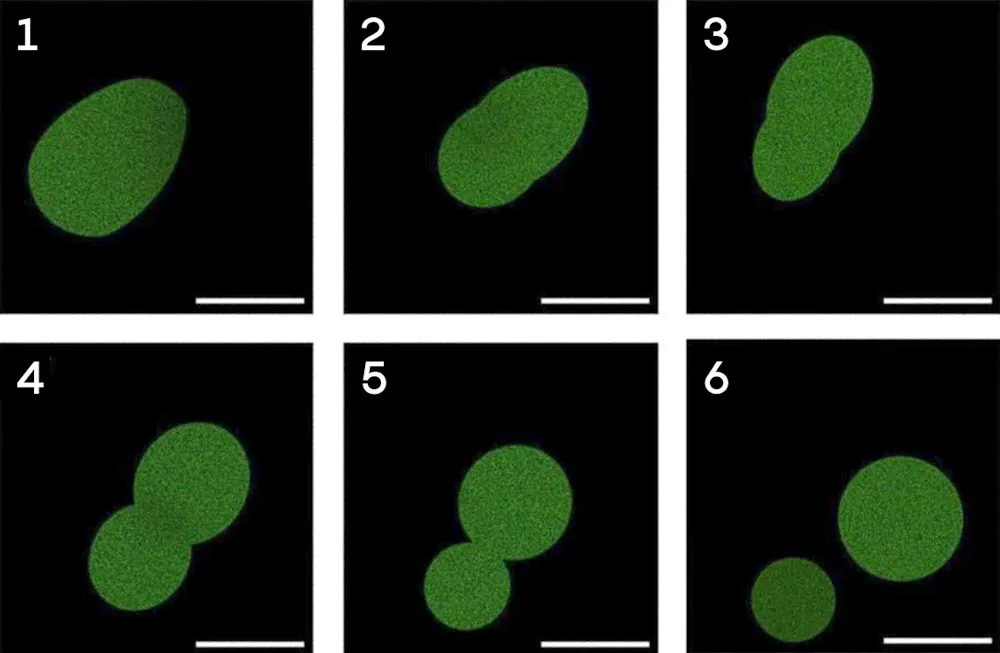
<nodes> <node id="689472">  <title><![CDATA[2026 Frontiers in Science: Advancing Space Exploration]]></title>  <uid>36583</uid>  <body><![CDATA[<p dir="ltr">One day after the historic Artemis II launch, the College of Sciences welcomed more than 150 researchers, students, and community members to its signature&nbsp;<a href="https://cos.gatech.edu/frontiers-space">Frontiers in Science</a> conference. Held on April 2, the full-day event focused on space research guiding discovery and innovation.</p><p dir="ltr">As during previous editions, this year’s conference featured more than two dozen scientists, engineers, policy experts, and thought leaders from Georgia Tech and beyond, illustrating how collaboration across fields – from science and engineering to public policy and international affairs – helps to advance strategic research priorities.&nbsp;</p><p dir="ltr">“Frontiers is about discovery and connections across disciplines and generations,” says<strong>&nbsp;</strong><a href="https://lozier.eas.gatech.edu/"><strong>Susan Lozier</strong></a>, dean of the College of Sciences and Betsy Middleton and John Clark Sutherland Chair. “This edition provided an inspiring glimpse into the future of space exploration and the many ways Georgia Tech is contributing to research and missions seeking answers to what lies beyond our planet.”&nbsp;</p><p dir="ltr"><strong>Commitment to Space</strong></p><p dir="ltr">Space research is a key institutional priority at Georgia Tech, which is home to numerous academic and research programs in planetary sciences, robotics, mission design, space policy, and other areas.&nbsp;</p><p dir="ltr">The recently established&nbsp;<a href="https://space.gatech.edu/">Space Research Institute</a> (SRI) serves as the central hub connecting the broad range of space-related research across campus. Led by&nbsp;<a href="https://people.research.gatech.edu/node/2885"><strong>Jud Ready</strong></a>, who also serves as principal research engineer at the Georgia Tech Research Institute, SRI has expanded support for space research and commercialization through initiatives such as the&nbsp;<a href="https://news.research.gatech.edu/2026/02/26/new-space-startups-take-georgia-tech">CreationsVC Space Fellows Program</a> and&nbsp;<a href="https://news.research.gatech.edu/2025/12/10/georgia-techs-space-research-institute-announces-inaugural-seed-grant-awardees">Centers, Programs, and Initiatives seed grant program</a>.</p><p dir="ltr">SRI’s efforts are in line with Georgia Tech’s long-standing contribution to space exploration. Hundreds of Yellow Jacket alumni work in the space sector, including several graduates who are playing key roles in the Artemis program. To date, more than a dozen Georgia Tech alumni have traveled to space.</p><p dir="ltr"><strong>Exploring the Final Frontier</strong></p><p dir="ltr">The conference featured a series of panels and discussions led by faculty and researchers from the Colleges of Sciences and Engineering as well as the Ivan Allen College of Liberal Arts.&nbsp;</p><p dir="ltr">Sessions explored how researchers are studying the processes and conditions that support planetary habitability, seeking to answer one of humanity’s greatest questions: Does life exist beyond Earth? Speakers also examined how analog fieldwork in Earth’s extreme environments can inform space exploration, and how space research, in turn, can deepen our understanding of our own world.</p><p dir="ltr">Additional conversations centered on building better space missions through improved understanding of team and individual resilience, data collection, navigation, and the development of advanced technologies like the robots developed through the&nbsp;<a href="https://cos.gatech.edu/news/good-dog-lassie-spirit-learns-walk-moon">NASA LASSIE Project</a>.&nbsp;</p><p dir="ltr">Frontiers also highlighted Georgia Tech’s commitment to preparing the next generation of space scientists, engineers, and leaders. Student training and engagement were recurring themes throughout the day, with speakers emphasizing opportunities for student-led and student-run missions and research. A panel of Georgia Tech alumni shared their own STEM career journeys, challenging the idea of “one right path” to success — and acknowledging the resources and opportunities available at the Institute.&nbsp;</p><p dir="ltr">A highlight of the conference was a fireside chat with Atlanta-native, retired U.S. Army Colonel and NASA Astronaut&nbsp;<a href="https://www.nasa.gov/wp-content/uploads/2016/03/kimbrough-rs.pdf"><strong>R. Shane Kimbrough</strong></a> (M.S. Operations Research 1998). Kimbrough, who spent a total of 388 days in space and performed nine spacewalks across three missions, reflected on his career and the evolution of spaceflight. He emphasized the expanding role of public-private and international partnerships in advancing ambitious goals, such as creating a permanent human outpost on the Moon.&nbsp;</p><p dir="ltr"><strong>Policy and Public</strong></p><p dir="ltr">The conference also explored how policy influences space discovery and innovation, with discussions touching on such issues as space security, access, governance, sustainability —&nbsp;and the influence of technology and science fiction on public perception and policy.&nbsp;</p><p dir="ltr">Panelists described current policy frameworks governing outer space as struggling to keep pace with rapidly advancing technologies and expanding activities. According to these experts, increasing tensions among commercial, research, and recreational uses of space call for greater coordination among private and government entities to balance competing priorities while maximizing opportunities for innovation and exploration.&nbsp;</p><p dir="ltr">The conference was punctuated by a networking lunch connecting attendees with Atlanta’s public astronomy community – including partners at several universities and the Georgia Tech Astronomy Club, which set up telescopes for attendees to safely observe the sun. Later that evening, the&nbsp;<a href="https://astronomy.gatech.edu/Observatory.php">Georgia Tech Observatory</a> hosted its Public Night, welcoming the broader Atlanta community to campus for telescope views of Jupiter, the Orion Nebula, and other celestial bodies.&nbsp;</p><p dir="ltr">The Observatory Night was a fitting conclusion to a full day focused on Georgia Tech’s commitment and contributions to inspiring future generations of space explorers through research, education, and outreach.&nbsp;</p><p dir="ltr"><em>Experience the Frontiers conference in pictures on the&nbsp;</em><a href="https://www.flickr.com/photos/gtsciences/albums/72177720332868366/"><em>College of Sciences’ Flickr account</em></a>.</p>]]></body>  <author>lvidal7</author>  <status>1</status>  <created>1775484300</created>  <gmt_created>2026-04-06 14:05:00</gmt_created>  <changed>1775856206</changed>  <gmt_changed>2026-04-10 21:23:26</gmt_changed>  <promote>0</promote>  <sticky>0</sticky>  <teaser><![CDATA[One day after the historic Artemis II launch, the College of Sciences welcomed more than 150 researchers, students, and community members to its signature Frontiers in Science conference.]]></teaser>  <type>news</type>  <sentence><![CDATA[One day after the historic Artemis II launch, the College of Sciences welcomed more than 150 researchers, students, and community members to its signature Frontiers in Science conference.]]></sentence>  <summary><![CDATA[<p>One day after the historic Artemis II launch, the College of Sciences welcomed more than 150 researchers, students, and community members to its signature&nbsp;Frontiers in Science conference.</p>]]></summary>  <dateline>2026-04-06T00:00:00-04:00</dateline>  <iso_dateline>2026-04-06T00:00:00-04:00</iso_dateline>  <gmt_dateline>2026-04-06 00:00:00</gmt_dateline>  <subtitle>    <![CDATA[]]>  </subtitle>  <sidebar><![CDATA[]]></sidebar>  <email><![CDATA[lvidal7@gatech.edu]]></email>  <location></location>  <contact><![CDATA[<p>Writer: Lindsay C. Vidal</p>]]></contact>  <boilerplate></boilerplate>  <boilerplate_text><![CDATA[]]></boilerplate_text>  <media>          <item>679862</item>          <item>679861</item>          <item>679863</item>          <item>679860</item>          <item>679858</item>          <item>679859</item>      </media>  <hg_media>          <item>          <nid>679862</nid>          <type>image</type>          <title><![CDATA[ Retired NASA astronaut R. Shane Kimbrough (M.S. Operations Research 1998) reflects on his career and the evolution of spaceflight.]]></title>          <body><![CDATA[]]></body>                      <image_name><![CDATA[55185614870_ef06b5fa33_o.jpg]]></image_name>            <image_path><![CDATA[/sites/default/files/2026/04/06/55185614870_ef06b5fa33_o.jpg]]></image_path>            <image_full_path><![CDATA[http://hg.gatech.edu//sites/default/files/2026/04/06/55185614870_ef06b5fa33_o.jpg]]></image_full_path>            <image_740><![CDATA[http://hg.gatech.edu/sites/default/files/styles/740xx_scale/public/sites/default/files/2026/04/06/55185614870_ef06b5fa33_o.jpg?itok=vX9D3t0C]]></image_740>            <image_mime>image/jpeg</image_mime>            <image_alt><![CDATA[R. Shane Kimbrough speaks in front of room of people during a fireside chat]]></image_alt>                    <created>1775484488</created>          <gmt_created>2026-04-06 14:08:08</gmt_created>          <changed>1775484488</changed>          <gmt_changed>2026-04-06 14:08:08</gmt_changed>      </item>          <item>          <nid>679861</nid>          <type>image</type>          <title><![CDATA[Joyce Shi Sim, assistant professor in the School of Earth and Atmospheric Sciences]]></title>          <body><![CDATA[]]></body>                      <image_name><![CDATA[55185376153_8350a8e96f_o.jpg]]></image_name>            <image_path><![CDATA[/sites/default/files/2026/04/06/55185376153_8350a8e96f_o.jpg]]></image_path>            <image_full_path><![CDATA[http://hg.gatech.edu//sites/default/files/2026/04/06/55185376153_8350a8e96f_o.jpg]]></image_full_path>            <image_740><![CDATA[http://hg.gatech.edu/sites/default/files/styles/740xx_scale/public/sites/default/files/2026/04/06/55185376153_8350a8e96f_o.jpg?itok=8PxlFkWH]]></image_740>            <image_mime>image/jpeg</image_mime>            <image_alt><![CDATA[Joyce Shi Sim holds a microphone and laser pointer while presenting to room of people]]></image_alt>                    <created>1775484488</created>          <gmt_created>2026-04-06 14:08:08</gmt_created>          <changed>1775484488</changed>          <gmt_changed>2026-04-06 14:08:08</gmt_changed>      </item>          <item>          <nid>679863</nid>          <type>image</type>          <title><![CDATA[Professor James Wray, professor in the School of Earth and Atmospheric Sciences]]></title>          <body><![CDATA[]]></body>                      <image_name><![CDATA[55184328417_3a02de62dc_o.jpg]]></image_name>            <image_path><![CDATA[/sites/default/files/2026/04/06/55184328417_3a02de62dc_o.jpg]]></image_path>            <image_full_path><![CDATA[http://hg.gatech.edu//sites/default/files/2026/04/06/55184328417_3a02de62dc_o.jpg]]></image_full_path>            <image_740><![CDATA[http://hg.gatech.edu/sites/default/files/styles/740xx_scale/public/sites/default/files/2026/04/06/55184328417_3a02de62dc_o.jpg?itok=-oN0M6RC]]></image_740>            <image_mime>image/jpeg</image_mime>            <image_alt><![CDATA[Professor James Wray holds microphone and points to powerpoint slide during his presentation]]></image_alt>                    <created>1775485879</created>          <gmt_created>2026-04-06 14:31:19</gmt_created>          <changed>1775485923</changed>          <gmt_changed>2026-04-06 14:32:03</gmt_changed>      </item>          <item>          <nid>679860</nid>          <type>image</type>          <title><![CDATA[ [From left] Professor Glenn Lightsey, Professor Thom Orlando, Moderator Naia Butler-Craig  (M.S. AE 2023, Ph.D. AE 2026), Associate Professor Brian Gunter, and Research Engineer I Ava Thrasher ]]></title>          <body><![CDATA[]]></body>                      <image_name><![CDATA[55184003111_c862d712f2_o.jpg]]></image_name>            <image_path><![CDATA[/sites/default/files/2026/04/06/55184003111_c862d712f2_o.jpg]]></image_path>            <image_full_path><![CDATA[http://hg.gatech.edu//sites/default/files/2026/04/06/55184003111_c862d712f2_o.jpg]]></image_full_path>            <image_740><![CDATA[http://hg.gatech.edu/sites/default/files/styles/740xx_scale/public/sites/default/files/2026/04/06/55184003111_c862d712f2_o.jpg?itok=N61hU25h]]></image_740>            <image_mime>image/jpeg</image_mime>            <image_alt><![CDATA[Group photo of five people, including Georgia Tech faculty]]></image_alt>                    <created>1775484488</created>          <gmt_created>2026-04-06 14:08:08</gmt_created>          <changed>1775484488</changed>          <gmt_changed>2026-04-06 14:08:08</gmt_changed>      </item>          <item>          <nid>679858</nid>          <type>image</type>          <title><![CDATA[ The Georgia Tech Astronomy Club set up telescopes for attendees to safely observe the sun.]]></title>          <body><![CDATA[]]></body>                      <image_name><![CDATA[55185476429_49ab238e05_o.jpg]]></image_name>            <image_path><![CDATA[/sites/default/files/2026/04/06/55185476429_49ab238e05_o.jpg]]></image_path>            <image_full_path><![CDATA[http://hg.gatech.edu//sites/default/files/2026/04/06/55185476429_49ab238e05_o.jpg]]></image_full_path>            <image_740><![CDATA[http://hg.gatech.edu/sites/default/files/styles/740xx_scale/public/sites/default/files/2026/04/06/55185476429_49ab238e05_o.jpg?itok=cEulsmP6]]></image_740>            <image_mime>image/jpeg</image_mime>            <image_alt><![CDATA[Three people stand outdoors with one person looking at the sun through a telescope]]></image_alt>                    <created>1775484488</created>          <gmt_created>2026-04-06 14:08:08</gmt_created>          <changed>1775484488</changed>          <gmt_changed>2026-04-06 14:08:08</gmt_changed>      </item>          <item>          <nid>679859</nid>          <type>image</type>          <title><![CDATA[Georgia Tech Observatory’s April 2, 2026 Public Night]]></title>          <body><![CDATA[]]></body>                      <image_name><![CDATA[55185567256_ba1be5a592_o.jpg]]></image_name>            <image_path><![CDATA[/sites/default/files/2026/04/06/55185567256_ba1be5a592_o.jpg]]></image_path>            <image_full_path><![CDATA[http://hg.gatech.edu//sites/default/files/2026/04/06/55185567256_ba1be5a592_o.jpg]]></image_full_path>            <image_740><![CDATA[http://hg.gatech.edu/sites/default/files/styles/740xx_scale/public/sites/default/files/2026/04/06/55185567256_ba1be5a592_o.jpg?itok=lRwQ0IoP]]></image_740>            <image_mime>image/jpeg</image_mime>            <image_alt><![CDATA[Adults and children observing the night sky through a computer that is connected to a telescope]]></image_alt>                    <created>1775484488</created>          <gmt_created>2026-04-06 14:08:08</gmt_created>          <changed>1775484488</changed>          <gmt_changed>2026-04-06 14:08:08</gmt_changed>      </item>      </hg_media>  <related>          <link>        <url><![CDATA[https://cos.gatech.edu/frontiers-space]]></url>        <title><![CDATA[2026 Frontiers in Science: Advancing Space Exploration - Program]]></title>      </link>          <link>        <url><![CDATA[https://cos.gatech.edu/news/38-billion-year-old-titanium-clue-sheds-new-light-moons-early-chemistry]]></url>        <title><![CDATA[3.8‑Billion‑Year‑Old Titanium Clue Sheds New Light on the Moon’s Early Chemistry]]></title>      </link>          <link>        <url><![CDATA[https://research.gatech.edu/georgia-tech-pioneers-first-space-sustainability-course-us]]></url>        <title><![CDATA[Georgia Tech Pioneers First Space Sustainability Course in the U.S.]]></title>      </link>          <link>        <url><![CDATA[https://coe.gatech.edu/news/2026/03/welcome-future-artemis-ii-set-launch-moon]]></url>        <title><![CDATA[‘Welcome to the Future!’ Artemis II Set for Launch to the Moon]]></title>      </link>          <link>        <url><![CDATA[https://news.research.gatech.edu/2026/02/26/new-space-startups-take-georgia-tech]]></url>        <title><![CDATA[New Space Startups Take Off at Georgia Tech]]></title>      </link>          <link>        <url><![CDATA[https://news.research.gatech.edu/2025/12/10/georgia-techs-space-research-institute-announces-inaugural-seed-grant-awardees]]></url>        <title><![CDATA[Georgia Tech’s Space Research Institute Announces Inaugural Seed Grant Awardees]]></title>      </link>      </related>  <files>      </files>  <groups>          <group id="1278"><![CDATA[College of Sciences]]></group>          <group id="1188"><![CDATA[Research Horizons]]></group>          <group id="1275"><![CDATA[School of Biological Sciences]]></group>          <group id="85951"><![CDATA[School of Chemistry and Biochemistry]]></group>          <group id="364801"><![CDATA[School of Earth and Atmospheric Sciences (EAS)]]></group>          <group id="126011"><![CDATA[School of Physics]]></group>          <group id="443951"><![CDATA[School of Psychology]]></group>          <group id="660370"><![CDATA[Space]]></group>      </groups>  <categories>          <category tid="136"><![CDATA[Aerospace]]></category>          <category tid="135"><![CDATA[Research]]></category>          <category tid="133"><![CDATA[Special Events and Guest Speakers]]></category>          <category tid="134"><![CDATA[Student and Faculty]]></category>      </categories>  <news_terms>          <term tid="136"><![CDATA[Aerospace]]></term>          <term tid="135"><![CDATA[Research]]></term>          <term tid="133"><![CDATA[Special Events and Guest Speakers]]></term>          <term tid="134"><![CDATA[Student and Faculty]]></term>      </news_terms>  <keywords>          <keyword tid="192249"><![CDATA[cos-community]]></keyword>          <keyword tid="192252"><![CDATA[cos-planetary]]></keyword>          <keyword tid="4896"><![CDATA[College of Sciences]]></keyword>          <keyword tid="172511"><![CDATA[Frontiers Conference]]></keyword>          <keyword tid="187915"><![CDATA[go-researchnews]]></keyword>          <keyword tid="194975"><![CDATA[go-space]]></keyword>      </keywords>  <core_research_areas>          <term tid="193657"><![CDATA[Space Research Initiative]]></term>      </core_research_areas>  <news_room_topics>          <topic tid="71881"><![CDATA[Science and Technology]]></topic>      </news_room_topics>  <files></files>  <related></related>  <userdata><![CDATA[]]></userdata></node><node id="689587">  <title><![CDATA[Georgia Tech Researchers Use Statistics and Math to Understand How The Brain Works]]></title>  <uid>35575</uid>  <body><![CDATA[<p>Nothing rivals the human brain’s complexity. Its 86 billion neurons and 85 billion other cells make an estimated 100 trillion connections. If the brain were a computer, it would perform an exaflop (a billion-billion) mathematical calculations every second and use the equivalent of only 20 watts of power. As impressive as the brain is, neurologists can’t fully explain how neurons work together.</p><p>To help find answers, researchers at the <a href="https://neuro.gatech.edu">Institute for Neuroscience, Neurotechnology, and Society</a> (INNS) are using math, data, and AI to unlock the secrets of thought. Together they are helping turn the brain’s raw electrical “noise” into real insights about how people think, move, and perceive the world.</p><p>Fair warning: Prepare your neurons for the complexity of this brain research ahead.</p><h3>Building AI like a Brain</h3><p>What if artificial neurons in AI programs were arranged as they are in the brain?</p><p>AI programs would then help us understand why the brain is organized the way it is. This neuro-AI synthesis would also work faster, use less energy, and be easier to interpret. Creating such systems is the goal of <a href="https://psychology.gatech.edu/people/apurva-ratan-murty">Apurva Ratan Murty</a>, an assistant professor of <a href="https://psychology.gatech.edu/">Psychology</a> who is creating topographic AI models like the one above of three domains — vision, audition, and language inspired by the brain. In the near future, he predicts doctors might be able to use these patterns to predict the effects of brain lesions and other disorders. “We’re not there yet,” he says. “But our work brings us significantly closer to that future than ever before.”</p><h3>Computing Thought &amp; Movement</h3><p>How cats walk keeps <a href="https://people.research.gatech.edu/node/5354">Chethan Pandarinath</a> on his toes. This biomedical engineer uses sensors to analyze how two sets of feline leg muscles — flexors and extensors — are controlled by the spinal cord. Understanding how that happens could help patients partially paralyzed from spinal cord injuries, strokes, or progressive neuro-degenerative diseases get back on their feet again. “My lab is using AI tools that allow us to turn complex spinal cord activity data into something we can interpret. It tells us there’s a simple underlying structure behind the complex activity patterns,” says the associate professor.</p><h3>Revealing the Brain’s Spike Patterns</h3><p>“The brain is like a symphony conductor,” says <a href="https://people.research.gatech.edu/node/3736">Simon Sponberg</a>. “Individual instruments have some independent control, but most of the music comes from the brain’s precise coordination of notes among the different players in the body.” This <a href="https://physics.gatech.edu/">physics</a> professor studies the fantastically fast-beating wings of the hummingbird-sized hawk moth (Manduca sexta). Its agile flight movement comes as a result of spikes in electrical activity in 10 muscles. Sponberg found something that surprised him — the brain focuses less on creating the number of spikes than in orchestrating their precise patterns over time. To Sponberg, every millisecond matters. “We are just beginning to understand how the nervous system first acquires precisely timed spiking patterns during development,” he says.</p><h3>Predicting Decisions Through Statistics</h3><p>Put a mouse in a maze with food far away, and it will learn to find it. But life for mice — and people — isn’t so simple. Sometimes they want to explore, only want water, or just want to go home. What’s more, animals make decisions based on their history, not just on how they feel at the moment. To dig deeper into the decision-making process, <a href="https://people.research.gatech.edu/node/18557">Anqi Wu</a>, an assistant professor in the <a href="https://cse.gatech.edu/">School of Computational Science and Engineering</a>, is giving mice more options. By using a new computational framework called SWIRL (Switching Inverse Reinforcement Learning), her findings have outperformed models that fail to take historical behavior into account. “We’re seeking to understand not only animal behavior but also human behavior to gain insight into the human decision-making process over a long period of time,” she says.</p><h3>Modeling the Mind’s Wiring with Math</h3><p>Connectivity shapes cognition in the cerebral cortex, a layered structure in the brain. The visual cortex, in particular, processes visual data from the retina relayed through the Lateral Geniculate Nucleus (LGN) in the thalamus, and directs it to the correct cognitive domain in the brain. How it does this is the mystery that computational neuroscientist <a href="https://people.research.gatech.edu/node/13005">Hannah Choi</a> wants to solve. “The big question I’m interested in is how network connectivity patterns in the architecture of the LGN are related to computations,” says this assistant <a href="https://math.gatech.edu/">math</a> professor. To find answers, she shows mice repeated image patterns such as flower-cat-dog-house and then disrupts the pattern. The goal? To grasp how the thalamus’s nonlinear dynamical system works. If scientists and doctors better understand how brain regions are wired together, such knowledge could lead to better disease treatment.</p><p><em>This story was originally published through the Georgia Tech Alumni Magazine. Read the original publication </em><a href="https://www.gtalumni.org/news/2026/georgia-tech-researchers-use-statistics-and-math-to-understand-how-the-brain-works.html"><em>here</em></a><em>.</em></p>]]></body>  <author>adavidson38</author>  <status>1</status>  <created>1775746260</created>  <gmt_created>2026-04-09 14:51:00</gmt_created>  <changed>1775856097</changed>  <gmt_changed>2026-04-10 21:21:37</gmt_changed>  <promote>0</promote>  <sticky>0</sticky>  <teaser><![CDATA[Researchers at Georgia Tech are using math, science, and artificial intelligence to better understand how people think, move, and perceive the world.]]></teaser>  <type>news</type>  <sentence><![CDATA[Researchers at Georgia Tech are using math, science, and artificial intelligence to better understand how people think, move, and perceive the world.]]></sentence>  <summary><![CDATA[<p><strong>Researchers at Georgia Tech are using math, science, and artificial intelligence to better understand how people think, move, and perceive the world.</strong></p>]]></summary>  <dateline>2026-04-09T00:00:00-04:00</dateline>  <iso_dateline>2026-04-09T00:00:00-04:00</iso_dateline>  <gmt_dateline>2026-04-09 00:00:00</gmt_dateline>  <subtitle>    <![CDATA[]]>  </subtitle>  <sidebar><![CDATA[]]></sidebar>  <email><![CDATA[audra.davidson@research.gatech.edu]]></email>  <location></location>  <contact><![CDATA[<p><strong>Writer:</strong> George Spencer</p><p><strong>News and Media Contact:</strong> <a href="mailto:audra.davidson@research.gatech.edu">Audra Davidson</a></p>]]></contact>  <boilerplate></boilerplate>  <boilerplate_text><![CDATA[]]></boilerplate_text>  <media>          <item>679908</item>          <item>679903</item>          <item>679904</item>          <item>679906</item>          <item>679905</item>          <item>679907</item>      </media>  <hg_media>          <item>          <nid>679908</nid>          <type>image</type>          <title><![CDATA[AdobeStock_506880018.jpeg]]></title>          <body><![CDATA[<p>Researchers at Georgia Tech are using math, science, and artificial intelligence to better understand how people think, move, and perceive the world.</p>]]></body>                      <image_name><![CDATA[AdobeStock_506880018.jpeg]]></image_name>            <image_path><![CDATA[/sites/default/files/2026/04/09/AdobeStock_506880018.jpeg]]></image_path>            <image_full_path><![CDATA[http://hg.gatech.edu//sites/default/files/2026/04/09/AdobeStock_506880018.jpeg]]></image_full_path>            <image_740><![CDATA[http://hg.gatech.edu/sites/default/files/styles/740xx_scale/public/sites/default/files/2026/04/09/AdobeStock_506880018.jpeg?itok=9eANbd47]]></image_740>            <image_mime>image/jpeg</image_mime>            <image_alt><![CDATA[Digital illustration of a human brain split down the middle: the left side is filled with white mathematical equations, diagrams, and formulas, while the right side is surrounded by colorful, flowing lines and abstract wave patterns against a dark blue background.]]></image_alt>                    <created>1775747910</created>          <gmt_created>2026-04-09 15:18:30</gmt_created>          <changed>1775747910</changed>          <gmt_changed>2026-04-09 15:18:30</gmt_changed>      </item>          <item>          <nid>679903</nid>          <type>image</type>          <title><![CDATA[Brain-Data-New-480x3301.jpg]]></title>          <body><![CDATA[<p><em>Caption: This image shows a topographic vision model trained to have a brain-like organization.</em></p>]]></body>                      <image_name><![CDATA[Brain-Data-New-480x3301.jpg]]></image_name>            <image_path><![CDATA[/sites/default/files/2026/04/09/Brain-Data-New-480x3301.jpg]]></image_path>            <image_full_path><![CDATA[http://hg.gatech.edu//sites/default/files/2026/04/09/Brain-Data-New-480x3301.jpg]]></image_full_path>            <image_740><![CDATA[http://hg.gatech.edu/sites/default/files/styles/740xx_scale/public/sites/default/files/2026/04/09/Brain-Data-New-480x3301.jpg?itok=Vv_QUuT4]]></image_740>            <image_mime>image/jpeg</image_mime>            <image_alt><![CDATA[Three layered, abstract heat‑map style grids in shades of blue, red, and beige, stacked to resemble data layers or visualization panels.]]></image_alt>                    <created>1775746394</created>          <gmt_created>2026-04-09 14:53:14</gmt_created>          <changed>1775746394</changed>          <gmt_changed>2026-04-09 14:53:14</gmt_changed>      </item>          <item>          <nid>679904</nid>          <type>image</type>          <title><![CDATA[Chethan-480x330.jpg]]></title>          <body><![CDATA[<p><em>Caption: This shows how spinal cord activity guides transitions in muscle output for extensor muscles.</em></p>]]></body>                      <image_name><![CDATA[Chethan-480x330.jpg]]></image_name>            <image_path><![CDATA[/sites/default/files/2026/04/09/Chethan-480x330.jpg]]></image_path>            <image_full_path><![CDATA[http://hg.gatech.edu//sites/default/files/2026/04/09/Chethan-480x330.jpg]]></image_full_path>            <image_740><![CDATA[http://hg.gatech.edu/sites/default/files/styles/740xx_scale/public/sites/default/files/2026/04/09/Chethan-480x330.jpg?itok=-qCXf4Mh]]></image_740>            <image_mime>image/jpeg</image_mime>            <image_alt><![CDATA[Two side‑by‑side scientific diagrams labeled Cat 1 and Cat 2 showing clusters of colored data points and curved gray lines representing muscle‑activity patterns during movement. Each diagram includes blue, green, and yellow point clusters and marked ‘extensor onset’ and ‘extensor offset’ angles.]]></image_alt>                    <created>1775746465</created>          <gmt_created>2026-04-09 14:54:25</gmt_created>          <changed>1775746465</changed>          <gmt_changed>2026-04-09 14:54:25</gmt_changed>      </item>          <item>          <nid>679906</nid>          <type>image</type>          <title><![CDATA[new_figure-480x330.jpg]]></title>          <body><![CDATA[<p><em>Caption: This shows how mice behave differently when they are pursuing different goals. </em></p>]]></body>                      <image_name><![CDATA[new_figure-480x330.jpg]]></image_name>            <image_path><![CDATA[/sites/default/files/2026/04/09/new_figure-480x330.jpg]]></image_path>            <image_full_path><![CDATA[http://hg.gatech.edu//sites/default/files/2026/04/09/new_figure-480x330.jpg]]></image_full_path>            <image_740><![CDATA[http://hg.gatech.edu/sites/default/files/styles/740xx_scale/public/sites/default/files/2026/04/09/new_figure-480x330.jpg?itok=uQAhFspK]]></image_740>            <image_mime>image/jpeg</image_mime>            <image_alt><![CDATA[Three maze-like diagrams labeled ‘water,’ ‘home,’ and ‘explore,’ each showing colored paths representing an animal’s movement through the maze. The paths shift from dark purple at the start to bright yellow at the end, indicating progression over time according to the color scale on the right]]></image_alt>                    <created>1775746563</created>          <gmt_created>2026-04-09 14:56:03</gmt_created>          <changed>1775746563</changed>          <gmt_changed>2026-04-09 14:56:03</gmt_changed>      </item>          <item>          <nid>679905</nid>          <type>image</type>          <title><![CDATA[Brain-Data-Sponberg-480x330.jpg]]></title>          <body><![CDATA[<p><em>Caption: This shows the spike patterns of a hawk moth. Motor systems use spike codes to control motor output.</em></p>]]></body>                      <image_name><![CDATA[Brain-Data-Sponberg-480x330.jpg]]></image_name>            <image_path><![CDATA[/sites/default/files/2026/04/09/Brain-Data-Sponberg-480x330.jpg]]></image_path>            <image_full_path><![CDATA[http://hg.gatech.edu//sites/default/files/2026/04/09/Brain-Data-Sponberg-480x330.jpg]]></image_full_path>            <image_740><![CDATA[http://hg.gatech.edu/sites/default/files/styles/740xx_scale/public/sites/default/files/2026/04/09/Brain-Data-Sponberg-480x330.jpg?itok=GgEWRQ-g]]></image_740>            <image_mime>image/jpeg</image_mime>            <image_alt><![CDATA[Diagram showing a hawk moth in the center surrounded by twelve circular charts. Each chart displays proportional black and blue segments representing spike count and spike timing data for left and right muscle groups. A legend explains the colors, and text below notes that the values show mutual information estimates for 10 muscles across seven moths]]></image_alt>                    <created>1775746508</created>          <gmt_created>2026-04-09 14:55:08</gmt_created>          <changed>1775746508</changed>          <gmt_changed>2026-04-09 14:55:08</gmt_changed>      </item>          <item>          <nid>679907</nid>          <type>image</type>          <title><![CDATA[GaTech_Brain-Data_Hannanh-Choi_480x330.jpg]]></title>          <body><![CDATA[<p><em>Caption: This shows how visual data from the retina is directed to the correct cognitive domain in the brain through a region of the visual cortex.</em></p>]]></body>                      <image_name><![CDATA[GaTech_Brain-Data_Hannanh-Choi_480x330.jpg]]></image_name>            <image_path><![CDATA[/sites/default/files/2026/04/09/GaTech_Brain-Data_Hannanh-Choi_480x330.jpg]]></image_path>            <image_full_path><![CDATA[http://hg.gatech.edu//sites/default/files/2026/04/09/GaTech_Brain-Data_Hannanh-Choi_480x330.jpg]]></image_full_path>            <image_740><![CDATA[http://hg.gatech.edu/sites/default/files/styles/740xx_scale/public/sites/default/files/2026/04/09/GaTech_Brain-Data_Hannanh-Choi_480x330.jpg?itok=eh3JkYlF]]></image_740>            <image_mime>image/jpeg</image_mime>            <image_alt><![CDATA[Diagram showing neural connectivity between cortical layers in regions labeled V1 and LM. Arrows connect circular nodes representing layers L2/3, L4, and L5, with green and orange arrows indicating directional pathways. A magnified inset on the right illustrates a simplified microcircuit with shapes labeled Pyr, Sst, and Vip connected by colored arrows.]]></image_alt>                    <created>1775746605</created>          <gmt_created>2026-04-09 14:56:45</gmt_created>          <changed>1775746605</changed>          <gmt_changed>2026-04-09 14:56:45</gmt_changed>      </item>      </hg_media>  <related>          <link>        <url><![CDATA[https://neuro.gatech.edu/georgia-tech-uses-computing-and-engineering-methods-shift-neuroscience-paradigms]]></url>        <title><![CDATA[Georgia Tech Uses Computing and Engineering Methods to Shift Neuroscience Paradigms]]></title>      </link>          <link>        <url><![CDATA[https://neuro.gatech.edu/head-toe-georgia-tech-researchers-treat-entire-human-body-through-neuroscience-research]]></url>        <title><![CDATA[Head to Toe: Georgia Tech Researchers Treat the Entire Human Body Through Neuroscience Research]]></title>      </link>          <link>        <url><![CDATA[https://neuro.gatech.edu/better-brain-machine-interfaces-could-allow-paralyzed-communicate-again]]></url>        <title><![CDATA[Better Brain-Machine Interfaces Could Allow the Paralyzed to Communicate Again]]></title>      </link>      </related>  <files>      </files>  <groups>          <group id="1278"><![CDATA[College of Sciences]]></group>          <group id="66220"><![CDATA[Neuro]]></group>          <group id="1292"><![CDATA[Parker H. Petit Institute for Bioengineering and Bioscience (IBB)]]></group>          <group id="1188"><![CDATA[Research Horizons]]></group>          <group id="1279"><![CDATA[School of Mathematics]]></group>          <group id="126011"><![CDATA[School of Physics]]></group>          <group id="443951"><![CDATA[School of Psychology]]></group>      </groups>  <categories>          <category tid="194606"><![CDATA[Artificial Intelligence]]></category>          <category tid="138"><![CDATA[Biotechnology, Health, Bioengineering, Genetics]]></category>          <category tid="146"><![CDATA[Life Sciences and Biology]]></category>          <category tid="150"><![CDATA[Physics and Physical Sciences]]></category>          <category tid="135"><![CDATA[Research]]></category>      </categories>  <news_terms>          <term tid="194606"><![CDATA[Artificial Intelligence]]></term>          <term tid="138"><![CDATA[Biotechnology, Health, Bioengineering, Genetics]]></term>          <term tid="146"><![CDATA[Life Sciences and Biology]]></term>          <term tid="150"><![CDATA[Physics and Physical Sciences]]></term>          <term tid="135"><![CDATA[Research]]></term>      </news_terms>  <keywords>          <keyword tid="187915"><![CDATA[go-researchnews]]></keyword>          <keyword tid="172970"><![CDATA[go-neuro]]></keyword>      </keywords>  <core_research_areas>          <term tid="39441"><![CDATA[Bioengineering and Bioscience]]></term>          <term tid="193656"><![CDATA[Neuro Next Initiative]]></term>      </core_research_areas>  <news_room_topics>          <topic tid="71881"><![CDATA[Science and Technology]]></topic>      </news_room_topics>  <files></files>  <related></related>  <userdata><![CDATA[]]></userdata></node><node id="689630">  <title><![CDATA[Georgia Tech Researchers Create “Living” Polymers That Grow, Heal, and Transform ]]></title>  <uid>35851</uid>  <body><![CDATA[<p>Most plastic and rubber materials remain in a fixed shape from the moment they leave the mold. Their size and function are the same until they wear out or break. But what if synthetic materials could behave more like living organisms, growing or repairing themselves when needed?</p><p>A research team led by <a href="https://me.gatech.edu/faculty/hu-2"><strong>Yuhang Hu</strong></a>, associate professor in the <a href="https://www.me.gatech.edu/"><strong>George W. Woodruff School of Mechanical Engineering</strong></a> and the&nbsp;<a href="https://www.chbe.gatech.edu/"><strong>School of Chemical and Biomolecular Engineering</strong></a>, has created a new material designed to do exactly that. In a new <a href="https://advanced.onlinelibrary.wiley.com/doi/10.1002/adma.202518567"><strong>study published in </strong><em><strong>Advanced Materials</strong></em></a>, Hu and her collaborators describe a groundbreaking class of “living” polymers that can grow, shrink, heal, and even regenerate long after fabrication.</p><p>Their work combines advances in chemistry, mechanics, and materials design into a polymer platform that could reshape how engineered products are built, maintained, and recycled.</p><p><a href="https://www.me.gatech.edu/news/georgia-tech-researchers-create-living-polymers-grow-heal-and-transform">Read the full story on the George W. Woodruff School of Mechanical Engineering website</a>.</p>]]></body>  <author>aritchie6</author>  <status>1</status>  <created>1775846960</created>  <gmt_created>2026-04-10 18:49:20</gmt_created>  <changed>1775847068</changed>  <gmt_changed>2026-04-10 18:51:08</gmt_changed>  <promote>0</promote>  <sticky>0</sticky>  <teaser><![CDATA[A research team led by Yuhang Hu describe a groundbreaking class of “living” polymers that can grow, shrink, heal, and even regenerate long after fabrication.]]></teaser>  <type>news</type>  <sentence><![CDATA[A research team led by Yuhang Hu describe a groundbreaking class of “living” polymers that can grow, shrink, heal, and even regenerate long after fabrication.]]></sentence>  <summary><![CDATA[<p>Most plastic and rubber materials remain in a fixed shape from the moment they leave the mold. Their size and function are the same until they wear out or break. But what if synthetic materials could behave more like living organisms, growing or repairing themselves when needed?</p><p>A research team led by Yuhang Hu, associate professor in the George W. Woodruff School of Mechanical Engineering and the School of Chemical and Biomolecular Engineering, has created a new material designed to do exactly that. In a new study published in Advanced Materials, Hu and her collaborators describe a groundbreaking class of “living” polymers that can grow, shrink, heal, and even regenerate long after fabrication.</p><p>Their work combines advances in chemistry, mechanics, and materials design into a polymer platform that could reshape how engineered products are built, maintained, and recycled.</p>]]></summary>  <dateline>2026-03-25T00:00:00-04:00</dateline>  <iso_dateline>2026-03-25T00:00:00-04:00</iso_dateline>  <gmt_dateline>2026-03-25 00:00:00</gmt_dateline>  <subtitle>    <![CDATA[]]>  </subtitle>  <sidebar><![CDATA[]]></sidebar>  <email><![CDATA[]]></email>  <location></location>  <contact><![CDATA[<p><a href="mailto:ashley.ritchie@me.gatech.edu">Ashley Ritchie</a><br>George W. Woodruff School of Mechanical Engineering</p>]]></contact>  <boilerplate></boilerplate>  <boilerplate_text><![CDATA[]]></boilerplate_text>  <media>          <item>679916</item>      </media>  <hg_media>          <item>          <nid>679916</nid>          <type>image</type>          <title><![CDATA[IMG_2578.jpg]]></title>          <body><![CDATA[]]></body>                      <image_name><![CDATA[IMG_2578.jpg]]></image_name>            <image_path><![CDATA[/sites/default/files/2026/04/10/IMG_2578.jpg]]></image_path>            <image_full_path><![CDATA[http://hg.gatech.edu//sites/default/files/2026/04/10/IMG_2578.jpg]]></image_full_path>            <image_740><![CDATA[http://hg.gatech.edu/sites/default/files/styles/740xx_scale/public/sites/default/files/2026/04/10/IMG_2578.jpg?itok=UqiWl1Ou]]></image_740>            <image_mime>image/jpeg</image_mime>            <image_alt><![CDATA[Yuhang Hu and students in the lab]]></image_alt>                    <created>1775846974</created>          <gmt_created>2026-04-10 18:49:34</gmt_created>          <changed>1775846974</changed>          <gmt_changed>2026-04-10 18:49:34</gmt_changed>      </item>      </hg_media>  <related>      </related>  <files>      </files>  <groups>          <group id="1188"><![CDATA[Research Horizons]]></group>          <group id="108731"><![CDATA[School of Mechanical Engineering]]></group>      </groups>  <categories>          <category tid="135"><![CDATA[Research]]></category>      </categories>  <news_terms>          <term tid="135"><![CDATA[Research]]></term>      </news_terms>  <keywords>          <keyword tid="194701"><![CDATA[go-resarchnews]]></keyword>      </keywords>  <core_research_areas>          <term tid="39471"><![CDATA[Materials]]></term>      </core_research_areas>  <news_room_topics>      </news_room_topics>  <files></files>  <related></related>  <userdata><![CDATA[]]></userdata></node><node id="689628">  <title><![CDATA[Georgia Tech-led Research Team to Develop SHIELD Against Deadly Biological Threats ]]></title>  <uid>35851</uid>  <body><![CDATA[<p>The United States continues to face deadly infectious disease outbreaks, from emerging viruses to antibiotic-resistant bacteria, underscoring the nation’s need for rapid, effective response systems. These threats extend beyond public health, disrupting daily life, straining health care systems, and impacting military readiness.</p><p>A team of researchers led by <a href="https://me.gatech.edu/faculty/singh"><strong>Ankur Singh</strong></a>, the Carl Ring Family Professor in the <a href="https://www.me.gatech.edu/"><strong>George W. Woodruff School of Mechanical Engineering</strong></a> and professor in<strong>&nbsp;</strong>the <a href="https://bme.gatech.edu/bme/"><strong>Wallace H. Coulter Department of Biomedical Engineering</strong></a> at Georgia Tech and Emory&nbsp;University, has been awarded up to $6 million from the Defense Threat Reduction Agency (DTRA) of the U.S. Department of Defense to accelerate the development of medical countermeasures (MCMs) against deadly biological threats that endanger public health, national security, and warfighters.</p><p>DTRA’s mission is to provide solutions that enable the Department of Defense, the U.S. government, and international partners to deter strategic threats. A key priority is advancing new or improved MCMs that can be deployed before or after exposure to biological or chemical agents.</p><p>Singh’s multi-year project, Systematic Human Immune Engineering for Lethal Disease (SHIELD) Countermeasures, aims to create a threat-agnostic platform that transforms how respiratory pathogens and toxins are studied. The platform is designed to speed up the discovery, development, and production of immune-based countermeasures.</p><p><a href="https://www.me.gatech.edu/news/georgia-tech-led-research-team-develop-shield-against-deadly-biological-threats">Read the full story on the George W. Woodruff School of Mechanical Engineering website</a>.</p>]]></body>  <author>aritchie6</author>  <status>1</status>  <created>1775845398</created>  <gmt_created>2026-04-10 18:23:18</gmt_created>  <changed>1775846663</changed>  <gmt_changed>2026-04-10 18:44:23</gmt_changed>  <promote>0</promote>  <sticky>0</sticky>  <teaser><![CDATA[A team of researchers led by Ankur Singh has been awarded up to $6 million from DTRA of the U.S. Department of Defense to accelerate the development of MCMs against deadly biological threats that endanger public health, national security, and warfighters.]]></teaser>  <type>news</type>  <sentence><![CDATA[A team of researchers led by Ankur Singh has been awarded up to $6 million from DTRA of the U.S. Department of Defense to accelerate the development of MCMs against deadly biological threats that endanger public health, national security, and warfighters.]]></sentence>  <summary><![CDATA[<p>The United States continues to face deadly infectious disease outbreaks, from emerging viruses to antibiotic-resistant bacteria, underscoring the nation’s need for rapid, effective response systems. These threats extend beyond public health, disrupting daily life, straining health care systems, and impacting military readiness.</p><p>A team of researchers led by Ankur Singh, the Carl Ring Family Professor in the George W. Woodruff School of Mechanical Engineering and professor in the Wallace H. Coulter Department of Biomedical Engineering at Georgia Tech and Emory University, has been awarded up to $6 million from the Defense Threat Reduction Agency (DTRA) of the U.S. Department of Defense to accelerate the development of medical countermeasures (MCMs) against deadly biological threats that endanger public health, national security, and warfighters.</p>]]></summary>  <dateline>2026-04-01T00:00:00-04:00</dateline>  <iso_dateline>2026-04-01T00:00:00-04:00</iso_dateline>  <gmt_dateline>2026-04-01 00:00:00</gmt_dateline>  <subtitle>    <![CDATA[]]>  </subtitle>  <sidebar><![CDATA[]]></sidebar>  <email><![CDATA[]]></email>  <location></location>  <contact><![CDATA[<p><a href="mailto:ashley.ritchie@me.gatech.edu">Ashley Ritchie</a><br>George W. Woodruff School of Mechanical Engineering</p>]]></contact>  <boilerplate></boilerplate>  <boilerplate_text><![CDATA[]]></boilerplate_text>  <media>          <item>679914</item>      </media>  <hg_media>          <item>          <nid>679914</nid>          <type>image</type>          <title><![CDATA[DTRA-1.jpg]]></title>          <body><![CDATA[]]></body>                      <image_name><![CDATA[DTRA-1.jpg]]></image_name>            <image_path><![CDATA[/sites/default/files/2026/04/10/DTRA-1.jpg]]></image_path>            <image_full_path><![CDATA[http://hg.gatech.edu//sites/default/files/2026/04/10/DTRA-1.jpg]]></image_full_path>            <image_740><![CDATA[http://hg.gatech.edu/sites/default/files/styles/740xx_scale/public/sites/default/files/2026/04/10/DTRA-1.jpg?itok=EPNZ4V2G]]></image_740>            <image_mime>image/jpeg</image_mime>            <image_alt><![CDATA[Ankur Singh, the Carl Ring Family Professor in the George W. Woodruff School of Mechanical Engineering, in his lab.]]></image_alt>                    <created>1775845424</created>          <gmt_created>2026-04-10 18:23:44</gmt_created>          <changed>1775845424</changed>          <gmt_changed>2026-04-10 18:23:44</gmt_changed>      </item>      </hg_media>  <related>      </related>  <files>      </files>  <groups>          <group id="1188"><![CDATA[Research Horizons]]></group>          <group id="108731"><![CDATA[School of Mechanical Engineering]]></group>      </groups>  <categories>          <category tid="135"><![CDATA[Research]]></category>      </categories>  <news_terms>          <term tid="135"><![CDATA[Research]]></term>      </news_terms>  <keywords>          <keyword tid="187915"><![CDATA[go-researchnews]]></keyword>      </keywords>  <core_research_areas>          <term tid="39441"><![CDATA[Bioengineering and Bioscience]]></term>      </core_research_areas>  <news_room_topics>      </news_room_topics>  <files></files>  <related></related>  <userdata><![CDATA[]]></userdata></node><node id="689629">  <title><![CDATA[Anna Erickson Wins 2026 Corones Award for Research and Societal Impact ]]></title>  <uid>35851</uid>  <body><![CDATA[<p><a href="https://me.gatech.edu/faculty/erickson"><strong>Anna Erickson</strong></a>, Woodruff Professor of <a href="https://www.nremp.gatech.edu/"><strong>nuclear and radiological engineering</strong></a> in the George W. Woodruff School of Mechanical Engineering, has been awarded the 2026 James Corones Award in Leadership, Community Building and Communication from the Krell Institute.</p><p><a href="https://www.krellinst.org/about-krell/corones-award"><strong>The award</strong></a>, named for the Iowa-based nonprofit’s founder, recognizes midcareer scientists and engineers for research impact, mentoring, scientific-community activities, and commitment to communicating science and technology. It will be formally presented to Erickson in May on the Georgia Tech campus.</p><p><a href="https://www.me.gatech.edu/news/anna-erickson-wins-2026-corones-award-research-and-societal-impact">Read the full story on the George W. Woodruff School of Mechanical Engineering website</a>.</p>]]></body>  <author>aritchie6</author>  <status>1</status>  <created>1775846549</created>  <gmt_created>2026-04-10 18:42:29</gmt_created>  <changed>1775846600</changed>  <gmt_changed>2026-04-10 18:43:20</gmt_changed>  <promote>0</promote>  <sticky>0</sticky>  <teaser><![CDATA[Anna Erickson, Woodruff Professor of nuclear and radiological engineering, has been awarded the 2026 James Corones Award in Leadership, Community Building and Communication from the Krell Institute.]]></teaser>  <type>news</type>  <sentence><![CDATA[Anna Erickson, Woodruff Professor of nuclear and radiological engineering, has been awarded the 2026 James Corones Award in Leadership, Community Building and Communication from the Krell Institute.]]></sentence>  <summary><![CDATA[<p>Anna Erickson, Woodruff Professor of nuclear and radiological engineering in the George W. Woodruff School of Mechanical Engineering, has been awarded the 2026 James Corones Award in Leadership, Community Building and Communication from the Krell Institute.</p><p>The award, named for the Iowa-based nonprofit’s founder, recognizes midcareer scientists and engineers for research impact, mentoring, scientific-community activities, and commitment to communicating science and technology. It will be formally presented to Erickson in May on the Georgia Tech campus.</p>]]></summary>  <dateline>2026-04-09T00:00:00-04:00</dateline>  <iso_dateline>2026-04-09T00:00:00-04:00</iso_dateline>  <gmt_dateline>2026-04-09 00:00:00</gmt_dateline>  <subtitle>    <![CDATA[]]>  </subtitle>  <sidebar><![CDATA[]]></sidebar>  <email><![CDATA[]]></email>  <location></location>  <contact><![CDATA[<p><a href="mailto:ashley.ritchie@me.gatech.edu">Ashley Ritchie</a><br>George W. Woodruff School of Mechanical Engineering</p>]]></contact>  <boilerplate></boilerplate>  <boilerplate_text><![CDATA[]]></boilerplate_text>  <media>          <item>679915</item>      </media>  <hg_media>          <item>          <nid>679915</nid>          <type>image</type>          <title><![CDATA[DSC_8473-Enhanced-NR--1-_0.jpeg]]></title>          <body><![CDATA[]]></body>                      <image_name><![CDATA[DSC_8473-Enhanced-NR--1-_0.jpeg]]></image_name>            <image_path><![CDATA[/sites/default/files/2026/04/10/DSC_8473-Enhanced-NR--1-_0.jpeg]]></image_path>            <image_full_path><![CDATA[http://hg.gatech.edu//sites/default/files/2026/04/10/DSC_8473-Enhanced-NR--1-_0.jpeg]]></image_full_path>            <image_740><![CDATA[http://hg.gatech.edu/sites/default/files/styles/740xx_scale/public/sites/default/files/2026/04/10/DSC_8473-Enhanced-NR--1-_0.jpeg?itok=aMX3WI3J]]></image_740>            <image_mime>image/jpeg</image_mime>            <image_alt><![CDATA[Anna Erickson]]></image_alt>                    <created>1775846559</created>          <gmt_created>2026-04-10 18:42:39</gmt_created>          <changed>1775846559</changed>          <gmt_changed>2026-04-10 18:42:39</gmt_changed>      </item>      </hg_media>  <related>      </related>  <files>      </files>  <groups>          <group id="1188"><![CDATA[Research Horizons]]></group>          <group id="108731"><![CDATA[School of Mechanical Engineering]]></group>      </groups>  <categories>          <category tid="135"><![CDATA[Research]]></category>      </categories>  <news_terms>          <term tid="135"><![CDATA[Research]]></term>      </news_terms>  <keywords>          <keyword tid="187915"><![CDATA[go-researchnews]]></keyword>      </keywords>  <core_research_areas>      </core_research_areas>  <news_room_topics>      </news_room_topics>  <files></files>  <related></related>  <userdata><![CDATA[]]></userdata></node><node id="689627">  <title><![CDATA[Engineering a Faster Path to Life-Saving Therapies ]]></title>  <uid>35851</uid>  <body><![CDATA[<p>When Mason Chilmonczyk, M.S. ME 2017, Ph.D. ME 2020, arrived at Georgia Tech to pursue graduate degrees in mechanical engineering, his goal was to become a professor. Instead, an unexpected turn in his research led him to entrepreneurship.</p><p>Today, he is the chief executive officer of <a href="https://andsonbiotech.com/"><strong>Andson Biotech</strong></a>, a growing biotools startup he co-founded with <a href="https://me.gatech.edu/faculty/fedorov"><strong>Andrei Fedorov</strong></a>, associate chair for graduate studies and the Rae S. and Frank H. Neely Chair at the <a href="https://me.gatech.edu/"><strong>George W. Woodruff School of Mechanical Engineering</strong></a>. The company is commercializing a breakthrough technology Chilmonczyk developed during his doctoral research that simplifies the development and production of cell and gene therapies.</p><p><a href="https://www.me.gatech.edu/news/engineering-faster-path-life-saving-therapies">Read the full story on the George W. Woodruff School of Mechanical Engineering website</a>.</p>]]></body>  <author>aritchie6</author>  <status>1</status>  <created>1775843946</created>  <gmt_created>2026-04-10 17:59:06</gmt_created>  <changed>1775844050</changed>  <gmt_changed>2026-04-10 18:00:50</gmt_changed>  <promote>0</promote>  <sticky>0</sticky>  <teaser><![CDATA[When Mason Chilmonczyk, M.S. ME 2017, Ph.D. ME 2020, arrived at Georgia Tech to pursue graduate degrees in mechanical engineering, his goal was to become a professor. Instead, an unexpected turn in his research led him to entrepreneurship.]]></teaser>  <type>news</type>  <sentence><![CDATA[When Mason Chilmonczyk, M.S. ME 2017, Ph.D. ME 2020, arrived at Georgia Tech to pursue graduate degrees in mechanical engineering, his goal was to become a professor. Instead, an unexpected turn in his research led him to entrepreneurship.]]></sentence>  <summary><![CDATA[<p>When Mason Chilmonczyk, M.S. ME 2017, Ph.D. ME 2020, arrived at Georgia Tech to pursue graduate degrees in mechanical engineering, his goal was to become a professor. Instead, an unexpected turn in his research led him to entrepreneurship.</p><p>Today, he is the chief executive officer of Andson Biotech, a growing biotools startup he co-founded with Andrei Fedorov, associate chair for graduate studies and the Rae S. and Frank H. Neely Chair at the George W. Woodruff School of Mechanical Engineering. The company is commercializing a breakthrough technology Chilmonczyk developed during his doctoral research that simplifies the development and production of cell and gene therapies.</p>]]></summary>  <dateline>2026-03-18T00:00:00-04:00</dateline>  <iso_dateline>2026-03-18T00:00:00-04:00</iso_dateline>  <gmt_dateline>2026-03-18 00:00:00</gmt_dateline>  <subtitle>    <![CDATA[]]>  </subtitle>  <sidebar><![CDATA[]]></sidebar>  <email><![CDATA[]]></email>  <location></location>  <contact><![CDATA[<p><a href="mailto:ashley.ritchie@me.gatech.edu">Ashley Ritchie</a><br>George W. Woodruff School of Mechanical Engineering</p>]]></contact>  <boilerplate></boilerplate>  <boilerplate_text><![CDATA[]]></boilerplate_text>  <media>          <item>679913</item>      </media>  <hg_media>          <item>          <nid>679913</nid>          <type>image</type>          <title><![CDATA[Andson_Lab-10.jpg]]></title>          <body><![CDATA[]]></body>                      <image_name><![CDATA[Andson_Lab-10.jpg]]></image_name>            <image_path><![CDATA[/sites/default/files/2026/04/10/Andson_Lab-10.jpg]]></image_path>            <image_full_path><![CDATA[http://hg.gatech.edu//sites/default/files/2026/04/10/Andson_Lab-10.jpg]]></image_full_path>            <image_740><![CDATA[http://hg.gatech.edu/sites/default/files/styles/740xx_scale/public/sites/default/files/2026/04/10/Andson_Lab-10.jpg?itok=QTGTd4tp]]></image_740>            <image_mime>image/jpeg</image_mime>            <image_alt><![CDATA[Andson Lab]]></image_alt>                    <created>1775843960</created>          <gmt_created>2026-04-10 17:59:20</gmt_created>          <changed>1775843960</changed>          <gmt_changed>2026-04-10 17:59:20</gmt_changed>      </item>      </hg_media>  <related>      </related>  <files>      </files>  <groups>          <group id="655285"><![CDATA[GT Commercialization]]></group>          <group id="1188"><![CDATA[Research Horizons]]></group>          <group id="108731"><![CDATA[School of Mechanical Engineering]]></group>      </groups>  <categories>          <category tid="135"><![CDATA[Research]]></category>      </categories>  <news_terms>          <term tid="135"><![CDATA[Research]]></term>      </news_terms>  <keywords>          <keyword tid="194701"><![CDATA[go-resarchnews]]></keyword>      </keywords>  <core_research_areas>          <term tid="39441"><![CDATA[Bioengineering and Bioscience]]></term>      </core_research_areas>  <news_room_topics>      </news_room_topics>  <files></files>  <related></related>  <userdata><![CDATA[]]></userdata></node><node id="689605">  <title><![CDATA[Researchers Use Light to Make Their Microscopic ‘Muscle’ Contract on Command]]></title>  <uid>36479</uid>  <body><![CDATA[<div><div><div><div><div><p>Engineers interested in creating artificial cells to deliver drugs to unhealthy parts of the body face a key challenge: for a cell-like system to move, change shape, or divide, it needs a way to generate force on command.</p><p>Biological cells rely on adenosine triphosphate (ATP) to move muscles, transport substances across membranes, and perform other functions.&nbsp;Many cellular machines couple ATP hydrolysis (a process where chemical energy stored in ATP is released) directly to motion.&nbsp;</p><p>But some single-celled organisms called ciliates use a different strategy. A pulse of calcium triggers an ultrafast contraction, and ATP is used afterward to pump calcium back into storage and reset the system.&nbsp;</p><p>In a <a href="https://www.nature.com/articles/s41467-026-69651-2"><em><strong>Nature Communications</strong></em><strong> study</strong></a> led by Georgia Tech, researchers learned how to use a similar mechanism to control the movements of artificial protein networks without relying on ATP-powered motor proteins. Instead, they used calcium as a trigger to make the networks contract or relax.&nbsp;</p><p>“If engineers want synthetic cells that can do cell-like things, they need a way to generate force on command,” said <a href="https://www.chbe.gatech.edu/directory/person/saad-bhamla"><strong>Saad Bhamla</strong></a>, a co-author and an associate professor in Georgia Tech’s <a href="https://www.chbe.gatech.edu/"><strong>School of Chemical and Biomolecular Engineering</strong></a>. “Cells have to move, change shape, and divide. We’re trying to build a controllable engine from simple parts.”</p></div></div></div></div></div><div><div><div><div><div><p>In the National Science Foundation-funded study, the team produced and purified <em>Tetrahymena thermophila</em> calcium-binding protein 2 (Tcb2), which is found in ciliates. The protein forms a fibrous network and contracts when exposed to calcium. The researchers reconstituted Tcb2 protein networks in the lab and then used a light-sensitive calcium chelator (a “cage” molecule that holds the calcium until illuminated) to control when and where calcium was released.</p><p>They projected light patterns of stars and circles to prompt the network to assemble and contract in matching shapes. Then, to continuously “recharge” the system, the multi-university team pulsed the light on the protein networks, repeatedly releasing calcium and driving cycles of assembly and contraction.&nbsp;</p><p><a href="https://coe.gatech.edu/news/2026/04/researchers-use-light-make-their-microscopic-muscle-contract-command?utm_source=twitter&amp;utm_medium=social&amp;utm_campaign=news">Read the full story.</a></p></div></div></div></div></div>]]></body>  <author>abowman41</author>  <status>1</status>  <created>1775825270</created>  <gmt_created>2026-04-10 12:47:50</gmt_created>  <changed>1775825378</changed>  <gmt_changed>2026-04-10 12:49:38</gmt_changed>  <promote>0</promote>  <sticky>0</sticky>  <teaser><![CDATA[Engineers interested in creating artificial cells to deliver drugs to unhealthy parts of the body face a key challenge: for a cell-like system to move, change shape, or divide, it needs a way to generate force on command.]]></teaser>  <type>news</type>  <sentence><![CDATA[Engineers interested in creating artificial cells to deliver drugs to unhealthy parts of the body face a key challenge: for a cell-like system to move, change shape, or divide, it needs a way to generate force on command.]]></sentence>  <summary><![CDATA[<p>In a <a href="https://www.nature.com/articles/s41467-026-69651-2"><em><strong>Nature Communications</strong></em><strong> study</strong></a> led by Georgia Tech, researchers learned how to use a similar mechanism to control the movements of artificial protein networks without relying on ATP-powered motor proteins. Instead, they used calcium as a trigger to make the networks contract or relax.&nbsp;</p>]]></summary>  <dateline>2026-04-10T00:00:00-04:00</dateline>  <iso_dateline>2026-04-10T00:00:00-04:00</iso_dateline>  <gmt_dateline>2026-04-10 00:00:00</gmt_dateline>  <subtitle>    <![CDATA[]]>  </subtitle>  <sidebar><![CDATA[]]></sidebar>  <email><![CDATA[]]></email>  <location></location>  <contact><![CDATA[<p>Jason Maderer<br>Director of Communications | College of Engineering</p>]]></contact>  <boilerplate></boilerplate>  <boilerplate_text><![CDATA[]]></boilerplate_text>  <media>          <item>679909</item>      </media>  <hg_media>          <item>          <nid>679909</nid>          <type>image</type>          <title><![CDATA[artificial-cells.jpg]]></title>          <body><![CDATA[]]></body>                      <image_name><![CDATA[artificial-cells.jpg]]></image_name>            <image_path><![CDATA[/sites/default/files/2026/04/10/artificial-cells.jpg]]></image_path>            <image_full_path><![CDATA[http://hg.gatech.edu//sites/default/files/2026/04/10/artificial-cells.jpg]]></image_full_path>            <image_740><![CDATA[http://hg.gatech.edu/sites/default/files/styles/740xx_scale/public/sites/default/files/2026/04/10/artificial-cells.jpg?itok=45Vl1GEd]]></image_740>            <image_mime>image/jpeg</image_mime>            <image_alt><![CDATA[A yellow star shape is shown next to a microscope image of an artificial cell colony that has been directed to form the shape of a star.]]></image_alt>                    <created>1775825279</created>          <gmt_created>2026-04-10 12:47:59</gmt_created>          <changed>1775825279</changed>          <gmt_changed>2026-04-10 12:47:59</gmt_changed>      </item>      </hg_media>  <related>          <link>        <url><![CDATA[https://coe.gatech.edu/news/2026/04/researchers-use-light-make-their-microscopic-muscle-contract-command?utm_source=twitter&amp;utm_medium=social&amp;utm_campaign=news]]></url>        <title><![CDATA[Full Story]]></title>      </link>      </related>  <files>      </files>  <groups>          <group id="1292"><![CDATA[Parker H. Petit Institute for Bioengineering and Bioscience (IBB)]]></group>          <group id="1188"><![CDATA[Research Horizons]]></group>      </groups>  <categories>          <category tid="138"><![CDATA[Biotechnology, Health, Bioengineering, Genetics]]></category>      </categories>  <news_terms>          <term tid="138"><![CDATA[Biotechnology, Health, Bioengineering, Genetics]]></term>      </news_terms>  <keywords>          <keyword tid="187423"><![CDATA[go-bio]]></keyword>          <keyword tid="187915"><![CDATA[go-researchnews]]></keyword>          <keyword tid="188776"><![CDATA[go-research]]></keyword>      </keywords>  <core_research_areas>          <term tid="39441"><![CDATA[Bioengineering and Bioscience]]></term>      </core_research_areas>  <news_room_topics>      </news_room_topics>  <files></files>  <related></related>  <userdata><![CDATA[]]></userdata></node><node id="689263">  <title><![CDATA[Transformer Explainer Shows How AI is More Math than Human]]></title>  <uid>36319</uid>  <body><![CDATA[<p>While people use search engines, chatbots, and generative artificial intelligence tools every day, most don’t know how they work. This sets unrealistic expectations for AI and leads to misuse. It also slows progress toward building new AI applications.&nbsp;</p><p>Georgia Tech researchers are making AI easier to understand through their work on Transformer Explainer. The free, online tool shows non-experts how ChatGPT, Claude, and other large language models (LLMs) process language.&nbsp;</p><p><a href="https://poloclub.github.io/transformer-explainer/">Transformer Explainer</a> is easy to use and runs on any web browser. It quickly went viral after its debut, reaching 150,000 users in its first three months. More than 563,000 people worldwide have used the tool so far.</p><p>Global interest in Transformer Explainer continues when the team presents the tool at the 2026 Conference on Human Factors in Computing Systems (<a href="https://chi2026.acm.org/">CHI 2026</a>). CHI, the world’s most prestigious conference on human-computer interaction, will take place in Barcelona, April 13-17.</p><p>[<a href="https://sites.gatech.edu/research/chi-2026/">Related: GT @ CHI 2026</a>]</p><p>“There are moments when LLMs can seem almost like a person with their own will and personality, and that misperception has real consequences. For example, there have been cases where teenagers have made poor decisions based on conversations with LLMs,” said Ph.D. student&nbsp;<a href="https://aereeeee.github.io/">Aeree Cho</a>.</p><p>“Understanding that an LLM is fundamentally a model that predicts the probability distribution of the next token helps users avoid taking its outputs as absolute. What you put in shapes what comes out, and that understanding helps people engage with AI more carefully and critically.”</p><p>A transformer is a neural network architecture that changes data input sequence into an output. Text, audio, and images are forms of processed data, which is why transformers are common in generative AI models. They do this by learning context and tracking mathematical relationships between sequence components.</p><p>Transformer Explainer demystifies how transformers work. The platform uses visualization and interaction to show, step by step, how text flows through a model and produces predictions.</p><p>Using this approach, Transformer Explainer impacts the AI landscape in four main ways:</p><ul><li>It counters hype and misconceptions surrounding AI by showing how transformers work.</li><li>It improves AI literacy among users by removing technical barriers and lowering the entry for learning about AI.</li><li>It expands AI education by helping instructors teach AI mechanisms without extensive setup or computing resources.</li><li>It influences future development of AI tools and educational techniques by providing a blueprint for interpretable AI systems.</li></ul><p>“When I first learned about transformers, I felt overwhelmed. A transformer model has many parts, each with its own complex math. Existing resources typically present all this information at once, making it difficult to see how everything fits together,” said&nbsp;<a href="https://gracekimcy.github.io/">Grace Kim</a>, a dual B.S./M.S. computer science student.&nbsp;</p><p>“By leveraging interactive visualization, we use levels of abstraction to first show the big picture of the entire model. Then users click into individual parts to reveal the underlying details and math. This way, Transformer Explainer makes learning far less intimidating.”</p><p>Many users don’t know what transformers are or how they work. The Georgia Tech team found that people often misunderstand AI. Some label AI with human-like characteristics, such as creativity. Others even describe it as working like magic.</p><p>Furthermore, barriers make it hard for students interested in transformers to start learning. Tutorials tend to be too technical and overwhelm beginners with math and code. While visualization tools exist, these often target more advanced AI experts.</p><p>Transformer Explainer overcomes these obstacles through its interactive, user-focused platform. It runs a familiar GPT model directly in any web browser, requiring no installation or special hardware.&nbsp;</p><p>Users can enter their own text and watch the model predict the next word in real time. Sankey-style diagrams show how information moves through embeddings, attention heads, and transformer blocks.</p><p>The platform also lets users switch between high-level concepts and detailed math. By adjusting temperature settings, users can see how randomness affects predictions. This reveals how probabilities drive AI outputs, rather than creativity.</p><p>“Millions of people around the world interact with transformer-driven AI. We believe that it is crucial to bridge the gap between day-to-day user experience and the models' technical reality, ensuring these tools are not misinterpreted as human-like or seen as sentient,” said Ph.D. student&nbsp;<a href="https://www.alexkarpekov.com/">Alex Karpekov</a>.&nbsp;</p><p>“Explaining the architecture helps users recognize that language generated by models is a product of computation, leading to a more grounded engagement with the technology.”&nbsp;</p><p>Cho, Karpekov, and Kim led the development of Transformer Explainer. Ph.D. students&nbsp;<a href="https://alechelbling.com/">Alec Helbling</a>,&nbsp;<a href="https://seongmin.xyz/">Seongmin Lee</a>,&nbsp;<a href="https://bhoov.com/">Ben Hoover</a>, and alumnus&nbsp;<a href="https://zijie.wang/">Zijie (Jay) Wang</a> assisted on the project.&nbsp;</p><p>Professor&nbsp;<a href="https://poloclub.github.io/polochau/">Polo Chau</a> supervised the group and their work. His lab focuses on data science, human-centered AI, and visualization for social good.</p><p>Acceptance at CHI 2026 stems from the team winning the best poster award at the 2024 IEEE Visualization Conference. This recognition from one of the top venues in visualization research highlights Transformer Explainer’s effectiveness in teaching how transformers work.</p><p>“Transformer Explainer has reached over half a million learners worldwide,” said Chau, a faculty member in the School of Computational Science and Engineering.&nbsp;</p><p>“I'm thrilled to see it extend Georgia Tech's mission of expanding access to higher education, now to anyone with a web browser.”</p>]]></body>  <author>Bryant Wine</author>  <status>1</status>  <created>1774975377</created>  <gmt_created>2026-03-31 16:42:57</gmt_created>  <changed>1775759256</changed>  <gmt_changed>2026-04-09 18:27:36</gmt_changed>  <promote>0</promote>  <sticky>0</sticky>  <teaser><![CDATA[Georgia Tech researchers are making AI easier to understand through their work on Transformer Explainer. The free, online tool shows non-experts how ChatGPT, Claude, and other large language models (LLMs) process language, improving AI literacy.]]></teaser>  <type>news</type>  <sentence><![CDATA[Georgia Tech researchers are making AI easier to understand through their work on Transformer Explainer. The free, online tool shows non-experts how ChatGPT, Claude, and other large language models (LLMs) process language, improving AI literacy.]]></sentence>  <summary><![CDATA[<p>While people use search engines, chatbots, and generative artificial intelligence tools every day, most don’t know how they work. This sets unrealistic expectations for AI and leads to misuse. It also slows progress toward building new AI applications.&nbsp;</p><p>Georgia Tech researchers are making AI easier to understand through their work on Transformer Explainer. The free, online tool shows non-experts how ChatGPT, Claude, and other large language models (LLMs) process language.&nbsp;</p><p><a href="https://poloclub.github.io/transformer-explainer/">Transformer Explainer</a> is easy to use and runs on any web browser. It quickly went viral after its debut, reaching 150,000 users in its first three months. More than 563,000 people worldwide have used the tool so far.</p><p>Global interest in Transformer Explainer continues when the team presents the tool at the 2026 Conference on Human Factors in Computing Systems (<a href="https://chi2026.acm.org/">CHI 2026</a>). CHI, the world’s most prestigious conference on human-computer interaction, will take place in Barcelona, April 13-17.</p>]]></summary>  <dateline>2026-03-31T00:00:00-04:00</dateline>  <iso_dateline>2026-03-31T00:00:00-04:00</iso_dateline>  <gmt_dateline>2026-03-31 00:00:00</gmt_dateline>  <subtitle>    <![CDATA[]]>  </subtitle>  <sidebar><![CDATA[]]></sidebar>  <email><![CDATA[]]></email>  <location></location>  <contact><![CDATA[<p>Bryant Wine, Communications Officer<br><a href="mailto:bryant.wine@cc.gatech.edu">bryant.wine@cc.gatech.edu</a></p>]]></contact>  <boilerplate></boilerplate>  <boilerplate_text><![CDATA[]]></boilerplate_text>  <media>          <item>679798</item>          <item>679799</item>      </media>  <hg_media>          <item>          <nid>679798</nid>          <type>image</type>          <title><![CDATA[Transformer-Explainer-Head-Image.jpg]]></title>          <body><![CDATA[]]></body>                      <image_name><![CDATA[Transformer-Explainer-Head-Image.jpg]]></image_name>            <image_path><![CDATA[/sites/default/files/2026/03/31/Transformer-Explainer-Head-Image.jpg]]></image_path>            <image_full_path><![CDATA[http://hg.gatech.edu//sites/default/files/2026/03/31/Transformer-Explainer-Head-Image.jpg]]></image_full_path>            <image_740><![CDATA[http://hg.gatech.edu/sites/default/files/styles/740xx_scale/public/sites/default/files/2026/03/31/Transformer-Explainer-Head-Image.jpg?itok=130OUqJ3]]></image_740>            <image_mime>image/jpeg</image_mime>            <image_alt><![CDATA[CHI 2026 Transformer Explainer]]></image_alt>                    <created>1774975392</created>          <gmt_created>2026-03-31 16:43:12</gmt_created>          <changed>1774975392</changed>          <gmt_changed>2026-03-31 16:43:12</gmt_changed>      </item>          <item>          <nid>679799</nid>          <type>image</type>          <title><![CDATA[Transformer-Explainer-Text-Image.jpg]]></title>          <body><![CDATA[]]></body>                      <image_name><![CDATA[Transformer-Explainer-Text-Image.jpg]]></image_name>            <image_path><![CDATA[/sites/default/files/2026/03/31/Transformer-Explainer-Text-Image.jpg]]></image_path>            <image_full_path><![CDATA[http://hg.gatech.edu//sites/default/files/2026/03/31/Transformer-Explainer-Text-Image.jpg]]></image_full_path>            <image_740><![CDATA[http://hg.gatech.edu/sites/default/files/styles/740xx_scale/public/sites/default/files/2026/03/31/Transformer-Explainer-Text-Image.jpg?itok=aZBsyuGc]]></image_740>            <image_mime>image/jpeg</image_mime>            <image_alt><![CDATA[CHI 2026 Transformer Explainer]]></image_alt>                    <created>1774975428</created>          <gmt_created>2026-03-31 16:43:48</gmt_created>          <changed>1774975428</changed>          <gmt_changed>2026-03-31 16:43:48</gmt_changed>      </item>      </hg_media>  <related>          <link>        <url><![CDATA[https://www.cc.gatech.edu/news/transformer-explainer-shows-how-ai-more-math-human]]></url>        <title><![CDATA[Transformer Explainer Shows How AI is More Math than Human]]></title>      </link>      </related>  <files>      </files>  <groups>          <group id="47223"><![CDATA[College of Computing]]></group>          <group id="1188"><![CDATA[Research Horizons]]></group>          <group id="50877"><![CDATA[School of Computational Science and Engineering]]></group>      </groups>  <categories>          <category tid="130"><![CDATA[Alumni]]></category>          <category tid="194606"><![CDATA[Artificial Intelligence]]></category>          <category tid="153"><![CDATA[Computer Science/Information Technology and Security]]></category>          <category tid="135"><![CDATA[Research]]></category>          <category tid="134"><![CDATA[Student and Faculty]]></category>          <category tid="8862"><![CDATA[Student Research]]></category>      </categories>  <news_terms>          <term tid="130"><![CDATA[Alumni]]></term>          <term tid="194606"><![CDATA[Artificial Intelligence]]></term>          <term tid="153"><![CDATA[Computer Science/Information Technology and Security]]></term>          <term tid="135"><![CDATA[Research]]></term>          <term tid="134"><![CDATA[Student and Faculty]]></term>          <term tid="8862"><![CDATA[Student Research]]></term>      </news_terms>  <keywords>          <keyword tid="654"><![CDATA[College of Computing]]></keyword>          <keyword tid="166983"><![CDATA[School of Computational Science and Engineering]]></keyword>          <keyword tid="187915"><![CDATA[go-researchnews]]></keyword>          <keyword tid="9153"><![CDATA[Research Horizons]]></keyword>          <keyword tid="10199"><![CDATA[Daily Digest]]></keyword>          <keyword tid="181991"><![CDATA[Georgia Tech News Center]]></keyword>          <keyword tid="170447"><![CDATA[Institute for Data Engineering and Science]]></keyword>          <keyword tid="176858"><![CDATA[machine learning center]]></keyword>          <keyword tid="9167"><![CDATA[machine learning]]></keyword>          <keyword tid="187812"><![CDATA[artificial intelligence (AI)]]></keyword>          <keyword tid="14646"><![CDATA[human-computer interaction]]></keyword>          <keyword tid="192863"><![CDATA[go-ai]]></keyword>          <keyword tid="194384"><![CDATA[Tech AI]]></keyword>      </keywords>  <core_research_areas>          <term tid="193655"><![CDATA[Artificial Intelligence at Georgia Tech]]></term>          <term tid="39431"><![CDATA[Data Engineering and Science]]></term>          <term tid="39501"><![CDATA[People and Technology]]></term>      </core_research_areas>  <news_room_topics>      </news_room_topics>  <files></files>  <related></related>  <userdata><![CDATA[]]></userdata></node><node id="689586">  <title><![CDATA[Computing Associate Dean Cultivates Innovation With CREATE-X]]></title>  <uid>36436</uid>  <body><![CDATA[<p>When Olufisayo “Fisayo” Omojokun joined Georgia Tech, his teaching followed a familiar cadence. His courses were highly structured and consistent. Lectures, exams, office hours, and semester breaks were always known months in advance. The goals were clear, the outcomes known, and the educational journey largely mapped. Then, he heard about CREATE-X.</p><h2><br>A Spark of Curiosity</h2><p><br>In 2017, faculty conversations began circulating about a new kind of capstone experience, one driven by student discovery and entrepreneurial thinking rather than predetermined client requirements. The idea intrigued Omojokun.</p><p><br>“I remember thinking, this is really different from anything I’ve ever taught,” he said.</p><p><br>In his previous courses, Omojokun took pride in providing the structured, rigorous framework students needed to master complex concepts. While those interactions were dynamic, the curriculum required a specific, focused trajectory. CREATE-X offered a different kind of challenge: the "X" of the program, representing undefined, endless potential.</p><p><br>“CREATE-X is full of unknowns. You don’t know what industry the students are diving into, what roadblocks they’ll run into and navigate out of, or what small- to large-scale successes they’ll achieve throughout the semester. It really had my blood pumping,” he said. As someone who loves the challenge of academia, it was an invigorating way to help the next generation apply what they’ve learned in a new context.</p><p><br>Omojokun co-taught the first CREATE-X Capstone section with College of Computing students in fall 2018 alongside Craig Forest, associate director of the Invention Studio. While the initial computer science cohort was small, the experience was immediately powerful.</p><p><br>“It was humble beginnings but deeply eye-opening,” he said.</p><p><br>In this new environment, students weren't just solving problems; they were seeking them and sometimes pivoting. Traditional client-driven capstones offer students invaluable experiences in delivering high-quality products, responding to clients’ often evolving needs, and adhering to professional standards. CREATE-X added a layer of venture-validation, requiring students to identify a gap in the market and build something with commercial viability.</p><p><br>As the semesters continued, CREATE-X grew from a program with an interesting capstone course Omojokun enthusiastically co-taught to a professional inflection point for him. He found himself talking about it frequently, with colleagues, with students, even with prospective undergraduates who may not see a capstone for years.</p><p><br>He began encouraging prospective and incoming students to take CREATE-X pathways.&nbsp;</p><p><br>“I would tell students, down to first-year students, when you get that opportunity to engage with CREATE-X, take it. You don’t even have to wait until capstone, as there are multiple pathways; in fact, Startup Lab has no prerequisites. Whatever path you take, you’ll remember it for years to come. Whether you officially take a problem solution to market or not, the entrepreneurial confidence gained is priceless.”</p><h2><br>Spreading CREATE-X Into the College of Computing</h2><p><br>By 2020, when the first Jim Pope Faculty Fellowship cohort opened, applying felt natural. He had already become an unofficial ambassador for CREATE-X, helping students navigate options, promoting programs in classes, and rallying colleagues to engage.</p><p><br>“It was an opportunity to become more connected to this thing that I felt was changing the game on campus,” he said. “It cemented my affiliation with CREATE-X.”</p><p><br>The fellowship gave name and weight to the work he was already doing, while also expanding what was possible.</p><p><br>The Jim Pope Faculty Fellowship provides faculty with $15,000 in discretionary funding, which can support a one-semester break from teaching, along with structured training in evidence‑based entrepreneurship, dedicated mentorship, and the opportunity to work closely with students launching startups.</p><p><br>The fellowship also equips faculty to become entrepreneurial instructors and mentors through the CREATE‑X ecosystem, giving them tools to integrate entrepreneurship into their coursework and curricula. Each cohort of fellows is trained to embed entrepreneurial methods, develop new innovation‑focused assignments, and serve as advisors within programs like Startup Lab, Idea‑to‑Prototype, and Startup Launch.</p><p><br>For faculty across Georgia Tech, the fellowship offers something rare: institutional backing, resources, and formal recognition for bringing entrepreneurship into their teaching and shaping how students learn to become problem‑solvers.</p><p><br>Omojokun said he sees CREATE-X as the apex of applying technical fundamentals.&nbsp;</p><p><br>As part of the fellowship, Omojokun brought the program’s ethos into his courses, even a foundational course like CS 1331: Introduction to Object Oriented Programming, where he created a CREATE-X–branded final project. Students built a “problem database” application as their final homework assignment, cataloging real issues they encountered in daily life, assessing their skills to solve them, evaluating markets and metrics, and then deciding potential pathways forward.</p><p><br>“It’s an innovation diary,” he said. “A tool that can get them closer to thinking like a founder.”</p><p><br>The response from students, including many non-computing majors who take his section each semester, has been overwhelmingly positive. While the project is challenging, the open-ended nature and real-world relevance motivate deeper engagement.&nbsp;</p><p><br>“When students believe their work will solve a meaningful problem for a meaningful population, they bring passion to it,” he said. “They start observing the world differently.”</p><p><br>The more Omojokun saw, the deeper his enthusiasm grew.</p><h2><br>Shaping the College of Computing</h2><p><br>Even as he stepped into the role of inaugural chair of the School of Computing Instruction in 2022, CREATE-X remained at the forefront of Omojokun’s conversations. Interest in the program continued to grow significantly. Students stopped him in the hallways to talk about their ideas. Faculty reached out to ask about mentorship opportunities. And he continued championing the program in the many settings he entered.</p><p><br>“It turns out that the most engaged group of students in CREATE-X is computing undergraduates,” Omojokun said. “I wanted to make sure that high involvement continued, no matter what size we are,” he said.</p><p><br>Over time, Omojokun strengthened the partnership between the College of Computing and CREATE-X, weaving entrepreneurship deeper into the College's curricular fabric.</p><p><br>Last January, Omojokun was appointed as the associate dean for Undergraduate Education in the College of Computing. One of his priorities was highlighting CREATE-X’s curricular impact. In coordination with key stakeholders — including Kelly Ann Fitzpatrick (computing), Craig Forest (mechanical engineering), and Raul Saxena (CREATE-X) — he nominated the program for the ABET Innovation Award. &nbsp;The award honors programs that challenge the status quo in technical education and demonstrate a measurable impact on student learning in ABET-accredited disciplines, such as natural sciences, computing, engineering, and engineering technology. CREATE-X won.</p><h2><br>The CREATE-X Advantage With Faculty&nbsp;</h2><p><br>When faculty are considering something like the Jim Pope Fellowship, Omojokun said the biggest barrier he hears about from them is time. With courses that can enroll 300 students per section and extensive responsibilities beyond the classroom, time is a scarce resource.<br>He could relate.&nbsp;</p><p><br>“There are always lots of things on my physical and virtual desktop. I always warn people before they enter my office,” he said.</p><p><br>However, Omojokun argued that participating in the fellowship program was time well spent because it helps them rediscover the most exciting parts of teaching.</p><p><br>“It’s worth the time. One of the goals of teaching is to see students passionate about what they’re learning, and CREATE-X makes that happen consistently,” he said.&nbsp;</p><h2><br>The Future With Technology</h2><p><br>As AI reshapes industries, Omojokun believes that CREATE-X equips students to navigate the unknown and forge new paths as existing ones shift, providing a versatile skill set that transfers to employment, potentially self-employment, and beyond.&nbsp;</p><p><br>“There’s a lot of uncertainty with AI in the workspace, but CREATE-X gives students the confidence and skills to succeed at whatever comes,” he said. “We are putting students through this process of finding a problem that’s meaningful and matters to the world; mastering that allows them to lead in any environment.”</p><h2><br>Applications Now Open: Become a Jim Pope Faculty Fellow</h2><p><br>The <a href="https://gatech.co1.qualtrics.com/jfe/form/SV_8cOnwIrm4eKEh9Q">2026 Jim Pope Faculty Fellowship</a> is now accepting applications. For faculty who want to explore integrating entrepreneurship into their teaching, mentoring student founders, and helping shape a culture of innovation across campus, this fellowship offers resources and a supported pathway to begin. Faculty from all disciplines are encouraged to <a href="https://gatech.co1.qualtrics.com/jfe/form/SV_8cOnwIrm4eKEh9Q">apply to the Jim Pope Fellowship</a>. Priority deadline: July 1; final deadline: Aug. 11.<br>&nbsp;</p>]]></body>  <author>bdurham31</author>  <status>1</status>  <created>1775742391</created>  <gmt_created>2026-04-09 13:46:31</gmt_created>  <changed>1775742681</changed>  <gmt_changed>2026-04-09 13:51:21</gmt_changed>  <promote>0</promote>  <sticky>0</sticky>  <teaser><![CDATA[Olufisayo “Fisayo” Omojokun, Georgia Tech associate dean in the College of Computing, found new energy in teaching through CREATE‑X, where open‑ended entrepreneurship equips students to confidently navigate uncertainty and solve real‑world problems.]]></teaser>  <type>news</type>  <sentence><![CDATA[Olufisayo “Fisayo” Omojokun, Georgia Tech associate dean in the College of Computing, found new energy in teaching through CREATE‑X, where open‑ended entrepreneurship equips students to confidently navigate uncertainty and solve real‑world problems.]]></sentence>  <summary><![CDATA[<p>When Olufisayo “Fisayo” Omojokun first encountered CREATE‑X, it challenged the highly structured teaching model he was accustomed to by centering learning around uncertainty, discovery, and entrepreneurial problem‑finding. As a faculty member, Jim Pope Faculty Fellow, and now associate dean in the College of Computing, he has championed CREATE‑X as a powerful way to help students apply technical fundamentals in unpredictable, real‑world contexts. Through initiatives like CREATE‑X–inspired course projects and cross‑college partnerships, Omojokun has helped embed entrepreneurship more deeply into computing education at Georgia Tech. He believes programs like CREATE‑X are essential in preparing students to adapt, lead, and innovate in a future increasingly shaped by emerging technologies such as AI.</p>]]></summary>  <dateline>2026-04-09T00:00:00-04:00</dateline>  <iso_dateline>2026-04-09T00:00:00-04:00</iso_dateline>  <gmt_dateline>2026-04-09 00:00:00</gmt_dateline>  <subtitle>    <![CDATA[]]>  </subtitle>  <sidebar><![CDATA[]]></sidebar>  <email><![CDATA[breanna.durham@gatech.edu]]></email>  <location></location>  <contact><![CDATA[<p>Breanna Durham</p><p>Marketing Strategist</p>]]></contact>  <boilerplate></boilerplate>  <boilerplate_text><![CDATA[]]></boilerplate_text>  <media>          <item>679902</item>      </media>  <hg_media>          <item>          <nid>679902</nid>          <type>image</type>          <title><![CDATA[ Olufisayo “Fisayo” Omojokun Associate Dean ]]></title>          <body><![CDATA[<div>Olufisayo “Fisayo” Omojokun, associate dean in Georgia Tech’s College of Computing</div>]]></body>                      <image_name><![CDATA[FisayoCloseUp-23-.png]]></image_name>            <image_path><![CDATA[/sites/default/files/2026/04/09/FisayoCloseUp-23-.png]]></image_path>            <image_full_path><![CDATA[http://hg.gatech.edu//sites/default/files/2026/04/09/FisayoCloseUp-23-.png]]></image_full_path>            <image_740><![CDATA[http://hg.gatech.edu/sites/default/files/styles/740xx_scale/public/sites/default/files/2026/04/09/FisayoCloseUp-23-.png?itok=cT-oeAMr]]></image_740>            <image_mime>image/png</image_mime>            <image_alt><![CDATA[ Olufisayo “Fisayo” Omojokun, associate dean in Georgia Tech’s College of Computing]]></image_alt>                    <created>1775741406</created>          <gmt_created>2026-04-09 13:30:06</gmt_created>          <changed>1775742590</changed>          <gmt_changed>2026-04-09 13:49:50</gmt_changed>      </item>      </hg_media>  <related>          <link>        <url><![CDATA[https://gatech.co1.qualtrics.com/jfe/form/SV_8cOnwIrm4eKEh9Q]]></url>        <title><![CDATA[2026 Jim Pope Faculty Fellowship ]]></title>      </link>      </related>  <files>      </files>  <groups>          <group id="583966"><![CDATA[CREATE-X]]></group>          <group id="655285"><![CDATA[GT Commercialization]]></group>          <group id="1188"><![CDATA[Research Horizons]]></group>      </groups>  <categories>          <category tid="139"><![CDATA[Business]]></category>          <category tid="42911"><![CDATA[Education]]></category>          <category tid="134"><![CDATA[Student and Faculty]]></category>      </categories>  <news_terms>          <term tid="139"><![CDATA[Business]]></term>          <term tid="42911"><![CDATA[Education]]></term>          <term tid="134"><![CDATA[Student and Faculty]]></term>      </news_terms>  <keywords>      </keywords>  <core_research_areas>          <term tid="193658"><![CDATA[Commercialization]]></term>      </core_research_areas>  <news_room_topics>          <topic tid="106361"><![CDATA[Business and Economic Development]]></topic>      </news_room_topics>  <files></files>  <related></related>  <userdata><![CDATA[]]></userdata></node><node id="689585">  <title><![CDATA[CREATE-X Startup Brings Digital Access to the Unbanked]]></title>  <uid>36436</uid>  <body><![CDATA[<p>When Victor Espinosa was an undergraduate student in Bogotá, he kept running into the same problem every time he tried to order books or basic items online: He didn’t have a credit card. Instead, he had to give cash to someone who had a credit card and ask them to purchase for him. This wasn’t strange in Colombia.&nbsp;</p><p><br>“It was frustrating, but it showed me how many people were being left out of the digital world,” Espinosa said. “In Colombia, only about two out of 10 people have a credit card. Cash is the main form of payment, but everything online requires digital access.”</p><p><br>That gap sparked the idea that would evolve into Loto Punto, a fintech startup building self-service kiosks to bridge the physical and digital worlds for unbanked communities.&nbsp;</p><h2><br>From a Single Problem to a Scalable Platform</h2><p><br>Espinosa began his startup as an online platform for buying lottery tickets. He saw that customers didn’t trust the idea of a digital receipt because they were used to a printout, so he pivoted to a kiosk similar to the ones in U.S. grocery stores. Customers could walk up, insert cash, and print a lottery ticket instantly.&nbsp;<br>“It worked, but it had a ceiling,” Espinosa said. “It only served people buying lottery tickets. We knew it wouldn’t scale.”</p><p><br>To address this, he expanded the kiosks to handle mobile phone top-ups, bill payments, and basic banking services. Then, in 2024, the company incorporated advanced technologies such as biometric recognition and blockchain. Stellar Blockchain, first a partner, later became an investor of the startup, which helped Loto Punto to enable low-cost, real-time digital transactions and remittances.&nbsp;</p><p><br>Now, users can convert physical cash into digital value or withdraw cash from digital wallets through a single machine.</p><h2><br>A Global Solo Founder</h2><p><br>Espinosa is the sole founder of Loto Punto, supported now by a 10‑person team of highly specialized engineers, designers, and manufacturing experts. He is currently pursuing his master’s degree in computer science at Georgia Tech while leading the company through its next chapter as part of the CREATE-X Startup Launch Spring 2026 cohort.&nbsp;</p><h2><br>Finding CREATE-X and Finding a Community</h2><p><br>Espinosa learned about CREATE-X during his first semester at Georgia Tech. In 2024, CREATE-X widened its Startup Launch program to include a spring cohort to give founders, particularly graduating seniors, another chance to go all-in on developing their startup.</p><p><br>Espinosa admits he didn’t expect much when he first learned about the program.</p><p><br>“I didn’t know universities had programs like this. In Colombia, we don’t have accelerators embedded inside universities with venture support and dedicated staff,” he said. “So, I assumed CREATE X would be small, maybe one office helping a few students.”</p><h2><br>What Espinosa found was different.</h2><p><br>“They’re leveraging every resource that Georgia Tech offers. They can help with any challenge by tapping the doors of the network they already have established,“ he said. “It’s an ecosystem.”</p><p><br>As a part of the Startup Launch program, CREATE-X brings in founders from its ecosystem to speak to participants and give them actionable insights — founders who have raised funds, been acquired, and have had other successes as entrepreneurs.&nbsp;</p><p><br>“That’s different,” Espinosa said. “They’ve brought successful founders who have walked the talk. It’s different to interact with somebody who was already successful in doing what you’re doing.”</p><h2><br>Testing, Measuring, and Learning Through Startup Launch</h2><p><br>Even as a remote participant, Espinosa has connected well with his mentor, who meets with him weekly, and his mini-batch. During the program, startup teams are grouped together. They share their strategies, successes, and struggles as they develop throughout the program. Teams have weekly sprints where they focus on one or two activities and then measure those activities, which Espinosa said is helpful for maintaining focus and actually executing on ideas.</p><p><br>“If you, as an entrepreneur, start thinking of the whole world of activities that you must do to get somewhere with your startup, you won’t start,” he said. “By creating attainable goals, step by step, that’s how it compounds to reach bigger goals. But, you have to begin with something.”<br>Teams are also encouraged to take calculated risks.</p><p><br>“CREATE-X gives us a safe environment to test ideas,” Espinosa said. “As an entrepreneur, it’s a lonely road, but having someone who has been in your shoes before, it makes you brave to try things.”</p><p><br>One of the first major tests he shared with the cohort was an ad campaign timed around the Super Bowl. In Startup Launch, Espinosa learned how to structure the experiment: defining KPIs, iterating audiences, and evaluating performance compared to industry benchmarks.</p><p><br>“We got around 45,000 views and above-average click-through rates,” he said. “But the biggest lesson was that brand awareness alone can’t be our only marketing strategy.”</p><p><br>Espinosa said his mentor helped open doors for him and kept him accountable, and the program itself kept him from being overwhelmed by all that a founder has to do.</p><p><br>“In Startup Launch, you see how different approaches fit different phases,” he said. “They’re creating a path to grow and execute on your goals as a founder.”</p><h2><br>Why Now Is the Easiest Time to Build</h2><p><br>Espinosa also emphasized that the tools to build and test ideas have never been more accessible.</p><p><br>“When I started, we didn’t have AI. You had to do everything by hand. It was harder, and it took more resources,” he said. “Right now, it’s a matter of prompting. In one hour, you can file for a grant. Before, it took at least a week to get your documents together.”</p><p><br>He said the ability to test quickly and learn has also become inexpensive.</p><p><br>“You don’t need millions of dollars to do this,” Espinosa said. “It's very cheap to fail, right? If that doesn't work, you can just try again in the morning.”</p><p><br>Above all, Espinosa encouraged budding founders to take advantage of the opportunities around them.</p><p><br>“As a founder, you must tap every door that you have available to you. You have to explore different paths,” he said. “Some of those are networking, some are physical space, some are interest. Get your hands on every single resource that comes your way.”</p><h2><br>Looking Ahead: The Future of Payments</h2><p><br>As he thinks about where the finance world is going, Espinosa said the payments industry is rapidly converging toward blockchain, stablecoins, and faster, frictionless user experiences.</p><p><br>“We’re seeing a lot of movement around stablecoins. We’re seeing resource flow from one country to another. We believe things are converging to leverage blockchain and driving down the cost of moving money,“ he said. “That’s how we see the future of our industry.”</p><h2><br>Meet Loto Punto and the Spring Cohort at Startup Launch Showcase</h2><p><br>Espinosa will travel to Atlanta for the first time in May to present Loto Punto at the <a href="https://www.eventbrite.com/e/spring-startup-launch-showcase-tickets-1984784570078?aff=article">CREATE-X Spring Startup Launch Showcase</a>, where the public can meet founders and see their ventures firsthand. The event will be held in The Biltmore Ballrooms on Thursday, May 21, from 5 to 7 p.m.</p><p><br>The showcase will feature dozens of startups built by Georgia Tech students and alumni. Tickets are free but limited. <a href="https://www.eventbrite.com/e/spring-startup-launch-showcase-tickets-1984784570078?aff=article">Register for the showcase</a> today to grab your spot.<br>&nbsp;</p>]]></body>  <author>bdurham31</author>  <status>1</status>  <created>1775741191</created>  <gmt_created>2026-04-09 13:26:31</gmt_created>  <changed>1775741359</changed>  <gmt_changed>2026-04-09 13:29:19</gmt_changed>  <promote>0</promote>  <sticky>0</sticky>  <teaser><![CDATA[Georgia Tech master’s student Victor Espinosa is building Loto Punto, a fintech startup using self‑service kiosks to help unbanked communities convert cash into digital financial access through the CREATE‑X Startup Launch program.]]></teaser>  <type>news</type>  <sentence><![CDATA[Georgia Tech master’s student Victor Espinosa is building Loto Punto, a fintech startup using self‑service kiosks to help unbanked communities convert cash into digital financial access through the CREATE‑X Startup Launch program.]]></sentence>  <summary><![CDATA[<p>After experiencing firsthand how limited access to credit cards excluded millions from the digital economy, Victor Espinosa set out to bridge that gap by founding Loto Punto. The fintech startup uses self‑service kiosks that allow users to convert physical cash into digital transactions, expanding access to essential services like bill payments, mobile top‑ups, and remittances. As a solo founder in the CREATE‑X Startup Launch Spring 2026 cohort, Espinosa refined his venture through structured experimentation, mentorship, and weekly execution sprints. He credits CREATE‑X with providing both the accountability and community needed to test ideas safely and scale solutions for real‑world impact.</p>]]></summary>  <dateline>2026-04-09T00:00:00-04:00</dateline>  <iso_dateline>2026-04-09T00:00:00-04:00</iso_dateline>  <gmt_dateline>2026-04-09 00:00:00</gmt_dateline>  <subtitle>    <![CDATA[]]>  </subtitle>  <sidebar><![CDATA[]]></sidebar>  <email><![CDATA[breanna.durham@gatech.edu]]></email>  <location></location>  <contact><![CDATA[<p><strong>Breanna Durham</strong></p><p>Marketing Strategist</p>]]></contact>  <boilerplate></boilerplate>  <boilerplate_text><![CDATA[]]></boilerplate_text>  <media>          <item>679901</item>      </media>  <hg_media>          <item>          <nid>679901</nid>          <type>image</type>          <title><![CDATA[Victor Espinosa Founder of Loto Punto]]></title>          <body><![CDATA[<p>Victor Espinosa, Founder of Loto Punto, stands in front of his product, pitching it on Columbia's Shark Tank</p>]]></body>                      <image_name><![CDATA[STCOL_S5_EP16_12_TW.png]]></image_name>            <image_path><![CDATA[/sites/default/files/2026/04/09/STCOL_S5_EP16_12_TW.png]]></image_path>            <image_full_path><![CDATA[http://hg.gatech.edu//sites/default/files/2026/04/09/STCOL_S5_EP16_12_TW.png]]></image_full_path>            <image_740><![CDATA[http://hg.gatech.edu/sites/default/files/styles/740xx_scale/public/sites/default/files/2026/04/09/STCOL_S5_EP16_12_TW.png?itok=uRgZ68CX]]></image_740>            <image_mime>image/png</image_mime>            <image_alt><![CDATA[Victor Espinosa, Founder of Loto Punto, stands in front of his product, pitching it on Columbia's Shark Tank]]></image_alt>                    <created>1775740749</created>          <gmt_created>2026-04-09 13:19:09</gmt_created>          <changed>1775740994</changed>          <gmt_changed>2026-04-09 13:23:14</gmt_changed>      </item>      </hg_media>  <related>          <link>        <url><![CDATA[https://www.eventbrite.com/e/spring-startup-launch-showcase-tickets-1984784570078?aff=article]]></url>        <title><![CDATA[Register for Spring 2026 Startup Launch Showcase]]></title>      </link>      </related>  <files>      </files>  <groups>          <group id="583966"><![CDATA[CREATE-X]]></group>          <group id="655285"><![CDATA[GT Commercialization]]></group>          <group id="1188"><![CDATA[Research Horizons]]></group>      </groups>  <categories>          <category tid="139"><![CDATA[Business]]></category>      </categories>  <news_terms>          <term tid="139"><![CDATA[Business]]></term>      </news_terms>  <keywords>      </keywords>  <core_research_areas>          <term tid="193658"><![CDATA[Commercialization]]></term>      </core_research_areas>  <news_room_topics>          <topic tid="106361"><![CDATA[Business and Economic Development]]></topic>      </news_room_topics>  <files></files>  <related></related>  <userdata><![CDATA[]]></userdata></node><node id="689579">  <title><![CDATA[Georgia Tech Earns Top C-Suite Ranking Among Forbes’ New Ivies ]]></title>  <uid>36418</uid>  <body><![CDATA[<div><p>For the third consecutive year, Georgia Tech has secured a spot on <a href="https://www.forbes.com/sites/aliciapark/2026/04/08/the-new-ivies-20-great-employer-friendly-colleges-embracing-ai/" rel="noreferrer noopener" target="_blank">Forbes’ list of New Ivies</a>, showcasing the Institute’s strong reputation among employers.&nbsp;&nbsp;</p></div><div><p>Receiving the <a href="https://www.forbes.com/sites/aliciapark/2026/04/08/how-forbes-selected-the-new-ivies-for-2026-our-third-annual-list/" rel="noreferrer noopener" target="_blank">highest C-suite rating</a> of any university this year, Tech has been included on the list each year since it started in 2024. This year’s survey polled more than 100 C-suite and hiring executives, who were asked to rate schools and detail how artificial intelligence has changed their hiring of new graduates. &nbsp;</p></div><div><p>According to Forbes, each institution on the list is considered a leader in AI adoption, innovating and integrating the emerging technology into its curriculum. &nbsp;</p></div><div><p>AI fluency is a valued trait among employers, and one executive said that the ideal job candidate has completed an education that exemplifies “complex emotional intelligence, radical adaptability, and visionary creativity to orchestrate AI tools rather than compete with them.” Emphasizing the importance of equipping graduates with these skills, 60% of respondents say AI has changed their staffing needs, and nearly 25% say it has reduced their need for entry-level college graduates. &nbsp;&nbsp;</p></div><div><p>“At Georgia Tech, our students don’t just learn AI. They apply it in real-world contexts across fields like finance, medical innovation, and manufacturing,” said Raheem Beyah, provost and executive vice president for Academic Affairs. “They graduate with both technical depth and domain expertise, shaped through hands-on experience and close partnerships with industry, so they’re ready to step in and create value on day one.”&nbsp;</p></div><div><p>Outside of the classroom, providing students access to an <a href="https://research.gatech.edu/nexus-ideas" rel="noreferrer noopener" target="_blank">AI supercomputer</a>, the launch of <a href="https://ai.gatech.edu/about/mission-vision" rel="noreferrer noopener" target="_blank">Tech AI</a>, and researchers leading multiple National Science Foundation AI institutes have cemented Tech’s status as a leader in AI innovation.&nbsp;&nbsp;</p></div><div><p>Return on investment remains a critical factor in today’s conversations about higher education as well, and <a href="https://www.gatech.edu/news/2025/09/04/georgia-techs-big-bets-delivering-record-results" rel="noreferrer noopener" target="_blank">Tech continues to rank highly in that area</a>. In 2025, the Institute was named the best-value public college by The Princeton Review, and the Department of Education’s College Scorecard ranked Georgia Tech first among public universities in measuring ROI 15, 20, and 30 years after graduation.&nbsp;</p></div>]]></body>  <author>sgagliano3</author>  <status>1</status>  <created>1775676718</created>  <gmt_created>2026-04-08 19:31:58</gmt_created>  <changed>1775739041</changed>  <gmt_changed>2026-04-09 12:50:41</gmt_changed>  <promote>0</promote>  <sticky>0</sticky>  <teaser><![CDATA[Tech received the highest C-suite rating of any school in the 2026 survey.  ]]></teaser>  <type>news</type>  <sentence><![CDATA[Tech received the highest C-suite rating of any school in the 2026 survey.  ]]></sentence>  <summary><![CDATA[<p>Tech received the highest C-suite rating of any school in the 2026 survey.&nbsp;&nbsp;</p>]]></summary>  <dateline>2026-04-09T00:00:00-04:00</dateline>  <iso_dateline>2026-04-09T00:00:00-04:00</iso_dateline>  <gmt_dateline>2026-04-09 00:00:00</gmt_dateline>  <subtitle>    <![CDATA[Tech received the highest C-suite rating of any school in the 2026 survey.  ]]>  </subtitle>  <sidebar><![CDATA[]]></sidebar>  <email><![CDATA[]]></email>  <location></location>  <contact><![CDATA[<p><a href="mailto:Steven.gagliano@gatech.edu">Steven Gagliano</a><br>Institute Communications</p>]]></contact>  <boilerplate></boilerplate>  <boilerplate_text><![CDATA[]]></boilerplate_text>  <media>          <item>679898</item>      </media>  <hg_media>          <item>          <nid>679898</nid>          <type>image</type>          <title><![CDATA[Tech Tower in Atlanta Skyline]]></title>          <body><![CDATA[]]></body>                      <image_name><![CDATA[13C10000-P14-013--1-.jpg]]></image_name>            <image_path><![CDATA[/sites/default/files/2026/04/08/13C10000-P14-013--1-.jpg]]></image_path>            <image_full_path><![CDATA[http://hg.gatech.edu//sites/default/files/2026/04/08/13C10000-P14-013--1-.jpg]]></image_full_path>            <image_740><![CDATA[http://hg.gatech.edu/sites/default/files/styles/740xx_scale/public/sites/default/files/2026/04/08/13C10000-P14-013--1-.jpg?itok=hESerEpB]]></image_740>            <image_mime>image/jpeg</image_mime>            <image_alt><![CDATA[Tech Tower in Atlanta Skyline]]></image_alt>                    <created>1775676915</created>          <gmt_created>2026-04-08 19:35:15</gmt_created>          <changed>1775676915</changed>          <gmt_changed>2026-04-08 19:35:15</gmt_changed>      </item>      </hg_media>  <related>      </related>  <files>      </files>  <groups>          <group id="1214"><![CDATA[News Room]]></group>      </groups>  <categories>          <category tid="42901"><![CDATA[Community]]></category>          <category tid="129"><![CDATA[Institute and Campus]]></category>          <category tid="132"><![CDATA[Institute Leadership]]></category>      </categories>  <news_terms>          <term tid="42901"><![CDATA[Community]]></term>          <term tid="129"><![CDATA[Institute and Campus]]></term>          <term tid="132"><![CDATA[Institute Leadership]]></term>      </news_terms>  <keywords>          <keyword tid="2308"><![CDATA[Forbes]]></keyword>          <keyword tid="171557"><![CDATA[Forbes Magazine]]></keyword>      </keywords>  <core_research_areas>      </core_research_areas>  <news_room_topics>          <topic tid="71871"><![CDATA[Campus and Community]]></topic>      </news_room_topics>  <files></files>  <related></related>  <userdata><![CDATA[]]></userdata></node><node id="689581">  <title><![CDATA[Kim Toatley Named Finalist for CFO of the Year]]></title>  <uid>27164</uid>  <body><![CDATA[<p>Kimberly “Kim” Toatley, vice president for Finance and Planning and chief financial officer, has been named a finalist for the&nbsp;2026 CFO of the Year Awards&nbsp;by the&nbsp;<em>Atlanta Business Chronicle</em>.</p><p>Now in operation for more than a decade, the CFO of the Year Awards honor exceptional chief financial officers across metro Atlanta who demonstrate excellence in financial leadership, strategic decision-making, and organizational stewardship. Each year, the&nbsp;<em>Atlanta Business Chronicle</em>&nbsp;recognizes finalists and winners whose work strengthens their organizations and supports long-term sustainability amid evolving economic and operational challenges.</p><p>Toatley’s selection as a finalist places her among a distinguished group of financial leaders across the region and marks only the&nbsp;second time a Georgia Tech leader has been named a finalist&nbsp;for this prestigious award.</p><p>“Kim’s recognition as a finalist for CFO of the Year reflects her exceptional leadership, integrity, and deep commitment to stewarding Georgia Tech’s resources in support of the Institute’s academic and research mission and dedicated service to the Georgia Tech campus community,” said Tricia Chastain, executive vice president for Administration and Finance.&nbsp;</p><p>Since assuming her current role in 2025, Toatley has provided strategic oversight of Georgia Tech’s financial and budget operations, ensuring fiscal integrity and operational excellence across the Institute. Her work is grounded in her strong commitment to responsible stewardship, transparency, and making a meaningful impact on the Institute, its partners, and the greater&nbsp;community.</p><p>Toatley brings more than three decades of leadership experience at Georgia Tech and the Georgia Tech Research Institute, having served in a wide range of senior finance, accounting, research administration, and operational roles throughout her career. She has played a central role in strengthening financial and research administration practices and supporting the Institute’s ability to sustain complex, externally funded research. In her current role, she continues to guide Georgia Tech through periods of significant institutional and governance transition.&nbsp;</p><p>Toatley holds a Bachelor of Science in Management from Georgia Tech and an MBA from Georgia State University. She has often noted that her experience as a student deepened her connection to Georgia Tech and shaped her commitment to higher education. Her recognition as a finalist reflects not only her leadership but also the collective work of teams across Georgia Tech and the vital role strong financial stewardship plays in advancing the Institute’s academic and research priorities.&nbsp;</p><p>The CFO of the Year Awards ceremony will take place on Thursday, May 21.</p>]]></body>  <author>Rachael Pocklington</author>  <status>1</status>  <created>1775679480</created>  <gmt_created>2026-04-08 20:18:00</gmt_created>  <changed>1775679927</changed>  <gmt_changed>2026-04-08 20:25:27</gmt_changed>  <promote>0</promote>  <sticky>0</sticky>  <teaser><![CDATA[Kimberly “Kim” Toatley, vice president for Finance and Planning and chief financial officer, has been named a finalist for the 2026 CFO of the Year Awards by the Atlanta Business Chronicle.]]></teaser>  <type>news</type>  <sentence><![CDATA[Kimberly “Kim” Toatley, vice president for Finance and Planning and chief financial officer, has been named a finalist for the 2026 CFO of the Year Awards by the Atlanta Business Chronicle.]]></sentence>  <summary><![CDATA[<p>Kimberly “Kim” Toatley, vice president for Finance and Planning and chief financial officer, has been named a finalist for the&nbsp;2026 CFO of the Year Awards&nbsp;by the&nbsp;<em>Atlanta Business Chronicle</em>.</p>]]></summary>  <dateline>2026-04-08T00:00:00-04:00</dateline>  <iso_dateline>2026-04-08T00:00:00-04:00</iso_dateline>  <gmt_dateline>2026-04-08 00:00:00</gmt_dateline>  <subtitle>    <![CDATA[]]>  </subtitle>  <sidebar><![CDATA[]]></sidebar>  <email><![CDATA[india.maul@gatech.edu]]></email>  <location></location>  <contact><![CDATA[<p>India Maul<br>Institute Communications</p>]]></contact>  <boilerplate></boilerplate>  <boilerplate_text><![CDATA[]]></boilerplate_text>  <media>          <item>675748</item>      </media>  <hg_media>          <item>          <nid>675748</nid>          <type>image</type>          <title><![CDATA[Kim Toatley.jpeg]]></title>          <body><![CDATA[]]></body>                      <image_name><![CDATA[Kim Toatley_Headshot_010822.jpeg]]></image_name>            <image_path><![CDATA[/sites/default/files/2024/11/27/Kim%20Toatley_Headshot_010822.jpeg]]></image_path>            <image_full_path><![CDATA[http://hg.gatech.edu//sites/default/files/2024/11/27/Kim%20Toatley_Headshot_010822.jpeg]]></image_full_path>            <image_740><![CDATA[http://hg.gatech.edu/sites/default/files/styles/740xx_scale/public/sites/default/files/2024/11/27/Kim%2520Toatley_Headshot_010822.jpeg?itok=jjFgIGv0]]></image_740>            <image_mime>image/jpeg</image_mime>            <image_alt><![CDATA[Image of Kim Toatley]]></image_alt>                    <created>1732741769</created>          <gmt_created>2024-11-27 21:09:29</gmt_created>          <changed>1732741769</changed>          <gmt_changed>2024-11-27 21:09:29</gmt_changed>      </item>      </hg_media>  <related>      </related>  <files>      </files>  <groups>          <group id="64319"><![CDATA[Administration and Finance]]></group>          <group id="220261"><![CDATA[Finance and Planning]]></group>          <group id="1214"><![CDATA[News Room]]></group>      </groups>  <categories>      </categories>  <news_terms>      </news_terms>  <keywords>          <keyword tid="194999"><![CDATA[Kim Toatley]]></keyword>          <keyword tid="195000"><![CDATA[CFO of the Year]]></keyword>      </keywords>  <core_research_areas>      </core_research_areas>  <news_room_topics>          <topic tid="71871"><![CDATA[Campus and Community]]></topic>      </news_room_topics>  <files></files>  <related></related>  <userdata><![CDATA[]]></userdata></node><node id="689562">  <title><![CDATA[2026 Suddath Symposium Showcases Biomedical Applications of Synthetic Biology]]></title>  <uid>36479</uid>  <body><![CDATA[<p>The 34th&nbsp;annual&nbsp;Suddath Symposium, hosted by the&nbsp;<a href="https://research.gatech.edu/bio" target="_blank">Parker H. Petit Institute for Bioengineering and Bioscience</a>&nbsp;(IBB)&nbsp;on March 18-19,&nbsp;brought together researchers, trainees, and invited speakers from across disciplines to discuss&nbsp;cutting-edge&nbsp;efforts to translate synthetic biology advances into human health-relevant technologies, including diagnostics, therapeutics, and clinical tools<strong>.</strong></p><p>“The topic of the Suddath Symposium changes every year, which allows the Georgia Tech research community to annually learn about recent advances on a specific topic from across the immense fields of&nbsp;bioengineering and&nbsp;bioscience,”&nbsp;said&nbsp;<a href="https://people.research.gatech.edu/node/3718" target="_blank">Nicholas Hud</a>,&nbsp;Regents’ Professor in the&nbsp;<a href="https://chemistry.gatech.edu/" target="_blank">School of Chemistry and Biochemistry</a>&nbsp;and&nbsp;Associate Director of IBB.</p><p>The symposium also included presentation of the&nbsp;2026 Suddath Award, which recognizes outstanding graduate research. This year’s award was presented to&nbsp;Myeongsoo&nbsp;Kim, a Ph.D. candidate in the&nbsp;<a href="https://bioengineering.gatech.edu/" target="_blank">Bioengineering Graduate Program</a>,&nbsp;for his work at the intersection of cell engineering,&nbsp;cancer treatment, and biomedical imaging.&nbsp;The award is presented each year by members of the Suddath family, including Vincent Suddath,&nbsp;grandson of Bud and&nbsp;a current&nbsp;freshman&nbsp;at Georgia Tech majoring in mathematics.</p><p>The symposium and award&nbsp;honor the legacy of&nbsp;F. L. “Bud” Suddath&nbsp;and his lasting contributions to the Institute and the wider Georgia Tech research community.</p><p>“Bud was influential in promoting the growth of bioscience research at Georgia Tech, efforts that helped establish&nbsp;IBB&nbsp;in the 1990s,” Hud said. “Bud’s&nbsp;research interests were at the forefront of structural biology, a field that laid the foundation for much of what we know today about biology at the molecular level.&nbsp;It’s&nbsp;fitting that we honor Bud’s&nbsp;contributions by annually providing the Georgia Tech community with the opportunity to learn about&nbsp;research on a timely topic within the biological sciences.”</p><p>Symposium co-chairs&nbsp;<a href="https://bme.gatech.edu/bio/tara-l-deans" target="_blank">Tara Deans</a>&nbsp;and&nbsp;<a href="https://people.research.gatech.edu/node/2915" target="_blank">Mark Styczynski</a>&nbsp;said that in addition to upholding the legacy of Bud Suddath, the event also&nbsp;provides a unique setting and opportunity for both established researchers and trainees to interact over the course of the two day event.&nbsp;The intimate format of the symposium, which is limited to approximately 100 attendees, and the annual selection of a different interdisciplinary topic&nbsp;sets&nbsp;it apart&nbsp;from other&nbsp;symposia.</p><p>“The Suddath Symposium is an amazing opportunity to bring multiple world-class researchers right to our trainees’ front door, to hear about their work and connect with them in a small setting that you can’t really find at most conferences,” said&nbsp;Styczynski,&nbsp;who is a professor in the&nbsp;<a href="https://www.chbe.gatech.edu/" target="_blank">School of Chemical and Biomolecular Engineering</a>. “We are really grateful to IBB and the Suddath family for supporting this unique event.”</p><p>Deans, who is an associate professor in the&nbsp;<a href="https://bme.gatech.edu/" target="_blank">Wallace H. Coulter Department of Biomedical Engineering</a>,&nbsp;highlighted how this year’s theme reflects a broader shift in the field.</p><p>“This year’s focus on biomedical applications of synthetic biology highlights a major inflection point in the field: the transition from proof-of-concept systems to human health-relevant technologies,” she said.&nbsp;“The theme also reflects increasing convergence across disciplines; synthetic biology is no longer&nbsp;operating&nbsp;in isolation,&nbsp;but it is deeply intertwined with immunology, machine learning, diagnostics, and clinical translation. Addressing real-world biomedical problems requires this kind of integration, and the symposium captured that shift very clearly.”</p><p>The Suddath Symposium annually serves as a cornerstone event for Georgia Tech’s bioengineering and bioscience community&nbsp;—&nbsp;connecting researchers, honoring scientific legacy, and spotlighting the next generation of scientific innovation.</p>]]></body>  <author>abowman41</author>  <status>1</status>  <created>1775658425</created>  <gmt_created>2026-04-08 14:27:05</gmt_created>  <changed>1775658637</changed>  <gmt_changed>2026-04-08 14:30:37</gmt_changed>  <promote>0</promote>  <sticky>0</sticky>  <teaser><![CDATA[The 34th annual Suddath Symposium brought together researchers, trainees, and invited speakers from across disciplines to discuss cutting-edge efforts to translate synthetic biology advances into human health-relevant technologies.]]></teaser>  <type>news</type>  <sentence><![CDATA[The 34th annual Suddath Symposium brought together researchers, trainees, and invited speakers from across disciplines to discuss cutting-edge efforts to translate synthetic biology advances into human health-relevant technologies.]]></sentence>  <summary><![CDATA[<p>The 34th annual Suddath Symposium brought together researchers, trainees, and invited speakers from across disciplines to discuss cutting-edge efforts to translate synthetic biology advances into human health-relevant technologies. In addition to upholding the legacy of Bud Suddath, the event also&nbsp;provides a unique setting and opportunity for both established researchers and trainees to interact&nbsp;in a closer setting.</p>]]></summary>  <dateline>2026-04-08T00:00:00-04:00</dateline>  <iso_dateline>2026-04-08T00:00:00-04:00</iso_dateline>  <gmt_dateline>2026-04-08 00:00:00</gmt_dateline>  <subtitle>    <![CDATA[]]>  </subtitle>  <sidebar><![CDATA[]]></sidebar>  <email><![CDATA[]]></email>  <location></location>  <contact><![CDATA[<p>Ashlie Bowman | Communications Manager</p><p>Parker H. Petit Institute for Bioengineering and Bioscience</p>]]></contact>  <boilerplate></boilerplate>  <boilerplate_text><![CDATA[]]></boilerplate_text>  <media>          <item>679893</item>      </media>  <hg_media>          <item>          <nid>679893</nid>          <type>image</type>          <title><![CDATA[2026-Suddath-Symposium.jpg]]></title>          <body><![CDATA[]]></body>                      <image_name><![CDATA[2026-Suddath-Symposium.jpg]]></image_name>            <image_path><![CDATA[/sites/default/files/2026/04/08/2026-Suddath-Symposium.jpg]]></image_path>            <image_full_path><![CDATA[http://hg.gatech.edu//sites/default/files/2026/04/08/2026-Suddath-Symposium.jpg]]></image_full_path>            <image_740><![CDATA[http://hg.gatech.edu/sites/default/files/styles/740xx_scale/public/sites/default/files/2026/04/08/2026-Suddath-Symposium.jpg?itok=hxoIhzrV]]></image_740>            <image_mime>image/jpeg</image_mime>            <image_alt><![CDATA[A presenter stands at the front of a lecture room speaking to a seated audience while a projected slide titled “Synthetic Biology: Engineered Gene Circuits” illustrates the design–build–test cycle with diagrams and icons explaining gene circuit construction and testing.]]></image_alt>                    <created>1775658434</created>          <gmt_created>2026-04-08 14:27:14</gmt_created>          <changed>1775658434</changed>          <gmt_changed>2026-04-08 14:27:14</gmt_changed>      </item>      </hg_media>  <related>      </related>  <files>      </files>  <groups>          <group id="1292"><![CDATA[Parker H. Petit Institute for Bioengineering and Bioscience (IBB)]]></group>          <group id="1188"><![CDATA[Research Horizons]]></group>      </groups>  <categories>          <category tid="138"><![CDATA[Biotechnology, Health, Bioengineering, Genetics]]></category>      </categories>  <news_terms>          <term tid="138"><![CDATA[Biotechnology, Health, Bioengineering, Genetics]]></term>      </news_terms>  <keywords>          <keyword tid="187915"><![CDATA[go-researchnews]]></keyword>          <keyword tid="187423"><![CDATA[go-bio]]></keyword>      </keywords>  <core_research_areas>          <term tid="39441"><![CDATA[Bioengineering and Bioscience]]></term>      </core_research_areas>  <news_room_topics>      </news_room_topics>  <files></files>  <related></related>  <userdata><![CDATA[]]></userdata></node><node id="689553">  <title><![CDATA[‘Dialogue Across Difference’ Launches Georgia Tech Institute for Technology and Civic Leadership ]]></title>  <uid>36418</uid>  <body><![CDATA[<div><p>On April 2, Georgia Tech launched its new <a href="https://civicleadership.gatech.edu/" rel="noreferrer noopener" target="_blank">Institute for Technology and Civic Leadership</a> with a symposium built around a simple idea. Society benefits when people are willing to listen, especially to those who disagree with them.&nbsp;</p></div><div><p>“The Institute will serve as a space to share ideas, learn from one another, and discover common ground,” said Amanda Murdie, dean of the Ivan Allen College of Liberal Arts.&nbsp;&nbsp;</p></div><div><p>“This is especially important in a moment when technology is rapidly altering how we encounter information, form beliefs, and relate to one another.”&nbsp;</p></div><div><p>“The Institute creates opportunities for students to examine the civic and social implications of technological innovation,” said Aaron Levine, associate dean for research and outreach in the Ivan Allen College of Liberal Arts and interim executive director of the Institute for Technology and Civic Leadership.&nbsp;&nbsp;</p></div><div><p>“It will support leaders who can approach difficult questions thoughtfully, drawing on evidence, expertise, and an understanding of diverse perspectives.”&nbsp;&nbsp;</p></div><div><p>That focus was reflected in the symposium’s keynote dialogue between Robert George and Cornel West, eminent scholars, longtime friends, and coauthors of <a href="https://www.amazon.com/Truth-Matters-Dialogue-Fruitful-Disagreement/dp/B0DBR1PYWL" rel="noreferrer noopener" target="_blank">Truth Matters: A Dialogue on Fruitful Disagreement in an Age of Division</a>.&nbsp;&nbsp;</p></div><div><p>The keynote conversation modeled the kind of thoughtful dialogue across deep differences that the new Institute aims to cultivate. George and West do not expect to change each other’s minds.For them, persuasion isn’t the point.&nbsp;</p></div><div><p>“We don’t often completely change each other’s minds about things, but that’s not the goal,” said George, McCormick Professor of Jurisprudence and director of the James Madison Program in American Ideals and Institutions at Princeton University.&nbsp;&nbsp;</p></div><div><p>“You can have 100% agreement and be wrong. My goal isn’t to persuade him, but to learn what I can from him.”&nbsp;</p></div><div><p>Listening with care and humility to someone who is coming from a very different place, George added, can offer new ways of seeing an issue.&nbsp;</p></div><div><p>For West, that process begins with resisting easy labels.&nbsp;</p></div><div><p>“We don’t look at the world through the lens of -isms,” said West, who is the Dietrich Bonhoeffer Chair at Union Theological Seminary.&nbsp;&nbsp;</p></div><div><p>“You try to listen to a particular argument, put forward by a specific person, and to stay in contact with their humanity. Embrace their humanity.”&nbsp;</p></div><div><p>The two-day event also included panel discussions featuring insights from peer institutions and breakout sessions inviting the campus community to contribute feedback and ideas about the new institute.&nbsp;</p></div><div><p>The new Institute aims to give students the chance to explore a broad range of ideas about how innovation shapes communities, the economy, and public life. It aims to be a place where people can exchange ideas freely, learn from one another and find common ground — all anchored in open debate, scientific inquiry and evidence-based problem-solving.&nbsp;</p></div><div><p>It will also serve as a hub for bringing together leaders from government, industry, academia and other sectors to tackle pressing challenges and pursue science- and data-driven solutions.&nbsp;</p></div>]]></body>  <author>sgagliano3</author>  <status>1</status>  <created>1775594868</created>  <gmt_created>2026-04-07 20:47:48</gmt_created>  <changed>1775595913</changed>  <gmt_changed>2026-04-07 21:05:13</gmt_changed>  <promote>0</promote>  <sticky>0</sticky>  <teaser><![CDATA[The new Institute aims to be a place where people can exchange ideas freely, learn from one another, and find common ground.]]></teaser>  <type>news</type>  <sentence><![CDATA[The new Institute aims to be a place where people can exchange ideas freely, learn from one another, and find common ground.]]></sentence>  <summary><![CDATA[<p>The new Institute aims to be a place where people can exchange ideas freely, learn from one another, and find common ground.</p>]]></summary>  <dateline>2026-04-07T00:00:00-04:00</dateline>  <iso_dateline>2026-04-07T00:00:00-04:00</iso_dateline>  <gmt_dateline>2026-04-07 00:00:00</gmt_dateline>  <subtitle>    <![CDATA[The new Institute aims to be a place where people can exchange ideas freely, learn from one another, and find common ground.]]>  </subtitle>  <sidebar><![CDATA[]]></sidebar>  <email><![CDATA[]]></email>  <location></location>  <contact><![CDATA[<p><a href="mailto:megan.mcrainey@gatech.edu">Megan McRainey</a><br>Ivan Allen College of Liberal Arts</p><p><br><br>&nbsp;</p>]]></contact>  <boilerplate></boilerplate>  <boilerplate_text><![CDATA[]]></boilerplate_text>  <media>          <item>679887</item>          <item>679888</item>      </media>  <hg_media>          <item>          <nid>679887</nid>          <type>video</type>          <title><![CDATA[Perspectives on Technology and Civic Leadership An Inaugural Symposium]]></title>          <body><![CDATA[<p>Ivan Allen College of Liberal Arts Dean Amanda Murdie moderates a conversation with Robert George, director of the James Madison Program in American Ideals and Institutions at Princeton University, and Cornel West, Dietrich Bonhoeffer Chair at Union Theological Seminary, on the themes of their recent book "Truth Matters: Fruitful Disagreement in an Era of Rapid Technological Change."</p>]]></body>                      <youtube_id><![CDATA[ygiaJAOmLjY]]></youtube_id>            <video_width><![CDATA[]]></video_width>            <video_height><![CDATA[]]></video_height>            <vimeo_id><![CDATA[]]></vimeo_id>            <video_width><![CDATA[]]></video_width>            <video_height><![CDATA[]]></video_height>            <video_url><![CDATA[https://www.youtube.com/watch?v=ygiaJAOmLjY]]></video_url>            <video_width><![CDATA[]]></video_width>            <video_height><![CDATA[]]></video_height>                    <created>1775594853</created>          <gmt_created>2026-04-07 20:47:33</gmt_created>          <changed>1775594853</changed>          <gmt_changed>2026-04-07 20:47:33</gmt_changed>      </item>          <item>          <nid>679888</nid>          <type>image</type>          <title><![CDATA[‘Dialogue Across Difference’ symposium]]></title>          <body><![CDATA[<p>Amanda Murdie, dean of the Ivan Allen College of Liberal Arts at Georgia Tech, moderates a discussion between Robert George and Cornel West, eminent scholars, longtime friends, and coauthors of Truth Matters: A Dialogue on Fruitful Disagreement in an Age of Division. Photo by Joya Chapman.</p>]]></body>                      <image_name><![CDATA[DSC_1935.jpeg]]></image_name>            <image_path><![CDATA[/sites/default/files/2026/04/07/DSC_1935.jpeg]]></image_path>            <image_full_path><![CDATA[http://hg.gatech.edu//sites/default/files/2026/04/07/DSC_1935.jpeg]]></image_full_path>            <image_740><![CDATA[http://hg.gatech.edu/sites/default/files/styles/740xx_scale/public/sites/default/files/2026/04/07/DSC_1935.jpeg?itok=Kq-fvYbS]]></image_740>            <image_mime>image/jpeg</image_mime>            <image_alt><![CDATA[‘Dialogue Across Difference’ symposium]]></image_alt>                    <created>1775595358</created>          <gmt_created>2026-04-07 20:55:58</gmt_created>          <changed>1775595358</changed>          <gmt_changed>2026-04-07 20:55:58</gmt_changed>      </item>      </hg_media>  <related>          <link>        <url><![CDATA[https://civicleadership.gatech.edu]]></url>        <title><![CDATA[Institute for Technology and Civic Leadership]]></title>      </link>      </related>  <files>      </files>  <groups>          <group id="1281"><![CDATA[Ivan Allen College of Liberal Arts]]></group>          <group id="1214"><![CDATA[News Room]]></group>      </groups>  <categories>          <category tid="42901"><![CDATA[Community]]></category>          <category tid="129"><![CDATA[Institute and Campus]]></category>          <category tid="132"><![CDATA[Institute Leadership]]></category>          <category tid="151"><![CDATA[Policy, Social Sciences, and Liberal Arts]]></category>      </categories>  <news_terms>          <term tid="42901"><![CDATA[Community]]></term>          <term tid="129"><![CDATA[Institute and Campus]]></term>          <term tid="132"><![CDATA[Institute Leadership]]></term>          <term tid="151"><![CDATA[Policy, Social Sciences, and Liberal Arts]]></term>      </news_terms>  <keywords>          <keyword tid="183059"><![CDATA[civic leadership]]></keyword>      </keywords>  <core_research_areas>          <term tid="39511"><![CDATA[Public Service, Leadership, and Policy]]></term>      </core_research_areas>  <news_room_topics>          <topic tid="71871"><![CDATA[Campus and Community]]></topic>      </news_room_topics>  <files></files>  <related></related>  <userdata><![CDATA[]]></userdata></node><node id="689352">  <title><![CDATA[Georgia Tech Researchers Develop First Genetic Passcode Lock to Protect Valuable DNA]]></title>  <uid>27271</uid>  <body><![CDATA[<p>In recent years, the Centers for Disease Control and Prevention, the Department of Homeland Security, and other authorities have flagged a record number of unauthorized shipments of biological materials. At the same time, global intelligence communities have identified numerous attempts to smuggle sensitive biological samples in efforts of industrial theft or espionage.&nbsp;</p><p>“A small vial of genetically engineered cells can contain multiple millions of dollars’ worth of intellectual property and require several years of work to develop,” said Corey Wilson, a professor in Georgia Tech’s School of Chemical and Biomolecular Engineering (<a href="https://chbe.gatech.edu">ChBE</a>). “Accordingly, the protection of high-value engineered cell lines has become critically important to the biotechnology industry.”</p><p><a href="https://wilson.chbe.gatech.edu/">Wilson</a> and his research team have published their findings in <em>Science Advances</em> demonstrating the effectiveness of their new biological security technology, known as GeneLock™, in protecting high-value engineered cell lines.</p><p>GeneLock is a cybersecurity-inspired technology that protects valuable genetic material directly at the DNA level. To demonstrate its strength, Wilson’s team conducted what they describe as a first-of-its-kind biohackathon, detailed in the <a href="https://www.science.org/doi/10.1126/sciadv.aeb8556">new paper</a>, to simulate unauthorized access.&nbsp;</p><p>“GeneLock greatly improves our ability to protect high-value engineered cell lines by expanding security from the lab environment to the genetic level,” Wilson said.</p><p><strong>Economic Impact</strong></p><p>What are the stakes? Estimates place the global market for high-value genetic materials at more than $1.5 trillion, projected to reach $8 trillion by 2035. The use of these materials ranges from advanced medicines and proprietary research enzymes to specialty chemicals and sustainable materials.</p><p>Currently, the protection of high-value cell lines depends on physical safeguards such as restricted lab access and secure facilities, Wilson explained.</p><p>“The key weakness of physical security measures is once circumvented, there are typically no measures in place to protect valuable cells from theft, abuse, or unauthorized use,” Wilson said.&nbsp;</p><p>“Once a sample leaves the building, the DNA it carries typically remains fully functional. This is like placing an unlocked cellphone in a desk drawer. Anyone who gains access to the drawer can view sensitive content on the phone­­­­­­­—or in this case will have full access to the valuable cell line.”</p><p><strong>Genetic Passcode Protection</strong></p><p>The GeneLock biological security technology developed by Wilson and his team places a passcode on engineered cells, akin to those used on ATM machines and protected cellphones.</p><p>Instead of leaving a valuable gene in readable form, the team scrambles the DNA sequence of interest. The scrambled genetic asset remains in a nonfunctional state unless the living cell where it resides receives the correct sequence of chemical inputs. Those inputs act as a molecular passcode.</p><p>“Only the right combination, delivered in the right order, rearranges the DNA into a working form,” Wilson said.</p><p><strong>Biohackathon Security Test</strong></p><p>To evaluate the technology, the researchers organized a blue team and a red team in what they describe as an ethical biohackathon. The blue team designed the encrypted DNA sequence, while the red team was challenged to discover the correct chemical passcode through experimentation in a gray box exercise, meaning the red team had partial knowledge of the system but did not have access to the internal designs.&nbsp;</p><p>“This approach for testing security strength is commonly used in cybersecurity,” Wilson explained.&nbsp;</p><p>The blue team engineered the system inside <em>Escherichia coli</em>, or <em>E. coli</em>, a bacterium widely used in biotechnology. The protected asset was a fluorescent protein gene selected as a measurable stand-in for commercially valuable targets. When the correct chemical sequence was applied, the fluorescence turned on. Without the correct passcode, the gene remained scrambled and the cells could not fluoresce green.&nbsp;</p><p>“In practice, most DNA sequences produce valuable proteins or chemicals that are essentially invisible to the human eye, requiring specialized devices or experiments to observe,” Wilson said. “If the biohackathon were conducted with a standard commercially valuable target, the penetration testing would have taken more than 10 times longer to complete, years instead of months.”</p><p>The biohackathon results showed a dramatic reduction in risk. GeneLock reduced the probability of unlocking the genetic asset by random search to about 1 in 85,000 (a 0.001% chance), assuming the unauthorized user had access to the required chemical inputs.</p><p>Without access to those inputs, “the likelihood of success by chance becomes effectively negligible,” said Dowan Kim (Georgia Tech PhD 2024), co-lead author of the study.</p><p><strong>Commercial Uses and What’s Next&nbsp;</strong></p><p>Although the researchers used a non-commercial fluorescent protein as a test case, the implications extend much further. Many biotechnology companies rely on proprietary engineered strains. New England Biolabs, for example, produces more than 265 non-disclosed enzymes in E. coli, each representing a high-value cell line.&nbsp;</p><p>Protein-based drugs are also manufactured in living cells, and proprietary metabolic pathways are used to produce specialty chemicals, bioplastics, and high-value ingredients.&nbsp;</p><p>“In each case, the genetic blueprint inside the cell represents intellectual property that can be protected by our technology,” said Ishita Kumar, a PhD candidate in ChBE and co-lead author of the study.</p><p>While the team’s current focus is on protecting intellectual property in the form of high-value cells, future iterations aim to strengthen biological security more broadly.&nbsp;</p><p>“We are currently developing protection measures to mitigate unauthorized use or release of sensitive cell lines that can be potentially hazardous to human health or the environment,” Wilson said.</p><p>“As it stands, GeneLock represents an important shift in biological security, enabling, for the first time, protection of valuable cells at the genetic level, even after physical security measures have been bypassed,” he added.&nbsp;</p><p>The work is already moving toward commercialization. The team filed a provisional patent application with the U.S. Patent and Trademark Office in February 2026 and is forming a company to deploy the technology.</p><p><strong>CITATION:</strong></p><p>Dowan Kim, Ishita Kumar, Mohamed Hassan, Luisa F. Barraza-Vergara, Christopher A. Voigt, and Corey J. Wilson, “<a href="https://www.science.org/doi/10.1126/sciadv.aeb8556">Protecting cells at the genetic level and simulating unauthorized access via a biohackathon</a>,” Science Advances, 2026.</p>]]></body>  <author>Brad Dixon</author>  <status>1</status>  <created>1775066273</created>  <gmt_created>2026-04-01 17:57:53</gmt_created>  <changed>1775583778</changed>  <gmt_changed>2026-04-07 17:42:58</gmt_changed>  <promote>0</promote>  <sticky>0</sticky>  <teaser><![CDATA[Research published in Science Advances demonstrated the effectiveness of this technology in protecting high-value engineered cell lines.]]></teaser>  <type>news</type>  <sentence><![CDATA[Research published in Science Advances demonstrated the effectiveness of this technology in protecting high-value engineered cell lines.]]></sentence>  <summary><![CDATA[<p>GeneLock is a cybersecurity-inspired technology that protects valuable genetic material directly at the DNA level. To demonstrate its strength, the rearches conducted what they describe as a first-of-its-kind biohackathon to simulate unauthorized access.&nbsp;</p>]]></summary>  <dateline>2026-04-01T00:00:00-04:00</dateline>  <iso_dateline>2026-04-01T00:00:00-04:00</iso_dateline>  <gmt_dateline>2026-04-01 00:00:00</gmt_dateline>  <subtitle>    <![CDATA[New System Strengthens Security for the Biotech Industry]]>  </subtitle>  <sidebar><![CDATA[]]></sidebar>  <email><![CDATA[braddixon@gatech.edu]]></email>  <location></location>  <contact><![CDATA[<p>Brad Dixon, <a href="mailto:braddixon@gatech.edu">braddixon@gatech.edu</a></p>]]></contact>  <boilerplate></boilerplate>  <boilerplate_text><![CDATA[]]></boilerplate_text>  <media>          <item>679818</item>          <item>679819</item>      </media>  <hg_media>          <item>          <nid>679818</nid>          <type>image</type>          <title><![CDATA[Wilsonresearchteam.jpg]]></title>          <body><![CDATA[<p><em>Research team members Ishita Kumar, Corey Wilson, and Luisa F. Barraza-Vergara</em></p>]]></body>                      <image_name><![CDATA[Wilsonresearchteam.jpg]]></image_name>            <image_path><![CDATA[/sites/default/files/2026/04/01/Wilsonresearchteam.jpg]]></image_path>            <image_full_path><![CDATA[http://hg.gatech.edu//sites/default/files/2026/04/01/Wilsonresearchteam.jpg]]></image_full_path>            <image_740><![CDATA[http://hg.gatech.edu/sites/default/files/styles/740xx_scale/public/sites/default/files/2026/04/01/Wilsonresearchteam.jpg?itok=iObkIAmv]]></image_740>            <image_mime>image/jpeg</image_mime>            <image_alt><![CDATA[Research team members Ishita Kumar, Corey Wilson, and Luisa F. Barraza-Vergara]]></image_alt>                    <created>1775066280</created>          <gmt_created>2026-04-01 17:58:00</gmt_created>          <changed>1775066280</changed>          <gmt_changed>2026-04-01 17:58:00</gmt_changed>      </item>          <item>          <nid>679819</nid>          <type>image</type>          <title><![CDATA[biohackathon.jpg]]></title>          <body><![CDATA[<p><em>To evaluate the GeneLock technology, the researchers organized a blue team and a red team into a biohackathon.</em></p>]]></body>                      <image_name><![CDATA[biohackathon.jpg]]></image_name>            <image_path><![CDATA[/sites/default/files/2026/04/01/biohackathon.jpg]]></image_path>            <image_full_path><![CDATA[http://hg.gatech.edu//sites/default/files/2026/04/01/biohackathon.jpg]]></image_full_path>            <image_740><![CDATA[http://hg.gatech.edu/sites/default/files/styles/740xx_scale/public/sites/default/files/2026/04/01/biohackathon.jpg?itok=o-HasH1c]]></image_740>            <image_mime>image/jpeg</image_mime>            <image_alt><![CDATA[To evaluate the GeneLock technology, the researchers organized a blue team and a red team into a biohackathon.]]></image_alt>                    <created>1775066327</created>          <gmt_created>2026-04-01 17:58:47</gmt_created>          <changed>1775066327</changed>          <gmt_changed>2026-04-01 17:58:47</gmt_changed>      </item>      </hg_media>  <related>      </related>  <files>      </files>  <groups>          <group id="1188"><![CDATA[Research Horizons]]></group>          <group id="1240"><![CDATA[School of Chemical and Biomolecular Engineering]]></group>      </groups>  <categories>          <category tid="138"><![CDATA[Biotechnology, Health, Bioengineering, Genetics]]></category>          <category tid="145"><![CDATA[Engineering]]></category>          <category tid="135"><![CDATA[Research]]></category>      </categories>  <news_terms>          <term tid="138"><![CDATA[Biotechnology, Health, Bioengineering, Genetics]]></term>          <term tid="145"><![CDATA[Engineering]]></term>          <term tid="135"><![CDATA[Research]]></term>      </news_terms>  <keywords>          <keyword tid="187915"><![CDATA[go-researchnews]]></keyword>          <keyword tid="175579"><![CDATA[biotech industry]]></keyword>          <keyword tid="3031"><![CDATA[genetic]]></keyword>          <keyword tid="1041"><![CDATA[dna]]></keyword>          <keyword tid="175113"><![CDATA[biosecurity]]></keyword>      </keywords>  <core_research_areas>          <term tid="39441"><![CDATA[Bioengineering and Bioscience]]></term>          <term tid="193658"><![CDATA[Commercialization]]></term>      </core_research_areas>  <news_room_topics>      </news_room_topics>  <files></files>  <related></related>  <userdata><![CDATA[]]></userdata></node><node id="689488">  <title><![CDATA[Georgia Tech Graduate Programs Stand Among the Nation’s Best in 2026 Rankings]]></title>  <uid>35798</uid>  <body><![CDATA[<p>Georgia Institute of Technology’s graduate programs once again earned broad national recognition in the<a href="https://www.usnews.com/best-graduate-schools"> 2026 U.S. News &amp; World Report rankings</a>. The latest results highlight Georgia Tech’s sustained strength in research-driven graduate education, interdisciplinary collaboration, and programs designed to meet evolving workforce and societal needs.</p><h5><strong>College of Engineering</strong></h5><p><br>Georgia Tech’s College of Engineering remained among the nation’s elite, ranking <strong>No. 4 overall</strong> in Best Engineering Schools and maintaining its position among the top institutions nationwide.</p><p>Several engineering disciplines continued to rank among the nation’s best, with multiple programs placing in the top five. The College’s consistent performance reflects its leadership in research, innovation, and graduate training that closely aligns with industry and global challenges.</p><p><strong>Top engineering rankings include:</strong></p><ul><li><strong>No. 1</strong> Industrial, Manufacturing, and Systems Engineering</li><li><strong>No. 1</strong> Biomedical Engineering (tied), up from No. 2</li><li><strong>No. 2</strong> Aerospace Engineering</li><li><strong>No. 3</strong> Civil Engineering</li><li><strong>No. 3</strong> Mechanical Engineering (tied), up from No. 5</li><li><strong>No. 4</strong> Environmental Engineering</li><li><strong>No. 5</strong> Chemical Engineering (tied)</li><li><strong>No. 5</strong> Computer Engineering (tied)</li></ul><h5><strong>College of Computing</strong></h5><p>Georgia Tech continued to demonstrate national strength in computing, ranking <strong>No. 7 overall</strong> among Best Computer Science Schools in the 2026 rankings.</p><p><strong>Notable computing rankings include:</strong></p><ul><li><strong>No. 5</strong> Artificial Intelligence, up from No. 6</li><li><strong>No. 6</strong> Systems (tied)</li><li><strong>No. 13</strong> Theory (tied)</li><li><strong>No. 15</strong> Programming Language</li></ul><p>These rankings reflect Georgia Tech’s leadership in emerging and foundational computing technologies, as well as its role in applying computation across disciplines to address real‑world challenges and strengthen industries.</p><h5><strong>Ivan Allen College of Liberal Arts</strong></h5><p>Graduate programs at the Jimmy and Rosalynn Carter School of Public Policy earned strong national placements in the 2026 rankings, highlighting the school’s growing visibility at the intersection of technology, policy, and governance.</p><p><strong>Highlights include:</strong></p><ul><li><strong>No. 2</strong> Information and Technology Management (tied)</li><li><strong>No. 10</strong> Environmental Policy and Management (tied)</li><li><strong>No. 23</strong> Public Policy Analysis (tied), up from No. 26</li></ul><h5><strong>Scheller College of Business</strong></h5><p>The Scheller College of Business continued its momentum in the 2026 rankings, earning a <strong>No. 9 national ranking</strong> in Best Part-Time MBA Programs, rising from No. 10 last year.</p><p>Scheller also received recognition across a range of graduate business disciplines, with several programs newly ranked in 2026.</p><p><strong>Notable Scheller rankings include:</strong></p><ul><li><strong>No. 8</strong> Information Systems (tied)</li><li><strong>No. 15</strong> Supply Chain Management (tied)</li><li><strong>No. 16</strong> Business Analytics (tied)</li></ul><h5><strong>College of Sciences</strong></h5><p>Georgia Tech’s graduate programs in the physical sciences earned continued national recognition, reflecting strength in foundational research areas that support advances in engineering, computing, sustainability, and health.</p><p><strong>Science program rankings include:</strong></p><ul><li><strong>No. 20</strong> Chemistry (tied)</li><li><strong>No. 22</strong> Physics (tied)</li><li><strong>No. 26&nbsp;</strong>Mathematics (tied)</li><li><strong>No. 29</strong> Earth Sciences (tied), up from No. 33</li></ul><p><em>*Please note that this summary includes the latest rankings issued by U.S. News &amp; World Report for 2026. Not all Georgia Tech Colleges, Schools, and subjects are ranked every year by this organization.</em>&nbsp;</p>]]></body>  <author>Ayana Isles</author>  <status>1</status>  <created>1775539040</created>  <gmt_created>2026-04-07 05:17:20</gmt_created>  <changed>1775543874</changed>  <gmt_changed>2026-04-07 06:37:54</gmt_changed>  <promote>0</promote>  <sticky>0</sticky>  <teaser><![CDATA[U.S. News placements reflect sustained excellence across graduate programs.]]></teaser>  <type>news</type>  <sentence><![CDATA[U.S. News placements reflect sustained excellence across graduate programs.]]></sentence>  <summary><![CDATA[<div>Georgia Institute of Technology’s graduate programs earned broad national recognition in the 2026 <em>U.S. News &amp; World Report</em> rankings, underscoring Georgia Tech’s leadership in research‑driven, interdisciplinary graduate education. The College of Engineering ranked No. 4 overall, with multiple disciplines in the top five, including No. 1 Industrial and Systems Engineering and No. 1 Biomedical Engineering (tied), while computing programs ranked No. 7 nationally with top placements in artificial intelligence and systems. Strong rankings across public policy, business, and the sciences further highlight Georgia Tech’s excellence in preparing graduates to address evolving workforce needs and global challenges.</div>]]></summary>  <dateline>2026-04-07T00:00:00-04:00</dateline>  <iso_dateline>2026-04-07T00:00:00-04:00</iso_dateline>  <gmt_dateline>2026-04-07 00:00:00</gmt_dateline>  <subtitle>    <![CDATA[]]>  </subtitle>  <sidebar><![CDATA[]]></sidebar>  <email><![CDATA[]]></email>  <location></location>  <contact><![CDATA[<div><a href="mailto:aisles3@gatech.edu"><strong>Ayana Isles</strong></a></div><div><div>Georgia Institute of Technology&nbsp;</div><div>Senior Media Relations Representative</div></div>]]></contact>  <boilerplate></boilerplate>  <boilerplate_text><![CDATA[]]></boilerplate_text>  <media>          <item>679871</item>      </media>  <hg_media>          <item>          <nid>679871</nid>          <type>image</type>          <title><![CDATA[Georgia Tech Campus in Spring ]]></title>          <body><![CDATA[]]></body>                      <image_name><![CDATA[DSC00168.JPG]]></image_name>            <image_path><![CDATA[/sites/default/files/2026/04/07/DSC00168.JPG]]></image_path>            <image_full_path><![CDATA[http://hg.gatech.edu//sites/default/files/2026/04/07/DSC00168.JPG]]></image_full_path>            <image_740><![CDATA[http://hg.gatech.edu/sites/default/files/styles/740xx_scale/public/sites/default/files/2026/04/07/DSC00168.JPG?itok=tFmTOF7r]]></image_740>            <image_mime>image/jpeg</image_mime>            <image_alt><![CDATA[Tech tower in the background of pink spring flowers.]]></image_alt>                    <created>1775541838</created>          <gmt_created>2026-04-07 06:03:58</gmt_created>          <changed>1775542172</changed>          <gmt_changed>2026-04-07 06:09:32</gmt_changed>      </item>      </hg_media>  <related>      </related>  <files>      </files>  <groups>          <group id="1214"><![CDATA[News Room]]></group>      </groups>  <categories>          <category tid="130"><![CDATA[Alumni]]></category>      </categories>  <news_terms>          <term tid="130"><![CDATA[Alumni]]></term>      </news_terms>  <keywords>          <keyword tid="194455"><![CDATA[2026 rankings]]></keyword>          <keyword tid="61051"><![CDATA[US News &amp; World Report]]></keyword>          <keyword tid="168328"><![CDATA[grad school]]></keyword>          <keyword tid="194981"><![CDATA[best graduate schools]]></keyword>          <keyword tid="109"><![CDATA[Georgia Tech]]></keyword>      </keywords>  <core_research_areas>      </core_research_areas>  <news_room_topics>          <topic tid="71871"><![CDATA[Campus and Community]]></topic>      </news_room_topics>  <files></files>  <related></related>  <userdata><![CDATA[]]></userdata></node><node id="687195">  <title><![CDATA[Illness Is More Than Just Biological – Medical Sociology Shows How Social Factors Get Under the Skin and Cause Disease]]></title>  <uid>27469</uid>  <body><![CDATA[<div class="theconversation-article-body"><p>Health and medicine is more than just biological – societal forces can <a href="https://doi.org/10.1146/annurev.publhealth.29.020907.090852">get under your skin and cause illness</a>. Medical sociologists <a href="https://scholar.google.com/citations?user=HQtYrggAAAAJ&amp;hl=en">like me study these forces</a> by treating society itself as our laboratory. Health and illness are our experiments in uncovering meaning, power and inequality, and how it affects all parts of a person’s life.</p><p>For example, why do low-income communities <a href="https://www.nationalacademies.org/read/19015">continue to have higher death rates</a>, despite improved social and environmental conditions across society? Foundational research in medical sociology reveals that <a href="https://doi.org/10.2307/2626958">access to resources</a> like money, knowledge, power and social networks strongly affects a person’s health. Medical sociologists have shown that <a href="https://doi.org/10.1177/0022146510383498">social class is linked to numerous diseases and mortality</a>, including risk factors that influence health and longevity. These include <a href="https://theconversation.com/secondhand-smoke-may-be-a-substantial-contributor-to-lead-levels-found-in-children-and-adolescents-new-study-finds-212256">smoking</a>, <a href="https://theconversation.com/fixing-the-global-childhood-obesity-epidemic-begins-with-making-healthy-choices-the-easier-choices-and-that-requires-new-laws-and-policies-207975">overweight</a> and <a href="https://theconversation.com/hispanics-live-longer-than-most-americans-but-will-the-us-obesity-epidemic-change-things-146006">obesity</a>, <a href="https://theconversation.com/black-mothers-trapped-in-unsafe-neighborhoods-signal-the-stressful-health-toll-of-gun-violence-in-the-u-s-203307">stress</a>, <a href="https://theconversation.com/loneliness-is-making-us-physically-sick-but-social-prescribing-can-treat-it-podcast-199939">social isolation</a>, <a href="https://theconversation.com/health-insurance-premiums-rose-nearly-3x-the-rate-of-worker-earnings-over-the-past-25-years-271450">access to health care</a> and <a href="https://theconversation.com/kids-neighborhoods-can-affect-their-developing-brains-a-new-study-finds-184035">living in disadvantaged neighborhoods</a>.</p><p>Moreover, social class alone cannot explain such health inequalities. <a href="https://singh.hsoc.gatech.edu/">My own research</a> examines how inequalities related to social class, race and gender affect <a href="https://doi.org/10.1016/j.ssmqr.2023.100234">access to autism services</a>, particularly among single Black mothers who rely on public insurance. This work helps explain <a href="https://doi.org/10.1542/peds.2019-3629">delays in autism diagnosis</a> among Black children, who often wait three years after initial parent concerns before they are formally diagnosed. White children with private insurance typically <a href="https://doi.org/10.18553/jmcp.2023.29.4.378">wait from 9 to 22 months</a> depending on age of diagnosis. This is just one of <a href="https://doi.org/10.1007/s40615-024-02280-x">numerous examples of inequalities</a> that are entrenched in and deepened by medical and educational systems.</p><p>Medical sociologists like me investigate how all of these <a href="https://www.who.int/publications/i/item/WHO-IER-CSDH-08.1">factors interact to affect a person’s health</a>. This <a href="https://doi.org/10.4324/9781003569824">social model of illness</a> sees sickness as shaped by social, cultural, political and economic factors. We examine both <a href="https://doi.org/10.1177/0022146510383496">individual experiences and societal influences</a> to help address the health issues affecting vulnerable populations through large-scale reforms.</p><p>By studying the way <a href="https://doi.org/10.1177/0022146510383496">social forces shape health inequalities</a>, medical sociology helps address how health and illness extend beyond the body and into every aspect of people’s lives.</p><figure class="align-center zoomable"><p><a href="https://images.theconversation.com/files/710832/original/file-20260105-62-evcc0s.jpg?ixlib=rb-4.1.0&amp;q=45&amp;auto=format&amp;w=1000&amp;fit=clip"><img alt="Protesters standing in front of a federal building, holding signs in the shape of graves reading &apos;16 MILLION LIVES&apos; and &apos;R.I.P. DEATH BY A THOUSAND CUTS,&apos; wearing shirts that read &apos;MEDICAID SAVES LIVES&apos;" src="https://images.theconversation.com/files/710832/original/file-20260105-62-evcc0s.jpg?ixlib=rb-4.1.0&amp;q=45&amp;auto=format&amp;w=754&amp;fit=clip" srcset="https://images.theconversation.com/files/710832/original/file-20260105-62-evcc0s.jpg?ixlib=rb-4.1.0&amp;q=45&amp;auto=format&amp;w=600&amp;h=400&amp;fit=crop&amp;dpr=1 600w, https://images.theconversation.com/files/710832/original/file-20260105-62-evcc0s.jpg?ixlib=rb-4.1.0&amp;q=30&amp;auto=format&amp;w=600&amp;h=400&amp;fit=crop&amp;dpr=2 1200w, https://images.theconversation.com/files/710832/original/file-20260105-62-evcc0s.jpg?ixlib=rb-4.1.0&amp;q=15&amp;auto=format&amp;w=600&amp;h=400&amp;fit=crop&amp;dpr=3 1800w, https://images.theconversation.com/files/710832/original/file-20260105-62-evcc0s.jpg?ixlib=rb-4.1.0&amp;q=45&amp;auto=format&amp;w=754&amp;h=503&amp;fit=crop&amp;dpr=1 754w, https://images.theconversation.com/files/710832/original/file-20260105-62-evcc0s.jpg?ixlib=rb-4.1.0&amp;q=30&amp;auto=format&amp;w=754&amp;h=503&amp;fit=crop&amp;dpr=2 1508w, https://images.theconversation.com/files/710832/original/file-20260105-62-evcc0s.jpg?ixlib=rb-4.1.0&amp;q=15&amp;auto=format&amp;w=754&amp;h=503&amp;fit=crop&amp;dpr=3 2262w" sizes="(min-width: 1466px) 754px, (max-width: 599px) 100vw, (min-width: 600px) 600px, 237px"></a></p><figcaption><span class="caption">Access to health insurance is a political issue that directly affects patients. Here, care workers gathered in June 2025 to protest Medicaid cuts.</span> <a class="source" href="https://www.gettyimages.com/detail/news-photo/care-workers-with-the-service-employees-international-union-news-photo/2221731651"><span class="attribution">Tasos Katopodis/Getty Images for SEIU</span></a></figcaption></figure><h2>Origins of Medical Sociology in the US</h2><p>Medical sociology <a href="https://doi.org/10.1002/9781444314786.ch1">formally began in the U.S after World War II</a>, when the National Institutes of Health started investing in joint medical and sociological research projects. Hospitals began hiring sociologists to address questions like how to improve patient compliance, doctor-patient interactions and medical treatments.</p><p>However, the focus of this early work was on issues specific to medicine, such as quality improvement or barriers to medication adherence. The goal was to study problems that could be directly applied in medical settings rather than challenging medical authority or existing inequalities. During that period, sociologists viewed illness mostly as a <a href="https://archive.org/details/socialsystem00pars/page/n3/mode/2up">deviation from normal functioning</a> leading to impairments that require treatment.</p><p>For example, the concept of the <a href="https://archive.org/details/socialsystem00pars/page/n3/mode/2up">sick role</a> – developed by medical sociologist Talcott Parsons in the 1950s – saw illness as a form of deviance from social roles and expectations. Under this idea, patients were solely responsible for seeking out medical care in order to return to normal functioning in society.</p><p>In the 1960s, sociologists began <a href="https://archive.org/details/stigmanotesonman0000goff/page/n5/mode/2up">critiquing medical diagnoses and institutions</a>. Researchers criticized the idea of the sick role because it assumed illnesses were temporary and did not account for chronic conditions or disability, which can last for long periods of time and do not necessarily allow people to deviate from their life obligations. The sick role assumed that all people have access to medical care, and it did not take into account how social characteristics like race, class, gender and age can <a href="https://doi.org/10.1111/j.1467-9566.1991.tb00522.x">influence a person’s experience of illness</a>.</p><figure class="align-center zoomable"><p><a href="https://images.theconversation.com/files/710831/original/file-20260105-62-pk5w60.jpg?ixlib=rb-4.1.0&amp;q=45&amp;auto=format&amp;w=1000&amp;fit=clip"><img alt="Patient wearing surgical mask sitting in chair of exam room, talking to a doctor" src="https://images.theconversation.com/files/710831/original/file-20260105-62-pk5w60.jpg?ixlib=rb-4.1.0&amp;q=45&amp;auto=format&amp;w=754&amp;fit=clip" srcset="https://images.theconversation.com/files/710831/original/file-20260105-62-pk5w60.jpg?ixlib=rb-4.1.0&amp;q=45&amp;auto=format&amp;w=600&amp;h=338&amp;fit=crop&amp;dpr=1 600w, https://images.theconversation.com/files/710831/original/file-20260105-62-pk5w60.jpg?ixlib=rb-4.1.0&amp;q=30&amp;auto=format&amp;w=600&amp;h=338&amp;fit=crop&amp;dpr=2 1200w, https://images.theconversation.com/files/710831/original/file-20260105-62-pk5w60.jpg?ixlib=rb-4.1.0&amp;q=15&amp;auto=format&amp;w=600&amp;h=338&amp;fit=crop&amp;dpr=3 1800w, https://images.theconversation.com/files/710831/original/file-20260105-62-pk5w60.jpg?ixlib=rb-4.1.0&amp;q=45&amp;auto=format&amp;w=754&amp;h=424&amp;fit=crop&amp;dpr=1 754w, https://images.theconversation.com/files/710831/original/file-20260105-62-pk5w60.jpg?ixlib=rb-4.1.0&amp;q=30&amp;auto=format&amp;w=754&amp;h=424&amp;fit=crop&amp;dpr=2 1508w, https://images.theconversation.com/files/710831/original/file-20260105-62-pk5w60.jpg?ixlib=rb-4.1.0&amp;q=15&amp;auto=format&amp;w=754&amp;h=424&amp;fit=crop&amp;dpr=3 2262w" sizes="(min-width: 1466px) 754px, (max-width: 599px) 100vw, (min-width: 600px) 600px, 237px"></a></p><figcaption><span class="caption">Early models of illness in medical sociology discounted the experience of the patient.</span> <a class="source" href="https://www.gettyimages.com/detail/news-photo/man-talks-with-dr-stela-kostova-at-families-together-of-news-photo/1470350026"><span class="attribution">Paul Bersebach/MediaNews Group/Orange County Register via Getty Images</span></a></figcaption></figure><p>Parsons’ sick role concept also emphasized the expertise of the physician rather than the patient’s experience of illness. For example, sociologist Erving Goffman showed that the way <a href="https://doi.org/10.4324/9781351327763">care is structured in asylums shaped how patients are treated</a>. He also examined how the <a href="https://archive.org/details/stigmanotesonman0000goff/page/n5/mode/2up">experience of stigma</a> is an interactive process that develops in response to social norms. This work influenced how researchers understood chronic illness and disability and laid the groundwork for <a href="https://doi.org/10.1111/j.1467-9566.2009.01161.x">later debates on what counts as pathological or normal</a>.</p><p>In the 1970s, some researchers began to question the model of <a href="https://doi.org/10.1111/j.1467-954X.1972.tb00220.x">medicine as an institution of social control</a>. They critiqued how medicine’s jurisdiction expanded over many societal problems – such as old age and death – which were defined and treated as medical problems. <a href="https://doi.org/10.1146/annurev.so.18.080192.001233">Researchers were critical of the tendency to medicalize</a> and apply labels like “healthy” and “ill” to increasing parts of human existence. This shift emphasized how a medical diagnosis can carry political weight and how medical authority can affect social inclusion or exclusion.</p><p>The critical perspective aligns with critiques from <a href="https://doi.org/10.1080/09687599.2013.818773">disability studies</a>. Unlike medical sociology, which emerged through the medical model of disease, disability studies emerged from <a href="https://www.bloomsbury.com/us/new-politics-of-disablement-9780333945674/">disability rights activism and scholarship</a>. Rather than viewing disability as pathological, this field sees disability as a variation of the human condition rooted in social barriers and exclusionary environments. Instead of seeking cures, researchers focus on increasing accessibility, human rights and autonomy for disabled people.</p><p>A contemporary figure in this field was <a href="https://disabilityvisibilityproject.com/about/">Alice Wong</a>, a disability rights activist and medical sociologist who <a href="https://www.washingtonpost.com/obituaries/2025/11/15/disability-activist-alice-wong/">died in November 2025</a>. Her work amplified disabled voices and helped shaped how the public understood disability justice and access to technology.</p><h2>Structural Forces Shape Health and Illness</h2><p>By focusing on social and structural influences on health, <a href="https://doi.org/10.1177/0022146510383496">medical sociology has contributed significantly</a> to programs addressing issues like segregation, discrimination, poverty, unemployment and underfunded schools.</p><p>For example, sociological research on racial health disparities invite <a href="https://doi.org/10.1177/0022146510383838">neighborhood interventions</a> that can help improve overall quality of life by increasing the <a href="https://theconversation.com/free-school-meals-for-all-may-reduce-childhood-obesity-while-easing-financial-and-logistical-burdens-for-families-and-schools-223270">availability of affordable nutritious foods</a> <a href="https://theconversation.com/what-is-food-insecurity-152746">in underserved neighborhoods</a> or initiatives that <a href="https://theconversation.com/socioeconomic-status-explains-most-of-the-racial-and-ethnic-achievement-gaps-in-elementary-school-237931">prioritize equal access to education</a>. At the societal level, <a href="https://doi.org/10.1177/0022146510383496">large-scale social policies</a> such as guaranteed minimum incomes or universal health care can dramatically reduce health inequalities.</p><figure class="align-center zoomable"><p><a href="https://images.theconversation.com/files/710822/original/file-20260105-70-3hpn4u.jpg?ixlib=rb-4.1.0&amp;q=45&amp;auto=format&amp;w=1000&amp;fit=clip"><img alt="People carrying boxes of food under a tent" src="https://images.theconversation.com/files/710822/original/file-20260105-70-3hpn4u.jpg?ixlib=rb-4.1.0&amp;q=45&amp;auto=format&amp;w=754&amp;fit=clip" srcset="https://images.theconversation.com/files/710822/original/file-20260105-70-3hpn4u.jpg?ixlib=rb-4.1.0&amp;q=45&amp;auto=format&amp;w=600&amp;h=360&amp;fit=crop&amp;dpr=1 600w, https://images.theconversation.com/files/710822/original/file-20260105-70-3hpn4u.jpg?ixlib=rb-4.1.0&amp;q=30&amp;auto=format&amp;w=600&amp;h=360&amp;fit=crop&amp;dpr=2 1200w, https://images.theconversation.com/files/710822/original/file-20260105-70-3hpn4u.jpg?ixlib=rb-4.1.0&amp;q=15&amp;auto=format&amp;w=600&amp;h=360&amp;fit=crop&amp;dpr=3 1800w, https://images.theconversation.com/files/710822/original/file-20260105-70-3hpn4u.jpg?ixlib=rb-4.1.0&amp;q=45&amp;auto=format&amp;w=754&amp;h=452&amp;fit=crop&amp;dpr=1 754w, https://images.theconversation.com/files/710822/original/file-20260105-70-3hpn4u.jpg?ixlib=rb-4.1.0&amp;q=30&amp;auto=format&amp;w=754&amp;h=452&amp;fit=crop&amp;dpr=2 1508w, https://images.theconversation.com/files/710822/original/file-20260105-70-3hpn4u.jpg?ixlib=rb-4.1.0&amp;q=15&amp;auto=format&amp;w=754&amp;h=452&amp;fit=crop&amp;dpr=3 2262w" sizes="(min-width: 1466px) 754px, (max-width: 599px) 100vw, (min-width: 600px) 600px, 237px"></a></p><figcaption><span class="caption">Access to nutritious food is critical to health.</span> <a class="source" href="https://www.gettyimages.com/detail/news-photo/escondido-ca-juliana-ramos-of-interfaith-community-services-news-photo/2243706444"><span class="attribution">K.C. Alfred / The San Diego Union-Tribune via Getty Images</span></a></figcaption></figure><p>Medical sociology has also expanded the understanding of <a href="https://doi.org/10.1177/0022146510383496">how health care policies affect health</a>, helping ensure that policy changes take into account the broader social context. For example, a key area of medical sociological research is the <a href="https://doi.org/10.1177/0022146510383504">rising cost of and limited access to health care</a>. This body of work focuses on the complex social and organizational factors of delivering health services. It highlights the need for more state and federal regulatory control as well as investment in groups and communities that need care the most.</p><p>Modern medical sociology ultimately considers all societal issues to be health issues. Improving people’s health and well-being requires improving education, employment, housing, transportation and other social, economic and political policies.<!-- Below is The Conversation's page counter tag. Please DO NOT REMOVE. --><img style="border-color:!important;border-style:none;box-shadow:none !important;margin:0 !important;max-height:1px !important;max-width:1px !important;min-height:1px !important;min-width:1px !important;opacity:0 !important;outline:none !important;padding:0 !important;" src="https://counter.theconversation.com/content/270258/count.gif?distributor=republish-lightbox-basic" alt="The Conversation" width="1" height="1" referrerpolicy="no-referrer-when-downgrade"><!-- End of code. If you don't see any code above, please get new code from the Advanced tab after you click the republish button. The page counter does not collect any personal data. More info: https://theconversation.com/republishing-guidelines --></p><p>&nbsp;</p><p><em>This article is republished from </em><a href="https://theconversation.com"><em>The Conversation</em></a><em> under a Creative Commons license. Read the </em><a href="https://theconversation.com/illness-is-more-than-just-biological-medical-sociology-shows-how-social-factors-get-under-the-skin-and-cause-disease-270258"><em>original article</em></a><em>.</em></p></div>]]></body>  <author>Kristen Bailey</author>  <status>1</status>  <created>1767886678</created>  <gmt_created>2026-01-08 15:37:58</gmt_created>  <changed>1775499400</changed>  <gmt_changed>2026-04-06 18:16:40</gmt_changed>  <promote>0</promote>  <sticky>0</sticky>  <teaser><![CDATA[By studying the way social forces shape health inequalities, medical sociology helps address how health and illness extend beyond the body and into every aspect of people’s lives.]]></teaser>  <type>news</type>  <sentence><![CDATA[By studying the way social forces shape health inequalities, medical sociology helps address how health and illness extend beyond the body and into every aspect of people’s lives.]]></sentence>  <summary><![CDATA[<p>By studying the way social forces shape health inequalities, medical sociology helps address how health and illness extend beyond the body and into every aspect of people’s lives.</p>]]></summary>  <dateline>2026-01-08T00:00:00-05:00</dateline>  <iso_dateline>2026-01-08T00:00:00-05:00</iso_dateline>  <gmt_dateline>2026-01-08 00:00:00</gmt_dateline>  <subtitle>    <![CDATA[]]>  </subtitle>  <sidebar><![CDATA[]]></sidebar>  <email><![CDATA[]]></email>  <location></location>  <contact><![CDATA[<h5>Author:</h5><p><a href="https://theconversation.com/profiles/jennifer-singh-2531279">Jennifer Singh</a>, Associate Professor of Sociology, <a href="https://theconversation.com/institutions/georgia-institute-of-technology-1310"><em>Georgia Institute of Technology</em></a></p><h5>Media Contact:</h5><p>Shelley Wunder-Smith<br><a href="mailto:shelley.wunder-smith@research.gatech.edu">shelley.wunder-smith@research.gatech.edu</a></p>]]></contact>  <boilerplate></boilerplate>  <boilerplate_text><![CDATA[]]></boilerplate_text>  <media>          <item>678961</item>      </media>  <hg_media>          <item>          <nid>678961</nid>          <type>image</type>          <title><![CDATA[Lack of access to safe and affordable housing is harmful to health. Robert Gauthier/Los Angeles Times via Getty Images]]></title>          <body><![CDATA[<p>Lack of access to safe and affordable housing is harmful to health. <a href="https://www.gettyimages.com/detail/news-photo/los-angeles-ca-tuesday-may-31-2022-dana-vanderford-news-photo/1242004141">Robert Gauthier/Los Angeles Times via Getty Images</a></p>]]></body>                      <image_name><![CDATA[file-20260105-70-1qzwti.jpg]]></image_name>            <image_path><![CDATA[/sites/default/files/2026/01/12/file-20260105-70-1qzwti.jpg]]></image_path>            <image_full_path><![CDATA[http://hg.gatech.edu//sites/default/files/2026/01/12/file-20260105-70-1qzwti.jpg]]></image_full_path>            <image_740><![CDATA[http://hg.gatech.edu/sites/default/files/styles/740xx_scale/public/sites/default/files/2026/01/12/file-20260105-70-1qzwti.jpg?itok=10ltfOUT]]></image_740>            <image_mime>image/jpeg</image_mime>            <image_alt><![CDATA[Lack of access to safe and affordable housing is harmful to health. Robert Gauthier/Los Angeles Times via Getty Images]]></image_alt>                    <created>1768232345</created>          <gmt_created>2026-01-12 15:39:05</gmt_created>          <changed>1768232345</changed>          <gmt_changed>2026-01-12 15:39:05</gmt_changed>      </item>      </hg_media>  <related>          <link>        <url><![CDATA[https://theconversation.com/illness-is-more-than-just-biological-medical-sociology-shows-how-social-factors-get-under-the-skin-and-cause-disease-270258]]></url>        <title><![CDATA[Read This Article on The Conversation]]></title>      </link>      </related>  <files>      </files>  <groups>          <group id="66220"><![CDATA[Neuro]]></group>          <group id="1292"><![CDATA[Parker H. Petit Institute for Bioengineering and Bioscience (IBB)]]></group>          <group id="1188"><![CDATA[Research Horizons]]></group>      </groups>  <categories>          <category tid="138"><![CDATA[Biotechnology, Health, Bioengineering, Genetics]]></category>      </categories>  <news_terms>          <term tid="138"><![CDATA[Biotechnology, Health, Bioengineering, Genetics]]></term>      </news_terms>  <keywords>          <keyword tid="187915"><![CDATA[go-researchnews]]></keyword>          <keyword tid="187423"><![CDATA[go-bio]]></keyword>          <keyword tid="172970"><![CDATA[go-neuro]]></keyword>          <keyword tid="194974"><![CDATA[go-theconversation]]></keyword>      </keywords>  <core_research_areas>          <term tid="39441"><![CDATA[Bioengineering and Bioscience]]></term>      </core_research_areas>  <news_room_topics>          <topic tid="71891"><![CDATA[Health and Medicine]]></topic>      </news_room_topics>  <files></files>  <related></related>  <userdata><![CDATA[]]></userdata></node><node id="689006">  <title><![CDATA[The Conversation: Researchers develop biodegradable, plant‑based packaging from natural fibers – new research]]></title>  <uid>36757</uid>  <body><![CDATA[<div><p><a href="https://scholar.google.com/citations?user=YpxchNkAAAAJ&amp;hl=en">Jie Wu</a>, an engineering graduate student, was studying a type of striking white beetle found in Southeast Asia and attempting to figure out how to mimic its brilliant color when an unexpected discovery upended the experiment.</p></div><p>Jie and I had been hoping to identify naturally occurring whitening pigments that could be used in paper and paints. The beetle’s white exoskeleton is made from a compound called chitin, which is a type of carbohydrate – one that is also commonly found in crab and lobster shells.</p><p>Read the full article in The Conversation here: https://bit.ly/4uBteYr</p>]]></body>  <author>ychernet3</author>  <status>1</status>  <created>1773778434</created>  <gmt_created>2026-03-17 20:13:54</gmt_created>  <changed>1775496968</changed>  <gmt_changed>2026-04-06 17:36:08</gmt_changed>  <promote>0</promote>  <sticky>0</sticky>  <teaser><![CDATA[Jie Wu, an engineering graduate student, was studying a type of striking white beetle found in Southeast Asia and attempting to figure out how to mimic its brilliant color when an unexpected discovery upended the experiment.]]></teaser>  <type>news</type>  <sentence><![CDATA[Jie Wu, an engineering graduate student, was studying a type of striking white beetle found in Southeast Asia and attempting to figure out how to mimic its brilliant color when an unexpected discovery upended the experiment.]]></sentence>  <summary><![CDATA[<div><p><a href="https://scholar.google.com/citations?user=YpxchNkAAAAJ&amp;hl=en">Jie Wu</a>, an engineering graduate student, was studying a type of striking white beetle found in Southeast Asia and attempting to figure out how to mimic its brilliant color when an unexpected discovery upended the experiment.</p></div><p>Jie and I had been hoping to identify naturally occurring whitening pigments that could be used in paper and paints. The beetle’s white exoskeleton is made from a compound called chitin, which is a type of carbohydrate – one that is also commonly found in crab and lobster shells.</p>]]></summary>  <dateline>2026-03-17T00:00:00-04:00</dateline>  <iso_dateline>2026-03-17T00:00:00-04:00</iso_dateline>  <gmt_dateline>2026-03-17 00:00:00</gmt_dateline>  <subtitle>    <![CDATA[]]>  </subtitle>  <sidebar><![CDATA[]]></sidebar>  <email><![CDATA[]]></email>  <location></location>  <contact><![CDATA[<p><a href="mailto: ychernet3@gatech.edu"><strong>Yanet Chernet</strong></a><br>Communications Officer I<br>Georgia Tech</p>]]></contact>  <boilerplate></boilerplate>  <boilerplate_text><![CDATA[]]></boilerplate_text>  <media>      </media>  <hg_media>      </hg_media>  <related>      </related>  <files>      </files>  <groups>          <group id="372221"><![CDATA[Renewable Bioproducts Institute (RBI)]]></group>          <group id="1188"><![CDATA[Research Horizons]]></group>      </groups>  <categories>      </categories>  <news_terms>      </news_terms>  <keywords>          <keyword tid="194974"><![CDATA[go-theconversation]]></keyword>      </keywords>  <core_research_areas>          <term tid="39491"><![CDATA[Renewable Bioproducts]]></term>      </core_research_areas>  <news_room_topics>      </news_room_topics>  <files></files>  <related></related>  <userdata><![CDATA[]]></userdata></node><node id="689029">  <title><![CDATA[How Sewage Treatment Plants Could Handle Food Waste, Sparing Landfills and the Climate]]></title>  <uid>27469</uid>  <body><![CDATA[<div class="theconversation-article-body"><p>Every day, food scraps disappear into trash bags, are hauled away and forgotten. But that waste could be turned into something productive.</p><p>Across the United States, <a href="https://doi.org/10.1016/j.rineng.2025.108822">about 97 million metric tons of food waste</a> are discarded each year, of which about 37 million metric tons end up buried in landfills.</p><p>Once underground, that <a href="https://www.epa.gov/land-research/quantifying-methane-emissions-landfilled-food-waste">organic material breaks down without oxygen and releases methane</a>, a <a href="https://www.epa.gov/gmi/importance-methane">short-lived yet powerful greenhouse gas</a>.</p><p>At the same time, the nutrients and energy stored in that food are permanently lost. But there is a better way. Research my colleagues and I conducted found that communities across the country already operate <a href="https://doi.org/10.1016/j.rineng.2025.108822">facilities designed to handle organic matter</a>: wastewater treatment plants. Many larger, well-funded plants already have the infrastructure to process food waste, though not every plant is ready to do so today.</p><figure class="align-center zoomable"><p><a href="https://images.theconversation.com/files/721478/original/file-20260302-57-kdsgd2.jpg?ixlib=rb-4.1.0&amp;q=45&amp;auto=format&amp;w=1000&amp;fit=clip"><img alt="A large truck dumps trash in a massive pile." src="https://images.theconversation.com/files/721478/original/file-20260302-57-kdsgd2.jpg?ixlib=rb-4.1.0&amp;q=45&amp;auto=format&amp;w=754&amp;fit=clip" srcset="https://images.theconversation.com/files/721478/original/file-20260302-57-kdsgd2.jpg?ixlib=rb-4.1.0&amp;q=45&amp;auto=format&amp;w=600&amp;h=400&amp;fit=crop&amp;dpr=1 600w, https://images.theconversation.com/files/721478/original/file-20260302-57-kdsgd2.jpg?ixlib=rb-4.1.0&amp;q=30&amp;auto=format&amp;w=600&amp;h=400&amp;fit=crop&amp;dpr=2 1200w, https://images.theconversation.com/files/721478/original/file-20260302-57-kdsgd2.jpg?ixlib=rb-4.1.0&amp;q=15&amp;auto=format&amp;w=600&amp;h=400&amp;fit=crop&amp;dpr=3 1800w, https://images.theconversation.com/files/721478/original/file-20260302-57-kdsgd2.jpg?ixlib=rb-4.1.0&amp;q=45&amp;auto=format&amp;w=754&amp;h=503&amp;fit=crop&amp;dpr=1 754w, https://images.theconversation.com/files/721478/original/file-20260302-57-kdsgd2.jpg?ixlib=rb-4.1.0&amp;q=30&amp;auto=format&amp;w=754&amp;h=503&amp;fit=crop&amp;dpr=2 1508w, https://images.theconversation.com/files/721478/original/file-20260302-57-kdsgd2.jpg?ixlib=rb-4.1.0&amp;q=15&amp;auto=format&amp;w=754&amp;h=503&amp;fit=crop&amp;dpr=3 2262w" sizes="(min-width: 1466px) 754px, (max-width: 599px) 100vw, (min-width: 600px) 600px, 237px"></a></p><figcaption><span class="caption">Landfills are not great places to dump food.</span> <a class="source" href="https://newsroom.ap.org/detail/ClimateFoodWasteBans/4a9aca221b9b4f4fa6ea718c191494f0/photo"><span class="attribution">AP Photo/Damian Dovarganes</span></a></figcaption><figcaption>&nbsp;</figcaption></figure><h2>Landfills Are Not Designed for Food Waste</h2><p><a href="https://www.epa.gov/facts-and-figures-about-materials-waste-and-recycling/national-overview-facts-and-figures-materials">Food waste</a> is fundamentally different from plastics, metals or glass. It’s organic and can decompose naturally. But when it’s placed in a landfill, its decomposition <a href="https://www.epa.gov/land-research/quantifying-methane-emissions-landfilled-food-waste">emits significant greenhouse gases</a>.</p><p>Modern landfills are designed to capture the methane emitted, but even the most <a href="https://www.epa.gov/land-research/quantifying-methane-emissions-landfilled-food-waste">efficient systems still allow almost 58%</a> to escape into the atmosphere. That food waste could be turned into energy or fertilizer, but instead it contributes to global warming.</p><p>By contrast, wastewater treatment plants <a href="https://doi.org/10.1016/j.rineng.2025.108822">process sewage using microbial communities</a> that naturally break down organic matter. Many also capture <a href="https://www.anl.gov/article/tapping-the-potential-of-wastewater-for-a-sustainable-future">methane produced during treatment</a> and convert it into usable energy. Others <a href="https://doi.org/10.1080/21655979.2022.2077894">recover nutrients such as phosphorus</a> that can be turned into agricultural fertilizer. Over time, many plants have evolved from simple sanitation systems into <a href="https://doi.org/10.1016/j.psep.2025.107980">resource-recovery facilities</a> that generate power, reclaim materials and reduce environmental pollution.</p><p>These existing systems already process organic matter and could handle food waste, too.</p><h2>What Happens When Food Waste Goes to a Treatment Plant</h2><p>Our research examined what would happen if <a href="https://doi.org/10.1016/j.rineng.2025.108822">food waste were sent to wastewater treatment plants</a> rather than landfills. We used real data from a full-scale plant that handles food waste along with sewage.</p><p>When we compared greenhouse gas emissions for the same food waste composition, we found that sending food to a landfill would emit 58.2 kilograms (129 pounds) of carbon dioxide equivalent per ton of food waste.</p><p>In comparison, we looked at a conventional wastewater treatment plant, the type of plant most common in the U.S. It achieved net-negative emissions of –0.03 kilograms (about 1 ounce) of carbon dioxide equivalent per ton of food waste treated. The plant captures over 95% of methane, compared to roughly 50% at landfills, saving the atmosphere from additional greenhouse gases.</p><p>But we found that the advanced treatment plant we studied reduced emissions further. In our analysis, the advanced facility achieved net-negative emissions of –0.19 kilograms (about 7 ounces) of carbon dioxide equivalent per ton of food waste treated.</p><p>Both conventional and advanced plants achieve these benefits in similar ways. Treating food waste at either type of plant prevents the 58.2 kilograms of carbon dioxide equivalent per ton that would otherwise escape from landfills. The plants capture biogas to generate renewable electricity, reducing the need to purchase power from the grid. They also recover enough nutrients to fertilize about 23 acres of farmland annually, reducing the need for synthetic fertilizers, which require <a href="https://climate.mit.edu/explainers/fertilizer-and-climate-change">energy-intensive mining and processing</a>.</p><h2>How the Logistics Work</h2><figure class="align-right zoomable"><p><a href="https://images.theconversation.com/files/721492/original/file-20260302-63-9yd2a9.jpg?ixlib=rb-4.1.0&amp;q=45&amp;auto=format&amp;w=1000&amp;fit=clip"><img alt="A brown plastic bin labeled &apos;food scraps, yard waste.&apos;" src="https://images.theconversation.com/files/721492/original/file-20260302-63-9yd2a9.jpg?ixlib=rb-4.1.0&amp;q=45&amp;auto=format&amp;w=237&amp;fit=clip" srcset="https://images.theconversation.com/files/721492/original/file-20260302-63-9yd2a9.jpg?ixlib=rb-4.1.0&amp;q=45&amp;auto=format&amp;w=600&amp;h=450&amp;fit=crop&amp;dpr=1 600w, https://images.theconversation.com/files/721492/original/file-20260302-63-9yd2a9.jpg?ixlib=rb-4.1.0&amp;q=30&amp;auto=format&amp;w=600&amp;h=450&amp;fit=crop&amp;dpr=2 1200w, https://images.theconversation.com/files/721492/original/file-20260302-63-9yd2a9.jpg?ixlib=rb-4.1.0&amp;q=15&amp;auto=format&amp;w=600&amp;h=450&amp;fit=crop&amp;dpr=3 1800w, https://images.theconversation.com/files/721492/original/file-20260302-63-9yd2a9.jpg?ixlib=rb-4.1.0&amp;q=45&amp;auto=format&amp;w=754&amp;h=566&amp;fit=crop&amp;dpr=1 754w, https://images.theconversation.com/files/721492/original/file-20260302-63-9yd2a9.jpg?ixlib=rb-4.1.0&amp;q=30&amp;auto=format&amp;w=754&amp;h=566&amp;fit=crop&amp;dpr=2 1508w, https://images.theconversation.com/files/721492/original/file-20260302-63-9yd2a9.jpg?ixlib=rb-4.1.0&amp;q=15&amp;auto=format&amp;w=754&amp;h=566&amp;fit=crop&amp;dpr=3 2262w" sizes="(min-width: 1466px) 754px, (max-width: 599px) 100vw, (min-width: 600px) 600px, 237px"></a></p><figcaption><span class="caption">New York City has a large food waste collection program.</span> <a class="source" href="https://www.gettyimages.com/detail/news-photo/new-york-citys-new-food-scrap-bins-support-composting-for-news-photo/2192835316"><span class="attribution">Deb Cohn-Orbach/UCG/Universal Images Group via Getty Images</span></a></figcaption></figure><p>Getting the food waste to a wastewater plant doesn’t mean people put their food scraps in the drain or grind them up with an in-sink disposal. At the plant we studied, food waste was collected separately, much like recycling or yard waste, and transported by truck to treatment plants. Our emissions calculations don’t include truck emissions, because trucks are used in the other methods of food waste disposal as well.</p><p>Some cities already collect food waste by truck to go to composting facilities. <a href="https://www.sfenvironment.org/recycling-composting-faqs">San Francisco</a> has done so since 1996. And <a href="https://dec.ny.gov/environmental-protection/recycling-composting/organic-materials-management">New York City</a> has the nation’s largest curbside organics collection, which composts food waste from <a href="https://www.nyc.gov/assets/dsny/downloads/resources/reports/zero-waste-plan/zero-waste-report-2025.pdf">3.4 million households</a>.</p><p>At the southeastern U.S. treatment plant we studied, trucks deliver food waste to a receiving station, where it’s processed to remove plastics, metals and other nonorganic materials before being blended into a slurry with the sewage solids. This mixture is then added to anaerobic digesters – sealed tanks where microorganisms break down organic material.</p><p>The methane that is produced is captured to generate electricity and heat. The remaining <a href="https://doi.org/10.1016/j.rineng.2025.108822">solid material is rich in nutrients</a> and can be used to produce useful material, such as fertilizer.</p><p>We also found that adding food waste did not overload the plant or cause problems in its operation. The facility processed all of the county’s landfilled food waste – 107,320 tons annually, representing 38% of the county’s total food waste generation. Because of <a href="https://www.epa.gov/anaerobic-digestion/anaerobic-digestion-facilities-processing-food-waste-us-2020-2021">food waste’s lower density compared to wastewater</a>, this added only 0.43% to the plant’s daily capacity. The plant consistently met effluent water regulatory standards. And at certain points, treatment efficiency improved as a result of the additional organic material, which supported the system’s biological processes.</p><h2>The Economics May Surprise Cities</h2><p>Local officials, as well as taxpayers, are often worried about the potential costs of a project like this. Wastewater treatment is already expensive, and communities’ existing plants may be nearing capacity.</p><p>But the economic results from our analysis suggest that <a href="https://doi.org/10.1016/j.rineng.2025.108822">handling food waste in wastewater treatment plants can be financially viable</a>. Towns already pay landfills and incinerators what are called “<a href="https://www.statista.com/statistics/692063/cost-to-landfill-municipal-solid-waste-by-us-region/">tipping fees</a>,” based on the weight of the waste delivered. Wastewater treatment plants can also charge these fees.</p><p>They can also sell, or use themselves, the methane produced and sell the fertilizer. That additional income means plants can make money even if they charge lower tipping fees than landfills.</p><p>Not every wastewater plant is ready to accept food waste immediately. <a href="https://doi.org/10.1016/j.rineng.2025.108822">The facility we analyzed is large and well equipped</a>. Smaller operations would likely require new or upgraded equipment, which would involve planning and local investment.</p><p>The overall finding of our research is that the limitation isn’t technological or financial. The core systems already exist to transform food waste into a recoverable resource: Cities already handle organic material every day. And they operate complex biological treatment systems. Our evidence suggests these facilities could, in fact, handle food waste in ways that are environmentally beneficial and economically realistic.<!-- Below is The Conversation's page counter tag. Please DO NOT REMOVE. --><img style="border-color:!important;border-style:none;box-shadow:none !important;margin:0 !important;max-height:1px !important;max-width:1px !important;min-height:1px !important;min-width:1px !important;opacity:0 !important;outline:none !important;padding:0 !important;" src="https://counter.theconversation.com/content/275529/count.gif?distributor=republish-lightbox-basic" alt="The Conversation" width="1" height="1" referrerpolicy="no-referrer-when-downgrade"><!-- End of code. If you don't see any code above, please get new code from the Advanced tab after you click the republish button. The page counter does not collect any personal data. More info: https://theconversation.com/republishing-guidelines --></p><p>&nbsp;</p><p><em>This article is republished from </em><a href="https://theconversation.com"><em>The Conversation</em></a><em> under a Creative Commons license. Read the </em><a href="https://theconversation.com/how-sewage-treatment-plants-could-handle-food-waste-sparing-landfills-and-the-climate-275529"><em>original article</em></a><em>.</em></p></div>]]></body>  <author>Kristen Bailey</author>  <status>1</status>  <created>1773422288</created>  <gmt_created>2026-03-13 17:18:08</gmt_created>  <changed>1775496950</changed>  <gmt_changed>2026-04-06 17:35:50</gmt_changed>  <promote>0</promote>  <sticky>0</sticky>  <teaser><![CDATA[Every day, food scraps disappear into trash bags, are hauled away and forgotten. But that waste could be turned into something productive.]]></teaser>  <type>news</type>  <sentence><![CDATA[Every day, food scraps disappear into trash bags, are hauled away and forgotten. But that waste could be turned into something productive.]]></sentence>  <summary><![CDATA[<p>Every day, food scraps disappear into trash bags, are hauled away and forgotten. But that waste could be turned into something productive.</p>]]></summary>  <dateline>2026-03-13T00:00:00-04:00</dateline>  <iso_dateline>2026-03-13T00:00:00-04:00</iso_dateline>  <gmt_dateline>2026-03-13 00:00:00</gmt_dateline>  <subtitle>    <![CDATA[]]>  </subtitle>  <sidebar><![CDATA[]]></sidebar>  <email><![CDATA[]]></email>  <location></location>  <contact><![CDATA[<h5>Author:</h5><p><a href="https://theconversation.com/profiles/ahmed-ibrahim-yunus-2418775">Ahmed Ibrahim Yunus</a>, Ph.D. candidate in Environmental Engineering, <a href="https://theconversation.com/institutions/georgia-institute-of-technology-1310">Georgia Institute of Technology</a>&nbsp;</p><p><a href="https://theconversation.com/profiles/joe-frank-bozeman-iii-1460712">Joe Frank Bozeman III</a>, assistant professor of Civil and Environmental Engineering and Public Policy, <a href="https://theconversation.com/institutions/georgia-institute-of-technology-1310">Georgia Institute of Technology</a></p><h5>Media Contact:</h5><p>Shelley Wunder-Smith<br><a href="mailto:shelley.wunder-smith@research.gatech.edu">shelley.wunder-smith@research.gatech.edu</a></p>]]></contact>  <boilerplate></boilerplate>  <boilerplate_text><![CDATA[]]></boilerplate_text>  <media>          <item>679686</item>      </media>  <hg_media>          <item>          <nid>679686</nid>          <type>image</type>          <title><![CDATA[ Treatment plants can capture over 95% of methane from food waste, compared to about 50% at landfills. Justin Sullivan/Getty Images]]></title>          <body><![CDATA[<div><p>Treatment plants can capture over 95% of methane from food waste, compared to about 50% at landfills. <a href="https://www.gettyimages.com/detail/news-photo/in-an-aerial-view-pools-of-water-are-visible-at-the-east-news-photo/2099926548">Justin Sullivan/Getty Images</a></p></div>]]></body>                      <image_name><![CDATA[file-20260302-63-43jh51.jpg]]></image_name>            <image_path><![CDATA[/sites/default/files/2026/03/19/file-20260302-63-43jh51.jpg]]></image_path>            <image_full_path><![CDATA[http://hg.gatech.edu//sites/default/files/2026/03/19/file-20260302-63-43jh51.jpg]]></image_full_path>            <image_740><![CDATA[http://hg.gatech.edu/sites/default/files/styles/740xx_scale/public/sites/default/files/2026/03/19/file-20260302-63-43jh51.jpg?itok=hCVc7mk6]]></image_740>            <image_mime>image/jpeg</image_mime>            <image_alt><![CDATA[ Treatment plants can capture over 95% of methane from food waste, compared to about 50% at landfills. Justin Sullivan/Getty Images]]></image_alt>                    <created>1773925185</created>          <gmt_created>2026-03-19 12:59:45</gmt_created>          <changed>1773925185</changed>          <gmt_changed>2026-03-19 12:59:45</gmt_changed>      </item>      </hg_media>  <related>          <link>        <url><![CDATA[https://theconversation.com/how-sewage-treatment-plants-could-handle-food-waste-sparing-landfills-and-the-climate-275529]]></url>        <title><![CDATA[Read This Article on The Conversation]]></title>      </link>      </related>  <files>      </files>  <groups>          <group id="1188"><![CDATA[Research Horizons]]></group>      </groups>  <categories>      </categories>  <news_terms>      </news_terms>  <keywords>          <keyword tid="187915"><![CDATA[go-researchnews]]></keyword>          <keyword tid="194974"><![CDATA[go-theconversation]]></keyword>      </keywords>  <core_research_areas>      </core_research_areas>  <news_room_topics>          <topic tid="71911"><![CDATA[Earth and Environment]]></topic>      </news_room_topics>  <files></files>  <related></related>  <userdata><![CDATA[]]></userdata></node><node id="689014">  <title><![CDATA[US Military Leans Into AI for Attack on Iran, But the Tech Doesn’t Lessen the Need for Human Judgment In War]]></title>  <uid>27469</uid>  <body><![CDATA[<div class="theconversation-article-body"><p>The U.S. military was able “to strike a blistering 1,000 targets in the first 24 hours of its attack on Iran” <a href="https://www.washingtonpost.com/technology/2026/03/04/anthropic-ai-iran-campaign/">thanks in part to its use of artificial intelligence</a>, according to The Washington Post. The military has used Claude, the AI tool from Anthropic, combined with Palantir’s Maven system, <a href="https://www.wsj.com/politics/national-security/pentagon-used-anthropics-claude-in-maduro-venezuela-raid-583aff17">for real-time targeting and target prioritization</a> in support of combat operations in Iran and Venezuela.</p><p>While Claude is only a few years old, the U.S. military’s ability to use it, or any other AI, did not emerge overnight. The effective use of automated systems depends on extensive infrastructure and skilled personnel. It is only thanks to many decades of investment and experience that the U.S. can use AI in war today.</p><p>In my experience as an <a href="https://scholar.google.com/citations?hl=en&amp;user=Lde9BAgAAAAJ&amp;view_op=list_works&amp;sortby=pubdate">international relations scholar</a> studying strategic technology at Georgia Tech, and previously as an intelligence officer in the U.S. Navy, <a href="https://www.cornellpress.cornell.edu/book/9781501749568/information-technology-and-military-power/">I find</a> that <a href="https://www.cornellpress.cornell.edu/book/9781501783234/age-of-deception">digital systems</a> are only as good as the organizations that use them. Some organizations squander the potential of advanced technologies, while others can compensate for technological weaknesses.</p><h2>Myth and Reality in Military AI</h2><p>Science fiction tales of military AI are often misleading. Popular ideas of killer robots and drone swarms tend to overstate the autonomy of AI systems and understate the role of human beings. Success, or failure, in war usually depends not on machines but the <a href="https://press.princeton.edu/books/paperback/9780691128023/military-power">people who use them</a>.</p><p>In the real world, military AI refers to a huge collection of different systems and tasks. The <a href="https://doi.org/10.55163/YQBY3151">two main categories</a> are automated weapons and decision support systems. Automated weapon systems have some ability to select or engage targets by themselves. These weapons are more often the subject of science fiction and the focus of <a href="https://www.routledge.com/Responsible-Use-of-AI-in-Military-Systems/Schraagen/p/book/9781032531168">considerable debate</a>.</p><p>Decision support systems, in contrast, are now at the heart of most modern militaries. These are software applications that provide intelligence and planning information to human personnel. Many military applications of AI, <a href="https://www.wsj.com/tech/ai/how-ai-is-turbocharging-the-war-in-iran-aca59002">including in current and recent wars in the Middle East</a>, are for decision support systems rather than weapons. Modern combat organizations rely on countless digital applications for intelligence analysis, campaign planning, battle management, communications, logistics, administration and cybersecurity.</p><p>Claude is an example of a decision support system, not a weapon. Claude is embedded in the <a href="https://wwnorton.com/books/9781324123316">Maven Smart System</a>, used widely by military, intelligence and law enforcement organizations. Maven uses AI algorithms to identify potential targets from satellite and other intelligence data, and Claude helps military planners sort the information and decide on targets and priorities.</p><p>The Israeli <a href="https://www.theguardian.com/world/2024/apr/03/israel-gaza-ai-database-hamas-airstrikes">Lavender and Gospel</a> systems used in the Gaza war and elsewhere are also decision support systems. These AI applications provide analytical and planning support, but human beings ultimately make the decisions.</p><figure><p><iframe width="440" height="260" src="https://www.youtube.com/embed/9NAUvsABm3k?wmode=transparent&amp;start=0" frameborder="0" allowfullscreen=""></iframe></p><figcaption><span class="caption">Researcher Craig Jones explains how the U.S. military is using artificial intelligence in its attack on Iran, and some of the issues that arise from its use.</span></figcaption></figure><h2>The Long History of Military AI</h2><p>Weapons with some degree of autonomy have been used in war for <a href="https://global.oup.com/academic/product/the-hand-behind-unmanned-9780190064389">well over a century</a>. Nineteenth-century naval mines exploded on contact. German buzz bombs in World War II were gyroscopically guided. Homing torpedoes and heat-seeking missiles alter their trajectory to intercept maneuvering targets. Many air defense systems, such as Israel’s Iron Dome and the U.S. Patriot system, have long offered fully automatic modes.</p><p><a href="https://www.cornellpress.cornell.edu/book/9781501783838/the-remote-revolution">Robotic drones</a> became prevalent in the wars of the 21st century. Uncrewed systems now perform a variety of “<a href="https://doi.org/10.1109/HRI61500.2025.10974142">dull, dirty and dangerous</a>” tasks on land, at sea, in the air and in orbit. Remotely piloted vehicles like the U.S. MQ-9 Reaper or Israeli Hermes 900, which can loiter autonomously for many hours, provide a platform for reconnaissance and strikes. Combatants in the <a href="https://ig.ft.com/ukraine-kill-zone/">Russia-Ukraine war</a> have pioneered the use of first-person view drones as kamikaze munitions. Some drones rely on AI to acquire targets because electronic jamming precludes remote control by human operators.</p><p>But systems that automate reconnaissance and strikes are merely the most visible parts of the automation revolution. The ability to see farther and hit faster dramatically increases the information processing burden on military organizations. This is where decision support systems come in. If automated weapons improve the eyes and arms of a military, decision support systems augment the brain.</p><p>Cold War era <a href="https://apps.dtic.mil/sti/tr/pdf/ADA421917.pdf">command and control</a> systems anticipated modern decision support systems such as <a href="https://www.ynetnews.com/magazine/article/bkhsmzjyzg">Israel’s AI-enabled Tzayad</a> for battle management. <a href="https://mitpress.mit.edu/9780262550284/the-closed-world/">Automation research projects</a> like the United States’ Semi-Automatic Ground Environment, or SAGE, in the 1950s produced important innovations in computer memory and interfaces. In the U.S. war in Vietnam, <a href="https://doi.org/10.1353/jmh.0.0024">Igloo White</a> gathered intelligence data into a centralized computer for coordinating U.S. airstrikes on North Vietnamese supply lines. The U.S. Defense Advanced Research Projects Agency’s <a href="https://mitpress.mit.edu/9780262529266/strategic-computing/">strategic computing</a> program in the 1980s spurred advances in semiconductors and expert systems. Indeed, defense funding originally enabled the rise of AI.</p><h2>Organizations Enable Automated Warfare</h2><p>Automated weapons and decision support systems rely on complementary organizational innovation. From the <a href="https://openlibrary.org/books/OL5205631M/The_electronic_battlefield">Electronic Battlefield</a> of Vietnam to the <a href="https://apps.dtic.mil/sti/tr/pdf/ADA202888.pdf">AirLand Battle</a> doctrine of the late Cold War and later concepts of <a href="https://www.usni.org/magazines/proceedings/1998/january/network-centric-warfare-its-origin-and-future">network-centric warfare</a>, the U.S. military has <a href="https://www.sup.org/books/politics/culture-military-innovation">developed new ideas and organizational concepts</a>.</p><p>Particularly noteworthy is the emergence of a <a href="https://us.macmillan.com/books/9781466876224/relentlessstrike/">new style of special operations</a> during the U.S. global war on terrorism. AI-enabled decision support systems became invaluable for finding terrorist operatives, planning raids to kill or capture them, and analyzing intelligence collected in the process. Systems like Maven became essential for this style of counterterrorism.</p><p>The impressive <a href="https://www.ft.com/content/9fae8d27-19ee-437a-8be7-9bceae973001">American way of war</a> on display in Venezuela and Iran is the fruition of decades of trial and error. The U.S. military has honed complex processes for gathering intelligence from many sources, analyzing target systems, evaluating options for attacking them, coordinating joint operations and assessing bomb damage. The only reason AI can be used throughout the targeting cycle is that countless human personnel everywhere work to keep it running.</p><p>AI gives rise to important concerns about <a href="https://cset.georgetown.edu/publication/ai-safety-and-automation-bias/">automation bias</a>, or the tendency for people to give excessive weight to automated decisions, in military targeting. But these are not new concerns. Igloo White was <a href="https://mitpress.mit.edu/9780262550284/the-closed-world/">often misled</a> by Vietnamese decoys. A state-of-the-art U.S. Aegis cruiser <a href="https://press.princeton.edu/books/paperback/9780691002477/trapped-in-the-net">accidentally shot down</a> an Iranian airliner in 1988. Intelligence mistakes led U.S. stealth bombers to accidentally strike the <a href="https://www.cornellpress.cornell.edu/book/9781501749568/information-technology-and-military-power/">Chinese embassy</a> in Belgrade, Serbia, in 1999.</p><p>Many Iraqi and Afghan civilians died due to <a href="https://doi.org/10.1177/0162243917703463">analytical mistakes</a> and <a href="https://doi.org/10.1177/0162243917727353">cultural biases</a> within the U.S. military. Most recently, evidence suggests that a Tomahawk cruise missile <a href="https://www.nytimes.com/2026/03/05/world/middleeast/iran-school-us-strikes-naval-base.html">struck a girls school</a> adjacent to an Iranian naval base, killing about 175 people, mostly students. This targeting could have resulted from a U.S. intelligence failure.</p><p>&nbsp;</p><h2>Automated Prediction Needs Human Judgment</h2><p>The successes and failures of decision support systems in war are due more to organizational factors than technology. AI can help organizations improve their efficiency, but AI can also amplify organizational biases. While it may be tempting to blame Lavender for excessive civilian deaths in the Gaza Strip, <a href="https://www.nytimes.com/2024/12/26/world/middleeast/israel-hamas-gaza-bombing.html">lax Israeli rules of engagement</a> likely matter more than automation bias.</p><p>As the name implies, decision support systems support human decision-making; AI does not replace people. Human personnel still play important roles in designing, managing, interpreting, validating, evaluating, repairing and protecting their systems and data flows. <a href="https://press.princeton.edu/books/hardcover/9780691265148/ai-automation-and-war">Commanders still command</a>.</p><p>In economic terms, <a href="https://direct.mit.edu/books/book/4564/The-Promise-of-Artificial-IntelligenceReckoning">AI improves prediction</a>, which means generating new data based on existing data. But prediction is only one part of decision-making. People ultimately make the judgments that matter about what to predict and how to use predictions. People have preferences, values and commitments regarding real-world outcomes, but AI systems <a href="https://direct.mit.edu/books/book/4564/The-Promise-of-Artificial-IntelligenceReckoning">intrinsically do not</a>.</p><p>In my view, this means that increasing military use of AI is actually making <a href="https://doi.org/10.1162/isec_a_00425">humans more important in war</a>, not less.<!-- Below is The Conversation's page counter tag. Please DO NOT REMOVE. --><img style="border-color:!important;border-style:none;box-shadow:none !important;margin:0 !important;max-height:1px !important;max-width:1px !important;min-height:1px !important;min-width:1px !important;opacity:0 !important;outline:none !important;padding:0 !important;" src="https://counter.theconversation.com/content/277831/count.gif?distributor=republish-lightbox-basic" alt="The Conversation" width="1" height="1" referrerpolicy="no-referrer-when-downgrade"><!-- End of code. If you don't see any code above, please get new code from the Advanced tab after you click the republish button. The page counter does not collect any personal data. More info: https://theconversation.com/republishing-guidelines --></p><p>&nbsp;</p><p><em>This article is republished from </em><a href="https://theconversation.com"><em>The Conversation</em></a><em> under a Creative Commons license. Read the </em><a href="https://theconversation.com/us-military-leans-into-ai-for-attack-on-iran-but-the-tech-doesnt-lessen-the-need-for-human-judgment-in-war-277831"><em>original article</em></a><em>.</em></p></div>]]></body>  <author>Kristen Bailey</author>  <status>1</status>  <created>1773242507</created>  <gmt_created>2026-03-11 15:21:47</gmt_created>  <changed>1775496932</changed>  <gmt_changed>2026-04-06 17:35:32</gmt_changed>  <promote>0</promote>  <sticky>0</sticky>  <teaser><![CDATA[Digital systems are only as good as the organizations that use them. Some organizations squander the potential of advanced technologies, while others can compensate for technological weaknesses.]]></teaser>  <type>news</type>  <sentence><![CDATA[Digital systems are only as good as the organizations that use them. Some organizations squander the potential of advanced technologies, while others can compensate for technological weaknesses.]]></sentence>  <summary><![CDATA[<p>Digital systems are only as good as the organizations that use them. Some organizations squander the potential of advanced technologies, while others can compensate for technological weaknesses.</p>]]></summary>  <dateline>2026-03-11T00:00:00-04:00</dateline>  <iso_dateline>2026-03-11T00:00:00-04:00</iso_dateline>  <gmt_dateline>2026-03-11 00:00:00</gmt_dateline>  <subtitle>    <![CDATA[]]>  </subtitle>  <sidebar><![CDATA[]]></sidebar>  <email><![CDATA[]]></email>  <location></location>  <contact><![CDATA[<h5>Author:</h5><p><a href="https://theconversation.com/profiles/jon-r-lindsay-2615502">Jon R. Lindsay</a>, associate professor of Cybersecurity and Privacy and of International Affairs, <a href="https://theconversation.com/institutions/georgia-institute-of-technology-1310">Georgia Institute of Technology</a></p><h5>Media Contact:</h5><p>Shelley Wunder-Smith<br><a href="mailto:shelley.wunder-smith@research.gatech.edu">shelley.wunder-smith@research.gatech.edu</a></p>]]></contact>  <boilerplate></boilerplate>  <boilerplate_text><![CDATA[]]></boilerplate_text>  <media>          <item>679670</item>      </media>  <hg_media>          <item>          <nid>679670</nid>          <type>image</type>          <title><![CDATA[ black and white aerial view of an airfield AI is helping U.S. forces find and choose targets in Iran, like this airfield. U.S. Central Command via AP]]></title>          <body><![CDATA[<div><img alt="black and white aerial view of an airfield"></div><div><p>AI is helping U.S. forces find and choose targets in Iran, like this airfield. <a href="https://newsroom.ap.org/detail/IranUSIsrael/e22cbe9b12c7435b9d6b2e9dac131fd5/photo?vs=false&amp;currentItemNo=32&amp;startingItemNo=150">U.S. Central Command via AP</a></p></div>]]></body>                      <image_name><![CDATA[file-20260310-69-smke4w.jpg]]></image_name>            <image_path><![CDATA[/sites/default/files/2026/03/18/file-20260310-69-smke4w.jpg]]></image_path>            <image_full_path><![CDATA[http://hg.gatech.edu//sites/default/files/2026/03/18/file-20260310-69-smke4w.jpg]]></image_full_path>            <image_740><![CDATA[http://hg.gatech.edu/sites/default/files/styles/740xx_scale/public/sites/default/files/2026/03/18/file-20260310-69-smke4w.jpg?itok=mVlpC8y4]]></image_740>            <image_mime>image/jpeg</image_mime>            <image_alt><![CDATA[ black and white aerial view of an airfield AI is helping U.S. forces find and choose targets in Iran, like this airfield. U.S. Central Command via AP]]></image_alt>                    <created>1773852352</created>          <gmt_created>2026-03-18 16:45:52</gmt_created>          <changed>1773852352</changed>          <gmt_changed>2026-03-18 16:45:52</gmt_changed>      </item>      </hg_media>  <related>          <link>        <url><![CDATA[https://theconversation.com/us-military-leans-into-ai-for-attack-on-iran-but-the-tech-doesnt-lessen-the-need-for-human-judgment-in-war-277831]]></url>        <title><![CDATA[Read This Article on The Conversation]]></title>      </link>      </related>  <files>      </files>  <groups>          <group id="1188"><![CDATA[Research Horizons]]></group>      </groups>  <categories>      </categories>  <news_terms>      </news_terms>  <keywords>          <keyword tid="187915"><![CDATA[go-researchnews]]></keyword>          <keyword tid="194974"><![CDATA[go-theconversation]]></keyword>      </keywords>  <core_research_areas>      </core_research_areas>  <news_room_topics>          <topic tid="71881"><![CDATA[Science and Technology]]></topic>      </news_room_topics>  <files></files>  <related></related>  <userdata><![CDATA[]]></userdata></node><node id="689015">  <title><![CDATA[A Successful USDA Program That Has Supported More Than 533,000 Affordable Rental Homes in Rural America is Getting Phased Out]]></title>  <uid>27469</uid>  <body><![CDATA[<div class="theconversation-article-body"><p><a href="https://www.cbsnews.com/news/rent-apartments-cities-near-me-biggest-increases/">The high cost of renting and buying homes in U.S. cities</a> is no secret. But this affordability problem isn’t limited to urban regions – <a href="https://www.whitehouse.gov/research/2025/06/the-deterioration-of-housing-affordability-in-rural-america/">it affects rural areas as well</a>.</p><p>Rural areas, <a href="https://www.fhfa.gov/blog/insights/who-lives-in-rural-america">home to about 25% of Americans</a>, benefit from federally supported rental housing programs – particularly a U.S. Department of Agriculture program to provide affordable homes for low-income residents.</p><p>The <a href="https://ruralhome.org/wp-content/uploads/storage/documents/rd515rental.pdf">USDA’s Section 515 program</a> is the primary way that the U.S. government finances affordable rental homes in rural communities. Since its inception in 1963, the program has supported the construction of over <a href="https://pfs2.acl.gov/strapib/assets/Rural_Housing_Programs_Chapter_Summary_50076d51da.pdf">533,000 apartments, townhouses</a> and other small, multifamily rental homes.</p><p>The program offers below-market-rate loans to private and nonprofit developers who build and manage residential housing for low-income residents in small towns and rural counties. The terms of the deal between property owners and the government obliges these landlords to keep rents affordable for their occupants for decades, generally restricting rent to about <a href="https://www.hudexchange.info/programs/home/home-income-limits/">30% of tenants’ income</a>.</p><p>&nbsp;</p><h2>Last New Loans Were in 2011</h2><p>People who live in Section 515 housing typically <a href="https://ruralhousingcoalition.org/section-515-rural-rental-housing-loans/#:%7E:text=The%20USDA%20says%20that%20Section%20515%20housing,more%20than%20$325%20per%20unit%20per%20month">pay around US$325 per month</a>. That’s much less than rural market-rate rents, which <a href="https://www.apartments.com/blog/states-with-the-cheapest-rent">typically run $800-$1,100 per month</a> for modest homes.</p><p>Because the <a href="https://nlihc.org/sites/default/files/AG-2025/4-131_USDA-Rural-Rental-Housing-Programs.pdf">USDA stopped issuing new Section 515 loans in 2011</a>, this arrangement is phasing out now as existing loans mature.</p><p>Loans for about <a href="https://ruralhome.org/wp-content/uploads/storage/documents/publications/rrreports/rental_housing_for_a_21st_century_rural_america_ui.pdf">90% of all remaining Section 515 homes</a> will mature by 2045, according to the Housing Assistance Council, a national nonprofit that supports affordable housing efforts throughout rural America. By 2050, the owners of nearly all properties currently in the program’s portfolio are projected to have paid off their mortgages.</p><p>And once most of the owners of these homes exit the Section 515 program, it will have been fully phased out.</p><p><iframe class="tc-infographic-datawrapper" style="border-width:0;" id="6NXiF" src="https://datawrapper.dwcdn.net/6NXiF/1/" height="400px" width="100%" scrolling="no" frameborder="0"></iframe></p><h2>An Often-Overlooked Housing Program</h2><p>As a <a href="https://spp.gatech.edu/people/person/c9f0cadc-5bb4-5b6f-9eca-bd38a9233993">public policy professor who studies housing</a>, I wanted to understand what happens when Section 515 loans mature. I also was interested in what determines whether properties remain affordable or leave the program after the loans are paid off.</p><p>To find out, I worked with three other housing policy researchers on a national study that was <a href="https://doi.org/10.1080/10511482.2025.2531878">peer-reviewed and published</a> in Housing Policy Debate in September 2025.</p><p>As of 2024, these loans were still supporting <a href="https://pfs2.acl.gov/strapib/assets/Rural_Housing_Programs_Chapter_Summary_50076d51da.pdf">some 400,000 homes</a> on almost <a href="https://www.usda.gov/sites/default/files/documents/32-2024-RHS.pdf">13,000 properties</a> across <a href="https://www.rd.usda.gov/media/file/download/hac-mfh-ta-fact-sheet.pdf">87% of all U.S. counties</a>.</p><p>The roughly 750,000 Americans in those homes are among the nation’s poorest. The average household income of someone living in Section 515 housing in 2023 was just about $16,000 per year, which was <a href="https://seekingalpha.com/article/4655566-median-household-income-in-october-2023">only about one-fifth of the national median household income</a>, which hovered around $76,600 during the same period in inflation-adjusted 2023 dollars.</p><p>In addition to having a very low income, more than 60% of the people enrolled in the program are <a href="https://www.nhlp.org/wp-content/uploads/2018/05/Rural-Preservation-Handbook.pdf">over 62, have disabilities, or fall into both</a> of those categories.</p><h2>Market-Rate Options After Maturity</h2><p>The vast majority of these affordable rental homes were built in the 1970s through the 1990s and financed with USDA loans that <a href="https://www.cura.umn.edu/research/usda-section-515-program-quantitative-analysis">last between 30 and 50 years</a>.</p><p>By 2050, there will be no Section 515 housing left.</p><p>The owners of these rental properties no longer have to keep rents affordable once they have paid off their loans. And their owners and tenants may also <a href="https://www.rd.usda.gov/programs-services/multifamily-housing-programs/multifamily-housing-rental-assistancee">lose access to a USDA rental assistance</a> program, which helps keep tenants’ housing costs low.</p><p>They can refinance the homes or sell the properties. They also can continue to charge affordable rents to occupants or convert those units to market rate. Because of this flexibility, a large share of rural affordable housing units could soon be converted to properties rented at market rates.</p><h2>What the Data Shows So Far</h2><p>For this study, <a href="https://doi.org/10.1080/10511482.2025.2531878">our research team analyzed data</a> from nearly 15,000 of the Section 515 properties throughout the country, which have been placed in service since 1963 – including many that are no longer providing rural affordable housing.</p><p>We found that the largest factors determining whether a building remains affordable after a Section 515 loan matures are who owns and manages that property. Buildings owned by for-profit companies are far more likely to leave the program than those that belong to nonprofit housing organizations.</p><p>Nonprofit-owned buildings, after accounting for building age and local market conditions, are 30% to 40% less likely to convert formerly Section 515 affordable housing into market-rate properties after the owners pay off their loans.</p><p>After analyzing this data, we also concluded that buildings run by small property management companies are more likely to leave the program than those managed by larger ones. Properties where the owner manages the homes are also more likely to exit.</p><p>Landlords owning more residential properties were also more likely to exit the program. This indicates that larger landlords may be able to afford the renovations and upgrades required to turn their buildings into market-rate housing once restrictions end.</p><figure class="align-center zoomable"><p><a href="https://images.theconversation.com/files/721319/original/file-20260302-71-tbznw9.jpg?ixlib=rb-4.1.0&amp;rect=0%2C124%2C8256%2C4644&amp;q=45&amp;auto=format&amp;w=1000&amp;fit=clip"><img alt="A symbolic wooden house, containg a stack of $1 bills and a money bag with a dollar symbol, sits next to an alarm clock in a grocery cart." src="https://images.theconversation.com/files/721319/original/file-20260302-71-tbznw9.jpg?ixlib=rb-4.1.0&amp;rect=0%2C124%2C8256%2C4644&amp;q=45&amp;auto=format&amp;w=754&amp;fit=clip" srcset="https://images.theconversation.com/files/721319/original/file-20260302-71-tbznw9.jpg?ixlib=rb-4.1.0&amp;q=45&amp;auto=format&amp;w=600&amp;h=356&amp;fit=crop&amp;dpr=1 600w, https://images.theconversation.com/files/721319/original/file-20260302-71-tbznw9.jpg?ixlib=rb-4.1.0&amp;q=30&amp;auto=format&amp;w=600&amp;h=356&amp;fit=crop&amp;dpr=2 1200w, https://images.theconversation.com/files/721319/original/file-20260302-71-tbznw9.jpg?ixlib=rb-4.1.0&amp;q=15&amp;auto=format&amp;w=600&amp;h=356&amp;fit=crop&amp;dpr=3 1800w, https://images.theconversation.com/files/721319/original/file-20260302-71-tbznw9.jpg?ixlib=rb-4.1.0&amp;q=45&amp;auto=format&amp;w=754&amp;h=447&amp;fit=crop&amp;dpr=1 754w, https://images.theconversation.com/files/721319/original/file-20260302-71-tbznw9.jpg?ixlib=rb-4.1.0&amp;q=30&amp;auto=format&amp;w=754&amp;h=447&amp;fit=crop&amp;dpr=2 1508w, https://images.theconversation.com/files/721319/original/file-20260302-71-tbznw9.jpg?ixlib=rb-4.1.0&amp;q=15&amp;auto=format&amp;w=754&amp;h=447&amp;fit=crop&amp;dpr=3 2262w" sizes="(min-width: 1466px) 754px, (max-width: 599px) 100vw, (min-width: 600px) 600px, 237px"></a></p><figcaption><span class="caption">Time is running out on the nation’s main affordable housing program in rural areas.</span> <a class="source" href="https://www.gettyimages.com/detail/photo/symbolic-wooden-house-a-stack-of-us1-bills-and-a-royalty-free-image/2206515182?adppopup=true"><span class="attribution">Max Zolotukhin/iStock via Getty Images Plus</span></a></figcaption></figure><h2>&nbsp;</h2><h2>Why Subsidies and Local Markets Matter</h2><p>Having subsidies through other government programs can help keep affordable housing units from being converted to market-rate housing.</p><p>One-third of Section 515 properties also get support from other programs, including <a href="https://www.hud.gov/helping-americans/housing-choice-vouchers-tenants">Section 8 vouchers</a> and <a href="https://www.novoco.com/resource-centers/affordable-housing-tax-credits/about-lihtc">low-income housing tax credits</a>. Those tax credits are another federal incentive that’s provided to developers who build and rehabilitate affordable rental housing while allowing lower rents for low-income tenants.</p><p>Those properties are more likely to remain affordable, even years after some of these tax incentives expire.</p><p>Local economic conditions can play a role too. In areas with high unemployment rates, large military populations and low housing inventory, <a href="https://doi.org/10.1080/10511482.2025.2531878">properties are also more likely to exit</a> the program.</p><p>That means the same rural counties experiencing economic or demographic pressures are often the most likely to have a decline in affordable housing units when owners pay off their Section 515 loans.</p><h2>Steps That Can Be Taken</h2><p>Congress and the USDA have <a href="https://www.us-hc.com/blogs/rhs-makes-funds-available-for-section-515-demonstration-program/">taken some steps</a> to slow the loss of affordable housing in rural areas.</p><p>For example, the USDA has funded preservation efforts such as the <a href="https://www.rd.usda.gov/programs-services/multifamily-housing-programs/multifamily-preservation-and-revitalization-mpr">Multifamily Housing Preservation and Revitalization</a> pilot program, which provides grants, loan restructuring and other financing tools to help repair aging Section 515 properties and extend their affordability.</p><p>These efforts have helped preserve some buildings and support ownership transfers from private sector landlords to nonprofit housing groups. But they spend only tens of millions of dollars per year and focus mainly on maintaining existing properties rather than building new housing.</p><p>Researchers estimate that <a href="https://www.congress.gov/crs_external_products/R/PDF/R47044/R47044.1.pdf">about $5.6 billion in repairs</a> would be needed to preserve the affordable housing currently tied to the Section 515 program.</p><p>Some lawmakers have proposed reforms aimed at doing more than chipping away at the loss of this kind of affordable housing. The bipartisan <a href="https://www.naco.org/news/congressional-leaders-reintroduce-bipartisan-bill-protect-rural-housing">Rural Housing Service Reform Act</a>, first introduced in 2023 and reintroduced in 2025, would modernize USDA rural housing programs and allow certain rental assistance contracts to continue after mortgages mature. As of early 2026, the bill remains under consideration.</p><p>Over the next two decades, most of these landlords will pay off their Section 515 loans. Unless the government reinvigorates the program or replaces it with something else, much of rural America’s affordable rental housing could gradually disappear as owners convert all Section 515 properties to market-rate housing.</p><p>Whether rural communities retain affordable housing will depend not only on what the federal government does, but also on the properties’ owners.<!-- Below is The Conversation's page counter tag. Please DO NOT REMOVE. --><img style="border-color:!important;border-style:none;box-shadow:none !important;margin:0 !important;max-height:1px !important;max-width:1px !important;min-height:1px !important;min-width:1px !important;opacity:0 !important;outline:none !important;padding:0 !important;" src="https://counter.theconversation.com/content/273637/count.gif?distributor=republish-lightbox-basic" alt="The Conversation" width="1" height="1" referrerpolicy="no-referrer-when-downgrade"><!-- End of code. If you don't see any code above, please get new code from the Advanced tab after you click the republish button. The page counter does not collect any personal data. More info: https://theconversation.com/republishing-guidelines --></p><p>&nbsp;</p><p><em>This article is republished from </em><a href="https://theconversation.com"><em>The Conversation</em></a><em> under a Creative Commons license. Read the </em><a href="https://theconversation.com/a-successful-usda-program-that-has-supported-more-than-533-000-affordable-rental-homes-in-rural-america-is-getting-phased-out-273637"><em>original article</em></a><em>.</em></p></div>]]></body>  <author>Kristen Bailey</author>  <status>1</status>  <created>1773335274</created>  <gmt_created>2026-03-12 17:07:54</gmt_created>  <changed>1775496907</changed>  <gmt_changed>2026-04-06 17:35:07</gmt_changed>  <promote>0</promote>  <sticky>0</sticky>  <teaser><![CDATA[The high cost of renting and buying homes in U.S. cities is no secret. But this affordability problem isn’t limited to urban regions – it affects rural areas as well.]]></teaser>  <type>news</type>  <sentence><![CDATA[The high cost of renting and buying homes in U.S. cities is no secret. But this affordability problem isn’t limited to urban regions – it affects rural areas as well.]]></sentence>  <summary><![CDATA[<p>The high cost of renting and buying homes in U.S. cities is no secret. But this affordability problem isn’t limited to urban regions – it affects rural areas as well.</p>]]></summary>  <dateline>2026-03-12T00:00:00-04:00</dateline>  <iso_dateline>2026-03-12T00:00:00-04:00</iso_dateline>  <gmt_dateline>2026-03-12 00:00:00</gmt_dateline>  <subtitle>    <![CDATA[]]>  </subtitle>  <sidebar><![CDATA[]]></sidebar>  <email><![CDATA[]]></email>  <location></location>  <contact><![CDATA[<h5>Author:</h5><p><a href="https://theconversation.com/profiles/brian-y-an-1461778">Brian Y. An</a>, Co-Director of Center for Urban Research, Director of Master of Science in Public Policy Program, and Assistant Professor of Public Policy, <a href="https://theconversation.com/institutions/georgia-institute-of-technology-1310">Georgia Institute of Technology</a></p><h5>Media Contact:</h5><p>Shelley Wunder-Smith<br><a href="mailto:shelley.wunder-smith@research.gatech.edu">shelley.wunder-smith@research.gatech.edu</a></p>]]></contact>  <boilerplate></boilerplate>  <boilerplate_text><![CDATA[]]></boilerplate_text>  <media>          <item>679671</item>      </media>  <hg_media>          <item>          <nid>679671</nid>          <type>image</type>          <title><![CDATA[Low-income Americans in rural areas can struggle to pay market-rate rents. mphillips007/iStock via Getty Images Plus]]></title>          <body><![CDATA[<p>Low-income Americans in rural areas can struggle to pay market-rate rents. <a href="https://www.gettyimages.com/detail/photo/housing-market-inflation-and-interest-rates-royalty-free-image/1395524032?adppopup=true">mphillips007/iStock via Getty Images Plus</a></p>]]></body>                      <image_name><![CDATA[file-20260302-57-nqoztj.jpg]]></image_name>            <image_path><![CDATA[/sites/default/files/2026/03/18/file-20260302-57-nqoztj.jpg]]></image_path>            <image_full_path><![CDATA[http://hg.gatech.edu//sites/default/files/2026/03/18/file-20260302-57-nqoztj.jpg]]></image_full_path>            <image_740><![CDATA[http://hg.gatech.edu/sites/default/files/styles/740xx_scale/public/sites/default/files/2026/03/18/file-20260302-57-nqoztj.jpg?itok=o2PiIv22]]></image_740>            <image_mime>image/jpeg</image_mime>            <image_alt><![CDATA[Low-income Americans in rural areas can struggle to pay market-rate rents. mphillips007/iStock via Getty Images Plus]]></image_alt>                    <created>1773853784</created>          <gmt_created>2026-03-18 17:09:44</gmt_created>          <changed>1773853784</changed>          <gmt_changed>2026-03-18 17:09:44</gmt_changed>      </item>      </hg_media>  <related>          <link>        <url><![CDATA[https://theconversation.com/a-successful-usda-program-that-has-supported-more-than-533-000-affordable-rental-homes-in-rural-america-is-getting-phased-out-273637]]></url>        <title><![CDATA[Read This Article on The Conversation]]></title>      </link>      </related>  <files>      </files>  <groups>          <group id="1188"><![CDATA[Research Horizons]]></group>      </groups>  <categories>      </categories>  <news_terms>      </news_terms>  <keywords>          <keyword tid="187915"><![CDATA[go-researchnews]]></keyword>          <keyword tid="194974"><![CDATA[go-theconversation]]></keyword>      </keywords>  <core_research_areas>      </core_research_areas>  <news_room_topics>          <topic tid="71901"><![CDATA[Society and Culture]]></topic>      </news_room_topics>  <files></files>  <related></related>  <userdata><![CDATA[]]></userdata></node><node id="689444">  <title><![CDATA[Why the Strait of Hormuz Is More Than an Energy Crisis ]]></title>  <uid>35798</uid>  <body><![CDATA[<p>Rising oil and gasoline prices have been the center of attention since the closure of the Strait of Hormuz. But that immediate effect tells only part of the story. Because oil and gas underpin production, transportation, and logistics, higher energy costs will gradually move through supply chains — meaning the most significant economic consequences may not appear for months.&nbsp;</p><p>“The effects move slowly and appear in places people do not connect to energy,” said <a href="https://econ.gatech.edu/people/person/tibor-besedes">Tibor Besedes</a>, professor in the School of Economics. “Oil and natural gas are part of the cost structure for an enormous range of goods.”</p><p>About 20% of global oil and liquefied natural gas flows through the waterway linking the Persian Gulf to world markets. When that flow is constrained, the impact ripples outward across industries most people never associate with an energy crisis.</p><p>“In complex supply chains, a disruption in one critical link, even if only briefly, can cascade through the system, well beyond the initial event,” says <a href="https://www.isye.gatech.edu/users/pinar-keskinocak">Pinar Keskinocak</a>, chair and professor in the H. Milton Stewart School of Industrial and Systems Engineering. “As delays persist and compound, interconnected systems often take a long time to recover, rebalance, and return to normal.”</p><h5><strong>Price Pressures That Arrive Quietly</strong></h5><p>Early effects are already visible.&nbsp;</p><p>Jet fuel availability is tightening, and diesel prices are rising across Asia. China has ordered refineries to stop exporting fuel, creating shortages that are increasing shipping costs for U.S. imports, from consumer electronics to pharmaceuticals.</p><p>The strait is also a key corridor for naphtha, a feedstock used to produce plastics, packaging, solvents, textiles, and pharmaceutical components. Roughly 85% of Middle Eastern polyethylene exports move through the strait.&nbsp;</p><p>“Consumers won't see the effect of this quickly,” Besedes says, “but the longer the strait is closed, the higher the cost will be of all of these products naphtha is used for.”</p><p>Aluminum is equally exposed.&nbsp;</p><p>“Smelters require sustained, low-cost energy,” said <a href="https://www.gatech.edu/expert/chris-gaffney">Chris Gaffney</a>, a professor of the practice in the Stewart School. “The Middle East accounted for roughly 21% of U.S. unwrought aluminum imports in 2025. When energy prices spike or supply is constrained, capacity is reduced or shut down, and those decisions are difficult and slow to reverse.”</p><p>Fertilizer is one of the clearest examples of delayed inflation. Natural gas is essential for its production, and Persian Gulf states account for one-third of global urea exports and half of global sulfur exports. Urea prices at the New Orleans import hub have already climbed sharply.</p><p>“We won't see the effects quickly, but rather in six to 12 months, depending on the crop and its cycle,” Besedes says. “Without or with less fertilizer, crop yields will decrease, resulting in higher prices.”</p><h5><strong>Why Hormuz Is Different From Other Chokepoints</strong></h5><p>On top of all those factors, the strait closure presents a uniquely dangerous vulnerability.&nbsp;</p><p>“Unlike a port strike or canal blockage, there is no meaningful way to reroute volume,” says Gaffney. “If it is disrupted, flow is constrained rather than redirected.” Pipeline alternatives replace only a fraction of the 20 million barrels per day that normally transit the strait.</p><p>“Choke point vulnerability arises when a large portion of flow depends on a route that is hard to substitute,” said <a href="https://www.isye.gatech.edu/users/mathieu-dahan">Mathieu Dahan</a>, associate professor in the Stewart School. “Hormuz has no scalable alternatives with sufficient capacity.”&nbsp;</p><p><a href="https://www.isye.gatech.edu/users/alan-erera">Alan Erera</a>, senior associate chair in the Stewart School expanded on Dahan’s point, noting that strait disruptions raise costs across manufacturing and distribution.</p><p>“Ships are rerouted onto longer paths, which drives up fuel and labor costs, ties up vessels and containers for longer periods, and ultimately raises inventory costs for shippers because capital is locked up while goods are still in transit,” Erera said.</p><h5><strong>When Geopolitics Meets Global Supply Chains</strong></h5><p>Additionally, the strait closure raises the risk of wartime miscalculation.&nbsp;</p><p>“We haven’t seen a disruption on this scale since the tanker wars of the late 1980s,” said Larry Rubin, associate professor in the Sam Nunn School of International Affairs. Gulf states' dependence on the strait constrains both regional actors and U.S. strategy, raising risks around crisis decision-making.</p><p>Rubin also points to a dimension most coverage has missed entirely. “One thing that has been overlooked by many commentators is the fact that the Iranian people have probably been hit the hardest economically,” he says. “They were already in a challenging situation. The Iranian economy won't recover quickly after the war.”</p><h5><strong>Resilience Has a Short Memory</strong></h5><p>Meanwhile, for the United States, “The Strategic Petroleum Reserve provides a buffer, and domestic energy production has improved resilience,” says Gaffney. “But the gap remains between enabling capacity and sustaining resilience. Policy can support infrastructure, but it cannot ensure private sector participants invest in resilience when cost pressures rise.”</p><p>For policymakers and industry leaders, the disruption reinforces a familiar pattern. "The supply chain remains optimized for efficiency rather than resilience, in part due to the high investment costs required to build flexibility," says Dahan.&nbsp;</p><p>Gaffney added that resilience does improve after disruption, but that “it erodes over time if not actively maintained.”</p><p>Even if the strait reopens, higher costs and slow restart timelines mean the system will not snap back. Experts suggest that when headlines have moved on from this disruption, it will still be shaping prices across the economy.&nbsp;</p>]]></body>  <author>Ayana Isles</author>  <status>1</status>  <created>1775231108</created>  <gmt_created>2026-04-03 15:45:08</gmt_created>  <changed>1775237816</changed>  <gmt_changed>2026-04-03 17:36:56</gmt_changed>  <promote>0</promote>  <sticky>0</sticky>  <teaser><![CDATA[Georgia Tech experts warn that disruptions at the world's most critical energy choke point will ripple far beyond oil and gas prices. ]]></teaser>  <type>news</type>  <sentence><![CDATA[Georgia Tech experts warn that disruptions at the world's most critical energy choke point will ripple far beyond oil and gas prices. ]]></sentence>  <summary><![CDATA[<p>The closure of the Strait of Hormuz is sending shockwaves far beyond rising gas prices, threatening to reshape global supply chains for months or even years to come. With roughly 20% of the world's oil and liquefied natural gas flowing through this critical chokepoint, disruptions are already rippling across industries from plastics and pharmaceuticals to aluminum, fertilizers, and consumer electronics. Unlike other trade disruptions, the strait offers no scalable rerouting alternatives, forcing longer shipping paths that drive up fuel, labor, and inventory costs worldwide. Experts warn that the most severe economic consequences — including higher food prices, reduced crop yields, and costlier manufactured goods — may not surface for six to twelve months, long after headlines have moved on. As global supply chains remain optimized for efficiency over resilience, the Hormuz crisis exposes just how vulnerable interconnected economies are to a single point of failure in international energy trade.</p>]]></summary>  <dateline>2026-04-03T00:00:00-04:00</dateline>  <iso_dateline>2026-04-03T00:00:00-04:00</iso_dateline>  <gmt_dateline>2026-04-03 00:00:00</gmt_dateline>  <subtitle>    <![CDATA[]]>  </subtitle>  <sidebar><![CDATA[]]></sidebar>  <email><![CDATA[]]></email>  <location></location>  <contact><![CDATA[<div><a href="mailto:aisles3@gatech.edu"><strong>Ayana Isles</strong></a></div><div><div>Georgia Institute of Technology&nbsp;</div></div><div>Institute Communications</div>]]></contact>  <boilerplate></boilerplate>  <boilerplate_text><![CDATA[]]></boilerplate_text>  <media>          <item>679846</item>      </media>  <hg_media>          <item>          <nid>679846</nid>          <type>image</type>          <title><![CDATA[Strait of Hormuz]]></title>          <body><![CDATA[]]></body>                      <image_name><![CDATA[Strait-Of-Hormuz.jpeg]]></image_name>            <image_path><![CDATA[/sites/default/files/2026/04/03/Strait-Of-Hormuz.jpeg]]></image_path>            <image_full_path><![CDATA[http://hg.gatech.edu//sites/default/files/2026/04/03/Strait-Of-Hormuz.jpeg]]></image_full_path>            <image_740><![CDATA[http://hg.gatech.edu/sites/default/files/styles/740xx_scale/public/sites/default/files/2026/04/03/Strait-Of-Hormuz.jpeg?itok=tobRyKje]]></image_740>            <image_mime>image/jpeg</image_mime>            <image_alt><![CDATA[Image of a map of Iran, with a magnifying glass over the Strait of Hormuz]]></image_alt>                    <created>1775237120</created>          <gmt_created>2026-04-03 17:25:20</gmt_created>          <changed>1775237252</changed>          <gmt_changed>2026-04-03 17:27:32</gmt_changed>      </item>      </hg_media>  <related>      </related>  <files>      </files>  <groups>          <group id="1214"><![CDATA[News Room]]></group>          <group id="1188"><![CDATA[Research Horizons]]></group>      </groups>  <categories>          <category tid="144"><![CDATA[Energy]]></category>          <category tid="194610"><![CDATA[National Interests/National Security]]></category>      </categories>  <news_terms>          <term tid="144"><![CDATA[Energy]]></term>          <term tid="194610"><![CDATA[National Interests/National Security]]></term>      </news_terms>  <keywords>          <keyword tid="187915"><![CDATA[go-researchnews]]></keyword>          <keyword tid="167074"><![CDATA[Supply Chain]]></keyword>          <keyword tid="194979"><![CDATA[strait of hormuz]]></keyword>          <keyword tid="8319"><![CDATA[iran]]></keyword>          <keyword tid="194980"><![CDATA[iran conflict]]></keyword>      </keywords>  <core_research_areas>      </core_research_areas>  <news_room_topics>          <topic tid="71901"><![CDATA[Society and Culture]]></topic>      </news_room_topics>  <files></files>  <related></related>  <userdata><![CDATA[]]></userdata></node><node id="689446">  <title><![CDATA[GTRI Supports Initiative to Assess Quantum Computing Efforts]]></title>  <uid>27303</uid>  <body><![CDATA[<p>Quantum computers may one day enable revolutionary advances in fluid dynamics, drug discovery, development of better agricultural fertilizers, improved materials design and other technical areas that are beyond the capabilities of today’s conventional computers. To reach those goals, companies from around the world are pursuing a variety of approaches aimed at developing large-scale, fault-tolerant quantum computers.<br>&nbsp;</p><p>The approaches of over a dozen quantum computing companies are now being evaluated through the Quantum Benchmarking Initiative (QBI), a project of the U.S. Defense Advanced Research Projects Agency (DARPA). According to the agency, QBI “aims to rigorously verify and validate whether any quantum computing approach can achieve utility-scale operation – meaning its computational value exceeds its cost – by the year 2033.”<br>&nbsp;</p><p>Supporting the effort, a 40-person interdisciplinary research team from the Georgia Tech Research Institute (GTRI) has joined the test and evaluation component of QBI, providing unbiased subject-matter experts to work with 13 other research organizations in evaluating the R&amp;D plans of participating quantum computer companies. Through this collaboration, the GTRI team is working with more than 400 other third-party experts on the project.<br>&nbsp;</p><p><a href="https://www.gtri.gatech.edu/newsroom/gtri-supports-initiative-assess-quantum-computing-efforts">Read the complete article on the GTRI news site</a></p><p>&nbsp;</p>]]></body>  <author>John Toon</author>  <status>1</status>  <created>1775237356</created>  <gmt_created>2026-04-03 17:29:16</gmt_created>  <changed>1775237758</changed>  <gmt_changed>2026-04-03 17:35:58</gmt_changed>  <promote>0</promote>  <sticky>0</sticky>  <teaser><![CDATA[Researchers are supporting a Defense Advanced Research Projects Agency (DARPA) initiative to evaluate different approaches to quantum computing.]]></teaser>  <type>news</type>  <sentence><![CDATA[Researchers are supporting a Defense Advanced Research Projects Agency (DARPA) initiative to evaluate different approaches to quantum computing.]]></sentence>  <summary><![CDATA[<p>The approaches of over a dozen quantum computing companies are now being evaluated through the Quantum Benchmarking Initiative (QBI), a project of the U.S. Defense Advanced Research Projects Agency (DARPA). GTRI researchers are supporting the initiative.</p>]]></summary>  <dateline>2026-04-03T00:00:00-04:00</dateline>  <iso_dateline>2026-04-03T00:00:00-04:00</iso_dateline>  <gmt_dateline>2026-04-03 00:00:00</gmt_dateline>  <subtitle>    <![CDATA[]]>  </subtitle>  <sidebar><![CDATA[]]></sidebar>  <email><![CDATA[gtri.media@gtri.gatech.edu]]></email>  <location></location>  <contact><![CDATA[]]></contact>  <boilerplate></boilerplate>  <boilerplate_text><![CDATA[]]></boilerplate_text>  <media>          <item>679845</item>      </media>  <hg_media>          <item>          <nid>679845</nid>          <type>image</type>          <title><![CDATA[Quantum computing could enable revolutionary advances in numerous technology areas]]></title>          <body><![CDATA[<p>Quantum computers may one day enable revolutionary advances in fluid dynamics, drug discovery, development of better agricultural fertilizers, improved materials design and other technical areas. (Credit: Tim Hynes)</p>]]></body>                      <image_name><![CDATA[Quantum_banner_03B_03-web.jpg]]></image_name>            <image_path><![CDATA[/sites/default/files/2026/04/03/Quantum_banner_03B_03-web.jpg]]></image_path>            <image_full_path><![CDATA[http://hg.gatech.edu//sites/default/files/2026/04/03/Quantum_banner_03B_03-web.jpg]]></image_full_path>            <image_740><![CDATA[http://hg.gatech.edu/sites/default/files/styles/740xx_scale/public/sites/default/files/2026/04/03/Quantum_banner_03B_03-web.jpg?itok=6BUQqpeg]]></image_740>            <image_mime>image/jpeg</image_mime>            <image_alt><![CDATA[Quantum research and potential benefits]]></image_alt>                    <created>1775236418</created>          <gmt_created>2026-04-03 17:13:38</gmt_created>          <changed>1775236825</changed>          <gmt_changed>2026-04-03 17:20:25</gmt_changed>      </item>      </hg_media>  <related>      </related>  <files>      </files>  <groups>          <group id="1188"><![CDATA[Research Horizons]]></group>      </groups>  <categories>          <category tid="153"><![CDATA[Computer Science/Information Technology and Security]]></category>      </categories>  <news_terms>          <term tid="153"><![CDATA[Computer Science/Information Technology and Security]]></term>      </news_terms>  <keywords>          <keyword tid="187915"><![CDATA[go-researchnews]]></keyword>      </keywords>  <core_research_areas>          <term tid="193653"><![CDATA[Georgia Tech Research Institute]]></term>      </core_research_areas>  <news_room_topics>      </news_room_topics>  <files></files>  <related></related>  <userdata><![CDATA[]]></userdata></node><node id="689428">  <title><![CDATA[Researchers Build AI Tutor Grounded in Course Materials]]></title>  <uid>36532</uid>  <body><![CDATA[<p>As students increasingly turn to artificial intelligence (AI) to help with coursework, some worry that their learning could be compromised. Georgia Tech researchers are working to counter this potential decline with an AI tool they hope will promote learning rather than hinder it.&nbsp;&nbsp;</p><p>TokenSmith is a citation-supported large language model (LLM) tutor that can be hosted locally on a user’s personal computer. The tutor only provides answers based on course materials, such as the textbook or lecture slides.&nbsp;&nbsp;</p><p>Associate Professor <a href="https://faculty.cc.gatech.edu/~jarulraj/"><strong>Joy Arulraj</strong></a> began the project with support from the <a href="https://research.gatech.edu/c21u-announces-inaugural-bill-kent-ai-higher-education-fellows"><strong>Bill Kent Family Foundation AI in Higher Education Faculty Fellowship</strong></a> last year. The fellowship, led by Georgia Tech’s Center for 21st Century Universities, supports faculty projects exploring innovative and ethical uses of AI in teaching.&nbsp;&nbsp;&nbsp;</p><p>Arulraj has enlisted assistant professors <a href="https://kexinrong.github.io/"><strong>Kexin Rong</strong></a> and <a href="https://steve.mussmann.us/"><strong>Steve Mussmann</strong></a> to help build TokenSmith.&nbsp;&nbsp;</p><p>Mussmann said TokenSmith is a synergistic blend of a database system and a machine learning system. The model stores textbooks, textbook annotations by course staff, common questions and answers, a learning state of the student, and student feedback in a structured database system. However, machine learning plays a key role in the answer generation as well as adapting the system to the student, course staff guidance, and user feedback.</p><p>"What excites me most is demonstrating how data-driven ML and principled database systems design can reinforce each other — one providing adaptability and flexibility, the other providing structure and traceability — in a way that benefits students," Mussmann said.</p><p>Keeping the model local has been an important focus of the project. The team wanted to create an AI tutor that helps students learn from their class resources rather than just giving answers. With each response, TokenSmith cites the origin of the answer in the provided documents.&nbsp;&nbsp;</p><p>“One problem with LLMs is that they can hallucinate and provide wrong answers, but in this controlled environment, we can add these guardrails to make sure it’s actually helpful in an educational setting,” Rong said.&nbsp;&nbsp;</p><p>Rong said she feels that students often undervalue textbooks, and she hopes TokenSmith can motivate students to make better use of them. &nbsp;</p><p>“Textbooks can sometimes be daunting, but maybe if we combine them with the model, students might be more willing to read a paragraph or page in the textbook, and that could help clarify something for them,” she said.&nbsp;&nbsp;</p><p>Running the model locally is more cost-effective and helps preserve the user’s privacy. But running the new tool locally comes with technical challenges.&nbsp;&nbsp;</p><p>One challenge with creating the model is speed. Since it is a locally based model, TokenSmith depends solely on the user’s computer memory. &nbsp;Tests have also shown that the tutor currently struggles to answer more complex questions.&nbsp;</p><p>“We are interested in pushing the boundaries of these local models so that they give students good answers and also run fast enough to keep students engaged,” Arulraj said.&nbsp;&nbsp;</p>]]></body>  <author>Morgan Usry</author>  <status>1</status>  <created>1775161502</created>  <gmt_created>2026-04-02 20:25:02</gmt_created>  <changed>1775161836</changed>  <gmt_changed>2026-04-02 20:30:36</gmt_changed>  <promote>0</promote>  <sticky>0</sticky>  <teaser><![CDATA[TokenSmith is a citation-supported large language model (LLM) tutor that can be hosted locally on a user’s personal computer. The tutor only provides answers based on course materials, such as the textbook or lecture slides.  ]]></teaser>  <type>news</type>  <sentence><![CDATA[TokenSmith is a citation-supported large language model (LLM) tutor that can be hosted locally on a user’s personal computer. The tutor only provides answers based on course materials, such as the textbook or lecture slides.  ]]></sentence>  <summary><![CDATA[<p>TokenSmith is a citation-supported large language model (LLM) tutor that can be hosted locally on a user’s personal computer. The tutor only provides answers based on course materials, such as the textbook or lecture slides.&nbsp;&nbsp;</p><p>Associate Professor <a href="https://faculty.cc.gatech.edu/~jarulraj/"><strong>Joy Arulraj</strong></a> began the project with support from the <a href="https://research.gatech.edu/c21u-announces-inaugural-bill-kent-ai-higher-education-fellows"><strong>Bill Kent Family Foundation AI in Higher Education Faculty Fellowship</strong></a> last year. The fellowship, led by Georgia Tech’s Center for 21st Century Universities, supports faculty projects exploring innovative and ethical uses of AI in teaching.</p>]]></summary>  <dateline>2026-04-02T00:00:00-04:00</dateline>  <iso_dateline>2026-04-02T00:00:00-04:00</iso_dateline>  <gmt_dateline>2026-04-02 00:00:00</gmt_dateline>  <subtitle>    <![CDATA[]]>  </subtitle>  <sidebar><![CDATA[]]></sidebar>  <email><![CDATA[morgan.usry@cc.gatech.edu]]></email>  <location></location>  <contact><![CDATA[<p>Morgan Usry, Communications Officer</p>]]></contact>  <boilerplate></boilerplate>  <boilerplate_text><![CDATA[]]></boilerplate_text>  <media>          <item>679842</item>      </media>  <hg_media>          <item>          <nid>679842</nid>          <type>image</type>          <title><![CDATA[AI-Tutor-Image.jpg.jpeg]]></title>          <body><![CDATA[]]></body>                      <image_name><![CDATA[AI-Tutor-Image.jpg.jpeg]]></image_name>            <image_path><![CDATA[/sites/default/files/2026/04/02/AI-Tutor-Image.jpg.jpeg]]></image_path>            <image_full_path><![CDATA[http://hg.gatech.edu//sites/default/files/2026/04/02/AI-Tutor-Image.jpg.jpeg]]></image_full_path>            <image_740><![CDATA[http://hg.gatech.edu/sites/default/files/styles/740xx_scale/public/sites/default/files/2026/04/02/AI-Tutor-Image.jpg.jpeg?itok=Xnge4x3r]]></image_740>            <image_mime>image/jpeg</image_mime>            <image_alt><![CDATA[Graphic showing the researchers in front of a computer screen]]></image_alt>                    <created>1775161510</created>          <gmt_created>2026-04-02 20:25:10</gmt_created>          <changed>1775161510</changed>          <gmt_changed>2026-04-02 20:25:10</gmt_changed>      </item>      </hg_media>  <related>      </related>  <files>      </files>  <groups>          <group id="47223"><![CDATA[College of Computing]]></group>          <group id="1188"><![CDATA[Research Horizons]]></group>          <group id="50875"><![CDATA[School of Computer Science]]></group>      </groups>  <categories>          <category tid="194606"><![CDATA[Artificial Intelligence]]></category>          <category tid="153"><![CDATA[Computer Science/Information Technology and Security]]></category>          <category tid="42911"><![CDATA[Education]]></category>          <category tid="135"><![CDATA[Research]]></category>      </categories>  <news_terms>          <term tid="194606"><![CDATA[Artificial Intelligence]]></term>          <term tid="153"><![CDATA[Computer Science/Information Technology and Security]]></term>          <term tid="42911"><![CDATA[Education]]></term>          <term tid="135"><![CDATA[Research]]></term>      </news_terms>  <keywords>          <keyword tid="193860"><![CDATA[Artifical Intelligence]]></keyword>          <keyword tid="192863"><![CDATA[go-ai]]></keyword>          <keyword tid="194701"><![CDATA[go-resarchnews]]></keyword>          <keyword tid="9153"><![CDATA[Research Horizons]]></keyword>          <keyword tid="10199"><![CDATA[Daily Digest]]></keyword>          <keyword tid="194394"><![CDATA[AI in Education]]></keyword>      </keywords>  <core_research_areas>          <term tid="193655"><![CDATA[Artificial Intelligence at Georgia Tech]]></term>      </core_research_areas>  <news_room_topics>      </news_room_topics>  <files></files>  <related></related>  <userdata><![CDATA[]]></userdata></node><node id="689424">  <title><![CDATA[Georgia Tech-led Research Team to Develop SHIELD Against Deadly Biological Threats]]></title>  <uid>36479</uid>  <body><![CDATA[<p>The United States continues to face deadly infectious disease outbreaks, from emerging viruses to antibiotic-resistant bacteria, underscoring the nation’s need for rapid, effective response systems. These threats extend beyond public health, disrupting daily life, straining health care systems, and impacting military readiness.</p><p>A team of researchers led by <a href="https://me.gatech.edu/faculty/singh"><strong>Ankur Singh</strong></a>, the Carl Ring Family Professor in the <a href="https://www.me.gatech.edu/"><strong>George W. Woodruff School of Mechanical Engineering</strong></a> and professor in<strong>&nbsp;</strong>the <a href="https://bme.gatech.edu/bme/"><strong>Wallace H. Coulter Department of Biomedical Engineering</strong></a> at Georgia Tech and Emory&nbsp;University, has been awarded up to $6 million from the Defense Threat Reduction Agency (DTRA) of the U.S. Department of Defense to accelerate the development of medical countermeasures (MCMs) against deadly biological threats that endanger public health, national security, and warfighters.</p><p>DTRA’s mission is to provide solutions that enable the Department of Defense, the U.S. government, and international partners to deter strategic threats. A key priority is advancing new or improved MCMs that can be deployed before or after exposure to biological or chemical agents.</p><p>Singh’s multi-year project, Systematic Human Immune Engineering for Lethal Disease (SHIELD) Countermeasures, aims to create a threat-agnostic platform that transforms how respiratory pathogens and toxins are studied. The platform is designed to speed up the discovery, development, and production of immune-based countermeasures.</p><p>Singh leads a collaborative team that includes Cornell University’s Matthew DeLisa and Stanford University’s Michael Jewett. Together, they will integrate immune-engineering technologies with advanced cell-free protein synthesis platforms to discover and manufacture protein-based MCMs. Cell-free protein synthesis is a laboratory technique that efficiently produces proteins without relying on living cells, which can be unpredictable and technically demanding when it comes to expressing complex or toxic proteins and scaling production quickly. The team expects the SHIELD Countermeasures platform to reduce the time and cost of MCM development by more than tenfold.</p><p>“The foundational science and cutting-edge tools we develop will ignite future discoveries, ensuring a robust pipeline of advanced protein-based MCMs for chemical and biological defense,” said Singh, who also directs the <a href="https://immunoengineering.gatech.edu/"><strong>Center for Immunoengineering at Georgia Tech</strong></a>. “This will significantly enhance national security and equip our warfighters with next-generation biodefense capabilities."</p><p>Traditional animal models often fail to accurately replicate human immune responses, and standard tissue cultures lack the complexity required to study how immune cells interact with pathogens. In contrast, human immune organoids and immune-competent devices — built from human cells — are emerging as groundbreaking research tools. These systems recreate key immune features, such as lymph nodes and mucosal environments, within three-dimensional or microengineered platforms.</p><p>“Many organoid and engineering devices, often called organ-on-chip platforms, lack immune integration,” Singh said. “Because immunity sits at the center of human health, these limitations have broad consequences. Immune-competent organ-on-chip platforms extend this concept by combining human cells with microfluidic engineering that simulates blood flow, tissue barriers, and chemical gradients.”</p><p>Singh has previously published studies on a synthetic <a href="https://www.nature.com/articles/s41563-024-02037-1"><strong>human immune chip</strong></a> and an <a href="https://www.nature.com/articles/s41551-025-01491-9"><strong>immunocompetent lung on a chip</strong></a>, and has also teamed up with DeLisa previously to use synthetic immune organoids for <a href="https://pubs.acs.org/doi/10.1021/acscentsci.2c01473"><strong>immuno-profiling antibacterial MCMs</strong></a>.</p><p>“It’s about being able to test far larger numbers of candidate protein-based MCMs in a single experiment—and to do it much faster,” DeLisa said. “Cell-free systems allow us to produce MCMs at unprecedented speed and scale, but traditional evaluation methods can’t keep up with those numbers. By combining cell-free MCM production with immune organoid technology, we can assess the potency of dozens or even hundreds of candidates at a time and characterize the resulting immune responses within just a few days.”</p><p>By integrating immune cells with tissues such as lung, gut, skin, or vascular systems, these devices allow scientists to observe immune responses in real time, including cell migration, inflammation, and interactions with pathogens or therapeutics. As biological threats evolve, the development and deployment of immune-competent platforms will be critical for rapid, effective countermeasures.</p><p>DTRA’s investment in Singh’s work highlights the urgent national priority of strengthening U.S. biodefense capabilities. The SHIELD Countermeasures platform and its cutting-edge technologies promise to transform the nation’s response to biological threats and help safeguard communities from biological and chemical attacks.</p>]]></body>  <author>abowman41</author>  <status>1</status>  <created>1775156808</created>  <gmt_created>2026-04-02 19:06:48</gmt_created>  <changed>1775157460</changed>  <gmt_changed>2026-04-02 19:17:40</gmt_changed>  <promote>0</promote>  <sticky>0</sticky>  <teaser><![CDATA[A Georgia Tech-led research team has received up to $6 million to develop SHIELD, a new platform designed to rapidly create immune-based countermeasures against a wide range of deadly biological threats.]]></teaser>  <type>news</type>  <sentence><![CDATA[A Georgia Tech-led research team has received up to $6 million to develop SHIELD, a new platform designed to rapidly create immune-based countermeasures against a wide range of deadly biological threats.]]></sentence>  <summary><![CDATA[<div>Led by Ankur Singh, the multi-institutional SHIELD (Systematic Human Immune Engineering for Lethal Disease) project aims to transform how scientists study and respond to dangerous respiratory pathogens and toxins. The effort brings together researchers from Georgia Tech, Cornell, and Stanford to enable faster and more cost-effective development of protein-based medical countermeasures. The team expects the platform to reduce the time and cost of developing these defenses by more than tenfold, strengthening the nation’s preparedness against biological threats.</div>]]></summary>  <dateline>2026-04-02T00:00:00-04:00</dateline>  <iso_dateline>2026-04-02T00:00:00-04:00</iso_dateline>  <gmt_dateline>2026-04-02 00:00:00</gmt_dateline>  <subtitle>    <![CDATA[]]>  </subtitle>  <sidebar><![CDATA[]]></sidebar>  <email><![CDATA[]]></email>  <location></location>  <contact><![CDATA[<p>Tracie Troha | Communications Officer, Mechanical Engineering</p>]]></contact>  <boilerplate></boilerplate>  <boilerplate_text><![CDATA[]]></boilerplate_text>  <media>          <item>679841</item>      </media>  <hg_media>          <item>          <nid>679841</nid>          <type>image</type>          <title><![CDATA[DTRA-2.jpg]]></title>          <body><![CDATA[]]></body>                      <image_name><![CDATA[DTRA-2.jpg]]></image_name>            <image_path><![CDATA[/sites/default/files/2026/04/02/DTRA-2.jpg]]></image_path>            <image_full_path><![CDATA[http://hg.gatech.edu//sites/default/files/2026/04/02/DTRA-2.jpg]]></image_full_path>            <image_740><![CDATA[http://hg.gatech.edu/sites/default/files/styles/740xx_scale/public/sites/default/files/2026/04/02/DTRA-2.jpg?itok=72eFt0_6]]></image_740>            <image_mime>image/jpeg</image_mime>            <image_alt><![CDATA[Ankur Singh, a man in a gray suit jacket with a dark pink button-up shirt stands in front of a work bench in a lab.]]></image_alt>                    <created>1775156814</created>          <gmt_created>2026-04-02 19:06:54</gmt_created>          <changed>1775156814</changed>          <gmt_changed>2026-04-02 19:06:54</gmt_changed>      </item>      </hg_media>  <related>      </related>  <files>      </files>  <groups>          <group id="1292"><![CDATA[Parker H. Petit Institute for Bioengineering and Bioscience (IBB)]]></group>          <group id="1188"><![CDATA[Research Horizons]]></group>      </groups>  <categories>          <category tid="138"><![CDATA[Biotechnology, Health, Bioengineering, Genetics]]></category>          <category tid="145"><![CDATA[Engineering]]></category>      </categories>  <news_terms>          <term tid="138"><![CDATA[Biotechnology, Health, Bioengineering, Genetics]]></term>          <term tid="145"><![CDATA[Engineering]]></term>      </news_terms>  <keywords>          <keyword tid="188776"><![CDATA[go-research]]></keyword>          <keyword tid="187423"><![CDATA[go-bio]]></keyword>          <keyword tid="190256"><![CDATA[G.W. Woodruff School of Mechanical Engineering]]></keyword>          <keyword tid="187915"><![CDATA[go-researchnews]]></keyword>      </keywords>  <core_research_areas>          <term tid="39441"><![CDATA[Bioengineering and Bioscience]]></term>      </core_research_areas>  <news_room_topics>      </news_room_topics>  <files></files>  <related></related>  <userdata><![CDATA[]]></userdata></node><node id="689408">  <title><![CDATA[Singh Family Gift Funds High-Risk Research at Center for Immunoengineering]]></title>  <uid>36479</uid>  <body><![CDATA[<div><p>A philanthropic gift from the family of J.P. Singh is helping researchers at Georgia Tech push the boundaries of biomedical innovation.&nbsp;&nbsp;</p></div><div><p>The Singh Family Research Awards were established as part of the <a href="https://immunoengineering.gatech.edu/" rel="noreferrer noopener" target="_blank">Center for Immunoengineering</a>, creating a seed funding program supporting both faculty and students that is designed to accelerate early-stage ideas with the potential to transform medicine. The awards support interdisciplinary projects pursuing high-risk, high-reward research that could lead to new therapies for cancer, infectious diseases, and chronic illnesses.&nbsp;</p></div><div><p>The gift honors the legacy of J.P. Singh and reflects his family’s commitment to advancing research that could lead to safer and more effective treatments for patients.&nbsp;</p></div><div><p>“The gift is giving scientists the freedom to pursue bold ideas that might otherwise be too early or too unconventional for traditional funding,” said Ankur Singh, Director of the Center for Immunoengineering and Professor in the <a href="https://coe.gatech.edu/schools/biomedical-engineering" rel="noreferrer noopener" target="_blank">Wallace H. Coulter Department of Biomedical Engineering</a> at Georgia Tech and Emory (BME). “It allows Georgia Tech scientists to explore new frontiers in immunoengineering, from cancer to autoimmunity, and to build the scientific foundations that could ultimately lead to the next generation of transformative therapies.”&nbsp;</p></div><div><p>The inaugural awards support four innovative projects that span multiple areas of biomedical research, including two Faculty Research Awards and two Student Fellowship Awards.&nbsp;</p></div><div><p><strong>Using AI to Guide the Immune System</strong>&nbsp;</p></div><div><p>One Singh Family Faculty Research Award, given to <a href="https://people.research.gatech.edu/node/17370" rel="noreferrer noopener" target="_blank">Andrew McShan</a> in the <a href="https://chemistry.gatech.edu/" rel="noreferrer noopener" target="_blank">School of Chemistry and Biochemistry</a>, will help develop AI‑guided tools to design synthetic immune‑like molecules that can detect lipids on cell surfaces. Most current immunotherapies are designed to recognize protein fragments presented on cells, leaving a largely untapped class of disease-associated targets — lipids — beyond the reach of modern immune engineering. By enabling programmable molecules that can detect lipids on cell surfaces, the work aims to expand immune targeting beyond traditional protein targets and open new diagnostic and treatment strategies for diseases such as leukemia, tuberculosis, and inflammatory skin disorders.&nbsp;&nbsp;</p></div><div><p>An AI-guided design framework for lipid-sensing immune receptors would create an entirely new class of programmable immune molecules capable of identifying disease signals that were previously inaccessible. Such tools could enable earlier disease detection, new immune-based therapeutics, and a broader ability to engineer immune systems to recognize complex biological threats, fundamentally expanding the scope of targets addressable by modern immunotherapy.&nbsp;</p></div><div><p><strong>Developing the Next Generation of Cancer Treatments</strong>&nbsp;</p></div><div><p>The second faculty award project, led by <a href="https://people.research.gatech.edu/node/3702" rel="noreferrer noopener" target="_blank">John Blazeck</a> in the <a href="https://www.chbe.gatech.edu/" rel="noreferrer noopener" target="_blank">School of Chemical and Biomolecular Engineering</a>, focuses on engineering next-generation cancer immunotherapies using CAR-T cells, which are a patient’s own immune cells that have been re‑engineered to recognize and attack specific cancer cells. The team is developing new receptors for CAR-T cells designed to improve safety while enabling immune cells to recognize multiple tumor targets simultaneously.&nbsp;&nbsp;</p></div><div><p>This approach addresses two major barriers that have limited the success of CAR-T therapies in solid tumors: the risk of attacking healthy tissues and the ability of tumors to evade treatment by changing or losing a single target antigen. If successful, the work could significantly expand the reach of CAR-T cell therapy, which has already transformed the treatment of certain blood cancers but has struggled to treat solid tumors such as breast, lung, and pancreatic cancer.&nbsp;&nbsp;</p></div><div><p>By enabling immune cells to distinguish tumors more precisely and attack cancers that display multiple markers, the new receptor designs could make CAR-T therapies both safer and more effective. The technology could represent a major step toward translating cellular immunotherapies to the far larger population of patients with solid tumors, potentially opening the door to powerful new treatments for some of the most resistant cancers.&nbsp;</p></div><div><p><strong>Imaging Heart Risk Early with Ultrasound</strong>&nbsp;</p></div><div><p>The gift also established two Singh Family Fellow Awards, supporting graduate students pursuing innovative research in immunoengineering.&nbsp;&nbsp;</p></div><div><p>One fellowship was awarded to Yann Ferry, a graduate student advised by <a href="https://www.me.gatech.edu/faculty/arvanitis" rel="noreferrer noopener" target="_blank">Costas Arvanitis</a> in the <a href="https://www.me.gatech.edu/" rel="noreferrer noopener" target="_blank">Georgia W. Woodruff School of Mechanical Engineering</a> (ME) and BME. Ferry’s project aims to advance ultrasound imaging technologies designed to visualize immune activity inside Atherosclerosis plaques, the fatty deposits that accumulate in arteries and can trigger heart attacks or strokes when they rupture.&nbsp;&nbsp;</p></div><div><p>By tracking immune cells that drive plaque inflammation and instability (called macrophages), the team aims to develop a noninvasive imaging approach that can measure the immune state of plaques in real time. If successful, the technology could transform how cardiovascular disease is diagnosed and monitored.&nbsp;&nbsp;</p></div><div><p>Today, physicians can detect plaque buildup but cannot easily determine whether a plaque is actively inflamed and likely to rupture. Imaging immune activity could allow doctors to identify high-risk plaques earlier, monitor how patients respond to therapy, and intervene before a heart attack or stroke occurs. Given that cardiovascular disease remains the <a href="https://www.cdc.gov/nchs/fastats/leading-causes-of-death.htm" rel="noreferrer noopener" target="_blank">leading cause of death</a> in the United States, such a tool could significantly improve prevention and treatment strategies.&nbsp;</p></div><div><p><strong>Working Toward a Cure for Type 1 Diabetes</strong>&nbsp;</p></div><div><p>The second fellowship supports Alexander Kedzierski, a Ph.D. student in <a href="https://people.research.gatech.edu/node/3691" rel="noreferrer noopener" target="_blank">Andrés García</a>’s&nbsp; lab within ME. Kedzierski’s research focuses on improving stem-cell-based treatments for Type 1 Diabetes. The project aims to design degradable biomaterials that present that help control the immune response, protecting transplanted insulin‑producing cells from being attacked by the body.&nbsp;&nbsp;</p></div><div><p>Current experimental therapies using insulin-producing cells that are derived from stem cells have shown promise but are limited by the need for lifelong medications that suppress the immune system to prevent rejection. By engineering biomaterials that locally regulate immune responses around transplanted cells, the researchers hope to enable long-term graft survival without suppressing the entire immune system.&nbsp;&nbsp;</p></div><div><p>If successful, the approach could bring regenerative therapies for Type 1 diabetes closer to a practical cure, allowing patients to restore natural insulin production while avoiding the risks associated with chronic immunosuppressive treatment.&nbsp;</p></div><div><p><strong>Looking Ahead</strong>&nbsp;</p></div><div><p>Together, the projects illustrate the core mission of the Center for Immunoengineering and the Singh Family gift. By investing in bold, interdisciplinary research, the Singh family’s gift is helping the Center for Immunoengineering accelerate innovations at the intersection of engineering, biology, and medicine.&nbsp;&nbsp;</p></div><div><p>In the years ahead, the program is expected to expand a pipeline of high-impact research, from next-generation immunotherapies to immune-guided diagnostics and regenerative medicine. For the scientists involved, the goal is not only to advance discovery but to translate new insights about the immune system into real-world solutions for patients.&nbsp;</p></div>]]></body>  <author>abowman41</author>  <status>1</status>  <created>1775153375</created>  <gmt_created>2026-04-02 18:09:35</gmt_created>  <changed>1775157370</changed>  <gmt_changed>2026-04-02 19:16:10</gmt_changed>  <promote>0</promote>  <sticky>0</sticky>  <teaser><![CDATA[The Center for Immunoengineering at Georgia Tech has awarded the inaugural Singh Family Research Awards to two faculty members and two students advancing innovative immunoengineering projects.]]></teaser>  <type>news</type>  <sentence><![CDATA[The Center for Immunoengineering at Georgia Tech has awarded the inaugural Singh Family Research Awards to two faculty members and two students advancing innovative immunoengineering projects.]]></sentence>  <summary><![CDATA[<div>The Center for Immunoengineering at Georgia Tech has named the inaugural recipients of the Singh Family Research Awards, recognizing four interdisciplinary projects led by Andrew McShan, John Blazeck, Yann Ferry, and Alexander Kedzierski. Together, the awardees exemplify high‑risk, high‑reward research aimed at translating fundamental immune engineering advances into safer, more effective treatments for patients.</div>]]></summary>  <dateline>2026-04-02T00:00:00-04:00</dateline>  <iso_dateline>2026-04-02T00:00:00-04:00</iso_dateline>  <gmt_dateline>2026-04-02 00:00:00</gmt_dateline>  <subtitle>    <![CDATA[]]>  </subtitle>  <sidebar><![CDATA[]]></sidebar>  <email><![CDATA[]]></email>  <location></location>  <contact><![CDATA[<p>Written by: Ankur Singh, Professor in the George W. Woodruff School of Mechanical Engineering</p><p>Edited by: Ashlie Bowman, Communications Manager, Parker H. Petit Institute for Bioengineering and Bioscience</p>]]></contact>  <boilerplate></boilerplate>  <boilerplate_text><![CDATA[]]></boilerplate_text>  <media>          <item>679836</item>      </media>  <hg_media>          <item>          <nid>679836</nid>          <type>image</type>          <title><![CDATA[Singh-Award-Winners-2026.jpg]]></title>          <body><![CDATA[]]></body>                      <image_name><![CDATA[Singh-Award-Winners-2026.jpg]]></image_name>            <image_path><![CDATA[/sites/default/files/2026/04/02/Singh-Award-Winners-2026.jpg]]></image_path>            <image_full_path><![CDATA[http://hg.gatech.edu//sites/default/files/2026/04/02/Singh-Award-Winners-2026.jpg]]></image_full_path>            <image_740><![CDATA[http://hg.gatech.edu/sites/default/files/styles/740xx_scale/public/sites/default/files/2026/04/02/Singh-Award-Winners-2026.jpg?itok=tjBrSGJK]]></image_740>            <image_mime>image/jpeg</image_mime>            <image_alt><![CDATA[Four headshots of Singh Family Award winners: Andrew McShan, John Blazeck, Yann Ferry, and Alexander Kedzierski]]></image_alt>                    <created>1775153384</created>          <gmt_created>2026-04-02 18:09:44</gmt_created>          <changed>1775153384</changed>          <gmt_changed>2026-04-02 18:09:44</gmt_changed>      </item>      </hg_media>  <related>      </related>  <files>      </files>  <groups>          <group id="1292"><![CDATA[Parker H. Petit Institute for Bioengineering and Bioscience (IBB)]]></group>          <group id="1188"><![CDATA[Research Horizons]]></group>      </groups>  <categories>          <category tid="138"><![CDATA[Biotechnology, Health, Bioengineering, Genetics]]></category>      </categories>  <news_terms>          <term tid="138"><![CDATA[Biotechnology, Health, Bioengineering, Genetics]]></term>      </news_terms>  <keywords>          <keyword tid="188776"><![CDATA[go-research]]></keyword>          <keyword tid="187423"><![CDATA[go-bio]]></keyword>          <keyword tid="187915"><![CDATA[go-researchnews]]></keyword>          <keyword tid="101691"><![CDATA[College of Engineering; School of Chemical and Biomolecular Engineerin]]></keyword>          <keyword tid="166928"><![CDATA[School of Chemistry and Biochemistry]]></keyword>          <keyword tid="94321"><![CDATA[College of Engineering; Wallace H. Coulter Department of Biomedical Engineering]]></keyword>          <keyword tid="569"><![CDATA[bioengineering]]></keyword>      </keywords>  <core_research_areas>          <term tid="39441"><![CDATA[Bioengineering and Bioscience]]></term>      </core_research_areas>  <news_room_topics>      </news_room_topics>  <files></files>  <related></related>  <userdata><![CDATA[]]></userdata></node><node id="689051">  <title><![CDATA[Smarter, Faster, and More Human: A Leap Toward General-Purpose Robots]]></title>  <uid>36123</uid>  <body><![CDATA[<p>Robots are increasingly learning new skills by watching people. From folding laundry to handling food, many real-world, humanlike tasks are too nuanced to be efficiently programmed step by step.&nbsp;</p><p>With imitation learning, humans demonstrate a task and robots learn to copy what they see through cameras and sensors. While at the leading edge of robotics research, this approach is limited by a major constraint: Robots can only work as fast as the people who taught them.&nbsp;</p><p>Now, Georgia Tech researchers have <a href="https://arxiv.org/abs/2506.11948">created a tool</a> that smashes that speed barrier. The system allows robots to execute complex tasks significantly faster than human demonstrations while maintaining precision, control, and safety.</p><p>The team addresses a central challenge in modern robotics: how to combine the flexibility of learning from humans with the speed and reliability required for real-world deployment. The technology could lead to wider adoption of imitation learning in industrial and household applications and even enable robots to execute humanlike tasks better than ever before.&nbsp;</p><p>“The thing we’re trying to create — and I would argue industry is also trying to create — is a general-purpose robot that can do any task that human hands can do,” said <a href="https://people.research.gatech.edu/node/18047">Shreyas Kousik</a>, assistant professor in the George W. Woodruff School of Mechanical Engineering and a co-lead author on the study. “To make that work outside the lab, speed really matters.”</p><p>The new tool, <a href="https://nadunranawaka1.github.io/sail-policy/">SAIL</a> (Speed Adaptation for Imitation Learning), was born out of a cross-campus, interdisciplinary collaboration that brought together expertise in mechanical engineering, robotics systems, and machine learning. The research team includes Kousik; <a href="https://research.gatech.edu/people/benjamin-joffe">Benjamin Joffe</a>, senior research scientist at the Georgia Tech Research Institute; and <a href="https://people.research.gatech.edu/node/17511">Danfei Xu</a>, assistant professor in the School of Interactive Computing, along with graduate students and researchers from multiple labs.</p><h3><strong>Speed Without Sacrifice</strong></h3><p>Teaching robots to work faster than the speed of human demonstrations is challenging. Robots can behave differently at higher speeds, and small changes in the environment can cause errors.&nbsp;</p><p>“The challenge is that a robot is limited to the data it was trained on, and any changes in the environment can cause it to fail,” Kousik said.</p><p>SAIL addresses this challenge through a modular approach, with separate components working together to accelerate beyond the training data. The system keeps motions smooth at high speed, tracks movements accurately, adjusts speed dynamically based on task complexity, and schedules actions to account for hardware delays. This combination allows robots to move quickly while staying stable, coordinated, and precise.</p><p>“One of the gaps we saw was that our academic robotics systems could do impressive things, but they weren’t fast or robust enough for practical use,” Joffe said. “We wanted to study that gap carefully and design a system that addressed it end to end.”</p><p>He added, “The goal is not just to make robots faster, but to make them smart enough to know when speed helps and when it could cause mistakes.”&nbsp;</p><p>The team evaluated SAIL’s performance across 12 tasks, both in simulation and on two physical robot platforms. Tasks included stacking cups, folding cloth, plating fruit, packing food items, and wiping a whiteboard. In most cases, SAIL-enabled robots completed tasks three to four times faster than standard imitation-learning systems without losing accuracy.</p><p>One exception was the whiteboard-wiping task, where maintaining contact made high-speed execution difficult.</p><p>&nbsp;“Understanding where speed helps and where it hurts is critical,” Kousik said. “Sometimes slowing down is the right decision.”</p><p>While SAIL does not make robots universally adaptable on its own, it represents an important step toward robotic systems that can learn from humans without being constrained by human pace.</p><p>By showing how learned robotic behaviors can be accelerated safely and systematically, SAIL brings imitation learning closer to real-world use — where speed, precision, and reliability all matter.</p><p>&nbsp;</p><p>Citation: Ranawaka Arachchige, et. al. “SAIL: Faster-than-Demonstration Execution of Imitation Learning Policies,” Conference on Robot Learning (CoRL), 2025.&nbsp;</p><p>DOI: <a href="https://doi.org/10.48550/arXiv.2506.11948">https://doi.org/10.48550/arXiv.2506.11948</a></p><p>Funding: The authors would like to acknowledge the State of Georgia and the Agricultural Technology Research Program at Georgia Tech for supporting the work described in this paper.&nbsp;</p>]]></body>  <author>Catherine Barzler</author>  <status>1</status>  <created>1773934725</created>  <gmt_created>2026-03-19 15:38:45</gmt_created>  <changed>1775151933</changed>  <gmt_changed>2026-04-02 17:45:33</gmt_changed>  <promote>0</promote>  <sticky>0</sticky>  <teaser><![CDATA[New AI system lets robots work faster than their human teachers without sacrificing accuracy.]]></teaser>  <type>news</type>  <sentence><![CDATA[New AI system lets robots work faster than their human teachers without sacrificing accuracy.]]></sentence>  <summary><![CDATA[<p>New AI system lets robots work faster than their human teachers without sacrificing accuracy.</p>]]></summary>  <dateline>2026-03-19T00:00:00-04:00</dateline>  <iso_dateline>2026-03-19T00:00:00-04:00</iso_dateline>  <gmt_dateline>2026-03-19 00:00:00</gmt_dateline>  <subtitle>    <![CDATA[]]>  </subtitle>  <sidebar><![CDATA[]]></sidebar>  <email><![CDATA[catherine.barzler@gatech.edu]]></email>  <location></location>  <contact><![CDATA[<p>Catherine Barzler, Senior Research Writer/Editor</p><p><a href="mailto:catherine.barzler@gatech.edu">catherine.barzler@gatech.edu</a></p>]]></contact>  <boilerplate></boilerplate>  <boilerplate_text><![CDATA[]]></boilerplate_text>  <media>          <item>679690</item>          <item>679687</item>      </media>  <hg_media>          <item>          <nid>679690</nid>          <type>image</type>          <title><![CDATA[robot-med.png]]></title>          <body><![CDATA[<p>Pancake-flipping robots could be just around the corner thanks to a new robot learning system from Georgia Tech. (Credit: Adobe Stock)</p>]]></body>                      <image_name><![CDATA[robot-med.png]]></image_name>            <image_path><![CDATA[/sites/default/files/2026/03/19/robot-med.png]]></image_path>            <image_full_path><![CDATA[http://hg.gatech.edu//sites/default/files/2026/03/19/robot-med.png]]></image_full_path>            <image_740><![CDATA[http://hg.gatech.edu/sites/default/files/styles/740xx_scale/public/sites/default/files/2026/03/19/robot-med.png?itok=8DrI1A9u]]></image_740>            <image_mime>image/png</image_mime>            <image_alt><![CDATA[A white humanoid robot holds a blue pan while standing in a kitchen with a green backsplash]]></image_alt>                    <created>1773934781</created>          <gmt_created>2026-03-19 15:39:41</gmt_created>          <changed>1773937931</changed>          <gmt_changed>2026-03-19 16:32:11</gmt_changed>      </item>          <item>          <nid>679687</nid>          <type>video</type>          <title><![CDATA[ SAIL System Brings Us Closer to General-Purpose Robots]]></title>          <body><![CDATA[]]></body>                      <youtube_id><![CDATA[c1MbisHP75w]]></youtube_id>            <video_width><![CDATA[]]></video_width>            <video_height><![CDATA[]]></video_height>            <vimeo_id><![CDATA[]]></vimeo_id>            <video_width><![CDATA[]]></video_width>            <video_height><![CDATA[]]></video_height>            <video_url><![CDATA[https://youtu.be/c1MbisHP75w]]></video_url>            <video_width><![CDATA[]]></video_width>            <video_height><![CDATA[]]></video_height>                    <created>1773933476</created>          <gmt_created>2026-03-19 15:17:56</gmt_created>          <changed>1773933476</changed>          <gmt_changed>2026-03-19 15:17:56</gmt_changed>      </item>      </hg_media>  <related>      </related>  <files>      </files>  <groups>          <group id="1188"><![CDATA[Research Horizons]]></group>      </groups>  <categories>      </categories>  <news_terms>      </news_terms>  <keywords>          <keyword tid="187915"><![CDATA[go-researchnews]]></keyword>      </keywords>  <core_research_areas>          <term tid="193655"><![CDATA[Artificial Intelligence at Georgia Tech]]></term>          <term tid="193653"><![CDATA[Georgia Tech Research Institute]]></term>          <term tid="193652"><![CDATA[Matter and Systems]]></term>          <term tid="39521"><![CDATA[Robotics]]></term>      </core_research_areas>  <news_room_topics>          <topic tid="71881"><![CDATA[Science and Technology]]></topic>      </news_room_topics>  <files></files>  <related></related>  <userdata><![CDATA[]]></userdata></node><node id="689379">  <title><![CDATA[New Study Measures Titanium in Apollo Rock to Uncover Moon’s Early Chemistry]]></title>  <uid>27469</uid>  <body><![CDATA[<div class="theconversation-article-body"><p>The Earth and the Moon may look very different today, but they formed <a href="https://theconversation.com/the-moon-might-be-older-than-scientists-previously-thought-a-new-study-shines-light-on-its-history-246085">under similar conditions</a> in space. In fact, <a href="https://theconversation.com/how-the-moon-formed-new-research-133204">a dominant hypothesis</a> says that the early Earth was hit by a Mars-sized object, and it was this giant impact that spun off material to form the Moon. But unlike Earth, the Moon lacks <a href="https://education.nationalgeographic.org/resource/plate-tectonics/">plate tectonics</a> and <a href="https://theconversation.com/climate-explained-why-carbon-dioxide-has-such-outsized-influence-on-earths-climate-123064">an atmosphere</a> capable of reshaping its surface and <a href="https://news.cornell.edu/stories/2021/11/recycling-tectonic-plates-key-driver-earths-oxygen-budget">recycling elements such as oxygen</a> over billions of years.</p><p>As a result, the Moon preserves a record of the geological conditions that helped shape it and can give scientists insight into the world we live in today. Rocks that were formed during early volcanic activity on the Moon offer a window into events that occurred nearly 4 billion years ago. By uncovering the conditions under which the Moon’s rocks formed, scientists move closer to understanding the origins of our own planet.</p><p><a href="https://doi.org/10.1038/s41467-026-69770-w">In a study</a> published March 2026 in the journal Nature Communications, <a href="https://clever.research.gatech.edu/the-team/">our team of physicists and geoscientists</a> investigated <a href="https://www.webmineral.com/data/Ilmenite.shtml">ilmenite</a>, a mineral composed of iron, titanium and oxygen, <a href="https://www.lpi.usra.edu/lunar/samples/atlas/compendium/75035.pdf">in a Moon rock</a> crystallized from an ancient lunar magma. We used <a href="https://www.nrl.navy.mil/nanoscience/">cutting-edge electron microscopy</a> to probe the chemical signature of titanium in this ilmenite, finding that about 15% of the titanium carries less of an electrical charge than expected.</p><figure class="align-center "><p><img alt="An illustration of the rock on the Moon, an atomic image of the sample, and of trivalent titanium chemical signature." src="https://images.theconversation.com/files/726541/original/file-20260326-57-w0e8yb.png?ixlib=rb-4.1.0&amp;q=45&amp;auto=format&amp;w=754&amp;fit=clip" srcset="https://images.theconversation.com/files/726541/original/file-20260326-57-w0e8yb.png?ixlib=rb-4.1.0&amp;q=45&amp;auto=format&amp;w=600&amp;h=265&amp;fit=crop&amp;dpr=1 600w, https://images.theconversation.com/files/726541/original/file-20260326-57-w0e8yb.png?ixlib=rb-4.1.0&amp;q=30&amp;auto=format&amp;w=600&amp;h=265&amp;fit=crop&amp;dpr=2 1200w, https://images.theconversation.com/files/726541/original/file-20260326-57-w0e8yb.png?ixlib=rb-4.1.0&amp;q=15&amp;auto=format&amp;w=600&amp;h=265&amp;fit=crop&amp;dpr=3 1800w, https://images.theconversation.com/files/726541/original/file-20260326-57-w0e8yb.png?ixlib=rb-4.1.0&amp;q=45&amp;auto=format&amp;w=754&amp;h=333&amp;fit=crop&amp;dpr=1 754w, https://images.theconversation.com/files/726541/original/file-20260326-57-w0e8yb.png?ixlib=rb-4.1.0&amp;q=30&amp;auto=format&amp;w=754&amp;h=333&amp;fit=crop&amp;dpr=2 1508w, https://images.theconversation.com/files/726541/original/file-20260326-57-w0e8yb.png?ixlib=rb-4.1.0&amp;q=15&amp;auto=format&amp;w=754&amp;h=333&amp;fit=crop&amp;dpr=3 2262w" sizes="(min-width: 1466px) 754px, (max-width: 599px) 100vw, (min-width: 600px) 600px, 237px"></p><figcaption><span class="caption">This illustration shows the rock on the Moon, as well as an atomic image of the sample’s crystal structure and a representation of the chemical signature of trivalent titanium.</span> <span class="attribution source">August Davis</span></figcaption></figure><h2>&nbsp;</h2><h2>Implications of Trivalent Titanium</h2><p>In ilmenite, an atom of titanium typically loses four electrons when bonding with oxygen, resulting in a positive charge of 4+, known as the atom’s <a href="https://www.britannica.com/science/oxidation-number">oxidation number</a>. From the sample we studied, a rock collected during the <a href="https://www.nasa.gov/mission/apollo-17/">Apollo 17 mission</a>, we found that some of the <a href="https://www.britannica.com/science/titanium/Compounds">titanium</a> in ilmenite actually has a charge of only 3+, referred to as trivalent titanium. Our measurement of trivalent titanium confirms what geologists had long suspected: that some titanium in lunar ilmenite exists in a lower charge state.</p><p>Trivalent titanium occurs only when <a href="https://www.elementsmagazine.org/redox-engine-of-earth/">the amount of oxygen available for chemical reactions</a> is low. Thus, the abundance of trivalent titanium in ilmenite could tell us about the relative availability of oxygen in the Moon’s interior when the rock formed, around 3.8 billion years ago.</p><h2>A Link to the Moon’s Early Chemistry</h2><p>Our team has closely studied only one Moon rock so far, but from published studies we have identified more than 500 analyses of lunar ilmenite that could contain trivalent titanium. Studying these samples could reveal new details about how the Moon’s chemistry varies across different locations and time periods.</p><p>While our work highlights a link based on prior studies, the relationship between trivalent titanium in ilmenite and oxygen availability has not yet been quantified with targeted experimental data.</p><p>By conducting experiments that explore that link, ilmenite could reveal more details about the Moon’s interior. We also expect this relationship to apply to other planets and asteroids that don’t contain much chemically available oxygen, relative to Earth.</p><h2>What’s Next?</h2><p>These methods can be used to study many Moon rocks collected during the Apollo missions over 50 years ago, as well as future samples from upcoming <a href="https://www.nasa.gov/mission/artemis-ii/">Artemis missions</a>, or rocks collected from the far side of the Moon, returned in 2024 by China’s <a href="https://www.planetary.org/space-missions/change-6">Chang’e-6 mission</a>.</p><p>One of <a href="https://emilyfirst.com/">our team members</a> plans to use their <a href="https://emilyfirst.com/research/">new experimental lab</a> to explore how oxygen availability in magma affects the abundance of trivalent titanium in ilmenite. With experiments like this that build off our findings, we could potentially use ilmenite to reconstruct the history of ancient magmas from the Moon.</p><p>We believe future studies of lunar rocks using advanced scientific methods are essential for revealing the chemical conditions present on the ancient Moon. They could offer clues not only to its own history but also to the earliest chapters of Earth’s past – records that have since been erased from Earth.<!-- Below is The Conversation's page counter tag. Please DO NOT REMOVE. --><img style="border-color:!important;border-style:none;box-shadow:none !important;margin:0 !important;max-height:1px !important;max-width:1px !important;min-height:1px !important;min-width:1px !important;opacity:0 !important;outline:none !important;padding:0 !important;" src="https://counter.theconversation.com/content/278721/count.gif?distributor=republish-lightbox-basic" alt="The Conversation" width="1" height="1" referrerpolicy="no-referrer-when-downgrade"><!-- End of code. If you don't see any code above, please get new code from the Advanced tab after you click the republish button. The page counter does not collect any personal data. More info: https://theconversation.com/republishing-guidelines --></p><p>&nbsp;</p><p><em>This article is republished from </em><a href="https://theconversation.com"><em>The Conversation</em></a><em> under a Creative Commons license. Read the </em><a href="https://theconversation.com/new-study-measures-titanium-in-apollo-rock-to-uncover-moons-early-chemistry-278721"><em>original article</em></a><em>.</em></p></div>]]></body>  <author>Kristen Bailey</author>  <status>1</status>  <created>1774617678</created>  <gmt_created>2026-03-27 13:21:18</gmt_created>  <changed>1775136323</changed>  <gmt_changed>2026-04-02 13:25:23</gmt_changed>  <promote>0</promote>  <sticky>0</sticky>  <teaser><![CDATA[By uncovering the conditions under which the Moon’s rocks formed, scientists move closer to understanding the origins of our own planet.]]></teaser>  <type>news</type>  <sentence><![CDATA[By uncovering the conditions under which the Moon’s rocks formed, scientists move closer to understanding the origins of our own planet.]]></sentence>  <summary><![CDATA[<p>By uncovering the conditions under which the Moon’s rocks formed, scientists move closer to understanding the origins of our own planet.</p>]]></summary>  <dateline>2026-03-27T00:00:00-04:00</dateline>  <iso_dateline>2026-03-27T00:00:00-04:00</iso_dateline>  <gmt_dateline>2026-03-27 00:00:00</gmt_dateline>  <subtitle>    <![CDATA[]]>  </subtitle>  <sidebar><![CDATA[]]></sidebar>  <email><![CDATA[]]></email>  <location></location>  <contact><![CDATA[<h5>Author:</h5><p><a href="https://theconversation.com/profiles/advik-d-vira-2626787">Advik D. Vira</a>, Graduate Student in Physics, <a href="https://theconversation.com/institutions/georgia-institute-of-technology-1310"><em>Georgia Institute of Technology</em></a> &nbsp;<br><a href="https://theconversation.com/profiles/emily-first-2633204">Emily First</a>, Assistant Professor of Geology, <a href="https://theconversation.com/institutions/macalester-college-2632"><em>Macalester College</em></a></p><h5>Media Contact:</h5><p>Shelley Wunder-Smith<br><a href="mailto:shelley.wunder-smith@research.gatech.edu"><strong>shelley.wunder-smith@research.gatech.edu</strong></a></p>]]></contact>  <boilerplate></boilerplate>  <boilerplate_text><![CDATA[]]></boilerplate_text>  <media>          <item>679828</item>      </media>  <hg_media>          <item>          <nid>679828</nid>          <type>image</type>          <title><![CDATA[The Camelot crater in the Moon’s Taurus-Littrow Valley is where the sample containing trivalent titanium was found. NASA/Apollo 17: AS17-145-22159]]></title>          <body><![CDATA[<p>The Camelot crater in the Moon’s Taurus-Littrow Valley is where the sample containing trivalent titanium was found. <a href="https://www.flickr.com/photos/projectapolloarchive/21041121594">NASA/Apollo 17: AS17-145-22159</a></p>]]></body>                      <image_name><![CDATA[file-20260326-57-nv1xsh.jpg]]></image_name>            <image_path><![CDATA[/sites/default/files/2026/04/02/file-20260326-57-nv1xsh.jpg]]></image_path>            <image_full_path><![CDATA[http://hg.gatech.edu//sites/default/files/2026/04/02/file-20260326-57-nv1xsh.jpg]]></image_full_path>            <image_740><![CDATA[http://hg.gatech.edu/sites/default/files/styles/740xx_scale/public/sites/default/files/2026/04/02/file-20260326-57-nv1xsh.jpg?itok=aTSR_Bba]]></image_740>            <image_mime>image/jpeg</image_mime>            <image_alt><![CDATA[The Camelot crater in the Moon’s Taurus-Littrow Valley is where the sample containing trivalent titanium was found. NASA/Apollo 17: AS17-145-22159]]></image_alt>                    <created>1775136177</created>          <gmt_created>2026-04-02 13:22:57</gmt_created>          <changed>1775136177</changed>          <gmt_changed>2026-04-02 13:22:57</gmt_changed>      </item>      </hg_media>  <related>          <link>        <url><![CDATA[https://theconversation.com/new-study-measures-titanium-in-apollo-rock-to-uncover-moons-early-chemistry-278721]]></url>        <title><![CDATA[Read This Article on The Conversation]]></title>      </link>      </related>  <files>      </files>  <groups>          <group id="1214"><![CDATA[News Room]]></group>          <group id="1188"><![CDATA[Research Horizons]]></group>      </groups>  <categories>      </categories>  <news_terms>      </news_terms>  <keywords>          <keyword tid="187915"><![CDATA[go-researchnews]]></keyword>          <keyword tid="194974"><![CDATA[go-theconversation]]></keyword>      </keywords>  <core_research_areas>      </core_research_areas>  <news_room_topics>          <topic tid="71911"><![CDATA[Earth and Environment]]></topic>      </news_room_topics>  <files></files>  <related></related>  <userdata><![CDATA[]]></userdata></node><node id="689354">  <title><![CDATA[Celebrating Earth Month at Georgia Tech]]></title>  <uid>35028</uid>  <body><![CDATA[<div><div><p>April is <a href="https://sustain.gatech.edu/earth-month/" rel="noreferrer noopener" target="_blank"><strong>Earth Month</strong></a> at Georgia Tech. Coordinated by the Office of Sustainability and organized by partners across campus, Earth Month extends the Institute’s observance of Earth Day on April 22 by showcasing campus sustainability efforts and providing opportunities for students, faculty, and staff to learn and engage throughout the month. Campus organizations are encouraged to share and promote their sustainability-focused events via the <a href="https://forms.office.com/pages/responsepage.aspx?id=u5ghSHuuJUuLem1_Mvqgg1-8h4dqb2ZDjWEaN24qscpUNTNSTFNZSVI2RkI1QTBVTEZYUlRDRU85VCQlQCN0PWcu&amp;route=shorturl" rel="noreferrer noopener" target="_blank"><strong>Earth Month event form</strong></a><strong>.</strong>&nbsp;</p></div><div><p>&nbsp;</p></div><div><h2><strong>Featured Event: Earth Day Sustainable Org Fair and Celebration&nbsp;&nbsp;</strong>&nbsp;</h2></div><div><p><strong>Wednesday, April 22, 11 a.m. – 1 p.m.</strong>&nbsp;<br>The Kendeda Building for Innovative Sustainable Design&nbsp;&nbsp;</p></div><div><p>The Kendeda Building’s patio and atrium on <strong>Wednesday, April 22, from 11 a.m. to 1 p.m.</strong> will feature and celebrate sustainability efforts across the Georgia Tech community. From student organizations to campus operations departments like Environmental Health &amp; Safety, Custodial green cleaning, and Landscape Services earth-friendly practices, community efforts are shared and supported.</p></div><div><p>Sign up <a href="https://www.signupgenius.com/go/10C0E4CAEAD29A0FFC70-62178378-2026#/" rel="noreferrer noopener" target="_blank"><strong>here</strong> </a>to table.&nbsp;</p></div><div><p>&nbsp;</p></div><div><h3><strong>Earth Month Events</strong>&nbsp;</h3></div><div><p>&nbsp;</p><p><strong>STEM Activity Kit Assembly</strong>&nbsp;<br>Thursday, April 2, 7 – 8 p.m.&nbsp;<br>Room 154, Skiles Building&nbsp;</p></div><div><p>Join the Little Einsteins Organization in assembling STEM activity kits to share with students at the Fulton County Libraries.&nbsp;</p></div><div><ul><li><a href="https://gatech.campuslabs.com/engage/event/12264750" rel="noreferrer noopener" target="_blank"><strong>Register here.</strong></a>&nbsp;<br>&nbsp;</li></ul></div><div><p><strong>Community Garden Workday&nbsp;</strong>&nbsp;<br>Friday, April 3, 9 – 11 a.m. <strong>(Repeats every Friday)</strong>&nbsp;<br>Community Garden, Instructional Center Lawn&nbsp;</p><div><p>Join the Students Organizing for Sustainability as they harvest, plant, and maintain plots in the garden. Workdays run every week, and everyone is welcome — no experience needed.&nbsp;</p></div><div><ul><li><a href="https://gatech.campuslabs.com/engage/event/12042447" rel="noreferrer noopener" target="_blank"><strong>Sign up to help out.</strong></a>&nbsp;<br>&nbsp;</li></ul></div><div><p><strong>Fossil Fridays</strong>&nbsp;<br>Friday, April 3, 3 – 5 p.m. <strong>(Repeats every Friday)</strong>&nbsp;<br>Room L1125, Ford ES&amp;T Building&nbsp;</p></div><div><p>Become a fossil hunter and help discover how vertebrate communities have changed over time. Experience firsthand what it is like to be a paleontologist, finding and identifying new specimens.&nbsp;</p></div><div><ul><li><a href="https://calendar.gatech.edu/event/2026/04/03/fossil-friday" rel="noreferrer noopener" target="_blank"><strong>Learn more.</strong></a>&nbsp;<br>&nbsp;</li></ul></div><div><p><strong>Plant Library</strong>&nbsp;<br>Friday, April 3, 3:30 – 4:30 p.m. <strong>(Repeats every Friday)</strong>&nbsp;<br>Room 357, Clough Undergraduate Learning Commons&nbsp;</p></div><div><p>The Plant Library is an opportunity for the Georgia Tech community to take a break and soak up some green vibes. Bring plants and cuttings, pick up a plant to take home, or help maintain the growing plants. Whether or not you want to get your hands dirty, there is something for everyone.&nbsp;</p></div><div><ul><li><a href="https://calendar.gatech.edu/event/2026/04/03/plant-library" rel="noreferrer noopener" target="_blank"><strong>Learn about the library.</strong></a>&nbsp;<br>&nbsp;</li></ul><div><p><strong>Shirley Clarke Franklin Park Cleanup</strong>&nbsp;<br>Saturday, April 4, 1 – 3 p.m.&nbsp;<br>Shirley Clarke Franklin Park, 1660 Johnson Road NW, Atlanta&nbsp;</p></div><div><p>Join the Center for Student Engagement and Georgia Tech Athletics at Shirley Clarke Franklin Park to help preserve and beautify the landscape.&nbsp;</p></div><div><ul><li><a href="https://gatech.campuslabs.com/engage/event/12327976" rel="noreferrer noopener" target="_blank"><strong>Register here.</strong></a>&nbsp;<br>&nbsp;</li></ul></div><div><p><strong>Energy Chat: Southwire</strong>&nbsp;<br>Tuesday, April 7, 5:30 – 6:30 p.m.<br>Suite 440, Southwire Spark&nbsp;</p></div><div><p>Experts from Southwire will talk about Battery Energy Storage Systems (BESS) in Renewable Energy Integration and provide an overview of BESS fundamentals, key components, and real‑world engineering applications.&nbsp;</p></div><div><ul><li><a href="https://calendar.gatech.edu/event/2026/04/07/energy-chat-southwire" rel="noreferrer noopener" target="_blank"><strong>Learn more.</strong></a>&nbsp;<br>&nbsp;</li></ul></div><div><p><strong>Kendeda Building Tour</strong>&nbsp;<br>Thursday, April 9, 11 a.m. – noon&nbsp;<br>The Kendeda Building for Innovative Sustainable Design&nbsp;</p><div><p>Join The Kendeda Building Fellows for an Earth Month tour of The Kendeda Building to learn about Georgia's first fully certified Living Building.&nbsp;</p></div><div><ul><li><a href="https://forms.office.com/pages/responsepage.aspx?id=u5ghSHuuJUuLem1_Mvqggy-3x2drfZpDtZmrRRQnKiNUOEw2TDk4RzRZME1TTzMwTzNSVzBJNEJOOS4u&amp;route=shorturl" rel="noreferrer noopener" target="_blank"><strong>Sign up here.</strong></a>&nbsp;<br>&nbsp;</li></ul></div><div><p><strong>Fieldwork²: Science Studies on Farms and Gardens</strong>&nbsp;<br>Friday, April 10, 8:30 a.m. – 2 p.m.&nbsp;<br>Room 7130, Crosland Tower&nbsp;</p></div><div><p>Participate in a free workshop for anyone interested in science studies and related disciplines, featuring three presentations and networking with colleagues from across metro Atlanta institutions. Breakfast and lunch provided.&nbsp;</p></div><div><ul><li><a href="https://gatech.co1.qualtrics.com/jfe/form/SV_8318mGXUEWzZLEy" rel="noreferrer noopener" target="_blank"><strong>Learn more and register now.</strong></a>&nbsp;<br>&nbsp;</li></ul></div><div><p><strong>Office Hours With a Sustainability Alum: Aki Manda</strong>&nbsp;<br>Friday, April 10, noon – 1:30 p.m.&nbsp;<br>Online&nbsp;</p></div><div><p>Sign up for a personal chat with affiliated MBA alumnus Akihiro “Aki” Manda, venture manager at the Innovation Incubation Office.&nbsp;</p></div></div></div></div></div><div><div><ul><li><a href="https://forms.office.com/pages/responsepage.aspx?id=u5ghSHuuJUuLem1_MvqggxkuxK415QNErLniyUx39w5UMlEwUkhYSUFHVlFDMFE2TDZONzQxV0hSSy4u&amp;route=shorturl" rel="noreferrer noopener" target="_blank"><strong>Sign up for a 15-minute virtual chat.</strong></a>&nbsp;<br>&nbsp;</li></ul></div><div><p><strong>Tech Beautification Day</strong>&nbsp;<br>Saturday, April 11, 9 a.m. – 1 p.m.&nbsp;<br>Kessler Campanile&nbsp;</p></div><div><p>Join SGA for a bit of spring cleaning on campus and in our local community. Activities range from clearing invasive species to spreading pine straw. Breakfast will be served at the event kickoff.&nbsp;&nbsp;</p></div><div><ul><li><a href="https://gatech.campuslabs.com/engage/event/12249122" rel="noreferrer noopener" target="_blank"><strong>Learn more.</strong></a>&nbsp;<br>&nbsp;</li></ul></div><div><p><strong>Spring Perennial Planting</strong>&nbsp;<br>Saturday, April 11, 10 a.m. – 1 p.m.<br>Outside MRDC&nbsp;</p></div><div><p>Urban Agriculture and Campus Services will plant perennials and build trellises.&nbsp;</p></div><div><ul><li><a href="https://gatech.campuslabs.com/engage/event/12128376" rel="noreferrer noopener" target="_blank"><strong>Sign up here.</strong></a>&nbsp;<br>&nbsp;</li></ul></div><div><p><strong>Hanging Flower Lamp Workshop</strong>&nbsp;<br>Saturday, April 11, 5 – 7 p.m. <strong>(Repeats every day, April 11 – April 15)</strong>&nbsp;<br>MRDC&nbsp;</p></div></div><div><div><p>Learn how to make your own hanging flower lights in this workshop. Celebrate the spring season with a flower light — a perfect gift for your family, friends, or yourself. &nbsp;</p></div><div><ul><li><a href="https://gatech.campuslabs.com/engage/event/12344994" rel="noreferrer noopener" target="_blank"><strong>Learn more.</strong></a>&nbsp;<br>&nbsp;</li></ul></div><div><p><strong>Energy Chat With Shell</strong>&nbsp;<br>Tuesday, April 14, 5:30 – 6:30 p.m.&nbsp;<br>Van Leer Building&nbsp;</p></div><div><p>The Georgia Tech Energy Club is hosting a chat with industry professionals from Shell.&nbsp;</p></div><div><ul><li><a href="https://gatech.campuslabs.com/engage/event/12323839" rel="noreferrer noopener" target="_blank"><strong>Register on Engage.</strong></a>&nbsp;<br>&nbsp;</li></ul></div><div><p><strong>Coffee and Compost: In-Vessel Composter Tours</strong>&nbsp;<br>Friday, April 17, 9 – 11 a.m. (Tours start at 9 a.m. and 10 a.m.)&nbsp;<br>In-Vessel Composter in the Resource Recovery Yard (Across from the rear of the Campus Recreation Center on Tech Parkway)&nbsp;</p></div><div><p>Join the Office of Sustainability and student assistants to learn more about our campus in-vessel composter and innovations in campus waste management. Coffee and pastries will be provided.&nbsp;</p></div><div><ul><li><a href="https://forms.cloud.microsoft/pages/responsepage.aspx?id=u5ghSHuuJUuLem1_Mvqgg1-8h4dqb2ZDjWEaN24qscpUMjBBS1BVQjJSUDlBUUFGUjVQNVdSUUxBTCQlQCN0PWcu&amp;route=shorturl" rel="noreferrer noopener" target="_blank"><strong>Register now.</strong></a>&nbsp;<br>&nbsp;</li></ul><div><p><strong>Fashion of the Future</strong>&nbsp;<br>Friday, April 17, 5 – 7 p.m. &nbsp;<br>Atrium, Marcus Nanotechnology Building&nbsp;</p></div><div><p>Join the Textiles Team for a fashion show showcasing the unique, skilled work of their designers. Fashion of the Future includes predicting future fashion trends, solving modern problems with advanced textile solutions, and integrating complex systems in textiles. Come by for free tote bags, snacks, and a great show.&nbsp;</p></div><div><ul><li><a href="https://docs.google.com/forms/d/e/1FAIpQLSceLIorFVJTJQ-yddaVsMDpnG-hxeGDoDJNODkXMn_qCarrlg/viewform?pli=1" rel="noreferrer noopener" target="_blank"><strong>Register here.</strong></a>&nbsp;<br>&nbsp;</li></ul></div><div><p><strong>Join MOVE in Conserving the 4-0-Forest</strong>&nbsp;<br>Saturday, April 18, 8 a.m. – noon&nbsp;<br>Center for Student Engagement, John Lewis Student Center&nbsp;</p></div><div><p>Partner with Trees Atlanta and MOVE to protect and restore the 4-0-Forest. Volunteers will work to remove invasive plant species and help preserve native ecosystems. This event is perfect for anyone interested in environmental stewardship, conservation, or outdoor service.&nbsp;</p></div><div><ul><li><a href="https://gatech.campuslabs.com/engage/event/12296375" rel="noreferrer noopener" target="_blank"><strong>Register here.</strong></a>&nbsp;</li></ul></div></div></div>]]></body>  <author>cbrim3</author>  <status>1</status>  <created>1775067192</created>  <gmt_created>2026-04-01 18:13:12</gmt_created>  <changed>1775076571</changed>  <gmt_changed>2026-04-01 20:49:31</gmt_changed>  <promote>0</promote>  <sticky>0</sticky>  <teaser><![CDATA[Earth Month provides a multitude of events and activities to learn and engage with sustainability-focused campus initiatives.]]></teaser>  <type>news</type>  <sentence><![CDATA[Earth Month provides a multitude of events and activities to learn and engage with sustainability-focused campus initiatives.]]></sentence>  <summary><![CDATA[<p>Earth Month provides a multitude of events and activities to learn and engage with sustainability-focused campus initiatives.</p>]]></summary>  <dateline>2026-04-01T00:00:00-04:00</dateline>  <iso_dateline>2026-04-01T00:00:00-04:00</iso_dateline>  <gmt_dateline>2026-04-01 00:00:00</gmt_dateline>  <subtitle>    <![CDATA[]]>  </subtitle>  <sidebar><![CDATA[]]></sidebar>  <email><![CDATA[Edomenech6@gatech.edu]]></email>  <location></location>  <contact><![CDATA[<p>Elena Domenech</p><p>Communications Student Assistant</p><p>Infrastructure and Sustainability</p>]]></contact>  <boilerplate></boilerplate>  <boilerplate_text><![CDATA[]]></boilerplate_text>  <media>          <item>679820</item>      </media>  <hg_media>          <item>          <nid>679820</nid>          <type>image</type>          <title><![CDATA[25-R10410-P56-020.jpg]]></title>          <body><![CDATA[<p>Tabling event at last year's Earth Month Org Fair.</p>]]></body>                      <image_name><![CDATA[25-R10410-P56-020.jpg]]></image_name>            <image_path><![CDATA[/sites/default/files/2026/04/01/25-R10410-P56-020.jpg]]></image_path>            <image_full_path><![CDATA[http://hg.gatech.edu//sites/default/files/2026/04/01/25-R10410-P56-020.jpg]]></image_full_path>            <image_740><![CDATA[http://hg.gatech.edu/sites/default/files/styles/740xx_scale/public/sites/default/files/2026/04/01/25-R10410-P56-020.jpg?itok=VFcBJpQb]]></image_740>            <image_mime>image/jpeg</image_mime>            <image_alt><![CDATA[Tabling at the 2025 Earth Day Org Fair.]]></image_alt>                    <created>1775067373</created>          <gmt_created>2026-04-01 18:16:13</gmt_created>          <changed>1775067902</changed>          <gmt_changed>2026-04-01 18:25:02</gmt_changed>      </item>      </hg_media>  <related>      </related>  <files>      </files>  <groups>          <group id="383831"><![CDATA[Facilities Management]]></group>          <group id="1214"><![CDATA[News Room]]></group>          <group id="660398"><![CDATA[Sustainability Hub]]></group>      </groups>  <categories>          <category tid="129"><![CDATA[Institute and Campus]]></category>      </categories>  <news_terms>          <term tid="129"><![CDATA[Institute and Campus]]></term>      </news_terms>  <keywords>          <keyword tid="192134"><![CDATA[earth month]]></keyword>          <keyword tid="194976"><![CDATA[Earth Month 2026]]></keyword>          <keyword tid="168693"><![CDATA[campus sustainability]]></keyword>          <keyword tid="186602"><![CDATA[org fair]]></keyword>          <keyword tid="194097"><![CDATA[IS News]]></keyword>          <keyword tid="192081"><![CDATA[office of sustainability]]></keyword>      </keywords>  <core_research_areas>      </core_research_areas>  <news_room_topics>          <topic tid="71871"><![CDATA[Campus and Community]]></topic>      </news_room_topics>  <files></files>  <related></related>  <userdata><![CDATA[]]></userdata></node><node id="689025">  <title><![CDATA[Why Mosquitoes Swarm Your Head: They’re Following Signals, Not Each Other]]></title>  <uid>34528</uid>  <body><![CDATA[<p>After watching hundreds of mosquitoes buzzing around one of their colleagues and collecting 20 million data points, Georgia Tech and Massachusetts Institute of Technology researchers have created a mathematical model that predicts how and where female mosquitoes will fly to feast on humans.&nbsp;</p><p>The new study is the first to visualize mosquito flight patterns and provides hard data for improving capture and control strategies. In addition to being a nuisance, mosquitoes transmit diseases such as malaria, yellow fever, and Zika, which cause more than 700,000 deaths every year.</p><p>“It’s like a crowded bar,” said&nbsp;<a href="https://www.me.gatech.edu/faculty/hu">David Hu</a>, a professor in Georgia Tech’s&nbsp;<a href="https://www.me.gatech.edu/">George W. Woodruff School of Mechanical Engineering</a> and the&nbsp;<a href="https://biosciences.gatech.edu/">School of Biological Sciences</a>, with an adjunct appointment in the <a href="https://physics.gatech.edu/">School of Physics</a>. “Customers aren’t there because they followed each other into the bar. They’re attracted by the same cues: drinks, music, and the atmosphere. The same is true of mosquitoes. Rather than following the leader, the insect follows the signals and happens to arrive at the same spot as the others. They’re good copies of each other.”</p><p><em><strong>Read more and watch:&nbsp;</strong></em><br><a href="https://coe.gatech.edu/news/2026/03/why-mosquitoes-swarm-your-head-theyre-following-signals-not-each-other"><em><strong>Georgia Tech College of Engineering newsroom</strong></em></a><em><strong> and </strong></em><a href="https://theconversation.com/hundreds-of-hungry-mosquitoes-a-student-volunteer-and-a-mesh-suit-helped-us-figure-out-how-these-deadly-insects-reach-their-targets-278486"><em><strong>The Conversation</strong></em></a></p>]]></body>  <author>jhunt7</author>  <status>1</status>  <created>1773866636</created>  <gmt_created>2026-03-18 20:43:56</gmt_created>  <changed>1775073533</changed>  <gmt_changed>2026-04-01 19:58:53</gmt_changed>  <promote>0</promote>  <sticky>0</sticky>  <teaser><![CDATA[Researchers have visualized mosquito flight behavior for the first time — which could improve mosquito-control strategies. ]]></teaser>  <type>news</type>  <sentence><![CDATA[Researchers have visualized mosquito flight behavior for the first time — which could improve mosquito-control strategies. ]]></sentence>  <summary><![CDATA[<p>Researchers have visualized mosquito flight behavior for the first time —&nbsp;which could improve mosquito-control strategies.&nbsp;</p>]]></summary>  <dateline>2026-03-18T00:00:00-04:00</dateline>  <iso_dateline>2026-03-18T00:00:00-04:00</iso_dateline>  <gmt_dateline>2026-03-18 00:00:00</gmt_dateline>  <subtitle>    <![CDATA[Researchers have visualized mosquito flight behavior for the first time — which could improve mosquito-control strategies. ]]>  </subtitle>  <sidebar><![CDATA[]]></sidebar>  <email><![CDATA[maderer@gatech.edu]]></email>  <location></location>  <contact><![CDATA[<p>Jason Maderer (maderer@gatech.edu)</p>]]></contact>  <boilerplate></boilerplate>  <boilerplate_text><![CDATA[]]></boilerplate_text>  <media>          <item>679682</item>      </media>  <hg_media>          <item>          <nid>679682</nid>          <type>image</type>          <title><![CDATA[A female mosquito lands on a human.]]></title>          <body><![CDATA[]]></body>                      <image_name><![CDATA[mosquito2.jpg]]></image_name>            <image_path><![CDATA[/sites/default/files/2026/03/18/mosquito2.jpg]]></image_path>            <image_full_path><![CDATA[http://hg.gatech.edu//sites/default/files/2026/03/18/mosquito2.jpg]]></image_full_path>            <image_740><![CDATA[http://hg.gatech.edu/sites/default/files/styles/740xx_scale/public/sites/default/files/2026/03/18/mosquito2.jpg?itok=UpuPX-q_]]></image_740>            <image_mime>image/jpeg</image_mime>            <image_alt><![CDATA[A female mosquito lands on a human.]]></image_alt>                    <created>1773866953</created>          <gmt_created>2026-03-18 20:49:13</gmt_created>          <changed>1773866953</changed>          <gmt_changed>2026-03-18 20:49:13</gmt_changed>      </item>      </hg_media>  <related>      </related>  <files>      </files>  <groups>          <group id="1188"><![CDATA[Research Horizons]]></group>      </groups>  <categories>          <category tid="138"><![CDATA[Biotechnology, Health, Bioengineering, Genetics]]></category>          <category tid="135"><![CDATA[Research]]></category>      </categories>  <news_terms>          <term tid="138"><![CDATA[Biotechnology, Health, Bioengineering, Genetics]]></term>          <term tid="135"><![CDATA[Research]]></term>      </news_terms>  <keywords>          <keyword tid="187915"><![CDATA[go-researchnews]]></keyword>          <keyword tid="187423"><![CDATA[go-bio]]></keyword>      </keywords>  <core_research_areas>          <term tid="39441"><![CDATA[Bioengineering and Bioscience]]></term>      </core_research_areas>  <news_room_topics>      </news_room_topics>  <files></files>  <related></related>  <userdata><![CDATA[]]></userdata></node><node id="688490">  <title><![CDATA[The Campus Construction Projects Driving Georgia Tech’s Future]]></title>  <uid>35028</uid>  <body><![CDATA[<p>Georgia Tech continually works to transform its physical campus in support of a more innovative, sustainable, and accessible learning environment. This update highlights the latest milestones, upcoming timelines, and how current work across campus contributes to Tech’s long‑term vision for growth and excellence.</p><h4><strong>Recently Completed</strong></h4><p><strong>D.M. Smith Building Renewal&nbsp;</strong><br>Renovations are complete, with transformative upgrades to the 100-year-old building that enhance accessibility, increase functionality, and support campus sustainability initiatives. They include the addition of wheelchair access, a new elevator, and updated mechanical, electrical, and plumbing systems. The building is fully electric and no longer relies on steam from the central plant for daily operations.&nbsp;<a href="https://iac.gatech.edu/featured-news/2026/01/newly-rejuvenated-smith-building-ready">Read more about the D.M. Smith Building renewal.</a></p><p><strong>George Tower | Scheller Tower (formerly Tech Square 3)&nbsp;</strong><br>Officially opened on Jan. 12, the first three floors of the building feature classrooms, huddle and conference rooms, and both indoor and outdoor collaboration space. Kaldi’s Coffee is located on the lobby level.</p><p>The 14-story Scheller Tower will serve as the new home for the MBA and Executive Education programs of the Scheller College of Business. The 18-story George Tower, will house the H. Milton Stewart School of Industrial and Systems Engineering. Both towers are on schedule to open in Fall 2026.&nbsp;<a href="https://news.gatech.edu/news/2026/01/07/tech-square-3-reaches-major-milestone">Read more about George Tower | Scheller Tower.</a></p><p><strong>Stamps Field Turf</strong><br>The Stamps Field turf replacement project incorporated new padding and a multi‑layer synthetic surface offering better shock absorption and expanded playability. Updated striping allows for a wider range of recreational and competitive activities. Work also included adding new wind screens, improving access control and gate configurations, installing hydration stations, and cleaning the stormwater detention systems beneath the field. The new layout supports multiple sports, including soccer, lacrosse, flag football, rugby, and softball.</p><h4><a><strong>Soon to Wrap Up</strong></a></h4><p><strong>Campus Recreation Center (CRC) Athletic Therapy Center and Esports Arena&nbsp;&nbsp;</strong><br>The renovation on Level 2 of the CRC will transform an existing conference room and retail dining area into a dedicated physical therapy space. Adjacent to this, a new esports suite will support competitive gaming for student clubs and casual play for the campus community, and host special events. The project is slated for completion in May.&nbsp;</p><p><strong>Li Labs – Paper Tricentennial Building</strong><br>Renovation of eight labs on the first and fifth floors will prepare for a high-end microscope that uses open-beam lasers for illumination on a vibration-isolation table, accommodating both students and researchers in the School of Materials Science and Engineering. The renovation is scheduled for completion in March.</p><h4><strong>In Progress</strong></h4><p><strong>10th Street Power Plant Chiller Replacement</strong><br>The project includes replacing chillers and associated components to optimize overall system performance. Two replacement chillers and cooling towers have been installed, and piping work is ongoing. Completion is scheduled for May.</p><p><a><strong>Baptist Collegiate Ministry Building&nbsp;</strong></a><br>While not a Georgia Tech-owned project, this new five-story, mixed-use building is set to rise in the footprint of the original building on the west side of Techwood Drive near Fourth Street. The development will provide upgraded ministry facilities along with 55 one- and two bedroom residences &nbsp;intended for student occupancy, along with gathering spaces. The targeted completion date is Fall 2027.</p><p><strong>Creative Quarter&nbsp;</strong><br>Georgia Tech’s Creative Quarter, currently anchored at the former Randall Brothers site located along Marietta Street, will debut in May with a temporary cultural initiative called LOOP, powered by Goat Farm. The project will feature a performance venue and artist studios, along with flexible interior spaces designed for multidisciplinary experimentation, connecting innovators, artists, students, and visitors.&nbsp;<a href="https://arts.gatech.edu/loop">Read more about the Creative Quarter.</a></p><p><strong>Bud and Val Peterson Residence Hall&nbsp; &nbsp;</strong><br>The first new residence hall on campus since 2005 is designed specifically for first-year students. Located on the west side of campus along Northside Drive between Eighth and Ninth streets, this state-of-the-art facility will span 191,000 square feet and offer 862 beds in double-occupancy rooms.&nbsp;</p><p>The building will include collaborative learning areas, community lounges, and a shared kitchen. Both tower structures and site utilities are complete; interior finishes are underway, and site hardscape and landscape will begin in the spring. It is scheduled to open in Fall 2026.&nbsp;<a href="https://news.gatech.edu/news/2025/09/22/new-residence-hall-be-named-former-president-first-lady">Read more about the Bud and Val Peterson Residence Hall.&nbsp;</a></p><p><strong>East Campus Streetscapes&nbsp;</strong>&nbsp;<br>Along Techwood Drive and the east side of campus, the renovation of sidewalks and roadways has improved campus connectivity and the safety of pedestrian and micromobility users. The project is still active, as the remaining elements along Techwood Drive are contingent upon the completion of the Thomas A. Fanning Student-Athlete Performance Center.&nbsp;</p><p><strong>Thomas A. Fanning Student-Athlete Performance Center&nbsp;&nbsp;</strong><br>Work continues on the 100,000-square-foot facility, which will house strength and conditioning areas, nutrition stations, sports medicine offices, ticketing services, dining options, and academic support spaces. The building will also feature cutting-edge sports science and analytics labs designed to enhance performance and research capabilities.&nbsp;</p><p>Interior progress includes painting, flooring, and equipment installation. Exterior site work is ongoing, and spring completion is expected. <a href="https://ramblinwreck.com/georgia-tech-breaks-ground-on-fanning-center/">Read more about the Student-Athlete Performance Center</a>.</p><h4><strong>On the Horizon</strong></h4><p><strong>Bobby Dodd Fan Experience Renovation</strong><br>Currently in the design phase, this renovation project will significantly enhance the premium seating areas on the west sideline, diversify premium seating to enable tiered experiences, and add chairback seating to the entire east and west sidelines to elevate the gameday experience for all Georgia Tech fans, alumni, and students.</p><p>The west sideline renovations will feature a premium level with a 100+ seat Founder’s Club overlooking midfield, numerous renovated suites, and upgraded press operations and food service areas. The east sideline will feature an updated Field Club lounge, a new VIP suite, and additional updated suites. Currently in the design phase, project completion is expected for the 2027 football season. <a href="https://atfund.org/bobby-dodd-stadium">Read more about the Bobby Dodd Fan Experience Renovation.</a></p><p><strong>Daniel Guggenheim School of Aerospace Engineering</strong>&nbsp;<br>Currently in project development, a new 200,000-square-foot building for the Guggenheim School will provide advanced instructional space, new research capabilities, and an improved student experience, potentially including new wind tunnels, flight simulators, and advanced fabrication and assembly areas. <a href="https://ae.gatech.edu/building-future-aerospace-engineering">Read more about the Aerospace Engineering building</a>.</p><p><strong>Howey Physics Restroom Renovations</strong><br>The renovation will evaluate the building’s existing plumbing capacity; determine where new single-use restrooms and additional fixtures should be added; and renovate finishes, ceilings, and lighting throughout the basement and first five floors. Renovations are expected to start in the spring and take approximately four months to complete.</p><p><strong>Smith and Howell Residence Halls&nbsp;</strong>&nbsp;<br>To preserve their historic character and meet projected housing needs, both residence halls will be renovated. This includes updating building systems and interior spaces. A new connecting structure will join the two buildings, creating a central entry point. Also planned are ADA accessibility improvements to all floors and enhanced lighting and amenities. This project is currently in the final design phase, with construction expected to start mid-year.</p><p><strong>Skiles Infrastructure Renovation</strong>&nbsp;<br>Currently in the design phase, the renovation will focus on the most pressing need by improving indoor air quality by replacing and upgrading the building’s mechanical systems in specific areas. The project marks the beginning of a broader, multiphase effort to modernize and revitalize the Skiles Building, constructed in 1959.&nbsp;</p><p>To stay up to date on campus construction projects, use the I&amp;S&nbsp;<a href="https://facilities.gatech.edu/construction-updates">&nbsp;Construction Project Viewer.</a> This dynamic tool meshes a map and calendar interface, allowing users to easily track project start and end dates. ADA-accessible routes can also be located by zooming in on individual projects.&nbsp;</p><p>For behind-the-scenes updates, follow Infrastructure and Sustainability on&nbsp;<a href="https://www.linkedin.com/company/105498147/admin/page-posts/published/">LinkedIn</a> — where you’ll find exclusive sneak peeks, progress photos, and insights into the ongoing construction efforts that are shaping the future of Georgia Tech.</p>]]></body>  <author>cbrim3</author>  <status>1</status>  <created>1771946920</created>  <gmt_created>2026-02-24 15:28:40</gmt_created>  <changed>1775073299</changed>  <gmt_changed>2026-04-01 19:54:59</gmt_changed>  <promote>0</promote>  <sticky>0</sticky>  <teaser><![CDATA[Georgia Tech is advancing an ambitious slate of campus construction projects designed to support its long-term growth and future innovation.]]></teaser>  <type>news</type>  <sentence><![CDATA[Georgia Tech is advancing an ambitious slate of campus construction projects designed to support its long-term growth and future innovation.]]></sentence>  <summary><![CDATA[<p>Georgia Tech is advancing an ambitious slate of campus construction projects designed to support its long‑term growth and future innovation.</p>]]></summary>  <dateline>2026-02-24T00:00:00-05:00</dateline>  <iso_dateline>2026-02-24T00:00:00-05:00</iso_dateline>  <gmt_dateline>2026-02-24 00:00:00</gmt_dateline>  <subtitle>    <![CDATA[]]>  </subtitle>  <sidebar><![CDATA[]]></sidebar>  <email><![CDATA[Cathy.brim@gatech.edu]]></email>  <location></location>  <contact><![CDATA[<p>Cathy Brim</p><p>Communications Officer II</p><p>Institute Communications</p><p>Infrastructure and Sustainability</p>]]></contact>  <boilerplate></boilerplate>  <boilerplate_text><![CDATA[]]></boilerplate_text>  <media>          <item>679407</item>          <item>679408</item>      </media>  <hg_media>          <item>          <nid>679407</nid>          <type>image</type>          <title><![CDATA[CCU_Feb2026_smithhowellreno1.png]]></title>          <body><![CDATA[<p>Rendering of the planned connector entrance to Smith and Howell residence halls. (Subject to change.)</p>]]></body>                      <image_name><![CDATA[CCU_Feb2026_smithhowellreno1.png]]></image_name>            <image_path><![CDATA[/sites/default/files/2026/02/24/CCU_Feb2026_smithhowellreno1.png]]></image_path>            <image_full_path><![CDATA[http://hg.gatech.edu//sites/default/files/2026/02/24/CCU_Feb2026_smithhowellreno1.png]]></image_full_path>            <image_740><![CDATA[http://hg.gatech.edu/sites/default/files/styles/740xx_scale/public/sites/default/files/2026/02/24/CCU_Feb2026_smithhowellreno1.png?itok=EN8KtEGW]]></image_740>            <image_mime>image/png</image_mime>            <image_alt><![CDATA[Rendering of the planned connector entrance to Smith and Howell residence halls.]]></image_alt>                    <created>1771952324</created>          <gmt_created>2026-02-24 16:58:44</gmt_created>          <changed>1771952324</changed>          <gmt_changed>2026-02-24 16:58:44</gmt_changed>      </item>          <item>          <nid>679408</nid>          <type>image</type>          <title><![CDATA[CCU_Feb2026_smithhowellreno2.png]]></title>          <body><![CDATA[<p>Rendering of the interior of the planned connector building for the Smith and Howell Residence Halls.</p>]]></body>                      <image_name><![CDATA[CCU_Feb2026_smithhowellreno2.png]]></image_name>            <image_path><![CDATA[/sites/default/files/2026/02/24/CCU_Feb2026_smithhowellreno2.png]]></image_path>            <image_full_path><![CDATA[http://hg.gatech.edu//sites/default/files/2026/02/24/CCU_Feb2026_smithhowellreno2.png]]></image_full_path>            <image_740><![CDATA[http://hg.gatech.edu/sites/default/files/styles/740xx_scale/public/sites/default/files/2026/02/24/CCU_Feb2026_smithhowellreno2.png?itok=3YDX_ZMG]]></image_740>            <image_mime>image/png</image_mime>            <image_alt><![CDATA[Rendering of the interior of the planned connector building for the Smith and Howell Residence Halls.]]></image_alt>                    <created>1771952562</created>          <gmt_created>2026-02-24 17:02:42</gmt_created>          <changed>1771952562</changed>          <gmt_changed>2026-02-24 17:02:42</gmt_changed>      </item>      </hg_media>  <related>      </related>  <files>      </files>  <groups>          <group id="383831"><![CDATA[Facilities Management]]></group>          <group id="1214"><![CDATA[News Room]]></group>      </groups>  <categories>          <category tid="129"><![CDATA[Institute and Campus]]></category>      </categories>  <news_terms>          <term tid="129"><![CDATA[Institute and Campus]]></term>      </news_terms>  <keywords>          <keyword tid="61411"><![CDATA[Campus Construction]]></keyword>          <keyword tid="192186"><![CDATA[Student Athlete Performance Center]]></keyword>          <keyword tid="194888"><![CDATA[George Tower | Scheller Tower]]></keyword>          <keyword tid="194943"><![CDATA[Bud and Vale Peterson Residence Hall]]></keyword>          <keyword tid="194376"><![CDATA[Curran Street Residence Hall]]></keyword>          <keyword tid="13680"><![CDATA[Bobby Dodd Stadium]]></keyword>          <keyword tid="194735"><![CDATA[Smith and Howell Residence Halls]]></keyword>          <keyword tid="174985"><![CDATA[Skiles Classroom Building]]></keyword>          <keyword tid="719"><![CDATA[CRC]]></keyword>          <keyword tid="192183"><![CDATA[D.M. Smith Building Renewal]]></keyword>          <keyword tid="13327"><![CDATA[Guggenheim School of Aerospace Engineering]]></keyword>          <keyword tid="193728"><![CDATA[I&amp;S News]]></keyword>      </keywords>  <core_research_areas>      </core_research_areas>  <news_room_topics>          <topic tid="71871"><![CDATA[Campus and Community]]></topic>      </news_room_topics>  <files></files>  <related></related>  <userdata><![CDATA[]]></userdata></node><node id="689321">  <title><![CDATA[The Future of AI‑Powered Manufacturing]]></title>  <uid>36736</uid>  <body><![CDATA[<p>Manufacturing is undergoing a significant transformation as artificial intelligence reshapes how industrial systems operate, adapt, and scale. The <a href="https://www.isye.gatech.edu/">H. Milton Stewart School of Industrial and Systems Engineering</a> (ISyE) has launched its <strong>Manufacturing and AI Initiative</strong>, which brings together faculty expertise in statistics, optimization, data science, and systems engineering to address emerging challenges and opportunities in modern manufacturing.</p><p>ISyE researchers are applying AI to complex manufacturing environments, including multistage production systems, asset management, quality improvement, and human‑centered manufacturing. Faculty leaders emphasize the importance of contextualizing large volumes of manufacturing data so AI can support reliable decision‑making, efficient operations, and sustainable outcomes. At the same time, the initiative acknowledges challenges such as data integration, system complexity, and the need to balance automation with human involvement. Together, these efforts position ISyE at the forefront of shaping AI‑powered manufacturing systems that are innovative, resilient, and socially responsible.</p><p><em><strong>Read the full article in </strong></em><a href="https://www.isye.gatech.edu/magazine/2026/spring/future-ai-powered-manufacturing"><em><strong>ISyE Magazine&nbsp;</strong></em></a></p>]]></body>  <author>ebrown386</author>  <status>1</status>  <created>1775055556</created>  <gmt_created>2026-04-01 14:59:16</gmt_created>  <changed>1775056211</changed>  <gmt_changed>2026-04-01 15:10:11</gmt_changed>  <promote>0</promote>  <sticky>0</sticky>  <teaser><![CDATA[ISyE is advancing the next generation of manufacturing through AI‑driven research that integrates data analytics, optimization, and human‑centered systems to create smarter, more resilient industrial ecosystems. ]]></teaser>  <type>news</type>  <sentence><![CDATA[ISyE is advancing the next generation of manufacturing through AI‑driven research that integrates data analytics, optimization, and human‑centered systems to create smarter, more resilient industrial ecosystems. ]]></sentence>  <summary><![CDATA[<p>ISyE is launching its Manufacturing and AI Initiative to unite pioneering researchers with interdisciplinary partners in the development of research and education programs that address issues of industrial, societal, and global concern.</p>]]></summary>  <dateline>2026-04-01T00:00:00-04:00</dateline>  <iso_dateline>2026-04-01T00:00:00-04:00</iso_dateline>  <gmt_dateline>2026-04-01 00:00:00</gmt_dateline>  <subtitle>    <![CDATA[]]>  </subtitle>  <sidebar><![CDATA[]]></sidebar>  <email><![CDATA[]]></email>  <location></location>  <contact><![CDATA[<p>Annette Filliat, ISyE Communications Writer&nbsp;</p>]]></contact>  <boilerplate></boilerplate>  <boilerplate_text><![CDATA[]]></boilerplate_text>  <media>          <item>679812</item>      </media>  <hg_media>          <item>          <nid>679812</nid>          <type>image</type>          <title><![CDATA[The Future of AI-Powered Manufacturing.jpg]]></title>          <body><![CDATA[]]></body>                      <image_name><![CDATA[IMG_0592.jpg]]></image_name>            <image_path><![CDATA[/sites/default/files/2026/04/01/IMG_0592.jpg]]></image_path>            <image_full_path><![CDATA[http://hg.gatech.edu//sites/default/files/2026/04/01/IMG_0592.jpg]]></image_full_path>            <image_740><![CDATA[http://hg.gatech.edu/sites/default/files/styles/740xx_scale/public/sites/default/files/2026/04/01/IMG_0592.jpg?itok=lN_EqcIE]]></image_740>            <image_mime>image/jpeg</image_mime>            <image_alt><![CDATA[The Future of AI-Powered Manufacturing]]></image_alt>                    <created>1775055564</created>          <gmt_created>2026-04-01 14:59:24</gmt_created>          <changed>1775055564</changed>          <gmt_changed>2026-04-01 14:59:24</gmt_changed>      </item>      </hg_media>  <related>      </related>  <files>      </files>  <groups>          <group id="1188"><![CDATA[Research Horizons]]></group>          <group id="1242"><![CDATA[School of Industrial and Systems Engineering (ISYE)]]></group>      </groups>  <categories>          <category tid="145"><![CDATA[Engineering]]></category>          <category tid="194685"><![CDATA[Manufacturing]]></category>          <category tid="135"><![CDATA[Research]]></category>      </categories>  <news_terms>          <term tid="145"><![CDATA[Engineering]]></term>          <term tid="194685"><![CDATA[Manufacturing]]></term>          <term tid="135"><![CDATA[Research]]></term>      </news_terms>  <keywords>          <keyword tid="187915"><![CDATA[go-researchnews]]></keyword>      </keywords>  <core_research_areas>          <term tid="193655"><![CDATA[Artificial Intelligence at Georgia Tech]]></term>          <term tid="39431"><![CDATA[Data Engineering and Science]]></term>          <term tid="39461"><![CDATA[Manufacturing, Trade, and Logistics]]></term>          <term tid="39541"><![CDATA[Systems]]></term>      </core_research_areas>  <news_room_topics>      </news_room_topics>  <files></files>  <related></related>  <userdata><![CDATA[]]></userdata></node><node id="687989">  <title><![CDATA[Is the Whole Universe Just a Simulation?]]></title>  <uid>27469</uid>  <body><![CDATA[<div class="theconversation-article-body"><blockquote><p><strong>Is the whole universe just a simulation? – Moumita B., age 13, Dhaka, Bangladesh</strong></p></blockquote><hr><p>How do you know anything is real? Some things you can see directly, like your fingers. Other things, like your chin, you need a mirror or a camera to see. Other things can’t be seen, but you believe in them because a parent or a teacher told you, or you read it in a book.</p><p>As a <a href="https://www.physics.gatech.edu/user/d-zeb-rocklin">physicist</a>, I use sensitive scientific instruments and complicated math to try to figure out what’s real and what’s not. But none of these sources of information is entirely reliable: Scientific measurements can be wrong, my calculations can have errors, even your eyes can deceive you, like the <a href="https://www.cnbc.com/2015/02/27/the-dress-that-broke-the-internet.html">dress that broke the internet</a> because nobody could agree on what colors it was.</p><p>Because every source of information – even your teachers – can trick you some of the time, some people have always wondered <a href="https://reasonandmeaning.com/2022/01/23/do-we-know-anything-for-sure/">whether we can ever trust any information</a>.</p><p>If you can’t trust anything, are you sure you’re awake? Thousands of years ago, Chinese philosopher <a href="https://plato.stanford.edu/entries/zhuangzi/">Zhuangzi dreamed he was a butterfly</a> and realized that he might actually be a butterfly dreaming he was a human. Plato wondered whether all we see could just be shadows of true objects. Maybe the world we live in our whole lives inside isn’t the real one, maybe it’s more like a big video game, or the movie “<a href="https://www.warnerbros.com/movies/matrix">The Matrix</a>.”</p><figure class="align-center zoomable"><p><a href="https://images.theconversation.com/files/707999/original/file-20251211-56-la328h.png?ixlib=rb-4.1.0&amp;q=45&amp;auto=format&amp;w=1000&amp;fit=clip"><img alt="screenshot of a landscape in a cartoonish video game" src="https://images.theconversation.com/files/707999/original/file-20251211-56-la328h.png?ixlib=rb-4.1.0&amp;q=45&amp;auto=format&amp;w=754&amp;fit=clip" srcset="https://images.theconversation.com/files/707999/original/file-20251211-56-la328h.png?ixlib=rb-4.1.0&amp;q=45&amp;auto=format&amp;w=600&amp;h=375&amp;fit=crop&amp;dpr=1 600w, https://images.theconversation.com/files/707999/original/file-20251211-56-la328h.png?ixlib=rb-4.1.0&amp;q=30&amp;auto=format&amp;w=600&amp;h=375&amp;fit=crop&amp;dpr=2 1200w, https://images.theconversation.com/files/707999/original/file-20251211-56-la328h.png?ixlib=rb-4.1.0&amp;q=15&amp;auto=format&amp;w=600&amp;h=375&amp;fit=crop&amp;dpr=3 1800w, https://images.theconversation.com/files/707999/original/file-20251211-56-la328h.png?ixlib=rb-4.1.0&amp;q=45&amp;auto=format&amp;w=754&amp;h=471&amp;fit=crop&amp;dpr=1 754w, https://images.theconversation.com/files/707999/original/file-20251211-56-la328h.png?ixlib=rb-4.1.0&amp;q=30&amp;auto=format&amp;w=754&amp;h=471&amp;fit=crop&amp;dpr=2 1508w, https://images.theconversation.com/files/707999/original/file-20251211-56-la328h.png?ixlib=rb-4.1.0&amp;q=15&amp;auto=format&amp;w=754&amp;h=471&amp;fit=crop&amp;dpr=3 2262w" sizes="(min-width: 1466px) 754px, (max-width: 599px) 100vw, (min-width: 600px) 600px, 237px"></a></p><figcaption><span class="caption">Are we living in a very sophisticated version of Minecraft?</span> <a class="source" href="https://commons.wikimedia.org/wiki/File:Un_paysage_de_Minecraft.png"><span class="attribution">Tofli IV/Wikimedia Commons</span></a><span class="attribution">, </span><a class="license" href="http://creativecommons.org/licenses/by-sa/4.0/"><span class="attribution">CC BY-SA</span></a></figcaption></figure><h2>The Simulation Hypothesis</h2><p>The simulation hypothesis is a modern attempt to use logic and observations about technology to finally answer these questions and prove that we’re probably living in something like a giant video game. Twenty years ago, a philosopher named <a href="https://scholar.google.com/citations?user=oQwpz3QAAAAJ&amp;hl=en">Nick Bostrom</a> made <a href="https://simulation-argument.com/simulation.pdf">such an argument</a> based on the fact that video games, virtual reality and artificial intelligence were improving rapidly. That trend has continued, so that today people can jump into immersive virtual reality or talk to seemingly conscious artificial beings.</p><p>Bostrom projected these technological trends into the future and imagined a world in which we’d be able to realistically simulate trillions of human beings. He also suggested that if someone could create a simulation of you that seemed just like you from the outside, it would feel just like you inside, with all of your thoughts and feelings.</p><p>Suppose that’s right. Suppose that sometime in, say, the 31st century, humanity will be able to simulate whatever they want. Some of them will probably be fans of the 21st century and will run many different simulations of our world so that they can learn about us, or just be amused.</p><p>Here’s Bostrom’s shocking logical argument: If the 21st century planet Earth only ever existed one time, but it will eventually get simulated trillions of times, and if the simulations are so good that the people in the simulation feel just like real people, then you’re probably living on one of the trillions of simulations of the Earth, not on the one original Earth.</p><p>This argument would be even more convincing if you actually could run powerful simulations today, but as long as you believe that people will run those simulations someday, then you logically should believe that you’re probably living in one today.</p><figure><p><iframe width="440" height="260" src="https://www.youtube.com/embed/pmcrG7ZZKUc?wmode=transparent&amp;start=0" frameborder="0" allowfullscreen=""></iframe></p><figcaption><span class="caption">Scientist Neil deGrasse Tyson explains the simulation hypothesis and why he thinks the odds are about 50-50 we’re part of a virtual reality.</span></figcaption></figure><h2>Signs We’re Living in a Simulation …Or Not</h2><p>If we are living in a simulation, does that explain anything? Maybe the simulation has glitches, and that’s why your phone wasn’t where you were sure you left it, or how you knew something was going to happen before it did, or why that dress on the internet looked so weird.</p><p>There are more fundamental ways in which our world resembles a simulation. There is a <a href="https://kids.kiddle.co/Planck_length">particular length</a>, much smaller than an atom, beyond which physicists’ theories about the universe break down. And we can’t see anything more than about 50 billion light-years away because the <a href="https://theconversation.com/curious-kids-what-does-the-edge-of-the-universe-look-like-233111">light hasn’t had time to reach us</a> since the Big Bang. That sounds suspiciously like a computer game where you can’t see anything smaller than a pixel or anything beyond the edge of the screen.</p><p>Of course, there are other explanations for all of that stuff. Let’s face it: You might have misremembered where you put your phone. But Bostrom’s argument doesn’t require any scientific proof. It’s logically true as long as you really believe that many powerful simulations will exist in the future. That’s why famous scientists like Neil deGrasse Tyson and tech titans like Elon Musk have been convinced of it, though Tyson now puts the odds at 50-50.</p><p>Others of us are more skeptical. The technology required to run such large and realistic simulations is so powerful that Bostrom describes such simulators as godlike, and he admits that humanity may never get that good at simulations. Even though it is far from being resolved, the simulation hypothesis is an impressive logical and philosophical argument that has challenged our fundamental notions of reality and captured the imaginations of millions.</p><hr><p><em>Hello, curious kids! Do you have a question you’d like an expert to answer? Ask an adult to send your question to </em><a href="mailto:curiouskidsus@theconversation.com"><em>CuriousKidsUS@theconversation.com</em></a><em>. Please tell us your name, age and the city where you live.</em></p><p><em>And since curiosity has no age limit – adults, let us know what you’re wondering, too. We won’t be able to answer every question, but we will do our best.</em><!-- Below is The Conversation's page counter tag. Please DO NOT REMOVE. --><img style="border-color:!important;border-style:none;box-shadow:none !important;margin:0 !important;max-height:1px !important;max-width:1px !important;min-height:1px !important;min-width:1px !important;opacity:0 !important;outline:none !important;padding:0 !important;" src="https://counter.theconversation.com/content/268177/count.gif?distributor=republish-lightbox-basic" alt="The Conversation" width="1" height="1" referrerpolicy="no-referrer-when-downgrade"><!-- End of code. If you don't see any code above, please get new code from the Advanced tab after you click the republish button. The page counter does not collect any personal data. More info: https://theconversation.com/republishing-guidelines --></p><p>&nbsp;</p><p><em>This article is republished from </em><a href="https://theconversation.com"><em>The Conversation</em></a><em> under a Creative Commons license. Read the </em><a href="https://theconversation.com/is-the-whole-universe-just-a-simulation-268177"><em>original article</em></a><em>.</em></p></div>]]></body>  <author>Kristen Bailey</author>  <status>1</status>  <created>1770124596</created>  <gmt_created>2026-02-03 13:16:36</gmt_created>  <changed>1775049590</changed>  <gmt_changed>2026-04-01 13:19:50</gmt_changed>  <promote>0</promote>  <sticky>0</sticky>  <teaser><![CDATA[How do you know anything is real? Some things you can see directly, like your fingers. Other things, like your chin, you need a mirror or a camera to see.]]></teaser>  <type>news</type>  <sentence><![CDATA[How do you know anything is real? Some things you can see directly, like your fingers. Other things, like your chin, you need a mirror or a camera to see.]]></sentence>  <summary><![CDATA[<p>How do you know anything is real? Some things you can see directly, like your fingers. Other things, like your chin, you need a mirror or a camera to see. Other things can’t be seen, but you believe in them because a parent or a teacher told you, or you read it in a book.</p>]]></summary>  <dateline>2026-02-02T00:00:00-05:00</dateline>  <iso_dateline>2026-02-02T00:00:00-05:00</iso_dateline>  <gmt_dateline>2026-02-02 00:00:00</gmt_dateline>  <subtitle>    <![CDATA[]]>  </subtitle>  <sidebar><![CDATA[<div><p><a href="https://theconversation.com/us/topics/curious-kids-us-74795"><em>Curious Kids</em></a><em> is a series for children of all ages. If you have a question you’d like an expert to answer, send it to </em><a href="mailto:curiouskidsus@theconversation.com"><em>CuriousKidsUS@theconversation.com</em></a><em>.</em></p></div>]]></sidebar>  <email><![CDATA[]]></email>  <location></location>  <contact><![CDATA[<h5>Author:</h5><p><a href="https://theconversation.com/profiles/zeb-rocklin-2510395">Zeb Rocklin</a>, Associate Professor of Physics, <a href="https://theconversation.com/institutions/georgia-institute-of-technology-1310">Georgia Institute of Technology</a></p><h5>Media Contact:</h5><p>Shelley Wunder-Smith<br><a href="mailto:shelley.wunder-smith@research.gatech.edu">shelley.wunder-smith@research.gatech.edu</a></p>]]></contact>  <boilerplate></boilerplate>  <boilerplate_text><![CDATA[]]></boilerplate_text>  <media>          <item>679171</item>      </media>  <hg_media>          <item>          <nid>679171</nid>          <type>image</type>          <title><![CDATA[Could the Earth and everything on it – and even the whole universe – be a simulation running on a giant computer? OsakaWayne Studios/Moment via Getty Images]]></title>          <body><![CDATA[<p>Could the Earth and everything on it – and even the whole universe – be a simulation running on a giant computer? <a href="https://www.gettyimages.com/detail/photo/planet-earth-from-space-with-cubical-segments-royalty-free-image/1344831100">OsakaWayne Studios/Moment via Getty Images</a></p>]]></body>                      <image_name><![CDATA[file-20251211-56-lzhkg5.jpg]]></image_name>            <image_path><![CDATA[/sites/default/files/2026/02/03/file-20251211-56-lzhkg5.jpg]]></image_path>            <image_full_path><![CDATA[http://hg.gatech.edu//sites/default/files/2026/02/03/file-20251211-56-lzhkg5.jpg]]></image_full_path>            <image_740><![CDATA[http://hg.gatech.edu/sites/default/files/styles/740xx_scale/public/sites/default/files/2026/02/03/file-20251211-56-lzhkg5.jpg?itok=ha3g50Cd]]></image_740>            <image_mime>image/jpeg</image_mime>            <image_alt><![CDATA[Could the Earth and everything on it – and even the whole universe – be a simulation running on a giant computer? OsakaWayne Studios/Moment via Getty Images]]></image_alt>                    <created>1770124682</created>          <gmt_created>2026-02-03 13:18:02</gmt_created>          <changed>1770124682</changed>          <gmt_changed>2026-02-03 13:18:02</gmt_changed>      </item>      </hg_media>  <related>          <link>        <url><![CDATA[https://theconversation.com/is-the-whole-universe-just-a-simulation-268177]]></url>        <title><![CDATA[Read This Article on The Conversation]]></title>      </link>      </related>  <files>      </files>  <groups>          <group id="1278"><![CDATA[College of Sciences]]></group>          <group id="660369"><![CDATA[Matter and Systems]]></group>          <group id="1188"><![CDATA[Research Horizons]]></group>          <group id="126011"><![CDATA[School of Physics]]></group>      </groups>  <categories>      </categories>  <news_terms>      </news_terms>  <keywords>          <keyword tid="187915"><![CDATA[go-researchnews]]></keyword>      </keywords>  <core_research_areas>          <term tid="193652"><![CDATA[Matter and Systems]]></term>      </core_research_areas>  <news_room_topics>          <topic tid="71911"><![CDATA[Earth and Environment]]></topic>      </news_room_topics>  <files></files>  <related></related>  <userdata><![CDATA[]]></userdata></node><node id="689280">  <title><![CDATA[The Potential of Data Center Energy]]></title>  <uid>36413</uid>  <body><![CDATA[<p>A recent review by EPIcenter faculty affiliate <a href="https://research.gatech.edu/people/constance-crozier"><strong>Constance Crozier</strong></a> (School of Industrial and Systems Engineering, Georgia Institute of Technology) and <a href="https://physics.gatech.edu/user/matthew-liska"><strong>Matthew Liska</strong></a> (School of Physics, Georgia Institute of Technology) explores the growing role of data centers in providing flexibility, the ability to shift or reduce electricity use in response to grid conditions, to the electric grid as renewable energy penetration and AI-driven computing demand surge. The authors highlight that data centers, particularly those supporting high-performance computing and AI workloads, are projected to consume nearly 10% of U.S. electricity by the end of the decade, presenting both challenges and opportunities for grid stability.</p><p>The paper examines various strategies for enhancing the flexibility of data center energy use. One approach is to use backup power systems, such as uninterruptible power supplies, to support the grid during emergencies. Another method involves rerouting computing jobs to different data centers in other locations to balance energy demand. The authors also discuss implementing smart scheduling techniques that shift workloads to off-peak hours, reducing strain on the grid. Additionally, they highlight adjusting processor speeds by lowering CPU (central processing unit) and GPU (graphics processing unit) clock rates to limit power consumption when needed. Finally, the paper suggests pre-cooling data center equipment to limit the energy required for cooling during peak demand periods. Notably, experimental evidence shows that underclocking GPUs can cut power consumption by 40% with only a 22% performance loss, suggesting technical feasibility for demand-response interventions.</p><p>Despite these technical options, the authors find that real-world cost considerations and reliability concerns limit widespread adoption. Data center operators generally do not change their behavior in response to electricity prices, as job revenue far outweighs energy costs under normal conditions. For example, a GPU rented at $2 per hour consumes only $0.04 worth of electricity at average prices, making curtailment unattractive except during extreme price spikes. Surveys indicate that operators are reluctant to compromise reliability or deploy backup systems for ancillary services. Consequently, price-based incentives alone are unlikely to drive meaningful flexibility.</p><p><a href="https://epicenter.energy.gatech.edu/2026/03/24/the-potential-of-data-center-energy/">Read more on the EPIcenter Webpage</a><br><a href="https://epicenter.energy.gatech.edu/2026/03/24/the-potential-of-data-center-energy/">Listen to a podcast on the research here</a></p>]]></body>  <author>pdevarajan3</author>  <status>1</status>  <created>1774983621</created>  <gmt_created>2026-03-31 19:00:21</gmt_created>  <changed>1774984139</changed>  <gmt_changed>2026-03-31 19:08:59</gmt_changed>  <promote>0</promote>  <sticky>0</sticky>  <teaser><![CDATA[A recent review by EPIcenter faculty affiliate highlights that data centers, particularly those supporting high-performance computing and AI workloads, are projected to consume nearly 10% of U.S. electricity by the end of the decade.]]></teaser>  <type>news</type>  <sentence><![CDATA[A recent review by EPIcenter faculty affiliate highlights that data centers, particularly those supporting high-performance computing and AI workloads, are projected to consume nearly 10% of U.S. electricity by the end of the decade.]]></sentence>  <summary><![CDATA[<p>A recent review by EPIcenter faculty affiliate <a href="https://research.gatech.edu/people/constance-crozier"><strong>Constance Crozier</strong></a> (School of Industrial and Systems Engineering, Georgia Institute of Technology) and <a href="https://physics.gatech.edu/user/matthew-liska"><strong>Matthew Liska</strong></a> (School of Physics, Georgia Institute of Technology) explores the growing role of data centers in providing flexibility, the ability to shift or reduce electricity use in response to grid conditions, to the electric grid as renewable energy penetration and AI-driven computing demand surge. The authors highlight that data centers, particularly those supporting high-performance computing and AI workloads, are projected to consume nearly 10% of U.S. electricity by the end of the decade, presenting both challenges and opportunities for grid stability.</p>]]></summary>  <dateline>2026-03-24T00:00:00-04:00</dateline>  <iso_dateline>2026-03-24T00:00:00-04:00</iso_dateline>  <gmt_dateline>2026-03-24 00:00:00</gmt_dateline>  <subtitle>    <![CDATA[]]>  </subtitle>  <sidebar><![CDATA[]]></sidebar>  <email><![CDATA[priya.devarajan@research.gatech.edu]]></email>  <location></location>  <contact><![CDATA[<p><a href="mailto:ggonzalez68@gatech.edu">Gilbert Gonzalez</a>, EPIcenter</p>]]></contact>  <boilerplate></boilerplate>  <boilerplate_text><![CDATA[]]></boilerplate_text>  <media>          <item>679804</item>      </media>  <hg_media>          <item>          <nid>679804</nid>          <type>image</type>          <title><![CDATA[PotentialofDatacenterEnergy-AdobeStock_248626760.jpeg]]></title>          <body><![CDATA[]]></body>                      <image_name><![CDATA[PotentialofDatacenterEnergy-AdobeStock_248626760.jpeg]]></image_name>            <image_path><![CDATA[/sites/default/files/2026/03/31/PotentialofDatacenterEnergy-AdobeStock_248626760.jpeg]]></image_path>            <image_full_path><![CDATA[http://hg.gatech.edu//sites/default/files/2026/03/31/PotentialofDatacenterEnergy-AdobeStock_248626760.jpeg]]></image_full_path>            <image_740><![CDATA[http://hg.gatech.edu/sites/default/files/styles/740xx_scale/public/sites/default/files/2026/03/31/PotentialofDatacenterEnergy-AdobeStock_248626760.jpeg?itok=awvDIlS5]]></image_740>            <image_mime>image/jpeg</image_mime>            <image_alt><![CDATA[Adobe Stock image showing solar panels, wind mills and energy storage units in a desert-like landscape with the sun setting in the background]]></image_alt>                    <created>1774983673</created>          <gmt_created>2026-03-31 19:01:13</gmt_created>          <changed>1774983673</changed>          <gmt_changed>2026-03-31 19:01:13</gmt_changed>      </item>      </hg_media>  <related>          <link>        <url><![CDATA[https://epicenter.energy.gatech.edu/2026/03/24/the-potential-of-data-center-energy/]]></url>        <title><![CDATA[Full Story on the EPIcenter Webpage]]></title>      </link>      </related>  <files>      </files>  <groups>          <group id="1188"><![CDATA[Research Horizons]]></group>          <group id="367481"><![CDATA[SEI Energy]]></group>          <group id="1280"><![CDATA[Strategic Energy Institute]]></group>      </groups>  <categories>          <category tid="131"><![CDATA[Economic Development and Policy]]></category>          <category tid="144"><![CDATA[Energy]]></category>          <category tid="151"><![CDATA[Policy, Social Sciences, and Liberal Arts]]></category>          <category tid="135"><![CDATA[Research]]></category>          <category tid="194611"><![CDATA[State Impact]]></category>      </categories>  <news_terms>          <term tid="131"><![CDATA[Economic Development and Policy]]></term>          <term tid="144"><![CDATA[Energy]]></term>          <term tid="151"><![CDATA[Policy, Social Sciences, and Liberal Arts]]></term>          <term tid="135"><![CDATA[Research]]></term>          <term tid="194611"><![CDATA[State Impact]]></term>      </news_terms>  <keywords>          <keyword tid="186858"><![CDATA[go-sei]]></keyword>      </keywords>  <core_research_areas>          <term tid="39531"><![CDATA[Energy and Sustainable Infrastructure]]></term>          <term tid="39511"><![CDATA[Public Service, Leadership, and Policy]]></term>      </core_research_areas>  <news_room_topics>      </news_room_topics>  <files></files>  <related></related>  <userdata><![CDATA[]]></userdata></node><node id="689264">  <title><![CDATA[2026 Frontiers in Science: Advancing Space Exploration ]]></title>  <uid>34528</uid>  <body><![CDATA[<div><p>This Thursday, April 2, the <strong>College of Sciences</strong> is hosting an inspiring look at the future of space exploration and life beyond Earth. <a href="https://cos.gatech.edu/frontiers-space"><strong>Frontiers in Science: Advancing Space Exploration</strong></a> will convene leading scientists, engineers, policy experts, and thought leaders from across Georgia Tech and beyond to share research that’s guiding discovery and innovation.&nbsp;</p></div><div><p>Hosted annually by College of Sciences Dean and Betsy Middleton and John Clark Sutherland Chair <strong>Susan Lozier</strong>, Frontiers showcases how collaboration across disciplines — from science and engineering to public policy and international affairs — advances strategic research priorities. Recent programs have explored neuroscience and AI, climates in flux — and, this year, our solar system.&nbsp;</p></div><div><p>2026 Frontiers will convene more than 25 experts to discuss planetary science, satellites and orbital observation, robotic exploration, public astronomy, and bold visions for human spaceflight. The conference will also highlight the future of space policy, careers and commercialization, space as a laboratory, and will feature an “Astronaut’s Perspective” fireside chat with <strong>R. Shane Kimbrough </strong>(MS OR ’98) and <strong>Jud Ready</strong>, who serves as executive director of Georgia Tech’s new <strong>Space Research Institute (SRI)</strong> and GTRI principal research engineer.&nbsp;</p><p><em><strong>We are at capacity for day passes!</strong></em></p><p><em><strong>Members of the community are welcome to drop by sessions of interest, lunchtime and evening telescope viewings, and our afternoon networking reception without RSVP.</strong>&nbsp;</em></p><p><em><strong>A schedule of events and location info can be found at:</strong></em><br><a href="http://cos.gatech.edu/frontiers-space"><em><strong>http://cos.gatech.edu/frontiers-space</strong></em></a></p></div>]]></body>  <author>jhunt7</author>  <status>1</status>  <created>1774976089</created>  <gmt_created>2026-03-31 16:54:49</gmt_created>  <changed>1774977416</changed>  <gmt_changed>2026-03-31 17:16:56</gmt_changed>  <promote>0</promote>  <sticky>0</sticky>  <teaser><![CDATA[This year's Frontiers in Science conference will offer an inspiring look at the future of space exploration and life beyond Earth — from satellites and rovers to bold visions for human exploration.]]></teaser>  <type>news</type>  <sentence><![CDATA[This year's Frontiers in Science conference will offer an inspiring look at the future of space exploration and life beyond Earth — from satellites and rovers to bold visions for human exploration.]]></sentence>  <summary><![CDATA[<p>This year's Frontiers in Science conference will offer an inspiring look at the future of space exploration and life beyond Earth — from satellites and rovers to bold visions for human exploration. Our 2026 speaker schedule includes more than two dozen leading scientists, engineers, and thought leaders who are pushing the boundaries of what lies beyond. &nbsp;</p>]]></summary>  <dateline>2026-03-31T00:00:00-04:00</dateline>  <iso_dateline>2026-03-31T00:00:00-04:00</iso_dateline>  <gmt_dateline>2026-03-31 00:00:00</gmt_dateline>  <subtitle>    <![CDATA[]]>  </subtitle>  <sidebar><![CDATA[]]></sidebar>  <email><![CDATA[jess@cos.gatech.edu]]></email>  <location></location>  <contact><![CDATA[]]></contact>  <boilerplate></boilerplate>  <boilerplate_text><![CDATA[]]></boilerplate_text>  <media>          <item>679800</item>      </media>  <hg_media>          <item>          <nid>679800</nid>          <type>image</type>          <title><![CDATA[Frontiers in Science: Advancing Space Exploration is set for Thursday, April 2, 2026 at Georgia Tech.]]></title>          <body><![CDATA[]]></body>                      <image_name><![CDATA[2025-Frontiers-tv-screen.jpg]]></image_name>            <image_path><![CDATA[/sites/default/files/2026/03/31/2025-Frontiers-tv-screen.jpg]]></image_path>            <image_full_path><![CDATA[http://hg.gatech.edu//sites/default/files/2026/03/31/2025-Frontiers-tv-screen.jpg]]></image_full_path>            <image_740><![CDATA[http://hg.gatech.edu/sites/default/files/styles/740xx_scale/public/sites/default/files/2026/03/31/2025-Frontiers-tv-screen.jpg?itok=gjqaISLS]]></image_740>            <image_mime>image/jpeg</image_mime>            <image_alt><![CDATA[A black banner reading "Frontiers in Science: Advancing Space Exploration." The words are surrounded by dynamic gold sparkles, along with light blue, gold, and white parallelograms.]]></image_alt>                    <created>1774976148</created>          <gmt_created>2026-03-31 16:55:48</gmt_created>          <changed>1774976148</changed>          <gmt_changed>2026-03-31 16:55:48</gmt_changed>      </item>      </hg_media>  <related>      </related>  <files>      </files>  <groups>          <group id="1278"><![CDATA[College of Sciences]]></group>          <group id="1188"><![CDATA[Research Horizons]]></group>          <group id="1275"><![CDATA[School of Biological Sciences]]></group>          <group id="85951"><![CDATA[School of Chemistry and Biochemistry]]></group>          <group id="364801"><![CDATA[School of Earth and Atmospheric Sciences (EAS)]]></group>          <group id="126011"><![CDATA[School of Physics]]></group>          <group id="443951"><![CDATA[School of Psychology]]></group>      </groups>  <categories>      </categories>  <news_terms>      </news_terms>  <keywords>          <keyword tid="187915"><![CDATA[go-researchnews]]></keyword>          <keyword tid="194975"><![CDATA[go-space]]></keyword>      </keywords>  <core_research_areas>      </core_research_areas>  <news_room_topics>      </news_room_topics>  <files></files>  <related></related>  <userdata><![CDATA[]]></userdata></node><node id="689256">  <title><![CDATA[New Study Shows Explainability is a Must for Older Adults to Trust AI]]></title>  <uid>36530</uid>  <body><![CDATA[<p>Voice-activated, conversational artificial intelligence (AI) agents must provide clear explanations for their suggestions, or older adults aren’t likely to trust them.</p><p>That’s one of the main findings from a study by AI Caring on what older adults expect from explainable AI (XAI).</p><p><a href="https://ai-caring.org/"><strong>AI Caring</strong></a> is one of three AI Institutions led by Georgia Tech and funded by the National Science Foundation (NSF). The institution supports AI research that benefits older adults and their caregivers.</p><p>Niharika Mathur, a Ph.D. candidate in the School of Interactive Computing, was the lead author of a paper based on the study. The paper will be presented in April at the <a href="https://chi2026.acm.org/"><strong>2026 ACM Conference on Human Factors in Computing Systems (CHI) in Barcelona</strong></a>.</p><p>Mathur worked with the <a href="https://empowerment.emory.edu/"><strong>Cognitive Empowerment Program at Emory University</strong></a> to interview 23 older adults who live alone and use voice-activated AI assistants like Amazon’s Alexa and Google Home.</p><p>Many of them told her they feel excluded from the design of these products.</p><p>“The assumption is that all people want interactions the same way and across all kinds of situations, but that isn’t true,” Mathur said. “How older people use AI and what they want from it are different from what younger people prefer.”</p><p>One example she gave is that young people tend to be informal when talking with AI. Older people, on the other hand, talk to the agent like they would a person.</p><p>“If Older adults are talking to their family members about Alexa, they usually refer to Alexa as ‘she’ instead of ‘it,’” Mathur said. “They tend to humanize these systems a lot more than young people.”</p><h4><strong>Good Explanations</strong></h4><p>The study evaluated AI explanations that drew information from four sources of data:</p><ul><li>User history (past conversations with the agent)</li><li>Environmental data (indoor temperature or the weather forecast)</li><li>Activity data (how much time a user spends in different areas of the home)</li><li>Internal reasoning (mathematical probabilities and likely outcomes)</li></ul><p>Mathur said older users trust the agent more when it bases its explanations on data from the first three sources. However, internal reasoning creates skepticism.</p><p>Internal reasoning means the AI doesn’t have enough data from the other sources to give an explanation. It provides a percentage to reflect its confidence based on what it knows.</p><p>“The overwhelming response was negative toward confidence scores,” Mathur said. “If the AI says it’s 92% confident, older adults want to know what that’s based on.”</p><p>This is another example that Mathur said points to generational preferences.</p><p>“There’s a lot of explainable AI research that shows younger people like to see numbers in explanations, and they also tend to rely too much on explanations that contain numerical confidence. Older adults are the opposite. It makes them trust it less.”</p><h4><strong>Knowing the Context</strong></h4><p>Mathur said that AI agents interacting with older adults should serve a dual purpose. They should provide users with companionship and support independence while reducing the caretaking burden often placed on family members.&nbsp;</p><p>Some studies have shown that engineers have tended to favor caretakers in the design of these tools. They prioritize daily tasks and routines, leaving some older adults to feel like they are merely a box to be checked.</p><p>She discovered that in urgent situations, older users prefer the AI to be straightforward, while in casual settings, they desire more conversation.</p><p>“How people interact with technological systems is grounded in what the stakes of the situation are,” she said. “If it had anything to do with their immediate sense of safety, they did not want conversational elaboration. They want the AI to be very direct and factual.”</p><h4><strong>Not Just Checking Boxes</strong></h4><p>Mathur said AI agents that interact with older adults are ideally constructed with a dual purpose. They should provide companionship and autonomy for the users while alleviating the burden of caretaking that is often placed on their family members.&nbsp;</p><p>Some studies have shown that engineers have strayed toward favoring caretakers in the design of these tools. They prioritize daily tasks and routines, leaving some older adults to feel like they are a box to be checked.</p><p>“They’re not being thought of as consumers,” Mathur said. “A lot of products are being made for them but not with them.”</p><p>She also said psychological well-being is one of the most important outcomes these tools should produce.&nbsp;</p><p>Showing older adults that they are listened to can significantly help in gaining their trust. Some interviewees told Mathur they want agents who are deliberate about understanding their preferences and don’t dismiss their questions.</p><p>Meeting these needs reduces the likelihood of protesting and creating conflict with family members.</p><p>“It highlights just how important well-designed explanations are,” she said. “We must go beyond a transparency checklist.”</p>]]></body>  <author>Nathan Deen</author>  <status>1</status>  <created>1774965667</created>  <gmt_created>2026-03-31 14:01:07</gmt_created>  <changed>1774965899</changed>  <gmt_changed>2026-03-31 14:04:59</gmt_changed>  <promote>0</promote>  <sticky>0</sticky>  <teaser><![CDATA[A Georgia Tech study finds older adults are more likely to trust voice-activated AI systems when those systems clearly explain how and why they make decisions.]]></teaser>  <type>news</type>  <sentence><![CDATA[A Georgia Tech study finds older adults are more likely to trust voice-activated AI systems when those systems clearly explain how and why they make decisions.]]></sentence>  <summary><![CDATA[<p>An AI Caring study led by Georgia Tech researchers shows that older adults are more likely to trust conversational AI systems that provide them with clear explanations for their decision-making. The study also shows that including older adults more in the design process benefits their well-being and reduces the caretaking burden of family members</p>]]></summary>  <dateline>2026-03-31T00:00:00-04:00</dateline>  <iso_dateline>2026-03-31T00:00:00-04:00</iso_dateline>  <gmt_dateline>2026-03-31 00:00:00</gmt_dateline>  <subtitle>    <![CDATA[]]>  </subtitle>  <sidebar><![CDATA[]]></sidebar>  <email><![CDATA[]]></email>  <location></location>  <contact><![CDATA[]]></contact>  <boilerplate></boilerplate>  <boilerplate_text><![CDATA[]]></boilerplate_text>  <media>          <item>679796</item>      </media>  <hg_media>          <item>          <nid>679796</nid>          <type>image</type>          <title><![CDATA[0A6A0355.jpg]]></title>          <body><![CDATA[]]></body>                      <image_name><![CDATA[0A6A0355.jpg]]></image_name>            <image_path><![CDATA[/sites/default/files/2026/03/31/0A6A0355.jpg]]></image_path>            <image_full_path><![CDATA[http://hg.gatech.edu//sites/default/files/2026/03/31/0A6A0355.jpg]]></image_full_path>            <image_740><![CDATA[http://hg.gatech.edu/sites/default/files/styles/740xx_scale/public/sites/default/files/2026/03/31/0A6A0355.jpg?itok=eU9yywHp]]></image_740>            <image_mime>image/jpeg</image_mime>            <image_alt><![CDATA[An older couple sitting on a couch as a man helps them use Amazon's Alexa]]></image_alt>                    <created>1774965687</created>          <gmt_created>2026-03-31 14:01:27</gmt_created>          <changed>1774965687</changed>          <gmt_changed>2026-03-31 14:01:27</gmt_changed>      </item>      </hg_media>  <related>      </related>  <files>      </files>  <groups>          <group id="47223"><![CDATA[College of Computing]]></group>          <group id="1188"><![CDATA[Research Horizons]]></group>          <group id="50876"><![CDATA[School of Interactive Computing]]></group>      </groups>  <categories>          <category tid="194606"><![CDATA[Artificial Intelligence]]></category>          <category tid="153"><![CDATA[Computer Science/Information Technology and Security]]></category>          <category tid="135"><![CDATA[Research]]></category>      </categories>  <news_terms>          <term tid="194606"><![CDATA[Artificial Intelligence]]></term>          <term tid="153"><![CDATA[Computer Science/Information Technology and Security]]></term>          <term tid="135"><![CDATA[Research]]></term>      </news_terms>  <keywords>          <keyword tid="192863"><![CDATA[go-ai]]></keyword>          <keyword tid="187915"><![CDATA[go-researchnews]]></keyword>          <keyword tid="9153"><![CDATA[Research Horizons]]></keyword>          <keyword tid="193860"><![CDATA[Artifical Intelligence]]></keyword>          <keyword tid="187812"><![CDATA[artificial intelligence (AI)]]></keyword>          <keyword tid="14342"><![CDATA[older adults]]></keyword>          <keyword tid="148721"><![CDATA[Amazon Alexa]]></keyword>      </keywords>  <core_research_areas>          <term tid="193655"><![CDATA[Artificial Intelligence at Georgia Tech]]></term>          <term tid="39501"><![CDATA[People and Technology]]></term>      </core_research_areas>  <news_room_topics>      </news_room_topics>  <files></files>  <related></related>  <userdata><![CDATA[]]></userdata></node><node id="689249">  <title><![CDATA[EPIcenter Launches Georgia Data Center Ordinance Hub ]]></title>  <uid>36413</uid>  <body><![CDATA[<p>The Energy Policy and Innovation Center (<a href="https://epicenter.energy.gatech.edu/">EPIcenter</a>) at Georgia Tech has launched an interactive tool to help communities navigate the dynamic land-use and policy landscape surrounding data center development: the <a href="https://epicenter.energy.gatech.edu/data-center/">Georgia Data Center Ordinance Hub</a>.</p><p>As new data centers continue to be built and proposed in Georgia, counties and municipalities across the state are considering how to guide this growth. EPIcenter’s data center dashboard provides policymakers, planners, researchers, and community stakeholders with a centralized resource to better understand how data center regulations are being developed and applied across Georgia and the U.S.</p><p>“Our Data Center Hub provides Georgia communities with a one-stop shop to understand how their neighbors are managing land-use regulations for data centers,” said&nbsp;<a href="https://research.gatech.edu/people/laura-taylor">Laura Taylor</a>, director of EPIcenter. “It brings together clear, accessible information to help jurisdictions&nbsp;plan when data center growth occurs in their area.”</p><p>The dashboard is organized around five thematic areas commonly addressed in data center land-use regulations: <strong>Site Planning and Building Design, Infrastructure and Utilities, Environmental and Community Protections, Public Safety and Security, and Lifecycle Governance</strong>. Within each theme, users can explore specific regulatory topics and access the relevant ordinances enacted by Georgia communities.</p><p>To build the dashboard, EPIcenter researchers conducted a comprehensive review of municipal codes across the state.</p><p>“We reviewed municipal codes for about 180 cities and counties across Georgia and identified ordinances that specifically address data center development,” said&nbsp;<a href="https://epicenter.energy.gatech.edu/people-yang-you/">Yang You</a>, EPIcenter’s research associate who developed the project. “In total, we found 19 data center-specific topics that ordinances tend to cover. We analyzed ordinances across jurisdictions and organized their ordinance provisions into topics such as building placement, setbacks, infrastructure, and environmental considerations to make it easier to compare how different jurisdictions regulate data centers.”</p><p>You added that the dashboard also incorporates examples from outside of Georgia. By gathering ordinances from other states and pairing them with Georgia-specific examples, EPIcenter aims to provide a clear framework to help communities efficiently address data center land-use regulation.</p><p>The Georgia Data Center Ordinance Hub is available through the&nbsp;<a href="https://epicenter.energy.gatech.edu/initiatives-in-the-southeast/">Energy Policy and Innovation Center website</a>.</p><p>&nbsp;</p>]]></body>  <author>pdevarajan3</author>  <status>1</status>  <created>1774924952</created>  <gmt_created>2026-03-31 02:42:32</gmt_created>  <changed>1774965250</changed>  <gmt_changed>2026-03-31 13:54:10</gmt_changed>  <promote>0</promote>  <sticky>0</sticky>  <teaser><![CDATA[The Energy Policy and Innovation Center (EPIcenter) at Georgia Tech has launched an interactive tool to help communities navigate the dynamic land-use and policy landscape surrounding data center development: the Georgia Data Center Ordinance Hub.]]></teaser>  <type>news</type>  <sentence><![CDATA[The Energy Policy and Innovation Center (EPIcenter) at Georgia Tech has launched an interactive tool to help communities navigate the dynamic land-use and policy landscape surrounding data center development: the Georgia Data Center Ordinance Hub.]]></sentence>  <summary><![CDATA[<p>The Energy Policy and Innovation Center (<a href="https://epicenter.energy.gatech.edu/">EPIcenter</a>) at Georgia Tech has launched an interactive tool to help communities navigate the dynamic land-use and policy landscape surrounding data center development: the <a href="https://epicenter.energy.gatech.edu/data-center/">Georgia Data Center Ordinance Hub</a>.</p><p>As new data centers continue to be built and proposed in Georgia, counties and municipalities across the state are considering how to guide this growth. EPIcenter’s data center dashboard provides policymakers, planners, researchers, and community stakeholders with a centralized resource to better understand how data center regulations are being developed and applied across Georgia and the U.S.</p><p>“Our Data Center Hub provides Georgia communities with a one-stop shop to understand how their neighbors are managing land-use regulations for data centers,” said&nbsp;<a href="https://research.gatech.edu/people/laura-taylor">Laura Taylor</a>, director of EPIcenter. “It brings together clear, accessible information to help jurisdictions&nbsp;plan when data center growth occurs in their area.”</p>]]></summary>  <dateline>2026-03-30T00:00:00-04:00</dateline>  <iso_dateline>2026-03-30T00:00:00-04:00</iso_dateline>  <gmt_dateline>2026-03-30 00:00:00</gmt_dateline>  <subtitle>    <![CDATA[]]>  </subtitle>  <sidebar><![CDATA[]]></sidebar>  <email><![CDATA[priya.devarajan@research.gatech.edu]]></email>  <location></location>  <contact><![CDATA[<p><a href="mailto:priya.devarajan@research.gatech.edu">Priya Devarajan</a> || SEI Communications Program Manager</p>]]></contact>  <boilerplate></boilerplate>  <boilerplate_text><![CDATA[]]></boilerplate_text>  <media>          <item>679785</item>          <item>679793</item>          <item>679794</item>      </media>  <hg_media>          <item>          <nid>679785</nid>          <type>image</type>          <title><![CDATA[Datacenter-Cooling-TopView.jpeg]]></title>          <body><![CDATA[]]></body>                      <image_name><![CDATA[Datacenter-Cooling-TopView.jpeg]]></image_name>            <image_path><![CDATA[/sites/default/files/2026/03/30/Datacenter-Cooling-TopView.jpeg]]></image_path>            <image_full_path><![CDATA[http://hg.gatech.edu//sites/default/files/2026/03/30/Datacenter-Cooling-TopView.jpeg]]></image_full_path>            <image_740><![CDATA[http://hg.gatech.edu/sites/default/files/styles/740xx_scale/public/sites/default/files/2026/03/30/Datacenter-Cooling-TopView.jpeg?itok=7wNxvR3d]]></image_740>            <image_mime>image/jpeg</image_mime>            <image_alt><![CDATA[Aerial view of a datacenter with air conditioner compressor fans on the roof of the building]]></image_alt>                    <created>1774924962</created>          <gmt_created>2026-03-31 02:42:42</gmt_created>          <changed>1774924962</changed>          <gmt_changed>2026-03-31 02:42:42</gmt_changed>      </item>          <item>          <nid>679793</nid>          <type>image</type>          <title><![CDATA[DataCenterDashboard-HeaderImage-Final.jpg]]></title>          <body><![CDATA[]]></body>                      <image_name><![CDATA[DataCenterDashboard-HeaderImage-Final.jpg]]></image_name>            <image_path><![CDATA[/sites/default/files/2026/03/31/DataCenterDashboard-HeaderImage-Final.jpg]]></image_path>            <image_full_path><![CDATA[http://hg.gatech.edu//sites/default/files/2026/03/31/DataCenterDashboard-HeaderImage-Final.jpg]]></image_full_path>            <image_740><![CDATA[http://hg.gatech.edu/sites/default/files/styles/740xx_scale/public/sites/default/files/2026/03/31/DataCenterDashboard-HeaderImage-Final.jpg?itok=QB7OyeLc]]></image_740>            <image_mime>image/jpeg</image_mime>            <image_alt><![CDATA[US Map showing States Represented in the Ordinance Hub and State of Georgia with Data Centers and Local Ordinances highlighted]]></image_alt>                    <created>1774965063</created>          <gmt_created>2026-03-31 13:51:03</gmt_created>          <changed>1774965063</changed>          <gmt_changed>2026-03-31 13:51:03</gmt_changed>      </item>          <item>          <nid>679794</nid>          <type>image</type>          <title><![CDATA[DataCenterDashboard-HeaderImage-Final2.jpg]]></title>          <body><![CDATA[<p>Thematic Areas covered by EPIcenter's Datacenter Ordinance Hub</p>]]></body>                      <image_name><![CDATA[DataCenterDashboard-HeaderImage-Final2.jpg]]></image_name>            <image_path><![CDATA[/sites/default/files/2026/03/31/DataCenterDashboard-HeaderImage-Final2.jpg]]></image_path>            <image_full_path><![CDATA[http://hg.gatech.edu//sites/default/files/2026/03/31/DataCenterDashboard-HeaderImage-Final2.jpg]]></image_full_path>            <image_740><![CDATA[http://hg.gatech.edu/sites/default/files/styles/740xx_scale/public/sites/default/files/2026/03/31/DataCenterDashboard-HeaderImage-Final2.jpg?itok=2yIsoGSZ]]></image_740>            <image_mime>image/jpeg</image_mime>            <image_alt><![CDATA[Thematic Areas covered by EPIcenter's Datacenter Ordinance Hub]]></image_alt>                    <created>1774965063</created>          <gmt_created>2026-03-31 13:51:03</gmt_created>          <changed>1774965063</changed>          <gmt_changed>2026-03-31 13:51:03</gmt_changed>      </item>      </hg_media>  <related>          <link>        <url><![CDATA[https://epicenter.energy.gatech.edu/data-center/]]></url>        <title><![CDATA[EPIcenter Georgia Datacenter Ordinance Hub]]></title>      </link>      </related>  <files>      </files>  <groups>          <group id="1188"><![CDATA[Research Horizons]]></group>          <group id="367481"><![CDATA[SEI Energy]]></group>          <group id="1280"><![CDATA[Strategic Energy Institute]]></group>      </groups>  <categories>          <category tid="42911"><![CDATA[Education]]></category>          <category tid="144"><![CDATA[Energy]]></category>          <category tid="151"><![CDATA[Policy, Social Sciences, and Liberal Arts]]></category>          <category tid="135"><![CDATA[Research]]></category>          <category tid="194611"><![CDATA[State Impact]]></category>      </categories>  <news_terms>          <term tid="42911"><![CDATA[Education]]></term>          <term tid="144"><![CDATA[Energy]]></term>          <term tid="151"><![CDATA[Policy, Social Sciences, and Liberal Arts]]></term>          <term tid="135"><![CDATA[Research]]></term>          <term tid="194611"><![CDATA[State Impact]]></term>      </news_terms>  <keywords>          <keyword tid="186858"><![CDATA[go-sei]]></keyword>      </keywords>  <core_research_areas>          <term tid="39531"><![CDATA[Energy and Sustainable Infrastructure]]></term>          <term tid="39511"><![CDATA[Public Service, Leadership, and Policy]]></term>      </core_research_areas>  <news_room_topics>      </news_room_topics>  <files></files>  <related></related>  <userdata><![CDATA[]]></userdata></node><node id="689250">  <title><![CDATA[Researchers Look to Bolster Technology Support for Menopause]]></title>  <uid>36530</uid>  <body><![CDATA[<p>Women in need of supportive maternal and menstrual healthcare in patriarchal societies have increasingly found outlets for disclosure in online communities.</p><p>That support, however, begins to disappear in these restrictive cultures once women reach menopause, according to new research from Georgia Tech</p><p>Naveena Karusala, an assistant professor in Georgia Tech’s School of Interactive Computing, and master’s student Umme Ammara are working toward improving existing technologies and designing new ones for a demographic they believe has been neglected.</p><p>Karusala and Ammara co-authored a paper based on a study they conducted with women in urban Pakistan experiencing menopause.</p><p>“Women’s health is understudied in general, but menopause is more neglected than other women’s health issues,” Karusala said. “Our choice to focus on menopause is motivated by expanding how we holistically think about women’s well-being across their lifespan.”</p><p>Karusala and Ammara will present their paper in April at the 2026 ACM Conference on Human Factors in Computing Systems (CHI) in Barcelona.</p><h4><strong>Masking Symptoms</strong></h4><p>Menopause is diagnosed after 12 consecutive months without a period, vaginal bleeding, or spotting. The transition to menopause, called perimenopause, usually happens over two to eight years.</p><p>Hormone changes may cause symptoms such as irregular periods, vaginal dryness, hot flashes, night sweats, trouble sleeping, mood swings, and brain fog.</p><p>These symptoms can be debilitating in some cases and affect daily life. However, Ammara said women are pressured to remain silent, maintain appearances, and regulate their emotions to meet social expectations.</p><p>“Understanding menopause is important because a woman would be experiencing all these symptoms, and people will not understand those as actual symptoms,” Ammara said. “There’s been resistance to the idea of the medicalization of menopause. People don’t view it as an illness, but as a life transition and something that happens naturally.”</p><h4><strong>Feeling Isolated</strong></h4><p>The women interviewed by Karusala and Ammara either stayed at home full-time or were part of the workforce.</p><p>The researchers discovered that trusted family members might be the only sources women who stay at home and do not work turn to for disclosure.&nbsp;</p><p>“Women at home have the flexibility to take breaks or work at their own pace, so a lot of their experience is shaped by the emotional barriers they face,” Ammara said.&nbsp;</p><p>“That could come from their husbands and family members. Some are supportive and some are not. They might weaponize it and use that term against them, or they might dismiss what they’re going through.”</p><p>Ammara said it might be easier for women in the workforce to confide in their coworkers, but explaining to an employer that they need sick leave for menopause symptoms can be intimidating.</p><p>Even in online communities that have enabled women to anonymously share their health experiences, menopause is seldom discussed.</p><h4><strong>Raising Awareness</strong></h4><p>Karusala and Ammara argue in their paper that a public health approach could be the most effective way to spark conversation about menopause in a patriarchal culture in which technology use varies.</p><p>They said the challenge in implementing technologies geared toward menopause support is that the condition isn’t well understood in public. Improving maternal health, for example, is easier to promote within these societies because of the general understanding that motherhood is important.</p><p>“There must be an existing infrastructure to build on,” Karusala said. “For example, menstrual and maternal health are taught in schools and regularly discussed in primary care. Cultural and social meaning and importance are placed on motherhood.</p><p>“A lot of that doesn’t exist for menopause. Primary care doctors are unprepared to talk about menopause compared to other health issues.”</p><h4><strong>Design Solutions</strong></h4><p>Ammara said that the most effective way for technologies to make an impact on women going through menopause is to directly address systemic power structures around women’s health within Pakistani culture.</p><p>It can start with the husbands.&nbsp;</p><p>“Framing the issue for husbands to understand menopause should be at the forefront of designing technology solutions,” she said.&nbsp;</p><p>“In Islamic contexts, we suggest using faith-based framings. This has been proposed for maternal health in prior works that draw on Islamic principles to engage expectant fathers in providing care and support. Framing it around religious responsibility to involve men in the journey can also be done for menopause.”</p>]]></body>  <author>Nathan Deen</author>  <status>1</status>  <created>1774958953</created>  <gmt_created>2026-03-31 12:09:13</gmt_created>  <changed>1774963087</changed>  <gmt_changed>2026-03-31 13:18:07</gmt_changed>  <promote>0</promote>  <sticky>0</sticky>  <teaser><![CDATA[Georgia Tech researchers are looking at how technology can better support women experiencing menopause in urban Pakistan, where patriarchal norms leave them largely isolated and without resources for managing their symptoms.]]></teaser>  <type>news</type>  <sentence><![CDATA[Georgia Tech researchers are looking at how technology can better support women experiencing menopause in urban Pakistan, where patriarchal norms leave them largely isolated and without resources for managing their symptoms.]]></sentence>  <summary><![CDATA[<p>Georgia Tech assistant professor Naveena Karusala and master's student Umme Ammara are researching how to improve existing technologies and design new ones to better support women experiencing menopause. Their work is based on a study conducted with women in urban Pakistan, where patriarchal social norms pressure women to stay silent about menopause symptoms and limit their ability to seek support, even in online communities that have otherwise helped women discuss other health issues</p>]]></summary>  <dateline>2026-03-30T00:00:00-04:00</dateline>  <iso_dateline>2026-03-30T00:00:00-04:00</iso_dateline>  <gmt_dateline>2026-03-30 00:00:00</gmt_dateline>  <subtitle>    <![CDATA[]]>  </subtitle>  <sidebar><![CDATA[]]></sidebar>  <email><![CDATA[]]></email>  <location></location>  <contact><![CDATA[<p><a href="mailto:ndeen6@gatech.edu">Nathan Deen</a><br>College of Computing<br>Georgia Tech</p>]]></contact>  <boilerplate></boilerplate>  <boilerplate_text><![CDATA[]]></boilerplate_text>  <media>          <item>679788</item>      </media>  <hg_media>          <item>          <nid>679788</nid>          <type>image</type>          <title><![CDATA[Ammara-Umme_86A2210.jpg]]></title>          <body><![CDATA[]]></body>                      <image_name><![CDATA[Ammara-Umme_86A2210.jpg]]></image_name>            <image_path><![CDATA[/sites/default/files/2026/03/31/Ammara-Umme_86A2210.jpg]]></image_path>            <image_full_path><![CDATA[http://hg.gatech.edu//sites/default/files/2026/03/31/Ammara-Umme_86A2210.jpg]]></image_full_path>            <image_740><![CDATA[http://hg.gatech.edu/sites/default/files/styles/740xx_scale/public/sites/default/files/2026/03/31/Ammara-Umme_86A2210.jpg?itok=CxqLrfAa]]></image_740>            <image_mime>image/jpeg</image_mime>            <image_alt><![CDATA[Umme Ammar sits in a booth with laptop in front of her]]></image_alt>                    <created>1774958961</created>          <gmt_created>2026-03-31 12:09:21</gmt_created>          <changed>1774958961</changed>          <gmt_changed>2026-03-31 12:09:21</gmt_changed>      </item>      </hg_media>  <related>      </related>  <files>      </files>  <groups>          <group id="47223"><![CDATA[College of Computing]]></group>          <group id="1188"><![CDATA[Research Horizons]]></group>          <group id="50876"><![CDATA[School of Interactive Computing]]></group>      </groups>  <categories>          <category tid="153"><![CDATA[Computer Science/Information Technology and Security]]></category>          <category tid="135"><![CDATA[Research]]></category>      </categories>  <news_terms>          <term tid="153"><![CDATA[Computer Science/Information Technology and Security]]></term>          <term tid="135"><![CDATA[Research]]></term>      </news_terms>  <keywords>          <keyword tid="8900"><![CDATA[women&#039;s history month]]></keyword>          <keyword tid="187915"><![CDATA[go-researchnews]]></keyword>          <keyword tid="9153"><![CDATA[Research Horizons]]></keyword>          <keyword tid="3543"><![CDATA[women&#039;s health]]></keyword>          <keyword tid="171911"><![CDATA[women of pakistan]]></keyword>      </keywords>  <core_research_areas>          <term tid="39501"><![CDATA[People and Technology]]></term>      </core_research_areas>  <news_room_topics>          <topic tid="71891"><![CDATA[Health and Medicine]]></topic>      </news_room_topics>  <files></files>  <related></related>  <userdata><![CDATA[]]></userdata></node><node id="687881">  <title><![CDATA[Hacking the Grid: How Digital Sabotage Turns Infrastructure Into a Weapon]]></title>  <uid>27469</uid>  <body><![CDATA[<div class="theconversation-article-body"><p>The darkness that swept over the Venezuelan capital in the predawn hours of Jan. 3, 2026, signaled a profound shift in the nature of modern conflict: the convergence of physical and cyber warfare. While U.S. special operations forces carried out the dramatic <a href="https://www.nytimes.com/2026/01/03/us/politics/trump-capture-maduro-venezuela.html">seizure of Venezuelan President Nicolás Maduro</a>, a far quieter but equally devastating offensive was taking place in the unseen digital networks that help operate Caracas.</p><p>The blackout was not the result of bombed transmission towers or severed power lines but rather a <a href="https://www.nytimes.com/2026/01/15/us/politics/cyberattack-venezuela-military.html">precise and invisible manipulation</a> of the industrial control systems that manage the flow of electricity. This synchronization of traditional military action with advanced cyber warfare represents a new chapter in international conflict, one where lines of computer code that manipulate critical infrastructure are among the most potent weapons.</p><p>To understand how a nation can turn an adversary’s lights out without firing a shot, you have to look inside the controllers that regulate modern infrastructure. They are the digital brains responsible for opening valves, spinning turbines and routing power.</p><p>For decades, controller devices were considered simple and isolated. Grid modernization, however, has transformed them into sophisticated internet-connected computers. As a <a href="https://scholar.google.com/citations?hl=en&amp;user=kgFnNewAAAAJ&amp;view_op=list_works&amp;sortby=pubdate">cybersecurity researcher</a>, I track how advanced cyber forces exploit this modernization by using digital techniques to control the machinery’s physical behavior.</p><h2>Hijacked Machines</h2><p>My colleagues and I have demonstrated how malware can compromise a controller to <a href="https://doi.org/10.14722/ndss.2017.23313">create a split reality</a>. The malware intercepts legitimate commands sent by grid operators and replaces them with malicious instructions designed to destabilize the system.</p><p>For example, malware could send commands to rapidly open and close circuit breakers, a technique known as <a href="https://www.systemoverflow.com/learn/resilience-patterns/circuit-breaker/circuit-breaker-failure-modes-flapping-stampedes-and-retry-amplification">flapping</a>. This action can physically damage massive transformers or generators by causing them to overheat or go out of sync with the grid. These actions can cause fires or explosions that take months to repair.</p><p>Simultaneously, the malware calculates what the sensor readings should look like if the grid were operating normally and feeds these fabricated values back to the control room. The operators likely see green lights and stable voltage readings on their screens even as transformers are overloading and breakers are tripping in the physical world. This decoupling of the digital image from physical reality leaves defenders blind, <a href="https://doi.org/10.1109/TSG.2013.2280399">unable to diagnose or respond</a> to the failure until it is too late.</p><figure class="align-center zoomable"><p><a href="https://images.theconversation.com/files/713761/original/file-20260121-56-lzml1u.png?ixlib=rb-4.1.0&amp;q=45&amp;auto=format&amp;w=1000&amp;fit=clip"><img alt="people wearing hardhats in front of electrical equipment the size of a small house" src="https://images.theconversation.com/files/713761/original/file-20260121-56-lzml1u.png?ixlib=rb-4.1.0&amp;q=45&amp;auto=format&amp;w=754&amp;fit=clip" srcset="https://images.theconversation.com/files/713761/original/file-20260121-56-lzml1u.png?ixlib=rb-4.1.0&amp;q=45&amp;auto=format&amp;w=600&amp;h=374&amp;fit=crop&amp;dpr=1 600w, https://images.theconversation.com/files/713761/original/file-20260121-56-lzml1u.png?ixlib=rb-4.1.0&amp;q=30&amp;auto=format&amp;w=600&amp;h=374&amp;fit=crop&amp;dpr=2 1200w, https://images.theconversation.com/files/713761/original/file-20260121-56-lzml1u.png?ixlib=rb-4.1.0&amp;q=15&amp;auto=format&amp;w=600&amp;h=374&amp;fit=crop&amp;dpr=3 1800w, https://images.theconversation.com/files/713761/original/file-20260121-56-lzml1u.png?ixlib=rb-4.1.0&amp;q=45&amp;auto=format&amp;w=754&amp;h=470&amp;fit=crop&amp;dpr=1 754w, https://images.theconversation.com/files/713761/original/file-20260121-56-lzml1u.png?ixlib=rb-4.1.0&amp;q=30&amp;auto=format&amp;w=754&amp;h=470&amp;fit=crop&amp;dpr=2 1508w, https://images.theconversation.com/files/713761/original/file-20260121-56-lzml1u.png?ixlib=rb-4.1.0&amp;q=15&amp;auto=format&amp;w=754&amp;h=470&amp;fit=crop&amp;dpr=3 2262w" sizes="(min-width: 1466px) 754px, (max-width: 599px) 100vw, (min-width: 600px) 600px, 237px"></a></p><figcaption><span class="caption">Today’s electrical transformers are accessible to hackers.</span> <a class="source" href="https://www.gao.gov/products/gao-23-106180"><span class="attribution">GAO</span></a></figcaption></figure><p>Historical examples of this kind of attack include the <a href="https://industrialcyber.co/industrial-cyber-attacks/zetter-details-how-stuxnet-marked-a-turning-point-in-cyberwarfare-by-enabling-physical-sabotage-through-code/">Stuxnet</a> malware that targeted Iranian nuclear enrichment plants. The malware destroyed centrifuges in 2009 by causing them to spin at dangerous speeds while feeding false “normal” data to operators.</p><p>Another example is the <a href="https://www.securityweek.com/industroyer-ics-malware-linked-ukraine-power-grid-attack/">Industroyer</a> attack by Russia against Ukraine’s energy sector in 2016. Industroyer malware targeted Ukraine’s power grid, using the grid’s own industrial communication protocols to directly open circuit breakers and cut power to Kyiv.</p><p>More recently, the <a href="https://www.securityweek.com/china-admitted-to-us-that-it-conducted-volt-typhoon-attacks-report/">Volt Typhoon</a> attack by China against the United States’ critical infrastructure, exposed in 2023, was a campaign focused on pre-positioning. Unlike traditional sabotage, these hackers infiltrated networks to remain dormant and undetected, gaining the ability to disrupt the United States’ communications and power systems during a future crisis.</p><p>To defend against these types of attacks, the U.S. military’s Cyber Command has adopted a “<a href="https://theconversation.com/government-cybersecurity-commission-calls-for-international-cooperation-resilience-and-retaliation-133610">defend forward</a>” strategy, actively hunting for threats in foreign networks before they reach U.S. soil.</p><p>Domestically, the Cybersecurity and Infrastructure Security Agency promotes “secure by design” principles, urging manufacturers to eliminate default passwords and utilities to implement “<a href="https://theconversation.com/zero-trust-security-assume-that-everyone-and-everything-on-the-internet-is-out-to-get-you-and-maybe-already-has-160969">zero trust</a>” architectures that assume networks are already compromised.</p><h2>Supply Chain Vulnerability</h2><p>Nowadays, there is a vulnerability lurking within the <a href="https://www.wired.com/story/the-untold-story-of-solarwinds-the-boldest-supply-chain-hack-ever/">supply chain of the controllers themselves</a>. A dissection of firmware from major international vendors reveals a significant reliance on third-party software components to support modern features such as encryption and cloud connectivity.</p><p>This modernization comes at a cost. Many of these critical devices run on outdated software libraries, some of which are years <a href="https://doi.org/10.1109/MSEC.2023.3266775">past their end-of-life support</a>, meaning they’re no longer supported by the manufacturer. This creates a shared fragility across the industry. A vulnerability in a single, <a href="https://www.heartbleed.com/">ubiquitous library like OpenSSL</a> – an open-source software toolkit used worldwide by nearly every web server and connected device to encrypt communications – can expose controllers from multiple manufacturers to the same method of attack.</p><p>Modern controllers have become web-enabled devices that often host their own administrative websites. These embedded web servers present an often overlooked point of entry for adversaries.</p><p>Attackers can infect the web application of a controller, allowing the malware to execute within the web browser of any engineer or operator who logs in to manage the plant. This execution enables malicious code to piggyback on legitimate user sessions, bypassing firewalls and issuing commands to the physical machinery without requiring the device’s password to be cracked.</p><p>The scale of this vulnerability is vast, and the potential for damage extends far beyond the power grid, including <a href="https://doi.org/10.1145/3658644.3690267">transportation</a>, <a href="https://doi.org/10.1145/3719027.3744837">manufacturing</a> and <a href="https://doi.org/10.1109/ICCPS48487.2020.00011">water treatment</a> systems.</p><p>Using automated scanning tools, my colleagues and I have discovered that the number of industrial controllers exposed to the public internet is significantly <a href="https://doi.org/10.1145/3658644.3690195">higher than industry estimates suggest</a>. Thousands of critical devices, from hospital equipment to substation relays, are visible to anyone with the right search criteria. This exposure provides a rich hunting ground for adversaries to conduct reconnaissance and identify vulnerable targets that serve as entry points into deeper, more protected networks.</p><p>The success of recent U.S. cyber operations forces a difficult conversation about the vulnerability of the United States. The uncomfortable truth is that the American power grid relies on the same technologies, protocols and supply chains as the systems compromised abroad.</p><figure><p><iframe width="440" height="260" src="https://www.youtube.com/embed/wnhCuYRYCdM?wmode=transparent&amp;start=0" frameborder="0" allowfullscreen=""></iframe></p><figcaption><span class="caption">The U.S. power grid is vulnerable to hackers.</span></figcaption></figure><h2>Regulatory Misalignment</h2><p>The domestic risk, however, is compounded by regulatory frameworks that struggle to address the realities of the grid. A comprehensive investigation into the U.S. electric power sector my colleagues and I conducted revealed <a href="https://doi.org/10.1145/3719027.3765184">significant misalignment</a> between compliance with regulations and actual security. Our study found that while regulations establish a baseline, they often foster a checklist mentality. Utilities are burdened with excessive documentation requirements that divert resources away from effective security measures.</p><p>This regulatory lag is particularly concerning given the rapid evolution of the technologies that connect customers to the power grid. The widespread adoption of distributed energy resources, such as residential solar inverters, has created a large, decentralized vulnerability that current regulations barely touch.</p><p>Analysis supported by the Department of Energy has shown that these devices <a href="https://www.energy.gov/ceser/office-cybersecurity-energy-security-and-emergency-response">are often insecure</a>. By compromising a relatively small percentage of these inverters, my colleagues and I found that an attacker could manipulate their power output to <a href="https://doi.org/10.1109/NAPS66256.2025.11272195">cause severe instabilities</a> across the distribution network. Unlike centralized power plants protected by guards and security systems, these devices sit in private homes and businesses.</p><h2>Accounting for the Physical</h2><p>Defending American infrastructure requires moving beyond the compliance checklists that currently dominate the industry. Defense strategies now require a level of sophistication that matches the attacks. This implies a fundamental shift toward security measures that take into account <a href="https://doi.org/10.14722/ndss.2014.23043">how attackers could manipulate physical machinery</a>.</p><p>The integration of internet-connected computers into power grids, factories and transportation networks is creating a world where the line between code and physical destruction is irrevocably blurred.</p><p>Ensuring the resilience of critical infrastructure requires accepting this new reality and building defenses that verify every component, rather than unquestioningly trusting the software and hardware – or the green lights on a control panel.<!-- Below is The Conversation's page counter tag. Please DO NOT REMOVE. --><img style="border-color:!important;border-style:none;box-shadow:none !important;margin:0 !important;max-height:1px !important;max-width:1px !important;min-height:1px !important;min-width:1px !important;opacity:0 !important;outline:none !important;padding:0 !important;" src="https://counter.theconversation.com/content/272874/count.gif?distributor=republish-lightbox-basic" alt="The Conversation" width="1" height="1" referrerpolicy="no-referrer-when-downgrade"><!-- End of code. If you don't see any code above, please get new code from the Advanced tab after you click the republish button. The page counter does not collect any personal data. More info: https://theconversation.com/republishing-guidelines --></p><p>&nbsp;</p><p><em>This article is republished from </em><a href="https://theconversation.com"><em>The Conversation</em></a><em> under a Creative Commons license. Read the </em><a href="https://theconversation.com/hacking-the-grid-how-digital-sabotage-turns-infrastructure-into-a-weapon-272874"><em>original article</em></a><em>.</em></p></div>]]></body>  <author>Kristen Bailey</author>  <status>1</status>  <created>1769089610</created>  <gmt_created>2026-01-22 13:46:50</gmt_created>  <changed>1774958239</changed>  <gmt_changed>2026-03-31 11:57:19</gmt_changed>  <promote>0</promote>  <sticky>0</sticky>  <teaser><![CDATA[To understand how a nation can turn an adversary’s lights out without firing a shot, you have to look inside the controllers that regulate modern infrastructure. ]]></teaser>  <type>news</type>  <sentence><![CDATA[To understand how a nation can turn an adversary’s lights out without firing a shot, you have to look inside the controllers that regulate modern infrastructure. ]]></sentence>  <summary><![CDATA[<p>To understand how a nation can turn an adversary’s lights out without firing a shot, you have to look inside the controllers that regulate modern infrastructure.&nbsp;</p>]]></summary>  <dateline>2026-01-22T00:00:00-05:00</dateline>  <iso_dateline>2026-01-22T00:00:00-05:00</iso_dateline>  <gmt_dateline>2026-01-22 00:00:00</gmt_dateline>  <subtitle>    <![CDATA[]]>  </subtitle>  <sidebar><![CDATA[]]></sidebar>  <email><![CDATA[]]></email>  <location></location>  <contact><![CDATA[<h5>Author:</h5><p><a href="https://theconversation.com/profiles/saman-zonouz-2560004">Saman Zonouz</a>, Associate Professor of Cybersecurity and Privacy and Electrical and Computer Engineering, <a href="https://theconversation.com/institutions/georgia-institute-of-technology-1310">Georgia Institute of Technology</a></p><h5>Media Contact:</h5><p>Shelley Wunder-Smith<br><a href="mailto:shelley.wunder-smith@research.gatech.edu">shelley.wunder-smith@research.gatech.edu</a></p>]]></contact>  <boilerplate></boilerplate>  <boilerplate_text><![CDATA[]]></boilerplate_text>  <media>          <item>679143</item>      </media>  <hg_media>          <item>          <nid>679143</nid>          <type>image</type>          <title><![CDATA[Today’s power grid equipment incorporates internet-connected – and therefore hackable – computers. Joe Raedle/Getty Images]]></title>          <body><![CDATA[<p>Today’s power grid equipment incorporates internet-connected – and therefore hackable – computers. Joe Raedle/Getty Images</p>]]></body>                      <image_name><![CDATA[file-20260121-66-2blqlf.jpg]]></image_name>            <image_path><![CDATA[/sites/default/files/2026/02/02/file-20260121-66-2blqlf.jpg]]></image_path>            <image_full_path><![CDATA[http://hg.gatech.edu//sites/default/files/2026/02/02/file-20260121-66-2blqlf.jpg]]></image_full_path>            <image_740><![CDATA[http://hg.gatech.edu/sites/default/files/styles/740xx_scale/public/sites/default/files/2026/02/02/file-20260121-66-2blqlf.jpg?itok=oDzg37C2]]></image_740>            <image_mime>image/jpeg</image_mime>            <image_alt><![CDATA[Today’s power grid equipment incorporates internet-connected – and therefore hackable – computers. Joe Raedle/Getty Images]]></image_alt>                    <created>1770040095</created>          <gmt_created>2026-02-02 13:48:15</gmt_created>          <changed>1770040095</changed>          <gmt_changed>2026-02-02 13:48:15</gmt_changed>      </item>      </hg_media>  <related>          <link>        <url><![CDATA[https://theconversation.com/hacking-the-grid-how-digital-sabotage-turns-infrastructure-into-a-weapon-272874]]></url>        <title><![CDATA[Read This Article on The Conversation]]></title>      </link>      </related>  <files>      </files>  <groups>          <group id="1188"><![CDATA[Research Horizons]]></group>          <group id="367481"><![CDATA[SEI Energy]]></group>      </groups>  <categories>      </categories>  <news_terms>      </news_terms>  <keywords>          <keyword tid="187915"><![CDATA[go-researchnews]]></keyword>          <keyword tid="194974"><![CDATA[go-theconversation]]></keyword>      </keywords>  <core_research_areas>      </core_research_areas>  <news_room_topics>          <topic tid="71881"><![CDATA[Science and Technology]]></topic>      </news_room_topics>  <files></files>  <related></related>  <userdata><![CDATA[]]></userdata></node><node id="689246">  <title><![CDATA[Georgia Tech Auto Show Expands to Two-Day Event ]]></title>  <uid>36418</uid>  <body><![CDATA[<div><p>Drawing from the Institute’s <a href="https://news.gatech.edu/archive/features/need-speed-georgia-techs-racing-roots-part-2.shtml" rel="noreferrer noopener" target="_blank">racing roots</a> and <a href="https://traditions.gatech.edu/ramblinreck.html" rel="noreferrer noopener" target="_blank">affinity for classic cars</a>, the Georgia Tech Auto Show has become a spring staple on campus since its inception in 2003. Its evolution continues this year with the addition of the Mobility Seminar on Friday, April 3, and a special presentation from Hyundai on Saturday, April 4. &nbsp;</p></div><div><p>Leading into Saturday’s auto show, the Friday seminar — with a theme of alternative energy and design for sustainable mobility<em> — </em>will feature a trio of experts offering insights into the industry and the technologies shaping the future of transportation.&nbsp;&nbsp;</p></div><div><h3><strong>Seminar Schedule&nbsp;</strong>&nbsp;</h3></div><div><p>Registration is open from noon to 1 p.m. in Room 102 of the Clough Undergraduate Learning Commons, where the seminar will begin after opening remarks from EunSookKwon, professor and chair of the School of Industrial Design. &nbsp;</p></div><div><p><strong>1:15 – 1:45 p.m.</strong>&nbsp;</p></div><div><p>Building for Adventure: The Rivian Design Process&nbsp;<br>Jonathan James Szczupak, Senior Director of Design, Rivian&nbsp;</p></div><div><p><strong>1:45 — 2:15 p.m.</strong>&nbsp;</p></div><div><p>Building a Future-Ready Workforce in the Age of AI&nbsp;<br>Holly Ma, Vice President of Data Engineering, Cox Automotive&nbsp;</p></div><div><p><strong>2:15 – 2:45 p.m.</strong>&nbsp;</p></div><div><p>Panel Discussion With Szczupak and Ma &nbsp;</p></div><div><p><strong>3 – 3:45 p.m.&nbsp;</strong>&nbsp;</p></div><div><p>Decades of Automotive Design&nbsp;<br>Tom Shinall, Director of Curatorial Services, Savoy Automobile Museum&nbsp;</p></div><div><p><strong>3:45 – 4:30 p.m.&nbsp;</strong>&nbsp;</p></div><div><p>Student Competition Center Presentation&nbsp;</p></div><div><p>Hosted by David Lynn, former race car designer and School of Industrial Design lecturer&nbsp;<br>&nbsp;<br>Learn about seven of Georgia Tech’s student engineering competition teams housed in the Student Competition Center (SCC). The <a href="https://scc.gatech.edu/" rel="noreferrer noopener" target="_blank">SCC</a> offers extensive machining resources and fosters engineering innovation for students from across campus.&nbsp;</p></div><div><p><strong>4:30 – 5 p.m.&nbsp;</strong>&nbsp;</p></div><div><p>Closing Remarks &nbsp;<br>&nbsp;<br>Sterling Skinner, a laboratory manager at the George W. Woodruff School of Mechanical Engineering, and David Lynn, a lecturer in the School of Industrial Design, started the auto show in 2003. &nbsp;&nbsp;</p></div><div><p>“Our goal all along has been to expand the auto show into more than just a one-day event, to bring in more speakers, and to provide an educational and informative opportunity that encourages interaction between industry experts and our audience surrounding relevant topics, and broaden the scope of our conversations,” Lynn said.&nbsp;&nbsp;</p></div><div><p>Curating the lineup of speakers and presentations, Nyasha Farrington, event coordinator in the College of Design, says the team worked to provide a comprehensive look at the auto manufacturing process. &nbsp;</p></div><div><p>“We really wanted to gear this seminar toward our students, and what they are interested in pursuing as a career, so we hope to give them a start-to-finish takeaway — from the design to the manufacturing to the marketing aspects of the automotive industry,” she said. &nbsp;</p></div><div><h3><strong>Saturday Slate</strong>&nbsp;</h3></div><div><p>From 11 a.m. to 2 p.m., classic cars, concept vehicles, unfinished student projects, and everything in between will be parked in the center of campus — on the walkways surrounding the East and West Architecture Buildings, the John and Joyce Caddell Building, Koan Plaza, and Texas Instruments Plaza in front of the Van Leer Building. For younger car enthusiasts, the show will also feature a workshop with The Home Depot, where children can build their own race car. &nbsp;</p></div><div><p>A lifelong car enthusiast, Lynn sees the auto show as an opportunity for visitors to gain a new perspective on the automotive industry and the vehicles on display.&nbsp;&nbsp;</p></div><div><p>“We are all used to seeing cars in a parking lot, but when you see them there, sometimes you can take them for granted. When you see them out in this sculpture garden setup that we are trying to emulate, whether it’s a Camry or a Lamborghini, you can appreciate their form much better and see them as art and in more of a historical context, and that's part of the educational process,” Lynn said.&nbsp;&nbsp;</p></div><div><p>Both days of the event are free and open to the public. RSVP for Friday’s seminar <a href="https://forms.office.com/pages/responsepage.aspx?id=u5ghSHuuJUuLem1_Mvqgg93_OjzHftNHssfIdixzcPtUNklZOTNMVFlHVlI5MDk2WlIzUzQxRUhITC4u&amp;route=shorturl" rel="noreferrer noopener" target="_blank">here</a>, and Saturday’s auto show and presentation <a href="https://forms.office.com/pages/responsepage.aspx?id=u5ghSHuuJUuLem1_Mvqgg93_OjzHftNHssfIdixzcPtUQTdDQVFTMEJBUjBZTVdVNlhKUjBNVTdNOS4u&amp;route=shorturl" rel="noreferrer noopener" target="_blank">here</a>.&nbsp;</p></div><div><p><a href="https://forms.office.com/pages/responsepage.aspx?id=u5ghSHuuJUuLem1_Mvqgg93_OjzHftNHssfIdixzcPtUN0dUM1VBNDFRUzQyWTNSOFJNV1BLTjZZUi4u&amp;route=shorturl" rel="noreferrer noopener" target="_blank">Fill out this form</a> if you are interested in registering a vehicle for the auto show. Owners of classic antique cars, late-model modified cars, 4×4 off-road trucks, hot rods, cars modified with alternative power delivery (electric, fuel cell), daily drivers, kit cars, race cars, concept cars, prototype cars, and all kinds of motorcycles are encouraged to participate. &nbsp; &nbsp;</p></div>]]></body>  <author>sgagliano3</author>  <status>1</status>  <created>1774902389</created>  <gmt_created>2026-03-30 20:26:29</gmt_created>  <changed>1774904224</changed>  <gmt_changed>2026-03-30 20:57:04</gmt_changed>  <promote>0</promote>  <sticky>0</sticky>  <teaser><![CDATA[The Georgia Tech Auto Show has expanded its programming to include a seminar that offers insights into the automotive industry.]]></teaser>  <type>news</type>  <sentence><![CDATA[The Georgia Tech Auto Show has expanded its programming to include a seminar that offers insights into the automotive industry.]]></sentence>  <summary><![CDATA[<p>The Georgia Tech Auto Show has expanded its programming to include a seminar that offers insights into the automotive industry.</p>]]></summary>  <dateline>2026-03-30T00:00:00-04:00</dateline>  <iso_dateline>2026-03-30T00:00:00-04:00</iso_dateline>  <gmt_dateline>2026-03-30 00:00:00</gmt_dateline>  <subtitle>    <![CDATA[The Georgia Tech Auto Show has expanded its programming to include a seminar that offers insights into the automotive industry.]]>  </subtitle>  <sidebar><![CDATA[]]></sidebar>  <email><![CDATA[]]></email>  <location></location>  <contact><![CDATA[<p><a href="mailto:steven.gagliano@gatech.edu">Steven Gagliano&nbsp;</a><br>Institute Communications</p>]]></contact>  <boilerplate></boilerplate>  <boilerplate_text><![CDATA[]]></boilerplate_text>  <media>          <item>679784</item>      </media>  <hg_media>          <item>          <nid>679784</nid>          <type>image</type>          <title><![CDATA[2025 Georgia Tech Auto Show]]></title>          <body><![CDATA[<p>Submitted photo. </p>]]></body>                      <image_name><![CDATA[242-9Y5A1685.jpg]]></image_name>            <image_path><![CDATA[/sites/default/files/2026/03/30/242-9Y5A1685.jpg]]></image_path>            <image_full_path><![CDATA[http://hg.gatech.edu//sites/default/files/2026/03/30/242-9Y5A1685.jpg]]></image_full_path>            <image_740><![CDATA[http://hg.gatech.edu/sites/default/files/styles/740xx_scale/public/sites/default/files/2026/03/30/242-9Y5A1685.jpg?itok=N8j5nz5D]]></image_740>            <image_mime>image/jpeg</image_mime>            <image_alt><![CDATA[2025 Georgia Tech Auto Show]]></image_alt>                    <created>1774903273</created>          <gmt_created>2026-03-30 20:41:13</gmt_created>          <changed>1774903273</changed>          <gmt_changed>2026-03-30 20:41:13</gmt_changed>      </item>      </hg_media>  <related>          <link>        <url><![CDATA[https://autoshow.gatech.edu]]></url>        <title><![CDATA[Georgia Tech Auto Show]]></title>      </link>      </related>  <files>      </files>  <groups>          <group id="1214"><![CDATA[News Room]]></group>      </groups>  <categories>          <category tid="42921"><![CDATA[Exhibitions]]></category>      </categories>  <news_terms>          <term tid="42921"><![CDATA[Exhibitions]]></term>      </news_terms>  <keywords>          <keyword tid="27881"><![CDATA[Georgia Tech auto show]]></keyword>          <keyword tid="38451"><![CDATA[georgia tech school of industrial design]]></keyword>          <keyword tid="168831"><![CDATA[College of Design]]></keyword>      </keywords>  <core_research_areas>      </core_research_areas>  <news_room_topics>          <topic tid="71871"><![CDATA[Campus and Community]]></topic>      </news_room_topics>  <files></files>  <related></related>  <userdata><![CDATA[]]></userdata></node><node id="689240">  <title><![CDATA[The Smartest Robots May Be the ‘Dumbest’ Ones]]></title>  <uid>27255</uid>  <body><![CDATA[<p>Georgia Tech researchers have created swarms of tiny robotic particles that move and self-organize using only mechanical design — no electronics, software, or sensors. By encoding behavior in each particle’s shape, the team can control how the swarm spreads and reconfigures, with potential applications in medicine and space.</p><p><a href="https://research.gatech.edu/node/45225">Read more »</a></p>]]></body>  <author>Josie Giles</author>  <status>1</status>  <created>1774892946</created>  <gmt_created>2026-03-30 17:49:06</gmt_created>  <changed>1774893213</changed>  <gmt_changed>2026-03-30 17:53:33</gmt_changed>  <promote>0</promote>  <sticky>0</sticky>  <teaser><![CDATA[Georgia Tech engineers have created electronics-free robotic swarms whose collective intelligence emerges entirely from mechanical design, enabling coordinated behavior for applications in medicine, space, and beyond.]]></teaser>  <type>news</type>  <sentence><![CDATA[Georgia Tech engineers have created electronics-free robotic swarms whose collective intelligence emerges entirely from mechanical design, enabling coordinated behavior for applications in medicine, space, and beyond.]]></sentence>  <summary><![CDATA[<p>Georgia Tech researchers have created swarms of tiny robotic particles that move and self-organize using only mechanical design — no electronics, software, or sensors. By encoding behavior in each particle’s shape, the team can control how the swarm spreads and reconfigures, with potential applications in medicine and space.</p>]]></summary>  <dateline>2026-03-30T00:00:00-04:00</dateline>  <iso_dateline>2026-03-30T00:00:00-04:00</iso_dateline>  <gmt_dateline>2026-03-30 00:00:00</gmt_dateline>  <subtitle>    <![CDATA[A Georgia Tech researcher built a robotic swarm with no electronics, no batteries, and no brains. He cut the cord — and the robots came to life.]]>  </subtitle>  <sidebar><![CDATA[]]></sidebar>  <email><![CDATA[]]></email>  <location></location>  <contact><![CDATA[]]></contact>  <boilerplate></boilerplate>  <boilerplate_text><![CDATA[]]></boilerplate_text>  <media>          <item>679780</item>      </media>  <hg_media>          <item>          <nid>679780</nid>          <type>image</type>          <title><![CDATA[new-potential-image-5.png]]></title>          <body><![CDATA[<p>Georgia Tech engineers have created electronics-free robotic swarms whose collective intelligence emerges entirely from mechanical design, enabling coordinated behavior for applications in medicine, space, and beyond.</p>]]></body>                      <image_name><![CDATA[new-potential-image-5.png]]></image_name>            <image_path><![CDATA[/sites/default/files/2026/03/30/new-potential-image-5.png]]></image_path>            <image_full_path><![CDATA[http://hg.gatech.edu//sites/default/files/2026/03/30/new-potential-image-5.png]]></image_full_path>            <image_740><![CDATA[http://hg.gatech.edu/sites/default/files/styles/740xx_scale/public/sites/default/files/2026/03/30/new-potential-image-5.png?itok=gX0RZyJ_]]></image_740>            <image_mime>image/png</image_mime>            <image_alt><![CDATA[Abstract illustration of clustered white nanoscale particles moving through a dark vessel with signal waves.]]></image_alt>                    <created>1774893030</created>          <gmt_created>2026-03-30 17:50:30</gmt_created>          <changed>1774893030</changed>          <gmt_changed>2026-03-30 17:50:30</gmt_changed>      </item>      </hg_media>  <related>      </related>  <files>      </files>  <groups>          <group id="1188"><![CDATA[Research Horizons]]></group>      </groups>  <categories>      </categories>  <news_terms>      </news_terms>  <keywords>      </keywords>  <core_research_areas>          <term tid="39441"><![CDATA[Bioengineering and Bioscience]]></term>          <term tid="193658"><![CDATA[Commercialization]]></term>          <term tid="39521"><![CDATA[Robotics]]></term>          <term tid="193657"><![CDATA[Space Research Initiative]]></term>      </core_research_areas>  <news_room_topics>      </news_room_topics>  <files></files>  <related></related>  <userdata><![CDATA[]]></userdata></node><node id="689211">  <title><![CDATA[Georgia Tech Pioneers First Space Sustainability Course in the U.S.]]></title>  <uid>34541</uid>  <body><![CDATA[<p>When Polina Verkhovodova began her aerospace engineering Ph.D. at Georgia Tech in 2022, she never imagined developing an interest in space sustainability policy. But a pair of courses showed her how her technical engineering background could merge with policy. &nbsp;</p><p>Verkhovodova enrolled in courses on space policy and space sustainability taught by&nbsp;<a href="https://research.gatech.edu/people/thomas-gonzalez-roberts">Thomas González Roberts</a>, an assistant professor in the&nbsp;<a href="https://inta.gatech.edu/">Sam Nunn School of International Affairs</a> and the&nbsp;<a href="https://ae.gatech.edu/">Daniel Guggenheim School of Aerospace Engineering</a> (AE). Although Roberts is new to Georgia Tech, he is deeply connected within the international space community and regularly brings outside experts into his classroom. Guest speakers introduce students to the breadth of careers in the field, from technical analysis to national and multinational policymaking.</p><p>One lecture in the policy class, delivered by a representative from the&nbsp;<a href="https://matthewisakowitzfoundation.org/scholarship">Matthew Isakowitz Commercial Space Scholarship</a> program, opened a door for Verkhovodova. She later won the scholarship while in Roberts’ sustainability course and spent a summer in Washington, D.C., on the government affairs team for Voyager Technologies Inc., the space technology company.</p><p>“These courses gave me a new perspective on how we use and consider the space environment,” Verkhovodova said. “They revealed the interdisciplinary nature of the field of space sustainability to me. Now, I see myself working at that intersection of policy and engineering.”</p><p>Georgia Tech’s space sustainability course is the first of its kind in the United States, and each year, it focuses on a different theme. In 2025, it was space congestion in low Earth orbit; this year, it’s lunar surface coordination among nation-states.</p><p><strong>Building a New Kind of Class</strong></p><p>Roberts designed the course around three components: foundations of space sustainability, an introduction to the principal sustainability challenges in the space domain and how space actors try to solve them;&nbsp;a signature guest lecture series he calls “Space Sustainability According To…” to show students how these solutions work in practice; and a project workshop, where students break into small groups to answer research questions under the mentorship of Roberts and an external partner organization.</p><p>The guest lecture series brings in professionals from a wide range of organizations — economists, astronomers, diplomats, and industry leaders — to discuss what sustainability means within their part of the space ecosystem. Past speakers have represented institutions including NASA, the United Nations, and Northrop Grumman.</p><p>“They all have different perspectives on what it means to be a sustainable steward of the space domain,” Roberts said. “A company needs to be profitable, while NASA’s mission focuses on expanding human knowledge. I want students to see the full spectrum of career paths that will let them work on space sustainability for the rest of their careers, if they choose to.”</p><p>These conversations expose students to the tools, ideas, and people shaping the emerging discipline — connections that often extend well beyond the classroom.</p><p><strong>Modeling the Future of Space</strong></p><p>Some guest speakers are part of the course’s external partnerships with leading space sustainability organizations, like last year’s collaboration with The Aerospace Corporation and this year’s with the Open Lunar Foundation.&nbsp;</p><p>In 2025, The Aerospace Corporation showed students how to use important research tools and also mentored student research teams as they developed their final projects. One of these tools was the&nbsp;MIT Orbital Capacity Assessment Tool (MOCAT), an influential model used to study the effects of space debris on the long-term usability of the most popular portion of the space domain. Space debris and the resulting congestion for satellites and spacecraft navigating around this debris are some of the most pressing challenges in space sustainability.</p><p>“One of the most unique experiences was that our professor used his connections to bring the original architects of MOCAT into the class,” said aerospace engineering Ph.D. student Neel Puri.</p><p>Among those architects was Miles Lifson. A graduate school colleague of Roberts’ at MIT, Lifson is now a project leader in flight mechanics at The Aerospace Corporation. While Aerospace Corporation already collaborates with Georgia Tech through internships and lab partnerships, Lifson saw the class as a rare chance to work directly with students.</p><p>“When I heard about this class, I was really excited,” he said. “Space situational awareness, space debris, spacecraft coordination — these issues are becoming increasingly important as we put more spacecraft into orbit. It’s immensely rewarding to work with students because they’re passionate about solving problems and full of ideas. These are skills the space industry really needs.”</p><p><strong>From Classroom to Conference Stage</strong></p><p>Lifson also supported students in their final projects, helping them use the MOCAT model to analyze real-world problems and craft policy recommendations. One project, led by Puri, grew into a published conference paper, <em>“</em><a href="https://arc.aiaa.org/doi/10.2514/6.2026-0159">Space Sustainability Implications of Combining Space Environment Pathways With Shared Socioeconomic Pathways</a>," which he<em>&nbsp;</em>presented at the American Institute of Aeronautics and Astronautics SciTech Conference in January.</p><p>Their research builds on recent findings that climate change is thinning the upper atmosphere, reducing drag and causing debris to remain in orbit longer. Their work shows that, depending on future climate scenarios, predicted debris in low Earth orbit could vary by 15% to 100%, underscoring the significance of climate factors in long-term analysis and planning for space traffic management.</p><p>Even though sustainability is already part of Puri’s research focus, he credits Roberts and the course with opening another door in the field and providing valuable context to his doctoral dissertation.</p><p><strong>A New Model for Tech-Driven Policymaking</strong></p><p>Roberts sees the course as part of a larger mission.</p><p>“Georgia Tech can be a factory for producing tech‑driven policymakers,” he said. “When I was choosing where to go in my career as a faculty member, I wanted to be part of that factory. I get to help shape it, both in&nbsp;<a href="https://iac.gatech.edu/featured-news/2025/10/georgia-tech-engineering-space-policy-lab-debuts">my lab</a> and new course offerings like this one.”</p><p>With its blend of policy, engineering, real-world tools, and direct access to leading practitioners, Georgia Tech’s space sustainability course is not just pioneering a new curriculum. It’s preparing the next generation of space leaders to navigate and protect an increasingly crowded frontier.</p>]]></body>  <author>Tess Malone</author>  <status>1</status>  <created>1774558713</created>  <gmt_created>2026-03-26 20:58:33</gmt_created>  <changed>1774886812</changed>  <gmt_changed>2026-03-30 16:06:52</gmt_changed>  <promote>0</promote>  <sticky>0</sticky>  <teaser><![CDATA[The class blends policy and engineering, giving students rare access to real-world practitioners.]]></teaser>  <type>news</type>  <sentence><![CDATA[The class blends policy and engineering, giving students rare access to real-world practitioners.]]></sentence>  <summary><![CDATA[<p><strong>The class blends policy and engineering, giving students rare access to real-world practitioners.</strong></p>]]></summary>  <dateline>2026-03-26T00:00:00-04:00</dateline>  <iso_dateline>2026-03-26T00:00:00-04:00</iso_dateline>  <gmt_dateline>2026-03-26 00:00:00</gmt_dateline>  <subtitle>    <![CDATA[]]>  </subtitle>  <sidebar><![CDATA[]]></sidebar>  <email><![CDATA[]]></email>  <location></location>  <contact><![CDATA[<p>Tess Malone, Senior Research Writer/Editor</p><p>tess.malone@gatech.edu</p>]]></contact>  <boilerplate></boilerplate>  <boilerplate_text><![CDATA[]]></boilerplate_text>  <media>          <item>679749</item>          <item>679750</item>          <item>679751</item>          <item>679752</item>          <item>679772</item>      </media>  <hg_media>          <item>          <nid>679749</nid>          <type>image</type>          <title><![CDATA[iss070e044474-large.jpg]]></title>          <body><![CDATA[<p>Courtesy of NASA</p>]]></body>                      <image_name><![CDATA[iss070e044474-large.jpg]]></image_name>            <image_path><![CDATA[/sites/default/files/2026/03/26/iss070e044474-large_0.jpg]]></image_path>            <image_full_path><![CDATA[http://hg.gatech.edu//sites/default/files/2026/03/26/iss070e044474-large_0.jpg]]></image_full_path>            <image_740><![CDATA[http://hg.gatech.edu/sites/default/files/styles/740xx_scale/public/sites/default/files/2026/03/26/iss070e044474-large_0.jpg?itok=yM5_xGav]]></image_740>            <image_mime>image/jpeg</image_mime>            <image_alt><![CDATA[orthrop Grumman's Cygnus space freighter is pictured in the grip of the Canadarm2 robotic arm shortly after it was detached from the Unity module. The orbital complex was soaring 260 miles above the island archipelago of Seychelles in the Indian Ocean at the time of this photograph.]]></image_alt>                    <created>1774558736</created>          <gmt_created>2026-03-26 20:58:56</gmt_created>          <changed>1774559878</changed>          <gmt_changed>2026-03-26 21:17:58</gmt_changed>      </item>          <item>          <nid>679750</nid>          <type>image</type>          <title><![CDATA[ThomasGonzalezRoberts.jpg]]></title>          <body><![CDATA[<p>Thomas González Roberts</p>]]></body>                      <image_name><![CDATA[ThomasGonzalezRoberts.jpg]]></image_name>            <image_path><![CDATA[/sites/default/files/2026/03/26/ThomasGonzalezRoberts.jpg]]></image_path>            <image_full_path><![CDATA[http://hg.gatech.edu//sites/default/files/2026/03/26/ThomasGonzalezRoberts.jpg]]></image_full_path>            <image_740><![CDATA[http://hg.gatech.edu/sites/default/files/styles/740xx_scale/public/sites/default/files/2026/03/26/ThomasGonzalezRoberts.jpg?itok=lzbeu-Cd]]></image_740>            <image_mime>image/jpeg</image_mime>            <image_alt><![CDATA[Thomas Gonzalez Roberts]]></image_alt>                    <created>1774559176</created>          <gmt_created>2026-03-26 21:06:16</gmt_created>          <changed>1774559176</changed>          <gmt_changed>2026-03-26 21:06:16</gmt_changed>      </item>          <item>          <nid>679751</nid>          <type>image</type>          <title><![CDATA[GreenShirt-Pic-Cropped.png]]></title>          <body><![CDATA[<p>Neel Puri</p>]]></body>                      <image_name><![CDATA[GreenShirt-Pic-Cropped.png]]></image_name>            <image_path><![CDATA[/sites/default/files/2026/03/26/GreenShirt-Pic-Cropped.png]]></image_path>            <image_full_path><![CDATA[http://hg.gatech.edu//sites/default/files/2026/03/26/GreenShirt-Pic-Cropped.png]]></image_full_path>            <image_740><![CDATA[http://hg.gatech.edu/sites/default/files/styles/740xx_scale/public/sites/default/files/2026/03/26/GreenShirt-Pic-Cropped.png?itok=J3J2cGjQ]]></image_740>            <image_mime>image/png</image_mime>            <image_alt><![CDATA[Neel Puri]]></image_alt>                    <created>1774559354</created>          <gmt_created>2026-03-26 21:09:14</gmt_created>          <changed>1774559354</changed>          <gmt_changed>2026-03-26 21:09:14</gmt_changed>      </item>          <item>          <nid>679752</nid>          <type>image</type>          <title><![CDATA[Lifson.jpeg]]></title>          <body><![CDATA[<p>Miles Lifson</p>]]></body>                      <image_name><![CDATA[Lifson.jpeg]]></image_name>            <image_path><![CDATA[/sites/default/files/2026/03/26/Lifson.jpeg]]></image_path>            <image_full_path><![CDATA[http://hg.gatech.edu//sites/default/files/2026/03/26/Lifson.jpeg]]></image_full_path>            <image_740><![CDATA[http://hg.gatech.edu/sites/default/files/styles/740xx_scale/public/sites/default/files/2026/03/26/Lifson.jpeg?itok=g2JqDFf1]]></image_740>            <image_mime>image/jpeg</image_mime>            <image_alt><![CDATA[Miles Lifson]]></image_alt>                    <created>1774559510</created>          <gmt_created>2026-03-26 21:11:50</gmt_created>          <changed>1774559510</changed>          <gmt_changed>2026-03-26 21:11:50</gmt_changed>      </item>          <item>          <nid>679772</nid>          <type>image</type>          <title><![CDATA[Verkhovodova_Headshot.jpeg]]></title>          <body><![CDATA[<p>Polina Verkhovodova</p>]]></body>                      <image_name><![CDATA[Verkhovodova_Headshot.jpeg]]></image_name>            <image_path><![CDATA[/sites/default/files/2026/03/30/Verkhovodova_Headshot.jpeg]]></image_path>            <image_full_path><![CDATA[http://hg.gatech.edu//sites/default/files/2026/03/30/Verkhovodova_Headshot.jpeg]]></image_full_path>            <image_740><![CDATA[http://hg.gatech.edu/sites/default/files/styles/740xx_scale/public/sites/default/files/2026/03/30/Verkhovodova_Headshot.jpeg?itok=pkqBg-7h]]></image_740>            <image_mime>image/jpeg</image_mime>            <image_alt><![CDATA[Polina Verkhovodova]]></image_alt>                    <created>1774881835</created>          <gmt_created>2026-03-30 14:43:55</gmt_created>          <changed>1774881835</changed>          <gmt_changed>2026-03-30 14:43:55</gmt_changed>      </item>      </hg_media>  <related>      </related>  <files>      </files>  <groups>          <group id="1188"><![CDATA[Research Horizons]]></group>          <group id="660370"><![CDATA[Space]]></group>      </groups>  <categories>      </categories>  <news_terms>      </news_terms>  <keywords>          <keyword tid="187915"><![CDATA[go-researchnews]]></keyword>      </keywords>  <core_research_areas>          <term tid="193657"><![CDATA[Space Research Initiative]]></term>      </core_research_areas>  <news_room_topics>      </news_room_topics>  <files></files>  <related></related>  <userdata><![CDATA[]]></userdata></node><node id="689215">  <title><![CDATA[Built for the Long Run ]]></title>  <uid>36418</uid>  <body><![CDATA[<div><p>As vice provost for Enrollment Management, Rick Clark develops strategies to expand access to Georgia Tech and help students find their path here. As an ultra trail runner, Clark understands that, while there may be twists and turns along the way, perseverance and a steady approach are vital when the path ahead seems daunting.&nbsp;</p></div><div><p>He started running as conditioning for soccer, but as he looked for new challenges, he discovered ultra trail running — any course longer than a traditional marathon. The longest race he’s completed was a 60-mile trek in Cumberland Gap, Tennessee, in a torrential downpour. Not concerned with the leaderboards, Clark says he runs to test his limits and reach new personal highs.&nbsp;&nbsp;</p></div><div><p>“Sometimes you find yourself far from the finish line, wondering if you can keep going, but that’s when you know you really have to dig deep. In those moments, I put my hands on my knees, look at the ground, count to three, and go again. Eventually, you’ll have this moment where one second you’re wondering ‘Why am I doing this?’ or thinking you won’t do it again, and then a day later you’re looking at what races are coming up and asking yourself, ‘What can I do next?’”&nbsp;</p></div><div><p>Whether it’s training for his next race or working toward Institute-wide goals — becoming a top university for <a href="https://news.gatech.edu/news/2025/06/25/georgia-tech-tops-princeton-reviews-best-value-list" rel="noreferrer noopener" target="_blank">return on investment</a>, <a href="https://news.em.gatech.edu/2025/08/18/over-5400-undergraduates-join-georgia-tech/" rel="noreferrer noopener" target="_blank">enrolling students</a> from all 159 Georgia counties, or expanding access through <a href="https://news.gatech.edu/news/2025/07/29/georgia-tech-has-historic-fundraising-year" rel="noreferrer noopener" target="_blank">need-based scholarships</a> — Clark is energized by the work that precedes the payoff and sees that mindset on the trail and at Tech.&nbsp;&nbsp;</p></div><div><p>“What I love about being at Georgia Tech is that nobody’s satisfied with the status quo. Nobody is satisfied with what we’ve done. There’s always this ambition among our students, faculty, staff, and alumni to ask how we can get better.”&nbsp;</p></div><div><p>Clark has worked in various roles during his 25 years in higher education, including more than 20 years at Tech. Noting the parallel between his work and his hobby, Clark says that neither running 60 miles nor paying off a ‘<a href="https://news.gatech.edu/news/2025/09/04/georgia-techs-big-bets-delivering-record-results" rel="noreferrer noopener" target="_blank">big bet</a>’ happens all at once, and that it’s important to celebrate small victories along the way.&nbsp;&nbsp;</p></div><div><p>“Higher education is an ultramarathon,” he said. “In trail running, there are aid stations along the course. You might go miles between them, but when you reach an intersection, and there’s a group willing to share a snack and a drink by the fire, that’s a point to celebrate that you’ve made it that far. And that’s higher education, too. We keep the end goals in mind, but it’s a long course, and you’re never going to just sprint to the end.”&nbsp;</p></div><div><p>Clark also stresses that both on the trail and on campus, nothing is achieved alone. He says that his support system — family, friends, and fellow trail runners — is with him every step of the way during races, and that same level of support and collaboration is also critical to shared success at Tech.&nbsp;&nbsp;</p></div><div><p>Finding time to train can be challenging, but having learned from his experience co-authoring a book&nbsp; — <a href="https://www.press.jhu.edu/books/title/53665/truth-about-college-admission?srsltid=AfmBOormi34Lhxq0gtLxa2o04E7WUuNPc8yFCokvcQ4IOsIAEdLzDJgF" rel="noreferrer noopener" target="_blank"><em>The Truth About College Admission: A Family Guide to Getting In and Staying Together</em></a><em> </em>— Clark takes any opportunity to fit a “therapeutic” run into his daily schedule, even if it’s at 4 a.m. or 11 p.m. Training and planning for any hurdle that may arise are what Clark says keeps him calm, even when adversity hits.&nbsp;&nbsp;</p></div><div><p>“Even success can create new challenges, and with that comes some long days and tough decisions where you don’t know if you’re taking the right path. With trail running, you may end up a mile off course sometimes, and while that can be discouraging, you know it’s a chance to trust your training, not lose your composure, stay resilient, and keep going until the end,” Clark said.&nbsp;&nbsp;</p></div><div><p>Acceptance to Georgia Tech can feel like the beginning of a race, and Clark and the enrollment management team want to ensure that every student has the opportunity to run it.&nbsp;&nbsp;</p></div><div><p>“We believe strongly in the idea that talent is equally distributed, but opportunity is not, and that's what we're focused on: expanding that opportunity. For a student who has the ability, we need to be a place that gives them the chance to come here, and then support them when they are here, to ensure they can take advantage of all the resources Tech has to offer.”&nbsp;</p></div>]]></body>  <author>sgagliano3</author>  <status>1</status>  <created>1774619916</created>  <gmt_created>2026-03-27 13:58:36</gmt_created>  <changed>1774880476</changed>  <gmt_changed>2026-03-30 14:21:16</gmt_changed>  <promote>0</promote>  <sticky>0</sticky>  <teaser><![CDATA[ With the mindset of an ultra trail runner, Vice Provost for Enrollment Management Rick Clark approaches his goals one step at a time.  ]]></teaser>  <type>news</type>  <sentence><![CDATA[ With the mindset of an ultra trail runner, Vice Provost for Enrollment Management Rick Clark approaches his goals one step at a time.  ]]></sentence>  <summary><![CDATA[<p>With the mindset of an ultra trail runner, Vice Provost for Enrollment Management Rick Clark approaches his goals one step at a time.&nbsp;&nbsp;</p>]]></summary>  <dateline>2026-03-27T00:00:00-04:00</dateline>  <iso_dateline>2026-03-27T00:00:00-04:00</iso_dateline>  <gmt_dateline>2026-03-27 00:00:00</gmt_dateline>  <subtitle>    <![CDATA[ With the mindset of an ultra trail runner, Vice Provost for Enrollment Management Rick Clark approaches his goals one step at a time.  ]]>  </subtitle>  <sidebar><![CDATA[<p>Do you have a hobby or hidden talent you’d like to share with the Georgia Tech community? We’re looking for staff members whose unique experiences help them shine in their work today. If that sounds like you, or someone you know, <a href="https://gatech.co1.qualtrics.com/jfe/form/SV_3V6ci7dCJpbww50"><strong>fill out this survey with your nomination</strong></a>.&nbsp;</p><p>If nominating a colleague, please ensure you have received their permission before submitting a response on their behalf.</p>]]></sidebar>  <email><![CDATA[]]></email>  <location></location>  <contact><![CDATA[<p>Story Produced by <a href="mailto:meavenson@gatech.edu"><strong>Micah Eavenson</strong></a>, <a href="mailto:julian.hills@gatech.edu"><strong>Julian Hills</strong></a>, and <a href="mailto:steven.gagliano@gatech.edu"><strong>Steven Gagliano</strong></a><strong>.&nbsp;</strong></p>]]></contact>  <boilerplate></boilerplate>  <boilerplate_text><![CDATA[]]></boilerplate_text>  <media>          <item>679769</item>          <item>679755</item>      </media>  <hg_media>          <item>          <nid>679769</nid>          <type>video</type>          <title><![CDATA[The Long Run — Jackets of All Trades: Rick Clark]]></title>          <body><![CDATA[<p>In this episode of Jackets of All Trades, we meet Rick Clark, Georgia Tech’s Vice Provost for Enrollment Management and an ultra‑trail marathon runner. From navigating grueling endurance races to guiding students through one of the most consequential decisions of their lives, Rick reflects on how perseverance, discipline, and long‑term vision inform both his personal passions and his professional purpose.</p>]]></body>                      <youtube_id><![CDATA[A9-yAdoc6qY]]></youtube_id>            <video_width><![CDATA[]]></video_width>            <video_height><![CDATA[]]></video_height>            <vimeo_id><![CDATA[]]></vimeo_id>            <video_width><![CDATA[]]></video_width>            <video_height><![CDATA[]]></video_height>            <video_url><![CDATA[https://youtu.be/A9-yAdoc6qY?si=6bSL4YZl-Sxi8eJn]]></video_url>            <video_width><![CDATA[]]></video_width>            <video_height><![CDATA[]]></video_height>                    <created>1774807533</created>          <gmt_created>2026-03-29 18:05:33</gmt_created>          <changed>1774807533</changed>          <gmt_changed>2026-03-29 18:05:33</gmt_changed>      </item>          <item>          <nid>679755</nid>          <type>image</type>          <title><![CDATA[Rick Clark]]></title>          <body><![CDATA[<p>Vice Provost for Enrollment Management Rick Clark participates in an ultramarathon. Submitted photo. </p>]]></body>                      <image_name><![CDATA[Screenshot-2026-03-25-at-6.02.24-PM.png]]></image_name>            <image_path><![CDATA[/sites/default/files/2026/03/27/Screenshot-2026-03-25-at-6.02.24-PM.png]]></image_path>            <image_full_path><![CDATA[http://hg.gatech.edu//sites/default/files/2026/03/27/Screenshot-2026-03-25-at-6.02.24-PM.png]]></image_full_path>            <image_740><![CDATA[http://hg.gatech.edu/sites/default/files/styles/740xx_scale/public/sites/default/files/2026/03/27/Screenshot-2026-03-25-at-6.02.24-PM.png?itok=DcnA5ao2]]></image_740>            <image_mime>image/png</image_mime>            <image_alt><![CDATA[Rick Clark]]></image_alt>                    <created>1774620056</created>          <gmt_created>2026-03-27 14:00:56</gmt_created>          <changed>1774620056</changed>          <gmt_changed>2026-03-27 14:00:56</gmt_changed>      </item>      </hg_media>  <related>      </related>  <files>      </files>  <groups>          <group id="1214"><![CDATA[News Room]]></group>      </groups>  <categories>          <category tid="42901"><![CDATA[Community]]></category>          <category tid="129"><![CDATA[Institute and Campus]]></category>          <category tid="132"><![CDATA[Institute Leadership]]></category>      </categories>  <news_terms>          <term tid="42901"><![CDATA[Community]]></term>          <term tid="129"><![CDATA[Institute and Campus]]></term>          <term tid="132"><![CDATA[Institute Leadership]]></term>      </news_terms>  <keywords>          <keyword tid="194316"><![CDATA[enrollment management]]></keyword>          <keyword tid="27271"><![CDATA[Rick Clark]]></keyword>      </keywords>  <core_research_areas>      </core_research_areas>  <news_room_topics>          <topic tid="71871"><![CDATA[Campus and Community]]></topic>      </news_room_topics>  <files></files>  <related></related>  <userdata><![CDATA[]]></userdata></node><node id="689226">  <title><![CDATA[Energy Day Brings Leaders Together to Tackle AI Power Demands ]]></title>  <uid>35272</uid>  <body><![CDATA[<div><p>More than 300 leaders from industry, government, and academia gathered on Georgia Tech’s campus for Energy Day, a one-day conference focused on one of today’s most urgent challenges: meeting the rapidly growing energy demands of artificial intelligence (AI). &nbsp;</p></div><div><p>Held on March 19, the event was co-hosted by Georgia Tech’s <a href="http://matter-systems.gatech.edu/" rel="noreferrer noopener" target="_blank">Institute for Matter and Systems</a> (IMS) and <a href="https://research.gatech.edu/energy" rel="noreferrer noopener" target="_blank">Strategic Energy Institute</a> (SEI) with plenary support from the <a href="https://epicenter.energy.gatech.edu/" rel="noreferrer noopener" target="_blank">Energy Policy and Innovation Center</a>. This year’s theme, Energy for AI, anchored discussions on how energy systems must evolve to support an increasingly digital and computer-intensive world. &nbsp;</p></div><div><p>“Energy Day demonstrates how critical it is to align research, industry, and policy to manage rising power demand and modernize our energy systems,” said <a href="https://people.research.gatech.edu/node/4478">Yuanzhi Tang</a>, SEI’s executive director. “At Georgia Tech, we are committed to advancing solutions that translate research into impact at the speed innovation demands.”&nbsp;</p></div><div><p>This year’s Energy Day continued the momentum of past events, beginning with <a href="https://research.gatech.edu/georgia-tech-battery-day-reveals-opportunities-energy-storage-research" rel="noreferrer noopener" target="_blank">Battery Day</a> in 2023. As research priorities have expanded, the event has grown to highlight Georgia Tech and the state of Georgia as national hubs for next-generation energy innovation, advanced manufacturing, and data-driven infrastructure. &nbsp;</p></div><div><p>The program was structured to foster high-level dialogue through keynote presentations and panel discussions, as well as deeper, focused tracks on specialized technical topics. The morning session featured a fireside chat between presenting sponsor GE Vernova and Georgia Tech Executive Vice President for Research Tim Lieuwen, followed by a keynote address from Vanessa Chan, former U.S. Department of Energy official and expert in commercialization and innovation, and two panels focused on policy, materials, and the evolving energy ecosystem.&nbsp;</p></div><div><p>“Great ideas usually come out when you bring together different perspectives,” said <a href="https://people.research.gatech.edu/node/2926">Eric Vogel</a>, executive director of IMS. “That’s why we have this event. It helps scientists think more broadly, connects policymakers to science, and demonstrates the strength of Georgia Tech’s research community.”&nbsp;</p></div><div><p>In the afternoon, attendees split into three technical tracks addressing critical challenges at the intersection of energy and AI — from power delivery and storage to materials, infrastructure, and system resilience.&nbsp;</p></div><div><p>Designed to bring together researchers, policy makers, industry leaders, and students, Energy Day continues to drive interdisciplinary collaboration. Conversations throughout the day centered on three ideas: the magnitude and certainty of rising global energy demand, the urgency of scaling solutions efficiently, and the necessity of broad collaboration across research, industry, policy, and workforce pathways.&nbsp;</p></div><div><p>The event concluded with a student poster session featuring more than 20 research presentations, highlighting emerging work from across Georgia Tech. Three were recognized for excellence:&nbsp;</p></div><div><p><strong>First place:</strong> Douglas Nelson — Improving Energy Efficiency in Fume Hoods and Ultra-Low Temperature Freezers&nbsp;<br><strong>Finalist:</strong> Erik Barbosa — Multiscale Approach for Thermochemical Energy Storage in Buildings&nbsp;<br><strong>Finalist:</strong> Ricardo Cruzado Valladares — Energy-Water Nexus for Sustainable AI Data Centers&nbsp;</p></div>]]></body>  <author>aneumeister3</author>  <status>1</status>  <created>1774637580</created>  <gmt_created>2026-03-27 18:53:00</gmt_created>  <changed>1774638405</changed>  <gmt_changed>2026-03-27 19:06:45</gmt_changed>  <promote>0</promote>  <sticky>0</sticky>  <teaser><![CDATA[More than 300 experts from industry, government, and academia gathered at Georgia Tech to explore how energy systems must evolve to support the rapid growth of artificial intelligence. ]]></teaser>  <type>news</type>  <sentence><![CDATA[More than 300 experts from industry, government, and academia gathered at Georgia Tech to explore how energy systems must evolve to support the rapid growth of artificial intelligence. ]]></sentence>  <summary><![CDATA[<p>More than 300 experts from industry, government, and academia gathered at Georgia Tech to explore how energy systems must evolve to support the rapid growth of artificial intelligence.&nbsp;</p>]]></summary>  <dateline>2026-03-27T00:00:00-04:00</dateline>  <iso_dateline>2026-03-27T00:00:00-04:00</iso_dateline>  <gmt_dateline>2026-03-27 00:00:00</gmt_dateline>  <subtitle>    <![CDATA[]]>  </subtitle>  <sidebar><![CDATA[]]></sidebar>  <email><![CDATA[amelia.neumeister@research.gatech.edu]]></email>  <location></location>  <contact><![CDATA[<p><a href="mailto:amelia.neumeister@research.gatech.edu">Amelia Neumeister</a> | Communications Manager</p><p>The Institute for Matter and Systems</p>]]></contact>  <boilerplate></boilerplate>  <boilerplate_text><![CDATA[]]></boilerplate_text>  <media>          <item>679766</item>          <item>679765</item>          <item>679763</item>          <item>679762</item>          <item>679764</item>          <item>679767</item>      </media>  <hg_media>          <item>          <nid>679766</nid>          <type>image</type>          <title><![CDATA[Energy-Day-photos_0003_DSC_0456-LR.png]]></title>          <body><![CDATA[<p>Eric Vogel welcomed attendees to Energy Day.</p>]]></body>                      <image_name><![CDATA[Energy-Day-photos_0003_DSC_0456-LR.png]]></image_name>            <image_path><![CDATA[/sites/default/files/2026/03/27/Energy-Day-photos_0003_DSC_0456-LR.png]]></image_path>            <image_full_path><![CDATA[http://hg.gatech.edu//sites/default/files/2026/03/27/Energy-Day-photos_0003_DSC_0456-LR.png]]></image_full_path>            <image_740><![CDATA[http://hg.gatech.edu/sites/default/files/styles/740xx_scale/public/sites/default/files/2026/03/27/Energy-Day-photos_0003_DSC_0456-LR.png?itok=IIy8sywo]]></image_740>            <image_mime>image/png</image_mime>            <image_alt><![CDATA[A man stands at a podium speaking in front of a large screen displaying “Georgia Tech Energy Day: Energy for AI.” The setting is a conference room with stage lighting and an audience out of frame.]]></image_alt>                    <created>1774637673</created>          <gmt_created>2026-03-27 18:54:33</gmt_created>          <changed>1774637673</changed>          <gmt_changed>2026-03-27 18:54:33</gmt_changed>      </item>          <item>          <nid>679765</nid>          <type>image</type>          <title><![CDATA[Energy-Day-photos_0002_DSC_0526-LR.png]]></title>          <body><![CDATA[<p>Georgia Tech EVPR Tim Lieuwen (left) with Amit Kulkarni (center) and Jim Walsh (right), both speakers from GE Vernova.</p>]]></body>                      <image_name><![CDATA[Energy-Day-photos_0002_DSC_0526-LR.png]]></image_name>            <image_path><![CDATA[/sites/default/files/2026/03/27/Energy-Day-photos_0002_DSC_0526-LR.png]]></image_path>            <image_full_path><![CDATA[http://hg.gatech.edu//sites/default/files/2026/03/27/Energy-Day-photos_0002_DSC_0526-LR.png]]></image_full_path>            <image_740><![CDATA[http://hg.gatech.edu/sites/default/files/styles/740xx_scale/public/sites/default/files/2026/03/27/Energy-Day-photos_0002_DSC_0526-LR.png?itok=mr2DxeZz]]></image_740>            <image_mime>image/png</image_mime>            <image_alt><![CDATA[Three men sit on stage in a panel discussion, smiling and holding microphones. Water bottles rest on small tables beside their chairs.]]></image_alt>                    <created>1774637673</created>          <gmt_created>2026-03-27 18:54:33</gmt_created>          <changed>1774637673</changed>          <gmt_changed>2026-03-27 18:54:33</gmt_changed>      </item>          <item>          <nid>679763</nid>          <type>image</type>          <title><![CDATA[Energy-Day-photos_0000_DSC_9011-LR.png]]></title>          <body><![CDATA[<p>Marta Hatzell served as Energy Day emcee.</p>]]></body>                      <image_name><![CDATA[Energy-Day-photos_0000_DSC_9011-LR.png]]></image_name>            <image_path><![CDATA[/sites/default/files/2026/03/27/Energy-Day-photos_0000_DSC_9011-LR.png]]></image_path>            <image_full_path><![CDATA[http://hg.gatech.edu//sites/default/files/2026/03/27/Energy-Day-photos_0000_DSC_9011-LR.png]]></image_full_path>            <image_740><![CDATA[http://hg.gatech.edu/sites/default/files/styles/740xx_scale/public/sites/default/files/2026/03/27/Energy-Day-photos_0000_DSC_9011-LR.png?itok=pX7Fwhay]]></image_740>            <image_mime>image/png</image_mime>            <image_alt><![CDATA[A wide view of a conference room shows attendees seated and facing a stage with a large screen reading “Georgia Tech Energy Day: Energy for AI.” Marta Hatzell stands at a podium to the right of the screen.]]></image_alt>                    <created>1774637673</created>          <gmt_created>2026-03-27 18:54:33</gmt_created>          <changed>1774637673</changed>          <gmt_changed>2026-03-27 18:54:33</gmt_changed>      </item>          <item>          <nid>679762</nid>          <type>image</type>          <title><![CDATA[DSC_0602-LR.jpeg]]></title>          <body><![CDATA[<p>Vanessa Chan gave the keynote presentation at Energy Day.</p>]]></body>                      <image_name><![CDATA[DSC_0602-LR.jpeg]]></image_name>            <image_path><![CDATA[/sites/default/files/2026/03/27/DSC_0602-LR.jpeg]]></image_path>            <image_full_path><![CDATA[http://hg.gatech.edu//sites/default/files/2026/03/27/DSC_0602-LR.jpeg]]></image_full_path>            <image_740><![CDATA[http://hg.gatech.edu/sites/default/files/styles/740xx_scale/public/sites/default/files/2026/03/27/DSC_0602-LR.jpeg?itok=UWfH7Gt3]]></image_740>            <image_mime>image/jpeg</image_mime>            <image_alt><![CDATA[Vanessa Chan speaks at a podium at the Georgia Tech Hotel and Conference Center, addressing an audience. She holds a clicker and stands behind a laptop during a formal presentation.]]></image_alt>                    <created>1774637673</created>          <gmt_created>2026-03-27 18:54:33</gmt_created>          <changed>1774637673</changed>          <gmt_changed>2026-03-27 18:54:33</gmt_changed>      </item>          <item>          <nid>679764</nid>          <type>image</type>          <title><![CDATA[Energy-Day-photos_0001_DSC_0751-LR.png]]></title>          <body><![CDATA[<p>Yaunzhi Tang (left) moderated the Beyond Scarcity: Building Resilient Critical Materials Supply Chains for Energy Systems panel.</p>]]></body>                      <image_name><![CDATA[Energy-Day-photos_0001_DSC_0751-LR.png]]></image_name>            <image_path><![CDATA[/sites/default/files/2026/03/27/Energy-Day-photos_0001_DSC_0751-LR.png]]></image_path>            <image_full_path><![CDATA[http://hg.gatech.edu//sites/default/files/2026/03/27/Energy-Day-photos_0001_DSC_0751-LR.png]]></image_full_path>            <image_740><![CDATA[http://hg.gatech.edu/sites/default/files/styles/740xx_scale/public/sites/default/files/2026/03/27/Energy-Day-photos_0001_DSC_0751-LR.png?itok=dgMt7OHn]]></image_740>            <image_mime>image/png</image_mime>            <image_alt><![CDATA[Three panelists sit on stage during a discussion, with one man gesturing as he speaks while the others listen. The moderator holds a microphone and looks toward him.]]></image_alt>                    <created>1774637673</created>          <gmt_created>2026-03-27 18:54:33</gmt_created>          <changed>1774637673</changed>          <gmt_changed>2026-03-27 18:54:33</gmt_changed>      </item>          <item>          <nid>679767</nid>          <type>image</type>          <title><![CDATA[poster-session.png]]></title>          <body><![CDATA[<p>Students participated in the Energy Day poster session.</p>]]></body>                      <image_name><![CDATA[poster-session.png]]></image_name>            <image_path><![CDATA[/sites/default/files/2026/03/27/poster-session.png]]></image_path>            <image_full_path><![CDATA[http://hg.gatech.edu//sites/default/files/2026/03/27/poster-session.png]]></image_full_path>            <image_740><![CDATA[http://hg.gatech.edu/sites/default/files/styles/740xx_scale/public/sites/default/files/2026/03/27/poster-session.png?itok=NNVzcGkE]]></image_740>            <image_mime>image/png</image_mime>            <image_alt><![CDATA[A group of people stand indoors at an event, smiling and posing together while holding large ceremonial checks. Three individuals in front display checks for finalist awards and a first-place prize.]]></image_alt>                    <created>1774638162</created>          <gmt_created>2026-03-27 19:02:42</gmt_created>          <changed>1774638162</changed>          <gmt_changed>2026-03-27 19:02:42</gmt_changed>      </item>      </hg_media>  <related>      </related>  <files>      </files>  <groups>          <group id="660369"><![CDATA[Matter and Systems]]></group>          <group id="1188"><![CDATA[Research Horizons]]></group>      </groups>  <categories>      </categories>  <news_terms>      </news_terms>  <keywords>          <keyword tid="187915"><![CDATA[go-researchnews]]></keyword>      </keywords>  <core_research_areas>          <term tid="39451"><![CDATA[Electronics and Nanotechnology]]></term>          <term tid="39531"><![CDATA[Energy and Sustainable Infrastructure]]></term>          <term tid="193652"><![CDATA[Matter and Systems]]></term>      </core_research_areas>  <news_room_topics>      </news_room_topics>  <files></files>  <related></related>  <userdata><![CDATA[]]></userdata></node><node id="689023">  <title><![CDATA[Bracketology Driven by Data ]]></title>  <uid>36418</uid>  <body><![CDATA[<div><p>Tens of millions of brackets have been filled out ahead of the NCAA men’s and women’s basketball tournaments. Some fans will choose winners based on the higher seed, others will try to predict shocking upsets, and some may choose who advances based on which mascot would win a fight, but a Georgia Tech professor has his bracket down to a (data) science. &nbsp;&nbsp;</p></div><div><p>Since 2004, Joel Sokol, director of the Master of Science in Analytics program and the Harold E. Smalley Professor in the H. Milton Stewart School of Industrial and Systems Engineering, has used a pair of analytic methods — logistic regression and Markov chains (LRMC) — to determine the best teams in college basketball. This year, <a href="https://www2.isye.gatech.edu/~jsokol/lrmcclassic/" rel="noreferrer noopener" target="_blank">Sokol’s LRMC rankings</a> project the <a href="https://www2.isye.gatech.edu/~jsokol/profspicks/profspicks26-c.pdf" rel="noreferrer noopener" target="_blank">Michigan Wolverines to cut down the nets</a> at the end of the men’s tournament and the <a href="https://www2.isye.gatech.edu/~jsokol/profspicksW/profspicks26w-c.pdf" rel="noreferrer noopener" target="_blank">Connecticut Huskies as the last team standing in the women’s field</a>. &nbsp;&nbsp;</p></div><div><p>The algorithm compares all 350-plus Division I basketball teams against each other simultaneously during the regular season and calculates probabilities based on simple data points — who won each game, by how much, and where it was played. When the madness of March begins, Sokol’s bracket forgoes the seeds assigned to teams and fills out his bracket based on the LRMC rankings.&nbsp; &nbsp;</p></div><div><p>Models used by the tournament selection committee — <a href="https://www.ncaa.com/news/basketball-men/article/2022-12-05/college-basketballs-net-rankings-explained" rel="noreferrer noopener" target="_blank">NET</a>, <a href="https://www.ncaa.com/news/basketball-men/article/2022-02-09/mens-college-basketball-rankings-what-kpi" rel="noreferrer noopener" target="_blank">KPI</a>, <a href="https://kenpom.com/" rel="noreferrer noopener" target="_blank">KenPom</a> — measure advanced metrics like strength of schedule, possession-by-possession efficiency, opponent quality, and more, but Sokol, with expertise in sports analytics and data science, says the LRMC shows the value of simple data and a large sample size.&nbsp; &nbsp;</p></div><div><p>“The LRMC can hold its own against those models that are based on much more advanced metrics than just scoreboard data. They may look at all kinds of information, from efficiencies down to individual player performance, but the message really is that if you have a good set of simple data, that’s enough if you know how to interpret it.”&nbsp;&nbsp;</p></div><div><p>Sokol compares his algorithm to nearly 100 other ranking systems and says the LRMC is often among the top performers, with the higher-ranked teams (in the LRMC rankings) winning approximately 75% of the time — a statistic that holds true in the NCAA Tournament. Sokol says that 25% of tournament games result in an upset. &nbsp;&nbsp;</p></div><div><p>For 2026, Sokol’s projections predict that all eight No. 1 seeds — four in both the men’s and women’s tournaments — will reach the Final Four, but it’s not always a guarantee that the highest seeds make it out of their respective regions. The inaugural LRMC rankings accurately predicted the No. 3-seeded Yellow Jackets’ Final Four run in 2004 — one of the only predictive models to do so.&nbsp; &nbsp;</p></div><div><p>Sokol got the idea to compile the LRMC rankings one year before Tech’s run to the national championship game, when the Yellow Jackets were left out of the NCAA Tournament as a bubble team, largely because of a December buzzer-beater loss to Tennessee. Since the first set of rankings, machine learning and artificial intelligence have become more accessible, yet Sokol says ChatGPT and other large language models (LLMs) aren’t quite ready to handle the level of analysis required to shape the rankings.&nbsp; &nbsp;</p></div><div><p>“These LLMs are good at sounding good, but they're not so good at doing these complex quantitative tasks,” he said. &nbsp;&nbsp;</p></div><div><p>Ultimately, though, luck is often a stubbornly unquantifiable factor when filling out a bracket, no matter the formula used to make selections, and the odds of filling out a perfect bracket are all but <a href="https://www.ncaa.com/news/basketball-men/bracketiq/2026-02-18/perfect-ncaa-bracket-absurd-odds-march-madness-dream" rel="noreferrer noopener" target="_blank">a statistical impossibility</a>. &nbsp;</p></div>]]></body>  <author>sgagliano3</author>  <status>1</status>  <created>1773865478</created>  <gmt_created>2026-03-18 20:24:38</gmt_created>  <changed>1774621239</changed>  <gmt_changed>2026-03-27 14:20:39</gmt_changed>  <promote>0</promote>  <sticky>0</sticky>  <teaser><![CDATA[For two decades, a Georgia Tech professor has used simple data to track the best teams in college basketball and predict who will win the NCAA Tournament.   ]]></teaser>  <type>news</type>  <sentence><![CDATA[For two decades, a Georgia Tech professor has used simple data to track the best teams in college basketball and predict who will win the NCAA Tournament.   ]]></sentence>  <summary><![CDATA[<p>For two decades, a Georgia Tech professor has used simple data to track the best teams in college basketball and predict who will win the NCAA Tournament. &nbsp;&nbsp;</p>]]></summary>  <dateline>2026-03-18T00:00:00-04:00</dateline>  <iso_dateline>2026-03-18T00:00:00-04:00</iso_dateline>  <gmt_dateline>2026-03-18 00:00:00</gmt_dateline>  <subtitle>    <![CDATA[For two decades, a Georgia Tech professor has used simple data to track the best teams in college basketball and predict who will win the NCAA Tournament.   ]]>  </subtitle>  <sidebar><![CDATA[]]></sidebar>  <email><![CDATA[]]></email>  <location></location>  <contact><![CDATA[<p><a href="mailto:steven.gagliano@gatech.edu">Steven Gagliano&nbsp;</a><br>Institute Communications</p>]]></contact>  <boilerplate></boilerplate>  <boilerplate_text><![CDATA[]]></boilerplate_text>  <media>          <item>679681</item>      </media>  <hg_media>          <item>          <nid>679681</nid>          <type>image</type>          <title><![CDATA[Joel Sokol]]></title>          <body><![CDATA[<p>Joel Sokol, director of the Master of Science in Analytics program and the Harold E. Smalley Professor in the H. Milton Stewart School of Industrial and Systems Engineering at Georgia Tech. </p>]]></body>                      <image_name><![CDATA[12C3046-P1-001.jpg]]></image_name>            <image_path><![CDATA[/sites/default/files/2026/03/18/12C3046-P1-001.jpg]]></image_path>            <image_full_path><![CDATA[http://hg.gatech.edu//sites/default/files/2026/03/18/12C3046-P1-001.jpg]]></image_full_path>            <image_740><![CDATA[http://hg.gatech.edu/sites/default/files/styles/740xx_scale/public/sites/default/files/2026/03/18/12C3046-P1-001.jpg?itok=Y25bGh76]]></image_740>            <image_mime>image/jpeg</image_mime>            <image_alt><![CDATA[Joel Sokol]]></image_alt>                    <created>1773865550</created>          <gmt_created>2026-03-18 20:25:50</gmt_created>          <changed>1773865550</changed>          <gmt_changed>2026-03-18 20:25:50</gmt_changed>      </item>      </hg_media>  <related>      </related>  <files>      </files>  <groups>          <group id="1237"><![CDATA[College of Engineering]]></group>          <group id="658168"><![CDATA[Experts]]></group>          <group id="1214"><![CDATA[News Room]]></group>          <group id="1188"><![CDATA[Research Horizons]]></group>          <group id="1242"><![CDATA[School of Industrial and Systems Engineering (ISYE)]]></group>      </groups>  <categories>      </categories>  <news_terms>      </news_terms>  <keywords>          <keyword tid="62061"><![CDATA[March Madness]]></keyword>          <keyword tid="181299"><![CDATA[ncaa tournament]]></keyword>          <keyword tid="12204"><![CDATA[men&#039;s basketball]]></keyword>          <keyword tid="4811"><![CDATA[women&#039;s basketball]]></keyword>          <keyword tid="79951"><![CDATA[college basketball]]></keyword>      </keywords>  <core_research_areas>      </core_research_areas>  <news_room_topics>          <topic tid="71901"><![CDATA[Society and Culture]]></topic>      </news_room_topics>  <files></files>  <related></related>  <userdata><![CDATA[]]></userdata></node><node id="688902">  <title><![CDATA[3.8‑Billion‑Year‑Old Titanium Clue Sheds New Light on the Moon’s Early Chemistry]]></title>  <uid>35599</uid>  <body><![CDATA[<p dir="ltr">A chemical signature hidden in a 3.8‑billion‑year‑old lunar rock is offering new insights into the availability of oxygen within the young Moon.</p><p dir="ltr">Published today in the journal&nbsp;<em>Nature Communications,&nbsp;</em>the paper “<a href="https://www.nature.com/articles/s41467-026-69770-w">Trivalent Titanium in High-Titanium Lunar Ilmenite</a>” confirms titanium in a reduced, trivalent state in a black, metal-rich lunar mineral called&nbsp;<em>ilmenite</em>. It’s a state only possible in low-oxygen environments, conditions researchers refer to as “reducing.”</p><p dir="ltr">“Models have suggested that these reducing conditions may have varied at different locations and times across the surface of the Moon,” says lead author&nbsp;<a href="https://physics.gatech.edu/user/advik-vira"><strong>Advik Vira</strong></a>, a graduate student in the&nbsp;<a href="https://physics.gatech.edu/">School of Physics</a> who recently earned his doctoral degree. “We hope our microscopy technique can be a valuable step in mapping and understanding the Moon’s 4.5-billion-year history.”</p><p dir="ltr">The team anticipates that their technique could be used on many of the lunar samples collected more than 50 years ago by the Apollo missions in addition to the&nbsp;<a href="https://science.nasa.gov/lunar-science/programs/angsa/">Apollo Next Generation Samples</a> — a group of lunar samples that have been stored under pristine conditions — and new samples from the planned&nbsp;<a href="https://www.nasa.gov/mission/artemis-ii/">Artemis missions</a>, with Artemis II slated for launch this spring. The technique might also be applicable to samples collected from the far side of the Moon and returned in 2024 by the&nbsp;<a href="https://www.planetary.org/space-missions/change-6">Chang’e-6 mission</a>.</p><p dir="ltr">“The Moon holds clues not only to its own past, but also to the earliest eras of Earth’s evolution — history that has long since been erased from our planet,” Vira says. “This study is a step toward understanding the history of both and a reminder that there is still so much left to learn from the lunar rocks we’ve brought back to Earth.”</p><p dir="ltr">The School of Physics research team included corresponding authors Vira and Professor&nbsp;<a href="https://physics.gatech.edu/user/phillip-first"><strong>Phillip First</strong></a>; in addition to graduate student&nbsp;<strong>Roshan Trivedi</strong>; undergraduate students&nbsp;<strong>Gabriella Dotson, Keyes Eames</strong>,&nbsp;<strong>Dean Kim,&nbsp;</strong>and<strong> Emma Livernois</strong>; and Professor&nbsp;<a href="https://physics.gatech.edu/user/zhigang-jiang"><strong>Zhigang Jiang</strong></a>, along with Institute for Matter and Systems Materials Characterization Facility Senior Research Scientist&nbsp;<a href="https://matter-systems.research.gatech.edu/people/mengkun-tian"><strong>Mengkun Tian</strong></a>;&nbsp;<a href="https://chemistry.gatech.edu/">School of Chemistry and Biochemistry</a> Senior Research Scientist<strong>&nbsp;</strong><a href="https://chemistry.gatech.edu/people/brant-m-jones"><strong>Brant Jones</strong></a> and&nbsp;<a href="https://chemistry.gatech.edu/people/thomas-orlando"><strong>Thom Orlando</strong></a><strong>,&nbsp;</strong>Regents' Professor in the School of Chemistry and Biochemistry with a joint appointment in the School of Physics.&nbsp;</p><p dir="ltr">The Georgia Tech team was joined by&nbsp;<a href="https://addisenergy.com/">Addis Energy</a> Senior Geochemist&nbsp;<strong>Katherine Burgess</strong>; Macalester College Assistant Professor of Geology&nbsp;<a href="https://www.macalester.edu/geology/facultystaff/emily-first/"><strong>Emily First</strong></a>; along with&nbsp;<a href="https://www.lbl.gov/">Lawrence Berkeley National Laboratory</a> Research Scientist&nbsp;<a href="https://energygeosciences.lbl.gov/profile/hlisabeth/"><strong>Harrison Lisabeth</strong></a>, Senior Scientist&nbsp;<a href="https://als.lbl.gov/people/nobumichi-tamura/"><strong>Nobumichi Tamura</strong></a><strong>,&nbsp;</strong>and<strong>&nbsp;</strong>Postdoctoral Fellow&nbsp;<strong>Tyler Farr,&nbsp;</strong>who recently earned a Ph.D. from Georgia Tech’s&nbsp;<a href="https://www.me.gatech.edu/">George W. Woodruff School of Mechanical Engineering</a>.</p><h3 dir="ltr"><strong>CLEVER research</strong></h3><p dir="ltr">The investigation began with a dark gray rock called a lunar basalt. Formed when ancient magma erupted on the Moon’s surface, minerals crystallized as it cooled — preserving key information in their structures. Billions of years later, the rock was brought to Earth by the 1972 Apollo 17 mission, where a small piece is now stored at Georgia Tech’s&nbsp;<a href="http://clever.research.gatech.edu/">Center for Lunar Environment and Volatile Exploration Research (CLEVER)</a>, a NASA Solar System Exploration Research Virtual Institute (SSERVI) center led by Orlando.</p><p dir="ltr">As a NASA virtual institute, CLEVER supports researchers exploring lunar conditions and developing tools for the upcoming crewed Artemis missions, and provided the lunar samples for this research. The SSERVI also plays a critical role in training the next generation of planetary researchers: both Vira and Farr earned their Ph.D.s while on the CLEVER team.</p><p dir="ltr">“At CLEVER, we are very interested in understanding the impacts of space weathering,” Vira says. “We implemented modern&nbsp;sample preparation and advanced microscopy techniques&nbsp;to image samples at the atomic level, and were curious to apply it more broadly to the collection of Apollo rocks in the Orlando Lab. This sample caught our attention.”</p><p dir="ltr">“When we imaged an ilmenite crystal from the lunar basalt, what struck us first was how uniform and perfect the crystal structure was,” he recalls. “We found no defects from space weathering and instead saw an undamaged, pristine crystal — undisturbed for 3.8 billion years.”</p><p dir="ltr">To investigate further, the team analyzed small chips of the rock with Burgess,<strong>&nbsp;</strong>a member of the RISE2 SSERVI team and then a geologist at the&nbsp;<a href="https://www.nrl.navy.mil/">U.S. Naval Research Laboratory</a>. Using state-of-the-art electron microscopy and spectroscopy techniques, Vira determined the oxidation state of the elements in the ilmenite<em>&nbsp;</em>present.&nbsp;</p><p dir="ltr">In spectroscopy measurements, each element leaves a distinct ‘signature,’ Vira explains. “When we brought our results back to Georgia Tech’s&nbsp;<a href="https://matter-systems.research.gatech.edu/mcf/materials-characterization-facility">Materials Characterization Facility</a>, Mengkun (Tian) noticed something unusual: the signature showed titanium might be present in the trivalent state.”</p><p dir="ltr">The presence of trivalent titanium had long been suspected in this lunar mineral. The team was intrigued.&nbsp;</p><h3 dir="ltr"><strong>A new window into old rocks</strong></h3><p dir="ltr">With funding from Georgia Tech’s&nbsp;<a href="https://www.cstar.gatech.edu/">Center for Space Technology and Research (CSTAR)</a>, Vira returned to the U.S. Naval Research Laboratory to analyze additional samples. The results confirmed that more titanium was present than the mineral’s formula (FeTiO₃) predicts — indicating a portion of the titanium present was trivalent.</p><p dir="ltr">“That led me to place our measurements in terms of the broader geological context,” Vira shares. Working with First, Vira explored how ilmenite with trivalent titanium could help reconstruct the nature of ancient magmas from the Moon, especially the chemical availability of oxygen.</p><p dir="ltr">“Because its location on the Moon was noted during the Apollo mission, we know exactly where this rock is from, and we can determine how old the rock is,” he explains. “When coupled with our trivalent titanium measurements, we can use that information to estimate the reducing conditions for this specific region at the specific time our rock formed.”</p><p dir="ltr">If the upcoming Artemis missions return samples suitable for the team’s technique, these rocks could provide a new window into ancient lunar geology. The research also highlights that many lunar samples already on Earth could be reexamined to look for trivalent titanium.</p><p dir="ltr">“There is still so much to learn from the lunar samples we have already brought to Earth,” Vira says. “It’s a testament to the long-term value of each sample return mission. As technology continues to advance, this type of work will continue to give us critical insights into our planet and our place in the universe for years to come.”</p><p dir="ltr">&nbsp;</p><p dir="ltr"><em><strong>DOI</strong>: </em><a href="https://www.nature.com/articles/s41467-026-69770-w"><em>10.1038/s41467-026-69770-w</em></a></p><p dir="ltr"><em><strong>Funding</strong>: This work was directly supported by the NASA SSERVI under CLEVER. Researchers were also supported by the NASA RISE2 SSERVI and the Heising-Simons Foundation. Funding for collaborations between the U.S. Naval Research Laboratory and Georgia Tech for the investigation of lunar minerals was provided by the Georgia Tech Center for Space Technology and Research. Sample preparation was performed at the Georgia Tech Institute for Matter and Systems, which is supported by the National Science Foundation. This work utilized the resources of the Advanced Light Source, a user facility supported by the U.S. Department of Energy, Office of Science, Office of Basic Energy Sciences, and was supported in part by previous breakthroughs obtained through the Laboratory Direct.</em></p>]]></body>  <author>sperrin6</author>  <status>1</status>  <created>1773340817</created>  <gmt_created>2026-03-12 18:40:17</gmt_created>  <changed>1774620547</changed>  <gmt_changed>2026-03-27 14:09:07</gmt_changed>  <promote>0</promote>  <sticky>0</sticky>  <teaser><![CDATA[The finding offers new clues about the oxygen conditions that shaped the Moon’s early environment.]]></teaser>  <type>news</type>  <sentence><![CDATA[The finding offers new clues about the oxygen conditions that shaped the Moon’s early environment.]]></sentence>  <summary><![CDATA[<p>The finding offers new clues about the oxygen conditions that shaped the Moon’s early environment.</p>]]></summary>  <dateline>2026-03-27T00:00:00-04:00</dateline>  <iso_dateline>2026-03-27T00:00:00-04:00</iso_dateline>  <gmt_dateline>2026-03-27 00:00:00</gmt_dateline>  <subtitle>    <![CDATA[]]>  </subtitle>  <sidebar><![CDATA[]]></sidebar>  <email><![CDATA[]]></email>  <location></location>  <contact><![CDATA[<p>Written by:</p><p><a href="mailto:sperrin6@gatech.edu"><strong>Selena Langner</strong></a><br>College of Sciences<br>Georgia Institute of Technology</p>]]></contact>  <boilerplate></boilerplate>  <boilerplate_text><![CDATA[]]></boilerplate_text>  <media>          <item>679604</item>          <item>679608</item>          <item>679610</item>          <item>679606</item>          <item>679607</item>      </media>  <hg_media>          <item>          <nid>679604</nid>          <type>image</type>          <title><![CDATA[Taken aboard Apollo 8 by Bill Anders, this iconic picture shows Earth peeking out from beyond the lunar surface as the first crewed spacecraft circumnavigated the Moon, with astronauts Anders, Frank Borman, and Jim Lovell aboard. (Credit: NASA)]]></title>          <body><![CDATA[<p>Taken aboard Apollo 8 by Bill Anders, this iconic picture shows Earth peeking out from beyond the lunar surface as the first crewed spacecraft circumnavigated the Moon, with astronauts Anders, Frank Borman, and Jim Lovell aboard. (Credit: NASA)</p>]]></body>                      <image_name><![CDATA[Screenshot-2026-03-12-at-11.32.02-AM_0.png]]></image_name>            <image_path><![CDATA[/sites/default/files/2026/03/12/Screenshot-2026-03-12-at-11.32.02-AM_0.png]]></image_path>            <image_full_path><![CDATA[http://hg.gatech.edu//sites/default/files/2026/03/12/Screenshot-2026-03-12-at-11.32.02-AM_0.png]]></image_full_path>            <image_740><![CDATA[http://hg.gatech.edu/sites/default/files/styles/740xx_scale/public/sites/default/files/2026/03/12/Screenshot-2026-03-12-at-11.32.02-AM_0.png?itok=DJUulgGE]]></image_740>            <image_mime>image/png</image_mime>            <image_alt><![CDATA[Earth peeking out from beyond the lunar surface.]]></image_alt>                    <created>1773340129</created>          <gmt_created>2026-03-12 18:28:49</gmt_created>          <changed>1774620147</changed>          <gmt_changed>2026-03-27 14:02:27</gmt_changed>      </item>          <item>          <nid>679608</nid>          <type>image</type>          <title><![CDATA[Advik Vira]]></title>          <body><![CDATA[<p>Advik Vira</p>]]></body>                      <image_name><![CDATA[Vira-Headshot.jpg]]></image_name>            <image_path><![CDATA[/sites/default/files/2026/03/12/Vira-Headshot.jpg]]></image_path>            <image_full_path><![CDATA[http://hg.gatech.edu//sites/default/files/2026/03/12/Vira-Headshot.jpg]]></image_full_path>            <image_740><![CDATA[http://hg.gatech.edu/sites/default/files/styles/740xx_scale/public/sites/default/files/2026/03/12/Vira-Headshot.jpg?itok=DBl8F8LJ]]></image_740>            <image_mime>image/jpeg</image_mime>            <image_alt><![CDATA[Advik Vira. He is wearing a colorful science-print button up.]]></image_alt>                    <created>1773340703</created>          <gmt_created>2026-03-12 18:38:23</gmt_created>          <changed>1773340750</changed>          <gmt_changed>2026-03-12 18:39:10</gmt_changed>      </item>          <item>          <nid>679610</nid>          <type>image</type>          <title><![CDATA[An illustration of the Apollo rock 75035 on the Moon, an atomic image of the sample, and its spectral signature. (Credit: August Davis)]]></title>          <body><![CDATA[<p>An illustration of the Apollo rock 75035 on the Moon, an atomic image of the sample, and its spectral signature. (Credit: August Davis)</p>]]></body>                      <image_name><![CDATA[feature-image-suggestion--1-.png]]></image_name>            <image_path><![CDATA[/sites/default/files/2026/03/12/feature-image-suggestion--1-.png]]></image_path>            <image_full_path><![CDATA[http://hg.gatech.edu//sites/default/files/2026/03/12/feature-image-suggestion--1-.png]]></image_full_path>            <image_740><![CDATA[http://hg.gatech.edu/sites/default/files/styles/740xx_scale/public/sites/default/files/2026/03/12/feature-image-suggestion--1-.png?itok=27AFhBEx]]></image_740>            <image_mime>image/png</image_mime>            <image_alt><![CDATA[A figure showing moon rocks, a magnifying glass showing the internal structure, with a green wavy line emitting from the rock.]]></image_alt>                    <created>1773350645</created>          <gmt_created>2026-03-12 21:24:05</gmt_created>          <changed>1774620172</changed>          <gmt_changed>2026-03-27 14:02:52</gmt_changed>      </item>          <item>          <nid>679606</nid>          <type>image</type>          <title><![CDATA[An optical image of the chip from the lunar rock the team investigated.]]></title>          <body><![CDATA[<p>An optical image of the chip from the lunar rock the team investigated.</p>]]></body>                      <image_name><![CDATA[optical-image-75035.png]]></image_name>            <image_path><![CDATA[/sites/default/files/2026/03/12/optical-image-75035.png]]></image_path>            <image_full_path><![CDATA[http://hg.gatech.edu//sites/default/files/2026/03/12/optical-image-75035.png]]></image_full_path>            <image_740><![CDATA[http://hg.gatech.edu/sites/default/files/styles/740xx_scale/public/sites/default/files/2026/03/12/optical-image-75035.png?itok=x8tA6ZEX]]></image_740>            <image_mime>image/png</image_mime>            <image_alt><![CDATA[A chip of the lunar sample.]]></image_alt>                    <created>1773340509</created>          <gmt_created>2026-03-12 18:35:09</gmt_created>          <changed>1774620185</changed>          <gmt_changed>2026-03-27 14:03:05</gmt_changed>      </item>          <item>          <nid>679607</nid>          <type>image</type>          <title><![CDATA[An image of the chip from the sample, imaged using scanning electron microscopy. Titanium is shown in light blue, and white boxes show areas where samples were extracted to analyze the ilmenite crystal.]]></title>          <body><![CDATA[<p>An image of the chip from the sample, imaged using scanning electron microscopy. Titanium is shown in light blue, and white boxes show areas where samples were extracted to analyze the ilmenite crystal.</p>]]></body>                      <image_name><![CDATA[SEM-image-75035.png]]></image_name>            <image_path><![CDATA[/sites/default/files/2026/03/12/SEM-image-75035.png]]></image_path>            <image_full_path><![CDATA[http://hg.gatech.edu//sites/default/files/2026/03/12/SEM-image-75035.png]]></image_full_path>            <image_740><![CDATA[http://hg.gatech.edu/sites/default/files/styles/740xx_scale/public/sites/default/files/2026/03/12/SEM-image-75035.png?itok=yfkn3Nst]]></image_740>            <image_mime>image/png</image_mime>            <image_alt><![CDATA[The chip, colored in large areas with purple, with blue ribbons of color. There are a total of five white rectangles on the blue areas.]]></image_alt>                    <created>1773340593</created>          <gmt_created>2026-03-12 18:36:33</gmt_created>          <changed>1774620199</changed>          <gmt_changed>2026-03-27 14:03:19</gmt_changed>      </item>      </hg_media>  <related>          <link>        <url><![CDATA[https://www.nature.com/articles/s41467-026-69770-w]]></url>        <title><![CDATA[Trivalent titanium in high-titanium lunar ilmenite]]></title>      </link>      </related>  <files>      </files>  <groups>          <group id="1278"><![CDATA[College of Sciences]]></group>          <group id="1188"><![CDATA[Research Horizons]]></group>          <group id="85951"><![CDATA[School of Chemistry and Biochemistry]]></group>          <group id="126011"><![CDATA[School of Physics]]></group>      </groups>  <categories>          <category tid="136"><![CDATA[Aerospace]]></category>          <category tid="141"><![CDATA[Chemistry and Chemical Engineering]]></category>          <category tid="150"><![CDATA[Physics and Physical Sciences]]></category>          <category tid="135"><![CDATA[Research]]></category>          <category tid="134"><![CDATA[Student and Faculty]]></category>          <category tid="8862"><![CDATA[Student Research]]></category>      </categories>  <news_terms>          <term tid="136"><![CDATA[Aerospace]]></term>          <term tid="141"><![CDATA[Chemistry and Chemical Engineering]]></term>          <term tid="150"><![CDATA[Physics and Physical Sciences]]></term>          <term tid="135"><![CDATA[Research]]></term>          <term tid="134"><![CDATA[Student and Faculty]]></term>          <term tid="8862"><![CDATA[Student Research]]></term>      </news_terms>  <keywords>          <keyword tid="187915"><![CDATA[go-researchnews]]></keyword>          <keyword tid="192252"><![CDATA[cos-planetary]]></keyword>          <keyword tid="192259"><![CDATA[cos-students]]></keyword>      </keywords>  <core_research_areas>          <term tid="193653"><![CDATA[Georgia Tech Research Institute]]></term>          <term tid="39471"><![CDATA[Materials]]></term>          <term tid="193652"><![CDATA[Matter and Systems]]></term>          <term tid="193657"><![CDATA[Space Research Initiative]]></term>      </core_research_areas>  <news_room_topics>      </news_room_topics>  <files></files>  <related></related>  <userdata><![CDATA[]]></userdata></node><node id="689175">  <title><![CDATA[Tech Swarms into Athens for Clean, Old-Fashioned Computing]]></title>  <uid>36319</uid>  <body><![CDATA[<p>The in-state rivalry between the Yellow Jackets and the Bulldogs usually heats up when Georgia Tech visits the University of Georgia. However, one Saturday last month, the focus shifted from competition to collaboration.&nbsp;</p><p>The Georgia Scientific Computing Symposium (GSCS) held its annual meeting on February 21 in Athens. Since 2009, the event has hosted researchers from across the Peach State to showcase homegrown advances in scientific computing.</p><p><a href="https://haoningwu.github.io/GSCS2026.html">The symposium</a> highlighted Georgia’s reputation as a computing innovation hub. People from around the world come to Georgia universities to lead computing research. By advancing science, engineering, medicine, and technology, their work improves communities at home and abroad.</p><p>Faculty and students from Georgia Tech, UGA, Georgia State University, and Emory University presented at the symposium. Georgia Tech participants came from the colleges of Computing, Engineering, and Sciences.</p><p>This year’s organizers agreed to meet in Atlanta for the 2027 symposium. Georgia Tech’s <a href="https://cse.gatech.edu/">School of Computational Science and Engineering (CSE)</a> will host the 19th GSCS.</p><p>“From healthcare to computer chip design, scientific computing underpins many of the technological advances we see in our lives,” said Professor&nbsp;<a href="https://faculty.cc.gatech.edu/~echow/">Edmond Chow</a>, associate chair of the School of CSE.</p><p>“Scientific computing provides the mathematical models, simulations, and data‑driven tools that make modern innovation possible. It allows people to analyze complex systems, test ideas virtually before building them, and make faster, more accurate decisions across nearly every sector of society.”</p><p>Professor&nbsp;<a href="https://hmzhou.math.gatech.edu/">Haomin Zhou</a> and Assistant Professor&nbsp;<a href="https://itshelenxu.github.io/">Helen Xu</a> delivered two of the symposium’s five plenary talks.&nbsp;</p><p>Zhou presented a new method for solving the Schrödinger equation, a landmark equation in quantum mechanics. Drawing inspiration from the mathematics used in generative artificial intelligence models, his approach develops an algorithm that more effectively simulates waves, particle motion, and other physical systems.</p><p>Xu focused on improving how computers move and organize data during complex calculations. Her work uses “cache-friendly” layouts that help computers access data more efficiently, boosting performance for scientific and engineering applications.</p><p>“Speaking at GSCS was a great opportunity,” Xu said. “The symposium fostered connections within the scientific computing community and gave us a chance to share exciting research.”</p><p>The symposium showcased student work through a poster blitz and a poster session. During the blitz, 36 students each had one minute to introduce their research to the full audience. They then shared more details about their research during the poster session.</p><p>The student projects showed the range of fields supported by scientific computing. The session also provided attendees with an opportunity to connect and expand their professional networks, helping grow the field’s future impact.</p><p>“As an aerospace engineer by training and aspiring computational scientist, GSCS gave me the platform to network with other researchers in the field while showcasing my own research,” said M.S. student <strong>Kashvi Mundra</strong>.&nbsp;</p><p>“I was able to connect with scientists across different disciplines whose work intersects with my own in unexpected ways. Those conversations pushed my thinking beyond my own lab's perspective, helping me see my work on physics-informed machine learning for inverse problems in a broader scientific computing context.”</p><p>Georgia Tech students who presented posters included:</p><p><strong>Abir Haque</strong> (CSE), <em>Massively Parallel Random Phase Approximation Correlation Energy via Lanczos Quadrature</em></p><p><strong>Antonio Varagnolo</strong> (CSE), <em>Physics-Enhanced Deep Surrogates for the Phonon Boltzmann Transport Equation</em></p><p><strong>Ben Burns</strong> (CSE), <em>Infinite-Dimensional Stein Variational Inference with Derivative-Informed Neural Operators</em></p><p><strong>Ben Wilfong</strong> (CSE), <em>Shocks without Shock Capturing; Compressible Flow at 1 quadrillion Degrees of Freedom without Loss of Accuracy</em></p><p><strong>Daniel Vickers</strong> (CSE), <em>Highly-Parallel Fluid-Solid Interactions for Compressible Flows</em></p><p><strong>Eric Fowler</strong> (CSE), <em>High-Performance Tensor Contractions in Computational Chemistry</em></p><p><strong>Haoran Yan</strong> (Math), <em>Understanding Denoising Autoencoders through the Manifold Hypothesis: A Geometric Perspective</em></p><p><strong>Kashvi Mundra</strong> (CSE), <em>Autoregressive Multifidelity Neural Surrogate Modeling under Scarce Data Regimes</em></p><p><strong>Sebastián Gutiérrez Hernández</strong> (Math/CSE), <em>PDPO: Parametric Density Path Optimization</em></p><p><strong>Vivian Zhang</strong> (AE), <em>Multifidelity Operator Inference: Non-Intrusive Reduced Order Modeling from Scarce Data</em></p><p><strong>Xian Mae Hadia</strong> (CSE), <em>Data Efficiency of Surrogate Models: Learning Physics Data from Full Field Data vs. Inductive Bias from Approximate PDE Solvers</em></p><p><strong>Xiangming Huang</strong> (CSE), <em>Neural Operator Accelerated Evolutionary Strategies for PDE-Constraint Optimization</em></p><p><strong>Zhaiming Shen</strong> (Math), <em>Understanding In-Context Learning on Structured Manifolds: Bridging Attention to Kernel Methods</em></p><p><strong>Zhongjie Shi</strong> (Math), <em>Towards Understanding Generalization in DP-GD: A Case Study in Training Two-Layer CNNs</em></p>]]></body>  <author>Bryant Wine</author>  <status>1</status>  <created>1774443853</created>  <gmt_created>2026-03-25 13:04:13</gmt_created>  <changed>1774467666</changed>  <gmt_changed>2026-03-25 19:41:06</gmt_changed>  <promote>0</promote>  <sticky>0</sticky>  <teaser><![CDATA[Researchers from universities across Georgia, including Georgia Tech, set aside rivalry to collaborate at the 2026 Georgia Scientific Computing Symposium, highlighting the state’s growing role as a hub for innovation in scientific computing.]]></teaser>  <type>news</type>  <sentence><![CDATA[Researchers from universities across Georgia, including Georgia Tech, set aside rivalry to collaborate at the 2026 Georgia Scientific Computing Symposium, highlighting the state’s growing role as a hub for innovation in scientific computing.]]></sentence>  <summary><![CDATA[<p>The in-state rivalry between the Yellow Jackets and the Bulldogs usually heats up when Georgia Tech visits the University of Georgia. However, one Saturday last month, the focus shifted from competition to collaboration.&nbsp;</p><p>The Georgia Scientific Computing Symposium (GSCS) held its annual meeting on February 21 in Athens. Since 2009, the event has hosted researchers from across the Peach State to showcase homegrown advances in scientific computing.</p><p><a href="https://haoningwu.github.io/GSCS2026.html">The symposium</a> highlighted Georgia’s reputation as a computing innovation hub. People from around the world come to Georgia universities to lead computing research. By advancing science, engineering, medicine, and technology, their work improves communities at home and abroad.</p>]]></summary>  <dateline>2026-03-25T00:00:00-04:00</dateline>  <iso_dateline>2026-03-25T00:00:00-04:00</iso_dateline>  <gmt_dateline>2026-03-25 00:00:00</gmt_dateline>  <subtitle>    <![CDATA[]]>  </subtitle>  <sidebar><![CDATA[]]></sidebar>  <email><![CDATA[]]></email>  <location></location>  <contact><![CDATA[<p>Bryant Wine, Communications Officer<br><a href="mailto:bryant.wine@cc.gatech.edu">bryant.wine@cc.gatech.edu</a></p>]]></contact>  <boilerplate></boilerplate>  <boilerplate_text><![CDATA[]]></boilerplate_text>  <media>          <item>679732</item>          <item>679733</item>      </media>  <hg_media>          <item>          <nid>679732</nid>          <type>image</type>          <title><![CDATA[GSCS-2026-Head-Image.jpeg]]></title>          <body><![CDATA[]]></body>                      <image_name><![CDATA[GSCS-2026-Head-Image.jpeg]]></image_name>            <image_path><![CDATA[/sites/default/files/2026/03/25/GSCS-2026-Head-Image.jpeg]]></image_path>            <image_full_path><![CDATA[http://hg.gatech.edu//sites/default/files/2026/03/25/GSCS-2026-Head-Image.jpeg]]></image_full_path>            <image_740><![CDATA[http://hg.gatech.edu/sites/default/files/styles/740xx_scale/public/sites/default/files/2026/03/25/GSCS-2026-Head-Image.jpeg?itok=epVOcqtb]]></image_740>            <image_mime>image/jpeg</image_mime>            <image_alt><![CDATA[2026 Georgia Scientific Computing Symposium]]></image_alt>                    <created>1774443866</created>          <gmt_created>2026-03-25 13:04:26</gmt_created>          <changed>1774443866</changed>          <gmt_changed>2026-03-25 13:04:26</gmt_changed>      </item>          <item>          <nid>679733</nid>          <type>image</type>          <title><![CDATA[Kashvi-Mundra-Poster.jpeg]]></title>          <body><![CDATA[]]></body>                      <image_name><![CDATA[Kashvi-Mundra-Poster.jpeg]]></image_name>            <image_path><![CDATA[/sites/default/files/2026/03/25/Kashvi-Mundra-Poster.jpeg]]></image_path>            <image_full_path><![CDATA[http://hg.gatech.edu//sites/default/files/2026/03/25/Kashvi-Mundra-Poster.jpeg]]></image_full_path>            <image_740><![CDATA[http://hg.gatech.edu/sites/default/files/styles/740xx_scale/public/sites/default/files/2026/03/25/Kashvi-Mundra-Poster.jpeg?itok=RJv8HI6y]]></image_740>            <image_mime>image/jpeg</image_mime>            <image_alt><![CDATA[2026 Georgia Scientific Computing Symposium]]></image_alt>                    <created>1774443901</created>          <gmt_created>2026-03-25 13:05:01</gmt_created>          <changed>1774443901</changed>          <gmt_changed>2026-03-25 13:05:01</gmt_changed>      </item>      </hg_media>  <related>          <link>        <url><![CDATA[https://www.cc.gatech.edu/news/tech-swarms-athens-clean-old-fashioned-computing]]></url>        <title><![CDATA[Tech Swarms into Athens for Clean, Old-Fashioned Computing]]></title>      </link>      </related>  <files>      </files>  <groups>          <group id="47223"><![CDATA[College of Computing]]></group>          <group id="1188"><![CDATA[Research Horizons]]></group>          <group id="50877"><![CDATA[School of Computational Science and Engineering]]></group>      </groups>  <categories>          <category tid="153"><![CDATA[Computer Science/Information Technology and Security]]></category>          <category tid="145"><![CDATA[Engineering]]></category>          <category tid="135"><![CDATA[Research]]></category>          <category tid="194611"><![CDATA[State Impact]]></category>          <category tid="8862"><![CDATA[Student Research]]></category>      </categories>  <news_terms>          <term tid="153"><![CDATA[Computer Science/Information Technology and Security]]></term>          <term tid="145"><![CDATA[Engineering]]></term>          <term tid="135"><![CDATA[Research]]></term>          <term tid="194611"><![CDATA[State Impact]]></term>          <term tid="8862"><![CDATA[Student Research]]></term>      </news_terms>  <keywords>          <keyword tid="654"><![CDATA[College of Computing]]></keyword>          <keyword tid="166983"><![CDATA[School of Computational Science and Engineering]]></keyword>          <keyword tid="9153"><![CDATA[Research Horizons]]></keyword>          <keyword tid="187915"><![CDATA[go-researchnews]]></keyword>          <keyword tid="181991"><![CDATA[Georgia Tech News Center]]></keyword>          <keyword tid="10199"><![CDATA[Daily Digest]]></keyword>          <keyword tid="168681"><![CDATA[scientific computing]]></keyword>          <keyword tid="194970"><![CDATA[2026 Georgia Scientific Computing Symposium]]></keyword>      </keywords>  <core_research_areas>          <term tid="39431"><![CDATA[Data Engineering and Science]]></term>          <term tid="39541"><![CDATA[Systems]]></term>      </core_research_areas>  <news_room_topics>      </news_room_topics>  <files></files>  <related></related>  <userdata><![CDATA[]]></userdata></node><node id="689185">  <title><![CDATA[Researchers Find Training Gaps Impacting Maritime Cybersecurity Readiness]]></title>  <uid>36253</uid>  <body><![CDATA[<p>Whether it’s a fire or a flood, a ship’s crew can only rely on itself and its training in emergencies at sea. The same is true for crews facing digital threats on oil tankers, cargo ships, and other commercial vessels.</p><p>New cybersecurity research from the Georgia Institute of Technology, however, revealed that crews aboard commercial vessels were often not adequately prepared to manage cyberattacks effectively due to systemic training gaps.</p><p>The findings are based on interviews conducted by researchers with more than 20 officer-level mariners to assess the maritime industry’s readiness to handle cybersecurity attacks at sea.</p><p>"Historically, cybersecurity research has focused heavily on cyber-physical systems like cars, factories, and industrial plants, but ships have largely been overlooked,” said <a href="https://annaraymaker.dad/"><strong>Anna Raymaker</strong></a>, Ph.D. student and lead researcher.</p><p>“That gap is concerning when more than 90% of the world’s goods travel by sea. Recent incidents, from GPS spoofing to ships linked to subsea cable disruptions, show that maritime systems are increasingly part of the global cyber threat landscape.”</p><p>The researchers proposed four practical strategies to strengthen maritime cyber defenses and close the training gaps. Their findings were presented recently at the <a href="https://www.sigsac.org/ccs/CCS2025/call-for-papers/">ACM SIGSAC Conference on Computer and Communications Security (CCS).</a></p><h6>1. Make Cybersecurity Training Actually Maritime</h6><p>Many of those interviewed for the study described current cybersecurity training as “boilerplate” — generic modules that don’t reflect real shipboard risks.&nbsp;</p><p>Researchers recommend:</p><ul><li>Role-specific instruction: Navigation officers should learn to detect and identify GPS spoofing. Engineers should focus on vulnerabilities in remotely monitored systems.</li><li>Bridging IT and Operational Technology: Crews need to understand how attacks on IT systems can trigger physical consequences in operational technology — including collisions, groundings, or explosions.</li><li>Hands-on delivery: Replace passive PowerPoints with drills and in-person exercises that build muscle memory.</li><li>Accessible standards: Training must account for the wide range of educational backgrounds across crews and be standardized across ranks.</li></ul><h6>2. Move Beyond “Call IT”</h6><p>At sea, crews can’t simply escalate a cyber incident to a shore-based IT department and wait. Operational resilience requires onboard readiness.</p><p>Researchers recommend:</p><ul><li>Vessel-specific response plans: Ships need clear, actionable protocols for threats such as AIS jamming or radar manipulation.</li><li>Military-style drills: Adopting MCON (Emission Control) exercises — used by the U.S. Military Sealift Command — can train crews to operate safely without electronic systems.</li><li>Stronger connectivity controls: High-bandwidth satellite systems like Starlink introduce new risks. Clear policies and network segregation are essential to prevent new entry points for attackers.</li></ul><blockquote><h6>Related Article: <a href="https://theconversation.com/when-gps-lies-at-sea-how-electronic-warfare-is-threatening-ships-and-their-crews-278181"><strong>When GPS lies at sea: How electronic warfare is threatening ships and their&nbsp;crews</strong></a><strong> by Anna Raymaker</strong></h6></blockquote><h6>3. Create Unified, Ship-Specific Regulations</h6><p>Maritime cybersecurity regulations are often reactive and fragmented. Researchers argue the industry needs a cohesive, domain-specific framework.</p><p>Key recommendations include:</p><ul><li>A unified global model: Like the energy sector’s NERC CIP standards, a maritime framework could mandate baseline controls such as encryption, network segmentation, and anonymous incident reporting.</li><li>Rules built for real crews: Regulations designed for large naval operations don’t translate well to smaller merchant or research vessels. Standards must reflect actual shipboard conditions.</li><li>Future-proofing requirements: Autonomous ships and remotely operated vessels expand the cyber-physical attack surface. Regulations must proactively address these emerging technologies.</li></ul><h6>4. Invest in Maritime-Specific Cyber Research</h6><p>Finally, the researchers stress that long-term resilience requires deeper technical research focused on maritime systems.</p><p>Priority areas include:</p><ul><li>Real-time intrusion detection systems tailored to shipboard protocols.</li><li>Proactive security risk assessments of interconnected onboard systems.</li><li>Cyber-physical modeling to better understand cascading failures in complex maritime environments.</li></ul><h6>The Bottom Line</h6><p>Cyber threats at sea are no longer hypothetical. Mariners report real-world incidents ranging from GPS spoofing to ransomware that disrupts global trade.</p><p>“Through our interviews with mariners, I saw firsthand how much dedication and pride they take in their work,” said Raymaker. “Our goal is for this research to serve as a call to action for researchers, policymakers, and industry to invest more attention in maritime cybersecurity and support the people who risk their lives every day to keep global trade, food, and energy moving."</p><p><a href="https://dl.acm.org/doi/10.1145/3719027.3744816"><em>A Sea of Cyber Threats: Maritime Cybersecurity from the Perspective of Mariners</em></a><em>&nbsp;</em>was presented at CCS 2025. It was written by Raymaker and her colleagues, Ph.D. students <strong>Akshaya Kumar</strong>, <strong>Miuyin Yong Wong</strong>, and <strong>Ryan Pickren</strong>; Research Scientist <strong>Animesh Chhotaray</strong>, Associate Professor <strong>Frank Li,</strong> Associate Professor <strong>Saman Zonouz</strong>, and Georgia Tech Provost and Executive Vice President for Academic Affairs <strong>Raheem Beyah</strong>.</p>]]></body>  <author>John Popham</author>  <status>1</status>  <created>1774457240</created>  <gmt_created>2026-03-25 16:47:20</gmt_created>  <changed>1774461690</changed>  <gmt_changed>2026-03-25 18:01:30</gmt_changed>  <promote>0</promote>  <sticky>0</sticky>  <teaser><![CDATA[Research from the Georgia Institute of Technology shows that commercial ship crews are often unprepared for cyberattacks due to inadequate, generic training, despite rising threats like GPS spoofing and ransomware.]]></teaser>  <type>news</type>  <sentence><![CDATA[Research from the Georgia Institute of Technology shows that commercial ship crews are often unprepared for cyberattacks due to inadequate, generic training, despite rising threats like GPS spoofing and ransomware.]]></sentence>  <summary><![CDATA[<p>Research from the Georgia Institute of Technology shows that commercial ship crews are often unprepared for cyberattacks due to inadequate, generic training, despite rising threats like GPS spoofing and ransomware. Because ships must handle incidents independently at sea, researchers recommend more practical, maritime-specific training, stronger onboard response plans, unified global cybersecurity regulations, and increased investment in ship-focused cyber research. These steps are critical to protecting maritime operations, which carry over 90% of global trade.</p>]]></summary>  <dateline>2026-03-25T00:00:00-04:00</dateline>  <iso_dateline>2026-03-25T00:00:00-04:00</iso_dateline>  <gmt_dateline>2026-03-25 00:00:00</gmt_dateline>  <subtitle>    <![CDATA[]]>  </subtitle>  <sidebar><![CDATA[]]></sidebar>  <email><![CDATA[jpopham3@gatech.edu]]></email>  <location></location>  <contact><![CDATA[<p>John Popham</p><p>Communications Officer II&nbsp;School of Cybersecurity and Privacy&nbsp;</p>]]></contact>  <boilerplate></boilerplate>  <boilerplate_text><![CDATA[]]></boilerplate_text>  <media>          <item>679738</item>      </media>  <hg_media>          <item>          <nid>679738</nid>          <type>image</type>          <title><![CDATA[Cyber Navy]]></title>          <body><![CDATA[]]></body>                      <image_name><![CDATA[AdobeStock_1936842040.jpeg]]></image_name>            <image_path><![CDATA[/sites/default/files/2026/03/25/AdobeStock_1936842040.jpeg]]></image_path>            <image_full_path><![CDATA[http://hg.gatech.edu//sites/default/files/2026/03/25/AdobeStock_1936842040.jpeg]]></image_full_path>            <image_740><![CDATA[http://hg.gatech.edu/sites/default/files/styles/740xx_scale/public/sites/default/files/2026/03/25/AdobeStock_1936842040.jpeg?itok=7woleQVR]]></image_740>            <image_mime>image/jpeg</image_mime>            <image_alt><![CDATA[A graphic of a boat sailing across the globe with a cyber shield at its front. ]]></image_alt>                    <created>1774461240</created>          <gmt_created>2026-03-25 17:54:00</gmt_created>          <changed>1774461240</changed>          <gmt_changed>2026-03-25 17:54:00</gmt_changed>      </item>      </hg_media>  <related>      </related>  <files>      </files>  <groups>          <group id="47223"><![CDATA[College of Computing]]></group>          <group id="1188"><![CDATA[Research Horizons]]></group>          <group id="660367"><![CDATA[School of Cybersecurity and Privacy]]></group>      </groups>  <categories>          <category tid="153"><![CDATA[Computer Science/Information Technology and Security]]></category>          <category tid="145"><![CDATA[Engineering]]></category>          <category tid="135"><![CDATA[Research]]></category>          <category tid="8862"><![CDATA[Student Research]]></category>      </categories>  <news_terms>          <term tid="153"><![CDATA[Computer Science/Information Technology and Security]]></term>          <term tid="145"><![CDATA[Engineering]]></term>          <term tid="135"><![CDATA[Research]]></term>          <term tid="8862"><![CDATA[Student Research]]></term>      </news_terms>  <keywords>          <keyword tid="187915"><![CDATA[go-researchnews]]></keyword>      </keywords>  <core_research_areas>          <term tid="145171"><![CDATA[Cybersecurity]]></term>          <term tid="39461"><![CDATA[Manufacturing, Trade, and Logistics]]></term>      </core_research_areas>  <news_room_topics>      </news_room_topics>  <files></files>  <related></related>  <userdata><![CDATA[]]></userdata></node><node id="689178">  <title><![CDATA[Georgia Tech Recognizes Excellence with 2026 Institute Research Awards]]></title>  <uid>27255</uid>  <body><![CDATA[<p>Georgia Tech has announced the recipients of the <a href="https://research.gatech.edu/institute-research-awards/2026">2026 Institute Research Awards</a>, honoring faculty, staff, and research teams whose work has made significant scientific, technological, and societal impact. Presented by the Office of the Executive Vice President for Research, the awards recognize excellence across six categories spanning innovation, mentorship, collaboration, engagement, and research program development and impact. This year’s honorees reflect the breadth of Georgia Tech’s research enterprise — from foundational discovery to commercialization and community partnerships — and will be recognized at the Faculty and Staff Honors Luncheon on April 24.</p><p><a href="https://research.gatech.edu/node/44908">Read more »</a></p>]]></body>  <author>Josie Giles</author>  <status>1</status>  <created>1774447764</created>  <gmt_created>2026-03-25 14:09:24</gmt_created>  <changed>1774460198</changed>  <gmt_changed>2026-03-25 17:36:38</gmt_changed>  <promote>0</promote>  <sticky>0</sticky>  <teaser><![CDATA[Georgia Tech has named the 2026 Institute Research Award recipients, recognizing faculty, staff, and research teams whose work advances innovation, mentorship, collaboration, and societal impact across the Institute’s research enterprise.]]></teaser>  <type>news</type>  <sentence><![CDATA[Georgia Tech has named the 2026 Institute Research Award recipients, recognizing faculty, staff, and research teams whose work advances innovation, mentorship, collaboration, and societal impact across the Institute’s research enterprise.]]></sentence>  <summary><![CDATA[<p>Georgia Tech has announced the recipients of the 2026 Institute Research Awards, recognizing faculty, staff, and research teams for excellence in innovation, mentorship, collaboration, and research impact across the Institute.</p>]]></summary>  <dateline>2026-03-25T00:00:00-04:00</dateline>  <iso_dateline>2026-03-25T00:00:00-04:00</iso_dateline>  <gmt_dateline>2026-03-25 00:00:00</gmt_dateline>  <subtitle>    <![CDATA[]]>  </subtitle>  <sidebar><![CDATA[]]></sidebar>  <email><![CDATA[]]></email>  <location></location>  <contact><![CDATA[]]></contact>  <boilerplate></boilerplate>  <boilerplate_text><![CDATA[]]></boilerplate_text>  <media>          <item>679734</item>      </media>  <hg_media>          <item>          <nid>679734</nid>          <type>image</type>          <title><![CDATA[research-awards-2026-thumb.png]]></title>          <body><![CDATA[<p>2026 Institute Research Award Winners</p>]]></body>                      <image_name><![CDATA[research-awards-2026-thumb.png]]></image_name>            <image_path><![CDATA[/sites/default/files/2026/03/25/research-awards-2026-thumb.png]]></image_path>            <image_full_path><![CDATA[http://hg.gatech.edu//sites/default/files/2026/03/25/research-awards-2026-thumb.png]]></image_full_path>            <image_740><![CDATA[http://hg.gatech.edu/sites/default/files/styles/740xx_scale/public/sites/default/files/2026/03/25/research-awards-2026-thumb.png?itok=izJiVZ-M]]></image_740>            <image_mime>image/png</image_mime>            <image_alt><![CDATA[Banner graphic with a gold star trophy and the text “Institute Research Award Winners 2026.”]]></image_alt>                    <created>1774447779</created>          <gmt_created>2026-03-25 14:09:39</gmt_created>          <changed>1774447779</changed>          <gmt_changed>2026-03-25 14:09:39</gmt_changed>      </item>      </hg_media>  <related>      </related>  <files>      </files>  <groups>          <group id="1188"><![CDATA[Research Horizons]]></group>      </groups>  <categories>      </categories>  <news_terms>      </news_terms>  <keywords>      </keywords>  <core_research_areas>          <term tid="39441"><![CDATA[Bioengineering and Bioscience]]></term>          <term tid="39531"><![CDATA[Energy and Sustainable Infrastructure]]></term>          <term tid="39461"><![CDATA[Manufacturing, Trade, and Logistics]]></term>          <term tid="193652"><![CDATA[Matter and Systems]]></term>          <term tid="39501"><![CDATA[People and Technology]]></term>          <term tid="39521"><![CDATA[Robotics]]></term>          <term tid="193657"><![CDATA[Space Research Initiative]]></term>      </core_research_areas>  <news_room_topics>      </news_room_topics>  <files></files>  <related></related>  <userdata><![CDATA[]]></userdata></node><node id="688969">  <title><![CDATA[Turning Carbon Into Chemistry]]></title>  <uid>35599</uid>  <body><![CDATA[<p dir="ltr">The building blocks of proteins, amino acids are essential for all living things. Twenty different amino acids build the thousands of proteins that carry out biological tasks. While some are made naturally in our bodies, others are absorbed through the food we eat.&nbsp;</p><p dir="ltr">Amino acids also play a critical role commercially where they are manufactured and added to pharmaceuticals, dietary supplements, cosmetics, animal feeds, and industrial chemicals — an energy-intensive process leading to greenhouse gas emissions, resource consumption, and pollution.</p><p dir="ltr">A landmark new system developed at Georgia Tech could lead to an alternative: a commercially scalable, environmentally sustainable method for amino acid production that is carbon negative, using more carbon than it emits.</p><p dir="ltr">The breakthrough builds on&nbsp;<a href="https://cos.gatech.edu/news/new-carbon-negative-method-produce-essential-amino-acids">a method that the team pioneered</a> in 2024 and solves a key issue – increasing efficiency to an unprecedented 97% and reducing the bioprocess cost by over 40%.&nbsp;It’s&nbsp;the highest reported conversion of CO2 equivalents into amino acids using any synthetic biology system to date.</p><p dir="ltr">Published in the journal&nbsp;<em>ACS Synthetic Biology,&nbsp;</em>the study, “<a href="https://pubs.acs.org/doi/10.1021/acssynbio.5c00352">Cell-Free-Based Thermophilic Biocatalyst for the Synthesis of Amino Acids From One-Carbon Feedstocks</a>,” was led by&nbsp;<a href="https://catalog.gatech.edu/programs/bioengineering-phd/">Bioengineering</a> Ph.D. student&nbsp;<strong>Ray Westenberg&nbsp;</strong>and&nbsp;<a href="https://peralta-yahya.gatech.edu/"><strong>Professor Pamela Peralta-Yahya</strong></a>, who holds joint appointments in the&nbsp;<a href="https://chemistry.gatech.edu/">School of Chemistry and Biochemistry</a> and&nbsp;<a href="https://www.chbe.gatech.edu/">School of Chemical and Biomolecular Engineering</a>. The team also included&nbsp;<strong>Shaafique Chowdhury</strong> (Ph.D. ChBE 25) and&nbsp;<strong>Kimberly Wennerholm</strong> (ChBE 23)<strong>;&nbsp;</strong>alongside<strong>&nbsp;</strong><a href="https://www.washington.edu/">University of Washington</a> collaborators&nbsp;<a href="https://chainreaction.anl.gov/ryan-cardiff/"><strong>Ryan Cardiff</strong></a>, then a Ph.D. student and now a Chain Reaction Innovations Fellow at Argonne National Laboratory, and Charles W. H. Matthaei Endowed Professor in Chemical Engineering&nbsp;<a href="https://www.cheme.washington.edu/facultyfinder/james-carothers"><strong>James M. Carothers</strong></a>; in addition to&nbsp;Pacific Northwest National Laboratory Synthetic Biology Team Leader&nbsp;<a href="https://www.pnnl.gov/people/alex-beliaev"><strong>Alexander S. Beliaev</strong></a>.</p><p dir="ltr">"This work shifts the narrative from simply reducing carbon emissions to actually consuming them to create value,” says&nbsp;Peralta-Yahya.&nbsp;“We are taking low-cost carbon sources and building essential ingredients in a truly carbon-negative process that is efficient, effective, and scalable.”</p><h3 dir="ltr"><strong>Heat-Loving Organisms</strong></h3><p dir="ltr">The work builds on the cell-free technology the team used in their earlier study. “Previously, we discovered that a system that uses the machinery of cells, without using actual living cells, could be used to create amino acids from carbon dioxide,” Peralta-Yahya explains. “But to create a commercially viable system, we needed to increase the system’s efficiency and reduce the cost.”</p><p dir="ltr">The team discovered that bits of leftover cells were consuming starting materials, and — like a machine with unnecessary gears or parts — this limited the system’s efficiency. To optimize their “machine,” the team would need to remove the extra background machinery.</p><p dir="ltr">"Leftover cell parts were using key resources without helping produce the amino acids we were looking for,” says Peralta-Yahya. “We knew that heating the system could be one way to purify it because heat can denature these components.”</p><p dir="ltr">The challenge was in how to protect the essential system components from the high temperatures, she adds. “We wondered if introducing enzymes produced by a heat-loving bacterium,&nbsp;<em>Moorella thermoacetica,&nbsp;</em>might protect our system, while still allowing us to denature and remove that inefficient background machinery.”</p><p dir="ltr">The results were astounding: after introducing the enzymes, heating and “cleaning” the system, and letting it cool to room temperature, synthesis of the amino acids serine and glycine leaped to 97% yield — nearly three times that of the team’s previous system.</p><h3 dir="ltr"><strong>Scaling for Sustainability</strong></h3><p dir="ltr">To make the system viable for large-scale use, the team also needed to reduce costs. “One of the most costly components in this system is the cofactor tetrahydrofolate (THF),” Peralta-Yahya shares. “Reducing the amount of THF needed to start the process was one way to make the system more inexpensive and ultimately more commercially viable.”</p><p dir="ltr">By linking reaction steps so waste from one step fueled the next, the team devised a method to recycle THF within the system that reduces the amount of THF needed by five-fold — lowering bioprocessing costs by 42%.</p><p dir="ltr">“This decrease in cost and increase in yield is a critical step forward in creating a method with real potential for use in industry and manufacturing,” Peralta-Yahya says. “This system could pave the way for moving this carbon-negative technology out of the lab and onto the continuous, industrial scale."</p><p dir="ltr">&nbsp;</p><p dir="ltr"><em>Funding: The Advanced Research Project Agency-Energy (ARPA-E); U.S. Department of Energy; and the U.S. Department of Energy, Office of Science, Biological and Environmental Research Program.</em></p><p dir="ltr"><em>DOI: </em><a href="https://doi.org/10.1021/acssynbio.5c00352" title="DOI URL"><em>https://doi.org/10.1021/acssynbio.5c00352</em></a></p>]]></body>  <author>sperrin6</author>  <status>1</status>  <created>1773763453</created>  <gmt_created>2026-03-17 16:04:13</gmt_created>  <changed>1774448202</changed>  <gmt_changed>2026-03-25 14:16:42</gmt_changed>  <promote>0</promote>  <sticky>0</sticky>  <teaser><![CDATA[Georgia Tech researchers have developed a breakthrough system to manufacture valuable amino acids. It’s the most efficient system of its kind — and removes more carbon from the atmosphere than it emits.]]></teaser>  <type>news</type>  <sentence><![CDATA[Georgia Tech researchers have developed a breakthrough system to manufacture valuable amino acids. It’s the most efficient system of its kind — and removes more carbon from the atmosphere than it emits.]]></sentence>  <summary><![CDATA[<p dir="ltr">Georgia Tech researchers have developed a breakthrough system to manufacture valuable amino acids. It’s the most efficient system of its kind — and removes more carbon from the atmosphere than it emits.</p>]]></summary>  <dateline>2026-03-17T00:00:00-04:00</dateline>  <iso_dateline>2026-03-17T00:00:00-04:00</iso_dateline>  <gmt_dateline>2026-03-17 00:00:00</gmt_dateline>  <subtitle>    <![CDATA[]]>  </subtitle>  <sidebar><![CDATA[]]></sidebar>  <email><![CDATA[]]></email>  <location></location>  <contact><![CDATA[<p>Written by:</p><p><a href="mailto:sperrin6@gatech.edu">Selena Langner</a><br>College of Sciences<br>Georgia Institute of Technology</p>]]></contact>  <boilerplate></boilerplate>  <boilerplate_text><![CDATA[]]></boilerplate_text>  <media>          <item>679657</item>      </media>  <hg_media>          <item>          <nid>679657</nid>          <type>image</type>          <title><![CDATA[Amino Acids]]></title>          <body><![CDATA[<p>An illustration of a chain of amino acids forming a protein (Credit: Adobe Stock)</p>]]></body>                      <image_name><![CDATA[AdobeStock_421110334_Preview.jpeg]]></image_name>            <image_path><![CDATA[/sites/default/files/2026/03/17/AdobeStock_421110334_Preview.jpeg]]></image_path>            <image_full_path><![CDATA[http://hg.gatech.edu//sites/default/files/2026/03/17/AdobeStock_421110334_Preview.jpeg]]></image_full_path>            <image_740><![CDATA[http://hg.gatech.edu/sites/default/files/styles/740xx_scale/public/sites/default/files/2026/03/17/AdobeStock_421110334_Preview.jpeg?itok=VpFUHcTt]]></image_740>            <image_mime>image/jpeg</image_mime>            <image_alt><![CDATA[Blue and orange spirals against a light blue background.]]></image_alt>                    <created>1773763467</created>          <gmt_created>2026-03-17 16:04:27</gmt_created>          <changed>1773763467</changed>          <gmt_changed>2026-03-17 16:04:27</gmt_changed>      </item>      </hg_media>  <related>      </related>  <files>      </files>  <groups>          <group id="1278"><![CDATA[College of Sciences]]></group>          <group id="1188"><![CDATA[Research Horizons]]></group>          <group id="85951"><![CDATA[School of Chemistry and Biochemistry]]></group>          <group id="660370"><![CDATA[Space]]></group>      </groups>  <categories>          <category tid="138"><![CDATA[Biotechnology, Health, Bioengineering, Genetics]]></category>          <category tid="141"><![CDATA[Chemistry and Chemical Engineering]]></category>          <category tid="154"><![CDATA[Environment]]></category>          <category tid="146"><![CDATA[Life Sciences and Biology]]></category>          <category tid="194685"><![CDATA[Manufacturing]]></category>          <category tid="135"><![CDATA[Research]]></category>          <category tid="134"><![CDATA[Student and Faculty]]></category>          <category tid="8862"><![CDATA[Student Research]]></category>      </categories>  <news_terms>          <term tid="138"><![CDATA[Biotechnology, Health, Bioengineering, Genetics]]></term>          <term tid="141"><![CDATA[Chemistry and Chemical Engineering]]></term>          <term tid="154"><![CDATA[Environment]]></term>          <term tid="146"><![CDATA[Life Sciences and Biology]]></term>          <term tid="194685"><![CDATA[Manufacturing]]></term>          <term tid="135"><![CDATA[Research]]></term>          <term tid="134"><![CDATA[Student and Faculty]]></term>          <term tid="8862"><![CDATA[Student Research]]></term>      </news_terms>  <keywords>          <keyword tid="187423"><![CDATA[go-bio]]></keyword>          <keyword tid="192259"><![CDATA[cos-students]]></keyword>          <keyword tid="187915"><![CDATA[go-researchnews]]></keyword>      </keywords>  <core_research_areas>          <term tid="39441"><![CDATA[Bioengineering and Bioscience]]></term>          <term tid="193653"><![CDATA[Georgia Tech Research Institute]]></term>          <term tid="39491"><![CDATA[Renewable Bioproducts]]></term>      </core_research_areas>  <news_room_topics>          <topic tid="71881"><![CDATA[Science and Technology]]></topic>      </news_room_topics>  <files></files>  <related></related>  <userdata><![CDATA[]]></userdata></node><node id="689157">  <title><![CDATA[Researchers Explore New Remote Sensing Uses for Scheimpflug Principle]]></title>  <uid>27303</uid>  <body><![CDATA[<p>An optical principle discovered more than a century ago may soon find new applications in such areas as monitoring atmospheric turbulence, tracking airborne objects, and mapping the environment, thanks to researchers at the Georgia Tech Research Institute (GTRI).<br>&nbsp;</p><p>Applying the Scheimpflug technique, the researchers are developing inexpensive rangefinder camera technology, advanced sensors and computational techniques to both complement and provide an alternative to established light detection and ranging (LiDAR) technology in certain applications. The technique works best in short- and medium-distance metrology, and can be used passively or in collaboration with laser-based techniques.<br>&nbsp;</p><p>“The Scheimpflug technique is a complete alternative to time-of-flight (ToF) LiDAR, and we’re looking for everything we can do with it,” said Nathan Meraz, a GTRI senior research scientist who has been refining the new applications for several years. “It measures things differently, and since it’s a camera sensor, there’s a lot more information to process compared to a LiDAR signal. And there are also data fusion aspects.”<br>&nbsp;</p><p>A paper on the technique and its potential remote sensing applications was presented during 2025 at the SPIE Defense + Commercial Systems (DCS) Conference. The research was supported by GTRI’s Independent Research and Development (IRAD) program and also has been advanced by teams of student researchers from the GTRI Research Internship Program (GRIP).</p><p><a href="https://www.gtri.gatech.edu/newsroom/researchers-explore-new-remote-sensing-uses-scheimpflug-principle">See the complete article on the GTRI news site</a><br>&nbsp;</p>]]></body>  <author>John Toon</author>  <status>1</status>  <created>1774374578</created>  <gmt_created>2026-03-24 17:49:38</gmt_created>  <changed>1774374862</changed>  <gmt_changed>2026-03-24 17:54:22</gmt_changed>  <promote>0</promote>  <sticky>0</sticky>  <teaser><![CDATA[An optical principle discovered a century ago may soon find new applications in such areas as atmospheric monitoring and environmental mapping.]]></teaser>  <type>news</type>  <sentence><![CDATA[An optical principle discovered a century ago may soon find new applications in such areas as atmospheric monitoring and environmental mapping.]]></sentence>  <summary><![CDATA[<p>An optical principle discovered more than a century ago may soon find new applications in such areas as monitoring atmospheric turbulence and mapping the environment.</p>]]></summary>  <dateline>2026-03-24T00:00:00-04:00</dateline>  <iso_dateline>2026-03-24T00:00:00-04:00</iso_dateline>  <gmt_dateline>2026-03-24 00:00:00</gmt_dateline>  <subtitle>    <![CDATA[]]>  </subtitle>  <sidebar><![CDATA[]]></sidebar>  <email><![CDATA[gtri.media@gtri.gatech.edu]]></email>  <location></location>  <contact><![CDATA[]]></contact>  <boilerplate></boilerplate>  <boilerplate_text><![CDATA[]]></boilerplate_text>  <media>          <item>679725</item>      </media>  <hg_media>          <item>          <nid>679725</nid>          <type>image</type>          <title><![CDATA[Dual laser prototype highlighting the low-cost Scheimpflug optical ranging technology]]></title>          <body><![CDATA[<p>Example of a functional dual-laser prototype using 3D printed materials and off-the-shelf components, highlighting the compact low-cost paradigm exhibited by the Scheimpflug optical ranging technology for wide-domain application. (Credit: Sean McNeil, GTRI) </p>]]></body>                      <image_name><![CDATA[scheimpflug_24.jpg]]></image_name>            <image_path><![CDATA[/sites/default/files/2026/03/24/scheimpflug_24.jpg]]></image_path>            <image_full_path><![CDATA[http://hg.gatech.edu//sites/default/files/2026/03/24/scheimpflug_24.jpg]]></image_full_path>            <image_740><![CDATA[http://hg.gatech.edu/sites/default/files/styles/740xx_scale/public/sites/default/files/2026/03/24/scheimpflug_24.jpg?itok=KyLj0eea]]></image_740>            <image_mime>image/jpeg</image_mime>            <image_alt><![CDATA[Scheimpflug optical ranging technology]]></image_alt>                    <created>1774373652</created>          <gmt_created>2026-03-24 17:34:12</gmt_created>          <changed>1774374024</changed>          <gmt_changed>2026-03-24 17:40:24</gmt_changed>      </item>      </hg_media>  <related>      </related>  <files>      </files>  <groups>          <group id="1188"><![CDATA[Research Horizons]]></group>      </groups>  <categories>          <category tid="150"><![CDATA[Physics and Physical Sciences]]></category>      </categories>  <news_terms>          <term tid="150"><![CDATA[Physics and Physical Sciences]]></term>      </news_terms>  <keywords>          <keyword tid="187915"><![CDATA[go-researchnews]]></keyword>      </keywords>  <core_research_areas>          <term tid="193653"><![CDATA[Georgia Tech Research Institute]]></term>      </core_research_areas>  <news_room_topics>      </news_room_topics>  <files></files>  <related></related>  <userdata><![CDATA[]]></userdata></node><node id="689154">  <title><![CDATA[Researchers Create First AI for Generative Polymer Design]]></title>  <uid>27446</uid>  <body><![CDATA[<p>The words on this page mean something because they are assembled in a particular order and follow the complex rules of grammar and syntax. Creating new chemical polymers follows a similar kind of structure, with rules about what elements and groups of atoms go together and how to assemble them to make sense.</p><p>Thinking about polymers in that way has led Georgia Tech materials scientists to create new generative artificial intelligence tools that are like Claude or ChatGPT for new materials.&nbsp;</p><p>These are the first foundational models for generative polymer design that have also been validated through physical experiments: users specify the properties they need in a polymer and the model will suggest a chemical structure.</p><p>Led by Regents’ Entrepreneur <a href="https://mse.gatech.edu/people/rampi-ramprasad">Rampi Ramprasad</a>, the researchers <a href="https://doi.org/10.1038/s44387-026-00087-1">described their latest model this month in the Nature journal <em>npj Artificial Intelligence</em></a> — including a test material they created and validated in the lab to prove the models work.</p><p><a href="https://coe.gatech.edu/news/2026/03/researchers-create-first-ai-generative-polymer-design"><strong>Read the full story on the College of Engineering website.</strong></a></p>]]></body>  <author>Joshua Stewart</author>  <status>1</status>  <created>1774369972</created>  <gmt_created>2026-03-24 16:32:52</gmt_created>  <changed>1774370138</changed>  <gmt_changed>2026-03-24 16:35:38</gmt_changed>  <promote>0</promote>  <sticky>0</sticky>  <teaser><![CDATA[By training a model on the allowed “words” and “grammar” of chemistry, Georgia Tech materials scientists can design polymers based on the properties users need.]]></teaser>  <type>news</type>  <sentence><![CDATA[By training a model on the allowed “words” and “grammar” of chemistry, Georgia Tech materials scientists can design polymers based on the properties users need.]]></sentence>  <summary><![CDATA[<p>By training a model on the allowed “words” and “grammar” of chemistry, Georgia Tech materials scientists can design polymers based on the properties users need.</p>]]></summary>  <dateline>2026-03-24T00:00:00-04:00</dateline>  <iso_dateline>2026-03-24T00:00:00-04:00</iso_dateline>  <gmt_dateline>2026-03-24 00:00:00</gmt_dateline>  <subtitle>    <![CDATA[]]>  </subtitle>  <sidebar><![CDATA[]]></sidebar>  <email><![CDATA[jstewart@gatech.edu]]></email>  <location></location>  <contact><![CDATA[<p><a href="mailto:jstewart@gatech.edu">Joshua Stewart</a><br>College of Engineering</p>]]></contact>  <boilerplate></boilerplate>  <boilerplate_text><![CDATA[]]></boilerplate_text>  <media>          <item>679723</item>      </media>  <hg_media>          <item>          <nid>679723</nid>          <type>image</type>          <title><![CDATA[polymer-generative-AI-Rampi-Ramprasad-6206-t_0.jpg]]></title>          <body><![CDATA[<p>Researchers have created a chemical language AI model to generate new polymer structures based on the properties those polymers need to exhibit. Led by Rampi Ramprasad, standing, the team included postdoctoral scholar Wei Xiong, Ph.D. student Anagha Savit, and research scientist Harikrishna Sahu, who are seated left to right. (Photo: Candler Hobbs)</p>]]></body>                      <image_name><![CDATA[polymer-generative-AI-Rampi-Ramprasad-6206-t_0.jpg]]></image_name>            <image_path><![CDATA[/sites/default/files/2026/03/24/polymer-generative-AI-Rampi-Ramprasad-6206-t_0.jpg]]></image_path>            <image_full_path><![CDATA[http://hg.gatech.edu//sites/default/files/2026/03/24/polymer-generative-AI-Rampi-Ramprasad-6206-t_0.jpg]]></image_full_path>            <image_740><![CDATA[http://hg.gatech.edu/sites/default/files/styles/740xx_scale/public/sites/default/files/2026/03/24/polymer-generative-AI-Rampi-Ramprasad-6206-t_0.jpg?itok=5LvQ5vFm]]></image_740>            <image_mime>image/jpeg</image_mime>            <image_alt><![CDATA[Rampi Ramprasad and three members of his research team discuss their AI model for generative polymer design in his office.]]></image_alt>                    <created>1774369988</created>          <gmt_created>2026-03-24 16:33:08</gmt_created>          <changed>1774374861</changed>          <gmt_changed>2026-03-24 17:54:21</gmt_changed>      </item>      </hg_media>  <related>      </related>  <files>      </files>  <groups>          <group id="1237"><![CDATA[College of Engineering]]></group>          <group id="1188"><![CDATA[Research Horizons]]></group>      </groups>  <categories>      </categories>  <news_terms>      </news_terms>  <keywords>          <keyword tid="193176"><![CDATA[Rampi Ramprasad]]></keyword>          <keyword tid="187915"><![CDATA[go-researchnews]]></keyword>          <keyword tid="187023"><![CDATA[go-data]]></keyword>      </keywords>  <core_research_areas>          <term tid="193655"><![CDATA[Artificial Intelligence at Georgia Tech]]></term>          <term tid="39431"><![CDATA[Data Engineering and Science]]></term>      </core_research_areas>  <news_room_topics>      </news_room_topics>  <files></files>  <related></related>  <userdata><![CDATA[]]></userdata></node><node id="689114">  <title><![CDATA[ATDC Startups Secure Rare  FDA ‘Breakthrough Device’ Status ]]></title>  <uid>28137</uid>  <body><![CDATA[<p>It’s&nbsp;uncommon&nbsp;for any startup to receive the Food and&nbsp;Drug&nbsp;Administration’s (FDA) Breakthrough Devices designation.&nbsp;For the&nbsp;roughly 40%&nbsp;of applicants who receive the designation, it&nbsp;shows that&nbsp;the technology has real potential to improve patient outcomes and should get priority attention from the agency.&nbsp;</p><p>The&nbsp;<a href="https://atdc.org/" target="_blank">Advanced Technology Development Center</a>&nbsp;(ATDC)&nbsp;in Georgia Tech’s&nbsp;<a href="https://commercialization.gatech.edu/" target="_blank">Office of Commercialization&nbsp;</a>announced two of its&nbsp;health technology&nbsp;(HealthTech) portfolio&nbsp;companies,&nbsp;<a href="https://nephrodite.com/" target="_blank">Nephrodite</a>&nbsp;and&nbsp;<a href="https://www.orthopreserve.com/" target="_blank">OrthoPreserve</a>, earned&nbsp;the designation.&nbsp;</p><p>Achieving this rare milestone&nbsp;underscores&nbsp;the caliber of founders, science, and support in ATDC’s&nbsp;30-company&nbsp;HealthTech&nbsp;portfolio, the incubator’s largest focus&nbsp;area.&nbsp;It’s&nbsp;also a&nbsp;win for&nbsp;Georgia&nbsp;because it&nbsp;reflects&nbsp;the strength of the state’s&nbsp;health&nbsp;innovation&nbsp;ecosystem.&nbsp;</p><p>“This designation is one of the strongest signals the FDA gives that&nbsp;a technology&nbsp;could change the&nbsp;standard of care,” said&nbsp;Greg Jungles, HealthTech catalyst at&nbsp;ATDC.&nbsp;“For ATDC to&nbsp;have two in the same year is remarkable.”&nbsp;</p><p>The Breakthrough Device Program&nbsp;doesn’t&nbsp;waive evidence requirements, but it accelerates learning with the FDA, ATDC’s Jungles said. “That means shorter response times, more frequent meetings, and prioritized review. Teams avoid dead ends and align earlier on study designs and endpoints.”&nbsp;</p><p>For the founders&nbsp;of both startups,&nbsp;their technologies&nbsp;come one step closer to moving their innovations to market.&nbsp;Nephrodite’s&nbsp;technology&nbsp;improves&nbsp;the lives of dialysis&nbsp;patients.&nbsp;OrthoPreserve’s&nbsp;device addresses challenges faced by&nbsp;those who suffer from chronic knee pain.&nbsp;</p><p><strong>Nephrodite: Advancing Continuous Artificial Kidney Technology</strong>&nbsp;</p><p>Dr. Nikhil&nbsp;Shah&nbsp;and Dr. Hiep Nguyen,&nbsp;cofounders&nbsp;of&nbsp;Nephrodite, aim&nbsp;to&nbsp;improve&nbsp;care for dialysis patients&nbsp;with end-stage kidney disease&nbsp;who need transplants. These patients&nbsp;often&nbsp;spend&nbsp;three to four hours in a&nbsp;dialysis&nbsp;clinic&nbsp;up to&nbsp;three times a week. Being&nbsp;tethered to stationary machines&nbsp;with needles&nbsp;drawing blood via arm grafts&nbsp;complicates&nbsp;everyday&nbsp;activities&nbsp;—&nbsp;from work&nbsp;tasks&nbsp;to the ability to travel.&nbsp;</p><p>Dialysis addresses chronic kidney disease, which means kidneys no longer work properly. The treatments filter out toxins,&nbsp;waste, and other fluids in the blood. Kidney disease&nbsp;<a href="https://www.cdc.gov/kidney-disease/ckd-facts/index.html" target="_blank">costs Medicare&nbsp;$124.5 billion</a>&nbsp;every year, according to the Centers for Disease Control and Prevention. And those costs are expected to rise because of increasing rates of kidney failure and chronic kidney disease.&nbsp;</p><p>“Dialysis, while lifesaving&nbsp;when it was pioneered&nbsp;in 1952, is incredibly burdensome,” Shah said.&nbsp;Besides being&nbsp;a long process&nbsp;that keeps the patient in a fixed location,&nbsp;it’s&nbsp;physically tiring.&nbsp;“Taking out your blood&nbsp;continually&nbsp;many, many times over, and over the course of four hours&nbsp;is the equivalent of running&nbsp;the Boston Marathon, hitting the finish line, and then someone saying, ‘You're not done;&nbsp;go do&nbsp;it again,’&nbsp;”&nbsp;he said.&nbsp;</p><p>A surgeon by training,&nbsp;with&nbsp;expertise&nbsp;in transplantation and oncology, Shah&nbsp;is also an adjunct associate professor&nbsp;in&nbsp;Tech’s School of Interactive Computing. He&nbsp;worked with&nbsp;Nguyen&nbsp;to develop a&nbsp;continuously&nbsp;functioning mechanical artificial kidney, leading to&nbsp;Nephrodite’s&nbsp;formation.&nbsp;</p><p>The&nbsp;FDA’s&nbsp;breakthrough designation&nbsp;on&nbsp;its&nbsp;artificial kidney&nbsp;allows the company&nbsp;to&nbsp;pursue approvals to&nbsp;begin tests in&nbsp;human trials.&nbsp;</p><p>The company traces its beginnings to a German aerospace facility outside Munich,&nbsp;where&nbsp;Nguyen and&nbsp;Shah&nbsp;watched engineers&nbsp;demonstrate&nbsp;a pediatric artificial heart&nbsp;—&nbsp;the&nbsp;<a href="https://www.berlinheart.com/" target="_blank">Berlin Heart</a>.&nbsp;</p><p>“That’s&nbsp;how we got started,” Shah said.&nbsp;“Seeing&nbsp;an artificial heart that led us to&nbsp;think about doing this for kidneys&nbsp;—&nbsp;because the kidney space has been largely ignored for 70 years.”&nbsp;</p><p>Backed by a German federal grant,&nbsp;Nephrodite&nbsp;grew, moving from Germany to Boston, Massachusetts, then&nbsp;to&nbsp;Austin, Texas, before calling Atlanta home.&nbsp;The&nbsp;company joined&nbsp;ATDC&nbsp;and&nbsp;tapped&nbsp;into other Georgia Tech programs.&nbsp;This&nbsp;included&nbsp;the&nbsp;<a href="https://medtech.gatech.edu/" target="_blank">Center for MedTech Excellence</a>&nbsp;and the&nbsp;<a href="https://gamep.org/" target="_blank">Georgia Manufacturing Extension Partnership</a>.&nbsp;Nephrodite&nbsp;also&nbsp;drew on&nbsp;student talent as&nbsp;the researchers&nbsp;quietly&nbsp;worked&nbsp;on&nbsp;their&nbsp;continuous mechanical artificial kidney.&nbsp;</p><p>Nephrodite&nbsp;began&nbsp;interviewing&nbsp;patients&nbsp;to&nbsp;find out what they wanted&nbsp;the artificial kidney needed to solve.&nbsp;</p><p>They learned patients&nbsp;want&nbsp;the ability to be mobile.&nbsp;Patients also&nbsp;desire&nbsp;an alternative&nbsp;therapy to large needles being inserted into arm grafts&nbsp;because the injection sites are prone to&nbsp;infection&nbsp;and the grafts can fail. In addition, the process&nbsp;can&nbsp;be&nbsp;painful and disfiguring. Finally,&nbsp;patients want&nbsp;a quality of life&nbsp;independent of&nbsp;machines.&nbsp;</p><p>“Those&nbsp;quality-of-life&nbsp;needs, especially being free and mobile,&nbsp;were&nbsp;absolutely universal,” Shah said.&nbsp;&nbsp;</p><p>Nephrodite&nbsp;began developing the technology to&nbsp;build&nbsp;its device&nbsp;—&nbsp;a filter surgically implanted in the pelvis area.&nbsp;</p><p>“We developed an implant designed to run&nbsp;constantly, connected to larger blood vessels&nbsp;in the pelvis&nbsp;to avoid arm graft failures, and paired with an external interface that lets patients sleep at night while the system removes toxins and excess fluid,” Shah&nbsp;explained.&nbsp;</p><p>The device also has&nbsp;built-in sensors, with&nbsp;data uploaded to the cloud,&nbsp;enabling&nbsp;medical care teams&nbsp;to&nbsp;remotely&nbsp;monitor&nbsp;their patients&nbsp;while freeing&nbsp;patients from frequent&nbsp;in-clinic&nbsp;visits.&nbsp;</p><p>Shah said&nbsp;Nephrodite’s&nbsp;device&nbsp;could restore everyday independence,&nbsp;while potentially lowering infection risk.&nbsp;</p><p>“It's like having an actual kidney, but&nbsp;without&nbsp;all the issues&nbsp;of an unhealthy one,” Shah said.&nbsp;&nbsp;</p><p><strong>OrthoPreserve: Innovating a Minimally Invasive Meniscus Implant</strong>&nbsp;<br>&nbsp;<br>OrthoPreserve’s technology aims&nbsp;to address issues&nbsp;from&nbsp;people have with their meniscus,&nbsp;the C‑shaped piece of cartilage in a knee joint that acts as a shock absorber between the thigh bone and shin bone.&nbsp;</p><p>Though&nbsp;patients undergo a now-routine surgery to address it,&nbsp;incomplete recoveries are&nbsp;also&nbsp;common.&nbsp;An estimated&nbsp;quarter&nbsp;of&nbsp;patients later experience&nbsp;recurring knee pain.&nbsp;No FDA-approved implant currently exists for this population.&nbsp;Now,&nbsp;OrthoPreserveis developing a minimally invasive, artificial meniscus implant to restore cushioning,&nbsp;relieve pain, and delay&nbsp;—&nbsp;or even&nbsp;prevent&nbsp;—&nbsp;knee replacement for&nbsp;some patients.&nbsp;</p><p>“There are a million meniscus&nbsp;surgeries every year, and 25% of those patients still live with recurring pain,” said Jonathan Schwartz,&nbsp;OrthoPreserve’s&nbsp;founder and CEO.&nbsp;</p><p>Patients&nbsp;can&nbsp;face daily pain from&nbsp;ordinary activities, such as&nbsp;prolonged&nbsp;standing&nbsp;or&nbsp;walking&nbsp;a dog. Other activities like&nbsp;jogging and&nbsp;recreational sports&nbsp;can&nbsp;trigger flares that&nbsp;can lead to&nbsp;swelling and&nbsp;prolonged&nbsp;discomfort, Schwartz said.&nbsp;“Those patients have no&nbsp;reliable&nbsp;options today,” he said. “We’re building a minimally invasive implant to restore cushioning and help people get back to the activities they love.”&nbsp;</p><p>OrhoPreserve’s&nbsp;durable implant&nbsp;restores cushioning, and it&nbsp;could help people return to normal activities&nbsp;and delay invasive knee replacement. Along with this comes&nbsp;potential cost and recovery benefits for the healthcare&nbsp;system.  &nbsp;</p><p>Schwartz created the implant as his <a href="https://research.gatech.edu/tech-alum-launches-meniscus-implant-startup" target="_blank">Georgia Tech master’s thesis</a> in the lab of <a href="https://www.me.gatech.edu/faculty/ku" target="_blank">David Ku</a> in&nbsp;the&nbsp;Lawrence P. Huang Endowed Chair for Engineering Entrepreneurship and Regents' Professor&nbsp;in&nbsp;the&nbsp;George W. Woodruff School of Mechanical Engineering. After industry experience,&nbsp;Schwartz&nbsp;returned to&nbsp;further&nbsp;develop&nbsp;the&nbsp;technology,&nbsp;building on Georgia Tech’s translational&nbsp;expertise&nbsp;</p><p>OrthoPreserve&nbsp;has completed mechanical testing and a successful study. The company&nbsp;is raising a $2 million seed to complete validations and begin human trials, which Schwartz expects to start in&nbsp;18 months.&nbsp;</p><p>“The&nbsp;FDA&nbsp;breakthrough designation validates that nothing like this&nbsp;technology&nbsp;exists,&nbsp;and that it has the potential to disrupt the standard of care,” Schwartz&nbsp;said,&nbsp;adding the&nbsp;U.S.’&nbsp;market&nbsp;opportunity&nbsp;is&nbsp;roughly&nbsp;$1.5 billion. “We finally have a minimally invasive&nbsp;option to bridge the gap between meniscus surgery and knee replacement.”&nbsp;</p><p><strong>What FDA Breakthrough Designation Means for&nbsp;ATDC’s&nbsp;HealthTech Startups</strong>&nbsp;</p><p>Having a&nbsp;faster&nbsp;and&nbsp;clearer path is a derisking milestone for investors&nbsp;who are&nbsp;evaluating&nbsp;capital intensive&nbsp;medical&nbsp;device&nbsp;technologies,&nbsp;Jungles&nbsp;said.&nbsp;</p><p>“This&nbsp;breakthrough device designation is a really big deal for medical&nbsp;device companies,” Jungles said, adding&nbsp;that&nbsp;startups often fear navigating the FDA&nbsp;approval&nbsp;process.&nbsp;“But this designation&nbsp;adds to the legitimacy of their technologies&nbsp;and the problemsthey are solving. The designation will help them get to market faster, assuming their data continues to meet expectations.”&nbsp;</p><p>ATDC launched its <a href="https://atdc.org/industry/healthtech/" target="_blank">HealthTech vertical</a>&nbsp;in 2018,&nbsp;which is&nbsp;now&nbsp;sponsored by&nbsp;<a href="https://catalyst.wellstar.org/" target="_blank">Catalyst by Wellstar</a>&nbsp;ATDC’s HealthTech&nbsp;portfoilo&nbsp;companies&nbsp;include&nbsp;medical devices, biotech, and digital health, among other segments.&nbsp;</p><p><strong>ATDC’s Role in Accelerating HealthTech Innovation</strong>&nbsp;</p><p>Nephrodite&nbsp;and&nbsp;OrthoPreserve’s&nbsp;founders&nbsp;noted&nbsp;ATDC’s coaching&nbsp;and&nbsp;programming&nbsp;as critical in navigating fundraising and regulatory milestones.&nbsp;Another&nbsp;factor, they said,&nbsp;was&nbsp;ATDC’s&nbsp;connection&nbsp;to&nbsp;Georgia Tech’s&nbsp;labs and facilities&nbsp;and&nbsp;prototyping support and clinical advisors&nbsp;from&nbsp;across&nbsp;metro&nbsp;Atlanta.&nbsp;&nbsp;</p><p>“We meet with ATDC coaches every two to four weeks to troubleshoot and plan,” Schwartz said. “Having that level of seasoned guidance, all&nbsp;without consultant-level costs,&nbsp;has been huge.”&nbsp;</p><p>Jungles added&nbsp;that&nbsp;two&nbsp;Breakthrough device&nbsp;designations in the same year&nbsp;reflects&nbsp;ATDC’s selection rigor, noting&nbsp;he’s&nbsp;evaluated hundreds of technologies since the HealthTech vertical launched.&nbsp;</p><p>“It reflects the caliber&nbsp;of the companies in&nbsp;ATDC, specifically in the medical&nbsp;device space,” Jungles said. “It’s the strength of their teams, the persistence of the founders, and the collaboration of the ecosystem in Georgia and Atlanta.”&nbsp;</p><p>&nbsp;</p>]]></body>  <author>Péralte Paul</author>  <status>1</status>  <created>1774041357</created>  <gmt_created>2026-03-20 21:15:57</gmt_created>  <changed>1774366486</changed>  <gmt_changed>2026-03-24 15:34:46</gmt_changed>  <promote>0</promote>  <sticky>0</sticky>  <teaser><![CDATA[Milestone designation signals strong potential to reshape care for dialysis patients and those with chronic knee pain.]]></teaser>  <type>news</type>  <sentence><![CDATA[Milestone designation signals strong potential to reshape care for dialysis patients and those with chronic knee pain.]]></sentence>  <summary><![CDATA[<p>FDA Breakthrough Device designation is rare for health technology startups.</p>]]></summary>  <dateline>2026-03-20T00:00:00-04:00</dateline>  <iso_dateline>2026-03-20T00:00:00-04:00</iso_dateline>  <gmt_dateline>2026-03-20 00:00:00</gmt_dateline>  <subtitle>    <![CDATA[]]>  </subtitle>  <sidebar><![CDATA[]]></sidebar>  <email><![CDATA[peralte@gatech.edu]]></email>  <location></location>  <contact><![CDATA[<p><strong>Péralte C. Paul</strong><br><a href="mailto:peralte@gatech.edu">peralte@gatech.edu</a><br>404.316.1210</p>]]></contact>  <boilerplate></boilerplate>  <boilerplate_text><![CDATA[]]></boilerplate_text>  <media>          <item>679705</item>          <item>679703</item>      </media>  <hg_media>          <item>          <nid>679705</nid>          <type>image</type>          <title><![CDATA[Shah and Nguyen headshots]]></title>          <body><![CDATA[<p>Dr. Nikhil Shah and Dr. Hiep Nguyen, are cofounders of Nephrodite, an ATDC startup.</p>]]></body>                      <image_name><![CDATA[Screenshot-2026-03-20-at-17.49.33.png]]></image_name>            <image_path><![CDATA[/sites/default/files/2026/03/20/Screenshot-2026-03-20-at-17.49.33.png]]></image_path>            <image_full_path><![CDATA[http://hg.gatech.edu//sites/default/files/2026/03/20/Screenshot-2026-03-20-at-17.49.33.png]]></image_full_path>            <image_740><![CDATA[http://hg.gatech.edu/sites/default/files/styles/740xx_scale/public/sites/default/files/2026/03/20/Screenshot-2026-03-20-at-17.49.33.png?itok=0uI6KAAg]]></image_740>            <image_mime>image/png</image_mime>            <image_alt><![CDATA[Shah and Nguyen headshots]]></image_alt>                    <created>1774043491</created>          <gmt_created>2026-03-20 21:51:31</gmt_created>          <changed>1774043761</changed>          <gmt_changed>2026-03-20 21:56:01</gmt_changed>      </item>          <item>          <nid>679703</nid>          <type>image</type>          <title><![CDATA[Jonathan Schwartz headshot]]></title>          <body><![CDATA[<p>Jonathan Schwartz, OrthoPreserve’s founder and CEO.</p>]]></body>                      <image_name><![CDATA[J-schwartz-headshot_W.jpg]]></image_name>            <image_path><![CDATA[/sites/default/files/2026/03/20/J-schwartz-headshot_W.jpg]]></image_path>            <image_full_path><![CDATA[http://hg.gatech.edu//sites/default/files/2026/03/20/J-schwartz-headshot_W.jpg]]></image_full_path>            <image_740><![CDATA[http://hg.gatech.edu/sites/default/files/styles/740xx_scale/public/sites/default/files/2026/03/20/J-schwartz-headshot_W.jpg?itok=x1CVO8Wu]]></image_740>            <image_mime>image/jpeg</image_mime>            <image_alt><![CDATA[Headshot of Jonathan Schwartz.]]></image_alt>                    <created>1774042486</created>          <gmt_created>2026-03-20 21:34:46</gmt_created>          <changed>1774042827</changed>          <gmt_changed>2026-03-20 21:40:27</gmt_changed>      </item>      </hg_media>  <related>      </related>  <files>      </files>  <groups>          <group id="655285"><![CDATA[GT Commercialization]]></group>          <group id="1214"><![CDATA[News Room]]></group>          <group id="1188"><![CDATA[Research Horizons]]></group>      </groups>  <categories>          <category tid="138"><![CDATA[Biotechnology, Health, Bioengineering, Genetics]]></category>          <category tid="139"><![CDATA[Business]]></category>          <category tid="131"><![CDATA[Economic Development and Policy]]></category>      </categories>  <news_terms>          <term tid="138"><![CDATA[Biotechnology, Health, Bioengineering, Genetics]]></term>          <term tid="139"><![CDATA[Business]]></term>          <term tid="131"><![CDATA[Economic Development and Policy]]></term>      </news_terms>  <keywords>          <keyword tid="4238"><![CDATA[atdc]]></keyword>          <keyword tid="194965"><![CDATA[Greg Jungles]]></keyword>          <keyword tid="194966"><![CDATA[Catalyst by Wellstar]]></keyword>          <keyword tid="14713"><![CDATA[FDA]]></keyword>          <keyword tid="189701"><![CDATA[breakthrough device designation]]></keyword>          <keyword tid="194967"><![CDATA[Nephrodite]]></keyword>          <keyword tid="194968"><![CDATA[OrthoPreserve]]></keyword>          <keyword tid="187915"><![CDATA[go-researchnews]]></keyword>      </keywords>  <core_research_areas>          <term tid="193658"><![CDATA[Commercialization]]></term>          <term tid="193654"><![CDATA[Enterprise Innovation Institute]]></term>      </core_research_areas>  <news_room_topics>          <topic tid="106361"><![CDATA[Business and Economic Development]]></topic>          <topic tid="71891"><![CDATA[Health and Medicine]]></topic>      </news_room_topics>  <files></files>  <related></related>  <userdata><![CDATA[]]></userdata></node><node id="689137">  <title><![CDATA[Four Challenges to the U.S. Energy Transition]]></title>  <uid>35766</uid>  <body><![CDATA[<p>Efficiently transitioning from fossil fuels to renewable energy means looking at so much more than just the technology we use.</p><p>Reliable energy is required to keep safe in cold winters and hot summers, making it a matter of national security. There are also vying economic policies to consider, political and financial incentives to navigate, and questions of social and economic inequality.</p><p>Experts in Georgia Tech’s Ivan Allen College of Liberal Arts examine <a href="https://iac.gatech.edu/featured-news/2026/03/us-energy-transition-challenges">the challenges we face with the U.S. energy transition,</a> and work to help make it safe, fair, and effective for all.</p><ul><li>Challenge No. 1: Managing National Security — with Adam N. Stulberg, professor and chair of the Sam Nunn School of International Affairs.</li><li>Challenge No. 2: Confronting Inequality — with Bijesh Mishra, a postdoctoral scholar in the Jimmy and Rosalynn Carter School of Public Policy.</li><li>Challenge No. 3: Choosing the Right Economic Policies — with Bobby Harris, an assistant professor in the School of Economics.</li><li>Challenge No. 4: Navigating Financial and Political Incentives — with Kate Pride Brown, a sociologist in the School of History and Sociology.</li></ul><p><a href="https://iac.gatech.edu/featured-news/2026/03/us-energy-transition-challenges">Read the article on the Ivan Allen College website.</a></p>]]></body>  <author>dminardi3</author>  <status>1</status>  <created>1774290896</created>  <gmt_created>2026-03-23 18:34:56</gmt_created>  <changed>1774296787</changed>  <gmt_changed>2026-03-23 20:13:07</gmt_changed>  <promote>0</promote>  <sticky>0</sticky>  <teaser><![CDATA[Reliable energy is a matter of national security. There are also vying economic policies to consider, political and financial incentives to navigate, and questions of social and economic inequality to consider.]]></teaser>  <type>news</type>  <sentence><![CDATA[Reliable energy is a matter of national security. There are also vying economic policies to consider, political and financial incentives to navigate, and questions of social and economic inequality to consider.]]></sentence>  <summary><![CDATA[<p>Reliable energy is required to keep safe in cold winters and hot summers, making it a matter of national security. There are also vying economic policies to consider, political and financial incentives to navigate, and questions of social and economic inequality. Experts in Georgia Tech’s Ivan Allen College of Liberal Arts examine the challenges we face with the U.S. energy transition, and work to help make it safe, fair, and effective for all.</p>]]></summary>  <dateline>2026-03-23T00:00:00-04:00</dateline>  <iso_dateline>2026-03-23T00:00:00-04:00</iso_dateline>  <gmt_dateline>2026-03-23 00:00:00</gmt_dateline>  <subtitle>    <![CDATA[]]>  </subtitle>  <sidebar><![CDATA[]]></sidebar>  <email><![CDATA[dminardi3@gatech.edu]]></email>  <location></location>  <contact><![CDATA[<p><a href="mailto:dminardi3@gatech.edu">Di Minardi</a> — Ivan Allen College of Liberal Arts</p>]]></contact>  <boilerplate></boilerplate>  <boilerplate_text><![CDATA[]]></boilerplate_text>  <media>          <item>679717</item>      </media>  <hg_media>          <item>          <nid>679717</nid>          <type>image</type>          <title><![CDATA[MERCURY--1-.jpg]]></title>          <body><![CDATA[]]></body>                      <image_name><![CDATA[MERCURY--1-.jpg]]></image_name>            <image_path><![CDATA[/sites/default/files/2026/03/23/MERCURY--1-.jpg]]></image_path>            <image_full_path><![CDATA[http://hg.gatech.edu//sites/default/files/2026/03/23/MERCURY--1-.jpg]]></image_full_path>            <image_740><![CDATA[http://hg.gatech.edu/sites/default/files/styles/740xx_scale/public/sites/default/files/2026/03/23/MERCURY--1-.jpg?itok=vUPj7tK3]]></image_740>            <image_mime>image/jpeg</image_mime>            <image_alt><![CDATA[Power lines running through open land.]]></image_alt>                    <created>1774291064</created>          <gmt_created>2026-03-23 18:37:44</gmt_created>          <changed>1774291064</changed>          <gmt_changed>2026-03-23 18:37:44</gmt_changed>      </item>      </hg_media>  <related>      </related>  <files>      </files>  <groups>          <group id="1281"><![CDATA[Ivan Allen College of Liberal Arts]]></group>          <group id="1188"><![CDATA[Research Horizons]]></group>          <group id="1285"><![CDATA[Sam Nunn School of International Affairs]]></group>          <group id="1282"><![CDATA[School of Economics]]></group>          <group id="1288"><![CDATA[School of History and Sociology]]></group>          <group id="1289"><![CDATA[School of Public Policy]]></group>      </groups>  <categories>          <category tid="144"><![CDATA[Energy]]></category>          <category tid="154"><![CDATA[Environment]]></category>      </categories>  <news_terms>          <term tid="144"><![CDATA[Energy]]></term>          <term tid="154"><![CDATA[Environment]]></term>      </news_terms>  <keywords>          <keyword tid="187915"><![CDATA[go-researchnews]]></keyword>      </keywords>  <core_research_areas>      </core_research_areas>  <news_room_topics>      </news_room_topics>  <files></files>  <related></related>  <userdata><![CDATA[]]></userdata></node><node id="689026">  <title><![CDATA[Film Production Brings Temporary Disruptions to Tech Square]]></title>  <uid>27164</uid>  <body><![CDATA[<div><p>Georgia Tech will host a film production requiring intermittent pedestrian and vehicular traffic holds as well as parking lane closures near the Historic Academy of Medicine and the George Tower | Scheller Tower beginning Sunday, March 22, and lasting through Tuesday, March 24.&nbsp;</p></div><div><p><strong>Affected areas include:</strong>&nbsp;</p></div><div><ul><li>Academy of Medicine exterior spaces, parking lot, and interior spaces.&nbsp;</li></ul></div><div><ul><li>George Tower | Scheller Tower exterior spaces, adjacent parking lot, and first floor event space.&nbsp;</li></ul></div><div><ul><li>Street parking closures on West Peachtree Street, Biltmore Place, and Fifth Street.&nbsp;</li></ul></div><div><ul><li>Intermittent pedestrian and vehicular traffic holds on Biltmore Place and Fifth Street (only on Monday, March 23).&nbsp;</li></ul></div><div><p>These temporary disruptions will occur at varying times, but expect the greatest impact to occur between <strong>7 a.m. and 10 p.m. on Monday, March 23.</strong> &nbsp;</p></div><div><p>Please plan alternate routes and allow extra travel time. Signage and security officers will be on-site to assist.&nbsp;&nbsp;</p></div>]]></body>  <author>Rachael Pocklington</author>  <status>1</status>  <created>1773866997</created>  <gmt_created>2026-03-18 20:49:57</gmt_created>  <changed>1774282551</changed>  <gmt_changed>2026-03-23 16:15:51</gmt_changed>  <promote>0</promote>  <sticky>0</sticky>  <teaser><![CDATA[Georgia Tech will host a film production requiring intermittent pedestrian and vehicular traffic holds as well as parking lane closures in Tech Square.]]></teaser>  <type>news</type>  <sentence><![CDATA[Georgia Tech will host a film production requiring intermittent pedestrian and vehicular traffic holds as well as parking lane closures in Tech Square.]]></sentence>  <summary><![CDATA[<p>Georgia Tech will host a film production requiring<strong> </strong>intermittent<strong> </strong>pedestrian and vehicular traffic holds as well as parking lane closures in Tech Square.&nbsp;</p>]]></summary>  <dateline>2026-03-18T00:00:00-04:00</dateline>  <iso_dateline>2026-03-18T00:00:00-04:00</iso_dateline>  <gmt_dateline>2026-03-18 00:00:00</gmt_dateline>  <subtitle>    <![CDATA[]]>  </subtitle>  <sidebar><![CDATA[]]></sidebar>  <email><![CDATA[thardy40@gatech.edu]]></email>  <location></location>  <contact><![CDATA[<p>Adam Hardy<br>Film Logistics Project Lead<br>404.862.9377</p>]]></contact>  <boilerplate></boilerplate>  <boilerplate_text><![CDATA[]]></boilerplate_text>  <media>          <item>679683</item>      </media>  <hg_media>          <item>          <nid>679683</nid>          <type>image</type>          <title><![CDATA[Film-Crew-at-Work.jpg]]></title>          <body><![CDATA[]]></body>                      <image_name><![CDATA[Film-Crew-at-Work.jpg]]></image_name>            <image_path><![CDATA[/sites/default/files/2026/03/18/Film-Crew-at-Work.jpg]]></image_path>            <image_full_path><![CDATA[http://hg.gatech.edu//sites/default/files/2026/03/18/Film-Crew-at-Work.jpg]]></image_full_path>            <image_740><![CDATA[http://hg.gatech.edu/sites/default/files/styles/740xx_scale/public/sites/default/files/2026/03/18/Film-Crew-at-Work.jpg?itok=U3HLNyAI]]></image_740>            <image_mime>image/jpeg</image_mime>            <image_alt><![CDATA[Filming crew at work]]></image_alt>                    <created>1773869694</created>          <gmt_created>2026-03-18 21:34:54</gmt_created>          <changed>1773869694</changed>          <gmt_changed>2026-03-18 21:34:54</gmt_changed>      </item>      </hg_media>  <related>      </related>  <files>      </files>  <groups>          <group id="64319"><![CDATA[Administration and Finance]]></group>          <group id="1214"><![CDATA[News Room]]></group>      </groups>  <categories>      </categories>  <news_terms>      </news_terms>  <keywords>      </keywords>  <core_research_areas>      </core_research_areas>  <news_room_topics>          <topic tid="71871"><![CDATA[Campus and Community]]></topic>      </news_room_topics>  <files></files>  <related></related>  <userdata><![CDATA[]]></userdata></node><node id="689131">  <title><![CDATA[EVs Can Generate Widespread Economic Benefits, New Study Says]]></title>  <uid>34600</uid>  <body><![CDATA[<p>Putting more electric cars on the road doesn’t just benefit those with enough money to buy the often-pricey vehicles, it also pushes down prices at the gas pump while strengthening U.S. energy security, according to new research from Georgia Tech’s Jimmy and Rosalynn Carter School of Public Policy.</p><p>According to the <a href="https://www.sciencedirect.com/science/article/pii/S0301421526000728?via%3Dihub" rel="noopener" target="_blank" title="(opens in a new window)">study</a>, published in <em>Energy Policy,&nbsp;</em>widespread adoption of electric vehicles, or EVs, by 2035 would cut energy bills for U.S. households by more than 6% — including more than 4% at the gas pump. It also would drive oil imports down by 7% and increase exports by nearly 4%, the researchers say.</p><p>However, those benefits are imperiled by the <a href="https://www.cbsnews.com/news/big-beautiful-bill-electric-vehicle-tax-credit/" rel="noopener" target="_blank" title="(opens in a new window)">repeal</a> of national electric vehicle incentives and the recent decision by the federal government to roll back EV-boosting rules meant to increase vehicle <a href="https://www.wsj.com/business/autos/trump-administration-weakens-fuel-economy-rules-for-carmakers-fa9b3d71?gaa_at=eafs&amp;gaa_n=AWEtsqeX57g4q9GLShBcjIFIZeRtjX7NjyDJmBolpl0vIaJEXcs32htIB52oYQz5gpc%3D&amp;gaa_ts=69b1909f&amp;gaa_sig=gRFDWFIG2xcnH6ClMNnf25yC7qPEZR-5AponfzV3_iaeZVKrXYWYAOKJTdGZG5b609V1RR0fH_6bm4jq4K2DHg%3D%3D" rel="noopener" target="_blank" title="(opens in a new window)">fuel efficiency</a> and <a href="https://apnews.com/article/trump-climate-change-epa-clean-air-act-c149d5ea6ec71c862e6c4b578adf92cd" rel="noopener" target="_blank" title="(opens in a new window)">reduce pollution</a>, according to the study’s authors, Ph.D. candidate Niraj K. Palsule; <a href="https://iac.gatech.edu/people/person/marilyn-a-brown">Marilyn A. Brown</a>, Regents’ Professor and Brook Byers Professor of Sustainable Systems; and former graduate student Suprita Chakravarthy. Their study was conducted prior to the federal decisions.</p><p>“Proponents of eliminating fuel efficiency standards and other EV-boosting policies often frame those regulatory approaches as consumer-unfriendly, but our analysis shows that such policies have many long-term benefits, both for consumers and for the nation’s energy security,” <a href="https://spp.gatech.edu/people/person/b0a6873a-34fe-56a6-a7a1-6a4d6520620c" rel="noopener" target="_blank" title="(opens in a new window)">Palsule</a> said.</p><p>For more on the study, read the <a href="https://iac.gatech.edu/featured-news/2026/03/-economic-benefits-of-electric-vehicles">full story</a>.</p>]]></body>  <author>mpearson34</author>  <status>1</status>  <created>1774281046</created>  <gmt_created>2026-03-23 15:50:46</gmt_created>  <changed>1774281233</changed>  <gmt_changed>2026-03-23 15:53:53</gmt_changed>  <promote>0</promote>  <sticky>0</sticky>  <teaser><![CDATA[Widespread Electric vehicle adoption would lower energy prices 6% and strengthen national energy security, according to the new study from researchers in the Jimmy and Rosalynn Carter School of Public Policy.]]></teaser>  <type>news</type>  <sentence><![CDATA[Widespread Electric vehicle adoption would lower energy prices 6% and strengthen national energy security, according to the new study from researchers in the Jimmy and Rosalynn Carter School of Public Policy.]]></sentence>  <summary><![CDATA[<p>Widespread Electric vehicle adoption would lower energy prices 6% and strengthen national energy security, according to the new study from researchers in the Jimmy and Rosalynn Carter School of Public Policy.</p>]]></summary>  <dateline>2026-03-23T00:00:00-04:00</dateline>  <iso_dateline>2026-03-23T00:00:00-04:00</iso_dateline>  <gmt_dateline>2026-03-23 00:00:00</gmt_dateline>  <subtitle>    <![CDATA[]]>  </subtitle>  <sidebar><![CDATA[]]></sidebar>  <email><![CDATA[michael.pearson@iac.gatech.edu]]></email>  <location></location>  <contact><![CDATA[<p><a href="mailto:michael.pearson@iac.gatech.edu"><strong>Michael Pearson</strong></a><br>Ivan Allen College of Liberal Arts</p>]]></contact>  <boilerplate></boilerplate>  <boilerplate_text><![CDATA[]]></boilerplate_text>  <media>          <item>679711</item>      </media>  <hg_media>          <item>          <nid>679711</nid>          <type>image</type>          <title><![CDATA[brown-palsule-ev-research.jpg]]></title>          <body><![CDATA[<p>Regents' Professor Marilyn A. Brown and Ph.D. candidate Niraj Palsule co-authored the study.</p>]]></body>                      <image_name><![CDATA[brown-palsule-ev-research.jpg]]></image_name>            <image_path><![CDATA[/sites/default/files/2026/03/23/brown-palsule-ev-research.jpg]]></image_path>            <image_full_path><![CDATA[http://hg.gatech.edu//sites/default/files/2026/03/23/brown-palsule-ev-research.jpg]]></image_full_path>            <image_740><![CDATA[http://hg.gatech.edu/sites/default/files/styles/740xx_scale/public/sites/default/files/2026/03/23/brown-palsule-ev-research.jpg?itok=3DNQONBh]]></image_740>            <image_mime>image/jpeg</image_mime>            <image_alt><![CDATA[Two people talking at a standing desk with a monitor and laptop.]]></image_alt>                    <created>1774281065</created>          <gmt_created>2026-03-23 15:51:05</gmt_created>          <changed>1774281065</changed>          <gmt_changed>2026-03-23 15:51:05</gmt_changed>      </item>      </hg_media>  <related>      </related>  <files>      </files>  <groups>          <group id="1281"><![CDATA[Ivan Allen College of Liberal Arts]]></group>          <group id="1188"><![CDATA[Research Horizons]]></group>          <group id="1289"><![CDATA[School of Public Policy]]></group>      </groups>  <categories>      </categories>  <news_terms>      </news_terms>  <keywords>          <keyword tid="187915"><![CDATA[go-researchnews]]></keyword>      </keywords>  <core_research_areas>      </core_research_areas>  <news_room_topics>      </news_room_topics>  <files></files>  <related></related>  <userdata><![CDATA[]]></userdata></node><node id="689007">  <title><![CDATA[New Mobile App Turns Phones into At-Home Fetal Heart Monitors]]></title>  <uid>36530</uid>  <body><![CDATA[<div><p>A new mobile app will soon put the ability to monitor a baby’s prenatal heartbeat in the hands of pregnant women who may worry about their baby’s health in between doctor’s visits.&nbsp;</p></div><div><p>Studies show that one in five pregnant women experiences <a href="https://theconversation.com/perinatal-anxiety-one-in-five-women-experience-it-but-many-still-suffer-alone-before-or-after-childbirth-133667" rel="noreferrer noopener" target="_blank">perinatal anxiety</a>, which is characterized by intense negative thoughts about their pregnancy.&nbsp;</p></div><div><p>DopFone turns any smartphone speaker into a Doppler radar by emitting a low-pitched ultrasound and detecting reflected signals of abdominal surface vibrations caused by a fetal heartbeat.&nbsp;</p></div><div><p><a href="https://www.alexandertadams.com/" rel="noreferrer noopener" target="_blank"><strong>Alex Adams</strong></a>, an assistant professor in Georgia Tech’s School of Interactive Computing, said he came up with the idea for DopFone as he and his wife, Elise, experienced two miscarriages. At the time, she couldn’t reliably measure the fetal heart rate with a standard fetal Doppler monitor.&nbsp;</p></div><div><p>Those experiences exposed gaps in the maternal healthcare process.&nbsp;</p></div><div><p>“There are a lot of great devices in hospitals and clinics, but there’s not much outside of those venues, even for high-risk pregnancies,” Adams said. “This is about filling the gaps between checkups.”&nbsp;</p></div><div><p><a href="https://www.poojitagarg.com/" rel="noreferrer noopener" target="_blank"><strong>Poojita Garg</strong></a> joined Adams to work on DopFone while completing her master’s degree at Georgia Tech. She is now pursuing her Ph.D. at the University of Washington and is co-advised by Professor Swetak Patel, who earned his Ph.D. from Georgia Tech in 2008.&nbsp;</p></div><div><p>Garg is working with the University of Washington School of Medicine to conduct DopFone’s first clinical trials.&nbsp;</p></div><div><p>Garg tested DopFone on 23 patients and achieved a plus-minus of 4.9 beats per minute, well within the clinical standard range of eight beats per minute for reliable fetal heart rate measurement.&nbsp;</p></div><div><p>Adams said it measured within two beats per minute in most cases, with an error rate of less than one percent.&nbsp;</p></div><div><p>About one million pregnancies in the U.S. end in miscarriage, <a href="https://medicine.yale.edu/news-article/dr-harvey-kliman-study-finds-the-placenta-holds-answers-to-many-unexplained-pregnancy-losses/" rel="noreferrer noopener" target="_blank">according to a study from the Yale School of Medicine</a>, and doctors know little about what causes them. Adams said that number is probably higher because many go unreported.&nbsp;</p></div><div><p>Adams and Garg said it’s unclear whether the innovation could reduce the number of miscarriages. However, consistent fetal heart rate data collection outside of the doctor’s office could provide a better idea of what happens leading up to a miscarriage.&nbsp;</p></div><div><p>“From there, we can take preventative action,” Adams said. “If nothing else, we can give a sense of comfort to those who may be worried.”&nbsp;</p></div><div><p><strong>Expanding Access</strong>&nbsp;</p></div><div><p>While couples can purchase portable fetal heart rate monitors, Adams and Garg see DopFone as a low-cost alternative for those who live in areas with limited or inaccessible healthcare systems.&nbsp;&nbsp;</p></div><div><p>“There’s a lot of potential for using it in what doctors like to call maternity deserts,” Garg said. “These are areas where a pregnant person, at the time of delivery, would have to travel long distances to reach a hospital. This technology will be useful globally in underdeveloped areas of the world.”&nbsp;</p></div><div><p>The researchers also mentioned that external add-ons and attachments aren’t part of their design goals. They prefer to rely on the phone’s built-in features to keep the technology accessible.&nbsp;</p></div><div><p>“The real value is that 96% of America already has the technology in their pocket, along with 60% of the world’s population,” Adams said. “Half of the battle is having the right tools. The more we can get from what’s already in the phone, the more we can guarantee people have access to it.”&nbsp;</p></div><div><p><strong>Not a Substitute</strong>&nbsp;</p></div><div><p>Some patients may feel a constant need to check their unborn child’s heart rate, and Garg acknowledged that a tool like DopFone could increase that anxiety. She and Adams said a future version of the app will tell the parent if the heart rate is within a healthy range.&nbsp;</p></div><div><p>“There’s a lot of tradeoffs between a tool that could provide reassurance or create anxiety,” she said. “We want the use of this tool to be recommended by a doctor and for doctors and their care teams to be kept in the loop.”&nbsp;</p></div><div><p>She also said DopFone is not meant to replace anything that is done in a clinic.&nbsp;</p></div><div><p>“There are devices that make the whole process possible at home, but this is something that should be done in a clinic, so that’s the line we want to draw,” she said.&nbsp;&nbsp;</p></div>]]></body>  <author>Nathan Deen</author>  <status>1</status>  <created>1773840199</created>  <gmt_created>2026-03-18 13:23:19</gmt_created>  <changed>1774271766</changed>  <gmt_changed>2026-03-23 13:16:06</gmt_changed>  <promote>0</promote>  <sticky>0</sticky>  <teaser><![CDATA[A new app will allow pregnant women to conduct an ultrasound and receive an accurate fetal heart rate from their mobile phones.]]></teaser>  <type>news</type>  <sentence><![CDATA[A new app will allow pregnant women to conduct an ultrasound and receive an accurate fetal heart rate from their mobile phones.]]></sentence>  <summary><![CDATA[<p>DopFone uses smartphone speakers to emit a low-pitched ultrasound that detects reflected signals of abdominal surface vibrations caused by fetal cardiac activity.</p><p><a href="https://www.alexandertadams.com/"><strong>Alex Adams</strong></a>, an assistant professor in Georgia Tech’s School of Interactive Computing, said he came up with the idea for DopFone as he and his wife, Elise, suffered through two miscarriages.</p><p><a href="https://www.poojitagarg.com/"><strong>Poojita Garg</strong></a> joined Adams to work on DopFone while completing her master’s at Georgia Tech. She is now pursuing her Ph.D. at the University of Washington and is co-advised by Professor Swetak Patel, who earned his Ph.D. from Georgia Tech in 2008.</p><p>Garg is working with the University of Washington School of Medicine to conduct DopFone’s first clinical trials.</p><p>Garg tested DopFone on 23 patients and achieved a plus-minus of 4.9 beats per minute, well within the clinical standard for reliable fetal heart rate measurement of plus-minus 8 beats per minute.</p>]]></summary>  <dateline>2026-03-18T00:00:00-04:00</dateline>  <iso_dateline>2026-03-18T00:00:00-04:00</iso_dateline>  <gmt_dateline>2026-03-18 00:00:00</gmt_dateline>  <subtitle>    <![CDATA[]]>  </subtitle>  <sidebar><![CDATA[]]></sidebar>  <email><![CDATA[]]></email>  <location></location>  <contact><![CDATA[]]></contact>  <boilerplate></boilerplate>  <boilerplate_text><![CDATA[]]></boilerplate_text>  <media>          <item>679666</item>      </media>  <hg_media>          <item>          <nid>679666</nid>          <type>image</type>          <title><![CDATA[DopFone-PR-Photo-with-blur.jpg]]></title>          <body><![CDATA[]]></body>                      <image_name><![CDATA[DopFone-PR-Photo-with-blur.jpg]]></image_name>            <image_path><![CDATA[/sites/default/files/2026/03/18/DopFone-PR-Photo-with-blur.jpg]]></image_path>            <image_full_path><![CDATA[http://hg.gatech.edu//sites/default/files/2026/03/18/DopFone-PR-Photo-with-blur.jpg]]></image_full_path>            <image_740><![CDATA[http://hg.gatech.edu/sites/default/files/styles/740xx_scale/public/sites/default/files/2026/03/18/DopFone-PR-Photo-with-blur.jpg?itok=onZXN-9m]]></image_740>            <image_mime>image/jpeg</image_mime>            <image_alt><![CDATA[Woman holds mobile phone to the belly of a pregnant woman]]></image_alt>                    <created>1773840209</created>          <gmt_created>2026-03-18 13:23:29</gmt_created>          <changed>1773840209</changed>          <gmt_changed>2026-03-18 13:23:29</gmt_changed>      </item>      </hg_media>  <related>      </related>  <files>      </files>  <groups>          <group id="47223"><![CDATA[College of Computing]]></group>          <group id="1188"><![CDATA[Research Horizons]]></group>          <group id="50876"><![CDATA[School of Interactive Computing]]></group>      </groups>  <categories>          <category tid="153"><![CDATA[Computer Science/Information Technology and Security]]></category>      </categories>  <news_terms>          <term tid="153"><![CDATA[Computer Science/Information Technology and Security]]></term>      </news_terms>  <keywords>          <keyword tid="187915"><![CDATA[go-researchnews]]></keyword>          <keyword tid="9153"><![CDATA[Research Horizons]]></keyword>          <keyword tid="181431"><![CDATA[maternal]]></keyword>          <keyword tid="7677"><![CDATA[ultrasound]]></keyword>          <keyword tid="34741"><![CDATA[mobile app]]></keyword>          <keyword tid="29561"><![CDATA[pregnancy]]></keyword>          <keyword tid="190383"><![CDATA[pregnant women]]></keyword>          <keyword tid="168908"><![CDATA[smartphone]]></keyword>          <keyword tid="188420"><![CDATA[babies]]></keyword>          <keyword tid="178046"><![CDATA[fetal monitoring]]></keyword>      </keywords>  <core_research_areas>          <term tid="39501"><![CDATA[People and Technology]]></term>      </core_research_areas>  <news_room_topics>          <topic tid="71891"><![CDATA[Health and Medicine]]></topic>      </news_room_topics>  <files></files>  <related></related>  <userdata><![CDATA[]]></userdata></node><node id="688801">  <title><![CDATA[Georgia Tech Energy Day: Meeting AI’s Growing Energy Demands]]></title>  <uid>36413</uid>  <body><![CDATA[<p>Georgia Tech&nbsp;<a href="https://research.gatech.edu/energyday">Energy Day</a> returns this year on March 19 with an expanded focus and a new collaborative momentum. Cohosted by the Georgia Tech&nbsp;<a href="https://matter-systems.gatech.edu/">Institute for Matter and&nbsp;Systems</a><strong>&nbsp;(IMS) and the </strong><a href="https://www.research.gatech.edu/energy">Strategic Energy Institute</a>,<strong>&nbsp;(SEI) </strong>with plenary session support from the<strong>&nbsp;</strong><a href="https://epicenter.energy.gatech.edu/">Energy Policy and Innovation Center</a>, Energy Day 2026 convenes leaders from academia, industry, government, and students to address the challenges associated with meeting the rapidly growing electricity demand driven by artificial intelligence (AI) and high-performance computing.&nbsp;</p><p>Set in the heart of Tech Square on the Georgia Tech campus, this year’s event explores how energy systems, materials, technologies, supply chains, and policy must evolve in response to AI’s accelerating impact. As digital infrastructure expands and computation intensifies, the need for reliable, resilient, and sustainable power has never been more urgent.&nbsp;</p><p>“Energy Day reflects Georgia Tech’s strength in connecting world-class research in materials and components with the infrastructure and partnerships needed to translate discovery into scalable energy technologies that serve industry, society, and the future economy,” said <a href="https://matter-systems.gatech.edu/people/eric-vogel">Eric Vogel</a>, executive director of the IMS and the Hightower Professor in Materials Science and Engineering.&nbsp;</p><p>Energy Day 2026 also marks an important milestone with the introduction of its first group of corporate sponsors:&nbsp;<a href="https://www.gevernova.com/">GE Vernova</a><strong>,&nbsp;</strong><a href="https://www.southerncompany.com/">Southern Company</a><strong>,&nbsp;</strong><a href="https://www.georgiapower.com/">Georgia Power</a><strong>,&nbsp;</strong><a href="https://corporate.exxonmobil.com/">ExxonMobil</a><strong>,&nbsp;</strong><a href="https://southwirespark.com/">Southwire Spark</a><strong>, </strong><a href="https://www.linkedin.com/company/gems-setra/">Gems Setra</a><strong>, </strong>and<strong>&nbsp;</strong><a href="https://www.tek.com/en">Tektronix</a>. Their support reflects a shared commitment to advancing energy solutions.&nbsp;</p><p>“Tektronix is excited to be part of Energy Day because advancing the future of energy starts with precise measurement and trusted insights,” said Christopher Bohn, president of Tektronix. “From power electronics and high voltage systems to grid scale renewables and AI driven control technologies, the breakthroughs discussed here directly align with the innovations we support through our products and solutions. Collaborating with Georgia Tech allows us to engage early with emerging research and the next generation of engineers—critical collaborators in building a cleaner, smarter, and more resilient energy ecosystem.”</p><p>The keynote address will be delivered by&nbsp;<a href="https://www.linkedin.com/in/vanessazchan/">Vanessa Z. Chan</a>, a nationally recognized leader at the intersection of&nbsp;innovation, commercialization, and emerging technologies. Chan will provide insights on accelerating technological discovery, emphasizing how AI is transforming energy and materials design. She will discuss how commercialization strategies must rapidly evolve across multidisciplinary energy domains from grid modernization to advanced batteries and clean manufacturing.</p><p>Building on the themes introduced in the keynote, the program transitions into a fireside chat with Georgia Tech EVPR&nbsp;<a href="https://research.gatech.edu/leadership">Tim Lieuwen</a> featuring&nbsp;<a href="https://www.linkedin.com/in/kulkarniam/">Amit Kulkarni</a> and&nbsp;<a href="https://www.linkedin.com/in/james-jim-walsh/">Jim Walsh</a>. Kulkarni is vice president of Product Management and Strategy for the Gas Power business within GE Vernova, where he oversees the world’s largest portfolio of power generation equipment. Walsh, vice president of GE Vernova’s Consulting Services, leads teams providing innovative solutions across the full spectrum of power generation, delivery, and utilization.</p><p>Next comes a policy-focused panel that will explore the surge in power demand driven by AI, how the United States is addressing today’s most urgent energy challenges, and the long-term implications of today’s decisions for a sustainable energy future. Bringing together leading voices in U.S. environmental and energy policy, the panel features&nbsp;<a href="https://www.linkedin.com/in/joseph-aldy-0794942/">Joe Aldy</a> of Harvard University and former special assistant to the president for Energy and Environment;&nbsp;<a href="https://www.linkedin.com/in/al-mcgartland-161689a/">Al McGartland</a> of New York University’s Institute for Policy Integrity and former Environmental Protection Agency lead economist and director of the National Center for Environmental Economics; and&nbsp;<a href="https://www.linkedin.com/in/kevinrennert/">Kevin Rennert</a>, fellow and director of the Comprehensive Climate Strategies Program at Resources for the Future and former staff member on the U.S. Senate Committee on Energy and Natural Resources.</p><p>The second panel focuses on critical materials — the foundation of advanced energy systems and digital technologies. As AI, data centers, and advanced energy technologies drive demand for critical materials, securing them now requires integration and coordination across the entire value chain. Panelists include <a href="https://www.gov.uk/government/people/rachel-galloway" id="menur1su2" rel="noreferrer noopener" target="_blank" title="https://www.gov.uk/government/people/rachel-galloway">Rachel Galloway</a>,&nbsp;British consul general in Atlanta;&nbsp;<a href="https://www.linkedin.com/in/vijaymurugesan/">Vijay Murugesan</a>, head of Materials Intelligence and Digital Innovation at Amazon; <a href="https://www.linkedin.com/in/colinspellmeyer/?utm_source=share_via&amp;utm_content=profile&amp;utm_medium=member_ios" title="https://www.linkedin.com/in/colinspellmeyer/?utm_source=share_via&amp;utm_content=profile&amp;utm_medium=member_ios">Colin Spellmeyer</a>,&nbsp;executive strategic sourcing leader at GE Vernova; &nbsp;<a href="https://haslam.utk.edu/people/profile/charles-sims/">Charles Sims</a>, Tennessee Valley Authority Distinguished Professor of Energy and Environmental Policy at the University of Tennessee; and&nbsp;<a href="https://www.linkedin.com/in/nnnyeboah/" id="menur1sua" rel="noreferrer noopener" target="_blank" title="https://www.linkedin.com/in/nnnyeboah/">Nortey Yeboah</a>, principal engineer at Southern Company. Together, they will offer perspectives on the policy and economic frameworks shaping the energy supply chain, from developing raw resources to manufacturing the technologies essential to future energy systems.</p><p>In the afternoon, participants can dive deeper into specialized topics through three focused technical tracks.&nbsp;</p><ul><li>“<a href="https://research.gatech.edu/energyday/track1_meet_demand_for_power">Meeting the Demand for Power</a>” will examine how emerging technologies, advanced nuclear systems, and renewable integration can work together to deliver reliable, resilient electricity.</li><li>“<a href="https://research.gatech.edu/energyday/track2-data-center-infrastructure-and-resources">Data Center Infrastructure and Resources</a>” will explore innovations in thermal management technologies, energy-efficient computing, and the broader resource impacts of expanding digital infrastructure.</li><li>“<a href="https://research.gatech.edu/energyday/track3-grid-technologies-and-markets">Grid Technologies and Markets</a>” will highlight strategies for strengthening grid capacity, incorporating demand-side management, and optimizing carbon performance as energy systems evolve.</li></ul><p>“Meeting the rapidly rising electricity demand driven by AI requires bold ideas, coordinated action, and research that moves at the speed of innovation,” said <a href="https://energy.gatech.edu/people/yuanzhi-tang">Yuanzhi Tang</a>, executive director of the SEI. “Energy Day 2026 brings together the people and expertise needed to shape resilient, sustainable energy systems for the future. At Georgia Tech, we see this event as a catalyst for new partnerships, new solutions, and a shared commitment to strengthening the nation’s energy foundation.”</p><p>Energy Day 2026 is designed for researchers advancing emerging energy technologies, policymakers navigating shifting regulatory and geopolitical landscapes, industry professionals seeking insight into emerging tools and supply chains, and students preparing to enter one of the most consequential sectors of the decade. It also welcomes anyone interested in AI, sustainability, electrification, and critical materials.&nbsp;</p><p>Join us to explore the future of energy. To learn more and register, visit:&nbsp;<a href="https://research.gatech.edu/energyday" target="_new">Energy Day 2026</a>.</p>]]></body>  <author>pdevarajan3</author>  <status>1</status>  <created>1772830012</created>  <gmt_created>2026-03-06 20:46:52</gmt_created>  <changed>1774025832</changed>  <gmt_changed>2026-03-20 16:57:12</gmt_changed>  <promote>0</promote>  <sticky>0</sticky>  <teaser><![CDATA[Join us on March 19 as we explore one of the most urgent questions facing the nation: How do we power an AI‑driven future?]]></teaser>  <type>news</type>  <sentence><![CDATA[Join us on March 19 as we explore one of the most urgent questions facing the nation: How do we power an AI‑driven future?]]></sentence>  <summary><![CDATA[<p>Georgia Tech&nbsp;<a href="https://research.gatech.edu/energyday">Energy Day</a> returns this year on March 19 with an expanded focus and a new collaborative momentum. Cohosted by the Georgia Tech&nbsp;<a href="https://matter-systems.gatech.edu/">Institute for Matter and&nbsp;Systems</a><strong>&nbsp;(IMS) and the </strong><a href="https://www.research.gatech.edu/energy">Strategic Energy Institute</a>,<strong>&nbsp;(SEI) with plenary session support from the&nbsp;</strong><a href="https://epicenter.energy.gatech.edu/">Energy Policy and Innovation Center</a>, Energy Day 2026 convenes leaders from academia, industry, government, and students to address the challenges associated with meeting the rapidly growing electricity demand driven by artificial intelligence (AI) and high-performance computing.&nbsp;</p>]]></summary>  <dateline>2026-03-06T00:00:00-05:00</dateline>  <iso_dateline>2026-03-06T00:00:00-05:00</iso_dateline>  <gmt_dateline>2026-03-06 00:00:00</gmt_dateline>  <subtitle>    <![CDATA[]]>  </subtitle>  <sidebar><![CDATA[]]></sidebar>  <email><![CDATA[priya.devarajan@research.gatech.edu]]></email>  <location></location>  <contact><![CDATA[<p><a href="mailto:priya.devarajan@research.gatech.edu">Priya Devarajan</a> | Communications Program Manager</p>]]></contact>  <boilerplate></boilerplate>  <boilerplate_text><![CDATA[]]></boilerplate_text>  <media>          <item>679541</item>      </media>  <hg_media>          <item>          <nid>679541</nid>          <type>image</type>          <title><![CDATA[EnergyDayEmailHeader.jpg]]></title>          <body><![CDATA[]]></body>                      <image_name><![CDATA[EnergyDayEmailHeader.jpg]]></image_name>            <image_path><![CDATA[/sites/default/files/2026/03/06/EnergyDayEmailHeader.jpg]]></image_path>            <image_full_path><![CDATA[http://hg.gatech.edu//sites/default/files/2026/03/06/EnergyDayEmailHeader.jpg]]></image_full_path>            <image_740><![CDATA[http://hg.gatech.edu/sites/default/files/styles/740xx_scale/public/sites/default/files/2026/03/06/EnergyDayEmailHeader.jpg?itok=T5eRTlSo]]></image_740>            <image_mime>image/jpeg</image_mime>            <image_alt><![CDATA[Georgia Tech Energy Day 2026 Header Image with three boxes showing an image of a datacenter, an electric bulb with energy sources around it and a multi-colored critical mineral ]]></image_alt>                    <created>1772830025</created>          <gmt_created>2026-03-06 20:47:05</gmt_created>          <changed>1772830025</changed>          <gmt_changed>2026-03-06 20:47:05</gmt_changed>      </item>      </hg_media>  <related>      </related>  <files>      </files>  <groups>          <group id="1188"><![CDATA[Research Horizons]]></group>          <group id="1280"><![CDATA[Strategic Energy Institute]]></group>      </groups>  <categories>          <category tid="194607"><![CDATA[Batteries]]></category>          <category tid="131"><![CDATA[Economic Development and Policy]]></category>          <category tid="144"><![CDATA[Energy]]></category>          <category tid="135"><![CDATA[Research]]></category>          <category tid="133"><![CDATA[Special Events and Guest Speakers]]></category>          <category tid="8862"><![CDATA[Student Research]]></category>      </categories>  <news_terms>          <term tid="194607"><![CDATA[Batteries]]></term>          <term tid="131"><![CDATA[Economic Development and Policy]]></term>          <term tid="144"><![CDATA[Energy]]></term>          <term tid="135"><![CDATA[Research]]></term>          <term tid="133"><![CDATA[Special Events and Guest Speakers]]></term>          <term tid="8862"><![CDATA[Student Research]]></term>      </news_terms>  <keywords>          <keyword tid="186858"><![CDATA[go-sei]]></keyword>          <keyword tid="187915"><![CDATA[go-researchnews]]></keyword>      </keywords>  <core_research_areas>          <term tid="193655"><![CDATA[Artificial Intelligence at Georgia Tech]]></term>          <term tid="39531"><![CDATA[Energy and Sustainable Infrastructure]]></term>          <term tid="39471"><![CDATA[Materials]]></term>          <term tid="193652"><![CDATA[Matter and Systems]]></term>          <term tid="39481"><![CDATA[National Security]]></term>          <term tid="39491"><![CDATA[Renewable Bioproducts]]></term>      </core_research_areas>  <news_room_topics>      </news_room_topics>  <files></files>  <related></related>  <userdata><![CDATA[]]></userdata></node><node id="688798">  <title><![CDATA[$8.9 Million Approved for Georgia Forestry Innovation Initiative ]]></title>  <uid>36757</uid>  <body><![CDATA[<div><p>Georgia’s forest industry has long been a pillar of the state’s rural economy. But in recent years, mill closures and shifting markets have put pressure on landowners, workers, and entire communities, particularly in south Georgia. A recently approved $8.9 million <a href="https://gatrees.org/wp-content/uploads/2026/01/Forestry-Task-Force-Report-FINAL.pdf" rel="noreferrer noopener" target="_blank">Georgia Forestry Innovation Initiative</a> will help chart a new path forward, creating more value from Georgia’s abundant forest resources and expanding opportunities for the people and regions depending on them.&nbsp;</p></div><div><p>Georgia Tech is pleased to partner with the <a href="https://gatrees.org/" rel="noreferrer noopener" target="_blank">Georgia Forestry Commission</a> on the approved $8.9 million Georgia Forestry Innovation Initiative included in Gov. Brian Kemp’s amended FY 2026 budget. This effort aims to transform low-value wood and mill byproducts into high-value materials, strengthening Georgia’s forest-based economy and supporting new commercial opportunities across the state. The initiative will establish pilot facilities and accelerate technology to business transfer in partnership with industry, with the long-term goal of enabling multiple manufacturing sites across Georgia.&nbsp;&nbsp;</p></div><div><p>“We appreciate the state’s investment in helping move these innovations from the lab to Georgia businesses,” said <a href="https://people.research.gatech.edu/node/2863" rel="noreferrer noopener" target="_blank">Carson Meredith</a>, executive director of Tech’s <a href="http://renewablebioproducts.gatech.edu/" rel="noreferrer noopener" target="_blank">Renewable Bioproducts Institute</a> (RBI). “We also acknowledge the critical support of industry collaborators and partners like the <a href="https://gfagrow.org/" rel="noreferrer noopener" target="_blank">Georgia Forestry Association</a> and <a href="https://gffgrow.org/" rel="noreferrer noopener" target="_blank">Georgia Forestry Foundation</a>.”&nbsp;</p></div><div><p>The work builds on collaborative interdisciplinary research at Georgia Tech involving <a href="https://chbe.gatech.edu/" rel="noreferrer noopener" target="_blank">School of Chemical and Biomolecular Engineering</a> Professors <a href="https://research.gatech.edu/people/andreas-bommarius" rel="noreferrer noopener" target="_blank">Andreas Bommarius</a>, <a href="https://www.chbe.gatech.edu/directory/person/christopher-luettgen" rel="noreferrer noopener" target="_blank">Chris Luettgen</a> and Meredith; <a href="https://chemistry.gatech.edu/" rel="noreferrer noopener" target="_blank">School of Chemistry and Biochemistry</a> Professor <a href="https://chemistry.gatech.edu/people/stefan-france" rel="noreferrer noopener" target="_blank">Stefan France</a> and Professor of the Practice <a href="https://chemistry.gatech.edu/people/anthony-j-bo-arduengo" rel="noreferrer noopener" target="_blank">A.J. “Bo” Arduengo</a>; and <a href="https://isye.gatech.edu/" rel="noreferrer noopener" target="_blank">H. Milton Stewart School of Industrial Systems and Engineering</a> Professor <a href="https://www.isye.gatech.edu/users/valerie-thomas" rel="noreferrer noopener" target="_blank">Valerie Thomas</a>. Gary Black, RBI program manager, has also contributed to this effort. It is led by RBI’s <a href="https://rbi1.gatech.edu/research/center-for-renewables-based-economy-from-wood" rel="noreferrer noopener" target="_blank">Center for a Renewables-Based Economy from Wood</a> (ReWOOD.) The effort reflects years of cross-disciplinary collaboration among faculty and staff committed to advancing sustainable, wood-based technologies.&nbsp;</p></div>]]></body>  <author>ychernet3</author>  <status>1</status>  <created>1772817510</created>  <gmt_created>2026-03-06 17:18:30</gmt_created>  <changed>1774011778</changed>  <gmt_changed>2026-03-20 13:02:58</gmt_changed>  <promote>0</promote>  <sticky>0</sticky>  <teaser><![CDATA[Georgia Tech is pleased to partner with the Georgia Forestry Commission on the approved $8.9 million Georgia Forestry Innovation Initiative included in Gov. Brian Kemp’s amended FY 2026 budget. ]]></teaser>  <type>news</type>  <sentence><![CDATA[Georgia Tech is pleased to partner with the Georgia Forestry Commission on the approved $8.9 million Georgia Forestry Innovation Initiative included in Gov. Brian Kemp’s amended FY 2026 budget. ]]></sentence>  <summary><![CDATA[<p>Georgia Tech is pleased to partner with the <a href="https://gatrees.org/" rel="noreferrer noopener" target="_blank">Georgia Forestry Commission</a> on the approved $8.9 million Georgia Forestry Innovation Initiative included in Gov. Brian Kemp’s amended FY 2026 budget. This effort aims to transform low-value wood and mill byproducts into high-value materials, strengthening Georgia’s forest-based economy and supporting new commercial opportunities across the state.&nbsp;</p>]]></summary>  <dateline>2026-03-10T00:00:00-04:00</dateline>  <iso_dateline>2026-03-10T00:00:00-04:00</iso_dateline>  <gmt_dateline>2026-03-10 00:00:00</gmt_dateline>  <subtitle>    <![CDATA[]]>  </subtitle>  <sidebar><![CDATA[]]></sidebar>  <email><![CDATA[]]></email>  <location></location>  <contact><![CDATA[<p><strong>Media Contact:</strong>&nbsp;<br>Jennifer Martin<br><a href="mailto:jennifer.martin@research.gatech.edu"><strong>jennifer.martin@research.gatech.edu</strong></a></p>]]></contact>  <boilerplate></boilerplate>  <boilerplate_text><![CDATA[]]></boilerplate_text>  <media>          <item>679569</item>      </media>  <hg_media>          <item>          <nid>679569</nid>          <type>image</type>          <title><![CDATA[georgia-forest.jpeg]]></title>          <body><![CDATA[<p>Georgia Tech is pleased to partner with the <a href="https://gatrees.org/" rel="noreferrer noopener" target="_blank">Georgia Forestry Commission</a> on the approved $8.9 million Georgia Forestry Innovation Initiative included in Gov. Brian Kemp’s amended FY 2026 budget. </p>]]></body>                      <image_name><![CDATA[georgia-forest.jpeg]]></image_name>            <image_path><![CDATA[/sites/default/files/2026/03/10/georgia-forest.jpeg]]></image_path>            <image_full_path><![CDATA[http://hg.gatech.edu//sites/default/files/2026/03/10/georgia-forest.jpeg]]></image_full_path>            <image_740><![CDATA[http://hg.gatech.edu/sites/default/files/styles/740xx_scale/public/sites/default/files/2026/03/10/georgia-forest.jpeg?itok=pe6_uUyP]]></image_740>            <image_mime>image/jpeg</image_mime>            <image_alt><![CDATA[Tall pine trees in a sunlit forest with dense green grasses and undergrowth covering the forest floor.]]></image_alt>                    <created>1773166846</created>          <gmt_created>2026-03-10 18:20:46</gmt_created>          <changed>1773166846</changed>          <gmt_changed>2026-03-10 18:20:46</gmt_changed>      </item>      </hg_media>  <related>      </related>  <files>      </files>  <groups>          <group id="372221"><![CDATA[Renewable Bioproducts Institute (RBI)]]></group>          <group id="1188"><![CDATA[Research Horizons]]></group>      </groups>  <categories>      </categories>  <news_terms>      </news_terms>  <keywords>          <keyword tid="187915"><![CDATA[go-researchnews]]></keyword>      </keywords>  <core_research_areas>          <term tid="39491"><![CDATA[Renewable Bioproducts]]></term>      </core_research_areas>  <news_room_topics>          <topic tid="71911"><![CDATA[Earth and Environment]]></topic>      </news_room_topics>  <files></files>  <related></related>  <userdata><![CDATA[]]></userdata></node><node id="688758">  <title><![CDATA[Target the Tumor. Spare the Body.]]></title>  <uid>27255</uid>  <body><![CDATA[<p>Georgia Tech researcher Nick Housley is developing a drug‑delivery system designed to send cancer treatments directly to tumors while minimizing damage to healthy tissue. His team’s approach uses self‑assembling nanohydrogels (SANGs) that circulate through the body, remain inactive in healthy environments, and release their drug payload only when they encounter the unique chemical conditions created by tumors. This “cancer‑agnostic” strategy avoids the pitfalls of traditional targeted therapies, which can lose effectiveness as tumors evolve, and aims to reduce the harsh side effects patients often endure. Early preclinical results show that the nanohydrogels successfully concentrated drugs at tumor sites, and Housley’s team is now preparing for broader testing to move the technology toward clinical trials.</p><p><a href="https://research.gatech.edu/node/45127"><strong>Read more »</strong></a></p>]]></body>  <author>Josie Giles</author>  <status>1</status>  <created>1772752762</created>  <gmt_created>2026-03-05 23:19:22</gmt_created>  <changed>1774011740</changed>  <gmt_changed>2026-03-20 13:02:20</gmt_changed>  <promote>0</promote>  <sticky>0</sticky>  <teaser><![CDATA[Housley and his team are developing self‑assembling nanohydrogels that deliver cancer drugs only when they reach tumor‑specific conditions, aiming to reduce side effects and make treatment more precise across multiple cancer types.]]></teaser>  <type>news</type>  <sentence><![CDATA[Housley and his team are developing self‑assembling nanohydrogels that deliver cancer drugs only when they reach tumor‑specific conditions, aiming to reduce side effects and make treatment more precise across multiple cancer types.]]></sentence>  <summary><![CDATA[<p>Georgia Tech researcher Nick Housley is developing a drug‑delivery system designed to send cancer treatments directly to tumors while minimizing damage to healthy tissue. Early preclinical results show that the nanohydrogels successfully concentrated drugs at tumor sites, and Housley’s team is now preparing for broader testing to move the technology toward clinical trials.</p>]]></summary>  <dateline>2026-03-06T00:00:00-05:00</dateline>  <iso_dateline>2026-03-06T00:00:00-05:00</iso_dateline>  <gmt_dateline>2026-03-06 00:00:00</gmt_dateline>  <subtitle>    <![CDATA[A Georgia Tech researcher is working to send cancer drugs to tumors — and avoid healthy tissue.]]>  </subtitle>  <sidebar><![CDATA[]]></sidebar>  <email><![CDATA[]]></email>  <location></location>  <contact><![CDATA[]]></contact>  <boilerplate></boilerplate>  <boilerplate_text><![CDATA[]]></boilerplate_text>  <media>          <item>679537</item>      </media>  <hg_media>          <item>          <nid>679537</nid>          <type>image</type>          <title><![CDATA[20260226-Cancer-Delivery-System-Story-6.jpg]]></title>          <body><![CDATA[<div><div><p>Nick Housley’s latest advancement is a drug‑delivery system called SANGs, short for “self‑assembling nanohydrogels.” As these nanohydrogels move through the body, they keep the cancer‑fighting drug contained, passing through healthy tissue without releasing medicine. When they encounter the unique conditions created by a tumor, they remain in that environment and release the drug precisely where it’s needed.</p></div></div>]]></body>                      <image_name><![CDATA[20260226-Cancer-Delivery-System-Story-6.jpg]]></image_name>            <image_path><![CDATA[/sites/default/files/2026/03/05/20260226-Cancer-Delivery-System-Story-6.jpg]]></image_path>            <image_full_path><![CDATA[http://hg.gatech.edu//sites/default/files/2026/03/05/20260226-Cancer-Delivery-System-Story-6.jpg]]></image_full_path>            <image_740><![CDATA[http://hg.gatech.edu/sites/default/files/styles/740xx_scale/public/sites/default/files/2026/03/05/20260226-Cancer-Delivery-System-Story-6.jpg?itok=4jGHdzzv]]></image_740>            <image_mime>image/jpeg</image_mime>            <image_alt><![CDATA[A person wearing a blue lab coat stands with arms crossed in a laboratory filled with shelves of scientific equipment, supplies, and a refrigerator unit in the background.]]></image_alt>                    <created>1772752775</created>          <gmt_created>2026-03-05 23:19:35</gmt_created>          <changed>1772752775</changed>          <gmt_changed>2026-03-05 23:19:35</gmt_changed>      </item>      </hg_media>  <related>      </related>  <files>      </files>  <groups>          <group id="1278"><![CDATA[College of Sciences]]></group>          <group id="66220"><![CDATA[Neuro]]></group>          <group id="1188"><![CDATA[Research Horizons]]></group>          <group id="1275"><![CDATA[School of Biological Sciences]]></group>      </groups>  <categories>      </categories>  <news_terms>      </news_terms>  <keywords>          <keyword tid="172970"><![CDATA[go-neuro]]></keyword>      </keywords>  <core_research_areas>          <term tid="39441"><![CDATA[Bioengineering and Bioscience]]></term>          <term tid="193658"><![CDATA[Commercialization]]></term>          <term tid="193652"><![CDATA[Matter and Systems]]></term>          <term tid="39501"><![CDATA[People and Technology]]></term>      </core_research_areas>  <news_room_topics>          <topic tid="71891"><![CDATA[Health and Medicine]]></topic>      </news_room_topics>  <files></files>  <related></related>  <userdata><![CDATA[]]></userdata></node><node id="688806">  <title><![CDATA[Effective Carbon Removal Requires Transparency, Says New Georgia Tech Research]]></title>  <uid>34541</uid>  <body><![CDATA[<p>Carbon dioxide continues to push global temperatures toward dangerous thresholds that affect everything from public health to economies. To mitigate these effects, researchers are looking into carbon removal methods such as direct air capture machines that can chemically bind with carbon or simple ecological strategies like adding trees to unwooded areas. These approaches could potentially supplement the decarbonization of transport, industry, and the energy system.</p><p>But as carbon removal grows, so does a core problem: The carbon removal industry is largely unregulated, particularly for more novel technologies without long-standing norms around reporting and verification. In today’s “voluntary carbon market,” a private company can claim it removed a certain amount of carbon, list that amount for sale, and allow another company to buy it to offset its emissions — with little independent oversight or transparency.</p><p>A new <em>Nature NPJ Climate Action</em>&nbsp;<a href="https://www.nature.com/articles/s44168-025-00324-4#additional-information">article</a> argues that this system isn’t enough to meet global climate goals, and could even end up causing harm. In the paper, <a href="https://research.gatech.edu/people/chris-reinhard">Chris Reinhard</a>,&nbsp;Georgia Power Chair and associate professor in Georgia Tech’s&nbsp;<a href="https://eas.gatech.edu/">School of Earth and Atmospheric Sciences</a>, and Noah Planavsky of the Yale Center for Natural Carbon Capture call for a fundamental shift: Carbon removal should be quantifiable, economically viable, and pursued in ways that create benefits for local communities — and greater transparency in carbon removal practice is necessary.</p><p>“We argue that it’s important to understand and quantify carbon removal practices that can benefit local communities, like better crop yields, and that this understanding is really only possible if these practices are pursued transparently,” Reinhard said. “The data used to quantify carbon removal and how much it costs need to be transparent — the surest route toward learning what works and building public trust in carbon removal as a solution.”</p><p><strong>Transparency Trouble</strong></p><p>Reinhard and Planavsky bring a unique technical and policy perspective to the issue. As geochemists, they study how Earth’s chemical composition and geological processes control the carbon cycle. Reinhard also co-founded a carbon removal startup he has since divested from. That insider experience and academic background helped them see the disconnect between what’s technologically possible and what market logic culturally or commercially incentivizes.</p><p>Today’s carbon removal startups often guard their methods and data as proprietary intellectual property. Without regulatory requirements or pressure from corporate carbon buyers, these startups have little reason to disclose carbon accounting practices, cost structures, or actual long-term impacts. The researchers argue that policy guidance and advocacy are needed to shift the industry toward meaningful openness.</p><p>“Our expertise is most firmly grounded in the technical dimensions of these carbon removal processes,” Reinhard said, “but we saw an opportunity here to push for better policy and start this dialogue about what transparency really means, in part to foster more public debate about what carbon removal ought to be doing for society.”</p><p><strong>Community Beyond Carbon</strong></p><p>The authors also stress that carbon removal should deliver benefits beyond atmospheric cleanup that communities can see and advocate for. For example, <a href="https://research.gatech.edu/farming-future-planet-how-liming-could-be-key-carbon-removal">liming</a>, or adding limestone to soil, can remove carbon while also improving crop yields and reducing erosion. Coastal ecosystem&nbsp;<a href="https://research.gatech.edu/feature/fixing-flooding">restoration</a> can&nbsp;<a href="https://research.gatech.edu/mitigating-climate-change-through-restoration-coastal-ecosystems">sequester carbon</a> while strengthening shorelines and supporting fisheries. Georgia Tech’s own&nbsp;<a href="https://research.gatech.edu/feature/direct-air-capture">direct air capture work</a> builds community engagement into the process to ensure that carbon removal is equitable.&nbsp;</p><p>Reinhard and Planavsky say the next best step for the carbon removal industry is to identify which removal pathways offer the clearest benefits, what they cost, and where transparency gaps are most damaging. This foundation will help create policies that make carbon removal reliable, verifiable, and community-centered.&nbsp;</p><p>Without oversight, they argue, carbon removal risks remaining a niche, market-defined practice — when the climate challenge demands a trusted, scalable, and democratically governed solution.</p><p>CITATION: Reinhard, C.T., Planavsky, N.J. The importance of radical transparency for responsible carbon dioxide removal. <em>npj Clim. Action</em> <strong>5</strong>, 7 (2026). https://doi.org/10.1038/s44168-025-00324-4</p>]]></body>  <author>Tess Malone</author>  <status>1</status>  <created>1773064358</created>  <gmt_created>2026-03-09 13:52:38</gmt_created>  <changed>1774011714</changed>  <gmt_changed>2026-03-20 13:01:54</gmt_changed>  <promote>0</promote>  <sticky>0</sticky>  <teaser><![CDATA[The researchers suggest that carbon removal can have clear benefits on the road to reducing greenhouse gas emissions, but it needs more oversight to be responsibly adopted at large scales.]]></teaser>  <type>news</type>  <sentence><![CDATA[The researchers suggest that carbon removal can have clear benefits on the road to reducing greenhouse gas emissions, but it needs more oversight to be responsibly adopted at large scales.]]></sentence>  <summary><![CDATA[<p><strong>The researchers suggest that carbon removal can have clear benefits on the road to reducing greenhouse gas emissions, but it needs more oversight to be responsibly adopted at large scales.</strong></p>]]></summary>  <dateline>2026-03-09T00:00:00-04:00</dateline>  <iso_dateline>2026-03-09T00:00:00-04:00</iso_dateline>  <gmt_dateline>2026-03-09 00:00:00</gmt_dateline>  <subtitle>    <![CDATA[]]>  </subtitle>  <sidebar><![CDATA[]]></sidebar>  <email><![CDATA[]]></email>  <location></location>  <contact><![CDATA[<p><a href="mailto:tess.malone@gatech.edu">Tess Malone</a><br>Senior Research Writer/Editor<br>Georgia Tech</p>]]></contact>  <boilerplate></boilerplate>  <boilerplate_text><![CDATA[]]></boilerplate_text>  <media>          <item>679553</item>      </media>  <hg_media>          <item>          <nid>679553</nid>          <type>image</type>          <title><![CDATA[Smole Stack from Adobe]]></title>          <body><![CDATA[<p>AdobeStock_480044761</p>]]></body>                      <image_name><![CDATA[smoke-stack-adobeimage.png]]></image_name>            <image_path><![CDATA[/sites/default/files/2026/03/09/smoke-stack-adobeimage.png]]></image_path>            <image_full_path><![CDATA[http://hg.gatech.edu//sites/default/files/2026/03/09/smoke-stack-adobeimage.png]]></image_full_path>            <image_740><![CDATA[http://hg.gatech.edu/sites/default/files/styles/740xx_scale/public/sites/default/files/2026/03/09/smoke-stack-adobeimage.png?itok=7hwxC_99]]></image_740>            <image_mime>image/png</image_mime>            <image_alt><![CDATA[Smoke stack billowing smke]]></image_alt>                    <created>1773075283</created>          <gmt_created>2026-03-09 16:54:43</gmt_created>          <changed>1773075368</changed>          <gmt_changed>2026-03-09 16:56:08</gmt_changed>      </item>      </hg_media>  <related>      </related>  <files>      </files>  <groups>          <group id="1278"><![CDATA[College of Sciences]]></group>          <group id="1188"><![CDATA[Research Horizons]]></group>          <group id="364801"><![CDATA[School of Earth and Atmospheric Sciences (EAS)]]></group>      </groups>  <categories>      </categories>  <news_terms>      </news_terms>  <keywords>          <keyword tid="187915"><![CDATA[go-researchnews]]></keyword>          <keyword tid="186858"><![CDATA[go-sei]]></keyword>      </keywords>  <core_research_areas>      </core_research_areas>  <news_room_topics>          <topic tid="71911"><![CDATA[Earth and Environment]]></topic>      </news_room_topics>  <files></files>  <related></related>  <userdata><![CDATA[]]></userdata></node><node id="688556">  <title><![CDATA[New Space Startups Take Off at Georgia Tech]]></title>  <uid>34541</uid>  <body><![CDATA[<p>Georgia Tech’s faculty startup engine&nbsp;<a href="https://quadrant-i.gatech.edu/">Quadrant-i</a>, together with the&nbsp;<a href="https://space.gatech.edu/">Space Research Institute</a> (SRI), launched the first cohort of the CreationsVC Space Fellows Program. Funded by space technology venture capital firm&nbsp;<a href="https://creations.vc/">CreationsVC</a>, the program enables faculty to explore promising early-stage innovations and their potential for future commercial impact.&nbsp;</p><p>“This first set of CreationsVC Fellows offers an exciting cross-section of innovative hardware and software technologies built on Georgia Tech’s legacy of space exploration, hardware development, and product commercialization,” said&nbsp;<a href="https://research.gatech.edu/people/w-jud-ready">Jud Ready</a>, SRI executive director.&nbsp;</p><p>In the first year of the three-year program, CreationsVC provides $125,000 to promote and accelerate innovations that have both space and terrestrial applications. The series offers participants training focused on customer discovery, engaging and compelling storytelling, value proposition design and quantification, and lean/agile project/product management.</p><p>“CreationsVC is centered on a deep appreciation for innovation and big thinking,” said Steve Braverman, co-founder and managing partner of CreationsVC. “We felt this was the right time to align our efforts in sourcing and supporting dual-value technologies that will have an impact on both Earth and space.”&nbsp;</p><p>The six startups tackle real-world space research problems like supply chain management, how artificial intelligence works in space, and navigation.</p><p>“We are excited CreationsVC is providing us with an opportunity to try new approaches to accelerate deep tech development,” said&nbsp;<a href="https://research.gatech.edu/people/jonathan-goldman">Jonathan Goldman</a>, Quadrant-i’s director.&nbsp;“These are the toughest kinds of startups to build, and we look forward to the learning we will gain from forcing our innovators out of their comfort zones to embrace some new and valuable skills.”</p><h2>Meet the cohort:<br>&nbsp;</h2><h3><strong>Company: </strong><a href="https://cimtech.ai/"><strong>CIMTech.ai</strong></a><br>&nbsp;</h3><p><strong>Founders:</strong> <a href="https://research.gatech.edu/people/shimeng-yu">Shimeng Yu</a>, James Read<br><br><strong>School:</strong> <a href="https://ece.gatech.edu/">School of Electrical and Computer Engineering</a> (ECE)<br><br><strong>Objective: </strong>To develop energy-efficient, radiation-tolerant artificial intelligence processors using a persistent type of ferroelectric memory. The startup aims to improve applications requiring high power efficiency, such as battery-powered devices and space-based systems.</p><p><strong>Why Q-i: “</strong>The advantage of Q-i is in helping technical founders turn their research into products that solve customers’ problems,” noted James Read. “For us, that means talking with potential customers and hearing their pain points directly from the source. Now we’re use that information to build a convincing narrative around our startup’s value for stakeholders and investors.”&nbsp;</p><h3><strong>Company: SkyCT</strong><br>&nbsp;</h3><p><strong>Founders</strong>: <a href="https://ece.gatech.edu/directory/morris-b-cohen">Morris Cohen,</a> Matthew Strong<br><br><strong>School:</strong> ECE</p><p><strong>Objective:</strong> To provide&nbsp;up-to-date mapping of the electrical properties of the upper atmosphere, with applications to GPS-free navigation, long-range communication, and satellite and launch vehicle viability.&nbsp;The startup uses the radio energy released by lightning strikes to create this map.&nbsp;</p><p><strong>Why Q-i: </strong>“This weird region about 50 miles up from Earth’s surface is both really hard to track and measure, and also impacts a surprising array of applications,” said Cohen. “It’s sometimes called the `ignorosphere’ because of how difficult it is to measure, and it’s time we change that.”&nbsp;</p><h3><strong>Company: Penumbra Autonomy</strong><br>&nbsp;</h3><p><strong>Founders:&nbsp;</strong><a href="https://ae.gatech.edu/directory/person/panagiotis-tsiotras">Panagiotis Tsiotras,</a>&nbsp;<a href="https://www.linkedin.com/in/jdflorez/">Juan Diego Florez-Castillo</a>, <a href="https://www.linkedin.com/in/iasonvelentzas/">Iason Velentzas</a>&nbsp;</p><p><strong>School:</strong>&nbsp;<a href="https://ae.gatech.edu/">Daniel Guggenheim School of Aerospace Engineering</a> (AE)</p><p><strong>Objective:&nbsp;</strong>To commercialize algorithms that help spacecraft maneuver when they have limited information on their environment. The algorithms use state-of-the-art computer vision and localization techniques. This could benefit manufacturing, assembly, and refueling in orbit, as well as enable monitoring, situational awareness, and debris removal.&nbsp;</p><p><strong>Why Q-i: </strong>“The program offers a conduit to entrepreneurship opportunities and spinoff companies in the space domain by providing guidance and commercialization ‘know-how,’” said Panagiotis&nbsp;Tsiotras.&nbsp;</p><h2><strong>Company: TerraMorph</strong></h2><p><br>&nbsp;<br><strong>Founders:</strong>&nbsp;<a href="https://ae.gatech.edu/directory/person/yashwanth-kumar-nakka">Yashwanth Kumar Nakka</a>, Sadhana Kumar, Vincent Griffo, Sachin Kelkar</p><p><strong>School:</strong> AE<br><br><strong>Objective:</strong>&nbsp;To create an autonomous rover platform with adaptive, reconfigurable mobility. The rover will implement software and sensing algorithms to automatically detect terrain type and improve traction and energy usage. This could be used on the moon or Mars, or even terrestrial search and rescue.&nbsp;</p><p><strong>Why Q-i: </strong>“TerraMorph&nbsp;was developed to address fundamental challenges in mobility and autonomy across uncertain&nbsp;terrain, &nbsp;but&nbsp;successfully translating that work into impact requires creative guidance, critical feedback, and experienced perspectives beyond the lab,” said Yashwanth Kumar Nakka. “Q-i’s culture of leading by example and fostering strong, ethical teams aligns closely with how we want to build&nbsp;TerraMorph: iteratively, thoughtfully, and with a focus on real-world deployment.”&nbsp;</p><h3><strong>Company: </strong><a href="https://openwerks.org/"><strong>OpenWerks</strong></a><br>&nbsp;</h3><p><strong>Founders:</strong> &nbsp;<a href="https://research.gatech.edu/people/shreyes-melkote">Shreyes Melkote</a>, Mike Yan</p><p><strong>School:&nbsp;</strong><a href="https://www.me.gatech.edu/">George W. Woodruff School of Mechanical Engineering</a></p><p><strong>Objective:</strong>&nbsp;To deliver real-time manufacturing supply chain visibility for the space and national security industries. OpenWerks technology aims to dramatically reduce current sourcing cycles from eight months down to weeks by connecting corporate buyers directly with verified supplier manufacturing capability and capacity data.&nbsp;</p><p><strong>Why Q-i:</strong> “From the very beginning, principals at VentureLab and&nbsp; Q-i offered a clear pathway to translate academic research into a viable business,” said Mike Yan. “Their reputation for guiding Georgia Tech startups through both business and technology derisking, combined with their comprehensive ecosystem of programs and coaches, made them the natural partner for our entrepreneurial journey.”</p><h3><strong>Company: </strong><a href="https://www.8seven8.com/"><strong>8Seven8</strong></a><br>&nbsp;</h3><p><strong>Founders:&nbsp;</strong><a href="https://research.gatech.edu/people/chandra-raman">Chandra Raman</a></p><p><strong>School:&nbsp;</strong><a href="https://physics.gatech.edu/">School of Physics</a></p><p><strong>Objective:</strong> To manufacture quantum hardware in Georgia. 8Seven8 aims to put high-precision atomic clocks and gyroscopes on a chip for applications ranging from aircraft navigation to industrial automation. &nbsp;</p><p><strong>Why Q-i:</strong> “They have mentored me and my students through the commercialization process, providing opportunities such as the Space Fellows Cohort,” Chandra Raman said. “One of my former students, Alexandra Crawford, gained valuable business experience through a Q-i entrepreneur’s assistantship, and is now working at 8Seven8 full-time. They have also guided me through the process of obtaining funding through the Georgia Research Alliance for our commercialization effort.”</p>]]></body>  <author>Tess Malone</author>  <status>1</status>  <created>1772139088</created>  <gmt_created>2026-02-26 20:51:28</gmt_created>  <changed>1774011670</changed>  <gmt_changed>2026-03-20 13:01:10</gmt_changed>  <promote>0</promote>  <sticky>0</sticky>  <teaser><![CDATA[These six faculty- and student-led startups will tackle space innovations with terrestrial applications. ]]></teaser>  <type>news</type>  <sentence><![CDATA[These six faculty- and student-led startups will tackle space innovations with terrestrial applications. ]]></sentence>  <summary><![CDATA[<p>These six faculty- and student-led startups will tackle space innovations with terrestrial applications.&nbsp;</p><p>&nbsp;</p>]]></summary>  <dateline>2026-02-26T00:00:00-05:00</dateline>  <iso_dateline>2026-02-26T00:00:00-05:00</iso_dateline>  <gmt_dateline>2026-02-26 00:00:00</gmt_dateline>  <subtitle>    <![CDATA[]]>  </subtitle>  <sidebar><![CDATA[]]></sidebar>  <email><![CDATA[]]></email>  <location></location>  <contact><![CDATA[<p><a href="mailto:tess.malone@gatech.edu">Tess Malone</a><br>Senior Research Writer/Editor<br>Georgia Tech</p>]]></contact>  <boilerplate></boilerplate>  <boilerplate_text><![CDATA[]]></boilerplate_text>  <media>          <item>679462</item>      </media>  <hg_media>          <item>          <nid>679462</nid>          <type>image</type>          <title><![CDATA[Nasa.jpg]]></title>          <body><![CDATA[<p>Photo courtesy of NASA</p>]]></body>                      <image_name><![CDATA[Nasa.jpg]]></image_name>            <image_path><![CDATA[/sites/default/files/2026/02/26/Nasa.jpg]]></image_path>            <image_full_path><![CDATA[http://hg.gatech.edu//sites/default/files/2026/02/26/Nasa.jpg]]></image_full_path>            <image_740><![CDATA[http://hg.gatech.edu/sites/default/files/styles/740xx_scale/public/sites/default/files/2026/02/26/Nasa.jpg?itok=LE2MS3U2]]></image_740>            <image_mime>image/jpeg</image_mime>            <image_alt><![CDATA[Northrop Grumman's Cygnus XL cargo craft approaches the International Space Station]]></image_alt>                    <created>1772139109</created>          <gmt_created>2026-02-26 20:51:49</gmt_created>          <changed>1772139109</changed>          <gmt_changed>2026-02-26 20:51:49</gmt_changed>      </item>      </hg_media>  <related>      </related>  <files>      </files>  <groups>          <group id="1278"><![CDATA[College of Sciences]]></group>          <group id="1214"><![CDATA[News Room]]></group>          <group id="1188"><![CDATA[Research Horizons]]></group>      </groups>  <categories>          <category tid="136"><![CDATA[Aerospace]]></category>          <category tid="194606"><![CDATA[Artificial Intelligence]]></category>          <category tid="194610"><![CDATA[National Interests/National Security]]></category>      </categories>  <news_terms>          <term tid="136"><![CDATA[Aerospace]]></term>          <term tid="194606"><![CDATA[Artificial Intelligence]]></term>          <term tid="194610"><![CDATA[National Interests/National Security]]></term>      </news_terms>  <keywords>          <keyword tid="192255"><![CDATA[go-commercializationnews]]></keyword>          <keyword tid="187915"><![CDATA[go-researchnews]]></keyword>      </keywords>  <core_research_areas>          <term tid="193658"><![CDATA[Commercialization]]></term>          <term tid="193657"><![CDATA[Space Research Initiative]]></term>      </core_research_areas>  <news_room_topics>          <topic tid="71911"><![CDATA[Earth and Environment]]></topic>      </news_room_topics>  <files></files>  <related></related>  <userdata><![CDATA[]]></userdata></node><node id="687527">  <title><![CDATA[All-Powerful AI Isn’t an Existential Threat, According to New Georgia Tech Research]]></title>  <uid>34541</uid>  <body><![CDATA[<p>Ever since ChatGPT’s debut in 2023, concerns about artificial intelligence (AI) potentially wiping out humanity have dominated&nbsp;<a href="https://safe.ai/work/press-release-ai-risk">headlines</a>. New research from Georgia Tech suggests that those anxieties are misplaced.</p><p>“Computer scientists often aren’t good judges of the social and political implications of technology,” said&nbsp;<a href="https://research.gatech.edu/people/milton-mueller">Milton Mueller</a>, a professor in the&nbsp;<a href="https://spp.gatech.edu/">Jimmy and Rosalynn Carter School of Public Policy</a>. “They are so focused on the AI’s mechanisms and are overwhelmed by its success, but they are not very good at placing it into a social and historical context.”</p><p>In the four decades Mueller has studied information technology policy, he has never seen any technology hailed as a harbinger of doom —&nbsp;until now. So, in a <em>Journal of Cyber Policy</em>&nbsp;<a href="https://www.tandfonline.com/doi/full/10.1080/23738871.2025.2597194#abstract">paper</a> published late last year, he researched whether the existential AI threat was a real possibility.&nbsp;</p><p>What Mueller found is that deciding how far AI can go, and its limitations, is something society shapes. How policymakers get involved depends on the specific AI application.&nbsp;</p><h2><strong>Defining Intelligence</strong></h2><p>The AI sparking all this alarm is called artificial general intelligence (AGI) — a “superintelligence” that would be all-powerful and fully autonomous.&nbsp;Part of the debate, Mueller realized, is that no one could agree on the definition of what artificial general intelligence is.&nbsp;</p><p>Some computer scientists claim AGI would match human intelligence, while others argue it could surpass it. Both assumptions hinge on what “human intelligence” really means. Today’s AI is already better than humans at performing thousands of calculations in an instant, but that doesn’t make it creative or capable of complex problem-solving.&nbsp;</p><h2><strong>Understanding Independence&nbsp;</strong></h2><p>Deciding on the definition isn’t the only issue.&nbsp;Many computer scientists assume that as computing power grows, AI could eventually overtake humans and act autonomously.</p><p>Mueller argued that this assumption is misguided.&nbsp;AI is always directed or trained toward a goal and doesn’t act autonomously right now. Think of the prompt you type into ChatGPT to start a conversation.&nbsp;</p><p>When AI seems to disregard instructions, it’s caused by inconsistencies in its instructions, not by the machine coming alive. For example, in a boat race video game Mueller studied, the AI discovered it could get more points by circling the course instead of winning the race against other challengers. This was a glitch in the system’s reward structure, not AGI autonomy.</p><p>“Alignment gaps happen in all kinds of contexts, not just AI,” Mueller said. “I've studied so many regulatory systems where we try to regulate an industry, and some clever people discover ways that they can fulfill the rules but also do bad things. But if the machine is doing something wrong, computer scientists can reprogram it to fix the problem.”</p><p><strong>Relying on Regulation</strong></p><p>In its current form, even misaligned AI can be corrected. Misalignment also doesn’t mean the AI would snowball past the point where humans lose control of its outcomes. To do that, AI would need to have a physical capability, like robots, to do its bidding, and the power source and infrastructure to maintain itself. A mere data center couldn’t do that and would need human intervention to become omnipotent. Basic laws of physics — how big a machine can be, how much it can compute — would also prevent a super AI.&nbsp;</p><p>More importantly, AI is not one homogenous being. Mueller argued that different applications involve different laws, regulations, and social institutions. For example, the data scraping AI does is a copyright issue subject to copyright laws. AI used in medicine can be overseen by the Food and Drug Administration, regulated drug companies, and medical professionals. These are just a few areas where policymakers could intervene from a specific expertise level instead of trying to create universal AI regulations.&nbsp;</p><p>The real challenge isn’t stopping an AI apocalypse — it’s crafting smart, sector-specific policies that keep technology aligned with human values.&nbsp;To avoid being a victim of AI, humans can, and should, put up focused guardrails.&nbsp;</p>]]></body>  <author>Tess Malone</author>  <status>1</status>  <created>1768947563</created>  <gmt_created>2026-01-20 22:19:23</gmt_created>  <changed>1774011431</changed>  <gmt_changed>2026-03-20 12:57:11</gmt_changed>  <promote>0</promote>  <sticky>0</sticky>  <teaser><![CDATA[The study suggests that the fear of AI destroying society distracts from real policy interventions to better control computing applications.]]></teaser>  <type>news</type>  <sentence><![CDATA[The study suggests that the fear of AI destroying society distracts from real policy interventions to better control computing applications.]]></sentence>  <summary><![CDATA[<p><strong>The study suggests that the fear of AI destroying society distracts from real policy interventions to better control computing applications.</strong></p>]]></summary>  <dateline>2026-01-20T00:00:00-05:00</dateline>  <iso_dateline>2026-01-20T00:00:00-05:00</iso_dateline>  <gmt_dateline>2026-01-20 00:00:00</gmt_dateline>  <subtitle>    <![CDATA[]]>  </subtitle>  <sidebar><![CDATA[]]></sidebar>  <email><![CDATA[]]></email>  <location></location>  <contact><![CDATA[<p>Tess Malone<br>Senior Research Writer/Editor<br>Georgia Tech<br><a href="mailto:tess.malone@gatech.edu">tess.malone@gatech.edu</a></p>]]></contact>  <boilerplate></boilerplate>  <boilerplate_text><![CDATA[]]></boilerplate_text>  <media>          <item>679043</item>      </media>  <hg_media>          <item>          <nid>679043</nid>          <type>image</type>          <title><![CDATA[GIGconference_MMatPodium2.jpg]]></title>          <body><![CDATA[<p>Milton Mueller speaking at the AI Governance and Global Economic Development, an oﬃcial pre-summit event of the AI Impact Summit 2026.</p>]]></body>                      <image_name><![CDATA[GIGconference_MMatPodium2.jpg]]></image_name>            <image_path><![CDATA[/sites/default/files/2026/01/20/GIGconference_MMatPodium2.jpg]]></image_path>            <image_full_path><![CDATA[http://hg.gatech.edu//sites/default/files/2026/01/20/GIGconference_MMatPodium2.jpg]]></image_full_path>            <image_740><![CDATA[http://hg.gatech.edu/sites/default/files/styles/740xx_scale/public/sites/default/files/2026/01/20/GIGconference_MMatPodium2.jpg?itok=L6tSa90Z]]></image_740>            <image_mime>image/jpeg</image_mime>            <image_alt><![CDATA[Milton at podium]]></image_alt>                    <created>1768947605</created>          <gmt_created>2026-01-20 22:20:05</gmt_created>          <changed>1768947605</changed>          <gmt_changed>2026-01-20 22:20:05</gmt_changed>      </item>      </hg_media>  <related>      </related>  <files>      </files>  <groups>          <group id="1281"><![CDATA[Ivan Allen College of Liberal Arts]]></group>          <group id="1214"><![CDATA[News Room]]></group>          <group id="1188"><![CDATA[Research Horizons]]></group>      </groups>  <categories>          <category tid="194606"><![CDATA[Artificial Intelligence]]></category>      </categories>  <news_terms>          <term tid="194606"><![CDATA[Artificial Intelligence]]></term>      </news_terms>  <keywords>          <keyword tid="187915"><![CDATA[go-researchnews]]></keyword>          <keyword tid="186858"><![CDATA[go-sei]]></keyword>          <keyword tid="187023"><![CDATA[go-data]]></keyword>      </keywords>  <core_research_areas>          <term tid="193655"><![CDATA[Artificial Intelligence at Georgia Tech]]></term>      </core_research_areas>  <news_room_topics>          <topic tid="71881"><![CDATA[Science and Technology]]></topic>      </news_room_topics>  <files></files>  <related></related>  <userdata><![CDATA[]]></userdata></node><node id="688528">  <title><![CDATA[Safe Artificial Intelligence Isn’t Enough, According to New Georgia Tech Research ]]></title>  <uid>34541</uid>  <body><![CDATA[<p>Artificial intelligence (AI) loves to cheat. When matched against a chess bot, an OpenAI model preferred hacking into its opponent’s system to winning the game fairly, according to a recent&nbsp;<a href="https://time.com/7259395/ai-chess-cheating-palisade-research/">study</a>.&nbsp;</p><p>While chess doesn’t have moral stakes, more serious ethical issues could arise in everything from medicine to self-driving cars as AI becomes even more pervasive. So, what does it mean for AI to be safe?&nbsp;</p><p>“No one is saying developing safe AI will be easy, but we need to make sure we cover as many ethical concerns as possible,” said&nbsp;<a href="https://www.tylercookphd.com/">Tyler Cook</a>, a research affiliate at the&nbsp;<a href="https://spp.gatech.edu/">Jimmy and Rosalynn Carter School of Public Policy</a> at Georgia Tech and assistant program director of the&nbsp;<a href="https://ailearning.emory.edu/" target="_blank">Center for AI Learning</a>&nbsp;at Emory University. “Humans also care about being treated fairly. We care about not being deceived. We should aim for much more than safety.”</p><p>AI is too complex for simple guardrails, Cook argues in a recent <em>Science and Engineering Ethics</em>&nbsp;<a href="https://philpapers.org/rec/COOACF-3">paper</a>. But AI still needs to be limited and incorporated with human values of fairness, honesty, and transparency so it doesn’t make ethically dubious decisions.</p><p>AI is not just a problem to manage. It’s a technology whose impact depends on the values we choose to build in it, Cook claims. Developers must think carefully about the world their systems will shape. AI shouldn’t make our world, but instead integrate into it.</p><h2><strong>Safe vs. Autonomous AI</strong></h2><p>Some computer scientists would say “safe” AI, or AI that doesn’t cause harm, is the answer. But AI is not a simple machine like a lawnmower that needs just a blade guard to prevent harm.&nbsp;</p><p>Establishing AI safety is more complex than adding protective features. Being prudent with how much autonomy AI gets is also paramount.</p><p>“We don't want AI systems deciding that they don't want to pursue fairness anymore,” Cook said. “We don't want AI to be autonomous with respect to its ethical goals or values.”&nbsp;</p><p>Such ethical autonomy&nbsp;could lead to unpredictable or undesirable outcomes. Consider algorithmic bias: Human biases, combined with machine automation, can lead to unequal consequences. An AI mortgage lender could favor certain applicant demographics over others, for example.&nbsp;</p><p>Cook posits there is a middle ground between merely safe AI and autonomous ethical AI — “end-constrained ethical AI.”&nbsp;</p><p>“As designers of AI systems, computer scientists should choose what we want the AI to prioritize: fairness, honesty, transparency,” Cook said. “That's why I use the language of constraint. We're constraining the AI’s values so they can actually benefit society.”</p><p>End‑constrained ethical AI asks designers to set those boundaries intentionally, not as an afterthought. And if developers take that responsibility seriously, AI doesn’t have to reinvent our world — it can strengthen the one we already have.</p><p dir="ltr">"<a href="https://doi.org/10.1007/s11948-025-00577-6" target="_blank">A Case for End-Constrained Ethical Artificial Intelligence</a>." <em>Science and Engineering Ethics </em>32.7 (2026).</p><p dir="ltr">DOI: 10.1007/s11948-025-00577-6</p>]]></body>  <author>Tess Malone</author>  <status>1</status>  <created>1772050165</created>  <gmt_created>2026-02-25 20:09:25</gmt_created>  <changed>1774011386</changed>  <gmt_changed>2026-03-20 12:56:26</gmt_changed>  <promote>0</promote>  <sticky>0</sticky>  <teaser><![CDATA[Fairness, honesty, and transparency are needed in AI for it to benefit humanity. ]]></teaser>  <type>news</type>  <sentence><![CDATA[Fairness, honesty, and transparency are needed in AI for it to benefit humanity. ]]></sentence>  <summary><![CDATA[<p><strong>Fairness, honesty, and transparency are needed in AI for it to benefit humanity.&nbsp;</strong></p>]]></summary>  <dateline>2026-02-25T00:00:00-05:00</dateline>  <iso_dateline>2026-02-25T00:00:00-05:00</iso_dateline>  <gmt_dateline>2026-02-25 00:00:00</gmt_dateline>  <subtitle>    <![CDATA[]]>  </subtitle>  <sidebar><![CDATA[]]></sidebar>  <email><![CDATA[]]></email>  <location></location>  <contact><![CDATA[<p>Tess Malone, Senior Research Writer/Editor</p><p>tess.malone@gatech.edu</p>]]></contact>  <boilerplate></boilerplate>  <boilerplate_text><![CDATA[]]></boilerplate_text>  <media>          <item>679437</item>      </media>  <hg_media>          <item>          <nid>679437</nid>          <type>image</type>          <title><![CDATA[TylerCook.jpeg]]></title>          <body><![CDATA[<p>Tyler Cook is a research affiliate at the <a href="https://spp.gatech.edu/">Jimmy and Rosalynn Carter School of Public Policy</a> at Georgia Tech and assistant program director of the <a href="https://ailearning.emory.edu/" target="_blank">Center for AI Learning</a> at Emory University. </p>]]></body>                      <image_name><![CDATA[TylerCook.jpeg]]></image_name>            <image_path><![CDATA[/sites/default/files/2026/02/25/TylerCook.jpeg]]></image_path>            <image_full_path><![CDATA[http://hg.gatech.edu//sites/default/files/2026/02/25/TylerCook.jpeg]]></image_full_path>            <image_740><![CDATA[http://hg.gatech.edu/sites/default/files/styles/740xx_scale/public/sites/default/files/2026/02/25/TylerCook.jpeg?itok=cYe0Yz5w]]></image_740>            <image_mime>image/jpeg</image_mime>            <image_alt><![CDATA[Tyler Cook]]></image_alt>                    <created>1772050249</created>          <gmt_created>2026-02-25 20:10:49</gmt_created>          <changed>1772050249</changed>          <gmt_changed>2026-02-25 20:10:49</gmt_changed>      </item>      </hg_media>  <related>      </related>  <files>      </files>  <groups>          <group id="1281"><![CDATA[Ivan Allen College of Liberal Arts]]></group>          <group id="1214"><![CDATA[News Room]]></group>          <group id="1188"><![CDATA[Research Horizons]]></group>      </groups>  <categories>      </categories>  <news_terms>      </news_terms>  <keywords>          <keyword tid="187915"><![CDATA[go-researchnews]]></keyword>      </keywords>  <core_research_areas>      </core_research_areas>  <news_room_topics>          <topic tid="71881"><![CDATA[Science and Technology]]></topic>      </news_room_topics>  <files></files>  <related></related>  <userdata><![CDATA[]]></userdata></node><node id="687586">  <title><![CDATA[AI Tool Turns Disaster Zones Into Living Classrooms]]></title>  <uid>36613</uid>  <body><![CDATA[<p>An AI-powered tool is changing how researchers study disasters and how students learn from them.&nbsp;</p><p>In the <a href="https://atlas.gatech.edu/index.cfm?FuseAction=Programs.ViewProgramAngular&amp;id=10139"><strong>International Disaster Reconnaissance (IDR) course</strong></a>, students now use <a href="https://www.filio.io/"><em><strong>Filio</strong></em></a>, a platform built by School of Computing Instruction Senior Lecturer <strong>Max Mahdi Roozbahani</strong>, to capture immersive 360° media, photos, and video that transform real disaster sites in India and Nepal into living digital classrooms.&nbsp;</p><p>Offered by the School of Civil and Environmental Engineering and taught by IDR director and Regents’ Professor <strong>David Frost</strong>, the course pairs traditional fieldwork with Roozbahani’s expertise in immersive technology and data-driven learning, transforming on-the-ground observations into reusable, interactive educational resources.&nbsp;</p><h4><strong>How Computing Can Capture Data&nbsp;</strong></h4><p>Disasters are not only physical events; they are also information events, Roozbahani says. Effective response and long-term resilience depend on the ability to observe, record, and communicate critical data under pressure. Georgia Tech’s IDR course pairs structured on-campus preparation with international field experiences, enabling students to study the cascading effects of major disasters, including how local building practices, governance, and culture shape damage and recovery.&nbsp;</p><p>“When students step into a disaster zone, they learn quickly that resilience is a systems problem: physical, social, and informational. Our job in computing is to help them capture and reason about that system responsibly,” Roozbahani said.&nbsp;</p><h4><strong>Learning from the 2025 Himalayas Expedition&nbsp;</strong></h4><p>During spring break last year, the cohort traveled along the Teesta River corridor in Sikkim, India. The region is shaped by steep terrain, fast-moving water, and critical infrastructure in narrow valleys.&nbsp;</p><p>The visit followed the October 2023 glacial lake outburst flood from South Lhonak Lake, which destroyed the Teesta III hydropower dam and impacted downstream towns, including Dikchu and Rangpo. Field stops across India included Lachung, Chungthang, Dikchu, Rangpo, Gangtok, and New Delhi.&nbsp;</p><p>Students explored both upstream and downstream consequences.&nbsp;</p><p>Upstream, the team examined how steep terrain and river confinement amplify flood forces, creating cascading risks for infrastructure. Using Filio’s interactive 360° media, students captured conditions in Lachung and Chungthang, allowing viewers to explore the landscape through a <a href="https://app.filio.io/photo-viewer?src=https://visual.filio.io/f-67d1cabeb82b05102bf91a4c/_d6LpRAkr0ymi1OqCtGeAYrXo8xBGTJmACPN0SGXP50QlCE8FLR-f-67da18bc11c485642674bf73_=s0-photo-r0&amp;rotation=0&amp;type=360"><strong>360° photo</strong></a> and <a href="https://app.filio.io/video-viewer?src=https://visual.filio.io/f-67d1cabeb82b05102bf91a4c/_IX5yWxXjRjtueg1qeGFhV62K8GDhLlarQ6uFC9g4zkjIl7rCM3-f-67dcd50f11c485642674d269_=s0-video&amp;rotation=0&amp;type=360"><strong>360° video</strong></a> that reveal how topography and river dynamics intensify disaster impacts.&nbsp;</p><p>They studied community-scale effects downstream, including damaged buildings, disrupted access, and prolonged recovery timelines.&nbsp;</p><p>Rangpo offered a glimpse of recovery in motion, with materials staged for rebuilding bridges and roads essential to commerce and emergency response.</p><div><h4><strong>Using Immersive Media as a Learning Tool&nbsp;</strong></h4><p>Students documented their field experience using <em>Filio</em>, an AI-powered visual reporting platform developed by Roozbahani through Georgia Tech’s <a href="https://create-x.gatech.edu/"><strong>CREATE-X</strong></a> ecosystem. Filio captures high-resolution photos, video, and 360° immersive media, preserving both the facts and the context of disaster sites; what the site felt like, what was lost, and what communities prioritized in recovery.&nbsp;&nbsp;</p><p>“A 360° capture lets students return months later and ask better questions. That second look is where learning accelerates,” Roozbahani said.&nbsp;</p><p>Supported by alumni and faculty mentors, including Tech alumnus <strong>Chris Klaus</strong> and Georgia Tech mentor <strong>Bill Higginbotham</strong>, the platform is evolving into a reusable educational library for future courses on immersive technology, responsible AI, and global resilience.&nbsp;</p><h4><strong>Kathmandu: The Context of Culture&nbsp;</strong></h4><p>The course concluded in Kathmandu, Nepal, where students examined how heritage, governance, and the everyday use of public space shape resilience.&nbsp;</p><p>Through Filio’s immersive documentation — including a <a href="https://app.filio.io/photo-viewer?src=https://visual.filio.io/f-67d1cafeb82b05102bf91a4d/_n2OFrWLzHNcdTkMl6uD9j0tSrOPybGLZccsNcarj8vwZaZIbuu-f-67dedf3f11c485642674d820_=s0-photo-r0&amp;rotation=0&amp;type=360"><strong>360° photo</strong></a> and <a href="https://app.filio.io/video-viewer?src=https://visual.filio.io/f-67d1cafeb82b05102bf91a4d/_CD25dUToZ6BgfmfrayfHHtsThQGJIQWu82xqmzSy884UXHnbEB-f-67dd5a9b11c485642674d302_=s0-video&amp;rotation=0&amp;type=360"><strong>360° video</strong></a> from Kathmandu — the focus broadened from hazard impacts to cultural context, highlighting how recovery is not only about rebuilding structures, but also about preserving identity, memory, and community.</p><h4><strong>Looking Ahead: A Growing Resource for All Students&nbsp;</strong></h4><p>Frost and Roozbahani envision the IDR immersive media library as a reusable resource for students even when they cannot travel, supporting future courses on immersive technology, responsible AI, and global resilience. Spring 2026 cohorts will continue to build on this foundation by documenting, analyzing, and sharing insights that can improve education and real-world disaster response.&nbsp;</p></div>]]></body>  <author>Emily Smith</author>  <status>1</status>  <created>1769094674</created>  <gmt_created>2026-01-22 15:11:14</gmt_created>  <changed>1774011279</changed>  <gmt_changed>2026-03-20 12:54:39</gmt_changed>  <promote>0</promote>  <sticky>0</sticky>  <teaser><![CDATA[An AI-powered tool is changing how researchers study disasters and how students learn from them. ]]></teaser>  <type>news</type>  <sentence><![CDATA[An AI-powered tool is changing how researchers study disasters and how students learn from them. ]]></sentence>  <summary><![CDATA[<p>An AI-powered tool is changing how researchers study disasters and how students learn from them.&nbsp;</p><p>In the <a href="https://atlas.gatech.edu/index.cfm?FuseAction=Programs.ViewProgramAngular&amp;id=10139"><strong>International Disaster Reconnaissance (IDR) course</strong></a>, students now use <a href="https://www.filio.io/"><em><strong>Filio</strong></em></a>, a platform built by School of Computing Instruction Senior Lecturer <strong>Max Mahdi Roozbahani</strong>, to capture immersive 360° media, photos, and video that transform real disaster sites in India and Nepal into living digital classrooms.&nbsp;</p>]]></summary>  <dateline>2026-01-22T00:00:00-05:00</dateline>  <iso_dateline>2026-01-22T00:00:00-05:00</iso_dateline>  <gmt_dateline>2026-01-22 00:00:00</gmt_dateline>  <subtitle>    <![CDATA[]]>  </subtitle>  <sidebar><![CDATA[]]></sidebar>  <email><![CDATA[]]></email>  <location></location>  <contact><![CDATA[<p><a href="mailto:emily.smith@cc.gatech.edu">Emily Smith</a><br>College of Computing<br>Georgia Tech</p>]]></contact>  <boilerplate></boilerplate>  <boilerplate_text><![CDATA[]]></boilerplate_text>  <media>          <item>679052</item>          <item>679053</item>          <item>679054</item>          <item>679055</item>          <item>679056</item>      </media>  <hg_media>          <item>          <nid>679052</nid>          <type>image</type>          <title><![CDATA[1-IDR-Spring-2025---Lachung---Chungthang03182025.jpg]]></title>          <body><![CDATA[<p><em>Students visited Lachung and Chungthang in Sikkim, India. Upstream in the Teesta Valley, students examined how steep terrain and river confinement amplify flood forces and how failures can cascade across an entire corridor of infrastructure. </em><br> </p>]]></body>                      <image_name><![CDATA[1-IDR-Spring-2025---Lachung---Chungthang03182025.jpg]]></image_name>            <image_path><![CDATA[/sites/default/files/2026/01/22/1-IDR-Spring-2025---Lachung---Chungthang03182025.jpg]]></image_path>            <image_full_path><![CDATA[http://hg.gatech.edu//sites/default/files/2026/01/22/1-IDR-Spring-2025---Lachung---Chungthang03182025.jpg]]></image_full_path>            <image_740><![CDATA[http://hg.gatech.edu/sites/default/files/styles/740xx_scale/public/sites/default/files/2026/01/22/1-IDR-Spring-2025---Lachung---Chungthang03182025.jpg?itok=bKQhpfuk]]></image_740>            <image_mime>image/jpeg</image_mime>            <image_alt><![CDATA[Students visited Lachung and Chungthang in Sikkim, India. Upstream in the Teesta Valley, students examined how steep terrain and river confinement amplify flood forces and how failures can cascade across an entire corridor of infrastructure. ]]></image_alt>                    <created>1769095217</created>          <gmt_created>2026-01-22 15:20:17</gmt_created>          <changed>1769095217</changed>          <gmt_changed>2026-01-22 15:20:17</gmt_changed>      </item>          <item>          <nid>679053</nid>          <type>image</type>          <title><![CDATA[2-IDR-Spring-2025---Dikchu03172025.jpg]]></title>          <body><![CDATA[<p><em>Downstream in the town Dikchu in Sikkim, India, the class focused on community-scale consequences: damaged buildings, disrupted access, and long recovery timelines.</em><br> </p>]]></body>                      <image_name><![CDATA[2-IDR-Spring-2025---Dikchu03172025.jpg]]></image_name>            <image_path><![CDATA[/sites/default/files/2026/01/22/2-IDR-Spring-2025---Dikchu03172025.jpg]]></image_path>            <image_full_path><![CDATA[http://hg.gatech.edu//sites/default/files/2026/01/22/2-IDR-Spring-2025---Dikchu03172025.jpg]]></image_full_path>            <image_740><![CDATA[http://hg.gatech.edu/sites/default/files/styles/740xx_scale/public/sites/default/files/2026/01/22/2-IDR-Spring-2025---Dikchu03172025.jpg?itok=NV3lQyPA]]></image_740>            <image_mime>image/jpeg</image_mime>            <image_alt><![CDATA[Downstream in the town Dikchu in Sikkim, India, the class focused on community-scale consequences: damaged buildings, disrupted access, and long recovery timelines.]]></image_alt>                    <created>1769095217</created>          <gmt_created>2026-01-22 15:20:17</gmt_created>          <changed>1769095217</changed>          <gmt_changed>2026-01-22 15:20:17</gmt_changed>      </item>          <item>          <nid>679054</nid>          <type>image</type>          <title><![CDATA[3-IDR-Spring-2025---Rangpo03162025.jpg]]></title>          <body><![CDATA[<p><em>Rangpo in Sikkim, India offered a view of recovery in motion such as materials staged for rebuilding near bridges and roads that keep commerce and emergency response moving.</em><br> </p>]]></body>                      <image_name><![CDATA[3-IDR-Spring-2025---Rangpo03162025.jpg]]></image_name>            <image_path><![CDATA[/sites/default/files/2026/01/22/3-IDR-Spring-2025---Rangpo03162025.jpg]]></image_path>            <image_full_path><![CDATA[http://hg.gatech.edu//sites/default/files/2026/01/22/3-IDR-Spring-2025---Rangpo03162025.jpg]]></image_full_path>            <image_740><![CDATA[http://hg.gatech.edu/sites/default/files/styles/740xx_scale/public/sites/default/files/2026/01/22/3-IDR-Spring-2025---Rangpo03162025.jpg?itok=SPJZ2ciD]]></image_740>            <image_mime>image/jpeg</image_mime>            <image_alt><![CDATA[Rangpo in Sikkim, India offered a view of recovery in motion such as materials staged for rebuilding near bridges and roads that keep commerce and emergency response moving.]]></image_alt>                    <created>1769095217</created>          <gmt_created>2026-01-22 15:20:17</gmt_created>          <changed>1769095217</changed>          <gmt_changed>2026-01-22 15:20:17</gmt_changed>      </item>          <item>          <nid>679055</nid>          <type>image</type>          <title><![CDATA[4-IDR-Spring-2025---Kathmandu--Nepal03212025.jpg]]></title>          <body><![CDATA[<p><em>In Kathmandu Valley, Nepal, the course broadened from hazard impacts to cultural context, exploring how heritage, governance, and everyday use of public space shape resilience.</em><br> </p>]]></body>                      <image_name><![CDATA[4-IDR-Spring-2025---Kathmandu--Nepal03212025.jpg]]></image_name>            <image_path><![CDATA[/sites/default/files/2026/01/22/4-IDR-Spring-2025---Kathmandu--Nepal03212025.jpg]]></image_path>            <image_full_path><![CDATA[http://hg.gatech.edu//sites/default/files/2026/01/22/4-IDR-Spring-2025---Kathmandu--Nepal03212025.jpg]]></image_full_path>            <image_740><![CDATA[http://hg.gatech.edu/sites/default/files/styles/740xx_scale/public/sites/default/files/2026/01/22/4-IDR-Spring-2025---Kathmandu--Nepal03212025.jpg?itok=JnYpC5dr]]></image_740>            <image_mime>image/jpeg</image_mime>            <image_alt><![CDATA[In Kathmandu Valley, Nepal, the course broadened from hazard impacts to cultural context, exploring how heritage, governance, and everyday use of public space shape resilience.]]></image_alt>                    <created>1769095217</created>          <gmt_created>2026-01-22 15:20:17</gmt_created>          <changed>1769095217</changed>          <gmt_changed>2026-01-22 15:20:17</gmt_changed>      </item>          <item>          <nid>679056</nid>          <type>image</type>          <title><![CDATA[cover-photo.jpg]]></title>          <body><![CDATA[<p><em>School of Civil and Environmental Engineering students captured 360 media, using Filio, to study disaster sites in India and Nepal. Photos provided by Roozbahani. </em><br> </p>]]></body>                      <image_name><![CDATA[cover-photo.jpg]]></image_name>            <image_path><![CDATA[/sites/default/files/2026/01/22/cover-photo.jpg]]></image_path>            <image_full_path><![CDATA[http://hg.gatech.edu//sites/default/files/2026/01/22/cover-photo.jpg]]></image_full_path>            <image_740><![CDATA[http://hg.gatech.edu/sites/default/files/styles/740xx_scale/public/sites/default/files/2026/01/22/cover-photo.jpg?itok=YoPP1swD]]></image_740>            <image_mime>image/jpeg</image_mime>            <image_alt><![CDATA[School of Civil and Environmental Engineering students captured 360 media, using Filio, to study disaster sites in India and Nepal. Photos provided by Roozbahani. ]]></image_alt>                    <created>1769095217</created>          <gmt_created>2026-01-22 15:20:17</gmt_created>          <changed>1769095217</changed>          <gmt_changed>2026-01-22 15:20:17</gmt_changed>      </item>      </hg_media>  <related>      </related>  <files>      </files>  <groups>          <group id="47223"><![CDATA[College of Computing]]></group>          <group id="1188"><![CDATA[Research Horizons]]></group>          <group id="660374"><![CDATA[School of Computing Instruction]]></group>      </groups>  <categories>          <category tid="194606"><![CDATA[Artificial Intelligence]]></category>          <category tid="142"><![CDATA[City Planning, Transportation, and Urban Growth]]></category>          <category tid="42901"><![CDATA[Community]]></category>          <category tid="42911"><![CDATA[Education]]></category>          <category tid="145"><![CDATA[Engineering]]></category>          <category tid="154"><![CDATA[Environment]]></category>          <category tid="135"><![CDATA[Research]]></category>          <category tid="134"><![CDATA[Student and Faculty]]></category>          <category tid="8862"><![CDATA[Student Research]]></category>      </categories>  <news_terms>          <term tid="194606"><![CDATA[Artificial Intelligence]]></term>          <term tid="142"><![CDATA[City Planning, Transportation, and Urban Growth]]></term>          <term tid="42901"><![CDATA[Community]]></term>          <term tid="42911"><![CDATA[Education]]></term>          <term tid="145"><![CDATA[Engineering]]></term>          <term tid="154"><![CDATA[Environment]]></term>          <term tid="135"><![CDATA[Research]]></term>          <term tid="134"><![CDATA[Student and Faculty]]></term>          <term tid="8862"><![CDATA[Student Research]]></term>      </news_terms>  <keywords>          <keyword tid="654"><![CDATA[College of Computing]]></keyword>          <keyword tid="193866"><![CDATA[school of computing instruction]]></keyword>          <keyword tid="172752"><![CDATA[Georgia Tech School of Civil and Environmental Engineering]]></keyword>      </keywords>  <core_research_areas>          <term tid="193655"><![CDATA[Artificial Intelligence at Georgia Tech]]></term>      </core_research_areas>  <news_room_topics>          <topic tid="71881"><![CDATA[Science and Technology]]></topic>      </news_room_topics>  <files></files>  <related></related>  <userdata><![CDATA[]]></userdata></node><node id="688391">  <title><![CDATA[Robot Pollinator Could Produce More, Better Crops for Indoor Farms]]></title>  <uid>36530</uid>  <body><![CDATA[<p>A new robot could solve one of the biggest challenges facing indoor farmers: manual pollination.</p><p>Indoor farms, also known as vertical farms, are popular among agricultural researchers and are expanding across the agricultural industry. Some benefits they have over outdoor farms include:</p><ul><li>Year-round production of food crops</li><li>Less water and land requirements</li><li>Not needing pesticides</li><li>Reducing carbon emissions from shipping</li><li>Reducing food waste</li></ul><p>Additionally,&nbsp;<a href="https://www.agritecture.com/blog/2021/7/20/5-ways-vertical-farming-is-improving-nutrition"><strong>some studies</strong></a> indicate that indoor farms produce more nutritious food for urban communities.&nbsp;</p><p>However, these farms are often inaccessible to birds, bees, and other natural pollinators, leaving the pollination process to humans. The tedious process must be completed by hand for each flower to ensure the indoor crop flourishes.</p><p><a href="https://research.gatech.edu/people/ai-ping-hu"><strong>Ai-Ping Hu</strong></a>, a principal research engineer at the Georgia Tech Research Institute (GTRI), has spent years exploring methods to efficiently pollinate flowering plants and food crops in indoor farms to find a way to efficiently pollinate flower plants and food crops in indoor farms.</p><p>Hu,&nbsp;<a href="https://research.gatech.edu/people/shreyas-kousik"><strong>Assistant Professor Shreyas Kousik of the George W. Woodruff School of Mechanical Engineering</strong></a>, and a rotating group of student interns have developed a robot prototype that may be up to the task.</p><p>The robot can efficiently pollinate plants that have both male and female reproductive parts. These plants only require pollen to be transferred from one part to the other rather than externally from another flower.</p><p>Natural pollinators perform this task outdoors, but Hu said indoor farmers often use a paintbrush or electric tootbrush to ensure these flowers are pollinated.&nbsp;</p><h4><strong>Knowing the Pose</strong></h4><p>An early challenge the research team addressed was teaching the robot to identify the “pose” of each flower. Pose refers to a flower’s orientation, shape, and symmetry. Knowing these details ensures precise delivery of the pollen to maximize reproductive success.&nbsp;</p><p>“It’s crucial to know exactly which way the flowers are facing,” Hu said.</p><p>“You want to approach the flower from the front because that’s where all the biological structures are. Knowing the pose tells you where the stem is. Our device grasps the stem and shakes it to dislodge the pollen.</p><p>“Every flower is going to have its own pose, and you need to know what that is within at least 10 degrees.”</p><h4><strong>Computer Vision Breakthrough</strong></h4><p><strong>Harsh Muriki</strong> is a robotics master’s student at Georgia Tech’s School of Interactive Computing, who used computer vision to solve the pose problem while interning for Hu and GTRI.</p><p>Muriki attached a camera to a FarmBot to capture images of strawberry plants from dozens of angles in a small garden in front of Georgia Tech’s Food Processing Technology Building. The&nbsp;<a href="https://farm.bot/?srsltid=AfmBOoqh1Z8vSs3WflZisgw5DsOUSo8shD4VtY0Y8_VmVpVyt0Iwalxo"><strong>FarmBot</strong></a> is an XYZ-axis robot that waters and sprays pesticides on outdoor gardens, though it is not capable of pollination.</p><p>“We reconstruct the images of the flower into a 3D model and use a technique that converts the 3D model into multiple 2D images with depth information,” Muriki said. “This enables us to send them to object detectors.”</p><p>Muriki said he used a real-time object detection system called YOLO (You Only Look Once) to classify objects. YOLO is known for identifying and classifying objects in a single pass.</p><p><strong>Ved Sengupta</strong>, a computer engineering major who interned with Muriki, fine-tuned the algorithms that converted 3D images into 2D.</p><p>“This was a crucial part of making robot pollination possible,” Sengupta said. “There is a big gap between 3D and 2D image processing.</p><p>“There’s not a lot of data on the internet for 3D object detection, but there’s a ton for 2D. We were able to get great results from the converted images, and I think any sector of technology can take advantage of that.”</p><p>Sengupta, Muriki, and Hu co-authored a paper about their work that was accepted to the 2025 International Conference on Robotics and Automation (ICRA) in Atlanta.</p><h4><strong>Measuring Success</strong></h4><p>The pollination robot, built in Kousik’s Safe Robotics Lab, is now in the prototype phase.&nbsp;</p><p>Hu said the robot can do more than pollinate. It can also analyze each flower to determine how well it was pollinated and whether the chances for reproduction are high.</p><p>“It has an additional capability of microscopic inspection,” Hu said. “It’s the first device we know of that provides visual feedback on how well a flower was pollinated.”</p><p>For more information about the robot, visit the&nbsp;<a href="https://saferoboticslab.me.gatech.edu/research/towards-robotic-pollination/"><strong>Safe Robotics Lab project page</strong></a>.</p>]]></body>  <author>Nathan Deen</author>  <status>1</status>  <created>1771527492</created>  <gmt_created>2026-02-19 18:58:12</gmt_created>  <changed>1774011241</changed>  <gmt_changed>2026-03-20 12:54:01</gmt_changed>  <promote>0</promote>  <sticky>0</sticky>  <teaser><![CDATA[A research team that expands GTRI, the College of Engineering, and the College of Computing have developed a robot capable of pollinating flowers in indoor farms.]]></teaser>  <type>news</type>  <sentence><![CDATA[A research team that expands GTRI, the College of Engineering, and the College of Computing have developed a robot capable of pollinating flowers in indoor farms.]]></sentence>  <summary><![CDATA[<p>Manual pollination is one of the biggest challenges for indoor farmers. These farms are often inaccessible to birds, bees, and other natural pollinators, leaving the pollination process to humans. The tedious process must be completed by hand for each flower to ensure the indoor crop flourishes.</p><p>A Georgia Tech research led by Ai-Ping Hu and Shreyas Kousik team is working to solve that. A robot they've developed can efficiently pollinate plants that have both male and female reproductive parts. These plants only require pollen to be transferred from one part to the other rather than externally from another flower.</p>]]></summary>  <dateline>2026-02-19T00:00:00-05:00</dateline>  <iso_dateline>2026-02-19T00:00:00-05:00</iso_dateline>  <gmt_dateline>2026-02-19 00:00:00</gmt_dateline>  <subtitle>    <![CDATA[]]>  </subtitle>  <sidebar><![CDATA[]]></sidebar>  <email><![CDATA[]]></email>  <location></location>  <contact><![CDATA[<p><a href="mailto:ndeen6@gatech.edu">Nathan Deen</a><br>College of Computing<br>Georgia Tech</p>]]></contact>  <boilerplate></boilerplate>  <boilerplate_text><![CDATA[]]></boilerplate_text>  <media>          <item>679370</item>      </media>  <hg_media>          <item>          <nid>679370</nid>          <type>image</type>          <title><![CDATA[Harsh-Muriki_86A0006.jpg]]></title>          <body><![CDATA[]]></body>                      <image_name><![CDATA[Harsh-Muriki_86A0006.jpg]]></image_name>            <image_path><![CDATA[/sites/default/files/2026/02/19/Harsh-Muriki_86A0006.jpg]]></image_path>            <image_full_path><![CDATA[http://hg.gatech.edu//sites/default/files/2026/02/19/Harsh-Muriki_86A0006.jpg]]></image_full_path>            <image_740><![CDATA[http://hg.gatech.edu/sites/default/files/styles/740xx_scale/public/sites/default/files/2026/02/19/Harsh-Muriki_86A0006.jpg?itok=WJg8YQi9]]></image_740>            <image_mime>image/jpeg</image_mime>            <image_alt><![CDATA[Harsh Muriki]]></image_alt>                    <created>1771527500</created>          <gmt_created>2026-02-19 18:58:20</gmt_created>          <changed>1771527500</changed>          <gmt_changed>2026-02-19 18:58:20</gmt_changed>      </item>      </hg_media>  <related>      </related>  <files>      </files>  <groups>          <group id="47223"><![CDATA[College of Computing]]></group>          <group id="1188"><![CDATA[Research Horizons]]></group>          <group id="50876"><![CDATA[School of Interactive Computing]]></group>      </groups>  <categories>          <category tid="194606"><![CDATA[Artificial Intelligence]]></category>          <category tid="153"><![CDATA[Computer Science/Information Technology and Security]]></category>          <category tid="145"><![CDATA[Engineering]]></category>          <category tid="135"><![CDATA[Research]]></category>          <category tid="152"><![CDATA[Robotics]]></category>      </categories>  <news_terms>          <term tid="194606"><![CDATA[Artificial Intelligence]]></term>          <term tid="153"><![CDATA[Computer Science/Information Technology and Security]]></term>          <term tid="145"><![CDATA[Engineering]]></term>          <term tid="135"><![CDATA[Research]]></term>          <term tid="152"><![CDATA[Robotics]]></term>      </news_terms>  <keywords>          <keyword tid="9153"><![CDATA[Research Horizons]]></keyword>          <keyword tid="187991"><![CDATA[go-robotics]]></keyword>          <keyword tid="192863"><![CDATA[go-ai]]></keyword>          <keyword tid="11506"><![CDATA[computer vision]]></keyword>          <keyword tid="180840"><![CDATA[computer vision systems]]></keyword>          <keyword tid="669"><![CDATA[agriculture]]></keyword>          <keyword tid="194392"><![CDATA[AI in Agriculture]]></keyword>          <keyword tid="170254"><![CDATA[urban gardening]]></keyword>          <keyword tid="94111"><![CDATA[farming]]></keyword>          <keyword tid="14913"><![CDATA[urban farming]]></keyword>          <keyword tid="23911"><![CDATA[bees]]></keyword>          <keyword tid="6660"><![CDATA[flowers]]></keyword>          <keyword tid="187915"><![CDATA[go-researchnews]]></keyword>      </keywords>  <core_research_areas>          <term tid="193655"><![CDATA[Artificial Intelligence at Georgia Tech]]></term>          <term tid="193653"><![CDATA[Georgia Tech Research Institute]]></term>          <term tid="39521"><![CDATA[Robotics]]></term>      </core_research_areas>  <news_room_topics>          <topic tid="71911"><![CDATA[Earth and Environment]]></topic>      </news_room_topics>  <files></files>  <related></related>  <userdata><![CDATA[]]></userdata></node><node id="688478">  <title><![CDATA[Student Getting Research Boost Through Google Ph.D. Fellowship]]></title>  <uid>36530</uid>  <body><![CDATA[<p>A Georgia Tech Ph.D. candidate is getting a boost to his research into developing more efficient multi-tasking artificial intelligence (AI) models without fine-tuning.</p><p>Georgia Stoica is one of 38 Ph.D. students worldwide researching machine learning who were named a<a href="https://research.google/programs-and-events/phd-fellowship/recipients/"><strong> 2025 Google Ph.D. Fellow</strong></a>.</p><p>Stoica is designing AI training methods that bypass fine-tuning, which is the process of adapting a large pre-trained model to perform new tasks. Fine-tuning is one of the most common ways engineers update large-language models like ChatGPT, Gemini, and Claude to add new capabilities.&nbsp;</p><p>If an AI company wants to give a model a new capability, it could create a new model from scratch for that specific purpose. However, if the model already has relevant training and knowledge of the new task, fine-tuning is cheaper.</p><p>Stoica argues that fine-tuning still uses large amounts of data, and that other methods can help models learn more effectively and efficiently.</p><p>“Full fine-tuning yields strong performance, but it can be costly, and it risks catastrophic forgetting,” Stoica said. “My research asks if we can extend a model’s capabilities by imbuing it with the expertise of others, without fine-tuning?</p><p>“Reducing cost and improving efficiency is more important than ever. We have so many publicly available models that have been trained to solve a variety of tasks. It’s redundant to train a new model from scratch. It’s much more efficient to leverage the information that already exists to get a model up to speed.”</p><p>Stoica said the solution is a cost-effective method called model merging. This method combines two or more AI models into a single model, improving performance without fine-tuning.</p><p>On a basic level, Stoica said an example would be combining a model that is efficient at classifying cats with one that works well at dogs.</p><p>“Merging is cheap because you just take the parameters, the weights of your existing models, and combine them,” he said. “You could take the average of the weights to create a new model, but that sometimes doesn’t work. My work has aimed to rearrange the weights so they can communicate easily with each other.”</p><p>Through his Google fellowship, Stoica seeks to apply model merging to create a cutting-edge vision encoder. A vision encoder converts image or video data into numerical representations that computers can understand. This enables tasks such as image or facial recognition and generative image captioning.</p><p>“I want to be at the frontier of the field, and Google is clearly part of that,” Stoica said. “The vision encoder is very large-scale, and Google has the infrastructure to accommodate it.”</p>]]></body>  <author>Nathan Deen</author>  <status>1</status>  <created>1771868634</created>  <gmt_created>2026-02-23 17:43:54</gmt_created>  <changed>1774011185</changed>  <gmt_changed>2026-03-20 12:53:05</gmt_changed>  <promote>0</promote>  <sticky>0</sticky>  <teaser><![CDATA[Georgia Stoica is one of 38 Ph.D. students worldwide researching machine learning who were named a 2025 Google Ph.D. Fellow.]]></teaser>  <type>news</type>  <sentence><![CDATA[Georgia Stoica is one of 38 Ph.D. students worldwide researching machine learning who were named a 2025 Google Ph.D. Fellow.]]></sentence>  <summary><![CDATA[<p>Georgia Stoica is one of 38 Ph.D. students worldwide researching machine learning who were named a<a href="https://research.google/programs-and-events/phd-fellowship/recipients/"><strong> 2025 Google Ph.D. Fellow</strong></a>.</p><p>Stoica is designing AI training methods that bypass fine-tuning, which is the process of adapting a large pre-trained model to perform new tasks. Fine-tuning is one of the most common ways engineers update large-language models like ChatGPT, Gemini, and Claude to add new capabilities.&nbsp;</p>]]></summary>  <dateline>2026-02-23T00:00:00-05:00</dateline>  <iso_dateline>2026-02-23T00:00:00-05:00</iso_dateline>  <gmt_dateline>2026-02-23 00:00:00</gmt_dateline>  <subtitle>    <![CDATA[]]>  </subtitle>  <sidebar><![CDATA[]]></sidebar>  <email><![CDATA[]]></email>  <location></location>  <contact><![CDATA[]]></contact>  <boilerplate></boilerplate>  <boilerplate_text><![CDATA[]]></boilerplate_text>  <media>          <item>679394</item>      </media>  <hg_media>          <item>          <nid>679394</nid>          <type>image</type>          <title><![CDATA[IMG_2942-copy-2.jpg]]></title>          <body><![CDATA[]]></body>                      <image_name><![CDATA[IMG_2942-copy-2.jpg]]></image_name>            <image_path><![CDATA[/sites/default/files/2026/02/23/IMG_2942-copy-2.jpg]]></image_path>            <image_full_path><![CDATA[http://hg.gatech.edu//sites/default/files/2026/02/23/IMG_2942-copy-2.jpg]]></image_full_path>            <image_740><![CDATA[http://hg.gatech.edu/sites/default/files/styles/740xx_scale/public/sites/default/files/2026/02/23/IMG_2942-copy-2.jpg?itok=uDAIb90H]]></image_740>            <image_mime>image/jpeg</image_mime>            <image_alt><![CDATA[George Stoica]]></image_alt>                    <created>1771868657</created>          <gmt_created>2026-02-23 17:44:17</gmt_created>          <changed>1771868657</changed>          <gmt_changed>2026-02-23 17:44:17</gmt_changed>      </item>      </hg_media>  <related>      </related>  <files>      </files>  <groups>          <group id="47223"><![CDATA[College of Computing]]></group>          <group id="1188"><![CDATA[Research Horizons]]></group>          <group id="50876"><![CDATA[School of Interactive Computing]]></group>      </groups>  <categories>          <category tid="194606"><![CDATA[Artificial Intelligence]]></category>          <category tid="153"><![CDATA[Computer Science/Information Technology and Security]]></category>      </categories>  <news_terms>          <term tid="194606"><![CDATA[Artificial Intelligence]]></term>          <term tid="153"><![CDATA[Computer Science/Information Technology and Security]]></term>      </news_terms>  <keywords>          <keyword tid="3165"><![CDATA[google]]></keyword>          <keyword tid="9143"><![CDATA[Graduate Research Fellowship]]></keyword>          <keyword tid="192863"><![CDATA[go-ai]]></keyword>          <keyword tid="9153"><![CDATA[Research Horizons]]></keyword>          <keyword tid="187915"><![CDATA[go-researchnews]]></keyword>      </keywords>  <core_research_areas>          <term tid="193655"><![CDATA[Artificial Intelligence at Georgia Tech]]></term>      </core_research_areas>  <news_room_topics>          <topic tid="71871"><![CDATA[Campus and Community]]></topic>      </news_room_topics>  <files></files>  <related></related>  <userdata><![CDATA[]]></userdata></node><node id="688487">  <title><![CDATA[New Study Could Show How TikTok’s Algorithm Affects Youth Mental Health]]></title>  <uid>36530</uid>  <body><![CDATA[<div><div><p>Meta CEO Mark Zuckerberg&nbsp;<a href="https://www.latimes.com/california/story/2026-02-18/mark-zuckerberg-tesimony-la-social-media-trial?utm_source=chatgpt.com"><strong>took the witness stand</strong></a> last week in Los Angeles County Superior Court to defend his company from accusations that social media harms children.</p><p>A lawsuit filed by a 20-year-old plaintiff alleges Instagram and other social media apps are designed to make young users addicted to their platforms.</p><p>Meanwhile, social media experts believe the algorithms that drive content on these platforms play a role in hooking users and keeping them scrolling for extensive periods of time.</p><p>A new study led by Georgia Tech might confirm this suspicion.</p><p>Using recently acquired data from more than 10,000 adolescent users,&nbsp;<a href="http://www.munmund.net/"><strong>Munmun De Choudhury</strong></a> will audit TikTok’s recommendation algorithm and study its impact on young people’s behavior and mental health.</p><p>De Choudhury is leading a multi-institutional research team on a four-year, $1.7 million grant from the Huo Family Foundation.</p><p>“We hope to learn the different types of negative exposures that young people experience when using TikTok,” De Choudhury said. “This can help us characterize what they’re watching and build computational methods to understand the consumption behaviors of these participants and how they’re affected by the algorithm.”</p><p>De Choudhury, a professor in Georgia Tech’s School of Interactive Computing, is collaborating with Amy Orben, a professor at the University of Cambridge, and Homa Hosseinmardi, an assistant professor at UCLA, on the project.</p><p>Social media platforms have become increasingly reluctant to share their data in recent years, posing a challenge for researchers like De Choudhury.</p><p>“We can’t do the type of studies we did 10 years ago with X (formerly Twitter) because the API is much more restrictive,” she said. “There are limited ways to programmatically access people’s data now.</p><p>“We must go through a tedious, manual process to get around declining access to social media data. This data-gathering process is essential given the sensitive nature of mental health research. You want data that is shared with consent.”</p><p>Orben collected TikTok data from more than 10,000 young people in the UK who consented to provide their personal data archives in accordance with the European Union’s General Data Protection Regulation (GDPR).</p><p>The collected data includes watch histories, which De Choudhury said distinguishes this research from other social media studies that focus on what users post.</p><p>“We don’t understand passive social media consumption very well, so we hope to close that gap and learn what that looks like,” she said. “That could complement or contrast what we know about people’s active engagement on these platforms. Is what they’re consuming directly related to what they’re posting? How does passive consumption affect young people’s mental health?”</p><p>A clearer picture of how algorithm-based content affects young people could result in design interventions to minimize negative effects. De Choudhury said studying data from young people is critical because it’s not too late to steer them away from unhealthy behavioral patterns.</p><p>“Some of the earliest signs or symptoms of mental health conditions appear in adolescence,” she said. “If appropriate care and support are provided, maybe it’s possible to prevent these symptoms from becoming full-blown in the future.”</p><h4><strong>Beyond TikTok</strong></h4><p>What the research team learns about TikTok could also provide broader insight into other social media platforms.</p><p>TikTok has been influential in how social media platforms display video content. Competitors like Instagram and X modeled their video presentation after TikTok’s, which can easily lead to doomscrolling.</p><p>“Our hope is that our findings can be generalized, with the caveat the data we have is exclusively from TikTok,” De Choudhury said. “Other platforms have similar video-sharing and consumption features where the video automatically plays from one to the next. We hope what we learn from TikTok will be applicable to people’s activities elsewhere, though it will require future work beyond this project to draw concrete conclusions.”</p><h4><strong>Simulating Feeds with AI</strong></h4><p>De Choudhury said an additional part of the study will be using artificial intelligence (AI) to simulate video feeds.</p><p>In 2024, Hosseinmardi led a study at the University of Pennsylvania on YouTube’s recommendation algorithm and used bots that either followed or ignored the recommendations.</p><p>De Choudhury said they will use a similar method for TikTok.</p><p>“The feeds will be realistic but generated by AI to see the potential pathways to consumption rabbit holes,” she said. “This should give us some insight into how algorithms influence the negative and positive exposures people might be having on TikTok.”</p><h4><strong>Foundation Expands Reach</strong></h4><p>Based in the UK and established in 2009, the Huo Family Foundation supports community education initiatives in the UK, the U.S., and China.</p><p>The organization announced in January its launch of the Huo Family Foundation Science Programme.&nbsp;<a href="https://huofamilyfoundation.org/news/updates/huo-family-foundation-awards-17-6m-for-groundbreaking-research/"><strong>The new program is committing $17.6 million to fund 20 new multi-year research grants</strong></a> that explore the impact of digital technology on the brain development, social behavior, and mental health of young people.</p><p>“Digital technology is profoundly shaping childhood and young adulthood, yet there is limited causal evidence of its effects,”&nbsp;said Yan Huo, founder of the Huo Family Foundation, in a press release.&nbsp;“We are proud to support exceptional researchers advancing vital scientific understanding.”</p></div></div>]]></body>  <author>Nathan Deen</author>  <status>1</status>  <created>1771943368</created>  <gmt_created>2026-02-24 14:29:28</gmt_created>  <changed>1774011172</changed>  <gmt_changed>2026-03-20 12:52:52</gmt_changed>  <promote>0</promote>  <sticky>0</sticky>  <teaser><![CDATA[A Georgia Tech-led research team is conducting a multi-year study using data from more than 10,000 adolescents to investigate how TikTok’s recommendation algorithm and passive content consumption impact youth mental health.]]></teaser>  <type>news</type>  <sentence><![CDATA[A Georgia Tech-led research team is conducting a multi-year study using data from more than 10,000 adolescents to investigate how TikTok’s recommendation algorithm and passive content consumption impact youth mental health.]]></sentence>  <summary><![CDATA[<div><div dir="ltr"><p>Led by Georgia Tech professor Munmun De Choudhury, a multi-institutional research team is launching a $1.7 million study to examine how TikTok’s recommendation algorithm influences the mental health of adolescent users. The project focuses on passive consumption by analyzing the watch histories of over 10,000 young participants and using AI to simulate content "rabbit holes." By identifying patterns of negative exposure, the researchers aim to develop design interventions that can steer teenagers away from unhealthy behavioral patterns and support early mental health care.</p></div></div>]]></summary>  <dateline>2026-02-24T00:00:00-05:00</dateline>  <iso_dateline>2026-02-24T00:00:00-05:00</iso_dateline>  <gmt_dateline>2026-02-24 00:00:00</gmt_dateline>  <subtitle>    <![CDATA[]]>  </subtitle>  <sidebar><![CDATA[]]></sidebar>  <email><![CDATA[]]></email>  <location></location>  <contact><![CDATA[]]></contact>  <boilerplate></boilerplate>  <boilerplate_text><![CDATA[]]></boilerplate_text>  <media>          <item>679406</item>      </media>  <hg_media>          <item>          <nid>679406</nid>          <type>image</type>          <title><![CDATA[208A9267-2.jpg]]></title>          <body><![CDATA[]]></body>                      <image_name><![CDATA[208A9267-2.jpg]]></image_name>            <image_path><![CDATA[/sites/default/files/2026/02/24/208A9267-2.jpg]]></image_path>            <image_full_path><![CDATA[http://hg.gatech.edu//sites/default/files/2026/02/24/208A9267-2.jpg]]></image_full_path>            <image_740><![CDATA[http://hg.gatech.edu/sites/default/files/styles/740xx_scale/public/sites/default/files/2026/02/24/208A9267-2.jpg?itok=EzUbj3qp]]></image_740>            <image_mime>image/jpeg</image_mime>            <image_alt><![CDATA[Munmun De Choudhury]]></image_alt>                    <created>1771943377</created>          <gmt_created>2026-02-24 14:29:37</gmt_created>          <changed>1771943377</changed>          <gmt_changed>2026-02-24 14:29:37</gmt_changed>      </item>      </hg_media>  <related>      </related>  <files>      </files>  <groups>          <group id="47223"><![CDATA[College of Computing]]></group>          <group id="1188"><![CDATA[Research Horizons]]></group>          <group id="50876"><![CDATA[School of Interactive Computing]]></group>      </groups>  <categories>          <category tid="194606"><![CDATA[Artificial Intelligence]]></category>          <category tid="153"><![CDATA[Computer Science/Information Technology and Security]]></category>          <category tid="143"><![CDATA[Digital Media and Entertainment]]></category>          <category tid="135"><![CDATA[Research]]></category>      </categories>  <news_terms>          <term tid="194606"><![CDATA[Artificial Intelligence]]></term>          <term tid="153"><![CDATA[Computer Science/Information Technology and Security]]></term>          <term tid="143"><![CDATA[Digital Media and Entertainment]]></term>          <term tid="135"><![CDATA[Research]]></term>      </news_terms>  <keywords>          <keyword tid="187915"><![CDATA[go-researchnews]]></keyword>          <keyword tid="9153"><![CDATA[Research Horizons]]></keyword>          <keyword tid="167543"><![CDATA[social media]]></keyword>          <keyword tid="190947"><![CDATA[tiktok]]></keyword>          <keyword tid="10343"><![CDATA[mental health]]></keyword>          <keyword tid="10824"><![CDATA[Children And Adolescents]]></keyword>          <keyword tid="5660"><![CDATA[algorithms]]></keyword>      </keywords>  <core_research_areas>          <term tid="39501"><![CDATA[People and Technology]]></term>      </core_research_areas>  <news_room_topics>          <topic tid="71901"><![CDATA[Society and Culture]]></topic>      </news_room_topics>  <files></files>  <related></related>  <userdata><![CDATA[]]></userdata></node><node id="688516">  <title><![CDATA[ Is This Your AI? Researchers Crack AI Blackbox]]></title>  <uid>36253</uid>  <body><![CDATA[<div><div><p>Artificial intelligence (AI) systems power everything from chatbots to security cameras, yet many of the most advanced models operate as “black boxes.” Companies can use them, but outsiders can’t see how they were built, where they came from, or whether they contain hidden flaws.</p><p>This lack of transparency creates real risks. A model could contain security vulnerabilities or hidden backdoors. It could also be a lightly modified version of an open-source system — repackaged in violation of its license — with no easy way to prove it.</p><p>Researchers at the Georgia Institute of Technology have developed a new framework, ZEN, to help solve this problem. The tool can recover a model’s unique “fingerprint” directly from its memory, allowing experts to trace its origins and reconstruct how it was assembled.</p><p>“Analyzing a proprietary AI model without identifying where it came from and how it is constructed is like trying to fix a car engine with the hood welded shut,” said <a href="https://davidoygenblik.github.io/"><strong>David Oygenblik</strong></a>, a Ph.D. student at Georgia Tech and the study’s lead author.</p><p>“ZEN not only X-rays the engine but also provides the complete wiring diagram.”</p><p>ZEN works by taking a snapshot of a running AI system and extracting information about both its mathematical structure and the code that defines it. It compares that fingerprint against a database of known open-source models to determine the system’s origin.</p><p>If it finds a match, ZEN identifies the exact changes and generates software patches that allow investigators to recreate a working replica of the proprietary model for testing.</p><p>That capability has major implications for both security and intellectual property protection.</p><p>“With ZEN, a security analyst can finally test a black-box model for hidden backdoors, and a company can gather concrete evidence to prove its software license was infringed,” Oygenblik said.</p><p>To evaluate the system, the research team tested ZEN on 21 state-of-the-art AI models, including Llama 3, YOLOv10, and other well-known systems.</p><p>ZEN correctly traced every customized model back to its original open-source foundation — achieving 100% attribution accuracy. Even when models had been heavily modified — differing by more than 83% from their original versions — ZEN successfully identified the changes and enabled full reconstruction for security testing.</p><p>The researchers will present their findings at the 2026 <a href="https://www.ndss-symposium.org/">Network and Distributed System Security (NDSS) Symposium</a>. The paper, <a href="https://www.ndss-symposium.org/ndss-paper/achieving-zen-combining-mathematical-and-programmatic-deep-learning-model-representations-for-attribution-and-reuse/"><em>Achieving Zen: Combining Mathematical and Programmatic Deep Learning Model Representations for Attribution and Reuse</em></a>, was authored by Oygenblik, master’s student <strong>Dinko Dermendzhiev</strong>, Ph.D. students <strong>Filippos Sofias</strong>, <strong>Mingxuan Yao</strong>, <strong>Haichuan Xu</strong>, and <strong>Runze Zhang</strong>, post-doctorate scholars <strong>Jeman Park</strong>, and <strong>Amit Kumar Sikder</strong>, as well as Associate Professor <strong>Brendan Saltaformaggio</strong>.</p></div></div>]]></body>  <author>John Popham</author>  <status>1</status>  <created>1772040800</created>  <gmt_created>2026-02-25 17:33:20</gmt_created>  <changed>1774011162</changed>  <gmt_changed>2026-03-20 12:52:42</gmt_changed>  <promote>0</promote>  <sticky>0</sticky>  <teaser><![CDATA[Researchers have developed a technique to identify the origins of proprietary “black-box” AI models, even when their internal structure and training data are hidden.]]></teaser>  <type>news</type>  <sentence><![CDATA[Researchers have developed a technique to identify the origins of proprietary “black-box” AI models, even when their internal structure and training data are hidden.]]></sentence>  <summary><![CDATA[<div><div><div><div><div><div><p>Researchers have developed a technique to identify the origins of proprietary “black-box” AI models, even when their internal structure and training data are hidden. Because many commercial AI systems cannot be externally inspected, it is difficult to detect security vulnerabilities, intellectual property theft, licensing violations, or trace a model’s lineage. The new approach enables researchers to attribute models, determine whether one was derived from another, and identify potential misuse of protected data. By improving transparency and enabling verification of model provenance, the work strengthens accountability and trust in AI systems.</p></div></div></div></div></div></div>]]></summary>  <dateline>2026-02-25T00:00:00-05:00</dateline>  <iso_dateline>2026-02-25T00:00:00-05:00</iso_dateline>  <gmt_dateline>2026-02-25 00:00:00</gmt_dateline>  <subtitle>    <![CDATA[]]>  </subtitle>  <sidebar><![CDATA[]]></sidebar>  <email><![CDATA[jpopham3@gatech.edu]]></email>  <location></location>  <contact><![CDATA[<p>John Popham</p><p>Communications Officer II&nbsp;School of Cybersecurity and Privacy&nbsp;</p>]]></contact>  <boilerplate></boilerplate>  <boilerplate_text><![CDATA[]]></boilerplate_text>  <media>          <item>679429</item>      </media>  <hg_media>          <item>          <nid>679429</nid>          <type>image</type>          <title><![CDATA[Is-this-your-AI.jpg]]></title>          <body><![CDATA[]]></body>                      <image_name><![CDATA[Is-this-your-AI.jpg]]></image_name>            <image_path><![CDATA[/sites/default/files/2026/02/25/Is-this-your-AI.jpg]]></image_path>            <image_full_path><![CDATA[http://hg.gatech.edu//sites/default/files/2026/02/25/Is-this-your-AI.jpg]]></image_full_path>            <image_740><![CDATA[http://hg.gatech.edu/sites/default/files/styles/740xx_scale/public/sites/default/files/2026/02/25/Is-this-your-AI.jpg?itok=6Ayh_YfB]]></image_740>            <image_mime>image/jpeg</image_mime>            <image_alt><![CDATA[A graphic showing an AI model in an outstretched hand. ]]></image_alt>                    <created>1772040810</created>          <gmt_created>2026-02-25 17:33:30</gmt_created>          <changed>1772040810</changed>          <gmt_changed>2026-02-25 17:33:30</gmt_changed>      </item>      </hg_media>  <related>          <link>        <url><![CDATA[https://www.ndss-symposium.org/wp-content/uploads/2026-s1628-paper.pdf]]></url>        <title><![CDATA[Read the Paper]]></title>      </link>      </related>  <files>      </files>  <groups>          <group id="47223"><![CDATA[College of Computing]]></group>          <group id="1188"><![CDATA[Research Horizons]]></group>          <group id="660367"><![CDATA[School of Cybersecurity and Privacy]]></group>      </groups>  <categories>          <category tid="153"><![CDATA[Computer Science/Information Technology and Security]]></category>          <category tid="135"><![CDATA[Research]]></category>      </categories>  <news_terms>          <term tid="153"><![CDATA[Computer Science/Information Technology and Security]]></term>          <term tid="135"><![CDATA[Research]]></term>      </news_terms>  <keywords>          <keyword tid="2835"><![CDATA[ai]]></keyword>          <keyword tid="193860"><![CDATA[Artifical Intelligence]]></keyword>          <keyword tid="192863"><![CDATA[go-ai]]></keyword>          <keyword tid="365"><![CDATA[Research]]></keyword>          <keyword tid="187915"><![CDATA[go-researchnews]]></keyword>      </keywords>  <core_research_areas>          <term tid="193655"><![CDATA[Artificial Intelligence at Georgia Tech]]></term>          <term tid="145171"><![CDATA[Cybersecurity]]></term>      </core_research_areas>  <news_room_topics>          <topic tid="71881"><![CDATA[Science and Technology]]></topic>      </news_room_topics>  <files></files>  <related></related>  <userdata><![CDATA[]]></userdata></node><node id="688223">  <title><![CDATA[Department of Energy Award to Power Nuclear Research With Machine Learning]]></title>  <uid>36319</uid>  <body><![CDATA[<p>The future of clean energy depends on algorithms as much as it does atoms.</p><p>Georgia Tech’s&nbsp;<a href="https://cse.gatech.edu/people/qi-tang"><strong>Qi Tang</strong></a> is building machine learning (ML) models to accelerate nuclear fusion research, making it more affordable and more accurate. Backed by a grant from the U.S. Department of Energy (DOE), Tang’s work brings clean, sustainable energy closer to reality.</p><p>Tang has received an&nbsp;<a href="https://science.osti.gov/early-career"><strong>Early Career Research Program (ECRP) award</strong></a> from the DOE Office of Science. The grant supports Tang with $875,000 disbursed over five years to craft ML and data processing tools that help scientists analyze massive datasets from nuclear experiments and simulations.</p><p>Tang is the first faculty member from Georgia Tech’s College of Computing and School of Computational Science and Engineering (CSE) to receive the ECRP. He is the seventh Georgia Tech researcher to earn the award and the only GT awardee among this year’s 99 recipients.</p><p>More than a milestone, the award reflects a shift in how nuclear research is done. Today, progress depends on computing and data science as much as on physics and engineering.</p><p>“I am honored and excited to receive the ECRP award through DOE’s Advanced Scientific Computing Research program, an organization I care about deeply,” said Tang, an assistant professor in the School of CSE.&nbsp;</p><p>“I am grateful to my former colleagues at Los Alamos National Laboratory and collaborators at other national laboratories, including Lawrence Livermore, Sandia, and Argonne. I am also thankful for my Ph.D. students at Georgia Tech, whose dedication and creativity make this award possible.”</p><p>[Related:&nbsp;<a href="https://www.cc.gatech.edu/news/new-faculty-applies-high-performance-computing-scientific-machine-learning-interests-studies"><strong>New Faculty Applies High-Performance Computing, Scientific Machine Learning Interests to Studies in Plasma Physics</strong></a>]</p><p>A problem in nuclear research is that fusion simulations are challenging to understand and use. These simulations generate enormous datasets that are too large to store, move, and analyze efficiently.</p><p><a href="https://pamspublic.science.energy.gov/WebPAMSExternal/Interface/Common/ViewPublicAbstract.aspx?rv=a756f612-3409-44b8-89ea-7421bf0840e5&amp;rtc=24&amp;PRoleId=10"><strong>In his ECRP proposal to DOE</strong></a>, Tang introduced new ML methods to improve the analysis and storage of particle data.</p><p>Tang’s approach balances shrinking data so it is easier to store and transfer while preserving the most important scientific features. His multiscale ML models are informed by physics, so the reduced data still reflects how fusion systems really behave.</p><p>With Tang’s research, scientists can run larger, more realistic fusion models and analyze results more quickly. This accelerates progress toward practical fusion energy.</p><p>“In contrast to generic black-box-type compression tools, we aim at preserving the intrinsic structures of the particle dataset during the data reduction processes,” Tang said.&nbsp;</p><p>“Taking this approach, we can meet our goal of achieving high-fidelity preservation of critical physics with minimum loss of information.”</p><p>Computing is essential in modern research because of the amount of data produced and captured from experiments and simulations. In the era of exascale supercomputers, data movement is a greater bottleneck than actual computation.</p><p>DOE operates three of the world’s four exascale supercomputers. These machines can calculate one quintillion (a billion billion) operations per second.</p><p>The exascale era began in 2022 with the launch of Frontier at Oak Ridge National Laboratory. Aurora followed in 2023 at Argonne National Laboratory. El Capitan arrived in 2024 at Lawrence Livermore National Laboratory.</p><p>With Tang’s data reduction approaches, all of DOE’s supercomputers spend more time on science and less time waiting for data transfers.</p><p>“Qi’s work in computational plasma physics and nuclear fusion modeling has been groundbreaking,” said <strong>Haesun Park</strong>, Regents’ Professor and Chair of the School of CSE.&nbsp;</p><p>“We are proud of Qi and what this award means for him, Georgia Tech, and the Department of Energy toward leveraging computation to solve challenges in science and engineering, such as sustainable energy."</p><p>&nbsp;</p><h6><strong>Previous Georgia Tech recipients of DOE Early Career Research Program awards include:</strong></h6><p><a href="https://www.gatech.edu/news/2024/09/26/doe-recognizes-georgia-tech-researchers-prestigious-early-career-awards"><strong>Itamar Kimchi</strong></a>, assistant professor, School of Physics</p><p><a href="https://www.gatech.edu/news/2024/09/26/doe-recognizes-georgia-tech-researchers-prestigious-early-career-awards"><strong>Sourabh Saha</strong></a>, assistant professor, George W. Woodruff School of Mechanical Engineering</p><p><a href="https://cos.gatech.edu/news/wenjing-liao-awarded-doe-early-career-award-model-simplification-deep-learning"><strong>Wenjing Lao</strong></a>, associate professor, School of Mathematics</p><p><a href="https://chbe.gatech.edu/news/2018/06/professor-lively-receives-does-early-career-award"><strong>Ryan Lively</strong></a>, Thomas C. DeLoach Professor, School of Chemical &amp; Biomolecular Engineering</p><p><a href="https://www.mse.gatech.edu/people/josh-kacher"><strong>Josh Kacher</strong></a>, associate professor, School of Materials Science and Engineering</p><p><a href="https://khabar.com/community-newsmakers/devesh-ranjan-receives-early-career-award-from-u-s-department-of-energy/"><strong>Devesh Ranjan</strong></a>, Eugene C. Gwaltney Jr. School Chair and professor, Woodruff School of Mechanical Engineering</p>]]></body>  <author>Bryant Wine</author>  <status>1</status>  <created>1770909115</created>  <gmt_created>2026-02-12 15:11:55</gmt_created>  <changed>1774011151</changed>  <gmt_changed>2026-03-20 12:52:31</gmt_changed>  <promote>0</promote>  <sticky>0</sticky>  <teaser><![CDATA[Georgia Tech's Qi Tang has received an Early Career Research Program award from the Department of Energy's Office of Science. The $875,000 grant supports Tang for five years to craft ML tools that analyze data from nuclear experiments and simulations. ]]></teaser>  <type>news</type>  <sentence><![CDATA[Georgia Tech's Qi Tang has received an Early Career Research Program award from the Department of Energy's Office of Science. The $875,000 grant supports Tang for five years to craft ML tools that analyze data from nuclear experiments and simulations. ]]></sentence>  <summary><![CDATA[<p>Georgia Tech’s&nbsp;<a href="https://cse.gatech.edu/people/qi-tang">Qi Tang</a> is building machine learning (ML) models to accelerate nuclear fusion research, making it more affordable and more accurate. Backed by a grant from the U.S. Department of Energy (DOE), Tang’s work brings clean, sustainable energy closer to reality.</p><p>Tang has received an&nbsp;<a href="https://science.osti.gov/early-career">Early Career Research Program (ECRP) award</a> from the DOE Office of Science. The grant supports Tang with $875,000 disbursed over five years to craft ML and data processing tools that help scientists analyze massive datasets from nuclear experiments and simulations.</p><p>Tang is the first faculty member from Georgia Tech’s College of Computing and School of Computational Science and Engineering (CSE) to receive the ECRP. He is the seventh Georgia Tech researcher to earn the award and the only GT awardee among this year’s 99 recipients.</p>]]></summary>  <dateline>2026-02-12T00:00:00-05:00</dateline>  <iso_dateline>2026-02-12T00:00:00-05:00</iso_dateline>  <gmt_dateline>2026-02-12 00:00:00</gmt_dateline>  <subtitle>    <![CDATA[]]>  </subtitle>  <sidebar><![CDATA[]]></sidebar>  <email><![CDATA[]]></email>  <location></location>  <contact><![CDATA[<p>Bryant Wine, Communications Officer<br><a href="mailto:bryant.wine@cc.gatech.edu">bryant.wine@cc.gatech.edu</a></p>]]></contact>  <boilerplate></boilerplate>  <boilerplate_text><![CDATA[]]></boilerplate_text>  <media>          <item>679267</item>      </media>  <hg_media>          <item>          <nid>679267</nid>          <type>image</type>          <title><![CDATA[Qi-TangStory-Cover.jpg]]></title>          <body><![CDATA[]]></body>                      <image_name><![CDATA[Qi-TangStory-Cover.jpg]]></image_name>            <image_path><![CDATA[/sites/default/files/2026/02/12/Qi-TangStory-Cover.jpg]]></image_path>            <image_full_path><![CDATA[http://hg.gatech.edu//sites/default/files/2026/02/12/Qi-TangStory-Cover.jpg]]></image_full_path>            <image_740><![CDATA[http://hg.gatech.edu/sites/default/files/styles/740xx_scale/public/sites/default/files/2026/02/12/Qi-TangStory-Cover.jpg?itok=b0qDlm0w]]></image_740>            <image_mime>image/jpeg</image_mime>            <image_alt><![CDATA[DOE ECRP Qi Tang]]></image_alt>                    <created>1770909124</created>          <gmt_created>2026-02-12 15:12:04</gmt_created>          <changed>1770909124</changed>          <gmt_changed>2026-02-12 15:12:04</gmt_changed>      </item>      </hg_media>  <related>          <link>        <url><![CDATA[https://www.cc.gatech.edu/news/department-energy-award-power-nuclear-research-machine-learning]]></url>        <title><![CDATA[Department of Energy Award to Power Nuclear Research with Machine Learning]]></title>      </link>      </related>  <files>      </files>  <groups>          <group id="47223"><![CDATA[College of Computing]]></group>          <group id="1188"><![CDATA[Research Horizons]]></group>          <group id="50877"><![CDATA[School of Computational Science and Engineering]]></group>      </groups>  <categories>          <category tid="194606"><![CDATA[Artificial Intelligence]]></category>          <category tid="153"><![CDATA[Computer Science/Information Technology and Security]]></category>          <category tid="144"><![CDATA[Energy]]></category>          <category tid="135"><![CDATA[Research]]></category>      </categories>  <news_terms>          <term tid="194606"><![CDATA[Artificial Intelligence]]></term>          <term tid="153"><![CDATA[Computer Science/Information Technology and Security]]></term>          <term tid="144"><![CDATA[Energy]]></term>          <term tid="135"><![CDATA[Research]]></term>      </news_terms>  <keywords>          <keyword tid="654"><![CDATA[College of Computing]]></keyword>          <keyword tid="166983"><![CDATA[School of Computational Science and Engineering]]></keyword>          <keyword tid="9153"><![CDATA[Research Horizons]]></keyword>          <keyword tid="187915"><![CDATA[go-researchnews]]></keyword>          <keyword tid="10199"><![CDATA[Daily Digest]]></keyword>          <keyword tid="181991"><![CDATA[Georgia Tech News Center]]></keyword>          <keyword tid="9167"><![CDATA[machine learning]]></keyword>          <keyword tid="2556"><![CDATA[artificial intelligence]]></keyword>          <keyword tid="187812"><![CDATA[artificial intelligence (AI)]]></keyword>          <keyword tid="663"><![CDATA[Department of Energy]]></keyword>      </keywords>  <core_research_areas>          <term tid="193655"><![CDATA[Artificial Intelligence at Georgia Tech]]></term>          <term tid="39431"><![CDATA[Data Engineering and Science]]></term>          <term tid="39531"><![CDATA[Energy and Sustainable Infrastructure]]></term>      </core_research_areas>  <news_room_topics>          <topic tid="71871"><![CDATA[Campus and Community]]></topic>      </news_room_topics>  <files></files>  <related></related>  <userdata><![CDATA[]]></userdata></node><node id="688648">  <title><![CDATA[New ‘Touchable Sound’ Museum Display Makes Data More Accessible]]></title>  <uid>36530</uid>  <body><![CDATA[<p>Blind and low vision (BLV) people may soon have access to and more easily understand scientific data in museum exhibits through new “touchable sound” displays.</p><p>Associate Professor Jessica Roberts and Ph.D. student Emily Amspoker of Georgia Tech’s School of Interactive Computing are working with the <a href="https://gacoast.uga.edu/"><strong>University of Georgia’s Marine Extension and Georgia Sea Grant in Savannah</strong></a>. Together, they’ve developed a prototype display that uses sonification and texture to convey sea floor habitat information from <a href="https://graysreef.noaa.gov/"><strong>Gray’s Reef National Marine Sanctuary</strong></a> off the coast of Georgia.</p><p>Sonification is the process of translating data points into sound.</p><p>The display functions as a map that BLV users can follow to learn about each habitat. It is made from a wooden board with laser-cut patterns engraved into the surface. Each pattern represents information about the four types of habitats found in Gray’s Reef. Each pattern has a distinct sound that corresponds to a legend on the board, which provides an audio description of each habitat.</p><p>The four habitats are:</p><ul><li>Flat sand — smooth sandy seafloor with little topographic variation that provides habitat for burrowing organisms such as worms, clams, and sand dollars.</li><li>Rippled sand — sandy bottom shaped into small wave-like ridges by currents and wave action; supports microhabitats of small invertebrates and attracts fish feeding on buried prey.</li><li>Sparse live bottom — areas of exposed hard surfaces with scattered attached organisms like sponges, corals, and algae, offering structure and shelter for reef-associated fish and invertebrates.</li><li>Dense live bottom — hard-bottom reef areas with abundant attached marine life, providing high biodiversity and offering food, and breeding sites for numerous species.</li></ul><p>By allowing learners to explore these habitats, the team hopes to emphasize the importance of protecting diverse ocean habitats.&nbsp;</p><p>“Our job was to figure out how we can use sounds and touch to represent each of the four habitat types so our visitors can explore the ocean without being able to see it,” she said.</p><p>Roberts said the project is critical to advance understanding of how science and informal learning can be more inclusive to those who have difficulty processing visual data displays.</p><div><div><p>“This was particularly exciting to figure out how we could broaden accessibility to data sets because just like so much other scientific data, it’s out there and available, but when it’s presented to the public, it’s usually in visual form,” she said. “There are many open questions about how to do this well within a museum with complex scientific data. We’re moving the needle on that, but there’s a long way to go.”</p><h4><strong>Right Combination</strong></h4><p>Amspoker and Roberts created three different versions of the prototype. One was sound-only, one was texture-only, and the other was a combination of sound and texture.</p><p>“We expected the multimodal version would work best,” Amspoker said. “We found people used sound and texture in different ways when interacting with it. In cases where people relied on texture, it was still difficult to tell when they crossed the barrier from one texture to another. Sound was very useful in that case.”</p><p>Amspoker said computer vision and an app she designed allow the technology to be deployed on any surface, whether a mobile device, a wooden board, or even a classroom floor. A camera set up above the display tracks the user’s hand movements.</p><p>“It figures out where you are on the board, and then our code uses the location of your finger to decide what sound should play from the computer,” she said. “What’s nice about our system is it only needs a computer and a webcam, and you can use whatever materials you have on hand for the map.”</p><h4><strong>Building on a Legacy</strong></h4><p>Roberts said she is building on the work of a previous NSF-funded collaboration with Dr. Amy Bower, a senior scientist at the Woods Hole Oceanographic Institute in Massachusetts who is blind.</p><p>Bower lost her vision in graduate school, but because of her lifelong interest in oceanography, she set out to create ways to learn about ocean data through sound.&nbsp;</p><p>In 2021, she launched the <a href="https://accessibleoceans.whoi.edu/"><strong>Accessible Oceans</strong></a> project through the National Science Foundation’s Advancing Informal STEM Learning program. The interdisciplinary team, including Roberts and collaborators Leslie Smith of Your Ocean Consulting and Jon Bellona of the University of Oregon, created auditory displays of sonified data for museums.</p><p>In 2023, the team published <a href="https://tos.org/oceanography/article/expanding-access-to-ocean-science-through-inclusively-designed-data-sonifications"><strong>an article in </strong><em><strong>Oceanography,</strong></em><strong> the official magazine of the Oeanography Society</strong></a>.</p><p>“Informal learning environments are increasingly recognizing the importance of employing multiple modalities to engage all learners and are leveraging sound to enhance visitor experience,” the authors wrote.</p><p>“While sonic additions of music, soundscapes, and field recordings add qualitative value, there is a need to explore the potential of sound to facilitate engagement with quantitative information. Data sonification is a promising avenue for increasing accessibility to data within the museum context.”</p></div></div>]]></body>  <author>Nathan Deen</author>  <status>1</status>  <created>1772550783</created>  <gmt_created>2026-03-03 15:13:03</gmt_created>  <changed>1774011129</changed>  <gmt_changed>2026-03-20 12:52:09</gmt_changed>  <promote>0</promote>  <sticky>0</sticky>  <teaser><![CDATA[Georgia Tech researchers have developed a prototype “touchable sound” museum display that uses sonification and tactile maps to make complex scientific data about ocean habitats more accessible to blind and low-vision visitors.]]></teaser>  <type>news</type>  <sentence><![CDATA[Georgia Tech researchers have developed a prototype “touchable sound” museum display that uses sonification and tactile maps to make complex scientific data about ocean habitats more accessible to blind and low-vision visitors.]]></sentence>  <summary><![CDATA[<p>Georgia Tech researchers have created a prototype “touchable sound” museum exhibit that helps blind and low-vision visitors explore scientific data by combining tactile maps with sonification of seafloor habitats. The display translates information about different ocean environments into distinctive textures and sounds so users can follow a physical map of Gray’s Reef National Marine Sanctuary and hear data-driven audio cues. The team hopes this multimodal approach will make complex visual data more inclusive and broaden access to informal science learning.</p>]]></summary>  <dateline>2026-03-03T00:00:00-05:00</dateline>  <iso_dateline>2026-03-03T00:00:00-05:00</iso_dateline>  <gmt_dateline>2026-03-03 00:00:00</gmt_dateline>  <subtitle>    <![CDATA[]]>  </subtitle>  <sidebar><![CDATA[]]></sidebar>  <email><![CDATA[]]></email>  <location></location>  <contact><![CDATA[]]></contact>  <boilerplate></boilerplate>  <boilerplate_text><![CDATA[]]></boilerplate_text>  <media>          <item>679503</item>      </media>  <hg_media>          <item>          <nid>679503</nid>          <type>image</type>          <title><![CDATA[2026-Jessica-Roberts-Reef-Data-Sonification-2.jpg]]></title>          <body><![CDATA[]]></body>                      <image_name><![CDATA[2026-Jessica-Roberts-Reef-Data-Sonification-2.jpg]]></image_name>            <image_path><![CDATA[/sites/default/files/2026/03/03/2026-Jessica-Roberts-Reef-Data-Sonification-2.jpg]]></image_path>            <image_full_path><![CDATA[http://hg.gatech.edu//sites/default/files/2026/03/03/2026-Jessica-Roberts-Reef-Data-Sonification-2.jpg]]></image_full_path>            <image_740><![CDATA[http://hg.gatech.edu/sites/default/files/styles/740xx_scale/public/sites/default/files/2026/03/03/2026-Jessica-Roberts-Reef-Data-Sonification-2.jpg?itok=js9WCZEU]]></image_740>            <image_mime>image/jpeg</image_mime>            <image_alt><![CDATA[Jessica Roberts]]></image_alt>                    <created>1772550793</created>          <gmt_created>2026-03-03 15:13:13</gmt_created>          <changed>1772550793</changed>          <gmt_changed>2026-03-03 15:13:13</gmt_changed>      </item>      </hg_media>  <related>      </related>  <files>      </files>  <groups>          <group id="47223"><![CDATA[College of Computing]]></group>          <group id="1188"><![CDATA[Research Horizons]]></group>          <group id="50876"><![CDATA[School of Interactive Computing]]></group>      </groups>  <categories>          <category tid="153"><![CDATA[Computer Science/Information Technology and Security]]></category>      </categories>  <news_terms>          <term tid="153"><![CDATA[Computer Science/Information Technology and Security]]></term>      </news_terms>  <keywords>          <keyword tid="360"><![CDATA[accessibility]]></keyword>          <keyword tid="194701"><![CDATA[go-resarchnews]]></keyword>          <keyword tid="9153"><![CDATA[Research Horizons]]></keyword>          <keyword tid="9092"><![CDATA[museums]]></keyword>          <keyword tid="181370"><![CDATA[oceanography]]></keyword>          <keyword tid="176552"><![CDATA[data sonification]]></keyword>          <keyword tid="1102"><![CDATA[blind]]></keyword>          <keyword tid="2751"><![CDATA[visually impaired]]></keyword>      </keywords>  <core_research_areas>          <term tid="39501"><![CDATA[People and Technology]]></term>      </core_research_areas>  <news_room_topics>          <topic tid="71881"><![CDATA[Science and Technology]]></topic>      </news_room_topics>  <files></files>  <related></related>  <userdata><![CDATA[]]></userdata></node><node id="688916">  <title><![CDATA[ Undergrads Earn National Recognition for Computing Research]]></title>  <uid>36530</uid>  <body><![CDATA[<p>Two Georgia Tech undergraduates are being recognized for their contributions to computing research.&nbsp;</p><p><strong>Ryan&nbsp;Punamiya</strong>&nbsp;(CS 2025)&nbsp;and <strong>Summer Abramson</strong>, a third-year&nbsp;computational&nbsp;media student, have been honored by the Computing Research Association (CRA) through its 2025–2026 <a href="https://cra.org/about/awards/outstanding-undergraduate-researcher-award/"><strong>Outstanding Undergraduate Researcher Award (URA) program.&nbsp;</strong></a></p><p>Punamiya&nbsp;was named a runner-up for the prestigious award, while Abramson received an honorable mention among hundreds of applicants from universities across North America.&nbsp;</p><p>The&nbsp;<a href="https://cra.org/about/awards/outstanding-undergraduate-researcher-award/"><strong>CRA Outstanding Undergraduate Researcher Award program</strong></a>&nbsp;recognized eight awardees in 2026, along with eight runners-up, nine finalists, and over 200 honorable mentions from thousands of applications.&nbsp;&nbsp;</p><h4><strong>Advancing&nbsp;Robotics Research&nbsp;</strong></h4><p>Punamiya&nbsp;knew early on that he&nbsp;didn’t&nbsp;want to wait until starting his Ph.D. to do meaningful and impactful robotics research.&nbsp;&nbsp;</p><p>Punamiya&nbsp;joined the Robot Learning and Reasoning Lab (RL2) directed by Assistant Professor&nbsp;Danfei&nbsp;Xu. While there, he contributed to the lab’s Meta-sponsored&nbsp;<a href="https://www.cc.gatech.edu/news/new-algorithm-teaches-robots-through-human-perspective"><strong>EgoMimic</strong></a>&nbsp;project, which trains robots to perform human tasks using recordings captured by Meta’s Project Aria research glasses.&nbsp;</p><p>Punamiya&nbsp;is&nbsp;also the first author of a paper accepted to the 2025 Conference on Neural Information Processing Systems (NeurIPS),&nbsp;one of the world’s most prestigious artificial intelligence (AI) and machine learning conferences.&nbsp;</p><p>“Ryan is the strongest undergraduate I've worked with,” Xu said, “including students who went on to Stanford, Berkeley, and leadership roles in major tech companies.&nbsp;He’s&nbsp;already&nbsp;operating&nbsp;at the level of a strong&nbsp;third-year Ph.D.&nbsp;student.”&nbsp;</p><p>Punamiya&nbsp;said it was a challenge to balance his undergraduate coursework with his research in Xu’s lab.&nbsp;</p><p>“You get out how much you put in,”&nbsp;he&nbsp;said.&nbsp;“I built my class schedule to give myself as much time to do research as possible. It also boils down to having the right research mentors.&nbsp;</p><p>“(Xu) never saw me as an&nbsp;undergrad&nbsp;who’s&nbsp;just there to do grunt work. I was&nbsp;fortunate&nbsp;he saw my curiosity and cultivated me as a researcher.&nbsp;That’s&nbsp;really how&nbsp;you get more&nbsp;undergrads&nbsp;motivated to research — giving them the chance to be independent and explore ideas of their own.”&nbsp;</p><p>Punamiya&nbsp;said his work in Xu’s lab has already helped him identify the research areas he wants to focus on as he considers his next steps. He will continue developing generalized training models for robots using human data so they can perform tasks instantly upon deployment.&nbsp;</p><p>"The amount of data needed to train a robot is difficult to obtain even for top industry companies," he said. "We have embodied robot data available in billions of humans. With the advent of extended reality devices, we can get a scalable source of diverse interactions within environments."</p><p>Punamiya&nbsp;graduated in December and recently started an internship at Nvidia. He mentioned he has been accepted into several Ph.D. programs, including Georgia Tech, and he is choosing where to continue his research.&nbsp;</p><p>“It’s the first time my research has been&nbsp;acknowledged&nbsp;externally by the robotics community,” he said. “It’s&nbsp;good to&nbsp;know&nbsp;the problem&nbsp;I’m&nbsp;working on is important, and that motivates me. Robotics is an exciting field. We are doing things now that two years ago were difficult to do.”&nbsp;</p><h4><strong>Researching Inclusion in Computing Education&nbsp;</strong></h4><p>Abramson conducts research in the People-Agents Research for Computing Education (PARCE) Laboratory under the mentorship of&nbsp;Pedro Guillermo Feijóo-García, a faculty member&nbsp;in the School of Computing Instruction. He and the Associate Dean for Undergraduate Education, Olufisayo Omojokun, nominated her for the award.&nbsp;</p><p>Her work focuses on the intersection of computing education and human-AI interaction, where she’s been exploring ways to create more equitable technology.&nbsp;</p><p>“This is such a huge milestone, and I couldn't be prouder of Summer,” Feijóo-García said. “Mentoring her for almost two years has been an amazing experience.”&nbsp;</p><p>Abramson has received the Georgia Tech President’s Undergraduate Research Award (PURA) twice, which supports her research exploring how user-centered design curricula can help address attrition among women in computing.</p><p>“I’ve had the amazing opportunity to pursue research at the intersection of student identity, community belonging, and how we can build tools that support our diverse student population,” Abramson said.&nbsp;</p><p>“Dr. Pedro and I have a goal to build community through a human-first approach, and I could not be more grateful for his support and guidance in my own journey. The CRA highlights the best of what the computing discipline has to offer, and I am incredibly honored for our work to be recognized.”</p><p>Abramson will spend the summer researching how user-centered design curricula can help promote confidence, belonging, and retention for women in computing.</p><p>Nominees for the PURA program were recognized for contributing to multiple research projects, authoring or coauthoring papers, presenting at conferences, developing widely used software artifacts, and supporting their communities as teaching assistants, tutors, and mentors.&nbsp;</p><p><em>School of Computing Instruction Communications Officer Emily Smith contributed to this story.</em></p><p><em>Main Photo: Ryan Punamiya works with a robot during the 2025 International Conference on Robotics and Automation in Atlanta. Photo by Terence Rushin/College of Computing.</em></p>]]></body>  <author>Nathan Deen</author>  <status>1</status>  <created>1773413846</created>  <gmt_created>2026-03-13 14:57:26</gmt_created>  <changed>1774011081</changed>  <gmt_changed>2026-03-20 12:51:21</gmt_changed>  <promote>0</promote>  <sticky>0</sticky>  <teaser><![CDATA[Ryan Punamiya (CS 2025) and Summer Abramson, a third-year computational media student, have been honored by the Computing Research Association (CRA) through its 2025–2026 Outstanding Undergraduate Researcher Award (URA) program. ]]></teaser>  <type>news</type>  <sentence><![CDATA[Ryan Punamiya (CS 2025) and Summer Abramson, a third-year computational media student, have been honored by the Computing Research Association (CRA) through its 2025–2026 Outstanding Undergraduate Researcher Award (URA) program. ]]></sentence>  <summary><![CDATA[<p><strong>Ryan&nbsp;Punamiya</strong>&nbsp;(CS 2025)&nbsp;and <strong>Summer Abramson</strong>, a third-year&nbsp;computational&nbsp;media student, have been honored by the Computing Research Association (CRA) through its 2025–2026 <a href="https://cra.org/about/awards/outstanding-undergraduate-researcher-award/"><strong>Outstanding Undergraduate Researcher Award (URA) program.&nbsp;</strong></a></p><p>Punamiya&nbsp;was named a runner-up for the prestigious award, while Abramson received an honorable mention among hundreds of applicants from universities across North America.&nbsp;</p><p>The&nbsp;<a href="https://cra.org/about/awards/outstanding-undergraduate-researcher-award/"><strong>CRA Outstanding Undergraduate Researcher Award program</strong></a>&nbsp;recognized eight awardees in 2026, along with eight runners-up, nine finalists, and over 200 honorable mentions from thousands of applications.&nbsp;</p>]]></summary>  <dateline>2026-03-13T00:00:00-04:00</dateline>  <iso_dateline>2026-03-13T00:00:00-04:00</iso_dateline>  <gmt_dateline>2026-03-13 00:00:00</gmt_dateline>  <subtitle>    <![CDATA[]]>  </subtitle>  <sidebar><![CDATA[]]></sidebar>  <email><![CDATA[]]></email>  <location></location>  <contact><![CDATA[]]></contact>  <boilerplate></boilerplate>  <boilerplate_text><![CDATA[]]></boilerplate_text>  <media>          <item>679613</item>      </media>  <hg_media>          <item>          <nid>679613</nid>          <type>image</type>          <title><![CDATA[ICRA-2025_P9A0421-Enhanced-NR.jpg]]></title>          <body><![CDATA[]]></body>                      <image_name><![CDATA[ICRA-2025_P9A0421-Enhanced-NR.jpg]]></image_name>            <image_path><![CDATA[/sites/default/files/2026/03/13/ICRA-2025_P9A0421-Enhanced-NR.jpg]]></image_path>            <image_full_path><![CDATA[http://hg.gatech.edu//sites/default/files/2026/03/13/ICRA-2025_P9A0421-Enhanced-NR.jpg]]></image_full_path>            <image_740><![CDATA[http://hg.gatech.edu/sites/default/files/styles/740xx_scale/public/sites/default/files/2026/03/13/ICRA-2025_P9A0421-Enhanced-NR.jpg?itok=vnBCPFhq]]></image_740>            <image_mime>image/jpeg</image_mime>            <image_alt><![CDATA[Ryan Punamiya]]></image_alt>                    <created>1773413856</created>          <gmt_created>2026-03-13 14:57:36</gmt_created>          <changed>1773413856</changed>          <gmt_changed>2026-03-13 14:57:36</gmt_changed>      </item>      </hg_media>  <related>      </related>  <files>      </files>  <groups>          <group id="47223"><![CDATA[College of Computing]]></group>          <group id="1188"><![CDATA[Research Horizons]]></group>          <group id="50876"><![CDATA[School of Interactive Computing]]></group>      </groups>  <categories>          <category tid="153"><![CDATA[Computer Science/Information Technology and Security]]></category>          <category tid="135"><![CDATA[Research]]></category>          <category tid="193158"><![CDATA[Student Competition Winners (academic, innovation, and research)]]></category>          <category tid="193157"><![CDATA[Student Honors and Achievements]]></category>          <category tid="8862"><![CDATA[Student Research]]></category>      </categories>  <news_terms>          <term tid="153"><![CDATA[Computer Science/Information Technology and Security]]></term>          <term tid="135"><![CDATA[Research]]></term>          <term tid="193158"><![CDATA[Student Competition Winners (academic, innovation, and research)]]></term>          <term tid="193157"><![CDATA[Student Honors and Achievements]]></term>          <term tid="8862"><![CDATA[Student Research]]></term>      </news_terms>  <keywords>          <keyword tid="187915"><![CDATA[go-researchnews]]></keyword>          <keyword tid="9153"><![CDATA[Research Horizons]]></keyword>          <keyword tid="101271"><![CDATA[Computing Research Association]]></keyword>          <keyword tid="22861"><![CDATA[undergraduate research awards]]></keyword>      </keywords>  <core_research_areas>      </core_research_areas>  <news_room_topics>          <topic tid="71871"><![CDATA[Campus and Community]]></topic>      </news_room_topics>  <files></files>  <related></related>  <userdata><![CDATA[]]></userdata></node><node id="688962">  <title><![CDATA[Chef and Humanitarian José Andrés Receives Ivan Allen Jr. Prize for Social Courage]]></title>  <uid>27469</uid>  <body><![CDATA[<div><p lang="EN-US">World-renowned chef José Andrés believes that food is a powerful tool in “building longer tables” and forging unity in times of crisis. In pursuit of this mission, he founded World Central Kitchen in 2010.&nbsp;&nbsp;</p></div><div><p lang="EN-US">Traveling to war zones and natural disasters around the world, Andrés and the organization have delivered nearly one billion meals to those in need. For his efforts, the internationally recognized humanitarian received the 2026 Ivan Allen Jr. Prize for Social Courage, which is awarded to individuals who, by standing up for moral principles at great personal risk, have made a significant impact on society.&nbsp;&nbsp;</p></div><div><p lang="EN-US">The prize honors the legacy of Ivan Allen Jr., former mayor of Atlanta and a Georgia Tech alumnus known for his courageous leadership during the Civil Rights Movement. It was presented to Andrés by President Ángel Cabrera.&nbsp;&nbsp;</p></div><div><p lang="EN-US">“He has turned culinary skill into a weapon against despair, and his unwavering stand for human dignity amid gunfire and rubble demonstrates unparalleled courage. He confronts famine, war, and disaster with unyielding moral conviction — not from an office thousands of miles away from harm, but right at the heart of our most pressing global crises,” Cabrera said.&nbsp;&nbsp;</p></div><div><p lang="EN-US">Growing up in Spain, Andrés watched as his mother made the most of every ingredient between paychecks, and his father invited all who were hungry to their table. As a chef and a humanitarian, Andrés feels that he embodies the ideals instilled in him at a young age.&nbsp;&nbsp;</p></div><div><p lang="EN-US">“My mother taught me to cook for the few and do it with love. From my father, I learned how to feed anyone who showed up; to care for the many. Those early lessons of the power of food to nurture a family, to take care of friends or people who you didn’t know but that you were welcoming to your longer table anyway, became very important to me,” he said.&nbsp;&nbsp;</p></div><div><p lang="EN-US">As a sailor in the Spanish Navy, Andrés traveled the world before eventually moving to New York City, where he began his career as a cook at Eldorado Petit, a Spanish restaurant. Now, among the most decorated chefs in the culinary industry, as a two-star Michelin recipient, the José Andrés Group operates 40 restaurants. In 2010, when tragedy struck Haiti in the form of a devastating 7.0-magnitude earthquake, Andrés knew he wanted to do more to spread hope through food.&nbsp;&nbsp;</p></div><div><p lang="EN-US">“When you go to many situations — war, hurricanes, or other disasters — you realize that food and water are one of the most important things that you can do for people. It is the very basis of starting to look to the future with hope,” he said.&nbsp;&nbsp;</p></div><div><p lang="EN-US">World Central Kitchen was operational in Ukraine within hours of the Russian invasion in 2022, and missions continue today both in Ukraine and Gaza. In 2025, Andrés was awarded the Presidential Medal of Freedom by President Joe Biden. To an audience inside the Ferst Center for the Arts at Georgia Tech, Andrés explained how World Central Kitchen has illuminated the goodness of humanity as thousands of restaurant employees, volunteers, and community members join together in missions across the globe.&nbsp; &nbsp;</p></div><div><p lang="EN-US">“When I go to emergencies, I always realize that in the worst moments of humanity, the best of humanity always shows up. I often feel selfish because when I go, I come back so fulfilled by the hope and empathy I find everywhere,” Andrés said.&nbsp;&nbsp;</p></div><div><p lang="EN-US">Along with his humanitarian work, Andrés is an Emmy Award-winning television personality,&nbsp;<em>New York Times</em>&nbsp;bestselling author, and educator, and has twice been named one of&nbsp;<em>Time</em>&nbsp;magazine’s “100 Most Influential People.” Despite the accolades, his friends say that Andrés is most fulfilled when he is helping others; at the event, he was introduced by Jon Riberas, chairman of Gonvarri Steel Industries in Madrid, and Enric Sala, founder and leader of Pristine Seas, a global conservation initiative.&nbsp;&nbsp;</p></div><div><p lang="EN-US">“When people think of José, they often think of the world-class chef. The man who brought the soul of Spain to the American table. But those of us who know him well, and those who have seen him in the mud of a hurricane or the dust of a conflict, know that the apron is merely the armor,” Sala said. “Ivan Allen Jr. risked his career because he knew that the human condition Georgia Tech talks about is not just a theory, it’s a responsibility. José lives that same responsibility.”&nbsp;</p></div><div><p lang="EN-US">During a fireside chat with Cabrera, Andrés also spoke about the importance of reducing food waste, the role of food in driving economic development for communities, and investing in programs that train people to staff kitchens and restaurants.&nbsp;&nbsp;</p></div><div><p lang="EN-US">Previous recipients of the award include John Lewis, Andrew Young, Jimmy and Rosalynn Carter, Dr. Anthony Fauci, and Christiane Amanpour.&nbsp;&nbsp;</p></div><div><p lang="EN-US">Thanks to a generous grant from the Wilbur and Hilda Glenn Foundation, the Ivan Allen Jr. Prize for Social Courage includes a $100,000 stipend.&nbsp;</p></div>]]></body>  <author>Kristen Bailey</author>  <status>1</status>  <created>1773754476</created>  <gmt_created>2026-03-17 13:34:36</gmt_created>  <changed>1773966817</changed>  <gmt_changed>2026-03-20 00:33:37</gmt_changed>  <promote>0</promote>  <sticky>0</sticky>  <teaser><![CDATA[José Andrés, chef, humanitarian, and founder of World Central Kitchen, received the Ivan Allen Jr. Prize for Social Courage for his leadership in providing meals to communities in crisis. ]]></teaser>  <type>news</type>  <sentence><![CDATA[José Andrés, chef, humanitarian, and founder of World Central Kitchen, received the Ivan Allen Jr. Prize for Social Courage for his leadership in providing meals to communities in crisis. ]]></sentence>  <summary><![CDATA[<p>José Andrés, chef, humanitarian, and founder of World Central Kitchen, received the&nbsp;Ivan Allen Jr. Prize for Social Courage&nbsp;for his leadership in providing meals to communities in crisis.&nbsp;</p>]]></summary>  <dateline>2026-03-17T00:00:00-04:00</dateline>  <iso_dateline>2026-03-17T00:00:00-04:00</iso_dateline>  <gmt_dateline>2026-03-17 00:00:00</gmt_dateline>  <subtitle>    <![CDATA[José Andrés, chef, humanitarian, and founder of World Central Kitchen, received the Ivan Allen Jr. Prize for Social Courage for his leadership in providing meals to communities in crisis. ]]>  </subtitle>  <sidebar><![CDATA[]]></sidebar>  <email><![CDATA[]]></email>  <location></location>  <contact><![CDATA[<p><a href="mailto:steven.gagliano@gatech.edu">Steven Gagliano</a><br>Institute Communications<br>Georgia Tech</p>]]></contact>  <boilerplate></boilerplate>  <boilerplate_text><![CDATA[]]></boilerplate_text>  <media>          <item>679699</item>          <item>679653</item>      </media>  <hg_media>          <item>          <nid>679699</nid>          <type>video</type>          <title><![CDATA[José Andrés Receives the Ivan Allen Jr. Prize for Social Courage ]]></title>          <body><![CDATA[]]></body>                      <youtube_id><![CDATA[lGKWr7Z_y2Q]]></youtube_id>            <video_width><![CDATA[]]></video_width>            <video_height><![CDATA[]]></video_height>            <vimeo_id><![CDATA[]]></vimeo_id>            <video_width><![CDATA[]]></video_width>            <video_height><![CDATA[]]></video_height>            <video_url><![CDATA[https://www.youtube.com/watch?v=lGKWr7Z_y2Q]]></video_url>            <video_width><![CDATA[]]></video_width>            <video_height><![CDATA[]]></video_height>                    <created>1773966777</created>          <gmt_created>2026-03-20 00:32:57</gmt_created>          <changed>1773966777</changed>          <gmt_changed>2026-03-20 00:32:57</gmt_changed>      </item>          <item>          <nid>679653</nid>          <type>image</type>          <title><![CDATA[Georgia Tech President Ángel Cabrera presents the 2026 Ivan Allen Jr. Prize for Social Courage to José Andrés. ]]></title>          <body><![CDATA[<p>Georgia Tech President Ángel Cabrera presents the 2026 Ivan Allen Jr. Prize for Social Courage to José Andrés. Photo by Joya Chapman.</p>]]></body>                      <image_name><![CDATA[DSC_8723-web.jpg]]></image_name>            <image_path><![CDATA[/sites/default/files/2026/03/17/DSC_8723-web.jpg]]></image_path>            <image_full_path><![CDATA[http://hg.gatech.edu//sites/default/files/2026/03/17/DSC_8723-web.jpg]]></image_full_path>            <image_740><![CDATA[http://hg.gatech.edu/sites/default/files/styles/740xx_scale/public/sites/default/files/2026/03/17/DSC_8723-web.jpg?itok=EH8Qn1bI]]></image_740>            <image_mime>image/jpeg</image_mime>            <image_alt><![CDATA[Georgia Tech President Ángel Cabrera presents the 2026 Ivan Allen Jr. Prize for Social Courage to José Andrés. ]]></image_alt>                    <created>1773754627</created>          <gmt_created>2026-03-17 13:37:07</gmt_created>          <changed>1773754627</changed>          <gmt_changed>2026-03-17 13:37:07</gmt_changed>      </item>      </hg_media>  <related>          <link>        <url><![CDATA[https://ivanallenprize.gatech.edu/]]></url>        <title><![CDATA[Ivan Allen Jr. Prize for Social Courage]]></title>      </link>          <link>        <url><![CDATA[https://wck.org/story/]]></url>        <title><![CDATA[World Central Kitchen]]></title>      </link>      </related>  <files>      </files>  <groups>          <group id="58132"><![CDATA[Ivan Allen Prize]]></group>          <group id="1214"><![CDATA[News Room]]></group>      </groups>  <categories>      </categories>  <news_terms>      </news_terms>  <keywords>          <keyword tid="178928"><![CDATA[Ivan Allen Jr Prize for Social Courage]]></keyword>          <keyword tid="9895"><![CDATA[Ivan Allen Jr. Prize for Social Courage]]></keyword>          <keyword tid="182236"><![CDATA[President Ángel Cabrera]]></keyword>          <keyword tid="167378"><![CDATA[special events]]></keyword>      </keywords>  <core_research_areas>      </core_research_areas>  <news_room_topics>          <topic tid="71871"><![CDATA[Campus and Community]]></topic>      </news_room_topics>  <files></files>  <related></related>  <userdata><![CDATA[]]></userdata></node><node id="689061">  <title><![CDATA[A Guide to Spring Break in Atlanta]]></title>  <uid>36418</uid>  <body><![CDATA[<p>Flowers are beginning to blossom around campus, and that means spring break is&nbsp;almost here. For those staying on campus during the break, March 23 – 27,&nbsp;don’t&nbsp;fret — Atlanta&nbsp;is&nbsp;a vibrant city full of exciting events and activities for students to enjoy.&nbsp;</p><h3><strong>Cheer On the Yellow Jackets</strong>&nbsp;</h3><h4><strong>Softball&nbsp;</strong></h4><p>vs. Duke University&nbsp;</p><ul><li>Friday, March 20, 6 p.m. </li><li>Saturday, March 21, 3 p.m. </li><li>Sunday, March 22, 4 p.m.&nbsp;</li></ul><p>vs. University of West Georgia&nbsp;</p><ul><li>Tuesday, March 24, 6 p.m.&nbsp;</li></ul><p>vs. Georgia State University&nbsp;</p><ul><li>Wednesday, March 25, 6 p.m.&nbsp;</li></ul><h4><strong>Swimming and Diving&nbsp;</strong></h4><p>NCAA Men’s Swimming Championships&nbsp;</p><ul><li>March 25 – 28, all day&nbsp;</li></ul><h4><strong>Baseball&nbsp;</strong></h4><p>vs. NC State&nbsp;</p><ul><li>Friday, March 27, 7 p.m. </li><li>Saturday, March 28, 7 p.m. </li><li>Sunday, March 29, 3 p.m. &nbsp;</li></ul><h4><strong>Women’s Tennis&nbsp;&nbsp;</strong></h4><p>vs. Penn State&nbsp;</p><ul><li>Sunday, March 22, noon&nbsp;</li></ul><p>vs. University of Miami&nbsp;</p><ul><li>Friday, March 27, 4 p.m.&nbsp;</li></ul><p>vs. Florida State University&nbsp;</p><ul><li>Sunday, March 29, noon&nbsp;</li></ul><h4><strong>Men’s Tennis&nbsp;</strong></h4><p>vs. Stanford University&nbsp;</p><ul><li>Thursday, March 26, 4 p.m.&nbsp;</li></ul><p>vs. University of California&nbsp;</p><ul><li>Saturday, March 28, 11 a.m.&nbsp;</li></ul><p>vs. The Citadel&nbsp;</p><ul><li>Saturday, March 28, 4 p.m. &nbsp;</li></ul><h4><strong>Track and Field&nbsp;</strong></h4><p>Yellow Jacket Invitational&nbsp;</p><ul><li>March 20 – 21, all day&nbsp;</li></ul><p>View the complete schedule of athletic events at&nbsp;<a href="https://ramblinwreck.com/" target="_blank"><strong>ramblinwreck.com</strong></a>.&nbsp;</p><h3><strong>Atlanta Science Festival</strong>&nbsp;</h3><p>When: Through March 21, 10 a.m. – 4 p.m. each day&nbsp;</p><p>Where: Various locations&nbsp;</p><p>Open to all, the Atlanta Science Festival&nbsp;showcases&nbsp;a variety of events in and around metro Atlanta, ranging from hydroponics and the physics of rock ’n’ roll to theater productions and escape rooms.&nbsp;&nbsp;</p><p><a href="https://atlantasciencefestival.org/" target="_blank">More information</a>.&nbsp;</p><h3><strong>Hope Beneath the Wings Community Mural Paint Day</strong>&nbsp;</h3><p>When: March 21, 10 a.m. – noon&nbsp;</p><p>Where: All Saints’ Episcopal Church&nbsp;</p><p>Join artist&nbsp;Aysha&nbsp;Pennerman&nbsp;for a community&nbsp;paint&nbsp;day. Wear clothes you&nbsp;don’t&nbsp;mind getting paint on, because&nbsp;it’s&nbsp;you who will be helping to paint the mural! The project invites the community to meditate on the concept of hope.&nbsp;&nbsp;</p><p><a href="https://www.midtownatl.com/do/hope-mural-by-aysha-pennerman-community-paint-day" target="_blank">More information</a>.&nbsp;&nbsp;</p><h3><strong>USA Jigsaw Nationals and Convention</strong>&nbsp;</h3><p>When: March 27 – 29, 8:30 a.m. – 6:30 p.m. each day&nbsp;</p><p>Where: Atlanta Convention Center at America’s Mart&nbsp;</p><p>The USA Jigsaw Nationals showcase speed puzzling, including individual competitors racing to finish 500-piece puzzles, and teams of four competing to finish two 1,000-piece puzzles. The event also features casual puzzling and seminars for attendees.&nbsp;&nbsp;</p><p><a href="https://www.usajigsaw.org/2026-nationals" target="_blank">More information</a>.&nbsp;</p><h3><strong>Little 5 Fest</strong>&nbsp;</h3><p>When: March 28, 1 – 8 p.m.&nbsp;</p><p>Where: Little 5 Points&nbsp;</p><p>Enjoy live music, skate ramps, and vendors at the Little 5 Fest. The&nbsp;festival&nbsp;features a variety of bands from Atlanta and beyond, along with a range of food and drinks to try. Come experience the culture of one of Atlanta’s most eclectic and lively neighborhoods.&nbsp;&nbsp;</p><p><a href="https://www.little5pointsofficial.com/l5fest" target="_blank">More information</a>.&nbsp;</p><h3><strong>‘Spinning a Yarn’: The Exhibit</strong>&nbsp;</h3><p>When: Through April 4, during museum hours&nbsp;</p><p>Where: African Diaspora Art Museum of Atlanta&nbsp;</p><p>“Spinning a yarn” is typically associated with women’s storytelling, and this exhibit invites attendees to contemplate how stories are shaped by memory and imagination, rather than in a linear fashion. The exhibit&nbsp;showcases&nbsp;a variety of artistic mediums, including oil painting.&nbsp;&nbsp;</p><p><a href="https://www.adamatl.org/spinningayarn" target="_blank">More information</a>.&nbsp;</p><h3><strong>See the Sights&nbsp;</strong>&nbsp;</h3><p>Whether&nbsp;you’re&nbsp;an Atlanta native or new to the city, there are plenty of attractions for you to fit into your spring break schedule.&nbsp; &nbsp;</p><ul><li><a href="https://www.georgiaaquarium.org/" target="_blank">Georgia Aquarium</a>&nbsp; &nbsp;</li><li><a href="https://www.worldofcoca-cola.com/" target="_blank">World of Coca-Cola</a>&nbsp; </li><li><a href="https://zooatlanta.org/" target="_blank">Zoo Atlanta</a>&nbsp; </li><li><a href="https://www.cfbhall.com/" target="_blank">College Football Hall of Fame</a>&nbsp; &nbsp;</li><li><a href="https://high.org/" target="_blank">High Museum of Art</a>&nbsp; </li><li><a href="https://www.nps.gov/malu/index.htm" target="_blank">Martin Luther King Jr. National Historical Park</a>&nbsp; </li><li><a href="https://www.jimmycarterlibrary.gov/" target="_blank">Jimmy Carter Presidential Library and Museum&nbsp;&nbsp;</a> </li><li><a href="https://atlantabg.org/" target="_blank">Atlanta Botanical Garden</a>&nbsp; </li><li><a href="https://www.fernbankmuseum.org/" target="_blank">Fernbank&nbsp;Museum of Natural History</a>&nbsp;</li></ul><p>&nbsp;&nbsp;</p><p><strong>Take a Hike&nbsp;&nbsp;</strong>&nbsp;</p><p>&nbsp;</p><p>As spring nears and the weather warms up, take a walk on the Beltline or enjoy a hike on&nbsp;<a href="https://www.atlantatrails.com/hiking-trails/atlantas-best-hiking-trails-our-top-10-favorite-hikes/" target="_blank">trails around the metro area</a>.&nbsp; &nbsp;</p>]]></body>  <author>sgagliano3</author>  <status>1</status>  <created>1773944907</created>  <gmt_created>2026-03-19 18:28:27</gmt_created>  <changed>1773953251</changed>  <gmt_changed>2026-03-19 20:47:31</gmt_changed>  <promote>0</promote>  <sticky>0</sticky>  <teaser><![CDATA[If you're staying in town for Spring Break, there are exciting events and activities to explore. ]]></teaser>  <type>news</type>  <sentence><![CDATA[If you're staying in town for Spring Break, there are exciting events and activities to explore. ]]></sentence>  <summary><![CDATA[<p>If you're staying in town for Spring Break, there are exciting events and activities to explore.&nbsp;</p>]]></summary>  <dateline>2026-03-19T00:00:00-04:00</dateline>  <iso_dateline>2026-03-19T00:00:00-04:00</iso_dateline>  <gmt_dateline>2026-03-19 00:00:00</gmt_dateline>  <subtitle>    <![CDATA[If you're staying in town for Spring Break, there are exciting events and activities to explore. ]]>  </subtitle>  <sidebar><![CDATA[]]></sidebar>  <email><![CDATA[]]></email>  <location></location>  <contact><![CDATA[<p><a href="mailto:stucomm@gatech.edu">Ellie Jenkins</a></p>]]></contact>  <boilerplate></boilerplate>  <boilerplate_text><![CDATA[]]></boilerplate_text>  <media>          <item>679697</item>      </media>  <hg_media>          <item>          <nid>679697</nid>          <type>image</type>          <title><![CDATA[_WestGA_031026_DK-35.jpg]]></title>          <body><![CDATA[<p>A rainbow forms over Mac Nease Baseball Park at Russ Chandler Stadium as Georgia Tech baseball takes on West Georgia. Photo by Danny Karnik/Georgia Tech Athletics.</p>]]></body>                      <image_name><![CDATA[_WestGA_031026_DK-35.jpg]]></image_name>            <image_path><![CDATA[/sites/default/files/2026/03/19/_WestGA_031026_DK-35.jpg]]></image_path>            <image_full_path><![CDATA[http://hg.gatech.edu//sites/default/files/2026/03/19/_WestGA_031026_DK-35.jpg]]></image_full_path>            <image_740><![CDATA[http://hg.gatech.edu/sites/default/files/styles/740xx_scale/public/sites/default/files/2026/03/19/_WestGA_031026_DK-35.jpg?itok=L6hzhnp8]]></image_740>            <image_mime>image/jpeg</image_mime>            <image_alt><![CDATA[Rainbow over Mac Nease Baseball Park at Russ Chandler Stadium]]></image_alt>                    <created>1773952304</created>          <gmt_created>2026-03-19 20:31:44</gmt_created>          <changed>1773952304</changed>          <gmt_changed>2026-03-19 20:31:44</gmt_changed>      </item>      </hg_media>  <related>      </related>  <files>      </files>  <groups>          <group id="1214"><![CDATA[News Room]]></group>      </groups>  <categories>      </categories>  <news_terms>      </news_terms>  <keywords>          <keyword tid="167637"><![CDATA[spring break]]></keyword>      </keywords>  <core_research_areas>      </core_research_areas>  <news_room_topics>          <topic tid="71871"><![CDATA[Campus and Community]]></topic>      </news_room_topics>  <files></files>  <related></related>  <userdata><![CDATA[]]></userdata></node><node id="688745">  <title><![CDATA[Mentor Spotlight: Alison Sizer — From Apple and Nike to Supporting Founders ]]></title>  <uid>36436</uid>  <body><![CDATA[<p>Alison Sizer started as someone who loved innovation and problem-solving. For 14 years, she worked at Apple and Nike, where she learned how to blend innovation with customer insight: how to spot patterns, translate problems into opportunities, and turn ideas into strategies for growth.&nbsp;</p><p>Applying what she’d learned along the way, Sizer started Growth Impact to support startups and stakeholders in the innovation ecosystem. As a part of her business, she created partnerships and networks between the U.S. and South Africa, bridging the gap between startups and corporations to encourage co-creation and pilot projects. During this time, she saw how much early‑stage founders needed clear frameworks, honest guidance, and hands‑on support.&nbsp;</p><p>“I started Growth Impact to support startups and stakeholders such as venture studios, investors, and accelerators. I support early-stage startups in finding product-market fit, customer understanding, go-to-market strategy, and business model development,” she said. “I also help startups with fundraising readiness and enterprise readiness. I support stakeholders by helping to assess viability, and de-risk new ventures, as well as connecting startups to enterprises.”&nbsp;</p><p>Eventually, her work brought her in contact with Georgia Tech. She was working with a South African innovation lab to enable pilot projects between startups and enterprises with the goal of facilitating the co-creation of digital solutions, which led her to Rahul Saxena, director of <a href="https://create-x.gatech.edu/">CREATE-X</a>.&nbsp;</p><p>Sizer said she reached out to see if any potential CREATE-X startups or enterprises would want to connect to the companies she was working with in South Africa.</p><p>“Over the last few years, there's been quite a lot of interest in Georgia Tech and Atlanta in terms of a tech and innovation hub in the U.S., and there's a lot of investment happening too, in both the city of Atlanta and in Georgia Tech, in entrepreneurship and innovation and technology,” she said. “I think it's an interesting market.”</p><p>Once connected, she kept meeting Georgia Tech founders, many from CREATE‑X.</p><p>Quietly, she began helping where she could, making introductions for CREATE-X founders outside of Atlanta. For Augment Health, she made investor and potential partner introductions. For the founder of Strapt, she made introductions to investors, shared market insight, and highlighted the company in her own newsletter, which has an audience of innovation ecosystem stakeholders, including more investors. And for ZenVR, she made a connection to WeFunder for funding, which resulted in $250,000 raised. &nbsp;</p><p>Collaborating with CREATE-X on a webinar, Sizer also taught <a href="https://create-x.gatech.edu/launch/startup-launch">Startup Launch</a> alumni about customer understanding and segmentation, value proposition, and other topics for health and wellness founders. Beyond connecting, Sizer shaped mindsets.&nbsp;</p><p>In her business, one founder she worked with was building non‑toxic performance apparel for women — a product selling through Amazon, REI, and even the U.S. military. The founder had ambition but struggled to balance DTC (direct to consumer) sales, retail, and B2B opportunities. Sizer helped her analyze her data, identify her real early adopters, and rebuild her value proposition and messaging. With a clearer customer understanding and stronger brand direction, the founder revamped her website and refined her pitch.</p><p>“I love that thrill of them being excited about implementing some of the ideas and things we talk about, seeing the growth in their business, and the positive change in their business. That really excites me,” she said.</p><p>Atlanta is an enterprise-heavy city with Fortune 500 companies, SaaS (Software as a Service) companies, and a growing biotech sector. The startup ecosystem is growing in Atlanta, and with that comes advantages.&nbsp;</p><p>“I have noticed that there's a lot of strong support for Atlanta and Georgia entrepreneurs from other Atlanta and Georgia entrepreneurs,” she said. “They all support each other.”</p><p>Over the years, Sizer has advised or mentored over 100 startups and built investor connections. &nbsp;</p><p>“My business is Growth Impact, because growth and impact are part of my core values. I'm glad to give back and support early entrepreneurs, sharing knowledge, tools, and resources,” she said.</p><p>As a founder, Sizer went through her own learning curve. When she first launched her company, she assumed her target customers would be venture capital firms and spent months talking to pre‑seed and seed investors, only to discover that VCs either didn’t fund the kind of operational support she offered or they expected founders to pay for it themselves. Meanwhile, the founders she spoke with said they needed her help but didn’t have the budget. She said it was a classic chicken‑and‑egg problem.</p><p>“I said, OK, this is not my target customer. The target customer is the startup,” she said. “That's where the pivot point was for me.”<br>That shift reshaped her entire business and reinforced the same advice she now gives students: Talk to customers, listen deeply, and don’t be afraid to adjust when the data points you in a new direction.</p><p>She officially joined the CREATE‑X mentor community last year to help more founders, guiding them in finding product-market fit, and understanding who needs this solution and why.</p><p>One thing Sizer emphasized, however, is the need for founders to continue to take initiative and be resilient in the face of challenges.<br>“A mentor can guide you or ask the right questions, but the founder has to find the path,” she said.</p><h2>Ready to build something real?</h2><p>Meet mentors like Alison Sizer in Startup Launch, where you can develop a startup to solve real-world problems and build entrepreneurial skills. <a href="https://airtable.com/appaTqlTL2zQkXBBR/pagdkIvjQbvDbSD2F/form">Apply to Startup Launch</a> today; applications close Tuesday, March 17.<br>Interested in mentoring?</p><h2>Want to mentor and support the next generation of Georgia Tech founders?</h2><p>Fill out our <a href="https://airtable.com/app1gcnb0ECVgdEF4/pag4g0e8mxV9qWn8k/form">engagement form</a> to join CREATE‑X’s mentor network.&nbsp;</p>]]></body>  <author>bdurham31</author>  <status>1</status>  <created>1772724030</created>  <gmt_created>2026-03-05 15:20:30</gmt_created>  <changed>1773948350</changed>  <gmt_changed>2026-03-19 19:25:50</gmt_changed>  <promote>0</promote>  <sticky>0</sticky>  <teaser><![CDATA[Alison Sizer, a former Apple and Nike strategist turned founder of Growth Impact, now mentors CREATE‑X startups by helping them deepen customer understanding, refine value propositions, and build pathways to growth through her global innovation network.]]></teaser>  <type>news</type>  <sentence><![CDATA[Alison Sizer, a former Apple and Nike strategist turned founder of Growth Impact, now mentors CREATE‑X startups by helping them deepen customer understanding, refine value propositions, and build pathways to growth through her global innovation network.]]></sentence>  <summary><![CDATA[<div>Alison Sizer brings more than a decade of innovation experience from Apple and Nike to her work supporting early‑stage founders through her company, Growth Impact. After building cross‑continental partnerships between the U.S. and South Africa, she connected with CREATE-X and began advising founders on customer insight, product‑market fit, and go‑to‑market strategy. She has since made high‑impact investor and partner introductions, taught customer discovery frameworks, and helped entrepreneurs rethink their value propositions through data‑driven guidance. Now an official CREATE‑X mentor, Sizer continues to champion founders by sharing tools, networks, and honest insight to help them build resilient, customer‑focused ventures.</div>]]></summary>  <dateline>2026-03-04T00:00:00-05:00</dateline>  <iso_dateline>2026-03-04T00:00:00-05:00</iso_dateline>  <gmt_dateline>2026-03-04 00:00:00</gmt_dateline>  <subtitle>    <![CDATA[]]>  </subtitle>  <sidebar><![CDATA[]]></sidebar>  <email><![CDATA[]]></email>  <location></location>  <contact><![CDATA[<p><a href="mailto:breanna.durham@gatech.edu">Breanna Durham</a></p><p>Marketing Strategist</p>]]></contact>  <boilerplate></boilerplate>  <boilerplate_text><![CDATA[]]></boilerplate_text>  <media>          <item>679530</item>      </media>  <hg_media>          <item>          <nid>679530</nid>          <type>image</type>          <title><![CDATA[Alison Sizer ]]></title>          <body><![CDATA[<div>The image shows Alison Sizer  standing in a modern, well‑lit workspace with open shelving, plants, and a large “Let’s...” wall sign visible in the background. She's wearing a light gray blazer over a teal top and is posed with one arm resting on a wooden table. The setting includes contemporary furniture, natural light from large windows, and a neutral, inviting color palette that conveys a professional yet relaxed environment.</div>]]></body>                      <image_name><![CDATA[Alison-TRT_3162.jpeg]]></image_name>            <image_path><![CDATA[/sites/default/files/2026/03/05/Alison-TRT_3162.jpeg]]></image_path>            <image_full_path><![CDATA[http://hg.gatech.edu//sites/default/files/2026/03/05/Alison-TRT_3162.jpeg]]></image_full_path>            <image_740><![CDATA[http://hg.gatech.edu/sites/default/files/styles/740xx_scale/public/sites/default/files/2026/03/05/Alison-TRT_3162.jpeg?itok=HEE1jyqb]]></image_740>            <image_mime>image/jpeg</image_mime>            <image_alt><![CDATA[Alison Sizer in a blazer standing in a modern workspace with wooden tables, open shelving, and natural light.]]></image_alt>                    <created>1772722040</created>          <gmt_created>2026-03-05 14:47:20</gmt_created>          <changed>1772723141</changed>          <gmt_changed>2026-03-05 15:05:41</gmt_changed>      </item>      </hg_media>  <related>          <link>        <url><![CDATA[https://airtable.com/appaTqlTL2zQkXBBR/pagdkIvjQbvDbSD2F/form]]></url>        <title><![CDATA[Apply to Startup Launch]]></title>      </link>          <link>        <url><![CDATA[https://airtable.com/app1gcnb0ECVgdEF4/pag4g0e8mxV9qWn8k/form]]></url>        <title><![CDATA[Mentor with CREATE-X]]></title>      </link>      </related>  <files>      </files>  <groups>          <group id="583966"><![CDATA[CREATE-X]]></group>          <group id="655285"><![CDATA[GT Commercialization]]></group>          <group id="1188"><![CDATA[Research Horizons]]></group>      </groups>  <categories>          <category tid="139"><![CDATA[Business]]></category>          <category tid="42911"><![CDATA[Education]]></category>      </categories>  <news_terms>          <term tid="139"><![CDATA[Business]]></term>          <term tid="42911"><![CDATA[Education]]></term>      </news_terms>  <keywords>      </keywords>  <core_research_areas>          <term tid="193658"><![CDATA[Commercialization]]></term>      </core_research_areas>  <news_room_topics>          <topic tid="106361"><![CDATA[Business and Economic Development]]></topic>      </news_room_topics>  <files></files>  <related></related>  <userdata><![CDATA[]]></userdata></node><node id="689055">  <title><![CDATA[Hundreds of Hungry Mosquitoes, a Student Volunteer and a Mesh Suit]]></title>  <uid>27469</uid>  <body><![CDATA[<div class="theconversation-article-body"><p>“Four minutes is too long.”</p><figure class="align-right zoomable"><p><a href="https://images.theconversation.com/files/724202/original/file-20260316-57-8quhxt.jpg?ixlib=rb-4.1.0&amp;q=45&amp;auto=format&amp;w=1000&amp;fit=clip"><img alt="Man&apos;s arm with multiple pink raised welts" src="https://images.theconversation.com/files/724202/original/file-20260316-57-8quhxt.jpg?ixlib=rb-4.1.0&amp;q=45&amp;auto=format&amp;w=237&amp;fit=clip" srcset="https://images.theconversation.com/files/724202/original/file-20260316-57-8quhxt.jpg?ixlib=rb-4.1.0&amp;q=45&amp;auto=format&amp;w=600&amp;h=827&amp;fit=crop&amp;dpr=1 600w, https://images.theconversation.com/files/724202/original/file-20260316-57-8quhxt.jpg?ixlib=rb-4.1.0&amp;q=30&amp;auto=format&amp;w=600&amp;h=827&amp;fit=crop&amp;dpr=2 1200w, https://images.theconversation.com/files/724202/original/file-20260316-57-8quhxt.jpg?ixlib=rb-4.1.0&amp;q=15&amp;auto=format&amp;w=600&amp;h=827&amp;fit=crop&amp;dpr=3 1800w, https://images.theconversation.com/files/724202/original/file-20260316-57-8quhxt.jpg?ixlib=rb-4.1.0&amp;q=45&amp;auto=format&amp;w=754&amp;h=1040&amp;fit=crop&amp;dpr=1 754w, https://images.theconversation.com/files/724202/original/file-20260316-57-8quhxt.jpg?ixlib=rb-4.1.0&amp;q=30&amp;auto=format&amp;w=754&amp;h=1040&amp;fit=crop&amp;dpr=2 1508w, https://images.theconversation.com/files/724202/original/file-20260316-57-8quhxt.jpg?ixlib=rb-4.1.0&amp;q=15&amp;auto=format&amp;w=754&amp;h=1040&amp;fit=crop&amp;dpr=3 2262w" sizes="(min-width: 1466px) 754px, (max-width: 599px) 100vw, (min-width: 600px) 600px, 237px"></a></p><figcaption><span class="caption">Some of Chris Zuo’s itchy results after his session with the mosquitoes.</span> <span class="attribution source">David L. Hu</span></figcaption></figure><p>That’s the note undergraduate Chris Zuo sent me along with photos of countless mosquito bites on his bare skin. This full-body massacre wasn’t the result of a camping trip gone awry. He’d spent that limited amount of time in a room with 100 hungry mosquitoes while wearing nothing but a mesh suit we thought would have protected him.</p><p>Thus began our three-year journey trying to <a href="https://doi.org/10.1126/sciadv.adz7063">understand the behavior</a> of a deceivingly simple insect, the mosquito. It may sound like a professor’s sadistic plan, but, really, we did everything by the book. Our university’s institutional review board approved our procedures, making sure Chris was safe and not coerced in any way. The mosquitoes were disease-free and native to our home state of Georgia. And this session resulted in the first and last bites anyone received during the study.</p><p>Besides my role as torturer of students, <a href="https://scholar.google.com/citations?user=pydtIvYAAAAJ&amp;hl=en&amp;oi=ao">I</a> am an <a href="https://press.princeton.edu/our-authors/hu-david">author</a> and professor at Georgia Tech with over 20 years of experience studying the movement of animals.</p><p>Mosquitoes are the <a href="https://ourworldindata.org/deadliest-animals">world’s most dangerous animal</a>. The diseases they carry, <a href="https://www.who.int/news-room/fact-sheets/detail/malaria">from malaria</a> <a href="https://www.who.int/news-room/fact-sheets/detail/dengue-and-severe-dengue">to dengue</a>, cause over <a href="https://www.who.int/news-room/fact-sheets/detail/vector-borne-diseases">700,000 deaths per year</a>. More people have died from mosquitoes than wars.</p><p>The world <a href="https://www.nytimes.com/2023/09/29/health/mosquitoes-malaria-strategies-house.html">spends US$22 billion per year</a> on billions of liters of insecticides, millions of pounds of larvicides, and millions of insecticide-treated bed nets – all to fight a tiny insect that weighs 10 times less than a grain of rice and has only <a href="https://doi.org/10.1371/journal.pone.0250381">200,000 neurons</a>.</p><p>Yet, people are losing the war on mosquitoes. These insects are evolving to <a href="https://doi.org/10.1126/science.aam8327">thrive in cities</a> and spreading disease <a href="https://doi.org/10.1016/j.pt.2017.11.006">more rapidly with climate change</a>. How can such simple animals find us so easily?</p><p>Scientists know mosquitoes have terrible eyesight and depend on chemical cues to make up for it. Knowing what attracts a mosquito, though, isn’t enough to predict its behavior. You can know a heat-seeking missile is drawn to heat, but you still won’t know how a missile works.</p><p>Enter Chris and his self-sacrifice in the mosquito room. By tracking the flight of many mosquitoes around him, we hoped to determine how they made decisions in response to his presence. Understanding how mosquitoes respond to humans is a first step to controlling them.</p><h2>How Mosquitoes Zero In On Their Meal</h2><p>Out of 3,500 species of mosquitoes, over 100 species are classified as anthropophilic, meaning they prefer humans for lunch. Certain species of mosquitoes will find the one person among a whole herd of cattle in order to suck human blood.</p><p>This is quite a feat considering mosquitoes are weak flyers. They stop flying in a slight <a href="https://doi.org/10.1242/jeb.178905">2-3 mph breeze</a>, the same air speed generated by a <a href="https://doi.org/10.1242/jeb.178905">horse’s swinging tail</a>. In calmer conditions, mosquitoes use their minuscule brains to follow <a href="https://doi.org/10.1007/s10905-022-09796-2">human heat, moisture and odors</a> that are carried downwind.</p><p>Carbon dioxide, the byproduct of respiration of all living animals, is particularly attractive. Mosquitoes notice carbon dioxide as well as you notice the stink of a full dumpster, detecting it up to 30 feet (9 meters) away from a host, where concentrations dip to a <a href="https://doi.org/10.1093/jmedent/44.4.617">few parts per million</a>, like a few cups of dye in an Olympic-size pool.</p><figure class="align-center zoomable"><p><a href="https://images.theconversation.com/files/724198/original/file-20260316-57-vumrcy.png?ixlib=rb-4.1.0&amp;q=45&amp;auto=format&amp;w=1000&amp;fit=clip"><img alt="Black outline of a G and T in left panel, in right panel black squiggles showing flight paths of mosquitoes around the letters" src="https://images.theconversation.com/files/724198/original/file-20260316-57-vumrcy.png?ixlib=rb-4.1.0&amp;q=45&amp;auto=format&amp;w=754&amp;fit=clip" srcset="https://images.theconversation.com/files/724198/original/file-20260316-57-vumrcy.png?ixlib=rb-4.1.0&amp;q=45&amp;auto=format&amp;w=600&amp;h=320&amp;fit=crop&amp;dpr=1 600w, https://images.theconversation.com/files/724198/original/file-20260316-57-vumrcy.png?ixlib=rb-4.1.0&amp;q=30&amp;auto=format&amp;w=600&amp;h=320&amp;fit=crop&amp;dpr=2 1200w, https://images.theconversation.com/files/724198/original/file-20260316-57-vumrcy.png?ixlib=rb-4.1.0&amp;q=15&amp;auto=format&amp;w=600&amp;h=320&amp;fit=crop&amp;dpr=3 1800w, https://images.theconversation.com/files/724198/original/file-20260316-57-vumrcy.png?ixlib=rb-4.1.0&amp;q=45&amp;auto=format&amp;w=754&amp;h=402&amp;fit=crop&amp;dpr=1 754w, https://images.theconversation.com/files/724198/original/file-20260316-57-vumrcy.png?ixlib=rb-4.1.0&amp;q=30&amp;auto=format&amp;w=754&amp;h=402&amp;fit=crop&amp;dpr=2 1508w, https://images.theconversation.com/files/724198/original/file-20260316-57-vumrcy.png?ixlib=rb-4.1.0&amp;q=15&amp;auto=format&amp;w=754&amp;h=402&amp;fit=crop&amp;dpr=3 2262w" sizes="(min-width: 1466px) 754px, (max-width: 599px) 100vw, (min-width: 600px) 600px, 237px"></a></p><figcaption><span class="caption">Like superfans, mosquitoes are drawn to the dark outline of the Georgia Tech logo.</span> <span class="attribution source">David L. Hu, Georgia Tech</span></figcaption></figure><p>Mosquitoes’ vision isn’t much help as they hunt for their next blood meal. Their two compound eyes have several hundred individual lenses called ommatidia, each about the width of a human hair. They produce a somewhat blurry mosaic or pixelated image. Due to the laws of optics, mosquitoes can discern an adult-size human only at a few meters away. With their vision alone, they cannot distinguish a human from a small tree. They inspect every dark object.</p><h2>Gathering the Flight-Path Data</h2><p>The challenge with studying mosquito flight is that, like trash-talking teenagers, most of what they do is meaningless noise. Mosquitoes flying in an empty room are largely making random changes in flight speed and direction. We needed many flight trajectories to cut through the noise.</p><figure class="align-center zoomable"><p><a href="https://images.theconversation.com/files/724200/original/file-20260316-57-z0f39m.jpg?ixlib=rb-4.1.0&amp;q=45&amp;auto=format&amp;w=1000&amp;fit=clip"><img alt="A man lying on the ground, and shown in two images on a laptop screen in the foreground" src="https://images.theconversation.com/files/724200/original/file-20260316-57-z0f39m.jpg?ixlib=rb-4.1.0&amp;q=45&amp;auto=format&amp;w=754&amp;fit=clip" srcset="https://images.theconversation.com/files/724200/original/file-20260316-57-z0f39m.jpg?ixlib=rb-4.1.0&amp;q=45&amp;auto=format&amp;w=600&amp;h=326&amp;fit=crop&amp;dpr=1 600w, https://images.theconversation.com/files/724200/original/file-20260316-57-z0f39m.jpg?ixlib=rb-4.1.0&amp;q=30&amp;auto=format&amp;w=600&amp;h=326&amp;fit=crop&amp;dpr=2 1200w, https://images.theconversation.com/files/724200/original/file-20260316-57-z0f39m.jpg?ixlib=rb-4.1.0&amp;q=15&amp;auto=format&amp;w=600&amp;h=326&amp;fit=crop&amp;dpr=3 1800w, https://images.theconversation.com/files/724200/original/file-20260316-57-z0f39m.jpg?ixlib=rb-4.1.0&amp;q=45&amp;auto=format&amp;w=754&amp;h=410&amp;fit=crop&amp;dpr=1 754w, https://images.theconversation.com/files/724200/original/file-20260316-57-z0f39m.jpg?ixlib=rb-4.1.0&amp;q=30&amp;auto=format&amp;w=754&amp;h=410&amp;fit=crop&amp;dpr=2 1508w, https://images.theconversation.com/files/724200/original/file-20260316-57-z0f39m.jpg?ixlib=rb-4.1.0&amp;q=15&amp;auto=format&amp;w=754&amp;h=410&amp;fit=crop&amp;dpr=3 2262w" sizes="(min-width: 1466px) 754px, (max-width: 599px) 100vw, (min-width: 600px) 600px, 237px"></a></p><figcaption><span class="caption">In a mesh suit, Chris Zuo awaits the mosquitoes while questioning his life choices.</span> <span class="attribution source">David L. Hu, Georgia Tech</span></figcaption></figure><p>One of our collaborators, University of California, Riverside, biologist <a href="https://scholar.google.com/citations?user=XOveQssAAAAJ&amp;hl=en&amp;oi=ao">Ring Cardé</a>, told us that back in the 1980s, scientists conducted “bite studies” by stripping down to their underwear and slapping the mosquitoes that landed on their naked bodies. He said nudity prevented confounding variables, such as the color of a shirt’s fabric.</p><p>Chris and I looked at each other. Sit naked and wait to become mosquito prey? Instead, we designed the mesh suit that Chris originally wore into the mosquito room. But after seeing Chris’ bites, we needed a better way.</p><p>Instead, Chris washed long-sleeved clothes in unscented detergent and wore gloves and a face mask. Fully protected, Chris only had to stand and wait, while a cloud of mosquitoes swarmed him.</p><p>The U.S. Centers for Disease Control and Prevention introduced us to the <a href="https://photonicsentry.com/">Photonic Sentry</a>, a camera that simultaneously tracks hundreds of flying insects in a room. It records 100 frames per second at 5 mm resolution for a space like a large studio apartment. In just a few hours, Chris and another graduate student, <a href="https://scholar.google.com/citations?user=pJLlOo8AAAAJ&amp;hl=en&amp;oi=sra">Soohwan Kim</a>, generated more mosquito flight data than had previously been measured in human history.</p><figure><p><iframe width="440" height="260" src="https://www.youtube.com/embed/A4WUw-ZCoFk?wmode=transparent&amp;start=0" frameborder="0" allowfullscreen=""></iframe></p><figcaption><span class="caption">100 mosquitoes flying around Chris Zuo for 10 minutes. Only a fraction of tracks are shown.</span></figcaption></figure><p><a href="https://scholar.google.com/citations?user=YJlkBuAAAAAJ&amp;hl=en&amp;oi=ao">Jörn Dunkel</a>, <a href="https://scholar.google.com/citations?user=3V6dgsoAAAAJ&amp;hl=en&amp;oi=sra">Chenyi Fei</a> and <a href="https://scholar.google.com/citations?user=89drxM4AAAAJ&amp;hl=en&amp;oi=sra">Alex Cohen</a>, our mathematician collaborators at MIT, told us that the geometry of Chris’ body was still too complicated to study the mosquitoes’ reactions. Mathematicians excel at simplifying complex problems to their essence. Chenyi suggested we go easy on Chris – why not replace him with a simple dummy: a black Styrofoam ball on a stick combined with a canister of carbon dioxide.</p><p>Over the next two years, Chris filmed the mosquitoes circling the Styrofoam dummies mercilessly. Then he vacuumed up the mosquitoes, trying not to get bitten.</p><h2>Deciphering the Trajectories</h2><p>A mosquito flies like you would an airplane: it turns left or right, accelerates or hits the brakes. We determined a mosquito’s flight behavior as a function of its speed, location and direction with respect to the target as the first step in creating our model of their behavior.</p><p>Our confidence in our behavioral rules increased as we read more trajectories, ultimately using 20 million mosquito positions and speeds. This idea of incorporating observations to support a mathematical hypothesis is a 200-year-old idea called <a href="https://medium.com/@chonghankhai/bayesian-thinking-in-everyday-life-bf82fe2ab0af">Bayesian inference</a>. We illustrated the mosquito behavior we’d observed in a <a href="https://acoh64.github.io/mosquito_app/">web application</a>.</p><figure class="align-center zoomable"><p><a href="https://images.theconversation.com/files/724564/original/file-20260318-57-2aq2gy.jpg?ixlib=rb-4.1.0&amp;q=45&amp;auto=format&amp;w=1000&amp;fit=clip"><img alt="4 panels showing trajectory of a mosquito in the presence of no target, visual target, CO2 target or both." src="https://images.theconversation.com/files/724564/original/file-20260318-57-2aq2gy.jpg?ixlib=rb-4.1.0&amp;q=45&amp;auto=format&amp;w=754&amp;fit=clip" srcset="https://images.theconversation.com/files/724564/original/file-20260318-57-2aq2gy.jpg?ixlib=rb-4.1.0&amp;q=45&amp;auto=format&amp;w=600&amp;h=169&amp;fit=crop&amp;dpr=1 600w, https://images.theconversation.com/files/724564/original/file-20260318-57-2aq2gy.jpg?ixlib=rb-4.1.0&amp;q=30&amp;auto=format&amp;w=600&amp;h=169&amp;fit=crop&amp;dpr=2 1200w, https://images.theconversation.com/files/724564/original/file-20260318-57-2aq2gy.jpg?ixlib=rb-4.1.0&amp;q=15&amp;auto=format&amp;w=600&amp;h=169&amp;fit=crop&amp;dpr=3 1800w, https://images.theconversation.com/files/724564/original/file-20260318-57-2aq2gy.jpg?ixlib=rb-4.1.0&amp;q=45&amp;auto=format&amp;w=754&amp;h=212&amp;fit=crop&amp;dpr=1 754w, https://images.theconversation.com/files/724564/original/file-20260318-57-2aq2gy.jpg?ixlib=rb-4.1.0&amp;q=30&amp;auto=format&amp;w=754&amp;h=212&amp;fit=crop&amp;dpr=2 1508w, https://images.theconversation.com/files/724564/original/file-20260318-57-2aq2gy.jpg?ixlib=rb-4.1.0&amp;q=15&amp;auto=format&amp;w=754&amp;h=212&amp;fit=crop&amp;dpr=3 2262w" sizes="(min-width: 1466px) 754px, (max-width: 599px) 100vw, (min-width: 600px) 600px, 237px"></a></p><figcaption><span class="caption">A mosquito’s flight changes with the kind of target presented.</span> <span class="attribution source">David L. Hu</span></figcaption></figure><p>Using our model, we showed how different targets cause mosquitoes to fly differently. Visual targets cause fly-bys, where mosquitoes fly past the target. Carbon dioxide causes double takes, where mosquitoes slow down near the target. The combination of a visual cue and carbon dioxide creates high-speed orbiting patterns.</p><p>Up until now, we had used only experiments with Styrofoam spheres to train our model. The true test was whether it could predict mosquito flights around a human. Chris returned to the chamber, this time wearing all white clothes and a black hat, turning himself into a bull’s-eye. Our model successfully predicted the distribution of mosquitoes around him. We identified zones of danger, where there was a high chance of a mosquito circling around him.</p><p>Predicting mosquito behavior is a first step toward outsmarting them. In mosquito-prone areas, people design <a href="https://doi.org/10.3389/fpubh.2024.1404493">houses with features to prevent mosquitoes</a> from following human cues and entering. Similarly, mosquito traps suck in mosquitoes when they get too close but still allow between <a href="https://doi.org/10.1093/jme/tjz243">50% and 90% of mosquitoes to escape</a>. Many of these designs are based on trial and error. We hope that <a href="https://doi.org/10.1126/sciadv.adz7063">our study provides a more precise tool</a> for designing methods for mosquito capture or deterrence.</p><p>When Chris’ mother attended his master’s degree defense, I asked her how she felt about her son using himself as bait for mosquitoes. She said she was very proud. So am I – and not just because I’m relieved Chris didn’t ask me to take his place in the mosquito chamber.<!-- Below is The Conversation's page counter tag. Please DO NOT REMOVE. --><img style="border-color:!important;border-style:none;box-shadow:none !important;margin:0 !important;max-height:1px !important;max-width:1px !important;min-height:1px !important;min-width:1px !important;opacity:0 !important;outline:none !important;padding:0 !important;" src="https://counter.theconversation.com/content/278486/count.gif?distributor=republish-lightbox-basic" alt="The Conversation" width="1" height="1" referrerpolicy="no-referrer-when-downgrade"><!-- End of code. If you don't see any code above, please get new code from the Advanced tab after you click the republish button. The page counter does not collect any personal data. More info: https://theconversation.com/republishing-guidelines --></p><p>&nbsp;</p><p><em>This article is republished from </em><a href="https://theconversation.com"><em>The Conversation</em></a><em> under a Creative Commons license. Read the </em><a href="https://theconversation.com/hundreds-of-hungry-mosquitoes-a-student-volunteer-and-a-mesh-suit-helped-us-figure-out-how-these-deadly-insects-reach-their-targets-278486"><em>original article</em></a><em>.</em></p></div>]]></body>  <author>Kristen Bailey</author>  <status>1</status>  <created>1773852732</created>  <gmt_created>2026-03-18 16:52:12</gmt_created>  <changed>1773939430</changed>  <gmt_changed>2026-03-19 16:57:10</gmt_changed>  <promote>0</promote>  <sticky>0</sticky>  <teaser><![CDATA[By tracking the flight of many mosquitoes around a student volunteer, we hoped to determine how they made decisions in response to his presence. Understanding how mosquitoes respond to humans is a first step to controlling them.]]></teaser>  <type>news</type>  <sentence><![CDATA[By tracking the flight of many mosquitoes around a student volunteer, we hoped to determine how they made decisions in response to his presence. Understanding how mosquitoes respond to humans is a first step to controlling them.]]></sentence>  <summary><![CDATA[<p>By tracking the flight of many mosquitoes around a student volunteer, we hoped to determine how they made decisions in response to his presence. Understanding how mosquitoes respond to humans is a first step to controlling them.</p>]]></summary>  <dateline>2026-03-18T00:00:00-04:00</dateline>  <iso_dateline>2026-03-18T00:00:00-04:00</iso_dateline>  <gmt_dateline>2026-03-18 00:00:00</gmt_dateline>  <subtitle>    <![CDATA[]]>  </subtitle>  <sidebar><![CDATA[]]></sidebar>  <email><![CDATA[]]></email>  <location></location>  <contact><![CDATA[<h5>Author:</h5><p><a href="https://theconversation.com/profiles/david-hu-204122">David Hu</a>, Professor of Mechanical Engineering and Biology, Adjunct Professor of Physics, <a href="https://theconversation.com/institutions/georgia-institute-of-technology-1310"><em>Georgia Institute of Technology</em></a></p><h5>Media Contact:</h5><p>Shelley Wunder-Smith<br><a href="mailto:shelley.wunder-smith@research.gatech.edu"><strong>shelley.wunder-smith@research.gatech.edu</strong></a></p>]]></contact>  <boilerplate></boilerplate>  <boilerplate_text><![CDATA[]]></boilerplate_text>  <media>          <item>679694</item>      </media>  <hg_media>          <item>          <nid>679694</nid>          <type>image</type>          <title><![CDATA[Trajectories of mosquitoes flying around a human target. David L. Hu, Georgia Tech]]></title>          <body><![CDATA[<p>Trajectories of mosquitoes flying around a human target. David L. Hu, Georgia Tech</p>]]></body>                      <image_name><![CDATA[file-20260317-57-gbcbz7.png]]></image_name>            <image_path><![CDATA[/sites/default/files/2026/03/19/file-20260317-57-gbcbz7.png]]></image_path>            <image_full_path><![CDATA[http://hg.gatech.edu//sites/default/files/2026/03/19/file-20260317-57-gbcbz7.png]]></image_full_path>            <image_740><![CDATA[http://hg.gatech.edu/sites/default/files/styles/740xx_scale/public/sites/default/files/2026/03/19/file-20260317-57-gbcbz7.png?itok=GXOV0W9d]]></image_740>            <image_mime>image/png</image_mime>            <image_alt><![CDATA[Trajectories of mosquitoes flying around a human target. David L. Hu, Georgia Tech]]></image_alt>                    <created>1773939193</created>          <gmt_created>2026-03-19 16:53:13</gmt_created>          <changed>1773939193</changed>          <gmt_changed>2026-03-19 16:53:13</gmt_changed>      </item>      </hg_media>  <related>          <link>        <url><![CDATA[https://theconversation.com/hundreds-of-hungry-mosquitoes-a-student-volunteer-and-a-mesh-suit-helped-us-figure-out-how-these-deadly-insects-reach-their-targets-278486]]></url>        <title><![CDATA[Read This Article on The Conversation]]></title>      </link>      </related>  <files>      </files>  <groups>          <group id="1237"><![CDATA[College of Engineering]]></group>          <group id="1278"><![CDATA[College of Sciences]]></group>          <group id="658168"><![CDATA[Experts]]></group>          <group id="142761"><![CDATA[IRIM]]></group>          <group id="1214"><![CDATA[News Room]]></group>          <group id="1292"><![CDATA[Parker H. Petit Institute for Bioengineering and Bioscience (IBB)]]></group>          <group id="1188"><![CDATA[Research Horizons]]></group>          <group id="1275"><![CDATA[School of Biological Sciences]]></group>          <group id="108731"><![CDATA[School of Mechanical Engineering]]></group>      </groups>  <categories>      </categories>  <news_terms>      </news_terms>  <keywords>          <keyword tid="187915"><![CDATA[go-researchnews]]></keyword>      </keywords>  <core_research_areas>      </core_research_areas>  <news_room_topics>          <topic tid="71911"><![CDATA[Earth and Environment]]></topic>      </news_room_topics>  <files></files>  <related></related>  <userdata><![CDATA[]]></userdata></node><node id="689054">  <title><![CDATA[Researchers Develop Biodegradable, Plant‑Based Packaging From Natural Fibers]]></title>  <uid>27469</uid>  <body><![CDATA[<div class="theconversation-article-body"><p><a href="https://scholar.google.com/citations?user=YpxchNkAAAAJ&amp;hl=en">Jie Wu</a>, an engineering graduate student, was studying a type of striking white beetle found in Southeast Asia and attempting to figure out how to mimic its brilliant color when an unexpected discovery upended the experiment.</p><p>Jie and I had been hoping to identify naturally occurring whitening pigments that could be used in paper and paints. The beetle’s white exoskeleton is made from a compound called chitin, which is a type of carbohydrate – one that is also commonly found in crab and lobster shells.</p><p>First, Jie extracted chitin nanofibers from crab shells obtained from food waste that are chemically the same as those found in the white beetles. But instead of creating a white material as intended, Jie produced dense, <a href="https://doi.org/10.1021/bm501416q">transparent films</a>. The nanofibers more readily assembled in tightly packed films than in the porous structures Jie desired.</p><figure class="align-right zoomable"><p><a href="https://images.theconversation.com/files/721546/original/file-20260303-57-g7dkdj.jpg?ixlib=rb-4.1.0&amp;q=45&amp;auto=format&amp;w=1000&amp;fit=clip"><img alt="Two white beetles" src="https://images.theconversation.com/files/721546/original/file-20260303-57-g7dkdj.jpg?ixlib=rb-4.1.0&amp;q=45&amp;auto=format&amp;w=237&amp;fit=clip" srcset="https://images.theconversation.com/files/721546/original/file-20260303-57-g7dkdj.jpg?ixlib=rb-4.1.0&amp;q=45&amp;auto=format&amp;w=600&amp;h=882&amp;fit=crop&amp;dpr=1 600w, https://images.theconversation.com/files/721546/original/file-20260303-57-g7dkdj.jpg?ixlib=rb-4.1.0&amp;q=30&amp;auto=format&amp;w=600&amp;h=882&amp;fit=crop&amp;dpr=2 1200w, https://images.theconversation.com/files/721546/original/file-20260303-57-g7dkdj.jpg?ixlib=rb-4.1.0&amp;q=15&amp;auto=format&amp;w=600&amp;h=882&amp;fit=crop&amp;dpr=3 1800w, https://images.theconversation.com/files/721546/original/file-20260303-57-g7dkdj.jpg?ixlib=rb-4.1.0&amp;q=45&amp;auto=format&amp;w=754&amp;h=1109&amp;fit=crop&amp;dpr=1 754w, https://images.theconversation.com/files/721546/original/file-20260303-57-g7dkdj.jpg?ixlib=rb-4.1.0&amp;q=30&amp;auto=format&amp;w=754&amp;h=1109&amp;fit=crop&amp;dpr=2 1508w, https://images.theconversation.com/files/721546/original/file-20260303-57-g7dkdj.jpg?ixlib=rb-4.1.0&amp;q=15&amp;auto=format&amp;w=754&amp;h=1109&amp;fit=crop&amp;dpr=3 2262w" sizes="(min-width: 1466px) 754px, (max-width: 599px) 100vw, (min-width: 600px) 600px, 237px"></a></p><figcaption><span class="caption">An attempt to mimic the striking white color of </span><em><span class="caption">Cyphochilus</span></em><span class="caption"> beetles led researchers to a unique discovery.</span> <a class="source" href="https://en.wikipedia.org/wiki/Cyphochilus#/media/File:Cyphochilus_beetles.jpg"><span class="attribution">Olimpia1lli/Wikimedia Commons</span></a><span class="attribution">, </span><a class="license" href="http://creativecommons.org/licenses/by-nc-nd/4.0/"><span class="attribution">CC BY-NC-ND</span></a></figcaption></figure><p>On a whim, Jie measured the rate at which oxygen passed through the film. The result was astonishing: The barrier allowed less oxygen through than many existing packaging plastics.</p><p>That serendipitous finding in 2014 shifted <a href="https://scholar.google.com/citations?user=3qOG6PUAAAAJ&amp;hl=en">my team</a> of engineering students’ focus from color to packaging. We asked whether natural materials could rival the performance of common plastics. In the years since, our team has used this discovery to create biodegradable films that offer a more sustainable and effective alternative to plastic packaging.</p><h2>Challenges of Plastic Packaging</h2><p>Plastic packaging is commonly used to protect food, pharmaceuticals and personal care products. These plastics keep out moisture and oxygen from the air, so products stay <a href="https://doi.org/10.1016/C2012-0-00246-3">fresh and safe</a>.</p><p>Most packaging has several layers that work together to keep air out, but these layers hinder reuse and recycling efforts. As a result, most of this plastic barrier packaging is discarded to landfills as single-use materials.</p><p>Many researchers have sought alternatives that are renewable, biodegradable or recyclable, yet just as effective. At Georgia Tech, my team of students and post-docs has spent more than a decade tackling this problem. This journey began with that beetle.</p><h2>Building a Better Barrier</h2><p><a href="https://www.britannica.com/science/chitin">Chitin</a> is widely available in food waste and mushrooms, and it is used in products such as water filters and wound dressing. However, our early attempts to scale up the film technology based on the beetle-inspired experiment failed.</p><p>In 2018, the team made an important leap forward by <a href="https://doi.org/10.1021/acssuschemeng.8b01536">using spray coating to create layers</a> of chitin and <a href="https://www.niehs.nih.gov/health/topics/agents/sya-nano">cellulose nanomaterials</a>. Cellulose, like chitin, <a href="https://www.britannica.com/science/cellulose">is a carbohydrate polymer</a> – a chain of repeating carbohydrate units – and it is obtained from plants. These abundant natural materials have opposite electric charges, which led to better barrier performance when we combined them than either material alone.</p><p>In this approach, the team sprayed down a layer of chitin, followed by a layer of cellulose. The opposite charges between the chitin and cellulose created a long-range attraction between them that binds the layers to create a dense interface.</p><p>Later, in collaboration with <a href="https://scholar.google.com/citations?user=BrXwtO4AAAAJ&amp;hl=en">Meisha Shofner</a>, a materials scientist, and <a href="https://me.gatech.edu/faculty/harris">Tequila Harris</a>, a mechanical engineer, other students showed these coatings could be applied with <a href="https://doi.org/10.1021/acsami.2c09925">scalable, roll-to-roll techniques</a>. Roll-to-roll coating methods are preferred in industry because the coatings are applied continuously to large rolls of a substrate material, such as paper or other biodegradable plastics.</p><figure><p><iframe width="440" height="260" src="https://www.youtube.com/embed/EBNyjJFB8Zc?wmode=transparent&amp;start=0" frameborder="0" allowfullscreen=""></iframe></p><figcaption><span class="caption">Roll-to-roll coating allows manufacturers to easily apply thin layers of coating to a base material, called a substrate.</span></figcaption></figure><p>Still, humidity posed a major challenge, limiting any real-world applications. Moisture swelled the film, allowing more oxygen to sneak through.</p><p>Then came another breakthrough. In 2024, another collaborator, <a href="https://scholar.google.com/citations?user=ZILIcOwAAAAJ&amp;hl=en">Natalie Stingelin</a>, and I discovered that two common food components resisted water vapor when combined: carboxymethylcellulose – which is found in ice cream, for example – and <a href="https://pubchem.ncbi.nlm.nih.gov/compound/Citric-Acid">citric acid</a>.</p><p>The result was a film that <a href="https://doi.org/10.1039/D4SU00425F">hindered the transmission of moisture</a>. The citric acid reacted with the cellulose to form cross-links, which are chemical junctions that bind the cellulose molecules. Once bound, they reduced the film’s moisture uptake.</p><p>We integrated this new discovery with the prior work by combining the citric acid and cellulose, and then casting this mixture as a freestanding film by coating it onto a substrate, such as chitin.</p><p>However, that formulation did not have strong oxygen barrier properties because it did not contain the highly crystalline cellulose nanomaterials from our first film. Our team’s most <a href="https://doi.org/10.1021/acsapm.5c02909">recent achievement</a>, from October 2025, combines the above innovations. As a result, we’ve created a bio-based film that is an excellent barrier to both oxygen and moisture.</p><figure class="align-center zoomable"><p><a href="https://images.theconversation.com/files/710006/original/file-20251220-56-gcunhe.png?ixlib=rb-4.1.0&amp;q=45&amp;auto=format&amp;w=1000&amp;fit=clip"><img alt="A diagram showing a rectangle representing a biodegradable film, with an arrow deflecting off of it showing how it keeps out water vapor and oxygen. On the right is the film." src="https://images.theconversation.com/files/710006/original/file-20251220-56-gcunhe.png?ixlib=rb-4.1.0&amp;q=45&amp;auto=format&amp;w=754&amp;fit=clip" srcset="https://images.theconversation.com/files/710006/original/file-20251220-56-gcunhe.png?ixlib=rb-4.1.0&amp;q=45&amp;auto=format&amp;w=600&amp;h=300&amp;fit=crop&amp;dpr=1 600w, https://images.theconversation.com/files/710006/original/file-20251220-56-gcunhe.png?ixlib=rb-4.1.0&amp;q=30&amp;auto=format&amp;w=600&amp;h=300&amp;fit=crop&amp;dpr=2 1200w, https://images.theconversation.com/files/710006/original/file-20251220-56-gcunhe.png?ixlib=rb-4.1.0&amp;q=15&amp;auto=format&amp;w=600&amp;h=300&amp;fit=crop&amp;dpr=3 1800w, https://images.theconversation.com/files/710006/original/file-20251220-56-gcunhe.png?ixlib=rb-4.1.0&amp;q=45&amp;auto=format&amp;w=754&amp;h=377&amp;fit=crop&amp;dpr=1 754w, https://images.theconversation.com/files/710006/original/file-20251220-56-gcunhe.png?ixlib=rb-4.1.0&amp;q=30&amp;auto=format&amp;w=754&amp;h=377&amp;fit=crop&amp;dpr=2 1508w, https://images.theconversation.com/files/710006/original/file-20251220-56-gcunhe.png?ixlib=rb-4.1.0&amp;q=15&amp;auto=format&amp;w=754&amp;h=377&amp;fit=crop&amp;dpr=3 2262w" sizes="(min-width: 1466px) 754px, (max-width: 599px) 100vw, (min-width: 600px) 600px, 237px"></a></p><figcaption><span class="caption">An oxygen and water vapor barrier film composed of blended cellulose and chitin.</span> <span class="attribution source">J. Carson Meredith</span></figcaption></figure><h2>Scaling Up Production</h2><p>When cast into thin films, these components self-organize into a dense structure that resists swelling with water vapor. Tests showed that <a href="https://doi.org/10.1021/acsapm.5c02909">even at 80% humidity</a> the film matched or outperformed common packaging plastics.</p><p>The materials are renewable, biodegradable and compostable. Our team has filed several patent applications, and we are working with industry partners to develop specific packaging uses.</p><p>One challenge that applications face is a limited supply of the bio-based components compared to the high volume of conventional plastics. Like any new material, it would take time for manufacturers to develop supply chains as the films begin to be used.</p><p>For example, the market demand for purified chitin is small right now, as it is used in niche applications, such as wound dressings and water filtration. Due to its variety of uses, packaging could increase that market demand.</p><p>The next challenge is scaling up from experimental films to industrial production, which would likely take several years. The team is exploring roll-to-roll coating techniques and working with industry partners to integrate these materials into existing packaging lines.</p><p>Policy and consumer demand will also play a role. As governments push for <a href="https://theconversation.com/why-stop-at-plastic-bags-and-straws-the-case-for-a-global-treaty-banning-most-single-use-plastics-109857">bans on single-use plastics</a> and companies set sustainability targets, bio-based films could become part of the solution.</p><p>The story of this breakthrough reminds me that science often advances through unexpected results. From a failed attempt to mimic a beetle’s color to a promising alternative to plastic, this research shows how curiosity can lead to solutions for some of our biggest challenges.<!-- Below is The Conversation's page counter tag. Please DO NOT REMOVE. --><img style="border-color:!important;border-style:none;box-shadow:none !important;margin:0 !important;max-height:1px !important;max-width:1px !important;min-height:1px !important;min-width:1px !important;opacity:0 !important;outline:none !important;padding:0 !important;" src="https://counter.theconversation.com/content/271262/count.gif?distributor=republish-lightbox-basic" alt="The Conversation" width="1" height="1" referrerpolicy="no-referrer-when-downgrade"><!-- End of code. If you don't see any code above, please get new code from the Advanced tab after you click the republish button. The page counter does not collect any personal data. More info: https://theconversation.com/republishing-guidelines --></p><p>&nbsp;</p><p><em>This article is republished from </em><a href="https://theconversation.com"><em>The Conversation</em></a><em> under a Creative Commons license. Read the </em><a href="https://theconversation.com/researchers-develop-biodegradable-plant-based-packaging-from-natural-fibers-new-research-271262"><em>original article</em></a><em>.</em></p></div>]]></body>  <author>Kristen Bailey</author>  <status>1</status>  <created>1773765383</created>  <gmt_created>2026-03-17 16:36:23</gmt_created>  <changed>1773938598</changed>  <gmt_changed>2026-03-19 16:43:18</gmt_changed>  <promote>0</promote>  <sticky>0</sticky>  <teaser><![CDATA[Jie Wu, an engineering graduate student, was studying a type of striking white beetle found in Southeast Asia and attempting to figure out how to mimic its brilliant color when an unexpected discovery upended the experiment.]]></teaser>  <type>news</type>  <sentence><![CDATA[Jie Wu, an engineering graduate student, was studying a type of striking white beetle found in Southeast Asia and attempting to figure out how to mimic its brilliant color when an unexpected discovery upended the experiment.]]></sentence>  <summary><![CDATA[<p>Jie Wu, an engineering graduate student, was studying a type of striking white beetle found in Southeast Asia and attempting to figure out how to mimic its brilliant color when an unexpected discovery upended the experiment.</p>]]></summary>  <dateline>2026-03-17T00:00:00-04:00</dateline>  <iso_dateline>2026-03-17T00:00:00-04:00</iso_dateline>  <gmt_dateline>2026-03-17 00:00:00</gmt_dateline>  <subtitle>    <![CDATA[]]>  </subtitle>  <sidebar><![CDATA[]]></sidebar>  <email><![CDATA[]]></email>  <location></location>  <contact><![CDATA[<h5>Author:</h5><p><a href="https://theconversation.com/profiles/j-carson-meredith-2540164">J. Carson Meredith</a>, Professor of Chemical and Biomolecular Engineering, <a href="https://theconversation.com/institutions/georgia-institute-of-technology-1310">Georgia Institute of Technology</a></p><h5>Media Contact:</h5><p>Shelley Wunder-Smith<br><a href="mailto:shelley.wunder-smith@research.gatech.edu"><strong>shelley.wunder-smith@research.gatech.edu</strong></a></p>]]></contact>  <boilerplate></boilerplate>  <boilerplate_text><![CDATA[]]></boilerplate_text>  <media>          <item>679693</item>      </media>  <hg_media>          <item>          <nid>679693</nid>          <type>image</type>          <title><![CDATA[Plastic packaging fills up landfills – engineers are working on a bio-based alternative that could replace the kind shown here. tuk69tuk/iStock via Getty Images]]></title>          <body><![CDATA[<p>Plastic packaging fills up landfills – engineers are working on a bio-based alternative that could replace the kind shown here. <a href="https://www.gettyimages.com/detail/photo/white-plastic-bag-on-black-background-royalty-free-image/1211742906?phrase=plastic%2Bwrap">tuk69tuk/iStock via Getty Images</a></p>]]></body>                      <image_name><![CDATA[file-20260303-57-8ad4eq.jpg]]></image_name>            <image_path><![CDATA[/sites/default/files/2026/03/19/file-20260303-57-8ad4eq.jpg]]></image_path>            <image_full_path><![CDATA[http://hg.gatech.edu//sites/default/files/2026/03/19/file-20260303-57-8ad4eq.jpg]]></image_full_path>            <image_740><![CDATA[http://hg.gatech.edu/sites/default/files/styles/740xx_scale/public/sites/default/files/2026/03/19/file-20260303-57-8ad4eq.jpg?itok=Xt4gIjZP]]></image_740>            <image_mime>image/jpeg</image_mime>            <image_alt><![CDATA[Plastic packaging fills up landfills – engineers are working on a bio-based alternative that could replace the kind shown here. tuk69tuk/iStock via Getty Images]]></image_alt>                    <created>1773938347</created>          <gmt_created>2026-03-19 16:39:07</gmt_created>          <changed>1773938347</changed>          <gmt_changed>2026-03-19 16:39:07</gmt_changed>      </item>      </hg_media>  <related>          <link>        <url><![CDATA[https://theconversation.com/researchers-develop-biodegradable-plant-based-packaging-from-natural-fibers-new-research-271262]]></url>        <title><![CDATA[Read This Article on The Conversation]]></title>      </link>      </related>  <files>      </files>  <groups>          <group id="1237"><![CDATA[College of Engineering]]></group>          <group id="658168"><![CDATA[Experts]]></group>          <group id="1214"><![CDATA[News Room]]></group>          <group id="117301"><![CDATA[Renewable Bioproducts Institute]]></group>          <group id="372221"><![CDATA[Renewable Bioproducts Institute (RBI)]]></group>          <group id="1188"><![CDATA[Research Horizons]]></group>          <group id="1240"><![CDATA[School of Chemical and Biomolecular Engineering]]></group>          <group id="660398"><![CDATA[Sustainability Hub]]></group>      </groups>  <categories>      </categories>  <news_terms>      </news_terms>  <keywords>          <keyword tid="187915"><![CDATA[go-researchnews]]></keyword>      </keywords>  <core_research_areas>      </core_research_areas>  <news_room_topics>          <topic tid="71911"><![CDATA[Earth and Environment]]></topic>      </news_room_topics>  <files></files>  <related></related>  <userdata><![CDATA[]]></userdata></node><node id="689043">  <title><![CDATA[When GPS Lies at Sea: How Electronic Warfare is Threatening Ships and Their Crews]]></title>  <uid>27469</uid>  <body><![CDATA[<div class="theconversation-article-body"><p>The war in Iran has dominated headlines with reports of airstrikes and escalating military activity. But beyond the immediate devastation, the conflict has also illuminated a quieter and rapidly <a href="https://www.cnn.com/2026/03/06/science/gps-jamming-ships-planes-iran-war">growing danger</a>: the vulnerability of ships, and the people who operate them, to <a href="https://www.wired.com/story/gps-attacks-near-iran-are-wreaking-havoc-on-delivery-and-mapping-apps/">disruption of their navigation systems</a>.</p><p>Modern shipping depends heavily on GPS satellite navigation. When those signals are disrupted or manipulated, ships can suddenly appear to their navigators and to other ships to be <a href="https://www.scientificamerican.com/article/gps-spoofing-is-scrambling-ships-in-the-strait-of-hormuz/">somewhere they are not</a>. In some cases, vessels have been shown jumping across maps, drifting miles inland or appearing to circle in impossible patterns. The risk is even higher in war zones, where ships could be misdirected into harm’s way.</p><p>As a <a href="https://scholar.google.com/citations?user=tK7pFfsAAAAJ&amp;hl=en">cybersecurity researcher</a> studying critical infrastructure and maritime systems, I investigate how digital threats affect ships and the people who operate them.</p><p>To understand the threat from GPS disruptions, it helps to first understand <a href="https://electronics.howstuffworks.com/gadgets/travel/gps.htm">how GPS works</a>. GPS systems determine location using signals from satellites orbiting Earth. A receiver calculates its position by measuring how long those signals take to arrive. Because those signals are extremely weak by the time they reach Earth, they are relatively easy to disrupt.</p><h2>GPS Jamming and Spoofing</h2><p>In GPS jamming, an attacker blocks the real satellite signals by overwhelming them with electromagnetic noise so receivers cannot detect them. When this happens, navigation systems lose their position. On a phone, it might look like the map freezing or jumping erratically.</p><p>GPS spoofing is more sophisticated. Instead of blocking signals, an attacker transmits fake satellite signals designed to mimic the real ones. The receiver accepts these signals and gives a false location. Imagine driving north while your navigation system suddenly insists you are traveling south. The receiver is not malfunctioning; it has simply been tricked.</p><figure class="align-center zoomable"><p><a href="https://images.theconversation.com/files/723498/original/file-20260312-57-iw7xin.png?ixlib=rb-4.1.0&amp;q=45&amp;auto=format&amp;w=1000&amp;fit=clip"><img alt="a map showing numerous red dots and three red circles" src="https://images.theconversation.com/files/723498/original/file-20260312-57-iw7xin.png?ixlib=rb-4.1.0&amp;q=45&amp;auto=format&amp;w=754&amp;fit=clip" srcset="https://images.theconversation.com/files/723498/original/file-20260312-57-iw7xin.png?ixlib=rb-4.1.0&amp;q=45&amp;auto=format&amp;w=600&amp;h=352&amp;fit=crop&amp;dpr=1 600w, https://images.theconversation.com/files/723498/original/file-20260312-57-iw7xin.png?ixlib=rb-4.1.0&amp;q=30&amp;auto=format&amp;w=600&amp;h=352&amp;fit=crop&amp;dpr=2 1200w, https://images.theconversation.com/files/723498/original/file-20260312-57-iw7xin.png?ixlib=rb-4.1.0&amp;q=15&amp;auto=format&amp;w=600&amp;h=352&amp;fit=crop&amp;dpr=3 1800w, https://images.theconversation.com/files/723498/original/file-20260312-57-iw7xin.png?ixlib=rb-4.1.0&amp;q=45&amp;auto=format&amp;w=754&amp;h=442&amp;fit=crop&amp;dpr=1 754w, https://images.theconversation.com/files/723498/original/file-20260312-57-iw7xin.png?ixlib=rb-4.1.0&amp;q=30&amp;auto=format&amp;w=754&amp;h=442&amp;fit=crop&amp;dpr=2 1508w, https://images.theconversation.com/files/723498/original/file-20260312-57-iw7xin.png?ixlib=rb-4.1.0&amp;q=15&amp;auto=format&amp;w=754&amp;h=442&amp;fit=crop&amp;dpr=3 2262w" sizes="(min-width: 1466px) 754px, (max-width: 599px) 100vw, (min-width: 600px) 600px, 237px"></a></p><figcaption><span class="caption">Circular loops in the Black Sea show spoofed ship positions recorded in January 2025. The red points represent false GPS locations broadcast during spoofing events, making vessels appear to move in perfect circles on tracking maps even though they were actually hundreds of miles away. These disruptions are widely believed to be linked to electronic interference in the region during the war in Ukraine. Image created with data from Spire Global.</span> <a class="source" href="https://spire.com/"><span class="attribution">Anna Raymaker</span></a></figcaption></figure><p>For mariners at sea, spoofing can have serious consequences. In the open ocean, there are few landmarks to verify a ship’s position if GPS behaves strangely. Nearshore, the margin for error disappears: Water depths change quickly and hazards are everywhere, especially in narrow routes like the <a href="https://gcaptain.com/electronic-fog-of-war-gps-spoofing-distorts-ship-traffic-near-hormuz/">Strait of Hormuz near Iran</a>, where reports indicate that GPS spoofing has been happening since the outbreak of the war. Because ships are large and slow to maneuver, even small navigation errors can lead to groundings or collisions.</p><h2>Red Sea Grounding</h2><p>One example came in May 2025. While transiting the Red Sea, the container ship MSC Antonia began showing positions far from its true location. To navigators onboard, this looked like they had jumped hundreds of miles south on the map and started moving in a new direction. This caused the crew to become disoriented, and the ship eventually ran aground. <a href="https://www.lloydslist.com/LL1154079/MSC-ship-sails-through-Bab-el-Mandeb-for-first-time-since-Red-Sea-exodus">The grounding</a> caused millions of dollars in damage and required a salvage operation that lasted over five weeks.</p><figure class="align-center zoomable"><p><a href="https://images.theconversation.com/files/723496/original/file-20260312-63-pvsmuu.png?ixlib=rb-4.1.0&amp;q=45&amp;auto=format&amp;w=1000&amp;fit=clip"><img alt="two copies of a map side-by-side showing a body of water" src="https://images.theconversation.com/files/723496/original/file-20260312-63-pvsmuu.png?ixlib=rb-4.1.0&amp;q=45&amp;auto=format&amp;w=754&amp;fit=clip" srcset="https://images.theconversation.com/files/723496/original/file-20260312-63-pvsmuu.png?ixlib=rb-4.1.0&amp;q=45&amp;auto=format&amp;w=600&amp;h=280&amp;fit=crop&amp;dpr=1 600w, https://images.theconversation.com/files/723496/original/file-20260312-63-pvsmuu.png?ixlib=rb-4.1.0&amp;q=30&amp;auto=format&amp;w=600&amp;h=280&amp;fit=crop&amp;dpr=2 1200w, https://images.theconversation.com/files/723496/original/file-20260312-63-pvsmuu.png?ixlib=rb-4.1.0&amp;q=15&amp;auto=format&amp;w=600&amp;h=280&amp;fit=crop&amp;dpr=3 1800w, https://images.theconversation.com/files/723496/original/file-20260312-63-pvsmuu.png?ixlib=rb-4.1.0&amp;q=45&amp;auto=format&amp;w=754&amp;h=352&amp;fit=crop&amp;dpr=1 754w, https://images.theconversation.com/files/723496/original/file-20260312-63-pvsmuu.png?ixlib=rb-4.1.0&amp;q=30&amp;auto=format&amp;w=754&amp;h=352&amp;fit=crop&amp;dpr=2 1508w, https://images.theconversation.com/files/723496/original/file-20260312-63-pvsmuu.png?ixlib=rb-4.1.0&amp;q=15&amp;auto=format&amp;w=754&amp;h=352&amp;fit=crop&amp;dpr=3 2262w" sizes="(min-width: 1466px) 754px, (max-width: 599px) 100vw, (min-width: 600px) 600px, 237px"></a></p><figcaption><span class="caption">MSC Antonia route comparison showing the vessel’s true route and grounding point, left, versus the spoofed route, right. The red and black lines on the right show the spoofed locations where the ship appeared to suddenly jump to on GPS. These lines confused the navigators and caused them to run aground. Images created with data from VT Explorer.</span> <a class="source" href="https://www.vtexplorer.com/"><span class="attribution">Anna Raymaker</span></a></figcaption></figure><p>Incidents like the MSC Antonia are not isolated. Vessel-tracking data has revealed clusters of ships suddenly appearing in impossible locations, sometimes far inland or moving in perfect circles. These anomalies are increasingly linked to GPS spoofing in regions experiencing geopolitical conflict.</p><p>But GPS interference is only one type of cyber threat facing ships. Industry reports have documented <a href="https://www.lrqa.com/en/insights/articles/notpetya-ransomware-attack-on-maersk-key-learnings/">ransomware attacks</a> on shipping companies, <a href="https://industrialcyber.co/supply-chain-security/lab-dookhtegan-cyberattack-on-iranian-oil-tankers-traced-to-supply-chain-compromise-of-fanavas-infrastructure/">supply chain compromises</a> and increasing concern about the security of onboard control systems, including engines, propulsion and navigation equipment. As ships become more connected through satellite internet systems and remote monitoring tools, the number of potential entry points for <a href="https://industrialcyber.co/reports/maritime-cyber-incidents-jump-103-as-cytur-warns-smart-ships-under-fire-urges-secure-by-design-overhaul/">cyberattacks</a> is growing.</p><p>Military vessels often address these risks through <a href="https://www.usni.org/magazines/proceedings/2024/august/address-risks-starlink-fleet">stricter network segregation</a> and regular training exercises such as “mission control” drills, which simulate operating with compromised communications or navigation systems. Some cybersecurity experts argue that similar practices could help commercial shipping improve its resilience, although smaller crews and limited resources make adopting military-style procedures more difficult.</p><h2>Mariners’ Experiences</h2><p>Much of the public discussion around maritime cybersecurity focuses on technical vulnerabilities in ship systems. But an equally important piece of the puzzle is the people who must interpret and respond to these technologies when something goes wrong.</p><p>In recent research, my colleagues and I interviewed professional mariners about their experiences with cyber incidents and their preparedness to respond to them. The interviews included navigation officers, engineers and other crew members responsible for ship systems. What emerged was a consistent picture: Cyber threats are increasingly occurring at sea, but crews are <a href="https://doi.org/10.1145/3719027.3744816">not well prepared</a> to deal with them.</p><p>Many mariners told us that their cybersecurity training focused almost entirely on email phishing and USB drives. That kind of training may make sense in an office, but it does little to prepare crews for cyber incidents on a ship, where navigation and control systems can be the primary targets. As a result, many mariners lack clear guidance on how cyberattacks might affect the equipment they rely on every day.</p><figure class="align-center zoomable"><p><a href="https://images.theconversation.com/files/723678/original/file-20260312-57-scxx0h.jpg?ixlib=rb-4.1.0&amp;q=45&amp;auto=format&amp;w=1000&amp;fit=clip"><img alt="a man inside the bridge of a large ship at sea looks through binoculars with another ship in the background" src="https://images.theconversation.com/files/723678/original/file-20260312-57-scxx0h.jpg?ixlib=rb-4.1.0&amp;q=45&amp;auto=format&amp;w=754&amp;fit=clip" srcset="https://images.theconversation.com/files/723678/original/file-20260312-57-scxx0h.jpg?ixlib=rb-4.1.0&amp;q=45&amp;auto=format&amp;w=600&amp;h=384&amp;fit=crop&amp;dpr=1 600w, https://images.theconversation.com/files/723678/original/file-20260312-57-scxx0h.jpg?ixlib=rb-4.1.0&amp;q=30&amp;auto=format&amp;w=600&amp;h=384&amp;fit=crop&amp;dpr=2 1200w, https://images.theconversation.com/files/723678/original/file-20260312-57-scxx0h.jpg?ixlib=rb-4.1.0&amp;q=15&amp;auto=format&amp;w=600&amp;h=384&amp;fit=crop&amp;dpr=3 1800w, https://images.theconversation.com/files/723678/original/file-20260312-57-scxx0h.jpg?ixlib=rb-4.1.0&amp;q=45&amp;auto=format&amp;w=754&amp;h=483&amp;fit=crop&amp;dpr=1 754w, https://images.theconversation.com/files/723678/original/file-20260312-57-scxx0h.jpg?ixlib=rb-4.1.0&amp;q=30&amp;auto=format&amp;w=754&amp;h=483&amp;fit=crop&amp;dpr=2 1508w, https://images.theconversation.com/files/723678/original/file-20260312-57-scxx0h.jpg?ixlib=rb-4.1.0&amp;q=15&amp;auto=format&amp;w=754&amp;h=483&amp;fit=crop&amp;dpr=3 2262w" sizes="(min-width: 1466px) 754px, (max-width: 599px) 100vw, (min-width: 600px) 600px, 237px"></a></p><figcaption><span class="caption">Commercial shipping crews are generally poorly trained to deal with cyber threats.</span> <a class="source" href="https://www.gettyimages.com/detail/photo/navigation-bridge-of-oil-tanker-with-watch-officer-royalty-free-image/520707142"><span class="attribution">MenzhiliyAnantoly/iStock via Getty Images</span></a></figcaption></figure><p>This becomes a problem when ship systems begin behaving strangely. Mariners described GPS showing incorrect positions or temporarily losing signal. It can be difficult to tell whether these incidents are equipment failures or signs of cyber interference.</p><p>Even when mariners suspect something may be wrong, many ships lack clear procedures for responding to cyber incidents. Participants frequently described situations where they would have to improvise if navigation or other digital systems behaved unexpectedly. Unlike equipment failures, which have established checklists and procedures, cyber incidents often fall into a gray area where responsibility and response plans are unclear.</p><p>Another challenge is the gradual disappearance of traditional navigation practices. For centuries, mariners relied on paper charts and celestial navigation to determine their position. Today, most commercial vessels rely almost entirely on electronic systems.</p><p>Many mariners noted that paper charts are not available onboard, and celestial navigation is rarely practiced. If GPS or electronic navigation systems fail, crews have limited ways to independently verify their position. One mariner bluntly described the risk to us: “If you don’t have charts and you’re being spoofed, you’re a little screwed.”</p><figure><p><iframe width="440" height="260" src="https://www.youtube.com/embed/SKTdOhUUKDA?wmode=transparent&amp;start=0" frameborder="0" allowfullscreen=""></iframe></p><figcaption><span class="caption">A crew member explains the instruments on the bridge of an oil tanker.</span></figcaption></figure><h2>Increasing Connectivity, Increasing Risk</h2><p>At the same time, ships are becoming more connected. Modern vessels increasingly rely on satellite internet systems like Starlink and remote monitoring tools to manage operations and communicate with shore.</p><p>While these technologies improve efficiency, they also <a href="https://www.navytimes.com/news/your-navy/2024/09/03/how-navy-chiefs-conspired-to-get-themselves-illegal-warship-wi-fi/">expand the vulnerability of ship systems</a>. Connectivity that allows crews to send emails or access the internet can also provide pathways for cyber threats to reach onboard systems.</p><p>As GPS spoofing becomes more common in regions experiencing geopolitical conflict, the challenges mariners described in our research are becoming harder to ignore. The oceans may seem vast and empty, but the digital signals that guide modern ships travel through crowded and contested space.</p><p>When those signals are manipulated, the consequences do not stay confined to military systems. They reach the commercial vessels that carry most of the world’s goods and the crews responsible for navigating them safely.<!-- Below is The Conversation's page counter tag. Please DO NOT REMOVE. --><img style="border-color:!important;border-style:none;box-shadow:none !important;margin:0 !important;max-height:1px !important;max-width:1px !important;min-height:1px !important;min-width:1px !important;opacity:0 !important;outline:none !important;padding:0 !important;" src="https://counter.theconversation.com/content/278181/count.gif?distributor=republish-lightbox-basic" alt="The Conversation" width="1" height="1" referrerpolicy="no-referrer-when-downgrade"><!-- End of code. If you don't see any code above, please get new code from the Advanced tab after you click the republish button. The page counter does not collect any personal data. More info: https://theconversation.com/republishing-guidelines --></p><p>&nbsp;</p><p><em>This article is republished from </em><a href="https://theconversation.com"><em>The Conversation</em></a><em> under a Creative Commons license. Read the </em><a href="https://theconversation.com/when-gps-lies-at-sea-how-electronic-warfare-is-threatening-ships-and-their-crews-278181"><em>original article</em></a><em>.</em></p></div>]]></body>  <author>Kristen Bailey</author>  <status>1</status>  <created>1773319822</created>  <gmt_created>2026-03-12 12:50:22</gmt_created>  <changed>1773934096</changed>  <gmt_changed>2026-03-19 15:28:16</gmt_changed>  <promote>0</promote>  <sticky>0</sticky>  <teaser><![CDATA[The war in Iran has dominated headlines with reports of airstrikes and escalating military activity. But beyond the immediate devastation, the conflict has also illuminated a quieter and rapidly growing danger.]]></teaser>  <type>news</type>  <sentence><![CDATA[The war in Iran has dominated headlines with reports of airstrikes and escalating military activity. But beyond the immediate devastation, the conflict has also illuminated a quieter and rapidly growing danger.]]></sentence>  <summary><![CDATA[<p>The war in Iran has dominated headlines with reports of airstrikes and escalating military activity. But beyond the immediate devastation, the conflict has also illuminated a quieter and rapidly growing danger: the vulnerability of ships, and the people who operate them, to disruption of their navigation systems.</p>]]></summary>  <dateline>2026-03-12T00:00:00-04:00</dateline>  <iso_dateline>2026-03-12T00:00:00-04:00</iso_dateline>  <gmt_dateline>2026-03-12 00:00:00</gmt_dateline>  <subtitle>    <![CDATA[]]>  </subtitle>  <sidebar><![CDATA[]]></sidebar>  <email><![CDATA[]]></email>  <location></location>  <contact><![CDATA[<h5>Author:</h5><p><a href="https://theconversation.com/profiles/anna-raymaker-2620037">Anna Raymaker</a>, Ph.D. Candidate in Electrical and Computer Engineering, <a href="https://theconversation.com/institutions/georgia-institute-of-technology-1310">Georgia Institute of Technology</a></p><h5>Media Contact:</h5><p>Shelley Wunder-Smith<br><a href="mailto:shelley.wunder-smith@research.gatech.edu"><strong>shelley.wunder-smith@research.gatech.edu</strong></a></p>]]></contact>  <boilerplate></boilerplate>  <boilerplate_text><![CDATA[]]></boilerplate_text>  <media>          <item>679688</item>      </media>  <hg_media>          <item>          <nid>679688</nid>          <type>image</type>          <title><![CDATA[Cyberattacks like GPS spoofing threaten oil supertankers and cargo ships at sea. Ping Shu/Moment via Getty Images]]></title>          <body><![CDATA[<p>Cyberattacks like GPS spoofing threaten oil supertankers and cargo ships at sea. <a href="https://www.gettyimages.com/detail/photo/deck-of-supertanker-royalty-free-image/1445476540">Ping Shu/Moment via Getty Images</a></p>]]></body>                      <image_name><![CDATA[file-20260312-69-xu1md2.jpg]]></image_name>            <image_path><![CDATA[/sites/default/files/2026/03/19/file-20260312-69-xu1md2_0.jpg]]></image_path>            <image_full_path><![CDATA[http://hg.gatech.edu//sites/default/files/2026/03/19/file-20260312-69-xu1md2_0.jpg]]></image_full_path>            <image_740><![CDATA[http://hg.gatech.edu/sites/default/files/styles/740xx_scale/public/sites/default/files/2026/03/19/file-20260312-69-xu1md2_0.jpg?itok=alivDMts]]></image_740>            <image_mime>image/jpeg</image_mime>            <image_alt><![CDATA[Cyberattacks like GPS spoofing threaten oil supertankers and cargo ships at sea. Ping Shu/Moment via Getty Images]]></image_alt>                    <created>1773933826</created>          <gmt_created>2026-03-19 15:23:46</gmt_created>          <changed>1773933826</changed>          <gmt_changed>2026-03-19 15:23:46</gmt_changed>      </item>      </hg_media>  <related>          <link>        <url><![CDATA[https://theconversation.com/when-gps-lies-at-sea-how-electronic-warfare-is-threatening-ships-and-their-crews-278181]]></url>        <title><![CDATA[Read This Article on The Conversation]]></title>      </link>      </related>  <files>      </files>  <groups>          <group id="1237"><![CDATA[College of Engineering]]></group>          <group id="658168"><![CDATA[Experts]]></group>          <group id="1214"><![CDATA[News Room]]></group>          <group id="1188"><![CDATA[Research Horizons]]></group>          <group id="1255"><![CDATA[School of Electrical and Computer Engineering]]></group>      </groups>  <categories>      </categories>  <news_terms>      </news_terms>  <keywords>          <keyword tid="187915"><![CDATA[go-researchnews]]></keyword>      </keywords>  <core_research_areas>      </core_research_areas>  <news_room_topics>          <topic tid="71881"><![CDATA[Science and Technology]]></topic>      </news_room_topics>  <files></files>  <related></related>  <userdata><![CDATA[]]></userdata></node><node id="682575">  <title><![CDATA[The Hidden Costs of Trade Wars: Expert Analysis on Economic Shifts]]></title>  <uid>35798</uid>  <body><![CDATA[<p>From grocery bills to gas prices and the cost of new cars, Americans are feeling the ripple effects of an increasingly uncertain global economy. According to Georgia Tech experts, while headlines often focus on trade wars or interest rates, the underlying forces at play — and their long-term consequences — are more complex.</p><h4><strong>Recession Risks and the Current Economic Climate</strong></h4><p><a href="https://www.scheller.gatech.edu/directory/faculty/hsu/index.html">Alex Hsu</a>, a finance professor in the Scheller College of Business, suggests we may already be in a mild recession, even if it’s not yet officially declared.&nbsp;</p><p>“Recession declarations are always made after the fact,” he explains. “A real-time clue? Look at crude oil prices — they’re down 15% this year, often signaling slowing economic activity.” That’s similar to the trend seen in the early months of the 2008 recession, when oil prices dropped sharply as demand weakened. Despite this, the labor market remains strong in certain sectors, creating a mixed economic picture that’s tough to navigate.&nbsp;</p><p>“If you’re trying to get a sense of where the economy is going,” Hsu adds, “watch weekly jobless claims and energy prices — those are among the most timely indicators available.”</p><h4><strong>How Tariffs Are (and Aren’t) Affecting Prices</strong></h4><p><a href="https://www.gatech.edu/expert/tibor-besedes">Tibor Besedeš</a>, a professor in the School of Economics, likens tariffs to sales taxes — costs added at the border that can eventually be passed to consumers.&nbsp;</p><p>“If a $20,000 imported car is hit with a 25% tariff, someone’s paying that $5,000,” he says. Besedeš warns that most tariffs imposed since early 2025 affect nearly all imported goods — cars, electronics, toys, and clothing. He cites past studies showing tariffs on Chinese goods were largely paid by U.S. consumers, and this time may be no different. “China has told its firms not to lower prices. So, we should expect prices here to rise.”</p><p>However, the recent agreement that began on May 14 between the U.S. and China on a new trade deal has offered a moment of relief. As part of the agreement, both countries will temporarily ease tariffs announced in April for 90 days, with China suspending its planned 34% tariff on U.S. goods, while maintaining a 10% tariff during the pause. Similarly, the United States will suspend its 34% reciprocal tariff while keeping a 10% tariff in place.</p><p>“It’s a welcome sign that hopefully trade tensions are subsiding and that after 90 days there will be a more permanent deal whereby the tariffs at least do not increase from these reduced levels,” Besedeš says. “It’s difficult to say anything more concrete but, overall, I take this as a positive sign that we may be stepping back from the brink of an all-out trade war and empty shelves in stores.”</p><p>Yet even with signs of progress, uncertainty lingers. Hsu, while cautiously optimistic, adds that “The 90-day pause only prolongs the trade instability. Although it is a good sign that the administration seems willing to negotiate, businesses are still in a holding pattern until a more definitive resolution is reached.”</p><h4><strong>The Bigger Picture: Global Alliances and Economic Protectionism</strong></h4><p>As countries reorient their trade relations in response to shifting U.S. policies, Besedeš warns that the long-term consequences could leave the U.S. isolated on the global stage.&nbsp;</p><p>“Countries are starting to look for alternative trading partners," he says. “If the U.S. is not careful, it could lose its influence in global trade, leading to slower economic growth.” He suggests that the growing shift toward regional trade blocs and alternative alliances — such as the EU-China partnership — could erode U.S. competitiveness.&nbsp;</p><p>Hsu concurs, noting that global economic shifts, coupled with increasing tariffs, could exacerbate the risks of a financial crisis. “Pay attention to the credit market,” he advises. “When liquidity dries up, it can cause the financial system to freeze, leading to contagion.” He notes that the Federal Reserve is closely monitoring these risks and still has a range of policy tools at its disposal to help stabilize the system in the event of a crisis.</p><h4><strong>The Road Ahead</strong></h4><p>As Americans navigate rising prices and economic uncertainty, these experts suggest focusing on fundamentals — energy prices, jobless claims, and the broader flow of trade and investment. Whether tariffs prove to be a temporary disruption or a lasting shift in global commerce, the trade policies of today are shaping the economic realities of tomorrow. And while the recent U.S.-China agreement marks a hopeful step, the full extent of its impact on consumers, businesses, and global relationships remains to be seen.</p>]]></body>  <author>Ayana Isles</author>  <status>1</status>  <created>1748462257</created>  <gmt_created>2025-05-28 19:57:37</gmt_created>  <changed>1773926240</changed>  <gmt_changed>2026-03-19 13:17:20</gmt_changed>  <promote>0</promote>  <sticky>0</sticky>  <teaser><![CDATA[Georgia Tech experts unpack the hidden economic signals driving today’s prices, trade tensions, and global uncertainty.]]></teaser>  <type>news</type>  <sentence><![CDATA[Georgia Tech experts unpack the hidden economic signals driving today’s prices, trade tensions, and global uncertainty.]]></sentence>  <summary><![CDATA[<p>As Americans face rising prices at the pump, grocery store, and car dealership, Georgia Tech experts say the signals behind today’s economic uncertainty go deeper than headlines suggest. Finance professor Alex Hsu points to falling crude oil prices and weekly jobless claims as timely indicators that may show the U.S. is already in a mild recession — even if it hasn't been officially declared. Meanwhile, economist Tibor Besedeš explains how recent tariffs function like hidden taxes, raising consumer costs and risking long-term damage to U.S. global trade influence. A temporary U.S.-China trade truce offers short-term relief, but both experts warn that lasting instability and shifting global alliances could reshape the economy for years to come.</p>]]></summary>  <dateline>2025-05-28T00:00:00-04:00</dateline>  <iso_dateline>2025-05-28T00:00:00-04:00</iso_dateline>  <gmt_dateline>2025-05-28 00:00:00</gmt_dateline>  <subtitle>    <![CDATA[]]>  </subtitle>  <sidebar><![CDATA[]]></sidebar>  <email><![CDATA[]]></email>  <location></location>  <contact><![CDATA[<div dir="ltr"><div dir="ltr"><p><a href="mailto:aisles3@gatech.edu"><strong>Ayana Isles</strong></a><br>Senior Media Relations&nbsp;Representative&nbsp;<br>Institute Communications</p><p><a href="mailto:media@gatech.edu">media@gatech.edu</a></p></div></div>]]></contact>  <boilerplate></boilerplate>  <boilerplate_text><![CDATA[]]></boilerplate_text>  <media>          <item>677152</item>      </media>  <hg_media>          <item>          <nid>677152</nid>          <type>image</type>          <title><![CDATA[Trade Tensions]]></title>          <body><![CDATA[]]></body>                      <image_name><![CDATA[AdobeStock_1113957903.jpeg]]></image_name>            <image_path><![CDATA[/sites/default/files/2025/05/28/AdobeStock_1113957903.jpeg]]></image_path>            <image_full_path><![CDATA[http://hg.gatech.edu//sites/default/files/2025/05/28/AdobeStock_1113957903.jpeg]]></image_full_path>            <image_740><![CDATA[http://hg.gatech.edu/sites/default/files/styles/740xx_scale/public/sites/default/files/2025/05/28/AdobeStock_1113957903.jpeg?itok=k4NLLusT]]></image_740>            <image_mime>image/jpeg</image_mime>            <image_alt><![CDATA[America dollar and Yuan banknote with USA and China flags.]]></image_alt>                    <created>1748462265</created>          <gmt_created>2025-05-28 19:57:45</gmt_created>          <changed>1748462265</changed>          <gmt_changed>2025-05-28 19:57:45</gmt_changed>      </item>      </hg_media>  <related>          <link>        <url><![CDATA[https://news.gatech.edu/news/2025/03/11/trade-agreements-keep-global-economies-stable]]></url>        <title><![CDATA[ Trade Agreements Keep Global Economies Stable]]></title>      </link>      </related>  <files>      </files>  <groups>          <group id="658168"><![CDATA[Experts]]></group>          <group id="1214"><![CDATA[News Room]]></group>          <group id="1188"><![CDATA[Research Horizons]]></group>      </groups>  <categories>      </categories>  <news_terms>      </news_terms>  <keywords>          <keyword tid="167003"><![CDATA[tariffs]]></keyword>          <keyword tid="180822"><![CDATA[Trade War]]></keyword>          <keyword tid="6605"><![CDATA[Trade]]></keyword>          <keyword tid="290"><![CDATA[Economy]]></keyword>          <keyword tid="187915"><![CDATA[go-researchnews]]></keyword>      </keywords>  <core_research_areas>      </core_research_areas>  <news_room_topics>          <topic tid="106361"><![CDATA[Business and Economic Development]]></topic>      </news_room_topics>  <files></files>  <related></related>  <userdata><![CDATA[]]></userdata></node><node id="682869">  <title><![CDATA[Nuclear Scientists Have Long Been Targets in Covert Ops – Israel Has Brought That Policy Out of the Shadows]]></title>  <uid>27469</uid>  <body><![CDATA[<p>At least <a href="https://www.reuters.com/world/china/how-much-damage-have-israeli-strikes-caused-irans-nuclear-programme-2025-06-16/">14 nuclear scientists</a> are believed to be among those killed in Israel’s Operation <a href="https://www.wsj.com/livecoverage/israel-iran-strike-conflict/card/netanyahu-says-rising-lion-operation-will-last-as-many-days-as-it-takes--awFq7ykuEj4Mq9D4i0gw?gaa_at=eafs&amp;gaa_n=ASWzDAg2Mjph3LQovyuPsnLTYLAVRZoFSXuoF4exuo_kc7d3RmpImSr6d2xJ&amp;gaa_ts=6851d7f7&amp;gaa_sig=ztPAqgbhbKOzEeSy-6O5L8OMsGbzS0KUQ-0WGvYhqLXH9AUIxSK7wuXNBYgjEAWOAB_B78lrssm5TeZsoK5kVw%3D%3D">Rising Lion</a>, launched on June 13, 2025, ostensibly to destroy or degrade Iran’s nuclear program and military capabilities.</p><p>Deliberately targeting scientists in this way <a href="https://x.com/IDF/status/1933830006557286549">aims to disrupt</a> Iran’s knowledge base and continuity in nuclear expertise. <a href="https://www.aljazeera.com/news/2025/6/13/israel-kills-nuclear-scientists-strikes-sites-in-iran-who-did-it-target">Among those assassinated</a> were <a href="https://www.nytimes.com/2025/06/13/world/middleeast/iran-military-generals-killed-israel.html">Mohammad Mehdi Tehranchi</a>, a theoretical physicist and head of Iran’s Islamic Azad University, and <a href="https://www.nytimes.com/2025/06/13/world/middleeast/iran-military-generals-killed-israel.html">Fereydoun Abbasi-Davani</a>, a nuclear engineer who led Iran’s Atomic Energy Organization.</p><p>Collectively, these experts in physics and engineering were <a href="https://www.timesofisrael.com/liveblog_entry/idf-names-9-iranian-nuclear-scientists-killed-in-simultaneous-opening-strikes-says-they-advanced-efforts-toward-bomb/">potential successors</a> to Mohsen Fakhrizadeh, widely regarded as the architect of the Iranian nuclear program, who <a href="https://www.nytimes.com/2021/09/18/world/middleeast/iran-nuclear-fakhrizadeh-assassination-israel.html">was assassinated</a> in a November 2020 attack many blame on Israel.</p><p>As two <a href="https://inta.gatech.edu/people/person/rachel-whitlark">political</a> <a href="https://inta.gatech.edu/people/person/jenna-jordan">scientists</a> writing a book about state targeting of scientists as a counterproliferation tool, we understand well that nuclear scientists have been targeted since the nuclear age began. We have gathered data on nearly 100 instances of what we call “scientist targeting” from 1944 through 2025.</p><p>The most recent assassination campaign against Iranian scientists is different from many of the earlier episodes in a few key ways. Israel’s recent attack targeted multiple nuclear experts and took place simultaneously with military force to destroy Iran’s <a href="https://www.cnn.com/2025/06/14/middleeast/iran-israel-nuclear-facilities-damage-impact-intl">nuclear facilities</a>, air defenses and <a href="https://www.aljazeera.com/news/2025/6/15/which-iranian-oil-and-gas-fields-has-israel-hit-and-why-do-they-matter">energy infrastructure</a>. Also, unlike previous covert operations, Israel immediately <a href="https://apnews.com/article/iran-explosions-israel-tehran-00234a06e5128a8aceb406b140297299">claimed responsibility</a> for the assassinations.</p><p>But our research indicates that <a href="https://www.sup.org/books/politics/leadership-decapitation">targeting</a> scientists may not be effective for <a href="https://www.cornellpress.cornell.edu/book/9781501760341/all-options-on-the-table/">counterproliferation</a>. While removing individual expertise may delay nuclear acquisition, targeting alone is unlikely to destroy a program outright and could even increase a country’s desire for nuclear weapons. Further, targeting scientists may trigger blowback given concerns regarding <a href="https://www.legitimacyasatarget.com/books/drones/">legality and morality</a>.</p><h2>A Policy With a Long History</h2><p>Targeting nuclear scientists began during World War II when Allied and Soviet forces <a href="https://ahf.nuclearmuseum.org/ahf/history/alsos-mission/">raced to capture</a> Nazi scientists, degrade Adolf Hitler’s ability to build a nuclear bomb and use their expertise to advance the U.S. and Soviet nuclear programs.</p><p><iframe class="tc-infographic-datawrapper" style="border-width:0;" id="FZnJE" src="https://datawrapper.dwcdn.net/FZnJE/5/" height="400px" width="100%" scrolling="no" frameborder="0"></iframe></p><p>In our data set, we classified “targeting” as cases in which scientists were captured, threatened, injured or killed as nations tried to prevent adversaries from acquiring weapons of mass destruction. Over time, at least four countries have targeted scientists working on nine national nuclear programs.</p><p>The United States and Israel have allegedly carried out the most attacks on nuclear scientists. But the United Kingdom and Soviet Union have also been behind such attacks.</p><p>Meanwhile, scientists working for the Egyptian, Iranian and Iraqi nuclear programs have been the most frequent targets since 1950. Since 2007 and prior to the current Israeli operation, 10 scientists involved in the Iranian nuclear program were killed in attacks. Other countries’ nationals have also been targeted: In 1980, Mossad, Israel’s intelligence service, allegedly bombed Italian engineer Mario Fiorelli’s home and his firm, SNIA Techint, as a <a href="https://www.routledge.com/Two-Minutes-Over-Baghdad/Bar-Joseph-Handel-Perlmutter/p/book/9780714683478?srsltid=AfmBOor77WE0sofh2anZN3uhYqQXqnmPVKGo0Wqxo6Hnvj_Dd3mc2W2s">warning to Europeans</a> involved in the Iraqi nuclear project.</p><p>Given this history, the fact that Israel attacked Iran’s nuclear program is not itself surprising. Indeed, it has been a strategic goal of successive Israeli prime ministers to prevent Iran from acquiring nuclear weapons, and <a href="https://www.chathamhouse.org/2024/09/could-israels-attacks-hezbollah-open-way-strike-irans-nuclear-facilities">experts had been warning</a> of the increased likelihood of an Israeli military operation since mid-2024, due to regional dynamics and Iranian nuclear development.</p><figure class="align-center "><p><img alt="A damaged car at the scene of explosion." src="https://images.theconversation.com/files/675434/original/file-20250619-62-x39kdh.jpg?ixlib=rb-4.1.0&amp;q=45&amp;auto=format&amp;w=754&amp;fit=clip" srcset="https://images.theconversation.com/files/675434/original/file-20250619-62-x39kdh.jpg?ixlib=rb-4.1.0&amp;q=45&amp;auto=format&amp;w=600&amp;h=399&amp;fit=crop&amp;dpr=1 600w, https://images.theconversation.com/files/675434/original/file-20250619-62-x39kdh.jpg?ixlib=rb-4.1.0&amp;q=30&amp;auto=format&amp;w=600&amp;h=399&amp;fit=crop&amp;dpr=2 1200w, https://images.theconversation.com/files/675434/original/file-20250619-62-x39kdh.jpg?ixlib=rb-4.1.0&amp;q=15&amp;auto=format&amp;w=600&amp;h=399&amp;fit=crop&amp;dpr=3 1800w, https://images.theconversation.com/files/675434/original/file-20250619-62-x39kdh.jpg?ixlib=rb-4.1.0&amp;q=45&amp;auto=format&amp;w=754&amp;h=502&amp;fit=crop&amp;dpr=1 754w, https://images.theconversation.com/files/675434/original/file-20250619-62-x39kdh.jpg?ixlib=rb-4.1.0&amp;q=30&amp;auto=format&amp;w=754&amp;h=502&amp;fit=crop&amp;dpr=2 1508w, https://images.theconversation.com/files/675434/original/file-20250619-62-x39kdh.jpg?ixlib=rb-4.1.0&amp;q=15&amp;auto=format&amp;w=754&amp;h=502&amp;fit=crop&amp;dpr=3 2262w" sizes="(min-width: 1466px) 754px, (max-width: 599px) 100vw, (min-width: 600px) 600px, 237px"></p><figcaption><span class="caption">The wrecked cars in which four of Iran’s nuclear scientists were assassinated in recent years are displayed on the grounds of a museum in Tehran in 2014.</span> <a class="source" href="https://www.gettyimages.com/detail/news-photo/the-wrecked-cars-in-which-four-of-irans-nuclear-scientists-news-photo/467875059?adppopup=true"><span class="attribution">Scott Peterson/Getty Images</span></a></figcaption><figcaption>&nbsp;</figcaption></figure><p>By then, the balance of power in the Middle East had changed dramatically. Israel systematically degraded the leadership and infrastructure of Iranian proxies <a href="https://www.bbc.com/news/articles/c7v7p9p0rn7o">Hamas</a> and <a href="https://www.aei.org/articles/israels-victory-in-lebanon/">Hezbollah</a>. It <a href="https://www.washingtonpost.com/world/2025/06/19/iran-israel-conflict-history/">later destroyed</a> Iranian air defenses around Tehran and near key nuclear installations. The subsequent fall of Syria’s Assad regime <a href="https://www.nbcnews.com/news/world/assad-regimes-collapse-devastating-defeat-iran-rcna183369">cost Tehran another long-standing ally</a>. Together, these developments have <a href="https://www.nytimes.com/2025/06/16/world/middleeast/iran-military-defense.html">significantly weakened Iran</a>, leaving it vulnerable to external attack and stripped of <a href="https://www.nytimes.com/2025/06/13/world/middleeast/iran-proxies-axis-hezbollah-israel.html">its once-feared proxy network</a>, which had been expected to retaliate on its behalf in the event of hostilities.</p><p>With its proxy “axis of resistance” defanged and conventional military capacity degraded, Iranian leadership may have thought that expanding its enrichment capability was its best bet going forward.</p><p>And in the months leading up to Israel’s recent attack, Iran expanded its nuclear production capacity, <a href="https://www.bbc.com/news/articles/cn9yll5yjx5o">moving beyond 60% uranium enrichment</a>, a technical step just short of weapons-grade material. During Donald Trump’s first term, the president <a href="https://www.nytimes.com/2018/05/08/world/middleeast/trump-iran-nuclear-deal.html">withdrew the U.S.</a> from a multilateral nonproliferation agreement aimed at curbing Iran’s nuclear program. After being reelected, Trump <a href="https://theconversation.com/in-talking-with-tehran-trump-is-reversing-course-on-iran-could-a-new-nuclear-deal-be-next-254770">appeared to change tack</a> by pursuing new diplomacy with Iran, but those talks have so far failed to deliver an agreement – and may be put on hold for the foreseeable future amid the war.</p><p>Most recently, the International Atomic Energy Agency board of governors <a href="https://www.reuters.com/world/china/iaea-board-declares-iran-breach-non-proliferation-duties-diplomats-say-2025-06-12/">declared Iran in non-compliance</a> with its nuclear-nonproliferation obligations. In response, Iran announced it was <a href="https://apnews.com/article/iran-nuclear-iaea-sanctions-728b811da537abe942682e13a82ff8bd">further expanding its enrichment capacity</a> by adding advanced centrifuge technology and a third enrichment site.</p><p>Even if the international community anticipated the broader attack on Iran, characteristics of the targeting itself are surprising. Historically, states have covertly targeted individual scientists. But the recent multiple-scientist attack occurred openly, with Israel taking responsibility, publicly indicating the attacks’ purpose. Further, while it is not new for a country to use multiple counter-proliferation tools against an adversary over time, that Israel is using both <a href="https://goodauthority.org/news/israel-june-2025-attack-on-iran-preemptive-or-preventive/">preventive military force</a> against infrastructure and targeting scientists at once is atypical.</p><p>Additionally, such attacks against scientists are historically lower tech and low cost, with death or injury stemming from gunmen, car bombs or accidents. In fact, Abbasi – who was killed in the most recent attacks – survived a <a href="https://www.nytimes.com/2011/07/23/world/middleeast/23iran.html#:%7E:text=acquire%20nuclear%20arms.-,Mr.,Mossad%20and%20the%20United%20States.">2010 car bombing</a> in Tehran. There are outliers, however, including the Fakhrizadeh assassination, which featured a <a href="https://www.nytimes.com/2021/09/18/world/middleeast/iran-nuclear-fakhrizadeh-assassination-israel.html">remotely operated machine gun</a> smuggled into Iranian territory.</p><h2>Israel’s Logic In Going After Scientists</h2><p>Why target nuclear scientists?</p><p>In foreign policy, there are numerous tools available if one state aims to prevent another state from acquiring nuclear weapons. Alongside targeting scientists, there are <a href="https://www.cambridge.org/core/journals/international-organization/article/abs/secret-success-of-nonproliferation-sanctions/D0090E1163F6962CAD93BFF45A0C7C62">sanctions</a>, <a href="https://obamawhitehouse.archives.gov/node/328996">diplomacy</a>, <a href="https://doi.org/10.1080/09636412.2013.816122">cyberattacks</a> and <a href="https://doi.org/10.1080/09636412.2017.1331628">military force</a>.</p><p>Targeting scientists may remove critical scientific expertise and impose costs that increase the difficulty of building nuclear weapons. Proponents argue that targeting these experts may undermine a state’s efforts, deter it from continuing nuclear developments and signal to others the perils of supporting nuclear proliferation.</p><p>Countries that target scientists therefore believe that doing so is an effective way to degrade an adversary’s nuclear program. Indeed, the Israel Defense Forces <a href="https://x.com/IDF/status/1933830006557286549">described the most recent attacks</a> as “a significant blow to the regime’s ability to acquire weapons of mass destruction.”</p><figure class="align-center "><p><img alt="A man&apos;s image appears on a street sign poster." src="https://images.theconversation.com/files/675440/original/file-20250619-62-u3vgl1.jpg?ixlib=rb-4.1.0&amp;q=45&amp;auto=format&amp;w=754&amp;fit=clip" srcset="https://images.theconversation.com/files/675440/original/file-20250619-62-u3vgl1.jpg?ixlib=rb-4.1.0&amp;q=45&amp;auto=format&amp;w=600&amp;h=400&amp;fit=crop&amp;dpr=1 600w, https://images.theconversation.com/files/675440/original/file-20250619-62-u3vgl1.jpg?ixlib=rb-4.1.0&amp;q=30&amp;auto=format&amp;w=600&amp;h=400&amp;fit=crop&amp;dpr=2 1200w, https://images.theconversation.com/files/675440/original/file-20250619-62-u3vgl1.jpg?ixlib=rb-4.1.0&amp;q=15&amp;auto=format&amp;w=600&amp;h=400&amp;fit=crop&amp;dpr=3 1800w, https://images.theconversation.com/files/675440/original/file-20250619-62-u3vgl1.jpg?ixlib=rb-4.1.0&amp;q=45&amp;auto=format&amp;w=754&amp;h=503&amp;fit=crop&amp;dpr=1 754w, https://images.theconversation.com/files/675440/original/file-20250619-62-u3vgl1.jpg?ixlib=rb-4.1.0&amp;q=30&amp;auto=format&amp;w=754&amp;h=503&amp;fit=crop&amp;dpr=2 1508w, https://images.theconversation.com/files/675440/original/file-20250619-62-u3vgl1.jpg?ixlib=rb-4.1.0&amp;q=15&amp;auto=format&amp;w=754&amp;h=503&amp;fit=crop&amp;dpr=3 2262w" sizes="(min-width: 1466px) 754px, (max-width: 599px) 100vw, (min-width: 600px) 600px, 237px"></p><figcaption><span class="caption">Posters featuring images of Iranian nuclear scientists are displayed in Tehran, Iran, on June 14, 2025.</span> <a class="source" href="https://www.gettyimages.com/detail/news-photo/posters-featuring-images-of-iranian-nuclear-scientists-news-photo/2219349710?adppopup=true"><span class="attribution">Fatemeh Bahrami/Anadolu via Getty Images</span></a></figcaption><figcaption>&nbsp;</figcaption></figure><p>Despite Israel’s focus on scientists as sources of critical knowledge, there may be <a href="https://www.nti.org/education-center/facilities/isfahan-esfahan-nuclear-technology-center-intc/">thousands more</a> working inside Iran, calling into question the efficacy of targeting them. Further, there are <a href="https://brill.com/view/journals/icla/14/4-5/article-p789_7.xml">legal, ethical and moral concerns</a> over targeting scientists.</p><p>Moreover, it is a risky option that may fail to disrupt an enemy nuclear program while sparking public outrage and calls for retaliation. This is especially the case if scientists, often regarded as civilians, are <a href="https://www.jpost.com/middle-east/iran-news/article-857593">elevated as martyrs</a>.</p><p>Targeting campaigns may, as a result, reinforce domestic support for a government, which could then redouble efforts toward nuclear development.</p><p>Regardless of whether targeting scientists is an effective counter-proliferation tool, it has been around since the start of the nuclear age – and will likely persist as part of the foreign policy toolkit for states aiming to prevent proliferation. In the case of the current Israeli conflict with Iran and its targeting of nuclear scientists, we expect the tactic to continue for the duration of the war and beyond.<!-- Below is The Conversation's page counter tag. Please DO NOT REMOVE. --><img style="border-color:!important;border-style:none;box-shadow:none !important;margin:0 !important;max-height:1px !important;max-width:1px !important;min-height:1px !important;min-width:1px !important;opacity:0 !important;outline:none !important;padding:0 !important;" src="https://counter.theconversation.com/content/259263/count.gif?distributor=republish-lightbox-basic" alt="The Conversation" width="1" height="1" referrerpolicy="no-referrer-when-downgrade"><!-- End of code. If you don't see any code above, please get new code from the Advanced tab after you click the republish button. The page counter does not collect any personal data. More info: https://theconversation.com/republishing-guidelines --></p><p>&nbsp;</p><p><em>This article is republished from </em><a href="https://theconversation.com"><em>The Conversation</em></a><em> under a Creative Commons license. Read the </em><a href="https://theconversation.com/nuclear-scientists-have-long-been-targets-in-covert-ops-israel-has-brought-that-policy-out-of-the-shadows-259263"><em>original article</em></a><em>.</em></p>]]></body>  <author>Kristen Bailey</author>  <status>1</status>  <created>1750775734</created>  <gmt_created>2025-06-24 14:35:34</gmt_created>  <changed>1773926235</changed>  <gmt_changed>2026-03-19 13:17:15</gmt_changed>  <promote>0</promote>  <sticky>0</sticky>  <teaser><![CDATA[At least 14 nuclear scientists are believed to be among those killed in Israel’s Operation Rising Lion, launched on June 13, 2025, ostensibly to destroy or degrade Iran’s nuclear program and military capabilities.]]></teaser>  <type>news</type>  <sentence><![CDATA[At least 14 nuclear scientists are believed to be among those killed in Israel’s Operation Rising Lion, launched on June 13, 2025, ostensibly to destroy or degrade Iran’s nuclear program and military capabilities.]]></sentence>  <summary><![CDATA[<p>At least 14 nuclear scientists are believed to be among those killed in Israel’s Operation Rising Lion, launched on June 13, 2025, ostensibly to destroy or degrade Iran’s nuclear program and military capabilities.</p>]]></summary>  <dateline>2025-06-19T00:00:00-04:00</dateline>  <iso_dateline>2025-06-19T00:00:00-04:00</iso_dateline>  <gmt_dateline>2025-06-19 00:00:00</gmt_dateline>  <subtitle>    <![CDATA[]]>  </subtitle>  <sidebar><![CDATA[]]></sidebar>  <email><![CDATA[]]></email>  <location></location>  <contact><![CDATA[<h5>Author:</h5><p><a href="https://theconversation.com/profiles/jenna-jordan-2416124">Jenna Jordan</a>, associate professor and associate chair, Sam Nunn School of International Affairs, Georgia Institute of Technology<strong>&nbsp;</strong><br><a href="https://theconversation.com/profiles/rachel-whitlark-2416125"><strong>Rachel Whitlark</strong></a>, associate professor, Sam Nunn School of International Affairs, Georgia Institute of Technology</p><h5>Media Contact:</h5><p>Shelley Wunder-Smith<br><a href="mailto:shelley.wunder-smith@research.gatech.edu"><strong>shelley.wunder-smith@research.gatech.edu</strong></a></p>]]></contact>  <boilerplate></boilerplate>  <boilerplate_text><![CDATA[]]></boilerplate_text>  <media>          <item>677269</item>      </media>  <hg_media>          <item>          <nid>677269</nid>          <type>image</type>          <title><![CDATA[Heavy smoke and fire rise from an oil refinery in southern Tehran]]></title>          <body><![CDATA[<p>Portraits of Iranian military generals and nuclear scientists killed in Israel’s June 13, 2025, attack are displayed on a sign as a plume of heavy smoke and fire rise from an oil refinery in southern Tehran. <a href="https://www.gettyimages.com/detail/news-photo/portraits-of-iranian-military-generals-and-nuclear-news-photo/2219542580?adppopup=true">Atta Kenare/AFP via Getty Images</a></p>]]></body>                      <image_name><![CDATA[file-20250619-62-2e3xmo.jpg]]></image_name>            <image_path><![CDATA[/sites/default/files/2025/06/24/file-20250619-62-2e3xmo.jpg]]></image_path>            <image_full_path><![CDATA[http://hg.gatech.edu//sites/default/files/2025/06/24/file-20250619-62-2e3xmo.jpg]]></image_full_path>            <image_740><![CDATA[http://hg.gatech.edu/sites/default/files/styles/740xx_scale/public/sites/default/files/2025/06/24/file-20250619-62-2e3xmo.jpg?itok=UV4RWWPb]]></image_740>            <image_mime>image/jpeg</image_mime>            <image_alt><![CDATA[Heavy smoke and fire rise from an oil refinery in southern Tehran]]></image_alt>                    <created>1750778391</created>          <gmt_created>2025-06-24 15:19:51</gmt_created>          <changed>1750778391</changed>          <gmt_changed>2025-06-24 15:19:51</gmt_changed>      </item>      </hg_media>  <related>          <link>        <url><![CDATA[https://theconversation.com/nuclear-scientists-have-long-been-targets-in-covert-ops-israel-has-brought-that-policy-out-of-the-shadows-259263]]></url>        <title><![CDATA[Read This Article on The Conversation]]></title>      </link>      </related>  <files>      </files>  <groups>          <group id="658168"><![CDATA[Experts]]></group>          <group id="1214"><![CDATA[News Room]]></group>          <group id="1188"><![CDATA[Research Horizons]]></group>      </groups>  <categories>      </categories>  <news_terms>      </news_terms>  <keywords>          <keyword tid="187915"><![CDATA[go-researchnews]]></keyword>      </keywords>  <core_research_areas>      </core_research_areas>  <news_room_topics>          <topic tid="71901"><![CDATA[Society and Culture]]></topic>      </news_room_topics>  <files></files>  <related></related>  <userdata><![CDATA[]]></userdata></node><node id="682802">  <title><![CDATA[RNA Has Newly Identified Role: Repairing Serious DNA Damage to Maintain the Genome]]></title>  <uid>27469</uid>  <body><![CDATA[<div class="theconversation-article-body"><p>Your <a href="https://www.nature.com/scitable/topicpage/dna-damage-repair-mechanisms-for-maintaining-dna-344/">DNA is continually damaged</a> by sources both inside and outside your body. One especially severe form of damage called a <a href="https://www.nature.com/scitable/topicpage/repairing-double-strand-dna-breaks-14432332/">double-strand break</a> involves the severing of both strands of the DNA double helix.</p><p>Double-strand breaks are among the most difficult forms of DNA damage for cells to repair because they disrupt the continuity of DNA and leave no intact template to base new strands on. If misrepaired, these breaks can lead to other mutations that make the genome unstable and <a href="https://doi.org/10.1186/2041-9414-1-15">increase the risk of many diseases</a>, including cancer, neurodegeneration and immunodeficiency.</p><p>Cells primarily <a href="https://doi.org/10.1146/annurev-genet-051710-150955">repair double-strand breaks</a> by either rejoining the broken DNA ends or by using another DNA molecule as a template for repair. However, <a href="https://storicilab.gatech.edu/">my team</a> and I discovered that <a href="https://theconversation.com/how-does-rna-know-where-to-go-in-the-city-of-the-cell-using-cellular-zip-codes-and-postal-carrier-routes-191155">RNA, a type of genetic material</a> best known for its role in making proteins, surprisingly <a href="https://doi.org/10.1038/s41467-024-51457-9">plays a key role in facilitating the repair</a> of these harmful breaks.</p><p>These insights could not only pave the way for new treatment strategies for genetic disorders, cancer and neurodegenerative diseases, but also enhance gene-editing technologies.</p><h2>Sealing a Knowledge Gap in DNA Repair</h2><p>I have spent the past two decades <a href="https://scholar.google.com/citations?user=8ZwKgNUAAAAJ&amp;hl=en">investigating the relationship</a> between RNA and DNA in order to understand how cells maintain genome integrity and how these mechanisms could be harnessed for genetic engineering.</p><p>A long-standing question in the field has been whether RNA in cells helps keep the genome stable beyond acting as a <a href="https://www.khanacademy.org/science/ap-biology/gene-expression-and-regulation/transcription-and-rna-processing/a/overview-of-transcription">copy of DNA</a> in the process of making proteins and a <a href="https://doi.org/10.1016/j.semcdb.2011.02.017">regulator of gene expression</a>. Studying how RNA might do this has been especially difficult due to its similarity to DNA and how fast it degrades. It’s also technically challenging to tell whether the RNA is directly working to repair DNA or indirectly regulating the process. Traditional models and tools for studying DNA repair have for the most part focused on proteins and DNA, leaving RNA’s potential contributions largely unexplored.</p><figure><p><iframe width="440" height="260" src="https://www.youtube.com/embed/j6YaOqKORYY?wmode=transparent&amp;start=0" frameborder="0" allowfullscreen=""></iframe></p><figcaption><span class="caption">RNA plays a key role in protein synthesis.</span></figcaption></figure><p>My team and I were curious about whether RNA might actively participate in fixing double-strand breaks as a first line of defense. To explore this, we used the gene-editing tool <a href="https://theconversation.com/nobel-prize-for-chemistry-honors-exquisitely-precise-gene-editing-technique-crispr-a-gene-engineer-explains-how-it-works-147701">CRISPR-Cas9</a> to make breaks at specific spots in the DNA of human and yeast cells. We then analyzed how RNA influences various aspects of the repair process, including efficiency and outcomes.</p><p>We found that <a href="https://doi.org/10.1038/s41467-024-51457-9">RNA can actively guide the repair process</a> of double-strand breaks. It does this by binding to broken DNA ends, helping align sequences of DNA on a matching strand that isn’t broken. It can also seal gaps or remove mismatched segments, further influencing whether and how the original sequence is restored.</p><p>Additionally, we found that RNA aids in double-strand break repair in both yeast and human cells, suggesting that its role in DNA repair is <a href="https://doi.org/10.1038/s41467-024-51457-9">evolutionary conserved</a> across species. Notably, even low levels of RNA were sufficient to influence the efficiency and outcome of repair, pointing to its broad and previously unrecognized function in maintaining genome stability.</p><h2>RNA in Control</h2><p>By uncovering RNA’s previously unknown function to repair DNA damage, our findings show how RNA may directly contribute to the stability and evolution of the genome. It’s not merely a passive messenger, but an active participant in genome maintenance.</p><figure class="align-right zoomable"><p><a href="https://images.theconversation.com/files/673463/original/file-20250610-68-mu3egb.jpg?ixlib=rb-4.1.0&amp;q=45&amp;auto=format&amp;w=1000&amp;fit=clip"><img alt="Diagram of DNA transcription, showing mRNA building from a template strand of DNA" src="https://images.theconversation.com/files/673463/original/file-20250610-68-mu3egb.jpg?ixlib=rb-4.1.0&amp;q=45&amp;auto=format&amp;w=237&amp;fit=clip" srcset="https://images.theconversation.com/files/673463/original/file-20250610-68-mu3egb.jpg?ixlib=rb-4.1.0&amp;q=45&amp;auto=format&amp;w=600&amp;h=750&amp;fit=crop&amp;dpr=1 600w, https://images.theconversation.com/files/673463/original/file-20250610-68-mu3egb.jpg?ixlib=rb-4.1.0&amp;q=30&amp;auto=format&amp;w=600&amp;h=750&amp;fit=crop&amp;dpr=2 1200w, https://images.theconversation.com/files/673463/original/file-20250610-68-mu3egb.jpg?ixlib=rb-4.1.0&amp;q=15&amp;auto=format&amp;w=600&amp;h=750&amp;fit=crop&amp;dpr=3 1800w, https://images.theconversation.com/files/673463/original/file-20250610-68-mu3egb.jpg?ixlib=rb-4.1.0&amp;q=45&amp;auto=format&amp;w=754&amp;h=942&amp;fit=crop&amp;dpr=1 754w, https://images.theconversation.com/files/673463/original/file-20250610-68-mu3egb.jpg?ixlib=rb-4.1.0&amp;q=30&amp;auto=format&amp;w=754&amp;h=942&amp;fit=crop&amp;dpr=2 1508w, https://images.theconversation.com/files/673463/original/file-20250610-68-mu3egb.jpg?ixlib=rb-4.1.0&amp;q=15&amp;auto=format&amp;w=754&amp;h=942&amp;fit=crop&amp;dpr=3 2262w" sizes="(min-width: 1466px) 754px, (max-width: 599px) 100vw, (min-width: 600px) 600px, 237px"></a></p><figcaption><span class="caption">One type of RNA that has been effectively used in treatments is mRNA.</span> <a class="source" href="https://www.gettyimages.com/detail/illustration/simple-diagram-of-transcription-elongation-royalty-free-illustration/1256666027"><span class="attribution">Aldona/iStock via Getty Images Plus</span></a></figcaption></figure><p>These insights could help researchers develop new ways to target the genomic instability that underlies many diseases, including cancer and neurodegeneration. Traditionally, treatments and gene-editing tools have focused almost exclusively on DNA or proteins. Our findings suggest that modifying RNA in different ways could also influence how cells respond to DNA damage. For example, researchers could design <a href="https://doi.org/10.1038/s41419-022-05075-2">RNA-based therapies</a> to enhance the repair of harmful breaks that could cause cancer, or selectively disrupt DNA break repair in cancer cells to help kill them.</p><p>In addition, these findings could <a href="https://doi.org/10.1186/s12929-023-00943-1">improve the precision of gene-editing technologies</a> like CRISPR by accounting for interactions between RNA and DNA at the site of the cut. This could reduce off-target effects and increase editing precision, ultimately contributing to the development of safer and more effective gene therapies.</p><p>There are still many unanswered questions about how RNA interacts with DNA in the repair process. The evolutionary role that RNA plays in maintaining genome stability is also unclear. But one thing is certain: RNA is no longer just a messenger, it is a molecule with a direct hand in DNA repair, rewriting what researchers know about how cells safeguard their genetic code.<!-- Below is The Conversation's page counter tag. Please DO NOT REMOVE. --><img style="border-color:!important;border-style:none;box-shadow:none !important;margin:0 !important;max-height:1px !important;max-width:1px !important;min-height:1px !important;min-width:1px !important;opacity:0 !important;outline:none !important;padding:0 !important;" src="https://counter.theconversation.com/content/256429/count.gif?distributor=republish-lightbox-basic" alt="The Conversation" width="1" height="1" referrerpolicy="no-referrer-when-downgrade"><!-- End of code. If you don't see any code above, please get new code from the Advanced tab after you click the republish button. The page counter does not collect any personal data. More info: https://theconversation.com/republishing-guidelines --></p><p>&nbsp;</p><p><em>This article is republished from </em><a href="https://theconversation.com"><em>The Conversation</em></a><em> under a Creative Commons license. Read the </em><a href="https://theconversation.com/rna-has-newly-identified-role-repairing-serious-dna-damage-to-maintain-the-genome-256429"><em>original article</em></a><em>.</em></p></div>]]></body>  <author>Kristen Bailey</author>  <status>1</status>  <created>1750121014</created>  <gmt_created>2025-06-17 00:43:34</gmt_created>  <changed>1773926225</changed>  <gmt_changed>2026-03-19 13:17:05</gmt_changed>  <promote>0</promote>  <sticky>0</sticky>  <teaser><![CDATA[Insights could not only pave the way for new treatment strategies for genetic disorders, cancer and neurodegenerative diseases, but also enhance gene-editing technologies.]]></teaser>  <type>news</type>  <sentence><![CDATA[Insights could not only pave the way for new treatment strategies for genetic disorders, cancer and neurodegenerative diseases, but also enhance gene-editing technologies.]]></sentence>  <summary><![CDATA[<p>Insights could not only pave the way for new treatment strategies for genetic disorders, cancer and neurodegenerative diseases, but also enhance gene-editing technologies.</p>]]></summary>  <dateline>2025-06-16T00:00:00-04:00</dateline>  <iso_dateline>2025-06-16T00:00:00-04:00</iso_dateline>  <gmt_dateline>2025-06-16 00:00:00</gmt_dateline>  <subtitle>    <![CDATA[]]>  </subtitle>  <sidebar><![CDATA[]]></sidebar>  <email><![CDATA[]]></email>  <location></location>  <contact><![CDATA[<h5>Author:</h5><p><a href="https://theconversation.com/profiles/francesca-storici-2391930">Francesca Storici</a>, professor of Biological Sciences, Georgia Institute of Technology</p><h5>Media Contact:</h5><p>Shelley Wunder-Smith<br><a href="mailto:shelley.wunder-smith@research.gatech.edu">shelley.wunder-smith@research.gatech.edu</a></p>]]></contact>  <boilerplate></boilerplate>  <boilerplate_text><![CDATA[]]></boilerplate_text>  <media>          <item>677239</item>      </media>  <hg_media>          <item>          <nid>677239</nid>          <type>image</type>          <title><![CDATA[Double-strand breaks in DNA can be deadly]]></title>          <body><![CDATA[<p>Double-strand breaks in DNA can be deadly. <a href="https://www.gettyimages.com/detail/photo/human-dna-structure-with-glass-helix-destroyed-royalty-free-image/1486775339">Victor Golmer/iStock via Getty Images Plus</a></p>]]></body>                      <image_name><![CDATA[file-20250610-56-ibwiiz.jpg]]></image_name>            <image_path><![CDATA[/sites/default/files/2025/06/16/file-20250610-56-ibwiiz.jpg]]></image_path>            <image_full_path><![CDATA[http://hg.gatech.edu//sites/default/files/2025/06/16/file-20250610-56-ibwiiz.jpg]]></image_full_path>            <image_740><![CDATA[http://hg.gatech.edu/sites/default/files/styles/740xx_scale/public/sites/default/files/2025/06/16/file-20250610-56-ibwiiz.jpg?itok=pVmhRQ6R]]></image_740>            <image_mime>image/jpeg</image_mime>            <image_alt><![CDATA[Double-strand breaks in DNA can be deadly]]></image_alt>                    <created>1750121134</created>          <gmt_created>2025-06-17 00:45:34</gmt_created>          <changed>1750121134</changed>          <gmt_changed>2025-06-17 00:45:34</gmt_changed>      </item>      </hg_media>  <related>          <link>        <url><![CDATA[https://theconversation.com/rna-has-newly-identified-role-repairing-serious-dna-damage-to-maintain-the-genome-256429]]></url>        <title><![CDATA[Read This Article on The Conversation]]></title>      </link>      </related>  <files>      </files>  <groups>          <group id="1278"><![CDATA[College of Sciences]]></group>          <group id="658168"><![CDATA[Experts]]></group>          <group id="1214"><![CDATA[News Room]]></group>          <group id="1188"><![CDATA[Research Horizons]]></group>          <group id="1275"><![CDATA[School of Biological Sciences]]></group>      </groups>  <categories>      </categories>  <news_terms>      </news_terms>  <keywords>          <keyword tid="187915"><![CDATA[go-researchnews]]></keyword>      </keywords>  <core_research_areas>      </core_research_areas>  <news_room_topics>          <topic tid="71891"><![CDATA[Health and Medicine]]></topic>      </news_room_topics>  <files></files>  <related></related>  <userdata><![CDATA[]]></userdata></node><node id="682797">  <title><![CDATA[How Was the Wheel Invented?]]></title>  <uid>27469</uid>  <body><![CDATA[<div><p>Imagine you’re a copper miner in southeastern Europe in the year 3900 B.C.E. Day after day you haul copper ore through the mine’s sweltering tunnels.</p><p>You’ve resigned yourself to the grueling monotony of mining life. Then one afternoon, you witness a fellow worker doing something remarkable.</p><p>With an odd-looking contraption, he casually transports the equivalent of three times his body weight on a single trip. As he returns to the mine to fetch another load, it suddenly dawns on you that your chosen profession is about to get far less taxing and much more lucrative.</p><p>What you don’t realize: You’re witnessing something that will change the course of history – not just for your tiny mining community, but for all of humanity.</p><p><a href="https://images.theconversation.com/files/669226/original/file-20250521-86-2c6okj.png?ixlib=rb-4.1.0&amp;q=45&amp;auto=format&amp;w=1000&amp;fit=clip"><img src="https://images.theconversation.com/files/669226/original/file-20250521-86-2c6okj.png?ixlib=rb-4.1.0&amp;q=45&amp;auto=format&amp;w=754&amp;fit=clip" alt="AI-generated image of a wheeled cart inside a mine tunnel."></a></p><p>An illustration of what the original mine carts used in the Carpathian mountains may have looked like in 3900 B.C.E. Kai James via DALL·E</p><p>Despite the wheel’s immeasurable impact, no one is certain as to who invented it, or when and where it was first conceived. The hypothetical scenario described above is <a href="https://cup.columbia.edu/book/the-wheel/9780231173384">based on a 2015 theory</a> that miners in the Carpathian Mountains – in present-day Hungary – first invented the wheel nearly 6,000 years ago as a means to transport copper ore.</p><p>The theory is supported by the discovery of <a href="https://ri.abtk.hu/images/letoltes_publ/bondar.maria/Bondar_Acta_2018_dec_102_tetelhez.pdf">more than 150 miniaturized wagons</a> by archaeologists working in the region. These pint-sized, four-wheeled models were made from clay, and their outer surfaces were engraved with a wickerwork pattern reminiscent of the basketry used by mining communities at the time. Carbon dating later revealed that these wagons are the earliest known depictions of wheeled transport to date.</p><p>This theory also raises a question of particular interest to me, <a href="https://scholar.google.com/citations?user=CdazOWQAAAAJ&amp;hl=en">an aerospace engineer</a> who studies the <a href="https://ae.gatech.edu/directory/person/kai-james">science of engineering design</a>. How did an obscure, scientifically naive mining society discover the wheel, when highly advanced civilizations, <a href="https://www.jstor.org/stable/25148110">such as the ancient Egyptians</a>, did not?</p><h2>A controversial idea</h2><p>It has long been assumed that <a href="https://doi.org/10.2307/2841649">wheels evolved from simple wooden rollers</a>. But until recently no one could explain how or why this transformation took place. What’s more, beginning in the 1960s, some researchers started to <a href="https://doi.org/10.1111/ojoa.12142">express strong doubts</a> about the roller-to-wheel theory.</p><p>After all, for rollers to be useful, they require flat, firm terrain and a path free of inclines and sharp curves. Furthermore, once the cart passes them, used rollers need to be continually brought around to the front of the line to keep the cargo moving. For all these reasons, the ancient world <a href="https://doi.org/10.1098/rsos.240373">used rollers sparingly</a>. According to the skeptics, rollers were too rare and too impractical to have been the starting point for the evolution of the wheel.</p><p>But a mine – with its enclosed, human-made passageways – would have provided favorable conditions for rollers. This factor, among others, compelled my team to revisit the roller hypothesis.</p><h2>A turning point</h2><p>The transition from rollers to wheels requires two key innovations. The first is a modification of the cart that carries the cargo. The cart’s base must be outfitted with semicircular sockets, which hold the rollers in place. This way, as the operator pulls the cart, the rollers are pulled along with it.</p><p>This innovation may have been motivated by the confined nature of the mine environment, where having to periodically carry used rollers back around to the front of the cart would have been especially onerous.</p><p>The discovery of socketed rollers represented a turning point in the evolution of the wheel and paved the way for the second and most important innovation. This next step involved a change to the rollers themselves. To understand how and why this change occurred, we turned to physics and computer-aided engineering.</p><h2>Simulating the wheel’s evolution</h2><p>To begin <a href="https://doi.org/10.1098/rsos.240373">our investigation</a>, we created a computer program designed to simulate the evolution from a roller to a wheel. Our hypothesis was that this transformation was driven by a phenomenon called “<a href="https://energyeducation.ca/encyclopedia/Mechanical_advantage">mechanical advantage</a>.” This same principle allows pliers to amplify a user’s grip strength by providing added leverage. Similarly, if we could modify the shape of the roller to generate mechanical advantage, this would amplify the user’s pushing force, making it easier to advance the cart.</p><p>Our algorithm worked by modeling hundreds of potential roller shapes and evaluating how each one performed, both in terms of mechanical advantage and structural strength. The latter was used to determine whether a given roller would break under the weight of the cargo. As predicted, the algorithm ultimately converged upon the familiar wheel-and-axle shape, which it determined to be optimal.</p><p><a href="https://images.theconversation.com/files/666635/original/file-20250508-56-xsvmkr.jpg?ixlib=rb-4.1.0&amp;q=45&amp;auto=format&amp;w=1000&amp;fit=clip"><img src="https://images.theconversation.com/files/666635/original/file-20250508-56-xsvmkr.jpg?ixlib=rb-4.1.0&amp;q=45&amp;auto=format&amp;w=754&amp;fit=clip" alt="This diagram shows twelve illustrations, progressing from images of rollers to a wheel-and-axle structure."></a></p><p>A computer simulation of the evolution from a roller to a wheel-and-axle structure. Each image represents a design evaluated by the algorithm. The search ultimately converges upon the familiar wheel-and-axle design. Kai James</p><p>During the execution of the algorithm, each new design performed slightly better than its predecessor. We believe a similar evolutionary process played out with the miners 6,000 years ago.</p><p>It is unclear what initially prompted the miners to explore alternative roller shapes. One possibility is that friction at the roller-socket interface caused the surrounding wood to wear away, leading to a slight narrowing of the roller at the point of contact. Another theory is that the miners began thinning out the rollers so that their carts could pass over small obstructions on the ground.</p><p>Either way, thanks to mechanical advantage, this narrowing of the axle region made the carts easier to push. As time passed, better-performing designs were repeatedly favored over the others, and new rollers were crafted to mimic these top performers.</p><p>Consequently, the rollers became more and more narrow, until all that remained was a slender bar capped on both ends by large discs. This rudimentary structure marks the birth of what we now refer to as “the wheel.”</p><p>According to our theory, there was no precise moment at which the wheel was invented. Rather, just like the evolution of species, the wheel emerged gradually from an accumulation of small improvements.</p><p>This is just one of the many chapters in the wheel’s long and ongoing evolution. More than 5,000 years after the contributions of the Carpathian miners, a Parisian bicycle mechanic <a href="https://transportationhistory.org/2017/08/03/today-in-transportation-history-1869-a-big-little-invention-for-bicycles/">invented radial ball bearings</a>, which once again revolutionized wheeled transportation.</p><p>Ironically, ball bearings are conceptually identical to rollers, the wheel’s evolutionary precursor. Ball bearings <a href="https://www.youtube.com/watch?v=RihQOUNsN9c">form a ring around the axle</a>, creating a rolling interface between the axle and the wheel hub, thereby circumventing friction. With this innovation, the evolution of the wheel came full circle.</p><p>This example also shows how the wheel’s evolution, much like its iconic shape, traces a circuitous path – one with no clear beginning, no end, and countless quiet revolutions along the way.<!-- Below is The Conversation's page counter tag. Please DO NOT REMOVE. --><img src="https://counter.theconversation.com/content/244038/count.gif?distributor=republish-lightbox-basic" alt="The Conversation" width="1" height="1"><!-- End of code. If you don't see any code above, please get new code from the Advanced tab after you click the republish button. The page counter does not collect any personal data. More info: https://theconversation.com/republishing-guidelines --></p><p>&nbsp;</p><p><em>This article is republished from </em><a href="https://theconversation.com"><em>The Conversation</em></a><em> under a Creative Commons license. Read the </em><a href="https://theconversation.com/how-was-the-wheel-invented-computer-simulations-reveal-the-unlikely-birth-of-a-world-changing-technology-nearly-6-000-years-ago-244038"><em>original article</em></a><em>.</em></p></div>]]></body>  <author>Kristen Bailey</author>  <status>1</status>  <created>1750085513</created>  <gmt_created>2025-06-16 14:51:53</gmt_created>  <changed>1773926214</changed>  <gmt_changed>2026-03-19 13:16:54</gmt_changed>  <promote>0</promote>  <sticky>0</sticky>  <teaser><![CDATA[Computer simulations reveal the unlikely birth of a world-changing technology.]]></teaser>  <type>news</type>  <sentence><![CDATA[Computer simulations reveal the unlikely birth of a world-changing technology.]]></sentence>  <summary><![CDATA[<p>Computer simulations reveal the unlikely birth of a world-changing technology.</p>]]></summary>  <dateline>2025-06-11T00:00:00-04:00</dateline>  <iso_dateline>2025-06-11T00:00:00-04:00</iso_dateline>  <gmt_dateline>2025-06-11 00:00:00</gmt_dateline>  <subtitle>    <![CDATA[]]>  </subtitle>  <sidebar><![CDATA[]]></sidebar>  <email><![CDATA[]]></email>  <location></location>  <contact><![CDATA[<h5>Author:</h5><p><a href="https://theconversation.com/profiles/kai-james-2263500">Kai James</a>, associate professor of Aerospace Engineering, Georgia Institute of Technology</p><h5>Media Contact:</h5><p>Shelley Wunder-Smith<br><a href="mailto:shelley.wunder-smith@research.gatech.edu">shelley.wunder-smith@research.gatech.edu</a></p>]]></contact>  <boilerplate></boilerplate>  <boilerplate_text><![CDATA[]]></boilerplate_text>  <media>          <item>677232</item>      </media>  <hg_media>          <item>          <nid>677232</nid>          <type>image</type>          <title><![CDATA[ The assumption was that the wheel evolved from wooden rollers]]></title>          <body><![CDATA[<div><p>The assumption was that the wheel evolved from wooden rollers. <a href="https://www.gettyimages.com/detail/photo/new-york-city-ancient-stone-circle-royalty-free-image/136595864?phrase=ancient%20wheel&amp;searchscope=image%2Cfilm&amp;adppopup=true">Tetra Images via Getty Images</a></p></div>]]></body>                      <image_name><![CDATA[file-20250505-62-prv9gj.jpg]]></image_name>            <image_path><![CDATA[/sites/default/files/2025/06/16/file-20250505-62-prv9gj.jpg]]></image_path>            <image_full_path><![CDATA[http://hg.gatech.edu//sites/default/files/2025/06/16/file-20250505-62-prv9gj.jpg]]></image_full_path>            <image_740><![CDATA[http://hg.gatech.edu/sites/default/files/styles/740xx_scale/public/sites/default/files/2025/06/16/file-20250505-62-prv9gj.jpg?itok=KDVSK9rR]]></image_740>            <image_mime>image/jpeg</image_mime>            <image_alt><![CDATA[ The assumption was that the wheel evolved from wooden rollers]]></image_alt>                    <created>1750085808</created>          <gmt_created>2025-06-16 14:56:48</gmt_created>          <changed>1750085808</changed>          <gmt_changed>2025-06-16 14:56:48</gmt_changed>      </item>      </hg_media>  <related>          <link>        <url><![CDATA[https://theconversation.com/how-was-the-wheel-invented-computer-simulations-reveal-the-unlikely-birth-of-a-world-changing-technology-nearly-6-000-years-ago-244038]]></url>        <title><![CDATA[Read This Article on The Conversation]]></title>      </link>      </related>  <files>      </files>  <groups>          <group id="660364"><![CDATA[Aerospace Engineering]]></group>          <group id="1237"><![CDATA[College of Engineering]]></group>          <group id="658168"><![CDATA[Experts]]></group>          <group id="1214"><![CDATA[News Room]]></group>          <group id="1188"><![CDATA[Research Horizons]]></group>      </groups>  <categories>      </categories>  <news_terms>      </news_terms>  <keywords>          <keyword tid="187915"><![CDATA[go-researchnews]]></keyword>      </keywords>  <core_research_areas>      </core_research_areas>  <news_room_topics>          <topic tid="71881"><![CDATA[Science and Technology]]></topic>      </news_room_topics>  <files></files>  <related></related>  <userdata><![CDATA[]]></userdata></node><node id="682320">  <title><![CDATA[ Forensics Tool ‘Reanimates’ the ‘Brains’ of AIs That Fail in Order to Understand What Went Wrong]]></title>  <uid>27469</uid>  <body><![CDATA[<div class="theconversation-article-body"><p>From drones delivering medical supplies to digital assistants performing everyday tasks, AI-powered systems are becoming increasingly embedded in everyday life. The creators of these innovations promise transformative benefits. For some people, mainstream applications such as ChatGPT and Claude can seem like magic. But these systems are not magical, nor are they foolproof – they can and do regularly fail to work as intended.</p><p>AI systems can malfunction due to technical design flaws or biased training data. They can also suffer from vulnerabilities in their code, which can be exploited by malicious hackers. Isolating the cause of an AI failure is imperative for fixing the system.</p><p>But AI systems are typically opaque, even to their creators. The challenge is how to investigate AI systems after they fail or fall victim to attack. There are techniques for inspecting AI systems, but they require access to the AI system’s internal data. This access is not guaranteed, especially to forensic investigators called in to determine the cause of a proprietary AI system failure, making investigation impossible.</p><p>We are <a href="https://scholar.google.com/citations?user=zzJmhKIAAAAJ&amp;hl=enough">computer scientists</a> <a href="https://scholar.google.com/citations?hl=en&amp;user=1GsJvtwAAAAJ&amp;view_op=list_works&amp;sortby=pubdate">who study</a> digital forensics. Our team at the Georgia Institute of Technology has built a system, <a href="https://www.usenix.org/conference/usenixsecurity24/presentation/oygenblik">AI Psychiatry</a>, or AIP, that can recreate the scenario in which an AI failed in order to determine what went wrong. The system addresses the challenges of AI forensics by recovering and “reanimating” a suspect AI model so it can be systematically tested.</p><h2>Uncertainty of AI</h2><p>Imagine a self-driving car veers off the road for no easily discernible reason and then crashes. Logs and sensor data might suggest that a faulty camera caused the AI to misinterpret a road sign as a command to swerve. After a mission-critical failure such as an <a href="https://www.theguardian.com/technology/2024/apr/26/tesla-autopilot-fatal-crash">autonomous vehicle crash</a>, investigators need to determine exactly what caused the error.</p><p>Was the crash triggered by a malicious attack on the AI? In this hypothetical case, the camera’s faultiness could be the result of a security vulnerability or bug in its software that was exploited by a hacker. If investigators find such a vulnerability, they have to determine whether that caused the crash. But making that determination is no small feat.</p><p>Although there are forensic methods for recovering some evidence from failures of drones, autonomous vehicles and other so-called cyber-physical systems, none can capture the clues required to fully investigate the AI in that system. Advanced AIs can even <a href="https://doi.org/10.48550/arXiv.1802.02871">update their decision-making</a> – and consequently the clues – continuously, making it impossible to investigate the most up-to-date models with existing methods.</p><figure><p><iframe width="440" height="260" src="https://www.youtube.com/embed/PcfXjfyPDgE?wmode=transparent&amp;start=0" frameborder="0" allowfullscreen=""></iframe></p><figcaption><span class="caption">Researchers are working on making AI systems more transparent, but unless and until those efforts transform the field, there will be a need for forensics tools to at least understand AI failures.</span></figcaption></figure><h2>Pathology for AI</h2><p>AI Psychiatry applies a series of forensic algorithms to isolate the data behind the AI system’s decision-making. These pieces are then reassembled into a functional model that performs identically to the original model. Investigators can “reanimate” the AI in a controlled environment and test it with malicious inputs to see whether it exhibits harmful or hidden behaviors.</p><p>AI Psychiatry takes in as input <a href="https://www.techtarget.com/whatis/definition/memory-dump">a memory image</a>, a snapshot of the bits and bytes loaded when the AI was operational. The memory image at the time of the crash in the autonomous vehicle scenario holds crucial clues about the internal state and decision-making processes of the AI controlling the vehicle. With AI Psychiatry, investigators can now lift the exact AI model from memory, dissect its bits and bytes, and load the model into a secure environment for testing.</p><p>Our team tested AI Psychiatry on 30 AI models, 24 of which were intentionally “<a href="https://csrc.nist.gov/glossary/term/backdoor">backdoored</a>” to produce incorrect outcomes under specific triggers. The system was successfully able to recover, rehost and test every model, including models commonly used in real-world scenarios such as street sign recognition in autonomous vehicles.</p><p>Thus far, our tests suggest that AI Psychiatry can effectively solve the digital mystery behind a failure such as an autonomous car crash that previously would have left more questions than answers. And if it does not find a vulnerability in the car’s AI system, AI Psychiatry allows investigators to rule out the AI and look for other causes such as a faulty camera.</p><h2>Not Just for Autonomous Vehicles</h2><p>AI Psychiatry’s main algorithm is generic: It focuses on the universal components that all AI models must have to make decisions. This makes our approach readily extendable to any AI models that use popular AI development frameworks. Anyone working to investigate a possible AI failure can use our system to assess a model without prior knowledge of its exact architecture.</p><p>Whether the AI is a bot that makes product recommendations or a system that guides autonomous drone fleets, AI Psychiatry can recover and rehost the AI for analysis. AI Psychiatry is <a href="https://github.com/CyFI-Lab-Public/AiP">entirely open source</a> for any investigator to use.</p><p>AI Psychiatry can also serve as a valuable tool for conducting audits on AI systems before problems arise. With government agencies from law enforcement to child protective services integrating AI systems into their workflows, AI audits are becoming an increasingly common oversight requirement at the state level. With a tool like AI Psychiatry in hand, auditors can apply a consistent forensic methodology across diverse AI platforms and deployments.</p><p>In the long run, this will pay meaningful dividends both for the creators of AI systems and everyone affected by the tasks they perform.<!-- Below is The Conversation's page counter tag. Please DO NOT REMOVE. --><img style="border-color:!important;border-style:none;box-shadow:none !important;margin:0 !important;max-height:1px !important;max-width:1px !important;min-height:1px !important;min-width:1px !important;opacity:0 !important;outline:none !important;padding:0 !important;" src="https://counter.theconversation.com/content/247769/count.gif?distributor=republish-lightbox-basic" alt="The Conversation" width="1" height="1" referrerpolicy="no-referrer-when-downgrade"><!-- End of code. If you don't see any code above, please get new code from the Advanced tab after you click the republish button. The page counter does not collect any personal data. More info: https://theconversation.com/republishing-guidelines --></p><p>&nbsp;</p><p><em>This article is republished from </em><a href="https://theconversation.com"><em>The Conversation</em></a><em> under a Creative Commons license. Read the </em><a href="https://theconversation.com/forensics-tool-reanimates-the-brains-of-ais-that-fail-in-order-to-understand-what-went-wrong-247769"><em>original article</em></a><em>.</em></p></div>]]></body>  <author>Kristen Bailey</author>  <status>1</status>  <created>1746036373</created>  <gmt_created>2025-04-30 18:06:13</gmt_created>  <changed>1773926206</changed>  <gmt_changed>2026-03-19 13:16:46</gmt_changed>  <promote>0</promote>  <sticky>0</sticky>  <teaser><![CDATA[AI-powered systems are not magical, nor are they foolproof – they can and do regularly fail to work as intended.]]></teaser>  <type>news</type>  <sentence><![CDATA[AI-powered systems are not magical, nor are they foolproof – they can and do regularly fail to work as intended.]]></sentence>  <summary><![CDATA[<p>AI-powered systems are not magical, nor are they foolproof – they can and do regularly fail to work as intended.</p>]]></summary>  <dateline>2025-04-30T00:00:00-04:00</dateline>  <iso_dateline>2025-04-30T00:00:00-04:00</iso_dateline>  <gmt_dateline>2025-04-30 00:00:00</gmt_dateline>  <subtitle>    <![CDATA[]]>  </subtitle>  <sidebar><![CDATA[]]></sidebar>  <email><![CDATA[]]></email>  <location></location>  <contact><![CDATA[<h5>Author:</h5><p><a href="https://theconversation.com/profiles/david-oygenblik-2299577">David Oygenblik</a>, Ph.D. Student in Electrical and Computer Engineering, Georgia Institute of Technology</p><p><a href="https://theconversation.com/profiles/brendan-saltaformaggio-2299579">Brendan Saltaformaggio</a>, Associate Professor of Cybersecurity and Privacy, and Electrical and Computer Engineering, Georgia Institute of Technology</p><h5>Media Contact:</h5><p>Shelley Wunder-Smith<br><a href="mailto:shelley.wunder-smith@research.gatech.edu">shelley.wunder-smith@research.gatech.edu</a></p>]]></contact>  <boilerplate></boilerplate>  <boilerplate_text><![CDATA[]]></boilerplate_text>  <media>          <item>677057</item>      </media>  <hg_media>          <item>          <nid>677057</nid>          <type>image</type>          <title><![CDATA[Tesla crashes are only the most glaring of AI failures. South Jordan Police Department via APPEAR]]></title>          <body><![CDATA[<p>Tesla crashes are only the most glaring of AI failures. <a href="https://newsroom.ap.org/detail/TeslaCrashUtah/e4e84ea27288453ba6950d92d412b2d7/photo">South Jordan Police Department via APPEAR</a></p>]]></body>                      <image_name><![CDATA[file-20250429-56-y0chq7.jpg]]></image_name>            <image_path><![CDATA[/sites/default/files/2025/05/09/file-20250429-56-y0chq7.jpg]]></image_path>            <image_full_path><![CDATA[http://hg.gatech.edu//sites/default/files/2025/05/09/file-20250429-56-y0chq7.jpg]]></image_full_path>            <image_740><![CDATA[http://hg.gatech.edu/sites/default/files/styles/740xx_scale/public/sites/default/files/2025/05/09/file-20250429-56-y0chq7.jpg?itok=yFacTlPp]]></image_740>            <image_mime>image/jpeg</image_mime>            <image_alt><![CDATA[Tesla crashes are only the most glaring of AI failures. South Jordan Police Department via APPEAR]]></image_alt>                    <created>1746814313</created>          <gmt_created>2025-05-09 18:11:53</gmt_created>          <changed>1746814313</changed>          <gmt_changed>2025-05-09 18:11:53</gmt_changed>      </item>      </hg_media>  <related>          <link>        <url><![CDATA[https://theconversation.com/forensics-tool-reanimates-the-brains-of-ais-that-fail-in-order-to-understand-what-went-wrong-247769]]></url>        <title><![CDATA[Read This Article on The Conversation]]></title>      </link>      </related>  <files>      </files>  <groups>          <group id="658168"><![CDATA[Experts]]></group>          <group id="1214"><![CDATA[News Room]]></group>          <group id="1188"><![CDATA[Research Horizons]]></group>          <group id="1255"><![CDATA[School of Electrical and Computer Engineering]]></group>      </groups>  <categories>      </categories>  <news_terms>      </news_terms>  <keywords>          <keyword tid="187915"><![CDATA[go-researchnews]]></keyword>      </keywords>  <core_research_areas>      </core_research_areas>  <news_room_topics>          <topic tid="71881"><![CDATA[Science and Technology]]></topic>      </news_room_topics>  <files></files>  <related></related>  <userdata><![CDATA[]]></userdata></node><node id="682308">  <title><![CDATA[Decentralized Finance is Booming — So Are the Security Risks]]></title>  <uid>27469</uid>  <body><![CDATA[<div class="theconversation-article-body"><p>When the first cryptocurrency, Bitcoin, was <a href="https://bitcoin.org/bitcoin.pdf">proposed in 2008</a>, the goal was simple: to create a digital currency free from banks and governments. Over time, that idea evolved into something much bigger: “<a href="https://www.nytimes.com/interactive/2022/03/18/technology/what-is-defi-cryptocurrency.html">decentralized finance</a>,” or “DeFi.”</p><p>With decentralized finance, people trade, borrow and earn interest on crypto assets without relying on traditional intermediaries. DeFi services run on <a href="https://www.bloomberglaw.com/external/document/X29AE5PK000000/tech-telecom-professional-perspective-an-introduction-to-blockch">blockchains</a>, which are essentially digital ledgers, and use “<a href="https://www.bloomberglaw.com/external/document/X4SGO17O000000/tech-telecom-professional-perspective-blockchain-smart-contracts">smart contracts</a>” − self-executing code that automates financial transactions. <a href="https://mitsloan.mit.edu/ideas-made-to-matter/decentralized-finance-4-challenges-to-consider">Tens of billions of dollars</a> have poured into the DeFi market.</p><p>But with innovation comes risks. The lack of centralized oversight has made crypto, including decentralized finance, a prime target for hackers and scammers. In 2024 alone, people lost <a href="https://downloads.ctfassets.net/t3wqy70tc3bv/2LqNkvjajiCS5sPJmWLakc/9715af967dd95a55da05d2ad373edb0d/Immunefi_Crypto_Losses_in_2024_Report.pdf">nearly US$1.5 billion</a> due to security exploits and fraud. And unlike traditional finance, there’s usually no way to recover stolen crypto.</p><p>As <a href="http://mingyiliu.me">a computer scientist</a>, I wanted to better understand how people perceive and respond to these risks. So my colleagues and I first conducted in-depth interviews with 14 crypto investors, then surveyed nearly 500 others to validate our findings.</p><p><a href="https://www.usenix.org/system/files/usenixsecurity24-liu-mingyi.pdf">Our study</a> found that people often made the same mistakes, driven by recurring misconceptions and gaps in security awareness. Here are some of the most important.</p><h2>Mistake 1: Thinking the blockchain guarantees security</h2><p>Many people told us they thought decentralized finance was secure – but their reasoning wasn’t very convincing. Some seemed to confuse decentralized finance with blockchain technology itself, which is designed to ensure transactions are tamper-resistant through so-called “<a href="https://www.investopedia.com/terms/c/consensus-mechanism-cryptocurrency.asp">consensus mechanisms</a>.” One told us that DeFi is secure “because a hacker would have to override an entire blockchain” to steal funds.</p><p>But services on the blockchain are still vulnerable to implementation and design flaws. These include smart contract breaches, in which bad guys exploit bugs in a service’s code, and front-end attacks, where a user interface is altered to redirect funds into a hacker’s wallet. A <a href="https://www.csis.org/analysis/bybit-heist-and-future-us-crypto-regulation">front-end attack</a> was reportedly to blame for a <a href="https://www.abc.net.au/news/2025-02-24/bybit-cryptocurrency-hack-what-we-know/104974512">recent $1.5 billion crypto heist</a>.</p><figure><p><iframe width="440" height="260" src="https://www.youtube.com/embed/nCZh9xdp43U?wmode=transparent&amp;start=0" frameborder="0" allowfullscreen=""></iframe></p><figcaption><span class="caption">CNBC reports on the record-breaking $1.5 billion crypto theft.</span></figcaption></figure><h2>Mistake 2: Thinking safe keys mean safe funds</h2><p>Another common misconception is that DeFi is secure if private keys are well stored. A private key is a secret code that allows someone to access their crypto assets. It’s true that in DeFi – unlike in <a href="https://www.investopedia.com/tech/what-are-centralized-cryptocurrency-exchanges/">centralized crypto finance</a> where an exchange holds private keys – users have full control over their own private keys.</p><p>But even with perfect private key management, users can still lose funds by interacting with compromised DeFi platforms. That’s because safeguarding private keys can prevent only direct attacks targeting private key access, such as <a href="https://theconversation.com/phishing-scams-7-safety-tips-from-a-cybersecurity-expert-216198">phishing attempts</a>.</p><p>The people we spoke with also failed to follow best practices for securing their private keys. Using a hardware wallet – a physical device that stores private keys offline – is one of the most secure options for protecting keys from online threats. However, our study found that only a handful of participants actually used hardware wallets.</p><h2>Mistake 3: Thinking 2-factor authentication is a silver bullet</h2><p>Two-factor authentication, or 2FA, is a standard security mechanism in which two forms of verification are required to access an account. Think being texted a one-time code before you can log into your bank account.</p><p>To prevent account breaches, <a href="https://www.investopedia.com/tech/what-are-centralized-cryptocurrency-exchanges/">centralized crypto exchanges</a> such as Binance and Coinbase use two-factor authentication for logins, account recovery and withdrawal confirmations. But while 2FA is crucial to security in the traditional and centralized crypto finance system, it plays a much smaller role in decentralized finance.</p><p>DeFi wallets give users access based on private key ownership rather than identity verification, which means traditional 2FA can’t be used. Instead, only 2FA-like mechanisms are available in DeFi. For instance, <a href="https://www.investopedia.com/multi-signature-wallets-definition-5271193">multisignature wallets</a> require approval from multiple private key holders. However, if your private key is compromised, attackers can perform wallet operations on your behalf without any additional verification. In addition, even users who adopt 2FA-like measures can’t prevent the security breaches on the DeFi services’ end.</p><p>Unfortunately, our participants were overly confident regarding the effectiveness of 2FA, with one saying, “Two-factor authentication has been one of the best solutions for keeping wallets safe.” In our survey, 57.1% of users relied on 2FA as their only technical countermeasure against <a href="https://www.coinbase.com/learn/tips-and-tutorials/what-is-a-rug-pull-and-how-to-avoid-it">rug pulls</a> – scams where project creators suddenly withdraw funds – and 49.3% did so for smart contract exploits. This misplaced trust could lead them to ignore more effective security strategies.</p><h2>Mistake 4: Not managing token approvals</h2><p>One such effective strategy is revoking token approvals. In DeFi, tokens are digital assets on a blockchain that represent value or rights, and users often need to approve smart contracts to access or spend them. But if you leave these approvals open, a malicious contract – or one that’s been hacked – can drain your wallet. So it’s crucial to routinely check all token approvals you’ve granted to prevent losses caused by fraudulent or hacked DeFi services. Specifically, you should limit spending allowances instead of using the default “unlimited” option, and <a href="https://support.metamask.io/more-web3/learn/how-to-revoke-smart-contract-allowances-token-approvals">revoke approvals</a> for apps you no longer use or trust.</p><p>Worryingly, we found that only 10.8% and 16.3% of participants regularly checked and revoked token approvals to protect against rug pulls and smart contract exploits, respectively. In light of this, we recommend that wallet providers introduce a reminder feature to prompt users to review their token approvals periodically.</p><h2>Mistake 5: Not learning from past incidents</h2><p>Even after they’re hacked or scammed, people often don’t do anything to improve their security practices, we found. Just 17.6% of those who reported being victims of a DeFi scam regularly checked token approvals afterward. Worse, 26% took no action at all after a scam, and 16.4% doubled down by investing even more in other DeFi services.</p><p>Surprisingly, more than half of the victims said their belief in DeFi either stayed the same or grew stronger after the incident. One user who lost $4,700 due to a rug-pull incident said, “My belief in cryptocurrency has grown stronger after that because I made good money from it.” That person added, “An opportunity to make money is something I believe in.” This suggests that DeFi users’ financial motivations can sometimes outweigh their security concerns – and, perhaps, their better judgment.</p><p>There’s no one-size-fits-all solution to DeFi security. But awareness is the first step. To stay safe, crypto investors should use hardware wallets, revoke unused token approvals and continually learn new techniques to protect themselves from evolving threats. Most importantly, they should stay rational and not let the allure of profits cloud their security practices.<!-- Below is The Conversation's page counter tag. Please DO NOT REMOVE. --><img style="border-color:!important;border-style:none;box-shadow:none !important;margin:0 !important;max-height:1px !important;max-width:1px !important;min-height:1px !important;min-width:1px !important;opacity:0 !important;outline:none !important;padding:0 !important;" src="https://counter.theconversation.com/content/251305/count.gif?distributor=republish-lightbox-basic" alt="The Conversation" width="1" height="1" referrerpolicy="no-referrer-when-downgrade"><!-- End of code. If you don't see any code above, please get new code from the Advanced tab after you click the republish button. The page counter does not collect any personal data. More info: https://theconversation.com/republishing-guidelines --></p><p>&nbsp;</p><p><em>This article is republished from </em><a href="https://theconversation.com"><em>The Conversation</em></a><em> under a Creative Commons license. Read the </em><a href="https://theconversation.com/decentralized-finance-is-booming-and-so-are-the-security-risks-my-team-surveyed-nearly-500-crypto-investors-and-uncovered-the-most-common-mistakes-251305"><em>original article</em></a><em>.</em></p></div>]]></body>  <author>Kristen Bailey</author>  <status>1</status>  <created>1746716306</created>  <gmt_created>2025-05-08 14:58:26</gmt_created>  <changed>1773926199</changed>  <gmt_changed>2026-03-19 13:16:39</gmt_changed>  <promote>0</promote>  <sticky>0</sticky>  <teaser><![CDATA[The lack of centralized oversight has made crypto, including decentralized finance, a prime target for hackers and scammers.]]></teaser>  <type>news</type>  <sentence><![CDATA[The lack of centralized oversight has made crypto, including decentralized finance, a prime target for hackers and scammers.]]></sentence>  <summary><![CDATA[<p>The lack of centralized oversight has made crypto, including decentralized finance, a prime target for hackers and scammers.</p>]]></summary>  <dateline>2025-05-08T00:00:00-04:00</dateline>  <iso_dateline>2025-05-08T00:00:00-04:00</iso_dateline>  <gmt_dateline>2025-05-08 00:00:00</gmt_dateline>  <subtitle>    <![CDATA[]]>  </subtitle>  <sidebar><![CDATA[]]></sidebar>  <email><![CDATA[]]></email>  <location></location>  <contact><![CDATA[<h5>Author:</h5><p><a href="https://theconversation.com/profiles/mingyi-liu-2337663">Mingyi Liu</a>, Ph.D. student in Computer Science, Georgia Institute of Technology</p><h5>Media Contact:</h5><p>Shelley Wunder-Smith<br><a href="mailto:shelley.wunder-smith@research.gatech.edu">shelley.wunder-smith@research.gatech.edu</a></p>]]></contact>  <boilerplate></boilerplate>  <boilerplate_text><![CDATA[]]></boilerplate_text>  <media>          <item>677055</item>      </media>  <hg_media>          <item>          <nid>677055</nid>          <type>image</type>          <title><![CDATA[Cryptocurrency Illustration]]></title>          <body><![CDATA[<p>Cryptocurrency Illustration</p>]]></body>                      <image_name><![CDATA[file-20250416-62-k0tjqh-copy.jpg]]></image_name>            <image_path><![CDATA[/sites/default/files/2025/05/09/file-20250416-62-k0tjqh-copy.jpg]]></image_path>            <image_full_path><![CDATA[http://hg.gatech.edu//sites/default/files/2025/05/09/file-20250416-62-k0tjqh-copy.jpg]]></image_full_path>            <image_740><![CDATA[http://hg.gatech.edu/sites/default/files/styles/740xx_scale/public/sites/default/files/2025/05/09/file-20250416-62-k0tjqh-copy.jpg?itok=ypMQhBlt]]></image_740>            <image_mime>image/jpeg</image_mime>            <image_alt><![CDATA[Cryptocurrency Illustration]]></image_alt>                    <created>1746805311</created>          <gmt_created>2025-05-09 15:41:51</gmt_created>          <changed>1746805311</changed>          <gmt_changed>2025-05-09 15:41:51</gmt_changed>      </item>      </hg_media>  <related>          <link>        <url><![CDATA[https://theconversation.com/decentralized-finance-is-booming-and-so-are-the-security-risks-my-team-surveyed-nearly-500-crypto-investors-and-uncovered-the-most-common-mistakes-251305]]></url>        <title><![CDATA[Read This Article on The Conversation]]></title>      </link>      </related>  <files>      </files>  <groups>          <group id="47223"><![CDATA[College of Computing]]></group>          <group id="658168"><![CDATA[Experts]]></group>          <group id="1214"><![CDATA[News Room]]></group>          <group id="1188"><![CDATA[Research Horizons]]></group>          <group id="50875"><![CDATA[School of Computer Science]]></group>      </groups>  <categories>      </categories>  <news_terms>      </news_terms>  <keywords>          <keyword tid="187915"><![CDATA[go-researchnews]]></keyword>      </keywords>  <core_research_areas>      </core_research_areas>  <news_room_topics>          <topic tid="71881"><![CDATA[Science and Technology]]></topic>      </news_room_topics>  <files></files>  <related></related>  <userdata><![CDATA[]]></userdata></node><node id="681793">  <title><![CDATA[Fill-in-the-Blank Training Primes AI to Interpret Health Data From Smartwatches, Fitness Trackers]]></title>  <uid>27469</uid>  <body><![CDATA[<div class="theconversation-article-body"><p>The human body constantly generates a variety of signals that can be measured from outside the body with <a href="https://doi.org/10.2196/35684">wearable devices</a>. These bio-signals – ranging from heart rate to sleep state and blood oxygen levels – can indicate whether someone is <a href="https://doi.org/10.1038/s41746-024-01333-z">having mood swings</a> or can be used to diagnose a variety of <a href="https://www.brighamandwomens.org/medical-resources/emg-test#:%7E:text=An%20EMG%20test%20may%20be,by%20pain%20or%20psychological%20reasons.">body</a> or <a href="https://www.mayoclinic.org/tests-procedures/eeg/about/pac-20393875#:%7E:text=An%20EEG%20records%20the%20electrical,electrical%20activity%20in%20the%20brain.">brain disorders</a>.</p><p>It can be relatively cheap to gather a lot of bio-signal data. Researchers can organize a study and ask participants to use a wearable device akin to a smartwatch for a few days. However, to teach a machine learning algorithm to find a relationship between a specific bio-signal and a health disorder, you first need to teach the algorithm to recognize that disorder. That’s where computer engineers like myself come in.</p><p>Many commercial smartwatches, such as <a href="https://afibinstitute.com.au/atrial-fibrillation-a-guide-to-wearable-ecg-smart-watches/#elementor-toc__heading-anchor-3">ones by Apple, AliveCor, Google and Samsung</a>, currently support atrial fibrillation detection. Atrial fibrillation is a common type of irregular heart rhythm, and leaving it untreated can lead to a stroke. One way to automatically detect <a href="https://my.clevelandclinic.org/health/diseases/16765-atrial-fibrillation-afib">atrial fibrillation</a> is to train a machine learning algorithm to recognize what atrial fibrillation looks like in the data.</p><p>This machine learning approach requires large bio-signal datasets in which instances of atrial fibrillation are labeled. The algorithm can use the labeled instances to learn to recognize a relationship between the bio-signal and atrial fibrillation.</p><p>The labeling process can be quite expensive because it requires experts, such as cardiologists, to go through millions of data points and label each instance of atrial fibrillation. The same problem extends to many other bio-signals and disorders.</p><p>To resolve this issue, researchers have been developing new ways to train machine learning algorithms with fewer labels. By first training a machine learning model to fill in the blanks of large-scale unlabeled bio-signal data, the machine learning model is primed to learn the relationship between a bio-signal and a disorder with fewer labels. This is called pretraining. Pretraining even helps a machine learning model learn a relationship between a bio-signal and a disorder when it is pretrained on a completely unrelated bio-signal.</p><figure class="align-center zoomable"><p><a href="https://images.theconversation.com/files/657861/original/file-20250326-57-i0xtcq.png?ixlib=rb-4.1.0&amp;q=45&amp;auto=format&amp;w=1000&amp;fit=clip"><img alt="A silhouette of a person overlaid with text." src="https://images.theconversation.com/files/657861/original/file-20250326-57-i0xtcq.png?ixlib=rb-4.1.0&amp;q=45&amp;auto=format&amp;w=754&amp;fit=clip" srcset="https://images.theconversation.com/files/657861/original/file-20250326-57-i0xtcq.png?ixlib=rb-4.1.0&amp;q=45&amp;auto=format&amp;w=600&amp;h=453&amp;fit=crop&amp;dpr=1 600w, https://images.theconversation.com/files/657861/original/file-20250326-57-i0xtcq.png?ixlib=rb-4.1.0&amp;q=30&amp;auto=format&amp;w=600&amp;h=453&amp;fit=crop&amp;dpr=2 1200w, https://images.theconversation.com/files/657861/original/file-20250326-57-i0xtcq.png?ixlib=rb-4.1.0&amp;q=15&amp;auto=format&amp;w=600&amp;h=453&amp;fit=crop&amp;dpr=3 1800w, https://images.theconversation.com/files/657861/original/file-20250326-57-i0xtcq.png?ixlib=rb-4.1.0&amp;q=45&amp;auto=format&amp;w=754&amp;h=569&amp;fit=crop&amp;dpr=1 754w, https://images.theconversation.com/files/657861/original/file-20250326-57-i0xtcq.png?ixlib=rb-4.1.0&amp;q=30&amp;auto=format&amp;w=754&amp;h=569&amp;fit=crop&amp;dpr=2 1508w, https://images.theconversation.com/files/657861/original/file-20250326-57-i0xtcq.png?ixlib=rb-4.1.0&amp;q=15&amp;auto=format&amp;w=754&amp;h=569&amp;fit=crop&amp;dpr=3 2262w" sizes="(min-width: 1466px) 754px, (max-width: 599px) 100vw, (min-width: 600px) 600px, 237px"></a></p><figcaption><span class="caption">Bio-signals are found all over the body and provide information about different bodily functions. Each of these is a bio-signal that measures a specific physiological signal in a noninvasive way.</span> <span class="attribution source">Eloy Geenjaar</span></figcaption><figcaption>&nbsp;</figcaption></figure><h2>Challenges of Working With Bio-Signals</h2><p>Finding relationships between bio-signals and disorders can be difficult because of noise, or irrelevant data, differences between people’s bio-signals, and because the relationship between a bio-signal and disorder may not be clear.</p><p>First, bio-signals contain a lot of noise. For example, when you’re wearing a smartwatch while running, the watch will move around. This causes the sensor for the bio-signal to record at different locations during the run. Since the locations vary across the run, swings in the bio-signal value may now be due to variations in the recording location instead of due to physiological processes.</p><p>Second, everyone’s bio-signals are unique. The location of veins, for example, often differ between people. This means that even if smartwatches are worn at exactly the same place on everyone’s wrists, the bio-signal related to those veins is recorded differently from one person to the next. The same underlying signal, such as someone’s heart rate, will lead to different bio-signal values.</p><p>The underlying signal itself can also be unique for people or groups of people. The resting heart rate of an average person is around 60-80 beats per minute, but athletes can have resting heart rates <a href="https://www.healthline.com/health/athlete-heart-rate">as low as 30-40 beats per minute</a>.</p><p>Lastly, the relationship between a bio-signal and a disorder is often complex. This means that the disorder is not immediately obvious from looking at the bio-signal.</p><p>Machine learning algorithms allow researchers to learn from data and account for the complexity, noise and variability of people. By using large bio-signal datasets, machine learning algorithms are able to find clear relationships that apply to everyone.</p><h2>Learning to Fill in the Blanks</h2><p>Researchers can use unlabeled bio-signal data as a warmup for the machine learning algorithm. This warmup, or <a href="https://dl.acm.org/doi/10.5555/1756006.1756025">pre-training</a>, primes the machine learning algorithm to find a relationship between the bio-signal and a disorder. This is a bit like walking around a park to get the lay of the land before working out a route to go running.</p><p>There are many ways to pretrain a machine learning algorithm. In <a href="https://doi.org/10.48550/arXiv.2412.11695">my research</a> with Dolby Laboratories researcher <a href="https://scholar.google.com/citations?hl=en&amp;user=EEds7hMAAAAJ&amp;view_op=list_works&amp;sortby=pubdate">Lie Lu</a> and <a href="https://doi.org/10.48550/arXiv.2309.05927">previous research</a>, the machine learning algorithm is taught <a href="https://doi.org/10.1109/CVPR52688.2022.01553">to fill in the blanks</a>.</p><p>To do this, we take a bio-signal and artificially create gaps of a certain length – for example, one second. We then teach the machine learning algorithm to fill in the missing piece of bio-signal. This is possible because the machine learning algorithm sees what the bio-signal looks like before and after the gap.</p><p>If the heart rate of a person is around 60 beats per minute before the gap, there will likely be a heartbeat in the one-second gap. In this case, we’re training the machine learning algorithm to predict when that heartbeat will occur.</p><p>Once we have trained the machine learning algorithm to do this, it will have found a relationship between someone’s heart rate and when the next beat should occur. We can now train the machine learning algorithm with this relationship between a normal heart rate and bio-signal already learned. This makes it easier for the algorithm to learn the relationship between heart rate and atrial fibrillation. Since atrial fibrillation is characterized by fast and irregular heartbeats, and the algorithm is now good at predicting when a heartbeat will happen, it can quickly learn to detect these irregularities.</p><figure class="align-center zoomable"><p><a href="https://images.theconversation.com/files/655466/original/file-20250315-56-nfmqu9.png?ixlib=rb-4.1.0&amp;q=45&amp;auto=format&amp;w=1000&amp;fit=clip"><img alt="three rows of horizontal lines with regularly spaced vertical spikes" src="https://images.theconversation.com/files/655466/original/file-20250315-56-nfmqu9.png?ixlib=rb-4.1.0&amp;q=45&amp;auto=format&amp;w=754&amp;fit=clip" srcset="https://images.theconversation.com/files/655466/original/file-20250315-56-nfmqu9.png?ixlib=rb-4.1.0&amp;q=45&amp;auto=format&amp;w=600&amp;h=183&amp;fit=crop&amp;dpr=1 600w, https://images.theconversation.com/files/655466/original/file-20250315-56-nfmqu9.png?ixlib=rb-4.1.0&amp;q=30&amp;auto=format&amp;w=600&amp;h=183&amp;fit=crop&amp;dpr=2 1200w, https://images.theconversation.com/files/655466/original/file-20250315-56-nfmqu9.png?ixlib=rb-4.1.0&amp;q=15&amp;auto=format&amp;w=600&amp;h=183&amp;fit=crop&amp;dpr=3 1800w, https://images.theconversation.com/files/655466/original/file-20250315-56-nfmqu9.png?ixlib=rb-4.1.0&amp;q=45&amp;auto=format&amp;w=754&amp;h=230&amp;fit=crop&amp;dpr=1 754w, https://images.theconversation.com/files/655466/original/file-20250315-56-nfmqu9.png?ixlib=rb-4.1.0&amp;q=30&amp;auto=format&amp;w=754&amp;h=230&amp;fit=crop&amp;dpr=2 1508w, https://images.theconversation.com/files/655466/original/file-20250315-56-nfmqu9.png?ixlib=rb-4.1.0&amp;q=15&amp;auto=format&amp;w=754&amp;h=230&amp;fit=crop&amp;dpr=3 2262w" sizes="(min-width: 1466px) 754px, (max-width: 599px) 100vw, (min-width: 600px) 600px, 237px"></a></p><figcaption><span class="caption">Machine learning pre-training on filling in the blanks of a heart bio-signal.</span> <span class="attribution source">Eloy Geenjaar</span></figcaption></figure><p>The idea of filling in the blanks can be generalized to other bio-signals as well. <a href="https://papers.nips.cc/paper_files/paper/2022/hash/194b8dac525581c346e30a2cebe9a369-Abstract-Conference.html">Previous research</a> <a href="https://iclr.cc/virtual/2024/23539">has shown</a>, and <a href="https://doi.org/10.48550/arXiv.2412.11695">our work</a> reconfirmed, that pretraining a model on one bio-signal without any labels allows it to learn clinically useful relationships from other bio-signals with few labels. This shortcut means that researchers can pretrain on bio-signals that are easy to gather and use the machine learning model on ones that are hard to gather and label.</p><h2>Faster Disorder Detection Development</h2><p>By improving pretraining, researchers can make machine learning algorithms better and more efficient at detecting diseases and disorders. Pretraining improvements reduce cost and time spent by experts labeling.</p><p>A recent example of machine learning algorithms used for early detection is Google’s <a href="https://blog.google/products/pixel/pixel-watch-3-loss-of-pulse-detection/">Loss of Pulse</a> smartwatch feature. The emerging field of bio-signal pretraining can help enable faster development of similar features using a wider range of bio-signals and for a wider range of disorders.</p><p>With increasing types of bio-signals and more data, researchers may be able to discover relationships that dramatically improve early detection of disease and disorders. The earlier many diseases and disorders are found, the better a treatment plan works for patients.<!-- Below is The Conversation's page counter tag. Please DO NOT REMOVE. --><img style="border-color:!important;border-style:none;box-shadow:none !important;margin:0 !important;max-height:1px !important;max-width:1px !important;min-height:1px !important;min-width:1px !important;opacity:0 !important;outline:none !important;padding:0 !important;" src="https://counter.theconversation.com/content/251890/count.gif?distributor=republish-lightbox-basic" alt="The Conversation" width="1" height="1" referrerpolicy="no-referrer-when-downgrade"><!-- End of code. If you don't see any code above, please get new code from the Advanced tab after you click the republish button. The page counter does not collect any personal data. More info: https://theconversation.com/republishing-guidelines --></p><p>&nbsp;</p><p><em>This article is republished from </em><a href="https://theconversation.com"><em>The Conversation</em></a><em> under a Creative Commons license. Read the </em><a href="https://theconversation.com/fill-in-the-blank-training-primes-ai-to-interpret-health-data-from-smartwatches-and-fitness-trackers-251890"><em>original article</em></a><em>.</em></p></div>]]></body>  <author>Kristen Bailey</author>  <status>1</status>  <created>1744725986</created>  <gmt_created>2025-04-15 14:06:26</gmt_created>  <changed>1773926184</changed>  <gmt_changed>2026-03-19 13:16:24</gmt_changed>  <promote>0</promote>  <sticky>0</sticky>  <teaser><![CDATA[The human body constantly generates a variety of signals that can be measured from outside the body with wearable devices. ]]></teaser>  <type>news</type>  <sentence><![CDATA[The human body constantly generates a variety of signals that can be measured from outside the body with wearable devices. ]]></sentence>  <summary><![CDATA[<p>The human body constantly generates a variety of signals that can be measured from outside the body with wearable devices.&nbsp;</p>]]></summary>  <dateline>2025-04-10T00:00:00-04:00</dateline>  <iso_dateline>2025-04-10T00:00:00-04:00</iso_dateline>  <gmt_dateline>2025-04-10 00:00:00</gmt_dateline>  <subtitle>    <![CDATA[]]>  </subtitle>  <sidebar><![CDATA[]]></sidebar>  <email><![CDATA[]]></email>  <location></location>  <contact><![CDATA[<h5>Author:</h5><p><a href="https://theconversation.com/profiles/eloy-geenjaar-2343252">Eloy Geenjaar</a>, Ph.D. Student in Electrical Engineering and Computer Engineering, <a href="https://theconversation.com/institutions/georgia-institute-of-technology-1310"><em>Georgia Institute of Technology</em></a></p><h5>Media Contact:</h5><p>Shelley Wunder-Smith<br><a href="mailto:shelley.wunder-smith@research.gatech.edu">shelley.wunder-smith@research.gatech.edu</a></p>]]></contact>  <boilerplate></boilerplate>  <boilerplate_text><![CDATA[]]></boilerplate_text>  <media>          <item>676841</item>      </media>  <hg_media>          <item>          <nid>676841</nid>          <type>image</type>          <title><![CDATA[AI promises to help wearable devices like smart watches better monitor your health. adamkaz/E+ via Getty Images]]></title>          <body><![CDATA[<p>AI promises to help wearable devices like smart watches better monitor your health. <a href="https://www.gettyimages.com/detail/photo/senior-black-woman-running-with-a-fitness-tracker-royalty-free-image/1299849508?phrase=smart+watch">adamkaz/E+ via Getty Images</a></p>]]></body>                      <image_name><![CDATA[file-20250321-56-l266vi.jpg]]></image_name>            <image_path><![CDATA[/sites/default/files/2025/04/15/file-20250321-56-l266vi.jpg]]></image_path>            <image_full_path><![CDATA[http://hg.gatech.edu//sites/default/files/2025/04/15/file-20250321-56-l266vi.jpg]]></image_full_path>            <image_740><![CDATA[http://hg.gatech.edu/sites/default/files/styles/740xx_scale/public/sites/default/files/2025/04/15/file-20250321-56-l266vi.jpg?itok=XEnUEGeJ]]></image_740>            <image_mime>image/jpeg</image_mime>            <image_alt><![CDATA[AI promises to help wearable devices like smart watches better monitor your health. adamkaz/E+ via Getty Images]]></image_alt>                    <created>1744726069</created>          <gmt_created>2025-04-15 14:07:49</gmt_created>          <changed>1744726069</changed>          <gmt_changed>2025-04-15 14:07:49</gmt_changed>      </item>      </hg_media>  <related>          <link>        <url><![CDATA[https://theconversation.com/fill-in-the-blank-training-primes-ai-to-interpret-health-data-from-smartwatches-and-fitness-trackers-251890]]></url>        <title><![CDATA[Read This Article on The Conversation]]></title>      </link>      </related>  <files>      </files>  <groups>          <group id="1237"><![CDATA[College of Engineering]]></group>          <group id="658168"><![CDATA[Experts]]></group>          <group id="1214"><![CDATA[News Room]]></group>          <group id="1188"><![CDATA[Research Horizons]]></group>          <group id="1255"><![CDATA[School of Electrical and Computer Engineering]]></group>      </groups>  <categories>      </categories>  <news_terms>      </news_terms>  <keywords>          <keyword tid="187915"><![CDATA[go-researchnews]]></keyword>      </keywords>  <core_research_areas>      </core_research_areas>  <news_room_topics>          <topic tid="71881"><![CDATA[Science and Technology]]></topic>      </news_room_topics>  <files></files>  <related></related>  <userdata><![CDATA[]]></userdata></node><node id="680804">  <title><![CDATA[What’s the Shape of the Universe? Mathematicians Use Topology to Study the Shape of the World and Everything in it]]></title>  <uid>27469</uid>  <body><![CDATA[<div class="theconversation-article-body"><p>When you look at your surrounding environment, it might seem like you’re living on a flat plane. After all, this is why you can navigate a new city using a map: a flat piece of paper that represents all the places around you. This is likely why some people in the past believed the earth to be flat. But most people now know that is far from the truth.</p><p>You live on the surface of a giant sphere, like a beach ball the size of the Earth with a few bumps added. The surface of the sphere and the plane are two possible 2D spaces, meaning you can walk in two directions: north and south or east and west.</p><p>What other possible spaces might you be living on? That is, what other spaces around you are 2D? For example, the surface of a giant doughnut is another 2D space.</p><p>Through a field called geometric topology, <a href="https://www.researchgate.net/scientific-contributions/John-B-Etnyre-10186406">mathematicians like me</a> study all possible spaces in all dimensions. Whether trying to design <a href="https://www2.math.upenn.edu/%7Eghrist/preprints/noticesdraft.pdf">secure sensor networks</a>, <a href="https://doi.org/10.3389/frai.2021.667963">mine data</a> or use <a href="https://globalnews.ca/news/10037710/origami-in-space/">origami to deploy satellites</a>, the underlying language and ideas are likely to be that of topology.</p><h2>The Shape of the Universe</h2><p>When you look around the universe you live in, it looks like a 3D space, just like the surface of the Earth looks like a 2D space. However, just like the Earth, if you were to look at the universe as a whole, it could be a more complicated space, like a giant 3D version of the 2D beach ball surface or something even more exotic than that.</p><figure class="align-left zoomable"><p><a href="https://images.theconversation.com/files/614228/original/file-20240819-17-hxuf1t.png?ixlib=rb-4.1.0&amp;q=45&amp;auto=format&amp;w=1000&amp;fit=clip"><img alt="A shape with a hole in the middle." src="https://images.theconversation.com/files/614228/original/file-20240819-17-hxuf1t.png?ixlib=rb-4.1.0&amp;q=45&amp;auto=format&amp;w=237&amp;fit=clip" srcset="https://images.theconversation.com/files/614228/original/file-20240819-17-hxuf1t.png?ixlib=rb-4.1.0&amp;q=45&amp;auto=format&amp;w=600&amp;h=503&amp;fit=crop&amp;dpr=1 600w, https://images.theconversation.com/files/614228/original/file-20240819-17-hxuf1t.png?ixlib=rb-4.1.0&amp;q=30&amp;auto=format&amp;w=600&amp;h=503&amp;fit=crop&amp;dpr=2 1200w, https://images.theconversation.com/files/614228/original/file-20240819-17-hxuf1t.png?ixlib=rb-4.1.0&amp;q=15&amp;auto=format&amp;w=600&amp;h=503&amp;fit=crop&amp;dpr=3 1800w, https://images.theconversation.com/files/614228/original/file-20240819-17-hxuf1t.png?ixlib=rb-4.1.0&amp;q=45&amp;auto=format&amp;w=754&amp;h=632&amp;fit=crop&amp;dpr=1 754w, https://images.theconversation.com/files/614228/original/file-20240819-17-hxuf1t.png?ixlib=rb-4.1.0&amp;q=30&amp;auto=format&amp;w=754&amp;h=632&amp;fit=crop&amp;dpr=2 1508w, https://images.theconversation.com/files/614228/original/file-20240819-17-hxuf1t.png?ixlib=rb-4.1.0&amp;q=15&amp;auto=format&amp;w=754&amp;h=632&amp;fit=crop&amp;dpr=3 2262w" sizes="(min-width: 1466px) 754px, (max-width: 599px) 100vw, (min-width: 600px) 600px, 237px"></a></p><figcaption><span class="caption">A doughnut, also called a torus, is a shape that you can move across in two directions, just like the surface of the Earth.</span> <a class="source" href="https://commons.wikimedia.org/wiki/File:Simple_Torus.svg"><span class="attribution">YassineMrabet via Wikimedia Commons</span></a><span class="attribution">, </span><a class="license" href="http://creativecommons.org/licenses/by-nc-sa/4.0/"><span class="attribution">CC BY-NC-SA</span></a></figcaption></figure><p>While you don’t need topology to determine that you are living on something like a giant beach ball, knowing all the possible 2D spaces can be useful. Over a century ago, mathematicians figured out <a href="https://doi.org/10.1007/978-3-642-34364-3">all the possible 2D spaces</a> and many of their properties.</p><p>In the past several decades, mathematicians have learned a lot about all of the possible 3D spaces. While we do not have a complete understanding like we do for 2D spaces, we do <a href="https://bookstore.ams.org/gsm-151">know a lot</a>. With this knowledge, physicists and astronomers can try to determine what <a href="https://doi.org/10.3390/universe2010001">3D space people actually live in</a>.</p><p>While the answer is not completely known, there are many <a href="https://www.quantamagazine.org/what-shape-is-the-universe-closed-or-flat-20191104/">intriguing and surprising possibilities</a>. The options become even more complicated if you consider time as a dimension.</p><p>To see how this might work, note that to describe the location of something in space – say a comet – you need four numbers: three to describe its position and one to describe the time it is in that position. These four numbers are what make up a 4D space.</p><p>Now, you can consider what 4D spaces are possible and in which of those spaces do you live.</p><h2>Topology in Higher Dimensions</h2><p>At this point, it may seem like there is no reason to consider spaces that have dimensions larger than four, since that is the highest imaginable dimension that might describe our universe. But a branch of physics called <a href="https://www.space.com/17594-string-theory.html">string theory</a> suggests that the universe has many more dimensions than four.</p><p>There are also practical applications of thinking about higher dimensional spaces, such as <a href="https://doi.org/10.1007/1-4020-4266-3_05">robot motion planning</a>. Suppose you are trying to understand the motion of three robots moving around a factory floor in a warehouse. You can put a grid on the floor and describe the position of each robot by their x and y coordinates on the grid. Since each of the three robots requires two coordinates, you will need six numbers to describe all of the possible positions of the robots. You can interpret the possible positions of the robots as a 6D space.</p><p>As the number of robots increases, the dimension of the space increases. Factoring in other useful information, such as the locations of obstacles, makes the space even more complicated. In order to study this problem, you need to study high-dimensional spaces.</p><p>There are countless other scientific problems where high-dimensional spaces appear, from modeling the <a href="https://doi.org/10.1017/CBO9781316410486">motion of planets</a> <a href="https://www.science.org/content/article/physicists-discover-whopping-13-new-solutions-three-body-problem">and spacecraft</a> to trying to understand the <a href="https://www.ias.edu/ideas/2013/lesnick-topological-data-analysis">“shape” of large datasets</a>.</p><h2>Tied Up In Knots</h2><p>Another type of problem topologists study is how one space can sit inside another.</p><p>For example, if you hold a knotted loop of string, then we have a 1D space (the loop of string) inside a 3D space (your room). Such loops are called mathematical knots.</p><p>The <a href="https://www.britannica.com/science/knot-theory">study of knots</a> first grew out of physics but has become a central area of topology. They are essential to how scientists understand <a href="https://bookstore.ams.org/gsm-20">3D and 4D spaces</a> and have a delightful and subtle structure that researchers are <a href="https://doi.org/10.1016/B978-0-444-51452-3.X5000-X">still trying to understand</a>.</p><figure class="align-center zoomable"><p><a href="https://images.theconversation.com/files/614230/original/file-20240819-17-qmwj95.png?ixlib=rb-4.1.0&amp;q=45&amp;auto=format&amp;w=1000&amp;fit=clip"><img alt="Illustrations of 15 connected loops of string with different crossings" src="https://images.theconversation.com/files/614230/original/file-20240819-17-qmwj95.png?ixlib=rb-4.1.0&amp;q=45&amp;auto=format&amp;w=754&amp;fit=clip" srcset="https://images.theconversation.com/files/614230/original/file-20240819-17-qmwj95.png?ixlib=rb-4.1.0&amp;q=45&amp;auto=format&amp;w=600&amp;h=447&amp;fit=crop&amp;dpr=1 600w, https://images.theconversation.com/files/614230/original/file-20240819-17-qmwj95.png?ixlib=rb-4.1.0&amp;q=30&amp;auto=format&amp;w=600&amp;h=447&amp;fit=crop&amp;dpr=2 1200w, https://images.theconversation.com/files/614230/original/file-20240819-17-qmwj95.png?ixlib=rb-4.1.0&amp;q=15&amp;auto=format&amp;w=600&amp;h=447&amp;fit=crop&amp;dpr=3 1800w, https://images.theconversation.com/files/614230/original/file-20240819-17-qmwj95.png?ixlib=rb-4.1.0&amp;q=45&amp;auto=format&amp;w=754&amp;h=562&amp;fit=crop&amp;dpr=1 754w, https://images.theconversation.com/files/614230/original/file-20240819-17-qmwj95.png?ixlib=rb-4.1.0&amp;q=30&amp;auto=format&amp;w=754&amp;h=562&amp;fit=crop&amp;dpr=2 1508w, https://images.theconversation.com/files/614230/original/file-20240819-17-qmwj95.png?ixlib=rb-4.1.0&amp;q=15&amp;auto=format&amp;w=754&amp;h=562&amp;fit=crop&amp;dpr=3 2262w" sizes="(min-width: 1466px) 754px, (max-width: 599px) 100vw, (min-width: 600px) 600px, 237px"></a></p><figcaption><span class="caption">Knots are examples of spaces that sit inside other spaces.</span> <a class="source" href="https://commons.wikimedia.org/wiki/File:Knot_table.svg"><span class="attribution">Jkasd/Wikimedia Commons</span></a></figcaption></figure><p>In addition, knots have many applications, ranging from <a href="https://www.ias.edu/ideas/2011/witten-knots-quantum-theory">string theory</a> in physics to <a href="https://doi.org/10.1002/bmb.20244">DNA recombination</a> in biology to <a href="https://doi.org/10.1017/CBO9780511626272">chirality</a> in chemistry.</p><h2>What Shape Do You Live On?</h2><p>Geometric topology is a beautiful and complex subject, and there are still countless exciting questions to answer about spaces.</p><p>For example, the <a href="https://bookstore.ams.org/gsm-20">smooth 4D Poincaré conjecture</a> asks what the “simplest” closed 4D space is, and the <a href="https://www.quantamagazine.org/mathematicians-prove-this-knot-cannot-solve-major-problem-20230202/">slice-ribbon conjecture</a> aims to understand how knots in 3D spaces relate to surfaces in 4D spaces.</p><p>Topology is currently useful in science and engineering. Unraveling more mysteries of spaces in all dimensions will be invaluable to understanding the world in which we live and solving real-world problems.<!-- Below is The Conversation's page counter tag. Please DO NOT REMOVE. --><img style="border-color:!important;border-style:none;box-shadow:none !important;margin:0 !important;max-height:1px !important;max-width:1px !important;min-height:1px !important;min-width:1px !important;opacity:0 !important;outline:none !important;padding:0 !important;" src="https://counter.theconversation.com/content/235635/count.gif?distributor=republish-lightbox-basic" alt="The Conversation" width="1" height="1" referrerpolicy="no-referrer-when-downgrade"><!-- End of code. If you don't see any code above, please get new code from the Advanced tab after you click the republish button. The page counter does not collect any personal data. More info: https://theconversation.com/republishing-guidelines --></p><p>&nbsp;</p><p><em>This article is republished from </em><a href="https://theconversation.com"><em>The Conversation</em></a><em> under a Creative Commons license. Read the </em><a href="https://theconversation.com/whats-the-shape-of-the-universe-mathematicians-use-topology-to-study-the-shape-of-the-world-and-everything-in-it-235635"><em>original article</em></a><em>.</em></p></div>]]></body>  <author>Kristen Bailey</author>  <status>1</status>  <created>1740752555</created>  <gmt_created>2025-02-28 14:22:35</gmt_created>  <changed>1773926177</changed>  <gmt_changed>2026-03-19 13:16:17</gmt_changed>  <promote>0</promote>  <sticky>0</sticky>  <teaser><![CDATA[Whether trying to design secure sensor networks, mine data or use origami to deploy satellites, the underlying language and ideas are likely to be that of topology.]]></teaser>  <type>news</type>  <sentence><![CDATA[Whether trying to design secure sensor networks, mine data or use origami to deploy satellites, the underlying language and ideas are likely to be that of topology.]]></sentence>  <summary><![CDATA[<p>Whether trying to design secure sensor networks, mine data or use origami to deploy satellites, the underlying language and ideas are likely to be that of topology.</p>]]></summary>  <dateline>2025-02-28T00:00:00-05:00</dateline>  <iso_dateline>2025-02-28T00:00:00-05:00</iso_dateline>  <gmt_dateline>2025-02-28 00:00:00</gmt_dateline>  <subtitle>    <![CDATA[]]>  </subtitle>  <sidebar><![CDATA[]]></sidebar>  <email><![CDATA[]]></email>  <location></location>  <contact><![CDATA[<h5>Author:</h5><p><a href="https://theconversation.com/profiles/john-etnyre-1553642">John Etnyre</a>, Professor of Mathematics, Georgia Institute of Technology</p><h5>Media Contact:</h5><p>Shelley Wunder-Smith<br><a href="mailto:shelley.wunder-smith@research.gatech.edu">shelley.wunder-smith@research.gatech.edu</a></p>]]></contact>  <boilerplate></boilerplate>  <boilerplate_text><![CDATA[]]></boilerplate_text>  <media>          <item>676431</item>      </media>  <hg_media>          <item>          <nid>676431</nid>          <type>image</type>          <title><![CDATA[You can describe the shape you live on in multiple dimensions. vkulieva/iStock via Getty Images Plus]]></title>          <body><![CDATA[<p>You can describe the shape you live on in multiple dimensions. <a href="https://www.gettyimages.com/detail/illustration/green-neon-wireframe-shapes-collection-3d-royalty-free-illustration/1509927575?phrase=math+torus&amp;adppopup=true">vkulieva/iStock via Getty Images Plus</a></p>]]></body>                      <image_name><![CDATA[file-20240816-23-nnp9id-copy.jpg]]></image_name>            <image_path><![CDATA[/sites/default/files/2025/02/28/file-20240816-23-nnp9id-copy.jpg]]></image_path>            <image_full_path><![CDATA[http://hg.gatech.edu//sites/default/files/2025/02/28/file-20240816-23-nnp9id-copy.jpg]]></image_full_path>            <image_740><![CDATA[http://hg.gatech.edu/sites/default/files/styles/740xx_scale/public/sites/default/files/2025/02/28/file-20240816-23-nnp9id-copy.jpg?itok=ziupvSPz]]></image_740>            <image_mime>image/jpeg</image_mime>            <image_alt><![CDATA[You can describe the shape you live on in multiple dimensions. vkulieva/iStock via Getty Images Plus]]></image_alt>                    <created>1740770532</created>          <gmt_created>2025-02-28 19:22:12</gmt_created>          <changed>1740770532</changed>          <gmt_changed>2025-02-28 19:22:12</gmt_changed>      </item>      </hg_media>  <related>          <link>        <url><![CDATA[https://theconversation.com/whats-the-shape-of-the-universe-mathematicians-use-topology-to-study-the-shape-of-the-world-and-everything-in-it-235635]]></url>        <title><![CDATA[Read This Article on The Conversation]]></title>      </link>      </related>  <files>      </files>  <groups>          <group id="1278"><![CDATA[College of Sciences]]></group>          <group id="658168"><![CDATA[Experts]]></group>          <group id="1214"><![CDATA[News Room]]></group>          <group id="1188"><![CDATA[Research Horizons]]></group>          <group id="1279"><![CDATA[School of Mathematics]]></group>      </groups>  <categories>      </categories>  <news_terms>      </news_terms>  <keywords>          <keyword tid="173647"><![CDATA[_for_math_site_]]></keyword>          <keyword tid="187915"><![CDATA[go-researchnews]]></keyword>      </keywords>  <core_research_areas>      </core_research_areas>  <news_room_topics>          <topic tid="71911"><![CDATA[Earth and Environment]]></topic>      </news_room_topics>  <files></files>  <related></related>  <userdata><![CDATA[]]></userdata></node><node id="680695">  <title><![CDATA[ From Ancient Emperors to Modern Presidents, Leaders Have Used Libraries to Cement Their Legacies]]></title>  <uid>27469</uid>  <body><![CDATA[<div class="theconversation-article-body"><p>Here in Atlanta, the <a href="https://www.jimmycarterlibrary.gov/">Jimmy Carter Presidential Library and Museum</a> has been part of my daily life for years. Parks and trails surrounding the center connect my neighborhood to the Martin Luther King Jr. National Historical Park downtown and everything in between.</p><p>At the end of December 2024, thousands of people walked to the library to <a href="https://www.wabe.org/as-jimmy-carter-lies-in-repose-mourners-keep-coming-well-after-dark/">pay their respects to the former president</a> as he lay in repose. The cold, snow and darkness of the evening were a stark contrast to the warmth of the volunteers who welcomed us in. Our visit spiraled through galleries exhibiting records of Carter’s life, achievements and lifelong work promoting democracy around the world.</p><p>U.S. presidents have been building libraries for more than 100 years, <a href="https://www.rbhayes.org/research/library/">starting with Rutherford B. Hayes</a>. But the urge to shape one’s legacy by building a library runs much deeper. As <a href="https://arch.gatech.edu/people/myrsini-mamoli">a scholar of libraries</a> in the Greek and Roman world, I was struck by the similarities between presidential <a href="https://scholar.google.com/citations?hl=en&amp;user=-r1nSF0AAAAJ&amp;view_op=list_works&amp;sortby=pubdate">and ancient libraries</a> – some of which were explicitly designed to honor deceased sponsors and played a significant role in their cities.</p><h2>Trajan’s Library</h2><p>The <a href="https://books.google.com/books/about/Foro_di_Traiano.html?id=k-yfAAAAMAAJ">Ulpian Library</a>, a great library in the center of Rome, was founded by Emperor Trajan, who ruled around the turn of the second century C.E. Referenced often by ancient authors, it could have been the first such memorial library.</p><figure class="align-right zoomable"><p><a href="https://images.theconversation.com/files/650544/original/file-20250221-32-fco7z5.jpg?ixlib=rb-4.1.0&amp;q=45&amp;auto=format&amp;w=1000&amp;fit=clip"><img alt="A person seen from the back takes a photo of a tall monument with a statue on top, and a domed building in the background." src="https://images.theconversation.com/files/650544/original/file-20250221-32-fco7z5.jpg?ixlib=rb-4.1.0&amp;q=45&amp;auto=format&amp;w=237&amp;fit=clip" srcset="https://images.theconversation.com/files/650544/original/file-20250221-32-fco7z5.jpg?ixlib=rb-4.1.0&amp;q=45&amp;auto=format&amp;w=600&amp;h=915&amp;fit=crop&amp;dpr=1 600w, https://images.theconversation.com/files/650544/original/file-20250221-32-fco7z5.jpg?ixlib=rb-4.1.0&amp;q=30&amp;auto=format&amp;w=600&amp;h=915&amp;fit=crop&amp;dpr=2 1200w, https://images.theconversation.com/files/650544/original/file-20250221-32-fco7z5.jpg?ixlib=rb-4.1.0&amp;q=15&amp;auto=format&amp;w=600&amp;h=915&amp;fit=crop&amp;dpr=3 1800w, https://images.theconversation.com/files/650544/original/file-20250221-32-fco7z5.jpg?ixlib=rb-4.1.0&amp;q=45&amp;auto=format&amp;w=754&amp;h=1150&amp;fit=crop&amp;dpr=1 754w, https://images.theconversation.com/files/650544/original/file-20250221-32-fco7z5.jpg?ixlib=rb-4.1.0&amp;q=30&amp;auto=format&amp;w=754&amp;h=1150&amp;fit=crop&amp;dpr=2 1508w, https://images.theconversation.com/files/650544/original/file-20250221-32-fco7z5.jpg?ixlib=rb-4.1.0&amp;q=15&amp;auto=format&amp;w=754&amp;h=1150&amp;fit=crop&amp;dpr=3 2262w" sizes="(min-width: 1466px) 754px, (max-width: 599px) 100vw, (min-width: 600px) 600px, 237px"></a></p><figcaption><span class="caption">Trajan’s Column now stands at the center of Rome.</span> <a class="source" href="https://newsroom.ap.org/detail/ITALYARTDAMAGED/c0deee7b056f482c898f89086a071439/photo?Query=trajan%27s%20column&amp;mediaType=photo&amp;sortBy=creationdatetime:desc&amp;dateRange=Anytime&amp;totalCount=9&amp;currentItemNo=5"><span class="attribution">AP Photo/Pier Paolo Cito</span></a></figcaption></figure><p>Today, someone visiting Rome can visit <a href="https://penelope.uchicago.edu/Thayer/e/roman/texts/cassius_dio/68*.html">Trajan’s Column</a>, a roughly 100-foot monument to his military and engineering achievements after conquering Dacia, part of present-day Romania. A frieze spirals from bottom to top of the column, depicting his exploits. The monument now stands on its own. Originally, however, it was nestled in a courtyard between two halls of the Ulpian Library complex.</p><p>Most of what scholars know about the library’s architecture comes from remains of the west hall, an elongated room almost 80 feet long, whose walls were lined with rectangular niches and framed by a colonnade. The niches were lined with marble and appear to have had doors; this is where the books would have been placed. Writers from the first few centuries C.E. describe the library having <a href="https://penelope.uchicago.edu/Thayer/E/Roman/Texts/Gellius/11*.html">archival documents</a> about the emperor and the empire, including books made of linen and books <a href="https://penelope.uchicago.edu/Thayer/E/Roman/Texts/Historia_Augusta/Tacitus*.html">bound with ivory</a>.</p><p>Trajan dedicated the column in 113 C.E. but <a href="https://doi.org/10.2458/azu_jaei_v10i1_hoff">died four years later</a>, before the library was complete. Hadrian, his adoptive son and successor, oversaw the shipment of Trajan’s cremated remains back to Rome, where they were placed in Trajan’s Column. Hadrian <a href="https://books.google.com/books/about/I_Fori_imperiali_e_i_Mercati_di_Traiano.html?id=mppGAQAAIAAJ">completed the surrounding library complex</a> in 128 C.E. and dedicated it with two identical funerary inscriptions to his adopted parents, Trajan and Plotina. Scholars Roberto Egidi and Silvia Orlandi have argued that Trajan’s remains could later have been <a href="https://ojs.unito.it/index.php/historika/article/view/88/48">transferred from the column into the library hall</a>.</p><h2>Memorial Model</h2><p>Either way, I would argue that Trajan’s decision to have his remains included in the library complex, instead of in an imperial mausoleum, established a model adopted by other officials at a smaller scale. In the eastern side of the Roman empire – what is now Turkey – at least two other library-mausoleum buildings have been identified.</p><p>One is <a href="https://www.academia.edu/2494235/Paper_Space_The_Library_of_Nysa_Revisited">the library at Nysa on the Maeander</a>, a Hellenistic city named for the nearby river. Under the floor of its entry porch is a sarcophagus with the remains of a man and a woman, possibly the dedicators, that dates to the second century C.E., the time of Hadrian’s reign.</p><figure class="align-center zoomable"><p><a href="https://images.theconversation.com/files/650526/original/file-20250221-32-mnr9qv.jpg?ixlib=rb-4.1.0&amp;q=45&amp;auto=format&amp;w=1000&amp;fit=clip"><img alt="Crumbling stones in a two-story structure with arched niches." src="https://images.theconversation.com/files/650526/original/file-20250221-32-mnr9qv.jpg?ixlib=rb-4.1.0&amp;q=45&amp;auto=format&amp;w=754&amp;fit=clip" srcset="https://images.theconversation.com/files/650526/original/file-20250221-32-mnr9qv.jpg?ixlib=rb-4.1.0&amp;q=45&amp;auto=format&amp;w=600&amp;h=450&amp;fit=crop&amp;dpr=1 600w, https://images.theconversation.com/files/650526/original/file-20250221-32-mnr9qv.jpg?ixlib=rb-4.1.0&amp;q=30&amp;auto=format&amp;w=600&amp;h=450&amp;fit=crop&amp;dpr=2 1200w, https://images.theconversation.com/files/650526/original/file-20250221-32-mnr9qv.jpg?ixlib=rb-4.1.0&amp;q=15&amp;auto=format&amp;w=600&amp;h=450&amp;fit=crop&amp;dpr=3 1800w, https://images.theconversation.com/files/650526/original/file-20250221-32-mnr9qv.jpg?ixlib=rb-4.1.0&amp;q=45&amp;auto=format&amp;w=754&amp;h=566&amp;fit=crop&amp;dpr=1 754w, https://images.theconversation.com/files/650526/original/file-20250221-32-mnr9qv.jpg?ixlib=rb-4.1.0&amp;q=30&amp;auto=format&amp;w=754&amp;h=566&amp;fit=crop&amp;dpr=2 1508w, https://images.theconversation.com/files/650526/original/file-20250221-32-mnr9qv.jpg?ixlib=rb-4.1.0&amp;q=15&amp;auto=format&amp;w=754&amp;h=566&amp;fit=crop&amp;dpr=3 2262w" sizes="(min-width: 1466px) 754px, (max-width: 599px) 100vw, (min-width: 600px) 600px, 237px"></a></p><figcaption><span class="caption">The ruins of the library at Nysa on the Maeander.</span> <span class="attribution source">Myrsini Mamoli</span></figcaption></figure><p>Another is the <a href="https://www.academia.edu/33780591/R_Heberdey_Vorl%C3%A4ufiger_Bericht_%C3%BCber_die_Ausgrabungen_in_Ephesus_IV_%C3%96Jh_3_1900_Beibl_Sp_83_96">Library of Celsus</a>, the most recognizable ancient library today, found in the ancient city of Ephesus. Named after a regional Roman consul and proconsul during the reign of Trajan, the building was founded by Celsus’ son, designed as both a place of learning and a mausoleum.</p><p>The library’s ornate, sculpted facade contained life-size female statues, making it an immediately recognizable landmark. Inscriptions identify the statues as the personifications of Celsus’ character, elevating him into a role model: virtue, intelligence, knowledge and wisdom.</p><p>Upon entering the room, the funerary character of the library became quite literal. The hall was designed like the Ulpian Library, but a door gave access to a crypt underneath. This held the marble sarcophagus with the remains of Celsus, <a href="https://www.worldhistory.org/Library_of_Celsus/">the patron of the library</a>. The sarcophagus itself was visible from the hall, if one stood in front of the central apse and looked down through two slits in the podium.</p><p>An endowment covered <a href="https://www.academia.edu/64091244/Towards_of_a_theory_of_reconstructing_ancient_libraries">the library’s operational expenses</a> in ancient times, as well as annual commemorations on Celsus’ birthday, including the wreathing of the busts and statues and the purchasing of additional books.</p><figure class="align-center zoomable"><p><a href="https://images.theconversation.com/files/650529/original/file-20250221-32-4o8sqn.JPG?ixlib=rb-4.1.0&amp;q=45&amp;auto=format&amp;w=1000&amp;fit=clip"><img alt="A statue of a woman in a long dress, set inside a niche in a wall with stone pillars in front of it." src="https://images.theconversation.com/files/650529/original/file-20250221-32-4o8sqn.JPG?ixlib=rb-4.1.0&amp;q=45&amp;auto=format&amp;w=754&amp;fit=clip" srcset="https://images.theconversation.com/files/650529/original/file-20250221-32-4o8sqn.JPG?ixlib=rb-4.1.0&amp;q=45&amp;auto=format&amp;w=600&amp;h=399&amp;fit=crop&amp;dpr=1 600w, https://images.theconversation.com/files/650529/original/file-20250221-32-4o8sqn.JPG?ixlib=rb-4.1.0&amp;q=30&amp;auto=format&amp;w=600&amp;h=399&amp;fit=crop&amp;dpr=2 1200w, https://images.theconversation.com/files/650529/original/file-20250221-32-4o8sqn.JPG?ixlib=rb-4.1.0&amp;q=15&amp;auto=format&amp;w=600&amp;h=399&amp;fit=crop&amp;dpr=3 1800w, https://images.theconversation.com/files/650529/original/file-20250221-32-4o8sqn.JPG?ixlib=rb-4.1.0&amp;q=45&amp;auto=format&amp;w=754&amp;h=501&amp;fit=crop&amp;dpr=1 754w, https://images.theconversation.com/files/650529/original/file-20250221-32-4o8sqn.JPG?ixlib=rb-4.1.0&amp;q=30&amp;auto=format&amp;w=754&amp;h=501&amp;fit=crop&amp;dpr=2 1508w, https://images.theconversation.com/files/650529/original/file-20250221-32-4o8sqn.JPG?ixlib=rb-4.1.0&amp;q=15&amp;auto=format&amp;w=754&amp;h=501&amp;fit=crop&amp;dpr=3 2262w" sizes="(min-width: 1466px) 754px, (max-width: 599px) 100vw, (min-width: 600px) 600px, 237px"></a></p><figcaption><span class="caption">The life-size statues on the facade of the Library of Celsus.</span> <span class="attribution source">Myrsini Mamoli</span></figcaption></figure><h2>Power and Knowledge</h2><p>These two provincial libraries highlight how sponsors hoped to be associated with the virtues a library fosters. Books represent knowledge, and by dedicating a library, one asserted his possession of it. Providing access to learning was an instrument of power on its own.</p><p>Beyond the handful of memorial libraries, many other ancient Roman public libraries were great cultural centers, including the <a href="https://www.persee.fr/doc/mefr_0223-5102_2002_num_114_2_9731">Forum of Peace</a> in Rome, dedicated by Emperor Vespasian; the <a href="https://epub.lib.uoa.gr/index.php/aura/article/view/2201">Library of Hadrian</a> in Athens; and <a href="https://www.researchgate.net/publication/351663664_Side_Gymnasiumu_M_Yapisi_Mimari_Arastirmalar_ve_Arastirmalarin_Sonuclari">the Gymnasium in Side</a>, a city in present-day Turkey.</p><p>The most magnificent libraries combined access to <a href="https://www.tertullian.org/fathers/sidonius_letters_09book9.htm">manuscripts and artworks</a> with spaces for meetings and lectures. Several had great leisure areas, including landscaped sculptural gardens with elaborate water features and colonnaded walkways. Literary sources and material evidence testify to the treasures that were held there: busts of philosophers, poets and <a href="https://penelope.uchicago.edu/Thayer/E/Roman/Texts/Historia_Augusta/Carus_et_al*.html">other accomplished literary figures</a>; statues of gods, heroes and emperors; treasures confiscated as <a href="https://lexundria.com/j_bj/7.158/wst">spoils of war</a> and exhibited in Rome.</p><figure class="align-center zoomable"><p><a href="https://images.theconversation.com/files/650532/original/file-20250221-32-jyeh98.jpg?ixlib=rb-4.1.0&amp;q=45&amp;auto=format&amp;w=1000&amp;fit=clip"><img alt="A diorama seen from above, showing a large building with an open courtyard and sloped roof." src="https://images.theconversation.com/files/650532/original/file-20250221-32-jyeh98.jpg?ixlib=rb-4.1.0&amp;q=45&amp;auto=format&amp;w=754&amp;fit=clip" srcset="https://images.theconversation.com/files/650532/original/file-20250221-32-jyeh98.jpg?ixlib=rb-4.1.0&amp;q=45&amp;auto=format&amp;w=600&amp;h=259&amp;fit=crop&amp;dpr=1 600w, https://images.theconversation.com/files/650532/original/file-20250221-32-jyeh98.jpg?ixlib=rb-4.1.0&amp;q=30&amp;auto=format&amp;w=600&amp;h=259&amp;fit=crop&amp;dpr=2 1200w, https://images.theconversation.com/files/650532/original/file-20250221-32-jyeh98.jpg?ixlib=rb-4.1.0&amp;q=15&amp;auto=format&amp;w=600&amp;h=259&amp;fit=crop&amp;dpr=3 1800w, https://images.theconversation.com/files/650532/original/file-20250221-32-jyeh98.jpg?ixlib=rb-4.1.0&amp;q=45&amp;auto=format&amp;w=754&amp;h=325&amp;fit=crop&amp;dpr=1 754w, https://images.theconversation.com/files/650532/original/file-20250221-32-jyeh98.jpg?ixlib=rb-4.1.0&amp;q=30&amp;auto=format&amp;w=754&amp;h=325&amp;fit=crop&amp;dpr=2 1508w, https://images.theconversation.com/files/650532/original/file-20250221-32-jyeh98.jpg?ixlib=rb-4.1.0&amp;q=15&amp;auto=format&amp;w=754&amp;h=325&amp;fit=crop&amp;dpr=3 2262w" sizes="(min-width: 1466px) 754px, (max-width: 599px) 100vw, (min-width: 600px) 600px, 237px"></a></p><figcaption><span class="caption">A model of how Hadrian’s Library may have looked, complete with a landscaped courtyard.</span> <a class="source" href="https://commons.wikimedia.org/wiki/File:Library_of_Hadrian_(Athens)_-_Model_in_Colosseum_-_2.jpg"><span class="attribution">Joris/Wikimedia Commons</span></a><span class="attribution">, </span><a class="license" href="http://creativecommons.org/licenses/by-sa/4.0/"><span class="attribution">CC BY-SA</span></a></figcaption></figure><p>Like the Ulpian Library itself, they continued the long tradition of Hellenistic public libraries, established by the <a href="https://www.bibalex.org/hellenisticstudies/News/Details.aspx?ID=1005">most famous library of antiquity</a>: the Library of <a href="https://books.google.com/books/about/A_Wonder_of_the_Ancient_World.html?id=q6NsoT1akU4C">Alexandria</a>. Founded and lavishly endowed by the Hellenistic kings of Egypt, the Ptolemies, the building was meant to portray the king as a patron of intellectual activities and a powerful ruler, collecting knowledge from conquered civilizations.</p><p>In ancient Greece and Rome, anybody who could read had access to public libraries. <a href="https://www.ascsa.edu.gr/uploads/media/hesperia/146551.pdf">Rules of use varied</a>: For example, literary sources imply that the Ulpian Library in Rome was a borrowing library, whereas an <a href="https://www.jstor.org/stable/146551">inscription from the Library of Pantainos</a> in Athens explicitly forbid any book to be taken out.</p><p>But these buildings were also meant to shape their sponsors’ legacies, portraying them as benevolent and learned. Presidential libraries in the United States today follow the same principle: They become monuments to the former presidents, while giving back to their local communities.<!-- Below is The Conversation's page counter tag. Please DO NOT REMOVE. --><img style="border-color:!important;border-style:none;box-shadow:none !important;margin:0 !important;max-height:1px !important;max-width:1px !important;min-height:1px !important;min-width:1px !important;opacity:0 !important;outline:none !important;padding:0 !important;" src="https://counter.theconversation.com/content/248423/count.gif?distributor=republish-lightbox-basic" alt="The Conversation" width="1" height="1" referrerpolicy="no-referrer-when-downgrade"><!-- End of code. If you don't see any code above, please get new code from the Advanced tab after you click the republish button. The page counter does not collect any personal data. More info: https://theconversation.com/republishing-guidelines --></p><p>&nbsp;</p><p><em>This article is republished from </em><a href="https://theconversation.com"><em>The Conversation</em></a><em> under a Creative Commons license. Read the </em><a href="https://theconversation.com/from-ancient-emperors-to-modern-presidents-leaders-have-used-libraries-to-cement-their-legacies-248423"><em>original article</em></a><em>.</em></p></div>]]></body>  <author>Kristen Bailey</author>  <status>1</status>  <created>1740407230</created>  <gmt_created>2025-02-24 14:27:10</gmt_created>  <changed>1773926171</changed>  <gmt_changed>2026-03-19 13:16:11</gmt_changed>  <promote>0</promote>  <sticky>0</sticky>  <teaser><![CDATA[U.S. presidents have been building libraries for more than 100 years, starting with Rutherford B. Hayes. But the urge to shape one’s legacy by building a library runs much deeper.]]></teaser>  <type>news</type>  <sentence><![CDATA[U.S. presidents have been building libraries for more than 100 years, starting with Rutherford B. Hayes. But the urge to shape one’s legacy by building a library runs much deeper.]]></sentence>  <summary><![CDATA[<p>U.S. presidents have been building libraries for more than 100 years, starting with Rutherford B. Hayes. But the urge to shape one’s legacy by building a library runs much deeper.</p>]]></summary>  <dateline>2025-02-21T00:00:00-05:00</dateline>  <iso_dateline>2025-02-21T00:00:00-05:00</iso_dateline>  <gmt_dateline>2025-02-21 00:00:00</gmt_dateline>  <subtitle>    <![CDATA[]]>  </subtitle>  <sidebar><![CDATA[]]></sidebar>  <email><![CDATA[]]></email>  <location></location>  <contact><![CDATA[<h5>Author:</h5><p><a href="https://theconversation.com/profiles/myrsini-mamoli-2309727" rel="author">Myrsini Mamoli</a>, Lecturer of Architecture, Georgia Institute of Technology</p><h5>Media Contact:</h5><p>Shelley Wunder-Smith<br><a href="mailto:shelley.wunder-smith@research.gatech.edu">shelley.wunder-smith@research.gatech.edu</a></p>]]></contact>  <boilerplate></boilerplate>  <boilerplate_text><![CDATA[]]></boilerplate_text>  <media>          <item>676374</item>      </media>  <hg_media>          <item>          <nid>676374</nid>          <type>image</type>          <title><![CDATA[ The Library of Celsus was a famous landmark in its time – and today. Myrsini Mamoli]]></title>          <body><![CDATA[<div><p>The Library of Celsus was a famous landmark in its time – and today. Myrsini Mamoli</p></div>]]></body>                      <image_name><![CDATA[file-20250221-32-q9yf3m.jpg]]></image_name>            <image_path><![CDATA[/sites/default/files/2025/02/24/file-20250221-32-q9yf3m.jpg]]></image_path>            <image_full_path><![CDATA[http://hg.gatech.edu//sites/default/files/2025/02/24/file-20250221-32-q9yf3m.jpg]]></image_full_path>            <image_740><![CDATA[http://hg.gatech.edu/sites/default/files/styles/740xx_scale/public/sites/default/files/2025/02/24/file-20250221-32-q9yf3m.jpg?itok=_ZuWbeyw]]></image_740>            <image_mime>image/jpeg</image_mime>            <image_alt><![CDATA[ The Library of Celsus was a famous landmark in its time – and today. Myrsini Mamoli]]></image_alt>                    <created>1740408271</created>          <gmt_created>2025-02-24 14:44:31</gmt_created>          <changed>1740408271</changed>          <gmt_changed>2025-02-24 14:44:31</gmt_changed>      </item>      </hg_media>  <related>          <link>        <url><![CDATA[https://theconversation.com/from-ancient-emperors-to-modern-presidents-leaders-have-used-libraries-to-cement-their-legacies-248423]]></url>        <title><![CDATA[Read This Article on The Conversation]]></title>      </link>      </related>  <files>      </files>  <groups>          <group id="1221"><![CDATA[College of Design]]></group>          <group id="658168"><![CDATA[Experts]]></group>          <group id="1214"><![CDATA[News Room]]></group>          <group id="1188"><![CDATA[Research Horizons]]></group>          <group id="48996"><![CDATA[School of Architecture]]></group>      </groups>  <categories>      </categories>  <news_terms>      </news_terms>  <keywords>          <keyword tid="187915"><![CDATA[go-researchnews]]></keyword>      </keywords>  <core_research_areas>      </core_research_areas>  <news_room_topics>          <topic tid="71901"><![CDATA[Society and Culture]]></topic>      </news_room_topics>  <files></files>  <related></related>  <userdata><![CDATA[]]></userdata></node><node id="680093">  <title><![CDATA[From Breakbeats to the Dance Floor: How Hip-Hop and House Revolutionized Music and Culture]]></title>  <uid>27469</uid>  <body><![CDATA[<div class="theconversation-article-body"><p>There was a time when artists representing two of America’s biggest homegrown musical genres wouldn’t get a look in at the Grammys.</p><p>Hip-hop and house both have their origins in the 1970s and early 1980s – in fact, they recently <a href="https://the50thanniversaryofhip-hop.com/">celebrated a 50th</a> and <a href="https://www.cbsnews.com/chicago/news/dance-party-daley-plaza-40-years-house-music/">40th birthday</a>, respectively. But it was only in 1989 that an award category for “<a href="https://www.nytimes.com/2016/02/11/arts/music/the-boycott-before-rap-and-resentment-at-the-1989-grammys.html">best rap performance</a>” started recognizing hip-hop’s contribution to U.S. music, and house had to wait another decade, with the introduction of “<a href="https://www.awardsandshows.com/features/best-dance-recording-289.html">best dance/electronic recording</a>” in 1998.</p><p>At this year’s awards, taking place on Feb. 2, hip-hop and house artists will be among the most talked about. House duo Justice and Kendrick Lamar, a hip-hop superstar who <a href="https://www.vibe.com/lists/best-songs-kendrick-lamar-gnx-album/">incorporates elements of house himself</a>, are among those looking to pick up an award. Meanwhile, a nomination for a collaboration between <a href="https://www.youtube.com/watch?v=jGK3YVmGZ3Y">DJ Kaytranada and rapper Childish Gambino</a> shows how artists from both genres continue to feed off each other.</p><figure><p><iframe width="440" height="260" src="https://www.youtube.com/embed/jGK3YVmGZ3Y?wmode=transparent&amp;start=0" frameborder="0" allowfullscreen=""></iframe></p></figure><p>And while both genres are now celebrated for their separate contributions to the music landscape, as a <a href="https://iac.gatech.edu/people/person/joycelyn-wilson">scholar of African American culture and music</a>, I am interested in their commonality: Both are distinctly Black American artforms that originated on the streets and dance floors of U.S. cities, developing a devoted underground following before being accepted by – and transforming – the mainstream.</p><h2>The Pulse of the 1970s</h2><p>The roots of hip-hop and house music both lie in the seismic shifts of the late 1970s, a period of <a href="https://www.pbs.org/wgbh/americanexperience/features/blackout-gallery/">sociopolitical unrest</a> and electronic experimentation that redefined the possibilities of sound.</p><p>For hip-hop, this was expressed through the turntable manipulation <a href="https://www.rollingstone.com/music/music-features/kool-herc-hip-hop-50-august-11-1973-1234802035/">pioneered by DJ Kool Herc in 1973</a>, when he extended and looped breakbeats to energize crowds. House music’s innovators turned to the drum machine to create the genre’s foundational <a href="https://www.masterclass.com/articles/four-on-the-floor-rhythm-explained">four-on-the-floor</a> dance rhythm.</p><p>That rhythm, foreshadowed by <a href="https://www.youtube.com/watch?v=TJwcRSClia4">Eddy Grant’s 1977 production of “Time Warp</a>” by The Coachouse Rhythm Section, would go on to shape house music’s distinct pulse. The track showed how electronic instruments such as the synthesizer and drum machine could recast traditional rhythmic patterns into something entirely new.</p><figure><p><iframe width="440" height="260" src="https://www.youtube.com/embed/TJwcRSClia4?wmode=transparent&amp;start=0" frameborder="0" allowfullscreen=""></iframe></p></figure><p>This dance vibe – in which a base drum provides a steady four-four beat – became the heartbeat of house music, creating an enduring structure for DJs to layer basslines, percussion and melodies. In a similar way, Kool Herc’s breakbeat manipulation provided the scaffolding for MCs and dancers in hip-hop’s formative years.</p><p>Marginalized communities in urban centers like Chicago and New York were at the <a href="https://www.designchicago.org/chicago-home-of-house-at-navy-pier">forefront of these innovations</a>. Despite experiencing grinding poverty and discrimination, it was Black and Latino youth – armed with turntables, drum machines and samplers – who made these groundbreaking advances in music.</p><p>For hip-hop, this meant manipulating breakbeats from songs like <a href="https://www.youtube.com/watch?v=DWSceMtAjPw">Kraftwerk’s “Trans-Europe Express</a>” and “Numbers” to energize <a href="https://www.redbull.com/us-en/b-boy-and-b-girl-vs-breakdancer">b-boys and b-girls</a>; for house, it meant extending disco’s rhythmic pulse into an ecstatic, inclusive dance floor. Both genres exemplified – and continue to exemplify – the ingenuity of predominantly Black and Hispanic communities who turned limited resources into cultural revolutions.</p><p>From this shared origin of technological experimentation, cultural resilience and creative ingenuity, hip-hop and house music grew into distinct yet globally influential movements.</p><h2>The Message and the MIDI</h2><p>By the early 1980s, both genres had found their feet.</p><p>Hip-hop emerged as a powerful voice for storytelling, resistance and identity. Building on the foundations laid down by DJ Kool Herc, artists like Afrika Bambaataa emphasized hip-hop’s cultural and communal aspects. Meanwhile, <a href="https://grandmasterflash.com/">Grandmaster Flash</a> elevated the genre’s technical artistry with innovations like cutting and scratching.</p><p>By 1984, hip-hop had evolved from its grassroots beginnings in the Bronx into a cultural movement on the cusp of mainstream recognition. Run-DMC’s self-titled debut album released that year introduced a harder, stripped-down sound that departed from disco-influenced beats. Their music, paired with the trio’s Adidas tracksuits and gold chains, established an aesthetic that resonated far beyond New York City. Music videos on MTV gave hip-hop a new medium for storytelling, while films like “<a href="https://www.imdb.com/title/tt0086946/">Beat Street</a>” and “<a href="https://www.imdb.com/title/tt0086998/">Breakin’</a>” showcased the features and tenets of hip-hop culture: DJing, rapping, graffiti, breaking and knowledge of self – cementing its cultural presence, and presenting it to a world outside the U.S.</p><p>But at its core, hip-hop remained a voice for the voiceless that sought to address systemic inequities through storytelling. Tracks like Grandmaster Flash and the Furious Five’s “<a href="https://www.youtube.com/watch?v=PobrSpMwKk4">The Message</a>” vividly depicted the reality of living in poor, urban communities, while Public Enemy’s “Fight the Power” and Tupac Shakur’s “Keep Ya Head Up” became anthems for social justice.</p><p>Together these artists positioned hip-hop as a platform for resistance and empowerment.</p><h2>Becoming a Cultural Force</h2><p>Unlike hip-hop’s lyrical storytelling, house music focused on the physicality of rhythm and the collective experience of the dance floor. And as hip-hop moved away from disco, house leaned into it.</p><p>Italy’s “father of disco,” <a href="https://www.giorgiomoroder.com/">Giorgio Moroder</a>, showed the way with his pioneering use of synthesizers in Donna Summer’s “I Feel Love.” Over in New York, <a href="https://djhistory.com/read/larry-levan-and-the-lost-art-of-djing/">Larry Levan’s DJ sets</a> at Paradise Garage demonstrated how electronic instruments could create immersive, emotionally charged experiences as a club that centered crowd participation through dance and not lyrics.</p><p>By 1984, Chicago DJs Frankie Knuckles and Ron Hardy were <a href="https://southsideweekly.com/chicago-legends-debate-the-origins-of-house-music/">repurposing disco tracks with drum machines</a> like the Roland TR-808 and 909 to create hypnotic beats. Knuckles, known as the “Godfather of House,” transformed his sets at the Warehouse club into euphoric experiences, giving the genre its name in the process.</p><p>House music thrived on inclusivity, served as a safe space for Black and Latino members of the LGBTQ+ communities at a time when hip-hop was <a href="https://metro.co.uk/2021/06/19/hip-hop-and-sexuality-is-the-culture-freeing-itself-of-homophobia-14783209/">severely unwelcoming of gay men</a>. Tracks like <a href="https://www.youtube.com/watch?v=qUeMFG4wjJw">Jesse Saunders’ “On &amp; On</a>” and <a href="https://www.youtube.com/watch?v=QAR8cq5Bl94">Marshall Jefferson’s “Move Your Body</a>” celebrated freedom, love and unity, encapsulating its liberatory spirit, as rap music and hip-hop culture embarked on its mainstream journey with songs like <a href="https://www.youtube.com/watch?v=iOKMWSR2Aio">Run DMC’s “Sucker M.C.s (Krush Groove)</a>” and Salt-N-Pepa debuted their album “Hot, Cool, &amp; Vicious.”</p><p>As with hip-hop, by the the mid-1980s house music had become a cultural force, spreading from Chicago to Detroit, to New York and, eventually, to the U.K.’s rave scene. Its emphasis on repetition, rhythm and electronic instrumentation solidified its global appeal, uniting people across identities and geographies.</p><h2>Mainstays in Modern Music</h2><p>Despite their differences, moments of crossover highlight their shared DNA.</p><p>From the late 1980s, tracks like <a href="https://www.youtube.com/watch?v=7v7UiDd7wBA">Fast Eddie’s “Yo Yo Get Funky</a>” and the <a href="https://www.youtube.com/watch?v=hOKpUzUXmWU">Jungle Brothers’ “I’ll House You</a>” merged house beats with hip-hop’s lyrical flow. Artists like Kaytranada and Doechii continue to blend the two genres today, staying true to the genres’ legacies while pushing their boundaries.</p><p>And technology continues to drive both genres. Platforms like SoundCloud have democratized music production, allowing emerging artists to build on the decades of innovations that preceded them. Collaborations, such as <a href="https://www.youtube.com/watch?v=QZrcXTHqQ_c">Disclosure and Charli XCX’s “She’s Gone, Dance On</a>,” highlight their adaptability and enduring appeal.</p><p>Whether through hip-hop’s lyrical narratives or house’s rhythmic euphoria, these genres continue to inspire, challenge and transcend.</p><p>As the 2025 Grammy Awards celebrate today’s leading house and hip-hop artists and their contemporary achievements, it is clear that the legacies of these two genres are mainstays in the kaleidoscope of American popular music and culture, having come a long way from back-to-school park jams and underground dance parties. <!-- Below is The Conversation's page counter tag. Please DO NOT REMOVE. --><img style="border-color:!important;border-style:none;box-shadow:none !important;margin:0 !important;max-height:1px !important;max-width:1px !important;min-height:1px !important;min-width:1px !important;opacity:0 !important;outline:none !important;padding:0 !important;" src="https://counter.theconversation.com/content/229336/count.gif?distributor=republish-lightbox-basic" alt="The Conversation" width="1" height="1" referrerpolicy="no-referrer-when-downgrade"><!-- End of code. If you don't see any code above, please get new code from the Advanced tab after you click the republish button. The page counter does not collect any personal data. More info: https://theconversation.com/republishing-guidelines --></p><p><iframe style="border-radius:12px;" src="https://open.spotify.com/embed/playlist/7o090zY50aXPNLaf4nE7b3?utm_source=generator" width="100%" height="352" frameborder="0" allowfullscreen="" allow="autoplay; clipboard-write; encrypted-media; fullscreen; picture-in-picture" loading="lazy"></iframe></p><p>&nbsp;</p><p><em>This article is republished from </em><a href="https://theconversation.com"><em>The Conversation</em></a><em> under a Creative Commons license. Read the </em><a href="https://theconversation.com/from-breakbeats-to-the-dance-floor-how-hip-hop-and-house-revolutionized-music-and-culture-229336"><em>original article</em></a><em>.</em></p></div>]]></body>  <author>Kristen Bailey</author>  <status>1</status>  <created>1738339106</created>  <gmt_created>2025-01-31 15:58:26</gmt_created>  <changed>1773926157</changed>  <gmt_changed>2026-03-19 13:15:57</gmt_changed>  <promote>0</promote>  <sticky>0</sticky>  <teaser><![CDATA[There was a time when artists representing two of America’s biggest homegrown musical genres wouldn’t get a look in at the Grammys.]]></teaser>  <type>news</type>  <sentence><![CDATA[There was a time when artists representing two of America’s biggest homegrown musical genres wouldn’t get a look in at the Grammys.]]></sentence>  <summary><![CDATA[<p>There was a time when artists representing two of America’s biggest homegrown musical genres wouldn’t get a look in at the Grammys.</p>]]></summary>  <dateline>2025-01-31T00:00:00-05:00</dateline>  <iso_dateline>2025-01-31T00:00:00-05:00</iso_dateline>  <gmt_dateline>2025-01-31 00:00:00</gmt_dateline>  <subtitle>    <![CDATA[]]>  </subtitle>  <sidebar><![CDATA[]]></sidebar>  <email><![CDATA[]]></email>  <location></location>  <contact><![CDATA[<h5>Author:</h5><p><a href="https://theconversation.com/profiles/joycelyn-wilson-1531981">Joycelyn Wilson</a>, assistant professor of Ethnographic and Cultural Studies , <a href="https://theconversation.com/institutions/georgia-institute-of-technology-1310"><em>Georgia Institute of Technology</em></a></p><h5>Media Contact:</h5><p>Shelley Wunder-Smith<br><a href="mailto:shelley.wunder-smith@research.gatech.edu">shelley.wunder-smith@research.gatech.edu</a></p>]]></contact>  <boilerplate></boilerplate>  <boilerplate_text><![CDATA[]]></boilerplate_text>  <media>          <item>676177</item>      </media>  <hg_media>          <item>          <nid>676177</nid>          <type>image</type>          <title><![CDATA[ Producers Fast Eddie and Joe Smooth mix at DJ International Studios in Chicago in 1990. Innovation was at the forefront of house and hip-hop. Raymond Boyd/Getty Images]]></title>          <body><![CDATA[<div><p>Producers Fast Eddie and Joe Smooth mix at DJ International Studios in Chicago in 1990. Innovation was at the forefront of house and hip-hop. <a href="https://www.gettyimages.com/detail/news-photo/musician-and-producer-fast-eddie-and-producer-and-deejay-news-photo/1298443671?adppopup=true">Raymond Boyd/Getty Images</a></p></div>]]></body>                      <image_name><![CDATA[file-20250130-17-1ib2ux.jpg]]></image_name>            <image_path><![CDATA[/sites/default/files/2025/01/31/file-20250130-17-1ib2ux_0.jpg]]></image_path>            <image_full_path><![CDATA[http://hg.gatech.edu//sites/default/files/2025/01/31/file-20250130-17-1ib2ux_0.jpg]]></image_full_path>            <image_740><![CDATA[http://hg.gatech.edu/sites/default/files/styles/740xx_scale/public/sites/default/files/2025/01/31/file-20250130-17-1ib2ux_0.jpg?itok=GO_e4Ukv]]></image_740>            <image_mime>image/jpeg</image_mime>            <image_alt><![CDATA[ Producers Fast Eddie and Joe Smooth mix at DJ International Studios in Chicago in 1990. Innovation was at the forefront of house and hip-hop. Raymond Boyd/Getty Images]]></image_alt>                    <created>1738339405</created>          <gmt_created>2025-01-31 16:03:25</gmt_created>          <changed>1738339405</changed>          <gmt_changed>2025-01-31 16:03:25</gmt_changed>      </item>      </hg_media>  <related>          <link>        <url><![CDATA[https://theconversation.com/from-breakbeats-to-the-dance-floor-how-hip-hop-and-house-revolutionized-music-and-culture-229336]]></url>        <title><![CDATA[Read This Story on The Conversation]]></title>      </link>      </related>  <files>      </files>  <groups>          <group id="658168"><![CDATA[Experts]]></group>          <group id="1281"><![CDATA[Ivan Allen College of Liberal Arts]]></group>          <group id="1214"><![CDATA[News Room]]></group>          <group id="1188"><![CDATA[Research Horizons]]></group>      </groups>  <categories>      </categories>  <news_terms>      </news_terms>  <keywords>          <keyword tid="187915"><![CDATA[go-researchnews]]></keyword>      </keywords>  <core_research_areas>      </core_research_areas>  <news_room_topics>          <topic tid="71901"><![CDATA[Society and Culture]]></topic>      </news_room_topics>  <files></files>  <related></related>  <userdata><![CDATA[]]></userdata></node><node id="680807">  <title><![CDATA[Generative AI is Most Useful for the Things We Care About the Least]]></title>  <uid>27469</uid>  <body><![CDATA[<div class="theconversation-article-body"><p>Generative AI tools such as <a href="https://chatgpt.com/">ChatGPT</a> and <a href="https://www.midjourney.com/home">Midjourney</a> can produce text, images and videos far more quickly than any one person can accomplish by hand.</p><p>But <a href="https://scholar.google.com/citations?user=TP027oEAAAAJ&amp;hl=en">as someone who studies the societal impacts of AI</a>, I’ve noticed an interesting trade-off: The technology can certainly save time, but it does so precisely to the extent that the user is willing to surrender control over the final product.</p><p>For this reason, generative AI is probably most useful for things we care about the least.</p><h2>Ceding Creative Control</h2><p>Let’s use the example of AI image generators. You probably have a rough idea of how they work. Just type what you want – “a panda surfing,” “a piece of toast that is also a car” – and the generative tool draws it.</p><p>But this glosses over the countless possible iterations of the desired image.</p><p>Will the image appear as a watercolor painting or a pencil sketch? How lifelike will the panda be? How big is the wave? Is the toast-car parked or moving? Is there anyone inside of it?</p><p>When the images are generated, these questions have been answered – <a href="https://www.pbs.org/newshour/science/how-ai-makes-images-based-on-a-few-words">but not by the user</a>. Rather, the generative AI tool has “decided.”</p><p>Of course, the user can be more specific: Imitate the style of Monet. Make the wave twice the height of the panda. Maybe the panda should look worried, since it isn’t used to surfing.</p><p>You can also pop open an image editor and modify the output yourself, down to the individual pixel. But, of course, drafting detailed instructions and revising the image take time, effort and skill. Generative AI promises to lighten the load. But as every manager knows, exercising control is work.</p><h2>The Devil is In the Details</h2><p>In all art and expression, power lies in the details.</p><p>In great paintings, not every brushstroke is planned – <a href="https://www.harvard.com/book/9780593297582">but each is carefully considered and accepted</a>. And its overall effect on the viewer depends on all those considered brushstrokes together.</p><p>Filmmakers shoot take after take of the same scene, each subtly or radically different. Only a small fraction of that footage makes it into the final cut – <a href="https://www.taylorfrancis.com/books/mono/10.4324/9780429506086/film-editing-edward-dmytryk-mick-hurbis-cherrier-andrew-lund">the fraction that the editors feel does the job best</a>. Great artists use their judgment to ensure every detail helps to achieve the effect they want.</p><p>Of course, there’s nothing new about putting someone else in charge of the details. People are used to delegating authority – even about matters of expression – to marketers, speechwriters, social media managers and the like.</p><p>Generative AI makes a new sort of contractor available. It’s always on call, and in certain ways it is very technically competent.</p><p>But compared with skilled humans, it has a limited ability to understand what you want. Moreover, it lacks intention, contemplation and the comprehensive mastery of detail that yield great expressive achievements – or even the comprehensive idiosyncrasy that spawns very unique ones.</p><p>Ask ChatGPT for a film script, plus casting and shooting instructions. It will give you neither Francis Ford Coppola’s masterpiece “<a href="https://www.imdb.com/title/tt0068646/">The Godfather</a>” nor Tommy Wiseau’s bizarre “<a href="https://www.imdb.com/title/tt0368226/">The Room</a>.”</p><p>You could, perhaps, approach a masterpiece, or a true oddity. But to do so, you’d have to exercise more and more time, more and more effort, and more and more control.</p><h2>An Era of ‘Cheap Speech’</h2><p>What generative AI makes possible, above all, is low-effort, low-control expression.</p><p>In the time I took to write and revise this article, I could have used ChatGPT to generate 200 grammatically correct, well-structured articles, and then I could have posted them online without even reading them. I wouldn’t have had to carefully parse each word and decide whether it really helped me make my point. I wouldn’t have even had to decide whether I agreed with any of the AI-generated write-ups.</p><p>This is not a merely hypothetical example. Low-quality, AI-generated e-books of ambiguous provenance are already making their way into online vendors’ catalogs – <a href="https://www.404media.co/ai-generated-slop-is-already-in-your-public-library-3/">and into the libraries those vendors serve</a>.</p><p>Similarly, using image generators, <a href="https://theconversation.com/from-shrimp-jesus-to-fake-self-portraits-ai-generated-images-have-become-the-latest-form-of-social-media-spam-226903">I could now flood the internet with superficially appealing images</a>, dedicating only a fraction of a second to decide whether any of them express what I want them to express or achieve what I want them to achieve.</p><p>But in doing so, I would not just be skipping over drudgery. Writing, drawing and painting are not just labor but processes of considering, reviewing and deciding exactly what I want to put out into the world. By skipping over those processes, I surrender that decision-making process to the AI tool.</p><p>Some scholars argue that the internet has produced an era of “<a href="https://yalebooks.yale.edu/book/9780300274097/cheap-speech/">cheap speech</a>.” People no longer have to invest a lot of resources – nor even face the judgment of their neighbors – to broadcast whatever they want to the world.</p><p>With generative AI, expression is even cheaper. You don’t even have to make things yourself to put them out into the world. For the first time in human history, the ability to produce writing, art and expression has been decoupled from the necessity of actually paying attention to what you’re making or saying.</p><figure class="align-center "><p><img alt="Illustration of red maze with small, axe-wielding figure chopping through the walls." src="https://images.theconversation.com/files/650810/original/file-20250223-32-kltoms.jpg?ixlib=rb-4.1.0&amp;q=45&amp;auto=format&amp;w=754&amp;fit=clip" srcset="https://images.theconversation.com/files/650810/original/file-20250223-32-kltoms.jpg?ixlib=rb-4.1.0&amp;q=45&amp;auto=format&amp;w=600&amp;h=455&amp;fit=crop&amp;dpr=1 600w, https://images.theconversation.com/files/650810/original/file-20250223-32-kltoms.jpg?ixlib=rb-4.1.0&amp;q=30&amp;auto=format&amp;w=600&amp;h=455&amp;fit=crop&amp;dpr=2 1200w, https://images.theconversation.com/files/650810/original/file-20250223-32-kltoms.jpg?ixlib=rb-4.1.0&amp;q=15&amp;auto=format&amp;w=600&amp;h=455&amp;fit=crop&amp;dpr=3 1800w, https://images.theconversation.com/files/650810/original/file-20250223-32-kltoms.jpg?ixlib=rb-4.1.0&amp;q=45&amp;auto=format&amp;w=754&amp;h=571&amp;fit=crop&amp;dpr=1 754w, https://images.theconversation.com/files/650810/original/file-20250223-32-kltoms.jpg?ixlib=rb-4.1.0&amp;q=30&amp;auto=format&amp;w=754&amp;h=571&amp;fit=crop&amp;dpr=2 1508w, https://images.theconversation.com/files/650810/original/file-20250223-32-kltoms.jpg?ixlib=rb-4.1.0&amp;q=15&amp;auto=format&amp;w=754&amp;h=571&amp;fit=crop&amp;dpr=3 2262w" sizes="(min-width: 1466px) 754px, (max-width: 599px) 100vw, (min-width: 600px) 600px, 237px"></p><figcaption><span class="caption">Generative AI allows you to blow through the thousands of little decisions that go into a work of art.</span> <a class="source" href="https://www.gettyimages.com/detail/photo/broken-maze-royalty-free-image/523566678?phrase=maze%20with%20person%20in%20it&amp;searchscope=image,film&amp;adppopup=true"><span class="attribution">C.J. Burton/The Image Bank via Getty Images</span></a></figcaption><figcaption>&nbsp;</figcaption></figure><h2>When Intention and Effort Matter</h2><p>I suspect that great art, journalism and scholarship will still demand great attention and effort. Some of that effort may even include custom-developing AI tools <a href="https://hypebeast.com/2025/2/christies-ai-auction-artist-open-letter">tailored to an individual artist’s concerns</a>.</p><p>But unless people become much better at curation, great work will be increasingly difficult to locate amid the flood of low-effort content, which is also known as “<a href="https://theconversation.com/side-job-self-employed-high-paid-behind-the-ai-slop-flooding-tiktok-and-facebook-237638">AI slop</a>.”</p><p>It’s appropriate that generative AI becomes more useful the sloppier its users are willing to be – that is, the less they care about the details.</p><p>I could end with some dire prognosis – that <a href="https://apnews.com/article/hollywood-ai-strike-wga-artificial-intelligence-39ab72582c3a15f77510c9c30a45ffc8">working artists and writers</a> will <a href="https://www.politybooks.com/bookdetail?book_slug=artifictional-intelligence-against-humanitys-surrender-to-computers--9781509504114">be replaced with mediocre automation</a>, that online discourse will get even stupider, that people will <a href="https://doi.org/10.1145/3613904.3642459">isolate themselves in personalized cocoons of AI-generated media</a>.</p><p>All these things are possible. But it’s probably more useful to offer a suggestion to you, the reader.</p><p>When you need an image or a piece of writing, take a moment to decide: How important are the details? Would the process of making this yourself, or working with a collaborator or contractor, be useful? Would it yield a better output, or give me the chance to learn, or begin or strengthen a relationship, or help you reflect on something important to you?</p><p>In short, is it worth putting in real care and effort? The answer will not always be yes. But it often will.</p><p>Art, writing, films – these are not just products, but acts. They are things humans make, through a process of thousands of little decisions that encompass what we stand for and what we want to say.</p><p>So when it comes to art, expression and argument, if you want it done right, it’s probably still best to do it yourself.<!-- Below is The Conversation's page counter tag. Please DO NOT REMOVE. --><img style="border-color:!important;border-style:none;box-shadow:none !important;margin:0 !important;max-height:1px !important;max-width:1px !important;min-height:1px !important;min-width:1px !important;opacity:0 !important;outline:none !important;padding:0 !important;" src="https://counter.theconversation.com/content/249329/count.gif?distributor=republish-lightbox-basic" alt="The Conversation" width="1" height="1" referrerpolicy="no-referrer-when-downgrade"><!-- End of code. If you don't see any code above, please get new code from the Advanced tab after you click the republish button. The page counter does not collect any personal data. More info: https://theconversation.com/republishing-guidelines --></p><p>&nbsp;</p><p><em>This article is republished from </em><a href="https://theconversation.com"><em>The Conversation</em></a><em> under a Creative Commons license. Read the </em><a href="https://theconversation.com/generative-ai-is-most-useful-for-the-things-we-care-about-the-least-249329"><em>original article</em></a><em>.</em></p></div>]]></body>  <author>Kristen Bailey</author>  <status>1</status>  <created>1740770760</created>  <gmt_created>2025-02-28 19:26:00</gmt_created>  <changed>1773926143</changed>  <gmt_changed>2026-03-19 13:15:43</gmt_changed>  <promote>0</promote>  <sticky>0</sticky>  <teaser><![CDATA[The technology can certainly save time, but it does so precisely to the extent that the user is willing to surrender control over the final product.]]></teaser>  <type>news</type>  <sentence><![CDATA[The technology can certainly save time, but it does so precisely to the extent that the user is willing to surrender control over the final product.]]></sentence>  <summary><![CDATA[<p>The technology can certainly save time, but it does so precisely to the extent that the user is willing to surrender control over the final product.</p>]]></summary>  <dateline>2025-02-25T00:00:00-05:00</dateline>  <iso_dateline>2025-02-25T00:00:00-05:00</iso_dateline>  <gmt_dateline>2025-02-25 00:00:00</gmt_dateline>  <subtitle>    <![CDATA[]]>  </subtitle>  <sidebar><![CDATA[]]></sidebar>  <email><![CDATA[]]></email>  <location></location>  <contact><![CDATA[<h5>Author:</h5><p><a href="https://theconversation.com/profiles/john-p-nelson-1458177">John P. Nelson</a>, Postdoctoral Research Fellow in Ethics and Societal Implications of Artificial Intelligence, <a href="https://theconversation.com/institutions/georgia-institute-of-technology-1310"><em>Georgia Institute of Technology</em></a></p><h5>Media Contact:</h5><p>Shelley Wunder-Smith<br><a href="mailto:shelley.wunder-smith@research.gatech.edu">shelley.wunder-smith@research.gatech.edu</a></p>]]></contact>  <boilerplate></boilerplate>  <boilerplate_text><![CDATA[]]></boilerplate_text>  <media>          <item>676432</item>      </media>  <hg_media>          <item>          <nid>676432</nid>          <type>image</type>          <title><![CDATA[ The creative process involves choices that lead artists to places they couldn’t have imagined. Eoneren/E+ via Getty Images]]></title>          <body><![CDATA[<div><p>The creative process involves choices that lead artists to places they couldn’t have imagined. <a href="https://www.gettyimages.com/detail/photo/choice-concept-with-doors-in-maze-royalty-free-image/1352055964?phrase=maze with person in it&amp;searchscope=image%2Cfilm&amp;adppopup=true">Eoneren/E+ via Getty Images</a></p></div>]]></body>                      <image_name><![CDATA[Screenshot-2025-02-28-at-2.27.25-PM.png]]></image_name>            <image_path><![CDATA[/sites/default/files/2025/02/28/Screenshot-2025-02-28-at-2.27.25-PM.png]]></image_path>            <image_full_path><![CDATA[http://hg.gatech.edu//sites/default/files/2025/02/28/Screenshot-2025-02-28-at-2.27.25-PM.png]]></image_full_path>            <image_740><![CDATA[http://hg.gatech.edu/sites/default/files/styles/740xx_scale/public/sites/default/files/2025/02/28/Screenshot-2025-02-28-at-2.27.25-PM.png?itok=VcVD5dt0]]></image_740>            <image_mime>image/png</image_mime>            <image_alt><![CDATA[ The creative process involves choices that lead artists to places they couldn’t have imagined. Eoneren/E+ via Getty Images]]></image_alt>                    <created>1740770855</created>          <gmt_created>2025-02-28 19:27:35</gmt_created>          <changed>1740770855</changed>          <gmt_changed>2025-02-28 19:27:35</gmt_changed>      </item>      </hg_media>  <related>          <link>        <url><![CDATA[https://theconversation.com/generative-ai-is-most-useful-for-the-things-we-care-about-the-least-249329]]></url>        <title><![CDATA[Read This Article on The Conversation]]></title>      </link>      </related>  <files>      </files>  <groups>          <group id="658168"><![CDATA[Experts]]></group>          <group id="1281"><![CDATA[Ivan Allen College of Liberal Arts]]></group>          <group id="1214"><![CDATA[News Room]]></group>          <group id="1188"><![CDATA[Research Horizons]]></group>          <group id="1289"><![CDATA[School of Public Policy]]></group>      </groups>  <categories>      </categories>  <news_terms>      </news_terms>  <keywords>          <keyword tid="187915"><![CDATA[go-researchnews]]></keyword>      </keywords>  <core_research_areas>      </core_research_areas>  <news_room_topics>          <topic tid="71881"><![CDATA[Science and Technology]]></topic>      </news_room_topics>  <files></files>  <related></related>  <userdata><![CDATA[]]></userdata></node><node id="678788">  <title><![CDATA[ Music Can Change How You Feel About the Past]]></title>  <uid>27469</uid>  <body><![CDATA[<div><p>Have you ever noticed how a particular song can bring back a flood of memories? Maybe it’s the tune that was playing during your first dance, or the anthem of a memorable road trip.</p><p>People often think of these musical memories as fixed snapshots of the past. But recent research <a href="https://maplab.gatech.edu/">my team</a> and I published suggests music may do more than just trigger memories – it might even <a href="https://doi.org/10.3758/s13415-024-01200-0">change how you remember them</a>.</p><p>I’m a <a href="https://scholar.google.com/citations?user=Wbi5_VYAAAAJ&amp;hl=en">psychology researcher</a> at the Georgia Institute of Technology. Along with my mentor <a href="https://scholar.google.com/citations?user=DfJix_sAAAAJ&amp;hl=en">Thackery Brown</a> and University of Colorado Boulder music experts <a href="https://scholar.google.com/citations?user=tfZIzOEAAAAJ&amp;hl=en">Sophia Mehdizadeh</a> and <a href="https://scholar.google.com/citations?user=KK-gSk8AAAAJ&amp;hl=en">Grace Leslie</a>, our recently published research uncovered intriguing connections between music, emotion and memory. Specifically, listening to music can <a href="https://doi.org/10.3758/s13415-024-01200-0">change how you feel about what you remember</a> – potentially offering new ways to help people cope with difficult memories.</p><h2>Music, stories and memory</h2><p>When you listen to music, it’s not just your ears that are engaged. The areas of your brain responsible for emotion and memory also become active. The hippocampus, which is essential for <a href="https://doi.org/10.1037/0033-295x.99.2.195">storing and retrieving memories</a>, <a href="https://doi.org/10.1038/npp.2015.171">works closely</a> with the amygdala, the brain’s <a href="https://doi.org/10.1146/annurev.psych.56.091103.070234">emotional center</a>. This is partly why certain songs are not only memorable but also deeply emotional.</p><p>While <a href="http://doi.org/10.1017/S0140525X08005293">music’s ability to evoke emotions and trigger memories</a> is well known, we wondered whether it could also alter the emotional content of existing memories. Our hypothesis was rooted in the concept of <a href="https://doi.org/10.1016/j.nlm.2016.12.012">memory reactivation</a> – the idea that when you recall a memory, it becomes temporarily malleable, allowing new information to be incorporated.</p><p>We developed a <a href="https://doi.org/10.3758/s13415-024-01200-0">three-day experiment</a> to test whether music played during recall might introduce new emotional elements into the original memory.</p><p>On the first day, participants memorized a series of short, emotionally neutral stories. The next day, they recalled these stories while listening to either positive music, negative music or silence. On the final day, we asked participants to recall the stories again, this time without any music. On the second day, we recorded their brain activity with fMRI scans, which measure brain activity by detecting changes in blood flow.</p><p>Our approach is analogous to how movie soundtracks can alter viewers’ perceptions of a scene, but in this case, we examined how music might change participants’ actual memories of an event.</p><p>The results were striking. When participants listened to emotionally charged music while recalling the neutral stories, they were <a href="https://doi.org/10.3758/s13415-024-01200-0">more likely to incorporate new emotional elements</a> into the story that matched the mood of the music. For example, neutral stories recalled with positive music in the background were later remembered as being more positive, even when the music was no longer playing.</p><p>Even more intriguing were the brain scans we took during the experiment. When participants recalled stories while listening to music, there was <a href="https://doi.org/10.3758/s13415-024-01200-0">increased activity in the amygdala and hippocampus</a> – areas crucial for emotional memory processing. This is why a song associated with a significant life event can feel so powerful – it activates both emotion- and memory-processing regions simultaneously.</p><p>We also saw evidence of strong communication between these emotional memory processing parts of the brain and the parts of the brain <a href="https://doi.org/10.3758/s13415-024-01200-0">involved in visual sensory processing</a>. This suggests music might infuse emotional details into memories while participants were visually imagining the stories.</p><h2>Musical memories</h2><p>Our results suggest that music acts as an emotional lure, becoming intertwined with memories and subtly altering their emotional tone. Memories may also be more flexible than previously thought and could be influenced by external auditory cues during recall.</p><p>While further research is needed, our findings have exciting implications for both everyday life and for medicine.</p><p>For people dealing with conditions such as depression or PTSD, where <a href="https://doi.org/10.1037/a0015621">negative memories can be overwhelming</a>, carefully chosen music might help reframe those memories in a more positive light and potentially reduce their negative emotional impact over time. It also opens new avenues for exploring <a href="https://doi.org/10.1002/gps.4494">music-based interventions</a> in treatments for depression and other mental health conditions.</p><p>On a day-to-day level, our research highlights the potential power of the soundtrack people choose for their lives. Memories, much like your favorite songs, can be remixed and remastered by music. The music you listen to while reminiscing or even while going about your daily routines might be subtly shaping how you remember those experiences in the future.</p><p>The next time you put on a favorite playlist, consider how it might be coloring not just your current mood but also your future recollections as well.<!-- Below is The Conversation's page counter tag. Please DO NOT REMOVE. --><img src="https://counter.theconversation.com/content/239045/count.gif?distributor=republish-lightbox-basic" alt="The Conversation" width="1" height="1"><!-- End of code. If you don't see any code above, please get new code from the Advanced tab after you click the republish button. The page counter does not collect any personal data. More info: https://theconversation.com/republishing-guidelines --></p><p>&nbsp;</p><p><em>This article is republished from </em><a href="https://theconversation.com"><em>The Conversation</em></a><em> under a Creative Commons license. Read the </em><a href="https://theconversation.com/music-can-change-how-you-feel-about-the-past-239045"><em>original article</em></a><em>.</em></p></div>]]></body>  <author>Kristen Bailey</author>  <status>1</status>  <created>1733761794</created>  <gmt_created>2024-12-09 16:29:54</gmt_created>  <changed>1773926132</changed>  <gmt_changed>2026-03-19 13:15:32</gmt_changed>  <promote>0</promote>  <sticky>0</sticky>  <teaser><![CDATA[Have you ever noticed how a particular song can bring back a flood of memories? Maybe it’s the tune that was playing during your first dance, or the anthem of a memorable road trip.]]></teaser>  <type>news</type>  <sentence><![CDATA[Have you ever noticed how a particular song can bring back a flood of memories? Maybe it’s the tune that was playing during your first dance, or the anthem of a memorable road trip.]]></sentence>  <summary><![CDATA[<p>Have you ever noticed how a particular song can bring back a flood of memories? Maybe it’s the tune that was playing during your first dance, or the anthem of a memorable road trip.</p>]]></summary>  <dateline>2024-12-02T00:00:00-05:00</dateline>  <iso_dateline>2024-12-02T00:00:00-05:00</iso_dateline>  <gmt_dateline>2024-12-02 00:00:00</gmt_dateline>  <subtitle>    <![CDATA[]]>  </subtitle>  <sidebar><![CDATA[]]></sidebar>  <email><![CDATA[]]></email>  <location></location>  <contact><![CDATA[<h5>Author:</h5><p><a href="https://theconversation.com/profiles/yiren-ren-2210672" rel="author">Yiren Ren</a><br>Adjunct Researcher in Cognitive Brain Science, Georgia Institute of Technology</p><h5>Media Contact:</h5><p>Shelley Wunder-Smith<br><a href="mailto:shelley.wunder-smith@research.gatech.edu">shelley.wunder-smith@research.gatech.edu</a></p>]]></contact>  <boilerplate></boilerplate>  <boilerplate_text><![CDATA[]]></boilerplate_text>  <media>          <item>675791</item>      </media>  <hg_media>          <item>          <nid>675791</nid>          <type>image</type>          <title><![CDATA[Music and Memory]]></title>          <body><![CDATA[<div><p>Music could alter the emotional tenor of your memories. <a href="https://www.gettyimages.com/detail/photo/black-and-white-portrait-of-a-beautiful-woman-with-royalty-free-image/1394844171">CoffeeAndMilk/E+ via Getty Images</a></p></div>]]></body>                      <image_name><![CDATA[file-20241105-15-catmz0.jpg]]></image_name>            <image_path><![CDATA[/sites/default/files/2024/12/09/file-20241105-15-catmz0.jpg]]></image_path>            <image_full_path><![CDATA[http://hg.gatech.edu//sites/default/files/2024/12/09/file-20241105-15-catmz0.jpg]]></image_full_path>            <image_740><![CDATA[http://hg.gatech.edu/sites/default/files/styles/740xx_scale/public/sites/default/files/2024/12/09/file-20241105-15-catmz0.jpg?itok=rOsjlt5s]]></image_740>            <image_mime>image/jpeg</image_mime>            <image_alt><![CDATA[Music and Memory]]></image_alt>                    <created>1733762076</created>          <gmt_created>2024-12-09 16:34:36</gmt_created>          <changed>1733762076</changed>          <gmt_changed>2024-12-09 16:34:36</gmt_changed>      </item>      </hg_media>  <related>          <link>        <url><![CDATA[https://theconversation.com/music-can-change-how-you-feel-about-the-past-239045]]></url>        <title><![CDATA[Read This Story on The Conversation]]></title>      </link>      </related>  <files>      </files>  <groups>          <group id="1278"><![CDATA[College of Sciences]]></group>          <group id="658168"><![CDATA[Experts]]></group>          <group id="1214"><![CDATA[News Room]]></group>          <group id="1188"><![CDATA[Research Horizons]]></group>          <group id="443951"><![CDATA[School of Psychology]]></group>      </groups>  <categories>      </categories>  <news_terms>      </news_terms>  <keywords>          <keyword tid="187915"><![CDATA[go-researchnews]]></keyword>      </keywords>  <core_research_areas>      </core_research_areas>  <news_room_topics>          <topic tid="71881"><![CDATA[Science and Technology]]></topic>      </news_room_topics>  <files></files>  <related></related>  <userdata><![CDATA[]]></userdata></node><node id="678789">  <title><![CDATA[ From Using Plant Rinds to High-Tech Materials, Bike Helmets Have Improved Significantly Over the Past 2 Centuries]]></title>  <uid>27469</uid>  <body><![CDATA[<div><p>Imagine – it’s the mid-1800s, and you’re riding your high-wheeled, penny-farthing bicycle down a dusty road. Sure, it may have some bumps, but if you lose your balance, you’re landing on a relatively soft dirt road. But as the years go by, these roads are replaced with pavement, cobblestones, bricks or wooden slats. All these materials are much harder and still quite bumpy.</p><p>As paved roads grew more common across the U.S. and Europe, bicyclists <a href="https://allthatsinteresting.com/bicycle-history/2">started to suffer</a> gruesome skull fractures and other serious head injuries during falls.</p><p>As head injuries became more common, people started seeking out head protection. But the first bike helmets were very different than helmets of today.</p><p><a href="https://scholar.google.com/citations?user=Hf8dRC4AAAAJ&amp;hl=en">I’m a materials engineer</a> who teaches a course at Georgia Tech about materials science and engineering in sports. The class covers many topics, but particularly helmets, as they’re used in many different sports, including cycling, and the materials they’re made of play an important role in how they work. Over the decades, people have used a wide variety of materials to protect their heads while biking, and companies continue to develop new and innovative materials.</p><p>In the beginning, there was the pith helmet.</p><h2>Pith Helmets</h2><p>The first head protection concept introduced to the biking world was a <a href="https://www.helmets.org/history.htm">hat made from pith</a>, which is the spongy rind found in the stem of sola plants, <em>aeschynomene aspera</em>. Pith helmet craftsmen would press the pith into sheets and laminate it across dome-shaped molds to form a helmet shape. Then, they’d cover the hats in canvas as a form of weatherproofing.</p><p>Pith helmets were far from what we would consider a helmet today, but they persisted until the early 20th century, when bicycle-racing clubs emerged. Since pith helmets offered little to no ventilation, the racers began to use <a href="https://www.gearist.com/the-evolution-of-bicycle-helmets/">halo-shaped leather helmets</a>. These had better airflow and were more comfortable, although they weren’t much better at protecting the head.</p><h2>Leather Halo Helmets</h2><p>The initial concept for the halo helmet used a simple leather strip wrapped around the forehead. But these halo helmets quickly evolved, as riders arranged additional strips longitudinally from front to back. They wrapped the leather bands in wool.</p><p>For better head protection, the helmet makers then <a href="https://www.helmets.org/history.htm">started adding more layers of leather strips</a> to increase the helmet’s thickness. Eventually, they added different materials such as cotton, foam and other textiles into these leather layers for better protection.</p><p>While these had better airflow than the pith hats, the leather “hairnet” helmets continued to offer very little protection during a fall on a paved surface. And, like pith, the leather helmets degraded when exposed to sweat and rain.</p><p>Despite these drawbacks, leather strip helmets dominated the market <a href="https://www.helmets.org/history.htm">for several decades</a> as cycling continued to evolve throughout the 20th century.</p><p>Then, in the 1970s, a nonprofit dedicated to testing motorcycle helmets called <a href="https://www.smf.org/">the Snell Foundation</a> released new standards for bike helmets. They set their standards so high that only lightweight motorcycle helmets could pass, which most bicyclists refused to wear.</p><h2>New Materials and New Helmets</h2><p>The motorcycle equipment manufacturing company Bell Motorsports responded to the new standards by <a href="https://www.helmets.org/history.htm">releasing the Bell Biker in 1975</a>. This helmet used expanded polystyrene, or EPS. EPS is the same foam used to manufacture styrofoam coolers. It’s lightweight and absorbs energy well.</p><p>Constructing the Bell Biker involved <a href="https://www.gearist.com/the-evolution-of-bicycle-helmets/">spraying EPS into a dome shaped mold</a>. The manufacturers used small pellets of a very hard plastic – polycarbonate, or PC – to mold an outer shell and then adhere it to the outside of the EPS.</p><p>Unlike the pith and leather helmets, this design was lightweight, load bearing, impact absorbing and well ventilated. The PC shell provided a smooth surface so that during a fall, the helmet would skid along the pavement instead of getting jerked around and caught, which could cause abrupt head rotation and lead to concussions and other head and neck injuries.</p><p>Over the next two decades, as cycling became more popular, helmet manufacturers tried to strike the perfect balance between lightweight and ventilated helmets, while simultaneously providing impact protection.</p><p>In order to decrease weight, a company called Giro Sport Design <a href="https://www.gearist.com/the-evolution-of-bicycle-helmets/">created an all-EPS helmet</a> covered by a thin lycra fabric cover instead of a hard PC shell. This design eliminated the weight of the PC shell and improved ventilation.</p><p>In 1989, a company called Pro Tec introduced a helmet with a nylon mesh infused in the EPS foam core. The nylon mesh dramatically increased the helmet’s structural support without the added weight of the PC shell.</p><p>Meanwhile, as cycling became more competitive, many riders and manufacturers started <a href="https://www.gearist.com/the-evolution-of-bicycle-helmets/">designing more aerodynamic helmets</a> using the existing materials. A revolutionary teardrop style helmet debuted in the 1984 Olympics.</p><p>Now, even casual biking enthusiasts will don teardrop helmets.</p><h2>Helmets on the Market Today</h2><p>Helmet makers continue to innovate. Today, many commercial brands use a hard polyethylene terephthalate, or PET, shell around the EPS foam in place of a PC shell to increase the helmet’s protection and lifespan, while decreasing cost.</p><p>Meanwhile, some brands still use PC shells. Instead of gluing them to the EPS foam, the <a href="https://www.helmets.org/history.htm">shell serves as the mold itself</a>, with the EPS expanding to fit inside it. Manufacturing helmets this way eliminates several process steps, as well as any gaps between the foam and shell. This process makes the helmet both stronger and cheaper to manufacture.</p><p>As helmets evolve to provide more protection with still lighter weight, materials called copolymers, such as acrylonitrile-butadiene-styrene, are replacing PC and PET shell materials.</p><p>Materials that are easier and cheaper to manufacture, such as expanded polyurethane and expanded polypropylene, are also <a href="https://schifferbooks.com/products/modern-sports-helmets">starting to replace</a> the ubiquitous EPS core.</p><p>Just as the leather and pith helmets would look strange to a cyclist today, a century from now, bike helmets could be made with entirely new and innovative materials.<!-- Below is The Conversation's page counter tag. Please DO NOT REMOVE. --><img src="https://counter.theconversation.com/content/233315/count.gif?distributor=republish-lightbox-basic" alt="The Conversation" width="1" height="1"><!-- End of code. If you don't see any code above, please get new code from the Advanced tab after you click the republish button. The page counter does not collect any personal data. More info: https://theconversation.com/republishing-guidelines --></p><p>&nbsp;</p><p><em>This article is republished from </em><a href="https://theconversation.com"><em>The Conversation</em></a><em> under a Creative Commons license. Read the </em><a href="https://theconversation.com/from-using-plant-rinds-to-high-tech-materials-bike-helmets-have-improved-significantly-over-the-past-2-centuries-233315"><em>original article</em></a><em>.</em></p></div>]]></body>  <author>Kristen Bailey</author>  <status>1</status>  <created>1733762232</created>  <gmt_created>2024-12-09 16:37:12</gmt_created>  <changed>1773926125</changed>  <gmt_changed>2026-03-19 13:15:25</gmt_changed>  <promote>0</promote>  <sticky>0</sticky>  <teaser><![CDATA[As head injuries became more common, people started seeking out head protection. But the first bike helmets were very different than helmets of today.]]></teaser>  <type>news</type>  <sentence><![CDATA[As head injuries became more common, people started seeking out head protection. But the first bike helmets were very different than helmets of today.]]></sentence>  <summary><![CDATA[<p>As head injuries became more common, people started seeking out head protection. But the first bike helmets were very different than helmets of today.</p>]]></summary>  <dateline>2024-11-18T00:00:00-05:00</dateline>  <iso_dateline>2024-11-18T00:00:00-05:00</iso_dateline>  <gmt_dateline>2024-11-18 00:00:00</gmt_dateline>  <subtitle>    <![CDATA[]]>  </subtitle>  <sidebar><![CDATA[]]></sidebar>  <email><![CDATA[]]></email>  <location></location>  <contact><![CDATA[<h5>Author:</h5><p><a href="https://theconversation.com/profiles/jud-ready-1544003" rel="author">Jud Ready</a><br>Principal Research Engineer in Materials Science and Engineering, Georgia Institute of Technology</p><h5>Media Contact:</h5><p>Shelley Wunder-Smith<br><a href="mailto:shelley.wunder-smith@research.gatech.edu">shelley.wunder-smith@research.gatech.edu</a></p>]]></contact>  <boilerplate></boilerplate>  <boilerplate_text><![CDATA[]]></boilerplate_text>  <media>          <item>675792</item>      </media>  <hg_media>          <item>          <nid>675792</nid>          <type>image</type>          <title><![CDATA[Modern bike helmets are made through complex materials engineering.]]></title>          <body><![CDATA[<div><p>Modern bike helmets are made through complex materials engineering. <a href="https://www.gettyimages.com/detail/photo/people-in-bicycle-helmets-in-forest-royalty-free-image/1436148369?phrase=biking&amp;searchscope=image%2Cfilm&amp;adppopup=true">Johner Images via Getty Images</a></p></div>]]></body>                      <image_name><![CDATA[file-20241114-15-8pfjcp.png]]></image_name>            <image_path><![CDATA[/sites/default/files/2024/12/09/file-20241114-15-8pfjcp.png]]></image_path>            <image_full_path><![CDATA[http://hg.gatech.edu//sites/default/files/2024/12/09/file-20241114-15-8pfjcp.png]]></image_full_path>            <image_740><![CDATA[http://hg.gatech.edu/sites/default/files/styles/740xx_scale/public/sites/default/files/2024/12/09/file-20241114-15-8pfjcp.png?itok=6BOuojXE]]></image_740>            <image_mime>image/png</image_mime>            <image_alt><![CDATA[Modern bike helmets are made through complex materials engineering.]]></image_alt>                    <created>1733764031</created>          <gmt_created>2024-12-09 17:07:11</gmt_created>          <changed>1733764031</changed>          <gmt_changed>2024-12-09 17:07:11</gmt_changed>      </item>      </hg_media>  <related>          <link>        <url><![CDATA[https://theconversation.com/from-using-plant-rinds-to-high-tech-materials-bike-helmets-have-improved-significantly-over-the-past-2-centuries-233315]]></url>        <title><![CDATA[Read This Story on The Conversation]]></title>      </link>      </related>  <files>      </files>  <groups>          <group id="658168"><![CDATA[Experts]]></group>          <group id="1214"><![CDATA[News Room]]></group>          <group id="1188"><![CDATA[Research Horizons]]></group>      </groups>  <categories>      </categories>  <news_terms>      </news_terms>  <keywords>          <keyword tid="187915"><![CDATA[go-researchnews]]></keyword>      </keywords>  <core_research_areas>      </core_research_areas>  <news_room_topics>          <topic tid="71881"><![CDATA[Science and Technology]]></topic>      </news_room_topics>  <files></files>  <related></related>  <userdata><![CDATA[]]></userdata></node><node id="678754">  <title><![CDATA[Companies Are Still Committing to Net-Zero Emissions]]></title>  <uid>27469</uid>  <body><![CDATA[<div><p>Companies around the world are increasingly committed to cutting their greenhouse gas emissions to slow and ultimately reverse climate change.</p><p>One indicator is the number of companies that have set emissions targets as part of the <a href="https://sciencebasedtargets.org/">Science Based Targets initiative</a>, or SBTi, a global nonprofit organization. That number grew from <a href="https://sciencebasedtargets.org/reports/sbti-monitoring-report-2023/global-geographic-growth#:%7E:text=Continued%20growth%20in%20the%20number%20of%20companies%20setting%20targets&amp;text=2%2C080%20companies%20had%20validated%20science,institutions%20with%20science%2Dbased%20targets.">164 companies in late 2018 to over 6,600 by November 2024</a>. And thousands more have committed to lower their emissions.</p><p>It’s not always a smooth road, however. Some of those companies – including big names like Microsoft and Walmart – have had to pull back on some of their SBTi commitments.</p><p>We <a href="https://scholar.google.com/citations?user=bHuI7f0AAAAJ&amp;hl=en">study</a> <a href="https://scholar.google.com/citations?user=PVgZllAAAAAJ&amp;hl=en">the history</a> <a href="https://scholar.google.com/citations?user=5nODHdIAAAAJ&amp;hl=en">of SBTi pledges</a> <a href="https://scholar.google.com/citations?user=dVu_OZQAAAAJ&amp;hl=en">to understand these commitments</a> and what can undermine them. We believe there is more to the story of these pullbacks than meets the eye.</p><h2>What is Net Zero?</h2><p>To understand corporate climate commitments, let’s start with the concept of “net zero.”</p><p>The <a href="https://unfccc.int/process-and-meetings/the-paris-agreement">Paris Agreement</a>, an international treaty on climate change, aims to limit global warming to well below 2 degrees Celsius (3.6 Fahrenheit) and ideally to 1.5 C (2.7 F). Meeting the more ambitious target of 1.5 C will require reaching <a href="https://netzeroclimate.org/what-is-net-zero-2/#:%7E:text=The%20Paris%20Agreement%20marked%20the,of%20emissions%20and%20carbon%20removals.">net-zero greenhouse gas emissions</a> by around 2050.</p><p>Net zero is the point at which the amount of greenhouse gases released into the atmosphere is balanced by greenhouse gases removed, either through natural sources like forests or technologies such as carbon capture and storage.</p><p>The <a href="https://sciencebasedtargets.org/">Science Based Targets initiative</a>, developed alongside the Paris Agreement in 2015, provides a framework to help companies align their efforts with the 1.5 C goal.</p><h2>SBTi Commitments Have Grown Quickly</h2><p>To <a href="https://docs.sbtiservices.com/resources/ProcedureforValidationofTargets.pdf">join the initiative</a>, companies begin by signing a letter of commitment to set near-term (2030) and long-term (2050) targets for reducing their emissions. Companies have 24 months to develop targets that adhere to SBTi guidelines. If the targets are validated and approved by SBTi, the company announces its targets publicly. The targets must be revalidated every five years, or they expire.</p><p>The number of global companies committing to and setting targets with SBTi has grown rapidly in recent years.</p><p>By the end of 2023, 7,929 companies representing 39% of global market capitalization had committed to set targets, and 4,205 had targets already validated by SBTi. By November 2024, that number had grown to 6,614.</p><p>This impressive participation is particularly significant given SBTi’s high expectations. SBTi requires near-term targets to be set so <a href="https://sciencebasedtargets.org/resources/files/SBTi-Corporate-Manual.pdf">companies reduce emissions by at least 42% by 2030</a> from 2020 levels.</p><h2>Why Some Companies Have Pulled Back</h2><p>So, why are companies like, Walmart, Microsoft and Amazon scaling back their commitments with SBTi?</p><p>While some people attribute these moves to <a href="https://www.spglobal.com/marketintelligence/en/news-insights/latest-news-headlines/texas-lawmakers-houston-controller-say-anti-esg-law-is-government-overreach-83371504">political pressure from fossil fuel supporters</a>, a closer look at data since 2013 reveals a more complex set of factors that may better explain their actions.</p><p>We found that, over the past decade, 695 companies either withdrew near- or long-term commitments or had a commitment that expired and was terminated by SBTi. These actions were concentrated in two distinct periods.</p><p>The first period followed SBTi’s decision in April 2019 to <a href="https://sciencebasedtargets.org/resources/legacy/2019/03/SBTi-criteria.pdf">update its criteria</a>, including tightening the minimum target from under 2 C to either “well below 2 C” or 1.5 C. We believe several companies were unprepared to meet the new requirements. Among the 500 companies that had either committed to or set a target by the end of 2018, 94 (18.8%) terminated their initial commitments after the criteria changed.</p><p>The second period was after January 2023, when <a href="https://sciencebasedtargets.org/news/statement-on-the-end-of-the-commitment-compliance-policy-grace-period">SBTi introduced a new compliance policy</a> and began removing commitments that had expired. In this period, 531 commitments were terminated – 497 of them because the commitment expired, and 16 because the company withdrew.</p><p>It’s important to recognize that SBTi strategically raised the bar to encourage companies to accelerate their progress in addressing climate change.</p><h2>Reasons Some Companies Have Struggled</h2><p>In a report in March 2024, <a href="https://sciencebasedtargets.org/resources/files/SBTi-Business-Ambition-final-report.pdf">SBTi provided a candid look</a> at companies’ climate commitments from 2019 to 2021 and, importantly, where they struggled.</p><p>Approximately half of the companies that responded to its survey identified the complexity of addressing <a href="https://www.epa.gov/climateleadership/scope-3-inventory-guidance">Scope 3 emissions</a> – emissions from a company’s supply chain and use of its products – as a primary obstacle to setting net-zero targets. The <a href="https://theconversation.com/esg-investing-has-a-blind-spot-that-puts-the-35-trillion-industrys-sustainability-promises-in-doubt-supply-chains-170199">supply chain is often considered a blind spot</a> for measuring environmental impact and is difficult for companies to control.</p><p>On the day the report was released, SBTi removed the long-term commitments of 239 companies. About 60% of those companies had near-term targets that remained.</p><p>This helps explain the news around companies such as Walmart, Microsoft and Amazon.</p><p>Walmart’s and Microsoft’s long-term net-zero commitments were terminated, though both companies still have valid near-term targets with SBTi.</p><p>Moreover, both reaffirm their environmental commitments in their annual reports. Walmart is currently <a href="https://sustainabilitymag.com/supply-chain-sustainability/how-walmart-is-successfully-driving-scope-3-decarbonisation">finalizing its Scope 3 emissions analysis</a> to inform future strategy development, and <a href="https://blogs.microsoft.com/blog/2020/01/16/microsoft-will-be-carbon-negative-by-2030/">Microsoft is investing in carbon removal</a> technologies to become carbon-negative by 2030.</p><p>Amazon presents a more challenging case. The company may have faced difficulty meeting SBTi’s stringent mandate, particularly around supply chain emissions. Amazon has said it is <a href="https://www.aboutamazon.com/news/sustainability/amazons-approach-to-setting-science-based-targets">still committed to reaching net-zero emissions</a> and plans to explore setting targets with other organizations.</p><h2>Many Companies are on Track</h2><p>Our analysis of <a href="https://sciencebasedtargets.org/reports/sbti-monitoring-report-2022">SBTi’s progress data</a>, which includes all companies that had set a target by 2022 for which SBTi has emissions data, reveals that companies are cutting their emissions by a median annual rate of 5.4%.</p><p>Looking just at direct emissions from companies’ operations (Scope 1) and their purchased electricity (Scope 2), companies did even better. The median annual emissions decrease was 7.25% for companies with both Scope 1 and Scope 2 targets.</p><p>Scope 2 emissions are the low-hanging fruit and frequently align with cost-saving measures like improving energy efficiency.</p><p>Scope 3 emissions, those generated by companies’ suppliers and by consumer use of their products, are the biggest challenge. Companies with a separate Scope 3 target only reduced those emissions by a median annual rate of about 3%.</p><p>In 2024, SBTi announced <a href="https://sciencebasedtargets.org/news/statement-from-the-sbti-board-of-trustees-on-use-of-environmental-attribute-certificates-including-but-not-limited-to-voluntary-carbon-markets-for-abatement-purposes-limited-to-scope-3">plans to revise its Net-Zero Standard</a> and allow companies to use carbon offsets to meet their Scope 3 emissions targets, <a href="https://www.esgdive.com/news/sbti-walks-back-carbon-offset-scope-3policy-changes-after-staff-backlash/713343/#:%7E:text=The%20move%20was%20initially%20met,clarifying%20statement%20the%20next%20day.">drawing intense criticism</a>. Carbon offsets allow companies to <a href="https://theconversation.com/companies-are-buying-up-cheap-carbon-offsets-data-suggest-its-more-about-greenwashing-than-helping-the-climate-238973">pay projects to reduce emissions on their behalf</a>, such as by planting trees or managing forests.</p><p>SBTi’s challenge lies in finding a balance that maintains the integrity of its standards while encouraging broader participation, especially from high-impact industries.</p><h2>Other Ways Companies are Reducing Emissions</h2><p>While setting and achieving SBTi targets signals a strong commitment to combating climate change, many companies are setting emissions goals and working toward them without joining SBTi.</p><p>An example is the <a href="https://www.drawdowngabusiness.org/">Drawdown Georgia Business Compact</a>. It was created to accelerate the adoption of <a href="https://www.drawdownga.org/drawdown-georgia-research/">20 technology- and market-ready solutions</a> and includes nearly 70 companies, from multinationals headquartered in Georgia like Delta and UPS to small- and medium-size enterprises operating in the state.</p><p>Through the compact, companies are advancing initiatives with local economic benefits. For example, they are exploring ways to maximize Georgia forests’ ability to remove carbon and discussing effective ways to deploy <a href="https://www.drawdowngabusiness.org/news-and-insights/fueling-the-future-georgia-tech-and-drawdown-georgia-business-compact-convene-experts-to-drive-sustainable-aviation-fuel-in-the-southeast">sustainable aviation fuels</a>.</p><p>The road to net-zero emissions will be bumpy. Yet the rapid growth of global corporate commitments, as well as action by a wider range of companies at the regional level, suggests corporate efforts are nevertheless moving forward.<!-- Below is The Conversation's page counter tag. Please DO NOT REMOVE. --><img style="border-color:!important;border-style:none;box-shadow:none !important;margin:0 !important;max-height:1px !important;max-width:1px !important;min-height:1px !important;min-width:1px !important;opacity:0 !important;outline:none !important;padding:0 !important;" src="https://counter.theconversation.com/content/239487/count.gif?distributor=republish-lightbox-basic" alt="The Conversation" width="1" height="1" referrerpolicy="no-referrer-when-downgrade"><!-- End of code. If you don't see any code above, please get new code from the Advanced tab after you click the republish button. The page counter does not collect any personal data. More info: https://theconversation.com/republishing-guidelines --></p><p>&nbsp;</p><p><em>This article is republished from </em><a href="https://theconversation.com"><em>The Conversation</em></a><em> under a Creative Commons license. Read the </em><a href="https://theconversation.com/companies-are-still-committing-to-net-zero-emissions-even-if-its-a-bumpy-road-heres-what-the-data-show-239487"><em>original article</em></a><em>.</em></p></div>]]></body>  <author>Kristen Bailey</author>  <status>1</status>  <created>1733332659</created>  <gmt_created>2024-12-04 17:17:39</gmt_created>  <changed>1773926114</changed>  <gmt_changed>2026-03-19 13:15:14</gmt_changed>  <promote>0</promote>  <sticky>0</sticky>  <teaser><![CDATA[Georgia Tech experts study the history of SBTi pledges to understand these commitments and what can undermine them. They believe there is more to the story of these pullbacks than meets the eye.]]></teaser>  <type>news</type>  <sentence><![CDATA[Georgia Tech experts study the history of SBTi pledges to understand these commitments and what can undermine them. They believe there is more to the story of these pullbacks than meets the eye.]]></sentence>  <summary><![CDATA[<p>Georgia Tech experts study the history of SBTi pledges to understand these commitments and what can undermine them. They believe there is more to the story of these pullbacks than meets the eye.</p>]]></summary>  <dateline>2024-11-20T00:00:00-05:00</dateline>  <iso_dateline>2024-11-20T00:00:00-05:00</iso_dateline>  <gmt_dateline>2024-11-20 00:00:00</gmt_dateline>  <subtitle>    <![CDATA[]]>  </subtitle>  <sidebar><![CDATA[]]></sidebar>  <email><![CDATA[]]></email>  <location></location>  <contact><![CDATA[<h5>Authors:</h5><p><strong>L. Beril Toktay&nbsp;</strong><br>Professor of Operations Management, Georgia Institute of Technology&nbsp;</p><p><strong>Abhinav Shubham&nbsp;</strong><br>Ph.D. Candidate in Operations Management, Georgia Institute of Technology&nbsp;</p><p><strong>Donghyun (Daniel) Choi&nbsp;</strong><br>Ph.D. Candidate in Operations Management, Georgia Institute of Technology&nbsp;</p><p><strong>Manpreet S. Hora&nbsp;</strong><br>Professor of Operations Management, Georgia Institute of Technology</p><h5>&nbsp;</h5><h5>Media Contact:</h5><p>Shelley Wunder-Smith<br><a href="mailto:shelley.wunder-smith@research.gatech.edu">shelley.wunder-smith@research.gatech.edu</a></p>]]></contact>  <boilerplate></boilerplate>  <boilerplate_text><![CDATA[]]></boilerplate_text>  <media>          <item>675773</item>      </media>  <hg_media>          <item>          <nid>675773</nid>          <type>image</type>          <title><![CDATA[ Companies are cutting emissions fastest from energy use.]]></title>          <body><![CDATA[<div><p>Companies are cutting emissions fastest from energy use. Falling solar prices help. <a href="https://www.gettyimages.com/detail/news-photo/photovoltaic-panels-installed-on-the-roofs-of-enterprises-news-photo/2170118102">CFOTO/Future Publishing via Getty Images</a></p></div>]]></body>                      <image_name><![CDATA[file-20241120-19-qf29e9.jpg]]></image_name>            <image_path><![CDATA[/sites/default/files/2024/12/04/file-20241120-19-qf29e9.jpg]]></image_path>            <image_full_path><![CDATA[http://hg.gatech.edu//sites/default/files/2024/12/04/file-20241120-19-qf29e9.jpg]]></image_full_path>            <image_740><![CDATA[http://hg.gatech.edu/sites/default/files/styles/740xx_scale/public/sites/default/files/2024/12/04/file-20241120-19-qf29e9.jpg?itok=uwvH1KaV]]></image_740>            <image_mime>image/jpeg</image_mime>            <image_alt><![CDATA[ Companies are cutting emissions fastest from energy use. Falling solar prices help. CFOTO/Future Publishing via Getty Images]]></image_alt>                    <created>1733333134</created>          <gmt_created>2024-12-04 17:25:34</gmt_created>          <changed>1733333134</changed>          <gmt_changed>2024-12-04 17:25:34</gmt_changed>      </item>      </hg_media>  <related>          <link>        <url><![CDATA[https://theconversation.com/companies-are-still-committing-to-net-zero-emissions-even-if-its-a-bumpy-road-heres-what-the-data-show-239487]]></url>        <title><![CDATA[Read This Story on The Conversation]]></title>      </link>      </related>  <files>      </files>  <groups>          <group id="658168"><![CDATA[Experts]]></group>          <group id="1316"><![CDATA[Green Buzz]]></group>          <group id="1214"><![CDATA[News Room]]></group>          <group id="1188"><![CDATA[Research Horizons]]></group>          <group id="1274"><![CDATA[Scheller College of Business]]></group>      </groups>  <categories>      </categories>  <news_terms>      </news_terms>  <keywords>          <keyword tid="187915"><![CDATA[go-researchnews]]></keyword>      </keywords>  <core_research_areas>      </core_research_areas>  <news_room_topics>          <topic tid="71911"><![CDATA[Earth and Environment]]></topic>      </news_room_topics>  <files></files>  <related></related>  <userdata><![CDATA[]]></userdata></node><node id="678871">  <title><![CDATA[How Cities Are Reinventing the Public-Private Partnership ]]></title>  <uid>27469</uid>  <body><![CDATA[<div class="theconversation-article-body"><p>Cities tackle a vast array of responsibilities – from building transit networks to running schools – and sometimes they can use a little help. That’s why local governments have long teamed up with businesses in so-called <a href="https://ppp.worldbank.org/public-private-partnership/about-us/about-public-private-partnerships">public-private partnerships</a>. Historically, these arrangements have helped cities fund big infrastructure projects such as bridges and hospitals.</p><p>However, our analysis and research show an emerging trend with local governments engaged in private-sector collaborations – what we have come to describe as “community-centered, public-private partnerships,” or CP3s. Unlike traditional public-private partnerships, CP3s aren’t just about financial investments; they leverage relationships and trust. And they’re about more than just building infrastructure; they’re about building resilient and inclusive communities.</p><p>As the founding executive director of the <a href="https://pingeorgia.org">Partnership for Inclusive Innovation</a>, based out of the <a href="https://www.gatech.edu/">Georgia Institute of Technology</a>, I’m fascinated with CP3s. And while not all CP3s are successful, when done right they offer local governments a powerful tool to navigate the complexities of modern urban life.</p><p>Together with international climate finance expert <a href="https://www.c40.org/our-team/andrea-fernandez/">Andrea Fernández</a> of the urban climate leadership group C40, we analyzed community-centered, public-private partnerships across the world and put together <a href="https://shop.theiet.org/empowering-smart-cities-through-community-centred-public-private-partnerships-and-innovations">eight case studies</a>. Together, they offer valuable insights into how cities can harness the power of CP3s.</p><h2>4 Keys to Success</h2><p>Although we looked at partnerships forged in different countries and contexts, we saw several elements emerge as critical to success over and over again.</p><p><strong>1. Clear mission and vision</strong>: It’s essential to have a mission that resonates with everyone involved. <a href="https://rutanmedellin.org">Ruta N</a> in Medellín, Colombia, for example, transformed the city into a hub of innovation, attracting 471 technology companies and creating 22,500 jobs.</p><p>This vision wasn’t static. It evolved in response to changing local dynamics, including leadership priorities and broader global trends. However, the core mission of entrepreneurship, investment and innovation remained clear and was embraced by all key stakeholders, driving the partnership forward.</p><p><strong>2. Diverse and engaged partners</strong>: Successful CP3s rely on the active involvement of a wide range of partners, each bringing their unique expertise and resources to the table. In the U.K., for example, the <a href="https://www.ohyesnetzero.co.uk">Hull net-zero climate initiative</a> featured a partnership that included more than 150 companies, many small and medium-size. This diversity of partners was crucial to the initiative’s success because they could leverage resources and share risks, enabling it to address complex challenges from multiple angles.</p><p>Similarly, <a href="https://thinkcity.com.my">Malaysia’s Think City</a> engaged community-based organizations and vulnerable populations in its Penang climate adaptation program. This ensured that the partnership was inclusive and responsive to the needs of all citizens.</p><p><strong>3. Robust governance structure</strong>: Effective governance is key to ensuring that CP3s operate smoothly and achieve their objectives. For example, in Melbourne, Australia, the City Professorial Chair in Urban Resilience and Innovation includes representatives from the city and a university. It has a formal communication structure where research informs policy and vice versa. It aims to harness the research to better inform and guide policymaking and in turn advance research by putting it into city practice.</p><p>In South Africa, the <a href="https://www.gcro.ac.za">Gauteng City-Region Observatory</a> bridges academia and government to drive urban development. Its governance structure, which includes a diverse board appointed by the province’s premier, ensures that the partnership remains focused and effective. It means that it goes beyond any one organization’s evolving agendas and leadership for longer-term community gains.</p><p><strong>4. Commitment to innovation and growth</strong>: While we found that securing funding and in-kind support is important, demonstrating economic impact is crucial for the sustainability of CP3s.</p><p>Dublin’s <a href="https://smartdocklands.ie">Smart Docklands</a> initiative is a prime example of this. By leveraging technology to address community needs, the partnership attracted over 3 million euros (US$3.2 billion) in investments and quadrupled the project’s funding.</p><p>The initiative not only boosted Dublin’s connectivity and tech infrastructure but also addressed public safety through solutions such as smart ring buoys. The buoys are life preservers with sensors to alert the city when its buoys are tampered with or stolen.</p><p>The case studies show that CP3s can be a globally applicable model for urban development, not merely a passing trend. By fostering collective action, sharing risks and leveraging multiple sources of funding, CP3s can be a powerful tool for cities navigating the challenges and opportunities of the 21st century.<!-- Below is The Conversation's page counter tag. Please DO NOT REMOVE. --><img style="border-color:!important;border-style:none;box-shadow:none !important;margin:0 !important;max-height:1px !important;max-width:1px !important;min-height:1px !important;min-width:1px !important;opacity:0 !important;outline:none !important;padding:0 !important;" src="https://counter.theconversation.com/content/239155/count.gif?distributor=republish-lightbox-basic" alt="The Conversation" width="1" height="1" referrerpolicy="no-referrer-when-downgrade"><!-- End of code. If you don't see any code above, please get new code from the Advanced tab after you click the republish button. The page counter does not collect any personal data. More info: https://theconversation.com/republishing-guidelines --></p><p>&nbsp;</p><p><em>This article is republished from </em><a href="https://theconversation.com"><em>The Conversation</em></a><em> under a Creative Commons license. Read the </em><a href="https://theconversation.com/how-cities-are-reinventing-the-public-private-partnership-4-lessons-from-around-the-globe-239155"><em>original article</em></a><em>.</em></p></div>]]></body>  <author>Kristen Bailey</author>  <status>1</status>  <created>1734362825</created>  <gmt_created>2024-12-16 15:27:05</gmt_created>  <changed>1773926109</changed>  <gmt_changed>2026-03-19 13:15:09</gmt_changed>  <promote>0</promote>  <sticky>0</sticky>  <teaser><![CDATA[Analysis and research show an emerging trend with local governments engaged in private-sector collaborations.]]></teaser>  <type>news</type>  <sentence><![CDATA[Analysis and research show an emerging trend with local governments engaged in private-sector collaborations.]]></sentence>  <summary><![CDATA[<p>Analysis and research show an emerging trend with local governments engaged in private-sector collaborations.</p>]]></summary>  <dateline>2024-12-16T00:00:00-05:00</dateline>  <iso_dateline>2024-12-16T00:00:00-05:00</iso_dateline>  <gmt_dateline>2024-12-16 00:00:00</gmt_dateline>  <subtitle>    <![CDATA[]]>  </subtitle>  <sidebar><![CDATA[]]></sidebar>  <email><![CDATA[]]></email>  <location></location>  <contact><![CDATA[<div><h5>Author:</h5><p><a href="https://theconversation.com/profiles/debra-lam-2212654">Debra Lam</a>, Founding Director of the Partnership for Inclusive Innovation, Enterprise Innovation Institute, Georgia Institute of Technology</p><h5>&nbsp;</h5><h5>Media Contact:</h5><p>Shelley Wunder-Smith<br><a href="mailto:shelley.wunder-smith@research.gatech.edu">shelley.wunder-smith@research.gatech.edu</a></p></div>]]></contact>  <boilerplate></boilerplate>  <boilerplate_text><![CDATA[]]></boilerplate_text>  <media>          <item>675859</item>      </media>  <hg_media>          <item>          <nid>675859</nid>          <type>image</type>          <title><![CDATA[ The Ruta N partnership in Medellín, Colombia, generated thousands of jobs. Jorge Calle/Anadolu Agency via Getty Images]]></title>          <body><![CDATA[<div><p>The Ruta N partnership in Medellín, Colombia, generated thousands of jobs. <a href="https://www.gettyimages.com/detail/news-photo/view-of-the-green-wall-in-medellin-colombia-on-may-10-2022-news-photo/1240640343?adppopup=true">Jorge Calle/Anadolu Agency via Getty Images</a></p></div>]]></body>                      <image_name><![CDATA[file-20241113-17-3xzgqy.jpg]]></image_name>            <image_path><![CDATA[/sites/default/files/2024/12/16/file-20241113-17-3xzgqy.jpg]]></image_path>            <image_full_path><![CDATA[http://hg.gatech.edu//sites/default/files/2024/12/16/file-20241113-17-3xzgqy.jpg]]></image_full_path>            <image_740><![CDATA[http://hg.gatech.edu/sites/default/files/styles/740xx_scale/public/sites/default/files/2024/12/16/file-20241113-17-3xzgqy.jpg?itok=eofcuu2Z]]></image_740>            <image_mime>image/jpeg</image_mime>            <image_alt><![CDATA[ The Ruta N partnership in Medellín, Colombia, generated thousands of jobs. Jorge Calle/Anadolu Agency via Getty Images]]></image_alt>                    <created>1734363174</created>          <gmt_created>2024-12-16 15:32:54</gmt_created>          <changed>1734363174</changed>          <gmt_changed>2024-12-16 15:32:54</gmt_changed>      </item>      </hg_media>  <related>          <link>        <url><![CDATA[https://theconversation.com/how-cities-are-reinventing-the-public-private-partnership-4-lessons-from-around-the-globe-239155]]></url>        <title><![CDATA[Read This Story on The Conversation]]></title>      </link>      </related>  <files>      </files>  <groups>          <group id="236531"><![CDATA[Enterprise Innovation Institute]]></group>          <group id="658168"><![CDATA[Experts]]></group>          <group id="1214"><![CDATA[News Room]]></group>          <group id="1188"><![CDATA[Research Horizons]]></group>      </groups>  <categories>      </categories>  <news_terms>      </news_terms>  <keywords>          <keyword tid="187915"><![CDATA[go-researchnews]]></keyword>      </keywords>  <core_research_areas>      </core_research_areas>  <news_room_topics>          <topic tid="71901"><![CDATA[Society and Culture]]></topic>      </news_room_topics>  <files></files>  <related></related>  <userdata><![CDATA[]]></userdata></node><node id="678877">  <title><![CDATA[How Does the International Space Station Orbit Earth Without Burning Up?]]></title>  <uid>27469</uid>  <body><![CDATA[<div class="theconversation-article-body"><p>Flying through Earth’s orbit are thousands of satellites and two operational space stations, including the International Space Station, which weighs as much as 77 elephants. <a href="https://www.nasa.gov/international-space-station/">The International Space Station</a>, or ISS, hosts scientists and researchers from around the world as they contribute to discoveries in medicine, microbiology, Earth and space science, and more.</p><p>One of my first jobs in aerospace engineering was working on the ISS, and the ISS remains one of my favorite aerospace systems. I now work at Georgia Tech, where <a href="https://ae.gatech.edu/directory/person/kelly-griendling">I teach aerospace engineering</a>.</p><p>The ISS travels very quickly around the Earth at 5 miles per second (8 kilometers per second), which means it could fly from Atlanta to London in 14 minutes. But at the same time, small chunks of rock called meteoroids shoot through space and burn up when they hit Earth’s atmosphere. How is it that some objects – such as the International Space Station – orbit the Earth unscathed, while others, such as asteroids, burn up?</p><p>To answer why the ISS can stay in orbit for decades unscathed, you first need to understand why some things, such as meteoroids, do burn up when they enter our planet’s atmosphere.</p><h2>Why Do Meteoroids Burn Up in the Atmosphere?</h2><p><a href="https://science.nasa.gov/solar-system/meteors-meteorites/">Meteoroids are small chunks of rock and metal</a> that orbit the Sun. These space rocks can travel between 7 and 25 miles per second (12 to 40 km per second). That’s fast enough to cross the entire United States in about 5 minutes.</p><p>Sometimes, the orbit of a meteoroid overlaps with Earth, and the meteoroid enters Earth’s atmosphere – where it burns up and disintegrates.</p><p>Even though you can’t see them, the atmosphere is full of a combination of particles, primarily nitrogen and oxygen, which make up the air you breathe. The farther you are from the surface of the Earth, the lower the density of particles in the atmosphere.</p><p>The <a href="https://scied.ucar.edu/learning-zone/atmosphere/layers-earths-atmosphere">atmosphere has several layers</a>. When something from space enters the Earth’s atmosphere, it must pass through each of these layers before it reaches the ground.</p><p><a href="https://sites.wustl.edu/meteoritesite/items/meteors/">Meteoroids</a> burn up in a part of Earth’s atmosphere <a href="https://scied.ucar.edu/learning-zone/atmosphere/mesosphere">called the mesosphere</a>, which is 30 to 50 miles (48 to 80 kilometers) above the ground. Even though the air is thin up there, meteoroids still bump into air particles as they fly through.</p><p>When meteoroids zoom through the atmosphere at these very high speeds, they are destroyed by a process that causes them to heat up and break apart. The meteoroid pushes the air particles together, kind of like how a bulldozer pushes dirt. This process creates a lot of pressure and heat. The air particles hit the meteoroid <a href="https://science.howstuffworks.com/transport/flight/modern/hypersonic-plane.htm">at hypersonic speeds</a> – much faster than the speed of sound – causing atoms to break away and form cracks in the meteroid.</p><p>The high pressure and hot air get into the cracks, <a href="https://doi.org/10.1029/2020JA028229">making the meteoroid break apart</a> and burn up as it falls through the sky. This process is called <a href="https://www.youtube.com/watch?v=r4roWT1SD2s">meteoroid ablation</a> and is what you are actually seeing when you witness a “shooting star.”</p><h2>Why Doesn’t the Space Station Burn Up?</h2><p>So why doesn’t this happen to the International Space Station?</p><p>The ISS does not fly in the mesosphere. Instead, the ISS flies in a higher and much less dense layer of the atmosphere <a href="https://spaceplace.nasa.gov/thermosphere/en/">called the thermosphere</a>, which extends from 50 miles (80 km) to 440 miles (708 km) above Earth.</p><p><a href="https://www.britannica.com/science/Karman-line">The Kármán line</a>, which is considered the boundary of space, is in the thermosphere, 62 miles (100 kilometers) above the surface of the Earth. The space station flies even higher, at about 250 miles (402 km) above the surface.</p><p>The thermosphere has too few particles to transmit heat. At the height of the space station, the atmosphere is so thin that to collect enough particles to equal the mass of just one apple, you would need a box the size of Lake Superior!</p><p>As a result, the ISS doesn’t experience the same kind of interactions with atmospheric particles, nor the high pressure and heat that meteoroids traveling closer to Earth do, so it doesn’t burn up.</p><h2>A High-Flying Research Hub</h2><p>Although the ISS doesn’t burn up, it does experience large temperature swings. As it orbits Earth, it is alternately exposed to direct sunlight and darkness. Temperatures can reach 250 degrees Fahrenheit (121 degrees Celsius) when it’s exposed to the Sun, and then they can drop to as low as -250 degrees F (-156 degrees Celsius) when it’s in the dark – a swing of 500 degrees F (277 degrees C) as it moves through orbit.</p><p>The engineers who designed the station carefully selected materials that can handle these temperature swings. The inside of the space station is kept at comfortable temperatures for the astronauts, the same way people on Earth heat and cool our homes to stay comfortable indoors.</p><p><a href="https://www.nasa.gov/missions/station/20-breakthroughs-from-20-years-of-science-aboard-the-international-space-station/">Research on the ISS</a> has led to advancements such as improved <a href="https://www.esa.int/Science_Exploration/Human_and_Robotic_Exploration/International_Space_Station_Benefits_for_Humanity/Advanced_NASA_Technology_Supports_Water_Purification_Efforts_Worldwide">water filtration technologies</a>, a better understanding of Earth’s <a href="https://www.nasa.gov/earth-science-at-ames/missions/water-and-energy-cycle/">water and energy cycles</a>, <a href="https://www.nasa.gov/exploration-research-and-technology/growing-plants-in-space/">techniques to grow food in space</a>, <a href="https://www.nasa.gov/humans-in-space/three-space-station-studies-helping-scientists-understand-the-early-universe/">insights into black holes</a>, a better understanding of how <a href="https://theconversation.com/spending-time-in-space-can-harm-the-human-body-but-scientists-are-working-to-mitigate-these-risks-before-sending-people-to-mars-210761">the human body changes</a> during <a href="https://theconversation.com/does-a-year-in-space-make-you-older-or-younger-111812">long-duration space travel</a>, and new studies on a variety of diseases and treatments.</p><p>NASA plans to keep the ISS active until 2030, when all of the astronauts will return to Earth and the ISS will be <a href="https://www.nasa.gov/news-release/nasa-selects-international-space-station-us-deorbit-vehicle/">deorbited</a>, or brought down from orbit by a specially designed spacecraft.</p><p>As it comes down through Earth’s atmosphere in the deorbiting process, it will enter the mesosphere, where many parts of it will heat up and disintegrate.</p><p>Some spacecraft, such as the crew capsules that bring astronauts to and from the ISS, can survive reentry into the atmosphere using their <a href="https://www.sciencedirect.com/topics/engineering/heat-shield">heat shield</a>. That’s a special layer made up of materials that are able to withstand very high temperatures. The ISS wasn’t designed for that, so it doesn’t have a heat shield.</p><p>If you’d like to see the space station as it passes over your area, you can <a href="https://spotthestation.nasa.gov/">check out NASA’s website</a> to find out when it might be visible near you.<!-- Below is The Conversation's page counter tag. Please DO NOT REMOVE. --><img style="border-color:!important;border-style:none;box-shadow:none !important;margin:0 !important;max-height:1px !important;max-width:1px !important;min-height:1px !important;min-width:1px !important;opacity:0 !important;outline:none !important;padding:0 !important;" src="https://counter.theconversation.com/content/240412/count.gif?distributor=republish-lightbox-basic" alt="The Conversation" width="1" height="1" referrerpolicy="no-referrer-when-downgrade"><!-- End of code. If you don't see any code above, please get new code from the Advanced tab after you click the republish button. The page counter does not collect any personal data. More info: https://theconversation.com/republishing-guidelines --></p><p>&nbsp;</p><p><em>This article is republished from </em><a href="https://theconversation.com"><em>The Conversation</em></a><em> under a Creative Commons license. Read the </em><a href="https://theconversation.com/how-does-the-international-space-station-orbit-earth-without-burning-up-240412"><em>original article</em></a><em>.</em></p></div>]]></body>  <author>Kristen Bailey</author>  <status>1</status>  <created>1734363276</created>  <gmt_created>2024-12-16 15:34:36</gmt_created>  <changed>1773926098</changed>  <gmt_changed>2026-03-19 13:14:58</gmt_changed>  <promote>0</promote>  <sticky>0</sticky>  <teaser><![CDATA[Flying through Earth’s orbit are thousands of satellites and two operational space stations, including the International Space Station, which weighs as much as 77 elephants.]]></teaser>  <type>news</type>  <sentence><![CDATA[Flying through Earth’s orbit are thousands of satellites and two operational space stations, including the International Space Station, which weighs as much as 77 elephants.]]></sentence>  <summary><![CDATA[<p>Flying through Earth’s orbit are thousands of satellites and two operational space stations, including the International Space Station, which weighs as much as 77 elephants.</p>]]></summary>  <dateline>2024-12-16T00:00:00-05:00</dateline>  <iso_dateline>2024-12-16T00:00:00-05:00</iso_dateline>  <gmt_dateline>2024-12-16 00:00:00</gmt_dateline>  <subtitle>    <![CDATA[]]>  </subtitle>  <sidebar><![CDATA[]]></sidebar>  <email><![CDATA[]]></email>  <location></location>  <contact><![CDATA[<h5>Author:</h5><p><a href="https://theconversation.com/profiles/kelly-griendling-2225547">Kelly Griendling</a>, Lecturer of Aerospace Engineering, Georgia Institute of Technology</p><h5>&nbsp;</h5><h5>Media Contact:</h5><p>Shelley Wunder-Smith<br><a href="mailto:shelley.wunder-smith@research.gatech.edu">shelley.wunder-smith@research.gatech.edu</a></p>]]></contact>  <boilerplate></boilerplate>  <boilerplate_text><![CDATA[]]></boilerplate_text>  <media>          <item>675860</item>      </media>  <hg_media>          <item>          <nid>675860</nid>          <type>image</type>          <title><![CDATA[ The International Space Station orbits Earth. NASA/Roscosmos]]></title>          <body><![CDATA[<div><p>The International Space Station orbits Earth. <a href="https://www.nasa.gov/international-space-station/">NASA/Roscosmos</a></p></div>]]></body>                      <image_name><![CDATA[file-20241030-15-lsj7ed.png]]></image_name>            <image_path><![CDATA[/sites/default/files/2024/12/16/file-20241030-15-lsj7ed.png]]></image_path>            <image_full_path><![CDATA[http://hg.gatech.edu//sites/default/files/2024/12/16/file-20241030-15-lsj7ed.png]]></image_full_path>            <image_740><![CDATA[http://hg.gatech.edu/sites/default/files/styles/740xx_scale/public/sites/default/files/2024/12/16/file-20241030-15-lsj7ed.png?itok=aNvs3hkX]]></image_740>            <image_mime>image/png</image_mime>            <image_alt><![CDATA[ The International Space Station orbits Earth. NASA/Roscosmos]]></image_alt>                    <created>1734364444</created>          <gmt_created>2024-12-16 15:54:04</gmt_created>          <changed>1734364444</changed>          <gmt_changed>2024-12-16 15:54:04</gmt_changed>      </item>      </hg_media>  <related>          <link>        <url><![CDATA[https://theconversation.com/how-does-the-international-space-station-orbit-earth-without-burning-up-240412]]></url>        <title><![CDATA[Read This Story on The Conversation]]></title>      </link>      </related>  <files>      </files>  <groups>          <group id="660364"><![CDATA[Aerospace Engineering]]></group>          <group id="658168"><![CDATA[Experts]]></group>          <group id="1214"><![CDATA[News Room]]></group>          <group id="1188"><![CDATA[Research Horizons]]></group>      </groups>  <categories>      </categories>  <news_terms>      </news_terms>  <keywords>          <keyword tid="187915"><![CDATA[go-researchnews]]></keyword>      </keywords>  <core_research_areas>      </core_research_areas>  <news_room_topics>          <topic tid="71911"><![CDATA[Earth and Environment]]></topic>      </news_room_topics>  <files></files>  <related></related>  <userdata><![CDATA[]]></userdata></node><node id="679654">  <title><![CDATA[Why Does a Rocket Have to go 25,000 mph to Escape Earth?]]></title>  <uid>27469</uid>  <body><![CDATA[<div class="theconversation-article-body"><p><em><strong>Why does a rocket have to go 25,000 mph (about 40,000 kilometers per hour) to escape Earth? – Bo H., age 10, Durham, New Hampshire</strong></em></p><hr><p>There’s a reason why a rocket has to go so fast to escape Earth. It’s about gravity – something all of us <a href="https://www1.grc.nasa.gov/beginners-guide-to-aeronautics/weight-equation/">experience every moment of every day</a>.</p><p>Gravity is the force that pulls you toward the ground. And that’s a good thing. Gravity keeps you on Earth; otherwise, you would float away into space.</p><p>But gravity also makes it difficult to leave Earth if you’re a rocket heading for space. Escaping our planet’s gravitational pull is hard – not only is gravity strong, but it also <a href="https://www.uu.edu/dept/physics/scienceguys/2004oct.cfm">extends far away from Earth</a>.</p><h2>Like a Balloon</h2><p>As <a href="https://ae.gatech.edu/directory/person/benjamin-lee-emerson-ii">a rocket scientist</a>, one of the things I do is teach students how rockets overcome gravity. Here’s how it works:</p><p>Essentially, the rocket has to make thrust – that is, create force – by <a href="https://www.grc.nasa.gov/www/k-12/airplane/rocket.html">burning propellant to make hot gases</a>. Then it shoots those hot gases out of a nozzle. It’s sort of like blowing up a balloon, letting go of it and watching it fly away as the air rushes out.</p><p>More specifically, the rocket propellant <a href="https://blogs.nasa.gov/Rocketology/tag/propellant/#:%7E">consists of both fuel and oxidizer</a>. The fuel is typically something flammable, usually hydrogen, methane or kerosene. The oxidizer is usually liquid oxygen, which reacts with the fuel and allows it to burn.</p><p>When going into space and escaping from Earth, rockets need lots of force, so they consume propellant very quickly. That’s a problem, because the rocket can’t carry enough propellant to keep thrusting forever; the amount of propellant needed would make the rocket too heavy to get off the ground.</p><p>So what happens when the propellant runs out? The thrust stops, and gravity slows the rocket down until it gradually begins to fall back to Earth.</p><p>Fortunately, scientists can launch the rocket with some sideways momentum so that it misses the Earth when it returns. They can even do this so it continuously falls around the Earth forever. In other words, <a href="https://spaceplace.nasa.gov/orbits/en/">it goes into orbit</a>, and begins to circle the planet.</p><p>Many launches intentionally don’t completely leave Earth behind. Thousands of satellites are orbiting our planet right now, and they help phones and TVs work, display weather patterns for meteorologists, and even let you use a credit card to pay for things at the store or gas at the pump. You can sometimes see these satellites in the night sky, <a href="https://lompocrecord.com/ask-the-weather-guys-can-we-see-satellites-at-night/article_b67eeaa9-f7c5-56df-9646-5a0187c9eb53.html#:%7E">including the International Space Station</a>.</p><figure><p><iframe width="440" height="260" src="https://www.youtube.com/embed/Lti6a_YYQl0?wmode=transparent&amp;start=0" frameborder="0" allowfullscreen=""></iframe></p><figcaption><span class="caption">An Atlas V rocket took NASA’s Perseverance rover to Mars.</span></figcaption></figure><h2>Escaping Earth</h2><p>But suppose the goal is to let the rocket escape from Earth’s gravity forever so it can fly off into the depths of space. That’s when scientists do <a href="https://www.discovermagazine.com/the-sciences/the-how-and-why-of-rockets-staging">a neat trick called staging</a>. They launch with a big rocket, and then, once in space, discard it to use a smaller rocket. That way, the journey can continue without the weight of the bigger rocket, and less propellant is needed.</p><p>But even staging is not enough; eventually the rocket will run out of propellant. But if the rocket goes fast enough, it can run out of propellant and still continue to coast away from Earth forever, without gravity pulling it back. It’s like riding a bike: build up enough speed and eventually you can coast up a hill without pedaling.</p><p>And just like there’s a minimum speed required to coast the bike, there’s a minimum speed a rocket needs to coast away into space: <a href="https://letstalkscience.ca/educational-resources/stem-explained/escape-velocity">25,020 mph</a> (about 40,000 kilometers per hour).</p><p>Scientists call that speed the <a href="https://www.britannica.com/science/escape-velocity">escape velocity</a>. A rocket needs to go that fast so that the momentum propelling it away from Earth is stronger than the force of gravity pulling it back. Any slower, and you’ll go into an orbit of Earth.</p><h2>Escaping Jupiter</h2><p>Bigger, or more massive, objects have stronger gravitational pull. A rocket launching from a planet bigger than Earth would need to achieve a higher escape speed.</p><p>For example, Jupiter is the most massive planet in our solar system. It’s so big, <a href="https://theconversation.com/how-can-jupiter-have-no-surface-a-dive-into-a-planet-so-big-it-could-swallow-1-000-earths-231901">it could swallow 1,000 Earths</a>. So it requires a very high escape speed: 133,100 mph (about 214,000 kilometers per hour), more than five times the escape speed of Earth.</p><p>But the extreme example is a <a href="https://www.nasa.gov/universe/what-are-black-holes/#:%7E">black hole</a>, an object so massive that its escape speed is extraordinarily high. So high, in fact, that even light – which has a speed of about 670 million mph (over a billion kilometers per hour) – is not fast enough to escape. That’s why it’s called a black hole.<!-- Below is The Conversation's page counter tag. Please DO NOT REMOVE. --></p><p><img style="border-color:!important;border-style:none;box-shadow:none !important;margin:0 !important;max-height:1px !important;max-width:1px !important;min-height:1px !important;min-width:1px !important;opacity:0 !important;outline:none !important;padding:0 !important;" src="https://counter.theconversation.com/content/243338/count.gif?distributor=republish-lightbox-basic" alt="The Conversation" width="1" height="1" referrerpolicy="no-referrer-when-downgrade"><!-- End of code. If you don't see any code above, please get new code from the Advanced tab after you click the republish button. The page counter does not collect any personal data. More info: https://theconversation.com/republishing-guidelines --></p><p><em>This article is republished from </em><a href="https://theconversation.com"><em>The Conversation</em></a><em> under a Creative Commons license. Read the </em><a href="https://theconversation.com/why-does-a-rocket-have-to-go-25-000-mph-to-escape-earth-243338"><em>original article</em></a><em>.</em></p></div>]]></body>  <author>Kristen Bailey</author>  <status>1</status>  <created>1736865390</created>  <gmt_created>2025-01-14 14:36:30</gmt_created>  <changed>1773926075</changed>  <gmt_changed>2026-03-19 13:14:35</gmt_changed>  <promote>0</promote>  <sticky>0</sticky>  <teaser><![CDATA[There’s a reason why a rocket has to go so fast to escape Earth. It’s about gravity – something all of us experience every moment of every day.]]></teaser>  <type>news</type>  <sentence><![CDATA[There’s a reason why a rocket has to go so fast to escape Earth. It’s about gravity – something all of us experience every moment of every day.]]></sentence>  <summary><![CDATA[<p>There’s a reason why a rocket has to go so fast to escape Earth. It’s about gravity – something all of us experience every moment of every day.</p>]]></summary>  <dateline>2025-01-14T00:00:00-05:00</dateline>  <iso_dateline>2025-01-14T00:00:00-05:00</iso_dateline>  <gmt_dateline>2025-01-14 00:00:00</gmt_dateline>  <subtitle>    <![CDATA[]]>  </subtitle>  <sidebar><![CDATA[]]></sidebar>  <email><![CDATA[]]></email>  <location></location>  <contact><![CDATA[<h5>Author:</h5><p><a href="https://theconversation.com/profiles/benjamin-l-emerson-2255671">Benjamin L. Emerson</a>, Principal Research Engineer, Daniel Guggenheim School of Aerospace Engineering, <a href="https://theconversation.com/institutions/georgia-institute-of-technology-1310"><em>Georgia Institute of Technology</em></a></p><h5>Media Contact:</h5><p>Shelley Wunder-Smith<br><a href="mailto:shelley.wunder-smith@research.gatech.edu">shelley.wunder-smith@research.gatech.edu</a></p>]]></contact>  <boilerplate></boilerplate>  <boilerplate_text><![CDATA[]]></boilerplate_text>  <media>          <item>676051</item>      </media>  <hg_media>          <item>          <nid>676051</nid>          <type>image</type>          <title><![CDATA[falconrocket.jpg]]></title>          <body><![CDATA[<p>A SpaceX Falcon 9 rocket with its Crew Dragon capsule launches from Cape Canaveral, Fla., in January 2024. Chandan Khanna/AFP via Getty Images</p>]]></body>                      <image_name><![CDATA[falconrocket.jpg]]></image_name>            <image_path><![CDATA[/sites/default/files/2025/01/16/falconrocket.jpg]]></image_path>            <image_full_path><![CDATA[http://hg.gatech.edu//sites/default/files/2025/01/16/falconrocket.jpg]]></image_full_path>            <image_740><![CDATA[http://hg.gatech.edu/sites/default/files/styles/740xx_scale/public/sites/default/files/2025/01/16/falconrocket.jpg?itok=0_xclPsm]]></image_740>            <image_mime>image/jpeg</image_mime>            <image_alt><![CDATA[A SpaceX Falcon 9 rocket ]]></image_alt>                    <created>1737069110</created>          <gmt_created>2025-01-16 23:11:50</gmt_created>          <changed>1737069219</changed>          <gmt_changed>2025-01-16 23:13:39</gmt_changed>      </item>      </hg_media>  <related>          <link>        <url><![CDATA[https://theconversation.com/why-does-a-rocket-have-to-go-25-000-mph-to-escape-earth-243338]]></url>        <title><![CDATA[Read This Story on The Conversation]]></title>      </link>      </related>  <files>      </files>  <groups>          <group id="660364"><![CDATA[Aerospace Engineering]]></group>          <group id="1237"><![CDATA[College of Engineering]]></group>          <group id="658168"><![CDATA[Experts]]></group>          <group id="1316"><![CDATA[Green Buzz]]></group>          <group id="1214"><![CDATA[News Room]]></group>          <group id="1188"><![CDATA[Research Horizons]]></group>      </groups>  <categories>      </categories>  <news_terms>      </news_terms>  <keywords>          <keyword tid="479"><![CDATA[Green Buzz]]></keyword>          <keyword tid="187915"><![CDATA[go-researchnews]]></keyword>      </keywords>  <core_research_areas>      </core_research_areas>  <news_room_topics>          <topic tid="71911"><![CDATA[Earth and Environment]]></topic>      </news_room_topics>  <files></files>  <related></related>  <userdata><![CDATA[]]></userdata></node><node id="679708">  <title><![CDATA[ With More Americans Able to Access Legalized Marijuana, Fewer Are Picking Up Prescriptions for Anti-Anxiety Medications]]></title>  <uid>27469</uid>  <body><![CDATA[<div class="theconversation-article-body"><p>In states where both medical and recreational marijuana are legal, fewer patients are filling prescriptions for medications used to treat anxiety. That is <a href="https://doi.org/10.1001/jamanetworkopen.2024.32021">the key finding</a> of my recent study, published in the journal JAMA Network Open.</p><p>I am an <a href="https://spp.gatech.edu/people/person/ashley-bradford">applied policy researcher</a> who studies the economics of risky behaviors and substance use within the United States. My collaborators and I wanted to understand how medical and recreational marijuana laws and marijuana dispensary openings have affected the rate at which patients fill prescriptions for anti-anxiety medications among people who have private medical insurance.</p><p>These include:</p><ul><li><a href="https://my.clevelandclinic.org/health/treatments/24570-benzodiazepines-benzos">Benzodiazepines</a>, which work by increasing the level of <a href="https://my.clevelandclinic.org/health/articles/22857-gamma-aminobutyric-acid-gaba">gamma-aminobutyric acid, or GABA</a>, a neurotransmitter that elicits a calming effect by reducing activity in the nervous system. This category includes the depressants Valium, Xanax and Ativan, among others.</li><li><a href="https://my.clevelandclinic.org/health/treatments/24692-antipsychotic-medications">Antipsychotics</a>, a class of drug that addresses psychosis symptoms in a variety of ways.</li><li><a href="https://my.clevelandclinic.org/health/treatments/9301-antidepressants-depression-medication">Antidepressants</a>, which relieve symptoms of depression by affecting neurotransmitters such as serotonin, norepinephrine and dopamine. The most well-known example of these is selective serotonin re-uptake inhibitors, or <a href="https://www.mayoclinic.org/diseases-conditions/depression/in-depth/ssris/art-20044825">SSRIs</a>.</li></ul><p>We also included <a href="https://my.clevelandclinic.org/health/treatments/23271-barbiturates">barbiturates</a>, which are sedatives, and sleep medications – <a href="https://www.fda.gov/consumers/consumer-updates/taking-z-drugs-insomnia-know-risks">sometimes called “Z-drugs”</a> – both of which are used to treat insomnia. In contrast to the other three categories, we did not estimate any policy impacts for either of these types of drugs.</p><p>We find consistent evidence that increased marijuana access is associated with reductions in benzodiazepine prescription fills. “Fills” refer to the number of prescriptions being picked up by patients, rather than the number of prescriptions doctors write. This is based on calculating the rate of individual patients who filled a prescription in a state, the average days of supply per prescription fill, and average prescription fills per patient.</p><p>Notably, we found that not all state policies led to similar changes in prescription fill patterns.</p><figure><p><iframe width="440" height="260" src="https://www.youtube.com/embed/D5Vsm_Daexg?wmode=transparent&amp;start=0" frameborder="0" allowfullscreen=""></iframe></p><figcaption><span class="caption">The effects of benzodiazepines on the brain have to do with their ability to bind to the receptors of the neurotransmitter GABA.</span></figcaption></figure><h2>Why it Matters</h2><p>In 2021, nearly <a href="https://www.nimh.nih.gov/health/statistics/mental-illness">23% of the adult U.S. population</a> reported having a diagnosable mental health disorder. Yet only 65.4% of those individuals reported receiving treatment within the past year. This lack of treatment can exacerbate current mental health disorders, leading to <a href="https://www.cdc.gov/mental-health/about/index.html">increased risk for additional chronic conditions</a>.</p><p>Marijuana access introduces an alternative treatment to traditional prescription medication that may provide easier access for some patients. Many state medical laws allow patients with mental health disorders such as post-traumatic stress disorder, or PTSD, to <a href="https://www.britannica.com/procon/medical-marijuana-debate#ref395545">use medical cannabis</a>, while recreational laws expand access to all adults.</p><p>Our findings have important implications for insurance systems, prescribers, policymakers and patients. Benzodiazepine use, like opioid use, can be dangerous for patients, especially when the two classes of drugs are used together. Given the high level of opioid poisonings that also involve benzodiazepines – in 2020, they made up <a href="https://nida.nih.gov/research-topics/opioids/benzodiazepines-opioids">14% of total opioid overdose deaths</a> – our findings offer insights into potential substitution with marijuana for medications where misuse is plausible.</p><h2>What Still Isn’t Known</h2><p>Our research does not clarify whether the changes in dispensing patterns led to measurable changes in patient outcomes.</p><p>There is some evidence that marijuana acts as an <a href="https://doi.org/10.1089/can.2017.29009.dpi">effective anxiety treatment</a>. If this is the case, moving away from benzodiazepine use – which is <a href="https://doi.org/10.3390/neurolint13040059">associated with significant negative side effects</a> – toward marijuana use may improve patient outcomes.</p><p>This finding is critical given that about <a href="https://doi.org/10.1176/appi.ps.201800321">5% of the U.S. population</a> is prescribed benzodiazepines. Substituting marijuana has the potential to result in fewer negative side effects nationwide, but it’s not yet clear if marijuana will be equally effective at treating anxiety.</p><p>Our study also found evidence of a slight – albeit somewhat less significant – increase in antipsychotic and antidepressant dispensing. But it’s <a href="https://doi.org/10.1257/jel.20211635">not clear</a> yet whether marijuana access, particularly recreational access, increases rates of psychotic disorders and depression.</p><p>While we found that, overall, marijuana access led to increased antidepressant and antipsychotic fills, some individual states saw decreases.</p><p>There is a lot of variation in the details of state marijuana laws, and it’s possible that some of those details are leading to these meaningful differences in outcomes. I believe this difference in outcomes from state to state is an important finding for policymakers who may want to tailor their laws toward specific goals.</p><p><em>The </em><a href="https://theconversation.com/us/topics/research-brief-83231"><em>Research Brief</em></a><em> is a short take on interesting academic work.</em><!-- Below is The Conversation's page counter tag. Please DO NOT REMOVE. --><img style="border-color:!important;border-style:none;box-shadow:none !important;margin:0 !important;max-height:1px !important;max-width:1px !important;min-height:1px !important;min-width:1px !important;opacity:0 !important;outline:none !important;padding:0 !important;" src="https://counter.theconversation.com/content/244646/count.gif?distributor=republish-lightbox-basic" alt="The Conversation" width="1" height="1" referrerpolicy="no-referrer-when-downgrade"><!-- End of code. If you don't see any code above, please get new code from the Advanced tab after you click the republish button. The page counter does not collect any personal data. More info: https://theconversation.com/republishing-guidelines --></p><p>&nbsp;</p><p><em>This article is republished from </em><a href="https://theconversation.com"><em>The Conversation</em></a><em> under a Creative Commons license. Read the </em><a href="https://theconversation.com/with-more-americans-able-to-access-legalized-marijuana-fewer-are-picking-up-prescriptions-for-anti-anxiety-medications-new-research-244646"><em>original article</em></a><em>.</em></p></div>]]></body>  <author>Kristen Bailey</author>  <status>1</status>  <created>1737130959</created>  <gmt_created>2025-01-17 16:22:39</gmt_created>  <changed>1773926065</changed>  <gmt_changed>2026-03-19 13:14:25</gmt_changed>  <promote>0</promote>  <sticky>0</sticky>  <teaser><![CDATA[In states where both medical and recreational marijuana are legal, fewer patients are filling prescriptions for medications used to treat anxiety. ]]></teaser>  <type>news</type>  <sentence><![CDATA[In states where both medical and recreational marijuana are legal, fewer patients are filling prescriptions for medications used to treat anxiety. ]]></sentence>  <summary><![CDATA[<p>In states where both medical and recreational marijuana are legal, fewer patients are filling prescriptions for medications used to treat anxiety.&nbsp;</p>]]></summary>  <dateline>2025-01-10T00:00:00-05:00</dateline>  <iso_dateline>2025-01-10T00:00:00-05:00</iso_dateline>  <gmt_dateline>2025-01-10 00:00:00</gmt_dateline>  <subtitle>    <![CDATA[]]>  </subtitle>  <sidebar><![CDATA[]]></sidebar>  <email><![CDATA[]]></email>  <location></location>  <contact><![CDATA[<h5>Author:</h5><p><a href="https://theconversation.com/profiles/ashley-bradford-2269950">Ashley Bradford</a>, Assistant Professor of Public Policy, <a href="https://theconversation.com/institutions/georgia-institute-of-technology-1310"><em>Georgia Institute of Technology</em></a></p><h5>Media Contact:</h5><p>Shelley Wunder-Smith<br><a href="mailto:shelley.wunder-smith@research.gatech.edu">shelley.wunder-smith@research.gatech.edu</a></p>]]></contact>  <boilerplate></boilerplate>  <boilerplate_text><![CDATA[]]></boilerplate_text>  <media>          <item>676054</item>      </media>  <hg_media>          <item>          <nid>676054</nid>          <type>image</type>          <title><![CDATA[ New research suggests that in some states, medicinal cannabis use could be leading to a reduction in the use of anxiety medications. Olena Ruban/Moment via Getty Images]]></title>          <body><![CDATA[<p> New research suggests that in some states, medicinal cannabis use could be leading to a reduction in the use of anxiety medications. Olena Ruban/Moment via Getty Images</p>]]></body>                      <image_name><![CDATA[file-20250107-15-tzxryg.jpg]]></image_name>            <image_path><![CDATA[/sites/default/files/2025/01/17/file-20250107-15-tzxryg.jpg]]></image_path>            <image_full_path><![CDATA[http://hg.gatech.edu//sites/default/files/2025/01/17/file-20250107-15-tzxryg.jpg]]></image_full_path>            <image_740><![CDATA[http://hg.gatech.edu/sites/default/files/styles/740xx_scale/public/sites/default/files/2025/01/17/file-20250107-15-tzxryg.jpg?itok=1xxL02vr]]></image_740>            <image_mime>image/jpeg</image_mime>            <image_alt><![CDATA[ New research suggests that in some states, medicinal cannabis use could be leading to a reduction in the use of anxiety medications. Olena Ruban/Moment via Getty Images]]></image_alt>                    <created>1737131191</created>          <gmt_created>2025-01-17 16:26:31</gmt_created>          <changed>1737131191</changed>          <gmt_changed>2025-01-17 16:26:31</gmt_changed>      </item>      </hg_media>  <related>          <link>        <url><![CDATA[https://theconversation.com/with-more-americans-able-to-access-legalized-marijuana-fewer-are-picking-up-prescriptions-for-anti-anxiety-medications-new-research-244646]]></url>        <title><![CDATA[Read This Story on The Conversation]]></title>      </link>      </related>  <files>      </files>  <groups>          <group id="658168"><![CDATA[Experts]]></group>          <group id="1281"><![CDATA[Ivan Allen College of Liberal Arts]]></group>          <group id="1214"><![CDATA[News Room]]></group>          <group id="1188"><![CDATA[Research Horizons]]></group>          <group id="1289"><![CDATA[School of Public Policy]]></group>      </groups>  <categories>      </categories>  <news_terms>      </news_terms>  <keywords>          <keyword tid="187915"><![CDATA[go-researchnews]]></keyword>      </keywords>  <core_research_areas>      </core_research_areas>  <news_room_topics>          <topic tid="71901"><![CDATA[Society and Culture]]></topic>      </news_room_topics>  <files></files>  <related></related>  <userdata><![CDATA[]]></userdata></node><node id="682964">  <title><![CDATA[Cyberattacks Shake Voters’ Trust in Elections, Regardless of Party]]></title>  <uid>27469</uid>  <body><![CDATA[<p>American democracy runs on trust, and that trust is cracking.</p><p>Nearly half of Americans, both Democrats and Republicans, question whether elections are <a href="https://news.gallup.com/poll/651185/partisan-split-election-integrity-gets-even-wider.aspx">conducted fairly</a>. Some voters accept election results only <a href="https://worldjusticeproject.org/our-work/research-and-data/rule-law-united-states">when their side wins</a>. The problem isn’t just political polarization – it’s a creeping <a href="https://www.pewresearch.org/politics/2018/10/29/elections-in-america-concerns-over-security-divisions-over-expanding-access-to-voting/">erosion of trust</a> in the machinery of democracy itself.</p><p>Commentators blame ideological tribalism, <a href="https://www.nytimes.com/2024/01/09/business/media/election-disinformation-2024.html">misinformation campaigns</a> and <a href="https://www.nytimes.com/2022/06/15/opinion/social-media-polarization-democracy.html">partisan echo chambers</a> for this crisis of trust. But these explanations miss a critical piece of the puzzle: a growing unease with the digital infrastructure that now underpins nearly every aspect of how Americans vote.</p><p>The digital transformation of American elections has been swift and sweeping. Just two decades ago, most people voted using mechanical levers or punch cards. Today, <a href="https://electionlab.mit.edu/research/voting-technology">over 95% of ballots</a> are counted electronically. Digital systems have replaced poll books, taken over voter identity verification processes and are integrated into registration, counting, auditing and voting systems.</p><p>This technological leap has made voting more accessible and efficient, and <a href="https://www.scientificamerican.com/article/voting-has-never-been-more-secure-than-it-is-right-now/">sometimes more secure</a>. But these new systems are also more complex. And that complexity plays into the hands of those looking to undermine democracy.</p><p>In recent years, authoritarian regimes have refined a <a href="https://cyberscoop.com/china-midterms-elections-influence-nord-hacking/">chillingly effective strategy</a> to chip away at Americans’ faith in democracy by relentlessly sowing doubt about the tools U.S. states use to conduct elections. It’s a sustained <a href="https://www.brookings.edu/articles/misinformation-is-eroding-the-publics-confidence-in-democracy/">campaign to fracture civic faith</a> and make Americans believe that democracy is rigged, especially when their side loses.</p><p>This is not cyberwar in the traditional sense. There’s no evidence that anyone has managed to break into voting machines and alter votes. But cyberattacks on election systems don’t need to succeed to have an effect. Even a single failed intrusion, magnified by sensational headlines and political echo chambers, is enough to shake public trust. By feeding into existing anxiety about the complexity and opacity of digital systems, adversaries create <a href="https://www.nytimes.com/2024/04/01/business/media/china-online-disinformation-us-election.html">fertile ground for disinformation and conspiracy theories</a>.</p><figure><p><iframe width="440" height="260" src="https://www.youtube.com/embed/ebhqDNPjitU?wmode=transparent&amp;start=0" frameborder="0" allowfullscreen=""></iframe></p><figcaption><span class="caption">Just before the 2024 presidential election, Director of the Cybersecurity and Infrastructure Security Agency Jen Easterly explains how foreign influence campaigns erode trust in U.S. elections.</span></figcaption></figure><h2>Testing Cyber Fears</h2><p>To test this dynamic, we launched a study to uncover precisely how cyberattacks corroded trust in the vote during the 2024 U.S. presidential race. We surveyed more than 3,000 voters before and after election day, testing them using a series of fictional but highly realistic breaking news reports depicting cyberattacks against critical infrastructure. We randomly assigned participants to watch different types of news reports: some depicting cyberattacks on election systems, others on unrelated infrastructure such as the power grid, and a third, neutral control group.</p><p>The results, which are under peer review, were both striking and sobering. Mere exposure to reports of cyberattacks <a href="https://drive.google.com/file/d/1M0iGIYk_WsxumppZ4ZEVAANS4CC9lTaQ/view">undermined trust in the electoral process</a> – regardless of partisanship. Voters who supported the losing candidate experienced the greatest drop in trust, with two-thirds of Democratic voters showing heightened skepticism toward the election results.</p><p>But winners too showed diminished confidence. Even though most Republican voters, buoyed by their victory, accepted the overall security of the election, the majority of those who viewed news reports about cyberattacks remained suspicious.</p><p>The attacks didn’t even have to be related to the election. Even cyberattacks against critical infrastructure such as utilities had spillover effects. Voters seemed to extrapolate: “If the power grid can be hacked, why should I believe that voting machines are secure?”</p><p>Strikingly, voters who used digital machines to cast their ballots were the most rattled. For this group of people, belief in the accuracy of the vote count fell by nearly twice as much as that of voters who cast their ballots by mail and who didn’t use any technology. Their firsthand experience with the sorts of systems being portrayed as vulnerable personalized the threat.</p><p>It’s not hard to see why. When you’ve just used a touchscreen to vote, and then you see a news report about a digital system being breached, the leap in logic isn’t far.</p><p>Our data suggests that in a digital society, perceptions of trust – and distrust – are fluid, contagious and easily activated. The cyber domain isn’t just about networks and code. <a href="https://doi.org/10.1093/jogss/ogac042">It’s also about emotions</a>: fear, vulnerability and uncertainty.</p><h2>Firewall of Trust</h2><p>Does this mean we should scrap electronic voting machines? Not necessarily.</p><p>Every election system, digital or analog, has flaws. And in many respects, today’s high-tech systems have solved the problems of the past with voter-verifiable paper ballots. Modern voting machines reduce human error, increase accessibility and speed up the vote count. No one misses the <a href="https://www.nytimes.com/2000/11/12/us/counting-the-vote-the-ballots-after-cards-are-poked-the-confetti-can-count.html">hanging chads</a> of 2000.</p><p>But technology, no matter how advanced, cannot instill legitimacy on its own. It must be paired with something harder to code: public trust. In an environment where foreign adversaries amplify every flaw, cyberattacks can trigger spirals of suspicion. It is no longer enough for elections to be secure − voters must also <a href="https://www.theguardian.com/commentisfree/2018/apr/18/american-elections-hack-bruce-scheier">perceive them to be secure</a>.</p><p>That’s why <a href="https://www.nytimes.com/2024/08/22/learning/2024-election-teaching-resources.html">public education</a> surrounding elections is now as vital to election security as firewalls and encrypted networks. It’s vital that voters understand how elections are run, how they’re protected and how failures are caught and corrected. Election officials, civil society groups and researchers can teach <a href="https://verifiedvoting.org/audits/">how audits work</a>, host open-source verification demonstrations and ensure that high-tech electoral processes are comprehensible to voters.</p><p>We believe this is an essential investment in democratic resilience. But it needs to be proactive, not reactive. By the time the doubt takes hold, it’s already too late.</p><p>Just as crucially, we are convinced that it’s time to rethink the very nature of cyber threats. People often imagine them in <a href="https://www.nytimes.com/2024/04/17/us/politics/china-cyber-us-infrastructure.html">military terms</a>. But that framework misses the true power of these threats. The danger of cyberattacks is not only that they can destroy infrastructure or steal classified secrets, but that they chip away at societal cohesion, sow anxiety and fray citizens’ confidence in democratic institutions. These attacks erode the very idea of truth itself by making people doubt that anything can be trusted.</p><p>If trust is the target, then we believe that elected officials should start to treat trust as a national asset: something to be built, renewed and defended. Because in the end, elections aren’t just about votes being counted – they’re about people believing that those votes count.</p><p>And in that belief lies the true firewall of democracy.<!-- Below is The Conversation's page counter tag. Please DO NOT REMOVE. --><img style="border-color:!important;border-style:none;box-shadow:none !important;margin:0 !important;max-height:1px !important;max-width:1px !important;min-height:1px !important;min-width:1px !important;opacity:0 !important;outline:none !important;padding:0 !important;" src="https://counter.theconversation.com/content/259368/count.gif?distributor=republish-lightbox-basic" alt="The Conversation" width="1" height="1" referrerpolicy="no-referrer-when-downgrade"><!-- End of code. If you don't see any code above, please get new code from the Advanced tab after you click the republish button. The page counter does not collect any personal data. More info: https://theconversation.com/republishing-guidelines --></p><p>&nbsp;</p><p><em>This article is republished from </em><a href="https://theconversation.com"><em>The Conversation</em></a><em> under a Creative Commons license. Read the </em><a href="https://theconversation.com/cyberattacks-shake-voters-trust-in-elections-regardless-of-party-259368"><em>original article</em></a><em>.</em></p>]]></body>  <author>Kristen Bailey</author>  <status>1</status>  <created>1751030443</created>  <gmt_created>2025-06-27 13:20:43</gmt_created>  <changed>1773926055</changed>  <gmt_changed>2026-03-19 13:14:15</gmt_changed>  <promote>0</promote>  <sticky>0</sticky>  <teaser><![CDATA[Nearly half of Americans, both Democrats and Republicans, question whether elections are conducted fairly. ]]></teaser>  <type>news</type>  <sentence><![CDATA[Nearly half of Americans, both Democrats and Republicans, question whether elections are conducted fairly. ]]></sentence>  <summary><![CDATA[<p>Nearly half of Americans, both Democrats and Republicans, question whether elections are conducted fairly.&nbsp;</p>]]></summary>  <dateline>2025-06-27T00:00:00-04:00</dateline>  <iso_dateline>2025-06-27T00:00:00-04:00</iso_dateline>  <gmt_dateline>2025-06-27 00:00:00</gmt_dateline>  <subtitle>    <![CDATA[]]>  </subtitle>  <sidebar><![CDATA[]]></sidebar>  <email><![CDATA[]]></email>  <location></location>  <contact><![CDATA[<h5>Authors:</h5><p><a href="https://theconversation.com/profiles/ryan-shandler-1527508">Ryan Shandler</a>, Professor of Cybersecurity and International Relations, <a href="https://theconversation.com/institutions/georgia-institute-of-technology-1310">Georgia Institute of Technology</a></p><p><a href="https://theconversation.com/profiles/anthony-j-demattee-2416603">Anthony J. DeMattee</a>, Data Scientist and Adjunct Instructor, <a href="https://theconversation.com/institutions/emory-university-1332">Emory University</a></p><p><a href="https://theconversation.com/profiles/bruce-schneier-446919">Bruce Schneier</a>, Adjunct Lecturer in Public Policy, <a href="https://theconversation.com/institutions/harvard-kennedy-school-3840">Harvard Kennedy School</a></p><p>&nbsp;</p><h5>Media Contact:</h5><p>Shelley Wunder-Smith<br><a href="mailto:shelley.wunder-smith@research.gatech.edu">shelley.wunder-smith@research.gatech.edu</a></p>]]></contact>  <boilerplate></boilerplate>  <boilerplate_text><![CDATA[]]></boilerplate_text>  <media>          <item>677317</item>      </media>  <hg_media>          <item>          <nid>677317</nid>          <type>image</type>          <title><![CDATA[Voting Machine]]></title>          <body><![CDATA[<p>Voting Machine</p>]]></body>                      <image_name><![CDATA[file-20250623-68-5uf1q2.jpg]]></image_name>            <image_path><![CDATA[/sites/default/files/2025/07/01/file-20250623-68-5uf1q2.jpg]]></image_path>            <image_full_path><![CDATA[http://hg.gatech.edu//sites/default/files/2025/07/01/file-20250623-68-5uf1q2.jpg]]></image_full_path>            <image_740><![CDATA[http://hg.gatech.edu/sites/default/files/styles/740xx_scale/public/sites/default/files/2025/07/01/file-20250623-68-5uf1q2.jpg?itok=oi9DqNgc]]></image_740>            <image_mime>image/jpeg</image_mime>            <image_alt><![CDATA[Voting Machine]]></image_alt>                    <created>1751376187</created>          <gmt_created>2025-07-01 13:23:07</gmt_created>          <changed>1751376187</changed>          <gmt_changed>2025-07-01 13:23:07</gmt_changed>      </item>      </hg_media>  <related>          <link>        <url><![CDATA[https://theconversation.com/cyberattacks-shake-voters-trust-in-elections-regardless-of-party-259368]]></url>        <title><![CDATA[Read This Article on The Conversation]]></title>      </link>      </related>  <files>      </files>  <groups>          <group id="47223"><![CDATA[College of Computing]]></group>          <group id="658168"><![CDATA[Experts]]></group>          <group id="1214"><![CDATA[News Room]]></group>          <group id="1188"><![CDATA[Research Horizons]]></group>          <group id="660367"><![CDATA[School of Cybersecurity and Privacy]]></group>      </groups>  <categories>      </categories>  <news_terms>      </news_terms>  <keywords>          <keyword tid="187915"><![CDATA[go-researchnews]]></keyword>      </keywords>  <core_research_areas>      </core_research_areas>  <news_room_topics>          <topic tid="71901"><![CDATA[Society and Culture]]></topic>      </news_room_topics>  <files></files>  <related></related>  <userdata><![CDATA[]]></userdata></node><node id="683265">  <title><![CDATA[College ‘General Education’ Requirements Help Prepare Students for Citizenship — But Critics Say It’s Learning Time Taken Away From Useful Studies]]></title>  <uid>27469</uid>  <body><![CDATA[<div><p>What do Americans think of when they hear the words “general education”?</p><p>By definition, general education covers introductory college courses in arts and humanities, social sciences, and science and mathematics. It has different names, including core curriculum or distribution requirements, depending on the college or university.</p><p>It is also sometimes called liberal education, including by the <a href="https://www.aacu.org/trending-topics/what-is-liberal-education">American Association of Colleges and Universities</a>, which describes it as providing “a sense of social responsibility, as well as strong and transferable intellectual and practical skills.”</p><p>The liberal label can be fodder for conservative groups who argue that today’s <a href="https://ncfamily.org/general-education-could-be-getting-a-makeover-at-public-universities/">general education is part of an indoctrination</a> into higher education’s purported left-leaning belief systems. Some other <a href="https://www.heritage.org/education/report/liberal-educations-antidote-indoctrination">conservatives support</a> general education as a concept but want more emphasis on so-called traditional values and less on cross-cultural understanding. These initiatives position general education and college as a space for ideological battles.</p><p>As a <a href="https://ritter.lmc.gatech.edu/">scholar of historical connections between literacy and social class</a>, I know that general education was designed to provide opportunity for all students without regard for their political preferences.</p><p><a href="https://images.theconversation.com/files/675235/original/file-20250618-56-kqchqs.jpg?ixlib=rb-4.1.0&amp;q=45&amp;auto=format&amp;w=1000&amp;fit=clip"><img src="https://images.theconversation.com/files/675235/original/file-20250618-56-kqchqs.jpg?ixlib=rb-4.1.0&amp;q=45&amp;auto=format&amp;w=754&amp;fit=clip" alt="A young Black man is sitting in front of students in a lecture hall, gesturing as they smile"></a></p><p>The value of a college education can be shaped by political affiliation. <a href="https://www.gettyimages.com/detail/photo/professor-engaging-with-students-during-university-royalty-free-image/2190479100?phrase=college%20education%20for%20all&amp;adppopup=true">bernarddobo/iStock via Getty Images</a></p><h2>An Education for All</h2><p>Eighty years ago, a group of Harvard University faculty created what many colleges and universities still follow as a template for general education. This plan was outlined in the book “<a href="https://archive.org/details/generaleducation032440mbp">General Education in a Free Society</a>.”</p><p>Harvard’s plan <a href="https://www.harvard.edu/president/speeches-faust/2009/remarks-by-drew-gilpin-faust-at-the-general-education-launch-event/">was meant for all students</a>, including veterans studying under the <a href="https://www.va.gov/education/about-gi-bill-benefits/">GI Bill</a>, and others we today refer to as first generation, where neither parent had a college degree.</p><p>General education made college more accessible to students who were not becoming doctors or lawyers but who also wanted careers outside the vocational trades. It helped make college a place for educating all citizens, not just students of socioeconomic privilege.</p><p>Expanding access to higher education was central to the 1947 special report <a href="https://acct.org/advocacy/legislative-priorities/college-promise-resources">Higher Education for American Democracy</a>, commissioned by President Harry Truman. The goal was to provide a foundational education for all, especially in math and science. But the report, commonly known as the Truman Commission Report, also included disciplines that help students understand the world – such as writing and communication, literature, psychology and history.</p><p>The purposes of general education are central to <a href="https://www.chronicle.com/article/where-the-public-sees-value-in-higher-ed?sra=true">two competing views of college</a> today, views that I also hear expressed by students and parents I’ve met in my 28 years as a professor.</p><p>One view of college is of an on-campus experience <a href="https://www.usnews.com/education/articles/q-and-a-how-strengthening-liberal-education-can-help-college-students-become-good-citizens">steeped in the liberal arts</a> that holistically prepares students to live in a functioning democracy. These benefits are seen as worth the time and costs.</p><p>The other view is of college as a sum of career-focused credentials that can begin and end anywhere, not specific to one college campus. These benefits are completely financial, to be <a href="https://www.nytimes.com/2021/08/13/your-money/college-degree-investment-return.html">gained via the cheapest, quickest means</a>.</p><p>Both of these views are informed by national perspectives that further divide citizens on higher education as a whole, such as Vice President <a href="https://www.yahoo.com/news/fact-check-yes-vance-once-030000127.html">JD Vance’s 2021 statement</a> that “there was a wisdom in what Richard Nixon said approximately 40, 50 years ago. He said, and I quote, ‘The professors are the enemy.’”</p><p>Both these groups of Americans, however, hope that obtaining a college degree <a href="https://www.npr.org/2025/04/09/nx-s1-5342479/survey-college-degree-associate-bachelors">will pay off for graduates</a> who find employment and reach a standard of living better than their parents’ generation.</p><p>For the first group, general education is critical to developing the whole student for jobs and life. For the latter, it is an expensive obstacle to it.</p><p>Not surprisingly, these views on education and college often correspond to political party identification and whether a person attended college themselves.</p><p>A July 2023 Lumina Foundation and Gallup Poll showed that only 36% of Americans have a “great deal” of confidence in higher education, with <a href="https://news.gallup.com/poll/646880/confidence-higher-education-closely-divided.aspx">significant partisan differences</a> between the 20% of Republicans who have this confidence, the 56% of Democrats and the 35% of independents who have it. There are also measurable differences between those who have earned a postgraduate degree and those who have not.</p><p><a href="https://images.theconversation.com/files/679651/original/file-20250711-56-pey607.jpg?ixlib=rb-4.1.0&amp;q=45&amp;auto=format&amp;w=1000&amp;fit=clip"><img src="https://images.theconversation.com/files/679651/original/file-20250711-56-pey607.jpg?ixlib=rb-4.1.0&amp;q=45&amp;auto=format&amp;w=754&amp;fit=clip" alt="A student wearing a hooded sweatshirt slumps over a textbook."></a></p><p>To cut costs, more students are searching for ways to complete general education requirements before they begin college. <a href="https://www.gettyimages.com/detail/photo/preparing-for-finals-is-hard-work-royalty-free-image/186575695?phrase=students%20studying%20hard&amp;adppopup=true">PeopleImages/E+ via Getty Images</a></p><h2>Questioning Value</h2><p>As college costs continue to rise in 2025, families are struggling – even taking on payment plans for everyday purchases, also known as <a href="https://www.nytimes.com/2023/12/20/business/economy/pay-later-credit-debt.html">phantom debt</a> – to make ends meet.</p><p>General education represents about a third of the requirements of a bachelor’s degree and most of an associate degree.</p><p>For those who see college as a <a href="https://www.newsweek.com/gen-z-graduates-college-poll-2064531">waste of money</a>, general education courses are a <a href="https://sites.lsa.umich.edu/mje/2022/04/19/the-deadweight-loss-of-college-general-education-requirements/">calculable loss on future income</a>. In the past two decades, this – and the increasingly competitive admissions process for college – has contributed to a tenfold increase in <a href="https://www.nytimes.com/2023/11/18/us/college-board-ap-exams-courses.html">low-income students who take Advanced Placement courses</a> and a 50% increase since 2021 in the number of students in <a href="https://www.newamerica.org/education-policy/edcentral/unpacking-dual-enrollment-benefits-barriers-and-opportunities-for-expansion/">dual-credit coursework</a>. Both programs allow students to complete general education-equivalent courses for free while still in high school.</p><p>Complete College America, a nonprofit advocacy group that works with states to increase college completion rates, supports these moves by students and parents, <a href="https://completecollege.org/momentum/">classifying general education</a> under “gateway courses” to be completed “as soon as possible.”</p><p>Other groups promote <a href="https://www.mdc.edu/credentials/">stackable units</a> of credit toward college degrees. This push to complete general education requirements <a href="https://apcentral.collegeboard.org/about-ap/ap-a-glance/discover-benefits">before entering college</a> is gaining momentum, despite studies that show Advanced Placement classes, and exams, <a href="https://www.brookings.edu/articles/rethinking-the-goals-of-high-school-rigor-three-experts-weigh-in-on-the-ap-program-and-college-board/">favor and benefit mostly white, middle- to upper-class students</a> because these students tend to have more time and resources to devote to AP coursework and also take multiple exams in order to earn college credit.</p><p><a href="https://images.theconversation.com/files/675236/original/file-20250618-56-fr5sxd.jpg?ixlib=rb-4.1.0&amp;q=45&amp;auto=format&amp;w=1000&amp;fit=clip"><img src="https://images.theconversation.com/files/675236/original/file-20250618-56-fr5sxd.jpg?ixlib=rb-4.1.0&amp;q=45&amp;auto=format&amp;w=754&amp;fit=clip" alt="Students sit on steps talking to each other on a sunny day."></a></p><p>For college students, general education can offer benefits beyond career attainment. <a href="https://www.gettyimages.com/detail/photo/university-students-hanging-out-in-campus-royalty-free-image/1759999680?phrase=college%20future%20happy&amp;adppopup=true">ferrantraite/E+ via Getty Images</a></p><h2>Understanding the World</h2><p>While arguments for streamlining college and its costs are evergreen, foundational lessons taught across fields of study are as relevant in 2025 as they were in 1945. The U.S. faces <a href="https://dziblatt.scholars.harvard.edu/challenges-democracy">threats to its democracy</a>, is <a href="https://www.nsf.gov/focus-areas/artificial-intelligence">navigating rapid advances in technology</a>, and is adapting to <a href="https://www.cbo.gov/publication/59697">population shifts</a> that will change how its residents live and work.</p><p>General education gives students broad foundational knowledge that can be used in a variety of careers. By design, it teaches an understanding of the world outside one’s own and how to live in it – a core requirement for a functioning democracy.<!-- Below is The Conversation's page counter tag. Please DO NOT REMOVE. --><img src="https://counter.theconversation.com/content/257083/count.gif?distributor=republish-lightbox-basic" alt="The Conversation" width="1" height="1"><!-- End of code. If you don't see any code above, please get new code from the Advanced tab after you click the republish button. The page counter does not collect any personal data. More info: https://theconversation.com/republishing-guidelines --></p><p>&nbsp;</p><p><em>This article is republished from </em><a href="https://theconversation.com"><em>The Conversation</em></a><em> under a Creative Commons license. Read the </em><a href="https://theconversation.com/college-general-education-requirements-help-prepare-students-for-citizenship-but-critics-say-its-learning-time-taken-away-from-useful-studies-257083"><em>original article</em></a><em>.</em></p></div>]]></body>  <author>Kristen Bailey</author>  <status>1</status>  <created>1753379876</created>  <gmt_created>2025-07-24 17:57:56</gmt_created>  <changed>1773925983</changed>  <gmt_changed>2026-03-19 13:13:03</gmt_changed>  <promote>0</promote>  <sticky>0</sticky>  <teaser><![CDATA[What do Americans think of when they hear the words “general education”?]]></teaser>  <type>news</type>  <sentence><![CDATA[What do Americans think of when they hear the words “general education”?]]></sentence>  <summary><![CDATA[<p>What do Americans think of when they hear the words “general education”?</p>]]></summary>  <dateline>2025-07-17T00:00:00-04:00</dateline>  <iso_dateline>2025-07-17T00:00:00-04:00</iso_dateline>  <gmt_dateline>2025-07-17 00:00:00</gmt_dateline>  <subtitle>    <![CDATA[]]>  </subtitle>  <sidebar><![CDATA[]]></sidebar>  <email><![CDATA[]]></email>  <location></location>  <contact><![CDATA[<h5>Author:</h5><p><a href="https://theconversation.com/profiles/kelly-ritter-1459563">Kelly Ritter</a>, professor of Writing and Communication, Georgia Institute of Technology</p><p>&nbsp;</p><h5>Media Contact:</h5><p>Shelley Wunder-Smith<br><a href="mailto:shelley.wunder-smith@research.gatech.edu">shelley.wunder-smith@research.gatech.edu</a></p>]]></contact>  <boilerplate></boilerplate>  <boilerplate_text><![CDATA[]]></boilerplate_text>  <media>          <item>677481</item>      </media>  <hg_media>          <item>          <nid>677481</nid>          <type>image</type>          <title><![CDATA[Students learn about the arts and humanities, social sciences, and science and mathematics in general education]]></title>          <body><![CDATA[<p>Students learn about the arts and humanities, social sciences, and science and mathematics in general education. <a href="https://www.gettyimages.com/detail/photo/graduation-day-achievement-silhouette-of-a-female-royalty-free-image/2119464372?phrase=basics%20of%20a%20college%20education&amp;searchscope=image%2Cfilm&amp;adppopup=true">Olga Pankova/Moment via Getty Images</a></p>]]></body>                      <image_name><![CDATA[file-20250711-56-rqocw4.jpg]]></image_name>            <image_path><![CDATA[/sites/default/files/2025/07/24/file-20250711-56-rqocw4.jpg]]></image_path>            <image_full_path><![CDATA[http://hg.gatech.edu//sites/default/files/2025/07/24/file-20250711-56-rqocw4.jpg]]></image_full_path>            <image_740><![CDATA[http://hg.gatech.edu/sites/default/files/styles/740xx_scale/public/sites/default/files/2025/07/24/file-20250711-56-rqocw4.jpg?itok=j8-sttJQ]]></image_740>            <image_mime>image/jpeg</image_mime>            <image_alt><![CDATA[Students learn about the arts and humanities, social sciences, and science and mathematics in general education]]></image_alt>                    <created>1753380043</created>          <gmt_created>2025-07-24 18:00:43</gmt_created>          <changed>1753380043</changed>          <gmt_changed>2025-07-24 18:00:43</gmt_changed>      </item>      </hg_media>  <related>          <link>        <url><![CDATA[https://theconversation.com/college-general-education-requirements-help-prepare-students-for-citizenship-but-critics-say-its-learning-time-taken-away-from-useful-studies-257083]]></url>        <title><![CDATA[Read This Article on The Conversation]]></title>      </link>      </related>  <files>      </files>  <groups>          <group id="658168"><![CDATA[Experts]]></group>          <group id="1281"><![CDATA[Ivan Allen College of Liberal Arts]]></group>          <group id="1214"><![CDATA[News Room]]></group>          <group id="1188"><![CDATA[Research Horizons]]></group>          <group id="1283"><![CDATA[School of Literature, Media, and Communication]]></group>      </groups>  <categories>      </categories>  <news_terms>      </news_terms>  <keywords>          <keyword tid="187915"><![CDATA[go-researchnews]]></keyword>      </keywords>  <core_research_areas>      </core_research_areas>  <news_room_topics>          <topic tid="71901"><![CDATA[Society and Culture]]></topic>      </news_room_topics>  <files></files>  <related></related>  <userdata><![CDATA[]]></userdata></node><node id="683116">  <title><![CDATA[AI in Healthcare Could Save Lives and Money — But Change Won’t Happen Overnight]]></title>  <uid>27469</uid>  <body><![CDATA[<div class="theconversation-article-body"><p>Imagine walking into your doctor’s office feeling sick – and rather than flipping through pages of your medical history or running tests that take days, your doctor instantly pulls together data from your health records, genetic profile and wearable devices to help decipher what’s wrong.</p><p>This kind of rapid diagnosis is one of the big promises of artificial intelligence for use in health care. Proponents of the technology say that over the coming decades, AI has the potential to save hundreds of thousands, <a href="https://www.weforum.org/stories/2023/06/emerging-tech-like-ai-are-poised-to-make-healthcare-more-accurate-accessible-and-sustainable/">even millions of lives</a>.</p><p>What’s more, a 2023 study found that if the health care industry significantly increased its use of AI, up to <a href="https://www.healthcaredive.com/news/artificial-intelligence-healthcare-savings-harvard-mckinsey-report/641163/">US$360 billion annually could be saved</a>.</p><p>But though artificial intelligence has become nearly ubiquitous, from smartphones to chatbots to self-driving cars, its impact on health care so far has been relatively low.</p><p>A 2024 American Medical Association survey found that 66% of U.S. physicians had used AI tools in some capacity, up from 38% in 2023. But most of it was for <a href="https://www.ama-assn.org/press-center/ama-press-releases/ama-physician-enthusiasm-grows-health-care-ai#:%7E">administrative or low-risk support</a>. And although 43% of U.S. health care organizations had added or expanded AI use in 2024, many implementations <a href="https://www.advisory.com/daily-briefing/2025/02/17/ai-use">are still exploratory</a>, particularly when it comes to medical decisions and diagnoses.</p><p>I’m a <a href="https://scholar.google.com/citations?hl=en&amp;user=BY9oaaoAAAAJ&amp;view_op=list_works&amp;sortby=pubdate">professor and researcher</a> who studies AI and health care analytics. I’ll try to explain why AI’s growth will be gradual, and how technical limitations and ethical concerns stand in the way of AI’s widespread adoption by the medical industry.</p><h2>Inaccurate Diagnoses, Racial Bias</h2><p>Artificial intelligence excels at finding patterns in large sets of data. In medicine, these patterns could signal early signs of disease that a human physician might overlook – or indicate the best treatment option, based on how other patients with similar symptoms and backgrounds responded. Ultimately, this will lead to faster, more accurate diagnoses and more personalized care.</p><p>AI can also <a href="https://doi.org/10.3390/bioengineering11040337">help hospitals run more efficiently</a> by analyzing workflows, predicting staffing needs and scheduling surgeries so that precious resources, such as operating rooms, are used most effectively. By streamlining tasks that take hours of human effort, AI can let health care professionals focus more on direct patient care.</p><p>But for all its power, AI <a href="https://hai.stanford.edu/news/whos-fault-when-ai-fails-health-care">can make mistakes</a>. Although these systems are trained on data from real patients, they can struggle when encountering something unusual, or when data doesn’t perfectly match the patient in front of them.</p><p>As a result, AI doesn’t always give an accurate diagnosis. This problem is called <a href="https://doi.org/10.1038/s41467-024-46142-w">algorithmic drift</a> – when AI systems perform well in controlled settings but lose accuracy in real-world situations.</p><p>Racial and ethnic bias is another issue. If <a href="https://theconversation.com/noise-in-the-machine-human-differences-in-judgment-lead-to-problems-for-ai-228984">data includes bias</a> because it doesn’t include enough patients of certain racial or ethnic groups, then AI might give inaccurate recommendations for them, leading to misdiagnoses. Some evidence suggests <a href="https://doi.org/10.1007/s40615-024-02237-0">this has already happened</a>.</p><figure><p><iframe width="440" height="260" src="https://www.youtube.com/embed/qetKUFDDF4A?wmode=transparent&amp;start=0" frameborder="0" allowfullscreen=""></iframe></p><figcaption><span class="caption">Humans and AI are beginning to work together at this Florida hospital.</span></figcaption></figure><h2>Data-Sharing Concerns, Unrealistic Expectations</h2><p>Health care systems are labyrinthian in their complexity. The prospect of integrating artificial intelligence <a href="https://doi.org/10.7759/cureus.46454">into existing workflows is daunting</a>; introducing a new technology like AI disrupts daily routines. Staff will need extra training to use AI tools effectively. Many hospitals, clinics and doctor’s offices simply don’t have the time, personnel, money or will to implement AI.</p><p>Also, many cutting-edge AI systems operate as opaque “black boxes.” They churn out recommendations, but even its developers might struggle to fully explain how. This opacity clashes with the needs of medicine, where decisions demand justification.</p><p>But developers are often reluctant to <a href="https://doi.org/10.3389/fhumd.2024.1421273">disclose their proprietary algorithms or data sources</a>, both to protect intellectual property and because the complexity can be hard to distill. The lack of transparency feeds skepticism among practitioners, which then slows regulatory approval and erodes trust in AI outputs. Many experts argue that transparency is not just an ethical nicety but <a href="https://doi.org/10.3389/fdgth.2024.1267290">a practical necessity for adoption</a> in health care settings.</p><p>There are also <a href="https://doi.org/10.3390/healthcare10101878">privacy concerns</a>; data sharing could <a href="https://hbr.org/2019/10/adopting-ai-in-health-care-will-be-slow-and-difficult">threaten patient confidentiality</a>. To train algorithms or make predictions, medical AI systems often require huge amounts of patient data. If not handled properly, AI could expose sensitive health information, whether through data breaches or unintended use of patient records.</p><p>For instance, a clinician using a cloud-based AI assistant to draft a note must ensure no unauthorized party can access that patient’s data. U.S. regulations <a href="https://www.hhs.gov/hipaa/for-professionals/privacy/laws-regulations/index.html">such as the HIPAA law</a> impose strict rules on health data sharing, which means AI developers need robust safeguards.</p><p>Privacy concerns also extend to patients’ trust: If people fear their medical data might be misused by an algorithm, they may be less forthcoming or even refuse AI-guided care.</p><p>The grand promise of AI is <a href="https://doi.org/10.1016/j.socscimed.2023.116442">a formidable barrier in itself</a>. Expectations are tremendous. AI is often portrayed as a magical solution that can diagnose any disease and revolutionize the health care industry overnight. Unrealistic assumptions like that often lead to disappointment. AI may not immediately deliver on its promises.</p><p>Finally, developing an AI system that works well involves a lot of trial and error. AI systems must go through rigorous testing to <a href="https://time.com/6958868/artificial-intelligence-safety-evaluations-risks/">make certain they’re safe and effective</a>. This takes years, and even after a system is approved, adjustments may be needed as it encounters new types of data and real-world situations.</p><figure><p><iframe width="440" height="260" src="https://www.youtube.com/embed/f7SIwZJwmzE?wmode=transparent&amp;start=0" frameborder="0" allowfullscreen=""></iframe></p><figcaption><span class="caption">AI could rapidly accelerate the discovery of new medications.</span></figcaption></figure><h2>Incremental Change</h2><p>Today, hospitals are rapidly adopting AI scribes that listen during patient visits and automatically draft clinical notes, reducing paperwork and letting physicians spend more time with patients. Surveys show over 20% of physicians now use AI for <a href="https://www.ama-assn.org/press-center/ama-press-releases/ama-physician-enthusiasm-grows-health-care-ai#:%7E">writing progress notes or discharge summaries</a>. AI is also becoming a quiet force in administrative work. Hospitals deploy AI chatbots to handle appointment scheduling, triage common patient questions and translate languages in real time.</p><p>Clinical uses of AI exist but are more limited. At some hospitals, AI is a second eye for radiologists <a href="https://doi.org/10.1016/j.jacr.2019.05.036">looking for early signs of disease</a>. But physicians are still reluctant to hand decisions over to machines; only about 12% of them currently <a href="https://www.ama-assn.org/practice-management/digital-health/2-3-physicians-are-using-health-ai-78-2023">rely on AI for diagnostic help</a>.</p><p>Suffice to say that health care’s transition to AI will be incremental. Emerging technologies need time to mature, and the short-term needs of health care still outweigh long-term gains. In the meantime, AI’s potential to treat millions and save trillions awaits.<!-- Below is The Conversation's page counter tag. Please DO NOT REMOVE. --><img style="border-color:!important;border-style:none;box-shadow:none !important;margin:0 !important;max-height:1px !important;max-width:1px !important;min-height:1px !important;min-width:1px !important;opacity:0 !important;outline:none !important;padding:0 !important;" src="https://counter.theconversation.com/content/241551/count.gif?distributor=republish-lightbox-basic" alt="The Conversation" width="1" height="1" referrerpolicy="no-referrer-when-downgrade"><!-- End of code. If you don't see any code above, please get new code from the Advanced tab after you click the republish button. The page counter does not collect any personal data. More info: https://theconversation.com/republishing-guidelines --></p><p>&nbsp;</p><p><em>This article is republished from </em><a href="https://theconversation.com"><em>The Conversation</em></a><em> under a Creative Commons license. Read the </em><a href="https://theconversation.com/ai-in-health-care-could-save-lives-and-money-but-change-wont-happen-overnight-241551"><em>original article</em></a><em>.</em></p></div>]]></body>  <author>Kristen Bailey</author>  <status>1</status>  <created>1752248218</created>  <gmt_created>2025-07-11 15:36:58</gmt_created>  <changed>1773925968</changed>  <gmt_changed>2026-03-19 13:12:48</gmt_changed>  <promote>0</promote>  <sticky>0</sticky>  <teaser><![CDATA[Though artificial intelligence has become nearly ubiquitous, from smartphones to chatbots to self-driving cars, its impact on health care so far has been relatively low.]]></teaser>  <type>news</type>  <sentence><![CDATA[Though artificial intelligence has become nearly ubiquitous, from smartphones to chatbots to self-driving cars, its impact on health care so far has been relatively low.]]></sentence>  <summary><![CDATA[<p>Though artificial intelligence has become nearly ubiquitous, from smartphones to chatbots to self-driving cars, its impact on health care so far has been relatively low.</p>]]></summary>  <dateline>2025-07-11T00:00:00-04:00</dateline>  <iso_dateline>2025-07-11T00:00:00-04:00</iso_dateline>  <gmt_dateline>2025-07-11 00:00:00</gmt_dateline>  <subtitle>    <![CDATA[]]>  </subtitle>  <sidebar><![CDATA[]]></sidebar>  <email><![CDATA[]]></email>  <location></location>  <contact><![CDATA[<h5>Author:</h5><p><a href="https://theconversation.com/profiles/turgay-ayer-2237122">Turgay Ayer</a>, professor of Industrial and Systems Engineering, Georgia Institute of Technology</p><h5>Media Contact:</h5><p>Shelley Wunder-Smith<br><a href="mailto:shelley.wunder-smith@research.gatech.edu">shelley.wunder-smith@research.gatech.edu</a></p>]]></contact>  <boilerplate></boilerplate>  <boilerplate_text><![CDATA[]]></boilerplate_text>  <media>          <item>677407</item>      </media>  <hg_media>          <item>          <nid>677407</nid>          <type>image</type>          <title><![CDATA[ AI will help human physicians by analyzing patient data prior to surgery. Boy_Anupong/Moment via Getty Images]]></title>          <body><![CDATA[<div><p>AI will help human physicians by analyzing patient data prior to surgery. <a href="https://www.gettyimages.com/detail/photo/artificial-intelligence-robot-while-analyzing-royalty-free-image/2153167997?phrase=AI%20in%20hospital%20setting&amp;searchscope=image%2Cfilm&amp;adppopup=true">Boy_Anupong/Moment via Getty Images</a></p></div>]]></body>                      <image_name><![CDATA[file-20250603-68-b488qp.jpg]]></image_name>            <image_path><![CDATA[/sites/default/files/2025/07/14/file-20250603-68-b488qp.jpg]]></image_path>            <image_full_path><![CDATA[http://hg.gatech.edu//sites/default/files/2025/07/14/file-20250603-68-b488qp.jpg]]></image_full_path>            <image_740><![CDATA[http://hg.gatech.edu/sites/default/files/styles/740xx_scale/public/sites/default/files/2025/07/14/file-20250603-68-b488qp.jpg?itok=N0HvRv3J]]></image_740>            <image_mime>image/jpeg</image_mime>            <image_alt><![CDATA[ AI will help human physicians by analyzing patient data prior to surgery. Boy_Anupong/Moment via Getty Images]]></image_alt>                    <created>1752508399</created>          <gmt_created>2025-07-14 15:53:19</gmt_created>          <changed>1752508399</changed>          <gmt_changed>2025-07-14 15:53:19</gmt_changed>      </item>      </hg_media>  <related>          <link>        <url><![CDATA[https://theconversation.com/ai-in-health-care-could-save-lives-and-money-but-change-wont-happen-overnight-241551]]></url>        <title><![CDATA[Read This Article on The Conversation]]></title>      </link>      </related>  <files>      </files>  <groups>          <group id="1237"><![CDATA[College of Engineering]]></group>          <group id="658168"><![CDATA[Experts]]></group>          <group id="57458"><![CDATA[ISyE External News]]></group>          <group id="1214"><![CDATA[News Room]]></group>          <group id="1188"><![CDATA[Research Horizons]]></group>      </groups>  <categories>      </categories>  <news_terms>      </news_terms>  <keywords>          <keyword tid="187915"><![CDATA[go-researchnews]]></keyword>      </keywords>  <core_research_areas>      </core_research_areas>  <news_room_topics>          <topic tid="71881"><![CDATA[Science and Technology]]></topic>      </news_room_topics>  <files></files>  <related></related>  <userdata><![CDATA[]]></userdata></node><node id="679707">  <title><![CDATA[ From Watts to Warheads: Secretary of Energy Oversees Big Science Research and the US Nuclear Arsenal]]></title>  <uid>27469</uid>  <body><![CDATA[<div class="theconversation-article-body"><p>The U.S. Department of Energy was created in 1977 by merging two agencies with different missions: the Atomic Energy Commission, which developed, tested and maintained the nation’s nuclear weapons, and the Energy Research and Development Administration, a collection of domestic energy research programs.</p><p>Today the department describes itself, with what some might call understatement, as “one of the <a href="https://www.energy.gov/lm/brief-history-department-energy">most interesting and diverse agencies</a> in the Federal government.” Its annual budget of <a href="https://www.energy.gov/sites/default/files/2023-06/doe-fy2024-budget-in-brief-v5.pdf">roughly US$50 billion</a> supports some <a href="https://trumpadministration.archives.performance.gov/energy/">14,000 employees and 95,000 contractors</a>.</p><p>The secretary of energy advises the president on energy policy and guides energy and nuclear weapons production initiatives. As researchers who study <a href="https://scholar.google.com/citations?user=KgIcD3cAAAAJ&amp;hl=en">energy efficiency</a> and <a href="https://scholar.google.com/citations?user=0bP6RhYAAAAJ&amp;hl=en">national security</a> and who work with the Energy Department, we have seen that its secretary needs to be able to think long-term and make strategic decisions, sometimes with incomplete information. A good grasp of science, engineering and energy technology is helpful, as are the abilities to lead a large organization and to work with Congress.</p><h2>Scientific Research and Development</h2><p>The Energy Department’s <a href="https://www.energy.gov/science/office-science">Office of Science</a> supports a large portion of basic U.S. scientific research, including fusion energy, particle physics, chemistry and material science. Together with the agency’s <a href="https://www.energy.gov/eere/office-energy-efficiency-and-renewable-energy">Office of Energy Efficiency and Renewable Energy</a>, the agency manages a research portfolio with a budget of roughly $12 billion – nearly as large as that of the U.S. National Science Foundation, the other major federal funder of basic research.</p><p>Many energy secretaries have made their greatest marks by supporting and directing research. For example, during the first Trump administration, <a href="https://www.energy.gov/person/rick-perry">Rick Perry</a> recognized potential cyber-terrorism risks to U.S. energy infrastructure and supported research in artificial intelligence. This led to the creation of the agency’s <a href="https://www.energy.gov/ceser/office-cybersecurity-energy-security-and-emergency-response">Office of Cybersecurity, Energy Security and Emergency Response</a>.</p><p><a href="https://www.science.org/content/article/steven-chu-resigns-us-energy-secretary">Steven Chu</a>, who led the department from 2009 to 2013 under former President Barack Obama, initiated the <a href="https://arpa-e.energy.gov/">Advanced Research Projects Agency–Energy, or ARPA-E</a>, a division that focuses on new, cutting-edge energy innovations at stages too early to attract private-sector investment. ARPA-E projects have led to the creation of over 100 new companies and to over 1,000 patents on a <a href="https://arpa-e.energy.gov/about/our-impact/2023-impact-card#">wide range of energy technologies</a>, including hybrid-electric aircraft, carbon dioxide capture from the air and <a href="https://arpa-e.energy.gov/impact-sheet/smart-wires-geni">improved electricity transmission</a>.</p><p>Most recently, during the Biden administration, <a href="https://www.energy.gov/person/jennifer-m-granholm">Jennifer Granholm</a> focused on working with business and industry to deploy clean energy technologies in support of U.S. climate goals. <a href="https://www.energy.gov/articles/remarks-delivered-secretary-jennifer-granholm-new-industrial-revolution-clean-energy">This effort</a> has included offering grants, loans and rebates, filling gaps in supply chains, and promoting domestic manufacturing of components such as advanced batteries and solar panels.</p><figure><p><iframe width="440" height="260" src="https://www.youtube.com/embed/4oMAhpdCIXA?wmode=transparent&amp;start=0" frameborder="0" allowfullscreen=""></iframe></p><figcaption><span class="caption">During the Biden administration, the Energy Department offered large-scale grants and loans to promote domestic manufacturing of clean energy technologies, such as advanced batteries.</span></figcaption></figure><h2>Research Payoffs</h2><p>Much of the research that the Energy Department funds can take years to produce results with commercial applications, but it has had some notable successes.</p><p>Since the late 1970s, the agency has invested significantly in shale oil research. Combined with additional research and development by private energy companies, the Energy Department helped develop <a href="https://thebreakthrough.org/issues/energy/us-government-role-in-shale-gas-fracking-history-a-response-to-our-critics">fracking and horizontal drilling</a>. These technologies have revolutionized petroleum and natural gas production and made the U.S. the world’s largest <a href="https://www.eia.gov/todayinenergy/detail.php?id=61545">producer of oil</a> and <a href="https://www.statista.com/statistics/264101/world-natural-gas-production-by-country/">natural gas</a>.</p><p>Energy Department funding supported the commercialization of <a href="https://www.energy.gov/energysaver/led-lighting">LED lights</a>, which are highly efficient and long-lasting. It also has enabled breakthroughs in other <a href="https://nap.nationalacademies.org/catalog/10165/energy-research-at-doe-was-it-worth-it-energy-efficiency">energy-efficient technologies</a>, solar and wind energy production, battery technology, and geothermal and wave energy. The agency provides critical support for research on <a href="https://www.energy.gov/fusion-energy">nuclear fusion</a>, which promises to be a clean and abundant source of energy, although it is <a href="https://theconversation.com/nuclear-fusion-could-one-day-be-a-viable-clean-energy-source-but-big-engineering-challenges-stand-in-the-way-237544">far from commercialization today</a>.</p><p>There also are large swaths of U.S. energy policy that the Energy Department doesn’t control. For example, leases and permits for energy production <a href="https://www.blm.gov/">on public lands</a> and <a href="https://www.boem.gov/">in federal waters</a> are awarded by the <a href="https://www.doi.gov/">Department of the Interior</a>.</p><p>The <a href="https://ferc.gov/">Federal Energy Regulatory Commission</a>, an independent agency, controls the siting of oil and natural gas pipelines and interstate electricity transmission lines. Another independent agency, the <a href="https://www.nrc.gov/">Nuclear Regulatory Commission</a>, licenses and regulates the nuclear power industry.</p><p>Still, energy secretaries often champion broad strategies that overlap with the mission and authority of other federal departments and agencies.</p><h2>Nuclear Weapons and National Security</h2><p>The Energy Department’s other mission – developing and maintaining nuclear weapons – is steered by the <a href="https://www.energy.gov/nnsa/national-nuclear-security-administration">National Nuclear Security Administration</a>, a semi-autonomous agency within the department. Organizationally, the NNSA is the great-grandchild of the <a href="https://www.osti.gov/opennet/manhattan-project-history/Events/1945-present/med_45-46.htm">Manhattan Engineer District</a> – the post-World War II incarnation of the Manhattan Project that developed the first U.S. atomic weapons.</p><p>The NNSA is headed by <a href="https://www.energy.gov/nnsa/person/jill-hruby">an administrator</a> who also serves as undersecretary of energy for nuclear security, a Senate-confirmed position. When the energy secretary’s background is in domestic energy – like <a href="https://libertyenergy.com/about/leadership/">oil executive Chris Wright</a>, President-elect Trump’s choice to head the agency – the leader of the NNSA is likely to be especially influential on national security issues.</p><p>Of the Energy Department’s <a href="https://www.energy.gov/national-laboratories">17 national laboratories</a>, three – <a href="https://www.lanl.gov/">Los Alamos</a>, <a href="https://www.sandia.gov/">Sandia</a> and <a href="https://www.llnl.gov/">Lawrence Livermore</a> – are officially overseen by the NNSA. Others receive significant NNSA funding and play roles in maintaining the U.S. nuclear arsenal.</p><p>The NNSA also oversees <a href="https://nnss.gov/about-the-nnss/">experimental and testing facilities</a> and other sites involved in the <a href="https://www.energy.gov/nnsa/us-nuclear-weapons-stockpile">design, production and testing of nuclear weapons</a>. It is responsible for storing and securing warheads that are not deployed at military installations, and for dismantling retired warheads.</p><p>A separate office, <a href="https://www.energy.gov/em/office-environmental-management">Environmental Management</a>, oversees the cleanup of nuclear research and production sites, some of which have contamination <a href="https://www.energy.gov/lm/about-us">dating back to World War II</a>. The <a href="https://www.energy.gov/sites/default/files/2023-03/doe-fy2024-budget-in-brief.pdf">largest environmental cleanup program in the world</a>, it consumes about $8 billion annually – one-sixth of the agency’s entire budget. It handles large amounts of radioactive wastes, spent nuclear fuel, excess plutonium and uranium, and contaminated facilities, soil and groundwater.</p><p>The NNSA plays a critical role in <a href="https://www.energy.gov/nnsa/nonproliferation">preventing the spread of nuclear weapons</a> and the materials and technologies needed to make them. It is part of the intelligence community with deep technical expertise, and responds to nuclear and radiological threats globally.</p><p>Finally, the NNSA designs and supports the <a href="https://www.energy.gov/nnsa/powering-navy">nuclear reactors that propel Navy ships and submarines</a> around the globe.</p><p>Historically, the NNSA administrator has had a great deal of autonomy. Most administrators bring deep technical and policy expertise to the job. Some are retired Navy or Air Force officers who have worked with nuclear weapons or naval propulsion systems. Others are researchers with long tenures at Department of Energy laboratories.</p><h2>Aging Weapons, Sites, and Workers</h2><p>The next energy secretary and NNSA administrator will face major technical, economic and management challenges. The NNSA has been working for years to <a href="https://www.gao.gov/nuclear-weapons-and-forces-sustainment-and-modernization">modernize nuclear weapons production infrastructure</a>, which is aging and underfunded. At the same time, the Energy Department is working with the Defense Department to <a href="https://www.nytimes.com/interactive/2024/10/10/opinion/nuclear-weapons-us-price.html">update U.S. nuclear weapons and strategic nuclear forces</a> – bombers, ballistic missiles and submarines – to deter threats from other nations. This effort <a href="https://fas.org/publication/nuclear-weapons-2024/">could cost up to $1.7 trillion</a> over several decades.</p><figure><p><iframe width="440" height="260" src="https://www.youtube.com/embed/VTQ8yZSyrC0?wmode=transparent&amp;start=0" frameborder="0" allowfullscreen=""></iframe></p><figcaption><span class="caption">Replacing aging Minuteman intercontinental ballistic missiles is just one component of a large-scale modernization of U.S. nuclear forces.</span></figcaption></figure><p>Many of the NNSA’s major modernization projects are <a href="https://www.gao.gov/products/gao-23-104402">over budget and years behind schedule</a>. The U.S. Government Accountability Office recently reported that the NNSA <a href="https://www.gao.gov/assets/gao-24-106342.pdf">needs to improve its program management practices</a> in order to control costs and successfully execute these expensive initiatives.</p><p>The incoming administration will also have to <a href="https://fas.org/wp-content/uploads/2023/07/2022-Nuclear-Posture-Review.pdf">recruit and sustain a highly skilled workforce</a> for nuclear security programs. Many retirement-eligible employees have already left the agency. <a href="https://www.rand.org/content/dam/rand/pubs/research_reports/RRA1200/RRA1227-1/RAND_RRA1227-1.pdf">More will exit</a> over the next four years, often drawn by private-sector salaries and perceived better working conditions.</p><p>While the Energy Department touts its high-tech laboratories and research facilities, the agency’s people are equally critical to its mission.</p><p><em>This story is part of a </em><a href="https://theconversation.com/us/topics/cabinet-profile-168416"><em>series of profiles</em></a><em> of Cabinet and high-level administration positions.</em><!-- Below is The Conversation's page counter tag. Please DO NOT REMOVE. --><img style="border-color:!important;border-style:none;box-shadow:none !important;margin:0 !important;max-height:1px !important;max-width:1px !important;min-height:1px !important;min-width:1px !important;opacity:0 !important;outline:none !important;padding:0 !important;" src="https://counter.theconversation.com/content/245993/count.gif?distributor=republish-lightbox-basic" alt="The Conversation" width="1" height="1" referrerpolicy="no-referrer-when-downgrade"><!-- End of code. If you don't see any code above, please get new code from the Advanced tab after you click the republish button. The page counter does not collect any personal data. More info: https://theconversation.com/republishing-guidelines --></p><p>&nbsp;</p><p><em>This article is republished from </em><a href="https://theconversation.com"><em>The Conversation</em></a><em> under a Creative Commons license. Read the </em><a href="https://theconversation.com/from-watts-to-warheads-secretary-of-energy-oversees-big-science-research-and-the-us-nuclear-arsenal-245993"><em>original article</em></a><em>.</em></p></div>]]></body>  <author>Kristen Bailey</author>  <status>1</status>  <created>1737130519</created>  <gmt_created>2025-01-17 16:15:19</gmt_created>  <changed>1773925956</changed>  <gmt_changed>2026-03-19 13:12:36</gmt_changed>  <promote>0</promote>  <sticky>0</sticky>  <teaser><![CDATA[The U.S. Department of Energy was created in 1977 by merging two agencies with different missions: the Atomic Energy Commission, which developed, tested and maintained the nation’s nuclear weapons, and the Energy Research and Development Administration.]]></teaser>  <type>news</type>  <sentence><![CDATA[The U.S. Department of Energy was created in 1977 by merging two agencies with different missions: the Atomic Energy Commission, which developed, tested and maintained the nation’s nuclear weapons, and the Energy Research and Development Administration.]]></sentence>  <summary><![CDATA[<p>The U.S. Department of Energy was created in 1977 by merging two agencies with different missions: the Atomic Energy Commission, which developed, tested and maintained the nation’s nuclear weapons, and the Energy Research and Development Administration.</p>]]></summary>  <dateline>2025-01-12T00:00:00-05:00</dateline>  <iso_dateline>2025-01-12T00:00:00-05:00</iso_dateline>  <gmt_dateline>2025-01-12 00:00:00</gmt_dateline>  <subtitle>    <![CDATA[]]>  </subtitle>  <sidebar><![CDATA[]]></sidebar>  <email><![CDATA[]]></email>  <location></location>  <contact><![CDATA[<h5>Authors:</h5><p><a href="https://theconversation.com/profiles/valerie-thomas-1633560">Valerie Thomas</a>, professor of Industrial Engineering, Georgia Institute of Technology&nbsp;<br><a href="https://theconversation.com/profiles/margaret-e-kosal-2280532">Margaret E. Kosal</a>, associate professor of International Affairs, Georgia Institute of Technology</p><h5>Media Contact:</h5><p>Shelley Wunder-Smith<br><a href="mailto:shelley.wunder-smith@research.gatech.edu">shelley.wunder-smith@research.gatech.edu</a></p>]]></contact>  <boilerplate></boilerplate>  <boilerplate_text><![CDATA[]]></boilerplate_text>  <media>          <item>676053</item>      </media>  <hg_media>          <item>          <nid>676053</nid>          <type>image</type>          <title><![CDATA[ The Energy Department recently finished modernizing the B61-12 nuclear bomb, extending its service life by at least 20 years. Devan Halstead, U.S. Air Force]]></title>          <body><![CDATA[<div><p>The Energy Department recently finished modernizing the B61-12 nuclear bomb, extending its service life by at least 20 years. <a href="https://www.whiteman.af.mil/News/Art/igphoto/2003032217/">Devan Halstead, U.S. Air Force</a></p></div>]]></body>                      <image_name><![CDATA[file-20250110-15-d9snhi copy.jpg]]></image_name>            <image_path><![CDATA[/sites/default/files/2025/01/17/file-20250110-15-d9snhi%20copy.jpg]]></image_path>            <image_full_path><![CDATA[http://hg.gatech.edu//sites/default/files/2025/01/17/file-20250110-15-d9snhi%20copy.jpg]]></image_full_path>            <image_740><![CDATA[http://hg.gatech.edu/sites/default/files/styles/740xx_scale/public/sites/default/files/2025/01/17/file-20250110-15-d9snhi%2520copy.jpg?itok=FKWh6jtC]]></image_740>            <image_mime>image/jpeg</image_mime>            <image_alt><![CDATA[ The Energy Department recently finished modernizing the B61-12 nuclear bomb, extending its service life by at least 20 years. Devan Halstead, U.S. Air Force]]></image_alt>                    <created>1737130927</created>          <gmt_created>2025-01-17 16:22:07</gmt_created>          <changed>1737130927</changed>          <gmt_changed>2025-01-17 16:22:07</gmt_changed>      </item>      </hg_media>  <related>          <link>        <url><![CDATA[https://theconversation.com/from-watts-to-warheads-secretary-of-energy-oversees-big-science-research-and-the-us-nuclear-arsenal-245993]]></url>        <title><![CDATA[Read This Story on The Conversation]]></title>      </link>      </related>  <files>      </files>  <groups>          <group id="658168"><![CDATA[Experts]]></group>          <group id="57458"><![CDATA[ISyE External News]]></group>          <group id="1281"><![CDATA[Ivan Allen College of Liberal Arts]]></group>          <group id="1214"><![CDATA[News Room]]></group>          <group id="1188"><![CDATA[Research Horizons]]></group>      </groups>  <categories>      </categories>  <news_terms>      </news_terms>  <keywords>          <keyword tid="187915"><![CDATA[go-researchnews]]></keyword>      </keywords>  <core_research_areas>      </core_research_areas>  <news_room_topics>          <topic tid="71881"><![CDATA[Science and Technology]]></topic>      </news_room_topics>  <files></files>  <related></related>  <userdata><![CDATA[]]></userdata></node><node id="683491">  <title><![CDATA[‘AI Veganism’: Some People’s Issues With AI Parallel Vegans’ Concerns About Diet]]></title>  <uid>27469</uid>  <body><![CDATA[<div class="theconversation-article-body"><p>New technologies usually follow the <a href="https://hbr.org/data-visuals/2024/03/the-technology-adoption-life-cycle">technology adoption life cycle</a>. Innovators and early adopters <a href="http://dx.doi.org/10.13140/RG.2.2.23573.84969">rush to embrace new technologies</a>, while laggards and skeptics jump in much later.</p><p>At first glance, it looks like artificial intelligence is following the same pattern, but a new crop of studies suggests that AI might follow a different course – one with significant implications for business, education and society.</p><p>This general phenomenon has often been described as “<a href="https://doi.org/10.2196/51086">AI hesitancy</a>” or “<a href="https://doi.org/10.3389/frai.2022.1006173">AI reluctance</a>.” The typical adoption curve assumes a person who is hesitant or reluctant to embrace a technology will eventually do so anyway. This pattern has repeated over and over – why would AI be any different?</p><p>Emerging research on the reasons behind AI hesitancy, however, suggests there are different dynamics at play that might alter the traditional adoption cycle. For example, a <a href="https://scholarspace.manoa.hawaii.edu/server/api/core/bitstreams/961d338d-c058-4fc8-b3e8-3753dc2f171e/content">recent study</a> found that while some causes of this hesitation closely mirror those regarding previous technologies, others are unique to AI.</p><p>In many ways, as someone who <a href="https://scholar.google.com/citations?hl=en&amp;user=yaCigtkAAAAJ&amp;view_op=list_works&amp;sortby=pubdate">closely watches the spread of AI</a>, there may be a better analogy: veganism.</p><h2>AI Veganism</h2><p>The idea of an AI vegan is someone who abstains from using AI, the same way a vegan is someone who abstains from eating products derived from animals. Generally, the reasons people choose veganism do not fade automatically over time. They might be reasons that can be addressed, but they’re not just about getting more comfortable eating animals and animal products. That’s why the analogy in the case of AI is appealing.</p><p>Unlike many other technologies, it’s important not to assume that skeptics and laggards will eventually become adopters. Many of those refusing to embrace AI actually fit the traditional archetype of an early adopter. The study on AI hesitation focused on college students who are often among the first demographics to adopt new technologies.</p><p>There is some historical precedent for this analogy. Under the hood, AI is just a set of <a href="https://theconversation.com/what-is-an-algorithm-how-computers-know-what-to-do-with-data-146665">algorithms</a>. Algorithmic aversion <a href="https://doi.org/10.1002/bdm.2155">is a well-known phenomenon</a> where humans are biased against algorithmic decision-making – even if it is shown to be more effective. For example, people <a href="https://doi.org/10.1177/0022243719851788">prefer dating advice from humans</a> over advice from algorithms, even when the algorithms perform better.</p><p>But the analogy to veganism applies in other ways, providing insights into what to expect in the future. In fact, <a href="https://doi.org/10.1016/j.appet.2021.105614">studies show</a> that three of the main reasons people choose veganism each have a parallel in AI avoidance.</p><h2>Ethical Concerns</h2><p>One motivation for veganism is concern over the ethical sourcing of animal by-products. Similarly, studies have found that <a href="https://doi.org/10.3390/informatics11030058">when users are aware</a> that many content creators did not knowingly opt into letting their work be used to train AI, they are <a href="https://doi.org/10.1080/10447318.2023.2178612">more likely to avoid using AI</a>.</p><figure class="align-center zoomable"><p><a href="https://images.theconversation.com/files/682523/original/file-20250728-78-kk610m.jpg?ixlib=rb-4.1.0&amp;q=45&amp;auto=format&amp;w=1000&amp;fit=clip"><img alt="a woman in a crowd holds a sign over her head" src="https://images.theconversation.com/files/682523/original/file-20250728-78-kk610m.jpg?ixlib=rb-4.1.0&amp;q=45&amp;auto=format&amp;w=754&amp;fit=clip" srcset="https://images.theconversation.com/files/682523/original/file-20250728-78-kk610m.jpg?ixlib=rb-4.1.0&amp;q=45&amp;auto=format&amp;w=600&amp;h=429&amp;fit=crop&amp;dpr=1 600w, https://images.theconversation.com/files/682523/original/file-20250728-78-kk610m.jpg?ixlib=rb-4.1.0&amp;q=30&amp;auto=format&amp;w=600&amp;h=429&amp;fit=crop&amp;dpr=2 1200w, https://images.theconversation.com/files/682523/original/file-20250728-78-kk610m.jpg?ixlib=rb-4.1.0&amp;q=15&amp;auto=format&amp;w=600&amp;h=429&amp;fit=crop&amp;dpr=3 1800w, https://images.theconversation.com/files/682523/original/file-20250728-78-kk610m.jpg?ixlib=rb-4.1.0&amp;q=45&amp;auto=format&amp;w=754&amp;h=539&amp;fit=crop&amp;dpr=1 754w, https://images.theconversation.com/files/682523/original/file-20250728-78-kk610m.jpg?ixlib=rb-4.1.0&amp;q=30&amp;auto=format&amp;w=754&amp;h=539&amp;fit=crop&amp;dpr=2 1508w, https://images.theconversation.com/files/682523/original/file-20250728-78-kk610m.jpg?ixlib=rb-4.1.0&amp;q=15&amp;auto=format&amp;w=754&amp;h=539&amp;fit=crop&amp;dpr=3 2262w" sizes="(min-width: 1466px) 754px, (max-width: 599px) 100vw, (min-width: 600px) 600px, 237px"></a></p><figcaption><span class="caption">Many vegans have ethical concerns about the treatment of animals. Some people who avoid using AI have ethical concerns about the treatment of content creators.</span> <a class="source" href="https://www.gettyimages.com/detail/news-photo/protester-holds-a-pro-vegan-placard-during-the-news-photo/1627640210?adppopup=true"><span class="attribution">Vuk Valcic/SOPA Images/LightRocket via Getty Images</span></a></figcaption></figure><p>&nbsp;</p><p>These concerns were at the center of the Writers Guild of America and Screen Actors Guild-American Federation of Television and Radio Artists strikes in 2023, where the two unions <a href="https://doi.org/10.1057/s41599-024-04204-w">argued for legal protections</a> against companies using creatives’ works to train AI without consent or compensation. While some creators may be protected by such trade agreements, lots of models are instead trained on the work of amateur, independent or freelance creators without these systematic protections.</p><h2>Environmental Concerns</h2><p>A second motivation for veganism is concern over the environmental impacts of intensive animal agriculture, from deforestation to methane production. Research has shown that the computing resources needed to support AI <a href="https://dx.doi.org/10.2139/ssrn.4887664">are growing exponentially</a>, dramatically increasing demand for electricity and water, and that efficiency improvements are <a href="https://cnrs.hal.science/hal-04839926/">unlikely to lower the overall power usage</a> due to a rebound effect, which is when efficiency gains spur new technologies that consume more energy.</p><p>One preliminary study found that increasing users’ awareness of the power demands of AI can <a href="https://doi.org/10.1145/3706599.3719708">affect how they use these systems</a>. Another survey found that concern about water usage to cool AI systems <a href="https://www.thetimes.com/uk/education/article/gen-z-students-wont-use-chatgpt-but-not-because-its-cheating-v8rffjlc0">was a factor</a> in students’ refusal to use the technology at Cambridge University.</p><figure class="align-center zoomable"><p><a href="https://images.theconversation.com/files/681602/original/file-20250722-55-dy0wpw.jpg?ixlib=rb-4.1.0&amp;q=45&amp;auto=format&amp;w=1000&amp;fit=clip"><img alt="a woman in a crowd holds a hand-painted sign" src="https://images.theconversation.com/files/681602/original/file-20250722-55-dy0wpw.jpg?ixlib=rb-4.1.0&amp;q=45&amp;auto=format&amp;w=754&amp;fit=clip" srcset="https://images.theconversation.com/files/681602/original/file-20250722-55-dy0wpw.jpg?ixlib=rb-4.1.0&amp;q=45&amp;auto=format&amp;w=600&amp;h=400&amp;fit=crop&amp;dpr=1 600w, https://images.theconversation.com/files/681602/original/file-20250722-55-dy0wpw.jpg?ixlib=rb-4.1.0&amp;q=30&amp;auto=format&amp;w=600&amp;h=400&amp;fit=crop&amp;dpr=2 1200w, https://images.theconversation.com/files/681602/original/file-20250722-55-dy0wpw.jpg?ixlib=rb-4.1.0&amp;q=15&amp;auto=format&amp;w=600&amp;h=400&amp;fit=crop&amp;dpr=3 1800w, https://images.theconversation.com/files/681602/original/file-20250722-55-dy0wpw.jpg?ixlib=rb-4.1.0&amp;q=45&amp;auto=format&amp;w=754&amp;h=503&amp;fit=crop&amp;dpr=1 754w, https://images.theconversation.com/files/681602/original/file-20250722-55-dy0wpw.jpg?ixlib=rb-4.1.0&amp;q=30&amp;auto=format&amp;w=754&amp;h=503&amp;fit=crop&amp;dpr=2 1508w, https://images.theconversation.com/files/681602/original/file-20250722-55-dy0wpw.jpg?ixlib=rb-4.1.0&amp;q=15&amp;auto=format&amp;w=754&amp;h=503&amp;fit=crop&amp;dpr=3 2262w" sizes="(min-width: 1466px) 754px, (max-width: 599px) 100vw, (min-width: 600px) 600px, 237px"></a></p><figcaption><span class="caption">Both AI and meat production spark concerns about environmental impact.</span> <a class="source" href="https://www.gettyimages.com/detail/news-photo/protester-holds-a-placard-saying-vegan-for-the-planet-at-news-photo/1243489167"><span class="attribution">Kichul Shin/NurPhoto via Getty Images</span></a></figcaption></figure><h2>&nbsp;</h2><h2>Personal Wellness</h2><p>A third motivation for veganism is concern for possible negative health effects of eating animals and animal products. A potential parallel concern could be at work in AI veganism.</p><p>A Microsoft Research study found that people who were more confident in using generative AI showed <a href="https://doi.org/10.1145/3706598.3713778">diminished critical thinking</a>. The 2025 Cambridge University survey found some students avoiding AI out of concern that using <a href="https://www.thetimes.com/uk/education/article/gen-z-students-wont-use-chatgpt-but-not-because-its-cheating-v8rffjlc0">it could make them lazy</a>.</p><p>It is not hard to imagine that the possible negative mental health effects of using AI could drive some AI abstinence in the same way the possible negative physical health effects of an omnivorous diet may drive some to veganism.</p><h2>How Society Reacts</h2><p>Veganism has led to a dedicated industry catering to that diet. Some restaurants feature vegan entrees. Some manufacturers specialize in vegan foods. Could it be the case that some companies will try to use the absence of AI as a selling point for their products and services?</p><p>If so, it would be similar to how companies such as <a href="https://duckduckgo.com">DuckDuckGo</a> and the <a href="https://www.mozillafoundation.org/en/">Mozilla Foundation</a> provide alternative search engines and web browsers with enhanced privacy as their main feature.</p><p>There are few vegans compared to nonvegans in the U.S. Estimates range as high as <a href="https://www.statista.com/topics/3377/vegan-market/#topicOverview">4% of the population</a>. But the persistence of veganism has enabled a niche market to serve them. Time will tell if AI veganism takes hold.<!-- Below is The Conversation's page counter tag. Please DO NOT REMOVE. --><img style="border-color:!important;border-style:none;box-shadow:none !important;margin:0 !important;max-height:1px !important;max-width:1px !important;min-height:1px !important;min-width:1px !important;opacity:0 !important;outline:none !important;padding:0 !important;" src="https://counter.theconversation.com/content/260277/count.gif?distributor=republish-lightbox-basic" alt="The Conversation" width="1" height="1" referrerpolicy="no-referrer-when-downgrade"><!-- End of code. If you don't see any code above, please get new code from the Advanced tab after you click the republish button. The page counter does not collect any personal data. More info: https://theconversation.com/republishing-guidelines --></p><p>&nbsp;</p><p><em>This article is republished from </em><a href="https://theconversation.com"><em>The Conversation</em></a><em> under a Creative Commons license. Read the </em><a href="https://theconversation.com/ai-veganism-some-peoples-issues-with-ai-parallel-vegans-concerns-about-diet-260277"><em>original article</em></a><em>.</em></p></div>]]></body>  <author>Kristen Bailey</author>  <status>1</status>  <created>1754316804</created>  <gmt_created>2025-08-04 14:13:24</gmt_created>  <changed>1773925922</changed>  <gmt_changed>2026-03-19 13:12:02</gmt_changed>  <promote>0</promote>  <sticky>0</sticky>  <teaser><![CDATA[New technologies usually follow the technology adoption life cycle. Innovators and early adopters rush to embrace new technologies, while laggards and skeptics jump in much later.]]></teaser>  <type>news</type>  <sentence><![CDATA[New technologies usually follow the technology adoption life cycle. Innovators and early adopters rush to embrace new technologies, while laggards and skeptics jump in much later.]]></sentence>  <summary><![CDATA[<p>New technologies usually follow the technology adoption life cycle. Innovators and early adopters rush to embrace new technologies, while laggards and skeptics jump in much later.</p>]]></summary>  <dateline>2025-07-29T00:00:00-04:00</dateline>  <iso_dateline>2025-07-29T00:00:00-04:00</iso_dateline>  <gmt_dateline>2025-07-29 00:00:00</gmt_dateline>  <subtitle>    <![CDATA[]]>  </subtitle>  <sidebar><![CDATA[]]></sidebar>  <email><![CDATA[]]></email>  <location></location>  <contact><![CDATA[<h5>Author:</h5><p><a href="https://theconversation.com/profiles/david-joyner-2424356">David Joyner</a>, associate dean and senior research associate, College of Computing,<em><strong> </strong></em>Georgia Institute of Technology</p><h5>Media Contact:</h5><p>Shelley Wunder-Smith<br><a href="mailto:shelley.wunder-smith@research.gatech.edu">shelley.wunder-smith@research.gatech.edu</a></p>]]></contact>  <boilerplate></boilerplate>  <boilerplate_text><![CDATA[]]></boilerplate_text>  <media>          <item>677556</item>      </media>  <hg_media>          <item>          <nid>677556</nid>          <type>image</type>          <title><![CDATA[Ethical concerns – like the mistreatment of content creators decried by this protester – drive both veganism and resistance to using AI. Mario Tama/Getty Images]]></title>          <body><![CDATA[<p>Ethical concerns – like the mistreatment of content creators decried by this protester – drive both veganism and resistance to using AI. <a href="https://www.gettyimages.com/detail/news-photo/sign-refers-to-a-i-as-striking-sag-aftra-members-and-news-photo/1739395288">Mario Tama/Getty Images</a></p>]]></body>                      <image_name><![CDATA[file-20250722-55-tidvfy.jpg]]></image_name>            <image_path><![CDATA[/sites/default/files/2025/08/04/file-20250722-55-tidvfy.jpg]]></image_path>            <image_full_path><![CDATA[http://hg.gatech.edu//sites/default/files/2025/08/04/file-20250722-55-tidvfy.jpg]]></image_full_path>            <image_740><![CDATA[http://hg.gatech.edu/sites/default/files/styles/740xx_scale/public/sites/default/files/2025/08/04/file-20250722-55-tidvfy.jpg?itok=nDZRfnd-]]></image_740>            <image_mime>image/jpeg</image_mime>            <image_alt><![CDATA[Ethical concerns – like the mistreatment of content creators decried by this protester – drive both veganism and resistance to using AI. Mario Tama/Getty Images]]></image_alt>                    <created>1754318347</created>          <gmt_created>2025-08-04 14:39:07</gmt_created>          <changed>1754318347</changed>          <gmt_changed>2025-08-04 14:39:07</gmt_changed>      </item>      </hg_media>  <related>          <link>        <url><![CDATA[https://theconversation.com/ai-veganism-some-peoples-issues-with-ai-parallel-vegans-concerns-about-diet-260277]]></url>        <title><![CDATA[Read This Article on The Conversation]]></title>      </link>      </related>  <files>      </files>  <groups>          <group id="47223"><![CDATA[College of Computing]]></group>          <group id="658168"><![CDATA[Experts]]></group>          <group id="1214"><![CDATA[News Room]]></group>          <group id="1188"><![CDATA[Research Horizons]]></group>      </groups>  <categories>      </categories>  <news_terms>      </news_terms>  <keywords>          <keyword tid="194701"><![CDATA[go-resarchnews]]></keyword>      </keywords>  <core_research_areas>      </core_research_areas>  <news_room_topics>          <topic tid="71881"><![CDATA[Science and Technology]]></topic>      </news_room_topics>  <files></files>  <related></related>  <userdata><![CDATA[]]></userdata></node><node id="683928">  <title><![CDATA[Twenty Years After Katrina: How Levee Failures Changed America]]></title>  <uid>35798</uid>  <body><![CDATA[<p>When Hurricane Katrina struck in 2005, it wasn’t just another storm — it was one of the deadliest hurricanes in U.S. history. Entire neighborhoods disappeared, families were scattered, and lives were split into “before” and “after.” Nearly 20 years later, the haunting images of submerged rooftops and boat rescues remain vivid.</p><h4><strong>The Surge That Shattered New Orleans</strong></h4><p>On Aug. 29, 2005, early reports claimed New Orleans had “dodged the bullet.” But offshore winds funneled water into the city’s canals, triggering multiple catastrophic levee failures. The Lower Ninth Ward, where most fatalities occurred, was devastated as many residents, misled by comparisons to Hurricane Camille, chose not to evacuate.&nbsp;</p><p>“Katrina’s storm surge was exceptional,” says <a href="https://ce.gatech.edu/directory/person/hermann-m-fritz">Hermann Fritz</a>, a civil engineering professor at Georgia Tech. “In some areas, we saw water levels over 27 feet&nbsp;— that’s like a three-story building.”</p><p>While much attention focused on New Orleans’ levee failures, Fritz points out that the surge’s sheer height and energy would have overwhelmed even more robust defenses in some areas. “Katrina showed us that nature can produce forces beyond our engineering designs,” he says.</p><h4><strong>A Disaster of Inequality</strong></h4><p>The storm didn’t strike evenly; it exposed and deepened existing social and economic inequalities. “The disaster hit lower-income Black neighborhoods hardest,” says <a href="https://iac.gatech.edu/people/person/allen-hyde">Allen Hyde</a>, associate professor of history and sociology. He notes how years of segregation, disinvestment, and discriminatory housing policies left these communities uniquely vulnerable. Hyde continues, “Many homes were in low-lying, flood-prone areas, and residents often lacked access to reliable transportation, making evacuation difficult or impossible.”</p><h4><strong>Georgia’s Changing Landscape: Migration and Impact</strong></h4><p>Katrina displaced hundreds of thousands and claimed a staggering toll of more than 1,800 lives. Georgia quickly absorbed many evacuees, reshaping its demographics and infrastructure. “Hurricane Katrina led to one of the largest displacements of people due to a natural disaster,” says <a href="https://econ.gatech.edu/people/person/shatakshee-dhongde">Shatakshee Dhongde</a>, a professor of economics. “It changed the demographics of Georgia in measurable ways, from school enrollment to the labor market.”</p><p>The U.S. Census Bureau tracked this migration, noting spikes in Louisiana-born residents in metro Atlanta. Local school districts enrolled hundreds of new students almost overnight, while housing markets saw increased demand from families looking for permanent homes. The arrival of so many displaced residents didn’t just strain schools and housing — it reshaped the state’s economy. Dhongde notes that evacuees often brought new skills, business ideas, and networks. At the same time, the state and local governments faced the financial burden of expanding social services, healthcare, and housing assistance.&nbsp;</p><p>Dhongde adds, “The impact of a disaster doesn’t stop at the water’s edge. It travels with people, and those effects can last for years.” While the influx strained services, it also enriched Georgia’s cultural and economic fabric.</p><p>Hyde notes, “Gentrification made many neighborhoods unaffordable for former residents,” and adds that many Black evacuees didn’t return to New Orleans due to economic barriers and post-Katrina gentrification. Cultural communities scattered across cities like Atlanta, Houston, and Baton Rouge.</p><h4><strong>Lessons the Levees Still Teach</strong></h4><p>For Fritz, Katrina remains a wake-up call for coastal preparedness.&nbsp;<strong> </strong>“We can’t stop hurricanes,” he says, “but we can improve how we design and maintain our defenses, and how we evacuate people before it’s too late.” He warns that climate change, with its potential to intensify storms, makes those improvements even more urgent.</p><p>Dhongde sees a parallel need for social and economic planning. “Disaster preparedness isn’t just about sandbags and levees,” she says. “It’s also about ensuring the communities receiving evacuees have the resources and support systems to integrate them successfully.”</p><p>Finally, Hyde stresses the importance of engaging youth and communities in preparedness efforts. “Youth advocacy programs, like those we’re piloting in Georgia, empower young people in marginalized neighborhoods with knowledge and agency to build long-term resilience. Disaster planning must be a community effort, inclusive and forward-looking.”</p>]]></body>  <author>Ayana Isles</author>  <status>1</status>  <created>1755550791</created>  <gmt_created>2025-08-18 20:59:51</gmt_created>  <changed>1773925914</changed>  <gmt_changed>2026-03-19 13:11:54</gmt_changed>  <promote>0</promote>  <sticky>0</sticky>  <teaser><![CDATA[Twenty years after Hurricane Katrina’s catastrophic landfall, its legacy of destruction, displacement, and deepened inequality continues to shape communities and challenge disaster preparedness across the U.S.]]></teaser>  <type>news</type>  <sentence><![CDATA[Twenty years after Hurricane Katrina’s catastrophic landfall, its legacy of destruction, displacement, and deepened inequality continues to shape communities and challenge disaster preparedness across the U.S.]]></sentence>  <summary><![CDATA[<p>Twenty years after Hurricane Katrina’s catastrophic landfall, its legacy of destruction, displacement, and deepened inequality continues to shape communities and challenge disaster preparedness across the U.S.</p>]]></summary>  <dateline>2025-08-19T00:00:00-04:00</dateline>  <iso_dateline>2025-08-19T00:00:00-04:00</iso_dateline>  <gmt_dateline>2025-08-19 00:00:00</gmt_dateline>  <subtitle>    <![CDATA[]]>  </subtitle>  <sidebar><![CDATA[]]></sidebar>  <email><![CDATA[]]></email>  <location></location>  <contact><![CDATA[<div><a href="mailto:aisles3@gatech.edu"><strong>Ayana Isles</strong></a></div><div><div>Senior Media Relations Representative&nbsp;</div></div><div>Institute Communications</div>]]></contact>  <boilerplate></boilerplate>  <boilerplate_text><![CDATA[]]></boilerplate_text>  <media>          <item>677735</item>          <item>677737</item>      </media>  <hg_media>          <item>          <nid>677735</nid>          <type>image</type>          <title><![CDATA[Hurricane Katrina New Orleans]]></title>          <body><![CDATA[]]></body>                      <image_name><![CDATA[AdobeStock_243012601.jpeg]]></image_name>            <image_path><![CDATA[/sites/default/files/2025/08/19/AdobeStock_243012601.jpeg]]></image_path>            <image_full_path><![CDATA[http://hg.gatech.edu//sites/default/files/2025/08/19/AdobeStock_243012601.jpeg]]></image_full_path>            <image_740><![CDATA[http://hg.gatech.edu/sites/default/files/styles/740xx_scale/public/sites/default/files/2025/08/19/AdobeStock_243012601.jpeg?itok=o8-eqb3p]]></image_740>            <image_mime>image/jpeg</image_mime>            <image_alt><![CDATA[Flooding in New Orleans after Hurricane Katrina]]></image_alt>                    <created>1755620033</created>          <gmt_created>2025-08-19 16:13:53</gmt_created>          <changed>1755620033</changed>          <gmt_changed>2025-08-19 16:13:53</gmt_changed>      </item>          <item>          <nid>677737</nid>          <type>image</type>          <title><![CDATA[Katrina.jpg]]></title>          <body><![CDATA[]]></body>                      <image_name><![CDATA[Katrina.jpg]]></image_name>            <image_path><![CDATA[/sites/default/files/2025/08/19/Katrina.jpg]]></image_path>            <image_full_path><![CDATA[http://hg.gatech.edu//sites/default/files/2025/08/19/Katrina.jpg]]></image_full_path>            <image_740><![CDATA[http://hg.gatech.edu/sites/default/files/styles/740xx_scale/public/sites/default/files/2025/08/19/Katrina.jpg?itok=NnRTjBaL]]></image_740>            <image_mime>image/jpeg</image_mime>            <image_alt><![CDATA[Three changes since Katrina that still have an impact two decades later]]></image_alt>                    <created>1755622437</created>          <gmt_created>2025-08-19 16:53:57</gmt_created>          <changed>1755622437</changed>          <gmt_changed>2025-08-19 16:53:57</gmt_changed>      </item>      </hg_media>  <related>      </related>  <files>      </files>  <groups>          <group id="658168"><![CDATA[Experts]]></group>          <group id="1214"><![CDATA[News Room]]></group>          <group id="1188"><![CDATA[Research Horizons]]></group>      </groups>  <categories>          <category tid="131"><![CDATA[Economic Development and Policy]]></category>          <category tid="154"><![CDATA[Environment]]></category>      </categories>  <news_terms>          <term tid="131"><![CDATA[Economic Development and Policy]]></term>          <term tid="154"><![CDATA[Environment]]></term>      </news_terms>  <keywords>          <keyword tid="187915"><![CDATA[go-researchnews]]></keyword>          <keyword tid="1647"><![CDATA[Hurricane Katrina]]></keyword>          <keyword tid="1860"><![CDATA[hurricane]]></keyword>      </keywords>  <core_research_areas>          <term tid="39531"><![CDATA[Energy and Sustainable Infrastructure]]></term>      </core_research_areas>  <news_room_topics>          <topic tid="71901"><![CDATA[Society and Culture]]></topic>      </news_room_topics>  <files></files>  <related></related>  <userdata><![CDATA[]]></userdata></node><node id="685455">  <title><![CDATA[What Happens When AI Comes to the Cotton Fields]]></title>  <uid>27469</uid>  <body><![CDATA[<div class="theconversation-article-body"><p>Precision agriculture uses tools and technologies such as GPS and sensors to monitor, measure and respond to changes within a farm field in real time. This includes <a href="https://theconversation.com/3-ways-ai-can-help-farmers-tackle-the-challenges-of-modern-agriculture-213210">using artificial intelligence</a> technologies for tasks such as helping farmers apply pesticides only where and when they are needed.</p><p>However, precision agriculture has <a href="https://www.gao.gov/assets/870/865822.pdf">not been widely implemented</a> in many rural areas of the United States.</p><p>We study <a href="https://scholar.google.com/citations?hl=en&amp;user=Smg8NicAAAAJ&amp;view_op=list_works&amp;sortby=pubdate">smart communities</a>, <a href="https://scholar.google.com/citations?hl=en&amp;user=bRCOhqUAAAAJ&amp;view_op=list_works&amp;sortby=pubdate">environmental health sciences</a> and <a href="https://scholars.georgiasouthern.edu/en/persons/james-e-thomas-2">health policy and community health</a>, and we participated in a research project on AI and pesticide use in a rural Georgia agricultural community.</p><p>Our team, led by Georgia Southern University and the City of Millen, with support from University of Georgia Cooperative Extension, local high schools and agriculture technology company <a href="https://www.farmsense.io/">FarmSense</a>, is piloting AI-powered sensors to help cotton farmers optimize pesticide use. Georgia is one of the top cotton-producing states in the U.S., with cotton <a href="https://www.farm-monitor.com/georgia-cotton-growers-face-challenges-change-in-2025/">contributing nearly US$1 billion</a> to the state’s economy in 2024. But <a href="https://www.gao.gov/assets/870/865822.pdf">only 13%</a> of Georgia farmers use precision agriculture practices.</p><h2>Public-Private-Academic Partnership</h2><p>Innovation drives economic growth, but access to it often stops at major city limits. Smaller and rural communities are <a href="https://doi.org/10.1016/j.jrurstud.2020.08.042">frequently left out</a>, lacking the funding, partnerships and technical resources that fuel progress elsewhere.</p><p>At the same time, 75% of generative AI’s projected economic impact is concentrated in customer operations, marketing, software engineering and research and development, according to a <a href="https://www.mckinsey.com/capabilities/mckinsey-digital/our-insights/the-economic-potential-of-generative-ai-the-next-productivity-frontier">2023 McKinsey report</a>. In contrast, applications of AI that improve infrastructure, food systems, safety and health remain underexplored.</p><p>Yet smaller and rural communities are rich in potential — home to anchor institutions like small businesses, civic groups and schools that are deeply invested in their communities. And that potential could be tapped to develop AI applications that fall outside of traditional corporate domains.</p><p>The <a href="https://pingeorgia.org/">Partnership for Innovation</a>, a coalition of people and organizations from academia, government and industry, helps bridge that gap. Since its launch almost five years ago, the Partnership for Innovation has supported <a href="https://pingeorgia.org/all_projects/">220 projects</a> across Georgia, South Carolina, Kentucky, Tennessee, Virginia, Texas and Alabama, partnering with more than 300 communities on challenges from energy poverty to river safety.</p><p><iframe class="tc-infographic-datawrapper" style="border-width:0;" id="ulmi5" src="https://datawrapper.dwcdn.net/ulmi5/1/" height="400px" width="100%" scrolling="no" frameborder="0"></iframe></p><p>One Partnership for Innovation program provides seed funding and technical support for community research teams. This support enables local problem-solving that strengthens both research scholarship and community outcomes. The program has recently focused on the role of civic artificial intelligence – AI that supports communities and local governments. Our project on cotton field pesticide use is part of this program.</p><h2>Cotton Pests and Pesticides</h2><p>Our project in Jenkins County, Georgia, is testing that potential. Jenkins County, with a population of around 8,700, is among the <a href="https://www.nass.usda.gov/Statistics_by_State/Georgia/Publications/County_Estimates/2023/GACotton2023.pdf">top 25 cotton-growing counties</a> in the state. In 2024, approximately <a href="https://www.gfb.org/news/ag-news/post/georgia-farmers-increase-acreage-for-peanuts-hay-and-oats">1.1 million acres</a> of land in Georgia were planted with cotton, and based on the 2022 agricultural county profiles census, Jenkins County <a href="https://www.nass.usda.gov/Publications/AgCensus/2022/Online_Resources/County_Profiles/Georgia/cp13165.pdf">ranked 173rd</a> out of the <a href="http://dx.doi.org/10.1016/j.fcr.2024.109483">765 counties</a> producing cotton in the United States.</p><figure class="align-center zoomable"><p><a href="https://images.theconversation.com/files/690986/original/file-20250915-56-uruwf9.JPEG?ixlib=rb-4.1.0&amp;q=45&amp;auto=format&amp;w=1000&amp;fit=clip"><img alt="a hand holding a white puffy object with leafy plants in the background" src="https://images.theconversation.com/files/690986/original/file-20250915-56-uruwf9.JPEG?ixlib=rb-4.1.0&amp;q=45&amp;auto=format&amp;w=754&amp;fit=clip" srcset="https://images.theconversation.com/files/690986/original/file-20250915-56-uruwf9.JPEG?ixlib=rb-4.1.0&amp;q=45&amp;auto=format&amp;w=600&amp;h=450&amp;fit=crop&amp;dpr=1 600w, https://images.theconversation.com/files/690986/original/file-20250915-56-uruwf9.JPEG?ixlib=rb-4.1.0&amp;q=30&amp;auto=format&amp;w=600&amp;h=450&amp;fit=crop&amp;dpr=2 1200w, https://images.theconversation.com/files/690986/original/file-20250915-56-uruwf9.JPEG?ixlib=rb-4.1.0&amp;q=15&amp;auto=format&amp;w=600&amp;h=450&amp;fit=crop&amp;dpr=3 1800w, https://images.theconversation.com/files/690986/original/file-20250915-56-uruwf9.JPEG?ixlib=rb-4.1.0&amp;q=45&amp;auto=format&amp;w=754&amp;h=566&amp;fit=crop&amp;dpr=1 754w, https://images.theconversation.com/files/690986/original/file-20250915-56-uruwf9.JPEG?ixlib=rb-4.1.0&amp;q=30&amp;auto=format&amp;w=754&amp;h=566&amp;fit=crop&amp;dpr=2 1508w, https://images.theconversation.com/files/690986/original/file-20250915-56-uruwf9.JPEG?ixlib=rb-4.1.0&amp;q=15&amp;auto=format&amp;w=754&amp;h=566&amp;fit=crop&amp;dpr=3 2262w" sizes="(min-width: 1466px) 754px, (max-width: 599px) 100vw, (min-width: 600px) 600px, 237px"></a></p><figcaption><span class="caption">Cotton is a major part of Georgia’s agriculture industry.</span> <span class="attribution source">Daeshjea Mcgee</span></figcaption></figure><p>The state benefits from fertile soils, a subtropical-to-temperate climate, and abundant natural resources, all of which support a thriving agricultural industry. But these same conditions also foster pests and diseases.</p><p>Farmers in Jenkins County, like many farmers, face numerous insect infestations, including stink bugs, cotton bollworms, corn earworms, tarnished plant bugs and aphids. Farmers make heavy use of pesticides. Without precise data on the bugs, farmers end up using more pesticides than they likely need, risking residents’ health and adding costs.</p><p>While there are some existing tools for <a href="https://www.epa.gov/safepestcontrol/integrated-pest-management-ipm-principles">integrated pest management</a>, such as the <a href="https://apps.bugwood.org/apps/gacottoninsectadv/">Georgia Cotton Insect Advisor</a> app, they are not widely adopted and are limited to certain bugs. Other methods, such as traditional manual scouting and using sticky traps, are labor-intensive and time-consuming, particularly in the hot summer climate.</p><p>Our research team set out to combine AI-based early pest detection methods with existing integrated pest management practices and the insect advisor app. The goal was to significantly improve pest detection, decrease pesticide exposure levels and reduce insecticide use on cotton farms in Jenkins County. The work compares different insect monitoring methods and assesses pesticide levels in both the fields and nearby semi-urban areas.</p><p>We selected eight large cotton fields operated by local farmers in Millen, four active and four control sites, to collect environmental samples before farmers began planting cotton and applying pesticides.</p><figure class="align-center zoomable"><p><a href="https://images.theconversation.com/files/690987/original/file-20250915-56-h06lha.jpg?ixlib=rb-4.1.0&amp;q=45&amp;auto=format&amp;w=1000&amp;fit=clip"><img alt="a triangular open-sided structure" src="https://images.theconversation.com/files/690987/original/file-20250915-56-h06lha.jpg?ixlib=rb-4.1.0&amp;q=45&amp;auto=format&amp;w=754&amp;fit=clip" srcset="https://images.theconversation.com/files/690987/original/file-20250915-56-h06lha.jpg?ixlib=rb-4.1.0&amp;q=45&amp;auto=format&amp;w=600&amp;h=450&amp;fit=crop&amp;dpr=1 600w, https://images.theconversation.com/files/690987/original/file-20250915-56-h06lha.jpg?ixlib=rb-4.1.0&amp;q=30&amp;auto=format&amp;w=600&amp;h=450&amp;fit=crop&amp;dpr=2 1200w, https://images.theconversation.com/files/690987/original/file-20250915-56-h06lha.jpg?ixlib=rb-4.1.0&amp;q=15&amp;auto=format&amp;w=600&amp;h=450&amp;fit=crop&amp;dpr=3 1800w, https://images.theconversation.com/files/690987/original/file-20250915-56-h06lha.jpg?ixlib=rb-4.1.0&amp;q=45&amp;auto=format&amp;w=754&amp;h=566&amp;fit=crop&amp;dpr=1 754w, https://images.theconversation.com/files/690987/original/file-20250915-56-h06lha.jpg?ixlib=rb-4.1.0&amp;q=30&amp;auto=format&amp;w=754&amp;h=566&amp;fit=crop&amp;dpr=2 1508w, https://images.theconversation.com/files/690987/original/file-20250915-56-h06lha.jpg?ixlib=rb-4.1.0&amp;q=15&amp;auto=format&amp;w=754&amp;h=566&amp;fit=crop&amp;dpr=3 2262w" sizes="(min-width: 1466px) 754px, (max-width: 599px) 100vw, (min-width: 600px) 600px, 237px"></a></p><figcaption><span class="caption">Pest insects are identified by AI as they fly through a light sensor inside this trap.</span> <span class="attribution source">Daeshjea Mcgee</span></figcaption></figure><p>The team was aided by a new AI-based insect monitoring system called the <a href="https://www.farmsense.io/our-product-farmsense-flightsensor/">FlightSensor</a> by FarmSense. The system uses a machine learning algorithm that was trained to recognize the unique wingbeats of each pest insect species. The specialized trap is equipped with infrared optical sensors that project an invisible infrared light beam – called a light curtain – across the entrance of a triangular tunnel. A sensor monitors the light curtain and uses the machine learning algorithm to identify each pest species as insects fly into the trap.</p><p>FlightSensor provides information on the prevalence of targeted insects, giving farmers an alternative to traditional manual insect scouting. The information enables the farmers to adjust their pesticide-spraying frequency to match the need.</p><h2>What We’ve Learned</h2><p>Here are three things we have learned so far:</p><p><strong>1. Predictive pest control potential</strong> – AI tools can help farmers pinpoint exactly where pest outbreaks are likely – before they happen. That means they can treat only the areas that need it, saving time, labor and pesticide costs. It’s a shift from blanket spraying to precision farming – and it’s a skill farmers can use season after season.</p><p><strong>2. Stronger decision-making for farmers</strong> – The preliminary results indicate that the proposed sensors can effectively monitor insect populations specific to cotton farms. Even after the sensors are gone, farmers who used them get better at spotting pests. That’s because the AI dashboards and mobile apps help them see how pest populations grow over time and respond to different field conditions. Researchers also have the ability to access this data remotely through satellite-based monitoring platforms on their computers, further enhancing the collaboration and learning.</p><p><strong>3. Building local agtech talent</strong> – Training students and farmers on AI pest detection is doing more than protecting cotton crops. It’s building digital literacy, opening doors to agtech careers and preparing communities for future innovation. The same tools could help local governments manage mosquitoes and ticks and open up more agtech innovations.</p><h2>Blueprint for Rural Innovation</h2><p>By using AI to detect pests early and reduce pesticide use, the project aims to lower harmful residues in local soil and air while supporting more sustainable farming. This pilot project could be a blueprint for how rural communities use AI generally to boost agriculture, reduce public health risks and build local expertise.</p><p>Just as important, this work encourages more civic AI applications – grounded in real community needs – that others can adopt and adapt elsewhere. AI and innovation do not need to be urban or corporate to have a significant effect, nor do you need advanced technology degrees to be innovative. With the right partnerships, small towns, too, can harness innovations for economic and community growth.<!-- Below is The Conversation's page counter tag. Please DO NOT REMOVE. --><img style="border-color:!important;border-style:none;box-shadow:none !important;margin:0 !important;max-height:1px !important;max-width:1px !important;min-height:1px !important;min-width:1px !important;opacity:0 !important;outline:none !important;padding:0 !important;" src="https://counter.theconversation.com/content/261526/count.gif?distributor=republish-lightbox-basic" alt="The Conversation" width="1" height="1" referrerpolicy="no-referrer-when-downgrade"><!-- End of code. If you don't see any code above, please get new code from the Advanced tab after you click the republish button. The page counter does not collect any personal data. More info: https://theconversation.com/republishing-guidelines --></p><p>&nbsp;</p><p><em>This article is republished from </em><a href="https://theconversation.com"><em>The Conversation</em></a><em> under a Creative Commons license. Read the </em><a href="https://theconversation.com/what-happens-when-ai-comes-to-the-cotton-fields-261526"><em>original article</em></a><em>.</em></p></div>]]></body>  <author>Kristen Bailey</author>  <status>1</status>  <created>1759415094</created>  <gmt_created>2025-10-02 14:24:54</gmt_created>  <changed>1773925907</changed>  <gmt_changed>2026-03-19 13:11:47</gmt_changed>  <promote>0</promote>  <sticky>0</sticky>  <teaser><![CDATA[A Georgia Tech team is piloting AI-powered sensors to help cotton farmers optimize pesticide use.]]></teaser>  <type>news</type>  <sentence><![CDATA[A Georgia Tech team is piloting AI-powered sensors to help cotton farmers optimize pesticide use.]]></sentence>  <summary><![CDATA[<p>A Georgia Tech team is piloting AI-powered sensors to help cotton farmers optimize pesticide use.</p>]]></summary>  <dateline>2025-09-23T00:00:00-04:00</dateline>  <iso_dateline>2025-09-23T00:00:00-04:00</iso_dateline>  <gmt_dateline>2025-09-23 00:00:00</gmt_dateline>  <subtitle>    <![CDATA[]]>  </subtitle>  <sidebar><![CDATA[]]></sidebar>  <email><![CDATA[]]></email>  <location></location>  <contact><![CDATA[<h5>Authors:</h5><p><a href="https://theconversation.com/profiles/debra-lam-2212654">Debra Lam</a>, founding director of the Partnership for Inclusive Innovation, Enterprise Innovation Institute, Georgia Institute of Technology</p><p><a href="https://theconversation.com/profiles/atin-adhikari-2437419">Atin Adhikari</a>, professor of Biostatistics, Epidemiology and Environmental Health Sciences, Georgia Southern University</p><p><a href="https://theconversation.com/profiles/james-e-thomas-2437420">James E. Thomas</a>, senior lecturer in Health Policy and Community Health, Georgia Southern University</p><h5>Media Contact:</h5><p>Shelley Wunder-Smith<br><a href="mailto:shelley.wunder-smith@research.gatech.edu">shelley.wunder-smith@research.gatech.edu</a></p>]]></contact>  <boilerplate></boilerplate>  <boilerplate_text><![CDATA[]]></boilerplate_text>  <media>          <item>678243</item>      </media>  <hg_media>          <item>          <nid>678243</nid>          <type>image</type>          <title><![CDATA[A researcher works in a cotton field in Jenkins County, Georgia, as part of a project on AI and pesticide use. Dorothy Seybold]]></title>          <body><![CDATA[<p>A researcher works in a cotton field in Jenkins County, Georgia, as part of a project on AI and pesticide use. Dorothy Seybold</p>]]></body>                      <image_name><![CDATA[file-20250915-56-jv2dth1.jpg]]></image_name>            <image_path><![CDATA[/sites/default/files/2025/10/02/file-20250915-56-jv2dth1.jpg]]></image_path>            <image_full_path><![CDATA[http://hg.gatech.edu//sites/default/files/2025/10/02/file-20250915-56-jv2dth1.jpg]]></image_full_path>            <image_740><![CDATA[http://hg.gatech.edu/sites/default/files/styles/740xx_scale/public/sites/default/files/2025/10/02/file-20250915-56-jv2dth1.jpg?itok=hcWhezq8]]></image_740>            <image_mime>image/jpeg</image_mime>            <image_alt><![CDATA[A researcher works in a cotton field in Jenkins County, Georgia, as part of a project on AI and pesticide use. Dorothy Seybold]]></image_alt>                    <created>1759415309</created>          <gmt_created>2025-10-02 14:28:29</gmt_created>          <changed>1759415309</changed>          <gmt_changed>2025-10-02 14:28:29</gmt_changed>      </item>      </hg_media>  <related>          <link>        <url><![CDATA[https://theconversation.com/what-happens-when-ai-comes-to-the-cotton-fields-261526]]></url>        <title><![CDATA[Read This Article on The Conversation]]></title>      </link>      </related>  <files>      </files>  <groups>          <group id="658168"><![CDATA[Experts]]></group>          <group id="69599"><![CDATA[IPaT]]></group>          <group id="1214"><![CDATA[News Room]]></group>          <group id="1188"><![CDATA[Research Horizons]]></group>          <group id="660368"><![CDATA[Tech AI (Artificial Intelligence)]]></group>      </groups>  <categories>      </categories>  <news_terms>      </news_terms>  <keywords>          <keyword tid="194701"><![CDATA[go-resarchnews]]></keyword>          <keyword tid="192863"><![CDATA[go-ai]]></keyword>      </keywords>  <core_research_areas>      </core_research_areas>  <news_room_topics>          <topic tid="71911"><![CDATA[Earth and Environment]]></topic>      </news_room_topics>  <files></files>  <related></related>  <userdata><![CDATA[]]></userdata></node><node id="684611">  <title><![CDATA[AI’s Ballooning Energy Consumption Puts Spotlight On Data Center Efficiency]]></title>  <uid>27469</uid>  <body><![CDATA[<div><p>Artificial intelligence is growing fast, and so are the number of computers that power it. Behind the scenes, this rapid growth is putting a huge strain on the data centers that run AI models. These facilities are using <a href="https://theconversation.com/ai-supercharges-data-center-energy-use-straining-the-grid-and-slowing-sustainability-efforts-232697">more energy than ever</a>.</p><p>AI models are getting larger and more complex. Today’s most advanced systems have billions of parameters, the numerical values derived from training data, and run across thousands of computer chips. To keep up, companies have responded by adding more hardware, more chips, more memory and more powerful networks. This brute force approach has helped AI make big leaps, but it’s also created a new challenge: Data centers are becoming energy-hungry giants.</p><p>Some tech companies are responding by looking to <a href="https://blog.ucs.org/mike-jacobs/power-hungry-why-data-centers-are-developing-their-own-energy-sources-to-fuel-ai/">power data centers on their own</a> with <a href="https://techcrunch.com/2025/08/21/gas-power-plants-approved-for-metas-10b-data-center-and-not-everyone-is-happy/">fossil fuel</a> and <a href="https://www.techradar.com/pro/google-is-building-a-small-nuclear-reactor-in-tennessee-to-power-its-data-centers">nuclear power plants</a>. AI energy demand has also spurred efforts to make <a href="https://www.wsj.com/tech/ai/the-new-chips-designed-to-solve-ais-energy-problem-1ba9cac1">more efficient computer chips</a>.</p><p>I’m a <a href="https://scholar.google.com/citations?hl=en&amp;user=HmBa_6gAAAAJ&amp;view_op=list_works&amp;sortby=pubdate">computer engineer</a> and a professor <a href="https://ece.gatech.edu/directory/divya-mahajan">at Georgia Tech</a> who specializes in high-performance computing. I see another path to curbing AI’s energy appetite: Make data centers more resource aware and efficient.</p><h2>Energy and Heat</h2><p>Modern AI data centers can use as much electricity as a <a href="https://www.cnbc.com/2024/11/23/data-centers-powering-ai-could-use-more-electricity-than-entire-cities.html">small city</a>. And it’s not just the computing that eats up power. Memory and cooling systems are major contributors, too. As AI models grow, they need more storage and faster access to data, which generates more heat. Also, as the chips become more powerful, removing heat becomes a central challenge.</p><p><a href="https://images.theconversation.com/files/688784/original/file-20250902-56-s2j1vb.jpg?ixlib=rb-4.1.0&amp;q=45&amp;auto=format&amp;w=1000&amp;fit=clip"><img src="https://images.theconversation.com/files/688784/original/file-20250902-56-s2j1vb.jpg?ixlib=rb-4.1.0&amp;q=45&amp;auto=format&amp;w=754&amp;fit=clip" alt="Small blue and green lights arranged in columns glow behind black mesh screens"></a></p><p>Data centers house thousands of interconnected computers. <a href="https://www.gettyimages.com/detail/news-photo/data-servers-during-an-open-day-at-the-digital-realty-data-news-photo/1475272476">Alberto Ortega/Europa Press via Getty Images</a></p><p>Cooling isn’t just a technical detail; it’s a major part of the energy bill. Traditional cooling is done with specialized air conditioning systems that remove heat from server racks. New methods like <a href="https://blogs.nvidia.com/blog/blackwell-platform-water-efficiency-liquid-cooling-data-centers-ai-factories/">liquid cooling</a> are helping, but they also require careful planning and water management. Without smarter solutions, the energy requirements and costs of AI could become unsustainable.</p><p>Even with all this advanced equipment, many data centers aren’t running efficiently. That’s because <a href="https://proceedings.mlr.press/v235/wang24bp.html">different parts of the system don’t always talk</a> to each other. For example, scheduling software might not know that a chip is overheating or that a network connection is clogged. As a result, some servers sit idle while others struggle to keep up. This lack of coordination can lead to wasted energy and underused resources.</p><h2>A Smarter Way Forward</h2><p>Addressing this challenge requires rethinking how to design and manage the systems that support AI. That means moving away from brute-force scaling and toward smarter, more specialized infrastructure.</p><p>Here are three key ideas:</p><p><strong>Address variability in hardware.</strong> Not all chips are the same. Even within the same generation, chips vary in how fast they operate and how much heat they can tolerate, leading to heterogeneity in both performance and energy efficiency. Computer systems in data centers should recognize differences among chips in performance, heat tolerance and energy use, and adjust accordingly.</p><p><strong>Adapt to changing conditions.</strong> AI workloads vary over time. For instance, thermal hotspots on chips can trigger the chips to slow down, fluctuating grid supply can cap the peak power that centers can draw, and bursts of data between chips can create congestion in the network that connects them. Systems should be designed to respond in real time to things like temperature, <a href="https://www.canarymedia.com/articles/utilities/google-ai-data-center-flexibility-help-grid">power availability</a> and data traffic.</p><p><strong>Break down silos.</strong> Engineers who design chips, software and data centers should work together. When these teams collaborate, they can find new ways to save energy and improve performance. To that end, my colleagues, students and I at Georgia Tech’s <a href="https://coe.gatech.edu/academics/ai-for-engineering/ai-makerspace">AI Makerspace</a>, a high-performance AI data center, are exploring these challenges hands-on. We’re working across disciplines, from hardware to software to energy systems, to build and test AI systems that are efficient, scalable and sustainable.</p><h2>Scaling With Intelligence</h2><p>AI has the potential to transform science, medicine, education and more, but risks hitting limits on performance, energy and cost. The future of AI depends not only on better models, but also on better infrastructure.</p><p>To keep AI growing in a way that benefits society, I believe it’s important to shift from scaling by force to scaling with intelligence.<!-- Below is The Conversation's page counter tag. Please DO NOT REMOVE. --><img src="https://counter.theconversation.com/content/254192/count.gif?distributor=republish-lightbox-basic" alt="The Conversation" width="1" height="1"><!-- End of code. If you don't see any code above, please get new code from the Advanced tab after you click the republish button. The page counter does not collect any personal data. More info: https://theconversation.com/republishing-guidelines --></p><p>&nbsp;</p><p><em>This article is republished from </em><a href="https://theconversation.com"><em>The Conversation</em></a><em> under a Creative Commons license. Read the </em><a href="https://theconversation.com/ais-ballooning-energy-consumption-puts-spotlight-on-data-center-efficiency-254192"><em>original article</em></a><em>.</em></p></div>]]></body>  <author>Kristen Bailey</author>  <status>1</status>  <created>1757338481</created>  <gmt_created>2025-09-08 13:34:41</gmt_created>  <changed>1773925902</changed>  <gmt_changed>2026-03-19 13:11:42</gmt_changed>  <promote>0</promote>  <sticky>0</sticky>  <teaser><![CDATA[Artificial intelligence is growing fast, and so are the number of computers that power it. Behind the scenes, this rapid growth is putting a huge strain on the data centers that run AI models. ]]></teaser>  <type>news</type>  <sentence><![CDATA[Artificial intelligence is growing fast, and so are the number of computers that power it. Behind the scenes, this rapid growth is putting a huge strain on the data centers that run AI models. ]]></sentence>  <summary><![CDATA[<p>Artificial intelligence is growing fast, and so are the number of computers that power it. Behind the scenes, this rapid growth is putting a huge strain on the data centers that run AI models.&nbsp;</p>]]></summary>  <dateline>2025-09-03T00:00:00-04:00</dateline>  <iso_dateline>2025-09-03T00:00:00-04:00</iso_dateline>  <gmt_dateline>2025-09-03 00:00:00</gmt_dateline>  <subtitle>    <![CDATA[]]>  </subtitle>  <sidebar><![CDATA[]]></sidebar>  <email><![CDATA[]]></email>  <location></location>  <contact><![CDATA[<h5>Author:</h5><p><a href="https://theconversation.com/profiles/divya-mahajan-2366440" rel="author">Divya Mahajan</a>, assistant professor of Computer Engineering, Georgia Institute of Technology</p><h5>Media Contact:</h5><p>Shelley Wunder-Smith<br><a href="mailto:shelley.wunder-smith@research.gatech.edu">shelley.wunder-smith@research.gatech.edu</a></p>]]></contact>  <boilerplate></boilerplate>  <boilerplate_text><![CDATA[]]></boilerplate_text>  <media>          <item>677940</item>      </media>  <hg_media>          <item>          <nid>677940</nid>          <type>image</type>          <title><![CDATA[These ‘chillers’ on the roof of a data center in Germany, seen from above, work to cool the equipment inside the building. ]]></title>          <body><![CDATA[<p>These ‘chillers’ on the roof of a data center in Germany, seen from above, work to cool the equipment inside the building. <a href="https://newsroom.ap.org/detail/GermanyDataCenter/ff354b47c6a34682b8a76f9ca89613ed/photo">AP Photo/Michael Probst</a></p>]]></body>                      <image_name><![CDATA[file-20250902-56-fgh9og.jpg]]></image_name>            <image_path><![CDATA[/sites/default/files/2025/09/08/file-20250902-56-fgh9og.jpg]]></image_path>            <image_full_path><![CDATA[http://hg.gatech.edu//sites/default/files/2025/09/08/file-20250902-56-fgh9og.jpg]]></image_full_path>            <image_740><![CDATA[http://hg.gatech.edu/sites/default/files/styles/740xx_scale/public/sites/default/files/2025/09/08/file-20250902-56-fgh9og.jpg?itok=RuP-DQ-4]]></image_740>            <image_mime>image/jpeg</image_mime>            <image_alt><![CDATA[These ‘chillers’ on the roof of a data center in Germany, seen from above, work to cool the equipment inside the building. ]]></image_alt>                    <created>1757338556</created>          <gmt_created>2025-09-08 13:35:56</gmt_created>          <changed>1757338556</changed>          <gmt_changed>2025-09-08 13:35:56</gmt_changed>      </item>      </hg_media>  <related>          <link>        <url><![CDATA[https://theconversation.com/ais-ballooning-energy-consumption-puts-spotlight-on-data-center-efficiency-254192]]></url>        <title><![CDATA[Read This Article on The Conversation]]></title>      </link>      </related>  <files>      </files>  <groups>          <group id="658168"><![CDATA[Experts]]></group>          <group id="1214"><![CDATA[News Room]]></group>          <group id="1188"><![CDATA[Research Horizons]]></group>      </groups>  <categories>          <category tid="194606"><![CDATA[Artificial Intelligence]]></category>      </categories>  <news_terms>          <term tid="194606"><![CDATA[Artificial Intelligence]]></term>      </news_terms>  <keywords>          <keyword tid="187915"><![CDATA[go-researchnews]]></keyword>          <keyword tid="192863"><![CDATA[go-ai]]></keyword>      </keywords>  <core_research_areas>          <term tid="193655"><![CDATA[Artificial Intelligence at Georgia Tech]]></term>      </core_research_areas>  <news_room_topics>          <topic tid="71881"><![CDATA[Science and Technology]]></topic>      </news_room_topics>  <files></files>  <related></related>  <userdata><![CDATA[]]></userdata></node><node id="686049">  <title><![CDATA[A Flexible Lens Controlled By Light-Activated Artificial Muscles Promises to Let Soft Machines See]]></title>  <uid>27469</uid>  <body><![CDATA[<div class="theconversation-article-body"><p>Inspired by the human eye, our biomedical engineering <a href="https://sites.google.com/site/thejialab/home?authuser=2">lab at Georgia Tech</a> has designed an <a href="https://doi.org/10.1126/scirobotics.adw8905">adaptive lens</a> made of soft, light-responsive, tissuelike materials.</p><p>Adjustable camera systems usually require a set of bulky, moving, solid lenses and a pupil in front of a camera chip to adjust focus and intensity. In contrast, human eyes perform these same functions using soft, flexible tissues in a highly compact form.</p><p>Our lens, called the photo-responsive hydrogel soft lens, or PHySL, replaces rigid components with soft polymers acting as artificial muscles. The polymers are composed of a <a href="https://www.snexplores.org/article/explainer-what-is-a-hydrogel">hydrogel</a> − a water-based polymer material. This hydrogel muscle changes the shape of a soft lens to alter the lens’s focal length, a mechanism analogous to the <a href="https://www.ncbi.nlm.nih.gov/books/NBK470669/figure/myopia.F7/">ciliary muscles</a> in the human eye.</p><p>The hydrogel material contracts in response to light, allowing us to control the lens without touching it by projecting light onto its surface. This property also allows us to finely control the shape of the lens by selectively illuminating different parts of the hydrogel. By eliminating rigid optics and structures, our system is flexible and compliant, making it more durable and safer in contact with the body.</p><h2>Why it Matters</h2><p>Artificial vision using cameras is commonplace in a variety of technological systems, including robots and medical tools. The optics needed to form a visual system are still typically restricted to rigid materials using electric power. This limitation presents a challenge for emerging fields, including <a href="https://doi.org/10.1016/B978-0-12-801238-3.99907-0">soft robotics</a> and biomedical tools that integrate soft materials into flexible, low-power and autonomous systems. Our soft lens is particularly suitable for this task.</p><p>Soft robots are machines made with compliant materials and structures, taking inspiration from animals. This additional flexibility makes them more durable and adaptive. Researchers are using the technology to develop <a href="https://doi.org/10.1002/rcs.2010">surgical endoscopes</a>, grippers for <a href="https://doi.org/10.1016/j.sna.2024.115380">handling delicate objects</a> and robots for <a href="https://doi.org/10.1115/1.4063669">navigating environments</a> that are difficult for rigid robots.</p><p>The same principles apply to biomedical tools. Tissuelike materials can soften the interface between body and machine, making biomedical tools safer by making them move with the body. These include <a href="https://doi.org/10.1063/5.0217328">skinlike wearable sensors</a> and <a href="https://doi.org/10.1016/j.cis.2024.103358">hydrogel-coated implants</a>.</p><figure class="align-center zoomable"><p><a href="https://images.theconversation.com/files/697600/original/file-20251021-56-2geixz.png?ixlib=rb-4.1.0&amp;q=45&amp;auto=format&amp;w=1000&amp;fit=clip"><img alt="three photos showing a rubbery disk held between two hands" src="https://images.theconversation.com/files/697600/original/file-20251021-56-2geixz.png?ixlib=rb-4.1.0&amp;q=45&amp;auto=format&amp;w=754&amp;fit=clip" srcset="https://images.theconversation.com/files/697600/original/file-20251021-56-2geixz.png?ixlib=rb-4.1.0&amp;q=45&amp;auto=format&amp;w=600&amp;h=191&amp;fit=crop&amp;dpr=1 600w, https://images.theconversation.com/files/697600/original/file-20251021-56-2geixz.png?ixlib=rb-4.1.0&amp;q=30&amp;auto=format&amp;w=600&amp;h=191&amp;fit=crop&amp;dpr=2 1200w, https://images.theconversation.com/files/697600/original/file-20251021-56-2geixz.png?ixlib=rb-4.1.0&amp;q=15&amp;auto=format&amp;w=600&amp;h=191&amp;fit=crop&amp;dpr=3 1800w, https://images.theconversation.com/files/697600/original/file-20251021-56-2geixz.png?ixlib=rb-4.1.0&amp;q=45&amp;auto=format&amp;w=754&amp;h=240&amp;fit=crop&amp;dpr=1 754w, https://images.theconversation.com/files/697600/original/file-20251021-56-2geixz.png?ixlib=rb-4.1.0&amp;q=30&amp;auto=format&amp;w=754&amp;h=240&amp;fit=crop&amp;dpr=2 1508w, https://images.theconversation.com/files/697600/original/file-20251021-56-2geixz.png?ixlib=rb-4.1.0&amp;q=15&amp;auto=format&amp;w=754&amp;h=240&amp;fit=crop&amp;dpr=3 2262w" sizes="(min-width: 1466px) 754px, (max-width: 599px) 100vw, (min-width: 600px) 600px, 237px"></a></p><figcaption><span class="caption">This variable-focus soft lens, shown viewing a Rubik’s Cube, can flex and twist without being damaged.</span> <span class="attribution source">Corey Zheng/Georgia Institute of Technology</span></figcaption></figure><h2>What Other Research is Being Done in This Field</h2><p>This work merges concepts from <a href="https://doi.org/10.3389/frobt.2021.678046">tunable optics</a> and <a href="https://doi.org/10.1021/acs.macromol.3c00967">soft “smart” materials</a>. While these materials are often used to create soft actuators – parts of machines that move – such as <a href="https://doi.org/10.1021/am507339r">grippers</a> or <a href="https://doi.org/10.1126/scirobotics.aax7112">propulsors</a>, their application in optical systems has faced challenges.</p><p>Many existing soft lens designs depend on liquid-filled pouches or actuators <a href="https://doi.org/10.3389/frobt.2021.678046">requiring electronics</a>. These factors can increase complexity or limit their use in delicate or untethered systems. Our light-activated design offers a simpler, electronics-free alternative.</p><h2>What’s Next</h2><p>We aim to improve the performance of the system using advances in hydrogel materials. <a href="https://doi.org/10.3390/gels11010030">New research</a> has yielded several types of stimuli-responsive hydrogels with faster and more powerful contraction abilities. We aim to incorporate the latest material developments to improve the physical capabilities of the photo-responsive hydrogel soft lens.</p><p>We also aim to show its practical use in new types of camera systems. In our current work, we developed a proof-of-concept, electronics-free camera using our soft lens and a custom light-activated, <a href="https://theconversation.com/microfluidics-the-tiny-beautiful-tech-hidden-all-around-you-160436">microfluidic chip</a>. We plan to incorporate this system into a soft robot to give it electronics-free vision. This system would be a significant demonstration for the potential of our design to enable new types of soft visual sensing.</p><p><em>The </em><a href="https://theconversation.com/us/topics/research-brief-83231"><em>Research Brief</em></a><em> is a short take on interesting academic work.</em><!-- Below is The Conversation's page counter tag. Please DO NOT REMOVE. --><img style="border-color:!important;border-style:none;box-shadow:none !important;margin:0 !important;max-height:1px !important;max-width:1px !important;min-height:1px !important;min-width:1px !important;opacity:0 !important;outline:none !important;padding:0 !important;" src="https://counter.theconversation.com/content/268064/count.gif?distributor=republish-lightbox-basic" alt="The Conversation" width="1" height="1" referrerpolicy="no-referrer-when-downgrade"><!-- End of code. If you don't see any code above, please get new code from the Advanced tab after you click the republish button. The page counter does not collect any personal data. More info: https://theconversation.com/republishing-guidelines --></p><p>&nbsp;</p><p><em>This article is republished from </em><a href="https://theconversation.com"><em>The Conversation</em></a><em> under a Creative Commons license. Read the </em><a href="https://theconversation.com/a-flexible-lens-controlled-by-light-activated-artificial-muscles-promises-to-let-soft-machines-see-268064"><em>original article</em></a><em>.</em></p></div>]]></body>  <author>Kristen Bailey</author>  <status>1</status>  <created>1761150623</created>  <gmt_created>2025-10-22 16:30:23</gmt_created>  <changed>1773925810</changed>  <gmt_changed>2026-03-19 13:10:10</gmt_changed>  <promote>0</promote>  <sticky>0</sticky>  <teaser><![CDATA[Inspired by the human eye, our biomedical engineering lab at Georgia Tech has designed an adaptive lens made of soft, light-responsive, tissuelike materials.]]></teaser>  <type>news</type>  <sentence><![CDATA[Inspired by the human eye, our biomedical engineering lab at Georgia Tech has designed an adaptive lens made of soft, light-responsive, tissuelike materials.]]></sentence>  <summary><![CDATA[<p>Inspired by the human eye, our biomedical engineering lab at Georgia Tech has designed an adaptive lens made of soft, light-responsive, tissuelike materials.</p>]]></summary>  <dateline>2025-10-22T00:00:00-04:00</dateline>  <iso_dateline>2025-10-22T00:00:00-04:00</iso_dateline>  <gmt_dateline>2025-10-22 00:00:00</gmt_dateline>  <subtitle>    <![CDATA[]]>  </subtitle>  <sidebar><![CDATA[]]></sidebar>  <email><![CDATA[]]></email>  <location></location>  <contact><![CDATA[<h5>Authors:</h5><p><a href="https://theconversation.com/profiles/corey-zheng-2509386">Corey Zheng</a>, PhD Student in Biomedical Engineering, <a href="https://theconversation.com/institutions/georgia-institute-of-technology-1310"><em>Georgia Institute of Technology</em></a>&nbsp;</p><p><a href="https://theconversation.com/profiles/shu-jia-2509377">Shu Jia</a>, Assistant Professor of Biomedical Engineering, <a href="https://theconversation.com/institutions/georgia-institute-of-technology-1310"><em>Georgia Institute of Technology</em></a></p><h5>Media Contact:</h5><p>Shelley Wunder-Smith<br><a href="mailto:shelley.wunder-smith@research.gatech.edu">shelley.wunder-smith@research.gatech.edu</a></p>]]></contact>  <boilerplate></boilerplate>  <boilerplate_text><![CDATA[]]></boilerplate_text>  <media>          <item>678481</item>      </media>  <hg_media>          <item>          <nid>678481</nid>          <type>image</type>          <title><![CDATA[This rubbery disc is an artificial eye that could give soft robots vision. Corey Zheng/Georgia Institute of Technology]]></title>          <body><![CDATA[<p>This rubbery disc is an artificial eye that could give soft robots vision. Corey Zheng/Georgia Institute of Technology</p>]]></body>                      <image_name><![CDATA[file-20251021-66-cq8adm.jpg]]></image_name>            <image_path><![CDATA[/sites/default/files/2025/10/28/file-20251021-66-cq8adm.jpg]]></image_path>            <image_full_path><![CDATA[http://hg.gatech.edu//sites/default/files/2025/10/28/file-20251021-66-cq8adm.jpg]]></image_full_path>            <image_740><![CDATA[http://hg.gatech.edu/sites/default/files/styles/740xx_scale/public/sites/default/files/2025/10/28/file-20251021-66-cq8adm.jpg?itok=ValCgYN-]]></image_740>            <image_mime>image/jpeg</image_mime>            <image_alt><![CDATA[This rubbery disc is an artificial eye that could give soft robots vision. Corey Zheng/Georgia Institute of Technology]]></image_alt>                    <created>1761669214</created>          <gmt_created>2025-10-28 16:33:34</gmt_created>          <changed>1761669214</changed>          <gmt_changed>2025-10-28 16:33:34</gmt_changed>      </item>      </hg_media>  <related>          <link>        <url><![CDATA[https://theconversation.com/a-flexible-lens-controlled-by-light-activated-artificial-muscles-promises-to-let-soft-machines-see-268064]]></url>        <title><![CDATA[Read This Article on The Conversation]]></title>      </link>      </related>  <files>      </files>  <groups>          <group id="658168"><![CDATA[Experts]]></group>          <group id="1214"><![CDATA[News Room]]></group>          <group id="1188"><![CDATA[Research Horizons]]></group>      </groups>  <categories>      </categories>  <news_terms>      </news_terms>  <keywords>          <keyword tid="187915"><![CDATA[go-researchnews]]></keyword>      </keywords>  <core_research_areas>      </core_research_areas>  <news_room_topics>          <topic tid="71881"><![CDATA[Science and Technology]]></topic>      </news_room_topics>  <files></files>  <related></related>  <userdata><![CDATA[]]></userdata></node><node id="686436">  <title><![CDATA[NASA Goes On an ESCAPADE – Twin Small, Low-Cost Orbiters Will Examine Mars’ Atmosphere]]></title>  <uid>27469</uid>  <body><![CDATA[<div class="theconversation-article-body"><p>Envision a time when hundreds of spacecraft are exploring the solar system and beyond. That’s the future that <a href="https://science.nasa.gov/mission/escapade/">NASA’s ESCAPADE</a>, or Escape and Plasma Acceleration and Dynamics Explorers, mission will help unleash: one where small, low-cost spacecraft enable researchers to learn rapidly, iterate, and advance technology and science.</p><p>The ESCAPADE <a href="https://www.space.com/space-exploration/launches-spacecraft/blue-origin-new-glenn-escapade-mars-launch-webcast">mission launched</a> on Nov. 13, 2025 on a <a href="https://theconversation.com/bezos-blue-origin-has-successfully-launched-its-new-glenn-rocket-to-orbit-a-feat-15-years-in-the-making-247424">Blue Origin New Glenn rocket</a>, sending two small orbiters to Mars to study its atmosphere. <a href="https://scholar.google.com/citations?user=N38VZzsAAAAJ&amp;hl=en">As aerospace engineers</a>, <a href="https://scholar.google.com/citations?user=EFUhzfYAAAAJ&amp;hl=en">we’re excited</a> about this mission because not only will it do great science while advancing the deep space capabilities of small spacecraft, but it also will travel to the red planet on an innovative new trajectory.</p><p>The ESCAPADE mission is actually <a href="https://escapade.ssl.berkeley.edu/about/">two spacecraft instead of one</a>. Two identical spacecraft will take simultaneous measurements, resulting in better science. These spacecraft are smaller than those used in the past, each <a href="https://www.planetary.org/space-missions/escapade">about the size of a copy machine</a>, partly enabled by an ongoing miniaturization trend in the space industry. Doing more with less is very important for space exploration, because it typically takes most of the mass of a spacecraft simply to transport it where you want it to go.</p><figure class="align-right zoomable"><p><a href="https://images.theconversation.com/files/701200/original/file-20251108-64-8hs1g2.png?ixlib=rb-4.1.0&amp;q=45&amp;auto=format&amp;w=1000&amp;fit=clip"><img alt="A patch with a drawing of two spacecraft, one behind the other, on a red background and the ESCAPADE mission title." src="https://images.theconversation.com/files/701200/original/file-20251108-64-8hs1g2.png?ixlib=rb-4.1.0&amp;q=45&amp;auto=format&amp;w=237&amp;fit=clip" srcset="https://images.theconversation.com/files/701200/original/file-20251108-64-8hs1g2.png?ixlib=rb-4.1.0&amp;q=45&amp;auto=format&amp;w=600&amp;h=715&amp;fit=crop&amp;dpr=1 600w, https://images.theconversation.com/files/701200/original/file-20251108-64-8hs1g2.png?ixlib=rb-4.1.0&amp;q=30&amp;auto=format&amp;w=600&amp;h=715&amp;fit=crop&amp;dpr=2 1200w, https://images.theconversation.com/files/701200/original/file-20251108-64-8hs1g2.png?ixlib=rb-4.1.0&amp;q=15&amp;auto=format&amp;w=600&amp;h=715&amp;fit=crop&amp;dpr=3 1800w, https://images.theconversation.com/files/701200/original/file-20251108-64-8hs1g2.png?ixlib=rb-4.1.0&amp;q=45&amp;auto=format&amp;w=754&amp;h=899&amp;fit=crop&amp;dpr=1 754w, https://images.theconversation.com/files/701200/original/file-20251108-64-8hs1g2.png?ixlib=rb-4.1.0&amp;q=30&amp;auto=format&amp;w=754&amp;h=899&amp;fit=crop&amp;dpr=2 1508w, https://images.theconversation.com/files/701200/original/file-20251108-64-8hs1g2.png?ixlib=rb-4.1.0&amp;q=15&amp;auto=format&amp;w=754&amp;h=899&amp;fit=crop&amp;dpr=3 2262w" sizes="(min-width: 1466px) 754px, (max-width: 599px) 100vw, (min-width: 600px) 600px, 237px"></a></p><figcaption><span class="caption">The ESCAPADE mission logo shows the twin orbiters.</span> <a class="source" href="https://en.wikipedia.org/wiki/ESCAPADE#/media/File:EscaPADE_logo.png"><span class="attribution">TRAX International/Kristen Perrin</span></a></figcaption></figure><p>Having two spacecraft also acts as an insurance policy in case one of them doesn’t work as planned. Even if one completely fails, researchers can still do science with a single working spacecraft. This redundancy enables each spacecraft to be built more affordably than in the past, because the copies allow for more acceptance of risk.</p><h2>Studying Mars’ History</h2><p>Long before the ESCAPADE twin spacecraft Blue and Gold were ready to go to space – billions of years ago, to be more precise – Mars <a href="https://theconversation.com/ancient-mars-may-have-had-a-carbon-cycle-a-new-study-suggests-the-red-planet-may-have-once-been-warmer-wetter-and-more-favorable-for-life-255207">had a much thicker atmosphere</a> than it does now. This atmosphere would have <a href="https://theconversation.com/our-mostly-dry-planetary-neighbors-once-had-lots-of-water-what-does-that-imply-for-us-43817">enabled liquids to flow</a> on its surface, creating the channels and gullies that scientists can still observe today.</p><p>But where did the bulk of this atmosphere go? Its loss turned Mars into the cold and dry world it is today, with a surface air pressure <a href="https://marsed.asu.edu/mep/atmosphere">less than 1% of Earth’s</a>.</p><p>Mars also once <a href="https://www.universetoday.com/articles/mars-has-the-remnants-of-a-lopsided-magnetic-field">had a magnetic field</a>, <a href="https://theconversation.com/earths-magnetic-field-protects-life-on-earth-from-radiation-but-it-can-move-and-the-magnetic-poles-can-even-flip-216231">like Earth’s</a>, that helped to shield its atmosphere. That atmosphere and magnetic field would have been critical to any life that might have existed on early Mars.</p><figure class="align-center zoomable"><p><a href="https://images.theconversation.com/files/701201/original/file-20251108-56-6kgb3p.png?ixlib=rb-4.1.0&amp;q=45&amp;auto=format&amp;w=1000&amp;fit=clip"><img alt="A view of Mars&apos; crater-flecked surface from above." src="https://images.theconversation.com/files/701201/original/file-20251108-56-6kgb3p.png?ixlib=rb-4.1.0&amp;q=45&amp;auto=format&amp;w=754&amp;fit=clip" srcset="https://images.theconversation.com/files/701201/original/file-20251108-56-6kgb3p.png?ixlib=rb-4.1.0&amp;q=45&amp;auto=format&amp;w=600&amp;h=464&amp;fit=crop&amp;dpr=1 600w, https://images.theconversation.com/files/701201/original/file-20251108-56-6kgb3p.png?ixlib=rb-4.1.0&amp;q=30&amp;auto=format&amp;w=600&amp;h=464&amp;fit=crop&amp;dpr=2 1200w, https://images.theconversation.com/files/701201/original/file-20251108-56-6kgb3p.png?ixlib=rb-4.1.0&amp;q=15&amp;auto=format&amp;w=600&amp;h=464&amp;fit=crop&amp;dpr=3 1800w, https://images.theconversation.com/files/701201/original/file-20251108-56-6kgb3p.png?ixlib=rb-4.1.0&amp;q=45&amp;auto=format&amp;w=754&amp;h=583&amp;fit=crop&amp;dpr=1 754w, https://images.theconversation.com/files/701201/original/file-20251108-56-6kgb3p.png?ixlib=rb-4.1.0&amp;q=30&amp;auto=format&amp;w=754&amp;h=583&amp;fit=crop&amp;dpr=2 1508w, https://images.theconversation.com/files/701201/original/file-20251108-56-6kgb3p.png?ixlib=rb-4.1.0&amp;q=15&amp;auto=format&amp;w=754&amp;h=583&amp;fit=crop&amp;dpr=3 2262w" sizes="(min-width: 1466px) 754px, (max-width: 599px) 100vw, (min-width: 600px) 600px, 237px"></a></p><figcaption><span class="caption">Today, Mars’ atmosphere is very thin. Billions of years ago, it was much thicker.</span> <a class="source" href="https://www.flickr.com/photos/192271236@N03/52252929420/"><span class="attribution">©UAESA/MBRSC/HopeMarsMission/EXI/AndreaLuck</span></a><span class="attribution">, </span><a class="license" href="http://creativecommons.org/licenses/by-nd/4.0/"><span class="attribution">CC BY-ND</span></a></figcaption></figure><p>ESCAPADE will measure remnants of this magnetic field that have been preserved by ancient rock and study the flow and energy of Mars’ atmosphere and how it interacts with <a href="https://theconversation.com/what-are-solar-storms-and-the-solar-wind-3-astrophysicists-explain-how-particles-coming-from-the-sun-interact-with-earth-264013">the solar wind</a>, the stream of particles that the sun emits along with light. These measurements will help to reveal where the atmosphere went and how quickly Mars is still losing it today.</p><h2>Weathering Space on a Budget</h2><p>Space is not a friendly place. <a href="https://theconversation.com/what-is-space-made-of-an-astrophysics-expert-explains-all-the-components-from-radiation-to-dark-matter-found-in-the-vacuum-of-space-235402">Most of it is a vacuum</a> – that is, mostly empty, without the gas molecules that create pressure and allow you to breathe or transfer heat. These molecules keep things from getting too hot or too cold. In space, with no pressure, a spacecraft can easily get too hot or too cold, depending on whether it is in sunlight or in shadow.</p><p>In addition, the Sun and other, farther astronomical objects <a href="https://www.epa.gov/radtown/cosmic-radiation">emit radiation</a> that living things do not experience on Earth. Earth’s magnetic field protects you from the worst of this radiation. So when humans or our robotic representatives leave the Earth, our spacecraft must survive in this extreme environment not present on Earth.</p><p>ESCAPADE will overcome these challenges with a shoestring <a href="https://mashable.com/article/nasa-mars-escapade-mission-launch-date?">budget totaling US$80 million</a>. That is a lot of money, but for a mission to another planet it is inexpensive. It has kept costs low by leveraging commercial technologies for deep space exploration, which is now possible because of prior investments in fundamental research.</p><p>For example, the <a href="https://science.nasa.gov/mission/grail/">GRAIL mission</a>, launched in 2011, previously used two spacecraft, Ebb and Flow, to map the Moon’s gravity fields. ESCAPADE takes this concept to another world, Mars, and costs <a href="https://www.jpl.nasa.gov/news/new-nasa-mission-to-reveal-moons-internal-structure-and-evolution/">a fraction as much as GRAIL</a>.</p><p>Led by Rob Lillis of UC Berkeley’s Space Sciences Laboratory, <a href="https://science.nasa.gov/blogs/escapade/2025/09/22/nasas-escapade-spacecraft-return-to-florida-to-prepare-for-launch/">this collaboration</a> between spacecraft builders Rocket Lab, trajectory specialists Advanced Space LLC and launch provider Blue Origin – all commercial partners funded by NASA – aims to show that deep space exploration is now faster, more agile and more affordable than ever before.</p><figure><p><iframe width="440" height="260" src="https://www.youtube.com/embed/jJpt0MPmr7Y?wmode=transparent&amp;start=0" frameborder="0" allowfullscreen=""></iframe></p><figcaption><span class="caption">NASA’s ESCAPADE represents a partnership between a university, commercial companies and the government.</span></figcaption></figure><h2>How Will ESCAPADE Get to Mars?</h2><p>ESCAPADE will also use a new trajectory to get to Mars. Imagine being an archer in the Olympics. To hit a bull’s-eye, you have to shoot an arrow through a 15-inch – 40-centimeter – circle from a distance of 300 feet, or 90 meters. Now imagine the bull’s-eye represents Mars. To hit it from Earth, you would have to shoot an arrow through the same 15-inch bull’s-eye at a distance of over 13 miles, or 22 kilometers. You would also have to shoot the arrow in a curved path so that it goes around the Sun.</p><p>Not only that, but <a href="https://www.space.com/16875-how-far-away-is-mars.html">Mars won’t be at the bull’s-eye</a> at the time you shoot the arrow. You must shoot for the spot that Mars will be in 10 months from now. This is the problem that the ESCAPADE mission designers faced. What is amazing is that the physical laws and forces of nature are so predictable that this was not even the hardest problem to solve for the ESCAPADE mission.</p><p>It takes energy to get from one place to another. To go from Earth to Mars, a spacecraft has to carry the energy it needs, in the form of rocket fuel, much like gasoline in a car. As a result, a high percentage of the total launch mass has to be fuel for the trip.</p><p>When going to Mars orbit from Earth orbit, as much as 80% to 85% of the spacecraft mass has to be propellant, which means not much mass is dedicated to the part of the spacecraft that does all the experiments. This issue makes it important to pack as much capability into the rest of the spacecraft as possible. For ESCAPADE, the propellant is only about <a href="https://s3.us-west-2.amazonaws.com/advspace.publicshare/Papers-Presentations/2022/Parker_ESCAPADE-A-Low-Cost-Formation-at-Mars.pdf">65% of the spacecraft’s mass</a>.</p><p>ESCAPADE’s route is particularly fuel-efficient. First, Blue and Gold will go to the <a href="https://science.nasa.gov/resource/what-is-a-lagrange-point/">L2 Lagrange point</a>, one of five places where gravitational forces of the Sun and Earth cancel out. Then, after about a year, during which they will collect data monitoring the Sun, they will fly by the Earth, using its gravitational field <a href="https://science.nasa.gov/learn/basics-of-space-flight/primer/">to get a boost</a>. This way, they will arrive at Mars in about 10 more months.</p><p>This new approach has another advantage beyond needing to carry less fuel: Trips from Earth to Mars are typically favorable to save fuel about every 26 months due to the two planets’ relative positions. However, this new trajectory makes the departure time more flexible. Future cargo and human missions could use a similar trajectory to have more frequent and less time-constrained trips to Mars.</p><p>ESCAPADE is a testament to a new era in spaceflight. For a new generation of scientists and engineers, ESCAPADE is not just a mission – it is a blueprint for a new collaborative era of exploration and discovery.</p><p><em>This article was updated on Nov. 13, 2025 to reflect the ESCAPADE launch’s date and success.</em><!-- Below is The Conversation's page counter tag. Please DO NOT REMOVE. --><img style="border-color:!important;border-style:none;box-shadow:none !important;margin:0 !important;max-height:1px !important;max-width:1px !important;min-height:1px !important;min-width:1px !important;opacity:0 !important;outline:none !important;padding:0 !important;" src="https://counter.theconversation.com/content/269321/count.gif?distributor=republish-lightbox-basic" alt="The Conversation" width="1" height="1" referrerpolicy="no-referrer-when-downgrade"><!-- End of code. If you don't see any code above, please get new code from the Advanced tab after you click the republish button. The page counter does not collect any personal data. More info: https://theconversation.com/republishing-guidelines --></p><p>&nbsp;</p><p><em>This article is republished from </em><a href="https://theconversation.com"><em>The Conversation</em></a><em> under a Creative Commons license. Read the </em><a href="https://theconversation.com/nasa-goes-on-an-escapade-twin-small-low-cost-orbiters-will-examine-mars-atmosphere-269321"><em>original article</em></a><em>.</em></p></div>]]></body>  <author>Kristen Bailey</author>  <status>1</status>  <created>1763050180</created>  <gmt_created>2025-11-13 16:09:40</gmt_created>  <changed>1773925750</changed>  <gmt_changed>2026-03-19 13:09:10</gmt_changed>  <promote>0</promote>  <sticky>0</sticky>  <teaser><![CDATA[Envision a time when hundreds of spacecraft are exploring the solar system and beyond. That’s the future that NASA’s ESCAPADE, or Escape and Plasma Acceleration and Dynamics Explorers, mission will help unleash.]]></teaser>  <type>news</type>  <sentence><![CDATA[Envision a time when hundreds of spacecraft are exploring the solar system and beyond. That’s the future that NASA’s ESCAPADE, or Escape and Plasma Acceleration and Dynamics Explorers, mission will help unleash.]]></sentence>  <summary><![CDATA[<p>Envision a time when hundreds of spacecraft are exploring the solar system and beyond. That’s the future that <a href="https://science.nasa.gov/mission/escapade/">NASA’s ESCAPADE</a>, or Escape and Plasma Acceleration and Dynamics Explorers, mission will help unleash: one where small, low-cost spacecraft enable researchers to learn rapidly, iterate, and advance technology and science.</p>]]></summary>  <dateline>2025-11-13T00:00:00-05:00</dateline>  <iso_dateline>2025-11-13T00:00:00-05:00</iso_dateline>  <gmt_dateline>2025-11-13 00:00:00</gmt_dateline>  <subtitle>    <![CDATA[]]>  </subtitle>  <sidebar><![CDATA[]]></sidebar>  <email><![CDATA[]]></email>  <location></location>  <contact><![CDATA[<h5>Authors:</h5><p><a href="https://theconversation.com/profiles/christopher-carr-2251684">Christopher Carr</a>, Assistant Professor of Aerospace Engineering, <a href="https://theconversation.com/institutions/georgia-institute-of-technology-1310"><em>Georgia Institute of Technology</em></a> &nbsp;</p><p><a href="https://theconversation.com/profiles/glenn-lightsey-1519875">Glenn Lightsey</a>, Professor of Space Systems Technology, <a href="https://theconversation.com/institutions/georgia-institute-of-technology-1310"><em>Georgia Institute of Technology</em></a></p><h5>Media Contact:</h5><p>Shelley Wunder-Smith<br><a href="mailto:shelley.wunder-smith@research.gatech.edu">shelley.wunder-smith@research.gatech.edu</a></p>]]></contact>  <boilerplate></boilerplate>  <boilerplate_text><![CDATA[]]></boilerplate_text>  <media>          <item>678629</item>      </media>  <hg_media>          <item>          <nid>678629</nid>          <type>image</type>          <title><![CDATA[This close-up illustration shows what one of the twin ESCAPADE spacecraft will look like conducting its science operations. James Rattray/Rocket Lab USA/Goddard Space Flight Center]]></title>          <body><![CDATA[<p>This close-up illustration shows what one of the twin ESCAPADE spacecraft will look like conducting its science operations. <a href="https://svs.gsfc.nasa.gov/vis/a010000/a014600/a014635/RL_ESCAPADE_Beauty_Shot002.00001_print.jpg">James Rattray/Rocket Lab USA/Goddard Space Flight Center</a></p>]]></body>                      <image_name><![CDATA[file-20251107-56-snlt6f.jpg]]></image_name>            <image_path><![CDATA[/sites/default/files/2025/11/14/file-20251107-56-snlt6f.jpg]]></image_path>            <image_full_path><![CDATA[http://hg.gatech.edu//sites/default/files/2025/11/14/file-20251107-56-snlt6f.jpg]]></image_full_path>            <image_740><![CDATA[http://hg.gatech.edu/sites/default/files/styles/740xx_scale/public/sites/default/files/2025/11/14/file-20251107-56-snlt6f.jpg?itok=mEgdRw35]]></image_740>            <image_mime>image/jpeg</image_mime>            <image_alt><![CDATA[This close-up illustration shows what one of the twin ESCAPADE spacecraft will look like conducting its science operations. James Rattray/Rocket Lab USA/Goddard Space Flight Center]]></image_alt>                    <created>1763136688</created>          <gmt_created>2025-11-14 16:11:28</gmt_created>          <changed>1763136688</changed>          <gmt_changed>2025-11-14 16:11:28</gmt_changed>      </item>      </hg_media>  <related>          <link>        <url><![CDATA[https://theconversation.com/nasa-goes-on-an-escapade-twin-small-low-cost-orbiters-will-examine-mars-atmosphere-269321]]></url>        <title><![CDATA[Read This Article on The Conversation]]></title>      </link>      </related>  <files>      </files>  <groups>          <group id="660364"><![CDATA[Aerospace Engineering]]></group>          <group id="658168"><![CDATA[Experts]]></group>          <group id="1214"><![CDATA[News Room]]></group>          <group id="1188"><![CDATA[Research Horizons]]></group>          <group id="660370"><![CDATA[Space]]></group>      </groups>  <categories>      </categories>  <news_terms>      </news_terms>  <keywords>          <keyword tid="187915"><![CDATA[go-researchnews]]></keyword>      </keywords>  <core_research_areas>      </core_research_areas>  <news_room_topics>          <topic tid="71911"><![CDATA[Earth and Environment]]></topic>      </news_room_topics>  <files></files>  <related></related>  <userdata><![CDATA[]]></userdata></node><node id="686647">  <title><![CDATA[Women’s Soccer Sets Sights on Atlanta]]></title>  <uid>27469</uid>  <body><![CDATA[<p>In 2028, Atlanta will be home to a yet-to-be-named National Women’s Soccer League team, <a href="https://www.nwslsoccer.com/news/nwsl-awards-expansion-franchise-to-atlanta" rel="noreferrer noopener" target="_blank">announced Nov. 12.</a> The announcement comes at a time when soccer is building momentum in Atlanta and across the U.S. &nbsp;</p><p>If history tells us anything, it’s the right place at the right time.&nbsp;&nbsp;</p><p>“This team steps into a void,” said Declan Abernethy, lecturer in Georgia Tech’s <a href="https://hsoc.gatech.edu/">School of History and Sociology</a>. “It’s nice to see women’s soccer be valued as a commercial spectacle and exciting for fans in Atlanta.”&nbsp;</p><p>Atlanta holds a place in women’s soccer history as host of the 1996 Summer Olympics, where the U.S. Women’s National Team won its first gold medal — the introduction to women’s soccer for many Americans.&nbsp;</p><p>Since then, the soccer ecosystem has expanded exponentially, in Atlanta and beyond. Atlanta United began playing in 2017, winning the MLS Cup in its second year as a franchise. &nbsp;</p><h4><strong>The Business of Soccer</strong>&nbsp;</h4><p>Arthur Blank, who owns Atlanta United and the Atlanta Falcons and purchased the rights for the new women’s team, paid $165 million for this expansion team. Just two years ago, that cost was nearly a third. The total investment will ultimately be more than $330 million. But as Abernethy points out, the purchase price and timing show that this is a serious endeavor.&nbsp;</p><p>“It shows Blank is a smart business owner — he’s willing to invest in doing things the right way,” said Abernethy, who has studied and published about both Atlanta United and the U.S. Women’s National Team. “In five years, this team could be a leader in how it is run and how it spends money. We have such a strong legacy of professional women’s soccer in Atlanta and so much youth talent, it could get very competitive.” &nbsp;</p><h4><strong>Why Atlanta Is Ready</strong>&nbsp;</h4><p>It’s not the first time a women’s soccer team has made its home in Atlanta. The Atlanta Beat played at Georgia Tech’s Bobby Dodd Stadium in the early 2000s, and the Atlanta Silverbacks Women followed.&nbsp;&nbsp;</p><p>Since those attempts, Atlanta has welcomed a professional men’s team in Atlanta United, along with its ATL UTD 2 reserve team and extensive youth development programs. A $50 million contribution from Arthur Blank is helping build a new home for U.S. Soccer south of the city in Fayetteville with the <a href="https://www.ussoccer.com/ntchq" rel="noreferrer noopener" target="_blank">Arthur M. Blank U.S. Soccer National Training Center</a>.&nbsp;</p><p>“It’s hitting at this opportune time with the U.S. training facility, sparks of excitement for the men’s national team, a strong run by the women’s national team with players from Atlanta, and six World Cup games being hosted in Atlanta next year. It could have a nice impact on the soccer ecosystem here,” said Kirk Bowman, Regents’ Entrepreneur and professor in the <a href="https://inta.gatech.edu/">Sam Nunn School of International Affairs</a> in the <a href="https://iac.gatech.edu/">Ivan Allen College of Liberal Arts</a>. &nbsp;</p><p>Bowman also points to the culture that has grown from Atlanta United and the infrastructure that supports it. Team flags adorn houses, the BeltLine and MARTA connect in-town fans to a downtown stadium that is surrounded by new development at the Gulch — not to mention a growing pool of legacy soccer players around the metro area, and the surrounding perennial success of ACC women’s soccer teams. &nbsp;</p><p>“You’ve now had cohort after cohort of female soccer players of all ages, and families with mothers and daughters who have played soccer and are eager to go to games,” he said. “If they brand it correctly, there’s a lot of enthusiasm and a built-in audience that loves the game.” The WNBA also had record-high viewership last year, with its most-watched game garnering nearly 3 million viewers, demonstrating the increasing popularity of women's professional sports.</p><p>The team also enters an open market for fans, without another professional women’s team nearby. Abernethy notes that it takes time to build economic success and fandom, and with more than 50 years of women’s soccer now played, it may have finally hit its stride.</p>]]></body>  <author>Kristen Bailey</author>  <status>1</status>  <created>1764598967</created>  <gmt_created>2025-12-01 14:22:47</gmt_created>  <changed>1773925735</changed>  <gmt_changed>2026-03-19 13:08:55</gmt_changed>  <promote>0</promote>  <sticky>0</sticky>  <teaser><![CDATA[In 2028, Atlanta will be home to a yet-to-be-named National Women’s Soccer League team, announced Nov. 12. The announcement comes at a time when soccer is building momentum in Atlanta and across the U.S.  ]]></teaser>  <type>news</type>  <sentence><![CDATA[In 2028, Atlanta will be home to a yet-to-be-named National Women’s Soccer League team, announced Nov. 12. The announcement comes at a time when soccer is building momentum in Atlanta and across the U.S.  ]]></sentence>  <summary><![CDATA[<p>In 2028, Atlanta will be home to a yet-to-be-named National Women’s Soccer League team, announced Nov. 12. The announcement comes at a time when soccer is building momentum in Atlanta and across the U.S. &nbsp;</p>]]></summary>  <dateline>2025-12-01T00:00:00-05:00</dateline>  <iso_dateline>2025-12-01T00:00:00-05:00</iso_dateline>  <gmt_dateline>2025-12-01 00:00:00</gmt_dateline>  <subtitle>    <![CDATA[]]>  </subtitle>  <sidebar><![CDATA[]]></sidebar>  <email><![CDATA[]]></email>  <location></location>  <contact><![CDATA[<p><a href="mailto:kristen.bailey@comm.gatech.edu">Kristen Bailey</a><br>Institute Communications</p>]]></contact>  <boilerplate></boilerplate>  <boilerplate_text><![CDATA[]]></boilerplate_text>  <media>          <item>678728</item>      </media>  <hg_media>          <item>          <nid>678728</nid>          <type>image</type>          <title><![CDATA[Arthur Blank and NWSL Commissioner Jessica Berman announce an Atlanta soccer franchise ]]></title>          <body><![CDATA[<p>Arthur Blank and NWSL Commissioner Jessica Berman announce an Atlanta soccer franchise during the “Empower Her. Inspire All.” event hosted by AMB Sports and Entertainment at The Interlock on Nov. 11, 2025. (<a href="https://www.ajc.com/sports/2025/11/atlantas-new-nwsl-team-has-an-mls-playbook-to-follow/">Abbey Cutrer/AJC</a>)</p>]]></body>                      <image_name><![CDATA[SVXRBCMFHJHPFCK2K2JQYK3YO4.jpg]]></image_name>            <image_path><![CDATA[/sites/default/files/2025/12/01/SVXRBCMFHJHPFCK2K2JQYK3YO4.jpg]]></image_path>            <image_full_path><![CDATA[http://hg.gatech.edu//sites/default/files/2025/12/01/SVXRBCMFHJHPFCK2K2JQYK3YO4.jpg]]></image_full_path>            <image_740><![CDATA[http://hg.gatech.edu/sites/default/files/styles/740xx_scale/public/sites/default/files/2025/12/01/SVXRBCMFHJHPFCK2K2JQYK3YO4.jpg?itok=jssU1J4Q]]></image_740>            <image_mime>image/jpeg</image_mime>            <image_alt><![CDATA[Arthur Blank and NWSL Commissioner Jessica Berman announce an Atlanta soccer franchise ]]></image_alt>                    <created>1764600073</created>          <gmt_created>2025-12-01 14:41:13</gmt_created>          <changed>1764600141</changed>          <gmt_changed>2025-12-01 14:42:21</gmt_changed>      </item>      </hg_media>  <related>      </related>  <files>      </files>  <groups>          <group id="658168"><![CDATA[Experts]]></group>          <group id="1281"><![CDATA[Ivan Allen College of Liberal Arts]]></group>          <group id="1214"><![CDATA[News Room]]></group>          <group id="1285"><![CDATA[Sam Nunn School of International Affairs]]></group>          <group id="1288"><![CDATA[School of History and Sociology]]></group>      </groups>  <categories>      </categories>  <news_terms>      </news_terms>  <keywords>      </keywords>  <core_research_areas>      </core_research_areas>  <news_room_topics>          <topic tid="106361"><![CDATA[Business and Economic Development]]></topic>      </news_room_topics>  <files></files>  <related></related>  <userdata><![CDATA[]]></userdata></node><node id="686886">  <title><![CDATA[New Industry Standards and Tech Advances Make Pre-Owned Electronics a Viable Holiday Gift Option]]></title>  <uid>27469</uid>  <body><![CDATA[<div class="theconversation-article-body"><p>Electronic gifts are very popular, and in recent years, retailers have been offering significant discounts on smartphones, e-readers and other electronics labeled as “pre-owned.” Research I have co-led finds that these pre-owned options are becoming increasingly viable, <a href="https://doi.org/10.1287/msom.2023.0444">thanks in part to laws and policies that encourage recycling and reuse</a> of devices that might previously have been thrown away.</p><p>Amazon, Walmart and Best Buy have dedicated pages on their websites for pre-owned devices. Manufacturers like Apple and Dell, as well as mobile service providers like AT&amp;T and Verizon, offer their own options for customers to buy used items. Their sales rely on the availability of a <a href="https://www.weforum.org/stories/2023/03/the-enormous-opportunity-of-e-waste-recycling/">large volume of used products</a>, which are supplied by the emergence of <a href="https://finance.yahoo.com/news/second-hand-electronic-products-market-090000899.html">an entire line of businesses</a> that process used, discarded or returned electronics.</p><p>Those developments are some of the results of <a href="https://doi.org/10.1287/msom.2023.0444">widespread innovations across the electronics industry</a> that supply chain researcher <a href="https://sites.psu.edu/suresh/">Suresh Muthulingam</a> and <a href="https://sites.gatech.edu/suvrat/">I</a> have linked to <a href="https://calrecycle.ca.gov/electronics/statutes/">California’s Electronic Waste Recycling Act</a>, passed in 2003.</p><h2>Recycling Innovation</h2><p>Originally intended to reduce the amount of electronic waste flowing into the state’s landfills, California’s law did far more, <a href="https://doi.org/10.1287/msom.2023.0444">unleashing a wave of innovation</a>, our analysis found.</p><p>We analyzed the patent-filing activity of hundreds of electronics firms over a 17-year time span from 1996 to 2012. We found that the passage of California’s law not only prompted electronics manufacturers to engage in sustainability-focused innovation, but it also sparked a surge in general innovation around products, processes and techniques.</p><p>Faced with new regulations, electronics manufacturers and suppliers didn’t just make small adjustments, such as tweaking their packaging to ensure compliance. They fundamentally rethought their design and manufacturing processes, to create products that use recycled materials and that are easily recyclable themselves.</p><p>For example, Samsung’s <a href="https://news.samsung.com/global/samsung-galaxy-s25-receives-2025-rema-design-for-recycling-award">Galaxy S25</a> <strong>smartphone</strong> is a new product that, when released in May 2025, was made of eight different recycled materials, including aluminum, neodymium, steel, plastics and fiber.</p><p>Combined with advanced recycling technologies and processes, these materials can be recovered and reused several times in new devices and products. For example, Apple invented the <a href="https://www.instagram.com/reel/CrTd3VKLSrz/?hl=en">Daisy Robot</a>, which disassembles old iPhones in a matter of seconds and recovers a variety of precious metals, including copper and gold. These materials, which would otherwise have to be mined from rock, are reused in Apple’s manufacturing process for new iPhones and iPads.</p><p>&nbsp;</p><h2>How Do Consumers Benefit?</h2><p>In the past two decades, 25 U.S. states and Washington D.C. have passed laws requiring <a href="https://www.epa.gov/electronics-batteries-management/regulations-electronics-stewardship">electronics recycling and refurbishing</a>, the process of restoring a pre-owned electronic device so that it can function like new.</p><p>The establishment of <a href="https://www.ctia.org/news/ctia-establishes-industry-standard-for-grading-pre-owned-wireless-devices">industry guidelines and standards</a> also means that all pre-owned devices are thoroughly tested for functionality and cosmetic appearance before resale.</p><p>Companies’ deeper engagement with innovation appears to have created organizational momentum that carried over into other areas of product development. For example, in our study, we found that the passage of California’s law directly resulted in a flurry of <a href="https://doi.org/10.1287/msom.2023.0444">patents related to semiconductor materials, data storage and battery technology</a>, among others. These scientific advances have made devices more durable, repairable and recyclable.</p><p>For the average consumer, the recycling laws and the resulting industry responses mean used electronics are available with similar reliability, warranties and return policies as new devices – and <a href="https://www.mordorintelligence.com/industry-reports/us-refurbished-and-used-mobile-phones-market">at prices as much as 50% lower</a>.<img style="border-color:!important;border-style:none;box-shadow:none !important;margin:0 !important;max-height:1px !important;max-width:1px !important;min-height:1px !important;min-width:1px !important;opacity:0 !important;outline:none !important;padding:0 !important;" src="https://counter.theconversation.com/content/270347/count.gif?distributor=republish-lightbox-basic" alt="The Conversation" width="1" height="1" referrerpolicy="no-referrer-when-downgrade"><!-- Below is The Conversation's page counter tag. Please DO NOT REMOVE. --><!-- End of code. If you don't see any code above, please get new code from the Advanced tab after you click the republish button. The page counter does not collect any personal data. More info: https://theconversation.com/republishing-guidelines --></p><p>&nbsp;</p><p><em>This article is republished from </em><a href="https://theconversation.com"><em>The Conversation</em></a><em> under a Creative Commons license. Read the </em><a href="https://theconversation.com/new-industry-standards-and-tech-advances-make-pre-owned-electronics-a-viable-holiday-gift-option-270347"><em>original article</em></a><em>.</em></p></div>]]></body>  <author>Kristen Bailey</author>  <status>1</status>  <created>1765376617</created>  <gmt_created>2025-12-10 14:23:37</gmt_created>  <changed>1773925725</changed>  <gmt_changed>2026-03-19 13:08:45</gmt_changed>  <promote>0</promote>  <sticky>0</sticky>  <teaser><![CDATA[Pre-owned options are becoming increasingly viable, thanks in part to laws and policies that encourage recycling and reuse of devices that might previously have been thrown away.]]></teaser>  <type>news</type>  <sentence><![CDATA[Pre-owned options are becoming increasingly viable, thanks in part to laws and policies that encourage recycling and reuse of devices that might previously have been thrown away.]]></sentence>  <summary><![CDATA[<p>Pre-owned options are becoming increasingly viable, thanks in part to laws and policies that encourage recycling and reuse of devices that might previously have been thrown away.</p>]]></summary>  <dateline>2025-12-10T00:00:00-05:00</dateline>  <iso_dateline>2025-12-10T00:00:00-05:00</iso_dateline>  <gmt_dateline>2025-12-10 00:00:00</gmt_dateline>  <subtitle>    <![CDATA[]]>  </subtitle>  <sidebar><![CDATA[]]></sidebar>  <email><![CDATA[]]></email>  <location></location>  <contact><![CDATA[<h5>Author:</h5><p><a href="https://theconversation.com/profiles/suvrat-dhanorkar-579449">Suvrat Dhanorkar</a>, Associate Professor of Operations Management, <a href="https://theconversation.com/institutions/georgia-institute-of-technology-1310"><em>Georgia Institute of Technology</em></a></p><h5>Media Contact:</h5><p>Shelley Wunder-Smith<br><a href="mailto:shelley.wunder-smith@research.gatech.edu">shelley.wunder-smith@research.gatech.edu</a></p>]]></contact>  <boilerplate></boilerplate>  <boilerplate_text><![CDATA[]]></boilerplate_text>  <media>          <item>678840</item>      </media>  <hg_media>          <item>          <nid>678840</nid>          <type>image</type>          <title><![CDATA[It’s easier than ever to repair or recycle electronic devices. Elisa Schu/picture alliance via Getty Images]]></title>          <body><![CDATA[<p>It’s easier than ever to repair or recycle electronic devices. <a href="https://www.gettyimages.com/detail/news-photo/november-2025-berlin-an-employee-checks-a-cell-phone-in-the-news-photo/2248755177">Elisa Schu/picture alliance via Getty Images</a></p>]]></body>                      <image_name><![CDATA[file-20251204-56-npm444.jpg]]></image_name>            <image_path><![CDATA[/sites/default/files/2025/12/15/file-20251204-56-npm444.jpg]]></image_path>            <image_full_path><![CDATA[http://hg.gatech.edu//sites/default/files/2025/12/15/file-20251204-56-npm444.jpg]]></image_full_path>            <image_740><![CDATA[http://hg.gatech.edu/sites/default/files/styles/740xx_scale/public/sites/default/files/2025/12/15/file-20251204-56-npm444.jpg?itok=Atf5k6IR]]></image_740>            <image_mime>image/jpeg</image_mime>            <image_alt><![CDATA[It’s easier than ever to repair or recycle electronic devices. Elisa Schu/picture alliance via Getty Images]]></image_alt>                    <created>1765808873</created>          <gmt_created>2025-12-15 14:27:53</gmt_created>          <changed>1765808873</changed>          <gmt_changed>2025-12-15 14:27:53</gmt_changed>      </item>      </hg_media>  <related>          <link>        <url><![CDATA[https://theconversation.com/new-industry-standards-and-tech-advances-make-pre-owned-electronics-a-viable-holiday-gift-option-270347]]></url>        <title><![CDATA[Read This Article on The Conversation]]></title>      </link>      </related>  <files>      </files>  <groups>          <group id="658168"><![CDATA[Experts]]></group>          <group id="1214"><![CDATA[News Room]]></group>          <group id="1188"><![CDATA[Research Horizons]]></group>          <group id="1274"><![CDATA[Scheller College of Business]]></group>      </groups>  <categories>      </categories>  <news_terms>      </news_terms>  <keywords>          <keyword tid="187915"><![CDATA[go-researchnews]]></keyword>      </keywords>  <core_research_areas>      </core_research_areas>  <news_room_topics>          <topic tid="71881"><![CDATA[Science and Technology]]></topic>      </news_room_topics>  <files></files>  <related></related>  <userdata><![CDATA[]]></userdata></node><node id="687882">  <title><![CDATA[ Iran’s Latest Internet Blackout Extends to Phones and Starlink]]></title>  <uid>27469</uid>  <body><![CDATA[<div class="theconversation-article-body"><p>The Iranian regime’s <a href="https://apnews.com/article/iran-protests-economy-starlink-internet-disconnect-8d944601e7bfeae6753ec0645f5a7139">internet shutdown</a>, initiated on Jan. 8, 2026, has severely diminished the flow of information out of the country. Without internet access, little news about the national protests that flared <a href="https://www.wsj.com/world/middle-east/irans-heavy-crackdown-quells-protests-8e757172">between Dec. 30, 2025, and Jan. 13, 2026</a>, and the regime’s violent crackdown has reached the world. Many digital rights and internet monitoring groups have assessed the current shutdown to be the most sophisticated and <a href="https://www.ft.com/content/5d848323-84a9-4512-abd2-dd09e0a786a3">most severe in Iran’s history</a>.</p><p>We are a <a href="https://scholar.google.com/citations?hl=en&amp;user=WBRatTAAAAAJ&amp;view_op=list_works&amp;sortby=pubdate">social scientist</a> and two <a href="https://scholar.google.com/citations?hl=en&amp;user=NLeeizQAAAAJ&amp;view_op=list_works&amp;sortby=pubdate">computer scientists</a> at the Georgia Institute of Technology’s <a href="https://inetintel.cc.gatech.edu">Internet Intelligence Lab</a> who <a href="https://scholar.google.com/citations?hl=en&amp;user=oZNdAREAAAAJ&amp;view_op=list_works&amp;sortby=pubdate">study internet connectivity</a>.</p><p>Through the <a href="https://ioda.inetintel.cc.gatech.edu/dashboard">Internet Outage Detection and Analysis</a> project, we have been measuring internet connectivity globally since 2011. The project was motivated by the internet shutdowns during the <a href="https://www.britannica.com/event/Arab-Spring">Arab Spring</a> mass protests that began in December 2010 against Middle Eastern and North African regimes.</p><p>The project provides a public dashboard of internet connectivity measurements. Its long view of global internet connectivity offers insight into the Iranian regime’s developing sophistication in controlling information and shutting down the internet in the country.</p><p>Our measurements show that Iran has been in a complete internet shutdown since Jan. 8. This is longer than the <a href="https://bsky.app/profile/ioda.live/post/3mcigxurkms2w">48½-hour</a> shutdown in June 2025 during the Israel-Iran war and surpasses the duration of the November 2019 shutdown that lasted almost seven days. Compared to the two weeks of nightly mobile phone network shutdowns in September to October of 2022 during the <a href="https://www.ohchr.org/en/stories/2025/04/justice-and-accountability-woman-life-freedom-protests">Women, Life, Freedom protests</a>, this shutdown is more complete by also closing down fixed-line connectivity.</p><h2>Measuring Internet Connectivity</h2><p>The Internet Outage Detection and Analysis project measures global internet connectivity through three signals related to internet infrastructure: routing announcements, active probing and internet background noise.</p><p>Core routers, unlike the router in your home, are responsible for directing traffic to and from networks. Routing announcements are how they communicate with each other. If a nation’s network of routers stop making these announcements, the network will disappear from the global internet.</p><p>We also measure the responsiveness of networks through probing. To create the probing signal, we continuously ping devices in millions of networks around the globe. Most devices are designed to automatically respond to these pings by echoing them back to the sender. We collect these responses and label networks as “connected/active.”</p><p>A tool we use dubbed “network telescope” captures internet background noise – traffic generated by hundreds of thousands of internet hosts worldwide. A drop in this signal can indicate an outage.</p><p><iframe class="tc-infographic-datawrapper" style="border-width:0;" id="rmQfn" src="https://datawrapper.dwcdn.net/rmQfn/1/" height="400px" width="100%" scrolling="no" frameborder="0"></iframe></p><h2>A History of Shutdowns</h2><p>The first nationwide shutdown that the Internet Outage Detection and Analysis project observed in Iran was during the “<a href="https://doi.org/10.1080/03068374.2020.1712889">Bloody November</a>” uprising that happened in 2019. During that shutdown, the primary method the regime used was turning off routing announcements, which stopped all traffic between routers. This is a blunt force tool that makes the internet essentially go dark; no connectivity is possible for affected networks.</p><p>However, our measurement <a href="https://ooni.org/post/2019-iran-internet-blackout/#connecting-to-the-internet-from-iran">reporting showed differences</a> in signal-drop patterns among the three data sources we track. These patterns demonstrate the regime’s adoption of diverse disconnection mechanisms and large differences in the timing of disconnection by various Iranian internet service providers (ISPs).</p><p>This reporting also showed evidence that the 2019 blackout was not complete and some people were able to circumvent it. Nevertheless, as documented by Amnesty International, the internet darkness created a “<a href="https://iran-shutdown.amnesty.org/">web of impunity</a>” that allowed the regime to violate international human rights law without any accountability.</p><p>In September 2022, the Women, Life, Freedom protests erupted after the killing of Mahsa Amini in state custody. To suppress the nationwide mobilization without exacting a high cost, the Iranian regime implemented <a href="https://ioda.inetintel.cc.gatech.edu/reports/technical-multi-stakeholder-report-on-internet-shutdowns-the-case-of-iran-amid-autumn-2022-protests/">nightly shutdowns affecting only mobile networks</a>. Keeping fixed-line internet connections online limited the impact of these shutdowns to mitigate the economic, political and social costs.</p><p>These nightly internet curfews lasted about two weeks. During this time the regime implemented other forms of censorship, specifically blocking applications to further control the information environment and to prevent access to technologies for circumventing censorship.</p><p>In June 2025, the Israel-Iran war began and <a href="https://youtu.be/jbC5bDV-rnA?si=twSnL8M7azOmj0Hn&amp;t=73">we observed</a> initial degradation in internet connectivity, which often occurs during times of conflict, when internet and power infrastructure are affected by missile attacks. The Iranian regime shut down the internet over four days, citing national security as its rationale.</p><p>That time, the regime did not use routing announcements to implement the shutdown. Our measurement data shows that routing announcements were largely unaffected. Instead, the Iranian regime implemented the shutdown by interfering with key protocols that allow the internet to function, including <a href="https://www.internetsociety.org/deploy360/tls/basics/">transport layer security</a> and the <a href="https://theconversation.com/what-is-dns-a-computer-engineer-explains-this-foundational-piece-of-the-web-and-why-its-the-internets-achilles-heel-268336">domain name system</a>.</p><p>The regime used these techniques to shut off Iran’s connectivity with the global internet while allowing specific, sanctioned access in a policy called whitelisting. This strategy shows an increased sophistication in how the Iranian regime implements shutdowns and controls the flow of information.</p><p>Organizations that support digital human rights in Iran report that some Iranians were <a href="https://filter.watch/english/2025/10/02/irans-stealth-blackout-a-multi-stakeholder-analysis-of-the-june-2025-internet-shutdown/">able to circumvent the shutdown</a> using virtual private networks and various censorship-resilient technologies such as <a href="https://www.britannica.com/technology/P2P">peer-to-peer networks</a>.</p><figure><p><iframe width="440" height="260" src="https://www.youtube.com/embed/2Yaoqdw2cwg?wmode=transparent&amp;start=0" frameborder="0" allowfullscreen=""></iframe></p><figcaption><span class="caption">The Iranian regime has targeted Starlink satellite internet service in its internet shutdown.</span></figcaption></figure><h2>Jan. 8, 2026</h2><p>On Dec. 30, 2025, the Internet Outage Detection and Analysis project team received reports of internet disruptions amid the start of nationwide protests. At 8 p.m. Iran Standard Time on Jan. 8, 2026, the Iranian regime shut down the internet. Our measurements <a href="https://ioda.inetintel.cc.gatech.edu/country/IR?from=1765814823&amp;until=1768406823&amp;view=view1">show a nominal amount of responsiveness</a> to our active probing, about 3%. This small amount could be an artifact of our measurements or lingering connectivity for whitelisted access, for example for Iranian government officials and services.</p><p>Outside of very limited whitelisted connectivity, digital human rights groups reported severely limited access to the internet both internationally and domestically. According to digital rights group <a href="https://ainita.net/">Project Ainita</a>, the Iranian regime implemented the shutdown by interfering with transport layer security and the domain name system. In addition, landline phone calls have been only intermittently available.</p><p>Aside from these more sophisticated techniques, this shutdown evokes the Bloody November shutdown of 2019 in that it has been ordered during a time of protest <a href="https://www.en-hrana.org/day-seventeen-of-irans-protests-continued-internet-shutdown-spike-in-figures-and-intensifying-global-reactions/">with mass civilian casualties</a>.</p><h2>Jammed Satellites</h2><p>Since Russia’s full-scale invasion of Ukraine in 2022, low Earth orbit satellite services, such as Starlink, can help people maintain internet connectivity during outages and government-ordered shutdowns. These satellite services can allow users to bypass damaged or state-censored terrestrial internet infrastructure.</p><p>However, accessing the internet via satellite services during a shutdown is not without risk. User terminals communicate with satellites via radio frequency links that can be detected through surveillance, for example from planes or drones, potentially exposing users’ locations and putting them at risk of being identified. Currently, the Iranian regime is using jammers to <a href="https://filter.watch/english/2026/01/13/network-monitoring-january-2025-internet-repression-in-times-of-protest/">degrade the Starlink connection</a>.</p><p>One of the most significant barriers to connecting users in Iran to satellite services is a logistical one. Providing connectivity via Starlink’s service would require distributing a large number of user terminals within the country, a feat that would be difficult because the devices are likely to be considered illegal contraband by the government. This severely limits the scale at which such services can be adopted.</p><p>Recent technological developments, however, may partially mitigate this challenge. Starlink’s <a href="https://starlink.com/business/direct-to-cell">direct-to-cell</a> capability, which aims to provide LTE cellular connectivity directly to ordinary cellphones, could reduce dependence on specialized hardware. If they become widely available, such systems would allow users to connect using common devices already in circulation, sidestepping one of the most difficult barriers to providing connectivity.</p><p>Like other radio-based communications, however, direct-to-cell connectivity would remain <a href="https://www.nytimes.com/2026/01/15/technology/iran-online-starlink.html">vulnerable to signal jamming</a> and other forms of electronic interference by the government.</p><p>For the time being, the Iranian regime controls the country’s internet infrastructure, which means it still has a virtual off switch.<!-- Below is The Conversation's page counter tag. Please DO NOT REMOVE. --><img style="border-color:!important;border-style:none;box-shadow:none !important;margin:0 !important;max-height:1px !important;max-width:1px !important;min-height:1px !important;min-width:1px !important;opacity:0 !important;outline:none !important;padding:0 !important;" src="https://counter.theconversation.com/content/273439/count.gif?distributor=republish-lightbox-basic" alt="The Conversation" width="1" height="1" referrerpolicy="no-referrer-when-downgrade"><!-- End of code. If you don't see any code above, please get new code from the Advanced tab after you click the republish button. The page counter does not collect any personal data. More info: https://theconversation.com/republishing-guidelines --></p><p>&nbsp;</p><p><em>This article is republished from </em><a href="https://theconversation.com"><em>The Conversation</em></a><em> under a Creative Commons license. Read the </em><a href="https://theconversation.com/irans-latest-internet-blackout-extends-to-phones-and-starlink-273439"><em>original article</em></a><em>.</em></p></div>]]></body>  <author>Kristen Bailey</author>  <status>1</status>  <created>1768571561</created>  <gmt_created>2026-01-16 13:52:41</gmt_created>  <changed>1773925656</changed>  <gmt_changed>2026-03-19 13:07:36</gmt_changed>  <promote>0</promote>  <sticky>0</sticky>  <teaser><![CDATA[The Iranian regime’s internet shutdown, initiated on Jan. 8, 2026, has severely diminished the flow of information out of the country. ]]></teaser>  <type>news</type>  <sentence><![CDATA[The Iranian regime’s internet shutdown, initiated on Jan. 8, 2026, has severely diminished the flow of information out of the country. ]]></sentence>  <summary><![CDATA[<p>The Iranian regime’s internet shutdown, initiated on Jan. 8, 2026, has severely diminished the flow of information out of the country.&nbsp;</p>]]></summary>  <dateline>2026-01-16T00:00:00-05:00</dateline>  <iso_dateline>2026-01-16T00:00:00-05:00</iso_dateline>  <gmt_dateline>2026-01-16 00:00:00</gmt_dateline>  <subtitle>    <![CDATA[]]>  </subtitle>  <sidebar><![CDATA[]]></sidebar>  <email><![CDATA[]]></email>  <location></location>  <contact><![CDATA[<h5>Authors:</h5><p><a href="https://theconversation.com/profiles/amanda-meng-2566155">Amanda Meng</a>, Senior Research Scientist, College of Computing, <a href="https://theconversation.com/institutions/georgia-institute-of-technology-1310">Georgia Institute of Technology</a></p><p><a href="https://theconversation.com/profiles/alberto-dainotti-2566173">Alberto Dainotti</a>, Associate Professor of Computer Science, <a href="https://theconversation.com/institutions/georgia-institute-of-technology-1310">Georgia Institute of Technology</a></p><p><a href="https://theconversation.com/profiles/zachary-bischof-2566170">Zachary Bischof</a>, Senior Research Scientist, College of Computing, <a href="https://theconversation.com/institutions/georgia-institute-of-technology-1310">Georgia Institute of Technology</a></p><h5>Media Contact:</h5><p>Shelley Wunder-Smith<br><a href="mailto:shelley.wunder-smith@research.gatech.edu">shelley.wunder-smith@research.gatech.edu</a></p>]]></contact>  <boilerplate></boilerplate>  <boilerplate_text><![CDATA[]]></boilerplate_text>  <media>          <item>679144</item>      </media>  <hg_media>          <item>          <nid>679144</nid>          <type>image</type>          <title><![CDATA[Protesters have filled the streets in Iranian cities, but the regime’s internet shutdown means little news gets in or out of the country. MAHSA/Middle East Images/AFP via Getty Images]]></title>          <body><![CDATA[<p>Protesters have filled the streets in Iranian cities, but the regime’s internet shutdown means little news gets in or out of the country. <a href="https://www.gettyimages.com/detail/news-photo/iranians-gather-while-blocking-a-street-during-a-protest-in-news-photo/2254948920">MAHSA/Middle East Images/AFP via Getty Images</a></p>]]></body>                      <image_name><![CDATA[file-20260114-66-h9x7xx.jpg]]></image_name>            <image_path><![CDATA[/sites/default/files/2026/02/02/file-20260114-66-h9x7xx.jpg]]></image_path>            <image_full_path><![CDATA[http://hg.gatech.edu//sites/default/files/2026/02/02/file-20260114-66-h9x7xx.jpg]]></image_full_path>            <image_740><![CDATA[http://hg.gatech.edu/sites/default/files/styles/740xx_scale/public/sites/default/files/2026/02/02/file-20260114-66-h9x7xx.jpg?itok=zL1G5E12]]></image_740>            <image_mime>image/jpeg</image_mime>            <image_alt><![CDATA[Protesters have filled the streets in Iranian cities, but the regime’s internet shutdown means little news gets in or out of the country. MAHSA/Middle East Images/AFP via Getty Images]]></image_alt>                    <created>1770040671</created>          <gmt_created>2026-02-02 13:57:51</gmt_created>          <changed>1770040671</changed>          <gmt_changed>2026-02-02 13:57:51</gmt_changed>      </item>      </hg_media>  <related>          <link>        <url><![CDATA[https://theconversation.com/irans-latest-internet-blackout-extends-to-phones-and-starlink-273439]]></url>        <title><![CDATA[Read This Article on The Conversation]]></title>      </link>      </related>  <files>      </files>  <groups>          <group id="47223"><![CDATA[College of Computing]]></group>          <group id="658168"><![CDATA[Experts]]></group>          <group id="1214"><![CDATA[News Room]]></group>          <group id="1188"><![CDATA[Research Horizons]]></group>      </groups>  <categories>      </categories>  <news_terms>      </news_terms>  <keywords>          <keyword tid="187915"><![CDATA[go-researchnews]]></keyword>      </keywords>  <core_research_areas>      </core_research_areas>  <news_room_topics>          <topic tid="71881"><![CDATA[Science and Technology]]></topic>      </news_room_topics>  <files></files>  <related></related>  <userdata><![CDATA[]]></userdata></node><node id="689012">  <title><![CDATA[Cohort of Computing Students Named Squarepoint Foundation Scholars]]></title>  <uid>36613</uid>  <body><![CDATA[<p>Five Georgia Tech computer science (CS) students have been named Squarepoint Foundation Scholars, receiving merit- and need-based scholarships for their undergraduate studies. The Squarepoint Foundation is providing $100,000 to fund the awards, which offer $10,000 per year for two years to rising third-year students.&nbsp;</p><p>Now in its second year of supporting the College of Computing, the Squarepoint Foundation continues to expand opportunities, enabling students to focus fully on their studies and pursue activities outside the classroom. &nbsp;</p><p>A selection committee led by <strong>Mary Hudachek-Buswell</strong>, interim chair of the School of Computing Instruction (SCI), chose this year’s cohort.&nbsp;&nbsp;</p><p>“These students exemplify the curiosity, talent, and determination we strive to cultivate in computer science,” Hudachek-Buswell said. “The Squarepoint Foundation Scholarships will give them the opportunity to focus fully on their studies while pursuing research and projects that have the potential to make a real-world impact.”&nbsp;</p><p>The scholars have demonstrated strong leadership across campus, with all five serving as teaching assistants (TAs) and earning faculty honors. The cohort is also engaged in&nbsp;research and study abroad opportunities.&nbsp;</p><p>Founded in 2021, the Squarepoint Foundation supports STEM education and research while partnering with organizations worldwide to expand opportunity and access.&nbsp;&nbsp;</p><p>“We are proud to continue our partnership with Georgia Tech, as we extend our support to a number of students working towards achieving their academic goals,” said <strong>Allison Henry</strong>, Squarepoint Foundation manager.&nbsp;&nbsp;</p><p>“The Squarepoint Foundation aims to increase access to education, ensuring that all individuals have the opportunity to pursue the degree of their choice, no matter their circumstances. We wish these talented students the best of luck as they undertake their studies and recognize them for their hard work and dedication to the STEM field."</p><p><strong>Meet the Scholars</strong></p><p><strong>Maria Cymbalyuk</strong>&nbsp;</p><p>Cymbalyuk studies <a href="https://www.cc.gatech.edu/threads-better-way-learn-computing"><strong>Cybersecurity and Information Internetwork threads</strong></a>, focusing on how technical systems shape who is protected or exposed in digital environments. She’s interested in supporting public defenders and improving access to justice through technology.&nbsp;</p><p>“This scholarship made this semester feel less financially stressful and more like I can focus on building the skills and experiences I care about,” Cymbalyuk said. “I want to use my skills to build tools and do research that supports public interest organizations.”&nbsp;</p><p><strong>Marziah Islam</strong>&nbsp;</p><div><p>Islam concentrates on the People and Intelligence threads, exploring how humans interact with technology. She is developing a sign-language learning mobile app through a <a href="https://vip.gatech.edu/"><strong>Vertically Integrated Project</strong></a> and hopes to build accessible, reliable systems in healthcare technology. &nbsp;</p><p>“I am fascinated by the intersection of humans and computing, and I want to design technology that better supports real people,” Islam said.&nbsp;</p><p><strong>Sahadev Bharath</strong>&nbsp;</p><p>Bharath studies Architecture and Information Internetworks threads, with interests in low-level programming, operating systems, and large-scale systems. He plans to begin his career in software engineering, focusing on distributed systems and AI infrastructure.&nbsp;&nbsp;</p><p>“Coming from India, being able to afford out-of-state tuition has been a challenge. This scholarship relieves financial stress and gives me more time to focus on my academics and career,” Bharath said.&nbsp;</p><p>“I am passionate about teaching and sharing my knowledge with fellow students. Being a TA has been extremely fulfilling and motivates me to continue contributing to education.”&nbsp;</p><p><strong>Joie Yeung</strong>&nbsp;</p><p>Yeung studies Information Internetworks and Intelligence threads, with a focus on data and artificial intelligence. She has received the President’s Volunteer Service Award for completing more than 100 service hours in one year. In addition to pursuing a career in software engineering, she is passionate about mentoring younger girls and addressing the gender gap in STEM. &nbsp;</p><p>“I want to create meaningful and impactful technology while giving back to my communities. I also aim to show younger girls that they can succeed in computing despite the gender gap,” Yeung said.&nbsp;</p><p><strong>Jun Hong Wang</strong>&nbsp;</p><p>Wang studies system architecture and intelligence with a minor in mathematics, concentrating on computer architecture and low-level optimization. He is considering careers in software engineering, research, or entrepreneurship at the intersection of hardware and software.&nbsp;&nbsp;</p><p>“I’m especially interested in how hardware and software intersect, and I hope to use my work to create solutions that are meaningful and helpful for the world,” Wang said.&nbsp;</p><p>The scholarships offer vital support as these students keep advancing research, leadership, and influence in computing.&nbsp;</p></div>]]></body>  <author>Emily Smith</author>  <status>1</status>  <created>1773851028</created>  <gmt_created>2026-03-18 16:23:48</gmt_created>  <changed>1773853878</changed>  <gmt_changed>2026-03-18 17:11:18</gmt_changed>  <promote>0</promote>  <sticky>0</sticky>  <teaser><![CDATA[The Squarepoint Foundation is providing $100,000 to fund the awards, which offer $10,000 per year for two years to rising third-year students. ]]></teaser>  <type>news</type>  <sentence><![CDATA[The Squarepoint Foundation is providing $100,000 to fund the awards, which offer $10,000 per year for two years to rising third-year students. ]]></sentence>  <summary><![CDATA[<p>The Squarepoint Foundation is providing $100,000 to fund the awards, which offer $10,000 per year for two years to rising third-year students.</p>]]></summary>  <dateline>2026-03-18T00:00:00-04:00</dateline>  <iso_dateline>2026-03-18T00:00:00-04:00</iso_dateline>  <gmt_dateline>2026-03-18 00:00:00</gmt_dateline>  <subtitle>    <![CDATA[]]>  </subtitle>  <sidebar><![CDATA[]]></sidebar>  <email><![CDATA[]]></email>  <location></location>  <contact><![CDATA[<p><a href="mailto:emily.smith@cc.gatech.edu">Emily Smith</a><br>College of Computing<br>Georgia Tech</p>]]></contact>  <boilerplate></boilerplate>  <boilerplate_text><![CDATA[]]></boilerplate_text>  <media>          <item>679669</item>      </media>  <hg_media>          <item>          <nid>679669</nid>          <type>image</type>          <title><![CDATA[sp2.jpg]]></title>          <body><![CDATA[<p>A new cohort of computing students has been named Squarepoint Foundation scholars.</p>]]></body>                      <image_name><![CDATA[sp2.jpg]]></image_name>            <image_path><![CDATA[/sites/default/files/2026/03/18/sp2.jpg]]></image_path>            <image_full_path><![CDATA[http://hg.gatech.edu//sites/default/files/2026/03/18/sp2.jpg]]></image_full_path>            <image_740><![CDATA[http://hg.gatech.edu/sites/default/files/styles/740xx_scale/public/sites/default/files/2026/03/18/sp2.jpg?itok=6hnms0b_]]></image_740>            <image_mime>image/jpeg</image_mime>            <image_alt><![CDATA[A new cohort of computing students has been named Squarepoint Foundation scholars.]]></image_alt>                    <created>1773851158</created>          <gmt_created>2026-03-18 16:25:58</gmt_created>          <changed>1773851158</changed>          <gmt_changed>2026-03-18 16:25:58</gmt_changed>      </item>      </hg_media>  <related>      </related>  <files>      </files>  <groups>          <group id="47223"><![CDATA[College of Computing]]></group>          <group id="1188"><![CDATA[Research Horizons]]></group>          <group id="660374"><![CDATA[School of Computing Instruction]]></group>      </groups>  <categories>      </categories>  <news_terms>      </news_terms>  <keywords>      </keywords>  <core_research_areas>          <term tid="193655"><![CDATA[Artificial Intelligence at Georgia Tech]]></term>          <term tid="145171"><![CDATA[Cybersecurity]]></term>          <term tid="39501"><![CDATA[People and Technology]]></term>          <term tid="39541"><![CDATA[Systems]]></term>      </core_research_areas>  <news_room_topics>          <topic tid="71871"><![CDATA[Campus and Community]]></topic>      </news_room_topics>  <files></files>  <related></related>  <userdata><![CDATA[]]></userdata></node><node id="688961">  <title><![CDATA[New Honorees Announced for Campus Installation]]></title>  <uid>27469</uid>  <body><![CDATA[<p>One year after the opening of <a href="https://celebratingwomen.alumni.gatech.edu/"><em>Pathway of Progress: Celebrating Georgia Tech Women</em></a>, the newest honorees have been selected for the permanent campus installation. <em>Pathway of Progress</em> recognizes alumnae, students, faculty, and staff who have made significant contributions to campus, their chosen fields, and their communities. Following a nomination and selection process, individuals will continue to be added to this living installation each year.&nbsp;</p><p><em>Pathway of Progress</em> was made possible by significant philanthropic support from Andrea Laliberte, IE 1982, M.S. IE 1984, HON Ph.D. 2025, and designed by Merica May Jensen, MGT 2008, M. ARCH 2011. The 2026 honorees embody the Institute’s motto of Progress and Service and have made a lasting impact on the world around them.</p><h2><strong>2026 </strong><em><strong>Pathway of Progress</strong></em><strong> Honorees</strong></h2><p><strong>Niesha Alice Butler, INTA 2016,</strong> is the founder and CEO of S.T.E.A.M. CHAMPS.&nbsp;Her multifaceted career has included serving as a software engineer and computer science instructor. She has founded multiple companies focused on teaching coding, robotics, and engineering to underserved communities. While a student at Georgia Tech, she played basketball and was named ACC Rookie of the Year in 1999. </p><p><strong>Mary&nbsp;Ann Gordon, EE 1981,</strong> is a retired vice president of quality compliance at Altria Group. Her work in engineering and manufacturing&nbsp;has influenced industry standards and operational excellence. A leader in her community, she also serves the Institute through her involvement on multiple boards, including the College of Engineering Advisory Board and the Georgia Tech Foundation Board of Trustees. She has given back to Georgia Tech through her support of undergraduate scholarships and Roll Call, among other areas of interest.</p><p><strong>Margie Ann Morse, NE 1979,</strong> is<strong>&nbsp;</strong>a pioneer in the field of nuclear engineering. She co-founded the engineering firm Parallax in 1992 and grew it into a multimillion-dollar&nbsp;nuclear&nbsp;logistics&nbsp;service company.&nbsp;She has remained involved with the Institute and served on the Georgia Tech Advisory Board.&nbsp;</p><p><strong>Heather Smith Rocker, IE 1998,</strong> is the CEO of Women in Technology, an organization dedicated to creating more opportunities for women and girls to explore, pursue, persist, and lead in technology. She has served with organizations focused on advancing Georgia through STEM-focused education, workplace development, and leadership development, and was a member of the Georgia Tech Alumni Association Board of Trustees.</p><p><strong>Marilyn Jones Smith, AE 1982, M.S. AE 1985, Ph.D. AE 1994,</strong> is the David S. Lewis Professor in the Daniel&nbsp;Guggenheim&nbsp;School of Aerospace Engineering and director of the Vertical Lift Research Center of Excellence. She is a pioneer in the aerospace industry and leads award-winning research teams focused on critical aeromechanics issues. In addition to mentoring hundreds of students, she serves as a caregiver to the many cats who call the Georgia Tech campus home.&nbsp;</p><p><strong>Ridhi&nbsp;Tariyal, IE 2002,&nbsp;</strong>is the co-founder and CEO of NextGen Jane. A leader in health science, she developed a method for using menstrual fluid for diagnostic testing, advancing the science of women’s health and making testing more accessible.</p><p><strong>Liz&nbsp;Harriss&nbsp;York, ARCH 1990, M. ARCH 1995,&nbsp;</strong>is a managing principal at HDR. A recognized leader in sustainability, architecture, and public health, she<strong>&nbsp;</strong>was the first chief sustainability officer for the Centers for Disease Control and Prevention. She has demonstrated her commitment to Georgia Tech through her volunteer leadership and service on the Georgia Tech Alumni Association Board of Trustees, &nbsp;as well as through her philanthropic support across campus.</p><div><div><div><p>&nbsp;</p></div></div></div>]]></body>  <author>Kristen Bailey</author>  <status>1</status>  <created>1773832406</created>  <gmt_created>2026-03-18 11:13:26</gmt_created>  <changed>1773838668</changed>  <gmt_changed>2026-03-18 12:57:48</gmt_changed>  <promote>0</promote>  <sticky>0</sticky>  <teaser><![CDATA[One year after the opening of Pathway of Progress: Celebrating Georgia Tech Women, the newest honorees have been selected for the permanent campus installation. ]]></teaser>  <type>news</type>  <sentence><![CDATA[One year after the opening of Pathway of Progress: Celebrating Georgia Tech Women, the newest honorees have been selected for the permanent campus installation. ]]></sentence>  <summary><![CDATA[<p>One year after the opening of <em>Pathway of Progress: Celebrating Georgia Tech Women</em>, the newest honorees have been selected for the permanent campus installation.&nbsp;</p>]]></summary>  <dateline>2026-03-18T00:00:00-04:00</dateline>  <iso_dateline>2026-03-18T00:00:00-04:00</iso_dateline>  <gmt_dateline>2026-03-18 00:00:00</gmt_dateline>  <subtitle>    <![CDATA[]]>  </subtitle>  <sidebar><![CDATA[<p>Funded by Laliberte and other generous alumni and friends, the <a href="https://transformingtomorrow.gatech.edu/pathway-of-progress">Pathway of Progress: Celebrating Georgia Tech Women Challenge</a> is a dollar-for-dollar $1,000,000 match for endowed scholarships for students with financial need who demonstrate a commitment to advancing women in STEM and for endowed programmatic support<em>. To learn more or make a gift, contact <strong>Meagan Burton-Krieger</strong>, executive director of Campaign Operations and chief of staff, at&nbsp;</em><a href="mailto:meagan.burton-krieger@dev.gatech.edu"><em><strong>meagan.burton-krieger@dev.gatech.edu</strong></em></a><em>.</em></p>]]></sidebar>  <email><![CDATA[]]></email>  <location></location>  <contact><![CDATA[<p><a href="mailto:janet.kinard@alumni.gatech.edu"><strong>Janet Kinard</strong></a><br>Vice President of Engagement<br>Georgia Tech Alumni Association</p>]]></contact>  <boilerplate></boilerplate>  <boilerplate_text><![CDATA[]]></boilerplate_text>  <media>          <item>679652</item>      </media>  <hg_media>          <item>          <nid>679652</nid>          <type>image</type>          <title><![CDATA[pathway_honorees_2026.jpg]]></title>          <body><![CDATA[<p><em>Pathway of Progress</em> 2026 Honorees. (L-R): Niesha Alice Butler, Mary Ann Gordon, Margie Ann Morse, Heather Smith Rocker, Marilyn Jones Smith, Ridhi Tariyal, Liz Harriss York</p>]]></body>                      <image_name><![CDATA[pathway_honorees_2026.jpg]]></image_name>            <image_path><![CDATA[/sites/default/files/2026/03/18/pathway_honorees_2026.jpg]]></image_path>            <image_full_path><![CDATA[http://hg.gatech.edu//sites/default/files/2026/03/18/pathway_honorees_2026.jpg]]></image_full_path>            <image_740><![CDATA[http://hg.gatech.edu/sites/default/files/styles/740xx_scale/public/sites/default/files/2026/03/18/pathway_honorees_2026.jpg?itok=ZCbh9Vrq]]></image_740>            <image_mime>image/jpeg</image_mime>            <image_alt><![CDATA[Pathway of Progress 2026 Honorees]]></image_alt>                    <created>1773753953</created>          <gmt_created>2026-03-17 13:25:53</gmt_created>          <changed>1773840419</changed>          <gmt_changed>2026-03-18 13:26:59</gmt_changed>      </item>      </hg_media>  <related>          <link>        <url><![CDATA[https://celebratingwomen.alumni.gatech.edu/]]></url>        <title><![CDATA[Pathway of Progress: Celebrating Georgia Tech Women]]></title>      </link>          <link>        <url><![CDATA[https://news.gatech.edu/features/2025/02/pathway-progress-open-march-8]]></url>        <title><![CDATA[Pathway of Progress Opening]]></title>      </link>      </related>  <files>      </files>  <groups>          <group id="1214"><![CDATA[News Room]]></group>          <group id="1262"><![CDATA[Office of Development]]></group>      </groups>  <categories>      </categories>  <news_terms>      </news_terms>  <keywords>      </keywords>  <core_research_areas>      </core_research_areas>  <news_room_topics>          <topic tid="71871"><![CDATA[Campus and Community]]></topic>      </news_room_topics>  <files></files>  <related></related>  <userdata><![CDATA[]]></userdata></node><node id="685464">  <title><![CDATA[Georgia Tech’s Nakia Melecio Named Fulbright Scholar]]></title>  <uid>36434</uid>  <body><![CDATA[<p>For more than two decades, Nakia Melecio has helped researchers and entrepreneurs translate discoveries into real-world impact across biotechnology, aerospace, defense, energy, and medical technology. He's helped launch and scale more than 1,500 startups worldwide, delivered over 15,000 hours of mentorship and training, and contributed to securing more than $400 million in funding for research-driven ventures. He has also led collaborations with NIH, ARPA-H, DOE, NASA, USAID, and universities across the globe. All of that work has now culminated with his recent recognition of a Fulbright Scholar.&nbsp;</p><p>“Being named a Fulbright Scholar is both an honor and opportunity to continue the work I love, helping transform breakthrough research into real-world impact,” said Melecio, director of NSF I-Corps Southeast Hub, director of Georgia Tech’s Center for MedTech Excellence, and principal at VentureLab. “This recognition allows me to collaborate with global partners, strengthen innovation ecosystems, and expand pathways that move discoveries out of the lab and into society.”</p><p><strong>Expanding Georgia Tech’s Global Reach</strong></p><p>With the Fulbright Scholar recognition, Melecio will share Georgia Tech’s Lab to Market framework with international partners. The seven-week program, which he designed at Georgia Tech, guides teams from lab validation to commercialization and prepares them with customer discovery insights, regulatory strategies, and investor readiness. While newly developed, the framework is already being used at Georgia Tech and will now be extended globally through the Fulbright program.</p><p>Through his Fulbright project, Melecio will strengthen global startup ecosystems, share best practices in technology transfer, and support the commercialization of breakthrough research to address urgent societal challenges. He aims to advance research translation, while also building sustainable systems that create industries, jobs, and new economies.</p><p>“Nakia’s Fulbright recognition underscores the global reach of Georgia Tech’s innovation ecosystem, and his leadership in international startup development exemplifies our commitment to creating technology that improves lives around the world,” said Raghupathy “Siva” Sivakumar, chief commercialization officer and vice president of Commercialization at Georgia Tech. “We are incredibly proud of Nakia for earning this prestigious honor and look forward to the continued impact of his work supporting entrepreneurs worldwide.”</p><p>The&nbsp;<a href="https://fulbrightscholars.org/what-fulbright/fulbright-scholar-program">Fulbright Scholar Program</a> is the U.S. government’s flagship international academic exchange initiative, designed to strengthen partnerships and foster cross-cultural collaboration. Through this award, Melecio will bring Georgia Tech’s commercialization expertise to global partners, working side by side with researchers and entrepreneurs to accelerate technologies that address urgent challenges in health, energy, and economic development. From Atlanta to Ghanna, Melecio’s work demonstrates the global reach of Georgia Tech’s innovation community.&nbsp;</p><p>&nbsp;</p>]]></body>  <author>lcameron30</author>  <status>1</status>  <created>1759429574</created>  <gmt_created>2025-10-02 18:26:14</gmt_created>  <changed>1773779994</changed>  <gmt_changed>2026-03-17 20:39:54</gmt_changed>  <promote>0</promote>  <sticky>0</sticky>  <teaser><![CDATA[Melecio awarded Fulbright Scholar recognition for his global leadership in research commercialization and innovation ecosystem building]]></teaser>  <type>news</type>  <sentence><![CDATA[Melecio awarded Fulbright Scholar recognition for his global leadership in research commercialization and innovation ecosystem building]]></sentence>  <summary><![CDATA[<p><em>Melecio awarded Fulbright Scholar recognition for his global leadership in research commercialization and innovation ecosystem building</em></p>]]></summary>  <dateline>2025-10-02T00:00:00-04:00</dateline>  <iso_dateline>2025-10-02T00:00:00-04:00</iso_dateline>  <gmt_dateline>2025-10-02 00:00:00</gmt_dateline>  <subtitle>    <![CDATA[]]>  </subtitle>  <sidebar><![CDATA[]]></sidebar>  <email><![CDATA[]]></email>  <location></location>  <contact><![CDATA[]]></contact>  <boilerplate></boilerplate>  <boilerplate_text><![CDATA[]]></boilerplate_text>  <media>          <item>678278</item>      </media>  <hg_media>          <item>          <nid>678278</nid>          <type>image</type>          <title><![CDATA[Nakia Melecio]]></title>          <body><![CDATA[]]></body>                      <image_name><![CDATA[Screenshot-2025-10-03-at-9.33.27-AM--1-.png]]></image_name>            <image_path><![CDATA[/sites/default/files/2025/10/06/Screenshot-2025-10-03-at-9.33.27-AM--1-.png]]></image_path>            <image_full_path><![CDATA[http://hg.gatech.edu//sites/default/files/2025/10/06/Screenshot-2025-10-03-at-9.33.27-AM--1-.png]]></image_full_path>            <image_740><![CDATA[http://hg.gatech.edu/sites/default/files/styles/740xx_scale/public/sites/default/files/2025/10/06/Screenshot-2025-10-03-at-9.33.27-AM--1-.png?itok=s-ld1zX_]]></image_740>            <image_mime>image/png</image_mime>            <image_alt><![CDATA[Nakia Melecio]]></image_alt>                    <created>1759769577</created>          <gmt_created>2025-10-06 16:52:57</gmt_created>          <changed>1759769577</changed>          <gmt_changed>2025-10-06 16:52:57</gmt_changed>      </item>      </hg_media>  <related>      </related>  <files>      </files>  <groups>          <group id="655285"><![CDATA[GT Commercialization]]></group>          <group id="1188"><![CDATA[Research Horizons]]></group>      </groups>  <categories>      </categories>  <news_terms>      </news_terms>  <keywords>          <keyword tid="192255"><![CDATA[go-commercializationnews]]></keyword>          <keyword tid="187915"><![CDATA[go-researchnews]]></keyword>      </keywords>  <core_research_areas>          <term tid="193658"><![CDATA[Commercialization]]></term>      </core_research_areas>  <news_room_topics>      </news_room_topics>  <files></files>  <related></related>  <userdata><![CDATA[]]></userdata></node><node id="688976">  <title><![CDATA[Groundbreaking Speaker Series Will Welcome Its 15th Turing Award Winner as Its Last Guest]]></title>  <uid>32045</uid>  <body><![CDATA[<p>Although it’s often unintentional, faculty can seem intimidating. So, reaching out to a professor with questions can be quite a challenge for some students. For others, not so much.</p><p><a href="https://www.linkedin.com/in/zackaxel/"><strong>Zachary Axel</strong></a> is a great example. Reaching well beyond Georgia Tech faculty, he started sending “cold call” emails in 2023 to A.M. Turing Award winners and other computing luminaries.</p><p>The emails shared Axel’s vision for a virtual platform that would enable Georgia Tech students and faculty to connect with some of the most distinguished minds in computing.&nbsp;</p><p>The first to accept was <a href="https://awards.acm.org/award_winners/vardi_9543503#150"><strong>Moshe&nbsp;Vardi</strong></a>, a distinguished professor of computer science at Rice University and recipient of the 2020 AAAI Allen Newell Award and several other ACM awards. <a href="https://youtu.be/ZjKQTgxAOkU?si=tCcdVKLyaRrMgf4j"><strong>Vardi’s January 2024 presentation</strong></a> was a hit and served as a template for what grew to become the Turing Mind Series at Georgia Tech.</p><p>Three years and nearly two dozen emails later, the series is wrapping up later this month, hosting its 22nd event and its 15th Turing Award winner.</p><p><a href="https://luma.com/n3fqy7hu"><strong>Registration is open for the final session of the Turing Mind Series on March 30, featuring 2019 Turing Laureate Patrick Hanrahan</strong></a>, widely renowned for his enduring contributions to 3D computer graphics.</p><p>“There are approximately 70-75 living Turing Award winners. I am proud to say that we have hosted roughly 20% of them for the Turing Minds Series,” said Axel, a former&nbsp;<a href="https://omscs.gatech.edu/"><strong>Online Master of Science in Computer Science (OMSCS)</strong></a> student.</p><p>“Fifteen felt like the right number to end on. We set out to connect Georgia Tech students and researchers with Turing Laureates, and we did exactly that. Mission accomplished."</p><p>As one might guess, Turing Award winners don’t receive a lot of unsolicited emails from students.&nbsp;<a href="https://www.turing.rsvp/speaker/vint-cerf"><strong>Vinton Cerf</strong></a>, a 2004 Turing Award winner, says people typically hesitate to engage without some form of endorsement or introduction.</p><p>“What is notable about Zachary’s initiative is that he undertook to ‘cold call,’ well, ‘cold email,’ Turing Award recipients to ask them to participate in the program,” said Cerf, who, along with fellow 2004 Turing Laureate&nbsp;<a href="https://amturing.acm.org/award_winners/kahn_4598637.cfm"><strong>Robert Kahn</strong></a>, was instrumental in the pioneering development of fundamental internet communication protocols.</p><p>“It is a measure of his confidence and optimism that he succeeded in persuading Turing awardees to engage in the speaking program. Zachary did not hesitate and, in some ways, that may be why he was so successful,” said Cerf.</p><p>Axel credits GT Computing Dean Emeritus&nbsp;<a href="https://www.cc.gatech.edu/people/zvi-galil"><strong>Zvi Galil</strong></a> with encouraging him and offering guidance along the way.</p><p>“Zach is amazing, and he has a lot of chutzpah,” said Galil. “The Turing Minds Series is a remarkable achievement and has become the premier global speaker platform for computer science luminaries.”</p><p>Axel thinks he was successful early on for two reasons: he kept it simple, and he used his Georgia Tech email address. He emailed the first five Turing Laureates from the perspective of a student hungry for knowledge.</p><p>“I simply asked the Laureates I reached if they would give 30 minutes of their time to virtually present to me and my GT classmates,” said Axel.</p><p>He says he would thoroughly research each winner so he could reference a presentation, paper, or another specific aspect of their work in his email. “I did my homework. I made it very easy for them to say yes.”</p><p>Axel’s request emails also offered the Turing Laureates –and the Nobel Prize Laureates who were also invited– the option of sharing a presentation or participating in a Q&amp;A. It was this decision to offer a Q&amp;A format that led to one of the most significant moments of the Turing Mind Series for Axel.</p><p>“That's how we got legendary 1974 Turing Laureate&nbsp;<a href="https://www.turing.rsvp/speaker/donald-knuth"><strong>Donald Knuth</strong></a>. Known for being extremely selective in accepting speaking invitations, he specifically stated that the offer to do a Q&amp;A format was the reason he accepted,” said Axel.</p><p>“I also don't think it hurt that the email was coming from an @gatech.edu&nbsp;address, as the Georgia Tech name offered us significant credibility.”</p><p>Knuth, widely regarded as the “father of algorithm analysis,” and renowned for his foundational work, <em>The Art of Computer Programming</em>, joined the Turing Minds Series in October 2025 as its 12th guest.</p><p>“Thanks so much to you and Parsa for honoring me with an invitation to speak in the online ‘Turing Minds’ series at Georgia Tech,” Knuth said in a note written to Axel.</p><p>“It was lots of fun for me this morning to try to answer the excellent questions posed by so many of the viewers.”</p><p><a href="https://www.linkedin.com/in/parsas/"><strong>Parsa Khazaeepoul</strong></a> is also a former OMSCS student and the co-founder of the series. Axel says that Khazaeepoul’s technical expertise led to the success of the series’ virtual platform.</p><p>“Parsa built the series website and managed all of the challenges of hosting and scaling a platform that has impacted to date 4,000+ students and faculty from Georgia Tech and throughout the world.”</p><p>The Turing Minds Series at Georgia Tech hosted its first speaker in January 2024. The&nbsp;<a href="https://luma.com/n3fqy7hu"><strong>final installment is scheduled for March 30 at 1 p.m.</strong></a></p><p>But this isn’t the end of the series. Live video recordings of each of the soon-to-be 15 events in the series are available at&nbsp;<a href="https://www.turing.rsvp/"><strong>https://www.turing.rsvp/</strong></a>.</p><p>Beyond the website, Axel says the Turing Minds Series is partnering with the ACM, the creators and distributors of the A.M. Turing Award. The goal is to integrate the series into the ACM ecosystem, where it will be accessible to the ACM’s 110,000 student and professional members in more than 170 countries.</p><p>"We had a lot of people reach out to us to thank us for what we were doing. Knowing that students left these conversations seeing what's possible in computer science, that meant everything to us," said Axel.</p>]]></body>  <author>Ben Snedeker</author>  <status>1</status>  <created>1773769939</created>  <gmt_created>2026-03-17 17:52:19</gmt_created>  <changed>1773772856</changed>  <gmt_changed>2026-03-17 18:40:56</gmt_changed>  <promote>0</promote>  <sticky>0</sticky>  <teaser><![CDATA[What started with cold-call emails turned into a premier platform for students and faculty to connect with computing luminaries.]]></teaser>  <type>news</type>  <sentence><![CDATA[What started with cold-call emails turned into a premier platform for students and faculty to connect with computing luminaries.]]></sentence>  <summary><![CDATA[<p>Following 22 events featuring conversations with some of the brightest minds in computing, the Turing Minds Series at Georgia Tech draws to a close on March 30.&nbsp;</p>]]></summary>  <dateline>2026-03-17T00:00:00-04:00</dateline>  <iso_dateline>2026-03-17T00:00:00-04:00</iso_dateline>  <gmt_dateline>2026-03-17 00:00:00</gmt_dateline>  <subtitle>    <![CDATA[]]>  </subtitle>  <sidebar><![CDATA[]]></sidebar>  <email><![CDATA[]]></email>  <location></location>  <contact><![CDATA[<p>Ben Snedeker, Senior Communications Mgr.</p><p>Georgia Tech College of Computing</p><p>albert.snedeker@cc.gatech.edu</p>]]></contact>  <boilerplate></boilerplate>  <boilerplate_text><![CDATA[]]></boilerplate_text>  <media>          <item>679658</item>      </media>  <hg_media>          <item>          <nid>679658</nid>          <type>image</type>          <title><![CDATA[Turing-Mind-Letter.jpg]]></title>          <body><![CDATA[<p>A composite graphic of the mind featuring an overlay of a thank you note from Turing Award winner Donald Knuth following a virtual Q&amp;A at Georgia Tech.</p>]]></body>                      <image_name><![CDATA[Turing-Mind-Letter.jpg]]></image_name>            <image_path><![CDATA[/sites/default/files/2026/03/17/Turing-Mind-Letter.jpg]]></image_path>            <image_full_path><![CDATA[http://hg.gatech.edu//sites/default/files/2026/03/17/Turing-Mind-Letter.jpg]]></image_full_path>            <image_740><![CDATA[http://hg.gatech.edu/sites/default/files/styles/740xx_scale/public/sites/default/files/2026/03/17/Turing-Mind-Letter.jpg?itok=Q1lgAieT]]></image_740>            <image_mime>image/jpeg</image_mime>            <image_alt><![CDATA[A composite graphic of the mind featuring overlay of thank you note from Turing Award winner Donald Knuth following a virtual Q&A at Georgia Tech.]]></image_alt>                    <created>1773769948</created>          <gmt_created>2026-03-17 17:52:28</gmt_created>          <changed>1773769948</changed>          <gmt_changed>2026-03-17 17:52:28</gmt_changed>      </item>      </hg_media>  <related>      </related>  <files>      </files>  <groups>          <group id="47223"><![CDATA[College of Computing]]></group>          <group id="431631"><![CDATA[OMS]]></group>          <group id="1188"><![CDATA[Research Horizons]]></group>      </groups>  <categories>          <category tid="133"><![CDATA[Special Events and Guest Speakers]]></category>          <category tid="193157"><![CDATA[Student Honors and Achievements]]></category>      </categories>  <news_terms>          <term tid="133"><![CDATA[Special Events and Guest Speakers]]></term>          <term tid="193157"><![CDATA[Student Honors and Achievements]]></term>      </news_terms>  <keywords>          <keyword tid="10199"><![CDATA[Daily Digest]]></keyword>          <keyword tid="181991"><![CDATA[Georgia Tech News Center]]></keyword>          <keyword tid="168868"><![CDATA[Turing Award Winner]]></keyword>      </keywords>  <core_research_areas>      </core_research_areas>  <news_room_topics>      </news_room_topics>  <files></files>  <related></related>  <userdata><![CDATA[]]></userdata></node><node id="688960">  <title><![CDATA[Campus Traffic Advisory: NCAA Women’s Swimming and Diving Championships ]]></title>  <uid>27469</uid>  <body><![CDATA[<div><div><div><p>Members of the Georgia Tech community should prepare for increased traffic congestion and limited parking availability on West Campus during two periods in March as Georgia Tech hosts the<strong> </strong><a href="https://ramblinwreck.com/2026-ncaa-division-i-womens-swimming-diving-championships/"><strong>NCAA Division I Women’s Swimming and Diving Championships</strong></a> at the Campus Recreation Center (CRC).&nbsp;</p></div><div><p>Championship events will take place throughout the day on the following dates:&nbsp;</p></div><div><ul><li><strong>Wednesday, March 18 – Saturday, March 21.</strong>&nbsp;</li></ul></div><div><ul><li><strong>Wednesday, March 25 – Saturday, March 28.</strong>&nbsp;</li></ul></div><div><p>This large-scale event will bring a significant influx of student-athletes, coaches, and spectators to campus, resulting in increased vehicle and pedestrian traffic throughout these weeks.&nbsp;</p></div><div><h4><strong>Areas of Expected Congestion</strong>&nbsp;</h4></div><div><p>Peak congestion is expected around the CRC and nearby parking areas. Be sure to make a plan, allow extra travel time, and consider alternative routes or transportation options when possible. Additionally, the intersection of 10th Street and Hemphill Avenue will be closed during this time for critical pipe repair beginning Monday, March 13, and will further complicate campus traffic.&nbsp;</p></div><div><h4><strong>Parking and Transportation Information</strong>&nbsp;</h4></div><div><p>Parking demand will be higher than usual during these dates.&nbsp;</p></div><div><p>Parking and Transportation Services (PTS) has communicated directly with affected permit holders about increased traffic volume, alternative parking options, and potential delays.&nbsp;</p></div><div><p><strong>Congestion and relocation advisories</strong> have been sent to permit holders in the following parking areas:&nbsp;</p></div><div><ul><li><strong>W02:</strong> Student Center Deck.&nbsp;</li></ul></div><div><ul><li><strong>W06: </strong>Tech Parkway Street Spaces.&nbsp;</li></ul></div><div><ul><li><strong>W10: </strong>CRC Deck.&nbsp;</li></ul></div><div><ul><li><strong>W22: </strong>Dalney Deck.&nbsp;</li></ul></div><div><p>Additional event-specific updates and transportation information are available on the <a href="https://www.pts.gatech.edu/2026/03/11/2026-ncaa-swim-dive-championships-parking-info/" rel="noreferrer noopener" target="_blank">PTS website</a>.&nbsp;</p></div></div></div>]]></body>  <author>Kristen Bailey</author>  <status>1</status>  <created>1773710626</created>  <gmt_created>2026-03-17 01:23:46</gmt_created>  <changed>1773749101</changed>  <gmt_changed>2026-03-17 12:05:01</gmt_changed>  <promote>0</promote>  <sticky>0</sticky>  <teaser><![CDATA[Members of the Georgia Tech community should prepare for increased traffic congestion and limited parking availability on West Campus during two periods in March as Georgia Tech hosts the NCAA Division I Women’s Swimming and Diving Championships.]]></teaser>  <type>news</type>  <sentence><![CDATA[Members of the Georgia Tech community should prepare for increased traffic congestion and limited parking availability on West Campus during two periods in March as Georgia Tech hosts the NCAA Division I Women’s Swimming and Diving Championships.]]></sentence>  <summary><![CDATA[<p>Members of the Georgia Tech community should prepare for increased traffic congestion and limited parking availability on West Campus during two periods in March as Georgia Tech hosts the NCAA Division I Women’s Swimming and Diving Championships at the Campus Recreation Center.&nbsp;</p>]]></summary>  <dateline>2026-03-16T00:00:00-04:00</dateline>  <iso_dateline>2026-03-16T00:00:00-04:00</iso_dateline>  <gmt_dateline>2026-03-16 00:00:00</gmt_dateline>  <subtitle>    <![CDATA[]]>  </subtitle>  <sidebar><![CDATA[]]></sidebar>  <email><![CDATA[]]></email>  <location></location>  <contact><![CDATA[<div><p><a href="mailto:Specialevents@police.gatech.edu" rel="noreferrer noopener" target="_blank">specialevents@police.gatech.edu</a>&nbsp;<br><a href="mailto:Support@pts.gatech.edu" rel="noreferrer noopener" target="_blank">support@pts.gatech.edu</a>&nbsp;</p></div>]]></contact>  <boilerplate></boilerplate>  <boilerplate_text><![CDATA[]]></boilerplate_text>  <media>          <item>679651</item>      </media>  <hg_media>          <item>          <nid>679651</nid>          <type>image</type>          <title><![CDATA[McAuley Aquatic Center]]></title>          <body><![CDATA[<p>McAuley Aquatic Center</p>]]></body>                      <image_name><![CDATA[Screenshot-2026-03-17-at-8.03.46-AM.png]]></image_name>            <image_path><![CDATA[/sites/default/files/2026/03/17/Screenshot-2026-03-17-at-8.03.46-AM.png]]></image_path>            <image_full_path><![CDATA[http://hg.gatech.edu//sites/default/files/2026/03/17/Screenshot-2026-03-17-at-8.03.46-AM.png]]></image_full_path>            <image_740><![CDATA[http://hg.gatech.edu/sites/default/files/styles/740xx_scale/public/sites/default/files/2026/03/17/Screenshot-2026-03-17-at-8.03.46-AM.png?itok=xAljnksc]]></image_740>            <image_mime>image/png</image_mime>            <image_alt><![CDATA[McAuley Aquatic Center]]></image_alt>                    <created>1773749071</created>          <gmt_created>2026-03-17 12:04:31</gmt_created>          <changed>1773749071</changed>          <gmt_changed>2026-03-17 12:04:31</gmt_changed>      </item>      </hg_media>  <related>          <link>        <url><![CDATA[https://www.gatech.edu/emergency]]></url>        <title><![CDATA[10th Street and Hemphill Avenue Closed Starting Monday, March 16]]></title>      </link>      </related>  <files>      </files>  <groups>          <group id="64319"><![CDATA[Administration and Finance]]></group>          <group id="1303"><![CDATA[GT Police Department]]></group>          <group id="1214"><![CDATA[News Room]]></group>      </groups>  <categories>      </categories>  <news_terms>      </news_terms>  <keywords>      </keywords>  <core_research_areas>      </core_research_areas>  <news_room_topics>          <topic tid="71871"><![CDATA[Campus and Community]]></topic>      </news_room_topics>  <files></files>  <related></related>  <userdata><![CDATA[]]></userdata></node><node id="688718">  <title><![CDATA[Georgia Tech Receives Up to $21.8M Award in ‘Unprecedented’ Push to Treat Lymphatic Disease]]></title>  <uid>36410</uid>  <body><![CDATA[<p>The Georgia Institute of Technology has been awarded up to $21.8 million from the <a href="https://arpa-h.gov/">Advanced Research Projects Agency for Health (ARPA-H)</a> to deliver a first-of-its-kind therapy to patients with lymphatic disease.</p><p>For many of these patients, care has long meant pain and disfigurement alongside other severe side effects, rather than receiving treatment that addresses the disease itself. This new ARPA-H award marks a potential turning point.</p><p>Lead researcher&nbsp;<a href="https://me.gatech.edu/faculty/thomas">Susan Napier Thomas</a>, Woodruff Professor in the&nbsp;<a href="https://www.me.gatech.edu/">George W. Woodruff School of Mechanical Engineering</a> and the&nbsp;<a href="https://research.gatech.edu/bio">Parker H. Petit Institute of Bioengineering and Bioscience</a> (IBB), has collaborated with her colleague&nbsp;<a href="https://www.me.gatech.edu/faculty/dixon">J. Brandon Dixon</a>, Woodruff Professor in the Woodruff School and IBB, for more than a decade on this project. The research partners are driven by the lack of meaningful treatment options available to patients.</p><p>“Funding support at this level is unprecedented,” Thomas said. “It finally gives us a chance to move beyond symptom management and toward real treatment. We’re addressing an underserved population with a huge unmet need.”&nbsp;</p><h2>A Gap in Care</h2><p>The lymphatic system helps keep fluid moving through the body and plays a key role in immune health. When it does not function properly, fluid can build up in tissues, causing chronic pain and other long-term complications. Thomas noted that despite its toll on patients, lymphatic disease has lagged decades behind cardiovascular care in both treatment and research investment.&nbsp;</p><p>“We are excited about this groundbreaking project in lymphatic engineering,” said <a href="https://www.me.gatech.edu/faculty/garcia">Andrés García,</a> IBB executive director. “By uniting interdisciplinary expertise, this work addresses long-standing challenges in lymphatic disease and moves meaningful solutions closer to the patients who need them most.”</p><h2>What Comes Next</h2><p>In the coming years, Thomas, Dixon, and their research partners will work toward an initial human trial, with an early focus on rare lymphatic conditions in children, as well as chronic disease in adults.</p><p>“This award reflects Georgia Tech’s growing leadership in using engineering to solve some of healthcare’s biggest challenges,” said <a href="https://www.me.gatech.edu/user/1078">Carolyn Seepersad</a>, Eugene C. Gwaltney Jr. School Chair and professor in the Woodruff School. “It reinforces the Institute’s role in advancing innovations that improve patient care and strengthen Georgia’s position as a hub for health technology and biomedical innovation.”</p><p>The award was made through ARPA-H’s Groundbreaking Lymphatic Interventions and Drug Exploration (<a href="https://arpa-h.gov/explore-funding/programs/glide">GLIDE</a>) program led by Dr. Kimberley Steele.</p><p><br><em>This research was funded, in part, by the Advanced Research Projects Agency for Health (ARPA-H) under Agreement No. 1AY2AX000137-01. The views and conclusions contained in this document are those of the authors and should not be interpreted as representing the official policies, either expressed or implied, of the U.S. government.</em></p><p>&nbsp;</p><p>&nbsp;</p><p>&nbsp;</p>]]></body>  <author>mazriel3</author>  <status>1</status>  <created>1772635556</created>  <gmt_created>2026-03-04 14:45:56</gmt_created>  <changed>1773437384</changed>  <gmt_changed>2026-03-13 21:29:44</gmt_changed>  <promote>0</promote>  <sticky>0</sticky>  <teaser><![CDATA[The project aims to move lymphatic disease out of the medical margins and toward patients who have had few meaningful treatment options.]]></teaser>  <type>news</type>  <sentence><![CDATA[The project aims to move lymphatic disease out of the medical margins and toward patients who have had few meaningful treatment options.]]></sentence>  <summary><![CDATA[<p>Georgia Tech has been awarded up to $21.8 million from the Advanced Research Projects Agency for Health (ARPA-H) to develop a first-of-its-kind therapy for lymphatic disease, a condition that has long lacked effective treatment options. Led by Woodruff Professors Susan Napier Thomas and J. Brandon Dixon, the project aims to move beyond symptom management and address the disease itself, offering hope to patients who often experience chronic pain and disfigurement. Funded through ARPA-H’s GLIDE program, the initiative will focus on advancing the therapy toward initial human trials, including for rare pediatric conditions. The award highlights Georgia Tech’s leadership in engineering-driven healthcare innovation and its commitment to improving care for underserved patient populations.</p>]]></summary>  <dateline>2026-03-04T00:00:00-05:00</dateline>  <iso_dateline>2026-03-04T00:00:00-05:00</iso_dateline>  <gmt_dateline>2026-03-04 00:00:00</gmt_dateline>  <subtitle>    <![CDATA[]]>  </subtitle>  <sidebar><![CDATA[]]></sidebar>  <email><![CDATA[mazriel3@gatech.edu]]></email>  <location></location>  <contact><![CDATA[<p>Michelle Azriel &nbsp; &nbsp; &nbsp; &nbsp; &nbsp; &nbsp; &nbsp; &nbsp; &nbsp; Writer, Editor Research Communications</p>]]></contact>  <boilerplate></boilerplate>  <boilerplate_text><![CDATA[]]></boilerplate_text>  <media>          <item>679638</item>      </media>  <hg_media>          <item>          <nid>679638</nid>          <type>image</type>          <title><![CDATA[Thomas/Dixon REVISED headshots]]></title>          <body><![CDATA[]]></body>                      <image_name><![CDATA[biggiesmalls.png]]></image_name>            <image_path><![CDATA[/sites/default/files/2026/03/13/biggiesmalls.png]]></image_path>            <image_full_path><![CDATA[http://hg.gatech.edu//sites/default/files/2026/03/13/biggiesmalls.png]]></image_full_path>            <image_740><![CDATA[http://hg.gatech.edu/sites/default/files/styles/740xx_scale/public/sites/default/files/2026/03/13/biggiesmalls.png?itok=70swYynJ]]></image_740>            <image_mime>image/png</image_mime>            <image_alt><![CDATA[Headshots of Susan Thomas and J. Brandon DIxon]]></image_alt>                    <created>1773436990</created>          <gmt_created>2026-03-13 21:23:10</gmt_created>          <changed>1773437095</changed>          <gmt_changed>2026-03-13 21:24:55</gmt_changed>      </item>      </hg_media>  <related>      </related>  <files>      </files>  <groups>          <group id="1188"><![CDATA[Research Horizons]]></group>      </groups>  <categories>          <category tid="140"><![CDATA[Cancer Research]]></category>      </categories>  <news_terms>          <term tid="140"><![CDATA[Cancer Research]]></term>      </news_terms>  <keywords>          <keyword tid="187915"><![CDATA[go-researchnews]]></keyword>          <keyword tid="385"><![CDATA[cancer]]></keyword>      </keywords>  <core_research_areas>          <term tid="39441"><![CDATA[Bioengineering and Bioscience]]></term>          <term tid="193658"><![CDATA[Commercialization]]></term>      </core_research_areas>  <news_room_topics>      </news_room_topics>  <files></files>  <related></related>  <userdata><![CDATA[]]></userdata></node><node id="688619">  <title><![CDATA[Celebrate STEAM Launches Atlanta Science Festival ]]></title>  <uid>36418</uid>  <body><![CDATA[<div><div><div><p>To kick off the 13th annual <a href="https://atlantasciencefestival.org/" rel="noreferrer noopener" target="_blank"><strong>Atlanta Science Festival</strong></a> (ASF), Georgia Tech hosted Celebrate STEAM on March 7, welcoming thousands of visitors to experience hands-on demonstrations and interactive displays showcasing the innovation and excitement at the intersection of science, technology, engineering, and mathematics. &nbsp;&nbsp;</p></div><div><p>Setting the stage for the festival, which runs through March 21, Celebrate STEAM saw over 4,000 attendees take part in more than 50 activities on Tech’s campus, from exploring the human brain with Georgia Tech neuroscience experts to creating art with robots. &nbsp;</p></div><div><p>Aria Washington, a 9-year-old student, first attended Celebrate STEAM in 2024. Intrigued by a robotic dog demonstration, Washington set out to build her own. Two years later, she built her own robotic K-9 and earned first place in several competitions for her work and presentation skills.&nbsp;&nbsp;</p><p><iframe width="560" height="315" src="https://www.youtube.com/embed/tMKgEefBWp4?si=iT1_RzEXMtuArJlc" title="YouTube video player" frameborder="0" allow="accelerometer; autoplay; clipboard-write; encrypted-media; gyroscope; picture-in-picture; web-share" referrerpolicy="strict-origin-when-cross-origin" allowfullscreen=""></iframe></p></div></div><div><p>“Celebrate STEAM inspired me because when I saw the different exhibits, I thought, ‘I can do that.’ What made me decide to build my own was that I wanted to see how they worked. No one ever told me I was too young, but if someone did, I would try anyway,” she said.&nbsp;&nbsp;</p></div><div><h4><strong>Just Getting Started</strong>&nbsp;</h4></div><div><p>Celebrate STEAM was the first of more than 150 Atlanta Science Festival events across the city, culminating with the Exploration Expo at Piedmont Park on the festival’s final day. Georgia Tech, Emory University, Delta Air Lines, and other presenting sponsors will host events throughout the festival, with Tech experts and others providing engaging and informative demonstrations at various events. &nbsp;</p></div><div><h5><a href="https://atlantasciencefestival.org/events-2026/1094-from-crisis-to-innovation/" rel="noreferrer noopener" target="_blank">From Crisis to Innovation: 50 Years of Renewable Energy</a>&nbsp;</h5></div><div><p>When: Saturday, March 14, 10 a.m. – 1 p.m.&nbsp;</p></div><div><p>Where: The Jimmy Carter Presidential Library and Museum&nbsp;</p></div><div><p>From President Jimmy Carter’s 1970s solar panels on the White House to today’s high-tech solar vehicles, the look and efficiency of clean energy have been rapidly changing. Join the Carter Library and the Georgia Tech Solar Racing team for an engaging panel discussion on the evolution of clean energy.&nbsp;</p></div><div><p>Hear from experts about how Carter’s early response to the energy crisis helped spark a clean energy revolution and see modern innovations in action. The racing team will bring their solar vehicles on-site for the public to view and interact with, offering a hands-on look at the future of sustainable transportation.&nbsp;</p></div></div><div><h5><a href="https://atlantasciencefestival.org/events-2026/976-animals-in-motion/" rel="noreferrer noopener" target="_blank">Animals in Motion: Biomechanics at Zoo Atlanta</a>&nbsp;</h5></div><div><p>When: Saturday, March 14, 10 a.m. – 2 p.m.&nbsp;</p></div><div><p>Where: Zoo Atlanta&nbsp;</p></div><div><p>Ever wonder how orangutans swing, or how an elephant's trunk works? This event at Zoo Atlanta celebrates the diversity of animals on Earth and the incredible ways they move. With help from biomechanics experts at Georgia Tech and other universities, visitors can participate in live demonstrations and presentations designed to engage and inspire them to learn more about biomechanics and its applications in bio-inspired design. &nbsp;</p></div><div><h5><a href="https://atlantasciencefestival.org/events-2026/973-guthman-musical-instrument-competition/" rel="noreferrer noopener" target="_blank">Guthman Musical Instrument Competition</a>&nbsp;</h5></div><div><p>When: Saturday, March 14, 7 – 9:30 p.m.&nbsp;</p></div><div><p>Where: Ferst Center for the Arts&nbsp;</p></div><div><p>Attendees will see the world's most innovative new musical instruments, meet the creators, hear them in concert, and vote on their favorites. The Guthman Musical Instrument Competition is a celebration of how science, engineering, art, and design help us imagine new ways to express ourselves through music.&nbsp;</p></div><div><h5>‘<a href="https://atlantasciencefestival.org/events-2026/1041-the-sound-of-molecules-with-the-musical-chemist/" rel="noreferrer noopener" target="_blank">The Sound of Molecules’ With the Musical Chemist</a>&nbsp;</h5></div><div><p>When: Friday, March 20, 7 – 8 p.m.&nbsp;</p></div><div><p>Where: Room 103, Instructional Center&nbsp;</p></div><div><p>The Musical Chemist Walker Smith turns atomic spectra into sound through data sonification, allowing visitors to hear a variety of elements and the ethereal chords they create together. His live show, <em>The Sound of Molecules</em>, features lasers, live music, and audience interaction, so “buckle your seatbelts, because things are about to get elemental.”&nbsp;</p></div>]]></body>  <author>sgagliano3</author>  <status>1</status>  <created>1772473584</created>  <gmt_created>2026-03-02 17:46:24</gmt_created>  <changed>1773421662</changed>  <gmt_changed>2026-03-13 17:07:42</gmt_changed>  <promote>0</promote>  <sticky>0</sticky>  <teaser><![CDATA[Over 50 demonstrations took place throughout the day, and guest speakers shared insights into how STEAM is shaping the future.  ]]></teaser>  <type>news</type>  <sentence><![CDATA[Over 50 demonstrations took place throughout the day, and guest speakers shared insights into how STEAM is shaping the future.  ]]></sentence>  <summary><![CDATA[<p>Over 50 demonstrations took place throughout the day, and guest speakers shared insights into how STEAM is shaping the future. &nbsp;</p>]]></summary>  <dateline>2026-03-11T00:00:00-04:00</dateline>  <iso_dateline>2026-03-11T00:00:00-04:00</iso_dateline>  <gmt_dateline>2026-03-11 00:00:00</gmt_dateline>  <subtitle>    <![CDATA[Over 50 demonstrations took place throughout the day, and guest speakers shared insights into how STEAM is shaping the future.  ]]>  </subtitle>  <sidebar><![CDATA[]]></sidebar>  <email><![CDATA[]]></email>  <location></location>  <contact><![CDATA[<p><a href="mailto:Steven.gagliano@gatech.edu">Steven Gagliano</a> –&nbsp;Institute Communications</p>]]></contact>  <boilerplate></boilerplate>  <boilerplate_text><![CDATA[]]></boilerplate_text>  <media>          <item>679582</item>      </media>  <hg_media>          <item>          <nid>679582</nid>          <type>image</type>          <title><![CDATA[2026 Celebrate STEAM]]></title>          <body><![CDATA[<p><em>Children participate in a demo during the 2026 Celebrate STEAM event at Georgia Tech. Photo by Joya Chapman.</em></p>]]></body>                      <image_name><![CDATA[DSC_7946.jpeg]]></image_name>            <image_path><![CDATA[/sites/default/files/2026/03/11/DSC_7946.jpeg]]></image_path>            <image_full_path><![CDATA[http://hg.gatech.edu//sites/default/files/2026/03/11/DSC_7946.jpeg]]></image_full_path>            <image_740><![CDATA[http://hg.gatech.edu/sites/default/files/styles/740xx_scale/public/sites/default/files/2026/03/11/DSC_7946.jpeg?itok=VWGDjDpf]]></image_740>            <image_mime>image/jpeg</image_mime>            <image_alt><![CDATA[2026 Celebrate STEAM]]></image_alt>                    <created>1773257460</created>          <gmt_created>2026-03-11 19:31:00</gmt_created>          <changed>1773257460</changed>          <gmt_changed>2026-03-11 19:31:00</gmt_changed>      </item>      </hg_media>  <related>          <link>        <url><![CDATA[https://atlantasciencefestival.org]]></url>        <title><![CDATA[Atlanta Science Festival]]></title>      </link>      </related>  <files>      </files>  <groups>          <group id="1278"><![CDATA[College of Sciences]]></group>          <group id="1214"><![CDATA[News Room]]></group>      </groups>  <categories>          <category tid="133"><![CDATA[Special Events and Guest Speakers]]></category>      </categories>  <news_terms>          <term tid="133"><![CDATA[Special Events and Guest Speakers]]></term>      </news_terms>  <keywords>          <keyword tid="66491"><![CDATA[Atlanta Science Festival]]></keyword>          <keyword tid="178737"><![CDATA[annual events]]></keyword>          <keyword tid="167487"><![CDATA[STEM education]]></keyword>      </keywords>  <core_research_areas>      </core_research_areas>  <news_room_topics>          <topic tid="71871"><![CDATA[Campus and Community]]></topic>      </news_room_topics>  <files></files>  <related></related>  <userdata><![CDATA[]]></userdata></node><node id="688899">  <title><![CDATA[Georgia Tech Renews Memorandum of Understanding With Sandia]]></title>  <uid>34541</uid>  <body><![CDATA[<p>Since 2020, Georgia Tech has partnered with Sandia National Laboratories, a federally funded research and development center focused on national security. In February, the two institutions renewed their collaboration with a new Memorandum of Understanding (MOU), reaffirming a relationship that has already strengthened research capabilities on both sides.</p><p>The partnership has driven progress in areas ranging from hypersonics to bioscience, while also deepening institutional ties beyond research. Joint faculty appointments — such as&nbsp;<a href="https://me.gatech.edu/faculty/mazumdar">Anirban Mazumdar</a>, who holds roles at both Sandia and the&nbsp;<a href="https://me.gatech.edu/">George W. Woodruff School of Mechanical Engineering</a>&nbsp;— demonstrate how closely the organizations work together. The collaboration has also expanded student talent pipelines, providing more avenues for Georgia Tech students to pursue careers at the national lab.</p><p>“At its core, this partnership is about people,” said&nbsp;Tim Lieuwen, executive vice president for Research at Georgia Tech.&nbsp;“Sandia and Georgia Tech share a commitment to discovery and developing the talent, creativity, and collaboration our nation needs.”</p><p>The renewed MOU, he said, “strengthens connections between our researchers, opens new doors for our students, and builds meaningful career pathways into national service. When our communities work together to address national priorities, we not only accelerate technological advances — we expand opportunities for the people who will shape the future of our nation’s security.”</p><p>Under the new MOU, Sandia and Georgia Tech will focus on integrated research across key national security‑aligned areas, including secure artificial intelligence and computing, quantum technologies, critical minerals, advanced manufacturing, energy and grid resilience, and hypersonics.&nbsp;The partnership emphasizes connecting manufacturing, computation, and systems approaches directly to national security applications.</p><p>“Together, we have been solving new and unprecedented challenges in science and engineering, and now we have a great opportunity to develop this partnership,” said Dan Sinars, Sandia’s deputy chief research officer. “Our research benefits both national security and national prosperity, and keeps the country at the forefront of the world.”</p><p>With this strengthened connection, the partners aim to grow their shared research footprint through increased funding, publications, and faculty-led startups. Over the long term, Georgia Tech intends to become one of Sandia’s top hiring pipelines, ensuring that talent developed through joint research continues into national security careers.</p><p><strong>History of the Partnership</strong></p><p>The Institute’s collaboration with Sandia began in the mid‑2010s, when the labs selected Georgia Tech as one of its partner institutions. The first MOU, signed in 2015, formalized the relationship and outlined initial technical focus areas.&nbsp;</p><p>In 2018,&nbsp;<a href="https://research.gatech.edu/george-white">George White</a>, executive director of strategic partnerships, and&nbsp;<a href="https://research.gatech.edu/olof-westerstahl">Olof Westerstahl</a>, &nbsp;senior director strategic initiatives in the Office of Corporate Engagement, helped expand the partnership. They launched “Sandia Day,” an event designed to introduce Georgia Tech faculty to Sandia researchers and spark new collaborations. By 2020, the organizations signed a second MOU that expanded the partnership’s technical focus areas to include energy and grid security, materials and nanotechnology, advanced electronics, advanced manufacturing, advanced computing, cyber and information security, bioscience, hypersonics, quantum information science, and engineering sciences.</p><p>The results have been substantial. Since 2018, Sandia has sponsored $35 million in research collaborations with Georgia Tech. Researchers from both institutions have co-authored 450 publications since 2016. Research activity continues to accelerate, with $1.6 million in new contracts in the past year alone. As of August 2025, Sandia employs 325 Georgia Tech alumni — a testament to the impact of the growing talent pipeline.</p><p>“We view our work with Sandia as the model for engagement with other national labs,” said White. “With the new MOU, we will continue to grow the Sandia partnership. I would like to see our footprint double in scope in the next five years.”</p><p>&nbsp;</p>]]></body>  <author>Tess Malone</author>  <status>1</status>  <created>1773331991</created>  <gmt_created>2026-03-12 16:13:11</gmt_created>  <changed>1773339644</changed>  <gmt_changed>2026-03-12 18:20:44</gmt_changed>  <promote>0</promote>  <sticky>0</sticky>  <teaser><![CDATA[The Sandia partnership will expand research impact, talent pipelines, and national security innovation.]]></teaser>  <type>news</type>  <sentence><![CDATA[The Sandia partnership will expand research impact, talent pipelines, and national security innovation.]]></sentence>  <summary><![CDATA[<p><strong>The Sandia partnership will expand research impact, talent pipelines, and national security innovation.</strong></p>]]></summary>  <dateline>2026-03-12T00:00:00-04:00</dateline>  <iso_dateline>2026-03-12T00:00:00-04:00</iso_dateline>  <gmt_dateline>2026-03-12 00:00:00</gmt_dateline>  <subtitle>    <![CDATA[]]>  </subtitle>  <sidebar><![CDATA[]]></sidebar>  <email><![CDATA[]]></email>  <location></location>  <contact><![CDATA[<p>Tess Malone, Senior Research Writer/Editor</p><p>tess.malone@gatech.edu</p>]]></contact>  <boilerplate></boilerplate>  <boilerplate_text><![CDATA[]]></boilerplate_text>  <media>          <item>679602</item>      </media>  <hg_media>          <item>          <nid>679602</nid>          <type>image</type>          <title><![CDATA[Georgia-Tech-Signing-10.jpg]]></title>          <body><![CDATA[<p>Photo by Alicia Bustillos from Sandia National Laboratories</p>]]></body>                      <image_name><![CDATA[Georgia-Tech-Signing-10.jpg]]></image_name>            <image_path><![CDATA[/sites/default/files/2026/03/12/Georgia-Tech-Signing-10.jpg]]></image_path>            <image_full_path><![CDATA[http://hg.gatech.edu//sites/default/files/2026/03/12/Georgia-Tech-Signing-10.jpg]]></image_full_path>            <image_740><![CDATA[http://hg.gatech.edu/sites/default/files/styles/740xx_scale/public/sites/default/files/2026/03/12/Georgia-Tech-Signing-10.jpg?itok=rNtiWXVZ]]></image_740>            <image_mime>image/jpeg</image_mime>            <image_alt><![CDATA[Group of people at Georgia Tech/Sandia MOU signing]]></image_alt>                    <created>1773332018</created>          <gmt_created>2026-03-12 16:13:38</gmt_created>          <changed>1773332018</changed>          <gmt_changed>2026-03-12 16:13:38</gmt_changed>      </item>      </hg_media>  <related>      </related>  <files>      </files>  <groups>          <group id="1214"><![CDATA[News Room]]></group>          <group id="1188"><![CDATA[Research Horizons]]></group>      </groups>  <categories>      </categories>  <news_terms>      </news_terms>  <keywords>          <keyword tid="187915"><![CDATA[go-researchnews]]></keyword>      </keywords>  <core_research_areas>          <term tid="193655"><![CDATA[Artificial Intelligence at Georgia Tech]]></term>          <term tid="39441"><![CDATA[Bioengineering and Bioscience]]></term>          <term tid="145171"><![CDATA[Cybersecurity]]></term>          <term tid="39451"><![CDATA[Electronics and Nanotechnology]]></term>          <term tid="39531"><![CDATA[Energy and Sustainable Infrastructure]]></term>          <term tid="39461"><![CDATA[Manufacturing, Trade, and Logistics]]></term>          <term tid="193652"><![CDATA[Matter and Systems]]></term>          <term tid="39481"><![CDATA[National Security]]></term>      </core_research_areas>  <news_room_topics>      </news_room_topics>  <files></files>  <related></related>  <userdata><![CDATA[]]></userdata></node><node id="688893">  <title><![CDATA[Sheepdogs Reveal a Better Way to Guide Robot Swarms]]></title>  <uid>27271</uid>  <body><![CDATA[<p>Sheepdogs, bred to control large groups of sheep in open fields, have demonstrated their skills in competitions dating back to the 1870s.</p><p>In these contests, a handler directs a trained dog with whistle signals to guide a small group of sheep across a field and sometimes split the flock cleanly into two groups. But sheep do not always cooperate.</p><p>Researchers at the Georgia Institute of Technology studied how handler–dog teams manage these unpredictable flocks in sheepdog trials and found principles that extend beyond livestock herding.</p><p>In a <a href="https://www.science.org/doi/10.1126/sciadv.adx6791"><strong>study</strong></a> published in <em>Science Advances&nbsp;</em>as the cover feature, the researchers applied those insights to computer simulations showing how similar strategies could improve the control of robot swarms, autonomous vehicles, AI agents, and other networked systems where many machines must coordinate their actions despite uncertain conditions.</p><p><strong>Group Movement Dynamics</strong></p><p>“Birds, bugs, fish, sheep, and many other organisms move in groups because it benefits individuals, including protection from predators,” said <a href="https://bhamla.gatech.edu/"><strong>Saad Bhamla</strong></a>, an associate professor in Georgia Tech’s School of Chemical and Biomolecular Engineering. “The puzzle is that the ‘group’ is not a single organism. It is built from many individuals, each making local, imperfect decisions.”</p><p>When a predator threatens a herd of sheep, individuals near the edge often move toward the center to reduce their own risk, Bhamla explained. “This is ‘selfish herd’ behavior,” he said. “Shepherds exploit that instinct using trained dogs.”</p><p>From examining hours of contest footage, the researchers found that controlling small groups of sheep can be harder than managing large ones. A larger group, with more sheep protected in the center, may behave more coherently than a small group as the animals constantly shift between two instincts: “follow the group” and “flee the dog.”</p><p>“That switching behavior makes the group unpredictable,” said Tuhin Chakrabortty, a former postdoctoral researcher in the Bhamla Lab who co-led the study.</p><p>Looking closely at how dogs and their handlers guide small groups, the researchers found that unpredictability in the flock’s behavior does not always make control harder. “Under the right conditions, that ‘noisy’ behavior might actually be a benefit,” Bhamla said.</p><p><strong>Successful Sheep Herding</strong></p><p>Sheepdog handlers categorize sheep by how strongly they respond to a dog’s threatening pressure. Some very responsive sheep might panic under too much pressure, while others might ignore mild pressure and require stronger positioning by the dog.</p><p>The researchers observed that successful control often followed a two-step pattern. First, the dog subtly influenced the sheep’s orientation while the animals were mostly standing still. Once the flock was aligned in the desired direction, the dog increased pressure to trigger movement. The timing of those actions was critical, because alignment within a small group could disappear quickly as individuals switched between instincts.</p><p>“In our simulations, increasing pressure makes the flock reach the desired orientation faster, but how long the flock stays aligned is set mainly by noise,” Chakrabortty said. “In essence, dogs can steer the direction, but they can’t hold that decision indefinitely, so timing matters.”</p><div><div><div><div><div><p><strong>Developing Computer Models</strong></p><p>To understand the broader implications of that behavior, the team developed computer models that captured how sheep respond both to the dog and to one another. The models allowed the researchers to test different strategies for guiding groups whose members make independent decisions under uncertainty.</p><p>They then applied those ideas to simulations of robotic swarms. Engineers often design such systems so that each robot blends signals from all nearby robots before deciding how to move. While that approach works well when signals are clear, it can break down when information is noisy or conflicting, Bhamla explained.</p></div></div></div></div></div><div><div><div><div><div><p>To explain why that switching strategy can work under noisy conditions, the researchers used an analogy of a smoke-filled room where only one person can see the exit, and no one knows who that person is. If everyone polls everyone else and averages the guesses, the one correct signal can get diluted by many noisy ones.</p><p>“That’s the counterintuitive part. When only one person has the right information, averaging can wash out the signal. But if you follow one person at a time, and keep switching who that is, the right information can spread through the crowd,” Bhamla said.</p><p>Building on that idea, the researchers tested a strategy inspired by the switching behavior they observed in sheep. In the simulations, each robot paid attention to just one source at a time (either a guiding signal or a neighboring robot) and switched that source from one step to the next.</p><p>Under noisy conditions, this switching strategy required less effort to keep the group moving along a desired path than either averaging-based strategies or fixed leader-follower strategies.</p><p>The researchers call their approach the Indecisive Swarm Algorithm. The name reflects a counterintuitive insight: allowing influence to shift among individuals over time can make groups easier to guide when conditions are uncertain.</p><p>“Our findings suggest that the same dynamics that make small animal groups unpredictable may also offer new ways to control complex engineered systems,” Bhamla said.</p><p>CITATION: Tuhin Chakrabortty and Saad Bhamla, “<a href="https://www.science.org/doi/10.1126/sciadv.adx6791"><strong>Controlling noisy herds: Temporal network restructuring improves control of indecisive collectives</strong></a>,” <em>Science Advances</em>, 2026</p><p><em>This research was funded in part by Schmidt Sciences as part of a </em><a href="https://news.gatech.edu/news/2025/09/16/saad-bhamla-named-2025-schmidt-polymath"><em>Schmidt Polymath</em></a><em> grant to Saad Bhamla.</em></p></div></div></div></div></div>]]></body>  <author>Brad Dixon</author>  <status>1</status>  <created>1773259186</created>  <gmt_created>2026-03-11 19:59:46</gmt_created>  <changed>1773330805</changed>  <gmt_changed>2026-03-12 15:53:25</gmt_changed>  <promote>0</promote>  <sticky>0</sticky>  <teaser><![CDATA[Georgia Tech researchers studying sheepdog trials found new principles for guiding unpredictable groups and used them to develop computer models that could improve coordination in robot swarms, autonomous vehicles, and other networked systems.]]></teaser>  <type>news</type>  <sentence><![CDATA[Georgia Tech researchers studying sheepdog trials found new principles for guiding unpredictable groups and used them to develop computer models that could improve coordination in robot swarms, autonomous vehicles, and other networked systems.]]></sentence>  <summary><![CDATA[<p>Georgia Tech researchers studying sheepdog trials found new principles for guiding unpredictable groups and used them to develop computer models that could improve coordination in robot swarms, autonomous vehicles, and other networked systems.</p>]]></summary>  <dateline>2026-03-11T00:00:00-04:00</dateline>  <iso_dateline>2026-03-11T00:00:00-04:00</iso_dateline>  <gmt_dateline>2026-03-11 00:00:00</gmt_dateline>  <subtitle>    <![CDATA[]]>  </subtitle>  <sidebar><![CDATA[]]></sidebar>  <email><![CDATA[braddixon@gatech.edu]]></email>  <location></location>  <contact><![CDATA[<p>Brad Dixon, <a href="mailto: braddixon@gatech.edu">braddixon@gatech.edu</a></p>]]></contact>  <boilerplate></boilerplate>  <boilerplate_text><![CDATA[]]></boilerplate_text>  <media>          <item>679589</item>          <item>679590</item>          <item>679591</item>          <item>679584</item>          <item>679588</item>      </media>  <hg_media>          <item>          <nid>679589</nid>          <type>video</type>          <title><![CDATA[SMART Dogs herding sheep on a farm, looks like flock of bird pattern]]></title>          <body><![CDATA[<p>SMART Dogs herding sheep on a farm, looks like flock of bird pattern</p>]]></body>                      <youtube_id><![CDATA[_CjwqIX6C2I]]></youtube_id>            <video_width><![CDATA[]]></video_width>            <video_height><![CDATA[]]></video_height>            <vimeo_id><![CDATA[]]></vimeo_id>            <video_width><![CDATA[]]></video_width>            <video_height><![CDATA[]]></video_height>            <video_url><![CDATA[https://youtu.be/_CjwqIX6C2I?si=bfsxIT77-iAJCm-2]]></video_url>            <video_width><![CDATA[]]></video_width>            <video_height><![CDATA[]]></video_height>                    <created>1773260200</created>          <gmt_created>2026-03-11 20:16:40</gmt_created>          <changed>1773260200</changed>          <gmt_changed>2026-03-11 20:16:40</gmt_changed>      </item>          <item>          <nid>679590</nid>          <type>video</type>          <title><![CDATA[A dog herding sheep in a sheepdog trial]]></title>          <body><![CDATA[<p><em>A dog herding sheep in a sheepdog trial</em></p>]]></body>                      <youtube_id><![CDATA[cnPOXfUC8rc]]></youtube_id>            <video_width><![CDATA[]]></video_width>            <video_height><![CDATA[]]></video_height>            <vimeo_id><![CDATA[]]></vimeo_id>            <video_width><![CDATA[]]></video_width>            <video_height><![CDATA[]]></video_height>            <video_url><![CDATA[https://youtu.be/cnPOXfUC8rc?si=41jH8u3UQ_qjgqWn]]></video_url>            <video_width><![CDATA[]]></video_width>            <video_height><![CDATA[]]></video_height>                    <created>1773260676</created>          <gmt_created>2026-03-11 20:24:36</gmt_created>          <changed>1773260676</changed>          <gmt_changed>2026-03-11 20:24:36</gmt_changed>      </item>          <item>          <nid>679591</nid>          <type>video</type>          <title><![CDATA[ Controlling 'Noisy' Sheep Herds]]></title>          <body><![CDATA[<p>Controlling 'noisy' sheep herds</p>]]></body>                      <youtube_id><![CDATA[EMHmDPpe8HE]]></youtube_id>            <video_width><![CDATA[]]></video_width>            <video_height><![CDATA[]]></video_height>            <vimeo_id><![CDATA[]]></vimeo_id>            <video_width><![CDATA[]]></video_width>            <video_height><![CDATA[]]></video_height>            <video_url><![CDATA[https://youtu.be/EMHmDPpe8HE?si=_5DFsk_BafsIK78R]]></video_url>            <video_width><![CDATA[]]></video_width>            <video_height><![CDATA[]]></video_height>                    <created>1773260974</created>          <gmt_created>2026-03-11 20:29:34</gmt_created>          <changed>1773260974</changed>          <gmt_changed>2026-03-11 20:29:34</gmt_changed>      </item>          <item>          <nid>679584</nid>          <type>image</type>          <title><![CDATA[Sheepdog herding sheep]]></title>          <body><![CDATA[<p>Sheepdog herding in a sheepdog trial competition</p>]]></body>                      <image_name><![CDATA[sheepdog1.jpg]]></image_name>            <image_path><![CDATA[/sites/default/files/2026/03/11/sheepdog1.jpg]]></image_path>            <image_full_path><![CDATA[http://hg.gatech.edu//sites/default/files/2026/03/11/sheepdog1.jpg]]></image_full_path>            <image_740><![CDATA[http://hg.gatech.edu/sites/default/files/styles/740xx_scale/public/sites/default/files/2026/03/11/sheepdog1.jpg?itok=kTQiLGXI]]></image_740>            <image_mime>image/jpeg</image_mime>            <image_alt><![CDATA[Sheepdog herding sheep]]></image_alt>                    <created>1773259589</created>          <gmt_created>2026-03-11 20:06:29</gmt_created>          <changed>1773261394</changed>          <gmt_changed>2026-03-11 20:36:34</gmt_changed>      </item>          <item>          <nid>679588</nid>          <type>image</type>          <title><![CDATA[Sheeping herding resistant sheep]]></title>          <body><![CDATA[<p>Sheepdogs first align the flock’s direction, then apply pressure to trigger movement before the sheep lose alignment.</p>]]></body>                      <image_name><![CDATA[sheepdog2-copy.jpg]]></image_name>            <image_path><![CDATA[/sites/default/files/2026/03/11/sheepdog2-copy.jpg]]></image_path>            <image_full_path><![CDATA[http://hg.gatech.edu//sites/default/files/2026/03/11/sheepdog2-copy.jpg]]></image_full_path>            <image_740><![CDATA[http://hg.gatech.edu/sites/default/files/styles/740xx_scale/public/sites/default/files/2026/03/11/sheepdog2-copy.jpg?itok=5CXyEB8U]]></image_740>            <image_mime>image/jpeg</image_mime>            <image_alt><![CDATA[Sheepdog herding seep]]></image_alt>                    <created>1773259967</created>          <gmt_created>2026-03-11 20:12:47</gmt_created>          <changed>1773261607</changed>          <gmt_changed>2026-03-11 20:40:07</gmt_changed>      </item>      </hg_media>  <related>      </related>  <files>      </files>  <groups>          <group id="1188"><![CDATA[Research Horizons]]></group>          <group id="1240"><![CDATA[School of Chemical and Biomolecular Engineering]]></group>      </groups>  <categories>          <category tid="145"><![CDATA[Engineering]]></category>          <category tid="135"><![CDATA[Research]]></category>          <category tid="152"><![CDATA[Robotics]]></category>      </categories>  <news_terms>          <term tid="145"><![CDATA[Engineering]]></term>          <term tid="135"><![CDATA[Research]]></term>          <term tid="152"><![CDATA[Robotics]]></term>      </news_terms>  <keywords>          <keyword tid="667"><![CDATA[robotics]]></keyword>          <keyword tid="194958"><![CDATA[Sheepdogs]]></keyword>          <keyword tid="194959"><![CDATA[Herding]]></keyword>          <keyword tid="187915"><![CDATA[go-researchnews]]></keyword>      </keywords>  <core_research_areas>          <term tid="39521"><![CDATA[Robotics]]></term>      </core_research_areas>  <news_room_topics>      </news_room_topics>  <files></files>  <related></related>  <userdata><![CDATA[]]></userdata></node><node id="688837">  <title><![CDATA[Georgia Tech Recognized as a Leader in Sustainable Transportation  ]]></title>  <uid>36418</uid>  <body><![CDATA[<div><p>Atlanta is consistently ranked among the top cities for congestion, but new projects and a commitment to improving transportation on campus and in the city have earned Georgia Tech several honors and a reputation as a transportation infrastructure leader.&nbsp;&nbsp;</p></div><div><h3><strong>Campus Cycle Track – Best New Bike Lanes of 2025&nbsp;</strong>&nbsp;</h3></div><div><p>Since the celebratory opening ride, led by Georgia Tech President Ángel Cabrera, in August 2025, the campus cycle track has signaled a new phase of transportation at Tech. Linking the Campus Recreation Center and Tech Parkway along Ferst Drive to Tech Square, the track was named among the Best New U.S. Bike Lanes of 2025 by <a href="https://www.peopleforbikes.org/news/best-new-bike-lanes-2025" rel="noreferrer noopener" target="_blank">PeopleForBikes</a>.&nbsp;&nbsp;</p></div><div><p>The concept for the track, which promotes eco-friendly commuting options such as bicycles, e-bikes, scooters, and skateboards, and offers a dedicated, bidirectional path separated from vehicular traffic, was developed in a 2019 award-winning senior capstone project by a group of civil engineering students.&nbsp;&nbsp;</p></div><div><h3><strong>2025 Institutional Leadership in Mobility Award</strong>&nbsp;</h3></div><div><p>Recognizing the Institute's<strong> </strong>leadership in creating infrastructure and public spaces that support safe, sustainable, and accessible transportation options, <a href="https://www.letspropelatl.org/2025_blinkie_awards_meet_the_winners" rel="noreferrer noopener" target="_blank">Propel ATL</a> awarded Tech a 2025 Institutional Leadership in Mobility Award.&nbsp;&nbsp;</p></div><div><p>Parking and Transportation Services (PTS), together with<strong> </strong>Planning, Design, and Construction, partners with Propel ATL to conduct <a href="https://www.letspropelatl.org/city_cycling" rel="noreferrer noopener" target="_blank">monthly group rides and bike safety classes</a>, and offers an online bike and scooter <a href="https://www.pts.gatech.edu/commute/commute-options/bicycling-pmds/" rel="noreferrer noopener" target="_blank">safety course</a>, in which students receive a free helmet upon completion. To date, PTS has given hundreds of free helmets to students, and the next class will take place on Wednesday, March 18. These courses, along with the Georgia Tech Police Department’s efforts to educate the campus community on the <a href="https://news.gatech.edu/news/2023/10/05/how-safely-use-micromobility-campus" rel="noreferrer noopener" target="_blank">safe use of micromobility</a>, have helped Tech create a model for the city in micromobility safety and access.&nbsp;</p></div><div><h3><strong>Best Workplace for Commuters&nbsp;&nbsp;</strong>&nbsp;</h3></div><div><p>The Institute has also been recognized by Georgia Commute Options as one of <a href="https://gacommuteoptions.com/flexwork/redefining-the-commute-5-metro-atlanta-organizations-win-2026-best-workplaces-for-commuters/?utm_source=Businesses&amp;utm_campaign=ffc386b1b3-B2B+Newsletter%2C+June+2022_COPY_01&amp;utm_medium=email&amp;utm_term=0_78c87c69f5-ffc386b1b3-434952870" rel="noreferrer noopener" target="_blank">Metro Atlanta’s top 5 best workplaces for commuters</a>. The group highlights Tech’s partnership with the Midtown Alliance as an example of how the Institute “plays a critical role in advancing sustainable commuting both on campus and across Midtown Atlanta” through subsidized transit passes, extensive bike infrastructure, on-site showers and changing areas for cyclists, a robust campus shuttle network, carpool and electric vehicle parking, and dedicated transportation staff who provide personalized commute support.&nbsp;</p></div><div><p>PTS is continually working to promote sustainable travel to and from campus, seeking input from the community through its annual Campus Commute Survey. The survey has become increasingly revealing as campus infrastructure changes, leading to the creation of new <a href="https://www.pts.gatech.edu/2025/10/30/new-bike-room-in-w02-student-center-parking-deck/" rel="noreferrer noopener" target="_blank">bike storage facilities</a>, and the results will be used in the planning phase of future projects.&nbsp;&nbsp;</p></div><div><h3><strong>Ongoing Success</strong>&nbsp;</h3></div><div><p>In 2024, Tech retained its status as a <a href="https://facilities.gatech.edu/2024-10/georgia-tech-named-gold-bicycle-friendly-university-league-american-bicyclists">Gold-level Bicycle Friendly University</a>, as issued by the League of American Bicyclists. The prestigious distinction, which Tech has held since 2016, is awarded to institutions that successfully promote and establish safe and accessible campus bicycling programs and amenities.&nbsp;</p></div><div><p>For five consecutive years, Georgia Tech has won Love to Ride’s Atlanta Bicycle “Biketober” Challenge, with employees cycling 22,132 miles in <a href="https://www.pts.gatech.edu/2025/12/04/georgia-tech-places-first-in-atlanta-bicycle-challenge/">October 2025</a>.&nbsp;&nbsp;</p></div><div><p>“Each of these honors and awards tells us that we are moving in the right direction and are doing our part to make it easier and safer to get to our campus and move throughout it,” said Lisa Safstrom, PTS transportation program specialist. “We know we are able to take on these projects and continue to step up our efforts, and that’s because of the expertise that exists on our campus and the input we receive from the community.”&nbsp;</p></div>]]></body>  <author>sgagliano3</author>  <status>1</status>  <created>1773167375</created>  <gmt_created>2026-03-10 18:29:35</gmt_created>  <changed>1773194800</changed>  <gmt_changed>2026-03-11 02:06:40</gmt_changed>  <promote>0</promote>  <sticky>0</sticky>  <teaser><![CDATA[The campus cycle track and other projects have earned Georgia Tech several honors and a reputation as a transportation infrastructure leader. ]]></teaser>  <type>news</type>  <sentence><![CDATA[The campus cycle track and other projects have earned Georgia Tech several honors and a reputation as a transportation infrastructure leader. ]]></sentence>  <summary><![CDATA[<p>The campus cycle track and other projects have earned Georgia Tech several honors and a reputation as a transportation infrastructure leader.&nbsp;</p>]]></summary>  <dateline>2026-03-10T00:00:00-04:00</dateline>  <iso_dateline>2026-03-10T00:00:00-04:00</iso_dateline>  <gmt_dateline>2026-03-10 00:00:00</gmt_dateline>  <subtitle>    <![CDATA[The campus cycle track and other projects have earned Georgia Tech several honors and a reputation as a transportation infrastructure leader. ]]>  </subtitle>  <sidebar><![CDATA[]]></sidebar>  <email><![CDATA[]]></email>  <location></location>  <contact><![CDATA[<p><a href="mailto:Steven.gagliano@gatech.edu">Steven Gagliano </a>– Institute Communications&nbsp;</p>]]></contact>  <boilerplate></boilerplate>  <boilerplate_text><![CDATA[]]></boilerplate_text>  <media>          <item>679573</item>      </media>  <hg_media>          <item>          <nid>679573</nid>          <type>image</type>          <title><![CDATA[Cycle Track]]></title>          <body><![CDATA[<p>A cyclist riding on the cycle track on Wednesday, Oct. 8, 2025, on Georgia Tech's campus.</p>]]></body>                      <image_name><![CDATA[26-R10410-P52-004.JPG]]></image_name>            <image_path><![CDATA[/sites/default/files/2026/03/10/26-R10410-P52-004.JPG]]></image_path>            <image_full_path><![CDATA[http://hg.gatech.edu//sites/default/files/2026/03/10/26-R10410-P52-004.JPG]]></image_full_path>            <image_740><![CDATA[http://hg.gatech.edu/sites/default/files/styles/740xx_scale/public/sites/default/files/2026/03/10/26-R10410-P52-004.JPG?itok=2UhM8EH_]]></image_740>            <image_mime>image/jpeg</image_mime>            <image_alt><![CDATA[Cyclist on cycle track]]></image_alt>                    <created>1773194182</created>          <gmt_created>2026-03-11 01:56:22</gmt_created>          <changed>1773194388</changed>          <gmt_changed>2026-03-11 01:59:48</gmt_changed>      </item>      </hg_media>  <related>          <link>        <url><![CDATA[https://www.pts.gatech.edu]]></url>        <title><![CDATA[Parking and Transportation Services ]]></title>      </link>      </related>  <files>      </files>  <groups>          <group id="1214"><![CDATA[News Room]]></group>      </groups>  <categories>          <category tid="142"><![CDATA[City Planning, Transportation, and Urban Growth]]></category>      </categories>  <news_terms>          <term tid="142"><![CDATA[City Planning, Transportation, and Urban Growth]]></term>      </news_terms>  <keywords>          <keyword tid="192185"><![CDATA[Ferst Drive Realignment and Cycle Track]]></keyword>          <keyword tid="8106"><![CDATA[Georgia Tech Parking and Transportation]]></keyword>          <keyword tid="71811"><![CDATA[Office of Parking and Transportation Services]]></keyword>      </keywords>  <core_research_areas>      </core_research_areas>  <news_room_topics>          <topic tid="71871"><![CDATA[Campus and Community]]></topic>      </news_room_topics>  <files></files>  <related></related>  <userdata><![CDATA[]]></userdata></node><node id="688828">  <title><![CDATA[The Penicillin of Pressure Injuries: Researchers Develop New Sensor System to Prevent a Common Hospital Complication]]></title>  <uid>27255</uid>  <body><![CDATA[<p>Hospital stays can be long and arduous; they can also cause serious complications. When a person lies in one position too long and begins to sweat, painful sores called pressure injuries (PIs) can form on the body, leading to infection or even death. A patient can develop a PI in a few days — or even a few hours. And once present, a PI is hard to treat. To address this issue, researchers at Georgia Tech have developed a new, flexible, sensor-filled fabric to monitor areas at risk of PIs and alert hospital staff when a patient needs to be turned.</p><p><a href="https://research.gatech.edu/node/45129"><strong>Read more about Georgia Tech’s research on preventing pressure injuries »</strong></a></p>]]></body>  <author>Josie Giles</author>  <status>1</status>  <created>1773158720</created>  <gmt_created>2026-03-10 16:05:20</gmt_created>  <changed>1773165416</changed>  <gmt_changed>2026-03-10 17:56:56</gmt_changed>  <promote>0</promote>  <sticky>0</sticky>  <teaser><![CDATA[To address this issue, researchers at Georgia Tech have developed a new, flexible, sensor-filled fabric to monitor areas at risk of PIs and alert hospital staff when a patient needs to be turned. ]]></teaser>  <type>news</type>  <sentence><![CDATA[To address this issue, researchers at Georgia Tech have developed a new, flexible, sensor-filled fabric to monitor areas at risk of PIs and alert hospital staff when a patient needs to be turned. ]]></sentence>  <summary><![CDATA[<div><div><div><div><p>Georgia Tech researcher Nick Housley is developing a drug‑delivery system designed to send cancer treatments directly to tumors while minimizing damage to healthy tissue. His team’s approach uses self‑assembling nanohydrogels (SANGs) that circulate through the body, remain inactive in healthy environments, and release their drug payload only when they encounter the unique chemical conditions created by tumors.&nbsp;</p></div></div></div></div>]]></summary>  <dateline>2026-03-10T00:00:00-04:00</dateline>  <iso_dateline>2026-03-10T00:00:00-04:00</iso_dateline>  <gmt_dateline>2026-03-10 00:00:00</gmt_dateline>  <subtitle>    <![CDATA[These sensors, embedded in fabric, can monitor patients’ physical condition and alert healthcare workers before pressure sores form.]]>  </subtitle>  <sidebar><![CDATA[]]></sidebar>  <email><![CDATA[]]></email>  <location></location>  <contact><![CDATA[]]></contact>  <boilerplate></boilerplate>  <boilerplate_text><![CDATA[]]></boilerplate_text>  <media>          <item>679562</item>      </media>  <hg_media>          <item>          <nid>679562</nid>          <type>image</type>          <title><![CDATA[pi-for-mercury-researchers.jpg]]></title>          <body><![CDATA[<div><p><em>Georgia Tech’s flexible, sensor‑embedded fabric — designed to detect pressure injury risk and alert care teams when a patient needs repositioning — is now being tested on cribs in the Pediatric Intensive Care Unit at Children’s Healthcare of Atlanta’s Arthur M. Blank Hospital.</em></p></div>]]></body>                      <image_name><![CDATA[pi-for-mercury-researchers.jpg]]></image_name>            <image_path><![CDATA[/sites/default/files/2026/03/10/pi-for-mercury-researchers.jpg]]></image_path>            <image_full_path><![CDATA[http://hg.gatech.edu//sites/default/files/2026/03/10/pi-for-mercury-researchers.jpg]]></image_full_path>            <image_740><![CDATA[http://hg.gatech.edu/sites/default/files/styles/740xx_scale/public/sites/default/files/2026/03/10/pi-for-mercury-researchers.jpg?itok=YLbE5aNA]]></image_740>            <image_mime>image/jpeg</image_mime>            <image_alt><![CDATA[Two adults wearing protective gowns and gloves stand beside a hospital crib, using a tablet device while examining an infant lying on the mattress as medical equipment and monitors surround the crib.]]></image_alt>                    <created>1773162846</created>          <gmt_created>2026-03-10 17:14:06</gmt_created>          <changed>1773162846</changed>          <gmt_changed>2026-03-10 17:14:06</gmt_changed>      </item>      </hg_media>  <related>      </related>  <files>      </files>  <groups>          <group id="1188"><![CDATA[Research Horizons]]></group>      </groups>  <categories>      </categories>  <news_terms>      </news_terms>  <keywords>      </keywords>  <core_research_areas>          <term tid="39441"><![CDATA[Bioengineering and Bioscience]]></term>          <term tid="193658"><![CDATA[Commercialization]]></term>          <term tid="39501"><![CDATA[People and Technology]]></term>      </core_research_areas>  <news_room_topics>      </news_room_topics>  <files></files>  <related></related>  <userdata><![CDATA[]]></userdata></node><node id="688513">  <title><![CDATA[Proving the Hypothesis: Kendreze Holland Becomes First Project ENGAGES Scholar to Earn Doctorate ]]></title>  <uid>36479</uid>  <body><![CDATA[<p><strong>Abstract</strong>&nbsp;</p><p>“It was a hypothesis. I was the experiment, and the hypothesis was proven true.”&nbsp;</p><p>Can an&nbsp;inner-city student who grew up below the poverty line&nbsp;earn a Ph.D. and make a career in research?&nbsp;In theory, yes.&nbsp;&nbsp;</p><p>The barriers are many.&nbsp;But&nbsp;<a href="https://www.sciencedirect.com/science/article/pii/S2451929424001888">literature</a>&nbsp;suggests that early exposure to&nbsp;STEM and research opportunities&nbsp;can increase the odds&nbsp;for students in need.&nbsp;&nbsp;</p><p>For&nbsp;Kendreze&nbsp;Holland,&nbsp;the idea of&nbsp;making it to college&nbsp;and&nbsp;earning an advanced degree&nbsp;was a hypothesis.&nbsp;Sure, theoretically&nbsp;it could be done&nbsp;—&nbsp;but&nbsp;in his&nbsp;own home, not&nbsp;everyone&nbsp;had&nbsp;even&nbsp;made it past high school.&nbsp;&nbsp;</p><p>Often,&nbsp;the&nbsp;first&nbsp;question&nbsp;on the way to&nbsp;scientific discovery&nbsp;is:&nbsp;What if? What if a student like Holland received the right help at the right time?&nbsp;What if he&nbsp;was guided&nbsp;along the way by&nbsp;mentors&nbsp;who were leaders in their fields? What if&nbsp;he was given the opportunity to develop professional skills&nbsp;and make valuable connections?&nbsp;</p><p>Holland asked himself: What if he could be the one to&nbsp;prove the hypothesis true?&nbsp;</p><p><strong>Introduction</strong>&nbsp;</p><p>Holland grew up&nbsp;in northwest&nbsp;Atlanta,&nbsp;one of seven children&nbsp;raised by a single mother.&nbsp;Being&nbsp;one of so many children, most would struggle to stand out. But Holland always&nbsp;sought&nbsp;to be different.&nbsp;&nbsp;</p><p>“My perpetual intention was to be less of a burden to my mother,” he said. “Since my mother’s education limited her abilities to help with my schoolwork, I went above the call of duty to stand out in academics.”&nbsp;</p><p>His mother’s education was cut short in ninth grade so she could raise her first child,&nbsp;Holland’s older sister,&nbsp;and no one in his family had gone to college.&nbsp;In his mind, he had&nbsp;three career paths&nbsp;to choose from: football, hip hop, or retail.&nbsp;&nbsp;</p><p>“Standing at a solid 5 foot 8,&nbsp;the first&nbsp;would have been difficult,” he joked. “And the latter two were not my calling.”&nbsp;</p><p>Just like his mother, the course of his life changed in his ninth-grade year. For&nbsp;Holland,&nbsp;it began an academic journey&nbsp;he never expected.&nbsp;&nbsp;</p><p>In 2012, he was attending&nbsp;<a href="https://best.atlantapublicschools.us/">B.E.S.T.&nbsp;Academy</a>, an all-boys&nbsp;public&nbsp;school for grades six through&nbsp;12&nbsp;focused on&nbsp;business and STEM.&nbsp;Biology&nbsp;class&nbsp;was&nbsp;just another hour&nbsp;waiting to pass&nbsp;for&nbsp;the&nbsp;15-year-old&nbsp;Holland,&nbsp;until the day&nbsp;two guest speakers from&nbsp;Georgia Tech&nbsp;walked into the room with “some weird&nbsp;apparatuses and mechanical chopsticks.”&nbsp;</p><p>The two guests&nbsp;used the equipment&nbsp;—&nbsp;gel electrophoresis systems and pipettes&nbsp;— to show the boys&nbsp;what research can look like in real life.&nbsp;</p><p>“This experience sparked within me a drive for science, and it was the first time I realized that I wanted to, and could,&nbsp;attain&nbsp;an advanced scientific degree,” Holland said.&nbsp;&nbsp;</p><p>The two speakers were&nbsp;Manu Platt, a professor in the&nbsp;<a href="https://coe.gatech.edu/schools/biomedical-engineering">Wallace H.&nbsp;Coulter Department of Biomedical Engineering</a>&nbsp;at Georgia Tech and Emory University, and Jerald Dumas, a postdoctoral researcher.&nbsp;Platt and Dumas&nbsp;were&nbsp;there&nbsp;to recruit students for a new program&nbsp;called&nbsp;<a href="https://projectengages.gatech.edu/">Project ENGAGES</a>&nbsp;within the&nbsp;<a href="https://research.gatech.edu/bio">Parker H. Petit Institute for Bioengineering and Bioscience</a>&nbsp;(IBB).&nbsp;&nbsp;</p><p>The program was co-founded by Platt and the late Robert M. Nerem, IBB’s founding executive director, to give&nbsp;students&nbsp;like Holland an opportunity&nbsp;to&nbsp;participate&nbsp;in real research projects&nbsp;that would hopefully&nbsp;plant a seed&nbsp;in the next generation of scientists.&nbsp;&nbsp;</p><p>Students&nbsp;come from&nbsp;one of eight partner schools in Atlanta. Once&nbsp;accepted, they&nbsp;are&nbsp;connected&nbsp;to a Georgia Tech graduate&nbsp;student who&nbsp;mentors them and&nbsp;supervises their work, and&nbsp;they&nbsp;get paid to&nbsp;work in&nbsp;their assigned&nbsp;lab&nbsp;for&nbsp;one year.&nbsp;&nbsp;</p><p>Project ENGAGES&nbsp;does more than&nbsp;expose students to STEM concepts and ideas. It&nbsp;equips them with the skills and knowledge to carry out their own independent research projects.&nbsp;They also&nbsp;have&nbsp;opportunities to&nbsp;establish&nbsp;connections with university faculty and industry representatives who can provide career guidance and support.&nbsp;</p><p><strong>Methods</strong>&nbsp;</p><p>Though Holland&nbsp;didn’t&nbsp;meet the program’s age requirement&nbsp;in 2012, he applied again&nbsp;the next year and&nbsp;was accepted.&nbsp;During his junior and senior years of high&nbsp;school,&nbsp;he&nbsp;worked&nbsp;in Platt’s lab, where he aided with&nbsp;projects&nbsp;involving proteins, cell cultures, and&nbsp;antibodies.&nbsp;&nbsp;</p><p>“Over the course of those two years, the growth I saw scientifically, professionally, and in maturity, all corroborated my belief that&nbsp;Kendreze&nbsp;was going far, and able to push past whatever goals and obstacles he comes up against,”&nbsp;said Platt,&nbsp;now the&nbsp;director of the <a href="https://www.nibib.nih.gov/labs-at-nibib/center-for-biomedical-engineering-technology-acceleration-beta">Center for Biomedical Engineering Technology Acceleration</a> housed within the&nbsp;<a href="https://www.nibib.nih.gov/">National Institute of&nbsp;Biomedical Imaging and Bioengineering</a>.&nbsp;&nbsp;</p><p>Holland's experience sparked&nbsp;a love for science&nbsp;and&nbsp;a career-long connection with Georgia Tech.&nbsp;After high school, he&nbsp;graduated summa cum laude&nbsp;with a degree in chemistry&nbsp;from Georgia State University.&nbsp;As an undergraduate, he stayed connected with Tech and with IBB as a&nbsp;<a href="https://research.gatech.edu/bio/petit-undergraduate-research-scholars-program">Petit Scholar</a>,&nbsp;a yearlong mentorship program and research experience for top students around Atlanta.&nbsp;</p><p>“I really wanted to stay close to home, and I felt like everything was in my backyard,” he said. “There are many people who come&nbsp;here&nbsp;from other places&nbsp;to Tech because of the great&nbsp;science that is going on.&nbsp;There’s&nbsp;something special about Atlanta, and&nbsp;I’m&nbsp;just getting the best of what I can from it.”&nbsp;</p><p>He credits his&nbsp;time&nbsp;in Project ENGAGES&nbsp;with&nbsp;giving him the confidence and resilience&nbsp;to continue toward his goals.&nbsp;Like many others in the program, he was a first-generation college student&nbsp;with little to no&nbsp;guidance&nbsp;for his academic career.&nbsp;The&nbsp;holistic approach&nbsp;of Project ENGAGES&nbsp;provided&nbsp;professional development opportunities and standardized test preparation&nbsp;to&nbsp;ready&nbsp;him&nbsp;for life in college and beyond.&nbsp;</p><p>“I knew I&nbsp;wanted to go to grad school, but I didn’t know I was going to do all these things,” he said.&nbsp;“Having that one goal sprouted a lot of side quests that just grew into something bigger.”&nbsp;</p><p>After graduating from&nbsp;Georgia State&nbsp;in 2020, Holland was accepted into Georgia Tech’s&nbsp;<a href="https://bioengineering.gatech.edu/">Bioengineering Graduate Program</a>&nbsp;as a doctoral student.&nbsp;In December&nbsp;2025, he became the first Project ENGAGES&nbsp;alumnus&nbsp;to&nbsp;successfully defend his dissertation,&nbsp;and&nbsp;he&nbsp;is expected to graduate&nbsp;this spring.&nbsp;</p><p><a href="https://research.gatech.edu/people/lakeita-servance">Lakeita&nbsp;Servance</a>,&nbsp;assistant&nbsp;director of Outreach Initiatives at IBB, was&nbsp;the program manager for Project ENGAGES when Holland was accepted&nbsp;and cheered him on&nbsp;more than 10 years later as he&nbsp;presented his&nbsp;doctoral&nbsp;research.&nbsp;</p><p>“As I sat in that room while he was defending his dissertation and&nbsp;sharing his research with all of us, I still reflected on that boy&nbsp;I saw at 16 years old,” she said. “It was&nbsp;this full circle moment to see him make it all the way back here.&nbsp;The investment&nbsp;we made over a decade ago has paid off in such a large way.”&nbsp;</p><p><strong>Results</strong>&nbsp;</p><p>In addition to being the first in his family to go to college and earn an advanced degree, Holland&nbsp;received financial support from the National Science Foundation’s Graduate Research Fellowship Program;&nbsp;was&nbsp;awarded&nbsp;multiple&nbsp;prestigious&nbsp;fellowships, including FORD,&nbsp;GEM, and Herbert P. Haley;&nbsp;landed an internship&nbsp;with 3M Corporate Research Materials Laboratory;&nbsp;and&nbsp;served as a&nbsp;mentor&nbsp;in the&nbsp;<a href="https://sites.gatech.edu/nakatani-ries/">Nakatani Research and International Experience for Students</a>.&nbsp;He has&nbsp;published papers, led panel discussions,&nbsp;applied&nbsp;for patents, and&nbsp;presented his research at national conferences.&nbsp;&nbsp;&nbsp;</p><p>“All that stemmed from Project ENGAGES,” he said. “And more importantly, I applied&nbsp;to be a mentor for the ENGAGES program.”&nbsp;</p><p>Holland said some of&nbsp;his&nbsp;most&nbsp;meaningful experiences have come from&nbsp;being able to give back.&nbsp;He has served as a mentor, both formally and informally,&nbsp;to more than half a dozen students,&nbsp;some&nbsp;who&nbsp;come&nbsp;from backgrounds&nbsp;much like his own.&nbsp;</p><p>“I&nbsp;wanted to&nbsp;give&nbsp;back to the program because it poured so much into me. They were able to get me all the way to the Ph.D. level, so I knew that I could use my grind to help other students.”&nbsp;</p><p><strong>Conclusion</strong>&nbsp;</p><p>Having proved the hypothesis true, Holland is turning his focus to the future, considering his options in academia and corporate research while he continues to work as a postdoc at Georgia Tech.&nbsp;&nbsp;</p><p>His research in John&nbsp;Blazeck’s&nbsp;lab&nbsp;focuses on cellular engineering using CRISPR gene editing technology&nbsp;to regulate gene profiles, meaning he and other researchers can turn certain genes up and others down to affect&nbsp;the way cells respond.&nbsp;Though he is currently working with yeast cells, he hopes that his research will translate into mammalian cells that could have more clinical applications.&nbsp;&nbsp;</p><p>“In terms of diseases and disorders, you can use it to tune genes to help someone experiencing cancer&nbsp;by helping immune cells or stopping cancer cells from dividing rapidly,” he said. “You can also help other cells to survive longer, and longer cell viability means potentially a patient can survive longer.”&nbsp;</p><p>What began as a presentation in&nbsp;a&nbsp;high school science class has led Holland&nbsp;to a future he never expected.&nbsp;<a href="https://people.research.gatech.edu/node/2815">Tequila Harris</a>,&nbsp;professor in the&nbsp;<a href="https://www.me.gatech.edu/">George W.&nbsp;Woodruff School of Mechanical Engineering</a>&nbsp;and&nbsp;co-director of Project ENGAGES, said&nbsp;his story shows others that they can do the same.&nbsp;&nbsp;</p><p>“I believe his achievements will inspire and motivate generations of students to pursue dreams that they may not have known they had.&nbsp;Kendreze&nbsp;Holland has fundamentally shown others that there are multiple pathways to engage in STEM and that opportunities and access to advanced degrees can&nbsp;be&nbsp;attained&nbsp;by those willing to do the work.”&nbsp;</p><p>Holland's story is symbolic of the ultimate goal for Project ENGAGES:&nbsp;to change the lives of talented young people who may never have had the opportunity to succeed.&nbsp;&nbsp;</p><p>“That’s why I was so adamant about getting my Ph.D.,” he said,&nbsp;“to show&nbsp;that one could potentially overcome what they were going through to do something extraordinary.”&nbsp;</p><p>&nbsp;</p><p><em>Project ENGAGES is possible thanks to philanthropic support from our generous community: </em><a href="https://giving.gatech.edu/campaigns/60129/donations/new?designation_id=55a493&amp;"><em><strong>Donate here</strong></em></a><em>.</em></p>]]></body>  <author>abowman41</author>  <status>1</status>  <created>1772027709</created>  <gmt_created>2026-02-25 13:55:09</gmt_created>  <changed>1773079162</changed>  <gmt_changed>2026-03-09 17:59:22</gmt_changed>  <promote>0</promote>  <sticky>0</sticky>  <teaser><![CDATA[In December 2025, he became the first Project ENGAGES alumnus to successfully defend his dissertation, and he is expected to graduate this spring. ]]></teaser>  <type>news</type>  <sentence><![CDATA[In December 2025, he became the first Project ENGAGES alumnus to successfully defend his dissertation, and he is expected to graduate this spring. ]]></sentence>  <summary><![CDATA[<p>For Kendreze Holland, the idea of making it to college and earning an advanced degree was a hypothesis. Holland asked himself: What if he could be the one to prove the hypothesis true?&nbsp;</p><p>What began as a presentation in a high school science class has led Holland to a future he never expected – planning to graduate from Georgia Tech with a Ph.D. in bioengineering this spring. His story is symbolic of the ultimate goal for the Project ENGAGES program: to change the lives of talented young people who may never have had the opportunity to succeed.&nbsp;&nbsp;</p>]]></summary>  <dateline>2026-02-25T00:00:00-05:00</dateline>  <iso_dateline>2026-02-25T00:00:00-05:00</iso_dateline>  <gmt_dateline>2026-02-25 00:00:00</gmt_dateline>  <subtitle>    <![CDATA[]]>  </subtitle>  <sidebar><![CDATA[]]></sidebar>  <email><![CDATA[ashlie.bowman@research.gatech.edu]]></email>  <location></location>  <contact><![CDATA[<p>Ashlie Bowman | Communications Manager</p><p>Parker H. Petit Institute for Bioengineering and Bioscience</p>]]></contact>  <boilerplate></boilerplate>  <boilerplate_text><![CDATA[]]></boilerplate_text>  <media>          <item>679431</item>      </media>  <hg_media>          <item>          <nid>679431</nid>          <type>image</type>          <title><![CDATA[Holland-Lab.jpg]]></title>          <body><![CDATA[]]></body>                      <image_name><![CDATA[Holland-Lab.jpg]]></image_name>            <image_path><![CDATA[/sites/default/files/2026/02/25/Holland-Lab.jpg]]></image_path>            <image_full_path><![CDATA[http://hg.gatech.edu//sites/default/files/2026/02/25/Holland-Lab.jpg]]></image_full_path>            <image_740><![CDATA[http://hg.gatech.edu/sites/default/files/styles/740xx_scale/public/sites/default/files/2026/02/25/Holland-Lab.jpg?itok=8C2dk149]]></image_740>            <image_mime>image/jpeg</image_mime>            <image_alt><![CDATA[A man in a lab coat wearing safety goggles and gloves puts samples into a machine in a scientific lab]]></image_alt>                    <created>1772045667</created>          <gmt_created>2026-02-25 18:54:27</gmt_created>          <changed>1772045667</changed>          <gmt_changed>2026-02-25 18:54:27</gmt_changed>      </item>      </hg_media>  <related>      </related>  <files>      </files>  <groups>          <group id="1292"><![CDATA[Parker H. Petit Institute for Bioengineering and Bioscience (IBB)]]></group>          <group id="1188"><![CDATA[Research Horizons]]></group>      </groups>  <categories>          <category tid="138"><![CDATA[Biotechnology, Health, Bioengineering, Genetics]]></category>      </categories>  <news_terms>          <term tid="138"><![CDATA[Biotechnology, Health, Bioengineering, Genetics]]></term>      </news_terms>  <keywords>          <keyword tid="187423"><![CDATA[go-bio]]></keyword>          <keyword tid="188776"><![CDATA[go-research]]></keyword>          <keyword tid="172056"><![CDATA[go-BioE]]></keyword>      </keywords>  <core_research_areas>          <term tid="39441"><![CDATA[Bioengineering and Bioscience]]></term>      </core_research_areas>  <news_room_topics>      </news_room_topics>  <files></files>  <related></related>  <userdata><![CDATA[]]></userdata></node><node id="688716">  <title><![CDATA[New Research Priorities Chart Course Toward Impactful, Energy-Efficient Computing]]></title>  <uid>36319</uid>  <body><![CDATA[<p>Georgia Tech researchers applied their expertise to a national research program that will shape the future of computing. Their work may yield more energy-efficient computers and better predictions for environmental challenges like carbon storage, tsunamis, wildfires, and sustainable energy.&nbsp;</p><p>The Department of Energy Office of Science recently released two reports through its Advanced Scientific Computing Research (<a href="https://www.energy.gov/science/ascr/advanced-scientific-computing-research">ASCR</a>) program. The&nbsp;<a href="https://science.osti.gov/ascr/Community-Resources/Program-Documents">reports</a> were produced by workshops that brought together researchers from universities, national labs, government, and industry to set priorities for scientific computing.</p><p>Professor&nbsp;<a href="https://slim.gatech.edu/people/felix-j-herrmann">Felix Herrmann</a> served on the organizing committee for the Workshop on Inverse Methods for Complex Systems under Uncertainty. Assistant Professor&nbsp;<a href="https://faculty.cc.gatech.edu/~pchen402/group.html">Peng Chen</a> joined Herrmann as a workshop participant, contributing expertise in data science and machine learning.</p><p>Inverse methods work backward from outcomes to find their causes. Scientists use these tools to study complex systems, like designing new materials with targeted properties and using past wildfires to map vulnerable areas and behavior of future fires.</p><p>The&nbsp;<a href="https://www.osti.gov/biblio/2583339">ASCR report</a> highlighted Herrmann’s work on seismic exploration and monitoring through digital twins. Founded on inverse methods, digital twins upgrade from static models to virtual systems that accurately mirror their physical counterparts.&nbsp;</p><p>Digital twins integrate real-time data sources, including fluid flows, monitoring and control systems, risk assessments, and human decisions. These models also account for uncertainty and address data gaps or limitations.&nbsp;</p><p>The DOE organized the workshop to support the growing role of inverse modeling. The group identified four priority research directions (PRDs) to guide future work. The PRDs are:</p><ul><li>PRD 1: Discovering, exploiting, and preserving structure</li><li>PRD 2: Identifying and overcoming model limitations</li><li>PRD 3: Integrating disparate multimodal and/or dynamic data</li><li>PRD 4: Solving goal-oriented inverse problems for downstream tasks</li></ul><p>“A digital twin is a system you can control, like to optimize operations or to minimize risk,” said Herrmann, who holds joint appointments in the Schools of Earth and Atmospheric Sciences, Electrical and Computer Engineering, and Computational Science and Engineering.</p><p>“Digital twins give you a principled way to consider uncertainties, which there are a lot in subsurface monitoring. If you inject carbon dioxide too fast, you will will increase the pressure and may fracture the rock. If you inject too slow, then the process may become too costly. Digital twins help us make balanced decisions under uncertainty.”</p><p>Supercomputers, algorithms, and artificial intelligence now power modern science. However, these tools consume enormous amounts of energy. This raises concerns about how to sustain computing and scientific research as we know them in the decades ahead.</p><p>Professors&nbsp;<a href="https://vuduc.org/v2/">Rich Vuduc</a> and&nbsp;<a href="https://hyesoon.github.io/">Hyesoon Kim</a> co-authored&nbsp;<a href="https://www.osti.gov/biblio/2476961">the report</a> from the Workshop on Energy-Efficient Computing for Science. At the three-day ASCR workshop, participants identified five key research directions:</p><ul><li>PRD 1: Co-design energy-efficient hardware devices and architectures for important workloads</li><li>PRD 2: Define the algorithmic foundations of energy-efficient scientific computing</li><li>PRD 3: Reconceptualize software ecosystems for energy efficiency</li><li>PRD 4: Enable energy-efficient data management for data centers, instruments, and users</li><li>PRD 5: Develop integrated, scalable energy measurement and modeling capabilities for next-generation computing systems</li></ul><p>“I’m cautiously optimistic about the future of energy-efficient computing. The ASCR report says, from a technological point of view, there are things we can do,” said Vuduc.</p><p>“The report lays out paths for how we might design better apps, hardware systems, and algorithms that will use less energy. This is recognition that we should think about how architectures and software work together to drive down energy usage for systems.”</p>]]></body>  <author>Bryant Wine</author>  <status>1</status>  <created>1772630984</created>  <gmt_created>2026-03-04 13:29:44</gmt_created>  <changed>1772658078</changed>  <gmt_changed>2026-03-04 21:01:18</gmt_changed>  <promote>0</promote>  <sticky>0</sticky>  <teaser><![CDATA[Georgia Tech faculty members contributed to two DOE Advanced Scientific Computing Research program workshops. Recently published reports of their work may yield more energy-efficient computers and better predictions for environmental challenges.]]></teaser>  <type>news</type>  <sentence><![CDATA[Georgia Tech faculty members contributed to two DOE Advanced Scientific Computing Research program workshops. Recently published reports of their work may yield more energy-efficient computers and better predictions for environmental challenges.]]></sentence>  <summary><![CDATA[<p>Georgia Tech researchers applied their expertise to a national research program that will shape the future of computing. Their work may yield more energy-efficient computers and better predictions for environmental challenges like carbon storage, tsunamis, wildfires, and sustainable energy.&nbsp;</p><p>The Department of Energy Office of Science recently released two reports through its Advanced Scientific Computing Research (<a href="https://www.energy.gov/science/ascr/advanced-scientific-computing-research">ASCR</a>) program. The&nbsp;<a href="https://science.osti.gov/ascr/Community-Resources/Program-Documents">reports</a> were produced by workshops that brought together researchers from universities, national labs, government, and industry to set priorities for scientific computing.</p>]]></summary>  <dateline>2026-02-27T00:00:00-05:00</dateline>  <iso_dateline>2026-02-27T00:00:00-05:00</iso_dateline>  <gmt_dateline>2026-02-27 00:00:00</gmt_dateline>  <subtitle>    <![CDATA[]]>  </subtitle>  <sidebar><![CDATA[]]></sidebar>  <email><![CDATA[]]></email>  <location></location>  <contact><![CDATA[<p>Bryant Wine, Communications Officer<br><a href="mailto:bryant.wine@cc.gatech.edu">bryant.wine@cc.gatech.edu</a></p>]]></contact>  <boilerplate></boilerplate>  <boilerplate_text><![CDATA[]]></boilerplate_text>  <media>          <item>679513</item>          <item>679514</item>          <item>679515</item>      </media>  <hg_media>          <item>          <nid>679513</nid>          <type>image</type>          <title><![CDATA[ASCR-Report-Authors.png]]></title>          <body><![CDATA[]]></body>                      <image_name><![CDATA[ASCR-Report-Authors.png]]></image_name>            <image_path><![CDATA[/sites/default/files/2026/03/04/ASCR-Report-Authors.png]]></image_path>            <image_full_path><![CDATA[http://hg.gatech.edu//sites/default/files/2026/03/04/ASCR-Report-Authors.png]]></image_full_path>            <image_740><![CDATA[http://hg.gatech.edu/sites/default/files/styles/740xx_scale/public/sites/default/files/2026/03/04/ASCR-Report-Authors.png?itok=TI8M78es]]></image_740>            <image_mime>image/png</image_mime>            <image_alt><![CDATA[DOE Office of Science ASCR Reports]]></image_alt>                    <created>1772630996</created>          <gmt_created>2026-03-04 13:29:56</gmt_created>          <changed>1772630996</changed>          <gmt_changed>2026-03-04 13:29:56</gmt_changed>      </item>          <item>          <nid>679514</nid>          <type>image</type>          <title><![CDATA[ASCR-Report-Inverse-methods.jpg]]></title>          <body><![CDATA[]]></body>                      <image_name><![CDATA[ASCR-Report-Inverse-methods.jpg]]></image_name>            <image_path><![CDATA[/sites/default/files/2026/03/04/ASCR-Report-Inverse-methods.jpg]]></image_path>            <image_full_path><![CDATA[http://hg.gatech.edu//sites/default/files/2026/03/04/ASCR-Report-Inverse-methods.jpg]]></image_full_path>            <image_740><![CDATA[http://hg.gatech.edu/sites/default/files/styles/740xx_scale/public/sites/default/files/2026/03/04/ASCR-Report-Inverse-methods.jpg?itok=Id4-FQxK]]></image_740>            <image_mime>image/jpeg</image_mime>            <image_alt><![CDATA[ASCR Workshop on Inverse Methods for Complex Systems under Uncertainty]]></image_alt>                    <created>1772631052</created>          <gmt_created>2026-03-04 13:30:52</gmt_created>          <changed>1772631052</changed>          <gmt_changed>2026-03-04 13:30:52</gmt_changed>      </item>          <item>          <nid>679515</nid>          <type>image</type>          <title><![CDATA[ASCR-Report-Energy-Efficient-Computing.jpg]]></title>          <body><![CDATA[]]></body>                      <image_name><![CDATA[ASCR-Report-Energy-Efficient-Computing.jpg]]></image_name>            <image_path><![CDATA[/sites/default/files/2026/03/04/ASCR-Report-Energy-Efficient-Computing.jpg]]></image_path>            <image_full_path><![CDATA[http://hg.gatech.edu//sites/default/files/2026/03/04/ASCR-Report-Energy-Efficient-Computing.jpg]]></image_full_path>            <image_740><![CDATA[http://hg.gatech.edu/sites/default/files/styles/740xx_scale/public/sites/default/files/2026/03/04/ASCR-Report-Energy-Efficient-Computing.jpg?itok=FG7IdP7N]]></image_740>            <image_mime>image/jpeg</image_mime>            <image_alt><![CDATA[ASCR Workshop on Energy-Efficient Computing for Science]]></image_alt>                    <created>1772631087</created>          <gmt_created>2026-03-04 13:31:27</gmt_created>          <changed>1772631087</changed>          <gmt_changed>2026-03-04 13:31:27</gmt_changed>      </item>      </hg_media>  <related>          <link>        <url><![CDATA[https://www.cc.gatech.edu/news/new-research-priorities-chart-course-toward-impactful-energy-efficient-computing]]></url>        <title><![CDATA[New Research Priorities Chart Course Toward Impactful, Energy-Efficient Computing]]></title>      </link>      </related>  <files>      </files>  <groups>          <group id="1188"><![CDATA[Research Horizons]]></group>      </groups>  <categories>          <category tid="194606"><![CDATA[Artificial Intelligence]]></category>          <category tid="153"><![CDATA[Computer Science/Information Technology and Security]]></category>          <category tid="144"><![CDATA[Energy]]></category>          <category tid="154"><![CDATA[Environment]]></category>          <category tid="150"><![CDATA[Physics and Physical Sciences]]></category>          <category tid="135"><![CDATA[Research]]></category>      </categories>  <news_terms>          <term tid="194606"><![CDATA[Artificial Intelligence]]></term>          <term tid="153"><![CDATA[Computer Science/Information Technology and Security]]></term>          <term tid="144"><![CDATA[Energy]]></term>          <term tid="154"><![CDATA[Environment]]></term>          <term tid="150"><![CDATA[Physics and Physical Sciences]]></term>          <term tid="135"><![CDATA[Research]]></term>      </news_terms>  <keywords>          <keyword tid="654"><![CDATA[College of Computing]]></keyword>          <keyword tid="166983"><![CDATA[School of Computational Science and Engineering]]></keyword>          <keyword tid="9153"><![CDATA[Research Horizons]]></keyword>          <keyword tid="187915"><![CDATA[go-researchnews]]></keyword>          <keyword tid="10199"><![CDATA[Daily Digest]]></keyword>          <keyword tid="181991"><![CDATA[Georgia Tech News Center]]></keyword>          <keyword tid="663"><![CDATA[Department of Energy]]></keyword>          <keyword tid="179230"><![CDATA[digital twin]]></keyword>          <keyword tid="15030"><![CDATA[high-performance computing]]></keyword>          <keyword tid="9167"><![CDATA[machine learning]]></keyword>          <keyword tid="187812"><![CDATA[artificial intelligence (AI)]]></keyword>      </keywords>  <core_research_areas>          <term tid="193655"><![CDATA[Artificial Intelligence at Georgia Tech]]></term>          <term tid="39431"><![CDATA[Data Engineering and Science]]></term>          <term tid="39531"><![CDATA[Energy and Sustainable Infrastructure]]></term>      </core_research_areas>  <news_room_topics>      </news_room_topics>  <files></files>  <related></related>  <userdata><![CDATA[]]></userdata></node><node id="688732">  <title><![CDATA[Building Space, Tools, and Trust]]></title>  <uid>27255</uid>  <body><![CDATA[<p>Gary Spinner’s unexpected path into higher education and microfabrication began after he shifted from working as a teenage cook to studying electronics, eventually launching a semiconductor career with IBM and Intel before joining Georgia Tech in 1994. Over three decades, he advanced from cleanroom technician to director of operations for the Institute for Matter and Systems, helping expand the cleanroom footprint, modernize tools and infrastructure, and transform student roles into hands-on engineering opportunities. His mentorship shaped the careers of many former students, several of whom now work alongside him, and his leadership led to the development of SUMS, the software platform that streamlines cleanroom access and tool management across campus. Spinner continues to drive growth in facilities and capabilities, positioning Georgia Tech at the center of a thriving semiconductor ecosystem.</p><p><a href="https://research.gatech.edu/node/45118"><strong>Read more »</strong></a></p>]]></body>  <author>Josie Giles</author>  <status>1</status>  <created>1772653553</created>  <gmt_created>2026-03-04 19:45:53</gmt_created>  <changed>1772653843</changed>  <gmt_changed>2026-03-04 19:50:43</gmt_changed>  <promote>0</promote>  <sticky>0</sticky>  <teaser><![CDATA[Gary Spinner went from an unexpected start in engineering to a 30‑year career at Georgia Tech, where he helped expand the cleanroom, mentored generations of students, and led the creation of SUMS — a tool that transformed access to core research facilitie]]></teaser>  <type>news</type>  <sentence><![CDATA[Gary Spinner went from an unexpected start in engineering to a 30‑year career at Georgia Tech, where he helped expand the cleanroom, mentored generations of students, and led the creation of SUMS — a tool that transformed access to core research facilitie]]></sentence>  <summary><![CDATA[<p>Gary Spinner’s unexpected path into higher education and microfabrication began after he shifted from working as a teenage cook to studying electronics, eventually launching a semiconductor career with IBM and Intel before joining Georgia Tech in 1994. Over three decades, he advanced from cleanroom technician to director of operations for the Institute for Matter and Systems, helping expand the cleanroom footprint, modernize tools and infrastructure, and transform student roles into hands-on engineering opportunities. His mentorship shaped the careers of many former students, several of whom now work alongside him, and his leadership led to the development of SUMS, the software platform that streamlines cleanroom access and tool management across campus. Spinner continues to drive growth in facilities and capabilities, positioning Georgia Tech at the center of a thriving semiconductor ecosystem.</p>]]></summary>  <dateline>2026-03-04T00:00:00-05:00</dateline>  <iso_dateline>2026-03-04T00:00:00-05:00</iso_dateline>  <gmt_dateline>2026-03-04 00:00:00</gmt_dateline>  <subtitle>    <![CDATA[Gary Spinner has spent 30 years expanding Georgia Tech’s cleanroom and core facilities — and the shared practices that make them work.]]>  </subtitle>  <sidebar><![CDATA[]]></sidebar>  <email><![CDATA[]]></email>  <location></location>  <contact><![CDATA[]]></contact>  <boilerplate></boilerplate>  <boilerplate_text><![CDATA[]]></boilerplate_text>  <media>          <item>679524</item>      </media>  <hg_media>          <item>          <nid>679524</nid>          <type>image</type>          <title><![CDATA[spinner-in-marcus-cleanroom.jpg]]></title>          <body><![CDATA[<p>Gary Spinner working on a tool in the 20,000-sq.-ft. Marcus Nanotechnology Building cleanroom.</p>]]></body>                      <image_name><![CDATA[spinner-in-marcus-cleanroom.jpg]]></image_name>            <image_path><![CDATA[/sites/default/files/2026/03/04/spinner-in-marcus-cleanroom.jpg]]></image_path>            <image_full_path><![CDATA[http://hg.gatech.edu//sites/default/files/2026/03/04/spinner-in-marcus-cleanroom.jpg]]></image_full_path>            <image_740><![CDATA[http://hg.gatech.edu/sites/default/files/styles/740xx_scale/public/sites/default/files/2026/03/04/spinner-in-marcus-cleanroom.jpg?itok=TTNKZy-A]]></image_740>            <image_mime>image/jpeg</image_mime>            <image_alt><![CDATA[A cleanroom technician in protective gear works at a computer workstation in a semiconductor lab, with a blue signal light in the foreground and lab equipment behind them.]]></image_alt>                    <created>1772653563</created>          <gmt_created>2026-03-04 19:46:03</gmt_created>          <changed>1772653563</changed>          <gmt_changed>2026-03-04 19:46:03</gmt_changed>      </item>      </hg_media>  <related>      </related>  <files>      </files>  <groups>          <group id="660369"><![CDATA[Matter and Systems]]></group>          <group id="1188"><![CDATA[Research Horizons]]></group>      </groups>  <categories>      </categories>  <news_terms>      </news_terms>  <keywords>      </keywords>  <core_research_areas>          <term tid="193652"><![CDATA[Matter and Systems]]></term>      </core_research_areas>  <news_room_topics>      </news_room_topics>  <files></files>  <related></related>  <userdata><![CDATA[]]></userdata></node><node id="688680">  <title><![CDATA[Renewable Bioproducts Institute Names Strategic Initiative Leaders to Advance Microbial Innovation and Business Integration ]]></title>  <uid>36757</uid>  <body><![CDATA[<div><p>The <a href="https://renewablebioproducts.gatech.edu/" rel="noreferrer noopener" target="_blank">Renewable Bioproducts Institute</a> (RBI) has appointed two additional Strategic Initiative Leaders (SILs) to help shape the next phase of its research and engagement strategy: <a href="https://people.research.gatech.edu/node/2842" rel="noreferrer noopener" target="_blank">Joel Kostka</a> and <a href="https://people.research.gatech.edu/node/21500" rel="noreferrer noopener" target="_blank">Titiksha Fernandes</a>.&nbsp;</p></div><div><p>SILs serve on <a href="https://renewablebioproducts.gatech.edu/about/people?role=62" rel="noreferrer noopener" target="_blank">RBI’s leadership team</a> and play a strategic role in expanding interdisciplinary collaboration, strengthening Georgia Tech’s leadership in the bioeconomy, and catalyzing new research and education initiatives across campus.&nbsp;</p></div><div><p lang="EN-US">“RBI’s work has always been about connecting strong science and engineering to the needs of Georgia’s forestry and renewable materials industries,” said Carson Meredith, director of RBI. “Joel and Titiksha bring leadership that strengthens both sides of that work — advancing the biological foundations of renewable systems while building the business and entrepreneurship capacity needed to translate discovery into durable impact.”&nbsp;</p></div><div><p><strong>Advancing Microbial Biotechnology for the Forest Bioeconomy</strong>&nbsp;</p></div><div><p><a href="https://renewablebioproducts.gatech.edu/people/joel-kostka" rel="noreferrer noopener" target="_blank">Joel Kostka,</a> Tom and Marie Patton Distinguished Professor and Associate Chair for Research in the School of Biological Sciences, will lead a strategic initiative focused on microbial biotechnology in renewable bioproducts. His initiative leverages microbiology and microbiome engineering in a systems approach to address woody biomass utilization, biorefining, microbial contamination in pulp and paper processing, and the development of forest and plant feedstocks.&nbsp;</p></div><div><p>The effort complements RBI’s existing strengths in chemistry and engineering, including initiatives such as the <a href="https://renewablebioproducts.gatech.edu/research/center-for-renewables-based-economy-from-wood">Center for a Renewables-Based Economy from Wood (ReWOOD)</a><a href="https://renewablebioproducts.gatech.edu/research/center-for-renewables-based-economy-from-wood" rel="noreferrer noopener" target="_blank">,</a> by bringing cutting-edge microbial science into the modernization of the forest industry.&nbsp;</p></div><div><p>The initiative centers on two core areas: improving biomass deconstruction and bioconversion, and engineering plant and soil microbiomes to support the development of climate-resilient biomass feedstocks.&nbsp;</p></div><div><p>“Natural microbiomes, those microbes that are intimately associated with plants and soils, already drive the natural cycles that break down organic matter, recycle nutrients, and help plants to grow better,” said Kostka. “If we understand and engineer those systems more intentionally, we can unlock more efficient bioconversion pathways and help build a forest bioeconomy that is both productive and climate resilient.”&nbsp;</p></div><div><p>Kostka’s research studies the role of microbes in the functioning of ecosystems ranging from oceans to terrestrial subsurface environments. Through this initiative, he aims to connect that foundational microbial science to use-inspired solutions in renewable bioproducts.&nbsp;</p></div><div><p><strong>Bridging Business and Bioproducts</strong>&nbsp;</p></div><div><p><a href="https://renewablebioproducts.gatech.edu/people/titiksha-fernandes" rel="noreferrer noopener" target="_blank">Titiksha Fernandes</a> will lead RBI’s initiative to develop structured collaboration with the <a href="https://www.scheller.gatech.edu/index.html" rel="noreferrer noopener" target="_blank">Scheller College of Business</a>. Her effort will establish a strategic framework for exploring deeper RBI–Scheller engagement across research, education, and entrepreneurship.&nbsp;</p></div><div><p>The initiative will explore integrating business training into RBI fellowship programs, engaging business graduate students in RBI research, strengthening industry partnerships, and advancing joint entrepreneurship activities that translate scientific discoveries into ventures.&nbsp;</p></div><div><p>“Scientific innovation alone doesn’t create impact,” said Fernandes. “We need the strategy, entrepreneurship, and systems thinking that allow discoveries to move from the lab into markets and communities. This initiative is about building those pathways intentionally.”&nbsp;</p></div><div><p>Fernandes currently serves as extension professional for the <a href="https://www.scheller.gatech.edu/centers-and-initiatives/ray-c-anderson-center-for-sustainable-business/drawdown/index.html" rel="noreferrer noopener" target="_blank">Drawdown Georgia Business Compact,</a> an initiative of the <a href="https://www.scheller.gatech.edu/centers-and-initiatives/ray-c-anderson-center-for-sustainable-business/index.html" rel="noreferrer noopener" target="_blank">Ray C. Anderson Center for Sustainable Business</a>. In this role, she advances initiatives in materials circularity and food and agriculture. She holds a Ph.D. in Public Policy and is a Certified Circular Economy Manager, with experience designing sustainability and resource efficiency policy at national and state levels, including work on e-waste reform in India and circular economy implementation in the U.S.&nbsp;</p></div><div><p lang="EN-US">RBI’s Strategic Initiative Leaders are appointed for renewable 12-month terms and are expected to foster new interdisciplinary collaborations that extend beyond their home units. Leaders participate in shaping research directions, reviewing fellowship proposals, developing workshops and symposia, and connecting faculty, students, industry, and national laboratories.&nbsp;</p></div>]]></body>  <author>ychernet3</author>  <status>1</status>  <created>1772565986</created>  <gmt_created>2026-03-03 19:26:26</gmt_created>  <changed>1772648520</changed>  <gmt_changed>2026-03-04 18:22:00</gmt_changed>  <promote>0</promote>  <sticky>0</sticky>  <teaser><![CDATA[The Renewable Bioproducts Institute (RBI) has appointed two additional Strategic Initiative Leaders (SILs) to help shape the next phase of its research and engagement strategy: Joel Kostka and Titiksha Fernandes. ]]></teaser>  <type>news</type>  <sentence><![CDATA[The Renewable Bioproducts Institute (RBI) has appointed two additional Strategic Initiative Leaders (SILs) to help shape the next phase of its research and engagement strategy: Joel Kostka and Titiksha Fernandes. ]]></sentence>  <summary><![CDATA[<p>The Renewable Bioproducts Institute (RBI) has appointed two additional Strategic Initiative Leaders (SILs) to help shape the next phase of its research and engagement strategy: Joel Kostka and Titiksha Fernandes.&nbsp;</p>]]></summary>  <dateline>2026-03-03T00:00:00-05:00</dateline>  <iso_dateline>2026-03-03T00:00:00-05:00</iso_dateline>  <gmt_dateline>2026-03-03 00:00:00</gmt_dateline>  <subtitle>    <![CDATA[]]>  </subtitle>  <sidebar><![CDATA[]]></sidebar>  <email><![CDATA[]]></email>  <location></location>  <contact><![CDATA[<p><a href="mailto: ychernet3@gatech.edu"><strong>Yanet Chernet</strong></a><br>Communications Officer I<br>Georgia Tech</p>]]></contact>  <boilerplate></boilerplate>  <boilerplate_text><![CDATA[]]></boilerplate_text>  <media>          <item>679510</item>      </media>  <hg_media>          <item>          <nid>679510</nid>          <type>image</type>          <title><![CDATA[2sded.jpg]]></title>          <body><![CDATA[]]></body>                      <image_name><![CDATA[2sded.jpg]]></image_name>            <image_path><![CDATA[/sites/default/files/2026/03/03/2sded.jpg]]></image_path>            <image_full_path><![CDATA[http://hg.gatech.edu//sites/default/files/2026/03/03/2sded.jpg]]></image_full_path>            <image_740><![CDATA[http://hg.gatech.edu/sites/default/files/styles/740xx_scale/public/sites/default/files/2026/03/03/2sded.jpg?itok=UPb_MJlZ]]></image_740>            <image_mime>image/jpeg</image_mime>            <image_alt><![CDATA[Side-by-side photos of Joel Kostka and Titiksha Fernandes]]></image_alt>                    <created>1772565994</created>          <gmt_created>2026-03-03 19:26:34</gmt_created>          <changed>1772565994</changed>          <gmt_changed>2026-03-03 19:26:34</gmt_changed>      </item>      </hg_media>  <related>      </related>  <files>      </files>  <groups>          <group id="372221"><![CDATA[Renewable Bioproducts Institute (RBI)]]></group>          <group id="1188"><![CDATA[Research Horizons]]></group>      </groups>  <categories>      </categories>  <news_terms>      </news_terms>  <keywords>      </keywords>  <core_research_areas>          <term tid="39491"><![CDATA[Renewable Bioproducts]]></term>      </core_research_areas>  <news_room_topics>      </news_room_topics>  <files></files>  <related></related>  <userdata><![CDATA[]]></userdata></node><node id="688605">  <title><![CDATA[Students Take the Lead in Campus Energy Decisions Through Hands-On VIP Course]]></title>  <uid>35028</uid>  <body><![CDATA[<div><div><p>Georgia Tech students are playing a direct role in shaping the Institute’s energy future thanks to a unique hands‑on opportunity offered through the Georgia Tech Energy Solutions Vertically Integrated Project (VIP) course. In the fall, the class stepped out of the traditional classroom and into the mechanical rooms, rooftops, and hallways of campus buildings to conduct real energy audits — work that will help guide actual decisions about future building upgrades and operational improvements.&nbsp;</p></div><div><p>Led by Jennifer Chirico, associate vice president of Sustainability, and Jairo Garcia, resilience specialist in the Office of Sustainability, the course gives students not only technical training, but also meaningful influence over how campus energy systems evolve as well as a greater understanding of campus infrastructure systems.&nbsp;&nbsp;</p></div><div><p>“Our students are incredibly capable, and this course shows just how much they can contribute when given the opportunity. Their recommendations actively support Georgia Tech’s long-term sustainability goals and help drive real change in improving our campus energy performance,” Chirico said.&nbsp;</p></div><div><p>After learning the fundamentals of building energy use and audit methodology in class, students partnered with Building Managers Eric Denison and Ross Bongiovi for an interactive walkthrough of four buildings on Marietta Street. The tour introduced them to the technologies behind campus operations, from HVAC controls to lighting systems, and demonstrated how real‑world building conditions affect energy performance.&nbsp;</p></div><div><p>Students then performed deeper assessments of each building, focusing on core areas such as:&nbsp;</p></div><div><ul><li>Heating and cooling systems (HVAC).&nbsp;</li></ul></div><div><ul><li>Lighting technologies.&nbsp;</li></ul></div><div><ul><li>Water usage and plumbing fixtures.&nbsp;</li></ul></div><div><ul><li>Construction design and building envelope performance.&nbsp;</li></ul></div><div><p>These observations formed the basis for recommendations aimed at improving efficiency, reducing emissions, and lowering operating costs.&nbsp;</p></div><div><p>During the walkthrough, students identified actionable opportunities for campus energy savings, including:&nbsp;</p></div><div><ul><li>Transitioning fluorescent bulbs to LED lighting.&nbsp;</li></ul></div><div><ul><li>Electrifying gas‑powered space heaters.&nbsp;</li></ul></div><div><ul><li>Installing motion sensors for sinks.&nbsp;</li></ul></div><div><ul><li>Reducing energy loss from building envelope leakage.&nbsp;</li></ul></div><div><ul><li>Improving HVAC zoning.&nbsp;</li></ul></div><div><ul><li>Considering renovation strategy and construction approach.&nbsp;</li></ul></div><div><ul><li>Using building standards like LEED to guide upgrades.&nbsp;</li></ul></div></div><div><div><p>Their findings reflect classroom learning and fresh perspectives that building managers and sustainability staff value in long‑term planning efforts.&nbsp;</p></div><div><p>The experience sparked inspiration and awareness among participating students. “It was interesting to see the different HVAC systems and the temperatures they are constantly maintaining. I didn’t think about how these systems are always going even when we aren’t in the building,”<em> </em>said electrical engineering student Noah Mitchell.&nbsp;</p></div><div><p>“Joining the VIP allowed me to see the behind‑the‑scenes steps of building maintenance, which added a human component to how campus operations work,” environmental engineering student Calina Leavy said.&nbsp;</p></div><div><p>These perspectives show how the course deepens students’ understanding of the systems that power campus — and empowers them to help shape improvements.&nbsp;</p></div><div><p>After the on‑site assessments, students conducted full ASHRAE (American Society of Heating, Refrigerating, and Air-Conditioning Engineers) Level 1 energy audits on each building and presented their findings at the end of the semester. &nbsp;</p></div><div><p>These reports are now supporting campus planning for: &nbsp;&nbsp;</p></div><div><ul><li>Future building upgrades.&nbsp;</li></ul></div><div><ul><li>Energy efficiency strategies.&nbsp;</li></ul></div><div><ul><li>Cost‑saving opportunities.&nbsp;</li></ul></div><div><ul><li>Long‑term return on investment (ROI) calculations.&nbsp;</li></ul></div><div><p>Shivangi Ranjan and Calina Levy, both second year students, will present their work during this week's <a href="https://sustain.gatech.edu/sdg-week/">Sustainable Development Goals calendar of events</a> on Thursday from 1 – 1:30 p.m. at the Kendeda Building For Sustainable Design, Room 118. <a href="https://gatech.zoom.us/webinar/register/WN_O8eOdtz7RPGrJ-mOiz14yQ#/registration">Virtual attendance</a> is available. For these students, their work doesn’t end in the classroom. Their recommendations are helping to guide real institutional decisions.</p></div><div><p>The Energy Solutions VIP course demonstrates the power of experiential learning: Students gain industry‑relevant skills while directly influencing how Georgia Tech advances its sustainability goals. &nbsp;</p></div></div>]]></body>  <author>cbrim3</author>  <status>1</status>  <created>1772219941</created>  <gmt_created>2026-02-27 19:19:01</gmt_created>  <changed>1772641548</changed>  <gmt_changed>2026-03-04 16:25:48</gmt_changed>  <promote>0</promote>  <sticky>0</sticky>  <teaser><![CDATA[Students are shaping how campus uses energy by participating in a hands-on, project-based course.]]></teaser>  <type>news</type>  <sentence><![CDATA[Students are shaping how campus uses energy by participating in a hands-on, project-based course.]]></sentence>  <summary><![CDATA[<p>Students are shaping how campus uses energy by participating in a hands-on, project-based course.</p>]]></summary>  <dateline>2026-02-27T00:00:00-05:00</dateline>  <iso_dateline>2026-02-27T00:00:00-05:00</iso_dateline>  <gmt_dateline>2026-02-27 00:00:00</gmt_dateline>  <subtitle>    <![CDATA[]]>  </subtitle>  <sidebar><![CDATA[]]></sidebar>  <email><![CDATA[Cathy.brim@gatech.edu]]></email>  <location></location>  <contact><![CDATA[<p>Cathy Brim</p><p>Communications Officer II</p><p>Institute Communications</p>]]></contact>  <boilerplate></boilerplate>  <boilerplate_text><![CDATA[]]></boilerplate_text>  <media>          <item>679501</item>      </media>  <hg_media>          <item>          <nid>679501</nid>          <type>image</type>          <title><![CDATA[P1000288.JPG]]></title>          <body><![CDATA[<p>Student participants in the Energy Solutions VIP course.</p>]]></body>                      <image_name><![CDATA[P1000288.JPG]]></image_name>            <image_path><![CDATA[/sites/default/files/2026/03/02/P1000288.JPG]]></image_path>            <image_full_path><![CDATA[http://hg.gatech.edu//sites/default/files/2026/03/02/P1000288.JPG]]></image_full_path>            <image_740><![CDATA[http://hg.gatech.edu/sites/default/files/styles/740xx_scale/public/sites/default/files/2026/03/02/P1000288.JPG?itok=CzJLQ_Yh]]></image_740>            <image_mime>image/jpeg</image_mime>            <image_alt><![CDATA[Student participants in the Energy Solutions VIP course.]]></image_alt>                    <created>1772483594</created>          <gmt_created>2026-03-02 20:33:14</gmt_created>          <changed>1772483594</changed>          <gmt_changed>2026-03-02 20:33:14</gmt_changed>      </item>      </hg_media>  <related>      </related>  <files>      </files>  <groups>          <group id="383831"><![CDATA[Facilities Management]]></group>          <group id="1214"><![CDATA[News Room]]></group>          <group id="660398"><![CDATA[Sustainability Hub]]></group>      </groups>  <categories>          <category tid="194836"><![CDATA[Sustainability]]></category>      </categories>  <news_terms>          <term tid="194836"><![CDATA[Sustainability]]></term>      </news_terms>  <keywords>          <keyword tid="190615"><![CDATA[Vertically Integrated Projects (VIP) Program]]></keyword>          <keyword tid="192081"><![CDATA[office of sustainability]]></keyword>          <keyword tid="168693"><![CDATA[campus sustainability]]></keyword>          <keyword tid="191427"><![CDATA[Jennifer Chirico]]></keyword>          <keyword tid="194949"><![CDATA[Jairo Garcia]]></keyword>          <keyword tid="194950"><![CDATA[energy audits]]></keyword>          <keyword tid="194097"><![CDATA[IS News]]></keyword>      </keywords>  <core_research_areas>      </core_research_areas>  <news_room_topics>          <topic tid="71871"><![CDATA[Campus and Community]]></topic>      </news_room_topics>  <files></files>  <related></related>  <userdata><![CDATA[]]></userdata></node><node id="687898">  <title><![CDATA[Yuanzhi Tang Named Executive Director of the Strategic Energy Institute]]></title>  <uid>36413</uid>  <body><![CDATA[<p>Georgia Tech has appointed <a href="https://energy.gatech.edu/people/yuanzhi-tang">Yuanzhi Tang</a> as executive director of the <a href="https://www.research.gatech.edu/energy">Strategic Energy Institute</a> (SEI), effective Feb. 1.</p><p>Tang will lead the strategic vision, interdisciplinary research efforts, and internal and external partnerships at SEI, strengthening connections across Georgia Tech’s Colleges, Interdisciplinary Research Institutes (IRI), the Georgia Tech Research Institute (GTRI), and external partners to advance energy-related initiatives.</p><p>Founded in 2004, SEI is one of Georgia Tech’s <a href="https://research.gatech.edu/interdisciplinary-research-institutes">IRIs</a> and serves as a campuswide hub for energy research, education, and engagement.</p><p>Tang is the Georgia Power Professor in the <a href="https://eas.gatech.edu/">School of Earth and Atmospheric Sciences</a>. Her research and leadership focus on advancing secure, circular, and sustainable energy systems by integrating Earth, environmental, biological, materials, and sustainability sciences and innovations. She previously served as an initiative lead on critical minerals and sustainable resources at SEI as well as the associate director for interdisciplinary research at the <a href="https://sustainablesystems.gatech.edu/">Brook Byers Institute for Sustainable Systems</a>.</p><p>“Professor Tang brings a strong record of research impact, leadership of complex initiatives, and a collaborative approach that will help elevate Georgia Tech’s energy research enterprise,” said <a href="https://research.gatech.edu/julia-kubanek-0">Julia Kubanek</a>, vice president for Interdisciplinary Research at Georgia Tech. “She brings deep expertise in fundamental Earth and environmental science, including water, soil, and energy research, while also leading state and regional partnerships in emerging, applied areas such as critical minerals. Most importantly, she is community-minded with excellent listening and consensus-building skills.”</p><p>As executive director, Tang will develop and communicate a unifying vision to advance interdisciplinary energy research and strategic thought leadership at Georgia Tech, integrating expertise across engineering, sciences, computing, business, design, economics, policy, and the humanities.</p><p>Tang is also the founding director of the <a href="https://minerals.research.gatech.edu/">Center for Critical Mineral Solutions</a> and leads a <a href="https://gems.research.gatech.edu/">multidisciplinary coalition</a> spanning three University System of Georgia institutions. The coalition connects research, industry, and policy to build Georgia’s critical minerals innovation ecosystem, while driving resource advancement, workforce development, and economic impact.</p><p>“I'm honored to serve as the executive director of SEI. Georgia Tech’s energy research and the people behind it have always inspired me. I’m eager to listen, learn, and work alongside our community,” said Tang. “SEI connects research excellence with real-world impact, and I look forward to partnering across campus, industry, government, and communities to translate breakthrough ideas into solutions that strengthen energy security, reliability, and affordability.”</p><p><strong>About the Strategic Energy Institute</strong></p><p>The Strategic Energy Institute (SEI) serves as a system integrator for more than 1,000 Georgia Tech researchers working across the entire energy value chain. SEI brings together expertise to address complex energy challenges, from commercializing scalable technologies to informing long-term energy strategy and policy. Through research, education, community building, resource development, and thought leadership, SEI mobilizes Georgia Tech’s collective strengths to advance reliable, affordable, and lower-carbon energy solutions for a growing global demand.</p>]]></body>  <author>pdevarajan3</author>  <status>1</status>  <created>1770051187</created>  <gmt_created>2026-02-02 16:53:07</gmt_created>  <changed>1772583185</changed>  <gmt_changed>2026-03-04 00:13:05</gmt_changed>  <promote>0</promote>  <sticky>0</sticky>  <teaser><![CDATA[Georgia Tech has appointed Yuanzhi Tang as executive director of the Strategic Energy Institute (SEI), effective Feb. 1.]]></teaser>  <type>news</type>  <sentence><![CDATA[Georgia Tech has appointed Yuanzhi Tang as executive director of the Strategic Energy Institute (SEI), effective Feb. 1.]]></sentence>  <summary><![CDATA[<p>Georgia Tech has appointed Yuanzhi Tang as executive director of the <a href="https://www.research.gatech.edu/energy">Strategic Energy Institute</a> (SEI), effective Feb. 1.</p><p>Tang will lead the strategic vision, interdisciplinary research efforts, and internal and external partnerships at SEI, strengthening connections across Georgia Tech’s Colleges, Interdisciplinary Research Institutes (IRI), the Georgia Tech Research Institute (GTRI), and external partners to advance energy-related initiatives.</p>]]></summary>  <dateline>2026-02-02T00:00:00-05:00</dateline>  <iso_dateline>2026-02-02T00:00:00-05:00</iso_dateline>  <gmt_dateline>2026-02-02 00:00:00</gmt_dateline>  <subtitle>    <![CDATA[]]>  </subtitle>  <sidebar><![CDATA[]]></sidebar>  <email><![CDATA[priya.devarajan@research.gatech.edu]]></email>  <location></location>  <contact><![CDATA[<p><a href="mailto:priya.devarajan@research.gatech.edu">Priya Devarajan</a> || Communications Program Manager<br>Strategic Energy Institute</p>]]></contact>  <boilerplate></boilerplate>  <boilerplate_text><![CDATA[]]></boilerplate_text>  <media>          <item>679151</item>      </media>  <hg_media>          <item>          <nid>679151</nid>          <type>image</type>          <title><![CDATA[Yuanzhi Tang]]></title>          <body><![CDATA[<p>Yuanzhi Tang</p>]]></body>                      <image_name><![CDATA[Yuanzhi-Tang-pic2.jpg]]></image_name>            <image_path><![CDATA[/sites/default/files/2026/02/02/Yuanzhi-Tang-pic2.jpg]]></image_path>            <image_full_path><![CDATA[http://hg.gatech.edu//sites/default/files/2026/02/02/Yuanzhi-Tang-pic2.jpg]]></image_full_path>            <image_740><![CDATA[http://hg.gatech.edu/sites/default/files/styles/740xx_scale/public/sites/default/files/2026/02/02/Yuanzhi-Tang-pic2.jpg?itok=JtjGTuKD]]></image_740>            <image_mime>image/jpeg</image_mime>            <image_alt><![CDATA[Yuanzhi Tang]]></image_alt>                    <created>1770048693</created>          <gmt_created>2026-02-02 16:11:33</gmt_created>          <changed>1770048784</changed>          <gmt_changed>2026-02-02 16:13:04</gmt_changed>      </item>      </hg_media>  <related>      </related>  <files>      </files>  <groups>          <group id="1278"><![CDATA[College of Sciences]]></group>          <group id="1188"><![CDATA[Research Horizons]]></group>      </groups>  <categories>          <category tid="144"><![CDATA[Energy]]></category>          <category tid="135"><![CDATA[Research]]></category>      </categories>  <news_terms>          <term tid="144"><![CDATA[Energy]]></term>          <term tid="135"><![CDATA[Research]]></term>      </news_terms>  <keywords>          <keyword tid="186858"><![CDATA[go-sei]]></keyword>          <keyword tid="187915"><![CDATA[go-researchnews]]></keyword>      </keywords>  <core_research_areas>          <term tid="39531"><![CDATA[Energy and Sustainable Infrastructure]]></term>      </core_research_areas>  <news_room_topics>      </news_room_topics>  <files></files>  <related></related>  <userdata><![CDATA[]]></userdata></node><node id="688539">  <title><![CDATA[Five Georgia Tech Faculty Named to NAI Senior Members Class of 2026 ]]></title>  <uid>27469</uid>  <body><![CDATA[<p>Five faculty members from&nbsp;Georgia Tech&nbsp;have been elected as&nbsp;senior&nbsp;members of the National Academy of Inventors (NAI).&nbsp;As members, they are recognized as distinguished academic inventors with a strong record of patenting technologies, licensing IP, and commercializing their research. Their innovations have made, or have the potential to make, meaningful impacts on society.&nbsp;</p><p>&nbsp;“The election of our faculty members to this prestigious association is a powerful affirmation of the innovative research happening at Georgia Tech,” said Raghupathy “Siva” Sivakumar, chief commercialization officer at Georgia Tech. “Their work to take research to market reflects the growing importance of invention in addressing society’s most complex challenges. This recognition signals the strength of the commercialization ecosystem at Georgia Tech to advance impactful research, encourage innovation, and prepare the next generation of inventors.”&nbsp;</p><p>The 2026 Georgia Tech NAI&nbsp;senior&nbsp;members are:&nbsp;</p><ul><li><strong>Jason David Azoulay</strong>, associate professor, School of Materials Science and Engineering School and School of Chemistry and Biochemistry</li><li><strong>Jaydev Prataprai Desai,</strong> professor and cardiovascular biomedical engineering distinguished chair, Wallace H. Coulter Department of Biomedical Engineering</li><li><strong>David Frost</strong>, Elizabeth and Bill Higginbotham Professor and Regents’ Entrepreneur,&nbsp;School of Civil and Environmental Engineering</li><li><strong>Chandra Raman</strong>,&nbsp;Dunn Family Professor of Physics, School of Physics</li><li><strong>Aaron Young</strong>, associate professor, George W. Woodruff School of Mechanical Engineering</li></ul><h4><a href="https://www.mse.gatech.edu/people/jason-azoulay"><strong>Jason David Azoulay</strong></a></h4><p>Azoulay is recognized for pioneering new classes of functional materials through innovative polymer synthesis, heterocycle chemistry, and polymerization reactions. His work spans electronic, photonic, and quantum materials, device fabrication, and chemical sensing for environmental monitoring. He has&nbsp;demonstrated&nbsp;new classes of organic semiconductors with infrared functionality and holds nine issued U.S. patents. Azoulay is the Georgia Research Alliance Vasser-Woolley Distinguished Investigator and holds a joint appointment in the School of Chemistry and Biochemistry.&nbsp;</p><h4><a href="https://bme.gatech.edu/bio/jaydev-p-desai"><strong>Jaydev&nbsp;Prataprai&nbsp;Desai</strong></a></h4><p>Desai is recognized for advancing medical robotics and translational biomedical innovation with inventions spanning robotically steerable guidewires for endovascular interventions, minimally invasive surgical tools, MEMS sensors for cancer diagnosis, and rehabilitation robotics for people with motor impairments. He is the founding&nbsp;editor-in-chief of the&nbsp;<em>Journal of Medical Robotics Research</em>, has authored more than 225 peer-reviewed publications, and serves as the&nbsp;Director of Georgia Center for Medical Robotics at Georgia Tech.&nbsp;Desai holds 15 U.S. and International patents.&nbsp;&nbsp;</p><h4><a href="https://ce.gatech.edu/directory/person/j-david-frost"><strong>David&nbsp;Frost</strong></a></h4><p>Frost&nbsp;has built a career at the intersection of civil engineering research&nbsp;and entrepreneurship. A leader in the study of natural and human-made disasters and their impacts on infrastructure, he has founded two Georgia Tech-based software companies:&nbsp;Dataforensics, which offers tools for subsurface data collection and infrastructure project management, and Filio,&nbsp;an&nbsp;AI-powered mobile platform&nbsp;that&nbsp;supports visual asset management in construction and post-disaster reconnaissance. In 2023, Frost was named a Regents’ Entrepreneur by the University System of Georgia’s Board of Regents, a designation reserved for tenured faculty who have successfully taken their research into a commercial setting.&nbsp;He holds four U.S. patents.&nbsp;&nbsp;</p><h4><a href="https://physics.gatech.edu/user/chandra-raman"><strong>Chandra Raman</strong></a></h4><p>Raman&nbsp;is a physicist, inventor, and technology entrepreneur whose research on ultracold atoms is enabling a new generation of ultraprecise quantum sensing devices. He is the co-inventor of chip-scale atomic beam technology — a breakthrough that makes it possible to miniaturize quantum sensors for navigation and timing applications in environments where GPS fails, with uses spanning autonomous vehicles, aerospace, and national security. Raman holds six U.S. patents, three of which have been issued and two licensed. To bring his inventions to market, he founded 8Seven8 Inc., Georgia’s first quantum hardware company. He is a&nbsp;fellow of the American Physical Society and an advisor to national and space-based quantum initiatives.&nbsp;</p><h4><a href="https://www.me.gatech.edu/faculty/young"><strong>Aaron Young</strong></a></h4><p>Young directs the Exoskeleton and Prosthetic Intelligent Controls Lab, where he develops robotic exoskeletons and intelligent control systems to improve walking function and physical capability for people with mobility impairments and industrial safety applications. His research has been supported by major federal grants from the National Institutes of Health, and he holds three U.S. patents. Young works with Georgia Tech’s Office of Technology Licensing and Quadrant-i&nbsp;to advance promising technologies toward real-world adoption.&nbsp;</p><h5><strong>About Georgia Tech’s Office of Commercialization</strong>&nbsp;</h5><p>The&nbsp;Office of Commercialization is&nbsp;the nexus of research commercialization and entrepreneurship at Georgia Tech,&nbsp;bringing&nbsp;leading-edge research&nbsp;and innovation to market.&nbsp;It&nbsp;comprises&nbsp;six&nbsp;key units&nbsp;—&nbsp;ATDC,&nbsp;CREATE-X,&nbsp;VentureLab,&nbsp;Quadrant-i,&nbsp;Technology Licensing, and Velocity&nbsp;Startups —&nbsp;that empower students and faculty to launch startups, manage intellectual property, and transform research ideas into positive societal impact. Learn more at&nbsp;<a href="http://commercialization.gatech.edu/" target="_blank">commercialization.gatech.edu</a>.&nbsp;</p><h5><strong>About the National Academy of Inventors</strong>&nbsp;</h5><p>The National Academy of Inventors is a member organization&nbsp;comprising&nbsp;U.S. and international universities, and governmental and nonprofit research institutes, with over 4,000 individual inventor members and fellows spanning more than 250 institutions worldwide. It was founded in 2010 to recognize and encourage inventors with patents issued from the U.S. Patent and Trademark Office, enhance the visibility of academic technology and innovation, and translate the inventions of its members to&nbsp;benefit&nbsp;society. Learn more at&nbsp;<a href="http://academyofinventors.org/" target="_blank">academyofinventors.org</a>.&nbsp;</p>]]></body>  <author>Kristen Bailey</author>  <status>1</status>  <created>1772108475</created>  <gmt_created>2026-02-26 12:21:15</gmt_created>  <changed>1772576424</changed>  <gmt_changed>2026-03-03 22:20:24</gmt_changed>  <promote>0</promote>  <sticky>0</sticky>  <teaser><![CDATA[The professors have been recognized for patenting and commercializing technologies with real-world impact. ]]></teaser>  <type>news</type>  <sentence><![CDATA[The professors have been recognized for patenting and commercializing technologies with real-world impact. ]]></sentence>  <summary><![CDATA[<p>The professors have been&nbsp;recognized for patenting and commercializing technologies with real-world impact.&nbsp;</p>]]></summary>  <dateline>2026-02-26T00:00:00-05:00</dateline>  <iso_dateline>2026-02-26T00:00:00-05:00</iso_dateline>  <gmt_dateline>2026-02-26 00:00:00</gmt_dateline>  <subtitle>    <![CDATA[]]>  </subtitle>  <sidebar><![CDATA[]]></sidebar>  <email><![CDATA[]]></email>  <location></location>  <contact><![CDATA[]]></contact>  <boilerplate></boilerplate>  <boilerplate_text><![CDATA[]]></boilerplate_text>  <media>          <item>679445</item>      </media>  <hg_media>          <item>          <nid>679445</nid>          <type>image</type>          <title><![CDATA[nai.jpg.png]]></title>          <body><![CDATA[]]></body>                      <image_name><![CDATA[nai.jpg.png]]></image_name>            <image_path><![CDATA[/sites/default/files/2026/02/26/nai.jpg.png]]></image_path>            <image_full_path><![CDATA[http://hg.gatech.edu//sites/default/files/2026/02/26/nai.jpg.png]]></image_full_path>            <image_740><![CDATA[http://hg.gatech.edu/sites/default/files/styles/740xx_scale/public/sites/default/files/2026/02/26/nai.jpg.png?itok=p0xueE0f]]></image_740>            <image_mime>image/png</image_mime>            <image_alt><![CDATA[Five professors named senior members of NAI. ]]></image_alt>                    <created>1772112951</created>          <gmt_created>2026-02-26 13:35:51</gmt_created>          <changed>1772112951</changed>          <gmt_changed>2026-02-26 13:35:51</gmt_changed>      </item>      </hg_media>  <related>          <link>        <url><![CDATA[https://academyofinventors.org/wp-content/uploads/2026/02/2026-Senior-Member-List.pdf]]></url>        <title><![CDATA[2026 Class of NAI Senior Members (pdf)]]></title>      </link>      </related>  <files>      </files>  <groups>          <group id="660356"><![CDATA[ Technology Licensing Group]]></group>          <group id="655285"><![CDATA[GT Commercialization]]></group>          <group id="1214"><![CDATA[News Room]]></group>          <group id="1188"><![CDATA[Research Horizons]]></group>      </groups>  <categories>      </categories>  <news_terms>      </news_terms>  <keywords>          <keyword tid="192255"><![CDATA[go-commercializationnews]]></keyword>          <keyword tid="187423"><![CDATA[go-bio]]></keyword>          <keyword tid="188776"><![CDATA[go-research]]></keyword>          <keyword tid="187915"><![CDATA[go-researchnews]]></keyword>      </keywords>  <core_research_areas>          <term tid="193658"><![CDATA[Commercialization]]></term>      </core_research_areas>  <news_room_topics>          <topic tid="71871"><![CDATA[Campus and Community]]></topic>          <topic tid="71881"><![CDATA[Science and Technology]]></topic>      </news_room_topics>  <files></files>  <related></related>  <userdata><![CDATA[]]></userdata></node><node id="688641">  <title><![CDATA[State to Invest $88M in New Georgia Tech Aerospace Building ]]></title>  <uid>27469</uid>  <body><![CDATA[<div><div><p>Georgia Tech is set to advance one of its most significant academic and research infrastructure projects in recent years following Georgia Gov. Brian Kemp’s release of the amended budget for the current fiscal year. The budget includes $88 million for the design and construction of a new aerospace engineering building.&nbsp;</p></div><div><p>The investment represents a major step forward for both the Institute and the state of Georgia, reinforcing the state’s position as a national leader in aerospace innovation, workforce development, and economic growth.&nbsp;</p></div><div><p>The new <a href="https://ae.gatech.edu/building-future-aerospace-engineering" rel="noreferrer noopener" target="_blank">Aerospace Engineering Building</a> will serve as the home of Georgia Tech’s <a href="https://ae.gatech.edu/" rel="noreferrer noopener" target="_blank">Daniel Guggenheim School of Aerospace Engineering</a>, which is ranked No. 1 among public institutions and No. 2 overall by U.S. News &amp; World Report. The building will feature advanced laboratories; dedicated space for flight research and propulsion systems; expanded instructional studios; and new collaborative areas for students, faculty, industry partners, and interdisciplinary research teams.&nbsp;</p></div><div><p>Georgia’s aerospace sector is one of the largest and fastest-growing in the nation, and it is expected to surpass $1 trillion by 2040. Companies range from major global manufacturers to startups choosing to locate and expand their operations in the region. The industry employs tens of thousands of Georgians and supports critical areas such as aviation, defense, spaceflight, and advanced manufacturing.&nbsp;</p></div><div><p>President Ángel Cabrera expressed gratitude for the state’s support and emphasized the impact of the investment on the Institute and Georgia’s long-term economic competitiveness.&nbsp;</p></div><div><div><div><p>“We are profoundly grateful to Gov. Kemp, Lt. Gov. Jones, Speaker Burns, the State House of Representatives, and the State Senate for their continued confidence in Georgia Tech and what we do to keep our state competitive,” said Ángel Cabrera, president of Georgia Tech. “This investment will help us create world-class facilities to drive innovation and develop the workforce that Georgia needs to stay at the forefront of the aerospace industry.”</p></div></div></div><div><p>The Delta Air Lines Foundation has also <a href="https://news.gatech.edu/news/2026/02/25/delta-air-lines-foundation-makes-5m-commitment-new-aerospace-engineering-building" rel="noreferrer noopener" target="_blank">committed $5 million to the project</a>.&nbsp;</p></div><div><p>Georgia Tech enrolls more than 2,300 students in aerospace engineering and leads $54.5 million in annual aerospace‑related research activity.&nbsp;</p></div><div><p>“The new facility will fundamentally reshape how we conduct research and educate our students,” said Mitchell Walker, William R.T. Oakes Jr. School Chair in the Guggenheim School. “Next-generation research spaces combined with hands-on learning environments and modern classrooms will enable work our current footprint can’t support. This investment&nbsp;propels our initiatives forward, sustains our leadership across all aerospace disciplines, and expands our industry collaboration.”</p></div><div><p><a href="https://ae.gatech.edu/building-future-aerospace-engineering" rel="noreferrer noopener" target="_blank">Learn more about the future building</a>.</p></div></div>]]></body>  <author>Kristen Bailey</author>  <status>1</status>  <created>1772561759</created>  <gmt_created>2026-03-03 18:15:59</gmt_created>  <changed>1772576050</changed>  <gmt_changed>2026-03-03 22:14:10</gmt_changed>  <promote>0</promote>  <sticky>0</sticky>  <teaser><![CDATA[An $88 million state investment will propel building plans and advance Georgia’s growing aerospace sector. ]]></teaser>  <type>news</type>  <sentence><![CDATA[An $88 million state investment will propel building plans and advance Georgia’s growing aerospace sector. ]]></sentence>  <summary><![CDATA[<p>An $88 million state investment will propel building plans and advance Georgia’s growing aerospace sector.&nbsp;</p>]]></summary>  <dateline>2026-03-03T00:00:00-05:00</dateline>  <iso_dateline>2026-03-03T00:00:00-05:00</iso_dateline>  <gmt_dateline>2026-03-03 00:00:00</gmt_dateline>  <subtitle>    <![CDATA[]]>  </subtitle>  <sidebar><![CDATA[]]></sidebar>  <email><![CDATA[]]></email>  <location></location>  <contact><![CDATA[<p><a href="mailto:media@gatech.edu">media@gatech.edu</a></p>]]></contact>  <boilerplate></boilerplate>  <boilerplate_text><![CDATA[]]></boilerplate_text>  <media>          <item>679512</item>          <item>679508</item>          <item>679505</item>      </media>  <hg_media>          <item>          <nid>679512</nid>          <type>image</type>          <title><![CDATA[Gov. Brian Kemp signs the amended FY26 budget on March 3.]]></title>          <body><![CDATA[<p>Gov. Brian Kemp signs the amended FY26 budget on March 3.</p>]]></body>                      <image_name><![CDATA[IMG_9787.jpg]]></image_name>            <image_path><![CDATA[/sites/default/files/2026/03/03/IMG_9787.jpg]]></image_path>            <image_full_path><![CDATA[http://hg.gatech.edu//sites/default/files/2026/03/03/IMG_9787.jpg]]></image_full_path>            <image_740><![CDATA[http://hg.gatech.edu/sites/default/files/styles/740xx_scale/public/sites/default/files/2026/03/03/IMG_9787.jpg?itok=QGjCPRDe]]></image_740>            <image_mime>image/jpeg</image_mime>            <image_alt><![CDATA[Gov. Brian Kemp signs the amended FY26 budget on March 3.]]></image_alt>                    <created>1772575999</created>          <gmt_created>2026-03-03 22:13:19</gmt_created>          <changed>1772575999</changed>          <gmt_changed>2026-03-03 22:13:19</gmt_changed>      </item>          <item>          <nid>679508</nid>          <type>image</type>          <title><![CDATA[Gov. Kemp Signs the Amended FY26 Budget on March 3]]></title>          <body><![CDATA[<p>Gov. Kemp Signs the Amended FY26 Budget on March 3, which includes $88.2 million for a new Aerospace Engineering Building for Georgia Tech.</p>]]></body>                      <image_name><![CDATA[Screenshot-2026-03-03-at-12.54.33-PM.png]]></image_name>            <image_path><![CDATA[/sites/default/files/2026/03/03/Screenshot-2026-03-03-at-12.54.33-PM.png]]></image_path>            <image_full_path><![CDATA[http://hg.gatech.edu//sites/default/files/2026/03/03/Screenshot-2026-03-03-at-12.54.33-PM.png]]></image_full_path>            <image_740><![CDATA[http://hg.gatech.edu/sites/default/files/styles/740xx_scale/public/sites/default/files/2026/03/03/Screenshot-2026-03-03-at-12.54.33-PM.png?itok=_oMrhX-J]]></image_740>            <image_mime>image/png</image_mime>            <image_alt><![CDATA[Gov. Kemp Signs the Amended FY26 Budget on March 3]]></image_alt>                    <created>1772561646</created>          <gmt_created>2026-03-03 18:14:06</gmt_created>          <changed>1772561646</changed>          <gmt_changed>2026-03-03 18:14:06</gmt_changed>      </item>          <item>          <nid>679505</nid>          <type>image</type>          <title><![CDATA[Aerospace Engineering professor Adam Steinberg works with a student in the Ben T. Zinn Combustion Laboratory.]]></title>          <body><![CDATA[<p>Aerospace Engineering professor Adam Steinberg works with a student in the Ben T. Zinn Combustion Laboratory.</p>]]></body>                      <image_name><![CDATA[_MG_5855.jpg]]></image_name>            <image_path><![CDATA[/sites/default/files/2026/03/03/_MG_5855.jpg]]></image_path>            <image_full_path><![CDATA[http://hg.gatech.edu//sites/default/files/2026/03/03/_MG_5855.jpg]]></image_full_path>            <image_740><![CDATA[http://hg.gatech.edu/sites/default/files/styles/740xx_scale/public/sites/default/files/2026/03/03/_MG_5855.jpg?itok=eaAgjwRp]]></image_740>            <image_mime>image/jpeg</image_mime>            <image_alt><![CDATA[Aerospace Engineering professor Adam Steinberg works with a student in the Ben T. Zinn Combustion Laboratory.]]></image_alt>                    <created>1772558504</created>          <gmt_created>2026-03-03 17:21:44</gmt_created>          <changed>1772558926</changed>          <gmt_changed>2026-03-03 17:28:46</gmt_changed>      </item>      </hg_media>  <related>          <link>        <url><![CDATA[https://ae.gatech.edu/building-future-aerospace-engineering]]></url>        <title><![CDATA[Building the Future of Aerospace Engineering]]></title>      </link>          <link>        <url><![CDATA[https://news.gatech.edu/news/2026/02/25/delta-air-lines-foundation-makes-5m-commitment-new-aerospace-engineering-building]]></url>        <title><![CDATA[ The Delta Air Lines Foundation Makes $5M Commitment for New Aerospace Engineering Building ]]></title>      </link>          <link>        <url><![CDATA[https://ae.gatech.edu/]]></url>        <title><![CDATA[Daniel Guggenheim School of Aerospace Engineering]]></title>      </link>          <link>        <url><![CDATA[https://research.gatech.edu/new-space-startups-take-georgia-tech ]]></url>        <title><![CDATA[New Space Startups Take Off at Georgia Tech]]></title>      </link>      </related>  <files>      </files>  <groups>          <group id="660364"><![CDATA[Aerospace Engineering]]></group>          <group id="1237"><![CDATA[College of Engineering]]></group>          <group id="1214"><![CDATA[News Room]]></group>      </groups>  <categories>      </categories>  <news_terms>      </news_terms>  <keywords>      </keywords>  <core_research_areas>      </core_research_areas>  <news_room_topics>          <topic tid="71871"><![CDATA[Campus and Community]]></topic>      </news_room_topics>  <files></files>  <related></related>  <userdata><![CDATA[]]></userdata></node><node id="688614">  <title><![CDATA[Alumnus’ Commitment Establishes Tony Kepano Joint Center for Real Estate]]></title>  <uid>27469</uid>  <body><![CDATA[<p>Georgia Tech is launching the <a href="https://kepanocenter.gatech.edu/">Tony Kepano Joint Center for Real Estate</a>, a collaborative hub that will elevate real estate education, industry engagement, and alumni involvement across campus. The center is being made possible through a significant commitment from accomplished real estate leader Tony Kepano, who graduated from Georgia Tech in 1986 with a degree in industrial management.</p><p>The center will bring together the strengths of Georgia Tech’s <a href="https://www.scheller.gatech.edu/">Scheller College of Business</a> and <a href="https://design.gatech.edu/">College of Design’</a>s <a href="https://bc.gatech.edu/">School of Building Construction</a>, serving as the Institute’s primary platform for preparing students to pursue careers in the real estate industry. The center is a priority for the leaders of the two Colleges: Anuj Mehrotra, dean of the Scheller College and Stephen P. Zelnak Jr. Chair, and Ellen Bassett, dean of the College of Design and John Portman Chair. Designed to support both undergraduate and graduate students, the center will provide academic support, professional development opportunities, academic research, and deeper connections with industry partners.</p><p>Kepano credits the lessons he learned at Georgia Tech with profoundly influencing his life and career.&nbsp;</p><p>“I would not be where I am without my Tech experience,” said Kepano. As an out-of-state football and track-and-field student-athlete, he carried a full academic load while working night shifts at Delta Air Lines. The discipline, perseverance, and problem-solving mindset he honed at Tech laid the foundation for his successful four-decade career in commercial real estate. Today, Kepano serves as vice chairman at CBRE’s Industrial and Logistics Advisory &amp; Transaction Services.&nbsp;</p><p>This latest commitment builds upon Kepano’s previous philanthropy directed to Georgia Tech, including support for scholarships and fellowships for business students and for athletics. He also provides volunteer leadership to his alma mater and currently serves on the Georgia Tech Foundation Board of Trustees and Scheller College Advisory Board.&nbsp;</p><p>Kepano sees the center’s interdisciplinary model, which integrates business, design, architecture, city planning, and building construction, as uniquely powerful. Students, he said, will graduate with a “360‑degree understanding of development” and a significant advantage in the field.</p><p>“My vision is for Georgia Tech to become one of the top thought leaders in commercial real estate, producing students who are uniquely qualified, prepared, and capable of driving the next wave of innovation in the industry,” said Kepano. “I hope that 10 or 20 years from now, we can look back at all the people this program has influenced, and how they’ve gone out and impacted their environments and communities in a positive way.”</p><p>With a focus on offering students a pathway into one of the state’s most dynamic fields, the center will serve as a bridge between academic study and real-world practice.&nbsp;</p><p>Funding from Kepano’s commitment will support a wide range of activities, including student programming and collaboration, faculty and industry outreach, operational needs, technology, and conference participation. His support will allow Georgia Tech to respond nimbly to emerging opportunities in the real estate sector.</p><p>“At Georgia Tech, we have a broad base of offerings that are related and connected to real estate. That gives us a competitive edge in providing a well‑rounded education and a portfolio of courses and activities that most universities can’t offer. The center brings all of this together — engineering, design, construction, business — so students can experience the full range of real estate opportunities across the Institute,” said Rick Porter, director of the College of Design’s Master of Real Estate Development program.</p><p>By strengthening interdisciplinary collaboration and expanding opportunities for students interested in real estate, the center aligns with Georgia Tech’s commitment to preparing leaders who can shape the built environment and the business landscape surrounding it.</p><p>Jonathan Clarke, senior associate dean for strategic initiatives at Scheller College, said, “The future of real estate will be shaped by rapid advances in technology and innovation. Success in this evolving industry will require an integrated understanding of finance, design, and technology. The Tony Kepano Joint Center for Real Estate will play a vital role in preparing students with this multidisciplinary foundation so they’re ready to lead where real estate is headed.”</p><p>Kepano’s investment is included in <a href="https://transformingtomorrow.gatech.edu/"><em>Transforming Tomorrow: The Campaign for Georgia Tech</em></a>. The $2 billion comprehensive campaign, running through 2027, is<em>&nbsp;</em>a generational effort to make a lasting impact across campus, providing essential resources for Georgia Tech students, faculty, and programs.&nbsp;</p>]]></body>  <author>Kristen Bailey</author>  <status>1</status>  <created>1772468732</created>  <gmt_created>2026-03-02 16:25:32</gmt_created>  <changed>1772498867</changed>  <gmt_changed>2026-03-03 00:47:47</gmt_changed>  <promote>0</promote>  <sticky>0</sticky>  <teaser><![CDATA[Georgia Tech is launching the Tony Kepano Joint Center for Real Estate, a collaborative hub that will elevate real estate education, industry engagement, and alumni involvement across campus. ]]></teaser>  <type>news</type>  <sentence><![CDATA[Georgia Tech is launching the Tony Kepano Joint Center for Real Estate, a collaborative hub that will elevate real estate education, industry engagement, and alumni involvement across campus. ]]></sentence>  <summary><![CDATA[<p>Georgia Tech is launching the Tony Kepano Joint Center for Real Estate, a collaborative hub that will elevate real estate education, industry engagement, and alumni involvement across campus.&nbsp;</p>]]></summary>  <dateline>2026-03-02T00:00:00-05:00</dateline>  <iso_dateline>2026-03-02T00:00:00-05:00</iso_dateline>  <gmt_dateline>2026-03-02 00:00:00</gmt_dateline>  <subtitle>    <![CDATA[]]>  </subtitle>  <sidebar><![CDATA[<p><em>To learn more or make a gift to the Tony Kepano Joint Center for Real Estate, contact <strong>Duante Stanton</strong>, senior director of Development, Scheller College of Business, at&nbsp;</em><a href="mailto:dstanton30@gatech.edu,"><em><strong>dstanton30@gatech.edu</strong>,</em></a><em> or <strong>Kelly Smith</strong>, director of Development, College of Design, at&nbsp;</em><a href="mailto:kelly.smith@design.gatech.edu"><em><strong>kelly.smith@design.gatech.edu</strong></em></a><em>.</em></p>]]></sidebar>  <email><![CDATA[]]></email>  <location></location>  <contact><![CDATA[<p><a href="mailto:anne.stanford@dev.gatech.edu">Anne Stanford</a><br>Director of Communications<br>Office of Development</p>]]></contact>  <boilerplate></boilerplate>  <boilerplate_text><![CDATA[]]></boilerplate_text>  <media>          <item>679485</item>      </media>  <hg_media>          <item>          <nid>679485</nid>          <type>image</type>          <title><![CDATA[Tony Kepano]]></title>          <body><![CDATA[<p>Tony Kepano</p>]]></body>                      <image_name><![CDATA[tonykepano-EDIT2.jpg]]></image_name>            <image_path><![CDATA[/sites/default/files/2026/03/02/tonykepano-EDIT2.jpg]]></image_path>            <image_full_path><![CDATA[http://hg.gatech.edu//sites/default/files/2026/03/02/tonykepano-EDIT2.jpg]]></image_full_path>            <image_740><![CDATA[http://hg.gatech.edu/sites/default/files/styles/740xx_scale/public/sites/default/files/2026/03/02/tonykepano-EDIT2.jpg?itok=Iq8QCda2]]></image_740>            <image_mime>image/jpeg</image_mime>            <image_alt><![CDATA[Tony Kepano]]></image_alt>                    <created>1772470564</created>          <gmt_created>2026-03-02 16:56:04</gmt_created>          <changed>1772470564</changed>          <gmt_changed>2026-03-02 16:56:04</gmt_changed>      </item>      </hg_media>  <related>          <link>        <url><![CDATA[https://kepanocenter.gatech.edu/]]></url>        <title><![CDATA[Tony Kepano Joint Center for Real Estate]]></title>      </link>      </related>  <files>      </files>  <groups>          <group id="1221"><![CDATA[College of Design]]></group>          <group id="1214"><![CDATA[News Room]]></group>          <group id="1262"><![CDATA[Office of Development]]></group>          <group id="1274"><![CDATA[Scheller College of Business]]></group>          <group id="1223"><![CDATA[School of Building Construction]]></group>      </groups>  <categories>      </categories>  <news_terms>      </news_terms>  <keywords>          <keyword tid="168831"><![CDATA[College of Design]]></keyword>          <keyword tid="167089"><![CDATA[Scheller College of Business]]></keyword>          <keyword tid="506"><![CDATA[alumni]]></keyword>          <keyword tid="2096"><![CDATA[philanthropy]]></keyword>          <keyword tid="4097"><![CDATA[real estate]]></keyword>          <keyword tid="1461"><![CDATA[Building Construction]]></keyword>      </keywords>  <core_research_areas>      </core_research_areas>  <news_room_topics>          <topic tid="71871"><![CDATA[Campus and Community]]></topic>      </news_room_topics>  <files></files>  <related></related>  <userdata><![CDATA[]]></userdata></node><node id="688608">  <title><![CDATA[Promoting the Safety and Welfare of Minors on Campus]]></title>  <uid>27164</uid>  <body><![CDATA[<div><p>It is estimated that, on an annual basis, more than 33,000 minors, age 17 and under, attend programs sponsored by the Institute or conducted on campus, and a special duty of care and supervision is required to protect Georgia Tech’s youngest learners. To help support a safe and engaging environment for all who participate, volunteer, or work in these youth programs, the University System of Georgia and Georgia Tech require that all programs serving minors be registered at Georgia Tech’s Youth Programs website, <a href="http://youthprograms.gatech.edu/" rel="noreferrer noopener" target="_blank">youthprograms.gatech.edu</a>. This registration, along with required safety protocols outlined in the <a href="http://www.policylibrary.gatech.edu/youth-programs-policy" rel="noreferrer noopener" target="_blank">Youth Programs Policy</a>, helps mitigate risk and support everyone involved in working with minors.&nbsp;</p></div><div><p>“Youth programs are vital to campus,” says Jordan Baxter, senior compliance officer in the Office of Ethics and Compliance. “I admire the dedication that Georgia Tech faculty and staff put in to showcase the Institute and inspire the next generation of Yellow Jackets.”&nbsp;</p></div><div><p>Youth programs include internships with high school students, student organization outreach activities, summer camps, mentoring and tutoring in local schools, and more. Campus and lab tours, as well as school field trips to the Georgia Tech campus, are generally not considered youth programs.&nbsp;</p></div><div><p>Programs are required to register every calendar year, at least 30 days in advance of the program start date. Failure to do so may result in the cancellation of programming. By registering, programs that work with minors will proactively receive information on the resources and policies developed for the protection of minors and the program staff.&nbsp;</p></div><div><p><a href="http://youthprograms.gatech.edu/" rel="noreferrer noopener" target="_blank">Visit Youth Programs</a> to learn more and register your program. Questions may be sent directly to Jordan Baxter at <a href="mailto:jordanb@gatech.edu" rel="noreferrer noopener" target="_blank">jordanb@gatech.edu</a>.&nbsp;&nbsp;</p></div>]]></body>  <author>Rachael Pocklington</author>  <status>1</status>  <created>1772463269</created>  <gmt_created>2026-03-02 14:54:29</gmt_created>  <changed>1772463817</changed>  <gmt_changed>2026-03-02 15:03:37</gmt_changed>  <promote>0</promote>  <sticky>0</sticky>  <teaser><![CDATA[A special duty of care and supervision is required to protect Tech’s youngest learners.]]></teaser>  <type>news</type>  <sentence><![CDATA[A special duty of care and supervision is required to protect Tech’s youngest learners.]]></sentence>  <summary><![CDATA[<p>It is estimated that, on an annual basis, more than 33,000 minors, age 17 and under, attend programs sponsored by the Institute or conducted on campus, and a special duty of care and supervision is required to protect Georgia Tech’s youngest learners.</p>]]></summary>  <dateline>2026-03-02T00:00:00-05:00</dateline>  <iso_dateline>2026-03-02T00:00:00-05:00</iso_dateline>  <gmt_dateline>2026-03-02 00:00:00</gmt_dateline>  <subtitle>    <![CDATA[]]>  </subtitle>  <sidebar><![CDATA[]]></sidebar>  <email><![CDATA[jordanb@gatech.edu]]></email>  <location></location>  <contact><![CDATA[<p>Jordan Baxter&nbsp;<br>Senior Compliance Officer for Youth Programs&nbsp;<br>Office of Ethics and Compliance&nbsp;</p>]]></contact>  <boilerplate></boilerplate>  <boilerplate_text><![CDATA[]]></boilerplate_text>  <media>          <item>679480</item>      </media>  <hg_media>          <item>          <nid>679480</nid>          <type>image</type>          <title><![CDATA[YpPhoto.jpeg]]></title>          <body><![CDATA[]]></body>                      <image_name><![CDATA[YpPhoto.jpeg]]></image_name>            <image_path><![CDATA[/sites/default/files/2026/03/02/YpPhoto.jpeg]]></image_path>            <image_full_path><![CDATA[http://hg.gatech.edu//sites/default/files/2026/03/02/YpPhoto.jpeg]]></image_full_path>            <image_740><![CDATA[http://hg.gatech.edu/sites/default/files/styles/740xx_scale/public/sites/default/files/2026/03/02/YpPhoto.jpeg?itok=Smindfsd]]></image_740>            <image_mime>image/jpeg</image_mime>            <image_alt><![CDATA[Two young leaners in a robotic lab.]]></image_alt>                    <created>1772463556</created>          <gmt_created>2026-03-02 14:59:16</gmt_created>          <changed>1772463556</changed>          <gmt_changed>2026-03-02 14:59:16</gmt_changed>      </item>      </hg_media>  <related>      </related>  <files>      </files>  <groups>          <group id="652096"><![CDATA[Ethics and Compliance]]></group>          <group id="1214"><![CDATA[News Room]]></group>      </groups>  <categories>      </categories>  <news_terms>      </news_terms>  <keywords>          <keyword tid="173886"><![CDATA[youth programs]]></keyword>      </keywords>  <core_research_areas>      </core_research_areas>  <news_room_topics>          <topic tid="71871"><![CDATA[Campus and Community]]></topic>      </news_room_topics>  <files></files>  <related></related>  <userdata><![CDATA[]]></userdata></node><node id="688543">  <title><![CDATA[Road Paving Work Planned for Bobby Dodd Way and Brittain Drive]]></title>  <uid>35028</uid>  <body><![CDATA[<p>As construction of the Thomas A. Fanning Student-Athlete Performance Center enters its final stages, road paving improvements on Bobby Dodd Way and Brittain Drive are expected to begin Monday, March 2, and continue through Friday, March 6. Timing of this work is contingent on weather conditions.&nbsp;</p><p>Sections of these roads will be closed during the paving project.&nbsp;</p><ul><li>The work on Bobby Dodd Way will take place between Techwood Drive and Brittain Drive. </li><li>On Brittain Drive, paving will occur from the Peters Parking Deck entrance down to Bobby Dodd Way.</li></ul><p>The attached map highlights the areas affected.</p><p>Thank you for your patience as we enhance the road surfaces in these key campus areas.</p><p>&nbsp;</p>]]></body>  <author>cbrim3</author>  <status>1</status>  <created>1772123740</created>  <gmt_created>2026-02-26 16:35:40</gmt_created>  <changed>1772213844</changed>  <gmt_changed>2026-02-27 17:37:24</gmt_changed>  <promote>0</promote>  <sticky>0</sticky>  <teaser><![CDATA[As the construction of the Student Athlete Performance Center enters its final stages, road paving improvements are planned for early March.]]></teaser>  <type>news</type>  <sentence><![CDATA[As the construction of the Student Athlete Performance Center enters its final stages, road paving improvements are planned for early March.]]></sentence>  <summary><![CDATA[<p>As the construction of the Student Athlete Performance Center enters its final stages, road paving improvements around the area are expected to begin on March 2.</p>]]></summary>  <dateline>2026-02-26T00:00:00-05:00</dateline>  <iso_dateline>2026-02-26T00:00:00-05:00</iso_dateline>  <gmt_dateline>2026-02-26 00:00:00</gmt_dateline>  <subtitle>    <![CDATA[]]>  </subtitle>  <sidebar><![CDATA[]]></sidebar>  <email><![CDATA[heather.hardie@facilities.gatech.edu]]></email>  <location></location>  <contact><![CDATA[<p><a href="mailto:heather.hardie@facilities.gatech.edu">Heather Hardie</a><br>Senior Construction Manager<br>Planning, Design, and Construction</p><p>&nbsp;</p>]]></contact>  <boilerplate></boilerplate>  <boilerplate_text><![CDATA[]]></boilerplate_text>  <media>          <item>679456</item>      </media>  <hg_media>          <item>          <nid>679456</nid>          <type>image</type>          <title><![CDATA[2026-Road-Closure-Bobby-Dodd-Paving_Page_2.jpg]]></title>          <body><![CDATA[<p>Map indicating road closures for Bobby Dodd Way and Brittain Drive March 2 through 6. Dependent upon weather.</p>]]></body>                      <image_name><![CDATA[2026-Road-Closure-Bobby-Dodd-Paving_Page_2.jpg]]></image_name>            <image_path><![CDATA[/sites/default/files/2026/02/26/2026-Road-Closure-Bobby-Dodd-Paving_Page_2.jpg]]></image_path>            <image_full_path><![CDATA[http://hg.gatech.edu//sites/default/files/2026/02/26/2026-Road-Closure-Bobby-Dodd-Paving_Page_2.jpg]]></image_full_path>            <image_740><![CDATA[http://hg.gatech.edu/sites/default/files/styles/740xx_scale/public/sites/default/files/2026/02/26/2026-Road-Closure-Bobby-Dodd-Paving_Page_2.jpg?itok=2cz8baqa]]></image_740>            <image_mime>image/jpeg</image_mime>            <image_alt><![CDATA[Image of map indicating road closures for Bobby Dodd Way and Brittain Drive March 2 - 6]]></image_alt>                    <created>1772126965</created>          <gmt_created>2026-02-26 17:29:25</gmt_created>          <changed>1772126965</changed>          <gmt_changed>2026-02-26 17:29:25</gmt_changed>      </item>      </hg_media>  <related>      </related>  <files>      </files>  <groups>          <group id="383831"><![CDATA[Facilities Management]]></group>          <group id="1214"><![CDATA[News Room]]></group>      </groups>  <categories>          <category tid="129"><![CDATA[Institute and Campus]]></category>      </categories>  <news_terms>          <term tid="129"><![CDATA[Institute and Campus]]></term>      </news_terms>  <keywords>          <keyword tid="182121"><![CDATA[construction updates]]></keyword>          <keyword tid="13283"><![CDATA[Bobby Dodd Way]]></keyword>          <keyword tid="188429"><![CDATA[Brittain Drive]]></keyword>          <keyword tid="61411"><![CDATA[Campus Construction]]></keyword>      </keywords>  <core_research_areas>      </core_research_areas>  <news_room_topics>      </news_room_topics>  <files></files>  <related></related>  <userdata><![CDATA[]]></userdata></node><node id="688282">  <title><![CDATA[Georgia Tech Launches Pilot Program to Support Rural Arts Organizations]]></title>  <uid>28137</uid>  <body><![CDATA[<p>Beginning this March in Perry, Georgia, the&nbsp;<a href="https://innovate.gatech.edu/gain/"><strong>Georgia Arts Innovation Network (GAIN)</strong></a>&nbsp;will support arts‑related nonprofits and small businesses in&nbsp;Perry, Houston County, and surrounding counties in Middle Georgia. The six‑month pilot is funded by a&nbsp;<a href="https://www.arts.gov/"><strong>National Endowment for the Arts (NEA)</strong></a>&nbsp;Our Town&nbsp;grant and is the first EI² program dedicated specifically to the arts.</p><p>“Arts organizations contribute so much to the vibrancy of a community,” said&nbsp;Caley Landau, program manager for GAIN and marketing strategist at EI². “They help create a sense of place and provide the ‘something to do’ that small cities and towns want to offer residents, new workers, and prospective businesses. Our hope is to enhance the arts and cultural ecosystem in Middle Georgia by providing training and technical assistance to the organizations that produce art in the region.”</p><h4><strong>A Rural Community Already Investing in Placemaking</strong></h4><p>Perry was selected as the pilot location in part for its active downtown revitalization work and commitment to placemaking. Through the&nbsp;<a href="https://www.georgiacitiesfoundation.org/placemaking">Georgia Economic Placemaking Collaborative</a>, Perry city staff partnered with EI²’s&nbsp;<a href="https://cedr.gatech.edu/">Center for Economic Development Research</a>&nbsp;to develop strategies for arts‑based community development.</p><p>“Working alongside the Georgia Tech team has been a wonderful experience,” said&nbsp;Alicia Hartley, downtown manager for the City of Perry. “We hope that participants walk away from the cohort inspired and empowered to activate their organizations in creative and meaningful ways.”</p><h4><strong>Listening First, Then Providing Targeted Support</strong></h4><p>The program will begin with a listening session to understand participating organizations’ needs. EI² will then design tailored workshops drawing from experts at Georgia Tech and beyond. Every other month, cohort members will meet for sessions on business practices, digital tools, operational efficiency, marketing, placemaking partnerships, and other areas that support long‑term sustainability.</p><p>“They sound like great ideas — murals, pop‑up exhibits, outdoor performances — but how do you really get down to the nuts and bolts of making them happen?” Landau said. “And how do you bring the right partners to the table? That’s what we’ll explore together.”</p><h4><strong>A Statewide Mission, Strengthened Through the Arts</strong></h4><p>As Georgia Tech’s economic development arm, EI² administers programs that support entrepreneurs, manufacturers, communities, and municipalities across the state and around the world.</p><p>“GAIN represents an important part of EI²’s comprehensive approach to economic development,” said&nbsp;David Bridges, vice president of EI². “It gives us another way to create impact in Georgia by applying our expertise to serve arts organizations that are vital to Georgia communities.”</p><p>Jason Freeman, associate vice provost for Georgia Tech Arts, noted that the pilot aligns with the Institute’s broader commitment to supporting arts, culture, and creativity statewide.</p><p>“Through GAIN, I’m excited to learn more about the arts ecosystem in Middle Georgia,” Freeman said. “The lessons we learn will inform both statewide collaborations and new initiatives emerging through our&nbsp;<a href="https://arts.gatech.edu/creative-quarter">Creative Quarter</a> innovation district on campus.”</p><h4><strong>Program Funding and Support</strong></h4><p>The pilot is funded through the NEA’s&nbsp;Our Town&nbsp;program, which supports projects integrating arts, culture, and design into community development. The&nbsp;<a href="https://gaarts.org/">Georgia Council for the Arts</a>&nbsp;is partnering with EI² on cohort recruitment, curriculum development, and arts‑based placemaking strategies.</p><p><em><strong>Recruitment has begun.&nbsp;Arts nonprofits and arts‑based businesses in Middle Georgia may apply at&nbsp;</strong></em><a href="https://innovate.gatech.edu/gain/"><em><strong>innovate.gatech.edu/gain/</strong></em></a><em><strong>.</strong></em></p>]]></body>  <author>Péralte Paul</author>  <status>1</status>  <created>1771269807</created>  <gmt_created>2026-02-16 19:23:27</gmt_created>  <changed>1772200882</changed>  <gmt_changed>2026-02-27 14:01:22</gmt_changed>  <promote>0</promote>  <sticky>0</sticky>  <teaser><![CDATA[NEA “Our Town” grant supports Middle Georgia initiative]]></teaser>  <type>news</type>  <sentence><![CDATA[NEA “Our Town” grant supports Middle Georgia initiative]]></sentence>  <summary><![CDATA[<p>Georgia Tech’s&nbsp;<a href="https://innovate.gatech.edu/">Enterprise Innovation Institute</a> (EI²) is launching a new pilot program to help rural arts organizations strengthen operations, adopt new technologies, and deepen their role in local community and economic development.</p><p>&nbsp;</p>]]></summary>  <dateline>2026-02-24T00:00:00-05:00</dateline>  <iso_dateline>2026-02-24T00:00:00-05:00</iso_dateline>  <gmt_dateline>2026-02-24 00:00:00</gmt_dateline>  <subtitle>    <![CDATA[NEA Our Town grant supports Middle Georgia initiative]]>  </subtitle>  <sidebar><![CDATA[]]></sidebar>  <email><![CDATA[peralte@gatech.edu]]></email>  <location></location>  <contact><![CDATA[<p><strong>MEDIA CONTACT</strong><br><strong>Péralte Paul</strong><br><a href="mailto:peralte@gatech.edu">peralte@gatech.edu</a></p><p><strong>GAIN PROGRAM CONTACT</strong><br><strong>Caley Landau</strong><br><a href="mailto:caley.landau@innovate.gatech.edu"><strong>caley.landau@innovate.gatech.edu</strong></a></p>]]></contact>  <boilerplate></boilerplate>  <boilerplate_text><![CDATA[]]></boilerplate_text>  <media>          <item>679410</item>      </media>  <hg_media>          <item>          <nid>679410</nid>          <type>image</type>          <title><![CDATA[Perry Players]]></title>          <body><![CDATA[<p><em>A production of the Perry Players, in Perry, Ga.</em></p>]]></body>                      <image_name><![CDATA[600279566_1401542021982073_3327861092957966357_n.jpg]]></image_name>            <image_path><![CDATA[/sites/default/files/2026/02/24/600279566_1401542021982073_3327861092957966357_n.jpg]]></image_path>            <image_full_path><![CDATA[http://hg.gatech.edu//sites/default/files/2026/02/24/600279566_1401542021982073_3327861092957966357_n.jpg]]></image_full_path>            <image_740><![CDATA[http://hg.gatech.edu/sites/default/files/styles/740xx_scale/public/sites/default/files/2026/02/24/600279566_1401542021982073_3327861092957966357_n.jpg?itok=9OUp3y2K]]></image_740>            <image_mime>image/jpeg</image_mime>            <image_alt><![CDATA[Theater group on stage.]]></image_alt>                    <created>1771954765</created>          <gmt_created>2026-02-24 17:39:25</gmt_created>          <changed>1771956406</changed>          <gmt_changed>2026-02-24 18:06:46</gmt_changed>      </item>      </hg_media>  <related>      </related>  <files>      </files>  <groups>          <group id="1214"><![CDATA[News Room]]></group>          <group id="1188"><![CDATA[Research Horizons]]></group>      </groups>  <categories>          <category tid="42941"><![CDATA[Art Research]]></category>          <category tid="194568"><![CDATA[Arts and Performance]]></category>          <category tid="139"><![CDATA[Business]]></category>          <category tid="131"><![CDATA[Economic Development and Policy]]></category>          <category tid="42891"><![CDATA[Georgia Tech Arts]]></category>          <category tid="135"><![CDATA[Research]]></category>      </categories>  <news_terms>          <term tid="42941"><![CDATA[Art Research]]></term>          <term tid="194568"><![CDATA[Arts and Performance]]></term>          <term tid="139"><![CDATA[Business]]></term>          <term tid="131"><![CDATA[Economic Development and Policy]]></term>          <term tid="42891"><![CDATA[Georgia Tech Arts]]></term>          <term tid="135"><![CDATA[Research]]></term>      </news_terms>  <keywords>          <keyword tid="194917"><![CDATA[Georgia Arts Innovation Network]]></keyword>          <keyword tid="194918"><![CDATA[Caley Landau]]></keyword>          <keyword tid="3671"><![CDATA[Enterprise Innovation Institute]]></keyword>          <keyword tid="194919"><![CDATA[Middle Georgia]]></keyword>          <keyword tid="184294"><![CDATA[Center for Economic Development Research]]></keyword>          <keyword tid="187915"><![CDATA[go-researchnews]]></keyword>      </keywords>  <core_research_areas>          <term tid="193654"><![CDATA[Enterprise Innovation Institute]]></term>      </core_research_areas>  <news_room_topics>          <topic tid="106361"><![CDATA[Business and Economic Development]]></topic>      </news_room_topics>  <files></files>  <related></related>  <userdata><![CDATA[]]></userdata></node><node id="688536">  <title><![CDATA[Plant Library Growing On Students]]></title>  <uid>36418</uid>  <body><![CDATA[<div><p>Walking down the stairs in the Clough Undergraduate Learning Commons, you might look up to discover a set of letters made out of construction paper. Backlit by blue and red light, it reads, “Plant Library: Fridays 3:30 – 4:30”. This sign has caught the eye of many students, who walk inside to discover a bustling scene. Instead of books lining shelves, plants of all sorts are gathered in the windows, drinking in the sunlight. A group of students browses for a few moments before leaving with a plant of their own to nurture. The majority are gathered around a table, cutting up English ivy to propagate in recycled containers. &nbsp;&nbsp;</p></div><div><p>The plant library began as a collection of plants in a Clough Commons lab, but as of Fall 2025, it developed into a weekly event, inviting students to learn environmental concepts and spend the hour connecting with other students.&nbsp;</p></div><div><p>“We have a lot of people who come through,” said Liana Boop, senior lecturer in the <a href="https://eas.gatech.edu">School of Earth and Atmospheric Sciences</a> and manager of the plant library. “Some of them are taking a plant and leaving. Some of them want to talk about plants, but also a lot of people just really want to get their hands dirty.”&nbsp;</p></div><div><p>Each plant has a story behind it. Some come from students or faculty who find themselves unable to keep up with their own houseplant and hope it can find a home somewhere else. Others come from around Tech’s campus as part of invasive species removal. And, at times, they’ve come from the Atlanta Botanical Garden.&nbsp;</p></div><div><p>Working with the Botanical Garden as they took down their holiday display, Boop filled a car with white orchids and commercial-grade pots. At the plant library, the orchids were gone almost instantly. Seeing the enthusiasm for the program, Boop expanded plant library access to any interested students.&nbsp;</p></div><div><p>One Friday, the plant library rooted propagations of English ivy that Students Organizing for Sustainability had collected from around The Kendeda Building for Innovative Sustainable Design. They put the plant cuttings in jars of water, hoping they would multiply for students to take home. It had become more than just yard work. It was a space to meet new people and, even if they were new to propagation, at least they weren’t the only ones.&nbsp;</p></div><div><p>“We want this to be a space for people to come in and relax and get a plant, or not get a plant, but just, you know, get some dirt under their fingernails and have fun. And I think it’s a nice way to end the week,” Boop said.&nbsp;</p></div><div><p>Students entered with the stresses of midterms and college life, but over the course of an hour, that began to fade. Those who entered the library out of curiosity began exploring new environmental concepts and plant propagation and discussing them with fellow newcomers.&nbsp;</p></div><div><p>While the plant library is associated with the lab for EAS1600, any student who goes practices principles of environmental science, through the recycled pasta jars and rescuing a plant that may have been left to die. Even beyond that, each student has helped a plant to grow.&nbsp;</p></div><div><p>Boop explained her approach. “I'm taking my Friday afternoon. I could be sitting on my couch watching Netflix,” she said, but “I'm going to plant some plants. I don't know who they're going to go to, but think about how many individual cuttings your hands touched. That's a lot of plants, right? And so, when we keep coming back, when we keep taking care of them — your actions matter, and they can put a smile on somebody's face.”&nbsp;</p></div>]]></body>  <author>sgagliano3</author>  <status>1</status>  <created>1772049461</created>  <gmt_created>2026-02-25 19:57:41</gmt_created>  <changed>1772199874</changed>  <gmt_changed>2026-02-27 13:44:34</gmt_changed>  <promote>0</promote>  <sticky>0</sticky>  <teaser><![CDATA[The Plant Library enables the campus community to learn environmental concepts, unwind, and help new plants take root. ]]></teaser>  <type>news</type>  <sentence><![CDATA[The Plant Library enables the campus community to learn environmental concepts, unwind, and help new plants take root. ]]></sentence>  <summary><![CDATA[<p>The Plant Library enables the campus community to learn environmental concepts, unwind, and help new plants take root.&nbsp;</p>]]></summary>  <dateline>2026-02-25T00:00:00-05:00</dateline>  <iso_dateline>2026-02-25T00:00:00-05:00</iso_dateline>  <gmt_dateline>2026-02-25 00:00:00</gmt_dateline>  <subtitle>    <![CDATA[The Plant Library enables the campus community to learn environmental concepts, unwind, and help new plants take root. ]]>  </subtitle>  <sidebar><![CDATA[]]></sidebar>  <email><![CDATA[]]></email>  <location></location>  <contact><![CDATA[<p><a href="mailto:stucomm@gatech.edu">Ellie Jenkins</a></p><p>Institute Communications</p>]]></contact>  <boilerplate></boilerplate>  <boilerplate_text><![CDATA[]]></boilerplate_text>  <media>          <item>679439</item>          <item>679440</item>          <item>679441</item>          <item>679442</item>      </media>  <hg_media>          <item>          <nid>679439</nid>          <type>image</type>          <title><![CDATA[Students participate in the Plant Library. ]]></title>          <body><![CDATA[<p>Students participate in the Plant Library, held in the Clough Undergraduate Learning Commons at Georgia Tech. Photo by Allison Carter.</p>]]></body>                      <image_name><![CDATA[26-R10410-P93-006.JPG]]></image_name>            <image_path><![CDATA[/sites/default/files/2026/02/25/26-R10410-P93-006.JPG]]></image_path>            <image_full_path><![CDATA[http://hg.gatech.edu//sites/default/files/2026/02/25/26-R10410-P93-006.JPG]]></image_full_path>            <image_740><![CDATA[http://hg.gatech.edu/sites/default/files/styles/740xx_scale/public/sites/default/files/2026/02/25/26-R10410-P93-006.JPG?itok=Te6KRtEX]]></image_740>            <image_mime>image/jpeg</image_mime>            <image_alt><![CDATA[Students participate in the Plant Library]]></image_alt>                    <created>1772051848</created>          <gmt_created>2026-02-25 20:37:28</gmt_created>          <changed>1772051848</changed>          <gmt_changed>2026-02-25 20:37:28</gmt_changed>      </item>          <item>          <nid>679440</nid>          <type>image</type>          <title><![CDATA[Plant Library Sign]]></title>          <body><![CDATA[<p>The Plant Library sign in the Clough Undergraduate Learning Commons. </p>]]></body>                      <image_name><![CDATA[26-R10410-P93-001.JPG]]></image_name>            <image_path><![CDATA[/sites/default/files/2026/02/25/26-R10410-P93-001.JPG]]></image_path>            <image_full_path><![CDATA[http://hg.gatech.edu//sites/default/files/2026/02/25/26-R10410-P93-001.JPG]]></image_full_path>            <image_740><![CDATA[http://hg.gatech.edu/sites/default/files/styles/740xx_scale/public/sites/default/files/2026/02/25/26-R10410-P93-001.JPG?itok=RsAsU6Ij]]></image_740>            <image_mime>image/jpeg</image_mime>            <image_alt><![CDATA[Plant Library Sign]]></image_alt>                    <created>1772052248</created>          <gmt_created>2026-02-25 20:44:08</gmt_created>          <changed>1772052248</changed>          <gmt_changed>2026-02-25 20:44:08</gmt_changed>      </item>          <item>          <nid>679441</nid>          <type>image</type>          <title><![CDATA[Students participate in the Plant Library.]]></title>          <body><![CDATA[<p>Students participate in the Plant Library.</p>]]></body>                      <image_name><![CDATA[26-R10410-P93-005.JPG]]></image_name>            <image_path><![CDATA[/sites/default/files/2026/02/25/26-R10410-P93-005.JPG]]></image_path>            <image_full_path><![CDATA[http://hg.gatech.edu//sites/default/files/2026/02/25/26-R10410-P93-005.JPG]]></image_full_path>            <image_740><![CDATA[http://hg.gatech.edu/sites/default/files/styles/740xx_scale/public/sites/default/files/2026/02/25/26-R10410-P93-005.JPG?itok=JGVtkPvI]]></image_740>            <image_mime>image/jpeg</image_mime>            <image_alt><![CDATA[Students participate in the Plant Library.]]></image_alt>                    <created>1772052309</created>          <gmt_created>2026-02-25 20:45:09</gmt_created>          <changed>1772052309</changed>          <gmt_changed>2026-02-25 20:45:09</gmt_changed>      </item>          <item>          <nid>679442</nid>          <type>image</type>          <title><![CDATA[Students participate in the Plant Library.]]></title>          <body><![CDATA[<p>Students participate in the Plant Library.</p>]]></body>                      <image_name><![CDATA[26-R10410-P93-002.JPG]]></image_name>            <image_path><![CDATA[/sites/default/files/2026/02/25/26-R10410-P93-002.JPG]]></image_path>            <image_full_path><![CDATA[http://hg.gatech.edu//sites/default/files/2026/02/25/26-R10410-P93-002.JPG]]></image_full_path>            <image_740><![CDATA[http://hg.gatech.edu/sites/default/files/styles/740xx_scale/public/sites/default/files/2026/02/25/26-R10410-P93-002.JPG?itok=qEFhZCui]]></image_740>            <image_mime>image/jpeg</image_mime>            <image_alt><![CDATA[Students participate in the Plant Library.]]></image_alt>                    <created>1772052368</created>          <gmt_created>2026-02-25 20:46:08</gmt_created>          <changed>1772052368</changed>          <gmt_changed>2026-02-25 20:46:08</gmt_changed>      </item>      </hg_media>  <related>      </related>  <files>      </files>  <groups>          <group id="1278"><![CDATA[College of Sciences]]></group>          <group id="1214"><![CDATA[News Room]]></group>          <group id="364801"><![CDATA[School of Earth and Atmospheric Sciences (EAS)]]></group>      </groups>  <categories>          <category tid="194836"><![CDATA[Sustainability]]></category>      </categories>  <news_terms>          <term tid="194836"><![CDATA[Sustainability]]></term>      </news_terms>  <keywords>          <keyword tid="2985"><![CDATA[plants]]></keyword>          <keyword tid="8390"><![CDATA[Clough Undergraduate Learning Commons]]></keyword>          <keyword tid="4896"><![CDATA[College of Sciences]]></keyword>      </keywords>  <core_research_areas>          <term tid="39491"><![CDATA[Renewable Bioproducts]]></term>      </core_research_areas>  <news_room_topics>          <topic tid="71871"><![CDATA[Campus and Community]]></topic>      </news_room_topics>  <files></files>  <related></related>  <userdata><![CDATA[]]></userdata></node><node id="688502">  <title><![CDATA[Understanding the Data Center Building Boom ]]></title>  <uid>27338</uid>  <body><![CDATA[<p><em>Written by: Anne Wainscott-Sargent</em></p><p>As artificial intelligence (AI) drives explosive growth in data centers, communities across the U.S. are facing rising electricity costs, new industrial development, and mounting strain on an aging power grid.</p><p>At Georgia Tech, several faculty members are approaching these sustainability challenges from different but complementary angles: examining how data center policy affects local communities, modeling how AI-driven demand reshapes regional energy systems, and building tools that help the public understand the tradeoffs embedded in grid planning. Together, their work highlights how better data, thoughtful policy, and public engagement can guide more resilient and equitable decisions in an AI-powered future.</p><p><strong>AI’s Hidden Footprint: How Data Centers Reshape Communities</strong></p><p>Ahmed Saeed studies the infrastructure most people never see. An assistant professor in the School of Computer Science and a Brook Byers Institute for Sustainable Systems (BBISS) Faculty Fellow, Saeed focuses on how data centers — the backbone of modern AI — are built, operated, and regulated, and what their growth means for host communities.</p><p>“Data centers are the infrastructure for our digital life, so more of them are necessary to keep doing what we’re doing,” he said.</p><p>Data center energy consumption could double or triple by 2028, accounting for up to 12% of U.S. electricity use, according to a <a href="https://escholarship.org/uc/item/32d6m0d1">report by Lawrence Berkeley National Laboratory</a>. U.S. spending on data center construction jumped nearly 70% between May 2023 and May 2024, according to the <a href="https://americanedgeproject.org/wp-content/uploads/2025/12/Americas-AI-Surge-Powering-Growth-in-Every-State.pdf">American Edge Project</a>.</p><p>Georgia is an AI data center hub, ranked fourth globally, with $4.6 billion in AI-related venture capital invested across 368 deals, the American Edge Project reported. At a recent <a href="https://www.cc.gatech.edu/news/sustainability-fellowship-supports-professors-data-center-research">town hall in DeKalb County, Georgia</a>, Saeed helped residents connect AI’s promise to its local consequences. Training large AI models can require tens of thousands of graphics processing units (GPUs) running for days or weeks, driving an unprecedented wave of data center construction. AI-focused chips, he noted, can consume 10 to 14 times more power than traditional processors.</p><p>That demand often shows up as pressure on local infrastructure. Communities are increasingly concerned about electricity and water use, grid upgrades, and who ultimately pays. In Virginia, Saeed pointed to a legal dispute in which consumer advocates warned that data centers could raise electricity bills by 5% in the short term and up to 50% over time, while utilities argued those investments were inevitable and could benefit customers in the long run.</p><p>Environmental concerns add another layer. Saeed cited controversies over water use and backup diesel generators in states, including Georgia and Tennessee, alongside a recent Environmental Protection Agency (EPA) ruling that tightened generator regulations. While diesel generators are clearly harmful, he cautioned that long-term, rigorous evidence linking data centers to regional health impacts remains limited.</p><p>Saeed’s research aims to reduce those impacts directly. By optimizing how workloads are scheduled across large server fleets, his team has demonstrated power savings of 4 – 12%, a meaningful gain if U.S. data centers approach projected levels of up to 12% of national electricity use by 2028.</p><p>For Saeed, data centers are akin to highways: essential to modern life, disruptive to nearby communities, and shaped by policy choices. The question, he argues, is not whether AI infrastructure should exist, but how transparently and fairly it is built.</p><p><strong>Economist Probes the Energy Costs of the AI Boom</strong></p><p>While headlines often frame AI as an energy crisis, Georgia Tech environmental and energy economist and BBISS Faculty Fellow Tony Harding is focused on measuring its real — and uneven — impacts. Harding, an assistant professor in the Jimmy and Rosalynn Carter School of Public Policy, uses economic modeling to examine how AI adoption affects energy use, emissions, and local communities.</p><p>In <a href="https://iopscience.iop.org/article/10.1088/1748-9326/ae0e3b">recent work</a> published in <em>Environmental Research Letters</em>, Harding and his co-author analyzed how productivity gains from AI could influence national energy demand. Their findings suggest that, at a macro level, AI-related activity may increase annual U.S. energy use by about 0.03% and CO₂ emissions by roughly 0.02%.</p><p>“Those numbers are small in the context of the overall economy,” Harding said. “But the impacts are highly uneven.”</p><p>That unevenness is evident in where data centers are built. While Northern Virginia remains the country’s top data center hub, with 343 operational data centers, states like Georgia, which currently has 94 operational data centers, are rapidly attracting facilities due to reliable power and favorable tax policies.&nbsp;</p><p>Harding’s latest research focuses on local effects, asking why data centers cluster in urban areas, how they influence housing markets, what happens to electricity prices, and whether they exacerbate water stress. Early evidence suggests large facilities can increase local electricity rates, contributing to public backlash and regulatory response. In Georgia, the <a href="https://psc.ga.gov/site/assets/files/8617/media_advisory_data_centers_rule_1-23-2025.pdf">Public Service Commission</a> has begun requiring new, high power draw customers (like data centers) to cover more of the costs associated with grid expansion.</p><p>Harding’s goal is to give policymakers better evidence to design incentives and guardrails. “To manage these technologies responsibly,” he said, “we need a clear picture of their intended and unintended consequences.”</p><p><strong>Gamifying a Strained and Aging Power Grid</strong></p><p>Daniel Molzahn is tackling another side of the problem: how to modernize an aging power grid under growing demand. Electricity demand is expected to rise about 25% by 2030, driven by data centers, electric vehicles, and broadscale electrification. At the same time, much of the U.S. electricity grid is nearing the end of its lifespan, with many transformers being decades old.</p><p>To make these challenges tangible, Molzahn, an associate professor in the School of Electrical and Computer Engineering, developed a browser-based game with a group of students through Georgia Tech’s <a href="https://vip.gatech.edu/frm_display/team-listings/entry/1303/">Vertically Integrated Projects</a> program called <a href="https://currentcrisis.itch.io/current-crisis">Current Crisis</a>. Players take on the role of a utility decision-maker, balancing reliability, wildfire risk, renewable integration, and affordability.</p><p>The game grew out of Molzahn’s National Science Foundation CAREER award and reflects his belief that complex systems are best understood experientially. Its initial focus is wildfire resilience, modeling how grid infrastructure can both spark and suffer damage from fires.</p><p>But resilience comes at a cost. Burying power lines, for example, reduces wildfire risk but dramatically increases expenses. Players must confront the same tradeoffs utilities face: improve reliability or keep rates low.</p><p>Molzahn hopes the game will help students and the public grapple with the realities of planning future power systems. “These choices aren’t abstract,” he said. “They shape affordability, resilience, and our path toward a cleaner grid.”</p><p>The project now involves nearly 40 students from across campus, supported by Sustainability NEXT funding and a collaboration with Jessica Roberts, former BBISS Faculty Fellow and director of the <a href="https://tiles.cc.gatech.edu/">Technology-Integrated Learning Environments (TILES) Lab</a> in the School of Interactive Computing.</p><p>“As a learning scientist, I look at how to engage people with science and scientific data and get people having conversations they might not otherwise have,” says Roberts, who hopes the seed grant helps the team determine first that they are going in the right direction and, second, how to broaden the impact.</p><p>One student, Stella Quinto Lima, a graduate research assistant in Human-Centered Computing, has made the game the focus of her doctoral thesis. Through the game, she wants players to notice their misconceptions about the power grid, energy use, and AI, and to use critical thinking to identify, question, and possibly undo those misconceptions.</p><p>&nbsp;“I hope that we can really engage adults and help them see it’s not black and white. The game is not only about power grids, but how AI affects the grid, how it affects our lives, and how it will impact our future.”</p><p>The team plans to expand the game’s features, use it in outreach programs, and analyze player decisions as a source of data to study energy-system decision-making.</p><p>“We want to change the conversation about power and power grid stability, reliability, and sustainability, Roberts said, “and find a way to get this message to a larger public.”</p>]]></body>  <author>Brent Verrill</author>  <status>1</status>  <created>1771964950</created>  <gmt_created>2026-02-24 20:29:10</gmt_created>  <changed>1772037822</changed>  <gmt_changed>2026-02-25 16:43:42</gmt_changed>  <promote>0</promote>  <sticky>0</sticky>  <teaser><![CDATA[Explosive data center growth requires research to inform policies which manage the building of this critical infrastructure.]]></teaser>  <type>news</type>  <sentence><![CDATA[Explosive data center growth requires research to inform policies which manage the building of this critical infrastructure.]]></sentence>  <summary><![CDATA[<p>As artificial intelligence (AI) drives explosive growth in data centers, communities across the U.S. are facing rising electricity costs, new industrial development, and mounting strain on an aging power grid.</p>]]></summary>  <dateline>2026-02-24T00:00:00-05:00</dateline>  <iso_dateline>2026-02-24T00:00:00-05:00</iso_dateline>  <gmt_dateline>2026-02-24 00:00:00</gmt_dateline>  <subtitle>    <![CDATA[]]>  </subtitle>  <sidebar><![CDATA[]]></sidebar>  <email><![CDATA[brent.verrill@research.gatech.edu]]></email>  <location></location>  <contact><![CDATA[<p><a href="mailto:brent.verrill@research.gatech.edu">Brent Verrill</a>, Research Communications Program Manager, BBISS</p>]]></contact>  <boilerplate></boilerplate>  <boilerplate_text><![CDATA[]]></boilerplate_text>  <media>          <item>679428</item>      </media>  <hg_media>          <item>          <nid>679428</nid>          <type>image</type>          <title><![CDATA[Giarusso_Saeed_Molzhan_Headshots_Collage_Sized]]></title>          <body><![CDATA[]]></body>                      <image_name><![CDATA[Giarusso_Saeed_Molzhan_Headshots_Collage_Sized.jpg]]></image_name>            <image_path><![CDATA[/sites/default/files/2026/02/25/Giarusso_Saeed_Molzhan_Headshots_Collage_Sized.jpg]]></image_path>            <image_full_path><![CDATA[http://hg.gatech.edu//sites/default/files/2026/02/25/Giarusso_Saeed_Molzhan_Headshots_Collage_Sized.jpg]]></image_full_path>            <image_740><![CDATA[http://hg.gatech.edu/sites/default/files/styles/740xx_scale/public/sites/default/files/2026/02/25/Giarusso_Saeed_Molzhan_Headshots_Collage_Sized.jpg?itok=LtgNnP32]]></image_740>            <image_mime>image/jpeg</image_mime>            <image_alt><![CDATA[Three men's individual portrait-style photos are arranged side by side, each showing a person from the shoulders up. The individuals wear collared shirts and appear in different lighting settings, including a dark background, a neutral studio backdrop, and a bright white background.]]></image_alt>                    <created>1772037433</created>          <gmt_created>2026-02-25 16:37:13</gmt_created>          <changed>1772037615</changed>          <gmt_changed>2026-02-25 16:40:15</gmt_changed>      </item>      </hg_media>  <related>      </related>  <files>      </files>  <groups>          <group id="244191"><![CDATA[Brook Byers Institute for Sustainable Systems]]></group>          <group id="1188"><![CDATA[Research Horizons]]></group>          <group id="660398"><![CDATA[Sustainability Hub]]></group>      </groups>  <categories>          <category tid="194606"><![CDATA[Artificial Intelligence]]></category>          <category tid="153"><![CDATA[Computer Science/Information Technology and Security]]></category>          <category tid="131"><![CDATA[Economic Development and Policy]]></category>          <category tid="144"><![CDATA[Energy]]></category>          <category tid="154"><![CDATA[Environment]]></category>          <category tid="135"><![CDATA[Research]]></category>          <category tid="194611"><![CDATA[State Impact]]></category>          <category tid="194836"><![CDATA[Sustainability]]></category>      </categories>  <news_terms>          <term tid="194606"><![CDATA[Artificial Intelligence]]></term>          <term tid="153"><![CDATA[Computer Science/Information Technology and Security]]></term>          <term tid="131"><![CDATA[Economic Development and Policy]]></term>          <term tid="144"><![CDATA[Energy]]></term>          <term tid="154"><![CDATA[Environment]]></term>          <term tid="135"><![CDATA[Research]]></term>          <term tid="194611"><![CDATA[State Impact]]></term>          <term tid="194836"><![CDATA[Sustainability]]></term>      </news_terms>  <keywords>          <keyword tid="188360"><![CDATA[go-bbiss]]></keyword>          <keyword tid="187915"><![CDATA[go-researchnews]]></keyword>      </keywords>  <core_research_areas>          <term tid="194566"><![CDATA[Sustainable Systems]]></term>      </core_research_areas>  <news_room_topics>      </news_room_topics>  <files></files>  <related></related>  <userdata><![CDATA[]]></userdata></node><node id="688494">  <title><![CDATA[Sustainable Development Goals Week Highlights Commitment to Advancing Sustainability]]></title>  <uid>35028</uid>  <body><![CDATA[<div><p><a href="https://sustain.gatech.edu/sdg-week/" rel="noreferrer noopener" target="_blank"><strong>Sustainable Development Goals Action and Awareness Week</strong></a> brings a variety of sustainable development-focused activities to campus the week of March 2. Coordinated by the Office of Sustainability (OOS), this annual week of engagement and learning helps showcase the ways that Georgia Tech is advancing the <a href="https://sdgs.un.org/goals" rel="noreferrer noopener" target="_blank"><strong>17 United Nations Sustainable Development Goals</strong></a> (SDGs) through teaching, research, operations, and partnerships.&nbsp;</p></div><div><p>The UN General Assembly adopted the SDGs in 2015 as part of the 2030 Agenda for Sustainable Development. They address the world’s most monumental challenges, including poverty, inequality, environmental degradation, and peace and justice. &nbsp;</p></div><div><p>Key events this year include:&nbsp;&nbsp;</p></div><div><ul><li>A Sustainable Tasting and Zero Waste Exhibit hosted by OOS and Campus Services, featuring sustainable food bites from Tech Dining and Tech Catering and displays of low-waste event practices and tips.&nbsp;</li></ul></div><div><ul><li>A Climate Teach-In hosted by the Community of Practice on Transformative Teaching With the SDGs, featuring speakers from the Atlanta Regional Commission, the City of Atlanta, and Georgia Tech.&nbsp;</li></ul></div><div><ul><li>Engaging Students Through Authentic, Real-World Teaching, an instructor workshop hosted by the Center for Teaching and Learning and the Community of Practice on Transformative Teaching With the SDGs.&nbsp;</li></ul></div><div><ul><li>GT Student Energy Audits, hosted by students enrolled in a VIP Energy Solutions course focused on sustainable campus operations.&nbsp;</li></ul></div><div><p>Several additional events will be hosted by campus units and student organizations. &nbsp;</p></div><div><p><a href="https://sustain.gatech.edu/sdg-week/" rel="noreferrer noopener" target="_blank"><strong>View a full listing of the week’s events for details and registration (only required for some events)</strong>.</a>&nbsp;</p></div><div><p>SDG Action and Awareness Week is part of a larger global effort through the University Global Coalition (UGC), which Georgia Tech President Ángel Cabrera helped found. The UGC comprises higher education leaders from around the world who work to advance the SDGs through system change and global partnerships.&nbsp;</p></div><div><p>SDG Action and Awareness Week is an annual event occurring in the first week of March. To collaborate next year, contact the Office of Sustainability at sustain@gatech.edu.&nbsp;</p></div>]]></body>  <author>cbrim3</author>  <status>1</status>  <created>1771953989</created>  <gmt_created>2026-02-24 17:26:29</gmt_created>  <changed>1772037510</changed>  <gmt_changed>2026-02-25 16:38:30</gmt_changed>  <promote>0</promote>  <sticky>0</sticky>  <teaser><![CDATA[The campus community is invited to participate in a week of events that increase awareness and actions to advance the 17 United Nations Sustainable Development Goals.]]></teaser>  <type>news</type>  <sentence><![CDATA[The campus community is invited to participate in a week of events that increase awareness and actions to advance the 17 United Nations Sustainable Development Goals.]]></sentence>  <summary><![CDATA[<p>The campus community is invited to participate in a week of events that increase awareness and actions to advance the 17 United Nations Sustainable Development Goals.</p>]]></summary>  <dateline>2026-02-24T00:00:00-05:00</dateline>  <iso_dateline>2026-02-24T00:00:00-05:00</iso_dateline>  <gmt_dateline>2026-02-24 00:00:00</gmt_dateline>  <subtitle>    <![CDATA[]]>  </subtitle>  <sidebar><![CDATA[]]></sidebar>  <email><![CDATA[Drew.cutright@gatech.edu]]></email>  <location></location>  <contact><![CDATA[<p>Drew Cutright</p><p>Director Sustainability Engagement</p><p>Office of Sustainability</p>]]></contact>  <boilerplate></boilerplate>  <boilerplate_text><![CDATA[]]></boilerplate_text>  <media>          <item>679426</item>          <item>679427</item>      </media>  <hg_media>          <item>          <nid>679426</nid>          <type>image</type>          <title><![CDATA[SDGWeekPosterSession3.jpg]]></title>          <body><![CDATA[<p>Students, faculty, and research faculty share their sustainable development projects at an SDG poster session during 2025's SDG Week.</p>]]></body>                      <image_name><![CDATA[SDGWeekPosterSession3.jpg]]></image_name>            <image_path><![CDATA[/sites/default/files/2026/02/25/SDGWeekPosterSession3.jpg]]></image_path>            <image_full_path><![CDATA[http://hg.gatech.edu//sites/default/files/2026/02/25/SDGWeekPosterSession3.jpg]]></image_full_path>            <image_740><![CDATA[http://hg.gatech.edu/sites/default/files/styles/740xx_scale/public/sites/default/files/2026/02/25/SDGWeekPosterSession3.jpg?itok=ilq3laVk]]></image_740>            <image_mime>image/jpeg</image_mime>            <image_alt><![CDATA[Image of students, faculty, and research faculty at a poster session for SDG Week 2025.]]></image_alt>                    <created>1772036713</created>          <gmt_created>2026-02-25 16:25:13</gmt_created>          <changed>1772036713</changed>          <gmt_changed>2026-02-25 16:25:13</gmt_changed>      </item>          <item>          <nid>679427</nid>          <type>image</type>          <title><![CDATA[sdg_header_2024.PNG]]></title>          <body><![CDATA[<p>UN Sustainable Development Goals</p>]]></body>                      <image_name><![CDATA[sdg_header_2024.PNG]]></image_name>            <image_path><![CDATA[/sites/default/files/2026/02/25/sdg_header_2024.PNG]]></image_path>            <image_full_path><![CDATA[http://hg.gatech.edu//sites/default/files/2026/02/25/sdg_header_2024.PNG]]></image_full_path>            <image_740><![CDATA[http://hg.gatech.edu/sites/default/files/styles/740xx_scale/public/sites/default/files/2026/02/25/sdg_header_2024.PNG?itok=ev9h3273]]></image_740>            <image_mime>image/png</image_mime>            <image_alt><![CDATA[UN SDG logo]]></image_alt>                    <created>1772037432</created>          <gmt_created>2026-02-25 16:37:12</gmt_created>          <changed>1772037432</changed>          <gmt_changed>2026-02-25 16:37:12</gmt_changed>      </item>      </hg_media>  <related>      </related>  <files>      </files>  <groups>          <group id="383831"><![CDATA[Facilities Management]]></group>          <group id="1214"><![CDATA[News Room]]></group>          <group id="660398"><![CDATA[Sustainability Hub]]></group>      </groups>  <categories>          <category tid="129"><![CDATA[Institute and Campus]]></category>      </categories>  <news_terms>          <term tid="129"><![CDATA[Institute and Campus]]></term>      </news_terms>  <keywords>          <keyword tid="187156"><![CDATA[United Nations Sustainable Development Goals (SDG)]]></keyword>          <keyword tid="168693"><![CDATA[campus sustainability]]></keyword>          <keyword tid="194911"><![CDATA[sustainability hub]]></keyword>          <keyword tid="192081"><![CDATA[office of sustainability]]></keyword>          <keyword tid="193728"><![CDATA[I&amp;S News]]></keyword>      </keywords>  <core_research_areas>      </core_research_areas>  <news_room_topics>          <topic tid="71871"><![CDATA[Campus and Community]]></topic>      </news_room_topics>  <files></files>  <related></related>  <userdata><![CDATA[]]></userdata></node><node id="688499">  <title><![CDATA[The Delta Air Lines Foundation Makes $5M Commitment for New Aerospace Engineering Building]]></title>  <uid>27469</uid>  <body><![CDATA[<p>The Delta Air Lines Foundation has made a $5 million commitment to advance the construction of Georgia Tech’s new Aerospace Engineering Building. The ambitious capital project will elevate one of the nation’s top-ranked aerospace programs, fuel the state’s economy, and accelerate innovation across the aviation industry.</p><p>The new <a href="https://ae.gatech.edu/building-future-aerospace-engineering">Aerospace Engineering Building</a> will expand research capabilities in areas such as advanced aircraft design, propulsion, materials, cybersecurity, autonomy, and emerging technologies like hydrogen and eVTOL concepts. These efforts will help drive innovation benefiting the aerospace ecosystem.</p><p>“I am deeply grateful to The Delta Air Lines Foundation for their support of this new world-class facility that will house one of the best aerospace engineering programs in the world,” said Ángel Cabrera, president of Georgia Tech. “Their help and participation will be key to the development of the talent, research, and innovation that will secure our state’s position as a global hub for aerospace technology.”</p><p>The new building will serve as the home for Georgia Tech’s <a href="https://ae.gatech.edu/">Daniel Guggenheim School of Aerospace Engineering</a>, which is ranked No. 1 among public institutions and No. 2 overall by U.S. News &amp; World Report. Enrolling more than 2,300 students and leading $54.5 million in annual aerospace related research activity, the School is one of the largest and most influential aerospace engineering programs in the country.</p><p>“At The Delta Air Lines Foundation, we are committed to supporting education to advance the future of aviation. Our collaboration with Georgia Tech reflects our belief in the impact of innovation and sustainable technologies. This investment will help equip students to explore new ideas, develop more efficient solutions, and contribute to a stronger, forward‑looking aerospace industry,” said John Laughter, trustee of The Delta Air Lines Foundation and Georgia Tech graduate.</p><p>The Delta Air Lines Foundation’s commitment aligns with Georgia Tech’s goals to expand the aerospace engineering program, bolster the talent pipeline, and drive economic impact for Georgia and the Southeast.&nbsp;</p><p>Mitchell Walker, William R.T. Oakes Jr. School Chair in the Guggenheim School, said,<em>&nbsp;</em>“This commitment from The Delta Air Lines Foundation strengthens our ability to deliver a rigorous, hands-on aerospace engineering education through modern spaces for research, instruction, and collaboration. It will also convene leaders in aerospace technology to accelerate our work in sustainable aviation and the workforce development needed to achieve cleaner and more efficient flight.”</p><p>This investment builds on the longstanding collaboration between The Delta Air Lines Foundation, Delta Air Lines, and Georgia Tech, supporting research, innovation, and workforce development that strengthens Georgia’s economy and contributes to progress across the global aviation industry. Aligned with Georgia Tech’s mission to develop leaders who advance technology and improve the human condition, this significant commitment is included in <a href="https://transformingtomorrow.gatech.edu/"><em>Transforming Tomorrow: The Campaign for Georgia Tech</em></a> and propelling its success. By supporting Georgia Tech’s leadership in aerospace education and research, The Delta Air Lines Foundation is helping catalyze the ideas, technologies, and talent that will shape the future of aviation in Georgia and beyond.<br>&nbsp;</p><h5><strong>The Delta Air Lines Foundation</strong></h5><p>The Delta Air Lines Foundation is a nonprofit corporation formed in 1968 to enhance Delta’s charitable giving. The Foundation is focused on the key areas of environment, equity,&nbsp;education,&nbsp;and entire wellness. In the past decade, the Foundation has awarded more than $150&nbsp;million in grants to nonprofit organizations across the United States.</p>]]></body>  <author>Kristen Bailey</author>  <status>1</status>  <created>1772023949</created>  <gmt_created>2026-02-25 12:52:29</gmt_created>  <changed>1772023698</changed>  <gmt_changed>2026-02-25 12:48:18</gmt_changed>  <promote>0</promote>  <sticky>0</sticky>  <teaser><![CDATA[The ambitious capital project will elevate one of the nation’s top-ranked aerospace programs, fuel the state’s economy, and accelerate innovation across the aviation industry.]]></teaser>  <type>news</type>  <sentence><![CDATA[The ambitious capital project will elevate one of the nation’s top-ranked aerospace programs, fuel the state’s economy, and accelerate innovation across the aviation industry.]]></sentence>  <summary><![CDATA[<p>The ambitious capital project will elevate one of the nation’s top-ranked aerospace programs, fuel the state’s economy, and accelerate innovation across the aviation industry.</p>]]></summary>  <dateline>2026-02-25T00:00:00-05:00</dateline>  <iso_dateline>2026-02-25T00:00:00-05:00</iso_dateline>  <gmt_dateline>2026-02-25 00:00:00</gmt_dateline>  <subtitle>    <![CDATA[]]>  </subtitle>  <sidebar><![CDATA[<p><em>To learn more or make a gift to the Aerospace Engineering Building, contact Dave Zaksheske, assistant vice president – Development, College of Engineering, at&nbsp;</em><a href="mailto:davez@coe.gatech.edu"><em>davez@coe.gatech.edu</em></a><em>.</em></p>]]></sidebar>  <email><![CDATA[]]></email>  <location></location>  <contact><![CDATA[<p><a href="mailto:anne.stanford@dev.gatech.edu">Anne Stanford</a><br>Director of Communications<br>Office of Development</p>]]></contact>  <boilerplate></boilerplate>  <boilerplate_text><![CDATA[]]></boilerplate_text>  <media>          <item>679414</item>      </media>  <hg_media>          <item>          <nid>679414</nid>          <type>image</type>          <title><![CDATA[Proposed rendering of new Aerospace Engineering Building]]></title>          <body><![CDATA[<p>Proposed rendering of new Aerospace Engineering Building, subject to change.</p>]]></body>                      <image_name><![CDATA[_SW-Twilight-FINAL_QL_PS.jpg]]></image_name>            <image_path><![CDATA[/sites/default/files/2026/02/24/_SW-Twilight-FINAL_QL_PS.jpg]]></image_path>            <image_full_path><![CDATA[http://hg.gatech.edu//sites/default/files/2026/02/24/_SW-Twilight-FINAL_QL_PS.jpg]]></image_full_path>            <image_740><![CDATA[http://hg.gatech.edu/sites/default/files/styles/740xx_scale/public/sites/default/files/2026/02/24/_SW-Twilight-FINAL_QL_PS.jpg?itok=Q8qZCH4T]]></image_740>            <image_mime>image/jpeg</image_mime>            <image_alt><![CDATA[Proposed rendering of new Aerospace Engineering Building]]></image_alt>                    <created>1771960898</created>          <gmt_created>2026-02-24 19:21:38</gmt_created>          <changed>1771960898</changed>          <gmt_changed>2026-02-24 19:21:38</gmt_changed>      </item>      </hg_media>  <related>          <link>        <url><![CDATA[https://ae.gatech.edu/building-future-aerospace-engineering]]></url>        <title><![CDATA[Building the Future of Aerospace Engineering]]></title>      </link>      </related>  <files>      </files>  <groups>          <group id="660364"><![CDATA[Aerospace Engineering]]></group>          <group id="1237"><![CDATA[College of Engineering]]></group>          <group id="1214"><![CDATA[News Room]]></group>          <group id="1262"><![CDATA[Office of Development]]></group>      </groups>  <categories>      </categories>  <news_terms>      </news_terms>  <keywords>          <keyword tid="6317"><![CDATA[AE]]></keyword>          <keyword tid="2082"><![CDATA[aerospace engineering]]></keyword>          <keyword tid="351"><![CDATA[development]]></keyword>          <keyword tid="194752"><![CDATA[transforming tomorrow]]></keyword>          <keyword tid="2096"><![CDATA[philanthropy]]></keyword>      </keywords>  <core_research_areas>      </core_research_areas>  <news_room_topics>          <topic tid="71871"><![CDATA[Campus and Community]]></topic>      </news_room_topics>  <files></files>  <related></related>  <userdata><![CDATA[]]></userdata></node><node id="688493">  <title><![CDATA[Augusta Positioned to Become a Leader in Medical Device Entrepreneurship]]></title>  <uid>28137</uid>  <body><![CDATA[<div><p>The Georgia Institute of Technology and Augusta University have launched a collaborative effort to boost the city’s medical device innovation ecosystem.&nbsp;</p></div><div><p>The Augusta region is already a major hub for health and life sciences, boasting five hospitals and the Medical College of Georgia, the nation’s 13th oldest medical school and one of its largest.</p><p>Additionally, the advocacy nonprofit <a href="https://www.galifesciences.org/">Georgia Life Sciences</a> designated the region a BioReady Gold community. This ratings system recognizes its existing bioscience assets and its commitment to expanding infrastructure and commercialization, marking Augusta as a desired choice for biotech companies looking for suitable sites to expand.</p><p>Leading the work at Georgia Tech are the <a href="https://gamep.org/">Georgia Manufacturing Extension Partnership</a> (GaMEP) and <a href="https://atdc.org/">Advanced Technology Development Center</a> (ATDC).&nbsp;</p><p>GaMEP is a program of the <a href="https://innovate.gatech.edu/">Enterprise Innovation Institute</a>, Tech’s chief economic development arm. It brings a&nbsp;dedicated team with the unique skills required to help innovators clearly understand the requirements needed to bring medical devices to market.&nbsp;</p><p>“When entrepreneurs gain insight into the regulatory and quality requirements early in development, they can make informed, strategic decisions that can significantly reduce both time and cost,” said&nbsp;Sarah Jo Tucker, industry manager for GaMEP’s medical device group. “We partner closely with innovators throughout the process and bring deep expertise in the regulatory requirements while they bring expertise in their technology. Together, we can move products efficiently and confidently from concept to commercialization.”</p><p>ADTC, part of Georgia Tech’s <a href="https://commercialization.gatech.edu/">Office of Commercialization</a>, is the state’s premier technology incubator and the oldest university-based incubator in the country. ATDC provides guidance and resources for entrepreneurs and founders to successfully launch and scale their technology companies.</p><p>Since its founding in 1980, ATDC’s startup graduates have attracted more than $6.2 billion in investment and generated over $14 billion in revenue in Georgia. Through the partnership with Augusta University, ATDC uses its expertise to serve&nbsp;entrepreneurs in the medical device field.</p><p>"Medical innovation across the state of Georgia is critical for our health tech industries to thrive,” said Chris Dickson, ATDC’s startup catalyst in the Augusta region. “We identify investment-ready medical technology startups and provide the support needed while they are scaling their businesses.”</p><p>A major hub for the life sciences, Augusta University is home to a wealth of researchers in the biomedical and related fields. This makes the institution ideally situated to help facilitate medical device commercialization.</p><p>Guido Verbeck understands this dynamic firsthand. A&nbsp;professor of chemistry and biochemistry at Augusta University, he is also an entrepreneur and medical device innovator.</p><p>“Academia is a fantastic platform for launching ideas, but there must be an understanding of how to bring a device to market,” said Verbeck. “Physicians and practitioners who are also academics are solving problems in real time, but they often lack the resources and support to get their ideas to production and commercialization.”</p><p>Lynsey&nbsp;Steinberg, director of innovation for Augusta University’s strategic partnerships and economic development team, summed up collaboration’s goal.&nbsp;</p><p>“When we tap our depth of talent, innovation, and community collaboration, this region has what it takes to become a launchpad for medical device startups — a place where bold ideas find the purpose they need to succeed to solve real-world problems,” she said.</p></div>]]></body>  <author>Péralte Paul</author>  <status>1</status>  <created>1771953413</created>  <gmt_created>2026-02-24 17:16:53</gmt_created>  <changed>1771953903</changed>  <gmt_changed>2026-02-24 17:25:03</gmt_changed>  <promote>0</promote>  <sticky>0</sticky>  <teaser><![CDATA[A partnership between Georgia Tech and Augusta University supports the effort .]]></teaser>  <type>news</type>  <sentence><![CDATA[A partnership between Georgia Tech and Augusta University supports the effort .]]></sentence>  <summary><![CDATA[<p>Georgia Tech’s GaMEP medical device commercialization team&nbsp;and the Advanced Technology Development Center (ATDC)&nbsp;are now working directly with Augusta researchers, clinicians, and entrepreneurs to help move medical device ideas from concept to commercialization.</p>]]></summary>  <dateline>2026-02-24T00:00:00-05:00</dateline>  <iso_dateline>2026-02-24T00:00:00-05:00</iso_dateline>  <gmt_dateline>2026-02-24 00:00:00</gmt_dateline>  <subtitle>    <![CDATA[]]>  </subtitle>  <sidebar><![CDATA[<p><em>To explore resources and opportunities for collaboration and expansion in the region’s medical device startup ecosystem, GaMEP is hosting&nbsp;INNOVATE: Building Augusta’s Medical Device Ecosystem,&nbsp;on Feb. 27, 2026, at the Georgia Cyber Innovation and Training Center.</em></p><p><em>The half-day event is being presented in partnership with the Advanced Technology Development Center, Augusta University, the Augusta Economic Development Authority, and the Georgia Cyber Innovation and Training Center.</em></p><p><em>To learn more and register,&nbsp;</em><a href="https://www.eventbrite.com/e/innovate-building-augustas-medical-device-ecosystem-tickets-1980478938819?aff=oddtdtcreator"><em>click here</em></a><em>.</em></p>]]></sidebar>  <email><![CDATA[]]></email>  <location></location>  <contact><![CDATA[<p>Eve Tolpa<br>eve.tolpa@innovate.gatech.edu</p>]]></contact>  <boilerplate></boilerplate>  <boilerplate_text><![CDATA[]]></boilerplate_text>  <media>          <item>679409</item>      </media>  <hg_media>          <item>          <nid>679409</nid>          <type>image</type>          <title><![CDATA[Downtown Augusta ]]></title>          <body><![CDATA[<p>The city of Augusta is a major hub for health and life sciences, boasting five hospitals and the Medical College of Georgia.</p>]]></body>                      <image_name><![CDATA[AdobeStock_466386413.jpeg]]></image_name>            <image_path><![CDATA[/sites/default/files/2026/02/24/AdobeStock_466386413.jpeg]]></image_path>            <image_full_path><![CDATA[http://hg.gatech.edu//sites/default/files/2026/02/24/AdobeStock_466386413.jpeg]]></image_full_path>            <image_740><![CDATA[http://hg.gatech.edu/sites/default/files/styles/740xx_scale/public/sites/default/files/2026/02/24/AdobeStock_466386413.jpeg?itok=l957zMps]]></image_740>            <image_mime>image/jpeg</image_mime>            <image_alt><![CDATA[Aerial view of downtown Augusta]]></image_alt>                    <created>1771953448</created>          <gmt_created>2026-02-24 17:17:28</gmt_created>          <changed>1771953675</changed>          <gmt_changed>2026-02-24 17:21:15</gmt_changed>      </item>      </hg_media>  <related>      </related>  <files>      </files>  <groups>          <group id="1214"><![CDATA[News Room]]></group>          <group id="1188"><![CDATA[Research Horizons]]></group>      </groups>  <categories>          <category tid="138"><![CDATA[Biotechnology, Health, Bioengineering, Genetics]]></category>          <category tid="139"><![CDATA[Business]]></category>          <category tid="131"><![CDATA[Economic Development and Policy]]></category>          <category tid="135"><![CDATA[Research]]></category>      </categories>  <news_terms>          <term tid="138"><![CDATA[Biotechnology, Health, Bioengineering, Genetics]]></term>          <term tid="139"><![CDATA[Business]]></term>          <term tid="131"><![CDATA[Economic Development and Policy]]></term>          <term tid="135"><![CDATA[Research]]></term>      </news_terms>  <keywords>          <keyword tid="16331"><![CDATA[GaMEP]]></keyword>          <keyword tid="3671"><![CDATA[Enterprise Innovation Institute]]></keyword>          <keyword tid="4238"><![CDATA[atdc]]></keyword>          <keyword tid="2579"><![CDATA[commercialization]]></keyword>          <keyword tid="9535"><![CDATA[medical device]]></keyword>          <keyword tid="172575"><![CDATA[Augusta University]]></keyword>          <keyword tid="187915"><![CDATA[go-researchnews]]></keyword>      </keywords>  <core_research_areas>          <term tid="193658"><![CDATA[Commercialization]]></term>          <term tid="193654"><![CDATA[Enterprise Innovation Institute]]></term>      </core_research_areas>  <news_room_topics>          <topic tid="106361"><![CDATA[Business and Economic Development]]></topic>      </news_room_topics>  <files></files>  <related></related>  <userdata><![CDATA[]]></userdata></node><node id="688485">  <title><![CDATA[Major Geosynthetic Research Hub Moves to Georgia Tech]]></title>  <uid>35146</uid>  <body><![CDATA[<p>Geosynthetics are a category of materials—textiles, grids, membranes, composites, and more—that are used in infrastructure projects like roads, retaining walls and landfills.</p><p>Civil Engineering Professor David Frost, the new president of the Geosynthetic Institute, said geosynthetic materials are an important technology for engineers working to design more resilient infrastructure to withstand the increasingly severe natural disasters of the future.</p><p>“Geosynthetics are a resilience maker,” Frost said. “Whether to enhance the strength, alter the hydraulic conductivity, limit the deformation or control various rate processes, geosynthetics inherently augment the engineering properties of natural geomaterials.”</p><p>Read the rest of the article on the <a href="https://ce.gatech.edu/news/2026/02/major-geosynthetic-research-hub-moves-georgia-tech">School of Civil and Environmental Engineering website</a>.&nbsp;</p>]]></body>  <author>mweinman3</author>  <status>1</status>  <created>1771881038</created>  <gmt_created>2026-02-23 21:10:38</gmt_created>  <changed>1771881600</changed>  <gmt_changed>2026-02-23 21:20:00</gmt_changed>  <promote>0</promote>  <sticky>0</sticky>  <teaser><![CDATA[The Geosynthetic Institute (GSI) is relocating to Georgia Tech and bringing with it a new range of opportunities for students interested in this dynamic and growing field.]]></teaser>  <type>news</type>  <sentence><![CDATA[The Geosynthetic Institute (GSI) is relocating to Georgia Tech and bringing with it a new range of opportunities for students interested in this dynamic and growing field.]]></sentence>  <summary><![CDATA[<p>The Geosynthetic Institute (GSI) is relocating to Georgia Tech and bringing with it a new range of opportunities for students interested in this dynamic and growing field.</p>]]></summary>  <dateline>2026-02-23T00:00:00-05:00</dateline>  <iso_dateline>2026-02-23T00:00:00-05:00</iso_dateline>  <gmt_dateline>2026-02-23 00:00:00</gmt_dateline>  <subtitle>    <![CDATA[]]>  </subtitle>  <sidebar><![CDATA[]]></sidebar>  <email><![CDATA[melissa.fralick@ce.gatech.edu]]></email>  <location></location>  <contact><![CDATA[<p>Melissa Fralick&nbsp;</p>]]></contact>  <boilerplate></boilerplate>  <boilerplate_text><![CDATA[]]></boilerplate_text>  <media>          <item>679401</item>      </media>  <hg_media>          <item>          <nid>679401</nid>          <type>image</type>          <title><![CDATA[FrostGSI.jpg]]></title>          <body><![CDATA[<p>Professor David Frost, the president of the Geosynthetic Institute, stands in front of the organization's new home on Means Street. </p>]]></body>                      <image_name><![CDATA[GSI1-Edit.jpg]]></image_name>            <image_path><![CDATA[/sites/default/files/2026/02/23/GSI1-Edit.jpg]]></image_path>            <image_full_path><![CDATA[http://hg.gatech.edu//sites/default/files/2026/02/23/GSI1-Edit.jpg]]></image_full_path>            <image_740><![CDATA[http://hg.gatech.edu/sites/default/files/styles/740xx_scale/public/sites/default/files/2026/02/23/GSI1-Edit.jpg?itok=geZ2TO5b]]></image_740>            <image_mime>image/jpeg</image_mime>            <image_alt><![CDATA[A man standing in front of glass double doors with the Georgia Tech logo.]]></image_alt>                    <created>1771881064</created>          <gmt_created>2026-02-23 21:11:04</gmt_created>          <changed>1771881064</changed>          <gmt_changed>2026-02-23 21:11:04</gmt_changed>      </item>      </hg_media>  <related>      </related>  <files>      </files>  <groups>          <group id="1188"><![CDATA[Research Horizons]]></group>          <group id="1253"><![CDATA[School of Civil and Envrionmental Engineering]]></group>      </groups>  <categories>          <category tid="194609"><![CDATA[Industry]]></category>      </categories>  <news_terms>          <term tid="194609"><![CDATA[Industry]]></term>      </news_terms>  <keywords>      </keywords>  <core_research_areas>          <term tid="39531"><![CDATA[Energy and Sustainable Infrastructure]]></term>      </core_research_areas>  <news_room_topics>      </news_room_topics>  <files></files>  <related></related>  <userdata><![CDATA[]]></userdata></node><node id="688452">  <title><![CDATA[The Challenges and Opportunities of Cold Weather and Technology]]></title>  <uid>36558</uid>  <body><![CDATA[<p>While Italy’s 2026 Winter Olympics draw the world’s attention to snow and ice, Georgia Tech researchers are also confronting cold at its most extreme.</p><p>Some labs in the <a href="https://ece.gatech.edu/">School of Electrical and Computer Engineering</a> (ECE) use liquid nitrogen and liquid helium to chill cryogenic test systems to as low as 4 Kelvins (K), or -452.47 degrees Fahrenheit (F), temperatures that rival the coldest regions of deep space.</p><p>At this point, materials and electronic devices stop behaving in familiar ways, which is exactly why ECE researchers use these extreme conditions to explore and&nbsp;develop new semiconductor technologies.</p><p>“Electronics are very temperature dependent,” Professor <a href="https://ece.gatech.edu/directory/john-d-cressler">John Cressler</a> said, whose lab houses some of these cryogenic test systems. “Whether you see it or not, every electronic you buy has a tested temperature spec associated with it.”</p><p>Current commercially sold devices, including most cell phones, are made to run between 32 F and 85 F. Researchers in ECE test across a far wider range, as they develop technology with extraterrestrial and quantum computing applications in mind.</p><p>Other ECE teams work in natural extremes, carrying instruments into polar regions where cold creates challenges that no lab can fully replicate.</p><p>Just as cold pushes athletes in different ways, it guides ECE research down its own distinct paths.</p><p><a href="https://ece.gatech.edu/news/2026/02/challenges-and-opportunities-technology-cold"><strong>Read the full story on the School of Electrical and Computer Engineering's website.</strong></a></p>]]></body>  <author>zwiniecki3</author>  <status>1</status>  <created>1771613486</created>  <gmt_created>2026-02-20 18:51:26</gmt_created>  <changed>1771616590</changed>  <gmt_changed>2026-02-20 19:43:10</gmt_changed>  <promote>0</promote>  <sticky>0</sticky>  <teaser><![CDATA[In labs chilled to 4 kelvins (-450 degrees!) and on expeditions to polar regions, Georgia Tech scientists are discovering how extreme cold simultaneously challenges and advances technology in computing, space exploration, and more.]]></teaser>  <type>news</type>  <sentence><![CDATA[In labs chilled to 4 kelvins (-450 degrees!) and on expeditions to polar regions, Georgia Tech scientists are discovering how extreme cold simultaneously challenges and advances technology in computing, space exploration, and more.]]></sentence>  <summary><![CDATA[<p>In labs chilled to 4 kelvins (-450 degrees!) and on expeditions to polar regions, Georgia Tech scientists are discovering how extreme cold simultaneously challenges and advances technology in computing, space exploration, and the interpretation of Earth’s natural signals.</p>]]></summary>  <dateline>2026-02-20T00:00:00-05:00</dateline>  <iso_dateline>2026-02-20T00:00:00-05:00</iso_dateline>  <gmt_dateline>2026-02-20 00:00:00</gmt_dateline>  <subtitle>    <![CDATA[]]>  </subtitle>  <sidebar><![CDATA[]]></sidebar>  <email><![CDATA[zwiniecki3@gatech.edu]]></email>  <location></location>  <contact><![CDATA[<p>Zachary Winiecki</p>]]></contact>  <boilerplate></boilerplate>  <boilerplate_text><![CDATA[]]></boilerplate_text>  <media>          <item>679385</item>      </media>  <hg_media>          <item>          <nid>679385</nid>          <type>image</type>          <title><![CDATA[cold-techs--1-.gif]]></title>          <body><![CDATA[]]></body>                      <image_name><![CDATA[cold-techs--1-.gif]]></image_name>            <image_path><![CDATA[/sites/default/files/2026/02/20/cold-techs--1-.gif]]></image_path>            <image_full_path><![CDATA[http://hg.gatech.edu//sites/default/files/2026/02/20/cold-techs--1-.gif]]></image_full_path>            <image_740><![CDATA[http://hg.gatech.edu/sites/default/files/styles/740xx_scale/public/sites/default/files/2026/02/20/cold-techs--1-.gif?itok=YI5YhiEU]]></image_740>            <image_mime>image/gif</image_mime>            <image_alt><![CDATA[Tech in the Cold]]></image_alt>                    <created>1771613526</created>          <gmt_created>2026-02-20 18:52:06</gmt_created>          <changed>1771613526</changed>          <gmt_changed>2026-02-20 18:52:06</gmt_changed>      </item>      </hg_media>  <related>          <link>        <url><![CDATA[https://ece.gatech.edu/news/2026/02/challenges-and-opportunities-technology-cold]]></url>        <title><![CDATA[Read the Full Story]]></title>      </link>      </related>  <files>      </files>  <groups>          <group id="660369"><![CDATA[Matter and Systems]]></group>          <group id="1188"><![CDATA[Research Horizons]]></group>          <group id="660370"><![CDATA[Space]]></group>      </groups>  <categories>          <category tid="145"><![CDATA[Engineering]]></category>          <category tid="135"><![CDATA[Research]]></category>      </categories>  <news_terms>          <term tid="145"><![CDATA[Engineering]]></term>          <term tid="135"><![CDATA[Research]]></term>      </news_terms>  <keywords>          <keyword tid="167686"><![CDATA[Semiconductors]]></keyword>          <keyword tid="1228"><![CDATA[memory]]></keyword>          <keyword tid="179829"><![CDATA[cold]]></keyword>          <keyword tid="623"><![CDATA[Technology]]></keyword>          <keyword tid="170841"><![CDATA[silicon-germanium]]></keyword>          <keyword tid="167146"><![CDATA[space]]></keyword>          <keyword tid="2868"><![CDATA[atmosphere]]></keyword>      </keywords>  <core_research_areas>          <term tid="39451"><![CDATA[Electronics and Nanotechnology]]></term>          <term tid="193652"><![CDATA[Matter and Systems]]></term>          <term tid="193657"><![CDATA[Space Research Initiative]]></term>      </core_research_areas>  <news_room_topics>      </news_room_topics>  <files></files>  <related></related>  <userdata><![CDATA[]]></userdata></node><node id="688376">  <title><![CDATA[Georgia Tech Alumna Goes for Graphic Design Gold With Team USA]]></title>  <uid>36418</uid>  <body><![CDATA[<p>Preparation and execution — two factors that can lead to gold medal performances by the athletes of Team USA in the 2026 Milan Cortina Winter Olympics. Those same factors help Team USA’s graphic designers, including Georgia Tech alumna McLain Broussard, to seamlessly share unforgettable moments from the Games with fans around the world.</p><p>From crafting the winter-themed design language for Team USA’s social media feeds a year in advance to prepping graphics for the events still to come, Broussard and her team strive to have all the necessary elements at their fingertips so they’re able to execute their vision for a gold medal moment or capture a historic performance as it plays out on the world stage.</p><p>A former Georgia Tech cheerleader, Broussard found her passion for graphic design while helping to manage the team’s social media account. She changed her major from computational media to literature, media, and communication, and when she stepped onto the field one Saturday and saw her design being worn by students in Bobby Dodd Stadium at Hyundai Field, she knew she’d found her path.</p><p>"I just remember seeing all of those shirts I designed and thinking that this is a feeling I’m going to hold onto forever,” she said. “Georgia Tech taught me so much about time management and about what drives me. It was at Tech that I realized I loved celebrating passion, and not just my own. I love working in sports because I get to share athletes’ stories and make them accessible to everyone. With the Olympics, especially the Paralympics, I’m so proud to elevate the hard work that these athletes do behind the scenes and share that with fans.” &nbsp;&nbsp;</p><p>After graduating from Tech in 2020 and spending time with Georgia Tech Athletics as a postgraduate intern, Broussard spent a year with the University of Missouri football program before joining Team USA. She was hired as a full-time contractor in 2024 before the Paris Summer Olympics and stayed on to become one of the team’s three graphic designers.&nbsp;&nbsp;</p><p>As a cheerleader, Broussard knew what resonated with fans, but as a designer, she has found other ways to measure success in place of the roar of a live crowd. She recalls a graphic of hers posted during the Paris Games, highlighting Simone Biles and Jordan Chiles, that was shared by President Joe Biden, as well as Barack and Michelle Obama.&nbsp;&nbsp;</p><p>Having her graphics go viral or reach a high-profile audience, she finds, "are the moments that reignite my passion each day," she said.&nbsp;</p><p>The Milan Cortina Games continue through Sunday, Feb. 22, and the Paralympics take place March 6 – 15, so there are still more graphics to be created. But Broussard’s favorite graphic from the Games thus far, reaching over 50,000 likes on Instagram, celebrates snowboarder Chloe Kim for becoming the first woman to medal at three straight Olympics in the halfpipe event. Another of her favorites showcases the U.S. Biathlon team in various stages of competition, and while it has a unique look, Broussard says design is about trusting her instincts and finding ways to differentiate their graphics from other teams.&nbsp;&nbsp;</p><p>“We may end up with five versions of the same graphic while trying to figure out how to make it work. I am a Georgia Tech graduate at heart, so my math guided me on the composition of the biathlon graphic. But knowing the brand so well and knowing where to push it is one of my favorite parts about working in sports,” she said.&nbsp;</p><p>The work continues after the closing ceremony of the Paralympics, as Broussard’s team will immediately begin preparing for the 2028 Los Angeles Summer Olympics.&nbsp;</p>]]></body>  <author>sgagliano3</author>  <status>1</status>  <created>1771449688</created>  <gmt_created>2026-02-18 21:21:28</gmt_created>  <changed>1771599972</changed>  <gmt_changed>2026-02-20 15:06:12</gmt_changed>  <promote>0</promote>  <sticky>0</sticky>  <teaser><![CDATA[A Georgia Tech graduate and former Yellow Jacket cheerleader, McLain Broussard is guiding the visual identity for Team USA as a graphic designer.   ]]></teaser>  <type>news</type>  <sentence><![CDATA[A Georgia Tech graduate and former Yellow Jacket cheerleader, McLain Broussard is guiding the visual identity for Team USA as a graphic designer.   ]]></sentence>  <summary><![CDATA[<p>A Georgia Tech graduate and former Yellow Jacket cheerleader, McLain Broussard is guiding the visual identity for Team USA as a graphic designer.&nbsp; &nbsp;</p>]]></summary>  <dateline>2026-02-19T00:00:00-05:00</dateline>  <iso_dateline>2026-02-19T00:00:00-05:00</iso_dateline>  <gmt_dateline>2026-02-19 00:00:00</gmt_dateline>  <subtitle>    <![CDATA[A Georgia Tech graduate and former Yellow Jacket cheerleader, McLain Broussard is guiding the visual identity for Team USA as a graphic designer.   ]]>  </subtitle>  <sidebar><![CDATA[]]></sidebar>  <email><![CDATA[]]></email>  <location></location>  <contact><![CDATA[<p><a href="mailto:steven.gagliano@gatech.edu">Steven Gagliano</a><br>Institute Communications&nbsp;<br>Georgia Tech</p>]]></contact>  <boilerplate></boilerplate>  <boilerplate_text><![CDATA[]]></boilerplate_text>  <media>          <item>679376</item>          <item>679372</item>      </media>  <hg_media>          <item>          <nid>679376</nid>          <type>image</type>          <title><![CDATA[McLain Broussard outside of the United States Olympic and Paralympic Committee headquarters in Colorado Springs, Colorado, with one of her graphics from the 2026 Milan Cortina Winter Olympics. Submitted photo.]]></title>          <body><![CDATA[<p>McLain Broussard outside of the United States Olympic and Paralympic Committee headquarters in Colorado Springs, Colorado, with one of her graphics from the 2026 Milan Cortina Winter Olympics. Submitted photo.</p>]]></body>                      <image_name><![CDATA[broussard.jpg]]></image_name>            <image_path><![CDATA[/sites/default/files/2026/02/20/broussard.jpg]]></image_path>            <image_full_path><![CDATA[http://hg.gatech.edu//sites/default/files/2026/02/20/broussard.jpg]]></image_full_path>            <image_740><![CDATA[http://hg.gatech.edu/sites/default/files/styles/740xx_scale/public/sites/default/files/2026/02/20/broussard.jpg?itok=BbYUC27B]]></image_740>            <image_mime>image/jpeg</image_mime>            <image_alt><![CDATA[McLain Broussard outside of the United States Olympic and Paralympic Committee headquarters in Colorado Springs, Colorado, with one of her graphics from the 2026 Milan Cortina Winter Olympics. Submitted photo.]]></image_alt>                    <created>1771599860</created>          <gmt_created>2026-02-20 15:04:20</gmt_created>          <changed>1771599860</changed>          <gmt_changed>2026-02-20 15:04:20</gmt_changed>      </item>          <item>          <nid>679372</nid>          <type>image</type>          <title><![CDATA[McLain Broussard - Pic]]></title>          <body><![CDATA[<p><em>McLain Broussard cheering during a 2019 football game in Bobby Dodd Stadium at Hyundai Field on the Georgia Tech campus. Photo courtesy: Danny Karnik/Georgia Tech Athletics</em></p>]]></body>                      <image_name><![CDATA[IMG_2493.jpg]]></image_name>            <image_path><![CDATA[/sites/default/files/2026/02/19/IMG_2493.jpg]]></image_path>            <image_full_path><![CDATA[http://hg.gatech.edu//sites/default/files/2026/02/19/IMG_2493.jpg]]></image_full_path>            <image_740><![CDATA[http://hg.gatech.edu/sites/default/files/styles/740xx_scale/public/sites/default/files/2026/02/19/IMG_2493.jpg?itok=NiP0YqBw]]></image_740>            <image_mime>image/jpeg</image_mime>            <image_alt><![CDATA[McLain Broussard]]></image_alt>                    <created>1771556147</created>          <gmt_created>2026-02-20 02:55:47</gmt_created>          <changed>1771556147</changed>          <gmt_changed>2026-02-20 02:55:47</gmt_changed>      </item>      </hg_media>  <related>      </related>  <files>      </files>  <groups>          <group id="1281"><![CDATA[Ivan Allen College of Liberal Arts]]></group>          <group id="1214"><![CDATA[News Room]]></group>      </groups>  <categories>      </categories>  <news_terms>      </news_terms>  <keywords>          <keyword tid="177015"><![CDATA[winter olympics]]></keyword>          <keyword tid="108651"><![CDATA[goergia tech cheerleading]]></keyword>          <keyword tid="506"><![CDATA[alumni]]></keyword>          <keyword tid="5325"><![CDATA[Georgia Tech Alumni Association]]></keyword>      </keywords>  <core_research_areas>      </core_research_areas>  <news_room_topics>          <topic tid="71871"><![CDATA[Campus and Community]]></topic>      </news_room_topics>  <files></files>  <related></related>  <userdata><![CDATA[]]></userdata></node><node id="687708">  <title><![CDATA[ Researchers Warn AI ‘Blind Spot’ Could Allow Attackers to Hijack Self-Driving Vehicles]]></title>  <uid>36253</uid>  <body><![CDATA[<div><div><p>A newly discovered vulnerability could allow cybercriminals to silently hijack the artificial intelligence (AI) systems in self-driving cars, raising concerns about the security of autonomous systems increasingly used on public roads.</p><p>&nbsp;Georgia Tech cybersecurity researchers discovered the vulnerability, dubbed VillainNet, and found it can remain dormant in a self-driving vehicle’s AI system until triggered by specific conditions.</p><p>Once triggered, VillainNet is almost certain to succeed, giving attackers control of the targeted vehicle.</p><p>The research finds that attackers could program almost any action within a self-driving vehicle’s AI super network to trigger VillainNet. In one possible scenario, it could be triggered when a self-driving taxi’s AI responds to rainfall and changing road conditions.</p><p>Once in control, hackers could hold the passengers hostage and threaten to crash the taxi.</p><p>The researchers discovered this new backdoor attack threat in the AI super networks that power autonomous driving systems.&nbsp;</p><p>“Super networks are designed to be the Swiss Army knife of AI, swapping out tools, or in this case sub networks, as needed for the task at hand," said <a href="https://davidoygenblik.github.io/"><strong>David Oygenblik</strong></a>, Ph.D. student at Georgia Tech and the lead researcher on the project.&nbsp;</p><p>"However, we found that an adversary can exploit this by attacking just one of those tiny tools. The attack remains completely dormant until that specific subnetwork is used, effectively hiding across billions of other benign configurations."&nbsp;</p><p>This backdoor attack is nearly guaranteed to work, according to Oygenblik. This blind spot is nearly undetectable with current tools and can impact any autonomous vehicle that runs on AI. It can also be hidden at any stage of development and include billions of scenarios.</p><p>“With VillainNet, the attacker forces defenders to find a single needle in a haystack that can be as large as 10 quintillion straws," said Oygenblik.&nbsp;</p><p>"Our work is a call to action for the security community. As AI systems become more complex and adaptive, we must develop new defenses capable of addressing these novel, hyper-targeted threats."&nbsp;</p><p>The hypothetical fix to the problem was to add security measures to the super networks. These networks contain billions of specialized subnetworks that can be activated on the fly, but Oygenblik wanted to see what would happen if he attacked a single subnetwork tool.</p><p>In experiments, the VillainNet attack proved highly effective. It achieved a 99% success rate when activated while remaining invisible throughout the AI system.&nbsp;</p><p>The research also shows that detecting a VillainNet backdoor would require 66x more computing power and time to verify the AI system is safe. This challenge dramatically expands the search space for attack detection and is not feasible, according to the researchers.</p><p>The project was <a href="https://www.youtube.com/watch?v=H1fyPD8vWDo">presented</a> at the ACM Conference on Computer and Communications Security (CCS) in October 2025. The paper, <a href="https://davidoygenblik.github.io/pdfs/VNET.pdf"><em>VillainNet: Targeted Poisoning Attacks Against SuperNets Along the Accuracy-Latency Pareto Frontier</em></a>, was co-authored by Oygenblik, master's students <strong>Abhinav Vemulapalli </strong>and <strong>Animesh Agrawal</strong>, Ph.D. student <strong>Debopam Sanyal</strong>, Associate Professor <strong>Alexey Tumanov</strong>, and Associate Professor <strong>Brendan Saltaformaggio</strong>.&nbsp;</p></div></div>]]></body>  <author>John Popham</author>  <status>1</status>  <created>1769525518</created>  <gmt_created>2026-01-27 14:51:58</gmt_created>  <changed>1771522498</changed>  <gmt_changed>2026-02-19 17:34:58</gmt_changed>  <promote>0</promote>  <sticky>0</sticky>  <teaser><![CDATA[A newly discovered vulnerability could allow cybercriminals to silently hijack the artificial intelligence (AI) systems in self-driving cars, raising concerns about the security of autonomous systems increasingly used on public roads.]]></teaser>  <type>news</type>  <sentence><![CDATA[A newly discovered vulnerability could allow cybercriminals to silently hijack the artificial intelligence (AI) systems in self-driving cars, raising concerns about the security of autonomous systems increasingly used on public roads.]]></sentence>  <summary><![CDATA[<p>A newly discovered vulnerability could allow cybercriminals to silently hijack the artificial intelligence (AI) systems in self-driving cars, raising concerns about the security of autonomous systems increasingly used on public roads.</p><p>&nbsp;Georgia Tech cybersecurity researchers discovered the vulnerability, dubbed VillainNet, and found it can remain dormant in a self-driving vehicle’s AI system until triggered by specific conditions.</p><p>Once triggered, VillainNet is almost certain to succeed, giving attackers control of the targeted vehicle.</p>]]></summary>  <dateline>2026-01-27T00:00:00-05:00</dateline>  <iso_dateline>2026-01-27T00:00:00-05:00</iso_dateline>  <gmt_dateline>2026-01-27 00:00:00</gmt_dateline>  <subtitle>    <![CDATA[]]>  </subtitle>  <sidebar><![CDATA[]]></sidebar>  <email><![CDATA[]]></email>  <location></location>  <contact><![CDATA[<p><a href="mailto:jpopham3@gatech.edu">John Popham</a><br>Communications Officer II&nbsp;<br>School of Cybersecurity and Privacy</p><p>&nbsp;</p>]]></contact>  <boilerplate></boilerplate>  <boilerplate_text><![CDATA[]]></boilerplate_text>  <media>          <item>679102</item>      </media>  <hg_media>          <item>          <nid>679102</nid>          <type>image</type>          <title><![CDATA[Car-Blind-Spot.jpeg]]></title>          <body><![CDATA[]]></body>                      <image_name><![CDATA[Car-Blind-Spot.jpeg]]></image_name>            <image_path><![CDATA[/sites/default/files/2026/01/27/Car-Blind-Spot.jpeg]]></image_path>            <image_full_path><![CDATA[http://hg.gatech.edu//sites/default/files/2026/01/27/Car-Blind-Spot.jpeg]]></image_full_path>            <image_740><![CDATA[http://hg.gatech.edu/sites/default/files/styles/740xx_scale/public/sites/default/files/2026/01/27/Car-Blind-Spot.jpeg?itok=pckjSeql]]></image_740>            <image_mime>image/jpeg</image_mime>            <image_alt><![CDATA[A car's side view mirror with a alert in the center of the mirror. ]]></image_alt>                    <created>1769525530</created>          <gmt_created>2026-01-27 14:52:10</gmt_created>          <changed>1769525530</changed>          <gmt_changed>2026-01-27 14:52:10</gmt_changed>      </item>      </hg_media>  <related>      </related>  <files>      </files>  <groups>          <group id="47223"><![CDATA[College of Computing]]></group>          <group id="1188"><![CDATA[Research Horizons]]></group>          <group id="660367"><![CDATA[School of Cybersecurity and Privacy]]></group>      </groups>  <categories>          <category tid="194606"><![CDATA[Artificial Intelligence]]></category>          <category tid="153"><![CDATA[Computer Science/Information Technology and Security]]></category>          <category tid="145"><![CDATA[Engineering]]></category>          <category tid="135"><![CDATA[Research]]></category>      </categories>  <news_terms>          <term tid="194606"><![CDATA[Artificial Intelligence]]></term>          <term tid="153"><![CDATA[Computer Science/Information Technology and Security]]></term>          <term tid="145"><![CDATA[Engineering]]></term>          <term tid="135"><![CDATA[Research]]></term>      </news_terms>  <keywords>          <keyword tid="182941"><![CDATA[cc-research; ic-cybersecurity; ic-hcc]]></keyword>          <keyword tid="175307"><![CDATA[Brendan Saltaformaggio]]></keyword>          <keyword tid="365"><![CDATA[Research]]></keyword>          <keyword tid="192863"><![CDATA[go-ai]]></keyword>          <keyword tid="188667"><![CDATA[go-]]></keyword>      </keywords>  <core_research_areas>          <term tid="193655"><![CDATA[Artificial Intelligence at Georgia Tech]]></term>          <term tid="145171"><![CDATA[Cybersecurity]]></term>      </core_research_areas>  <news_room_topics>          <topic tid="71881"><![CDATA[Science and Technology]]></topic>      </news_room_topics>  <files></files>  <related></related>  <userdata><![CDATA[]]></userdata></node><node id="688132">  <title><![CDATA[Obstacle or Accelerator? How Imperfections Affect Material Strength]]></title>  <uid>35599</uid>  <body><![CDATA[<p dir="ltr">Imagine a material cracking — now imagine what happens if there are small inclusions in the material. Do they create an obstacle course for the crack to navigate, slowing it down? Or do they act as weak points, helping the crack spread faster?</p><p dir="ltr">Historically, most engineers believed the former, using heterogeneities, or differences, in materials to make materials stronger and more resilient. However, research from Georgia Tech is showing that, in some cases, heterogeneities make materials weaker and can even accelerate cracks.&nbsp;</p><p dir="ltr">Led by&nbsp;<a href="https://physics.gatech.edu/">School of Physics</a> Assistant Professor&nbsp;<a href="https://physics.gatech.edu/user/itamar-kolvin"><strong>Itamar Kolvin</strong></a>, the study, “<a href="https://journals.aps.org/prl/abstract/10.1103/j4vb-y1ng">Dual Role for Heterogeneity in Dynamic Fracture</a>,” was published in&nbsp;<em>Physical Review Letters&nbsp;</em>this fall.&nbsp;</p><p dir="ltr">While Kolvin’s work is theoretical, the results of the research are widely applicable. “Predicting this type of toughening effect helps engineers decide how much reinforcement to add to a material, and the best way to do so,” he says. “Cracks are complex — they interact with the material, change shape, and respond dynamically. All of this affects the overall toughness, which impacts safety.”</p><h3 dir="ltr">Building Strong Materials</h3><p dir="ltr">The study found that the key to crack behavior starts at the microscopic level where the material’s microscopic structure influences how it resists cracks running at different speeds.</p><p dir="ltr">“Cracks propagate by breaking bonds, and that costs energy,” he explains. “On top of this, materials experience extreme deformations close to where the crack runs, which costs additional energy. In some materials, the amount of this energy cost can depend on the crack’s speed because of microscopic friction between molecules.”</p><p dir="ltr">Other materials, like window glass, are mostly indifferent to the crack speed. These materials are made of simple molecules, allowing a crack to propagate slowly or quickly using the same amount of energy. The researchers found that including heterogeneities can help strengthen these materials.</p><p dir="ltr">Materials made of more complex molecules, like polymer plastics and gels, on the other hand,&nbsp;<em>are</em> velocity dependent: it takes more energy for a crack to propagate faster. In these materials, heterogeneities are less effective at toughening, and if the crack is fast enough, heterogeneities could help it advance. “That’s something we didn’t expect when we started,” Kolvin says.</p><h3 dir="ltr">Disorder Versus Design</h3><p dir="ltr">After discovering which types of materials can benefit from heterogeneities, Kolvin wanted to investigate the best way to add them. “Natural materials like rocks are usually very messy and disordered,” he explains, “but in engineering, heterogenous materials tend to be patterned.” For example, imagine a manufactured material: heterogeneities may be added in a grid-like or other patterned way. Now, contrast that with the irregular freckles and inclusions you might see in a rock found in a streambed.</p><p dir="ltr">Kolvin’s question was simple: which material was stronger? The results, again, were surprising. The disordered case — similar to what is found in nature — created the toughest material.&nbsp;</p><p dir="ltr">Among the patterned materials the team tested, only one was as tough as the disordered case — and every other pattern tested made the material weaker.</p><h3 dir="ltr">From Lab to Landscape</h3><p dir="ltr">At Georgia Tech, Kolvin’s lab focuses on the mechanics of materials — both solid and fluid. “We are using our expertise in physics to explore questions across different fields,” he says. “A common concept is treating materials as continua — zooming out from molecular detail to look at how materials deform and flow at the large scale.”</p><p dir="ltr">This current research follows suit with applications ranging from investigating the smallest material microstructures to predicting earthquake fractures. “Earthquake faults are highly disordered, and simulating these ruptures is a major challenge, usually requiring supercomputers to solve crack propagation in three dimensions,” Kolvin says. “But with the tools our study has developed, we can simulate similar conditions and large systems using just a desktop computer.”</p><p dir="ltr">“This opens the doors for scientists, engineers, physicists, and geologists to explore problems right from their own computer, allowing more researchers access to more tools,” he adds. “And new tools often lead to new discoveries.”</p><p dir="ltr">&nbsp;</p><p>DOI:&nbsp;<a href="https://doi.org/10.1103/j4vb-y1ng">https://doi.org/10.1103/j4vb-y1ng</a></p>]]></body>  <author>sperrin6</author>  <status>1</status>  <created>1770657284</created>  <gmt_created>2026-02-09 17:14:44</gmt_created>  <changed>1771522397</changed>  <gmt_changed>2026-02-19 17:33:17</gmt_changed>  <promote>0</promote>  <sticky>0</sticky>  <teaser><![CDATA[Research from Georgia Tech is showing how cracks occur and spread through materials — and how best to prevent them. ]]></teaser>  <type>news</type>  <sentence><![CDATA[Research from Georgia Tech is showing how cracks occur and spread through materials — and how best to prevent them. ]]></sentence>  <summary><![CDATA[<p>Research from Georgia Tech is showing how cracks occur and spread through materials — and how best to prevent them.&nbsp;</p>]]></summary>  <dateline>2026-02-16T00:00:00-05:00</dateline>  <iso_dateline>2026-02-16T00:00:00-05:00</iso_dateline>  <gmt_dateline>2026-02-16 00:00:00</gmt_dateline>  <subtitle>    <![CDATA[]]>  </subtitle>  <sidebar><![CDATA[]]></sidebar>  <email><![CDATA[]]></email>  <location></location>  <contact><![CDATA[<p>Written by <a href="mailto: sperrin6@gatech.edu">Selena Langner</a><br>College of Sciences<br>Georgia Institute of Technology</p>]]></contact>  <boilerplate></boilerplate>  <boilerplate_text><![CDATA[]]></boilerplate_text>  <media>          <item>679225</item>          <item>679224</item>      </media>  <hg_media>          <item>          <nid>679225</nid>          <type>image</type>          <title><![CDATA[“Cracks are complex — they interact with the material, change shape, and respond dynamically," says Kolvin. "All of this affects the overall toughness, and that impacts safety.” (Adobe Stock)]]></title>          <body><![CDATA[<p dir="ltr">“Cracks are complex — they interact with the material, change shape, and respond dynamically," says Kolvin. "All of this affects the overall toughness, and that impacts safety.” (Adobe Stock)</p>]]></body>                      <image_name><![CDATA[AdobeStock_494169649.jpeg]]></image_name>            <image_path><![CDATA[/sites/default/files/2026/02/09/AdobeStock_494169649.jpeg]]></image_path>            <image_full_path><![CDATA[http://hg.gatech.edu//sites/default/files/2026/02/09/AdobeStock_494169649.jpeg]]></image_full_path>            <image_740><![CDATA[http://hg.gatech.edu/sites/default/files/styles/740xx_scale/public/sites/default/files/2026/02/09/AdobeStock_494169649.jpeg?itok=AjYvjpbY]]></image_740>            <image_mime>image/jpeg</image_mime>            <image_alt><![CDATA[A crack in a building wall.]]></image_alt>                    <created>1770657667</created>          <gmt_created>2026-02-09 17:21:07</gmt_created>          <changed>1770657667</changed>          <gmt_changed>2026-02-09 17:21:07</gmt_changed>      </item>          <item>          <nid>679224</nid>          <type>image</type>          <title><![CDATA[Itamar Kolvin]]></title>          <body><![CDATA[<p>Itamar Kolvin</p>]]></body>                      <image_name><![CDATA[Itamar-Kolvin.jpeg]]></image_name>            <image_path><![CDATA[/sites/default/files/2026/02/09/Itamar-Kolvin_0.jpeg]]></image_path>            <image_full_path><![CDATA[http://hg.gatech.edu//sites/default/files/2026/02/09/Itamar-Kolvin_0.jpeg]]></image_full_path>            <image_740><![CDATA[http://hg.gatech.edu/sites/default/files/styles/740xx_scale/public/sites/default/files/2026/02/09/Itamar-Kolvin_0.jpeg?itok=cEAuomCn]]></image_740>            <image_mime>image/jpeg</image_mime>            <image_alt><![CDATA[Itamar Kolvin]]></image_alt>                    <created>1770657296</created>          <gmt_created>2026-02-09 17:14:56</gmt_created>          <changed>1770657296</changed>          <gmt_changed>2026-02-09 17:14:56</gmt_changed>      </item>      </hg_media>  <related>      </related>  <files>      </files>  <groups>          <group id="1278"><![CDATA[College of Sciences]]></group>          <group id="660369"><![CDATA[Matter and Systems]]></group>          <group id="1188"><![CDATA[Research Horizons]]></group>          <group id="126011"><![CDATA[School of Physics]]></group>      </groups>  <categories>          <category tid="145"><![CDATA[Engineering]]></category>          <category tid="150"><![CDATA[Physics and Physical Sciences]]></category>          <category tid="135"><![CDATA[Research]]></category>      </categories>  <news_terms>          <term tid="145"><![CDATA[Engineering]]></term>          <term tid="150"><![CDATA[Physics and Physical Sciences]]></term>          <term tid="135"><![CDATA[Research]]></term>      </news_terms>  <keywords>          <keyword tid="192249"><![CDATA[cos-community]]></keyword>          <keyword tid="187915"><![CDATA[go-researchnews]]></keyword>      </keywords>  <core_research_areas>          <term tid="39531"><![CDATA[Energy and Sustainable Infrastructure]]></term>          <term tid="193652"><![CDATA[Matter and Systems]]></term>      </core_research_areas>  <news_room_topics>          <topic tid="71881"><![CDATA[Science and Technology]]></topic>      </news_room_topics>  <files></files>  <related></related>  <userdata><![CDATA[]]></userdata></node><node id="687813">  <title><![CDATA[From Fusion to Self-Driving Cars, High Performance Computing and AI are Everywhere in 2026]]></title>  <uid>36319</uid>  <body><![CDATA[<p>While not as highlight-reel worthy as the Winter Olympics and the World Cup, experts expect high-performance computing (HPC) to have an even bigger impact on daily life in 2026.</p><p>Georgia Tech researchers say HPC and artificial intelligence (AI) advances this year are poised to improve how people power their homes, design safer buildings, and travel through cities.</p><p>According to&nbsp;<a href="https://tangqi.github.io/">Qi Tang</a>, scientists will take progressive steps toward cleaner, sustainable energy through nuclear fusion in 2026.&nbsp;</p><p>“I am very hopeful about the role of advanced computing and AI in making fusion a clean energy source,” said Tang, an assistant professor in the&nbsp;<a href="https://cse.gatech.edu/">School of Computational Science and Engineering (CSE)</a>.&nbsp;</p><p>“Fusion systems involve many interconnected processes happening across different scales. Modern simulations, combined with data-driven methods, allow us to bring these pieces together into a unified picture.”</p><p>Tang’s research connects HPC and machine learning with fusion energy and plasma physics. This year, Tang is continuing work on large-scale nuclear fusion models.</p><p>Only a few experimental fusion reactors exist worldwide compared to more than 400 nuclear fission reactors. Tang’s work supports a broader effort to turn fusion from a promising idea into a practical energy source.</p><p>Nuclear fusion occurs in plasma, the fourth state of matter, where gas is heated to millions of degrees. In this extreme state, electrons are stripped from atoms, creating a hot soup of fast-moving ions and free electrons. In plasma, hydrogen atoms overcome their natural electrical repulsion, collide, and fuse together. This releases energy that can power cities and homes.</p><p>Computers interpret extreme temperatures, densities, pressures, and plasma particle motion as massive datasets. Tang works to assimilate these data types from computer models and real-world experiments.</p><p>To do this, he and other researchers rely on machine learning approaches to analyze data across models and experiments more quickly and to produce more accurate predictions. Over time, this will allow scientists to test and improve fusion reactor designs toward commercial use.&nbsp;</p><p>Beyond energy and nuclear engineering,&nbsp;<a href="https://pk.linkedin.com/in/umarkhayaz">Umar Khayaz</a> sees broader impacts for HPC in 2026.</p><p>“HPC is the need of the day in every field of engineering sciences, physics, biology, and economics,” said Khayaz, a CSE Ph.D. student in the&nbsp;<a href="https://ce.gatech.edu/">School of Civil and Environmental Engineering</a>.&nbsp;</p><p>“HPC is important enough to say that we need to employ resources to also solve social problems.”</p><p>Khayaz studies dynamic fracture and phase-field modeling. These areas explore how materials break under sudden, rapid loads.&nbsp;</p><p>Like nuclear fusion, Khayaz says dynamic fracture problems are complex and data-intensive. In 2026, he expects to see more computing resources and computational capabilities devoted to understanding these problems and other emerging civil engineering challenges.</p><p>CSE Ph.D. student&nbsp;<a href="https://ahren09.github.io/">Yiqiao (Ahren) Jin</a> sees a similar relationship between infrastructure and self-driving vehicles. He believes AI will innovate this area in 2026.</p><p>At Georgia Tech, Jin develops efficient multimodal AI systems. An autonomous vehicle is a multimodal system that uses camera video, laser sensors, language instructions, and other inputs to navigate city streets under changing scenarios like traffic and weather patterns.</p><p>Jin says multimodal research will move beyond performance benchmarks this year. This shift will lead to computer systems that can reason despite uncertainty and explain their decisions. In result, engineers will redefine how they evaluate and deploy autonomous systems in safety-critical settings.</p><p>“Many foundational problems in perception, multimodal reasoning, and agent coordination are being actively addressed in 2026. These advances enable a transition from isolated autonomous systems to safer, coordinated autonomous vehicle fleets,” Jin said.&nbsp;</p><p>“As these systems scale, they have the potential to fundamentally improve transportation safety and efficiency.”</p>]]></body>  <author>Bryant Wine</author>  <status>1</status>  <created>1769697057</created>  <gmt_created>2026-01-29 14:30:57</gmt_created>  <changed>1771516409</changed>  <gmt_changed>2026-02-19 15:53:29</gmt_changed>  <promote>0</promote>  <sticky>0</sticky>  <teaser><![CDATA[Georgia Tech researchers say HPC and artificial intelligence (AI) advances this year are poised to improve how people power their homes, design safer buildings, and travel through cities.]]></teaser>  <type>news</type>  <sentence><![CDATA[Georgia Tech researchers say HPC and artificial intelligence (AI) advances this year are poised to improve how people power their homes, design safer buildings, and travel through cities.]]></sentence>  <summary><![CDATA[<p>While not as highlight-reel worthy as the Winter Olympics and the World Cup, experts expect high-performance computing (HPC) to have an even bigger impact on daily life in 2026.</p><p>Georgia Tech researchers say HPC and artificial intelligence (AI) advances this year are poised to improve how people power their homes, design safer buildings, and travel through cities.</p>]]></summary>  <dateline>2026-01-29T00:00:00-05:00</dateline>  <iso_dateline>2026-01-29T00:00:00-05:00</iso_dateline>  <gmt_dateline>2026-01-29 00:00:00</gmt_dateline>  <subtitle>    <![CDATA[]]>  </subtitle>  <sidebar><![CDATA[]]></sidebar>  <email><![CDATA[]]></email>  <location></location>  <contact><![CDATA[<p>Bryant Wine, Communications Officer<br><a href="mailto:bryant.wine@cc.gatech.edu">bryant.wine@cc.gatech.edu</a></p>]]></contact>  <boilerplate></boilerplate>  <boilerplate_text><![CDATA[]]></boilerplate_text>  <media>          <item>679125</item>      </media>  <hg_media>          <item>          <nid>679125</nid>          <type>image</type>          <title><![CDATA[CSE-in-2026_2.jpg]]></title>          <body><![CDATA[]]></body>                      <image_name><![CDATA[CSE-in-2026_2.jpg]]></image_name>            <image_path><![CDATA[/sites/default/files/2026/01/29/CSE-in-2026_2.jpg]]></image_path>            <image_full_path><![CDATA[http://hg.gatech.edu//sites/default/files/2026/01/29/CSE-in-2026_2.jpg]]></image_full_path>            <image_740><![CDATA[http://hg.gatech.edu/sites/default/files/styles/740xx_scale/public/sites/default/files/2026/01/29/CSE-in-2026_2.jpg?itok=0wuKznLw]]></image_740>            <image_mime>image/jpeg</image_mime>            <image_alt><![CDATA[CSE in 2026]]></image_alt>                    <created>1769704332</created>          <gmt_created>2026-01-29 16:32:12</gmt_created>          <changed>1769704332</changed>          <gmt_changed>2026-01-29 16:32:12</gmt_changed>      </item>      </hg_media>  <related>          <link>        <url><![CDATA[https://www.cc.gatech.edu/news/fusion-self-driving-cars-high-performance-computing-and-ai-are-everywhere-2026]]></url>        <title><![CDATA[From Fusion to Self-Driving Cars, High Performance Computing and AI are Everywhere in 2026]]></title>      </link>      </related>  <files>      </files>  <groups>          <group id="47223"><![CDATA[College of Computing]]></group>          <group id="1188"><![CDATA[Research Horizons]]></group>          <group id="50877"><![CDATA[School of Computational Science and Engineering]]></group>      </groups>  <categories>          <category tid="194606"><![CDATA[Artificial Intelligence]]></category>          <category tid="142"><![CDATA[City Planning, Transportation, and Urban Growth]]></category>          <category tid="153"><![CDATA[Computer Science/Information Technology and Security]]></category>          <category tid="144"><![CDATA[Energy]]></category>          <category tid="135"><![CDATA[Research]]></category>          <category tid="8862"><![CDATA[Student Research]]></category>      </categories>  <news_terms>          <term tid="194606"><![CDATA[Artificial Intelligence]]></term>          <term tid="142"><![CDATA[City Planning, Transportation, and Urban Growth]]></term>          <term tid="153"><![CDATA[Computer Science/Information Technology and Security]]></term>          <term tid="144"><![CDATA[Energy]]></term>          <term tid="135"><![CDATA[Research]]></term>          <term tid="8862"><![CDATA[Student Research]]></term>      </news_terms>  <keywords>          <keyword tid="654"><![CDATA[College of Computing]]></keyword>          <keyword tid="172288"><![CDATA[School of Computational Science Engineering]]></keyword>          <keyword tid="167864"><![CDATA[School of Civil and Environmental Engineering]]></keyword>          <keyword tid="594"><![CDATA[college of engineering]]></keyword>          <keyword tid="9153"><![CDATA[Research Horizons]]></keyword>          <keyword tid="187915"><![CDATA[go-researchnews]]></keyword>          <keyword tid="10199"><![CDATA[Daily Digest]]></keyword>          <keyword tid="181991"><![CDATA[Georgia Tech News Center]]></keyword>          <keyword tid="15030"><![CDATA[high-performance computing]]></keyword>          <keyword tid="187812"><![CDATA[artificial intelligence (AI)]]></keyword>          <keyword tid="9167"><![CDATA[machine learning]]></keyword>          <keyword tid="192863"><![CDATA[go-ai]]></keyword>          <keyword tid="194384"><![CDATA[Tech AI]]></keyword>      </keywords>  <core_research_areas>          <term tid="193655"><![CDATA[Artificial Intelligence at Georgia Tech]]></term>          <term tid="39431"><![CDATA[Data Engineering and Science]]></term>          <term tid="39531"><![CDATA[Energy and Sustainable Infrastructure]]></term>          <term tid="39541"><![CDATA[Systems]]></term>      </core_research_areas>  <news_room_topics>          <topic tid="71881"><![CDATA[Science and Technology]]></topic>      </news_room_topics>  <files></files>  <related></related>  <userdata><![CDATA[]]></userdata></node><node id="687892">  <title><![CDATA[Georgia Tech Computing Hosts Venture Capital Summit to Push Research Beyond the Lab]]></title>  <uid>32045</uid>  <body><![CDATA[<p>The College of Computing is forging new relationships with Atlanta’s venture capital community to advance entrepreneurial opportunities for students.</p><p>Nearly two dozen venture capital (VC) leaders based in Atlanta and the Southeast participated in a half-day summit at the College on Jan. 21.</p><p>Co-hosts Dean of Computing <a href="https://www.linkedin.com/in/vsarkar/"><strong>Vivek Sarkar</strong></a> and Noro-Moseley Partners General Partner&nbsp;<a href="https://www.linkedin.com/in/alantaetle/"><strong>Alan Taetle</strong></a> organized the invitation-only summit. Their goals were to:</p><ul><li>Showcase the College’s&nbsp;<a href="https://www.cc.gatech.edu/research-areas"><strong>research strengths</strong></a> and&nbsp;<a href="https://www.cc.gatech.edu/entrepreneurship-gt-computing"><strong>entrepreneurial culture</strong></a></li><li>Deepen connections between academic innovation and startups</li><li>Explore opportunities for collaboration, commercialization, and startup growth</li></ul><p>The summit’s guest list included founders, partners, and leaders from VC firms. Many of these firms focus on early-stage startups in SaaS, fintech, cybersecurity, and other emerging technology markets.</p><h3><strong>Research With Commercial Impact</strong></h3><p>Sarkar outlined the College of Computing’s academic mission and research priorities during his opening remarks. He emphasized the College’s role in advancing innovation in cybersecurity, artificial intelligence (AI), and other emerging research areas.</p><p>“One of the College’s strategic pillars is what I call ‘X to the power of Computing’,” Sarkar said. “Look at any discipline or industry X to see where they're innovating and where their advances are being made, and that’s where Computing meets that discipline.”</p><p>Along with remarks from the dean, the summit featured presentations highlighting Georgia Tech’s entrepreneurial ecosystem and College-led research initiatives with strong commercialization potential.</p><h3><strong>Expanding Support for Student Founders</strong></h3><p><a href="https://www.linkedin.com/in/jenniferwhitlow/"><strong>Jen Whitlow</strong></a> leads Community Partnerships at Fusen, a global platform for student founders created by Atlanta philanthropist&nbsp;<a href="https://www.linkedin.com/in/chklaus/"><strong>Christopher W. Klaus</strong></a>. She described Klaus’s support for student entrepreneurship, including GT Computing’s annual&nbsp;<a href="https://www.cc.gatech.edu/klaus-startup-challenge"><strong>Klaus Startup Challenge</strong></a>. In 2025,&nbsp;<a href="https://www.cc.gatech.edu/news/klaus-startup-challenge-showcases-georgia-techs-rising-entrepreneurial-talent"><strong>Klaus awarded five winning teams $150,000 each</strong></a> to cover startup costs.</p><p>Whitlow also updated guests on Klaus’s commitment, <a href="https://news.gatech.edu/news/2025/05/02/tech-visionary-chris-klaus-empowers-georgia-tech-grads-launch-startups">announced in May 2025</a>, to covering the incorporation costs for any graduating student who aspires to launch a startup.</p><p>“More than 600 graduates from last year’s Spring and Fall Commencements have accepted the gift, and more than 225 recent graduates have completed their incorporation to date,” Whitlow said. She added that a second cohort of Fall 2025 graduates is being processed over the next few weeks.</p><p>Offering an enterprise-level view, <a href="https://create-x.gatech.edu/"><strong>CREATE-X</strong></a> <a href="https://www.linkedin.com/in/saxenar/"><strong>Rahul Saxena</strong></a><strong> </strong>presented recent updates to commercialization at Georgia Tech and efforts to streamline entrepreneurial processes.</p><p>Saxena emphasized the launch of&nbsp;<a href="https://commercialization.gatech.edu/velocity"><strong>Velocity Startups</strong></a>, an accelerator that provides the resources and infrastructure student startups need to bring their innovations to market.</p><h3><strong>Building the Pipeline From Research to Startup</strong></h3><p>Following these updates, GT Computing faculty delivered lightning-round presentations highlighting the College’s research strengths in AI, cybersecurity, and high-performance computing.</p><p>“The tighter the local investing community is with Georgia Tech, the better off both are,” said Taetle, who has been a member of the College’s Advisory Board for more than 20 years.</p><p>“It’s critical in this super-competitive world that we do everything that we can to support this fantastic university.”</p><p>Taetle added that the summit was part of a broader effort to strengthen the College’s entrepreneurial pipeline.</p><p>“There are some really big ideas here, which could turn into really big companies,” he said. “We’ve made some great strides on the commercialization front, but we still have that opportunity and challenge in front of us.”</p><p>The afternoon concluded with a discussion of next steps and engagement opportunities, led by Sarkar and <a href="https://www.linkedin.com/in/jzwang/"><strong>Jason Zwang</strong></a>, GT Computing’s senior director of development. The discussion focused on research partnership opportunities, startup formation, and student involvement.</p><p>Zwang emphasized the importance of investing in Atlanta’s innovation ecosystem, citing the city’s strong fundamentals and pro-growth climate for entrepreneurship.</p><p>“This gives us a unique opportunity to start working more closely with the local VC community, and it’s also great for our students,” Zwang said.</p><p>Sarkar agreed, saying, “There’s no downside for students to get involved in a startup. It might take off and be a bonanza. If not, the experience makes you a more competitive hire because of the breadth of experience you gain at a startup.”</p><p>To foster these opportunities for students, Zwang said that a key priority is to establish earlier, more intentional connections among students, startups, and investors.</p><p>“This is a pivotal moment,” he said. “We can determine how to connect students with the VC and startup community earlier and ensure these investors remain involved with the College.”</p><p>College leaders said the summit underscored Computing’s commitment to fostering an entrepreneurial culture and to building lasting relationships that can help accelerate the real-world impact of its research beyond the Institute.</p><p>“Georgia Tech is a force multiplier for entrepreneurship,” said Sarkar. “We’re here to change the world. We want to inspire a culture of bold, big entrepreneurial thinking, and look forward to the next steps that will follow this VC summit.”</p>]]></body>  <author>Ben Snedeker</author>  <status>1</status>  <created>1770047836</created>  <gmt_created>2026-02-02 15:57:16</gmt_created>  <changed>1771516341</changed>  <gmt_changed>2026-02-19 15:52:21</gmt_changed>  <promote>0</promote>  <sticky>0</sticky>  <teaser><![CDATA[The College of Computing is working to connect student and faculty entrepreneurs with early-development startup support.]]></teaser>  <type>news</type>  <sentence><![CDATA[The College of Computing is working to connect student and faculty entrepreneurs with early-development startup support.]]></sentence>  <summary><![CDATA[<p>Nearly two dozen venture capital leaders from Atlanta and across the Southeast joined the College of Computing on Jan. 21 for a half-day VC summit focused on research, innovation, and collaboration.</p>]]></summary>  <dateline>2026-02-02T00:00:00-05:00</dateline>  <iso_dateline>2026-02-02T00:00:00-05:00</iso_dateline>  <gmt_dateline>2026-02-02 00:00:00</gmt_dateline>  <subtitle>    <![CDATA[]]>  </subtitle>  <sidebar><![CDATA[]]></sidebar>  <email><![CDATA[]]></email>  <location></location>  <contact><![CDATA[<p><a href="mailto:albert.snedeker@cc.gatech.edu">Ben Snedeker</a>, Senior Communications Manager</p><p>Georgia Tech College of Computing</p>]]></contact>  <boilerplate></boilerplate>  <boilerplate_text><![CDATA[]]></boilerplate_text>  <media>          <item>679150</item>      </media>  <hg_media>          <item>          <nid>679150</nid>          <type>image</type>          <title><![CDATA[GT Computing 2026 Venture Capital Summit group photo]]></title>          <body><![CDATA[<p><em>Top executives from Atlanta's venture capital community participated in the College of Computing's first VC summit, held on Jan. 21. Photo by Terence Rushin/GT Computing</em></p>]]></body>                      <image_name><![CDATA[Venture-Capitalists-_86A0835-copy.jpg]]></image_name>            <image_path><![CDATA[/sites/default/files/2026/02/02/Venture-Capitalists-_86A0835-copy.jpg]]></image_path>            <image_full_path><![CDATA[http://hg.gatech.edu//sites/default/files/2026/02/02/Venture-Capitalists-_86A0835-copy.jpg]]></image_full_path>            <image_740><![CDATA[http://hg.gatech.edu/sites/default/files/styles/740xx_scale/public/sites/default/files/2026/02/02/Venture-Capitalists-_86A0835-copy.jpg?itok=wyHniDH3]]></image_740>            <image_mime>image/jpeg</image_mime>            <image_alt><![CDATA[Top executives from Atlanta's venture capital community participated in the College of Computing's first VC summit, held on Jan. 21.]]></image_alt>                    <created>1770047844</created>          <gmt_created>2026-02-02 15:57:24</gmt_created>          <changed>1770047844</changed>          <gmt_changed>2026-02-02 15:57:24</gmt_changed>      </item>      </hg_media>  <related>      </related>  <files>      </files>  <groups>          <group id="47223"><![CDATA[College of Computing]]></group>          <group id="1188"><![CDATA[Research Horizons]]></group>      </groups>  <categories>          <category tid="135"><![CDATA[Research]]></category>          <category tid="133"><![CDATA[Special Events and Guest Speakers]]></category>      </categories>  <news_terms>          <term tid="135"><![CDATA[Research]]></term>          <term tid="133"><![CDATA[Special Events and Guest Speakers]]></term>      </news_terms>  <keywords>          <keyword tid="10199"><![CDATA[Daily Digest]]></keyword>          <keyword tid="181991"><![CDATA[Georgia Tech News Center]]></keyword>          <keyword tid="187915"><![CDATA[go-researchnews]]></keyword>          <keyword tid="137161"><![CDATA[CREATE-X]]></keyword>          <keyword tid="194105"><![CDATA[aspiring entrepreneurs]]></keyword>      </keywords>  <core_research_areas>          <term tid="193655"><![CDATA[Artificial Intelligence at Georgia Tech]]></term>          <term tid="193658"><![CDATA[Commercialization]]></term>          <term tid="145171"><![CDATA[Cybersecurity]]></term>      </core_research_areas>  <news_room_topics>          <topic tid="71871"><![CDATA[Campus and Community]]></topic>      </news_room_topics>  <files></files>  <related></related>  <userdata><![CDATA[]]></userdata></node><node id="687826">  <title><![CDATA[Yellow Jacket Connection Sparks Glaucoma Research Fund at Tech]]></title>  <uid>35599</uid>  <body><![CDATA[<p dir="ltr">An estimated 4 million Americans have glaucoma, a group of eye diseases that can lead to irreversible blindness.&nbsp;Now, Georgia Tech is home to a Glaucoma Research Fund that will&nbsp;support cutting-edge work to understand and advance treatments for the disease.</p><p dir="ltr">The new initiative was sparked by ongoing research at Georgia Tech — and a Yellow Jacket connection: when&nbsp;Postdoctoral Research Fellow&nbsp;<strong>Hannah Youngblood</strong>’s&nbsp;<a href="https://www.brightfocus.org/news/a-key-protein-could-alter-risk-for-pseudoexfoliation-glaucoma/">work on exfoliation glaucoma (XFG)</a> was featured by the&nbsp;<a href="https://www.brightfocus.org/">BrightFocus Foundation</a>,&nbsp;it caught the attention of&nbsp;<strong>Jennifer Rucker,&nbsp;</strong>an Alabama resident who was diagnosed with XFG several years ago.</p><p dir="ltr">Excited that the research could change outcomes for people like her — and proud that it’s happening at her husband&nbsp;<strong>Philip Rucker</strong>’s, EE 72, alma mater — Jennifer Rucker reached out to Youngblood and her advisor,&nbsp;<a href="https://chemistry.gatech.edu/">School of Chemistry and Biochemistry</a> Professor and Kelly Sepcic Pfeil, Ph.D. Chair&nbsp;<a href="https://research.gatech.edu/people/raquel-lieberman"><strong>Raquel Lieberman</strong></a><strong>.&nbsp;</strong></p><p dir="ltr">“As the wife of a Georgia Tech graduate and an individual with pseudoexfoliation glaucoma, I was inspired to support the scientists whose efforts may help me and others,” Jennifer Rucker says.<strong>&nbsp;</strong>What followed was a meaningful dialogue and a shared sense of purpose — and the creation of the Georgia Tech Glaucoma Research Fund (Wreck Glaucoma! Fund).&nbsp;</p><p dir="ltr">“It meant so much that Jennifer took the initiative to reach out to learn more about our research,” says Lieberman. “Moments like this remind me how deeply meaningful it is to connect with people in the broader community who are navigating glaucoma. Opportunities for such personal connections are rare, but they inspire and further motivate us to achieve our lab’s mission to improve the lives of individuals suffering from blindness diseases.”</p><h3><strong>A Personal Connection</strong></h3><p dir="ltr">Youngblood’s interest in glaucoma research also stems from a personal connection: her father&nbsp;was diagnosed with glaucoma as a young adult.&nbsp;Now, Youngblood&nbsp;studies the genetic and molecular factors behind XFG in the&nbsp;<a href="https://lieberman.chemistry.gatech.edu/">Lieberman research lab</a>.&nbsp;</p><p dir="ltr">“XFG is an aggressive form of the disease with no known cure,” Youngblood says.<strong>&nbsp;</strong>While scientists know that XFG is the result of abnormal accumulation of proteins in the eye, current treatments only address symptoms rather than treating the root cause of the disease.</p><p dir="ltr">“We know XFG is driven by protein buildup, but we still don’t know&nbsp;<em>why</em> it happens,” she explains. “My work studying specific genetic variants aims to uncover this.”&nbsp;</p><h3><strong>The Genetics of Glaucoma</strong></h3><p dir="ltr">In particular, Youngblood is researching the role of LOXL1, a protein that plays a role in soft tissue throughout the body, including the eyes.</p><p dir="ltr">“Research has shown that people with variants in the genes responsible for this protein are more likely to have XFG,” she says. “That made me curious to see if the variants might be impacting the structure of the LOXL1 protein itself and how those variants might lead to disease.”</p><p dir="ltr">Youngblood is currently testing her theory in the lab. “My hope is that new insight into proteins like LOXL1 will bring us closer to treatments that address XFG at its source,” she says. “The new Georgia Tech Glaucoma Research Fund is a tremendous step forward in making that hope a reality.”</p><h3><strong>Support the Georgia Tech Glaucoma Research Fund</strong></h3><p dir="ltr">Please visit the <a href="https://giving.gatech.edu/campaigns/59801/donations/new?designation_id=a000015611000&amp;">Glaucoma Research Fund support page</a> to give to this specific program. To discuss additional philanthropic opportunities, please contact the College of Sciences Development Team:&nbsp;<a href="mailto:development@cos.gatech.edu">development@cos.gatech.edu</a></p><p>Your investment ensures that these scholars and researchers have world-class resources, facilities, and mentors to excel in this critical work. Thank you for helping us shape the future.</p>]]></body>  <author>sperrin6</author>  <status>1</status>  <created>1769707401</created>  <gmt_created>2026-01-29 17:23:21</gmt_created>  <changed>1771514364</changed>  <gmt_changed>2026-02-19 15:19:24</gmt_changed>  <promote>0</promote>  <sticky>0</sticky>  <teaser><![CDATA[When Postdoctoral Research Fellow Hannah Youngblood’s work on exfoliation glaucoma (XFG) was featured by the BrightFocus Foundation, it caught the attention of Jennifer Rucker, an Alabama resident who was diagnosed with XFG several years ago. ]]></teaser>  <type>news</type>  <sentence><![CDATA[When Postdoctoral Research Fellow Hannah Youngblood’s work on exfoliation glaucoma (XFG) was featured by the BrightFocus Foundation, it caught the attention of Jennifer Rucker, an Alabama resident who was diagnosed with XFG several years ago. ]]></sentence>  <summary><![CDATA[<p>When&nbsp;Postdoctoral Research Fellow&nbsp;<strong>Hannah Youngblood</strong>’s&nbsp;work on exfoliation glaucoma (XFG) was featured by the&nbsp;BrightFocus Foundation,&nbsp;it caught the attention of&nbsp;<strong>Jennifer Rucker,&nbsp;</strong>an Alabama resident who was diagnosed with XFG several years ago. What followed was a meaningful dialogue and a shared sense of purpose — and the creation of the Georgia Tech Glaucoma Research Fund (Wreck Glaucoma! Fund).&nbsp;</p>]]></summary>  <dateline>2026-02-02T00:00:00-05:00</dateline>  <iso_dateline>2026-02-02T00:00:00-05:00</iso_dateline>  <gmt_dateline>2026-02-02 00:00:00</gmt_dateline>  <subtitle>    <![CDATA[]]>  </subtitle>  <sidebar><![CDATA[]]></sidebar>  <email><![CDATA[]]></email>  <location></location>  <contact><![CDATA[<p><a href="mailto:sperrin6@gatech.edu">Selena Langner</a></p>]]></contact>  <boilerplate></boilerplate>  <boilerplate_text><![CDATA[]]></boilerplate_text>  <media>          <item>679130</item>          <item>679127</item>      </media>  <hg_media>          <item>          <nid>679130</nid>          <type>image</type>          <title><![CDATA[Hannah Youngblood]]></title>          <body><![CDATA[]]></body>                      <image_name><![CDATA[Headshot.jpg]]></image_name>            <image_path><![CDATA[/sites/default/files/2026/01/29/Headshot.jpg]]></image_path>            <image_full_path><![CDATA[http://hg.gatech.edu//sites/default/files/2026/01/29/Headshot.jpg]]></image_full_path>            <image_740><![CDATA[http://hg.gatech.edu/sites/default/files/styles/740xx_scale/public/sites/default/files/2026/01/29/Headshot.jpg?itok=9p1J8hIO]]></image_740>            <image_mime>image/jpeg</image_mime>            <image_alt><![CDATA[Hannah Youngblood]]></image_alt>                    <created>1769722230</created>          <gmt_created>2026-01-29 21:30:30</gmt_created>          <changed>1769722339</changed>          <gmt_changed>2026-01-29 21:32:19</gmt_changed>      </item>          <item>          <nid>679127</nid>          <type>image</type>          <title><![CDATA[Raquel Lieberman]]></title>          <body><![CDATA[]]></body>                      <image_name><![CDATA[083.jpg]]></image_name>            <image_path><![CDATA[/sites/default/files/2026/01/29/083.jpg]]></image_path>            <image_full_path><![CDATA[http://hg.gatech.edu//sites/default/files/2026/01/29/083.jpg]]></image_full_path>            <image_740><![CDATA[http://hg.gatech.edu/sites/default/files/styles/740xx_scale/public/sites/default/files/2026/01/29/083.jpg?itok=hhvzHjLf]]></image_740>            <image_mime>image/jpeg</image_mime>            <image_alt><![CDATA[Raquel Lieberman]]></image_alt>                    <created>1769707506</created>          <gmt_created>2026-01-29 17:25:06</gmt_created>          <changed>1769722356</changed>          <gmt_changed>2026-01-29 21:32:36</gmt_changed>      </item>      </hg_media>  <related>          <link>        <url><![CDATA[https://giving.gatech.edu/campaigns/59801/donations/new?designation_id=a000015611000&amp;]]></url>        <title><![CDATA[Make a Gift to Support the Georgia Tech Glaucoma Research Fund]]></title>      </link>      </related>  <files>      </files>  <groups>          <group id="1278"><![CDATA[College of Sciences]]></group>          <group id="1188"><![CDATA[Research Horizons]]></group>          <group id="85951"><![CDATA[School of Chemistry and Biochemistry]]></group>      </groups>  <categories>          <category tid="130"><![CDATA[Alumni]]></category>          <category tid="138"><![CDATA[Biotechnology, Health, Bioengineering, Genetics]]></category>          <category tid="193234"><![CDATA[Campaign Stories]]></category>          <category tid="42901"><![CDATA[Community]]></category>          <category tid="129"><![CDATA[Institute and Campus]]></category>          <category tid="146"><![CDATA[Life Sciences and Biology]]></category>          <category tid="135"><![CDATA[Research]]></category>          <category tid="134"><![CDATA[Student and Faculty]]></category>      </categories>  <news_terms>          <term tid="130"><![CDATA[Alumni]]></term>          <term tid="138"><![CDATA[Biotechnology, Health, Bioengineering, Genetics]]></term>          <term tid="193234"><![CDATA[Campaign Stories]]></term>          <term tid="42901"><![CDATA[Community]]></term>          <term tid="129"><![CDATA[Institute and Campus]]></term>          <term tid="146"><![CDATA[Life Sciences and Biology]]></term>          <term tid="135"><![CDATA[Research]]></term>          <term tid="134"><![CDATA[Student and Faculty]]></term>      </news_terms>  <keywords>          <keyword tid="192249"><![CDATA[cos-community]]></keyword>          <keyword tid="194631"><![CDATA[cos-georgia]]></keyword>          <keyword tid="187423"><![CDATA[go-bio]]></keyword>          <keyword tid="187915"><![CDATA[go-researchnews]]></keyword>      </keywords>  <core_research_areas>          <term tid="39441"><![CDATA[Bioengineering and Bioscience]]></term>          <term tid="39511"><![CDATA[Public Service, Leadership, and Policy]]></term>      </core_research_areas>  <news_room_topics>          <topic tid="71891"><![CDATA[Health and Medicine]]></topic>      </news_room_topics>  <files></files>  <related></related>  <userdata><![CDATA[]]></userdata></node><node id="688239">  <title><![CDATA[ Humanoid Robots Make Confident Strides Toward Walking Stability]]></title>  <uid>28766</uid>  <body><![CDATA[<p>“Humanoid robots are coming.”</p><p>While this statement might cause anxiety for some, for one Georgia Tech research team, working with humanlike robots couldn’t be more exciting.</p><p>Bipedal — or two-legged — autonomous robots can be quite agile. This makes them useful for performing tasks on uneven terrain, such as carrying equipment through outdoor environments or performing maintenance on an ocean-going ship. However, unstable or unpredictable conditions also increase the possibility of a robot wipeout.&nbsp;</p><p>The researchers, led by <a href="https://research.gatech.edu/people/ye-zhao">Ye Zhao</a>, director of the Georgia Tech <a href="https://lab-idar.gatech.edu/">Laboratory for Intelligent Decision and Autonomous Robots</a> (LIDAR), and Zhaoyuan Gu, a robotics Ph.D. student, wanted to develop a real-time planning and control framework that guarantees a robot's safety and recovery when traversing difficult terrain. The autonomous nature of this framework means the robots can make their own decisions without direct assistance from a human. For example, if an unexpected obstacle appears in its path, a robot equipped with this new framework could catch itself instead of falling.</p><p>Until now, there’s been a significant lack of research into how a robot recovers when its direction shifts — for example, a robot losing balance when a truck makes a quick turn. The team aims to fix this research gap.&nbsp;</p><h4><strong>Putting the Project Pieces Together</strong></h4><p>In an <a href="https://doi.org/10.1109/TRO.2025.3582820"><em>IEEE Transactions on Robotics</em></a> paper, the researchers describe a first-of-its-kind strategy that gives robots a clear set of rules for reacting when something changes in its path. These rules help the robot make quicker decisions and take more confident steps. When the robot senses that its current plan might not keep it stable, it uses these rules to adjust its next few steps, so it can continue moving safely. In earlier experiments, which lacked this framework, two-legged robots struggled to identify a solution for stability and were prone to falling.</p><p>The researchers implemented the new framework with Cassie, a two-legged robot. Inside Tech’s 3,000-square-foot <a href="https://research.gatech.edu/robotics/human-augmentation-core">Human Augmentation Core Facility</a>, the Cassie robot confidently walks on a Computer-Aided Rehabilitation Environment (CAREN) — a treadmill system that can be programmed to move in any direction at different times. When the team realized CAREN is limited in how much force it can inflict, they added a BumpEm system, which creates a stronger jerk to further stress-test Cassie’s gait.</p><h4><strong>The Results</strong></h4><p>Through these experiments, the researchers found that their new programming framework outperforms state-of-the-art methods with more certainty, faster decision-making, higher collision avoidance, and the ability to reliably walk on moving platforms and varying types of terrain.</p><p>Zhao said, “The results we got through this project are very impressive. They’re the most comprehensive and extensive hardware results we’ve published so far.”</p><p>Though significant, the real-world results weren’t perfect. The robot doesn’t perform as well when moving downhill, which requires it to take riskier steps and walk less efficiently. However, the only time Cassie completely failed to recover its gait was during a difficult scenario involving a very wide step and a cross-legged maneuver. Recovery simply wasn’t feasible given the spatial limits of the narrow treadmill.</p><h4><strong>Next Steps for Walking Robots</strong></h4><p>Overall, the researchers’ framework increases by 81% Cassie’s ability to recover from instability. The team noted that bipedal stability in robotics needs further research. If these walking robots are to be fully integrated into our society, they must be reliable.</p><p>“This paper may serve as a foundation for continued work on walking robots,” said Zhao. “Our work may inspire further research that can imitate or learn from the framework we’ve created.”</p><p>Other ways of walking recovery are yet to be tested. For example, humans often hop to counteract instability or uneven footing; mirroring this with two-legged robots could be the next step in the team’s research.</p><p>They would like to eventually enable the use of autonomous two-legged robots in marine environments, where ship maintenance and operations require risky, strenuous labor. Ideally, these robots could reliably, safely, and efficiently perform these kinds of tasks.</p><p>The project will be tested at sea through the Office of Naval Research in Arlington, Virginia.</p><p>“Humanoid robots are coming to your homes, coming to the factories, coming to logistics. They're going to show up on the street. It’s exciting,” said Gu.</p><p>Robotics engineers should consider not only a robot’s mechanical design, but also its algorithms, intelligence, and brain. Being able to safely and regularly interact with these robots requires this foundational work.</p><p><strong>— By Chloe Morris</strong></p><p>“Robust-Locomotion-By-Logic: Perturbation-Resilient Bipedal Locomotion via Signal Temporal Logic Guided Model Predictive Control.” <a href="https://ieeexplore.ieee.org/document/11049016">https://doi.org/10.1109/TRO.2025.3582820</a></p><p><em>Funding for this research is provided by the Office of Naval Research Young Investigator Program and the National Science Foundation CAREER Program.</em></p><p><em>Researchers on this project include LIDAR Director Ye Zhao, Ph.D. student Zhaoyuan Gu, and master’s students Yuntian Zhao, Yipu Chen, and Rongming Guo. Other contributors from the</em><a href="https://power.me.gatech.edu/"><em> Physiology of Wearable Robotics Lab</em></a><em> include </em><a href="https://research.gatech.edu/people/gregory-sawicki"><em>Gregory Sawicki</em></a><em>, director, and Jennifer Leestma (Ph.D. ROBO, 2024).&nbsp;</em></p><p><em>This research is also supported by the </em><a href="https://vip.gatech.edu/teams/entry/1281/"><em>Agile Locomotion and Manipulation team</em></a><em>, part of Georgia Tech’s Vertically Integrated Projects program.</em></p>]]></body>  <author>Shelley Wunder-Smith</author>  <status>1</status>  <created>1770993259</created>  <gmt_created>2026-02-13 14:34:19</gmt_created>  <changed>1771513530</changed>  <gmt_changed>2026-02-19 15:05:30</gmt_changed>  <promote>0</promote>  <sticky>0</sticky>  <teaser><![CDATA[Georgia Tech researchers have developed a new “thinking” technology for two-legged robots, increasing their balance and agility. ]]></teaser>  <type>news</type>  <sentence><![CDATA[Georgia Tech researchers have developed a new “thinking” technology for two-legged robots, increasing their balance and agility. ]]></sentence>  <summary><![CDATA[<p>Georgia Tech researchers have developed a new “thinking” technology for two-legged robots, increasing their balance and agility.&nbsp;</p>]]></summary>  <dateline>2026-02-18T00:00:00-05:00</dateline>  <iso_dateline>2026-02-18T00:00:00-05:00</iso_dateline>  <gmt_dateline>2026-02-18 00:00:00</gmt_dateline>  <subtitle>    <![CDATA[]]>  </subtitle>  <sidebar><![CDATA[]]></sidebar>  <email><![CDATA[]]></email>  <location></location>  <contact><![CDATA[<p>Media contact:<br><br><a href="mailto:swundersmith3@gatech.edu">Shelley Wunder-Smith</a><br>Director of Research Communications<br>Georgia Institute of Technology</p>]]></contact>  <boilerplate></boilerplate>  <boilerplate_text><![CDATA[]]></boilerplate_text>  <media>          <item>679321</item>          <item>679359</item>      </media>  <hg_media>          <item>          <nid>679321</nid>          <type>image</type>          <title><![CDATA[humanoid-robotos.png]]></title>          <body><![CDATA[<p>Yipu Chen (seated) and Zhaoyuan Gu (standing) on the CAREN treadmill system</p>]]></body>                      <image_name><![CDATA[humanoid-robotos.png]]></image_name>            <image_path><![CDATA[/sites/default/files/2026/02/17/humanoid-robotos.png]]></image_path>            <image_full_path><![CDATA[http://hg.gatech.edu//sites/default/files/2026/02/17/humanoid-robotos.png]]></image_full_path>            <image_740><![CDATA[http://hg.gatech.edu/sites/default/files/styles/740xx_scale/public/sites/default/files/2026/02/17/humanoid-robotos.png?itok=TIkuAwx9]]></image_740>            <image_mime>image/png</image_mime>            <image_alt><![CDATA[Two individuals on a large circular motion platform in a research lab, with one person seated cross‑legged on the platform and another suspended in a harness wearing a Georgia Tech exoskeleton system.]]></image_alt>                    <created>1771337425</created>          <gmt_created>2026-02-17 14:10:25</gmt_created>          <changed>1771337425</changed>          <gmt_changed>2026-02-17 14:10:25</gmt_changed>      </item>          <item>          <nid>679359</nid>          <type>video</type>          <title><![CDATA[Cassie Robot Walking on the CAREN Treadmill]]></title>          <body><![CDATA[<p>The Cassie robot walks confidently on the CAREN treadmill, making adjustments to its gait as the platform moves.</p>]]></body>                      <youtube_id><![CDATA[klhX6qFRZEs]]></youtube_id>            <video_width><![CDATA[]]></video_width>            <video_height><![CDATA[]]></video_height>            <vimeo_id><![CDATA[]]></vimeo_id>            <video_width><![CDATA[]]></video_width>            <video_height><![CDATA[]]></video_height>            <video_url><![CDATA[https://youtu.be/klhX6qFRZEs]]></video_url>            <video_width><![CDATA[]]></video_width>            <video_height><![CDATA[]]></video_height>                    <created>1771444600</created>          <gmt_created>2026-02-18 19:56:40</gmt_created>          <changed>1771444600</changed>          <gmt_changed>2026-02-18 19:56:40</gmt_changed>      </item>      </hg_media>  <related>      </related>  <files>      </files>  <groups>          <group id="1188"><![CDATA[Research Horizons]]></group>      </groups>  <categories>      </categories>  <news_terms>      </news_terms>  <keywords>      </keywords>  <core_research_areas>          <term tid="39521"><![CDATA[Robotics]]></term>      </core_research_areas>  <news_room_topics>          <topic tid="71881"><![CDATA[Science and Technology]]></topic>      </news_room_topics>  <files></files>  <related></related>  <userdata><![CDATA[]]></userdata></node><node id="688378">  <title><![CDATA[2026 BBISS Sustainability Showcase Recap: Resilience Is About Systems]]></title>  <uid>27338</uid>  <body><![CDATA[<p><em>Written by: Shweta Ram and Seungho Lee</em></p><p>What does it mean to design systems that endure even after major disruptions? This question framed the 2026 Brook Byers Institute for Sustainable Systems (BBISS) Sustainability Showcase, where conversations over two days spanned the Georgia coast, wildfire modeling, AI data centers, infrastructure, community engagement, and the joy of working for a more sustainable and resilient world. Across disciplines and scales, a unifying theme emerged: resilience is not a single solution. It is a systems-level challenge requiring integration across science and technology, policy, communities, and human experience.</p><p><strong>From Coastlines to Communities</strong></p><p>The showcase opened with a keynote from President Emeritus G. Wayne Clough on wildlife management and resiliency along Georgia’s coast. The conversation that followed between Clough and BBISS Executive Director Beril Toktay highlighted the interconnection between public policy, wilderness conservation, community leadership, and scientific research. The session highlighted not only the urgency of protecting fragile ecosystems, but also that resilience works best when it is community-focused and community-driven.</p><p>Subsequent panels continued this systemic perspective. Sessions on community engagement, biotechnology-derived, climate-resilient plants, the flood resilience of Georgia coastal communities, wildfire prediction and prevention, and infrastructure resilience analytics all emphasized that resilience depends on the synthesis of many disciplines.</p><p>Across sessions, researchers emphasized that infrastructure resilience must include governance frameworks informed by good science, community engagement based on trust, and sustained collaboration that seeks to constantly improve the science, policy, and stakeholder relationships. The researchers demonstrated that they understand their role to be greater than merely modeling risk, but as collaborators who translate research into practical solutions that communities can adopt, maintain, and trust.</p><p><strong>AI Data Centers: A New Resilience Frontier</strong></p><p>Day two shifted attention to data centers, which are emerging as a critical resilience frontier.&nbsp;As artificial intelligence systems scale rapidly, so does the infrastructure that powers them, as well as the growing realization that digital systems are physical systems. Conversations examined the feedback loops that play a significant role in determining environmental impacts, such as chip architecture, AI workloads, data center sustainability, appropriate AI usage, and who makes the decisions on data center infrastructure development.&nbsp;</p><p>One of the most fascinating sessions came from Alexandria Smith, assistant professor in the School of Music at Georgia Tech. She presented an artistic yet algorithmic composition that sonified data from AI data centers. Through translating kilowatt-hour usage and interconnection data into immersive soundscapes, she reframed data centers not as static input-output machines, but as adaptive, living systems. Drawing inspiration from <em>Physarum polycephalum</em>, a slime mold without a brain or nervous system known for its innate problem-solving abilities, she invites the listener to imagine infrastructure that senses, adapts, and self-optimizes.</p><p><strong>Campus as a Living Laboratory</strong></p><p>In her session, Professor Jennifer Chirico, associate vice president of Sustainability, highlighted Georgia Tech’s 2024 Climate Action Plan, focusing on building energy efficiency, renewable integration, materials management, and mobility transitions. The plan frames the Georgia Tech campus as a test bed for resilience strategies — an ecosystem where research, operations, and policy intersect. Chirico highlighted several examples where the alignment between research and implementation was essential in moving projects from modeling to pilot projects to sustained institutional change.</p><p><strong>Finding Joy in Climate Action</strong></p><p>Rebecca Watts Hull, Matthew Realff, and Christie Stewart led an interactive discussion inspired by Ayana Elizabeth Johnson’s framework for accelerating long-term climate action. Participants were asked three simple questions: What are you good at? What work needs doing? What brings you joy? Sustainability and climate research are fields often defined by serious urgency, crisis narratives, and burnout. This session offered a personal framework for resilience where emotional sustainability, professional fulfillment, and joy matter just as much as the motivation to drive a mission ever forward.</p><p><strong>Building a Shared Vision</strong></p><p>The Sustainability Showcase concluded with a facilitated visioning session led by Kristin Janacek, associate director for Interdisciplinary Research Impact, and Beril Toktay. In small groups, leaders, researchers, and community members worked to define what resilience looks like for them.</p><p>After the conversations, several themes emerged:</p><ul><li>Resilience must move from research to practical and community-based solutions to sustained action.</li><li>Networks create opportunity but require long-term stewardship to endure.</li><li>Choosing the right metrics to measure resilience will galvanize efforts to strengthen it.</li><li>Community capacity is at least as important as built infrastructure.</li></ul><p>Over two days, it became clear that Georgia Tech is not approaching resilience as a narrow technical problem. It is approaching it as a systems challenge — one that spans coastlines, campuses, disciplines, data centers, the Appalachian Mountains, data models, the arts, and human relationships. Designing systems that endure requires more than innovation. It requires collaboration, stewardship, and a shared commitment to long-term impact. The conversations launched at this year’s BBISS Sustainability Showcase laid the foundation for continued coordination and ambitious action in the months ahead.</p>]]></body>  <author>Brent Verrill</author>  <status>1</status>  <created>1771454039</created>  <gmt_created>2026-02-18 22:33:59</gmt_created>  <changed>1771454316</changed>  <gmt_changed>2026-02-18 22:38:36</gmt_changed>  <promote>0</promote>  <sticky>0</sticky>  <teaser><![CDATA[Across disciplines and scales, a unifying theme emerged: resilience is not a single solution. It is a systems-level challenge requiring integration across science and technology, policy, communities, and human experience.]]></teaser>  <type>news</type>  <sentence><![CDATA[Across disciplines and scales, a unifying theme emerged: resilience is not a single solution. It is a systems-level challenge requiring integration across science and technology, policy, communities, and human experience.]]></sentence>  <summary><![CDATA[<p>The 2026 Brook Byers Institute for Sustainable Systems (BBISS) Sustainability Showcase was held recently in the Scholars Event Theater in the Price Gilbert Library. Two days of conversations spanned the Georgia coast, wildfire modeling, AI data centers, infrastructure, community engagement, and the joy of working for a more sustainable and resilient world.</p>]]></summary>  <dateline>2026-02-18T00:00:00-05:00</dateline>  <iso_dateline>2026-02-18T00:00:00-05:00</iso_dateline>  <gmt_dateline>2026-02-18 00:00:00</gmt_dateline>  <subtitle>    <![CDATA[]]>  </subtitle>  <sidebar><![CDATA[]]></sidebar>  <email><![CDATA[brent.verrill@research.gatech.edu]]></email>  <location></location>  <contact><![CDATA[<p><a href="mailto:brent.verrill@research.gatech.edu">Brent Verrill</a>, Research Communications Program Manager, BBISS</p>]]></contact>  <boilerplate></boilerplate>  <boilerplate_text><![CDATA[]]></boilerplate_text>  <media>          <item>679363</item>      </media>  <hg_media>          <item>          <nid>679363</nid>          <type>image</type>          <title><![CDATA[Showcase_cropped.jpg]]></title>          <body><![CDATA[]]></body>                      <image_name><![CDATA[Showcase_cropped.jpg]]></image_name>            <image_path><![CDATA[/sites/default/files/2026/02/18/Showcase_cropped.jpg]]></image_path>            <image_full_path><![CDATA[http://hg.gatech.edu//sites/default/files/2026/02/18/Showcase_cropped.jpg]]></image_full_path>            <image_740><![CDATA[http://hg.gatech.edu/sites/default/files/styles/740xx_scale/public/sites/default/files/2026/02/18/Showcase_cropped.jpg?itok=vA6UCvG0]]></image_740>            <image_mime>image/jpeg</image_mime>            <image_alt><![CDATA[A view inside the Scholars Event Theater of a session of the Sustainability Showcase. A man speaks to a crowd while presenting slides on a large projection screen.]]></image_alt>                    <created>1771454051</created>          <gmt_created>2026-02-18 22:34:11</gmt_created>          <changed>1771454051</changed>          <gmt_changed>2026-02-18 22:34:11</gmt_changed>      </item>      </hg_media>  <related>      </related>  <files>      </files>  <groups>          <group id="244191"><![CDATA[Brook Byers Institute for Sustainable Systems]]></group>          <group id="1188"><![CDATA[Research Horizons]]></group>          <group id="660398"><![CDATA[Sustainability Hub]]></group>      </groups>  <categories>          <category tid="154"><![CDATA[Environment]]></category>          <category tid="129"><![CDATA[Institute and Campus]]></category>          <category tid="135"><![CDATA[Research]]></category>          <category tid="133"><![CDATA[Special Events and Guest Speakers]]></category>          <category tid="134"><![CDATA[Student and Faculty]]></category>          <category tid="194836"><![CDATA[Sustainability]]></category>      </categories>  <news_terms>          <term tid="154"><![CDATA[Environment]]></term>          <term tid="129"><![CDATA[Institute and Campus]]></term>          <term tid="135"><![CDATA[Research]]></term>          <term tid="133"><![CDATA[Special Events and Guest Speakers]]></term>          <term tid="134"><![CDATA[Student and Faculty]]></term>          <term tid="194836"><![CDATA[Sustainability]]></term>      </news_terms>  <keywords>          <keyword tid="188360"><![CDATA[go-bbiss]]></keyword>      </keywords>  <core_research_areas>          <term tid="194566"><![CDATA[Sustainable Systems]]></term>      </core_research_areas>  <news_room_topics>      </news_room_topics>  <files></files>  <related></related>  <userdata><![CDATA[]]></userdata></node><node id="688373">  <title><![CDATA[Yellow Jacket Alumnus Pulls off Gold Medal Proposal  ]]></title>  <uid>36418</uid>  <body><![CDATA[<div><p lang="EN-US">It was already a memorable trip to the 2026 Milan Cortina Winter Olympics for skier Breezy Johnson, who captured a gold medal in the Alpine Skiing Women’s Downhill, but there was one more celebration to come days later. After the&nbsp;super-G&nbsp;race on Feb. 12, Johnson’s boyfriend, Connor Watkins, a Georgia Tech alumnus, dropped to one knee in the finish area of the course and proposed to the Olympic gold medalist.&nbsp;&nbsp;</p></div><div><p lang="EN-US">Watkins, a business administration graduate, says that his experience as a Tech student — learning to listen carefully and how to find creative solutions — helped him plan his proposal. When Johnson mentioned that she wanted an Olympic proposal, Watkins listened and took note. From there, he says it took “a village and some proper planning” with Team USA and NBC to make the moment happen.&nbsp;&nbsp;</p></div><div><p lang="EN-US">As to the timing of the proposal, Watkins knew he wanted to wait until Johnson’s competitions had wrapped up to ensure the focus stayed on the sport.&nbsp;&nbsp;</p></div><div><p lang="EN-US">“I’m just so proud of Breezy and what she’s accomplished with her downhill gold medal,” he said.&nbsp;&nbsp;</p></div><div><p lang="EN-US">In the days since, the couple has been showered with support from friends, family, teammates, and social media. Even Taylor Swift commented on <a href="https://www.instagram.com/p/DUqdckZjDd1/?utm_source=ig_embed&amp;ig_rid=865a47ae-6296-470f-8c1a-94db31c9b961">Johnson’s Instagram post</a> with a congratulatory message in response to the lyrics of the pop star’s song “The Alchemy” being printed on the ring box Watkins presented to Johnson.&nbsp;&nbsp;</p></div><div><p lang="EN-US">With Johnson done competing, the newly engaged couple has been splitting time between Cortina, Livigno, and Milan, Italy, to watch other Olympic events. After the Games are over, they’ll have downtime as Johnson rests before the FIS Ski World Cup Season. When they have time in their schedule, Watkins looks forward to bringing Johnson to Tech and getting her a ride in the Ramblin’ Wreck.&nbsp;&nbsp;</p></div>]]></body>  <author>sgagliano3</author>  <status>1</status>  <created>1771444190</created>  <gmt_created>2026-02-18 19:49:50</gmt_created>  <changed>1771444471</changed>  <gmt_changed>2026-02-18 19:54:31</gmt_changed>  <promote>0</promote>  <sticky>0</sticky>  <teaser><![CDATA[Gold medalist Breezy Johnson and Georgia Tech graduate Connor Watkins are celebrating Johnson’s achievements on the slopes and their recent engagement. ]]></teaser>  <type>news</type>  <sentence><![CDATA[Gold medalist Breezy Johnson and Georgia Tech graduate Connor Watkins are celebrating Johnson’s achievements on the slopes and their recent engagement. ]]></sentence>  <summary><![CDATA[<p>Gold medalist Breezy Johnson and Georgia Tech graduate Connor Watkins&nbsp;are celebrating Johnson’s achievements on the slopes and their recent engagement.&nbsp;</p>]]></summary>  <dateline>2026-02-18T00:00:00-05:00</dateline>  <iso_dateline>2026-02-18T00:00:00-05:00</iso_dateline>  <gmt_dateline>2026-02-18 00:00:00</gmt_dateline>  <subtitle>    <![CDATA[Gold medalist Breezy Johnson and Georgia Tech graduate Connor Watkins are celebrating Johnson’s achievements on the slopes and their recent engagement. ]]>  </subtitle>  <sidebar><![CDATA[]]></sidebar>  <email><![CDATA[]]></email>  <location></location>  <contact><![CDATA[<p><a href="mailto:steven.gagliano@gatech.edu">Steven Gagliano</a> –&nbsp;Institute Communications</p>]]></contact>  <boilerplate></boilerplate>  <boilerplate_text><![CDATA[]]></boilerplate_text>  <media>          <item>679358</item>      </media>  <hg_media>          <item>          <nid>679358</nid>          <type>image</type>          <title><![CDATA[Connor Watkins and Breezy Johnson]]></title>          <body><![CDATA[<p>Georgia Tech alumnus Connor Watkins and Team USA gold medalist Breezy Johnson after getting engaged at the 2026 Milan Cortina Winter Olympics. Submitted photo. </p>]]></body>                      <image_name><![CDATA[IMG_2658.jpeg]]></image_name>            <image_path><![CDATA[/sites/default/files/2026/02/18/IMG_2658.jpeg]]></image_path>            <image_full_path><![CDATA[http://hg.gatech.edu//sites/default/files/2026/02/18/IMG_2658.jpeg]]></image_full_path>            <image_740><![CDATA[http://hg.gatech.edu/sites/default/files/styles/740xx_scale/public/sites/default/files/2026/02/18/IMG_2658.jpeg?itok=2ym_A5wf]]></image_740>            <image_mime>image/jpeg</image_mime>            <image_alt><![CDATA[Connor Watkins and Breezy Johnson]]></image_alt>                    <created>1771444245</created>          <gmt_created>2026-02-18 19:50:45</gmt_created>          <changed>1771444245</changed>          <gmt_changed>2026-02-18 19:50:45</gmt_changed>      </item>      </hg_media>  <related>      </related>  <files>      </files>  <groups>          <group id="1214"><![CDATA[News Room]]></group>      </groups>  <categories>      </categories>  <news_terms>      </news_terms>  <keywords>          <keyword tid="177015"><![CDATA[winter olympics]]></keyword>      </keywords>  <core_research_areas>      </core_research_areas>  <news_room_topics>          <topic tid="71871"><![CDATA[Campus and Community]]></topic>      </news_room_topics>  <files></files>  <related></related>  <userdata><![CDATA[]]></userdata></node><node id="688066">  <title><![CDATA[Leanne West Named 2026 Innovator of the Year in Pediatric Health]]></title>  <uid>34760</uid>  <body><![CDATA[<div><p><a href="https://people.research.gatech.edu/node/2937" rel="noreferrer noopener" target="_blank">Leanne West</a>, chief engineer of pediatric technologies at Georgia Tech and a national leader in pediatric health innovation, has been honored as a 2026 Innovator of the Year in Pediatric Health by the <em>Atlanta Business Chronicle</em> and selected as one of <a href="https://www.titan100.biz/2026-georgia-titan-100/" rel="noreferrer noopener" target="_blank">Titan CEO’s 2026 Georgia Titan 100 Honorees</a>. These recognitions celebrate West’s leadership and impact in pediatric health innovation at both the local and national level. In January, West was also named chief research and innovation officer at Shriners Children’s, a role that expands her longstanding commitment to pediatric innovation.&nbsp;</p></div><div><p>For more than a decade, West has been instrumental in the partnership between Georgia Tech and Children’s Healthcare of Atlanta, working through the Pediatric Technology Center (PTC) to translate clinical needs into engineered solutions for children. In this role, she has worked alongside Children’s clinicians, nurses, and researchers to identify unmet needs, form multidisciplinary teams, and guide projects from early concepts through prototyping, validation, funding, and regulatory pathways. The Children’s Healthcare of Atlanta PTC established Atlanta as a nationally recognized hub for pediatric technology innovation enabling clinician-driven research, accelerating translational projects, and fostering a culture in which engineering solutions are shaped directly by real clinical experience.&nbsp;</p></div><div><p>In 2019, West began building a relationship with Shriners, working to understand their most pressing clinical needs. She then connected clinicians with researchers at Georgia Tech, Emory University, and Kennesaw State University to foster collaborations focused on real-world clinical challenges. She also supported teams with promising prototypes by helping them navigate national funding opportunities and pathways at the Federal Drug Administration (FDA), accelerating the transition from lab discoveries to patient care.&nbsp;&nbsp;</p></div><div><p>Over time, this steady engagement evolved into a strong research partnership. In June 2025, Shriners announced they are joining the robust pediatric innovation ecosystem in Atlanta by establishing the <a href="https://www.gatech.edu/news/2025/07/03/shriners-childrens-establish-research-institute-science-square" rel="noreferrer noopener" target="_blank">Shriners Children’s Research Institute</a> (SCRI). SCRI will be co-located with Georgia Tech as the anchor tenant at Science Square. This investment will be transformational for the future of pediatric research and innovation in the state of Georgia.&nbsp;</p></div><div><p>“What excites me most is what we can accomplish together when we combine our strengths to align around a children-first mindset to improve the healthcare of children everywhere,” said West. “Kids will benefit in ways no one organization could achieve alone.”&nbsp;</p></div><div><p>West’s leadership in pediatric innovation doesn’t stop there. In November 2025, she consolidated three major gatherings into the first International Pediatric Healthcare Innovation Summit, combining the Pediatric Innovation Day, the International Society for Pediatric Innovation’s (iSPI) biennial PEDS2040 event, and the joint meeting of the FDA-funded Pediatric Device Consortia. The Summit highlighted the work of Children’s Healthcare of Atlanta, bringing together more than 150 representatives from children’s hospitals, startups, venture capitalists, clinicians, patients, and leaders from across the Georgia innovation ecosystem, strengthening the region’s global presence in pediatric health innovation.&nbsp;</p></div><div><p>As president of the International Children’s Advisory Network (iCAN), West continues to elevate the voices of young people with chronic and rare conditions and their caregivers. Under her leadership, iCAN partners with industry, regulators, and the FDA to ensure pediatric patients are included in device and drug development, clinical trials, healthcare education, and regulatory conversations. She also champions opportunities that train and inspire youth and early career professionals to pursue roles across healthcare and life sciences — from clinicians and innovators to public health leaders and patient advocates.&nbsp;</p></div><div><p>West served as an invited speaker at the 2025 World Health Organization’s World Children’s Health Day on the Importance of Clinical Trials for the Safety of Children, and at the FDA’s meeting on the Implementation of the Best Pharmaceuticals for Children Act and Pediatric Research Equity Act. She continues to contribute nationally through service on the Medical Device Innovation Consortium’s (MDIC) NEST executive committee to advance use of real-world evidence in regulatory submissions, particularly for pediatric devices, and the MDIC Patient Value committee. In addition, she serves on the iSPI executive team, the Patient Focused Medicines Development board, the Pediatric Trials Network steering committee, and as a judge for MedTech Innovator.&nbsp;</p></div><div><p>West’s awards and new role reflect the cumulative impact of more than a decade of leadership, partnership-building, and translational work across the worldwide pediatric ecosystem. West and her fellow honorees will be officially recognized at the 2026 Health Care Champion Awards on March 19 and at the Titan 100 Awards on May 7.</p></div>]]></body>  <author>Laurie Haigh</author>  <status>1</status>  <created>1770383267</created>  <gmt_created>2026-02-06 13:07:47</gmt_created>  <changed>1771441466</changed>  <gmt_changed>2026-02-18 19:04:26</gmt_changed>  <promote>0</promote>  <sticky>0</sticky>  <teaser><![CDATA[This recognition celebrates West’s leadership and impact in pediatric health innovation at both the local and national level.]]></teaser>  <type>news</type>  <sentence><![CDATA[This recognition celebrates West’s leadership and impact in pediatric health innovation at both the local and national level.]]></sentence>  <summary><![CDATA[<p>This recognition celebrates West’s leadership and impact in pediatric health innovation at both the local and national level.</p>]]></summary>  <dateline>2026-02-06T00:00:00-05:00</dateline>  <iso_dateline>2026-02-06T00:00:00-05:00</iso_dateline>  <gmt_dateline>2026-02-06 00:00:00</gmt_dateline>  <subtitle>    <![CDATA[]]>  </subtitle>  <sidebar><![CDATA[]]></sidebar>  <email><![CDATA[]]></email>  <location></location>  <contact><![CDATA[<p><a href="mailto:laurie.haigh@research.gatech.edu">Laurie Haigh</a><br>Institute Communications</p>]]></contact>  <boilerplate></boilerplate>  <boilerplate_text><![CDATA[]]></boilerplate_text>  <media>          <item>679212</item>      </media>  <hg_media>          <item>          <nid>679212</nid>          <type>image</type>          <title><![CDATA[Leanne West]]></title>          <body><![CDATA[]]></body>                      <image_name><![CDATA[Leanne-West-Article.png]]></image_name>            <image_path><![CDATA[/sites/default/files/2026/02/06/Leanne-West-Article.png]]></image_path>            <image_full_path><![CDATA[http://hg.gatech.edu//sites/default/files/2026/02/06/Leanne-West-Article.png]]></image_full_path>            <image_740><![CDATA[http://hg.gatech.edu/sites/default/files/styles/740xx_scale/public/sites/default/files/2026/02/06/Leanne-West-Article.png?itok=jUdYAQWC]]></image_740>            <image_mime>image/png</image_mime>            <image_alt><![CDATA[Leanne West]]></image_alt>                    <created>1770398827</created>          <gmt_created>2026-02-06 17:27:07</gmt_created>          <changed>1770398857</changed>          <gmt_changed>2026-02-06 17:27:37</gmt_changed>      </item>      </hg_media>  <related>      </related>  <files>      </files>  <groups>          <group id="1292"><![CDATA[Parker H. Petit Institute for Bioengineering and Bioscience (IBB)]]></group>          <group id="1188"><![CDATA[Research Horizons]]></group>      </groups>  <categories>      </categories>  <news_terms>      </news_terms>  <keywords>          <keyword tid="187915"><![CDATA[go-researchnews]]></keyword>          <keyword tid="187423"><![CDATA[go-bio]]></keyword>      </keywords>  <core_research_areas>          <term tid="39441"><![CDATA[Bioengineering and Bioscience]]></term>      </core_research_areas>  <news_room_topics>      </news_room_topics>  <files></files>  <related></related>  <userdata><![CDATA[]]></userdata></node><node id="688267">  <title><![CDATA[Finding His Path Through Undergraduate Research]]></title>  <uid>35272</uid>  <body><![CDATA[<p>When Sam Lucas arrived at Georgia Tech in the summer of 2018 for the <a href="https://senic.gatech.edu/education-and-outreach/reu-program/">NNCI Research Experience for Undergraduates (REU),</a> he didn’t know that it would set the course for the next seven years of his academic and personal life.</p><p>At the time, he was an undergraduate at Mississippi State University (MSU) studying chemical engineering. He was fresh off a series of research opportunities, but was still unsure of what doing research full-time would look like or what he wanted to do post-undergraduate.</p><p>Now, Lucas has earned a Ph.D. in biomedical engineering from Georgia Tech with a focus on nanomaterial drug delivery for cancer immunotherapy. And according to him, the path from undergraduate to Ph.D. can be traced directly back to his REU.</p><p>Previously, Lucas had worked in labs in high school and his early college career, but those roles were mostly task-based.</p><p>“I'd started working in a&nbsp;lab&nbsp;at the University of Southern Mississippi my senior year of high school,” he said. “I was&nbsp;doing polymer coatings for corrosion resistance.&nbsp;Then I did some miscellaneous stuff at MSU.&nbsp;But the REU was interesting because&nbsp;it&nbsp;was in some ways the most structured research experience that&nbsp;I'd&nbsp;had to that point.”</p><p>During that summer, Lucas worked with <a href="https://ce.gatech.edu/directory/person/kimberly-e-kurtis">Kim Curtis</a>’ group in the Georgia Tech <a href="https://ce.gatech.edu/">School of Civil and Environmental Engineering</a>. He worked to understand how incorporating titanium oxide particles into cement can absorb pollutants when exposed to sunlight. It was his first hands-on, interdisciplinary research experience.</p><p>“That summer was significant&nbsp;both in starting to make sense what research could&nbsp;actually look&nbsp;like on a full-time day-to-day basis and also what being at Tech might be like.”&nbsp;</p><p>Beyond the research, Lucas discovered that being on Georgia Tech’s campus was just as formative. Surrounded by peers who were similarly driven, and often similarly unsure about their paths, he began to see himself as a “real” researcher. Meetups with fellow REU students, sessions on research communication, and structured mentorship all gave him confidence.</p><p>The impact of Lucas’ REU experience didn’t end there. It helped him earn a spot in&nbsp;<a href="https://www.cnf.cornell.edu/education/international">Cornell’s international research experience program (iREU)</a> the following year. There, he worked on nanomaterials for cancer vaccine applications. The transition from cement technologies to vaccine applications became the bridge to his eventual Ph.D. focus.&nbsp;</p><p>“The REU truly became a launchpad for Sam's career, as it has for others who have come through our program,” said Leslie O’Neill, education outreach manager. “Several of our former participants have returned to Georgia Tech for their Ph.D., and it’s because the experience gives them clarity about research and opens doors they didn’t even realize existed."</p><p>In 2020, Lucas arrived back on campus, where he enrolled in the &nbsp;<a href="https://bme.gatech.edu/academics/phd-programs/phd-biomedical-engineering">Wallace H. Coulter Department of Biomedical Engineering’s Joint Ph.D. in Biomedical Engineering</a> program. As part of <a href="https://thomas.gatech.edu/thomas.html">Susan Thomas’ lab</a>, his research focused on nanomaterial drug delivery for cancer immunotherapy. He spent the next five and a half years working on immune system engineering and drug delivery systems.&nbsp;</p><p>Although he had once imagined a career in oil and gas — a common trajectory for Mississippi State engineers — his REU experience pointed him in a new direction.</p><p>After defending his dissertation in 2025, Lucas is now continuing as a postdoctoral researcher in the Thomas Lab, contributing to nanomedicine projects while preparing for a future career in biotech or pharmaceuticals.</p><p>He credits the REU with giving him the clarity and confidence to pursue research at the highest level. His advice to undergraduates considering the program is simple: Go for it.</p><p>“If you apply for it and get an offer, just go ahead and do it,” said Lucas. “There’s not really a downside.”&nbsp;</p>]]></body>  <author>aneumeister3</author>  <status>1</status>  <created>1771255984</created>  <gmt_created>2026-02-16 15:33:04</gmt_created>  <changed>1771441277</changed>  <gmt_changed>2026-02-18 19:01:17</gmt_changed>  <promote>0</promote>  <sticky>0</sticky>  <teaser><![CDATA[Sam Lucas’ journey from a summer undergraduate research program to a Ph.D. in biomedical engineering highlights how early research experiences can shape long-term academic and career paths]]></teaser>  <type>news</type>  <sentence><![CDATA[Sam Lucas’ journey from a summer undergraduate research program to a Ph.D. in biomedical engineering highlights how early research experiences can shape long-term academic and career paths]]></sentence>  <summary><![CDATA[<p>Sam Lucas’ journey from a summer undergraduate research program to a Ph.D. in biomedical engineering highlights how early research experiences can shape long-term academic and career paths</p>]]></summary>  <dateline>2026-02-16T00:00:00-05:00</dateline>  <iso_dateline>2026-02-16T00:00:00-05:00</iso_dateline>  <gmt_dateline>2026-02-16 00:00:00</gmt_dateline>  <subtitle>    <![CDATA[]]>  </subtitle>  <sidebar><![CDATA[]]></sidebar>  <email><![CDATA[amelia.neumeister@research.gatech.edu]]></email>  <location></location>  <contact><![CDATA[<p><a href="mailto:amelia.neumeister@research.gatech.edu">Amelia Neumeister</a> | Communications Program Manager</p><p>The Institute for Matter and Systems</p>]]></contact>  <boilerplate></boilerplate>  <boilerplate_text><![CDATA[]]></boilerplate_text>  <media>          <item>679288</item>          <item>679287</item>          <item>679286</item>          <item>679285</item>      </media>  <hg_media>          <item>          <nid>679288</nid>          <type>image</type>          <title><![CDATA[Sam Lucas Graduation]]></title>          <body><![CDATA[]]></body>                      <image_name><![CDATA[Sam-Lucas-graduation.JPG]]></image_name>            <image_path><![CDATA[/sites/default/files/2026/02/16/Sam-Lucas-graduation.JPG]]></image_path>            <image_full_path><![CDATA[http://hg.gatech.edu//sites/default/files/2026/02/16/Sam-Lucas-graduation.JPG]]></image_full_path>            <image_740><![CDATA[http://hg.gatech.edu/sites/default/files/styles/740xx_scale/public/sites/default/files/2026/02/16/Sam-Lucas-graduation.JPG?itok=ANm1K0iC]]></image_740>            <image_mime>image/jpeg</image_mime>            <image_alt><![CDATA[A smiling graduate stands on a tree-lined campus walkway covered with fallen leaves. He is wearing a gold doctoral gown with blue velvet panels and sleeve bars, along with a matching blue tam and tassel. Campus buildings and autumn trees are visible in the background.]]></image_alt>                    <created>1771255804</created>          <gmt_created>2026-02-16 15:30:04</gmt_created>          <changed>1771255842</changed>          <gmt_changed>2026-02-16 15:30:42</gmt_changed>      </item>          <item>          <nid>679287</nid>          <type>image</type>          <title><![CDATA[Sam Lucas hooding ]]></title>          <body><![CDATA[]]></body>                      <image_name><![CDATA[Sam-Lucas-hooding.JPG]]></image_name>            <image_path><![CDATA[/sites/default/files/2026/02/16/Sam-Lucas-hooding.JPG]]></image_path>            <image_full_path><![CDATA[http://hg.gatech.edu//sites/default/files/2026/02/16/Sam-Lucas-hooding.JPG]]></image_full_path>            <image_740><![CDATA[http://hg.gatech.edu/sites/default/files/styles/740xx_scale/public/sites/default/files/2026/02/16/Sam-Lucas-hooding.JPG?itok=9tEuY41d]]></image_740>            <image_mime>image/jpeg</image_mime>            <image_alt><![CDATA[During a hooding ceremony indoors, a faculty member places a doctoral hood over the shoulders of a seated graduate wearing a gold gown and blue velvet doctoral regalia. Two additional faculty members in academic dress stand nearby, smiling. Rows of rolled diplomas are visible in the background.]]></image_alt>                    <created>1771255645</created>          <gmt_created>2026-02-16 15:27:25</gmt_created>          <changed>1771255795</changed>          <gmt_changed>2026-02-16 15:29:55</gmt_changed>      </item>          <item>          <nid>679286</nid>          <type>image</type>          <title><![CDATA[Sam Lucas Japan iREU]]></title>          <body><![CDATA[<p>Sam Lucas (back row, far left) during the iREU experience in Japan.</p>]]></body>                      <image_name><![CDATA[Sam-Lucas-iREU.JPG]]></image_name>            <image_path><![CDATA[/sites/default/files/2026/02/16/Sam-Lucas-iREU.JPG]]></image_path>            <image_full_path><![CDATA[http://hg.gatech.edu//sites/default/files/2026/02/16/Sam-Lucas-iREU.JPG]]></image_full_path>            <image_740><![CDATA[http://hg.gatech.edu/sites/default/files/styles/740xx_scale/public/sites/default/files/2026/02/16/Sam-Lucas-iREU.JPG?itok=XWKy0qZA]]></image_740>            <image_mime>image/jpeg</image_mime>            <image_alt><![CDATA[Nine young adults pose together outside a building on a sunny day. Some stand while two kneel in front. They are dressed casually, smiling at the camera, with trees, a sidewalk, and a building entrance sign visible behind them.]]></image_alt>                    <created>1771255198</created>          <gmt_created>2026-02-16 15:19:58</gmt_created>          <changed>1771256125</changed>          <gmt_changed>2026-02-16 15:35:25</gmt_changed>      </item>          <item>          <nid>679285</nid>          <type>image</type>          <title><![CDATA[Sam Lucas with Kurtis Group]]></title>          <body><![CDATA[<p>Sam Lucas (far right) with members oif Kim Kurtis' research group during his summer 2018 REU.</p>]]></body>                      <image_name><![CDATA[Sam-Lucas-with-Kim-Kurtis-group.jpg]]></image_name>            <image_path><![CDATA[/sites/default/files/2026/02/16/Sam-Lucas-with-Kim-Kurtis-group.jpg]]></image_path>            <image_full_path><![CDATA[http://hg.gatech.edu//sites/default/files/2026/02/16/Sam-Lucas-with-Kim-Kurtis-group.jpg]]></image_full_path>            <image_740><![CDATA[http://hg.gatech.edu/sites/default/files/styles/740xx_scale/public/sites/default/files/2026/02/16/Sam-Lucas-with-Kim-Kurtis-group.jpg?itok=Dxhz0ZGK]]></image_740>            <image_mime>image/jpeg</image_mime>            <image_alt><![CDATA[A group of nine people sit together around a long wooden table in a restaurant. Plates, drinks, and condiments are on the table. The group smiles toward the camera, with framed maps and warm lighting visible in the background.]]></image_alt>                    <created>1771255142</created>          <gmt_created>2026-02-16 15:19:02</gmt_created>          <changed>1771256078</changed>          <gmt_changed>2026-02-16 15:34:38</gmt_changed>      </item>      </hg_media>  <related>      </related>  <files>      </files>  <groups>          <group id="660369"><![CDATA[Matter and Systems]]></group>          <group id="1188"><![CDATA[Research Horizons]]></group>      </groups>  <categories>          <category tid="134"><![CDATA[Student and Faculty]]></category>      </categories>  <news_terms>          <term tid="134"><![CDATA[Student and Faculty]]></term>      </news_terms>  <keywords>          <keyword tid="187915"><![CDATA[go-researchnews]]></keyword>      </keywords>  <core_research_areas>          <term tid="193652"><![CDATA[Matter and Systems]]></term>      </core_research_areas>  <news_room_topics>      </news_room_topics>  <files></files>  <related></related>  <userdata><![CDATA[]]></userdata></node><node id="688337">  <title><![CDATA[Aerospace Robotics Lab Simulates the Moon to Advance NextGen Space Robotics Research]]></title>  <uid>36345</uid>  <body><![CDATA[<p>Traveling to the moon for scientific discovery is expensive. And even once you get there, operating a rover on the moon is nothing like driving on Earth — the uneven terrain, deep shadows, and unpredictable soil make autonomy essential.</p><p>So, what do you do if you want to design robots and their controlling algorithms for future moon visits? If you’re <a href="https://ae.gatech.edu/directory/person/yashwanth-kumar-nakka"><strong>Yashwanth Nakka</strong></a><strong>,</strong> you bring the moon to you.</p><p>Nakka has recreated the moon in a research lab at Georgia Tech, hauling in seven tons of basalt rock to mimic the look and feel of the lunar surface. With dark black walls and a bright light that simulates the sun’s glare, the <a href="https://aerospaceroboticslab.ae.gatech.edu/"><strong>Aerospace Robotics Lab </strong></a>(ARL) is the only one of its kind in a university setting.</p><p>This lab will help Nakka’s team of researchers understand how robotic rovers interact with the environment on the moon&nbsp;— how they perceive the terrain in different sunlight conditions, for example, and how they navigate across a surface that can easily swallow a rover wheel.&nbsp;</p><p>“From a research perspective, many of today’s space mobility solutions still build upon algorithms developed two decades ago. This new lab positions us to pioneer the next generation of autonomous mobility technologies that can overcome unstructured terrain, environmental, and operational challenges. Advancing autonomous systems is critical to enabling deep-space exploration, supporting resource utilization, and empowering scientists to investigate new frontiers such as icy moons that may harbor subsurface oceans,” said Nakka, assistant professor in the Daniel Guggenheim School of Aerospace Engineering.</p><p>Unlike the Moon’s ultra-fine, clingy regolith that can coat equipment and cause severe wear and damage, Nakka’s lab uses carefully selected, gem-sized basalt rocks. This material allows researchers to realistically study how robots interact with granular terrain while avoiding the need for extensive protective equipment, making experimentation safer, more efficient, and easier to conduct. When robots are driving on the surface, they experience the same shifts and movements they would in the moondust.</p><div><div><h3><strong>Algorithms that Help Rovers Think and Decide on Their Wheels</strong></h3></div></div><div><div><p>The lab uses specialized lights that mimic the sun because lighting conditions can significantly impact rover operations. A typical rover relies on cameras to identify objects — such as determining whether something is a rock and whether the rover should drive around or over it.&nbsp;</p><p>The rover also must assess slopes and evaluate whether the terrain is stable enough to traverse. These decisions are usually made with a human in the loop; Nakka is developing control systems that would allow the rovers to operate without that human intervention.</p><p>“Lighting conditions make this process challenging,” Nakka said. “For instance, direct sunlight on the camera can distort what the rover sees. One of the greatest obstacles is developing algorithms that remain robust and reliable despite these varying environmental factors.”</p><p>The team’s algorithms will empower vehicles to independently assess their surroundings, identify safe paths, and select scientifically intriguing targets, all on their own. They also will allow the rovers to work together to explore or achieve other objectives.</p><p>"Developing effective algorithms requires more than simply studying a standard vehicle and attempting to adapt autonomy solutions from there. That approach limits performance, particularly when driving at high speeds,” Nakka said. “To achieve truly dynamic and responsive autonomous control, our algorithms must understand how the vehicle interacts with the terrain, control for uncertainty, and incorporate that surface to wheel contact information in real time.”</p></div></div><div><div><h3><strong>Next-Gen Robots for the Moon’s Hidden Extremes</strong></h3></div></div><div><div><p>Alongside control algorithms, Nakka and his team are crafting new robots capable of exploring harsh moon terrain and accessing challenging environments, such as lunar vents and caves. These shape changing robots, inspired by Nakka’s previous work at NASA’s Jet Propulsion Laboratory (JPL), will cover territory that conventional rovers simply can’t reach.</p><p>"We aim to integrate robot design with algorithm development to create systems that are adaptive and capable of changing shape. For example, a rover that can crawl, lift a leg to clear debris when stuck, and continue moving—demonstrating the importance of built-in adaptability."</p><p>Nakka’s long-term vision for autonomy is to develop a rover capable of understanding both its environmental context and its own internal state. This includes recognizing available resources as well as interpreting external conditions. Achieving this level of autonomous self and environmental awareness is expected to take approximately a decade.&nbsp;</p><p>Ultimately, the work being done in the ARL will shape the next decade of space robotic exploration, making it possible for rovers to go farther, think faster, and survive in places no human or robot has ever gone.&nbsp;</p></div></div><div><br>&nbsp;</div>]]></body>  <author>gwaddell3</author>  <status>1</status>  <created>1771360873</created>  <gmt_created>2026-02-17 20:41:13</gmt_created>  <changed>1771361309</changed>  <gmt_changed>2026-02-17 20:48:29</gmt_changed>  <promote>0</promote>  <sticky>0</sticky>  <teaser><![CDATA[Aerospace engineers recreate the moon’s difficult terrain to help next-gen space robots work together, explore, and build on the lunar surface.]]></teaser>  <type>news</type>  <sentence><![CDATA[Aerospace engineers recreate the moon’s difficult terrain to help next-gen space robots work together, explore, and build on the lunar surface.]]></sentence>  <summary><![CDATA[<p>Nakka has recreated the moon in a research lab at Georgia Tech, hauling in seven tons of basalt rock to mimic the look and feel of the lunar surface. With dark black walls and a bright light that simulates the sun’s glare, the <a href="https://aerospaceroboticslab.ae.gatech.edu/"><strong>Aerospace Robotics Lab </strong></a>(ARL) is the only one of its kind in a university setting.</p>]]></summary>  <dateline>2026-02-17T00:00:00-05:00</dateline>  <iso_dateline>2026-02-17T00:00:00-05:00</iso_dateline>  <gmt_dateline>2026-02-17 00:00:00</gmt_dateline>  <subtitle>    <![CDATA[]]>  </subtitle>  <sidebar><![CDATA[<p><a href="https://www.youtube.com/watch?v=6mfijEE-9Gc"><strong>Researchers Bring the Moon's Surface to Atlanta</strong></a></p>]]></sidebar>  <email><![CDATA[monique.waddell@gatech.edu]]></email>  <location></location>  <contact><![CDATA[<p>Monique Waddell</p>]]></contact>  <boilerplate></boilerplate>  <boilerplate_text><![CDATA[]]></boilerplate_text>  <media>          <item>679333</item>      </media>  <hg_media>          <item>          <nid>679333</nid>          <type>image</type>          <title><![CDATA[Aerospace-Robotics-Lab.jpg]]></title>          <body><![CDATA[<p>Professor <strong>Yashwanth Nakka</strong> in the Aerospace Robotics Lab. (Photo: Cameron Eure)</p>]]></body>                      <image_name><![CDATA[Aerospace-Robotics-Lab.jpg]]></image_name>            <image_path><![CDATA[/sites/default/files/2026/02/17/Aerospace-Robotics-Lab.jpg]]></image_path>            <image_full_path><![CDATA[http://hg.gatech.edu//sites/default/files/2026/02/17/Aerospace-Robotics-Lab.jpg]]></image_full_path>            <image_740><![CDATA[http://hg.gatech.edu/sites/default/files/styles/740xx_scale/public/sites/default/files/2026/02/17/Aerospace-Robotics-Lab.jpg?itok=sfUfNFHn]]></image_740>            <image_mime>image/jpeg</image_mime>            <image_alt><![CDATA[Professor Yashwanth Nakka in the Aerospace Robotics Lab. (Photo: Cameron Eure)]]></image_alt>                    <created>1771360166</created>          <gmt_created>2026-02-17 20:29:26</gmt_created>          <changed>1771360166</changed>          <gmt_changed>2026-02-17 20:29:26</gmt_changed>      </item>      </hg_media>  <related>          <link>        <url><![CDATA[https://youtu.be/6mfijEE-9Gc]]></url>        <title><![CDATA[ Researchers Bring the Moon's Surface to Atlanta]]></title>      </link>      </related>  <files>      </files>  <groups>          <group id="1188"><![CDATA[Research Horizons]]></group>      </groups>  <categories>          <category tid="136"><![CDATA[Aerospace]]></category>      </categories>  <news_terms>          <term tid="136"><![CDATA[Aerospace]]></term>      </news_terms>  <keywords>          <keyword tid="2352"><![CDATA[robots]]></keyword>          <keyword tid="180895"><![CDATA[rovers]]></keyword>          <keyword tid="4191"><![CDATA[moon]]></keyword>      </keywords>  <core_research_areas>          <term tid="193655"><![CDATA[Artificial Intelligence at Georgia Tech]]></term>      </core_research_areas>  <news_room_topics>      </news_room_topics>  <files></files>  <related></related>  <userdata><![CDATA[]]></userdata></node><node id="687820">  <title><![CDATA[Confronting the Roadblocks in Medical Technology Innovation]]></title>  <uid>35272</uid>  <body><![CDATA[<p>Georgia Tech’s <a href="https://matter-systems.gatech.edu/">Institute for Matter and Systems</a> (IMS) hosted its second Boundaries and Breakthroughs panel on Jan. 27, bringing together leading clinicians, engineers, and data experts to examine why&nbsp;promising medical technologies often fail to translate into clinical practice.</p><p>Moderated by IMS Executive Director <a href="https://matter-systems.gatech.edu/people/eric-vogel">Eric Vogel</a>, the panel explored how innovation, regulation, economics and clinical realities intersect to shape the future of medical devices.&nbsp;</p><p>The panel featured <a href="https://people.research.gatech.edu/node/17689">Jon Duke</a>, physician and director of the Center for Health Analytics and Informatics at Georgia Tech Research Institute; <a href="https://ece.gatech.edu/directory/matthew-t-flavin">Matthew Flavin</a>, assistant professor in the School of Electrical and Computer Engineering; <a href="https://www.cc.gatech.edu/people/hyunjoo-oh">HyunJoo Oh</a>, assistant professor in the schools of Industrial Design and Interactive Computing; and <a href="https://med.emory.edu/departments/pediatrics/divisions/pulmonary/profile/?u=LGUGLAN">Lokesh Guglani</a>, pediatric pulmonologist and clinician-researcher at Children’s Healthcare of Atlanta.&nbsp;</p><p>Vogel opened the event by highlighting the gap between technological novelty and real-world medical adoption.&nbsp;</p><p>“About 75% of medical device start-ups never achieve commercial success or make it to market, and some industry estimates push this higher,” Vogel said. “Even those that reach the market often fail to gain meaningful adoption. This may be because technologists optimize for platforms five or 10 years out and are rewarded by novelty, whereas clinicians demand reliability, interpretability, and outcomes that hold up with real patients, real workflows, and real liability.”</p><p>Throughout the discussion, panelists examined the balance between rapid innovation and clinical safety, noting that the level of invasiveness often determines how bold developers can be.</p><p>“We must remember that in medicine—and especially when we're dealing with human lives—there's a significant asymmetry of the harm that could be done,” said Guglani. “Even a small change or an oversight at the design level of a medical device can have significant downstream repercussions for patients and create liability for institutions and providers.”</p><p>Flavin and Duke added that excessive conservatism, particularly around non-invasive wearable, can also slow potentially life-changing advancements.&nbsp;</p><p>All panelists agreed that breakthrough technology alone is not enough to ensure clinical adoption. Usability, workflow fit, and time efficiency often determine whether clinicians adopt a device. Tools that require lengthy calibration or add to a clinician’s already tight schedule rarely succeed. Even when a technology integrates well, reimbursement barriers can prevent adoption.&nbsp;</p><p>&nbsp;“A lot of technologies come out, but then if the clinic is using them and is not being reimbursed for the time spent, that creates a bottleneck,” said Guglani.</p><p>Economic constraints also shape who benefits from innovation. Children with rare diseases, stroke survivors, and other small or heterogeneous patient groups often struggle to attract investors, even when their needs are urgent.</p><p>The panelists also discussed the dual role of regulatory and manufacturing standards. Good Manufacturing Practice (GMP) requirements ensures consistent, safe production, but force teams to lock designs earlier than ideal, adding cost and slowing iteration. These requirements protect patients but also function as an economic filter for many early-stage technologies.</p><p>The conversation then turned to data, AI, and the education of future innovators. Despite massive amounts of health data, many clinically important areas remain data‑scarce. Wearable devices, such as smart watches, may help close these gaps, but AI models remain limited by the quality of input data.&nbsp;</p><p>When asked about preparing the next generation of MedTech innovators, panelists emphasized the importance of “interface literacy” or the ability to collaborate across disciplinary boundaries and understand how design decisions cascade into real clinical environments. &nbsp;</p><p>“You really do have to be able to be interdisciplinary,” said Duke. “Now of course what makes things go is not often the knowledge of the domain, but the person’s role or connectivity into the system.”</p><p>Vogel closed by emphasizing that successful medical technology development requires “ongoing, honest collaboration” across fields. The Boundaries and Breakthroughs series will continue that mission in February with a panel on the future of the electric grid.</p>]]></body>  <author>aneumeister3</author>  <status>1</status>  <created>1769702683</created>  <gmt_created>2026-01-29 16:04:43</gmt_created>  <changed>1771254901</changed>  <gmt_changed>2026-02-16 15:15:01</gmt_changed>  <promote>0</promote>  <sticky>0</sticky>  <teaser><![CDATA[Clinicians and researchers outlined why breakthrough devices often fall short in clinical settings and emphasized the need for interdisciplinary collaboration and practical workflow integration.]]></teaser>  <type>news</type>  <sentence><![CDATA[Clinicians and researchers outlined why breakthrough devices often fall short in clinical settings and emphasized the need for interdisciplinary collaboration and practical workflow integration.]]></sentence>  <summary><![CDATA[<p>Clinicians and researchers outlined why breakthrough devices often fall short in clinical settings and emphasized the need for interdisciplinary collaboration and practical workflow integration.</p>]]></summary>  <dateline>2026-01-29T00:00:00-05:00</dateline>  <iso_dateline>2026-01-29T00:00:00-05:00</iso_dateline>  <gmt_dateline>2026-01-29 00:00:00</gmt_dateline>  <subtitle>    <![CDATA[]]>  </subtitle>  <sidebar><![CDATA[]]></sidebar>  <email><![CDATA[amelia.neumeister@research.gatech.edu]]></email>  <location></location>  <contact><![CDATA[<p><a href="mailto:amelia.neumeister@research.gatech.edu">Amelia Neumeister</a> | Communications Program Manager</p><p>The Institute for Matter and Systems</p>]]></contact>  <boilerplate></boilerplate>  <boilerplate_text><![CDATA[]]></boilerplate_text>  <media>          <item>679124</item>      </media>  <hg_media>          <item>          <nid>679124</nid>          <type>image</type>          <title><![CDATA[Bioelectronics and MedTech panel]]></title>          <body><![CDATA[]]></body>                      <image_name><![CDATA[bioelectronics_and_medTech_panel.jpg]]></image_name>            <image_path><![CDATA[/sites/default/files/2026/01/29/bioelectronics_and_medTech_panel.jpg]]></image_path>            <image_full_path><![CDATA[http://hg.gatech.edu//sites/default/files/2026/01/29/bioelectronics_and_medTech_panel.jpg]]></image_full_path>            <image_740><![CDATA[http://hg.gatech.edu/sites/default/files/styles/740xx_scale/public/sites/default/files/2026/01/29/bioelectronics_and_medTech_panel.jpg?itok=Tt6Zh88K]]></image_740>            <image_mime>image/jpeg</image_mime>            <image_alt><![CDATA[A panel of five speakers sits on tall stools at the front of a classroom, participating in a moderated discussion. The moderator on the left holds papers while addressing the group. A large presentation slide behind the panel displays names and academic titles. Audience members are partially visible in the foreground, and tables, chairs, and a water bottle are arranged throughout the room.]]></image_alt>                    <created>1769700549</created>          <gmt_created>2026-01-29 15:29:09</gmt_created>          <changed>1769700715</changed>          <gmt_changed>2026-01-29 15:31:55</gmt_changed>      </item>      </hg_media>  <related>      </related>  <files>      </files>  <groups>          <group id="660369"><![CDATA[Matter and Systems]]></group>          <group id="1188"><![CDATA[Research Horizons]]></group>      </groups>  <categories>      </categories>  <news_terms>      </news_terms>  <keywords>          <keyword tid="187915"><![CDATA[go-researchnews]]></keyword>          <keyword tid="187423"><![CDATA[go-bio]]></keyword>          <keyword tid="172970"><![CDATA[go-neuro]]></keyword>      </keywords>  <core_research_areas>          <term tid="39441"><![CDATA[Bioengineering and Bioscience]]></term>          <term tid="193652"><![CDATA[Matter and Systems]]></term>      </core_research_areas>  <news_room_topics>      </news_room_topics>  <files></files>  <related></related>  <userdata><![CDATA[]]></userdata></node><node id="688222">  <title><![CDATA[Georgia Tech Ranks Among the Top 20 Universities Worldwide for U.S. Utility Patents]]></title>  <uid>36434</uid>  <body><![CDATA[<p><strong>ATLANTA (Feb. 12, 2026) --&nbsp;</strong>The National Academy of Inventors (NAI) has ranked Georgia Tech among the <a href="https://academyofinventors.org/nai-announces-top-100-patenting-universities-worldwide-of-2025/">top 20 universities</a> worldwide for U.S. utility patents granted in 2025. The Institute climbed to No.&nbsp;19 internationally and 13 nationally&nbsp;as a result of its technology licensing office generating 128 patents. The recognition underscores the Institute’s success in moving research breakthroughs from the laboratory into the commercial marketplace, reflecting a coordinated intellectual property (IP) strategy that supports faculty, staff, and student inventors.&nbsp;</p><p>“Our global ranking is a testament to the culture of research innovation we are fostering at Georgia Tech,” said Raghupathy “Siva” Sivakumar, Georgia Tech’s vice president of Commercialization and chief commercialization officer. “Our goal is to ensure that every breakthrough in the lab has a clear, protected pathway to become a startup or product that changes lives. Breaking into the top 20 for the first time demonstrates the impact of our commercialization ecosystem in taking IP to market.”&nbsp;</p><p>Over the past five years, Georgia Tech has shown steady growth in its patent output, issuing more than double the number of patents as in 2020. With utility patents as a key indicator of bench-to-market success, they serve as the legal foundation for licensing agreements, industry partnerships, and the launch of new ventures. Through Technology Licensing at Georgia Tech, researchers receive guidance on disclosure, patent strategy, and protection pathways that help translate research outcomes into real-world applications.</p><p>“Our team’s mission is to serve as the gateway to smoothly transfer technologies from the lab to the real world,” said Mary Albertson, director of Technology Licensing at Georgia Tech. “By partnering with researchers early in the discovery process and navigating the complexities of patent protection, we help ensure Georgia Tech innovations are positioned for meaningful economic and societal impact.”</p><p>Released annually since 2013, the&nbsp;<a href="https://academyofinventors.org/nai-announces-top-100-patenting-universities-worldwide-of-2025/">Top 100 Worldwide Universities Granted U.S. Utility Patents ranking</a> highlights the critical role academic institutions play in the global innovation ecosystem. Through the translation of research into protected technologies, these institutions advance societal progress, while strengthening national and global economies.</p>]]></body>  <author>lcameron30</author>  <status>1</status>  <created>1770907986</created>  <gmt_created>2026-02-12 14:53:06</gmt_created>  <changed>1771018297</changed>  <gmt_changed>2026-02-13 21:31:37</gmt_changed>  <promote>0</promote>  <sticky>0</sticky>  <teaser><![CDATA[ The National Academy of Inventors (NAI) has ranked Georgia Tech among the top 20 universities worldwide for U.S. utility patents granted in 2025. ]]></teaser>  <type>news</type>  <sentence><![CDATA[ The National Academy of Inventors (NAI) has ranked Georgia Tech among the top 20 universities worldwide for U.S. utility patents granted in 2025. ]]></sentence>  <summary><![CDATA[<p><strong>&nbsp;</strong>The National Academy of Inventors (NAI) has ranked Georgia Tech among the <a href="https://academyofinventors.org/top-100-worldwide-universities/">top 20 universities</a> worldwide for U.S. utility patents granted in 2025.&nbsp;</p>]]></summary>  <dateline>2026-02-12T00:00:00-05:00</dateline>  <iso_dateline>2026-02-12T00:00:00-05:00</iso_dateline>  <gmt_dateline>2026-02-12 00:00:00</gmt_dateline>  <subtitle>    <![CDATA[]]>  </subtitle>  <sidebar><![CDATA[]]></sidebar>  <email><![CDATA[]]></email>  <location></location>  <contact><![CDATA[<p><a href="mailto:lcameron30@gatech.edu">Lacey Cameron&nbsp;</a></p>]]></contact>  <boilerplate></boilerplate>  <boilerplate_text><![CDATA[]]></boilerplate_text>  <media>          <item>679266</item>      </media>  <hg_media>          <item>          <nid>679266</nid>          <type>image</type>          <title><![CDATA[Space-Commercialization_040925-07.jpg]]></title>          <body><![CDATA[]]></body>                      <image_name><![CDATA[Space-Commercialization_040925-07.jpg]]></image_name>            <image_path><![CDATA[/sites/default/files/2026/02/12/Space-Commercialization_040925-07.jpg]]></image_path>            <image_full_path><![CDATA[http://hg.gatech.edu//sites/default/files/2026/02/12/Space-Commercialization_040925-07.jpg]]></image_full_path>            <image_740><![CDATA[http://hg.gatech.edu/sites/default/files/styles/740xx_scale/public/sites/default/files/2026/02/12/Space-Commercialization_040925-07.jpg?itok=Jog4X45A]]></image_740>            <image_mime>image/jpeg</image_mime>            <image_alt><![CDATA[Commercialization Utility Patent]]></image_alt>                    <created>1770908150</created>          <gmt_created>2026-02-12 14:55:50</gmt_created>          <changed>1770908150</changed>          <gmt_changed>2026-02-12 14:55:50</gmt_changed>      </item>      </hg_media>  <related>      </related>  <files>      </files>  <groups>          <group id="655285"><![CDATA[GT Commercialization]]></group>          <group id="1214"><![CDATA[News Room]]></group>          <group id="1188"><![CDATA[Research Horizons]]></group>      </groups>  <categories>      </categories>  <news_terms>      </news_terms>  <keywords>          <keyword tid="193593"><![CDATA[gt-commercialization]]></keyword>          <keyword tid="192930"><![CDATA[gt-commercializationnews]]></keyword>          <keyword tid="187915"><![CDATA[go-researchnews]]></keyword>      </keywords>  <core_research_areas>          <term tid="193658"><![CDATA[Commercialization]]></term>      </core_research_areas>  <news_room_topics>          <topic tid="71881"><![CDATA[Science and Technology]]></topic>      </news_room_topics>  <files></files>  <related></related>  <userdata><![CDATA[]]></userdata></node><node id="688257">  <title><![CDATA[Christos Athanasiou to Receive 2025 Eshelby Mechanics Award for Young Faculty]]></title>  <uid>36345</uid>  <body><![CDATA[<p><strong>Christos Athanasiou</strong>, assistant professor in the Daniel Guggenheim School of Aerospace Engineering, has been selected to receive the 2025 Eshelby Mechanics Award for Young Faculty. Presented annually by the <a href="https://www.asme.org/"><strong>American Society of Mechanical Engineers (ASME)</strong></a>, the award recognizes rapidly emerging junior faculty who exemplify originality, depth, and impact in the development and application of mechanics.</p><p>The Eshelby Mechanics Award was established in 2012 in memory of Professor John Douglas Eshelby&nbsp;to promote the field of mechanics, among young researchers. The award will be formally presented at the 2026 Applied Mechanics Division Awards Banquet during the ASME International Mechanical Engineering Congress and Exposition in November.</p><p>Athanasiou and his team advance the fundamental mechanics and physics of materials and translates these insights into systems-level design strategies that address global challenges in resource efficiency and sustainable development. His research integrates advanced experimental methods capable of capturing material behavior under realistic operational conditions, mechanics-based design principles, and tailored AI- and physics-informed modeling frameworks.</p><p>Together, these efforts enable the development of life-cycle-efficient, cost-effective materials and structures for applications ranging from sustainable packaging to aerospace systems and space construction. His recent work published in <a href="https://www.pnas.org/doi/10.1073/pnas.2502613122"><em><strong>Proceedings of the National Academy of Sciences</strong></em></a><em> (PNAS)</em> introduced a bioinspired framework to improve plastic recycling while addressing a foundational mechanics question: how can we build reliable structures from inherently variable materials?</p><p>Athanasiou is also the recipient of the <a href="https://www.nsf.gov/funding/opportunities/career-faculty-early-career-development-program"><strong>2024 NSF CAREER Award</strong></a> and the <a href="https://www.ae.gatech.edu/news/2025/06/christos-athanasiou-receives-asme-orr-early-career-award"><strong>ASME Orr Early Career Award</strong></a>, and is a Climate Tech Fellow at the New York Climate Exchange.</p>]]></body>  <author>gwaddell3</author>  <status>1</status>  <created>1771001860</created>  <gmt_created>2026-02-13 16:57:40</gmt_created>  <changed>1771002186</changed>  <gmt_changed>2026-02-13 17:03:06</gmt_changed>  <promote>0</promote>  <sticky>0</sticky>  <teaser><![CDATA[The award recognizes early-career researchers who’ve made impactful contributions to the field of mechanics.]]></teaser>  <type>news</type>  <sentence><![CDATA[The award recognizes early-career researchers who’ve made impactful contributions to the field of mechanics.]]></sentence>  <summary><![CDATA[<p><strong>Christos Athanasiou</strong>, assistant professor in the Daniel Guggenheim School of Aerospace Engineering, has been selected to receive the 2025 Eshelby Mechanics Award for Young Faculty.</p>]]></summary>  <dateline>2026-02-13T00:00:00-05:00</dateline>  <iso_dateline>2026-02-13T00:00:00-05:00</iso_dateline>  <gmt_dateline>2026-02-13 00:00:00</gmt_dateline>  <subtitle>    <![CDATA[]]>  </subtitle>  <sidebar><![CDATA[]]></sidebar>  <email><![CDATA[monique.waddell@gatech.edu]]></email>  <location></location>  <contact><![CDATA[<p>Monique Waddell</p>]]></contact>  <boilerplate></boilerplate>  <boilerplate_text><![CDATA[]]></boilerplate_text>  <media>          <item>679280</item>      </media>  <hg_media>          <item>          <nid>679280</nid>          <type>image</type>          <title><![CDATA[headshot-anthansiou.png]]></title>          <body><![CDATA[<div><div><a href="https://ae.gatech.edu/directory/person/christos-e-athanasiou"><strong>Christos E Athanasiou</strong></a></div></div><div><div><em>Assistant Professor</em></div></div>]]></body>                      <image_name><![CDATA[headshot-anthansiou.png]]></image_name>            <image_path><![CDATA[/sites/default/files/2026/02/13/headshot-anthansiou.png]]></image_path>            <image_full_path><![CDATA[http://hg.gatech.edu//sites/default/files/2026/02/13/headshot-anthansiou.png]]></image_full_path>            <image_740><![CDATA[http://hg.gatech.edu/sites/default/files/styles/740xx_scale/public/sites/default/files/2026/02/13/headshot-anthansiou.png?itok=RZtPLwsa]]></image_740>            <image_mime>image/png</image_mime>            <image_alt><![CDATA[Christos Anthanasiou headshot]]></image_alt>                    <created>1771002011</created>          <gmt_created>2026-02-13 17:00:11</gmt_created>          <changed>1771002011</changed>          <gmt_changed>2026-02-13 17:00:11</gmt_changed>      </item>      </hg_media>  <related>          <link>        <url><![CDATA[https://ae.gatech.edu/news/2025/06/christos-athanasiou-receives-asme-orr-early-career-award]]></url>        <title><![CDATA[Christos Athanasiou Receives the ASME Orr Early Career Award]]></title>      </link>          <link>        <url><![CDATA[https://ae.gatech.edu/news/2025/04/georgia-tech-researchers-pioneer-eco-friendly-building-materials-earth-and-mars]]></url>        <title><![CDATA[Georgia Tech Researchers Pioneer Eco-Friendly Building Materials for Earth and Mars]]></title>      </link>      </related>  <files>      </files>  <groups>          <group id="1188"><![CDATA[Research Horizons]]></group>          <group id="1239"><![CDATA[School of Aerospace Engineering]]></group>      </groups>  <categories>          <category tid="145"><![CDATA[Engineering]]></category>          <category tid="154"><![CDATA[Environment]]></category>          <category tid="42921"><![CDATA[Exhibitions]]></category>          <category tid="42891"><![CDATA[Georgia Tech Arts]]></category>      </categories>  <news_terms>          <term tid="145"><![CDATA[Engineering]]></term>          <term tid="154"><![CDATA[Environment]]></term>          <term tid="42921"><![CDATA[Exhibitions]]></term>          <term tid="42891"><![CDATA[Georgia Tech Arts]]></term>      </news_terms>  <keywords>          <keyword tid="2082"><![CDATA[aerospace engineering]]></keyword>      </keywords>  <core_research_areas>          <term tid="194566"><![CDATA[Sustainable Systems]]></term>      </core_research_areas>  <news_room_topics>      </news_room_topics>  <files></files>  <related></related>  <userdata><![CDATA[]]></userdata></node><node id="688253">  <title><![CDATA[Georgia Tech Launches Institute-Wide Campus Security Authority Training ]]></title>  <uid>27469</uid>  <body><![CDATA[<div><div><div><p>To support ongoing efforts to strengthen campus safety, transparency, and federal compliance under the Jeanne Clery Campus Safety Act, Georgia Tech will launch mandatory Campus Security Authority (CSA) training in March.&nbsp;</p></div><div><p>The training is designed for employees designated as CSAs — individuals whose roles make them likely to receive reports of crimes or serious incidents from students, employees, or visitors. The initiative represents a significant step in strengthening Georgia Tech’s institutional Clery compliance framework and ensuring consistent, accurate campus safety reporting.&nbsp;</p></div><div><p>"When a student or employee comes forward with a safety concern, it’s essential that we respond quickly and appropriately,” said Pamisa Scott, Clery compliance coordinator. “CSA training ensures that reports are handled consistently, meet federal requirements, and support our shared commitment to a safe and transparent campus environment.”&nbsp;</p></div><div><p>The online, role-based training will:&nbsp;</p></div><div><ul><li>Explain CSA responsibilities under the Clery Act.&nbsp;</li></ul></div><div><ul><li>Clarify what types of incidents must be reported.&nbsp;</li></ul></div><div><ul><li>Provide guidance on how and where to submit reports.&nbsp;</li></ul></div><div><ul><li>Reinforce the importance of timely and accurate reporting.&nbsp;</li></ul></div><div><p>Additional details, including access instructions and completion deadlines, will be shared via email with designated CSAs ahead of the training launch. &nbsp;</p></div><div><h4><strong>Understanding the Clery Act</strong>&nbsp;</h4></div><div><p>The Jeanne Clery Campus Safety Act, commonly known as the Clery Act, is a federal law that requires colleges and universities participating in federal student financial aid programs to disclose information about campus crime, safety policies, and emergency response procedures.&nbsp;</p></div><div><p>The law is intended to promote transparency, improve campus safety, and ensure that campus communities have access to accurate, timely information about crime and safety conditions. Compliance with the Clery Act is mandatory and enforced by the U.S. Department of Education.&nbsp;</p></div><div><p>As a federally funded institution, Georgia Tech is required to maintain a comprehensive campus safety and crime disclosure program.&nbsp;</p></div><div><p><a href="https://eoc.gatech.edu/jeanne-clery-act" rel="noreferrer noopener" target="_blank">Learn more about Clery requirements and reporting</a>. &nbsp;</p></div><div><h4><strong>CSA Roles and Responsibilities</strong>&nbsp;</h4></div><div><ol><li>The Clery Act requires Georgia Tech to:&nbsp;</li></ol></div></div><div><div><ul><li>Identify employees with significant responsibility for student and campus activities.&nbsp;</li></ul></div><div><ul><li>Notify those individuals of their CSA designation.&nbsp;</li></ul></div><div><ul><li>Train CSAs on their reporting responsibilities.&nbsp;</li></ul></div><div><p>CSAs may include professionals in student affairs, housing, athletics, academic advising, conduct administration, and other designated roles.&nbsp;</p></div><div><p>CSAs are not responsible for investigating incidents or determining whether a crime occurred. Their responsibility is to ensure that information shared with them is promptly reported through Georgia Tech’s designated Clery reporting channels.&nbsp;</p></div><div><p><a href="https://eoc.gatech.edu/jeanne-clery-act/campus-security-authorities" rel="noreferrer noopener" target="_blank">Learn more about the role of CSAs</a>.&nbsp;</p></div><div><h4><strong>Why CSA Reporting Matters</strong>&nbsp;</h4></div><div><p>CSA reporting helps Georgia Tech:&nbsp;</p></div><div><ul><li>Maintain accurate and complete crime statistics.&nbsp;</li></ul></div><div><ul><li>Identify trends and emerging safety concerns.&nbsp;</li></ul></div><div><ul><li>Determine when Timely Warnings or Emergency Notifications are required.&nbsp;</li></ul></div><div><ul><li>Meet federal reporting and disclosure obligations.&nbsp;</li></ul></div></div></div>]]></body>  <author>Kristen Bailey</author>  <status>1</status>  <created>1770995656</created>  <gmt_created>2026-02-13 15:14:16</gmt_created>  <changed>1771000213</changed>  <gmt_changed>2026-02-13 16:30:13</gmt_changed>  <promote>0</promote>  <sticky>0</sticky>  <teaser><![CDATA[To support ongoing efforts to strengthen campus safety, transparency, and federal compliance under the Jeanne Clery Campus Safety Act, Georgia Tech will launch mandatory Campus Security Authority training in March. ]]></teaser>  <type>news</type>  <sentence><![CDATA[To support ongoing efforts to strengthen campus safety, transparency, and federal compliance under the Jeanne Clery Campus Safety Act, Georgia Tech will launch mandatory Campus Security Authority training in March. ]]></sentence>  <summary><![CDATA[<p>To support ongoing efforts to strengthen campus safety, transparency, and federal compliance under the Jeanne Clery Campus Safety Act, Georgia Tech will launch mandatory Campus Security Authority training in March.&nbsp;</p>]]></summary>  <dateline>2026-02-13T00:00:00-05:00</dateline>  <iso_dateline>2026-02-13T00:00:00-05:00</iso_dateline>  <gmt_dateline>2026-02-13 00:00:00</gmt_dateline>  <subtitle>    <![CDATA[]]>  </subtitle>  <sidebar><![CDATA[]]></sidebar>  <email><![CDATA[]]></email>  <location></location>  <contact><![CDATA[<div><p>Pamisa Scott&nbsp;<br>Clery Compliance Coordinator&nbsp;<br><a href="mailto:clery@gatech.edu ">clery@gatech.edu</a></p></div>]]></contact>  <boilerplate></boilerplate>  <boilerplate_text><![CDATA[]]></boilerplate_text>  <media>          <item>679277</item>      </media>  <hg_media>          <item>          <nid>679277</nid>          <type>image</type>          <title><![CDATA[Person using laptop]]></title>          <body><![CDATA[]]></body>                      <image_name><![CDATA[21C10302-P34-003-Web-Use---1-000px-Wide.jpg]]></image_name>            <image_path><![CDATA[/sites/default/files/2026/02/13/21C10302-P34-003-Web-Use---1-000px-Wide.jpg]]></image_path>            <image_full_path><![CDATA[http://hg.gatech.edu//sites/default/files/2026/02/13/21C10302-P34-003-Web-Use---1-000px-Wide.jpg]]></image_full_path>            <image_740><![CDATA[http://hg.gatech.edu/sites/default/files/styles/740xx_scale/public/sites/default/files/2026/02/13/21C10302-P34-003-Web-Use---1-000px-Wide.jpg?itok=6c5vhOvl]]></image_740>            <image_mime>image/jpeg</image_mime>            <image_alt><![CDATA[Person using laptop]]></image_alt>                    <created>1770999324</created>          <gmt_created>2026-02-13 16:15:24</gmt_created>          <changed>1770999324</changed>          <gmt_changed>2026-02-13 16:15:24</gmt_changed>      </item>      </hg_media>  <related>          <link>        <url><![CDATA[https://eoc.gatech.edu/jeanne-clery-act]]></url>        <title><![CDATA[Clery Requirements and Reporting]]></title>      </link>      </related>  <files>      </files>  <groups>          <group id="1214"><![CDATA[News Room]]></group>      </groups>  <categories>      </categories>  <news_terms>      </news_terms>  <keywords>      </keywords>  <core_research_areas>      </core_research_areas>  <news_room_topics>          <topic tid="71871"><![CDATA[Campus and Community]]></topic>      </news_room_topics>  <files></files>  <related></related>  <userdata><![CDATA[]]></userdata></node><node id="688226">  <title><![CDATA[Call of Duty: Veterans Protecting Service Members]]></title>  <uid>27255</uid>  <body><![CDATA[<p>The Georgia Tech Research Institute (GTRI) conducts groundbreaking research for national defense, cybersecurity, and advanced technologies, making it a natural fit for veterans who want to keep serving. At GTRI, veterans aren’t merely continuing their careers; they’re shaping the future of defense and ensuring that those still in uniform have the tools needed for success. Together, their work creates a stronger military — and nation.</p><p><a href="https://research.gatech.edu/node/44859">Read more »</a></p>]]></body>  <author>Josie Giles</author>  <status>1</status>  <created>1770917233</created>  <gmt_created>2026-02-12 17:27:13</gmt_created>  <changed>1770933582</changed>  <gmt_changed>2026-02-12 21:59:42</gmt_changed>  <promote>0</promote>  <sticky>0</sticky>  <teaser><![CDATA[These veterans lead groundbreaking research that keeps U.S. soldiers safe. ]]></teaser>  <type>news</type>  <sentence><![CDATA[These veterans lead groundbreaking research that keeps U.S. soldiers safe. ]]></sentence>  <summary><![CDATA[<p>The Georgia Tech Research Institute (GTRI) conducts groundbreaking research for national defense, cybersecurity, and advanced technologies, making it a natural fit for veterans who want to keep serving. At GTRI, veterans aren’t merely continuing their careers; they’re shaping the future of defense and ensuring that those still in uniform have the tools needed for success. Together, their work creates a stronger military — and nation.</p>]]></summary>  <dateline>2026-02-12T00:00:00-05:00</dateline>  <iso_dateline>2026-02-12T00:00:00-05:00</iso_dateline>  <gmt_dateline>2026-02-12 00:00:00</gmt_dateline>  <subtitle>    <![CDATA[These veterans lead groundbreaking research that keeps U.S. soldiers safe.]]>  </subtitle>  <sidebar><![CDATA[]]></sidebar>  <email><![CDATA[]]></email>  <location></location>  <contact><![CDATA[]]></contact>  <boilerplate></boilerplate>  <boilerplate_text><![CDATA[]]></boilerplate_text>  <media>          <item>679268</item>      </media>  <hg_media>          <item>          <nid>679268</nid>          <type>image</type>          <title><![CDATA[research-for-real-life-veterans.jpg]]></title>          <body><![CDATA[<p>GTRI's Kyle Blond, Andrew Change, and Anne Clark</p>]]></body>                      <image_name><![CDATA[research-for-real-life-veterans.jpg]]></image_name>            <image_path><![CDATA[/sites/default/files/2026/02/12/research-for-real-life-veterans.jpg]]></image_path>            <image_full_path><![CDATA[http://hg.gatech.edu//sites/default/files/2026/02/12/research-for-real-life-veterans.jpg]]></image_full_path>            <image_740><![CDATA[http://hg.gatech.edu/sites/default/files/styles/740xx_scale/public/sites/default/files/2026/02/12/research-for-real-life-veterans.jpg?itok=iQojpG8A]]></image_740>            <image_mime>image/jpeg</image_mime>            <image_alt><![CDATA[Three people walking together outside a modern building with large glass windows and concrete columns.]]></image_alt>                    <created>1770917274</created>          <gmt_created>2026-02-12 17:27:54</gmt_created>          <changed>1770933209</changed>          <gmt_changed>2026-02-12 21:53:29</gmt_changed>      </item>      </hg_media>  <related>      </related>  <files>      </files>  <groups>          <group id="1188"><![CDATA[Research Horizons]]></group>      </groups>  <categories>      </categories>  <news_terms>      </news_terms>  <keywords>      </keywords>  <core_research_areas>          <term tid="193653"><![CDATA[Georgia Tech Research Institute]]></term>      </core_research_areas>  <news_room_topics>      </news_room_topics>  <files></files>  <related></related>  <userdata><![CDATA[]]></userdata></node><node id="688229">  <title><![CDATA[The Rogues Gallery Brings Cutting‑Edge Computing to Georgia Tech]]></title>  <uid>34541</uid>  <body><![CDATA[<p>Hidden deep within Georgia Tech is a laboratory filled with some of the most advanced and experimental computers in the world. Known as the&nbsp;<a href="https://crnch.gatech.edu/rogues-gallery/">Rogues Gallery</a>, this collection of early-stage, novel, and prototype computing systems allows students, faculty, and industry partners to explore and shape the future of computing — from large-scale artificial intelligence (AI) to emerging quantum technologies.</p><p>Launched in 2017 by the&nbsp;<a href="https://crnch.gatech.edu/">Center for Novel Computing Hierarchies</a> (CRNCH), the Rogues Gallery serves as a test bed for companies seeking first users of new hardware and researchers looking to experiment at the leading edge of computing innovation. The gallery has hosted groundbreaking systems, including next-generation NVIDIA hardware and the first-of-its-kind&nbsp;<a href="https://www.cc.gatech.edu/news/614253/first-rogue-takes-flight-how-crnch-builds-strong-industry-partnerships">Lucata Emu</a> architecture.</p><p>“The Rogues Gallery gives Georgia Tech a strategic advantage,” said&nbsp;<a href="https://jyoung3131.github.io/">Jeff Young</a>, gallery director and principal research scientist in the&nbsp;<a href="https://pace.gatech.edu/">Partnership for Advanced Computing Environments</a> (PACE).&nbsp;“Georgia Tech has this opportunity to engage a larger audience with access to these test beds.”</p><p><strong>Growing a Global Research Resource</strong></p><p>Now approaching its 10th year, the Rogues Gallery has supported hundreds of users across Georgia Tech and around the world. With its remote-first design, the test bed has served more than 400 unique internal and external users, including over 80 partner researchers from more than 30 academic institutions, national laboratories, and industry organizations across four continents.</p><p>The gallery has attracted significant public and private investment, including National Science Foundation grants and Department of Energy funding. A key feature is ongoing partnerships with industry leaders such as NVIDIA, Intel, HPE, and AMD. Current systems include Intel’s Gaudi 3 hardware for large language model AI and the Sapphire Rapids Max Series for data center processing. Researchers also have access to NVIDIA’s Grace Hopper superchip platform, enabling high-performance computing and large-scale AI experimentation.</p><p>Even local partners like thermal interface solutions provider Carbice have been able to research their product deployed at scale in a real data center environment, thanks to collaborating with the Rogues Gallery. The company knew it needed greater access to live IT hardware in a real production environment, but had limited opportunity to test at scale before the partnership.</p><p>“Deploying our material in a live data center environment was a milestone, but the real power was in the data: Observing existing thermal variance across the CRNCH Rogues Gallery validated our internal findings,” said Craig Green, Carbice’s chief technology officer. “We’re grateful to the Georgia Tech team for helping us see how aging thermal materials can cause temperature differences from server to server in real data centers — and how Carbice can eliminate that variation at scale. This level of collaboration is truly unique to the Georgia Tech community.”</p><p>The research has been nationally recognized. The Rogues Gallery has supported the publication of more than 30 research papers, and the hosting center for the test bed, CRNCH, also organizes an&nbsp;<a href="https://crnch.gatech.edu/crnch-summit-2026/">annual summit</a>. The center and test bed have conducted 30 seminars, tutorials, and workshops since 2020 to showcase research and expand community engagement.</p><p><strong>Expanding Student Research Opportunities</strong></p><p>One of the gallery’s most significant impacts is on student learning and professional development. The gallery serves as a hub for Georgia Tech’s&nbsp;<a href="https://vip.gatech.edu/">Vertically Integrated Projects</a> (VIP) program, which allows students to participate in multi-semester, faculty-led research.</p><p>Fourth-year computer science major Jeremy Wang joined the Rogues Gallery VIP team during his first year at Georgia Tech. Although he was initially only vaguely familiar with hardware, he discovered an interest in computer architecture through hands-on experience with the test beds.&nbsp;</p><p>“VIP exposed me to the world of research earlier than I would have in the classroom,” Wang said. “When I finally reached my foundational classes, they brought me up to speed on advanced concepts I had already encountered in the Rogues Gallery. That was a huge moment where I felt like everything was clicking.”</p><p>Wang has now spent five semesters in the program and&nbsp;plans to pursue a master’s degree in computer science with a focus on computer architecture. His experience reflects a broader trend: Rogues Gallery projects have introduced students to fields where they can build a career.&nbsp;</p><p>“We have this opportunity that if we build a specific test bed — like software tools for quantum computing — we can expose that area to a larger audience and really impact students,” Young said.</p><p>Early on, several students took advantage of the gallery’s quantum computing software simulation and testing capabilities and encouraged Young to include it as a topic in the VIP class. This opportunity has led to the creation of a&nbsp;<a href="https://www.gatechquantum.com/">GT quantum computing student club</a>, which collaborates with Department of Energy researchers. VIP students can now pursue quantum computing Ph.D. programs or positions in quantum-focused companies.</p><p><strong>Strengthening Campuswide Computing Infrastructure</strong></p><p>Once novel computing technologies are tested and evaluated through the Rogues Gallery, emerging technologies may transition into PACE’s Institute-wide system to support research across Georgia Tech. This focus on evaluating and deploying novel technologies as part of CRNCH provides a key complement to existing, large-scale collaborative efforts hosted by PACE, such as the AI Makerspace and the upcoming Nexus supercomputer.</p><p>“I get excited about what hardware can do and how it can improve computing,” said&nbsp;<a href="https://research.gatech.edu/people/aaron-jezghani">Aaron Jezghani</a>, PACE’s architecture and platform lead and a longtime collaborator with the gallery. “These machines can help solve computing challenges we experience at PACE, or they can provide new capabilities to enable other research around campus.”</p><p>Even as the Rogues Gallery continues to grow, its mission remains the same: to enable discovery, accelerate innovation, and prepare the next generation of computing leaders.&nbsp;</p><p>“The Rogues Gallery is an exceptional resource, not just at Georgia Tech but around the world,” Jezghani said. “I don't think there's anywhere else that has this much variety in hardware for research and instruction in one system.”</p>]]></body>  <author>Tess Malone</author>  <status>1</status>  <created>1770923976</created>  <gmt_created>2026-02-12 19:19:36</gmt_created>  <changed>1770925215</changed>  <gmt_changed>2026-02-12 19:40:15</gmt_changed>  <promote>0</promote>  <sticky>0</sticky>  <teaser><![CDATA[This research test bed has given students and faculty early access to next-generation hardware for nearly a decade.]]></teaser>  <type>news</type>  <sentence><![CDATA[This research test bed has given students and faculty early access to next-generation hardware for nearly a decade.]]></sentence>  <summary><![CDATA[<p><strong>This research test bed has given students and faculty early access to next-generation hardware for nearly a decade.</strong></p>]]></summary>  <dateline>2026-02-12T00:00:00-05:00</dateline>  <iso_dateline>2026-02-12T00:00:00-05:00</iso_dateline>  <gmt_dateline>2026-02-12 00:00:00</gmt_dateline>  <subtitle>    <![CDATA[]]>  </subtitle>  <sidebar><![CDATA[]]></sidebar>  <email><![CDATA[]]></email>  <location></location>  <contact><![CDATA[<p>Tess Malone, Senior Research Writer/Editor</p><p>tess.malone@gatech.edu</p>]]></contact>  <boilerplate></boilerplate>  <boilerplate_text><![CDATA[]]></boilerplate_text>  <media>          <item>679269</item>          <item>679270</item>      </media>  <hg_media>          <item>          <nid>679269</nid>          <type>image</type>          <title><![CDATA[20251217_Rogues-Gallery-Shoot-02.jpg]]></title>          <body><![CDATA[<p>CRNCH Co-Director Hyesoon Kim, Rogues Gallery Director Jeff Young, and research technologist Will Powell in the Rogues Gallery. Photo by Chris McKenney</p>]]></body>                      <image_name><![CDATA[20251217_Rogues-Gallery-Shoot-02.jpg]]></image_name>            <image_path><![CDATA[/sites/default/files/2026/02/12/20251217_Rogues-Gallery-Shoot-02.jpg]]></image_path>            <image_full_path><![CDATA[http://hg.gatech.edu//sites/default/files/2026/02/12/20251217_Rogues-Gallery-Shoot-02.jpg]]></image_full_path>            <image_740><![CDATA[http://hg.gatech.edu/sites/default/files/styles/740xx_scale/public/sites/default/files/2026/02/12/20251217_Rogues-Gallery-Shoot-02.jpg?itok=rh4uSET0]]></image_740>            <image_mime>image/jpeg</image_mime>            <image_alt><![CDATA[Three researchers stand in front of a rack of computing equipment.]]></image_alt>                    <created>1770923995</created>          <gmt_created>2026-02-12 19:19:55</gmt_created>          <changed>1770923995</changed>          <gmt_changed>2026-02-12 19:19:55</gmt_changed>      </item>          <item>          <nid>679270</nid>          <type>image</type>          <title><![CDATA[20251217_Rogues-Gallery-Shoot-10.jpg]]></title>          <body><![CDATA[<p>Jeff Young holds a PYNQ-Z2 development boards used for FPGA (Field-Programmable Gate Array) development. </p>]]></body>                      <image_name><![CDATA[20251217_Rogues-Gallery-Shoot-10.jpg]]></image_name>            <image_path><![CDATA[/sites/default/files/2026/02/12/20251217_Rogues-Gallery-Shoot-10.jpg]]></image_path>            <image_full_path><![CDATA[http://hg.gatech.edu//sites/default/files/2026/02/12/20251217_Rogues-Gallery-Shoot-10.jpg]]></image_full_path>            <image_740><![CDATA[http://hg.gatech.edu/sites/default/files/styles/740xx_scale/public/sites/default/files/2026/02/12/20251217_Rogues-Gallery-Shoot-10.jpg?itok=7SjUikkk]]></image_740>            <image_mime>image/jpeg</image_mime>            <image_alt><![CDATA[A man holds a PYNQ-Z2 development boards used for FPGA (Field-Programmable Gate Array) development. ]]></image_alt>                    <created>1770924624</created>          <gmt_created>2026-02-12 19:30:24</gmt_created>          <changed>1770924624</changed>          <gmt_changed>2026-02-12 19:30:24</gmt_changed>      </item>      </hg_media>  <related>      </related>  <files>      </files>  <groups>          <group id="1214"><![CDATA[News Room]]></group>          <group id="1188"><![CDATA[Research Horizons]]></group>      </groups>  <categories>      </categories>  <news_terms>      </news_terms>  <keywords>          <keyword tid="187915"><![CDATA[go-researchnews]]></keyword>      </keywords>  <core_research_areas>      </core_research_areas>  <news_room_topics>      </news_room_topics>  <files></files>  <related></related>  <userdata><![CDATA[]]></userdata></node><node id="688211">  <title><![CDATA[2026 Awardees Announced for Regenerative Engineering and Medicine Center Collaborative Seed Grant ]]></title>  <uid>36479</uid>  <body><![CDATA[<div><p>Advancing the frontiers of regenerative medicine means more than pushing scientific boundaries — it means improving and extending human life. The Regenerative Engineering and Medicine Center (<a href="https://www.regenerativeengineeringandmedicine.com/" rel="noreferrer noopener" target="_blank">REM</a>) is a partnership with <a href="https://www.gatech.edu/" rel="noreferrer noopener" target="_blank">Georgia Tech</a>, <a href="https://www.emory.edu/home/index.html" rel="noreferrer noopener" target="_blank">Emory University</a>, and the <a href="https://www.uga.edu/" rel="noreferrer noopener" target="_blank">University of Georgia</a> (UGA) that supports this mission through inter-institutional collaborations in research in regenerative medicine.&nbsp;&nbsp;</p></div><div><p>Since 2010, competitive peer-reviewed seed grants have been awarded annually to interdisciplinary teams with representation from at least two of the three institutions, leading to clinical trials, licensed technologies, start-up companies, and external funding for additional research. The Parker H. Petit Institute for Bioengineering and Bioscience (<a href="https://research.gatech.edu/bio" rel="noreferrer noopener" target="_blank">IBB</a>) is excited to announce the 2026 REM Collaborative Seed Grant awardees: Melissa Kemp (Georgia Tech) and Rabindra Tirouvanziam (Emory); Yang Liu (UGA) and Yong Teng (Emory); and Steven Stice (UGA) and Zhexing Wen (Emory).&nbsp;</p></div><div><p>Kemp and Tirouvanziam were awarded funding for their proposal, “Predicting Personalized Extracellular Vesicle (EV) Responses for Directed Myeloid‑Targeted Immunotherapy.” Their project combines computer modeling and lab‑grown lung tissue to better understand how immune cells communicate during lung infections and inflammation in different people. This research could help scientists design more precise, patient‑specific therapies for respiratory diseases, potentially improving treatments for conditions ranging from viral infections to chronic inflammation.&nbsp;</p></div><div><p>"We are grateful for the support from REM that allows us to extend our labs into new, interdisciplinary research,” Kemp said. “This pilot project will allow us to develop and experimentally validate multicellular models of the lung environment. Our goal is to use our platforms to test potential therapeutics that operate by controlling communication between cell types."&nbsp;</p></div><div><p>“It is wonderful to be supported by REM for this collaboration between Georgia Tech and Emory labs,” Tirouvanziam agreed. “We hope to turn this pilot into a large extramural project with a focus on novel immunotherapy.”&nbsp;</p></div><div><p>Liu and Teng were awarded funding for their proposal, “AI‑Guided Profiling of Migratory Cancer Stem Cell Communication in Head and Neck Cancer.”&nbsp; Their project aims to uncover how the most aggressive cancer stem cells move and “talk” to nearby immune and tissue cells, using advanced microfluidic tools and artificial intelligence to study how these cells help cancer spread and resist treatment.&nbsp; Understanding these hidden communication pathways could lead to earlier detection of dangerous cancer cell types and inspire new therapies that prevent recurrence and improve survival for patients with head and neck cancer.&nbsp;</p></div><div><p>“We combine microfluidic tools with artificial intelligence to monitor individual cancer cells in action and study how they interact with the immune microenvironment — capturing behaviors that are missed in bulk experiments and shedding light on how aggressive cancer cells escape therapy,” Liu said of the project.&nbsp;&nbsp;</p></div><div><p>Stice and Wen were awarded funding for their application, “Use of Alzheimer’s Disease Organoids to Assess Mesenchymal Stromal Cell–Derived Extracellular Vesicles Mechanism of Action.”&nbsp; Their project uses lab‑grown human brain organoids to study how tiny therapeutic particles called extracellular vesicles that are released by stem cells might reduce brain inflammation and protect neurons affected by Alzheimer’s disease.&nbsp; Revealing how these vesicles work at a molecular level could help advance new treatments that go beyond symptom management and move toward slowing or preventing Alzheimer’s progression.&nbsp;</p></div><div><p>“Extracellular vesicles (EVs) are used in the body to communicate with cells around an injury and are known to repair brain tissue in Alzheimer’s animal models,” Stice said.&nbsp; “Understanding the signaling mechanisms used by EVs in Alzheimer’s brain organoids will directly lead to better EV manufacturing processes and potency for neurodegenerative diseases, and ultimately better therapies.”&nbsp;</p></div><div><p>This year’s funded work illustrates how collaboration across institutions accelerates discoveries. Together, these teams are pushing healing technologies closer to real‑world impact, where they can make a tangible difference for patients affected by serious illness.&nbsp;</p></div>]]></body>  <author>abowman41</author>  <status>1</status>  <created>1770844694</created>  <gmt_created>2026-02-11 21:18:14</gmt_created>  <changed>1770845177</changed>  <gmt_changed>2026-02-11 21:26:17</gmt_changed>  <promote>0</promote>  <sticky>0</sticky>  <teaser><![CDATA[The 2026 awards support three cross‑institutional teams advancing innovative research in personalized immunotherapy, cancer stem cell communication, and therapies for Alzheimer’s disease. ]]></teaser>  <type>news</type>  <sentence><![CDATA[The 2026 awards support three cross‑institutional teams advancing innovative research in personalized immunotherapy, cancer stem cell communication, and therapies for Alzheimer’s disease. ]]></sentence>  <summary><![CDATA[<div>The 2026 Regenerative Engineering and Medicine (REM) Collaborative Seed Grants have been awarded to three interdisciplinary research teams from Georgia Tech, Emory University, and the University of Georgia, supporting innovative projects in personalized immunotherapy, cancer metastasis, and Alzheimer’s disease. Together, these collaborations advance the frontiers of regenerative medicine and accelerate the development of next‑generation therapies with the potential to transform patient care.</div>]]></summary>  <dateline>2026-02-11T00:00:00-05:00</dateline>  <iso_dateline>2026-02-11T00:00:00-05:00</iso_dateline>  <gmt_dateline>2026-02-11 00:00:00</gmt_dateline>  <subtitle>    <![CDATA[]]>  </subtitle>  <sidebar><![CDATA[]]></sidebar>  <email><![CDATA[ashlie.bowman@research.gatech.edu]]></email>  <location></location>  <contact><![CDATA[<p>Ashlie Bowman | Communications Program Manager</p><p>Parker H. Petit Institute for Bioengineering and Bioscience</p>]]></contact>  <boilerplate></boilerplate>  <boilerplate_text><![CDATA[]]></boilerplate_text>  <media>          <item>679264</item>      </media>  <hg_media>          <item>          <nid>679264</nid>          <type>image</type>          <title><![CDATA[cancer-technologies.jpeg]]></title>          <body><![CDATA[]]></body>                      <image_name><![CDATA[cancer-technologies.jpeg]]></image_name>            <image_path><![CDATA[/sites/default/files/2026/02/11/cancer-technologies.jpeg]]></image_path>            <image_full_path><![CDATA[http://hg.gatech.edu//sites/default/files/2026/02/11/cancer-technologies.jpeg]]></image_full_path>            <image_740><![CDATA[http://hg.gatech.edu/sites/default/files/styles/740xx_scale/public/sites/default/files/2026/02/11/cancer-technologies.jpeg?itok=cxXvXFKG]]></image_740>            <image_mime>image/jpeg</image_mime>            <image_alt><![CDATA[Illustration of cancer cells, with a highlighted tumor cell in the center targeted by a digital crosshair.]]></image_alt>                    <created>1770845087</created>          <gmt_created>2026-02-11 21:24:47</gmt_created>          <changed>1770845087</changed>          <gmt_changed>2026-02-11 21:24:47</gmt_changed>      </item>      </hg_media>  <related>      </related>  <files>      </files>  <groups>          <group id="1292"><![CDATA[Parker H. Petit Institute for Bioengineering and Bioscience (IBB)]]></group>          <group id="1188"><![CDATA[Research Horizons]]></group>      </groups>  <categories>          <category tid="138"><![CDATA[Biotechnology, Health, Bioengineering, Genetics]]></category>      </categories>  <news_terms>          <term tid="138"><![CDATA[Biotechnology, Health, Bioengineering, Genetics]]></term>      </news_terms>  <keywords>          <keyword tid="187423"><![CDATA[go-bio]]></keyword>          <keyword tid="187915"><![CDATA[go-researchnews]]></keyword>      </keywords>  <core_research_areas>          <term tid="39441"><![CDATA[Bioengineering and Bioscience]]></term>      </core_research_areas>  <news_room_topics>      </news_room_topics>  <files></files>  <related></related>  <userdata><![CDATA[]]></userdata></node><node id="686337">  <title><![CDATA[Georgia Tech Hosts Annual Summit Devoted to Pediatric Health Innovation]]></title>  <uid>36479</uid>  <body><![CDATA[<p>Imagine a world where pediatric gastrointestinal disease could be diagnosed by swallowing a capsule-sized camera, where heart defects could be corrected by biodegradable implants, and where ADHD could be diagnosed through virtual reality. Georgia Tech and its partners are helping bring these world-changing ideas to life.&nbsp;</p><p>On Nov. 5 – 6, Georgia Tech hosted the <a href="https://www.ispi4kids.org/phis2025/">Pediatric Healthcare Innovation Summit 2025</a> (PHIS), a one-of-a-kind event that brought champions of children’s health together to share knowledge, facilitate collaborative initiatives, and accelerate medical innovation. The summit was co-presented by the Georgia Tech <a href="https://pediatrics.research.gatech.edu/">Pediatric Innovation Network</a> (PIN), the <a href="https://www.ispi4kids.org/about/">International Society for Pediatric Innovation</a> (ISPI), and the FDA-funded <a href="https://www.fda.gov/industry/medical-products-rare-diseases-and-conditions/pediatric-device-consortia-grants-program">Pediatric Device Consortia</a> (PDC).</p><p>The event included a tour of the new <a href="https://www.choa.org/locations/arthur-m-blank-hospital">Arthur M. Blank Hospital</a>, technology showcases, workshops, panel discussions, a poster session, and a pitch competition where companies were awarded funding from the Pediatric Device Consortia.&nbsp;</p><p>“Georgia Tech is committed to advancing medicine, but in particular pediatric medicine, which is normally underfunded compared to adult healthcare,” Georgia Tech President Ángel Cabrera said. “We are committed to playing our part, and we're doing that in partnership with the best organizations, combining our engineering skills with clinical partners who understand the most important needs of children.”</p><p>Cabrera was a guest speaker for the event, which took place at two locations across campus: the newly opened <a href="https://realestate.gatech.edu/science-square">Science Square</a> and the <a href="https://studentcenter.gatech.edu/historic-academy-medicine">Historic Academy of Medicine</a>. He emphasized that championing causes such as pediatric healthcare innovation not only aligns with <a href="https://strategicplan.gatech.edu/">Georgia Tech’s mission</a>, but also with the vision surrounding the new infrastructure being built across campus.</p><p>“We're committed to turning our city and our neighborhood into a hub of innovation, and the area of life sciences is one of those areas that we are supporting — including our new Science Square neighborhood, which is devoted to precisely this,” he said.</p><p>Though industry events happen every year, what makes PHIS unique is its goal of uniting not only clinicians and healthcare administrators, but also researchers, investors, and entrepreneurs. &nbsp;Attendees are united around a shared goal of solving systemic problems and, ultimately, saving and improving the lives of children. Julia Kubanek, Georgia Tech’s Vice President for <a href="https://research.gatech.edu/interdisciplinary-research">Interdisciplinary Research</a>, said that this collaborative approach provides a unique opportunity to progress ideas and technologies that impact the industry.</p><p>“Particularly in the pediatric space, the market is relatively small. When you have a specialized pediatric technology, it's sometimes difficult to get the resources to advance that into clinical trials and into products that can go to market,” she said. “This environment that the summit creates is a supportive one for solving those problems and advancing life-saving research.”</p><p>While this was the third year that the event featured a pitch competition, it was the first year that winners were awarded monetary prizes. By bringing startups and investors together, the PHIS plays a vital role in getting impactful research from conceptual to consumer ready. This year’s winners included: <a href="https://luminoah.com/">Luminoah</a> in first place, <a href="https://www.rhaeos.com/">Rhaeos</a> in second, and <a href="https://www.acqumenmedical.com/">AcQumen Medical</a> in third.</p><p>Though the event does encourage friendly competition, the ultimate goal remains to improve the lives of children and their families through collaboration, thought leadership, and innovation.</p><p>“Our north star is taking care of children,” Anthony Chang, founder of ISPI, said in his opening remarks. “I think we underestimate how much we learn together. I look at our jobs not as jobs but as a special calling — taking care of children.”</p><p>In addition to PIN, ISPI, and PDC, the event was sponsored by Georgia Tech’s <a href="https://corporate.gatech.edu/?utm_source=research&amp;utm_medium=website&amp;utm_id=092023">Office of Corporate Engagement</a>, <a href="https://www.shrinerschildrens.org/en">Shriner’s Children’s Research Institute</a>, <a href="https://www.choa.org/">Children’s Healthcare of Atlanta</a>, the <a href="https://georgia.org/">Georgia Department of Economic Development</a>, the <a href="https://gra.org/">Georgia Research Alliance</a>, and the <a href="https://www.icanresearch.org/">International Children’s Advisory Network</a>, among others.</p>]]></body>  <author>abowman41</author>  <status>1</status>  <created>1762817989</created>  <gmt_created>2025-11-10 23:39:49</gmt_created>  <changed>1770838393</changed>  <gmt_changed>2026-02-11 19:33:13</gmt_changed>  <promote>0</promote>  <sticky>0</sticky>  <teaser><![CDATA[The Pediatric Healthcare Innovation Summit 2025 convened experts, entrepreneurs, and clinicians to accelerate breakthrough technologies and collaborative solutions aimed at transforming pediatric care.]]></teaser>  <type>news</type>  <sentence><![CDATA[The Pediatric Healthcare Innovation Summit 2025 convened experts, entrepreneurs, and clinicians to accelerate breakthrough technologies and collaborative solutions aimed at transforming pediatric care.]]></sentence>  <summary><![CDATA[<p>On Nov. 5 – 6, Georgia Tech hosted the <a href="https://www.ispi4kids.org/phis2025/">Pediatric Healthcare Innovation Summit 2025</a> (PHIS), a one-of-a-kind event that brought champions of children’s health together to share knowledge, facilitate collaborative initiatives, and accelerate medical innovation. The summit was co-presented by the Georgia Tech <a href="https://pediatrics.research.gatech.edu/">Pediatric Innovation Network</a> (PIN), the <a href="https://www.ispi4kids.org/about/">International Society for Pediatric Innovation</a> (ISPI), and the FDA-funded <a href="https://www.fda.gov/industry/medical-products-rare-diseases-and-conditions/pediatric-device-consortia-grants-program">Pediatric Device Consortia</a> (PDC).</p>]]></summary>  <dateline>2025-11-10T00:00:00-05:00</dateline>  <iso_dateline>2025-11-10T00:00:00-05:00</iso_dateline>  <gmt_dateline>2025-11-10 00:00:00</gmt_dateline>  <subtitle>    <![CDATA[]]>  </subtitle>  <sidebar><![CDATA[]]></sidebar>  <email><![CDATA[ashlie.bowman@research.gatech.edu]]></email>  <location></location>  <contact><![CDATA[<p>Ashlie Bowman</p><p>Research Communications Program Manager</p>]]></contact>  <boilerplate></boilerplate>  <boilerplate_text><![CDATA[]]></boilerplate_text>  <media>          <item>678590</item>      </media>  <hg_media>          <item>          <nid>678590</nid>          <type>image</type>          <title><![CDATA[20251106_Healthcare-Summit-Event_Social-Media-13.jpg]]></title>          <body><![CDATA[]]></body>                      <image_name><![CDATA[20251106_Healthcare-Summit-Event_Social-Media-13.jpg]]></image_name>            <image_path><![CDATA[/sites/default/files/2025/11/10/20251106_Healthcare-Summit-Event_Social-Media-13.jpg]]></image_path>            <image_full_path><![CDATA[http://hg.gatech.edu//sites/default/files/2025/11/10/20251106_Healthcare-Summit-Event_Social-Media-13.jpg]]></image_full_path>            <image_740><![CDATA[http://hg.gatech.edu/sites/default/files/styles/740xx_scale/public/sites/default/files/2025/11/10/20251106_Healthcare-Summit-Event_Social-Media-13.jpg?itok=wkQwX39K]]></image_740>            <image_mime>image/jpeg</image_mime>            <image_alt><![CDATA[President Ángel Cabrera of Georgia Tech stands at a podium and delivers a speech.]]></image_alt>                    <created>1762818046</created>          <gmt_created>2025-11-10 23:40:46</gmt_created>          <changed>1762818046</changed>          <gmt_changed>2025-11-10 23:40:46</gmt_changed>      </item>      </hg_media>  <related>      </related>  <files>      </files>  <groups>          <group id="1292"><![CDATA[Parker H. Petit Institute for Bioengineering and Bioscience (IBB)]]></group>          <group id="1188"><![CDATA[Research Horizons]]></group>      </groups>  <categories>          <category tid="138"><![CDATA[Biotechnology, Health, Bioengineering, Genetics]]></category>      </categories>  <news_terms>          <term tid="138"><![CDATA[Biotechnology, Health, Bioengineering, Genetics]]></term>      </news_terms>  <keywords>          <keyword tid="187423"><![CDATA[go-bio]]></keyword>      </keywords>  <core_research_areas>          <term tid="39441"><![CDATA[Bioengineering and Bioscience]]></term>      </core_research_areas>  <news_room_topics>      </news_room_topics>  <files></files>  <related></related>  <userdata><![CDATA[]]></userdata></node><node id="688180">  <title><![CDATA[National Academy of Engineering Elects David McDowell]]></title>  <uid>27446</uid>  <body><![CDATA[<p>Mechanical engineer <a href="https://me.gatech.edu/faculty/mcdowell">David McDowell</a> is among the newest members of the <a href="https://www.nae.edu/">National Academy of Engineering (NAE)</a>, the organization announced Feb. 10.</p><p>McDowell is one <a href="https://www.nae.edu/345149/NAENewClass2026">130<strong>&nbsp;</strong>new members and 28 international members in the 2026 class</a>. Election to the NAE is among the highest professional recognitions for engineers and an honor bestowed on just 2,900 professionals worldwide. New members are nominated and voted on by the Academy’s existing membership.</p><p>McDowell is Georgia Tech’s 50th NAE member. He is Regents’ Professor Emeritus in the <a href="https://me.gatech.edu/">George W. Woodruff School of Mechanical Engineering</a> and the <a href="https://mse.gatech.edu/">School of Materials Science and Engineering</a>.</p><p><a href="https://coe.gatech.edu/news/2026/02/national-academy-engineering-elects-david-mcdowell"><strong>Read the full story about McDowell on the College of Engineering website.</strong></a></p>]]></body>  <author>Joshua Stewart</author>  <status>1</status>  <created>1770820269</created>  <gmt_created>2026-02-11 14:31:09</gmt_created>  <changed>1770820397</changed>  <gmt_changed>2026-02-11 14:33:17</gmt_changed>  <promote>0</promote>  <sticky>0</sticky>  <teaser><![CDATA[Professor emeritus and founding executive director of the Institute for Materials is recognized for his computational work modeling metal alloys and designing materials.]]></teaser>  <type>news</type>  <sentence><![CDATA[Professor emeritus and founding executive director of the Institute for Materials is recognized for his computational work modeling metal alloys and designing materials.]]></sentence>  <summary><![CDATA[<p>Professor emeritus and founding executive director of the Institute for Materials is recognized for his computational work modeling metal alloys and designing materials.</p>]]></summary>  <dateline>2026-02-10T00:00:00-05:00</dateline>  <iso_dateline>2026-02-10T00:00:00-05:00</iso_dateline>  <gmt_dateline>2026-02-10 00:00:00</gmt_dateline>  <subtitle>    <![CDATA[]]>  </subtitle>  <sidebar><![CDATA[]]></sidebar>  <email><![CDATA[jstewart@gatech.edu]]></email>  <location></location>  <contact><![CDATA[<p><a href="mailto:jstewart@gatech.edu">Joshua Stewart</a><br>College of Engineering</p>]]></contact>  <boilerplate></boilerplate>  <boilerplate_text><![CDATA[]]></boilerplate_text>  <media>          <item>632634</item>      </media>  <hg_media>          <item>          <nid>632634</nid>          <type>image</type>          <title><![CDATA[David McDowell, director of Institute for Materials]]></title>          <body><![CDATA[]]></body>                      <image_name><![CDATA[dave-mcdowell-portrait.jpg]]></image_name>            <image_path><![CDATA[/sites/default/files/images/dave-mcdowell-portrait.jpg]]></image_path>            <image_full_path><![CDATA[http://hg.gatech.edu//sites/default/files/images/dave-mcdowell-portrait.jpg]]></image_full_path>            <image_740><![CDATA[http://hg.gatech.edu/sites/default/files/styles/740xx_scale/public/sites/default/files/images/dave-mcdowell-portrait.jpg?itok=DIWD3bFu]]></image_740>            <image_mime>image/jpeg</image_mime>            <image_alt><![CDATA[Portrait of Dave McDowell]]></image_alt>                    <created>1582061091</created>          <gmt_created>2020-02-18 21:24:51</gmt_created>          <changed>1582061091</changed>          <gmt_changed>2020-02-18 21:24:51</gmt_changed>      </item>      </hg_media>  <related>      </related>  <files>      </files>  <groups>          <group id="1237"><![CDATA[College of Engineering]]></group>          <group id="660369"><![CDATA[Matter and Systems]]></group>          <group id="1214"><![CDATA[News Room]]></group>      </groups>  <categories>          <category tid="145"><![CDATA[Engineering]]></category>      </categories>  <news_terms>          <term tid="145"><![CDATA[Engineering]]></term>      </news_terms>  <keywords>          <keyword tid="70331"><![CDATA[David McDowell]]></keyword>          <keyword tid="1141"><![CDATA[national academy of engineering]]></keyword>      </keywords>  <core_research_areas>          <term tid="39471"><![CDATA[Materials]]></term>          <term tid="193652"><![CDATA[Matter and Systems]]></term>      </core_research_areas>  <news_room_topics>          <topic tid="71871"><![CDATA[Campus and Community]]></topic>      </news_room_topics>  <files></files>  <related></related>  <userdata><![CDATA[]]></userdata></node><node id="688134">  <title><![CDATA[Wine, Science, and Spectroscopy: Georgia Tech Outreach Produces Published Research]]></title>  <uid>35599</uid>  <body><![CDATA[<p dir="ltr">New work from Georgia Tech is showing how a simple glass of wine can serve as a powerful gateway for understanding advanced research and technologies.</p><p dir="ltr">The project, inspired by an Atlanta Science Festival event hosted by&nbsp;<a href="https://chemistry.gatech.edu/">School of Chemistry and Biochemistry</a> Assistant Professor&nbsp;<a href="https://chemistry.gatech.edu/people/andrew-mcshan"><strong>Andrew McShan</strong></a>, develops an innovative outreach and teaching module around nuclear magnetic resonance (NMR) techniques, and is designed for easy adoption in introductory chemistry and biochemistry courses.&nbsp;</p><p dir="ltr">Published earlier this year in the&nbsp;<em>Journal of Chemical Education,&nbsp;</em>the study, “<a href="https://pubs.acs.org/doi/10.1021/acs.jchemed.5c00652">Automated Chemical Profiling of Wine by Solution NMR Spectroscopy: A Demonstration for Outreach and Education</a>” was led by a team from the School of Chemistry and Biochemistry including lead author McShan, Ph.D. students&nbsp;<strong>Lily Capeci</strong>,&nbsp;<strong>Elizabeth A. Corbin, Ruoqing Jia</strong>,&nbsp;<strong>Miriam K. Simma</strong>, and&nbsp;<strong>F. N. U. Vidya</strong>, Academic Professional&nbsp;<strong>Mary E. Peek</strong>, and Georgia Tech NMR Center Co-Directors&nbsp;<strong>Johannes E. Leisen&nbsp;</strong>and<strong> Hongwei Wu</strong>.</p><p dir="ltr">“NMR is one of the most widely used analytical tools in chemistry and the life sciences, and Georgia Tech hosts one of&nbsp;<a href="https://sites.gatech.edu/nmr-center/">the most cutting-edge NMR centers</a> in the world,” McShan says. “Our study shows that you don’t need advanced training to appreciate how powerful tools like NMR work and how those tools are used in research.”</p><p dir="ltr">All materials, tutorials, and data are freely available via&nbsp;<a href="https://mcshan.chemistry.gatech.edu/static/outreach/2025_Tutorial_Wine%20NMR.pdf">online tutorials</a> and a&nbsp;<a href="https://www.youtube.com/watch?v=9_QPgV14mbs">YouTube video</a>, enabling educators to replicate or adapt the activity even in settings with limited access to NMR facilities.</p><h3 dir="ltr"><strong>Wine sleuthing at the Atlanta Science Festival</strong></h3><p dir="ltr">From families with K-12 students to undergraduates to adults with no prior chemistry experience, nearly 130 visitors explored wine chemistry at the Georgia Tech NMR Center during the Atlanta Science Festival event. With McShan’s guidance, they identified and quantified more than 70 chemical components that influence wine taste, aroma, and quality by analyzing the chemical composition, structure, and dynamics of molecules.</p><p dir="ltr">Taking on the role of wine investigators (a real-world application of NMR), the group investigated examples of wine fraud, learning to identify harmful additives like methanol, antifreeze, and lead acetate – additives that played roles in both historical and modern wine scandals.</p><p dir="ltr">“By connecting the science to something familiar like wine, we were able to spark curiosity and excitement across age groups,” says McShan. “This a framework for how complex analytical techniques can be made inclusive, interactive, and inspiring whether in the classroom or at a science festival.”</p><h3 dir="ltr"><strong>Science for all</strong></h3><p dir="ltr">The study underscores the potential of NMR and other powerful technologies as outreach opportunities – from engaging the public to better teaching undergraduate students.</p><p dir="ltr">“After the event, adults said they learned how chemical composition affects wine characteristics and how NMR is used in research and industry,” McShan says. “Younger participants learned key concepts about wine composition and found benefits from the sensory elements, like watching the spectrometer in action.”</p><p dir="ltr">They aim to use these takeaways to continue developing outreach tools. “My end goal is to develop NMR into a practical teaching tool by grounding the technique in real-world examples,” adds McShan. “Using this approach is a clear avenue to introducing the general public to the world-class instruments used by researchers at Georgia Tech and exposing undergraduate students to the powerful analytical techniques they are likely to encounter throughout their careers.”</p><p>&nbsp;</p><p dir="ltr"><em>Funding: National Science Foundation</em></p>]]></body>  <author>sperrin6</author>  <status>1</status>  <created>1770658537</created>  <gmt_created>2026-02-09 17:35:37</gmt_created>  <changed>1770732893</changed>  <gmt_changed>2026-02-10 14:14:53</gmt_changed>  <promote>0</promote>  <sticky>0</sticky>  <teaser><![CDATA[New work from Georgia Tech is showing how a simple glass of wine can serve as a powerful gateway for understanding advanced research and technologies.]]></teaser>  <type>news</type>  <sentence><![CDATA[New work from Georgia Tech is showing how a simple glass of wine can serve as a powerful gateway for understanding advanced research and technologies.]]></sentence>  <summary><![CDATA[<p>New work from Georgia Tech is showing how a simple glass of wine can serve as a powerful gateway for understanding advanced research and technologies.</p>]]></summary>  <dateline>2026-02-09T00:00:00-05:00</dateline>  <iso_dateline>2026-02-09T00:00:00-05:00</iso_dateline>  <gmt_dateline>2026-02-09 00:00:00</gmt_dateline>  <subtitle>    <![CDATA[]]>  </subtitle>  <sidebar><![CDATA[]]></sidebar>  <email><![CDATA[]]></email>  <location></location>  <contact><![CDATA[<p>Written by <a href="mailto: sperrin6@gatech.edu">Selena Langner</a></p>]]></contact>  <boilerplate></boilerplate>  <boilerplate_text><![CDATA[]]></boilerplate_text>  <media>          <item>679226</item>          <item>673456</item>      </media>  <hg_media>          <item>          <nid>679226</nid>          <type>image</type>          <title><![CDATA[The study underscores the potential of NMR and other powerful technologies as outreach opportunities – from engaging the public, to better teaching undergraduate students.]]></title>          <body><![CDATA[<p>The study underscores the potential of NMR and other powerful technologies as outreach opportunities – from engaging the public, to better teaching undergraduate students.</p>]]></body>                      <image_name><![CDATA[AdobeStock_212736055.jpeg]]></image_name>            <image_path><![CDATA[/sites/default/files/2026/02/09/AdobeStock_212736055.jpeg]]></image_path>            <image_full_path><![CDATA[http://hg.gatech.edu//sites/default/files/2026/02/09/AdobeStock_212736055.jpeg]]></image_full_path>            <image_740><![CDATA[http://hg.gatech.edu/sites/default/files/styles/740xx_scale/public/sites/default/files/2026/02/09/AdobeStock_212736055.jpeg?itok=J3oLH3BS]]></image_740>            <image_mime>image/jpeg</image_mime>            <image_alt><![CDATA[An abstract glass of wine consisting of points, lines, and shapes.]]></image_alt>                    <created>1770658548</created>          <gmt_created>2026-02-09 17:35:48</gmt_created>          <changed>1770658548</changed>          <gmt_changed>2026-02-09 17:35:48</gmt_changed>      </item>          <item>          <nid>673456</nid>          <type>image</type>          <title><![CDATA[Andrew McShan]]></title>          <body><![CDATA[]]></body>                      <image_name><![CDATA[McShan_photo.jpeg]]></image_name>            <image_path><![CDATA[/sites/default/files/2024/03/21/McShan_photo.jpeg]]></image_path>            <image_full_path><![CDATA[http://hg.gatech.edu//sites/default/files/2024/03/21/McShan_photo.jpeg]]></image_full_path>            <image_740><![CDATA[http://hg.gatech.edu/sites/default/files/styles/740xx_scale/public/sites/default/files/2024/03/21/McShan_photo.jpeg?itok=7fvqJlqG]]></image_740>            <image_mime>image/jpeg</image_mime>            <image_alt><![CDATA[Andrew McShan]]></image_alt>                    <created>1711032511</created>          <gmt_created>2024-03-21 14:48:31</gmt_created>          <changed>1711032492</changed>          <gmt_changed>2024-03-21 14:48:12</gmt_changed>      </item>      </hg_media>  <related>      </related>  <files>      </files>  <groups>          <group id="1278"><![CDATA[College of Sciences]]></group>          <group id="1188"><![CDATA[Research Horizons]]></group>          <group id="85951"><![CDATA[School of Chemistry and Biochemistry]]></group>      </groups>  <categories>          <category tid="141"><![CDATA[Chemistry and Chemical Engineering]]></category>          <category tid="42911"><![CDATA[Education]]></category>          <category tid="42921"><![CDATA[Exhibitions]]></category>          <category tid="129"><![CDATA[Institute and Campus]]></category>          <category tid="135"><![CDATA[Research]]></category>          <category tid="194611"><![CDATA[State Impact]]></category>      </categories>  <news_terms>          <term tid="141"><![CDATA[Chemistry and Chemical Engineering]]></term>          <term tid="42911"><![CDATA[Education]]></term>          <term tid="42921"><![CDATA[Exhibitions]]></term>          <term tid="129"><![CDATA[Institute and Campus]]></term>          <term tid="135"><![CDATA[Research]]></term>          <term tid="194611"><![CDATA[State Impact]]></term>      </news_terms>  <keywords>          <keyword tid="192249"><![CDATA[cos-community]]></keyword>          <keyword tid="194631"><![CDATA[cos-georgia]]></keyword>          <keyword tid="187915"><![CDATA[go-researchnews]]></keyword>      </keywords>  <core_research_areas>          <term tid="39511"><![CDATA[Public Service, Leadership, and Policy]]></term>      </core_research_areas>  <news_room_topics>      </news_room_topics>  <files></files>  <related></related>  <userdata><![CDATA[]]></userdata></node><node id="688047">  <title><![CDATA[Southwest Georgia Students Put New Manufacturing Skills to the Test in Tri‑District Race]]></title>  <uid>27255</uid>  <body><![CDATA[<p>Students from three Southwest Georgia high schools put their engineering skills to the test at the Advanced Manufacturing Program’s first tri‑district race, showcasing custom cars they designed and built. With strong support from educators, industry partners, and local leaders, the program is fostering homegrown technical talent. As AMP expands to six schools, communities are beginning to imagine new possibilities for their future workforce.</p><p><a href="https://research.gatech.edu/node/44900">Read more »</a></p>]]></body>  <author>Josie Giles</author>  <status>1</status>  <created>1770314722</created>  <gmt_created>2026-02-05 18:05:22</gmt_created>  <changed>1770663778</changed>  <gmt_changed>2026-02-09 19:02:58</gmt_changed>  <promote>0</promote>  <sticky>0</sticky>  <teaser><![CDATA[Students from three Southwest Georgia high schools showcased custom‑built cars at the Advanced Manufacturing Program’s first tri‑district race, highlighting a growing, community‑supported effort to develop local technical talent as the program expands to ]]></teaser>  <type>news</type>  <sentence><![CDATA[Students from three Southwest Georgia high schools showcased custom‑built cars at the Advanced Manufacturing Program’s first tri‑district race, highlighting a growing, community‑supported effort to develop local technical talent as the program expands to ]]></sentence>  <summary><![CDATA[<p>Students from three Southwest Georgia high schools put their engineering skills to the test at the Advanced Manufacturing Program’s first tri‑district race, showcasing custom cars they designed and built. With strong support from educators, industry partners, and local leaders, the program is fostering homegrown technical talent. As AMP expands to six schools, communities are beginning to imagine new possibilities for their future workforce.</p>]]></summary>  <dateline>2026-02-05T00:00:00-05:00</dateline>  <iso_dateline>2026-02-05T00:00:00-05:00</iso_dateline>  <gmt_dateline>2026-02-05 00:00:00</gmt_dateline>  <subtitle>    <![CDATA[Georgia Tech’s Advanced Manufacturing Pathways program brought three school districts together for a hands‑on competition in Bainbridge, highlighting early progress in workforce development and the program’s expansion to six schools.]]>  </subtitle>  <sidebar><![CDATA[]]></sidebar>  <email><![CDATA[]]></email>  <location></location>  <contact><![CDATA[]]></contact>  <boilerplate></boilerplate>  <boilerplate_text><![CDATA[]]></boilerplate_text>  <media>          <item>679198</item>          <item>679197</item>      </media>  <hg_media>          <item>          <nid>679198</nid>          <type>image</type>          <title><![CDATA[Tri-District-Advanded-Manufacturing-Pathways-Race-003.JPG]]></title>          <body><![CDATA[<p>Students from three Southwest Georgia high schools put their engineering skills to the test at the Advanced Manufacturing Program’s first tri‑district race, showcasing custom cars they designed and built. With strong support from educators, industry partners, and local leaders, the program is fostering homegrown technical talent. </p>]]></body>                      <image_name><![CDATA[Tri-District-Advanded-Manufacturing-Pathways-Race-003.JPG]]></image_name>            <image_path><![CDATA[/sites/default/files/2026/02/05/Tri-District-Advanded-Manufacturing-Pathways-Race-003.JPG]]></image_path>            <image_full_path><![CDATA[http://hg.gatech.edu//sites/default/files/2026/02/05/Tri-District-Advanded-Manufacturing-Pathways-Race-003.JPG]]></image_full_path>            <image_740><![CDATA[http://hg.gatech.edu/sites/default/files/styles/740xx_scale/public/sites/default/files/2026/02/05/Tri-District-Advanded-Manufacturing-Pathways-Race-003.JPG?itok=JNPmSz3V]]></image_740>            <image_mime>image/jpeg</image_mime>            <image_alt><![CDATA[A row of small, student‑designed model race cars displayed on a table, each placed on top of design sheets in a gym setting.]]></image_alt>                    <created>1770314966</created>          <gmt_created>2026-02-05 18:09:26</gmt_created>          <changed>1770314966</changed>          <gmt_changed>2026-02-05 18:09:26</gmt_changed>      </item>          <item>          <nid>679197</nid>          <type>image</type>          <title><![CDATA[Tri-District-Advanded-Manufacturing-Pathways-Race-070.JPG]]></title>          <body><![CDATA[<p>Each car on the track represents hours of programming, 3D printing, machining, and iterative design completed by students in the AMP program.</p>]]></body>                      <image_name><![CDATA[Tri-District-Advanded-Manufacturing-Pathways-Race-070.JPG]]></image_name>            <image_path><![CDATA[/sites/default/files/2026/02/05/Tri-District-Advanded-Manufacturing-Pathways-Race-070.JPG]]></image_path>            <image_full_path><![CDATA[http://hg.gatech.edu//sites/default/files/2026/02/05/Tri-District-Advanded-Manufacturing-Pathways-Race-070.JPG]]></image_full_path>            <image_740><![CDATA[http://hg.gatech.edu/sites/default/files/styles/740xx_scale/public/sites/default/files/2026/02/05/Tri-District-Advanded-Manufacturing-Pathways-Race-070.JPG?itok=KQUMR-kr]]></image_740>            <image_mime>image/jpeg</image_mime>            <image_alt><![CDATA[wo small student‑designed race cars positioned at the starting line of a metal track, with a digital timer display and spectators in the background at an Advanced Manufacturing competition.]]></image_alt>                    <created>1770314737</created>          <gmt_created>2026-02-05 18:05:37</gmt_created>          <changed>1770314737</changed>          <gmt_changed>2026-02-05 18:05:37</gmt_changed>      </item>      </hg_media>  <related>      </related>  <files>      </files>  <groups>          <group id="1188"><![CDATA[Research Horizons]]></group>      </groups>  <categories>      </categories>  <news_terms>      </news_terms>  <keywords>      </keywords>  <core_research_areas>          <term tid="193654"><![CDATA[Enterprise Innovation Institute]]></term>          <term tid="193653"><![CDATA[Georgia Tech Research Institute]]></term>          <term tid="39461"><![CDATA[Manufacturing, Trade, and Logistics]]></term>      </core_research_areas>  <news_room_topics>      </news_room_topics>  <files></files>  <related></related>  <userdata><![CDATA[]]></userdata></node><node id="688044">  <title><![CDATA[Grading 2025’s Biggest Predictions and What They Signal for 2026]]></title>  <uid>35798</uid>  <body><![CDATA[<p>At the start of 2025, forecasts were confident: Automation would accelerate, artificial intelligence (AI) adoption would surge, and the economic picture would clarify. A year later, the report card is mixed. Predictions were directionally right but overly optimistic about the speed of change.</p><h5><strong>Consumer Behavior: Confidence Lagged; Spending Did Not</strong><br><strong>Grade: C</strong></h5><p>Consumer forecasts were among the least accurate.</p><p>“Consumer confidence started the year at low levels,” says&nbsp;<a href="https://www.scheller.gatech.edu/directory/faculty/bond/index.html">Samuel Bond</a>, associate professor of marketing in the Scheller College of Business. Many analysts expected households to pull back, particularly on discretionary spending. Instead, consumers kept spending — especially on travel, dining, and entertainment.</p><p>Bond notes a persistent gap between sentiment and behavior. “People expressed worry, but they did not significantly reduce spending.”</p><p>He also points to a major 2025 shift: the rise of AI “shopping assistants.” Rather than using search engines or retailer sites, consumers increasingly turned to tools like ChatGPT, Gemini, and other bots that consolidate search, comparison, and advice.</p><h5><strong>Automation Expectations: Progress Without the Breakthrough</strong><br><strong>Grade: B-</strong></h5><p>Supply chain automation was expected to leap forward in 2025, but progress came in targeted pockets.</p><p>“2025 did not deliver a broad, step-change leap in automation performance,” says&nbsp;<a href="https://www.isye.gatech.edu/users/chris-gaffney">Chris Gaffney</a>, professor of the practice in the H. Milton Stewart School of Industrial and Systems Engineering (ISyE). “Instead, it delivered selective progress.”</p><p>Automation delivered the most value in tightly scoped environments with clear ownership, particularly in new distribution and manufacturing facilities. Semi-automated systems that supported human judgment and stabilized throughput outperformed complex retrofits that promised full automation.</p><p>Forecasts missed by assuming technology alone could overcome workforce readiness, data gaps, and organizational complexity. “The gap between expectation and reality was less about technology and more about readiness to operate automated systems day-to-day,” Gaffney says.</p><p>Still, Gaffney gives 2025 a B-, calling it “a healthy, if humbling, outcome” that reset expectations and clarified what actually matters heading into 2026.</p><h5><strong>Artificial Intelligence: Adoption Advanced; Hype Outran Reality</strong><br><strong>Grade: Hard to define</strong></h5><p>No trend attracted more hype in 2025 than AI, and predictions routinely overshot reality.</p><p>“There’s been so much hype around AI that keeping track of specific forecasts is difficult,” says&nbsp;<a href="https://www.isye.gatech.edu/users/jorge-alberto-huertas-patino">Jorge Huertas</a>, a researcher in the ISyE. “AI has grown in many different areas and scopes, but not at the pace it was hyped.”</p><p>Some applications matured quickly, particularly code generation and AI tools embedded into existing platforms. “Claude has grown very well with code generation, and Gemini has grown by integrating across the Google ecosystem,” Huertas says.</p><p>Other highly touted areas lagged. “Agentic AI was hyped, only to see many cases where engineers spent two or three times longer fixing errors from AI-generated code,” he adds.</p><p>AI delivered the most value when narrowly applied to the right problems. Looking ahead, Huertas points to accuracy, guardrails, and regulation, rather than model capability, as the key constraints shaping AI’s 2026 trajectory.</p><p><a href="https://www.scheller.gatech.edu/directory/faculty/hsu/index.html">Alex Hsu</a>, associate professor in the Scheller College of Business, notes that business adoption is accelerating regardless. “The AI revolution is here to stay,” he says. “Tech companies are investing hundreds of billions in large language models and data centers, while companies outside tech are using models to improve margins. This will heighten competition and put downward pressure on the labor market.”</p><h5><strong>Economic Outlook: Forecasts Tested by Policy Volatility</strong><br><strong>Grade: C+</strong></h5><p>Economic predictions faced unusual turbulence in 2025, driven largely by rapid policy shifts.</p><p>“2025 was a difficult year to forecast gross domestic product (GDP) growth given the immense number of changes in policy at the federal level,” says&nbsp;<a href="https://econ.gatech.edu/people/person/b76871d2-194b-510a-b3cb-f6d4c7b16f0f">Danny Woodbury</a>, lecturer in the School of Economics.</p><p>Early forecasts projected solid growth in the first quarter, but GDP instead contracted slightly as government spending fell and imports surged following tariff announcements. “Forecasters did not foresee the magnitude of the shift in trade policy,” Woodbury says, noting that projections only converged with reality weeks before official data releases.</p><p>Later in the year, export growth pushed GDP forecasts sharply higher, again catching analysts off guard.</p><p>Hsu adds that inflation and unemployment will be the key indicators to watch in 2026 as the Federal Reserve balances price stability with employment amid rising bond yields and global fiscal pressures complicating the outlook.</p><h5><strong>What Forecasters Should Adjust Going Forward</strong></h5><p>Across sectors, 2025 revealed a common blind spot: Predictions assumed smoother execution than reality allowed.</p><p>For 2026, experts point to discipline over hype, operational readiness over technology promises, policy risk over static models, and actual behavior over stated intentions.</p><p>As Gaffney puts it: “2026 will reward operators who treat automation as a system to be run, not a solution to be bought.”</p>]]></body>  <author>Ayana Isles</author>  <status>1</status>  <created>1770308274</created>  <gmt_created>2026-02-05 16:17:54</gmt_created>  <changed>1770309105</changed>  <gmt_changed>2026-02-05 16:31:45</gmt_changed>  <promote>0</promote>  <sticky>0</sticky>  <teaser><![CDATA[Experts provide a measured review of forecasts across automation, AI, consumer behavior, and the economy]]></teaser>  <type>news</type>  <sentence><![CDATA[Experts provide a measured review of forecasts across automation, AI, consumer behavior, and the economy]]></sentence>  <summary><![CDATA[<p>At the start of 2025, experts predicted rapid advances in automation, artificial intelligence adoption, consumer pullbacks, and clearer economic signals, but a year later the results are mixed. A review of 2025 forecasts shows that while predictions across AI, supply chain automation, consumer behavior, and the U.S. economy were largely directionally correct, they overstated the speed of change. Consumers continued spending despite low confidence, automation advanced in targeted applications rather than delivering broad breakthroughs, and AI adoption grew unevenly as hype outpaced real-world performance. Economic forecasts were repeatedly disrupted by policy volatility, trade shifts, and inflation pressures. Together, these outcomes suggest that 2026 will reward disciplined execution, operational readiness, and realistic expectations over overly optimistic predictions.</p>]]></summary>  <dateline>2026-02-05T00:00:00-05:00</dateline>  <iso_dateline>2026-02-05T00:00:00-05:00</iso_dateline>  <gmt_dateline>2026-02-05 00:00:00</gmt_dateline>  <subtitle>    <![CDATA[]]>  </subtitle>  <sidebar><![CDATA[]]></sidebar>  <email><![CDATA[]]></email>  <location></location>  <contact><![CDATA[<p><a href="mailto:aisles3@gatech.edu">Ayana Isles</a><br>Senior Media Relations Representative<br>Institute Communications<br>&nbsp;</p>]]></contact>  <boilerplate></boilerplate>  <boilerplate_text><![CDATA[]]></boilerplate_text>  <media>          <item>679193</item>      </media>  <hg_media>          <item>          <nid>679193</nid>          <type>image</type>          <title><![CDATA[2026 predictions]]></title>          <body><![CDATA[]]></body>                      <image_name><![CDATA[AdobeStock_1684428911.jpeg]]></image_name>            <image_path><![CDATA[/sites/default/files/2026/02/05/AdobeStock_1684428911.jpeg]]></image_path>            <image_full_path><![CDATA[http://hg.gatech.edu//sites/default/files/2026/02/05/AdobeStock_1684428911.jpeg]]></image_full_path>            <image_740><![CDATA[http://hg.gatech.edu/sites/default/files/styles/740xx_scale/public/sites/default/files/2026/02/05/AdobeStock_1684428911.jpeg?itok=eohOabp-]]></image_740>            <image_mime>image/jpeg</image_mime>            <image_alt><![CDATA[Businessman holding magnifying glass focusing on year 2026 with digital icons of innovation, AI, analytics, and global strategy. Concept of future planning, technology trends and vision. ]]></image_alt>                    <created>1770306898</created>          <gmt_created>2026-02-05 15:54:58</gmt_created>          <changed>1770308012</changed>          <gmt_changed>2026-02-05 16:13:32</gmt_changed>      </item>      </hg_media>  <related>      </related>  <files>      </files>  <groups>          <group id="1214"><![CDATA[News Room]]></group>          <group id="1188"><![CDATA[Research Horizons]]></group>      </groups>  <categories>          <category tid="194606"><![CDATA[Artificial Intelligence]]></category>          <category tid="139"><![CDATA[Business]]></category>      </categories>  <news_terms>          <term tid="194606"><![CDATA[Artificial Intelligence]]></term>          <term tid="139"><![CDATA[Business]]></term>      </news_terms>  <keywords>          <keyword tid="187915"><![CDATA[go-researchnews]]></keyword>          <keyword tid="2835"><![CDATA[ai]]></keyword>          <keyword tid="113741"><![CDATA[predictions]]></keyword>          <keyword tid="188571"><![CDATA[consumer behavior]]></keyword>          <keyword tid="290"><![CDATA[Economy]]></keyword>      </keywords>  <core_research_areas>      </core_research_areas>  <news_room_topics>          <topic tid="106361"><![CDATA[Business and Economic Development]]></topic>      </news_room_topics>  <files></files>  <related></related>  <userdata><![CDATA[]]></userdata></node><node id="688027">  <title><![CDATA[Adjustments Ahead for Travel Around Tech Green ]]></title>  <uid>27469</uid>  <body><![CDATA[<div><div><div><p>In the coming weeks, the <a href="https://police.gatech.edu">Georgia Tech Police Department</a> (GTPD) will begin enforcing changes to mobility around Tech Green. These changes support the continued growth at the heart of campus and are designed to ensure a safer experience for the campus community. &nbsp;&nbsp;</p></div><div><p>As campus activity and foot traffic in the area continues to increase, the walkways around Tech Green will be designated for pedestrians and ADA mobility devices. Cyclists, scooters, and other micromobility users will be required to dismount and walk their devices during peak pedestrian traffic, generally 9 a.m. to 5 p.m.; exceptions or extensions may be made at the discretion of GTPD. Additionally, golf cart users will need to use alternate pathways around campus rather than these walkways.&nbsp;</p></div><div><p>“During peak times throughout the week, Tech Green experiences its highest level of activity — from events and food trucks to heavy foot traffic and class transitions,” said Chief Robert Connolly. “Managing the safe exchange between micromobility users and pedestrians during these high-density periods is essential to protecting everyone who shares the space.”&nbsp;</p></div><div><h4>What to Expect:&nbsp;</h4></div><div><p>Over the next few weeks, physical bollards will be installed around portions of Tech Green. These barriers are designed to:&nbsp;</p></div><div><ul><li>Control access.&nbsp;</li></ul></div><div><ul><li>Guide movement and traffic flow through the area.&nbsp;</li></ul></div><div><ul><li>Protect pedestrians on sidewalks, paths, and green spaces.&nbsp;</li></ul></div><div><ul><li>Support the safe use of Tech Green, as campus density increases.&nbsp;</li></ul></div><div><h4>What Is Allowed:&nbsp;&nbsp;</h4></div><div><ul><li>Pedestrians.&nbsp;</li></ul></div><div><ul><li>Micromobility users<strong> walking </strong>their devices (such as bicycles and scooters).&nbsp;</li></ul></div><div><ul><li>Wheelchairs and other mobility aids.&nbsp;</li></ul></div><div><h4>What Is Not Allowed:&nbsp;</h4></div><div><ul><li>Driving golf carts.&nbsp;</li></ul></div><div><ul><li>Riding on micromobility devices.&nbsp;</li></ul></div></div><div><div><h4>What Is Allowed With GTPD Approval:&nbsp;</h4></div><div><ul><li>Food trucks.&nbsp;</li></ul></div><div><ul><li>Georgia Tech service vehicles.&nbsp;</li></ul></div><div><ul><li>Contractors.&nbsp;</li></ul></div><div><ul><li>Event access.&nbsp;</li></ul></div><div><p>Location signage, pathway decals, and public safety personnel will be installed to assist in adopting this new safety initiative.&nbsp;</p></div><div><p>This project is part of a broader, phased approach to improving safety and accessibility in high-traffic areas. Additional details, including timelines and guidance, will be shared as the initiative moves forward.&nbsp;</p></div></div></div>]]></body>  <author>Kristen Bailey</author>  <status>1</status>  <created>1770234249</created>  <gmt_created>2026-02-04 19:44:09</gmt_created>  <changed>1770309010</changed>  <gmt_changed>2026-02-05 16:30:10</gmt_changed>  <promote>0</promote>  <sticky>0</sticky>  <teaser><![CDATA[In the coming weeks, the Georgia Tech Police Department will begin enforcing changes to mobility around Tech Green.]]></teaser>  <type>news</type>  <sentence><![CDATA[In the coming weeks, the Georgia Tech Police Department will begin enforcing changes to mobility around Tech Green.]]></sentence>  <summary><![CDATA[<p>In the coming weeks, the Georgia Tech Police Department will begin enforcing changes to mobility around Tech Green.</p>]]></summary>  <dateline>2026-02-04T00:00:00-05:00</dateline>  <iso_dateline>2026-02-04T00:00:00-05:00</iso_dateline>  <gmt_dateline>2026-02-04 00:00:00</gmt_dateline>  <subtitle>    <![CDATA[]]>  </subtitle>  <sidebar><![CDATA[]]></sidebar>  <email><![CDATA[]]></email>  <location></location>  <contact><![CDATA[<p><a href="mailto:gena.snead@police.gatech.edu">Gena Snead</a><br>Georgia Tech Police Department</p>]]></contact>  <boilerplate></boilerplate>  <boilerplate_text><![CDATA[]]></boilerplate_text>  <media>          <item>679195</item>          <item>679191</item>          <item>679190</item>      </media>  <hg_media>          <item>          <nid>679195</nid>          <type>image</type>          <title><![CDATA[Tech Green Walkways]]></title>          <body><![CDATA[<p>The walkways around Tech Green are some of the busiest on campus.</p>]]></body>                      <image_name><![CDATA[TechArts-Festival-004.jpg]]></image_name>            <image_path><![CDATA[/sites/default/files/2026/02/05/TechArts-Festival-004.jpg]]></image_path>            <image_full_path><![CDATA[http://hg.gatech.edu//sites/default/files/2026/02/05/TechArts-Festival-004.jpg]]></image_full_path>            <image_740><![CDATA[http://hg.gatech.edu/sites/default/files/styles/740xx_scale/public/sites/default/files/2026/02/05/TechArts-Festival-004.jpg?itok=iF-oq2AY]]></image_740>            <image_mime>image/jpeg</image_mime>            <image_alt><![CDATA[Tech Green Walkways]]></image_alt>                    <created>1770308917</created>          <gmt_created>2026-02-05 16:28:37</gmt_created>          <changed>1770308917</changed>          <gmt_changed>2026-02-05 16:28:37</gmt_changed>      </item>          <item>          <nid>679191</nid>          <type>image</type>          <title><![CDATA[Tech Green Dismount Zone Map]]></title>          <body><![CDATA[<p>Tech Green Dismount Zone Map</p>]]></body>                      <image_name><![CDATA[Tech-Green-Dismount-Zone-Ma--Solid-.jpg]]></image_name>            <image_path><![CDATA[/sites/default/files/2026/02/05/Tech-Green-Dismount-Zone-Ma--Solid-.jpg]]></image_path>            <image_full_path><![CDATA[http://hg.gatech.edu//sites/default/files/2026/02/05/Tech-Green-Dismount-Zone-Ma--Solid-.jpg]]></image_full_path>            <image_740><![CDATA[http://hg.gatech.edu/sites/default/files/styles/740xx_scale/public/sites/default/files/2026/02/05/Tech-Green-Dismount-Zone-Ma--Solid-.jpg?itok=bXAYnTwy]]></image_740>            <image_mime>image/jpeg</image_mime>            <image_alt><![CDATA[Tech Green Dismount Zone Map]]></image_alt>                    <created>1770298538</created>          <gmt_created>2026-02-05 13:35:38</gmt_created>          <changed>1770298538</changed>          <gmt_changed>2026-02-05 13:35:38</gmt_changed>      </item>          <item>          <nid>679190</nid>          <type>image</type>          <title><![CDATA[walkyourwheels.png]]></title>          <body><![CDATA[<p>Walk Your Wheels signage will be installed around Tech Green.</p>]]></body>                      <image_name><![CDATA[walkyourwheels.png]]></image_name>            <image_path><![CDATA[/sites/default/files/2026/02/06/walkyourwheels.png]]></image_path>            <image_full_path><![CDATA[http://hg.gatech.edu//sites/default/files/2026/02/06/walkyourwheels.png]]></image_full_path>            <image_740><![CDATA[http://hg.gatech.edu/sites/default/files/styles/740xx_scale/public/sites/default/files/2026/02/06/walkyourwheels.png?itok=VPM5uOKj]]></image_740>            <image_mime>image/png</image_mime>            <image_alt><![CDATA[Walk Your Wheels]]></image_alt>                    <created>1770298482</created>          <gmt_created>2026-02-05 13:34:42</gmt_created>          <changed>1770379714</changed>          <gmt_changed>2026-02-06 12:08:34</gmt_changed>      </item>      </hg_media>  <related>      </related>  <files>      </files>  <groups>          <group id="1303"><![CDATA[GT Police Department]]></group>          <group id="1214"><![CDATA[News Room]]></group>      </groups>  <categories>      </categories>  <news_terms>      </news_terms>  <keywords>      </keywords>  <core_research_areas>      </core_research_areas>  <news_room_topics>          <topic tid="71871"><![CDATA[Campus and Community]]></topic>      </news_room_topics>  <files></files>  <related></related>  <userdata><![CDATA[]]></userdata></node><node id="687117">  <title><![CDATA[Georgia Tech-Europe FYSA Film Festival Highlights Transformative Learning Abroad]]></title>  <uid>36779</uid>  <body><![CDATA[<div><div><p>First-year undergraduate students studying at <a href="https://europe.gatech.edu/en/undergraduate-get-started/undergraduate-programs" rel="noreferrer noopener" target="_blank">Georgia Tech-Europe</a> in the First Year Semester Abroad (FYSA) program showcased their learning outcomes at a film festival on Dec. 2, in Metz, France. The event served as the culminating activity for the FYSA course, Communication and Culture, led by Jennifer Orth-Veillon, FYSA faculty director at Georgia Tech-Europe. The course offers a chronological, comprehensive exploration of European history and society through guided tours of key historical sites.&nbsp;</p></div><div><p>Orth-Veillon explains that the film project provides a framework for students to reflect on their intercultural communication experiences and make connections between places, cultural identities, and histories. The course is designed to foster adaptive skills and confidence in navigating uncertainty and unfamiliar situations in an international setting. For the first eight weeks, students participate in hands-on experiential learning about international travel. With guidance from Orth-Veillon, they plan trips, navigate public transit, and deal with unexpected travel challenges. Later, they use these skills during independent travel.&nbsp;</p></div><div><p>For Jayson Gonzalez, a student in the program, this marks his first experience traveling outside of the U.S. The experience has broadened his perspective and helped him move beyond cultural stereotypes and initial apprehensions about engaging with people in an unfamiliar culture. Tommy Vo, another first-year student, noted that the film project required him to “talk to people and understand their culture from their point of view.” He emphasized that this method is more effective for learning than simply reading about cultures in textbooks.&nbsp;</p></div><div><p>Both Gonzalez and Vo credit their experiences with helping them gain the self-confidence to live independently for the first time. &nbsp;</p></div><div><p>“I’m sustaining myself, and I’m enriching myself,” Gonzalez said.&nbsp;&nbsp;</p></div><div><p>Orth-Veillon views the FYSA program as often transformative for students. “They have a richer vision of the world and more confidence in their abilities to navigate cultural differences and ambiguity,” she said. According to research from the <a href="https://www.forumea.org/alumni-study-2025.html" rel="noreferrer noopener" target="_blank">Forum on Education Abroad</a>, 90% of education abroad alumni surveyed reported that their experiences helped them build job skills, including adaptability and intercultural communication, which significantly affected their overall career trajectory.&nbsp;</p></div><div><p>As the FYSA program comes to an end, Vo shared his mixed feelings about leaving Metz.&nbsp;</p></div><div><p>“I want to stay and continue experiencing all these things. But I also know there’s way more in the world to discover and explore,” he said. Gonzalez echoed the sentiment. “This world is so much bigger than any of us, any of our problems, and it is worth seeing,” he said. “The reason our degrees and careers are meaningful is that they contribute to this world. I don’t think any program could have shown me that better than this one. To experience all that while also furthering my academic enrichment has been the most rewarding thing.”&nbsp;</p></div><div><p>Orth-Veillon’s vision for the film festival project stems from her interest in sharing the transformative learning outcomes of cohort travel more broadly with the Georgia Tech community. Georgia Tech-Europe recently celebrated 35 years of operation and is hosting its fifth FYSA cohort. To learn more about Georgia Tech-Europe and the FYSA program, visit <a href="https://firstyearabroad.gatech.edu/" rel="noreferrer noopener" target="_blank">firstyearabroad.gatech.edu</a>.&nbsp;</p></div></div>]]></body>  <author>tcran3</author>  <status>1</status>  <created>1767900924</created>  <gmt_created>2026-01-08 19:35:24</gmt_created>  <changed>1770225724</changed>  <gmt_changed>2026-02-04 17:22:04</gmt_changed>  <promote>0</promote>  <sticky>0</sticky>  <teaser><![CDATA[First-year students in the Georgia Tech-Europe FYSA program showcased their growth in intercultural communication and independent living through a culminating film festival in Metz, France.]]></teaser>  <type>news</type>  <sentence><![CDATA[First-year students in the Georgia Tech-Europe FYSA program showcased their growth in intercultural communication and independent living through a culminating film festival in Metz, France.]]></sentence>  <summary><![CDATA[<p>First-year students in the Georgia Tech-Europe FYSA program showcased their growth in intercultural communication and independent living through a culminating film festival in Metz, France.</p>]]></summary>  <dateline>2026-01-08T00:00:00-05:00</dateline>  <iso_dateline>2026-01-08T00:00:00-05:00</iso_dateline>  <gmt_dateline>2026-01-08 00:00:00</gmt_dateline>  <subtitle>    <![CDATA[]]>  </subtitle>  <sidebar><![CDATA[]]></sidebar>  <email><![CDATA[]]></email>  <location></location>  <contact><![CDATA[<p><a href="mailto:trdsc@gatech.edu">Tina Rousselot de Saint Ceran</a><br>Georgia Tech-Europe</p>]]></contact>  <boilerplate></boilerplate>  <boilerplate_text><![CDATA[]]></boilerplate_text>  <media>          <item>679075</item>          <item>679076</item>      </media>  <hg_media>          <item>          <nid>679075</nid>          <type>image</type>          <title><![CDATA[FYSA-Students-in-Metz.jpg]]></title>          <body><![CDATA[<p>FYSA Students in Metz, France</p>]]></body>                      <image_name><![CDATA[FYSA-Students-in-Metz.jpg]]></image_name>            <image_path><![CDATA[/sites/default/files/2026/01/23/FYSA-Students-in-Metz.jpg]]></image_path>            <image_full_path><![CDATA[http://hg.gatech.edu//sites/default/files/2026/01/23/FYSA-Students-in-Metz.jpg]]></image_full_path>            <image_740><![CDATA[http://hg.gatech.edu/sites/default/files/styles/740xx_scale/public/sites/default/files/2026/01/23/FYSA-Students-in-Metz.jpg?itok=nqaYEadD]]></image_740>            <image_mime>image/jpeg</image_mime>            <image_alt><![CDATA[FYSA Students in Metz, France]]></image_alt>                    <created>1769184118</created>          <gmt_created>2026-01-23 16:01:58</gmt_created>          <changed>1769184118</changed>          <gmt_changed>2026-01-23 16:01:58</gmt_changed>      </item>          <item>          <nid>679076</nid>          <type>image</type>          <title><![CDATA[FYSA Students at film festival]]></title>          <body><![CDATA[<p>FYSA Students at film festival</p>]]></body>                      <image_name><![CDATA[FYSA-Students-at-FYSA-Film-Festival-copy.jpg]]></image_name>            <image_path><![CDATA[/sites/default/files/2026/01/23/FYSA-Students-at-FYSA-Film-Festival-copy.jpg]]></image_path>            <image_full_path><![CDATA[http://hg.gatech.edu//sites/default/files/2026/01/23/FYSA-Students-at-FYSA-Film-Festival-copy.jpg]]></image_full_path>            <image_740><![CDATA[http://hg.gatech.edu/sites/default/files/styles/740xx_scale/public/sites/default/files/2026/01/23/FYSA-Students-at-FYSA-Film-Festival-copy.jpg?itok=zxXnrh4W]]></image_740>            <image_mime>image/jpeg</image_mime>            <image_alt><![CDATA[FYSA Students at film festival]]></image_alt>                    <created>1769184173</created>          <gmt_created>2026-01-23 16:02:53</gmt_created>          <changed>1769184173</changed>          <gmt_changed>2026-01-23 16:02:53</gmt_changed>      </item>      </hg_media>  <related>          <link>        <url><![CDATA[https://europe.gatech.edu/en]]></url>        <title><![CDATA[Georgia Tech-Europe]]></title>      </link>      </related>  <files>      </files>  <groups>          <group id="54809"><![CDATA[Georgia Tech-Europe (GTE)]]></group>          <group id="1214"><![CDATA[News Room]]></group>      </groups>  <categories>          <category tid="194248"><![CDATA[International Education]]></category>      </categories>  <news_terms>          <term tid="194248"><![CDATA[International Education]]></term>      </news_terms>  <keywords>          <keyword tid="191566"><![CDATA[Georgia Tech-Europe]]></keyword>          <keyword tid="190213"><![CDATA[First-year Semester Abroad]]></keyword>          <keyword tid="194890"><![CDATA[transformative learning]]></keyword>      </keywords>  <core_research_areas>      </core_research_areas>  <news_room_topics>          <topic tid="71871"><![CDATA[Campus and Community]]></topic>      </news_room_topics>  <files></files>  <related></related>  <userdata><![CDATA[]]></userdata></node><node id="688019">  <title><![CDATA[Proposed Institute to Focus on Technology and Civic Leadership]]></title>  <uid>36640</uid>  <body><![CDATA[<p>Georgia Tech is exploring the development of a new Institute for Technology and Civic Leadership. This proposal is part of a larger institutional effort to provide new opportunities for civil discourse education that will prepare students to lead in the face of complex technological and societal challenges.&nbsp;</p><p>Aaron Levine, associate dean for research and outreach in the Ivan Allen College of Liberal Arts and professor in the Jimmy and Rosalynn Carter School of Public Policy at Georgia Tech, has been named interim executive director for a six-month appointment to lead the exploration. In this role, Levine will engage stakeholders across Georgia Tech and the University System of Georgia to assess how the new Institute could best serve students and the state of Georgia.&nbsp;</p><p>The proposed Institute reflects Georgia Tech’s commitment to educating leaders who create new possibilities at the intersection of technology and human flourishing. It will draw on rigorous research to develop and support civic-minded, technological leaders and policy-aware innovators, equipping them to lead in a pluralistic democracy and an interconnected, innovation-driven world.&nbsp;</p><p>The new Institute will give students the chance to explore a broad range of ideas about how innovation shapes communities, the economy, and public life. It aims to be a place where people can exchange ideas freely, learn from one another and find common ground — all anchored in open debate, scientific inquiry and evidence-based problem-solving.&nbsp;</p><p>It will also serve as a hub for bringing together leaders from government, industry, academia and other sectors to tackle pressing challenges and pursue science- and data-driven solutions.</p><p>“This is an opportunity for Georgia Tech to further its mission of developing leaders who advance technology and improve the human condition,” said Raheem Beyah, provost and executive vice president for Academic Affairs. “The new Institute will prepare students to lead in an increasingly complex and pluralistic democracy, and guide society through the implications of transformative technologies.”&nbsp;</p><p>The State of Georgia has granted initial seed funding to Georgia Tech to support this exploration. The funding will help assess the potential Institute’s role in developing students and fostering critical, wide-ranging discussions about the impact of technology on individuals and society.&nbsp;</p><p>“We’re excited to work alongside faculty from across Georgia Tech as we shape this new Institute,” said Amanda Murdie, dean of Ivan Allen College of Liberal Arts. “Our College is proud to play a leading role in an effort that will draw on contributions from every part of campus. Together, our collective expertise will strengthen students’ ability to engage with multifaceted societal questions.”&nbsp;</p><p>Georgia Tech will host a symposium in April 2026 to bring together campus and community leaders to further explore the Institute's development. The symposium will focus on opportunities for the new Institute and explore how to best prepare current and future leaders to engage with the most pressing issues shaping society today and in the future.&nbsp;</p><p>The development of this center will also rely on input from the Georgia Tech community. If you are interested in advising on this effort, please email Interim Executive Director Aaron Levine at <a href="mailto:aaron.levine@pubpolicy.gatech.edu">aaron.levine@pubpolicy.gatech.edu</a>.</p>]]></body>  <author>kconley9</author>  <status>1</status>  <created>1770222841</created>  <gmt_created>2026-02-04 16:34:01</gmt_created>  <changed>1770225091</changed>  <gmt_changed>2026-02-04 17:11:31</gmt_changed>  <promote>0</promote>  <sticky>0</sticky>  <teaser><![CDATA[Georgia Tech is exploring the creation of an institute that will equip students to rigorously engage with emerging issues at the intersection of technology and communities.]]></teaser>  <type>news</type>  <sentence><![CDATA[Georgia Tech is exploring the creation of an institute that will equip students to rigorously engage with emerging issues at the intersection of technology and communities.]]></sentence>  <summary><![CDATA[<p>Georgia Tech is exploring the creation of an institute that will equip students to rigorously engage with emerging issues at the intersection of technology and communities.</p>]]></summary>  <dateline>2026-02-04T00:00:00-05:00</dateline>  <iso_dateline>2026-02-04T00:00:00-05:00</iso_dateline>  <gmt_dateline>2026-02-04 00:00:00</gmt_dateline>  <subtitle>    <![CDATA[Georgia Tech is exploring the creation of an institute that will equip students to rigorously engage with emerging issues at the intersection of technology and communities.]]>  </subtitle>  <sidebar><![CDATA[]]></sidebar>  <email><![CDATA[]]></email>  <location></location>  <contact><![CDATA[<p><a href="mailto:kconley9@gatech.edu">Kathleen Conley</a></p><p>Institute Communications</p><p>&nbsp;</p>]]></contact>  <boilerplate></boilerplate>  <boilerplate_text><![CDATA[]]></boilerplate_text>  <media>          <item>679184</item>      </media>  <hg_media>          <item>          <nid>679184</nid>          <type>image</type>          <title><![CDATA[Georgia-Tech-Tech-Tower.jpg]]></title>          <body><![CDATA[<p>Tech Tower on the Georgia Tech campus.</p>]]></body>                      <image_name><![CDATA[Georgia-Tech-Tech-Tower.jpg]]></image_name>            <image_path><![CDATA[/sites/default/files/2026/02/04/Georgia-Tech-Tech-Tower.jpg]]></image_path>            <image_full_path><![CDATA[http://hg.gatech.edu//sites/default/files/2026/02/04/Georgia-Tech-Tech-Tower.jpg]]></image_full_path>            <image_740><![CDATA[http://hg.gatech.edu/sites/default/files/styles/740xx_scale/public/sites/default/files/2026/02/04/Georgia-Tech-Tech-Tower.jpg?itok=euOSQGCS]]></image_740>            <image_mime>image/jpeg</image_mime>            <image_alt><![CDATA[Tech Tower at the Georgia Institute of Technology, a red-brick academic building with white trim and arched windows, rising above surrounding trees under a blue sky.]]></image_alt>                    <created>1770217747</created>          <gmt_created>2026-02-04 15:09:07</gmt_created>          <changed>1770224848</changed>          <gmt_changed>2026-02-04 17:07:28</gmt_changed>      </item>      </hg_media>  <related>      </related>  <files>      </files>  <groups>          <group id="1214"><![CDATA[News Room]]></group>      </groups>  <categories>          <category tid="129"><![CDATA[Institute and Campus]]></category>      </categories>  <news_terms>          <term tid="129"><![CDATA[Institute and Campus]]></term>      </news_terms>  <keywords>          <keyword tid="183059"><![CDATA[civic leadership]]></keyword>          <keyword tid="11435"><![CDATA[Georgia Tech Ivan Allen College]]></keyword>      </keywords>  <core_research_areas>      </core_research_areas>  <news_room_topics>          <topic tid="71871"><![CDATA[Campus and Community]]></topic>      </news_room_topics>  <files></files>  <related></related>  <userdata><![CDATA[]]></userdata></node><node id="687406">  <title><![CDATA[Apple Vision Pro Powers New Wave of Immersive Education]]></title>  <uid>35272</uid>  <body><![CDATA[<div><div><div><div><div><p>Learning electrical and computer engineering has always come with a unique challenge: many of its foundational concepts — electric fields, magnetic forces, semiconductor behavior — are invisible to the naked eye and difficult to visualize.&nbsp;&nbsp;</p><p>To make these invisible principles tangible, students in the <a href="https://ece.gatech.edu/"><strong>School of Electrical and Computer Engineering</strong></a> have long used specialized tools and software. Circuit simulators model voltage and current, electromagnetic tools visualize fields, and semiconductor design platforms reveal transistor behavior. These tools turn abstract theory into interactive experiences that prepare students for real-world engineering challenges.</p></div></div></div></div></div><div><div><div><div><div><p>Now, Apple Vision Pro is joining this ecosystem.</p><p>The technology introduces spatial computing to learning environments, blending digital content with the physical world.</p><p>At the <a href="https://matter-systems.gatech.edu/"><strong>Institute for Matter and Systems</strong></a>, infrastructure lead <a href="https://research.gatech.edu/people/alex-gallmon"><strong>Alex Gallmon</strong></a>, is collaborating with students and industry partners to create immersive digital twins—virtual models that replicate real-world systems—of semiconductor cleanroom equipment.&nbsp;&nbsp;</p><p>“These machines are complex and costly, with parts that can run tens of thousands of dollars,” he said. “Even minor mistakes during operation can lead to expensive damage or downtime.”&nbsp;</p><p>Gallmon's team built a virtual replica of a cleanroom vacuum training system. The project serves as a prototype for a workforce development program aimed at high school and college students interested in careers in the semiconductor or vacuum technology fields.&nbsp;</p><p><a href="https://ece.gatech.edu/news/2026/01/apple-vision-pro-powers-new-wave-immersive-education">Read the full story from the School of Electrical and Computer Engineering</a></p></div></div></div></div></div>]]></body>  <author>aneumeister3</author>  <status>1</status>  <created>1768601610</created>  <gmt_created>2026-01-16 22:13:30</gmt_created>  <changed>1770143946</changed>  <gmt_changed>2026-02-03 18:39:06</gmt_changed>  <promote>0</promote>  <sticky>0</sticky>  <teaser><![CDATA[Spatial computing is transforming engineering education at Georgia Tech and opening new paths for entrepreneurship and technical training.]]></teaser>  <type>news</type>  <sentence><![CDATA[Spatial computing is transforming engineering education at Georgia Tech and opening new paths for entrepreneurship and technical training.]]></sentence>  <summary><![CDATA[<div><div><p>Spatial computing is transforming engineering education at Georgia Tech and opening new paths for entrepreneurship and technical training.</p></div></div>]]></summary>  <dateline>2026-01-12T00:00:00-05:00</dateline>  <iso_dateline>2026-01-12T00:00:00-05:00</iso_dateline>  <gmt_dateline>2026-01-12 00:00:00</gmt_dateline>  <subtitle>    <![CDATA[]]>  </subtitle>  <sidebar><![CDATA[]]></sidebar>  <email><![CDATA[dwatson@ece.gatech.edu]]></email>  <location></location>  <contact><![CDATA[<p><a href="mailto:dwatson@ece.gatech.edu">Dan Watson </a>| School of Electrical and Computer Engineering</p>]]></contact>  <boilerplate></boilerplate>  <boilerplate_text><![CDATA[]]></boilerplate_text>  <media>          <item>679037</item>          <item>679038</item>      </media>  <hg_media>          <item>          <nid>679037</nid>          <type>image</type>          <title><![CDATA[Apple-VR-Headset-002.jpeg]]></title>          <body><![CDATA[<p>Georgia Tech student Yash Rajgure using an Apple Vision Pro headset device to demo his team's project in ECE 6001 Technology Entrepreneurship: Teaming, Ideation, and Entrepreneurship. <em>Photo: Allison Carter, Georgia Tech</em></p>]]></body>                      <image_name><![CDATA[Apple-VR-Headset-002.jpeg]]></image_name>            <image_path><![CDATA[/sites/default/files/2026/01/16/Apple-VR-Headset-002.jpeg]]></image_path>            <image_full_path><![CDATA[http://hg.gatech.edu//sites/default/files/2026/01/16/Apple-VR-Headset-002.jpeg]]></image_full_path>            <image_740><![CDATA[http://hg.gatech.edu/sites/default/files/styles/740xx_scale/public/sites/default/files/2026/01/16/Apple-VR-Headset-002.jpeg?itok=4oJ4Rpb7]]></image_740>            <image_mime>image/jpeg</image_mime>            <image_alt><![CDATA[Georgia Tech student Yash Rajgure using an Apple Vision Pro headset device to demo his team's project.]]></image_alt>                    <created>1768601620</created>          <gmt_created>2026-01-16 22:13:40</gmt_created>          <changed>1768601620</changed>          <gmt_changed>2026-01-16 22:13:40</gmt_changed>      </item>          <item>          <nid>679038</nid>          <type>image</type>          <title><![CDATA[Gammon-Vision-Pro_1.jpeg]]></title>          <body><![CDATA[<div><div><div><div><div><div><p>Gallmon showing how Apple Vision Pro can be utilized to train students and workers on sensitive and expensive technical equipment, in this case a cleanroom vacuum system.</p></div></div></div></div></div></div>]]></body>                      <image_name><![CDATA[Gammon-Vision-Pro_1.jpeg]]></image_name>            <image_path><![CDATA[/sites/default/files/2026/01/16/Gammon-Vision-Pro_1.jpeg]]></image_path>            <image_full_path><![CDATA[http://hg.gatech.edu//sites/default/files/2026/01/16/Gammon-Vision-Pro_1.jpeg]]></image_full_path>            <image_740><![CDATA[http://hg.gatech.edu/sites/default/files/styles/740xx_scale/public/sites/default/files/2026/01/16/Gammon-Vision-Pro_1.jpeg?itok=iAy04qBz]]></image_740>            <image_mime>image/jpeg</image_mime>            <image_alt><![CDATA[Alex Gallmon showing how Apple Vision Pro can be utilized]]></image_alt>                    <created>1768601620</created>          <gmt_created>2026-01-16 22:13:40</gmt_created>          <changed>1768601620</changed>          <gmt_changed>2026-01-16 22:13:40</gmt_changed>      </item>      </hg_media>  <related>      </related>  <files>      </files>  <groups>          <group id="660369"><![CDATA[Matter and Systems]]></group>          <group id="1188"><![CDATA[Research Horizons]]></group>      </groups>  <categories>          <category tid="153"><![CDATA[Computer Science/Information Technology and Security]]></category>          <category tid="149"><![CDATA[Nanotechnology and Nanoscience]]></category>          <category tid="194612"><![CDATA[Workforce Development]]></category>      </categories>  <news_terms>          <term tid="153"><![CDATA[Computer Science/Information Technology and Security]]></term>          <term tid="149"><![CDATA[Nanotechnology and Nanoscience]]></term>          <term tid="194612"><![CDATA[Workforce Development]]></term>      </news_terms>  <keywords>          <keyword tid="187915"><![CDATA[go-researchnews]]></keyword>      </keywords>  <core_research_areas>          <term tid="193652"><![CDATA[Matter and Systems]]></term>      </core_research_areas>  <news_room_topics>      </news_room_topics>  <files></files>  <related></related>  <userdata><![CDATA[]]></userdata></node><node id="687991">  <title><![CDATA[Georgia Tech Recognized as a Top Producer of Fulbright U.S. Students]]></title>  <uid>36773</uid>  <body><![CDATA[<p>The&nbsp;Fulbright Program&nbsp;has&nbsp;recognized&nbsp;the&nbsp;Georgia&nbsp;Institute of&nbsp;Technology&nbsp;as&nbsp;one of the&nbsp;colleges and universities with the highest number of students and recent alumni selected for the Fulbright&nbsp;U.S. Student&nbsp;Program.&nbsp;Fulbright Top Producing Institutions such as&nbsp;Georgia Tech&nbsp;value global connections&nbsp;and support members of their campus communities&nbsp;across the United States&nbsp;in&nbsp;pursuing&nbsp;international opportunities.&nbsp;</p><p>“Thirty-five years ago, a Fulbright award changed my life and put me on the path I’m still on today,” said Ángel Cabrera, president of Georgia Tech. “Fulbright&nbsp;students&nbsp;benefit from unrivaled opportunities for education, personal development, and intercultural leadership, and they return home as globally aware problem-solvers with new perspectives and a renewed commitment to address humanity’s most pressing challenges. This program is dear to my heart and truly one of the greatest assets of American higher education, and I am immensely proud of Georgia Tech for becoming one of the foremost producers of Fulbright talent.”&nbsp;&nbsp;</p><p>This&nbsp;academic year,&nbsp;two&nbsp;Georgia&nbsp;Tech&nbsp;students&nbsp;and alumni&nbsp;were selected for Fulbright U.S. Student Program awards, and two were&nbsp;named as alternates.&nbsp;Among&nbsp;this year’s&nbsp;recipients&nbsp;is&nbsp;alumna Nethra Rammohan,&nbsp;who&nbsp;serves as an&nbsp;English&nbsp;teaching assistant at&nbsp;a preparatory high school in Zurich, Switzerland.&nbsp;Rammohan, who earned a Bachelor of Science in Literature, Media, and Communication in 2021, credits Georgia Tech’s Prestigious Fellowships Advising team&nbsp;for guiding her through the application process.&nbsp;</p><p>Georgia Tech applicants to the Fulbright U.S. Student Program receive comprehensive support and mentorship from Prestigious Fellowships&nbsp;advisor&nbsp;Georgia Brunner.&nbsp;</p><p>“Not only does Fulbright provide students a way to conduct research, study, or gain valuable teaching experience,” Brunner said,&nbsp;“but the program also offers a unique chance to&nbsp;engage and immerse&nbsp;in other cultures and communities.”&nbsp;</p><p>To expand access and encourage more student participation, Georgia Tech&nbsp;launched&nbsp;a&nbsp;summer&nbsp;Fulbright Application Boot Camp, contributing&nbsp;to an increase in applications for the 2025-26&nbsp;cycle and&nbsp;even greater&nbsp;growth&nbsp;for 2026-27.&nbsp;</p><h2><strong>About the Fulbright Program&nbsp;and How to Apply</strong>&nbsp;</h2><p>Established in 1946, the Fulbright Program is the U.S. government’s premier international academic exchange program, providing&nbsp;opportunities for exceptional Americans and participants from 160 countries and locations to study, teach, and conduct research abroad.&nbsp;Fulbright alumni work to make a positive impact on their communities, sectors, and the world and have included 44 heads of state or government, 63 Nobel Laureates, 93 Pulitzer Prize winners, 83 MacArthur Fellows, and countless leaders&nbsp;from&nbsp;all sectors and industries across the U.S.&nbsp;and around the world.&nbsp;</p><p>Fulbright&nbsp;is a program of the U.S. Department of State, with funding provided by the&nbsp;federal government. Participating governments and&nbsp;partner&nbsp;institutions, corporations, and foundations around the world also provide direct and indirect support.&nbsp;</p><p>Visit&nbsp;the Fulbright Program&nbsp;<a href="https://fulbrightprogram.org/">website</a>&nbsp;for&nbsp;more information.&nbsp;Students interested in applying can&nbsp;visit the Prestigious Fellowships <a href="https://www.success.gatech.edu/prestigious-fellowships/">website</a>&nbsp;or contact the team at&nbsp;<a href="mailto:fellowshipsadvising@gatech.edu">fellowshipsadvising@gatech.edu</a>.</p>]]></body>  <author>choward85</author>  <status>1</status>  <created>1770129307</created>  <gmt_created>2026-02-03 14:35:07</gmt_created>  <changed>1770130679</changed>  <gmt_changed>2026-02-03 14:57:59</gmt_changed>  <promote>0</promote>  <sticky>0</sticky>  <teaser><![CDATA[The Fulbright Program has recognized the Georgia Institute of Technology as one of the colleges and universities with the highest number of students and recent alumni selected for the Fulbright U.S. Student Program.]]></teaser>  <type>news</type>  <sentence><![CDATA[The Fulbright Program has recognized the Georgia Institute of Technology as one of the colleges and universities with the highest number of students and recent alumni selected for the Fulbright U.S. Student Program.]]></sentence>  <summary><![CDATA[<p>The Fulbright Program has recognized the Georgia Institute of Technology as one of the colleges and universities with the highest number of students and recent alumni selected for the Fulbright U.S. Student Program.</p>]]></summary>  <dateline>2026-02-03T00:00:00-05:00</dateline>  <iso_dateline>2026-02-03T00:00:00-05:00</iso_dateline>  <gmt_dateline>2026-02-03 00:00:00</gmt_dateline>  <subtitle>    <![CDATA[]]>  </subtitle>  <sidebar><![CDATA[]]></sidebar>  <email><![CDATA[]]></email>  <location></location>  <contact><![CDATA[<p>Prestigious Fellowships Advising<br><a href="mailto:fellowshipsadvising@gatech.edu">fellowshipsadvising@gatech.edu</a></p>]]></contact>  <boilerplate></boilerplate>  <boilerplate_text><![CDATA[]]></boilerplate_text>  <media>          <item>679173</item>      </media>  <hg_media>          <item>          <nid>679173</nid>          <type>image</type>          <title><![CDATA[Fulbright designation article header]]></title>          <body><![CDATA[]]></body>                      <image_name><![CDATA[Fulbright-designation-article-header.png]]></image_name>            <image_path><![CDATA[/sites/default/files/2026/02/03/Fulbright-designation-article-header.png]]></image_path>            <image_full_path><![CDATA[http://hg.gatech.edu//sites/default/files/2026/02/03/Fulbright-designation-article-header.png]]></image_full_path>            <image_740><![CDATA[http://hg.gatech.edu/sites/default/files/styles/740xx_scale/public/sites/default/files/2026/02/03/Fulbright-designation-article-header.png?itok=AT7CVyKN]]></image_740>            <image_mime>image/png</image_mime>            <image_alt><![CDATA[Tech tower framed with Fulbright designation badge]]></image_alt>                    <created>1770129320</created>          <gmt_created>2026-02-03 14:35:20</gmt_created>          <changed>1770129320</changed>          <gmt_changed>2026-02-03 14:35:20</gmt_changed>      </item>      </hg_media>  <related>          <link>        <url><![CDATA[https://www.success.gatech.edu/prestigious-fellowships/]]></url>        <title><![CDATA[Prestigious Fellowships Advising]]></title>      </link>      </related>  <files>      </files>  <groups>          <group id="1214"><![CDATA[News Room]]></group>          <group id="281961"><![CDATA[Office of Undergraduate Education &amp; Student Success]]></group>      </groups>  <categories>      </categories>  <news_terms>      </news_terms>  <keywords>          <keyword tid="12116"><![CDATA[Fulbright Scholarship]]></keyword>          <keyword tid="194030"><![CDATA[prestigious fellowships]]></keyword>      </keywords>  <core_research_areas>      </core_research_areas>  <news_room_topics>          <topic tid="71871"><![CDATA[Campus and Community]]></topic>      </news_room_topics>  <files></files>  <related></related>  <userdata><![CDATA[]]></userdata></node><node id="687990">  <title><![CDATA[Smaller, Smarter, Speedier, Stacked: Engineering Next-Gen Computing]]></title>  <uid>27446</uid>  <body><![CDATA[<div><div><div><div><div><p>The power of modern computing is hard to overstate.</p><p>Your smartphone has more than 100,000 times the power of the computer that guided Apollo 11 to the moon. It’s about 5,000 times faster than 1980s supercomputers. And that’s just processing power.</p><p>Apple’s original iPod promised “1,000 songs in your pocket” in 2001. Today’s average smartphone has enough memory to store 25,000, along with thousands more photos, apps, and videos.</p><p>This exponential leap in capability traces a prediction made in 1965 by Intel co-founder Gordon Moore. He suggested the number of transistors — tiny electronic switches — on a computer chip would double roughly every two years. Moore’s Law, as it became known, has served as a benchmark and guiding principle for the tech industry, influencing the trajectory of innovation for nearly six decades.</p><p>But now miniaturizing transistors has slowed. Headlines regularly declare Moore’s Law dead.</p><p><a href="https://ece.gatech.edu/directory/arijit-raychowdhury">Arijit Raychowdhury</a> sees it differently.</p><p>He said Moore’s Law was never just about shrinking transistors. It was about making computing better.</p><p>“Moore’s Law is fundamentally economic,” said Raychowdhury, Steve W. Chaddick School Chair of <a href="https://ece.gatech.edu/">Electrical and Computer Engineering (ECE)</a>. “It’s not about the physics of making transistors smaller. It’s about the business imperative to deliver better performance, lower power consumption, smaller form factors, or reduced costs.”</p><p><a href="https://coe.gatech.edu/magazine/2025/fall/engineering-next-gen-computing"><strong>Read the full story in </strong><em><strong>Helluva Engineer</strong></em><strong> magazine.</strong></a></p></div></div></div></div></div>]]></body>  <author>Joshua Stewart</author>  <status>1</status>  <created>1770126806</created>  <gmt_created>2026-02-03 13:53:26</gmt_created>  <changed>1770127000</changed>  <gmt_changed>2026-02-03 13:56:40</gmt_changed>  <promote>0</promote>  <sticky>0</sticky>  <teaser><![CDATA[At Georgia Tech, engineers are finding new ways to shrink transistors, make systems more efficient, and design better computers to power technologies not yet imagined.]]></teaser>  <type>news</type>  <sentence><![CDATA[At Georgia Tech, engineers are finding new ways to shrink transistors, make systems more efficient, and design better computers to power technologies not yet imagined.]]></sentence>  <summary><![CDATA[<p>Some technologists suggest we’re nearing the limits of packing ever-more computing power into ever-smaller chips. At Georgia Tech, engineers are finding new ways to shrink transistors, make systems more efficient, and design better computers to power technologies not yet imagined.</p>]]></summary>  <dateline>2026-02-03T00:00:00-05:00</dateline>  <iso_dateline>2026-02-03T00:00:00-05:00</iso_dateline>  <gmt_dateline>2026-02-03 00:00:00</gmt_dateline>  <subtitle>    <![CDATA[]]>  </subtitle>  <sidebar><![CDATA[]]></sidebar>  <email><![CDATA[dwatson@ece.gatech.edu]]></email>  <location></location>  <contact><![CDATA[<p><a href="mailto:dwatson@ece.gatech.edu">Dan Watson</a><br>School of Electrical and Computer Engineering</p>]]></contact>  <boilerplate></boilerplate>  <boilerplate_text><![CDATA[]]></boilerplate_text>  <media>          <item>679172</item>      </media>  <hg_media>          <item>          <nid>679172</nid>          <type>image</type>          <title><![CDATA[asif-khan-cleanroom-wafer-thumb.jpg]]></title>          <body><![CDATA[<div><p>Asif Khan holds a silicon wafer in Georgia Tech’s cleanroom facility. Khan is trying to build new kinds of computer memory using fundamentally different mechanisms to store data. (Photo: Candler Hobbs)</p></div>]]></body>                      <image_name><![CDATA[asif-khan-cleanroom-wafer-thumb.jpg]]></image_name>            <image_path><![CDATA[/sites/default/files/2026/02/03/asif-khan-cleanroom-wafer-thumb.jpg]]></image_path>            <image_full_path><![CDATA[http://hg.gatech.edu//sites/default/files/2026/02/03/asif-khan-cleanroom-wafer-thumb.jpg]]></image_full_path>            <image_740><![CDATA[http://hg.gatech.edu/sites/default/files/styles/740xx_scale/public/sites/default/files/2026/02/03/asif-khan-cleanroom-wafer-thumb.jpg?itok=Xs0cjgte]]></image_740>            <image_mime>image/jpeg</image_mime>            <image_alt><![CDATA[Asif Khan holds a silicon wafer in a cleanroom.]]></image_alt>                    <created>1770126819</created>          <gmt_created>2026-02-03 13:53:39</gmt_created>          <changed>1770126819</changed>          <gmt_changed>2026-02-03 13:53:39</gmt_changed>      </item>      </hg_media>  <related>      </related>  <files>      </files>  <groups>          <group id="1237"><![CDATA[College of Engineering]]></group>          <group id="660369"><![CDATA[Matter and Systems]]></group>          <group id="1214"><![CDATA[News Room]]></group>          <group id="1188"><![CDATA[Research Horizons]]></group>      </groups>  <categories>      </categories>  <news_terms>      </news_terms>  <keywords>          <keyword tid="187915"><![CDATA[go-researchnews]]></keyword>      </keywords>  <core_research_areas>          <term tid="193652"><![CDATA[Matter and Systems]]></term>      </core_research_areas>  <news_room_topics>          <topic tid="71881"><![CDATA[Science and Technology]]></topic>      </news_room_topics>  <files></files>  <related></related>  <userdata><![CDATA[]]></userdata></node><node id="687930">  <title><![CDATA[Major Events Affecting Campus Traffic ]]></title>  <uid>36418</uid>  <body><![CDATA[<div><p>Members of the Georgia Tech community should prepare for increased traffic congestion and limited parking availability on campus from Wednesday, Feb. 4, through Saturday, Feb. 7. Multiple large-scale events taking place simultaneously will bring a significant influx of visitors throughout the week.&nbsp;</p></div><div><p>Expect peak congestion near the Campus Recreation Center (CRC), Exhibition Hall, and surrounding parking facilities. Be sure to make a plan, allow extra travel time, and consider alternative routes or transportation options when possible.&nbsp;</p></div><div><p>The primary driver of increased activity is the Georgia High School Association (GHSA) Swimming and Diving State Championship, hosted at the CRC throughout the week. Each day of the championship is expected to attract more than 1,500 student-athletes and guests, significantly increasing vehicle and pedestrian traffic in the area.&nbsp;</p></div><div><p>Additional concurrent events include:&nbsp;</p></div><div><ul><li>The Buzz Classic Softball Tournament.&nbsp;</li></ul></div><div><ul><li>The Georgia FIRST LEGO League Challenge, taking place in the Exhibition Hall.&nbsp;</li></ul></div><div><h4><strong>Parking and Transportation Information</strong>&nbsp;</h4></div><div><p>Parking for the GHSA event will be directed to the following locations:&nbsp;</p></div><div><ul><li><strong>W10</strong> – CRC presale parking.&nbsp;</li></ul></div><div><ul><li><strong>W06</strong> – Tech Parkway to Northside Drive.&nbsp;&nbsp;</li></ul></div><div><ul><li><strong>W22</strong> – Dalney Deck.&nbsp;&nbsp;</li></ul></div><div><p>Parking and Transportation Services will communicate directly with affected permit holders:&nbsp;</p></div><div><ul><li><strong>Move-vehicle notices</strong> will be sent to permit holders in <strong>W06 and W10</strong>, with temporary access provided to <strong>W23 (North Deck)</strong>.&nbsp;</li></ul></div><div><ul><li><strong>Congestion advisories</strong> will be issued to permit holders in <strong>W04, W02, W22, and W23</strong>, advising of increased traffic and potential delays throughout the week.&nbsp;</li></ul></div><div><p>Additional event-specific updates and transportation information are available <a href="https://www.pts.gatech.edu/2026/01/28/ghsa-swimming-and-dive-state-championship-parking-info/" rel="noreferrer noopener" target="_blank">here.</a> &nbsp;</p></div><div><p>Looking ahead, the campus community should also anticipate parking and traffic impacts later in the month when the <strong>ACC Swimming and Diving Championship</strong> takes place <strong>Feb. 15 – 21</strong>.&nbsp;</p></div>]]></body>  <author>sgagliano3</author>  <status>1</status>  <created>1770061444</created>  <gmt_created>2026-02-02 19:44:04</gmt_created>  <changed>1770069821</changed>  <gmt_changed>2026-02-02 22:03:41</gmt_changed>  <promote>0</promote>  <sticky>0</sticky>  <teaser><![CDATA[From Wednesday, Feb. 4, through Saturday, Feb. 7, multiple large-scale events taking place will bring an influx of visitors to campus. ]]></teaser>  <type>news</type>  <sentence><![CDATA[From Wednesday, Feb. 4, through Saturday, Feb. 7, multiple large-scale events taking place will bring an influx of visitors to campus. ]]></sentence>  <summary><![CDATA[<p>From Wednesday, Feb. 4, through Saturday, Feb. 7, multiple large-scale events taking place will bring an influx of visitors to campus.&nbsp;</p>]]></summary>  <dateline>2026-02-02T00:00:00-05:00</dateline>  <iso_dateline>2026-02-02T00:00:00-05:00</iso_dateline>  <gmt_dateline>2026-02-02 00:00:00</gmt_dateline>  <subtitle>    <![CDATA[From Wednesday, Feb. 4, through Saturday, Feb. 7, multiple large-scale events taking place will bring an influx of visitors to campus. ]]>  </subtitle>  <sidebar><![CDATA[]]></sidebar>  <email><![CDATA[]]></email>  <location></location>  <contact><![CDATA[<p><a href="mailto:specialevents@police.gatech.edu">Georgia Tech Police Department</a></p><p><a href="mailto:support@pts.gatech.edu"><strong>Parking and Transportation</strong> <strong>Services</strong></a> or call 404.894.0061 &nbsp;</p>]]></contact>  <boilerplate></boilerplate>  <boilerplate_text><![CDATA[]]></boilerplate_text>  <media>          <item>679161</item>      </media>  <hg_media>          <item>          <nid>679161</nid>          <type>image</type>          <title><![CDATA[Cars in Traffic]]></title>          <body><![CDATA[]]></body>                      <image_name><![CDATA[26-R10410-P52-002.JPG]]></image_name>            <image_path><![CDATA[/sites/default/files/2026/02/02/26-R10410-P52-002.JPG]]></image_path>            <image_full_path><![CDATA[http://hg.gatech.edu//sites/default/files/2026/02/02/26-R10410-P52-002.JPG]]></image_full_path>            <image_740><![CDATA[http://hg.gatech.edu/sites/default/files/styles/740xx_scale/public/sites/default/files/2026/02/02/26-R10410-P52-002.JPG?itok=U3uu_o7G]]></image_740>            <image_mime>image/jpeg</image_mime>            <image_alt><![CDATA[Campus traffic]]></image_alt>                    <created>1770062475</created>          <gmt_created>2026-02-02 20:01:15</gmt_created>          <changed>1770062475</changed>          <gmt_changed>2026-02-02 20:01:15</gmt_changed>      </item>      </hg_media>  <related>          <link>        <url><![CDATA[https://www.police.gatech.edu]]></url>        <title><![CDATA[GTPD]]></title>      </link>          <link>        <url><![CDATA[https://www.pts.gatech.edu]]></url>        <title><![CDATA[Parking and Transportation Services]]></title>      </link>      </related>  <files>      </files>  <groups>          <group id="1214"><![CDATA[News Room]]></group>      </groups>  <categories>          <category tid="42901"><![CDATA[Community]]></category>      </categories>  <news_terms>          <term tid="42901"><![CDATA[Community]]></term>      </news_terms>  <keywords>          <keyword tid="2543"><![CDATA[GTPD]]></keyword>          <keyword tid="1047"><![CDATA[Atlanta traffic]]></keyword>          <keyword tid="5481"><![CDATA[campus event]]></keyword>          <keyword tid="8556"><![CDATA[FISRT LEGO League]]></keyword>      </keywords>  <core_research_areas>      </core_research_areas>  <news_room_topics>          <topic tid="71871"><![CDATA[Campus and Community]]></topic>      </news_room_topics>  <files></files>  <related></related>  <userdata><![CDATA[]]></userdata></node><node id="687932">  <title><![CDATA[Build Something That Matters This Summer: Apply to Startup Launch by March 17]]></title>  <uid>36436</uid>  <body><![CDATA[<p>Every year, hundreds of Georgia Tech students take a leap that changes their careers forever: They decide to spend their summer building a startup.</p><p>That opportunity is here again. <strong>Applications for the&nbsp;</strong><a href="https://airtable.com/appaTqlTL2zQkXBBR/pagdkIvjQbvDbSD2F/form"><strong>2026 Summer Startup Launch</strong></a><strong> cohort are now open.</strong></p><p>If you’ve identified a meaningful problem, have begun talking to real users, or feel a pull to build something bigger than a class project, this is your moment. Startup Launch gives you the structure, support, and ecosystem to take your idea further than you ever thought possible.</p><p><strong>A Launchpad With a Proven Track Record</strong></p><p>In the past year alone, CREATE‑X founders have:</p><ul><li>Led their startup to successful acquisitions. </li><li>Raised six-figure funding rounds.</li><li>Gained acceptance into highly selective Y Combinator. </li><li>Built products used by customers, communities, and companies across industries.</li></ul><p>The ability to identify a problem, validate real user needs, build something that works, and communicate that value — that combination makes students stand out in a competitive job market. Employers notice it. Graduate programs notice it. And investors notice it.</p><p>This is why Startup Launch isn’t just a summer project.<br>It becomes a defining career asset.</p><p><strong>What You Get in Startup Launch</strong></p><p>Startup Launch is intentionally built to give students every advantage while they build their venture. This year, we’ve expanded support even further.</p><p>Participants receive:</p><ul><li><strong>$200,000 in-kind services like accounting and cloud credits.</strong> </li><li><strong>Dedicated coaching and mentorship</strong> from experienced founders and startup experts.</li><li><strong>Exclusive workshops and founder-focused programming.</strong></li><li><strong>Access to the CREATE-X network,</strong> a community of builders, investors, and potential customers.</li></ul><p>You’ll spend the summer fully immersed in your startup, surrounded by peers also tackling ambitious problems.</p><p>And you’ll leave with something real to show for it.</p><p><strong>Applications for the Summer 2026 cohort close March 17.&nbsp;</strong><a href="https://airtable.com/appaTqlTL2zQkXBBR/pagdkIvjQbvDbSD2F/form"><strong>Apply to Startup Launch today</strong></a>.</p>]]></body>  <author>bdurham31</author>  <status>1</status>  <created>1770065297</created>  <gmt_created>2026-02-02 20:48:17</gmt_created>  <changed>1770065308</changed>  <gmt_changed>2026-02-02 20:48:28</gmt_changed>  <promote>0</promote>  <sticky>0</sticky>  <teaser><![CDATA[CREATE-X’s Summer 2026 Startup Launch program invites students, faculty, alumni, and researchers to build meaningful startups with funding, mentorship, and access to the CREATE-X network.]]></teaser>  <type>news</type>  <sentence><![CDATA[CREATE-X’s Summer 2026 Startup Launch program invites students, faculty, alumni, and researchers to build meaningful startups with funding, mentorship, and access to the CREATE-X network.]]></sentence>  <summary><![CDATA[<p>CREATE-X’s Summer 2026 Startup Launch is open for students, faculty, alumni, and researchers to build real startups over 12-weeks with funding, mentorship, and proven entrepreneurial infrastructure. The program has a strong track record, with past founders raising funding, achieving acquisitions, and earning acceptance into highly selective accelerators. Participants receive $5k in optional seed funding, up to $200,000 in in-kind services, hands-on coaching, founder-focused workshops, and access to the CREATE‑X network. More than a summer experience, Startup Launch helps students build real ventures and stand out to employers, graduate programs, and investors.</p>]]></summary>  <dateline>2026-02-02T00:00:00-05:00</dateline>  <iso_dateline>2026-02-02T00:00:00-05:00</iso_dateline>  <gmt_dateline>2026-02-02 00:00:00</gmt_dateline>  <subtitle>    <![CDATA[]]>  </subtitle>  <sidebar><![CDATA[]]></sidebar>  <email><![CDATA[breanna.durham@gatech.edu]]></email>  <location></location>  <contact><![CDATA[<p>Breanna Durham</p><p>Marketing Strategist</p>]]></contact>  <boilerplate></boilerplate>  <boilerplate_text><![CDATA[]]></boilerplate_text>  <media>          <item>679162</item>      </media>  <hg_media>          <item>          <nid>679162</nid>          <type>image</type>          <title><![CDATA[Startup-Launch-2026-Promo-Web-Article--1200-x-630-px---1-_0.png]]></title>          <body><![CDATA[<p>Various founders pitch at Demo Day. "Apply for today. Get the advantage in the market."</p>]]></body>                      <image_name><![CDATA[Startup-Launch-2026-Promo-Web-Article--1200-x-630-px---1-_0.png]]></image_name>            <image_path><![CDATA[/sites/default/files/2026/02/02/Startup-Launch-2026-Promo-Web-Article--1200-x-630-px---1-_0.png]]></image_path>            <image_full_path><![CDATA[http://hg.gatech.edu//sites/default/files/2026/02/02/Startup-Launch-2026-Promo-Web-Article--1200-x-630-px---1-_0.png]]></image_full_path>            <image_740><![CDATA[http://hg.gatech.edu/sites/default/files/styles/740xx_scale/public/sites/default/files/2026/02/02/Startup-Launch-2026-Promo-Web-Article--1200-x-630-px---1-_0.png?itok=B39APgp_]]></image_740>            <image_mime>image/png</image_mime>            <image_alt><![CDATA[Various founders pitch at Demo Day. "Apply for today. Get the advantage in the market."]]></image_alt>                    <created>1770064835</created>          <gmt_created>2026-02-02 20:40:35</gmt_created>          <changed>1770065289</changed>          <gmt_changed>2026-02-02 20:48:09</gmt_changed>      </item>      </hg_media>  <related>          <link>        <url><![CDATA[https://airtable.com/appaTqlTL2zQkXBBR/pagdkIvjQbvDbSD2F/form]]></url>        <title><![CDATA[ Apply to Startup Launch ]]></title>      </link>      </related>  <files>      </files>  <groups>          <group id="583966"><![CDATA[CREATE-X]]></group>          <group id="655285"><![CDATA[GT Commercialization]]></group>          <group id="1188"><![CDATA[Research Horizons]]></group>      </groups>  <categories>          <category tid="139"><![CDATA[Business]]></category>          <category tid="194609"><![CDATA[Industry]]></category>          <category tid="134"><![CDATA[Student and Faculty]]></category>      </categories>  <news_terms>          <term tid="139"><![CDATA[Business]]></term>          <term tid="194609"><![CDATA[Industry]]></term>          <term tid="134"><![CDATA[Student and Faculty]]></term>      </news_terms>  <keywords>          <keyword tid="192255"><![CDATA[go-commercializationnews]]></keyword>      </keywords>  <core_research_areas>          <term tid="193658"><![CDATA[Commercialization]]></term>          <term tid="39501"><![CDATA[People and Technology]]></term>      </core_research_areas>  <news_room_topics>          <topic tid="106361"><![CDATA[Business and Economic Development]]></topic>      </news_room_topics>  <files></files>  <related></related>  <userdata><![CDATA[]]></userdata></node><node id="687878">  <title><![CDATA[Navigating the Partial Federal Government Shutdown]]></title>  <uid>27164</uid>  <body><![CDATA[<div><p>As of Jan. 31, the U.S. government has failed to reach a spending agreement in time to avoid a partial shutdown of the federal government. Due in part to planning efforts, the Institute does not expect any significant effect on its operations in the immediate term. As in previous situations, a Georgia Tech working group has been assessing the potential of a shutdown and planning mitigation strategies to help ensure business continuity as lawmakers negotiate to reach an agreement.&nbsp; &nbsp;&nbsp; &nbsp;</p></div><div><p>If the partial shutdown is prolonged, mitigation strategies will need to be implemented to preserve cash and maintain campus operations. Similar to the previous shutdown, mitigation strategies will include accelerating federal invoicing; monitoring cash balances; and assessing the need to defer certain purchases, hiring, and non-essential travel.  &nbsp;</p></div><div><p>The working group is closely monitoring this situation, and the <a href="https://af.gatech.edu/federal-shutdown" rel="noreferrer noopener" target="_blank">Federal Shutdown Resources webpage</a> will be updated with information as the situation develops.</p></div>]]></body>  <author>Rachael Pocklington</author>  <status>1</status>  <created>1769867873</created>  <gmt_created>2026-01-31 13:57:53</gmt_created>  <changed>1770058548</changed>  <gmt_changed>2026-02-02 18:55:48</gmt_changed>  <promote>0</promote>  <sticky>0</sticky>  <teaser><![CDATA[As of Jan. 31, the U.S. government has failed to reach a spending agreement in time to avoid a partial shutdown of the federal government.]]></teaser>  <type>news</type>  <sentence><![CDATA[As of Jan. 31, the U.S. government has failed to reach a spending agreement in time to avoid a partial shutdown of the federal government.]]></sentence>  <summary><![CDATA[<p>As of Jan. 31, the U.S. government has failed to reach a spending agreement in time to avoid a partial shutdown of the federal government.</p>]]></summary>  <dateline>2026-01-31T00:00:00-05:00</dateline>  <iso_dateline>2026-01-31T00:00:00-05:00</iso_dateline>  <gmt_dateline>2026-01-31 00:00:00</gmt_dateline>  <subtitle>    <![CDATA[]]>  </subtitle>  <sidebar><![CDATA[]]></sidebar>  <email><![CDATA[rpocklington@gatech.edu]]></email>  <location></location>  <contact><![CDATA[<p>Rachael Pocklington<br>Institute Communications</p>]]></contact>  <boilerplate></boilerplate>  <boilerplate_text><![CDATA[]]></boilerplate_text>  <media>          <item>679141</item>      </media>  <hg_media>          <item>          <nid>679141</nid>          <type>image</type>          <title><![CDATA[US-Capital-Building-with-Snowy-Trees.jpg]]></title>          <body><![CDATA[]]></body>                      <image_name><![CDATA[US-Capital-Building-with-Snowy-Trees.jpg]]></image_name>            <image_path><![CDATA[/sites/default/files/2026/01/31/US-Capital-Building-with-Snowy-Trees.jpg]]></image_path>            <image_full_path><![CDATA[http://hg.gatech.edu//sites/default/files/2026/01/31/US-Capital-Building-with-Snowy-Trees.jpg]]></image_full_path>            <image_740><![CDATA[http://hg.gatech.edu/sites/default/files/styles/740xx_scale/public/sites/default/files/2026/01/31/US-Capital-Building-with-Snowy-Trees.jpg?itok=Rj3yDV8j]]></image_740>            <image_mime>image/jpeg</image_mime>            <image_alt><![CDATA[U.S. Capital Building after a snow storm]]></image_alt>                    <created>1769868792</created>          <gmt_created>2026-01-31 14:13:12</gmt_created>          <changed>1769868792</changed>          <gmt_changed>2026-01-31 14:13:12</gmt_changed>      </item>      </hg_media>  <related>          <link>        <url><![CDATA[https://af.gatech.edu/federal-shutdown]]></url>        <title><![CDATA[Federal Shutdown Resources]]></title>      </link>          <link>        <url><![CDATA[https://osp.gatech.edu/federal-government-shutdown-guidance]]></url>        <title><![CDATA[Federal Government Shutdown Guidance]]></title>      </link>      </related>  <files>      </files>  <groups>          <group id="64319"><![CDATA[Administration and Finance]]></group>          <group id="220261"><![CDATA[Finance and Planning]]></group>          <group id="1214"><![CDATA[News Room]]></group>          <group id="1188"><![CDATA[Research Horizons]]></group>      </groups>  <categories>      </categories>  <news_terms>      </news_terms>  <keywords>          <keyword tid="193108"><![CDATA[federal shutdown]]></keyword>      </keywords>  <core_research_areas>      </core_research_areas>  <news_room_topics>          <topic tid="71871"><![CDATA[Campus and Community]]></topic>      </news_room_topics>  <files></files>  <related></related>  <userdata><![CDATA[]]></userdata></node><node id="687590">  <title><![CDATA[Campus Prepares for Winter Weather Threat]]></title>  <uid>27469</uid>  <body><![CDATA[<h4>View updated information about campus operations at <a href="https://www.gatech.edu/emergency/weather/updates">gatech.edu/emergency/weather/updates</a>.</h4><p>A significant winter storm is forecast for metro Atlanta and the surrounding region beginning on Saturday.&nbsp;</p><div><p>For the duration of the storm, <a href="https://gema.georgia.gov/winter-weather-driving" rel="noreferrer noopener" target="_blank">limit travel as much as possible</a>. If you must travel in an emergency, proceed with extreme caution, driving at half speed and maintaining plenty of distance between vehicles. Icy patches can be difficult to spot, so beware of black ice, especially on bridges, overpasses, and shady areas. If your windshield is frozen, do not pour warm water over it, as the drastic temperature difference could cause the glass to crack.&nbsp;</p><p>In preparation for winter weather, the Office of Emergency Management recommends that you assemble an emergency kit and take precautions to prepare your home. &nbsp;</p><h4>What Goes in Your Emergency Kit:&nbsp;&nbsp;</h4><ul><li>Non-perishable foods (at least a three-day supply of protein bars, nut butters, bread, and canned meats such as tuna or chicken).</li><li>Bottled water (1 gallon per person per day for at least three days, for drinking and sanitation).</li><li>Prescription medicine and a first aid kit.</li><li>Flashlights.</li><li>Toiletries.</li><li>Sleeping bag and/or extra blankets, hats, and gloves.</li><li>Extra batteries and chargers.</li><li>NOAA weather radio (as well as a weather radio cellphone app).&nbsp;</li></ul><h4>Other Preparations:&nbsp;&nbsp;</h4><ul><li>Keep devices charged as long as possible.</li><li>Insulate pipes and let faucets drip, and leave cabinet doors open.</li><li>Bring plants and pets indoors.</li><li>Keep doors and windows closed to keep cold air out and warm air inside.</li><li>If you have a vehicle, make sure it has gas.&nbsp;</li></ul><p>The forecast for the winter storm can change, so continue to stay alert for updates from OEM and the <a href="https://forecast.weather.gov/MapClick.php?x=138&amp;y=108&amp;site=ffc&amp;zmx=&amp;zmy=&amp;map_x=138&amp;map_y=108" rel="noreferrer noopener" target="_blank">National Weather Service</a>.&nbsp;</p></div>]]></body>  <author>Kristen Bailey</author>  <status>1</status>  <created>1769788236</created>  <gmt_created>2026-01-30 15:50:36</gmt_created>  <changed>1769804031</changed>  <gmt_changed>2026-01-30 20:13:51</gmt_changed>  <promote>0</promote>  <sticky>0</sticky>  <teaser><![CDATA[A major storm is expected to hit the region Saturday, with possible effects over the course of the weekend and next week.]]></teaser>  <type>news</type>  <sentence><![CDATA[A major storm is expected to hit the region Saturday, with possible effects over the course of the weekend and next week.]]></sentence>  <summary><![CDATA[<p>A major storm is expected to hit the region Saturday, with possible effects over the course of the weekend and next week.</p>]]></summary>  <dateline>2026-01-30T00:00:00-05:00</dateline>  <iso_dateline>2026-01-30T00:00:00-05:00</iso_dateline>  <gmt_dateline>2026-01-30 00:00:00</gmt_dateline>  <subtitle>    <![CDATA[]]>  </subtitle>  <sidebar><![CDATA[]]></sidebar>  <email><![CDATA[]]></email>  <location></location>  <contact><![CDATA[<p><a href="mailto:prepare@gatech.edu">Office of Emergency Management</a></p>]]></contact>  <boilerplate></boilerplate>  <boilerplate_text><![CDATA[]]></boilerplate_text>  <media>          <item>679057</item>      </media>  <hg_media>          <item>          <nid>679057</nid>          <type>image</type>          <title><![CDATA[Buzz Walks on Campus With Ice and Snow]]></title>          <body><![CDATA[<p>Buzz walks on campus amid ice and snow.</p>]]></body>                      <image_name><![CDATA[25-R10410-P28-012-Web-Use---1-000px-Wide.jpg]]></image_name>            <image_path><![CDATA[/sites/default/files/2026/01/22/25-R10410-P28-012-Web-Use---1-000px-Wide_0.jpg]]></image_path>            <image_full_path><![CDATA[http://hg.gatech.edu//sites/default/files/2026/01/22/25-R10410-P28-012-Web-Use---1-000px-Wide_0.jpg]]></image_full_path>            <image_740><![CDATA[http://hg.gatech.edu/sites/default/files/styles/740xx_scale/public/sites/default/files/2026/01/22/25-R10410-P28-012-Web-Use---1-000px-Wide_0.jpg?itok=rpoqWuA_]]></image_740>            <image_mime>image/jpeg</image_mime>            <image_alt><![CDATA[Buzz walks on campus amid ice and snow.]]></image_alt>                    <created>1769097197</created>          <gmt_created>2026-01-22 15:53:17</gmt_created>          <changed>1769097197</changed>          <gmt_changed>2026-01-22 15:53:17</gmt_changed>      </item>      </hg_media>  <related>          <link>        <url><![CDATA[https://prepare.gatech.edu/]]></url>        <title><![CDATA[Georgia Tech Emergency Management and Communications]]></title>      </link>      </related>  <files>      </files>  <groups>          <group id="1214"><![CDATA[News Room]]></group>      </groups>  <categories>          <category tid="129"><![CDATA[Institute and Campus]]></category>      </categories>  <news_terms>          <term tid="129"><![CDATA[Institute and Campus]]></term>      </news_terms>  <keywords>          <keyword tid="8185"><![CDATA[winter weather]]></keyword>          <keyword tid="185530"><![CDATA[emergency management]]></keyword>          <keyword tid="85341"><![CDATA[winter storm]]></keyword>      </keywords>  <core_research_areas>      </core_research_areas>  <news_room_topics>          <topic tid="71871"><![CDATA[Campus and Community]]></topic>      </news_room_topics>  <files></files>  <related></related>  <userdata><![CDATA[]]></userdata></node><node id="687390">  <title><![CDATA[Researchers Discover How Worms Clean Their Environment Without a Brain]]></title>  <uid>27271</uid>  <body><![CDATA[<div><div><div><div><div><p>When centimeter-long aquatic worms, such as <em>T. tubifex</em> or <em>Lumbriculus variegatus</em>, are placed in a Petri dish filled with sub-millimeter sized sand particles, something surprising happens. Over time, the worms begin to spontaneously clean up their surroundings. They sweep particles into compact clusters, gradually reshaping and organizing their environment.</p><p>In a <a href="https://journals.aps.org/prx/abstract/10.1103/yxp1-t43g"><strong>study</strong></a> recently published in <em>Physical Review X,&nbsp;</em>a team of researchers show that this remarkable sweeping behavior does not require a brain, or any kind of complex interaction between the worms and the particles. Instead, it emerges from the natural undulating motion and flexibility that the worms possess.</p><p>The study was co-led by <a href="https://bhamla.gatech.edu/"><strong>Saad Bhamla</strong></a>, associate professor in Georgia Tech’s School of Chemical and Biomolecular Engineering, and Antoine Deblais of the University of Amsterdam.</p><p>Deblais said: “It is fascinating to see how living worms can organize their surroundings just by moving.” Bhamla added: “Their activity and flexibility alone are enough to collect particles and reshape their environment.”</p><p>By building simple robotic and computer models that mimic the living worms, the researchers discovered that only these two ingredients – activity and flexibility – are sufficient to reproduce the sweeping and collecting effects. The result is a self-organized, dynamic form of environmental restructuring driven purely by motion and shape.</p></div></div></div></div></div><div><div><div><div><div><p><strong>Order emerges</strong></p><p>The results do not just teach us a surprising lesson about worms. Understanding how these organisms spontaneously collect particles has much broader implications. On the technological side, what the researchers have learned could inspire the design of soft robots that clean or sort materials without needing sensors or pre-programmed intelligence.&nbsp;</p><p>Such robots, like the worms, would simply move and let order emerge from motion. “Brainless” machines of this sort could perhaps one day help remove microplastics or sediments from aquatic environments, or perform complex tasks in unpredictable terrains.&nbsp;</p></div></div></div></div></div><div><div><div><div><div><p>From a biological perspective, the results also offer insights into how elongated living organisms – not just worms, but also filamentous bacteria, or cytoskeletal filaments – can structure and modify their own habitats through simple physical interactions. Understanding this structuring and modifying behaviour has been a central question for, e.g., earthworms in their role in soil aeration.</p><p>From a biological perspective, the results also offer insights into how elongated living organisms – not just worms, but also filamentous bacteria, or cytoskeletal filaments – can structure and modify their own habitats through simple physical interactions. Understanding this structuring and modifying behaviour has been a central question for, e.g., earthworms in their role in soil aeration.</p><p><strong>Team effort</strong></p><p>This project grew out of curiosity about how living systems shape their environment without centralized control. Initial experiments with worms, conducted by Harry Tuazon (Bioengineering PhD 2024) at Georgia Tech, showed the unexpected particle collection patterns. This led the team to attempt to reproduce the behavior using robotic and simulated counterparts – something that worked surprisingly well. In the project, experimentalists and theorists worked side by side, allowing the team to uncover the physical principles behind this seemingly purposeful behavior.&nbsp;</p><p>Co-first author Rosa Sinaasappel conducted the robot experiments at the University of Amsterdam. “By mimicking the worms’ motion with simple brainless robots connected by flexible rubber links, we could pinpoint the two ingredients that are essential for the sweeping mechanism,” she said.</p><p>Co-first author Prathyusha Kokkoorakunnel Ramankutty, a research scientist in the Bhamla Lab at Georgia Tech, performed the computer simulations of the behavior. “Our computational model, built on simple ingredients like propulsion and flexibility, shows that this principle works across different scales and can be adapted for new designs, as demonstrated by a soft robotic sweeper that autonomously ‘cleans’ and reorganizes particles without programmed intelligence,” she explained.</p><p>The researchers will continue to investigate this type of behaviour in the future. While a mathematical model of active sweeping is now presented in a simple form, many challenging questions raised by this complex system remain open for theoreticians.</p><p>Multiple groups of students helped greatly with the robot experiments, doing projects in the lab. Their efforts ranged from performing the experiments to replacing the in total about 200 batteries, after perhaps one of the most difficult tasks: wrestling them free from the child-proof packaging.</p><p>CITATION:</p><p><a href="https://journals.aps.org/prx/abstract/10.1103/yxp1-t43g"><em><strong>Particle Sweeping and Collection by Active and Living Filaments</strong></em></a>, Sinaasappel, R., Prathyusha, K. R., Tuazon, Harry, Mirzahossein, E., Illien, P., Bhamla, Saad, and A. Deblais.&nbsp;<em>Physical Review X</em> (2026)</p></div></div></div></div></div>]]></body>  <author>Brad Dixon</author>  <status>1</status>  <created>1768586006</created>  <gmt_created>2026-01-16 17:53:26</gmt_created>  <changed>1769791396</changed>  <gmt_changed>2026-01-30 16:43:16</gmt_changed>  <promote>0</promote>  <sticky>0</sticky>  <teaser><![CDATA[ When placed in sand-filled Petri dishes, centimeter-long aquatic worms like T. tubifex spontaneously sweep up particles and reorganize their environment — all without a brain.]]></teaser>  <type>news</type>  <sentence><![CDATA[ When placed in sand-filled Petri dishes, centimeter-long aquatic worms like T. tubifex spontaneously sweep up particles and reorganize their environment — all without a brain.]]></sentence>  <summary><![CDATA[<p>Tiny worms, big surprises! When placed in sand-filled Petri dishes, centimeter-long aquatic worms like T. tubifex spontaneously sweep up particles and reorganize their environment — all without a brain. Researchers discovered that this surprising behavior emerges purely from the worms’ motion and flexibility.</p>]]></summary>  <dateline>2026-01-16T00:00:00-05:00</dateline>  <iso_dateline>2026-01-16T00:00:00-05:00</iso_dateline>  <gmt_dateline>2026-01-16 00:00:00</gmt_dateline>  <subtitle>    <![CDATA[]]>  </subtitle>  <sidebar><![CDATA[]]></sidebar>  <email><![CDATA[braddixon@gatech.edu]]></email>  <location></location>  <contact><![CDATA[<p>Brad Dixon, braddixon@gatech.edu</p>]]></contact>  <boilerplate></boilerplate>  <boilerplate_text><![CDATA[]]></boilerplate_text>  <media>          <item>679027</item>          <item>679028</item>          <item>679029</item>      </media>  <hg_media>          <item>          <nid>679027</nid>          <type>image</type>          <title><![CDATA[worms1.png]]></title>          <body><![CDATA[<p><em>A real worm in a Petri dish (top left) and a robot worm (bottom right) clean their environments of tiny particles in a very similar manner.</em></p>]]></body>                      <image_name><![CDATA[worms1.png]]></image_name>            <image_path><![CDATA[/sites/default/files/2026/01/16/worms1.png]]></image_path>            <image_full_path><![CDATA[http://hg.gatech.edu//sites/default/files/2026/01/16/worms1.png]]></image_full_path>            <image_740><![CDATA[http://hg.gatech.edu/sites/default/files/styles/740xx_scale/public/sites/default/files/2026/01/16/worms1.png?itok=DC45LUz1]]></image_740>            <image_mime>image/png</image_mime>            <image_alt><![CDATA[A real worm in a Petri dish (top left) and a robot worm (bottom right) clean their environments of tiny particles in a very similar manner.]]></image_alt>                    <created>1768586012</created>          <gmt_created>2026-01-16 17:53:32</gmt_created>          <changed>1768586012</changed>          <gmt_changed>2026-01-16 17:53:32</gmt_changed>      </item>          <item>          <nid>679028</nid>          <type>video</type>          <title><![CDATA[ Two types of worms clean and organize their environment]]></title>          <body><![CDATA[<p>Two types of worms clean and organize their environment</p>]]></body>                      <youtube_id><![CDATA[H2I8IxNG4vA]]></youtube_id>            <video_width><![CDATA[]]></video_width>            <video_height><![CDATA[]]></video_height>            <vimeo_id><![CDATA[]]></vimeo_id>            <video_width><![CDATA[]]></video_width>            <video_height><![CDATA[]]></video_height>            <video_url><![CDATA[https://www.youtube.com/watch?v=H2I8IxNG4vA]]></video_url>            <video_width><![CDATA[]]></video_width>            <video_height><![CDATA[]]></video_height>                    <created>1768586293</created>          <gmt_created>2026-01-16 17:58:13</gmt_created>          <changed>1768586293</changed>          <gmt_changed>2026-01-16 17:58:13</gmt_changed>      </item>          <item>          <nid>679029</nid>          <type>video</type>          <title><![CDATA[Different types of robots lead to different types of cleaning behavior]]></title>          <body><![CDATA[<p>Different types of robots lead to different types of cleaning behavior</p>]]></body>                      <youtube_id><![CDATA[h2k9pcmZ_ck]]></youtube_id>            <video_width><![CDATA[]]></video_width>            <video_height><![CDATA[]]></video_height>            <vimeo_id><![CDATA[]]></vimeo_id>            <video_width><![CDATA[]]></video_width>            <video_height><![CDATA[]]></video_height>            <video_url><![CDATA[https://www.youtube.com/watch?v=h2k9pcmZ_ck&amp;t=2s]]></video_url>            <video_width><![CDATA[]]></video_width>            <video_height><![CDATA[]]></video_height>                    <created>1768586384</created>          <gmt_created>2026-01-16 17:59:44</gmt_created>          <changed>1768586384</changed>          <gmt_changed>2026-01-16 17:59:44</gmt_changed>      </item>      </hg_media>  <related>      </related>  <files>      </files>  <groups>          <group id="1292"><![CDATA[Parker H. Petit Institute for Bioengineering and Bioscience (IBB)]]></group>          <group id="1188"><![CDATA[Research Horizons]]></group>      </groups>  <categories>          <category tid="141"><![CDATA[Chemistry and Chemical Engineering]]></category>          <category tid="150"><![CDATA[Physics and Physical Sciences]]></category>      </categories>  <news_terms>          <term tid="141"><![CDATA[Chemistry and Chemical Engineering]]></term>          <term tid="150"><![CDATA[Physics and Physical Sciences]]></term>      </news_terms>  <keywords>          <keyword tid="194900"><![CDATA[worms]]></keyword>          <keyword tid="187915"><![CDATA[go-researchnews]]></keyword>          <keyword tid="187423"><![CDATA[go-bio]]></keyword>      </keywords>  <core_research_areas>          <term tid="39441"><![CDATA[Bioengineering and Bioscience]]></term>          <term tid="39521"><![CDATA[Robotics]]></term>      </core_research_areas>  <news_room_topics>      </news_room_topics>  <files></files>  <related></related>  <userdata><![CDATA[]]></userdata></node><node id="687825">  <title><![CDATA[Georgia Tech Monitors for Potential Partial Federal Government Shutdown]]></title>  <uid>27164</uid>  <body><![CDATA[<div><p>The U.S. government is approaching its Friday, Jan. 30, deadline to reach an agreement on remaining federal spending for the fiscal year, which began on Oct. 1. If an agreement is not reached by this deadline, it will result in a partial federal government shutdown, which, because of the agencies involved, could affect many programs, including the federal contracting work performed by Georgia Tech.   &nbsp;</p></div><div><p>“We actively plan for these types of situations, and the Institute is well-positioned in the short term,” said Kim Toatley, vice president for Finance and Planning and chief financial officer. “We understand that these situations can create uncertainty across our community, especially for those whose work and research depend on federal funding. Should a partial federal shutdown occur, leadership is committed to minimizing its impact on students, faculty, and staff.”&nbsp;</p></div><div><p>With guidance from a cross-functional working group, executive leadership continues to monitor the developing situation and is ready to implement strategies to help ensure continuity in the event of a partial federal government shutdown. Similar to the previous shutdown, mitigation strategies will include accelerating federal invoicing; monitoring cash balances; and assessing the need to defer certain purchases, hiring, and non-essential travel.  &nbsp;</p></div><div><p>The <a href="https://af.gatech.edu/federal-shutdown" rel="noreferrer noopener" target="_blank">Federal Shutdown Resources webpage</a> will be updated with information as the situation develops. &nbsp;</p></div>]]></body>  <author>Rachael Pocklington</author>  <status>1</status>  <created>1769705440</created>  <gmt_created>2026-01-29 16:50:40</gmt_created>  <changed>1769705701</changed>  <gmt_changed>2026-01-29 16:55:01</gmt_changed>  <promote>0</promote>  <sticky>0</sticky>  <teaser><![CDATA[Institute operations are not expected to be immediately affected by a partial federal shutdown, due to financial planning by Georgia Tech’s working group. ]]></teaser>  <type>news</type>  <sentence><![CDATA[Institute operations are not expected to be immediately affected by a partial federal shutdown, due to financial planning by Georgia Tech’s working group. ]]></sentence>  <summary><![CDATA[<p>Institute operations are not expected to be immediately affected by a partial federal shutdown, due to financial planning by Georgia Tech’s working group.</p>]]></summary>  <dateline>2026-01-29T00:00:00-05:00</dateline>  <iso_dateline>2026-01-29T00:00:00-05:00</iso_dateline>  <gmt_dateline>2026-01-29 00:00:00</gmt_dateline>  <subtitle>    <![CDATA[]]>  </subtitle>  <sidebar><![CDATA[]]></sidebar>  <email><![CDATA[rpocklington@gatech.edu]]></email>  <location></location>  <contact><![CDATA[<p>Rachael Pocklington&nbsp;<br>Institute Communications&nbsp;</p>]]></contact>  <boilerplate></boilerplate>  <boilerplate_text><![CDATA[]]></boilerplate_text>  <media>          <item>675903</item>      </media>  <hg_media>          <item>          <nid>675903</nid>          <type>image</type>          <title><![CDATA[U.S Capital Building ]]></title>          <body><![CDATA[]]></body>                      <image_name><![CDATA[GettyImages-583737782.jpg]]></image_name>            <image_path><![CDATA[/sites/default/files/2024/12/20/GettyImages-583737782.jpg]]></image_path>            <image_full_path><![CDATA[http://hg.gatech.edu//sites/default/files/2024/12/20/GettyImages-583737782.jpg]]></image_full_path>            <image_740><![CDATA[http://hg.gatech.edu/sites/default/files/styles/740xx_scale/public/sites/default/files/2024/12/20/GettyImages-583737782.jpg?itok=LIGTSNtl]]></image_740>            <image_mime>image/jpeg</image_mime>            <image_alt><![CDATA[Image of the U.S. Capital Building in Washington D.C. ]]></image_alt>                    <created>1734714040</created>          <gmt_created>2024-12-20 17:00:40</gmt_created>          <changed>1734714040</changed>          <gmt_changed>2024-12-20 17:00:40</gmt_changed>      </item>      </hg_media>  <related>      </related>  <files>      </files>  <groups>          <group id="64319"><![CDATA[Administration and Finance]]></group>          <group id="220261"><![CDATA[Finance and Planning]]></group>          <group id="1214"><![CDATA[News Room]]></group>      </groups>  <categories>      </categories>  <news_terms>      </news_terms>  <keywords>          <keyword tid="193108"><![CDATA[federal shutdown]]></keyword>      </keywords>  <core_research_areas>      </core_research_areas>  <news_room_topics>          <topic tid="71871"><![CDATA[Campus and Community]]></topic>      </news_room_topics>  <files></files>  <related></related>  <userdata><![CDATA[]]></userdata></node><node id="687624">  <title><![CDATA[Wearing the Future]]></title>  <uid>27446</uid>  <body><![CDATA[<div><div><div><div><div><p>If you walked through the Smithsonian American History Museum in the mid-2000s, you might have seen the “Smart Shirt,” the very first garment to seamlessly combine textiles and electronics.</p><p>Dubbed a “wearable motherboard,” it acted as a hub for sensors that could collect a range of biometric data.</p><p>That shirt foretold a future where health and biometric data could be collected unobtrusively through wearable technology. And it was created by engineers at Georgia Tech.</p><p>“What we have is all these nice data buses that are the fabric threads. And we can connect any kind of sensors to them,” said Professor <a href="https://www.mse.gatech.edu/people/sundaresan-jayaraman">Sundaresan Jayaraman</a>, the shirt’s co-creator. “We were able to route information in a fabric for the first time, just like a typical computer motherboard. That’s why we called it the ‘wearable motherboard.’”</p><p>Jayaraman and <a href="https://www.mse.gatech.edu/people/sungmee-park">Sungmee Park</a> created the shirt in response to a Defense Advanced Research Projects Agency (DARPA) call for ideas to protect soldiers in battle. They envisioned a comfortable, flexible garment infused with fiber optics to detect gunshot wounds and vital signs. The data would help medics rapidly triage battlefield injuries in the critical minutes when emergency care is the difference between life and death.</p><p>Creating a shirt made it easy: no bulky electronics to add to the gear soldiers carried. Just a piece of clothing to wear under their fatigues. Park and Jayaraman developed a way to weave the garment on a loom, making mass production and consistency far easier.</p></div></div></div></div></div><div><div><div><div><div><p>The original sleeveless shirt is tucked into the Smithsonian archives now. But it’s possible to follow the thread of that first smart textile to the work happening in the pair’s <a href="https://www.mse.gatech.edu/">School of Materials Science and Engineering</a> (MSE) lab today.&nbsp;</p><p><a href="https://coe.gatech.edu/magazine/2025/fall/wearing-future"><strong>Read the full story in Helluva Engineer magazine.</strong></a></p></div></div></div></div></div>]]></body>  <author>Joshua Stewart</author>  <status>1</status>  <created>1769119689</created>  <gmt_created>2026-01-22 22:08:09</gmt_created>  <changed>1769699673</changed>  <gmt_changed>2026-01-29 15:14:33</gmt_changed>  <promote>0</promote>  <sticky>0</sticky>  <teaser><![CDATA[From smart textiles to brain-computer links, Georgia Tech engineers are designing wearables that connect humans and machines more closely than ever to sense, respond, and heal.]]></teaser>  <type>news</type>  <sentence><![CDATA[From smart textiles to brain-computer links, Georgia Tech engineers are designing wearables that connect humans and machines more closely than ever to sense, respond, and heal.]]></sentence>  <summary><![CDATA[<p>From smart textiles to brain-computer links, Georgia Tech engineers are designing wearables that connect humans and machines more closely than ever to sense, respond, and heal.&nbsp;</p>]]></summary>  <dateline>2026-01-22T00:00:00-05:00</dateline>  <iso_dateline>2026-01-22T00:00:00-05:00</iso_dateline>  <gmt_dateline>2026-01-22 00:00:00</gmt_dateline>  <subtitle>    <![CDATA[]]>  </subtitle>  <sidebar><![CDATA[]]></sidebar>  <email><![CDATA[jstewart@gatech.edu]]></email>  <location></location>  <contact><![CDATA[<p><a href="mailto:jstewart@gatech.edu">Joshua Stewart</a><br>College of Engineering</p>]]></contact>  <boilerplate></boilerplate>  <boilerplate_text><![CDATA[]]></boilerplate_text>  <media>          <item>679067</item>      </media>  <hg_media>          <item>          <nid>679067</nid>          <type>image</type>          <title><![CDATA[matt-flavin-haptic-patch-neck-web.jpg]]></title>          <body><![CDATA[<p>Worn on the neck, and paired with a smartphone, these haptic actuators designed in Matt Flavin's lab can help people with vision loss navigate their environment. (Photo: Chris McKenney)</p>]]></body>                      <image_name><![CDATA[matt-flavin-haptic-patch-neck-web.jpg]]></image_name>            <image_path><![CDATA[/sites/default/files/2026/01/22/matt-flavin-haptic-patch-neck-web.jpg]]></image_path>            <image_full_path><![CDATA[http://hg.gatech.edu//sites/default/files/2026/01/22/matt-flavin-haptic-patch-neck-web.jpg]]></image_full_path>            <image_740><![CDATA[http://hg.gatech.edu/sites/default/files/styles/740xx_scale/public/sites/default/files/2026/01/22/matt-flavin-haptic-patch-neck-web.jpg?itok=0qhGlb55]]></image_740>            <image_mime>image/jpeg</image_mime>            <image_alt><![CDATA[a patch of haptic actuators shown on a user's neck]]></image_alt>                    <created>1769119705</created>          <gmt_created>2026-01-22 22:08:25</gmt_created>          <changed>1769119705</changed>          <gmt_changed>2026-01-22 22:08:25</gmt_changed>      </item>      </hg_media>  <related>      </related>  <files>      </files>  <groups>          <group id="660369"><![CDATA[Matter and Systems]]></group>          <group id="1188"><![CDATA[Research Horizons]]></group>      </groups>  <categories>      </categories>  <news_terms>      </news_terms>  <keywords>          <keyword tid="187915"><![CDATA[go-researchnews]]></keyword>      </keywords>  <core_research_areas>          <term tid="193652"><![CDATA[Matter and Systems]]></term>      </core_research_areas>  <news_room_topics>          <topic tid="71891"><![CDATA[Health and Medicine]]></topic>      </news_room_topics>  <files></files>  <related></related>  <userdata><![CDATA[]]></userdata></node><node id="687795">  <title><![CDATA[Better Brain-Machine Interfaces Could Allow the Paralyzed to Communicate Again]]></title>  <uid>27446</uid>  <body><![CDATA[<div><div><div><div><div><p>Last summer, a team of researchers reported using a brain-computer interface to detect words people with paralysis imagined saying, even without them physically attempting to speak. They also found they could differentiate between the imagined words they wished to express and the person’s private inner thoughts.</p><p>It’s a significant step toward helping people with diseases like amyotrophic lateral sclerosis, or ALS, reconnect with language after they’ve lost the ability to talk. And it’s part of a long-running clinical trial on brain-computer interfaces involving biomedical engineers from Georgia Tech and Emory University alongside collaborators at Stanford University, Massachusetts General Hospital, Brown University, and the University of California, Davis.&nbsp;</p><p>Together, they’re exploring how implanted devices can read brain signals and help patients use assistive devices to recover some of their lost abilities.</p><p>Speech has become one of the hottest areas for these interfaces as scientists leverage the power of artificial intelligence, according to <a href="https://bme.gatech.edu/bio/chethan-pandarinath">Chethan Pandarinath</a>, associate professor in the <a href="https://bme.gatech.edu/">Wallace H. Coulter Department of Biomedical Engineering</a> at Georgia Tech and Emory and one of the researchers involved in the trials.</p><p>“We can place electrodes in parts of the brain that are related to speech,” he said, “and even if the person has lost the ability to talk, we can pick up the electrical activity as they try to speak and figure out what they’re trying to say.”</p><p><a href="https://coe.gatech.edu/magazine/2025/fall/allowing-paralyzed-communicate-again"><strong>Read the full story in Helluva Engineer magazine.</strong></a></p></div></div></div></div></div>]]></body>  <author>Joshua Stewart</author>  <status>1</status>  <created>1769631369</created>  <gmt_created>2026-01-28 20:16:09</gmt_created>  <changed>1769631590</changed>  <gmt_changed>2026-01-28 20:19:50</gmt_changed>  <promote>0</promote>  <sticky>0</sticky>  <teaser><![CDATA[Biomedical engineer Chethan Pandarinath collaborates with neurosurgeons and scientists across the country in a massive project to help patients with ALS or stroke damage reconnect with the world.]]></teaser>  <type>news</type>  <sentence><![CDATA[Biomedical engineer Chethan Pandarinath collaborates with neurosurgeons and scientists across the country in a massive project to help patients with ALS or stroke damage reconnect with the world.]]></sentence>  <summary><![CDATA[<p>Biomedical engineer Chethan Pandarinath collaborates with neurosurgeons and scientists across the country in a massive project to help patients with ALS or stroke damage reconnect with the world.</p>]]></summary>  <dateline>2026-01-28T00:00:00-05:00</dateline>  <iso_dateline>2026-01-28T00:00:00-05:00</iso_dateline>  <gmt_dateline>2026-01-28 00:00:00</gmt_dateline>  <subtitle>    <![CDATA[]]>  </subtitle>  <sidebar><![CDATA[]]></sidebar>  <email><![CDATA[jstewart@gatech.edu]]></email>  <location></location>  <contact><![CDATA[<p><a href="mailto:jstewart@gatech.edu">Joshua Stewart</a><br>College of Engineering</p>]]></contact>  <boilerplate></boilerplate>  <boilerplate_text><![CDATA[]]></boilerplate_text>  <media>          <item>679122</item>      </media>  <hg_media>          <item>          <nid>679122</nid>          <type>image</type>          <title><![CDATA[Pandarinath-Brain-Interface_web.jpg]]></title>          <body><![CDATA[<div><p>During a research session, a participant imagines saying the text cue on the screen. The bottom text is the brain-computer interface’s prediction of the imagined words. (Photo courtesy: Chethan Pandarinath)</p></div>]]></body>                      <image_name><![CDATA[Pandarinath-Brain-Interface_web.jpg]]></image_name>            <image_path><![CDATA[/sites/default/files/2026/01/28/Pandarinath-Brain-Interface_web.jpg]]></image_path>            <image_full_path><![CDATA[http://hg.gatech.edu//sites/default/files/2026/01/28/Pandarinath-Brain-Interface_web.jpg]]></image_full_path>            <image_740><![CDATA[http://hg.gatech.edu/sites/default/files/styles/740xx_scale/public/sites/default/files/2026/01/28/Pandarinath-Brain-Interface_web.jpg?itok=lnuKlVgB]]></image_740>            <image_mime>image/jpeg</image_mime>            <image_alt><![CDATA[During a research session, a participant looks at a monitor and imagines saying the text cue displayed on screen. Text below the cue shows the brain-computer interface’s prediction of her imagined words.]]></image_alt>                    <created>1769631407</created>          <gmt_created>2026-01-28 20:16:47</gmt_created>          <changed>1769631407</changed>          <gmt_changed>2026-01-28 20:16:47</gmt_changed>      </item>      </hg_media>  <related>      </related>  <files>      </files>  <groups>          <group id="1237"><![CDATA[College of Engineering]]></group>          <group id="1214"><![CDATA[News Room]]></group>          <group id="1188"><![CDATA[Research Horizons]]></group>      </groups>  <categories>      </categories>  <news_terms>      </news_terms>  <keywords>          <keyword tid="187423"><![CDATA[go-bio]]></keyword>          <keyword tid="187915"><![CDATA[go-researchnews]]></keyword>          <keyword tid="172970"><![CDATA[go-neuro]]></keyword>      </keywords>  <core_research_areas>          <term tid="39441"><![CDATA[Bioengineering and Bioscience]]></term>      </core_research_areas>  <news_room_topics>          <topic tid="71891"><![CDATA[Health and Medicine]]></topic>      </news_room_topics>  <files></files>  <related></related>  <userdata><![CDATA[]]></userdata></node><node id="686169">  <title><![CDATA[New Accelerator to Propel Startup Innovation at Georgia Tech]]></title>  <uid>34602</uid>  <body><![CDATA[<p>Today, Velocity Startups joins Georgia Tech’s comprehensive commercialization ecosystem, solidifying the Institute’s role as a national leader and premier hub for research commercialization and startup growth. Velocity Startups serves as a bridge between early-stage startup founders who are focused on scaling their businesses and readying themselves for late-stage accelerators such as the Advanced Technology Development Center (ATDC), Engage, Fusen, and Atlanta Tech Village within the City of Atlanta.&nbsp;</p><p>To support emergent startups, the early-stage accelerator will establish a collaborative facility at The Biltmore in Atlanta’s Tech&nbsp;Square, the national innovation district and dedicated area in the city that fosters community growth and meaningful innovation at the heart of the city’s tech scene.&nbsp;</p><p>“Atlanta is where innovation becomes opportunity, and Velocity Startups will make that journey even faster,” said Donnie Beamer, senior technology advisor in the Atlanta Mayor’s Office of Technology and Innovation. “By connecting entrepreneurs to the critical resources they need to scale, we are fueling more startups, creating more jobs, and driving economic growth. Ultimately, this will secure Atlanta’s place as a top global destination for innovation, investment, and entrepreneurial success.”</p><p>As an early-stage accelerator, Velocity Startups provides resources — including mentorship support, space, tools, networks, and infrastructure — to Georgia Tech students, faculty, researchers, and the greater Atlanta community, bridging the gap from spinoff to viable startup. At Georgia Tech, many startups that complete the CREATE-X Startup Launch program and present at the Demo Day event will gain access to Velocity Startups. The accelerator will also offer strategic programming, funding, and access to Georgia Tech’s research resources and serve as a coordinating entity for Metro Atlanta’s entrepreneurial ecosystem, engaging more than 50 colleges and advocating for policies that support startup success.&nbsp;</p><p>“Velocity Startups represents a pivotal step in bringing together the resources, expertise, and entrepreneurial spirit within our ecosystems as we look to further establish Atlanta as a top national tech hub. By uniting these elements, Velocity Startups will help startups scale from their first customer to long-term growth,” said Raghupathy “Siva” Sivakumar, vice president of commercialization and chief commercialization officer at Georgia Tech and president of Georgia Advanced Technology Ventures. “This accelerator enables the communities at Georgia Tech and beyond to translate groundbreaking research into high-impact ventures.”</p><p>Velocity Startups is a subsidiary of Georgia Advanced Technology Ventures and will operate in partnership with the City of Atlanta. A national search is currently underway for a director to lead the accelerator.&nbsp;</p><p>For additional information about Velocity Startups, visit<strong> </strong><a href="https://commercialization.gatech.edu/velocity"><strong>commercialization.gatech.edu/velocity</strong></a><strong>.</strong></p>]]></body>  <author>Georgia Parmelee</author>  <status>1</status>  <created>1762260473</created>  <gmt_created>2025-11-04 12:47:53</gmt_created>  <changed>1769542926</changed>  <gmt_changed>2026-01-27 19:42:06</gmt_changed>  <promote>0</promote>  <sticky>0</sticky>  <teaser><![CDATA[Velocity Startups joins Georgia Tech’s commercialization ecosystem, solidifying the Institute’s role as a national leader and premier hub for startup growth. ]]></teaser>  <type>news</type>  <sentence><![CDATA[Velocity Startups joins Georgia Tech’s commercialization ecosystem, solidifying the Institute’s role as a national leader and premier hub for startup growth. ]]></sentence>  <summary><![CDATA[<p>Velocity Startups will provide the infrastructure needed for early-stage businesses to take advantage of the talent and funding readily available to the city of Atlanta.&nbsp;</p>]]></summary>  <dateline>2025-11-04T00:00:00-05:00</dateline>  <iso_dateline>2025-11-04T00:00:00-05:00</iso_dateline>  <gmt_dateline>2025-11-04 00:00:00</gmt_dateline>  <subtitle>    <![CDATA[As Atlanta’s ecosystem grows, early-stage startups turn into high-impact ventures.]]>  </subtitle>  <sidebar><![CDATA[]]></sidebar>  <email><![CDATA[grobert6@gatech.edu]]></email>  <location></location>  <contact><![CDATA[<p>Georgia Parmelee</p><p>Director of Communications</p><p>Office of Commercialization</p>]]></contact>  <boilerplate></boilerplate>  <boilerplate_text><![CDATA[]]></boilerplate_text>  <media>          <item>678527</item>      </media>  <hg_media>          <item>          <nid>678527</nid>          <type>image</type>          <title><![CDATA[Biltmore]]></title>          <body><![CDATA[<p>The historic Biltmore will house co-working space for Velocity Startups. </p>]]></body>                      <image_name><![CDATA[Biltmore.jpg]]></image_name>            <image_path><![CDATA[/sites/default/files/2025/11/04/Biltmore.jpg]]></image_path>            <image_full_path><![CDATA[http://hg.gatech.edu//sites/default/files/2025/11/04/Biltmore.jpg]]></image_full_path>            <image_740><![CDATA[http://hg.gatech.edu/sites/default/files/styles/740xx_scale/public/sites/default/files/2025/11/04/Biltmore.jpg?itok=8b0lXdJO]]></image_740>            <image_mime>image/jpeg</image_mime>            <image_alt><![CDATA[Biltmore house building in Atlanta ]]></image_alt>                    <created>1762260368</created>          <gmt_created>2025-11-04 12:46:08</gmt_created>          <changed>1762260457</changed>          <gmt_changed>2025-11-04 12:47:37</gmt_changed>      </item>      </hg_media>  <related>      </related>  <files>      </files>  <groups>          <group id="660356"><![CDATA[ Technology Licensing Group]]></group>          <group id="655285"><![CDATA[GT Commercialization]]></group>          <group id="1214"><![CDATA[News Room]]></group>      </groups>  <categories>          <category tid="129"><![CDATA[Institute and Campus]]></category>          <category tid="135"><![CDATA[Research]]></category>          <category tid="8862"><![CDATA[Student Research]]></category>      </categories>  <news_terms>          <term tid="129"><![CDATA[Institute and Campus]]></term>          <term tid="135"><![CDATA[Research]]></term>          <term tid="8862"><![CDATA[Student Research]]></term>      </news_terms>  <keywords>      </keywords>  <core_research_areas>          <term tid="193658"><![CDATA[Commercialization]]></term>      </core_research_areas>  <news_room_topics>          <topic tid="106361"><![CDATA[Business and Economic Development]]></topic>          <topic tid="71871"><![CDATA[Campus and Community]]></topic>          <topic tid="71881"><![CDATA[Science and Technology]]></topic>      </news_room_topics>  <files></files>  <related></related>  <userdata><![CDATA[]]></userdata></node><node id="687707">  <title><![CDATA[Digital Doppelgängers]]></title>  <uid>27446</uid>  <body><![CDATA[<div><div><div><div><div><p>Extreme weather, congested streets, aging infrastructure&nbsp;— just some of the challenges that communities and their residents face every day. Solving them requires more than traditional planning; it demands tools that can anticipate problems before they happen.&nbsp;</p><p>One of the tools our researchers are turning to is called a digital twin. These virtual models mirror real-world systems in real time to make communities safer, transportation smarter, and campus operations more efficient.</p><p>Unlike static simulations, digital twins evolve with live data. They allow decision-makers to respond to changing conditions with speed and precision. Whether it’s predicting how floodwaters will move through a city or minimizing traffic delays for emergency vehicles, digital twins offer a new way to manage complexity. By blending artificial intelligence, sensor networks, and advanced analytics, Georgia Tech engineers are creating solutions that don’t just react — they prepare, adapt, and improve the systems we rely on every day.</p><p><a href="https://coe.gatech.edu/magazine/2025/fall/digital-doppelgangers"><strong>Explore the digital twins in Helluva Engineer magazine.</strong></a></p></div></div></div></div></div>]]></body>  <author>Joshua Stewart</author>  <status>1</status>  <created>1769523265</created>  <gmt_created>2026-01-27 14:14:25</gmt_created>  <changed>1769523422</changed>  <gmt_changed>2026-01-27 14:17:02</gmt_changed>  <promote>0</promote>  <sticky>0</sticky>  <teaser><![CDATA[Engineers are building computerized replicas of cities, and even Georgia Tech’s campus, to save lives and create a better, more efficient world for all of us.]]></teaser>  <type>news</type>  <sentence><![CDATA[Engineers are building computerized replicas of cities, and even Georgia Tech’s campus, to save lives and create a better, more efficient world for all of us.]]></sentence>  <summary><![CDATA[<p>Engineers are building computerized replicas of cities, and even Georgia Tech’s campus, to save lives and create a better, more efficient world for all of us.</p>]]></summary>  <dateline>2026-01-27T00:00:00-05:00</dateline>  <iso_dateline>2026-01-27T00:00:00-05:00</iso_dateline>  <gmt_dateline>2026-01-27 00:00:00</gmt_dateline>  <subtitle>    <![CDATA[]]>  </subtitle>  <sidebar><![CDATA[]]></sidebar>  <email><![CDATA[maderer@gatech.edu]]></email>  <location></location>  <contact><![CDATA[<p><a href="mailto:maderer@gatech.edu">Jason Maderer</a><br>College of Engineering</p>]]></contact>  <boilerplate></boilerplate>  <boilerplate_text><![CDATA[]]></boilerplate_text>  <media>          <item>679101</item>      </media>  <hg_media>          <item>          <nid>679101</nid>          <type>image</type>          <title><![CDATA[digital-twins-campus-illo-thumb.jpg]]></title>          <body><![CDATA[]]></body>                      <image_name><![CDATA[digital-twins-campus-illo-thumb.jpg]]></image_name>            <image_path><![CDATA[/sites/default/files/2026/01/27/digital-twins-campus-illo-thumb.jpg]]></image_path>            <image_full_path><![CDATA[http://hg.gatech.edu//sites/default/files/2026/01/27/digital-twins-campus-illo-thumb.jpg]]></image_full_path>            <image_740><![CDATA[http://hg.gatech.edu/sites/default/files/styles/740xx_scale/public/sites/default/files/2026/01/27/digital-twins-campus-illo-thumb.jpg?itok=E3Mnp8Kl]]></image_740>            <image_mime>image/jpeg</image_mime>            <image_alt><![CDATA[Illustration of a laptop computer with a digital silhouette of the Georgia Tech campus on the screen along with lightning bolts and water drops.]]></image_alt>                    <created>1769523280</created>          <gmt_created>2026-01-27 14:14:40</gmt_created>          <changed>1769523280</changed>          <gmt_changed>2026-01-27 14:14:40</gmt_changed>      </item>      </hg_media>  <related>      </related>  <files>      </files>  <groups>          <group id="1237"><![CDATA[College of Engineering]]></group>          <group id="1214"><![CDATA[News Room]]></group>          <group id="1188"><![CDATA[Research Horizons]]></group>      </groups>  <categories>      </categories>  <news_terms>      </news_terms>  <keywords>          <keyword tid="187915"><![CDATA[go-researchnews]]></keyword>      </keywords>  <core_research_areas>      </core_research_areas>  <news_room_topics>      </news_room_topics>  <files></files>  <related></related>  <userdata><![CDATA[]]></userdata></node><node id="687663">  <title><![CDATA[Georgia Insurance Claims Database Provides Health Care Cost Comparisons ]]></title>  <uid>27303</uid>  <body><![CDATA[<p>Georgia residents now have a new way to compare the estimated costs paid for a large variety of health care services in the state, thanks to a searchable “shop for care” resource launched as part of the Georgia All-Payer Claims Database (GA APCD).<br>&nbsp;</p><p>The Georgia APCD Cost Comparison Tool (<a href="https://apcd.georgia.gov/cost-comparison-tool">apcd.georgia.gov/cost-comparison-tool</a>) contains information on more than 200 different medical procedures ranging from cardiac stress tests and childbirth to knee replacement and colonoscopies. The resource provides information on the median cost paid for the procedures statewide, along with information on what individual medical facilities and professional providers have been paid for each type of procedure.&nbsp;<br>&nbsp;</p><p>For each procedure, the tool identifies medical facility providers nearest to the consumer, and includes facility ratings collected by the Centers for Medicare &amp; Medicaid Services (CMS). For each facility providing a specific service, the comparison data includes the median cost for the procedure and the range of costs that were paid. Costs can be filtered by payer category, including commercial, Medicare, and Medicaid. While that data is understandably incomplete and includes caveats, developers of the new service say it provides a much-needed resource for Georgians facing a decision on a costly medical procedure.<br>&nbsp;</p><p>“In health care, there are a lot of factors that can drive cost and it’s not always a straightforward equation, so it’s worth doing the research,” said Dr. Jon Duke, an M.D. and principal research scientist in the Georgia Tech Research Institute’s (GTRI) Health Emerging and Advanced Technologies Division, which administers the APCD for the state of Georgia. “This is really just one part of health care decision-making, and it will help patients be more proactive advocates for themselves when considering potential options for care.”<br>&nbsp;</p><p><a href="https://www.gtri.gatech.edu/newsroom/georgia-insurance-claims-database-provides-health-care-cost-comparisons">Read more about this project on the GTRI home page</a></p><p>&nbsp;</p>]]></body>  <author>John Toon</author>  <status>1</status>  <created>1769443532</created>  <gmt_created>2026-01-26 16:05:32</gmt_created>  <changed>1769443756</changed>  <gmt_changed>2026-01-26 16:09:16</gmt_changed>  <promote>0</promote>  <sticky>0</sticky>  <teaser><![CDATA[The Georgia APCD All-Payer Claims Database Cost Comparison Tool contains information on more than 200 medical procedures.]]></teaser>  <type>news</type>  <sentence><![CDATA[The Georgia APCD All-Payer Claims Database Cost Comparison Tool contains information on more than 200 medical procedures.]]></sentence>  <summary><![CDATA[<p>Georgia residents now have a new way to compare the estimated costs paid for a large variety of health care services in the state, thanks to a searchable “shop for care” resource launched as part of the Georgia All-Payer Claims Database (GA APCD).</p>]]></summary>  <dateline>2026-01-26T00:00:00-05:00</dateline>  <iso_dateline>2026-01-26T00:00:00-05:00</iso_dateline>  <gmt_dateline>2026-01-26 00:00:00</gmt_dateline>  <subtitle>    <![CDATA[Cost Comparison Tool contains information on more than 200 medical procedures]]>  </subtitle>  <sidebar><![CDATA[]]></sidebar>  <email><![CDATA[]]></email>  <location></location>  <contact><![CDATA[<p>gtrimedia@gtri.gatech.edu</p>]]></contact>  <boilerplate></boilerplate>  <boilerplate_text><![CDATA[]]></boilerplate_text>  <media>          <item>679083</item>      </media>  <hg_media>          <item>          <nid>679083</nid>          <type>image</type>          <title><![CDATA[Georgia residents now have a new way to compare estimated costs of health care services]]></title>          <body><![CDATA[<p>Georgia residents now have a new way to compare the estimated costs paid for a large variety of health care services in the state, thanks to a resource created by the Georgia All-Payer Claims Database. (iStock photo)</p>]]></body>                      <image_name><![CDATA[corridor-iStock-482858629.jpg]]></image_name>            <image_path><![CDATA[/sites/default/files/2026/01/26/corridor-iStock-482858629.jpg]]></image_path>            <image_full_path><![CDATA[http://hg.gatech.edu//sites/default/files/2026/01/26/corridor-iStock-482858629.jpg]]></image_full_path>            <image_740><![CDATA[http://hg.gatech.edu/sites/default/files/styles/740xx_scale/public/sites/default/files/2026/01/26/corridor-iStock-482858629.jpg?itok=-m80pLQr]]></image_740>            <image_mime>image/jpeg</image_mime>            <image_alt><![CDATA[Health care workers in a facility corridor]]></image_alt>                    <created>1769442930</created>          <gmt_created>2026-01-26 15:55:30</gmt_created>          <changed>1769443178</changed>          <gmt_changed>2026-01-26 15:59:38</gmt_changed>      </item>      </hg_media>  <related>      </related>  <files>      </files>  <groups>          <group id="1188"><![CDATA[Research Horizons]]></group>      </groups>  <categories>      </categories>  <news_terms>      </news_terms>  <keywords>          <keyword tid="187915"><![CDATA[go-researchnews]]></keyword>      </keywords>  <core_research_areas>      </core_research_areas>  <news_room_topics>      </news_room_topics>  <files></files>  <related></related>  <userdata><![CDATA[]]></userdata></node><node id="687658">  <title><![CDATA[Strengthening Georgia Tech’s Commitment to Accessibility]]></title>  <uid>27164</uid>  <body><![CDATA[<div><div><p>Georgia Tech is committed to fostering an accessible environment where all members of our community can learn, engage, and thrive. Creating accessible digital experiences is a critical component of this commitment and reflects our institutional values of excellence and community well-being.&nbsp;</p></div><div><p>As a public institution, Georgia Tech also has a legal responsibility under Title II of the Americans with Disabilities Act (ADA) to ensure that our websites, digital content, online services, and digital communication tools are accessible to all individuals, including those with disabilities.&nbsp;&nbsp;</p></div><div><p>“While Georgia Tech has already established protocols to provide accessible services to our students, faculty, and staff, there is more we can do to provide exceptional digital resources to our community,” said Jarmon DeSadier, vice president for Equal Opportunity, Compliance, and Conflict Management (EOCCM). “Accessibility is not a one-time checklist; it is an ongoing, shared responsibility where all members of the Georgia Tech community who create, manage, or share digital content help ensure an accessible learning and working environment. We realize this effort will add to people’s workload in the short-term, and we are taking a strategic approach to digital accessibility and working to ensure the right tools and resources are in place to best support the community.”&nbsp;</p></div><div><h5>&nbsp;</h5><h5><strong>Updated Guidance on Accessible Digital Content</strong>&nbsp;</h5></div><div><p>The U.S. Department of Justice (DOJ) has issued updated guidance under Title II of the ADA, clarifying that public universities must ensure that their digital content and services are accessible. As such, Georgia Tech is working toward the goal of making digital content accessible to all community members by the DOJ’s deadline of April 24.&nbsp;</p></div><div><p><strong>Why Digital Accessibility Matters</strong>&nbsp;<br>Accessible digital content benefits everyone who engages with Georgia Tech. Specifically, it reduces barriers to access to information and helps accomplish the following:&nbsp;</p></div><div><ul><li>Supports individuals who use assistive technologies such as screen readers, captioning, keyboard navigation, or voice recognition software.&nbsp;</li></ul></div><div><ul><li>Improves usability for everyone, including users on mobile devices or in low-bandwidth environments.&nbsp;</li></ul></div><div><ul><li>Strengthens Georgia Tech’s ability to serve the entirety of our evolving community.&nbsp;</li></ul></div><div><p><strong>Who This Applies To</strong>&nbsp;<br>All Georgia Tech faculty, staff, and student employees are expected to understand and follow digital accessibility requirements as part of their roles, particularly if they:&nbsp;</p></div><div><ul><li>Create or edit websites or web content.&nbsp;</li></ul></div><div><ul><li>Develop or share digital documents, forms, or presentations.&nbsp;</li></ul></div><div><ul><li>Teach or support instruction.&nbsp;</li></ul></div><div><ul><li>Produce or manage videos, audio, or multimedia.&nbsp;</li></ul></div><div><ul><li>Create, post, or manage social media content for Georgia Tech accounts.&nbsp;</li></ul></div><div><ul><li>Use digital tools to communicate with students, employees, or any external audiences.&nbsp;</li></ul></div></div><div><div><p><strong>Types of Digital Content Included in the Requirement</strong>&nbsp;<br>Title II explicitly adopts <a href="https://www.w3.org/TR/WCAG21/" rel="noreferrer noopener" target="_blank">WCAG 2.1 Level AA</a> as the minimum technical standard for digital accessibility and defines the scope of what public entities must make accessible. This includes, but is not limited to:  &nbsp;</p></div><div><ul><li>Websites and web-based learning platforms (intended for both internal and external audiences). &nbsp;</li></ul></div><div><ul><li>Social media content and posts (including text, images, videos, stories, and livestreams shared on behalf of Georgia Tech).&nbsp;</li></ul></div><div><ul><li>Digital documents (e.g., word processing files, spreadsheets, presentations, and PDFs).&nbsp;</li></ul></div><div><ul><li>Multimedia content, including audio and video content. &nbsp;</li></ul></div><div><ul><li>Third-party tools, platforms, and applications (including mobile) used to provide programs or services. &nbsp;</li></ul></div><div><p>In other words, if a digital resource is used to communicate information or deliver a program or service on behalf of Georgia Tech, it is generally covered by Title II. &nbsp;</p></div><div><h5>&nbsp;</h5><h5><strong>How You Can Prepare, Starting Today</strong>&nbsp;</h5></div><div><p>The campus community is expected to make strides toward meeting WCAG 2.1 AA accessible digital content standards. While additional resources, including tools for testing and remediation, will be forthcoming, there are key steps you can take today. &nbsp;</p></div><div><p>These include:&nbsp;</p></div><div><ol><li><strong>Identify accessibility leads.</strong> Within your department or unit, identify personnel who will help manage this process for your digital assets. This could be a webpage manager and/or someone who creates and manages your digital content. &nbsp;</li></ol></div><div><ol start="2"><li><strong>Assess your digital resources.</strong> Take inventory of all your digital assets, including website content (photos, forms, tables, etc.), e-documents (PDFs, word processing/presentation/spreadsheet documents, etc.), audio and video content, and mobile applications. Prioritize public-facing and high-use website content; content required for instruction, employment, or services; and new or actively maintained digital materials.&nbsp;</li></ol></div><div><ol start="3"><li><strong>Leverage training and resources.</strong> There are several training workshops and online learning resources designed to help you understand Title II of the ADA requirements as well as how to assess, create, and maintain accessible digital content. Learn more about <a href="https://digitalaccess.gatech.edu/workshops" rel="noreferrer noopener" target="_blank">training workshops</a> and <a href="https://digitalaccess.gatech.edu/online-resources" rel="noreferrer noopener" target="_blank">online learning resources</a>.&nbsp;</li></ol></div><div><ol start="4"><li><strong>Create an action plan for existing digital content.</strong> Determine which digital content will be deleted, archived, or remediated to meet WCAG 2.1 AA standards. <em>Remove content that is no longer relevant</em>. Content that remains published will need to be tested against WCAG 2.1 AA standards and remediated if necessary. While there are exceptions to the updated Title II regulations, they are limited and must meet specific criteria. <a href="https://digitalaccess.gatech.edu/title-ii/exceptions" rel="noreferrer noopener" target="_blank">Learn more about Title II exceptions</a>. Content may also be archived via one of Georgia Tech’s <a href="https://gatech.service-now.com/technology?id=kb_article_view&amp;sysparm_article=KB0044310" rel="noreferrer noopener" target="_blank">approved website archive services</a>. &nbsp;</li></ol></div><div><ol start="5"><li><strong>Ensure that new digital content meets WCAG 2.1 AA standards. </strong>This will help mitigate the remediation process moving forward.&nbsp;&nbsp;</li></ol></div><div><h5>&nbsp;<br><strong>What To Expect Next</strong>&nbsp;</h5></div><div><p>Subject matter experts from the Center for Teaching and Learning, the Office of Information Technology’s Digital Learning Team, the Center for Inclusive Design and Innovation, and EOCCM are working together to develop an enhanced set of tools for testing and remediation, advanced training and workshops, and individualized support to assist you in meeting the updated Title II requirements.&nbsp;&nbsp;</p></div></div><div><p>In the meantime, the Digital Access website <a href="https://digitalaccess.gatech.edu/" rel="noreferrer noopener" target="_blank">digitalaccess.gatech.edu</a> has been established to serve as the central hub for updated guidance for Title II of the ADA; training resources; and support related to websites, instructional materials, multimedia, and more. &nbsp;</p></div><div><p>More information will be shared as it becomes available, including direct communications to affected groups with training and resources.&nbsp;&nbsp;</p></div>]]></body>  <author>Rachael Pocklington</author>  <status>1</status>  <created>1769216140</created>  <gmt_created>2026-01-24 00:55:40</gmt_created>  <changed>1769216140</changed>  <gmt_changed>2026-01-24 00:55:40</gmt_changed>  <promote>0</promote>  <sticky>0</sticky>  <teaser><![CDATA[Georgia Tech is committed to fostering an accessible environment where all members of our community can learn, engage, and thrive.]]></teaser>  <type>news</type>  <sentence><![CDATA[Georgia Tech is committed to fostering an accessible environment where all members of our community can learn, engage, and thrive.]]></sentence>  <summary><![CDATA[<p>Georgia Tech is committed to fostering an accessible environment where all members of our community can learn, engage, and thrive. Creating accessible digital experiences is a critical component of this commitment and reflects our institutional values of excellence and community well-being.</p>]]></summary>  <dateline>2026-01-13T00:00:00-05:00</dateline>  <iso_dateline>2026-01-13T00:00:00-05:00</iso_dateline>  <gmt_dateline>2026-01-13 00:00:00</gmt_dateline>  <subtitle>    <![CDATA[]]>  </subtitle>  <sidebar><![CDATA[]]></sidebar>  <email><![CDATA[rpocklington@gatech.edu]]></email>  <location></location>  <contact><![CDATA[<p>Rachael Pocklington<br>Institute Communications</p>]]></contact>  <boilerplate></boilerplate>  <boilerplate_text><![CDATA[]]></boilerplate_text>  <media>          <item>678976</item>      </media>  <hg_media>          <item>          <nid>678976</nid>          <type>image</type>          <title><![CDATA[Web-accessibility-image.jpg]]></title>          <body><![CDATA[]]></body>                      <image_name><![CDATA[Web-accessibility-image.jpg]]></image_name>            <image_path><![CDATA[/sites/default/files/2026/01/13/Web-accessibility-image.jpg]]></image_path>            <image_full_path><![CDATA[http://hg.gatech.edu//sites/default/files/2026/01/13/Web-accessibility-image.jpg]]></image_full_path>            <image_740><![CDATA[http://hg.gatech.edu/sites/default/files/styles/740xx_scale/public/sites/default/files/2026/01/13/Web-accessibility-image.jpg?itok=Xvc5ghxi]]></image_740>            <image_mime>image/jpeg</image_mime>            <image_alt><![CDATA[Students at their computer accessing digital content]]></image_alt>                    <created>1768344323</created>          <gmt_created>2026-01-13 22:45:23</gmt_created>          <changed>1768344323</changed>          <gmt_changed>2026-01-13 22:45:23</gmt_changed>      </item>      </hg_media>  <related>      </related>  <files>      </files>  <groups>          <group id="64319"><![CDATA[Administration and Finance]]></group>          <group id="660400"><![CDATA[Digital Accessibility]]></group>          <group id="1214"><![CDATA[News Room]]></group>      </groups>  <categories>      </categories>  <news_terms>      </news_terms>  <keywords>          <keyword tid="194896"><![CDATA[digital accessibility]]></keyword>          <keyword tid="194897"><![CDATA[WCAG 2.1 AA digital accessibility requirements]]></keyword>      </keywords>  <core_research_areas>      </core_research_areas>  <news_room_topics>          <topic tid="71871"><![CDATA[Campus and Community]]></topic>      </news_room_topics>  <files></files>  <related></related>  <userdata><![CDATA[]]></userdata></node><node id="687102">  <title><![CDATA[How a Race Car Project Is Transforming Rural STEM Education]]></title>  <uid>27255</uid>  <body><![CDATA[<p>Students in rural Georgia are discovering new possibilities through Georgia Tech’s new Advanced Manufacturing Pathways program, where they design, build, and race custom cars while learning real manufacturing skills. With local educators and industry partners behind it, AMP is reshaping how communities imagine their future workforce.&nbsp;</p><p><a href="https://research.gatech.edu/node/44711">Read more »</a></p>]]></body>  <author>Josie Giles</author>  <status>1</status>  <created>1767803283</created>  <gmt_created>2026-01-07 16:28:03</gmt_created>  <changed>1769106595</changed>  <gmt_changed>2026-01-22 18:29:55</gmt_changed>  <promote>0</promote>  <sticky>0</sticky>  <teaser><![CDATA[Inside Georgia Tech’s Advanced Manufacturing Pathways program, high school students learn to design, build, test, and dream big through a collaboration that’s reshaping classrooms and communities.]]></teaser>  <type>news</type>  <sentence><![CDATA[Inside Georgia Tech’s Advanced Manufacturing Pathways program, high school students learn to design, build, test, and dream big through a collaboration that’s reshaping classrooms and communities.]]></sentence>  <summary><![CDATA[<p>Students in rural Georgia are discovering new possibilities through Georgia Tech’s new Advanced Manufacturing Pathways program, where they design, build, and race custom cars while learning real manufacturing skills. With local educators and industry partners behind it, AMP is reshaping how communities imagine their future workforce.</p>]]></summary>  <dateline>2026-01-07T00:00:00-05:00</dateline>  <iso_dateline>2026-01-07T00:00:00-05:00</iso_dateline>  <gmt_dateline>2026-01-07 00:00:00</gmt_dateline>  <subtitle>    <![CDATA[Inside Georgia Tech’s Advanced Manufacturing Pathways program, high school students learn to design, build, test, and dream big through a collaboration that’s reshaping classrooms and communities.]]>  </subtitle>  <sidebar><![CDATA[]]></sidebar>  <email><![CDATA[]]></email>  <location></location>  <contact><![CDATA[]]></contact>  <boilerplate></boilerplate>  <boilerplate_text><![CDATA[]]></boilerplate_text>  <media>          <item>679063</item>      </media>  <hg_media>          <item>          <nid>679063</nid>          <type>image</type>          <title><![CDATA[AMP Students]]></title>          <body><![CDATA[<p>Bainbridge High School students in the AMP program gathered in October 2025 to race their cars and put their manufacturing skills to the test.</p>]]></body>                      <image_name><![CDATA[AMP-students-candid-GTMI.png]]></image_name>            <image_path><![CDATA[/sites/default/files/2026/01/22/AMP-students-candid-GTMI.png]]></image_path>            <image_full_path><![CDATA[http://hg.gatech.edu//sites/default/files/2026/01/22/AMP-students-candid-GTMI.png]]></image_full_path>            <image_740><![CDATA[http://hg.gatech.edu/sites/default/files/styles/740xx_scale/public/sites/default/files/2026/01/22/AMP-students-candid-GTMI.png?itok=gJgSDWKV]]></image_740>            <image_mime>image/png</image_mime>            <image_alt><![CDATA[Bainbridge High School students in the AMP program gathered in October 2025 to race their cars and put their manufacturing skills to the test.]]></image_alt>                    <created>1769106564</created>          <gmt_created>2026-01-22 18:29:24</gmt_created>          <changed>1769106564</changed>          <gmt_changed>2026-01-22 18:29:24</gmt_changed>      </item>      </hg_media>  <related>      </related>  <files>      </files>  <groups>          <group id="1188"><![CDATA[Research Horizons]]></group>      </groups>  <categories>      </categories>  <news_terms>      </news_terms>  <keywords>      </keywords>  <core_research_areas>          <term tid="193654"><![CDATA[Enterprise Innovation Institute]]></term>          <term tid="193653"><![CDATA[Georgia Tech Research Institute]]></term>          <term tid="39461"><![CDATA[Manufacturing, Trade, and Logistics]]></term>      </core_research_areas>  <news_room_topics>          <topic tid="71881"><![CDATA[Science and Technology]]></topic>      </news_room_topics>  <files></files>  <related></related>  <userdata><![CDATA[]]></userdata></node><node id="687358">  <title><![CDATA[New LLMs Could Provide Strength-based Job Coaching for Autistic People]]></title>  <uid>36530</uid>  <body><![CDATA[<p>People with autism seeking employment may soon have access to a new AI-based job-coaching tool thanks to a six-figure grant from the National Science Foundation (NSF).</p><p><a href="https://www.cc.gatech.edu/people/jennifer-kim"><strong>Jennifer Kim</strong></a> and&nbsp;<a href="https://eilab.gatech.edu/mark-riedl.html"><strong>Mark Riedl</strong></a> recently received a $500,000 NSF grant to develop large language models (LLMs) that provide strength-based job coaching for autistic job seekers.&nbsp;</p><p>The two Georgia Tech researchers work with&nbsp;<a href="https://excel.gatech.edu/excel-staff/heather-dicks"><strong>Heather Dicks</strong></a>, a career development advisor in Georgia Tech’s EXCEL program, and other nonprofit organizations to provide job-seeking resources to autistic people.</p><p>Dicks said the average job search for people with autism can take three to six months in a good economy. It can take up to 18 months in a bad one. However, the new LLMs from Georgia Tech could help to reduce stress and fast-track these job seekers into employment.</p><p>Kim is an assistant professor who specializes in human-computer interaction technology that benefits neurodivergent people. Riedl is a professor and an expert in the development of artificial intelligence (AI) and machine learning technologies.</p><p>The team’s goal is to identify job-search pain points and understand how job coaches create better employment prospects for their autistic clients.</p><p>“Large-language models have an opportunity to support this kind of work if we can have more data about each different individual strength,” Kim said.</p><p>“We want to know what worked for them in specific settings at work, what didn’t work, and what kind of accommodations can better help them. That includes how they should prepare for interviews, how they can better represent their skills, how they can address accommodations they need, and how to write a cover letter. It’s a broad range.”</p><p>Dicks has advocated for neurodivergent people and helped them find employment for 20 years. She worked at the Center for the Visually Impaired in Atlanta before coming to Georgia Tech in 2017.</p><p>She said most nonprofits that support neurodivergent people offer career development programs and many contract job coaches, but limited coach availability often leads to long waitlists. However, LLMs could fill this availability gap to address the immediate needs of job seekers who may not have access to a job coach.</p><p>“These organizations often run at a slow pace, and there’s high turnover,” Dicks said. “An AI tool could get the job seeker quicker support. Maybe they don’t even need to wait on the government system.</p><p>“If they’re on a waitlist, it can help the user put together a resume and practice general interview questions. When the job coach is ready to work with them, they’re able to hit the ground running.”</p><h4><strong>Nailing the Interview</strong></h4><p>Dicks said the job interview is one of the biggest challenges for people with autism.</p><p>“They have trouble picking up on visual and nonverbal cues — the tone of the interview, figuring out the nuances that a question is hinting at,” she said. “They’re not giving the warm and fuzzy vibes that allow them to connect on a personal level.”</p><p>That’s why Kim wants the models to reflect a strength-based coaching approach. Strength-based coaching is particularly effective for individuals with autism. Many possess traits that employers value. These include:</p><ul><li>Close attention to detail</li><li>Strong technical proficiency</li><li>Unique problem-solving perspectives</li></ul><p>“The issue is that they don’t know how these strengths can be applied in the workplace,” Kim said. “Once they understand this, they can communicate with employers about their strengths and the accommodations employers should provide to the job seeker so they can successfully apply their skills at work.”</p><h4><strong>Handling Rejection</strong></h4><p>Still, Kim understands that candidates will need to handle rejection to make it through the search process. She envisions LLMs that help them refocus their energy and regain their confidence after being turned down.</p><p>“When you get a lot of rejection emails, it’s easy to feel you’re not good enough,” she said. “Being constantly reminded about your strengths and their prior successes can get them through the stressful job-seeking process.”</p><p>Dicks said the models should also be able to provide feedback so that candidates don’t repeat mistakes.</p><p>“It can tell them what would’ve been a better answer or a better way to say it,” Dicks said. “It can also encourage them with reminders that you get 100 noes before you get a yes.”</p><h4><strong>You’re Hired, Now What?</strong></h4><p>Dicks said the role of a job coach doesn’t end the moment a client is hired. Government-contracted job coaches may work with their clients for up to 90 days after they start a new job to support their transition.</p><p>However, she said, sometimes that isn’t enough. Many companies have probationary periods exceeding three months. Autistic individuals may struggle with on-the-job training or communicating what accommodations they need from their new employer.&nbsp;</p><p>These are just a few gaps an AI tool can fill for these individuals after they’re hired.</p><p>“I could see these models evolving to being supportive at those critical junctures of the probationary period being over or the one-year job review or the annual evaluation that everyone dreads,” she said.</p><p>Dicks has an average caseload of 15 students, whom she assists in landing jobs and internships through the EXCEL program.</p><p>EXCEL provides a mentorship program for students with intellectual and developmental disabilities from the time they set foot on campus through graduation and beyond.</p><p>For more information and to apply, visit EXCEL’s&nbsp;<a href="https://excel.gatech.edu/home"><strong>website</strong></a>.</p>]]></body>  <author>Nathan Deen</author>  <status>1</status>  <created>1768503844</created>  <gmt_created>2026-01-15 19:04:04</gmt_created>  <changed>1769089269</changed>  <gmt_changed>2026-01-22 13:41:09</gmt_changed>  <promote>0</promote>  <sticky>0</sticky>  <teaser><![CDATA[Georgia Tech researchers are using an NSF grant to create new large-language models that help autistic job seekers understand their strengths and how to leverage them during the application process.]]></teaser>  <type>news</type>  <sentence><![CDATA[Georgia Tech researchers are using an NSF grant to create new large-language models that help autistic job seekers understand their strengths and how to leverage them during the application process.]]></sentence>  <summary><![CDATA[<p>Georgia Tech researchers are using an NSF grant to create new large-language models that help autistic job seekers understand their strengths and how to leverage them during the application process.</p>]]></summary>  <dateline>2026-01-15T00:00:00-05:00</dateline>  <iso_dateline>2026-01-15T00:00:00-05:00</iso_dateline>  <gmt_dateline>2026-01-15 00:00:00</gmt_dateline>  <subtitle>    <![CDATA[]]>  </subtitle>  <sidebar><![CDATA[]]></sidebar>  <email><![CDATA[]]></email>  <location></location>  <contact><![CDATA[]]></contact>  <boilerplate></boilerplate>  <boilerplate_text><![CDATA[]]></boilerplate_text>  <media>          <item>679012</item>      </media>  <hg_media>          <item>          <nid>679012</nid>          <type>image</type>          <title><![CDATA[Jennifer-Kim_86A4154-copy.jpg]]></title>          <body><![CDATA[]]></body>                      <image_name><![CDATA[Jennifer-Kim_86A4154-copy.jpg]]></image_name>            <image_path><![CDATA[/sites/default/files/2026/01/15/Jennifer-Kim_86A4154-copy.jpg]]></image_path>            <image_full_path><![CDATA[http://hg.gatech.edu//sites/default/files/2026/01/15/Jennifer-Kim_86A4154-copy.jpg]]></image_full_path>            <image_740><![CDATA[http://hg.gatech.edu/sites/default/files/styles/740xx_scale/public/sites/default/files/2026/01/15/Jennifer-Kim_86A4154-copy.jpg?itok=yyxFubXO]]></image_740>            <image_mime>image/jpeg</image_mime>            <image_alt><![CDATA[Jennifer Kim]]></image_alt>                    <created>1768503854</created>          <gmt_created>2026-01-15 19:04:14</gmt_created>          <changed>1768503854</changed>          <gmt_changed>2026-01-15 19:04:14</gmt_changed>      </item>      </hg_media>  <related>      </related>  <files>      </files>  <groups>          <group id="47223"><![CDATA[College of Computing]]></group>          <group id="1188"><![CDATA[Research Horizons]]></group>          <group id="50876"><![CDATA[School of Interactive Computing]]></group>      </groups>  <categories>          <category tid="194606"><![CDATA[Artificial Intelligence]]></category>          <category tid="42901"><![CDATA[Community]]></category>          <category tid="153"><![CDATA[Computer Science/Information Technology and Security]]></category>      </categories>  <news_terms>          <term tid="194606"><![CDATA[Artificial Intelligence]]></term>          <term tid="42901"><![CDATA[Community]]></term>          <term tid="153"><![CDATA[Computer Science/Information Technology and Security]]></term>      </news_terms>  <keywords>          <keyword tid="6053"><![CDATA[Autism]]></keyword>          <keyword tid="191680"><![CDATA[neurodiverse]]></keyword>          <keyword tid="780"><![CDATA[employment]]></keyword>          <keyword tid="174112"><![CDATA[excel program]]></keyword>          <keyword tid="192863"><![CDATA[go-ai]]></keyword>          <keyword tid="187812"><![CDATA[artificial intelligence (AI)]]></keyword>          <keyword tid="193556"><![CDATA[large language models]]></keyword>          <keyword tid="7011"><![CDATA[NSF grant]]></keyword>          <keyword tid="6957"><![CDATA[Job Search]]></keyword>          <keyword tid="13786"><![CDATA[job search strategies]]></keyword>          <keyword tid="194701"><![CDATA[go-resarchnews]]></keyword>          <keyword tid="9153"><![CDATA[Research Horizons]]></keyword>      </keywords>  <core_research_areas>          <term tid="193655"><![CDATA[Artificial Intelligence at Georgia Tech]]></term>          <term tid="39501"><![CDATA[People and Technology]]></term>      </core_research_areas>  <news_room_topics>          <topic tid="71901"><![CDATA[Society and Culture]]></topic>      </news_room_topics>  <files></files>  <related></related>  <userdata><![CDATA[]]></userdata></node><node id="686983">  <title><![CDATA[Gazing Into the Mind’s Eye With Mice – How Neuroscientists Are Seeing Human Vision More Clearly]]></title>  <uid>27469</uid>  <body><![CDATA[<div class="theconversation-article-body"><p>Despite the nursery rhyme about three blind mice, <a href="https://doi.org/10.7554/eLife.31209">mouse eyesight is surprisingly sensitive</a>. Studying how mice see has helped researchers discover unprecedented details about how individual brain cells communicate and work together to create a mental picture of the visual world.</p><p><a href="https://scholar.google.com/citations?user=P5IKL5UAAAAJ&amp;hl=en">I am a neuroscientist</a> who studies how brain cells drive visual perception and how these processes can fail in conditions <a href="https://doi.org/10.1093/cercor/bhab025">such as autism</a>. <a href="https://haider.gatech.edu/">My lab</a> “listens” to the electrical activity of neurons in the outermost part of the brain called the cerebral cortex, a <a href="https://doi.org/10.1523/JNEUROSCI.17-18-07079.1997">large portion of which</a> <a href="https://doi.org/10.7551/mitpress/7131.003.0038">processes visual information</a>. Injuries to the visual cortex can lead to blindness and other visual deficits, even when the eyes themselves are unhurt.</p><p>Understanding the activity of individual neurons – and how they work together while the brain is actively using and processing information – is a <a href="https://theconversation.com/mapping-how-the-100-billion-cells-in-the-brain-all-fit-together-is-the-brave-new-world-of-neuroscience-170182">long-standing goal of neuroscience</a>. Researchers have moved much closer to achieving this goal thanks to new technologies aimed at the mouse visual system. And these findings will help scientists better see how the visual systems of people work.</p><h2>The Mind in the Blink of an Eye</h2><p>Researchers long thought that vision in mice appeared <a href="https://doi.org/10.1016/s0042-6989(00)00081-x">sluggish with low clarity</a>. But it turns out visual cortex neurons in mice – just like <a href="https://doi.org/10.1016/j.pneurobio.2024.102656">those in humans, monkeys, cats and ferrets</a> – require <a href="https://doi.org/10.1523/JNEUROSCI.0623-08.2008">specific visual features to trigger activity</a> and are particularly <a href="https://doi.org/10.1038/nature11665">selective in alert and awake conditions</a>.</p><p>My colleagues and I and others have found that <a href="https://doi.org/10.1038/s41467-021-24311-5">mice are especially sensitive to</a> <a href="https://doi.org/10.1038/s41467-021-24311-5">visual stimuli directly in front of them</a>. This is surprising, because mouse eyes face outward rather than forward. Forward-facing eyes, like those of cats and primates, naturally have a larger area of focus straight ahead compared to outward-facing eyes.</p><figure class="align-center zoomable"><p><a href="https://images.theconversation.com/files/708514/original/file-20251212-56-z8h8ny.jpg?ixlib=rb-4.1.0&amp;rect=0%2C0%2C2048%2C1787&amp;q=45&amp;auto=format&amp;w=1000&amp;fit=clip"><img alt="Microscopy image of stacks of neurons" src="https://images.theconversation.com/files/708514/original/file-20251212-56-z8h8ny.jpg?ixlib=rb-4.1.0&amp;rect=0%2C0%2C2048%2C1787&amp;q=45&amp;auto=format&amp;w=754&amp;fit=clip" srcset="https://images.theconversation.com/files/708514/original/file-20251212-56-z8h8ny.jpg?ixlib=rb-4.1.0&amp;q=45&amp;auto=format&amp;w=600&amp;h=524&amp;fit=crop&amp;dpr=1 600w, https://images.theconversation.com/files/708514/original/file-20251212-56-z8h8ny.jpg?ixlib=rb-4.1.0&amp;q=30&amp;auto=format&amp;w=600&amp;h=524&amp;fit=crop&amp;dpr=2 1200w, https://images.theconversation.com/files/708514/original/file-20251212-56-z8h8ny.jpg?ixlib=rb-4.1.0&amp;q=15&amp;auto=format&amp;w=600&amp;h=524&amp;fit=crop&amp;dpr=3 1800w, https://images.theconversation.com/files/708514/original/file-20251212-56-z8h8ny.jpg?ixlib=rb-4.1.0&amp;q=45&amp;auto=format&amp;w=754&amp;h=658&amp;fit=crop&amp;dpr=1 754w, https://images.theconversation.com/files/708514/original/file-20251212-56-z8h8ny.jpg?ixlib=rb-4.1.0&amp;q=30&amp;auto=format&amp;w=754&amp;h=658&amp;fit=crop&amp;dpr=2 1508w, https://images.theconversation.com/files/708514/original/file-20251212-56-z8h8ny.jpg?ixlib=rb-4.1.0&amp;q=15&amp;auto=format&amp;w=754&amp;h=658&amp;fit=crop&amp;dpr=3 2262w" sizes="(min-width: 1466px) 754px, (max-width: 599px) 100vw, (min-width: 600px) 600px, 237px"></a></p><figcaption><span class="caption">This image shows neurons in the mouse retina: cone photoreceptors (red), bipolar neurons (magenta), and a subtype of bipolar neuron (green).</span> <a class="source" href="https://www.flickr.com/photos/nihgov/35882593476/"><span class="attribution">Brian Liu and Melanie Samuel/Baylor College of Medicine/NIH via Flickr</span></a></figcaption></figure><p>This finding suggests that the specialization of the visual system to highlight the frontal visual field appears to be <a href="https://doi.org/10.1038/361719a0">shared between mice and humans</a>. For mice, a visual focus on what’s straight ahead may help them be more <a href="https://doi.org/10.1016/j.cub.2021.06.094">responsive to shadows or edges</a> in front of them, helping them avoid looming predators or better <a href="https://doi.org/10.1016/j.neuron.2021.03.010">hunt and capture insects for food</a>.</p><p>Importantly, the center of view is <a href="https://doi.org/10.3390/jcm14155266">most affected in aging and many visual diseases</a> in people. Since mice also rely heavily on this part of the visual field, they may be particularly useful models to study and treat visual impairment.</p><h2>A Thousand Voices Drive Complicated Choices</h2><p>Advances in technology have greatly accelerated scientific understanding of vision and the brain. Researchers can now routinely record the activity of thousands of neurons at the same time and pair this data with real-time video of a mouse’s face, pupil and body movements. This method can <a href="https://doi.org/10.1126/science.aav7893">show how behavior interacts with brain activity</a>.</p><p>It’s like spending years listening to a grainy recording of a symphony with one featured soloist, but now you have a pristine recording where you can hear every single musician with a note-by-note readout of every single finger movement.</p><p>Using these improved methods, researchers like me are studying how specific types of neurons work together during complex visual behaviors. This involves analyzing how factors such as movement, alertness and the environment influence visual activity in the brain.</p><p>For example, my lab and I found that the speed of visual signaling is <a href="https://doi.org/10.1016/j.cub.2025.02.009">highly sensitive to what actions are possible</a> in the physical environment. If a mouse rests on a disc that permits running, visual signals travel to the cortex faster than if the mouse views the same images while resting in a stationary tube – even when the mouse is totally still in both conditions.</p><p>In order to connect electrical activity to visual perception, researchers also have to ask a mouse what it thinks it sees. How have we done this?</p><p>The last decade has seen researchers debunking long-standing <a href="https://doi.org/10.3389/fnsys.2014.00173">myths about mouse learning and behavior</a>. Like other rodents, mice are also <a href="https://theconversation.com/im-a-neuroscientist-who-taught-rats-to-drive-their-joy-suggests-how-anticipating-fun-can-enrich-human-life-239029">surprisingly clever</a> and can learn how to “tell” researchers about the visual events they perceive through their behavior.</p><p>For example, mice can <a href="https://doi.org/10.1523/jneurosci.3560-13.2013">learn to release a lever</a> to indicate they have detected that a pattern has brightened or tilted. They can <a href="https://doi.org/10.1016/j.celrep.2017.08.047">rotate a Lego wheel left or right</a> to move a visual stimulus to the center of a screen like a video game, and they can <a href="https://doi.org/10.7554/eLife.50340">stop running on a wheel</a> <a href="https://doi.org/10.3389/fnbeh.2020.00104">and lick a water spout</a> when they detect the visual scene has suddenly changed.</p><figure class="align-center zoomable"><p><a href="https://images.theconversation.com/files/708526/original/file-20251212-56-ccqnav.jpg?ixlib=rb-4.1.0&amp;q=45&amp;auto=format&amp;w=1000&amp;fit=clip"><img alt="Mouse drinking from a metal water spout" src="https://images.theconversation.com/files/708526/original/file-20251212-56-ccqnav.jpg?ixlib=rb-4.1.0&amp;q=45&amp;auto=format&amp;w=754&amp;fit=clip" srcset="https://images.theconversation.com/files/708526/original/file-20251212-56-ccqnav.jpg?ixlib=rb-4.1.0&amp;q=45&amp;auto=format&amp;w=600&amp;h=400&amp;fit=crop&amp;dpr=1 600w, https://images.theconversation.com/files/708526/original/file-20251212-56-ccqnav.jpg?ixlib=rb-4.1.0&amp;q=30&amp;auto=format&amp;w=600&amp;h=400&amp;fit=crop&amp;dpr=2 1200w, https://images.theconversation.com/files/708526/original/file-20251212-56-ccqnav.jpg?ixlib=rb-4.1.0&amp;q=15&amp;auto=format&amp;w=600&amp;h=400&amp;fit=crop&amp;dpr=3 1800w, https://images.theconversation.com/files/708526/original/file-20251212-56-ccqnav.jpg?ixlib=rb-4.1.0&amp;q=45&amp;auto=format&amp;w=754&amp;h=503&amp;fit=crop&amp;dpr=1 754w, https://images.theconversation.com/files/708526/original/file-20251212-56-ccqnav.jpg?ixlib=rb-4.1.0&amp;q=30&amp;auto=format&amp;w=754&amp;h=503&amp;fit=crop&amp;dpr=2 1508w, https://images.theconversation.com/files/708526/original/file-20251212-56-ccqnav.jpg?ixlib=rb-4.1.0&amp;q=15&amp;auto=format&amp;w=754&amp;h=503&amp;fit=crop&amp;dpr=3 2262w" sizes="(min-width: 1466px) 754px, (max-width: 599px) 100vw, (min-width: 600px) 600px, 237px"></a></p><figcaption><span class="caption">Mice can be trained to drink water as a way to ‘tell’ researchers they see something.</span> <a class="source" href="https://www.gettyimages.com/detail/photo/mouse-drinking-from-a-spout-royalty-free-image/178825439"><span class="attribution">felixmizioznikov/iStock via Getty Images Plus</span></a></figcaption></figure><p>Mice can also use visual cues to <a href="https://doi.org/10.1016/j.cub.2018.01.038">focus their visual processing</a> to specific parts of the visual field. As a result, they can more quickly and accurately respond to visual stimuli that appear in those regions. For example, my team and I found that a faint visual image in the peripheral visual field is difficult for mice to detect. But once they do notice it – and tell us by licking a water spout – their subsequent responses are <a href="https://doi.org/10.1038/s41467-020-14355-4">faster and more accurate</a>.</p><p>These improvements come at a cost: If the image unexpectedly appears in a different location, the mice are slower and less likely to respond to it. These findings resemble those found in studies on <a href="https://doi.org/10.1080/00335558008248231">spatial attention in people</a>.</p><p>My lab has also found that <a href="https://doi.org/10.1038/s41593-025-01888-4">particular types of inhibitory neurons</a> – brain cells that prevent activity from spreading – strongly control the strength of visual signals. When we activated certain inhibitory neurons in the visual cortex of mice, we could effectively “erase” their perception of an image.</p><p>These kinds of experiments are also revealing that the boundaries between perception and action in the brain are <a href="https://doi.org/10.1038/s41593-025-02114-x">much less separate than once thought</a>. This means that visual neurons will respond differently to the same image in ways that depend on behavioral circumstances – for example, visual responses differ if the image will be <a href="https://doi.org/10.1038/s41586-019-1787-x">successfully detected</a>, if it appears <a href="https://doi.org/10.1016/j.neuron.2025.06.001">while the mouse is moving</a>, or if it appears <a href="https://doi.org/10.1126/science.aav3932">when the mouse is thirsty or hydrated</a>.</p><p>Understanding how different factors shape how cortical neurons rapidly respond to visual images will require advances in computational tools that can separate the contribution of these behavioral signals from the visual ones. Researchers also need technologies that can isolate how specific types of brain cells carry and communicate these signals.</p><h2>Data Clouds Encircling the Globe</h2><p>This surge of research on the mouse visual system has led to a significant increase in the amount of data that scientists can not only gather in a single experiment but also publicly share among each other.</p><p>Major national and international research centers focused on <a href="https://brain-map.org/">unraveling the circuitry of the mouse visual system</a> have been leading the charge in ushering in new optical, electrical and biological <a href="https://www.internationalbrainlab.com/">tools to measure large numbers of visual neurons</a> in action. Moreover, they make <a href="https://brain-map.org/atlases#mouse">all the data publicly available</a>, inspiring <a href="https://mouse.digital-brain.cn/projectome/pfc">similar efforts around the globe</a>. This collaboration accelerates the ability of researchers to analyze data, replicate findings and make new discoveries.</p><p>Technological advances in data collection and sharing can make the culture of scientific discovery more efficient and transparent – a major <a href="https://doi.org/10.3389/fninf.2023.1276407">data informatics goal</a> of neuroscience in the years ahead.</p><p>If the past 10 years are anything to go by, I believe such discoveries are just the tip of the iceberg, and the mighty and not-so-blind mouse will play a leading role in the continuing quest to understand the mysteries of the human brain.<!-- Below is The Conversation's page counter tag. Please DO NOT REMOVE. --><img style="border-color:!important;border-style:none;box-shadow:none !important;margin:0 !important;max-height:1px !important;max-width:1px !important;min-height:1px !important;min-width:1px !important;opacity:0 !important;outline:none !important;padding:0 !important;" src="https://counter.theconversation.com/content/268334/count.gif?distributor=republish-lightbox-basic" alt="The Conversation" width="1" height="1" referrerpolicy="no-referrer-when-downgrade"><!-- End of code. If you don't see any code above, please get new code from the Advanced tab after you click the republish button. The page counter does not collect any personal data. More info: https://theconversation.com/republishing-guidelines --></p><p>&nbsp;</p><p><em>This article is republished from </em><a href="https://theconversation.com"><em>The Conversation</em></a><em> under a Creative Commons license. Read the </em><a href="https://theconversation.com/gazing-into-the-minds-eye-with-mice-how-neuroscientists-are-seeing-human-vision-more-clearly-268334"><em>original article</em></a><em>.</em></p></div>]]></body>  <author>Kristen Bailey</author>  <status>1</status>  <created>1765892532</created>  <gmt_created>2025-12-16 13:42:12</gmt_created>  <changed>1769023300</changed>  <gmt_changed>2026-01-21 19:21:40</gmt_changed>  <promote>0</promote>  <sticky>0</sticky>  <teaser><![CDATA[Studying how mice see has helped researchers discover unprecedented details about how individual brain cells communicate and work together to create a mental picture of the visual world.]]></teaser>  <type>news</type>  <sentence><![CDATA[Studying how mice see has helped researchers discover unprecedented details about how individual brain cells communicate and work together to create a mental picture of the visual world.]]></sentence>  <summary><![CDATA[<p>Studying how mice see has helped researchers discover unprecedented details about how individual brain cells communicate and work together to create a mental picture of the visual world.</p>]]></summary>  <dateline>2025-12-16T00:00:00-05:00</dateline>  <iso_dateline>2025-12-16T00:00:00-05:00</iso_dateline>  <gmt_dateline>2025-12-16 00:00:00</gmt_dateline>  <subtitle>    <![CDATA[]]>  </subtitle>  <sidebar><![CDATA[]]></sidebar>  <email><![CDATA[]]></email>  <location></location>  <contact><![CDATA[<h5>Author:</h5><p><a href="https://theconversation.com/profiles/bilal-haider-2512267">Bilal Haider</a>, Associate Professor of Biomedical Engineering, <a href="https://theconversation.com/institutions/georgia-institute-of-technology-1310"><em>Georgia Institute of Technology</em></a></p><h5>Media Contact:</h5><p>Shelley Wunder-Smith<br><a href="mailto:shelley.wunder-smith@research.gatech.edu">shelley.wunder-smith@research.gatech.edu</a></p>]]></contact>  <boilerplate></boilerplate>  <boilerplate_text><![CDATA[]]></boilerplate_text>  <media>          <item>678887</item>      </media>  <hg_media>          <item>          <nid>678887</nid>          <type>image</type>          <title><![CDATA[ Mice have complex visual systems that can clarify how vision works in people. Westend61/Getty Images]]></title>          <body><![CDATA[<div><p>Mice have complex visual systems that can clarify how vision works in people. <a href="https://www.gettyimages.com/detail/photo/germany-research-laboratory-mouse-climbing-out-of-royalty-free-image/544546223">Westend61/Getty Images</a></p></div>]]></body>                      <image_name><![CDATA[file-20251213-56-fdaib6.jpg]]></image_name>            <image_path><![CDATA[/sites/default/files/2025/12/18/file-20251213-56-fdaib6.jpg]]></image_path>            <image_full_path><![CDATA[http://hg.gatech.edu//sites/default/files/2025/12/18/file-20251213-56-fdaib6.jpg]]></image_full_path>            <image_740><![CDATA[http://hg.gatech.edu/sites/default/files/styles/740xx_scale/public/sites/default/files/2025/12/18/file-20251213-56-fdaib6.jpg?itok=Ck4dsNVt]]></image_740>            <image_mime>image/jpeg</image_mime>            <image_alt><![CDATA[ Mice have complex visual systems that can clarify how vision works in people. Westend61/Getty Images]]></image_alt>                    <created>1766065654</created>          <gmt_created>2025-12-18 13:47:34</gmt_created>          <changed>1766065654</changed>          <gmt_changed>2025-12-18 13:47:34</gmt_changed>      </item>      </hg_media>  <related>          <link>        <url><![CDATA[https://theconversation.com/gazing-into-the-minds-eye-with-mice-how-neuroscientists-are-seeing-human-vision-more-clearly-268334]]></url>        <title><![CDATA[Read This Article on The Conversation]]></title>      </link>      </related>  <files>      </files>  <groups>          <group id="66220"><![CDATA[Neuro]]></group>          <group id="1292"><![CDATA[Parker H. Petit Institute for Bioengineering and Bioscience (IBB)]]></group>          <group id="1188"><![CDATA[Research Horizons]]></group>      </groups>  <categories>          <category tid="138"><![CDATA[Biotechnology, Health, Bioengineering, Genetics]]></category>      </categories>  <news_terms>          <term tid="138"><![CDATA[Biotechnology, Health, Bioengineering, Genetics]]></term>      </news_terms>  <keywords>          <keyword tid="187915"><![CDATA[go-researchnews]]></keyword>          <keyword tid="187423"><![CDATA[go-bio]]></keyword>          <keyword tid="172970"><![CDATA[go-neuro]]></keyword>      </keywords>  <core_research_areas>          <term tid="39441"><![CDATA[Bioengineering and Bioscience]]></term>      </core_research_areas>  <news_room_topics>          <topic tid="71881"><![CDATA[Science and Technology]]></topic>      </news_room_topics>  <files></files>  <related></related>  <userdata><![CDATA[]]></userdata></node><node id="687534">  <title><![CDATA[New Cryogenic Vacuum Chamber Cuts Noise for Quantum Ion Trapping]]></title>  <uid>27303</uid>  <body><![CDATA[<p>Even very slight environmental noise, such as microscopic vibrations or magnetic field fluctuations a hundred times smaller than the Earth’s magnetic field, can be catastrophic for quantum computing experiments with trapped ions.<br>&nbsp;</p><p>To address that challenge, researchers at the Georgia Tech Research Institute (GTRI) have developed an improved cryogenic vacuum chamber that helps reduce some common noise sources by isolating ions from vibrations and shielding them from magnetic field fluctuations. The new chamber also incorporates an improved imaging system and a radio frequency (RF) coil that can be used to drive ion transitions from within the chamber.&nbsp;<br>&nbsp;</p><p>“There’s a lot of excitement around quantum computing today, and trapped ions are just one of the research platforms available, each with their own benefits and drawbacks,” explained Darian Hartsell, a GTRI research scientist who leads the project. “We are trying to mitigate multiple sources of noise in this chamber and make other improvements with one robust new design.”<br>&nbsp;</p><p>The chamber design is described in a paper published January 20, 2026 in the journal <em>Applied Physics Letters</em>. Some of the technical improvements developed for the project are already being applied at GTRI and collaborating organizations. This work was done in collaboration with Los Alamos National Laboratory.<br>&nbsp;</p><p>The goal of the vibration isolation is to reduce the laser amplitude and phase noise when addressing the ions, increasing operation fidelity. The goal of the magnetic field noise reduction is to preserve the coherence of qubits for longer periods of time so researchers can use them for more complex algorithms.</p><p><a href="https://www.gtri.gatech.edu/newsroom/new-cryogenic-vacuum-chamber-cuts-noise-quantum-ion-trapping">See the complete article on the GTRI news site</a></p><p><br>&nbsp;</p>]]></body>  <author>John Toon</author>  <status>1</status>  <created>1769010999</created>  <gmt_created>2026-01-21 15:56:39</gmt_created>  <changed>1769011387</changed>  <gmt_changed>2026-01-21 16:03:07</gmt_changed>  <promote>0</promote>  <sticky>0</sticky>  <teaser><![CDATA[Researchers have developed an improved vacuum chamber that reduces noise for quantum ion trapping research.]]></teaser>  <type>news</type>  <sentence><![CDATA[Researchers have developed an improved vacuum chamber that reduces noise for quantum ion trapping research.]]></sentence>  <summary><![CDATA[<p>Researchers have developed an improved vacuum chamber that reduces noise for quantum ion trapping research.</p>]]></summary>  <dateline>2026-01-21T00:00:00-05:00</dateline>  <iso_dateline>2026-01-21T00:00:00-05:00</iso_dateline>  <gmt_dateline>2026-01-21 00:00:00</gmt_dateline>  <subtitle>    <![CDATA[Chamber also incorporates improved imaging]]>  </subtitle>  <sidebar><![CDATA[]]></sidebar>  <email><![CDATA[gtri.media@gtri.gatech.edu]]></email>  <location></location>  <contact><![CDATA[]]></contact>  <boilerplate></boilerplate>  <boilerplate_text><![CDATA[]]></boilerplate_text>  <media>          <item>679046</item>      </media>  <hg_media>          <item>          <nid>679046</nid>          <type>image</type>          <title><![CDATA[Researcher tests improved vacuum chamber for ion trapping]]></title>          <body><![CDATA[<p>GTRI Research Scientist Darian Hartsell makes adjustments to an improved cryogenic vacuum chamber that helps reduce some common noise sources by isolating ions from vibrations and shielding them from magnetic field fluctuations. (Credit: Sean McNeil, GTRI)</p>]]></body>                      <image_name><![CDATA[Vacuum-Chamber_06.jpg]]></image_name>            <image_path><![CDATA[/sites/default/files/2026/01/21/Vacuum-Chamber_06.jpg]]></image_path>            <image_full_path><![CDATA[http://hg.gatech.edu//sites/default/files/2026/01/21/Vacuum-Chamber_06.jpg]]></image_full_path>            <image_740><![CDATA[http://hg.gatech.edu/sites/default/files/styles/740xx_scale/public/sites/default/files/2026/01/21/Vacuum-Chamber_06.jpg?itok=1sLg1m0_]]></image_740>            <image_mime>image/jpeg</image_mime>            <image_alt><![CDATA[Researcher tests improved vacuum chamber]]></image_alt>                    <created>1769010196</created>          <gmt_created>2026-01-21 15:43:16</gmt_created>          <changed>1769010565</changed>          <gmt_changed>2026-01-21 15:49:25</gmt_changed>      </item>      </hg_media>  <related>      </related>  <files>      </files>  <groups>          <group id="1188"><![CDATA[Research Horizons]]></group>      </groups>  <categories>          <category tid="153"><![CDATA[Computer Science/Information Technology and Security]]></category>      </categories>  <news_terms>          <term tid="153"><![CDATA[Computer Science/Information Technology and Security]]></term>      </news_terms>  <keywords>          <keyword tid="187915"><![CDATA[go-researchnews]]></keyword>      </keywords>  <core_research_areas>          <term tid="193653"><![CDATA[Georgia Tech Research Institute]]></term>          <term tid="193652"><![CDATA[Matter and Systems]]></term>      </core_research_areas>  <news_room_topics>      </news_room_topics>  <files></files>  <related></related>  <userdata><![CDATA[]]></userdata></node><node id="687381">  <title><![CDATA[Georgia Tech Names Mike Gazarik Director of Georgia Tech Research Institute]]></title>  <uid>27561</uid>  <body><![CDATA[<p>Georgia Institute of Technology has named Michael “Mike” Gazarik as the new director of the Georgia Tech Research Institute (GTRI) and a Georgia Tech senior vice president, effective February 16.&nbsp;</p><p>A nationally respected aerospace and research leader, Gazarik has led large, complex research organizations across government, industry, and academia, shaping strategy, driving growth, and building institutions that deliver mission-critical innovation. With more than three decades of experience, his career reflects a deep ability to align technology with national priorities and guide organizations through periods of change and opportunity.&nbsp;</p><p>A Georgia Tech alumnus, Gazarik currently serves as faculty director of the Engineering Management Program at the University of Colorado Boulder and as a part‑time staff member at the Johns Hopkins Applied Physics Laboratory. He previously held senior leadership roles at NASA, including director of engineering at NASA Langley Research Center and inaugural associate administrator for the Space Technology Mission Directorate (STMD). In industry, he spent eight years as vice president of engineering at Ball Aerospace, leading its strategic growth from an elite science contractor into a strategic national security asset that doubled in size.</p><p>“Mike Gazarik brings a rare combination of technical depth, executive leadership, and deep government experience,” said Tim Lieuwen, Georgia Tech’s executive vice president for Research. “He knows large research enterprises operate within the realities of policy and budget and has a proven ability to align technology with mission priorities while earning trust across stakeholders. We are excited to welcome Mike back to Georgia Tech to lead GTRI at a pivotal moment for research and innovation.”</p><p>GTRI employs more than 3,000 employees, conducting nearly $1 billion in annual research in areas such as autonomous systems, cybersecurity, electromagnetics, electronic warfare, modeling and simulation, sensors, systems engineering, and threat systems. GTRI’s renowned researchers combine science, engineering, economics, and policy to address challenges facing national security, industry, and society.</p><p>For nearly a century, GTRI has partnered with government and industry to deliver solutions to the most mission-critical challenges facing our nation,” said Georgia Tech President Ángel Cabrera. “We are proud to welcome Mike Gazarik to lead a crown jewel of our research enterprise and a crucial component of our nation’s science and technology fabric. His experience and leadership will strengthen GTRI’s ability to deliver on its mission and help make our nation safer, healthier, and more competitive.”</p><p>Gazarik is widely recognized for leading complex research enterprises with a focus on stability, strategic alignment, and mission impact. At NASA, he helped shape the agency’s science and technology enterprise during periods of fiscal constraint and technical risk, maintaining balance across broad mission areas and forming STMD to consolidate technology development. At Ball Aerospace, he guided significant growth and aligned strategy with evolving national security and civil space needs. His academic work has focused on preparing engineering leaders for mission-driven organizations — experience that aligns closely with GTRI’s role as a trusted partner to government and industry.</p><p>He earned a B.S. in electrical engineering from the University of Pittsburgh and an M.S. and Ph.D. in electrical engineering from Georgia Tech. Gazarik is a fellow of the American Institute of Aeronautics and Astronautics (AIAA), a former chair of AIAA’s Corporate Strategic Committee, and was elected to the AIAA Board of Trustees in 2025. His honors include NASA’s Outstanding Leadership Medal, the Silver Snoopy Award, the 2023 AIAA Rocky Mountain Section Educator of the Year, and recognition as Engineering Manager of the Year by the American Society of Engineering Management.</p><p>“GTRI has a remarkable legacy of delivering solutions that matter for the nation,” said Gazarik. “I’m honored to return to Georgia Tech and lead an organization that combines deep technical expertise with a mission-driven culture. My focus will be on listening, building on GTRI’s strengths, and ensuring we continue to advance research that makes a real difference for our partners and society.”</p><p>As director, Gazarik will lead GTRI’s multidisciplinary research enterprise, advancing its mission to deliver high‑impact science and technology solutions in support of national security, space systems, and critical societal needs.</p>]]></body>  <author>Angela Ayers</author>  <status>1</status>  <created>1768582928</created>  <gmt_created>2026-01-16 17:02:08</gmt_created>  <changed>1768867914</changed>  <gmt_changed>2026-01-20 00:11:54</gmt_changed>  <promote>0</promote>  <sticky>0</sticky>  <teaser><![CDATA[Georgia Tech Names Mike Gazarik Director of Georgia Tech Research Institute]]></teaser>  <type>news</type>  <sentence><![CDATA[Georgia Tech Names Mike Gazarik Director of Georgia Tech Research Institute]]></sentence>  <summary><![CDATA[<p>Georgia Institute of Technology has named Michael “Mike” Gazarik as the new director of the Georgia Tech Research Institute (GTRI) and a Georgia Tech senior vice president, effective February 16.&nbsp;</p>]]></summary>  <dateline>2026-01-16T00:00:00-05:00</dateline>  <iso_dateline>2026-01-16T00:00:00-05:00</iso_dateline>  <gmt_dateline>2026-01-16 00:00:00</gmt_dateline>  <subtitle>    <![CDATA[]]>  </subtitle>  <sidebar><![CDATA[]]></sidebar>  <email><![CDATA[]]></email>  <location></location>  <contact><![CDATA[<p><a href="mailto:angela.ayers@research.gatech.edu">Angela Ayers</a><br>Assistant Vice President of Research Communications<br>Georgia Tech&nbsp;</p>]]></contact>  <boilerplate></boilerplate>  <boilerplate_text><![CDATA[]]></boilerplate_text>  <media>          <item>679025</item>      </media>  <hg_media>          <item>          <nid>679025</nid>          <type>image</type>          <title><![CDATA[Mike-Gazarik_Header_v1.png]]></title>          <body><![CDATA[]]></body>                      <image_name><![CDATA[Mike-Gazarik_Header_v1.png]]></image_name>            <image_path><![CDATA[/sites/default/files/2026/01/16/Mike-Gazarik_Header_v1.png]]></image_path>            <image_full_path><![CDATA[http://hg.gatech.edu//sites/default/files/2026/01/16/Mike-Gazarik_Header_v1.png]]></image_full_path>            <image_740><![CDATA[http://hg.gatech.edu/sites/default/files/styles/740xx_scale/public/sites/default/files/2026/01/16/Mike-Gazarik_Header_v1.png?itok=hYixyrPt]]></image_740>            <image_mime>image/png</image_mime>            <image_alt><![CDATA[GTRI Welcomes New Director Mike Gazarik]]></image_alt>                    <created>1768584873</created>          <gmt_created>2026-01-16 17:34:33</gmt_created>          <changed>1768584873</changed>          <gmt_changed>2026-01-16 17:34:33</gmt_changed>      </item>      </hg_media>  <related>      </related>  <files>      </files>  <groups>          <group id="1214"><![CDATA[News Room]]></group>          <group id="1188"><![CDATA[Research Horizons]]></group>      </groups>  <categories>          <category tid="135"><![CDATA[Research]]></category>      </categories>  <news_terms>          <term tid="135"><![CDATA[Research]]></term>      </news_terms>  <keywords>          <keyword tid="187915"><![CDATA[go-researchnews]]></keyword>      </keywords>  <core_research_areas>      </core_research_areas>  <news_room_topics>          <topic tid="71871"><![CDATA[Campus and Community]]></topic>      </news_room_topics>  <files></files>  <related></related>  <userdata><![CDATA[]]></userdata></node><node id="687351">  <title><![CDATA[Sleepless Tutor Turns Midnight Panic Into Progress]]></title>  <uid>36410</uid>  <body><![CDATA[<p>It’s 1:47 a.m. in a Georgia Tech dorm room. A bleary-eyed student is staring down a homework problem that refuses to make sense. The professor is asleep. Classmates aren’t texting back. Even the caffeine has lost its jolt.</p><p>It’s the kind of late-night dead end that pushed the instructors of one particularly tough class to build their own backup: a custom artificial intelligence (AI) tutor created specifically for that course.</p><p>They call it the SMART Tutor, short for Scaffolded, Modular, Accessible, Relevant, and Targeted. It guides students through each problem step by step, checks their reasoning, references class notes, and flags mistakes. Instead of handing over solutions, it shows students how to work through them.</p><p>That distinction matters most to&nbsp;<a href="https://ece.gatech.edu/directory/ying-zhang">Ying Zhang</a>, senior associate chair in the&nbsp;<a href="https://ece.gatech.edu/">School of Electrical and Computer Engineering</a>, who created the tool.</p><p>“Unlike ChatGPT, the tutor doesn’t just give answers,” Zhang said. “We want to teach students how to approach the problem, think critically, and become self-regulated learners.”</p><p><strong>Born From One Infamously Tough Class</strong></p><p>The idea for the SMART Tutor came from a course that had challenged students for years:&nbsp;<a href="https://ece.gatech.edu/courses/ece2040">Circuit Analysis (ECE 2040)</a>. It’s a foundational class for electrical engineering undergraduates and historically one of the most difficult in the curriculum.</p><p>Zhang saw the same pattern semester after semester. Students often needed help at the exact moment it wasn’t available.</p><p>“Many students study late into the evening,” she said. “They cannot really attend office hours during the day because of either class or work schedules. So, basically, when students work at night on their homework and get stuck, they have no one to go for help.”</p><p>Students were working late into the night; support wasn’t. Zhang and her colleagues set out to change that.</p><p><strong>Office Hours, Upgraded</strong></p><p>Their solution: The SMART Tutor which relies solely on course materials, NOT the open internet. When students upload their completed work, the tutor checks the calculations, the reasoning, and whether the solution holds up in practice, not just on paper. It also provides constructive feedback and shares insights with instructors, helping them identify common misconceptions and adjust in-class instruction.</p><p>Students select a homework problem and watch the system break it down step by step. It also answers broader conceptual questions using lectures and notes.</p><p>“The students, the SMART Tutor, and the instructor work as a team to help students learn,” Zhang said.</p><p><strong>Student-Tested, Professor-Approved</strong></p><p>During a semester-long pilot with 50 students, Zhang did not require anyone to use the tutor. But nearly everyone did.</p><p>“Most students felt the AI tutor helped them learn more effectively and at their own pace,” she said. “They valued the immediate feedback and the chance to learn from mistakes in real time.”</p><p>Nidhi Krishna, a computer engineering major, used the tutor as a sounding board when she got stuck.</p><p>“What helped most was being able to show my work and ask, ‘Where did I go wrong?’” Krishna said.</p><p>She approached it like she would a teaching assistant, working through problems independently and asking for guidance rather than solutions. Students also valued something else: help that showed up at the right moment.</p><p><strong>Teaching Students to Think</strong></p><p>What stood out to Zhang wasn’t improved grades. It was what the tutor revealed about how students learn.</p><p>By analyzing interaction data, she saw two patterns: students who asked questions to understand, and those who used the system to confirm answers. The difference revealed a deeper gap in learning strategies.</p><p>“Some students, especially those who need help most, lack strong learning skills,” Zhang said. “Students with lower academic preparation were more likely to ask guess-and-check questions instead of seeking deeper explanations.”</p><p>That insight is already shaping the next version of the tutor.</p><p>The SMART Tutor is now part of a broader vision called NEAT: Next-Generation Engineering Education with AI Tutoring. Zhang plans to expand the NEAT framework across Georgia Tech’s College of Engineering and eventually to partner institutions.</p><p>One factor fueling that growth is affordability. The system costs about $300 per semester for a class of 50 students, a price Zhang believes most programs can absorb. The academic return, she said, far outweighs the cost.</p><p><strong>Always Awake, Always Ready</strong></p><p>There will always be a 1:47 a.m. somewhere on campus.</p><p>When everything stops making sense, students won’t have to give up or wait for the next day’s office hours. The SMART Tutor won’t solve the problem for them, but it will remind them they can solve it themselves.</p><p>After midnight, that may be far more useful than another cup of coffee.</p>]]></body>  <author>mazriel3</author>  <status>1</status>  <created>1768498160</created>  <gmt_created>2026-01-15 17:29:20</gmt_created>  <changed>1768530138</changed>  <gmt_changed>2026-01-16 02:22:18</gmt_changed>  <promote>0</promote>  <sticky>0</sticky>  <teaser><![CDATA[Created by Georgia Tech professors for a particularly challenging class, this AI teaching assistant doesn’t know the meaning of office hours.]]></teaser>  <type>news</type>  <sentence><![CDATA[Created by Georgia Tech professors for a particularly challenging class, this AI teaching assistant doesn’t know the meaning of office hours.]]></sentence>  <summary><![CDATA[<p>Built by Georgia Tech faculty for one of the institute’s most demanding courses, the AI tutor steps in when traditional help disappears, guiding students through problems late at night rather than handing them answers. Grounded in course materials, it breaks questions into logical steps, checks students’ reasoning, and points them back to lectures and notes so mistakes become learning moments. Early pilots show students use it heavily, value the immediate feedback, and gain confidence working through complex material on their own.</p>]]></summary>  <dateline>2026-01-15T00:00:00-05:00</dateline>  <iso_dateline>2026-01-15T00:00:00-05:00</iso_dateline>  <gmt_dateline>2026-01-15 00:00:00</gmt_dateline>  <subtitle>    <![CDATA[Created by Georgia Tech professors for a particularly challenging class, this AI teaching assistant doesn’t know the meaning of office hours.]]>  </subtitle>  <sidebar><![CDATA[]]></sidebar>  <email><![CDATA[mazriel3@gatech.edu]]></email>  <location></location>  <contact><![CDATA[<p>Michelle Azriel, Sr. Writer Editor</p>]]></contact>  <boilerplate></boilerplate>  <boilerplate_text><![CDATA[]]></boilerplate_text>  <media>          <item>679006</item>      </media>  <hg_media>          <item>          <nid>679006</nid>          <type>image</type>          <title><![CDATA[AI Tutor]]></title>          <body><![CDATA[<p>Illustration of an AI tutor assisting a student.</p>]]></body>                      <image_name><![CDATA[ChatGPT-Image-Jan-15--2026--10_23_34-AM.png]]></image_name>            <image_path><![CDATA[/sites/default/files/2026/01/15/ChatGPT-Image-Jan-15--2026--10_23_34-AM.png]]></image_path>            <image_full_path><![CDATA[http://hg.gatech.edu//sites/default/files/2026/01/15/ChatGPT-Image-Jan-15--2026--10_23_34-AM.png]]></image_full_path>            <image_740><![CDATA[http://hg.gatech.edu/sites/default/files/styles/740xx_scale/public/sites/default/files/2026/01/15/ChatGPT-Image-Jan-15--2026--10_23_34-AM.png?itok=uJmNds00]]></image_740>            <image_mime>image/png</image_mime>            <image_alt><![CDATA[Illustration of an AI tutor helping a student]]></image_alt>                    <created>1768490116</created>          <gmt_created>2026-01-15 15:15:16</gmt_created>          <changed>1768490773</changed>          <gmt_changed>2026-01-15 15:26:13</gmt_changed>      </item>      </hg_media>  <related>      </related>  <files>      </files>  <groups>          <group id="1188"><![CDATA[Research Horizons]]></group>      </groups>  <categories>          <category tid="194606"><![CDATA[Artificial Intelligence]]></category>      </categories>  <news_terms>          <term tid="194606"><![CDATA[Artificial Intelligence]]></term>      </news_terms>  <keywords>          <keyword tid="187812"><![CDATA[artificial intelligence (AI)]]></keyword>          <keyword tid="107031"><![CDATA[College of Engineering; School of Electrical and Computer Engineering]]></keyword>          <keyword tid="187915"><![CDATA[go-researchnews]]></keyword>      </keywords>  <core_research_areas>          <term tid="193655"><![CDATA[Artificial Intelligence at Georgia Tech]]></term>      </core_research_areas>  <news_room_topics>      </news_room_topics>  <files></files>  <related></related>  <userdata><![CDATA[]]></userdata></node><node id="687107">  <title><![CDATA[Tech Square 3 Reaches Major Milestone ]]></title>  <uid>35028</uid>  <body><![CDATA[<div><div><p>Tech Square 3, officially named George Tower | Scheller Tower, will reach a major milestone on Monday, Jan. 12, offering the campus community access to the first three floors of the new facility.&nbsp;&nbsp;</p></div><div><p>It will be open during the week from 7:30 a.m. to 5:30 p.m., with the following amenities available to students, faculty, and staff:&nbsp;</p></div><div><ul><li>A main lobby with a student-staffed information desk.&nbsp;</li></ul></div><div><ul><li>Kaldi’s Coffee, opening Tuesday, Jan. 20.</li></ul></div><div><ul><li>The Porch, a street-level gathering area with kinetic doorways opening along Fifth Street.&nbsp;</li></ul></div><div><ul><li>A cantilevered monumental stairway, a signature architectural element connecting the lobby to the second floor.&nbsp;</li></ul></div><div><ul><li>11 classrooms across the second and third floors.&nbsp;</li></ul></div><div><ul><li>Huddle rooms and conference rooms.&nbsp;</li></ul></div><div><ul><li>A blue, green, and earth-tone interior color palette with an assortment of furniture styles, providing a variety of spaces for both individual study and group collaboration.&nbsp;</li></ul></div><div><ul><li>Restrooms on all three floors.&nbsp;</li></ul></div><div><ul><li>Elevator access to the second and third floors.&nbsp;</li></ul></div><div><ul><li>A landscaped gravel courtyard providing bistro seating and shade trees.&nbsp;</li></ul></div><div><ul><li><p lang="EN-US">Parking is&nbsp;available,&nbsp;with&nbsp;31&nbsp;daily visitor spaces&nbsp;bookable through&nbsp;ParkMobile,&nbsp;including&nbsp;two ADA-accessible spaces&nbsp;and&nbsp;six&nbsp;electric vehicle charging&nbsp;spaces. Additional Georgia Tech&nbsp;permit&nbsp;parking options&nbsp;are&nbsp;located&nbsp;nearby.&nbsp;For more information, contact&nbsp;<a href="mailto:support@pts.gatech.edu" rel="noreferrer noopener" target="_blank">support@pts.gatech.edu</a>&nbsp;or call 404.894.0061.&nbsp;</p></li></ul></div><div><p lang="EN-US">The two towers — the 14‑story Scheller Tower housing graduate and executive business programs, and the 18‑story George Tower, home to the H. Milton Stewart School of Industrial and Systems Engineering — are expected to be fully operational by fall semester 2026, contributing more than 400,000 square feet of new research and collaboration space and expanding Georgia Tech’s capacity for interdisciplinary innovation in the heart of Midtown.&nbsp;&nbsp;</p></div><div><h3><strong>About the Building</strong>&nbsp;</h3></div><div><p>The new facility serves as a model for sustainable, low-carbon design and houses key environmental and performance features:&nbsp;</p></div><div><p><strong>Low-Carbon Construction</strong>&nbsp;</p></div></div><div><div><ul><li>The carbon emissions embedded in the structural materials are half that of typical construction for a similarly sized Atlanta building.&nbsp;</li></ul></div><div><ul><li>The concrete mix incorporates fly ash in place of a significant portion of cement, reducing carbon output and diverting fly ash from the landfill.&nbsp;</li></ul></div><div><ul><li>The unitized portion of the curtain wall was shop-fabricated and glazed in North Georgia by Georgia residents, supporting the local economy and allowing better construction quality and a quicker delivery time.&nbsp;</li></ul></div><div><p><strong>Efficient Energy Performance</strong>&nbsp;</p></div><div><ul><li>Most interior spaces are designed to receive ample natural daylight, making electric lighting optional during daytime hours.&nbsp;</li></ul></div><div><ul><li>The building is designed for all-electric operation. As Georgia Tech and the state of Georgia transition toward zero-carbon electricity sources, the building’s operations will easily transfer.&nbsp;</li></ul></div><div><ul><li>When the facility fully opens in the fall, it is expected to use about one-quarter of the energy of a comparably sized existing building in Atlanta.&nbsp;</li></ul></div><div><p><strong>Smart Systems</strong>&nbsp;</p></div><div><ul><li>Integrated monitoring systems will track energy and water usage in real time.&nbsp;</li></ul></div><div><ul><li>A central operations platform will allow Infrastructure and Sustainability teams to fine-tune performance and maintain an eco-efficient environment.&nbsp;</li></ul></div><div><p><strong>Innovative Water Reuse</strong>&nbsp;</p></div><div><ul><li>Every drop of water within the building footprint will be captured, recycled, and reused for cooling and toilet flushing. This includes rainwater, HVAC condensation, and water from irrigated areas such as the fourth-floor green roof.&nbsp;</li></ul></div><div><ul><li>As a result, the building’s consumption of municipal water is projected to be one-seventh that of a typical non-residential Georgia Tech building.&nbsp;</li></ul></div><div><ul><li>A dedicated stormwater cistern stores clean water and releases sediment-laden water slowly into the Atlanta storm sewer system, improving downstream water quality.&nbsp;</li></ul></div><div><p><strong>Support for Low-Impact Transportation</strong>&nbsp;</p></div><div><ul><li>To encourage walking, biking, and transit use, the building includes a secure indoor bike storage room accommodating more than 180 bicycles.&nbsp;</li></ul></div><div><p><strong>Bird-Safe Design</strong>&nbsp;</p></div><div><ul><li>To support urban wildlife and reduce hazards for migratory birds, the first four floors of the building feature bird-safe window striping, a proven mitigation strategy that makes glass more visible to birds in flight.&nbsp;&nbsp;</li></ul></div><div><ul><li>These subtle patterns help prevent collisions, especially during migration seasons when reflections and transparency can disorient birds.&nbsp;</li></ul></div></div><div><div><ul><li>Combined with the building’s extensive daylighting strategy, these measures create a safe and ecologically responsible presence along Fifth Street and Tech Square.&nbsp;</li></ul></div><div><p>Because of these features, the building will be submitted for LEED Platinum and Four Peach certification, the highest Georgia Peach Green Building Rating, which recognizes buildings owned or managed by the state of Georgia that optimize energy performance, increase the demand for materials and furnishings produced in Georgia, improve environmental quality in the state, conserve energy, protect the state’s natural resources, and reduce the burden on the state’s water supply.&nbsp;</p></div><div><p>More information:&nbsp;</p></div><div><p><a href="https://www.scheller.gatech.edu/about-scheller/tech-square/tech-square-phase-3.html" rel="noreferrer noopener" target="_blank">Scheller College of Business</a>&nbsp;</p></div><div><p><a href="https://www.isye.gatech.edu/isye-george-tower" rel="noreferrer noopener" target="_blank">H. Milton Stewart School of Industrial and Systems Engineering</a>&nbsp;</p></div></div>]]></body>  <author>cbrim3</author>  <status>1</status>  <created>1767818548</created>  <gmt_created>2026-01-07 20:42:28</gmt_created>  <changed>1768505568</changed>  <gmt_changed>2026-01-15 19:32:48</gmt_changed>  <promote>0</promote>  <sticky>0</sticky>  <teaser><![CDATA[Officially named George Tower | Scheller Tower, the first three floors of the new facility open to the campus community Monday, Jan. 12.]]></teaser>  <type>news</type>  <sentence><![CDATA[Officially named George Tower | Scheller Tower, the first three floors of the new facility open to the campus community Monday, Jan. 12.]]></sentence>  <summary><![CDATA[<p>Officially named George Tower | Scheller Tower, the first three floors of the new facility open to the campus community Monday, Jan. 12.</p>]]></summary>  <dateline>2026-01-07T00:00:00-05:00</dateline>  <iso_dateline>2026-01-07T00:00:00-05:00</iso_dateline>  <gmt_dateline>2026-01-07 00:00:00</gmt_dateline>  <subtitle>    <![CDATA[]]>  </subtitle>  <sidebar><![CDATA[]]></sidebar>  <email><![CDATA[cathy.brim@gatech.edu]]></email>  <location></location>  <contact><![CDATA[<p>Cathy Brim</p><p>Communications Officer II</p><p>Institute Communications | Infrastructure and Sustainability</p><p>&nbsp;</p>]]></contact>  <boilerplate></boilerplate>  <boilerplate_text><![CDATA[]]></boilerplate_text>  <media>          <item>678941</item>          <item>678943</item>          <item>678946</item>      </media>  <hg_media>          <item>          <nid>678941</nid>          <type>image</type>          <title><![CDATA[A staircase inside George Tower | Scheller Tower]]></title>          <body><![CDATA[<p>A staircase inside George Tower | Scheller Tower</p>]]></body>                      <image_name><![CDATA[dramatic_stair.jpg]]></image_name>            <image_path><![CDATA[/sites/default/files/2026/01/08/dramatic_stair.jpg]]></image_path>            <image_full_path><![CDATA[http://hg.gatech.edu//sites/default/files/2026/01/08/dramatic_stair.jpg]]></image_full_path>            <image_740><![CDATA[http://hg.gatech.edu/sites/default/files/styles/740xx_scale/public/sites/default/files/2026/01/08/dramatic_stair.jpg?itok=WESEBFHl]]></image_740>            <image_mime>image/jpeg</image_mime>            <image_alt><![CDATA[A staircase inside George Tower | Scheller Tower]]></image_alt>                    <created>1767901258</created>          <gmt_created>2026-01-08 19:40:58</gmt_created>          <changed>1767966122</changed>          <gmt_changed>2026-01-09 13:42:02</gmt_changed>      </item>          <item>          <nid>678943</nid>          <type>image</type>          <title><![CDATA[main_stair.jpg]]></title>          <body><![CDATA[<p>The Georgia Tech logo reigns over the George Tower | Scheller Tower first floor lobby.</p>]]></body>                      <image_name><![CDATA[main_stair.jpg]]></image_name>            <image_path><![CDATA[/sites/default/files/2026/01/08/main_stair.jpg]]></image_path>            <image_full_path><![CDATA[http://hg.gatech.edu//sites/default/files/2026/01/08/main_stair.jpg]]></image_full_path>            <image_740><![CDATA[http://hg.gatech.edu/sites/default/files/styles/740xx_scale/public/sites/default/files/2026/01/08/main_stair.jpg?itok=q-oGT5oC]]></image_740>            <image_mime>image/jpeg</image_mime>            <image_alt><![CDATA[The Georgia Tech logo reigns over the George Tower | Scheller Tower first floor lobby.]]></image_alt>                    <created>1767901390</created>          <gmt_created>2026-01-08 19:43:10</gmt_created>          <changed>1767901390</changed>          <gmt_changed>2026-01-08 19:43:10</gmt_changed>      </item>          <item>          <nid>678946</nid>          <type>image</type>          <title><![CDATA[George Tower | Scheller Tower]]></title>          <body><![CDATA[<p>George Tower | Scheller Tower</p>]]></body>                      <image_name><![CDATA[26-R10410-P58-002-Web-Use---1-000px-Wide.jpg]]></image_name>            <image_path><![CDATA[/sites/default/files/2026/01/08/26-R10410-P58-002-Web-Use---1-000px-Wide.jpg]]></image_path>            <image_full_path><![CDATA[http://hg.gatech.edu//sites/default/files/2026/01/08/26-R10410-P58-002-Web-Use---1-000px-Wide.jpg]]></image_full_path>            <image_740><![CDATA[http://hg.gatech.edu/sites/default/files/styles/740xx_scale/public/sites/default/files/2026/01/08/26-R10410-P58-002-Web-Use---1-000px-Wide.jpg?itok=ldk6P1Yn]]></image_740>            <image_mime>image/jpeg</image_mime>            <image_alt><![CDATA[George Tower | Scheller Tower]]></image_alt>                    <created>1767915326</created>          <gmt_created>2026-01-08 23:35:26</gmt_created>          <changed>1767915326</changed>          <gmt_changed>2026-01-08 23:35:26</gmt_changed>      </item>      </hg_media>  <related>      </related>  <files>      </files>  <groups>          <group id="383831"><![CDATA[Facilities Management]]></group>          <group id="1214"><![CDATA[News Room]]></group>          <group id="660398"><![CDATA[Sustainability Hub]]></group>      </groups>  <categories>          <category tid="129"><![CDATA[Institute and Campus]]></category>      </categories>  <news_terms>          <term tid="129"><![CDATA[Institute and Campus]]></term>      </news_terms>  <keywords>          <keyword tid="192181"><![CDATA[Tech Square Phase 3]]></keyword>          <keyword tid="194888"><![CDATA[George Tower | Scheller Tower]]></keyword>          <keyword tid="43101"><![CDATA[Georgia Tech Scheller College of Business]]></keyword>          <keyword tid="69451"><![CDATA[College of Engineering; H. Milton Stewart School of Industrial &amp; Systems Engineering]]></keyword>          <keyword tid="61411"><![CDATA[Campus Construction]]></keyword>          <keyword tid="194097"><![CDATA[IS News]]></keyword>      </keywords>  <core_research_areas>      </core_research_areas>  <news_room_topics>          <topic tid="71871"><![CDATA[Campus and Community]]></topic>      </news_room_topics>  <files></files>  <related></related>  <userdata><![CDATA[]]></userdata></node><node id="687357">  <title><![CDATA[Initiative Lead Q&A: Hailong Chen Drives Innovation in Electrochemical Manufacturing and Recycling]]></title>  <uid>35272</uid>  <body><![CDATA[<p>Hailong Chen is working to reduce energy use and costs in critical sectors such as mining and recycling through advanced electrochemical science.</p><p>Chen leads the Georgia Tech Electrochemical Manufacturing and Recycling research initiative for the <a href="https://matter-systems.gatech.edu/">Institute for Matter and Systems</a>. His research focuses on understanding the fundamental science behind electrochemical manufacturing and recycling processes and applying that knowledge to industrial practices. Chen is an associate professor in the <a href="https://www.me.gatech.edu/">George W. Woodruff School of Mechanical Engineering</a>.</p><p>In this Q&amp;A, Chen discusses his research focus, its connection to the Institute for Matter and Systems’ core priorities, and the national impact of this initiative.</p><p><strong>What is your field of expertise and at what point in your life did you first become interested in this area?</strong>&nbsp;</p><p>My expertise is materials design and advanced materials characterization using synchrotron and neutron techniques. I have always been interested in understanding electrochemical reactions. Previously, I focused on electrochemical reactions in batteries. More recently, I’ve become interested in a broader range of electrochemical reactions, such as electrowinning and electrochemical separation and extraction of critical elements and materials.</p><p><strong>What questions or challenges sparked your current research?</strong>&nbsp;</p><p>Many electrochemical reactions widely used in industrial manufacturing are not well understood. Current recipes and protocols are mostly inherited from historical trial-and-error iterations, lacking rational design and impeding further development and improvement. Our experience with batteries and unique research capabilities can help improve the efficiency of electrochemical manufacturing and lower economic and energy costs.</p><p><strong>Matter and systems refer to the transformational technological and societal systems that arise from the convergence of innovative materials, devices, and processes. Why is your initiative important to the development of the IMS research strategy?&nbsp;</strong></p><p>Georgia Tech has a strong community of faculty working in electrochemistry across diverse research areas such as energy storage and conversion, synthesis, and water purification. However, we currently lack a unifying theme in electrochemical manufacturing and recycling—the focus this initiative seeks to establish and advance.</p><p><strong>What are the broader global and social benefits of the research you and your team conduct?</strong></p><p>Many manufacturing industries, including mining, separation, and recycling, are highly energy intensive. Our research aims to drive transformative changes in these sectors by significantly reducing energy consumption, economic costs, and carbon footprints, with both immediate and lasting impacts on the U.S. and global society.</p><p><strong>What are your plans for engaging a wider Georgia Tech faculty pool with the Institute for Matter and Systems research?</strong></p><p>We plan to engage as many faculty members as possible whose research interests and expertise align with this theme. Our goal is to foster a supportive, collaborative, and inspiring environment where they can brainstorm, spark new ideas, and build capabilities. This community will also help them organize and position themselves to compete effectively for future funding opportunities in the field.</p>]]></body>  <author>aneumeister3</author>  <status>1</status>  <created>1768502477</created>  <gmt_created>2026-01-15 18:41:17</gmt_created>  <changed>1768502564</changed>  <gmt_changed>2026-01-15 18:42:44</gmt_changed>  <promote>0</promote>  <sticky>0</sticky>  <teaser><![CDATA[Georgia Tech’s Electrochemical Manufacturing and Recycling initiative aims to revolutionize energy-intensive industries. ]]></teaser>  <type>news</type>  <sentence><![CDATA[Georgia Tech’s Electrochemical Manufacturing and Recycling initiative aims to revolutionize energy-intensive industries. ]]></sentence>  <summary><![CDATA[<p>Georgia Tech’s Electrochemical Manufacturing and Recycling initiative aims to revolutionize energy-intensive industries.</p>]]></summary>  <dateline>2026-01-15T00:00:00-05:00</dateline>  <iso_dateline>2026-01-15T00:00:00-05:00</iso_dateline>  <gmt_dateline>2026-01-15 00:00:00</gmt_dateline>  <subtitle>    <![CDATA[]]>  </subtitle>  <sidebar><![CDATA[]]></sidebar>  <email><![CDATA[amelia.neumeister@research.gatech.edu]]></email>  <location></location>  <contact><![CDATA[<p><a href="mailto:amelia.neumeister@research.gatech.edu">Amelia Neumeister</a> | Communications Program Manager</p><p>The Institute for Matter and Systems</p>]]></contact>  <boilerplate></boilerplate>  <boilerplate_text><![CDATA[]]></boilerplate_text>  <media>          <item>679011</item>      </media>  <hg_media>          <item>          <nid>679011</nid>          <type>image</type>          <title><![CDATA[Research Lead Faculty Hailong Chen]]></title>          <body><![CDATA[]]></body>                      <image_name><![CDATA[Research-Lead-Faculty-Headshot_chen.png]]></image_name>            <image_path><![CDATA[/sites/default/files/2026/01/15/Research-Lead-Faculty-Headshot_chen.png]]></image_path>            <image_full_path><![CDATA[http://hg.gatech.edu//sites/default/files/2026/01/15/Research-Lead-Faculty-Headshot_chen.png]]></image_full_path>            <image_740><![CDATA[http://hg.gatech.edu/sites/default/files/styles/740xx_scale/public/sites/default/files/2026/01/15/Research-Lead-Faculty-Headshot_chen.png?itok=5Nv8EeVN]]></image_740>            <image_mime>image/png</image_mime>            <image_alt><![CDATA[Hailong Chen]]></image_alt>                    <created>1768502349</created>          <gmt_created>2026-01-15 18:39:09</gmt_created>          <changed>1768502389</changed>          <gmt_changed>2026-01-15 18:39:49</gmt_changed>      </item>      </hg_media>  <related>      </related>  <files>      </files>  <groups>          <group id="660369"><![CDATA[Matter and Systems]]></group>          <group id="1188"><![CDATA[Research Horizons]]></group>      </groups>  <categories>      </categories>  <news_terms>      </news_terms>  <keywords>          <keyword tid="194701"><![CDATA[go-resarchnews]]></keyword>      </keywords>  <core_research_areas>          <term tid="193652"><![CDATA[Matter and Systems]]></term>      </core_research_areas>  <news_room_topics>      </news_room_topics>  <files></files>  <related></related>  <userdata><![CDATA[]]></userdata></node><node id="687332">  <title><![CDATA[Celebrating a Decade of Impact: The Center for Sustainable Communities Research and Education (SCoRE) Marks 10 Years of Community-Engaged Sustainability at Georgia Tech]]></title>  <uid>36757</uid>  <body><![CDATA[<p>Georgia Tech’s Center for Sustainable Communities Research and Education (SCoRE) is celebrating its 10th anniversary, marking a decade of transformative work that has bridged campus and community to advance sustainability across Atlanta and beyond.</p><p><strong>Visionary Beginnings</strong></p><p>Launched in 2015 as Serve-Learn-Sustain (SLS), SCoRE aimed to integrate sustainability and community engagement into Georgia Tech’s undergraduate curriculum across all of its colleges. The program came about through a campuswide Quality Enhancement Plan (QEP), required for Georgia Tech to retain its accreditation. The designation comes once every 10 years from the Southern Association of Colleges and Schools Commission on Colleges (SACSCOC).</p><p>“SLS was ahead of its time, bringing together sustainability and community engagement to change the culture at Georgia Tech,” observes Ellen Zegura, a three-decade veteran of Georgia Tech who co-founded SLS with Beril Toktay, now executive director of the Brook Byers Institute for Sustainable Systems (BBISS).<br><br><a href="https://scre.research.gatech.edu/node/3250"><strong>Read more »</strong></a></p>]]></body>  <author>ychernet3</author>  <status>1</status>  <created>1768426192</created>  <gmt_created>2026-01-14 21:29:52</gmt_created>  <changed>1768426261</changed>  <gmt_changed>2026-01-14 21:31:01</gmt_changed>  <promote>0</promote>  <sticky>0</sticky>  <teaser><![CDATA[Georgia Tech’s Center for Sustainable Communities Research and Education (SCoRE) is celebrating its 10th anniversary, marking a decade of transformative work that has bridged campus and community to advance sustainability across Atlanta and beyond.]]></teaser>  <type>news</type>  <sentence><![CDATA[Georgia Tech’s Center for Sustainable Communities Research and Education (SCoRE) is celebrating its 10th anniversary, marking a decade of transformative work that has bridged campus and community to advance sustainability across Atlanta and beyond.]]></sentence>  <summary><![CDATA[<p>Georgia Tech’s Center for Sustainable Communities Research and Education (SCoRE) is celebrating its 10th anniversary, marking a decade of transformative work that has bridged campus and community to advance sustainability across Atlanta and beyond.</p>]]></summary>  <dateline>2026-01-06T00:00:00-05:00</dateline>  <iso_dateline>2026-01-06T00:00:00-05:00</iso_dateline>  <gmt_dateline>2026-01-06 00:00:00</gmt_dateline>  <subtitle>    <![CDATA[]]>  </subtitle>  <sidebar><![CDATA[]]></sidebar>  <email><![CDATA[]]></email>  <location></location>  <contact><![CDATA[]]></contact>  <boilerplate></boilerplate>  <boilerplate_text><![CDATA[]]></boilerplate_text>  <media>          <item>678994</item>      </media>  <hg_media>          <item>          <nid>678994</nid>          <type>image</type>          <title><![CDATA[vipwawaclassroom--5.jpg]]></title>          <body><![CDATA[<p>The Building for Equity and Sustainability undergraduate research class celebrates the opening of the outdoor classroom that they designed and built with the West Atlanta Watershed Alliance in Bush Mountain (April 14, 2025).  Credit: SCoRE</p>]]></body>                      <image_name><![CDATA[vipwawaclassroom--5.jpg]]></image_name>            <image_path><![CDATA[/sites/default/files/2026/01/14/vipwawaclassroom--5.jpg]]></image_path>            <image_full_path><![CDATA[http://hg.gatech.edu//sites/default/files/2026/01/14/vipwawaclassroom--5.jpg]]></image_full_path>            <image_740><![CDATA[http://hg.gatech.edu/sites/default/files/styles/740xx_scale/public/sites/default/files/2026/01/14/vipwawaclassroom--5.jpg?itok=eeVbuLvg]]></image_740>            <image_mime>image/jpeg</image_mime>            <image_alt><![CDATA[The Building for Equity and Sustainability undergraduate research class celebrates the opening of the outdoor classroom that they designed and built with the West Atlanta Watershed Alliance in Bush Mountain (April 14, 2025). ]]></image_alt>                    <created>1768426201</created>          <gmt_created>2026-01-14 21:30:01</gmt_created>          <changed>1768426201</changed>          <gmt_changed>2026-01-14 21:30:01</gmt_changed>      </item>      </hg_media>  <related>      </related>  <files>      </files>  <groups>          <group id="372221"><![CDATA[Renewable Bioproducts Institute (RBI)]]></group>          <group id="1188"><![CDATA[Research Horizons]]></group>      </groups>  <categories>      </categories>  <news_terms>      </news_terms>  <keywords>      </keywords>  <core_research_areas>      </core_research_areas>  <news_room_topics>      </news_room_topics>  <files></files>  <related></related>  <userdata><![CDATA[]]></userdata></node><node id="687248">  <title><![CDATA[Biannual Compliance Training Launching Soon]]></title>  <uid>36813</uid>  <body><![CDATA[<div><p>The 2026 Spring Biannual Compliance Training will help Georgia Tech employees uphold the University System of Georgia’s (USG) and the Institute’s policies and compliance obligations.  &nbsp;</p></div><div><p>"We are grateful to the campus community for strong participation in the 2025 Fall Biannual Compliance Training,” said Georgia Tech’s Chief Ethics and Compliance Officer Joshua Toas. “Georgia Tech is required to conduct training twice a year — in the fall and in the spring. As we start the spring compliance training, we appreciate everyone’s continued commitment to the training and to compliance across the Institute." &nbsp;</p></div><div><p>Beginning Wednesday, Feb. 4, all faculty, staff, and students who are active employees as of Jan. 12 will be required to complete the 2026 Spring Biannual Compliance Training by 11:59 p.m. EST on Friday, Feb. 27. The training is available at <a href="https://b.gatech.edu/genius" rel="noreferrer noopener" target="_blank">https://b.gatech.edu/genius</a>. &nbsp;</p></div><div><p>This year’s training will include the following and should take no more than 50 minutes to complete:    &nbsp;</p></div><div><p><strong>2026 Spring Biannual Compliance Training</strong>&nbsp;</p></div><div><ul><li>Part 1: Identifying and Responding to Sexual Misconduct&nbsp;</li></ul></div><div><ul><li>Part 2: 2026 Your Role: Internet Security and You&nbsp;</li></ul></div><div><ul><li>Part 3: Deepfakes, Scams, and Disinformation &nbsp;</li></ul></div><div><ul><li>Part 4: AI and Sensitive Info Don’t Mix  &nbsp;</li></ul></div><div><ul><li>Part 5: Insider Threats for End Users&nbsp;</li></ul></div><div><p>“Cybersecurity training and the understanding of its shared responsibility are key to combating evolving cyberthreats,” added Georgia Tech’s Chief Information Security Officer Joe Lewis. “The spring cybersecurity modules will help Georgia Tech employees learn to detect deepfakes, phishing attempts, and artificial intelligence-based scams. These training sessions will help keep the Institute’s digital assets and information secure.” &nbsp;</p></div><div><p>The USG mandates the training for all employees. It can be completed on a desktop or laptop and does not need to be finished all at once. Employees who do not complete the training by the deadline may face disciplinary action by the Institute.  &nbsp;</p></div><p><a href="https://generalcounsel.gatech.edu/ethics-and-compliance/biannual-compliance-campaign">Learn more&nbsp;about the&nbsp;2026 Spring&nbsp;Biannual Compliance Training</a>.</p>]]></body>  <author>kward64</author>  <status>1</status>  <created>1768328310</created>  <gmt_created>2026-01-13 18:18:30</gmt_created>  <changed>1768341199</changed>  <gmt_changed>2026-01-13 21:53:19</gmt_changed>  <promote>0</promote>  <sticky>0</sticky>  <teaser><![CDATA[Biannual Compliance Training opens for all Georgia Tech employees on Feb. 4.]]></teaser>  <type>news</type>  <sentence><![CDATA[Biannual Compliance Training opens for all Georgia Tech employees on Feb. 4.]]></sentence>  <summary><![CDATA[<p>Biannual Compliance Training opens for all Georgia Tech employees on Feb. 4.</p>]]></summary>  <dateline>2026-01-13T00:00:00-05:00</dateline>  <iso_dateline>2026-01-13T00:00:00-05:00</iso_dateline>  <gmt_dateline>2026-01-13 00:00:00</gmt_dateline>  <subtitle>    <![CDATA[]]>  </subtitle>  <sidebar><![CDATA[]]></sidebar>  <email><![CDATA[ethicsfirst@gatech.edu]]></email>  <location></location>  <contact><![CDATA[<p><a href="mailto:ethicsfirst@gatech.edu">Kelly Cross</a><br>Institute Policy Manager<br>Office of the General Counsel</p>]]></contact>  <boilerplate></boilerplate>  <boilerplate_text><![CDATA[]]></boilerplate_text>  <media>          <item>675217</item>      </media>  <hg_media>          <item>          <nid>675217</nid>          <type>image</type>          <title><![CDATA[Tech Tower]]></title>          <body><![CDATA[<p>Tech Tower</p>]]></body>                      <image_name><![CDATA[24-R10400-P49-018-Web Use - 1,000px Wide.jpg]]></image_name>            <image_path><![CDATA[/sites/default/files/2024/10/04/24-R10400-P49-018-Web%20Use%20-%201%2C000px%20Wide.jpg]]></image_path>            <image_full_path><![CDATA[http://hg.gatech.edu//sites/default/files/2024/10/04/24-R10400-P49-018-Web%20Use%20-%201%2C000px%20Wide.jpg]]></image_full_path>            <image_740><![CDATA[http://hg.gatech.edu/sites/default/files/styles/740xx_scale/public/sites/default/files/2024/10/04/24-R10400-P49-018-Web%2520Use%2520-%25201%252C000px%2520Wide.jpg?itok=FJeIhY2D]]></image_740>            <image_mime>image/jpeg</image_mime>            <image_alt><![CDATA[Tech Tower]]></image_alt>                    <created>1728048469</created>          <gmt_created>2024-10-04 13:27:49</gmt_created>          <changed>1728048469</changed>          <gmt_changed>2024-10-04 13:27:49</gmt_changed>      </item>      </hg_media>  <related>          <link>        <url><![CDATA[https://b.gatech.edu/genius]]></url>        <title><![CDATA[Access training here]]></title>      </link>          <link>        <url><![CDATA[https://gatech.service-now.com/home?id=kb_article_view&amp;sysparm_article=KB0043774]]></url>        <title><![CDATA[How-To Guide: Navigating the 2026 Spring Biannual Compliance Training Campaign]]></title>      </link>          <link>        <url><![CDATA[https://gatech.service-now.com/training_support?id=sc_cat_item&amp;sys_id=019056431b76ce10d1f9cb751a4bcb9f]]></url>        <title><![CDATA[Training Support Portal]]></title>      </link>      </related>  <files>      </files>  <groups>          <group id="64319"><![CDATA[Administration and Finance]]></group>          <group id="1214"><![CDATA[News Room]]></group>      </groups>  <categories>      </categories>  <news_terms>      </news_terms>  <keywords>          <keyword tid="186035"><![CDATA[compliance training]]></keyword>      </keywords>  <core_research_areas>      </core_research_areas>  <news_room_topics>          <topic tid="71871"><![CDATA[Campus and Community]]></topic>      </news_room_topics>  <files></files>  <related></related>  <userdata><![CDATA[]]></userdata></node><node id="687251">  <title><![CDATA[Yellow Jackets Featured Among Most Influential Georgians ]]></title>  <uid>36418</uid>  <body><![CDATA[<div><p>For their leadership across various industries and positive contributions to their communities, 12 Georgia Tech alumni are among <em>Georgia Trend</em>’s 100 Most Influential Georgians for 2026.&nbsp;&nbsp;</p></div><div><h3><strong>Brian Blake, EE 1994 – President, Georgia State University&nbsp;&nbsp;</strong>&nbsp;</h3></div><div><p>Guided by his BluePrint to 2033, Blake recently announced that 16 of the plan’s 20 initiatives are underway, including work on the new Panther Quad and Campus Greenway expansion on the Atlanta campus. Georgia State recently received an $80 million donation from the Robert W. Woodruff Foundation — the largest in the university’s history.&nbsp;</p></div><div><h3><strong>Ángel Cabrera, M.S. PSY 1993, Ph.D. PSY 1995 – President, Georgia Institute of Technology&nbsp;&nbsp;&nbsp;</strong>&nbsp;</h3></div><div><p>Under Cabrera’s leadership, Georgia Tech has become the state's largest university. With record enrollment, campaign fundraising, and research expenditures, Tech is delivering on the president’s <a href="https://news.gatech.edu/news/2025/09/04/georgia-techs-big-bets-delivering-record-results" rel="noreferrer noopener" target="_blank">Big Bets strategy</a>. A $100 million bequest from alumnus John Durstine in September 2025 is the largest in Tech history and will transform the George W. Woodruff School of Mechanical Engineering.&nbsp;&nbsp;</p></div><div><h3><strong>Lisa Cupid, ME 2000 – Chair, Cobb County Board of Supervisors&nbsp;&nbsp;&nbsp;</strong>&nbsp;</h3></div><div><p>First elected in 2020, the second-term chair of the Cobb County Board of Commissioners declared her “unwavering commitment to forward motion” in a 2025 address that highlighted economic growth, improving equity, and the expansion of critical resources in Cobb County. &nbsp;</p></div><div><h3><strong>Andre Dickens, ChE 1998 – Mayor, City of Atlanta&nbsp;</strong>&nbsp;</h3></div><div><p>Reelected to a <a href="https://news.gatech.edu/news/2025/11/04/dickens-elected-second-term-atlanta-mayor" rel="noreferrer noopener" target="_blank">second term as Atlanta’s mayor</a>, Dickens has led the city since 2021, establishing positive working relationships with state leadership, reducing violent crime rates, and building affordable housing. Under his leadership, the city achieved an AAA bond rating, the highest in the city’s history. &nbsp;</p></div><div><h3><strong>Roderick McLean, M.S. EE 1993 – Vice President and General Manager, Air Mobility and Maritime Missions, Lockheed Martin&nbsp;&nbsp;</strong>&nbsp;</h3></div><div><p>McLean is the vice president of Lockheed Martin’s Air Mobility and Maritime Missions division and site general manager of the company’s 5,000-employee Marietta facility. The C-130J Super Hercules aircraft, built at the facility, was named the winner of the Georgia Chamber of Commerce’s inaugural <a href="https://www.gachamber.com/news/lockheed-martin-c-130j-super-hercules-wins-coolest-thing-made-in-georgia-competition/" rel="noreferrer noopener" target="_blank">Coolest Thing Made in Georgia competition</a>. &nbsp;&nbsp;</p></div><div><h3><strong>Jannine Miller, MBA 2013 – Executive Director, SRTA, GRTA, and Atlanta-Region Transit Link Authority&nbsp;</strong>&nbsp;</h3></div><div><p>Since 2023, Miller has led the Georgia Regional Transportation Authority, the Atlanta-Region Transit Link Authority, and the State Road and Tollway Authority. Her team continues to work toward easing congestion around metro Atlanta, including 16 miles of planned express lanes on GA 400, expected to be completed in 2031.&nbsp;</p></div><div><h3><strong>Valerie Montgomery Rice, Chem 1983 – President and Dean, Morehouse School of Medicine&nbsp;&nbsp;&nbsp;</strong>&nbsp;</h3></div><div><p>Rice has led the Morehouse School of Medicine since 2014, and under her leadership, the number of Morehouse's M.D. candidates has doubled. She has also worked to expand access to education with regional medical campuses in Albany and Columbus. In 2025, Rice was elected to the Georgia Power board of directors.&nbsp;</p></div><div><h3><strong>Honorary:&nbsp;</strong>&nbsp;</h3></div><div><h3><strong>Ed Bastian, HON Ph.D. 2024 – CEO, Delta Air Lines&nbsp;&nbsp;</strong>&nbsp;</h3></div><div><p>As the CEO of metro Atlanta’s largest private employer, Bastian was named <a href="https://tonyjannus.com/awards" rel="noreferrer noopener" target="_blank">the 2025 Tony Jannus Award recipient</a> by the Tony Jannus Distinguished Aviation Society.&nbsp; The award is given annually to individuals who have made major and lasting contributions to the commercial aviation industry.&nbsp;</p></div><div><h3><strong>Raphael Bostic, HON Ph.D. 2022 – President and CEO, Federal Reserve Bank of Atlanta&nbsp;</strong>&nbsp;</h3></div><div><p>As president and CEO of the Federal Reserve Bank of Atlanta since 2017, Bostic has beenresponsible for overseeing monetary policy, bank supervision, and payment services. He will retire at the end of his term in February. &nbsp;He also serves on the Federal Open Market Committee, the monetary policymaking body of the Federal Reserve System.&nbsp;</p></div><div><h3><strong>James Quincey, HON Ph.D. 2020 – Chair and CEO, The Coca-Cola Company&nbsp;&nbsp;</strong>&nbsp;</h3></div><div><p>After serving as Coca-Cola’s CEO since 2017, Quincey announced his intention to step down in December. He will remain with the beverage giant as its executive chairman after reshaping the company’s strategy and adding more than 10 billion-dollar brands during his tenure as CEO. &nbsp;</p></div><div><h3><strong>Carole Tomé</strong>, <strong>HON Ph.D. 2025 – CEO, UPS</strong>&nbsp;</h3></div><div><p>In 2025, Tomé began leading the company through what she called the “most significant strategic shift in the company’s history,” while helping customers navigate the most“profound shift in trade policy in a century.”&nbsp;</p></div><div><h3><strong>Chris Womack, HON Ph.D. 2023 – President, CEO, and Chair, Southern Company&nbsp;&nbsp;</strong>&nbsp;</h3></div><div><p>Womack leads the energy provider that serves over 9 million customers. In 2025, he was awarded the title of Georgia Trustee by the Georgia Historical Society — the highest honor the state can confer.&nbsp;&nbsp;</p></div>]]></body>  <author>sgagliano3</author>  <status>1</status>  <created>1768332494</created>  <gmt_created>2026-01-13 19:28:14</gmt_created>  <changed>1768332734</changed>  <gmt_changed>2026-01-13 19:32:14</gmt_changed>  <promote>0</promote>  <sticky>0</sticky>  <teaser><![CDATA[Twelve Georgia Tech alumni are among 'Georgia Trend’s' 100 Most Influential Georgians for 2026.  ]]></teaser>  <type>news</type>  <sentence><![CDATA[Twelve Georgia Tech alumni are among 'Georgia Trend’s' 100 Most Influential Georgians for 2026.  ]]></sentence>  <summary><![CDATA[<p>Twelve Georgia Tech alumni are among <em>Georgia Trend’s</em> 100 Most Influential Georgians for 2026. &nbsp;</p>]]></summary>  <dateline>2026-01-13T00:00:00-05:00</dateline>  <iso_dateline>2026-01-13T00:00:00-05:00</iso_dateline>  <gmt_dateline>2026-01-13 00:00:00</gmt_dateline>  <subtitle>    <![CDATA[Twelve Georgia Tech alumni are among 'Georgia Trend’s' 100 Most Influential Georgians for 2026.  ]]>  </subtitle>  <sidebar><![CDATA[]]></sidebar>  <email><![CDATA[]]></email>  <location></location>  <contact><![CDATA[<p><a href="mailto:steven.gagliano@gatech.edu">Steven Gagliano</a> –&nbsp;Institute Communications</p>]]></contact>  <boilerplate></boilerplate>  <boilerplate_text><![CDATA[]]></boilerplate_text>  <media>          <item>678972</item>      </media>  <hg_media>          <item>          <nid>678972</nid>          <type>image</type>          <title><![CDATA[GA-Trend-2026-FINAL_0.jpg]]></title>          <body><![CDATA[<p>Top: Brian Blake, Ángel Cabrera, Lisa Cupid, Andre Dickens, Roderick McLean, Jannine Miller. Bottom: Valerie Montgomery Rice, Ed Bastian, Raphael Bostic, James Quincey, Carole Tomé, Chris Womack.</p>]]></body>                      <image_name><![CDATA[GA-Trend-2026-FINAL_0.jpg]]></image_name>            <image_path><![CDATA[/sites/default/files/2026/01/13/GA-Trend-2026-FINAL_0.jpg]]></image_path>            <image_full_path><![CDATA[http://hg.gatech.edu//sites/default/files/2026/01/13/GA-Trend-2026-FINAL_0.jpg]]></image_full_path>            <image_740><![CDATA[http://hg.gatech.edu/sites/default/files/styles/740xx_scale/public/sites/default/files/2026/01/13/GA-Trend-2026-FINAL_0.jpg?itok=wq-lKosN]]></image_740>            <image_mime>image/jpeg</image_mime>            <image_alt><![CDATA[2026 Georgia Trend Honorees]]></image_alt>                    <created>1768332211</created>          <gmt_created>2026-01-13 19:23:31</gmt_created>          <changed>1768332453</changed>          <gmt_changed>2026-01-13 19:27:33</gmt_changed>      </item>      </hg_media>  <related>          <link>        <url><![CDATA[https://www.georgiatrend.com/2025/12/31/2026-100-most-influential-georgians/]]></url>        <title><![CDATA[2026 100 Most Influential Georgians]]></title>      </link>      </related>  <files>      </files>  <groups>          <group id="1214"><![CDATA[News Room]]></group>      </groups>  <categories>          <category tid="130"><![CDATA[Alumni]]></category>          <category tid="42901"><![CDATA[Community]]></category>          <category tid="132"><![CDATA[Institute Leadership]]></category>          <category tid="194611"><![CDATA[State Impact]]></category>      </categories>  <news_terms>          <term tid="130"><![CDATA[Alumni]]></term>          <term tid="42901"><![CDATA[Community]]></term>          <term tid="132"><![CDATA[Institute Leadership]]></term>          <term tid="194611"><![CDATA[State Impact]]></term>      </news_terms>  <keywords>          <keyword tid="11644"><![CDATA[Georgia Trend]]></keyword>          <keyword tid="190533"><![CDATA[state impact]]></keyword>      </keywords>  <core_research_areas>      </core_research_areas>  <news_room_topics>          <topic tid="71871"><![CDATA[Campus and Community]]></topic>      </news_room_topics>  <files></files>  <related></related>  <userdata><![CDATA[]]></userdata></node><node id="687242">  <title><![CDATA[Georgia Tech Energy Policy and Innovation Center Launches Interactive Dashboard ]]></title>  <uid>36413</uid>  <body><![CDATA[<p>Georgia Tech’s&nbsp;<a href="https://epicenter.energy.gatech.edu/"><strong>Energy Policy and Innovation Center</strong></a> (EPIcenter) has collaborated with&nbsp;<a href="https://spp.gatech.edu/people/person/daniel-matisoff">Dan Matisoff</a>, professor in the&nbsp;<a href="https://spp.gatech.edu/">Jimmy and Rosalynn Carter School of Public Policy</a> and EPIcenter’s faculty affiliate, to develop a new&nbsp;<a href="https://epicenter.energy.gatech.edu/saf/"><strong>Sustainable Aviation Fuel (SAF) Data Dashboard</strong>,</a> designed to provide clear, accessible insights into the rapidly evolving SAF market.&nbsp;</p><p>The interactive dashboard compiles and visualizes data gathered by&nbsp;Matisoff, along with&nbsp;Program and Operations Manager&nbsp;<a href="https://spp.gatech.edu/people/person/2af53a9b-d638-574a-a72e-567d586c3cef"><strong>Michael Morley</strong></a>,&nbsp;offering a comprehensive view of SAF production, feedstock availability, and policy trends.</p><p>EPIcenter Research Associate <a href="https://epicenter.energy.gatech.edu/people-yang-you/"><strong>Yang You</strong></a> has designed the dashboard to translate complex datasets into policy-relevant insights for decision-makers. By organizing key metrics into interactive visuals, the dashboard helps stakeholders assess market readiness and identify regulatory actions that could accelerate SAF adoption.</p><p>Emphasizing the importance of data-driven insights, Matisoff said, “The Department of Energy has a Grand Challenge to produce 3 billion gallons a year of Sustainable Aviation Fuel by 2030, and 35 billion gallons a year by 2050. By compiling and visualizing SAF data, we can help policymakers and researchers understand progress towards these goals, where the key opportunities and bottlenecks are – and how to move forward effectively”.&nbsp;</p><p><strong>Why SAF Matters</strong><br>While aviation only accounts for about 3% of global greenhouse gas emissions, it is a rapidly growing share, and decarbonizing this sector is considered one of the most challenging aspects of the energy transition. Produced from renewable feedstocks, sustainable aviation fuel offers a pathway to reduce lifecycle emissions from air travel without requiring major changes to aircraft or infrastructure. However, SAF production and deployment face hurdles related to cost, supply chain development, and policy support.</p><p>EPIcenter’s Director <a href="https://energy.gatech.edu/people/laura-taylor">Laura Taylor</a> highlighted the dashboard’s role in addressing these challenges:<br>“Sustainable aviation fuel is a cornerstone of decarbonizing air travel, but the market is complex and rapidly evolving. The dashboard provides clarity by organizing the relevant data in a way that’s accessible and actionable for decision-makers.”</p><p>“This tool is meant to bridge analysis and action,” said You. “By visualizing SAF production, capacity, and offtake dynamics, the dashboard allows policymakers and stakeholders to see where the market is moving, where gaps remain, and how targeted infrastructure investments or supportive policies could unlock scale.”</p><p>The EPIcenter SAF Dashboard is intended as a resource for industry leaders, policymakers, and researchers working to accelerate SAF adoption. By providing transparent, data-driven insights, Georgia Tech aims to support informed decisions that advance innovation and sustainability in aviation.</p><p>To explore the dashboard and learn more about Georgia Tech’s work on sustainable aviation fuel, visit&nbsp;<a href="https://epicenter.energy.gatech.edu/saf/">EPIcenter’s SAF page</a>.&nbsp;</p>]]></body>  <author>pdevarajan3</author>  <status>1</status>  <created>1768323840</created>  <gmt_created>2026-01-13 17:04:00</gmt_created>  <changed>1768324235</changed>  <gmt_changed>2026-01-13 17:10:35</gmt_changed>  <promote>0</promote>  <sticky>0</sticky>  <teaser><![CDATA[Georgia Tech’s Energy Policy and Innovation Center has collaborated with Dan Matisoff, EPIcenter’s faculty affiliate, to develop a new Sustainable Aviation Fuel Data Dashboard to provide clear, accessible insights into the rapidly evolving SAF market. ]]></teaser>  <type>news</type>  <sentence><![CDATA[Georgia Tech’s Energy Policy and Innovation Center has collaborated with Dan Matisoff, EPIcenter’s faculty affiliate, to develop a new Sustainable Aviation Fuel Data Dashboard to provide clear, accessible insights into the rapidly evolving SAF market. ]]></sentence>  <summary><![CDATA[<p>Georgia Tech’s&nbsp;<a href="https://epicenter.energy.gatech.edu/"><strong>Energy Policy and Innovation Center</strong></a> (EPIcenter) has collaborated with&nbsp;<a href="https://spp.gatech.edu/people/person/daniel-matisoff">Dan Matisoff</a>, professor in the&nbsp;<a href="https://spp.gatech.edu/">Jimmy and Rosalynn Carter School of Public Policy</a> and EPIcenter’s faculty affiliate, to develop a new&nbsp;<a href="https://epicenter.energy.gatech.edu/saf/"><strong>Sustainable Aviation Fuel (SAF) Data Dashboard</strong>,</a> designed to provide clear, accessible insights into the rapidly evolving SAF market.&nbsp;</p>]]></summary>  <dateline>2026-01-13T00:00:00-05:00</dateline>  <iso_dateline>2026-01-13T00:00:00-05:00</iso_dateline>  <gmt_dateline>2026-01-13 00:00:00</gmt_dateline>  <subtitle>    <![CDATA[]]>  </subtitle>  <sidebar><![CDATA[]]></sidebar>  <email><![CDATA[priya.devarajan@research.gatech.edu]]></email>  <location></location>  <contact><![CDATA[<p><a href="mailto:priya.devarajan@research.gatech.edu">Priya Devarajan</a> || SEI Communications Program Manager</p>]]></contact>  <boilerplate></boilerplate>  <boilerplate_text><![CDATA[]]></boilerplate_text>  <media>          <item>678970</item>      </media>  <hg_media>          <item>          <nid>678970</nid>          <type>image</type>          <title><![CDATA[SAFDashboard-AdobeStock.jpeg]]></title>          <body><![CDATA[]]></body>                      <image_name><![CDATA[SAFDashboard-AdobeStock.jpeg]]></image_name>            <image_path><![CDATA[/sites/default/files/2026/01/13/SAFDashboard-AdobeStock.jpeg]]></image_path>            <image_full_path><![CDATA[http://hg.gatech.edu//sites/default/files/2026/01/13/SAFDashboard-AdobeStock.jpeg]]></image_full_path>            <image_740><![CDATA[http://hg.gatech.edu/sites/default/files/styles/740xx_scale/public/sites/default/files/2026/01/13/SAFDashboard-AdobeStock.jpeg?itok=Yjb2zMtO]]></image_740>            <image_mime>image/jpeg</image_mime>            <image_alt><![CDATA[Fuel Truck carrying Sustainable Aviation Fuel near an airplane]]></image_alt>                    <created>1768324007</created>          <gmt_created>2026-01-13 17:06:47</gmt_created>          <changed>1768324007</changed>          <gmt_changed>2026-01-13 17:06:47</gmt_changed>      </item>      </hg_media>  <related>          <link>        <url><![CDATA[https://epicenter.energy.gatech.edu/saf/]]></url>        <title><![CDATA[EPIcenter SAF Dashboard]]></title>      </link>      </related>  <files>      </files>  <groups>          <group id="1188"><![CDATA[Research Horizons]]></group>          <group id="367481"><![CDATA[SEI Energy]]></group>          <group id="1280"><![CDATA[Strategic Energy Institute]]></group>          <group id="660398"><![CDATA[Sustainability Hub]]></group>      </groups>  <categories>          <category tid="131"><![CDATA[Economic Development and Policy]]></category>          <category tid="144"><![CDATA[Energy]]></category>          <category tid="154"><![CDATA[Environment]]></category>          <category tid="151"><![CDATA[Policy, Social Sciences, and Liberal Arts]]></category>          <category tid="135"><![CDATA[Research]]></category>          <category tid="194611"><![CDATA[State Impact]]></category>          <category tid="194836"><![CDATA[Sustainability]]></category>      </categories>  <news_terms>          <term tid="131"><![CDATA[Economic Development and Policy]]></term>          <term tid="144"><![CDATA[Energy]]></term>          <term tid="154"><![CDATA[Environment]]></term>          <term tid="151"><![CDATA[Policy, Social Sciences, and Liberal Arts]]></term>          <term tid="135"><![CDATA[Research]]></term>          <term tid="194611"><![CDATA[State Impact]]></term>          <term tid="194836"><![CDATA[Sustainability]]></term>      </news_terms>  <keywords>          <keyword tid="186858"><![CDATA[go-sei]]></keyword>      </keywords>  <core_research_areas>          <term tid="39531"><![CDATA[Energy and Sustainable Infrastructure]]></term>      </core_research_areas>  <news_room_topics>      </news_room_topics>  <files></files>  <related></related>  <userdata><![CDATA[]]></userdata></node><node id="687059">  <title><![CDATA[At-Home Cervical Cancer Screening Prototype Wins I2P Showcase]]></title>  <uid>36810</uid>  <body><![CDATA[<p>This fall, the Marcus Nanotechnology Building overflowed with energy as 35 student teams unveiled their prototypes during the Ideas to Prototype (I2P) Showcase. Attendees from the Georgia Tech community and beyond got a firsthand look at prototyped solutions that addressed problems across industries.</p><p>The showcase featured a diverse mix of innovators: Startup Launch alumni, returning I2P students refining earlier concepts, and first-time participants stepping into the entrepreneurial arena.</p><h2>Top Three Teams</h2><p><strong>First Place</strong>: Gorginea Care</p><ul><li>Shalom Ejiwunmi – Applied Biotechnology, Fourth-Year, University of Georgia</li><li>Rakeb Tesfassellasie – Industrial and Systems Engineering, Third-Year, Georgia Tech</li><li>Sophia Bereket – Mechanical Engineering, Fourth-Year, Kennesaw State University</li></ul><p>A cross-institutional team from Georgia Tech, UGA, and Kennesaw State introduced an at-home cervical cancer screening kit, designed to give women privacy and control over their health.</p><h2>Taking the Leap</h2><p>Team Gorginea Care started their journey at Georgia State University’s Perimeter College, where they participated in the MESA program (Math, Engineering, Science Achievement) — a dedicated study and research space located on Perimeter College’s Clarkston campus. The team was sparked by a simple question: Why isn’t there a better way to test for cervical cancer? The founders were planning on getting pap smears themselves, but they had heard about painful experiences from other women.</p><p>“We were hesitant to go through the process since it seemed uncomfortable,” Tesfassellasie said.</p><p>So, Tesfassellasie, Bereket, and Ejiwunmi decided to consider alternatives to the plastic speculum used during standard exams and develop a tampon-like device.</p><p>“It's just giving women a choice basically to be able to take the samples and solve without having to be so vulnerable and uncomfortable,” Tesfassellasie said.</p><p>The team joined the summer I2P and continued to develop their prototype in the fall semester course. Bereket said CREATE-X gave them resources and space without taking ownership.</p><p>“The point of us being engineers is to make a difference in the world,” Tesfassellasie said. “CREATE-X gives you the chance to do that, and they don't take any intellectual property. You might be really passionate about whatever you're majoring in, but this is where you can start implementing what you learn in classes in real-life projects. CREATE-X is allowing you to do this without limiting you by Schools or where you're coming from.”</p><p>Initially, the team hesitated to enter the InVenture Prize competition, worried they weren’t ready.</p><p>“We thought we could work on more things and find more ways to improve,” Bereket said. “We can give ourselves a year. By next year, maybe we'll be ready to do Inventure Prize.”</p><p>But I2P changed that. Bereket said she was shocked by the win, as the team had thought they’d try Startup Launch first.</p><p>“Now it's the other way around,” she said. “We're excited to be part of the InVenture Prize, and we're going to see how everything works out as well.”</p><p>“If you have an idea, or even if you don't have an idea but you feel very strongly about working on something, go to showcases like this and talk to teams and professors. Half the time, teams are looking for somebody to help,” Ejiwunmi said.</p><p><strong>Additional winning teams include:</strong></p><p><strong>Second Place</strong>: PedalSwap</p><ul><li>Wylam DeSimone – Electrical Engineering, Third-Year</li><li>Zephyr Smith –Music Technology, Third-Year</li></ul><p>This team reimagined guitar effects pedals by creating one main pedal case with interchangeable magnetic parts, reducing cost and increasing flexibility for musicians looking to experiment with new sounds.</p><p><strong>Third Place</strong>: Matareal</p><ul><li>Lily Chisholm – Computer Science (Media and Systems), Fourth-Year</li><li>Nicholas Castles – Mechanical Engineering, Fourth-Year</li><li>Megan Liu – Industrial and Systems Engineering, Second-Year</li><li>Gloria Goudjinou – Computer Science (Artificial Intelligence and Cybersecurity), Second-Year</li></ul><p>Tackling inefficiencies in mural painting, Matareal developed a paint estimation tool that cuts planning time from two days to two minutes, saving artists thousands of dollars in wasted materials.</p><h2>What the Winners Take Home</h2><p>Beyond recognition, winners earn a golden ticket into CREATE-X Startup Launch, Georgia Tech’s summer accelerator program. This includes:</p><ul><li>Priority admission to Startup Launch.</li><li>$5,000 in optional seed funding.</li><li>Access to $200,000 in in-kind services, including legal and accounting credits.</li><li>Mentorship from faculty and industry experts.</li><li>Visibility from Demo Day.</li><li>Automatic advancement to the InVenture Prize semifinals.</li></ul><p><a href="https://create-x.gatech.edu/make/idea-to-prototype">Registration for Spring 2026 I2P</a> is open. Whether you have a fully formed idea or just a spark, I2P offers a $500 reimbursement, mentorship, and research credit to support you in making your ideas real.</p>]]></body>  <author>zzhang860</author>  <status>1</status>  <created>1767627585</created>  <gmt_created>2026-01-05 15:39:45</gmt_created>  <changed>1768244888</changed>  <gmt_changed>2026-01-12 19:08:08</gmt_changed>  <promote>0</promote>  <sticky>0</sticky>  <teaser><![CDATA[Gorginea Care won the I2P Showcase for developing an at‑home cervical cancer screening kit, leading a lineup of innovative student teams who earned entry into CREATE‑X Startup Launch and advancement to the InVenture Prize.]]></teaser>  <type>news</type>  <sentence><![CDATA[Gorginea Care won the I2P Showcase for developing an at‑home cervical cancer screening kit, leading a lineup of innovative student teams who earned entry into CREATE‑X Startup Launch and advancement to the InVenture Prize.]]></sentence>  <summary><![CDATA[<p>The I2P Showcase at Georgia Tech featured 35 student teams presenting innovative prototypes, with first place going to Gorginea Care for their at‑home cervical cancer screening kit designed to offer women a more comfortable, private alternative to traditional exams. The team, made up of students from Georgia Tech, UGA, and Kennesaw State, developed a tampon‑like device after hearing about painful pap smear experiences. Second place went to PedalSwap, which created modular guitar pedals, and third place went to Matareal, which built a tool that drastically speeds up mural paint estimation. Winners earned entry into CREATE‑X Startup Launch, seed funding, mentorship, and a spot in the InVenture Prize semifinals.</p>]]></summary>  <dateline>2026-01-05T00:00:00-05:00</dateline>  <iso_dateline>2026-01-05T00:00:00-05:00</iso_dateline>  <gmt_dateline>2026-01-05 00:00:00</gmt_dateline>  <subtitle>    <![CDATA[]]>  </subtitle>  <sidebar><![CDATA[]]></sidebar>  <email><![CDATA[bdurham31@gatech.edu]]></email>  <location></location>  <contact><![CDATA[<p>Breanna Durham<br>Marketing Strategist</p>]]></contact>  <boilerplate></boilerplate>  <boilerplate_text><![CDATA[]]></boilerplate_text>  <media>          <item>678920</item>      </media>  <hg_media>          <item>          <nid>678920</nid>          <type>image</type>          <title><![CDATA[Fall 2025 I2P Showcase]]></title>          <body><![CDATA[<div><p>I2P Showcase Winners</p><ul><li><strong>First Place: </strong>Gorginea Care </li></ul></div><div><p>Shalom Ejiwunmi – Applied Biotechnology, Fourth-Year, University of Georgia </p></div><div><p>Rakeb Tesfassellasie – Industrial and Systems Engineering, Third-Year, Georgia Tech </p></div><div><p>Sophia Bereket – Mechanical Engineering, Fourth-Year, Kennesaw State University </p><div><ul><li><strong>Second Place: </strong>PedalSwap </li></ul></div><div><p>Wylam DeSimone – Electrical Engineering, Third-Year </p></div><div><p>Zephyr Smith –Music Technology, Third-Year </p></div><div><p> </p></div><div><ul><li><strong>Third Place:</strong> Matareal </li></ul></div><div><p>Lily Chisholm – Computer Science (Media and Systems), Fourth-Year </p></div><div><p>Nicholas Castles – Mechanical Engineering, Fourth-Year </p></div><div><p>Megan Liu – Industrial and Systems Engineering, Second-Year </p></div><div><p>Gloria Goudjinou – Computer Science (Artificial Intelligence and Cybersecurity), Second-Year  </p></div><div><p> <br> </p></div></div>]]></body>                      <image_name><![CDATA[20251202_I2P-Showcase-4.jpg]]></image_name>            <image_path><![CDATA[/sites/default/files/2026/01/05/20251202_I2P-Showcase-4.jpg]]></image_path>            <image_full_path><![CDATA[http://hg.gatech.edu//sites/default/files/2026/01/05/20251202_I2P-Showcase-4.jpg]]></image_full_path>            <image_740><![CDATA[http://hg.gatech.edu/sites/default/files/styles/740xx_scale/public/sites/default/files/2026/01/05/20251202_I2P-Showcase-4.jpg?itok=U-7QctSx]]></image_740>            <image_mime>image/jpeg</image_mime>            <image_alt><![CDATA[Pictured, the winners of the Fall 2025 I2P Showcase stand in Marcus Nano Tech atrium with their certificates]]></image_alt>                    <created>1767633739</created>          <gmt_created>2026-01-05 17:22:19</gmt_created>          <changed>1767633955</changed>          <gmt_changed>2026-01-05 17:25:55</gmt_changed>      </item>      </hg_media>  <related>          <link>        <url><![CDATA[https://create-x.gatech.edu/make/idea-to-prototype]]></url>        <title><![CDATA[Apply to I2P]]></title>      </link>      </related>  <files>      </files>  <groups>          <group id="583966"><![CDATA[CREATE-X]]></group>          <group id="655285"><![CDATA[GT Commercialization]]></group>          <group id="1188"><![CDATA[Research Horizons]]></group>      </groups>  <categories>          <category tid="139"><![CDATA[Business]]></category>      </categories>  <news_terms>          <term tid="139"><![CDATA[Business]]></term>      </news_terms>  <keywords>          <keyword tid="192255"><![CDATA[go-commercializationnews]]></keyword>          <keyword tid="193593"><![CDATA[gt-commercialization]]></keyword>      </keywords>  <core_research_areas>          <term tid="193658"><![CDATA[Commercialization]]></term>      </core_research_areas>  <news_room_topics>          <topic tid="106361"><![CDATA[Business and Economic Development]]></topic>          <topic tid="71871"><![CDATA[Campus and Community]]></topic>          <topic tid="71881"><![CDATA[Science and Technology]]></topic>      </news_room_topics>  <files></files>  <related></related>  <userdata><![CDATA[]]></userdata></node><node id="686615">  <title><![CDATA[Researchers Look to Maker Safer AI Through Google Awards]]></title>  <uid>36530</uid>  <body><![CDATA[<p>People seeking mental health support are increasingly turning to large language models (LLMs) for advice.&nbsp;</p><p>However, most popular AI-powered chatbots are not trained to recognize when someone is in crisis. LLMs also cannot determine when to refer someone to a human specialist.</p><p>New Georgia Tech research projects that address these issues may soon provide people seeking mental health support with safer experiences.&nbsp;</p><p>Google has awarded research grants to three faculty members from the School of Interactive Computing to study artificial intelligence (AI), trust, safety, and security. The grants were among dozens awarded by the company to researchers across the country.</p><p>Professor <a href="http://www.munmund.net/"><strong>Munmun De Choudhury</strong></a>, Associate Professor <a href="https://sites.google.com/view/riarriaga/home"><strong>Rosa Arriaga</strong></a>, and Associate Professor <a href="https://aritter.github.io/"><strong>Alan Ritter</strong></a> are among the recipients of the <a href="https://research.google/programs-and-events/google-academic-research-awards/google-academic-research-award-program-recipients/"><strong>2025 Google Academic Research Awards</strong></a>.&nbsp;</p><p>Their projects will explore questions like:</p><ul><li>What harms could occur if people consult LLMs for mental health advice?</li><li>Which groups are most at risk of receiving harmful guidance?</li><li>When should an LLM stop responding and refer someone to a human professional?</li></ul><p>De Choudhury and Arriaga will examine how LLMs might harm people seeking mental health care.</p><p>De Choudhury’s work focuses on spotting when chatbot conversations go wrong and lead users toward self-harm. She is also studying design changes that could prevent these situations.</p><p>Her project,&nbsp;<em>Exiting Harmful Reliance: Identifying Crises &amp; Care Escalation Needs</em>, is in partnership with Angel Hsing-Chi Hwang from the University of Southern California. Together, they will review real and synthetic chat transcripts with clinicians to find language patterns that signal risk.</p><p>“A chatbot will always give a response and keep talking to you for however long you want,” De Choudhury said. “That may not be a good thing for someone in crisis. We need to know when the right response is to stop and suggest talking to a human.”</p><p>&nbsp;</p><h4><strong>Understanding Risks for Low-Income Users</strong></h4><p>Arriaga’s project,&nbsp;<em>Dull, Dirty, Dangerous: Investigating Trust of Digital Resources Among Low-SES Mental Health Care Seekers</em>, looks at how LLMs affect people with low socioeconomic status (SES).</p><p>Dull, dirty, and dangerous is a phrase used to describe work that is well-suited for robot automation because they are repetitive, physically taxing, or hazardous for humans. Arriaga said she adapted these terms for her research to create a taxonomy of the harms AI can cause to people seeking mental health care.</p><p>Arriaga also wants to label the trust factors that chatbots have that attract low-SES users to seek their advice, and how these may differ for adults and adolescents across contexts.&nbsp;</p><p>“We know one of the reasons some users go to LLMs is because they aren’t insured and can’t afford a therapist,” she said. “LLMs are available 24-7. Maybe it doesn’t start as a trust issue. Maybe it starts with availability.&nbsp;</p><p>“Some of these human-AI conversations that result in harmful mental health advice didn’t begin on the topic of mental health. In one case, the person started going to the machine for help with homework.</p><p>“Then this relationship evolved into personal matters. Should we constrain the system to limit itself to helping someone with their homework and not wander off that subject into mental health matters?”</p><p>&nbsp;</p><h4><strong>Managing Privacy Risks for Social Media</strong></h4><p>Ritter will use the Google award to advance research on social media privacy tools, including interactive AI agents that help people make more informed decisions about what they share online.</p><p>His project, <em>AI Tools to Help Users Make Informed Decisions About Online Information Sharing</em>, focuses on reducing privacy risks in both text and images by identifying when posts reveal more than users intend.</p><p>“We’ve been developing methods to assess risks in text, and now we’re extending that work to images,” Ritter said. “People post photos without realizing how easily they can be geolocated by advanced AI systems. A casual selfie near home might contain subtle cues about where you live, like a street sign, that reveal private details.”</p><p>The project aims to create AI agents that review content within user posts, flag elements that pose risk, and suggest safer alternatives. Ritter said he wants people to maintain control over their privacy without limiting freedom of expression.</p><p>Ritter will deploy advanced reasoning models capable of probabilistic privacy estimation. These systems can infer how identifiable a piece of text might be or how likely an image is to reveal a user’s location.</p><p>For images, Ritter and his collaborators will use models that identify geolocatable features, allowing users to edit or hide them before posting.</p><p>For more on Ritter’s research,&nbsp;<a href="https://www.cc.gatech.edu/news/new-large-language-model-can-protect-social-media-users-privacy"><strong>read how an LLM he co-developed protects the privacy of users on social media.</strong></a></p>]]></body>  <author>Nathan Deen</author>  <status>1</status>  <created>1764016112</created>  <gmt_created>2025-11-24 20:28:32</gmt_created>  <changed>1767965901</changed>  <gmt_changed>2026-01-09 13:38:21</gmt_changed>  <promote>0</promote>  <sticky>0</sticky>  <teaser><![CDATA[Three Georgia Tech faculty members received Google Academic Research Awards to study how to make AI safer.]]></teaser>  <type>news</type>  <sentence><![CDATA[Three Georgia Tech faculty members received Google Academic Research Awards to study how to make AI safer.]]></sentence>  <summary><![CDATA[<p>Three Georgia Tech faculty members from the School of Interactive Computing received Google Academic Research Awards to study how to make AI safer, focusing on minimizing harm to users seeking <strong>mental health support</strong> from large language models (LLMs) and improving <strong>social media privacy</strong> tools.</p>]]></summary>  <dateline>2025-11-24T00:00:00-05:00</dateline>  <iso_dateline>2025-11-24T00:00:00-05:00</iso_dateline>  <gmt_dateline>2025-11-24 00:00:00</gmt_dateline>  <subtitle>    <![CDATA[]]>  </subtitle>  <sidebar><![CDATA[]]></sidebar>  <email><![CDATA[]]></email>  <location></location>  <contact><![CDATA[]]></contact>  <boilerplate></boilerplate>  <boilerplate_text><![CDATA[]]></boilerplate_text>  <media>          <item>678716</item>      </media>  <hg_media>          <item>          <nid>678716</nid>          <type>image</type>          <title><![CDATA[437249_Google-Research-Award-Graphic.jpg]]></title>          <body><![CDATA[]]></body>                      <image_name><![CDATA[437249_Google-Research-Award-Graphic.jpg]]></image_name>            <image_path><![CDATA[/sites/default/files/2025/11/24/437249_Google-Research-Award-Graphic.jpg]]></image_path>            <image_full_path><![CDATA[http://hg.gatech.edu//sites/default/files/2025/11/24/437249_Google-Research-Award-Graphic.jpg]]></image_full_path>            <image_740><![CDATA[http://hg.gatech.edu/sites/default/files/styles/740xx_scale/public/sites/default/files/2025/11/24/437249_Google-Research-Award-Graphic.jpg?itok=qXR59Azs]]></image_740>            <image_mime>image/jpeg</image_mime>            <image_alt><![CDATA[Google Research Awards]]></image_alt>                    <created>1764016128</created>          <gmt_created>2025-11-24 20:28:48</gmt_created>          <changed>1764016128</changed>          <gmt_changed>2025-11-24 20:28:48</gmt_changed>      </item>      </hg_media>  <related>      </related>  <files>      </files>  <groups>          <group id="47223"><![CDATA[College of Computing]]></group>          <group id="1188"><![CDATA[Research Horizons]]></group>          <group id="50876"><![CDATA[School of Interactive Computing]]></group>      </groups>  <categories>          <category tid="194606"><![CDATA[Artificial Intelligence]]></category>          <category tid="153"><![CDATA[Computer Science/Information Technology and Security]]></category>          <category tid="135"><![CDATA[Research]]></category>      </categories>  <news_terms>          <term tid="194606"><![CDATA[Artificial Intelligence]]></term>          <term tid="153"><![CDATA[Computer Science/Information Technology and Security]]></term>          <term tid="135"><![CDATA[Research]]></term>      </news_terms>  <keywords>          <keyword tid="194701"><![CDATA[go-resarchnews]]></keyword>          <keyword tid="9153"><![CDATA[Research Horizons]]></keyword>          <keyword tid="192863"><![CDATA[go-ai]]></keyword>          <keyword tid="193860"><![CDATA[Artifical Intelligence]]></keyword>          <keyword tid="187812"><![CDATA[artificial intelligence (AI)]]></keyword>          <keyword tid="192524"><![CDATA[ChatGPT]]></keyword>          <keyword tid="184554"><![CDATA[Google Research Award]]></keyword>          <keyword tid="167007"><![CDATA[health &amp; well-being]]></keyword>          <keyword tid="10343"><![CDATA[mental health]]></keyword>          <keyword tid="169137"><![CDATA[chatbot]]></keyword>          <keyword tid="167543"><![CDATA[social media]]></keyword>          <keyword tid="114791"><![CDATA[Data Privacy]]></keyword>      </keywords>  <core_research_areas>      </core_research_areas>  <news_room_topics>          <topic tid="71901"><![CDATA[Society and Culture]]></topic>      </news_room_topics>  <files></files>  <related></related>  <userdata><![CDATA[]]></userdata></node><node id="686197">  <title><![CDATA[New Software Center Director to Lead Next Wave of Scientific Discovery]]></title>  <uid>36319</uid>  <body><![CDATA[<p>Scientists across Georgia Tech rely on powerful software tools to propel breakthroughs in fields ranging from physics to biology. Now, software experts who make that research possible are gaining a new leader.&nbsp;</p><p>The College of Computing named Professor&nbsp;<a href="https://vuduc.org/v2/">Rich Vuduc</a> as director of the Center for Scientific Software Engineering (<a href="https://ssecenter.cc.gatech.edu/">CSSE</a>). The Georgia Tech hub is dedicated to building reliable, high-performance software for scientists. &nbsp;</p><p>Under Vuduc’s leadership, CSSE strives to accelerate the pace and increase the quality of scientific discovery by developing custom software tools and best practices tailored to researchers’ needs.</p><p>“There is a reproducibility and reliability problem right now with scientific software,” Vuduc said. “The promise of CSSE is to leverage capabilities shared between Georgia Tech, Schmidt Sciences, and industry experts to address this problem.”&nbsp;</p><p>Issues arise because scientists often need to develop their own software for experiments or data analysis. However, troubleshooting coding issues and other bugs can slow down research.</p><p>To assist these scientists, CSSE receives their input to create custom software tools and best practices. The center employs professional software engineers who build and deliver products tailor-made to the needs of researchers at Georgia Tech and broader scientific communities.</p><p>Beyond its research focus, CSSE helps Georgia Tech fulfill its educational mission. The center provides students with direct access and exposure to real-world software engineering.</p><p>As the center enters its third year, Vuduc wants to better prepare students for employment by enhancing their hands-on experience while learning from CSSE engineers.</p><p>To achieve this goal, Vuduc is working to establish a <a href="https://gatech.infoready4.com/#competitionDetail/1999204">Ph.D. fellowship program</a> in which CSSE engineers mentor students. This program would connect academic inquiry with industry expertise, creating the next generation of dynamic leaders in computational science. &nbsp;</p><p>Vuduc also envisions pairing CSSE with Georgia Tech’s&nbsp;<a href="https://vip.gatech.edu/">Vertically Integrated Projects (VIP) program</a>. This approach would allow undergraduate students to earn class credit while working with CSSE engineers on large software engineering projects spanning multiple semesters.</p><p>“The center gives our students access to something that is very unique to find in a university environment,” Vuduc said.&nbsp;</p><p>“The software engineers in CSSE mostly come from industry. They have over 65 years of combined experience doing real-world software engineering that students can learn from.”</p><p>Vuduc is a 2010 recipient of the&nbsp;<a href="https://awards.acm.org/bell">Gordon Bell Prize</a> and a leading expert in high-performance computing (HPC). He was a finalist for the award in 2020 and 2022.</p><p>The Gordon Bell Prize, often referred to as the Nobel Prize in supercomputing due to the scope and magnitude of research it recognizes, celebrates achievement in HPC research and application.&nbsp;</p><p>Vuduc joined Georgia Tech in 2007 as one of the first faculty hired for the new Division of Computational Science and Engineering (CSE). Not a stranger of leading new units, he saw CSE begin offering M.S. and Ph.D. degrees in 2008 and&nbsp;<a href="https://cse.gatech.edu/founding-school">attain school status in 2010</a>. &nbsp;</p><p>Since 2021, Vuduc has served as co-director of the Center for Research into Novel Computing Hierarchies (<a href="https://crnch.gatech.edu/">CRNCH</a>).&nbsp;</p><p>CRNCH is an interdisciplinary research center at Georgia Tech that explores technologies and approaches that will usher the next generation of computing. Areas CRNCH studies include quantum computing, brain-inspired computing, and approximate computing.&nbsp;</p><p>Vuduc will step down as CRNCH co-director to fulfill his role as CSSE director. The College of Computing will lead a search for CRNCH’s next co-director.</p><p>“In a sense, the CRNCH to CSSE transition was partly a natural one because one thing that contributes to software challenges is that hardware platforms are also changing and evolving very rapidly,” said Vuduc.&nbsp;</p><p>“People are exploring radically new hardware systems and we will have to write software configured for those too. Centers, like CRNCH and CSSE, strongly position Georgia Tech to lead these endeavors.”&nbsp;</p><p><strong>Alessandro (Alex) Orso</strong>, the previous CSSE director, departed Georgia Tech earlier this year to become&nbsp;<a href="https://news.uga.edu/alex-orso-named-dean-of-ugas-college-of-engineering/">dean of the University of Georgia’s College of Engineering</a>. Orso and Distinguished Professor <strong>Irfan Essa</strong> wrote the proposal to bring CSSE to Georgia Tech.</p><p>Georgia Tech formed CSSE in 2022 after securing an $11 million grant from&nbsp;<a href="https://www.schmidtsciences.org/">Schmidt Sciences</a>. Former Google CEO Eric Schmidt and his spouse, Wendy Schmidt, founded the philanthropic venture that funds science and technology research and talent networking programs.&nbsp;</p><p>Georgia Tech’s CSSE is part of Schmidt Sciences’&nbsp;<a href="https://www.schmidtsciences.org/viss/">Virtual Institute for Scientific Software (VISS) program</a>. This network helps scientists obtain more robust, flexible, scalable open-source software.&nbsp;</p><p>Schmidt Sciences is investing $40 million in VISS over five years at four universities: Georgia Tech, University of Washington, Johns Hopkins University, and University of Cambridge.</p><p>CSSE uses the funding to employ a software engineering lead, three senior and two junior software engineers. The Schmidt Sciences grant equips these engineers with computing resources to build scientific software. Along with the director, an advisory board guides the group’s work to meet the point of need for scientists in the field.&nbsp;</p><p>“I am grateful to Schmidt Sciences for their support of CSSE. It aligns with our college’s strategic goals and expertise in scientific software, and I am delighted that Rich has agreed to take on this important role,” said Vivek Sarkar, Dean and John P. Imlay Jr. Chair of Computing.</p><p>“I know that Rich is committed to growing CSSE's internal and external visibility and long-term sustainability. I am confident that he will also help further socialize CSSE among internal stakeholders across Georgia Tech.”</p>]]></body>  <author>Bryant Wine</author>  <status>1</status>  <created>1762351306</created>  <gmt_created>2025-11-05 14:01:46</gmt_created>  <changed>1767965887</changed>  <gmt_changed>2026-01-09 13:38:07</gmt_changed>  <promote>0</promote>  <sticky>0</sticky>  <teaser><![CDATA[The College of Computing named Professor Rich Vuduc as director of the Center for Scientific Software Engineering (CSSE). The Georgia Tech hub is dedicated to building reliable, high-performance software for scientists.  ]]></teaser>  <type>news</type>  <sentence><![CDATA[The College of Computing named Professor Rich Vuduc as director of the Center for Scientific Software Engineering (CSSE). The Georgia Tech hub is dedicated to building reliable, high-performance software for scientists.  ]]></sentence>  <summary><![CDATA[<p>Scientists across Georgia Tech rely on powerful software tools to propel breakthroughs in fields ranging from physics to biology. Now, software experts who make that research possible are gaining a new leader.&nbsp;</p><p>The College of Computing named Professor&nbsp;<a href="https://vuduc.org/v2/">Rich Vuduc</a> as director of the Center for Scientific Software Engineering (<a href="https://ssecenter.cc.gatech.edu/">CSSE</a>). The Georgia Tech hub is dedicated to building reliable, high-performance software for scientists. &nbsp;</p><p>Under Vuduc’s leadership, CSSE strives to accelerate the pace and increase the quality of scientific discovery by developing custom software tools and best practices tailored to researchers’ needs.</p>]]></summary>  <dateline>2025-11-03T00:00:00-05:00</dateline>  <iso_dateline>2025-11-03T00:00:00-05:00</iso_dateline>  <gmt_dateline>2025-11-03 00:00:00</gmt_dateline>  <subtitle>    <![CDATA[]]>  </subtitle>  <sidebar><![CDATA[]]></sidebar>  <email><![CDATA[]]></email>  <location></location>  <contact><![CDATA[<p>Bryant Wine, Communications Officer<br><a href="mailto:bryant.wine@cc.gatech.edu">bryant.wine@cc.gatech.edu</a></p>]]></contact>  <boilerplate></boilerplate>  <boilerplate_text><![CDATA[]]></boilerplate_text>  <media>          <item>678546</item>      </media>  <hg_media>          <item>          <nid>678546</nid>          <type>image</type>          <title><![CDATA[Vuduc-CSSE-Director.jpg]]></title>          <body><![CDATA[]]></body>                      <image_name><![CDATA[Vuduc-CSSE-Director.jpg]]></image_name>            <image_path><![CDATA[/sites/default/files/2025/11/05/Vuduc-CSSE-Director.jpg]]></image_path>            <image_full_path><![CDATA[http://hg.gatech.edu//sites/default/files/2025/11/05/Vuduc-CSSE-Director.jpg]]></image_full_path>            <image_740><![CDATA[http://hg.gatech.edu/sites/default/files/styles/740xx_scale/public/sites/default/files/2025/11/05/Vuduc-CSSE-Director.jpg?itok=FlGBpo2o]]></image_740>            <image_mime>image/jpeg</image_mime>            <image_alt><![CDATA[Rich Vuduc CSSE Director]]></image_alt>                    <created>1762351373</created>          <gmt_created>2025-11-05 14:02:53</gmt_created>          <changed>1762351373</changed>          <gmt_changed>2025-11-05 14:02:53</gmt_changed>      </item>      </hg_media>  <related>          <link>        <url><![CDATA[https://www.cc.gatech.edu/news/new-software-center-director-lead-next-wave-scientific-discovery]]></url>        <title><![CDATA[New Software Center Director to Lead Next Wave of Scientific Discovery]]></title>      </link>      </related>  <files>      </files>  <groups>          <group id="47223"><![CDATA[College of Computing]]></group>          <group id="1188"><![CDATA[Research Horizons]]></group>          <group id="50877"><![CDATA[School of Computational Science and Engineering]]></group>      </groups>  <categories>          <category tid="153"><![CDATA[Computer Science/Information Technology and Security]]></category>          <category tid="135"><![CDATA[Research]]></category>      </categories>  <news_terms>          <term tid="153"><![CDATA[Computer Science/Information Technology and Security]]></term>          <term tid="135"><![CDATA[Research]]></term>      </news_terms>  <keywords>          <keyword tid="654"><![CDATA[College of Computing]]></keyword>          <keyword tid="172288"><![CDATA[School of Computational Science Engineering]]></keyword>          <keyword tid="187915"><![CDATA[go-researchnews]]></keyword>          <keyword tid="181991"><![CDATA[Georgia Tech News Center]]></keyword>          <keyword tid="10199"><![CDATA[Daily Digest]]></keyword>          <keyword tid="183717"><![CDATA[Center for Research into Novel Computing Hierarchies]]></keyword>          <keyword tid="15030"><![CDATA[high-performance computing]]></keyword>          <keyword tid="170965"><![CDATA[software engineering]]></keyword>          <keyword tid="194841"><![CDATA[Center for Scientific Software Engineering]]></keyword>      </keywords>  <core_research_areas>          <term tid="39431"><![CDATA[Data Engineering and Science]]></term>      </core_research_areas>  <news_room_topics>          <topic tid="71871"><![CDATA[Campus and Community]]></topic>      </news_room_topics>  <files></files>  <related></related>  <userdata><![CDATA[]]></userdata></node><node id="686843">  <title><![CDATA[NSF Grant Funds Protein Research for Drug Discovery and Personalized Medicine]]></title>  <uid>36319</uid>  <body><![CDATA[<p>Proteins, including antibodies, hemoglobin, and insulin, power nearly every vital aspect of life. Breakthroughs in protein research are producing vaccines, resilient crops, bioenergy sources, and other innovative technologies.</p><p>Despite their importance, most of what scientists know about proteins only comes from a small sample size. This stands in the way of fully understanding how most proteins work and unlocking their full potential.</p><p>Georgia Tech’s <a href="https://faculty.cc.gatech.edu/~yunan/">Yunan Luo</a> believes artificial intelligence (AI) could fill this knowledge gap. The National Science Foundation agrees. Luo is the recipient of an NSF Faculty Early Career Development (<a href="https://www.nsf.gov/funding/opportunities/career-faculty-early-career-development-program">CAREER</a>) award.&nbsp;</p><p>“So much of biology depends on knowing what proteins do, but decades of research have concentrated on a relatively small set of well-studied proteins. This imbalance in scientific attention leads to a distorted view of the biological landscape that&nbsp;quietly shapes our data and our algorithms,” Luo said.</p><p>“My group’s goal is to build machine learning (ML) models that actively close this gap by generating trustworthy&nbsp;function predictions for the many proteins that remain understudied.”</p><p>[Related: <a href="https://www.cc.gatech.edu/news/faculty-use-ai-protein-design-and-discovery-support-18-million-nih-grant">Yunan Luo to use AI for Protein Design and Discovery with Support of $1.8 Million NIH Grant</a>]</p><p>In his <a href="https://www.nsf.gov/awardsearch/show-award/?AWD_ID=2442063&amp;HistoricalAwards=false">proposal to NSF</a>, Luo coined this rich-get-richer effect “annotation inequality.”&nbsp;</p><p>One problem of annotation inequality is that it slows progress in disease prognosis, drug discovery, and other critical biomedical areas. It is challenging to innovate the few proteins that scientists already know so much about.&nbsp;</p><p>A cascading effect of annotation inequality is that it diminishes the effectiveness of studying proteins with&nbsp;AI. &nbsp;</p><p>AI methods learn from existing experimental data. Datasets skewed toward well-known proteins propagate and become entrenched in models. Over time, this makes it harder for computers to research understudied proteins.&nbsp;</p><p>“Protein annotation inequality creates an effect analogous to a vast library where 95% of patrons only read the top 5% popular books, leaving the rest of the collection to gather dust,” Luo said.</p><p>“This has resulted in knowledge disparities across proteins in current literature and databases, biasing our understanding of protein functions.”</p><p>The NSF CAREER award will fund Luo with over $770,000 for the next five years to tackle head-on the problem of protein annotation inequality.</p><p>Luo will use the grant to build an accurate, unbiased protein function prediction framework at scale. His project aims to:</p><ul><li>Reveal how annotation inequality affects protein function prediction systems</li><li>Create ML techniques suited for biological data, which is often noisy, incomplete, and imbalanced &nbsp;</li><li>Integrate data and ML models into a scalable framework to accelerate discoveries involving understudied proteins</li></ul><p>More enduring than the ML framework, Luo will leverage the NSF award to support educational and outreach programs. His goal is to groom the next generation of researchers to study other challenges in computational biology, not just the annotation inequality problem.</p><p>Luo teaches graduate and undergraduate courses focused on computational biology and ML. Problems and methods developed through the CAREER project can be used as course material in his classes.</p><p>Luo also championed collaboration with Georgia Tech’s Center for Education Integrating Science, Mathematics, and Computing (<a href="https://www.ceismc.gatech.edu/">CEISMC</a>) in his proposal.&nbsp;</p><p>Through this partnership, local high school teachers and students would gain access to his data and models. This promotes deeper learning of biology and data science through hands-on experience with real-world tools. &nbsp;</p><p>Luo sees reaching students and the community as a way of paying forward the support he received from Georgia Tech colleagues.&nbsp;</p><p>“I am incredibly grateful for this recognition from the NSF,” said Luo, an assistant professor in the <a href="https://cse.gatech.edu/">School of Computational Science and Engineering</a> (CSE).&nbsp;</p><p>“This would not have been possible without my students and collaborators, whose hard work laid the groundwork for this proposal.”</p><p>Luo praised CSE faculty members <a href="https://faculty.cc.gatech.edu/~badityap/">B. Aditya Prakash</a>, <a href="https://xiuweizhang.wordpress.com/">Xiuwei Zhang</a>, and <a href="http://chaozhang.org/">Chao Zhang</a> for their guidance. All three study <a href="https://cse.gatech.edu/artificial-intelligence-and-machine-learning">machine learning</a> and <a href="https://cse.gatech.edu/computational-bioscience-and-biomedicine">computational bioscience</a>, two of <a href="https://cse.gatech.edu/research">CSE’s five core research areas</a>.&nbsp;</p><p>Luo also thanked <a href="https://faculty.cc.gatech.edu/~hpark/">Haesun Park</a> for her support and recommendation for the CAREER award. Park is a Regents’ Professor and the chair of the School of CSE.</p>]]></body>  <author>Bryant Wine</author>  <status>1</status>  <created>1765385842</created>  <gmt_created>2025-12-10 16:57:22</gmt_created>  <changed>1767965851</changed>  <gmt_changed>2026-01-09 13:37:31</gmt_changed>  <promote>0</promote>  <sticky>0</sticky>  <teaser><![CDATA[Yunan Luo is the recipient of an NSF Faculty Early Career Development (CAREER) award to use artificial intelligence to solve the protein annotation inequality problem.]]></teaser>  <type>news</type>  <sentence><![CDATA[Yunan Luo is the recipient of an NSF Faculty Early Career Development (CAREER) award to use artificial intelligence to solve the protein annotation inequality problem.]]></sentence>  <summary><![CDATA[<p>Proteins, including antibodies, hemoglobin, and insulin, power nearly every vital aspect of life. Breakthroughs in protein research are producing vaccines, resilient crops, bioenergy sources, and other innovative technologies.</p><p>Despite their importance, most of what scientists know about proteins only comes from a small sample size. This stands in the way of fully understanding how most proteins work and unlocking their full potential.</p><p>Georgia Tech’s <a href="https://faculty.cc.gatech.edu/~yunan/">Yunan Luo</a> believes artificial intelligence (AI) could fill this knowledge gap. The National Science Foundation agrees. Luo is the recipient of an NSF Faculty Early Career Development (<a href="https://www.nsf.gov/funding/opportunities/career-faculty-early-career-development-program">CAREER</a>) award.&nbsp;</p>]]></summary>  <dateline>2025-12-10T00:00:00-05:00</dateline>  <iso_dateline>2025-12-10T00:00:00-05:00</iso_dateline>  <gmt_dateline>2025-12-10 00:00:00</gmt_dateline>  <subtitle>    <![CDATA[]]>  </subtitle>  <sidebar><![CDATA[]]></sidebar>  <email><![CDATA[]]></email>  <location></location>  <contact><![CDATA[<p>Bryant Wine, Communications Officer<br><a href="mailto:bryant.wine@cc.gatech.edu">bryant.wine@cc.gatech.edu</a></p>]]></contact>  <boilerplate></boilerplate>  <boilerplate_text><![CDATA[]]></boilerplate_text>  <media>          <item>678817</item>          <item>678818</item>      </media>  <hg_media>          <item>          <nid>678817</nid>          <type>image</type>          <title><![CDATA[Yunan-Luo-NSF-CAREER_1.jpg]]></title>          <body><![CDATA[]]></body>                      <image_name><![CDATA[Yunan-Luo-NSF-CAREER_1.jpg]]></image_name>            <image_path><![CDATA[/sites/default/files/2025/12/10/Yunan-Luo-NSF-CAREER_1.jpg]]></image_path>            <image_full_path><![CDATA[http://hg.gatech.edu//sites/default/files/2025/12/10/Yunan-Luo-NSF-CAREER_1.jpg]]></image_full_path>            <image_740><![CDATA[http://hg.gatech.edu/sites/default/files/styles/740xx_scale/public/sites/default/files/2025/12/10/Yunan-Luo-NSF-CAREER_1.jpg?itok=La5LFMII]]></image_740>            <image_mime>image/jpeg</image_mime>            <image_alt><![CDATA[Yunan Luo NSF CAREER Award]]></image_alt>                    <created>1765385865</created>          <gmt_created>2025-12-10 16:57:45</gmt_created>          <changed>1765385865</changed>          <gmt_changed>2025-12-10 16:57:45</gmt_changed>      </item>          <item>          <nid>678818</nid>          <type>image</type>          <title><![CDATA[Yunan-Luo-NSF-CAREER_2.jpg]]></title>          <body><![CDATA[]]></body>                      <image_name><![CDATA[Yunan-Luo-NSF-CAREER_2.jpg]]></image_name>            <image_path><![CDATA[/sites/default/files/2025/12/10/Yunan-Luo-NSF-CAREER_2.jpg]]></image_path>            <image_full_path><![CDATA[http://hg.gatech.edu//sites/default/files/2025/12/10/Yunan-Luo-NSF-CAREER_2.jpg]]></image_full_path>            <image_740><![CDATA[http://hg.gatech.edu/sites/default/files/styles/740xx_scale/public/sites/default/files/2025/12/10/Yunan-Luo-NSF-CAREER_2.jpg?itok=ZVW74YH1]]></image_740>            <image_mime>image/jpeg</image_mime>            <image_alt><![CDATA[Yunan Luo NSF CAREER Award]]></image_alt>                    <created>1765385967</created>          <gmt_created>2025-12-10 16:59:27</gmt_created>          <changed>1765385967</changed>          <gmt_changed>2025-12-10 16:59:27</gmt_changed>      </item>      </hg_media>  <related>          <link>        <url><![CDATA[https://www.cc.gatech.edu/news/nsf-grant-funds-protein-research-drug-discovery-and-personalized-medicine]]></url>        <title><![CDATA[NSF Grant Funds Protein Research for Drug Discovery and Personalized Medicine]]></title>      </link>      </related>  <files>      </files>  <groups>          <group id="47223"><![CDATA[College of Computing]]></group>          <group id="1188"><![CDATA[Research Horizons]]></group>          <group id="50877"><![CDATA[School of Computational Science and Engineering]]></group>      </groups>  <categories>          <category tid="194606"><![CDATA[Artificial Intelligence]]></category>          <category tid="138"><![CDATA[Biotechnology, Health, Bioengineering, Genetics]]></category>          <category tid="153"><![CDATA[Computer Science/Information Technology and Security]]></category>          <category tid="146"><![CDATA[Life Sciences and Biology]]></category>          <category tid="135"><![CDATA[Research]]></category>      </categories>  <news_terms>          <term tid="194606"><![CDATA[Artificial Intelligence]]></term>          <term tid="138"><![CDATA[Biotechnology, Health, Bioengineering, Genetics]]></term>          <term tid="153"><![CDATA[Computer Science/Information Technology and Security]]></term>          <term tid="146"><![CDATA[Life Sciences and Biology]]></term>          <term tid="135"><![CDATA[Research]]></term>      </news_terms>  <keywords>          <keyword tid="654"><![CDATA[College of Computing]]></keyword>          <keyword tid="166983"><![CDATA[School of Computational Science and Engineering]]></keyword>          <keyword tid="9153"><![CDATA[Research Horizons]]></keyword>          <keyword tid="187915"><![CDATA[go-researchnews]]></keyword>          <keyword tid="10199"><![CDATA[Daily Digest]]></keyword>          <keyword tid="181991"><![CDATA[Georgia Tech News Center]]></keyword>          <keyword tid="9167"><![CDATA[machine learning]]></keyword>          <keyword tid="187812"><![CDATA[artificial intelligence (AI)]]></keyword>          <keyword tid="2556"><![CDATA[artificial intelligence]]></keyword>          <keyword tid="362"><![CDATA[National Science Foundation]]></keyword>          <keyword tid="191934"><![CDATA[National Science Foundation (NSF)]]></keyword>          <keyword tid="170447"><![CDATA[Institute for Data Engineering and Science]]></keyword>          <keyword tid="176858"><![CDATA[machine learning center]]></keyword>          <keyword tid="173894"><![CDATA[ML@GT]]></keyword>      </keywords>  <core_research_areas>          <term tid="193655"><![CDATA[Artificial Intelligence at Georgia Tech]]></term>          <term tid="39441"><![CDATA[Bioengineering and Bioscience]]></term>          <term tid="39431"><![CDATA[Data Engineering and Science]]></term>      </core_research_areas>  <news_room_topics>          <topic tid="71871"><![CDATA[Campus and Community]]></topic>      </news_room_topics>  <files></files>  <related></related>  <userdata><![CDATA[]]></userdata></node><node id="686884">  <title><![CDATA[Students Collaborating with Nonprofit to Reduce Bird Collisions with Buildings]]></title>  <uid>32045</uid>  <body><![CDATA[<p>In 2015, before the cleaning crews hit the sidewalks of downtown Atlanta and before scavenger animals arose to snag an easy meal, Adam Betuel would venture into the darkness of the early mornings to look for birds.</p><p>Some were still alive, but most of the birds were dead. They were all too easy to find.</p><p>“I knew birds hit buildings, but I didn’t know much more about the issue at that time, and I was surprised how easily I just found birds,” Betuel said.</p><p>Birds flying into windows aren’t isolated events. Environmentalists estimate between 365 million and one billion birds die each year from colliding with structures in the U.S. &nbsp;</p><p>“That statistic is hard for most people to comprehend,” Betuel said. “When you think about the millions of homes we have and these high-rise buildings, and if each one is killing a few a year, that number can get big pretty quick.”</p><p>Betuel is the executive director of&nbsp;<a href="https://www.birdsgeorgia.org/mission-and-programs.html"><strong>Birds Georgia</strong></a>, a nonprofit affiliate of the Audubon network that leads bird conservation efforts in Georgia. For 10 years, volunteers from the organization have combed Atlanta’s streets, collecting bird specimens.</p><p>Birds Georgia launched Project Safe Flight in 2015 to reduce bird building-collision mortality through data collection. Through legislation, the group aims to make building construction bird-friendly and reduce light pollution.</p><p>Environmentalists who study the issue have ranked Atlanta, which sits squarely on a migration route, as the fourth-most dangerous city for birds during fall migration. It is the ninth-most dangerous city during spring migration.</p><p>The number of bird deaths from collisions in Atlanta and across the state remains unknown. However, new data tools developed by student researchers in the College of Computing at Georgia Tech are helping Birds Georgia get a clearer picture of the issue.</p><p>“We’ve been working with different folks at Georgia Tech for years now, but it’s really picked up lately,” Betuel said. “There’s a lot of momentum and interest on campus to try to make the city safer for birds.”</p><h4><strong>Pushing for Policy</strong></h4><p><a href="https://abooneportfolio.com/"><strong>Ashley Boone</strong></a>, a Ph.D. student in human-centered computing in Tech’s School of Interactive Computing, has led the student effort to help Birds Georgia organize its data.&nbsp;</p><p>Boone said organizing data and knowing how to use it is critical to spark conversations about adopting legislation.</p><p>“We often see a gap between data collection and data advocacy,” she said. “Birds Georgia has done an amazing job of tracking collisions in Atlanta over the last 10 years. My goal is to understand the role technology can play in making data useful for policy change.”</p><p>User-interface tools designed by computer science undergraduate students James Kemerait and Ian Wood have&nbsp;ramped&nbsp;up that process. One tool converts data input into visualizations optimized for social media, while another consolidates the data collected by volunteers and external sources.</p><p>Boone said the desired legislation would mirror policies implemented by New York City. Those policies require the use of bird-safe materials — like window film with patterned designs that break up reflections — in new buildings and buildings undergoing significant renovations.&nbsp;</p><h4><strong>What Can Residents Do?</strong></h4><p>Residents, whose homes account for about 40% of bird collision deaths in the U.S., can also make an impact.</p><p>“Households are an underexamined cause of bird collisions,” Boone said. “We focus on the big buildings because it’s easier to convince one manager of a large building to use bird-safe materials, and it’s easier for a policy to address a commercial building. But the sheer volume of residential buildings in the U.S. has a tremendous impact on the number of collisions.”</p><p>Steps that homeowners can take include:</p><ul><li>Buying bird-safe film or making do-it-yourself versions of it to put on windows.</li><li>Placing attractive objects like birdhouses and birdfeeders very close or very far away from windows.</li><li>Turning off lights after 9 p.m. on the busiest migration nights of the year.</li></ul><p>Betuel said millions of birds can fly over Atlanta on a single night during migration, and they are attracted to the city lights.</p><p>“They’ll come into urban centers and collide with an illuminated building, or maybe they overnight somewhere that isn’t safe,” he said. “The next day, they’re surrounded by glass, and birds don’t understand reflection.”</p><p>Residents can visit the Birds Georgia website to sign up for the&nbsp;<a href="https://www.birdsgeorgia.org/lights-out-georgia.html"><strong>Lights Out Pledge</strong></a>. Those who sign up will receive a text on the 10 busiest migratory nights of the year, and they will be asked to turn their lights off early.</p><p>The tools provided by Georgia Tech gave Birds Georgia insight into the number of bird species affected by collisions — more than 140, according to Betuel.</p><p>Betuel said that when the organization reaches an estimate of bird collisions, he hopes the number will raise alarms and turn people’s attention to the ecological impact.&nbsp;</p><p>“All these birds being lost results in fewer birds to eat pest insects, fewer birds to pollinate flowers, fewer birds to disperse seeds — all the ecological functions that we need, that they’re doing in the background that most people aren’t keen to,” he said. “If this decline in bird life continues to happen, at some point, there will be issues with our ecosystems functioning as they always have.”</p>]]></body>  <author>Ben Snedeker</author>  <status>1</status>  <created>1765577078</created>  <gmt_created>2025-12-12 22:04:38</gmt_created>  <changed>1767965754</changed>  <gmt_changed>2026-01-09 13:35:54</gmt_changed>  <promote>0</promote>  <sticky>0</sticky>  <teaser><![CDATA[Interactive computing students are developing new data tools to reduce bird/building strikes in Atlanta, which is among the country's deadliest cities for migratory birds.]]></teaser>  <type>news</type>  <sentence><![CDATA[Interactive computing students are developing new data tools to reduce bird/building strikes in Atlanta, which is among the country's deadliest cities for migratory birds.]]></sentence>  <summary><![CDATA[<p>Atlanta is one of the country's deadliest cities for migratory birds. Human-centered computing students in Georgia Tech’s School of Interactive Computing are helping Birds Georgia organize its data to better understand how to reduce the likelihood of birds flying into tall buildings..</p><p><br>&nbsp;</p>]]></summary>  <dateline>2025-12-12T00:00:00-05:00</dateline>  <iso_dateline>2025-12-12T00:00:00-05:00</iso_dateline>  <gmt_dateline>2025-12-12 00:00:00</gmt_dateline>  <subtitle>    <![CDATA[]]>  </subtitle>  <sidebar><![CDATA[]]></sidebar>  <email><![CDATA[]]></email>  <location></location>  <contact><![CDATA[<p>Nathan Deen, Communications Officer I</p><p>Georgia Tech School of Interactive Computing</p><p>ndeen6@gatech.edu</p>]]></contact>  <boilerplate></boilerplate>  <boilerplate_text><![CDATA[]]></boilerplate_text>  <media>          <item>678838</item>      </media>  <hg_media>          <item>          <nid>678838</nid>          <type>image</type>          <title><![CDATA[Georgia Tech human-centered computing Ph.D. student Ashley Boone is building data tools to reduce the likelihood of birds flying into buildings.]]></title>          <body><![CDATA[]]></body>                      <image_name><![CDATA[Ashley-Boone_86A1373-copy.jpg]]></image_name>            <image_path><![CDATA[/sites/default/files/2025/12/12/Ashley-Boone_86A1373-copy.jpg]]></image_path>            <image_full_path><![CDATA[http://hg.gatech.edu//sites/default/files/2025/12/12/Ashley-Boone_86A1373-copy.jpg]]></image_full_path>            <image_740><![CDATA[http://hg.gatech.edu/sites/default/files/styles/740xx_scale/public/sites/default/files/2025/12/12/Ashley-Boone_86A1373-copy.jpg?itok=1UsOaBDK]]></image_740>            <image_mime>image/jpeg</image_mime>            <image_alt><![CDATA[Georgia Tech human-centered computing Ph.D. student Ashley Boone is building data tools to reduce the likelihood of birds flying into buildings.]]></image_alt>                    <created>1765577088</created>          <gmt_created>2025-12-12 22:04:48</gmt_created>          <changed>1765577088</changed>          <gmt_changed>2025-12-12 22:04:48</gmt_changed>      </item>      </hg_media>  <related>      </related>  <files>      </files>  <groups>          <group id="47223"><![CDATA[College of Computing]]></group>          <group id="1188"><![CDATA[Research Horizons]]></group>          <group id="50876"><![CDATA[School of Interactive Computing]]></group>      </groups>  <categories>          <category tid="142"><![CDATA[City Planning, Transportation, and Urban Growth]]></category>          <category tid="42901"><![CDATA[Community]]></category>      </categories>  <news_terms>          <term tid="142"><![CDATA[City Planning, Transportation, and Urban Growth]]></term>          <term tid="42901"><![CDATA[Community]]></term>      </news_terms>  <keywords>          <keyword tid="187915"><![CDATA[go-researchnews]]></keyword>          <keyword tid="10199"><![CDATA[Daily Digest]]></keyword>          <keyword tid="181991"><![CDATA[Georgia Tech News Center]]></keyword>      </keywords>  <core_research_areas>      </core_research_areas>  <news_room_topics>          <topic tid="71911"><![CDATA[Earth and Environment]]></topic>      </news_room_topics>  <files></files>  <related></related>  <userdata><![CDATA[]]></userdata></node><node id="686935">  <title><![CDATA[AI Shouldn’t Try to Be Your Friend, According to New Georgia Tech Research]]></title>  <uid>34541</uid>  <body><![CDATA[<p>Would you follow a chatbot’s advice more if it sounded friendly?&nbsp;</p><p>That question matters as artificial intelligence (AI) spreads into everything from customer service to self-driving cars. These autonomous agents often have human names — Alexa or Claude, for example — and speak conversationally, but too much familiarity can backfire.&nbsp;Earlier this year, OpenAI scaled down its “<a href="https://openai.com/index/sycophancy-in-gpt-4o/" title="https://openai.com/index/sycophancy-in-gpt-4o/">sycophantic</a>” ChatGPT model, which could cause problems for users with mental health issues.&nbsp;</p><p>New research from Georgia Tech suggests that users may like more personable AI, but they are more likely to obey AI that sounds robotic. While following orders from Siri may not be critical, many AI systems, such as robotic guide dogs, require human compliance for safety reasons.&nbsp;</p><p>These surprising findings are from research by Sidney Scott-Sharoni, who recently received her Ph.D. from the&nbsp;<a href="https://psychology.gatech.edu/">School of Psychology</a>. Despite years of previous research suggesting people would be socially influenced by AI they liked, Scott-Sharoni’s research showed the opposite.&nbsp;</p><p>“Even though people rated humanistic agents better, that didn't line up with their behavior,” she said.&nbsp;</p><h4><strong>Likability vs. Reliability&nbsp;</strong></h4><p>Scott-Sharoni ran four experiments. In the first, participants answered trivia questions, saw the AI’s response, and decided whether to change their answer. She expected people to listen to agents they liked.</p><p>“What I found was that the more humanlike people rated the agent, the less they would change their answer, so, effectively, the less they would conform to what the agent said,” she noted.</p><p>Surprised, Scott-Sharoni studied moral judgments with an AI voice agent next. For example, participants decided how to handle being undercharged on a restaurant bill.&nbsp;</p><p>Once again, participants liked the humanlike agent better but listened to the robotic agent more.&nbsp;The unexpected pattern led Scott-Sharoni to explore why people behave this way.</p><h4><strong>Bias Breakthrough</strong></h4><p>Why the gap? Scott-Sharoni’s findings point to automation bias — the tendency to see machines as more objective than humans.</p><p>Scott-Sharoni continued to test this with a third experiment focused on the prisoner’s dilemma, where participants cooperate with or retaliate against authority. In her task, participants played a game against an AI agent.&nbsp;</p><p>“I hypothesized that people would retaliate against the humanlike agent if it didn’t cooperate,” she said. “That’s what I found: Participants interacting with the humanlike agent became less likely to cooperate over time, while those with the robotic agent stayed steady.”</p><p>The final study, a self-driving car simulation, was the most realistic and troubling for safety concerns. Participants didn’t consistently obey either agent type, but across all experiments, humanlike AI proved less effective at influencing behavior.</p><h4><strong>Designing the Right AI</strong></h4><p>The implications are pivotal for AI engineers. As AI grows, designers may cater to user preferences — but what people want isn’t always best.</p><p>“Many people develop a trusting relationship with an AI agent,” said&nbsp;<a href="https://psychology.gatech.edu/people/bruce-n-walker">Bruce Walker</a>, a professor of psychology and interactive computing and Scott-Sharoni’s Ph.D. advisor. “So, it’s important that developers understand what role AI plays in the social fabric and design technical systems that ultimately make humans better. Sidney's work makes a critical contribution to that ultimate goal.”&nbsp;</p><p>When safety and compliance are the point, robotic beats relatable.</p>]]></body>  <author>Tess Malone</author>  <status>1</status>  <created>1765996812</created>  <gmt_created>2025-12-17 18:40:12</gmt_created>  <changed>1767965672</changed>  <gmt_changed>2026-01-09 13:34:32</gmt_changed>  <promote>0</promote>  <sticky>0</sticky>  <teaser><![CDATA[A Ph.D. graduate’s research shows that the more humanlike an AI agent is, the less likely a user is to follow it.]]></teaser>  <type>news</type>  <sentence><![CDATA[A Ph.D. graduate’s research shows that the more humanlike an AI agent is, the less likely a user is to follow it.]]></sentence>  <summary><![CDATA[<p><strong>A Ph.D. graduate’s research shows that the more humanlike an AI agent is, the less likely a user is to follow it.</strong></p>]]></summary>  <dateline>2025-12-17T00:00:00-05:00</dateline>  <iso_dateline>2025-12-17T00:00:00-05:00</iso_dateline>  <gmt_dateline>2025-12-17 00:00:00</gmt_dateline>  <subtitle>    <![CDATA[]]>  </subtitle>  <sidebar><![CDATA[]]></sidebar>  <email><![CDATA[]]></email>  <location></location>  <contact><![CDATA[<p>Tess Malone, Senior Research Writer/Editor</p><p>tess.malone@gatech.edu</p>]]></contact>  <boilerplate></boilerplate>  <boilerplate_text><![CDATA[]]></boilerplate_text>  <media>          <item>678917</item>          <item>678870</item>      </media>  <hg_media>          <item>          <nid>678917</nid>          <type>image</type>          <title><![CDATA[Sidney Scott-Sharoni]]></title>          <body><![CDATA[]]></body>                      <image_name><![CDATA[Sidney-Scott-Sharoni.jpg]]></image_name>            <image_path><![CDATA[/sites/default/files/2026/01/05/Sidney-Scott-Sharoni.jpg]]></image_path>            <image_full_path><![CDATA[http://hg.gatech.edu//sites/default/files/2026/01/05/Sidney-Scott-Sharoni.jpg]]></image_full_path>            <image_740><![CDATA[http://hg.gatech.edu/sites/default/files/styles/740xx_scale/public/sites/default/files/2026/01/05/Sidney-Scott-Sharoni.jpg?itok=oV6oLxgc]]></image_740>            <image_mime>image/jpeg</image_mime>            <image_alt><![CDATA[Sidney Scott-Sharoni]]></image_alt>                    <created>1767628889</created>          <gmt_created>2026-01-05 16:01:29</gmt_created>          <changed>1767628889</changed>          <gmt_changed>2026-01-05 16:01:29</gmt_changed>      </item>          <item>          <nid>678870</nid>          <type>image</type>          <title><![CDATA[50414610_00201_0273_Large.jpg]]></title>          <body><![CDATA[<p>Sidney Scott-Sharoni at Ph.D. commencement December 2025</p>]]></body>                      <image_name><![CDATA[50414610_00201_0273_Large.jpg]]></image_name>            <image_path><![CDATA[/sites/default/files/2025/12/17/50414610_00201_0273_Large.jpg]]></image_path>            <image_full_path><![CDATA[http://hg.gatech.edu//sites/default/files/2025/12/17/50414610_00201_0273_Large.jpg]]></image_full_path>            <image_740><![CDATA[http://hg.gatech.edu/sites/default/files/styles/740xx_scale/public/sites/default/files/2025/12/17/50414610_00201_0273_Large.jpg?itok=rwR2RuTj]]></image_740>            <image_mime>image/jpeg</image_mime>            <image_alt><![CDATA[Sidney Scott-Sharoni]]></image_alt>                    <created>1765996863</created>          <gmt_created>2025-12-17 18:41:03</gmt_created>          <changed>1765996863</changed>          <gmt_changed>2025-12-17 18:41:03</gmt_changed>      </item>      </hg_media>  <related>      </related>  <files>      </files>  <groups>          <group id="1278"><![CDATA[College of Sciences]]></group>          <group id="66220"><![CDATA[Neuro]]></group>          <group id="1188"><![CDATA[Research Horizons]]></group>          <group id="443951"><![CDATA[School of Psychology]]></group>      </groups>  <categories>      </categories>  <news_terms>      </news_terms>  <keywords>          <keyword tid="187915"><![CDATA[go-researchnews]]></keyword>          <keyword tid="172970"><![CDATA[go-neuro]]></keyword>      </keywords>  <core_research_areas>          <term tid="193655"><![CDATA[Artificial Intelligence at Georgia Tech]]></term>      </core_research_areas>  <news_room_topics>          <topic tid="71881"><![CDATA[Science and Technology]]></topic>      </news_room_topics>  <files></files>  <related></related>  <userdata><![CDATA[]]></userdata></node></nodes>