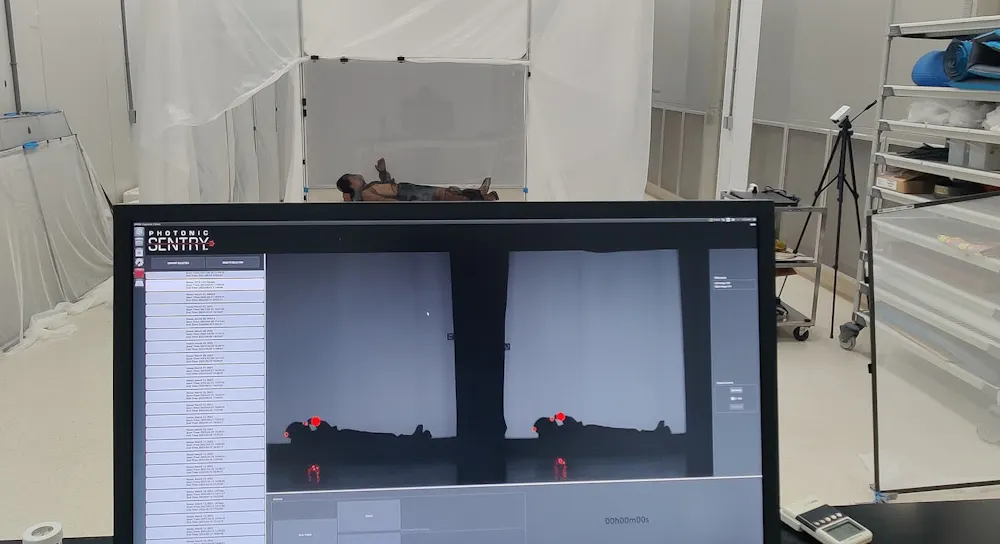
<nodes> <node id="689255">  <title><![CDATA['Welcome to the Future!' Artemis II Set for Launch to the Moon]]></title>  <uid>27560</uid>  <body><![CDATA[<p>If all goes according to plan, humans will head toward the moon this week for the first time since 1972. &nbsp;<br><br>NASA’s Artemis II is set to launch from Cape Canaveral, Florida, on Wednesday, April 1, at 6:24 p.m. Four astronauts will slingshot around the moon before landing in the Pacific Ocean after a 10-day mission.&nbsp;<br><br>The launch has captivated the Georgia Tech space community, both here on campus and within the alumni base. Several Georgia Tech graduates have key roles in the Artemis program.<br><br>On the eve of this next chapter of lunar exploration, several current and former Yellow Jackets discuss why Artemis II matters, what excites them about the mission, and what happens next.&nbsp;<br><br><a href="https://coe.gatech.edu/news/2026/03/welcome-future-artemis-ii-set-launch-moon">Read the entire story on the College of Engineering website</a>.&nbsp;</p>]]></body>  <author>Jason Maderer</author>  <status>1</status>  <created>1774965324</created>  <gmt_created>2026-03-31 13:55:24</gmt_created>  <changed>1775135763</changed>  <gmt_changed>2026-04-02 13:16:03</gmt_changed>  <promote>0</promote>  <sticky>0</sticky>  <teaser><![CDATA[On the eve of this next chapter of lunar exploration, several current and former Yellow Jackets discuss why Artemis II matters, what excites them about the mission, and what happens next. ]]></teaser>  <type>news</type>  <sentence><![CDATA[On the eve of this next chapter of lunar exploration, several current and former Yellow Jackets discuss why Artemis II matters, what excites them about the mission, and what happens next. ]]></sentence>  <summary><![CDATA[<p>On the eve of this next chapter of lunar exploration, several current and former Yellow Jackets discuss why Artemis II matters, what excites them about the mission, and what happens next.&nbsp;</p>]]></summary>  <dateline>2026-03-31T00:00:00-04:00</dateline>  <iso_dateline>2026-03-31T00:00:00-04:00</iso_dateline>  <gmt_dateline>2026-03-31 00:00:00</gmt_dateline>  <subtitle>    <![CDATA[Georgia Tech alumni, including some with NASA leadership roles in this week’s launch, reflect on the first crewed launch to the moon in more than 50 years. ]]>  </subtitle>  <sidebar><![CDATA[]]></sidebar>  <email><![CDATA[]]></email>  <location></location>  <contact><![CDATA[<p>Jason Maderer<br>College of Engineering<br>Georgia Institute of Technology<br><a href="mailto:maderer@gatech.edu">maderer@gatech.edu</a></p>]]></contact>  <boilerplate></boilerplate>  <boilerplate_text><![CDATA[]]></boilerplate_text>  <media>          <item>679795</item>      </media>  <hg_media>          <item>          <nid>679795</nid>          <type>image</type>          <title><![CDATA[Artemis II on Launch Pad]]></title>          <body><![CDATA[<p>Credit: NASA/John Kraus</p>]]></body>                      <image_name><![CDATA[moon-and-pad-1--1-.jpg]]></image_name>            <image_path><![CDATA[/sites/default/files/2026/03/31/moon-and-pad-1--1-_2.jpg]]></image_path>            <image_full_path><![CDATA[http://hg.gatech.edu//sites/default/files/2026/03/31/moon-and-pad-1--1-_2.jpg]]></image_full_path>            <image_740><![CDATA[http://hg.gatech.edu/sites/default/files/styles/740xx_scale/public/sites/default/files/2026/03/31/moon-and-pad-1--1-_2.jpg?itok=sy6py9ZK]]></image_740>            <image_mime>image/jpeg</image_mime>            <image_alt><![CDATA[rocket on the launch pad with full moon in background ]]></image_alt>                    <created>1774965547</created>          <gmt_created>2026-03-31 13:59:07</gmt_created>          <changed>1774965547</changed>          <gmt_changed>2026-03-31 13:59:07</gmt_changed>      </item>      </hg_media>  <related>      </related>  <files>      </files>  <groups>          <group id="1237"><![CDATA[College of Engineering]]></group>      </groups>  <categories>          <category tid="136"><![CDATA[Aerospace]]></category>      </categories>  <news_terms>          <term tid="136"><![CDATA[Aerospace]]></term>      </news_terms>  <keywords>          <keyword tid="194701"><![CDATA[go-resarchnews]]></keyword>          <keyword tid="188776"><![CDATA[go-research]]></keyword>      </keywords>  <core_research_areas>          <term tid="193657"><![CDATA[Space Research Initiative]]></term>      </core_research_areas>  <news_room_topics>          <topic tid="71881"><![CDATA[Science and Technology]]></topic>      </news_room_topics>  <files></files>  <related></related>  <userdata><![CDATA[]]></userdata></node><node id="689023">  <title><![CDATA[Bracketology Driven by Data ]]></title>  <uid>36418</uid>  <body><![CDATA[<div><p>Tens of millions of brackets have been filled out ahead of the NCAA men’s and women’s basketball tournaments. Some fans will choose winners based on the higher seed, others will try to predict shocking upsets, and some may choose who advances based on which mascot would win a fight, but a Georgia Tech professor has his bracket down to a (data) science. &nbsp;&nbsp;</p></div><div><p>Since 2004, Joel Sokol, director of the Master of Science in Analytics program and the Harold E. Smalley Professor in the H. Milton Stewart School of Industrial and Systems Engineering, has used a pair of analytic methods — logistic regression and Markov chains (LRMC) — to determine the best teams in college basketball. This year, <a href="https://www2.isye.gatech.edu/~jsokol/lrmcclassic/" rel="noreferrer noopener" target="_blank">Sokol’s LRMC rankings</a> project the <a href="https://www2.isye.gatech.edu/~jsokol/profspicks/profspicks26-c.pdf" rel="noreferrer noopener" target="_blank">Michigan Wolverines to cut down the nets</a> at the end of the men’s tournament and the <a href="https://www2.isye.gatech.edu/~jsokol/profspicksW/profspicks26w-c.pdf" rel="noreferrer noopener" target="_blank">Connecticut Huskies as the last team standing in the women’s field</a>. &nbsp;&nbsp;</p></div><div><p>The algorithm compares all 350-plus Division I basketball teams against each other simultaneously during the regular season and calculates probabilities based on simple data points — who won each game, by how much, and where it was played. When the madness of March begins, Sokol’s bracket forgoes the seeds assigned to teams and fills out his bracket based on the LRMC rankings.&nbsp; &nbsp;</p></div><div><p>Models used by the tournament selection committee — <a href="https://www.ncaa.com/news/basketball-men/article/2022-12-05/college-basketballs-net-rankings-explained" rel="noreferrer noopener" target="_blank">NET</a>, <a href="https://www.ncaa.com/news/basketball-men/article/2022-02-09/mens-college-basketball-rankings-what-kpi" rel="noreferrer noopener" target="_blank">KPI</a>, <a href="https://kenpom.com/" rel="noreferrer noopener" target="_blank">KenPom</a> — measure advanced metrics like strength of schedule, possession-by-possession efficiency, opponent quality, and more, but Sokol, with expertise in sports analytics and data science, says the LRMC shows the value of simple data and a large sample size.&nbsp; &nbsp;</p></div><div><p>“The LRMC can hold its own against those models that are based on much more advanced metrics than just scoreboard data. They may look at all kinds of information, from efficiencies down to individual player performance, but the message really is that if you have a good set of simple data, that’s enough if you know how to interpret it.”&nbsp;&nbsp;</p></div><div><p>Sokol compares his algorithm to nearly 100 other ranking systems and says the LRMC is often among the top performers, with the higher-ranked teams (in the LRMC rankings) winning approximately 75% of the time — a statistic that holds true in the NCAA Tournament. Sokol says that 25% of tournament games result in an upset. &nbsp;&nbsp;</p></div><div><p>For 2026, Sokol’s projections predict that all eight No. 1 seeds — four in both the men’s and women’s tournaments — will reach the Final Four, but it’s not always a guarantee that the highest seeds make it out of their respective regions. The inaugural LRMC rankings accurately predicted the No. 3-seeded Yellow Jackets’ Final Four run in 2004 — one of the only predictive models to do so.&nbsp; &nbsp;</p></div><div><p>Sokol got the idea to compile the LRMC rankings one year before Tech’s run to the national championship game, when the Yellow Jackets were left out of the NCAA Tournament as a bubble team, largely because of a December buzzer-beater loss to Tennessee. Since the first set of rankings, machine learning and artificial intelligence have become more accessible, yet Sokol says ChatGPT and other large language models (LLMs) aren’t quite ready to handle the level of analysis required to shape the rankings.&nbsp; &nbsp;</p></div><div><p>“These LLMs are good at sounding good, but they're not so good at doing these complex quantitative tasks,” he said. &nbsp;&nbsp;</p></div><div><p>Ultimately, though, luck is often a stubbornly unquantifiable factor when filling out a bracket, no matter the formula used to make selections, and the odds of filling out a perfect bracket are all but <a href="https://www.ncaa.com/news/basketball-men/bracketiq/2026-02-18/perfect-ncaa-bracket-absurd-odds-march-madness-dream" rel="noreferrer noopener" target="_blank">a statistical impossibility</a>. &nbsp;</p></div>]]></body>  <author>sgagliano3</author>  <status>1</status>  <created>1773865478</created>  <gmt_created>2026-03-18 20:24:38</gmt_created>  <changed>1774621239</changed>  <gmt_changed>2026-03-27 14:20:39</gmt_changed>  <promote>0</promote>  <sticky>0</sticky>  <teaser><![CDATA[For two decades, a Georgia Tech professor has used simple data to track the best teams in college basketball and predict who will win the NCAA Tournament.   ]]></teaser>  <type>news</type>  <sentence><![CDATA[For two decades, a Georgia Tech professor has used simple data to track the best teams in college basketball and predict who will win the NCAA Tournament.   ]]></sentence>  <summary><![CDATA[<p>For two decades, a Georgia Tech professor has used simple data to track the best teams in college basketball and predict who will win the NCAA Tournament. &nbsp;&nbsp;</p>]]></summary>  <dateline>2026-03-18T00:00:00-04:00</dateline>  <iso_dateline>2026-03-18T00:00:00-04:00</iso_dateline>  <gmt_dateline>2026-03-18 00:00:00</gmt_dateline>  <subtitle>    <![CDATA[For two decades, a Georgia Tech professor has used simple data to track the best teams in college basketball and predict who will win the NCAA Tournament.   ]]>  </subtitle>  <sidebar><![CDATA[]]></sidebar>  <email><![CDATA[]]></email>  <location></location>  <contact><![CDATA[<p><a href="mailto:steven.gagliano@gatech.edu">Steven Gagliano&nbsp;</a><br>Institute Communications</p>]]></contact>  <boilerplate></boilerplate>  <boilerplate_text><![CDATA[]]></boilerplate_text>  <media>          <item>679681</item>      </media>  <hg_media>          <item>          <nid>679681</nid>          <type>image</type>          <title><![CDATA[Joel Sokol]]></title>          <body><![CDATA[<p>Joel Sokol, director of the Master of Science in Analytics program and the Harold E. Smalley Professor in the H. Milton Stewart School of Industrial and Systems Engineering at Georgia Tech. </p>]]></body>                      <image_name><![CDATA[12C3046-P1-001.jpg]]></image_name>            <image_path><![CDATA[/sites/default/files/2026/03/18/12C3046-P1-001.jpg]]></image_path>            <image_full_path><![CDATA[http://hg.gatech.edu//sites/default/files/2026/03/18/12C3046-P1-001.jpg]]></image_full_path>            <image_740><![CDATA[http://hg.gatech.edu/sites/default/files/styles/740xx_scale/public/sites/default/files/2026/03/18/12C3046-P1-001.jpg?itok=Y25bGh76]]></image_740>            <image_mime>image/jpeg</image_mime>            <image_alt><![CDATA[Joel Sokol]]></image_alt>                    <created>1773865550</created>          <gmt_created>2026-03-18 20:25:50</gmt_created>          <changed>1773865550</changed>          <gmt_changed>2026-03-18 20:25:50</gmt_changed>      </item>      </hg_media>  <related>      </related>  <files>      </files>  <groups>          <group id="1237"><![CDATA[College of Engineering]]></group>          <group id="658168"><![CDATA[Experts]]></group>          <group id="1214"><![CDATA[News Room]]></group>          <group id="1188"><![CDATA[Research Horizons]]></group>          <group id="1242"><![CDATA[School of Industrial and Systems Engineering (ISYE)]]></group>      </groups>  <categories>      </categories>  <news_terms>      </news_terms>  <keywords>          <keyword tid="62061"><![CDATA[March Madness]]></keyword>          <keyword tid="181299"><![CDATA[ncaa tournament]]></keyword>          <keyword tid="12204"><![CDATA[men&#039;s basketball]]></keyword>          <keyword tid="4811"><![CDATA[women&#039;s basketball]]></keyword>          <keyword tid="79951"><![CDATA[college basketball]]></keyword>      </keywords>  <core_research_areas>      </core_research_areas>  <news_room_topics>          <topic tid="71901"><![CDATA[Society and Culture]]></topic>      </news_room_topics>  <files></files>  <related></related>  <userdata><![CDATA[]]></userdata></node><node id="689154">  <title><![CDATA[Researchers Create First AI for Generative Polymer Design]]></title>  <uid>27446</uid>  <body><![CDATA[<p>The words on this page mean something because they are assembled in a particular order and follow the complex rules of grammar and syntax. Creating new chemical polymers follows a similar kind of structure, with rules about what elements and groups of atoms go together and how to assemble them to make sense.</p><p>Thinking about polymers in that way has led Georgia Tech materials scientists to create new generative artificial intelligence tools that are like Claude or ChatGPT for new materials.&nbsp;</p><p>These are the first foundational models for generative polymer design that have also been validated through physical experiments: users specify the properties they need in a polymer and the model will suggest a chemical structure.</p><p>Led by Regents’ Entrepreneur <a href="https://mse.gatech.edu/people/rampi-ramprasad">Rampi Ramprasad</a>, the researchers <a href="https://doi.org/10.1038/s44387-026-00087-1">described their latest model this month in the Nature journal <em>npj Artificial Intelligence</em></a> — including a test material they created and validated in the lab to prove the models work.</p><p><a href="https://coe.gatech.edu/news/2026/03/researchers-create-first-ai-generative-polymer-design"><strong>Read the full story on the College of Engineering website.</strong></a></p>]]></body>  <author>Joshua Stewart</author>  <status>1</status>  <created>1774369972</created>  <gmt_created>2026-03-24 16:32:52</gmt_created>  <changed>1774370138</changed>  <gmt_changed>2026-03-24 16:35:38</gmt_changed>  <promote>0</promote>  <sticky>0</sticky>  <teaser><![CDATA[By training a model on the allowed “words” and “grammar” of chemistry, Georgia Tech materials scientists can design polymers based on the properties users need.]]></teaser>  <type>news</type>  <sentence><![CDATA[By training a model on the allowed “words” and “grammar” of chemistry, Georgia Tech materials scientists can design polymers based on the properties users need.]]></sentence>  <summary><![CDATA[<p>By training a model on the allowed “words” and “grammar” of chemistry, Georgia Tech materials scientists can design polymers based on the properties users need.</p>]]></summary>  <dateline>2026-03-24T00:00:00-04:00</dateline>  <iso_dateline>2026-03-24T00:00:00-04:00</iso_dateline>  <gmt_dateline>2026-03-24 00:00:00</gmt_dateline>  <subtitle>    <![CDATA[]]>  </subtitle>  <sidebar><![CDATA[]]></sidebar>  <email><![CDATA[jstewart@gatech.edu]]></email>  <location></location>  <contact><![CDATA[<p><a href="mailto:jstewart@gatech.edu">Joshua Stewart</a><br>College of Engineering</p>]]></contact>  <boilerplate></boilerplate>  <boilerplate_text><![CDATA[]]></boilerplate_text>  <media>          <item>679723</item>      </media>  <hg_media>          <item>          <nid>679723</nid>          <type>image</type>          <title><![CDATA[polymer-generative-AI-Rampi-Ramprasad-6206-t_0.jpg]]></title>          <body><![CDATA[<p>Researchers have created a chemical language AI model to generate new polymer structures based on the properties those polymers need to exhibit. Led by Rampi Ramprasad, standing, the team included postdoctoral scholar Wei Xiong, Ph.D. student Anagha Savit, and research scientist Harikrishna Sahu, who are seated left to right. (Photo: Candler Hobbs)</p>]]></body>                      <image_name><![CDATA[polymer-generative-AI-Rampi-Ramprasad-6206-t_0.jpg]]></image_name>            <image_path><![CDATA[/sites/default/files/2026/03/24/polymer-generative-AI-Rampi-Ramprasad-6206-t_0.jpg]]></image_path>            <image_full_path><![CDATA[http://hg.gatech.edu//sites/default/files/2026/03/24/polymer-generative-AI-Rampi-Ramprasad-6206-t_0.jpg]]></image_full_path>            <image_740><![CDATA[http://hg.gatech.edu/sites/default/files/styles/740xx_scale/public/sites/default/files/2026/03/24/polymer-generative-AI-Rampi-Ramprasad-6206-t_0.jpg?itok=5LvQ5vFm]]></image_740>            <image_mime>image/jpeg</image_mime>            <image_alt><![CDATA[Rampi Ramprasad and three members of his research team discuss their AI model for generative polymer design in his office.]]></image_alt>                    <created>1774369988</created>          <gmt_created>2026-03-24 16:33:08</gmt_created>          <changed>1774374861</changed>          <gmt_changed>2026-03-24 17:54:21</gmt_changed>      </item>      </hg_media>  <related>      </related>  <files>      </files>  <groups>          <group id="1237"><![CDATA[College of Engineering]]></group>          <group id="1188"><![CDATA[Research Horizons]]></group>      </groups>  <categories>      </categories>  <news_terms>      </news_terms>  <keywords>          <keyword tid="193176"><![CDATA[Rampi Ramprasad]]></keyword>          <keyword tid="187915"><![CDATA[go-researchnews]]></keyword>          <keyword tid="187023"><![CDATA[go-data]]></keyword>      </keywords>  <core_research_areas>          <term tid="193655"><![CDATA[Artificial Intelligence at Georgia Tech]]></term>          <term tid="39431"><![CDATA[Data Engineering and Science]]></term>      </core_research_areas>  <news_room_topics>      </news_room_topics>  <files></files>  <related></related>  <userdata><![CDATA[]]></userdata></node><node id="689055">  <title><![CDATA[Hundreds of Hungry Mosquitoes, a Student Volunteer and a Mesh Suit]]></title>  <uid>27469</uid>  <body><![CDATA[<div class="theconversation-article-body"><p>“Four minutes is too long.”</p><figure class="align-right zoomable"><p><a href="https://images.theconversation.com/files/724202/original/file-20260316-57-8quhxt.jpg?ixlib=rb-4.1.0&amp;q=45&amp;auto=format&amp;w=1000&amp;fit=clip"><img alt="Man&apos;s arm with multiple pink raised welts" src="https://images.theconversation.com/files/724202/original/file-20260316-57-8quhxt.jpg?ixlib=rb-4.1.0&amp;q=45&amp;auto=format&amp;w=237&amp;fit=clip" srcset="https://images.theconversation.com/files/724202/original/file-20260316-57-8quhxt.jpg?ixlib=rb-4.1.0&amp;q=45&amp;auto=format&amp;w=600&amp;h=827&amp;fit=crop&amp;dpr=1 600w, https://images.theconversation.com/files/724202/original/file-20260316-57-8quhxt.jpg?ixlib=rb-4.1.0&amp;q=30&amp;auto=format&amp;w=600&amp;h=827&amp;fit=crop&amp;dpr=2 1200w, https://images.theconversation.com/files/724202/original/file-20260316-57-8quhxt.jpg?ixlib=rb-4.1.0&amp;q=15&amp;auto=format&amp;w=600&amp;h=827&amp;fit=crop&amp;dpr=3 1800w, https://images.theconversation.com/files/724202/original/file-20260316-57-8quhxt.jpg?ixlib=rb-4.1.0&amp;q=45&amp;auto=format&amp;w=754&amp;h=1040&amp;fit=crop&amp;dpr=1 754w, https://images.theconversation.com/files/724202/original/file-20260316-57-8quhxt.jpg?ixlib=rb-4.1.0&amp;q=30&amp;auto=format&amp;w=754&amp;h=1040&amp;fit=crop&amp;dpr=2 1508w, https://images.theconversation.com/files/724202/original/file-20260316-57-8quhxt.jpg?ixlib=rb-4.1.0&amp;q=15&amp;auto=format&amp;w=754&amp;h=1040&amp;fit=crop&amp;dpr=3 2262w" sizes="(min-width: 1466px) 754px, (max-width: 599px) 100vw, (min-width: 600px) 600px, 237px"></a></p><figcaption><span class="caption">Some of Chris Zuo’s itchy results after his session with the mosquitoes.</span> <span class="attribution source">David L. Hu</span></figcaption></figure><p>That’s the note undergraduate Chris Zuo sent me along with photos of countless mosquito bites on his bare skin. This full-body massacre wasn’t the result of a camping trip gone awry. He’d spent that limited amount of time in a room with 100 hungry mosquitoes while wearing nothing but a mesh suit we thought would have protected him.</p><p>Thus began our three-year journey trying to <a href="https://doi.org/10.1126/sciadv.adz7063">understand the behavior</a> of a deceivingly simple insect, the mosquito. It may sound like a professor’s sadistic plan, but, really, we did everything by the book. Our university’s institutional review board approved our procedures, making sure Chris was safe and not coerced in any way. The mosquitoes were disease-free and native to our home state of Georgia. And this session resulted in the first and last bites anyone received during the study.</p><p>Besides my role as torturer of students, <a href="https://scholar.google.com/citations?user=pydtIvYAAAAJ&amp;hl=en&amp;oi=ao">I</a> am an <a href="https://press.princeton.edu/our-authors/hu-david">author</a> and professor at Georgia Tech with over 20 years of experience studying the movement of animals.</p><p>Mosquitoes are the <a href="https://ourworldindata.org/deadliest-animals">world’s most dangerous animal</a>. The diseases they carry, <a href="https://www.who.int/news-room/fact-sheets/detail/malaria">from malaria</a> <a href="https://www.who.int/news-room/fact-sheets/detail/dengue-and-severe-dengue">to dengue</a>, cause over <a href="https://www.who.int/news-room/fact-sheets/detail/vector-borne-diseases">700,000 deaths per year</a>. More people have died from mosquitoes than wars.</p><p>The world <a href="https://www.nytimes.com/2023/09/29/health/mosquitoes-malaria-strategies-house.html">spends US$22 billion per year</a> on billions of liters of insecticides, millions of pounds of larvicides, and millions of insecticide-treated bed nets – all to fight a tiny insect that weighs 10 times less than a grain of rice and has only <a href="https://doi.org/10.1371/journal.pone.0250381">200,000 neurons</a>.</p><p>Yet, people are losing the war on mosquitoes. These insects are evolving to <a href="https://doi.org/10.1126/science.aam8327">thrive in cities</a> and spreading disease <a href="https://doi.org/10.1016/j.pt.2017.11.006">more rapidly with climate change</a>. How can such simple animals find us so easily?</p><p>Scientists know mosquitoes have terrible eyesight and depend on chemical cues to make up for it. Knowing what attracts a mosquito, though, isn’t enough to predict its behavior. You can know a heat-seeking missile is drawn to heat, but you still won’t know how a missile works.</p><p>Enter Chris and his self-sacrifice in the mosquito room. By tracking the flight of many mosquitoes around him, we hoped to determine how they made decisions in response to his presence. Understanding how mosquitoes respond to humans is a first step to controlling them.</p><h2>How Mosquitoes Zero In On Their Meal</h2><p>Out of 3,500 species of mosquitoes, over 100 species are classified as anthropophilic, meaning they prefer humans for lunch. Certain species of mosquitoes will find the one person among a whole herd of cattle in order to suck human blood.</p><p>This is quite a feat considering mosquitoes are weak flyers. They stop flying in a slight <a href="https://doi.org/10.1242/jeb.178905">2-3 mph breeze</a>, the same air speed generated by a <a href="https://doi.org/10.1242/jeb.178905">horse’s swinging tail</a>. In calmer conditions, mosquitoes use their minuscule brains to follow <a href="https://doi.org/10.1007/s10905-022-09796-2">human heat, moisture and odors</a> that are carried downwind.</p><p>Carbon dioxide, the byproduct of respiration of all living animals, is particularly attractive. Mosquitoes notice carbon dioxide as well as you notice the stink of a full dumpster, detecting it up to 30 feet (9 meters) away from a host, where concentrations dip to a <a href="https://doi.org/10.1093/jmedent/44.4.617">few parts per million</a>, like a few cups of dye in an Olympic-size pool.</p><figure class="align-center zoomable"><p><a href="https://images.theconversation.com/files/724198/original/file-20260316-57-vumrcy.png?ixlib=rb-4.1.0&amp;q=45&amp;auto=format&amp;w=1000&amp;fit=clip"><img alt="Black outline of a G and T in left panel, in right panel black squiggles showing flight paths of mosquitoes around the letters" src="https://images.theconversation.com/files/724198/original/file-20260316-57-vumrcy.png?ixlib=rb-4.1.0&amp;q=45&amp;auto=format&amp;w=754&amp;fit=clip" srcset="https://images.theconversation.com/files/724198/original/file-20260316-57-vumrcy.png?ixlib=rb-4.1.0&amp;q=45&amp;auto=format&amp;w=600&amp;h=320&amp;fit=crop&amp;dpr=1 600w, https://images.theconversation.com/files/724198/original/file-20260316-57-vumrcy.png?ixlib=rb-4.1.0&amp;q=30&amp;auto=format&amp;w=600&amp;h=320&amp;fit=crop&amp;dpr=2 1200w, https://images.theconversation.com/files/724198/original/file-20260316-57-vumrcy.png?ixlib=rb-4.1.0&amp;q=15&amp;auto=format&amp;w=600&amp;h=320&amp;fit=crop&amp;dpr=3 1800w, https://images.theconversation.com/files/724198/original/file-20260316-57-vumrcy.png?ixlib=rb-4.1.0&amp;q=45&amp;auto=format&amp;w=754&amp;h=402&amp;fit=crop&amp;dpr=1 754w, https://images.theconversation.com/files/724198/original/file-20260316-57-vumrcy.png?ixlib=rb-4.1.0&amp;q=30&amp;auto=format&amp;w=754&amp;h=402&amp;fit=crop&amp;dpr=2 1508w, https://images.theconversation.com/files/724198/original/file-20260316-57-vumrcy.png?ixlib=rb-4.1.0&amp;q=15&amp;auto=format&amp;w=754&amp;h=402&amp;fit=crop&amp;dpr=3 2262w" sizes="(min-width: 1466px) 754px, (max-width: 599px) 100vw, (min-width: 600px) 600px, 237px"></a></p><figcaption><span class="caption">Like superfans, mosquitoes are drawn to the dark outline of the Georgia Tech logo.</span> <span class="attribution source">David L. Hu, Georgia Tech</span></figcaption></figure><p>Mosquitoes’ vision isn’t much help as they hunt for their next blood meal. Their two compound eyes have several hundred individual lenses called ommatidia, each about the width of a human hair. They produce a somewhat blurry mosaic or pixelated image. Due to the laws of optics, mosquitoes can discern an adult-size human only at a few meters away. With their vision alone, they cannot distinguish a human from a small tree. They inspect every dark object.</p><h2>Gathering the Flight-Path Data</h2><p>The challenge with studying mosquito flight is that, like trash-talking teenagers, most of what they do is meaningless noise. Mosquitoes flying in an empty room are largely making random changes in flight speed and direction. We needed many flight trajectories to cut through the noise.</p><figure class="align-center zoomable"><p><a href="https://images.theconversation.com/files/724200/original/file-20260316-57-z0f39m.jpg?ixlib=rb-4.1.0&amp;q=45&amp;auto=format&amp;w=1000&amp;fit=clip"><img alt="A man lying on the ground, and shown in two images on a laptop screen in the foreground" src="https://images.theconversation.com/files/724200/original/file-20260316-57-z0f39m.jpg?ixlib=rb-4.1.0&amp;q=45&amp;auto=format&amp;w=754&amp;fit=clip" srcset="https://images.theconversation.com/files/724200/original/file-20260316-57-z0f39m.jpg?ixlib=rb-4.1.0&amp;q=45&amp;auto=format&amp;w=600&amp;h=326&amp;fit=crop&amp;dpr=1 600w, https://images.theconversation.com/files/724200/original/file-20260316-57-z0f39m.jpg?ixlib=rb-4.1.0&amp;q=30&amp;auto=format&amp;w=600&amp;h=326&amp;fit=crop&amp;dpr=2 1200w, https://images.theconversation.com/files/724200/original/file-20260316-57-z0f39m.jpg?ixlib=rb-4.1.0&amp;q=15&amp;auto=format&amp;w=600&amp;h=326&amp;fit=crop&amp;dpr=3 1800w, https://images.theconversation.com/files/724200/original/file-20260316-57-z0f39m.jpg?ixlib=rb-4.1.0&amp;q=45&amp;auto=format&amp;w=754&amp;h=410&amp;fit=crop&amp;dpr=1 754w, https://images.theconversation.com/files/724200/original/file-20260316-57-z0f39m.jpg?ixlib=rb-4.1.0&amp;q=30&amp;auto=format&amp;w=754&amp;h=410&amp;fit=crop&amp;dpr=2 1508w, https://images.theconversation.com/files/724200/original/file-20260316-57-z0f39m.jpg?ixlib=rb-4.1.0&amp;q=15&amp;auto=format&amp;w=754&amp;h=410&amp;fit=crop&amp;dpr=3 2262w" sizes="(min-width: 1466px) 754px, (max-width: 599px) 100vw, (min-width: 600px) 600px, 237px"></a></p><figcaption><span class="caption">In a mesh suit, Chris Zuo awaits the mosquitoes while questioning his life choices.</span> <span class="attribution source">David L. Hu, Georgia Tech</span></figcaption></figure><p>One of our collaborators, University of California, Riverside, biologist <a href="https://scholar.google.com/citations?user=XOveQssAAAAJ&amp;hl=en&amp;oi=ao">Ring Cardé</a>, told us that back in the 1980s, scientists conducted “bite studies” by stripping down to their underwear and slapping the mosquitoes that landed on their naked bodies. He said nudity prevented confounding variables, such as the color of a shirt’s fabric.</p><p>Chris and I looked at each other. Sit naked and wait to become mosquito prey? Instead, we designed the mesh suit that Chris originally wore into the mosquito room. But after seeing Chris’ bites, we needed a better way.</p><p>Instead, Chris washed long-sleeved clothes in unscented detergent and wore gloves and a face mask. Fully protected, Chris only had to stand and wait, while a cloud of mosquitoes swarmed him.</p><p>The U.S. Centers for Disease Control and Prevention introduced us to the <a href="https://photonicsentry.com/">Photonic Sentry</a>, a camera that simultaneously tracks hundreds of flying insects in a room. It records 100 frames per second at 5 mm resolution for a space like a large studio apartment. In just a few hours, Chris and another graduate student, <a href="https://scholar.google.com/citations?user=pJLlOo8AAAAJ&amp;hl=en&amp;oi=sra">Soohwan Kim</a>, generated more mosquito flight data than had previously been measured in human history.</p><figure><p><iframe width="440" height="260" src="https://www.youtube.com/embed/A4WUw-ZCoFk?wmode=transparent&amp;start=0" frameborder="0" allowfullscreen=""></iframe></p><figcaption><span class="caption">100 mosquitoes flying around Chris Zuo for 10 minutes. Only a fraction of tracks are shown.</span></figcaption></figure><p><a href="https://scholar.google.com/citations?user=YJlkBuAAAAAJ&amp;hl=en&amp;oi=ao">Jörn Dunkel</a>, <a href="https://scholar.google.com/citations?user=3V6dgsoAAAAJ&amp;hl=en&amp;oi=sra">Chenyi Fei</a> and <a href="https://scholar.google.com/citations?user=89drxM4AAAAJ&amp;hl=en&amp;oi=sra">Alex Cohen</a>, our mathematician collaborators at MIT, told us that the geometry of Chris’ body was still too complicated to study the mosquitoes’ reactions. Mathematicians excel at simplifying complex problems to their essence. Chenyi suggested we go easy on Chris – why not replace him with a simple dummy: a black Styrofoam ball on a stick combined with a canister of carbon dioxide.</p><p>Over the next two years, Chris filmed the mosquitoes circling the Styrofoam dummies mercilessly. Then he vacuumed up the mosquitoes, trying not to get bitten.</p><h2>Deciphering the Trajectories</h2><p>A mosquito flies like you would an airplane: it turns left or right, accelerates or hits the brakes. We determined a mosquito’s flight behavior as a function of its speed, location and direction with respect to the target as the first step in creating our model of their behavior.</p><p>Our confidence in our behavioral rules increased as we read more trajectories, ultimately using 20 million mosquito positions and speeds. This idea of incorporating observations to support a mathematical hypothesis is a 200-year-old idea called <a href="https://medium.com/@chonghankhai/bayesian-thinking-in-everyday-life-bf82fe2ab0af">Bayesian inference</a>. We illustrated the mosquito behavior we’d observed in a <a href="https://acoh64.github.io/mosquito_app/">web application</a>.</p><figure class="align-center zoomable"><p><a href="https://images.theconversation.com/files/724564/original/file-20260318-57-2aq2gy.jpg?ixlib=rb-4.1.0&amp;q=45&amp;auto=format&amp;w=1000&amp;fit=clip"><img alt="4 panels showing trajectory of a mosquito in the presence of no target, visual target, CO2 target or both." src="https://images.theconversation.com/files/724564/original/file-20260318-57-2aq2gy.jpg?ixlib=rb-4.1.0&amp;q=45&amp;auto=format&amp;w=754&amp;fit=clip" srcset="https://images.theconversation.com/files/724564/original/file-20260318-57-2aq2gy.jpg?ixlib=rb-4.1.0&amp;q=45&amp;auto=format&amp;w=600&amp;h=169&amp;fit=crop&amp;dpr=1 600w, https://images.theconversation.com/files/724564/original/file-20260318-57-2aq2gy.jpg?ixlib=rb-4.1.0&amp;q=30&amp;auto=format&amp;w=600&amp;h=169&amp;fit=crop&amp;dpr=2 1200w, https://images.theconversation.com/files/724564/original/file-20260318-57-2aq2gy.jpg?ixlib=rb-4.1.0&amp;q=15&amp;auto=format&amp;w=600&amp;h=169&amp;fit=crop&amp;dpr=3 1800w, https://images.theconversation.com/files/724564/original/file-20260318-57-2aq2gy.jpg?ixlib=rb-4.1.0&amp;q=45&amp;auto=format&amp;w=754&amp;h=212&amp;fit=crop&amp;dpr=1 754w, https://images.theconversation.com/files/724564/original/file-20260318-57-2aq2gy.jpg?ixlib=rb-4.1.0&amp;q=30&amp;auto=format&amp;w=754&amp;h=212&amp;fit=crop&amp;dpr=2 1508w, https://images.theconversation.com/files/724564/original/file-20260318-57-2aq2gy.jpg?ixlib=rb-4.1.0&amp;q=15&amp;auto=format&amp;w=754&amp;h=212&amp;fit=crop&amp;dpr=3 2262w" sizes="(min-width: 1466px) 754px, (max-width: 599px) 100vw, (min-width: 600px) 600px, 237px"></a></p><figcaption><span class="caption">A mosquito’s flight changes with the kind of target presented.</span> <span class="attribution source">David L. Hu</span></figcaption></figure><p>Using our model, we showed how different targets cause mosquitoes to fly differently. Visual targets cause fly-bys, where mosquitoes fly past the target. Carbon dioxide causes double takes, where mosquitoes slow down near the target. The combination of a visual cue and carbon dioxide creates high-speed orbiting patterns.</p><p>Up until now, we had used only experiments with Styrofoam spheres to train our model. The true test was whether it could predict mosquito flights around a human. Chris returned to the chamber, this time wearing all white clothes and a black hat, turning himself into a bull’s-eye. Our model successfully predicted the distribution of mosquitoes around him. We identified zones of danger, where there was a high chance of a mosquito circling around him.</p><p>Predicting mosquito behavior is a first step toward outsmarting them. In mosquito-prone areas, people design <a href="https://doi.org/10.3389/fpubh.2024.1404493">houses with features to prevent mosquitoes</a> from following human cues and entering. Similarly, mosquito traps suck in mosquitoes when they get too close but still allow between <a href="https://doi.org/10.1093/jme/tjz243">50% and 90% of mosquitoes to escape</a>. Many of these designs are based on trial and error. We hope that <a href="https://doi.org/10.1126/sciadv.adz7063">our study provides a more precise tool</a> for designing methods for mosquito capture or deterrence.</p><p>When Chris’ mother attended his master’s degree defense, I asked her how she felt about her son using himself as bait for mosquitoes. She said she was very proud. So am I – and not just because I’m relieved Chris didn’t ask me to take his place in the mosquito chamber.<!-- Below is The Conversation's page counter tag. Please DO NOT REMOVE. --><img style="border-color:!important;border-style:none;box-shadow:none !important;margin:0 !important;max-height:1px !important;max-width:1px !important;min-height:1px !important;min-width:1px !important;opacity:0 !important;outline:none !important;padding:0 !important;" src="https://counter.theconversation.com/content/278486/count.gif?distributor=republish-lightbox-basic" alt="The Conversation" width="1" height="1" referrerpolicy="no-referrer-when-downgrade"><!-- End of code. If you don't see any code above, please get new code from the Advanced tab after you click the republish button. The page counter does not collect any personal data. More info: https://theconversation.com/republishing-guidelines --></p><p>&nbsp;</p><p><em>This article is republished from </em><a href="https://theconversation.com"><em>The Conversation</em></a><em> under a Creative Commons license. Read the </em><a href="https://theconversation.com/hundreds-of-hungry-mosquitoes-a-student-volunteer-and-a-mesh-suit-helped-us-figure-out-how-these-deadly-insects-reach-their-targets-278486"><em>original article</em></a><em>.</em></p></div>]]></body>  <author>Kristen Bailey</author>  <status>1</status>  <created>1773852732</created>  <gmt_created>2026-03-18 16:52:12</gmt_created>  <changed>1773939430</changed>  <gmt_changed>2026-03-19 16:57:10</gmt_changed>  <promote>0</promote>  <sticky>0</sticky>  <teaser><![CDATA[By tracking the flight of many mosquitoes around a student volunteer, we hoped to determine how they made decisions in response to his presence. Understanding how mosquitoes respond to humans is a first step to controlling them.]]></teaser>  <type>news</type>  <sentence><![CDATA[By tracking the flight of many mosquitoes around a student volunteer, we hoped to determine how they made decisions in response to his presence. Understanding how mosquitoes respond to humans is a first step to controlling them.]]></sentence>  <summary><![CDATA[<p>By tracking the flight of many mosquitoes around a student volunteer, we hoped to determine how they made decisions in response to his presence. Understanding how mosquitoes respond to humans is a first step to controlling them.</p>]]></summary>  <dateline>2026-03-18T00:00:00-04:00</dateline>  <iso_dateline>2026-03-18T00:00:00-04:00</iso_dateline>  <gmt_dateline>2026-03-18 00:00:00</gmt_dateline>  <subtitle>    <![CDATA[]]>  </subtitle>  <sidebar><![CDATA[]]></sidebar>  <email><![CDATA[]]></email>  <location></location>  <contact><![CDATA[<h5>Author:</h5><p><a href="https://theconversation.com/profiles/david-hu-204122">David Hu</a>, Professor of Mechanical Engineering and Biology, Adjunct Professor of Physics, <a href="https://theconversation.com/institutions/georgia-institute-of-technology-1310"><em>Georgia Institute of Technology</em></a></p><h5>Media Contact:</h5><p>Shelley Wunder-Smith<br><a href="mailto:shelley.wunder-smith@research.gatech.edu"><strong>shelley.wunder-smith@research.gatech.edu</strong></a></p>]]></contact>  <boilerplate></boilerplate>  <boilerplate_text><![CDATA[]]></boilerplate_text>  <media>          <item>679694</item>      </media>  <hg_media>          <item>          <nid>679694</nid>          <type>image</type>          <title><![CDATA[Trajectories of mosquitoes flying around a human target. David L. Hu, Georgia Tech]]></title>          <body><![CDATA[<p>Trajectories of mosquitoes flying around a human target. David L. Hu, Georgia Tech</p>]]></body>                      <image_name><![CDATA[file-20260317-57-gbcbz7.png]]></image_name>            <image_path><![CDATA[/sites/default/files/2026/03/19/file-20260317-57-gbcbz7.png]]></image_path>            <image_full_path><![CDATA[http://hg.gatech.edu//sites/default/files/2026/03/19/file-20260317-57-gbcbz7.png]]></image_full_path>            <image_740><![CDATA[http://hg.gatech.edu/sites/default/files/styles/740xx_scale/public/sites/default/files/2026/03/19/file-20260317-57-gbcbz7.png?itok=GXOV0W9d]]></image_740>            <image_mime>image/png</image_mime>            <image_alt><![CDATA[Trajectories of mosquitoes flying around a human target. David L. Hu, Georgia Tech]]></image_alt>                    <created>1773939193</created>          <gmt_created>2026-03-19 16:53:13</gmt_created>          <changed>1773939193</changed>          <gmt_changed>2026-03-19 16:53:13</gmt_changed>      </item>      </hg_media>  <related>          <link>        <url><![CDATA[https://theconversation.com/hundreds-of-hungry-mosquitoes-a-student-volunteer-and-a-mesh-suit-helped-us-figure-out-how-these-deadly-insects-reach-their-targets-278486]]></url>        <title><![CDATA[Read This Article on The Conversation]]></title>      </link>      </related>  <files>      </files>  <groups>          <group id="1237"><![CDATA[College of Engineering]]></group>          <group id="1278"><![CDATA[College of Sciences]]></group>          <group id="658168"><![CDATA[Experts]]></group>          <group id="142761"><![CDATA[IRIM]]></group>          <group id="1214"><![CDATA[News Room]]></group>          <group id="1292"><![CDATA[Parker H. Petit Institute for Bioengineering and Bioscience (IBB)]]></group>          <group id="1188"><![CDATA[Research Horizons]]></group>          <group id="1275"><![CDATA[School of Biological Sciences]]></group>          <group id="108731"><![CDATA[School of Mechanical Engineering]]></group>      </groups>  <categories>      </categories>  <news_terms>      </news_terms>  <keywords>          <keyword tid="187915"><![CDATA[go-researchnews]]></keyword>      </keywords>  <core_research_areas>      </core_research_areas>  <news_room_topics>          <topic tid="71911"><![CDATA[Earth and Environment]]></topic>      </news_room_topics>  <files></files>  <related></related>  <userdata><![CDATA[]]></userdata></node><node id="689054">  <title><![CDATA[Researchers Develop Biodegradable, Plant‑Based Packaging From Natural Fibers]]></title>  <uid>27469</uid>  <body><![CDATA[<div class="theconversation-article-body"><p><a href="https://scholar.google.com/citations?user=YpxchNkAAAAJ&amp;hl=en">Jie Wu</a>, an engineering graduate student, was studying a type of striking white beetle found in Southeast Asia and attempting to figure out how to mimic its brilliant color when an unexpected discovery upended the experiment.</p><p>Jie and I had been hoping to identify naturally occurring whitening pigments that could be used in paper and paints. The beetle’s white exoskeleton is made from a compound called chitin, which is a type of carbohydrate – one that is also commonly found in crab and lobster shells.</p><p>First, Jie extracted chitin nanofibers from crab shells obtained from food waste that are chemically the same as those found in the white beetles. But instead of creating a white material as intended, Jie produced dense, <a href="https://doi.org/10.1021/bm501416q">transparent films</a>. The nanofibers more readily assembled in tightly packed films than in the porous structures Jie desired.</p><figure class="align-right zoomable"><p><a href="https://images.theconversation.com/files/721546/original/file-20260303-57-g7dkdj.jpg?ixlib=rb-4.1.0&amp;q=45&amp;auto=format&amp;w=1000&amp;fit=clip"><img alt="Two white beetles" src="https://images.theconversation.com/files/721546/original/file-20260303-57-g7dkdj.jpg?ixlib=rb-4.1.0&amp;q=45&amp;auto=format&amp;w=237&amp;fit=clip" srcset="https://images.theconversation.com/files/721546/original/file-20260303-57-g7dkdj.jpg?ixlib=rb-4.1.0&amp;q=45&amp;auto=format&amp;w=600&amp;h=882&amp;fit=crop&amp;dpr=1 600w, https://images.theconversation.com/files/721546/original/file-20260303-57-g7dkdj.jpg?ixlib=rb-4.1.0&amp;q=30&amp;auto=format&amp;w=600&amp;h=882&amp;fit=crop&amp;dpr=2 1200w, https://images.theconversation.com/files/721546/original/file-20260303-57-g7dkdj.jpg?ixlib=rb-4.1.0&amp;q=15&amp;auto=format&amp;w=600&amp;h=882&amp;fit=crop&amp;dpr=3 1800w, https://images.theconversation.com/files/721546/original/file-20260303-57-g7dkdj.jpg?ixlib=rb-4.1.0&amp;q=45&amp;auto=format&amp;w=754&amp;h=1109&amp;fit=crop&amp;dpr=1 754w, https://images.theconversation.com/files/721546/original/file-20260303-57-g7dkdj.jpg?ixlib=rb-4.1.0&amp;q=30&amp;auto=format&amp;w=754&amp;h=1109&amp;fit=crop&amp;dpr=2 1508w, https://images.theconversation.com/files/721546/original/file-20260303-57-g7dkdj.jpg?ixlib=rb-4.1.0&amp;q=15&amp;auto=format&amp;w=754&amp;h=1109&amp;fit=crop&amp;dpr=3 2262w" sizes="(min-width: 1466px) 754px, (max-width: 599px) 100vw, (min-width: 600px) 600px, 237px"></a></p><figcaption><span class="caption">An attempt to mimic the striking white color of </span><em><span class="caption">Cyphochilus</span></em><span class="caption"> beetles led researchers to a unique discovery.</span> <a class="source" href="https://en.wikipedia.org/wiki/Cyphochilus#/media/File:Cyphochilus_beetles.jpg"><span class="attribution">Olimpia1lli/Wikimedia Commons</span></a><span class="attribution">, </span><a class="license" href="http://creativecommons.org/licenses/by-nc-nd/4.0/"><span class="attribution">CC BY-NC-ND</span></a></figcaption></figure><p>On a whim, Jie measured the rate at which oxygen passed through the film. The result was astonishing: The barrier allowed less oxygen through than many existing packaging plastics.</p><p>That serendipitous finding in 2014 shifted <a href="https://scholar.google.com/citations?user=3qOG6PUAAAAJ&amp;hl=en">my team</a> of engineering students’ focus from color to packaging. We asked whether natural materials could rival the performance of common plastics. In the years since, our team has used this discovery to create biodegradable films that offer a more sustainable and effective alternative to plastic packaging.</p><h2>Challenges of Plastic Packaging</h2><p>Plastic packaging is commonly used to protect food, pharmaceuticals and personal care products. These plastics keep out moisture and oxygen from the air, so products stay <a href="https://doi.org/10.1016/C2012-0-00246-3">fresh and safe</a>.</p><p>Most packaging has several layers that work together to keep air out, but these layers hinder reuse and recycling efforts. As a result, most of this plastic barrier packaging is discarded to landfills as single-use materials.</p><p>Many researchers have sought alternatives that are renewable, biodegradable or recyclable, yet just as effective. At Georgia Tech, my team of students and post-docs has spent more than a decade tackling this problem. This journey began with that beetle.</p><h2>Building a Better Barrier</h2><p><a href="https://www.britannica.com/science/chitin">Chitin</a> is widely available in food waste and mushrooms, and it is used in products such as water filters and wound dressing. However, our early attempts to scale up the film technology based on the beetle-inspired experiment failed.</p><p>In 2018, the team made an important leap forward by <a href="https://doi.org/10.1021/acssuschemeng.8b01536">using spray coating to create layers</a> of chitin and <a href="https://www.niehs.nih.gov/health/topics/agents/sya-nano">cellulose nanomaterials</a>. Cellulose, like chitin, <a href="https://www.britannica.com/science/cellulose">is a carbohydrate polymer</a> – a chain of repeating carbohydrate units – and it is obtained from plants. These abundant natural materials have opposite electric charges, which led to better barrier performance when we combined them than either material alone.</p><p>In this approach, the team sprayed down a layer of chitin, followed by a layer of cellulose. The opposite charges between the chitin and cellulose created a long-range attraction between them that binds the layers to create a dense interface.</p><p>Later, in collaboration with <a href="https://scholar.google.com/citations?user=BrXwtO4AAAAJ&amp;hl=en">Meisha Shofner</a>, a materials scientist, and <a href="https://me.gatech.edu/faculty/harris">Tequila Harris</a>, a mechanical engineer, other students showed these coatings could be applied with <a href="https://doi.org/10.1021/acsami.2c09925">scalable, roll-to-roll techniques</a>. Roll-to-roll coating methods are preferred in industry because the coatings are applied continuously to large rolls of a substrate material, such as paper or other biodegradable plastics.</p><figure><p><iframe width="440" height="260" src="https://www.youtube.com/embed/EBNyjJFB8Zc?wmode=transparent&amp;start=0" frameborder="0" allowfullscreen=""></iframe></p><figcaption><span class="caption">Roll-to-roll coating allows manufacturers to easily apply thin layers of coating to a base material, called a substrate.</span></figcaption></figure><p>Still, humidity posed a major challenge, limiting any real-world applications. Moisture swelled the film, allowing more oxygen to sneak through.</p><p>Then came another breakthrough. In 2024, another collaborator, <a href="https://scholar.google.com/citations?user=ZILIcOwAAAAJ&amp;hl=en">Natalie Stingelin</a>, and I discovered that two common food components resisted water vapor when combined: carboxymethylcellulose – which is found in ice cream, for example – and <a href="https://pubchem.ncbi.nlm.nih.gov/compound/Citric-Acid">citric acid</a>.</p><p>The result was a film that <a href="https://doi.org/10.1039/D4SU00425F">hindered the transmission of moisture</a>. The citric acid reacted with the cellulose to form cross-links, which are chemical junctions that bind the cellulose molecules. Once bound, they reduced the film’s moisture uptake.</p><p>We integrated this new discovery with the prior work by combining the citric acid and cellulose, and then casting this mixture as a freestanding film by coating it onto a substrate, such as chitin.</p><p>However, that formulation did not have strong oxygen barrier properties because it did not contain the highly crystalline cellulose nanomaterials from our first film. Our team’s most <a href="https://doi.org/10.1021/acsapm.5c02909">recent achievement</a>, from October 2025, combines the above innovations. As a result, we’ve created a bio-based film that is an excellent barrier to both oxygen and moisture.</p><figure class="align-center zoomable"><p><a href="https://images.theconversation.com/files/710006/original/file-20251220-56-gcunhe.png?ixlib=rb-4.1.0&amp;q=45&amp;auto=format&amp;w=1000&amp;fit=clip"><img alt="A diagram showing a rectangle representing a biodegradable film, with an arrow deflecting off of it showing how it keeps out water vapor and oxygen. On the right is the film." src="https://images.theconversation.com/files/710006/original/file-20251220-56-gcunhe.png?ixlib=rb-4.1.0&amp;q=45&amp;auto=format&amp;w=754&amp;fit=clip" srcset="https://images.theconversation.com/files/710006/original/file-20251220-56-gcunhe.png?ixlib=rb-4.1.0&amp;q=45&amp;auto=format&amp;w=600&amp;h=300&amp;fit=crop&amp;dpr=1 600w, https://images.theconversation.com/files/710006/original/file-20251220-56-gcunhe.png?ixlib=rb-4.1.0&amp;q=30&amp;auto=format&amp;w=600&amp;h=300&amp;fit=crop&amp;dpr=2 1200w, https://images.theconversation.com/files/710006/original/file-20251220-56-gcunhe.png?ixlib=rb-4.1.0&amp;q=15&amp;auto=format&amp;w=600&amp;h=300&amp;fit=crop&amp;dpr=3 1800w, https://images.theconversation.com/files/710006/original/file-20251220-56-gcunhe.png?ixlib=rb-4.1.0&amp;q=45&amp;auto=format&amp;w=754&amp;h=377&amp;fit=crop&amp;dpr=1 754w, https://images.theconversation.com/files/710006/original/file-20251220-56-gcunhe.png?ixlib=rb-4.1.0&amp;q=30&amp;auto=format&amp;w=754&amp;h=377&amp;fit=crop&amp;dpr=2 1508w, https://images.theconversation.com/files/710006/original/file-20251220-56-gcunhe.png?ixlib=rb-4.1.0&amp;q=15&amp;auto=format&amp;w=754&amp;h=377&amp;fit=crop&amp;dpr=3 2262w" sizes="(min-width: 1466px) 754px, (max-width: 599px) 100vw, (min-width: 600px) 600px, 237px"></a></p><figcaption><span class="caption">An oxygen and water vapor barrier film composed of blended cellulose and chitin.</span> <span class="attribution source">J. Carson Meredith</span></figcaption></figure><h2>Scaling Up Production</h2><p>When cast into thin films, these components self-organize into a dense structure that resists swelling with water vapor. Tests showed that <a href="https://doi.org/10.1021/acsapm.5c02909">even at 80% humidity</a> the film matched or outperformed common packaging plastics.</p><p>The materials are renewable, biodegradable and compostable. Our team has filed several patent applications, and we are working with industry partners to develop specific packaging uses.</p><p>One challenge that applications face is a limited supply of the bio-based components compared to the high volume of conventional plastics. Like any new material, it would take time for manufacturers to develop supply chains as the films begin to be used.</p><p>For example, the market demand for purified chitin is small right now, as it is used in niche applications, such as wound dressings and water filtration. Due to its variety of uses, packaging could increase that market demand.</p><p>The next challenge is scaling up from experimental films to industrial production, which would likely take several years. The team is exploring roll-to-roll coating techniques and working with industry partners to integrate these materials into existing packaging lines.</p><p>Policy and consumer demand will also play a role. As governments push for <a href="https://theconversation.com/why-stop-at-plastic-bags-and-straws-the-case-for-a-global-treaty-banning-most-single-use-plastics-109857">bans on single-use plastics</a> and companies set sustainability targets, bio-based films could become part of the solution.</p><p>The story of this breakthrough reminds me that science often advances through unexpected results. From a failed attempt to mimic a beetle’s color to a promising alternative to plastic, this research shows how curiosity can lead to solutions for some of our biggest challenges.<!-- Below is The Conversation's page counter tag. Please DO NOT REMOVE. --><img style="border-color:!important;border-style:none;box-shadow:none !important;margin:0 !important;max-height:1px !important;max-width:1px !important;min-height:1px !important;min-width:1px !important;opacity:0 !important;outline:none !important;padding:0 !important;" src="https://counter.theconversation.com/content/271262/count.gif?distributor=republish-lightbox-basic" alt="The Conversation" width="1" height="1" referrerpolicy="no-referrer-when-downgrade"><!-- End of code. If you don't see any code above, please get new code from the Advanced tab after you click the republish button. The page counter does not collect any personal data. More info: https://theconversation.com/republishing-guidelines --></p><p>&nbsp;</p><p><em>This article is republished from </em><a href="https://theconversation.com"><em>The Conversation</em></a><em> under a Creative Commons license. Read the </em><a href="https://theconversation.com/researchers-develop-biodegradable-plant-based-packaging-from-natural-fibers-new-research-271262"><em>original article</em></a><em>.</em></p></div>]]></body>  <author>Kristen Bailey</author>  <status>1</status>  <created>1773765383</created>  <gmt_created>2026-03-17 16:36:23</gmt_created>  <changed>1773938598</changed>  <gmt_changed>2026-03-19 16:43:18</gmt_changed>  <promote>0</promote>  <sticky>0</sticky>  <teaser><![CDATA[Jie Wu, an engineering graduate student, was studying a type of striking white beetle found in Southeast Asia and attempting to figure out how to mimic its brilliant color when an unexpected discovery upended the experiment.]]></teaser>  <type>news</type>  <sentence><![CDATA[Jie Wu, an engineering graduate student, was studying a type of striking white beetle found in Southeast Asia and attempting to figure out how to mimic its brilliant color when an unexpected discovery upended the experiment.]]></sentence>  <summary><![CDATA[<p>Jie Wu, an engineering graduate student, was studying a type of striking white beetle found in Southeast Asia and attempting to figure out how to mimic its brilliant color when an unexpected discovery upended the experiment.</p>]]></summary>  <dateline>2026-03-17T00:00:00-04:00</dateline>  <iso_dateline>2026-03-17T00:00:00-04:00</iso_dateline>  <gmt_dateline>2026-03-17 00:00:00</gmt_dateline>  <subtitle>    <![CDATA[]]>  </subtitle>  <sidebar><![CDATA[]]></sidebar>  <email><![CDATA[]]></email>  <location></location>  <contact><![CDATA[<h5>Author:</h5><p><a href="https://theconversation.com/profiles/j-carson-meredith-2540164">J. Carson Meredith</a>, Professor of Chemical and Biomolecular Engineering, <a href="https://theconversation.com/institutions/georgia-institute-of-technology-1310">Georgia Institute of Technology</a></p><h5>Media Contact:</h5><p>Shelley Wunder-Smith<br><a href="mailto:shelley.wunder-smith@research.gatech.edu"><strong>shelley.wunder-smith@research.gatech.edu</strong></a></p>]]></contact>  <boilerplate></boilerplate>  <boilerplate_text><![CDATA[]]></boilerplate_text>  <media>          <item>679693</item>      </media>  <hg_media>          <item>          <nid>679693</nid>          <type>image</type>          <title><![CDATA[Plastic packaging fills up landfills – engineers are working on a bio-based alternative that could replace the kind shown here. tuk69tuk/iStock via Getty Images]]></title>          <body><![CDATA[<p>Plastic packaging fills up landfills – engineers are working on a bio-based alternative that could replace the kind shown here. <a href="https://www.gettyimages.com/detail/photo/white-plastic-bag-on-black-background-royalty-free-image/1211742906?phrase=plastic%2Bwrap">tuk69tuk/iStock via Getty Images</a></p>]]></body>                      <image_name><![CDATA[file-20260303-57-8ad4eq.jpg]]></image_name>            <image_path><![CDATA[/sites/default/files/2026/03/19/file-20260303-57-8ad4eq.jpg]]></image_path>            <image_full_path><![CDATA[http://hg.gatech.edu//sites/default/files/2026/03/19/file-20260303-57-8ad4eq.jpg]]></image_full_path>            <image_740><![CDATA[http://hg.gatech.edu/sites/default/files/styles/740xx_scale/public/sites/default/files/2026/03/19/file-20260303-57-8ad4eq.jpg?itok=Xt4gIjZP]]></image_740>            <image_mime>image/jpeg</image_mime>            <image_alt><![CDATA[Plastic packaging fills up landfills – engineers are working on a bio-based alternative that could replace the kind shown here. tuk69tuk/iStock via Getty Images]]></image_alt>                    <created>1773938347</created>          <gmt_created>2026-03-19 16:39:07</gmt_created>          <changed>1773938347</changed>          <gmt_changed>2026-03-19 16:39:07</gmt_changed>      </item>      </hg_media>  <related>          <link>        <url><![CDATA[https://theconversation.com/researchers-develop-biodegradable-plant-based-packaging-from-natural-fibers-new-research-271262]]></url>        <title><![CDATA[Read This Article on The Conversation]]></title>      </link>      </related>  <files>      </files>  <groups>          <group id="1237"><![CDATA[College of Engineering]]></group>          <group id="658168"><![CDATA[Experts]]></group>          <group id="1214"><![CDATA[News Room]]></group>          <group id="117301"><![CDATA[Renewable Bioproducts Institute]]></group>          <group id="372221"><![CDATA[Renewable Bioproducts Institute (RBI)]]></group>          <group id="1188"><![CDATA[Research Horizons]]></group>          <group id="1240"><![CDATA[School of Chemical and Biomolecular Engineering]]></group>          <group id="660398"><![CDATA[Sustainability Hub]]></group>      </groups>  <categories>      </categories>  <news_terms>      </news_terms>  <keywords>          <keyword tid="187915"><![CDATA[go-researchnews]]></keyword>      </keywords>  <core_research_areas>      </core_research_areas>  <news_room_topics>          <topic tid="71911"><![CDATA[Earth and Environment]]></topic>      </news_room_topics>  <files></files>  <related></related>  <userdata><![CDATA[]]></userdata></node><node id="689043">  <title><![CDATA[When GPS Lies at Sea: How Electronic Warfare is Threatening Ships and Their Crews]]></title>  <uid>27469</uid>  <body><![CDATA[<div class="theconversation-article-body"><p>The war in Iran has dominated headlines with reports of airstrikes and escalating military activity. But beyond the immediate devastation, the conflict has also illuminated a quieter and rapidly <a href="https://www.cnn.com/2026/03/06/science/gps-jamming-ships-planes-iran-war">growing danger</a>: the vulnerability of ships, and the people who operate them, to <a href="https://www.wired.com/story/gps-attacks-near-iran-are-wreaking-havoc-on-delivery-and-mapping-apps/">disruption of their navigation systems</a>.</p><p>Modern shipping depends heavily on GPS satellite navigation. When those signals are disrupted or manipulated, ships can suddenly appear to their navigators and to other ships to be <a href="https://www.scientificamerican.com/article/gps-spoofing-is-scrambling-ships-in-the-strait-of-hormuz/">somewhere they are not</a>. In some cases, vessels have been shown jumping across maps, drifting miles inland or appearing to circle in impossible patterns. The risk is even higher in war zones, where ships could be misdirected into harm’s way.</p><p>As a <a href="https://scholar.google.com/citations?user=tK7pFfsAAAAJ&amp;hl=en">cybersecurity researcher</a> studying critical infrastructure and maritime systems, I investigate how digital threats affect ships and the people who operate them.</p><p>To understand the threat from GPS disruptions, it helps to first understand <a href="https://electronics.howstuffworks.com/gadgets/travel/gps.htm">how GPS works</a>. GPS systems determine location using signals from satellites orbiting Earth. A receiver calculates its position by measuring how long those signals take to arrive. Because those signals are extremely weak by the time they reach Earth, they are relatively easy to disrupt.</p><h2>GPS Jamming and Spoofing</h2><p>In GPS jamming, an attacker blocks the real satellite signals by overwhelming them with electromagnetic noise so receivers cannot detect them. When this happens, navigation systems lose their position. On a phone, it might look like the map freezing or jumping erratically.</p><p>GPS spoofing is more sophisticated. Instead of blocking signals, an attacker transmits fake satellite signals designed to mimic the real ones. The receiver accepts these signals and gives a false location. Imagine driving north while your navigation system suddenly insists you are traveling south. The receiver is not malfunctioning; it has simply been tricked.</p><figure class="align-center zoomable"><p><a href="https://images.theconversation.com/files/723498/original/file-20260312-57-iw7xin.png?ixlib=rb-4.1.0&amp;q=45&amp;auto=format&amp;w=1000&amp;fit=clip"><img alt="a map showing numerous red dots and three red circles" src="https://images.theconversation.com/files/723498/original/file-20260312-57-iw7xin.png?ixlib=rb-4.1.0&amp;q=45&amp;auto=format&amp;w=754&amp;fit=clip" srcset="https://images.theconversation.com/files/723498/original/file-20260312-57-iw7xin.png?ixlib=rb-4.1.0&amp;q=45&amp;auto=format&amp;w=600&amp;h=352&amp;fit=crop&amp;dpr=1 600w, https://images.theconversation.com/files/723498/original/file-20260312-57-iw7xin.png?ixlib=rb-4.1.0&amp;q=30&amp;auto=format&amp;w=600&amp;h=352&amp;fit=crop&amp;dpr=2 1200w, https://images.theconversation.com/files/723498/original/file-20260312-57-iw7xin.png?ixlib=rb-4.1.0&amp;q=15&amp;auto=format&amp;w=600&amp;h=352&amp;fit=crop&amp;dpr=3 1800w, https://images.theconversation.com/files/723498/original/file-20260312-57-iw7xin.png?ixlib=rb-4.1.0&amp;q=45&amp;auto=format&amp;w=754&amp;h=442&amp;fit=crop&amp;dpr=1 754w, https://images.theconversation.com/files/723498/original/file-20260312-57-iw7xin.png?ixlib=rb-4.1.0&amp;q=30&amp;auto=format&amp;w=754&amp;h=442&amp;fit=crop&amp;dpr=2 1508w, https://images.theconversation.com/files/723498/original/file-20260312-57-iw7xin.png?ixlib=rb-4.1.0&amp;q=15&amp;auto=format&amp;w=754&amp;h=442&amp;fit=crop&amp;dpr=3 2262w" sizes="(min-width: 1466px) 754px, (max-width: 599px) 100vw, (min-width: 600px) 600px, 237px"></a></p><figcaption><span class="caption">Circular loops in the Black Sea show spoofed ship positions recorded in January 2025. The red points represent false GPS locations broadcast during spoofing events, making vessels appear to move in perfect circles on tracking maps even though they were actually hundreds of miles away. These disruptions are widely believed to be linked to electronic interference in the region during the war in Ukraine. Image created with data from Spire Global.</span> <a class="source" href="https://spire.com/"><span class="attribution">Anna Raymaker</span></a></figcaption></figure><p>For mariners at sea, spoofing can have serious consequences. In the open ocean, there are few landmarks to verify a ship’s position if GPS behaves strangely. Nearshore, the margin for error disappears: Water depths change quickly and hazards are everywhere, especially in narrow routes like the <a href="https://gcaptain.com/electronic-fog-of-war-gps-spoofing-distorts-ship-traffic-near-hormuz/">Strait of Hormuz near Iran</a>, where reports indicate that GPS spoofing has been happening since the outbreak of the war. Because ships are large and slow to maneuver, even small navigation errors can lead to groundings or collisions.</p><h2>Red Sea Grounding</h2><p>One example came in May 2025. While transiting the Red Sea, the container ship MSC Antonia began showing positions far from its true location. To navigators onboard, this looked like they had jumped hundreds of miles south on the map and started moving in a new direction. This caused the crew to become disoriented, and the ship eventually ran aground. <a href="https://www.lloydslist.com/LL1154079/MSC-ship-sails-through-Bab-el-Mandeb-for-first-time-since-Red-Sea-exodus">The grounding</a> caused millions of dollars in damage and required a salvage operation that lasted over five weeks.</p><figure class="align-center zoomable"><p><a href="https://images.theconversation.com/files/723496/original/file-20260312-63-pvsmuu.png?ixlib=rb-4.1.0&amp;q=45&amp;auto=format&amp;w=1000&amp;fit=clip"><img alt="two copies of a map side-by-side showing a body of water" src="https://images.theconversation.com/files/723496/original/file-20260312-63-pvsmuu.png?ixlib=rb-4.1.0&amp;q=45&amp;auto=format&amp;w=754&amp;fit=clip" srcset="https://images.theconversation.com/files/723496/original/file-20260312-63-pvsmuu.png?ixlib=rb-4.1.0&amp;q=45&amp;auto=format&amp;w=600&amp;h=280&amp;fit=crop&amp;dpr=1 600w, https://images.theconversation.com/files/723496/original/file-20260312-63-pvsmuu.png?ixlib=rb-4.1.0&amp;q=30&amp;auto=format&amp;w=600&amp;h=280&amp;fit=crop&amp;dpr=2 1200w, https://images.theconversation.com/files/723496/original/file-20260312-63-pvsmuu.png?ixlib=rb-4.1.0&amp;q=15&amp;auto=format&amp;w=600&amp;h=280&amp;fit=crop&amp;dpr=3 1800w, https://images.theconversation.com/files/723496/original/file-20260312-63-pvsmuu.png?ixlib=rb-4.1.0&amp;q=45&amp;auto=format&amp;w=754&amp;h=352&amp;fit=crop&amp;dpr=1 754w, https://images.theconversation.com/files/723496/original/file-20260312-63-pvsmuu.png?ixlib=rb-4.1.0&amp;q=30&amp;auto=format&amp;w=754&amp;h=352&amp;fit=crop&amp;dpr=2 1508w, https://images.theconversation.com/files/723496/original/file-20260312-63-pvsmuu.png?ixlib=rb-4.1.0&amp;q=15&amp;auto=format&amp;w=754&amp;h=352&amp;fit=crop&amp;dpr=3 2262w" sizes="(min-width: 1466px) 754px, (max-width: 599px) 100vw, (min-width: 600px) 600px, 237px"></a></p><figcaption><span class="caption">MSC Antonia route comparison showing the vessel’s true route and grounding point, left, versus the spoofed route, right. The red and black lines on the right show the spoofed locations where the ship appeared to suddenly jump to on GPS. These lines confused the navigators and caused them to run aground. Images created with data from VT Explorer.</span> <a class="source" href="https://www.vtexplorer.com/"><span class="attribution">Anna Raymaker</span></a></figcaption></figure><p>Incidents like the MSC Antonia are not isolated. Vessel-tracking data has revealed clusters of ships suddenly appearing in impossible locations, sometimes far inland or moving in perfect circles. These anomalies are increasingly linked to GPS spoofing in regions experiencing geopolitical conflict.</p><p>But GPS interference is only one type of cyber threat facing ships. Industry reports have documented <a href="https://www.lrqa.com/en/insights/articles/notpetya-ransomware-attack-on-maersk-key-learnings/">ransomware attacks</a> on shipping companies, <a href="https://industrialcyber.co/supply-chain-security/lab-dookhtegan-cyberattack-on-iranian-oil-tankers-traced-to-supply-chain-compromise-of-fanavas-infrastructure/">supply chain compromises</a> and increasing concern about the security of onboard control systems, including engines, propulsion and navigation equipment. As ships become more connected through satellite internet systems and remote monitoring tools, the number of potential entry points for <a href="https://industrialcyber.co/reports/maritime-cyber-incidents-jump-103-as-cytur-warns-smart-ships-under-fire-urges-secure-by-design-overhaul/">cyberattacks</a> is growing.</p><p>Military vessels often address these risks through <a href="https://www.usni.org/magazines/proceedings/2024/august/address-risks-starlink-fleet">stricter network segregation</a> and regular training exercises such as “mission control” drills, which simulate operating with compromised communications or navigation systems. Some cybersecurity experts argue that similar practices could help commercial shipping improve its resilience, although smaller crews and limited resources make adopting military-style procedures more difficult.</p><h2>Mariners’ Experiences</h2><p>Much of the public discussion around maritime cybersecurity focuses on technical vulnerabilities in ship systems. But an equally important piece of the puzzle is the people who must interpret and respond to these technologies when something goes wrong.</p><p>In recent research, my colleagues and I interviewed professional mariners about their experiences with cyber incidents and their preparedness to respond to them. The interviews included navigation officers, engineers and other crew members responsible for ship systems. What emerged was a consistent picture: Cyber threats are increasingly occurring at sea, but crews are <a href="https://doi.org/10.1145/3719027.3744816">not well prepared</a> to deal with them.</p><p>Many mariners told us that their cybersecurity training focused almost entirely on email phishing and USB drives. That kind of training may make sense in an office, but it does little to prepare crews for cyber incidents on a ship, where navigation and control systems can be the primary targets. As a result, many mariners lack clear guidance on how cyberattacks might affect the equipment they rely on every day.</p><figure class="align-center zoomable"><p><a href="https://images.theconversation.com/files/723678/original/file-20260312-57-scxx0h.jpg?ixlib=rb-4.1.0&amp;q=45&amp;auto=format&amp;w=1000&amp;fit=clip"><img alt="a man inside the bridge of a large ship at sea looks through binoculars with another ship in the background" src="https://images.theconversation.com/files/723678/original/file-20260312-57-scxx0h.jpg?ixlib=rb-4.1.0&amp;q=45&amp;auto=format&amp;w=754&amp;fit=clip" srcset="https://images.theconversation.com/files/723678/original/file-20260312-57-scxx0h.jpg?ixlib=rb-4.1.0&amp;q=45&amp;auto=format&amp;w=600&amp;h=384&amp;fit=crop&amp;dpr=1 600w, https://images.theconversation.com/files/723678/original/file-20260312-57-scxx0h.jpg?ixlib=rb-4.1.0&amp;q=30&amp;auto=format&amp;w=600&amp;h=384&amp;fit=crop&amp;dpr=2 1200w, https://images.theconversation.com/files/723678/original/file-20260312-57-scxx0h.jpg?ixlib=rb-4.1.0&amp;q=15&amp;auto=format&amp;w=600&amp;h=384&amp;fit=crop&amp;dpr=3 1800w, https://images.theconversation.com/files/723678/original/file-20260312-57-scxx0h.jpg?ixlib=rb-4.1.0&amp;q=45&amp;auto=format&amp;w=754&amp;h=483&amp;fit=crop&amp;dpr=1 754w, https://images.theconversation.com/files/723678/original/file-20260312-57-scxx0h.jpg?ixlib=rb-4.1.0&amp;q=30&amp;auto=format&amp;w=754&amp;h=483&amp;fit=crop&amp;dpr=2 1508w, https://images.theconversation.com/files/723678/original/file-20260312-57-scxx0h.jpg?ixlib=rb-4.1.0&amp;q=15&amp;auto=format&amp;w=754&amp;h=483&amp;fit=crop&amp;dpr=3 2262w" sizes="(min-width: 1466px) 754px, (max-width: 599px) 100vw, (min-width: 600px) 600px, 237px"></a></p><figcaption><span class="caption">Commercial shipping crews are generally poorly trained to deal with cyber threats.</span> <a class="source" href="https://www.gettyimages.com/detail/photo/navigation-bridge-of-oil-tanker-with-watch-officer-royalty-free-image/520707142"><span class="attribution">MenzhiliyAnantoly/iStock via Getty Images</span></a></figcaption></figure><p>This becomes a problem when ship systems begin behaving strangely. Mariners described GPS showing incorrect positions or temporarily losing signal. It can be difficult to tell whether these incidents are equipment failures or signs of cyber interference.</p><p>Even when mariners suspect something may be wrong, many ships lack clear procedures for responding to cyber incidents. Participants frequently described situations where they would have to improvise if navigation or other digital systems behaved unexpectedly. Unlike equipment failures, which have established checklists and procedures, cyber incidents often fall into a gray area where responsibility and response plans are unclear.</p><p>Another challenge is the gradual disappearance of traditional navigation practices. For centuries, mariners relied on paper charts and celestial navigation to determine their position. Today, most commercial vessels rely almost entirely on electronic systems.</p><p>Many mariners noted that paper charts are not available onboard, and celestial navigation is rarely practiced. If GPS or electronic navigation systems fail, crews have limited ways to independently verify their position. One mariner bluntly described the risk to us: “If you don’t have charts and you’re being spoofed, you’re a little screwed.”</p><figure><p><iframe width="440" height="260" src="https://www.youtube.com/embed/SKTdOhUUKDA?wmode=transparent&amp;start=0" frameborder="0" allowfullscreen=""></iframe></p><figcaption><span class="caption">A crew member explains the instruments on the bridge of an oil tanker.</span></figcaption></figure><h2>Increasing Connectivity, Increasing Risk</h2><p>At the same time, ships are becoming more connected. Modern vessels increasingly rely on satellite internet systems like Starlink and remote monitoring tools to manage operations and communicate with shore.</p><p>While these technologies improve efficiency, they also <a href="https://www.navytimes.com/news/your-navy/2024/09/03/how-navy-chiefs-conspired-to-get-themselves-illegal-warship-wi-fi/">expand the vulnerability of ship systems</a>. Connectivity that allows crews to send emails or access the internet can also provide pathways for cyber threats to reach onboard systems.</p><p>As GPS spoofing becomes more common in regions experiencing geopolitical conflict, the challenges mariners described in our research are becoming harder to ignore. The oceans may seem vast and empty, but the digital signals that guide modern ships travel through crowded and contested space.</p><p>When those signals are manipulated, the consequences do not stay confined to military systems. They reach the commercial vessels that carry most of the world’s goods and the crews responsible for navigating them safely.<!-- Below is The Conversation's page counter tag. Please DO NOT REMOVE. --><img style="border-color:!important;border-style:none;box-shadow:none !important;margin:0 !important;max-height:1px !important;max-width:1px !important;min-height:1px !important;min-width:1px !important;opacity:0 !important;outline:none !important;padding:0 !important;" src="https://counter.theconversation.com/content/278181/count.gif?distributor=republish-lightbox-basic" alt="The Conversation" width="1" height="1" referrerpolicy="no-referrer-when-downgrade"><!-- End of code. If you don't see any code above, please get new code from the Advanced tab after you click the republish button. The page counter does not collect any personal data. More info: https://theconversation.com/republishing-guidelines --></p><p>&nbsp;</p><p><em>This article is republished from </em><a href="https://theconversation.com"><em>The Conversation</em></a><em> under a Creative Commons license. Read the </em><a href="https://theconversation.com/when-gps-lies-at-sea-how-electronic-warfare-is-threatening-ships-and-their-crews-278181"><em>original article</em></a><em>.</em></p></div>]]></body>  <author>Kristen Bailey</author>  <status>1</status>  <created>1773319822</created>  <gmt_created>2026-03-12 12:50:22</gmt_created>  <changed>1773934096</changed>  <gmt_changed>2026-03-19 15:28:16</gmt_changed>  <promote>0</promote>  <sticky>0</sticky>  <teaser><![CDATA[The war in Iran has dominated headlines with reports of airstrikes and escalating military activity. But beyond the immediate devastation, the conflict has also illuminated a quieter and rapidly growing danger.]]></teaser>  <type>news</type>  <sentence><![CDATA[The war in Iran has dominated headlines with reports of airstrikes and escalating military activity. But beyond the immediate devastation, the conflict has also illuminated a quieter and rapidly growing danger.]]></sentence>  <summary><![CDATA[<p>The war in Iran has dominated headlines with reports of airstrikes and escalating military activity. But beyond the immediate devastation, the conflict has also illuminated a quieter and rapidly growing danger: the vulnerability of ships, and the people who operate them, to disruption of their navigation systems.</p>]]></summary>  <dateline>2026-03-12T00:00:00-04:00</dateline>  <iso_dateline>2026-03-12T00:00:00-04:00</iso_dateline>  <gmt_dateline>2026-03-12 00:00:00</gmt_dateline>  <subtitle>    <![CDATA[]]>  </subtitle>  <sidebar><![CDATA[]]></sidebar>  <email><![CDATA[]]></email>  <location></location>  <contact><![CDATA[<h5>Author:</h5><p><a href="https://theconversation.com/profiles/anna-raymaker-2620037">Anna Raymaker</a>, Ph.D. Candidate in Electrical and Computer Engineering, <a href="https://theconversation.com/institutions/georgia-institute-of-technology-1310">Georgia Institute of Technology</a></p><h5>Media Contact:</h5><p>Shelley Wunder-Smith<br><a href="mailto:shelley.wunder-smith@research.gatech.edu"><strong>shelley.wunder-smith@research.gatech.edu</strong></a></p>]]></contact>  <boilerplate></boilerplate>  <boilerplate_text><![CDATA[]]></boilerplate_text>  <media>          <item>679688</item>      </media>  <hg_media>          <item>          <nid>679688</nid>          <type>image</type>          <title><![CDATA[Cyberattacks like GPS spoofing threaten oil supertankers and cargo ships at sea. Ping Shu/Moment via Getty Images]]></title>          <body><![CDATA[<p>Cyberattacks like GPS spoofing threaten oil supertankers and cargo ships at sea. <a href="https://www.gettyimages.com/detail/photo/deck-of-supertanker-royalty-free-image/1445476540">Ping Shu/Moment via Getty Images</a></p>]]></body>                      <image_name><![CDATA[file-20260312-69-xu1md2.jpg]]></image_name>            <image_path><![CDATA[/sites/default/files/2026/03/19/file-20260312-69-xu1md2_0.jpg]]></image_path>            <image_full_path><![CDATA[http://hg.gatech.edu//sites/default/files/2026/03/19/file-20260312-69-xu1md2_0.jpg]]></image_full_path>            <image_740><![CDATA[http://hg.gatech.edu/sites/default/files/styles/740xx_scale/public/sites/default/files/2026/03/19/file-20260312-69-xu1md2_0.jpg?itok=alivDMts]]></image_740>            <image_mime>image/jpeg</image_mime>            <image_alt><![CDATA[Cyberattacks like GPS spoofing threaten oil supertankers and cargo ships at sea. Ping Shu/Moment via Getty Images]]></image_alt>                    <created>1773933826</created>          <gmt_created>2026-03-19 15:23:46</gmt_created>          <changed>1773933826</changed>          <gmt_changed>2026-03-19 15:23:46</gmt_changed>      </item>      </hg_media>  <related>          <link>        <url><![CDATA[https://theconversation.com/when-gps-lies-at-sea-how-electronic-warfare-is-threatening-ships-and-their-crews-278181]]></url>        <title><![CDATA[Read This Article on The Conversation]]></title>      </link>      </related>  <files>      </files>  <groups>          <group id="1237"><![CDATA[College of Engineering]]></group>          <group id="658168"><![CDATA[Experts]]></group>          <group id="1214"><![CDATA[News Room]]></group>          <group id="1188"><![CDATA[Research Horizons]]></group>          <group id="1255"><![CDATA[School of Electrical and Computer Engineering]]></group>      </groups>  <categories>      </categories>  <news_terms>      </news_terms>  <keywords>          <keyword tid="187915"><![CDATA[go-researchnews]]></keyword>      </keywords>  <core_research_areas>      </core_research_areas>  <news_room_topics>          <topic tid="71881"><![CDATA[Science and Technology]]></topic>      </news_room_topics>  <files></files>  <related></related>  <userdata><![CDATA[]]></userdata></node><node id="682797">  <title><![CDATA[How Was the Wheel Invented?]]></title>  <uid>27469</uid>  <body><![CDATA[<div><p>Imagine you’re a copper miner in southeastern Europe in the year 3900 B.C.E. Day after day you haul copper ore through the mine’s sweltering tunnels.</p><p>You’ve resigned yourself to the grueling monotony of mining life. Then one afternoon, you witness a fellow worker doing something remarkable.</p><p>With an odd-looking contraption, he casually transports the equivalent of three times his body weight on a single trip. As he returns to the mine to fetch another load, it suddenly dawns on you that your chosen profession is about to get far less taxing and much more lucrative.</p><p>What you don’t realize: You’re witnessing something that will change the course of history – not just for your tiny mining community, but for all of humanity.</p><p><a href="https://images.theconversation.com/files/669226/original/file-20250521-86-2c6okj.png?ixlib=rb-4.1.0&amp;q=45&amp;auto=format&amp;w=1000&amp;fit=clip"><img src="https://images.theconversation.com/files/669226/original/file-20250521-86-2c6okj.png?ixlib=rb-4.1.0&amp;q=45&amp;auto=format&amp;w=754&amp;fit=clip" alt="AI-generated image of a wheeled cart inside a mine tunnel."></a></p><p>An illustration of what the original mine carts used in the Carpathian mountains may have looked like in 3900 B.C.E. Kai James via DALL·E</p><p>Despite the wheel’s immeasurable impact, no one is certain as to who invented it, or when and where it was first conceived. The hypothetical scenario described above is <a href="https://cup.columbia.edu/book/the-wheel/9780231173384">based on a 2015 theory</a> that miners in the Carpathian Mountains – in present-day Hungary – first invented the wheel nearly 6,000 years ago as a means to transport copper ore.</p><p>The theory is supported by the discovery of <a href="https://ri.abtk.hu/images/letoltes_publ/bondar.maria/Bondar_Acta_2018_dec_102_tetelhez.pdf">more than 150 miniaturized wagons</a> by archaeologists working in the region. These pint-sized, four-wheeled models were made from clay, and their outer surfaces were engraved with a wickerwork pattern reminiscent of the basketry used by mining communities at the time. Carbon dating later revealed that these wagons are the earliest known depictions of wheeled transport to date.</p><p>This theory also raises a question of particular interest to me, <a href="https://scholar.google.com/citations?user=CdazOWQAAAAJ&amp;hl=en">an aerospace engineer</a> who studies the <a href="https://ae.gatech.edu/directory/person/kai-james">science of engineering design</a>. How did an obscure, scientifically naive mining society discover the wheel, when highly advanced civilizations, <a href="https://www.jstor.org/stable/25148110">such as the ancient Egyptians</a>, did not?</p><h2>A controversial idea</h2><p>It has long been assumed that <a href="https://doi.org/10.2307/2841649">wheels evolved from simple wooden rollers</a>. But until recently no one could explain how or why this transformation took place. What’s more, beginning in the 1960s, some researchers started to <a href="https://doi.org/10.1111/ojoa.12142">express strong doubts</a> about the roller-to-wheel theory.</p><p>After all, for rollers to be useful, they require flat, firm terrain and a path free of inclines and sharp curves. Furthermore, once the cart passes them, used rollers need to be continually brought around to the front of the line to keep the cargo moving. For all these reasons, the ancient world <a href="https://doi.org/10.1098/rsos.240373">used rollers sparingly</a>. According to the skeptics, rollers were too rare and too impractical to have been the starting point for the evolution of the wheel.</p><p>But a mine – with its enclosed, human-made passageways – would have provided favorable conditions for rollers. This factor, among others, compelled my team to revisit the roller hypothesis.</p><h2>A turning point</h2><p>The transition from rollers to wheels requires two key innovations. The first is a modification of the cart that carries the cargo. The cart’s base must be outfitted with semicircular sockets, which hold the rollers in place. This way, as the operator pulls the cart, the rollers are pulled along with it.</p><p>This innovation may have been motivated by the confined nature of the mine environment, where having to periodically carry used rollers back around to the front of the cart would have been especially onerous.</p><p>The discovery of socketed rollers represented a turning point in the evolution of the wheel and paved the way for the second and most important innovation. This next step involved a change to the rollers themselves. To understand how and why this change occurred, we turned to physics and computer-aided engineering.</p><h2>Simulating the wheel’s evolution</h2><p>To begin <a href="https://doi.org/10.1098/rsos.240373">our investigation</a>, we created a computer program designed to simulate the evolution from a roller to a wheel. Our hypothesis was that this transformation was driven by a phenomenon called “<a href="https://energyeducation.ca/encyclopedia/Mechanical_advantage">mechanical advantage</a>.” This same principle allows pliers to amplify a user’s grip strength by providing added leverage. Similarly, if we could modify the shape of the roller to generate mechanical advantage, this would amplify the user’s pushing force, making it easier to advance the cart.</p><p>Our algorithm worked by modeling hundreds of potential roller shapes and evaluating how each one performed, both in terms of mechanical advantage and structural strength. The latter was used to determine whether a given roller would break under the weight of the cargo. As predicted, the algorithm ultimately converged upon the familiar wheel-and-axle shape, which it determined to be optimal.</p><p><a href="https://images.theconversation.com/files/666635/original/file-20250508-56-xsvmkr.jpg?ixlib=rb-4.1.0&amp;q=45&amp;auto=format&amp;w=1000&amp;fit=clip"><img src="https://images.theconversation.com/files/666635/original/file-20250508-56-xsvmkr.jpg?ixlib=rb-4.1.0&amp;q=45&amp;auto=format&amp;w=754&amp;fit=clip" alt="This diagram shows twelve illustrations, progressing from images of rollers to a wheel-and-axle structure."></a></p><p>A computer simulation of the evolution from a roller to a wheel-and-axle structure. Each image represents a design evaluated by the algorithm. The search ultimately converges upon the familiar wheel-and-axle design. Kai James</p><p>During the execution of the algorithm, each new design performed slightly better than its predecessor. We believe a similar evolutionary process played out with the miners 6,000 years ago.</p><p>It is unclear what initially prompted the miners to explore alternative roller shapes. One possibility is that friction at the roller-socket interface caused the surrounding wood to wear away, leading to a slight narrowing of the roller at the point of contact. Another theory is that the miners began thinning out the rollers so that their carts could pass over small obstructions on the ground.</p><p>Either way, thanks to mechanical advantage, this narrowing of the axle region made the carts easier to push. As time passed, better-performing designs were repeatedly favored over the others, and new rollers were crafted to mimic these top performers.</p><p>Consequently, the rollers became more and more narrow, until all that remained was a slender bar capped on both ends by large discs. This rudimentary structure marks the birth of what we now refer to as “the wheel.”</p><p>According to our theory, there was no precise moment at which the wheel was invented. Rather, just like the evolution of species, the wheel emerged gradually from an accumulation of small improvements.</p><p>This is just one of the many chapters in the wheel’s long and ongoing evolution. More than 5,000 years after the contributions of the Carpathian miners, a Parisian bicycle mechanic <a href="https://transportationhistory.org/2017/08/03/today-in-transportation-history-1869-a-big-little-invention-for-bicycles/">invented radial ball bearings</a>, which once again revolutionized wheeled transportation.</p><p>Ironically, ball bearings are conceptually identical to rollers, the wheel’s evolutionary precursor. Ball bearings <a href="https://www.youtube.com/watch?v=RihQOUNsN9c">form a ring around the axle</a>, creating a rolling interface between the axle and the wheel hub, thereby circumventing friction. With this innovation, the evolution of the wheel came full circle.</p><p>This example also shows how the wheel’s evolution, much like its iconic shape, traces a circuitous path – one with no clear beginning, no end, and countless quiet revolutions along the way.<!-- Below is The Conversation's page counter tag. Please DO NOT REMOVE. --><img src="https://counter.theconversation.com/content/244038/count.gif?distributor=republish-lightbox-basic" alt="The Conversation" width="1" height="1"><!-- End of code. If you don't see any code above, please get new code from the Advanced tab after you click the republish button. The page counter does not collect any personal data. More info: https://theconversation.com/republishing-guidelines --></p><p>&nbsp;</p><p><em>This article is republished from </em><a href="https://theconversation.com"><em>The Conversation</em></a><em> under a Creative Commons license. Read the </em><a href="https://theconversation.com/how-was-the-wheel-invented-computer-simulations-reveal-the-unlikely-birth-of-a-world-changing-technology-nearly-6-000-years-ago-244038"><em>original article</em></a><em>.</em></p></div>]]></body>  <author>Kristen Bailey</author>  <status>1</status>  <created>1750085513</created>  <gmt_created>2025-06-16 14:51:53</gmt_created>  <changed>1773926214</changed>  <gmt_changed>2026-03-19 13:16:54</gmt_changed>  <promote>0</promote>  <sticky>0</sticky>  <teaser><![CDATA[Computer simulations reveal the unlikely birth of a world-changing technology.]]></teaser>  <type>news</type>  <sentence><![CDATA[Computer simulations reveal the unlikely birth of a world-changing technology.]]></sentence>  <summary><![CDATA[<p>Computer simulations reveal the unlikely birth of a world-changing technology.</p>]]></summary>  <dateline>2025-06-11T00:00:00-04:00</dateline>  <iso_dateline>2025-06-11T00:00:00-04:00</iso_dateline>  <gmt_dateline>2025-06-11 00:00:00</gmt_dateline>  <subtitle>    <![CDATA[]]>  </subtitle>  <sidebar><![CDATA[]]></sidebar>  <email><![CDATA[]]></email>  <location></location>  <contact><![CDATA[<h5>Author:</h5><p><a href="https://theconversation.com/profiles/kai-james-2263500">Kai James</a>, associate professor of Aerospace Engineering, Georgia Institute of Technology</p><h5>Media Contact:</h5><p>Shelley Wunder-Smith<br><a href="mailto:shelley.wunder-smith@research.gatech.edu">shelley.wunder-smith@research.gatech.edu</a></p>]]></contact>  <boilerplate></boilerplate>  <boilerplate_text><![CDATA[]]></boilerplate_text>  <media>          <item>677232</item>      </media>  <hg_media>          <item>          <nid>677232</nid>          <type>image</type>          <title><![CDATA[ The assumption was that the wheel evolved from wooden rollers]]></title>          <body><![CDATA[<div><p>The assumption was that the wheel evolved from wooden rollers. <a href="https://www.gettyimages.com/detail/photo/new-york-city-ancient-stone-circle-royalty-free-image/136595864?phrase=ancient%20wheel&amp;searchscope=image%2Cfilm&amp;adppopup=true">Tetra Images via Getty Images</a></p></div>]]></body>                      <image_name><![CDATA[file-20250505-62-prv9gj.jpg]]></image_name>            <image_path><![CDATA[/sites/default/files/2025/06/16/file-20250505-62-prv9gj.jpg]]></image_path>            <image_full_path><![CDATA[http://hg.gatech.edu//sites/default/files/2025/06/16/file-20250505-62-prv9gj.jpg]]></image_full_path>            <image_740><![CDATA[http://hg.gatech.edu/sites/default/files/styles/740xx_scale/public/sites/default/files/2025/06/16/file-20250505-62-prv9gj.jpg?itok=KDVSK9rR]]></image_740>            <image_mime>image/jpeg</image_mime>            <image_alt><![CDATA[ The assumption was that the wheel evolved from wooden rollers]]></image_alt>                    <created>1750085808</created>          <gmt_created>2025-06-16 14:56:48</gmt_created>          <changed>1750085808</changed>          <gmt_changed>2025-06-16 14:56:48</gmt_changed>      </item>      </hg_media>  <related>          <link>        <url><![CDATA[https://theconversation.com/how-was-the-wheel-invented-computer-simulations-reveal-the-unlikely-birth-of-a-world-changing-technology-nearly-6-000-years-ago-244038]]></url>        <title><![CDATA[Read This Article on The Conversation]]></title>      </link>      </related>  <files>      </files>  <groups>          <group id="660364"><![CDATA[Aerospace Engineering]]></group>          <group id="1237"><![CDATA[College of Engineering]]></group>          <group id="658168"><![CDATA[Experts]]></group>          <group id="1214"><![CDATA[News Room]]></group>          <group id="1188"><![CDATA[Research Horizons]]></group>      </groups>  <categories>      </categories>  <news_terms>      </news_terms>  <keywords>          <keyword tid="187915"><![CDATA[go-researchnews]]></keyword>      </keywords>  <core_research_areas>      </core_research_areas>  <news_room_topics>          <topic tid="71881"><![CDATA[Science and Technology]]></topic>      </news_room_topics>  <files></files>  <related></related>  <userdata><![CDATA[]]></userdata></node><node id="681793">  <title><![CDATA[Fill-in-the-Blank Training Primes AI to Interpret Health Data From Smartwatches, Fitness Trackers]]></title>  <uid>27469</uid>  <body><![CDATA[<div class="theconversation-article-body"><p>The human body constantly generates a variety of signals that can be measured from outside the body with <a href="https://doi.org/10.2196/35684">wearable devices</a>. These bio-signals – ranging from heart rate to sleep state and blood oxygen levels – can indicate whether someone is <a href="https://doi.org/10.1038/s41746-024-01333-z">having mood swings</a> or can be used to diagnose a variety of <a href="https://www.brighamandwomens.org/medical-resources/emg-test#:%7E:text=An%20EMG%20test%20may%20be,by%20pain%20or%20psychological%20reasons.">body</a> or <a href="https://www.mayoclinic.org/tests-procedures/eeg/about/pac-20393875#:%7E:text=An%20EEG%20records%20the%20electrical,electrical%20activity%20in%20the%20brain.">brain disorders</a>.</p><p>It can be relatively cheap to gather a lot of bio-signal data. Researchers can organize a study and ask participants to use a wearable device akin to a smartwatch for a few days. However, to teach a machine learning algorithm to find a relationship between a specific bio-signal and a health disorder, you first need to teach the algorithm to recognize that disorder. That’s where computer engineers like myself come in.</p><p>Many commercial smartwatches, such as <a href="https://afibinstitute.com.au/atrial-fibrillation-a-guide-to-wearable-ecg-smart-watches/#elementor-toc__heading-anchor-3">ones by Apple, AliveCor, Google and Samsung</a>, currently support atrial fibrillation detection. Atrial fibrillation is a common type of irregular heart rhythm, and leaving it untreated can lead to a stroke. One way to automatically detect <a href="https://my.clevelandclinic.org/health/diseases/16765-atrial-fibrillation-afib">atrial fibrillation</a> is to train a machine learning algorithm to recognize what atrial fibrillation looks like in the data.</p><p>This machine learning approach requires large bio-signal datasets in which instances of atrial fibrillation are labeled. The algorithm can use the labeled instances to learn to recognize a relationship between the bio-signal and atrial fibrillation.</p><p>The labeling process can be quite expensive because it requires experts, such as cardiologists, to go through millions of data points and label each instance of atrial fibrillation. The same problem extends to many other bio-signals and disorders.</p><p>To resolve this issue, researchers have been developing new ways to train machine learning algorithms with fewer labels. By first training a machine learning model to fill in the blanks of large-scale unlabeled bio-signal data, the machine learning model is primed to learn the relationship between a bio-signal and a disorder with fewer labels. This is called pretraining. Pretraining even helps a machine learning model learn a relationship between a bio-signal and a disorder when it is pretrained on a completely unrelated bio-signal.</p><figure class="align-center zoomable"><p><a href="https://images.theconversation.com/files/657861/original/file-20250326-57-i0xtcq.png?ixlib=rb-4.1.0&amp;q=45&amp;auto=format&amp;w=1000&amp;fit=clip"><img alt="A silhouette of a person overlaid with text." src="https://images.theconversation.com/files/657861/original/file-20250326-57-i0xtcq.png?ixlib=rb-4.1.0&amp;q=45&amp;auto=format&amp;w=754&amp;fit=clip" srcset="https://images.theconversation.com/files/657861/original/file-20250326-57-i0xtcq.png?ixlib=rb-4.1.0&amp;q=45&amp;auto=format&amp;w=600&amp;h=453&amp;fit=crop&amp;dpr=1 600w, https://images.theconversation.com/files/657861/original/file-20250326-57-i0xtcq.png?ixlib=rb-4.1.0&amp;q=30&amp;auto=format&amp;w=600&amp;h=453&amp;fit=crop&amp;dpr=2 1200w, https://images.theconversation.com/files/657861/original/file-20250326-57-i0xtcq.png?ixlib=rb-4.1.0&amp;q=15&amp;auto=format&amp;w=600&amp;h=453&amp;fit=crop&amp;dpr=3 1800w, https://images.theconversation.com/files/657861/original/file-20250326-57-i0xtcq.png?ixlib=rb-4.1.0&amp;q=45&amp;auto=format&amp;w=754&amp;h=569&amp;fit=crop&amp;dpr=1 754w, https://images.theconversation.com/files/657861/original/file-20250326-57-i0xtcq.png?ixlib=rb-4.1.0&amp;q=30&amp;auto=format&amp;w=754&amp;h=569&amp;fit=crop&amp;dpr=2 1508w, https://images.theconversation.com/files/657861/original/file-20250326-57-i0xtcq.png?ixlib=rb-4.1.0&amp;q=15&amp;auto=format&amp;w=754&amp;h=569&amp;fit=crop&amp;dpr=3 2262w" sizes="(min-width: 1466px) 754px, (max-width: 599px) 100vw, (min-width: 600px) 600px, 237px"></a></p><figcaption><span class="caption">Bio-signals are found all over the body and provide information about different bodily functions. Each of these is a bio-signal that measures a specific physiological signal in a noninvasive way.</span> <span class="attribution source">Eloy Geenjaar</span></figcaption><figcaption>&nbsp;</figcaption></figure><h2>Challenges of Working With Bio-Signals</h2><p>Finding relationships between bio-signals and disorders can be difficult because of noise, or irrelevant data, differences between people’s bio-signals, and because the relationship between a bio-signal and disorder may not be clear.</p><p>First, bio-signals contain a lot of noise. For example, when you’re wearing a smartwatch while running, the watch will move around. This causes the sensor for the bio-signal to record at different locations during the run. Since the locations vary across the run, swings in the bio-signal value may now be due to variations in the recording location instead of due to physiological processes.</p><p>Second, everyone’s bio-signals are unique. The location of veins, for example, often differ between people. This means that even if smartwatches are worn at exactly the same place on everyone’s wrists, the bio-signal related to those veins is recorded differently from one person to the next. The same underlying signal, such as someone’s heart rate, will lead to different bio-signal values.</p><p>The underlying signal itself can also be unique for people or groups of people. The resting heart rate of an average person is around 60-80 beats per minute, but athletes can have resting heart rates <a href="https://www.healthline.com/health/athlete-heart-rate">as low as 30-40 beats per minute</a>.</p><p>Lastly, the relationship between a bio-signal and a disorder is often complex. This means that the disorder is not immediately obvious from looking at the bio-signal.</p><p>Machine learning algorithms allow researchers to learn from data and account for the complexity, noise and variability of people. By using large bio-signal datasets, machine learning algorithms are able to find clear relationships that apply to everyone.</p><h2>Learning to Fill in the Blanks</h2><p>Researchers can use unlabeled bio-signal data as a warmup for the machine learning algorithm. This warmup, or <a href="https://dl.acm.org/doi/10.5555/1756006.1756025">pre-training</a>, primes the machine learning algorithm to find a relationship between the bio-signal and a disorder. This is a bit like walking around a park to get the lay of the land before working out a route to go running.</p><p>There are many ways to pretrain a machine learning algorithm. In <a href="https://doi.org/10.48550/arXiv.2412.11695">my research</a> with Dolby Laboratories researcher <a href="https://scholar.google.com/citations?hl=en&amp;user=EEds7hMAAAAJ&amp;view_op=list_works&amp;sortby=pubdate">Lie Lu</a> and <a href="https://doi.org/10.48550/arXiv.2309.05927">previous research</a>, the machine learning algorithm is taught <a href="https://doi.org/10.1109/CVPR52688.2022.01553">to fill in the blanks</a>.</p><p>To do this, we take a bio-signal and artificially create gaps of a certain length – for example, one second. We then teach the machine learning algorithm to fill in the missing piece of bio-signal. This is possible because the machine learning algorithm sees what the bio-signal looks like before and after the gap.</p><p>If the heart rate of a person is around 60 beats per minute before the gap, there will likely be a heartbeat in the one-second gap. In this case, we’re training the machine learning algorithm to predict when that heartbeat will occur.</p><p>Once we have trained the machine learning algorithm to do this, it will have found a relationship between someone’s heart rate and when the next beat should occur. We can now train the machine learning algorithm with this relationship between a normal heart rate and bio-signal already learned. This makes it easier for the algorithm to learn the relationship between heart rate and atrial fibrillation. Since atrial fibrillation is characterized by fast and irregular heartbeats, and the algorithm is now good at predicting when a heartbeat will happen, it can quickly learn to detect these irregularities.</p><figure class="align-center zoomable"><p><a href="https://images.theconversation.com/files/655466/original/file-20250315-56-nfmqu9.png?ixlib=rb-4.1.0&amp;q=45&amp;auto=format&amp;w=1000&amp;fit=clip"><img alt="three rows of horizontal lines with regularly spaced vertical spikes" src="https://images.theconversation.com/files/655466/original/file-20250315-56-nfmqu9.png?ixlib=rb-4.1.0&amp;q=45&amp;auto=format&amp;w=754&amp;fit=clip" srcset="https://images.theconversation.com/files/655466/original/file-20250315-56-nfmqu9.png?ixlib=rb-4.1.0&amp;q=45&amp;auto=format&amp;w=600&amp;h=183&amp;fit=crop&amp;dpr=1 600w, https://images.theconversation.com/files/655466/original/file-20250315-56-nfmqu9.png?ixlib=rb-4.1.0&amp;q=30&amp;auto=format&amp;w=600&amp;h=183&amp;fit=crop&amp;dpr=2 1200w, https://images.theconversation.com/files/655466/original/file-20250315-56-nfmqu9.png?ixlib=rb-4.1.0&amp;q=15&amp;auto=format&amp;w=600&amp;h=183&amp;fit=crop&amp;dpr=3 1800w, https://images.theconversation.com/files/655466/original/file-20250315-56-nfmqu9.png?ixlib=rb-4.1.0&amp;q=45&amp;auto=format&amp;w=754&amp;h=230&amp;fit=crop&amp;dpr=1 754w, https://images.theconversation.com/files/655466/original/file-20250315-56-nfmqu9.png?ixlib=rb-4.1.0&amp;q=30&amp;auto=format&amp;w=754&amp;h=230&amp;fit=crop&amp;dpr=2 1508w, https://images.theconversation.com/files/655466/original/file-20250315-56-nfmqu9.png?ixlib=rb-4.1.0&amp;q=15&amp;auto=format&amp;w=754&amp;h=230&amp;fit=crop&amp;dpr=3 2262w" sizes="(min-width: 1466px) 754px, (max-width: 599px) 100vw, (min-width: 600px) 600px, 237px"></a></p><figcaption><span class="caption">Machine learning pre-training on filling in the blanks of a heart bio-signal.</span> <span class="attribution source">Eloy Geenjaar</span></figcaption></figure><p>The idea of filling in the blanks can be generalized to other bio-signals as well. <a href="https://papers.nips.cc/paper_files/paper/2022/hash/194b8dac525581c346e30a2cebe9a369-Abstract-Conference.html">Previous research</a> <a href="https://iclr.cc/virtual/2024/23539">has shown</a>, and <a href="https://doi.org/10.48550/arXiv.2412.11695">our work</a> reconfirmed, that pretraining a model on one bio-signal without any labels allows it to learn clinically useful relationships from other bio-signals with few labels. This shortcut means that researchers can pretrain on bio-signals that are easy to gather and use the machine learning model on ones that are hard to gather and label.</p><h2>Faster Disorder Detection Development</h2><p>By improving pretraining, researchers can make machine learning algorithms better and more efficient at detecting diseases and disorders. Pretraining improvements reduce cost and time spent by experts labeling.</p><p>A recent example of machine learning algorithms used for early detection is Google’s <a href="https://blog.google/products/pixel/pixel-watch-3-loss-of-pulse-detection/">Loss of Pulse</a> smartwatch feature. The emerging field of bio-signal pretraining can help enable faster development of similar features using a wider range of bio-signals and for a wider range of disorders.</p><p>With increasing types of bio-signals and more data, researchers may be able to discover relationships that dramatically improve early detection of disease and disorders. The earlier many diseases and disorders are found, the better a treatment plan works for patients.<!-- Below is The Conversation's page counter tag. Please DO NOT REMOVE. --><img style="border-color:!important;border-style:none;box-shadow:none !important;margin:0 !important;max-height:1px !important;max-width:1px !important;min-height:1px !important;min-width:1px !important;opacity:0 !important;outline:none !important;padding:0 !important;" src="https://counter.theconversation.com/content/251890/count.gif?distributor=republish-lightbox-basic" alt="The Conversation" width="1" height="1" referrerpolicy="no-referrer-when-downgrade"><!-- End of code. If you don't see any code above, please get new code from the Advanced tab after you click the republish button. The page counter does not collect any personal data. More info: https://theconversation.com/republishing-guidelines --></p><p>&nbsp;</p><p><em>This article is republished from </em><a href="https://theconversation.com"><em>The Conversation</em></a><em> under a Creative Commons license. Read the </em><a href="https://theconversation.com/fill-in-the-blank-training-primes-ai-to-interpret-health-data-from-smartwatches-and-fitness-trackers-251890"><em>original article</em></a><em>.</em></p></div>]]></body>  <author>Kristen Bailey</author>  <status>1</status>  <created>1744725986</created>  <gmt_created>2025-04-15 14:06:26</gmt_created>  <changed>1773926184</changed>  <gmt_changed>2026-03-19 13:16:24</gmt_changed>  <promote>0</promote>  <sticky>0</sticky>  <teaser><![CDATA[The human body constantly generates a variety of signals that can be measured from outside the body with wearable devices. ]]></teaser>  <type>news</type>  <sentence><![CDATA[The human body constantly generates a variety of signals that can be measured from outside the body with wearable devices. ]]></sentence>  <summary><![CDATA[<p>The human body constantly generates a variety of signals that can be measured from outside the body with wearable devices.&nbsp;</p>]]></summary>  <dateline>2025-04-10T00:00:00-04:00</dateline>  <iso_dateline>2025-04-10T00:00:00-04:00</iso_dateline>  <gmt_dateline>2025-04-10 00:00:00</gmt_dateline>  <subtitle>    <![CDATA[]]>  </subtitle>  <sidebar><![CDATA[]]></sidebar>  <email><![CDATA[]]></email>  <location></location>  <contact><![CDATA[<h5>Author:</h5><p><a href="https://theconversation.com/profiles/eloy-geenjaar-2343252">Eloy Geenjaar</a>, Ph.D. Student in Electrical Engineering and Computer Engineering, <a href="https://theconversation.com/institutions/georgia-institute-of-technology-1310"><em>Georgia Institute of Technology</em></a></p><h5>Media Contact:</h5><p>Shelley Wunder-Smith<br><a href="mailto:shelley.wunder-smith@research.gatech.edu">shelley.wunder-smith@research.gatech.edu</a></p>]]></contact>  <boilerplate></boilerplate>  <boilerplate_text><![CDATA[]]></boilerplate_text>  <media>          <item>676841</item>      </media>  <hg_media>          <item>          <nid>676841</nid>          <type>image</type>          <title><![CDATA[AI promises to help wearable devices like smart watches better monitor your health. adamkaz/E+ via Getty Images]]></title>          <body><![CDATA[<p>AI promises to help wearable devices like smart watches better monitor your health. <a href="https://www.gettyimages.com/detail/photo/senior-black-woman-running-with-a-fitness-tracker-royalty-free-image/1299849508?phrase=smart+watch">adamkaz/E+ via Getty Images</a></p>]]></body>                      <image_name><![CDATA[file-20250321-56-l266vi.jpg]]></image_name>            <image_path><![CDATA[/sites/default/files/2025/04/15/file-20250321-56-l266vi.jpg]]></image_path>            <image_full_path><![CDATA[http://hg.gatech.edu//sites/default/files/2025/04/15/file-20250321-56-l266vi.jpg]]></image_full_path>            <image_740><![CDATA[http://hg.gatech.edu/sites/default/files/styles/740xx_scale/public/sites/default/files/2025/04/15/file-20250321-56-l266vi.jpg?itok=XEnUEGeJ]]></image_740>            <image_mime>image/jpeg</image_mime>            <image_alt><![CDATA[AI promises to help wearable devices like smart watches better monitor your health. adamkaz/E+ via Getty Images]]></image_alt>                    <created>1744726069</created>          <gmt_created>2025-04-15 14:07:49</gmt_created>          <changed>1744726069</changed>          <gmt_changed>2025-04-15 14:07:49</gmt_changed>      </item>      </hg_media>  <related>          <link>        <url><![CDATA[https://theconversation.com/fill-in-the-blank-training-primes-ai-to-interpret-health-data-from-smartwatches-and-fitness-trackers-251890]]></url>        <title><![CDATA[Read This Article on The Conversation]]></title>      </link>      </related>  <files>      </files>  <groups>          <group id="1237"><![CDATA[College of Engineering]]></group>          <group id="658168"><![CDATA[Experts]]></group>          <group id="1214"><![CDATA[News Room]]></group>          <group id="1188"><![CDATA[Research Horizons]]></group>          <group id="1255"><![CDATA[School of Electrical and Computer Engineering]]></group>      </groups>  <categories>      </categories>  <news_terms>      </news_terms>  <keywords>          <keyword tid="187915"><![CDATA[go-researchnews]]></keyword>      </keywords>  <core_research_areas>      </core_research_areas>  <news_room_topics>          <topic tid="71881"><![CDATA[Science and Technology]]></topic>      </news_room_topics>  <files></files>  <related></related>  <userdata><![CDATA[]]></userdata></node><node id="679654">  <title><![CDATA[Why Does a Rocket Have to go 25,000 mph to Escape Earth?]]></title>  <uid>27469</uid>  <body><![CDATA[<div class="theconversation-article-body"><p><em><strong>Why does a rocket have to go 25,000 mph (about 40,000 kilometers per hour) to escape Earth? – Bo H., age 10, Durham, New Hampshire</strong></em></p><hr><p>There’s a reason why a rocket has to go so fast to escape Earth. It’s about gravity – something all of us <a href="https://www1.grc.nasa.gov/beginners-guide-to-aeronautics/weight-equation/">experience every moment of every day</a>.</p><p>Gravity is the force that pulls you toward the ground. And that’s a good thing. Gravity keeps you on Earth; otherwise, you would float away into space.</p><p>But gravity also makes it difficult to leave Earth if you’re a rocket heading for space. Escaping our planet’s gravitational pull is hard – not only is gravity strong, but it also <a href="https://www.uu.edu/dept/physics/scienceguys/2004oct.cfm">extends far away from Earth</a>.</p><h2>Like a Balloon</h2><p>As <a href="https://ae.gatech.edu/directory/person/benjamin-lee-emerson-ii">a rocket scientist</a>, one of the things I do is teach students how rockets overcome gravity. Here’s how it works:</p><p>Essentially, the rocket has to make thrust – that is, create force – by <a href="https://www.grc.nasa.gov/www/k-12/airplane/rocket.html">burning propellant to make hot gases</a>. Then it shoots those hot gases out of a nozzle. It’s sort of like blowing up a balloon, letting go of it and watching it fly away as the air rushes out.</p><p>More specifically, the rocket propellant <a href="https://blogs.nasa.gov/Rocketology/tag/propellant/#:%7E">consists of both fuel and oxidizer</a>. The fuel is typically something flammable, usually hydrogen, methane or kerosene. The oxidizer is usually liquid oxygen, which reacts with the fuel and allows it to burn.</p><p>When going into space and escaping from Earth, rockets need lots of force, so they consume propellant very quickly. That’s a problem, because the rocket can’t carry enough propellant to keep thrusting forever; the amount of propellant needed would make the rocket too heavy to get off the ground.</p><p>So what happens when the propellant runs out? The thrust stops, and gravity slows the rocket down until it gradually begins to fall back to Earth.</p><p>Fortunately, scientists can launch the rocket with some sideways momentum so that it misses the Earth when it returns. They can even do this so it continuously falls around the Earth forever. In other words, <a href="https://spaceplace.nasa.gov/orbits/en/">it goes into orbit</a>, and begins to circle the planet.</p><p>Many launches intentionally don’t completely leave Earth behind. Thousands of satellites are orbiting our planet right now, and they help phones and TVs work, display weather patterns for meteorologists, and even let you use a credit card to pay for things at the store or gas at the pump. You can sometimes see these satellites in the night sky, <a href="https://lompocrecord.com/ask-the-weather-guys-can-we-see-satellites-at-night/article_b67eeaa9-f7c5-56df-9646-5a0187c9eb53.html#:%7E">including the International Space Station</a>.</p><figure><p><iframe width="440" height="260" src="https://www.youtube.com/embed/Lti6a_YYQl0?wmode=transparent&amp;start=0" frameborder="0" allowfullscreen=""></iframe></p><figcaption><span class="caption">An Atlas V rocket took NASA’s Perseverance rover to Mars.</span></figcaption></figure><h2>Escaping Earth</h2><p>But suppose the goal is to let the rocket escape from Earth’s gravity forever so it can fly off into the depths of space. That’s when scientists do <a href="https://www.discovermagazine.com/the-sciences/the-how-and-why-of-rockets-staging">a neat trick called staging</a>. They launch with a big rocket, and then, once in space, discard it to use a smaller rocket. That way, the journey can continue without the weight of the bigger rocket, and less propellant is needed.</p><p>But even staging is not enough; eventually the rocket will run out of propellant. But if the rocket goes fast enough, it can run out of propellant and still continue to coast away from Earth forever, without gravity pulling it back. It’s like riding a bike: build up enough speed and eventually you can coast up a hill without pedaling.</p><p>And just like there’s a minimum speed required to coast the bike, there’s a minimum speed a rocket needs to coast away into space: <a href="https://letstalkscience.ca/educational-resources/stem-explained/escape-velocity">25,020 mph</a> (about 40,000 kilometers per hour).</p><p>Scientists call that speed the <a href="https://www.britannica.com/science/escape-velocity">escape velocity</a>. A rocket needs to go that fast so that the momentum propelling it away from Earth is stronger than the force of gravity pulling it back. Any slower, and you’ll go into an orbit of Earth.</p><h2>Escaping Jupiter</h2><p>Bigger, or more massive, objects have stronger gravitational pull. A rocket launching from a planet bigger than Earth would need to achieve a higher escape speed.</p><p>For example, Jupiter is the most massive planet in our solar system. It’s so big, <a href="https://theconversation.com/how-can-jupiter-have-no-surface-a-dive-into-a-planet-so-big-it-could-swallow-1-000-earths-231901">it could swallow 1,000 Earths</a>. So it requires a very high escape speed: 133,100 mph (about 214,000 kilometers per hour), more than five times the escape speed of Earth.</p><p>But the extreme example is a <a href="https://www.nasa.gov/universe/what-are-black-holes/#:%7E">black hole</a>, an object so massive that its escape speed is extraordinarily high. So high, in fact, that even light – which has a speed of about 670 million mph (over a billion kilometers per hour) – is not fast enough to escape. That’s why it’s called a black hole.<!-- Below is The Conversation's page counter tag. Please DO NOT REMOVE. --></p><p><img style="border-color:!important;border-style:none;box-shadow:none !important;margin:0 !important;max-height:1px !important;max-width:1px !important;min-height:1px !important;min-width:1px !important;opacity:0 !important;outline:none !important;padding:0 !important;" src="https://counter.theconversation.com/content/243338/count.gif?distributor=republish-lightbox-basic" alt="The Conversation" width="1" height="1" referrerpolicy="no-referrer-when-downgrade"><!-- End of code. If you don't see any code above, please get new code from the Advanced tab after you click the republish button. The page counter does not collect any personal data. More info: https://theconversation.com/republishing-guidelines --></p><p><em>This article is republished from </em><a href="https://theconversation.com"><em>The Conversation</em></a><em> under a Creative Commons license. Read the </em><a href="https://theconversation.com/why-does-a-rocket-have-to-go-25-000-mph-to-escape-earth-243338"><em>original article</em></a><em>.</em></p></div>]]></body>  <author>Kristen Bailey</author>  <status>1</status>  <created>1736865390</created>  <gmt_created>2025-01-14 14:36:30</gmt_created>  <changed>1773926075</changed>  <gmt_changed>2026-03-19 13:14:35</gmt_changed>  <promote>0</promote>  <sticky>0</sticky>  <teaser><![CDATA[There’s a reason why a rocket has to go so fast to escape Earth. It’s about gravity – something all of us experience every moment of every day.]]></teaser>  <type>news</type>  <sentence><![CDATA[There’s a reason why a rocket has to go so fast to escape Earth. It’s about gravity – something all of us experience every moment of every day.]]></sentence>  <summary><![CDATA[<p>There’s a reason why a rocket has to go so fast to escape Earth. It’s about gravity – something all of us experience every moment of every day.</p>]]></summary>  <dateline>2025-01-14T00:00:00-05:00</dateline>  <iso_dateline>2025-01-14T00:00:00-05:00</iso_dateline>  <gmt_dateline>2025-01-14 00:00:00</gmt_dateline>  <subtitle>    <![CDATA[]]>  </subtitle>  <sidebar><![CDATA[]]></sidebar>  <email><![CDATA[]]></email>  <location></location>  <contact><![CDATA[<h5>Author:</h5><p><a href="https://theconversation.com/profiles/benjamin-l-emerson-2255671">Benjamin L. Emerson</a>, Principal Research Engineer, Daniel Guggenheim School of Aerospace Engineering, <a href="https://theconversation.com/institutions/georgia-institute-of-technology-1310"><em>Georgia Institute of Technology</em></a></p><h5>Media Contact:</h5><p>Shelley Wunder-Smith<br><a href="mailto:shelley.wunder-smith@research.gatech.edu">shelley.wunder-smith@research.gatech.edu</a></p>]]></contact>  <boilerplate></boilerplate>  <boilerplate_text><![CDATA[]]></boilerplate_text>  <media>          <item>676051</item>      </media>  <hg_media>          <item>          <nid>676051</nid>          <type>image</type>          <title><![CDATA[falconrocket.jpg]]></title>          <body><![CDATA[<p>A SpaceX Falcon 9 rocket with its Crew Dragon capsule launches from Cape Canaveral, Fla., in January 2024. Chandan Khanna/AFP via Getty Images</p>]]></body>                      <image_name><![CDATA[falconrocket.jpg]]></image_name>            <image_path><![CDATA[/sites/default/files/2025/01/16/falconrocket.jpg]]></image_path>            <image_full_path><![CDATA[http://hg.gatech.edu//sites/default/files/2025/01/16/falconrocket.jpg]]></image_full_path>            <image_740><![CDATA[http://hg.gatech.edu/sites/default/files/styles/740xx_scale/public/sites/default/files/2025/01/16/falconrocket.jpg?itok=0_xclPsm]]></image_740>            <image_mime>image/jpeg</image_mime>            <image_alt><![CDATA[A SpaceX Falcon 9 rocket ]]></image_alt>                    <created>1737069110</created>          <gmt_created>2025-01-16 23:11:50</gmt_created>          <changed>1737069219</changed>          <gmt_changed>2025-01-16 23:13:39</gmt_changed>      </item>      </hg_media>  <related>          <link>        <url><![CDATA[https://theconversation.com/why-does-a-rocket-have-to-go-25-000-mph-to-escape-earth-243338]]></url>        <title><![CDATA[Read This Story on The Conversation]]></title>      </link>      </related>  <files>      </files>  <groups>          <group id="660364"><![CDATA[Aerospace Engineering]]></group>          <group id="1237"><![CDATA[College of Engineering]]></group>          <group id="658168"><![CDATA[Experts]]></group>          <group id="1316"><![CDATA[Green Buzz]]></group>          <group id="1214"><![CDATA[News Room]]></group>          <group id="1188"><![CDATA[Research Horizons]]></group>      </groups>  <categories>      </categories>  <news_terms>      </news_terms>  <keywords>          <keyword tid="479"><![CDATA[Green Buzz]]></keyword>          <keyword tid="187915"><![CDATA[go-researchnews]]></keyword>      </keywords>  <core_research_areas>      </core_research_areas>  <news_room_topics>          <topic tid="71911"><![CDATA[Earth and Environment]]></topic>      </news_room_topics>  <files></files>  <related></related>  <userdata><![CDATA[]]></userdata></node><node id="683116">  <title><![CDATA[AI in Healthcare Could Save Lives and Money — But Change Won’t Happen Overnight]]></title>  <uid>27469</uid>  <body><![CDATA[<div class="theconversation-article-body"><p>Imagine walking into your doctor’s office feeling sick – and rather than flipping through pages of your medical history or running tests that take days, your doctor instantly pulls together data from your health records, genetic profile and wearable devices to help decipher what’s wrong.</p><p>This kind of rapid diagnosis is one of the big promises of artificial intelligence for use in health care. Proponents of the technology say that over the coming decades, AI has the potential to save hundreds of thousands, <a href="https://www.weforum.org/stories/2023/06/emerging-tech-like-ai-are-poised-to-make-healthcare-more-accurate-accessible-and-sustainable/">even millions of lives</a>.</p><p>What’s more, a 2023 study found that if the health care industry significantly increased its use of AI, up to <a href="https://www.healthcaredive.com/news/artificial-intelligence-healthcare-savings-harvard-mckinsey-report/641163/">US$360 billion annually could be saved</a>.</p><p>But though artificial intelligence has become nearly ubiquitous, from smartphones to chatbots to self-driving cars, its impact on health care so far has been relatively low.</p><p>A 2024 American Medical Association survey found that 66% of U.S. physicians had used AI tools in some capacity, up from 38% in 2023. But most of it was for <a href="https://www.ama-assn.org/press-center/ama-press-releases/ama-physician-enthusiasm-grows-health-care-ai#:%7E">administrative or low-risk support</a>. And although 43% of U.S. health care organizations had added or expanded AI use in 2024, many implementations <a href="https://www.advisory.com/daily-briefing/2025/02/17/ai-use">are still exploratory</a>, particularly when it comes to medical decisions and diagnoses.</p><p>I’m a <a href="https://scholar.google.com/citations?hl=en&amp;user=BY9oaaoAAAAJ&amp;view_op=list_works&amp;sortby=pubdate">professor and researcher</a> who studies AI and health care analytics. I’ll try to explain why AI’s growth will be gradual, and how technical limitations and ethical concerns stand in the way of AI’s widespread adoption by the medical industry.</p><h2>Inaccurate Diagnoses, Racial Bias</h2><p>Artificial intelligence excels at finding patterns in large sets of data. In medicine, these patterns could signal early signs of disease that a human physician might overlook – or indicate the best treatment option, based on how other patients with similar symptoms and backgrounds responded. Ultimately, this will lead to faster, more accurate diagnoses and more personalized care.</p><p>AI can also <a href="https://doi.org/10.3390/bioengineering11040337">help hospitals run more efficiently</a> by analyzing workflows, predicting staffing needs and scheduling surgeries so that precious resources, such as operating rooms, are used most effectively. By streamlining tasks that take hours of human effort, AI can let health care professionals focus more on direct patient care.</p><p>But for all its power, AI <a href="https://hai.stanford.edu/news/whos-fault-when-ai-fails-health-care">can make mistakes</a>. Although these systems are trained on data from real patients, they can struggle when encountering something unusual, or when data doesn’t perfectly match the patient in front of them.</p><p>As a result, AI doesn’t always give an accurate diagnosis. This problem is called <a href="https://doi.org/10.1038/s41467-024-46142-w">algorithmic drift</a> – when AI systems perform well in controlled settings but lose accuracy in real-world situations.</p><p>Racial and ethnic bias is another issue. If <a href="https://theconversation.com/noise-in-the-machine-human-differences-in-judgment-lead-to-problems-for-ai-228984">data includes bias</a> because it doesn’t include enough patients of certain racial or ethnic groups, then AI might give inaccurate recommendations for them, leading to misdiagnoses. Some evidence suggests <a href="https://doi.org/10.1007/s40615-024-02237-0">this has already happened</a>.</p><figure><p><iframe width="440" height="260" src="https://www.youtube.com/embed/qetKUFDDF4A?wmode=transparent&amp;start=0" frameborder="0" allowfullscreen=""></iframe></p><figcaption><span class="caption">Humans and AI are beginning to work together at this Florida hospital.</span></figcaption></figure><h2>Data-Sharing Concerns, Unrealistic Expectations</h2><p>Health care systems are labyrinthian in their complexity. The prospect of integrating artificial intelligence <a href="https://doi.org/10.7759/cureus.46454">into existing workflows is daunting</a>; introducing a new technology like AI disrupts daily routines. Staff will need extra training to use AI tools effectively. Many hospitals, clinics and doctor’s offices simply don’t have the time, personnel, money or will to implement AI.</p><p>Also, many cutting-edge AI systems operate as opaque “black boxes.” They churn out recommendations, but even its developers might struggle to fully explain how. This opacity clashes with the needs of medicine, where decisions demand justification.</p><p>But developers are often reluctant to <a href="https://doi.org/10.3389/fhumd.2024.1421273">disclose their proprietary algorithms or data sources</a>, both to protect intellectual property and because the complexity can be hard to distill. The lack of transparency feeds skepticism among practitioners, which then slows regulatory approval and erodes trust in AI outputs. Many experts argue that transparency is not just an ethical nicety but <a href="https://doi.org/10.3389/fdgth.2024.1267290">a practical necessity for adoption</a> in health care settings.</p><p>There are also <a href="https://doi.org/10.3390/healthcare10101878">privacy concerns</a>; data sharing could <a href="https://hbr.org/2019/10/adopting-ai-in-health-care-will-be-slow-and-difficult">threaten patient confidentiality</a>. To train algorithms or make predictions, medical AI systems often require huge amounts of patient data. If not handled properly, AI could expose sensitive health information, whether through data breaches or unintended use of patient records.</p><p>For instance, a clinician using a cloud-based AI assistant to draft a note must ensure no unauthorized party can access that patient’s data. U.S. regulations <a href="https://www.hhs.gov/hipaa/for-professionals/privacy/laws-regulations/index.html">such as the HIPAA law</a> impose strict rules on health data sharing, which means AI developers need robust safeguards.</p><p>Privacy concerns also extend to patients’ trust: If people fear their medical data might be misused by an algorithm, they may be less forthcoming or even refuse AI-guided care.</p><p>The grand promise of AI is <a href="https://doi.org/10.1016/j.socscimed.2023.116442">a formidable barrier in itself</a>. Expectations are tremendous. AI is often portrayed as a magical solution that can diagnose any disease and revolutionize the health care industry overnight. Unrealistic assumptions like that often lead to disappointment. AI may not immediately deliver on its promises.</p><p>Finally, developing an AI system that works well involves a lot of trial and error. AI systems must go through rigorous testing to <a href="https://time.com/6958868/artificial-intelligence-safety-evaluations-risks/">make certain they’re safe and effective</a>. This takes years, and even after a system is approved, adjustments may be needed as it encounters new types of data and real-world situations.</p><figure><p><iframe width="440" height="260" src="https://www.youtube.com/embed/f7SIwZJwmzE?wmode=transparent&amp;start=0" frameborder="0" allowfullscreen=""></iframe></p><figcaption><span class="caption">AI could rapidly accelerate the discovery of new medications.</span></figcaption></figure><h2>Incremental Change</h2><p>Today, hospitals are rapidly adopting AI scribes that listen during patient visits and automatically draft clinical notes, reducing paperwork and letting physicians spend more time with patients. Surveys show over 20% of physicians now use AI for <a href="https://www.ama-assn.org/press-center/ama-press-releases/ama-physician-enthusiasm-grows-health-care-ai#:%7E">writing progress notes or discharge summaries</a>. AI is also becoming a quiet force in administrative work. Hospitals deploy AI chatbots to handle appointment scheduling, triage common patient questions and translate languages in real time.</p><p>Clinical uses of AI exist but are more limited. At some hospitals, AI is a second eye for radiologists <a href="https://doi.org/10.1016/j.jacr.2019.05.036">looking for early signs of disease</a>. But physicians are still reluctant to hand decisions over to machines; only about 12% of them currently <a href="https://www.ama-assn.org/practice-management/digital-health/2-3-physicians-are-using-health-ai-78-2023">rely on AI for diagnostic help</a>.</p><p>Suffice to say that health care’s transition to AI will be incremental. Emerging technologies need time to mature, and the short-term needs of health care still outweigh long-term gains. In the meantime, AI’s potential to treat millions and save trillions awaits.<!-- Below is The Conversation's page counter tag. Please DO NOT REMOVE. --><img style="border-color:!important;border-style:none;box-shadow:none !important;margin:0 !important;max-height:1px !important;max-width:1px !important;min-height:1px !important;min-width:1px !important;opacity:0 !important;outline:none !important;padding:0 !important;" src="https://counter.theconversation.com/content/241551/count.gif?distributor=republish-lightbox-basic" alt="The Conversation" width="1" height="1" referrerpolicy="no-referrer-when-downgrade"><!-- End of code. If you don't see any code above, please get new code from the Advanced tab after you click the republish button. The page counter does not collect any personal data. More info: https://theconversation.com/republishing-guidelines --></p><p>&nbsp;</p><p><em>This article is republished from </em><a href="https://theconversation.com"><em>The Conversation</em></a><em> under a Creative Commons license. Read the </em><a href="https://theconversation.com/ai-in-health-care-could-save-lives-and-money-but-change-wont-happen-overnight-241551"><em>original article</em></a><em>.</em></p></div>]]></body>  <author>Kristen Bailey</author>  <status>1</status>  <created>1752248218</created>  <gmt_created>2025-07-11 15:36:58</gmt_created>  <changed>1773925968</changed>  <gmt_changed>2026-03-19 13:12:48</gmt_changed>  <promote>0</promote>  <sticky>0</sticky>  <teaser><![CDATA[Though artificial intelligence has become nearly ubiquitous, from smartphones to chatbots to self-driving cars, its impact on health care so far has been relatively low.]]></teaser>  <type>news</type>  <sentence><![CDATA[Though artificial intelligence has become nearly ubiquitous, from smartphones to chatbots to self-driving cars, its impact on health care so far has been relatively low.]]></sentence>  <summary><![CDATA[<p>Though artificial intelligence has become nearly ubiquitous, from smartphones to chatbots to self-driving cars, its impact on health care so far has been relatively low.</p>]]></summary>  <dateline>2025-07-11T00:00:00-04:00</dateline>  <iso_dateline>2025-07-11T00:00:00-04:00</iso_dateline>  <gmt_dateline>2025-07-11 00:00:00</gmt_dateline>  <subtitle>    <![CDATA[]]>  </subtitle>  <sidebar><![CDATA[]]></sidebar>  <email><![CDATA[]]></email>  <location></location>  <contact><![CDATA[<h5>Author:</h5><p><a href="https://theconversation.com/profiles/turgay-ayer-2237122">Turgay Ayer</a>, professor of Industrial and Systems Engineering, Georgia Institute of Technology</p><h5>Media Contact:</h5><p>Shelley Wunder-Smith<br><a href="mailto:shelley.wunder-smith@research.gatech.edu">shelley.wunder-smith@research.gatech.edu</a></p>]]></contact>  <boilerplate></boilerplate>  <boilerplate_text><![CDATA[]]></boilerplate_text>  <media>          <item>677407</item>      </media>  <hg_media>          <item>          <nid>677407</nid>          <type>image</type>          <title><![CDATA[ AI will help human physicians by analyzing patient data prior to surgery. Boy_Anupong/Moment via Getty Images]]></title>          <body><![CDATA[<div><p>AI will help human physicians by analyzing patient data prior to surgery. <a href="https://www.gettyimages.com/detail/photo/artificial-intelligence-robot-while-analyzing-royalty-free-image/2153167997?phrase=AI%20in%20hospital%20setting&amp;searchscope=image%2Cfilm&amp;adppopup=true">Boy_Anupong/Moment via Getty Images</a></p></div>]]></body>                      <image_name><![CDATA[file-20250603-68-b488qp.jpg]]></image_name>            <image_path><![CDATA[/sites/default/files/2025/07/14/file-20250603-68-b488qp.jpg]]></image_path>            <image_full_path><![CDATA[http://hg.gatech.edu//sites/default/files/2025/07/14/file-20250603-68-b488qp.jpg]]></image_full_path>            <image_740><![CDATA[http://hg.gatech.edu/sites/default/files/styles/740xx_scale/public/sites/default/files/2025/07/14/file-20250603-68-b488qp.jpg?itok=N0HvRv3J]]></image_740>            <image_mime>image/jpeg</image_mime>            <image_alt><![CDATA[ AI will help human physicians by analyzing patient data prior to surgery. Boy_Anupong/Moment via Getty Images]]></image_alt>                    <created>1752508399</created>          <gmt_created>2025-07-14 15:53:19</gmt_created>          <changed>1752508399</changed>          <gmt_changed>2025-07-14 15:53:19</gmt_changed>      </item>      </hg_media>  <related>          <link>        <url><![CDATA[https://theconversation.com/ai-in-health-care-could-save-lives-and-money-but-change-wont-happen-overnight-241551]]></url>        <title><![CDATA[Read This Article on The Conversation]]></title>      </link>      </related>  <files>      </files>  <groups>          <group id="1237"><![CDATA[College of Engineering]]></group>          <group id="658168"><![CDATA[Experts]]></group>          <group id="57458"><![CDATA[ISyE External News]]></group>          <group id="1214"><![CDATA[News Room]]></group>          <group id="1188"><![CDATA[Research Horizons]]></group>      </groups>  <categories>      </categories>  <news_terms>      </news_terms>  <keywords>          <keyword tid="187915"><![CDATA[go-researchnews]]></keyword>      </keywords>  <core_research_areas>      </core_research_areas>  <news_room_topics>          <topic tid="71881"><![CDATA[Science and Technology]]></topic>      </news_room_topics>  <files></files>  <related></related>  <userdata><![CDATA[]]></userdata></node><node id="688641">  <title><![CDATA[State to Invest $88M in New Georgia Tech Aerospace Building ]]></title>  <uid>27469</uid>  <body><![CDATA[<div><div><p>Georgia Tech is set to advance one of its most significant academic and research infrastructure projects in recent years following Georgia Gov. Brian Kemp’s release of the amended budget for the current fiscal year. The budget includes $88 million for the design and construction of a new aerospace engineering building.&nbsp;</p></div><div><p>The investment represents a major step forward for both the Institute and the state of Georgia, reinforcing the state’s position as a national leader in aerospace innovation, workforce development, and economic growth.&nbsp;</p></div><div><p>The new <a href="https://ae.gatech.edu/building-future-aerospace-engineering" rel="noreferrer noopener" target="_blank">Aerospace Engineering Building</a> will serve as the home of Georgia Tech’s <a href="https://ae.gatech.edu/" rel="noreferrer noopener" target="_blank">Daniel Guggenheim School of Aerospace Engineering</a>, which is ranked No. 1 among public institutions and No. 2 overall by U.S. News &amp; World Report. The building will feature advanced laboratories; dedicated space for flight research and propulsion systems; expanded instructional studios; and new collaborative areas for students, faculty, industry partners, and interdisciplinary research teams.&nbsp;</p></div><div><p>Georgia’s aerospace sector is one of the largest and fastest-growing in the nation, and it is expected to surpass $1 trillion by 2040. Companies range from major global manufacturers to startups choosing to locate and expand their operations in the region. The industry employs tens of thousands of Georgians and supports critical areas such as aviation, defense, spaceflight, and advanced manufacturing.&nbsp;</p></div><div><p>President Ángel Cabrera expressed gratitude for the state’s support and emphasized the impact of the investment on the Institute and Georgia’s long-term economic competitiveness.&nbsp;</p></div><div><div><div><p>“We are profoundly grateful to Gov. Kemp, Lt. Gov. Jones, Speaker Burns, the State House of Representatives, and the State Senate for their continued confidence in Georgia Tech and what we do to keep our state competitive,” said Ángel Cabrera, president of Georgia Tech. “This investment will help us create world-class facilities to drive innovation and develop the workforce that Georgia needs to stay at the forefront of the aerospace industry.”</p></div></div></div><div><p>The Delta Air Lines Foundation has also <a href="https://news.gatech.edu/news/2026/02/25/delta-air-lines-foundation-makes-5m-commitment-new-aerospace-engineering-building" rel="noreferrer noopener" target="_blank">committed $5 million to the project</a>.&nbsp;</p></div><div><p>Georgia Tech enrolls more than 2,300 students in aerospace engineering and leads $54.5 million in annual aerospace‑related research activity.&nbsp;</p></div><div><p>“The new facility will fundamentally reshape how we conduct research and educate our students,” said Mitchell Walker, William R.T. Oakes Jr. School Chair in the Guggenheim School. “Next-generation research spaces combined with hands-on learning environments and modern classrooms will enable work our current footprint can’t support. This investment&nbsp;propels our initiatives forward, sustains our leadership across all aerospace disciplines, and expands our industry collaboration.”</p></div><div><p><a href="https://ae.gatech.edu/building-future-aerospace-engineering" rel="noreferrer noopener" target="_blank">Learn more about the future building</a>.</p></div></div>]]></body>  <author>Kristen Bailey</author>  <status>1</status>  <created>1772561759</created>  <gmt_created>2026-03-03 18:15:59</gmt_created>  <changed>1772576050</changed>  <gmt_changed>2026-03-03 22:14:10</gmt_changed>  <promote>0</promote>  <sticky>0</sticky>  <teaser><![CDATA[An $88 million state investment will propel building plans and advance Georgia’s growing aerospace sector. ]]></teaser>  <type>news</type>  <sentence><![CDATA[An $88 million state investment will propel building plans and advance Georgia’s growing aerospace sector. ]]></sentence>  <summary><![CDATA[<p>An $88 million state investment will propel building plans and advance Georgia’s growing aerospace sector.&nbsp;</p>]]></summary>  <dateline>2026-03-03T00:00:00-05:00</dateline>  <iso_dateline>2026-03-03T00:00:00-05:00</iso_dateline>  <gmt_dateline>2026-03-03 00:00:00</gmt_dateline>  <subtitle>    <![CDATA[]]>  </subtitle>  <sidebar><![CDATA[]]></sidebar>  <email><![CDATA[]]></email>  <location></location>  <contact><![CDATA[<p><a href="mailto:media@gatech.edu">media@gatech.edu</a></p>]]></contact>  <boilerplate></boilerplate>  <boilerplate_text><![CDATA[]]></boilerplate_text>  <media>          <item>679512</item>          <item>679508</item>          <item>679505</item>      </media>  <hg_media>          <item>          <nid>679512</nid>          <type>image</type>          <title><![CDATA[Gov. Brian Kemp signs the amended FY26 budget on March 3.]]></title>          <body><![CDATA[<p>Gov. Brian Kemp signs the amended FY26 budget on March 3.</p>]]></body>                      <image_name><![CDATA[IMG_9787.jpg]]></image_name>            <image_path><![CDATA[/sites/default/files/2026/03/03/IMG_9787.jpg]]></image_path>            <image_full_path><![CDATA[http://hg.gatech.edu//sites/default/files/2026/03/03/IMG_9787.jpg]]></image_full_path>            <image_740><![CDATA[http://hg.gatech.edu/sites/default/files/styles/740xx_scale/public/sites/default/files/2026/03/03/IMG_9787.jpg?itok=QGjCPRDe]]></image_740>            <image_mime>image/jpeg</image_mime>            <image_alt><![CDATA[Gov. Brian Kemp signs the amended FY26 budget on March 3.]]></image_alt>                    <created>1772575999</created>          <gmt_created>2026-03-03 22:13:19</gmt_created>          <changed>1772575999</changed>          <gmt_changed>2026-03-03 22:13:19</gmt_changed>      </item>          <item>          <nid>679508</nid>          <type>image</type>          <title><![CDATA[Gov. Kemp Signs the Amended FY26 Budget on March 3]]></title>          <body><![CDATA[<p>Gov. Kemp Signs the Amended FY26 Budget on March 3, which includes $88.2 million for a new Aerospace Engineering Building for Georgia Tech.</p>]]></body>                      <image_name><![CDATA[Screenshot-2026-03-03-at-12.54.33-PM.png]]></image_name>            <image_path><![CDATA[/sites/default/files/2026/03/03/Screenshot-2026-03-03-at-12.54.33-PM.png]]></image_path>            <image_full_path><![CDATA[http://hg.gatech.edu//sites/default/files/2026/03/03/Screenshot-2026-03-03-at-12.54.33-PM.png]]></image_full_path>            <image_740><![CDATA[http://hg.gatech.edu/sites/default/files/styles/740xx_scale/public/sites/default/files/2026/03/03/Screenshot-2026-03-03-at-12.54.33-PM.png?itok=_oMrhX-J]]></image_740>            <image_mime>image/png</image_mime>            <image_alt><![CDATA[Gov. Kemp Signs the Amended FY26 Budget on March 3]]></image_alt>                    <created>1772561646</created>          <gmt_created>2026-03-03 18:14:06</gmt_created>          <changed>1772561646</changed>          <gmt_changed>2026-03-03 18:14:06</gmt_changed>      </item>          <item>          <nid>679505</nid>          <type>image</type>          <title><![CDATA[Aerospace Engineering professor Adam Steinberg works with a student in the Ben T. Zinn Combustion Laboratory.]]></title>          <body><![CDATA[<p>Aerospace Engineering professor Adam Steinberg works with a student in the Ben T. Zinn Combustion Laboratory.</p>]]></body>                      <image_name><![CDATA[_MG_5855.jpg]]></image_name>            <image_path><![CDATA[/sites/default/files/2026/03/03/_MG_5855.jpg]]></image_path>            <image_full_path><![CDATA[http://hg.gatech.edu//sites/default/files/2026/03/03/_MG_5855.jpg]]></image_full_path>            <image_740><![CDATA[http://hg.gatech.edu/sites/default/files/styles/740xx_scale/public/sites/default/files/2026/03/03/_MG_5855.jpg?itok=eaAgjwRp]]></image_740>            <image_mime>image/jpeg</image_mime>            <image_alt><![CDATA[Aerospace Engineering professor Adam Steinberg works with a student in the Ben T. Zinn Combustion Laboratory.]]></image_alt>                    <created>1772558504</created>          <gmt_created>2026-03-03 17:21:44</gmt_created>          <changed>1772558926</changed>          <gmt_changed>2026-03-03 17:28:46</gmt_changed>      </item>      </hg_media>  <related>          <link>        <url><![CDATA[https://ae.gatech.edu/building-future-aerospace-engineering]]></url>        <title><![CDATA[Building the Future of Aerospace Engineering]]></title>      </link>          <link>        <url><![CDATA[https://news.gatech.edu/news/2026/02/25/delta-air-lines-foundation-makes-5m-commitment-new-aerospace-engineering-building]]></url>        <title><![CDATA[ The Delta Air Lines Foundation Makes $5M Commitment for New Aerospace Engineering Building ]]></title>      </link>          <link>        <url><![CDATA[https://ae.gatech.edu/]]></url>        <title><![CDATA[Daniel Guggenheim School of Aerospace Engineering]]></title>      </link>          <link>        <url><![CDATA[https://research.gatech.edu/new-space-startups-take-georgia-tech ]]></url>        <title><![CDATA[New Space Startups Take Off at Georgia Tech]]></title>      </link>      </related>  <files>      </files>  <groups>          <group id="660364"><![CDATA[Aerospace Engineering]]></group>          <group id="1237"><![CDATA[College of Engineering]]></group>          <group id="1214"><![CDATA[News Room]]></group>      </groups>  <categories>      </categories>  <news_terms>      </news_terms>  <keywords>      </keywords>  <core_research_areas>      </core_research_areas>  <news_room_topics>          <topic tid="71871"><![CDATA[Campus and Community]]></topic>      </news_room_topics>  <files></files>  <related></related>  <userdata><![CDATA[]]></userdata></node><node id="688499">  <title><![CDATA[The Delta Air Lines Foundation Makes $5M Commitment for New Aerospace Engineering Building]]></title>  <uid>27469</uid>  <body><![CDATA[<p>The Delta Air Lines Foundation has made a $5 million commitment to advance the construction of Georgia Tech’s new Aerospace Engineering Building. The ambitious capital project will elevate one of the nation’s top-ranked aerospace programs, fuel the state’s economy, and accelerate innovation across the aviation industry.</p><p>The new <a href="https://ae.gatech.edu/building-future-aerospace-engineering">Aerospace Engineering Building</a> will expand research capabilities in areas such as advanced aircraft design, propulsion, materials, cybersecurity, autonomy, and emerging technologies like hydrogen and eVTOL concepts. These efforts will help drive innovation benefiting the aerospace ecosystem.</p><p>“I am deeply grateful to The Delta Air Lines Foundation for their support of this new world-class facility that will house one of the best aerospace engineering programs in the world,” said Ángel Cabrera, president of Georgia Tech. “Their help and participation will be key to the development of the talent, research, and innovation that will secure our state’s position as a global hub for aerospace technology.”</p><p>The new building will serve as the home for Georgia Tech’s <a href="https://ae.gatech.edu/">Daniel Guggenheim School of Aerospace Engineering</a>, which is ranked No. 1 among public institutions and No. 2 overall by U.S. News &amp; World Report. Enrolling more than 2,300 students and leading $54.5 million in annual aerospace related research activity, the School is one of the largest and most influential aerospace engineering programs in the country.</p><p>“At The Delta Air Lines Foundation, we are committed to supporting education to advance the future of aviation. Our collaboration with Georgia Tech reflects our belief in the impact of innovation and sustainable technologies. This investment will help equip students to explore new ideas, develop more efficient solutions, and contribute to a stronger, forward‑looking aerospace industry,” said John Laughter, trustee of The Delta Air Lines Foundation and Georgia Tech graduate.</p><p>The Delta Air Lines Foundation’s commitment aligns with Georgia Tech’s goals to expand the aerospace engineering program, bolster the talent pipeline, and drive economic impact for Georgia and the Southeast.&nbsp;</p><p>Mitchell Walker, William R.T. Oakes Jr. School Chair in the Guggenheim School, said,<em>&nbsp;</em>“This commitment from The Delta Air Lines Foundation strengthens our ability to deliver a rigorous, hands-on aerospace engineering education through modern spaces for research, instruction, and collaboration. It will also convene leaders in aerospace technology to accelerate our work in sustainable aviation and the workforce development needed to achieve cleaner and more efficient flight.”</p><p>This investment builds on the longstanding collaboration between The Delta Air Lines Foundation, Delta Air Lines, and Georgia Tech, supporting research, innovation, and workforce development that strengthens Georgia’s economy and contributes to progress across the global aviation industry. Aligned with Georgia Tech’s mission to develop leaders who advance technology and improve the human condition, this significant commitment is included in <a href="https://transformingtomorrow.gatech.edu/"><em>Transforming Tomorrow: The Campaign for Georgia Tech</em></a> and propelling its success. By supporting Georgia Tech’s leadership in aerospace education and research, The Delta Air Lines Foundation is helping catalyze the ideas, technologies, and talent that will shape the future of aviation in Georgia and beyond.<br>&nbsp;</p><h5><strong>The Delta Air Lines Foundation</strong></h5><p>The Delta Air Lines Foundation is a nonprofit corporation formed in 1968 to enhance Delta’s charitable giving. The Foundation is focused on the key areas of environment, equity,&nbsp;education,&nbsp;and entire wellness. In the past decade, the Foundation has awarded more than $150&nbsp;million in grants to nonprofit organizations across the United States.</p>]]></body>  <author>Kristen Bailey</author>  <status>1</status>  <created>1772023949</created>  <gmt_created>2026-02-25 12:52:29</gmt_created>  <changed>1772023698</changed>  <gmt_changed>2026-02-25 12:48:18</gmt_changed>  <promote>0</promote>  <sticky>0</sticky>  <teaser><![CDATA[The ambitious capital project will elevate one of the nation’s top-ranked aerospace programs, fuel the state’s economy, and accelerate innovation across the aviation industry.]]></teaser>  <type>news</type>  <sentence><![CDATA[The ambitious capital project will elevate one of the nation’s top-ranked aerospace programs, fuel the state’s economy, and accelerate innovation across the aviation industry.]]></sentence>  <summary><![CDATA[<p>The ambitious capital project will elevate one of the nation’s top-ranked aerospace programs, fuel the state’s economy, and accelerate innovation across the aviation industry.</p>]]></summary>  <dateline>2026-02-25T00:00:00-05:00</dateline>  <iso_dateline>2026-02-25T00:00:00-05:00</iso_dateline>  <gmt_dateline>2026-02-25 00:00:00</gmt_dateline>  <subtitle>    <![CDATA[]]>  </subtitle>  <sidebar><![CDATA[<p><em>To learn more or make a gift to the Aerospace Engineering Building, contact Dave Zaksheske, assistant vice president – Development, College of Engineering, at&nbsp;</em><a href="mailto:davez@coe.gatech.edu"><em>davez@coe.gatech.edu</em></a><em>.</em></p>]]></sidebar>  <email><![CDATA[]]></email>  <location></location>  <contact><![CDATA[<p><a href="mailto:anne.stanford@dev.gatech.edu">Anne Stanford</a><br>Director of Communications<br>Office of Development</p>]]></contact>  <boilerplate></boilerplate>  <boilerplate_text><![CDATA[]]></boilerplate_text>  <media>          <item>679414</item>      </media>  <hg_media>          <item>          <nid>679414</nid>          <type>image</type>          <title><![CDATA[Proposed rendering of new Aerospace Engineering Building]]></title>          <body><![CDATA[<p>Proposed rendering of new Aerospace Engineering Building, subject to change.</p>]]></body>                      <image_name><![CDATA[_SW-Twilight-FINAL_QL_PS.jpg]]></image_name>            <image_path><![CDATA[/sites/default/files/2026/02/24/_SW-Twilight-FINAL_QL_PS.jpg]]></image_path>            <image_full_path><![CDATA[http://hg.gatech.edu//sites/default/files/2026/02/24/_SW-Twilight-FINAL_QL_PS.jpg]]></image_full_path>            <image_740><![CDATA[http://hg.gatech.edu/sites/default/files/styles/740xx_scale/public/sites/default/files/2026/02/24/_SW-Twilight-FINAL_QL_PS.jpg?itok=Q8qZCH4T]]></image_740>            <image_mime>image/jpeg</image_mime>            <image_alt><![CDATA[Proposed rendering of new Aerospace Engineering Building]]></image_alt>                    <created>1771960898</created>          <gmt_created>2026-02-24 19:21:38</gmt_created>          <changed>1771960898</changed>          <gmt_changed>2026-02-24 19:21:38</gmt_changed>      </item>      </hg_media>  <related>          <link>        <url><![CDATA[https://ae.gatech.edu/building-future-aerospace-engineering]]></url>        <title><![CDATA[Building the Future of Aerospace Engineering]]></title>      </link>      </related>  <files>      </files>  <groups>          <group id="660364"><![CDATA[Aerospace Engineering]]></group>          <group id="1237"><![CDATA[College of Engineering]]></group>          <group id="1214"><![CDATA[News Room]]></group>          <group id="1262"><![CDATA[Office of Development]]></group>      </groups>  <categories>      </categories>  <news_terms>      </news_terms>  <keywords>          <keyword tid="6317"><![CDATA[AE]]></keyword>          <keyword tid="2082"><![CDATA[aerospace engineering]]></keyword>          <keyword tid="351"><![CDATA[development]]></keyword>          <keyword tid="194752"><![CDATA[transforming tomorrow]]></keyword>          <keyword tid="2096"><![CDATA[philanthropy]]></keyword>      </keywords>  <core_research_areas>      </core_research_areas>  <news_room_topics>          <topic tid="71871"><![CDATA[Campus and Community]]></topic>      </news_room_topics>  <files></files>  <related></related>  <userdata><![CDATA[]]></userdata></node><node id="688180">  <title><![CDATA[National Academy of Engineering Elects David McDowell]]></title>  <uid>27446</uid>  <body><![CDATA[<p>Mechanical engineer <a href="https://me.gatech.edu/faculty/mcdowell">David McDowell</a> is among the newest members of the <a href="https://www.nae.edu/">National Academy of Engineering (NAE)</a>, the organization announced Feb. 10.</p><p>McDowell is one <a href="https://www.nae.edu/345149/NAENewClass2026">130<strong>&nbsp;</strong>new members and 28 international members in the 2026 class</a>. Election to the NAE is among the highest professional recognitions for engineers and an honor bestowed on just 2,900 professionals worldwide. New members are nominated and voted on by the Academy’s existing membership.</p><p>McDowell is Georgia Tech’s 50th NAE member. He is Regents’ Professor Emeritus in the <a href="https://me.gatech.edu/">George W. Woodruff School of Mechanical Engineering</a> and the <a href="https://mse.gatech.edu/">School of Materials Science and Engineering</a>.</p><p><a href="https://coe.gatech.edu/news/2026/02/national-academy-engineering-elects-david-mcdowell"><strong>Read the full story about McDowell on the College of Engineering website.</strong></a></p>]]></body>  <author>Joshua Stewart</author>  <status>1</status>  <created>1770820269</created>  <gmt_created>2026-02-11 14:31:09</gmt_created>  <changed>1770820397</changed>  <gmt_changed>2026-02-11 14:33:17</gmt_changed>  <promote>0</promote>  <sticky>0</sticky>  <teaser><![CDATA[Professor emeritus and founding executive director of the Institute for Materials is recognized for his computational work modeling metal alloys and designing materials.]]></teaser>  <type>news</type>  <sentence><![CDATA[Professor emeritus and founding executive director of the Institute for Materials is recognized for his computational work modeling metal alloys and designing materials.]]></sentence>  <summary><![CDATA[<p>Professor emeritus and founding executive director of the Institute for Materials is recognized for his computational work modeling metal alloys and designing materials.</p>]]></summary>  <dateline>2026-02-10T00:00:00-05:00</dateline>  <iso_dateline>2026-02-10T00:00:00-05:00</iso_dateline>  <gmt_dateline>2026-02-10 00:00:00</gmt_dateline>  <subtitle>    <![CDATA[]]>  </subtitle>  <sidebar><![CDATA[]]></sidebar>  <email><![CDATA[jstewart@gatech.edu]]></email>  <location></location>  <contact><![CDATA[<p><a href="mailto:jstewart@gatech.edu">Joshua Stewart</a><br>College of Engineering</p>]]></contact>  <boilerplate></boilerplate>  <boilerplate_text><![CDATA[]]></boilerplate_text>  <media>          <item>632634</item>      </media>  <hg_media>          <item>          <nid>632634</nid>          <type>image</type>          <title><![CDATA[David McDowell, director of Institute for Materials]]></title>          <body><![CDATA[]]></body>                      <image_name><![CDATA[dave-mcdowell-portrait.jpg]]></image_name>            <image_path><![CDATA[/sites/default/files/images/dave-mcdowell-portrait.jpg]]></image_path>            <image_full_path><![CDATA[http://hg.gatech.edu//sites/default/files/images/dave-mcdowell-portrait.jpg]]></image_full_path>            <image_740><![CDATA[http://hg.gatech.edu/sites/default/files/styles/740xx_scale/public/sites/default/files/images/dave-mcdowell-portrait.jpg?itok=DIWD3bFu]]></image_740>            <image_mime>image/jpeg</image_mime>            <image_alt><![CDATA[Portrait of Dave McDowell]]></image_alt>                    <created>1582061091</created>          <gmt_created>2020-02-18 21:24:51</gmt_created>          <changed>1582061091</changed>          <gmt_changed>2020-02-18 21:24:51</gmt_changed>      </item>      </hg_media>  <related>      </related>  <files>      </files>  <groups>          <group id="1237"><![CDATA[College of Engineering]]></group>          <group id="660369"><![CDATA[Matter and Systems]]></group>          <group id="1214"><![CDATA[News Room]]></group>      </groups>  <categories>          <category tid="145"><![CDATA[Engineering]]></category>      </categories>  <news_terms>          <term tid="145"><![CDATA[Engineering]]></term>      </news_terms>  <keywords>          <keyword tid="70331"><![CDATA[David McDowell]]></keyword>          <keyword tid="1141"><![CDATA[national academy of engineering]]></keyword>      </keywords>  <core_research_areas>          <term tid="39471"><![CDATA[Materials]]></term>          <term tid="193652"><![CDATA[Matter and Systems]]></term>      </core_research_areas>  <news_room_topics>          <topic tid="71871"><![CDATA[Campus and Community]]></topic>      </news_room_topics>  <files></files>  <related></related>  <userdata><![CDATA[]]></userdata></node><node id="687990">  <title><![CDATA[Smaller, Smarter, Speedier, Stacked: Engineering Next-Gen Computing]]></title>  <uid>27446</uid>  <body><![CDATA[<div><div><div><div><div><p>The power of modern computing is hard to overstate.</p><p>Your smartphone has more than 100,000 times the power of the computer that guided Apollo 11 to the moon. It’s about 5,000 times faster than 1980s supercomputers. And that’s just processing power.</p><p>Apple’s original iPod promised “1,000 songs in your pocket” in 2001. Today’s average smartphone has enough memory to store 25,000, along with thousands more photos, apps, and videos.</p><p>This exponential leap in capability traces a prediction made in 1965 by Intel co-founder Gordon Moore. He suggested the number of transistors — tiny electronic switches — on a computer chip would double roughly every two years. Moore’s Law, as it became known, has served as a benchmark and guiding principle for the tech industry, influencing the trajectory of innovation for nearly six decades.</p><p>But now miniaturizing transistors has slowed. Headlines regularly declare Moore’s Law dead.</p><p><a href="https://ece.gatech.edu/directory/arijit-raychowdhury">Arijit Raychowdhury</a> sees it differently.</p><p>He said Moore’s Law was never just about shrinking transistors. It was about making computing better.</p><p>“Moore’s Law is fundamentally economic,” said Raychowdhury, Steve W. Chaddick School Chair of <a href="https://ece.gatech.edu/">Electrical and Computer Engineering (ECE)</a>. “It’s not about the physics of making transistors smaller. It’s about the business imperative to deliver better performance, lower power consumption, smaller form factors, or reduced costs.”</p><p><a href="https://coe.gatech.edu/magazine/2025/fall/engineering-next-gen-computing"><strong>Read the full story in </strong><em><strong>Helluva Engineer</strong></em><strong> magazine.</strong></a></p></div></div></div></div></div>]]></body>  <author>Joshua Stewart</author>  <status>1</status>  <created>1770126806</created>  <gmt_created>2026-02-03 13:53:26</gmt_created>  <changed>1770127000</changed>  <gmt_changed>2026-02-03 13:56:40</gmt_changed>  <promote>0</promote>  <sticky>0</sticky>  <teaser><![CDATA[At Georgia Tech, engineers are finding new ways to shrink transistors, make systems more efficient, and design better computers to power technologies not yet imagined.]]></teaser>  <type>news</type>  <sentence><![CDATA[At Georgia Tech, engineers are finding new ways to shrink transistors, make systems more efficient, and design better computers to power technologies not yet imagined.]]></sentence>  <summary><![CDATA[<p>Some technologists suggest we’re nearing the limits of packing ever-more computing power into ever-smaller chips. At Georgia Tech, engineers are finding new ways to shrink transistors, make systems more efficient, and design better computers to power technologies not yet imagined.</p>]]></summary>  <dateline>2026-02-03T00:00:00-05:00</dateline>  <iso_dateline>2026-02-03T00:00:00-05:00</iso_dateline>  <gmt_dateline>2026-02-03 00:00:00</gmt_dateline>  <subtitle>    <![CDATA[]]>  </subtitle>  <sidebar><![CDATA[]]></sidebar>  <email><![CDATA[dwatson@ece.gatech.edu]]></email>  <location></location>  <contact><![CDATA[<p><a href="mailto:dwatson@ece.gatech.edu">Dan Watson</a><br>School of Electrical and Computer Engineering</p>]]></contact>  <boilerplate></boilerplate>  <boilerplate_text><![CDATA[]]></boilerplate_text>  <media>          <item>679172</item>      </media>  <hg_media>          <item>          <nid>679172</nid>          <type>image</type>          <title><![CDATA[asif-khan-cleanroom-wafer-thumb.jpg]]></title>          <body><![CDATA[<div><p>Asif Khan holds a silicon wafer in Georgia Tech’s cleanroom facility. Khan is trying to build new kinds of computer memory using fundamentally different mechanisms to store data. (Photo: Candler Hobbs)</p></div>]]></body>                      <image_name><![CDATA[asif-khan-cleanroom-wafer-thumb.jpg]]></image_name>            <image_path><![CDATA[/sites/default/files/2026/02/03/asif-khan-cleanroom-wafer-thumb.jpg]]></image_path>            <image_full_path><![CDATA[http://hg.gatech.edu//sites/default/files/2026/02/03/asif-khan-cleanroom-wafer-thumb.jpg]]></image_full_path>            <image_740><![CDATA[http://hg.gatech.edu/sites/default/files/styles/740xx_scale/public/sites/default/files/2026/02/03/asif-khan-cleanroom-wafer-thumb.jpg?itok=Xs0cjgte]]></image_740>            <image_mime>image/jpeg</image_mime>            <image_alt><![CDATA[Asif Khan holds a silicon wafer in a cleanroom.]]></image_alt>                    <created>1770126819</created>          <gmt_created>2026-02-03 13:53:39</gmt_created>          <changed>1770126819</changed>          <gmt_changed>2026-02-03 13:53:39</gmt_changed>      </item>      </hg_media>  <related>      </related>  <files>      </files>  <groups>          <group id="1237"><![CDATA[College of Engineering]]></group>          <group id="660369"><![CDATA[Matter and Systems]]></group>          <group id="1214"><![CDATA[News Room]]></group>          <group id="1188"><![CDATA[Research Horizons]]></group>      </groups>  <categories>      </categories>  <news_terms>      </news_terms>  <keywords>          <keyword tid="187915"><![CDATA[go-researchnews]]></keyword>      </keywords>  <core_research_areas>          <term tid="193652"><![CDATA[Matter and Systems]]></term>      </core_research_areas>  <news_room_topics>          <topic tid="71881"><![CDATA[Science and Technology]]></topic>      </news_room_topics>  <files></files>  <related></related>  <userdata><![CDATA[]]></userdata></node><node id="687795">  <title><![CDATA[Better Brain-Machine Interfaces Could Allow the Paralyzed to Communicate Again]]></title>  <uid>27446</uid>  <body><![CDATA[<div><div><div><div><div><p>Last summer, a team of researchers reported using a brain-computer interface to detect words people with paralysis imagined saying, even without them physically attempting to speak. They also found they could differentiate between the imagined words they wished to express and the person’s private inner thoughts.</p><p>It’s a significant step toward helping people with diseases like amyotrophic lateral sclerosis, or ALS, reconnect with language after they’ve lost the ability to talk. And it’s part of a long-running clinical trial on brain-computer interfaces involving biomedical engineers from Georgia Tech and Emory University alongside collaborators at Stanford University, Massachusetts General Hospital, Brown University, and the University of California, Davis.&nbsp;</p><p>Together, they’re exploring how implanted devices can read brain signals and help patients use assistive devices to recover some of their lost abilities.</p><p>Speech has become one of the hottest areas for these interfaces as scientists leverage the power of artificial intelligence, according to <a href="https://bme.gatech.edu/bio/chethan-pandarinath">Chethan Pandarinath</a>, associate professor in the <a href="https://bme.gatech.edu/">Wallace H. Coulter Department of Biomedical Engineering</a> at Georgia Tech and Emory and one of the researchers involved in the trials.</p><p>“We can place electrodes in parts of the brain that are related to speech,” he said, “and even if the person has lost the ability to talk, we can pick up the electrical activity as they try to speak and figure out what they’re trying to say.”</p><p><a href="https://coe.gatech.edu/magazine/2025/fall/allowing-paralyzed-communicate-again"><strong>Read the full story in Helluva Engineer magazine.</strong></a></p></div></div></div></div></div>]]></body>  <author>Joshua Stewart</author>  <status>1</status>  <created>1769631369</created>  <gmt_created>2026-01-28 20:16:09</gmt_created>  <changed>1769631590</changed>  <gmt_changed>2026-01-28 20:19:50</gmt_changed>  <promote>0</promote>  <sticky>0</sticky>  <teaser><![CDATA[Biomedical engineer Chethan Pandarinath collaborates with neurosurgeons and scientists across the country in a massive project to help patients with ALS or stroke damage reconnect with the world.]]></teaser>  <type>news</type>  <sentence><![CDATA[Biomedical engineer Chethan Pandarinath collaborates with neurosurgeons and scientists across the country in a massive project to help patients with ALS or stroke damage reconnect with the world.]]></sentence>  <summary><![CDATA[<p>Biomedical engineer Chethan Pandarinath collaborates with neurosurgeons and scientists across the country in a massive project to help patients with ALS or stroke damage reconnect with the world.</p>]]></summary>  <dateline>2026-01-28T00:00:00-05:00</dateline>  <iso_dateline>2026-01-28T00:00:00-05:00</iso_dateline>  <gmt_dateline>2026-01-28 00:00:00</gmt_dateline>  <subtitle>    <![CDATA[]]>  </subtitle>  <sidebar><![CDATA[]]></sidebar>  <email><![CDATA[jstewart@gatech.edu]]></email>  <location></location>  <contact><![CDATA[<p><a href="mailto:jstewart@gatech.edu">Joshua Stewart</a><br>College of Engineering</p>]]></contact>  <boilerplate></boilerplate>  <boilerplate_text><![CDATA[]]></boilerplate_text>  <media>          <item>679122</item>      </media>  <hg_media>          <item>          <nid>679122</nid>          <type>image</type>          <title><![CDATA[Pandarinath-Brain-Interface_web.jpg]]></title>          <body><![CDATA[<div><p>During a research session, a participant imagines saying the text cue on the screen. The bottom text is the brain-computer interface’s prediction of the imagined words. (Photo courtesy: Chethan Pandarinath)</p></div>]]></body>                      <image_name><![CDATA[Pandarinath-Brain-Interface_web.jpg]]></image_name>            <image_path><![CDATA[/sites/default/files/2026/01/28/Pandarinath-Brain-Interface_web.jpg]]></image_path>            <image_full_path><![CDATA[http://hg.gatech.edu//sites/default/files/2026/01/28/Pandarinath-Brain-Interface_web.jpg]]></image_full_path>            <image_740><![CDATA[http://hg.gatech.edu/sites/default/files/styles/740xx_scale/public/sites/default/files/2026/01/28/Pandarinath-Brain-Interface_web.jpg?itok=lnuKlVgB]]></image_740>            <image_mime>image/jpeg</image_mime>            <image_alt><![CDATA[During a research session, a participant looks at a monitor and imagines saying the text cue displayed on screen. Text below the cue shows the brain-computer interface’s prediction of her imagined words.]]></image_alt>                    <created>1769631407</created>          <gmt_created>2026-01-28 20:16:47</gmt_created>          <changed>1769631407</changed>          <gmt_changed>2026-01-28 20:16:47</gmt_changed>      </item>      </hg_media>  <related>      </related>  <files>      </files>  <groups>          <group id="1237"><![CDATA[College of Engineering]]></group>          <group id="1214"><![CDATA[News Room]]></group>          <group id="1188"><![CDATA[Research Horizons]]></group>      </groups>  <categories>      </categories>  <news_terms>      </news_terms>  <keywords>          <keyword tid="187423"><![CDATA[go-bio]]></keyword>          <keyword tid="187915"><![CDATA[go-researchnews]]></keyword>          <keyword tid="172970"><![CDATA[go-neuro]]></keyword>      </keywords>  <core_research_areas>          <term tid="39441"><![CDATA[Bioengineering and Bioscience]]></term>      </core_research_areas>  <news_room_topics>          <topic tid="71891"><![CDATA[Health and Medicine]]></topic>      </news_room_topics>  <files></files>  <related></related>  <userdata><![CDATA[]]></userdata></node><node id="687707">  <title><![CDATA[Digital Doppelgängers]]></title>  <uid>27446</uid>  <body><![CDATA[<div><div><div><div><div><p>Extreme weather, congested streets, aging infrastructure&nbsp;— just some of the challenges that communities and their residents face every day. Solving them requires more than traditional planning; it demands tools that can anticipate problems before they happen.&nbsp;</p><p>One of the tools our researchers are turning to is called a digital twin. These virtual models mirror real-world systems in real time to make communities safer, transportation smarter, and campus operations more efficient.</p><p>Unlike static simulations, digital twins evolve with live data. They allow decision-makers to respond to changing conditions with speed and precision. Whether it’s predicting how floodwaters will move through a city or minimizing traffic delays for emergency vehicles, digital twins offer a new way to manage complexity. By blending artificial intelligence, sensor networks, and advanced analytics, Georgia Tech engineers are creating solutions that don’t just react — they prepare, adapt, and improve the systems we rely on every day.</p><p><a href="https://coe.gatech.edu/magazine/2025/fall/digital-doppelgangers"><strong>Explore the digital twins in Helluva Engineer magazine.</strong></a></p></div></div></div></div></div>]]></body>  <author>Joshua Stewart</author>  <status>1</status>  <created>1769523265</created>  <gmt_created>2026-01-27 14:14:25</gmt_created>  <changed>1769523422</changed>  <gmt_changed>2026-01-27 14:17:02</gmt_changed>  <promote>0</promote>  <sticky>0</sticky>  <teaser><![CDATA[Engineers are building computerized replicas of cities, and even Georgia Tech’s campus, to save lives and create a better, more efficient world for all of us.]]></teaser>  <type>news</type>  <sentence><![CDATA[Engineers are building computerized replicas of cities, and even Georgia Tech’s campus, to save lives and create a better, more efficient world for all of us.]]></sentence>  <summary><![CDATA[<p>Engineers are building computerized replicas of cities, and even Georgia Tech’s campus, to save lives and create a better, more efficient world for all of us.</p>]]></summary>  <dateline>2026-01-27T00:00:00-05:00</dateline>  <iso_dateline>2026-01-27T00:00:00-05:00</iso_dateline>  <gmt_dateline>2026-01-27 00:00:00</gmt_dateline>  <subtitle>    <![CDATA[]]>  </subtitle>  <sidebar><![CDATA[]]></sidebar>  <email><![CDATA[maderer@gatech.edu]]></email>  <location></location>  <contact><![CDATA[<p><a href="mailto:maderer@gatech.edu">Jason Maderer</a><br>College of Engineering</p>]]></contact>  <boilerplate></boilerplate>  <boilerplate_text><![CDATA[]]></boilerplate_text>  <media>          <item>679101</item>      </media>  <hg_media>          <item>          <nid>679101</nid>          <type>image</type>          <title><![CDATA[digital-twins-campus-illo-thumb.jpg]]></title>          <body><![CDATA[]]></body>                      <image_name><![CDATA[digital-twins-campus-illo-thumb.jpg]]></image_name>            <image_path><![CDATA[/sites/default/files/2026/01/27/digital-twins-campus-illo-thumb.jpg]]></image_path>            <image_full_path><![CDATA[http://hg.gatech.edu//sites/default/files/2026/01/27/digital-twins-campus-illo-thumb.jpg]]></image_full_path>            <image_740><![CDATA[http://hg.gatech.edu/sites/default/files/styles/740xx_scale/public/sites/default/files/2026/01/27/digital-twins-campus-illo-thumb.jpg?itok=E3Mnp8Kl]]></image_740>            <image_mime>image/jpeg</image_mime>            <image_alt><![CDATA[Illustration of a laptop computer with a digital silhouette of the Georgia Tech campus on the screen along with lightning bolts and water drops.]]></image_alt>                    <created>1769523280</created>          <gmt_created>2026-01-27 14:14:40</gmt_created>          <changed>1769523280</changed>          <gmt_changed>2026-01-27 14:14:40</gmt_changed>      </item>      </hg_media>  <related>      </related>  <files>      </files>  <groups>          <group id="1237"><![CDATA[College of Engineering]]></group>          <group id="1214"><![CDATA[News Room]]></group>          <group id="1188"><![CDATA[Research Horizons]]></group>      </groups>  <categories>      </categories>  <news_terms>      </news_terms>  <keywords>          <keyword tid="187915"><![CDATA[go-researchnews]]></keyword>      </keywords>  <core_research_areas>      </core_research_areas>  <news_room_topics>      </news_room_topics>  <files></files>  <related></related>  <userdata><![CDATA[]]></userdata></node><node id="686802">  <title><![CDATA[A Family Affair: Father and Daughter Celebrate Triple Jacket Milestone]]></title>  <uid>27469</uid>  <body><![CDATA[<p>When Sophia Mavris crosses the stage during one of Georgia Tech’s three Fall 2025 graduation ceremonies, she won’t be the only member of her family in regalia. Her father, Georgia Tech Class of 1934 Distinguished Regents’ Professor, <a href="https://www.ae.gatech.edu/directory/person/dimitri-mavris">Dimitri Mavris</a> will be on stage as part of the faculty — and as the proud parent of a brand-new biomedical engineering Ph.D. graduate. The moment will also cement a unique family distinction — with both father and daughter having attained&nbsp;three Georgia Tech degrees, making them a pair of Triple Jackets. Dimitri earned his bachelor’s, master’s, and doctoral degrees in aerospace engineering from Tech in the 1980s. Sophia began amassing her Tech credentials some 30 years later.</p><p>Growing up, Sophia says her father’s academic career gave her early exposure to the world of engineering, but she never felt pressured to follow in his footsteps.&nbsp;</p><p>“I was always around it,” said Sophia, who earned her bachelor’s degree in chemical and biomolecular engineering in 2020 and her master’s degree in biomedical engineering in 2024. “But I was allowed to pave my own pathway. We were both engineers at Georgia Tech, but we were in two separate domains.”</p><p>For Dimitri, whose arrival at Georgia Tech began almost by chance, the Institute quickly became a defining force in his life. Nearly 45 years ago, he left his native Greece — where aerospace engineering wasn’t offered — after his sister married a Tech graduate research assistant who encouraged him to attend the Institute.&nbsp;</p><p>What he found was a rigorous curriculum, outstanding faculty, and peers who shared his passion.&nbsp;</p><p>“In the last four decades, Georgia Tech has evolved quite a bit,” he says. “It is one of the premier institutions — in terms of excellence, the caliber of students we attract, and the reputation we have. I thought that this was the best place for me.”</p><p>As did Sophia.</p><p>Her academic journey began with a love of math and science in high school. Combined with an early introduction to Tech’s chemical and biomedical engineering programs through her father’s &nbsp;colleague, her decision to pursue that journey was easy.&nbsp;</p><p>“Georgia Tech is the best in the state and the Southeast for STEM,” she says. “It was a no-brainer.”</p><p>While they shared a campus, the two enjoyed their own “bubbles,” as Sophia describes them. With biomedical engineering on one side of campus and aerospace on the other, they built their identities independently, but Sophia found comfort in knowing support was never far.</p><p>“If I ever had a bad day or needed advice, he was just a walk away,” she says.&nbsp;</p><p>For Dimitri, his presence on campus positioned him to offer mentorship and counsel to Sophia as she navigated her Tech path, including the timing of internships and progress through research milestones. “By knowing the system,” he says, “sometimes you can avoid wrong moves.”</p><p>Both recall fond Tech memories — from family trips; to volleyball, football, and basketball games; to Dimitri’s experience during the 1996 Olympics, when the Institute helped the city prepare its hosting bid by&nbsp;creating virtual representations of possible venues. This ultimately led to Atlanta hosting the 1996 Games and&nbsp;Georgia Tech hosting Olympic athletes.&nbsp;</p><p>As Sophia reflects on her years at the Institute, she acknowledges the rigor that defines the Georgia Tech experience.</p><p>“The coursework is very challenging — it’s a badge of honor to say you made it,” she says. “It’s a marathon, not a sprint.”&nbsp;</p><p>And at this year’s Fall Commencement, Dimitri will be at the finish line, once again donning his regalia to hood his Ph.D. graduates for almost the 70th time. Gesturing to the rows of bound dissertations on his bookshelves, he says, “I hold the record, with 310 Ph.D.s graduated. So having one for my daughter is very special.”&nbsp;</p>]]></body>  <author>Kristen Bailey</author>  <status>1</status>  <created>1765381139</created>  <gmt_created>2025-12-10 15:38:59</gmt_created>  <changed>1766174671</changed>  <gmt_changed>2025-12-19 20:04:31</gmt_changed>  <promote>0</promote>  <sticky>0</sticky>  <teaser><![CDATA[When Sophia Mavris crosses the stage during one of Georgia Tech’s three Fall 2025 graduation ceremonies, she won’t be the only member of her family in regalia. ]]></teaser>  <type>news</type>  <sentence><![CDATA[When Sophia Mavris crosses the stage during one of Georgia Tech’s three Fall 2025 graduation ceremonies, she won’t be the only member of her family in regalia. ]]></sentence>  <summary><![CDATA[<p>When Sophia Mavris crosses the stage during one of Georgia Tech’s three Fall 2025 graduation ceremonies, she won’t be the only member of her family in regalia.&nbsp;</p>]]></summary>  <dateline>2025-12-10T00:00:00-05:00</dateline>  <iso_dateline>2025-12-10T00:00:00-05:00</iso_dateline>  <gmt_dateline>2025-12-10 00:00:00</gmt_dateline>  <subtitle>    <![CDATA[]]>  </subtitle>  <sidebar><![CDATA[]]></sidebar>  <email><![CDATA[]]></email>  <location></location>  <contact><![CDATA[<p><a href="mailto:kadams85@gatech.edu">Kelly Adams</a><br>Senior Writer/Editor<br>Institute Communications</p>]]></contact>  <boilerplate></boilerplate>  <boilerplate_text><![CDATA[]]></boilerplate_text>  <media>          <item>678815</item>          <item>678816</item>      </media>  <hg_media>          <item>          <nid>678815</nid>          <type>image</type>          <title><![CDATA[Dimitri and Sophia Mavris]]></title>          <body><![CDATA[<p>Dimitri and Sophia Mavris. Photo by Rob Felt.</p>]]></body>                      <image_name><![CDATA[26-R10410-P77-008-web.jpg]]></image_name>            <image_path><![CDATA[/sites/default/files/2025/12/10/26-R10410-P77-008-web.jpg]]></image_path>            <image_full_path><![CDATA[http://hg.gatech.edu//sites/default/files/2025/12/10/26-R10410-P77-008-web.jpg]]></image_full_path>            <image_740><![CDATA[http://hg.gatech.edu/sites/default/files/styles/740xx_scale/public/sites/default/files/2025/12/10/26-R10410-P77-008-web.jpg?itok=492bd3MD]]></image_740>            <image_mime>image/jpeg</image_mime>            <image_alt><![CDATA[Dimitri and Sophia Mavris]]></image_alt>                    <created>1765384093</created>          <gmt_created>2025-12-10 16:28:13</gmt_created>          <changed>1765384093</changed>          <gmt_changed>2025-12-10 16:28:13</gmt_changed>      </item>          <item>          <nid>678816</nid>          <type>image</type>          <title><![CDATA[Dimitri and Sophia Mavris. Photo by Rob Felt.]]></title>          <body><![CDATA[<p>Dimitri and Sophia Mavris. Photo by Rob Felt.</p>]]></body>                      <image_name><![CDATA[26-R10410-P77-009-web.jpg]]></image_name>            <image_path><![CDATA[/sites/default/files/2025/12/10/26-R10410-P77-009-web.jpg]]></image_path>            <image_full_path><![CDATA[http://hg.gatech.edu//sites/default/files/2025/12/10/26-R10410-P77-009-web.jpg]]></image_full_path>            <image_740><![CDATA[http://hg.gatech.edu/sites/default/files/styles/740xx_scale/public/sites/default/files/2025/12/10/26-R10410-P77-009-web.jpg?itok=MZE1GkhK]]></image_740>            <image_mime>image/jpeg</image_mime>            <image_alt><![CDATA[Dimitri and Sophia Mavris. Photo by Rob Felt.]]></image_alt>                    <created>1765384124</created>          <gmt_created>2025-12-10 16:28:44</gmt_created>          <changed>1765384124</changed>          <gmt_changed>2025-12-10 16:28:44</gmt_changed>      </item>      </hg_media>  <related>      </related>  <files>      </files>  <groups>          <group id="660364"><![CDATA[Aerospace Engineering]]></group>          <group id="1237"><![CDATA[College of Engineering]]></group>          <group id="1214"><![CDATA[News Room]]></group>          <group id="1188"><![CDATA[Research Horizons]]></group>      </groups>  <categories>      </categories>  <news_terms>      </news_terms>  <keywords>          <keyword tid="187915"><![CDATA[go-researchnews]]></keyword>      </keywords>  <core_research_areas>      </core_research_areas>  <news_room_topics>          <topic tid="71871"><![CDATA[Campus and Community]]></topic>      </news_room_topics>  <files></files>  <related></related>  <userdata><![CDATA[]]></userdata></node><node id="686845">  <title><![CDATA[60 Years Later, Finally Another Yellow Jacket in the Family]]></title>  <uid>27446</uid>  <body><![CDATA[<div><div><div><p>When Cole Rogers got the notice four years ago that he’d been moved off the waitlist and admitted to Georgia Tech, he knew exactly who to call first.</p><p>His grandfather, Peter Petrecca, had studied <a href="https://ae.gatech.edu/">aerospace engineering</a> at Tech and had a long career in aviation, engineering, and product development. No one would celebrate the news more, so Rogers called him with the news before he even told his parents.&nbsp;</p><p>Petrecca had raised three daughters and exposed them to engineering and making things. But none had been interested enough to make it a career — or study at Tech.</p><p>“Then Cole came along, and I had another opportunity,” Petrecca said. “We made model cars and motorcycles together and did other things. I wasn't sure he was going to go the engineering route, but I was thrilled when he got accepted.”</p><p>Now Rogers is graduating with his <a href="https://www.isye.gatech.edu/">industrial engineering bachelor’s degree</a>, and in the sometimes funny way history echoes itself, he’ll walk across the stage exactly 60 years after his grandfather finished his own degree.</p><p>It’s a path that probably has been quietly paved throughout Rogers’ life, during all his visits to his grandfather’s house.</p><p><a href="https://coe.gatech.edu/news/2025/12/60-years-later-finally-another-yellow-jacket-family"><strong>Read the full story on the College of Engineering website.</strong></a></p></div></div></div>]]></body>  <author>Joshua Stewart</author>  <status>1</status>  <created>1765388688</created>  <gmt_created>2025-12-10 17:44:48</gmt_created>  <changed>1765388840</changed>  <gmt_changed>2025-12-10 17:47:20</gmt_changed>  <promote>0</promote>  <sticky>0</sticky>  <teaser><![CDATA[Peter Petrecca has been the lone Georgia Tech engineer in his family for decades. That changes in December when his grandson graduates exactly 60 years after Petrecca finished his degree.]]></teaser>  <type>news</type>  <sentence><![CDATA[Peter Petrecca has been the lone Georgia Tech engineer in his family for decades. That changes in December when his grandson graduates exactly 60 years after Petrecca finished his degree.]]></sentence>  <summary><![CDATA[<p>Peter Petrecca has been the lone Georgia Tech engineer in his family for decades. That changes in December when his grandson graduates exactly 60 years after Petrecca finished his degree.</p>]]></summary>  <dateline>2025-12-10T00:00:00-05:00</dateline>  <iso_dateline>2025-12-10T00:00:00-05:00</iso_dateline>  <gmt_dateline>2025-12-10 00:00:00</gmt_dateline>  <subtitle>    <![CDATA[]]>  </subtitle>  <sidebar><![CDATA[]]></sidebar>  <email><![CDATA[jstewart@gatech.edu]]></email>  <location></location>  <contact><![CDATA[<p><a href="mailto:jstewart@gatech.edu">Joshua Stewart</a><br>College of Engineering</p>]]></contact>  <boilerplate></boilerplate>  <boilerplate_text><![CDATA[]]></boilerplate_text>  <media>          <item>678819</item>      </media>  <hg_media>          <item>          <nid>678819</nid>          <type>image</type>          <title><![CDATA[Peter-Petrecca-Cole-Rogers-Commencement-Fall2025-1262-t.jpg]]></title>          <body><![CDATA[<div><p>Peter Petrecca, left, with his grandson Cole Rogers — Georgia Tech engineers who graduated 60 years apart. (Photo: Candler Hobbs)</p></div>]]></body>                      <image_name><![CDATA[Peter-Petrecca-Cole-Rogers-Commencement-Fall2025-1262-t.jpg]]></image_name>            <image_path><![CDATA[/sites/default/files/2025/12/10/Peter-Petrecca-Cole-Rogers-Commencement-Fall2025-1262-t.jpg]]></image_path>            <image_full_path><![CDATA[http://hg.gatech.edu//sites/default/files/2025/12/10/Peter-Petrecca-Cole-Rogers-Commencement-Fall2025-1262-t.jpg]]></image_full_path>            <image_740><![CDATA[http://hg.gatech.edu/sites/default/files/styles/740xx_scale/public/sites/default/files/2025/12/10/Peter-Petrecca-Cole-Rogers-Commencement-Fall2025-1262-t.jpg?itok=4f7TgzUp]]></image_740>            <image_mime>image/jpeg</image_mime>            <image_alt><![CDATA[Peter Petrecca and his grandson Cole Rogers in McCamish Pavilion.]]></image_alt>                    <created>1765388709</created>          <gmt_created>2025-12-10 17:45:09</gmt_created>          <changed>1765388709</changed>          <gmt_changed>2025-12-10 17:45:09</gmt_changed>      </item>      </hg_media>  <related>      </related>  <files>      </files>  <groups>          <group id="1237"><![CDATA[College of Engineering]]></group>          <group id="1214"><![CDATA[News Room]]></group>      </groups>  <categories>          <category tid="145"><![CDATA[Engineering]]></category>      </categories>  <news_terms>          <term tid="145"><![CDATA[Engineering]]></term>      </news_terms>  <keywords>      </keywords>  <core_research_areas>      </core_research_areas>  <news_room_topics>          <topic tid="71871"><![CDATA[Campus and Community]]></topic>      </news_room_topics>  <files></files>  <related></related>  <userdata><![CDATA[]]></userdata></node><node id="686540">  <title><![CDATA[Real-World Helper Exoskeletons Just Got Closer to Reality]]></title>  <uid>27446</uid>  <body><![CDATA[<p>To make useful wearable robotic devices that can help stroke patients or people with amputated limbs, the computer brains driving the systems must be trained. That takes time and money — lots of time and money. And researchers&nbsp;need specially equipped labs to collect mountains of human data for training.</p><p>Even when engineers have a working device and brain, called a controller, changes and improvements to the exoskeleton system typically mean data collection and training start all over again. The process is expensive and makes bringing fully functional exoskeletons or robotic limbs into the real world largely impractical.</p><p>Not anymore, thanks to Georgia Tech engineers and computer scientists.</p><p>They’ve created an artificial intelligence tool that can turn huge amounts of existing data on how people move into functional exoskeleton controllers. No data collection, retraining, and hours upon hours of additional lab time required for each specific device.</p><p>Their approach has produced an exoskeleton brain capable of offering meaningful assistance across a huge range of hip and knee movements that works as well as the best controllers currently available. <a href="https://doi.org/10.1126/scirobotics.ads8652">Their worked was published Nov. 19 in <em>Science Robotics.</em></a></p><p><a href="https://coe.gatech.edu/news/2025/11/real-world-helper-exoskeletons-just-got-closer-reality"><strong>Full details on the College of Engineering website.</strong></a></p>]]></body>  <author>Joshua Stewart</author>  <status>1</status>  <created>1763577513</created>  <gmt_created>2025-11-19 18:38:33</gmt_created>  <changed>1763579536</changed>  <gmt_changed>2025-11-19 19:12:16</gmt_changed>  <promote>0</promote>  <sticky>0</sticky>  <teaser><![CDATA[Georgia Tech researchers are using AI to quickly train exoskeleton devices, making it much more practical to develop, improve, and ultimately deploy wearable robots for people with impaired mobility.]]></teaser>  <type>news</type>  <sentence><![CDATA[Georgia Tech researchers are using AI to quickly train exoskeleton devices, making it much more practical to develop, improve, and ultimately deploy wearable robots for people with impaired mobility.]]></sentence>  <summary><![CDATA[<p>Georgia Tech researchers are using AI to quickly train exoskeleton devices, making it much more practical to develop, improve, and ultimately deploy wearable robots for people with impaired mobility.</p>]]></summary>  <dateline>2025-11-19T00:00:00-05:00</dateline>  <iso_dateline>2025-11-19T00:00:00-05:00</iso_dateline>  <gmt_dateline>2025-11-19 00:00:00</gmt_dateline>  <subtitle>    <![CDATA[]]>  </subtitle>  <sidebar><![CDATA[]]></sidebar>  <email><![CDATA[jstewart@gatech.edu]]></email>  <location></location>  <contact><![CDATA[<p><a href="mailto:jstewart@gatech.edu">Joshua Stewart</a><br>College of Engineering</p>]]></contact>  <boilerplate></boilerplate>  <boilerplate_text><![CDATA[]]></boilerplate_text>  <media>          <item>678673</item>      </media>  <hg_media>          <item>          <nid>678673</nid>          <type>image</type>          <title><![CDATA[Matthew-Gombolay-Aaron-Young-AI-exoskeleton-control-0337-h.jpg]]></title>          <body><![CDATA[<p>Researchers Matthew Gombolay, left, and Aaron Young used the lower-limb exoskeleton demonstrated in the background to test their new approach to creating exoskeleton controllers. They use huge amounts of existing data on how people move to create functional controllers able to provide meaningful assistance. And unlike earlier controllers, they do not require hours and hours of additional training and data collection with each specific exoskeleton device.</p>]]></body>                      <image_name><![CDATA[Matthew-Gombolay-Aaron-Young-AI-exoskeleton-control-0337-h.jpg]]></image_name>            <image_path><![CDATA[/sites/default/files/2025/11/19/Matthew-Gombolay-Aaron-Young-AI-exoskeleton-control-0337-h.jpg]]></image_path>            <image_full_path><![CDATA[http://hg.gatech.edu//sites/default/files/2025/11/19/Matthew-Gombolay-Aaron-Young-AI-exoskeleton-control-0337-h.jpg]]></image_full_path>            <image_740><![CDATA[http://hg.gatech.edu/sites/default/files/styles/740xx_scale/public/sites/default/files/2025/11/19/Matthew-Gombolay-Aaron-Young-AI-exoskeleton-control-0337-h.jpg?itok=sxJlmrAp]]></image_740>            <image_mime>image/jpeg</image_mime>            <image_alt><![CDATA[Matthew Gombolay and Aaron Young pose in the lab while Ph.D. researchers work on a leg exoskeleton device.]]></image_alt>                    <created>1763577576</created>          <gmt_created>2025-11-19 18:39:36</gmt_created>          <changed>1763577576</changed>          <gmt_changed>2025-11-19 18:39:36</gmt_changed>      </item>      </hg_media>  <related>      </related>  <files>      </files>  <groups>          <group id="1237"><![CDATA[College of Engineering]]></group>      </groups>  <categories>          <category tid="194606"><![CDATA[Artificial Intelligence]]></category>          <category tid="145"><![CDATA[Engineering]]></category>          <category tid="135"><![CDATA[Research]]></category>          <category tid="152"><![CDATA[Robotics]]></category>      </categories>  <news_terms>          <term tid="194606"><![CDATA[Artificial Intelligence]]></term>          <term tid="145"><![CDATA[Engineering]]></term>          <term tid="135"><![CDATA[Research]]></term>          <term tid="152"><![CDATA[Robotics]]></term>      </news_terms>  <keywords>          <keyword tid="168835"><![CDATA[Aaron Young]]></keyword>          <keyword tid="175375"><![CDATA[matthew gombolay]]></keyword>          <keyword tid="182630"><![CDATA[exoskeletons]]></keyword>          <keyword tid="187991"><![CDATA[go-robotics]]></keyword>      </keywords>  <core_research_areas>          <term tid="39521"><![CDATA[Robotics]]></term>      </core_research_areas>  <news_room_topics>          <topic tid="71881"><![CDATA[Science and Technology]]></topic>      </news_room_topics>  <files></files>  <related></related>  <userdata><![CDATA[]]></userdata></node><node id="686312">  <title><![CDATA[What to Know as Hundreds of Flights are Grounded Across the US]]></title>  <uid>27469</uid>  <body><![CDATA[<div class="theconversation-article-body"><p><em>Major airports across the United States were subject to </em><a href="https://www.nbcnews.com/news/us-news/live-blog/faa-flights-canceled-airports-government-shutdown-live-updates-rcna242483"><em>a 4% reduction in flights</em></a><em> on Nov. 7, 2025, as the government shutdown began to affect travelers.</em></p><p><em>The move by the </em><a href="https://www.faa.gov/"><em>Federal Aviation Administration</em></a><em> is intended to ease pressure on air traffic controllers, many of whom have been </em><a href="https://www.natca.org/2025/10/24/americas-air-traffic-controllers-to-receive-first-0-paycheck-on-oct-28-2/"><em>working for weeks without pay</em></a><em> after the government shut down on Oct. 1. While nonessential employees were furloughed, workers deemed essential, such as air traffic controllers, have continued to do their jobs.</em></p><p><em>But what does that mean for the </em><a href="https://www.faa.gov/air_traffic/by_the_numbers"><em>many Americans</em></a><em> who take to the skies every day? To find out, The Conversation U.S. spoke with </em><a href="https://ce.gatech.edu/directory/person/laurie-garrow"><em>Laurie A. Garrow</em></a><em>, a civil aviation expert at Georgia Tech.</em></p><p>&nbsp;</p><h2>What Do We Know About the FAA’s Plans So Far?</h2><p>The first thing to note is that things can change fast. But as of this morning, 4% of flights are being canceled across 40 “high-volume” airports. The list is <a href="https://www.faa.gov/newsroom/us-transportation-secretary-sean-p-duffy-faa-administrator-bryan-bedford-outline-series">publicly available</a>, but it includes most of the big hubs across the United States, such as Atlanta, New York’s airports, Chicago O'Hare, Los Angeles International and Dallas/Fort Worth.</p><p><iframe class="tc-infographic-datawrapper" style="border-width:0;" id="jWZJd" src="https://datawrapper.dwcdn.net/jWZJd/2/" height="400px" width="100%" scrolling="no" frameborder="0"></iframe></p><p>The plan is to <a href="https://www.pbs.org/newshour/nation/faa-nationwide-flight-cuts-due-to-shutdown-now-in-effect">ramp this up to 10% by Nov. 14</a> should the shutdown extend that long.</p><p>The FAA, the U.S. Department of Transportation and the airlines are working together on the details of which flights and routes are affected – and this will no doubt be monitored as the days go on.</p><p>But they are trying to make the cancellations in a way that cause the least disruption to customers.</p><p>So we are looking at cuts to domestic, not international, flights – flights across the Atlantic, Pacific and to Latin America are not, for now at least, subject to cuts.</p><p>The 4% of cancellations we are seeing are really targeting the high-frequency routes. This should help mitigate the impact. For example, typically American Airlines flies nine flights a day from Miami to Orlando, but <a href="https://www.cnbc.com/video/2025/11/07/american-airlines-ceo-robert-isom-on-flight-cancellations-we-dont-need-to-be-in-this-position.html">they are planning to fly eight</a> this weekend.</p><p>And carriers are looking at reducing regional flights. For example, my mom lives near Erie, Pennsylvania, where American Airlines <a href="https://www.erieairport.org/flights/airlines-and-destinations">flies three daily flights</a> to their hub in Charlotte – I would expect that to go down to two, or one.</p><p>But the FAA was clear that it wasn’t going to cut flights to markets entirely, just reduce them.</p><h2>What Will This Mean for Existing Flights?</h2><p>For starters, you are going to see more passengers on them. It is fortunate that we are in the lull before Thanksgiving. This isn’t <a href="https://www.afar.com/magazine/tsa-just-had-its-busiest-week-ever">like the summer</a>. There is more slack in the system – so there are extra seats available. If one flight gets canceled on a busy route, it will at this stage be fairly easy to accommodate on another flight.</p><p>And I expect customers will be asked to get to airports a little earlier than they would normally.</p><p>But people should expect more delays on existing flights. This is because of the way we maintain safety in the air transportation system. Air traffic control can only safely watch a certain number of flights. So when you have someone not at work, or a reduction in number of controllers, you will need to reduce the number of airplanes in the sky. You can’t ask a controller to watch, say, 20 flights when they usually watch 10. So what you do is put in <a href="https://www.faa.gov/air_traffic/publications/atpubs/foa_html/chap18_section_10.html">more ground delay programs</a> to limit the number of aircraft coming into or out of an airport. This causes delays but is necessary in peak periods.</p><h2>What Impact Will This Have on Airlines?</h2><p>At 4%, probably not too much of an impact. When you look at the list of airports affected, it is balanced from the point of view that many are large hubs and the pain is being shared across all U.S. carriers.</p><p>As for the impact on other types of businesses, at the moment it is mainly the industries that air transportation supports. According to the International Air Transport Association, the air transport sector in the U.S. – covering airlines, airports and tourism enabled by aviation –<a href="https://www.iata.org/en/iata-repository/publications/economic-reports/the-value-of-air-transport-to-the-united-states-of-america/">contributes about US$1.3 trillion, or about 4.7%, to GDP</a> and supports about 7.6 million jobs. If these wider sectors are severely affected, it could create a longer-term impact on the economy.</p><h2>And if This Continues Into the Holiday Season?</h2><p>That is when it will get painful for the carriers. If we are looking at reduction of 10% going into the holiday season with additional delays, then that is when the real pain will be felt.</p><h2>Will This Affect How Americans Choose to Travel?</h2><p>Air travel is what I call an emotional mode of transport – we use it for the events that are most significant in our life, such as big family meet-ups, holidays and major face-to-face business deals. So this may affect how people choose to travel going into the holiday season if it is more difficult to get people back to their families in time.</p><p>Robert Isom, CEO of American Airlines, said on Nov. 7 that <a href="https://www.cnbc.com/video/2025/11/07/american-airlines-ceo-robert-isom-on-flight-cancellations-we-dont-need-to-be-in-this-position.html">they are seeing an impact on bookings</a>, with people postponing and rescheduling travel.</p><p>I certainly think for people looking at a 500- to 600-mile trip, the option of traveling by car is looking more appealing right now.</p><h2>Will Passengers be Compensated for Canceled Flights?</h2><p>Typically, compensation depends on whether the delay or cancellation was within the airline’s control. The U.S. Department of Transportation has <a href="https://www.transportation.gov/airconsumer">created a dashboard</a> showing “what services U.S. airlines provide to mitigate passenger inconveniences when the cause of a cancellation or delay was due to circumstances within the airline’s control.”</p><p>However, delays and cancellations caused by ATC staffing shortages are not considered to be within the airline’s control, and it is up to each airline to decide if and how they will compensate passengers.</p><p>As of Nov. 7, <a href="https://www.united.com/en/us/fly/company/company-info/airline-schedule-reductions.html">many airlines</a> <a href="https://www.facebook.com/delta/posts/delta-is-temporarily-reducing-flights-at-40-us-airports-to-comply-with-federal-d/1238297138319196/">had announced</a> <a href="https://news.aa.com/news/news-details/2025/An-update-on-the-FAA-directive/default.aspx">they were allowing customers</a> to change their flights or request a refund without penalty, including nonrefundable fares such as basic economy.</p><p>After all, it is in their interest, too, that people continue to fly.</p><p>Typically, major carriers offer more services for delayed and canceled flights within their control than low-cost carriers.</p><figure class="align-center "><p><img alt="A large building is seen behind a blue plane." src="https://images.theconversation.com/files/701151/original/file-20251107-64-tolrrz.jpg?ixlib=rb-4.1.0&amp;q=45&amp;auto=format&amp;w=754&amp;fit=clip" srcset="https://images.theconversation.com/files/701151/original/file-20251107-64-tolrrz.jpg?ixlib=rb-4.1.0&amp;q=45&amp;auto=format&amp;w=600&amp;h=394&amp;fit=crop&amp;dpr=1 600w, https://images.theconversation.com/files/701151/original/file-20251107-64-tolrrz.jpg?ixlib=rb-4.1.0&amp;q=30&amp;auto=format&amp;w=600&amp;h=394&amp;fit=crop&amp;dpr=2 1200w, https://images.theconversation.com/files/701151/original/file-20251107-64-tolrrz.jpg?ixlib=rb-4.1.0&amp;q=15&amp;auto=format&amp;w=600&amp;h=394&amp;fit=crop&amp;dpr=3 1800w, https://images.theconversation.com/files/701151/original/file-20251107-64-tolrrz.jpg?ixlib=rb-4.1.0&amp;q=45&amp;auto=format&amp;w=754&amp;h=496&amp;fit=crop&amp;dpr=1 754w, https://images.theconversation.com/files/701151/original/file-20251107-64-tolrrz.jpg?ixlib=rb-4.1.0&amp;q=30&amp;auto=format&amp;w=754&amp;h=496&amp;fit=crop&amp;dpr=2 1508w, https://images.theconversation.com/files/701151/original/file-20251107-64-tolrrz.jpg?ixlib=rb-4.1.0&amp;q=15&amp;auto=format&amp;w=754&amp;h=496&amp;fit=crop&amp;dpr=3 2262w" sizes="(min-width: 1466px) 754px, (max-width: 599px) 100vw, (min-width: 600px) 600px, 237px"></p><figcaption><span class="caption">A Southwest Airlines plane taxis in front of the air traffic control tower at Los Angeles International Airport.</span> <a class="source" href="https://www.gettyimages.com/detail/news-photo/southwest-airlines-plane-taxis-in-front-of-the-air-traffic-news-photo/2245434454?adppopup=true"><span class="attribution">Mario Tama/Getty Images</span></a></figcaption></figure><h2>Is There any Precedent for This? What Happened Then?</h2><p>There is no real precedent for what we are seeing: a 4% to 10% reduction across the board due to a government shutdown. But we have seen major disruptions, such as after the Sept. 11, 2001, terrorist attacks and during the pandemic, when COVID-19 <a href="https://www.axios.com/2021/12/30/jetblue-cancellations-travel-omicron">ran through flight attendants and pilots</a> before the holidays – that caused flight cancellations and delays.</p><p>Historically, when we have seen something like this, we have seen consumer behavior change for a short period. After 9/11, when U.S. travelers had the hassle of increased security, there was a shift to more automobile travel for those 500- to 600-mile journeys.</p><h2>What Advice Would You Give Would-Be Flyers Now?</h2><p>First off, download the app for the airport and airline carrier so you get up-to-date, reliable information. And if you can book for a day earlier than you normally would for a major event, do so – it provides a buffer in case your flight is delayed or canceled.</p><p>And try to avoid connections at all costs. The fewer legs, the fewer things can go wrong.</p><p>Also, don’t check bags if you can. There is nothing worse than getting to an airport, finding your flight is canceled, and then having to wait for your luggage to get returned.<!-- Below is The Conversation's page counter tag. Please DO NOT REMOVE. --><img style="border-color:!important;border-style:none;box-shadow:none !important;margin:0 !important;max-height:1px !important;max-width:1px !important;min-height:1px !important;min-width:1px !important;opacity:0 !important;outline:none !important;padding:0 !important;" src="https://counter.theconversation.com/content/269265/count.gif?distributor=republish-lightbox-basic" alt="The Conversation" width="1" height="1" referrerpolicy="no-referrer-when-downgrade"><!-- End of code. If you don't see any code above, please get new code from the Advanced tab after you click the republish button. The page counter does not collect any personal data. More info: https://theconversation.com/republishing-guidelines --></p><p>&nbsp;</p><p><em>This article is republished from </em><a href="https://theconversation.com"><em>The Conversation</em></a><em> under a Creative Commons license. Read the </em><a href="https://theconversation.com/what-to-know-as-hundreds-of-flights-are-grounded-across-the-us-an-air-travel-expert-explains-269265"><em>original article</em></a><em>.</em></p></div>]]></body>  <author>Kristen Bailey</author>  <status>1</status>  <created>1762551932</created>  <gmt_created>2025-11-07 21:45:32</gmt_created>  <changed>1762955424</changed>  <gmt_changed>2025-11-12 13:50:24</gmt_changed>  <promote>0</promote>  <sticky>0</sticky>  <teaser><![CDATA[Major airports across the United States were subject to a 4% reduction in flights on Nov. 7, 2025, as the government shutdown began to affect travelers.]]></teaser>  <type>news</type>  <sentence><![CDATA[Major airports across the United States were subject to a 4% reduction in flights on Nov. 7, 2025, as the government shutdown began to affect travelers.]]></sentence>  <summary><![CDATA[<p>Major airports across the United States were subject to a 4% reduction in flights on Nov. 7, 2025, as the government shutdown began to affect travelers.</p>]]></summary>  <dateline>2025-11-07T00:00:00-05:00</dateline>  <iso_dateline>2025-11-07T00:00:00-05:00</iso_dateline>  <gmt_dateline>2025-11-07 00:00:00</gmt_dateline>  <subtitle>    <![CDATA[]]>  </subtitle>  <sidebar><![CDATA[]]></sidebar>  <email><![CDATA[]]></email>  <location></location>  <contact><![CDATA[<h5>Author:</h5><p><a href="https://theconversation.com/profiles/laurie-a-garrow-2522989">Laurie A. Garrow</a>, Professor of Civil and Environmental Engineering, <a href="https://theconversation.com/institutions/georgia-institute-of-technology-1310">Georgia Institute of Technology</a></p><h5>Media Contact:</h5><p>Shelley Wunder-Smith<br><a href="mailto:shelley.wunder-smith@research.gatech.edu">shelley.wunder-smith@research.gatech.edu</a></p>]]></contact>  <boilerplate></boilerplate>  <boilerplate_text><![CDATA[]]></boilerplate_text>  <media>          <item>678585</item>      </media>  <hg_media>          <item>          <nid>678585</nid>          <type>image</type>          <title><![CDATA[Passengers walk through the Ronald Reagan Washington National Airport on Nov. 7, 2025. Anna Moneymaker/Getty Images]]></title>          <body><![CDATA[<p>Passengers walk through the Ronald Reagan Washington National Airport on Nov. 7, 2025. Anna Moneymaker/Getty Images</p>]]></body>                      <image_name><![CDATA[file-20251107-56-qvzq1f.jpg]]></image_name>            <image_path><![CDATA[/sites/default/files/2025/11/10/file-20251107-56-qvzq1f.jpg]]></image_path>            <image_full_path><![CDATA[http://hg.gatech.edu//sites/default/files/2025/11/10/file-20251107-56-qvzq1f.jpg]]></image_full_path>            <image_740><![CDATA[http://hg.gatech.edu/sites/default/files/styles/740xx_scale/public/sites/default/files/2025/11/10/file-20251107-56-qvzq1f.jpg?itok=QB-5mBMs]]></image_740>            <image_mime>image/jpeg</image_mime>            <image_alt><![CDATA[Passengers walk through the Ronald Reagan Washington National Airport on Nov. 7, 2025. Anna Moneymaker/Getty Images]]></image_alt>                    <created>1762789601</created>          <gmt_created>2025-11-10 15:46:41</gmt_created>          <changed>1762789601</changed>          <gmt_changed>2025-11-10 15:46:41</gmt_changed>      </item>      </hg_media>  <related>          <link>        <url><![CDATA[https://theconversation.com/what-to-know-as-hundreds-of-flights-are-grounded-across-the-us-an-air-travel-expert-explains-269265]]></url>        <title><![CDATA[Read This Article on The Conversation]]></title>      </link>      </related>  <files>      </files>  <groups>          <group id="1237"><![CDATA[College of Engineering]]></group>          <group id="658168"><![CDATA[Experts]]></group>          <group id="1182"><![CDATA[General]]></group>          <group id="1188"><![CDATA[Research Horizons]]></group>          <group id="1253"><![CDATA[School of Civil and Envrionmental Engineering]]></group>      </groups>  <categories>      </categories>  <news_terms>      </news_terms>  <keywords>          <keyword tid="194701"><![CDATA[go-resarchnews]]></keyword>      </keywords>  <core_research_areas>      </core_research_areas>  <news_room_topics>          <topic tid="71881"><![CDATA[Science and Technology]]></topic>      </news_room_topics>  <files></files>  <related></related>  <userdata><![CDATA[]]></userdata></node><node id="686196">  <title><![CDATA[Dickens Elected to Second Term as Atlanta Mayor]]></title>  <uid>27469</uid>  <body><![CDATA[<div><div><div><div><p>Georgia Tech alumnus Andre Dickens has been elected to a second term as Atlanta mayor.&nbsp;</p></div><div><p>Dickens was first elected mayor in 2021. Hallmarks of his first term have been establishing positive working relationships with state leadership, reducing violent crime rates, and building affordable housing. Under his leadership, the city also achieved an AAA bond rating, the highest in the city’s history.&nbsp;</p></div><div><p>Dickens previously served on the Atlanta City Council, beginning in 2013. He was also the chief development officer for TechBridge, a nonprofit that brings affordable technology and business expertise to other nonprofits. He became a member of its national board of directors upon his first election as mayor.&nbsp;</p></div><div><p>Dickens was a Georgia Tech staff member from 2010 to 2016, and he remains a steadfast supporter of the Institute, often returning for athletic and community events. His 2022 inauguration took place on campus at Bobby Dodd Stadium at Hyundai Field. The Mayor's Office of Technology and Innovation works closely with Georgia Tech in a shared goal of <a href="https://news.gatech.edu/features/2024/02/making-atlanta-top-5-tech-hub" rel="noreferrer noopener" target="_blank">making Atlanta a top-five tech hub</a>. &nbsp;</p></div><div><p>Dickens was named the <a href="https://news.gatech.edu/news/2025/01/09/yellow-jackets-named-among-most-influential-georgians">2025 Georgian of the Year</a> by <em>Georgia Trend</em> magazine. He was a Commencement speaker during Georgia Tech’s Spring 2022 ceremonies.&nbsp;</p></div><div><p>He is the second alumnus to serve as the city’s mayor, following Ivan Allen Jr., who served from 1962 to 1970. He holds a bachelor’s degree in chemical engineering from Georgia Tech and a Master of Public Administration degree from Georgia State University.&nbsp;</p></div></div></div></div>]]></body>  <author>Kristen Bailey</author>  <status>1</status>  <created>1762308433</created>  <gmt_created>2025-11-05 02:07:13</gmt_created>  <changed>1762351433</changed>  <gmt_changed>2025-11-05 14:03:53</gmt_changed>  <promote>0</promote>  <sticky>0</sticky>  <teaser><![CDATA[Andre Dickens is the second alumnus to serve as the city’s mayor, following the late Ivan Allen Jr. He holds a bachelor’s degree in chemical engineering from Georgia Tech.]]></teaser>  <type>news</type>  <sentence><![CDATA[Andre Dickens is the second alumnus to serve as the city’s mayor, following the late Ivan Allen Jr. He holds a bachelor’s degree in chemical engineering from Georgia Tech.]]></sentence>  <summary><![CDATA[<p>Andre Dickens is the second alumnus to serve as the city’s mayor, following the late Ivan Allen Jr. He holds a bachelor’s degree in chemical engineering from Georgia Tech.</p>]]></summary>  <dateline>2025-11-04T00:00:00-05:00</dateline>  <iso_dateline>2025-11-04T00:00:00-05:00</iso_dateline>  <gmt_dateline>2025-11-04 00:00:00</gmt_dateline>  <subtitle>    <![CDATA[]]>  </subtitle>  <sidebar><![CDATA[]]></sidebar>  <email><![CDATA[]]></email>  <location></location>  <contact><![CDATA[<p><a href="mailto:kristen.bailey@comm.gatech.edu">Kristen Bailey</a><br>Institute Communications</p>]]></contact>  <boilerplate></boilerplate>  <boilerplate_text><![CDATA[]]></boilerplate_text>  <media>          <item>678545</item>      </media>  <hg_media>          <item>          <nid>678545</nid>          <type>image</type>          <title><![CDATA[Andre Dickens at his inauguration at Bobby Dodd Stadium at Hyundai Field in 2022. Photo by Allison Carter.]]></title>          <body><![CDATA[<p>Andre Dickens at his inauguration at Bobby Dodd Stadium at Hyundai Field in 2022. Photo by Allison Carter.</p>]]></body>                      <image_name><![CDATA[22C10205-P1-005-Web-Use---1-000px-Wide.jpg]]></image_name>            <image_path><![CDATA[/sites/default/files/2025/11/04/22C10205-P1-005-Web-Use---1-000px-Wide.jpg]]></image_path>            <image_full_path><![CDATA[http://hg.gatech.edu//sites/default/files/2025/11/04/22C10205-P1-005-Web-Use---1-000px-Wide.jpg]]></image_full_path>            <image_740><![CDATA[http://hg.gatech.edu/sites/default/files/styles/740xx_scale/public/sites/default/files/2025/11/04/22C10205-P1-005-Web-Use---1-000px-Wide.jpg?itok=do0H7HKl]]></image_740>            <image_mime>image/jpeg</image_mime>            <image_alt><![CDATA[Andre Dickens at his inauguration at Bobby Dodd Stadium at Hyundai Field in 2022. Photo by Allison Carter.]]></image_alt>                    <created>1762308946</created>          <gmt_created>2025-11-05 02:15:46</gmt_created>          <changed>1762308946</changed>          <gmt_changed>2025-11-05 02:15:46</gmt_changed>      </item>      </hg_media>  <related>          <link>        <url><![CDATA[https://www.ajc.com/news/2025/11/atlanta-voters-overwhelmingly-back-mayor-andre-dickens-for-second-term/]]></url>        <title><![CDATA[AJC: Atlanta Voters Overwhelmingly Back Mayor Andre Dickens for Second Term ]]></title>      </link>          <link>        <url><![CDATA[https://www.atlantaga.gov/government/mayor-s-office/meet-the-mayor]]></url>        <title><![CDATA[About the Mayor]]></title>      </link>          <link>        <url><![CDATA[https://news.gatech.edu/features/2022/02/legacy-unfolding]]></url>        <title><![CDATA[A Legacy Unfolding]]></title>      </link>      </related>  <files>      </files>  <groups>          <group id="1237"><![CDATA[College of Engineering]]></group>          <group id="1214"><![CDATA[News Room]]></group>          <group id="1240"><![CDATA[School of Chemical and Biomolecular Engineering]]></group>      </groups>  <categories>      </categories>  <news_terms>      </news_terms>  <keywords>      </keywords>  <core_research_areas>      </core_research_areas>  <news_room_topics>          <topic tid="71871"><![CDATA[Campus and Community]]></topic>      </news_room_topics>  <files></files>  <related></related>  <userdata><![CDATA[]]></userdata></node><node id="684971">  <title><![CDATA[Clark Scholars Program Expands, Thanks to $11M Gift from Clark Foundation]]></title>  <uid>27446</uid>  <body><![CDATA[<p>Seven years after partnering with Georgia Tech to establish its Clark Scholars Program, the A. James &amp; Alice B. Clark Foundation is making a visionary $11 million investment to strengthen the initiative. The new investment will support three essential areas:</p><ul><li>Undergraduate need-based student scholarships.</li><li>Program support to enhance the student experience.</li><li>A new philanthropy challenge aimed at teaching the next generation of philanthropists.</li></ul><p>“Georgia Tech’s commitment to excellence and its unwavering support for students align perfectly with the Clark Foundation’s mission,” said Courtney Clark Pastrick, board chair of the Clark Foundation. “This investment will allow Georgia Tech to reach even more talented engineering students, enrich their educational journey, and instill in them the values of service and philanthropy that were so important to my father.”</p><p>The Clark Foundation’s initial investments in 2018 included endowed funding that covers the unmet need for 10 new students each year. Each Clark Scholars Program cohort is supported through their undergraduate career, resulting in 40 to 50 actively supported students at any given time. This latest investment will elevate the number of supported students to upwards of 100, once the additional funding is fully deployed.</p><p>As part of the Clark Scholars Program, students meet with Georgia Tech leadership and alumni mentors, receive tutoring, participate in career planning, and volunteer for community service projects.</p><p>“This support allows our students to have hands-on learning experiences, obtain career development skills, and support for mental health and well-being,” said Raheem Beyah, dean of the College of Engineering and Southern Company Chair. “I’m grateful for the countless ways the Clark Foundation has changed the lives of our engineers. This investment is a testament to the meaningful partnership between Georgia Tech and the Clark Foundation and perpetuates the Foundation’s lasting impact.”</p><p>As part of its Invest in the Best Scholarship Challenge, Georgia Tech is committed to removing financial barriers and enriching the educational experience for bright, qualified students. Through this initiative, the Georgia Tech Foundation matched the scholarship portion of the Clark Foundation’s recent funding dollar-for-dollar, increasing the total number of students the Clark Scholars Program will support.</p><p>These collective funds will double the number of scholarships for highly deserving engineering students with low and limited income, allowing them to have the resources necessary to attend Georgia Tech. The funds will also cover academic fees and expenses in addition to learning opportunities such as research, study abroad, and summer courses.</p><p>Additionally, the Clark Foundation’s recent investment will support programmatic elements of the Clark Scholars Program, ensuring that Scholars are successful on campus and equipped with the skills and life experiences to graduate as well-rounded, highly skilled engineers.&nbsp;</p><p>“Georgia Tech demands an enormous amount from its students. In addition to funding their education, a gift like this ensures that our Scholars can focus on their coursework because they know that mental health support and professional development curricula are in place to promote their success,” said David Torello, Clark Scholars program director at Georgia Tech. “It also gives us the resources to provide life skills to our students, such as financial advising and career coaching. The Foundation’s support is radically changing our students’ life trajectories.”</p><p>Finally, the Clark Foundation is funding a new initiative — the Clark Scholars Philanthropy Challenge. The Challenge will help educate Scholars on the work of nonprofit organizations and the impact individual giving can have on their local communities.</p><p>Students will evaluate local nonprofits by studying financial filings, reviewing impact reports, and interviewing leadership. The Scholars will then donate to one of the organizations using funds from the Philanthropy Challenge Endowment. The hands-on experience will allow students to learn about philanthropy and philanthropic grantmaking, cultivate a charitable spirit, and create and strengthen the connection between the Scholars and their local communities.</p><p>“The Clark Foundation’s vision and generosity continue to have a lasting impact on the College of Engineering and Georgia Tech,” Beyah said. “Mr. and Mrs. Clark’s enduring legacy allows our students to gain the skills and experiences they’ll use to make the world a better place as service-minded leaders in their fields.”</p><p><em>To make a gift to the College of Engineering, contact <strong>Dave Zaksheske</strong>, executive director of Development for the College of Engineering, at <strong>davez@coe.gatech.edu</strong>.</em></p>]]></body>  <author>Joshua Stewart</author>  <status>1</status>  <created>1758121810</created>  <gmt_created>2025-09-17 15:10:10</gmt_created>  <changed>1758121950</changed>  <gmt_changed>2025-09-17 15:12:30</gmt_changed>  <promote>0</promote>  <sticky>0</sticky>  <teaser><![CDATA[Seven years after establishing the program, the Foundation's additional investment will grow the Clark Scholars to supporting 100 engineering students at a time with scholarships, mentoring, and community.]]></teaser>  <type>news</type>  <sentence><![CDATA[Seven years after establishing the program, the Foundation's additional investment will grow the Clark Scholars to supporting 100 engineering students at a time with scholarships, mentoring, and community.]]></sentence>  <summary><![CDATA[<p>Seven years after establishing the program, the Foundation's additional investment will grow the Clark Scholars to supporting 100 engineering students at a time with scholarships, mentoring, and community.</p>]]></summary>  <dateline>2025-09-15T00:00:00-04:00</dateline>  <iso_dateline>2025-09-15T00:00:00-04:00</iso_dateline>  <gmt_dateline>2025-09-15 00:00:00</gmt_dateline>  <subtitle>    <![CDATA[]]>  </subtitle>  <sidebar><![CDATA[]]></sidebar>  <email><![CDATA[]]></email>  <location></location>  <contact><![CDATA[]]></contact>  <boilerplate></boilerplate>  <boilerplate_text><![CDATA[]]></boilerplate_text>  <media>          <item>678042</item>      </media>  <hg_media>          <item>          <nid>678042</nid>          <type>image</type>          <title><![CDATA[Raheem-Clark-Scholars-t.jpg]]></title>          <body><![CDATA[]]></body>                      <image_name><![CDATA[Raheem-Clark-Scholars-t.jpg]]></image_name>            <image_path><![CDATA[/sites/default/files/2025/09/17/Raheem-Clark-Scholars-t.jpg]]></image_path>            <image_full_path><![CDATA[http://hg.gatech.edu//sites/default/files/2025/09/17/Raheem-Clark-Scholars-t.jpg]]></image_full_path>            <image_740><![CDATA[http://hg.gatech.edu/sites/default/files/styles/740xx_scale/public/sites/default/files/2025/09/17/Raheem-Clark-Scholars-t.jpg?itok=Nq6gphTe]]></image_740>            <image_mime>image/jpeg</image_mime>            <image_alt><![CDATA[Dean Raheem Beyah with two Clark Scholars]]></image_alt>                    <created>1758121831</created>          <gmt_created>2025-09-17 15:10:31</gmt_created>          <changed>1758121831</changed>          <gmt_changed>2025-09-17 15:10:31</gmt_changed>      </item>      </hg_media>  <related>      </related>  <files>      </files>  <groups>          <group id="604685"><![CDATA[Clark Scholars]]></group>          <group id="1237"><![CDATA[College of Engineering]]></group>      </groups>  <categories>      </categories>  <news_terms>      </news_terms>  <keywords>          <keyword tid="177342"><![CDATA[A. James &amp; Alice B. Clark Foundation]]></keyword>          <keyword tid="186163"><![CDATA[Georgia Tech Clark Scholars Program]]></keyword>          <keyword tid="183992"><![CDATA[Clark scholars]]></keyword>      </keywords>  <core_research_areas>      </core_research_areas>  <news_room_topics>      </news_room_topics>  <files></files>  <related></related>  <userdata><![CDATA[]]></userdata></node><node id="684390">  <title><![CDATA[Georgia Tech Receives Record $100M Gift From Alumnus John W. Durstine]]></title>  <uid>27469</uid>  <body><![CDATA[<p>A historic $100 million bequest from the late Georgia Tech alumnus John W. Durstine&nbsp;will forever transform the Institute’s George W. Woodruff School of Mechanical Engineering. The landmark gift — the largest single gift in Tech’s history — will establish endowed chairs, professorships, and faculty awards, ensuring that the Institute continues to recruit, develop, and retain world-class faculty for generations to come.&nbsp;</p><p>“John Durstine’s historic generosity is deeply inspiring to all of us working to carry out the Institute’s mission,” said Ángel Cabrera, president of Georgia Tech. “John could have left his estate to many good causes, and he chose to invest in Georgia Tech’s faculty because he knew firsthand the transformative impact that our outstanding faculty have in the lives and careers of our students. This gift will have an enduring impact and will ensure that Georgia Tech faculty have the resources to push the boundaries of mechanical engineering, inspire our students, and help improve the human condition. His legacy will live on in every discovery, every innovation, and every student who learns from the faculty his gift supports.”</p><p>The <a href="https://me.gatech.edu/">Woodruff School</a> offers one of the nation’s largest and most influential mechanical and nuclear engineering programs, with more than 110 faculty and 3,000 students. Faculty lead groundbreaking work in advanced manufacturing, bioengineering, robotics, nuclear technology, and artificial intelligence in engineering design. Durstine’s gift will allow Georgia Tech to attract both early-career rising stars and internationally recognized pioneers of academia, keeping the School at the forefront of innovation.&nbsp;</p><h3><a href="https://news.gatech.edu/features/2025/09/georgia-tech-receives-record-100m-gift-alumnus-john-w-durstine">Read the full story.</a></h3><p>&nbsp;</p>]]></body>  <author>Kristen Bailey</author>  <status>1</status>  <created>1757001898</created>  <gmt_created>2025-09-04 16:04:58</gmt_created>  <changed>1757001139</changed>  <gmt_changed>2025-09-04 15:52:19</gmt_changed>  <promote>0</promote>  <sticky>0</sticky>  <teaser><![CDATA[The largest single gift in Institute history will support faculty and academic excellence in the George W. Woodruff School of Mechanical Engineering. ]]></teaser>  <type>news</type>  <sentence><![CDATA[The largest single gift in Institute history will support faculty and academic excellence in the George W. Woodruff School of Mechanical Engineering. ]]></sentence>  <summary><![CDATA[<p>The largest single gift in Institute history will support faculty and academic excellence in the George W. Woodruff School of Mechanical Engineering.&nbsp;</p>]]></summary>  <dateline>2025-09-04T00:00:00-04:00</dateline>  <iso_dateline>2025-09-04T00:00:00-04:00</iso_dateline>  <gmt_dateline>2025-09-04 00:00:00</gmt_dateline>  <subtitle>    <![CDATA[]]>  </subtitle>  <sidebar><![CDATA[]]></sidebar>  <email><![CDATA[]]></email>  <location></location>  <contact><![CDATA[<p><strong>Media Contact:</strong><br>Siobhan Rodriguez<br><a href="mailto:media@gatech.edu">media@gatech.edu</a><br>(404) 660-2926</p>]]></contact>  <boilerplate></boilerplate>  <boilerplate_text><![CDATA[]]></boilerplate_text>  <media>          <item>677903</item>          <item>677894</item>          <item>677896</item>          <item>677897</item>          <item>677895</item>          <item>677893</item>      </media>  <hg_media>          <item>          <nid>677903</nid>          <type>video</type>          <title><![CDATA[ Record $100 Million Gift Received From Alumnus John Durstine ]]></title>          <body><![CDATA[<div>A historic $100 million bequest from the late Georgia Tech alumnus John W. Durstine will forever transform the Institute.</div>]]></body>                      <youtube_id><![CDATA[i1z59jTkKuM]]></youtube_id>            <video_width><![CDATA[]]></video_width>            <video_height><![CDATA[]]></video_height>            <vimeo_id><![CDATA[]]></vimeo_id>            <video_width><![CDATA[]]></video_width>            <video_height><![CDATA[]]></video_height>            <video_url><![CDATA[https://youtu.be/i1z59jTkKuM]]></video_url>            <video_width><![CDATA[]]></video_width>            <video_height><![CDATA[]]></video_height>                    <created>1756991212</created>          <gmt_created>2025-09-04 13:06:52</gmt_created>          <changed>1756991212</changed>          <gmt_changed>2025-09-04 13:06:52</gmt_changed>      </item>          <item>          <nid>677894</nid>          <type>image</type>          <title><![CDATA[John W. Durstine]]></title>          <body><![CDATA[<p>John W. Durstine</p>]]></body>                      <image_name><![CDATA[durstine-16x9b.jpg]]></image_name>            <image_path><![CDATA[/sites/default/files/2025/09/03/durstine-16x9b.jpg]]></image_path>            <image_full_path><![CDATA[http://hg.gatech.edu//sites/default/files/2025/09/03/durstine-16x9b.jpg]]></image_full_path>            <image_740><![CDATA[http://hg.gatech.edu/sites/default/files/styles/740xx_scale/public/sites/default/files/2025/09/03/durstine-16x9b.jpg?itok=R5rYb3R6]]></image_740>            <image_mime>image/jpeg</image_mime>            <image_alt><![CDATA[John W. Durstine]]></image_alt>                    <created>1756925426</created>          <gmt_created>2025-09-03 18:50:26</gmt_created>          <changed>1756925426</changed>          <gmt_changed>2025-09-03 18:50:26</gmt_changed>      </item>          <item>          <nid>677896</nid>          <type>image</type>          <title><![CDATA[Durstine pictured in the Blueprint yearbook as an undergraduate student at Georgia Tech.]]></title>          <body><![CDATA[<p>Durstine pictured in the Blueprint yearbook as an undergraduate student at Georgia Tech.</p>]]></body>                      <image_name><![CDATA[blueprint.png]]></image_name>            <image_path><![CDATA[/sites/default/files/2025/09/03/blueprint.png]]></image_path>            <image_full_path><![CDATA[http://hg.gatech.edu//sites/default/files/2025/09/03/blueprint.png]]></image_full_path>            <image_740><![CDATA[http://hg.gatech.edu/sites/default/files/styles/740xx_scale/public/sites/default/files/2025/09/03/blueprint.png?itok=f-HiXHg2]]></image_740>            <image_mime>image/png</image_mime>            <image_alt><![CDATA[Durstine pictured in the Blueprint yearbook as an undergraduate student at Georgia Tech.]]></image_alt>                    <created>1756925692</created>          <gmt_created>2025-09-03 18:54:52</gmt_created>          <changed>1756925692</changed>          <gmt_changed>2025-09-03 18:54:52</gmt_changed>      </item>          <item>          <nid>677897</nid>          <type>image</type>          <title><![CDATA[Durstine during his tenure at Ford Motor Company]]></title>          <body><![CDATA[<p>Durstine during his tenure at Ford Motor Company</p>]]></body>                      <image_name><![CDATA[durstine2.gif]]></image_name>            <image_path><![CDATA[/sites/default/files/2025/09/03/durstine2.gif]]></image_path>            <image_full_path><![CDATA[http://hg.gatech.edu//sites/default/files/2025/09/03/durstine2.gif]]></image_full_path>            <image_740><![CDATA[http://hg.gatech.edu/sites/default/files/styles/740xx_scale/public/sites/default/files/2025/09/03/durstine2.gif?itok=1wqWd5A1]]></image_740>            <image_mime>image/gif</image_mime>            <image_alt><![CDATA[Durstine during his tenure at Ford Motor Company]]></image_alt>                    <created>1756925747</created>          <gmt_created>2025-09-03 18:55:47</gmt_created>          <changed>1756925747</changed>          <gmt_changed>2025-09-03 18:55:47</gmt_changed>      </item>          <item>          <nid>677895</nid>          <type>image</type>          <title><![CDATA[Durstine at 2014 College of Engineering Hall of Fame Ceremony]]></title>          <body><![CDATA[<p>Durstine (front row, second from right) at the 2014 Georgia Tech College of Engineering Alumni Awards Induction Ceremony.</p>]]></body>                      <image_name><![CDATA[13903942637_ee0d31255c_o.jpg]]></image_name>            <image_path><![CDATA[/sites/default/files/2025/09/03/13903942637_ee0d31255c_o.jpg]]></image_path>            <image_full_path><![CDATA[http://hg.gatech.edu//sites/default/files/2025/09/03/13903942637_ee0d31255c_o.jpg]]></image_full_path>            <image_740><![CDATA[http://hg.gatech.edu/sites/default/files/styles/740xx_scale/public/sites/default/files/2025/09/03/13903942637_ee0d31255c_o.jpg?itok=16jDOwSo]]></image_740>            <image_mime>image/jpeg</image_mime>            <image_alt><![CDATA[Durstine at 2014 College of Engineering Hall of Fame Ceremony]]></image_alt>                    <created>1756925586</created>          <gmt_created>2025-09-03 18:53:06</gmt_created>          <changed>1756925586</changed>          <gmt_changed>2025-09-03 18:53:06</gmt_changed>      </item>          <item>          <nid>677893</nid>          <type>image</type>          <title><![CDATA[Gary May and John Durstine]]></title>          <body><![CDATA[<p>John Durstine (right) shakes hands with Gary May, former dean of the Georgia Tech College of Engineering, at the 2014 Alumni Awards Induction Ceremony. </p>]]></body>                      <image_name><![CDATA[14110629923_f60399c7bf_o.jpg]]></image_name>            <image_path><![CDATA[/sites/default/files/2025/09/03/14110629923_f60399c7bf_o.jpg]]></image_path>            <image_full_path><![CDATA[http://hg.gatech.edu//sites/default/files/2025/09/03/14110629923_f60399c7bf_o.jpg]]></image_full_path>            <image_740><![CDATA[http://hg.gatech.edu/sites/default/files/styles/740xx_scale/public/sites/default/files/2025/09/03/14110629923_f60399c7bf_o.jpg?itok=9uRuIZIX]]></image_740>            <image_mime>image/jpeg</image_mime>            <image_alt><![CDATA[Gary May and John Durstine]]></image_alt>                    <created>1756924227</created>          <gmt_created>2025-09-03 18:30:27</gmt_created>          <changed>1756924227</changed>          <gmt_changed>2025-09-03 18:30:27</gmt_changed>      </item>      </hg_media>  <related>          <link>        <url><![CDATA[https://news.gatech.edu/features/2025/09/georgia-tech-receives-record-100m-gift-alumnus-john-w-durstine]]></url>        <title><![CDATA[Full Story: Georgia Tech Receives Record $100M Gift From Alumnus John W. Durstine]]></title>      </link>          <link>        <url><![CDATA[https://transformingtomorrow.gatech.edu/]]></url>        <title><![CDATA[Transforming Tomorrow: The Campaign for Georgia Tech]]></title>      </link>      </related>  <files>      </files>  <groups>          <group id="1237"><![CDATA[College of Engineering]]></group>          <group id="1214"><![CDATA[News Room]]></group>          <group id="1262"><![CDATA[Office of Development]]></group>          <group id="108731"><![CDATA[School of Mechanical Engineering]]></group>      </groups>  <categories>      </categories>  <news_terms>      </news_terms>  <keywords>          <keyword tid="194752"><![CDATA[transforming tomorrow]]></keyword>      </keywords>  <core_research_areas>      </core_research_areas>  <news_room_topics>          <topic tid="71871"><![CDATA[Campus and Community]]></topic>      </news_room_topics>  <files></files>  <related></related>  <userdata><![CDATA[]]></userdata></node><node id="683796">  <title><![CDATA[Seashells Inspire a Better Way to Recycle Plastic]]></title>  <uid>27560</uid>  <body><![CDATA[<p>Researchers from Georgia Tech have created a material inspired by seashells to help improve the process of recycling plastics and make the resulting material more reliable.</p><p>The structures they created greatly reduced the variability of mechanical properties typically found in recycled plastic. Their product also maintained the performance of the original plastic materials.</p><p>The researchers said their bio-inspired design could help cut manufacturing costs of virgin packaging materials by nearly 50% and offer potential savings of hundreds of millions of dollars. And, because less than 10% of the 350 million tons of plastics produced each year is effectively recycled, the Georgia Tech approach could keep more plastic out of landfills.</p><p>Aerospace engineering assistant professor&nbsp;<a href="https://ae.gatech.edu/directory/person/christos-e-athanasiou">Christos Athanasiou</a> led the study,&nbsp;which was published&nbsp;in the journal <em>Proceedings of the National Academy of Sciences (PNAS)</em>.&nbsp;<br><br><a href="https://coe.gatech.edu/news/2025/08/seashells-inspire-better-way-recycle-plastic">Read the Q&amp;A of the findings, and see a video of the testing, on the College of Engineering website.&nbsp;</a></p>]]></body>  <author>Jason Maderer</author>  <status>1</status>  <created>1755098937</created>  <gmt_created>2025-08-13 15:28:57</gmt_created>  <changed>1755099164</changed>  <gmt_changed>2025-08-13 15:32:44</gmt_changed>  <promote>0</promote>  <sticky>0</sticky>  <teaser><![CDATA[Researchers from Georgia Tech have created a material inspired by seashells to help improve the process of recycling plastics and make the resulting material more reliable. ]]></teaser>  <type>news</type>  <sentence><![CDATA[Researchers from Georgia Tech have created a material inspired by seashells to help improve the process of recycling plastics and make the resulting material more reliable. ]]></sentence>  <summary><![CDATA[<p>Researchers from Georgia Tech have created a material inspired by seashells to help improve the process of recycling plastics and make the resulting material more reliable.</p><p>The structures they created greatly reduced the variability of mechanical properties typically found in recycled plastic. Their product also maintained the performance of the original plastic materials.</p>]]></summary>  <dateline>2025-08-13T00:00:00-04:00</dateline>  <iso_dateline>2025-08-13T00:00:00-04:00</iso_dateline>  <gmt_dateline>2025-08-13 00:00:00</gmt_dateline>  <subtitle>    <![CDATA[Using nature’s approach to robust structures, aerospace engineering’s Christos Athanasiou has created a process that makes normally unpredictable recycled plastic reliable and strong.]]>  </subtitle>  <sidebar><![CDATA[]]></sidebar>  <email><![CDATA[maderer@gatech.edu]]></email>  <location></location>  <contact><![CDATA[<p>Jason Maderer<br>College of Engineering<br>maderer@gatech.edu</p>]]></contact>  <boilerplate></boilerplate>  <boilerplate_text><![CDATA[]]></boilerplate_text>  <media>          <item>677684</item>      </media>  <hg_media>          <item>          <nid>677684</nid>          <type>image</type>          <title><![CDATA[Seashells]]></title>          <body><![CDATA[]]></body>                      <image_name><![CDATA[seashells.jpg]]></image_name>            <image_path><![CDATA[/sites/default/files/2025/08/13/seashells.jpg]]></image_path>            <image_full_path><![CDATA[http://hg.gatech.edu//sites/default/files/2025/08/13/seashells.jpg]]></image_full_path>            <image_740><![CDATA[http://hg.gatech.edu/sites/default/files/styles/740xx_scale/public/sites/default/files/2025/08/13/seashells.jpg?itok=3t207DHX]]></image_740>            <image_mime>image/jpeg</image_mime>            <image_alt><![CDATA[three seashells]]></image_alt>                    <created>1755099060</created>          <gmt_created>2025-08-13 15:31:00</gmt_created>          <changed>1755099060</changed>          <gmt_changed>2025-08-13 15:31:00</gmt_changed>      </item>      </hg_media>  <related>      </related>  <files>      </files>  <groups>          <group id="1237"><![CDATA[College of Engineering]]></group>      </groups>  <categories>          <category tid="136"><![CDATA[Aerospace]]></category>      </categories>  <news_terms>          <term tid="136"><![CDATA[Aerospace]]></term>      </news_terms>  <keywords>          <keyword tid="188776"><![CDATA[go-research]]></keyword>          <keyword tid="187915"><![CDATA[go-researchnews]]></keyword>      </keywords>  <core_research_areas>          <term tid="39531"><![CDATA[Energy and Sustainable Infrastructure]]></term>      </core_research_areas>  <news_room_topics>          <topic tid="71881"><![CDATA[Science and Technology]]></topic>      </news_room_topics>  <files></files>  <related></related>  <userdata><![CDATA[]]></userdata></node><node id="683125">  <title><![CDATA[AI and Art Collide in This Engineering Course That Puts Human Creativity First]]></title>  <uid>27469</uid>  <body><![CDATA[<div class="theconversation-article-body"><p><a href="https://theconversation.com/topics/uncommon-courses-130908"><em>Uncommon Courses</em></a><em> is an occasional series from The Conversation U.S. highlighting unconventional approaches to teaching.</em></p><h2>Title of Course:</h2><p>Art and Generative AI</p><h2>What Prompted the Idea for the Course?</h2><p>I see many students viewing artificial intelligence as humanlike simply because it can write essays, do complex math or answer questions. AI can mimic human behavior but lacks meaningful engagement with the world. This disconnect inspired the course and was shaped by the ideas of 20th-century German philosopher <a href="https://www.youtube.com/watch?v=fcCRmf_tHW8">Martin Heidegger</a>. His work highlights how we are deeply connected and present in the world. We find meaning through action, care and relationships. Human creativity and mastery come from this intuitive connection with the world. Modern AI, by contrast, simulates intelligence by processing symbols and patterns without understanding or care.</p><p>In this course, we reject the illusion that machines fully master everything and put student expression first. In doing so, we value uncertainty, mistakes and imperfection as essential to the creative process.</p><p>This vision expands beyond the classroom. In the 2025-26 academic year, the course will include a new community-based learning collaboration with Atlanta’s art communities. Local artists will co-teach with me to integrate artistic practice and AI.</p><p>The course builds on my 2018 class, <a href="https://theconversation.com/this-engineering-course-has-students-use-their-brainwaves-to-create-performing-art-208434">Art and Geometry</a>, which I co-taught with local artists. The course explored Picasso’s cubism, which depicted reality as fractured from multiple perspectives; it also looked at Einstein’s relativity, the idea that time and space are not absolute and distinct but part of the same fabric.</p><h2>What Does the Course Explore?</h2><p>We begin with exploring the first mathematical model of a neuron, the <a href="https://doi.org/10.1007/BF02478259">perceptron</a>. Then, we study the <a href="https://doi.org/10.1073/pnas.79.8.255">Hopfield network</a>, which mimics how our brain can remember a song from just listening to a few notes by filling in the rest. Next, we look at <a href="https://doi.org/10.1016/S0364-0213(85)80012-4">Hinton’s Boltzmann Machine</a>, a generative model that can also imagine and create new, similar songs. Finally, we study today’s <a href="https://www.nature.com/articles/nature14539">deep neural networks</a> and <a href="https://doi.org/10.48550/arXiv.1706.03762">transformers</a>, AI models that mimic how the brain learns to recognize images, speech or text. Transformers are especially well suited for understanding sentences and conversations, and they power technologies such as ChatGPT.</p><p>In addition to AI, we integrate artistic practice into the coursework. This approach broadens students’ perspectives on science and engineering through the lens of an artist. The first offering of the course in spring 2025 was co-taught with <a href="https://www.markleibert.com/">Mark Leibert</a>, an artist and professor of the practice at Georgia Tech. His expertise is in <a href="https://vip.gatech.edu/teams/vwh">art, AI and digital technologies</a>. He taught students fundamentals of various artistic media, including charcoal drawing and oil painting. Students used these principles to create art using AI ethically and creatively. They critically examined the source of training data and ensured that their work respects authorship and originality.</p><p>Students also learn to record brain activity using electroencephalography – EEG – headsets. Through AI models, they then learn to transform neural signals into music, images and storytelling. This work inspired performances where dancers improvised in response to AI-generated music.</p><figure><p><iframe width="440" height="260" src="https://www.youtube.com/embed/5751omjg-jk?wmode=transparent&amp;start=0" frameborder="0" allowfullscreen=""></iframe></p><figcaption><span class="caption">The Improv AI performance at Georgia Tech on April 15, 2025. Dancers improvised to music generated by AI from brain waves and sonified black hole data.</span></figcaption></figure><h2>Why is This Course Relevant Now?</h2><p>AI entered our lives so rapidly that many people don’t fully grasp how it works, why it works, when it fails or what its mission is.</p><p>In creating this course, the aim is to empower students by filling that gap. Whether they are new to AI or not, the goal is to make its inner algorithms clear, approachable and honest. We focus on what these tools actually do and how they can go wrong.</p><p>We place students and their creativity first. We reject the illusion of a perfect machine, but we provoke the AI algorithm to confuse and hallucinate, when it generates inaccurate or nonsensical responses. To do so, we deliberately use a small dataset, reduce the model size or limit training. It’s in these flawed states of AI that students step in as conscious co-creators. The students are the missing algorithm that takes back control of the creative process. Their creations do not obey AI but reimagine it by the human hand. The artwork is rescued from automation.</p><h2>What’s a Critical Lesson From the Course?</h2><p>Students learn to recognize AI’s limitations and harness its failures to reclaim creative authorship. The artwork isn’t generated by AI, but it’s reimagined by students.</p><p>Students learn chatbot queries have an environmental cost because large AI models use a lot of power. They avoid unnecessary iterations when designing prompts or using AI. This helps reducing carbon emissions.</p><figure><p><iframe width="440" height="260" src="https://www.youtube.com/embed/wnLFw2INLoU?wmode=transparent&amp;start=0" frameborder="0" allowfullscreen=""></iframe></p><figcaption><span class="caption">The Improv AI performance on April 15, 2025, featured dancer Bekah Crosby responding to AI-generated music from brain waves.</span></figcaption></figure><h2>What Will the Course Prepare Students to Do?</h2><p>The course prepares students to think like artists. Through abstraction and imagination they gain the confidence to tackle the engineering challenges of the 21st century. These include protecting the environment, building resilient cities and improving health.</p><p>Students also realize that while AI has vast engineering and scientific applications, ethical implementation is crucial. Understanding the type and quality of training data that AI uses is essential. Without it, AI systems risk producing biased or flawed predictions.<!-- Below is The Conversation's page counter tag. Please DO NOT REMOVE. --><img style="border-color:!important;border-style:none;box-shadow:none !important;margin:0 !important;max-height:1px !important;max-width:1px !important;min-height:1px !important;min-width:1px !important;opacity:0 !important;outline:none !important;padding:0 !important;" src="https://counter.theconversation.com/content/256673/count.gif?distributor=republish-lightbox-basic" alt="The Conversation" width="1" height="1" referrerpolicy="no-referrer-when-downgrade"><!-- End of code. If you don't see any code above, please get new code from the Advanced tab after you click the republish button. The page counter does not collect any personal data. More info: https://theconversation.com/republishing-guidelines --></p><p>&nbsp;</p><p><em>This article is republished from </em><a href="https://theconversation.com"><em>The Conversation</em></a><em> under a Creative Commons license. Read the </em><a href="https://theconversation.com/ai-and-art-collide-in-this-engineering-course-that-puts-human-creativity-first-256673"><em>original article</em></a><em>.</em></p></div>]]></body>  <author>Kristen Bailey</author>  <status>1</status>  <created>1752517099</created>  <gmt_created>2025-07-14 18:18:19</gmt_created>  <changed>1753380434</changed>  <gmt_changed>2025-07-24 18:07:14</gmt_changed>  <promote>0</promote>  <sticky>0</sticky>  <teaser><![CDATA[Uncommon Courses is an occasional series from The Conversation U.S. highlighting unconventional approaches to teaching.]]></teaser>  <type>news</type>  <sentence><![CDATA[Uncommon Courses is an occasional series from The Conversation U.S. highlighting unconventional approaches to teaching.]]></sentence>  <summary><![CDATA[<p>Uncommon Courses is an occasional series from The Conversation U.S. highlighting unconventional approaches to teaching.</p>]]></summary>  <dateline>2025-07-09T00:00:00-04:00</dateline>  <iso_dateline>2025-07-09T00:00:00-04:00</iso_dateline>  <gmt_dateline>2025-07-09 00:00:00</gmt_dateline>  <subtitle>    <![CDATA[]]>  </subtitle>  <sidebar><![CDATA[]]></sidebar>  <email><![CDATA[]]></email>  <location></location>  <contact><![CDATA[<h5>Author:</h5><p><a href="https://theconversation.com/profiles/francesco-fedele-1449905">Francesco Fedele</a>, associate professor of Civil and Environmental Engineering, Georgia Institute of Technology</p><p>&nbsp;</p><h5>Media Contact:</h5><p>Shelley Wunder-Smith<br><a href="mailto:shelley.wunder-smith@research.gatech.edu">shelley.wunder-smith@research.gatech.edu</a></p>]]></contact>  <boilerplate></boilerplate>  <boilerplate_text><![CDATA[]]></boilerplate_text>  <media>          <item>677411</item>      </media>  <hg_media>          <item>          <nid>677411</nid>          <type>image</type>          <title><![CDATA[A Georgia Tech course links art and artificial intelligence]]></title>          <body><![CDATA[<div><p>A Georgia Tech course links art and artificial intelligence. <a href="https://www.gettyimages.com/detail/photo/from-the-real-world-to-the-digital-world-royalty-free-image/1986731768?phrase=human%20hand%20ai&amp;adppopup=true">Yuichiro Chino/Moment via Getty Images</a></p></div>]]></body>                      <image_name><![CDATA[file-20250620-56-8drq8m.jpg]]></image_name>            <image_path><![CDATA[/sites/default/files/2025/07/14/file-20250620-56-8drq8m.jpg]]></image_path>            <image_full_path><![CDATA[http://hg.gatech.edu//sites/default/files/2025/07/14/file-20250620-56-8drq8m.jpg]]></image_full_path>            <image_740><![CDATA[http://hg.gatech.edu/sites/default/files/styles/740xx_scale/public/sites/default/files/2025/07/14/file-20250620-56-8drq8m.jpg?itok=gbYrnVTj]]></image_740>            <image_mime>image/jpeg</image_mime>            <image_alt><![CDATA[A Georgia Tech course links art and artificial intelligence]]></image_alt>                    <created>1752517393</created>          <gmt_created>2025-07-14 18:23:13</gmt_created>          <changed>1752517393</changed>          <gmt_changed>2025-07-14 18:23:13</gmt_changed>      </item>      </hg_media>  <related>      </related>  <files>      </files>  <groups>          <group id="1237"><![CDATA[College of Engineering]]></group>          <group id="1214"><![CDATA[News Room]]></group>          <group id="1188"><![CDATA[Research Horizons]]></group>          <group id="1253"><![CDATA[School of Civil and Envrionmental Engineering]]></group>      </groups>  <categories>      </categories>  <news_terms>      </news_terms>  <keywords>          <keyword tid="187915"><![CDATA[go-researchnews]]></keyword>      </keywords>  <core_research_areas>      </core_research_areas>  <news_room_topics>          <topic tid="71881"><![CDATA[Science and Technology]]></topic>      </news_room_topics>  <files></files>  <related></related>  <userdata><![CDATA[]]></userdata></node><node id="683122">  <title><![CDATA[Despite Equal Publication Success in Climate Science, Women Leave the Field Earlier Than Men]]></title>  <uid>27560</uid>  <body><![CDATA[<p>A study led by a Georgia Tech researcher analyzing more than a century of climate science publications has found that women in the field are just as productive and successful as their male peers. However, they tend to have shorter careers and therefore fewer total publications.&nbsp;<br><br>According to the study, women are 90% as likely as men to maintain their careers.</p><p>The research offers one of the deepest looks at publications and gender dynamics in climate science. The field is unique because it blends male-dominated areas of study — geosciences and engineering — with those that are majority-women, including sociology, public health, and life sciences.&nbsp;</p><p>The study examined more than 400,000 publications between 1903 and 2018. The findings don’t include topics such as&nbsp;salaries, number of women in the field, or tenure rates.&nbsp;<br><br><a href="https://coe.gatech.edu/news/2025/07/despite-equal-publication-success-climate-science-women-leave-field-earlier-men">Read the entire story on the College of Engineering news page.&nbsp;</a></p>]]></body>  <author>Jason Maderer</author>  <status>1</status>  <created>1752512095</created>  <gmt_created>2025-07-14 16:54:55</gmt_created>  <changed>1752605256</changed>  <gmt_changed>2025-07-15 18:47:36</gmt_changed>  <promote>0</promote>  <sticky>0</sticky>  <teaser><![CDATA[A study has found that women in climate science are just as productive and successful as their male peers when it comes to journal publications, but are 90% as likely as men to maintain their careers.]]></teaser>  <type>news</type>  <sentence><![CDATA[A study has found that women in climate science are just as productive and successful as their male peers when it comes to journal publications, but are 90% as likely as men to maintain their careers.]]></sentence>  <summary><![CDATA[<p>A study led by a Georgia Tech researcher analyzing more than a century of climate science publications has found that women in the field are just as productive and successful as their male peers. However, they tend to have shorter careers and therefore fewer total publications.&nbsp;<br><br>According to the study, women are 90% as likely as men to maintain their careers.</p>]]></summary>  <dateline>2025-07-14T00:00:00-04:00</dateline>  <iso_dateline>2025-07-14T00:00:00-04:00</iso_dateline>  <gmt_dateline>2025-07-14 00:00:00</gmt_dateline>  <subtitle>    <![CDATA[A century-long analysis of publication data looks at the gender dynamics in a field that combines male- and female-dominated focus areas. ]]>  </subtitle>  <sidebar><![CDATA[]]></sidebar>  <email><![CDATA[maderer@gatech.edu]]></email>  <location></location>  <contact><![CDATA[<p>Jason Maderer<br>College of Engineering Communications<br>maderer@gatech.edu</p>]]></contact>  <boilerplate></boilerplate>  <boilerplate_text><![CDATA[]]></boilerplate_text>  <media>          <item>677408</item>      </media>  <hg_media>          <item>          <nid>677408</nid>          <type>image</type>          <title><![CDATA[Papers-Science-AdobeStock_1560880670.jpeg]]></title>          <body><![CDATA[]]></body>                      <image_name><![CDATA[Papers-Science-AdobeStock_1560880670.jpeg]]></image_name>            <image_path><![CDATA[/sites/default/files/2025/07/14/Papers-Science-AdobeStock_1560880670.jpeg]]></image_path>            <image_full_path><![CDATA[http://hg.gatech.edu//sites/default/files/2025/07/14/Papers-Science-AdobeStock_1560880670.jpeg]]></image_full_path>            <image_740><![CDATA[http://hg.gatech.edu/sites/default/files/styles/740xx_scale/public/sites/default/files/2025/07/14/Papers-Science-AdobeStock_1560880670.jpeg?itok=NYbO-FIC]]></image_740>            <image_mime>image/jpeg</image_mime>            <image_alt><![CDATA[image of papers floating among lights (illustration)]]></image_alt>                    <created>1752513718</created>          <gmt_created>2025-07-14 17:21:58</gmt_created>          <changed>1752513718</changed>          <gmt_changed>2025-07-14 17:21:58</gmt_changed>      </item>      </hg_media>  <related>      </related>  <files>      </files>  <groups>          <group id="1237"><![CDATA[College of Engineering]]></group>          <group id="1278"><![CDATA[College of Sciences]]></group>      </groups>  <categories>      </categories>  <news_terms>      </news_terms>  <keywords>          <keyword tid="188776"><![CDATA[go-research]]></keyword>          <keyword tid="187915"><![CDATA[go-researchnews]]></keyword>      </keywords>  <core_research_areas>          <term tid="39501"><![CDATA[People and Technology]]></term>          <term tid="39511"><![CDATA[Public Service, Leadership, and Policy]]></term>      </core_research_areas>  <news_room_topics>          <topic tid="71911"><![CDATA[Earth and Environment]]></topic>      </news_room_topics>  <files></files>  <related></related>  <userdata><![CDATA[]]></userdata></node><node id="683108">  <title><![CDATA[Space: The Current Frontier]]></title>  <uid>27446</uid>  <body><![CDATA[<div><p>Right now, about 70 million miles away, a Ramblin’ Wreck from Georgia Tech streaks through the cosmos. It’s a briefcase-sized spacecraft called Lunar Flashlight that was assembled in a <a href="https://gtri.gatech.edu/">Georgia Tech Research Institute (GTRI)</a> cleanroom in 2021, then launched aboard a SpaceX rocket in 2022.&nbsp;</p><p>The plan was to <a href="https://coe.gatech.edu/news/2022/11/mission-moon-lunar-flashlight">send Lunar Flashlight to the moon</a>, where the spacecraft would shoot lasers at its south pole in a search for frozen water. Mission control for the flight was on Georgia Tech’s campus, where students in the <a href="https://ae.gatech.edu/">Daniel Guggenheim School of Aerospace Engineering (AE)</a> sat in the figurative driver’s seat. They worked for several months in 2023 to coax the craft toward its intended orbit in coordination with NASA’s Jet Propulsion Lab (JPL).&nbsp;</p><p>A faulty propulsion system kept the CubeSat from reaching its goal. Disappointing, to be sure, but it opened a new series of opportunities for the student controllers. When it was clear Lunar Flashlight wouldn’t reach the moon and instead settle into an orbit of the sun, JPL turned over ownership to Georgia Tech. It’s now the only higher education institution that has <a href="https://coe.gatech.edu/news/2023/10/students-controlling-interplanetary-spacecraft-nearly-37-million-miles-campus">controlled an interplanetary spacecraft</a>.&nbsp;</p><p>Lunar Flashlight’s initial orbit, planned destination, and current whereabouts mirrors much of the College of Engineering’s research in space technology. Some faculty are focused on projects in low earth orbit (LEO). Others have an eye on the moon. A third group is looking well beyond our small area of the solar system.&nbsp;</p><p>No matter the distance, though, each of these Georgia Tech engineers is working toward a new era of exploration and scientific discovery.</p><p><a href="https://coe.gatech.edu/magazine/2025/spring/space-current-frontier"><strong>Meet them in the latest issue of Helluva Engineer magazine.</strong></a></p></div>]]></body>  <author>Joshua Stewart</author>  <status>1</status>  <created>1752252076</created>  <gmt_created>2025-07-11 16:41:16</gmt_created>  <changed>1752252355</changed>  <gmt_changed>2025-07-11 16:45:55</gmt_changed>  <promote>0</promote>  <sticky>0</sticky>  <teaser><![CDATA[Georgia Tech engineers have the solar system covered, with projects hundreds — or millions — of miles from home.]]></teaser>  <type>news</type>  <sentence><![CDATA[Georgia Tech engineers have the solar system covered, with projects hundreds — or millions — of miles from home.]]></sentence>  <summary><![CDATA[<p>Georgia Tech engineers have the solar system covered, with projects hundreds — or millions — of miles from home.</p>]]></summary>  <dateline>2025-07-11T00:00:00-04:00</dateline>  <iso_dateline>2025-07-11T00:00:00-04:00</iso_dateline>  <gmt_dateline>2025-07-11 00:00:00</gmt_dateline>  <subtitle>    <![CDATA[]]>  </subtitle>  <sidebar><![CDATA[]]></sidebar>  <email><![CDATA[maderer@gatech.edu]]></email>  <location></location>  <contact><![CDATA[<p><a href="mailto:maderer@gatech.edu">Jason Maderer</a><br>College of Engineering</p>]]></contact>  <boilerplate></boilerplate>  <boilerplate_text><![CDATA[]]></boilerplate_text>  <media>          <item>677399</item>      </media>  <hg_media>          <item>          <nid>677399</nid>          <type>image</type>          <title><![CDATA[Space Helluva Engineering Magazine]]></title>          <body><![CDATA[]]></body>                      <image_name><![CDATA[space-frontier-thumb.jpg]]></image_name>            <image_path><![CDATA[/sites/default/files/2025/07/11/space-frontier-thumb.jpg]]></image_path>            <image_full_path><![CDATA[http://hg.gatech.edu//sites/default/files/2025/07/11/space-frontier-thumb.jpg]]></image_full_path>            <image_740><![CDATA[http://hg.gatech.edu/sites/default/files/styles/740xx_scale/public/sites/default/files/2025/07/11/space-frontier-thumb.jpg?itok=Z6aEsvIj]]></image_740>            <image_mime>image/jpeg</image_mime>            <image_alt><![CDATA[Composite image of Europa behind Azadeh Ansari holding a computer chip that combines many sensors into one small package.]]></image_alt>                    <created>1752252143</created>          <gmt_created>2025-07-11 16:42:23</gmt_created>          <changed>1752252143</changed>          <gmt_changed>2025-07-11 16:42:23</gmt_changed>      </item>      </hg_media>  <related>      </related>  <files>      </files>  <groups>          <group id="1237"><![CDATA[College of Engineering]]></group>          <group id="1188"><![CDATA[Research Horizons]]></group>      </groups>  <categories>          <category tid="145"><![CDATA[Engineering]]></category>          <category tid="135"><![CDATA[Research]]></category>      </categories>  <news_terms>          <term tid="145"><![CDATA[Engineering]]></term>          <term tid="135"><![CDATA[Research]]></term>      </news_terms>  <keywords>          <keyword tid="187915"><![CDATA[go-researchnews]]></keyword>      </keywords>  <core_research_areas>          <term tid="193657"><![CDATA[Space Research Initiative]]></term>      </core_research_areas>  <news_room_topics>      </news_room_topics>  <files></files>  <related></related>  <userdata><![CDATA[]]></userdata></node><node id="683093">  <title><![CDATA[‘Biochar’ Can Naturally Clean the Pollution that Rain Washes Off Georgia’s Roads]]></title>  <uid>27446</uid>  <body><![CDATA[<div><p>A charcoal-like material made from leaves and branches that collect on forest floors could be a cheap, sustainable way to keep pollution from washing off roadways and into Georgia’s lakes and rivers.</p><p>Engineers at Georgia Tech and Georgia Southern University have found that this biological charcoal, or biochar, can be mixed with soil and used along roadways to catch grimy rainwater and filter it naturally before it pollutes surface water.</p><p>Their tests found the biochar effectively cleans contaminants from the rainwater and works just as well in the sandy soils of the coastal plain as in the clays of north Georgia. Their biochar-soil mixture can be easily substituted for expensive material mined from the earth that’s typically used on roads.&nbsp;</p><p>Though they focused on Georgia, the researchers said the findings could easily apply across the U.S., providing a simple, natural way to keep road pollutants out of water sources. <a href="https://doi.org/10.1016/j.jenvman.2025.126259">They published their approach in the <em>Journal of Environmental Management</em></a>.</p><p><a href="https://coe.gatech.edu/news/2025/07/biochar-can-naturally-clean-pollution-rain-washes-georgias-roads"><strong>Learn about their system on the College of Engineering website.</strong></a></p></div>]]></body>  <author>Joshua Stewart</author>  <status>1</status>  <created>1752167361</created>  <gmt_created>2025-07-10 17:09:21</gmt_created>  <changed>1752168328</changed>  <gmt_changed>2025-07-10 17:25:28</gmt_changed>  <promote>0</promote>  <sticky>0</sticky>  <teaser><![CDATA[A new study shows how the material made from leaves and branches that collect on forest floors can be mixed with local soil to filter out road grime before it reaches waterways.]]></teaser>  <type>news</type>  <sentence><![CDATA[A new study shows how the material made from leaves and branches that collect on forest floors can be mixed with local soil to filter out road grime before it reaches waterways.]]></sentence>  <summary><![CDATA[<p>A new study shows how the material made from leaves and branches that collect on forest floors can be mixed with local soil to filter out road grime before it reaches waterways.</p>]]></summary>  <dateline>2025-07-10T00:00:00-04:00</dateline>  <iso_dateline>2025-07-10T00:00:00-04:00</iso_dateline>  <gmt_dateline>2025-07-10 00:00:00</gmt_dateline>  <subtitle>    <![CDATA[]]>  </subtitle>  <sidebar><![CDATA[]]></sidebar>  <email><![CDATA[jstewart@gatech.edu]]></email>  <location></location>  <contact><![CDATA[<p><a href="mailto:jstewart@gatech.edu">Joshua Stewart</a><br>College of Engineering</p>]]></contact>  <boilerplate></boilerplate>  <boilerplate_text><![CDATA[]]></boilerplate_text>  <media>          <item>677386</item>      </media>  <hg_media>          <item>          <nid>677386</nid>          <type>image</type>          <title><![CDATA[Yongsheng-Chen-Ahmed-Yunus_5613-web.jpg]]></title>          <body><![CDATA[<p>Professor Yongsheng Chen (left) and Ph.D. student Ahmed Yunus work with a wastewater reactor system in the lab. (Photo: Candler Hobbs)</p>]]></body>                      <image_name><![CDATA[Yongsheng-Chen-Ahmed-Yunus_5613-web.jpg]]></image_name>            <image_path><![CDATA[/sites/default/files/2025/07/10/Yongsheng-Chen-Ahmed-Yunus_5613-web.jpg]]></image_path>            <image_full_path><![CDATA[http://hg.gatech.edu//sites/default/files/2025/07/10/Yongsheng-Chen-Ahmed-Yunus_5613-web.jpg]]></image_full_path>            <image_740><![CDATA[http://hg.gatech.edu/sites/default/files/styles/740xx_scale/public/sites/default/files/2025/07/10/Yongsheng-Chen-Ahmed-Yunus_5613-web.jpg?itok=Cu6H-w6t]]></image_740>            <image_mime>image/jpeg</image_mime>            <image_alt><![CDATA[Ahmed Yunus and Yongsheng Chen working with a wastewater reactor system in the lab.]]></image_alt>                    <created>1752167370</created>          <gmt_created>2025-07-10 17:09:30</gmt_created>          <changed>1752167370</changed>          <gmt_changed>2025-07-10 17:09:30</gmt_changed>      </item>      </hg_media>  <related>      </related>  <files>      </files>  <groups>          <group id="1237"><![CDATA[College of Engineering]]></group>          <group id="1188"><![CDATA[Research Horizons]]></group>      </groups>  <categories>          <category tid="145"><![CDATA[Engineering]]></category>          <category tid="154"><![CDATA[Environment]]></category>          <category tid="135"><![CDATA[Research]]></category>      </categories>  <news_terms>          <term tid="145"><![CDATA[Engineering]]></term>          <term tid="154"><![CDATA[Environment]]></term>          <term tid="135"><![CDATA[Research]]></term>      </news_terms>  <keywords>          <keyword tid="187915"><![CDATA[go-researchnews]]></keyword>          <keyword tid="188020"><![CDATA[go-rbi]]></keyword>      </keywords>  <core_research_areas>          <term tid="39491"><![CDATA[Renewable Bioproducts]]></term>      </core_research_areas>  <news_room_topics>          <topic tid="71911"><![CDATA[Earth and Environment]]></topic>      </news_room_topics>  <files></files>  <related></related>  <userdata><![CDATA[]]></userdata></node><node id="682947">  <title><![CDATA[National Report Urges FAA to Overhaul Air Traffic Controller Hiring and Training]]></title>  <uid>27560</uid>  <body><![CDATA[<p>A&nbsp;new congressionally mandated report coauthored by a Georgia Tech professor&nbsp;suggests that the Federal Aviation Administration (FAA) hires more air traffic controllers each year, optimizes scheduling, and offers other steps to address a nationwide shortage of the critical staffers.&nbsp;</p><p>Karen Feigh and the 13-person committee found that the FAA hired only about two-thirds of the controllers it projected from 2013 to 2023. Due to attrition during that time — and because hiring didn’t accelerate until 2024 — 19 of the FAA’s largest facilities have 15% fewer people managing airspace than they need.&nbsp;</p><p>For example, the report shows the tower at Hartsfield-Jackson Atlanta International Airport, the world’s busiest, is 17% below full staff.&nbsp;<br><br>The&nbsp;National Academies of Sciences, Engineering, and Medicine report provides guidance to the FAA about establishing appropriate staffing levels. It also suggests specific improvements in hiring, training, scheduling, and fatigue management for the FAA’s 313 facilities.<br><br><a href="https://coe.gatech.edu/news/2025/06/national-report-urges-faa-overhaul-air-traffic-controller-hiring-and-training">Read a Q&amp;A with Feigh about the report on the College of Engineering website.&nbsp;</a></p>]]></body>  <author>Jason Maderer</author>  <status>1</status>  <created>1751302203</created>  <gmt_created>2025-06-30 16:50:03</gmt_created>  <changed>1751377561</changed>  <gmt_changed>2025-07-01 13:46:01</gmt_changed>  <promote>0</promote>  <sticky>0</sticky>  <teaser><![CDATA[A new report offers other steps to the Federal Aviation Administration to address a nationwide shortage of the critical staffers. ]]></teaser>  <type>news</type>  <sentence><![CDATA[A new report offers other steps to the Federal Aviation Administration to address a nationwide shortage of the critical staffers. ]]></sentence>  <summary><![CDATA[<p>A&nbsp;new congressionally mandated report coauthored by a Georgia Tech professor&nbsp;suggests that the Federal Aviation Administration (FAA) hires more air traffic controllers each year, optimizes scheduling, and offers other steps to address a nationwide shortage of the critical staffers.&nbsp;</p>]]></summary>  <dateline>2025-06-30T00:00:00-04:00</dateline>  <iso_dateline>2025-06-30T00:00:00-04:00</iso_dateline>  <gmt_dateline>2025-06-30 00:00:00</gmt_dateline>  <subtitle>    <![CDATA[Aerospace engineering professor Karen Feigh cowrote a National Academies review of a national shortage that impacts 45,000 daily commercial flights.]]>  </subtitle>  <sidebar><![CDATA[]]></sidebar>  <email><![CDATA[maderer@gatech.edu]]></email>  <location></location>  <contact><![CDATA[<p>Jason Maderer<br>College of Engineering Communications&nbsp;</p>]]></contact>  <boilerplate></boilerplate>  <boilerplate_text><![CDATA[]]></boilerplate_text>  <media>          <item>677311</item>      </media>  <hg_media>          <item>          <nid>677311</nid>          <type>image</type>          <title><![CDATA[air-traffic-stock.jpg]]></title>          <body><![CDATA[]]></body>                      <image_name><![CDATA[air-traffic-stock.jpg]]></image_name>            <image_path><![CDATA[/sites/default/files/2025/06/30/air-traffic-stock.jpg]]></image_path>            <image_full_path><![CDATA[http://hg.gatech.edu//sites/default/files/2025/06/30/air-traffic-stock.jpg]]></image_full_path>            <image_740><![CDATA[http://hg.gatech.edu/sites/default/files/styles/740xx_scale/public/sites/default/files/2025/06/30/air-traffic-stock.jpg?itok=Axarq4Dh]]></image_740>            <image_mime>image/jpeg</image_mime>            <image_alt><![CDATA[an air traffic controller overlooking runways while sitting, at night, in a control tower. ]]></image_alt>                    <created>1751302429</created>          <gmt_created>2025-06-30 16:53:49</gmt_created>          <changed>1751302429</changed>          <gmt_changed>2025-06-30 16:53:49</gmt_changed>      </item>      </hg_media>  <related>      </related>  <files>      </files>  <groups>          <group id="1237"><![CDATA[College of Engineering]]></group>      </groups>  <categories>          <category tid="136"><![CDATA[Aerospace]]></category>      </categories>  <news_terms>          <term tid="136"><![CDATA[Aerospace]]></term>      </news_terms>  <keywords>          <keyword tid="187915"><![CDATA[go-researchnews]]></keyword>          <keyword tid="188776"><![CDATA[go-research]]></keyword>      </keywords>  <core_research_areas>          <term tid="39501"><![CDATA[People and Technology]]></term>      </core_research_areas>  <news_room_topics>          <topic tid="71881"><![CDATA[Science and Technology]]></topic>      </news_room_topics>  <files></files>  <related></related>  <userdata><![CDATA[]]></userdata></node><node id="682871">  <title><![CDATA[How New Information Triggers the Brain to Navigate Changing Environments]]></title>  <uid>27446</uid>  <body><![CDATA[<p>Stephanie Prince explains her research with a scenario many Atlantans can relate to.</p><p>Imagine you’re driving to the Atlanta airport to pick up a friend. They call to say they’re in the terminal —&nbsp;but they’re not sure which one. North, maybe? You head that direction through the maze of roads around the airport.</p><p>Then they call back. They’re actually in the South Terminal. So you make a quick mental adjustment and switch your route to arrive at the correct side of the airport.</p><p>You had a plan. You received new information. You quickly changed your destination.&nbsp;<br>The question Prince has studied is this: How does that process happen in the brain?</p><p><a href="https://doi.org/10.1038/s41467-025-60122-8">A new research paper in <em>Nature Communications</em></a> is offering insights into that decision-making. And it could help scientists as they work to better understand when brain disorders such as Parkinson’s and Alzheimer’s impair those processes.</p><p><a href="https://coe.gatech.edu/news/2025/06/how-new-information-triggers-brain-navigate-changing-environments"><strong>Read the full story on the College of Engineering website.</strong></a></p>]]></body>  <author>Joshua Stewart</author>  <status>1</status>  <created>1750780204</created>  <gmt_created>2025-06-24 15:50:04</gmt_created>  <changed>1750780412</changed>  <gmt_changed>2025-06-24 15:53:32</gmt_changed>  <promote>0</promote>  <sticky>0</sticky>  <teaser><![CDATA[Biomedical engineers show how two brain regions quickly adapt to shift focus from one planned destination to another.]]></teaser>  <type>news</type>  <sentence><![CDATA[Biomedical engineers show how two brain regions quickly adapt to shift focus from one planned destination to another.]]></sentence>  <summary><![CDATA[<p>Biomedical engineers show how two brain regions quickly adapt to shift focus from one planned destination to another.</p>]]></summary>  <dateline>2025-06-24T00:00:00-04:00</dateline>  <iso_dateline>2025-06-24T00:00:00-04:00</iso_dateline>  <gmt_dateline>2025-06-24 00:00:00</gmt_dateline>  <subtitle>    <![CDATA[]]>  </subtitle>  <sidebar><![CDATA[]]></sidebar>  <email><![CDATA[jstewart@gatech.edu]]></email>  <location></location>  <contact><![CDATA[<p><a href="mailto:jstewart@gatech.edu">Joshua Stewart</a><br>College of Engineering</p>]]></contact>  <boilerplate></boilerplate>  <boilerplate_text><![CDATA[]]></boilerplate_text>  <media>          <item>677270</item>      </media>  <hg_media>          <item>          <nid>677270</nid>          <type>image</type>          <title><![CDATA[Detour-Sign-AdobeStock-179640336-t.jpg]]></title>          <body><![CDATA[]]></body>                      <image_name><![CDATA[Detour-Sign-AdobeStock-179640336-t.jpg]]></image_name>            <image_path><![CDATA[/sites/default/files/2025/06/24/Detour-Sign-AdobeStock-179640336-t.jpg]]></image_path>            <image_full_path><![CDATA[http://hg.gatech.edu//sites/default/files/2025/06/24/Detour-Sign-AdobeStock-179640336-t.jpg]]></image_full_path>            <image_740><![CDATA[http://hg.gatech.edu/sites/default/files/styles/740xx_scale/public/sites/default/files/2025/06/24/Detour-Sign-AdobeStock-179640336-t.jpg?itok=BnHlKyYk]]></image_740>            <image_mime>image/jpeg</image_mime>            <image_alt><![CDATA[A detour sign on a street]]></image_alt>                    <created>1750780223</created>          <gmt_created>2025-06-24 15:50:23</gmt_created>          <changed>1750780223</changed>          <gmt_changed>2025-06-24 15:50:23</gmt_changed>      </item>      </hg_media>  <related>      </related>  <files>      </files>  <groups>          <group id="1237"><![CDATA[College of Engineering]]></group>          <group id="1188"><![CDATA[Research Horizons]]></group>      </groups>  <categories>          <category tid="135"><![CDATA[Research]]></category>      </categories>  <news_terms>          <term tid="135"><![CDATA[Research]]></term>      </news_terms>  <keywords>          <keyword tid="181421"><![CDATA[Annabelle Singer]]></keyword>          <keyword tid="249"><![CDATA[Biomedical Engineering]]></keyword>          <keyword tid="187915"><![CDATA[go-researchnews]]></keyword>          <keyword tid="187423"><![CDATA[go-bio]]></keyword>          <keyword tid="172970"><![CDATA[go-neuro]]></keyword>      </keywords>  <core_research_areas>      </core_research_areas>  <news_room_topics>          <topic tid="71891"><![CDATA[Health and Medicine]]></topic>      </news_room_topics>  <files></files>  <related></related>  <userdata><![CDATA[]]></userdata></node><node id="651262">  <title><![CDATA[AI and Neuroscience to Become Dance Partners for Georgia Tech Arts Event]]></title>  <uid>27560</uid>  <body><![CDATA[<p>An unlikely combination will take center stage on campus this Friday, October 1. With assistance from College of Engineering researchers, <a href="https://arts.gatech.edu/">Georgia Tech Arts</a> and <a href="https://www.terminusmbt.com/">Terminus Ballet Theatre (TMBT)</a> will mix dance with the fields of neuroscience, technology, and artificial intelligence (AI) to create a unique performance. TMBT dancers will perform excerpts of <a href="https://arts.gatech.edu/content/terminus-modern-ballet-theatre-interactions-boundaries-sensory-experience"><em>InterActions | Boundaries of Sensory Experience</em></a>, a work-in-progress that is a physical embodiment of neuroscience and an exploration of the ethics and mechanics of how it’s used in AI technologies.</p><p>Georgia Tech researchers have been meeting with the choreographer, Troy Schumacher, and the ballet company for the last year and a half to shape the concept, which explores ideas at the forefront of mechanical interventions into the human body and mind.</p><p>“I think the arts can be a really powerful way to bring people from all backgrounds into a conversation about science and technology,” said <a href="https://www.ece.gatech.edu/faculty-staff-directory/christopher-john-rozell">Chris Rozell</a>, a professor in the <a href="https://www.ece.gatech.edu/">School of Electrical and Computer Engineering</a> who has worked on the project since its genesis. “My goal is to facilitate that conversation by helping to translate between the scientists doing amazing work and the artists who are approaching these ideas from the perspective of making something beautiful.”&nbsp;&nbsp;</p><p>Georgia Tech Arts and TMBT have dubbed the project the “Grand Neuroethics Challenge.”</p><p>“A lot of the concepts, technologies, research, and ethics we've been discussing in this work are extremely complicated, but what's come through for me is that a lot of their work is going to have profound implications for the future of humanity,” said Schumacher. “So, for this ballet, I've decided to focus on the emotional relationship to brain-machine interfaces, while touching on what I've learned so far. I've spent most of my career collaborating with artists with little to no relationship to dance, but nothing quite as complex and fascinating as this.”</p><p>Aaron Shackelford, director of Georgia Tech Arts, said the project is a worthwhile endeavor because it offers a case study as to the importance of collaboration between artists and researchers, while demonstrating the importance of the arts in the mission and strategic plan of Georgia Tech.</p><p>“We recognize that the arts are critical to championing innovation and creativity at Georgia Tech,” said Shackelford. “Our mission is to develop leaders who advance technology and improve the human condition. The arts — and artists — provide a vital avenue for pursuing this work. This project illuminates the impact of artists and researchers coming together to mutually inspire and learn from each other, while inviting audiences to participate in the discussions about their discoveries.”</p><p>“As a director coming from an arts/dance background and facilitator to this project, I have become fascinated with the work of the scientists during the conceiving/creation process and how this gets interwoven into the choreography and dancers’ bodies,” said John Welker, TMBT’s artistic director.&nbsp;“In any collaboration,&nbsp;there are surprises that are part of my joy for discovery, but this particular process has made me so much more aware and appreciative of the intimate&nbsp;connection between our minds' intention and how that is carried out through the movement of our bodies.”</p><p>This Friday will be more than a dance performance. It will also include talks from the researchers involved in the project and opportunities for audience to ask questions. Rozell will discuss his work on AI and its applications in treating depression. <a href="https://bme.gatech.edu/bme/faculty/Chethan-Pandarinath">Chethan Pandarinath</a>, assistant professor in the <a href="https://bme.gatech.edu/bme/">Wallace H. Coulter Department of Biomedical Engineering at Emory University and Georgia Tech</a>, will talk about his AI research and how the brain controls movement. They’ll be joined by Karen Rommelfanger, director of Emory’s Neuroethics Program.</p><p>Rommelfanger knows the field of neuroscience can introduce complex words and concepts. When mixed with dance, however, she sees the project as a powerful opportunity for audiences to engage with multiple modalities of sensation and comprehension.</p><p>“I believe neuroscience brings great hope and promise for humanity. But my&nbsp;fear is that the promise of the field will be undermined by a deterioration of trust related to a real and hyped threats of unconsidered ways neuroscience might interface with individuals and society,” said Rommelfanger.” My hope is that this project will invite audiences, including myself, to challenge and surface our unspoken values and assumptions about the brain and technologies that interface with it.”</p><p>Friday’s event starts at 8pm at the <a href="https://arts.gatech.edu/ferst-center-shows">Ferst Center for the Arts</a>. <a href="https://artsgatech.universitytickets.com/w/event.aspx?id=1581">Tickets are just $10</a>. The full work, which is made possible in part through a grant from the Charles Loridans Foundation, will premiere on campus next fall.</p><p>“I’m excited to see how something as abstract as the concepts in neuroscience, neurotechnology, and neuroethics can be translated into dance,” Rozell said. “As a researcher, we can get really caught up in the technical details. I can’t wait to see how those details turn into an overall impression that is both beautiful and gives us a new way to think about what we do.”</p>]]></body>  <author>Jason Maderer</author>  <status>1</status>  <created>1633011750</created>  <gmt_created>2021-09-30 14:22:30</gmt_created>  <changed>1749054651</changed>  <gmt_changed>2025-06-04 16:30:51</gmt_changed>  <promote>0</promote>  <sticky>0</sticky>  <teaser><![CDATA[Dance will mix with the fields of neuroscience, technology, and artificial intelligence (AI) to create a unique performance]]></teaser>  <type>news</type>  <sentence><![CDATA[Dance will mix with the fields of neuroscience, technology, and artificial intelligence (AI) to create a unique performance]]></sentence>  <summary><![CDATA[<p>An unlikely combination will take center stage on campus this Friday, October 1. With assistance from College of Engineering researchers, Georgia Tech Arts and Terminus Ballet Theatre (TMBT) will mix dance with the fields of neuroscience, technology, and artificial intelligence (AI) to create a unique performance. TMBT dancers will perform excerpts of <a href="https://arts.gatech.edu/content/terminus-modern-ballet-theatre-interactions-boundaries-sensory-experience"><em>InterActions | Boundaries of Sensory Experience</em></a>, a work-in-progress that is a physical embodiment of neuroscience and an exploration of the ethics and mechanics of how it&rsquo;s used in AI technologies.</p>]]></summary>  <dateline>2021-09-30T00:00:00-04:00</dateline>  <iso_dateline>2021-09-30T00:00:00-04:00</iso_dateline>  <gmt_dateline>2021-09-30 00:00:00</gmt_dateline>  <subtitle>    <![CDATA[]]>  </subtitle>  <sidebar><![CDATA[]]></sidebar>  <email><![CDATA[maderer@gatech.edu]]></email>  <location></location>  <contact><![CDATA[<p>Jason Maderer<br>College of Engineering<br>maderer@gatech.edu</p>]]></contact>  <boilerplate></boilerplate>  <boilerplate_text><![CDATA[]]></boilerplate_text>  <media>          <item>651261</item>          <item>651265</item>          <item>651263</item>          <item>651264</item>      </media>  <hg_media>          <item>          <nid>651261</nid>          <type>image</type>          <title><![CDATA[Neuroscience Dance Promotion Image]]></title>          <body><![CDATA[]]></body>                      <image_name><![CDATA[TMBT SHARED.png]]></image_name>            <image_path><![CDATA[/sites/default/files/images/TMBT%20SHARED.png]]></image_path>            <image_full_path><![CDATA[http://hg.gatech.edu//sites/default/files/images/TMBT%20SHARED.png]]></image_full_path>            <image_740><![CDATA[http://hg.gatech.edu/sites/default/files/styles/740xx_scale/public/sites/default/files/images/TMBT%2520SHARED.png?itok=bhvQsZD_]]></image_740>            <image_mime>image/png</image_mime>            <image_alt><![CDATA[Terminus Modern Ballet Theater InterActions | Boundaries of Sensory Experience]]></image_alt>                    <created>1633010922</created>          <gmt_created>2021-09-30 14:08:42</gmt_created>          <changed>1633010922</changed>          <gmt_changed>2021-09-30 14:08:42</gmt_changed>      </item>          <item>          <nid>651265</nid>          <type>image</type>          <title><![CDATA[Aaron Shackelford]]></title>          <body><![CDATA[]]></body>                      <image_name><![CDATA[Aaron Shackelford-HiRes-8590.jpg]]></image_name>            <image_path><![CDATA[/sites/default/files/images/Aaron%20Shackelford-HiRes-8590.jpg]]></image_path>            <image_full_path><![CDATA[http://hg.gatech.edu//sites/default/files/images/Aaron%20Shackelford-HiRes-8590.jpg]]></image_full_path>            <image_740><![CDATA[http://hg.gatech.edu/sites/default/files/styles/740xx_scale/public/sites/default/files/images/Aaron%2520Shackelford-HiRes-8590.jpg?itok=5UBieugq]]></image_740>            <image_mime>image/jpeg</image_mime>            <image_alt><![CDATA[Aaron Shackelford]]></image_alt>                    <created>1633012390</created>          <gmt_created>2021-09-30 14:33:10</gmt_created>          <changed>1633012390</changed>          <gmt_changed>2021-09-30 14:33:10</gmt_changed>      </item>          <item>          <nid>651263</nid>          <type>image</type>          <title><![CDATA[Chris Rozell]]></title>          <body><![CDATA[]]></body>                      <image_name><![CDATA[rozell.jpeg]]></image_name>            <image_path><![CDATA[/sites/default/files/images/rozell.jpeg]]></image_path>            <image_full_path><![CDATA[http://hg.gatech.edu//sites/default/files/images/rozell.jpeg]]></image_full_path>            <image_740><![CDATA[http://hg.gatech.edu/sites/default/files/styles/740xx_scale/public/sites/default/files/images/rozell.jpeg?itok=YIXcAMni]]></image_740>            <image_mime>image/jpeg</image_mime>            <image_alt><![CDATA[Chris Rozell]]></image_alt>                    <created>1633012179</created>          <gmt_created>2021-09-30 14:29:39</gmt_created>          <changed>1633012179</changed>          <gmt_changed>2021-09-30 14:29:39</gmt_changed>      </item>          <item>          <nid>651264</nid>          <type>image</type>          <title><![CDATA[Chethan Pandarinath]]></title>          <body><![CDATA[]]></body>                      <image_name><![CDATA[pandarinath2019.jpg]]></image_name>            <image_path><![CDATA[/sites/default/files/images/pandarinath2019.jpg]]></image_path>            <image_full_path><![CDATA[http://hg.gatech.edu//sites/default/files/images/pandarinath2019.jpg]]></image_full_path>            <image_740><![CDATA[http://hg.gatech.edu/sites/default/files/styles/740xx_scale/public/sites/default/files/images/pandarinath2019.jpg?itok=HwP9KUpU]]></image_740>            <image_mime>image/jpeg</image_mime>            <image_alt><![CDATA[Chethan Pandarinath]]></image_alt>                    <created>1633012331</created>          <gmt_created>2021-09-30 14:32:11</gmt_created>          <changed>1633012331</changed>          <gmt_changed>2021-09-30 14:32:11</gmt_changed>      </item>      </hg_media>  <related>      </related>  <files>      </files>  <groups>          <group id="1237"><![CDATA[College of Engineering]]></group>          <group id="145331"><![CDATA[Georgia Tech Arts]]></group>          <group id="1214"><![CDATA[News Room]]></group>          <group id="1188"><![CDATA[Research Horizons]]></group>          <group id="1255"><![CDATA[School of Electrical and Computer Engineering]]></group>      </groups>  <categories>          <category tid="145"><![CDATA[Engineering]]></category>      </categories>  <news_terms>          <term tid="145"><![CDATA[Engineering]]></term>      </news_terms>  <keywords>          <keyword tid="3798"><![CDATA[arts]]></keyword>          <keyword tid="187915"><![CDATA[go-researchnews]]></keyword>      </keywords>  <core_research_areas>          <term tid="39441"><![CDATA[Bioengineering and Bioscience]]></term>          <term tid="39501"><![CDATA[People and Technology]]></term>      </core_research_areas>  <news_room_topics>          <topic tid="71871"><![CDATA[Campus and Community]]></topic>          <topic tid="71881"><![CDATA[Science and Technology]]></topic>      </news_room_topics>  <files></files>  <related></related>  <userdata><![CDATA[]]></userdata></node><node id="682478">  <title><![CDATA[Flamingoes Use Their Feet and Mouths to Set Traps for Their Next Meal]]></title>  <uid>27560</uid>  <body><![CDATA[<div><div><div><div><div><p>A new study that better understands how a flamingo uses its mouth and stomp their feet while eating could lead to better water filtration systems.&nbsp;<br><br>The study found that the long-legged birds create mini tornadoes while eating upside down. Flamingoes do it by chomping their mandibles, bobbing their head up and down, and marching back and forth to push water into their mouth. &nbsp;</p></div></div></div></div></div><div><div><div><div><div><p>The bird is able to pick out its prey in the swirling vortices, even if the water is muddy or dirty.&nbsp;<br><br>Read the story and see a flamingo eating on the <a href="https://coe.gatech.edu/news/2025/05/flamingoes-use-their-feet-and-mouths-set-traps-their-next-meal">College of Engineering home page</a>.&nbsp;</p></div></div></div></div></div>]]></body>  <author>Jason Maderer</author>  <status>1</status>  <created>1747761799</created>  <gmt_created>2025-05-20 17:23:19</gmt_created>  <changed>1747764645</changed>  <gmt_changed>2025-05-20 18:10:45</gmt_changed>  <promote>0</promote>  <sticky>0</sticky>  <teaser><![CDATA[A new study that better understands how flamingoes use their mouth and stomp their feet while eating could lead to better water filtration systems. ]]></teaser>  <type>news</type>  <sentence><![CDATA[A new study that better understands how flamingoes use their mouth and stomp their feet while eating could lead to better water filtration systems. ]]></sentence>  <summary><![CDATA[<p>A new study that better understands how flamingoes use their mouth and stomp their feet while eating could lead to better water filtration systems.&nbsp;<br><br>The study found that the long-legged birds create mini tornadoes while eating upside down. Flamingoes do it by chomping their mandibles, bobbing their head up and down, and marching back and forth to push water into their mouth. &nbsp;</p>]]></summary>  <dateline>2025-05-20T00:00:00-04:00</dateline>  <iso_dateline>2025-05-20T00:00:00-04:00</iso_dateline>  <gmt_dateline>2025-05-20 00:00:00</gmt_dateline>  <subtitle>    <![CDATA[The findings could inspire engineers to create more efficient filtration systems to fight pollution or toxic algae.]]>  </subtitle>  <sidebar><![CDATA[]]></sidebar>  <email><![CDATA[maderer@gatech.edu]]></email>  <location></location>  <contact><![CDATA[<p>Jason Maderer<br>College of Engineering&nbsp;<br>maderer@gatech.edu</p>]]></contact>  <boilerplate></boilerplate>  <boilerplate_text><![CDATA[]]></boilerplate_text>  <media>          <item>677101</item>      </media>  <hg_media>          <item>          <nid>677101</nid>          <type>image</type>          <title><![CDATA[flamingo-head.jpg]]></title>          <body><![CDATA[]]></body>                      <image_name><![CDATA[flamingo-head.jpg]]></image_name>            <image_path><![CDATA[/sites/default/files/2025/05/20/flamingo-head_0.jpg]]></image_path>            <image_full_path><![CDATA[http://hg.gatech.edu//sites/default/files/2025/05/20/flamingo-head_0.jpg]]></image_full_path>            <image_740><![CDATA[http://hg.gatech.edu/sites/default/files/styles/740xx_scale/public/sites/default/files/2025/05/20/flamingo-head_0.jpg?itok=jmALNmy5]]></image_740>            <image_mime>image/jpeg</image_mime>            <image_alt><![CDATA[flamingo looking in water]]></image_alt>                    <created>1747762218</created>          <gmt_created>2025-05-20 17:30:18</gmt_created>          <changed>1747762218</changed>          <gmt_changed>2025-05-20 17:30:18</gmt_changed>      </item>      </hg_media>  <related>      </related>  <files>      </files>  <groups>          <group id="1237"><![CDATA[College of Engineering]]></group>          <group id="1214"><![CDATA[News Room]]></group>          <group id="1188"><![CDATA[Research Horizons]]></group>          <group id="1240"><![CDATA[School of Chemical and Biomolecular Engineering]]></group>      </groups>  <categories>      </categories>  <news_terms>      </news_terms>  <keywords>          <keyword tid="188776"><![CDATA[go-research]]></keyword>          <keyword tid="187915"><![CDATA[go-researchnews]]></keyword>      </keywords>  <core_research_areas>      </core_research_areas>  <news_room_topics>      </news_room_topics>  <files></files>  <related></related>  <userdata><![CDATA[]]></userdata></node><node id="682433">  <title><![CDATA[Painting a Target on Cancer to Make Therapy More Effective]]></title>  <uid>27446</uid>  <body><![CDATA[<p>Biomedical engineers at Georgia Tech created a treatment that could one day unlock a universal strategy for treating some of the hardest-to-treat cancers — like those in the brain, breast, and colon — by teaching the immune system to see what it usually misses.</p><p>Their experimental approach worked against those kinds of cancers in lab tests and didn’t damage healthy tissues. Importantly, it also stopped cancer from returning.</p><p>While the therapy is still in early stages of development, it builds on well established, safe technologies, giving the treatment a clearer, quicker path to clinical trials and patient care.</p><p><a href="https://doi.org/10.1038/s43018-025-00968-5">Reported in May in the journal <em>Nature Cancer</em></a>, their technique is a one-two punch that flags tumor cells so they can be recognized and then eliminated by specially enhanced T cells from the patient’s own immune system.</p><p><a href="https://coe.gatech.edu/news/2025/05/painting-target-cancer-make-therapy-more-effective"><strong>Get all the details on the College of Engineering website.</strong></a></p>]]></body>  <author>Joshua Stewart</author>  <status>1</status>  <created>1747418950</created>  <gmt_created>2025-05-16 18:09:10</gmt_created>  <changed>1747656607</changed>  <gmt_changed>2025-05-19 12:10:07</gmt_changed>  <promote>0</promote>  <sticky>0</sticky>  <teaser><![CDATA[A BME team is putting a synthetic flag on tumors, then engineering a patient’s immune cells to find and eliminate cancer.]]></teaser>  <type>news</type>  <sentence><![CDATA[A BME team is putting a synthetic flag on tumors, then engineering a patient’s immune cells to find and eliminate cancer.]]></sentence>  <summary><![CDATA[<p>A BME team is putting a synthetic flag on tumors, then engineering a patient’s immune cells to find and eliminate cancer.</p>]]></summary>  <dateline>2025-05-19T00:00:00-04:00</dateline>  <iso_dateline>2025-05-19T00:00:00-04:00</iso_dateline>  <gmt_dateline>2025-05-19 00:00:00</gmt_dateline>  <subtitle>    <![CDATA[]]>  </subtitle>  <sidebar><![CDATA[]]></sidebar>  <email><![CDATA[jstewart@gatech.edu]]></email>  <location></location>  <contact><![CDATA[<p><a href="mailto:jstewart@gatech.edu">Joshua Stewart</a><br>College of Engineering</p>]]></contact>  <boilerplate></boilerplate>  <boilerplate_text><![CDATA[]]></boilerplate_text>  <media>          <item>677086</item>      </media>  <hg_media>          <item>          <nid>677086</nid>          <type>image</type>          <title><![CDATA[Cancer-target-synthetic-antigen-car-t-cell-therapy-3623-h.jpg]]></title>          <body><![CDATA[<p>The combination approach that Lena Gamboa, seated, Gabe Kwong, foreground, and Ali Zamat developed tags the tumors with a synthetic "flag" then uses specially engineered cells from the patient's own immune system to attack the cancer. They found their approach worked against hard-to-treat breast, brain, and colon cancers. it also turned the cancer into an immune system training ground, allowing the body to recognize and fight any tumors that regrow. (Photo: Candler Hobbs)</p>]]></body>                      <image_name><![CDATA[Cancer-target-synthetic-antigen-car-t-cell-therapy-3623-h.jpg]]></image_name>            <image_path><![CDATA[/sites/default/files/2025/05/16/Cancer-target-synthetic-antigen-car-t-cell-therapy-3623-h.jpg]]></image_path>            <image_full_path><![CDATA[http://hg.gatech.edu//sites/default/files/2025/05/16/Cancer-target-synthetic-antigen-car-t-cell-therapy-3623-h.jpg]]></image_full_path>            <image_740><![CDATA[http://hg.gatech.edu/sites/default/files/styles/740xx_scale/public/sites/default/files/2025/05/16/Cancer-target-synthetic-antigen-car-t-cell-therapy-3623-h.jpg?itok=yxnRc0Hw]]></image_740>            <image_mime>image/jpeg</image_mime>            <image_alt><![CDATA[Lena Gamboa and Gabe Kwong look at colorized cells on a computer monitor while Ali Zamat loads samples into a cell counting device. (Photo: Candler Hobbs)]]></image_alt>                    <created>1747418961</created>          <gmt_created>2025-05-16 18:09:21</gmt_created>          <changed>1747418961</changed>          <gmt_changed>2025-05-16 18:09:21</gmt_changed>      </item>      </hg_media>  <related>      </related>  <files>      </files>  <groups>          <group id="1237"><![CDATA[College of Engineering]]></group>          <group id="1214"><![CDATA[News Room]]></group>          <group id="1188"><![CDATA[Research Horizons]]></group>      </groups>  <categories>      </categories>  <news_terms>      </news_terms>  <keywords>          <keyword tid="108041"><![CDATA[Gabe Kwong]]></keyword>          <keyword tid="188668"><![CDATA[CAR T-Cells]]></keyword>          <keyword tid="2470"><![CDATA[cancer therapy]]></keyword>          <keyword tid="187423"><![CDATA[go-bio]]></keyword>          <keyword tid="187915"><![CDATA[go-researchnews]]></keyword>      </keywords>  <core_research_areas>          <term tid="39441"><![CDATA[Bioengineering and Bioscience]]></term>      </core_research_areas>  <news_room_topics>          <topic tid="71891"><![CDATA[Health and Medicine]]></topic>      </news_room_topics>  <files></files>  <related></related>  <userdata><![CDATA[]]></userdata></node><node id="682424">  <title><![CDATA[Rule the Pool This Summer and Make the Biggest Splash]]></title>  <uid>27560</uid>  <body><![CDATA[<p>Want to create the biggest splash in the pool this summer? Forget the bellyflop and the cannonball.&nbsp;</p><p>“Popping the Manu” will make you a winner.&nbsp;</p><p>Georgia Tech researchers studied dives by the Māori, the indigenous people of New Zealand, who have made Manu jumping a cultural tradition. By hitting the water in a “V” shape, then quickly extending their bodies underwater, they’ve perfected the art of huge splashes.&nbsp;</p><p>See a video on how to make the splash and <a href="https://coe.gatech.edu/news/2025/05/rule-pool-summer-and-make-biggest-splash">read the entire story on the College of Engineering homepage</a>.&nbsp;</p>]]></body>  <author>Jason Maderer</author>  <status>1</status>  <created>1747410093</created>  <gmt_created>2025-05-16 15:41:33</gmt_created>  <changed>1747413461</changed>  <gmt_changed>2025-05-16 16:37:41</gmt_changed>  <promote>0</promote>  <sticky>0</sticky>  <teaser><![CDATA[By hitting the water in a “V” shape, then quickly extending their bodies underwater, the Māori have perfected the art of huge splashes. ]]></teaser>  <type>news</type>  <sentence><![CDATA[By hitting the water in a “V” shape, then quickly extending their bodies underwater, the Māori have perfected the art of huge splashes. ]]></sentence>  <summary><![CDATA[<p>Georgia Tech researchers studied dives by the Māori, the indigenous people of New Zealand, who have made Manu jumping a cultural tradition. By hitting the water in a “V” shape, then quickly extending their bodies underwater, they’ve perfected the art of huge splashes.&nbsp;</p>]]></summary>  <dateline>2025-05-16T00:00:00-04:00</dateline>  <iso_dateline>2025-05-16T00:00:00-04:00</iso_dateline>  <gmt_dateline>2025-05-16 00:00:00</gmt_dateline>  <subtitle>    <![CDATA[Georgia Tech roboticists explain the physics of epic pool jumps and the New Zealanders who have mastered them]]>  </subtitle>  <sidebar><![CDATA[]]></sidebar>  <email><![CDATA[maderer@gatech.edu]]></email>  <location></location>  <contact><![CDATA[<p>Jason Maderer<br>College of Engineering<br>maderer@gatech.edu</p>]]></contact>  <boilerplate></boilerplate>  <boilerplate_text><![CDATA[]]></boilerplate_text>  <media>          <item>677084</item>      </media>  <hg_media>          <item>          <nid>677084</nid>          <type>video</type>          <title><![CDATA[Make a Big Splash in the Pool]]></title>          <body><![CDATA[<p>Georgia Tech researchers learned the physics of epic pool jumps and the New Zealanders who have mastered them.</p>]]></body>                      <youtube_id><![CDATA[POda_NwypSM]]></youtube_id>            <video_width><![CDATA[]]></video_width>            <video_height><![CDATA[]]></video_height>            <vimeo_id><![CDATA[]]></vimeo_id>            <video_width><![CDATA[]]></video_width>            <video_height><![CDATA[]]></video_height>            <video_url><![CDATA[https://www.youtube.com/watch?v=POda_NwypSM]]></video_url>            <video_width><![CDATA[]]></video_width>            <video_height><![CDATA[]]></video_height>                    <created>1747412201</created>          <gmt_created>2025-05-16 16:16:41</gmt_created>          <changed>1747412201</changed>          <gmt_changed>2025-05-16 16:16:41</gmt_changed>      </item>      </hg_media>  <related>      </related>  <files>      </files>  <groups>          <group id="1237"><![CDATA[College of Engineering]]></group>      </groups>  <categories>          <category tid="135"><![CDATA[Research]]></category>          <category tid="152"><![CDATA[Robotics]]></category>      </categories>  <news_terms>          <term tid="135"><![CDATA[Research]]></term>          <term tid="152"><![CDATA[Robotics]]></term>      </news_terms>  <keywords>          <keyword tid="187915"><![CDATA[go-researchnews]]></keyword>          <keyword tid="188776"><![CDATA[go-research]]></keyword>      </keywords>  <core_research_areas>      </core_research_areas>  <news_room_topics>          <topic tid="71881"><![CDATA[Science and Technology]]></topic>      </news_room_topics>  <files></files>  <related></related>  <userdata><![CDATA[]]></userdata></node><node id="682286">  <title><![CDATA[Legacy in Motion: The Sharp Family’s Shared Path in ISyE]]></title>  <uid>36284</uid>  <body><![CDATA[<div><p>At the heart of this family connection is a beautiful academic journey shared between three generations of Yellow Jackets: ISyE Associate Professor, <a href="https://www.isye.gatech.edu/users/gunter-sharp" rel="noreferrer noopener" target="_blank">Gunter Sharp</a> (IE ’65, IE PhD ’73), his son Alexander Sharp (B.S. in Applied Biology ‘89, and M.S. in Environmental Engineering ‘99), and his granddaughter, Melina Sharp (IE ‘25).&nbsp;</p></div><div><p lang="EN-US">Gunter, who has seen the evolution of engineering over the decades, retired in 2008 and is currently teaching part-time in the <a href="https://www.isye.gatech.edu">H. Milton Stewart School of Industrial and Systems Engineering (ISyE)</a> while also expanding upon his family legacy.&nbsp;&nbsp;</p></div><div><p>Melina, following in her father and grandfather’s footsteps, joined Georgia Tech with a mix of anticipation and pride.&nbsp;&nbsp;</p></div><div><p>Initially unsure of her path, Melina switched to Industrial Engineering (IE), "I changed my major halfway through freshman year… just knowing my grandfather and my dad, and how smart both of them are, and how successful they've been -- that [IE] ended up being the best option and choice for me."&nbsp;</p></div><div><h5><strong>Sharp Minds, Sharper Bonds</strong>&nbsp;</h5><p>The connection between Gunter and Melina is more than just blood, it’s a realm of their shared experiences, heartwarming memories, and mutual respect for industrial engineering.&nbsp;</p></div><div><p>While Gunter imparted lessons from his extensive engineering background, Melina navigated the modern academic landscape, adapting to new technologies and methodologies.&nbsp;&nbsp;</p></div><div><p>“Certainly, the technology has changed a lot, we didn't have computers when I was an undergraduate student” stated Gunter, “we used slide rules for most of our calculations, little trigonometric and logarithmic tables, and often drawings with pencil and paper.”&nbsp;</p></div><div><p>Despite the generational gap, Gunter and Melina have found common ground in their passion for the Tech community. From football games to campus visits, they have numerous fond memories tied to Georgia Tech.&nbsp;&nbsp;</p></div><div><p>Gunter remembers unexpected winter snowfalls, whereas Melina cherishes memories of visiting her grandfather in Metz, France – hearing stories about Tech traditions and events.&nbsp;</p></div><div><p>“Fast-forward to the summer after my first year, I did the study abroad program at <a href="https://europe.gatech.edu/en" rel="noreferrer noopener" target="_blank">Georgia Tech Europe</a> (GTE) and next thing you know, I’m getting restaurant recommendations from my grandfather and grandmother” said Melina Sharp.&nbsp;</p></div><div><h5><strong>Family Ties and Tech Triumphs</strong>&nbsp;</h5></div><div><p>As Melina prepares for her graduation, there’s one remarkable chapter in her family legacy that’s truly unique: completely <a href="https://www.capstone.gatech.edu">Capstone Design Expo</a> and <a href="https://capstone.isye.gatech.edu/" rel="noreferrer noopener" target="_blank">Senior Design</a> with her grandfather by her side.&nbsp;</p></div><div><p>Encouraged by the accomplishments of her family, she’s hoping to leave her mark on the institution that has been a significant part of her family’s history.&nbsp;&nbsp;</p><p>“Just makes me proud of my family and where I come from and that I've had two great role models growing up who have introduced me to Tech and helped guide me along on the path that I'm on.”&nbsp;</p></div><div><p>With two data analytics internships under her belt, Melina is looking forward to joining the world of construction management, with the software development company <a href="https://www.kahua.com/" rel="noreferrer noopener" target="_blank">Kahua</a> in a Data Scientist role.&nbsp;&nbsp;</p></div><div><p>Between Gunter’s wisdom and Melina’s fresh perspectives, this rare duo is both nostalgic and forward-looking. Their shared journey at Tech is confirmation to the beauty of intergenerational learning and growth that’s possible within Industrial and Systems Engineering.&nbsp;&nbsp;</p></div><div><p>The Sharp legacy at Georgia Tech is a powerful reminder that education is not just about acquiring knowledge but also about fostering community, nurturing dreams, and creating lasting generational impacts.&nbsp;&nbsp;</p></div>]]></body>  <author>chenriquez8</author>  <status>1</status>  <created>1746717355</created>  <gmt_created>2025-05-08 15:15:55</gmt_created>  <changed>1746810353</changed>  <gmt_changed>2025-05-09 17:05:53</gmt_changed>  <promote>0</promote>  <sticky>0</sticky>  <teaser><![CDATA[As a third-generation Yellow Jacket, Melina Sharp is set to graduate and embark on a data science career, showcasing the intergenerational bond with her grandfather and father.]]></teaser>  <type>news</type>  <sentence><![CDATA[As a third-generation Yellow Jacket, Melina Sharp is set to graduate and embark on a data science career, showcasing the intergenerational bond with her grandfather and father.]]></sentence>  <summary><![CDATA[<p>As a third generation Yellow Jacket, Melina Sharp prepares for graduation and a career in data science, while sharing the key intergenerational connection and growth within Industrial and Systems Engineering.</p>]]></summary>  <dateline>2025-05-06T00:00:00-04:00</dateline>  <iso_dateline>2025-05-06T00:00:00-04:00</iso_dateline>  <gmt_dateline>2025-05-06 00:00:00</gmt_dateline>  <subtitle>    <![CDATA[]]>  </subtitle>  <sidebar><![CDATA[]]></sidebar>  <email><![CDATA[]]></email>  <location></location>  <contact><![CDATA[<p>Camille Carpenter Henriquez, Communications Manager</p>]]></contact>  <boilerplate></boilerplate>  <boilerplate_text><![CDATA[]]></boilerplate_text>  <media>          <item>677045</item>      </media>  <hg_media>          <item>          <nid>677045</nid>          <type>image</type>          <title><![CDATA[The Sharp Family (Melina, Alexander, Gunter)]]></title>          <body><![CDATA[]]></body>                      <image_name><![CDATA[Blank--3-.png]]></image_name>            <image_path><![CDATA[/sites/default/files/2025/05/08/Blank--3-.png]]></image_path>            <image_full_path><![CDATA[http://hg.gatech.edu//sites/default/files/2025/05/08/Blank--3-.png]]></image_full_path>            <image_740><![CDATA[http://hg.gatech.edu/sites/default/files/styles/740xx_scale/public/sites/default/files/2025/05/08/Blank--3-.png?itok=CAxEPc9F]]></image_740>            <image_mime>image/png</image_mime>            <image_alt><![CDATA[The Sharp Family (Melina, Alexander, Gunter)]]></image_alt>                    <created>1746717778</created>          <gmt_created>2025-05-08 15:22:58</gmt_created>          <changed>1746717778</changed>          <gmt_changed>2025-05-08 15:22:58</gmt_changed>      </item>      </hg_media>  <related>      </related>  <files>      </files>  <groups>          <group id="1237"><![CDATA[College of Engineering]]></group>          <group id="1242"><![CDATA[School of Industrial and Systems Engineering (ISYE)]]></group>      </groups>  <categories>          <category tid="130"><![CDATA[Alumni]]></category>          <category tid="193157"><![CDATA[Student Honors and Achievements]]></category>      </categories>  <news_terms>          <term tid="130"><![CDATA[Alumni]]></term>          <term tid="193157"><![CDATA[Student Honors and Achievements]]></term>      </news_terms>  <keywords>      </keywords>  <core_research_areas>          <term tid="39541"><![CDATA[Systems]]></term>      </core_research_areas>  <news_room_topics>      </news_room_topics>  <files></files>  <related></related>  <userdata><![CDATA[]]></userdata></node><node id="682216">  <title><![CDATA[Unique Molecule May Lead to Smaller, More Efficient Computers]]></title>  <uid>34528</uid>  <body><![CDATA[<p><a href="https://chemistry.gatech.edu/people/jason-azoulay"><em><strong>Jason Azoulay</strong></em></a><em> is an associate professor of </em><a href="https://chemistry.gatech.edu"><em>Chemistry and Biochemistry</em></a><em> and </em><a href="https://www.mse.gatech.edu"><em>Materials Science and Engineering</em></a><em> at Georgia Tech. He is the </em><a href="https://gra.org/"><em>Georgia Research Alliance</em></a><em> Vasser-Woolley Distinguished Investigator in Optoelectronics and serves as co-director of the </em><a href="https://cope.gatech.edu/"><em>Center for Organic Photonics and Electronics</em></a><em>.</em></p><p><em>This story by Janette Neuwahl Tannen is </em><a href="https://news.miami.edu/stories/2025/05/unique-molecule-may-lead-to-smaller-more-efficient-computers.html"><em>shared jointly with the University of Miami</em></a><em> newsroom.&nbsp;</em></p><p>Today, most of us carry a fairly powerful computer in our hand — a smartphone.</p><p>But computers weren’t always so portable. Since the 1980s, they have become smaller, lighter, and better equipped to store and process vast troves of data.</p><p>Yet the silicon chips that power computers can only get so small.</p><p>“Over the past 50 years, the number of transistors we can put on a chip has doubled every two years,” says <a href="https://people.miami.edu/profile/f7bad2a8f419d8386bde26d3bb75406d">Kun Wang</a>, assistant professor of physics at the University of Miami <a href="https://www.as.miami.edu/">College of Arts and Sciences</a>. “But we are rapidly reaching the physical limits for silicon-based electronics, and it’s more challenging to miniaturize electronic components using the technologies we have been using for half a century.”</p><p>It’s a problem that Wang and many in his field of molecular electronics are hoping to solve. Specifically, they are looking for a way to conduct electricity without using silicon or metal, which are used to create computer chips today. Using tiny molecular materials for functional components, like transistors, sensors, and interconnects in electronic chips offers several advantages, especially as traditional silicon-based technologies approach their physical and performance limits.</p><p>But finding the ideal chemical makeup for this molecule has stumped scientists. Recently, Wang, along with his graduate students, <strong>Mehrdad Shiri</strong> and <strong>Shaocheng Shen</strong>, and collaborators <strong>Jason Azoulay</strong>, associate professor at Georgia Institute of Technology and Georgia Research Alliance Vasser-Woolley Distinguished Investigator;&nbsp;and <strong>Ignacio Franco</strong>, professor at the University of Rochester, uncovered a promising solution.</p><p>This week, the team shared what they believe is the world’s most electrically conductive organic molecule. Their discovery, published in the <a href="https://urldefense.com/v3/__http:/www.pubs.acs.org/doi/10.1021/jacs.4c18150__;!!KVu0SnhVq1hAFvslES2Y!LLGIGEsofweH_wfibO4xZ3nKxcvpUgjmdtiRpstWtkFFtN9MzYlEwOkWLnAMmkrSFJJ23Gt1-txxR2ds$">Journal of the American Chemical Society</a>, opens up new possibilities for constructing smaller, more powerful computing devices at the molecular scale. Even better, the molecule is composed of chemical elements found in nature — mostly carbon, sulfur, and nitrogen.</p><p>“So far, there is no molecular material that allows electrons to go across it without significant loss of conductivity,” Wang says. “This work is the first demonstration that organic molecules can allow electrons to migrate across it without any energy loss over several tens of nanometers.”</p><p>The testing and validation of their unique new molecule took more than two years.</p><p>However, the work of this team reveals that their molecules are stable under everyday ambient conditions and offer the highest possible electrical conductance at unparalleled lengths. Therefore, it could pave the way for classical computing devices to become smaller, more energy-efficient, as well as cost-efficient, Wang adds.</p><p>Currently, the ability of a molecule to conduct electrons decreases exponentially as the molecular size increases. These newly developed molecular “wires” are needed highways for information to be transferred, processed, and stored in future computing, Wang says.</p><p>“What’s unique in our molecular system is that electrons travel across the molecule like a bullet without energy loss, so it is theoretically the most efficient way of electron transport in any material system,” Wang notes. “Not only can it downsize future electronic devices, but its structure could also enable functions that were not even possible with silicon-based materials.”</p><p>Wang means that the molecule’s abilities might create new opportunities to revolutionize molecule-based quantum information science.</p><p>“The ultra-high electrical conductance observed in our molecules is a result of an intriguing interaction of electron spins at the two ends of the molecule,” he adds. “In the future, one could use this molecular system as a qubit, which is a fundamental unit for quantum computing.”</p><p>The team was able to notice these abilities by studying their new molecule under a scanning tunneling microscope (STM). Using a technique called STM break-junction, the team was able to capture a single molecule and measure its conductance.</p><p>Shiri, the graduate student, adds: “In terms of application, this molecule is a big leap toward real-world applications. Since it is chemically robust and air-stable, it could even be integrated with existing nanoelectronic components in a chip and work as an electronic wire or interconnects between chips.”</p><p>Beyond that, the materials needed to compose the molecule are inexpensive, and it can be created in a lab.</p><p>“This molecular system functions in a way that is not possible with current, conventional materials,” Wang says. “These are new properties that would not add to the cost but could make (computing devices) more powerful and energy efficient.”&nbsp;</p><p>&nbsp;</p><p><em><strong>DOI:</strong> </em><a href="https://doi.org/10.1021/jacs.4c18150"><em>https://doi.org/10.1021/jacs.4c18150</em></a></p><p><em><strong>Funding:</strong> <strong>U.S. Department of Energy</strong>, Office of Science, Basic Energy</em><br><em>Sciences; <strong>National Science Foundation</strong> (NSF); <strong>Air Force Office of Scientific Research</strong> (AFOSR) under support provided by the Organic Materials</em><br><em>Chemistry Program; <strong>Georgia Tech Research Institute</strong> (GTRI) Graduate</em><br><em>Student Researcher Fellowship Program (GSFP). Computational resources were provided by the <strong>Center for Integrated Research Computing</strong> (CIRC) at the</em><br><em>University of Rochester.</em></p><p><em>Along with Jason Azoulay, Georgia Tech co-authors also include <strong>Paramasivam Mahalingam</strong>, <strong>Tyler Bills</strong>, <strong>Alexander J. Bushnell</strong>, and <strong>Tanya A. Balandin</strong>.</em></p>]]></body>  <author>jhunt7</author>  <status>1</status>  <created>1746218788</created>  <gmt_created>2025-05-02 20:46:28</gmt_created>  <changed>1746219056</changed>  <gmt_changed>2025-05-02 20:50:56</gmt_changed>  <promote>0</promote>  <sticky>0</sticky>  <teaser><![CDATA[Physicists have developed a new type of molecule that could offer a groundbreaking material for computer chips.  ]]></teaser>  <type>news</type>  <sentence><![CDATA[Physicists have developed a new type of molecule that could offer a groundbreaking material for computer chips.  ]]></sentence>  <summary><![CDATA[<p>Physicists from Georgia Tech, University of Miami, and University of Rochester have developed a new type of molecule that could offer a groundbreaking material for computer chips.&nbsp;</p>]]></summary>  <dateline>2025-05-02T00:00:00-04:00</dateline>  <iso_dateline>2025-05-02T00:00:00-04:00</iso_dateline>  <gmt_dateline>2025-05-02 00:00:00</gmt_dateline>  <subtitle>    <![CDATA[Physicists have developed a new type of molecule that could offer a groundbreaking material for computer chips.  ]]>  </subtitle>  <sidebar><![CDATA[]]></sidebar>  <email><![CDATA[jess@cos.gatech.edu]]></email>  <location></location>  <contact><![CDATA[<p><a href="mailto:jess@cos.gatech.edu">Jess Hunt-Ralston</a><br>Director of Communications&nbsp;<br>College of Sciences at Georgia Tech</p>]]></contact>  <boilerplate></boilerplate>  <boilerplate_text><![CDATA[]]></boilerplate_text>  <media>          <item>677029</item>      </media>  <hg_media>          <item>          <nid>677029</nid>          <type>image</type>          <title><![CDATA[(Rendering: Second Bay Studios)]]></title>          <body><![CDATA[]]></body>                      <image_name><![CDATA[Full_D5_Gold65-web.jpg]]></image_name>            <image_path><![CDATA[/sites/default/files/2025/05/02/Full_D5_Gold65-web.jpg]]></image_path>            <image_full_path><![CDATA[http://hg.gatech.edu//sites/default/files/2025/05/02/Full_D5_Gold65-web.jpg]]></image_full_path>            <image_740><![CDATA[http://hg.gatech.edu/sites/default/files/styles/740xx_scale/public/sites/default/files/2025/05/02/Full_D5_Gold65-web.jpg?itok=Dm4tNcv0]]></image_740>            <image_mime>image/jpeg</image_mime>            <image_alt><![CDATA[(Rendering: Second Bay Studios)]]></image_alt>                    <created>1746219016</created>          <gmt_created>2025-05-02 20:50:16</gmt_created>          <changed>1746219016</changed>          <gmt_changed>2025-05-02 20:50:16</gmt_changed>      </item>      </hg_media>  <related>          <link>        <url><![CDATA[https://cos.gatech.edu/news/georgia-tech-welcomes-first-gra-distinguished-investigator-new-eminent-scholar]]></url>        <title><![CDATA[Georgia Tech Welcomes First GRA Distinguished Investigator, New Eminent Scholar]]></title>      </link>          <link>        <url><![CDATA[https://cos.gatech.edu/experts/nsf-invests-725m-design-revolutionary-materials]]></url>        <title><![CDATA[https://cos.gatech.edu/experts/nsf-invests-725m-design-revolutionary-materials]]></title>      </link>      </related>  <files>      </files>  <groups>          <group id="1237"><![CDATA[College of Engineering]]></group>          <group id="1278"><![CDATA[College of Sciences]]></group>          <group id="1188"><![CDATA[Research Horizons]]></group>          <group id="85951"><![CDATA[School of Chemistry and Biochemistry]]></group>      </groups>  <categories>      </categories>  <news_terms>      </news_terms>  <keywords>          <keyword tid="187915"><![CDATA[go-researchnews]]></keyword>      </keywords>  <core_research_areas>      </core_research_areas>  <news_room_topics>      </news_room_topics>  <files></files>  <related></related>  <userdata><![CDATA[]]></userdata></node><node id="681653">  <title><![CDATA[Graduate Engineering Program Remains 4th in 2025 Rankings]]></title>  <uid>27446</uid>  <body><![CDATA[<p>For the second consecutive year, Georgia Tech’s graduate engineering program is No. 4 on the <a href="https://www.usnews.com/best-graduate-schools/top-engineering-schools/eng-rankings">Best Graduate Schools rankings</a> released by <em>U.S. News &amp; World Report</em>. The College of Engineering remains second among all public programs.&nbsp;</p><p>The updated list, out April 8, also placed each of the College’s individual disciplines ninth or higher. It’s the 14th straight year with every program in the top 10.</p><p><a href="https://coe.gatech.edu/news/2025/04/graduate-engineering-program-remains-4th-2025-rankings"><strong>See the full rankings on the College of Engineering website.</strong></a></p>]]></body>  <author>Joshua Stewart</author>  <status>1</status>  <created>1744116323</created>  <gmt_created>2025-04-08 12:45:23</gmt_created>  <changed>1744116422</changed>  <gmt_changed>2025-04-08 12:47:02</gmt_changed>  <promote>0</promote>  <sticky>0</sticky>  <teaser><![CDATA[The College of Engineering is No. 2 among public programs on the annual list from U.S. News & World Report.]]></teaser>  <type>news</type>  <sentence><![CDATA[The College of Engineering is No. 2 among public programs on the annual list from U.S. News & World Report.]]></sentence>  <summary><![CDATA[<p>The College of Engineering is No. 2 among public programs on the annual list from <em>U.S. News &amp; World Report.</em></p>]]></summary>  <dateline>2025-04-08T00:00:00-04:00</dateline>  <iso_dateline>2025-04-08T00:00:00-04:00</iso_dateline>  <gmt_dateline>2025-04-08 00:00:00</gmt_dateline>  <subtitle>    <![CDATA[]]>  </subtitle>  <sidebar><![CDATA[]]></sidebar>  <email><![CDATA[jstewart@gatech.edu]]></email>  <location></location>  <contact><![CDATA[<p><a href="mailto:jstewart@gatech.edu">Joshua Stewart</a><br>College of Engineering</p>]]></contact>  <boilerplate></boilerplate>  <boilerplate_text><![CDATA[]]></boilerplate_text>  <media>          <item>676784</item>      </media>  <hg_media>          <item>          <nid>676784</nid>          <type>image</type>          <title><![CDATA[Grad-Rankings-spr2025_thumb.jpg]]></title>          <body><![CDATA[]]></body>                      <image_name><![CDATA[Grad-Rankings-spr2025_thumb.jpg]]></image_name>            <image_path><![CDATA[/sites/default/files/2025/04/08/Grad-Rankings-spr2025_thumb.jpg]]></image_path>            <image_full_path><![CDATA[http://hg.gatech.edu//sites/default/files/2025/04/08/Grad-Rankings-spr2025_thumb.jpg]]></image_full_path>            <image_740><![CDATA[http://hg.gatech.edu/sites/default/files/styles/740xx_scale/public/sites/default/files/2025/04/08/Grad-Rankings-spr2025_thumb.jpg?itok=9gEIOgiP]]></image_740>            <image_mime>image/jpeg</image_mime>            <image_alt><![CDATA[Tech Tower with vector overlays of rhombi in gold, navy, and gray, and the text "#4 Graduate Engineering Program in the Nation"]]></image_alt>                    <created>1744116331</created>          <gmt_created>2025-04-08 12:45:31</gmt_created>          <changed>1744116331</changed>          <gmt_changed>2025-04-08 12:45:31</gmt_changed>      </item>      </hg_media>  <related>      </related>  <files>      </files>  <groups>          <group id="1237"><![CDATA[College of Engineering]]></group>          <group id="1188"><![CDATA[Research Horizons]]></group>      </groups>  <categories>      </categories>  <news_terms>      </news_terms>  <keywords>          <keyword tid="187915"><![CDATA[go-researchnews]]></keyword>      </keywords>  <core_research_areas>      </core_research_areas>  <news_room_topics>      </news_room_topics>  <files></files>  <related></related>  <userdata><![CDATA[]]></userdata></node><node id="681493">  <title><![CDATA[PatchPals Pitches Wound Care Evolution at ACC InVenture Prize ]]></title>  <uid>36418</uid>  <body><![CDATA[<div><p>A team of biomedical engineering students represented Georgia Tech at the <a href="https://www.accinventureprize.com/teams#gt" rel="noreferrer noopener" target="_blank">ACC InVenture Prize Competition</a> in South Bend, Indiana, pitching an invention that could improve wound care for chronic patients and efficiency in healthcare systems.&nbsp;&nbsp;</p></div><div><p>Vacuum-assisted closure (VAC) therapy is commonly used to treat the 6.5 million people affected by chronic wounds annually, but dressing changes can be frequent and time-consuming. PatchPals aims to cut the time it takes to treat each patient by up to 30% by automating a critical step of the process using artificial intelligence. &nbsp;</p></div><div><p>Initially developed by Aya Samadi and Deniz Onalir, BME 2024, for the pair's capstone design project in Spring 2024, PatchPals would allow nurses and technicians to take a photo of a wound, outline it, and upload it to the device, which begins cutting a precise piece of foam in 15 seconds. Typically, nurses must manually cut foam to fit each wound, which can be inexact.&nbsp;</p></div><div><p>The project began with the goal of creating a better bandage for everyday cuts and scrapes, but conversations with medical professionals led them to think more broadly. &nbsp;</p></div><div><p>"Each time we share our device with professionals in the field, they all have the same reaction, saying, 'Finally.' It's validating and rewarding to know that we were able to identify a real problem in healthcare and provide a potential solution," said Samadi, now a biomedical engineering graduate student. "By eliminating the biggest bottleneck in the wound care process, we're not just saving nurses time, we're ensuring patients get the treatment they need, without the wait." &nbsp;</p></div><div><p>Through demos at the Emory Wound &amp; Hyperbaric Center and other medical facilities, the team has been able to refine its product and understand its potential place in the wound care market.&nbsp;</p></div><div><p>"If the foam doesn't fit the wound perfectly, it can damage the margins or lead to infections. As a nurse, I'd love to use this device in a clinical setting,” said Meg Winata, a medical student at Emory University. “Automating that process eliminates a lot of the human error of wound VAC dressing changes, so this could be a game-changer."&nbsp;</p></div><div><p>Following Onalir's graduation, Samadi recruited two new team members, Valeria Perez and Hayden Johnson, both master's students in biomedical engineering, to help develop the product. PatchPals is the subject of a clinical study at the Emory Wound &amp; Hyperbaric Center, and the team intends to gather patient data by the semester's end. &nbsp;</p></div><div><p>As the device evolves, the team credits the Institute's resources for the ability to reach this milestone.&nbsp;&nbsp;</p></div><div><p>“Georgia Tech has an amazing atmosphere around research and development and entrepreneurship. Without <a href="https://coe.gatech.edu/academics/ai-for-engineering/ai-makerspace" rel="noreferrer noopener" target="_blank">the AI makerspace</a> or the BME design shop, we wouldn't be able to do any of the exploratory research into wound segmentation, automated cuttings, or create our prototypes," Johnson said.&nbsp;&nbsp;</p></div><div><p>Perez added that the innovation begins in the classroom. "The BME curriculum is one where there are so many different project-based courses built into it, so it has given us a foundation to work on this device."&nbsp;</p></div><div><p>PatchPals was selected by the judges during the on-campus portion of the competition to represent the Institute at the ACC final, where the team received the <a href="https://inventureprize.gatech.edu/">People's Choice Award</a> — a $5,000 prize to continue the development of their invention —&nbsp;following an online and text vote concluding during Wednesday’s televised final.&nbsp;</p></div>]]></body>  <author>sgagliano3</author>  <status>1</status>  <created>1743522335</created>  <gmt_created>2025-04-01 15:45:35</gmt_created>  <changed>1743707575</changed>  <gmt_changed>2025-04-03 19:12:55</gmt_changed>  <promote>0</promote>  <sticky>0</sticky>  <teaser><![CDATA[The device, created by Georgia Tech students, uses AI to make chronic wound dressings 30% more efficient, which could save time and money.  ]]></teaser>  <type>news</type>  <sentence><![CDATA[The device, created by Georgia Tech students, uses AI to make chronic wound dressings 30% more efficient, which could save time and money.  ]]></sentence>  <summary><![CDATA[<p>The device, created by Georgia Tech students, uses AI to make chronic wound dressings 30% more efficient, which could save time and money. &nbsp;</p>]]></summary>  <dateline>2025-04-01T00:00:00-04:00</dateline>  <iso_dateline>2025-04-01T00:00:00-04:00</iso_dateline>  <gmt_dateline>2025-04-01 00:00:00</gmt_dateline>  <subtitle>    <![CDATA[The device, created by Georgia Tech students, uses AI to make chronic wound dressings 30% more efficient, which could save time and money.  ]]>  </subtitle>  <sidebar><![CDATA[]]></sidebar>  <email><![CDATA[]]></email>  <location></location>  <contact><![CDATA[<p><a href="mailto:steven.gagliano@gatech.edu">Steven Gagliano</a>&nbsp;</p><p>Institute Communications</p>]]></contact>  <boilerplate></boilerplate>  <boilerplate_text><![CDATA[]]></boilerplate_text>  <media>          <item>676731</item>          <item>676733</item>      </media>  <hg_media>          <item>          <nid>676731</nid>          <type>image</type>          <title><![CDATA[PatchPals Meeting With Nurse]]></title>          <body><![CDATA[<p>Aya Samadi (left), co-founder of PatchPals, and Valeria Perez (right) describe the device, which could improve wound care for chronic patients and efficiency in healthcare systems. </p>]]></body>                      <image_name><![CDATA[25-10010-P1-009.jpg]]></image_name>            <image_path><![CDATA[/sites/default/files/2025/04/01/25-10010-P1-009.jpg]]></image_path>            <image_full_path><![CDATA[http://hg.gatech.edu//sites/default/files/2025/04/01/25-10010-P1-009.jpg]]></image_full_path>            <image_740><![CDATA[http://hg.gatech.edu/sites/default/files/styles/740xx_scale/public/sites/default/files/2025/04/01/25-10010-P1-009.jpg?itok=6xCH9nLw]]></image_740>            <image_mime>image/jpeg</image_mime>            <image_alt><![CDATA[PatchPals Team With Nurse]]></image_alt>                    <created>1743524230</created>          <gmt_created>2025-04-01 16:17:10</gmt_created>          <changed>1743524598</changed>          <gmt_changed>2025-04-01 16:23:18</gmt_changed>      </item>          <item>          <nid>676733</nid>          <type>image</type>          <title><![CDATA[PatchPals Team New]]></title>          <body><![CDATA[<p>The PatchPals team representing Georgia Tech at the ACC InVenture Prize Competition. From left: Valeria Perez, Hayden Johnson, Aya Samadi, and Deniz Onalir.</p>]]></body>                      <image_name><![CDATA[Unknown.jpeg]]></image_name>            <image_path><![CDATA[/sites/default/files/2025/04/01/Unknown.jpeg]]></image_path>            <image_full_path><![CDATA[http://hg.gatech.edu//sites/default/files/2025/04/01/Unknown.jpeg]]></image_full_path>            <image_740><![CDATA[http://hg.gatech.edu/sites/default/files/styles/740xx_scale/public/sites/default/files/2025/04/01/Unknown.jpeg?itok=jBChakMW]]></image_740>            <image_mime>image/jpeg</image_mime>            <image_alt><![CDATA[The PatchPals Team]]></image_alt>                    <created>1743536742</created>          <gmt_created>2025-04-01 19:45:42</gmt_created>          <changed>1743536742</changed>          <gmt_changed>2025-04-01 19:45:42</gmt_changed>      </item>      </hg_media>  <related>          <link>        <url><![CDATA[https://taplink.cc/patchpalsinventure]]></url>        <title><![CDATA[Vote for PatchPals!]]></title>      </link>      </related>  <files>      </files>  <groups>          <group id="1237"><![CDATA[College of Engineering]]></group>          <group id="1214"><![CDATA[News Room]]></group>          <group id="281961"><![CDATA[Office of Undergraduate Education &amp; Student Success]]></group>          <group id="1254"><![CDATA[Wallace H. Coulter Dept. of Biomedical Engineering]]></group>      </groups>  <categories>          <category tid="138"><![CDATA[Biotechnology, Health, Bioengineering, Genetics]]></category>          <category tid="193158"><![CDATA[Student Competition Winners (academic, innovation, and research)]]></category>      </categories>  <news_terms>          <term tid="138"><![CDATA[Biotechnology, Health, Bioengineering, Genetics]]></term>          <term tid="193158"><![CDATA[Student Competition Winners (academic, innovation, and research)]]></term>      </news_terms>  <keywords>          <keyword tid="1612"><![CDATA[BME]]></keyword>          <keyword tid="171868"><![CDATA[ACC InVenture Prize]]></keyword>          <keyword tid="1613"><![CDATA[Biomedical Engieering]]></keyword>      </keywords>  <core_research_areas>          <term tid="193655"><![CDATA[Artificial Intelligence at Georgia Tech]]></term>      </core_research_areas>  <news_room_topics>          <topic tid="71891"><![CDATA[Health and Medicine]]></topic>      </news_room_topics>  <files></files>  <related></related>  <userdata><![CDATA[]]></userdata></node><node id="681225">  <title><![CDATA[Thermal Imaging Could be a Simple, Highly Accurate Way to Track Vital Signs]]></title>  <uid>27446</uid>  <body><![CDATA[<div><div><div><div><div><p>Biomedical engineers at Georgia Tech have developed a system for collecting and processing thermal images that allows for reliable, detailed measurement of vital signs such as respiration and heart rate or body temperature.</p><p>Their monitoring approach is passive and requires no contact. The system could one day lead to early detection for cancer or other diseases by flagging subtle changes in body tissues.</p><p>The researchers have overcome the spectral ambiguity inherent in conventional thermal imaging, sharpening the texture and detail they can extract from images and removing the effects of heat from the environment surrounding a subject. <a href="https://doi.org/10.1016/j.xcrp.2025.102501">They published details of their work March 19 in the journal <em>Cell Reports Physical Science</em>.</a></p><p><a href="https://coe.gatech.edu/news/2025/03/thermal-imaging-could-be-simple-highly-accurate-way-track-vital-signs"><strong>Read the full story on the College of Engineering website.</strong></a></p></div></div></div></div></div>]]></body>  <author>Joshua Stewart</author>  <status>1</status>  <created>1742395721</created>  <gmt_created>2025-03-19 14:48:41</gmt_created>  <changed>1742839164</changed>  <gmt_changed>2025-03-24 17:59:24</gmt_changed>  <promote>0</promote>  <sticky>0</sticky>  <teaser><![CDATA[Using a simple setup and advanced processing, engineers can reliably detect physiological signals such as temperature, breathing, and pulse. The technology could open new possibilities for early disease detection.]]></teaser>  <type>news</type>  <sentence><![CDATA[Using a simple setup and advanced processing, engineers can reliably detect physiological signals such as temperature, breathing, and pulse. The technology could open new possibilities for early disease detection.]]></sentence>  <summary><![CDATA[<p>Using a simple setup and advanced processing, engineers can reliably detect physiological signals such as temperature, breathing, and pulse. The technology could open new possibilities for early disease detection.</p>]]></summary>  <dateline>2025-03-19T00:00:00-04:00</dateline>  <iso_dateline>2025-03-19T00:00:00-04:00</iso_dateline>  <gmt_dateline>2025-03-19 00:00:00</gmt_dateline>  <subtitle>    <![CDATA[]]>  </subtitle>  <sidebar><![CDATA[]]></sidebar>  <email><![CDATA[jstewart@gatech.edu]]></email>  <location></location>  <contact><![CDATA[<p><a href="mailto:jstewart@gatech.edu">Joshua Stewart</a><br>College of Engineering</p>]]></contact>  <boilerplate></boilerplate>  <boilerplate_text><![CDATA[]]></boilerplate_text>  <media>          <item>676602</item>      </media>  <hg_media>          <item>          <nid>676602</nid>          <type>image</type>          <title><![CDATA[Phasor-thermography-setup-Dingding-Han-0707-t.jpg]]></title>          <body><![CDATA[<p>Postdoctoral scholar Dingding Han adjusts a thermal camera capturing an image of Ph.D. student Corey Zheng. Using an advanced processing technique on the raw thermal image, Han, Zheng, and their collaborators can accurately measure body temperature, heart rate, and respiration rate. Their noncontact technology could open new possibilities for vital sign monitoring and early disease detection. (Photo: Candler Hobbs)</p>]]></body>                      <image_name><![CDATA[Phasor-thermography-setup-Dingding-Han-0707-t.jpg]]></image_name>            <image_path><![CDATA[/sites/default/files/2025/03/19/Phasor-thermography-setup-Dingding-Han-0707-t.jpg]]></image_path>            <image_full_path><![CDATA[http://hg.gatech.edu//sites/default/files/2025/03/19/Phasor-thermography-setup-Dingding-Han-0707-t.jpg]]></image_full_path>            <image_740><![CDATA[http://hg.gatech.edu/sites/default/files/styles/740xx_scale/public/sites/default/files/2025/03/19/Phasor-thermography-setup-Dingding-Han-0707-t.jpg?itok=hJKbhQJu]]></image_740>            <image_mime>image/jpeg</image_mime>            <image_alt><![CDATA[Dingding Han adjusts an infrared camera pointed at a test subject sitting in front of a black curtain. On a computer screen to her left is a thermal image of the subject. (Photo: Candler Hobbs)]]></image_alt>                    <created>1742395736</created>          <gmt_created>2025-03-19 14:48:56</gmt_created>          <changed>1742395736</changed>          <gmt_changed>2025-03-19 14:48:56</gmt_changed>      </item>      </hg_media>  <related>      </related>  <files>      </files>  <groups>          <group id="1237"><![CDATA[College of Engineering]]></group>          <group id="1214"><![CDATA[News Room]]></group>          <group id="1188"><![CDATA[Research Horizons]]></group>      </groups>  <categories>      </categories>  <news_terms>      </news_terms>  <keywords>          <keyword tid="187915"><![CDATA[go-researchnews]]></keyword>          <keyword tid="187423"><![CDATA[go-bio]]></keyword>      </keywords>  <core_research_areas>          <term tid="39441"><![CDATA[Bioengineering and Bioscience]]></term>      </core_research_areas>  <news_room_topics>          <topic tid="71891"><![CDATA[Health and Medicine]]></topic>      </news_room_topics>  <files></files>  <related></related>  <userdata><![CDATA[]]></userdata></node><node id="681064">  <title><![CDATA[Taking It to the Limit]]></title>  <uid>27446</uid>  <body><![CDATA[<p>The typical weekend for college students might include a long study session, a night out with friends, or perhaps a casual workout. For Georgia Tech <a href="https://bme.gatech.edu/">biomedical engineering</a> student Jacob Beldick, a recent weekend was spent pushing the limits of human endurance.</p><p>Over three grueling days, Beldick swam 6.2 miles, biked 261.4 miles, and ran a double marathon (52.4 miles) in the <a href="https://ultramanflorida.com/">Ultraman Florida event</a> — while managing nutrition, fatigue, and the mental battle that accompanies ultra-endurance racing. He’s now one of the youngest competitors to finish this extreme 320-mile triathlon.</p><p>“For me, it’s about pushing myself to the limits of my potential and seeing the kind of person I become as a result,” Beldick said. “I also love being around other people striving to be the best versions of themselves, and Ultraman provided the perfect blend of both. I met so many incredible people while facing a challenge that shaped me into a stronger, more capable version of myself.”</p><p><a href="https://coe.gatech.edu/news/2025/03/taking-it-limit"><strong>More about Beldick's journey on the College of Engineering website.</strong></a></p>]]></body>  <author>Joshua Stewart</author>  <status>1</status>  <created>1741700819</created>  <gmt_created>2025-03-11 13:46:59</gmt_created>  <changed>1741700925</changed>  <gmt_changed>2025-03-11 13:48:45</gmt_changed>  <promote>0</promote>  <sticky>0</sticky>  <teaser><![CDATA[BME student Jacob Beldick pushes through extreme physical and mental challenges in a 320-mile quest for endurance and self-discovery.]]></teaser>  <type>news</type>  <sentence><![CDATA[BME student Jacob Beldick pushes through extreme physical and mental challenges in a 320-mile quest for endurance and self-discovery.]]></sentence>  <summary><![CDATA[<p>BME student Jacob Beldick pushes through extreme physical and mental challenges in a 320-mile quest for endurance and self-discovery.</p>]]></summary>  <dateline>2025-03-11T00:00:00-04:00</dateline>  <iso_dateline>2025-03-11T00:00:00-04:00</iso_dateline>  <gmt_dateline>2025-03-11 00:00:00</gmt_dateline>  <subtitle>    <![CDATA[]]>  </subtitle>  <sidebar><![CDATA[]]></sidebar>  <email><![CDATA[jstewart@gatech.edu]]></email>  <location></location>  <contact><![CDATA[<p><a href="mailto:jstewart@gatech.edu">Joshua Stewart</a><br>College of Engineering</p>]]></contact>  <boilerplate></boilerplate>  <boilerplate_text><![CDATA[]]></boilerplate_text>  <media>          <item>676513</item>      </media>  <hg_media>          <item>          <nid>676513</nid>          <type>image</type>          <title><![CDATA[Jacob-Beldick-Ultraman-FL-biking-t.jpg]]></title>          <body><![CDATA[]]></body>                      <image_name><![CDATA[Jacob-Beldick-Ultraman-FL-biking-t.jpg]]></image_name>            <image_path><![CDATA[/sites/default/files/2025/03/11/Jacob-Beldick-Ultraman-FL-biking-t.jpg]]></image_path>            <image_full_path><![CDATA[http://hg.gatech.edu//sites/default/files/2025/03/11/Jacob-Beldick-Ultraman-FL-biking-t.jpg]]></image_full_path>            <image_740><![CDATA[http://hg.gatech.edu/sites/default/files/styles/740xx_scale/public/sites/default/files/2025/03/11/Jacob-Beldick-Ultraman-FL-biking-t.jpg?itok=c8RCJOf_]]></image_740>            <image_mime>image/jpeg</image_mime>            <image_alt><![CDATA[Jacob Beldick riding a bike on a two-land road during the biking portion of the Ultraman Florida triathlon.]]></image_alt>                    <created>1741700831</created>          <gmt_created>2025-03-11 13:47:11</gmt_created>          <changed>1741700831</changed>          <gmt_changed>2025-03-11 13:47:11</gmt_changed>      </item>      </hg_media>  <related>      </related>  <files>      </files>  <groups>          <group id="1237"><![CDATA[College of Engineering]]></group>          <group id="1214"><![CDATA[News Room]]></group>      </groups>  <categories>      </categories>  <news_terms>      </news_terms>  <keywords>      </keywords>  <core_research_areas>      </core_research_areas>  <news_room_topics>          <topic tid="71871"><![CDATA[Campus and Community]]></topic>      </news_room_topics>  <files></files>  <related></related>  <userdata><![CDATA[]]></userdata></node><node id="680964">  <title><![CDATA[Point-of-Care Test Cracks Code for Cell-Free Protein Detection]]></title>  <uid>27446</uid>  <body><![CDATA[<p>Chemical and biomolecular engineers at Georgia Tech have developed a plug-and-play platform for detecting protein biomarkers of disease that’s simple, flexible, and easy to use without costly lab equipment.</p><p>Their work could unlock a new wave of at-home testing options and provide new diagnostic capabilities in parts of the world where medical resources are scarce.</p><p>The testing platform fills a gap in using cell-free synthetic biology for disease detection. Existing cell-free tools have proven effective at measuring DNA, RNA, and other small molecules, but not proteins. That’s an important advance because proteins in viruses or bacteria tend to change less than the DNA or RNA sequences that encode those proteins. They’re also easier to detect since they can be found on the outside of cell walls or free-floating in biofluids.&nbsp;</p><p>“Diagnosing disease and democratizing medical care by putting it into the public's hands has great potential. You can have a big impact on a lot of people,” said <a href="https://chbe.gatech.edu/directory/person/mark-styczynski">Mark Styczynski</a>, William R. McLain Endowed Professor in the <a href="https://chbe.gatech.edu/">School of Chemical and Biomolecular Engineering</a>.</p><p>“I think about that a lot in terms of the developing world, but also there's a lot of healthcare inequality even in the United States. Studies have shown your ZIP code can determine your life expectancy. You can think about people in sub-Saharan Africa or people in rural Appalachia all benefiting. They’re among those who need more access to low-cost tools.”</p><p><a href="https://sites.gatech.edu/styczynski/">Styczynski</a> and a group of researchers led by former Ph.D. student Megan McSweeney <a href="https://doi.org/10.1126/sciadv.ado6280">presented their test in late February in the journal <em>Science Advances</em>.</a></p><p><a href="https://coe.gatech.edu/news/2025/03/point-care-test-cracks-code-cell-free-protein-detection"><strong>Read the full story on the College of Engineering website.</strong></a></p>]]></body>  <author>Joshua Stewart</author>  <status>1</status>  <created>1741278872</created>  <gmt_created>2025-03-06 16:34:32</gmt_created>  <changed>1741279360</changed>  <gmt_changed>2025-03-06 16:42:40</gmt_changed>  <promote>0</promote>  <sticky>0</sticky>  <teaser><![CDATA[With a flexible, no-equipment-needed platform, ChBE researchers are creating a new way to test for disease at home or anywhere medical resources are limited.]]></teaser>  <type>news</type>  <sentence><![CDATA[With a flexible, no-equipment-needed platform, ChBE researchers are creating a new way to test for disease at home or anywhere medical resources are limited.]]></sentence>  <summary><![CDATA[<p>With a flexible, no-equipment-needed platform, ChBE researchers are creating a new way to test for disease at home or anywhere medical resources are limited.</p>]]></summary>  <dateline>2025-03-06T00:00:00-05:00</dateline>  <iso_dateline>2025-03-06T00:00:00-05:00</iso_dateline>  <gmt_dateline>2025-03-06 00:00:00</gmt_dateline>  <subtitle>    <![CDATA[]]>  </subtitle>  <sidebar><![CDATA[]]></sidebar>  <email><![CDATA[jstewart@gatech.edu]]></email>  <location></location>  <contact><![CDATA[<p><a href="mailto:jstewart@gatech.edu">Joshua Stewart</a><br>College of Engineering</p>]]></contact>  <boilerplate></boilerplate>  <boilerplate_text><![CDATA[]]></boilerplate_text>  <media>          <item>676486</item>      </media>  <hg_media>          <item>          <nid>676486</nid>          <type>image</type>          <title><![CDATA[Mark-Styczynski-Protein-Biosensor-0372-h.jpg]]></title>          <body><![CDATA[<p>The team's modular cell-free protein biosensor platform produces a simple color output based on the amount of protein detected in a sample. That makes it easy for any user, without specialized training, to read the results of a test at home or in areas with limited access to medical resources. (Photo: Candler Hobbs)</p>]]></body>                      <image_name><![CDATA[Mark-Styczynski-Protein-Biosensor-0372-h.jpg]]></image_name>            <image_path><![CDATA[/sites/default/files/2025/03/06/Mark-Styczynski-Protein-Biosensor-0372-h.jpg]]></image_path>            <image_full_path><![CDATA[http://hg.gatech.edu//sites/default/files/2025/03/06/Mark-Styczynski-Protein-Biosensor-0372-h.jpg]]></image_full_path>            <image_740><![CDATA[http://hg.gatech.edu/sites/default/files/styles/740xx_scale/public/sites/default/files/2025/03/06/Mark-Styczynski-Protein-Biosensor-0372-h.jpg?itok=ODElGf_a]]></image_740>            <image_mime>image/jpeg</image_mime>            <image_alt><![CDATA[Five large vials and five small vials with colored liquid ranging from yellow to orange, red, and deep purple. (Photo: Candler Hobbs)]]></image_alt>                    <created>1741278901</created>          <gmt_created>2025-03-06 16:35:01</gmt_created>          <changed>1741278901</changed>          <gmt_changed>2025-03-06 16:35:01</gmt_changed>      </item>      </hg_media>  <related>      </related>  <files>      </files>  <groups>          <group id="1237"><![CDATA[College of Engineering]]></group>          <group id="1214"><![CDATA[News Room]]></group>          <group id="1188"><![CDATA[Research Horizons]]></group>      </groups>  <categories>      </categories>  <news_terms>      </news_terms>  <keywords>          <keyword tid="13510"><![CDATA[Mark Styczynski]]></keyword>          <keyword tid="9461"><![CDATA[Chemical and Biolmolecular Engineering]]></keyword>          <keyword tid="187915"><![CDATA[go-researchnews]]></keyword>          <keyword tid="187423"><![CDATA[go-bio]]></keyword>      </keywords>  <core_research_areas>      </core_research_areas>  <news_room_topics>          <topic tid="71891"><![CDATA[Health and Medicine]]></topic>      </news_room_topics>  <files></files>  <related></related>  <userdata><![CDATA[]]></userdata></node><node id="680745">  <title><![CDATA[Using Hemp in Building Insulation Could Make Structures Greener, Create Jobs, and Be a Profitable Industry]]></title>  <uid>27446</uid>  <body><![CDATA[<p>It’s a fairly niche product now, but a new study from Georgia Tech engineers suggests insulation made from hemp fibers could be a viable industry in the U.S., creating jobs, a manufacturing base, and greener homes and buildings at the same time.</p><p>Making the switch could slash the impact of one of the biggest sources of greenhouse gas emissions: Buildings account for roughly 1/5 of emissions globally. By some estimates, using hemp-based products would reduce the environmental impact of insulation by 90% or more.&nbsp;</p><p>The Georgia Tech researchers’ work, <a href="https://doi.org/10.1016/j.jclepro.2025.144952">reported this month in the <em>Journal of Cleaner Production</em></a>, is one of the first studies to evaluate the potential for scaling up U.S. production and availability of hemp-based insulation products.</p><p><a href="https://coe.gatech.edu/news/2025/02/using-hemp-building-insulation-could-make-structures-greener-create-jobs-and-be"><strong>Read about their findings on the College of Engineering website.</strong></a></p>]]></body>  <author>Joshua Stewart</author>  <status>1</status>  <created>1740591807</created>  <gmt_created>2025-02-26 17:43:27</gmt_created>  <changed>1740669481</changed>  <gmt_changed>2025-02-27 15:18:01</gmt_changed>  <promote>0</promote>  <sticky>0</sticky>  <teaser><![CDATA[CEE researchers’ analysis outlines path to a U.S. construction market for hemp-based fibers, which are already used for clothing and biodegradable plastics.]]></teaser>  <type>news</type>  <sentence><![CDATA[CEE researchers’ analysis outlines path to a U.S. construction market for hemp-based fibers, which are already used for clothing and biodegradable plastics.]]></sentence>  <summary><![CDATA[<p>CEE researchers’ analysis outlines path to a U.S. construction market for hemp-based fibers, which are already used for clothing and biodegradable plastics.</p>]]></summary>  <dateline>2025-02-27T00:00:00-05:00</dateline>  <iso_dateline>2025-02-27T00:00:00-05:00</iso_dateline>  <gmt_dateline>2025-02-27 00:00:00</gmt_dateline>  <subtitle>    <![CDATA[]]>  </subtitle>  <sidebar><![CDATA[]]></sidebar>  <email><![CDATA[jstewart@gatech.edu]]></email>  <location></location>  <contact><![CDATA[<p><a href="mailto:jstewart@gatech.edu">Joshua Stewart</a><br>College of Engineering</p>]]></contact>  <boilerplate></boilerplate>  <boilerplate_text><![CDATA[]]></boilerplate_text>  <media>          <item>676407</item>      </media>  <hg_media>          <item>          <nid>676407</nid>          <type>image</type>          <title><![CDATA[Hemp-Insulation-Analysis-Farmer-Menon-Bozeman-Ramshankar-9881-h.jpg]]></title>          <body><![CDATA[<p>From left, Kelly Farmer, Akanksha Menon, Joe Bozeman, and Arjun Ramshankar with a package of traditional fiberglass insulation and a rack holding samples of potential hemp-based insulation materials created by graduate student Elyssa Ferguson in Menon's lab. The team has published an analysis outlining a path toward a viable hemp-based building insulation market in the U.S. Hemp insulation can be used in place of traditional fiberglass batt insulation and reduce the carbon footprint of buildings, but hemp materials currently cost twice as much. (Photo: Candler Hobbs)</p>]]></body>                      <image_name><![CDATA[Hemp-Insulation-Analysis-Farmer-Menon-Bozeman-Ramshankar-9881-h.jpg]]></image_name>            <image_path><![CDATA[/sites/default/files/2025/02/26/Hemp-Insulation-Analysis-Farmer-Menon-Bozeman-Ramshankar-9881-h.jpg]]></image_path>            <image_full_path><![CDATA[http://hg.gatech.edu//sites/default/files/2025/02/26/Hemp-Insulation-Analysis-Farmer-Menon-Bozeman-Ramshankar-9881-h.jpg]]></image_full_path>            <image_740><![CDATA[http://hg.gatech.edu/sites/default/files/styles/740xx_scale/public/sites/default/files/2025/02/26/Hemp-Insulation-Analysis-Farmer-Menon-Bozeman-Ramshankar-9881-h.jpg?itok=3AE1qofz]]></image_740>            <image_mime>image/jpeg</image_mime>            <image_alt><![CDATA[Four researchers standing in a lab with a large roll of fiberglass insulation and a wooden rack holding small bags of hemp fiber-based insulation materials. (Photo: Candler Hobbs)]]></image_alt>                    <created>1740591818</created>          <gmt_created>2025-02-26 17:43:38</gmt_created>          <changed>1740669465</changed>          <gmt_changed>2025-02-27 15:17:45</gmt_changed>      </item>      </hg_media>  <related>      </related>  <files>      </files>  <groups>          <group id="1237"><![CDATA[College of Engineering]]></group>          <group id="1188"><![CDATA[Research Horizons]]></group>      </groups>  <categories>          <category tid="145"><![CDATA[Engineering]]></category>          <category tid="154"><![CDATA[Environment]]></category>          <category tid="135"><![CDATA[Research]]></category>      </categories>  <news_terms>          <term tid="145"><![CDATA[Engineering]]></term>          <term tid="154"><![CDATA[Environment]]></term>          <term tid="135"><![CDATA[Research]]></term>      </news_terms>  <keywords>          <keyword tid="191939"><![CDATA[Joe Bozeman]]></keyword>          <keyword tid="193544"><![CDATA[Akanksha Menon]]></keyword>          <keyword tid="187915"><![CDATA[go-researchnews]]></keyword>      </keywords>  <core_research_areas>          <term tid="39471"><![CDATA[Materials]]></term>          <term tid="39491"><![CDATA[Renewable Bioproducts]]></term>      </core_research_areas>  <news_room_topics>          <topic tid="71911"><![CDATA[Earth and Environment]]></topic>      </news_room_topics>  <files></files>  <related></related>  <userdata><![CDATA[]]></userdata></node><node id="680735">  <title><![CDATA[New Algorithms Developed at Georgia Tech are Lunar Bound]]></title>  <uid>34736</uid>  <body><![CDATA[<p>In the past five years, five lunar landers have launched into space, marking a series of first successful landings in decades. The future will see more of these type of missions, including <a href="https://www.nasa.gov/humans-in-space/artemis/"><strong>NASA’s Artemis program</strong></a> and various private ventures. These missions need reliable and quick navigation abilities to successfully complete missions, especially if ground stations on Earth are overburdened or disconnected.&nbsp;</p><p>Georgia Tech’s <a href="https://seal.ae.gatech.edu/"><strong>Space Exploration and Analysis Laboratory</strong></a> (SEAL) has developed new algorithms that are headed to the Moon, as part of the <a href="https://www.intuitivemachines.com/im-2"><strong>Intuitive Machine’s</strong></a> IM-2 mission. The mission is sending a Nova-C class lunar lander named Athena to the Moon’s south pole region to test technologies and collect data that aim to enable future exploration. The mission is part of <a href="https://www.nasa.gov/commercial-lunar-payload-services/"><strong>NASA’s Commercial Lunar Payload Services</strong></a> (CLPS) initiative.</p><div><div><h3><strong>SEAL’s Space Odyssey&nbsp;</strong></h3></div></div><div><div><p>SEAL, led by AE professor <a href="https://ae.gatech.edu/directory/person/john-christian"><strong>John Christian</strong></a>, collaborated with Intuitive Machines to develop algorithms to guide Athena to the Shackleton crater: a region known for its limited sunlight and cold temperatures. In coordination with <a href="https://www.spacex.com/"><strong>SpaceX</strong></a>, launch of the company’s IM-2 mission is targeted for a multi-day launch window that opens no earlier than February 26 from Launch Complex 39A at NASA’s Kennedy Space Center in Florida.&nbsp;</p><p>Athena will transport NASA's<strong>&nbsp;</strong><a href="https://www.nasa.gov/mission/polar-resources-ice-mining-experiment-1-prime-1/"><strong>PRIME-1</strong></a> (Polar Resources Ice Mining Experiment-1) which includes two instruments: a drill and spectrometer. The Regolith and Ice Drill for Exploring New Terrain (TRIDENT) is designed to drill up to three feet of lunar surface to extract soil, while the mass spectrometer (MSOLO) will measure the amount of ice in the soil samples.&nbsp;</p><p>After launch, Athena will separate from the rocket and begin a roughly five-to-four-day cruise to the Moon’s orbit. The lander will orbit the Moon for approximately three to 1.5 days before its descent to the south pole.&nbsp;</p><p>In Fall 2022, Research Engineer <strong>Ava Thrasher&nbsp;</strong>(AE 2022, M.S. AE 2024)<strong>&nbsp;</strong>began working on IM-2, developing new algorithms to guide Athena to the Shackleton crater using optical terrain relative navigation (TRN). Her approach looked at developing a crater detection algorithm (CDA) using image processing techniques that capture crater center locations on the Moon which are then used to determine Athena's position estimations.&nbsp;</p><p>Then, she developed a crater identification algorithm (CIA) to match craters found in the image to a catalog of known lunar craters. By using CDA and CIA in tandem, Athena is able to estimate its location and orientation with a single photo, autonomously, and in real-time.&nbsp;</p><p>“We wanted to strike a balance between creating something that would be done quickly on board, but also something that was reliable,” she explained. “We ended up using simple crater geometry and knowledge of the sun angle to render what we expect a crater to look like in the image.”&nbsp;</p><p>The CDA finds craters by calculating a similarity score between the image and the rendered crater at each image pixel point. This process, also known as template matching, marks crater centers at points of very high similarity. CIA then uses these crater center locations to match them with known craters in a catalog. By matching pixel locations in an image to known three-dimensional positions on the Moon, the spacecraft is able to produce an estimation of its position.&nbsp;</p><p>After two years of research and testing, Thrasher, Christian, and the Intuitive Machines team successfully demonstrated the CDA and CIA on synthetic imagery and Thrasher handed off the algorithms to Intuitive Machines to convert them into flight software for Athena.&nbsp;</p><p>She first got involved with optical navigation (OPNAV) research after she took AE 4342: Senior Design with Prof. Christian as an undergraduate student. “I found optical navigation to be really interesting. I liked the idea of being able to figure out where you are and how you’re moving in real-time based on a picture,” she said. In Fall 2022, she started her first graduate semester at Tech and was a new member of SEAL, where she quickly began demonstrating the idea of detecting craters and prototyping the CDA and CIA programmed into Athena. &nbsp;</p><p>After she graduated with her master’s degree in aerospace engineering in May 2024, &nbsp;she loved what she did so much, that she decided to stay and work as a full-time research engineer in SEAL. Now, she’s gearing up to see her work make its way to the Moon.</p><p>“It's been really exciting and humbling to contribute to the massive task of putting a lander on the Moon. I never really appreciated the scale of work and collaboration needed to make it happen until I was lucky enough to be a part of it. I'll certainly be watching the launch and tracking the mission with great anticipation of both the engineering and scientific results,” said Thrasher.&nbsp;</p><div><div><h3><strong>IM-1 Makes History</strong></h3></div></div><div><div><p>As part of a multi-year collaboration, Christian helped <a href="https://www.ae.gatech.edu/news/2024/02/georgia-tech-algorithm-headed-moon"><strong>develop a key navigation algorithm for Intuitive Machines’ first space mission (IM-1</strong></a>) which launched a Nova-C lunar lander named Odysseus to the Malapert A crater on the Moon’s south pole region; about 11 miles away from IM-2’s targeted Shackleton crater.&nbsp;</p><p>The IM-1 mission launched from Kennedy Space Center on February 15, 2024 and soft-landed on the Moon on February 22, 2024---making Odysseus the first U.S. lunar landing since the Apollo program and the first-ever successful commercial lunar landing. Odysseus had a rougher-than-expected soft landing due to an anomaly with the altimeter that was supposed to provide insight into the lander’s height above the lunar surface. In the absence of these altimeter measurements, Odysseus relied critically on the visual odometry technique that was jointly developed by Christian and Intuitive Machines.&nbsp;</p></div></div><div><div><p>Despite these challenges, Odysseus captured images of the Moon during landing and operated on the lunar surface for 144 hours before entering standby mode.&nbsp;</p><p>Prof. Christian and SEAL have more projects on the horizon to develop new technologies for exploring our Moon, other planets, asteroids, and the solar system. These technologies will enable future scientific missions to safely explore challenging destinations and answer scientific questions that were impossible with yesterday’s technology.&nbsp;</p></div></div></div></div>]]></body>  <author>Kelsey Gulledge</author>  <status>1</status>  <created>1740586771</created>  <gmt_created>2025-02-26 16:19:31</gmt_created>  <changed>1740587259</changed>  <gmt_changed>2025-02-26 16:27:39</gmt_changed>  <promote>0</promote>  <sticky>0</sticky>  <teaser><![CDATA[AE researchers have developed new algorithms to help Intuitive Machine’s lunar lander find water ice on the Moon.  ]]></teaser>  <type>news</type>  <sentence><![CDATA[AE researchers have developed new algorithms to help Intuitive Machine’s lunar lander find water ice on the Moon.  ]]></sentence>  <summary><![CDATA[<p>Georgia Tech’s <a href="https://seal.ae.gatech.edu/"><strong>Space Exploration and Analysis Laboratory</strong></a> (SEAL) has developed new algorithms that are headed to the Moon, as part of the <a href="https://www.intuitivemachines.com/im-2"><strong>Intuitive Machine’s</strong></a> IM-2 mission. The mission is sending a Nova-C class lunar lander named Athena to the Moon’s south pole region to test technologies and collect data that aim to enable future exploration. The mission is part of <a href="https://www.nasa.gov/commercial-lunar-payload-services/"><strong>NASA’s Commercial Lunar Payload Services</strong></a> (CLPS) initiative.</p><p>SEAL, led by Professor <strong>John Christian</strong>, collaborated with Intuitive Machines to develop algorithms to guide Athena to the Shackleton crater: a region known for its limited sunlight and cold temperatures. Research Engineer <strong>Ava Thrasher</strong> (AE 2022, M.S. AE 2024) led Georgia Tech's SEAL team on developing the algorithms used for Athena's flight software.&nbsp;</p>]]></summary>  <dateline>2025-02-25T00:00:00-05:00</dateline>  <iso_dateline>2025-02-25T00:00:00-05:00</iso_dateline>  <gmt_dateline>2025-02-25 00:00:00</gmt_dateline>  <subtitle>    <![CDATA[]]>  </subtitle>  <sidebar><![CDATA[<p><strong>LAUNCHING: February 26, 2025</strong></p><p><strong>6:30 p.m. EST </strong><a href="https://www.nasa.gov/news-release/nasa-sets-coverage-for-intuitive-machines-next-commercial-moon-launch/"><strong>launch coverage</strong></a><strong> begins&nbsp;</strong><br><strong>7:02-7:34 p.m. EST launch window</strong></p><p>Stream on <a href="https://plus.nasa.gov/scheduled-video/intuitive-machines-2-launch-to-the-moon/"><strong>NASA+</strong></a></p>]]></sidebar>  <email><![CDATA[kelsey.gulledge@aerospace.gatech.edu]]></email>  <location></location>  <contact><![CDATA[<p>Kelsey Gulledge</p>]]></contact>  <boilerplate></boilerplate>  <boilerplate_text><![CDATA[]]></boilerplate_text>  <media>          <item>676397</item>          <item>676398</item>          <item>676399</item>          <item>676401</item>      </media>  <hg_media>          <item>          <nid>676397</nid>          <type>image</type>          <title><![CDATA[54284511327_9ca21c7337_o.jpg]]></title>          <body><![CDATA[<div><div><div><div><div><div><p>Intuitive Machines' IM-2 mission lunar lander, Athena, in the company's Lunar Production and Operations Center. Credit: Intuitive Machines</p></div></div></div></div></div></div><div><div><div><div><div><br> </div></div></div></div></div>]]></body>                      <image_name><![CDATA[54284511327_9ca21c7337_o.jpg]]></image_name>            <image_path><![CDATA[/sites/default/files/2025/02/26/54284511327_9ca21c7337_o.jpg]]></image_path>            <image_full_path><![CDATA[http://hg.gatech.edu//sites/default/files/2025/02/26/54284511327_9ca21c7337_o.jpg]]></image_full_path>            <image_740><![CDATA[http://hg.gatech.edu/sites/default/files/styles/740xx_scale/public/sites/default/files/2025/02/26/54284511327_9ca21c7337_o.jpg?itok=swWOgO_h]]></image_740>            <image_mime>image/jpeg</image_mime>            <image_alt><![CDATA[Intuitive Machines' IM-2 mission lunar lander, Athena, in the company's Lunar Production and Operations Center. Credit: Intuitive Machines]]></image_alt>                    <created>1740586783</created>          <gmt_created>2025-02-26 16:19:43</gmt_created>          <changed>1740586783</changed>          <gmt_changed>2025-02-26 16:19:43</gmt_changed>      </item>          <item>          <nid>676398</nid>          <type>image</type>          <title><![CDATA[Christian-John.jpg]]></title>          <body><![CDATA[]]></body>                      <image_name><![CDATA[Christian-John.jpg]]></image_name>            <image_path><![CDATA[/sites/default/files/2025/02/26/Christian-John.jpg]]></image_path>            <image_full_path><![CDATA[http://hg.gatech.edu//sites/default/files/2025/02/26/Christian-John.jpg]]></image_full_path>            <image_740><![CDATA[http://hg.gatech.edu/sites/default/files/styles/740xx_scale/public/sites/default/files/2025/02/26/Christian-John.jpg?itok=a2Mf1kZz]]></image_740>            <image_mime>image/jpeg</image_mime>            <image_alt><![CDATA[Headshot of John Christian, AE School Professor]]></image_alt>                    <created>1740586840</created>          <gmt_created>2025-02-26 16:20:40</gmt_created>          <changed>1740586840</changed>          <gmt_changed>2025-02-26 16:20:40</gmt_changed>      </item>          <item>          <nid>676399</nid>          <type>image</type>          <title><![CDATA[HeadShotThrasher.JPG]]></title>          <body><![CDATA[]]></body>                      <image_name><![CDATA[HeadShotThrasher.JPG]]></image_name>            <image_path><![CDATA[/sites/default/files/2025/02/26/HeadShotThrasher.JPG]]></image_path>            <image_full_path><![CDATA[http://hg.gatech.edu//sites/default/files/2025/02/26/HeadShotThrasher.JPG]]></image_full_path>            <image_740><![CDATA[http://hg.gatech.edu/sites/default/files/styles/740xx_scale/public/sites/default/files/2025/02/26/HeadShotThrasher.JPG?itok=pmytxNcG]]></image_740>            <image_mime>image/jpeg</image_mime>            <image_alt><![CDATA[Headshot of Ava Thrasher, AE School alumna and research engineer]]></image_alt>                    <created>1740586878</created>          <gmt_created>2025-02-26 16:21:18</gmt_created>          <changed>1740586878</changed>          <gmt_changed>2025-02-26 16:21:18</gmt_changed>      </item>          <item>          <nid>676401</nid>          <type>image</type>          <title><![CDATA[AAS_2024_CraterDetection_final-2.png]]></title>          <body><![CDATA[<div><div><div>Illustration of the steps used to detect and identify craters to ultimately determine the vehicles state estimation. Credit: Georgia Tech </div></div></div><div><br> </div>]]></body>                      <image_name><![CDATA[AAS_2024_CraterDetection_final-2.png]]></image_name>            <image_path><![CDATA[/sites/default/files/2025/02/26/AAS_2024_CraterDetection_final-2.png]]></image_path>            <image_full_path><![CDATA[http://hg.gatech.edu//sites/default/files/2025/02/26/AAS_2024_CraterDetection_final-2.png]]></image_full_path>            <image_740><![CDATA[http://hg.gatech.edu/sites/default/files/styles/740xx_scale/public/sites/default/files/2025/02/26/AAS_2024_CraterDetection_final-2.png?itok=NAZs3A2Z]]></image_740>            <image_mime>image/png</image_mime>            <image_alt><![CDATA[Illustration of the steps used to detect and identify craters to ultimately determine the vehicles state estimation. Credit: Georgia Tech ]]></image_alt>                    <created>1740587067</created>          <gmt_created>2025-02-26 16:24:27</gmt_created>          <changed>1740587067</changed>          <gmt_changed>2025-02-26 16:24:27</gmt_changed>      </item>      </hg_media>  <related>      </related>  <files>      </files>  <groups>          <group id="660364"><![CDATA[Aerospace Engineering]]></group>          <group id="1237"><![CDATA[College of Engineering]]></group>          <group id="1188"><![CDATA[Research Horizons]]></group>      </groups>  <categories>          <category tid="136"><![CDATA[Aerospace]]></category>          <category tid="130"><![CDATA[Alumni]]></category>          <category tid="42911"><![CDATA[Education]]></category>          <category tid="144"><![CDATA[Energy]]></category>          <category tid="145"><![CDATA[Engineering]]></category>          <category tid="154"><![CDATA[Environment]]></category>          <category tid="146"><![CDATA[Life Sciences and Biology]]></category>          <category tid="135"><![CDATA[Research]]></category>          <category tid="152"><![CDATA[Robotics]]></category>      </categories>  <news_terms>          <term tid="136"><![CDATA[Aerospace]]></term>          <term tid="130"><![CDATA[Alumni]]></term>          <term tid="42911"><![CDATA[Education]]></term>          <term tid="144"><![CDATA[Energy]]></term>          <term tid="145"><![CDATA[Engineering]]></term>          <term tid="154"><![CDATA[Environment]]></term>          <term tid="146"><![CDATA[Life Sciences and Biology]]></term>          <term tid="135"><![CDATA[Research]]></term>          <term tid="152"><![CDATA[Robotics]]></term>      </news_terms>  <keywords>      </keywords>  <core_research_areas>      </core_research_areas>  <news_room_topics>      </news_room_topics>  <files></files>  <related></related>  <userdata><![CDATA[]]></userdata></node><node id="680413">  <title><![CDATA[MSE’s Facchetti Elected to the National Academy of Engineering]]></title>  <uid>27446</uid>  <body><![CDATA[<p>Materials scientist <a href="https://www.mse.gatech.edu/people/antonio-facchetti">Antonio Facchetti</a> is one of the newest members of the <a href="https://www.nae.edu/">National Academy of Engineering</a> (NAE).</p><p><a href="https://www.nae.edu/331605/NAENewClass2025">The Academy announced his election Feb. 11</a> as part of a 2025 class that included 127 other U.S. members and 22 international members. Election to the NAE is among the highest professional recognitions for engineers and an honor bestowed on just 2,800 professionals worldwide.</p><p>New members are nominated and voted on by NAE’s existing membership. Facchetti is Georgia Tech’s 49th member.</p><p>“I was quite shocked and honored when I received the news. NAE includes some of the greatest minds in the engineering field, and to be named among them is truly humbling,” said Facchetti, professor and Hightower Chair in the <a href="https://www.mse.gatech.edu/">School of Materials Science and Engineering</a>. “I’m inspired to continue contributing to the future of unconventional electronic materials.”</p><p><a href="https://coe.gatech.edu/news/2025/02/mses-facchetti-elected-national-academy-engineering"><strong>Read more about Facchetti's work on the College of Engineering website.</strong></a></p>]]></body>  <author>Joshua Stewart</author>  <status>1</status>  <created>1739383072</created>  <gmt_created>2025-02-12 17:57:52</gmt_created>  <changed>1739383187</changed>  <gmt_changed>2025-02-12 17:59:47</gmt_changed>  <promote>0</promote>  <sticky>0</sticky>  <teaser><![CDATA[Professor Antonio Facchetti is recognized for his work on new kinds of commercially viable electronics.]]></teaser>  <type>news</type>  <sentence><![CDATA[Professor Antonio Facchetti is recognized for his work on new kinds of commercially viable electronics.]]></sentence>  <summary><![CDATA[<p>Professor Antonio Facchetti is recognized for his work on new kinds of commercially viable electronics.</p>]]></summary>  <dateline>2025-02-12T00:00:00-05:00</dateline>  <iso_dateline>2025-02-12T00:00:00-05:00</iso_dateline>  <gmt_dateline>2025-02-12 00:00:00</gmt_dateline>  <subtitle>    <![CDATA[]]>  </subtitle>  <sidebar><![CDATA[]]></sidebar>  <email><![CDATA[jstewart@gatech.edu]]></email>  <location></location>  <contact><![CDATA[<p><a href="mailto:jstewart@gatech.edu">Joshua Stewart</a><br>College of Engineering</p>]]></contact>  <boilerplate></boilerplate>  <boilerplate_text><![CDATA[]]></boilerplate_text>  <media>          <item>676281</item>      </media>  <hg_media>          <item>          <nid>676281</nid>          <type>image</type>          <title><![CDATA[Antonio-Facchetti-o.jpg]]></title>          <body><![CDATA[]]></body>                      <image_name><![CDATA[Antonio-Facchetti-o.jpg]]></image_name>            <image_path><![CDATA[/sites/default/files/2025/02/12/Antonio-Facchetti-o.jpg]]></image_path>            <image_full_path><![CDATA[http://hg.gatech.edu//sites/default/files/2025/02/12/Antonio-Facchetti-o.jpg]]></image_full_path>            <image_740><![CDATA[http://hg.gatech.edu/sites/default/files/styles/740xx_scale/public/sites/default/files/2025/02/12/Antonio-Facchetti-o.jpg?itok=4r4MqAXw]]></image_740>            <image_mime>image/jpeg</image_mime>            <image_alt><![CDATA[Antonio Facchetti]]></image_alt>                    <created>1739383087</created>          <gmt_created>2025-02-12 17:58:07</gmt_created>          <changed>1739383087</changed>          <gmt_changed>2025-02-12 17:58:07</gmt_changed>      </item>      </hg_media>  <related>      </related>  <files>      </files>  <groups>          <group id="1237"><![CDATA[College of Engineering]]></group>          <group id="1214"><![CDATA[News Room]]></group>          <group id="1188"><![CDATA[Research Horizons]]></group>      </groups>  <categories>      </categories>  <news_terms>      </news_terms>  <keywords>          <keyword tid="194321"><![CDATA[Antonio Facchetti]]></keyword>          <keyword tid="1972"><![CDATA[NAE]]></keyword>          <keyword tid="1141"><![CDATA[national academy of engineering]]></keyword>          <keyword tid="187915"><![CDATA[go-researchnews]]></keyword>      </keywords>  <core_research_areas>      </core_research_areas>  <news_room_topics>          <topic tid="71871"><![CDATA[Campus and Community]]></topic>      </news_room_topics>  <files></files>  <related></related>  <userdata><![CDATA[]]></userdata></node><node id="680017">  <title><![CDATA[Russell Dupuis Receives Japan Prize for Laying the Foundation for LEDs, Solar Cells, Lasers, and Other Everyday Tech]]></title>  <uid>27446</uid>  <body><![CDATA[<div><div><div><p>As you move your computer mouse around the screen or scroll on your phone to read these words, you’re using technology <a href="https://ece.gatech.edu/directory/russell-dean-dupuis">Russell Dupuis</a> helped enable. Same for when you turn on an LED light bulb or scan groceries at the self-checkout.</p><p>The underlying technologies for those common devices are compound semiconductors manufactured using techniques Dupuis first demonstrated nearly 50 years ago. His work made it possible to mass produce and commercialize these semiconductors for LEDs, lasers, solar cells, and more.</p><p>Now his contributions have been <a href="https://www.japanprize.jp/en/press.html">recognized with the Japan Prize</a>, one of a few internationally recognized awards regarded by much of the scientific community as second only to the Nobel Prize.</p><p>“Professor Russell Dupuis’ breakthrough led to the commercialization of compound semiconductor production. It has become the foundation upon which our modern information society is built,” the <a href="https://www.japanprize.jp/">Japan Prize Foundation</a> wrote in announcing Dupuis’ selection.</p><p><a href="https://coe.gatech.edu/news/2025/01/russell-dupuis-receives-japan-prize-laying-foundation-leds-solar-cells-lasers-and"><strong>Read the full story on the College of Engineering website.</strong></a></p></div></div></div>]]></body>  <author>Joshua Stewart</author>  <status>1</status>  <created>1738081963</created>  <gmt_created>2025-01-28 16:32:43</gmt_created>  <changed>1738082096</changed>  <gmt_changed>2025-01-28 16:34:56</gmt_changed>  <promote>0</promote>  <sticky>0</sticky>  <teaser><![CDATA[The highly regarded prize recognizes ECE researcher’s pioneering work enabling mass production of compound semiconductors that fuel our information age.]]></teaser>  <type>news</type>  <sentence><![CDATA[The highly regarded prize recognizes ECE researcher’s pioneering work enabling mass production of compound semiconductors that fuel our information age.]]></sentence>  <summary><![CDATA[<p>The highly regarded prize recognizes ECE researcher’s pioneering work enabling mass production of compound semiconductors that fuel our information age.</p>]]></summary>  <dateline>2025-01-28T00:00:00-05:00</dateline>  <iso_dateline>2025-01-28T00:00:00-05:00</iso_dateline>  <gmt_dateline>2025-01-28 00:00:00</gmt_dateline>  <subtitle>    <![CDATA[]]>  </subtitle>  <sidebar><![CDATA[]]></sidebar>  <email><![CDATA[jstewart@gatech.edu]]></email>  <location></location>  <contact><![CDATA[<p><a href="mailto:jstewart@gatech.edu">Joshua Stewart</a><br>College of Engineering</p>]]></contact>  <boilerplate></boilerplate>  <boilerplate_text><![CDATA[]]></boilerplate_text>  <media>          <item>361591</item>      </media>  <hg_media>          <item>          <nid>361591</nid>          <type>image</type>          <title><![CDATA[Russell Dupuis]]></title>          <body><![CDATA[]]></body>                      <image_name><![CDATA[drrusselldupuis-rgb-2.jpg]]></image_name>            <image_path><![CDATA[/sites/default/files/images/drrusselldupuis-rgb-2_0.jpg]]></image_path>            <image_full_path><![CDATA[http://hg.gatech.edu//sites/default/files/images/drrusselldupuis-rgb-2_0.jpg]]></image_full_path>            <image_740><![CDATA[http://hg.gatech.edu/sites/default/files/styles/740xx_scale/public/sites/default/files/images/drrusselldupuis-rgb-2_0.jpg?itok=7KFW2LPi]]></image_740>            <image_mime>image/jpeg</image_mime>            <image_alt><![CDATA[Russell Dupuis]]></image_alt>                    <created>1449245782</created>          <gmt_created>2015-12-04 16:16:22</gmt_created>          <changed>1475895098</changed>          <gmt_changed>2016-10-08 02:51:38</gmt_changed>      </item>      </hg_media>  <related>      </related>  <files>      </files>  <groups>          <group id="1237"><![CDATA[College of Engineering]]></group>          <group id="1214"><![CDATA[News Room]]></group>          <group id="1188"><![CDATA[Research Horizons]]></group>      </groups>  <categories>      </categories>  <news_terms>      </news_terms>  <keywords>          <keyword tid="2461"><![CDATA[Russell Dupuis]]></keyword>          <keyword tid="172722"><![CDATA[compound semiconductor devices]]></keyword>          <keyword tid="183428"><![CDATA[MOCVD III-V compound semiconductor solar cells]]></keyword>          <keyword tid="173144"><![CDATA[MOCVD]]></keyword>          <keyword tid="187915"><![CDATA[go-researchnews]]></keyword>      </keywords>  <core_research_areas>      </core_research_areas>  <news_room_topics>          <topic tid="71871"><![CDATA[Campus and Community]]></topic>      </news_room_topics>  <files></files>  <related></related>  <userdata><![CDATA[]]></userdata></node><node id="678257">  <title><![CDATA[Ocean Science and Engineering Students Take on Coral Cooling Challenge]]></title>  <uid>27446</uid>  <body><![CDATA[<p>Coral reefs are home to about a quarter of all marine life. They support millions of jobs around the world and protect coastal communities from storms. Scientists report they’re also in the midst of a crisis, with a <a href="https://theconversation.com/the-worlds-fourth-mass-coral-bleaching-is-underway-but-well-connected-reefs-may-have-a-better-chance-to-recover-230755">fourth mass bleaching event spreading around the world</a>.</p><p><a href="https://oceanservice.noaa.gov/facts/coral_bleach.html">Bleaching</a> happens when ocean waters heat up, causing corals to expel the colorful algae that live in their tissues. It can lead to disease and death for coral, wiping out critical and complex marine ecosystems.</p><p>Four Georgia Tech <a href="https://ocean.gatech.edu/">Ocean Science and Engineering</a> (OSE) Ph.D. students have spent the last few months working on creative ways to prevent bleaching by cooling the water around coral reefs. They presented their ideas in late October to marine biologists and conservations in the Florida Keys as part of the <a href="https://marinesanctuary.org/">National Marine Sanctuary Foundation’s</a> <a href="https://marinesanctuary.org/event/design-thinking-challenge/">Coral Reef Thermal Stress Design Thinking Challenge &amp; Workshop</a>.</p><p><a href="https://coe.gatech.edu/news/2024/11/ocean-science-and-engineering-students-take-coral-cooling-challenge"><strong>Read about the team's coral-cooling solution on the College of Engineering website.</strong></a></p>]]></body>  <author>Joshua Stewart</author>  <status>1</status>  <created>1731003635</created>  <gmt_created>2024-11-07 18:20:35</gmt_created>  <changed>1732300310</changed>  <gmt_changed>2024-11-22 18:31:50</gmt_changed>  <promote>0</promote>  <sticky>0</sticky>  <teaser><![CDATA[At the invitation of the National Marine Sanctuary Foundation, a team of Ph.D. students designed an ocean-cooling system to help stop coral bleaching.]]></teaser>  <type>news</type>  <sentence><![CDATA[At the invitation of the National Marine Sanctuary Foundation, a team of Ph.D. students designed an ocean-cooling system to help stop coral bleaching.]]></sentence>  <summary><![CDATA[<p>At the invitation of the National Marine Sanctuary Foundation, a team of Ph.D. students designed an ocean-cooling system to help stop coral bleaching.</p>]]></summary>  <dateline>2024-11-07T00:00:00-05:00</dateline>  <iso_dateline>2024-11-07T00:00:00-05:00</iso_dateline>  <gmt_dateline>2024-11-07 00:00:00</gmt_dateline>  <subtitle>    <![CDATA[]]>  </subtitle>  <sidebar><![CDATA[]]></sidebar>  <email><![CDATA[jstewart@gatech.edu]]></email>  <location></location>  <contact><![CDATA[<p>Writer: Dhanesh Amin</p><p>Contact: <a href="mailto:jstewart@gatech.edu">Joshua Stewart</a><br>College of Engineering</p>]]></contact>  <boilerplate></boilerplate>  <boilerplate_text><![CDATA[]]></boilerplate_text>  <media>          <item>675546</item>          <item>675547</item>      </media>  <hg_media>          <item>          <nid>675546</nid>          <type>image</type>          <title><![CDATA[Coral-Bleaching-AdobeStock-135421429-by-sabangvideo-t.jpg]]></title>          <body><![CDATA[]]></body>                      <image_name><![CDATA[Coral-Bleaching-AdobeStock-135421429-by-sabangvideo-t.jpg]]></image_name>            <image_path><![CDATA[/sites/default/files/2024/11/07/Coral-Bleaching-AdobeStock-135421429-by-sabangvideo-t.jpg]]></image_path>            <image_full_path><![CDATA[http://hg.gatech.edu//sites/default/files/2024/11/07/Coral-Bleaching-AdobeStock-135421429-by-sabangvideo-t.jpg]]></image_full_path>            <image_740><![CDATA[http://hg.gatech.edu/sites/default/files/styles/740xx_scale/public/sites/default/files/2024/11/07/Coral-Bleaching-AdobeStock-135421429-by-sabangvideo-t.jpg?itok=eBznCuij]]></image_740>            <image_mime>image/jpeg</image_mime>            <image_alt><![CDATA[A reef of partially bleached coral under dark blue water with a variety of darkly colored fish swimming above the coral.]]></image_alt>                    <created>1731003675</created>          <gmt_created>2024-11-07 18:21:15</gmt_created>          <changed>1731003675</changed>          <gmt_changed>2024-11-07 18:21:15</gmt_changed>      </item>          <item>          <nid>675547</nid>          <type>image</type>          <title><![CDATA[Coral-Cooling-Kelly-Lumpkin-David-Clark-Skylar-Lama-Luisa-Lopera-h.jpg]]></title>          <body><![CDATA[<p>Ocean science and engineering Ph.D. students, left to right, Kelly Lumpkin, David Clark, Skylar Lama, Luisa Lopera developed a system to cool the water around coral by drawing up and circulating colder water from 150 meters below the ocean's surface. They were one of four teams invited to devise a cooling system and present their idea to the National Marine Sanctuary Foundation. (Photo Courtesy: Skylar Lama)</p>]]></body>                      <image_name><![CDATA[Coral-Cooling-Kelly-Lumpkin-David-Clark-Skylar-Lama-Luisa-Lopera-h.jpg]]></image_name>            <image_path><![CDATA[/sites/default/files/2024/11/07/Coral-Cooling-Kelly-Lumpkin-David-Clark-Skylar-Lama-Luisa-Lopera-h.jpg]]></image_path>            <image_full_path><![CDATA[http://hg.gatech.edu//sites/default/files/2024/11/07/Coral-Cooling-Kelly-Lumpkin-David-Clark-Skylar-Lama-Luisa-Lopera-h.jpg]]></image_full_path>            <image_740><![CDATA[http://hg.gatech.edu/sites/default/files/styles/740xx_scale/public/sites/default/files/2024/11/07/Coral-Cooling-Kelly-Lumpkin-David-Clark-Skylar-Lama-Luisa-Lopera-h.jpg?itok=2eh1yRZr]]></image_740>            <image_mime>image/jpeg</image_mime>            <image_alt><![CDATA[Ocean science and engineering Ph.D. students Kelly Lumpkin, David Clark, Skylar Lama, and Luisa Lopera.]]></image_alt>                    <created>1731003716</created>          <gmt_created>2024-11-07 18:21:56</gmt_created>          <changed>1731003716</changed>          <gmt_changed>2024-11-07 18:21:56</gmt_changed>      </item>      </hg_media>  <related>      </related>  <files>      </files>  <groups>          <group id="1237"><![CDATA[College of Engineering]]></group>          <group id="1278"><![CDATA[College of Sciences]]></group>          <group id="1188"><![CDATA[Research Horizons]]></group>          <group id="364801"><![CDATA[School of Earth and Atmospheric Sciences (EAS)]]></group>      </groups>  <categories>      </categories>  <news_terms>      </news_terms>  <keywords>          <keyword tid="172469"><![CDATA[ocean science and engineering]]></keyword>          <keyword tid="187915"><![CDATA[go-researchnews]]></keyword>          <keyword tid="192254"><![CDATA[cos-climate]]></keyword>          <keyword tid="193266"><![CDATA[cos-research]]></keyword>      </keywords>  <core_research_areas>      </core_research_areas>  <news_room_topics>          <topic tid="71911"><![CDATA[Earth and Environment]]></topic>      </news_room_topics>  <files></files>  <related></related>  <userdata><![CDATA[]]></userdata></node><node id="678377">  <title><![CDATA[No Matter the Task, This New Exoskeleton AI Controller Can Handle It]]></title>  <uid>27446</uid>  <body><![CDATA[<div><div><div><div><div><p>A leap forward in artificial intelligence control from Georgia Tech engineers could one day make robotic assistance for everyday activities as easy as putting on a pair of pants.</p><p>Researchers have developed a task-agnostic controller for robotic exoskeletons that’s capable of assisting users with all kinds of leg movements, including ones the AI has never seen before.</p><p>It’s the first controller able to support a dozens of realistic human lower limb movements, including dynamic actions like lunging and jumping, as well as more typical unstructured movements like starting and stopping, twisting, and meandering.</p><p>Paired with a slimmed down exoskeleton integrated into a pair of athletic pants that was designed by X, “The Moonshot Factory,” the system requires no calibration or training. Users can put on the device, activate the controller, and go.</p></div></div></div></div></div><div><div><div><div><div><p>The study was led by researchers in the <a href="https://me.gatech.edu/">George W. Woodruff School of Mechanical Engineering</a> (ME) and the Georgia Tech <a href="https://research.gatech.edu/robotics">Institute for Robotics and Intelligent Machines</a>.</p><p>Their system takes a first big step toward devices that could help people navigate the real world, not just the controlled environment of a lab. That could mean helping airline baggage handlers move hundreds of suitcases or factory workers with heavy, labor-intensive tasks. It could also mean improving mobility for older adults or stroke patients who can’t get around as well as they used to.</p><p>“The idea is to provide real human augmentation across the high diversity of tasks that people do in their everyday lives, and that could be for clinical applications, industrial applications, recreation, or the military,” said <a href="https://me.gatech.edu/faculty/young">Aaron Young</a>, ME associate professor and the <a href="https://www.epic.gatech.edu/">senior researcher</a> on a study describing the controller published Nov. 13 in the journal <em>Nature</em>.</p><p><a href="https://coe.gatech.edu/news/2024/11/no-matter-task-new-exoskeleton-ai-controller-can-handle-it"><strong>Read the full story on the College of Engineering website.</strong></a></p></div></div></div></div></div>]]></body>  <author>Joshua Stewart</author>  <status>1</status>  <created>1731441536</created>  <gmt_created>2024-11-12 19:58:56</gmt_created>  <changed>1731684986</changed>  <gmt_changed>2024-11-15 15:36:26</gmt_changed>  <promote>0</promote>  <sticky>0</sticky>  <teaser><![CDATA[Researchers created a deep learning-driven controller that helps users in real-world tasks, even those it wasn’t trained for.]]></teaser>  <type>news</type>  <sentence><![CDATA[Researchers created a deep learning-driven controller that helps users in real-world tasks, even those it wasn’t trained for.]]></sentence>  <summary><![CDATA[<p>Researchers created a deep learning-driven controller that helps users in real-world tasks, even those it wasn’t trained for.</p>]]></summary>  <dateline>2024-11-13T00:00:00-05:00</dateline>  <iso_dateline>2024-11-13T00:00:00-05:00</iso_dateline>  <gmt_dateline>2024-11-13 00:00:00</gmt_dateline>  <subtitle>    <![CDATA[]]>  </subtitle>  <sidebar><![CDATA[]]></sidebar>  <email><![CDATA[jstewart@gatech.edu]]></email>  <location></location>  <contact><![CDATA[<p><a href="mailto:jstewart@gatech.edu">Joshua Stewart</a><br>College of Engineering</p>]]></contact>  <boilerplate></boilerplate>  <boilerplate_text><![CDATA[]]></boilerplate_text>  <media>          <item>675603</item>          <item>675601</item>      </media>  <hg_media>          <item>          <nid>675603</nid>          <type>video</type>          <title><![CDATA[Task-Agnostic Exoskeleton Controller]]></title>          <body><![CDATA[]]></body>                      <youtube_id><![CDATA[UVfo__lCNfo]]></youtube_id>            <video_width><![CDATA[]]></video_width>            <video_height><![CDATA[]]></video_height>            <vimeo_id><![CDATA[]]></vimeo_id>            <video_width><![CDATA[]]></video_width>            <video_height><![CDATA[]]></video_height>            <video_url><![CDATA[https://youtu.be/UVfo__lCNfo]]></video_url>            <video_width><![CDATA[]]></video_width>            <video_height><![CDATA[]]></video_height>                    <created>1731444109</created>          <gmt_created>2024-11-12 20:41:49</gmt_created>          <changed>1731515323</changed>          <gmt_changed>2024-11-13 16:28:43</gmt_changed>      </item>          <item>          <nid>675601</nid>          <type>image</type>          <title><![CDATA[Exoskeleton-AI-Controller-Keaton-Dean-Tug-of-War-9111-t.jpg]]></title>          <body><![CDATA[<p>A new exoskeleton controller developed by Georgia Tech engineers works for dozens of dozens of realistic human lower limb movements, including dynamic actions like tug-of-war and jumping, as well as more typical unstructured movements like starting and stopping, twisting, and meandering. (Photo: Candler Hobbs)</p>]]></body>                      <image_name><![CDATA[Exoskeleton-AI-Controller-Keaton-Dean-Tug-of-War-9111-t.jpg]]></image_name>            <image_path><![CDATA[/sites/default/files/2024/11/12/Exoskeleton-AI-Controller-Keaton-Dean-Tug-of-War-9111-t.jpg]]></image_path>            <image_full_path><![CDATA[http://hg.gatech.edu//sites/default/files/2024/11/12/Exoskeleton-AI-Controller-Keaton-Dean-Tug-of-War-9111-t.jpg]]></image_full_path>            <image_740><![CDATA[http://hg.gatech.edu/sites/default/files/styles/740xx_scale/public/sites/default/files/2024/11/12/Exoskeleton-AI-Controller-Keaton-Dean-Tug-of-War-9111-t.jpg?itok=QUMKdyed]]></image_740>            <image_mime>image/jpeg</image_mime>            <image_alt><![CDATA[Two men wearing exoskeleton devices on their legs engaged in tug-of-war with a wooden pole.]]></image_alt>                    <created>1731441555</created>          <gmt_created>2024-11-12 19:59:15</gmt_created>          <changed>1731441555</changed>          <gmt_changed>2024-11-12 19:59:15</gmt_changed>      </item>      </hg_media>  <related>      </related>  <files>      </files>  <groups>          <group id="1237"><![CDATA[College of Engineering]]></group>          <group id="1188"><![CDATA[Research Horizons]]></group>      </groups>  <categories>      </categories>  <news_terms>      </news_terms>  <keywords>          <keyword tid="168835"><![CDATA[Aaron Young]]></keyword>          <keyword tid="182630"><![CDATA[exoskeletons]]></keyword>          <keyword tid="89521"><![CDATA[Exoskeleton]]></keyword>          <keyword tid="2556"><![CDATA[artificial intelligence]]></keyword>          <keyword tid="187915"><![CDATA[go-researchnews]]></keyword>          <keyword tid="187423"><![CDATA[go-bio]]></keyword>      </keywords>  <core_research_areas>          <term tid="193655"><![CDATA[Artificial Intelligence at Georgia Tech]]></term>          <term tid="39521"><![CDATA[Robotics]]></term>      </core_research_areas>  <news_room_topics>          <topic tid="71881"><![CDATA[Science and Technology]]></topic>      </news_room_topics>  <files></files>  <related></related>  <userdata><![CDATA[]]></userdata></node><node id="677796">  <title><![CDATA[Prausnitz Elected to National Academy of Medicine]]></title>  <uid>27446</uid>  <body><![CDATA[<p>For his work creating new kinds of drug delivery techniques and bringing those technologies to patients, Mark Prausnitz is one of the new members of the National Academy of Medicine (NAM).</p><p>The Academy announced his election Oct. 21 alongside 99 others. Membership in NAM is considered one of the highest recognitions in health and medicine, reserved for those who’ve made major contributions to healthcare, medical sciences, and public health. The roster is small: only 2,400 or so individuals have been honored.</p><p>“It’s an honor to be elected to the National Academy of Medicine and have the work of our team at Georgia Tech recognized in this way,” said Prausnitz, Regents’ Professor and J. Erskine Love Jr. Chair in the School of Chemical and Biomolecular Engineering.</p><p>The Academy cited Prausnitz for innovating microneedle and other advanced drug delivery technologies. He also was honored for translating those methods and devices into clinical trials and products and founding companies to bring the advances to patients. NAM praised Prausnitz for “inspiring students to be creative and impactful engineers.”</p><p><a href="https://coe.gatech.edu/news/2024/10/prausnitz-elected-national-academy-medicine"><strong>Read the full story on the College of Engineering website.</strong></a></p>]]></body>  <author>Joshua Stewart</author>  <status>1</status>  <created>1729606368</created>  <gmt_created>2024-10-22 14:12:48</gmt_created>  <changed>1730476696</changed>  <gmt_changed>2024-11-01 15:58:16</gmt_changed>  <promote>0</promote>  <sticky>0</sticky>  <teaser><![CDATA[The chemical engineer, microneedle pioneer, and entrepreneur is the fourth College of Engineering faculty member to join the Academy since 2020.]]></teaser>  <type>news</type>  <sentence><![CDATA[The chemical engineer, microneedle pioneer, and entrepreneur is the fourth College of Engineering faculty member to join the Academy since 2020.]]></sentence>  <summary><![CDATA[<p>The chemical engineer, microneedle pioneer, and entrepreneur is the fourth College of Engineering faculty member to join the Academy since 2020.</p>]]></summary>  <dateline>2024-10-22T00:00:00-04:00</dateline>  <iso_dateline>2024-10-22T00:00:00-04:00</iso_dateline>  <gmt_dateline>2024-10-22 00:00:00</gmt_dateline>  <subtitle>    <![CDATA[]]>  </subtitle>  <sidebar><![CDATA[]]></sidebar>  <email><![CDATA[jstewart@gatech.edu]]></email>  <location></location>  <contact><![CDATA[<p><a href="mailto:jstewart@gatech.edu">Joshua Stewart</a><br>College of Engineering</p>]]></contact>  <boilerplate></boilerplate>  <boilerplate_text><![CDATA[]]></boilerplate_text>  <media>          <item>675395</item>      </media>  <hg_media>          <item>          <nid>675395</nid>          <type>image</type>          <title><![CDATA[Mark-Prausnitz-Lab-t.jpg]]></title>          <body><![CDATA[]]></body>                      <image_name><![CDATA[Mark-Prausnitz-Lab-t.jpg]]></image_name>            <image_path><![CDATA[/sites/default/files/2024/10/22/Mark-Prausnitz-Lab-t.jpg]]></image_path>            <image_full_path><![CDATA[http://hg.gatech.edu//sites/default/files/2024/10/22/Mark-Prausnitz-Lab-t.jpg]]></image_full_path>            <image_740><![CDATA[http://hg.gatech.edu/sites/default/files/styles/740xx_scale/public/sites/default/files/2024/10/22/Mark-Prausnitz-Lab-t.jpg?itok=G69PZ1Q7]]></image_740>            <image_mime>image/jpeg</image_mime>            <image_alt><![CDATA[Mark Prausnitz poses with arms crossed in his lab with shelves of materials and bottles in the background.]]></image_alt>                    <created>1729606377</created>          <gmt_created>2024-10-22 14:12:57</gmt_created>          <changed>1729606377</changed>          <gmt_changed>2024-10-22 14:12:57</gmt_changed>      </item>      </hg_media>  <related>      </related>  <files>      </files>  <groups>          <group id="1237"><![CDATA[College of Engineering]]></group>          <group id="1182"><![CDATA[General]]></group>          <group id="660369"><![CDATA[Matter and Systems]]></group>      </groups>  <categories>          <category tid="141"><![CDATA[Chemistry and Chemical Engineering]]></category>          <category tid="145"><![CDATA[Engineering]]></category>      </categories>  <news_terms>          <term tid="141"><![CDATA[Chemistry and Chemical Engineering]]></term>          <term tid="145"><![CDATA[Engineering]]></term>      </news_terms>  <keywords>          <keyword tid="495"><![CDATA[Mark Prausnitz]]></keyword>          <keyword tid="186042"><![CDATA[National Academy of Medicine]]></keyword>          <keyword tid="187915"><![CDATA[go-researchnews]]></keyword>          <keyword tid="187423"><![CDATA[go-bio]]></keyword>      </keywords>  <core_research_areas>          <term tid="39441"><![CDATA[Bioengineering and Bioscience]]></term>          <term tid="193652"><![CDATA[Matter and Systems]]></term>      </core_research_areas>  <news_room_topics>          <topic tid="71871"><![CDATA[Campus and Community]]></topic>      </news_room_topics>  <files></files>  <related></related>  <userdata><![CDATA[]]></userdata></node><node id="676918">  <title><![CDATA[Tim Lieuwen Honored by Royal Academy of Engineering]]></title>  <uid>34736</uid>  <body><![CDATA[<div><div><div><div><div><p>Professor <strong>Tim Lieuwen</strong> has been elected to the status of International Fellow by the U.K.’s <a href="https://raeng.org.uk/news/royal-academy-of-engineering-welcomes-71-new-fellows"><strong>Royal Academy of Engineering</strong></a>. He is one of three other US engineers to receive this prestigious fellowship, which emphasizes enhancing the role of engineering in society and developing an inclusive future through research, education initiatives, and industry collaborations.&nbsp;</p><p>Lieuwen is a Regents’ Professor, the David S. Lewis, Jr. Chair in the Daniel Guggenheim School of Aerospace Engineering (AE), a member of the National Academy of Engineering, and a fellow of the American Society of Mechanical Engineers and the American Institute of Aeronautics and Astronautics, among several others. For 12 years, he served as executive director of the <a href="https://research.gatech.edu/energy"><strong>Strategic Energy Institute</strong></a>; he is <a href="https://news.gatech.edu/news/2024/07/30/regents-professor-tim-lieuwen-serve-georgia-techs-interim-evpr"><strong>currently serving as Georgia Tech’s interim executive vice president</strong></a> for Research.</p><p>“Tim Lieuwen’s groundbreaking research and leadership have been instrumental in advancing the AE School’s mission,” said <strong>Mitchell Walker</strong>, AE chair. “His work in combustion dynamics, propulsion, and clean energy systems not only enhances our academic reputation but also drives significant, real-world impact, as recognized by the Academy.”&nbsp;</p><p>Lieuwen’s research focuses on developing clean combustion technologies for power generation and propulsion. He works closely with industry and government professionals to address energy concerns and set the standard for clean tech manufacturing. The Georgia Tech alumnus will formally be admitted to the Academy at a special ceremony in London on November 27, 2024.&nbsp;</p><p>The 2024 class includes 60 Fellows, six International Fellows, and five Honorary Fellows, each of whom has made exceptional contributions to their own field, pioneering new innovations, leading progress in business or academia, providing high-level advice to government, or promoting wider understanding of engineering and technology.</p></div></div></div></div></div>]]></body>  <author>Kelsey Gulledge</author>  <status>1</status>  <created>1726669771</created>  <gmt_created>2024-09-18 14:29:31</gmt_created>  <changed>1726670153</changed>  <gmt_changed>2024-09-18 14:35:53</gmt_changed>  <promote>0</promote>  <sticky>0</sticky>  <teaser><![CDATA[The former interim chair for the AE School has been elected an International Fellow for his contributions to the aerospace and energy professions.]]></teaser>  <type>news</type>  <sentence><![CDATA[The former interim chair for the AE School has been elected an International Fellow for his contributions to the aerospace and energy professions.]]></sentence>  <summary><![CDATA[<p>The former interim chair for the AE School has been elected an International Fellow for his contributions to the aerospace and energy professions.</p>]]></summary>  <dateline>2024-09-18T00:00:00-04:00</dateline>  <iso_dateline>2024-09-18T00:00:00-04:00</iso_dateline>  <gmt_dateline>2024-09-18 00:00:00</gmt_dateline>  <subtitle>    <![CDATA[]]>  </subtitle>  <sidebar><![CDATA[]]></sidebar>  <email><![CDATA[kelsey.gulledge@aerospace.gatech.edu]]></email>  <location></location>  <contact><![CDATA[]]></contact>  <boilerplate></boilerplate>  <boilerplate_text><![CDATA[]]></boilerplate_text>  <media>          <item>675007</item>      </media>  <hg_media>          <item>          <nid>675007</nid>          <type>image</type>          <title><![CDATA[0A6A1348.jpg]]></title>          <body><![CDATA[]]></body>                      <image_name><![CDATA[0A6A1348.jpg]]></image_name>            <image_path><![CDATA[/sites/default/files/2024/09/18/0A6A1348.jpg]]></image_path>            <image_full_path><![CDATA[http://hg.gatech.edu//sites/default/files/2024/09/18/0A6A1348.jpg]]></image_full_path>            <image_740><![CDATA[http://hg.gatech.edu/sites/default/files/styles/740xx_scale/public/sites/default/files/2024/09/18/0A6A1348.jpg?itok=NiXj_LQ4]]></image_740>            <image_mime>image/jpeg</image_mime>            <image_alt><![CDATA[Tim Lieuwen standing above one of the Strategic Energy Institute's (SEI) research areas. ]]></image_alt>                    <created>1726669777</created>          <gmt_created>2024-09-18 14:29:37</gmt_created>          <changed>1726669777</changed>          <gmt_changed>2024-09-18 14:29:37</gmt_changed>      </item>      </hg_media>  <related>          <link>        <url><![CDATA[https://research.gatech.edu/feature/tim-lieuwen-interim-evpr]]></url>        <title><![CDATA[Tim Lieuwen: Shaping the Future of Research at Georgia Tech]]></title>      </link>          <link>        <url><![CDATA[https://ae.gatech.edu/news/2018/02/profile-aes-newest-nae-member-prof-timothy-lieuwen]]></url>        <title><![CDATA[A Profile of AE's Newest NAE Member: Prof. Timothy Lieuwen]]></title>      </link>      </related>  <files>      </files>  <groups>          <group id="660364"><![CDATA[Aerospace Engineering]]></group>          <group id="1237"><![CDATA[College of Engineering]]></group>          <group id="1188"><![CDATA[Research Horizons]]></group>      </groups>  <categories>          <category tid="136"><![CDATA[Aerospace]]></category>          <category tid="144"><![CDATA[Energy]]></category>          <category tid="145"><![CDATA[Engineering]]></category>          <category tid="154"><![CDATA[Environment]]></category>          <category tid="132"><![CDATA[Institute Leadership]]></category>          <category tid="135"><![CDATA[Research]]></category>      </categories>  <news_terms>          <term tid="136"><![CDATA[Aerospace]]></term>          <term tid="144"><![CDATA[Energy]]></term>          <term tid="145"><![CDATA[Engineering]]></term>          <term tid="154"><![CDATA[Environment]]></term>          <term tid="132"><![CDATA[Institute Leadership]]></term>          <term tid="135"><![CDATA[Research]]></term>      </news_terms>  <keywords>          <keyword tid="187915"><![CDATA[go-researchnews]]></keyword>      </keywords>  <core_research_areas>          <term tid="39531"><![CDATA[Energy and Sustainable Infrastructure]]></term>      </core_research_areas>  <news_room_topics>      </news_room_topics>  <files></files>  <related></related>  <userdata><![CDATA[]]></userdata></node><node id="676203">  <title><![CDATA[Cassie Mitchell Pursues a 4th Paralympic Medal at Her 4th Straight Games]]></title>  <uid>27446</uid>  <body><![CDATA[<p>It’s tough to say what keeps pushing Cassie Mitchell to compete in the Paralympics.</p><p>Maybe it’s stubbornness, a refusal to let the degenerative neurological condition that has paralyzed much of her body control what she does.</p><p>Maybe it’s the fact that, despite three trips to the Paralympic Games going back to London in 2012 and despite medaling in 2016 and 2021, she still doesn’t have an elusive gold medal.</p><p>Maybe it’s simply that she’s been an athlete her entire life and thrives by pushing herself.</p><p>Whatever the motivation, Mitchell has qualified for <a href="https://www.teamusa.com/profiles/cassie-mitchell-849540">her fourth straight Paralympic Games</a> and will compete in the discus throw in Paris when <a href="https://www.teamusa.com/paris-2024/paralympics">the events get underway Aug. 28 – Sept. 8</a>.</p><p>“My goal has been to be on the top of the podium, to see the flag come up, to hear the national anthem at a Paralympic Games. I have been blessed to get that at World Championships and some other events, but not at a Paralympic Games,” said <a href="https://bme.gatech.edu/bme/faculty/Cassie-S.-Mitchell">Mitchell</a>, an associate professor in the <a href="https://bme.gatech.edu/">Wallace H. Coulter Department of Biomedical Engineering</a> at Georgia Tech and Emory University. “That just keeps me coming back. It’s like this sign I keep on my shelf: ‘Never, never, never give up.’ As long as I am able to go out, be competitive, and have a chance, then I want to keep going.”</p><p><a href="https://coe.gatech.edu/news/2024/08/cassie-mitchell-pursues-4th-paralympic-medal-her-4th-straight-games"><strong>Read the full story on the College of Engineering website.</strong></a></p>]]></body>  <author>Joshua Stewart</author>  <status>1</status>  <created>1724682490</created>  <gmt_created>2024-08-26 14:28:10</gmt_created>  <changed>1724770426</changed>  <gmt_changed>2024-08-27 14:53:46</gmt_changed>  <promote>0</promote>  <sticky>0</sticky>  <teaser><![CDATA[It may be harder than ever to medal this time, but the Coulter BME faculty member is also working harder than ever to make it happen.]]></teaser>  <type>news</type>  <sentence><![CDATA[It may be harder than ever to medal this time, but the Coulter BME faculty member is also working harder than ever to make it happen.]]></sentence>  <summary><![CDATA[<p>It may be harder than ever to medal this time, but the Coulter BME faculty member is also working harder than ever to make it happen.</p>]]></summary>  <dateline>2024-08-26T00:00:00-04:00</dateline>  <iso_dateline>2024-08-26T00:00:00-04:00</iso_dateline>  <gmt_dateline>2024-08-26 00:00:00</gmt_dateline>  <subtitle>    <![CDATA[]]>  </subtitle>  <sidebar><![CDATA[]]></sidebar>  <email><![CDATA[jstewart@gatech.edu]]></email>  <location></location>  <contact><![CDATA[<p><a href="mailto:jstewart@gatech.edu">Joshua Stewart</a><br>College of Engineering</p>]]></contact>  <boilerplate></boilerplate>  <boilerplate_text><![CDATA[]]></boilerplate_text>  <media>          <item>674705</item>      </media>  <hg_media>          <item>          <nid>674705</nid>          <type>image</type>          <title><![CDATA[Mitchell-Paralympics-thumb.jpg]]></title>          <body><![CDATA[<p>Cassie Mitchell at the 2024 Paralympic Team Trials in July. (Photo: Joe Kusumoto, U.S. Olympic and Paralympic Committee)</p>]]></body>                      <image_name><![CDATA[Mitchell-Paralympics-thumb.jpg]]></image_name>            <image_path><![CDATA[/sites/default/files/2024/08/26/Mitchell-Paralympics-thumb.jpg]]></image_path>            <image_full_path><![CDATA[http://hg.gatech.edu//sites/default/files/2024/08/26/Mitchell-Paralympics-thumb.jpg]]></image_full_path>            <image_740><![CDATA[http://hg.gatech.edu/sites/default/files/styles/740xx_scale/public/sites/default/files/2024/08/26/Mitchell-Paralympics-thumb.jpg?itok=vOTRkG0I]]></image_740>            <image_mime>image/jpeg</image_mime>            <image_alt><![CDATA[Cassie Mitchell throws the discus at the Paralympic Team Trials (Photo: Joe Kusumoto, U.S. Olympic and Paralympic Committee)]]></image_alt>                    <created>1724682505</created>          <gmt_created>2024-08-26 14:28:25</gmt_created>          <changed>1724682505</changed>          <gmt_changed>2024-08-26 14:28:25</gmt_changed>      </item>      </hg_media>  <related>      </related>  <files>      </files>  <groups>          <group id="1237"><![CDATA[College of Engineering]]></group>          <group id="1214"><![CDATA[News Room]]></group>          <group id="289141"><![CDATA[Women in Engineering (WIE)]]></group>      </groups>  <categories>      </categories>  <news_terms>      </news_terms>  <keywords>          <keyword tid="23101"><![CDATA[cassie mitchell]]></keyword>          <keyword tid="3058"><![CDATA[Paralympics]]></keyword>          <keyword tid="172970"><![CDATA[go-neuro]]></keyword>      </keywords>  <core_research_areas>      </core_research_areas>  <news_room_topics>          <topic tid="71871"><![CDATA[Campus and Community]]></topic>      </news_room_topics>  <files></files>  <related></related>  <userdata><![CDATA[]]></userdata></node><node id="675943">  <title><![CDATA[An Affordable Tracking Microscope to Democratize Microorganism Research]]></title>  <uid>27446</uid>  <body><![CDATA[<p>Studying the complex motility patterns of cells and microorganisms is key to understanding their behaviors and biomechanics. However, many conventional microscopes are constrained by fixed lenses and the lack of ability to track organisms over extended periods without manual intervention.</p><p>But researchers at the Georgia Institute of Technology have overcome these limitations through the development of an inexpensive, easy-to-assemble, modular, autonomous tracking microscope.</p><p>Costing $400 in parts with DIY assembly instructions available, Trackoscope is a frugal-science innovation accessible to a wide range of users, from high school laboratories to resource-constrained research environments.</p><p><a href="https://chbe.gatech.edu/news/2024/08/trackoscope-democratizing-microorganism-research-open-affordable-tracking-microscopy"><strong>Read the full story on the School of Chemical and Biomolecular Engineering website.</strong></a></p>]]></body>  <author>Joshua Stewart</author>  <status>1</status>  <created>1723557350</created>  <gmt_created>2024-08-13 13:55:50</gmt_created>  <changed>1723557704</changed>  <gmt_changed>2024-08-13 14:01:44</gmt_changed>  <promote>0</promote>  <sticky>0</sticky>  <teaser><![CDATA[The latest frugal-science innovation from Saad Bhamla’s lab is an autonomous, easy-to-assemble, and inexpensive device to study the movement of cells and organisms.]]></teaser>  <type>news</type>  <sentence><![CDATA[The latest frugal-science innovation from Saad Bhamla’s lab is an autonomous, easy-to-assemble, and inexpensive device to study the movement of cells and organisms.]]></sentence>  <summary><![CDATA[<p>The latest frugal-science innovation from Saad Bhamla’s lab is an autonomous, easy-to-assemble, and inexpensive device to study the movement of cells and organisms.</p>]]></summary>  <dateline>2024-08-06T00:00:00-04:00</dateline>  <iso_dateline>2024-08-06T00:00:00-04:00</iso_dateline>  <gmt_dateline>2024-08-06 00:00:00</gmt_dateline>  <subtitle>    <![CDATA[]]>  </subtitle>  <sidebar><![CDATA[]]></sidebar>  <email><![CDATA[braddixon@gatech.edu]]></email>  <location></location>  <contact><![CDATA[<p><a href="mailto:braddixon@gatech.edu">Brad Dixon</a><br>School of Chemical and Biomolecular Engineering</p>]]></contact>  <boilerplate></boilerplate>  <boilerplate_text><![CDATA[]]></boilerplate_text>  <media>          <item>674563</item>      </media>  <hg_media>          <item>          <nid>674563</nid>          <type>image</type>          <title><![CDATA[Trackoscope-Saad-Bhamla-t.jpg]]></title>          <body><![CDATA[<p>Trackoscope is an inexpensive, easy-to-assemble, modular, autonomous tracking microscope developed in Saad Bhamla's lab.</p>]]></body>                      <image_name><![CDATA[Trackoscope-Saad-Bhamla-t.jpg]]></image_name>            <image_path><![CDATA[/sites/default/files/2024/08/13/Trackoscope-Saad-Bhamla-t.jpg]]></image_path>            <image_full_path><![CDATA[http://hg.gatech.edu//sites/default/files/2024/08/13/Trackoscope-Saad-Bhamla-t.jpg]]></image_full_path>            <image_740><![CDATA[http://hg.gatech.edu/sites/default/files/styles/740xx_scale/public/sites/default/files/2024/08/13/Trackoscope-Saad-Bhamla-t.jpg?itok=_kMxqyyq]]></image_740>            <image_mime>image/jpeg</image_mime>            <image_alt><![CDATA[The Trackoscope device.]]></image_alt>                    <created>1723557360</created>          <gmt_created>2024-08-13 13:56:00</gmt_created>          <changed>1723557360</changed>          <gmt_changed>2024-08-13 13:56:00</gmt_changed>      </item>      </hg_media>  <related>      </related>  <files>      </files>  <groups>          <group id="1237"><![CDATA[College of Engineering]]></group>          <group id="1188"><![CDATA[Research Horizons]]></group>          <group id="1240"><![CDATA[School of Chemical and Biomolecular Engineering]]></group>      </groups>  <categories>      </categories>  <news_terms>      </news_terms>  <keywords>          <keyword tid="187915"><![CDATA[go-researchnews]]></keyword>      </keywords>  <core_research_areas>      </core_research_areas>  <news_room_topics>      </news_room_topics>  <files></files>  <related></related>  <userdata><![CDATA[]]></userdata></node><node id="675733">  <title><![CDATA[ Materials Engineer Meilin Liu Named to European Academy of Sciences]]></title>  <uid>27446</uid>  <body><![CDATA[<p><a href="https://www.mse.gatech.edu/people/meilin-liu">Meilin Liu</a>, Hightower Chair and Regents’ Professor in the <a href="https://mse.gatech.edu/">School of Materials Science and Engineering</a>, has been elected to the&nbsp;<a href="https://www.eurasc.eu/"><strong>European Academy of Sciences (EURASC)</strong></a>.</p><p>The honor is annually awarded to European scholars and engineers for their research and contributing to the development of advanced technologies. Members also demonstrate a strong commitment to promoting science and technology in Europe.</p><p><a href="https://coe.gatech.edu/news/2024/07/materials-engineer-meilin-liu-named-european-academy-sciences"><strong>Read the full story on the College of Engineering website.</strong></a></p>]]></body>  <author>Joshua Stewart</author>  <status>1</status>  <created>1722555930</created>  <gmt_created>2024-08-01 23:45:30</gmt_created>  <changed>1722556088</changed>  <gmt_changed>2024-08-01 23:48:08</gmt_changed>  <promote>0</promote>  <sticky>0</sticky>  <teaser><![CDATA[Liu is recognized for his contributions to the field of materials for energy storage and conversion.]]></teaser>  <type>news</type>  <sentence><![CDATA[Liu is recognized for his contributions to the field of materials for energy storage and conversion.]]></sentence>  <summary><![CDATA[<p>Liu is recognized for his contributions to the field of materials for energy storage and conversion.</p>]]></summary>  <dateline>2024-07-23T00:00:00-04:00</dateline>  <iso_dateline>2024-07-23T00:00:00-04:00</iso_dateline>  <gmt_dateline>2024-07-23 00:00:00</gmt_dateline>  <subtitle>    <![CDATA[]]>  </subtitle>  <sidebar><![CDATA[]]></sidebar>  <email><![CDATA[maderer@gatech.edu]]></email>  <location></location>  <contact><![CDATA[<p><a href="mailto:maderer@gatech.edu">Jason Maderer</a><br>College of Engineering</p>]]></contact>  <boilerplate></boilerplate>  <boilerplate_text><![CDATA[]]></boilerplate_text>  <media>          <item>674480</item>      </media>  <hg_media>          <item>          <nid>674480</nid>          <type>image</type>          <title><![CDATA[meilin-in-lab.jpg]]></title>          <body><![CDATA[]]></body>                      <image_name><![CDATA[meilin-in-lab.jpg]]></image_name>            <image_path><![CDATA[/sites/default/files/2024/08/01/meilin-in-lab.jpg]]></image_path>            <image_full_path><![CDATA[http://hg.gatech.edu//sites/default/files/2024/08/01/meilin-in-lab.jpg]]></image_full_path>            <image_740><![CDATA[http://hg.gatech.edu/sites/default/files/styles/740xx_scale/public/sites/default/files/2024/08/01/meilin-in-lab.jpg?itok=8ZWuqyrn]]></image_740>            <image_mime>image/jpeg</image_mime>            <image_alt><![CDATA[Meilin Liu in his lab]]></image_alt>                    <created>1722555935</created>          <gmt_created>2024-08-01 23:45:35</gmt_created>          <changed>1722555935</changed>          <gmt_changed>2024-08-01 23:45:35</gmt_changed>      </item>      </hg_media>  <related>      </related>  <files>      </files>  <groups>          <group id="1237"><![CDATA[College of Engineering]]></group>          <group id="660369"><![CDATA[Matter and Systems]]></group>      </groups>  <categories>      </categories>  <news_terms>      </news_terms>  <keywords>      </keywords>  <core_research_areas>      </core_research_areas>  <news_room_topics>      </news_room_topics>  <files></files>  <related></related>  <userdata><![CDATA[]]></userdata></node><node id="675461">  <title><![CDATA[Will the Seine River’s E. coli Woes Sink Olympic Dreams in Paris?]]></title>  <uid>27560</uid>  <body><![CDATA[<p>Time is winding down on Olympic organizers’ plans to stage open-water swimming events in Paris’ iconic Seine River later this month. The city&nbsp;spent $1.5 billion on new infrastructure to clean up the Seine, yet water samples continue to show high levels of potentially toxic E. coli.</p><p>The river has been closed to swimmers for the past 100 years because of pollution, but Olympic organizers hope to stage the triathlon and marathon swimming events in the water flowing in the shadow of the Eiffel Tower.&nbsp;<br><br>Katherine Graham has followed the saga in Paris. She’s an assistant professor in the Georgia Tech School of Civil and Environmental Engineering who studies the fate and transport of pathogens and their indicators in water, including E. coli. She said several factors are at play in the Seine.<br><br>“Paris, like most large cities, has a lot of concrete and not much dirt and grass for water to soak into."&nbsp;<br><br><a href="https://coe.gatech.edu/news/2024/07/will-seine-rivers-e-coli-woes-sink-olympic-dreams-paris">Read the entire story on the College of Engineering website.</a>&nbsp;</p>]]></body>  <author>Jason Maderer</author>  <status>1</status>  <created>1721064412</created>  <gmt_created>2024-07-15 17:26:52</gmt_created>  <changed>1721246662</changed>  <gmt_changed>2024-07-17 20:04:22</gmt_changed>  <promote>0</promote>  <sticky>0</sticky>  <teaser><![CDATA[Time is winding down on Olympic organizers’ plans to stage open-water swimming events in Paris’ iconic Seine River later this month. ]]></teaser>  <type>news</type>  <sentence><![CDATA[Time is winding down on Olympic organizers’ plans to stage open-water swimming events in Paris’ iconic Seine River later this month. ]]></sentence>  <summary><![CDATA[<p>Water engineer Katherine Graham talks about the Seine River, Paris' iconic waterway that hopes to host Olympic marathon swimming this month. The river has been closed for 100 years because of dirty water.&nbsp;</p>]]></summary>  <dateline>2024-07-15T00:00:00-04:00</dateline>  <iso_dateline>2024-07-15T00:00:00-04:00</iso_dateline>  <gmt_dateline>2024-07-15 00:00:00</gmt_dateline>  <subtitle>    <![CDATA[Water engineer Katherine Graham says Paris’ river pollution is common for large cities with old infrastructure that combines sewer and stormwater pipes. ]]>  </subtitle>  <sidebar><![CDATA[]]></sidebar>  <email><![CDATA[maderer@gatech.edu]]></email>  <location></location>  <contact><![CDATA[<p>Jason Maderer<br>College of Engineering<br>maderer@gatech.edu</p>]]></contact>  <boilerplate></boilerplate>  <boilerplate_text><![CDATA[]]></boilerplate_text>  <media>          <item>674350</item>      </media>  <hg_media>          <item>          <nid>674350</nid>          <type>image</type>          <title><![CDATA[Paris Seine River]]></title>          <body><![CDATA[]]></body>                      <image_name><![CDATA[paris-seine-river.jpeg]]></image_name>            <image_path><![CDATA[/sites/default/files/2024/07/15/paris-seine-river.jpeg]]></image_path>            <image_full_path><![CDATA[http://hg.gatech.edu//sites/default/files/2024/07/15/paris-seine-river.jpeg]]></image_full_path>            <image_740><![CDATA[http://hg.gatech.edu/sites/default/files/styles/740xx_scale/public/sites/default/files/2024/07/15/paris-seine-river.jpeg?itok=FmlhJkaR]]></image_740>            <image_mime>image/jpeg</image_mime>            <image_alt><![CDATA[Eiffel Tower and Seine River]]></image_alt>                    <created>1721064140</created>          <gmt_created>2024-07-15 17:22:20</gmt_created>          <changed>1721064394</changed>          <gmt_changed>2024-07-15 17:26:34</gmt_changed>      </item>      </hg_media>  <related>      </related>  <files>      </files>  <groups>          <group id="1237"><![CDATA[College of Engineering]]></group>          <group id="1188"><![CDATA[Research Horizons]]></group>      </groups>  <categories>          <category tid="145"><![CDATA[Engineering]]></category>      </categories>  <news_terms>          <term tid="145"><![CDATA[Engineering]]></term>      </news_terms>  <keywords>          <keyword tid="187915"><![CDATA[go-researchnews]]></keyword>      </keywords>  <core_research_areas>          <term tid="39531"><![CDATA[Energy and Sustainable Infrastructure]]></term>      </core_research_areas>  <news_room_topics>          <topic tid="71901"><![CDATA[Society and Culture]]></topic>      </news_room_topics>  <files></files>  <related></related>  <userdata><![CDATA[]]></userdata></node><node id="675483">  <title><![CDATA[Engineering a Fast Olympic Pool]]></title>  <uid>27446</uid>  <body><![CDATA[<div><p>What makes a swimming pool fast? It’s not just the fit, strong, and elite athletes&nbsp;competing at the Summer Olympics in Paris. The speed of swimming is also created by the structural engineering and materials used at the venue.</p><p>In the United States, there’s no greater example than Georgia Tech’s <a href="https://ramblinwreck.com/sports/genrel/facilities/mcauley-aquatic-center/">McAuley Aquatic Center</a>, which hosted the Olympics in Atlanta 28 years ago. The pool continues to be one of the fastest in the world and will host the NCAA Division I men’s and women’s national championships this coming March. &nbsp;</p><p>Everything&nbsp;— air flow, depth, and more — are in place with speed in mind.</p><p>“There are three primary reasons why the Georgia Tech pool is still among the fastest, even after a quarter century,” said <a href="https://mse.gatech.edu/people/jud-ready">Jud Ready</a>, an adjunct professor in the <a href="https://www.mse.gatech.edu/">School of Materials Science and Engineering</a> who teaches a class about the materials and engineering concepts of sports. “Two are at the bottom of the pool and the other is at the sides.”</p><p><a href="https://coe.gatech.edu/news/2024/07/engineering-fast-olympic-pool"><strong>Read the full story on the College of Engineering website.</strong></a></p></div>]]></body>  <author>Joshua Stewart</author>  <status>1</status>  <created>1721144759</created>  <gmt_created>2024-07-16 15:45:59</gmt_created>  <changed>1721144977</changed>  <gmt_changed>2024-07-16 15:49:37</gmt_changed>  <promote>0</promote>  <sticky>0</sticky>  <teaser><![CDATA[28 years after the Atlanta Games, Georgia Tech’s pool remains among the world’s fastest.]]></teaser>  <type>news</type>  <sentence><![CDATA[28 years after the Atlanta Games, Georgia Tech’s pool remains among the world’s fastest.]]></sentence>  <summary><![CDATA[<p>28 years after the Atlanta Games, Georgia Tech’s pool remains among the world’s fastest.</p>]]></summary>  <dateline>2024-07-11T00:00:00-04:00</dateline>  <iso_dateline>2024-07-11T00:00:00-04:00</iso_dateline>  <gmt_dateline>2024-07-11 00:00:00</gmt_dateline>  <subtitle>    <![CDATA[]]>  </subtitle>  <sidebar><![CDATA[]]></sidebar>  <email><![CDATA[maderer@gatech.edu]]></email>  <location></location>  <contact><![CDATA[<p><a href="mailto:maderer@gatech.edu">Jason Maderer</a><br>College of Engineering</p>]]></contact>  <boilerplate></boilerplate>  <boilerplate_text><![CDATA[]]></boilerplate_text>  <media>          <item>674359</item>      </media>  <hg_media>          <item>          <nid>674359</nid>          <type>image</type>          <title><![CDATA[Georgia-Tech-swimming-pool.jpg]]></title>          <body><![CDATA[]]></body>                      <image_name><![CDATA[Georgia-Tech-swimming-pool.jpg]]></image_name>            <image_path><![CDATA[/sites/default/files/2024/07/16/Georgia-Tech-swimming-pool.jpg]]></image_path>            <image_full_path><![CDATA[http://hg.gatech.edu//sites/default/files/2024/07/16/Georgia-Tech-swimming-pool.jpg]]></image_full_path>            <image_740><![CDATA[http://hg.gatech.edu/sites/default/files/styles/740xx_scale/public/sites/default/files/2024/07/16/Georgia-Tech-swimming-pool.jpg?itok=cYd3pB11]]></image_740>            <image_mime>image/jpeg</image_mime>            <image_alt><![CDATA[A swimmer wearing a GT swim cap in mid stroke in the Georgia Tech pool]]></image_alt>                    <created>1720712696</created>          <gmt_created>2024-07-11 15:44:56</gmt_created>          <changed>1721144696</changed>          <gmt_changed>2024-07-16 15:44:56</gmt_changed>      </item>      </hg_media>  <related>      </related>  <files>      </files>  <groups>          <group id="1237"><![CDATA[College of Engineering]]></group>          <group id="660369"><![CDATA[Matter and Systems]]></group>      </groups>  <categories>      </categories>  <news_terms>      </news_terms>  <keywords>      </keywords>  <core_research_areas>      </core_research_areas>  <news_room_topics>      </news_room_topics>  <files></files>  <related></related>  <userdata><![CDATA[]]></userdata></node><node id="675260">  <title><![CDATA[Managing the Ups and Downs]]></title>  <uid>27446</uid>  <body><![CDATA[<p>It was a scenario that plays out a hundred times at the end of every semester at Georgia Tech: Jonathan Fitch had pulled an all-nighter, using every possible moment to study for that day’s final exam.</p><p>After putting the stress of the test behind him, Fitch returned to his fraternity house for a much-needed nap.</p><p>The difference for Fitch was that instead of waking up refreshed, he woke up in the hospital.&nbsp;</p><p>Fitch has Type 1 diabetes, and he’d had a seizure because his blood sugar dropped without warning.</p><p>Fitch’s diabetes is considered well-controlled. Yet a combination of factors conspired against him that day: not enough rest and recovery, high stress levels that made the insulin in his system less effective, and then that nap. While Fitch rested, all the insulin that had been delivered by his insulin pump finally started to kick in. He got an alert that he was in trouble, but it was less than a minute before the seizure. It was simply too late.</p><p>In typical Georgia Tech engineer fashion, Fitch decided he could do something to prevent similar situations — for himself and millions of people with diabetes.</p><p><a href="https://coe.gatech.edu/magazine/2024/spring/managing-ups-and-downs"><strong>Read the full story on the College of Engineering website.</strong></a></p><p><em>This story was featured in the spring 2024 issue of </em><a href="https://coe.gatech.edu/magazine">Helluva Engineer<em> magazine</em></a><em>, produced biannually by the College of Engineering.</em></p>]]></body>  <author>Joshua Stewart</author>  <status>1</status>  <created>1719519997</created>  <gmt_created>2024-06-27 20:26:37</gmt_created>  <changed>1719923283</changed>  <gmt_changed>2024-07-02 12:28:03</gmt_changed>  <promote>0</promote>  <sticky>0</sticky>  <teaser><![CDATA[With GlucoSense, alumni are creating a single tool to help diabetes patients wrangle data to better manage their health.]]></teaser>  <type>news</type>  <sentence><![CDATA[With GlucoSense, alumni are creating a single tool to help diabetes patients wrangle data to better manage their health.]]></sentence>  <summary><![CDATA[<p>With GlucoSense, alumni are creating a single tool to help diabetes patients wrangle data to better manage their health.</p>]]></summary>  <dateline>2024-06-04T00:00:00-04:00</dateline>  <iso_dateline>2024-06-04T00:00:00-04:00</iso_dateline>  <gmt_dateline>2024-06-04 00:00:00</gmt_dateline>  <subtitle>    <![CDATA[]]>  </subtitle>  <sidebar><![CDATA[]]></sidebar>  <email><![CDATA[jstewart@gatech.edu]]></email>  <location></location>  <contact><![CDATA[<p><a href="mailto:jstewart@gatech.edu">Joshua Stewart</a><br>College of Engineering</p>]]></contact>  <boilerplate></boilerplate>  <boilerplate_text><![CDATA[]]></boilerplate_text>  <media>          <item>674257</item>      </media>  <hg_media>          <item>          <nid>674257</nid>          <type>image</type>          <title><![CDATA[Jonathan-Fitch-Cole-Chalhub-GlucoSense-Helluva-Engineer-magazine.jpg]]></title>          <body><![CDATA[]]></body>                      <image_name><![CDATA[Jonathan-Fitch-Cole-Chalhub-GlucoSense-Helluva-Engineer-magazine.jpg]]></image_name>            <image_path><![CDATA[/sites/default/files/2024/06/27/Jonathan-Fitch-Cole-Chalhub-GlucoSense-Helluva-Engineer-magazine.jpg]]></image_path>            <image_full_path><![CDATA[http://hg.gatech.edu//sites/default/files/2024/06/27/Jonathan-Fitch-Cole-Chalhub-GlucoSense-Helluva-Engineer-magazine.jpg]]></image_full_path>            <image_740><![CDATA[http://hg.gatech.edu/sites/default/files/styles/740xx_scale/public/sites/default/files/2024/06/27/Jonathan-Fitch-Cole-Chalhub-GlucoSense-Helluva-Engineer-magazine.jpg?itok=boaTf8u3]]></image_740>            <image_mime>image/jpeg</image_mime>            <image_alt><![CDATA[Jonathan Fitch and Cole Chalhub of GlucoSense]]></image_alt>                    <created>1717532805</created>          <gmt_created>2024-06-04 20:26:45</gmt_created>          <changed>1719520005</changed>          <gmt_changed>2024-06-27 20:26:45</gmt_changed>      </item>      </hg_media>  <related>          <link>        <url><![CDATA[https://coe.gatech.edu/magazine]]></url>        <title><![CDATA[Helluva Engineer magazine]]></title>      </link>      </related>  <files>      </files>  <groups>          <group id="1237"><![CDATA[College of Engineering]]></group>      </groups>  <categories>      </categories>  <news_terms>      </news_terms>  <keywords>      </keywords>  <core_research_areas>      </core_research_areas>  <news_room_topics>      </news_room_topics>  <files></files>  <related></related>  <userdata><![CDATA[]]></userdata></node><node id="675223">  <title><![CDATA[ Summer Engineering Institute Gives High Schoolers a Taste of College]]></title>  <uid>27446</uid>  <body><![CDATA[<p>For many high school students, a summertime Tuesday might include hanging out with friends, relaxing by the pool, or a part-time job.</p><p>For a dozen metro Atlanta high school students, a recent Tuesday found them Zooming with a representative from NASCAR’s <a href="https://www.hendrickmotorsports.com/">Hendrick Motorsports</a> and sliding into a simulator at Georgia Tech’s <a href="https://scc.gatech.edu/home">Student Competition Center</a> to test their own driving skills. Later, they designed miniature solar-powered cars to race against each other and talked to an engineer from General Motors.</p><p>Welcome to the College of Engineering <a href="https://wie.gatech.edu/sei">Summer Engineering Institute</a> (SEI), a series of two weeklong camps for students to get excited about all things engineering and help them craft a compelling college application.</p><p>In week one, motorsports was the portal to almost every facet of engineering the group explored — aerospace and materials science for designing light, sleek vehicles; electrical and computer for the sensors and electronic systems in those vehicles; mechanical for the engines and chassis. For high schoolers in the camp’s second week, aerodynamics served as the focal point, including indoor skydiving.</p><p>“Summer camps are a great way to build our pipeline and get students excited about engineering while preparing them to successfully apply to college,” said Joy Harris, director of <a href="https://wie.gatech.edu/">Women in Engineering</a> (WIE) and a Georgia Tech graduate herself. “I did summer camps in junior high school and high school, and it changed my trajectory for college.”</p><p><a href="https://coe.gatech.edu/news/2024/06/summer-engineering-institute-gives-high-schoolers-taste-college"><strong>Read the full story on the College of Engineering website.</strong></a></p>]]></body>  <author>Joshua Stewart</author>  <status>1</status>  <created>1719325620</created>  <gmt_created>2024-06-25 14:27:00</gmt_created>  <changed>1719325766</changed>  <gmt_changed>2024-06-25 14:29:26</gmt_changed>  <promote>0</promote>  <sticky>0</sticky>  <teaser><![CDATA[The College’s new weeklong camp blends engineering sessions and insider info on college admission to hook students on STEM majors.]]></teaser>  <type>news</type>  <sentence><![CDATA[The College’s new weeklong camp blends engineering sessions and insider info on college admission to hook students on STEM majors.]]></sentence>  <summary><![CDATA[<p>The College’s new weeklong camp blends engineering sessions and insider info on college admission to hook students on STEM majors.</p>]]></summary>  <dateline>2024-06-25T00:00:00-04:00</dateline>  <iso_dateline>2024-06-25T00:00:00-04:00</iso_dateline>  <gmt_dateline>2024-06-25 00:00:00</gmt_dateline>  <subtitle>    <![CDATA[]]>  </subtitle>  <sidebar><![CDATA[]]></sidebar>  <email><![CDATA[jstewart@gatech.edu]]></email>  <location></location>  <contact><![CDATA[<p><a href="mailto:jstewart@gatech.edu">Joshua Stewart</a><br>College of Engineering</p>]]></contact>  <boilerplate></boilerplate>  <boilerplate_text><![CDATA[]]></boilerplate_text>  <media>          <item>674237</item>      </media>  <hg_media>          <item>          <nid>674237</nid>          <type>image</type>          <title><![CDATA[Summer-Engineering-Institute-GT-Motorsports-by-Liz-Kelly-0049-h.jpg]]></title>          <body><![CDATA[<p>Summer Engineering Institute campers toured the Student Competition Center and heard from team members about the vehicles they design and build. Here, a camper gets to sit the in cockpit of the GT Motorsports Formula SAE car. (Photo: Liz Kelly)</p>]]></body>                      <image_name><![CDATA[Summer-Engineering-Institute-GT-Motorsports-by-Liz-Kelly-0049-h.jpg]]></image_name>            <image_path><![CDATA[/sites/default/files/2024/06/25/Summer-Engineering-Institute-GT-Motorsports-by-Liz-Kelly-0049-h.jpg]]></image_path>            <image_full_path><![CDATA[http://hg.gatech.edu//sites/default/files/2024/06/25/Summer-Engineering-Institute-GT-Motorsports-by-Liz-Kelly-0049-h.jpg]]></image_full_path>            <image_740><![CDATA[http://hg.gatech.edu/sites/default/files/styles/740xx_scale/public/sites/default/files/2024/06/25/Summer-Engineering-Institute-GT-Motorsports-by-Liz-Kelly-0049-h.jpg?itok=KbvZbM2v]]></image_740>            <image_mime>image/jpeg</image_mime>            <image_alt><![CDATA[A Summer Engineering Institute camper sits in the GT Motorsports Formula SAE car while a member of the team leans over and tells them about the vehicle. (Photo: Liz Kelly)]]></image_alt>                    <created>1719325632</created>          <gmt_created>2024-06-25 14:27:12</gmt_created>          <changed>1719325632</changed>          <gmt_changed>2024-06-25 14:27:12</gmt_changed>      </item>      </hg_media>  <related>      </related>  <files>      </files>  <groups>          <group id="1237"><![CDATA[College of Engineering]]></group>          <group id="289141"><![CDATA[Women in Engineering (WIE)]]></group>      </groups>  <categories>      </categories>  <news_terms>      </news_terms>  <keywords>          <keyword tid="167262"><![CDATA[Summer Camp]]></keyword>          <keyword tid="594"><![CDATA[college of engineering]]></keyword>          <keyword tid="1235"><![CDATA[women in engineering]]></keyword>      </keywords>  <core_research_areas>      </core_research_areas>  <news_room_topics>      </news_room_topics>  <files></files>  <related></related>  <userdata><![CDATA[]]></userdata></node><node id="674859">  <title><![CDATA[This Modified Stainless Steel Could Kill Bacteria Without Antibiotics or Chemicals - Cloned]]></title>  <uid>28766</uid>  <body><![CDATA[<p>An electrochemical process developed at Georgia Tech could offer new protection against bacterial infections without contributing to growing antibiotic resistance.</p><p>The approach capitalizes on the natural antibacterial properties of copper and creates incredibly small needle-like structures on the surface of stainless steel to kill harmful bacteria like E. coli and Staphylococcus. It’s convenient and inexpensive, and it could reduce the need for chemicals and antibiotics in hospitals, kitchens, and other settings where surface contamination can lead to serious illness.</p><p>It also could save lives: <a href="https://www.nature.com/articles/d41586-022-00228-x">A global study of drug-resistant infections</a> found they directly killed 1.27 million people in 2019 and contributed to nearly 5 million other deaths — making these infections one of the leading causes of death for every age group.</p><p>Researchers described the <a href="https://doi.org/10.1002/smll.202311546">copper-stainless steel and its effectiveness May 20 in the journal <em>Small</em></a>.</p><p><a href="https://coe.gatech.edu/news/2024/05/modified-stainless-steel-could-kill-bacteria-without-antibiotics-or-chemicals"><strong>Read the full story on the College of Engineering website.</strong></a></p>]]></body>  <author>Shelley Wunder-Smith</author>  <status>1</status>  <created>1716406025</created>  <gmt_created>2024-05-22 19:27:05</gmt_created>  <changed>1716410708</changed>  <gmt_changed>2024-05-22 20:45:08</gmt_changed>  <promote>0</promote>  <sticky>0</sticky>  <teaser><![CDATA[Researchers etch nano-sized textures and add copper ions to create a naturally antibacterial material for hospitals and other shared settings.]]></teaser>  <type>news</type>  <sentence><![CDATA[Researchers etch nano-sized textures and add copper ions to create a naturally antibacterial material for hospitals and other shared settings.]]></sentence>  <summary><![CDATA[<p>Researchers etch nano-sized textures and add copper ions to create a naturally antibacterial material for hospitals and other shared settings.</p>]]></summary>  <dateline>2024-05-20T00:00:00-04:00</dateline>  <iso_dateline>2024-05-20T00:00:00-04:00</iso_dateline>  <gmt_dateline>2024-05-20 00:00:00</gmt_dateline>  <subtitle>    <![CDATA[]]>  </subtitle>  <sidebar><![CDATA[]]></sidebar>  <email><![CDATA[jstewart@gatech.edu]]></email>  <location></location>  <contact><![CDATA[<p><a href="mailto:jstewart@gatech.edu">Joshua Stewart</a><br>College of Engineering</p>]]></contact>  <boilerplate></boilerplate>  <boilerplate_text><![CDATA[]]></boilerplate_text>  <media>          <item>674039</item>      </media>  <hg_media>          <item>          <nid>674039</nid>          <type>image</type>          <title><![CDATA[Anuja-Tripathi-Antibacterial-Copper-Stainless-Steel-Etching-3127-h.jpg]]></title>          <body><![CDATA[<p>Postdoctoral scholar Anuja Tripathi examines a small sample of stainless steel after an electrochemical etching process she designed to create nano-scale needle-like structures on its surface. A second process deposits copper ions on the surface to create a dual antibacterial material. (Photo: Candler Hobbs)</p>]]></body>                      <image_name><![CDATA[Anuja-Tripathi-Antibacterial-Copper-Stainless-Steel-Etching-3127-h.jpg]]></image_name>            <image_path><![CDATA[/sites/default/files/2024/05/20/Anuja-Tripathi-Antibacterial-Copper-Stainless-Steel-Etching-3127-h.jpg]]></image_path>            <image_full_path><![CDATA[http://hg.gatech.edu//sites/default/files/2024/05/20/Anuja-Tripathi-Antibacterial-Copper-Stainless-Steel-Etching-3127-h.jpg]]></image_full_path>            <image_740><![CDATA[http://hg.gatech.edu/sites/default/files/styles/740xx_scale/public/sites/default/files/2024/05/20/Anuja-Tripathi-Antibacterial-Copper-Stainless-Steel-Etching-3127-h.jpg?itok=hB0KHrKF]]></image_740>            <image_mime>image/jpeg</image_mime>            <image_alt><![CDATA[A researcher in lab coat, glasses, and gloves, positions electrodes above a small glass chamber. She's examining a small piece of stainless steel connected to one of the electrodes. (Photo: Candler Hobbs)]]></image_alt>                    <created>1716219992</created>          <gmt_created>2024-05-20 15:46:32</gmt_created>          <changed>1716219992</changed>          <gmt_changed>2024-05-20 15:46:32</gmt_changed>      </item>      </hg_media>  <related>      </related>  <files>      </files>  <groups>          <group id="1237"><![CDATA[College of Engineering]]></group>      </groups>  <categories>          <category tid="145"><![CDATA[Engineering]]></category>          <category tid="135"><![CDATA[Research]]></category>      </categories>  <news_terms>          <term tid="145"><![CDATA[Engineering]]></term>          <term tid="135"><![CDATA[Research]]></term>      </news_terms>  <keywords>          <keyword tid="54711"><![CDATA[antibacterial]]></keyword>          <keyword tid="5834"><![CDATA[chemical and biomolecular engineering]]></keyword>          <keyword tid="187915"><![CDATA[go-researchnews]]></keyword>      </keywords>  <core_research_areas>      </core_research_areas>  <news_room_topics>          <topic tid="71891"><![CDATA[Health and Medicine]]></topic>      </news_room_topics>  <files></files>  <related></related>  <userdata><![CDATA[]]></userdata></node><node id="674811">  <title><![CDATA[This Modified Stainless Steel Could Kill Bacteria Without Antibiotics or Chemicals]]></title>  <uid>27446</uid>  <body><![CDATA[<p>An electrochemical process developed at Georgia Tech could offer new protection against bacterial infections without contributing to growing antibiotic resistance.</p><p>The approach capitalizes on the natural antibacterial properties of copper and creates incredibly small needle-like structures on the surface of stainless steel to kill harmful bacteria like E. coli and Staphylococcus. It’s convenient and inexpensive, and it could reduce the need for chemicals and antibiotics in hospitals, kitchens, and other settings where surface contamination can lead to serious illness.</p><p>It also could save lives: <a href="https://www.nature.com/articles/d41586-022-00228-x">A global study of drug-resistant infections</a> found they directly killed 1.27 million people in 2019 and contributed to nearly 5 million other deaths — making these infections one of the leading causes of death for every age group.</p><p>Researchers described the <a href="https://doi.org/10.1002/smll.202311546">copper-stainless steel and its effectiveness May 20 in the journal <em>Small</em></a>.</p><p><a href="https://coe.gatech.edu/news/2024/05/modified-stainless-steel-could-kill-bacteria-without-antibiotics-or-chemicals"><strong>Read the full story on the College of Engineering website.</strong></a></p>]]></body>  <author>Joshua Stewart</author>  <status>1</status>  <created>1716219976</created>  <gmt_created>2024-05-20 15:46:16</gmt_created>  <changed>1716410694</changed>  <gmt_changed>2024-05-22 20:44:54</gmt_changed>  <promote>0</promote>  <sticky>0</sticky>  <teaser><![CDATA[Researchers etch nano-sized textures and add copper ions to create a naturally antibacterial material for hospitals and other shared settings.]]></teaser>  <type>news</type>  <sentence><![CDATA[Researchers etch nano-sized textures and add copper ions to create a naturally antibacterial material for hospitals and other shared settings.]]></sentence>  <summary><![CDATA[<p>Researchers etch nano-sized textures and add copper ions to create a naturally antibacterial material for hospitals and other shared settings.</p>]]></summary>  <dateline>2024-05-20T00:00:00-04:00</dateline>  <iso_dateline>2024-05-20T00:00:00-04:00</iso_dateline>  <gmt_dateline>2024-05-20 00:00:00</gmt_dateline>  <subtitle>    <![CDATA[]]>  </subtitle>  <sidebar><![CDATA[]]></sidebar>  <email><![CDATA[jstewart@gatech.edu]]></email>  <location></location>  <contact><![CDATA[<p><a href="mailto:jstewart@gatech.edu">Joshua Stewart</a><br>College of Engineering</p>]]></contact>  <boilerplate></boilerplate>  <boilerplate_text><![CDATA[]]></boilerplate_text>  <media>          <item>674039</item>      </media>  <hg_media>          <item>          <nid>674039</nid>          <type>image</type>          <title><![CDATA[Anuja-Tripathi-Antibacterial-Copper-Stainless-Steel-Etching-3127-h.jpg]]></title>          <body><![CDATA[<p>Postdoctoral scholar Anuja Tripathi examines a small sample of stainless steel after an electrochemical etching process she designed to create nano-scale needle-like structures on its surface. A second process deposits copper ions on the surface to create a dual antibacterial material. (Photo: Candler Hobbs)</p>]]></body>                      <image_name><![CDATA[Anuja-Tripathi-Antibacterial-Copper-Stainless-Steel-Etching-3127-h.jpg]]></image_name>            <image_path><![CDATA[/sites/default/files/2024/05/20/Anuja-Tripathi-Antibacterial-Copper-Stainless-Steel-Etching-3127-h.jpg]]></image_path>            <image_full_path><![CDATA[http://hg.gatech.edu//sites/default/files/2024/05/20/Anuja-Tripathi-Antibacterial-Copper-Stainless-Steel-Etching-3127-h.jpg]]></image_full_path>            <image_740><![CDATA[http://hg.gatech.edu/sites/default/files/styles/740xx_scale/public/sites/default/files/2024/05/20/Anuja-Tripathi-Antibacterial-Copper-Stainless-Steel-Etching-3127-h.jpg?itok=hB0KHrKF]]></image_740>            <image_mime>image/jpeg</image_mime>            <image_alt><![CDATA[A researcher in lab coat, glasses, and gloves, positions electrodes above a small glass chamber. She's examining a small piece of stainless steel connected to one of the electrodes. (Photo: Candler Hobbs)]]></image_alt>                    <created>1716219992</created>          <gmt_created>2024-05-20 15:46:32</gmt_created>          <changed>1716219992</changed>          <gmt_changed>2024-05-20 15:46:32</gmt_changed>      </item>      </hg_media>  <related>      </related>  <files>      </files>  <groups>          <group id="1237"><![CDATA[College of Engineering]]></group>          <group id="1188"><![CDATA[Research Horizons]]></group>      </groups>  <categories>          <category tid="145"><![CDATA[Engineering]]></category>          <category tid="135"><![CDATA[Research]]></category>      </categories>  <news_terms>          <term tid="145"><![CDATA[Engineering]]></term>          <term tid="135"><![CDATA[Research]]></term>      </news_terms>  <keywords>          <keyword tid="54711"><![CDATA[antibacterial]]></keyword>          <keyword tid="5834"><![CDATA[chemical and biomolecular engineering]]></keyword>          <keyword tid="187915"><![CDATA[go-researchnews]]></keyword>      </keywords>  <core_research_areas>      </core_research_areas>  <news_room_topics>          <topic tid="71891"><![CDATA[Health and Medicine]]></topic>      </news_room_topics>  <files></files>  <related></related>  <userdata><![CDATA[]]></userdata></node><node id="674711">  <title><![CDATA[Georgia Tech Partners with The Carter Center to Support Guinea Worm Disease Eradication]]></title>  <uid>36284</uid>  <body><![CDATA[<p>Georgia Tech researchers, including Industrial and Systems Engineering (ISyE) faculty members, Hannah Smalley, <a href="https://www.isye.gatech.edu/users/pinar-keskinocak">Pinar Keskinocak</a>, <a href="https://research.gatech.edu/julie-swann">Julie Swann</a>, in collaboration with The Carter Center, are employing mathematical modeling to support the eradication of dracunculiasis, also known as Guinea worm disease (GWD).</p><p>“Given the year-long life-cycle of the disease, mathematical modeling is a valuable tool for fine-tuning interventions and evaluating resource allocation decisions,” said Pinar Keskinocak, professor in the School of Industrial and Systems Engineering (ISyE) and the director of the Center for Health and Humanitarian Systems.</p><p>Read the full story <a href="https://research.gatech.edu/georgia-tech-partners-carter-center-support-guinea-worm-disease-eradication">here</a>.</p><p>“Potential Impact of a Diagnostic Test for Detecting Prepatent Guinea Worm Infections in Dogs,” Hannah Smalley, Pinar Keskinocak, Julie Swann, Christopher Hanna, and Adam Weiss,&nbsp;<em>The American Journal of Tropical Medicine and Hygiene</em>, 2024, DOI:&nbsp;<a href="https://doi.org/10.4269/ajtmh.23-0534" rel="noopener noreferrer" target="_blank">https://doi.org/10.4269/ajtmh.23-0534</a></p>]]></body>  <author>chenriquez8</author>  <status>1</status>  <created>1715700843</created>  <gmt_created>2024-05-14 15:34:03</gmt_created>  <changed>1715701725</changed>  <gmt_changed>2024-05-14 15:48:45</gmt_changed>  <promote>0</promote>  <sticky>0</sticky>  <teaser><![CDATA[ISyE and Georgia Tech researchers have teamed up with The Carter Center to support dracunculiasis eradication efforts, using mathematical modeling and analytics.]]></teaser>  <type>news</type>  <sentence><![CDATA[ISyE and Georgia Tech researchers have teamed up with The Carter Center to support dracunculiasis eradication efforts, using mathematical modeling and analytics.]]></sentence>  <summary><![CDATA[<p>ISyE and Georgia Tech researchers have teamed up with The Carter Center to support dracunculiasis eradication efforts, using mathematical modeling and analytics.</p>]]></summary>  <dateline>2024-05-14T00:00:00-04:00</dateline>  <iso_dateline>2024-05-14T00:00:00-04:00</iso_dateline>  <gmt_dateline>2024-05-14 00:00:00</gmt_dateline>  <subtitle>    <![CDATA[]]>  </subtitle>  <sidebar><![CDATA[]]></sidebar>  <email><![CDATA[]]></email>  <location></location>  <contact><![CDATA[]]></contact>  <boilerplate></boilerplate>  <boilerplate_text><![CDATA[]]></boilerplate_text>  <media>          <item>673997</item>          <item>673998</item>      </media>  <hg_media>          <item>          <nid>673997</nid>          <type>image</type>          <title><![CDATA[tethered-dog-in-chad (1).jpg]]></title>          <body><![CDATA[]]></body>                      <image_name><![CDATA[tethered-dog-in-chad (1).jpg]]></image_name>            <image_path><![CDATA[/sites/default/files/2024/05/14/tethered-dog-in-chad%20%281%29.jpg]]></image_path>            <image_full_path><![CDATA[http://hg.gatech.edu//sites/default/files/2024/05/14/tethered-dog-in-chad%20%281%29.jpg]]></image_full_path>            <image_740><![CDATA[http://hg.gatech.edu/sites/default/files/styles/740xx_scale/public/sites/default/files/2024/05/14/tethered-dog-in-chad%2520%25281%2529.jpg?itok=HVXFrAEr]]></image_740>            <image_mime>image/jpeg</image_mime>            <image_alt><![CDATA[tethered-dog-in-chad (1).jpg]]></image_alt>                    <created>1715700960</created>          <gmt_created>2024-05-14 15:36:00</gmt_created>          <changed>1715700960</changed>          <gmt_changed>2024-05-14 15:36:00</gmt_changed>      </item>          <item>          <nid>673998</nid>          <type>image</type>          <title><![CDATA[Guinea Worm Eradication Program, 27th International Review Meeting of Program Managers, The Carter Center]]></title>          <body><![CDATA[]]></body>                      <image_name><![CDATA[Group Photo - Guinea Worm.jpg.jpg]]></image_name>            <image_path><![CDATA[/sites/default/files/2024/05/14/Group%20Photo%20-%20Guinea%20Worm.jpg.jpg]]></image_path>            <image_full_path><![CDATA[http://hg.gatech.edu//sites/default/files/2024/05/14/Group%20Photo%20-%20Guinea%20Worm.jpg.jpg]]></image_full_path>            <image_740><![CDATA[http://hg.gatech.edu/sites/default/files/styles/740xx_scale/public/sites/default/files/2024/05/14/Group%2520Photo%2520-%2520Guinea%2520Worm.jpg.jpg?itok=gPrjnvAA]]></image_740>            <image_mime>image/jpeg</image_mime>            <image_alt><![CDATA[Guinea Worm Eradication Program, 27th International Review Meeting of Program Managers, The Carter Center]]></image_alt>                    <created>1715701469</created>          <gmt_created>2024-05-14 15:44:29</gmt_created>          <changed>1715701469</changed>          <gmt_changed>2024-05-14 15:44:29</gmt_changed>      </item>      </hg_media>  <related>          <link>        <url><![CDATA[https://www.ajtmh.org/view/journals/tpmd/110/5/article-p953.xml]]></url>        <title><![CDATA[Potential Impact of a Diagnostic Test for Detecting Prepatent Guinea Worm Infections in Dogs]]></title>      </link>          <link>        <url><![CDATA[https://www.cartercenter.org/news/features/h/guinea_worm/human-animal-guinea-worm-numbers-improve-in-chad.html]]></url>        <title><![CDATA[Human, Animal Guinea Worm Numbers Improve in Chad]]></title>      </link>          <link>        <url><![CDATA[https://www.npr.org/sections/goatsandsoda/2016/08/09/489330803/why-the-world-isn-t-close-to-eradicating-guinea-worm]]></url>        <title><![CDATA[Dogs Block President Carter's Dream Of Wiping Out Guinea Worm]]></title>      </link>      </related>  <files>      </files>  <groups>          <group id="1237"><![CDATA[College of Engineering]]></group>          <group id="1242"><![CDATA[School of Industrial and Systems Engineering (ISYE)]]></group>      </groups>  <categories>          <category tid="135"><![CDATA[Research]]></category>      </categories>  <news_terms>          <term tid="135"><![CDATA[Research]]></term>      </news_terms>  <keywords>      </keywords>  <core_research_areas>          <term tid="39501"><![CDATA[People and Technology]]></term>      </core_research_areas>  <news_room_topics>      </news_room_topics>  <files></files>  <related></related>  <userdata><![CDATA[]]></userdata></node><node id="674488">  <title><![CDATA[Thomas Vandiver Just Keeps Pushing Through]]></title>  <uid>27446</uid>  <body><![CDATA[<p>Thomas Vandiver is completing Georgia Tech’s <a href="https://ce.gatech.edu/">civil engineering</a> <a href="https://ce.gatech.edu/academics/graduate/bs-ms-program">BS/MS program</a> this spring and headed to a dream job in structural engineering and building design. It’s a much different future than seemed possible for Vandiver seven or eight years ago. And it may very well be because he refused —&nbsp;time and again — to give up or settle for the comfortable path.</p><p>Vandiver kept working. Kept putting himself out there. Kept overcoming obstacles.&nbsp;</p><p>After high school, Vandiver said he seemed to find trouble around every corner. He spiraled into substance abuse and had several run-ins with the law. For a while, he bounced around what he called dead-end jobs.</p><p>“I always kind of floated along through life thinking that I was going to make it big one day,” Vandiver said. “Something or somebody was going to come out of the blue and say, ‘Hey, we’ve been looking for you.’ Thinking I was going to stumble on to something great.”</p><p>At 27, Vandiver decided something needed to change.</p><p><a href="https://coe.gatech.edu/news/2024/05/thomas-vandiver-just-keeps-pushing-through"><strong>Read the full story on the College of Engineering website.</strong></a></p>]]></body>  <author>Joshua Stewart</author>  <status>1</status>  <created>1714663094</created>  <gmt_created>2024-05-02 15:18:14</gmt_created>  <changed>1714663238</changed>  <gmt_changed>2024-05-02 15:20:38</gmt_changed>  <promote>0</promote>  <sticky>0</sticky>  <teaser><![CDATA[Georgia Tech has helped the civil engineering master’s graduate overcome a troubled past to create a new future for himself.]]></teaser>  <type>news</type>  <sentence><![CDATA[Georgia Tech has helped the civil engineering master’s graduate overcome a troubled past to create a new future for himself.]]></sentence>  <summary><![CDATA[<p>Georgia Tech has helped the civil engineering master’s graduate overcome a troubled past to create a new future for himself.</p>]]></summary>  <dateline>2024-05-02T00:00:00-04:00</dateline>  <iso_dateline>2024-05-02T00:00:00-04:00</iso_dateline>  <gmt_dateline>2024-05-02 00:00:00</gmt_dateline>  <subtitle>    <![CDATA[]]>  </subtitle>  <sidebar><![CDATA[]]></sidebar>  <email><![CDATA[jstewart@gatech.edu]]></email>  <location></location>  <contact><![CDATA[<p><a href="mailto:jstewart@gatech.edu">Joshua Stewart</a><br />College of Engineering</p>]]></contact>  <boilerplate></boilerplate>  <boilerplate_text><![CDATA[]]></boilerplate_text>  <media>          <item>673924</item>      </media>  <hg_media>          <item>          <nid>673924</nid>          <type>image</type>          <title><![CDATA[Thomas-Vandiver-grad-thumb.jpg]]></title>          <body><![CDATA[]]></body>                      <image_name><![CDATA[thomas-Vandiver-grad-thumb.jpg]]></image_name>            <image_path><![CDATA[/sites/default/files/2024/05/02/thomas-Vandiver-grad-thumb.jpg]]></image_path>            <image_full_path><![CDATA[http://hg.gatech.edu//sites/default/files/2024/05/02/thomas-Vandiver-grad-thumb.jpg]]></image_full_path>            <image_740><![CDATA[http://hg.gatech.edu/sites/default/files/styles/740xx_scale/public/sites/default/files/2024/05/02/thomas-Vandiver-grad-thumb.jpg?itok=fbBJNRja]]></image_740>            <image_mime>image/jpeg</image_mime>            <image_alt><![CDATA[Thomas Vandiver, in master's regalia, stands in front of the Georgia Tech historical marker. A graphic overlay reads: "Helluva Engineer - Class of 2024"]]></image_alt>                    <created>1714663104</created>          <gmt_created>2024-05-02 15:18:24</gmt_created>          <changed>1714663104</changed>          <gmt_changed>2024-05-02 15:18:24</gmt_changed>      </item>      </hg_media>  <related>      </related>  <files>      </files>  <groups>          <group id="1237"><![CDATA[College of Engineering]]></group>          <group id="551651"><![CDATA[Center for Engineering Education and Diversity (CEED)]]></group>      </groups>  <categories>      </categories>  <news_terms>      </news_terms>  <keywords>      </keywords>  <core_research_areas>      </core_research_areas>  <news_room_topics>      </news_room_topics>  <files></files>  <related></related>  <userdata><![CDATA[]]></userdata></node><node id="674381">  <title><![CDATA[New Approach Could Make Reusing Captured Carbon Far Cheaper, Less Energy-Intensive]]></title>  <uid>27446</uid>  <body><![CDATA[<p>Engineers at Georgia Tech have designed a process that converts carbon dioxide removed from the air into useful raw material that could be used for new plastics, chemicals, or fuels.</p><p>Their approach dramatically reduces the cost and energy required for these direct air capture (DAC) systems, helping improve the economics of a process the researchers said will be critical to addressing climate change.</p><p>The key is a new kind of catalyst and electrochemical reactor design that can be easily integrated into existing DAC systems to produce useful carbon monoxide (CO) gas. It’s one of the most efficient such design ever described in scientific literature, according to lead researcher <a href="https://me.gatech.edu/faculty/hatzell">Marta Hatzell</a> and her team. <a href="https://doi.org/10.1039/D4EE00048J">They published details April 16 in <em>Energy and Environmental Science</em></a>, a top journal for energy-related research.</p><p><strong><a href="https://coe.gatech.edu/news/2024/04/new-approach-could-make-reusing-captured-carbon-far-cheaper-less-energy-intensive">Get the full story on the College of Engineering website.</a></strong></p>]]></body>  <author>Joshua Stewart</author>  <status>1</status>  <created>1714056593</created>  <gmt_created>2024-04-25 14:49:53</gmt_created>  <changed>1714056742</changed>  <gmt_changed>2024-04-25 14:52:22</gmt_changed>  <promote>0</promote>  <sticky>0</sticky>  <teaser><![CDATA[A team led by Marta Hatzell designed a new electrochemical reactor to seamlessly integrate into direct air capture systems and turn CO2 into useful raw materials.]]></teaser>  <type>news</type>  <sentence><![CDATA[A team led by Marta Hatzell designed a new electrochemical reactor to seamlessly integrate into direct air capture systems and turn CO2 into useful raw materials.]]></sentence>  <summary><![CDATA[<p>A team led by Marta Hatzell designed a new electrochemical reactor to seamlessly integrate into direct air capture systems and turn CO2 into useful raw materials.</p>]]></summary>  <dateline>2024-04-25T00:00:00-04:00</dateline>  <iso_dateline>2024-04-25T00:00:00-04:00</iso_dateline>  <gmt_dateline>2024-04-25 00:00:00</gmt_dateline>  <subtitle>    <![CDATA[]]>  </subtitle>  <sidebar><![CDATA[]]></sidebar>  <email><![CDATA[jstewart@gatech.edu]]></email>  <location></location>  <contact><![CDATA[<p><a href="mailto:jstewart@gatech.edu">Joshua Stewart</a><br />College of Engineering</p>]]></contact>  <boilerplate></boilerplate>  <boilerplate_text><![CDATA[]]></boilerplate_text>  <media>          <item>673849</item>      </media>  <hg_media>          <item>          <nid>673849</nid>          <type>image</type>          <title><![CDATA[Hatzell-DAC-electrochem-reactor-Hakhyeon-Song-Carlos-Fernandez-Po-Wei-Huang-0529-t.jpg]]></title>          <body><![CDATA[<p>A new electrochemical reactor design developed with Marta Hatzell by postdoctoral scholar Hakhyeon Song (middle) and Ph.D. students Carlos Fernández and Po-Wei Huang (seated) converts carbon dioxide removed from the air into useful raw material. Their approach is cheaper and simpler while requiring less energy, making it a promising tool to improve the economics of direct air capture systems. (Photo: Candler Hobbs)</p>]]></body>                      <image_name><![CDATA[Hatzell-DAC-electrochem-reactor-Hakhyeon-Song-Carlos-Fernandez-Po-Wei-Huang-0529-t.jpg]]></image_name>            <image_path><![CDATA[/sites/default/files/2024/04/25/Hatzell-DAC-electrochem-reactor-Hakhyeon-Song-Carlos-Fernandez-Po-Wei-Huang-0529-t.jpg]]></image_path>            <image_full_path><![CDATA[http://hg.gatech.edu//sites/default/files/2024/04/25/Hatzell-DAC-electrochem-reactor-Hakhyeon-Song-Carlos-Fernandez-Po-Wei-Huang-0529-t.jpg]]></image_full_path>            <image_740><![CDATA[http://hg.gatech.edu/sites/default/files/styles/740xx_scale/public/sites/default/files/2024/04/25/Hatzell-DAC-electrochem-reactor-Hakhyeon-Song-Carlos-Fernandez-Po-Wei-Huang-0529-t.jpg?itok=W3OWiCxJ]]></image_740>            <image_mime>image/jpeg</image_mime>            <image_alt><![CDATA[Three men in lab coats working at a bench on an experimental setup with tubes, vials, and pumps.]]></image_alt>                    <created>1714056606</created>          <gmt_created>2024-04-25 14:50:06</gmt_created>          <changed>1714056606</changed>          <gmt_changed>2024-04-25 14:50:06</gmt_changed>      </item>      </hg_media>  <related>      </related>  <files>      </files>  <groups>          <group id="1237"><![CDATA[College of Engineering]]></group>      </groups>  <categories>      </categories>  <news_terms>      </news_terms>  <keywords>          <keyword tid="177764"><![CDATA[direct air caputre]]></keyword>          <keyword tid="179792"><![CDATA[Marta Hatzell]]></keyword>          <keyword tid="187915"><![CDATA[go-researchnews]]></keyword>      </keywords>  <core_research_areas>          <term tid="39531"><![CDATA[Energy and Sustainable Infrastructure]]></term>      </core_research_areas>  <news_room_topics>          <topic tid="71911"><![CDATA[Earth and Environment]]></topic>      </news_room_topics>  <files></files>  <related></related>  <userdata><![CDATA[]]></userdata></node><node id="673621">  <title><![CDATA[Universal Controller Could Push Robotic Prostheses, Exoskeletons Into Real-World Use]]></title>  <uid>27446</uid>  <body><![CDATA[<p><span><span>Robotic exoskeletons designed to help humans with walking or physically demanding work have been the stuff of sci-fi lore for decades. Remember <a href="https://youtu.be/jtVygtT8VIc">Ellen Ripley in that Power Loader in <em>Alien</em></a>? Or the crazy mobile platform <a href="https://youtu.be/Z2OLmFw9wR8?si=hIsWKAiRYAWGWbpP&amp;t=85">George McFly wore in 2015 in <em>Back to the Future, Part II</em></a> because he threw his back out?</span></span></p><p><span><span>Researchers are working on real-life robotic assistance that could protect workers from painful injuries and help stroke patients regain their mobility. So far, they have required extensive calibration and context-specific tuning, which keeps them largely limited to research labs.</span></span></p><p><span><span>Mechanical engineers at Georgia Tech may be on the verge of changing that, allowing exoskeleton technology to be deployed in homes, workplaces, and more.</span></span></p><p><span><span>A team of researchers in <a href="https://me.gatech.edu/faculty/young">Aaron Young’s</a> lab have developed a universal approach to controlling robotic exoskeletons that requires no training, no calibration, and no adjustments to complicated algorithms. Instead, users can don the “exo” and go.</span></span></p><p><span><span>Their system uses a kind of artificial intelligence called deep learning to autonomously adjust how the exoskeleton provides assistance, and they’ve shown it works seamlessly to support walking, standing, and climbing stairs or ramps. <a href="https://doi.org/10.1126/scirobotics.adi8852">They described their “unified control framework” March 20 in <em>Science Robotics</em>.</a></span></span></p><p><span><span>“The goal was not just to provide control across different activities, but to create a single unified system. You don't have to press buttons to switch between modes or have some classifier algorithm that tries to predict that you're climbing stairs or walking,” said Young, associate professor in the <a href="https://me.gatech.edu/">George W. Woodruff School of Mechanical Engineering</a>.</span></span></p><p><a href="https://coe.gatech.edu/news/2024/03/universal-controller-could-push-robotic-prostheses-exoskeletons-real-world-use"><strong>Get the full story on the College of Engineering website.</strong></a></p>]]></body>  <author>Joshua Stewart</author>  <status>1</status>  <created>1710948102</created>  <gmt_created>2024-03-20 15:21:42</gmt_created>  <changed>1712873915</changed>  <gmt_changed>2024-04-11 22:18:35</gmt_changed>  <promote>0</promote>  <sticky>0</sticky>  <teaser><![CDATA[Aaron Young’s team has developed a wear-and-go approach that requires no calibration or training.]]></teaser>  <type>news</type>  <sentence><![CDATA[Aaron Young’s team has developed a wear-and-go approach that requires no calibration or training.]]></sentence>  <summary><![CDATA[<p>Aaron Young’s team has developed a wear-and-go approach that requires no calibration or training.</p>]]></summary>  <dateline>2024-03-20T00:00:00-04:00</dateline>  <iso_dateline>2024-03-20T00:00:00-04:00</iso_dateline>  <gmt_dateline>2024-03-20 00:00:00</gmt_dateline>  <subtitle>    <![CDATA[]]>  </subtitle>  <sidebar><![CDATA[]]></sidebar>  <email><![CDATA[jstewart@gatech.edu]]></email>  <location></location>  <contact><![CDATA[<p><a href="mailto:jstewart@gatech.edu">Joshua Stewart</a><br />College of Engineering</p>]]></contact>  <boilerplate></boilerplate>  <boilerplate_text><![CDATA[]]></boilerplate_text>  <media>          <item>673448</item>          <item>673449</item>      </media>  <hg_media>          <item>          <nid>673448</nid>          <type>image</type>          <title><![CDATA[Aaron-Young-Dean-Molinaro-Exoskeleton-Universal-Controller-8778-h.jpg]]></title>          <body><![CDATA[<p>Researcher Aaron Young makes adjustments to an experimental exoskeleton worn by then-Ph.D. student Dean Molinaro. The team used the exoskeleton to develop a unified control framework for robotic assistance devices that would allow users to put on an "exo" and go — no extensive training, tuning, or calibration required. (Photo: Candler Hobbs)</p>]]></body>                      <image_name><![CDATA[Aaron-Young-Dean-Molinaro-Exoskeleton-Universal-Controller-8778-h.jpg]]></image_name>            <image_path><![CDATA[/sites/default/files/2024/03/20/Aaron-Young-Dean-Molinaro-Exoskeleton-Universal-Controller-8778-h.jpg]]></image_path>            <image_full_path><![CDATA[http://hg.gatech.edu//sites/default/files/2024/03/20/Aaron-Young-Dean-Molinaro-Exoskeleton-Universal-Controller-8778-h.jpg]]></image_full_path>            <image_740><![CDATA[http://hg.gatech.edu/sites/default/files/styles/740xx_scale/public/sites/default/files/2024/03/20/Aaron-Young-Dean-Molinaro-Exoskeleton-Universal-Controller-8778-h.jpg?itok=d-4w2i5_]]></image_740>            <image_mime>image/jpeg</image_mime>            <image_alt><![CDATA[Researcher Aaron Young makes adjustments to an experimental exoskeleton worn by then-Ph.D. student Dean Molinaro.]]></image_alt>                    <created>1710947849</created>          <gmt_created>2024-03-20 15:17:29</gmt_created>          <changed>1710947653</changed>          <gmt_changed>2024-03-20 15:14:13</gmt_changed>      </item>          <item>          <nid>673449</nid>          <type>image</type>          <title><![CDATA[Dean-Molinaro-Exoskeleton-Universal-Controller-Ramp-8897-h.jpg]]></title>          <body><![CDATA[<p>Dean Molinaro walks up an adjustable ramp while wearing an experimental exoskeleton, demonstrating how the team collected data in their effort to develop a unified control framework for robotic assistance devices. (Photo: Candler Hobbs)</p>]]></body>                      <image_name><![CDATA[Dean-Molinaro-Exoskeleton-Universal-Controller-Ramp-8897-h.jpg]]></image_name>            <image_path><![CDATA[/sites/default/files/2024/03/20/Dean-Molinaro-Exoskeleton-Universal-Controller-Ramp-8897-h.jpg]]></image_path>            <image_full_path><![CDATA[http://hg.gatech.edu//sites/default/files/2024/03/20/Dean-Molinaro-Exoskeleton-Universal-Controller-Ramp-8897-h.jpg]]></image_full_path>            <image_740><![CDATA[http://hg.gatech.edu/sites/default/files/styles/740xx_scale/public/sites/default/files/2024/03/20/Dean-Molinaro-Exoskeleton-Universal-Controller-Ramp-8897-h.jpg?itok=kBKbpq7D]]></image_740>            <image_mime>image/jpeg</image_mime>            <image_alt><![CDATA[A man wearing a robotic exoskeleton on his upper legs and hips walks up a ramp in a large, open lab space.]]></image_alt>                    <created>1710948006</created>          <gmt_created>2024-03-20 15:20:06</gmt_created>          <changed>1710947868</changed>          <gmt_changed>2024-03-20 15:17:48</gmt_changed>      </item>      </hg_media>  <related>      </related>  <files>      </files>  <groups>          <group id="1237"><![CDATA[College of Engineering]]></group>      </groups>  <categories>          <category tid="145"><![CDATA[Engineering]]></category>          <category tid="152"><![CDATA[Robotics]]></category>      </categories>  <news_terms>          <term tid="145"><![CDATA[Engineering]]></term>          <term tid="152"><![CDATA[Robotics]]></term>      </news_terms>  <keywords>          <keyword tid="168835"><![CDATA[Aaron Young]]></keyword>          <keyword tid="89521"><![CDATA[Exoskeleton]]></keyword>          <keyword tid="188098"><![CDATA[Science Robotics]]></keyword>          <keyword tid="187915"><![CDATA[go-researchnews]]></keyword>          <keyword tid="172970"><![CDATA[go-neuro]]></keyword>      </keywords>  <core_research_areas>          <term tid="39521"><![CDATA[Robotics]]></term>      </core_research_areas>  <news_room_topics>          <topic tid="71881"><![CDATA[Science and Technology]]></topic>      </news_room_topics>  <files></files>  <related></related>  <userdata><![CDATA[]]></userdata></node><node id="674095">  <title><![CDATA[ Georgia Tech Unveils New AI Makerspace in Collaboration with NVIDIA]]></title>  <uid>27446</uid>  <body><![CDATA[<p>Georgia Tech’s College of Engineering has established an artificial intelligence supercomputer hub dedicated exclusively to teaching students. The initiative — the AI Makerspace — is launched in collaboration with&nbsp;<a href="https://www.nvidia.com/en-us/">NVIDIA</a>. College leaders call it a digital sandbox for students to understand and use AI in the classroom</p><p>Initially focusing on undergraduate students, the AI Makerspace aims to democratize access to computing resources typically reserved for researchers or technology companies. Students will access the cluster online as part of their coursework, deepening their AI skills through hands-on experience. The Makerspace will also better position students after graduation as they work with AI professionals and help shape the technology’s future applications.</p><p>“The launch of the AI Makerspace represents another milestone in Georgia Tech’s legacy of innovation and leadership in education,” said&nbsp;<a href="https://coe.gatech.edu/about/leadership">Raheem Beyah</a>, dean&nbsp;of the College and Southern Company Chair. “Thanks to NVIDIA’s advanced technology and expertise, our students at all levels have a path to make significant contributions and lead in the rapidly evolving field of AI.”</p><p><a href="https://coe.gatech.edu/news/2024/04/georgia-tech-unveils-new-ai-makerspace-collaboration-nvidia"><strong>Get the full story on the College of Engineering website.</strong></a></p>]]></body>  <author>Joshua Stewart</author>  <status>1</status>  <created>1712714259</created>  <gmt_created>2024-04-10 01:57:39</gmt_created>  <changed>1712750900</changed>  <gmt_changed>2024-04-10 12:08:20</gmt_changed>  <promote>0</promote>  <sticky>0</sticky>  <teaser><![CDATA[By giving students access to powerful supercomputers, Georgia Tech will teach AI to undergraduates in a way unlike any other university in the nation.]]></teaser>  <type>news</type>  <sentence><![CDATA[By giving students access to powerful supercomputers, Georgia Tech will teach AI to undergraduates in a way unlike any other university in the nation.]]></sentence>  <summary><![CDATA[<p>By giving students access to powerful supercomputers, Georgia Tech will teach AI to undergraduates in a way unlike any other university in the nation.</p>]]></summary>  <dateline>2024-04-10T00:00:00-04:00</dateline>  <iso_dateline>2024-04-10T00:00:00-04:00</iso_dateline>  <gmt_dateline>2024-04-10 00:00:00</gmt_dateline>  <subtitle>    <![CDATA[]]>  </subtitle>  <sidebar><![CDATA[]]></sidebar>  <email><![CDATA[maderer@gatech.edu]]></email>  <location></location>  <contact><![CDATA[<p><a href="mailto:maderer@gatech.edu">Jason Maderer</a><br />College of Engineering</p>]]></contact>  <boilerplate></boilerplate>  <boilerplate_text><![CDATA[]]></boilerplate_text>  <media>          <item>673669</item>      </media>  <hg_media>          <item>          <nid>673669</nid>          <type>image</type>          <title><![CDATA[ai-makerspace-nvidia-8655-t.jpg]]></title>          <body><![CDATA[<p>The Georgia Tech AI Makerspace is a supercomputer hub dedicated exclusively to teaching students. The first phase of the endeavor is powered by 20 NVIDIA HGX H100 systems, housing 160 NVIDIA H100 Tensor Core GPUs (graphics processing units), one of the most powerful computational accelerators capable of enabling and supporting advanced AI and machine learning efforts. (Photo: Candler Hobbs)</p>]]></body>                      <image_name><![CDATA[ai-makerspace-nvidia-8655-t.jpg]]></image_name>            <image_path><![CDATA[/sites/default/files/2024/04/09/ai-makerspace-nvidia-8655-t.jpg]]></image_path>            <image_full_path><![CDATA[http://hg.gatech.edu//sites/default/files/2024/04/09/ai-makerspace-nvidia-8655-t.jpg]]></image_full_path>            <image_740><![CDATA[http://hg.gatech.edu/sites/default/files/styles/740xx_scale/public/sites/default/files/2024/04/09/ai-makerspace-nvidia-8655-t.jpg?itok=0sLAZxC3]]></image_740>            <image_mime>image/jpeg</image_mime>            <image_alt><![CDATA[Some of the NVIDIA computer hardware in Georgia Tech's new AI Makerspace.]]></image_alt>                    <created>1712714753</created>          <gmt_created>2024-04-10 02:05:53</gmt_created>          <changed>1712714753</changed>          <gmt_changed>2024-04-10 02:05:53</gmt_changed>      </item>      </hg_media>  <related>      </related>  <files>      </files>  <groups>          <group id="1237"><![CDATA[College of Engineering]]></group>          <group id="1214"><![CDATA[News Room]]></group>      </groups>  <categories>      </categories>  <news_terms>      </news_terms>  <keywords>      </keywords>  <core_research_areas>      </core_research_areas>  <news_room_topics>          <topic tid="71871"><![CDATA[Campus and Community]]></topic>      </news_room_topics>  <files></files>  <related></related>  <userdata><![CDATA[]]></userdata></node><node id="673842">  <title><![CDATA[Celebrating Women in Aerospace Engineering]]></title>  <uid>27446</uid>  <body><![CDATA[<p><span><span>On a <em>very</em> long-distance call, students from Georgia Tech and an Atlanta elementary school wanted to know how two women floating 220 miles above the Earth’s surface got there.</span></span></p><p><span><span>Not in the sense of strapping into a capsule atop a rocket, but rather how their passions and careers led them to be NASA astronauts aboard the International Space Station.</span></span></p><p><span><span>After all, it’s not every day you can gather a little bit of career advice from an actual space traveler.</span></span></p><p><span><span>“Find out what you really enjoy doing and pursue that thing,” said <a href="https://www.nasa.gov/people/tracy-caldwell-dyson-2/">Tracy Dyson</a>, who arrived this week for her second stint aboard the space station. “I think about my own upbringing, and my parents never told me or my sister that there was anything we couldn't do or that girls didn't normally do. My parents just let us do the things that we enjoyed doing. So I think what I would say more is to the parents than to the kids: If they show an interest in something, help open the door and pave the way. And let's see what they can do.”</span></span></p><p><span><span>Truthfully, the audience also asked about the physical journey to space along with the metaphorical one. They wanted to know about the food and life in orbit. And they asked about the science that’s keeping the 10 astronauts currently aboard the space station busy.</span></span></p><p><span><span>The conversation with Dyson and crewmate <a href="https://www.nasa.gov/people/jeanette-j-epps/">Jeannette Epps</a> was just part of a <a href="https://www.ae.gatech.edu/event/2024/03/28/celebrating-women-aerospace-engineering">day-long celebration</a> of women in aerospace hosted by the <a href="https://wie.gatech.edu/">Women in Engineering</a> (WIE) program and the <a href="https://ae.gatech.edu/">Daniel Guggenheim School of Aerospace Engineering</a> (AE).</span></span></p><p><span><span>The <a href="https://www.ae.gatech.edu/event/2024/03/28/celebrating-women-aerospace-engineering">March 28 event</a> gathered Georgia Tech students and approximately 50 Atlanta-area elementary school students to celebrate and explore the journey of women in AE research, education, and industry.</span></span></p><p><a href="https://coe.gatech.edu/news/2024/03/celebrating-women-aerospace-engineering"><strong>Get the full story on the College of Engineering website.</strong></a></p>]]></body>  <author>Joshua Stewart</author>  <status>1</status>  <created>1711725237</created>  <gmt_created>2024-03-29 15:13:57</gmt_created>  <changed>1711725451</changed>  <gmt_changed>2024-03-29 15:17:31</gmt_changed>  <promote>0</promote>  <sticky>0</sticky>  <teaser><![CDATA[Call with women astronauts in space, industry panel, Marilyn Smith celebration highlight a day honoring the journey of women in AE.]]></teaser>  <type>news</type>  <sentence><![CDATA[Call with women astronauts in space, industry panel, Marilyn Smith celebration highlight a day honoring the journey of women in AE.]]></sentence>  <summary><![CDATA[<p><span><span>Call with women astronauts in space, industry panel, Marilyn Smith celebration highlight a day honoring the journey of women in AE.</span></span></p>]]></summary>  <dateline>2024-03-29T00:00:00-04:00</dateline>  <iso_dateline>2024-03-29T00:00:00-04:00</iso_dateline>  <gmt_dateline>2024-03-29 00:00:00</gmt_dateline>  <subtitle>    <![CDATA[]]>  </subtitle>  <sidebar><![CDATA[]]></sidebar>  <email><![CDATA[jstewart@gatech.edu]]></email>  <location></location>  <contact><![CDATA[<p><a href="mailto:jstewart@gatech.edu">Joshua Stewart</a><br />College of Engineering</p>]]></contact>  <boilerplate></boilerplate>  <boilerplate_text><![CDATA[]]></boilerplate_text>  <media>          <item>673554</item>      </media>  <hg_media>          <item>          <nid>673554</nid>          <type>image</type>          <title><![CDATA[Women-in-AE-Astronaut-Call-t.jpg]]></title>          <body><![CDATA[<p>Women in Engineering Director listens to NASA astronauts Jeannette Epps and Tracy Dyson during a live call from the International Space Station. (Photo: Veronica Soroka)</p>]]></body>                      <image_name><![CDATA[Women-in-AE-Astronaut-Call-t.jpg]]></image_name>            <image_path><![CDATA[/sites/default/files/2024/03/29/Women-in-AE-Astronaut-Call-t.jpg]]></image_path>            <image_full_path><![CDATA[http://hg.gatech.edu//sites/default/files/2024/03/29/Women-in-AE-Astronaut-Call-t.jpg]]></image_full_path>            <image_740><![CDATA[http://hg.gatech.edu/sites/default/files/styles/740xx_scale/public/sites/default/files/2024/03/29/Women-in-AE-Astronaut-Call-t.jpg?itok=FBsGTHjC]]></image_740>            <image_mime>image/jpeg</image_mime>            <image_alt><![CDATA[Joy Harris at a podium looking at a large screen with two women astronauts aboard the International Space Station. (Photo: Veronica Soroka)]]></image_alt>                    <created>1711725335</created>          <gmt_created>2024-03-29 15:15:35</gmt_created>          <changed>1711725335</changed>          <gmt_changed>2024-03-29 15:15:35</gmt_changed>      </item>      </hg_media>  <related>      </related>  <files>      </files>  <groups>          <group id="1237"><![CDATA[College of Engineering]]></group>          <group id="289141"><![CDATA[Women in Engineering (WIE)]]></group>      </groups>  <categories>      </categories>  <news_terms>      </news_terms>  <keywords>          <keyword tid="1235"><![CDATA[women in engineering]]></keyword>          <keyword tid="2082"><![CDATA[aerospace engineering]]></keyword>      </keywords>  <core_research_areas>      </core_research_areas>  <news_room_topics>      </news_room_topics>  <files></files>  <related></related>  <userdata><![CDATA[]]></userdata></node><node id="673593">  <title><![CDATA[Real-Time Heat Protection Device Being Tested in Florida]]></title>  <uid>36174</uid>  <body><![CDATA[<p><span><span><span><span><span>Researchers with Georgia Tech and Emory University are field testing a new device that could help protect people who work outside from heat related injury. It’s a skin patch you can wear while working that sends detailed information to a smartphone or other device about important health markers like skin hydration and body temperature. The device takes different measurements than health wearables on the market currently and will be paired with an artificial intelligence program to predict health hazards. The team is calling the device BioPatch, and it’s being put to the test with landscaping crews. Researchers hope use of the device can guide better decisions about working in the heat.</span></span></span></span></span></p><p><span><span><span><span><span>The project involves collaboration between principal investigators Vicki Hertzberg from Emory University, <a href="https://www.me.gatech.edu/faculty/yeo">W. Hong Yeo</a> from Georgia Tech, and Li Xiong from Emory University. Their expertise spans statistics, mechanical and biomedical engineering, and computer science, respectively. Roxana Chicas of the Emory School of Nursing and Jeff Sands of the Emory School of Medicine, along with members of the Farmworker Association of Florida, are also part of the team. This video shows the device and data collection during a key component of testing during the summer.</span></span></span></span></span></p>]]></body>  <author>Blair Meeks</author>  <status>1</status>  <created>1710791921</created>  <gmt_created>2024-03-18 19:58:41</gmt_created>  <changed>1711639903</changed>  <gmt_changed>2024-03-28 15:31:43</gmt_changed>  <promote>0</promote>  <sticky>0</sticky>  <teaser><![CDATA[Wearable bio-measurement device could alert people who work outside to dangerous levels of rising body temperature and dehydration that could help avoid heat-related injury.]]></teaser>  <type>news</type>  <sentence><![CDATA[Wearable bio-measurement device could alert people who work outside to dangerous levels of rising body temperature and dehydration that could help avoid heat-related injury.]]></sentence>  <summary><![CDATA[<p><span><span><span><span><span>Emory University and Georgia Institute of Technology researchers are using a $2.46 million grant to test and continue developing a wearable BioPatch for farmworkers and others who work outside, funded by the National Institute of Environmental Health Sciences. This BioPatch will use multiple sensors to predict heat-related illnesses, dehydration, and acute kidney injury. By transmitting data to a smartphone or other device, artificial intelligence tools will provide real-time warnings to workers with the goal of reducing health risks associated with occupational heat exposure. </span></span></span></span></span></p>]]></summary>  <dateline>2024-03-18T00:00:00-04:00</dateline>  <iso_dateline>2024-03-18T00:00:00-04:00</iso_dateline>  <gmt_dateline>2024-03-18 00:00:00</gmt_dateline>  <subtitle>    <![CDATA[]]>  </subtitle>  <sidebar><![CDATA[]]></sidebar>  <email><![CDATA[]]></email>  <location></location>  <contact><![CDATA[<p><a href="mailto:Blair.Meeks@gatech.edu">Blair Meeks</a></p><p>Institute Communications</p><p>Georgia Tech</p>]]></contact>  <boilerplate></boilerplate>  <boilerplate_text><![CDATA[]]></boilerplate_text>  <media>          <item>673430</item>          <item>673432</item>      </media>  <hg_media>          <item>          <nid>673430</nid>          <type>video</type>          <title><![CDATA[Real-time heat protection device tested in Florida]]></title>          <body><![CDATA[<p><span><span><span><span><span>Emory University and Georgia Institute of Technology researchers are using a $2.46 million grant to test and continue developing a wearable BioPatch for farmworkers and others who work outside, funded by the National Institute of Environmental Health Sciences. This BioPatch will use multiple sensors to predict heat-related illnesses, dehydration, and acute kidney injury. By transmitting data to a smart phone or other device, artificial intelligence tools will provide real-time warnings to workers with the goal of reducing health risks associated with occupational heat exposure. </span></span></span></span></span></p>]]></body>                      <youtube_id><![CDATA[uhIaAVuWTHo]]></youtube_id>            <video_width><![CDATA[]]></video_width>            <video_height><![CDATA[]]></video_height>            <vimeo_id><![CDATA[]]></vimeo_id>            <video_width><![CDATA[]]></video_width>            <video_height><![CDATA[]]></video_height>            <video_url><![CDATA[https://youtu.be/uhIaAVuWTHo]]></video_url>            <video_width><![CDATA[]]></video_width>            <video_height><![CDATA[]]></video_height>                    <created>1710790950</created>          <gmt_created>2024-03-18 19:42:30</gmt_created>          <changed>1710790950</changed>          <gmt_changed>2024-03-18 19:42:30</gmt_changed>      </item>          <item>          <nid>673432</nid>          <type>image</type>          <title><![CDATA[Wearable biosensors in the lab]]></title>          <body><![CDATA[<p>Researchers in Hong Yeo's lab at Georgia Tech work on wearable sensor technology that's being field-tested through a collaboration with Emory University and the Farmworker Association of Florida.</p>]]></body>                      <image_name><![CDATA[Group in Yeo lab.jpg]]></image_name>            <image_path><![CDATA[/sites/default/files/2024/03/18/Group%20in%20Yeo%20lab_0.jpg]]></image_path>            <image_full_path><![CDATA[http://hg.gatech.edu//sites/default/files/2024/03/18/Group%20in%20Yeo%20lab_0.jpg]]></image_full_path>            <image_740><![CDATA[http://hg.gatech.edu/sites/default/files/styles/740xx_scale/public/sites/default/files/2024/03/18/Group%2520in%2520Yeo%2520lab_0.jpg?itok=G7IIHm28]]></image_740>            <image_mime>image/jpeg</image_mime>            <image_alt><![CDATA[Researchers in Hong Yeo's lab work on the electronics of wearable biosensors]]></image_alt>                    <created>1710791831</created>          <gmt_created>2024-03-18 19:57:11</gmt_created>          <changed>1710791624</changed>          <gmt_changed>2024-03-18 19:53:44</gmt_changed>      </item>      </hg_media>  <related>          <link>        <url><![CDATA[https://news.gatech.edu/news/2023/05/24/researchers-develop-wireless-monitoring-detect-sleep-apnea-home]]></url>        <title><![CDATA[Other wearable sensor research]]></title>      </link>      </related>  <files>      </files>  <groups>          <group id="1237"><![CDATA[College of Engineering]]></group>          <group id="1214"><![CDATA[News Room]]></group>          <group id="108731"><![CDATA[School of Mechanical Engineering]]></group>      </groups>  <categories>          <category tid="138"><![CDATA[Biotechnology, Health, Bioengineering, Genetics]]></category>      </categories>  <news_terms>          <term tid="138"><![CDATA[Biotechnology, Health, Bioengineering, Genetics]]></term>      </news_terms>  <keywords>          <keyword tid="1503"><![CDATA[Biotechnology]]></keyword>          <keyword tid="193573"><![CDATA[Health and Technology]]></keyword>          <keyword tid="193574"><![CDATA[Heat Related Injury]]></keyword>          <keyword tid="10442"><![CDATA[Wearable Sensors]]></keyword>      </keywords>  <core_research_areas>          <term tid="39441"><![CDATA[Bioengineering and Bioscience]]></term>      </core_research_areas>  <news_room_topics>          <topic tid="71891"><![CDATA[Health and Medicine]]></topic>      </news_room_topics>  <files></files>  <related></related>  <userdata><![CDATA[]]></userdata></node><node id="673753">  <title><![CDATA[With Added Programs, Expanded Reach, Women in Engineering Charts a New Course]]></title>  <uid>27446</uid>  <body><![CDATA[<p><span><span>When Joy Harris arrived as the new director of the College’s <a href="https://wie.gatech.edu/">Women in Engineering</a> (WIE) program, there was a lot to celebrate.</span></span></p><p><span><span>In its 30 years of existence, the program has contributed to boosting the number of women in the College to 35% of undergraduates. And in some Schools, female students now outnumber males. WIE also has been awarding more than $150,000 in scholarships every year and hosting a robust program of corporate engagement opportunities for students.</span></span></p><p><span><span>That meant it was time for the next chapter, and Harris had some ideas.</span></span></p><p><span><span>“WIE is a women-led office that serves the entire College,” said Harris, who herself studied <a href="https://ece.gatech.edu/">electrical and computer engineering</a> at Tech as an undergrad. “Our vision is for 100% of the College of Engineering to be positively impacted by a WIE program or initiative. Men, women, faculty, staff, grads, postdocs, undergrads&nbsp;— 100% of the College.”</span></span></p><p><a href="https://coe.gatech.edu/news/2024/03/added-programs-expanded-reach-women-engineering-charts-new-course"><strong><span><span>Read the full story on the College of Engineering website.</span></span></strong></a></p>]]></body>  <author>Joshua Stewart</author>  <status>1</status>  <created>1711462008</created>  <gmt_created>2024-03-26 14:06:48</gmt_created>  <changed>1711462196</changed>  <gmt_changed>2024-03-26 14:09:56</gmt_changed>  <promote>0</promote>  <sticky>0</sticky>  <teaser><![CDATA[After helping increase the number of women undergraduates in the College, WIE expands to grad students and postdocs to build on its thriving community.]]></teaser>  <type>news</type>  <sentence><![CDATA[After helping increase the number of women undergraduates in the College, WIE expands to grad students and postdocs to build on its thriving community.]]></sentence>  <summary><![CDATA[<p><span><span>After helping increase the number of women undergraduates in the College, WIE expands to grad students and postdocs to build on its thriving community.</span></span></p>]]></summary>  <dateline>2024-03-26T00:00:00-04:00</dateline>  <iso_dateline>2024-03-26T00:00:00-04:00</iso_dateline>  <gmt_dateline>2024-03-26 00:00:00</gmt_dateline>  <subtitle>    <![CDATA[]]>  </subtitle>  <sidebar><![CDATA[]]></sidebar>  <email><![CDATA[jstewart@gatech.edu]]></email>  <location></location>  <contact><![CDATA[<p><a href="mailto:jstewart@gatech.edu">Joshua Stewart</a><br />College of Engineering</p>]]></contact>  <boilerplate></boilerplate>  <boilerplate_text><![CDATA[]]></boilerplate_text>  <media>          <item>673488</item>      </media>  <hg_media>          <item>          <nid>673488</nid>          <type>image</type>          <title><![CDATA[WIE-staff-assisting-student-with-project.jpg]]></title>          <body><![CDATA[<p>A WIE volunteer explains a keychain wiring exercise to a middle school student at Students Exploring Engineering. The event expanded this year, welcoming three times as many students and exposing them to concepts in five different engineering disciplines. (Photo: Candler Hobbs)</p>]]></body>                      <image_name><![CDATA[WIE-staff-assisting-student-with-project.jpg]]></image_name>            <image_path><![CDATA[/sites/default/files/2024/03/26/WIE-staff-assisting-student-with-project.jpg]]></image_path>            <image_full_path><![CDATA[http://hg.gatech.edu//sites/default/files/2024/03/26/WIE-staff-assisting-student-with-project.jpg]]></image_full_path>            <image_740><![CDATA[http://hg.gatech.edu/sites/default/files/styles/740xx_scale/public/sites/default/files/2024/03/26/WIE-staff-assisting-student-with-project.jpg?itok=2zfkfV4S]]></image_740>            <image_mime>image/jpeg</image_mime>            <image_alt><![CDATA[A WIE volunteer works with an Atlanta-area middle school student during the recent Students Exploring Engineering event.]]></image_alt>                    <created>1711462017</created>          <gmt_created>2024-03-26 14:06:57</gmt_created>          <changed>1711462017</changed>          <gmt_changed>2024-03-26 14:06:57</gmt_changed>      </item>      </hg_media>  <related>      </related>  <files>      </files>  <groups>          <group id="1237"><![CDATA[College of Engineering]]></group>          <group id="289141"><![CDATA[Women in Engineering (WIE)]]></group>      </groups>  <categories>      </categories>  <news_terms>      </news_terms>  <keywords>          <keyword tid="1235"><![CDATA[women in engineering]]></keyword>      </keywords>  <core_research_areas>      </core_research_areas>  <news_room_topics>      </news_room_topics>  <files></files>  <related></related>  <userdata><![CDATA[]]></userdata></node><node id="671424">  <title><![CDATA[Winning Fall Capstone Teams Unravel Solutions to Problems in Salons, Trauma Rooms]]></title>  <uid>27446</uid>  <body><![CDATA[<p><span><span>A new tool to help hair stylists quickly unravel braids and a device to rapidly warm blood before it’s transfused into patients shared top honors at the Fall 2023 Capstone Design Expo.</span></span></p><p><span><span>That’s right: Two teams tied for the best overall project award this semester at the showcase of senior projects by engineering, industrial design, and computer science students.</span></span></p><p><span><span>They were among 129 devices and ideas on display at McCamish Pavilion that included everything from a portable sterilizer for surgical instruments to a redesigned logistics system for UPS Healthcare. The teams designed rovers to hunt for water on the moon, revamped recycling processes for Georgia Tech Dining, and simplified placing stakes for specialty crop farmers.</span></span></p><p><a href="https://coe.gatech.edu/news/2023/12/winning-fall-capstone-teams-unravel-solutions-problems-salons-trauma-rooms"><strong>Get the full story on the College of Engineering website.</strong></a></p>]]></body>  <author>Joshua Stewart</author>  <status>1</status>  <created>1701791598</created>  <gmt_created>2023-12-05 15:53:18</gmt_created>  <changed>1711122757</changed>  <gmt_changed>2024-03-22 15:52:37</gmt_changed>  <promote>0</promote>  <sticky>0</sticky>  <teaser><![CDATA[Students show off senior projects that teach STEM concepts, help farmers, and redesign logistics for big Atlanta companies.]]></teaser>  <type>news</type>  <sentence><![CDATA[Students show off senior projects that teach STEM concepts, help farmers, and redesign logistics for big Atlanta companies.]]></sentence>  <summary><![CDATA[<p><span><span>Students show off senior projects that teach STEM concepts, help farmers, and redesign logistics for big Atlanta companies.</span></span></p>]]></summary>  <dateline>2023-12-04T00:00:00-05:00</dateline>  <iso_dateline>2023-12-04T00:00:00-05:00</iso_dateline>  <gmt_dateline>2023-12-04 00:00:00</gmt_dateline>  <subtitle>    <![CDATA[]]>  </subtitle>  <sidebar><![CDATA[]]></sidebar>  <email><![CDATA[jstewart@gatech.edu]]></email>  <location></location>  <contact><![CDATA[<p><a href="mailto:jstewart@gatech.edu">Joshua Stewart</a><br />College of Engineering</p>]]></contact>  <boilerplate></boilerplate>  <boilerplate_text><![CDATA[]]></boilerplate_text>  <media>          <item>672503</item>      </media>  <hg_media>          <item>          <nid>672503</nid>          <type>image</type>          <title><![CDATA[Fall 2023 Capstone Design Expo winners]]></title>          <body><![CDATA[<p><a href="https://expo.gatech.edu/prod1/portal/portal.jsp?c=17462&amp;p=413142918&amp;g=413665329&amp;id=416804752">Big Hero 6</a> and <a href="https://expo.gatech.edu/prod1/portal/portal.jsp?c=17462&amp;p=413142918&amp;g=413665329&amp;id=416815689">HemoHeaters</a> shared the best overall project prize at the Fall 2023 Capstone Design Expo.</p>]]></body>                      <image_name><![CDATA[overall-winners-fall.jpg]]></image_name>            <image_path><![CDATA[/sites/default/files/2023/12/05/overall-winners-fall_0.jpg]]></image_path>            <image_full_path><![CDATA[http://hg.gatech.edu//sites/default/files/2023/12/05/overall-winners-fall_0.jpg]]></image_full_path>            <image_740><![CDATA[http://hg.gatech.edu/sites/default/files/styles/740xx_scale/public/sites/default/files/2023/12/05/overall-winners-fall_0.jpg?itok=SfEC-AdE]]></image_740>            <image_mime>image/jpeg</image_mime>            <image_alt><![CDATA[Both winning teams from the Fall 2023 Capstone Design Expo pose with their certificates and oversized check.]]></image_alt>                    <created>1701791697</created>          <gmt_created>2023-12-05 15:54:57</gmt_created>          <changed>1701791906</changed>          <gmt_changed>2023-12-05 15:58:26</gmt_changed>      </item>      </hg_media>  <related>      </related>  <files>      </files>  <groups>          <group id="1237"><![CDATA[College of Engineering]]></group>      </groups>  <categories>          <category tid="153"><![CDATA[Computer Science/Information Technology and Security]]></category>          <category tid="145"><![CDATA[Engineering]]></category>          <category tid="179356"><![CDATA[Industrial Design]]></category>          <category tid="193158"><![CDATA[Student Competition Winners (academic, innovation, and research)]]></category>      </categories>  <news_terms>          <term tid="153"><![CDATA[Computer Science/Information Technology and Security]]></term>          <term tid="145"><![CDATA[Engineering]]></term>          <term tid="179356"><![CDATA[Industrial Design]]></term>          <term tid="193158"><![CDATA[Student Competition Winners (academic, innovation, and research)]]></term>      </news_terms>  <keywords>          <keyword tid="15139"><![CDATA[Capstone Expo]]></keyword>          <keyword tid="167319"><![CDATA[senior design]]></keyword>      </keywords>  <core_research_areas>      </core_research_areas>  <news_room_topics>      </news_room_topics>  <files></files>  <related></related>  <userdata><![CDATA[]]></userdata></node><node id="670583">  <title><![CDATA[Simpler Approach to Prevent Cervical Cancer Makes Collegiate Inventors Competition Finals]]></title>  <uid>27446</uid>  <body><![CDATA[<p>A group of Georgia Tech students is looking to prevent cervical cancer and other gynecological diseases with a new approach to testing that could increase access to healthcare and turn a wasted resource into a valuable tool.</p><p>Their idea, a simple menstrual pad add-on to collect blood for lab screening, has earned them one of five <a href="https://www.invent.org/collegiate-inventors/finalists">finalist spots in the national Collegiate Inventors Competition</a> Oct. 24-25. They’ll compete against other undergraduate teams for $10,000, mentoring from experienced inventors, and a patent acceleration certificate from the U.S. Patent and Trade Office.</p><p>The team also is competing for a <a href="https://www.surveymonkey.com/r/CICPC2023">People’s Choice Award that’s based on online voting</a>.</p><p>“We are trying to end the stigma against periods — that's one of our biggest missions behind the product — and we want to increase access to healthcare. Nearly all cervical cancers are preventable with earlier screening and testing for HPV,” said team member Rhea Prem, referring to the human papilloma virus that causes cervical cancer. “We want healthcare to be on your own terms so that you feel in control of your health, and you feel control over what you're doing with your body.”</p><p><a href="https://coe.gatech.edu/news/2023/10/simpler-approach-prevent-cervical-cancer-makes-collegiate-inventors-competition-finals"><strong>Read about the team's FADpad kit on the College of Engineering website.</strong></a></p>]]></body>  <author>Joshua Stewart</author>  <status>1</status>  <created>1698070273</created>  <gmt_created>2023-10-23 14:11:13</gmt_created>  <changed>1711121476</changed>  <gmt_changed>2024-03-22 15:31:16</gmt_changed>  <promote>0</promote>  <sticky>0</sticky>  <teaser><![CDATA[Students create a multilayered menstrual pad add-on that collects blood samples for gynecological disease screening.]]></teaser>  <type>news</type>  <sentence><![CDATA[Students create a multilayered menstrual pad add-on that collects blood samples for gynecological disease screening.]]></sentence>  <summary><![CDATA[<p>Students create a multilayered menstrual pad add-on that collects blood samples for gynecological disease screening.</p>]]></summary>  <dateline>2023-10-23T00:00:00-04:00</dateline>  <iso_dateline>2023-10-23T00:00:00-04:00</iso_dateline>  <gmt_dateline>2023-10-23 00:00:00</gmt_dateline>  <subtitle>    <![CDATA[]]>  </subtitle>  <sidebar><![CDATA[]]></sidebar>  <email><![CDATA[jstewart@gatech.edu]]></email>  <location></location>  <contact><![CDATA[<p>Written by Matthew Kistner</p><p>For more information:<br /><a href="mailto:jstewart@gatech.edu">Joshua Stewart</a><br />College of Engineering</p>]]></contact>  <boilerplate></boilerplate>  <boilerplate_text><![CDATA[]]></boilerplate_text>  <media>          <item>672129</item>      </media>  <hg_media>          <item>          <nid>672129</nid>          <type>image</type>          <title><![CDATA[FADpad Team at Capstone]]></title>          <body><![CDATA[<p>The FADpad team, from left, Netra Gandhi, Girish Hari, Rhea Prem, and Ethan Damiani. (Photo Courtesy: FADpad)</p>]]></body>                      <image_name><![CDATA[FADpad-Capstone-Netra-Gandhi-Girish-Hari-Rhea-Prem-Ethan-Damiani-t.jpg]]></image_name>            <image_path><![CDATA[/sites/default/files/2023/10/23/FADpad-Capstone-Netra-Gandhi-Girish-Hari-Rhea-Prem-Ethan-Damiani-t.jpg]]></image_path>            <image_full_path><![CDATA[http://hg.gatech.edu//sites/default/files/2023/10/23/FADpad-Capstone-Netra-Gandhi-Girish-Hari-Rhea-Prem-Ethan-Damiani-t.jpg]]></image_full_path>            <image_740><![CDATA[http://hg.gatech.edu/sites/default/files/styles/740xx_scale/public/sites/default/files/2023/10/23/FADpad-Capstone-Netra-Gandhi-Girish-Hari-Rhea-Prem-Ethan-Damiani-t.jpg?itok=rEZihm6I]]></image_740>            <image_mime>image/jpeg</image_mime>            <image_alt><![CDATA[The FADpad team at Capstone Design Expo wearing T-shirts with their FADpad logo. From left, Netra Gandhi, Girish Hari, Rhea Prem, and Ethan Damiani. (Photo Courtesy: FADpad)]]></image_alt>                    <created>1698070284</created>          <gmt_created>2023-10-23 14:11:24</gmt_created>          <changed>1698070284</changed>          <gmt_changed>2023-10-23 14:11:24</gmt_changed>      </item>      </hg_media>  <related>      </related>  <files>      </files>  <groups>          <group id="1237"><![CDATA[College of Engineering]]></group>          <group id="1278"><![CDATA[College of Sciences]]></group>          <group id="85951"><![CDATA[School of Chemistry and Biochemistry]]></group>      </groups>  <categories>          <category tid="145"><![CDATA[Engineering]]></category>          <category tid="193157"><![CDATA[Student Honors and Achievements]]></category>      </categories>  <news_terms>          <term tid="145"><![CDATA[Engineering]]></term>          <term tid="193157"><![CDATA[Student Honors and Achievements]]></term>      </news_terms>  <keywords>          <keyword tid="182402"><![CDATA[Collegiate Inventors Competition]]></keyword>          <keyword tid="594"><![CDATA[college of engineering]]></keyword>          <keyword tid="192259"><![CDATA[cos-students]]></keyword>          <keyword tid="192250"><![CDATA[cos-microbial]]></keyword>      </keywords>  <core_research_areas>      </core_research_areas>  <news_room_topics>      </news_room_topics>  <files></files>  <related></related>  <userdata><![CDATA[]]></userdata></node><node id="672899">  <title><![CDATA[AE, ME Students Named 2024 Brooke Owens Fellows]]></title>  <uid>27446</uid>  <body><![CDATA[<p>Three Georgia Tech engineering students have been named Brooke Owens Fellows this year, recognition of their talent, experiences, and commitment to service as well as their potential to become leaders in the aerospace industry.</p><p>The 2024 class of fellows comprises 47 students, including Nina Otebele and Ellen Wang in the Daniel Guggenheim School of Aerospace Engineering (AE) and Emily Winters in the George W. Woodruff School of Mechanical Engineering (ME). The Brooke Owens Fellowship Program selected just one in 10 applicants for this year’s group.</p><p>As fellows, the three Tech students will intern this summer for leading aerospace engineering companies and be matched with an executive-level mentor to support and guide them as they launch their careers.</p><p><a href="https://coe.gatech.edu/news/2024/02/ae-me-students-named-2024-brooke-owens-fellows"><strong>Read more about this year’s “Brookies” on the College of Engineering website.</strong></a></p>]]></body>  <author>Joshua Stewart</author>  <status>1</status>  <created>1707772413</created>  <gmt_created>2024-02-12 21:13:33</gmt_created>  <changed>1710952075</changed>  <gmt_changed>2024-03-20 16:27:55</gmt_changed>  <promote>0</promote>  <sticky>0</sticky>  <teaser><![CDATA[  The three engineering undergrads will intern this summer with leading aerospace engineering companies and be paired with an executive-level mentor.]]></teaser>  <type>news</type>  <sentence><![CDATA[  The three engineering undergrads will intern this summer with leading aerospace engineering companies and be paired with an executive-level mentor.]]></sentence>  <summary><![CDATA[<p>The three engineering undergrads will intern this summer with leading aerospace engineering companies and be paired with an executive-level mentor.</p>]]></summary>  <dateline>2024-02-12T00:00:00-05:00</dateline>  <iso_dateline>2024-02-12T00:00:00-05:00</iso_dateline>  <gmt_dateline>2024-02-12 00:00:00</gmt_dateline>  <subtitle>    <![CDATA[]]>  </subtitle>  <sidebar><![CDATA[]]></sidebar>  <email><![CDATA[jstewart@gatech.edu]]></email>  <location></location>  <contact><![CDATA[<p><a href="mailto:jstewart@gatech.edu">Joshua Stewart</a><br />College of Engineering</p>]]></contact>  <boilerplate></boilerplate>  <boilerplate_text><![CDATA[]]></boilerplate_text>  <media>          <item>673058</item>      </media>  <hg_media>          <item>          <nid>673058</nid>          <type>image</type>          <title><![CDATA[Brooke Owens Fellows 2024 composite]]></title>          <body><![CDATA[]]></body>                      <image_name><![CDATA[Brooke-Owens-Fellows-2024-composite-t.jpg]]></image_name>            <image_path><![CDATA[/sites/default/files/2024/02/12/Brooke-Owens-Fellows-2024-composite-t.jpg]]></image_path>            <image_full_path><![CDATA[http://hg.gatech.edu//sites/default/files/2024/02/12/Brooke-Owens-Fellows-2024-composite-t.jpg]]></image_full_path>            <image_740><![CDATA[http://hg.gatech.edu/sites/default/files/styles/740xx_scale/public/sites/default/files/2024/02/12/Brooke-Owens-Fellows-2024-composite-t.jpg?itok=UJgoD94_]]></image_740>            <image_mime>image/jpeg</image_mime>            <image_alt><![CDATA[Headshots of Nina Otebele, Emily Winters, and Ellen Wang.]]></image_alt>                    <created>1707772421</created>          <gmt_created>2024-02-12 21:13:41</gmt_created>          <changed>1707772421</changed>          <gmt_changed>2024-02-12 21:13:41</gmt_changed>      </item>      </hg_media>  <related>      </related>  <files>      </files>  <groups>          <group id="1237"><![CDATA[College of Engineering]]></group>          <group id="289141"><![CDATA[Women in Engineering (WIE)]]></group>      </groups>  <categories>          <category tid="136"><![CDATA[Aerospace]]></category>          <category tid="145"><![CDATA[Engineering]]></category>          <category tid="193157"><![CDATA[Student Honors and Achievements]]></category>      </categories>  <news_terms>          <term tid="136"><![CDATA[Aerospace]]></term>          <term tid="145"><![CDATA[Engineering]]></term>          <term tid="193157"><![CDATA[Student Honors and Achievements]]></term>      </news_terms>  <keywords>          <keyword tid="183773"><![CDATA[Brooke Owens fellowship]]></keyword>          <keyword tid="2082"><![CDATA[aerospace engineering]]></keyword>          <keyword tid="594"><![CDATA[college of engineering]]></keyword>      </keywords>  <core_research_areas>      </core_research_areas>  <news_room_topics>      </news_room_topics>  <files></files>  <related></related>  <userdata><![CDATA[]]></userdata></node><node id="673474">  <title><![CDATA[Engineering Herstory: Celebrating Women in ISyE ]]></title>  <uid>36481</uid>  <body><![CDATA[<div><div><p><span lang="EN-US"><span>In the golden-filled Georgia Tech Alumni House, six influential women from the world of Industrial and Systems Engineering (</span><span>ISyE</span><span>) gathered to mark the commencement of Women’s History Month.</span></span><span>&nbsp;</span></p></div><div><p><span lang="EN-US"><span>Moderated by </span></span><a href="https://www.linkedin.com/in/cooperworldconnections/" rel="noreferrer noopener" target="_blank"><span lang="EN-US"><span>Catherine Cooper</span></span></a><span lang="EN-US"><span> (IE ‘90), the panel included </span></span><a href="https://case.isye.gatech.edu/people/alicia-cardillo" rel="noreferrer noopener" target="_blank"><span lang="EN-US"><span>Alicia Cardillo</span></span></a><span lang="EN-US"><span> (</span></span><span lang="EN-US"><span>IE ‘03),</span></span><span lang="EN-US"><span> </span></span><a href="https://www.isye.gatech.edu/news/georgia-tech-iise-welcomes-president-mitali-bidkar-and-board-members" rel="noreferrer noopener" target="_blank"><span lang="EN-US"><span>Mitali Bidkar</span></span></a><span lang="EN-US"><span> (IE ‘25), </span></span><a href="https://case.isye.gatech.edu/people/kniffen-kelly" rel="noreferrer noopener" target="_blank"><span lang="EN-US"><span>Kniffen Kelly</span></span></a><span lang="EN-US"><span> (IE ‘95, MSIE ‘99), </span></span><a href="https://case.isye.gatech.edu/people/errika-moore" rel="noreferrer noopener" target="_blank"><span lang="EN-US"><span>Er</span><span>ri</span><span>ka Moore</span></span></a><span lang="EN-US"><span> (IE ‘96),</span><span> and </span></span><a href="https://case.isye.gatech.edu/people/melody-mulaik" rel="noreferrer noopener" target="_blank"><span lang="EN-US"><span>M</span><span>elody </span><span>Mulaik</span></span></a><span lang="EN-US"><span> (IE ‘90, MSHS ‘91), each bringing a unique perspective to the forefront of discussion.</span></span><span>&nbsp;</span></p></div><div><p><span lang="EN-US"><span>As Cooper set the stage for the dialogue, she emphasized the importance of representation and perseverance among women at Georgia Tech, prompting a thoughtful reflection on the challenges and opportunities faced by women in engineering.</span></span><span>&nbsp;</span></p></div><div><p><span lang="EN-US"><span>"Women make up less than 15% of CEOs globally; there are more men named 'John' than there are women CEOs. Enjoy being who you are; you will make it."</span></span><span>&nbsp;</span></p></div><div><p><span lang="EN-US"><span>I</span><span>SyE</span><span> </span><span>isn't</span><span> </span><span>just about getting</span><span> data from point A to point B</span><span> -- </span><span>Cardillo, a Financial Crimes Executive at </span></span><a href="https://www.truist.com/" rel="noreferrer noopener" target="_blank"><span lang="EN-US"><span>Truist</span></span></a><span lang="EN-US"><span>, emphasized the people-oriented nature of </span><span>the field </span><span>and its significance in creating efficient business processes.&nbsp;</span></span><span>&nbsp;</span></p></div><div><p><span lang="EN-US"><span>"Engineering is a male-dominated field, and I am here to help empower the next group of women leaders in engineering. </span><span>You’ve</span><span> got to be able to have someone to look up to that looks like you</span><span>.</span><span>"</span></span><span>&nbsp;</span></p></div><div><p><span lang="EN-US"><span>Kelly, </span><span>CEO of Shebang LLC</span><span>,</span><span> </span><span>additionally </span><span>reflected on her journey from large corporations to entrepreneurship, focusing on the rich connections fostered with Georgia Tech.&nbsp;</span></span><span>&nbsp;</span></p></div><div><p><span lang="EN-US"><span>"There is a certain reality that historically women have been underrepresented, but it is important to have people to look to as examples of what success could look like," Kelly remarked, highlighting the ongoing challenge of representation in engineering fields.</span></span><span>&nbsp;</span></p></div><div><p><span lang="EN-US"><span>Diversity in engineering encompasses more than just gender</span><span>. </span><span>Moore</span><span>, </span><span>Executive</span><span> Director of the </span></span><a href="https://www.linkedin.com/company/stem-funders-network/" rel="noreferrer noopener" target="_blank"><span lang="EN-US"><span>STEM Funders Network</span></span></a><span lang="EN-US"><span>, w</span><span>ho completed her masters in the</span><span> Ivan Allen College of Liberal Arts school of</span><span> </span></span><a href="https://hsoc.gatech.edu/" rel="noreferrer noopener" target="_blank"><span lang="EN-US"><span>History and Sociology</span></span></a><span lang="EN-US"><span>, </span><span>shared a particularly poignant memory</span><span>.</span></span><span>&nbsp;</span></p></div><div><p><span lang="EN-US"><span>"I was told by a professor that there was no place for Black women in engineering, and I made it my mission to walk across that graduation stage and prove him wrong."&nbsp;</span></span><span>&nbsp;</span></p></div><div><p><span lang="EN-US"><span>Moore's determination and </span><span>subsequent</span><span> success serve as a powerful reminder of the barriers still faced by women, and particularly women of color, in STEM fields.&nbsp;</span></span><span>&nbsp;</span></p></div><div><p><span lang="EN-US"><span>Each of these women's career paths unfolded in ways they </span><span>hadn't</span><span> </span><span>anticipated</span><span>. </span><span>Mulaik</span><span> offered advice that resonated with many: "Be open and willing to take what comes your way – don't worry about a clear path. Reality is, nothing works out the way you think </span><span>it's</span><span> going to. Let go of perfection and embrace the process."&nbsp;</span></span><span>&nbsp;</span></p></div><div><p><span lang="EN-US"><span>Mulaik’s</span><span> journey from ceramic engineering to a leadership role in healthcare systems and coding strategies underscored the nonlinear paths that careers can take. In addition to the four </span><span>alumnae</span><span> contributing to the panel, </span><span>ISyE</span><span> wanted to be sure to include a student leadership perspective as well. For fourth year undergraduate student, Bidkar, voiced that switching to </span><span>ISyE</span><span> was driven by a desire to merge soft skills with hard analytics, offering a broader spectrum of post-graduation opportunities.&nbsp;</span></span><span>&nbsp;</span></p></div><div><p><span lang="EN-US"><span>Bidkar's participation underscored the importance of student perspectives in shaping the future of engineering education and practice.&nbsp;</span></span><span>&nbsp;</span></p></div><div><p><span lang="EN-US"><span>This kickoff panelist event was a celebration of progress, diversity, and the relentless pursuit of equality within the engineering discipline.&nbsp;</span></span><span>&nbsp;</span></p></div><div><p><span lang="EN-US"><span>As we reflect on the powerful stories shared by these remarkable women, </span><span>it's</span><span> clear that their contributions are not only shaping the future of engineering but are also carving out space for the next generation of women engineers to thrive.&nbsp;</span></span><span>&nbsp;</span></p></div><div><p><span lang="EN-US"><span>Many thanks to the </span><span>alumnae</span><span>, students, and staff who created and attended this seminal event in honor of Women’s History Month.</span></span><span> </span></p></div></div>]]></body>  <author>nesparza7</author>  <status>1</status>  <created>1710262205</created>  <gmt_created>2024-03-12 16:50:05</gmt_created>  <changed>1710445322</changed>  <gmt_changed>2024-03-14 19:42:02</gmt_changed>  <promote>0</promote>  <sticky>0</sticky>  <teaser><![CDATA[Women's History in the Making ]]></teaser>  <type>news</type>  <sentence><![CDATA[Women's History in the Making ]]></sentence>  <summary><![CDATA[<div><p><span lang="EN-US"><span>Five </span><span>ISyE</span><span> </span><span>alumna</span><span> and one student leader, spoke at the inaugural women of </span><span>ISyE</span><span> panel event commemorating the beginning of Women’s History Month.</span></span><span>&nbsp;</span></p></div>]]></summary>  <dateline>2024-03-12T00:00:00-04:00</dateline>  <iso_dateline>2024-03-12T00:00:00-04:00</iso_dateline>  <gmt_dateline>2024-03-12 00:00:00</gmt_dateline>  <subtitle>    <![CDATA[]]>  </subtitle>  <sidebar><![CDATA[]]></sidebar>  <email><![CDATA[]]></email>  <location></location>  <contact><![CDATA[]]></contact>  <boilerplate></boilerplate>  <boilerplate_text><![CDATA[]]></boilerplate_text>  <media>          <item>673372</item>          <item>673370</item>          <item>673371</item>          <item>673369</item>      </media>  <hg_media>          <item>          <nid>673372</nid>          <type>image</type>          <title><![CDATA[WISyE Panel Speakers - Square]]></title>          <body><![CDATA[]]></body>                      <image_name><![CDATA[IMG_0002.jpg]]></image_name>            <image_path><![CDATA[/sites/default/files/2024/03/12/IMG_0002.jpg]]></image_path>            <image_full_path><![CDATA[http://hg.gatech.edu//sites/default/files/2024/03/12/IMG_0002.jpg]]></image_full_path>            <image_740><![CDATA[http://hg.gatech.edu/sites/default/files/styles/740xx_scale/public/sites/default/files/2024/03/12/IMG_0002.jpg?itok=tM08GFo0]]></image_740>            <image_mime>image/jpeg</image_mime>            <image_alt><![CDATA[WISyE Panel Speakers - Square]]></image_alt>                    <created>1710264631</created>          <gmt_created>2024-03-12 17:30:31</gmt_created>          <changed>1710264631</changed>          <gmt_changed>2024-03-12 17:30:31</gmt_changed>      </item>          <item>          <nid>673370</nid>          <type>image</type>          <title><![CDATA[WISyE Panel Discussion]]></title>          <body><![CDATA[]]></body>                      <image_name><![CDATA[d7e94cc0469ee6a3353f005cc4e57645.jpg]]></image_name>            <image_path><![CDATA[/sites/default/files/2024/03/12/d7e94cc0469ee6a3353f005cc4e57645.jpg]]></image_path>            <image_full_path><![CDATA[http://hg.gatech.edu//sites/default/files/2024/03/12/d7e94cc0469ee6a3353f005cc4e57645.jpg]]></image_full_path>            <image_740><![CDATA[http://hg.gatech.edu/sites/default/files/styles/740xx_scale/public/sites/default/files/2024/03/12/d7e94cc0469ee6a3353f005cc4e57645.jpg?itok=EFpIxr52]]></image_740>            <image_mime>image/jpeg</image_mime>            <image_alt><![CDATA[WISyE Panel Discussion]]></image_alt>                    <created>1710262501</created>          <gmt_created>2024-03-12 16:55:01</gmt_created>          <changed>1710262380</changed>          <gmt_changed>2024-03-12 16:53:00</gmt_changed>      </item>          <item>          <nid>673371</nid>          <type>image</type>          <title><![CDATA[WISyE Panel Participants]]></title>          <body><![CDATA[]]></body>                      <image_name><![CDATA[IMG_9766.jpg]]></image_name>            <image_path><![CDATA[/sites/default/files/2024/03/12/IMG_9766.jpg]]></image_path>            <image_full_path><![CDATA[http://hg.gatech.edu//sites/default/files/2024/03/12/IMG_9766.jpg]]></image_full_path>            <image_740><![CDATA[http://hg.gatech.edu/sites/default/files/styles/740xx_scale/public/sites/default/files/2024/03/12/IMG_9766.jpg?itok=hilDslWi]]></image_740>            <image_mime>image/jpeg</image_mime>            <image_alt><![CDATA[WISyE Panel Participants]]></image_alt>                    <created>1710262501</created>          <gmt_created>2024-03-12 16:55:01</gmt_created>          <changed>1710262380</changed>          <gmt_changed>2024-03-12 16:53:00</gmt_changed>      </item>          <item>          <nid>673369</nid>          <type>image</type>          <title><![CDATA[WISyE Panelist Group Photo]]></title>          <body><![CDATA[]]></body>                      <image_name><![CDATA[b790e53281d5da1d9addcf8329a1a97d.jpg]]></image_name>            <image_path><![CDATA[/sites/default/files/2024/03/12/b790e53281d5da1d9addcf8329a1a97d.jpg]]></image_path>            <image_full_path><![CDATA[http://hg.gatech.edu//sites/default/files/2024/03/12/b790e53281d5da1d9addcf8329a1a97d.jpg]]></image_full_path>            <image_740><![CDATA[http://hg.gatech.edu/sites/default/files/styles/740xx_scale/public/sites/default/files/2024/03/12/b790e53281d5da1d9addcf8329a1a97d.jpg?itok=B9TwJU4H]]></image_740>            <image_mime>image/jpeg</image_mime>            <image_alt><![CDATA[WISyE Panelist Group Photo]]></image_alt>                    <created>1710262501</created>          <gmt_created>2024-03-12 16:55:01</gmt_created>          <changed>1710262380</changed>          <gmt_changed>2024-03-12 16:53:00</gmt_changed>      </item>      </hg_media>  <related>      </related>  <files>      </files>  <groups>          <group id="660354"><![CDATA[Center for Academics, Success, and Equity]]></group>          <group id="1237"><![CDATA[College of Engineering]]></group>          <group id="660346"><![CDATA[Master of Science in Analytics]]></group>          <group id="1242"><![CDATA[School of Industrial and Systems Engineering (ISYE)]]></group>          <group id="1243"><![CDATA[The Supply Chain and Logistics Institute (SCL)]]></group>      </groups>  <categories>          <category tid="130"><![CDATA[Alumni]]></category>          <category tid="133"><![CDATA[Special Events and Guest Speakers]]></category>      </categories>  <news_terms>          <term tid="130"><![CDATA[Alumni]]></term>          <term tid="133"><![CDATA[Special Events and Guest Speakers]]></term>      </news_terms>  <keywords>      </keywords>  <core_research_areas>      </core_research_areas>  <news_room_topics>      </news_room_topics>  <files></files>  <related></related>  <userdata><![CDATA[]]></userdata></node><node id="673261">  <title><![CDATA[Critical Infrastructure Systems Are Vulnerable to a New Kind of Cyberattack]]></title>  <uid>27446</uid>  <body><![CDATA[<p>In recent years, browser and web-based technology has become a powerful tool for operators of infrastructure and industrial systems. But it also has opened a new pathway for bad actors to seize control of these systems, potentially endangering critical power, water, and other infrastructure.</p><p>Georgia Tech researchers have found a way to hijack the computers that control these physical systems. Called programmable logic controllers (PLCs), they increasingly have embedded webservers and are accessed on site via web browsers. Attackers can exploit this approach and gain full access to the system.</p><p>That means they could spin motors out of control, shut off power relays or water pumps, disrupt internet or telephone communication, or steal critical information. They could even launch weapons — or stop the launch of weapons.</p><p>“We think there is an entirely new class of PLC malware that's just waiting to happen. We're calling it web-based PLC malware. And it gives you full device and physical process control,” said Ryan Pickren, a Ph.D. student in the <a href="https://ece.gatech.edu/">School of Electrical and Computer Engineering</a> (ECE) and the lead author of a new study describing the malware and its implications.</p><p>The research team will <a href="https://www.ndss-symposium.org/ndss-paper/compromising-industrial-processes-using-web-based-programmable-logic-controller-malware/">present their findings Feb. 29</a> at the <a href="https://www.ndss-symposium.org/ndss2024/">2024 Network and Distributed Systems Security Symposium</a>.</p><p><a href="https://coe.gatech.edu/news/2024/02/critical-infrastructure-systems-are-vulnerable-new-kind-cyberattack"><strong>Get the full story on the College of Engineering website.</strong></a></p>]]></body>  <author>Joshua Stewart</author>  <status>1</status>  <created>1709215146</created>  <gmt_created>2024-02-29 13:59:06</gmt_created>  <changed>1709215145</changed>  <gmt_changed>2024-02-29 13:59:05</gmt_changed>  <promote>0</promote>  <sticky>0</sticky>  <teaser><![CDATA[Engineers and computer scientists show how bad actors can exploit browser-based control systems in industrial facilities with easy-to-deploy, difficult-to-detect malware.]]></teaser>  <type>news</type>  <sentence><![CDATA[Engineers and computer scientists show how bad actors can exploit browser-based control systems in industrial facilities with easy-to-deploy, difficult-to-detect malware.]]></sentence>  <summary><![CDATA[<p>Engineers and computer scientists show how bad actors can exploit browser-based control systems in industrial facilities with easy-to-deploy, difficult-to-detect malware.</p>]]></summary>  <dateline>2024-02-29T00:00:00-05:00</dateline>  <iso_dateline>2024-02-29T00:00:00-05:00</iso_dateline>  <gmt_dateline>2024-02-29 00:00:00</gmt_dateline>  <subtitle>    <![CDATA[]]>  </subtitle>  <sidebar><![CDATA[]]></sidebar>  <email><![CDATA[jstewart@gatech.edu]]></email>  <location></location>  <contact><![CDATA[<p><a href="mailto:jstewart@gatech.edu">Joshua Stewart</a><br />College of Engineering</p>]]></contact>  <boilerplate></boilerplate>  <boilerplate_text><![CDATA[]]></boilerplate_text>  <media>          <item>673257</item>      </media>  <hg_media>          <item>          <nid>673257</nid>          <type>image</type>          <title><![CDATA[Industrial Control Screen (iStock)]]></title>          <body><![CDATA[<p>Instead of a dedicated terminal or control pad running custom software specific to the device, manufacturers for industrial and infrastructure systems have turned to web-based management. Now, devices often have embedded web servers. The human-machine interfaces — think keypads or control panels like this — are actually mini web browsers rendering a web page with readouts of the current status and digital visualizations of the controls. This web-based architecture is opening the door to a new kind of malware attack that could give bad actors full control of critical infrastructure or other industrial systems.</p>]]></body>                      <image_name><![CDATA[Industrial-Control-Screen-iStock-1208173993-t.jpg]]></image_name>            <image_path><![CDATA[/sites/default/files/2024/02/29/Industrial-Control-Screen-iStock-1208173993-t.jpg]]></image_path>            <image_full_path><![CDATA[http://hg.gatech.edu//sites/default/files/2024/02/29/Industrial-Control-Screen-iStock-1208173993-t.jpg]]></image_full_path>            <image_740><![CDATA[http://hg.gatech.edu/sites/default/files/styles/740xx_scale/public/sites/default/files/2024/02/29/Industrial-Control-Screen-iStock-1208173993-t.jpg?itok=ZQcNqfk-]]></image_740>            <image_mime>image/jpeg</image_mime>            <image_alt><![CDATA[A finger nearly touching a control screen on an industrial system. The screen shows a visualization of the various components of the system.]]></image_alt>                    <created>1709215002</created>          <gmt_created>2024-02-29 13:56:42</gmt_created>          <changed>1709214835</changed>          <gmt_changed>2024-02-29 13:53:55</gmt_changed>      </item>      </hg_media>  <related>      </related>  <files>      </files>  <groups>          <group id="1237"><![CDATA[College of Engineering]]></group>      </groups>  <categories>          <category tid="145"><![CDATA[Engineering]]></category>      </categories>  <news_terms>          <term tid="145"><![CDATA[Engineering]]></term>      </news_terms>  <keywords>          <keyword tid="1404"><![CDATA[Cybersecurity]]></keyword>          <keyword tid="192784"><![CDATA[industrial security]]></keyword>          <keyword tid="177569"><![CDATA[critical infrastructure]]></keyword>          <keyword tid="67741"><![CDATA[Raheem Beyah]]></keyword>          <keyword tid="191069"><![CDATA[Saman Zonouz]]></keyword>          <keyword tid="174361"><![CDATA[Ryan Pickren]]></keyword>          <keyword tid="187915"><![CDATA[go-researchnews]]></keyword>      </keywords>  <core_research_areas>          <term tid="145171"><![CDATA[Cybersecurity]]></term>      </core_research_areas>  <news_room_topics>          <topic tid="71881"><![CDATA[Science and Technology]]></topic>      </news_room_topics>  <files></files>  <related></related>  <userdata><![CDATA[]]></userdata></node><node id="673091">  <title><![CDATA[Correa-Baena Tapped for Sloan Fellowship]]></title>  <uid>27446</uid>  <body><![CDATA[<p>Georgia Tech materials scientist <a href="https://mse.gatech.edu/people/juan-pablo-correa-baena">Juan-Pablo Correa-Baena</a> is a <a href="https://sloan.org/fellowships/2024-Fellows">2024 recipient of a Sloan Research Fellowship</a>, highly competitive and sought-after support for early career faculty members.</p><p>The fellowships from the <a href="https://sloan.org/">Alfred P. Sloan Foundation</a> are intended to recognize and support exceptional researchers “whose creativity, innovation, and research accomplishments make them stand out as the next generation of leaders,” according to the foundation.</p><p>Correa-Baena is an assistant professor and Goizueta Early Career Faculty Chair in the <a href="https://mse.gatech.edu/">School of Materials Science and Engineering (MSE)</a>. His research focuses on understanding and controlling nanoscale chemical structures in low-cost semiconductors used for optical and electronic applications. His team also works on advanced techniques for characterizing these very small materials and interactions. The Sloan Fellowship will help him study chemical interactions in solar energy harvesting, particularly how hydrogen bonding stabilizes crystalline structures.</p><p>Correa-Baena called his selection an important career milestone and credited his students as a driving force behind the honor.</p><p><a href="https://coe.gatech.edu/news/2024/02/correa-baena-tapped-sloan-fellowship"><strong>Read the full story on the College of Engineering website.</strong></a></p>]]></body>  <author>Joshua Stewart</author>  <status>1</status>  <created>1708522417</created>  <gmt_created>2024-02-21 13:33:37</gmt_created>  <changed>1708522601</changed>  <gmt_changed>2024-02-21 13:36:41</gmt_changed>  <promote>0</promote>  <sticky>0</sticky>  <teaser><![CDATA[The MSE researcher was selected for his work to understand the chemical interactions in harvesting solar energy.]]></teaser>  <type>news</type>  <sentence><![CDATA[The MSE researcher was selected for his work to understand the chemical interactions in harvesting solar energy.]]></sentence>  <summary><![CDATA[<p>The MSE researcher was selected for his work to understand the chemical interactions in harvesting solar energy.</p>]]></summary>  <dateline>2024-02-20T00:00:00-05:00</dateline>  <iso_dateline>2024-02-20T00:00:00-05:00</iso_dateline>  <gmt_dateline>2024-02-20 00:00:00</gmt_dateline>  <subtitle>    <![CDATA[]]>  </subtitle>  <sidebar><![CDATA[]]></sidebar>  <email><![CDATA[jstewart@gatech.edu]]></email>  <location></location>  <contact><![CDATA[<p><a href="mailto:jstewart@gatech.edu">Joshua Stewart</a><br />College of Engineering</p>]]></contact>  <boilerplate></boilerplate>  <boilerplate_text><![CDATA[]]></boilerplate_text>  <media>          <item>673160</item>      </media>  <hg_media>          <item>          <nid>673160</nid>          <type>image</type>          <title><![CDATA[Juan-Pablo Correa-Baena headshot]]></title>          <body><![CDATA[]]></body>                      <image_name><![CDATA[Juan-Pablo-Correa-Baena-headshot-v.jpg]]></image_name>            <image_path><![CDATA[/sites/default/files/2024/02/21/Juan-Pablo-Correa-Baena-headshot-v.jpg]]></image_path>            <image_full_path><![CDATA[http://hg.gatech.edu//sites/default/files/2024/02/21/Juan-Pablo-Correa-Baena-headshot-v.jpg]]></image_full_path>            <image_740><![CDATA[http://hg.gatech.edu/sites/default/files/styles/740xx_scale/public/sites/default/files/2024/02/21/Juan-Pablo-Correa-Baena-headshot-v.jpg?itok=zeVo5zqn]]></image_740>            <image_mime>image/jpeg</image_mime>            <image_alt><![CDATA[Juan-Pablo Correa-Baena]]></image_alt>                    <created>1708522591</created>          <gmt_created>2024-02-21 13:36:31</gmt_created>          <changed>1708522556</changed>          <gmt_changed>2024-02-21 13:35:56</gmt_changed>      </item>      </hg_media>  <related>      </related>  <files>      </files>  <groups>          <group id="1237"><![CDATA[College of Engineering]]></group>      </groups>  <categories>          <category tid="145"><![CDATA[Engineering]]></category>      </categories>  <news_terms>          <term tid="145"><![CDATA[Engineering]]></term>      </news_terms>  <keywords>          <keyword tid="183251"><![CDATA[Juan-Pablo Correa-Baena]]></keyword>          <keyword tid="180563"><![CDATA[Sloan Fellow]]></keyword>          <keyword tid="180564"><![CDATA[Sloan Fellowship]]></keyword>      </keywords>  <core_research_areas>      </core_research_areas>  <news_room_topics>      </news_room_topics>  <files></files>  <related></related>  <userdata><![CDATA[]]></userdata></node><node id="673004">  <title><![CDATA[ISyE Welcomes New Managing Director of SCL, Alumnus Chris Gaffney]]></title>  <uid>36284</uid>  <body><![CDATA[<p>We’re excited to announce the addition of alumnus, <a href="https://www.isye.gatech.edu/users/chris-gaffney">Chris Gaffney</a> (BSIE ’85, MSIE ’86) to the <a href="https://www.scl.gatech.edu">Supply Chain and Logistics Institute (SCL)</a>, as his addition solidifies the new leadership team.</p><p>Chris Gaffney joins as the Managing Director of the SCL and will hold a dual appointment as Academic Program Director in Georgia Tech Professional Education (GTPE) - Edenfield Executive-in-Residence and a Professor of the Practice.</p><p>Gaffney joins the SCL team with <a href="https://www.isye.gatech.edu/users/benoit-montreuil">Dr. Benoit Montreuil</a>, Coca-Cola Material Handling &amp; Distribution Chair and Professor and Director, Supply Chain and Logistics Institute, and <a href="https://www.isye.gatech.edu/users/alejandro-toriello">Dr. Alejandro Toriello</a>, Scientific Director for SCL and Professor in the <a href="https://www.isye.gatech.edu">H. Milton Stewart School of Industrial and Systems Engineering (ISyE)</a>.</p><p>Dr. Alejandro Toriello was appointed Scientific Director of the Supply Chain and Logistics Institute (SCL), on December 1, 2023. As a professor in ISyE, Dr. Toriello brings expertise in the theory and applications of supply chain management, logistics, and transportation, as well as a deep understanding of optimization methodologies.</p><p>Dr. Toriello is a two-time ISyE alum (BS ‘03, Ph.D. ‘10), and was the 2023 President of the <a href="https://connect.informs.org/tsl/home">INFORMS Transportation Science and Logistics Society</a> and is on the editorial boards of Transportation Science and Transportation Research Part B, two leading journals in the SCL space.</p><p>Dr. Benoit Montreuil joined Georgia Tech in 2015 and has played a leadership role in SCL since that time. He also serves as Director of the <a href="https://www.picenter.gatech.edu">Physical Internet Center</a> and Executive Director of SCL. Dr. Montreuil leads the International Physical Internet Initiative, engaging academic, industry, and government leaders worldwide in research and innovation projects on smart, hyperconnected sustainable logistics, supply chains, transportation, and more.</p><p>Gaffney will be managing the execution of the team, nurturing and developing the business ecosystem, and being accountable for SCL training, education curriculum, and delivery.</p><p>Toriello will lead in nurturing and developing faculty membership, interdisciplinary competency, and engagement in line with strategic orientation. He will also lead strategic planning, and action relative to scientific programming, and steering the development and realization of major scientific/academic research projects led by SCL.</p><p>Benoit will continue to drive the SCL strategic planning and action with Gaffney and Toriello. He will also guide the development and growth of research and innovation partnerships, as well as major projects and consortiums with industry partners.</p><p>As we tap into the new year, Chris Gaffney’s return to Georgia Tech welcomes fresh methods and inspiration to enhance the program's supply chain operations. Having earned both his degrees from the H. Milton Stewart School of Industrial and Systems Engineering (ISyE), Gaffney's journey intertwines deeply with the institution’s growth and impact.</p><p>Throughout the years, Gaffney was involved in the community serving on the <a href="https://www.isye.gatech.edu/people/advisory-board">ISyE Advisory Board</a>, Supply Chain and Logistics Industry Advisory Board, and the MentIEs Program at Georgia Tech.</p><p>In his new role, Chris wants to continue driving cross-collaboration with SCL partnerships, “Georgia Tech is on the leading edge of the advancements in supply chain and logistics, so I'm hopeful that part of what we could do more of in SCL is help companies access more of that, faster.”</p><p>Additionally, Gaffney believes there’s an increasing urgency to advancing and “bringing people the type of learning in a way that they can grow their own professional capabilities [and become more multidisciplinary].”</p><p>Gaffney's professional journey began at Frito-Lay, where he navigated operational intricacies as a logistics analyst, later advancing to operations manager. Subsequently, he honed his expertise in international logistics and strategic supply chain management at AJC International and the Coca-Cola Company.</p><p>Gaffney's tenure at Coca-Cola, spanning over two decades as the Director of National Distribution, and then VP of Transportation for US Coke, epitomizes his commitment to collaboration and innovation. He also served in positions as President of Coca-Cola Supply, and as the President of the National Product Supplied Group, for the US Bottlers.</p><p>Chris met his wife Ellen while attending Georgia Tech and has been married for over 30 years; with four adult children, including one being a GT graduate in the field of Supply Chain.</p><p>Even in hardship, Gaffney’s family is passionate about doing all they can, including relentlessly supporting one of their own as a childhood cancer survivor. They’re heavily involved</p><p>philanthropically, specifically in raising money for research on childhood cancer, “we believe that we have a responsibility to do what we can.”</p><p>As Gaffney shared his final thoughts, he leaves us with a hopeful view, channeling the moments where it all first started – on Georgia Tech campus.</p>]]></body>  <author>chenriquez8</author>  <status>1</status>  <created>1708028647</created>  <gmt_created>2024-02-15 20:24:07</gmt_created>  <changed>1708033579</changed>  <gmt_changed>2024-02-15 21:46:19</gmt_changed>  <promote>0</promote>  <sticky>0</sticky>  <teaser><![CDATA[Chris Gaffney (BSIE ’85, MSIE ’86) steps into his role as the Managing Director of the Supply Chain and Logistics Institute (SCL) and the Academic Program Director for Georgia Tech’s Professional Education (GTPE).]]></teaser>  <type>news</type>  <sentence><![CDATA[Chris Gaffney (BSIE ’85, MSIE ’86) steps into his role as the Managing Director of the Supply Chain and Logistics Institute (SCL) and the Academic Program Director for Georgia Tech’s Professional Education (GTPE).]]></sentence>  <summary><![CDATA[<p>ISyE alumnus, Chris Gaffney, returns as Managing Director of the Supply Chain and Logistics Institute (SCL), and leads with charge after 25 years at the Coca-Cola Company. As he embarks on this new chapter, Gaffney's excitement is toward a more interconnected and innovative future.</p>]]></summary>  <dateline>2024-02-15T00:00:00-05:00</dateline>  <iso_dateline>2024-02-15T00:00:00-05:00</iso_dateline>  <gmt_dateline>2024-02-15 00:00:00</gmt_dateline>  <subtitle>    <![CDATA[]]>  </subtitle>  <sidebar><![CDATA[]]></sidebar>  <email><![CDATA[]]></email>  <location></location>  <contact><![CDATA[]]></contact>  <boilerplate></boilerplate>  <boilerplate_text><![CDATA[]]></boilerplate_text>  <media>          <item>673108</item>      </media>  <hg_media>          <item>          <nid>673108</nid>          <type>image</type>          <title><![CDATA[SCL Leadership Team]]></title>          <body><![CDATA[]]></body>                      <image_name><![CDATA[IMG_8830.jpg]]></image_name>            <image_path><![CDATA[/sites/default/files/2024/02/15/IMG_8830.jpg]]></image_path>            <image_full_path><![CDATA[http://hg.gatech.edu//sites/default/files/2024/02/15/IMG_8830.jpg]]></image_full_path>            <image_740><![CDATA[http://hg.gatech.edu/sites/default/files/styles/740xx_scale/public/sites/default/files/2024/02/15/IMG_8830.jpg?itok=06RNgWkP]]></image_740>            <image_mime>image/jpeg</image_mime>            <image_alt><![CDATA[SCL Leadership Team]]></image_alt>                    <created>1708028610</created>          <gmt_created>2024-02-15 20:23:30</gmt_created>          <changed>1708028576</changed>          <gmt_changed>2024-02-15 20:22:56</gmt_changed>      </item>      </hg_media>  <related>      </related>  <files>      </files>  <groups>          <group id="1237"><![CDATA[College of Engineering]]></group>          <group id="1242"><![CDATA[School of Industrial and Systems Engineering (ISYE)]]></group>          <group id="1243"><![CDATA[The Supply Chain and Logistics Institute (SCL)]]></group>      </groups>  <categories>          <category tid="132"><![CDATA[Institute Leadership]]></category>      </categories>  <news_terms>          <term tid="132"><![CDATA[Institute Leadership]]></term>      </news_terms>  <keywords>      </keywords>  <core_research_areas>      </core_research_areas>  <news_room_topics>      </news_room_topics>  <files></files>  <related></related>  <userdata><![CDATA[]]></userdata></node><node id="672826">  <title><![CDATA[Mokhtarian, Sholl Elected to National Academy of Engineering]]></title>  <uid>27446</uid>  <body><![CDATA[<p>Two College of Engineering professors are among the newest members of the <a href="https://www.nae.edu/">National Academy of Engineering (NAE)</a>, the organization <a href="https://www.nae.edu/312025/NAENewClass2024">announced Feb. 6.</a></p><p><a href="https://ce.gatech.edu/directory/person/patricia-l-mokhtarian">Patricia Mokhtarian</a> and <a href="https://www.chbe.gatech.edu/directory/person/david-sholl">David Sholl</a> are part of a 2024 class that includes 114<strong> </strong>new members and 21 international members. Election to the NAE is among the highest professional recognitions for engineers and an honor bestowed on just 2,600 professionals worldwide.</p><p>New members are nominated and voted on by the Academy’s existing membership. With Mokhtarian and Sholl, Georgia Tech now has 48 NAE members.</p><p><a href="https://coe.gatech.edu/news/2024/02/mokhtarian-sholl-elected-national-academy-engineering"><strong>Get the full story on the College of Engineering website.</strong></a></p>]]></body>  <author>Joshua Stewart</author>  <status>1</status>  <created>1707345211</created>  <gmt_created>2024-02-07 22:33:31</gmt_created>  <changed>1707345494</changed>  <gmt_changed>2024-02-07 22:38:14</gmt_changed>  <promote>0</promote>  <sticky>0</sticky>  <teaser><![CDATA[CEE, ChBE professors are the 47th and 48th members of the Academy from Georgia Tech.]]></teaser>  <type>news</type>  <sentence><![CDATA[CEE, ChBE professors are the 47th and 48th members of the Academy from Georgia Tech.]]></sentence>  <summary><![CDATA[<p>CEE, ChBE professors are the 47th and 48th members of the Academy from Georgia Tech.</p>]]></summary>  <dateline>2024-02-06T00:00:00-05:00</dateline>  <iso_dateline>2024-02-06T00:00:00-05:00</iso_dateline>  <gmt_dateline>2024-02-06 00:00:00</gmt_dateline>  <subtitle>    <![CDATA[]]>  </subtitle>  <sidebar><![CDATA[]]></sidebar>  <email><![CDATA[jstewart@gatech.edu]]></email>  <location></location>  <contact><![CDATA[<p><a href="mailto:jstewart@gatech.edu">Joshua Stewart</a><br />College of Engineering</p>]]></contact>  <boilerplate></boilerplate>  <boilerplate_text><![CDATA[]]></boilerplate_text>  <media>          <item>673011</item>      </media>  <hg_media>          <item>          <nid>673011</nid>          <type>image</type>          <title><![CDATA[NAE 2024 Mokhtarian Sholl]]></title>          <body><![CDATA[]]></body>                      <image_name><![CDATA[Mokhtarian-Sholl-NAE.jpg]]></image_name>            <image_path><![CDATA[/sites/default/files/2024/02/07/Mokhtarian-Sholl-NAE.jpg]]></image_path>            <image_full_path><![CDATA[http://hg.gatech.edu//sites/default/files/2024/02/07/Mokhtarian-Sholl-NAE.jpg]]></image_full_path>            <image_740><![CDATA[http://hg.gatech.edu/sites/default/files/styles/740xx_scale/public/sites/default/files/2024/02/07/Mokhtarian-Sholl-NAE.jpg?itok=HofCZ9LZ]]></image_740>            <image_mime>image/jpeg</image_mime>            <image_alt><![CDATA[Patricia Mokhtarian and David Sholl]]></image_alt>                    <created>1707258824</created>          <gmt_created>2024-02-06 22:33:44</gmt_created>          <changed>1707345224</changed>          <gmt_changed>2024-02-07 22:33:44</gmt_changed>      </item>      </hg_media>  <related>      </related>  <files>      </files>  <groups>          <group id="1237"><![CDATA[College of Engineering]]></group>          <group id="289141"><![CDATA[Women in Engineering (WIE)]]></group>      </groups>  <categories>          <category tid="145"><![CDATA[Engineering]]></category>      </categories>  <news_terms>          <term tid="145"><![CDATA[Engineering]]></term>      </news_terms>  <keywords>          <keyword tid="1141"><![CDATA[national academy of engineering]]></keyword>          <keyword tid="38811"><![CDATA[David Sholl]]></keyword>          <keyword tid="594"><![CDATA[college of engineering]]></keyword>          <keyword tid="4776"><![CDATA[civil and environmental engineering]]></keyword>          <keyword tid="5834"><![CDATA[chemical and biomolecular engineering]]></keyword>      </keywords>  <core_research_areas>      </core_research_areas>  <news_room_topics>          <topic tid="71871"><![CDATA[Campus and Community]]></topic>      </news_room_topics>  <files></files>  <related></related>  <userdata><![CDATA[]]></userdata></node><node id="671730">  <title><![CDATA[Photochemistry and a New Catalyst Could Make Fertilizer More Sustainable]]></title>  <uid>27446</uid>  <body><![CDATA[<p>Georgia Tech engineers are working to make fertilizer more sustainable — from production to productive reuse of the runoff after application — and a pair of new studies is offering promising avenues at both ends of the process.</p><p>In one paper, researchers have unraveled how nitrogen, water, carbon, and light can interact with a catalyst to produce ammonia at ambient temperature and pressure, a much less energy-intensive approach than current practice. The second paper describes a stable catalyst able to convert waste fertilizer back into nonpolluting nitrogen that could one day be used to make new fertilizer.</p><p>Significant work remains on both processes, but the senior author on the papers, <a href="https://me.gatech.edu/faculty/hatzell">Marta Hatzell</a>, said they’re a step toward a more sustainable cycle that still meets the needs of a growing worldwide population.</p><p>“We often think it would be nice not to have to use synthetic fertilizers for agriculture, but that’s not realistic in the near term considering how much plant growth is dependent on synthetic fertilizers and how much food the world’s population needs,” said Hatzell, associate professor in the <a href="https://me.gatech.edu/">George W. Woodruff School of Mechanical Engineering</a>. “The idea is that maybe one day you could manufacture, capture, and recycle fertilizer on site."</p><p><a href="https://coe.gatech.edu/news/2024/01/photochemistry-and-new-catalyst-could-make-fertilizer-more-sustainable"><strong>Get the full story on the College of Engineering website.</strong></a></p>]]></body>  <author>Joshua Stewart</author>  <status>1</status>  <created>1703271246</created>  <gmt_created>2023-12-22 18:54:06</gmt_created>  <changed>1704994271</changed>  <gmt_changed>2024-01-11 17:31:11</gmt_changed>  <promote>0</promote>  <sticky>0</sticky>  <teaser><![CDATA[New insight into the role of carbon in a low-temperature, light-based reaction may help create ammonia for fertilizer while a new catalyst offers a path to recycling the runoff.]]></teaser>  <type>news</type>  <sentence><![CDATA[New insight into the role of carbon in a low-temperature, light-based reaction may help create ammonia for fertilizer while a new catalyst offers a path to recycling the runoff.]]></sentence>  <summary><![CDATA[<p>New insight into the role of carbon in a low-temperature, light-based reaction may help create ammonia for fertilizer while a new catalyst offers a path to recycling the runoff.</p>]]></summary>  <dateline>2024-01-04T00:00:00-05:00</dateline>  <iso_dateline>2024-01-04T00:00:00-05:00</iso_dateline>  <gmt_dateline>2024-01-04 00:00:00</gmt_dateline>  <subtitle>    <![CDATA[]]>  </subtitle>  <sidebar><![CDATA[]]></sidebar>  <email><![CDATA[jstewart@gatech.edu]]></email>  <location></location>  <contact><![CDATA[<p><a href="mailto:jstewart@gatech.edu">Joshua Stewart</a><br />College of Engineering</p>]]></contact>  <boilerplate></boilerplate>  <boilerplate_text><![CDATA[]]></boilerplate_text>  <media>          <item>672644</item>      </media>  <hg_media>          <item>          <nid>672644</nid>          <type>image</type>          <title><![CDATA[Tractor Fertilizer stock]]></title>          <body><![CDATA[]]></body>                      <image_name><![CDATA[Tractor-fertilizer-iStock-512505322-t.jpg]]></image_name>            <image_path><![CDATA[/sites/default/files/2023/12/22/Tractor-fertilizer-iStock-512505322-t.jpg]]></image_path>            <image_full_path><![CDATA[http://hg.gatech.edu//sites/default/files/2023/12/22/Tractor-fertilizer-iStock-512505322-t.jpg]]></image_full_path>            <image_740><![CDATA[http://hg.gatech.edu/sites/default/files/styles/740xx_scale/public/sites/default/files/2023/12/22/Tractor-fertilizer-iStock-512505322-t.jpg?itok=bwhnRBaL]]></image_740>            <image_mime>image/jpeg</image_mime>            <image_alt><![CDATA[Closeup view of a red tractor spreading fertilizer pellets in a field.]]></image_alt>                    <created>1703271254</created>          <gmt_created>2023-12-22 18:54:14</gmt_created>          <changed>1703271254</changed>          <gmt_changed>2023-12-22 18:54:14</gmt_changed>      </item>      </hg_media>  <related>      </related>  <files>      </files>  <groups>          <group id="1237"><![CDATA[College of Engineering]]></group>      </groups>  <categories>          <category tid="145"><![CDATA[Engineering]]></category>          <category tid="135"><![CDATA[Research]]></category>      </categories>  <news_terms>          <term tid="145"><![CDATA[Engineering]]></term>          <term tid="135"><![CDATA[Research]]></term>      </news_terms>  <keywords>          <keyword tid="179792"><![CDATA[Marta Hatzell]]></keyword>          <keyword tid="10946"><![CDATA[fertilizer]]></keyword>          <keyword tid="187915"><![CDATA[go-researchnews]]></keyword>          <keyword tid="188803"><![CDATA[go-materials]]></keyword>      </keywords>  <core_research_areas>          <term tid="39471"><![CDATA[Materials]]></term>      </core_research_areas>  <news_room_topics>          <topic tid="71911"><![CDATA[Earth and Environment]]></topic>      </news_room_topics>  <files></files>  <related></related>  <userdata><![CDATA[]]></userdata></node><node id="671643">  <title><![CDATA[Researchers Find They Can Stop Degradation of Promising Solar Cell Materials]]></title>  <uid>27446</uid>  <body><![CDATA[<p>Georgia Tech materials engineers have unraveled the mechanism that causes degradation of a promising new material for solar cells&nbsp;— and they’ve been able to stop it using a thin layer of molecules that repels water.</p><p>Their findings are the first step in solving one of the key limitations of metal halide perovskites, which are already as efficient as the best silicon-based solar cells at capturing light and converting it into electricity. <a href="https://doi.org/10.1021/jacs.3c05657">They reported their work in the <em>Journal of the American Chemical Society</em>.</a></p><p>“Perovskites have the potential of not only transforming how we produce solar energy, but also how we make semiconductors for other types of applications like LEDs or phototransistors. We can think about them for applications in quantum information technology, such as light emission for quantum communication,” said <a href="https://mse.gatech.edu/people/juan-pablo-correa-baena">Juan-Pablo Correa-Baena</a>, assistant professor in the <a href="https://mse.gatech.edu/">School of Materials Science and Engineering</a> and the study’s senior author. “These materials have impressive properties that are very promising.”</p><p><a href="https://coe.gatech.edu/news/2023/12/researchers-find-they-can-stop-degradation-promising-solar-cell-materials"><strong>Get the full story on the College of Engineering website.</strong></a></p>]]></body>  <author>Joshua Stewart</author>  <status>1</status>  <created>1702997801</created>  <gmt_created>2023-12-19 14:56:41</gmt_created>  <changed>1704214264</changed>  <gmt_changed>2024-01-02 16:51:04</gmt_changed>  <promote>0</promote>  <sticky>0</sticky>  <teaser><![CDATA[Engineers uncover the chemical interactions that make perovskites unstable and can prevent them.]]></teaser>  <type>news</type>  <sentence><![CDATA[Engineers uncover the chemical interactions that make perovskites unstable and can prevent them.]]></sentence>  <summary><![CDATA[<p><span><span>Engineers uncover the chemical interactions that make perovskites unstable and can prevent them.</span></span></p>]]></summary>  <dateline>2023-12-19T00:00:00-05:00</dateline>  <iso_dateline>2023-12-19T00:00:00-05:00</iso_dateline>  <gmt_dateline>2023-12-19 00:00:00</gmt_dateline>  <subtitle>    <![CDATA[]]>  </subtitle>  <sidebar><![CDATA[]]></sidebar>  <email><![CDATA[jstewart@gatech.edu]]></email>  <location></location>  <contact><![CDATA[<p><a href="mailto:jstewart@gatech.edu">Joshua Stewart</a><br />College of Engineering</p>]]></contact>  <boilerplate></boilerplate>  <boilerplate_text><![CDATA[]]></boilerplate_text>  <media>          <item>672615</item>      </media>  <hg_media>          <item>          <nid>672615</nid>          <type>image</type>          <title><![CDATA[Perovskite 3D illustration]]></title>          <body><![CDATA[<p>An illustration of metal halide perovskites. They are a promising material for turning light into energy because they are highly efficient, but they also are unstable. Georgia Tech engineers showed in a new study that both water and oxygen are required for perovskites to degrade. The team stopped the transformation with a thin layer of another molecule that repelled water. (Image Courtesy: Juan-Pablo Correa-Baena)</p>]]></body>                      <image_name><![CDATA[perovskite-illustration-h.jpg]]></image_name>            <image_path><![CDATA[/sites/default/files/2023/12/19/perovskite-illustration-h.jpg]]></image_path>            <image_full_path><![CDATA[http://hg.gatech.edu//sites/default/files/2023/12/19/perovskite-illustration-h.jpg]]></image_full_path>            <image_740><![CDATA[http://hg.gatech.edu/sites/default/files/styles/740xx_scale/public/sites/default/files/2023/12/19/perovskite-illustration-h.jpg?itok=bqJt0fBs]]></image_740>            <image_mime>image/jpeg</image_mime>            <image_alt><![CDATA[3D illustration of diamond-shaped perovskite structure in longs rows stacked in two layers.]]></image_alt>                    <created>1702997816</created>          <gmt_created>2023-12-19 14:56:56</gmt_created>          <changed>1702997816</changed>          <gmt_changed>2023-12-19 14:56:56</gmt_changed>      </item>      </hg_media>  <related>      </related>  <files>      </files>  <groups>          <group id="1237"><![CDATA[College of Engineering]]></group>      </groups>  <categories>          <category tid="144"><![CDATA[Energy]]></category>          <category tid="145"><![CDATA[Engineering]]></category>      </categories>  <news_terms>          <term tid="144"><![CDATA[Energy]]></term>          <term tid="145"><![CDATA[Engineering]]></term>      </news_terms>  <keywords>          <keyword tid="183251"><![CDATA[Juan-Pablo Correa-Baena]]></keyword>          <keyword tid="177510"><![CDATA[perovskites]]></keyword>          <keyword tid="167364"><![CDATA[solar power]]></keyword>          <keyword tid="167183"><![CDATA[solar energy]]></keyword>          <keyword tid="187915"><![CDATA[go-researchnews]]></keyword>      </keywords>  <core_research_areas>          <term tid="39531"><![CDATA[Energy and Sustainable Infrastructure]]></term>      </core_research_areas>  <news_room_topics>          <topic tid="71881"><![CDATA[Science and Technology]]></topic>      </news_room_topics>  <files></files>  <related></related>  <userdata><![CDATA[]]></userdata></node><node id="671640">  <title><![CDATA[It’s Always About Taking the Next Step for Nicklaus Foster]]></title>  <uid>27446</uid>  <body><![CDATA[<p>Nicklaus Foster developed an eye for civil engineering early.</p><p>He grew up in Columbia, Maryland, and spent a lot of time working for his father’s construction business around Washington, D.C. It was there he learned the difference between design and labor in construction and found the path he wanted to pursue in life.</p><p>“I didn’t plan on shoveling rocks for the rest of my life; I wanted to look at the other side of construction, so that’s what got me into engineering,” said Foster, who will graduate with his civil engineering bachelor’s this fall. “My dad also guided me toward civil engineering because his construction practice focuses on concrete and masonry — things in the civil engineering realm. He gave me a little nudge and created that exposure, which was super important for me.”</p><p>Foster didn’t come to Georgia Tech immediately. In Fall 2018, he enrolled in Morehouse College’s <a href="https://morehouse.edu/academics/majors/general-science-dual-degree-engineering/">Dual-Degree Engineering Program</a>, which allows students to get two degrees over five years. Students spend three years at Morehouse before transferring to a partner institution to finish their engineering studies.</p><p>Foster quickly realized Atlanta was where he wanted to be, so Georgia Tech —&nbsp;with one of the best <a href="https://ce.gatech.edu/">civil engineering</a> programs in the country — became his clear first choice. He couldn’t wait to tap into the opportunities that awaited him.</p><p>Yet, like virtually all of his fellow graduates, the Covid-19 pandemic threw a wrench in his plans.</p><p><a href="https://coe.gatech.edu/news/2023/12/its-always-about-taking-next-step-nicklaus-foster"><strong>Get the full story on the College of Engineering website.</strong></a></p>]]></body>  <author>Joshua Stewart</author>  <status>1</status>  <created>1702997347</created>  <gmt_created>2023-12-19 14:49:07</gmt_created>  <changed>1702997508</changed>  <gmt_changed>2023-12-19 14:51:48</gmt_changed>  <promote>0</promote>  <sticky>0</sticky>  <teaser><![CDATA[The civil engineering major finishes a two-campus, two-degree college journey this fall.]]></teaser>  <type>news</type>  <sentence><![CDATA[The civil engineering major finishes a two-campus, two-degree college journey this fall.]]></sentence>  <summary><![CDATA[<p>The civil engineering major finishes a two-campus, two-degree college journey this fall.</p>]]></summary>  <dateline>2023-12-15T00:00:00-05:00</dateline>  <iso_dateline>2023-12-15T00:00:00-05:00</iso_dateline>  <gmt_dateline>2023-12-15 00:00:00</gmt_dateline>  <subtitle>    <![CDATA[]]>  </subtitle>  <sidebar><![CDATA[]]></sidebar>  <email><![CDATA[jstewart@gatech.edu]]></email>  <location></location>  <contact><![CDATA[<p><a href="mailto:jstewart@gatech.edu">Joshua Stewart</a><br />College of Engineering</p>]]></contact>  <boilerplate></boilerplate>  <boilerplate_text><![CDATA[]]></boilerplate_text>  <media>          <item>672614</item>      </media>  <hg_media>          <item>          <nid>672614</nid>          <type>image</type>          <title><![CDATA[Nicklaus Foster - Class of 2023]]></title>          <body><![CDATA[]]></body>                      <image_name><![CDATA[Nicklaus-Foster-thumbnail.jpg]]></image_name>            <image_path><![CDATA[/sites/default/files/2023/12/19/Nicklaus-Foster-thumbnail.jpg]]></image_path>            <image_full_path><![CDATA[http://hg.gatech.edu//sites/default/files/2023/12/19/Nicklaus-Foster-thumbnail.jpg]]></image_full_path>            <image_740><![CDATA[http://hg.gatech.edu/sites/default/files/styles/740xx_scale/public/sites/default/files/2023/12/19/Nicklaus-Foster-thumbnail.jpg?itok=NzyduD4E]]></image_740>            <image_mime>image/jpeg</image_mime>            <image_alt><![CDATA[headshot of Nicklaus Foster with "Helluva Engineer - Class of 2023" graphic overlay]]></image_alt>                    <created>1702997362</created>          <gmt_created>2023-12-19 14:49:22</gmt_created>          <changed>1702997362</changed>          <gmt_changed>2023-12-19 14:49:22</gmt_changed>      </item>      </hg_media>  <related>      </related>  <files>      </files>  <groups>          <group id="1237"><![CDATA[College of Engineering]]></group>          <group id="551651"><![CDATA[Center for Engineering Education and Diversity (CEED)]]></group>      </groups>  <categories>      </categories>  <news_terms>      </news_terms>  <keywords>      </keywords>  <core_research_areas>      </core_research_areas>  <news_room_topics>      </news_room_topics>  <files></files>  <related></related>  <userdata><![CDATA[]]></userdata></node><node id="671570">  <title><![CDATA[The Path Was Winding and the Outcome Perfect for Nicole Proudfoot]]></title>  <uid>27446</uid>  <body><![CDATA[<p>Nicole Proudfoot discovered in high school that she really liked using technology to help people.</p><p>Proudfoot is from Costa Rica, and she and a friend had been thinking about the prosthetic devices available in the country for children missing portions of their arms. They were clunky, with limited function — often just a pinching mechanism to grasp objects.</p><p>The pair wondered, could they use 3D printing to create an affordable and more dynamic alternative for the kids. Around that time, they found out about an entrepreneurship competition for high schools, and they set out to develop designs.</p><p>“My school taught us about designing and engineering and had just bought a 3D printer. We started working with kids that had upper limb amputations and started producing designs,” Proudfoot said. “I think that’s what definitely made me want to go into biomedical engineering and explore the robotic side, because it tied in with prosthetics.”</p><p>A high school counselor pointed her to Georgia Tech, where another student from her school had thrived. And Proudfoot used her 3D-printed prostheses, which won the entrepreneurship competition, as the basis for her application essay.</p><p>There was just one problem: When Proudfoot got to Tech, she realized biomolecules and physiology were far less interesting to her than biomedical robotics. Suddenly, she felt lost.</p><p><a href="https://coe.gatech.edu/news/2023/12/path-was-winding-and-outcome-perfect-nicole-proudfoot"><strong>Get the full story on the College of Engineering website.</strong></a></p>]]></body>  <author>Joshua Stewart</author>  <status>1</status>  <created>1702572973</created>  <gmt_created>2023-12-14 16:56:13</gmt_created>  <changed>1702573093</changed>  <gmt_changed>2023-12-14 16:58:13</gmt_changed>  <promote>0</promote>  <sticky>0</sticky>  <teaser><![CDATA[The mechanical engineering student credits her community for helping her navigate to a dream job at Apple.]]></teaser>  <type>news</type>  <sentence><![CDATA[The mechanical engineering student credits her community for helping her navigate to a dream job at Apple.]]></sentence>  <summary><![CDATA[<p>The mechanical engineering student credits her community for helping her navigate to a dream job at Apple.</p>]]></summary>  <dateline>2023-12-14T00:00:00-05:00</dateline>  <iso_dateline>2023-12-14T00:00:00-05:00</iso_dateline>  <gmt_dateline>2023-12-14 00:00:00</gmt_dateline>  <subtitle>    <![CDATA[]]>  </subtitle>  <sidebar><![CDATA[]]></sidebar>  <email><![CDATA[jstewart@gatech.edu]]></email>  <location></location>  <contact><![CDATA[<p><a href="mailto:jstewart@gatech.edu">Joshua Stewart</a><br />College of Engineering</p>]]></contact>  <boilerplate></boilerplate>  <boilerplate_text><![CDATA[]]></boilerplate_text>  <media>          <item>672582</item>      </media>  <hg_media>          <item>          <nid>672582</nid>          <type>image</type>          <title><![CDATA[Nicole Proudfoot Class of 2023]]></title>          <body><![CDATA[]]></body>                      <image_name><![CDATA[Nicole-Proudfoot-thumbnail.jpg]]></image_name>            <image_path><![CDATA[/sites/default/files/2023/12/14/Nicole-Proudfoot-thumbnail.jpg]]></image_path>            <image_full_path><![CDATA[http://hg.gatech.edu//sites/default/files/2023/12/14/Nicole-Proudfoot-thumbnail.jpg]]></image_full_path>            <image_740><![CDATA[http://hg.gatech.edu/sites/default/files/styles/740xx_scale/public/sites/default/files/2023/12/14/Nicole-Proudfoot-thumbnail.jpg?itok=Tp9dRECa]]></image_740>            <image_mime>image/jpeg</image_mime>            <image_alt><![CDATA[Nicole Proudfoot in front of the Georgia Tech historical marker with a "Helluva Engineer - Class of 2023" overlay graphic]]></image_alt>                    <created>1702572979</created>          <gmt_created>2023-12-14 16:56:19</gmt_created>          <changed>1702572979</changed>          <gmt_changed>2023-12-14 16:56:19</gmt_changed>      </item>      </hg_media>  <related>      </related>  <files>      </files>  <groups>          <group id="551651"><![CDATA[Center for Engineering Education and Diversity (CEED)]]></group>          <group id="1237"><![CDATA[College of Engineering]]></group>          <group id="289141"><![CDATA[Women in Engineering (WIE)]]></group>      </groups>  <categories>          <category tid="145"><![CDATA[Engineering]]></category>          <category tid="134"><![CDATA[Student and Faculty]]></category>      </categories>  <news_terms>          <term tid="145"><![CDATA[Engineering]]></term>          <term tid="134"><![CDATA[Student and Faculty]]></term>      </news_terms>  <keywords>      </keywords>  <core_research_areas>      </core_research_areas>  <news_room_topics>      </news_room_topics>  <files></files>  <related></related>  <userdata><![CDATA[]]></userdata></node><node id="671561">  <title><![CDATA[Be Where It’s Booming: Kian Zarbaf Thrives at the Forefront]]></title>  <uid>27446</uid>  <body><![CDATA[<p>When Kian Zarbaf applied to Georgia Tech, he laid out 3 goals in his application essay: join the <a href="https://ae.gatech.edu/yang-aero-maker-space-ams">Yang Aero Maker Space</a>, do research in the <a href="https://www.comblab.gatech.edu/">Ben T. Zinn Combustion Lab</a>, and find an internship at a big space company such as Blue Origin or SpaceX.</p><p>Check. Check. And check.</p><p>Zarbaf admits he didn’t necessarily keep track of those goals and intentionally set out to achieve them. It just turns out he knew pretty well what he wanted to accomplish in college when he was just 18 years old.</p><p>Four years later, Zarbaf is going even further. He’s headed back to his home state of Florida in the new year to work at SpaceX, where he’ll play a key role in the launches that send satellites, cargo, and astronauts to space.</p><p>As usual, Zarbaf is right where the action is.</p><p>“I always want to be where it’s booming,” said Zarbaf, a College of Engineering <a href="https://clarkscholars.coe.gatech.edu/">Clark Scholar</a> who is finishing his aerospace engineering degree this fall. “It’s kind of stressful, but I like the commotion.”</p><p><a href="https://coe.gatech.edu/news/2023/12/be-where-its-booming-kian-zarbaf-thrives-forefront"><strong>Get the full story on the College of Engineering website.</strong></a></p>]]></body>  <author>Joshua Stewart</author>  <status>1</status>  <created>1702492391</created>  <gmt_created>2023-12-13 18:33:11</gmt_created>  <changed>1702492620</changed>  <gmt_changed>2023-12-13 18:37:00</gmt_changed>  <promote>0</promote>  <sticky>0</sticky>  <teaser><![CDATA[After earning his aerospace engineering degree this fall, Zarbaf will continue to chase frontiers at SpaceX.]]></teaser>  <type>news</type>  <sentence><![CDATA[After earning his aerospace engineering degree this fall, Zarbaf will continue to chase frontiers at SpaceX.]]></sentence>  <summary><![CDATA[<p>After earning his aerospace engineering degree this fall, Zarbaf will continue to chase frontiers at SpaceX.</p>]]></summary>  <dateline>2023-12-13T00:00:00-05:00</dateline>  <iso_dateline>2023-12-13T00:00:00-05:00</iso_dateline>  <gmt_dateline>2023-12-13 00:00:00</gmt_dateline>  <subtitle>    <![CDATA[]]>  </subtitle>  <sidebar><![CDATA[]]></sidebar>  <email><![CDATA[jstewart@gatech.edu]]></email>  <location></location>  <contact><![CDATA[<p><a href="mailto:jstewart@gatech.edu">Joshua Stewart</a><br />College of Engineering</p>]]></contact>  <boilerplate></boilerplate>  <boilerplate_text><![CDATA[]]></boilerplate_text>  <media>          <item>672573</item>      </media>  <hg_media>          <item>          <nid>672573</nid>          <type>image</type>          <title><![CDATA[Kian Zarbaf Class of 2023]]></title>          <body><![CDATA[]]></body>                      <image_name><![CDATA[Kian-Zarbaf-by-Candler-Hobbs_thumbnail-2.jpg]]></image_name>            <image_path><![CDATA[/sites/default/files/2023/12/13/Kian-Zarbaf-by-Candler-Hobbs_thumbnail-2.jpg]]></image_path>            <image_full_path><![CDATA[http://hg.gatech.edu//sites/default/files/2023/12/13/Kian-Zarbaf-by-Candler-Hobbs_thumbnail-2.jpg]]></image_full_path>            <image_740><![CDATA[http://hg.gatech.edu/sites/default/files/styles/740xx_scale/public/sites/default/files/2023/12/13/Kian-Zarbaf-by-Candler-Hobbs_thumbnail-2.jpg?itok=LpsvdobJ]]></image_740>            <image_mime>image/jpeg</image_mime>            <image_alt><![CDATA[Kian Zarbaf in front of the Tech Tower with a "Helluva Engineer - Class of 2023" overlay graphic]]></image_alt>                    <created>1702492401</created>          <gmt_created>2023-12-13 18:33:21</gmt_created>          <changed>1702492401</changed>          <gmt_changed>2023-12-13 18:33:21</gmt_changed>      </item>      </hg_media>  <related>      </related>  <files>      </files>  <groups>          <group id="1237"><![CDATA[College of Engineering]]></group>          <group id="604685"><![CDATA[Clark Scholars]]></group>      </groups>  <categories>          <category tid="145"><![CDATA[Engineering]]></category>          <category tid="134"><![CDATA[Student and Faculty]]></category>      </categories>  <news_terms>          <term tid="145"><![CDATA[Engineering]]></term>          <term tid="134"><![CDATA[Student and Faculty]]></term>      </news_terms>  <keywords>      </keywords>  <core_research_areas>      </core_research_areas>  <news_room_topics>      </news_room_topics>  <files></files>  <related></related>  <userdata><![CDATA[]]></userdata></node><node id="671324">  <title><![CDATA[Hang Lu Named Engineering Associate Dean for Research and Innovation]]></title>  <uid>27446</uid>  <body><![CDATA[<p>Hang&nbsp;Lu, professor in the <a href="https://chbe.gatech.edu/">School of Chemical and Biomolecular Engineering</a> (ChBE) and director of the Georgia Tech Interdisciplinary Bioengineering (BioE) Graduate Program, has been selected as the College of Engineering’s associate dean for research and innovation. Lu will be responsible for identifying new research opportunities, encouraging research collaborations, and facilitating partnerships among faculty across Georgia Tech and with outside partners.</p><p>Lu begins her new role on Dec. 1.</p><p>“In her roles as a leader within ChBE and as the director of BioE, Hang has effectively collaborated with and guided researchers both on campus and nationwide across diverse fields and initiatives,” said Raheem Beyah, dean of the College and Southern Company Chair. “Her wealth of experience will prove invaluable to our leadership team as we continue to innovate and forge research partnerships that expand the goals and impact of the College.”</p><p>Lu has been a Georgia Tech faculty member since 2005 and holds the C.J. “Pete” Silas Chair of Chemical &amp; Biomolecular Engineering. Her research focuses on microfluidics, data science, automation, and quantitative imaging, with applications in neurobiology, cell biology, cancer, and biotechnology.</p><p><a href="https://coe.gatech.edu/news/2023/11/hang-lu-named-colleges-associate-dean-research-and-innovation"><strong>Get the full story on the College of Engineering website.</strong></a></p>]]></body>  <author>Joshua Stewart</author>  <status>1</status>  <created>1701371024</created>  <gmt_created>2023-11-30 19:03:44</gmt_created>  <changed>1701371185</changed>  <gmt_changed>2023-11-30 19:06:25</gmt_changed>  <promote>0</promote>  <sticky>0</sticky>  <teaser><![CDATA[ChBE professor will identify research opportunities and encourage collaborations as the newest member of the engineering leadership team.]]></teaser>  <type>news</type>  <sentence><![CDATA[ChBE professor will identify research opportunities and encourage collaborations as the newest member of the engineering leadership team.]]></sentence>  <summary><![CDATA[<p>ChBE professor will identify research opportunities and encourage collaborations as the newest member of the engineering leadership team.</p>]]></summary>  <dateline>2023-11-20T00:00:00-05:00</dateline>  <iso_dateline>2023-11-20T00:00:00-05:00</iso_dateline>  <gmt_dateline>2023-11-20 00:00:00</gmt_dateline>  <subtitle>    <![CDATA[]]>  </subtitle>  <sidebar><![CDATA[]]></sidebar>  <email><![CDATA[maderer@gatech.edu]]></email>  <location></location>  <contact><![CDATA[<p><a href="mailto:maderer@gatech.edu">Jason Maderer</a><br />College of Engineering</p>]]></contact>  <boilerplate></boilerplate>  <boilerplate_text><![CDATA[]]></boilerplate_text>  <media>          <item>672480</item>      </media>  <hg_media>          <item>          <nid>672480</nid>          <type>image</type>          <title><![CDATA[Hang Lu]]></title>          <body><![CDATA[]]></body>                      <image_name><![CDATA[HangLu2021.jpg]]></image_name>            <image_path><![CDATA[/sites/default/files/2023/11/30/HangLu2021.jpg]]></image_path>            <image_full_path><![CDATA[http://hg.gatech.edu//sites/default/files/2023/11/30/HangLu2021.jpg]]></image_full_path>            <image_740><![CDATA[http://hg.gatech.edu/sites/default/files/styles/740xx_scale/public/sites/default/files/2023/11/30/HangLu2021.jpg?itok=oqF0qDnw]]></image_740>            <image_mime>image/jpeg</image_mime>            <image_alt><![CDATA[Hang Lu headshot]]></image_alt>                    <created>1701371035</created>          <gmt_created>2023-11-30 19:03:55</gmt_created>          <changed>1701371035</changed>          <gmt_changed>2023-11-30 19:03:55</gmt_changed>      </item>      </hg_media>  <related>      </related>  <files>      </files>  <groups>          <group id="1237"><![CDATA[College of Engineering]]></group>          <group id="289141"><![CDATA[Women in Engineering (WIE)]]></group>      </groups>  <categories>      </categories>  <news_terms>      </news_terms>  <keywords>          <keyword tid="898"><![CDATA[Hang Lu]]></keyword>          <keyword tid="594"><![CDATA[college of engineering]]></keyword>          <keyword tid="187915"><![CDATA[go-researchnews]]></keyword>      </keywords>  <core_research_areas>      </core_research_areas>  <news_room_topics>      </news_room_topics>  <files></files>  <related></related>  <userdata><![CDATA[]]></userdata></node><node id="671053">  <title><![CDATA[Utilizing Photoelasticity in the Quest for Dendrite-Resistant Solid Electrolytes]]></title>  <uid>34736</uid>  <body><![CDATA[<p>Researchers have documented for the first time the stresses that build up around solid-state battery electrolytes, helping set the stage for the development of improved and more efficient batteries. Scientists have long thought that stresses can build up around dendrites, thin metallic projects that can ultimately short out solid-electrolyte batteries, but they haven’t been precisely measured.</p><p>A team of scientists at Georgia Tech, Brown University, Nanyang Technological University, and MIT have measured the mechanical stresses that develop in dendrites – solving a long-standing hypothesis that high stresses can be developed around dendrites. Dendrites pierce through solid electrolytes, eventually crossing from one electrode to the other and shorting out the solid-state battery cell.</p><p>Georgia Tech Professor&nbsp;<a href="https://ae.gatech.edu/directory/person/christos-e-athanasiou"><strong>Christos Athanasiou</strong></a>&nbsp;and the multidisciplinary team used photoelasticity to measure the stress on batteries caused during the battery cycle. In their paper,&nbsp;<em><a href="https://www.sciencedirect.com/science/article/pii/S2590238523005155?dgcid=author">Operando Measurements of Dendrite-Induced Stresses in Ceramic Electrolytes using Photoelasticity,</a></em>&nbsp;they managed to overcome challenges associated with measurements of easy to break, very tiny solid electrolyte samples. The samples thickness was about 10 times smaller than the average diameter of human hair.</p><p>The team used an old - and almost forgotten - principle of photoelasticity to directly measure the stress fields during cell operation. Photoelasticity’s contactless nature also allows for the stresses to be directly measured and visualized at the dendrite tips. By shining light through the material under a special photoelastic microscope, it revealed intricate stress fields. In this case, the stress revealed from passing light through the electrolyte appeared at the tip of the propagation dendrite.</p><p>This advanced experimental setup has set the stage for profound exploration of stresses developed during battery operation across various electrolytes and conditions, revealing critical data on loading conditions and the dynamics of lithium metal penetration events.</p><p>This is just one example where creative, yet simple experimentation, can lead to fundamental discoveries.&nbsp;The Daedalus Lab at Georgia Tech, inspired by the ingenuity of its namesake, the mythical Greek inventor, is dedicated to decarbonizing the future through the development and promotion of sustainable materials and structures, utilizing innovative experimental approaches and artificial intelligence.</p>]]></body>  <author>Kelsey Gulledge</author>  <status>1</status>  <created>1699977131</created>  <gmt_created>2023-11-14 15:52:11</gmt_created>  <changed>1699977153</changed>  <gmt_changed>2023-11-14 15:52:33</gmt_changed>  <promote>0</promote>  <sticky>0</sticky>  <teaser><![CDATA[Professor Christos Athanasiou advances sustainable innovations through creative mechanics.]]></teaser>  <type>news</type>  <sentence><![CDATA[Professor Christos Athanasiou advances sustainable innovations through creative mechanics.]]></sentence>  <summary><![CDATA[<p>Professor Christos Athanasiou advances sustainable innovations through creative mechanics.</p>]]></summary>  <dateline>2023-11-09T00:00:00-05:00</dateline>  <iso_dateline>2023-11-09T00:00:00-05:00</iso_dateline>  <gmt_dateline>2023-11-09 00:00:00</gmt_dateline>  <subtitle>    <![CDATA[]]>  </subtitle>  <sidebar><![CDATA[]]></sidebar>  <email><![CDATA[kelsey.gulledge@aerospace.gatech.edu]]></email>  <location></location>  <contact><![CDATA[<p>Kelsey Gulledge</p>]]></contact>  <boilerplate></boilerplate>  <boilerplate_text><![CDATA[]]></boilerplate_text>  <media>      </media>  <hg_media>      </hg_media>  <related>      </related>  <files>      </files>  <groups>          <group id="1237"><![CDATA[College of Engineering]]></group>      </groups>  <categories>          <category tid="136"><![CDATA[Aerospace]]></category>          <category tid="144"><![CDATA[Energy]]></category>          <category tid="145"><![CDATA[Engineering]]></category>          <category tid="149"><![CDATA[Nanotechnology and Nanoscience]]></category>          <category tid="135"><![CDATA[Research]]></category>      </categories>  <news_terms>          <term tid="136"><![CDATA[Aerospace]]></term>          <term tid="144"><![CDATA[Energy]]></term>          <term tid="145"><![CDATA[Engineering]]></term>          <term tid="149"><![CDATA[Nanotechnology and Nanoscience]]></term>          <term tid="135"><![CDATA[Research]]></term>      </news_terms>  <keywords>          <keyword tid="1325"><![CDATA[aerospace]]></keyword>          <keyword tid="7826"><![CDATA[Batteries]]></keyword>          <keyword tid="181588"><![CDATA[solid-state batteries]]></keyword>          <keyword tid="178306"><![CDATA[lithium batteries]]></keyword>          <keyword tid="365"><![CDATA[Research]]></keyword>          <keyword tid="193261"><![CDATA[photoelasticity]]></keyword>      </keywords>  <core_research_areas>          <term tid="39531"><![CDATA[Energy and Sustainable Infrastructure]]></term>      </core_research_areas>  <news_room_topics>      </news_room_topics>  <files></files>  <related></related>  <userdata><![CDATA[]]></userdata></node><node id="671020">  <title><![CDATA[Army Veteran and Faculty Member Ronald Johnson is Writing His Next Chapter]]></title>  <uid>36284</uid>  <body><![CDATA[<p>A few weeks ago,&nbsp;<a href="https://isye.gatech.edu/users/ronald-johnson">Ronald Johnson</a>&nbsp;was in the throes of an experience common to many graduate students. He was making final preparations for his dissertation defense after years of research and study.</p><p>The difference between him and his peers was that Johnson wasn’t at the beginning of his career. Rather, he’s developing the third, or maybe fourth, chapter of his story after serving three decades in the U.S. Army and helping the NBA spin up its referee operations department.</p><p>For the last 10 years, he’s been at Georgia Tech, where he earned a master’s degree in operations research in 1985. Johnson is a professor of the practice in the&nbsp;<a href="https://www.isye.gatech.edu/">H. Milton Stewart School of Industrial and Systems Engineering</a>&nbsp;and also was managing director of the Tennenbaum Institute for Enterprise Transformation. He teaches Statistics and Applications for engineering and computer science students, advises student groups like the&nbsp;<a href="https://gatech.campuslabs.com/engage/organization/sports-business-club">Sports Business Club</a>, and works with the&nbsp;<a href="https://rotc.gatech.edu/">Georgia Tech ROTC</a>.</p><p>You can read more about his story <a href="https://coe.gatech.edu/news/2023/11/army-veteran-and-faculty-member-ronald-johnson-writing-his-next-chapter">here</a>.</p>]]></body>  <author>chenriquez8</author>  <status>1</status>  <created>1699654661</created>  <gmt_created>2023-11-10 22:17:41</gmt_created>  <changed>1699654936</changed>  <gmt_changed>2023-11-10 22:22:16</gmt_changed>  <promote>0</promote>  <sticky>0</sticky>  <teaser><![CDATA[The ISyE alumnus and professor of the practice served for 32 years, worked for the NBA, and just finished his doctorate.]]></teaser>  <type>news</type>  <sentence><![CDATA[The ISyE alumnus and professor of the practice served for 32 years, worked for the NBA, and just finished his doctorate.]]></sentence>  <summary><![CDATA[<p>The ISyE alumnus and professor of the practice served for 32 years, worked for the NBA, and just finished his doctorate.</p>]]></summary>  <dateline>2023-11-10T00:00:00-05:00</dateline>  <iso_dateline>2023-11-10T00:00:00-05:00</iso_dateline>  <gmt_dateline>2023-11-10 00:00:00</gmt_dateline>  <subtitle>    <![CDATA[]]>  </subtitle>  <sidebar><![CDATA[]]></sidebar>  <email><![CDATA[]]></email>  <location></location>  <contact><![CDATA[]]></contact>  <boilerplate></boilerplate>  <boilerplate_text><![CDATA[]]></boilerplate_text>  <media>          <item>672357</item>      </media>  <hg_media>          <item>          <nid>672357</nid>          <type>image</type>          <title><![CDATA[General Ronald Johnson]]></title>          <body><![CDATA[]]></body>                      <image_name><![CDATA[Ronald-Johnson-GT-v.jpeg]]></image_name>            <image_path><![CDATA[/sites/default/files/2023/11/10/Ronald-Johnson-GT-v.jpeg]]></image_path>            <image_full_path><![CDATA[http://hg.gatech.edu//sites/default/files/2023/11/10/Ronald-Johnson-GT-v.jpeg]]></image_full_path>            <image_740><![CDATA[http://hg.gatech.edu/sites/default/files/styles/740xx_scale/public/sites/default/files/2023/11/10/Ronald-Johnson-GT-v.jpeg?itok=R7-R6Y0t]]></image_740>            <image_mime>image/jpeg</image_mime>            <image_alt><![CDATA[Ronald-Johnson]]></image_alt>                    <created>1699654819</created>          <gmt_created>2023-11-10 22:20:19</gmt_created>          <changed>1699654819</changed>          <gmt_changed>2023-11-10 22:20:19</gmt_changed>      </item>      </hg_media>  <related>      </related>  <files>      </files>  <groups>          <group id="1237"><![CDATA[College of Engineering]]></group>          <group id="1242"><![CDATA[School of Industrial and Systems Engineering (ISYE)]]></group>      </groups>  <categories>      </categories>  <news_terms>      </news_terms>  <keywords>      </keywords>  <core_research_areas>      </core_research_areas>  <news_room_topics>      </news_room_topics>  <files></files>  <related></related>  <userdata><![CDATA[]]></userdata></node><node id="670733">  <title><![CDATA[Women In Engineering Hosts the 2023 Engineering Career Conference for High School Juniors]]></title>  <uid>27446</uid>  <body><![CDATA[<p><span><span><span><span><span><span><a href="https://wie.gatech.edu/">Women in Engineering</a> (WIE) hosted the annual Engineering Career Conference (ECC) for high school juniors on October 19, introducing them to engineering disciplines as well as students and faculty members from each of the College of Engineering’s eight schools and departments.</span></span></span></span></span></span></p><p><span><span><span><span><span><span>The high schoolers from across Georgia and the Southeast participated in a series of half-hour sessions with representatives from each academic program. The conference format was highly interactive, allowing high schoolers to view demonstrations, ask questions of undergraduate panelists, meet engineering graduate students, and participate in interactive design challenges.</span></span></span></span></span></span></p><p><span><span><span><span><span><span>Sessions were led by chairs, associate chairs, outreach directors, graduate students, undergraduates, and others. By the end of the conference, CoE schools presented a total of 64 well-crafted information sessions about their units. Because of the overwhelming support WIE received from each school, the number of students accepted to ECC more than tripled to 260 participants in 2023.</span></span></span> </span></span></span></p><p><span><span><span><span><span><span>Parents also provided overwhelmingly positive feedback:</span></span></span></span></span></span></p><p><span><span><span><span><span><span><span><span><span><span>“</span></span></span><span><span>The difference I notice at Tech 30 years after I started, is a much more supportive and inclusive environment for female engineers,” said parent Elizabeth Smith. “Thank you for helping to foster and grow that environment.</span></span><span><span><span>”&nbsp; </span></span></span></span></span></span></span></span></span></span></p><p><span><span><span><span><span><span>Another parent, Steven Hattier, brought his daughter to Georgia Tech from New Orleans to explore the College’s programs.</span></span></span></span></span></span></p><p><span><span><span><span><span><span><span><span><span>“As a father of a daughter very passionate about aerospace engineering, … it is amazing to have the support and encouragement provided to her by the event. Keep up the great work.”</span></span></span></span></span></span></span></span></span></p><p><span><span><span><span><span><span>WIE Director Joy Harris said her team was grateful for the support from staff and faculty members across the College and for the care they showed to the students who attended the conference.</span></span></span></span></span></span></p><p><span><span><span><span><span><span>“The Women in Engineering Office looks forward to introducing even more high school students to engineering&nbsp;in the years to come,” she said.</span></span></span></span></span></span></p>]]></body>  <author>Joshua Stewart</author>  <status>1</status>  <created>1698436461</created>  <gmt_created>2023-10-27 19:54:21</gmt_created>  <changed>1698436804</changed>  <gmt_changed>2023-10-27 20:00:04</gmt_changed>  <promote>0</promote>  <sticky>0</sticky>  <teaser><![CDATA[The event tripled in size this year, welcoming more than 250 students to explore Georgia Tech’s engineering programs.]]></teaser>  <type>news</type>  <sentence><![CDATA[The event tripled in size this year, welcoming more than 250 students to explore Georgia Tech’s engineering programs.]]></sentence>  <summary><![CDATA[<p>The event tripled in size this year, welcoming more than 250 students to explore Georgia Tech’s engineering programs.</p>]]></summary>  <dateline>2023-10-24T00:00:00-04:00</dateline>  <iso_dateline>2023-10-24T00:00:00-04:00</iso_dateline>  <gmt_dateline>2023-10-24 00:00:00</gmt_dateline>  <subtitle>    <![CDATA[]]>  </subtitle>  <sidebar><![CDATA[]]></sidebar>  <email><![CDATA[joyelle.harris@coe.gatech.edu]]></email>  <location></location>  <contact><![CDATA[<p>Joyelle "Joy" Harris<br />Director, Women in Engineering</p>]]></contact>  <boilerplate></boilerplate>  <boilerplate_text><![CDATA[]]></boilerplate_text>  <media>          <item>672207</item>      </media>  <hg_media>          <item>          <nid>672207</nid>          <type>image</type>          <title><![CDATA[2023 Engineering Career Conference]]></title>          <body><![CDATA[<p>Associate Professor Lauren Stewart talks with high school juniors about the School of Civil and Environmental Engineering at the 2023 Engineering Career Conference organized by Women in Engineering.</p>]]></body>                      <image_name><![CDATA[DSC0049(edited).JPG]]></image_name>            <image_path><![CDATA[/sites/default/files/2023/10/27/DSC0049%28edited%29.JPG]]></image_path>            <image_full_path><![CDATA[http://hg.gatech.edu//sites/default/files/2023/10/27/DSC0049%28edited%29.JPG]]></image_full_path>            <image_740><![CDATA[http://hg.gatech.edu/sites/default/files/styles/740xx_scale/public/sites/default/files/2023/10/27/DSC0049%2528edited%2529.JPG?itok=EkLbPCBT]]></image_740>            <image_mime>image/jpeg</image_mime>            <image_alt><![CDATA[Lauren Stewart talked with high school juniors about the School of Civil and Environmental Engineering]]></image_alt>                    <created>1698436665</created>          <gmt_created>2023-10-27 19:57:45</gmt_created>          <changed>1698436665</changed>          <gmt_changed>2023-10-27 19:57:45</gmt_changed>      </item>      </hg_media>  <related>      </related>  <files>      </files>  <groups>          <group id="1237"><![CDATA[College of Engineering]]></group>          <group id="289141"><![CDATA[Women in Engineering (WIE)]]></group>      </groups>  <categories>          <category tid="145"><![CDATA[Engineering]]></category>      </categories>  <news_terms>          <term tid="145"><![CDATA[Engineering]]></term>      </news_terms>  <keywords>          <keyword tid="1235"><![CDATA[women in engineering]]></keyword>      </keywords>  <core_research_areas>      </core_research_areas>  <news_room_topics>      </news_room_topics>  <files></files>  <related></related>  <userdata><![CDATA[]]></userdata></node><node id="670323">  <title><![CDATA[Carolina Colón is Society for Hispanic Professional Engineers’ National STAR Role Model for 2023]]></title>  <uid>27446</uid>  <body><![CDATA[<p>Carolina Colón was 7 years old when she decided she was getting a Ph.D. and starting a lab filled with students with lower grade point averages but lots of untapped potential.</p><p>It was an ambitious plan for a first grader, and her life journey has been more challenging than she might have imagined. But now she’s laying the foundation for that childhood dream in her second year of Georgia Tech’s bioengineering doctorate program.</p><p>Along the way, she’s making a point to help others see paths and opportunities she didn’t — whether they’re fellow Hispanic students interested in engineering, first-generation college students, or especially community or technical college students.</p><p>Her efforts to build community — as an undergraduate student at two colleges and now among her fellow grad students in <a href="https://me.gatech.edu/faculty/sulchek">Todd Sulchek</a>’s lab — are among the many reasons the <a href="https://shpe.org/">Society of Hispanic Professional Engineers (SHPE)</a> has recognized Colón with its national <a href="https://shpe.org/engage/awards/star-awards/">STAR Role Model Award</a>.</p><p>The award is the highest honor for a SHPE graduate student member, reserved to recognize “unselfish and outstanding contributions of an honoree to their SHPE student chapter and the Hispanic community while maintaining academic excellence.”</p><p>Colón said she doesn’t really see herself as a role model — except, hopefully, for her 14-year-old sister. She’s a gamer, so instead she drew comparisons to nonplayable characters in video games, like those who might give the player a side quest.</p><p>“I will be the friend there for you to hold your hand or even help you beat people up if you need to, but I’m a go-with-the-flow type of person in that regard,” Colón said. “I will be there as a friend, if you want me to. I'll be there as a mentor, if you want me to. I will be the person to clear the path, if you want me to. I don’t view it as the term ‘role model.’ I view it more as like somebody who’s going through the same circumstances that’s willing to lend a helping hand.”</p><p><a href="https://coe.gatech.edu/news/2023/10/carolina-colon-society-hispanic-professional-engineers-national-star-role-model-2023"><strong>Read the full story on the College of Engineering website.</strong></a></p>]]></body>  <author>Joshua Stewart</author>  <status>1</status>  <created>1696957377</created>  <gmt_created>2023-10-10 17:02:57</gmt_created>  <changed>1696957541</changed>  <gmt_changed>2023-10-10 17:05:41</gmt_changed>  <promote>0</promote>  <sticky>0</sticky>  <teaser><![CDATA[The bioengineering Ph.D. student hopes to make the path through college easier for other community college and first-generation students.]]></teaser>  <type>news</type>  <sentence><![CDATA[The bioengineering Ph.D. student hopes to make the path through college easier for other community college and first-generation students.]]></sentence>  <summary><![CDATA[<p>The bioengineering Ph.D. student hopes to make the path through college easier for other community college and first-generation students.</p>]]></summary>  <dateline>2023-10-10T00:00:00-04:00</dateline>  <iso_dateline>2023-10-10T00:00:00-04:00</iso_dateline>  <gmt_dateline>2023-10-10 00:00:00</gmt_dateline>  <subtitle>    <![CDATA[]]>  </subtitle>  <sidebar><![CDATA[]]></sidebar>  <email><![CDATA[jstewart@gatech.edu]]></email>  <location></location>  <contact><![CDATA[<p><a href="mailto:jstewart@gatech.edu">Joshua Stewart</a><br />College of Engineering</p>]]></contact>  <boilerplate></boilerplate>  <boilerplate_text><![CDATA[]]></boilerplate_text>  <media>          <item>671995</item>      </media>  <hg_media>          <item>          <nid>671995</nid>          <type>image</type>          <title><![CDATA[Carolina Colón Lab]]></title>          <body><![CDATA[<p>Bioengineering Ph.D. student Carolina Colón has been recognized with the national STAR Role Model Award by the Society of Hispanic Professional Engineers. (Photo: Candler Hobbs)</p>]]></body>                      <image_name><![CDATA[Carolina-Colon-by-Candler-Hobbs-5566-sm.jpg]]></image_name>            <image_path><![CDATA[/sites/default/files/2023/10/10/Carolina-Colon-by-Candler-Hobbs-5566-sm.jpg]]></image_path>            <image_full_path><![CDATA[http://hg.gatech.edu//sites/default/files/2023/10/10/Carolina-Colon-by-Candler-Hobbs-5566-sm.jpg]]></image_full_path>            <image_740><![CDATA[http://hg.gatech.edu/sites/default/files/styles/740xx_scale/public/sites/default/files/2023/10/10/Carolina-Colon-by-Candler-Hobbs-5566-sm.jpg?itok=NZd_MNe0]]></image_740>            <image_mime>image/jpeg</image_mime>            <image_alt><![CDATA[Carolina Colón stands at her bench in the lab.]]></image_alt>                    <created>1696957414</created>          <gmt_created>2023-10-10 17:03:34</gmt_created>          <changed>1696957414</changed>          <gmt_changed>2023-10-10 17:03:34</gmt_changed>      </item>      </hg_media>  <related>      </related>  <files>      </files>  <groups>          <group id="551651"><![CDATA[Center for Engineering Education and Diversity (CEED)]]></group>          <group id="1237"><![CDATA[College of Engineering]]></group>          <group id="289141"><![CDATA[Women in Engineering (WIE)]]></group>      </groups>  <categories>          <category tid="145"><![CDATA[Engineering]]></category>          <category tid="193157"><![CDATA[Student Honors and Achievements]]></category>      </categories>  <news_terms>          <term tid="145"><![CDATA[Engineering]]></term>          <term tid="193157"><![CDATA[Student Honors and Achievements]]></term>      </news_terms>  <keywords>      </keywords>  <core_research_areas>      </core_research_areas>  <news_room_topics>      </news_room_topics>  <files></files>  <related></related>  <userdata><![CDATA[]]></userdata></node><node id="669921">  <title><![CDATA[College Rises to No. 3 in National Undergrad Engineering Rankings]]></title>  <uid>27446</uid>  <body><![CDATA[<p>Georgia Tech’s College of Engineering has risen to No. 3 in the nation among undergraduate programs according to the <a href="https://www.usnews.com/best-colleges/rankings/engineering">newest rankings from <em>U.S. News &amp; World Report</em></a>.</p><p>The College moved up one spot on the 2024 Best Colleges list. It’s the highest ranking since 1996.</p><p>Two of the College’s programs are the best in the nation: the <a href="https://bme.gatech.edu/bme/">Wallace H. Coulter Department of Biomedical Engineering (BME)</a> and the <a href="https://www.isye.gatech.edu/">H. Milton Stewart School of Industrial and Systems Engineering (ISyE)</a>.</p><p>ISyE continues a run at No. 1 that started in 2002. Coulter BME rose one spot and now is ranked first by <em>U.S. News</em> among both undergraduate and graduate programs (<a href="https://coe.gatech.edu/news/2023/04/graduate-program-rises-no-5-national-rankings">graduate rankings are released each spring</a>).</p><p><a href="https://coe.gatech.edu/news/2023/09/college-rises-no-3-national-undergrad-engineering-rankings"><strong>Read the full details on the College of Engineering website.</strong></a></p>]]></body>  <author>Joshua Stewart</author>  <status>1</status>  <created>1695669205</created>  <gmt_created>2023-09-25 19:13:25</gmt_created>  <changed>1695669426</changed>  <gmt_changed>2023-09-25 19:17:06</gmt_changed>  <promote>0</promote>  <sticky>0</sticky>  <teaser><![CDATA[U.S. News ranks biomedical and industrial engineering programs No. 1 and all programs in the top 6.]]></teaser>  <type>news</type>  <sentence><![CDATA[U.S. News ranks biomedical and industrial engineering programs No. 1 and all programs in the top 6.]]></sentence>  <summary><![CDATA[<p><em>U.S. News</em> ranks biomedical and industrial engineering programs No. 1 and all programs in the top 6.</p>]]></summary>  <dateline>2023-09-18T00:00:00-04:00</dateline>  <iso_dateline>2023-09-18T00:00:00-04:00</iso_dateline>  <gmt_dateline>2023-09-18 00:00:00</gmt_dateline>  <subtitle>    <![CDATA[]]>  </subtitle>  <sidebar><![CDATA[]]></sidebar>  <email><![CDATA[maderer@gatech.edu]]></email>  <location></location>  <contact><![CDATA[<p><a href="mailto:maderer@gatech.edu">Jason Maderer</a><br />College of Engineering</p>]]></contact>  <boilerplate></boilerplate>  <boilerplate_text><![CDATA[]]></boilerplate_text>  <media>          <item>671823</item>      </media>  <hg_media>          <item>          <nid>671823</nid>          <type>image</type>          <title><![CDATA[CoE Undergrad Rankings #3 2023]]></title>          <body><![CDATA[]]></body>                      <image_name><![CDATA[UG-rankings_fall2023_thumb.jpg]]></image_name>            <image_path><![CDATA[/sites/default/files/2023/09/25/UG-rankings_fall2023_thumb.jpg]]></image_path>            <image_full_path><![CDATA[http://hg.gatech.edu//sites/default/files/2023/09/25/UG-rankings_fall2023_thumb.jpg]]></image_full_path>            <image_740><![CDATA[http://hg.gatech.edu/sites/default/files/styles/740xx_scale/public/sites/default/files/2023/09/25/UG-rankings_fall2023_thumb.jpg?itok=JZ8DvMlk]]></image_740>            <image_mime>image/jpeg</image_mime>            <image_alt><![CDATA[Image of the Tech Tower with text "#3 Undergraduate Engineering Program in the Nation"]]></image_alt>                    <created>1695064435</created>          <gmt_created>2023-09-18 19:13:55</gmt_created>          <changed>1695669235</changed>          <gmt_changed>2023-09-25 19:13:55</gmt_changed>      </item>      </hg_media>  <related>      </related>  <files>      </files>  <groups>          <group id="551651"><![CDATA[Center for Engineering Education and Diversity (CEED)]]></group>          <group id="1237"><![CDATA[College of Engineering]]></group>          <group id="651783"><![CDATA[College of Engineering ADVANCE]]></group>          <group id="289141"><![CDATA[Women in Engineering (WIE)]]></group>      </groups>  <categories>          <category tid="145"><![CDATA[Engineering]]></category>      </categories>  <news_terms>          <term tid="145"><![CDATA[Engineering]]></term>      </news_terms>  <keywords>          <keyword tid="594"><![CDATA[college of engineering]]></keyword>          <keyword tid="2314"><![CDATA[Undergraduate Rankings]]></keyword>      </keywords>  <core_research_areas>      </core_research_areas>  <news_room_topics>      </news_room_topics>  <files></files>  <related></related>  <userdata><![CDATA[]]></userdata></node><node id="669920">  <title><![CDATA[Stingelin Elected to European Academy of Sciences]]></title>  <uid>27446</uid>  <body><![CDATA[<p><a href="https://www.mse.gatech.edu/people/natalie-stingelin">Natalie Stingelin</a>, chair of Georgia Tech’s <a href="https://www.mse.gatech.edu/people/natalie-stingelin">School of Materials Science and Engineering</a>, has been elected to the <a href="https://www.eurasc.eu/">European Academy of Sciences (EURASC)</a>. The honor is bestowed upon the most distinguished European scholars and engineers for their research and contributing to the development of advanced technologies. Each honoree also displays a strong commitment to promoting science and technology in Europe.</p><p>Stingelin is recognized for her significant contributions in the broader areas of polymer physics, functional macromolecular materials, and organic electronics and photonics as well as her strong devotion and conviction to generating a notable impact on the wider engineering field as a role model for women in STEM.</p><p><a href="https://coe.gatech.edu/news/2023/09/stingelin-elected-european-academy-sciences"><strong>Read the full story on the College of Engineering website.</strong></a></p>]]></body>  <author>Joshua Stewart</author>  <status>1</status>  <created>1695668833</created>  <gmt_created>2023-09-25 19:07:13</gmt_created>  <changed>1695669047</changed>  <gmt_changed>2023-09-25 19:10:47</gmt_changed>  <promote>0</promote>  <sticky>0</sticky>  <teaser><![CDATA[MSE Chair is recognized for her contributions in the broader areas of polymer physics.]]></teaser>  <type>news</type>  <sentence><![CDATA[MSE Chair is recognized for her contributions in the broader areas of polymer physics.]]></sentence>  <summary><![CDATA[<p>MSE Chair is recognized for her contributions in the broader areas of polymer physics.</p>]]></summary>  <dateline>2023-09-13T00:00:00-04:00</dateline>  <iso_dateline>2023-09-13T00:00:00-04:00</iso_dateline>  <gmt_dateline>2023-09-13 00:00:00</gmt_dateline>  <subtitle>    <![CDATA[]]>  </subtitle>  <sidebar><![CDATA[]]></sidebar>  <email><![CDATA[maderer@gatech.edu]]></email>  <location></location>  <contact><![CDATA[<p><a href="mailto:maderer@gatech.edu">Jason Maderer</a><br />College of Engineering</p>]]></contact>  <boilerplate></boilerplate>  <boilerplate_text><![CDATA[]]></boilerplate_text>  <media>          <item>671822</item>      </media>  <hg_media>          <item>          <nid>671822</nid>          <type>image</type>          <title><![CDATA[Natalie Stingelin]]></title>          <body><![CDATA[]]></body>                      <image_name><![CDATA[Natalie-Stingelin-edit.jpg]]></image_name>            <image_path><![CDATA[/sites/default/files/2023/09/25/Natalie-Stingelin-edit.jpg]]></image_path>            <image_full_path><![CDATA[http://hg.gatech.edu//sites/default/files/2023/09/25/Natalie-Stingelin-edit.jpg]]></image_full_path>            <image_740><![CDATA[http://hg.gatech.edu/sites/default/files/styles/740xx_scale/public/sites/default/files/2023/09/25/Natalie-Stingelin-edit.jpg?itok=TI56KgPZ]]></image_740>            <image_mime>image/jpeg</image_mime>            <image_alt><![CDATA[Natalie Stingelin on the stairs in Clough Commons.]]></image_alt>                    <created>1694632094</created>          <gmt_created>2023-09-13 19:08:14</gmt_created>          <changed>1695668894</changed>          <gmt_changed>2023-09-25 19:08:14</gmt_changed>      </item>      </hg_media>  <related>      </related>  <files>      </files>  <groups>          <group id="1237"><![CDATA[College of Engineering]]></group>          <group id="289141"><![CDATA[Women in Engineering (WIE)]]></group>          <group id="651783"><![CDATA[College of Engineering ADVANCE]]></group>      </groups>  <categories>          <category tid="145"><![CDATA[Engineering]]></category>      </categories>  <news_terms>          <term tid="145"><![CDATA[Engineering]]></term>      </news_terms>  <keywords>          <keyword tid="65041"><![CDATA[natalie stingelin]]></keyword>      </keywords>  <core_research_areas>      </core_research_areas>  <news_room_topics>      </news_room_topics>  <files></files>  <related></related>  <userdata><![CDATA[]]></userdata></node><node id="669919">  <title><![CDATA[Coal Ash Could Be the Next Great Source of Clean Tech Raw Materials]]></title>  <uid>27446</uid>  <body><![CDATA[<p>Since leaving Georgia Tech, Laura (Mast) Stoy, PhD EnvE 21, has continued to pursue her research, this time as an entrepreneur.</p><p>The environmental engineering graduate founded <a href="https://www.rivaliachemical.com/">Rivalia Chemical Co.</a> with her sights set on commercializing her work as a PhD student. Over the past two years, Stoy has been selected for a competitive business incubator and a prestigious fellowship for entrepreneurs.</p><p>Stoy and her advisor, Turnipseed Family Chair and Professor <a href="https://ce.gatech.edu/directory/person/ching-hua-huang">Ching-Hua Huang</a>, discovered that by applying an ionic liquid directly to solid coal fly ash, rare-earth elements (REEs) can be successfully removed in a safe process that creates little waste.</p><p><a href="https://ce.gatech.edu/news/2023/09/alumni-spotlight-laura-stoy-transforms-research-clean-technology-startup"><strong>Read more on the School of Civil and Environmental Engineering website.</strong></a></p>]]></body>  <author>Joshua Stewart</author>  <status>1</status>  <created>1695668351</created>  <gmt_created>2023-09-25 18:59:11</gmt_created>  <changed>1695668646</changed>  <gmt_changed>2023-09-25 19:04:06</gmt_changed>  <promote>0</promote>  <sticky>0</sticky>  <teaser><![CDATA[Alumna Laura Stoy is working to commercialize a process born from her Ph.D. research that can extract rare earth elements from coal fly ash.]]></teaser>  <type>news</type>  <sentence><![CDATA[Alumna Laura Stoy is working to commercialize a process born from her Ph.D. research that can extract rare earth elements from coal fly ash.]]></sentence>  <summary><![CDATA[<p>Alumna Laura Stoy is working to commercialize a process born from her Ph.D. research that can extract rare earth elements from coal fly ash.</p>]]></summary>  <dateline>2023-09-06T00:00:00-04:00</dateline>  <iso_dateline>2023-09-06T00:00:00-04:00</iso_dateline>  <gmt_dateline>2023-09-06 00:00:00</gmt_dateline>  <subtitle>    <![CDATA[]]>  </subtitle>  <sidebar><![CDATA[]]></sidebar>  <email><![CDATA[melissa.fralick@ce.gatech.edu]]></email>  <location></location>  <contact><![CDATA[<p><a href="mailto:melissa.fralick@ce.gatech.edu">Melissa Fralick</a><br />School of Civil and Environmental Engineering</p>]]></contact>  <boilerplate></boilerplate>  <boilerplate_text><![CDATA[]]></boilerplate_text>  <media>          <item>671821</item>      </media>  <hg_media>          <item>          <nid>671821</nid>          <type>image</type>          <title><![CDATA[Laura Stoy Techstars]]></title>          <body><![CDATA[<p>Laura Stoy gives a presentation as part of the Techstars Alabama EnergyTech Accelerator.</p>]]></body>                      <image_name><![CDATA[Laura-Stoy-Rivalia-rare-earth-elements-techstars-presentation-t.jpg]]></image_name>            <image_path><![CDATA[/sites/default/files/2023/09/25/Laura-Stoy-Rivalia-rare-earth-elements-techstars-presentation-t.jpg]]></image_path>            <image_full_path><![CDATA[http://hg.gatech.edu//sites/default/files/2023/09/25/Laura-Stoy-Rivalia-rare-earth-elements-techstars-presentation-t.jpg]]></image_full_path>            <image_740><![CDATA[http://hg.gatech.edu/sites/default/files/styles/740xx_scale/public/sites/default/files/2023/09/25/Laura-Stoy-Rivalia-rare-earth-elements-techstars-presentation-t.jpg?itok=wvENTIt4]]></image_740>            <image_mime>image/jpeg</image_mime>            <image_alt><![CDATA[Laura Stoy speaks on stage nex to large letters spelling "techstars" as part of the Techstars Alabama EnergyTech Accelerator.]]></image_alt>                    <created>1694026765</created>          <gmt_created>2023-09-06 18:59:25</gmt_created>          <changed>1695668365</changed>          <gmt_changed>2023-09-25 18:59:25</gmt_changed>      </item>      </hg_media>  <related>      </related>  <files>      </files>  <groups>          <group id="1237"><![CDATA[College of Engineering]]></group>          <group id="289141"><![CDATA[Women in Engineering (WIE)]]></group>      </groups>  <categories>          <category tid="145"><![CDATA[Engineering]]></category>          <category tid="144"><![CDATA[Energy]]></category>      </categories>  <news_terms>          <term tid="145"><![CDATA[Engineering]]></term>          <term tid="144"><![CDATA[Energy]]></term>      </news_terms>  <keywords>          <keyword tid="594"><![CDATA[college of engineering]]></keyword>          <keyword tid="1922"><![CDATA[environmental engineering]]></keyword>          <keyword tid="4776"><![CDATA[civil and environmental engineering]]></keyword>          <keyword tid="4198"><![CDATA[coal]]></keyword>          <keyword tid="192996"><![CDATA[rare earth elements]]></keyword>      </keywords>  <core_research_areas>      </core_research_areas>  <news_room_topics>      </news_room_topics>  <files></files>  <related></related>  <userdata><![CDATA[]]></userdata></node><node id="669915">  <title><![CDATA[College Hosting NextProf Nexus to Support Engineering Faculty Talent]]></title>  <uid>27446</uid>  <body><![CDATA[<p>More than 70 up-and-coming academics from around the country have gathered this week on campus for <a href="https://nextprofnexus.engin.umich.edu/">NextProf Nexus</a>, a national effort to fortify the pipeline of talent in engineering education and research.</p><p>The program was created by Georgia Tech, the University of California, Berkeley, and the University of Michigan to help the next generation of engineering faculty members build their job search skills and networks.</p><p>Open to aspiring faculty members of all backgrounds, the workshop particularly aims to support the career development of traditionally underrepresented groups in academia. Engineering Ph.D. students and those who’ve recently finished their doctorates apply for three days of in-depth discussions about finding faculty jobs, managing courses, and developing rewarding, impactful research programs.</p><p>“There’s so much uncertainty of what the process is, so I wanted to come and learn what I needed to be doing to find a faculty position,” said NextProf Nexus attendee Kelsey Cavallaro, a Ph.D. student in the Georgia Tech <a href="https://mse.gatech.edu/">School of Materials Science and Engineering</a>. “Sometimes you talk to faculty&nbsp;and they tell you to write good papers, apply, and hope for the best. I want to understand the steps to do it well, and what will set me up for success. And I think it’s exciting to have a group of people who are going through the same thing.”</p><p><a href="https://coe.gatech.edu/news/2023/08/college-hosting-nextprof-nexus-support-engineering-faculty-talent"><strong>Read the full story on the College of Engineering website.</strong></a></p>]]></body>  <author>Joshua Stewart</author>  <status>1</status>  <created>1695660211</created>  <gmt_created>2023-09-25 16:43:31</gmt_created>  <changed>1695660477</changed>  <gmt_changed>2023-09-25 16:47:57</gmt_changed>  <promote>0</promote>  <sticky>0</sticky>  <teaser><![CDATA[Georgia Tech helps lead the national workshop to expand the ranks of faculty members and prepare Ph.D. students for careers in academia.]]></teaser>  <type>news</type>  <sentence><![CDATA[Georgia Tech helps lead the national workshop to expand the ranks of faculty members and prepare Ph.D. students for careers in academia.]]></sentence>  <summary><![CDATA[<p>Georgia Tech helps lead the national workshop to expand the ranks of faculty members and prepare Ph.D. students for careers in academia.</p>]]></summary>  <dateline>2023-08-29T00:00:00-04:00</dateline>  <iso_dateline>2023-08-29T00:00:00-04:00</iso_dateline>  <gmt_dateline>2023-08-29 00:00:00</gmt_dateline>  <subtitle>    <![CDATA[]]>  </subtitle>  <sidebar><![CDATA[]]></sidebar>  <email><![CDATA[jstewart@gatech.edu]]></email>  <location></location>  <contact><![CDATA[<p><a href="mailto:jstewart@gatech.edu">Joshua Stewart</a><br />College of Engineering</p>]]></contact>  <boilerplate></boilerplate>  <boilerplate_text><![CDATA[]]></boilerplate_text>  <media>          <item>671815</item>      </media>  <hg_media>          <item>          <nid>671815</nid>          <type>image</type>          <title><![CDATA[NextProf 2023 Deans Panel]]></title>          <body><![CDATA[<p>Aspiring engineering faculty members from around the country are attending NextProf Nexus 2023 this week on campus. One panel featured the deans of engineering from Georgia Tech, the University of Michigan, and the University of California, Berkeley. (Photo: Candler Hobbs)</p>]]></body>                      <image_name><![CDATA[NextProf-2023-Deans-Panel-3849-h.jpg]]></image_name>            <image_path><![CDATA[/sites/default/files/2023/09/25/NextProf-2023-Deans-Panel-3849-h.jpg]]></image_path>            <image_full_path><![CDATA[http://hg.gatech.edu//sites/default/files/2023/09/25/NextProf-2023-Deans-Panel-3849-h.jpg]]></image_full_path>            <image_740><![CDATA[http://hg.gatech.edu/sites/default/files/styles/740xx_scale/public/sites/default/files/2023/09/25/NextProf-2023-Deans-Panel-3849-h.jpg?itok=3zM1ECwF]]></image_740>            <image_mime>image/jpeg</image_mime>            <image_alt><![CDATA[Dean Raheem Beyah speaks on a dean's panel at the 2023 NextProf Nexus while Michigan Engineering Interim Dean Steven Ceccio and Cal Engineering Dean Tsu-Jae King Liu listen.]]></image_alt>                    <created>1693327479</created>          <gmt_created>2023-08-29 16:44:39</gmt_created>          <changed>1695660279</changed>          <gmt_changed>2023-09-25 16:44:39</gmt_changed>      </item>      </hg_media>  <related>      </related>  <files>      </files>  <groups>          <group id="551651"><![CDATA[Center for Engineering Education and Diversity (CEED)]]></group>          <group id="1237"><![CDATA[College of Engineering]]></group>          <group id="651783"><![CDATA[College of Engineering ADVANCE]]></group>          <group id="289141"><![CDATA[Women in Engineering (WIE)]]></group>      </groups>  <categories>          <category tid="145"><![CDATA[Engineering]]></category>      </categories>  <news_terms>          <term tid="145"><![CDATA[Engineering]]></term>      </news_terms>  <keywords>          <keyword tid="594"><![CDATA[college of engineering]]></keyword>          <keyword tid="189215"><![CDATA[NextProf Nexus Workshop]]></keyword>      </keywords>  <core_research_areas>      </core_research_areas>  <news_room_topics>      </news_room_topics>  <files></files>  <related></related>  <userdata><![CDATA[]]></userdata></node><node id="669914">  <title><![CDATA[Exploring the Genome’s Dark Regions]]></title>  <uid>27446</uid>  <body><![CDATA[<p><a href="https://bme.gatech.edu/bme/faculty/Karmella-Haynes">Karmella Haynes</a> wants to shine some light on the “dark matter” of the genome, and the National Science Foundation (NSF) is helping her flip the switch.</p><p>Haynes, assistant professor in the Wallace H. Coulter Department of Biomedical Engineering at Georgia Tech and Emory University, is leading a team of multi-disciplinary investigators who were awarded a four-year, <a href="https://www.nsf.gov/awardsearch/showAward?AWD_ID=2243665&amp;HistoricalAwards=false">$2.1 million grant from NSF</a> to explore this dark matter and illuminate how the genome controls living systems in all their diversity and complexity.</p><p>It’s large space to explore. Only two percent of the human genome is known to provide instructions to build proteins, a process essential to higher functioning life. This leaves 98 percent of the genome as a biological frontier known as dark matter – these segments do not encode for protein, like the other two percent.</p><p>“A lot of progress has been made in studying this part of the genome, but what we don’t know yet can be very useful,” said Haynes, <a href="https://khayneslab.wordpress.com/">whose lab</a> works on the front line of synthetic biology, and is typically dedicated to protein engineering, including the investigation and design of chromatin-based systems for controlling gene expression in cancer and other cells.</p><p><a href="https://bme.gatech.edu/bme/news/karmella-haynes-leads-exploration-genomes-dark-regions"><strong>Read the full story on the Wallace H. Coulter Department of Biomedical Engineering website.</strong></a></p>]]></body>  <author>Joshua Stewart</author>  <status>1</status>  <created>1695659740</created>  <gmt_created>2023-09-25 16:35:40</gmt_created>  <changed>1695659983</changed>  <gmt_changed>2023-09-25 16:39:43</gmt_changed>  <promote>0</promote>  <sticky>0</sticky>  <teaser><![CDATA[BME's Karmella Haynes is leading a National Science Foundation project studying the mysteries and mechanisms of non-coding RNA.]]></teaser>  <type>news</type>  <sentence><![CDATA[BME's Karmella Haynes is leading a National Science Foundation project studying the mysteries and mechanisms of non-coding RNA.]]></sentence>  <summary><![CDATA[<p>BME's Karmella Haynes is leading a National Science Foundation project studying the mysteries and mechanisms of non-coding RNA.</p>]]></summary>  <dateline>2023-08-22T00:00:00-04:00</dateline>  <iso_dateline>2023-08-22T00:00:00-04:00</iso_dateline>  <gmt_dateline>2023-08-22 00:00:00</gmt_dateline>  <subtitle>    <![CDATA[]]>  </subtitle>  <sidebar><![CDATA[]]></sidebar>  <email><![CDATA[jerry.grillo@ibb.gatech.edu]]></email>  <location></location>  <contact><![CDATA[<p><a href="mailto:jerry.grillo@ibb.gatech.edu">Jerry Grillo</a><br />Wallace H. Coulter Department of Biomedical Engineering</p>]]></contact>  <boilerplate></boilerplate>  <boilerplate_text><![CDATA[]]></boilerplate_text>  <media>          <item>671814</item>      </media>  <hg_media>          <item>          <nid>671814</nid>          <type>image</type>          <title><![CDATA[Karmella Haynes]]></title>          <body><![CDATA[]]></body>                      <image_name><![CDATA[Karmella-Haynes-t.jpg]]></image_name>            <image_path><![CDATA[/sites/default/files/2023/09/25/Karmella-Haynes-t.jpg]]></image_path>            <image_full_path><![CDATA[http://hg.gatech.edu//sites/default/files/2023/09/25/Karmella-Haynes-t.jpg]]></image_full_path>            <image_740><![CDATA[http://hg.gatech.edu/sites/default/files/styles/740xx_scale/public/sites/default/files/2023/09/25/Karmella-Haynes-t.jpg?itok=5Em6dCey]]></image_740>            <image_mime>image/jpeg</image_mime>            <image_alt><![CDATA[Karmella Haynes]]></image_alt>                    <created>1693240553</created>          <gmt_created>2023-08-28 16:35:53</gmt_created>          <changed>1695659753</changed>          <gmt_changed>2023-09-25 16:35:53</gmt_changed>      </item>      </hg_media>  <related>      </related>  <files>      </files>  <groups>          <group id="651783"><![CDATA[College of Engineering ADVANCE]]></group>          <group id="289141"><![CDATA[Women in Engineering (WIE)]]></group>          <group id="1237"><![CDATA[College of Engineering]]></group>      </groups>  <categories>          <category tid="145"><![CDATA[Engineering]]></category>      </categories>  <news_terms>          <term tid="145"><![CDATA[Engineering]]></term>      </news_terms>  <keywords>          <keyword tid="187959"><![CDATA[Karmella Haynes]]></keyword>          <keyword tid="249"><![CDATA[Biomedical Engineering]]></keyword>      </keywords>  <core_research_areas>      </core_research_areas>  <news_room_topics>      </news_room_topics>  <files></files>  <related></related>  <userdata><![CDATA[]]></userdata></node><node id="669913">  <title><![CDATA[Designing Drones and Mars Rovers, STEP Campers See Possibilities of Engineering]]></title>  <uid>27446</uid>  <body><![CDATA[<p>While some teenagers were lounging in the pool this summer, the Science, Technology, and Engineering Program (STEP) campers were building Mars rovers and operation-based drones. Now in its ninth year, the STEP Program at Georgia Tech is a free summer camp where high school students learn the engineering design process by completing task-based challenges.</p><p>This year, for the first time, the camp hosted two sessions. One in Albany, Georgia, to serve the state’s rural population, and the other on the Georgia Tech Atlanta campus. The participants in Albany were challenged to design a delivery drone, while those in Atlanta built rovers for Mars.</p><p>“I want students to walk away from this camp with confidence in their abilities, knowing that they can go to college and be engineers," said Lecturer Kelly Griendling, who leads the program and has been doing so for years.</p><p>The program is sponsored by the Daniel Guggenheim School of Aerospace Engineering (AE), Aerospace Systems Design Lab (ASDL), Georgia Space Grant Consortium, Lockheed Martin, and Boeing.</p><p><a href="https://ae.gatech.edu/news/2023/08/georgia-tech-step-camp-exposes-students-possibilities-engineering"><strong>Read the full story on the Daniel Guggenheim School of Aerospace Engineering website.</strong></a></p>]]></body>  <author>Joshua Stewart</author>  <status>1</status>  <created>1695659231</created>  <gmt_created>2023-09-25 16:27:11</gmt_created>  <changed>1695659443</changed>  <gmt_changed>2023-09-25 16:30:43</gmt_changed>  <promote>0</promote>  <sticky>0</sticky>  <teaser><![CDATA[AE's free summer camp for high school students expands to Albany.]]></teaser>  <type>news</type>  <sentence><![CDATA[AE's free summer camp for high school students expands to Albany.]]></sentence>  <summary><![CDATA[<p>AE's free summer camp for high school students expands to Albany.</p>]]></summary>  <dateline>2023-08-03T00:00:00-04:00</dateline>  <iso_dateline>2023-08-03T00:00:00-04:00</iso_dateline>  <gmt_dateline>2023-08-03 00:00:00</gmt_dateline>  <subtitle>    <![CDATA[]]>  </subtitle>  <sidebar><![CDATA[]]></sidebar>  <email><![CDATA[monique.waddell@gatech.edu]]></email>  <location></location>  <contact><![CDATA[<p><a href="mailto:monique.waddell@gatech.edu">Monique Waddell</a><br />Daniel Guggenheim School of Aerospace Engineering</p>]]></contact>  <boilerplate></boilerplate>  <boilerplate_text><![CDATA[]]></boilerplate_text>  <media>          <item>671812</item>      </media>  <hg_media>          <item>          <nid>671812</nid>          <type>image</type>          <title><![CDATA[AE STEP Camp 2023]]></title>          <body><![CDATA[<p>Kelly Griendling working with students at the Atlanta STEP Camp.</p>]]></body>                      <image_name><![CDATA[STEP-camp-students-rover-kelly-griendling-t.jpg]]></image_name>            <image_path><![CDATA[/sites/default/files/2023/09/25/STEP-camp-students-rover-kelly-griendling-t.jpg]]></image_path>            <image_full_path><![CDATA[http://hg.gatech.edu//sites/default/files/2023/09/25/STEP-camp-students-rover-kelly-griendling-t.jpg]]></image_full_path>            <image_740><![CDATA[http://hg.gatech.edu/sites/default/files/styles/740xx_scale/public/sites/default/files/2023/09/25/STEP-camp-students-rover-kelly-griendling-t.jpg?itok=JMcHTzrN]]></image_740>            <image_mime>image/jpeg</image_mime>            <image_alt><![CDATA[Students at the STEP summer camp talk about their Mars rover design with camp organizer Kelly Griendling. (Photo: Monique Waddell)]]></image_alt>                    <created>1691080039</created>          <gmt_created>2023-08-03 16:27:19</gmt_created>          <changed>1695659239</changed>          <gmt_changed>2023-09-25 16:27:19</gmt_changed>      </item>      </hg_media>  <related>      </related>  <files>      </files>  <groups>          <group id="551651"><![CDATA[Center for Engineering Education and Diversity (CEED)]]></group>          <group id="1237"><![CDATA[College of Engineering]]></group>          <group id="289141"><![CDATA[Women in Engineering (WIE)]]></group>      </groups>  <categories>          <category tid="145"><![CDATA[Engineering]]></category>          <category tid="136"><![CDATA[Aerospace]]></category>      </categories>  <news_terms>          <term tid="145"><![CDATA[Engineering]]></term>          <term tid="136"><![CDATA[Aerospace]]></term>      </news_terms>  <keywords>      </keywords>  <core_research_areas>      </core_research_areas>  <news_room_topics>      </news_room_topics>  <files></files>  <related></related>  <userdata><![CDATA[]]></userdata></node><node id="669911">  <title><![CDATA[After Cancer Battle, Raheem Beyah Has a Message]]></title>  <uid>27446</uid>  <body><![CDATA[<p>Raheem Beyah flew in and out of Hartsfield-Jackson Atlanta International Airport 52 times during a 10-month stretch in 2022. He’s become an airport regular through the years.</p><p>He’s learned the easiest places to park. The familiar faces of TSA. How to pack and move through security. The fastest way to walk from terminal to terminal.</p><p>He knows Hartsfield’s walkways like his home’s hallways, and every visit is as effortless and mindless as his commute to Georgia Tech.&nbsp;</p><p>Except for a return trip last August.</p><p>Instead of walking off the plane and along those familiar corridors, he was in a wheelchair. And in pain.&nbsp;</p><p>“It was humbling,” said Beyah, dean of Georgia Tech’s College of Engineering and Southern Company Chair. “I’m normally walking through the airport like I run the place. That day I saw elevators and hallways I didn’t know existed. It definitely changed my perspective.”</p><p>It was one minor change of perspective among many larger ones for Beyah in the last two years, when he discovered his own — and his family’s — resilience and courage, while also gaining a new outlook on life.</p><p>On that August afternoon, Beyah was returning from Houston’s MD Anderson Cancer Center. He’d had his prostate removed to excise cancer growing there, and he wasn’t yet sure if the surgery was a success.</p><p>A year later, Beyah is cancer free. And he wants to tell a story very few know in hopes of helping others who find themselves where he was. It’s a story of discovery, recovery, and lessons learned.</p><p>“You can beat prostate cancer,” he said, “but only if men drop their macho attitudes.”</p><p><a href="https://coe.gatech.edu/news/2023/08/after-cancer-battle-raheem-beyah-has-message"><strong>Read the full story on the College of Engineering website.</strong></a></p>]]></body>  <author>Joshua Stewart</author>  <status>1</status>  <created>1695658792</created>  <gmt_created>2023-09-25 16:19:52</gmt_created>  <changed>1695658946</changed>  <gmt_changed>2023-09-25 16:22:26</gmt_changed>  <promote>0</promote>  <sticky>0</sticky>  <teaser><![CDATA[Black men are twice as likely to die from prostate cancer. Georgia Tech’s engineering dean beat it a year ago and wants more men paying attention.]]></teaser>  <type>news</type>  <sentence><![CDATA[Black men are twice as likely to die from prostate cancer. Georgia Tech’s engineering dean beat it a year ago and wants more men paying attention.]]></sentence>  <summary><![CDATA[<p>Black men are twice as likely to die from prostate cancer. Georgia Tech’s engineering dean beat it a year ago and wants more men paying attention.</p>]]></summary>  <dateline>2023-08-04T00:00:00-04:00</dateline>  <iso_dateline>2023-08-04T00:00:00-04:00</iso_dateline>  <gmt_dateline>2023-08-04 00:00:00</gmt_dateline>  <subtitle>    <![CDATA[]]>  </subtitle>  <sidebar><![CDATA[]]></sidebar>  <email><![CDATA[maderer@gatech.edu]]></email>  <location></location>  <contact><![CDATA[<p><a href="mailto:maderer@gatech.edu">Jason Maderer</a><br />College of Engineering</p>]]></contact>  <boilerplate></boilerplate>  <boilerplate_text><![CDATA[]]></boilerplate_text>  <media>          <item>671811</item>      </media>  <hg_media>          <item>          <nid>671811</nid>          <type>image</type>          <title><![CDATA[Raheem Beyah in Harrison Square]]></title>          <body><![CDATA[]]></body>                      <image_name><![CDATA[Raheem-Beyah-by-Candler-Hobbs_2413.jpg]]></image_name>            <image_path><![CDATA[/sites/default/files/2023/09/25/Raheem-Beyah-by-Candler-Hobbs_2413.jpg]]></image_path>            <image_full_path><![CDATA[http://hg.gatech.edu//sites/default/files/2023/09/25/Raheem-Beyah-by-Candler-Hobbs_2413.jpg]]></image_full_path>            <image_740><![CDATA[http://hg.gatech.edu/sites/default/files/styles/740xx_scale/public/sites/default/files/2023/09/25/Raheem-Beyah-by-Candler-Hobbs_2413.jpg?itok=zVEs1qGu]]></image_740>            <image_mime>image/jpeg</image_mime>            <image_alt><![CDATA[Raheem Beyah standing in Harrison Square with the Three Pioneers statue in the background.]]></image_alt>                    <created>1691165865</created>          <gmt_created>2023-08-04 16:17:45</gmt_created>          <changed>1695658665</changed>          <gmt_changed>2023-09-25 16:17:45</gmt_changed>      </item>      </hg_media>  <related>      </related>  <files>      </files>  <groups>          <group id="551651"><![CDATA[Center for Engineering Education and Diversity (CEED)]]></group>          <group id="1237"><![CDATA[College of Engineering]]></group>      </groups>  <categories>          <category tid="145"><![CDATA[Engineering]]></category>          <category tid="129"><![CDATA[Institute and Campus]]></category>      </categories>  <news_terms>          <term tid="145"><![CDATA[Engineering]]></term>          <term tid="129"><![CDATA[Institute and Campus]]></term>      </news_terms>  <keywords>          <keyword tid="67741"><![CDATA[Raheem Beyah]]></keyword>          <keyword tid="594"><![CDATA[college of engineering]]></keyword>          <keyword tid="385"><![CDATA[cancer]]></keyword>          <keyword tid="2364"><![CDATA[prostate cancer]]></keyword>      </keywords>  <core_research_areas>      </core_research_areas>  <news_room_topics>      </news_room_topics>  <files></files>  <related></related>  <userdata><![CDATA[]]></userdata></node><node id="668642">  <title><![CDATA[Veda Chandler, Joy Harris Join College of Engineering Leadership Team]]></title>  <uid>27446</uid>  <body><![CDATA[<p><span><span>The College of Engineering has named new leaders for two signature programs that work to expand access and support students of all backgrounds through their Georgia Tech education.</span></span></p><p><span><span>Veda Chandler will take over as director of the <a href="https://ceed.gatech.edu/">Center for Engineering Education and Diversity (CEED)</a> starting Aug. 1.</span></span></p><p><span><span>Joyelle “Joy” Harris will be the new director of the <a href="https://wie.gatech.edu/">Women in Engineering (WIE)</a> program beginning Aug. 14.</span></span></p><p><span><span>Both leaders, who have made careers of supporting student success in science, technology, engineering, and math, will support the College’s Inclusive Excellence Office. </span></span></p><p><span><span>“Veda and Joy each bring a wealth of experience and leadership to the Dean’s Office and will develop programs and initiatives that will advance the College’s national leadership in developing and graduating women and minority engineers,” said Raheem Beyah, dean of the College of Engineering and Southern Company Chair. “I am thrilled to work with these two dynamic leaders. Their gifts and experience will help us continue to position Georgia Tech as the premier place to study engineering.”</span></span></p><p><a href="https://coe.gatech.edu/news/2023/07/veda-chandler-joy-harris-join-college-leadership-team"><strong><span><span>Read more about the new leaders on the College of Engineering website.</span></span></strong></a></p>]]></body>  <author>Joshua Stewart</author>  <status>1</status>  <created>1690822977</created>  <gmt_created>2023-07-31 17:02:57</gmt_created>  <changed>1695658306</changed>  <gmt_changed>2023-09-25 16:11:46</gmt_changed>  <promote>0</promote>  <sticky>0</sticky>  <teaser><![CDATA[Harris will lead the Women in Engineering program and Chandler is the new director for the Center for Engineering Education and Diversity.]]></teaser>  <type>news</type>  <sentence><![CDATA[Harris will lead the Women in Engineering program and Chandler is the new director for the Center for Engineering Education and Diversity.]]></sentence>  <summary><![CDATA[<p>Harris will lead the Women in Engineering program and Chandler is the new director for the Center for Engineering Education and Diversity.</p>]]></summary>  <dateline>2023-07-31T00:00:00-04:00</dateline>  <iso_dateline>2023-07-31T00:00:00-04:00</iso_dateline>  <gmt_dateline>2023-07-31 00:00:00</gmt_dateline>  <subtitle>    <![CDATA[]]>  </subtitle>  <sidebar><![CDATA[]]></sidebar>  <email><![CDATA[jstewart@gatech.edu]]></email>  <location></location>  <contact><![CDATA[<p><a href="mailto:jstewart@gatech.edu">Joshua Stewart</a><br />College of Engineering</p>]]></contact>  <boilerplate></boilerplate>  <boilerplate_text><![CDATA[]]></boilerplate_text>  <media>          <item>671285</item>      </media>  <hg_media>          <item>          <nid>671285</nid>          <type>image</type>          <title><![CDATA[WIE CEED Directors - Veda Chandler & Joy Harris.jpg]]></title>          <body><![CDATA[]]></body>                      <image_name><![CDATA[WIE-CEED-directors-Veda-Chandler-Joy-Harris-composite-t.jpg]]></image_name>            <image_path><![CDATA[/sites/default/files/2023/07/31/WIE-CEED-directors-Veda-Chandler-Joy-Harris-composite-t.jpg]]></image_path>            <image_full_path><![CDATA[http://hg.gatech.edu//sites/default/files/2023/07/31/WIE-CEED-directors-Veda-Chandler-Joy-Harris-composite-t.jpg]]></image_full_path>            <image_740><![CDATA[http://hg.gatech.edu/sites/default/files/styles/740xx_scale/public/sites/default/files/2023/07/31/WIE-CEED-directors-Veda-Chandler-Joy-Harris-composite-t.jpg?itok=8VdhivQ9]]></image_740>            <image_mime>image/jpeg</image_mime>            <image_alt><![CDATA[Headshots of new CEED Director Veda Chandler and new WIE Director Joy Harris outlined in hexagons.]]></image_alt>                    <created>1690822990</created>          <gmt_created>2023-07-31 17:03:10</gmt_created>          <changed>1690822990</changed>          <gmt_changed>2023-07-31 17:03:10</gmt_changed>      </item>      </hg_media>  <related>      </related>  <files>      </files>  <groups>          <group id="551651"><![CDATA[Center for Engineering Education and Diversity (CEED)]]></group>          <group id="1237"><![CDATA[College of Engineering]]></group>          <group id="289141"><![CDATA[Women in Engineering (WIE)]]></group>          <group id="651783"><![CDATA[College of Engineering ADVANCE]]></group>      </groups>  <categories>          <category tid="145"><![CDATA[Engineering]]></category>      </categories>  <news_terms>          <term tid="145"><![CDATA[Engineering]]></term>      </news_terms>  <keywords>          <keyword tid="594"><![CDATA[college of engineering]]></keyword>          <keyword tid="168802"><![CDATA[CEED]]></keyword>          <keyword tid="10626"><![CDATA[WIE]]></keyword>          <keyword tid="1235"><![CDATA[women in engineering]]></keyword>          <keyword tid="176298"><![CDATA[Joy Harris]]></keyword>      </keywords>  <core_research_areas>      </core_research_areas>  <news_room_topics>      </news_room_topics>  <files></files>  <related></related>  <userdata><![CDATA[]]></userdata></node><node id="667007">  <title><![CDATA[Seven Decades in the Making: How Women Are Leading the College into the Future]]></title>  <uid>27446</uid>  <body><![CDATA[<p><span>Seventy years ago this academic year, when Barbara Diane Michel and Elizabeth Herndon enrolled at Georgia Tech, they were the only women on campus.</span></p><p>Three decades later, there were more women in engineering classes but still almost none teaching behind the lectern.</p><p>And even 25 years ago, the few women joining Georgia Tech’s engineering faculty found themselves without many others to work alongside.</p><p>But in 2023, faculty ranks have changed. This year, 14 women occupy critical leadership roles guiding the College of Engineering and its eight schools and departments. Their positions span research, entrepreneurship, faculty development, and more. They are associate chairs and associate deans. And, for the first time in the College’s history, two women serve as engineering school chairs.</p><p><a href="https://coe.gatech.edu/news/2023/03/seven-decades-making-how-women-are-leading-college-future"><strong>Read about these 14 leaders on the College of Engineering website.</strong></a></p>]]></body>  <author>Joshua Stewart</author>  <status>1</status>  <created>1678133083</created>  <gmt_created>2023-03-06 20:04:43</gmt_created>  <changed>1695389377</changed>  <gmt_changed>2023-09-22 13:29:37</gmt_changed>  <promote>0</promote>  <sticky>0</sticky>  <teaser><![CDATA[Meet the 14 women in leadership positions helping chart the College’s course.]]></teaser>  <type>news</type>  <sentence><![CDATA[Meet the 14 women in leadership positions helping chart the College’s course.]]></sentence>  <summary><![CDATA[<p>Meet the 14 women in leadership positions helping chart the College’s course.</p>]]></summary>  <dateline>2023-03-06T00:00:00-05:00</dateline>  <iso_dateline>2023-03-06T00:00:00-05:00</iso_dateline>  <gmt_dateline>2023-03-06 00:00:00</gmt_dateline>  <subtitle>    <![CDATA[]]>  </subtitle>  <sidebar><![CDATA[]]></sidebar>  <email><![CDATA[maderer@gatech.edu]]></email>  <location></location>  <contact><![CDATA[<p><a href="maderer@gatech.edu">Jason Maderer</a><br />College of Engineering</p>]]></contact>  <boilerplate></boilerplate>  <boilerplate_text><![CDATA[]]></boilerplate_text>  <media>          <item>670409</item>      </media>  <hg_media>          <item>          <nid>670409</nid>          <type>image</type>          <title><![CDATA[College of Engineering Women Leaders]]></title>          <body><![CDATA[<p>A record 14 women serve in administrative leadership roles in the College of Engineering in 2023. (Not pictured: Lauren Stewart, who was appointed interim associate chair in the School of Civil and Environmental Engineering after the photo.)</p>]]></body>                      <image_name><![CDATA[Final Group Photo 13 women.png]]></image_name>            <image_path><![CDATA[/sites/default/files/2023/03/31/Final%20Group%20Photo%2013%20women.png]]></image_path>            <image_full_path><![CDATA[http://hg.gatech.edu//sites/default/files/2023/03/31/Final%20Group%20Photo%2013%20women.png]]></image_full_path>            <image_740><![CDATA[http://hg.gatech.edu/sites/default/files/styles/740xx_scale/public/sites/default/files/2023/03/31/Final%2520Group%2520Photo%252013%2520women.png?itok=2IyJvU7S]]></image_740>            <image_mime>image/png</image_mime>            <image_alt><![CDATA[A group picture of 14 women holding leadership positions in the College of Engineering gathered around a table in the library.]]></image_alt>                    <created>1678133243</created>          <gmt_created>2023-03-06 20:07:23</gmt_created>          <changed>1680296843</changed>          <gmt_changed>2023-03-31 21:07:23</gmt_changed>      </item>      </hg_media>  <related>      </related>  <files>      </files>  <groups>          <group id="1237"><![CDATA[College of Engineering]]></group>          <group id="289141"><![CDATA[Women in Engineering (WIE)]]></group>          <group id="651783"><![CDATA[College of Engineering ADVANCE]]></group>      </groups>  <categories>          <category tid="145"><![CDATA[Engineering]]></category>      </categories>  <news_terms>          <term tid="145"><![CDATA[Engineering]]></term>      </news_terms>  <keywords>      </keywords>  <core_research_areas>      </core_research_areas>  <news_room_topics>      </news_room_topics>  <files></files>  <related></related>  <userdata><![CDATA[]]></userdata></node><node id="667650">  <title><![CDATA[Working to Build a More Positive World Through Rap and Engineering]]></title>  <uid>27446</uid>  <body><![CDATA[<div><div><div><div><div><p>On any given night, you might find Tyree Edwards in his closet, sleeping bag over the door to help with sound isolation, recording a new track. It will almost certainly be in the wee hours of the morning, when creativity peaks for the graduating Georgia Tech <a href="https://ce.gatech.edu/">civil engineering</a> student.</p><p>Edwards creates the beats, writes and raps the lyrics, and mixes and masters the finished tracks. Then his <a href="https://www.thelfe.com/">video production business</a> — a partnership with his brother and best friend —&nbsp;creates the music videos.</p><p><a href="https://www.youtube.com/@tyreeedwards/">He calls his music “Caribsoul”</a> — a mix of hip-hop drums with Caribbean- and reggae-inspired rhythmic elements and a splash of melodies similar to R&amp;B and soul. And it’s all focused on messages of positivity and love.</p><p><a href="https://coe.gatech.edu/news/2023/05/working-build-more-positive-world-through-rap-and-engineering"><strong>Read Tyree's story on the College of Engineering website.</strong></a></p></div></div></div></div></div>]]></body>  <author>Joshua Stewart</author>  <status>1</status>  <created>1683216729</created>  <gmt_created>2023-05-04 16:12:09</gmt_created>  <changed>1683216899</changed>  <gmt_changed>2023-05-04 16:14:59</gmt_changed>  <promote>0</promote>  <sticky>0</sticky>  <teaser><![CDATA[Tyree Edwards sees power in using his music and his civil engineering skills to make an impact on people’s lives.]]></teaser>  <type>news</type>  <sentence><![CDATA[Tyree Edwards sees power in using his music and his civil engineering skills to make an impact on people’s lives.]]></sentence>  <summary><![CDATA[<p>Tyree Edwards sees power in using his music and his civil engineering skills to make an impact on people’s lives.</p>]]></summary>  <dateline>2023-05-04T00:00:00-04:00</dateline>  <iso_dateline>2023-05-04T00:00:00-04:00</iso_dateline>  <gmt_dateline>2023-05-04 00:00:00</gmt_dateline>  <subtitle>    <![CDATA[]]>  </subtitle>  <sidebar><![CDATA[]]></sidebar>  <email><![CDATA[jstewart@gatech.edu]]></email>  <location></location>  <contact><![CDATA[<p><a href="mailto:jstewart@gatech.edu">Joshua Stewart</a><br />College of Engineering</p>]]></contact>  <boilerplate></boilerplate>  <boilerplate_text><![CDATA[]]></boilerplate_text>  <media>          <item>670748</item>      </media>  <hg_media>          <item>          <nid>670748</nid>          <type>image</type>          <title><![CDATA[Tyree Edwards Class of 2023]]></title>          <body><![CDATA[]]></body>                      <image_name><![CDATA[Tyree-Edwards-thumb.jpg]]></image_name>            <image_path><![CDATA[/sites/default/files/2023/05/04/Tyree-Edwards-thumb.jpg]]></image_path>            <image_full_path><![CDATA[http://hg.gatech.edu//sites/default/files/2023/05/04/Tyree-Edwards-thumb.jpg]]></image_full_path>            <image_740><![CDATA[http://hg.gatech.edu/sites/default/files/styles/740xx_scale/public/sites/default/files/2023/05/04/Tyree-Edwards-thumb.jpg?itok=vMzszQBe]]></image_740>            <image_mime>image/jpeg</image_mime>            <image_alt><![CDATA[Tyree Edwards in cap and gown with the "Three Pioneers" in Harrison Square and a "Helluva Engineer - Class of 2023" graphical overlay]]></image_alt>                    <created>1683216738</created>          <gmt_created>2023-05-04 16:12:18</gmt_created>          <changed>1683216738</changed>          <gmt_changed>2023-05-04 16:12:18</gmt_changed>      </item>      </hg_media>  <related>      </related>  <files>      </files>  <groups>          <group id="551651"><![CDATA[Center for Engineering Education and Diversity (CEED)]]></group>          <group id="1237"><![CDATA[College of Engineering]]></group>      </groups>  <categories>          <category tid="134"><![CDATA[Student and Faculty]]></category>          <category tid="145"><![CDATA[Engineering]]></category>      </categories>  <news_terms>          <term tid="134"><![CDATA[Student and Faculty]]></term>          <term tid="145"><![CDATA[Engineering]]></term>      </news_terms>  <keywords>          <keyword tid="1897"><![CDATA[Civil Engineering]]></keyword>          <keyword tid="4776"><![CDATA[civil and environmental engineering]]></keyword>          <keyword tid="167864"><![CDATA[School of Civil and Environmental Engineering]]></keyword>          <keyword tid="168802"><![CDATA[CEED]]></keyword>      </keywords>  <core_research_areas>      </core_research_areas>  <news_room_topics>      </news_room_topics>  <files></files>  <related></related>  <userdata><![CDATA[]]></userdata></node><node id="667631">  <title><![CDATA[Community and Mentors Help Mechanical Engineer Chart Her Own Path]]></title>  <uid>27446</uid>  <body><![CDATA[<p>Fatima Sheriff was part of history in the Georgia Tech College of Engineering.</p><p>She was one of the first 10 students to join the <a href="https://clarkscholars.coe.gatech.edu/">Clark Scholars Program</a>, a landmark commitment to expand access to a Georgia Tech engineering education. After this spring, all of those students will have graduated. So, Commencement closes a chapter for the College, just as it closes one for Sheriff.</p><p>Yet Sheriff’s Clark community persists. Later this year, she will start as a product manager at Microsoft in Redmond, Washington, where several Clark Scholars from other universities also will be working.</p><p>“It’s really nice and exciting to have people you can talk about things and connect with,” said Sheriff, who is earning her <a href="https://www.me.gatech.edu/">mechanical engineering</a> bachelor’s degree.</p><p>At Microsoft, Sheriff likely will work with the Surface product team, a group she became familiar with during an internship last summer.</p><p>She might not have considered exploring a career at the tech giant if not for her mentor, Kathleen Bernhard Jones, who works at the company and saw Sheriff’s potential to bridge engineering and other disciplines.</p><p><a href="https://coe.gatech.edu/news/2023/05/community-and-mentors-help-mechanical-engineer-chart-her-own-path"><strong>Read more of Fatima's story on the College of Engineering website.</strong></a></p>]]></body>  <author>Joshua Stewart</author>  <status>1</status>  <created>1683137439</created>  <gmt_created>2023-05-03 18:10:39</gmt_created>  <changed>1683137795</changed>  <gmt_changed>2023-05-03 18:16:35</gmt_changed>  <promote>0</promote>  <sticky>0</sticky>  <teaser><![CDATA[Fatima Sheriff heads to Microsoft with technical know-how and business skills thanks to the people who guided her along the way.]]></teaser>  <type>news</type>  <sentence><![CDATA[Fatima Sheriff heads to Microsoft with technical know-how and business skills thanks to the people who guided her along the way.]]></sentence>  <summary><![CDATA[<p>Fatima Sheriff heads to Microsoft with technical know-how and business skills thanks to the people who guided her along the way.</p>]]></summary>  <dateline>2023-05-03T00:00:00-04:00</dateline>  <iso_dateline>2023-05-03T00:00:00-04:00</iso_dateline>  <gmt_dateline>2023-05-03 00:00:00</gmt_dateline>  <subtitle>    <![CDATA[]]>  </subtitle>  <sidebar><![CDATA[]]></sidebar>  <email><![CDATA[jstewart@gatech.edu]]></email>  <location></location>  <contact><![CDATA[<p><a href="mailto:jstewart@gatech.edu">Joshua Stewart</a><br />College of Engineering</p>]]></contact>  <boilerplate></boilerplate>  <boilerplate_text><![CDATA[]]></boilerplate_text>  <media>          <item>670738</item>      </media>  <hg_media>          <item>          <nid>670738</nid>          <type>image</type>          <title><![CDATA[Fatima Sheriff Class of 2023]]></title>          <body><![CDATA[]]></body>                      <image_name><![CDATA[Fatima_Sheriff_thumb.jpg]]></image_name>            <image_path><![CDATA[/sites/default/files/2023/05/03/Fatima_Sheriff_thumb.jpg]]></image_path>            <image_full_path><![CDATA[http://hg.gatech.edu//sites/default/files/2023/05/03/Fatima_Sheriff_thumb.jpg]]></image_full_path>            <image_740><![CDATA[http://hg.gatech.edu/sites/default/files/styles/740xx_scale/public/sites/default/files/2023/05/03/Fatima_Sheriff_thumb.jpg?itok=9lNA6ck-]]></image_740>            <image_mime>image/jpeg</image_mime>            <image_alt><![CDATA[Fatima Sheriff at the Georgia Tech historical marker with a "Helluva Engineer - Class of 2023" graphical overlay]]></image_alt>                    <created>1683137463</created>          <gmt_created>2023-05-03 18:11:03</gmt_created>          <changed>1683137463</changed>          <gmt_changed>2023-05-03 18:11:03</gmt_changed>      </item>      </hg_media>  <related>      </related>  <files>      </files>  <groups>          <group id="604685"><![CDATA[Clark Scholars]]></group>          <group id="1237"><![CDATA[College of Engineering]]></group>          <group id="108731"><![CDATA[School of Mechanical Engineering]]></group>          <group id="289141"><![CDATA[Women in Engineering (WIE)]]></group>      </groups>  <categories>          <category tid="134"><![CDATA[Student and Faculty]]></category>          <category tid="145"><![CDATA[Engineering]]></category>      </categories>  <news_terms>          <term tid="134"><![CDATA[Student and Faculty]]></term>          <term tid="145"><![CDATA[Engineering]]></term>      </news_terms>  <keywords>          <keyword tid="14545"><![CDATA[George W. Woodruff School of Mechanical Engineering]]></keyword>          <keyword tid="627"><![CDATA[commencement]]></keyword>          <keyword tid="186162"><![CDATA[Georgia Tech Clark Scholar]]></keyword>          <keyword tid="186163"><![CDATA[Georgia Tech Clark Scholars Program]]></keyword>      </keywords>  <core_research_areas>      </core_research_areas>  <news_room_topics>      </news_room_topics>  <files></files>  <related></related>  <userdata><![CDATA[]]></userdata></node><node id="667630">  <title><![CDATA[High School Science Fair Project Uncovers a Passion for Biomedical Engineering]]></title>  <uid>27446</uid>  <body><![CDATA[<p>Natalia Barrera Villamizar started planning for college in the ninth grade. She wasn’t sure what she wanted to study but was already thinking about how to set the stage for her future.</p><p>Then she did a science fair project on devices that could alert her family when her grandmother with Alzheimer’s disease tried to leave the house. In the process, she learned about biomedical engineering (BME) and realized her career path.</p><p>“When I found out that Georgia Tech was one of the best programs in the U.S. for BME, I knew this was the place for me,” said Barrera Villamizar, whose family moved from Colombia to the Lawrenceville, Georgia, area just before she started high school. “I could stay in state and be close to my family. I just had to get in here.”</p><p><a href="https://coe.gatech.edu/news/2023/05/high-school-science-fair-project-uncovers-passion-biomedical-engineering"><strong>Read Natalia's story on the College of Engineering website.</strong></a></p>]]></body>  <author>Joshua Stewart</author>  <status>1</status>  <created>1683136704</created>  <gmt_created>2023-05-03 17:58:24</gmt_created>  <changed>1683137711</changed>  <gmt_changed>2023-05-03 18:15:11</gmt_changed>  <promote>0</promote>  <sticky>0</sticky>  <teaser><![CDATA[Natalia Barrera Villamizar’s winding path through research labs, Covid disruptions, and industry experiences puts her right where she wants to be.]]></teaser>  <type>news</type>  <sentence><![CDATA[Natalia Barrera Villamizar’s winding path through research labs, Covid disruptions, and industry experiences puts her right where she wants to be.]]></sentence>  <summary><![CDATA[<p>Natalia Barrera Villamizar’s winding path through research labs, Covid disruptions, and industry experiences puts her right where she wants to be.</p>]]></summary>  <dateline>2023-05-02T00:00:00-04:00</dateline>  <iso_dateline>2023-05-02T00:00:00-04:00</iso_dateline>  <gmt_dateline>2023-05-02 00:00:00</gmt_dateline>  <subtitle>    <![CDATA[]]>  </subtitle>  <sidebar><![CDATA[]]></sidebar>  <email><![CDATA[jstewart@gatech.edu]]></email>  <location></location>  <contact><![CDATA[<p><a href="mailto:jstewart@gatech.edu">Joshua Stewart</a><br />College of Engineering</p>]]></contact>  <boilerplate></boilerplate>  <boilerplate_text><![CDATA[]]></boilerplate_text>  <media>          <item>670737</item>      </media>  <hg_media>          <item>          <nid>670737</nid>          <type>image</type>          <title><![CDATA[Natalia Barrera Villamizar Class of 2023]]></title>          <body><![CDATA[]]></body>                      <image_name><![CDATA[Barrera_Villamizar_thumb.jpg]]></image_name>            <image_path><![CDATA[/sites/default/files/2023/05/03/Barrera_Villamizar_thumb.jpg]]></image_path>            <image_full_path><![CDATA[http://hg.gatech.edu//sites/default/files/2023/05/03/Barrera_Villamizar_thumb.jpg]]></image_full_path>            <image_740><![CDATA[http://hg.gatech.edu/sites/default/files/styles/740xx_scale/public/sites/default/files/2023/05/03/Barrera_Villamizar_thumb.jpg?itok=UQ1Q-AST]]></image_740>            <image_mime>image/jpeg</image_mime>            <image_alt><![CDATA[Natalia Barrera Villamizar in holds her graduation cap at the Georgia Tech historical marker with a "Helluva Engineer - Class of 2023" graphical overlay]]></image_alt>                    <created>1683050329</created>          <gmt_created>2023-05-02 17:58:49</gmt_created>          <changed>1683136729</changed>          <gmt_changed>2023-05-03 17:58:49</gmt_changed>      </item>      </hg_media>  <related>      </related>  <files>      </files>  <groups>          <group id="551651"><![CDATA[Center for Engineering Education and Diversity (CEED)]]></group>          <group id="1237"><![CDATA[College of Engineering]]></group>          <group id="1254"><![CDATA[Wallace H. Coulter Dept. of Biomedical Engineering]]></group>          <group id="289141"><![CDATA[Women in Engineering (WIE)]]></group>      </groups>  <categories>          <category tid="134"><![CDATA[Student and Faculty]]></category>          <category tid="145"><![CDATA[Engineering]]></category>      </categories>  <news_terms>          <term tid="134"><![CDATA[Student and Faculty]]></term>          <term tid="145"><![CDATA[Engineering]]></term>      </news_terms>  <keywords>          <keyword tid="627"><![CDATA[commencement]]></keyword>          <keyword tid="249"><![CDATA[Biomedical Engineering]]></keyword>          <keyword tid="192579"><![CDATA[Natalia Barrera Villamizar]]></keyword>      </keywords>  <core_research_areas>      </core_research_areas>  <news_room_topics>      </news_room_topics>  <files></files>  <related></related>  <userdata><![CDATA[]]></userdata></node><node id="667449">  <title><![CDATA[Internet Search Data Can Help Predict a Looming ‘Twindemic’]]></title>  <uid>27446</uid>  <body><![CDATA[<p>The most widely used source of medical advice in modern society might be the Google search box.</p><p>Enough people turn to the site with searches like “loss of taste” or “how long contagious” that researchers at Georgia Tech can use that data to accurately predict looming waves of influenza-like illness and Covid-19 infections. Their forecasting models work for the nation overall and for each state, offering a new source of data about potential “twindemics” that could burden healthcare systems.</p><p>The model, developed by Shihao Yang and his team in the H. Milton Stewart School of Industrial and Systems Engineering, is published in the Nature journal <em>Communications Medicine</em>.</p><p><a href="https://coe.gatech.edu/news/2023/04/internet-search-data-can-help-predict-looming-twindemic"><strong>Read the full story on the College of Engineering website.</strong></a></p>]]></body>  <author>Joshua Stewart</author>  <status>1</status>  <created>1682014660</created>  <gmt_created>2023-04-20 18:17:40</gmt_created>  <changed>1682698178</changed>  <gmt_changed>2023-04-28 16:09:38</gmt_changed>  <promote>0</promote>  <sticky>0</sticky>  <teaser><![CDATA[Shihao Yang’s model forecasts when spikes in Covid-19 and flu infections will strain hospitals and health care resources.]]></teaser>  <type>news</type>  <sentence><![CDATA[Shihao Yang’s model forecasts when spikes in Covid-19 and flu infections will strain hospitals and health care resources.]]></sentence>  <summary><![CDATA[<p><span><span>Shihao Yang’s model forecasts when spikes in Covid-19 and flu infections will strain hospitals and health care resources.</span></span></p>]]></summary>  <dateline>2023-04-20T00:00:00-04:00</dateline>  <iso_dateline>2023-04-20T00:00:00-04:00</iso_dateline>  <gmt_dateline>2023-04-20 00:00:00</gmt_dateline>  <subtitle>    <![CDATA[]]>  </subtitle>  <sidebar><![CDATA[]]></sidebar>  <email><![CDATA[jstewart@gatech.edu]]></email>  <location></location>  <contact><![CDATA[<p><a href="mailto:jstewart@gatech.edu">Joshua Stewart</a><br />College of Engineering</p>]]></contact>  <boilerplate></boilerplate>  <boilerplate_text><![CDATA[]]></boilerplate_text>  <media>          <item>670594</item>      </media>  <hg_media>          <item>          <nid>670594</nid>          <type>image</type>          <title><![CDATA[Simin Ma and Shihao Yang]]></title>          <body><![CDATA[<p>Ph.D. student Simin Ma, left, and Shihao Yang, assistant professor in the H. Milton Stewart School of Industrial and Systems Engineering. They developed a model that uses search data to predict coming waves of serious Covid-19 and flu cases that could burden healthcare resources. (Photo: Candler Hobbs)</p>]]></body>                      <image_name><![CDATA[Simin-Ma-Shihao-Yang-Covid-Flu-Forecasting-by-Candler-Hobbs-h.jpg]]></image_name>            <image_path><![CDATA[/sites/default/files/2023/04/20/Simin-Ma-Shihao-Yang-Covid-Flu-Forecasting-by-Candler-Hobbs-h.jpg]]></image_path>            <image_full_path><![CDATA[http://hg.gatech.edu//sites/default/files/2023/04/20/Simin-Ma-Shihao-Yang-Covid-Flu-Forecasting-by-Candler-Hobbs-h.jpg]]></image_full_path>            <image_740><![CDATA[http://hg.gatech.edu/sites/default/files/styles/740xx_scale/public/sites/default/files/2023/04/20/Simin-Ma-Shihao-Yang-Covid-Flu-Forecasting-by-Candler-Hobbs-h.jpg?itok=SYVhPYAl]]></image_740>            <image_mime>image/jpeg</image_mime>            <image_alt><![CDATA[Ph.D student Simin Ma sits with Assistant Professor Shihao Yang at his desk. A computer monitor shows flu data and Google search trends that they used in their Covid and flu forecasting models.]]></image_alt>                    <created>1682014672</created>          <gmt_created>2023-04-20 18:17:52</gmt_created>          <changed>1682014672</changed>          <gmt_changed>2023-04-20 18:17:52</gmt_changed>      </item>      </hg_media>  <related>      </related>  <files>      </files>  <groups>          <group id="1237"><![CDATA[College of Engineering]]></group>          <group id="1242"><![CDATA[School of Industrial and Systems Engineering (ISYE)]]></group>      </groups>  <categories>          <category tid="138"><![CDATA[Biotechnology, Health, Bioengineering, Genetics]]></category>          <category tid="145"><![CDATA[Engineering]]></category>          <category tid="135"><![CDATA[Research]]></category>      </categories>  <news_terms>          <term tid="138"><![CDATA[Biotechnology, Health, Bioengineering, Genetics]]></term>          <term tid="145"><![CDATA[Engineering]]></term>          <term tid="135"><![CDATA[Research]]></term>      </news_terms>  <keywords>          <keyword tid="185603"><![CDATA[Shihao Yang]]></keyword>          <keyword tid="187915"><![CDATA[go-researchnews]]></keyword>      </keywords>  <core_research_areas>      </core_research_areas>  <news_room_topics>      </news_room_topics>  <files></files>  <related></related>  <userdata><![CDATA[]]></userdata></node><node id="667471">  <title><![CDATA[Clark Scholarship Helps Alex Castrejon Realize His Georgia Tech Dream]]></title>  <uid>27446</uid>  <body><![CDATA[<p>By the time Alex Castrejon graduated from high school, he had visited Georgia Tech’s campus nine times. Since sixth grade, he knew that he wanted to be an engineer, and Georgia Tech was his dream school.</p><p>Growing up in metro Atlanta, he worked on construction sites and cleaned dishes part-time. His parents, both immigrants from Southern Mexico, pushed him to go to college so he wouldn’t have to keep working manual labor jobs. But the path to actually enrolling at Tech was anything but easy.</p><p>Castrejon’s high school was a low-income school that received federal funding to support underprivileged students, and he spent a lot of time worrying that he wasn’t “good enough” for Tech. Those worries ended up being unfounded. Yet Castrejon found himself facing another obstacle: health challenges in his family strained finances and left him wondering whether he could afford the Georgia Tech education he had dreamed about.<br />Image<br />Alex Castrejon headshot</p><p>“College was still in my future, but it looked like it would take a different shape than I’d imagined,” Castrejon said. “I prepared myself to be a commuter student, and to keep my job in construction, balancing that with classes. It felt unfair – I was finally good enough, but I didn’t have the means to fully immerse myself in school.”</p><p>Then, Castrejon received a letter that he had been accepted to the College of Engineering’s Clark Scholars Program.</p><p><a href="https://coe.gatech.edu/news/2023/04/clark-scholarship-helps-alex-castrejon-realize-his-georgia-tech-dream"><strong>Read Alex's story on the College of Engineering website.</strong></a></p>]]></body>  <author>Joshua Stewart</author>  <status>1</status>  <created>1682098070</created>  <gmt_created>2023-04-21 17:27:50</gmt_created>  <changed>1682098931</changed>  <gmt_changed>2023-04-21 17:42:11</gmt_changed>  <promote>0</promote>  <sticky>0</sticky>  <teaser><![CDATA[The ME student fell in love with engineering and Tech in middle school.]]></teaser>  <type>news</type>  <sentence><![CDATA[The ME student fell in love with engineering and Tech in middle school.]]></sentence>  <summary><![CDATA[<p>The ME student fell in love with engineering and Tech in middle school.</p>]]></summary>  <dateline>2023-04-18T00:00:00-04:00</dateline>  <iso_dateline>2023-04-18T00:00:00-04:00</iso_dateline>  <gmt_dateline>2023-04-18 00:00:00</gmt_dateline>  <subtitle>    <![CDATA[]]>  </subtitle>  <sidebar><![CDATA[]]></sidebar>  <email><![CDATA[jstewart@gatech.edu]]></email>  <location></location>  <contact><![CDATA[<p><a href="mailto:jstewart@gatech.edu">Joshua Stewart</a><br />College of Engineering</p>]]></contact>  <boilerplate></boilerplate>  <boilerplate_text><![CDATA[]]></boilerplate_text>  <media>          <item>670603</item>      </media>  <hg_media>          <item>          <nid>670603</nid>          <type>image</type>          <title><![CDATA[Alex Castrejon]]></title>          <body><![CDATA[]]></body>                      <image_name><![CDATA[Alex-Castrejon-newsThumb.jpg]]></image_name>            <image_path><![CDATA[/sites/default/files/2023/04/21/Alex-Castrejon-newsThumb.jpg]]></image_path>            <image_full_path><![CDATA[http://hg.gatech.edu//sites/default/files/2023/04/21/Alex-Castrejon-newsThumb.jpg]]></image_full_path>            <image_740><![CDATA[http://hg.gatech.edu/sites/default/files/styles/740xx_scale/public/sites/default/files/2023/04/21/Alex-Castrejon-newsThumb.jpg?itok=ncC2AuWb]]></image_740>            <image_mime>image/jpeg</image_mime>            <image_alt><![CDATA[Alex Castrejon headshot]]></image_alt>                    <created>1681839636</created>          <gmt_created>2023-04-18 17:40:36</gmt_created>          <changed>1682098879</changed>          <gmt_changed>2023-04-21 17:41:19</gmt_changed>      </item>      </hg_media>  <related>      </related>  <files>      </files>  <groups>          <group id="604685"><![CDATA[Clark Scholars]]></group>          <group id="1237"><![CDATA[College of Engineering]]></group>      </groups>  <categories>          <category tid="145"><![CDATA[Engineering]]></category>      </categories>  <news_terms>          <term tid="145"><![CDATA[Engineering]]></term>      </news_terms>  <keywords>          <keyword tid="186163"><![CDATA[Georgia Tech Clark Scholars Program]]></keyword>          <keyword tid="177342"><![CDATA[A. James &amp; Alice B. Clark Foundation]]></keyword>      </keywords>  <core_research_areas>      </core_research_areas>  <news_room_topics>      </news_room_topics>  <files></files>  <related></related>  <userdata><![CDATA[]]></userdata></node><node id="667337">  <title><![CDATA[Hitting the Brakes or the Accelerator on Electrified Semitrucks]]></title>  <uid>27446</uid>  <body><![CDATA[<p>Electrical cables have been suspended over trams and trolley tracks for more than 140 years. They’ve electrified bullet trains in Japan and Amtrak railways that connect Washington D.C and Boston. Now the United States, Germany, and Sweden are testing the technology on highways, hoping to eliminate emissions from tractor-trailers.&nbsp;</p><p>A new study from Georgia Tech’s College of Engineering looks closer at using overhead cable line (OCL) technology to power trucks, evaluating if they are wise environmental and economical choices.</p><p>For some countries, including the United States as a whole, Sweden and Germany, the team suggests OCL technology is ideal. It’s also beneficial at the state level for New York, Washington, and Georgia. But for other areas, it shouldn’t be implemented until the region’s electric grid is cleaner.</p><p><strong><a href="https://coe.gatech.edu/news/2023/04/hitting-brakes-or-accelerator-electrified-semitrucks">Read the full story on the College of Engineering website.</a></strong></p>]]></body>  <author>Joshua Stewart</author>  <status>1</status>  <created>1681419679</created>  <gmt_created>2023-04-13 21:01:19</gmt_created>  <changed>1681419917</changed>  <gmt_changed>2023-04-13 21:05:17</gmt_changed>  <promote>0</promote>  <sticky>0</sticky>  <teaser><![CDATA[  Study looks at the environmental and economic benefits of overhead cable-line technology for nation’s highways]]></teaser>  <type>news</type>  <sentence><![CDATA[  Study looks at the environmental and economic benefits of overhead cable-line technology for nation’s highways]]></sentence>  <summary><![CDATA[<div><div><p>Study looks at the environmental and economic benefits of overhead cable-line technology for nation’s highways.</p></div></div>]]></summary>  <dateline>2023-04-13T00:00:00-04:00</dateline>  <iso_dateline>2023-04-13T00:00:00-04:00</iso_dateline>  <gmt_dateline>2023-04-13 00:00:00</gmt_dateline>  <subtitle>    <![CDATA[]]>  </subtitle>  <sidebar><![CDATA[]]></sidebar>  <email><![CDATA[maderer@gatech.edu]]></email>  <location></location>  <contact><![CDATA[<p><a href="mailto:maderer@gatech.edu">Jason Maderer</a></p><p>College of Engineering</p>]]></contact>  <boilerplate></boilerplate>  <boilerplate_text><![CDATA[]]></boilerplate_text>  <media>          <item>670538</item>      </media>  <hg_media>          <item>          <nid>670538</nid>          <type>image</type>          <title><![CDATA[Siemens OCL Electric Truck]]></title>          <body><![CDATA[<p>Siemens Mobility built an overhead contact line for electric trucks on a 6.2-mile stretch of Germany’s autobahn. (Photo courtesy: Siemens)</p>]]></body>                      <image_name><![CDATA[Siemens-Mobility-Electric-Truck-Autobahn.jpeg]]></image_name>            <image_path><![CDATA[/sites/default/files/2023/04/13/Siemens-Mobility-Electric-Truck-Autobahn.jpeg]]></image_path>            <image_full_path><![CDATA[http://hg.gatech.edu//sites/default/files/2023/04/13/Siemens-Mobility-Electric-Truck-Autobahn.jpeg]]></image_full_path>            <image_740><![CDATA[http://hg.gatech.edu/sites/default/files/styles/740xx_scale/public/sites/default/files/2023/04/13/Siemens-Mobility-Electric-Truck-Autobahn.jpeg?itok=gZvJr0_b]]></image_740>            <image_mime>image/jpeg</image_mime>            <image_alt><![CDATA[An electric truck using overhead contact lines on Germany's autobahn (photo courtesy: Siemens)]]></image_alt>                    <created>1681419690</created>          <gmt_created>2023-04-13 21:01:30</gmt_created>          <changed>1681419690</changed>          <gmt_changed>2023-04-13 21:01:30</gmt_changed>      </item>      </hg_media>  <related>      </related>  <files>      </files>  <groups>          <group id="1237"><![CDATA[College of Engineering]]></group>          <group id="1188"><![CDATA[Research Horizons]]></group>      </groups>  <categories>          <category tid="142"><![CDATA[City Planning, Transportation, and Urban Growth]]></category>          <category tid="144"><![CDATA[Energy]]></category>          <category tid="145"><![CDATA[Engineering]]></category>          <category tid="154"><![CDATA[Environment]]></category>          <category tid="135"><![CDATA[Research]]></category>      </categories>  <news_terms>          <term tid="142"><![CDATA[City Planning, Transportation, and Urban Growth]]></term>          <term tid="144"><![CDATA[Energy]]></term>          <term tid="145"><![CDATA[Engineering]]></term>          <term tid="154"><![CDATA[Environment]]></term>          <term tid="135"><![CDATA[Research]]></term>      </news_terms>  <keywords>          <keyword tid="191939"><![CDATA[Joe Bozeman]]></keyword>          <keyword tid="1897"><![CDATA[Civil Engineering]]></keyword>          <keyword tid="4776"><![CDATA[civil and environmental engineering]]></keyword>          <keyword tid="187915"><![CDATA[go-researchnews]]></keyword>      </keywords>  <core_research_areas>          <term tid="39531"><![CDATA[Energy and Sustainable Infrastructure]]></term>      </core_research_areas>  <news_room_topics>      </news_room_topics>  <files></files>  <related></related>  <userdata><![CDATA[]]></userdata></node><node id="667327">  <title><![CDATA[Tool Helps Coastal Areas Find Ideal Spots for Water Level Sensors]]></title>  <uid>27446</uid>  <body><![CDATA[<p><span><span>As climate change leads to rising sea levels and more powerful storms, coastal communities increasingly are turning to networks of sensors to track water levels. The sensors — which are progressively getting cheaper and more capable — can help officials anticipate flood risks and respond in emergencies.</span></span></p><p><span><span>A tool developed by Georgia Tech researchers can help make the most of those networks, pinpointing the ideal locations for water level sensors to maximize the real-time data available to emergency managers. </span></span></p><p><span><span>In a test case in Chatham County, Georgia, the approach developed by civil engineer <a href="https://ce.gatech.edu/directory/person/iris-tien">Iris Tien</a> reduced 29,000 potential sensor locations to just 381. The idea, then, is that officials can use their local expertise and historical knowledge to pick where to install sensors among those spots.</span></span></p><p><a href="https://coe.gatech.edu/news/2023/04/tool-helps-coastal-areas-find-ideal-spots-water-level-sensors"><strong><span><span>Read the full story on the College of Engineering website.</span></span></strong></a></p>]]></body>  <author>Joshua Stewart</author>  <status>1</status>  <created>1681410866</created>  <gmt_created>2023-04-13 18:34:26</gmt_created>  <changed>1681419497</changed>  <gmt_changed>2023-04-13 20:58:17</gmt_changed>  <promote>0</promote>  <sticky>0</sticky>  <teaser><![CDATA[Iris Tien’s method reduces the possible locations for sensors by nearly 99% and accounts for flood risk, population vulnerability, and more.]]></teaser>  <type>news</type>  <sentence><![CDATA[Iris Tien’s method reduces the possible locations for sensors by nearly 99% and accounts for flood risk, population vulnerability, and more.]]></sentence>  <summary><![CDATA[<p>Iris Tien’s method reduces the possible locations for sensors by nearly 99% and accounts for flood risk, population vulnerability, and more.</p>]]></summary>  <dateline>2023-04-13T00:00:00-04:00</dateline>  <iso_dateline>2023-04-13T00:00:00-04:00</iso_dateline>  <gmt_dateline>2023-04-13 00:00:00</gmt_dateline>  <subtitle>    <![CDATA[]]>  </subtitle>  <sidebar><![CDATA[]]></sidebar>  <email><![CDATA[jstewart@gatech.edu]]></email>  <location></location>  <contact><![CDATA[<p><a href="mailto:jstewart@gatech.edu">Joshua Stewart</a><br />College of Engineering</p>]]></contact>  <boilerplate></boilerplate>  <boilerplate_text><![CDATA[]]></boilerplate_text>  <media>          <item>670529</item>      </media>  <hg_media>          <item>          <nid>670529</nid>          <type>image</type>          <title><![CDATA[Tybee-Is-Marina-iStock-1277625074-t.jpg]]></title>          <body><![CDATA[<p>An aerial view of the Tybee Island marina in Chatham County, Georgia.</p>]]></body>                      <image_name><![CDATA[Tybee-Is-Marina-iStock-1277625074-t.jpg]]></image_name>            <image_path><![CDATA[/sites/default/files/2023/04/13/Tybee-Is-Marina-iStock-1277625074-t.jpg]]></image_path>            <image_full_path><![CDATA[http://hg.gatech.edu//sites/default/files/2023/04/13/Tybee-Is-Marina-iStock-1277625074-t.jpg]]></image_full_path>            <image_740><![CDATA[http://hg.gatech.edu/sites/default/files/styles/740xx_scale/public/sites/default/files/2023/04/13/Tybee-Is-Marina-iStock-1277625074-t.jpg?itok=NR149qb2]]></image_740>            <image_mime>image/jpeg</image_mime>            <image_alt><![CDATA[Aerial view of Tybee Island marina in Chatham County, Georgia.]]></image_alt>                    <created>1681410879</created>          <gmt_created>2023-04-13 18:34:39</gmt_created>          <changed>1681420030</changed>          <gmt_changed>2023-04-13 21:07:10</gmt_changed>      </item>      </hg_media>  <related>      </related>  <files>      </files>  <groups>          <group id="1237"><![CDATA[College of Engineering]]></group>          <group id="1188"><![CDATA[Research Horizons]]></group>      </groups>  <categories>          <category tid="145"><![CDATA[Engineering]]></category>          <category tid="154"><![CDATA[Environment]]></category>          <category tid="135"><![CDATA[Research]]></category>      </categories>  <news_terms>          <term tid="145"><![CDATA[Engineering]]></term>          <term tid="154"><![CDATA[Environment]]></term>          <term tid="135"><![CDATA[Research]]></term>      </news_terms>  <keywords>          <keyword tid="180267"><![CDATA[iris tien]]></keyword>          <keyword tid="137311"><![CDATA[rising sea levels]]></keyword>          <keyword tid="181247"><![CDATA[Smart Sea Level Sensors]]></keyword>          <keyword tid="187915"><![CDATA[go-researchnews]]></keyword>      </keywords>  <core_research_areas>          <term tid="39531"><![CDATA[Energy and Sustainable Infrastructure]]></term>      </core_research_areas>  <news_room_topics>      </news_room_topics>  <files></files>  <related></related>  <userdata><![CDATA[]]></userdata></node><node id="667008">  <title><![CDATA[ USG Regents Honor ISyE Undergrad Sydney Mudd]]></title>  <uid>27446</uid>  <body><![CDATA[<p>For Sydney Mudd, Georgia Tech is a place for creativity and progress. A place where she’s part of a culture where people are doing great things and inspiring her to do the same. So she’s particularly humbled to be the one Yellow Jacket this year honored by the University System of Georgia (USG) Board of Regents for her achievements.</p><p>Mudd will represent Georgia Tech at the board’s annual Academic Recognition Day alongside one student from each of the state’s other 25 universities. Honorees receive a resolution from the Georgia House of Representatives and a commendation from the USG chancellor.</p><p><a href="https://coe.gatech.edu/news/2023/03/usg-regents-honor-isye-undergrad-sydney-mudd"><strong>Read more about Mudd on the College of Engineering website.</strong></a></p>]]></body>  <author>Joshua Stewart</author>  <status>1</status>  <created>1680106254</created>  <gmt_created>2023-03-29 16:10:54</gmt_created>  <changed>1680297270</changed>  <gmt_changed>2023-03-31 21:14:30</gmt_changed>  <promote>0</promote>  <sticky>0</sticky>  <teaser><![CDATA[Mudd will represent Georgia Tech at the board’s annual Academic Recognition Day for the state’s top college students.]]></teaser>  <type>news</type>  <sentence><![CDATA[Mudd will represent Georgia Tech at the board’s annual Academic Recognition Day for the state’s top college students.]]></sentence>  <summary><![CDATA[<p>Mudd will represent Georgia Tech at the board’s annual Academic Recognition Day for the state’s top college students.</p>]]></summary>  <dateline>2023-03-29T00:00:00-04:00</dateline>  <iso_dateline>2023-03-29T00:00:00-04:00</iso_dateline>  <gmt_dateline>2023-03-29 00:00:00</gmt_dateline>  <subtitle>    <![CDATA[]]>  </subtitle>  <sidebar><![CDATA[]]></sidebar>  <email><![CDATA[jstewart@gatech.edu]]></email>  <location></location>  <contact><![CDATA[<p><a href="mailto:jstewart@gatech.edu">Joshua Stewart</a><br />College of Engineering</p>]]></contact>  <boilerplate></boilerplate>  <boilerplate_text><![CDATA[]]></boilerplate_text>  <media>          <item>670410</item>      </media>  <hg_media>          <item>          <nid>670410</nid>          <type>image</type>          <title><![CDATA[Sydney Mudd with the Wreck]]></title>          <body><![CDATA[]]></body>                      <image_name><![CDATA[Sydney-Mudd-Wreck-t.jpg]]></image_name>            <image_path><![CDATA[/sites/default/files/2023/03/31/Sydney-Mudd-Wreck-t.jpg]]></image_path>            <image_full_path><![CDATA[http://hg.gatech.edu//sites/default/files/2023/03/31/Sydney-Mudd-Wreck-t.jpg]]></image_full_path>            <image_740><![CDATA[http://hg.gatech.edu/sites/default/files/styles/740xx_scale/public/sites/default/files/2023/03/31/Sydney-Mudd-Wreck-t.jpg?itok=D0MEvSRT]]></image_740>            <image_mime>image/jpeg</image_mime>            <image_alt><![CDATA[Sydney Mudd poses with the Ramblin' Wreck]]></image_alt>                    <created>1680102733</created>          <gmt_created>2023-03-29 15:12:13</gmt_created>          <changed>1680297133</changed>          <gmt_changed>2023-03-31 21:12:13</gmt_changed>      </item>      </hg_media>  <related>      </related>  <files>      </files>  <groups>          <group id="551651"><![CDATA[Center for Engineering Education and Diversity (CEED)]]></group>          <group id="1237"><![CDATA[College of Engineering]]></group>          <group id="289141"><![CDATA[Women in Engineering (WIE)]]></group>      </groups>  <categories>          <category tid="145"><![CDATA[Engineering]]></category>      </categories>  <news_terms>          <term tid="145"><![CDATA[Engineering]]></term>      </news_terms>  <keywords>          <keyword tid="187105"><![CDATA[USG Academic Recognition Day]]></keyword>      </keywords>  <core_research_areas>      </core_research_areas>  <news_room_topics>      </news_room_topics>  <files></files>  <related></related>  <userdata><![CDATA[]]></userdata></node><node id="667006">  <title><![CDATA[ ASCE Says Lisa Wu Is One of Nation's Top Civil Engineering Undergrads]]></title>  <uid>27446</uid>  <body><![CDATA[<div><div><div><p><span><span>The <a href="https://www.asce.org/publications-and-news/civil-engineering-source/article/2023/02/21/meet-the-10-bright-new-faces-of-civil-engineering-college-for-2023">American Society of Civil Engineers</a> has named Georgia Tech civil engineering student Lisa Wu to its 2023 class of New Faces of Civil Engineering: College Edition, which honors 10 of the brightest students from college campuses around the nation.</span></span></p><p><span><span>Chosen for their academic accomplishments and commitment to serving others, these well-rounded students reflect the hope and promise of the next generation of civil engineers.</span></span></p><p>From ASCE:</p><blockquote><p>An internship with a construction engineering firm in Washington, D.C., cemented Lisa Wu’s passion for working with concrete. “It has made me love construction engineering more than ever,” said the Georgia Tech senior, leading her to pursue an advanced degree. “I am now mastering in geotechnical engineering in hopes of learning more about concrete and soil for the next 1 1/2 years while working part time with a new general contractor.”</p><p>She also attributes much of her growth as a budding civil engineer to the camaraderie she’s enjoyed serving as vice president and as social and philanthropy chair of Georgia Tech’s ASCE student chapter. “As an officer, it is more than just working together as co-workers, we live, laugh, and love in fun times and tough times,” Wu said. She has enjoyed a jump on her career as a student member of the Georgia Section’s Younger Member Group. “I had a great time networking and communicating with industry professionals who have given me valuable tips in life.”</p><p>Wu looks forward to working among a new wave of civil engineers striving to make structures more sustainable. “Learning about infrastructure failures and how they can be improved is exciting because it is like working on puzzles, but now working with real building materials. It is amazing to see how buildings change over time, and for every decade that has passed, a new innovation and sustainable development begins,” she said. “My dream is to create safe and sustainable infrastructure that will have an everlasting value for the people.</p></blockquote></div></div></div>]]></body>  <author>Joshua Stewart</author>  <status>1</status>  <created>1677174973</created>  <gmt_created>2023-02-23 17:56:13</gmt_created>  <changed>1680296468</changed>  <gmt_changed>2023-03-31 21:01:08</gmt_changed>  <promote>0</promote>  <sticky>0</sticky>  <teaser><![CDATA[New Faces of Civil Engineering: College Edition honors 10 of the brightest students from college campuses around the nation.]]></teaser>  <type>news</type>  <sentence><![CDATA[New Faces of Civil Engineering: College Edition honors 10 of the brightest students from college campuses around the nation.]]></sentence>  <summary><![CDATA[<p>New Faces of Civil Engineering: College Edition honors 10 of the brightest students from college campuses around the nation.</p>]]></summary>  <dateline>2023-02-23T00:00:00-05:00</dateline>  <iso_dateline>2023-02-23T00:00:00-05:00</iso_dateline>  <gmt_dateline>2023-02-23 00:00:00</gmt_dateline>  <subtitle>    <![CDATA[]]>  </subtitle>  <sidebar><![CDATA[]]></sidebar>  <email><![CDATA[melissa.fralick@ce.gatech.edu]]></email>  <location></location>  <contact><![CDATA[<p><a href="mailto:melissa.fralick@ce.gatech.edu">Melissa Fralick</a><br />School of Civil and Environmental Engineering</p>]]></contact>  <boilerplate></boilerplate>  <boilerplate_text><![CDATA[]]></boilerplate_text>  <media>          <item>670408</item>      </media>  <hg_media>          <item>          <nid>670408</nid>          <type>image</type>          <title><![CDATA[Lisa Wu]]></title>          <body><![CDATA[]]></body>                      <image_name><![CDATA[Lisa-Wu-cap-gown-t.jpg]]></image_name>            <image_path><![CDATA[/sites/default/files/2023/03/31/Lisa-Wu-cap-gown-t.jpg]]></image_path>            <image_full_path><![CDATA[http://hg.gatech.edu//sites/default/files/2023/03/31/Lisa-Wu-cap-gown-t.jpg]]></image_full_path>            <image_740><![CDATA[http://hg.gatech.edu/sites/default/files/styles/740xx_scale/public/sites/default/files/2023/03/31/Lisa-Wu-cap-gown-t.jpg?itok=Vsf12pew]]></image_740>            <image_mime>image/jpeg</image_mime>            <image_alt><![CDATA[Lisa Wu in her graduation gown.]]></image_alt>                    <created>1677174987</created>          <gmt_created>2023-02-23 17:56:27</gmt_created>          <changed>1680296388</changed>          <gmt_changed>2023-03-31 20:59:48</gmt_changed>      </item>      </hg_media>  <related>      </related>  <files>      </files>  <groups>          <group id="1237"><![CDATA[College of Engineering]]></group>          <group id="289141"><![CDATA[Women in Engineering (WIE)]]></group>      </groups>  <categories>      </categories>  <news_terms>      </news_terms>  <keywords>      </keywords>  <core_research_areas>      </core_research_areas>  <news_room_topics>      </news_room_topics>  <files></files>  <related></related>  <userdata><![CDATA[]]></userdata></node><node id="667004">  <title><![CDATA[Four Georgia Tech Engineering Students Named 2023 Brooke Owens Fellows]]></title>  <uid>27446</uid>  <body><![CDATA[<p><span><span>For their talent, creativity, leadership, and commitment to community, four engineering undergraduates at Georgia Tech have been <a href="http://www.brookeowensfellowship.org/blog/posts/2023-press-release">named Brooke Owens Fellows for 2023</a>.</span></span></p><p><span><span>Althea Noonan, Samina Patel, and Ishani Peddi are undergraduates in the <a href="https://ae.gatech.edu/">Daniel Guggenheim School of Aerospace Engineering</a>. Lauren Paulson is studying in the <a href="https://me.gatech.edu/">George W. Woodruff School of Mechanical Engineering</a> with a minor in aerospace engineering. They’re among a group of 47 exceptional undergraduate women and gender minorities who were chosen by the <a href="http://www.brookeowensfellowship.org/">Brooke Owens Fellowship Program</a>.</span></span></p><p><a href="https://coe.gatech.edu/news/2023/02/four-georgia-tech-engineering-students-named-brooke-owens-fellows"><strong>Read more about this year's "Brookies" on the College of Engineering website.</strong></a></p>]]></body>  <author>Joshua Stewart</author>  <status>1</status>  <created>1676310870</created>  <gmt_created>2023-02-13 17:54:30</gmt_created>  <changed>1680296031</changed>  <gmt_changed>2023-03-31 20:53:51</gmt_changed>  <promote>0</promote>  <sticky>0</sticky>  <teaser><![CDATA[AE, ME students will intern this summer with leading aerospace engineering companies and be paired with an executive-level mentor.]]></teaser>  <type>news</type>  <sentence><![CDATA[AE, ME students will intern this summer with leading aerospace engineering companies and be paired with an executive-level mentor.]]></sentence>  <summary><![CDATA[<p>AE, ME students will intern this summer with leading aerospace engineering companies and be paired with an executive-level mentor.</p>]]></summary>  <dateline>2023-02-13T00:00:00-05:00</dateline>  <iso_dateline>2023-02-13T00:00:00-05:00</iso_dateline>  <gmt_dateline>2023-02-13 00:00:00</gmt_dateline>  <subtitle>    <![CDATA[]]>  </subtitle>  <sidebar><![CDATA[]]></sidebar>  <email><![CDATA[jstewart@gatech.edu]]></email>  <location></location>  <contact><![CDATA[<p><a href="mailto:jstewart@gatech.edu">Joshua Stewart</a><br />College of Engineering</p>]]></contact>  <boilerplate></boilerplate>  <boilerplate_text><![CDATA[]]></boilerplate_text>  <media>          <item>670407</item>      </media>  <hg_media>          <item>          <nid>670407</nid>          <type>image</type>          <title><![CDATA[Brooke-Owens-Fellows-2023-composite-t.jpg]]></title>          <body><![CDATA[]]></body>                      <image_name><![CDATA[Brooke-Owens-Fellows-2023-composite-t.jpg]]></image_name>            <image_path><![CDATA[/sites/default/files/2023/03/31/Brooke-Owens-Fellows-2023-composite-t.jpg]]></image_path>            <image_full_path><![CDATA[http://hg.gatech.edu//sites/default/files/2023/03/31/Brooke-Owens-Fellows-2023-composite-t.jpg]]></image_full_path>            <image_740><![CDATA[http://hg.gatech.edu/sites/default/files/styles/740xx_scale/public/sites/default/files/2023/03/31/Brooke-Owens-Fellows-2023-composite-t.jpg?itok=FnoGKKyk]]></image_740>            <image_mime>image/jpeg</image_mime>            <image_alt><![CDATA[Photos of the four Brooke Owens Fellows: Clockwise from top left, Althea Noonan, Samina Patel, Ishani Peddi, and Lauren Paulson.]]></image_alt>                    <created>1676310674</created>          <gmt_created>2023-02-13 17:51:14</gmt_created>          <changed>1680295874</changed>          <gmt_changed>2023-03-31 20:51:14</gmt_changed>      </item>      </hg_media>  <related>      </related>  <files>      </files>  <groups>          <group id="1237"><![CDATA[College of Engineering]]></group>          <group id="289141"><![CDATA[Women in Engineering (WIE)]]></group>      </groups>  <categories>          <category tid="145"><![CDATA[Engineering]]></category>      </categories>  <news_terms>          <term tid="145"><![CDATA[Engineering]]></term>      </news_terms>  <keywords>          <keyword tid="183773"><![CDATA[Brooke Owens fellowship]]></keyword>      </keywords>  <core_research_areas>      </core_research_areas>  <news_room_topics>      </news_room_topics>  <files></files>  <related></related>  <userdata><![CDATA[]]></userdata></node><node id="667003">  <title><![CDATA[Black in Astro Receives Outreach Award from the Royal Astronomical Society]]></title>  <uid>27446</uid>  <body><![CDATA[<p><span><span>A national group co-led by a Georgia Tech Ph.D. student has received the 2023 <a href="https://ras.ac.uk/awards-and-grants/outreach/annie-maunder-medal-outreach-ag">Annie Maunder Medal</a> from the Royal Astronomical Society for its service to the Black community in astronomy and other space-related fields. </span></span></p><p><span><span>AE’s <a href="https://ae.gatech.edu/news/2020/04/naia-butler-craig-selected-2020-nasa-space-technology-graduate-research-grant"><strong><span>Naia Butler-Craig</span></strong></a> serves as the aerospace chair for Black in Astro (BIA), a grassroots organization that supports current and future Black space scientists and engineers through education, outreach, mentoring, and networking. </span></span></p><p><span><span>The Annie Maunder Medal annually recognizes exceptional outreach or public engagement for astronomy and geophysics.&nbsp;While announcing BIA as its honoree, the RAS notes that the group's "dedication to fostering joy and authenticity for all Black people interested in STEM sets it apart from most outreach initiatives."</span></span></p><p><a href="https://ae.gatech.edu/news/2023/02/black-astro-receives-outreach-award-royal-astronomical-society"><strong><span><span>Read the full story on the Guggenheim School of Aerospace Engineer website.</span></span></strong></a></p>]]></body>  <author>Joshua Stewart</author>  <status>1</status>  <created>1675960983</created>  <gmt_created>2023-02-09 16:43:03</gmt_created>  <changed>1680295748</changed>  <gmt_changed>2023-03-31 20:49:08</gmt_changed>  <promote>0</promote>  <sticky>0</sticky>  <teaser><![CDATA[AE Ph.D. student Naia Butler-Craig among leadership in the group.]]></teaser>  <type>news</type>  <sentence><![CDATA[AE Ph.D. student Naia Butler-Craig among leadership in the group.]]></sentence>  <summary><![CDATA[<p>AE Ph.D. student Naia Butler-Craig among leadership in the group.</p>]]></summary>  <dateline>2023-02-09T00:00:00-05:00</dateline>  <iso_dateline>2023-02-09T00:00:00-05:00</iso_dateline>  <gmt_dateline>2023-02-09 00:00:00</gmt_dateline>  <subtitle>    <![CDATA[]]>  </subtitle>  <sidebar><![CDATA[]]></sidebar>  <email><![CDATA[monique.waddell@gatech.edu]]></email>  <location></location>  <contact><![CDATA[<p><a href="mailto:monique.waddell@gatech.edu">Monique Waddell</a><br />Daniel Guggenheim School of Aerospace Engineering</p>]]></contact>  <boilerplate></boilerplate>  <boilerplate_text><![CDATA[]]></boilerplate_text>  <media>          <item>670405</item>      </media>  <hg_media>          <item>          <nid>670405</nid>          <type>image</type>          <title><![CDATA[Naia-Butler-Craig-t.jpg]]></title>          <body><![CDATA[]]></body>                      <image_name><![CDATA[Naia-Butler-Craig-t.jpg]]></image_name>            <image_path><![CDATA[/sites/default/files/2023/03/31/Naia-Butler-Craig-t.jpg]]></image_path>            <image_full_path><![CDATA[http://hg.gatech.edu//sites/default/files/2023/03/31/Naia-Butler-Craig-t.jpg]]></image_full_path>            <image_740><![CDATA[http://hg.gatech.edu/sites/default/files/styles/740xx_scale/public/sites/default/files/2023/03/31/Naia-Butler-Craig-t.jpg?itok=HdqCtUvd]]></image_740>            <image_mime>image/jpeg</image_mime>            <image_alt><![CDATA[Naia Butler-Craig headshot]]></image_alt>                    <created>1675957594</created>          <gmt_created>2023-02-09 15:46:34</gmt_created>          <changed>1680295594</changed>          <gmt_changed>2023-03-31 20:46:34</gmt_changed>      </item>      </hg_media>  <related>      </related>  <files>      </files>  <groups>          <group id="551651"><![CDATA[Center for Engineering Education and Diversity (CEED)]]></group>          <group id="1237"><![CDATA[College of Engineering]]></group>          <group id="289141"><![CDATA[Women in Engineering (WIE)]]></group>      </groups>  <categories>          <category tid="145"><![CDATA[Engineering]]></category>      </categories>  <news_terms>          <term tid="145"><![CDATA[Engineering]]></term>      </news_terms>  <keywords>      </keywords>  <core_research_areas>      </core_research_areas>  <news_room_topics>      </news_room_topics>  <files></files>  <related></related>  <userdata><![CDATA[]]></userdata></node><node id="667001">  <title><![CDATA[With Sandwiches, Basic Necessities, Jordine Jones Supports Atlanta’s Homeless]]></title>  <uid>27446</uid>  <body><![CDATA[<p>Growing up in and around Atlanta, <a href="https://www.isye.gatech.edu/">industrial and systems engineering</a> student Jordine Jones had passed Georgia Tech’s campus for most of her life. So studying at Tech as a first-generation college student and an Atlanta native has been an experience that she describes as surreal.<br />&nbsp;<br />But coming to campus from an underprivileged background, Jones also saw the gaps between the bustling life on campus and the city around it. She attended a community event hosted by the <a href="https://liftingourvoices.org">local nonprofit Lifting Our Voices (LOV)</a> that gave her the opportunity to make sandwiches and distribute them to people experiencing homelessness in Midtown. The experience shifted her perspective.</p><p>“Actually going out into the community touched me differently,” said Jones, a fourth-year undergraduate. “The Sandwich Run gave me the opportunity to see the real people I was helping. I felt much more connected to the tangible impact I could have.”</p><p><a href="https://coe.gatech.edu/news/2023/02/sandwiches-basic-necessities-jordine-jones-supports-atlantas-homeless"><strong>Read more of Jones' story on the College of Engineering website.</strong></a></p>]]></body>  <author>Joshua Stewart</author>  <status>1</status>  <created>1675701589</created>  <gmt_created>2023-02-06 16:39:49</gmt_created>  <changed>1680295406</changed>  <gmt_changed>2023-03-31 20:43:26</gmt_changed>  <promote>0</promote>  <sticky>0</sticky>  <teaser><![CDATA[The ISyE student has cofounded a student chapter of Lifting Our Voices to connect with her city and make a tangible impact.]]></teaser>  <type>news</type>  <sentence><![CDATA[The ISyE student has cofounded a student chapter of Lifting Our Voices to connect with her city and make a tangible impact.]]></sentence>  <summary><![CDATA[<p>The ISyE student has cofounded a student chapter of Lifting Our Voices to connect with her city and make a tangible impact.</p>]]></summary>  <dateline>2023-02-06T00:00:00-05:00</dateline>  <iso_dateline>2023-02-06T00:00:00-05:00</iso_dateline>  <gmt_dateline>2023-02-06 00:00:00</gmt_dateline>  <subtitle>    <![CDATA[]]>  </subtitle>  <sidebar><![CDATA[]]></sidebar>  <email><![CDATA[jstewart@gatech.edu]]></email>  <location></location>  <contact><![CDATA[<p><a href="mailto:jstewart@gatech.edu">Joshua Stewart</a><br />College of Engineering</p>]]></contact>  <boilerplate></boilerplate>  <boilerplate_text><![CDATA[]]></boilerplate_text>  <media>          <item>670402</item>      </media>  <hg_media>          <item>          <nid>670402</nid>          <type>image</type>          <title><![CDATA[Jordine Jones with sandwiches]]></title>          <body><![CDATA[<p>Jordine Jones holds an armful of the sandwiches she helped prepare to distribute to people living on the streets in Atlanta. Jones was so moved when she participated in the Sandwich Run with local nonprofit Lifting Our Voices that she cofounded a chapter at Georgia Tech. (Photo Courtesy: Jordine Jones)</p>]]></body>                      <image_name><![CDATA[Jordine-Jones-Sandwiches-h.jpg]]></image_name>            <image_path><![CDATA[/sites/default/files/2023/03/31/Jordine-Jones-Sandwiches-h.jpg]]></image_path>            <image_full_path><![CDATA[http://hg.gatech.edu//sites/default/files/2023/03/31/Jordine-Jones-Sandwiches-h.jpg]]></image_full_path>            <image_740><![CDATA[http://hg.gatech.edu/sites/default/files/styles/740xx_scale/public/sites/default/files/2023/03/31/Jordine-Jones-Sandwiches-h.jpg?itok=aEvE03--]]></image_740>            <image_mime>image/jpeg</image_mime>            <image_alt><![CDATA[Jordine Jones with an armful of sandwiches in resealable bags.]]></image_alt>                    <created>1675701389</created>          <gmt_created>2023-02-06 16:36:29</gmt_created>          <changed>1680295151</changed>          <gmt_changed>2023-03-31 20:39:11</gmt_changed>      </item>      </hg_media>  <related>      </related>  <files>      </files>  <groups>          <group id="551651"><![CDATA[Center for Engineering Education and Diversity (CEED)]]></group>          <group id="1237"><![CDATA[College of Engineering]]></group>          <group id="289141"><![CDATA[Women in Engineering (WIE)]]></group>      </groups>  <categories>          <category tid="145"><![CDATA[Engineering]]></category>      </categories>  <news_terms>          <term tid="145"><![CDATA[Engineering]]></term>      </news_terms>  <keywords>      </keywords>  <core_research_areas>      </core_research_areas>  <news_room_topics>      </news_room_topics>  <files></files>  <related></related>  <userdata><![CDATA[]]></userdata></node><node id="661640">  <title><![CDATA[Fire Ant Rafts Form Thanks to a Force Known as the ‘Cheerios Effect’]]></title>  <uid>27446</uid>  <body><![CDATA[<div><div><div><div><div><p>Ever stare at those last few pieces of breakfast cereal and watch them seemingly clump together or cling to the side of the bowl?</p><p>Scientists have dubbed it the &ldquo;Cheerios effect,&rdquo; the combination of forces causing those clumps. Researchers at Georgia Tech have discovered those same forces draw small numbers of ants together to begin to form water-repellent ant rafts &mdash; even though the ants seem to be uninterested in collaborating with their neighbors for survival.</p><p><a href="https://doi.org/10.1103/PhysRevFluids.7.090501">Described in the journal <em>Physical Review Fluids</em></a>, their study explains for the first time the underlying forces at play in attracting ants to each other. Ants clump together into rafts to survive during flooding, and the team determined it takes exactly 10 ants to form a stable raft.</p><p>&ldquo;I think the surprising thing here is that ants prioritize exploration, actively avoiding each other on the water surface. They instead rely on physical forces to bring them together &mdash;&nbsp;the Cheerios effect,&rdquo; said Hu, professor in the <a href="https://www.me.gatech.edu/">George W. Woodruff School of Mechanical Engineering</a> and the <a href="https://biosciences.gatech.edu/">School of Biological Sciences</a>. &ldquo;Previously, we only studied the change in the shape of the raft once formed; we never asked how ants find each other on the water surface.&rdquo;</p><p><a href="https://coe.gatech.edu/news/2022/09/fire-ant-rafts-form-thanks-force-known-cheerios-effect"><strong>Read the full story on the College of Engineering website.</strong></a></p></div></div></div></div></div>]]></body>  <author>Joshua Stewart</author>  <status>1</status>  <created>1664385548</created>  <gmt_created>2022-09-28 17:19:08</gmt_created>  <changed>1677787211</changed>  <gmt_changed>2023-03-02 20:00:11</gmt_changed>  <promote>0</promote>  <sticky>0</sticky>  <teaser><![CDATA[In water, ants tend to flail and actively repel each other but are drawn together by physics]]></teaser>  <type>news</type>  <sentence><![CDATA[In water, ants tend to flail and actively repel each other but are drawn together by physics]]></sentence>  <summary><![CDATA[<p>Ever stare at those last few pieces of breakfast cereal and watch them seemingly clump together or cling to the side of the bowl? Scientists have dubbed it the &ldquo;Cheerios effect,&rdquo; the combination of forces causing those clumps. Researchers at Georgia Tech have discovered those same forces draw small numbers of ants together to begin to form water-repellent ant rafts &mdash; even though the ants seem to be uninterested in collaborating with their neighbors for survival.</p>]]></summary>  <dateline>2022-10-07T00:00:00-04:00</dateline>  <iso_dateline>2022-10-07T00:00:00-04:00</iso_dateline>  <gmt_dateline>2022-10-07 00:00:00</gmt_dateline>  <subtitle>    <![CDATA[]]>  </subtitle>  <sidebar><![CDATA[]]></sidebar>  <email><![CDATA[jstewart@gatech.edu]]></email>  <location></location>  <contact><![CDATA[<p><a href="mailto:jstewart@gatech.edu">Joshua Stewart</a><br />College of Engineering</p>]]></contact>  <boilerplate></boilerplate>  <boilerplate_text><![CDATA[]]></boilerplate_text>  <media>          <item>661639</item>      </media>  <hg_media>          <item>          <nid>661639</nid>          <type>image</type>          <title><![CDATA[Ant raft closeup]]></title>          <body><![CDATA[]]></body>                      <image_name><![CDATA[ant-raft-t.jpg]]></image_name>            <image_path><![CDATA[/sites/default/files/images/ant-raft-t.jpg]]></image_path>            <image_full_path><![CDATA[http://hg.gatech.edu//sites/default/files/images/ant-raft-t.jpg]]></image_full_path>            <image_740><![CDATA[http://hg.gatech.edu/sites/default/files/styles/740xx_scale/public/sites/default/files/images/ant-raft-t.jpg?itok=LS1SzB2G]]></image_740>            <image_mime>image/jpeg</image_mime>            <image_alt><![CDATA[ants forming a raft]]></image_alt>                    <created>1664385327</created>          <gmt_created>2022-09-28 17:15:27</gmt_created>          <changed>1664385327</changed>          <gmt_changed>2022-09-28 17:15:27</gmt_changed>      </item>      </hg_media>  <related>      </related>  <files>      </files>  <groups>          <group id="1237"><![CDATA[College of Engineering]]></group>          <group id="108731"><![CDATA[School of Mechanical Engineering]]></group>          <group id="1188"><![CDATA[Research Horizons]]></group>          <group id="1278"><![CDATA[College of Sciences]]></group>          <group id="1275"><![CDATA[School of Biological Sciences]]></group>      </groups>  <categories>      </categories>  <news_terms>      </news_terms>  <keywords>          <keyword tid="192253"><![CDATA[cos-neuro]]></keyword>          <keyword tid="297"><![CDATA[David Hu]]></keyword>          <keyword tid="186929"><![CDATA[fire ants rafts]]></keyword>          <keyword tid="14335"><![CDATA[Fire Ants]]></keyword>          <keyword tid="191339"><![CDATA[Hungtang Ko]]></keyword>          <keyword tid="190256"><![CDATA[G.W. Woodruff School of Mechanical Engineering]]></keyword>          <keyword tid="187915"><![CDATA[go-researchnews]]></keyword>          <keyword tid="166882"><![CDATA[School of Biological Sciences]]></keyword>      </keywords>  <core_research_areas>      </core_research_areas>  <news_room_topics>      </news_room_topics>  <files></files>  <related></related>  <userdata><![CDATA[]]></userdata></node><node id="663561">  <title><![CDATA[Going Back to Basics Yields a Printable, Transparent Plastic That’s Highly Conductive]]></title>  <uid>27446</uid>  <body><![CDATA[<p>It was a simple idea &mdash; maybe even too simple to work.</p><p>Research scientist James Ponder and a team of Georgia Tech chemists and engineers thought they could design a transparent polymer film that would conduct electricity as effectively as other commonly used materials, while also being flexible and easy to use at an industrial scale.</p><p>They&rsquo;d do it by simply removing the nonconductive material from their conductive element. Sounds logical, right?</p><p>The resulting process could yield new kinds of flexible, transparent electronic devices &mdash;&nbsp;things like wearable biosensors, organic photovoltaic cells, and virtual or augmented reality displays and glasses.</p><p>&ldquo;We had this initial idea that we have a conductive element that we&#39;re covering with a nonconductive material, so what if we just get rid of that,&rdquo; said Ponder, who earned a Ph.D. in chemistry at Georgia Tech and returned as a research scientist in mechanical engineering. &ldquo;It&#39;s a simple idea, and there were so many points where it could have failed for different reasons. But it does work, and it works better than we expected.&rdquo;</p><p><a href="https://coe.gatech.edu/news/2022/12/going-back-basics-yields-printable-transparent-plastic-thats-highly-conductive"><strong>Read more about the team&#39;s flexible, highly conductive polymer on the College of Engineering website.</strong></a></p>]]></body>  <author>Joshua Stewart</author>  <status>1</status>  <created>1669906371</created>  <gmt_created>2022-12-01 14:52:51</gmt_created>  <changed>1677786308</changed>  <gmt_changed>2023-03-02 19:45:08</gmt_changed>  <promote>0</promote>  <sticky>0</sticky>  <teaser><![CDATA[Chemists and engineers collaborate on process that washes away nonconductive side chains from a robust polymer backbone to create a powerful conductive plastic.]]></teaser>  <type>news</type>  <sentence><![CDATA[Chemists and engineers collaborate on process that washes away nonconductive side chains from a robust polymer backbone to create a powerful conductive plastic.]]></sentence>  <summary><![CDATA[<p>Chemists and engineers collaborate on process that washes away nonconductive side chains from a robust polymer backbone to create a powerful conductive plastic.</p>]]></summary>  <dateline>2022-12-01T00:00:00-05:00</dateline>  <iso_dateline>2022-12-01T00:00:00-05:00</iso_dateline>  <gmt_dateline>2022-12-01 00:00:00</gmt_dateline>  <subtitle>    <![CDATA[]]>  </subtitle>  <sidebar><![CDATA[]]></sidebar>  <email><![CDATA[jstewart@gatech.edu]]></email>  <location></location>  <contact><![CDATA[<p><a href="mailto:jstewart@gatech.edu">Joshua Stewart</a><br />College of Engineering</p>]]></contact>  <boilerplate></boilerplate>  <boilerplate_text><![CDATA[]]></boilerplate_text>  <media>          <item>663560</item>      </media>  <hg_media>          <item>          <nid>663560</nid>          <type>image</type>          <title><![CDATA[Conductive transparent polymer]]></title>          <body><![CDATA[]]></body>                      <image_name><![CDATA[PEDOT(OH)-doped-by-James-Ponder-t.jpg]]></image_name>            <image_path><![CDATA[/sites/default/files/images/PEDOT%28OH%29-doped-by-James-Ponder-t.jpg]]></image_path>            <image_full_path><![CDATA[http://hg.gatech.edu//sites/default/files/images/PEDOT%28OH%29-doped-by-James-Ponder-t.jpg]]></image_full_path>            <image_740><![CDATA[http://hg.gatech.edu/sites/default/files/styles/740xx_scale/public/sites/default/files/images/PEDOT%2528OH%2529-doped-by-James-Ponder-t.jpg?itok=4sEQ2AFi]]></image_740>            <image_mime>image/jpeg</image_mime>            <image_alt><![CDATA[A strip of transparent conductive polymer held in a square black holder with an oval window in the middle. (Photo Courtesy: James Ponder)]]></image_alt>                    <created>1669906068</created>          <gmt_created>2022-12-01 14:47:48</gmt_created>          <changed>1669906068</changed>          <gmt_changed>2022-12-01 14:47:48</gmt_changed>      </item>      </hg_media>  <related>      </related>  <files>      </files>  <groups>          <group id="1237"><![CDATA[College of Engineering]]></group>          <group id="1278"><![CDATA[College of Sciences]]></group>          <group id="1188"><![CDATA[Research Horizons]]></group>          <group id="85951"><![CDATA[School of Chemistry and Biochemistry]]></group>          <group id="1238"><![CDATA[School of Materials Science and Engineering]]></group>          <group id="108731"><![CDATA[School of Mechanical Engineering]]></group>          <group id="1214"><![CDATA[News Room]]></group>          <group id="1316"><![CDATA[Green Buzz]]></group>      </groups>  <categories>      </categories>  <news_terms>      </news_terms>  <keywords>          <keyword tid="192251"><![CDATA[cos-quantum]]></keyword>          <keyword tid="175838"><![CDATA[conducting polymer]]></keyword>          <keyword tid="7297"><![CDATA[conductive]]></keyword>          <keyword tid="191699"><![CDATA[transparent conductors]]></keyword>          <keyword tid="191700"><![CDATA[PEDOT]]></keyword>          <keyword tid="191701"><![CDATA[James Ponder]]></keyword>          <keyword tid="4993"><![CDATA[john reynolds]]></keyword>          <keyword tid="167894"><![CDATA[shannon yee]]></keyword>          <keyword tid="166928"><![CDATA[School of Chemistry and Biochemistry]]></keyword>          <keyword tid="190256"><![CDATA[G.W. Woodruff School of Mechanical Engineering]]></keyword>          <keyword tid="167535"><![CDATA[School of Materials Science and Engineering]]></keyword>          <keyword tid="187915"><![CDATA[go-researchnews]]></keyword>          <keyword tid="186870"><![CDATA[go-imat]]></keyword>          <keyword tid="187433"><![CDATA[go-ien]]></keyword>      </keywords>  <core_research_areas>          <term tid="39451"><![CDATA[Electronics and Nanotechnology]]></term>          <term tid="39471"><![CDATA[Materials]]></term>      </core_research_areas>  <news_room_topics>          <topic tid="71881"><![CDATA[Science and Technology]]></topic>      </news_room_topics>  <files></files>  <related></related>  <userdata><![CDATA[]]></userdata></node><node id="665803">  <title><![CDATA[To Help Recover Balance, Robotic Exoskeletons Have to be Faster Than Human Reflexes]]></title>  <uid>27446</uid>  <body><![CDATA[<p>Wearable robotics promise to help older people retain their mobility and paraplegic patients regain theirs. They could help make humans stronger and faster. But, so far, they&rsquo;re not great at keeping people from falling.</p><p>Human balance is a complicated dance, and even the most advanced robots and wearables like robotic exoskeletons have trouble replicating how our brains and bodies work together to keep us upright. A new study from researchers at the Georgia Institute of Technology and Emory University is taking the first step toward addressing the balance problem.</p><p><a href="https://doi.org/10.1126/scirobotics.adf1080">In a paper published Feb. 15 in <em>Science Robotics</em></a>, the group showed an ankle exoskeleton must react faster than our bodies to improve balance. Participants didn&rsquo;t recover any more quickly when the exoskeleton delayed applying power until the same time muscles in the leg and ankle activated to restore balance.</p><p><a href="https://coe.gatech.edu/news/2023/02/help-recover-balance-robotic-exoskeletons-have-be-faster-human-reflexes"><strong>Read about the study on the College of Engineering website.</strong></a></p>]]></body>  <author>Joshua Stewart</author>  <status>1</status>  <created>1676487600</created>  <gmt_created>2023-02-15 19:00:00</gmt_created>  <changed>1677777449</changed>  <gmt_changed>2023-03-02 17:17:29</gmt_changed>  <promote>0</promote>  <sticky>0</sticky>  <teaser><![CDATA[ Researchers at Georgia Tech and Emory found wearable ankle exoskeletons helped subjects improve standing balance only if they activated before muscles fired.]]></teaser>  <type>news</type>  <sentence><![CDATA[ Researchers at Georgia Tech and Emory found wearable ankle exoskeletons helped subjects improve standing balance only if they activated before muscles fired.]]></sentence>  <summary><![CDATA[<p>Researchers at Georgia Tech and Emory found wearable ankle exoskeletons helped subjects improve standing balance only if they activated before muscles fired.</p>]]></summary>  <dateline>2023-02-15T00:00:00-05:00</dateline>  <iso_dateline>2023-02-15T00:00:00-05:00</iso_dateline>  <gmt_dateline>2023-02-15 00:00:00</gmt_dateline>  <subtitle>    <![CDATA[]]>  </subtitle>  <sidebar><![CDATA[]]></sidebar>  <email><![CDATA[jstewart@gatech.edu]]></email>  <location></location>  <contact><![CDATA[<p><a href="mailto:jstewart@gatech.edu">Joshua Stewart</a><br />College of Engineering</p>]]></contact>  <boilerplate></boilerplate>  <boilerplate_text><![CDATA[]]></boilerplate_text>  <media>          <item>665843</item>      </media>  <hg_media>          <item>          <nid>665843</nid>          <type>image</type>          <title><![CDATA[Ankle Exoskeleton Boots]]></title>          <body><![CDATA[]]></body>                      <image_name><![CDATA[Ankle-Exoskeleton-Boots-by-Candler-Hobbs-h.jpg]]></image_name>            <image_path><![CDATA[/sites/default/files/images/Ankle-Exoskeleton-Boots-by-Candler-Hobbs-h.jpg]]></image_path>            <image_full_path><![CDATA[http://hg.gatech.edu//sites/default/files/images/Ankle-Exoskeleton-Boots-by-Candler-Hobbs-h.jpg]]></image_full_path>            <image_740><![CDATA[http://hg.gatech.edu/sites/default/files/styles/740xx_scale/public/sites/default/files/images/Ankle-Exoskeleton-Boots-by-Candler-Hobbs-h.jpg?itok=5BoWm3gk]]></image_740>            <image_mime>image/jpeg</image_mime>            <image_alt><![CDATA[A person wearing black robotic exoskeleton boots standing on a gray platform.]]></image_alt>                    <created>1676488001</created>          <gmt_created>2023-02-15 19:06:41</gmt_created>          <changed>1676488001</changed>          <gmt_changed>2023-02-15 19:06:41</gmt_changed>      </item>      </hg_media>  <related>      </related>  <files>      </files>  <groups>          <group id="1237"><![CDATA[College of Engineering]]></group>          <group id="1278"><![CDATA[College of Sciences]]></group>          <group id="108731"><![CDATA[School of Mechanical Engineering]]></group>          <group id="1254"><![CDATA[Wallace H. Coulter Dept. of Biomedical Engineering]]></group>          <group id="142761"><![CDATA[IRIM]]></group>          <group id="1292"><![CDATA[Parker H. Petit Institute for Bioengineering and Bioscience (IBB)]]></group>          <group id="1188"><![CDATA[Research Horizons]]></group>          <group id="1275"><![CDATA[School of Biological Sciences]]></group>      </groups>  <categories>      </categories>  <news_terms>      </news_terms>  <keywords>          <keyword tid="192253"><![CDATA[cos-neuro]]></keyword>          <keyword tid="168801"><![CDATA[Greg Sawicki]]></keyword>          <keyword tid="2266"><![CDATA[Lena Ting]]></keyword>          <keyword tid="249"><![CDATA[Biomedical Engineering]]></keyword>          <keyword tid="14545"><![CDATA[George W. Woodruff School of Mechanical Engineering]]></keyword>          <keyword tid="187915"><![CDATA[go-researchnews]]></keyword>          <keyword tid="187423"><![CDATA[go-bio]]></keyword>          <keyword tid="188087"><![CDATA[go-irim]]></keyword>          <keyword tid="166882"><![CDATA[School of Biological Sciences]]></keyword>      </keywords>  <core_research_areas>      </core_research_areas>  <news_room_topics>          <topic tid="71891"><![CDATA[Health and Medicine]]></topic>      </news_room_topics>  <files></files>  <related></related>  <userdata><![CDATA[]]></userdata></node><node id="665671">  <title><![CDATA[ Mark Prausnitz Elected to National Academy of Engineering]]></title>  <uid>27446</uid>  <body><![CDATA[<p>Professor and entrepreneur <a href="https://www.chbe.gatech.edu/people/mark-r-prausnitz">Mark Prausnitz</a> has been <a href="https://www.nae.edu/289843/NAENewClass2023">elected to the National Academy of Engineering (NAE)</a>, joining a membership that includes the nation&rsquo;s most distinguished engineers. He is Georgia Tech&rsquo;s 46th NAE member.</p><p>Prausnitz is the J. Erskine Love Jr. Chair of the <a href="https://chbe.gatech.edu/">School of Chemical and Biomolecular Engineering</a> (ChBE) and director of Georgia Tech&rsquo;s Center for Drug Design, Development and Delivery. He&rsquo;s also the only Georgia Tech faculty member recognized as both a Regents&rsquo; Professor and Regents&rsquo; Entrepreneur, the highest academic titles awarded by the University System of Georgia Board of Regents. He joins 105 new NAE members in the 2023 class along with 18 new international members.</p><p><a href="https://coe.gatech.edu/news/2023/02/mark-prausnitz-elected-national-academy-engineering"><strong>Read the full story on the College of Engineering website.</strong></a></p>]]></body>  <author>Joshua Stewart</author>  <status>1</status>  <created>1675970328</created>  <gmt_created>2023-02-09 19:18:48</gmt_created>  <changed>1676318852</changed>  <gmt_changed>2023-02-13 20:07:32</gmt_changed>  <promote>0</promote>  <sticky>0</sticky>  <teaser><![CDATA[The honor is one of the highest professional distinctions for engineers]]></teaser>  <type>news</type>  <sentence><![CDATA[The honor is one of the highest professional distinctions for engineers]]></sentence>  <summary><![CDATA[<p>The honor is one of the highest professional distinctions for engineers</p>]]></summary>  <dateline>2023-02-07T00:00:00-05:00</dateline>  <iso_dateline>2023-02-07T00:00:00-05:00</iso_dateline>  <gmt_dateline>2023-02-07 00:00:00</gmt_dateline>  <subtitle>    <![CDATA[]]>  </subtitle>  <sidebar><![CDATA[]]></sidebar>  <email><![CDATA[maderer@gatech.edu]]></email>  <location></location>  <contact><![CDATA[<p><a href="mailto:maderer@gatech.edu">Jason Maderer</a><br />College of Engineering</p>]]></contact>  <boilerplate></boilerplate>  <boilerplate_text><![CDATA[]]></boilerplate_text>  <media>          <item>665669</item>      </media>  <hg_media>          <item>          <nid>665669</nid>          <type>image</type>          <title><![CDATA[Mark Prausnitz - NAE]]></title>          <body><![CDATA[]]></body>                      <image_name><![CDATA[prausnitz-nae-homepage.jpg]]></image_name>            <image_path><![CDATA[/sites/default/files/images/prausnitz-nae-homepage.jpg]]></image_path>            <image_full_path><![CDATA[http://hg.gatech.edu//sites/default/files/images/prausnitz-nae-homepage.jpg]]></image_full_path>            <image_740><![CDATA[http://hg.gatech.edu/sites/default/files/styles/740xx_scale/public/sites/default/files/images/prausnitz-nae-homepage.jpg?itok=tPQps3zH]]></image_740>            <image_mime>image/jpeg</image_mime>            <image_alt><![CDATA[Headshot of Mark Prausnitz with the National Academy of Engineering logo]]></image_alt>                    <created>1675970095</created>          <gmt_created>2023-02-09 19:14:55</gmt_created>          <changed>1675970095</changed>          <gmt_changed>2023-02-09 19:14:55</gmt_changed>      </item>      </hg_media>  <related>      </related>  <files>      </files>  <groups>          <group id="1237"><![CDATA[College of Engineering]]></group>          <group id="1292"><![CDATA[Parker H. Petit Institute for Bioengineering and Bioscience (IBB)]]></group>          <group id="1188"><![CDATA[Research Horizons]]></group>          <group id="1240"><![CDATA[School of Chemical and Biomolecular Engineering]]></group>      </groups>  <categories>      </categories>  <news_terms>      </news_terms>  <keywords>          <keyword tid="495"><![CDATA[Mark Prausnitz]]></keyword>          <keyword tid="167445"><![CDATA[School of Chemical and Biomolecular Engineering]]></keyword>          <keyword tid="187915"><![CDATA[go-researchnews]]></keyword>          <keyword tid="187423"><![CDATA[go-bio]]></keyword>          <keyword tid="187433"><![CDATA[go-ien]]></keyword>          <keyword tid="186870"><![CDATA[go-imat]]></keyword>      </keywords>  <core_research_areas>          <term tid="39451"><![CDATA[Electronics and Nanotechnology]]></term>          <term tid="39471"><![CDATA[Materials]]></term>      </core_research_areas>  <news_room_topics>          <topic tid="71871"><![CDATA[Campus and Community]]></topic>      </news_room_topics>  <files></files>  <related></related>  <userdata><![CDATA[]]></userdata></node><node id="665351">  <title><![CDATA[The Year Ahead, According to Engineers]]></title>  <uid>27446</uid>  <body><![CDATA[<div><div><p>Some of 2022&rsquo;s top national stories have strong ties to engineering. Supply chain issues continued to strain the nation this year, with gas prices rising sharply before gradually falling.&nbsp;</p><p>In the summer, the federal government passed the $280 billion CHIPS and Science Act to boost microchip production and make the U.S. more competitive around the globe.&nbsp;The funding will also bolster semiconductor manufacturing.&nbsp;<br /><br />That was followed by the passage of the Inflation Reduction Act, which includes provisions to address climate change.&nbsp;</p><p>In November, NASA began a new era in space exploration with the launch of the Space Launch System and the Artemis mission.&nbsp;<br /><br />With the new year on tap, experts from the College of Engineering are looking into the future. Some have predictions for 2023. Others are addressing what must happen next within their respective research fields.&nbsp;<br /><br />From the future of aviation to wearable technology to sustainable AI and more, this is what some of our College&#39;s experts expect in 2023.</p><p><a href="https://coe.gatech.edu/news/2022/12/year-ahead-according-engineers">Read all the predictions on the College of Engineering website.</a></p></div></div>]]></body>  <author>Joshua Stewart</author>  <status>1</status>  <created>1671643341</created>  <gmt_created>2022-12-21 17:22:21</gmt_created>  <changed>1675272737</changed>  <gmt_changed>2023-02-01 17:32:17</gmt_changed>  <promote>0</promote>  <sticky>0</sticky>  <teaser><![CDATA[Experts from the College of Engineering give their predictions and expectations for 2023]]></teaser>  <type>news</type>  <sentence><![CDATA[Experts from the College of Engineering give their predictions and expectations for 2023]]></sentence>  <summary><![CDATA[<p>Experts from the College of Engineering give their predictions and expectations for 2023</p>]]></summary>  <dateline>2022-12-21T00:00:00-05:00</dateline>  <iso_dateline>2022-12-21T00:00:00-05:00</iso_dateline>  <gmt_dateline>2022-12-21 00:00:00</gmt_dateline>  <subtitle>    <![CDATA[]]>  </subtitle>  <sidebar><![CDATA[]]></sidebar>  <email><![CDATA[]]></email>  <location></location>  <contact><![CDATA[]]></contact>  <boilerplate></boilerplate>  <boilerplate_text><![CDATA[]]></boilerplate_text>  <media>          <item>665350</item>      </media>  <hg_media>          <item>          <nid>665350</nid>          <type>image</type>          <title><![CDATA[2023 Engineering Year Ahead]]></title>          <body><![CDATA[]]></body>                      <image_name><![CDATA[2023-lookahead-composite.jpg]]></image_name>            <image_path><![CDATA[/sites/default/files/images/2023-lookahead-composite.jpg]]></image_path>            <image_full_path><![CDATA[http://hg.gatech.edu//sites/default/files/images/2023-lookahead-composite.jpg]]></image_full_path>            <image_740><![CDATA[http://hg.gatech.edu/sites/default/files/styles/740xx_scale/public/sites/default/files/images/2023-lookahead-composite.jpg?itok=ogPZ6y12]]></image_740>            <image_mime>image/jpeg</image_mime>            <image_alt><![CDATA[collage of faculty faces]]></image_alt>                    <created>1671643784</created>          <gmt_created>2022-12-21 17:29:44</gmt_created>          <changed>1675272600</changed>          <gmt_changed>2023-02-01 17:30:00</gmt_changed>      </item>      </hg_media>  <related>      </related>  <files>      </files>  <groups>          <group id="1237"><![CDATA[College of Engineering]]></group>          <group id="551651"><![CDATA[Center for Engineering Education and Diversity (CEED)]]></group>          <group id="289141"><![CDATA[Women in Engineering (WIE)]]></group>      </groups>  <categories>      </categories>  <news_terms>      </news_terms>  <keywords>      </keywords>  <core_research_areas>      </core_research_areas>  <news_room_topics>      </news_room_topics>  <files></files>  <related></related>  <userdata><![CDATA[]]></userdata></node><node id="665349">  <title><![CDATA[Forbes 30 Under 30 Features Five Georgia Tech Engineers]]></title>  <uid>27446</uid>  <body><![CDATA[<p>Change begins at Georgia Tech, and for proof, look no further than the <a href="https://www.forbes.com/30-under-30/2023/">2023 <em>Forbes</em> 30 Under 30 list</a>, which features eight Yellow Jackets. Spanning the medical, energy, manufacturing, social, and e-commerce sectors, these Tech graduates &mdash; selected from a candidate pool of 12,000 for 600 spots across 20 categories &mdash; exemplify the innovation and drive that takes place across campus daily.</p><p><a href="https://news.gatech.edu/features/2022/12/8-georgia-tech-grads-named-forbes-30-under-30-list"><strong>See the full lists in the Georgia Tech News Center.</strong></a></p>]]></body>  <author>Joshua Stewart</author>  <status>1</status>  <created>1675272494</created>  <gmt_created>2023-02-01 17:28:14</gmt_created>  <changed>1675272494</changed>  <gmt_changed>2023-02-01 17:28:14</gmt_changed>  <promote>0</promote>  <sticky>0</sticky>  <teaser><![CDATA[The five alumni are creating personalized orthopedic devices, building solar mini-grids in Africa, developing radar technology for self-driving vehicles, and more.]]></teaser>  <type>news</type>  <sentence><![CDATA[The five alumni are creating personalized orthopedic devices, building solar mini-grids in Africa, developing radar technology for self-driving vehicles, and more.]]></sentence>  <summary><![CDATA[<p>The five alumni are creating personalized orthopedic devices, building solar mini-grids in Africa, developing radar technology for self-driving vehicles, and more.</p>]]></summary>  <dateline>2023-01-04T00:00:00-05:00</dateline>  <iso_dateline>2023-01-04T00:00:00-05:00</iso_dateline>  <gmt_dateline>2023-01-04 00:00:00</gmt_dateline>  <subtitle>    <![CDATA[]]>  </subtitle>  <sidebar><![CDATA[]]></sidebar>  <email><![CDATA[]]></email>  <location></location>  <contact><![CDATA[]]></contact>  <boilerplate></boilerplate>  <boilerplate_text><![CDATA[]]></boilerplate_text>  <media>      </media>  <hg_media>      </hg_media>  <related>      </related>  <files>      </files>  <groups>          <group id="1237"><![CDATA[College of Engineering]]></group>          <group id="289141"><![CDATA[Women in Engineering (WIE)]]></group>      </groups>  <categories>      </categories>  <news_terms>      </news_terms>  <keywords>      </keywords>  <core_research_areas>      </core_research_areas>  <news_room_topics>      </news_room_topics>  <files></files>  <related></related>  <userdata><![CDATA[]]></userdata></node><node id="665347">  <title><![CDATA[NRE Graduate Student Selected for IAEA Marie Sklodowska-Curie Fellowship Programme]]></title>  <uid>27446</uid>  <body><![CDATA[<p>Patience Lamb, a nuclear and radiological engineering (NRE) graduate student in the <a href="https://www.me.gatech.edu/">George W. Woodruff School of Mechanical Engineering</a>, has been selected for the International Atomic Energy Agency (IAEA) Marie Sklodowska-Curie Fellowship Programme (MSCFP) for 2023.</p><p>The MSCFP aims to help increase the number of women in the nuclear field, supporting an inclusive workforce of both men and women who contribute to and drive global scientific and technological innovation. As part of the MSCFP, Lamb and other selected students will receive a scholarship and have an opportunity to pursue an internship facilitated by the IAEA.</p><p>&ldquo;It is wonderful that the IAEA recognizes the importance of women being involved in mission-critical research such as nuclear cybersecurity,&quot; said Lamb. &ldquo;I am both honored and excited to be selected for this prestigious program.&rdquo;</p><p>The MSCFP will allow Lamb to further her research in nuclear cybersecurity, specifically with regard to the implementation and security of machine learning in the nuclear industry. In addition, over the next 12 months, she will have a chance to connect with nuclear cybersecurity experts internationally.</p><p>&ldquo;IAEA promotes the safe, secure, and peaceful use of nuclear technologies, and I am glad that we can continuously contribute to that through various opportunities such as the MSCFP. I am very excited for Patience, and cannot wait to see the opportunities she will have in the future,&rdquo; said Assistant Professor <a href="https://www.me.gatech.edu/faculty/zhang-2">Fan Zhang</a>, who serves as the director of the <a href="https://sites.gatech.edu/ifanlab/">Intelligence for Advanced Nuclear (iFAN) Lab</a> at Georgia Tech.</p><p>As a graduate research assistant in the iFAN Lab, Lamb works with Zhang on the cybersecurity of digital twins for nuclear reactors, in collaboration with Idaho National Laboratory. Over the years, Zhang has supported IAEA nuclear cybersecurity missions through <a href="https://www.iaea.org/newscenter/news/crp-success-story-enhancing-computer-security-incident-analysis-at-nuclear-facilities-j02008">Coordinated Research Project (CRP) J02008</a>, agency missions, and NucSecCyber webinars.</p><p>Outside of the classroom and lab, Lamb participates in the Women in Nuclear (WiN) Club, connecting Georgia Tech students with professionals in the field to help with professional development and workforce preparation. Lamb started the club last semester and Zhang serves as the faculty advisor.</p>]]></body>  <author>Joshua Stewart</author>  <status>1</status>  <created>1675272262</created>  <gmt_created>2023-02-01 17:24:22</gmt_created>  <changed>1675272262</changed>  <gmt_changed>2023-02-01 17:24:22</gmt_changed>  <promote>0</promote>  <sticky>0</sticky>  <teaser><![CDATA[Patience Lamb will receive a scholarship and have an opportunity to pursue an internship facilitated by the International Atomic Energy Agency.]]></teaser>  <type>news</type>  <sentence><![CDATA[Patience Lamb will receive a scholarship and have an opportunity to pursue an internship facilitated by the International Atomic Energy Agency.]]></sentence>  <summary><![CDATA[<p>Patience Lamb will receive a scholarship and have an opportunity to pursue an internship facilitated by the International Atomic Energy Agency.</p>]]></summary>  <dateline>2023-01-19T00:00:00-05:00</dateline>  <iso_dateline>2023-01-19T00:00:00-05:00</iso_dateline>  <gmt_dateline>2023-01-19 00:00:00</gmt_dateline>  <subtitle>    <![CDATA[]]>  </subtitle>  <sidebar><![CDATA[]]></sidebar>  <email><![CDATA[ashley.ritchie@me.gatech.edu]]></email>  <location></location>  <contact><![CDATA[<p>Ashley Ritchie<br />Woodruff School of Mechanical Engineering</p>]]></contact>  <boilerplate></boilerplate>  <boilerplate_text><![CDATA[]]></boilerplate_text>  <media>          <item>665345</item>      </media>  <hg_media>          <item>          <nid>665345</nid>          <type>image</type>          <title><![CDATA[Patience Lamb]]></title>          <body><![CDATA[]]></body>                      <image_name><![CDATA[Patience-Lamb-t.jpg]]></image_name>            <image_path><![CDATA[/sites/default/files/images/Patience-Lamb-t.jpg]]></image_path>            <image_full_path><![CDATA[http://hg.gatech.edu//sites/default/files/images/Patience-Lamb-t.jpg]]></image_full_path>            <image_740><![CDATA[http://hg.gatech.edu/sites/default/files/styles/740xx_scale/public/sites/default/files/images/Patience-Lamb-t.jpg?itok=B0pgBrgR]]></image_740>            <image_mime>image/jpeg</image_mime>            <image_alt><![CDATA[Patience Lamb headshot]]></image_alt>                    <created>1675272177</created>          <gmt_created>2023-02-01 17:22:57</gmt_created>          <changed>1675272177</changed>          <gmt_changed>2023-02-01 17:22:57</gmt_changed>      </item>      </hg_media>  <related>      </related>  <files>      </files>  <groups>          <group id="1237"><![CDATA[College of Engineering]]></group>          <group id="289141"><![CDATA[Women in Engineering (WIE)]]></group>      </groups>  <categories>      </categories>  <news_terms>      </news_terms>  <keywords>      </keywords>  <core_research_areas>      </core_research_areas>  <news_room_topics>      </news_room_topics>  <files></files>  <related></related>  <userdata><![CDATA[]]></userdata></node><node id="665343">  <title><![CDATA[ME's Lauren Paulson Wins Brooke Owens Fellowship]]></title>  <uid>27446</uid>  <body><![CDATA[<p>Lauren Paulson, an undergraduate student in the <a href="https://www.me.gatech.edu/">George W. Woodruff School of Mechanical Engineering</a>, has been selected to receive a <a href="http://www.brookeowensfellowship.org/">Brooke Owens Fellowship</a> for 2023. Paulson is studying mechanical engineering while minoring in aerospace engineering.</p><p>The Brooke Owens Fellowship is a nationally-acclaimed nonprofit program recognizing exceptional undergraduate women and gender minorities with space and aviation internships, senior mentorship, and a lifelong professional network.</p><p>Paulson was one of 47 fellows who were selected based on their incredible talent, desire to pursue a career in aerospace, stand-out creative abilities, record of leadership, and most importantly, commitment to their communities. Almost 1,000 promising and talented students applied worldwide.</p><p>Paulson has always loved math, science, and problem-solving, but her interest in aerospace started when she was selected to go to a NASA young astronauts day in middle school.</p><p>At Georgia Tech, Paulson has served as the Vice President of Membership of the Yellow Jacket Flying Club. Through this club, she has pursued flight training toward a private pilot license. She also serves on the Woodruff School of Mechanical Engineering Student Advisory Committee, is a prototyping instructor at the <a href="https://inventionstudio.gatech.edu/">Flowers Invention Studio</a>, and is active in Georgia Tech&rsquo;s student-run theatre, DramaTech, where she serves as the head of marketing for the improv troupe and has acted and assisted in directing many shows. Paulson also enjoys running, scuba diving, sailing, and traveling.</p><p>Paulson has previously interned at BlackRock through the Hallac Scholars program where she worked to create a data quality visualization tool. She has also worked part-time as a Physics 2 Teaching Assistant at Georgia Tech and as a middle and high school math and science tutor. In addition, she has served as a part-time machine operator at the McKinsey Digital Capability Center where she worked to create a system to send alerts about machine maintenance. Finally, Paulson has conducted research in structural analysis and aeroelasticity under aerospace engineering professors at Georgia Tech.</p><p>As a Brooke Owens Fellow, Paulson will intern with Virgin Orbit on their quality engineering team in Long Beach, California this summer.</p><p>The Brooke Owens Fellowship was founded in 2016 to honor the memory of beloved industry pioneer and accomplished pilot D. Brooke Owens, who passed away in 2016, after a hard-fought battle with cancer. The Brooke Owens Fellowship celebrates its ongoing mission and legacy of disrupting the historical gender imbalance in the aerospace industry by continuing its mission to provide opportunities and access to talented young professionals from women and gender minorities from all backgrounds.</p>]]></body>  <author>Joshua Stewart</author>  <status>1</status>  <created>1675271902</created>  <gmt_created>2023-02-01 17:18:22</gmt_created>  <changed>1675271902</changed>  <gmt_changed>2023-02-01 17:18:22</gmt_changed>  <promote>0</promote>  <sticky>0</sticky>  <teaser><![CDATA[Paulson will intern with Virgin Orbit this summer as part of the fellowship program, which recognizes exceptional undergraduate women and gender minorities interested in space and aviation.]]></teaser>  <type>news</type>  <sentence><![CDATA[Paulson will intern with Virgin Orbit this summer as part of the fellowship program, which recognizes exceptional undergraduate women and gender minorities interested in space and aviation.]]></sentence>  <summary><![CDATA[<p>Paulson will intern with Virgin Orbit this summer as part of the fellowship program, which recognizes exceptional undergraduate women and gender minorities interested in space and aviation.</p>]]></summary>  <dateline>2023-02-01T00:00:00-05:00</dateline>  <iso_dateline>2023-02-01T00:00:00-05:00</iso_dateline>  <gmt_dateline>2023-02-01 00:00:00</gmt_dateline>  <subtitle>    <![CDATA[]]>  </subtitle>  <sidebar><![CDATA[]]></sidebar>  <email><![CDATA[ashley.ritchie@me.gatech.edu]]></email>  <location></location>  <contact><![CDATA[<p>Ashley Ritchie<br />Woodruff School of Mechanical Engineering</p>]]></contact>  <boilerplate></boilerplate>  <boilerplate_text><![CDATA[]]></boilerplate_text>  <media>          <item>665342</item>      </media>  <hg_media>          <item>          <nid>665342</nid>          <type>image</type>          <title><![CDATA[Lauren Paulson]]></title>          <body><![CDATA[]]></body>                      <image_name><![CDATA[Paulson_0.jpg]]></image_name>            <image_path><![CDATA[/sites/default/files/images/Paulson_0.jpg]]></image_path>            <image_full_path><![CDATA[http://hg.gatech.edu//sites/default/files/images/Paulson_0.jpg]]></image_full_path>            <image_740><![CDATA[http://hg.gatech.edu/sites/default/files/styles/740xx_scale/public/sites/default/files/images/Paulson_0.jpg?itok=oScYD0dL]]></image_740>            <image_mime>image/jpeg</image_mime>            <image_alt><![CDATA[Lauren Paulson headshot]]></image_alt>                    <created>1675271789</created>          <gmt_created>2023-02-01 17:16:29</gmt_created>          <changed>1675271789</changed>          <gmt_changed>2023-02-01 17:16:29</gmt_changed>      </item>      </hg_media>  <related>      </related>  <files>      </files>  <groups>          <group id="1237"><![CDATA[College of Engineering]]></group>          <group id="289141"><![CDATA[Women in Engineering (WIE)]]></group>      </groups>  <categories>      </categories>  <news_terms>      </news_terms>  <keywords>      </keywords>  <core_research_areas>      </core_research_areas>  <news_room_topics>      </news_room_topics>  <files></files>  <related></related>  <userdata><![CDATA[]]></userdata></node><node id="664936">  <title><![CDATA[Researchers Find that to Achieve Long-term Sustainability, Urban Systems Must Tackle Social Justice and Equity]]></title>  <uid>28137</uid>  <body><![CDATA[<p>Inclusivity and understanding past policies and their effects on underserved and marginalized communities must be part of urban planning, design, and public policy efforts for cities.</p><p>An international coalition of researchers &mdash; led by Georgia Tech &mdash; have determined that advancements and innovations in urban research and design must incorporate serious analysis and collaborations with scientists, public policy experts, local leaders, and citizens. To address environmental issues and infrastructure challenges cities face, the coalition identified three core focus areas with research priorities for long-term urban sustainability and viability. Those focus areas should be components of any urban planning, design, and sustainability initiative.</p><p>The researchers found that the core focus areas included social justice and equity, circularity, and a concept called &ldquo;digital twins.&rdquo; The team &mdash; which consists of 13 co-authors and scholars based in the U.S., Asia, and Europe &mdash; also provided guidance and future research directions for how to address these focus areas. They detailed their&nbsp;<a href="https://onlinelibrary.wiley.com/doi/10.1111/jiec.13360">findings</a>&nbsp;in the&nbsp;<em>Journal of Industrial Ecology</em>, published in January 2023.</p><p>&ldquo;Climate change has certainly increased the amount and intensity of extreme weather events and because of that, it makes our decision making today critical to the manner in which our economy and our day to day lives can operate,&rdquo; said&nbsp;<a href="https://ce.gatech.edu/directory/person/joe-f-bozeman-iii">Joe F. Bozeman III</a>, the lead author and an assistant professor in Georgia Tech&rsquo;s&nbsp;<a href="https://ce.gatech.edu/">School of Civil and Environmental Engineering</a>. He is also the director of Tech&rsquo;s&nbsp;<a href="https://seeel.ce.gatech.edu/">Social Equity &amp; Environmental Engineering Lab</a>&nbsp;and has a courtesy appointment in the <a href="https://spp.gatech.edu">School of Public Policy</a>. &ldquo;Our quality of life can be negatively affected if we don&#39;t make good decisions today.&rdquo;</p><p><strong>Three core areas of focus to achieve urban sustainability</strong></p><p>The researchers&rsquo; first core focus area, justice and equity, addresses innovations and trends that disproportionately benefit middle and high-income communities. Trends like IoT, &ldquo;smart cities,&rdquo; and the urban &ldquo;green movement&rdquo; are part of a broader push by cities to become more sustainable and resilient. But communities of color and low-income neighborhoods &mdash; the same areas often home to environmental contaminations, infrastructure challenges, and other hazards &mdash; have often been overlooked.</p><p>The researchers&rsquo; findings showed a consistent trend with marginalized communities across several countries, including Canada, the Netherlands, India, and South Africa. They call for mandatory equity analyses which incorporate the experiences and perspectives of these marginalized communities, and, more importantly, ensure members of those communities are actively engaged in decision-making processes.</p><p>&ldquo;Planning, professional, and community stakeholders,&rdquo; the researchers write in the paper, &ldquo;should recognize that working together gets cities closer to harmonizing the technological and social dimensions of sustainability.&rdquo;</p><p>The second focus area, circularity, addresses resource consumption of staple commodities including food, water, and energy; the waste and emissions they generate; and the opportunities to increase conservation of those resources by boosting efficiencies.</p><p>&ldquo;What we mean by circularity is basic reuse, remanufacturing, and recycling efforts across the entire urban system &mdash; which not only includes cities and under resourced areas within those cities &mdash; but also rural communities that supply and take resources from those city hubs,&rdquo; Bozeman said. The idea is aligned with the circular economy concept which addresses the need to move away from the resource-wasteful and unsustainable cycle of taking, making, and throwing away.</p><p>Instead, the researchers argue, cities should look for ways to improve efficiency and maximize local resource use. That has potential benefits not only for urban areas, but rural communities, too. One example, Bozeman said, is the Lifecycle Building Center in Atlanta. It takes old building supplies and sells them locally for reuse.</p><p>&ldquo;By doing that, they&rsquo;re at the beginning stages of creating an economic system, a regional engine where we share resources between cities and rural areas,&rdquo; he said. &ldquo;We can start creating an economic framework, not only where both sides can make money and get what they need, but something that can actually turn into a sustainable economic engine without having to rely on another state or another country&#39;s import or export economic pressures.&rdquo;</p><p>To strengthen circularity and make it more robust, the researchers call for more expansive metrics beyond measuring recycling rates and zero waste efforts, to include other parts of the supply chain that may yield new ideas and solutions.</p><p>The third focus area, digital twins, addresses the development of automated technologies in smart buildings and infrastructure, such as traffic lights to respond to weather and other environmental factors.</p><p>&ldquo;Let&#39;s say there&#39;s a heavy rain event and that the rainwater is being stored into retainment,&rdquo; said Bozeman. &ldquo;An automated system can open another valve where we can store that water into a secondary support system, so there&#39;s less flooding, and that can happen automatically, if we utilize the concept of digital twins.&rdquo;&nbsp;</p><p><strong>Creating a new urban planning model</strong></p><p>The research came about as part of the mission of the&nbsp;<a href="https://is4ie.org/sections/urbansystems/pages/28">Sustainable Urban Systems Section</a>&nbsp;of the International Society for Industrial Ecology, which aims to be a conduit for scientists, engineers, policymakers, and others who want to marry environmental concerns and economic activity. Bozeman is a board member of the Sustainable Urban Systems Section.</p><p>&ldquo;In that role, part of we do is set a vision and foundation for how other researchers should operate within the city and urban system space,&rdquo; he said.&nbsp;</p><p>For urban sustainability, engineers and policy makers must come to the table and make collective decisions around social justice and equity, circularity, and the digital twins concepts.&nbsp;</p><p>&ldquo;I think we&#39;re at a really critical decision point when it comes to engineers and others being able to do work that is forward looking and human sensitive,&rdquo; said Bozeman. &ldquo;Good decision making involves addressing social justice and equity and understanding its root causes, which will enable cities to create solutions that integrate cultural dynamics.&rdquo;</p><p><strong>CITATION:&nbsp;</strong>Joe F. Bozeman III, Shauhrat S. Chopra, Philip James, Sajjad Muhammad, Hua Cai, Kangkang Tong, Maya Carrasquillo, Harold Rickenbacker, Destenie Nock, Weslynne Ashton, Oliver Heidrich, Sybil Derrible, Melissa Bilec. &ldquo;<a href="https://onlinelibrary.wiley.com/doi/10.1111/jiec.13360">Three research priorities for just and sustainable urban systems: Now is the time to refocus</a>.&rdquo; (<a href="https://onlinelibrary.wiley.com/journal/15309290"><em>Journal of Industrial Ecology</em></a>, January 2023)</p>]]></body>  <author>Péralte Paul</author>  <status>1</status>  <created>1674245458</created>  <gmt_created>2023-01-20 20:10:58</gmt_created>  <changed>1675204294</changed>  <gmt_changed>2023-01-31 22:31:34</gmt_changed>  <promote>0</promote>  <sticky>0</sticky>  <teaser><![CDATA[Inclusivity and understanding past policies and their effects on underserved and marginalized communities must be part of urban planning, design, and public policy efforts for cities.]]></teaser>  <type>news</type>  <sentence><![CDATA[Inclusivity and understanding past policies and their effects on underserved and marginalized communities must be part of urban planning, design, and public policy efforts for cities.]]></sentence>  <summary><![CDATA[]]></summary>  <dateline>2023-01-20T00:00:00-05:00</dateline>  <iso_dateline>2023-01-20T00:00:00-05:00</iso_dateline>  <gmt_dateline>2023-01-20 00:00:00</gmt_dateline>  <subtitle>    <![CDATA[]]>  </subtitle>  <sidebar><![CDATA[]]></sidebar>  <email><![CDATA[peralte.paul@comm.gatech.edu]]></email>  <location></location>  <contact><![CDATA[<p><strong>P&eacute;ralte C. Paul</strong><br />peralte.paul@comm.gatech.edu<br />404.316.1210</p>]]></contact>  <boilerplate></boilerplate>  <boilerplate_text><![CDATA[]]></boilerplate_text>  <media>          <item>664937</item>      </media>  <hg_media>          <item>          <nid>664937</nid>          <type>image</type>          <title><![CDATA[Joe Bozeman III Portrait]]></title>          <body><![CDATA[]]></body>                      <image_name><![CDATA[22C10400-P5-001.JPG]]></image_name>            <image_path><![CDATA[/sites/default/files/images/22C10400-P5-001.JPG]]></image_path>            <image_full_path><![CDATA[http://hg.gatech.edu//sites/default/files/images/22C10400-P5-001.JPG]]></image_full_path>            <image_740><![CDATA[http://hg.gatech.edu/sites/default/files/styles/740xx_scale/public/sites/default/files/images/22C10400-P5-001.JPG?itok=mskTf2hC]]></image_740>            <image_mime>image/jpeg</image_mime>            <image_alt><![CDATA[Portrait of Joe Bozeman III]]></image_alt>                    <created>1674245678</created>          <gmt_created>2023-01-20 20:14:38</gmt_created>          <changed>1674245724</changed>          <gmt_changed>2023-01-20 20:15:24</gmt_changed>      </item>      </hg_media>  <related>      </related>  <files>      </files>  <groups>          <group id="1237"><![CDATA[College of Engineering]]></group>          <group id="1214"><![CDATA[News Room]]></group>          <group id="1188"><![CDATA[Research Horizons]]></group>          <group id="1316"><![CDATA[Green Buzz]]></group>          <group id="551651"><![CDATA[Center for Engineering Education and Diversity (CEED)]]></group>      </groups>  <categories>          <category tid="151"><![CDATA[Policy, Social Sciences, and Liberal Arts]]></category>      </categories>  <news_terms>          <term tid="151"><![CDATA[Policy, Social Sciences, and Liberal Arts]]></term>      </news_terms>  <keywords>          <keyword tid="187915"><![CDATA[go-researchnews]]></keyword>          <keyword tid="191939"><![CDATA[Joe Bozeman]]></keyword>          <keyword tid="6523"><![CDATA[justice]]></keyword>          <keyword tid="166"><![CDATA[Cities]]></keyword>          <keyword tid="479"><![CDATA[Green Buzz]]></keyword>      </keywords>  <core_research_areas>          <term tid="39501"><![CDATA[People and Technology]]></term>          <term tid="39511"><![CDATA[Public Service, Leadership, and Policy]]></term>      </core_research_areas>  <news_room_topics>          <topic tid="71881"><![CDATA[Science and Technology]]></topic>          <topic tid="71901"><![CDATA[Society and Culture]]></topic>      </news_room_topics>  <files></files>  <related></related>  <userdata><![CDATA[]]></userdata></node><node id="663983">  <title><![CDATA[Finding Their Place and Their People Makes All the Difference for These Graduates]]></title>  <uid>27446</uid>  <body><![CDATA[<p>Over the course of three Commencement ceremonies Dec. 16 and 17, the College of Engineering will send 1,400 new graduates out into the world. They&rsquo;ll carry the Georgia Tech banner with them wherever they go, using their knowledge and experiences to help solve society&rsquo;s most pressing problems.</p><p>We asked a few Clark Scholars and students who&rsquo;ve been involved in programs in the <a href="https://ceed.gatech.edu/">Center for Engineering Education and Diversity (CEED)</a> to share a piece of their story ahead of graduation.</p><p>They talked about how they&rsquo;ve grown in their years at Georgia Tech and what they&rsquo;re taking with them as they move on to new chapters in their lives.</p><p><a href="https://coe.gatech.edu/news/2022/12/finding-their-place-and-their-people-makes-all-difference-these-graduates"><strong>Read their reflections on the College of Engineering website.</strong></a></p>]]></body>  <author>Joshua Stewart</author>  <status>1</status>  <created>1671468111</created>  <gmt_created>2022-12-19 16:41:51</gmt_created>  <changed>1671471900</changed>  <gmt_changed>2022-12-19 17:45:00</gmt_changed>  <promote>0</promote>  <sticky>0</sticky>  <teaser><![CDATA[Meet some of the new engineers finishing their degrees this fall.]]></teaser>  <type>news</type>  <sentence><![CDATA[Meet some of the new engineers finishing their degrees this fall.]]></sentence>  <summary><![CDATA[<p>Meet some of the new engineers finishing their degrees this fall.</p>]]></summary>  <dateline>2022-12-16T00:00:00-05:00</dateline>  <iso_dateline>2022-12-16T00:00:00-05:00</iso_dateline>  <gmt_dateline>2022-12-16 00:00:00</gmt_dateline>  <subtitle>    <![CDATA[]]>  </subtitle>  <sidebar><![CDATA[]]></sidebar>  <email><![CDATA[jstewart@gatech.edu]]></email>  <location></location>  <contact><![CDATA[<p><a href="mailto:jstewart@gatech.edu">Joshua Stewart</a><br />College of Engineering</p>]]></contact>  <boilerplate></boilerplate>  <boilerplate_text><![CDATA[]]></boilerplate_text>  <media>          <item>663982</item>      </media>  <hg_media>          <item>          <nid>663982</nid>          <type>image</type>          <title><![CDATA[Fall 2022 Graduates Collage]]></title>          <body><![CDATA[]]></body>                      <image_name><![CDATA[Commencement-Fall-2022-composite-t.jpg]]></image_name>            <image_path><![CDATA[/sites/default/files/images/Commencement-Fall-2022-composite-t.jpg]]></image_path>            <image_full_path><![CDATA[http://hg.gatech.edu//sites/default/files/images/Commencement-Fall-2022-composite-t.jpg]]></image_full_path>            <image_740><![CDATA[http://hg.gatech.edu/sites/default/files/styles/740xx_scale/public/sites/default/files/images/Commencement-Fall-2022-composite-t.jpg?itok=SoLzdAxQ]]></image_740>            <image_mime>image/jpeg</image_mime>            <image_alt><![CDATA[Photo collage: Mackenzie Sicard in her cap and gown climbing a rock cliff; Bijée Jackson in Georgia Tech sweatshirt in front a wall with "George W. Woodruff School of Mechanical Engineering; John Respert in cap and gown with a Georgia Tech pennant; Simrill Smith seated in cap and gown with roller skates and giving the peace sign; Mariah Washington in cap and gown with the Georgia Tech historical marker.]]></image_alt>                    <created>1671467884</created>          <gmt_created>2022-12-19 16:38:04</gmt_created>          <changed>1671467884</changed>          <gmt_changed>2022-12-19 16:38:04</gmt_changed>      </item>      </hg_media>  <related>      </related>  <files>      </files>  <groups>          <group id="551651"><![CDATA[Center for Engineering Education and Diversity (CEED)]]></group>          <group id="604685"><![CDATA[Clark Scholars]]></group>          <group id="1237"><![CDATA[College of Engineering]]></group>          <group id="289141"><![CDATA[Women in Engineering (WIE)]]></group>      </groups>  <categories>      </categories>  <news_terms>      </news_terms>  <keywords>          <keyword tid="191737"><![CDATA[2022 commencement]]></keyword>      </keywords>  <core_research_areas>      </core_research_areas>  <news_room_topics>      </news_room_topics>  <files></files>  <related></related>  <userdata><![CDATA[]]></userdata></node><node id="663655">  <title><![CDATA[Reducing Food Waste, Solving Sponsor Problems Shine at Fall Capstone Expo]]></title>  <uid>27560</uid>  <body><![CDATA[<p>A talking trash can stole the show at the Fall 2022 Capstone Design Expo.</p><p>Designed to help reduce food waste in university dining halls, the can &mdash; with a dash of behavioral psychology and a suite of computer vision and natural language processing &mdash; quantifies uneaten food going in the trash, then quizzes people about why. The goal is to collect information that chefs can use to improve what and how much they serve. The bucket also helps students think about the carbon footprint of their trash.</p><p>&ldquo;Food waste is a major overlooked issue in the United States. That&#39;s what really motivated us to tackle this problem,&rdquo; said Ivan Zou, a computer engineering major and member of&nbsp;<a href="https://expo.gatech.edu/prod1/portal/portal.jsp?c=17462&amp;p=413142918&amp;g=413665329&amp;id=416541507">Team Raccoon Eyes</a>. &ldquo;Our project is really about reducing waste at the source by improving food quality, helping with portion sizes, and making students more aware of what they&#39;re actually throwing away.&rdquo;</p><p>The team&rsquo;s approach to reducing the estimated 7 billion pounds of food discarded every year on college campuses won the Best Overall Project award Dec. 5 at Capstone Expo. This fall, the showcase of semester-long senior design projects featured 110 teams across seven schools in the Colleges of Engineering, Computing, and Design. They displayed work ranging from&nbsp;<a href="https://expo.gatech.edu/prod1/portal/portal.jsp?c=17462&amp;p=413142918&amp;g=413665329&amp;id=416542569">Martian missions</a>&nbsp;and&nbsp;<a href="https://expo.gatech.edu/prod1/portal/portal.jsp?c=17462&amp;p=413142918&amp;g=413665329&amp;id=416544220">hedge trimmers with a removable blade</a>&nbsp;to&nbsp;<a href="https://expo.gatech.edu/prod1/portal/portal.jsp?c=17462&amp;p=413142918&amp;g=413665329&amp;id=416540908">play structures for kids</a>&nbsp;and an&nbsp;<a href="https://expo.gatech.edu/prod1/portal/portal.jsp?c=17462&amp;p=413142918&amp;g=413665329&amp;id=416539599">easier-to-use epinephrine injector for allergic reactions</a>.<br /><br /><strong><a href="https://coe.gatech.edu/news/2022/12/reducing-food-waste-solving-sponsor-problems-shine-fall-capstone-expo">Read a full wrap-up of the Expo and see the list of winners.&nbsp;</a></strong></p>]]></body>  <author>Jason Maderer</author>  <status>1</status>  <created>1670307645</created>  <gmt_created>2022-12-06 06:20:45</gmt_created>  <changed>1670963344</changed>  <gmt_changed>2022-12-13 20:29:04</gmt_changed>  <promote>0</promote>  <sticky>0</sticky>  <teaser><![CDATA[More than 100 teams competed at the Fall Capstone Design Expo]]></teaser>  <type>news</type>  <sentence><![CDATA[More than 100 teams competed at the Fall Capstone Design Expo]]></sentence>  <summary><![CDATA[<p>This fall, the showcase of semester-long senior design projects featured 110 teams across seven schools in the Colleges of Engineering, Computing, and Design. They displayed work ranging from&nbsp;Martian missions&nbsp;and&nbsp;hedge trimmers with a removable blade&nbsp;to&nbsp;play structures for kids&nbsp;and an&nbsp;easier-to-use epinephrine injector for allergic reactions.</p>]]></summary>  <dateline>2022-12-06T00:00:00-05:00</dateline>  <iso_dateline>2022-12-06T00:00:00-05:00</iso_dateline>  <gmt_dateline>2022-12-06 00:00:00</gmt_dateline>  <subtitle>    <![CDATA[Redesigned hedge trimmers, Martian missions, new gutter-cleaning tool and more among the senior design projects on display]]>  </subtitle>  <sidebar><![CDATA[]]></sidebar>  <email><![CDATA[jstewart@gatech.edu]]></email>  <location></location>  <contact><![CDATA[<p>Joshua Stewart<br />College of Engineering<br />jstewart@gatech.edu</p>]]></contact>  <boilerplate></boilerplate>  <boilerplate_text><![CDATA[]]></boilerplate_text>  <media>          <item>663654</item>      </media>  <hg_media>          <item>          <nid>663654</nid>          <type>image</type>          <title><![CDATA[2022 Fall Capstone Design Expo]]></title>          <body><![CDATA[]]></body>                      <image_name><![CDATA[52545285157_171f2defba_c (1).jpg]]></image_name>            <image_path><![CDATA[/sites/default/files/images/52545285157_171f2defba_c%20%281%29.jpg]]></image_path>            <image_full_path><![CDATA[http://hg.gatech.edu//sites/default/files/images/52545285157_171f2defba_c%20%281%29.jpg]]></image_full_path>            <image_740><![CDATA[http://hg.gatech.edu/sites/default/files/styles/740xx_scale/public/sites/default/files/images/52545285157_171f2defba_c%2520%25281%2529.jpg?itok=gZ0UzbFS]]></image_740>            <image_mime>image/jpeg</image_mime>            <image_alt><![CDATA[Student with arm in air standing in front of flower]]></image_alt>                    <created>1670307365</created>          <gmt_created>2022-12-06 06:16:05</gmt_created>          <changed>1670307365</changed>          <gmt_changed>2022-12-06 06:16:05</gmt_changed>      </item>      </hg_media>  <related>      </related>  <files>      </files>  <groups>          <group id="1237"><![CDATA[College of Engineering]]></group>      </groups>  <categories>      </categories>  <news_terms>      </news_terms>  <keywords>          <keyword tid="187915"><![CDATA[go-researchnews]]></keyword>      </keywords>  <core_research_areas>      </core_research_areas>  <news_room_topics>          <topic tid="71871"><![CDATA[Campus and Community]]></topic>      </news_room_topics>  <files></files>  <related></related>  <userdata><![CDATA[]]></userdata></node><node id="663462">  <title><![CDATA[A Mission to the Moon]]></title>  <uid>27560</uid>  <body><![CDATA[<h3><em><a href="https://www.gtri.gatech.edu/newsroom/lunar-flashlight-heads-moon-search-water">Update &mdash; Dec. 11, 2022: Lunar Flashlight Heads to the Moon to Search for Water</a></em></h3><p>In August, Georgia Tech&rsquo;s Lunar Flashlight team received news that was both exhilarating and daunting. Their briefcase-sized satellite was catching a ride on a SpaceX Falcon 9 rocket in late November, four months ahead of schedule.</p><p>Suddenly the team of researchers and students found themselves ramping up preparations for a journey to the moon in search of frozen water at the lunar south pole.</p><p>Those preparations are now complete. Launch week has arrived, with liftoff scheduled for the early morning hours of&nbsp;Nov. 30.</p><p>About an hour after launch, Georgia Tech&#39;s team will get to work. They&#39;ll begin communicating with Lunar Flashlight after it is&nbsp;ejected into space. Over the course of the next few days, the aerospace engineering students will check systems, run through scheduled propulsion burns, and put the CubeSat on a path for the moon.&nbsp;<br /><br /><a href="https://coe.gatech.edu/news/2022/11/mission-moon-lunar-flashlight">Read the entire story</a>, which runs through the series of critical steps the&nbsp;students will make for their mission to the moon.</p>]]></body>  <author>Jason Maderer</author>  <status>1</status>  <created>1669668615</created>  <gmt_created>2022-11-28 20:50:15</gmt_created>  <changed>1670855064</changed>  <gmt_changed>2022-12-12 14:24:24</gmt_changed>  <promote>0</promote>  <sticky>0</sticky>  <teaser><![CDATA[Georgia Tech is serving as mission control for Lunar Flashlight, which will launch this week and orbit the moon this spring. ]]></teaser>  <type>news</type>  <sentence><![CDATA[Georgia Tech is serving as mission control for Lunar Flashlight, which will launch this week and orbit the moon this spring. ]]></sentence>  <summary><![CDATA[<p>Georgia Tech is serving as mission control for Lunar Flashlight, a satellite that will launch this week and orbit the moon this spring. After aerospace engineering students pilot the spacecraft to the moon, the satellite will shoot lasers at the lunar surface in a search for&nbsp;frozen water.&nbsp;</p>]]></summary>  <dateline>2022-11-28T00:00:00-05:00</dateline>  <iso_dateline>2022-11-28T00:00:00-05:00</iso_dateline>  <gmt_dateline>2022-11-28 00:00:00</gmt_dateline>  <subtitle>    <![CDATA[After years of preparation, a team of Georgia Tech students will shepherd the Lunar Flashlight spacecraft around the moon in search of frozen water.]]>  </subtitle>  <sidebar><![CDATA[]]></sidebar>  <email><![CDATA[jstewart@gatech.edu]]></email>  <location></location>  <contact><![CDATA[<p>Joshua Stewart<br />College of Engineering<br /><a href="mailto:jstewart@gatech.edu">jstewart@gatech.edu</a></p>]]></contact>  <boilerplate></boilerplate>  <boilerplate_text><![CDATA[]]></boilerplate_text>  <media>          <item>663460</item>      </media>  <hg_media>          <item>          <nid>663460</nid>          <type>image</type>          <title><![CDATA[Lunar Flashlight]]></title>          <body><![CDATA[]]></body>                      <image_name><![CDATA[Lunar-Flashlight-Illustration-NASA-JPL-Caltech-t.jpeg]]></image_name>            <image_path><![CDATA[/sites/default/files/images/Lunar-Flashlight-Illustration-NASA-JPL-Caltech-t.jpeg]]></image_path>            <image_full_path><![CDATA[http://hg.gatech.edu//sites/default/files/images/Lunar-Flashlight-Illustration-NASA-JPL-Caltech-t.jpeg]]></image_full_path>            <image_740><![CDATA[http://hg.gatech.edu/sites/default/files/styles/740xx_scale/public/sites/default/files/images/Lunar-Flashlight-Illustration-NASA-JPL-Caltech-t.jpeg?itok=aiCKg2qz]]></image_740>            <image_mime>image/jpeg</image_mime>            <image_alt><![CDATA[Illustration of lunar flashlight and the moon]]></image_alt>                    <created>1669666978</created>          <gmt_created>2022-11-28 20:22:58</gmt_created>          <changed>1669667388</changed>          <gmt_changed>2022-11-28 20:29:48</gmt_changed>      </item>      </hg_media>  <related>      </related>  <files>      </files>  <groups>          <group id="1237"><![CDATA[College of Engineering]]></group>          <group id="1239"><![CDATA[School of Aerospace Engineering]]></group>      </groups>  <categories>      </categories>  <news_terms>      </news_terms>  <keywords>          <keyword tid="187915"><![CDATA[go-researchnews]]></keyword>      </keywords>  <core_research_areas>      </core_research_areas>  <news_room_topics>          <topic tid="71881"><![CDATA[Science and Technology]]></topic>      </news_room_topics>  <files></files>  <related></related>  <userdata><![CDATA[]]></userdata></node><node id="663331">  <title><![CDATA[Closing the Loop to Target Brain Glioblastomas]]></title>  <uid>27446</uid>  <body><![CDATA[<p>&ldquo;Closing the loop&rdquo; has become one of the jargony cliches of the business world. But in the world of cancer immunotherapy, closing the loop could be an innovation that unlocks powerful therapies for hard-to-treat brain cancers called glioblastomas.</p><p>Researchers at Georgia Tech and Emory University have developed a system that uses ultrasound-induced microbubbles to help a powerful immunotherapy target brain tumors and a custom algorithm to continuously fine tune the bubbles for maximum impact.</p><p>Their closed-loop controlled focused ultrasound system proved effective in boosting survival rates in mouse models, including eradicating the entire tumor in at least one case. They described their approach Nov. 18 in the journal Science Advances.</p><p><a href="https://coe.gatech.edu/news/2022/11/closing-loop-target-brain-glioblastomas"><strong>Read the full story on the College of Engineering website.</strong></a></p>]]></body>  <author>Joshua Stewart</author>  <status>1</status>  <created>1668802324</created>  <gmt_created>2022-11-18 20:12:04</gmt_created>  <changed>1668802352</changed>  <gmt_changed>2022-11-18 20:12:32</gmt_changed>  <promote>0</promote>  <sticky>0</sticky>  <teaser><![CDATA[Algorithm-controlled focused ultrasound system uses microbubbles to open a pathway for a powerful immunotherapy to reach brain tumors]]></teaser>  <type>news</type>  <sentence><![CDATA[Algorithm-controlled focused ultrasound system uses microbubbles to open a pathway for a powerful immunotherapy to reach brain tumors]]></sentence>  <summary><![CDATA[<p>Algorithm-controlled focused ultrasound system uses microbubbles to open a pathway for a powerful immunotherapy to reach brain tumors.</p>]]></summary>  <dateline>2022-11-18T00:00:00-05:00</dateline>  <iso_dateline>2022-11-18T00:00:00-05:00</iso_dateline>  <gmt_dateline>2022-11-18 00:00:00</gmt_dateline>  <subtitle>    <![CDATA[]]>  </subtitle>  <sidebar><![CDATA[]]></sidebar>  <email><![CDATA[jstewart@gatech.edu]]></email>  <location></location>  <contact><![CDATA[<p><a href="mailto:jstewart@gatech.edu">Joshua Stewart</a></p><p>College of Engineering</p>]]></contact>  <boilerplate></boilerplate>  <boilerplate_text><![CDATA[]]></boilerplate_text>  <media>          <item>663327</item>      </media>  <hg_media>          <item>          <nid>663327</nid>          <type>image</type>          <title><![CDATA[Closed-Loop Controlled Focused Ultrasound for Immunotherapy]]></title>          <body><![CDATA[]]></body>                      <image_name><![CDATA[_MG_6259(edited).jpg]]></image_name>            <image_path><![CDATA[/sites/default/files/images/_MG_6259%28edited%29.jpg]]></image_path>            <image_full_path><![CDATA[http://hg.gatech.edu//sites/default/files/images/_MG_6259%28edited%29.jpg]]></image_full_path>            <image_740><![CDATA[http://hg.gatech.edu/sites/default/files/styles/740xx_scale/public/sites/default/files/images/_MG_6259%2528edited%2529.jpg?itok=Fiaw59qq]]></image_740>            <image_mime>image/jpeg</image_mime>            <image_alt><![CDATA[Ph.D. student Hohyun "Henry" Lee adjusts the metal arm holding the ultrasound transducer for his algorithm-controlled focused ultrasound system. Associate Professor Costas Arvanitis looks at data on a computer screen in the background.]]></image_alt>                    <created>1668801995</created>          <gmt_created>2022-11-18 20:06:35</gmt_created>          <changed>1668801995</changed>          <gmt_changed>2022-11-18 20:06:35</gmt_changed>      </item>      </hg_media>  <related>      </related>  <files>      </files>  <groups>          <group id="1237"><![CDATA[College of Engineering]]></group>          <group id="1188"><![CDATA[Research Horizons]]></group>      </groups>  <categories>      </categories>  <news_terms>      </news_terms>  <keywords>          <keyword tid="191666"><![CDATA[Costas Arvanitis]]></keyword>          <keyword tid="28521"><![CDATA[Brain Cancer]]></keyword>          <keyword tid="28561"><![CDATA[Glioblastoma]]></keyword>          <keyword tid="178960"><![CDATA[focused ultrasound]]></keyword>          <keyword tid="4514"><![CDATA[immunotherapy]]></keyword>          <keyword tid="178946"><![CDATA[blood-brain barrier]]></keyword>          <keyword tid="187423"><![CDATA[go-bio]]></keyword>          <keyword tid="187915"><![CDATA[go-researchnews]]></keyword>      </keywords>  <core_research_areas>      </core_research_areas>  <news_room_topics>      </news_room_topics>  <files></files>  <related></related>  <userdata><![CDATA[]]></userdata></node><node id="663087">  <title><![CDATA[Expanding Access While Providing a Professional Work Experience]]></title>  <uid>27560</uid>  <body><![CDATA[<p>Georgia Tech has been a home away from home for Abraham Pizano for five years &mdash; even when he was in high school.</p><p>Pizano went to Cristo Rey Atlanta Jesuit High School about 2.5 miles from Georgia Tech. The school enrolls more than 500 students from families who couldn&rsquo;t otherwise pay for a private, college preparatory education. While families contribute a portion of the $16,400 cost of education, the school fundraises approximately $5,000 per student. The remaining 60% of the cost is earned by the students, who work at area businesses as part of Cristo Rey&rsquo;s Corporate Work Study Program.</p><p>In his sophomore year of high school, Pizano landed at Georgia Tech and worked in the College of Engineering&rsquo;s dean&rsquo;s office. He had never been to campus and wasn&rsquo;t yet thinking of college, although he hoped to one day study engineering.</p><p>&ldquo;I didn&rsquo;t know much at all about Georgia Tech,&rdquo; said Pizano, who grew up in Atlanta. &ldquo;My only goal was to make some connections and do the best I could. That year, I set my heart and mind on Tech.&rdquo;&nbsp;</p><p>Pizano loved Georgia Tech so much that he returned to the dean&rsquo;s office to work his senior year, then applied and was accepted as a student.</p><p>Once a 15-year-old sitting in Tech Tower, uncertain about what to do for college, Pizano is now a third-year civil engineering student with a focus on transportation systems.</p><p>&ldquo;I came here in high school, loved the people, and kept coming back,&rdquo; said Pizano, who stayed on in the dean&rsquo;s office as a student assistant in 2020 and 2021. &ldquo;My job in the dean&rsquo;s office gave me a kickstart to my current success at Tech.&rdquo;</p><p>Pizano said the work-study experience at Georgia Tech also taught him the pillars of working in a professional environment, an opportunity that isn&rsquo;t typically available to high school students. It&rsquo;s one of Cristo Rey&rsquo;s main goals, with Georgia Tech playing a supporting role since the school was founded eight years ago.<br /><br /><a href="https://coe.gatech.edu/news/2022/11/expanding-access-while-providing-professional-work-experience">Read more about the how Georgia Tech is expanding access through its partnership with Cristo Rey.&nbsp;</a></p>]]></body>  <author>Jason Maderer</author>  <status>1</status>  <created>1668111257</created>  <gmt_created>2022-11-10 20:14:17</gmt_created>  <changed>1668440844</changed>  <gmt_changed>2022-11-14 15:47:24</gmt_changed>  <promote>0</promote>  <sticky>0</sticky>  <teaser><![CDATA[A partnership with an Atlanta high school allows Georgia Tech to give students a glimpse of campus life as they work in an office]]></teaser>  <type>news</type>  <sentence><![CDATA[A partnership with an Atlanta high school allows Georgia Tech to give students a glimpse of campus life as they work in an office]]></sentence>  <summary><![CDATA[<p>As part of partnership with Atlanta&#39;s Cristo Rey High School, students work one day a week on campus. In exchange for the work, a Georgia Tech alumnus pays a portion of the students&#39; high school tuition.&nbsp;</p>]]></summary>  <dateline>2022-11-10T00:00:00-05:00</dateline>  <iso_dateline>2022-11-10T00:00:00-05:00</iso_dateline>  <gmt_dateline>2022-11-10 00:00:00</gmt_dateline>  <subtitle>    <![CDATA[A partnership with an Atlanta high school allows Georgia Tech to give students a glimpse of campus life as they work in an office]]>  </subtitle>  <sidebar><![CDATA[]]></sidebar>  <email><![CDATA[maderer@gatech.edu]]></email>  <location></location>  <contact><![CDATA[]]></contact>  <boilerplate></boilerplate>  <boilerplate_text><![CDATA[]]></boilerplate_text>  <media>          <item>663081</item>      </media>  <hg_media>          <item>          <nid>663081</nid>          <type>image</type>          <title><![CDATA[Cristo Rey students]]></title>          <body><![CDATA[]]></body>                      <image_name><![CDATA[_MG_4786(edited).jpg]]></image_name>            <image_path><![CDATA[/sites/default/files/images/_MG_4786%28edited%29.jpg]]></image_path>            <image_full_path><![CDATA[http://hg.gatech.edu//sites/default/files/images/_MG_4786%28edited%29.jpg]]></image_full_path>            <image_740><![CDATA[http://hg.gatech.edu/sites/default/files/styles/740xx_scale/public/sites/default/files/images/_MG_4786%2528edited%2529.jpg?itok=3wRsQvR8]]></image_740>            <image_mime>image/jpeg</image_mime>            <image_alt><![CDATA[two students walking across campus]]></image_alt>                    <created>1668106329</created>          <gmt_created>2022-11-10 18:52:09</gmt_created>          <changed>1668106376</changed>          <gmt_changed>2022-11-10 18:52:56</gmt_changed>      </item>      </hg_media>  <related>      </related>  <files>      </files>  <groups>          <group id="1237"><![CDATA[College of Engineering]]></group>      </groups>  <categories>      </categories>  <news_terms>      </news_terms>  <keywords>      </keywords>  <core_research_areas>      </core_research_areas>  <news_room_topics>          <topic tid="71871"><![CDATA[Campus and Community]]></topic>      </news_room_topics>  <files></files>  <related></related>  <userdata><![CDATA[]]></userdata></node><node id="662147">  <title><![CDATA[Helping Atlanta-Area Students Find Their Path to a STEM Degree]]></title>  <uid>27446</uid>  <body><![CDATA[<p>Shenica Bridges-Mathieu believes exposure is key for her engineering and technology students at Arabia Mountain High School in DeKalb County. That includes exposure to a variety of colleges, scholarships, co-op programs, and pathways into careers in science and engineering.</p><p>That&rsquo;s why she brought 23 of her students to the Atlanta Marriott in Buckhead Oct. 13 to an event co-hosted by the Georgia Tech College of Engineering, the Center for Engineering Education and Diversity, and the National Action Council for Minorities in Engineering. The conference provided a taste of all the ways high schoolers could pursue a college degree in engineering and science as well as the impact a career in engineering could have on their lives and communities.</p><p><a href="https://coe.gatech.edu/news/2022/10/helping-atlanta-area-students-find-their-path-stem-degree"><strong>Read the full story on the College of Engineering website.</strong></a></p>]]></body>  <author>Joshua Stewart</author>  <status>1</status>  <created>1665766833</created>  <gmt_created>2022-10-14 17:00:33</gmt_created>  <changed>1666273618</changed>  <gmt_changed>2022-10-20 13:46:58</gmt_changed>  <promote>0</promote>  <sticky>0</sticky>  <teaser><![CDATA[CEED cohosts special engagement day for high schoolers at National Action Council for Minority Engineering conference]]></teaser>  <type>news</type>  <sentence><![CDATA[CEED cohosts special engagement day for high schoolers at National Action Council for Minority Engineering conference]]></sentence>  <summary><![CDATA[<p>CEED cohosts special engagement day for high schoolers at National Action Council for Minorities in Engineering conference</p>]]></summary>  <dateline>2022-10-14T00:00:00-04:00</dateline>  <iso_dateline>2022-10-14T00:00:00-04:00</iso_dateline>  <gmt_dateline>2022-10-14 00:00:00</gmt_dateline>  <subtitle>    <![CDATA[]]>  </subtitle>  <sidebar><![CDATA[]]></sidebar>  <email><![CDATA[]]></email>  <location></location>  <contact><![CDATA[]]></contact>  <boilerplate></boilerplate>  <boilerplate_text><![CDATA[]]></boilerplate_text>  <media>          <item>662146</item>      </media>  <hg_media>          <item>          <nid>662146</nid>          <type>image</type>          <title><![CDATA[NACME Conference Design Challenge Students]]></title>          <body><![CDATA[]]></body>                      <image_name><![CDATA[NACME-Students-Working-1361.jpg]]></image_name>            <image_path><![CDATA[/sites/default/files/images/NACME-Students-Working-1361.jpg]]></image_path>            <image_full_path><![CDATA[http://hg.gatech.edu//sites/default/files/images/NACME-Students-Working-1361.jpg]]></image_full_path>            <image_740><![CDATA[http://hg.gatech.edu/sites/default/files/styles/740xx_scale/public/sites/default/files/images/NACME-Students-Working-1361.jpg?itok=7XgXGiDt]]></image_740>            <image_mime>image/jpeg</image_mime>            <image_alt><![CDATA[Metro Atlanta high school students work on their cardboard funhouse design during an engineering design challenge at the NACME national conference in Buckhead.]]></image_alt>                    <created>1665766723</created>          <gmt_created>2022-10-14 16:58:43</gmt_created>          <changed>1665766723</changed>          <gmt_changed>2022-10-14 16:58:43</gmt_changed>      </item>      </hg_media>  <related>      </related>  <files>      </files>  <groups>          <group id="551651"><![CDATA[Center for Engineering Education and Diversity (CEED)]]></group>          <group id="1237"><![CDATA[College of Engineering]]></group>      </groups>  <categories>      </categories>  <news_terms>      </news_terms>  <keywords>      </keywords>  <core_research_areas>      </core_research_areas>  <news_room_topics>      </news_room_topics>  <files></files>  <related></related>  <userdata><![CDATA[]]></userdata></node><node id="662033">  <title><![CDATA[From Ice Hockey to Iron Man: Kristen Jakubowski Awarded ASEE eFellows Postdoc Fellowship]]></title>  <uid>27446</uid>  <body><![CDATA[<p>When Kristen Jakubowski suffered a season-ending concussion midway through her third year on the ice hockey team at Rensselaer Polytechnic Institute, she didn&rsquo;t anticipate that it would take the rest of her time in college to recover.</p><p>&ldquo;The journey of injury and recovery required a lot of mental stamina because no one knew when I was going to get better, and it took longer than anyone expected,&rdquo; Jakubowski said. &ldquo;But that experience was also the entry into my research in rehabilitation and helping people with mobility impairments.&rdquo;</p><p>Ultimately, that concussion led Jakubowski to shift her degree in biomedical engineering from a sports focus to a focus in rehabilitation, eventually earning a master&rsquo;s and then a Ph.D. in the field. This fall, she&rsquo;s joining the Wallace H. Coulter Department of Biomedical Engineering at Georgia Tech and Emory University as an American Society of Engineering Education (ASEE) <a href="https://efellows.asee.org/home">eFellows Postdoctoral Fellow</a>.</p><p><a href="https://bme.gatech.edu/bme/news/ice-hockey-iron-man-kristen-jakubowski-awarded-asee-efellows-postdoc-fellowship"><strong>Read the full story on the Wallace H. Coulter Department of Biomedical Engineering website.</strong></a></p>]]></body>  <author>Joshua Stewart</author>  <status>1</status>  <created>1665581592</created>  <gmt_created>2022-10-12 13:33:12</gmt_created>  <changed>1665588541</changed>  <gmt_changed>2022-10-12 15:29:01</gmt_changed>  <promote>0</promote>  <sticky>0</sticky>  <teaser><![CDATA[Jakubowski will work on assistive technology and robotics to aid impaired mobility]]></teaser>  <type>news</type>  <sentence><![CDATA[Jakubowski will work on assistive technology and robotics to aid impaired mobility]]></sentence>  <summary><![CDATA[<p>Jakubowski will work on assistive technology and robotics to aid impaired mobility</p>]]></summary>  <dateline>2022-10-12T00:00:00-04:00</dateline>  <iso_dateline>2022-10-12T00:00:00-04:00</iso_dateline>  <gmt_dateline>2022-10-12 00:00:00</gmt_dateline>  <subtitle>    <![CDATA[]]>  </subtitle>  <sidebar><![CDATA[]]></sidebar>  <email><![CDATA[]]></email>  <location></location>  <contact><![CDATA[]]></contact>  <boilerplate></boilerplate>  <boilerplate_text><![CDATA[]]></boilerplate_text>  <media>          <item>662032</item>      </media>  <hg_media>          <item>          <nid>662032</nid>          <type>image</type>          <title><![CDATA[Kristen Jakubowski]]></title>          <body><![CDATA[]]></body>                      <image_name><![CDATA[F1219_SRAL_CGP_7230_Kristen Jakabowski_HighRes.jpg]]></image_name>            <image_path><![CDATA[/sites/default/files/images/F1219_SRAL_CGP_7230_Kristen%20Jakabowski_HighRes.jpg]]></image_path>            <image_full_path><![CDATA[http://hg.gatech.edu//sites/default/files/images/F1219_SRAL_CGP_7230_Kristen%20Jakabowski_HighRes.jpg]]></image_full_path>            <image_740><![CDATA[http://hg.gatech.edu/sites/default/files/styles/740xx_scale/public/sites/default/files/images/F1219_SRAL_CGP_7230_Kristen%2520Jakabowski_HighRes.jpg?itok=mWVNrbfR]]></image_740>            <image_mime>image/jpeg</image_mime>            <image_alt><![CDATA[Kristen Jakubowski]]></image_alt>                    <created>1665588373</created>          <gmt_created>2022-10-12 15:26:13</gmt_created>          <changed>1665588373</changed>          <gmt_changed>2022-10-12 15:26:13</gmt_changed>      </item>      </hg_media>  <related>      </related>  <files>      </files>  <groups>          <group id="1237"><![CDATA[College of Engineering]]></group>          <group id="289141"><![CDATA[Women in Engineering (WIE)]]></group>      </groups>  <categories>      </categories>  <news_terms>      </news_terms>  <keywords>      </keywords>  <core_research_areas>      </core_research_areas>  <news_room_topics>      </news_room_topics>  <files></files>  <related></related>  <userdata><![CDATA[]]></userdata></node><node id="662028">  <title><![CDATA[ Tien Offers a Prescription for Maximizing Investments in Nation’s Infrastructure]]></title>  <uid>27446</uid>  <body><![CDATA[<p>The passage of the Infrastructure Investment and Jobs Act made headlines in late 2021 for its price tag of $1.2 trillion &mdash; by some measures, the largest infrastructure package ever enacted in United States history. The act is a massive investment in the nation&rsquo;s physical infrastructure systems. Georgia Tech civil engineer Iris Tien says it&rsquo;s also a long-term investment in communities.</p><p>To be successful, the nation should focus on &ldquo;meaningful investments in infrastructure that will result in resilient, sustainable, and equitable systems in support of communities,&rdquo; said Tien, who studies infrastructure networks, including building, water, power, gas, communications, and transportation systems in the School of Civil and Environmental Engineering.</p><p>Writing recently in the American Society of Civil Engineers&rsquo; <a href="https://ascelibrary.org/doi/10.1061/%28ASCE%29IS.1943-555X.0000684"><em>Journal of Infrastructure Systems</em></a>, Tien identified areas in current infrastructure systems that inhibit progress and offered recommendations for more of those meaningful investments.</p><p><a href="https://ce.gatech.edu/news/2022/10/tien-offers-prescription-maximizing-investments-nations-infrastructure"><strong>Read about her key suggestions on the School of Civil and Environmental Engineering website.</strong></a></p>]]></body>  <author>Joshua Stewart</author>  <status>1</status>  <created>1665588066</created>  <gmt_created>2022-10-12 15:21:06</gmt_created>  <changed>1665588066</changed>  <gmt_changed>2022-10-12 15:21:06</gmt_changed>  <promote>0</promote>  <sticky>0</sticky>  <teaser><![CDATA[In Journal of Infrastructure Systems article, Tien outlines recommendations for more resilient, sustainable, equitable infrastructure.]]></teaser>  <type>news</type>  <sentence><![CDATA[In Journal of Infrastructure Systems article, Tien outlines recommendations for more resilient, sustainable, equitable infrastructure.]]></sentence>  <summary><![CDATA[<p>In Journal of Infrastructure Systems article, Tien outlines recommendations for more resilient, sustainable, equitable infrastructure.</p>]]></summary>  <dateline>2022-10-07T00:00:00-04:00</dateline>  <iso_dateline>2022-10-07T00:00:00-04:00</iso_dateline>  <gmt_dateline>2022-10-07 00:00:00</gmt_dateline>  <subtitle>    <![CDATA[]]>  </subtitle>  <sidebar><![CDATA[]]></sidebar>  <email><![CDATA[]]></email>  <location></location>  <contact><![CDATA[]]></contact>  <boilerplate></boilerplate>  <boilerplate_text><![CDATA[]]></boilerplate_text>  <media>          <item>662025</item>      </media>  <hg_media>          <item>          <nid>662025</nid>          <type>image</type>          <title><![CDATA[Iris Tien at her desk]]></title>          <body><![CDATA[]]></body>                      <image_name><![CDATA[Tien-Iris-t.jpg]]></image_name>            <image_path><![CDATA[/sites/default/files/images/Tien-Iris-t.jpg]]></image_path>            <image_full_path><![CDATA[http://hg.gatech.edu//sites/default/files/images/Tien-Iris-t.jpg]]></image_full_path>            <image_740><![CDATA[http://hg.gatech.edu/sites/default/files/styles/740xx_scale/public/sites/default/files/images/Tien-Iris-t.jpg?itok=gUaL5UTe]]></image_740>            <image_mime>image/jpeg</image_mime>            <image_alt><![CDATA[Iris Tien looks at documents at her desk]]></image_alt>                    <created>1665155863</created>          <gmt_created>2022-10-07 15:17:43</gmt_created>          <changed>1665587890</changed>          <gmt_changed>2022-10-12 15:18:10</gmt_changed>      </item>      </hg_media>  <related>      </related>  <files>      </files>  <groups>          <group id="1237"><![CDATA[College of Engineering]]></group>          <group id="289141"><![CDATA[Women in Engineering (WIE)]]></group>      </groups>  <categories>      </categories>  <news_terms>      </news_terms>  <keywords>      </keywords>  <core_research_areas>      </core_research_areas>  <news_room_topics>      </news_room_topics>  <files></files>  <related></related>  <userdata><![CDATA[]]></userdata></node><node id="662021">  <title><![CDATA[What Interrupts College Completion for Black Women in STEM? New NSF Project Aims to Find Out]]></title>  <uid>27446</uid>  <body><![CDATA[<p>Roughly a third of Black women pursuing degrees in science, technology, engineering, and math fields <a href="https://files.eric.ed.gov/fulltext/ED544470.pdf">don&rsquo;t finish those programs</a>. Some change disciplines, as others leave college altogether. But the reasons aren&rsquo;t well-documented, which means it&rsquo;s hard to know how to help Black women persevere and earn their degrees.</p><p>With a $4.2 million grant from the National Science Foundation, researchers from <a href="https://nsf.gov/awardsearch/showAward?AWD_ID=2140891&amp;HistoricalAwards=false">Georgia Tech</a>, <a href="https://nsf.gov/awardsearch/showAward?AWD_ID=2140890&amp;HistoricalAwards=false">Spelman College</a>, and <a href="https://nsf.gov/awardsearch/showAward?AWD_ID=2140892&amp;HistoricalAwards=false">Albany State University</a> will begin to look for causes and solutions. They&rsquo;ll recruit 45 women for a five-year study to investigate the relationship between systems of oppression and Black women&rsquo;s intent to persist in STEM studies.</p><p>&ldquo;We&rsquo;re positing that the lack of progression is based upon continual and progressively more damaging interruptions,&rdquo; said <a href="https://www.spelman.edu/coe-mws/about-us/director">Tamara Pearson</a>, director of the Center of Excellence for Minority Women in STEM at Spelman College. &ldquo;Although interruptions are daily occurrences in the lives of all people, Black women are interrupted more frequently than others as a matter of their sheer existence. Each occurrence results in losses of focus, momentum, and confidence, and requires time to rebound. I&#39;m excited for what this work will mean for Black women in STEM.&rdquo;</p><p>Pearson will co-lead the initiative with <a href="https://ceed.gatech.edu/directory/person/felicia-benton-johnson">Felicia Benton-Johnson</a> at Georgia Tech, <a href="https://www.asurams.edu/news/2022/dr_k_e_monds.php">Kathaleena Edward Monds</a> at Albany State, and <a href="https://plrconsultingservices.org/">PLR Consulting&rsquo;s</a> Pamela Leggett-Robinson &mdash; all Black women who pursued STEM education.</p><p><a href="https://coe.gatech.edu/news/2022/10/what-interrupts-college-completion-black-women-stem-new-nsf-project-aims-find-out"><strong>Read the full story on the College of Engineering website.</strong></a></p>]]></body>  <author>Joshua Stewart</author>  <status>1</status>  <created>1665587697</created>  <gmt_created>2022-10-12 15:14:57</gmt_created>  <changed>1665587697</changed>  <gmt_changed>2022-10-12 15:14:57</gmt_changed>  <promote>0</promote>  <sticky>0</sticky>  <teaser><![CDATA[Collaboration between Georgia Tech, Spelman, and Albany State will track 45 women through their college careers]]></teaser>  <type>news</type>  <sentence><![CDATA[Collaboration between Georgia Tech, Spelman, and Albany State will track 45 women through their college careers]]></sentence>  <summary><![CDATA[<p>Collaboration between Georgia Tech, Spelman, and Albany State will track 45 women through their college careers</p>]]></summary>  <dateline>2022-10-12T00:00:00-04:00</dateline>  <iso_dateline>2022-10-12T00:00:00-04:00</iso_dateline>  <gmt_dateline>2022-10-12 00:00:00</gmt_dateline>  <subtitle>    <![CDATA[]]>  </subtitle>  <sidebar><![CDATA[]]></sidebar>  <email><![CDATA[]]></email>  <location></location>  <contact><![CDATA[]]></contact>  <boilerplate></boilerplate>  <boilerplate_text><![CDATA[]]></boilerplate_text>  <media>          <item>662020</item>      </media>  <hg_media>          <item>          <nid>662020</nid>          <type>image</type>          <title><![CDATA[Felicia Benton-Johnson - Tech411]]></title>          <body><![CDATA[]]></body>                      <image_name><![CDATA[Benton-Johnson-Felicia-Tech411-by-Candler-Hobbs-h.jpg]]></image_name>            <image_path><![CDATA[/sites/default/files/images/Benton-Johnson-Felicia-Tech411-by-Candler-Hobbs-h.jpg]]></image_path>            <image_full_path><![CDATA[http://hg.gatech.edu//sites/default/files/images/Benton-Johnson-Felicia-Tech411-by-Candler-Hobbs-h.jpg]]></image_full_path>            <image_740><![CDATA[http://hg.gatech.edu/sites/default/files/styles/740xx_scale/public/sites/default/files/images/Benton-Johnson-Felicia-Tech411-by-Candler-Hobbs-h.jpg?itok=FZWbgiKD]]></image_740>            <image_mime>image/jpeg</image_mime>            <image_alt><![CDATA[Felicia Benton-Johnson presents at a Tech 411 event for Georgia Tech transfer students. Benton-Johnson is co-leading a National Science Foundation-funded project to better understand the interruptions that can stymie Black women pursuing STEM degrees. (Photo: Candler Hobbs)]]></image_alt>                    <created>1665587549</created>          <gmt_created>2022-10-12 15:12:29</gmt_created>          <changed>1665587549</changed>          <gmt_changed>2022-10-12 15:12:29</gmt_changed>      </item>      </hg_media>  <related>      </related>  <files>      </files>  <groups>          <group id="551651"><![CDATA[Center for Engineering Education and Diversity (CEED)]]></group>          <group id="1237"><![CDATA[College of Engineering]]></group>          <group id="289141"><![CDATA[Women in Engineering (WIE)]]></group>      </groups>  <categories>      </categories>  <news_terms>      </news_terms>  <keywords>      </keywords>  <core_research_areas>      </core_research_areas>  <news_room_topics>      </news_room_topics>  <files></files>  <related></related>  <userdata><![CDATA[]]></userdata></node><node id="661834">  <title><![CDATA[A Record Four Researchers Win NIH Director's Awards]]></title>  <uid>27446</uid>  <body><![CDATA[<p>The National Institutes of Health (NIH) is investing nearly $12 million in four College of Engineering faculty members this fall through its <a href="https://commonfund.nih.gov/highrisk">prestigious program for outside-the-box thinkers</a>. It&rsquo;s the most recipients in a single year for Georgia Tech.</p><p>Biomedical engineer <a href="https://bme.gatech.edu/bme/faculty/Gabe-A.-Kwong">Gabe Kwong</a> will receive $5.5 million over five years through an <a href="https://commonfund.nih.gov/pioneer">NIH Director&rsquo;s Pioneer Award</a>&nbsp;&mdash; the first such award for a faculty member at the Institute. Three others have won <a href="https://commonfund.nih.gov/newinnovator">New Innovator Awards</a>: <a href="https://chbe.gatech.edu/people/john-blazeck">John Blazeck</a> in the <a href="https://chbe.gatech.edu/">School of Chemical and Biomolecular Engineering</a>, <a href="https://bme.gatech.edu/bme/faculty/Felipe-Quiroz">Felipe Quiroz</a> in the <a href="https://bme.gatech.edu/">Wallace H. Coulter Department of Biomedical Engineering</a>, and <a href="https://www.me.gatech.edu/faculty/young">Aaron Young</a> in the <a href="https://www.me.gatech.edu/">George W. Woodruff School of Mechanical Engineering</a>. Each will receive approximately $2 million to pursue creative, but risky ideas.</p><p>The NIH funding is for high-impact ideas that might be too early in their development to secure other research grant funding.</p><p>&ldquo;The science advanced by these researchers is poised to blaze new paths of discovery in human health,&rdquo; <a href="https://www.nih.gov/news-events/news-releases/nih-award-over-200-million-support-potentially-transformative-biomedical-research-projects/">said Lawrence A. Tabak</a>, acting director of NIH. &ldquo;This unique cohort of scientists will transform what is known in the biological and behavioral world. We are privileged to support this innovative science.&rdquo;</p><p><a href="https://coe.gatech.edu/news/2022/10/record-four-researchers-win-nih-directors-awards"><strong>Read more about the four projects on the College of Engineering website.</strong></a></p>]]></body>  <author>Joshua Stewart</author>  <status>1</status>  <created>1664919411</created>  <gmt_created>2022-10-04 21:36:51</gmt_created>  <changed>1664980391</changed>  <gmt_changed>2022-10-05 14:33:11</gmt_changed>  <promote>0</promote>  <sticky>0</sticky>  <teaser><![CDATA[The high-risk, high-reward program supports ‘exceptionally creative scientists conducting highly innovative research’]]></teaser>  <type>news</type>  <sentence><![CDATA[The high-risk, high-reward program supports ‘exceptionally creative scientists conducting highly innovative research’]]></sentence>  <summary><![CDATA[<p>The high-risk, high-reward program supports &lsquo;exceptionally creative scientists conducting highly innovative research&rsquo;</p>]]></summary>  <dateline>2022-10-04T00:00:00-04:00</dateline>  <iso_dateline>2022-10-04T00:00:00-04:00</iso_dateline>  <gmt_dateline>2022-10-04 00:00:00</gmt_dateline>  <subtitle>    <![CDATA[]]>  </subtitle>  <sidebar><![CDATA[]]></sidebar>  <email><![CDATA[jstewart@gatech.edu]]></email>  <location></location>  <contact><![CDATA[<p><a href="mailto:jstewart@gatech.edu">Joshua Stewart</a><br />College of Engineering</p>]]></contact>  <boilerplate></boilerplate>  <boilerplate_text><![CDATA[]]></boilerplate_text>  <media>          <item>661833</item>      </media>  <hg_media>          <item>          <nid>661833</nid>          <type>image</type>          <title><![CDATA[NIH Director's Awards - Blazeck, Kwong, Quiroz, Young]]></title>          <body><![CDATA[]]></body>                      <image_name><![CDATA[NIH-awards-thumb.jpg]]></image_name>            <image_path><![CDATA[/sites/default/files/images/NIH-awards-thumb.jpg]]></image_path>            <image_full_path><![CDATA[http://hg.gatech.edu//sites/default/files/images/NIH-awards-thumb.jpg]]></image_full_path>            <image_740><![CDATA[http://hg.gatech.edu/sites/default/files/styles/740xx_scale/public/sites/default/files/images/NIH-awards-thumb.jpg?itok=MhsExO0S]]></image_740>            <image_mime>image/jpeg</image_mime>            <image_alt><![CDATA[John Blazeck, Gabe Kwong, Felipe Quiroz, and Aaron Young, who have received NIH Director's Awards for high-risk, high-reward projects.]]></image_alt>                    <created>1664918966</created>          <gmt_created>2022-10-04 21:29:26</gmt_created>          <changed>1664918966</changed>          <gmt_changed>2022-10-04 21:29:26</gmt_changed>      </item>      </hg_media>  <related>      </related>  <files>      </files>  <groups>          <group id="1237"><![CDATA[College of Engineering]]></group>          <group id="1188"><![CDATA[Research Horizons]]></group>      </groups>  <categories>      </categories>  <news_terms>      </news_terms>  <keywords>          <keyword tid="10833"><![CDATA[NIH Director&#039;s New Innovator Award]]></keyword>          <keyword tid="191380"><![CDATA[NIH Director&#039;s Pioneer Award]]></keyword>          <keyword tid="2076"><![CDATA[NIH]]></keyword>          <keyword tid="2270"><![CDATA[National Institutes of Health]]></keyword>          <keyword tid="191381"><![CDATA[John Blazeck]]></keyword>          <keyword tid="108041"><![CDATA[Gabe Kwong]]></keyword>          <keyword tid="191382"><![CDATA[Felipe Quiroz]]></keyword>          <keyword tid="168835"><![CDATA[Aaron Young]]></keyword>          <keyword tid="249"><![CDATA[Biomedical Engineering]]></keyword>          <keyword tid="541"><![CDATA[Mechanical Engineering]]></keyword>          <keyword tid="5834"><![CDATA[chemical and biomolecular engineering]]></keyword>          <keyword tid="187915"><![CDATA[go-researchnews]]></keyword>          <keyword tid="187423"><![CDATA[go-bio]]></keyword>          <keyword tid="187991"><![CDATA[go-robotics]]></keyword>      </keywords>  <core_research_areas>      </core_research_areas>  <news_room_topics>      </news_room_topics>  <files></files>  <related></related>  <userdata><![CDATA[]]></userdata></node><node id="661586">  <title><![CDATA[In America, With an Eye on Home]]></title>  <uid>27446</uid>  <body><![CDATA[<div><div><div><p>When Gideon Ndeh was in grade school, he would come home, drop his backpack, and begin a five-mile walk. He and his brother would head to the family farm, where the boys would harvest crops to pay for school fees, books, and household essentials.</p><p>After working for a few hours and walking five miles back home, they would crawl into their grandmother&rsquo;s uncomfortable bed in the middle of the kitchen. The brothers would fall asleep inhaling smoke from the smoldering, burning wood that cooked dinner.</p><p>&ldquo;Although we grew up poor, I gained several precious memories that humbled me and helped me realize the importance of building a community,&rdquo; Ndeh said.</p><p>Life changed in 2008 when Ndeh was 7 years old. His father, Michael, won a visa lottery to leave their village in western Cameroon and moved his family to Maryland the next year.</p></div></div><div><div><p>Ndeh would eventually enroll at Morehouse College, participating in the <a href="https://ceed.gatech.edu/dual-degrees-engineering-program-ddep">Dual Degree Engineering Program (DDEP)</a>, which allowed him to attend any of Georgia Tech&rsquo;s College of Engineering programs after three years at Morehouse.</p><p>&ldquo;I didn&rsquo;t even know that Morehouse partnered with Georgia Tech until I started classes,&rdquo; Ndeh said. &ldquo;And engineering wasn&rsquo;t the plan. When I was filling out some forms about my major, I couldn&rsquo;t find &lsquo;undecided,&rsquo; so I clicked &lsquo;engineering.&rsquo;&rdquo;</p><p><a href="https://coe.gatech.edu/news/2022/09/america-eye-home"><strong>Read Gideon&#39;s full story on the College of Engineering website.</strong></a></p></div></div></div>]]></body>  <author>Joshua Stewart</author>  <status>1</status>  <created>1664310334</created>  <gmt_created>2022-09-27 20:25:34</gmt_created>  <changed>1664310334</changed>  <gmt_changed>2022-09-27 20:25:34</gmt_changed>  <promote>0</promote>  <sticky>0</sticky>  <teaser><![CDATA[Dean’s Scholar Gideon Ndeh can financially support himself while assisting his family in war-torn Cameroon]]></teaser>  <type>news</type>  <sentence><![CDATA[Dean’s Scholar Gideon Ndeh can financially support himself while assisting his family in war-torn Cameroon]]></sentence>  <summary><![CDATA[<p>Dean&rsquo;s Scholar Gideon Ndeh can financially support himself while assisting his family in war-torn Cameroon.</p>]]></summary>  <dateline>2022-09-27T00:00:00-04:00</dateline>  <iso_dateline>2022-09-27T00:00:00-04:00</iso_dateline>  <gmt_dateline>2022-09-27 00:00:00</gmt_dateline>  <subtitle>    <![CDATA[]]>  </subtitle>  <sidebar><![CDATA[]]></sidebar>  <email><![CDATA[maderer@gatech.edu]]></email>  <location></location>  <contact><![CDATA[<p><a href="mailto:maderer@gatech.edu">Jason Maderer</a><br />College of Engineering</p>]]></contact>  <boilerplate></boilerplate>  <boilerplate_text><![CDATA[]]></boilerplate_text>  <media>          <item>661585</item>      </media>  <hg_media>          <item>          <nid>661585</nid>          <type>image</type>          <title><![CDATA[Gideon Ndeh]]></title>          <body><![CDATA[]]></body>                      <image_name><![CDATA[DSP-Gideon-Ndeh-t.jpg]]></image_name>            <image_path><![CDATA[/sites/default/files/images/DSP-Gideon-Ndeh-t.jpg]]></image_path>            <image_full_path><![CDATA[http://hg.gatech.edu//sites/default/files/images/DSP-Gideon-Ndeh-t.jpg]]></image_full_path>            <image_740><![CDATA[http://hg.gatech.edu/sites/default/files/styles/740xx_scale/public/sites/default/files/images/DSP-Gideon-Ndeh-t.jpg?itok=u57P4qP4]]></image_740>            <image_mime>image/jpeg</image_mime>            <image_alt><![CDATA[Dean's Scholar Gideon Ndeh on the Georgia Tech campus in front of the Trailblazers statue at Harrison Square]]></image_alt>                    <created>1664310159</created>          <gmt_created>2022-09-27 20:22:39</gmt_created>          <changed>1664310159</changed>          <gmt_changed>2022-09-27 20:22:39</gmt_changed>      </item>      </hg_media>  <related>      </related>  <files>      </files>  <groups>          <group id="551651"><![CDATA[Center for Engineering Education and Diversity (CEED)]]></group>          <group id="1237"><![CDATA[College of Engineering]]></group>      </groups>  <categories>      </categories>  <news_terms>      </news_terms>  <keywords>      </keywords>  <core_research_areas>      </core_research_areas>  <news_room_topics>      </news_room_topics>  <files></files>  <related></related>  <userdata><![CDATA[]]></userdata></node><node id="661553">  <title><![CDATA[Tenorio to Become Georgia Tech’s First Clark Scholar Graduate]]></title>  <uid>27446</uid>  <body><![CDATA[<p>In 2018, the A. James &amp; Alice B. Clark Foundation partnered with Georgia Tech to launch the A. <a href="https://clarkscholars.coe.gatech.edu">James Clark Scholars Program in the College of Engineering</a>. The academic program is dedicated to creating engineers of the future by empowering students that embody an entrepreneurial spirit and community-minded values.&nbsp;</p><p>Each fall, 10 first-year students are admitted as Clark Scholars. Nate Tenorio was among the first group three years ago. He will become the first in the program to earn his degree at Fall Commencement on December 18.</p><p><a href="https://coe.gatech.edu/news/2021/12/tenorio-become-georgia-techs-first-clark-scholar-graduate"><strong>Read the full story on the College of Engineering website.</strong></a></p>]]></body>  <author>Joshua Stewart</author>  <status>1</status>  <created>1639499537</created>  <gmt_created>2021-12-14 16:32:17</gmt_created>  <changed>1664281376</changed>  <gmt_changed>2022-09-27 12:22:56</gmt_changed>  <promote>0</promote>  <sticky>0</sticky>  <teaser><![CDATA[Mechanical engineering student was among first cohort in 2018]]></teaser>  <type>news</type>  <sentence><![CDATA[Mechanical engineering student was among first cohort in 2018]]></sentence>  <summary><![CDATA[<p>Mechanical engineering student was among first cohort in 2018</p>]]></summary>  <dateline>2021-12-14T00:00:00-05:00</dateline>  <iso_dateline>2021-12-14T00:00:00-05:00</iso_dateline>  <gmt_dateline>2021-12-14 00:00:00</gmt_dateline>  <subtitle>    <![CDATA[]]>  </subtitle>  <sidebar><![CDATA[]]></sidebar>  <email><![CDATA[]]></email>  <location></location>  <contact><![CDATA[]]></contact>  <boilerplate></boilerplate>  <boilerplate_text><![CDATA[]]></boilerplate_text>  <media>          <item>661552</item>      </media>  <hg_media>          <item>          <nid>661552</nid>          <type>image</type>          <title><![CDATA[Nate Tenorio]]></title>          <body><![CDATA[]]></body>                      <image_name><![CDATA[nate-tenorio-headshot.png]]></image_name>            <image_path><![CDATA[/sites/default/files/images/nate-tenorio-headshot.png]]></image_path>            <image_full_path><![CDATA[http://hg.gatech.edu//sites/default/files/images/nate-tenorio-headshot.png]]></image_full_path>            <image_740><![CDATA[http://hg.gatech.edu/sites/default/files/styles/740xx_scale/public/sites/default/files/images/nate-tenorio-headshot.png?itok=lWPjufw5]]></image_740>            <image_mime>image/png</image_mime>            <image_alt><![CDATA[Nate Tenorio headshot]]></image_alt>                    <created>1639494363</created>          <gmt_created>2021-12-14 15:06:03</gmt_created>          <changed>1664240943</changed>          <gmt_changed>2022-09-27 01:09:03</gmt_changed>      </item>      </hg_media>  <related>      </related>  <files>      </files>  <groups>          <group id="604685"><![CDATA[Clark Scholars]]></group>          <group id="1237"><![CDATA[College of Engineering]]></group>      </groups>  <categories>      </categories>  <news_terms>      </news_terms>  <keywords>      </keywords>  <core_research_areas>      </core_research_areas>  <news_room_topics>      </news_room_topics>  <files></files>  <related></related>  <userdata><![CDATA[]]></userdata></node><node id="661512">  <title><![CDATA[Georgia Tech Celebrates Hispanic Heritage Month]]></title>  <uid>27446</uid>  <body><![CDATA[<div><div><div><div><div><p>This month, Sept. 15 &ndash; Oct. 15, marks national Hispanic Heritage Month. To celebrate, Georgia Tech, with the support of the Office of Hispanic Initiatives (OHI), is hosting a <a href="https://hispanicoffice.gatech.edu/events/hispanic-heritage-month">series of events</a>. They include a soccer/f&uacute;tbol tournament &mdash; the Mini World Cup &mdash; and trivia night focused on Georgia Tech&rsquo;s Hispanic and Latin cultures. Georgia Tech Hispanic/Latinx engineers and scientists will also hold two virtual story-time sessions with K-5 students in the metro Atlanta area.&nbsp;</p><p>Georgia Tech&rsquo;s overall number of Hispanic/Latinx students continues to grow. This year&rsquo;s group of first-year and transfer students had a record number of Hispanic/Latinx students. Total enrollment has topped 3,600, an increase of 1,500 in the past five years.</p></div></div></div></div></div><div><div><div><div><div><p>Nearly half of them (1,719) are studying engineering. Many are involved in student organizations that support and welcome Hispanic and Latinx students.<br /><br />&ldquo;The best way to describe the Hispanic community on campus is one big familia to me,&rdquo; said Aimee Ogando, a civil engineering student and the external vice president of the Society of Hispanic Professional Engineers at Georgia Tech (SHPE). &ldquo;We are very driven and hardworking people who love getting to know new cultures and sharing our backgrounds. Coming from very diverse environments, meeting people from all over the world with different aspirations, dreams, and careers is very inspiring. From Buenos Aires to Madrid, our identity represents us in the way we speak, study, and have fun. I am so proud to be a Latina and member of SHPE in this campus knowing I have such a huge support group that has been with me all throughout Georgia Tech.&rdquo;&nbsp;</p><p><a href="https://coe.gatech.edu/news/2022/09/georgia-tech-celebrates-hispanic-heritage-month"><strong>Read more about student groups and activities on campus on the College of Engineering website.</strong></a></p></div></div></div></div></div>]]></body>  <author>Joshua Stewart</author>  <status>1</status>  <created>1663972854</created>  <gmt_created>2022-09-23 22:40:54</gmt_created>  <changed>1663972854</changed>  <gmt_changed>2022-09-23 22:40:54</gmt_changed>  <promote>0</promote>  <sticky>0</sticky>  <teaser><![CDATA[Series of events in place to recognize Hispanic/Latinx community]]></teaser>  <type>news</type>  <sentence><![CDATA[Series of events in place to recognize Hispanic/Latinx community]]></sentence>  <summary><![CDATA[<p>Series of events in place to recognize Hispanic/Latinx community</p>]]></summary>  <dateline>2022-09-15T00:00:00-04:00</dateline>  <iso_dateline>2022-09-15T00:00:00-04:00</iso_dateline>  <gmt_dateline>2022-09-15 00:00:00</gmt_dateline>  <subtitle>    <![CDATA[]]>  </subtitle>  <sidebar><![CDATA[]]></sidebar>  <email><![CDATA[]]></email>  <location></location>  <contact><![CDATA[]]></contact>  <boilerplate></boilerplate>  <boilerplate_text><![CDATA[]]></boilerplate_text>  <media>          <item>661511</item>      </media>  <hg_media>          <item>          <nid>661511</nid>          <type>image</type>          <title><![CDATA[CoE Hispanic Heritage Month]]></title>          <body><![CDATA[]]></body>                      <image_name><![CDATA[HHMo-thumb.jpg]]></image_name>            <image_path><![CDATA[/sites/default/files/images/HHMo-thumb.jpg]]></image_path>            <image_full_path><![CDATA[http://hg.gatech.edu//sites/default/files/images/HHMo-thumb.jpg]]></image_full_path>            <image_740><![CDATA[http://hg.gatech.edu/sites/default/files/styles/740xx_scale/public/sites/default/files/images/HHMo-thumb.jpg?itok=JjTUlkH8]]></image_740>            <image_mime>image/jpeg</image_mime>            <image_alt><![CDATA[group of students smiling]]></image_alt>                    <created>1663972523</created>          <gmt_created>2022-09-23 22:35:23</gmt_created>          <changed>1663972523</changed>          <gmt_changed>2022-09-23 22:35:23</gmt_changed>      </item>      </hg_media>  <related>      </related>  <files>      </files>  <groups>          <group id="551651"><![CDATA[Center for Engineering Education and Diversity (CEED)]]></group>          <group id="1237"><![CDATA[College of Engineering]]></group>      </groups>  <categories>      </categories>  <news_terms>      </news_terms>  <keywords>      </keywords>  <core_research_areas>      </core_research_areas>  <news_room_topics>      </news_room_topics>  <files></files>  <related></related>  <userdata><![CDATA[]]></userdata></node><node id="661482">  <title><![CDATA[Woodruff School's Fraticelli-Guzmán Wins 2022 Diversity Champion Award]]></title>  <uid>27446</uid>  <body><![CDATA[<p>Nina Sara Fraticelli-Guzm&aacute;n, a fourth-year bioengineering Ph.D. student in the George W. Woodruff School of Mechanical Engineering, was named the student winner of the 2022 Diversity Champion Award at the 14th Annual Georgia Tech Diversity Symposium. The award recognizes a student who has excelled in promoting the concepts of diversity, equity, and inclusion at Georgia Tech.</p><p>Since arriving in 2019 Fraticelli-Guzm&aacute;n has thoroughly involved herself in the wider Georgia Tech community, serving as a member of the Fellowship of Christian Graduate Students and as a Leadership Fellow with the Leadership Education and Development office. Her work with the Latino Organization of Graduate Students (LOGRAS) particularly underscores her wholehearted commitment to inclusion and equity, helping the organization expand its membership and broaden the scope of its community engagement.</p><p><a href="https://www.me.gatech.edu/news/woodruff-school-student-recognized-2022-diversity-champion-award"><strong>Read the full story on the George W. Woodruff School of Mechanical Engineering website.</strong></a></p>]]></body>  <author>Joshua Stewart</author>  <status>1</status>  <created>1663938804</created>  <gmt_created>2022-09-23 13:13:24</gmt_created>  <changed>1663938804</changed>  <gmt_changed>2022-09-23 13:13:24</gmt_changed>  <promote>0</promote>  <sticky>0</sticky>  <teaser><![CDATA[Fourth-year bioengineering Ph.D. student has been president of the Latino Organization of Graduate Students (LOGRAS) and a Leadership Education and Development program fellow.]]></teaser>  <type>news</type>  <sentence><![CDATA[Fourth-year bioengineering Ph.D. student has been president of the Latino Organization of Graduate Students (LOGRAS) and a Leadership Education and Development program fellow.]]></sentence>  <summary><![CDATA[<p>Fourth-year bioengineering Ph.D. student has been president of the Latino Organization of Graduate Students (LOGRAS) and a Leadership Education and Development program fellow.</p>]]></summary>  <dateline>2022-09-23T00:00:00-04:00</dateline>  <iso_dateline>2022-09-23T00:00:00-04:00</iso_dateline>  <gmt_dateline>2022-09-23 00:00:00</gmt_dateline>  <subtitle>    <![CDATA[]]>  </subtitle>  <sidebar><![CDATA[]]></sidebar>  <email><![CDATA[]]></email>  <location></location>  <contact><![CDATA[]]></contact>  <boilerplate></boilerplate>  <boilerplate_text><![CDATA[]]></boilerplate_text>  <media>          <item>661481</item>      </media>  <hg_media>          <item>          <nid>661481</nid>          <type>image</type>          <title><![CDATA[Nina Sara Fraticelli-Guzmán]]></title>          <body><![CDATA[]]></body>                      <image_name><![CDATA[Nina Sara Fraticelli-Guzman.png]]></image_name>            <image_path><![CDATA[/sites/default/files/images/Nina%20Sara%20Fraticelli-Guzman.png]]></image_path>            <image_full_path><![CDATA[http://hg.gatech.edu//sites/default/files/images/Nina%20Sara%20Fraticelli-Guzman.png]]></image_full_path>            <image_740><![CDATA[http://hg.gatech.edu/sites/default/files/styles/740xx_scale/public/sites/default/files/images/Nina%2520Sara%2520Fraticelli-Guzman.png?itok=E30SJil3]]></image_740>            <image_mime>image/png</image_mime>            <image_alt><![CDATA[Nina Sara Fraticelli-Guzmán]]></image_alt>                    <created>1663938694</created>          <gmt_created>2022-09-23 13:11:34</gmt_created>          <changed>1663938703</changed>          <gmt_changed>2022-09-23 13:11:43</gmt_changed>      </item>      </hg_media>  <related>      </related>  <files>      </files>  <groups>          <group id="551651"><![CDATA[Center for Engineering Education and Diversity (CEED)]]></group>          <group id="1237"><![CDATA[College of Engineering]]></group>          <group id="289141"><![CDATA[Women in Engineering (WIE)]]></group>      </groups>  <categories>      </categories>  <news_terms>      </news_terms>  <keywords>      </keywords>  <core_research_areas>      </core_research_areas>  <news_room_topics>      </news_room_topics>  <files></files>  <related></related>  <userdata><![CDATA[]]></userdata></node><node id="661384">  <title><![CDATA[ Microchip Can Electronically Detect Covid Antibodies in Just a Drop of Blood]]></title>  <uid>27446</uid>  <body><![CDATA[<div><div><div><div><div><p>A single drop of blood from a finger prick. A simple electronic chip. And a smartphone readout of test results that could diagnose a Covid-19 infections or others like HIV or Lyme disease.</p><p>It sounds a bit like science fiction, like the beginnings of the medical tricorder used by doctors on Star Trek. Yet researchers at Georgia Tech and Emory University have taken the first step to showing it can be done, and they&rsquo;ve <a href="https://doi.org/10.1002/smll.202203309">published their results in the journal <em>Small</em></a>.</p><p>Postdoctoral fellow Neda Rafat and Assistant Professor <a href="https://bme.gatech.edu/bme/faculty/Aniruddh%20-Sarkar">Aniruddh Sarkar</a> created a small chip that harnesses the fundamental chemistry of the gold-standard lab method but uses electrical conductivity instead of optics to detect antibodies and indicate infection.</p><p>&ldquo;At the heart of many diagnostics, something binds to something, and a signal is produced. That&#39;s where the optics interact and generate a light signal,&rdquo; said Sarkar, a faculty member in the <a href="https://bme.gatech.edu/bme/">Wallace H. Coulter Department of Biomedical Engineering</a> at Georgia Tech and Emory. &ldquo;What Neda has done is figured out a way of making that binding event happen between a patient sample and something from the sensor itself, so that signal will be directly electronic.&rdquo;</p><p>The &ldquo;something&rdquo; Rafat is using is silver, an electrically conductive metal. Her approach creates small silver deposits in tiny wells of the microchip, completing an electrical circuit that can be measured with a simple multimeter.</p><p>The technique is a new approach to diagnostics like the rapid antigen tests that have become so familiar during the Covid pandemic, but the team&rsquo;s tests do much more. <a href="http://www.micronanobio.org/">Rafat, Sarkar, and their team of researchers</a> created multiplex chips, which means they can detect multiple different kinds of antibodies. That allows one chip to potentially screen for multiple infections from just a single drop of blood. The team also can quantify the level of antibodies in the blood based on how much silver ends up on the chip.</p><p><a href="https://coe.gatech.edu/news/2022/09/microchip-can-electronically-detect-covid-antibodies-just-drop-blood"><strong>Read the full story on the College of Engineering website.</strong></a></p></div></div></div></div></div>]]></body>  <author>Joshua Stewart</author>  <status>1</status>  <created>1663774160</created>  <gmt_created>2022-09-21 15:29:20</gmt_created>  <changed>1663869926</changed>  <gmt_changed>2022-09-22 18:05:26</gmt_changed>  <promote>0</promote>  <sticky>0</sticky>  <teaser><![CDATA[  The approach is simple, cheap, and even can quantify antibody levels in the body]]></teaser>  <type>news</type>  <sentence><![CDATA[  The approach is simple, cheap, and even can quantify antibody levels in the body]]></sentence>  <summary><![CDATA[<p>The approach is simple, cheap, and even can quantify antibody levels in the body</p>]]></summary>  <dateline>2022-09-21T00:00:00-04:00</dateline>  <iso_dateline>2022-09-21T00:00:00-04:00</iso_dateline>  <gmt_dateline>2022-09-21 00:00:00</gmt_dateline>  <subtitle>    <![CDATA[]]>  </subtitle>  <sidebar><![CDATA[]]></sidebar>  <email><![CDATA[jstewart@gatech.edu]]></email>  <location></location>  <contact><![CDATA[<p><a href="mailto:jstewart@gatech.edu">Joshua Stewart</a></p><p>College of Engineering</p>]]></contact>  <boilerplate></boilerplate>  <boilerplate_text><![CDATA[]]></boilerplate_text>  <media>          <item>661382</item>          <item>661380</item>      </media>  <hg_media>          <item>          <nid>661382</nid>          <type>image</type>          <title><![CDATA[Covid Test Microchip]]></title>          <body><![CDATA[]]></body>                      <image_name><![CDATA[Sarkar-Electronic-Covid-Test-Chip-by-Candler-Hobbs-2706-2-h.jpg]]></image_name>            <image_path><![CDATA[/sites/default/files/images/Sarkar-Electronic-Covid-Test-Chip-by-Candler-Hobbs-2706-2-h_0.jpg]]></image_path>            <image_full_path><![CDATA[http://hg.gatech.edu//sites/default/files/images/Sarkar-Electronic-Covid-Test-Chip-by-Candler-Hobbs-2706-2-h_0.jpg]]></image_full_path>            <image_740><![CDATA[http://hg.gatech.edu/sites/default/files/styles/740xx_scale/public/sites/default/files/images/Sarkar-Electronic-Covid-Test-Chip-by-Candler-Hobbs-2706-2-h_0.jpg?itok=FVSfvHy0]]></image_740>            <image_mime>image/jpeg</image_mime>            <image_alt><![CDATA[A custom microchip that detects Covid-19 infection electronically and can differentiate between vaccine-induced antibodies and those created as a result of a coronavirus infection. (Photo: Candler Hobbs)]]></image_alt>                    <created>1663773975</created>          <gmt_created>2022-09-21 15:26:15</gmt_created>          <changed>1663773975</changed>          <gmt_changed>2022-09-21 15:26:15</gmt_changed>      </item>          <item>          <nid>661380</nid>          <type>image</type>          <title><![CDATA[Neda Rafat & Aniruddh Sarkar Covid Test Chip]]></title>          <body><![CDATA[]]></body>                      <image_name><![CDATA[Rafat-Neda-Sarkar-Aniruddh-Electronic-Detector-by-Candler-Hobbs-2771-3x2.jpg]]></image_name>            <image_path><![CDATA[/sites/default/files/images/Rafat-Neda-Sarkar-Aniruddh-Electronic-Detector-by-Candler-Hobbs-2771-3x2.jpg]]></image_path>            <image_full_path><![CDATA[http://hg.gatech.edu//sites/default/files/images/Rafat-Neda-Sarkar-Aniruddh-Electronic-Detector-by-Candler-Hobbs-2771-3x2.jpg]]></image_full_path>            <image_740><![CDATA[http://hg.gatech.edu/sites/default/files/styles/740xx_scale/public/sites/default/files/images/Rafat-Neda-Sarkar-Aniruddh-Electronic-Detector-by-Candler-Hobbs-2771-3x2.jpg?itok=_qhymoqM]]></image_740>            <image_mime>image/jpeg</image_mime>            <image_alt><![CDATA[Postdoctoral fellow Neda Rafat and Assistant Professor Aniruddh Sarkar with the Bluetooth reader and smartphone app their team developed to display test results from a new electronic Covid-19 test chip. (Photo: Candler Hobbs)]]></image_alt>                    <created>1663773795</created>          <gmt_created>2022-09-21 15:23:15</gmt_created>          <changed>1663773795</changed>          <gmt_changed>2022-09-21 15:23:15</gmt_changed>      </item>      </hg_media>  <related>      </related>  <files>      </files>  <groups>          <group id="1237"><![CDATA[College of Engineering]]></group>      </groups>  <categories>      </categories>  <news_terms>      </news_terms>  <keywords>          <keyword tid="187915"><![CDATA[go-researchnews]]></keyword>          <keyword tid="187423"><![CDATA[go-bio]]></keyword>          <keyword tid="187433"><![CDATA[go-ien]]></keyword>      </keywords>  <core_research_areas>          <term tid="39451"><![CDATA[Electronics and Nanotechnology]]></term>      </core_research_areas>  <news_room_topics>      </news_room_topics>  <files></files>  <related></related>  <userdata><![CDATA[]]></userdata></node><node id="661361">  <title><![CDATA[ME Launches Women of Woodruff Initiative to Ensure Women Thrive]]></title>  <uid>27446</uid>  <body><![CDATA[<p>Since 2009, Georgia Tech has annually led the nation in engineering degrees awarded to women. This past spring, 32% of graduates were female. It&rsquo;s fed a national trend &mdash; according to the National Science Foundation (NSF), the number of women earning engineering degrees has more than doubled over the past two decades.</p><p>However, the nationwide ratio is just 1 in 5. In addition, according to the Society of Women Engineers, only 18% of tenured/tenure-track faculty in engineering are women.</p><p>Devesh Ranjan, Eugene C. Gwaltney, Jr. School Chair and professor in Georgia Tech&rsquo;s George W. Woodruff School of Mechanical Engineering, wants to ensure that women students and faculty have equal and equitable opportunities within the Woodruff School. One of his top priorities since becoming chair in January has been to increase access to engineering education, as well as teaching and research opportunities, amongst women.</p><p>&ldquo;To support the Woodruff School&rsquo;s strategic vision of becoming an inclusive and equitable community, we are striving to increase the number of women graduate students to 30% by 2030,&rdquo; said Ranjan.</p><p>It&rsquo;s the reason why Ranjan and the Woodruff School are launching a new initiative called Women of Woodruff (WoW). WoW, which is still in development, is an organization made up of College of Engineering alumnae and friends who are committed to ensuring women mechanical engineering students and faculty have the tools they need to thrive at Georgia Tech.</p><p><a href="https://www.me.gatech.edu/news/women-woodruff-me-launches-new-initiative-ensure-women-thrive-georgia-tech"><strong>Read the full story on the George W. Woodruff School of Mechanical Engineering website.</strong></a></p>]]></body>  <author>Joshua Stewart</author>  <status>1</status>  <created>1661956392</created>  <gmt_created>2022-08-31 14:33:12</gmt_created>  <changed>1663724722</changed>  <gmt_changed>2022-09-21 01:45:22</gmt_changed>  <promote>0</promote>  <sticky>0</sticky>  <teaser><![CDATA[The program will create a support structure to recruit, retain, and reward women in the Woodruff School as part of efforts to boost the number of women graduates in mechanical engineering.]]></teaser>  <type>news</type>  <sentence><![CDATA[The program will create a support structure to recruit, retain, and reward women in the Woodruff School as part of efforts to boost the number of women graduates in mechanical engineering.]]></sentence>  <summary><![CDATA[<p>The program will create a support structure to recruit, retain, and reward women in the Woodruff School as part of efforts to boost the number of women graduates in mechanical engineering.</p>]]></summary>  <dateline>2022-08-31T00:00:00-04:00</dateline>  <iso_dateline>2022-08-31T00:00:00-04:00</iso_dateline>  <gmt_dateline>2022-08-31 00:00:00</gmt_dateline>  <subtitle>    <![CDATA[]]>  </subtitle>  <sidebar><![CDATA[]]></sidebar>  <email><![CDATA[]]></email>  <location></location>  <contact><![CDATA[]]></contact>  <boilerplate></boilerplate>  <boilerplate_text><![CDATA[]]></boilerplate_text>  <media>          <item>661360</item>      </media>  <hg_media>          <item>          <nid>661360</nid>          <type>image</type>          <title><![CDATA[Women of Woodruff Graphic]]></title>          <body><![CDATA[]]></body>                      <image_name><![CDATA[WoW-Capstone-Idea-Lab-t.jpg]]></image_name>            <image_path><![CDATA[/sites/default/files/images/WoW-Capstone-Idea-Lab-t.jpg]]></image_path>            <image_full_path><![CDATA[http://hg.gatech.edu//sites/default/files/images/WoW-Capstone-Idea-Lab-t.jpg]]></image_full_path>            <image_740><![CDATA[http://hg.gatech.edu/sites/default/files/styles/740xx_scale/public/sites/default/files/images/WoW-Capstone-Idea-Lab-t.jpg?itok=yZGZfABL]]></image_740>            <image_mime>image/jpeg</image_mime>            <image_alt><![CDATA[Two photos: A group of women with their prototype and poster at Capstone Design Expo & a woman at a workbench in the Idea Lab.]]></image_alt>                    <created>1661973114</created>          <gmt_created>2022-08-31 19:11:54</gmt_created>          <changed>1663724639</changed>          <gmt_changed>2022-09-21 01:43:59</gmt_changed>      </item>      </hg_media>  <related>      </related>  <files>      </files>  <groups>          <group id="1237"><![CDATA[College of Engineering]]></group>          <group id="289141"><![CDATA[Women in Engineering (WIE)]]></group>      </groups>  <categories>      </categories>  <news_terms>      </news_terms>  <keywords>      </keywords>  <core_research_areas>      </core_research_areas>  <news_room_topics>      </news_room_topics>  <files></files>  <related></related>  <userdata><![CDATA[]]></userdata></node><node id="661358">  <title><![CDATA[Engineer and Pastor: It’s All About Connections for New Associate Dean Damon P. Williams]]></title>  <uid>27446</uid>  <body><![CDATA[<p>Damon P. Williams is an engineer, a teacher, a man of faith, and a church leader. But really, he says, he&rsquo;s in the people business.</p><p>That&rsquo;s true as a senior lecturer and director of the Center for Academics, Success, and Equity (CASE) in the H. Milton Stewart School of Industrial and Systems Engineering (ISyE). It&rsquo;s also true as senior pastor of Providence Missionary Baptist Church in southwest Atlanta.</p><p>&ldquo;They end up being two sides of the same coin. Both jobs require a lot of teaching, sharing, and relationship building,&rdquo; Williams said. &ldquo;It&rsquo;s my job to get to know people, to identify where their point of need is, and to see how I can support help them. I do that in both places.&rdquo;</p><p>Starting Sept. 1, Williams will expand the scope of where and how he helps students, faculty, and staff at Georgia Tech as the College of Engineering&rsquo;s first associate dean for inclusive excellence and chief diversity officer. The position was created this year to advance diversity and inclusion initiatives and support an inclusive climate of belonging across the College community.</p><p><a href="https://coe.gatech.edu/news/2022/08/engineer-and-pastor-its-all-about-connections-new-associate-dean-damon-p-williams"><strong>Read the full story on the College of Engineering website.</strong></a></p>]]></body>  <author>Joshua Stewart</author>  <status>1</status>  <created>1661957122</created>  <gmt_created>2022-08-31 14:45:22</gmt_created>  <changed>1663724484</changed>  <gmt_changed>2022-09-21 01:41:24</gmt_changed>  <promote>0</promote>  <sticky>0</sticky>  <teaser><![CDATA[Williams has been appointed the College of Engineering's first associate dean for inclusive excellence and chief diversity officer.]]></teaser>  <type>news</type>  <sentence><![CDATA[Williams has been appointed the College of Engineering's first associate dean for inclusive excellence and chief diversity officer.]]></sentence>  <summary><![CDATA[<p>Williams has been appointed the College of Engineering&#39;s first associate dean for inclusive excellence and chief diversity officer.</p>]]></summary>  <dateline>2022-08-31T00:00:00-04:00</dateline>  <iso_dateline>2022-08-31T00:00:00-04:00</iso_dateline>  <gmt_dateline>2022-08-31 00:00:00</gmt_dateline>  <subtitle>    <![CDATA[]]>  </subtitle>  <sidebar><![CDATA[]]></sidebar>  <email><![CDATA[]]></email>  <location></location>  <contact><![CDATA[]]></contact>  <boilerplate></boilerplate>  <boilerplate_text><![CDATA[]]></boilerplate_text>  <media>          <item>661357</item>      </media>  <hg_media>          <item>          <nid>661357</nid>          <type>image</type>          <title><![CDATA[Damon P. Williams]]></title>          <body><![CDATA[]]></body>                      <image_name><![CDATA[Williams-Damon-Sign-by-Candler-Hobbs-1548-h.jpg]]></image_name>            <image_path><![CDATA[/sites/default/files/images/Williams-Damon-Sign-by-Candler-Hobbs-1548-h.jpg]]></image_path>            <image_full_path><![CDATA[http://hg.gatech.edu//sites/default/files/images/Williams-Damon-Sign-by-Candler-Hobbs-1548-h.jpg]]></image_full_path>            <image_740><![CDATA[http://hg.gatech.edu/sites/default/files/styles/740xx_scale/public/sites/default/files/images/Williams-Damon-Sign-by-Candler-Hobbs-1548-h.jpg?itok=xwd8UXQS]]></image_740>            <image_mime>image/jpeg</image_mime>            <image_alt><![CDATA[Damon P. Williams with the Georgia Tech historical marker.]]></image_alt>                    <created>1661956376</created>          <gmt_created>2022-08-31 14:32:56</gmt_created>          <changed>1663724403</changed>          <gmt_changed>2022-09-21 01:40:03</gmt_changed>      </item>      </hg_media>  <related>      </related>  <files>      </files>  <groups>          <group id="551651"><![CDATA[Center for Engineering Education and Diversity (CEED)]]></group>          <group id="1237"><![CDATA[College of Engineering]]></group>      </groups>  <categories>      </categories>  <news_terms>      </news_terms>  <keywords>      </keywords>  <core_research_areas>      </core_research_areas>  <news_room_topics>      </news_room_topics>  <files></files>  <related></related>  <userdata><![CDATA[]]></userdata></node><node id="661356">  <title><![CDATA[Diversifying STEM, One Summer at a Time]]></title>  <uid>27446</uid>  <body><![CDATA[<p>Georgia Tech&rsquo;s commitment to diversifying STEM fields doesn&rsquo;t stop after spring finals. For the past 30 years, the College of Engineering&rsquo;s Center for Engineering Education and Diversity (CEED) has hosted college students from across the nation for a 10-week summer research program designed to attract highly competitive students who are traditionally underrepresented in STEM, including women, into graduate school.</p><p>This year&rsquo;s Summer Undergraduate Research Experience (SURE) welcomed 44 juniors and seniors from across the nation. This cohort, which participated in-person for the first time since 2019, worked in labs throughout all eight of the College&rsquo;s Schools and Departments. Building a research portfolio is just one part of experience. SURE also provides professional development and social opportunities, in addition to stressing the importance of integrating principles of inclusion and diversity into research.</p><p>A handful of this year&rsquo;s SURE students were from Georgia Tech, with a few others enrolled at University System of Georgia institutions. Most students were from out of state, including from other top-tier research universities. Nearly half of the cohort consisted of first-generation college students. The majority of the group consisted of Black and Hispanic/Latinx aspiring researchers.</p><p>A number of universities host SURE programs. Georgia Tech&rsquo;s began in 1992 and is among the nation&rsquo;s longest running summer programs. The main priority is to recruit students to consider Georgia Tech for graduate school from underrepresented backgrounds.</p><p>&ldquo;The goal of Georgia Tech&rsquo;s SURE program is to diversify STEM,&rdquo; said Lakeita Servance, who manages the program. &ldquo;We recruit many students from underrepresented backgrounds, which paves the way for them to gain exposure to STEM research, set up a strong mentorship support system, and helps them to see Georgia Tech as a place where they can truly belong.&rdquo;</p><p><a href="https://coe.gatech.edu/news/2022/08/diversifying-stem-one-summer-time"><strong>Read the full story on the College of Engineering website.</strong></a></p>]]></body>  <author>Joshua Stewart</author>  <status>1</status>  <created>1660764191</created>  <gmt_created>2022-08-17 19:23:11</gmt_created>  <changed>1663724247</changed>  <gmt_changed>2022-09-21 01:37:27</gmt_changed>  <promote>0</promote>  <sticky>0</sticky>  <teaser><![CDATA[SURE Program returns to in-person, as more than 40 STEM undergrads from around the nation spend the summer at Georgia Tech.]]></teaser>  <type>news</type>  <sentence><![CDATA[SURE Program returns to in-person, as more than 40 STEM undergrads from around the nation spend the summer at Georgia Tech.]]></sentence>  <summary><![CDATA[<p>SURE Program returns to in-person, as more than 40 STEM undergrads from around the nation spend the summer at Georgia Tech.</p>]]></summary>  <dateline>2022-08-17T00:00:00-04:00</dateline>  <iso_dateline>2022-08-17T00:00:00-04:00</iso_dateline>  <gmt_dateline>2022-08-17 00:00:00</gmt_dateline>  <subtitle>    <![CDATA[]]>  </subtitle>  <sidebar><![CDATA[]]></sidebar>  <email><![CDATA[]]></email>  <location></location>  <contact><![CDATA[]]></contact>  <boilerplate></boilerplate>  <boilerplate_text><![CDATA[]]></boilerplate_text>  <media>          <item>661355</item>      </media>  <hg_media>          <item>          <nid>661355</nid>          <type>image</type>          <title><![CDATA[Alexander Caputo and Benjamin Pollard in the lab]]></title>          <body><![CDATA[]]></body>                      <image_name><![CDATA[_MG_0970(edited).jpg]]></image_name>            <image_path><![CDATA[/sites/default/files/images/_MG_0970%28edited%29.jpg]]></image_path>            <image_full_path><![CDATA[http://hg.gatech.edu//sites/default/files/images/_MG_0970%28edited%29.jpg]]></image_full_path>            <image_740><![CDATA[http://hg.gatech.edu/sites/default/files/styles/740xx_scale/public/sites/default/files/images/_MG_0970%2528edited%2529.jpg?itok=rDxriyeX]]></image_740>            <image_mime>image/jpeg</image_mime>            <image_alt><![CDATA[Two students, Alexander Caputo and Benjamin Pollard, in the lab]]></image_alt>                    <created>1660765523</created>          <gmt_created>2022-08-17 19:45:23</gmt_created>          <changed>1663724158</changed>          <gmt_changed>2022-09-21 01:35:58</gmt_changed>      </item>      </hg_media>  <related>      </related>  <files>      </files>  <groups>          <group id="551651"><![CDATA[Center for Engineering Education and Diversity (CEED)]]></group>          <group id="1237"><![CDATA[College of Engineering]]></group>      </groups>  <categories>      </categories>  <news_terms>      </news_terms>  <keywords>      </keywords>  <core_research_areas>      </core_research_areas>  <news_room_topics>      </news_room_topics>  <files></files>  <related></related>  <userdata><![CDATA[]]></userdata></node><node id="661354">  <title><![CDATA[Bhatti, Erickson Selected for ELATES Leadership Program for Women in STEM]]></title>  <uid>27446</uid>  <body><![CDATA[<p>Two of the 30 new fellows in a national leadership program for women in scientific fields are members of the Georgia Tech College of Engineering faculty.</p><p>Pamela Bhatti is a professor in the School of Electrical and Computer Engineering (ECE); Anna Erickson is a Woodruff Professor in the George W. Woodruff School of Mechanical Engineering. Both also serve as associate chairs in their Schools. They&rsquo;ll spend the next year in an intensive program of personal and leadership development through the Executive Leadership in Academic Technology, Engineering and Science (ELATES) program at Drexel University.</p><p><a href="https://coe.gatech.edu/news/2022/08/bhatti-erickson-selected-elates-leadership-program-women-stem"><strong>Read the full story on the College of Engineering website.</strong></a></p>]]></body>  <author>Joshua Stewart</author>  <status>1</status>  <created>1661538804</created>  <gmt_created>2022-08-26 18:33:24</gmt_created>  <changed>1663723948</changed>  <gmt_changed>2022-09-21 01:32:28</gmt_changed>  <promote>0</promote>  <sticky>0</sticky>  <teaser><![CDATA[As fellows, Pamela Bhatti and Anna Erickson will participate in a yearlong program designed to elevate their leadership, project management, and communication skills.]]></teaser>  <type>news</type>  <sentence><![CDATA[As fellows, Pamela Bhatti and Anna Erickson will participate in a yearlong program designed to elevate their leadership, project management, and communication skills.]]></sentence>  <summary><![CDATA[<p>As fellows, Pamela Bhatti and Anna Erickson will participate in a yearlong program designed to elevate their leadership, project management, and communication skills.</p>]]></summary>  <dateline>2022-08-26T00:00:00-04:00</dateline>  <iso_dateline>2022-08-26T00:00:00-04:00</iso_dateline>  <gmt_dateline>2022-08-26 00:00:00</gmt_dateline>  <subtitle>    <![CDATA[]]>  </subtitle>  <sidebar><![CDATA[]]></sidebar>  <email><![CDATA[]]></email>  <location></location>  <contact><![CDATA[]]></contact>  <boilerplate></boilerplate>  <boilerplate_text><![CDATA[]]></boilerplate_text>  <media>          <item>661353</item>      </media>  <hg_media>          <item>          <nid>661353</nid>          <type>image</type>          <title><![CDATA[ELATES - Kyriaki Kalaitzidou, Pamela Bhatti, and Anna Erickson]]></title>          <body><![CDATA[]]></body>                      <image_name><![CDATA[Kalaitzidou-Bhatti-Erickson-ELATES-2022-t.jpg]]></image_name>            <image_path><![CDATA[/sites/default/files/images/Kalaitzidou-Bhatti-Erickson-ELATES-2022-t.jpg]]></image_path>            <image_full_path><![CDATA[http://hg.gatech.edu//sites/default/files/images/Kalaitzidou-Bhatti-Erickson-ELATES-2022-t.jpg]]></image_full_path>            <image_740><![CDATA[http://hg.gatech.edu/sites/default/files/styles/740xx_scale/public/sites/default/files/images/Kalaitzidou-Bhatti-Erickson-ELATES-2022-t.jpg?itok=Tdgw-hI6]]></image_740>            <image_mime>image/jpeg</image_mime>            <image_alt><![CDATA[From left, Kyriaki Kalaitzidou, Pamela Bhatti, and Anna Erickson, at the first meeting of the 2022-23 cohort of ELATES Fellows at Drexel University. Bhatti and Erickson are two of the 30 new fellows; Kalaitzidou was a member of the 2018-19 cohort. (Photo Courtesy: Pamela Bhatti)]]></image_alt>                    <created>1661529392</created>          <gmt_created>2022-08-26 15:56:32</gmt_created>          <changed>1663723872</changed>          <gmt_changed>2022-09-21 01:31:12</gmt_changed>      </item>      </hg_media>  <related>      </related>  <files>      </files>  <groups>          <group id="1237"><![CDATA[College of Engineering]]></group>          <group id="289141"><![CDATA[Women in Engineering (WIE)]]></group>      </groups>  <categories>      </categories>  <news_terms>      </news_terms>  <keywords>      </keywords>  <core_research_areas>      </core_research_areas>  <news_room_topics>      </news_room_topics>  <files></files>  <related></related>  <userdata><![CDATA[]]></userdata></node><node id="661347">  <title><![CDATA[Heidi Brewer is on a Mission]]></title>  <uid>27446</uid>  <body><![CDATA[<p>It&rsquo;s been almost 50 years since NASA launched Apollo 17, the last crewed mission to land on the moon. As the world prepares for a lunar return with the Artemis missions, a new generation of space enthusiasts are on the horizon. One of them is Heidi Brewer, AE 2005.</p><p>Brewer is one of the seven new inductees in NASA&rsquo;s 2022 class of flight directors, stationed at NASA&rsquo;s Johnson Space Center (JSC) in Houston, Texas. In her new role, she will lead human spaceflight missions to the International Space Station (ISS) and prepare for a multitude of others including Artemis.</p><p>&ldquo;I am excited about everything. &ldquo;This role is a perfect combination for me. It&rsquo;s technical work, while also allowing me to work with people and solve problems. That&rsquo;s everything I&rsquo;ve ever wanted to do,&rdquo; shared Brewer.</p><p><a href="https://ae.gatech.edu/news/2022/08/heidi-brewer-mission"><strong>Read the full story on the Daniel Guggenheim School of Aerospace Engineering website.</strong></a></p>]]></body>  <author>Joshua Stewart</author>  <status>1</status>  <created>1659725614</created>  <gmt_created>2022-08-05 18:53:34</gmt_created>  <changed>1663723190</changed>  <gmt_changed>2022-09-21 01:19:50</gmt_changed>  <promote>0</promote>  <sticky>0</sticky>  <teaser><![CDATA[AE alumna is one of seven new NASA flight directors who will lead human spaceflight missions.]]></teaser>  <type>news</type>  <sentence><![CDATA[AE alumna is one of seven new NASA flight directors who will lead human spaceflight missions.]]></sentence>  <summary><![CDATA[<p>AE alumna is one of seven new NASA flight directors who will lead human spaceflight missions.</p>]]></summary>  <dateline>2022-08-05T00:00:00-04:00</dateline>  <iso_dateline>2022-08-05T00:00:00-04:00</iso_dateline>  <gmt_dateline>2022-08-05 00:00:00</gmt_dateline>  <subtitle>    <![CDATA[]]>  </subtitle>  <sidebar><![CDATA[]]></sidebar>  <email><![CDATA[]]></email>  <location></location>  <contact><![CDATA[]]></contact>  <boilerplate></boilerplate>  <boilerplate_text><![CDATA[]]></boilerplate_text>  <media>          <item>661346</item>      </media>  <hg_media>          <item>          <nid>661346</nid>          <type>image</type>          <title><![CDATA[Heidi Brewer Mission Control]]></title>          <body><![CDATA[]]></body>                      <image_name><![CDATA[Heidi-Brewer-Console-Johnson-Space-Center-NASA-t.jpg]]></image_name>            <image_path><![CDATA[/sites/default/files/images/Heidi-Brewer-Console-Johnson-Space-Center-NASA-t.jpg]]></image_path>            <image_full_path><![CDATA[http://hg.gatech.edu//sites/default/files/images/Heidi-Brewer-Console-Johnson-Space-Center-NASA-t.jpg]]></image_full_path>            <image_740><![CDATA[http://hg.gatech.edu/sites/default/files/styles/740xx_scale/public/sites/default/files/images/Heidi-Brewer-Console-Johnson-Space-Center-NASA-t.jpg?itok=0Y7GW0fE]]></image_740>            <image_mime>image/jpeg</image_mime>            <image_alt><![CDATA[Heidi Brewer at a console at NASA's Johnson Space Center.]]></image_alt>                    <created>1659724391</created>          <gmt_created>2022-08-05 18:33:11</gmt_created>          <changed>1663723091</changed>          <gmt_changed>2022-09-21 01:18:11</gmt_changed>      </item>      </hg_media>  <related>      </related>  <files>      </files>  <groups>          <group id="1237"><![CDATA[College of Engineering]]></group>          <group id="289141"><![CDATA[Women in Engineering (WIE)]]></group>      </groups>  <categories>      </categories>  <news_terms>      </news_terms>  <keywords>      </keywords>  <core_research_areas>      </core_research_areas>  <news_room_topics>      </news_room_topics>  <files></files>  <related></related>  <userdata><![CDATA[]]></userdata></node><node id="661334">  <title><![CDATA[Natalie Stingelin selected as new chair of MSE]]></title>  <uid>27446</uid>  <body><![CDATA[<p>Natalie Stingelin has been selected as the next chair of the School of Materials Science and Engineering (MSE) at the Georgia Institute of Technology. Stingelin has been a faculty member in the College of Engineering since 2016, with joint appointments in MSE and the School of Chemical and Biomolecular Engineering. She will begin her new role August 1.</p><p>&ldquo;Natalie is an innovator with a bold vision for the future. These attributes, in addition to being a world-renowned researcher and her ongoing efforts to increase diversity in engineering, make her the best choice to lead MSE,&rdquo; said Raheem Beyah, dean of the College of Engineering and Southern Company Chair. &ldquo;I&rsquo;m excited to continue to partner with Natalie as she begins this new chapter of her Georgia Tech career.&rdquo;</p><p>Stingelin is a well-regarded researcher in polymer physics, functional soft matter, organic electronics and photonics, and bioelectronics. She received the 2022 Georgia Tech Outstanding Achievement in Research Innovation Award. She serves as the director of Georgia Tech&rsquo;s Center for Organic Photonics and Electronics and is an initiative lead for the Institute for Materials.</p><p><a href="https://coe.gatech.edu/news/2022/06/natalie-stingelin-selected-new-chair-mse"><strong>Read the full story on the College of Engineering website.</strong></a></p>]]></body>  <author>Joshua Stewart</author>  <status>1</status>  <created>1655478122</created>  <gmt_created>2022-06-17 15:02:02</gmt_created>  <changed>1663719669</changed>  <gmt_changed>2022-09-21 00:21:09</gmt_changed>  <promote>0</promote>  <sticky>0</sticky>  <teaser><![CDATA[The Georgia Tech professor is a well-regarded researcher in polymer physics, functional soft matter, organic electronics and photonics, and bioelectronics.]]></teaser>  <type>news</type>  <sentence><![CDATA[The Georgia Tech professor is a well-regarded researcher in polymer physics, functional soft matter, organic electronics and photonics, and bioelectronics.]]></sentence>  <summary><![CDATA[<p>The Georgia Tech professor is a well-regarded researcher in polymer physics, functional soft matter, organic electronics and photonics, and bioelectronics.</p>]]></summary>  <dateline>2022-06-17T00:00:00-04:00</dateline>  <iso_dateline>2022-06-17T00:00:00-04:00</iso_dateline>  <gmt_dateline>2022-06-17 00:00:00</gmt_dateline>  <subtitle>    <![CDATA[]]>  </subtitle>  <sidebar><![CDATA[]]></sidebar>  <email><![CDATA[]]></email>  <location></location>  <contact><![CDATA[]]></contact>  <boilerplate></boilerplate>  <boilerplate_text><![CDATA[]]></boilerplate_text>  <media>          <item>661332</item>      </media>  <hg_media>          <item>          <nid>661332</nid>          <type>image</type>          <title><![CDATA[Natalie Stingelin graphic]]></title>          <body><![CDATA[]]></body>                      <image_name><![CDATA[MSE-chair_2_story.jpg]]></image_name>            <image_path><![CDATA[/sites/default/files/images/MSE-chair_2_story.jpg]]></image_path>            <image_full_path><![CDATA[http://hg.gatech.edu//sites/default/files/images/MSE-chair_2_story.jpg]]></image_full_path>            <image_740><![CDATA[http://hg.gatech.edu/sites/default/files/styles/740xx_scale/public/sites/default/files/images/MSE-chair_2_story.jpg?itok=0FLSVt9N]]></image_740>            <image_mime>image/jpeg</image_mime>            <image_alt><![CDATA[Natalie Stingelin]]></image_alt>                    <created>1655490142</created>          <gmt_created>2022-06-17 18:22:22</gmt_created>          <changed>1663719479</changed>          <gmt_changed>2022-09-21 00:17:59</gmt_changed>      </item>      </hg_media>  <related>      </related>  <files>      </files>  <groups>          <group id="1237"><![CDATA[College of Engineering]]></group>          <group id="289141"><![CDATA[Women in Engineering (WIE)]]></group>      </groups>  <categories>      </categories>  <news_terms>      </news_terms>  <keywords>      </keywords>  <core_research_areas>      </core_research_areas>  <news_room_topics>      </news_room_topics>  <files></files>  <related></related>  <userdata><![CDATA[]]></userdata></node><node id="661331">  <title><![CDATA[Team EPICS wins Student Innovation Competition – Promoting Equity & Access]]></title>  <uid>27446</uid>  <body><![CDATA[<p>A group of former teaching assistants focused on providing better accessibility for women in mechanical engineering has won the College of Engineering&rsquo;s 2022 Student Innovation Competition &ndash; Promoting Equity &amp; Access (SICPEA). Team EPICS&rsquo; winning entry focused on the College&rsquo;s makerspaces. The team and two runners-up, Team Oracle and Team BD9000, were selected based on their creativity, innovation, and commitment to promoting equity and access for marginalized student populations.</p><p>SICPEA is hosted by the College&rsquo;s Diversity, Equity, and Inclusion Council. The second-year competition encourages Georgia Tech students to utilize engineering fundamentals to develop creative solutions to challenges in the student community. The goal is to recognize innovations that will promote equity and access, rather than revenue, convenience, or workflow.</p><p>Teams were asked to identify a campus problem that has a significant, negative impact, then design an innovative solution to effectively address it. Submissions included a proposal outlining the problem they chose to research and the potential impact of their solution. Many proposals, including the three winners, chose to focus on socially disadvantaged populations at Georgia Tech and the structural barriers making their academic success more difficult. Their proposals aimed to address these issues to improve academic experiences for a multitude of groups.</p><p><strong><a href="https://coe.gatech.edu/news/2022/06/team-epics-wins-student-innovation-competition-promoting-equity-access">Read the full story on the College of Engineering website.</a></strong></p>]]></body>  <author>Joshua Stewart</author>  <status>1</status>  <created>1655403133</created>  <gmt_created>2022-06-16 18:12:13</gmt_created>  <changed>1663719312</changed>  <gmt_changed>2022-09-21 00:15:12</gmt_changed>  <promote>0</promote>  <sticky>0</sticky>  <teaser><![CDATA[Former teaching assistants working to increase access for women in campus makerspaces awarded first place by College’s DEI Council]]></teaser>  <type>news</type>  <sentence><![CDATA[Former teaching assistants working to increase access for women in campus makerspaces awarded first place by College’s DEI Council]]></sentence>  <summary><![CDATA[<p>Former teaching assistants working to increase access for women in campus makerspaces awarded first place by College&rsquo;s DEI Council</p>]]></summary>  <dateline>2022-06-16T00:00:00-04:00</dateline>  <iso_dateline>2022-06-16T00:00:00-04:00</iso_dateline>  <gmt_dateline>2022-06-16 00:00:00</gmt_dateline>  <subtitle>    <![CDATA[]]>  </subtitle>  <sidebar><![CDATA[]]></sidebar>  <email><![CDATA[]]></email>  <location></location>  <contact><![CDATA[]]></contact>  <boilerplate></boilerplate>  <boilerplate_text><![CDATA[]]></boilerplate_text>  <media>          <item>661330</item>      </media>  <hg_media>          <item>          <nid>661330</nid>          <type>image</type>          <title><![CDATA[Student in Ideas Lab]]></title>          <body><![CDATA[]]></body>                      <image_name><![CDATA[48958765608_bac2947b78_c.jpg]]></image_name>            <image_path><![CDATA[/sites/default/files/images/48958765608_bac2947b78_c.jpg]]></image_path>            <image_full_path><![CDATA[http://hg.gatech.edu//sites/default/files/images/48958765608_bac2947b78_c.jpg]]></image_full_path>            <image_740><![CDATA[http://hg.gatech.edu/sites/default/files/styles/740xx_scale/public/sites/default/files/images/48958765608_bac2947b78_c.jpg?itok=28hOHCqZ]]></image_740>            <image_mime>image/jpeg</image_mime>            <image_alt><![CDATA[student working at a machine in the ideas lab]]></image_alt>                    <created>1655424599</created>          <gmt_created>2022-06-17 00:09:59</gmt_created>          <changed>1663719014</changed>          <gmt_changed>2022-09-21 00:10:14</gmt_changed>      </item>      </hg_media>  <related>      </related>  <files>      </files>  <groups>          <group id="551651"><![CDATA[Center for Engineering Education and Diversity (CEED)]]></group>          <group id="1237"><![CDATA[College of Engineering]]></group>          <group id="289141"><![CDATA[Women in Engineering (WIE)]]></group>      </groups>  <categories>      </categories>  <news_terms>      </news_terms>  <keywords>      </keywords>  <core_research_areas>      </core_research_areas>  <news_room_topics>      </news_room_topics>  <files></files>  <related></related>  <userdata><![CDATA[]]></userdata></node><node id="660888">  <title><![CDATA[$65M Grant to Build AI Manufacturing in Georgia]]></title>  <uid>27560</uid>  <body><![CDATA[<p><a href="https://www.me.gatech.edu/faculty/stebner">Aaron Stebner</a>&nbsp;outlined an aggressive plan for artificial intelligence and manufacturing when he applied for a faculty position in 2019. In his cover letter, he promised &ldquo;to establish the Georgia Institute of Technology as a world leader in additive manufacturing of solid materials (ceramics &amp; metals) R&amp;D, especially in the fusion of data sciences and AI to create new, world-leading technologies.&rdquo;</p><p>Stebner thought it would take 10-15 years of incremental steps and funding to achieve the goal. He was wrong.</p><p>Thanks to a new&nbsp;<a href="https://eda.gov/arpa/build-back-better/finalists/Georgia-Tech-Research-Corporations.htm">$65 million grant from the U.S. Department of Commerce&rsquo;s Economic Development Administration</a>, announced by President Joe Biden,&nbsp;<a href="https://news.gatech.edu/news/2022/09/02/economic-development-administration-awards-georgia-tech-65-million-ai-manufacturing">Stebner&rsquo;s plan will begin to become a reality</a>&nbsp;&mdash; and include the entire state of Georgia and all of its manufacturing sectors from agriculture to airplanes &mdash; two years after arriving on campus.</p><p>The largest of the nine projects within the larger Georgia AI Manufacturing (GA-AIM) technology corridor grant will allow Stebner and Georgia Tech to transform the&nbsp;<a href="https://research.gatech.edu/manufacturing/ampf">Advanced Manufacturing Pilot Facility (AMPF)</a>&nbsp;into the Artificial Intelligence Manufacturing Pilot Facility (AI-MPF). The 24,000 square-foot facility on 14th Street will more than double in size after Georgia Tech and statewide GA-AIM partners were selected as one of 21 Phase II awardees in the $1 billion&nbsp;<a href="https://eda.gov/arpa/build-back-better/">Build Back Better Regional Challenge</a>&nbsp;(BBB) competition, part of the&nbsp;<a href="https://eda.gov/arpa/fact-sheet/">Investing in America&rsquo;s Communities</a>&nbsp;initiative under the&nbsp;<a href="https://www.whitehouse.gov/american-rescue-plan/">American Rescue Plan Act of 2021</a>.<br /><br />AMPF has been a shell waiting for a vision like Build Back Better to fill it out,&rdquo; said Stebner, associate professor the&nbsp;<a href="https://www.me.gatech.edu/">George W. Woodruff School of Mechanical Engineering</a>&nbsp;and the&nbsp;<a href="https://www.mse.gatech.edu/">School of Materials Science and Engineering</a>. &ldquo;Now we will transform the facility into one of the nation&rsquo;s first manufacturing labs designed for autonomy with the goal of helping the state and the nation to be world AI manufacturing leaders.&rdquo;<br /><br /><a href="https://coe.gatech.edu/news/2022/09/building-georgia-ai-and-manufacturing">Read the entire story </a>on&nbsp;the College of Engineering website.&nbsp;</p>]]></body>  <author>Jason Maderer</author>  <status>1</status>  <created>1662473696</created>  <gmt_created>2022-09-06 14:14:56</gmt_created>  <changed>1662475820</changed>  <gmt_changed>2022-09-06 14:50:20</gmt_changed>  <promote>0</promote>  <sticky>0</sticky>  <teaser><![CDATA[A new $65 million grant will develop and expand AI manufacturing and workforce development throughout Georgia. ]]></teaser>  <type>news</type>  <sentence><![CDATA[A new $65 million grant will develop and expand AI manufacturing and workforce development throughout Georgia. ]]></sentence>  <summary><![CDATA[<p>A new&nbsp;$65 million grant from the U.S. Department of Commerce&rsquo;s Economic Development Administration, announced by President Joe Biden will transform Georgia Tech&#39;s&nbsp;Advanced Manufacturing Pilot Facility (AMPF)&nbsp;into the Artificial Intelligence Manufacturing Pilot Facility (AI-MPF). The 24,000 square-foot facility on 14th Street will more than double in size. College of Engineering faculty will lead the initiative, which also includes community outreach projects across Georgia.&nbsp;</p>]]></summary>  <dateline>2022-09-06T00:00:00-04:00</dateline>  <iso_dateline>2022-09-06T00:00:00-04:00</iso_dateline>  <gmt_dateline>2022-09-06 00:00:00</gmt_dateline>  <subtitle>    <![CDATA[College of Engineering faculty to lead grant announced by White House]]>  </subtitle>  <sidebar><![CDATA[]]></sidebar>  <email><![CDATA[maderer@gatech.edu]]></email>  <location></location>  <contact><![CDATA[<p>Jason Maderer<br />College of Engineering<br />maderer@gatech.edu</p>]]></contact>  <boilerplate></boilerplate>  <boilerplate_text><![CDATA[]]></boilerplate_text>  <media>          <item>660886</item>      </media>  <hg_media>          <item>          <nid>660886</nid>          <type>image</type>          <title><![CDATA[Aaron Stebner and Tom Kurfess]]></title>          <body><![CDATA[]]></body>                      <image_name><![CDATA[QB6A4585.JPG]]></image_name>            <image_path><![CDATA[/sites/default/files/images/QB6A4585.JPG]]></image_path>            <image_full_path><![CDATA[http://hg.gatech.edu//sites/default/files/images/QB6A4585.JPG]]></image_full_path>            <image_740><![CDATA[http://hg.gatech.edu/sites/default/files/styles/740xx_scale/public/sites/default/files/images/QB6A4585.JPG?itok=DElKdhWH]]></image_740>            <image_mime>image/jpeg</image_mime>            <image_alt><![CDATA[Aaron Stenber and Tom Kurfess]]></image_alt>                    <created>1662473230</created>          <gmt_created>2022-09-06 14:07:10</gmt_created>          <changed>1662473230</changed>          <gmt_changed>2022-09-06 14:07:10</gmt_changed>      </item>      </hg_media>  <related>      </related>  <files>      </files>  <groups>          <group id="1237"><![CDATA[College of Engineering]]></group>          <group id="1188"><![CDATA[Research Horizons]]></group>      </groups>  <categories>      </categories>  <news_terms>      </news_terms>  <keywords>          <keyword tid="187915"><![CDATA[go-researchnews]]></keyword>      </keywords>  <core_research_areas>          <term tid="39461"><![CDATA[Manufacturing, Trade, and Logistics]]></term>          <term tid="39501"><![CDATA[People and Technology]]></term>          <term tid="39511"><![CDATA[Public Service, Leadership, and Policy]]></term>      </core_research_areas>  <news_room_topics>          <topic tid="71881"><![CDATA[Science and Technology]]></topic>      </news_room_topics>  <files></files>  <related></related>  <userdata><![CDATA[]]></userdata></node><node id="660721">  <title><![CDATA[A Trip into a Dark, Toxic Cave in Search of Worm Blobs]]></title>  <uid>27446</uid>  <body><![CDATA[<p>Six minutes.</p><p>After flying 1,500 miles, that&rsquo;s all three Georgia Tech student researchers would have inside a dark, smelly cave tucked under a small ridge near a ski lift in Steamboat Springs, Colorado.</p><p>Even with full-on oxygen masks and protective clothing.</p><p>The trio recently traveled from Atlanta to explore the cave, which was packed with a toxic &mdash; and deadly &mdash; mix of gases capable of knocking a person unconscious within a few breaths. Surrounded by walls covered in patches of sulfuric acid able to burn skin and eat through clothing and gear, they searched for a phenomenon they&rsquo;ve only observed in a Georgia Tech lab: worm blobs.</p><p>&ldquo;It was dangerous, but it was necessary,&rdquo; said Harry Tuazon, a bioengineering Ph.D. student who led the excursion.</p><p><strong><a href="https://coe.gatech.edu/news/2022/08/trip-dark-toxic-cave-search-worm-blobs">Read about their treacherous exploration of the cave.</a></strong></p>]]></body>  <author>Joshua Stewart</author>  <status>1</status>  <created>1661947339</created>  <gmt_created>2022-08-31 12:02:19</gmt_created>  <changed>1661947339</changed>  <gmt_changed>2022-08-31 12:02:19</gmt_changed>  <promote>0</promote>  <sticky>0</sticky>  <teaser><![CDATA[  Student researchers enter one of the planet’s harshest environments to better understand sulfur worms’ collective behavior.]]></teaser>  <type>news</type>  <sentence><![CDATA[  Student researchers enter one of the planet’s harshest environments to better understand sulfur worms’ collective behavior.]]></sentence>  <summary><![CDATA[<p>&nbsp;</p><p>Student researchers enter one of the planet&rsquo;s harshest environments to better understand sulfur worms&rsquo; collective behavior.</p>]]></summary>  <dateline>2022-08-30T00:00:00-04:00</dateline>  <iso_dateline>2022-08-30T00:00:00-04:00</iso_dateline>  <gmt_dateline>2022-08-30 00:00:00</gmt_dateline>  <subtitle>    <![CDATA[]]>  </subtitle>  <sidebar><![CDATA[]]></sidebar>  <email><![CDATA[maderer@gatech.edu]]></email>  <location></location>  <contact><![CDATA[<p><br />News Contact Info</p><p><a href="mailto:maderer@gatech.edu">Jason Maderer</a><br />College of Engineering</p>]]></contact>  <boilerplate></boilerplate>  <boilerplate_text><![CDATA[]]></boilerplate_text>  <media>          <item>660719</item>      </media>  <hg_media>          <item>          <nid>660719</nid>          <type>image</type>          <title><![CDATA[Worm Blob Toxic Cave Entrance]]></title>          <body><![CDATA[]]></body>                      <image_name><![CDATA[IMG_3101_edit.jpg]]></image_name>            <image_path><![CDATA[/sites/default/files/images/IMG_3101_edit.jpg]]></image_path>            <image_full_path><![CDATA[http://hg.gatech.edu//sites/default/files/images/IMG_3101_edit.jpg]]></image_full_path>            <image_740><![CDATA[http://hg.gatech.edu/sites/default/files/styles/740xx_scale/public/sites/default/files/images/IMG_3101_edit.jpg?itok=rw82xeCE]]></image_740>            <image_mime>image/jpeg</image_mime>            <image_alt><![CDATA[Emily Kaufman and Darshan Chudasama in protective gear at the entrance of the cave]]></image_alt>                    <created>1661946864</created>          <gmt_created>2022-08-31 11:54:24</gmt_created>          <changed>1661946864</changed>          <gmt_changed>2022-08-31 11:54:24</gmt_changed>      </item>      </hg_media>  <related>      </related>  <files>      </files>  <groups>          <group id="1237"><![CDATA[College of Engineering]]></group>      </groups>  <categories>          <category tid="135"><![CDATA[Research]]></category>      </categories>  <news_terms>          <term tid="135"><![CDATA[Research]]></term>      </news_terms>  <keywords>          <keyword tid="177841"><![CDATA[Saad Bhamla]]></keyword>          <keyword tid="186986"><![CDATA[worm blob]]></keyword>          <keyword tid="191192"><![CDATA[Sulphur Cave]]></keyword>          <keyword tid="191193"><![CDATA[Harry Tuazon]]></keyword>          <keyword tid="191194"><![CDATA[Emily Kaufman]]></keyword>          <keyword tid="453"><![CDATA[undergraduate research]]></keyword>          <keyword tid="187915"><![CDATA[go-researchnews]]></keyword>      </keywords>  <core_research_areas>      </core_research_areas>  <news_room_topics>      </news_room_topics>  <files></files>  <related></related>  <userdata><![CDATA[]]></userdata></node><node id="659461">  <title><![CDATA[Skin: An Additional Tool for the Versatile Elephant Trunk]]></title>  <uid>27560</uid>  <body><![CDATA[<p>A new study from the Georgia Institute of Technology suggests that an elephant&rsquo;s muscles aren&rsquo;t the only way it stretches its trunk &mdash; <a href="https://youtu.be/3N8WBlk-inA">its folded skin also plays an important role</a>. The combination of muscle and skin gives the animal the versatility to grab fragile vegetation and rip apart tree trunks.</p><p>The research, in collaboration with Zoo Atlanta, finds that an elephant&rsquo;s skin doesn&rsquo;t uniformly stretch. The top of the trunk is more flexible than the bottom, and the two sections begin to diverge when an elephant reaches more than 10%. When stretching for food or objects, the dorsal section of the trunk slides further forward.&nbsp;&nbsp;</p><p>The findings could improve robotics, which today are typically built for either great strength or flexibility. Unlike an elephant&rsquo;s trunk, the machines can&rsquo;t do both.</p><p><a href="https://coe.gatech.edu/news/2022/07/skin-additional-tool-versatile-elephant-trunk">Read about the study and see video from the experiments</a>.&nbsp;</p>]]></body>  <author>Jason Maderer</author>  <status>1</status>  <created>1658170460</created>  <gmt_created>2022-07-18 18:54:20</gmt_created>  <changed>1661357533</changed>  <gmt_changed>2022-08-24 16:12:13</gmt_changed>  <promote>0</promote>  <sticky>0</sticky>  <teaser><![CDATA[Skin plays an important role in allowing an elephant to stretch its trunk to grab food and other items.]]></teaser>  <type>news</type>  <sentence><![CDATA[Skin plays an important role in allowing an elephant to stretch its trunk to grab food and other items.]]></sentence>  <summary><![CDATA[<p>A new study from the Georgia Institute of Technology suggests that an elephant&rsquo;s muscles aren&rsquo;t the only way it stretches its trunk &mdash; its folded skin also plays an important role. The combination of muscle and skin gives the animal the versatility to grab fragile vegetation and rip apart tree trunks. The findings could help build more flexible robotics.</p>]]></summary>  <dateline>2022-07-18T00:00:00-04:00</dateline>  <iso_dateline>2022-07-18T00:00:00-04:00</iso_dateline>  <gmt_dateline>2022-07-18 00:00:00</gmt_dateline>  <subtitle>    <![CDATA[Elephant biomechanics suggests a new approach for soft robotics]]>  </subtitle>  <sidebar><![CDATA[]]></sidebar>  <email><![CDATA[maderer@gatech.edu]]></email>  <location></location>  <contact><![CDATA[<p>Jason Maderer<br />College of Engineering<br />maderer@gatech.edu</p>]]></contact>  <boilerplate></boilerplate>  <boilerplate_text><![CDATA[]]></boilerplate_text>  <media>          <item>659460</item>      </media>  <hg_media>          <item>          <nid>659460</nid>          <type>image</type>          <title><![CDATA[Elephant]]></title>          <body><![CDATA[]]></body>                      <image_name><![CDATA[elephant_kelly_homepage1 (1).jpg]]></image_name>            <image_path><![CDATA[/sites/default/files/images/elephant_kelly_homepage1%20%281%29.jpg]]></image_path>            <image_full_path><![CDATA[http://hg.gatech.edu//sites/default/files/images/elephant_kelly_homepage1%20%281%29.jpg]]></image_full_path>            <image_740><![CDATA[http://hg.gatech.edu/sites/default/files/styles/740xx_scale/public/sites/default/files/images/elephant_kelly_homepage1%2520%25281%2529.jpg?itok=Jtzh1tyX]]></image_740>            <image_mime>image/jpeg</image_mime>            <image_alt><![CDATA[]]></image_alt>                    <created>1658170078</created>          <gmt_created>2022-07-18 18:47:58</gmt_created>          <changed>1658170078</changed>          <gmt_changed>2022-07-18 18:47:58</gmt_changed>      </item>      </hg_media>  <related>      </related>  <files>      </files>  <groups>          <group id="1237"><![CDATA[College of Engineering]]></group>          <group id="1278"><![CDATA[College of Sciences]]></group>          <group id="108731"><![CDATA[School of Mechanical Engineering]]></group>          <group id="1275"><![CDATA[School of Biological Sciences]]></group>          <group id="1188"><![CDATA[Research Horizons]]></group>      </groups>  <categories>          <category tid="135"><![CDATA[Research]]></category>          <category tid="145"><![CDATA[Engineering]]></category>          <category tid="152"><![CDATA[Robotics]]></category>      </categories>  <news_terms>          <term tid="135"><![CDATA[Research]]></term>          <term tid="145"><![CDATA[Engineering]]></term>          <term tid="152"><![CDATA[Robotics]]></term>      </news_terms>  <keywords>          <keyword tid="187915"><![CDATA[go-researchnews]]></keyword>          <keyword tid="187423"><![CDATA[go-bio]]></keyword>          <keyword tid="166882"><![CDATA[School of Biological Sciences]]></keyword>      </keywords>  <core_research_areas>          <term tid="39521"><![CDATA[Robotics]]></term>      </core_research_areas>  <news_room_topics>      </news_room_topics>  <files></files>  <related></related>  <userdata><![CDATA[]]></userdata></node><node id="659465">  <title><![CDATA[Kardomateas Chosen as the Recipient of the 2022 Spirit of St. Louis Medal ]]></title>  <uid>34736</uid>  <body><![CDATA[<p><a href="https://www.asme.org/">The American Society of Mechanical Engineers</a>&nbsp;(ASME) has honored Georgia Tech aerospace engineering professor&nbsp;<strong><a href="https://ae.gatech.edu/people/george-kardomateas">George Kardomateas</a>&nbsp;</strong>with the&nbsp;<a href="https://www.asme.org/about-asme/honors-awards/achievement-awards/spirit-of-st-louis-medal">Spirit of St. Louis Medal</a>&nbsp;for exemplary work in the progress of aeronautics and astronautics. He is in great company as&nbsp;<strong>Daniel Guggenheim, Neil A. Armstrong, John E. Northrup, John W. Young</strong>&nbsp;(AE 1952),&nbsp;<strong>George</strong><strong>&nbsp;W. Lewis, Charles S. Draper, Robert G. Lowey, Michael Collins</strong>, and the late&nbsp;<strong>Dewey Hodges</strong>&nbsp;have also received this premier medal. ASME will present Kardomateas with the medal at the&nbsp;<a href="https://event.asme.org/IMECE?_gl=1*1jpyz5r*_gcl_dc*R0NMLjE2NTcwNTQ4OTEuNTJiYzY2NTIxZDk0MTliNWMzY2IwNDk2YmIzMGM2Mjk.&amp;_ga=2.141577202.1969033245.1657054890-1972735687.1656445636">International Mechanical Engineering Congress &amp; Exposition</a>&nbsp;in Columbus, Ohio, October 30-November 3, 2022.</p><p>Kardomateas has spent over thirty years improving aircrafts from a structural standpoint. More specifically he investigates ways to ensure that aerospace structures retain their structural integrity. He focuses on the special part of mechanics called fracture mechanics, which studies the conditions for the initiation and propagation of cracks and debonds. &ldquo;Fracture mechanics and damage tolerance have been very successful in that, nowadays, airplanes don&rsquo;t usually come down because of structural failure,&rdquo; explained Kardomateas.</p><p>He credits his lifelong scientific triumphs to his education in the United States and Greece, his collaboration with past and present colleagues at Georgia Tech, and the academic system in America. &ldquo;The environment at Georgia Tech fosters collaboration and innovation. The higher education system provides opportunities through the collegial network in scientific forums where ideas can be exchanged with those inside and outside of your institution.&rdquo; Former AE School professors, including the late&nbsp;<strong>Bob Carlson,&nbsp;</strong>and&nbsp;<strong>George Simitses</strong>, inspired him as colleagues and also acted as mentors to him.</p><p>Kardomateas earned a diploma from the National Technical University of Athens in Greece and both his master&rsquo;s and doctoral degrees from the Massachusetts Institute of Technology. In 1989, he joined&nbsp;the School of Aerospace Engineering&#39;s faculty at the Georgia Tech.&nbsp;He has authored three books,&nbsp;<em>An Introduction to Fatigue in Metals and Composites</em>,&nbsp;<em>Structural and Failure Mechanics of Sandwich Composites</em>, and&nbsp;<em>Mechanics of Failure Mechanisms in Structures.</em>&nbsp;He is also the editor of six volumes on the topic of failure mechanics of composite and sandwich structures, an associate editor of the&nbsp;<em>Handbook&nbsp;of&nbsp;Damage&nbsp;Mechanics: Nano to Macro Scale for Materials and Structures,</em>&nbsp;as well as the author of about 200 papers published in refereed journals or as parts of books.</p><p>In addition to his work at Georgia Tech, he has served the discipline in several capacities. The ASME Fellow has operated as an Associate Editor of the&nbsp;<em>Journal of Applied Mechanics</em>, and the&nbsp;<em>AIAA Journal</em>, as a Contributing Editor of the&nbsp;<em>International Journal of Non-Linear Mechanics</em>&nbsp;and as a guest editor of the&nbsp;<em>International Journal of Solids and Structures</em>&nbsp;and the&nbsp;<em>Journal of Mechanics of Materials and Structures</em>. In addition, he has served as the<em>&nbsp;</em>technical chair of the 2014 ASME Congress, general chair of the 2015 ASME Congress, and the steering committee chair of the 2017 ASME Congress. He was the elected chairman of the Applied Mechanics Division Composites Committee and the program representative of the Aerospace Division Structures and Materials Committee.&nbsp; Kardomateas has also served in many other panels and committees including as the Chair of the&nbsp;<a href="https://www.aiaa.org/guggenheim/">Daniel Guggenheim Medal Award Board</a>, and on the Organizing Committee of the sixth, seventh, tenth and eleventh&nbsp;<a href="https://www.manufacturingusa.com/institutes/iacmi">Institute for Advanced Composites Manufacturing</a>&rsquo;s International Conferences on Sandwich Structures; he has also served on external evaluation committees for many academic programs.</p><p>Currently, the medal winner is working on his next book that focuses on the fracture and fatigue of metallic and composite aerospace structures, which will include his latest research advances in the field.</p>]]></body>  <author>Kelsey Gulledge</author>  <status>1</status>  <created>1658172157</created>  <gmt_created>2022-07-18 19:22:37</gmt_created>  <changed>1660682021</changed>  <gmt_changed>2022-08-16 20:33:41</gmt_changed>  <promote>0</promote>  <sticky>0</sticky>  <teaser><![CDATA[American Society of Mechanical Engineers Honors AE Professor for Meritorious Service in the Advancement of Aeronautics and Astronautics]]></teaser>  <type>news</type>  <sentence><![CDATA[American Society of Mechanical Engineers Honors AE Professor for Meritorious Service in the Advancement of Aeronautics and Astronautics]]></sentence>  <summary><![CDATA[]]></summary>  <dateline>2022-07-18T00:00:00-04:00</dateline>  <iso_dateline>2022-07-18T00:00:00-04:00</iso_dateline>  <gmt_dateline>2022-07-18 00:00:00</gmt_dateline>  <subtitle>    <![CDATA[]]>  </subtitle>  <sidebar><![CDATA[]]></sidebar>  <email><![CDATA[monique.waddell@gatech.edu]]></email>  <location></location>  <contact><![CDATA[<p>Monique Waddell</p>]]></contact>  <boilerplate></boilerplate>  <boilerplate_text><![CDATA[]]></boilerplate_text>  <media>      </media>  <hg_media>      </hg_media>  <related>      </related>  <files>      </files>  <groups>          <group id="1237"><![CDATA[College of Engineering]]></group>      </groups>  <categories>          <category tid="129"><![CDATA[Institute and Campus]]></category>          <category tid="134"><![CDATA[Student and Faculty]]></category>          <category tid="136"><![CDATA[Aerospace]]></category>          <category tid="145"><![CDATA[Engineering]]></category>      </categories>  <news_terms>          <term tid="129"><![CDATA[Institute and Campus]]></term>          <term tid="134"><![CDATA[Student and Faculty]]></term>          <term tid="136"><![CDATA[Aerospace]]></term>          <term tid="145"><![CDATA[Engineering]]></term>      </news_terms>  <keywords>          <keyword tid="276"><![CDATA[Awards]]></keyword>          <keyword tid="1325"><![CDATA[aerospace]]></keyword>          <keyword tid="516"><![CDATA[engineering]]></keyword>          <keyword tid="171693"><![CDATA[Spirit of St. Louis Medal]]></keyword>          <keyword tid="1506"><![CDATA[faculty]]></keyword>          <keyword tid="365"><![CDATA[Research]]></keyword>          <keyword tid="186870"><![CDATA[go-imat]]></keyword>      </keywords>  <core_research_areas>          <term tid="39461"><![CDATA[Manufacturing, Trade, and Logistics]]></term>          <term tid="39471"><![CDATA[Materials]]></term>      </core_research_areas>  <news_room_topics>      </news_room_topics>  <files></files>  <related></related>  <userdata><![CDATA[]]></userdata></node><node id="659908">  <title><![CDATA[HOOKED Exhibit Explores Addiction, Recovery]]></title>  <uid>27469</uid>  <body><![CDATA[<p>An exhibit this summer curated by a Georgia Tech graduate explores addiction and recovery, showing how addiction can affect all of us.</p><p><em><a href="https://www.atlanta.sciencegallery.com/hooked">HOOKED</a></em><em>: When Want Becomes Need</em> is curated by Floyd Hall, interim director of <a href="https://www.atlanta.sciencegallery.com/">Science Gallery Atlanta</a>. For the exhibit, <a href="https://sciencegallery.org/">Science Gallery International</a> partnered with Emory University to explore addiction through art and science by way of multimedia art installations.&ldquo;This exhibition is about unpacking all that we think we know about addiction and approaching the topic from a public health perspective,&rdquo; <a href="https://news.emory.edu/stories/2022/07/er_science_gallery_hooked_26-07-2022/story.html">said Hall</a>, who holds a bachelor&rsquo;s degree in mechanical engineering from Georgia Tech. &ldquo;No one is exempt from the effects of addiction on society.&rdquo;</p><p>Caroline Greiner, a Georgia Tech graduate student in mechanical engineering and engineering education, is a mediator for the exhibit. She guides guests as they explore the installations, answering questions about the art and science behind each piece.</p><p>&ldquo;With a background in engineering, science, and art, I have an interest in how the arts collide with STEM topics and how that can enhance learning and experiences in both fields,&rdquo; Greiner said.</p><p><em>HOOKED</em>, the inaugural exhibit for Science Gallery Atlanta, runs through Sept. 4 at Pullman Yards. Admission is free at the door, and guests can also <a href="https://feverup.com/m/110441">reserve a ticket online</a>.</p><p>Georgia Tech&rsquo;s connection to Science Gallery International goes beyond Atlanta. In March, Tech alumna Jahnavi Phalkey <a href="https://iac.gatech.edu/news/item/656531/hsoc-alumna-creates-kind-public-space-science-gallery-india">became the founding director</a> of <a href="https://bengaluru.sciencegallery.com/" target="_blank">Science Gallery Bengaluru.</a></p>]]></body>  <author>Kristen Bailey</author>  <status>1</status>  <created>1659627313</created>  <gmt_created>2022-08-04 15:35:13</gmt_created>  <changed>1659705682</changed>  <gmt_changed>2022-08-05 13:21:22</gmt_changed>  <promote>0</promote>  <sticky>0</sticky>  <teaser><![CDATA[An exhibit this summer curated by a Georgia Tech graduate explores addiction and recovery, showing how addiction can affect all of us.]]></teaser>  <type>news</type>  <sentence><![CDATA[An exhibit this summer curated by a Georgia Tech graduate explores addiction and recovery, showing how addiction can affect all of us.]]></sentence>  <summary><![CDATA[<p>An exhibit this summer curated by a Georgia Tech graduate explores addiction and recovery, showing how addiction can affect all of us.</p>]]></summary>  <dateline>2022-08-04T00:00:00-04:00</dateline>  <iso_dateline>2022-08-04T00:00:00-04:00</iso_dateline>  <gmt_dateline>2022-08-04 00:00:00</gmt_dateline>  <subtitle>    <![CDATA[]]>  </subtitle>  <sidebar><![CDATA[]]></sidebar>  <email><![CDATA[]]></email>  <location></location>  <contact><![CDATA[<p><a href="mailto:kristen.bailey@comm.gatech.edu">Kristen Bailey</a></p><p>Institute Communications</p>]]></contact>  <boilerplate></boilerplate>  <boilerplate_text><![CDATA[]]></boilerplate_text>  <media>          <item>659952</item>          <item>659909</item>      </media>  <hg_media>          <item>          <nid>659952</nid>          <type>image</type>          <title><![CDATA[HOOKED Exhibit Promotional Image]]></title>          <body><![CDATA[]]></body>                      <image_name><![CDATA[PlF79gRA.jpeg]]></image_name>            <image_path><![CDATA[/sites/default/files/images/PlF79gRA.jpeg]]></image_path>            <image_full_path><![CDATA[http://hg.gatech.edu//sites/default/files/images/PlF79gRA.jpeg]]></image_full_path>            <image_740><![CDATA[http://hg.gatech.edu/sites/default/files/styles/740xx_scale/public/sites/default/files/images/PlF79gRA.jpeg?itok=3uWug-SM]]></image_740>            <image_mime>image/jpeg</image_mime>            <image_alt><![CDATA[HOOKED Exhibit Promotional Image]]></image_alt>                    <created>1659705664</created>          <gmt_created>2022-08-05 13:21:04</gmt_created>          <changed>1659705664</changed>          <gmt_changed>2022-08-05 13:21:04</gmt_changed>      </item>          <item>          <nid>659909</nid>          <type>image</type>          <title><![CDATA[“We’re All Searching for Rest” by sculptor William Massey]]></title>          <body><![CDATA[]]></body>                      <image_name><![CDATA[Massey.jpeg]]></image_name>            <image_path><![CDATA[/sites/default/files/images/Massey.jpeg]]></image_path>            <image_full_path><![CDATA[http://hg.gatech.edu//sites/default/files/images/Massey.jpeg]]></image_full_path>            <image_740><![CDATA[http://hg.gatech.edu/sites/default/files/styles/740xx_scale/public/sites/default/files/images/Massey.jpeg?itok=W8CrAg6O]]></image_740>            <image_mime>image/jpeg</image_mime>            <image_alt><![CDATA[“We’re All Searching for Rest” by sculptor William Massey. Image courtesy of Emory University]]></image_alt>                    <created>1659627494</created>          <gmt_created>2022-08-04 15:38:14</gmt_created>          <changed>1659627494</changed>          <gmt_changed>2022-08-04 15:38:14</gmt_changed>      </item>      </hg_media>  <related>          <link>        <url><![CDATA[https://www.atlanta.sciencegallery.com/]]></url>        <title><![CDATA[Science Gallery Atlanta]]></title>      </link>          <link>        <url><![CDATA[https://www.atlanta.sciencegallery.com/hooked]]></url>        <title><![CDATA[HOOKED Exhibit]]></title>      </link>          <link>        <url><![CDATA[https://news.emory.edu/stories/2022/07/er_science_gallery_hooked_26-07-2022/story.html]]></url>        <title><![CDATA[Science Gallery exhibition uses art to explore addiction writ large ]]></title>      </link>          <link>        <url><![CDATA[https://iac.gatech.edu/news/item/656531/hsoc-alumna-creates-kind-public-space-science-gallery-india]]></url>        <title><![CDATA[ HSOC Alumna Creates ‘New Kind of Public Space' at Science Gallery in India]]></title>      </link>      </related>  <files>      </files>  <groups>          <group id="1237"><![CDATA[College of Engineering]]></group>      </groups>  <categories>          <category tid="129"><![CDATA[Institute and Campus]]></category>      </categories>  <news_terms>          <term tid="129"><![CDATA[Institute and Campus]]></term>      </news_terms>  <keywords>          <keyword tid="125"><![CDATA[art]]></keyword>          <keyword tid="11694"><![CDATA[Recovery]]></keyword>          <keyword tid="13904"><![CDATA[addiction]]></keyword>          <keyword tid="506"><![CDATA[alumni]]></keyword>          <keyword tid="489"><![CDATA[atlanta]]></keyword>      </keywords>  <core_research_areas>      </core_research_areas>  <news_room_topics>          <topic tid="71871"><![CDATA[Campus and Community]]></topic>      </news_room_topics>  <files></files>  <related></related>  <userdata><![CDATA[]]></userdata></node><node id="659251">  <title><![CDATA[Incoming First-Year Student is First Author of Published Paper]]></title>  <uid>27560</uid>  <body><![CDATA[<p>Undergraduate engineering students interested in research typically enroll at Georgia Tech with an eye on joining a lab within its eight schools. Their long-term goal is to write and submit a study, hoping for an eventual publication in a peer-reviewed journal.</p><p>Rohan Datta, however, reversed the usual timeline. The 18-year-old recently graduated from The Galloway School in Atlanta. By the time he attends his first classes on campus this fall as a Stamps Scholar, Datta will already have a published paper on his resume.</p><p>With guidance from and collaboration with both a professor and an alumna of the&nbsp;<a href="https://www.mse.gatech.edu/">School of Materials Science and Engineering</a>&nbsp;(MSE), Datta is the first author on a recently published study in the&nbsp;<a href="https://aip.scitation.org/journal/jcp">Journal of Chemical Physics</a>. In the paper, &ldquo;<a href="https://aip.scitation.org/doi/10.1063/5.0089568">Conductivity prediction model for ionic liquids using machine learning</a>,&rdquo; Datta describes his construction of a deep neural network capable of making rapid and accurate predictions of the conductivity of ionic liquids.</p><p>Datta&rsquo;s publication marks a fitting conclusion to high school while serving as the next phase of his Georgia Tech experience.<br /><br /><a href="https://coe.gatech.edu/news/2022/07/incoming-freshman-first-author-published-paper">Read the entire story</a>.&nbsp;</p>]]></body>  <author>Jason Maderer</author>  <status>1</status>  <created>1657122315</created>  <gmt_created>2022-07-06 15:45:15</gmt_created>  <changed>1657221912</changed>  <gmt_changed>2022-07-07 19:25:12</gmt_changed>  <promote>0</promote>  <sticky>0</sticky>  <teaser><![CDATA[Recent high school graduate Rohan Datta published his Georgia Tech research in the Journal of Chemical Physics.]]></teaser>  <type>news</type>  <sentence><![CDATA[Recent high school graduate Rohan Datta published his Georgia Tech research in the Journal of Chemical Physics.]]></sentence>  <summary><![CDATA[<p>Recent high school graduate Rohan Datta published his Georgia Tech research in the&nbsp;<em>Journal of Chemical Physics.&nbsp;</em>After working virtually in a Georgia Tech lab the last two years, he&#39;ll enter Georgia Tech as a freshman this coming fall.&nbsp;</p>]]></summary>  <dateline>2022-07-06T00:00:00-04:00</dateline>  <iso_dateline>2022-07-06T00:00:00-04:00</iso_dateline>  <gmt_dateline>2022-07-06 00:00:00</gmt_dateline>  <subtitle>    <![CDATA[Recent high school graduate Rohan Datta published his Georgia Tech research in the Journal of Chemical Physics]]>  </subtitle>  <sidebar><![CDATA[]]></sidebar>  <email><![CDATA[maderer@gatech.edu]]></email>  <location></location>  <contact><![CDATA[<p>Jason Maderer<br />College of Engineering<br />maderer@gatech.edu</p>]]></contact>  <boilerplate></boilerplate>  <boilerplate_text><![CDATA[]]></boilerplate_text>  <media>          <item>659250</item>      </media>  <hg_media>          <item>          <nid>659250</nid>          <type>image</type>          <title><![CDATA[Rohan Datta]]></title>          <body><![CDATA[]]></body>                      <image_name><![CDATA[Rohan thumb.jpg]]></image_name>            <image_path><![CDATA[/sites/default/files/images/Rohan%20thumb.jpg]]></image_path>            <image_full_path><![CDATA[http://hg.gatech.edu//sites/default/files/images/Rohan%20thumb.jpg]]></image_full_path>            <image_740><![CDATA[http://hg.gatech.edu/sites/default/files/styles/740xx_scale/public/sites/default/files/images/Rohan%2520thumb.jpg?itok=Pn_7hzzp]]></image_740>            <image_mime>image/jpeg</image_mime>            <image_alt><![CDATA[Rohan Datta]]></image_alt>                    <created>1657121782</created>          <gmt_created>2022-07-06 15:36:22</gmt_created>          <changed>1657121782</changed>          <gmt_changed>2022-07-06 15:36:22</gmt_changed>      </item>      </hg_media>  <related>      </related>  <files>      </files>  <groups>          <group id="1237"><![CDATA[College of Engineering]]></group>          <group id="1238"><![CDATA[School of Materials Science and Engineering]]></group>          <group id="1240"><![CDATA[School of Chemical and Biomolecular Engineering]]></group>          <group id="1188"><![CDATA[Research Horizons]]></group>      </groups>  <categories>      </categories>  <news_terms>      </news_terms>  <keywords>          <keyword tid="187915"><![CDATA[go-researchnews]]></keyword>      </keywords>  <core_research_areas>          <term tid="39471"><![CDATA[Materials]]></term>      </core_research_areas>  <news_room_topics>          <topic tid="71881"><![CDATA[Science and Technology]]></topic>      </news_room_topics>  <files></files>  <related></related>  <userdata><![CDATA[]]></userdata></node><node id="658933">  <title><![CDATA[RotorJackets Win Collegiate Drone Racing Championship]]></title>  <uid>27469</uid>  <body><![CDATA[<p>The <a href="https://rotorjackets.tech/">RotorJackets</a>, a Georgia Tech student drone racing team, recently placed first in the <a href="https://und.edu/research/rias/cdrc/">Collegiate Drone Racing Championship</a> in Grand Forks, North Dakota. The competition was hosted by the University of North Dakota. The team took three students to the championship, fielding a team for the first time since 2017.</p><p>&ldquo;We practice for big races like this every weekend in the Burger Bowl, and put in countless hours in our simulator,&rdquo; said Tanner Beard, a mechanical engineering major and vice president of racing for RotorJackets. The simulator, called Velocidrone, is run on participants&rsquo; personal computers with their controllers.</p><p>Beard was joined at the Drone Racing Championship by teammates Matt Kelsey, a computer science major; and Luke Lawver, an aerospace engineering major; with contributions from teammate Jordan Moss, an electrical engineering major. Beard also recently competed in the International Open drone race, representing RotorJackets and finishing 17th in the world.</p><p>During the academic year, RotorJackets host weekly events both in person and online and have weekend signup times for students to practice flying drones. Once a month they meet in the Invention Studio to build, repair, and troubleshoot their devices. The group also works with local schools to teach K-12 students about drones, drone racing, and drone applications.</p><p>Though the group isn&rsquo;t meeting during the summer, students can still learn more about the club at <a href="https://rotorjackets.tech/" title="https://rotorjackets.tech/">rotorjackets.tech</a> or by joining the group&rsquo;s <a href="https://discord.com/invite/E6BWKJTrMX">discord</a>.</p>]]></body>  <author>Kristen Bailey</author>  <status>1</status>  <created>1655385325</created>  <gmt_created>2022-06-16 13:15:25</gmt_created>  <changed>1655404851</changed>  <gmt_changed>2022-06-16 18:40:51</gmt_changed>  <promote>0</promote>  <sticky>0</sticky>  <teaser><![CDATA[The RotorJackets, a Georgia Tech student drone racing team, recently placed first in the Collegiate Drone Racing Championship in Grand Forks, North Dakota.]]></teaser>  <type>news</type>  <sentence><![CDATA[The RotorJackets, a Georgia Tech student drone racing team, recently placed first in the Collegiate Drone Racing Championship in Grand Forks, North Dakota.]]></sentence>  <summary><![CDATA[<p>The RotorJackets, a Georgia Tech student drone racing team, recently placed first in the Collegiate Drone Racing Championship in Grand Forks, North Dakota.</p>]]></summary>  <dateline>2022-06-16T00:00:00-04:00</dateline>  <iso_dateline>2022-06-16T00:00:00-04:00</iso_dateline>  <gmt_dateline>2022-06-16 00:00:00</gmt_dateline>  <subtitle>    <![CDATA[]]>  </subtitle>  <sidebar><![CDATA[]]></sidebar>  <email><![CDATA[]]></email>  <location></location>  <contact><![CDATA[<p><a href="mailto:kristen.bailey@comm.gatech.edu">Kristen Bailey</a></p><p>Institute Communications</p>]]></contact>  <boilerplate></boilerplate>  <boilerplate_text><![CDATA[]]></boilerplate_text>  <media>          <item>658935</item>          <item>658936</item>          <item>658937</item>      </media>  <hg_media>          <item>          <nid>658935</nid>          <type>image</type>          <title><![CDATA[RotorJackets Win Collegiate Drone Racing Championship]]></title>          <body><![CDATA[]]></body>                      <image_name><![CDATA[rotorjackets3.jpg]]></image_name>            <image_path><![CDATA[/sites/default/files/images/rotorjackets3.jpg]]></image_path>            <image_full_path><![CDATA[http://hg.gatech.edu//sites/default/files/images/rotorjackets3.jpg]]></image_full_path>            <image_740><![CDATA[http://hg.gatech.edu/sites/default/files/styles/740xx_scale/public/sites/default/files/images/rotorjackets3.jpg?itok=lnmoqJ27]]></image_740>            <image_mime>image/jpeg</image_mime>            <image_alt><![CDATA[Students Matt Kelsey, Luke Lawver, and Tanner Beard participated in the 2022 Collegiate Drone Racing Championship in Grand Forks, North Dakota.]]></image_alt>                    <created>1655385683</created>          <gmt_created>2022-06-16 13:21:23</gmt_created>          <changed>1655385931</changed>          <gmt_changed>2022-06-16 13:25:31</gmt_changed>      </item>          <item>          <nid>658936</nid>          <type>image</type>          <title><![CDATA[RotorJackets Win Collegiate Drone Racing Championship]]></title>          <body><![CDATA[]]></body>                      <image_name><![CDATA[rotorjackets-win.jpg]]></image_name>            <image_path><![CDATA[/sites/default/files/images/rotorjackets-win.jpg]]></image_path>            <image_full_path><![CDATA[http://hg.gatech.edu//sites/default/files/images/rotorjackets-win.jpg]]></image_full_path>            <image_740><![CDATA[http://hg.gatech.edu/sites/default/files/styles/740xx_scale/public/sites/default/files/images/rotorjackets-win.jpg?itok=v7eJ26GU]]></image_740>            <image_mime>image/jpeg</image_mime>            <image_alt><![CDATA[Students Matt Kelsey, Luke Lawver, and Tanner Beard participated in the 2022 Collegiate Drone Racing Championship in Grand Forks, North Dakota.]]></image_alt>                    <created>1655385732</created>          <gmt_created>2022-06-16 13:22:12</gmt_created>          <changed>1655385943</changed>          <gmt_changed>2022-06-16 13:25:43</gmt_changed>      </item>          <item>          <nid>658937</nid>          <type>image</type>          <title><![CDATA[RotorJackets Win Collegiate Drone Racing Championship]]></title>          <body><![CDATA[]]></body>                      <image_name><![CDATA[rotorjackets2.jpg]]></image_name>            <image_path><![CDATA[/sites/default/files/images/rotorjackets2.jpg]]></image_path>            <image_full_path><![CDATA[http://hg.gatech.edu//sites/default/files/images/rotorjackets2.jpg]]></image_full_path>            <image_740><![CDATA[http://hg.gatech.edu/sites/default/files/styles/740xx_scale/public/sites/default/files/images/rotorjackets2.jpg?itok=Nvzin8fU]]></image_740>            <image_mime>image/jpeg</image_mime>            <image_alt><![CDATA[Students Matt Kelsey, Luke Lawver, and Tanner Beard participated in the 2022 Collegiate Drone Racing Championship in Grand Forks, North Dakota.]]></image_alt>                    <created>1655385755</created>          <gmt_created>2022-06-16 13:22:35</gmt_created>          <changed>1655385950</changed>          <gmt_changed>2022-06-16 13:25:50</gmt_changed>      </item>      </hg_media>  <related>          <link>        <url><![CDATA[https://gatech.campuslabs.com/engage/organization/rotorjackets]]></url>        <title><![CDATA[RotorJackets on Engage]]></title>      </link>          <link>        <url><![CDATA[https://facebook.com/RotorJackets]]></url>        <title><![CDATA[RotorJackets on Facebook]]></title>      </link>          <link>        <url><![CDATA[https://www.instagram.com/rotorjackets/]]></url>        <title><![CDATA[Rotorjackets on Instagram]]></title>      </link>      </related>  <files>      </files>  <groups>          <group id="1214"><![CDATA[News Room]]></group>          <group id="47223"><![CDATA[College of Computing]]></group>          <group id="1237"><![CDATA[College of Engineering]]></group>          <group id="1239"><![CDATA[School of Aerospace Engineering]]></group>          <group id="1255"><![CDATA[School of Electrical and Computer Engineering]]></group>          <group id="108731"><![CDATA[School of Mechanical Engineering]]></group>      </groups>  <categories>          <category tid="129"><![CDATA[Institute and Campus]]></category>      </categories>  <news_terms>          <term tid="129"><![CDATA[Institute and Campus]]></term>      </news_terms>  <keywords>      </keywords>  <core_research_areas>      </core_research_areas>  <news_room_topics>          <topic tid="71871"><![CDATA[Campus and Community]]></topic>      </news_room_topics>  <files></files>  <related></related>  <userdata><![CDATA[]]></userdata></node><node id="658528">  <title><![CDATA[Student Team Wins Department of Energy EcoCAR Mobility Challenge]]></title>  <uid>27560</uid>  <body><![CDATA[<p>A team of Georgia Tech students and faculty members has won the <a href="https://avtcseries.org/ecocar-mobility-challenge/">U.S. Department of Energy&rsquo;s (DOE) EcoCAR Mobility Challenge</a>. The four-year competition tasked 11 universities with transforming a 2019 Chevrolet Blazer by adding advanced propulsion systems and automated vehicle technology. The goal was to improve the car&rsquo;s energy efficiency while balancing emissions, safety, and consumer acceptability factors.</p><p>Originally a six-cylinder, the Georgia Tech team converted its Blazer to a four-cylinder hybrid vehicle with adaptive cruise control. Its vehicle-to infrastructure communication technology allows it to &ldquo;talk&rdquo; to stoplights and adjust its speed for optimization.</p><p>The team of approximately 60 graduate and undergraduate students represent six of the <a href="https://coe.gatech.edu/">College of Engineering</a>&rsquo;s eight schools. The group also includes students from the <a href="https://www.cc.gatech.edu/">College of Computing</a>, <a href="https://www.scheller.gatech.edu/index.html">Scheller College of Business</a>, and Georgia State University.</p><p><a href="https://coe.gatech.edu/news/2022/05/student-team-wins-department-energy-ecocar-mobility-challenge">Read the entire story on the College of Engineering website</a>.&nbsp;</p>]]></body>  <author>Jason Maderer</author>  <status>1</status>  <created>1653580102</created>  <gmt_created>2022-05-26 15:48:22</gmt_created>  <changed>1653581017</changed>  <gmt_changed>2022-05-26 16:03:37</gmt_changed>  <promote>0</promote>  <sticky>0</sticky>  <teaser><![CDATA[A team of Georgia Tech students and faculty members has won the U.S. Department of Energy’s (DOE) EcoCAR Mobility Challenge. ]]></teaser>  <type>news</type>  <sentence><![CDATA[A team of Georgia Tech students and faculty members has won the U.S. Department of Energy’s (DOE) EcoCAR Mobility Challenge. ]]></sentence>  <summary><![CDATA[<p>A team of Georgia Tech students and faculty members has won the <a href="https://avtcseries.org/ecocar-mobility-challenge/">U.S. Department of Energy&rsquo;s (DOE) EcoCAR Mobility Challenge</a>. The four-year competition tasked 11 universities with transforming a 2019 Chevrolet Blazer by adding advanced propulsion systems and automated vehicle technology. The goal was to improve the car&rsquo;s energy efficiency while balancing emissions, safety, and consumer acceptability factors.</p>]]></summary>  <dateline>2022-05-26T00:00:00-04:00</dateline>  <iso_dateline>2022-05-26T00:00:00-04:00</iso_dateline>  <gmt_dateline>2022-05-26 00:00:00</gmt_dateline>  <subtitle>    <![CDATA[Interdisciplinary team bests 10 other universities, transforming a 2019 Chevy Blazer into connected, hybrid vehicle]]>  </subtitle>  <sidebar><![CDATA[]]></sidebar>  <email><![CDATA[maderer@gatech.edu]]></email>  <location></location>  <contact><![CDATA[<p>Jason Maderer<br />College of Engineering<br />maderer@gatech.edu</p>]]></contact>  <boilerplate></boilerplate>  <boilerplate_text><![CDATA[]]></boilerplate_text>  <media>          <item>658527</item>      </media>  <hg_media>          <item>          <nid>658527</nid>          <type>image</type>          <title><![CDATA[2022 EcoCAR team]]></title>          <body><![CDATA[]]></body>                      <image_name><![CDATA[52082970596_e733849897_5k.jpg]]></image_name>            <image_path><![CDATA[/sites/default/files/images/52082970596_e733849897_5k.jpg]]></image_path>            <image_full_path><![CDATA[http://hg.gatech.edu//sites/default/files/images/52082970596_e733849897_5k.jpg]]></image_full_path>            <image_740><![CDATA[http://hg.gatech.edu/sites/default/files/styles/740xx_scale/public/sites/default/files/images/52082970596_e733849897_5k.jpg?itok=58eMeocl]]></image_740>            <image_mime>image/jpeg</image_mime>            <image_alt><![CDATA[EcoCAR and team]]></image_alt>                    <created>1653579857</created>          <gmt_created>2022-05-26 15:44:17</gmt_created>          <changed>1653579857</changed>          <gmt_changed>2022-05-26 15:44:17</gmt_changed>      </item>      </hg_media>  <related>      </related>  <files>      </files>  <groups>          <group id="1237"><![CDATA[College of Engineering]]></group>          <group id="1255"><![CDATA[School of Electrical and Computer Engineering]]></group>          <group id="367481"><![CDATA[SEI Energy]]></group>          <group id="47223"><![CDATA[College of Computing]]></group>      </groups>  <categories>      </categories>  <news_terms>      </news_terms>  <keywords>          <keyword tid="187915"><![CDATA[go-researchnews]]></keyword>          <keyword tid="186858"><![CDATA[go-sei]]></keyword>          <keyword tid="188360"><![CDATA[go-bbiss]]></keyword>      </keywords>  <core_research_areas>          <term tid="39501"><![CDATA[People and Technology]]></term>          <term tid="39541"><![CDATA[Systems]]></term>      </core_research_areas>  <news_room_topics>          <topic tid="71871"><![CDATA[Campus and Community]]></topic>          <topic tid="71881"><![CDATA[Science and Technology]]></topic>      </news_room_topics>  <files></files>  <related></related>  <userdata><![CDATA[]]></userdata></node><node id="658477">  <title><![CDATA[Top Gun's Return Sparks Another Adrenaline Rush]]></title>  <uid>27560</uid>  <body><![CDATA[<p>On May 16, 1986, America was introduced to a film that looked and sounded very different than anything before. &ldquo;Top Gun,&rdquo; an action-drama film about fighter pilots training at the U.S. Navy&rsquo;s Fighter Weapons School, was a new kind of American war movie that started a trend of heroic military blockbusters that continues today. The movie also solidified Tom Cruise as a superstar, grossing more than $356 million at the box office.</p><p>How did &ldquo;Top Gun&rdquo; change movie making, and why does it continue to be relevant 36 years later? To address those questions and much more, the Georgia Tech community reflects on the film and its legacy on the eve of its long-awaited sequel &mdash; &ldquo;Top Gun: Maverick.&rdquo;</p><p>A film studies professor discusses that rebirth of military movies, as well as a memorable soundtrack, and a psychology professor explains adrenaline rush. Three recent ROTC graduates prepare for their own flight school experience. And a current faculty member remembers his days in the real TOPGUN, where he helped Hollywood create a classic.<br /><br /><a href="https://coe.gatech.edu/news/2022/05/top-guns-return-sparks-another-adrenaline-rush" target="_blank">Read the entire story on the College of Engineering website</a>.&nbsp;</p>]]></body>  <author>Jason Maderer</author>  <status>1</status>  <created>1653421740</created>  <gmt_created>2022-05-24 19:49:00</gmt_created>  <changed>1653503322</changed>  <gmt_changed>2022-05-25 18:28:42</gmt_changed>  <promote>0</promote>  <sticky>0</sticky>  <teaser><![CDATA[A graduate reflects on his role in helping to make the original Top Gun movie, which remains relevant today.]]></teaser>  <type>news</type>  <sentence><![CDATA[A graduate reflects on his role in helping to make the original Top Gun movie, which remains relevant today.]]></sentence>  <summary><![CDATA[<p>How did &ldquo;Top Gun&rdquo; change movie making, and why does it continue to be relevant 36 years later? To address those questions and much more, the Georgia Tech community reflects on the film and its legacy on the eve of its long-awaited sequel &mdash; &ldquo;Top Gun: Maverick.&rdquo;</p>]]></summary>  <dateline>2022-05-24T00:00:00-04:00</dateline>  <iso_dateline>2022-05-24T00:00:00-04:00</iso_dateline>  <gmt_dateline>2022-05-24 00:00:00</gmt_dateline>  <subtitle>    <![CDATA[Insight into the real world of the film, its cultural significance, and the role of adrenaline in flight.]]>  </subtitle>  <sidebar><![CDATA[]]></sidebar>  <email><![CDATA[candler.hobbs@coe.gatech.edu]]></email>  <location></location>  <contact><![CDATA[<p>Candler Hobbs<br />College of Engineering<br />candler.hobbs@coe.gatech.edu</p>]]></contact>  <boilerplate></boilerplate>  <boilerplate_text><![CDATA[]]></boilerplate_text>  <media>          <item>658473</item>      </media>  <hg_media>          <item>          <nid>658473</nid>          <type>image</type>          <title><![CDATA[Winnefeld Top Gun]]></title>          <body><![CDATA[]]></body>                      <image_name><![CDATA[winnefeld cruise.jpg]]></image_name>            <image_path><![CDATA[/sites/default/files/images/winnefeld%20cruise.jpg]]></image_path>            <image_full_path><![CDATA[http://hg.gatech.edu//sites/default/files/images/winnefeld%20cruise.jpg]]></image_full_path>            <image_740><![CDATA[http://hg.gatech.edu/sites/default/files/styles/740xx_scale/public/sites/default/files/images/winnefeld%2520cruise.jpg?itok=h8EJ2oP3]]></image_740>            <image_mime>image/jpeg</image_mime>            <image_alt><![CDATA[James Winnefeld and Tom Cruise]]></image_alt>                    <created>1653421221</created>          <gmt_created>2022-05-24 19:40:21</gmt_created>          <changed>1653421221</changed>          <gmt_changed>2022-05-24 19:40:21</gmt_changed>      </item>      </hg_media>  <related>      </related>  <files>      </files>  <groups>          <group id="1237"><![CDATA[College of Engineering]]></group>          <group id="1278"><![CDATA[College of Sciences]]></group>          <group id="1281"><![CDATA[Ivan Allen College of Liberal Arts]]></group>          <group id="1283"><![CDATA[School of Literature, Media, and Communication]]></group>          <group id="1239"><![CDATA[School of Aerospace Engineering]]></group>          <group id="443951"><![CDATA[School of Psychology]]></group>          <group id="1285"><![CDATA[Sam Nunn School of International Affairs]]></group>      </groups>  <categories>      </categories>  <news_terms>      </news_terms>  <keywords>      </keywords>  <core_research_areas>      </core_research_areas>  <news_room_topics>          <topic tid="71871"><![CDATA[Campus and Community]]></topic>          <topic tid="71901"><![CDATA[Society and Culture]]></topic>      </news_room_topics>  <files></files>  <related></related>  <userdata><![CDATA[]]></userdata></node><node id="658245">  <title><![CDATA[A Framework for Equity in Energy and Environmental Engineering]]></title>  <uid>27560</uid>  <body><![CDATA[<p>As diversity, equity, and inclusion continue to be among the nation&rsquo;s most important focus areas, a Georgia Tech researcher has created a framework to help his peers utilize more equitable data in their energy and environmental engineering studies.</p><p>One of <a href="https://ce.gatech.edu/people/Faculty/7994/overview">Joe Bozeman</a>&rsquo;s core research areas is America&rsquo;s food consumption habits and how they affect climate change, specifically greenhouse gas emissions. The assistant professor in Georgia Tech&rsquo;s <a href="https://ce.gatech.edu/">School of Civil and Environmental Engineering</a> looks at food intake across a number of groups, including socioeconomic status, race, and age. Using that data, he&rsquo;s able to create models that better inform communities and assist policy makers.</p><p>However, the most consistent, thorough data he uses to develop those models are from 2005-2010. Five-year datasets before and after that timeframe aren&rsquo;t standardized, as all sociodemographic groups are not included. This makes it difficult for Bozeman to draw comparisons that are inclusive of everyone across spatial scales and time periods.</p><p>It&rsquo;s one reason why he and researchers at Carnegie Mellon University and the University of Colorado Denver have <a href="https://www.liebertpub.com/doi/full/10.1089/ees.2021.0375">published a framework and 10-step process</a> to help engineers, scientists, and community members standardize their data related to energy and environmental topics. Their goal is to integrate equity into these fields, a practice Bozeman and his colleagues call systemic equity. By doing so, they hope to create a system that all demographics of groups are included, including age groups, income levels, race, and ethnicity.<br /><br /><a href="https://coe.gatech.edu/news/2022/05/framework-equity-energy-and-environmental-engineering" target="_blank">Read the entire story on the College of Engineering website.&nbsp;</a></p>]]></body>  <author>Jason Maderer</author>  <status>1</status>  <created>1652723661</created>  <gmt_created>2022-05-16 17:54:21</gmt_created>  <changed>1652724013</changed>  <gmt_changed>2022-05-16 18:00:13</gmt_changed>  <promote>0</promote>  <sticky>0</sticky>  <teaser><![CDATA[Joe Bozeman has created a framework to help his peers utilize more equitable data in their energy and environmental engineering studies.]]></teaser>  <type>news</type>  <sentence><![CDATA[Joe Bozeman has created a framework to help his peers utilize more equitable data in their energy and environmental engineering studies.]]></sentence>  <summary><![CDATA[<p>As diversity, equity, and inclusion continue to be among the nation&rsquo;s most important focus areas, a Georgia Tech researcher has created a framework to help his peers utilize more equitable data in their energy and environmental engineering studies.</p>]]></summary>  <dateline>2022-05-16T00:00:00-04:00</dateline>  <iso_dateline>2022-05-16T00:00:00-04:00</iso_dateline>  <gmt_dateline>2022-05-16 00:00:00</gmt_dateline>  <subtitle>    <![CDATA[Researchers create process to integrate systemic equity to allow for more consistent and inclusive modeling]]>  </subtitle>  <sidebar><![CDATA[]]></sidebar>  <email><![CDATA[maderer@gatech.edu]]></email>  <location></location>  <contact><![CDATA[<p>Jason Maderer<br />College of Engineering<br />maderer@gatech.edu</p>]]></contact>  <boilerplate></boilerplate>  <boilerplate_text><![CDATA[]]></boilerplate_text>  <media>          <item>658246</item>      </media>  <hg_media>          <item>          <nid>658246</nid>          <type>image</type>          <title><![CDATA[Joe Bozeman]]></title>          <body><![CDATA[]]></body>                      <image_name><![CDATA[Bozeman - Headshot-SMALL-DSC_0300 copy.jpg]]></image_name>            <image_path><![CDATA[/sites/default/files/images/Bozeman%20-%20Headshot-SMALL-DSC_0300%20copy.jpg]]></image_path>            <image_full_path><![CDATA[http://hg.gatech.edu//sites/default/files/images/Bozeman%20-%20Headshot-SMALL-DSC_0300%20copy.jpg]]></image_full_path>            <image_740><![CDATA[http://hg.gatech.edu/sites/default/files/styles/740xx_scale/public/sites/default/files/images/Bozeman%2520-%2520Headshot-SMALL-DSC_0300%2520copy.jpg?itok=5pEfhS4o]]></image_740>            <image_mime>image/jpeg</image_mime>            <image_alt><![CDATA[Joe Bozeman]]></image_alt>                    <created>1652723806</created>          <gmt_created>2022-05-16 17:56:46</gmt_created>          <changed>1652723806</changed>          <gmt_changed>2022-05-16 17:56:46</gmt_changed>      </item>      </hg_media>  <related>      </related>  <files>      </files>  <groups>          <group id="1237"><![CDATA[College of Engineering]]></group>          <group id="1253"><![CDATA[School of Civil and Envrionmental Engineering]]></group>          <group id="1188"><![CDATA[Research Horizons]]></group>      </groups>  <categories>      </categories>  <news_terms>      </news_terms>  <keywords>          <keyword tid="187915"><![CDATA[go-researchnews]]></keyword>      </keywords>  <core_research_areas>          <term tid="39501"><![CDATA[People and Technology]]></term>      </core_research_areas>  <news_room_topics>          <topic tid="71911"><![CDATA[Earth and Environment]]></topic>          <topic tid="71901"><![CDATA[Society and Culture]]></topic>      </news_room_topics>  <files></files>  <related></related>  <userdata><![CDATA[]]></userdata></node><node id="658195">  <title><![CDATA[Faces of Research: Meet Kinsey Herrin]]></title>  <uid>28137</uid>  <body><![CDATA[<p><em>The <a href="https://research.gatech.edu/robotics">Institute for Robotics and Intelligent Machines</a> at Georgia Tech supports and facilitates the operation of several core research facilities on campus. This allows&nbsp;faculty, students, and collaborators to advance the boundaries&nbsp;of robotics research.</em></p><p><em>This installment of the Faces of Research Q&amp;A series is&nbsp;with <a href="https://www.me.gatech.edu/faculty/herrin">Kinsey Herrin</a></em></p><p><strong>What is your field of expertise and why did you choose it?</strong><br />I&rsquo;m a prosthetist/orthotist and conduct research in the field of prosthetics, orthotics/exoskeletons, and rehab robotics. Our goal is to make it easier for people with mobility challenges to live more independent lives by helping them move more easily in the real world. The change we see through our technology sometimes is amazing &mdash;&nbsp;people with amputations can go upstairs, step-over-step instead of stiff legged, and kids with walking disabilities&nbsp;start to have more normal walking patterns. As a kid, I always wanted to help people and this profession is the perfect blend of medicine, science, and art &mdash;&nbsp;all things that I love plus the added benefit of getting to be around some really incredible people.</p><p><strong>What makes Georgia Tech Research institutes unique?</strong><br />We&rsquo;re trying to advance technology outside of the lab and into the real world where it can make an impact on real users. That means not only assessing how our users perform with the technology &mdash;&nbsp;does it actually make them walk faster, with&nbsp;a more natural and easy gait &mdash;&nbsp;but also assessing a user&rsquo;s own perspective on technology and using all of that data to keep improving the end results. Our facilities and resources are incredible. I often feel I have access to a dream playground for a research prosthetist/orthotist. On top of all of that, our faculty and students are not only extremely talented and at the top of their fields, but I think there is a deeper passion for pursuing this goal to make mobility easier for people with physical challenges.</p><p><strong>What impact is your research having on the world? </strong><br />I see our work as having an impact on all people with mobility challenges. We are trying to make the world a better place for them by challenging the status quo and saying what clinicians can currently provide is still not good enough. We can still do more to return people to a new normal after amputation, stroke, brain, and spinal cord injuries. When people can access their own environment independently, it has overwhelmingly positive impacts on their quality of life. I think our research is making great strides toward making that possible.&nbsp;</p><p><strong>What do you like to do in your spare time when you are not working on your research or teaching?</strong><br />I enjoy being outdoors with my husband and son any chance we get. We love pretty much everything about being on or near water &mdash;&nbsp;fishing, kayaking, canoeing, swimming, and camping. I also have nine&nbsp;backyard chickens and a dog that are hilarious and fun additions to the Herrin chaos.</p>]]></body>  <author>Péralte Paul</author>  <status>1</status>  <created>1652452905</created>  <gmt_created>2022-05-13 14:41:45</gmt_created>  <changed>1652453432</changed>  <gmt_changed>2022-05-13 14:50:32</gmt_changed>  <promote>0</promote>  <sticky>0</sticky>  <teaser><![CDATA[Senior Research Scientist, Woodruff School of Mechanical Engineering]]></teaser>  <type>news</type>  <sentence><![CDATA[Senior Research Scientist, Woodruff School of Mechanical Engineering]]></sentence>  <summary><![CDATA[]]></summary>  <dateline>2022-05-13T00:00:00-04:00</dateline>  <iso_dateline>2022-05-13T00:00:00-04:00</iso_dateline>  <gmt_dateline>2022-05-13 00:00:00</gmt_dateline>  <subtitle>    <![CDATA[]]>  </subtitle>  <sidebar><![CDATA[]]></sidebar>  <email><![CDATA[peralte.paul@comm.gatech.edu]]></email>  <location></location>  <contact><![CDATA[]]></contact>  <boilerplate></boilerplate>  <boilerplate_text><![CDATA[]]></boilerplate_text>  <media>          <item>658196</item>      </media>  <hg_media>          <item>          <nid>658196</nid>          <type>image</type>          <title><![CDATA[FoR: Kinsey Herrin]]></title>          <body><![CDATA[]]></body>                      <image_name><![CDATA[Faces-of-Research-banner_Herrin-title_01.jpg]]></image_name>            <image_path><![CDATA[/sites/default/files/images/Faces-of-Research-banner_Herrin-title_01.jpg]]></image_path>            <image_full_path><![CDATA[http://hg.gatech.edu//sites/default/files/images/Faces-of-Research-banner_Herrin-title_01.jpg]]></image_full_path>            <image_740><![CDATA[http://hg.gatech.edu/sites/default/files/styles/740xx_scale/public/sites/default/files/images/Faces-of-Research-banner_Herrin-title_01.jpg?itok=WYCYRtLg]]></image_740>            <image_mime>image/jpeg</image_mime>            <image_alt><![CDATA[headshot of Kinsey Herrin]]></image_alt>                    <created>1652453346</created>          <gmt_created>2022-05-13 14:49:06</gmt_created>          <changed>1652453346</changed>          <gmt_changed>2022-05-13 14:49:06</gmt_changed>      </item>      </hg_media>  <related>      </related>  <files>      </files>  <groups>          <group id="1188"><![CDATA[Research Horizons]]></group>          <group id="1214"><![CDATA[News Room]]></group>          <group id="1237"><![CDATA[College of Engineering]]></group>      </groups>  <categories>          <category tid="152"><![CDATA[Robotics]]></category>      </categories>  <news_terms>          <term tid="152"><![CDATA[Robotics]]></term>      </news_terms>  <keywords>          <keyword tid="187915"><![CDATA[go-researchnews]]></keyword>      </keywords>  <core_research_areas>          <term tid="39521"><![CDATA[Robotics]]></term>      </core_research_areas>  <news_room_topics>          <topic tid="71881"><![CDATA[Science and Technology]]></topic>      </news_room_topics>  <files></files>  <related></related>  <userdata><![CDATA[]]></userdata></node><node id="657324">  <title><![CDATA[The Link Between Transit Use and Early Covid Cases]]></title>  <uid>27560</uid>  <body><![CDATA[<p>Researchers from Georgia Tech&rsquo;s Colleges of Engineering and Computing have completed the first published study on the link between America&rsquo;s mass transit use and Covid-19 cases at the beginning of the pandemic.</p><p>Using data from the Federal Highway Administration&rsquo;s <a href="https://nhts.ornl.gov/">National Household Travel Survey</a>, the team looked at the nation&rsquo;s 52 largest metropolitan areas and each community&rsquo;s likelihood of riding buses and trains. They then compared the numbers with the 838,000 confirmed Covid cases on the Johns Hopkins Center for Systems Science and Engineering&#39;s dashboard from Jan. 22 &ndash; May 1, 2020.</p><p>The timeframe covers the initial days, weeks, and months of the pandemic, before mask mandates were in place and prior to widespread social distancing. Ventilation on public transit had yet to be addressed, along with other public health measures that have since become the norm.</p><p>The study found that cities with high-usage public transportation systems displayed higher per capita Covid incidence. This was true when other factors, such as education, poverty levels, and household crowding, were accounted for. The association continued to be statistically significant even when the model was run without data from transit-friendly New York City.</p><p>The paper, &ldquo;<a href="https://www.sciencedirect.com/science/article/pii/S0048969721073605?via%3Dihub">Investigating the association between mass transit adoption and COVID-19 infections in US metropolitan areas</a>,&rdquo; is published in the journal <em>Science of the Total Environment</em>. While the researchers don&rsquo;t suggest that transit is the sole cause of the high incidence rates, they say it could have been an important factor early in the pandemic.</p><p>&ldquo;This is what we expected, but we wanted to run the models to know for sure. Policymakers shouldn&rsquo;t make decisions based on what they assume to be true,&rdquo; said <a href="https://www.cse.gatech.edu/people/michael-m-thomas">Michael Thomas</a>, one of the study&rsquo;s co-authors and a Ph.D. student in Georgia Tech&rsquo;s <a href="https://cse.gatech.edu/">School of Computational Science and Engineering</a>. &ldquo;This study is similar to dusting off a dinosaur dig site and finding a leg bone. This isn&rsquo;t the entire dinosaur. There are many ways of making the argument about Covid spread, and transit is just part of it.&rdquo;</p><p>The team got the idea of tracking transit and Covid cases after watching early reports from Wuhan, China, and reflecting on how differences in public transportation systems may factor into pandemic spread patterns. As assumptions were being made about how American cities should react based on ridership patterns on the other side of the globe, Professor <a href="https://ce.gatech.edu/people/faculty/7029/overview">John Taylor</a> thought the pandemic shouldn&rsquo;t be treated as a &ldquo;one size fits all&rdquo; situation.</p><p>&ldquo;In the initial months of the pandemic, models were being developed here at home based on incidence rates in Wuhan. But, in terms of mass transit ridership behavior, China&rsquo;s may be far different than what we see in American cities,&rdquo; said Taylor, Frederick Law Olmsted Professor and associate chair for graduate programs and research innovation in the <a href="https://cee.gatech.edu/">School of Civil and Environmental Engineering</a>. &ldquo;For instance, people in Chinese urban areas often stand in long, single file lines as they wait for trains and buses. We don&rsquo;t. Different spread patterns can develop because of differences in mass transit behaviors.&rdquo;</p><p>Taylor&rsquo;s primary research focuses on the dynamics that can occur at the intersection of human and engineered networks, such as how people change electricity consumption behaviors and changing mobility patterns in natural disasters. Pandemics were on his research radar before Covid became a household name, as Taylor wanted to create better models to forecast the spread of illnesses. His first research effort in this direction was tracking the Ebola virus that reached Texas in 2014.</p><p>In the fall of 2019, Thomas was working as a biostatistician at the Georgia Department of Public Health when he spoke with Taylor about pursuing his Ph.D. Thomas submitted his application to Georgia Tech that November &mdash; just four months before Covid shut down America.</p><p>The two, along with study co-author and senior research engineer <a href="https://ce.gatech.edu/category/neda-mohammadi">Neda Mohammadi</a>, are now creating models to predict the spread of future illnesses among populations. They&rsquo;re also looking to demonstrate how researchers can modify those models for better accuracy.</p><p>&ldquo;If engineers and scientists can better understand the factors of community spread, policymakers can make faster, more accurate decisions to protect public health,&rdquo; said Thomas. &ldquo;In transportation, for example, it could lead to quicker decisions to restrict the number of people on buses. Or policies to stagger vehicle departure times more consistently. Studies like ours provide a basis for those decisions.&rdquo;</p><p>Having more accurate models also takes varying human behavior into account, according to the researchers. Just as people in Wuhan wait for public transportation differently than those here in America, cities can differ from each other.</p><p>&ldquo;Your pandemic is different than your neighbor&rsquo;s,&rdquo; said Mohammadi. &ldquo;Pandemic spread isn&rsquo;t the same from city to city, nor is ridership. Decision makers often look to other communities to see how they&rsquo;re responding to shape their actions. That&rsquo;s not always accurate. Models need to be customizable because populations don&rsquo;t react uniformly. It&rsquo;s our goal to improve decision making to be easier, faster, and more accurate for the next pandemic.&rdquo;</p><p><strong>CITATION:</strong>&nbsp;Thomas, M., Mohammadi, N., Taylor, J. Investigating the association between mass transit adoption and COVID-19 infections in US metropolitan areas. Science of the Total Environment Vol 811, 152284 (2022). <a href="https://doi.org/10.1016/j.scitotenv.2021.152284">https://doi.org/10.1016/j.scitotenv.2021.152284</a></p><p><em>This material is based upon work supported by the National Science Foundation (NSF) under Grant No. 1837021. Any opinions, findings, and conclusions or recommendations expressed in this material are those of the authors and do not necessarily reflect the views of the NSF. </em></p>]]></body>  <author>Jason Maderer</author>  <status>1</status>  <created>1650039347</created>  <gmt_created>2022-04-15 16:15:47</gmt_created>  <changed>1650321880</changed>  <gmt_changed>2022-04-18 22:44:40</gmt_changed>  <promote>0</promote>  <sticky>0</sticky>  <teaser><![CDATA[A new study looks at the link between America’s mass transit use and Covid-19 cases at the beginning of the pandemic.]]></teaser>  <type>news</type>  <sentence><![CDATA[A new study looks at the link between America’s mass transit use and Covid-19 cases at the beginning of the pandemic.]]></sentence>  <summary><![CDATA[<p>The study found that cities with high-usage public transportation systems displayed higher per capita Covid incidence. This was true when other factors, such as education, poverty levels, and household crowding, were accounted for. The association continued to be statistically significant even when the model was run without data from transit-friendly New York City.</p>]]></summary>  <dateline>2022-04-15T00:00:00-04:00</dateline>  <iso_dateline>2022-04-15T00:00:00-04:00</iso_dateline>  <gmt_dateline>2022-04-15 00:00:00</gmt_dateline>  <subtitle>    <![CDATA[New study looks at the association of America’s mass transportation usage and case counts in opening months of the pandemic]]>  </subtitle>  <sidebar><![CDATA[]]></sidebar>  <email><![CDATA[maderer@gatech.edu]]></email>  <location></location>  <contact><![CDATA[<p>Jason Maderer<br />College of Engineering<br />maderer@gatech.edu</p>]]></contact>  <boilerplate></boilerplate>  <boilerplate_text><![CDATA[]]></boilerplate_text>  <media>          <item>657322</item>          <item>657325</item>      </media>  <hg_media>          <item>          <nid>657322</nid>          <type>image</type>          <title><![CDATA[Transit and Covid Research Team]]></title>          <body><![CDATA[]]></body>                      <image_name><![CDATA[Three researchers.jpg]]></image_name>            <image_path><![CDATA[/sites/default/files/images/Three%20researchers.jpg]]></image_path>            <image_full_path><![CDATA[http://hg.gatech.edu//sites/default/files/images/Three%20researchers.jpg]]></image_full_path>            <image_740><![CDATA[http://hg.gatech.edu/sites/default/files/styles/740xx_scale/public/sites/default/files/images/Three%2520researchers.jpg?itok=MiGu7Wxi]]></image_740>            <image_mime>image/jpeg</image_mime>            <image_alt><![CDATA[Michael Thomas, John Taylor, and Neda Mohammadi]]></image_alt>                    <created>1650038890</created>          <gmt_created>2022-04-15 16:08:10</gmt_created>          <changed>1650038890</changed>          <gmt_changed>2022-04-15 16:08:10</gmt_changed>      </item>          <item>          <nid>657325</nid>          <type>image</type>          <title><![CDATA[People riding subway]]></title>          <body><![CDATA[]]></body>                      <image_name><![CDATA[MicrosoftTeams-image (61).png]]></image_name>            <image_path><![CDATA[/sites/default/files/images/MicrosoftTeams-image%20%2861%29.png]]></image_path>            <image_full_path><![CDATA[http://hg.gatech.edu//sites/default/files/images/MicrosoftTeams-image%20%2861%29.png]]></image_full_path>            <image_740><![CDATA[http://hg.gatech.edu/sites/default/files/styles/740xx_scale/public/sites/default/files/images/MicrosoftTeams-image%2520%252861%2529.png?itok=8Me5iNRM]]></image_740>            <image_mime>image/png</image_mime>            <image_alt><![CDATA[People riding subway]]></image_alt>                    <created>1650039574</created>          <gmt_created>2022-04-15 16:19:34</gmt_created>          <changed>1650039574</changed>          <gmt_changed>2022-04-15 16:19:34</gmt_changed>      </item>      </hg_media>  <related>      </related>  <files>      </files>  <groups>          <group id="1237"><![CDATA[College of Engineering]]></group>          <group id="47223"><![CDATA[College of Computing]]></group>          <group id="1253"><![CDATA[School of Civil and Envrionmental Engineering]]></group>          <group id="50877"><![CDATA[School of Computational Science and Engineering]]></group>          <group id="1188"><![CDATA[Research Horizons]]></group>      </groups>  <categories>      </categories>  <news_terms>      </news_terms>  <keywords>          <keyword tid="187915"><![CDATA[go-researchnews]]></keyword>      </keywords>  <core_research_areas>          <term tid="39501"><![CDATA[People and Technology]]></term>      </core_research_areas>  <news_room_topics>          <topic tid="71891"><![CDATA[Health and Medicine]]></topic>      </news_room_topics>  <files></files>  <related></related>  <userdata><![CDATA[]]></userdata></node><node id="656120">  <title><![CDATA[Home Again, After Coming Back to Earth]]></title>  <uid>27560</uid>  <body><![CDATA[<p>Two standing-room-only crowds welcomed Shane Kimbrough back to his alma mater on March 4, four months after he returned from space.</p><p>The first was an afternoon question-and-answer session with the Georgia Tech community. Then he went under the lights at a sold-out Russ Chandler Stadium as the Yellow Jackets baseball team hosted the University of Georgia.</p><p>The day of events marked Kimbrough&rsquo;s first on campus since the Georgia Tech graduate&rsquo;s third mission to space &mdash; which included 199 days and 84 million miles aboard the International Space Station (ISS). &nbsp;</p><p>Kimbrough&rsquo;s first stop of the day was a morning tour of the <a href="https://ssdl.gatech.edu/">Space Systems Design Lab</a>. Nearly two dozen students and research engineers showed Kimbrough the lab space of <a href="https://ae.gatech.edu/people/edgar-glenn-lightsey">Glenn Lightsey</a>, a professor in the <a href="https://ae.gatech.edu/">Daniel Guggenheim School of Aerospace Engineering (AE School)</a>.</p><p>Kimbrough watched as the group tested electronics and navigation systems for future CubeSats. Their <a href="https://ssdl.gatech.edu/research/projects/gt-1">GT-1</a> spacecraft <a href="https://twitter.com/GTssdl/status/1489195115696381953">was deployed into orbit in February</a>, and the students are currently working on three 10 cm x 10 cm x 10 cm follow-up models for future missions.</p><p>From there, Kimbrough visited Mission Operations Center, which is currently being used to track GT-1. He also checked in on <a href="https://www.gtri.gatech.edu/newsroom/lunar-flashlight">Lunar Flashlight</a>, which is scheduled for launch this summer and will be the first CubeSat ever to orbit the moon. A Georgia Tech interdisciplinary team built the spacecraft&rsquo;s propulsion system. The AE School and the <a href="https://www.gtri.gatech.edu/">Georgia Tech Research Institute (GTRI)</a> have been assembling and integrating Lunar Flashlight for NASA&rsquo;s Jet Propulsion Lab the last several months.</p><p>&ldquo;I was really inspired by the students I met, and I&rsquo;ve been very impressed by the projects they&rsquo;re working on,&rdquo; said Kimbrough, who received his master&rsquo;s degree in operations research from the&nbsp;<a href="https://www.isye.gatech.edu/">H. Milton Stewart School of Industrial and Systems Engineering (ISyE)</a> in 1998. &ldquo;So many people are interested in space, which is great to see.&rdquo;</p><p>&ldquo;Friday was amazing! It was very cool to share the work we do here at the lab and hear about his various experiences, from the military to NASA to being on the ISS,&rdquo; said Ebenezer Arunkumar, GT-1&rsquo;s software team lead and a master&rsquo;s student in aerospace engineering. &ldquo;Being an astronaut has always been a dream of mine, so meeting someone who has accomplished that goal was awe-inspiring.&rdquo;</p><p>The morning ended with a visit to the <a href="https://ae.gatech.edu/yang-aero-maker-space">Yang Aero Maker Space</a>. The student-led facility in the Weber Space and Science Technology Building allows students to use 3D printers, laser cutters, and more to build prototypes that advance their research and curiosity.</p><p>&ldquo;It was a really great opportunity to talk to an astronaut, something I&rsquo;d only done on Zoom,&rdquo; said Rachel Thomas, a member of the <a href="https://ramblinrocketclub.github.io/">Ramblin&rsquo; Rocket Club</a> who is scheduled to graduate this semester with her undergraduate degree in aerospace engineering. &ldquo;I talked to him about my team, <a href="https://ramblinrocketclub.github.io/teams/gtxr/">GTXR (Georgia Tech Experimental Rocketry</a>), and he was really excited about that. It was a unique experience.&rdquo;</p><p>The day&rsquo;s main event, a Q&amp;A in the Clough Undergraduate Learning Commons, filled an auditorium. In addition to the 250 or so Yellow Jackets in the room, nearly a thousand K-12 students from around the Atlanta area tuned into the livestream as invited guests, with some submitting questions for Kimbrough.</p><p>Topics ranged from the astronaut application process, when he knew he wanted to travel to space (as a young child), and the relevancy of his ISyE degree to his success as an astronaut.</p><p>The session was moderated by AE School Ph.D. student Naia Butler-Craig, an aspiring astronaut.</p><p>&ldquo;I&rsquo;m so grateful that Shane took his time to pour into the next generation of aerospace engineers,&rdquo; Butler-Craig said. &ldquo;It was such an honor to hear from someone as accomplished and personable as him. I feel motivated to keep going on my own journey in following his footsteps!&rdquo;</p><p>Before taking a detour and riding in the Ramblin&rsquo; Wreck for the first time, Kimbrough stood before another packed house that night. He threw out the first pitch before Georgia Tech beat Georgia 11-7. Kimbrough grew up attending Yellow Jacket sporting events and nearly enrolled as undergraduate. Instead, he attended the U.S. Military Academy and pitched for its baseball team.</p><p>&ldquo;It was an incredible, perfect day for me. &ldquo;Getting to come back and give back a little bit to the students and faculty was amazing.&rdquo; Kimbrough said. &ldquo;The weather was great. The events were great. I just want to go back to school!&rdquo;</p>]]></body>  <author>Jason Maderer</author>  <status>1</status>  <created>1646757114</created>  <gmt_created>2022-03-08 16:31:54</gmt_created>  <changed>1646757114</changed>  <gmt_changed>2022-03-08 16:31:54</gmt_changed>  <promote>0</promote>  <sticky>0</sticky>  <teaser><![CDATA[Astronaut Shane Kimbrough visits campus after returning from space in November of 2021. ]]></teaser>  <type>news</type>  <sentence><![CDATA[Astronaut Shane Kimbrough visits campus after returning from space in November of 2021. ]]></sentence>  <summary><![CDATA[<p>A day of events marked Shane Kimbrough&rsquo;s first on campus since the Georgia Tech graduate&rsquo;s third mission to space &mdash; which included 199 days and 84 million miles aboard the International Space Station (ISS). &nbsp;</p>]]></summary>  <dateline>2022-03-08T00:00:00-05:00</dateline>  <iso_dateline>2022-03-08T00:00:00-05:00</iso_dateline>  <gmt_dateline>2022-03-08 00:00:00</gmt_dateline>  <subtitle>    <![CDATA[Astronaut Shane Kimbrough tours labs, meets with students after third mission to space]]>  </subtitle>  <sidebar><![CDATA[]]></sidebar>  <email><![CDATA[maderer@gatech.edu]]></email>  <location></location>  <contact><![CDATA[<p>Jason Maderer<br />College of Engineering<br />404-276-1643</p>]]></contact>  <boilerplate></boilerplate>  <boilerplate_text><![CDATA[]]></boilerplate_text>  <media>          <item>656115</item>          <item>656114</item>          <item>652615</item>      </media>  <hg_media>          <item>          <nid>656115</nid>          <type>image</type>          <title><![CDATA[Shane Kimbrough listening to students]]></title>          <body><![CDATA[]]></body>                      <image_name><![CDATA[22C2302-P1-003.JPG]]></image_name>            <image_path><![CDATA[/sites/default/files/images/22C2302-P1-003.JPG]]></image_path>            <image_full_path><![CDATA[http://hg.gatech.edu//sites/default/files/images/22C2302-P1-003.JPG]]></image_full_path>            <image_740><![CDATA[http://hg.gatech.edu/sites/default/files/styles/740xx_scale/public/sites/default/files/images/22C2302-P1-003.JPG?itok=zSZY6nut]]></image_740>            <image_mime>image/jpeg</image_mime>            <image_alt><![CDATA[Shane Kimbrough listening to students]]></image_alt>                    <created>1646756199</created>          <gmt_created>2022-03-08 16:16:39</gmt_created>          <changed>1646756199</changed>          <gmt_changed>2022-03-08 16:16:39</gmt_changed>      </item>          <item>          <nid>656114</nid>          <type>image</type>          <title><![CDATA[Shane Kimbrough with SSDL]]></title>          <body><![CDATA[]]></body>                      <image_name><![CDATA[22C2302-P1-013.JPG]]></image_name>            <image_path><![CDATA[/sites/default/files/images/22C2302-P1-013.JPG]]></image_path>            <image_full_path><![CDATA[http://hg.gatech.edu//sites/default/files/images/22C2302-P1-013.JPG]]></image_full_path>            <image_740><![CDATA[http://hg.gatech.edu/sites/default/files/styles/740xx_scale/public/sites/default/files/images/22C2302-P1-013.JPG?itok=QZNNEHcq]]></image_740>            <image_mime>image/jpeg</image_mime>            <image_alt><![CDATA[Group of people with Shane Kimbrough]]></image_alt>                    <created>1646756025</created>          <gmt_created>2022-03-08 16:13:45</gmt_created>          <changed>1646756025</changed>          <gmt_changed>2022-03-08 16:13:45</gmt_changed>      </item>          <item>          <nid>652615</nid>          <type>image</type>          <title><![CDATA[Shane Kimbrough in the space station's cupola in August (courtesy: NASA)]]></title>          <body><![CDATA[]]></body>                      <image_name><![CDATA[Shane_Kimbrough-2.jpg]]></image_name>            <image_path><![CDATA[/sites/default/files/images/Shane_Kimbrough-2.jpg]]></image_path>            <image_full_path><![CDATA[http://hg.gatech.edu//sites/default/files/images/Shane_Kimbrough-2.jpg]]></image_full_path>            <image_740><![CDATA[http://hg.gatech.edu/sites/default/files/styles/740xx_scale/public/sites/default/files/images/Shane_Kimbrough-2.jpg?itok=u9Wq2Gw-]]></image_740>            <image_mime>image/jpeg</image_mime>            <image_alt><![CDATA[Shane Kimbrough in the ISS]]></image_alt>                    <created>1636479473</created>          <gmt_created>2021-11-09 17:37:53</gmt_created>          <changed>1636479473</changed>          <gmt_changed>2021-11-09 17:37:53</gmt_changed>      </item>      </hg_media>  <related>      </related>  <files>      </files>  <groups>          <group id="1237"><![CDATA[College of Engineering]]></group>          <group id="1242"><![CDATA[School of Industrial and Systems Engineering (ISYE)]]></group>      </groups>  <categories>      </categories>  <news_terms>      </news_terms>  <keywords>      </keywords>  <core_research_areas>      </core_research_areas>  <news_room_topics>          <topic tid="71871"><![CDATA[Campus and Community]]></topic>          <topic tid="71881"><![CDATA[Science and Technology]]></topic>      </news_room_topics>  <files></files>  <related></related>  <userdata><![CDATA[]]></userdata></node><node id="655774">  <title><![CDATA[A Day With an Astronaut]]></title>  <uid>27560</uid>  <body><![CDATA[<p>Georgia Tech&rsquo;s College of Engineering will host a question-and-answer session with NASA astronaut and alumnus <a href="https://www.nasa.gov/astronauts/biographies/robert-shane-kimbrough/biography">Shane Kimbrough</a> on Friday, March 4. The free event, open to students, faculty, and staff, will be held in the Clough Undergraduate Learning Commons (room 152) from 12:30 &ndash; 1:30 p.m.</p><p>Kimbrough is returning to his alma mater for the first time since living on the International Space Station (ISS) for six months in 2021. In three trips to space, he has spent 388 days away from Earth, the fourth highest total among U.S. astronauts.</p><p>The event will be moderated by Naia Butler-Craig, a Ph.D. student in the Daniel Guggenheim School of Aerospace Engineering. Butler-Craig is a NASA Space Technology Graduate Research Fellow and a NASA Pathways intern in the Science and Space Technology Systems branch at Glenn Research Center.&nbsp;The Q&amp;A will be streamed live on the <a href="https://www.youtube.com/georgiatech">Georgia Tech YouTube channel</a>, where viewers can submit questions. K-12 schools around Atlanta will also participate remotely.</p><p>The Q&amp;A session is one of several Georgia Tech events for Kimbrough on Friday. He will spend the morning touring labs dedicated to spacecraft design and space-related research. That evening, he will throw out the first pitch at <a href="https://ramblinwreck.com/sports/m-basebl/">Georgia Tech&rsquo;s baseball game</a> against the University of Georgia. The action starts at 6pm at Russ Chandler Stadium.</p><p>Kimbrough grew up in Atlanta, attending Georgia Tech sporting events as a kid. He was an NCAA pitcher while earning his undergraduate degree at the United States Military Academy. After nearly a decade serving in the U.S. Army, Kimbrough graduated with a master&rsquo;s degree in operations research from the <a href="https://www.isye.gatech.edu/">H. Milton Stewart School of Industrial and Systems Engineering (ISyE)</a>.</p><p>Kimbrough was selected to be an astronaut in 2004. His first mission was aboard space shuttle Endeavour in 2008. He returned to orbit in 2016 aboard a Russian Soyuz rocket, serving as commander of the ISS for six months.</p><p>Last April, Kimbrough was commander of NASA/SpaceX Crew-2, launching from Cape Canaveral, Florida. By flying on Crew Dragon, Kimbrough became the fourth person to travel on three different spacecrafts.</p><p>During his three missions, Kimbrough has taken Georgia Tech jerseys and a <a href="https://www.youtube.com/watch?v=LSvDw0pNx0c">flag from the Ramblin&rsquo; Wreck into orbit</a>. He also <a href="https://mobile.twitter.com/GTAthletics/status/1395863469908496386">threw out the first pitch in a taped ceremony from the ISS</a> before a 2021 Georgia Tech baseball game and recorded a message that was played during last fall&rsquo;s <a href="https://ae.gatech.edu/news/2021/11/space-day-bobby-dodd-stadium">space-themed football game</a>.</p>]]></body>  <author>Jason Maderer</author>  <status>1</status>  <created>1645759277</created>  <gmt_created>2022-02-25 03:21:17</gmt_created>  <changed>1645810954</changed>  <gmt_changed>2022-02-25 17:42:34</gmt_changed>  <promote>0</promote>  <sticky>0</sticky>  <teaser><![CDATA[NASA astronaut and alumnus Shane Kimbrough will spend March 4 on campus for a series of events. ]]></teaser>  <type>news</type>  <sentence><![CDATA[NASA astronaut and alumnus Shane Kimbrough will spend March 4 on campus for a series of events. ]]></sentence>  <summary><![CDATA[<p>NASA astronaut and alumnus <a href="https://www.nasa.gov/astronauts/biographies/robert-shane-kimbrough/biography">Shane Kimbrough</a>&nbsp;will spend Friday, March 4, on campus for a series of events.&nbsp;</p>]]></summary>  <dateline>2022-02-24T00:00:00-05:00</dateline>  <iso_dateline>2022-02-24T00:00:00-05:00</iso_dateline>  <gmt_dateline>2022-02-24 00:00:00</gmt_dateline>  <subtitle>    <![CDATA[Graduate Shane Kimbrough to spend day on campus, four months after returning to Earth]]>  </subtitle>  <sidebar><![CDATA[]]></sidebar>  <email><![CDATA[maderer@gatech.edu]]></email>  <location></location>  <contact><![CDATA[<p>Jason Maderer<br />College of Engineering<br />maderer@gatech.edu</p>]]></contact>  <boilerplate></boilerplate>  <boilerplate_text><![CDATA[]]></boilerplate_text>  <media>          <item>652615</item>          <item>655773</item>      </media>  <hg_media>          <item>          <nid>652615</nid>          <type>image</type>          <title><![CDATA[Shane Kimbrough in the space station's cupola in August (courtesy: NASA)]]></title>          <body><![CDATA[]]></body>                      <image_name><![CDATA[Shane_Kimbrough-2.jpg]]></image_name>            <image_path><![CDATA[/sites/default/files/images/Shane_Kimbrough-2.jpg]]></image_path>            <image_full_path><![CDATA[http://hg.gatech.edu//sites/default/files/images/Shane_Kimbrough-2.jpg]]></image_full_path>            <image_740><![CDATA[http://hg.gatech.edu/sites/default/files/styles/740xx_scale/public/sites/default/files/images/Shane_Kimbrough-2.jpg?itok=u9Wq2Gw-]]></image_740>            <image_mime>image/jpeg</image_mime>            <image_alt><![CDATA[Shane Kimbrough in the ISS]]></image_alt>                    <created>1636479473</created>          <gmt_created>2021-11-09 17:37:53</gmt_created>          <changed>1636479473</changed>          <gmt_changed>2021-11-09 17:37:53</gmt_changed>      </item>          <item>          <nid>655773</nid>          <type>image</type>          <title><![CDATA[Shane Kimbrough]]></title>          <body><![CDATA[]]></body>                      <image_name><![CDATA[shane folded arms crop.jpg]]></image_name>            <image_path><![CDATA[/sites/default/files/images/shane%20folded%20arms%20crop.jpg]]></image_path>            <image_full_path><![CDATA[http://hg.gatech.edu//sites/default/files/images/shane%20folded%20arms%20crop.jpg]]></image_full_path>            <image_740><![CDATA[http://hg.gatech.edu/sites/default/files/styles/740xx_scale/public/sites/default/files/images/shane%2520folded%2520arms%2520crop.jpg?itok=LmVjCcUy]]></image_740>            <image_mime>image/jpeg</image_mime>            <image_alt><![CDATA[Shane Kimbrough]]></image_alt>                    <created>1645758997</created>          <gmt_created>2022-02-25 03:16:37</gmt_created>          <changed>1645758997</changed>          <gmt_changed>2022-02-25 03:16:37</gmt_changed>      </item>      </hg_media>  <related>      </related>  <files>      </files>  <groups>          <group id="1237"><![CDATA[College of Engineering]]></group>          <group id="1278"><![CDATA[College of Sciences]]></group>          <group id="1239"><![CDATA[School of Aerospace Engineering]]></group>          <group id="364801"><![CDATA[School of Earth and Atmospheric Sciences (EAS)]]></group>          <group id="607235"><![CDATA[Radiation Effects on Volitiles and Exploration of Asteroids and Lunar Surfaces (REVEALS)]]></group>          <group id="1275"><![CDATA[School of Biological Sciences]]></group>          <group id="85951"><![CDATA[School of Chemistry and Biochemistry]]></group>          <group id="126011"><![CDATA[School of Physics]]></group>      </groups>  <categories>      </categories>  <news_terms>      </news_terms>  <keywords>          <keyword tid="166882"><![CDATA[School of Biological Sciences]]></keyword>      </keywords>  <core_research_areas>      </core_research_areas>  <news_room_topics>          <topic tid="71871"><![CDATA[Campus and Community]]></topic>          <topic tid="71881"><![CDATA[Science and Technology]]></topic>      </news_room_topics>  <files></files>  <related></related>  <userdata><![CDATA[]]></userdata></node><node id="655735">  <title><![CDATA[Sandy Magnus Named to U.S. Astronaut Hall of Fame]]></title>  <uid>27560</uid>  <body><![CDATA[<p>Georgia Tech graduate and Professor of the Practice Sandra &ldquo;Sandy&rdquo; Magnus (MSE, &rsquo;96) has been&nbsp;<a href="https://astronautscholarship.org/ahof.html">elected to the U.S. Astronaut Hall of Fame</a>. Magnus, who flew to space three times, will be inducted in June at the Kennedy Space Center in Cape Canaveral, Florida. Only 101 astronauts have received the honor.</p><p><a href="https://ae.gatech.edu/news/2021/04/georgia-tech-welcomes-sandy-magnus">Magnus returned to her alma mater in 2021</a>&nbsp;with joint appointments in the&nbsp;<a href="https://ae.gatech.edu/">Daniel Guggenheim School of Aerospace Engineering</a>,&nbsp;<a href="https://www.mse.gatech.edu/">School of Materials Science and Engineering (MSE)</a>, and the&nbsp;<a href="https://inta.gatech.edu/">Sam Nunn School of International Affairs</a>. As professor of the practice, her position primarily focuses on research advocacy, leadership and mentorship to students, as well as offering guidance to faculty related to issues in aerospace engineering.</p><p>Magnus was selected as an astronaut in 1996, the same year she received her doctoral degree in MSE. Her first launch was in 2002 aboard Space Shuttle Atlantis. In 2008, she flew to the International Space Station and lived onboard for four and a half months. Magnus&rsquo;s final flight, STS-135 in 2011, was the final space shuttle launch (again on Atlantis). She has spent 187 days in orbit.</p><p>Magnus is currently a principal at AstroPlanetview LLC. She has received numerous awards, including the NASA Space Flight Medal, the NASA Distinguished Service Medal, the NASA Exceptional Service Medal, and the 40 at 40 Award (given to former collegiate women athletes to recognize the impact of Title IX).</p><p>Her election to the hall of fame comes a week after&nbsp;<a href="https://coe.gatech.edu/news/2022/02/three-named-national-academy-engineering">she was named to the National Academy of Engineering</a>, one of the highest professional distinctions awarded to an engineer.</p>]]></body>  <author>Jason Maderer</author>  <status>1</status>  <created>1645650427</created>  <gmt_created>2022-02-23 21:07:07</gmt_created>  <changed>1645650427</changed>  <gmt_changed>2022-02-23 21:07:07</gmt_changed>  <promote>0</promote>  <sticky>0</sticky>  <teaser><![CDATA[Sandy Magnus Named to U.S. Astronaut Hall of Fame]]></teaser>  <type>news</type>  <sentence><![CDATA[Sandy Magnus Named to U.S. Astronaut Hall of Fame]]></sentence>  <summary><![CDATA[<p>Georgia Tech graduate and Professor of the Practice Sandra &ldquo;Sandy&rdquo; Magnus (MSE, &rsquo;96) has been&nbsp;<a href="https://astronautscholarship.org/ahof.html">elected to the U.S. Astronaut Hall of Fame</a>. Magnus, who flew to space three times, will be inducted in June at the Kennedy Space Center in Cape Canaveral, Florida. Only 101 astronauts have received the honor.</p>]]></summary>  <dateline>2022-02-23T00:00:00-05:00</dateline>  <iso_dateline>2022-02-23T00:00:00-05:00</iso_dateline>  <gmt_dateline>2022-02-23 00:00:00</gmt_dateline>  <subtitle>    <![CDATA[Georgia Tech graduate and professor of the practice will be inducted this summer]]>  </subtitle>  <sidebar><![CDATA[]]></sidebar>  <email><![CDATA[maderer@gatech.edu]]></email>  <location></location>  <contact><![CDATA[<p>Jason Maderer<br />College of Engineering<br />maderer@gatech.edu</p>]]></contact>  <boilerplate></boilerplate>  <boilerplate_text><![CDATA[]]></boilerplate_text>  <media>          <item>655733</item>          <item>655734</item>      </media>  <hg_media>          <item>          <nid>655733</nid>          <type>image</type>          <title><![CDATA[Sandy Magnus]]></title>          <body><![CDATA[]]></body>                      <image_name><![CDATA[sandy smile.jpeg]]></image_name>            <image_path><![CDATA[/sites/default/files/images/sandy%20smile.jpeg]]></image_path>            <image_full_path><![CDATA[http://hg.gatech.edu//sites/default/files/images/sandy%20smile.jpeg]]></image_full_path>            <image_740><![CDATA[http://hg.gatech.edu/sites/default/files/styles/740xx_scale/public/sites/default/files/images/sandy%2520smile.jpeg?itok=6quV-ZIi]]></image_740>            <image_mime>image/jpeg</image_mime>            <image_alt><![CDATA[Sandy Magnus]]></image_alt>                    <created>1645649809</created>          <gmt_created>2022-02-23 20:56:49</gmt_created>          <changed>1645649809</changed>          <gmt_changed>2022-02-23 20:56:49</gmt_changed>      </item>          <item>          <nid>655734</nid>          <type>image</type>          <title><![CDATA[Sandy Magnus in space]]></title>          <body><![CDATA[]]></body>                      <image_name><![CDATA[sandy out window.jpeg]]></image_name>            <image_path><![CDATA[/sites/default/files/images/sandy%20out%20window.jpeg]]></image_path>            <image_full_path><![CDATA[http://hg.gatech.edu//sites/default/files/images/sandy%20out%20window.jpeg]]></image_full_path>            <image_740><![CDATA[http://hg.gatech.edu/sites/default/files/styles/740xx_scale/public/sites/default/files/images/sandy%2520out%2520window.jpeg?itok=g7EHkWiS]]></image_740>            <image_mime>image/jpeg</image_mime>            <image_alt><![CDATA[Sandy Magnus in space]]></image_alt>                    <created>1645650076</created>          <gmt_created>2022-02-23 21:01:16</gmt_created>          <changed>1645650076</changed>          <gmt_changed>2022-02-23 21:01:16</gmt_changed>      </item>      </hg_media>  <related>          <link>        <url><![CDATA[https://coe.gatech.edu/news/2022/02/three-named-national-academy-engineering]]></url>        <title><![CDATA[Magnus Elected to National Academy of Engineering ]]></title>      </link>      </related>  <files>      </files>  <groups>          <group id="1237"><![CDATA[College of Engineering]]></group>          <group id="1281"><![CDATA[Ivan Allen College of Liberal Arts]]></group>          <group id="1285"><![CDATA[Sam Nunn School of International Affairs]]></group>      </groups>  <categories>      </categories>  <news_terms>      </news_terms>  <keywords>      </keywords>  <core_research_areas>      </core_research_areas>  <news_room_topics>      </news_room_topics>  <files></files>  <related></related>  <userdata><![CDATA[]]></userdata></node><node id="655588">  <title><![CDATA[National Academies Report Outlines Road Map to Protect Nation’s Respiratory Health]]></title>  <uid>27560</uid>  <body><![CDATA[<p>Georgia Tech Professor&nbsp;<a href="https://research.gatech.edu/sundaresan-jayaraman">Sundaresan Jayaraman</a>&nbsp;is among a small group of national experts that has authored a new&nbsp;<a href="https://www.nap.edu/catalog/26372/frameworks-for-protecting-workers-and-the-public-from-inhalation-hazards">National Academies of Sciences, Engineering, and Medicine (NASEM) report</a>&nbsp;that outlines a roadmap to protect the respiratory health of all Americans. The first-of-its-kind report seeks to ensure that everyone, including children, has access to appropriate respiratory protective devices and guidance on their effective use.<br />&nbsp;<br />Jayaraman, professor in the&nbsp;<a href="https://www.mse.gatech.edu/">School of Materials Science and Engineering</a>, is one of 20 experts on the national committee. They recommend that every worker, including essential and gig economy workers, should be covered by Occupational Safety and Health Administration (OSHA) or equivalent respiratory protection requirements when exposed to inhalation hazards in the workplace. Millions currently aren&rsquo;t covered by an RPP (respiratory protection program).</p><p>At the same time, there currently isn&rsquo;t a federal entity that approves respiratory protection devices intended for the general public. The committee recommends that the U.S. Department of Health and Human Services (HHS) designates a laboratory to oversee standards development, assessment, and approval of such devices.&nbsp;</p><p>Jayaraman is a national leader in studying and defining the roles of engineering design, manufacturing, and materials technologies in public policy. The founding director of Georgia Tech&rsquo;s Kolon Center for Lifestyle Innovation served on&nbsp;<a href="https://www.nationalacademies.org/our-work/respiratory-protection-for-the-public-and-workers-without-respiratory-protection-programs-at-their-workplaces">the Committee on Respiratory Protection for the Public and Workers without Respiratory Protection Programs at their Workplaces</a>, a group sponsored by the CDC Foundation, U.S. Department of State, U.S. Environmental Protection Agency, and the National Institute for Occupational Safety and Health.&nbsp;</p><p>He expands on the report, which is titled &ldquo;Frameworks for Protecting Workers and the Public from Inhalation Hazards.&rdquo;</p><p><strong>What do you think are the most important recommendations? &nbsp;</strong></p><p>The needs of many workers and the public are not being met. Significant disparities exist.</p><p>For example, not only isn&rsquo;t there an authority responsible for oversight of respiratory protection for the public, but RPPs in place for workers with OSHA coverage are not suitable for implementation in the general population. As we have all seen during the pandemic, messaging and guidance are unclear and sometimes conflicting. This leads to confusion. Even terminology is unclear to the public &ndash; what is a mask? A respirator? A face covering? Finding answers to simple, yet important, questions has not been easy. Which device to use, and is it safe? Where can it be bought and how can it be used effectively?</p><p>These are among the reasons we recommend a &ldquo;coordinating entity&rdquo; within HHS to oversee the efforts of multiple stakeholders with responsibilities and authorities related to respiratory protection for the public. This would ensure availability and access to respiratory protective devices, as well as the development of clear and consistent guidance and training for those charged with educating the public. &nbsp;</p><p>In the meantime, many of America&rsquo;s workers, such as wildland firefighters and gig workers, fall outside of OSHA&rsquo;s RPP. Protection afforded by a respirator used outside of an RPP may be diminished due to improper fit or use. Our recommendations to expand OSHA coverage are aimed at filling gaps in these protections, providing more training for workers, and expanding research in workplace protection against inhalation hazards.</p><p>Thus, for the first time, <a href="https://jamanetwork.com/journals/jama/fullarticle/2789054?guestAccessKey=cc7cd266-d45b-45c4-8ade-4acd11a7d632&amp;utm_source=jps&amp;utm_medium=email&amp;utm_campaign=author_alert-jamanetwork&amp;utm_content=author-author_engagement&amp;utm_term=1m.">we are laying out a road map</a> to protect the respiratory health of everyone in our country to ensure that all people have access to the right devices at the right time.<br /><br /><strong>Do you think the nation is prepared to make the changes necessary to follow the recommendations? </strong><br /><br />We are facing unprecedented threats from inhalation hazards, such as wildfire smoke and infectious agents like SARS-CoV-2, the cause of the COVID-19 pandemic. This is a pivotal point in public health.</p><p>The proposed systems-based road map is forward-looking and provides a solid foundation for policy making that should lead to implementation. There is no better time for moving forward. The time for protecting the nation&rsquo;s respiratory health is now!</p><p><strong>Was the Covid-19 pandemic the primary reason the committee was formed?&nbsp;&nbsp;</strong></p><p>The origins and impetus for this study predate the pandemic, which happened to reinforce the importance and criticality of respiratory protection for the population at-large.</p><p>Wildfire smoke in the west has been a major inhalation hazard. Mold growth indoors after flooding from storms poses another inhalation hazard. The respiratory health of families of our diplomats stationed abroad in cities with high degrees of air pollution is affected.</p><p>Today&rsquo;s workforce includes independent contractors, self-employed workers, and gig workers who are not considered employees of an employer. This is why they lack the respiratory protection from inhalation hazards that come from OSHA-mandated programs.</p><p>Past National Academies reports have focused on respiratory protection needs of workers exposed to inhalation hazards. Our report builds from those efforts while being the first focused specifically on the needs of the public.</p><p><strong>What was your role on the committee and how does your expertise play into your contributions? </strong></p><p>The committee members chosen to serve brought a wide variety of disciplines and expertise to address this critical topic. The unifying theme of my research at Georgia Tech has been convergence: the seamless integration of materials, information, and technology to enhance quality of life. Consequently, the work in my lab includes systems modeling, smart textiles, and design and development of respiratory protective devices, among others.</p><p>This is the ninth NASEM committee on which I have had the privilege of serving. The first one was in 2006 when the threat of bird flu led to the study titled &ldquo;<a href="https://www.nap.edu/catalog/11637/reusability-of-facemasks-during-an-influenza-pandemic-facing-the-flu">Reusability of Facemasks during an Influenza Pandemic</a>.&rdquo; I never imagined that the threat would become a reality with COVID-19.</p><p>The opportunity to interact and critically engage with the world&rsquo;s leading experts on a host of interdisciplinary topics related to the study is a great learning experience. It has also given me the opportunity to bring the results of the research from my lab to inform the discussions during the compiling of the report. I firmly believe that research <em>must</em> blend conceptual advancements with practical implementation of these concepts for solving real-world problems, including shaping public policy. These studies have given me that fulfilling opportunity to contribute to society.&nbsp;</p>]]></body>  <author>Jason Maderer</author>  <status>1</status>  <created>1645198877</created>  <gmt_created>2022-02-18 15:41:17</gmt_created>  <changed>1645634502</changed>  <gmt_changed>2022-02-23 16:41:42</gmt_changed>  <promote>0</promote>  <sticky>0</sticky>  <teaser><![CDATA[Professor Sundaresan Jayaraman is among a small group of national experts that has authored a new NASEM report that outlines a road map to protect the respiratory health of all Americans.]]></teaser>  <type>news</type>  <sentence><![CDATA[Professor Sundaresan Jayaraman is among a small group of national experts that has authored a new NASEM report that outlines a road map to protect the respiratory health of all Americans.]]></sentence>  <summary><![CDATA[<p>Georgia Tech Professor&nbsp;<a href="https://research.gatech.edu/sundaresan-jayaraman">Sundaresan Jayaraman</a>&nbsp;is among a small group of national experts that has authored a new&nbsp;<a href="https://www.nap.edu/catalog/26372/frameworks-for-protecting-workers-and-the-public-from-inhalation-hazards">National Academies of Sciences, Engineering, and Medicine (NASEM) report</a>&nbsp;that outlines a road map to protect the respiratory health of all Americans. The first-of-its-kind report seeks to ensure that everyone, including children, has access to appropriate respiratory protective devices and guidance on their effective use.</p>]]></summary>  <dateline>2022-02-18T00:00:00-05:00</dateline>  <iso_dateline>2022-02-18T00:00:00-05:00</iso_dateline>  <gmt_dateline>2022-02-18 00:00:00</gmt_dateline>  <subtitle>    <![CDATA[MSE professor co-authors study that addresses gaps in public health related to pandemic, wildfires, workers, and children]]>  </subtitle>  <sidebar><![CDATA[]]></sidebar>  <email><![CDATA[maderer@gatech.edu]]></email>  <location></location>  <contact><![CDATA[<p>Jason Maderer<br />College of Engineering<br />maderer@gatech.edu</p>]]></contact>  <boilerplate></boilerplate>  <boilerplate_text><![CDATA[]]></boilerplate_text>  <media>          <item>655586</item>          <item>636120</item>      </media>  <hg_media>          <item>          <nid>655586</nid>          <type>image</type>          <title><![CDATA[Sundaresan Jayaraman]]></title>          <body><![CDATA[]]></body>                      <image_name><![CDATA[sundaresan.jpeg]]></image_name>            <image_path><![CDATA[/sites/default/files/images/sundaresan.jpeg]]></image_path>            <image_full_path><![CDATA[http://hg.gatech.edu//sites/default/files/images/sundaresan.jpeg]]></image_full_path>            <image_740><![CDATA[http://hg.gatech.edu/sites/default/files/styles/740xx_scale/public/sites/default/files/images/sundaresan.jpeg?itok=MuSb0PRZ]]></image_740>            <image_mime>image/jpeg</image_mime>            <image_alt><![CDATA[Sundaresan Jayaraman]]></image_alt>                    <created>1645198112</created>          <gmt_created>2022-02-18 15:28:32</gmt_created>          <changed>1645198112</changed>          <gmt_changed>2022-02-18 15:28:32</gmt_changed>      </item>          <item>          <nid>636120</nid>          <type>image</type>          <title><![CDATA[Sewing Masks for Area Hospitals]]></title>          <body><![CDATA[]]></body>                      <image_name><![CDATA[Summit Ridge Hospital Employees Wearing SMAH Masks.jpg]]></image_name>            <image_path><![CDATA[/sites/default/files/images/Summit%20Ridge%20Hospital%20Employees%20Wearing%20SMAH%20Masks.jpg]]></image_path>            <image_full_path><![CDATA[http://hg.gatech.edu//sites/default/files/images/Summit%20Ridge%20Hospital%20Employees%20Wearing%20SMAH%20Masks.jpg]]></image_full_path>            <image_740><![CDATA[http://hg.gatech.edu/sites/default/files/styles/740xx_scale/public/sites/default/files/images/Summit%2520Ridge%2520Hospital%2520Employees%2520Wearing%2520SMAH%2520Masks.jpg?itok=7NM17ZoJ]]></image_740>            <image_mime>image/jpeg</image_mime>            <image_alt><![CDATA[SummitRidge Hospital employees wearing face coverings sewn by Sewing Masks for Area Hospitals. (Photo courtesy: SMAH)]]></image_alt>                    <created>1591791444</created>          <gmt_created>2020-06-10 12:17:24</gmt_created>          <changed>1591791468</changed>          <gmt_changed>2020-06-10 12:17:48</gmt_changed>      </item>      </hg_media>  <related>          <link>        <url><![CDATA[https://www.nap.edu/catalog/26372/frameworks-for-protecting-workers-and-the-public-from-inhalation-hazards]]></url>        <title><![CDATA[Read the Report]]></title>      </link>          <link>        <url><![CDATA[https://news.gatech.edu/news/2020/09/03/researchers-redesign-face-mask-improve-comfort-and-protection]]></url>        <title><![CDATA[Researchers Redesign the Face Mask to Improve Comfort and Protection]]></title>      </link>      </related>  <files>      </files>  <groups>          <group id="1237"><![CDATA[College of Engineering]]></group>          <group id="1238"><![CDATA[School of Materials Science and Engineering]]></group>          <group id="1188"><![CDATA[Research Horizons]]></group>          <group id="1214"><![CDATA[News Room]]></group>      </groups>  <categories>      </categories>  <news_terms>      </news_terms>  <keywords>          <keyword tid="187915"><![CDATA[go-researchnews]]></keyword>          <keyword tid="187433"><![CDATA[go-ien]]></keyword>          <keyword tid="186870"><![CDATA[go-imat]]></keyword>      </keywords>  <core_research_areas>          <term tid="39501"><![CDATA[People and Technology]]></term>      </core_research_areas>  <news_room_topics>          <topic tid="71891"><![CDATA[Health and Medicine]]></topic>      </news_room_topics>  <files></files>  <related></related>  <userdata><![CDATA[]]></userdata></node><node id="655371">  <title><![CDATA[Suman Datta Joins College of Engineering as GRA Eminent Scholar]]></title>  <uid>27560</uid>  <body><![CDATA[<p>Suman Datta, one of the nation&rsquo;s top researchers in semiconductor and nanoelectronic device research, is joining Georgia Tech&rsquo;s <a href="https://www.ece.gatech.edu/">School of Electrical and Computer Engineering (ECE)</a> as Joseph M. Pettit Chair and a <a href="https://gra.org/page/1051/talent.html">Georgia Research Alliance (GRA) Eminent Scholar</a>. He will also have a joint appointment with the <a href="https://www.mse.gatech.edu/">School of Materials Science and Engineering (MSE)</a>. Datta is currently serving as a Georgia Tech adjunct professor while at the University of Notre Dame and will transition full time to Georgia Tech in the fall.</p><p>Datta is the Stinson Professor of Nanotechnology in Notre Dame&rsquo;s Department of Electrical Engineering. He is the director of <a href="https://ascent.nd.edu/">ASCENT (Applications and Systems-Driven Center for Energy-Efficient Integrated NanoTechnologies)</a>, a $40 million microelectronics research center funded by the Semiconductor Research Corporation (SRC) and the Defense Advanced Research Projects Agency (DARPA). The center&#39;s mission is to provide breakthrough advances in foundational semiconductor materials, devices, and heterogenous integration technologies. ASCENT includes Notre Dame and 13 partner universities.</p><p>Datta&rsquo;s research involves high-performance, heterogenous computing, brain-inspired computing, and collective state computing using advanced CMOS (complementary metal&ndash;oxide&ndash;semiconductor) and beyond-CMOS devices. He also focuses on the development of semiconductor technologies for other types of computing, including intermittent computing, cryogenic computing, and harsh environment computing.</p><p>&ldquo;Suman is a leader in the fields of semiconductors and nanoelectronic device research. His addition to the faculty is a tremendous benefit for our students, research community, and the state of Georgia,&rdquo; said Raheem Beyah, dean of the <a href="https://coe.gatech.edu/" target="_blank">College of Engineering</a> and Southern Company Chair. &ldquo;I welcome him to Georgia Tech and am excited to see him continue to define the future of computing.&rdquo;</p><p>From 2016-2021, Datta served as director of the six-university <a href="https://collectivecomputing.nd.edu/">Center for Extremely Energy Efficient Collective Electronics (EXCEL),</a> which is funded by the SRC and National Science Foundation (NSF). EXCEL explores the demonstration of an alternate computing platform that leverages continuous-time dynamics of emerging devices to execute optimization, learning, and inference tasks in a collective, cooperative, and scalable way to transcend the current energy efficiency wall by many orders of magnitude.</p><p>Georgia Tech ECE faculty members have played technical roles in both EXCEL and ASCENT and many have collaborated with Datta in recent years.&nbsp;</p><p>&ldquo;I have been fortunate to pursue a career in semiconductor science and technology, a field inherently multi-disciplinary that touches many areas of physical sciences. Looking ahead, with new paradigms of computing, communication, and information storage on the horizon, I see traditional boundaries between computing and physical sciences blurring,&rdquo; said Datta. &ldquo;This is why I&rsquo;m thrilled to join the Georgia Tech family in ECE and MSE. Additionally, as a new member of the Georgia Research Alliance, I look forward to bringing my technology development experience in the private sector and contributing to the larger tech transfer and commercialization ecosystem in the state of Georgia.&rdquo;</p><p>Datta has been at the forefront of logic transistor research for the past two decades. While at Intel from 1999-2007, two of his most impactful contributions in high-k/metal gate CMOS and Tri-gate CMOS research and development led to commercially successful technologies that allowed transistor scaling from 45nm node to 14nm node and beyond. Datta&rsquo;s recent research has driven advances in embedded high-performance memory space such as single transistor Ferroelectric transistor memory and capacitorless gain cell (or floating body DRAM) suitable for compute-in-memory (CIM) accelerators. His recent work on using continuous time dynamics of coupled oscillators to solve optimization problems is galvanizing interest in the alterative compute paradigm of &ldquo;let physics do the computing.&rdquo;</p><p>&ldquo;Suman Datta is one of the nation&rsquo;s leaders in semiconductor research,&rdquo; said GRA President <a href="https://gra.org/staff/117/Susan_Shows.html" target="_blank">Susan Shows</a>. &ldquo;He is a strong collaborator and will continue to make advances in this growing, important industry for Georgia. GRA is pleased to welcome him to its Academy.&rdquo;</p><p>Prior to Notre Dame, Datta was a professor of electrical engineering at The Pennsylvania State University, University Park, from 2007-2015. Datta has co-authored 11 book chapters and more than 400 refereed journal and conference proceedings papers.</p><p>In 2013, Datta was named Fellow of the Institute of Electrical and Electronics Engineers (IEEE) for his contributions to high-performance advanced silicon and compound semiconductor transistor technologies. Datta holds 185 U.S. patents. In 2016, he was named Fellow of the National Academy of Inventors (NAI) in recognition of his inventions that have made a tangible impact on quality of life, economic development and the welfare of society.</p>]]></body>  <author>Jason Maderer</author>  <status>1</status>  <created>1644511279</created>  <gmt_created>2022-02-10 16:41:19</gmt_created>  <changed>1645118642</changed>  <gmt_changed>2022-02-17 17:24:02</gmt_changed>  <promote>0</promote>  <sticky>0</sticky>  <teaser><![CDATA[Suman Datta, one of the nation’s top researchers in semiconductor and nanoelectronic device research, is joining Georgia Tech.]]></teaser>  <type>news</type>  <sentence><![CDATA[Suman Datta, one of the nation’s top researchers in semiconductor and nanoelectronic device research, is joining Georgia Tech.]]></sentence>  <summary><![CDATA[<p>Suman Datta, one of the nation&rsquo;s top researchers in semiconductor and nanoelectronic device research, is joining Georgia Tech&rsquo;s School of Electrical and Computer Engineering (ECE) as Joseph M. Pettit Chair and a Georgia Research Alliance (GRA) Eminent Scholar. He will also have a joint appointment with the School of Materials Science and Engineering (MSE).<br />&nbsp;</p>]]></summary>  <dateline>2022-02-10T00:00:00-05:00</dateline>  <iso_dateline>2022-02-10T00:00:00-05:00</iso_dateline>  <gmt_dateline>2022-02-10 00:00:00</gmt_dateline>  <subtitle>    <![CDATA[Top researcher in semiconductors and nanoelectronic devices will have roles in ECE and MSE]]>  </subtitle>  <sidebar><![CDATA[]]></sidebar>  <email><![CDATA[maderer@gatech.edu]]></email>  <location></location>  <contact><![CDATA[]]></contact>  <boilerplate></boilerplate>  <boilerplate_text><![CDATA[]]></boilerplate_text>  <media>          <item>655369</item>      </media>  <hg_media>          <item>          <nid>655369</nid>          <type>image</type>          <title><![CDATA[Suman Datta]]></title>          <body><![CDATA[]]></body>                      <image_name><![CDATA[Suman Datta.jpg]]></image_name>            <image_path><![CDATA[/sites/default/files/images/Suman%20Datta.jpg]]></image_path>            <image_full_path><![CDATA[http://hg.gatech.edu//sites/default/files/images/Suman%20Datta.jpg]]></image_full_path>            <image_740><![CDATA[http://hg.gatech.edu/sites/default/files/styles/740xx_scale/public/sites/default/files/images/Suman%2520Datta.jpg?itok=XrdhG93Y]]></image_740>            <image_mime>image/jpeg</image_mime>            <image_alt><![CDATA[Suman Datta]]></image_alt>                    <created>1644510950</created>          <gmt_created>2022-02-10 16:35:50</gmt_created>          <changed>1644510950</changed>          <gmt_changed>2022-02-10 16:35:50</gmt_changed>      </item>      </hg_media>  <related>          <link>        <url><![CDATA[https://research.gatech.edu/nano]]></url>        <title><![CDATA[Institute of Electronics and Nanotechnology]]></title>      </link>      </related>  <files>      </files>  <groups>          <group id="1237"><![CDATA[College of Engineering]]></group>          <group id="1255"><![CDATA[School of Electrical and Computer Engineering]]></group>      </groups>  <categories>      </categories>  <news_terms>      </news_terms>  <keywords>          <keyword tid="187915"><![CDATA[go-researchnews]]></keyword>          <keyword tid="187433"><![CDATA[go-ien]]></keyword>      </keywords>  <core_research_areas>          <term tid="39451"><![CDATA[Electronics and Nanotechnology]]></term>      </core_research_areas>  <news_room_topics>          <topic tid="71871"><![CDATA[Campus and Community]]></topic>          <topic tid="71881"><![CDATA[Science and Technology]]></topic>      </news_room_topics>  <files></files>  <related></related>  <userdata><![CDATA[]]></userdata></node><node id="655531">  <title><![CDATA[Environmental Health Engineering Graduate Student Wins CRIDC Innovation Competition]]></title>  <uid>28137</uid>  <body><![CDATA[<p><a href="https://www.linkedin.com/in/mourin-mo-jarin-4313a321b/">Mo Jarin</a>, a doctoral student in Georgia Tech&rsquo;s&nbsp;<a href="https://ce.gatech.edu/">School of Civil and Environmental Engineering</a>&nbsp;has won the&nbsp;<a href="https://grad.gatech.edu/career-research-and-innovation-development-conference-cridc">Career, Research, and Innovation Development Conference</a>&rsquo;s Innovation Competition for her VoltaPure water disinfection technology.</p><p>Jarin, who is pursuing her degree in environmental health engineering, earned a $1,000 cash prize for her efforts.</p><p>The annual event is sponsored by&nbsp;<a href="https://venturelab.gatech.edu/">VentureLab</a>, which helps Georgia Tech researchers explore market opportunities and create startups based on their work.&nbsp;</p><p>In her three-minute pitch, Jarin explained more than 800 million people worldwide lack consistent access to clean drinking water due to the high cost of treatment plants, difficulties in transporting chemicals, and the aftermath of carcinogenic disinfection byproducts.</p><p>&ldquo;With the current trend in water disinfection centered on alternative solutions to standard chemicals like chlorine, we are excited to continue exploring the market opportunities for VoltaPure,&rdquo; Jarin said.&nbsp;&ldquo;I am honored and extremely&nbsp;grateful to have had the opportunity to present to a panel of experienced judges &mdash; and especially female entrepreneurs &mdash; on our current progress with the commercialization efforts for VoltaPure.</p><p>VoltaPure&rsquo;s novel co-axial electrode copper ionization cell enables superior water disinfection, while producing a low-level, safe effluent copper concentration.</p><p>&ldquo;Mo made a compelling case for the commercial potential of her VoltaPure water disinfection technology,&rdquo; said VentureLab Director&nbsp;<a href="https://venturelab.gatech.edu/about-us/">Keith McGreggor</a>. &ldquo;Her idea illustrates why the Innovation Competition is a great opportunity for Georgia Tech student researchers to think about what it might take to start a business based on their work.&rdquo;</p><p>To better understand her technology&rsquo;s potential, Jarin has already participated in Georgia Tech&rsquo;s inaugural Female Founders program and audited the&nbsp;<a href="https://create-x.gatech.edu/">CREATE-X</a>&nbsp;Startup Launch program. She was also awarded a $50,000 grant through the&nbsp;<a href="https://www.nsf.gov/">National Science Foundation&rsquo;s Innovation-Corps</a>&nbsp;program to participate in a seven-week bootcamp focused on experiential education to gain insight into her startup&rsquo;s industry. She is advised by&nbsp;<a href="https://ce.gatech.edu/people/faculty/7068/overview">Xing Xie</a>, the Carlton S. Wilder Assistant Professor in the School of Civil and Environmental Engineering.</p><p><strong>Strong Contenders&nbsp;</strong></p><p>Two other student presenters were selected as runners-up and will each receive $500.&nbsp;<a href="https://bioengineering.gatech.edu/people/nathan-zavanelli">Nathan Zavanelli</a>, pursuing a doctoral degree in mechanical engineering/bioengineering, and advised by&nbsp;<a href="https://www.me.gatech.edu/faculty/yeo">Woon-Hong Yeo</a>&nbsp;in the&nbsp;<a href="https://www.me.gatech.edu/">George W. Woodruff School of Mechanical Engineering</a>, explained the benefits of his &ldquo;smart patch&rdquo; for sleep apnea assessments. The disorder affects more than 900 million adults worldwide, but most often goes undiagnosed.</p><p><a href="https://www.linkedin.com/in/amirtha-varshini-a-s-58420baa/">Amirtha Varshini Anbuchezhiyan Sindhanai</a>, a computer science master&rsquo;s student in Tech&rsquo;s&nbsp;<a href="https://www.cc.gatech.edu/">College of Computing</a>, and advised by&nbsp;<a href="https://www.cc.gatech.edu/people/james-rehg">James Rehg</a>, described how her technology uses machine learning and machine vision to help job applicants review and enhance their nonverbal communications skills.</p><p><a href="https://www.linkedin.com/in/lavondabrownphd/">LaVonda Brown</a>, a Georgia Tech alumna and founder of startup&nbsp;<a href="https://www.eyegage.com/">EyeGage</a><em>,&nbsp;</em>served as a judge alongside&nbsp;<a href="https://www.engage.vc/team/nammy-vedire/">Nammy Vedire</a>, director of platform and operations of&nbsp;<a href="https://www.engage.vc/">Engage</a><em>,&nbsp;</em>the Georgia Tech-affiliated incubator for enterprise-focused startups.</p><p>VentureLab will provide ongoing support, reaching out to all the competitors to offer guidance and help them pursue programs and grants that support the transition from success in the lab to success in the market.</p><p><em>Georgia Tech students, faculty, and staff interested in these opportunities to further the commercialization of their own research may contact VentureLab through its website,&nbsp;</em><a href="https://venturelab.gatech.edu/"><em>venturelab.gatech.edu</em></a><em>, or by e-mailing&nbsp;</em><a href="mailto:info@venturelab.gatech.edu"><em>info@venturelab.gatech.edu</em></a><em>.</em></p>]]></body>  <author>Péralte Paul</author>  <status>1</status>  <created>1645042542</created>  <gmt_created>2022-02-16 20:15:42</gmt_created>  <changed>1645044012</changed>  <gmt_changed>2022-02-16 20:40:12</gmt_changed>  <promote>0</promote>  <sticky>0</sticky>  <teaser><![CDATA[Winning technology is disinfection system that addresses access challenges to clean drinking water]]></teaser>  <type>news</type>  <sentence><![CDATA[Winning technology is disinfection system that addresses access challenges to clean drinking water]]></sentence>  <summary><![CDATA[]]></summary>  <dateline>2022-02-16T00:00:00-05:00</dateline>  <iso_dateline>2022-02-16T00:00:00-05:00</iso_dateline>  <gmt_dateline>2022-02-16 00:00:00</gmt_dateline>  <subtitle>    <![CDATA[]]>  </subtitle>  <sidebar><![CDATA[]]></sidebar>  <email><![CDATA[peralte.paul@comm.gatech.edu]]></email>  <location></location>  <contact><![CDATA[<p><strong>P&eacute;ralte C. Paul</strong><br />404.316.1210<br />peralte.paul@comm.gatech.edu</p>]]></contact>  <boilerplate></boilerplate>  <boilerplate_text><![CDATA[]]></boilerplate_text>  <media>          <item>655532</item>      </media>  <hg_media>          <item>          <nid>655532</nid>          <type>image</type>          <title><![CDATA[Mo Jarin - 2022 CRIDC Innovation Competition Winner]]></title>          <body><![CDATA[]]></body>                      <image_name><![CDATA[thumbnail_lab photo mask.jpg]]></image_name>            <image_path><![CDATA[/sites/default/files/images/thumbnail_lab%20photo%20mask.jpg]]></image_path>            <image_full_path><![CDATA[http://hg.gatech.edu//sites/default/files/images/thumbnail_lab%20photo%20mask.jpg]]></image_full_path>            <image_740><![CDATA[http://hg.gatech.edu/sites/default/files/styles/740xx_scale/public/sites/default/files/images/thumbnail_lab%2520photo%2520mask.jpg?itok=Y5C44EgM]]></image_740>            <image_mime>image/jpeg</image_mime>            <image_alt><![CDATA[]]></image_alt>                    <created>1645043293</created>          <gmt_created>2022-02-16 20:28:13</gmt_created>          <changed>1645044074</changed>          <gmt_changed>2022-02-16 20:41:14</gmt_changed>      </item>      </hg_media>  <related>      </related>  <files>      </files>  <groups>          <group id="1214"><![CDATA[News Room]]></group>          <group id="1237"><![CDATA[College of Engineering]]></group>          <group id="1188"><![CDATA[Research Horizons]]></group>      </groups>  <categories>          <category tid="129"><![CDATA[Institute and Campus]]></category>          <category tid="134"><![CDATA[Student and Faculty]]></category>          <category tid="8862"><![CDATA[Student Research]]></category>          <category tid="135"><![CDATA[Research]]></category>          <category tid="138"><![CDATA[Biotechnology, Health, Bioengineering, Genetics]]></category>          <category tid="145"><![CDATA[Engineering]]></category>      </categories>  <news_terms>          <term tid="129"><![CDATA[Institute and Campus]]></term>          <term tid="134"><![CDATA[Student and Faculty]]></term>          <term tid="8862"><![CDATA[Student Research]]></term>          <term tid="135"><![CDATA[Research]]></term>          <term tid="138"><![CDATA[Biotechnology, Health, Bioengineering, Genetics]]></term>          <term tid="145"><![CDATA[Engineering]]></term>      </news_terms>  <keywords>          <keyword tid="788"><![CDATA[Water]]></keyword>          <keyword tid="19001"><![CDATA[clean water]]></keyword>          <keyword tid="4193"><![CDATA[venturelab]]></keyword>          <keyword tid="187915"><![CDATA[go-researchnews]]></keyword>          <keyword tid="189995"><![CDATA[Mo Jarin]]></keyword>      </keywords>  <core_research_areas>          <term tid="39531"><![CDATA[Energy and Sustainable Infrastructure]]></term>      </core_research_areas>  <news_room_topics>          <topic tid="71891"><![CDATA[Health and Medicine]]></topic>          <topic tid="71881"><![CDATA[Science and Technology]]></topic>      </news_room_topics>  <files></files>  <related></related>  <userdata><![CDATA[]]></userdata></node><node id="655356">  <title><![CDATA[Trio of Faculty Join Alums Named to National Academy of Engineering]]></title>  <uid>27560</uid>  <body><![CDATA[<p>Three Georgia Tech faculty members are among the newest members of the National Academy of Engineering (NAE). <a href="https://www.chbe.gatech.edu/people/christopher-w-jones">Christopher Jones</a>, <a href="https://ae.gatech.edu/news/2021/04/georgia-tech-welcomes-sandy-magnus">Sandra Magnus</a>, and <a href="https://www.isye.gatech.edu/users/nsahinidis">Nick Sahinidis</a> have been elected to the NAE, one of the highest professional distinctions awarded to an engineer.</p><p>In addition to the three faculty members, two additional alumni were honored. Nick Lappos (AE &rsquo;73), was also elected to the NAE Class of 2022. Lappos is a senior technical fellow (emeritus) of Sikorsky Aircraft Corp and serves on the <a href="https://ae.gatech.edu/about/advisory-board">Georgia Tech Aerospace Engineering School Advisory Council (AESAC)</a>. He was honored for &ldquo;improving rotary wing flight performance and serving as test pilot, engineer, inventor, technologist, and business leader.&rdquo;</p><p>Nathan Meehan (Phys &#39;75), a member of the <a href="https://cos.gatech.edu/about/advisory-board">College of Sciences Advisory Board</a>, was also elected. He is president of CMG Petroleum Consulting Ltd. and was recognized for &quot;technical and business innovation in the application of horizontal well technology for oil and gas production.&quot;</p><p>They are among this year&rsquo;s 133 new members (including international selections).</p><p>&ldquo;On behalf of Georgia Tech, I extend my sincere congratulations to Chris, Sandy, and Nick for this incredible honor, which highlights a lifetime of achievement,&rdquo; said Raheem Beyah, dean of the College of Engineering and Southern Company Chair. &ldquo;Chris and Nick&rsquo;s research have advanced their respective fields and left an indelible mark on their peers at Georgia Tech and around the world. Sandy, in addition to her service with NASA, is a tireless advocate of raising awareness of STEM and diversity within the aerospace industry in an effort to grow the next generation of the AE workforce. The College of Engineering is tremendously proud of this trio.&rdquo;</p><p>Jones is the John F. Brock III School Chair in the <a href="https://chbe.gatech.edu/"><strong>School of Chemical &amp; Biomolecular Engineering (ChBE)</strong></a>. He has been a faculty member at Georgia Tech since 2000, leading a ChBE research group that works in catalysis and adsorption, with a strong emphasis in materials chemistry. The NAE is honoring him for &ldquo;contributions to the design and synthesis of catalytic materials and for advancing technologies related to carbon capture and sequestration.&rdquo;</p><p>Jones is known in the field for his pioneering work on materials that extract carbon dioxide from ultra-dilute mixtures such as ambient air, which are key components of direct air capture technologies that have the potential to reverse climate change.</p><p>Magnus (MSE, 1996) is a professor of the practice with joint appointments in the <a href="https://ae.gatech.edu/">Daniel Guggenheim School of Aerospace Engineering</a>, <a href="https://www.mse.gatech.edu/">School of Materials Science and Engineering (MSE</a>), and the <a href="https://inta.gatech.edu/">Sam Nunn School of International Affairs</a>. She is currently a principal at&nbsp; AstroPlanetview LLC and is being recognized by the NAE for &ldquo;national accomplishments in the U.S. civil space program and in Department of Defense engineering and technology integration.</p><p>As a NASA astronaut, Magnus flew to space three times and spent 157 days in orbit. Before joining NASA, Magnus worked for McDonnell Douglas Aircraft Company as a stealth engineer. After retiring as an astronaut, she served as executive director of the American Institute of Aeronautics and Astronautics (AIAA). She is now one of three Georgia Tech women in the NAE, joining Marilyn Brown and Susan Margulies.</p><p>Sahinidis is the inaugural&nbsp;Gary C. Butler Family Chair&nbsp;in the <a href="https://www.isye.gatech.edu/">H. Milton Stewart School of Industrial and Systems Engineering</a>, with a joint appointment in ChBE. In the NAE announcement, Sahinidis was selected for &ldquo;his contributions to global optimization and the development of widely used software for optimization and machine learning.&rdquo; His research activities are at the interface between computer science&nbsp;and&nbsp;operations research, with applications in various engineering and scientific areas.</p><p>During his career, Sahinidis developed <a href="https://sahinidis.coe.gatech.edu/software?q=baron" target="_blank">BARON&nbsp;(Branch-and-Reduce Optimization Navigator)</a>,&nbsp;a&nbsp;global optimization software system that solves&nbsp;challenging,&nbsp;nonconvex optimization&nbsp;problems, including continuous, integer, and mixed-integer nonlinear problems. Sahinidis also&nbsp;created&nbsp;<a href="https://sahinidis.coe.gatech.edu/software?q=alamo" target="_blank">ALAMO (Automated Learning of Algebraic Models)</a>, a black-box&nbsp;modeling tool that generates simple, yet accurate, algebraic&nbsp;models&nbsp;from data.&nbsp;</p><p>The Academy annual inducts new members, recognizing &ldquo;engineering research, practice, or education, including, where appropriate, significant contributions to the engineering literature.&rdquo; The Academy also honors engineers for being instrumental in &quot;the pioneering of new and developing fields of technology, making major advancements in traditional fields of engineering, or developing/implementing innovative approaches to engineering education.&quot;&nbsp;</p><p>Georgia Tech now has 45&nbsp;NAE members. This year&#39;s cohort will be formally inducted during the NAE&rsquo;s annual meeting in October.</p>]]></body>  <author>Jason Maderer</author>  <status>1</status>  <created>1644440285</created>  <gmt_created>2022-02-09 20:58:05</gmt_created>  <changed>1645020340</changed>  <gmt_changed>2022-02-16 14:05:40</gmt_changed>  <promote>0</promote>  <sticky>0</sticky>  <teaser><![CDATA[Christopher Jones, Sandra Magnus, and Nick Sahinidis join Nathan Meehan (Phys '75) and Nick Lappos (AE ’73) in being elected to the NAE, one of the highest professional distinctions awarded to an engineer.]]></teaser>  <type>news</type>  <sentence><![CDATA[Christopher Jones, Sandra Magnus, and Nick Sahinidis join Nathan Meehan (Phys '75) and Nick Lappos (AE ’73) in being elected to the NAE, one of the highest professional distinctions awarded to an engineer.]]></sentence>  <summary><![CDATA[<p><a href="https://www.chbe.gatech.edu/people/christopher-w-jones">Christopher Jones</a>, <a href="https://ae.gatech.edu/news/2021/04/georgia-tech-welcomes-sandy-magnus">Sandra Magnus</a>, and <a href="https://www.isye.gatech.edu/users/nsahinidis">Nick Sahinidis</a> join&nbsp;Nathan Meehan (Phys &#39;75) and Nick Lappos (AE &rsquo;73) in being elected to the NAE, one of the highest professional distinctions awarded to an engineer.</p>]]></summary>  <dateline>2022-02-09T00:00:00-05:00</dateline>  <iso_dateline>2022-02-09T00:00:00-05:00</iso_dateline>  <gmt_dateline>2022-02-09 00:00:00</gmt_dateline>  <subtitle>    <![CDATA[Christopher Jones, Sandra Magnus, and Nick Sahinidis join Nathan Meehan (Phys '75) and Nick Lappos (AE ’73) in being elected to the NAE, one of the highest professional distinctions awarded to an engineer.]]>  </subtitle>  <sidebar><![CDATA[]]></sidebar>  <email><![CDATA[maderer@gatech.edu]]></email>  <location></location>  <contact><![CDATA[<p>Jason Maderer<br />College of Engineering<br />404-276-1643</p>]]></contact>  <boilerplate></boilerplate>  <boilerplate_text><![CDATA[]]></boilerplate_text>  <media>          <item>655373</item>          <item>655353</item>          <item>655372</item>          <item>655370</item>      </media>  <hg_media>          <item>          <nid>655373</nid>          <type>image</type>          <title><![CDATA[Credit: NAE]]></title>          <body><![CDATA[]]></body>                      <image_name><![CDATA[FLLeDgAXwAMLMw6.jpg]]></image_name>            <image_path><![CDATA[/sites/default/files/images/FLLeDgAXwAMLMw6.jpg]]></image_path>            <image_full_path><![CDATA[http://hg.gatech.edu//sites/default/files/images/FLLeDgAXwAMLMw6.jpg]]></image_full_path>            <image_740><![CDATA[http://hg.gatech.edu/sites/default/files/styles/740xx_scale/public/sites/default/files/images/FLLeDgAXwAMLMw6.jpg?itok=rkM68EoP]]></image_740>            <image_mime>image/jpeg</image_mime>            <image_alt><![CDATA[]]></image_alt>                    <created>1644511400</created>          <gmt_created>2022-02-10 16:43:20</gmt_created>          <changed>1644511400</changed>          <gmt_changed>2022-02-10 16:43:20</gmt_changed>      </item>          <item>          <nid>655353</nid>          <type>image</type>          <title><![CDATA[2022 NAE members]]></title>          <body><![CDATA[]]></body>                      <image_name><![CDATA[MicrosoftTeams-image (46).png]]></image_name>            <image_path><![CDATA[/sites/default/files/images/MicrosoftTeams-image%20%2846%29_0.png]]></image_path>            <image_full_path><![CDATA[http://hg.gatech.edu//sites/default/files/images/MicrosoftTeams-image%20%2846%29_0.png]]></image_full_path>            <image_740><![CDATA[http://hg.gatech.edu/sites/default/files/styles/740xx_scale/public/sites/default/files/images/MicrosoftTeams-image%2520%252846%2529_0.png?itok=3BBtPBV3]]></image_740>            <image_mime>image/png</image_mime>            <image_alt><![CDATA[Jones, Magnus, Sahinidis photos National Academy of Engineering]]></image_alt>                    <created>1644440049</created>          <gmt_created>2022-02-09 20:54:09</gmt_created>          <changed>1644440049</changed>          <gmt_changed>2022-02-09 20:54:09</gmt_changed>      </item>          <item>          <nid>655372</nid>          <type>image</type>          <title><![CDATA[Nick Lappos (AE ’73), senior technical fellow (emeritus) of Sikorsky Aircraft Corp and member of Georgia Tech Aerospace Engineering School Advisory Council (AESAC).]]></title>          <body><![CDATA[]]></body>                      <image_name><![CDATA[VFS.jpg]]></image_name>            <image_path><![CDATA[/sites/default/files/images/VFS.jpg]]></image_path>            <image_full_path><![CDATA[http://hg.gatech.edu//sites/default/files/images/VFS.jpg]]></image_full_path>            <image_740><![CDATA[http://hg.gatech.edu/sites/default/files/styles/740xx_scale/public/sites/default/files/images/VFS.jpg?itok=U4wQKFtd]]></image_740>            <image_mime>image/jpeg</image_mime>            <image_alt><![CDATA[]]></image_alt>                    <created>1644511339</created>          <gmt_created>2022-02-10 16:42:19</gmt_created>          <changed>1644511339</changed>          <gmt_changed>2022-02-10 16:42:19</gmt_changed>      </item>          <item>          <nid>655370</nid>          <type>image</type>          <title><![CDATA[Nathan Meehan (Phys '75), a member of the College of Sciences Advisory Board and president of CMG Petroleum Consulting Ltd.]]></title>          <body><![CDATA[]]></body>                      <image_name><![CDATA[Nathan Meehan.JPG]]></image_name>            <image_path><![CDATA[/sites/default/files/images/Nathan%20Meehan.JPG]]></image_path>            <image_full_path><![CDATA[http://hg.gatech.edu//sites/default/files/images/Nathan%20Meehan.JPG]]></image_full_path>            <image_740><![CDATA[http://hg.gatech.edu/sites/default/files/styles/740xx_scale/public/sites/default/files/images/Nathan%2520Meehan.JPG?itok=dycgwaJz]]></image_740>            <image_mime>image/jpeg</image_mime>            <image_alt><![CDATA[]]></image_alt>                    <created>1644511201</created>          <gmt_created>2022-02-10 16:40:01</gmt_created>          <changed>1644511201</changed>          <gmt_changed>2022-02-10 16:40:01</gmt_changed>      </item>      </hg_media>  <related>      </related>  <files>      </files>  <groups>          <group id="1237"><![CDATA[College of Engineering]]></group>          <group id="1239"><![CDATA[School of Aerospace Engineering]]></group>          <group id="1242"><![CDATA[School of Industrial and Systems Engineering (ISYE)]]></group>          <group id="1285"><![CDATA[Sam Nunn School of International Affairs]]></group>          <group id="1240"><![CDATA[School of Chemical and Biomolecular Engineering]]></group>          <group id="1278"><![CDATA[College of Sciences]]></group>          <group id="1281"><![CDATA[Ivan Allen College of Liberal Arts]]></group>          <group id="1188"><![CDATA[Research Horizons]]></group>          <group id="126011"><![CDATA[School of Physics]]></group>          <group id="1243"><![CDATA[The Supply Chain and Logistics Institute (SCL)]]></group>      </groups>  <categories>      </categories>  <news_terms>      </news_terms>  <keywords>          <keyword tid="187915"><![CDATA[go-researchnews]]></keyword>      </keywords>  <core_research_areas>      </core_research_areas>  <news_room_topics>          <topic tid="71871"><![CDATA[Campus and Community]]></topic>          <topic tid="71881"><![CDATA[Science and Technology]]></topic>      </news_room_topics>  <files></files>  <related></related>  <userdata><![CDATA[]]></userdata></node><node id="655108">  <title><![CDATA[$40 Million NASA Award to Increase Rotorcraft Vertical Lift Technology at Georgia Tech]]></title>  <uid>27560</uid>  <body><![CDATA[<p>A new award from NASA will give Georgia Tech researchers easier and faster access to research and engineering funds during the next five years to support advances in rotorcraft vertical lift technology. The team, led by Professor <a href="https://ae.gatech.edu/people/marilyn-j-smith">Marilyn Smith</a>, is one of six <a href="https://www.nasa.gov/press-release/nasa-awards-contracts-for-rotorcraft-vertical-lift-technology-services/">chosen by NASA</a> and the only higher education institution selected as a leader.</p><p>Georgia Tech will provide resources and technical expertise to support the Rotorcraft Vertical Lift Technology Development through task orders in areas such as advanced rotorcraft technologies, testing, flight controls, and health management. Most of the work will be performed on campus, with some taking place at NASA&rsquo;s Ames Research Center in California.</p><p>The Rotorcraft Vertical Lift Technology Development (RVLTD) award is an IDIQ (Indefinite Delivery/Indefinite Quantity) contract with a total ceiling of $40 million. It allows Georgia Tech to propose, apply, and quickly learn if they&rsquo;re selected for NASA research projects that could also include developing codes, accessing models for validation, and more.</p><p>&ldquo;Instead of writing a 30-page research proposal and waiting up to year for a decision, this contract vehicle allows us to submit a brief statement of work in response to NASA&rsquo;s requests for support. We will learn within a few weeks if NASA selects our team for each request,&rdquo; said Smith, a faculty member in <a href="https://ae.gatech.edu/">Daniel Guggenheim School of Aerospace Engineering (AE School)</a>. &ldquo;It&rsquo;s a significant advantage that allows us to collaborate closer with NASA.&rdquo;</p><p>The Georgia Tech group includes GTRI (Georgia Tech Research Institute) and the University of Texas at Arlington. It also includes a number of private companies around the country, with an emphasis on small businesses and organizations led by veterans and women. One of them is Laser Aviation in Duluth, Georgia, which specializes in 3D laser scanning and modeling.</p><p>Of the six submissions accepted, Georgia Tech&rsquo;s proposal was ranked first by the Source Evaluation Board (SEB).</p><p>The AE School was one of the nation&rsquo;s first helicopter rotorcraft research and educational institution. Montgomery Knight became the School&rsquo;s first director in 1942 and developed one of the first jet-powered rotors for a helicopter. He was among the country&rsquo;s earliest top researchers of helicopter design.</p><p>Through the decades, Georgia Tech has expanded its research to fit the current definition of rotorcraft, which also includes tilt rotors, unmanned air vehicles, and advanced urban air mobility. Georgia Tech has been a Vertical Lift Research Center of Excellence (VLRCOE) since 1982, conducting basic research focused on scientific barriers in technologies that support current and future vertical lift capabilities.</p><p>The RVLTD award is not restricted to AE researchers. Any Georgia Tech faculty member supporting vertical lift technology can ask to be on the list of faculty who will respond to each NASA request. Those interested should send their contact details and research areas of interest to Smith.</p><p>&ldquo;Georgia Tech faculty and students are contributing to rotorcraft technology research in a variety of ways,&rdquo; said Smith, who serves as director of the VLRCOE, which receives funding from the U.S. Army, U.S. Navy, and NASA. &ldquo;This includes not only vehicle design and analysis in AE, but air traffic control, cyber-physical security, vertiport design, public policy, robotics and sustainability. We have the core faculty and students across the Institute to drive this field. This depth of research, along with our excellent student base, is what makes us more competitive.&rdquo;</p>]]></body>  <author>Jason Maderer</author>  <status>1</status>  <created>1643836946</created>  <gmt_created>2022-02-02 21:22:26</gmt_created>  <changed>1644940728</changed>  <gmt_changed>2022-02-15 15:58:48</gmt_changed>  <promote>0</promote>  <sticky>0</sticky>  <teaser><![CDATA[A new NASA award gives Georgia Tech easier and faster access to funds for supporting advances in rotorcraft vertical lift technology. ]]></teaser>  <type>news</type>  <sentence><![CDATA[A new NASA award gives Georgia Tech easier and faster access to funds for supporting advances in rotorcraft vertical lift technology. ]]></sentence>  <summary><![CDATA[<p>A new award from NASA will give Georgia Tech researchers easier and faster access to research and engineering funds during the next five years to support advances in rotorcraft vertical lift technology. The team, led by Professor <a href="https://ae.gatech.edu/people/marilyn-j-smith">Marilyn Smith</a>, is one of six <a href="https://www.nasa.gov/press-release/nasa-awards-contracts-for-rotorcraft-vertical-lift-technology-services/">chosen by NASA</a> and the only higher education institution selected as a leader.</p>]]></summary>  <dateline>2022-02-02T00:00:00-05:00</dateline>  <iso_dateline>2022-02-02T00:00:00-05:00</iso_dateline>  <gmt_dateline>2022-02-02 00:00:00</gmt_dateline>  <subtitle>    <![CDATA[]]>  </subtitle>  <sidebar><![CDATA[]]></sidebar>  <email><![CDATA[]]></email>  <location></location>  <contact><![CDATA[<p><a href="mailto:maderer@gatech.edu">Jason Maderer</a><br />College of Engineering<br />404-276-1643</p>]]></contact>  <boilerplate></boilerplate>  <boilerplate_text><![CDATA[]]></boilerplate_text>  <media>          <item>655109</item>          <item>655105</item>      </media>  <hg_media>          <item>          <nid>655109</nid>          <type>image</type>          <title><![CDATA[Helicopter]]></title>          <body><![CDATA[]]></body>                      <image_name><![CDATA[iStock-1201814195.jpg]]></image_name>            <image_path><![CDATA[/sites/default/files/images/iStock-1201814195.jpg]]></image_path>            <image_full_path><![CDATA[http://hg.gatech.edu//sites/default/files/images/iStock-1201814195.jpg]]></image_full_path>            <image_740><![CDATA[http://hg.gatech.edu/sites/default/files/styles/740xx_scale/public/sites/default/files/images/iStock-1201814195.jpg?itok=zmniXK1z]]></image_740>            <image_mime>image/jpeg</image_mime>            <image_alt><![CDATA[helicopter]]></image_alt>                    <created>1643836997</created>          <gmt_created>2022-02-02 21:23:17</gmt_created>          <changed>1643836997</changed>          <gmt_changed>2022-02-02 21:23:17</gmt_changed>      </item>          <item>          <nid>655105</nid>          <type>image</type>          <title><![CDATA[Marilyn Smith]]></title>          <body><![CDATA[]]></body>                      <image_name><![CDATA[MicrosoftTeams-image (43).png]]></image_name>            <image_path><![CDATA[/sites/default/files/images/MicrosoftTeams-image%20%2843%29.png]]></image_path>            <image_full_path><![CDATA[http://hg.gatech.edu//sites/default/files/images/MicrosoftTeams-image%20%2843%29.png]]></image_full_path>            <image_740><![CDATA[http://hg.gatech.edu/sites/default/files/styles/740xx_scale/public/sites/default/files/images/MicrosoftTeams-image%2520%252843%2529.png?itok=GBmvSruL]]></image_740>            <image_mime>image/png</image_mime>            <image_alt><![CDATA[Marilyn Smith]]></image_alt>                    <created>1643836111</created>          <gmt_created>2022-02-02 21:08:31</gmt_created>          <changed>1643836111</changed>          <gmt_changed>2022-02-02 21:08:31</gmt_changed>      </item>      </hg_media>  <related>      </related>  <files>      </files>  <groups>          <group id="1237"><![CDATA[College of Engineering]]></group>          <group id="1239"><![CDATA[School of Aerospace Engineering]]></group>          <group id="1188"><![CDATA[Research Horizons]]></group>      </groups>  <categories>          <category tid="135"><![CDATA[Research]]></category>          <category tid="145"><![CDATA[Engineering]]></category>      </categories>  <news_terms>          <term tid="135"><![CDATA[Research]]></term>          <term tid="145"><![CDATA[Engineering]]></term>      </news_terms>  <keywords>          <keyword tid="187915"><![CDATA[go-researchnews]]></keyword>      </keywords>  <core_research_areas>          <term tid="39471"><![CDATA[Materials]]></term>          <term tid="39541"><![CDATA[Systems]]></term>      </core_research_areas>  <news_room_topics>          <topic tid="71881"><![CDATA[Science and Technology]]></topic>      </news_room_topics>  <files></files>  <related></related>  <userdata><![CDATA[]]></userdata></node><node id="653807">  <title><![CDATA[Ocean Sciences and Engineering Celebrates First Graduate ]]></title>  <uid>35971</uid>  <body><![CDATA[<p>Minda&nbsp;Monteagudo&nbsp;is a one-of-a-kind student, literally. She is the first student to ever graduate with a Ph.D.&nbsp;in&nbsp;ocean&nbsp;sciences and&nbsp;engineering&nbsp;from Georgia Tech. This program was&nbsp;established in&nbsp;2014&nbsp;as&nbsp;an interdisciplinary study&nbsp;integrating biology,&nbsp;civil&nbsp;engineering, and&nbsp;earth&nbsp;and&nbsp;atmospheric&nbsp;sciences.&nbsp;Monteagudo was approached due to her&nbsp;interest in&nbsp;climate change and how it affects the ocean.&nbsp;&nbsp;</p><p>&ldquo;It is a home&nbsp;that brings together people who work on ocean science,&rdquo; Monteagudo said.&nbsp;There are&nbsp;many&nbsp;events&nbsp;with students in the program that&nbsp;have made&nbsp;it feel like a home&nbsp;for Monteagudo&nbsp;on campus that extends&nbsp;beyond&nbsp;the&nbsp;classroom.&nbsp;She has found&nbsp;close friends&nbsp;during her time in the program while receiving&nbsp;support from her faculty mentors.&nbsp;&nbsp;</p><p>&ldquo;Tech was defined by the people in my department,&rdquo;&nbsp;she&nbsp;said.&nbsp;That is why she is&nbsp;excited to see what&nbsp;future cohorts will accomplish. Next year will be the first full group of students graduating, and many are already&nbsp;writing their&nbsp;dissertations.&nbsp;Monteagudo recently finished hers&nbsp;on&nbsp;fossil shells in ocean sediment. She used chemistry&nbsp;to reconstruct ocean temperatures from the geological past.&nbsp;These findings can be used to bolster&nbsp;current&nbsp;models of future temperature changes&nbsp;by seeing if they match&nbsp;past records.&nbsp;During Monteagudo&rsquo;s time&nbsp;at Tech, she&nbsp;was&nbsp;a teaching assistant for&nbsp;EAS 2600,&nbsp;which enabled her&nbsp;to&nbsp;use her love&nbsp;of&nbsp;teaching while interacting with undergraduate students.&nbsp;</p><p>&ldquo;Students saw connections from&nbsp;earth and atmospheric sciences&nbsp;to their own majors, so I was able to learn many things from&nbsp;their&nbsp;personal experiences,&rdquo; Monteagudo said.&nbsp;She was&nbsp;also&nbsp;asked to join a task force for racial equality with&nbsp;12&nbsp;other students. This was a rare&nbsp;opportunity that she did not take lightly.&nbsp;Over her short few years at Tech,&nbsp;Minda&nbsp;Monteagudo has&nbsp;blazed many trails and helped shape a better future for all students.&nbsp;Currently, she&nbsp;is&nbsp;seeking jobs and will likely&nbsp;start&nbsp;working in the coming months.&nbsp;</p>]]></body>  <author>cwhite324</author>  <status>1</status>  <created>1639708910</created>  <gmt_created>2021-12-17 02:41:50</gmt_created>  <changed>1643994368</changed>  <gmt_changed>2022-02-04 17:06:08</gmt_changed>  <promote>0</promote>  <sticky>0</sticky>  <teaser><![CDATA[Minda Monteagudo is a one-of-a-kind student, literally. She is the first student to ever graduate with a Ph.D. in ocean sciences and engineering from Georgia Tech.]]></teaser>  <type>news</type>  <sentence><![CDATA[Minda Monteagudo is a one-of-a-kind student, literally. She is the first student to ever graduate with a Ph.D. in ocean sciences and engineering from Georgia Tech.]]></sentence>  <summary><![CDATA[<p>Minda Monteagudo is a one-of-a-kind student, literally. She is the first student to ever graduate with a Ph.D. in ocean sciences and engineering from Georgia Tech.</p>]]></summary>  <dateline>2021-12-16T00:00:00-05:00</dateline>  <iso_dateline>2021-12-16T00:00:00-05:00</iso_dateline>  <gmt_dateline>2021-12-16 00:00:00</gmt_dateline>  <subtitle>    <![CDATA[]]>  </subtitle>  <sidebar><![CDATA[]]></sidebar>  <email><![CDATA[]]></email>  <location></location>  <contact><![CDATA[<p><a href="mailto:stucomm@gatech.edu">Connor White</a><br />Institute Communications</p>]]></contact>  <boilerplate></boilerplate>  <boilerplate_text><![CDATA[]]></boilerplate_text>  <media>          <item>653806</item>      </media>  <hg_media>          <item>          <nid>653806</nid>          <type>image</type>          <title><![CDATA[Minda Monteagudo]]></title>          <body><![CDATA[]]></body>                      <image_name><![CDATA[Minda-Monteagudo-ScienceConference-Oct2019-002.jpg]]></image_name>            <image_path><![CDATA[/sites/default/files/images/Minda-Monteagudo-ScienceConference-Oct2019-002.jpg]]></image_path>            <image_full_path><![CDATA[http://hg.gatech.edu//sites/default/files/images/Minda-Monteagudo-ScienceConference-Oct2019-002.jpg]]></image_full_path>            <image_740><![CDATA[http://hg.gatech.edu/sites/default/files/styles/740xx_scale/public/sites/default/files/images/Minda-Monteagudo-ScienceConference-Oct2019-002.jpg?itok=HXSWHkfU]]></image_740>            <image_mime>image/jpeg</image_mime>            <image_alt><![CDATA[Minda Monteagudo]]></image_alt>                    <created>1639708380</created>          <gmt_created>2021-12-17 02:33:00</gmt_created>          <changed>1639750313</changed>          <gmt_changed>2021-12-17 14:11:53</gmt_changed>      </item>      </hg_media>  <related>          <link>        <url><![CDATA[https://commencement.gatech.edu/]]></url>        <title><![CDATA[Georgia Tech Commencement]]></title>      </link>      </related>  <files>      </files>  <groups>          <group id="1182"><![CDATA[General]]></group>          <group id="1237"><![CDATA[College of Engineering]]></group>          <group id="1278"><![CDATA[College of Sciences]]></group>          <group id="364801"><![CDATA[School of Earth and Atmospheric Sciences (EAS)]]></group>          <group id="1214"><![CDATA[News Room]]></group>          <group id="1253"><![CDATA[School of Civil and Envrionmental Engineering]]></group>          <group id="565971"><![CDATA[Ocean Science and Engineering (OSE)]]></group>          <group id="1316"><![CDATA[Green Buzz]]></group>      </groups>  <categories>          <category tid="129"><![CDATA[Institute and Campus]]></category>      </categories>  <news_terms>          <term tid="129"><![CDATA[Institute and Campus]]></term>      </news_terms>  <keywords>      </keywords>  <core_research_areas>      </core_research_areas>  <news_room_topics>          <topic tid="71871"><![CDATA[Campus and Community]]></topic>      </news_room_topics>  <files></files>  <related></related>  <userdata><![CDATA[]]></userdata></node><node id="653668">  <title><![CDATA[College of Engineering Duo Named Fellows of the National Academy of Inventors]]></title>  <uid>27560</uid>  <body><![CDATA[<p>Two Georgia Tech College of Engineering professors are among this year&rsquo;s Fellows of the&nbsp;<a href="https://academyofinventors.org/" rel="noreferrer" target="_blank">National Academy of Inventors (NAI)</a>.</p><p><a href="https://www.ece.gatech.edu/faculty-staff-directory/raghupathy-sivakumar" rel="noreferrer" target="_blank">Raghupathy &ldquo;Siva&rdquo; Sivakumar</a>&nbsp;and&nbsp;<a href="https://www.chbe.gatech.edu/people/natalie-stingelin" rel="noreferrer" target="_blank">Natalie Stingelin</a>&nbsp;will be inducted at the NAI Annual Meeting this coming June in Phoenix, Arizona. Election to NAI&rsquo;s fellowship program is the highest professional distinction for academic inventors.&nbsp;</p><p>Sivakumar, Georgia Tech&rsquo;s&nbsp;<a href="https://research.gatech.edu/georgia-tech-names-raghupathy-siva-sivakumar-vice-president-commercialization" rel="noreferrer" target="_blank">first vice president of commercialization and chief commercialization officer</a>, is being recognized for having demonstrated a highly prolific spirit of innovation in creating or facilitating outstanding inventions that have made a tangible impact on the quality of life, economic development, and welfare of society. He is a co-inventor on 22 issued patents, with 15 of them licensed to industry.</p><p>Sivakumar holds the Wayne J. Holman Chair in the&nbsp;<a href="https://www.ece.gatech.edu/" rel="noreferrer" target="_blank">School of Electrical and Computer Engineering</a>, where he has served as a faculty member since 2000.</p><p>The NAI is honoring Stingelin for her significant contributions in the broader area of polymer physics and organic electronics and photonics. This includes the advancement of novel strategies that enable processing and design of soft electronic materials (such as organic semiconductors and inorganic/organic hybrid materials) with unique functional properties and the creation of innovative device architectures.</p><p>Stingelin holds a joint appointment&nbsp;in the&nbsp;<a href="https://www.mse.gatech.edu/" rel="noreferrer" target="_blank">School of Materials Science and Engineering</a>&nbsp;and&nbsp;<a href="https://www.chbe.gatech.edu/" rel="noreferrer" target="_blank">School of Chemical and Biomolecular Engineering</a>. She is an internationally recognized authority in the polymer field and serves as the director of&nbsp;<a href="https://cope.gatech.edu/" rel="noreferrer" target="_blank">Georgia Tech&rsquo;s Center for Organic Photonics and Electronics</a>. Stingelin is also an initiative lead for&nbsp;<a href="https://research.gatech.edu/materials" rel="noreferrer" target="_blank">Georgia Tech&rsquo;s Institute of Materials</a>.</p><p>Sivakumar and Stingelin are among&nbsp;<a href="https://academyofinventors.org/wp-content/uploads/2021/11/Fellows-List-2021.pdf" rel="noreferrer" target="_blank">164 honorees from more than 100 research universities and governmental and non-profit institutions worldwide</a>.</p>]]></body>  <author>Jason Maderer</author>  <status>1</status>  <created>1639434767</created>  <gmt_created>2021-12-13 22:32:47</gmt_created>  <changed>1639434767</changed>  <gmt_changed>2021-12-13 22:32:47</gmt_changed>  <promote>0</promote>  <sticky>0</sticky>  <teaser><![CDATA[Siva Sivakumar and Natalie Stingelin receive highest professional distinction for academic inventors]]></teaser>  <type>news</type>  <sentence><![CDATA[Siva Sivakumar and Natalie Stingelin receive highest professional distinction for academic inventors]]></sentence>  <summary><![CDATA[<p>Siva Sivakumar&nbsp;and Natalie Stingelin&nbsp;receive highest professional distinction for academic inventors</p>]]></summary>  <dateline>2021-12-13T00:00:00-05:00</dateline>  <iso_dateline>2021-12-13T00:00:00-05:00</iso_dateline>  <gmt_dateline>2021-12-13 00:00:00</gmt_dateline>  <subtitle>    <![CDATA[Siva Sivakumar and Natalie Stingelin receive highest professional distinction for academic inventors]]>  </subtitle>  <sidebar><![CDATA[]]></sidebar>  <email><![CDATA[maderer@gatech.edu]]></email>  <location></location>  <contact><![CDATA[<p>Jason Maderer<br />College of Engineering<br />maderer@gatech.edu</p>]]></contact>  <boilerplate></boilerplate>  <boilerplate_text><![CDATA[]]></boilerplate_text>  <media>          <item>653667</item>      </media>  <hg_media>          <item>          <nid>653667</nid>          <type>image</type>          <title><![CDATA[Natalie and Siva]]></title>          <body><![CDATA[]]></body>                      <image_name><![CDATA[Screen Shot 2021-12-13 at 11.58.55 AM.png]]></image_name>            <image_path><![CDATA[/sites/default/files/images/Screen%20Shot%202021-12-13%20at%2011.58.55%20AM.png]]></image_path>            <image_full_path><![CDATA[http://hg.gatech.edu//sites/default/files/images/Screen%20Shot%202021-12-13%20at%2011.58.55%20AM.png]]></image_full_path>            <image_740><![CDATA[http://hg.gatech.edu/sites/default/files/styles/740xx_scale/public/sites/default/files/images/Screen%2520Shot%25202021-12-13%2520at%252011.58.55%2520AM.png?itok=rqF-WcP8]]></image_740>            <image_mime>image/png</image_mime>            <image_alt><![CDATA[Raghupathy “Siva” Sivakumar and Natalie Stingelin ]]></image_alt>                    <created>1639434373</created>          <gmt_created>2021-12-13 22:26:13</gmt_created>          <changed>1639434373</changed>          <gmt_changed>2021-12-13 22:26:13</gmt_changed>      </item>      </hg_media>  <related>          <link>        <url><![CDATA[https://www.ece.gatech.edu/news/653575/sivakumar-named-nai-fellow]]></url>        <title><![CDATA[Read More about Siva Sivakumar]]></title>      </link>          <link>        <url><![CDATA[https://www.chbe.gatech.edu/news/2021/12/natalie-stingelin-named-fellow-national-academy-inventors]]></url>        <title><![CDATA[Read more about Natalie Stingelin]]></title>      </link>      </related>  <files>      </files>  <groups>          <group id="1237"><![CDATA[College of Engineering]]></group>          <group id="583966"><![CDATA[CREATE-X]]></group>          <group id="1188"><![CDATA[Research Horizons]]></group>      </groups>  <categories>          <category tid="145"><![CDATA[Engineering]]></category>      </categories>  <news_terms>          <term tid="145"><![CDATA[Engineering]]></term>      </news_terms>  <keywords>          <keyword tid="187915"><![CDATA[go-researchnews]]></keyword>      </keywords>  <core_research_areas>          <term tid="39501"><![CDATA[People and Technology]]></term>      </core_research_areas>  <news_room_topics>          <topic tid="71871"><![CDATA[Campus and Community]]></topic>          <topic tid="71881"><![CDATA[Science and Technology]]></topic>      </news_room_topics>  <files></files>  <related></related>  <userdata><![CDATA[]]></userdata></node><node id="651516">  <title><![CDATA[$12 Million NSF Grant Will Establish Nationwide Atmospheric Measurement Network]]></title>  <uid>27560</uid>  <body><![CDATA[<p>Georgia Institute of Technology Professor <a href="https://www.chbe.gatech.edu/people/nga-lee-sally-ng">Nga Lee &ldquo;Sally&rdquo; Ng</a> has earned a $12 million <a href="https://nsf.gov/news/special_reports/announcements/092721.jsp">grant from the National Science Foundation (NSF)</a> Mid-Scale Research Infrastructure program to <a href="https://www.nsf.gov/awardsearch/showAward?AWD_ID=2131914&amp;HistoricalAwards=false">provide high time-resolution (every 1 to 15 minutes), long-term measurements</a> of the properties of atmospheric particulates known as aerosols, which have significant effects on health and climate change.</p><p>The award will establish a <a href="https://www.google.com/maps/d/edit?mid=1jzzBGQvFsX86gSbPIuoAd1Dp6RPrDVkC&amp;usp=sharing">network of 12 sites around the United States</a>, including locations in national parks and some of the country&rsquo;s largest cities. Each will be outfitted with state-of-the-art instruments for characterizing the properties of aerosols. These sites will form what is officially called the Atmospheric Science and mEasurement NeTwork (ASCENT).</p><p>Data from ASCENT will allow researchers to address a variety of questions about how the composition and abundance of aerosols are changing, such as how the modernization of electrical production (coal to natural gas to renewable) and transportation (gasoline to electric vehicles) affect air pollution and climate-relevant variables.</p><p>&ldquo;This is an incredibly exciting opportunity,&rdquo; said Ng, a professor in Georgia Tech&rsquo;s <a href="https://www.chbe.gatech.edu/">School of Chemical and Biomolecular Engineering </a>and <a href="https://eas.gatech.edu/">School of Earth and Atmospheric Sciences</a>. &ldquo;ASCENT represents a key advancement in atmospheric measurement infrastructure in the U.S. For the first time, we will be able to acquire comprehensive, high time-resolution, long-term characterization of aerosols over a wide range of geographical regions. ASCENT will provide the critical, fundamental knowledge for informing science-based decisions on climate change, air quality, and minimizing inequalities in air pollution exposure.&rdquo;</p><p>ASCENT will also advance understanding of the adverse health impacts of PM<sub>2.5</sub> (particulate matter with a diameter smaller than 2.5 micrometers). Exposure to PM<sub>2.5</sub> has been associated with cardiopulmonary diseases and millions of deaths per year.</p><p>&ldquo;ASCENT&#39;s long-term, advanced chemical composition and particle size measurements will facilitate transformative studies to unravel specific aerosol types and properties responsible for their adverse health effects,&rdquo; Ng said. &ldquo;This will contribute to building a foundation to define future regulations in the U.S. for protecting public health, as aerosol sources and properties continue to evolve in a changing world.&rdquo;</p><p>Aerosols impact climate by changing the Earth&rsquo;s energy balance via direct absorption or scattering of solar radiation and altering the albedo (surface reflection), formation of clouds, and precipitation. The Intergovernmental Panel on Climate Change assessment established that the aerosol effects represent the single largest source of uncertainty in understanding climate change.</p><p>According to NSF, ASCENT will also allow U.S. researchers to remain competitive in a global research environment. The 2016 National Academies report on <em>The Future of Atmospheric Chemistry Research</em> emphasized the critical need for long-term atmospheric chemistry measurements, recommending that the NSF take the lead to establish synergies with existing sites.</p><p>Currently, several aerosol monitoring networks exist in the United States, but none have the capability of measuring aerosol chemical and physical properties at high time-resolution (highly regular intervals of measurement, in the order of minutes).</p><p>The ASCENT network&rsquo;s 12 sites across the United States are strategically located in rural, urban, and remote sites that have pre-existing infrastructure for atmospheric monitoring. Five ASCENT sites are in the National Core Network (NCore), which is a subset of the Chemical Speciation Network (CSN). Four rural sites are in the Interagency Monitoring of PROtected Visual Environment (IMPROVE) network. Other ASCENT sites are located in NSF&rsquo;s National Ecological Observatory Network (NEON), the South Coast Air Quality Management District (AQMD) in California, and the Houston Network of Environmental Towers (HNET) in Texas.</p><p>Each site will be equipped with four advanced instruments: an Aerosol Chemical Speciation Monitor (ACSM, non-refractory aerosols), Xact (trace metals), Aethalometer (black/brown carbon), and Scanning Mobility Particle Sizer (SMPS, aerosol number size distribution and concentration).</p><p>The sites include: Delta Junction, Alaska; Cheeka Peak/Makah, Washington; Los Angeles/Pico Rivera, California; Rubidoux, California; Joshua Tree National Park, California; Yellowstone National Park, Wyoming; Denver, Colorado; Houston, Texas; Pittsburgh, Pennsylvania; New York City; Atlanta, Georgia; and Great Smoky Mountain National Park, Tennessee.</p><p>On the education and outreach side of the project, ASCENT has specific recruitment, mentoring, training, and career development plans for graduate and undergraduate students, with an emphasis on underrepresented groups. One of the ASCENT locations is on tribal land and the project will train tribal air quality staff and perform outreach to interested tribal members. ASCENT will also provide training and educational opportunities for the state agency and National Park Service site operators.</p><p>In collaboration with the National Center for Atmospheric Research, a comprehensive database and web interface will be developed to provide research communities, educators, policy makers, the public, etc. with free and open access to all ASCENT data.</p><p>In addition to lead principal investigator (PI) Ng, co-PIs on the ASCENT project include Professor <a href="https://ce.gatech.edu/people/faculty/411/overview">Armistead Russell</a> of Georgia Tech&rsquo;s <a href="https://ce.gatech.edu/">School of Civil and Environmental Engineering</a>, Professor Roya Bahreini of the University of California-Riverside, and Professor Ann Dillner of the University of California-Davis, with Senior Research Scientist Christina Higgins of the <a href="https://www.gtri.gatech.edu/">Georgia Tech Research Institute</a> serving as project manager.</p><p>Other ASCENT partner institutions and academics include the University of Alaska Fairbanks (Professor Jingqiu Mao), University of Washington (Professor Joel Thornton), California Institute of Technology (Professor John Seinfeld), Harvey Mudd College (Professor Lelia Hawkins), University of Wyoming (Professor Shane Murphy), University of Colorado Boulder (Professor Jose Jimenez), Roger Williams University (Professor Robert Griffin), University of Houston (Professor James Flynn), Carnegie Mellon University (Professors Allen Robinson and Albert Presto), Yale University (Professor Drew Gentner), University of North Carolina at Chapel Hill (Professor Jason Surratt), and the National Center for Atmospheric Research (Jeff de La Beaujardiere and Eric Nienhouse).</p><p>Ng said: &ldquo;I look forward to working with the team and the greater atmospheric community to build this amazing network and all the new and exciting research opportunities that ASCENT will enable for the many years to come.&rdquo;</p>]]></body>  <author>Jason Maderer</author>  <status>1</status>  <created>1633617636</created>  <gmt_created>2021-10-07 14:40:36</gmt_created>  <changed>1633703521</changed>  <gmt_changed>2021-10-08 14:32:01</gmt_changed>  <promote>0</promote>  <sticky>0</sticky>  <teaser><![CDATA[A multi-state network will measure aerosols to gain a better understanding of climate and public health.]]></teaser>  <type>news</type>  <sentence><![CDATA[A multi-state network will measure aerosols to gain a better understanding of climate and public health.]]></sentence>  <summary><![CDATA[<p>Professor Sally Ng will lead a $12 million initiative funded by the National Science Foundation to provide long-term measurements of the properties of aerosols.&nbsp;</p>]]></summary>  <dateline>2021-10-07T00:00:00-04:00</dateline>  <iso_dateline>2021-10-07T00:00:00-04:00</iso_dateline>  <gmt_dateline>2021-10-07 00:00:00</gmt_dateline>  <subtitle>    <![CDATA[Professor Sally Ng to lead multi-university initiative ]]>  </subtitle>  <sidebar><![CDATA[]]></sidebar>  <email><![CDATA[braddixon@gatech.edu]]></email>  <location></location>  <contact><![CDATA[<p>Brad Dixon&nbsp;<br />School of Chemical and Biomolecular Engineering<br />braddixon@gatech.edu</p>]]></contact>  <boilerplate></boilerplate>  <boilerplate_text><![CDATA[]]></boilerplate_text>  <media>          <item>651546</item>          <item>627565</item>          <item>651518</item>      </media>  <hg_media>          <item>          <nid>651546</nid>          <type>image</type>          <title><![CDATA[Yellowstone National Park and the Absaroka Range via Avalanche Peak summit, July 2021 (Jess Hunt-Ralston, Georgia Tech)]]></title>          <body><![CDATA[]]></body>                      <image_name><![CDATA[Yellowstone.jpg]]></image_name>            <image_path><![CDATA[/sites/default/files/images/Yellowstone.jpg]]></image_path>            <image_full_path><![CDATA[http://hg.gatech.edu//sites/default/files/images/Yellowstone.jpg]]></image_full_path>            <image_740><![CDATA[http://hg.gatech.edu/sites/default/files/styles/740xx_scale/public/sites/default/files/images/Yellowstone.jpg?itok=26HB4r29]]></image_740>            <image_mime>image/jpeg</image_mime>            <image_alt><![CDATA[]]></image_alt>                    <created>1633703502</created>          <gmt_created>2021-10-08 14:31:42</gmt_created>          <changed>1633703632</changed>          <gmt_changed>2021-10-08 14:33:52</gmt_changed>      </item>          <item>          <nid>627565</nid>          <type>image</type>          <title><![CDATA[Sally Ng in her indoor environmental chamber ]]></title>          <body><![CDATA[]]></body>                      <image_name><![CDATA[Sally Ng indoor lab.jpg]]></image_name>            <image_path><![CDATA[/sites/default/files/images/Sally%20Ng%20indoor%20lab.jpg]]></image_path>            <image_full_path><![CDATA[http://hg.gatech.edu//sites/default/files/images/Sally%20Ng%20indoor%20lab.jpg]]></image_full_path>            <image_740><![CDATA[http://hg.gatech.edu/sites/default/files/styles/740xx_scale/public/sites/default/files/images/Sally%2520Ng%2520indoor%2520lab.jpg?itok=BYBlZJvS]]></image_740>            <image_mime>image/jpeg</image_mime>            <image_alt><![CDATA[]]></image_alt>                    <created>1571074374</created>          <gmt_created>2019-10-14 17:32:54</gmt_created>          <changed>1633620603</changed>          <gmt_changed>2021-10-07 15:30:03</gmt_changed>      </item>          <item>          <nid>651518</nid>          <type>image</type>          <title><![CDATA[Atmospheric sampling site]]></title>          <body><![CDATA[]]></body>                      <image_name><![CDATA[Yorkville.JPG]]></image_name>            <image_path><![CDATA[/sites/default/files/images/Yorkville.JPG]]></image_path>            <image_full_path><![CDATA[http://hg.gatech.edu//sites/default/files/images/Yorkville.JPG]]></image_full_path>            <image_740><![CDATA[http://hg.gatech.edu/sites/default/files/styles/740xx_scale/public/sites/default/files/images/Yorkville.JPG?itok=6Ap2jq2B]]></image_740>            <image_mime>image/jpeg</image_mime>            <image_alt><![CDATA[ambient atmospheric sampling site]]></image_alt>                    <created>1633617874</created>          <gmt_created>2021-10-07 14:44:34</gmt_created>          <changed>1633617874</changed>          <gmt_changed>2021-10-07 14:44:34</gmt_changed>      </item>      </hg_media>  <related>          <link>        <url><![CDATA[https://uaf.edu/news/uaf-joins-national-air-quality-research-with-interior-alaska-site.php]]></url>        <title><![CDATA[University of Alaska Fairbanks joins national air quality research with Interior Alaska site]]></title>      </link>      </related>  <files>      </files>  <groups>          <group id="1237"><![CDATA[College of Engineering]]></group>          <group id="364801"><![CDATA[School of Earth and Atmospheric Sciences (EAS)]]></group>          <group id="1253"><![CDATA[School of Civil and Envrionmental Engineering]]></group>          <group id="1214"><![CDATA[News Room]]></group>          <group id="1188"><![CDATA[Research Horizons]]></group>          <group id="1278"><![CDATA[College of Sciences]]></group>      </groups>  <categories>          <category tid="135"><![CDATA[Research]]></category>          <category tid="141"><![CDATA[Chemistry and Chemical Engineering]]></category>          <category tid="145"><![CDATA[Engineering]]></category>          <category tid="154"><![CDATA[Environment]]></category>      </categories>  <news_terms>          <term tid="135"><![CDATA[Research]]></term>          <term tid="141"><![CDATA[Chemistry and Chemical Engineering]]></term>          <term tid="145"><![CDATA[Engineering]]></term>          <term tid="154"><![CDATA[Environment]]></term>      </news_terms>  <keywords>          <keyword tid="187915"><![CDATA[go-researchnews]]></keyword>      </keywords>  <core_research_areas>          <term tid="39441"><![CDATA[Bioengineering and Bioscience]]></term>          <term tid="39501"><![CDATA[People and Technology]]></term>      </core_research_areas>  <news_room_topics>          <topic tid="71911"><![CDATA[Earth and Environment]]></topic>      </news_room_topics>  <files></files>  <related></related>  <userdata><![CDATA[]]></userdata></node><node id="650993">  <title><![CDATA[Protecting Rural Schoolchildren from Prescribed Fire Emissions]]></title>  <uid>27560</uid>  <body><![CDATA[<p>A $1 million award from the <a href="https://www.epa.gov/newsreleases/epa-awards-georgia-tech-over-1-million-research-help-communities-reduce-their-exposure">U.S. Environmental Protection Agency (EPA)</a> will help researchers in Georgia Tech&rsquo;s College of Engineering develop tactics to protect children from harmful emissions from controlled wildland burns. The initiative will provide equipment and new communications approaches in middle and high schools in Albany and Columbus, Ga., and Phenix City, Ala. Georgia Tech is focusing on the three cities because of their proximity to regular controlled burns, in addition to the communities&rsquo; lower socioeconomic statuses.</p><p>For the next year, the researchers will deliver daily fire impact forecasts to each school, while also installing air purifiers and low-cost air quality monitors. Data from those monitors will be broadcast in real-time inside and outside classrooms. The Georgia Tech team will also create new curricula for teachers and students that increase understanding of air pollutants, their sources, and mitigation measures.&nbsp;</p><p>The Georgia Tech team consists of members in the <a href="https://ce.gatech.edu/">School of Civil and Environmental Engineering (CEE)</a>, <a href="https://www.chbe.gatech.edu/">School of Chemical and Biomolecular Engineering (ChBE)</a>, <a href="https://eas.gatech.edu/https://eas.gatech.edu/">School of Earth and Atmospheric Sciences (EAS)</a>, and the <a href="https://serve-learn-sustain.gatech.edu/">Center for Serve-Learn-Sustain</a>.</p><p>&ldquo;Air pollution leads to more premature deaths than virtually all other environmental exposures. In the Southeast, prescribed burning is a major source of air pollution: it releases more particulate matter into the air than cars, trucks, factories, and power plants,&rdquo;&nbsp;said Armistead (Ted) Russell, the Howard T. Tellepsen Chair and Regents&rsquo;&nbsp;Professor&nbsp;in CEE. &ldquo;Children in areas that experience prescribed burning smoke are uniquely vulnerable.&nbsp;We are excited to work with schools to identify effective measures that can be used to help protect schoolchildren.&rdquo;</p><p>Russell and his colleagues have decades of experience studying emissions. His previous studies found that prescribed burns led to highly elevated emissions in southern Georgia, especially during the peak burn period from January to April. The research showed that the highest levels of unhealthy emissions &mdash; primary and secondary particulate matter &mdash; occur during school hours when burns are most active. However, Russell also found that elevated levels linger into the evening, long after the fires are extinguished.</p><p>Russell also found a communications gap that helped him create the new initiative.</p><p>&ldquo;Schools are very good at providing information to parents about health-related interventions. Families serve as important communication channels,&rdquo; Russell said. &ldquo;However, schools are infrequently used to disseminate information about fire emissions. Incorporating teachers and students into a communications strategy has the potential to reduce exposure to children and the school&rsquo;s broader community.&rdquo;</p><p>The award will allow Russell and CEE Principal Research Engineer Talat Odman to expand Georgia Tech&rsquo;s <a href="https://sipc.ce.gatech.edu/SIPFIS/map/index.php">Southern Integrated Prescribed Fire Information System (SIPFIS)</a>, which they helped create in 2015. The tool merges prescribed fire and air quality data into a common analysis framework, providing a unified prescribed fire database for the southern U.S. That data is primarily used by forest and air quality managers. SIPFIS will now be tweaked to also provide daily forecasts to the schools.</p><p>Forecast and information products and lessons learned from the one-year project will be shared with the Centers for Disease Control and Prevention and its health partners.</p><p>The initiative will be coupled with outcomes from a $2.3 million Department of Defense Strategic Environmental Research and Development Program project that is currently being led by Odman. His team is measuring and modeling air quality impacts from prescribed burning at Fort Benning, which is adjacent to Columbus and across the border from Phenix City.</p><p>&ldquo;By focusing on both the source of smoke, such as burns at Ft. Benning, and the effects on nearby schools, we can have a more complete understanding of the air quality impacts of prescribed fires,&rdquo; said Odman. &ldquo;This will allow us to develop strategies to minimize exposure to smoke, while also helping to protect the health of people and forests.&rdquo;</p><p>The EPA and DoD projects will further a third project: Russell&rsquo;s NASA-funded work that is utilizing satellite products in SIPFIS for predicting smoke impacts on air quality and health.&nbsp;</p><p>ChBE and EAS Associate Professor <a href="https://www.chbe.gatech.edu/people/nga-lee-sally-ng">Sally Ng</a>, who researches airborne particles, is also on the Georgia Tech team and will lead the deployment of the low-cost sensors at the schools. <a href="https://serve-learn-sustain.gatech.edu/rebecca-watts-hull" target="_blank">Rebecca Watts Hull</a>, a community engagement specialist with the Center for Serve-Learn-Sustain, is the fourth member of the team. &nbsp;&nbsp;</p><p>&ldquo;As wildfires become more frequent and severe, we are working to effectively communicate the risks of smoke exposure to impacted communities,&rdquo;&nbsp;said Wayne Cascio, acting principal deputy assistant administrator for science in EPA&rsquo;s Office of Research and Development.&nbsp;&ldquo;We are seeing an increase in prescribed fires to reduce the risk of catastrophic wildfires; however, these are also a source of smoke exposure. The research we are funding will help develop strategies to prevent and reduce the health impacts of smoke from wildfires and prescribed fires.&rdquo;</p><p>The project will begin in October.</p><p>&nbsp;</p>]]></body>  <author>Jason Maderer</author>  <status>1</status>  <created>1632317128</created>  <gmt_created>2021-09-22 13:25:28</gmt_created>  <changed>1632512604</changed>  <gmt_changed>2021-09-24 19:43:24</gmt_changed>  <promote>0</promote>  <sticky>0</sticky>  <teaser><![CDATA[A new grant will allow Georgia Tech researchers to create strategies to protect schoolchildren from harmful wildland fire emissions]]></teaser>  <type>news</type>  <sentence><![CDATA[A new grant will allow Georgia Tech researchers to create strategies to protect schoolchildren from harmful wildland fire emissions]]></sentence>  <summary><![CDATA[<p>A $1 million award from the U.S. Environmental Protection Agency will help researchers develop tactics to protect children from harmful emissions from controlled wildland burns. The initiative will provide equipment and new communications approaches in middle and high schools in Albany and Columbus, Ga., and Phenix City, Ala.&nbsp;</p>]]></summary>  <dateline>2021-09-22T00:00:00-04:00</dateline>  <iso_dateline>2021-09-22T00:00:00-04:00</iso_dateline>  <gmt_dateline>2021-09-22 00:00:00</gmt_dateline>  <subtitle>    <![CDATA[EPA awards Georgia Tech $1M to help students and communities in southern GA and AL]]>  </subtitle>  <sidebar><![CDATA[]]></sidebar>  <email><![CDATA[maderer@gatech.edu]]></email>  <location></location>  <contact><![CDATA[<p>Jason Maderer<br />College of Engineering<br />maderer@gatech.edu</p>]]></contact>  <boilerplate></boilerplate>  <boilerplate_text><![CDATA[]]></boilerplate_text>  <media>          <item>650989</item>          <item>650991</item>          <item>650990</item>      </media>  <hg_media>          <item>          <nid>650989</nid>          <type>image</type>          <title><![CDATA[Controlled Wildland Burn]]></title>          <body><![CDATA[]]></body>                      <image_name><![CDATA[iStock-182147547.jpg]]></image_name>            <image_path><![CDATA[/sites/default/files/images/iStock-182147547.jpg]]></image_path>            <image_full_path><![CDATA[http://hg.gatech.edu//sites/default/files/images/iStock-182147547.jpg]]></image_full_path>            <image_740><![CDATA[http://hg.gatech.edu/sites/default/files/styles/740xx_scale/public/sites/default/files/images/iStock-182147547.jpg?itok=csIMdyAz]]></image_740>            <image_mime>image/jpeg</image_mime>            <image_alt><![CDATA[Controlled burn in woods]]></image_alt>                    <created>1632316203</created>          <gmt_created>2021-09-22 13:10:03</gmt_created>          <changed>1632316203</changed>          <gmt_changed>2021-09-22 13:10:03</gmt_changed>      </item>          <item>          <nid>650991</nid>          <type>image</type>          <title><![CDATA[Map of GA ALA]]></title>          <body><![CDATA[]]></body>                      <image_name><![CDATA[map of GA ALA.jpg]]></image_name>            <image_path><![CDATA[/sites/default/files/images/map%20of%20GA%20ALA.jpg]]></image_path>            <image_full_path><![CDATA[http://hg.gatech.edu//sites/default/files/images/map%20of%20GA%20ALA.jpg]]></image_full_path>            <image_740><![CDATA[http://hg.gatech.edu/sites/default/files/styles/740xx_scale/public/sites/default/files/images/map%2520of%2520GA%2520ALA.jpg?itok=ETO-ufjY]]></image_740>            <image_mime>image/jpeg</image_mime>            <image_alt><![CDATA[graphic of Georgia and Alabama map]]></image_alt>                    <created>1632316950</created>          <gmt_created>2021-09-22 13:22:30</gmt_created>          <changed>1632316950</changed>          <gmt_changed>2021-09-22 13:22:30</gmt_changed>      </item>          <item>          <nid>650990</nid>          <type>image</type>          <title><![CDATA[Ted Russell]]></title>          <body><![CDATA[]]></body>                      <image_name><![CDATA[ted final.png]]></image_name>            <image_path><![CDATA[/sites/default/files/images/ted%20final.png]]></image_path>            <image_full_path><![CDATA[http://hg.gatech.edu//sites/default/files/images/ted%20final.png]]></image_full_path>            <image_740><![CDATA[http://hg.gatech.edu/sites/default/files/styles/740xx_scale/public/sites/default/files/images/ted%2520final.png?itok=8qEX-pCc]]></image_740>            <image_mime>image/png</image_mime>            <image_alt><![CDATA[Ted Russell]]></image_alt>                    <created>1632316292</created>          <gmt_created>2021-09-22 13:11:32</gmt_created>          <changed>1632316292</changed>          <gmt_changed>2021-09-22 13:11:32</gmt_changed>      </item>      </hg_media>  <related>      </related>  <files>      </files>  <groups>          <group id="1237"><![CDATA[College of Engineering]]></group>          <group id="1278"><![CDATA[College of Sciences]]></group>          <group id="1281"><![CDATA[Ivan Allen College of Liberal Arts]]></group>          <group id="1188"><![CDATA[Research Horizons]]></group>          <group id="1240"><![CDATA[School of Chemical and Biomolecular Engineering]]></group>          <group id="1253"><![CDATA[School of Civil and Envrionmental Engineering]]></group>          <group id="364801"><![CDATA[School of Earth and Atmospheric Sciences (EAS)]]></group>      </groups>  <categories>          <category tid="135"><![CDATA[Research]]></category>          <category tid="145"><![CDATA[Engineering]]></category>          <category tid="154"><![CDATA[Environment]]></category>      </categories>  <news_terms>          <term tid="135"><![CDATA[Research]]></term>          <term tid="145"><![CDATA[Engineering]]></term>          <term tid="154"><![CDATA[Environment]]></term>      </news_terms>  <keywords>          <keyword tid="147191"><![CDATA[wildfires]]></keyword>          <keyword tid="2262"><![CDATA[climate]]></keyword>          <keyword tid="187915"><![CDATA[go-researchnews]]></keyword>      </keywords>  <core_research_areas>          <term tid="39501"><![CDATA[People and Technology]]></term>      </core_research_areas>  <news_room_topics>          <topic tid="71911"><![CDATA[Earth and Environment]]></topic>          <topic tid="71891"><![CDATA[Health and Medicine]]></topic>      </news_room_topics>  <files></files>  <related></related>  <userdata><![CDATA[]]></userdata></node><node id="650996">  <title><![CDATA[Restoring Power During Severe Storms]]></title>  <uid>27560</uid>  <body><![CDATA[<p>With severe weather and natural disasters becoming more intense in a changing climate, a group of Georgia Tech researchers studied how recovery, guided by common policies from FEMA and industry, varies with respect to the severity of disruptive events. The study, a collaboration with National Grid, used large-scale data analytics to look at nine years of power failure data to gain insight on how quickly energy grids come back online for customers.</p><p>The study found that 90 percent of customers experience 10 percent of a disruptive event&rsquo;s total downtime during moderate to extreme storms. However, recovery degrades with the severity of the disruptions. Large failures that cannot recover rapidly increase by 30% from the moderate to extreme events, while prolonged small failures dominate entire recovery processes.</p><p>The study from Georgia Tech&rsquo;s College of Engineering looked at 169 weather-induced power failures at two service regions in the states of New York and Massachusetts. The failures were induced by a wide range of disruptive events from hurricanes, nor&rsquo;easters, and thunder and winter storms from 2011-2019, affecting nearly 12 million people.</p><p>A feature article, &ldquo;<a href="https://www.cell.com/joule/fulltext/S2542-4351(21)00344-5">Large-scale data analytics for resilient recovery services from power failures</a>,&rdquo; is published in Joule: Cell Press.</p><p>&ldquo;Our goal was to use large-scale data from the operational energy grid to better understand resiliency,&rdquo; said lead author Amir Hossein Afsharinejad, a Ph.D. student in Georgia Tech&rsquo;s School of <a href="https://www.ece.gatech.edu/" target="_blank">Electrical and Computer Engineering</a>&nbsp;(ECE). &ldquo;By using such a large dataset that covers nearly a decade, we sought to learn how recoveries respond to the severity of a wide range of weather-induced failure events.&rdquo;</p><p>The Georgia Tech analysis finds that the behavior of restoration services follows a &ldquo;recovery scaling law.&rdquo; This law restores service for the majority of affected customers at the cost of a small fraction of the total interruption time. This prioritization policy, however, becomes less efficient, shown by large power failures that can&rsquo;t be prioritized. This results in customer interruption times that are 47 times longer from moderate to extreme failure events.</p><p>The study found that the prioritization recovery doesn&rsquo;t optimize restoration of small failures, which dominate delayed recovery during an entire evolution of an extreme event.</p><p>&ldquo;These findings tell us that the typical services governed by the prioritized recovery policy is at the cost of the disparity, and the cost is significant when failure events become severe and extreme,&rdquo; said study co-author Chuanyi Ji, a Georgia Tech ECE associate professor and Afsharinejad&rsquo;s thesis advisor. &ldquo;Our analysis shows both the capability and fundamental limitation of recovery under the prioritization policy, where rapid restoration does not sustain to severe and extreme failure events.&rdquo;</p><p>The research team also explored if other approaches would be more beneficial to speed up recovery from failures. One included distributed generation and storage. Their initial study found the approach scales well, as expediting restoration of a small fraction of the large failures in the non-prioritized category can reverse the degraded recovery from the moderate to extreme events.</p><p>The data used in the study are commonly available to most distribution grid operators in the U.S. and other parts of the world. The researchers hope their work, which took more than four years to analyze, demonstrates that energy service providers have the ability to adopt data science and turn their own data into new knowledge to improve both recovery and infrastructure enhancement.</p><p>&ldquo;We are moving in a direction where severe storms are becoming more costly,&rdquo; said Robert Wilcox, a principal engineer from National Grid who co-authored the paper. &nbsp;</p><p>The team is enthusiastic about the future direction. &ldquo;This is also an historic time as more consumers need data and machine learning to help enhance energy services and smart infrastructure,&rdquo; Wilcox added. &ldquo;Hopefully our study will motivate the industry to use data to better understand the problems we face today and in the decades to come.&rdquo;</p><p><strong>About Georgia Tech</strong></p><p>The Georgia Institute of Technology, or Georgia Tech, is a top 10 public research university developing leaders who advance technology and improve the human condition. The Institute offers business, computing, design, engineering, liberal arts, and sciences degrees. Its nearly 40,000 students, representing 50 states and 149 countries, study at the main campus in Atlanta, at campuses in France and China, and through distance and online learning. As a leading technological university, Georgia Tech is an engine of economic development for Georgia, the Southeast, and the nation, conducting more than $1 billion in research annually for government, industry, and society.</p>]]></body>  <author>Jason Maderer</author>  <status>1</status>  <created>1632318350</created>  <gmt_created>2021-09-22 13:45:50</gmt_created>  <changed>1632403243</changed>  <gmt_changed>2021-09-23 13:20:43</gmt_changed>  <promote>0</promote>  <sticky>0</sticky>  <teaser><![CDATA[Researchers studied how recovery, guided by common policies from FEMA and industry, varies with respect to the severity of disruptive events. ]]></teaser>  <type>news</type>  <sentence><![CDATA[Researchers studied how recovery, guided by common policies from FEMA and industry, varies with respect to the severity of disruptive events. ]]></sentence>  <summary><![CDATA[<p>The study found that 90 percent of customers experience 10 percent of a disruptive event&rsquo;s total downtime during moderate to extreme storms. However, recovery degrades with the severity of the disruptions. Large failures that cannot recover rapidly increase by 30% from the moderate to extreme events, while prolonged small failures dominate entire recovery processes.</p>]]></summary>  <dateline>2021-09-22T00:00:00-04:00</dateline>  <iso_dateline>2021-09-22T00:00:00-04:00</iso_dateline>  <gmt_dateline>2021-09-22 00:00:00</gmt_dateline>  <subtitle>    <![CDATA[New study examines nearly a decade of data to find trends within energy grid]]>  </subtitle>  <sidebar><![CDATA[]]></sidebar>  <email><![CDATA[maderer@gatech.edu]]></email>  <location></location>  <contact><![CDATA[<p>Jason Maderer<br />College of Engineering<br />maderer@gatech.edu</p>]]></contact>  <boilerplate></boilerplate>  <boilerplate_text><![CDATA[]]></boilerplate_text>  <media>          <item>650994</item>          <item>650995</item>      </media>  <hg_media>          <item>          <nid>650994</nid>          <type>image</type>          <title><![CDATA[Power lines]]></title>          <body><![CDATA[]]></body>                      <image_name><![CDATA[iStock-522394296.jpg]]></image_name>            <image_path><![CDATA[/sites/default/files/images/iStock-522394296.jpg]]></image_path>            <image_full_path><![CDATA[http://hg.gatech.edu//sites/default/files/images/iStock-522394296.jpg]]></image_full_path>            <image_740><![CDATA[http://hg.gatech.edu/sites/default/files/styles/740xx_scale/public/sites/default/files/images/iStock-522394296.jpg?itok=rolqGMtq]]></image_740>            <image_mime>image/jpeg</image_mime>            <image_alt><![CDATA[Power lines]]></image_alt>                    <created>1632317466</created>          <gmt_created>2021-09-22 13:31:06</gmt_created>          <changed>1632317466</changed>          <gmt_changed>2021-09-22 13:31:06</gmt_changed>      </item>          <item>          <nid>650995</nid>          <type>image</type>          <title><![CDATA[Amir Hossein Afsharinejad and Chuanyi Ji ]]></title>          <body><![CDATA[]]></body>                      <image_name><![CDATA[Lab_pic.JPG]]></image_name>            <image_path><![CDATA[/sites/default/files/images/Lab_pic.JPG]]></image_path>            <image_full_path><![CDATA[http://hg.gatech.edu//sites/default/files/images/Lab_pic.JPG]]></image_full_path>            <image_740><![CDATA[http://hg.gatech.edu/sites/default/files/styles/740xx_scale/public/sites/default/files/images/Lab_pic.JPG?itok=fz7VE7ee]]></image_740>            <image_mime>image/jpeg</image_mime>            <image_alt><![CDATA[photograph of Amir Hossein Afsharinejad and Chuanyi Ji]]></image_alt>                    <created>1632318186</created>          <gmt_created>2021-09-22 13:43:06</gmt_created>          <changed>1632318186</changed>          <gmt_changed>2021-09-22 13:43:06</gmt_changed>      </item>      </hg_media>  <related>          <link>        <url><![CDATA[https://rh.gatech.edu/news/533911/large-scale-data-study-super-storm-sandy-utility-damage-shows-small-failures-big-impact]]></url>        <title><![CDATA[https://rh.gatech.edu/news/533911/large-scale-data-study-super-storm-sandy-utility-damage-shows-small-failures-big-impact]]></title>      </link>      </related>  <files>      </files>  <groups>          <group id="1237"><![CDATA[College of Engineering]]></group>          <group id="1188"><![CDATA[Research Horizons]]></group>          <group id="1255"><![CDATA[School of Electrical and Computer Engineering]]></group>      </groups>  <categories>          <category tid="144"><![CDATA[Energy]]></category>          <category tid="145"><![CDATA[Engineering]]></category>          <category tid="154"><![CDATA[Environment]]></category>      </categories>  <news_terms>          <term tid="144"><![CDATA[Energy]]></term>          <term tid="145"><![CDATA[Engineering]]></term>          <term tid="154"><![CDATA[Environment]]></term>      </news_terms>  <keywords>          <keyword tid="187915"><![CDATA[go-researchnews]]></keyword>          <keyword tid="2262"><![CDATA[climate]]></keyword>          <keyword tid="188896"><![CDATA[energy grid]]></keyword>      </keywords>  <core_research_areas>          <term tid="39531"><![CDATA[Energy and Sustainable Infrastructure]]></term>      </core_research_areas>  <news_room_topics>          <topic tid="71911"><![CDATA[Earth and Environment]]></topic>      </news_room_topics>  <files></files>  <related></related>  <userdata><![CDATA[]]></userdata></node><node id="650214">  <title><![CDATA[The Mechanics of Pellet-Carrying Honey Bees]]></title>  <uid>27560</uid>  <body><![CDATA[<p>New research led by Georgia Tech&rsquo;s College of Engineering finds that honey bees have developed a way to transform pollen particles into a viscoelastic pellet, allowing them to transport pollen efficiently, quickly, and reliably to their hive.&nbsp;The study also suggests the insects remove pollen from their bodies at speeds 2-10 times slower than their typical grooming speeds.</p><p>To collect and transport pollen, honey bees mix pollen particles with regurgitated nectar and form it into a pellet, which clings to each of their hind legs. The honey bees then deposit the pellets into a cell within the hive by carefully scraping them off using their other legs.&nbsp;</p><p>The study, from the lab of&nbsp;<a href="https://www.me.gatech.edu/" rel="noreferrer" target="_blank">George W. Woodruff School of Mechanical Engineering</a>&nbsp;Professor&nbsp;<a href="https://www.me.gatech.edu/faculty/hu" rel="noreferrer" target="_blank">David Hu</a>, sought to better understand the mechanics of this process which could inspire new ways to manufacture and manipulate soft materials. Hu holds a joint appointment in the&nbsp;<a href="https://biosciences.gatech.edu/" rel="noreferrer" target="_blank">School of Biological Sciences</a>.</p><p>The paper, &ldquo;<a href="https://royalsocietypublishing.org/doi/abs/10.1098/rsif.2021.0549?af=R" rel="noreferrer" target="_blank">Biomechanics of Pollen Removal By the Honey Bee</a>,&rdquo; is published in the Journal of the Royal Society Interface.&nbsp;<br /><br />&ldquo;We measured the viscoelastic material properties of a pollen pellet,&rdquo; said Marguerite Matherne, a recent Georgia Tech mechanical engineering Ph.D. graduate who now teaches at Northeastern University. &ldquo;We found that the pellets have a really long relaxation time, which means they remain mostly in a solid form during the transport process. This is good because it keeps the pellet from melting or falling apart from vibration during flight.&rdquo;</p><p>Matherne and the Georgia Tech research team also tried to replicate how honey bees remove the pellets from their hind legs in the lab. They built a device that scraped adhered pollen pellets from bee legs. The invention produced two discoveries. The first was that the honey bees were much more efficient in removing the pellet than the scraping device they built (the device left much more pollen residue on the leg). They also found that slower removal speeds reduce the force and work required to remove pellets under shear stress.&nbsp;</p><p>&ldquo;If you remove it slowly, you can avoid applying the excessive force required to remove it quickly,&rdquo; said Hu, Matherne&rsquo;s former Georgia Tech advisor. &ldquo;Removing a pollen pellet is like the opposite of ripping off a Band-Aid.&rdquo;<br /><br />Matherne said that there are two key components to the efficiency of the honey bees transporting these pellets. First, the pellets are gooey, allowing them to stick to the hind legs. But, she said, the bees also have a special structure on their legs called the corbicula. It&rsquo;s fringed with long, curved hairs and becomes embedded into the pellet, allowing for adhesion.</p><p>In addition, honey bees can collect pollen particles in various shapes and sizes, while also developing a way to transport them. This is different from other species of bees, which only collect and carry specific types of pollen that are similar in size. They also use different transport techniques.</p><p>&ldquo;Honey bees collect from flowers miles and miles away,&rdquo; said Hu. &ldquo;The pollen can change in size by a factor of 10. They must collect all these individual particles and bring it back to one place. And they must do a dozen foraging trips each day, all while keeping their bodies clean. They solve it all by this special method they created to exploit the pellet&rsquo;s soft material properties.&rdquo;</p><p>The research team believes further studies could lead to new developments in medical patches or fastener applications for soft materials.</p><p>&ldquo;It&rsquo;s kind of like smart gooey Velcro for soft materials,&rdquo; said Hu. &ldquo;It could be a fastener and it knows when you&rsquo;re trying to remove it so that you don&rsquo;t have to use an excessive amount of force.&rdquo;</p><p>Matherne suggests that it&rsquo;s also important to understand the pollinating process since 35% of the world&rsquo;s crop production depends on pollinators.</p><p>&ldquo;Honey bees are really important pollinators,&rdquo; said Matherne. &ldquo;If we want to create a world where we can keep up our pollinators, I think it&rsquo;s important to understand exactly what they&rsquo;re doing.&rdquo;</p><p>CITATION: Matherne, M., et.al., &quot;Biomechanics of pollen pellet removal by the honey bee.&quot; (Journal of the Royal Society Interface)&nbsp;<a href="https://doi.org/10.1098/rsif.2021.0549" rel="noreferrer" target="_blank">https://doi.org/10.1098/rsif.2021.0549</a></p>]]></body>  <author>Jason Maderer</author>  <status>1</status>  <created>1630340222</created>  <gmt_created>2021-08-30 16:17:02</gmt_created>  <changed>1630378025</changed>  <gmt_changed>2021-08-31 02:47:05</gmt_changed>  <promote>0</promote>  <sticky>0</sticky>  <teaser><![CDATA[Honey bees have developed a way to transform pollen particles into a viscoelastic pellet.]]></teaser>  <type>news</type>  <sentence><![CDATA[Honey bees have developed a way to transform pollen particles into a viscoelastic pellet.]]></sentence>  <summary><![CDATA[<p>New research led by Georgia Tech&rsquo;s College of Engineering finds that honey bees have developed a way to transform pollen particles into a viscoelastic pellet, allowing them to transport pollen efficiently, quickly, and reliably to their hive.&nbsp;The study also suggests the insects remove pollen from their bodies at speeds 2-10 times slower than their typical grooming speeds.</p>]]></summary>  <dateline>2021-08-30T00:00:00-04:00</dateline>  <iso_dateline>2021-08-30T00:00:00-04:00</iso_dateline>  <gmt_dateline>2021-08-30 00:00:00</gmt_dateline>  <subtitle>    <![CDATA[Understanding how honey bees transport pollen pellets to their hive may inspire new ways to manufacture and manipulate soft materials]]>  </subtitle>  <sidebar><![CDATA[]]></sidebar>  <email><![CDATA[candler.hobbs@coe.gatech.edu]]></email>  <location></location>  <contact><![CDATA[<p>Candler Hobbs<br />College of Enigneering<br />candler.hobbs@coe.gatech.edu</p>]]></contact>  <boilerplate></boilerplate>  <boilerplate_text><![CDATA[]]></boilerplate_text>  <media>          <item>650215</item>      </media>  <hg_media>          <item>          <nid>650215</nid>          <type>image</type>          <title><![CDATA[Honey Bee Pollen Pellet]]></title>          <body><![CDATA[]]></body>                      <image_name><![CDATA[1024px-Godvor.jpeg]]></image_name>            <image_path><![CDATA[/sites/default/files/images/1024px-Godvor.jpeg]]></image_path>            <image_full_path><![CDATA[http://hg.gatech.edu//sites/default/files/images/1024px-Godvor.jpeg]]></image_full_path>            <image_740><![CDATA[http://hg.gatech.edu/sites/default/files/styles/740xx_scale/public/sites/default/files/images/1024px-Godvor.jpeg?itok=8p9VpnjC]]></image_740>            <image_mime>image/jpeg</image_mime>            <image_alt><![CDATA[Honey bee on flower]]></image_alt>                    <created>1630340340</created>          <gmt_created>2021-08-30 16:19:00</gmt_created>          <changed>1630340340</changed>          <gmt_changed>2021-08-30 16:19:00</gmt_changed>      </item>      </hg_media>  <related>          <link>        <url><![CDATA[https://www.news.gatech.edu/news/2017/03/28/hair-spacing-keeps-honeybees-clean-during-pollination]]></url>        <title><![CDATA[Hair Spacing Keeps Honeybees Clean During Pollination]]></title>      </link>      </related>  <files>      </files>  <groups>          <group id="1237"><![CDATA[College of Engineering]]></group>          <group id="1278"><![CDATA[College of Sciences]]></group>          <group id="1275"><![CDATA[School of Biological Sciences]]></group>          <group id="1214"><![CDATA[News Room]]></group>          <group id="1188"><![CDATA[Research Horizons]]></group>      </groups>  <categories>          <category tid="8862"><![CDATA[Student Research]]></category>          <category tid="135"><![CDATA[Research]]></category>          <category tid="145"><![CDATA[Engineering]]></category>          <category tid="146"><![CDATA[Life Sciences and Biology]]></category>          <category tid="152"><![CDATA[Robotics]]></category>      </categories>  <news_terms>          <term tid="8862"><![CDATA[Student Research]]></term>          <term tid="135"><![CDATA[Research]]></term>          <term tid="145"><![CDATA[Engineering]]></term>          <term tid="146"><![CDATA[Life Sciences and Biology]]></term>          <term tid="152"><![CDATA[Robotics]]></term>      </news_terms>  <keywords>          <keyword tid="167936"><![CDATA[Soft materials]]></keyword>          <keyword tid="215"><![CDATA[manufacturing]]></keyword>          <keyword tid="20121"><![CDATA[biologically inspired design]]></keyword>          <keyword tid="166882"><![CDATA[School of Biological Sciences]]></keyword>          <keyword tid="187915"><![CDATA[go-researchnews]]></keyword>      </keywords>  <core_research_areas>          <term tid="39471"><![CDATA[Materials]]></term>          <term tid="39521"><![CDATA[Robotics]]></term>      </core_research_areas>  <news_room_topics>          <topic tid="71881"><![CDATA[Science and Technology]]></topic>      </news_room_topics>  <files></files>  <related></related>  <userdata><![CDATA[]]></userdata></node><node id="650164">  <title><![CDATA[Tech Researchers Recruit for CDC Mask Study]]></title>  <uid>27469</uid>  <body><![CDATA[<p>Last year, amid an initial wave of Covid-19 infections and as mask wearing became mainstream, Georgia Tech <a href="https://rh.gatech.edu/news/638781/researchers-redesign-face-mask-improve-comfort-and-protection">researchers set out to design a better face mask</a> to improve comfort and protection for the wearer.</p><p>Now, they are recruiting 200 Georgia Tech students to participate in a six-week research study this semester sponsored by the Centers for Disease Control and Prevention (CDC). All study participants will receive $150.</p><p>Participants will be divided into two groups. One will continue to wear whatever mask they currently use, whenever they would usually wear one. The other group will be asked to wear a mask provided to them. Using a simple online Qualtrics form, both groups will log their daily activities, as well as any health symptoms that may arise during the six-week study.</p><p>&ldquo;There were a lot of misconceptions early on in the pandemic with the role of masks,&rdquo; said Sundaresan Jayaraman, professor in Georgia Tech&rsquo;s School of Materials Science and Engineering. &ldquo;Our desire and hope is to dispel misconceptions around masks and show how effective and useful they are.&rdquo;</p><p>But the project goes beyond function. The mask designed by Jayaraman and Sungmee Park, principal research scientist in the School of Materials Science and Engineering, is meant to be comfortable and stylish as well. They also want to learn how masks affect social and psychological elements of the wearer&rsquo;s life.</p><p>&ldquo;We want to get a feel for, &lsquo;What is their view of masks? Does the mask affect their social life? Does it make a difference if the mask matches their outfit?&rsquo; Park said.</p><p>The study will include three phases. In the first two weeks, all participants will wear their own face coverings and continue their usual habits. The second two weeks will have half the cohort wear the masks provided by the research team. During the last two weeks, all participants will return to their usual habits &mdash; wearing their preferred mask, whether it&rsquo;s the new one or not, and logging their activities and any symptoms.</p><p>The study is approved by Georgia Tech&rsquo;s Institutional Review Board and is registered as a clinical trial with <a href="https://clinicaltrials.gov/ct2/show/NCT04979858">clinicaltrials.gov</a>. Those interested in participating can learn more and sign up at <a href="https://maskstudy.gatech.edu/">maskstudy.gatech.edu</a>. For questions, email <a href="mailto:maskstudy@gatech.edu">maskstudy@gatech.edu</a>.</p>]]></body>  <author>Kristen Bailey</author>  <status>1</status>  <created>1630073272</created>  <gmt_created>2021-08-27 14:07:52</gmt_created>  <changed>1630080909</changed>  <gmt_changed>2021-08-27 16:15:09</gmt_changed>  <promote>0</promote>  <sticky>0</sticky>  <teaser><![CDATA[Georgia Tech researchers are recruiting 200 students to participate in a six-week research study this semester sponsored by the CDC. All study participants will receive $150.]]></teaser>  <type>news</type>  <sentence><![CDATA[Georgia Tech researchers are recruiting 200 students to participate in a six-week research study this semester sponsored by the CDC. All study participants will receive $150.]]></sentence>  <summary><![CDATA[<p>Georgia Tech researchers are recruiting 200 students to participate in a six-week research study this semester sponsored by the CDC. All study participants will receive $150.</p>]]></summary>  <dateline>2021-08-27T00:00:00-04:00</dateline>  <iso_dateline>2021-08-27T00:00:00-04:00</iso_dateline>  <gmt_dateline>2021-08-27 00:00:00</gmt_dateline>  <subtitle>    <![CDATA[]]>  </subtitle>  <sidebar><![CDATA[]]></sidebar>  <email><![CDATA[]]></email>  <location></location>  <contact><![CDATA[<p><a href="mailto:kristen.bailey@comm.gatech.edu">Kristen Bailey</a></p><p>Institute Communications</p>]]></contact>  <boilerplate></boilerplate>  <boilerplate_text><![CDATA[]]></boilerplate_text>  <media>          <item>650187</item>          <item>650188</item>          <item>650186</item>          <item>650186</item>          <item>650184</item>          <item>650185</item>      </media>  <hg_media>          <item>          <nid>650187</nid>          <type>image</type>          <title><![CDATA[Sungmee Park Puts on Face Mask]]></title>          <body><![CDATA[]]></body>                      <image_name><![CDATA[Mask Study-012-web.jpg]]></image_name>            <image_path><![CDATA[/sites/default/files/images/Mask%20Study-012-web.jpg]]></image_path>            <image_full_path><![CDATA[http://hg.gatech.edu//sites/default/files/images/Mask%20Study-012-web.jpg]]></image_full_path>            <image_740><![CDATA[http://hg.gatech.edu/sites/default/files/styles/740xx_scale/public/sites/default/files/images/Mask%2520Study-012-web.jpg?itok=9ZL4CjuL]]></image_740>            <image_mime>image/jpeg</image_mime>            <image_alt><![CDATA[Sungmee Park puts on the mask, which was designed for better protection and comfort for the wearer. (Photo by Allison Carter)]]></image_alt>                    <created>1630080746</created>          <gmt_created>2021-08-27 16:12:26</gmt_created>          <changed>1630080746</changed>          <gmt_changed>2021-08-27 16:12:26</gmt_changed>      </item>          <item>          <nid>650188</nid>          <type>image</type>          <title><![CDATA[Students Wear Redesigned Face Mask]]></title>          <body><![CDATA[]]></body>                      <image_name><![CDATA[Mask Study-007-web2.jpg]]></image_name>            <image_path><![CDATA[/sites/default/files/images/Mask%20Study-007-web2.jpg]]></image_path>            <image_full_path><![CDATA[http://hg.gatech.edu//sites/default/files/images/Mask%20Study-007-web2.jpg]]></image_full_path>            <image_740><![CDATA[http://hg.gatech.edu/sites/default/files/styles/740xx_scale/public/sites/default/files/images/Mask%2520Study-007-web2.jpg?itok=UpX3r56B]]></image_740>            <image_mime>image/jpeg</image_mime>            <image_alt><![CDATA[This mask designed by Georgia Tech researchers was developed to provide better protection and comfort for the wearer. (Photo by Allison Carter)]]></image_alt>                    <created>1630080835</created>          <gmt_created>2021-08-27 16:13:55</gmt_created>          <changed>1630080835</changed>          <gmt_changed>2021-08-27 16:13:55</gmt_changed>      </item>          <item>          <nid>650186</nid>          <type>image</type>          <title><![CDATA[Tech Researchers Redesign Mask]]></title>          <body><![CDATA[]]></body>                      <image_name><![CDATA[Mask Study-006-web.jpg]]></image_name>            <image_path><![CDATA[/sites/default/files/images/Mask%20Study-006-web.jpg]]></image_path>            <image_full_path><![CDATA[http://hg.gatech.edu//sites/default/files/images/Mask%20Study-006-web.jpg]]></image_full_path>            <image_740><![CDATA[http://hg.gatech.edu/sites/default/files/styles/740xx_scale/public/sites/default/files/images/Mask%2520Study-006-web.jpg?itok=0zR83SDH]]></image_740>            <image_mime>image/jpeg</image_mime>            <image_alt><![CDATA[This mask was designed by Georgia Tech researchers Sundaresan Jayaraman (left) and Sungmee Park (second from left). (Photo by Allison Carter)]]></image_alt>                    <created>1630080688</created>          <gmt_created>2021-08-27 16:11:28</gmt_created>          <changed>1630080688</changed>          <gmt_changed>2021-08-27 16:11:28</gmt_changed>      </item>          <item>          <nid>650184</nid>          <type>image</type>          <title><![CDATA[Mask Created by Georgia Tech Researchers]]></title>          <body><![CDATA[]]></body>                      <image_name><![CDATA[Mask Study-010-web.jpg]]></image_name>            <image_path><![CDATA[/sites/default/files/images/Mask%20Study-010-web.jpg]]></image_path>            <image_full_path><![CDATA[http://hg.gatech.edu//sites/default/files/images/Mask%20Study-010-web.jpg]]></image_full_path>            <image_740><![CDATA[http://hg.gatech.edu/sites/default/files/styles/740xx_scale/public/sites/default/files/images/Mask%2520Study-010-web.jpg?itok=vV7HxzDV]]></image_740>            <image_mime>image/jpeg</image_mime>            <image_alt><![CDATA[This mask was designed by Georgia Tech researchers Sundaresan Jayaraman and Sungmee Park. (Photo by Allison Carter)]]></image_alt>                    <created>1630080616</created>          <gmt_created>2021-08-27 16:10:16</gmt_created>          <changed>1630080616</changed>          <gmt_changed>2021-08-27 16:10:16</gmt_changed>      </item>          <item>          <nid>650185</nid>          <type>image</type>          <title><![CDATA[Mask Designed by Georgia Tech Researchers]]></title>          <body><![CDATA[]]></body>                      <image_name><![CDATA[Mask Study-004-web.jpg]]></image_name>            <image_path><![CDATA[/sites/default/files/images/Mask%20Study-004-web.jpg]]></image_path>            <image_full_path><![CDATA[http://hg.gatech.edu//sites/default/files/images/Mask%20Study-004-web.jpg]]></image_full_path>            <image_740><![CDATA[http://hg.gatech.edu/sites/default/files/styles/740xx_scale/public/sites/default/files/images/Mask%2520Study-004-web.jpg?itok=0L0b4Zsc]]></image_740>            <image_mime>image/jpeg</image_mime>            <image_alt><![CDATA[This mask was designed by Georgia Tech researchers Sundaresan Jayaraman and Sungmee Park. (Photo by Allison Carter)]]></image_alt>                    <created>1630080653</created>          <gmt_created>2021-08-27 16:10:53</gmt_created>          <changed>1630080653</changed>          <gmt_changed>2021-08-27 16:10:53</gmt_changed>      </item>      </hg_media>  <related>          <link>        <url><![CDATA[https://maskstudy.gatech.edu/]]></url>        <title><![CDATA[Mask Study Information and Signup]]></title>      </link>      </related>  <files>      </files>  <groups>          <group id="1237"><![CDATA[College of Engineering]]></group>          <group id="1214"><![CDATA[News Room]]></group>          <group id="1188"><![CDATA[Research Horizons]]></group>          <group id="1238"><![CDATA[School of Materials Science and Engineering]]></group>      </groups>  <categories>          <category tid="129"><![CDATA[Institute and Campus]]></category>      </categories>  <news_terms>          <term tid="129"><![CDATA[Institute and Campus]]></term>      </news_terms>  <keywords>          <keyword tid="184289"><![CDATA[covid-19]]></keyword>          <keyword tid="183843"><![CDATA[coronavirus]]></keyword>          <keyword tid="184441"><![CDATA[face covering]]></keyword>          <keyword tid="365"><![CDATA[Research]]></keyword>          <keyword tid="10774"><![CDATA[MSE]]></keyword>          <keyword tid="4497"><![CDATA[Materials Science and Engineering]]></keyword>      </keywords>  <core_research_areas>      </core_research_areas>  <news_room_topics>          <topic tid="71871"><![CDATA[Campus and Community]]></topic>      </news_room_topics>  <files></files>  <related></related>  <userdata><![CDATA[]]></userdata></node><node id="647724">  <title><![CDATA[New Master of Science in Urban Analytics to Launch in the Fall  ]]></title>  <uid>27469</uid>  <body><![CDATA[<p>Georgia Tech is launching a new interdisciplinary degree this fall: the Master of Science in Urban Analytics (MSUA). The <a href="https://planning.gatech.edu/">School of City and Regional Planning</a> will administer the degree in partnership with the <a href="https://isye.gatech.edu/">H. Milton Stewart School of Industrial and Systems Engineering</a> (ISyE), the <a href="https://cse.gatech.edu/">School of Computational Science and Engineering</a> (CSE), and the <a href="https://ic.gatech.edu/">School of Interactive Computing</a> (IC).&nbsp;</p><p>Urban analytics is an emerging field that incorporates smart cities, urban informatics, and urban science. The goal of urban analytics is to leverage data science in addressing major issues cities continue to face, including air, water, and land pollution; carbon emissions; traffic congestion; inadequate housing options; and disparities in access to services. The skills and knowledge necessary to tackle such challenges require an integrated multidisciplinary approach, which this degree is designed to provide.&nbsp;</p><p>It is aimed at students who are interested in solving urban problems through the acquisition, integration, and analysis of various forms of data. Undergraduate preparation for this degree can include a range of fields such as engineering, planning, computing, and various social science disciplines.&nbsp;</p><p>Georgia Tech is the only university in the University System of Georgia offering an urban analytics degree. Programs of this kind are quickly gaining national relevancy &mdash; similar graduate programs exist at Carnegie Mellon University, New York University, Northeastern University, and the University of California at Berkeley.&nbsp;</p><p><a href="https://planning.gatech.edu/people/subhro-guhathakurta">Subhro Guhathakurta</a>, chair of the School of City and Regional Planning and the director of the <a href="https://cspav.gatech.edu/">Center for Spatial Planning Analytics and Visualization</a>, noted that Tech&rsquo;s urban analytics program stands out from the others given its strategic partnership with top-ranked programs in engineering and computing to offer this multidisciplinary degree.</p><p>&ldquo;The objective is to harness Georgia Tech&rsquo;s recognized strengths and expertise in data analytics to focus on the critical problems facing urban regions,&rdquo; he said.</p><p><em><a href="https://design.gatech.edu/feature/gulsah-akar-chair-city-regional-planning">Read also:&nbsp;Gulsah Akar Appointed New School of City and Regional Planning Chair</a></em></p><p>Additionally, there are many aspects of industrial engineering that can be applied to urban analytics, <a href="https://www.isye.gatech.edu/users/pascal-van-hentenryck">Pascal Van Hentenryck</a>, associate chair for Innovation and Entrepreneurship and A. Russell Chandler III Chair and Professor in ISyE, said.&nbsp;</p><p>&ldquo;Many supply chain logistics concepts and solutions can be applied to address the inefficiencies in public transportation, accessibility, and the relationship between mobility and the built environment. This program is pioneering in that it links many viewpoints holistically, from the concepts to the mathematical and computational tools, and their applications to problems faced by our growing cities,&rdquo; he said.</p><p>Georgia Tech&rsquo;s ISyE program is ranked as the No. 1 graduate program in in the industrial, manufacturing, and systems specialty and has held the top rank for&nbsp;31 years.</p><p>Advances in computation are also essential to ensure the sustainable development of modern cities and guarantee that they operate effectively, <a href="https://www.cc.gatech.edu/~hpark/">Haesun Park</a>, Regents&#39; Professor and chair of CSE, said.&nbsp;</p><p>&ldquo;Understanding and planning for the interdependent and interactive quality of city infrastructures require computational models and tools of increasing complexity and scale. This is where data, computing, and networks are ubiquitous, with computation playing unprecedented new roles in the management and operation of cities,&rdquo; she said.</p><p>Besides new introductory courses, several existing classes in the degree-participating schools are available as part of a well-rounded curriculum. These courses are carefully selected to meet four core competencies: urban systems, spatial analysis, computational statistics including machine learning, and modeling and visualization.</p><p>The curriculum will place special emphasis on social end-values such as sustainability, justice, and resilience, and on individual data rights including: permission for collection; privacy through aggregation; and transparency through open data.</p><p>&quot;One of the most exciting aspects of this new degree is the diversity of academic programs working together on this topic of urban analytics. It will unite faculty and students from across campus to work on solving many important challenges,&quot; <a href="https://www.cc.gatech.edu/people/john-stasko">John Stasko</a>, Regents&#39; Professor and interim chair of&nbsp;IC, said.</p><p>Specialization within the degree is encouraged. The one-year program spans fall and spring semesters, with a summer workshop.</p><p>Applications for the Fall 2021 cohort open this summer. For more information, <a href="https://planning.gatech.edu/master-science-urban-analytics/apply">click here</a>.</p>]]></body>  <author>Kristen Bailey</author>  <status>1</status>  <created>1621948713</created>  <gmt_created>2021-05-25 13:18:33</gmt_created>  <changed>1621961056</changed>  <gmt_changed>2021-05-25 16:44:16</gmt_changed>  <promote>0</promote>  <sticky>0</sticky>  <teaser><![CDATA[Urban planning, computing, and industrial and systems engineering combine to fix big city problems]]></teaser>  <type>news</type>  <sentence><![CDATA[Urban planning, computing, and industrial and systems engineering combine to fix big city problems]]></sentence>  <summary><![CDATA[<p>Urban planning, computing, and industrial and systems engineering combine to fix big city problems</p>]]></summary>  <dateline>2021-05-25T00:00:00-04:00</dateline>  <iso_dateline>2021-05-25T00:00:00-04:00</iso_dateline>  <gmt_dateline>2021-05-25 00:00:00</gmt_dateline>  <subtitle>    <![CDATA[]]>  </subtitle>  <sidebar><![CDATA[]]></sidebar>  <email><![CDATA[]]></email>  <location></location>  <contact><![CDATA[<p><a href="mailto:ann.hoevel@design.gatech.edu">Ann Hoevel</a></p><p>College of Design</p>]]></contact>  <boilerplate></boilerplate>  <boilerplate_text><![CDATA[]]></boilerplate_text>  <media>          <item>647725</item>      </media>  <hg_media>          <item>          <nid>647725</nid>          <type>image</type>          <title><![CDATA[Atlanta Skyline]]></title>          <body><![CDATA[]]></body>                      <image_name><![CDATA[feature-msua-new-edits-2.jpg]]></image_name>            <image_path><![CDATA[/sites/default/files/images/feature-msua-new-edits-2.jpg]]></image_path>            <image_full_path><![CDATA[http://hg.gatech.edu//sites/default/files/images/feature-msua-new-edits-2.jpg]]></image_full_path>            <image_740><![CDATA[http://hg.gatech.edu/sites/default/files/styles/740xx_scale/public/sites/default/files/images/feature-msua-new-edits-2.jpg?itok=YOpGqPaX]]></image_740>            <image_mime>image/jpeg</image_mime>            <image_alt><![CDATA[Atlanta Skyline]]></image_alt>                    <created>1621948808</created>          <gmt_created>2021-05-25 13:20:08</gmt_created>          <changed>1621948808</changed>          <gmt_changed>2021-05-25 13:20:08</gmt_changed>      </item>      </hg_media>  <related>      </related>  <files>      </files>  <groups>          <group id="1221"><![CDATA[College of Design]]></group>          <group id="1237"><![CDATA[College of Engineering]]></group>          <group id="1214"><![CDATA[News Room]]></group>          <group id="1224"><![CDATA[School of City &amp; Regional Planning]]></group>          <group id="1242"><![CDATA[School of Industrial and Systems Engineering (ISYE)]]></group>          <group id="47223"><![CDATA[College of Computing]]></group>          <group id="50877"><![CDATA[School of Computational Science and Engineering]]></group>      </groups>  <categories>          <category tid="129"><![CDATA[Institute and Campus]]></category>      </categories>  <news_terms>          <term tid="129"><![CDATA[Institute and Campus]]></term>      </news_terms>  <keywords>      </keywords>  <core_research_areas>      </core_research_areas>  <news_room_topics>          <topic tid="71871"><![CDATA[Campus and Community]]></topic>      </news_room_topics>  <files></files>  <related></related>  <userdata><![CDATA[]]></userdata></node><node id="639766">  <title><![CDATA[U.S. Department of Energy Undersecretary Dabbar Visits Georgia Tech]]></title>  <uid>27469</uid>  <body><![CDATA[<p><a href="https://www.energy.gov/contributors/paul-m-dabbar">Paul M. Dabbar</a>, undersecretary for science at the U.S. Department of Energy, toured several of Georgia Tech&rsquo;s energy related labs on Friday, Sept. 25. The tour was organized by <a href="http://sciences.gatech.edu">College of Sciences</a> Associate Dean Julia Kubanek and Regents Professor Tim Lieuwen, executive director of the <a href="http://energy.gatech.edu/">Strategic Energy Institute</a>. The itinerary included visits to the <a href="http://gtri.gatech.edu">Georgia Tech Research Institute (GTRI)</a>, the Carbon Neutral Energy Solutions Building, chemistry labs in the Bunger Henry Building, and the National Electric Energy Testing, Research, and Applications Center (NEETRAC).</p><p>&ldquo;In putting together Undersecretary Dabbar&rsquo;s visit, we attempted to demonstrate the full range of Georgia Tech&rsquo;s energy research portfolio, from basic science to industry scale testing, and our deep understanding of national security, national lab partnerships, corporate partnerships, and company startups,&rdquo; Lieuwen said. &ldquo;We think the tour achieved this very effectively.&rdquo; All aspects of Undersecretary Dabbar&rsquo;s tour were arranged with special considerations for maintaining full compliance with safety and health guidelines.</p><p>Topics of discussion included cybersecurity and energy infrastructure, carbon capture and synthetic fuels, and microgrids and electric infrastructure. At each stop along the tour, Dabbar engaged with researchers and experts to discuss their work and to see Georgia Tech&rsquo;s facilities. He met with about a dozen researchers including Alexa Harter from GTRI&rsquo;s Cybersecurity, Information Protection, and Hardware Evaluation Research Laboratory; Devesh Ranjan from the <a href="http://me.gatech.edu">George W. Woodruff School of Mechanical Engineering</a>; Krista Walton from the <a href="http://chbe.gatech.edu">School of Chemical and Biomolecular Engineering</a>; and Salvador Palafox from <a href="http://neetrac.gatech.edu">NEETRAC</a>.</p><p>In his role as undersecretary, Dabbar is the lead for technology commercialization activities for the department and its 17 national labs, as well as the Department of Energy&rsquo;s principal advisor on fundamental energy research, energy technologies, and science. He also serves on the department&rsquo;s Environmental Management Advisory Board. Before his appointment as undersecretary in 2017, he was the managing director for mergers and acquisitions at J.P. Morgan, where he focused on operations, finance, and strategy in the energy sector. Dabbar holds a B.S. from the U.S. Naval Academy and an MBA from Columbia Business School.</p>]]></body>  <author>Kristen Bailey</author>  <status>1</status>  <created>1601492974</created>  <gmt_created>2020-09-30 19:09:34</gmt_created>  <changed>1611685297</changed>  <gmt_changed>2021-01-26 18:21:37</gmt_changed>  <promote>0</promote>  <sticky>0</sticky>  <teaser><![CDATA[Paul M. Dabbar, undersecretary for science at the U.S. Department of Energy, toured several of Georgia Tech’s energy-related labs on Sept. 25.]]></teaser>  <type>news</type>  <sentence><![CDATA[Paul M. Dabbar, undersecretary for science at the U.S. Department of Energy, toured several of Georgia Tech’s energy-related labs on Sept. 25.]]></sentence>  <summary><![CDATA[<p>Paul M. Dabbar, undersecretary for science at the U.S. Department of Energy, toured several of Georgia Tech&rsquo;s energy-related labs on Sept. 25.</p>]]></summary>  <dateline>2020-09-30T00:00:00-04:00</dateline>  <iso_dateline>2020-09-30T00:00:00-04:00</iso_dateline>  <gmt_dateline>2020-09-30 00:00:00</gmt_dateline>  <subtitle>    <![CDATA[]]>  </subtitle>  <sidebar><![CDATA[]]></sidebar>  <email><![CDATA[]]></email>  <location></location>  <contact><![CDATA[<p><a href="mailto:brent.verrill@research.gatech.edu">Brent Verrill</a></p><p>Research Communications Program Manager</p><p>Interdisciplinary Research Institutes</p>]]></contact>  <boilerplate></boilerplate>  <boilerplate_text><![CDATA[]]></boilerplate_text>  <media>          <item>639765</item>          <item>639764</item>          <item>639763</item>          <item>639762</item>          <item>639761</item>      </media>  <hg_media>          <item>          <nid>639765</nid>          <type>image</type>          <title><![CDATA[Dabbar Visit]]></title>          <body><![CDATA[]]></body>                      <image_name><![CDATA[IMG_8376.jpg]]></image_name>            <image_path><![CDATA[/sites/default/files/images/IMG_8376.jpg]]></image_path>            <image_full_path><![CDATA[http://hg.gatech.edu//sites/default/files/images/IMG_8376.jpg]]></image_full_path>            <image_740><![CDATA[http://hg.gatech.edu/sites/default/files/styles/740xx_scale/public/sites/default/files/images/IMG_8376.jpg?itok=8K2y1CKv]]></image_740>            <image_mime>image/jpeg</image_mime>            <image_alt><![CDATA[Dabbar Visit]]></image_alt>                    <created>1601492849</created>          <gmt_created>2020-09-30 19:07:29</gmt_created>          <changed>1601496552</changed>          <gmt_changed>2020-09-30 20:09:12</gmt_changed>      </item>          <item>          <nid>639764</nid>          <type>image</type>          <title><![CDATA[Dabbar Visit]]></title>          <body><![CDATA[]]></body>                      <image_name><![CDATA[IMG_6425.jpg]]></image_name>            <image_path><![CDATA[/sites/default/files/images/IMG_6425.jpg]]></image_path>            <image_full_path><![CDATA[http://hg.gatech.edu//sites/default/files/images/IMG_6425.jpg]]></image_full_path>            <image_740><![CDATA[http://hg.gatech.edu/sites/default/files/styles/740xx_scale/public/sites/default/files/images/IMG_6425.jpg?itok=yUmsGdiV]]></image_740>            <image_mime>image/jpeg</image_mime>            <image_alt><![CDATA[Dabbar Visit]]></image_alt>                    <created>1601492824</created>          <gmt_created>2020-09-30 19:07:04</gmt_created>          <changed>1601507574</changed>          <gmt_changed>2020-09-30 23:12:54</gmt_changed>      </item>          <item>          <nid>639763</nid>          <type>image</type>          <title><![CDATA[ Dabbar Visit]]></title>          <body><![CDATA[]]></body>                      <image_name><![CDATA[IMG_6422.jpg]]></image_name>            <image_path><![CDATA[/sites/default/files/images/IMG_6422.jpg]]></image_path>            <image_full_path><![CDATA[http://hg.gatech.edu//sites/default/files/images/IMG_6422.jpg]]></image_full_path>            <image_740><![CDATA[http://hg.gatech.edu/sites/default/files/styles/740xx_scale/public/sites/default/files/images/IMG_6422.jpg?itok=iEehZtds]]></image_740>            <image_mime>image/jpeg</image_mime>            <image_alt><![CDATA[Dabbar Visit]]></image_alt>                    <created>1601492799</created>          <gmt_created>2020-09-30 19:06:39</gmt_created>          <changed>1601507514</changed>          <gmt_changed>2020-09-30 23:11:54</gmt_changed>      </item>          <item>          <nid>639762</nid>          <type>image</type>          <title><![CDATA[Dabbar Visit]]></title>          <body><![CDATA[]]></body>                      <image_name><![CDATA[IMG_6393.jpg]]></image_name>            <image_path><![CDATA[/sites/default/files/images/IMG_6393.jpg]]></image_path>            <image_full_path><![CDATA[http://hg.gatech.edu//sites/default/files/images/IMG_6393.jpg]]></image_full_path>            <image_740><![CDATA[http://hg.gatech.edu/sites/default/files/styles/740xx_scale/public/sites/default/files/images/IMG_6393.jpg?itok=M8XiGbJx]]></image_740>            <image_mime>image/jpeg</image_mime>            <image_alt><![CDATA[Dabbar Visit]]></image_alt>                    <created>1601492774</created>          <gmt_created>2020-09-30 19:06:14</gmt_created>          <changed>1601493622</changed>          <gmt_changed>2020-09-30 19:20:22</gmt_changed>      </item>          <item>          <nid>639761</nid>          <type>image</type>          <title><![CDATA[Dabbar Visit]]></title>          <body><![CDATA[]]></body>                      <image_name><![CDATA[IMG_6374.jpg]]></image_name>            <image_path><![CDATA[/sites/default/files/images/IMG_6374.jpg]]></image_path>            <image_full_path><![CDATA[http://hg.gatech.edu//sites/default/files/images/IMG_6374.jpg]]></image_full_path>            <image_740><![CDATA[http://hg.gatech.edu/sites/default/files/styles/740xx_scale/public/sites/default/files/images/IMG_6374.jpg?itok=N-j1aLQu]]></image_740>            <image_mime>image/jpeg</image_mime>            <image_alt><![CDATA[Dabbar Visit]]></image_alt>                    <created>1601492754</created>          <gmt_created>2020-09-30 19:05:54</gmt_created>          <changed>1601493556</changed>          <gmt_changed>2020-09-30 19:19:16</gmt_changed>      </item>      </hg_media>  <related>          <link>        <url><![CDATA[http://energy.gatech.edu]]></url>        <title><![CDATA[Strategic Energy Institute]]></title>      </link>      </related>  <files>      </files>  <groups>          <group id="1214"><![CDATA[News Room]]></group>          <group id="1237"><![CDATA[College of Engineering]]></group>          <group id="1278"><![CDATA[College of Sciences]]></group>          <group id="1240"><![CDATA[School of Chemical and Biomolecular Engineering]]></group>          <group id="108731"><![CDATA[School of Mechanical Engineering]]></group>          <group id="1280"><![CDATA[Strategic Energy Institute]]></group>      </groups>  <categories>          <category tid="129"><![CDATA[Institute and Campus]]></category>      </categories>  <news_terms>          <term tid="129"><![CDATA[Institute and Campus]]></term>      </news_terms>  <keywords>      </keywords>  <core_research_areas>      </core_research_areas>  <news_room_topics>          <topic tid="71871"><![CDATA[Campus and Community]]></topic>      </news_room_topics>  <files></files>  <related></related>  <userdata><![CDATA[]]></userdata></node><node id="641739">  <title><![CDATA[Finalists Chosen in College of Engineering Dean Search]]></title>  <uid>27165</uid>  <body><![CDATA[<p>Two finalists have been chosen in the College of Engineering dean search. As part of the final selection process, candidates will present an open seminar addressing their broad vision for engineering at Georgia Tech. The hour-long seminars will be open to all students, faculty, and staff. Interested individuals can watch virtually in real-time, or watch a post-event video of each candidate presentation.&nbsp;&nbsp; &nbsp; &nbsp; &nbsp; &nbsp; &nbsp; &nbsp; &nbsp; &nbsp; &nbsp;</p><p>The finalists are included below in order of their campus seminar presentations:</p><ul><li><a href="https://provost.gatech.edu/college-engineering-dean-candidate-magnus-egerstedt"><strong>Magnus Egerstedt</strong></a><strong>,</strong> Steve W. Chaddick School Chair and Professor, School of Electrical and Computer Engineering, will present an open seminar on <strong>Monday, Dec. 7 from 11 a.m. to noon.</strong></li></ul><ul><li><a href="https://provost.gatech.edu/college-engineering-dean-candidate-raheem-beyah"><strong>Raheem Beyah</strong></a>,&nbsp;vice president for interdisciplinary research and Motorola Foundation Professor, School of Electrical and Computer Engineering, will present an open seminar on <strong>Wednesday, Dec. 9</strong><strong> from 11 a.m. to noon.</strong></li></ul><p>Additional details can be found on the College of Engineering <a href="https://provost.gatech.edu/dean-engineering">dean search site</a>, including each respective candidate&rsquo;s bio and curriculum vitae as well as links to the seminars and surveys. Surveys for the College of Engineering dean search will be available through midnight on Sunday, Dec. 13.</p>]]></body>  <author>Susie Ivy</author>  <status>1</status>  <created>1606827518</created>  <gmt_created>2020-12-01 12:58:38</gmt_created>  <changed>1607015146</changed>  <gmt_changed>2020-12-03 17:05:46</gmt_changed>  <promote>0</promote>  <sticky>0</sticky>  <teaser><![CDATA[Two finalists have been chosen in the College of Engineering dean search. ]]></teaser>  <type>news</type>  <sentence><![CDATA[Two finalists have been chosen in the College of Engineering dean search. ]]></sentence>  <summary><![CDATA[<p>Two finalists have been chosen in the College of Engineering dean search.</p>]]></summary>  <dateline>2020-12-01T00:00:00-05:00</dateline>  <iso_dateline>2020-12-01T00:00:00-05:00</iso_dateline>  <gmt_dateline>2020-12-01 00:00:00</gmt_dateline>  <subtitle>    <![CDATA[]]>  </subtitle>  <sidebar><![CDATA[]]></sidebar>  <email><![CDATA[provostsoffice@gatech.edu]]></email>  <location></location>  <contact><![CDATA[<p>Michael Toney, Director of Academic Administration</p><p>Office of the Provost&nbsp;</p>]]></contact>  <boilerplate></boilerplate>  <boilerplate_text><![CDATA[]]></boilerplate_text>  <media>          <item>641742</item>      </media>  <hg_media>          <item>          <nid>641742</nid>          <type>image</type>          <title><![CDATA[Egerstedt - Beyah  ]]></title>          <body><![CDATA[]]></body>                      <image_name><![CDATA[coedeans2.jpg]]></image_name>            <image_path><![CDATA[/sites/default/files/images/coedeans2.jpg]]></image_path>            <image_full_path><![CDATA[http://hg.gatech.edu//sites/default/files/images/coedeans2.jpg]]></image_full_path>            <image_740><![CDATA[http://hg.gatech.edu/sites/default/files/styles/740xx_scale/public/sites/default/files/images/coedeans2.jpg?itok=dyRD7qkG]]></image_740>            <image_mime>image/jpeg</image_mime>            <image_alt><![CDATA[Egerstedt - Beyah  ]]></image_alt>                    <created>1606835134</created>          <gmt_created>2020-12-01 15:05:34</gmt_created>          <changed>1606837936</changed>          <gmt_changed>2020-12-01 15:52:16</gmt_changed>      </item>      </hg_media>  <related>      </related>  <files>      </files>  <groups>          <group id="131901"><![CDATA[Provost]]></group>          <group id="1237"><![CDATA[College of Engineering]]></group>      </groups>  <categories>          <category tid="129"><![CDATA[Institute and Campus]]></category>      </categories>  <news_terms>          <term tid="129"><![CDATA[Institute and Campus]]></term>      </news_terms>  <keywords>      </keywords>  <core_research_areas>      </core_research_areas>  <news_room_topics>          <topic tid="71871"><![CDATA[Campus and Community]]></topic>      </news_room_topics>  <files></files>  <related></related>  <userdata><![CDATA[]]></userdata></node><node id="641498">  <title><![CDATA[Five Things You Should Know: Life Advice from Prof. Jechiel Jagoda]]></title>  <uid>27836</uid>  <body><![CDATA[<p><em>If you&rsquo;ve ever visited the Daniel Guggenheim School on the eve of finals, you might have seen something we call the &ldquo;Jagoda Line&rdquo;:&nbsp; a clot of students nervously milling around the doorway of Prof. <strong>Jechiel &ldquo;Jeff&rdquo; Jagoda&rsquo;s</strong> </em><em>office. As long as that line gets, it&rsquo;s never disruptive. The waiting students are too burdened by worries of <strong>failing</strong> (&ldquo;What will I do then?&rdquo;) and of <strong>passing</strong> (again: &ldquo;What will I do then?&rdquo;). But the man they&rsquo;ve come to see &ndash; a German physicist with a lilting British accent &ndash; has answers that put hope back into their toolbox.</em></p><p><em>&ldquo;We talk until we know what the real problem is and what possible solution might be,&rdquo; says Jagoda of his decades-long avocation as AE&rsquo;s Anxiety Whisperer. &ldquo;It might take us awhile, but when they enter that office, they know they&rsquo;ve got my attention.&rdquo;</em></p><p><em>Those words characterize the instruction, the research, and, yes, the fatherly advice that Jagoda has doled out to countless students (&amp; colleagues) over his 40+ year career at Georgia Tech. And if he has his way, it will continue into his retirement, which officially begins December 1.</em></p><p><em>The plan is for him to return as a Professor Emeritus, allowing new Jagoda Lines to form when the need arises (and the students return). Meanwhile, we thought it was about time Jeff Jagoda gave the rest of us some of the best advice he&rsquo;s culled from a career (and a life) that he never expected to have.</em></p><h4><strong>1. Be humbled by the lives of others. You&rsquo;ll learn a lot at Tech, but there&rsquo;s a lot out there you&rsquo;ll never know.</strong></h4><p>Both of my parents [<strong>Ruth </strong>and <strong>Mordechai</strong> <strong>Jagoda</strong>] were born in Poland, and both of them suffered the brunt of World War II. But neither of them talked about the Holocaust when I was growing up. &nbsp;I was attending German schools where there were still very few Jews. They didn&rsquo;t want me to feel uncomfortable. Bit by bit I found out that my father spent three years in Buchenwald, a Nazi concentration camp, and my mother was sent to Siberia. They met after the war in Germany, when my mother was living in a Displaced Persons Camp. That was a place you went if you had nowhere else to go. She was helping children without papers to get to Palestine.</p><p>So they didn&rsquo;t talk about their experience. It&rsquo;s hard to talk about your beliefs when everyone around you was killed for having them. &nbsp;I just knew they wanted better for me. Now, a friend of mine who was also Jewish, he had parents who talked about their wartime experience all the time. My friend heard all of their stories, and they were terrible. What I can tell you is, he had a very hard time getting along with almost everyone else in school. I think he was haunted by what he&rsquo;d heard. Years later, I heard he&rsquo;d gone mad.</p><h4><strong>2. Your best advisors are the people who know you best.</strong></h4><p>If I&rsquo;ve learned anything about advising, it started with my mother, in particular, who would sit and listen to me, help me to reason things out and make a decision. I remember when I told her I wanted to study history in college, she was not too happy, but she never said I couldn&rsquo;t.</p><p>&nbsp;Instead, she said &ldquo;What will you do with a history degree? Is there anything else you are interested in?&rdquo; I said &ldquo;Yes, chemistry&rsquo;s good. I like that.&rdquo; And she said &ldquo;Why don&rsquo;t you study chemistry?&rdquo;</p><p>From her, I learned that you don&rsquo;t tell people &ldquo;You have to do this&rdquo; or &ldquo;You can&rsquo;t do that.&rdquo; You explore the positives and the negatives and figure out what the options are.&nbsp; My mother knew me, so she steered me in a good direction. I still&nbsp; love history, but science was good, too.</p><p>As an advisor at Tech, I take as long as I need to get to know the person I&rsquo;m advising because that&rsquo;s going to tell me what their abilities are. I&rsquo;m going to hear the answer to their own questions if I listen closely enough to what they tell me about their own lives.</p><p>Advising has given me a lot of satisfaction over the years. I developed something I call &ldquo;The Kudos File&rdquo;, where I save all of the notes I&rsquo;ve received from students I advised, telling me how well they are doing now. I&rsquo;ve been downsizing &nbsp;my office and my files over the last few years, and you could easily say that this file could go. But I&rsquo;ll never let it go.</p><h4><strong>3. Travel is the greatest education. <em>Ever.</em></strong></h4><p>I encourage everybody to take at least one semester abroad, to see the world. As a professor at Tech, I have never tired of the opportunity to attend conferences or to meet with colleagues all over the world. &nbsp;Over the last 40 years, I&rsquo;ve probably been to about 20 countries. To see other countries and observe how people live is the best education there is. I learned this very early.</p><p>When I was 15, my parents sent me to live with my aunt in Allentown, Pennsylvania. I had studied Latin for a few years, and I knew German, of course, but I knew very little English. When I got there, I learned English by watching a lot of westerns on television.</p><p>The idea was that I would go to the U.S. first, and the rest of my family would follow. It was not uncommon after the War for a Jewish family to send one child ahead of everyone else. But in my case, my aunt sent me back to Germany in about a year. Apparently, I wasn&rsquo;t all that good at listening to her directions. [laughs]. But I really loved the experience.</p><p>When I got back to Germany, they enabled me to go a private school in London, where I lived as a boarder with one of the teachers. Later, I would earn my degrees [in combustion physics] at the Imperial College of London, and I would do a post-doc at CNRS in Mulhouse, France. All of these experiences were tremendous. Then I came to the United States to take a job at Tech.</p><h4><strong>4. Go out of your way to meet interesting people. Then ask them lots of questions. </strong></h4><p>When I came to the United States as a teenager, my cousin told me to be careful who I associated with. She was obsessed with hanging out with the straight-A crowd, the high-achievers. It&rsquo;s not that I didn&rsquo;t like those people, but I was drawn to anyone who seemed interesting.&nbsp; Anyone who has something to offer.</p><p>I still am.</p><p>As a teenager in Allentown, I remember there was this guy who really knew how to ride a motorcycle. I don&rsquo;t think he was a straight-A student by any stretch of the imagination, but when he offered to give me a ride on his motorcycle, I went. And it was the best, most thrilling ride, ever. I could never have done what he did.</p><p>Not everyone is going to be at the top of their class or academically inclined, but everyone has some good side, some thing that they do well. Maybe it&rsquo;s because I knew no one when I came to the United States that first time, but I made a point of asking people I thought were interesting to explain what they were doing or to tell me about what interested them.</p><p>I still do.</p><h4><strong>5. In spite of your best ambitions, you might end up in academia. And you might end up loving it.</strong></h4><p>I had no plans, in particular, after I earned my Ph.D. I was offered a post-doc in France, and I thought, after that, I would look for work in industry, where I knew they needed people like me to design new refrigeration or furnace technology. I wasn&rsquo;t all that excited about it. I was coasting.</p><p>I was still on that post-doc when my PhD. advisor, <strong>Felix Weinberg</strong>, called me one day and said he&rsquo;d be driving through Mulhouse, France on his way to Switzerland, and would I like to join him for lunch? Lunch turned into an invitation to join him in Switzerland for a few days. And that&rsquo;s when he asked me.</p><p>&ldquo;Have you ever thought of Georgia Tech, of teaching there?&rdquo;</p><p>Well, no I hadn&rsquo;t thought of Georgia Tech, or teaching I said.</p><p>&ldquo;Well why don&rsquo;t you go talk to them? I know two professors there &ndash; <strong>Ben Zinn</strong> and <strong>Warren Strahle</strong>&mdash;who will be at the Combustion Meeting in Manchester England&hellip;&rdquo;</p><p>Well, I didn&rsquo;t need any convincing to travel and the conference sounded interesting. After I met Strahle and Zinn, I was even more interested in this teaching thing. They set up an interview at Tech, which meant I was getting a free trip to the United States, so I also set up two other interviews, one at Princeton and one at LSU.</p><p>In the end, I got offers from all three, but to my father, there was only one way to go. &ldquo;What&rsquo;s Georgia Tech?&rdquo;&nbsp; he asked. &ldquo;You have to go to Princeton, it&rsquo;s an Ivy.&rdquo;</p><p>But my experience at Tech had already convinced me that this was where I wanted to be. From the minute I stepped on campus, I felt welcomed by the faculty. When I gave a seminar in [Montgomery Knight] 317, all of the faculty were there and they were all very engaged and asking questions. I had private meetings with at least 10 of them afterwards.</p><p>After my visit, I returned to Germany for a few months to iron out details of my visa. &nbsp;While I was waiting for that, I did some design work for this very well respected professor at the Technical University of Munich. And when I say respected, I mean in Germany there&rsquo;s God and then there&rsquo;s a chaired professor. When I told this chaired professor where I was going, he reacted a lot like my father.</p><p>&ldquo;What is Georgia Tech? I&rsquo;ve never heard of them&hellip;.&rdquo;</p><p>Well, of course, I came to Tech anyway, but the story doesn&rsquo;t end there.</p><p>A couple of years ago, the Technical University of Munich decided to include not just mechanical engineering but aerospace engineering as well.&nbsp; So what did they do? They sent an entourage of officials that included the minister of education for the State of Bavaria to Georgia Tech to find out how to build a tier-1 aerospace engineering school.</p><p>[Laughs]</p><p>I got to show them around, and, I guess, we answered that question: &ldquo;What <strong><em>is </em></strong>Georgia Tech?&rdquo;</p><p>I suppose all&rsquo;s well that ends well.</p><p><br />&nbsp;</p>]]></body>  <author>Kathleen Moore</author>  <status>1</status>  <created>1605896752</created>  <gmt_created>2020-11-20 18:25:52</gmt_created>  <changed>1605897353</changed>  <gmt_changed>2020-11-20 18:35:53</gmt_changed>  <promote>0</promote>  <sticky>0</sticky>  <teaser><![CDATA[On the eve of his retirement, Jagoda shared some of things he's learned over a 40+ year career]]></teaser>  <type>news</type>  <sentence><![CDATA[On the eve of his retirement, Jagoda shared some of things he's learned over a 40+ year career]]></sentence>  <summary><![CDATA[<p>Once or twice a year, the Aerospace Engineering School seeks out the advice of an accomplished alumnus, friend, or colleague for a series we call &quot;Five Things You Should Know.&quot;</p>]]></summary>  <dateline>2020-11-20T00:00:00-05:00</dateline>  <iso_dateline>2020-11-20T00:00:00-05:00</iso_dateline>  <gmt_dateline>2020-11-20 00:00:00</gmt_dateline>  <subtitle>    <![CDATA[]]>  </subtitle>  <sidebar><![CDATA[]]></sidebar>  <email><![CDATA[]]></email>  <location></location>  <contact><![CDATA[]]></contact>  <boilerplate></boilerplate>  <boilerplate_text><![CDATA[]]></boilerplate_text>  <media>          <item>641499</item>          <item>641500</item>      </media>  <hg_media>          <item>          <nid>641499</nid>          <type>image</type>          <title><![CDATA[Jechiel "Jeff" Jagoda]]></title>          <body><![CDATA[]]></body>                      <image_name><![CDATA[Jagoda-300-Recovered.jpg]]></image_name>            <image_path><![CDATA[/sites/default/files/images/Jagoda-300-Recovered.jpg]]></image_path>            <image_full_path><![CDATA[http://hg.gatech.edu//sites/default/files/images/Jagoda-300-Recovered.jpg]]></image_full_path>            <image_740><![CDATA[http://hg.gatech.edu/sites/default/files/styles/740xx_scale/public/sites/default/files/images/Jagoda-300-Recovered.jpg?itok=vd7Fu7Lk]]></image_740>            <image_mime>image/jpeg</image_mime>            <image_alt><![CDATA[Aerospace Engineering Professor Jechiel "Jeff" Jagoda]]></image_alt>                    <created>1605896827</created>          <gmt_created>2020-11-20 18:27:07</gmt_created>          <changed>1605896827</changed>          <gmt_changed>2020-11-20 18:27:07</gmt_changed>      </item>          <item>          <nid>641500</nid>          <type>image</type>          <title><![CDATA[Sankar, Jagoda, Yang]]></title>          <body><![CDATA[]]></body>                      <image_name><![CDATA[Jagoda-Yang-Sankar.jpg]]></image_name>            <image_path><![CDATA[/sites/default/files/images/Jagoda-Yang-Sankar.jpg]]></image_path>            <image_full_path><![CDATA[http://hg.gatech.edu//sites/default/files/images/Jagoda-Yang-Sankar.jpg]]></image_full_path>            <image_740><![CDATA[http://hg.gatech.edu/sites/default/files/styles/740xx_scale/public/sites/default/files/images/Jagoda-Yang-Sankar.jpg?itok=7_TFm35H]]></image_740>            <image_mime>image/jpeg</image_mime>            <image_alt><![CDATA[]]></image_alt>                    <created>1605897126</created>          <gmt_created>2020-11-20 18:32:06</gmt_created>          <changed>1605897126</changed>          <gmt_changed>2020-11-20 18:32:06</gmt_changed>      </item>      </hg_media>  <related>      </related>  <files>      </files>  <groups>          <group id="1237"><![CDATA[College of Engineering]]></group>          <group id="108731"><![CDATA[School of Mechanical Engineering]]></group>      </groups>  <categories>          <category tid="134"><![CDATA[Student and Faculty]]></category>      </categories>  <news_terms>          <term tid="134"><![CDATA[Student and Faculty]]></term>      </news_terms>  <keywords>          <keyword tid="132661"><![CDATA[Jeff Jagoda]]></keyword>          <keyword tid="94221"><![CDATA[retiring]]></keyword>          <keyword tid="186312"><![CDATA[Aerospace Engineering faculty]]></keyword>      </keywords>  <core_research_areas>      </core_research_areas>  <news_room_topics>      </news_room_topics>  <files></files>  <related></related>  <userdata><![CDATA[]]></userdata></node><node id="639938">  <title><![CDATA[The School of Aerospace Engineering's  Mentors In Residence Initiative Officially Launches]]></title>  <uid>27836</uid>  <body><![CDATA[<p>If a degree from the Daniel Guggenheim School of Aerospace Engineering will let you go far, imagine how much farther you&#39;d go if you knew what was out there waiting for you.</p><div><div><div><div><div><div><div><div><div><div><div><div><div><div><div><div><p>That&#39;s the premise behind the <a href="https://www.ae.gatech.edu/news/2020/10/school-aerospace-engineerings-mentors-residence-initiative-officially-launches"><strong>AE School&#39;s Mentors In Residence</strong></a> initiative, which recruited 16 seasoned professionals to help AE undergraduates and graduate students strategize their career planning.(<em>The program is open to School of Aerospace Engineering students only. )</em></p><p>&quot;The AE School has so many successful alumni and friends whose experience in a wide variety of professions is, really, gold for any student who is looking to the future,&quot; said William R. T. Oakes Professor and School Chair<strong> Mark Costello.</strong></p><p>&quot;And, while we originally planned to have these mentors meet our students in-person for these mentoring sessions, we are incredibly grateful to them for agreeing to launch the Mentors In Residence initiative in a virtual format.&quot;</p><p>The first <strong>cohort of MIR mentors </strong>is a diverse one - from a 2017 MSAE graduate who&#39;s now a trajectory analysis engineer at SpaceX, to a&nbsp; retired corporate vice president and president of Northrop Grumman&#39;s Technical Services.</p><p>All of them had mentors who shaped the paths they have followed. Some of them shared their experiences with us.</p><p>&quot;Sometimes, you don&#39;t see your own gifts, especially if you are shy. But a mentor, if they are good, will force you to see what you have to give,&quot; said Dr. <strong>Anne Patterson</strong>, AE &#39;71, &#39;75, who started out as a NASA engineer and is now a board-certified physician and founder of Women&#39;s Telehealth.</p><p>&quot;When I was a student at Tech, I was the only girl in my classes, which was a little hard given that I was a bit shy. But Prof. <strong>Wilford Horton</strong> was like a second father to me. He really inspired all of his students to do amazing things. And when I came back to Tech for graduate school while I was also doing pre-med, he fought to allow it to happen.&quot;</p><p><strong>Patrick Biltgen</strong> jumped at the chance to mentor at the AE School, where he earned his BS, MS, and doctoral degrees. Now the director of analytics for Perspecta, he says he learned a very important lesson from one of his first professional mentors, <strong>Kent Murdoch</strong>, the director of special projects at BAE Systems.</p><p>&quot;It might sound simplistic, but what I learned from him has always proved helpful: success is all about relationships. If you don&#39;t build the trust, you will not get anywhere.&quot;</p><p>Biltgen laughs as he recalls when this lesson was first driven home. Murdoch and he were visiting a senior-level executive for whom they wanted to do some work. Biltgen took the lead, explaining in great detail all of the technology and research that went behind their proposal.</p><p>&quot;When I finished, he turned to Murdoch, whom he&#39;d known for 30 years, and said &#39;I didn&#39;t understand a thing he said, but I absolutely trust you, so let&#39;s make this happen.&#39;&quot;</p><p>For former Yellow Jackets football center <strong>Sean Bedford,</strong> BSAE &#39;10, mentors introduced him to opportunities he&#39;d never have imagined for himself.</p><p>&quot;My father is an engineer, and I was studying aerospace engineering as an undergraduate,&quot; said Bedford, now a patent attorney with the Alston &amp; Bird Litigation Group. &quot;I would not be practicing law if it wasn&#39;t for <strong>Larry Keller,</strong> who taught the business law course I took at Scheller. He was the first person to introduce me to the intersection of technology and law. He&#39;s a lawyer, too, so he explained the law school process to me. He&#39;s since become a good friend.&quot;</p><p>Bedford says he&#39;s also grateful to another Tech student two years ahead of him - <strong>Brandon Kerse</strong> - who pointed him toward patent law, in particular.</p><p>&quot;It turns out if you want to be a patent attorney, one of the requirements is you have to have an engineering background. He was the first person to suggest that to me.&quot;</p><p>For <strong>Clayton Tino</strong>, PhDAE &#39;13, the totality of the Tech experience served to mentor his aspirations.</p><p>&quot;My maturation as a professional and person owes a lot to the relationships I was able to form as a student in the School of Aerospace Engineering,&quot; says Tino, now the chief technology officer for Beep, Inc.</p><p>&quot;From my research advisor, the laboratory manager, and industry engagements, the benefits of a diverse group of mentors--<em><strong>now friends</strong></em>--helped&nbsp; broaden my understanding of what I could achieve as a student and graduate. I believe the MIR program is a great step towards providing similar perspectives to our current students, and I&#39;m looking forward to engaging a new generation of Yellow Jackets.&quot;</p></div></div></div></div></div></div></div></div></div></div></div></div></div></div></div></div>]]></body>  <author>Kathleen Moore</author>  <status>1</status>  <created>1601995163</created>  <gmt_created>2020-10-06 14:39:23</gmt_created>  <changed>1601996714</changed>  <gmt_changed>2020-10-06 15:05:14</gmt_changed>  <promote>0</promote>  <sticky>0</sticky>  <teaser><![CDATA[New mentoring program allows students to sign up for mentoring sessions with their choice of industry professionals]]></teaser>  <type>news</type>  <sentence><![CDATA[New mentoring program allows students to sign up for mentoring sessions with their choice of industry professionals]]></sentence>  <summary><![CDATA[]]></summary>  <dateline>2020-10-06T00:00:00-04:00</dateline>  <iso_dateline>2020-10-06T00:00:00-04:00</iso_dateline>  <gmt_dateline>2020-10-06 00:00:00</gmt_dateline>  <subtitle>    <![CDATA[]]>  </subtitle>  <sidebar><![CDATA[]]></sidebar>  <email><![CDATA[]]></email>  <location></location>  <contact><![CDATA[]]></contact>  <boilerplate></boilerplate>  <boilerplate_text><![CDATA[]]></boilerplate_text>  <media>          <item>639939</item>          <item>639941</item>          <item>639940</item>          <item>639942</item>      </media>  <hg_media>          <item>          <nid>639939</nid>          <type>image</type>          <title><![CDATA[Dr. Anne Patterson]]></title>          <body><![CDATA[]]></body>                      <image_name><![CDATA[patterson-Ann2.jpg]]></image_name>            <image_path><![CDATA[/sites/default/files/images/patterson-Ann2.jpg]]></image_path>            <image_full_path><![CDATA[http://hg.gatech.edu//sites/default/files/images/patterson-Ann2.jpg]]></image_full_path>            <image_740><![CDATA[http://hg.gatech.edu/sites/default/files/styles/740xx_scale/public/sites/default/files/images/patterson-Ann2.jpg?itok=Kg2kFM84]]></image_740>            <image_mime>image/jpeg</image_mime>            <image_alt><![CDATA[Dr. Anne Patterson, AE '71, AE '75]]></image_alt>                    <created>1601995415</created>          <gmt_created>2020-10-06 14:43:35</gmt_created>          <changed>1601995415</changed>          <gmt_changed>2020-10-06 14:43:35</gmt_changed>      </item>          <item>          <nid>639941</nid>          <type>image</type>          <title><![CDATA[Sean Bedford, JD]]></title>          <body><![CDATA[]]></body>                      <image_name><![CDATA[bedford-sean.jpg]]></image_name>            <image_path><![CDATA[/sites/default/files/images/bedford-sean.jpg]]></image_path>            <image_full_path><![CDATA[http://hg.gatech.edu//sites/default/files/images/bedford-sean.jpg]]></image_full_path>            <image_740><![CDATA[http://hg.gatech.edu/sites/default/files/styles/740xx_scale/public/sites/default/files/images/bedford-sean.jpg?itok=4v5rHe6_]]></image_740>            <image_mime>image/jpeg</image_mime>            <image_alt><![CDATA[Sean Bedford, BSAE '10]]></image_alt>                    <created>1601995640</created>          <gmt_created>2020-10-06 14:47:20</gmt_created>          <changed>1601995640</changed>          <gmt_changed>2020-10-06 14:47:20</gmt_changed>      </item>          <item>          <nid>639940</nid>          <type>image</type>          <title><![CDATA[Patrick Biltgen, Ph.D.AE ]]></title>          <body><![CDATA[]]></body>                      <image_name><![CDATA[Biltgen-Patrick.jpg]]></image_name>            <image_path><![CDATA[/sites/default/files/images/Biltgen-Patrick.jpg]]></image_path>            <image_full_path><![CDATA[http://hg.gatech.edu//sites/default/files/images/Biltgen-Patrick.jpg]]></image_full_path>            <image_740><![CDATA[http://hg.gatech.edu/sites/default/files/styles/740xx_scale/public/sites/default/files/images/Biltgen-Patrick.jpg?itok=-0NhNkrD]]></image_740>            <image_mime>image/jpeg</image_mime>            <image_alt><![CDATA[Dr. Patrick Biltgen]]></image_alt>                    <created>1601995550</created>          <gmt_created>2020-10-06 14:45:50</gmt_created>          <changed>1601995550</changed>          <gmt_changed>2020-10-06 14:45:50</gmt_changed>      </item>          <item>          <nid>639942</nid>          <type>image</type>          <title><![CDATA[Clayton Tino, PhD AE 13]]></title>          <body><![CDATA[]]></body>                      <image_name><![CDATA[Tino-Clayton.jpg]]></image_name>            <image_path><![CDATA[/sites/default/files/images/Tino-Clayton.jpg]]></image_path>            <image_full_path><![CDATA[http://hg.gatech.edu//sites/default/files/images/Tino-Clayton.jpg]]></image_full_path>            <image_740><![CDATA[http://hg.gatech.edu/sites/default/files/styles/740xx_scale/public/sites/default/files/images/Tino-Clayton.jpg?itok=-I8y1sC8]]></image_740>            <image_mime>image/jpeg</image_mime>            <image_alt><![CDATA[Clayton Tino, Ph.DAE '13]]></image_alt>                    <created>1601995719</created>          <gmt_created>2020-10-06 14:48:39</gmt_created>          <changed>1601996775</changed>          <gmt_changed>2020-10-06 15:06:15</gmt_changed>      </item>      </hg_media>  <related>      </related>  <files>      </files>  <groups>          <group id="1237"><![CDATA[College of Engineering]]></group>      </groups>  <categories>          <category tid="136"><![CDATA[Aerospace]]></category>      </categories>  <news_terms>          <term tid="136"><![CDATA[Aerospace]]></term>      </news_terms>  <keywords>          <keyword tid="4372"><![CDATA[mentoring]]></keyword>          <keyword tid="2082"><![CDATA[aerospace engineering]]></keyword>      </keywords>  <core_research_areas>      </core_research_areas>  <news_room_topics>      </news_room_topics>  <files></files>  <related></related>  <userdata><![CDATA[]]></userdata></node><node id="639111">  <title><![CDATA[Steven McLaughlin Named Provost and Executive Vice President for Academic Affairs at Georgia Tech]]></title>  <uid>27299</uid>  <body><![CDATA[<p>Steven&nbsp;McLaughlin will assume the role of Provost and Executive Vice President for Academic Affairs effective October 1, 2020.</p><p>&ldquo;After an extensive&nbsp;national&nbsp;search, the candidate&nbsp;who&nbsp;rose to the top was&nbsp;our own Steve McLaughlin, the current Dean of&nbsp;our top-ranking College of Engineering,&rdquo; said Georgia Tech President &Aacute;ngel Cabrera. &ldquo;Steve has served in leadership roles at Georgia Tech for nearly 25 years&nbsp;and is&nbsp;co-chairing the Steering Committee for the Institute&rsquo;s new strategic plan,&nbsp;which will be launched later this fall.&nbsp;He is an inclusive leader who puts words into action as evidenced by the&nbsp;flagship&nbsp;CREATE-X&nbsp;program for student entrepreneurship&nbsp;that he&nbsp;helped&nbsp;develop&nbsp;and launch six years ago, as well as the work he&rsquo;s done across campus in&nbsp;the&nbsp;areas of&nbsp;diversity, equity,&nbsp;and&nbsp;inclusion,&nbsp;and student mental health and&nbsp;well-being, which he is so passionate about.&rdquo;</p><p>Aside from his proven record in championing innovation,&nbsp;McLaughlin&rsquo;s strengths also align with the Institute&rsquo;s new strategic&nbsp;themes&nbsp;of amplifying impact, expanding access,&nbsp;cultivating well-being, leading by example,&nbsp;and&nbsp;connecting&nbsp;globally.</p><p>He&nbsp;served as&nbsp;deputy director of Georgia Tech-Lorraine for two years and subsequently became&nbsp;the Institute&rsquo;s first Vice Provost for International Initiatives and the Steven A.&nbsp;Denning Chair in Global Engagement.&nbsp;In addition,&nbsp;he served as the Steve&nbsp;W.&nbsp;Chaddick School Chair in the School of Electrical Engineering before serving as Dean&nbsp;and Southern Company Chair&nbsp;in&nbsp;the College of Engineering. He has also focused&nbsp;efforts to grow diversity, equity,&nbsp;and inclusion in the College of Engineering.</p><p>&ldquo;The&nbsp;College of Engineering&nbsp;has been consistently ranked by&nbsp;<em>Diverse Issues in Higher Education</em>&nbsp;as&nbsp;number one in engineering doctoral degrees awarded to African&nbsp;Americans and is the largest producer of engineering degrees awarded to women and underrepresented minority students,&rdquo;&nbsp;Cabrera&nbsp;said.&nbsp;&ldquo;I very much appreciate Steve&rsquo;s&nbsp;contributions to these outcomes and his&nbsp;commitment&nbsp;to expanding access&nbsp;to&nbsp;students of all backgrounds.&rdquo;</p><p>During his&nbsp;three-year&nbsp;tenure as&nbsp;Dean and Southern Company Chair of the College of Engineering at Georgia Tech, the College has&nbsp;continued to&nbsp;rank among the country&rsquo;s top&nbsp;five engineering institutions.&nbsp;The&nbsp;<em>U.S. News &amp; World Report</em>&nbsp;2021 &ldquo;Best Colleges&rdquo; undergraduate rankings&nbsp;announced yesterday&nbsp;reinforced the success of the&nbsp;College under McLaughlin&rsquo;s leadership. The Institute remains ranked No. 4 for best undergraduate&nbsp;engineering programs overall, and six of the&nbsp;10&nbsp;programs are ranked No. 1 among public universities.&nbsp;The College also received more than $270 million in research awards in 2019.</p><p>&ldquo;It is a dream come true to step into the role of Provost and&nbsp;Executive&nbsp;Vice President&nbsp;for&nbsp;Academic Affairs at Georgia Tech, a top 10 public university, and a place I truly love,&rdquo;&nbsp;said McLaughlin. &ldquo;I am filling big shoes as Dr.&nbsp;Rafael&nbsp;Bras steps down, and I am grateful for his guidance over the years.&nbsp;I intend to build on his&nbsp;work&nbsp;while&nbsp;driving forward the strategy we&rsquo;ve built to&nbsp;develop leaders who advance the human condition.&rdquo;</p><p>An 18-person advisory committee, co-chaired by Dr. Charles Isbell,&nbsp;Dean of the College of Computing and John P. Imlay Jr. Chair,&nbsp;and Dr. Susan Lozier,&nbsp;Dean of the College of Sciences and Betsy Middleton and John Clark Sutherland Chair,&nbsp;conducted a thorough&nbsp;national&nbsp;search&nbsp;with the support of&nbsp;Heidrick &amp; Struggles.</p><p>&ldquo;I extend my deepest gratitude to Charles, Susan,&nbsp;and the entire search committee for the work they did&nbsp;to evaluate an extraordinary&nbsp;pool of candidates and present&nbsp;a talented and diverse set of choices,&rdquo;&nbsp;said Cabrera.&nbsp;&ldquo;Even&nbsp;in the midst of&nbsp;the challenges we&rsquo;ve faced with Covid-19, this group continued to move forward to&nbsp;identify&nbsp;an impressive&nbsp;slate of candidates. Their work helped&nbsp;me&nbsp;select&nbsp;the candidate who will help lead Georgia Tech into the next decade of innovation, research,&nbsp;and academic excellence.&rdquo;</p><p>McLaughlin fills the role&nbsp;after&nbsp;a decade of leadership with Dr. Rafael Bras in the position. During that time, Georgia Tech&nbsp;established itself among the leading&nbsp;public universities in the nation.&nbsp;Among his many accomplishments at Georgia Tech, Bras&nbsp;launched the&nbsp;Commission on Creating the Next in Education, an Institute-wide effort&nbsp;to shape the future of higher education.&nbsp;Under his leadership, Georgia Tech launched the&nbsp;pioneering&nbsp;Online Master of Science in Computer Science (OMSCS) program, as well as subsequent online degree programs in analytics and cybersecurity&nbsp;that, together, enroll more than 12,000 students globally. This semester the work Bras did on Library Next, a multimillion-dollar, technology-focused reimagining of the intellectual center of the campus was completed as the final&nbsp;library building opened in the center of East Campus.</p><p>&ldquo;I am grateful for the lasting impact that&nbsp;Rafael&rsquo;s leadership&nbsp;has had,&rdquo; said Cabrera.&nbsp;&ldquo;I very much look forward to working with&nbsp;Steve&nbsp;to build on that&nbsp;very solid foundation&nbsp;as we find new ways to deliver on our mission of Progress and Service.&rdquo;</p><p>Details&nbsp;about&nbsp;an&nbsp;interim&nbsp;Dean for the College of Engineering&nbsp;and plans&nbsp;to begin a search&nbsp;for a permanent replacement will be announced in the coming weeks.</p><p>&nbsp;</p><p><strong>About Dr.</strong><strong>&nbsp;</strong><strong>Steven</strong><strong>&nbsp;</strong><strong>McLaughlin</strong>&nbsp;</p><p>Dr. Steven W. McLaughlin is currently the&nbsp;Dean and Southern Company Chair of the College of Engineering at the Georgia Institute of Technology. He&nbsp;currently&nbsp;serves as the chief academic officer of the College and provides leadership to more than 500 faculty members and more than 17,000 students&nbsp;at&nbsp;the largest engineering college in the country.</p><p>McLaughlin received the B.S.E.E. degree from Northwestern University, the M.S.E. degree from Princeton University, and the Ph.D. degree from the University of Michigan. He joined the School of Electrical and Computer Engineering at Georgia Tech in September 1996. From 2012&nbsp;to&nbsp;2017 he was the Steve&nbsp;W.&nbsp;Chaddick School Chair in the School of Electrical and Computer Engineering and from 2007&nbsp;to&nbsp;2012, he was Vice Provost for International Initiatives and Steven A. Denning Chair in Global Engagement.</p><p>In 2014, he co-founded CREATE-X, a&nbsp;campuswide&nbsp;effort to instill entrepreneurial confidence in students and help them launch companies. The program has successfully launched 159 student-led companies and engaged 4,000 students in the principles and practice of evidence-based entrepreneurship.</p><p>In 2011, he was awarded the honor Chevalier de l`Ordre&nbsp;Nationale&nbsp;du Merite, (Knight of the French National Order of Merit), the second highest civilian award given by&nbsp;the&nbsp;Republic of France. He was the first Georgia Tech recipient of the Presidential Early Career Award for Scientists and Engineers (PECASE) where he was cited by President&nbsp;Bill&nbsp;Clinton &quot;for leadership in the development of high-capacity, nonbinary optical recording formats.&quot; He&nbsp;is&nbsp;a past President of the IEEE Information Theory Society and&nbsp;a Fellow of the IEEE.</p><p>His research interests are in the general area of communications and information theory. His research group has published in the areas of forward error correction and equalization in wireless communications,&nbsp;magnetic/optical data storage,&nbsp;and&nbsp;data security and privacy. His group has published&nbsp;and presented&nbsp;more than 250 papers in journals and conferences and holds 36 U.S. patents.&nbsp;</p>]]></body>  <author>Michael Hagearty</author>  <status>1</status>  <created>1600179774</created>  <gmt_created>2020-09-15 14:22:54</gmt_created>  <changed>1600774533</changed>  <gmt_changed>2020-09-22 11:35:33</gmt_changed>  <promote>0</promote>  <sticky>0</sticky>  <teaser><![CDATA[ McLaughlin will assume the lead academic role effective October 1, 2020.  ]]></teaser>  <type>news</type>  <sentence><![CDATA[ McLaughlin will assume the lead academic role effective October 1, 2020.  ]]></sentence>  <summary><![CDATA[<p>McLaughlin will assume the lead academic role effective October 1, 2020.&nbsp;</p>]]></summary>  <dateline>2020-09-15T00:00:00-04:00</dateline>  <iso_dateline>2020-09-15T00:00:00-04:00</iso_dateline>  <gmt_dateline>2020-09-15 00:00:00</gmt_dateline>  <subtitle>    <![CDATA[]]>  </subtitle>  <sidebar><![CDATA[]]></sidebar>  <email><![CDATA[]]></email>  <location></location>  <contact><![CDATA[<p><a href="mailto:wmeeks7@gatech.edu">Blair Meeks</a><br />Institute Communications</p>]]></contact>  <boilerplate></boilerplate>  <boilerplate_text><![CDATA[]]></boilerplate_text>  <media>          <item>631934</item>      </media>  <hg_media>          <item>          <nid>631934</nid>          <type>image</type>          <title><![CDATA[McLaughlin]]></title>          <body><![CDATA[]]></body>                      <image_name><![CDATA[deansteve_square300_0.jpg]]></image_name>            <image_path><![CDATA[/sites/default/files/images/deansteve_square300_0.jpg]]></image_path>            <image_full_path><![CDATA[http://hg.gatech.edu//sites/default/files/images/deansteve_square300_0.jpg]]></image_full_path>            <image_740><![CDATA[http://hg.gatech.edu/sites/default/files/styles/740xx_scale/public/sites/default/files/images/deansteve_square300_0.jpg?itok=nUVneEgV]]></image_740>            <image_mime>image/jpeg</image_mime>            <image_alt><![CDATA[]]></image_alt>                    <created>1580455237</created>          <gmt_created>2020-01-31 07:20:37</gmt_created>          <changed>1580455237</changed>          <gmt_changed>2020-01-31 07:20:37</gmt_changed>      </item>      </hg_media>  <related>          <link>        <url><![CDATA[https://provost.gatech.edu/]]></url>        <title><![CDATA[Office of the Provost]]></title>      </link>      </related>  <files>      </files>  <groups>          <group id="1214"><![CDATA[News Room]]></group>          <group id="131901"><![CDATA[Provost]]></group>          <group id="1237"><![CDATA[College of Engineering]]></group>      </groups>  <categories>          <category tid="129"><![CDATA[Institute and Campus]]></category>      </categories>  <news_terms>          <term tid="129"><![CDATA[Institute and Campus]]></term>      </news_terms>  <keywords>      </keywords>  <core_research_areas>      </core_research_areas>  <news_room_topics>          <topic tid="71871"><![CDATA[Campus and Community]]></topic>      </news_room_topics>  <files></files>  <related></related>  <userdata><![CDATA[]]></userdata></node><node id="638526">  <title><![CDATA[Improving Air Quality in the Classroom]]></title>  <uid>27164</uid>  <body><![CDATA[<p>For months, Georgia Tech has been actively promoting safety measures to help prevent the spread of the coronavirus and keep the campus community as safe as possible. Protocols include providing personal protection equipment (PPE), disinfecting public areas and high-touch surfaces several times a day, and physically reconfiguring classrooms to enable social distancing. But another area being addressed behind the scenes &ndash; or behind the ceilings and walls &ndash; is the indoor air handling systems on campus. According to the <a href="https://www.cdc.gov/coronavirus/2019-ncov/community/colleges-universities/considerations.html">Centers for Disease Control and Prevention</a> (CDC), taking steps to ensure indoor ventilation systems are operating at peak performance as well as increasing the flow of outdoor air are key to maintaining a healthy and safe indoor environment.</p><p>As part of the ramp-up plan to prepare the campus for the phased reopening, teams in Facilities Management have been evaluating and performing preventive maintenance of the heating, ventilation, and air conditioning (HVAC) systems in every resident instruction building on campus so they may provide a high degree of indoor air quality.&nbsp;This includes:</p><ul><li>Replacing ultraviolet (UV) bulbs in all applicable HVAC systems that are either bad or near the end-of-life stage.</li><li>Installing Merv-13 (Minimum Efficiency Reporting Value) filters as an upgrade to existing filters where the HVAC equipment allows.</li><li>Increasing the fresh air intake and exchange rate in buildings.</li></ul><p>&ldquo;Each building&rsquo;s system is unique, but in general, we are ensuring these systems are operating at their peak condition and conforming with campus and Board of Regents standards, as well as industry best practices,&rdquo; said Mark Demyanek, interim vice president for Sustainability, Facilities, and Safety.</p><p>Many experts on campus saw an opportunity to put their research into action and test just how effective these efforts are in maintaining healthy air quality, especially in classrooms slated for heavier use during the fall semester.</p><p>&ldquo;While the classrooms are not occupied as they normally would be due to the social distancing protocols, we are seizing the moment to test the air quality in a variety of our buildings &ndash; both old and new &ndash; to see whether additional filtration measures would be beneficial,&rdquo; explained Nazia Zakir, associate vice president of Georgia Tech&rsquo;s Environmental Health and Safety Department (EHS).</p><p>Teams from EHS and Facilities Management are collaborating with Professors Nga Lee (Sally) Ng, Thomas Orlando, and Loren Williams from the College of Sciences and College of Engineering to take their existing research on air quality validation and mitigation into classrooms on campus.</p><p>The classrooms that were chosen for air quality testing were from buildings that typically have multiple, heavy-use classrooms. This includes Skiles, D.M. Smith, Engineering Science and Mechanics, College of Computing, and the Instructional Center lobby.</p><p>In addition to testing for baseline particulate matter concentration for comparison purposes, they also wanted to test different types of air purifying equipment to gauge effectiveness in removing small particles.</p><p>Using a research-grade particle measuring instrument from Ng&rsquo;s lab, graduate students began measuring the air quality in classrooms and buildings with no student traffic and evaluated the effectiveness of several air purifiers.</p><h5>The results?</h5><p>Overall, the analysis demonstrated &ldquo;fairly clean&rdquo; air quality in the classrooms &ndash; before the air purifiers were deployed. It also showed that the use of air purifiers improved air quality by decreasing particle number and particle volume concentrations, even among particles sized well under 100nm.The researchers noted that these are background measurements conducted before classroom occupancy, so particle number and concentration data would be different when classes are in session.</p><p>The test outcomes allowed Facilities Management to identify which specific air purifier was the most effective in removing particulate from the air, filtering down to particles the size of less than 100nm. Current scientific research in the field indicates that the coronavirus causing Covid-19 is approximately 120 nm.</p><p>Following testing, 35 air purifiers were installed in classrooms in Skiles and D.M. Smith, where HVAC units could not be upgraded. In addition, 10 real-time air quality sensors have been installed&nbsp;in various classrooms across campus&nbsp;and data is being captured and monitored. These&nbsp;sensors are providing&nbsp;real-time air quality data as our faculty and students start utilizing classrooms, and will help guide any additional measures to improve the air quality.</p><p>For more information on building ventilation and filtration, visit <a href="https://facilities.gatech.edu/corona-vent">facilities.gatech.edu/corona-vent</a>.</p>]]></body>  <author>Rachael Pocklington</author>  <status>1</status>  <created>1598622222</created>  <gmt_created>2020-08-28 13:43:42</gmt_created>  <changed>1599227712</changed>  <gmt_changed>2020-09-04 13:55:12</gmt_changed>  <promote>0</promote>  <sticky>0</sticky>  <teaser><![CDATA[Teams in Facilities Management have been evaluating and performing preventive maintenance of the heating, ventilation, and air conditioning (HVAC) systems.]]></teaser>  <type>news</type>  <sentence><![CDATA[Teams in Facilities Management have been evaluating and performing preventive maintenance of the heating, ventilation, and air conditioning (HVAC) systems.]]></sentence>  <summary><![CDATA[<p>According to the Centers for Disease Control and Prevention (CDC), taking steps to ensure indoor ventilation systems are operating at peak performance as well as increasing the flow of outdoor air are key to maintaining a healthy and safe indoor environment.</p>]]></summary>  <dateline>2020-08-28T00:00:00-04:00</dateline>  <iso_dateline>2020-08-28T00:00:00-04:00</iso_dateline>  <gmt_dateline>2020-08-28 00:00:00</gmt_dateline>  <subtitle>    <![CDATA[]]>  </subtitle>  <sidebar><![CDATA[]]></sidebar>  <email><![CDATA[]]></email>  <location></location>  <contact><![CDATA[<p><a href="mailto:jrose@gatech.edu">Jessica Rose</a><br />Sustainability, Facilities and Safety</p>]]></contact>  <boilerplate></boilerplate>  <boilerplate_text><![CDATA[]]></boilerplate_text>  <media>          <item>638525</item>          <item>638524</item>      </media>  <hg_media>          <item>          <nid>638525</nid>          <type>image</type>          <title><![CDATA[Air Purifiers in the Classroom]]></title>          <body><![CDATA[]]></body>                      <image_name><![CDATA[Air Purifer in Classroom Sized.jpg]]></image_name>            <image_path><![CDATA[/sites/default/files/images/Air%20Purifer%20in%20Classroom%20Sized.jpg]]></image_path>            <image_full_path><![CDATA[http://hg.gatech.edu//sites/default/files/images/Air%20Purifer%20in%20Classroom%20Sized.jpg]]></image_full_path>            <image_740><![CDATA[http://hg.gatech.edu/sites/default/files/styles/740xx_scale/public/sites/default/files/images/Air%2520Purifer%2520in%2520Classroom%2520Sized.jpg?itok=KLwRC6mW]]></image_740>            <image_mime>image/jpeg</image_mime>            <image_alt><![CDATA[Air purifier in the classroom]]></image_alt>                    <created>1598621445</created>          <gmt_created>2020-08-28 13:30:45</gmt_created>          <changed>1598621575</changed>          <gmt_changed>2020-08-28 13:32:55</gmt_changed>      </item>          <item>          <nid>638524</nid>          <type>image</type>          <title><![CDATA[Measuring Particulate Concentration ]]></title>          <body><![CDATA[]]></body>                      <image_name><![CDATA[Westgate_classroom_SMPS-1.jpg]]></image_name>            <image_path><![CDATA[/sites/default/files/images/Westgate_classroom_SMPS-1.jpg]]></image_path>            <image_full_path><![CDATA[http://hg.gatech.edu//sites/default/files/images/Westgate_classroom_SMPS-1.jpg]]></image_full_path>            <image_740><![CDATA[http://hg.gatech.edu/sites/default/files/styles/740xx_scale/public/sites/default/files/images/Westgate_classroom_SMPS-1.jpg?itok=AYrKbNYa]]></image_740>            <image_mime>image/jpeg</image_mime>            <image_alt><![CDATA[Student measures particle concentration in a classroom.]]></image_alt>                    <created>1598621208</created>          <gmt_created>2020-08-28 13:26:48</gmt_created>          <changed>1598621208</changed>          <gmt_changed>2020-08-28 13:26:48</gmt_changed>      </item>      </hg_media>  <related>          <link>        <url><![CDATA[http://facilities.gatech.edu/]]></url>        <title><![CDATA[Facilities Management ]]></title>      </link>          <link>        <url><![CDATA[http://facilities.gatech.edu/support-covid-19-recovery]]></url>        <title><![CDATA[Support for Covid-19 Recovery Efforts]]></title>      </link>      </related>  <files>      </files>  <groups>          <group id="64319"><![CDATA[Administration and Finance]]></group>          <group id="1237"><![CDATA[College of Engineering]]></group>          <group id="1278"><![CDATA[College of Sciences]]></group>          <group id="388801"><![CDATA[EHS]]></group>          <group id="383831"><![CDATA[Facilities Management]]></group>          <group id="1214"><![CDATA[News Room]]></group>          <group id="364801"><![CDATA[School of Earth and Atmospheric Sciences (EAS)]]></group>          <group id="85951"><![CDATA[School of Chemistry and Biochemistry]]></group>      </groups>  <categories>      </categories>  <news_terms>      </news_terms>  <keywords>          <keyword tid="185724"><![CDATA[Covid-10 prevention]]></keyword>          <keyword tid="185725"><![CDATA[air filters]]></keyword>          <keyword tid="185726"><![CDATA[ventilation]]></keyword>          <keyword tid="185727"><![CDATA[air purifiers]]></keyword>      </keywords>  <core_research_areas>      </core_research_areas>  <news_room_topics>          <topic tid="71871"><![CDATA[Campus and Community]]></topic>      </news_room_topics>  <files></files>  <related></related>  <userdata><![CDATA[]]></userdata></node><node id="638039">  <title><![CDATA[Georgia Tech Team Brings Home Top Honors from Vertical Flight Society Competition]]></title>  <uid>27836</uid>  <body><![CDATA[<p><a href="https://vtol.org/download.cfm?downloadfile=7406FD70-DB3B-11EA-856F005056BF91B4&amp;typename=dmFile&amp;fieldname=filename" rel="noopener noreferrer" target="_blank"><strong>Il Mulinello</strong>, </a>a vertical take-off and landing (VTOL) vehicle designed by graduate students from the Daniel Guggenheim School of Aerospace Engineering, has taken second place in the graduate division of the Vertical Flight Society&#39;s 37th Annual Student Design Competition.</p><p>The VFS competition annually fields submissions from student teams across the globe to design a VTOL aircraft that meets specified requirements. The competition provides a practical exercise for college-level engineering students to promote student interest in VTOL engineering and technology.</p><p>The theme of this year&#39;s competition, &ldquo;Leonardo&rsquo;s Aerial Screw: 500 Years Later,&rdquo; celebrated the precocious genius of da Vinci, whose famous drawing of the Aerial Screw has been recognized by many as the first human-carrying VTOL machine ever designed. It took more than 400 years for mankind to develop the concept into what we now know as the modern helicopter.&nbsp;</p><p>&quot;Working in the 1400&#39;s, da Vinci was basing his idea on Archimedes&#39; screw, which was a water pump,&quot; said team lead, AE doctoral student <strong>Alex </strong><strong>Moushegian</strong>.</p><p>&quot;Da Vinci didn&#39;t have the knowledge of fluid mechanics that we have now, so it didn&#39;t work as he had envisioned,&quot; Moushegian explained. &quot;With air, when you have such a large surface, you need more energy to overcome the friction, the drag. Modern-day, conventional rotor blades induce a circular air flow from the very top, which reduces the drag.&quot;</p><p>The goal of this year&rsquo;s VFS competition, sponsored by Leonardo Helicopters, was to design a VTOL vehicle based on Leonardo&rsquo;s Aerial Screw concept, studying and demonstrating the consistency of its physics and potential feasibility. The actual pros and cons of the Aerial Screw are often quoted but have not been analyzed extensively, nor has a possible working application been studied, leaving a gap in the technical understanding of the significance of the invention. The competition completed a critical review of each team&#39;s Leonardo Aerial Screw approach to understand how the concept can be considered the foundation of vertical flight.</p><p>Moushegian said he and his teammates, fellow grad students<strong> </strong><strong>Carlota Bonnet,</strong> <strong>Alex Markov </strong>and<strong>&nbsp;</strong><strong>Milad</strong><strong>&nbsp;</strong><strong>Mozayyani</strong><strong>,&nbsp;</strong>worked tirelessly during the COVID-19 shutdown to finesse three models that would serve as the basis for their design: a helix with no taper, a helix with a taper, and a helix with a larger pitch ratio.</p><p>&quot;When COVID shut down the campus, we had to cancel our real-world experiment to test various airscrew geometries,&quot; said Moushegian. &quot;We relied on a computational fluid dynamics analysis of the different geometries of our final airscrew design. In the end, we were confident of the full vehicle design we were able to submit.&quot;</p><p>As the #2 team in the graduate student category, Il Mulinello (&quot;the whirlwind&quot;) took home $1,800 in prize money and an invitation to attend the VFS Forum in 2021. Moushegian doesn&#39;t yet know if that will be virtual or in-person, but he plans to attend.</p><p>&quot;I think we did a good job using da Vinci&#39;s ideas to make a rotor that would actually work,&quot; said Moushegian. &quot;If you follow him [da Vinci] too closely, it wouldn&#39;t have worked. But we used modern design analysis to interpret his concepts so they would work. As an engineer, that felt good. You want to see the final model. work.&quot;</p><p>Though Team Il Mulinello benefited from a design class, their work on the VFS competition drew mainly on their love of design and their fascination with rotorcraft. They were advised by some of the best: Prof. <a href="https://www.ae.gatech.edu/people/marilyn-j-smith" rel="noopener noreferrer" target="_blank"><strong>Marilyn J. Smith</strong></a>, who heads up the <a href="http://vlrc.gatech.edu/" rel="noopener noreferrer" target="_blank">Vertical Lift Research Center of Excellence </a>(VLRCOE)&nbsp;and Prof. <a href="https://www.ae.gatech.edu/people/dimitri-mavris" rel="noopener noreferrer" target="_blank"><strong>Dimitri</strong><strong> </strong><strong>Mavris</strong></a>, the head of the <a href="http://www.asdl.gatech.edu/" rel="noopener noreferrer" target="_blank">Aerospace Systems Design Lab</a>&nbsp;(ASDL).</p><p>Their win is the result of a new joint ASDL-VLRCOE collaboration for vertical lift design. Explains Smith:</p><p>&ldquo;The Il Mulinello is an amazing testament of the GT vertical lift students and experience, as their winning entrant was accomplished with in a single semester and with fewer team members than the other teams who placed in the top three of the competition.&quot;</p><h4><strong>Time to Plan for Next Year</strong></h4><p>The 2020-2021 request for proposal (RFP) for the 38th Annual Student Design Competition, &ldquo;2025 UAV for Medical Equipment Distribution&quot; will be&nbsp; <strong><a href="http://www.vtol.org/sdc">made available later this month</a></strong><strong>.</strong>&nbsp; The Vertical Flight Society encourages universities from around the world to form teams and take part in this exciting and challenging competition, which is conducted to attract the best and brightest engineering students to the vertical flight industry.</p><p>This year, Georgia Tech plans to field teams in the both the graduate and undergraduate categories. Students can participate as part of rotorcraft design courses or by relaying their interest to <a href="mailto:marilyn.smith@ae.gatech.edu"><strong>Smith</strong></a>. Sign-up for Rotorcraft Design for the Fall semester is open until August 21.</p><p><em>The Vertical Flight Society is the world&rsquo;s premier vertical flight technical society. Since it was founded as the American Helicopter Society in 1943, the Society has been a major force in the advancement of vertical flight. </em><em>VFS</em><em> is the global resource for information on vertical flight technology. For more than 75 years, it has provided global leadership for scientific, technical, educational and legislative initiatives that advance the state of the art of vertical flight.</em></p>]]></body>  <author>Kathleen Moore</author>  <status>1</status>  <created>1597770864</created>  <gmt_created>2020-08-18 17:14:24</gmt_created>  <changed>1597771139</changed>  <gmt_changed>2020-08-18 17:18:59</gmt_changed>  <promote>0</promote>  <sticky>0</sticky>  <teaser><![CDATA[The team's vehicle design, Il Mulinello, revived da Vinci's Aerial Screw Concept]]></teaser>  <type>news</type>  <sentence><![CDATA[The team's vehicle design, Il Mulinello, revived da Vinci's Aerial Screw Concept]]></sentence>  <summary><![CDATA[]]></summary>  <dateline>2020-08-18T00:00:00-04:00</dateline>  <iso_dateline>2020-08-18T00:00:00-04:00</iso_dateline>  <gmt_dateline>2020-08-18 00:00:00</gmt_dateline>  <subtitle>    <![CDATA[]]>  </subtitle>  <sidebar><![CDATA[]]></sidebar>  <email><![CDATA[]]></email>  <location></location>  <contact><![CDATA[]]></contact>  <boilerplate></boilerplate>  <boilerplate_text><![CDATA[]]></boilerplate_text>  <media>          <item>638038</item>          <item>638042</item>          <item>638041</item>      </media>  <hg_media>          <item>          <nid>638038</nid>          <type>image</type>          <title><![CDATA[Alex Moushegian]]></title>          <body><![CDATA[]]></body>                      <image_name><![CDATA[moushigian-alex.jpg]]></image_name>            <image_path><![CDATA[/sites/default/files/images/moushigian-alex.jpg]]></image_path>            <image_full_path><![CDATA[http://hg.gatech.edu//sites/default/files/images/moushigian-alex.jpg]]></image_full_path>            <image_740><![CDATA[http://hg.gatech.edu/sites/default/files/styles/740xx_scale/public/sites/default/files/images/moushigian-alex.jpg?itok=fXioOaPB]]></image_740>            <image_mime>image/jpeg</image_mime>            <image_alt><![CDATA[Doctoral student Alex Moushegian, Georgia Tech School of Aerospace Engineering]]></image_alt>                    <created>1597770574</created>          <gmt_created>2020-08-18 17:09:34</gmt_created>          <changed>1597770574</changed>          <gmt_changed>2020-08-18 17:09:34</gmt_changed>      </item>          <item>          <nid>638042</nid>          <type>image</type>          <title><![CDATA[Il Mulinello's Aerial Screw]]></title>          <body><![CDATA[]]></body>                      <image_name><![CDATA[daVinci2.JPG]]></image_name>            <image_path><![CDATA[/sites/default/files/images/daVinci2.JPG]]></image_path>            <image_full_path><![CDATA[http://hg.gatech.edu//sites/default/files/images/daVinci2.JPG]]></image_full_path>            <image_740><![CDATA[http://hg.gatech.edu/sites/default/files/styles/740xx_scale/public/sites/default/files/images/daVinci2.JPG?itok=JWGFYC_2]]></image_740>            <image_mime>image/jpeg</image_mime>            <image_alt><![CDATA[Il Mulinello's depiction of the aerial screw]]></image_alt>                    <created>1597771065</created>          <gmt_created>2020-08-18 17:17:45</gmt_created>          <changed>1597771065</changed>          <gmt_changed>2020-08-18 17:17:45</gmt_changed>      </item>          <item>          <nid>638041</nid>          <type>image</type>          <title><![CDATA[da Vinci's Concept of the Aerial Screw]]></title>          <body><![CDATA[]]></body>                      <image_name><![CDATA[Da Vinci illustration 1.JPG]]></image_name>            <image_path><![CDATA[/sites/default/files/images/Da%20Vinci%20illustration%201.JPG]]></image_path>            <image_full_path><![CDATA[http://hg.gatech.edu//sites/default/files/images/Da%20Vinci%20illustration%201.JPG]]></image_full_path>            <image_740><![CDATA[http://hg.gatech.edu/sites/default/files/styles/740xx_scale/public/sites/default/files/images/Da%2520Vinci%2520illustration%25201.JPG?itok=dhjotEjP]]></image_740>            <image_mime>image/jpeg</image_mime>            <image_alt><![CDATA[Sketch of da Vinci's aerial screw design]]></image_alt>                    <created>1597770972</created>          <gmt_created>2020-08-18 17:16:12</gmt_created>          <changed>1597770972</changed>          <gmt_changed>2020-08-18 17:16:12</gmt_changed>      </item>      </hg_media>  <related>      </related>  <files>      </files>  <groups>          <group id="1237"><![CDATA[College of Engineering]]></group>      </groups>  <categories>          <category tid="136"><![CDATA[Aerospace]]></category>      </categories>  <news_terms>          <term tid="136"><![CDATA[Aerospace]]></term>      </news_terms>  <keywords>          <keyword tid="14962"><![CDATA[Vertical Lift]]></keyword>          <keyword tid="2082"><![CDATA[aerospace engineering]]></keyword>          <keyword tid="185586"><![CDATA[VFS]]></keyword>          <keyword tid="129861"><![CDATA[Marilyn Smith]]></keyword>          <keyword tid="129851"><![CDATA[Dimitri Mavris]]></keyword>      </keywords>  <core_research_areas>      </core_research_areas>  <news_room_topics>      </news_room_topics>  <files></files>  <related></related>  <userdata><![CDATA[]]></userdata></node><node id="637070">  <title><![CDATA[Standing Up to Microaggressions in Aerospace Engineering]]></title>  <uid>27836</uid>  <body><![CDATA[<p>The Georgia Tech Chapter of the <a href="https://www.ae.gatech.edu/georgia-tech-chapter-women-aeronautics-astronautics?_ga=2.49308832.70207561.1594650422-1824529614.1593995906"><strong>Women of Aeronautics and Astronautics </strong></a>(WoAA) hosted an important dialogue, July 11: <em><a href="https://www.youtube.com/watch?v=EPGmZbdvYCg"><strong>Microaggressions and Promoting Anti-Racism in the Aerospace Industry</strong></a></em>. The 1.5-hour livestreamed panel discussion allowed viewers to submit questions to a panel that included former NASA administrator and astronaut <strong>Charles Bolden</strong>, Georgia Tech Aerospace Engineering doctoral student <strong>Naia Butler-Craig</strong>, San Diego State undergraduate and Naval Research Lab intern <strong>Kaylin Borders</strong>, and Harris-Stowe State University undergraduate and Lockheed Martin intern <strong>Aliyah Fleeks</strong>.</p><p>We thank the WoAA chapter for having the vision to host this event, and the panelists for having the courage to share their experience and perspective with us. You have helped us all learn.</p><p>Here is a link to this riveting video dialogue:</p><div><strong><a class="ytp-share-panel-link ytp-no-contextmenu" href="https://youtu.be/EPGmZbdvYCg" target="_blank" title="Share link">https://youtu.be/EPGmZbdvYCg</a></strong></div>]]></body>  <author>Kathleen Moore</author>  <status>1</status>  <created>1595006014</created>  <gmt_created>2020-07-17 17:13:34</gmt_created>  <changed>1595016142</changed>  <gmt_changed>2020-07-17 20:02:22</gmt_changed>  <promote>0</promote>  <sticky>0</sticky>  <teaser><![CDATA[A livestreamed panel featuring former NASA Administrator Charles Bolden addressed important issue]]></teaser>  <type>news</type>  <sentence><![CDATA[A livestreamed panel featuring former NASA Administrator Charles Bolden addressed important issue]]></sentence>  <summary><![CDATA[<p>The July 11 panel discussion featured perspectives from former NASA adminstrator <strong>Charles Bolden,</strong> Georgia Tech doctoral student <strong>Naia Butler-Craig</strong>, San Diego State undergraduate <strong>Kaylin Borders</strong>, and Harris-Stowe State undergraduate <strong>Aliyah Fleeks</strong>.</p>]]></summary>  <dateline>2020-07-17T00:00:00-04:00</dateline>  <iso_dateline>2020-07-17T00:00:00-04:00</iso_dateline>  <gmt_dateline>2020-07-17 00:00:00</gmt_dateline>  <subtitle>    <![CDATA[]]>  </subtitle>  <sidebar><![CDATA[]]></sidebar>  <email><![CDATA[]]></email>  <location></location>  <contact><![CDATA[]]></contact>  <boilerplate></boilerplate>  <boilerplate_text><![CDATA[]]></boilerplate_text>  <media>          <item>637071</item>      </media>  <hg_media>          <item>          <nid>637071</nid>          <type>image</type>          <title><![CDATA[July 11 Microaggression Panelists]]></title>          <body><![CDATA[]]></body>                      <image_name><![CDATA[MicoAggression Panel-RELATED.jpg]]></image_name>            <image_path><![CDATA[/sites/default/files/images/MicoAggression%20Panel-RELATED.jpg]]></image_path>            <image_full_path><![CDATA[http://hg.gatech.edu//sites/default/files/images/MicoAggression%20Panel-RELATED.jpg]]></image_full_path>            <image_740><![CDATA[http://hg.gatech.edu/sites/default/files/styles/740xx_scale/public/sites/default/files/images/MicoAggression%2520Panel-RELATED.jpg?itok=7_dvYDUY]]></image_740>            <image_mime>image/jpeg</image_mime>            <image_alt><![CDATA[]]></image_alt>                    <created>1595006241</created>          <gmt_created>2020-07-17 17:17:21</gmt_created>          <changed>1595006241</changed>          <gmt_changed>2020-07-17 17:17:21</gmt_changed>      </item>      </hg_media>  <related>          <link>        <url><![CDATA[https://youtu.be/EPGmZbdvYCg]]></url>        <title><![CDATA[Microaggressions in Aerospace Engineering]]></title>      </link>      </related>  <files>      </files>  <groups>          <group id="1237"><![CDATA[College of Engineering]]></group>      </groups>  <categories>          <category tid="129"><![CDATA[Institute and Campus]]></category>      </categories>  <news_terms>          <term tid="129"><![CDATA[Institute and Campus]]></term>      </news_terms>  <keywords>          <keyword tid="185327"><![CDATA[Fighting Racism]]></keyword>          <keyword tid="2082"><![CDATA[aerospace engineering]]></keyword>      </keywords>  <core_research_areas>      </core_research_areas>  <news_room_topics>      </news_room_topics>  <files></files>  <related></related>  <userdata><![CDATA[]]></userdata></node><node id="637073">  <title><![CDATA[Aerospace Engineering Doctoral Student Mayank Bendarkar Receives Piper Aviation Award]]></title>  <uid>27836</uid>  <body><![CDATA[<p><strong>Mayank Bendarkar</strong>, a doctoral student in Georgia Tech&#39;s<a href="https://www.asdl.gatech.edu/"><strong> Aerospace Systems Design Lab </strong></a>(ASDL) has been selected to receive a 2020 William T. Piper, Sr. General Aviation Systems Graduate Award from the American Institute of Aeronautics and Astronautics (AIAA).</p><p>In addition to a $1,000 stipend, Bendarkar received an invitation to present some of his research findings, &quot;<em>Evaluation of Off-Nominal Performance and Reliability of a Distributed Electric Propulsion Aircraft</em> <em>during Early Design</em>&quot; at the AIAA Sci-Tech Forum, to be held in Florida in January 2021. He has previously been invited to present research on conceptual designs for aircraft at&nbsp;AIAA&#39;s Aviation Forums held in 2018, 2019, and 2020.</p><p>&ldquo;We are proud of Mayank and his work for ASDL,&quot; said Bendarkar&#39;s doctoral advisor, Regents Professor and ASDL director<strong> Dimitri Mavris</strong>. &quot;To be recognized by a professional society like AIAA so early in his career is a great honor and well deserved.&rdquo;</p><p>In announcing their decision to recognize Bendarkar, the AIAA evaluators lauded the young researcher for his &quot;work on incorporating certification, safety, and reliability considerations for novel aircraft concepts in conceptual and preliminary design.&rdquo;</p><p>That praise tracks closely to Bendarkar&#39;s doctoral dissertation, which seeks to generate a framework in which researchers can assess the safety and reliability of novel aircraft designs. One of those concepts is distributed electrical propulsion, which maximizes the aerodynamic efficiency of the aircraft by replacing the traditional 2-engine design with a distribution of multiple, smaller engines along both wings. Currently, he is focusing on NASA&#39;s X57 aircraft.</p><p>&quot;With the introduction of novel concepts such as Urban Air Mobility (UAM), new architectures, like vertical take-off and lift, and novel technologies like distributed electric propulsion we have the possibility of making aircraft more efficient and reducing their environmental footprint,&quot; he said. &quot;My focus, right now, is to make them safer and more reliable.&quot;</p><p>Sponsored by the AIAA General Aviation Systems Technical Committee, the Piper Award annually recognizes research excellence among graduate students in the fields of air and space sciences. The award was named for William T. Piper Sr (1881-1970), who founded Piper Aircraft Corporation. Previous Piper Award recipients include Daniel Guggenheim School of Aerospace Engineering doctoral students: Dr. <strong>Evan Harrison</strong> (2016 - graduated 2019) and Dr. <strong>Imon Chakraborty</strong> (2015 - graduated 2017).</p><p><em>Previous Research by Mayank Bendarkar Presented at AIAA Aviation: </em></p><ul><li><a href="/sites/default/files/images/portraits/bendarkar_paper-1.pdf"><em><strong>A Bayesian Safety Assessment Methodology for Novel Aircraft Architectures and Technologies using Continuous FHA</strong></em></a></li><li><a href="/sites/default/files/images/portraits/bendarkar_paper-2.pdf"><em><strong>A Model-Based System Engineering Approach to Norma lCategory Airplane Airworthiness Certification</strong></em></a></li><li><a href="/sites/default/files/images/portraits/benarkar_paper-3.pdf"><em><strong>A Model-Based Aircraft Certification Framework for Normal Category Airplanes</strong></em></a></li></ul><p>&nbsp;</p>]]></body>  <author>Kathleen Moore</author>  <status>1</status>  <created>1595006639</created>  <gmt_created>2020-07-17 17:23:59</gmt_created>  <changed>1595006639</changed>  <gmt_changed>2020-07-17 17:23:59</gmt_changed>  <promote>0</promote>  <sticky>0</sticky>  <teaser><![CDATA[The ASDL student will present his next paper at AIAA's Sci-Tech in January 2021]]></teaser>  <type>news</type>  <sentence><![CDATA[The ASDL student will present his next paper at AIAA's Sci-Tech in January 2021]]></sentence>  <summary><![CDATA[]]></summary>  <dateline>2020-07-17T00:00:00-04:00</dateline>  <iso_dateline>2020-07-17T00:00:00-04:00</iso_dateline>  <gmt_dateline>2020-07-17 00:00:00</gmt_dateline>  <subtitle>    <![CDATA[]]>  </subtitle>  <sidebar><![CDATA[]]></sidebar>  <email><![CDATA[]]></email>  <location></location>  <contact><![CDATA[]]></contact>  <boilerplate></boilerplate>  <boilerplate_text><![CDATA[]]></boilerplate_text>  <media>          <item>637072</item>      </media>  <hg_media>          <item>          <nid>637072</nid>          <type>image</type>          <title><![CDATA[Mayank Bendarkar]]></title>          <body><![CDATA[]]></body>                      <image_name><![CDATA[Bendarkar-Mayank-square.jpg]]></image_name>            <image_path><![CDATA[/sites/default/files/images/Bendarkar-Mayank-square.jpg]]></image_path>            <image_full_path><![CDATA[http://hg.gatech.edu//sites/default/files/images/Bendarkar-Mayank-square.jpg]]></image_full_path>            <image_740><![CDATA[http://hg.gatech.edu/sites/default/files/styles/740xx_scale/public/sites/default/files/images/Bendarkar-Mayank-square.jpg?itok=3pXQ_sea]]></image_740>            <image_mime>image/jpeg</image_mime>            <image_alt><![CDATA[Mayank Bendarkar, winner of a 2020 AIAA Piper Award]]></image_alt>                    <created>1595006496</created>          <gmt_created>2020-07-17 17:21:36</gmt_created>          <changed>1595006496</changed>          <gmt_changed>2020-07-17 17:21:36</gmt_changed>      </item>      </hg_media>  <related>      </related>  <files>      </files>  <groups>          <group id="1237"><![CDATA[College of Engineering]]></group>      </groups>  <categories>      </categories>  <news_terms>      </news_terms>  <keywords>          <keyword tid="2082"><![CDATA[aerospace engineering]]></keyword>          <keyword tid="185331"><![CDATA[Piper Award]]></keyword>          <keyword tid="2576"><![CDATA[AIAA]]></keyword>      </keywords>  <core_research_areas>      </core_research_areas>  <news_room_topics>      </news_room_topics>  <files></files>  <related></related>  <userdata><![CDATA[]]></userdata></node><node id="637068">  <title><![CDATA[Aerospace Engineering Professor Mitchell L. R. Walker named to NASA Committee]]></title>  <uid>27836</uid>  <body><![CDATA[<p>Professor <strong><a href="https://www.ae.gatech.edu/people/mitchell-l-r-walker-ii">Mitchell L. R. Walker,</a> II</strong> has been appointed to serve a three-year term as a member of the Technology, Innovation and Engineering Committee of the NASA Advisory Council.</p><p>The longtime Daniel Guggenheim School of Aerospace Engineering faculty member and associate school chair is the director of Tech&#39;s <a href="http://hpepl.ae.gatech.edu/"><strong>High Power Electric Propulsion Lab</strong></a>.</p><p>&quot;Having a thought leader of Dr. Walker&#39;s caliber on this committee will not only benefit NASA&#39;s mission, it will accelerate and improve the research that&#39;s being conducted by NASA collaborators everywhere,&quot; said William R. T. Oakes Professor &amp; School Chair<strong> Mark F. Costello</strong>.</p><p>The Technology, Innovation and Engineering Committee is a standing committee of the NASA Advisory Council (NAC) supporting the advisory needs of the NASA administrator, the Office of the Chief Technologist, and NASA Mission Directorates. The scope of the Committee includes all NASA programs that could benefit from technology research and innovation.</p><p>&quot;It&#39;s a really exciting time to be serving NASA by evaluating new technologies and innovations for future initiatives,&quot; said Walker. &quot;I look forward to collaborating with this group.&quot;</p><p>Walker&#39;s primary research interests lie in electric propulsion, plasma physics, and hypersonic aerodynamics/ plasma interaction. He has extensive design and testing experience with Hall thrusters and ion engines and has performed seminal work in Hall thruster clustering, vacuum chamber facility effects, plasma-material interactions, and electron emission from carbon nanotubes. His current research activities involve both theoretical and experimental work in advanced spacecraft propulsion systems, diagnostics (including THz time-domain spectroscopy and Thomson scattering), plasma physics, helicon plasma sources, magneto-plasmadynamic thrusters, and pulsed inductive thrusters.</p>]]></body>  <author>Kathleen Moore</author>  <status>1</status>  <created>1595005037</created>  <gmt_created>2020-07-17 16:57:17</gmt_created>  <changed>1595005295</changed>  <gmt_changed>2020-07-17 17:01:35</gmt_changed>  <promote>0</promote>  <sticky>0</sticky>  <teaser><![CDATA[The longtime professor and associate chair will serve on NASA's Technology, Innovation and Engineering Committee]]></teaser>  <type>news</type>  <sentence><![CDATA[The longtime professor and associate chair will serve on NASA's Technology, Innovation and Engineering Committee]]></sentence>  <summary><![CDATA[]]></summary>  <dateline>2020-07-17T00:00:00-04:00</dateline>  <iso_dateline>2020-07-17T00:00:00-04:00</iso_dateline>  <gmt_dateline>2020-07-17 00:00:00</gmt_dateline>  <subtitle>    <![CDATA[]]>  </subtitle>  <sidebar><![CDATA[]]></sidebar>  <email><![CDATA[]]></email>  <location></location>  <contact><![CDATA[]]></contact>  <boilerplate></boilerplate>  <boilerplate_text><![CDATA[]]></boilerplate_text>  <media>          <item>637069</item>      </media>  <hg_media>          <item>          <nid>637069</nid>          <type>image</type>          <title><![CDATA[Prof. Mitchell L.R. Walker, II]]></title>          <body><![CDATA[]]></body>                      <image_name><![CDATA[MITCHELL WALKER - preferred 2020 - 200.jpg]]></image_name>            <image_path><![CDATA[/sites/default/files/images/MITCHELL%20WALKER%20-%20preferred%202020%20-%20200.jpg]]></image_path>            <image_full_path><![CDATA[http://hg.gatech.edu//sites/default/files/images/MITCHELL%20WALKER%20-%20preferred%202020%20-%20200.jpg]]></image_full_path>            <image_740><![CDATA[http://hg.gatech.edu/sites/default/files/styles/740xx_scale/public/sites/default/files/images/MITCHELL%2520WALKER%2520-%2520preferred%25202020%2520-%2520200.jpg?itok=M9Lcn71l]]></image_740>            <image_mime>image/jpeg</image_mime>            <image_alt><![CDATA[Prof. Mitchell L. R. Walker, II, School of Aerospace Engineering]]></image_alt>                    <created>1595005245</created>          <gmt_created>2020-07-17 17:00:45</gmt_created>          <changed>1595005245</changed>          <gmt_changed>2020-07-17 17:00:45</gmt_changed>      </item>      </hg_media>  <related>      </related>  <files>      </files>  <groups>          <group id="1237"><![CDATA[College of Engineering]]></group>      </groups>  <categories>          <category tid="132"><![CDATA[Institute Leadership]]></category>          <category tid="134"><![CDATA[Student and Faculty]]></category>          <category tid="136"><![CDATA[Aerospace]]></category>      </categories>  <news_terms>          <term tid="132"><![CDATA[Institute Leadership]]></term>          <term tid="134"><![CDATA[Student and Faculty]]></term>          <term tid="136"><![CDATA[Aerospace]]></term>      </news_terms>  <keywords>          <keyword tid="2082"><![CDATA[aerospace engineering]]></keyword>          <keyword tid="109"><![CDATA[Georgia Tech]]></keyword>          <keyword tid="408"><![CDATA[NASA]]></keyword>          <keyword tid="2474"><![CDATA[Mitchell Walker]]></keyword>      </keywords>  <core_research_areas>      </core_research_areas>  <news_room_topics>      </news_room_topics>  <files></files>  <related></related>  <userdata><![CDATA[]]></userdata></node><node id="637065">  <title><![CDATA[Code developed by School of Aerospace Engineering Ph.D. Student Kip Hart Accepted by NASA]]></title>  <uid>27836</uid>  <body><![CDATA[<p>On the way to figuring out how to land a vehicle on Mars, School of Aerospace Engineering doctoral student <strong>Kenneth A. &quot;Kip&quot; Hart</strong> tackled a simulation problem that&#39;s landed him in the pages of the journal <a href="https://www.sciencedirect.com/science/article/pii/S0045782520304278?via%3Dihub"><strong>Computer Methods in Applied Mechanics and Engineering</strong></a> (CMAME).</p><p>His work also caught the attention of NASA, which in February, officially accepted Hart&#39;s software package, <a href="https://docs.microstructpy.org/en/latest/"><strong>MicroStructPy</strong></a>, for inclusion in its software repository, an open-source library that is used by scientists around the world.</p><p>&quot;It is not uncommon for a doctoral student to write code for a particular project and, after the project&#39;s done, to scrap it. That&#39;s not what Kip did, &quot; said Hart&#39;s dissertation advisor and co-author Prof. <a href="https://www.ae.gatech.edu/people/julian-jose-rimoli"><strong>Julian J. Rimoli</strong></a>, who also directs the <a href="http://rimoli.gatech.edu/"><strong>Computational Solid Mechanics Lab</strong></a> at Georgia Tech.</p><p>&quot;This is the first time in my career that I have seen NASA accept a student&#39;s code for their repository. The documentation and packaging made this an ideal open-source code. It&#39;s not just being used by my lab; it&#39;s being used by other faculty in the AE School. And the paper he just published about it? It&#39;s in a top-rated journal, very well-respected.&quot;</p><p>&quot;<a href="https://www.sciencedirect.com/science/article/pii/S0045782520304278?via%3Dihub"><strong>Generation of Statistically Representative Microstructures with Direct Grain Geometry Control</strong></a>&quot; was officially published in CMAME on July 11, but MicoStructPy has been available to the public as an open-source code since September of 2019. In simple terms, the code allows researchers to input compositional data about different materials and output mathematical models that will demonstrate the functional qualities of materials comprised of dissimilar components.</p><h3><strong>Solving the Mars Rock Problem</strong></h3><p>Hart originally developed MicroStructPy to solve what he refers to as his &quot;Mars rock problem,&quot; a component of his doctoral dissertation. That research sought to simulate the landing of a large rocket on the red planet. Hart immediately identified a potential problem: the extremely hot gases expelled by the rocket could turn the bedrock underlying the site into a sort of &quot;geological shrapnel pit.&quot;</p><p>&quot;We&#39;ve seen something similar in Europe where they are drilling deep into the Earth to access thermal energy. If we had this problem with the hardest rock on our planet, granite, we would have to wonder what would happen on Mars,&quot; he said. &quot;Nature didn&#39;t choose Mars to be our landing site, so if we want to land there, we needed to build out scenarios that anticipate everything.&quot;</p><p>Thanks to the Mars rovers, Hart had access to data on the mineral composition of Mars, but that didn&#39;t tell him enough about their properties. More information would be needed if he was going to accurately simulate the behavior of those materials under the projected landing conditions. MicroStructPy can do just that.</p><p>&quot;One of the wonderful use cases for this code is that I&#39;m going to get an exact match in my simulations with the rocks on Mars. We can reproduce elongated grains that are found in the Martian soil. They are stretched by natural forces and have very different properties,&quot; he said.</p><p>&quot;But there&#39;s no reason why other scientists can&#39;t input different data to find out about other materials.&quot;</p><h3><strong>Optimizing a Happy Accident</strong></h3><p>Hart had already interned with NASA&nbsp;when he found himself seated in the NASA Technology Transfer Office in of the Johnson Space Center in February of 2018. While his internship focused on solving a Mars mission problem, he was surrounded by men and women whose main goal was to promote the public use of NASA-developed innovations.</p><p>&quot;What a happy accident that was, &quot; says Hart. &quot;They were exactly the people who recognized the usefulness of this code and wanted to help me once they saw it. They helped me all along the way.&quot;</p><p>It took Hart about 15 months of research, testing, and Python programming to develop about 90 percent of what is now known as MicroStructPy. A lot of his work involved noting the shortcomings of code that was already out there.&nbsp;</p><p>&quot;I made a list of pro&#39;s and con&#39;s that each package had, and then applied it to mine, so I could make sure I had more pro&#39;s on my list,&quot; he said. &quot;I wanted my package to stand out among the competition.&quot;</p><p>The development might have gone a little quicker, he&#39;ll acknowledge, if he hadn&#39;t chosen to create such a comprehensive software&nbsp;package. But it was precisely his attention to the packaging and documentation that made it a perfect open-source project.</p><p>&quot;I developed a step-by-step process of going from a material&#39;s description to the development of a mesh representation. There are five steps. I documented it for my own sake at first, because, with more than 1000 lines of code for each step, it would have been easy to get lost when I had to fix an error.&nbsp; I developed tutorials for everything and I packaged it so it could be downloaded onto other computers. Eventually, I needed to run it 60,000 times, so it made sense to use the Computational Solid Mechanics Lab supercomputer.&quot;</p><h4><strong>More than 6K Lines of Source Code Later</strong></h4><p>The package that was accepted by NASA in February included more than 160 pages of documentation and 6,073 lines of code. Hosted on its own website, MicroStructPy has attracted almost 6,000 page views from 554 unique users.</p><p>If those numbers do not rival Kim Kardashian&#39;s Instagram account, Hart is not worried. In addition to NASA&#39;s official seal of approval, his software package has garnered high praise from a more demanding public. Engineers.</p><p>&quot;To other people, it might be misleading, because fan mail from engineers will generally come in as an issue, something they tweaked or added to,&quot; he said.</p><p>&quot;That&#39;s okay because I wrote [MicroStructPy] so that all the functions in the workflow are exposed. That allows people to write a custom script to make it work better for their purpose. And that&#39;s what this Ph.D. student from Louisiana State did. He wrote to tell me he had added some script on the outside so that the output would be in a different file format. Then he said &#39;thank you for writing a good package.&#39;&quot;</p><p><strong><em>Kenneth A. Hart will officially defend his doctoral work sometime this fall. After that, he will join the staff of Blue Origin. </em></strong></p>]]></body>  <author>Kathleen Moore</author>  <status>1</status>  <created>1595004235</created>  <gmt_created>2020-07-17 16:43:55</gmt_created>  <changed>1595004720</changed>  <gmt_changed>2020-07-17 16:52:00</gmt_changed>  <promote>0</promote>  <sticky>0</sticky>  <teaser><![CDATA[Hart's work was published in Computer Methods in Applied Mechanics and Engineering on July 11]]></teaser>  <type>news</type>  <sentence><![CDATA[Hart's work was published in Computer Methods in Applied Mechanics and Engineering on July 11]]></sentence>  <summary><![CDATA[]]></summary>  <dateline>2020-07-17T00:00:00-04:00</dateline>  <iso_dateline>2020-07-17T00:00:00-04:00</iso_dateline>  <gmt_dateline>2020-07-17 00:00:00</gmt_dateline>  <subtitle>    <![CDATA[MicroStructPy is now a part of NASA Code Library]]>  </subtitle>  <sidebar><![CDATA[]]></sidebar>  <email><![CDATA[]]></email>  <location></location>  <contact><![CDATA[]]></contact>  <boilerplate></boilerplate>  <boilerplate_text><![CDATA[]]></boilerplate_text>  <media>          <item>637064</item>          <item>637066</item>          <item>637067</item>      </media>  <hg_media>          <item>          <nid>637064</nid>          <type>image</type>          <title><![CDATA[Kenneth Kip Hart]]></title>          <body><![CDATA[]]></body>                      <image_name><![CDATA[Hart-Kip300.png]]></image_name>            <image_path><![CDATA[/sites/default/files/images/Hart-Kip300.png]]></image_path>            <image_full_path><![CDATA[http://hg.gatech.edu//sites/default/files/images/Hart-Kip300.png]]></image_full_path>            <image_740><![CDATA[http://hg.gatech.edu/sites/default/files/styles/740xx_scale/public/sites/default/files/images/Hart-Kip300.png?itok=Yal7Qccf]]></image_740>            <image_mime>image/png</image_mime>            <image_alt><![CDATA[Georgia Tech School of Aerospace Engineering Doctoral Student Kenneth "Kip" Hart]]></image_alt>                    <created>1595003776</created>          <gmt_created>2020-07-17 16:36:16</gmt_created>          <changed>1595003776</changed>          <gmt_changed>2020-07-17 16:36:16</gmt_changed>      </item>          <item>          <nid>637066</nid>          <type>image</type>          <title><![CDATA[MicroStructPy Schematic]]></title>          <body><![CDATA[]]></body>                      <image_name><![CDATA[MicroStructPy process1200.png]]></image_name>            <image_path><![CDATA[/sites/default/files/images/MicroStructPy%20process1200.png]]></image_path>            <image_full_path><![CDATA[http://hg.gatech.edu//sites/default/files/images/MicroStructPy%20process1200.png]]></image_full_path>            <image_740><![CDATA[http://hg.gatech.edu/sites/default/files/styles/740xx_scale/public/sites/default/files/images/MicroStructPy%2520process1200.png?itok=botF7Qg5]]></image_740>            <image_mime>image/png</image_mime>            <image_alt><![CDATA[]]></image_alt>                    <created>1595004451</created>          <gmt_created>2020-07-17 16:47:31</gmt_created>          <changed>1595004451</changed>          <gmt_changed>2020-07-17 16:47:31</gmt_changed>      </item>          <item>          <nid>637067</nid>          <type>image</type>          <title><![CDATA[Polymesh]]></title>          <body><![CDATA[]]></body>                      <image_name><![CDATA[Polymesh.png]]></image_name>            <image_path><![CDATA[/sites/default/files/images/Polymesh.png]]></image_path>            <image_full_path><![CDATA[http://hg.gatech.edu//sites/default/files/images/Polymesh.png]]></image_full_path>            <image_740><![CDATA[http://hg.gatech.edu/sites/default/files/styles/740xx_scale/public/sites/default/files/images/Polymesh.png?itok=trZ6bi96]]></image_740>            <image_mime>image/png</image_mime>            <image_alt><![CDATA[]]></image_alt>                    <created>1595004539</created>          <gmt_created>2020-07-17 16:48:59</gmt_created>          <changed>1595004539</changed>          <gmt_changed>2020-07-17 16:48:59</gmt_changed>      </item>      </hg_media>  <related>      </related>  <files>      </files>  <groups>          <group id="1237"><![CDATA[College of Engineering]]></group>      </groups>  <categories>      </categories>  <news_terms>      </news_terms>  <keywords>          <keyword tid="185323"><![CDATA[MicroStructPy]]></keyword>          <keyword tid="2082"><![CDATA[aerospace engineering]]></keyword>          <keyword tid="185324"><![CDATA[NASA Repository]]></keyword>      </keywords>  <core_research_areas>      </core_research_areas>  <news_room_topics>      </news_room_topics>  <files></files>  <related></related>  <userdata><![CDATA[]]></userdata></node><node id="636900">  <title><![CDATA[Tech Student Spends Summer Volunteering as Covid-19 Tester]]></title>  <uid>34946</uid>  <body><![CDATA[<p>A few days a week, Kyra Halbert-Elliott, a rising third-year biomedical engineering major, suits up in full personal protective equipment (PPE) and goes to work in a converted mobile dentist bus. She volunteers as a Covid-19 tester for Harris County Public Health and the Houston Medical Reserve Corps.</p><p>&ldquo;As a pre-med student, I knew I wanted to support my community in a clinical manner,&rdquo; Halbert-Elliott said. &ldquo;I found the medical reserve corps through a volunteer website that I used in high school and immediately applied.&rdquo;</p><p>She started at one of the stationary testing sites in early April, but soon moved over to Mobile Unit 3 once the county launched mobile testing sites. The sites are designed to reach people who might not have the means to drive to the larger, stationary ones. Despite being new, Harris&rsquo;s team manages to process upwards of 200 tests a day, a number that continues to grow.</p><p>The Mobile Unit 3 team&rsquo;s day starts at 6:30 a.m. every day except Thursday and Sunday. Once there, they spend about an hour setting up their tents, equipment, and signs. The team, made up of county employees and volunteers, then splits into smaller groups of two or three people. They are assigned to one of four areas: registration, quality control, traffic control, and hot zone, where patients are swabbed from their cars. The teams work at that station for about an hour and a half before spending the same amount of time preparing test kits and barcodes on the mobile bus, where they can also find temporary relief from the Texas heat. Around 4 p.m., they break everything down and debrief.</p><p>Fluent in Spanish and able to collect samples, Halbert-Elliott often works in registration or the hot zone. In fact, she&rsquo;s done everything except swab patients, which can only be done by trained healthcare professionals.</p><p>Despite taking online classes and conducting virtual research for Georgia Tech&rsquo;s Cardiovascular Fluid Mechanics Lab, Halbert-Elliott still decided that it was important for her to get to work helping with free, accessible testing for the county where her family lives.</p><p>&ldquo;Testing is a first step in being able to contact trace and prevent further spread of the coronavirus,&rdquo; she said. &ldquo;Many people in Houston are waiting too long to go into the hospital because they are afraid of becoming infected. Getting tested can help encourage people to get treated for their symptoms before it&rsquo;s too late.&rdquo; She added, &ldquo;Expanded testing also allows public health experts to see a broader picture of what is happening in their area and make well-informed policies.&rdquo;</p><p>Those in the Houston area who are interested in volunteering at a local testing center can reach out to <a href="mailto:Angelina.fontenot@phs.hctx.net">Angelina Fontenot</a>, the Houston Medical Reserve Corps coordinator. Search for Medical Reserve Corps locations throughout the rest of the country &mdash; including metro Atlanta and Georgia &mdash; <a href="https://mrc.hhs.gov/HomePage">here</a>.</p>]]></body>  <author>gwyner3</author>  <status>1</status>  <created>1594660112</created>  <gmt_created>2020-07-13 17:08:32</gmt_created>  <changed>1594727788</changed>  <gmt_changed>2020-07-14 11:56:28</gmt_changed>  <promote>0</promote>  <sticky>0</sticky>  <teaser><![CDATA[Kyra Halbert-Elliott has been working at a mobile site for months.]]></teaser>  <type>news</type>  <sentence><![CDATA[Kyra Halbert-Elliott has been working at a mobile site for months.]]></sentence>  <summary><![CDATA[<p>Kyra Halbert-Elliott has been working at a mobile site for months.</p>]]></summary>  <dateline>2020-07-13T00:00:00-04:00</dateline>  <iso_dateline>2020-07-13T00:00:00-04:00</iso_dateline>  <gmt_dateline>2020-07-13 00:00:00</gmt_dateline>  <subtitle>    <![CDATA[]]>  </subtitle>  <sidebar><![CDATA[]]></sidebar>  <email><![CDATA[]]></email>  <location></location>  <contact><![CDATA[<p><a href="mailto:stucomm@gatech.edu">Grace Wyner</a></p><p>Institute Communications</p>]]></contact>  <boilerplate></boilerplate>  <boilerplate_text><![CDATA[]]></boilerplate_text>  <media>          <item>636925</item>          <item>636901</item>      </media>  <hg_media>          <item>          <nid>636925</nid>          <type>image</type>          <title><![CDATA[Kyra Halbert-Elliott]]></title>          <body><![CDATA[]]></body>                      <image_name><![CDATA[kyra.jpg]]></image_name>            <image_path><![CDATA[/sites/default/files/images/kyra.jpg]]></image_path>            <image_full_path><![CDATA[http://hg.gatech.edu//sites/default/files/images/kyra.jpg]]></image_full_path>            <image_740><![CDATA[http://hg.gatech.edu/sites/default/files/styles/740xx_scale/public/sites/default/files/images/kyra.jpg?itok=GF7dVC71]]></image_740>            <image_mime>image/jpeg</image_mime>            <image_alt><![CDATA[Kyra Halbert-Elliott]]></image_alt>                    <created>1594727659</created>          <gmt_created>2020-07-14 11:54:19</gmt_created>          <changed>1594727659</changed>          <gmt_changed>2020-07-14 11:54:19</gmt_changed>      </item>          <item>          <nid>636901</nid>          <type>image</type>          <title><![CDATA[Harris County Mobile Unit 3]]></title>          <body><![CDATA[]]></body>                      <image_name><![CDATA[Mobile Unit 3.jpg]]></image_name>            <image_path><![CDATA[/sites/default/files/images/Mobile%20Unit%203_1.jpg]]></image_path>            <image_full_path><![CDATA[http://hg.gatech.edu//sites/default/files/images/Mobile%20Unit%203_1.jpg]]></image_full_path>            <image_740><![CDATA[http://hg.gatech.edu/sites/default/files/styles/740xx_scale/public/sites/default/files/images/Mobile%2520Unit%25203_1.jpg?itok=1Ka7BO4i]]></image_740>            <image_mime>image/jpeg</image_mime>            <image_alt><![CDATA[The team for Harris County's Mobile Unit 3, a Covid-19 testing center.]]></image_alt>                    <created>1594660322</created>          <gmt_created>2020-07-13 17:12:02</gmt_created>          <changed>1594660713</changed>          <gmt_changed>2020-07-13 17:18:33</gmt_changed>      </item>      </hg_media>  <related>      </related>  <files>      </files>  <groups>          <group id="1214"><![CDATA[News Room]]></group>          <group id="1254"><![CDATA[Wallace H. Coulter Dept. of Biomedical Engineering]]></group>          <group id="1237"><![CDATA[College of Engineering]]></group>      </groups>  <categories>          <category tid="129"><![CDATA[Institute and Campus]]></category>      </categories>  <news_terms>          <term tid="129"><![CDATA[Institute and Campus]]></term>      </news_terms>  <keywords>          <keyword tid="184289"><![CDATA[covid-19]]></keyword>          <keyword tid="14241"><![CDATA[Georgia Tech students]]></keyword>          <keyword tid="185292"><![CDATA[covid-19 testing]]></keyword>          <keyword tid="25931"><![CDATA[volunteering]]></keyword>      </keywords>  <core_research_areas>      </core_research_areas>  <news_room_topics>          <topic tid="71871"><![CDATA[Campus and Community]]></topic>      </news_room_topics>  <files></files>  <related></related>  <userdata><![CDATA[]]></userdata></node><node id="636117">  <title><![CDATA[Tech Volunteers Support Mask-Making Organization  ]]></title>  <uid>27713</uid>  <body><![CDATA[<p>When Shelley Wunder-Smith volunteered to brush up on her sewing skills to help an organization named Sewing Masks for Area Hospitals (SMAH), she had no idea she would end up becoming the communications director for the group.</p><p>&ldquo;I was like a lot of people, just absolutely desperate to do something helpful and meaningful during the pandemic,&rdquo; said Wunder-Smith, a senior writer-editor for the H. Milton Stewart School of Industrial and Systems Engineering (ISyE). &ldquo;I haven&rsquo;t sewn since I was a kid but was willing to do whatever I could to support SMAH&rsquo;s mission.&rdquo;</p><p>That mission is to provide supplementary cloth face coverings to healthcare professionals experiencing shortages of personal protective equipment (PPE) due to the Covid-19 pandemic.</p><p>SMAH responded to Wunder-Smith&rsquo;s willingness to help, and one of the co-founders asked if she would like to be more involved and use her professional communications skills and talent. She immediately said yes.</p><p>&ldquo;It was a much better fit for me than trying to re-learn how to sew,&rdquo; Wunder-Smith said. &ldquo;And, it&rsquo;s given me the unique challenge of managing crisis communications while in the middle of the fast-paced environment of what is, essentially, a start-up.&rdquo;</p><p>Her duties include responding to media requests, creating the organization&rsquo;s website and social media content, developing blog posts, and editing all external documents &mdash; such as patterns and sewing instructions &mdash; for the organization. She also created a press kit, manages social media, and is working on a public relations strategy so the organization can be proactive instead of reactive.</p><p>And yes, she has done all this while still working full-time for Georgia Tech. So, it has meant a lot of late nights.</p><p>Shortly after joining SMAH, Wunder-Smith reached out to one of her College of Engineering colleagues, Kelsey Gulledge, a communications officer in the Daniel Guggenheim School of Aerospace Engineering, for help with the organization&rsquo;s social media.</p><p>&ldquo;I wanted to help in any way that I could,&rdquo; said Gulledge, &ldquo;and that happened to be establishing and managing the SMAH Twitter and Instagram accounts. This included establishing the voice and tone, creating content, and coordinating with SMAH volunteers for user-generated content.&rdquo;</p><p>As the stay-at-home order continued, Gulledge realized she did not have enough time to work her full-time job, volunteer with SMAH&rsquo;s social media, and also sew masks.</p><p>&ldquo;With the support of the SMAH leadership, I made the decision to alter my volunteerism to focus solely on making masks. Sewing can be really challenging, but I&rsquo;ve found it to be very therapeutic in these difficult times,&rdquo; she said.</p><p>After Gulledge curtailed her involvement, Wunder-Smith enlisted two ISyE students to assist with social media: Maya Menon, a rising third-year student, and Nithya Koganti, a fifth-year student.</p><p>&ldquo;Maya and I work together to keep all of SMAH&rsquo;s social media channels up to date,&rdquo; said Koganti. &ldquo;We post content and create some of it with the help of other SMAH team members.&rdquo; They also strive to increase engagement with SMAH members and reach people who are not familiar with the organization.</p><p>&ldquo;I have learned so much from working with this organization during the past month,&rdquo; said Menon. &ldquo;I&rsquo;ve really been able to learn just how much social media engages and brings together a group of people that don&rsquo;t even know each other to create something so powerful and helpful.&rdquo;</p><p>Wunder-Smith said SMAH&rsquo;s founders initially thought the group would make about 1,000 face coverings. But by the end of May they had delivered 55,000 masks to area hospitals. The organization recently enlisted another group of ISyE students to address some supply chain issues, which will result in a smoother operation.</p><p>Phu Jaitrong, one of 10 students working on the project, said, &ldquo;We&#39;ve been interviewing and process mapping to identify pain points and issues, some of which we&#39;ve found so far are supply chain related.&rdquo; The students are also examining the allocation of work, as well as technology and IT issues.</p><p>SMAH recently received its 501(c)(3) designation, making it one of a few nonprofit groups providing personal protective equipment. The designation allows the organization to apply for grants, and it makes donations tax-deductible. (The organization does not need fabric at this time, but to make a financial donation or to volunteer, see the <a href="http://smahatlanta.org/">website</a>.)</p><p>When asked what she has learned from this experience, Wunder-Smith said, &ldquo;Go where the important work is happening, and give yourself to it. Sometimes that means you don&rsquo;t get to do the thing you&rsquo;re best at. Sometimes that means you find a new way to do that thing. Sometimes you find that the thing you&rsquo;re actually best at is being willing to give yourself where you can help. Because if the work is really important, you don&rsquo;t have to be. Because it&rsquo;s not about you.&rdquo;</p><p><em>NOTE: As of press time, SMAH is responding to current events by expanding its original mission of supplying PPE to healthcare workers. Once they provide the remaining 3,000 masks that have been requested by local healthcare facilities, SMAH&rsquo;s administrative team will pivot the organization to supporting the black and African American communities and providing face coverings for civil rights protesters. If there is a second Covid-19 wave in the fall or winter, SMAH will return to its original mission. For more information, follow SMAH on Facebook, Instagram, and Twitter @smahatlanta. </em></p>]]></body>  <author>Victor Rogers</author>  <status>1</status>  <created>1591745534</created>  <gmt_created>2020-06-09 23:32:14</gmt_created>  <changed>1591798562</changed>  <gmt_changed>2020-06-10 14:16:02</gmt_changed>  <promote>0</promote>  <sticky>0</sticky>  <teaser><![CDATA[Employees use their professional skills in a volunteer setting. ]]></teaser>  <type>news</type>  <sentence><![CDATA[Employees use their professional skills in a volunteer setting. ]]></sentence>  <summary><![CDATA[]]></summary>  <dateline>2020-06-09T00:00:00-04:00</dateline>  <iso_dateline>2020-06-09T00:00:00-04:00</iso_dateline>  <gmt_dateline>2020-06-09 00:00:00</gmt_dateline>  <subtitle>    <![CDATA[]]>  </subtitle>  <sidebar><![CDATA[]]></sidebar>  <email><![CDATA[victor.rogers@comm.gatech.edu]]></email>  <location></location>  <contact><![CDATA[<p>Victor Rogers</p><p>Institute Communications</p>]]></contact>  <boilerplate></boilerplate>  <boilerplate_text><![CDATA[]]></boilerplate_text>  <media>          <item>636120</item>          <item>636121</item>          <item>636119</item>      </media>  <hg_media>          <item>          <nid>636120</nid>          <type>image</type>          <title><![CDATA[Sewing Masks for Area Hospitals]]></title>          <body><![CDATA[]]></body>                      <image_name><![CDATA[Summit Ridge Hospital Employees Wearing SMAH Masks.jpg]]></image_name>            <image_path><![CDATA[/sites/default/files/images/Summit%20Ridge%20Hospital%20Employees%20Wearing%20SMAH%20Masks.jpg]]></image_path>            <image_full_path><![CDATA[http://hg.gatech.edu//sites/default/files/images/Summit%20Ridge%20Hospital%20Employees%20Wearing%20SMAH%20Masks.jpg]]></image_full_path>            <image_740><![CDATA[http://hg.gatech.edu/sites/default/files/styles/740xx_scale/public/sites/default/files/images/Summit%2520Ridge%2520Hospital%2520Employees%2520Wearing%2520SMAH%2520Masks.jpg?itok=7NM17ZoJ]]></image_740>            <image_mime>image/jpeg</image_mime>            <image_alt><![CDATA[SummitRidge Hospital employees wearing face coverings sewn by Sewing Masks for Area Hospitals. (Photo courtesy: SMAH)]]></image_alt>                    <created>1591791444</created>          <gmt_created>2020-06-10 12:17:24</gmt_created>          <changed>1591791468</changed>          <gmt_changed>2020-06-10 12:17:48</gmt_changed>      </item>          <item>          <nid>636121</nid>          <type>image</type>          <title><![CDATA[Sewing Masks for Area Hospitals]]></title>          <body><![CDATA[]]></body>                      <image_name><![CDATA[Masks 1_ credit-Lisa Childers Caraway_.jpg]]></image_name>            <image_path><![CDATA[/sites/default/files/images/Masks%201_%20credit-Lisa%20Childers%20Caraway_.jpg]]></image_path>            <image_full_path><![CDATA[http://hg.gatech.edu//sites/default/files/images/Masks%201_%20credit-Lisa%20Childers%20Caraway_.jpg]]></image_full_path>            <image_740><![CDATA[http://hg.gatech.edu/sites/default/files/styles/740xx_scale/public/sites/default/files/images/Masks%25201_%2520credit-Lisa%2520Childers%2520Caraway_.jpg?itok=K4bnUu2L]]></image_740>            <image_mime>image/jpeg</image_mime>            <image_alt><![CDATA[Sewing Masks for Area Hospitals (SMAH) has delivered more than 55,000 face coverings to area hospitals. ]]></image_alt>                    <created>1591791778</created>          <gmt_created>2020-06-10 12:22:58</gmt_created>          <changed>1591791805</changed>          <gmt_changed>2020-06-10 12:23:25</gmt_changed>      </item>          <item>          <nid>636119</nid>          <type>image</type>          <title><![CDATA[Sewing Masks for Area Hospitals]]></title>          <body><![CDATA[]]></body>                      <image_name><![CDATA[Emory Decatur Staff with SMAH Masks.jpg]]></image_name>            <image_path><![CDATA[/sites/default/files/images/Emory%20Decatur%20Staff%20with%20SMAH%20Masks.jpg]]></image_path>            <image_full_path><![CDATA[http://hg.gatech.edu//sites/default/files/images/Emory%20Decatur%20Staff%20with%20SMAH%20Masks.jpg]]></image_full_path>            <image_740><![CDATA[http://hg.gatech.edu/sites/default/files/styles/740xx_scale/public/sites/default/files/images/Emory%2520Decatur%2520Staff%2520with%2520SMAH%2520Masks.jpg?itok=zBseQAmS]]></image_740>            <image_mime>image/jpeg</image_mime>            <image_alt><![CDATA[Emory Decatur Hospital staff wearing face coverings sewn by Sewing Masks for Area Hospitals. ]]></image_alt>                    <created>1591791168</created>          <gmt_created>2020-06-10 12:12:48</gmt_created>          <changed>1591791197</changed>          <gmt_changed>2020-06-10 12:13:17</gmt_changed>      </item>      </hg_media>  <related>          <link>        <url><![CDATA[https://www.isye.gatech.edu/]]></url>        <title><![CDATA[H. Milton Stewart School of Industrial and Systems Engineering]]></title>      </link>          <link>        <url><![CDATA[https://smahatlanta.org/]]></url>        <title><![CDATA[Sewing Masks for Area Hospitals ]]></title>      </link>      </related>  <files>      </files>  <groups>          <group id="1317"><![CDATA[News Briefs]]></group>          <group id="1242"><![CDATA[School of Industrial and Systems Engineering (ISYE)]]></group>          <group id="1237"><![CDATA[College of Engineering]]></group>      </groups>  <categories>          <category tid="129"><![CDATA[Institute and Campus]]></category>      </categories>  <news_terms>          <term tid="129"><![CDATA[Institute and Campus]]></term>      </news_terms>  <keywords>          <keyword tid="185084"><![CDATA[SMAH]]></keyword>          <keyword tid="426"><![CDATA[isye]]></keyword>          <keyword tid="8016"><![CDATA[CoE]]></keyword>          <keyword tid="185085"><![CDATA[Shelley Wunder-Smith]]></keyword>          <keyword tid="185086"><![CDATA[Kelsey Gulledge]]></keyword>      </keywords>  <core_research_areas>      </core_research_areas>  <news_room_topics>          <topic tid="71871"><![CDATA[Campus and Community]]></topic>          <topic tid="71891"><![CDATA[Health and Medicine]]></topic>      </news_room_topics>  <files></files>  <related></related>  <userdata><![CDATA[]]></userdata></node><node id="636002">  <title><![CDATA[Prof. Claudio Di Leo: Research at the Intersection of Mechanics and Chemistry ]]></title>  <uid>27836</uid>  <body><![CDATA[<p>Prof.&nbsp;<strong>Claudio Di Leo&#39;s</strong>&nbsp;<a href="https://m3lab.gatech.edu/"><strong>Multiphysics Mechanics of Materials&nbsp;</strong></a>Lab (M3Lab) has turned the intersection of mechanics and chemistry into a very busy interchange. And he doesn&#39;t see it dying down anytime soon.</p><p>&quot;We received an NSF grant to develop next generation nano-architected battery electrodes, which is big, because we need batteries that are safe but also have high energy density. They are going to play a significant role in fields like urban air mobility - the use of battery-powered vertical lift vehicles to transport people around and between cities.&quot; he said.</p><p>&quot;But at the heart of our work is the coupling between chemistry and mechanics -- something that occurs in many engineering systems, not just batteries. The problems we tackle at the microstructure level make it a lot more complex. And a lot more interesting.&quot;</p><h3><strong>Engineering Volume: Going Small to Get Big</strong></h3><p>Di Leo&#39;s&nbsp; team started their work by considering the unique performance and safety challenges impacting next generation lithium batteries whose components were changed to improve storage density.</p><p>They started by building battery models that replaced the traditional graphite electrodes with electrodes made from amorphous silicon -- a material&nbsp;that can store 10 times more lithium. That, by itself, greatly boosted the electro-chemical performance of the batteries; the silicon-based anodes have a much higher energy density</p><p>&quot;The problem then, is that the silicon particles incur very large deformations during lithiation - the bombardment of lithium ions that is the normal process of electricity generation in these batteries,&rdquo; Di Leo explained. &quot;There simply isn&#39;t the space to accommodate that sort of deformation.&quot;</p><p>To engineer more volume in the electrodes, Di Leo started manipulating the microstructures that make up the electrodes. Could they re-arrange the particles that make up those electrodes such that their eventual deformation would not cause an outward expansion?</p><p>&quot;Instead of random particles distributed and maybe bumping into each other, we design electrodes whose active particles are architected to form a lattice -- tiny crossbeams, arches, domes, and spirals,&rdquo; Di Leo explains.</p><p>&ldquo;When stimulated, these materials can exploit elastic instabilities of their geometry. They can buckle, bend, and collapse such that the electrode will not fail. When it wants to expand, it buckles inward into free space. From the outside, it retains a solid shape.&quot;</p><p>Findings from this work were summarized in &quot;<strong><em>Electrochemically Reconfigurable Architected Materials&quot;</em></strong>&nbsp; an article that appeared in the Journal<strong><em> Nature </em></strong>last year. Authored by Di Leo and his collaborators from CalTech and ETH-Zurich, the paper explored the design and physical realization of nano-architected materials. Using models built by the M3Lab, the paper demonstrated ways in which silicon-coated nanolattices buckled in a predictable fashion when lithiated.</p><p>Their conclusion &ndash; &ldquo;that a variety of reconfigurational degrees of freedom can be achieved through architecture of the active lattice&rdquo; &ndash; opened up a very rich line of research for the M3 lab.&nbsp;</p><h3><strong>Beyond Batteries: Tuning a Material&#39;s Properties Through Electrochemistry</strong><em>.</em></h3><p>Energy storage was only the beginning. Di Leo is now constructing models and design tools that will allow his team to demonstrate ways in which electrochemically reconfigurable lattices can improve mechanical performance as well.</p><p>Their focus started with research on wave propagation. In a perfectly formed lattice, an external stimulus such as mechanical vibration, might travel throughout the material. Or not. Differently architected lattices can prevent waves of a certain frequency from passing through various zones.&nbsp;Di Leo points out that these &#39;wave band gaps&#39; create unique opportunities for design. The M3 lab is particularly interested in the wave gaps that form in the nano-architected amorphous silicon electrodes when they are lithiated.</p><p>&quot;We don&#39;t have this yet, but we are envisioning a nanoarchitected material that has tunable wave gaps. This means you could tune it so that the waves no longer pass through certain sections. You might want to do this to stop the degradation of a material or to stop the degradation of a material that is behind it. An important aspect of our work is then understanding how different designs influence the manner in which the nano-architected lattices deform due to electrochemical stimuli.&quot;</p><h3><strong>Next Generation Energy Storage</strong></h3><p>When Di Leo looks at lithium batteries he sees a mix of physical and electro-chemical systems that are in constant flux. His goal is to optimize those systems to improve both safety and performance - an age-old challenge.</p><p>On the one hand, liquid electrolytes serve as good conduits for ion transport, but their high volatility renders them less safe. Replacing the liquid with a solid state electrolyte improves battery safety, but the routine transport of ions between electrodes causes loads to build up and physically deform the electrodes -- a process that eventually leads to their fracture and failure.</p><p>&quot;The liquid electrolyte used to redistribute itself to accommodate these increased loads. With solid-state electrolytes, it&#39;s a stiffer environment. You give up the volatility of the liquid, but you run into problems with electrochemical performance, which is essentially: how much capacity does your battery have before it cracks? This is a strength of the M3 lab. We are not just mechanicians, we are interested in how mechanics impact the electro-chemical performance of a system. And vice versa.&quot;</p><p>Di Leo has recently begun working on various aspects of modeling chemo-mechanical behavior in all-solid-state batteries. Ultimately, the objective is to develop a complete model for next generation solid state energy storage devices which captures the intersection of mechanics and chemistry and enables future technologies.</p><h3><strong>Finding the Chemical-Mechanic Connection in Hydrogen Embrittlement</strong></h3><p>Another grant from the US Air Force Academy&#39;s Center For Aircraft Structural Life Extension (<strong><a href="https://www.usafa.edu/research/research-centers/center-aircraft-structural-life-extension/">CAStLE</a></strong>) is allowing Di Leo&nbsp;and Prof.&nbsp;<strong>Josh Kacher</strong>&nbsp;from Georgia Tech&#39;s School of Materials Science Engineering&nbsp;to probe the chemical and mechanical properties at play in the hydrogen embrittlement of aluminum alloys. Embrittlement occurs when diffused hydrogen collects along the crystal grain boundaries of the alloy. Eventually, this weakens those boundaries, causing it to crack or fracture under stress.</p><p>Their proposal, &quot;<strong>Experimentally Validated Numerical Frameworks for Understanding and Predicting Microstructural Effects on Environmental Induced Cracking</strong>&nbsp;<strong>of Aluminum Magnesium Alloys</strong>&quot; outlines a four-year study that should produce some very practical analysis tools for countless microstructures that could be produced in the future.</p><p>&ldquo;We don&rsquo;t know exactly what&rsquo;s going on with environmental induced cracking -- why it&#39;s degrading -- but&nbsp;we do know it&nbsp;degrades the mechanical properties, causing the material to fail. And this is important, because when we send a ship out into the ocean, and these little corrosion pits form in the metal, those corrosion pits are susceptible to hydrogen embrittlement. We know it&#39;s a potential point of failure.&quot;</p><p>Forestalling that failure through the manufacture of more resistant microstructures is the goal of the collaboration: Kacher is performing the experiments and Di Leo is simulating those same experiments to develop an experimentally-validated theory that can vary the inputs and predict the results.</p><p>Di Leo&#39;s team is building models that simulate different microstructure properties - like grain distribution, grain volume, and grain size - and predicts their susceptibility to hydrogen embrittlement.</p><p>&quot;If we can tell a metallurgist what microstructural properties are optimal, then they can change their casting process to create that crystal,&quot; Di Leo explains.</p><p>Thus Kacher and Di Leo will begin to identify what properties are working in different alloys. When they run a computer-generated mesh microstructure through Di Leo&#39;s numerical framework, they can compare the results to Catcher&#39;s experiment&#39;s to validate the framework.</p><p>&quot;The output of this process will be a calibrated theory that, for any given microstructure, will tell you what you want to know, which is &#39;how it will become susceptible to environmental cracking- hydrogen embrittlement?&#39;&quot; he said. &quot;And then what we&#39;re going to take that theory and&nbsp;we&#39;re going to feed it computer-generated microstructures to get an assessment of each microstructure&#39;s resistance to environmental cracking.</p><p>&quot;Ultimately, they all fail, but when we have more data, we&#39;ll be able to leverage it to create less susceptible alloys and forestall that failure.</p>]]></body>  <author>Kathleen Moore</author>  <status>1</status>  <created>1591577112</created>  <gmt_created>2020-06-08 00:45:12</gmt_created>  <changed>1591627771</changed>  <gmt_changed>2020-06-08 14:49:31</gmt_changed>  <promote>0</promote>  <sticky>0</sticky>  <teaser><![CDATA[DiLeo's  Multiphysics Mechanics of Materials Lab Collaborating with Colleagues from Georgia Tech and ETH-Zurich]]></teaser>  <type>news</type>  <sentence><![CDATA[DiLeo's  Multiphysics Mechanics of Materials Lab Collaborating with Colleagues from Georgia Tech and ETH-Zurich]]></sentence>  <summary><![CDATA[]]></summary>  <dateline>2020-06-07T00:00:00-04:00</dateline>  <iso_dateline>2020-06-07T00:00:00-04:00</iso_dateline>  <gmt_dateline>2020-06-07 00:00:00</gmt_dateline>  <subtitle>    <![CDATA[]]>  </subtitle>  <sidebar><![CDATA[]]></sidebar>  <email><![CDATA[]]></email>  <location></location>  <contact><![CDATA[]]></contact>  <boilerplate></boilerplate>  <boilerplate_text><![CDATA[]]></boilerplate_text>  <media>          <item>636003</item>      </media>  <hg_media>          <item>          <nid>636003</nid>          <type>image</type>          <title><![CDATA[Aerospace Engineering Professor Claudio Di Leo]]></title>          <body><![CDATA[]]></body>                      <image_name><![CDATA[DiLeo-Claudio-H.jpg]]></image_name>            <image_path><![CDATA[/sites/default/files/images/DiLeo-Claudio-H.jpg]]></image_path>            <image_full_path><![CDATA[http://hg.gatech.edu//sites/default/files/images/DiLeo-Claudio-H.jpg]]></image_full_path>            <image_740><![CDATA[http://hg.gatech.edu/sites/default/files/styles/740xx_scale/public/sites/default/files/images/DiLeo-Claudio-H.jpg?itok=S-g1r3gH]]></image_740>            <image_mime>image/jpeg</image_mime>            <image_alt><![CDATA[Daniel Guggenheim School of Aerospace Engineering Professor Claudi Di Leo]]></image_alt>                    <created>1591577234</created>          <gmt_created>2020-06-08 00:47:14</gmt_created>          <changed>1591577234</changed>          <gmt_changed>2020-06-08 00:47:14</gmt_changed>      </item>      </hg_media>  <related>          <link>        <url><![CDATA[https://m3lab.gatech.edu/]]></url>        <title><![CDATA[Multiphysics Mechanics of Materials Lab]]></title>      </link>      </related>  <files>      </files>  <groups>          <group id="1237"><![CDATA[College of Engineering]]></group>      </groups>  <categories>          <category tid="135"><![CDATA[Research]]></category>      </categories>  <news_terms>          <term tid="135"><![CDATA[Research]]></term>      </news_terms>  <keywords>          <keyword tid="2082"><![CDATA[aerospace engineering]]></keyword>          <keyword tid="185031"><![CDATA[micro-architected structures]]></keyword>          <keyword tid="185030"><![CDATA[M3Lab]]></keyword>          <keyword tid="185029"><![CDATA[Claudio Di Leo]]></keyword>      </keywords>  <core_research_areas>          <term tid="39451"><![CDATA[Electronics and Nanotechnology]]></term>          <term tid="39471"><![CDATA[Materials]]></term>      </core_research_areas>  <news_room_topics>      </news_room_topics>  <files></files>  <related></related>  <userdata><![CDATA[]]></userdata></node><node id="635724">  <title><![CDATA[Aerospace Engineering Professor Evangelos Theodorou Receives $16M ARO Grant to Study Autonomous Systems]]></title>  <uid>27836</uid>  <body><![CDATA[<div><div><div><div><div><div><div><p>A proposal put forth by School of Aerospace Engineering professor <a href="https://www.ae.gatech.edu/people/evangelos-theodorou"><strong>Evangelos Theodorou</strong></a> to explore the fundamental questions influencing learning control for autonomous systems has been approved by the Army Research Office, an element of the U.S. Army Combat Capabilities Development Command&rsquo;s Army Research Laboratory.</p><p>The five-year, $1.6 million project, &quot;<em><strong>From Information Theoretic Control and Learning to Non-Equilibrium Stochastic Thermodynamics: Connections, Interdependencies and Scalable Algorithms</strong></em>&quot; will support Theodorou and his co-PI, University of California-Berkeley physics professor <strong>Mike DeWeese</strong> in their investigation of the fundamental questions that influence learning control in autonomous systems.</p><p>&quot;This is a project for basic research which allow us to think big and think holistically across disciplines,&rdquo; said Theodorou, who heads up Georgia Tech&#39;s <a href="https://pwp.gatech.edu/acds/"><strong>Autonomous Control and Decision Systems </strong></a>laboratory.</p><p>&ldquo;Ultimately we want to push the frontier on stochastic optimal control theory and non-equilibrium stochastic thermodynamics to explore new connections and directions that can lead to novel algorithms for decision making under uncertainty. I think this research will have huge impact not only in Autonomy but is also in applied and statistical physics&quot;</p><p>The duo&#39;s research could bear much fruit for ARO and for basic research, as it will take into account the dynamic and uncertain environments in which autonomous systems in the military routinely operate. Their work will focus in on decision-making, learning, and adaptation -- qualities whose optimization and improvement are heavily influenced by computational, thermodynamic and energetic constraints. Their collaboration will draw on Theodorou and DeWeese&#39;s expertise in stochastic optimal control and information theory, statistical physics, and machine learning.</p><p>Adds Theodorou:</p><p>&quot;We will take a holistic view of the learning and control technology embedded in autonomous systems to address foundational questions such as: what is thermodynamics efficiency of decision-making algorithms and is there a unifying theory for the thermodynamics of computation in decision making? What is the role that nonlinearity, noise and morphology play in control of complex systems? How does low-level organization and architecture relate to computation and performance? Can existing connections between information theory and stochastic control generalize to systems operating at multiple temporal and spatiotemporal scales? What are the underlying trade-offs and computational mechanism for switching between model-free and model-based decision making?</p></div></div></div></div></div></div></div><div>&nbsp;</div>]]></body>  <author>Kathleen Moore</author>  <status>1</status>  <created>1590606604</created>  <gmt_created>2020-05-27 19:10:04</gmt_created>  <changed>1590606604</changed>  <gmt_changed>2020-05-27 19:10:04</gmt_changed>  <promote>0</promote>  <sticky>0</sticky>  <teaser><![CDATA[Theodorou will collaborate with UC Berkeley physics professor Mike DeWeese ]]></teaser>  <type>news</type>  <sentence><![CDATA[Theodorou will collaborate with UC Berkeley physics professor Mike DeWeese ]]></sentence>  <summary><![CDATA[]]></summary>  <dateline>2020-05-27T00:00:00-04:00</dateline>  <iso_dateline>2020-05-27T00:00:00-04:00</iso_dateline>  <gmt_dateline>2020-05-27 00:00:00</gmt_dateline>  <subtitle>    <![CDATA[]]>  </subtitle>  <sidebar><![CDATA[]]></sidebar>  <email><![CDATA[]]></email>  <location></location>  <contact><![CDATA[]]></contact>  <boilerplate></boilerplate>  <boilerplate_text><![CDATA[]]></boilerplate_text>  <media>          <item>592616</item>      </media>  <hg_media>          <item>          <nid>592616</nid>          <type>image</type>          <title><![CDATA[Prof. Evangelos Theodorou]]></title>          <body><![CDATA[]]></body>                      <image_name><![CDATA[Theodoru-300.jpg]]></image_name>            <image_path><![CDATA[/sites/default/files/images/Theodoru-300_0.jpg]]></image_path>            <image_full_path><![CDATA[http://hg.gatech.edu//sites/default/files/images/Theodoru-300_0.jpg]]></image_full_path>            <image_740><![CDATA[http://hg.gatech.edu/sites/default/files/styles/740xx_scale/public/sites/default/files/images/Theodoru-300_0.jpg?itok=Gu6wEn5S]]></image_740>            <image_mime>image/jpeg</image_mime>            <image_alt><![CDATA[Prof. Evangelos Theodorou]]></image_alt>                    <created>1497282894</created>          <gmt_created>2017-06-12 15:54:54</gmt_created>          <changed>1497282894</changed>          <gmt_changed>2017-06-12 15:54:54</gmt_changed>      </item>      </hg_media>  <related>      </related>  <files>      </files>  <groups>          <group id="1237"><![CDATA[College of Engineering]]></group>      </groups>  <categories>      </categories>  <news_terms>      </news_terms>  <keywords>          <keyword tid="74531"><![CDATA[autonomous systems]]></keyword>          <keyword tid="184942"><![CDATA[autonomous learning]]></keyword>          <keyword tid="184155"><![CDATA[control systems]]></keyword>      </keywords>  <core_research_areas>          <term tid="39521"><![CDATA[Robotics]]></term>          <term tid="39541"><![CDATA[Systems]]></term>      </core_research_areas>  <news_room_topics>      </news_room_topics>  <files></files>  <related></related>  <userdata><![CDATA[]]></userdata></node><node id="635559">  <title><![CDATA[Prof. Karen Feigh Selected as Associate Chair of the AE School]]></title>  <uid>27836</uid>  <body><![CDATA[<p><strong>Mark F. Costello</strong>, the William R. T. Oakes Professor and Chair of the Daniel Guggenheim School of Aerospace Engineering, has announced that Prof<strong>. Karen Feigh</strong> has been promoted to the position of associate school chair for research.</p><p>The longtime faculty member and director of the <a href="http://www.cec.gatech.edu/" rel="noopener noreferrer" target="_blank" title="http://www.cec.gatech.edu/"><strong>Cognitive Engineering Center</strong></a> now joins an AE School leadership team that includes Prof. <strong>Stephen Ruffin </strong>and Prof. <strong>Mitchell Walker</strong>, the associate chairs for undergraduate and graduate programming, respectively.</p><p>&quot;Dr. Feigh has long been an asset to our school,&quot; said Costello. &quot;I deeply value her ability to creatively solve complex problems and her wide-ranging knowledge of the discipline. I am thrilled to have her join the leadership team.&quot;</p><p>In her new role, Feigh will lead research operations in the School of Aerospace Engineering, including managing sponsored research from government and industrial organizations as well as forming new research collaborations with domestic and international partners.</p><p>&quot;I&rsquo;m very honored and excited to be joining the leadership of the School,&quot; Feigh said. &quot;Aerospace engineers are having significant impacts in the future of transportation and exploration on the Earth and beyond. I look forward to helping Mark and all of the faculty in the Aerospace Engineering School to improve their research impacts.&quot;</p><p>Feigh earned her undergraduate degree at the Daniel Guggenheim School, an MPhil in aeronautics from Cranfield University, UK, and a doctorate in industrial and systems engineering from Georgia Tech. Feigh has played an instrumental role in establishing a new post-doctoral program at the AE School and in designing a specialty areas program to guide the undergraduate curriculum.</p><p>Prior to her tenure at Tech, she worked on fast-time air traffic simulation, conducted ethnographic studies of airline and fractional ownership operation control centers, and designed expert systems for air traffic control towers and NextGen concepts. She is also experienced in conducting human-in-the-loop experiments for concept validation.</p>]]></body>  <author>Kathleen Moore</author>  <status>1</status>  <created>1590076636</created>  <gmt_created>2020-05-21 15:57:16</gmt_created>  <changed>1590083876</changed>  <gmt_changed>2020-05-21 17:57:56</gmt_changed>  <promote>0</promote>  <sticky>0</sticky>  <teaser><![CDATA[Feigh will join Professors Stephen Ruffin and Mitchell Walker in the AE School leadership team.]]></teaser>  <type>news</type>  <sentence><![CDATA[Feigh will join Professors Stephen Ruffin and Mitchell Walker in the AE School leadership team.]]></sentence>  <summary><![CDATA[]]></summary>  <dateline>2020-05-21T00:00:00-04:00</dateline>  <iso_dateline>2020-05-21T00:00:00-04:00</iso_dateline>  <gmt_dateline>2020-05-21 00:00:00</gmt_dateline>  <subtitle>    <![CDATA[]]>  </subtitle>  <sidebar><![CDATA[]]></sidebar>  <email><![CDATA[]]></email>  <location></location>  <contact><![CDATA[]]></contact>  <boilerplate></boilerplate>  <boilerplate_text><![CDATA[]]></boilerplate_text>  <media>          <item>612889</item>      </media>  <hg_media>          <item>          <nid>612889</nid>          <type>image</type>          <title><![CDATA[Karen Feigh]]></title>          <body><![CDATA[]]></body>                      <image_name><![CDATA[feigh-karen-pref3.jpg]]></image_name>            <image_path><![CDATA[/sites/default/files/images/feigh-karen-pref3.jpg]]></image_path>            <image_full_path><![CDATA[http://hg.gatech.edu//sites/default/files/images/feigh-karen-pref3.jpg]]></image_full_path>            <image_740><![CDATA[http://hg.gatech.edu/sites/default/files/styles/740xx_scale/public/sites/default/files/images/feigh-karen-pref3.jpg?itok=hIsj_Ypg]]></image_740>            <image_mime>image/jpeg</image_mime>            <image_alt><![CDATA[]]></image_alt>                    <created>1539793737</created>          <gmt_created>2018-10-17 16:28:57</gmt_created>          <changed>1539793737</changed>          <gmt_changed>2018-10-17 16:28:57</gmt_changed>      </item>      </hg_media>  <related>      </related>  <files>      </files>  <groups>          <group id="1237"><![CDATA[College of Engineering]]></group>      </groups>  <categories>          <category tid="129"><![CDATA[Institute and Campus]]></category>      </categories>  <news_terms>          <term tid="129"><![CDATA[Institute and Campus]]></term>      </news_terms>  <keywords>          <keyword tid="2082"><![CDATA[aerospace engineering]]></keyword>          <keyword tid="288"><![CDATA[Leadership]]></keyword>          <keyword tid="184855"><![CDATA[Associate Chair for School of Aerospace Engineering]]></keyword>      </keywords>  <core_research_areas>      </core_research_areas>  <news_room_topics>      </news_room_topics>  <files></files>  <related></related>  <userdata><![CDATA[]]></userdata></node><node id="635555">  <title><![CDATA[Prof. Karen Feigh Selected as Associate Chair of the AE School]]></title>  <uid>27836</uid>  <body><![CDATA[<p><strong>Mark F. Costello</strong>, the William R. T. Oakes Professor and Chair of the Daniel Guggenheim School of Aerospace Engineering, has announced that Prof<strong>. Karen Feigh</strong> has been promoted to the position of associate school chair for research.</p><p>The longtime faculty member and director of the <a href="http://www.cec.gatech.edu/" rel="noopener noreferrer" target="_blank" title="http://www.cec.gatech.edu/"><strong>Cognitive Engineering Center</strong></a> now joins an AE School leadership team that includes Prof. <strong>Stephen Ruffin </strong>and Prof. <strong>Mitchell Walker</strong>, the associate chairs for undergraduate and graduate programming, respectively.</p><p>&quot;Dr. Feigh has long been an asset to our school,&quot; said Costello. &quot;I deeply value her ability to creatively solve complex problems and her wide-ranging knowledge of the discipline. I am thrilled to have her join the leadership team.&quot;</p><p>In her new role, Feigh will lead research operations in the School of Aerospace Engineering, including managing sponsored research from government and industrial organizations as well as forming new research collaborations with domestic and international partners.</p><p>&quot;I&rsquo;m very honored and excited to be joining the leadership of the School,&quot; Feigh said. &quot;Aerospace engineers are having significant impacts in the future of transportation and exploration on the Earth and beyond. I look forward to helping Mark and all of the faculty in the Aerospace Engineering School to improve their research impacts.&quot;</p><p>Feigh earned her undergraduate degree at the Daniel Guggenheim School, an MPhil in aeronautics from Cranfield University, UK, and a doctorate in industrial and systems engineering from Georgia Tech. Feigh has played an instrumental role in establishing a new post-doctoral program at the AE School and in designing a specialty areas program to guide the undergraduate curriculum.</p><p>Prior to her tenure at Tech, she worked on fast-time air traffic simulation, conducted ethnographic studies of airline and fractional ownership operation control centers, and designed expert systems for air traffic control towers and NextGen concepts. She is also experienced in conducting human-in-the-loop experiments for concept validation.</p>]]></body>  <author>Kathleen Moore</author>  <status>1</status>  <created>1590073322</created>  <gmt_created>2020-05-21 15:02:02</gmt_created>  <changed>1590073322</changed>  <gmt_changed>2020-05-21 15:02:02</gmt_changed>  <promote>0</promote>  <sticky>0</sticky>  <teaser><![CDATA[Feigh will join Professors Stephen Ruffin and Mitchell Walker in the AE School leadership team.]]></teaser>  <type>news</type>  <sentence><![CDATA[Feigh will join Professors Stephen Ruffin and Mitchell Walker in the AE School leadership team.]]></sentence>  <summary><![CDATA[]]></summary>  <dateline>2020-05-21T00:00:00-04:00</dateline>  <iso_dateline>2020-05-21T00:00:00-04:00</iso_dateline>  <gmt_dateline>2020-05-21 00:00:00</gmt_dateline>  <subtitle>    <![CDATA[]]>  </subtitle>  <sidebar><![CDATA[]]></sidebar>  <email><![CDATA[]]></email>  <location></location>  <contact><![CDATA[]]></contact>  <boilerplate></boilerplate>  <boilerplate_text><![CDATA[]]></boilerplate_text>  <media>          <item>612889</item>      </media>  <hg_media>          <item>          <nid>612889</nid>          <type>image</type>          <title><![CDATA[Karen Feigh]]></title>          <body><![CDATA[]]></body>                      <image_name><![CDATA[feigh-karen-pref3.jpg]]></image_name>            <image_path><![CDATA[/sites/default/files/images/feigh-karen-pref3.jpg]]></image_path>            <image_full_path><![CDATA[http://hg.gatech.edu//sites/default/files/images/feigh-karen-pref3.jpg]]></image_full_path>            <image_740><![CDATA[http://hg.gatech.edu/sites/default/files/styles/740xx_scale/public/sites/default/files/images/feigh-karen-pref3.jpg?itok=hIsj_Ypg]]></image_740>            <image_mime>image/jpeg</image_mime>            <image_alt><![CDATA[]]></image_alt>                    <created>1539793737</created>          <gmt_created>2018-10-17 16:28:57</gmt_created>          <changed>1539793737</changed>          <gmt_changed>2018-10-17 16:28:57</gmt_changed>      </item>      </hg_media>  <related>      </related>  <files>      </files>  <groups>          <group id="1237"><![CDATA[College of Engineering]]></group>      </groups>  <categories>          <category tid="129"><![CDATA[Institute and Campus]]></category>      </categories>  <news_terms>          <term tid="129"><![CDATA[Institute and Campus]]></term>      </news_terms>  <keywords>          <keyword tid="2082"><![CDATA[aerospace engineering]]></keyword>          <keyword tid="288"><![CDATA[Leadership]]></keyword>          <keyword tid="184855"><![CDATA[Associate Chair for School of Aerospace Engineering]]></keyword>      </keywords>  <core_research_areas>      </core_research_areas>  <news_room_topics>      </news_room_topics>  <files></files>  <related></related>  <userdata><![CDATA[]]></userdata></node><node id="635453">  <title><![CDATA[Prof. Marilyn Smith Named Technical Director for Vertical Flight Society]]></title>  <uid>27836</uid>  <body><![CDATA[<p>Aerospace Engineering professor <a href="https://www.ae.gatech.edu/people/marilyn-j-smith"><strong>Marilyn J. Smith</strong></a> has been selected as the technical director of the Vertical Flight Society (VFS) for a two-year term beginning July 1.&nbsp;</p><p>Replacing Smith in her now vacated role as VFS Southern Region director is her Daniel Guggenheim School colleague, Prof. <strong>J.V.R. Prasad</strong>.</p><p>Smith is the current director of a seven-university Vertical Lift Research Center of Excellence housed at Georgia Tech and competitively funded through an Army-Navy-NASA collaboration. In addition, she is a board member of the Vertical Lift Consortium, an industry-academic organization that collaborates with the US Government to accelerate development of technology for Future Vertical Lift (FVL) platforms.</p><div>&quot;Professor Smith has been a tireless advocate for vertical flight and a significant contributor to the field,&quot; said William R. T. Oakes Professor and School <strong>Chair Mark F. Costello.</strong>&nbsp; &quot; I have no doubt she will serve with distinction in this important leadership position in the Vertical Flight Society.&quot;</div><p>The Vertical Flight Society is the world&#39;s only international technical society to focus on the advancement of vertical flight technology, encompassing rotorcraft, unmanned aerial systems (UAS), urban air mobility (UAM), and electric VTOL (eVTOL). Smith is globally recognized for her contributions and leadership in her field as a Fellow of the American Institute of Aeronautics and Astronautics (AIAA), Technical Fellow of VFS, and Fellow of the Royal Aeronautical Society (RAeS). Her research on aeromechanics and unsteady aerodynamics has garnered numerous technical awards from NASA and VFS, as well as recognition from the American Society of Mechanical Engineers (ASME). She heads up the <a href="http://www.msmith.gatech.edu/"><strong>Nonlinear Computational Aeroelasticity Lab </strong></a>within the Daniel Guggenheim School of Aerospace Engineering.</p><p>&quot;My primary focus will be to expand educational opportunities in Vertical Lift to fill the large number of engineers needed for this exciting era, building on our efforts diversity and inclusion, &quot; Smith explained. &quot;In addition, VFS will continue to advocate investment in innovation and development in both military and civilian vertical lift technologies.&quot;</p><p>Smith recently spoke at length about her vision during the<a href="https://www.ae.gatech.edu/news/2020/05/prof-marilyn-smith-advocates-greater-investment-vertical-lift-education"><strong><em> Agility Prime conference.</em></strong></a></p><p>Smith has served in multiple technical global leadership roles at VFS, including Aerodynamics Technical Chair, the annual Technology Forum Chair, and deputy technical director for Aeromechanics, as well as serving on the VFS Board of Directors. At Tech, she is well-known by generations of vertical lift scholars, having served as the faculty advisor and president of the the Atlanta Chapter for a decade.&nbsp;&nbsp;</p><p><em>Founded as the American Helicopter Society in 1943, the Vertical Flight Society is the global non-profit society for engineers, scientists and others working on vertical flight technology. For more than 75 years, the Society has led technical, safety, advocacy and other important initiatives, and has been the primary forum for interchange of information on vertical flight technolog</em></p>]]></body>  <author>Kathleen Moore</author>  <status>1</status>  <created>1589829860</created>  <gmt_created>2020-05-18 19:24:20</gmt_created>  <changed>1589843379</changed>  <gmt_changed>2020-05-18 23:09:39</gmt_changed>  <promote>0</promote>  <sticky>0</sticky>  <teaser><![CDATA[AE Prof. J. V. R. Prasad named to fill now-vacated Southern Regional director position]]></teaser>  <type>news</type>  <sentence><![CDATA[AE Prof. J. V. R. Prasad named to fill now-vacated Southern Regional director position]]></sentence>  <summary><![CDATA[]]></summary>  <dateline>2020-05-18T00:00:00-04:00</dateline>  <iso_dateline>2020-05-18T00:00:00-04:00</iso_dateline>  <gmt_dateline>2020-05-18 00:00:00</gmt_dateline>  <subtitle>    <![CDATA[]]>  </subtitle>  <sidebar><![CDATA[]]></sidebar>  <email><![CDATA[]]></email>  <location></location>  <contact><![CDATA[]]></contact>  <boilerplate></boilerplate>  <boilerplate_text><![CDATA[]]></boilerplate_text>  <media>          <item>496721</item>      </media>  <hg_media>          <item>          <nid>496721</nid>          <type>image</type>          <title><![CDATA[Marilyn Smith]]></title>          <body><![CDATA[]]></body>                      <image_name><![CDATA[smith-marilyn-preferred.jpg]]></image_name>            <image_path><![CDATA[/sites/default/files/images/smith-marilyn-preferred_0.jpg]]></image_path>            <image_full_path><![CDATA[http://hg.gatech.edu//sites/default/files/images/smith-marilyn-preferred_0.jpg]]></image_full_path>            <image_740><![CDATA[http://hg.gatech.edu/sites/default/files/styles/740xx_scale/public/sites/default/files/images/smith-marilyn-preferred_0.jpg?itok=Q6mW0pwE]]></image_740>            <image_mime>image/jpeg</image_mime>            <image_alt><![CDATA[Marilyn Smith]]></image_alt>                    <created>1455120000</created>          <gmt_created>2016-02-10 16:00:00</gmt_created>          <changed>1475895256</changed>          <gmt_changed>2016-10-08 02:54:16</gmt_changed>      </item>      </hg_media>  <related>      </related>  <files>      </files>  <groups>          <group id="1237"><![CDATA[College of Engineering]]></group>          <group id="37041"><![CDATA[Computational Science and Engineering]]></group>          <group id="1239"><![CDATA[School of Aerospace Engineering]]></group>          <group id="108731"><![CDATA[School of Mechanical Engineering]]></group>      </groups>  <categories>      </categories>  <news_terms>      </news_terms>  <keywords>          <keyword tid="183623"><![CDATA[Vertical Flight Society]]></keyword>          <keyword tid="2082"><![CDATA[aerospace engineering]]></keyword>          <keyword tid="14958"><![CDATA[Rotorcraft]]></keyword>          <keyword tid="184833"><![CDATA[aeroelasticity]]></keyword>      </keywords>  <core_research_areas>      </core_research_areas>  <news_room_topics>      </news_room_topics>  <files></files>  <related></related>  <userdata><![CDATA[]]></userdata></node><node id="635309">  <title><![CDATA[Wu Honored With Class of 1934 Distinguished Professor Award ]]></title>  <uid>27713</uid>  <body><![CDATA[<p>Jeff Wu is considered a visionary in engineering statistics. During a 1997 lecture he popularized the term &ldquo;data science,&rdquo; which is now used worldwide. He was the first academic statistician elected to the National Academy of Engineering. He has received almost every award in the field of engineering statistics. And he is the only person in statistical sciences to have received all three of the following awards: the Committee of Presidents of Statistical Societies (COPSS) Presidents Award in 1987, the COPSS Fisher Lecture in 2011, and the Deming Lecture in 2012. Georgia Tech honored him with the Sigma Xi Sustained Research Award in 2014.</p><p>Wu, professor and Coca Cola Chair in Engineering Statistics in the <a href="https://www.isye.gatech.edu/">H. Milton Stewart School of Industrial and Systems Engineering</a> (ISyE), will now receive Georgia Tech&rsquo;s highest award given to a faculty member: the Class of 1934 Distinguished Professor Award.</p><p>The award recognizes outstanding achievement in teaching, research, and service. Instituted in 1984 by the Class of 1934 in observance of its 50th reunion, it is presented to a professor who has made significant long-term contributions that have brought widespread recognition to the professor, to his or her school, and to the Institute.</p><p>&ldquo;This is a great honor in recognition of my work at Georgia Tech and for Georgia Tech,&rdquo; Wu said. &ldquo;Any good work is teamwork. I would like to acknowledge my former students, my collaborators, and the supportive environment of ISyE, especially our chair Edwin Romeijn for his leadership. I will continue to give my best to the Institute.&rdquo;</p><h4><strong>From Taiwan to Data Science </strong></h4><p>Wu grew up in Taiwan with two sisters and three brothers. His parents owned a shoe store where he worked behind the scenes as the accountant because he did not like being out front bargaining with the customers. He was an intellectually curious child, and working alone gave him more time to read.</p><p>He earned a B.S. in mathematics from National Taiwan University and a Ph.D. in statistics from the University of California, Berkeley. He was a professor at the University of Wisconsin-Madison, the University of Waterloo, and the University of Michigan before coming to Georgia Tech in 2003.</p><p>Georgia Tech invited Wu to give a seminar in February of 2002. Two weeks before the seminar, ISyE informed him that an endowed chair was available, and they asked for his C.V.</p><p>&ldquo;I found Georgia Tech to have a great environment, forward-looking and ambitious faculty, and lots of resources,&rdquo; Wu said. &ldquo;I give credit to Bill Rouse, the ISyE chair at the time, whose vision was to develop statistics as a branch of industrial engineering.&rdquo;</p><p>Wu also credits then-provost Jean-Lou Chameau, for adding five new assistant professor positions within the school&rsquo;s statistics program. All five assistant professors, recruited by Wu, earned the National Science Foundation CAREER Award.</p><p>&ldquo;Over the years data science, machine learning, and data analytics have flourished on campus,&rdquo; Wu said. &ldquo;This is why I will stay here until I retire. I have been very happy here.&rdquo;</p><p>When asked about the legacy he hopes to leave, Wu said, &ldquo;The obvious answer is the collection of my research. But several people have pointed out that my bigger legacy is the students I have educated who are now in academia and industry.&rdquo;</p><p>He has supervised 49 doctoral students, out of which 35 are teaching in major research departments or institutions in statistics, engineering, and business in the U.S., Canada, Asia, and Europe. Among them, there are 21 Fellows of the American Statistical Association, the Institute of Mathematical Sciences, the American Society for Quality, and the International Academy for Quality; three editors of <em>Technometrics</em>, and one editor of the <em>Journal of Quality Technology</em>.</p><h4><strong>Quotes about Dr. Wu, taken from letters of support written by colleagues and former students: </strong></h4><p>&ldquo;Jeff Wu has sustained outstanding achievements in the areas of research, teaching, and service. He is a leading scholar who has made profound impacts in methodology development and industrial applications in the area of industrial statistics and engineering. He has influenced multiple generations of researchers and students through his devoted teaching and mentoring. He also has contributed to many different aspects at Georgia Tech, serving on numerous committees and being a great supporter of Tech&rsquo;s faculty and alumni for national and international recognition.&rdquo;</p><p><strong>H. Edwin Romeijn</strong></p><p>H. Milton and Carolyn J. Stewart School Chair and Professor</p><p>&nbsp;</p><p>&ldquo;Quite plainly, Jeff is a living legend in statistical sciences. His contributions, spanning over several decades, to statistics and its applications to other disciplines are so tremendous and have received such worldwide recognition and applaud that I find it impossible even to sketch an account of all his achievements in the limited space of this letter. Personally, I had the opportunity to work with Jeff on several research projects. On each occasion, I was simply amazed by his depth of knowledge, erudition, and foresight.&rdquo;</p><p><strong>Rahul Mukerjee</strong></p><p>Professor of Statistics and J.C. Bose National Fellow, Government of India</p><p>Indian Institute of Management Calcutta</p><p>&nbsp;</p><p>&ldquo;I met Professor Wu in 2013, after he had developed a highly efficient algorithm for sensitivity testing for which my organization, the Department of Defense, had a significant need. Since then he has helped us in adapting this approach to a variety of systems, which has led to my team partnering with others across the federal government and private industry to help them adapt this approach to their systems. His research is modernizing the way the U.S. Army, U.S. Air Force, NASA, and the Department of Energy test and evaluate their systems, leading to safer and more reliable products and technologies.&rdquo;</p><p><strong>Douglas M. Ray, PStat</strong></p><p>Lead Mathematical Statistician</p><p>U.S. Army Combat Capabilities Development Command Armaments Center</p><p>&nbsp;</p><p>&ldquo;I was Jeff&rsquo;s 29th student, but probably the first with a pure engineering background. He treated me differently from the others. He was excited to hear about the problems I encountered in industries, and he gave me the freedom to work on them. He was able to instill a passion in me for engineering statistics, which has become my profession and career. Jeff has the unique ability to bring the best out of his students. He told me the secret of his success is &lsquo;train each student according to his or her own abilities.&rsquo; No wonder he has 49 Ph.D. students who are very successful in their careers, and many of them are now leaders in their fields.&rdquo;</p><p><strong>Roshan Joseph</strong></p><p>A. Russell Chandler III Professor</p><p>H. Milton Stewart School of Industrial and Systems Engineering</p><p>&nbsp;</p><p>&ldquo;Inviting Professor Wu as co-PI [on a $2 million National Science Foundation-funded grant in the Emerging Frontiers and Research Innovation program] has been the best decision I have ever made during my 20 years at Georgia Tech. Among my experiences with colleagues at Tech, Professor Wu stands out through the enormous impact he has made in my domain, his irreplaceable courses for graduate students, and the way he has helped to propel my lab into a new and exciting direction.&rdquo;</p><p><strong>Godfried Augenbroe</strong></p><p>Professor and Director of the High Performance Building Lab</p><p>School of Architecture</p><p>&nbsp;</p><p>&ldquo;Professor Wu is my personal hero.&nbsp;He inspired me to become a professor and helped me at every major juncture of my career. His kind support has significantly accelerated my professional development. I use what I learned from him to support my own students. I told my students the reason I care about their professional development is because Professor Wu did the same for me.&rdquo;</p><p><strong>Peter Chien</strong></p><p>Professor in Statistics</p><p>University of Wisconsin-Madison</p>]]></body>  <author>Victor Rogers</author>  <status>1</status>  <created>1589317372</created>  <gmt_created>2020-05-12 21:02:52</gmt_created>  <changed>1589827136</changed>  <gmt_changed>2020-05-18 18:38:56</gmt_changed>  <promote>0</promote>  <sticky>0</sticky>  <teaser><![CDATA[ISyE's Jeff Wu received Georgia Tech’s highest award given to a faculty member: the Class of 1934 Distinguished Professor Award.]]></teaser>  <type>news</type>  <sentence><![CDATA[ISyE's Jeff Wu received Georgia Tech’s highest award given to a faculty member: the Class of 1934 Distinguished Professor Award.]]></sentence>  <summary><![CDATA[<p>ISyE&#39;s Jeff Wu receives Georgia Tech&rsquo;s highest award given to a faculty member: the Class of 1934 Distinguished Professor Award.</p>]]></summary>  <dateline>2020-05-12T00:00:00-04:00</dateline>  <iso_dateline>2020-05-12T00:00:00-04:00</iso_dateline>  <gmt_dateline>2020-05-12 00:00:00</gmt_dateline>  <subtitle>    <![CDATA[]]>  </subtitle>  <sidebar><![CDATA[<p>The Class of 1934 Distinguished Professor Award is one of many Faculty and Staff Honors usually presented each spring. See the list of Faculty and Staff Honors recipients <a href="https://specialevents.gatech.edu/events/faculty-staff-honors">here</a>.</p>]]></sidebar>  <email><![CDATA[victor.rogers@comm.gatech.edu]]></email>  <location></location>  <contact><![CDATA[<p><a href="mailto:victor.rogers@comm.gatech.edu">Victor Rogers</a></p><p>Institute Communications</p>]]></contact>  <boilerplate></boilerplate>  <boilerplate_text><![CDATA[]]></boilerplate_text>  <media>          <item>635315</item>          <item>635316</item>          <item>635314</item>      </media>  <hg_media>          <item>          <nid>635315</nid>          <type>image</type>          <title><![CDATA[Jeff Wu]]></title>          <body><![CDATA[]]></body>                      <image_name><![CDATA[Jeff Wu 2011 white bg.jpg]]></image_name>            <image_path><![CDATA[/sites/default/files/images/Jeff%20Wu%202011%20white%20bg.jpg]]></image_path>            <image_full_path><![CDATA[http://hg.gatech.edu//sites/default/files/images/Jeff%20Wu%202011%20white%20bg.jpg]]></image_full_path>            <image_740><![CDATA[http://hg.gatech.edu/sites/default/files/styles/740xx_scale/public/sites/default/files/images/Jeff%2520Wu%25202011%2520white%2520bg.jpg?itok=RQKKnIqu]]></image_740>            <image_mime>image/jpeg</image_mime>            <image_alt><![CDATA[Jeff Wu is the recipient of Georgia Tech's highest award given to a faculty member: the Class of 1934 Distinguished Professor Award. ]]></image_alt>                    <created>1589374016</created>          <gmt_created>2020-05-13 12:46:56</gmt_created>          <changed>1589374044</changed>          <gmt_changed>2020-05-13 12:47:24</gmt_changed>      </item>          <item>          <nid>635316</nid>          <type>image</type>          <title><![CDATA[Jeff Wu]]></title>          <body><![CDATA[]]></body>                      <image_name><![CDATA[Einstein Lecture - Beijing.JPG]]></image_name>            <image_path><![CDATA[/sites/default/files/images/Einstein%20Lecture%20-%20Beijing_1.JPG]]></image_path>            <image_full_path><![CDATA[http://hg.gatech.edu//sites/default/files/images/Einstein%20Lecture%20-%20Beijing_1.JPG]]></image_full_path>            <image_740><![CDATA[http://hg.gatech.edu/sites/default/files/styles/740xx_scale/public/sites/default/files/images/Einstein%2520Lecture%2520-%2520Beijing_1.JPG?itok=QWrruD26]]></image_740>            <image_mime>image/jpeg</image_mime>            <image_alt><![CDATA[Professsor Jeff Wu popularized the term "data science" which is now used worldwide.]]></image_alt>                    <created>1589374199</created>          <gmt_created>2020-05-13 12:49:59</gmt_created>          <changed>1589374218</changed>          <gmt_changed>2020-05-13 12:50:18</gmt_changed>      </item>          <item>          <nid>635314</nid>          <type>image</type>          <title><![CDATA[Jeff Wu]]></title>          <body><![CDATA[]]></body>                      <image_name><![CDATA[Group_Shot.JPG]]></image_name>            <image_path><![CDATA[/sites/default/files/images/Group_Shot.JPG]]></image_path>            <image_full_path><![CDATA[http://hg.gatech.edu//sites/default/files/images/Group_Shot.JPG]]></image_full_path>            <image_740><![CDATA[http://hg.gatech.edu/sites/default/files/styles/740xx_scale/public/sites/default/files/images/Group_Shot.JPG?itok=79XgEoTm]]></image_740>            <image_mime>image/jpeg</image_mime>            <image_alt><![CDATA[Jeff Wu (center of front row) at WuFest, a 2019 celebration of his career and his 70th birthday.]]></image_alt>                    <created>1589373800</created>          <gmt_created>2020-05-13 12:43:20</gmt_created>          <changed>1589373828</changed>          <gmt_changed>2020-05-13 12:43:48</gmt_changed>      </item>      </hg_media>  <related>      </related>  <files>      </files>  <groups>          <group id="1317"><![CDATA[News Briefs]]></group>          <group id="1237"><![CDATA[College of Engineering]]></group>          <group id="1242"><![CDATA[School of Industrial and Systems Engineering (ISYE)]]></group>      </groups>  <categories>          <category tid="129"><![CDATA[Institute and Campus]]></category>      </categories>  <news_terms>          <term tid="129"><![CDATA[Institute and Campus]]></term>      </news_terms>  <keywords>          <keyword tid="7879"><![CDATA[Jeff Wu]]></keyword>          <keyword tid="426"><![CDATA[isye]]></keyword>          <keyword tid="92811"><![CDATA[data science]]></keyword>          <keyword tid="1191"><![CDATA[industrial engineering]]></keyword>          <keyword tid="172313"><![CDATA[distinguished professor]]></keyword>          <keyword tid="67871"><![CDATA[Class of 1934 Distinguished Professor Award]]></keyword>      </keywords>  <core_research_areas>      </core_research_areas>  <news_room_topics>          <topic tid="71871"><![CDATA[Campus and Community]]></topic>      </news_room_topics>  <files></files>  <related></related>  <userdata><![CDATA[]]></userdata></node><node id="635336">  <title><![CDATA[Board of Regents Approves Georgia Tech’s New Mission Statement]]></title>  <uid>27165</uid>  <body><![CDATA[<p>The University System of Georgia Board of Regents (BOR) has approved Georgia Tech&rsquo;s updated mission statement generated from the work done as part of the new strategic planning process launched in Fall 2019 under President &Aacute;ngel Cabrera. The approval was granted at the BOR&rsquo;s regular monthly meeting, which took place May 12.</p><p>The approved mission statement reads: The Georgia Institute of Technology is a public research university established by the state of Georgia in Atlanta in 1885 and committed to&nbsp;<em>developing leaders who advance technology and improve the human condition.</em></p><p>Feedback from internal and external campus stakeholders was used to guide the development of the mission statement.</p><p>Along with this new mission statement, the strategic planning process has also produced a vision and foundational narrative, values definition, and strategic themes, which are currently being further refined by active working groups.&nbsp;</p><p>The strategic planning process is currently in phase two: goal setting. Working groups are focusing on six strategic themes that will drive the Institute&rsquo;s actionable goals &mdash; Amplify Impact, Champion Innovation, Connect Globally, Expand Access, Cultivate Well-Being, Lead by Example. These themes resulted from the first phase of the strategic planning process: the visioning phase. During visioning, more than 5,700 students, faculty, staff, alumni, campus partners, and community leaders shared varied perspectives, aspirations, and dreams to help shape the future of the Institute. From there, the&nbsp;<a href="https://strategicplan.gatech.edu/steering-committee">steering committee</a>&nbsp;worked to extrapolate and organize the most relevant and salient themes from the data collected. The committee then divided into four sub-committees to&nbsp;<a href="https://strategicplan.gatech.edu/sites/default/files/A%20Vision%20for%20Georgia%20Tech%20-%20DRAFT.pdf">draft the mission statement, vision narrative, values definitions, and strategic themes</a>&nbsp;that are now being further developed.</p><p>&ldquo;Our mission to develop leaders who advance technology and improve the human condition has never been more relevant and necessary,&rdquo; said Georgia Tech President &Aacute;ngel Cabrera. &ldquo;Georgia Tech is a leading research university devoted to inclusive and impactful innovation, relentlessly committed to serving the public good and breaking new ground in addressing the biggest local, national, and global challenges of our time. Our many contributions in combating the covid-19 pandemic offer a clear illustration of what our mission means in practice.&rdquo;</p><p>Learn more about the work of these groups and each strategic impact theme by visiting the <a href="https://strategicplan.gatech.edu/campus-involvement">strategic plan website</a>.</p>]]></body>  <author>Susie Ivy</author>  <status>1</status>  <created>1589390565</created>  <gmt_created>2020-05-13 17:22:45</gmt_created>  <changed>1589553293</changed>  <gmt_changed>2020-05-15 14:34:53</gmt_changed>  <promote>0</promote>  <sticky>0</sticky>  <teaser><![CDATA[The University System of Georgia Board of Regents (BOR) has approved Georgia Tech’s updated mission statement.]]></teaser>  <type>news</type>  <sentence><![CDATA[The University System of Georgia Board of Regents (BOR) has approved Georgia Tech’s updated mission statement.]]></sentence>  <summary><![CDATA[<p>The University System of Georgia Board of Regents (BOR) has approved Georgia Tech&rsquo;s updated mission statement.</p>]]></summary>  <dateline>2020-05-15T00:00:00-04:00</dateline>  <iso_dateline>2020-05-15T00:00:00-04:00</iso_dateline>  <gmt_dateline>2020-05-15 00:00:00</gmt_dateline>  <subtitle>    <![CDATA[]]>  </subtitle>  <sidebar><![CDATA[]]></sidebar>  <email><![CDATA[strategicplan@gatech.edu]]></email>  <location></location>  <contact><![CDATA[<p><a href="mailto:strategicplan@gatech.edu">strategicplan@gatech.edu</a></p>]]></contact>  <boilerplate></boilerplate>  <boilerplate_text><![CDATA[]]></boilerplate_text>  <media>          <item>632765</item>      </media>  <hg_media>          <item>          <nid>632765</nid>          <type>image</type>          <title><![CDATA[Building Blocks of the Strategic Plan]]></title>          <body><![CDATA[]]></body>                      <image_name><![CDATA[BuildingBlocks-Strategic Plan.jpg]]></image_name>            <image_path><![CDATA[/sites/default/files/images/BuildingBlocks-Strategic%20Plan.jpg]]></image_path>            <image_full_path><![CDATA[http://hg.gatech.edu//sites/default/files/images/BuildingBlocks-Strategic%20Plan.jpg]]></image_full_path>            <image_740><![CDATA[http://hg.gatech.edu/sites/default/files/styles/740xx_scale/public/sites/default/files/images/BuildingBlocks-Strategic%2520Plan.jpg?itok=vAItefy1]]></image_740>            <image_mime>image/jpeg</image_mime>            <image_alt><![CDATA[Building Blocks of the Strategic Plan]]></image_alt>                    <created>1582226516</created>          <gmt_created>2020-02-20 19:21:56</gmt_created>          <changed>1582226516</changed>          <gmt_changed>2020-02-20 19:21:56</gmt_changed>      </item>      </hg_media>  <related>          <link>        <url><![CDATA[https://strategicplan.gatech.edu/]]></url>        <title><![CDATA[Georgia Tech's Strategic Planning Process]]></title>      </link>      </related>  <files>      </files>  <groups>          <group id="627867"><![CDATA[Strategic Planning]]></group>          <group id="62300"><![CDATA[Office of the President]]></group>          <group id="60109"><![CDATA[Executive Vice President for Research (EVPR)]]></group>          <group id="64319"><![CDATA[Administration and Finance]]></group>          <group id="1237"><![CDATA[College of Engineering]]></group>          <group id="1281"><![CDATA[Ivan Allen College of Liberal Arts]]></group>          <group id="1221"><![CDATA[College of Design]]></group>          <group id="1278"><![CDATA[College of Sciences]]></group>          <group id="1274"><![CDATA[Scheller College of Business]]></group>          <group id="47223"><![CDATA[College of Computing]]></group>      </groups>  <categories>          <category tid="129"><![CDATA[Institute and Campus]]></category>      </categories>  <news_terms>          <term tid="129"><![CDATA[Institute and Campus]]></term>      </news_terms>  <keywords>      </keywords>  <core_research_areas>      </core_research_areas>  <news_room_topics>          <topic tid="71871"><![CDATA[Campus and Community]]></topic>      </news_room_topics>  <files></files>  <related></related>  <userdata><![CDATA[]]></userdata></node><node id="635037">  <title><![CDATA[Search Timeline for Georgia Tech’s Next Provost Extended]]></title>  <uid>27165</uid>  <body><![CDATA[<p>The search for Georgia Tech&rsquo;s next provost and executive vice president for Academic Affairs is moving forward, with some accommodation for the logistical challenges imposed by the ongoing coronavirus pandemic.</p><p>Provost Rafael L. Bras announced in January that he will step down and return to the faculty following a decade as the Institute&rsquo;s chief academic officer. The original timeline for the search for a new provost has been extended in order to allow both search committee members and candidates to focus on addressing the immediate issues all colleges and universities are facing at this time. Conditions permitting, a final decision is expected before the end of the calendar year, with the goal of having the next provost by January 2021.&nbsp;To accommodate this change, Bras has agreed to continue to serve.&nbsp;</p><p>The search firm Heidrick &amp; Struggles has been selected to assist with the search and will support the work of the 18-member advisory committee, including co-chairs Charles Isbell, dean and John P. Imlay Jr. Chair of the College of Computing and Susan Lozier, dean and Betsy Middleton and John Clark Sutherland Chair of the College of Sciences.</p><p>Two town halls were held in March, and feedback was used to shape the position description and search process. Additional town halls and opportunities for input from the community will be planned throughout the search. <a href="https://www.calendar.gatech.edu/event/635017">The next town hall is scheduled for Friday, May 15, at 1 p.m.</a> The search co-chairs and search firm partners will discuss the search&rsquo;s progress to date as well as next steps.</p><p>Nominations and applications are still being accepted and should be directed to <a href="mailto:GTProvost@heidrick.com">GTProvost@heidrick.com</a>.</p><p>To attract the best candidates for this position, the names of the finalists will not be announced publicly. But representatives of the faculty, students, and staff will have an opportunity to meet the finalists in a confidential setting and provide feedback to the search committee. Elected representatives of each of these groups have been contacted to discuss the search process.</p><p>A position profile, as well as details about joining the May 15 town hall, can be found at <a href="https://president.gatech.edu/provost-search">president.gatech.edu/provost-search</a>. Additional details, including an application link, will be accessible on the site as soon as they are available.</p>]]></body>  <author>Susie Ivy</author>  <status>1</status>  <created>1588622764</created>  <gmt_created>2020-05-04 20:06:04</gmt_created>  <changed>1589459537</changed>  <gmt_changed>2020-05-14 12:32:17</gmt_changed>  <promote>0</promote>  <sticky>0</sticky>  <teaser><![CDATA[The search for Georgia Tech’s next provost and executive vice president for Academic Affairs has been extended. ]]></teaser>  <type>news</type>  <sentence><![CDATA[The search for Georgia Tech’s next provost and executive vice president for Academic Affairs has been extended. ]]></sentence>  <summary><![CDATA[<p>The search for Georgia Tech&rsquo;s next provost and executive vice president for Academic Affairs is moving forward, with some accommodation for the logistical challenges imposed by the ongoing coronavirus pandemic.</p>]]></summary>  <dateline>2020-05-04T00:00:00-04:00</dateline>  <iso_dateline>2020-05-04T00:00:00-04:00</iso_dateline>  <gmt_dateline>2020-05-04 00:00:00</gmt_dateline>  <subtitle>    <![CDATA[]]>  </subtitle>  <sidebar><![CDATA[]]></sidebar>  <email><![CDATA[]]></email>  <location></location>  <contact><![CDATA[<p>Nominations and applications are still being accepted and should be directed to <a href="mailto:GTProvost@heidrick.com">GTProvost@heidrick.com</a>.</p>]]></contact>  <boilerplate></boilerplate>  <boilerplate_text><![CDATA[]]></boilerplate_text>  <media>          <item>618982</item>      </media>  <hg_media>          <item>          <nid>618982</nid>          <type>image</type>          <title><![CDATA[Tech Tower Atlanta aerial]]></title>          <body><![CDATA[]]></body>                      <image_name><![CDATA[aerial.jpg]]></image_name>            <image_path><![CDATA[/sites/default/files/images/aerial.jpg]]></image_path>            <image_full_path><![CDATA[http://hg.gatech.edu//sites/default/files/images/aerial.jpg]]></image_full_path>            <image_740><![CDATA[http://hg.gatech.edu/sites/default/files/styles/740xx_scale/public/sites/default/files/images/aerial.jpg?itok=jre_LyXi]]></image_740>            <image_mime>image/jpeg</image_mime>            <image_alt><![CDATA[Aerial of Atlanta with Tech Tower in foreground]]></image_alt>                    <created>1552054422</created>          <gmt_created>2019-03-08 14:13:42</gmt_created>          <changed>1552054422</changed>          <gmt_changed>2019-03-08 14:13:42</gmt_changed>      </item>      </hg_media>  <related>      </related>  <files>      </files>  <groups>          <group id="62300"><![CDATA[Office of the President]]></group>          <group id="131901"><![CDATA[Provost]]></group>          <group id="1237"><![CDATA[College of Engineering]]></group>          <group id="1221"><![CDATA[College of Design]]></group>          <group id="1274"><![CDATA[Scheller College of Business]]></group>          <group id="1281"><![CDATA[Ivan Allen College of Liberal Arts]]></group>          <group id="1278"><![CDATA[College of Sciences]]></group>          <group id="47223"><![CDATA[College of Computing]]></group>          <group id="60109"><![CDATA[Executive Vice President for Research (EVPR)]]></group>          <group id="64319"><![CDATA[Administration and Finance]]></group>      </groups>  <categories>          <category tid="129"><![CDATA[Institute and Campus]]></category>      </categories>  <news_terms>          <term tid="129"><![CDATA[Institute and Campus]]></term>      </news_terms>  <keywords>      </keywords>  <core_research_areas>      </core_research_areas>  <news_room_topics>          <topic tid="71871"><![CDATA[Campus and Community]]></topic>      </news_room_topics>  <files></files>  <related></related>  <userdata><![CDATA[]]></userdata></node><node id="634833">  <title><![CDATA[Institute Research Award Winners Named for 2020]]></title>  <uid>27165</uid>  <body><![CDATA[<p>Every year, all of Georgia Tech&rsquo;s outstanding faculty and staff are recognized at the Faculty and Staff Honors Luncheon. As a result of modified campus operations during the COVID-19 pandemic, the luncheon this spring has been canceled, but the work of the 2020 honorees continues, and the Office of the Executive Vice President for Research (EVPR) has proudly named the winners of six research awards.</p><p>&ldquo;I always look forward to the honors luncheon because it reminds us that Georgia Tech&rsquo;s people are at the heart of our success,&rdquo; said Chaouki Abdallah, Georgia Tech&rsquo;s EVPR. &ldquo;Although this year&rsquo;s circumstances prevent us from gathering in person, I am pleased to be able to recognize these individuals&rsquo; accomplishments virtually. Their collective talent, energy, and enthusiasm continue to make Georgia Tech an outstanding institution.&rdquo;</p><p>Georgia Tech&rsquo;s 2020 Institute Research Award winners include:</p><p><strong>Outstanding Achievement in Research Enterprise Enhancement Award</strong></p><p>This year&rsquo;s award for Outstanding Achievement in Research Enterprise Enhancement goes to <strong>Christine Conwell</strong>, a senior research scientist and managing director of the Center for Chemical Evolution in the School of Chemistry and Biochemistry. This award is given to a Georgia Tech staff member who consistently betters Georgia Tech&rsquo;s research&nbsp;program but is not a traditional researcher.</p><p>Conwell has led the daily operations of the Center for Chemical Evolution (CCE), a large-scale research center funded by the National Science Foundation and NASA, for more than nine years. As part of the CCE leadership team, she focuses on the Center&rsquo;s mission of pursuing impactful and innovative science within the interdisciplinary research structure. Conwell also acts as the liaison between the CCE and both the NSF and NASA program officers. Her leadership and accomplishments have been recognized by the NSF and by NASA in several site visit reports.</p><p>Conwell was nominated by M.G. Finn, James A. Carlos Family Chair for Pediatric Technology and professor and chair in the School of Chemistry and Biochemistry.</p><p>&ldquo;Christine models the best and most effective aspects of our community culture,&rdquo; Finn writes. &ldquo;She excels at nurturing innovation through collaborative and interdisciplinary pursuits, is committed to excellence, and embraces the opportunity to challenge and enrich the next generation entering the STEM workforce.&rdquo;</p><p><strong>Outstanding Achievement in Research Innovation Award</strong></p><p>The award for Outstanding Achievement in Research Innovation goes to <strong>Ayanna Howard</strong>, chair of the School of Interactive Computing, Linda J. and Mark C. Smith Professor&nbsp;and director of the Human-Automation Systems Lab in the School of Electrical and Computer Engineering. The award honors faculty whose&nbsp;research results have had a demonstrable and sustained societal impact.</p><p>Howard researches and designs robotics and interaction technologies. Working closely with clinicians, therapists, and special education teachers, she has created mobile technology and robotics that can be used in a clinical setting or at a child&rsquo;s home or school to support rehabilitation, learning, and development of autonomy. Her most recent work is on an NSF-funded initiative to research and design a new robot programming platform to engage deaf and hard-of-hearing children in computing.</p><p>Howard was nominated by Magnus Egerstedt, Steve W. Chaddick School Chair and professor in the School of Electrical and Computer Engineering.</p><p>&ldquo;Dr. Howard is at the top of her discipline and is considered a research leader,&rdquo; Egerstedt says. &ldquo;This is evident from the impact and quality of her work, backed by her quantity of peer-reviewed publications, and her technology transfer efforts and its corresponding impact on children with diverse learning needs.&rdquo;</p><p><strong>Outstanding Doctoral Thesis Advisor Award</strong></p><p><strong>Muhannad Bakir</strong>, the Daniel Curtis Fielder Professor of Discrete Aspects in the School of Electrical and Computer Engineering, is this year&rsquo;s recipient of the Outstanding Doctoral Thesis Advisor award. This award recognizes the achievements of a faculty member&#39;s doctoral students who completed all degree requirements.</p><p>In the past five years, Bakir has graduated 14 Ph.D. students. He and his students have won 32 awards for their research, including multiple best paper awards from the Institute of Electrical and Electronics Engineers. Many of Bakir&rsquo;s students have received prestigious fellowships from Intel, IBM, Semiconductor Research Corporation, and federal agencies.</p><p>&ldquo;Graduate school is not just about doing great research and publishing papers,&rdquo; Bakir writes of his teaching philosophy. &ldquo;We help students discover their technical passions and career paths that leverage [those] passions, so they remain happy pursuing what they love post-graduation.&rdquo;</p><p>Bakir was nominated by Magnus Egerstedt, Steve W. Chaddick School Chair and professor in the School of Electrical and Computer Engineering. Egerstedt says that Bakir &ldquo;strives to build a group culture that is collaborative, focused, transparent, professional, respectful, and diverse.&rdquo; Egerstedt added, &ldquo;Seeing students flourish and grow gives Dr. Bakir immense joy and gratitude.&rdquo;</p><p><strong>Outstanding Faculty Research Author Award&nbsp;</strong></p><p>This year&rsquo;s Outstanding Faculty Research Author Award goes to <strong>Cheng Zhu</strong>, Regents Professor in the Wallace H. Coulter Department of Biomedical Engineering and J. Erskine Love Jr. Chair in the College of Engineering. The award recognizes faculty who most contributed&nbsp;to highly impactful publications describing the results of research conducted at Georgia Tech.</p><p>Zhu is best known for his discoveries in the field of mechanobiology, an emerging field at the intersection of biology, engineering, and physics. He employs biomechanical approaches to study how cells sense, respond, adapt, function, and develop in their changing mechanical environment. His work has significantly influenced the fields of immunology, hemostasis (stopping blood flow from an injured blood vessel), and thrombosis (blood clots in a vessel).</p><p>Susan S. Margulies, Wallace H. Coulter Department Chair and professor in the Wallace H. Coulter Department of Biomedical Engineering, nominated Zhu for the award.</p><p>&ldquo;Professor Cheng Zhu is a world leader in molecular mechanobiology,&rdquo; Margulies says. &ldquo;His discoveries help us better understand and treat infections, cancer, and cardiovascular diseases.&rdquo;</p><p><strong>Outstanding Achievement in Research Program Development Award</strong></p><p>The Outstanding Achievement in Research Program Development Award is given annually to the research team that creates a new thought leadership platform for significantly expanding Georgia Tech&rsquo;s research portfolio. This year&rsquo;s recipients are <strong>Krishnendu Roy and Johnna S. Temenoff</strong>, director and deputy director, respectively, of the NSF Engineering Research Center for Cell Manufacturing Technologies (CMaT). Roy also holds the Robert A. Milton Chair and is the director of the Marcus Center for Cell-Therapy Characterization and Manufacturing and the Center for ImmunoEngineering. Temenoff holds the Carol Ann and David D. Flanagan Professorship II and is the co-director of the Regenerative Engineering and Medical Center, as well.</p><p>CMaT is the world&rsquo;s first and only center focused on developing new tools, technologies, and processes for scalable, quality-driven biomanufacturing of cell therapies.</p><p>New cell therapies, especially stem cell and immune cell, have the potential to revolutionize treatments of unsolved and chronic medical conditions. In the past, manufacturing failures, financial challenges, and lower-than-expected sales have hampered the transition of new cell therapies from clinical trials to the open market. The biomanufacturing community needs new production tools and technologies; robust supply-chain, storage, and distribution logistics; and a well-trained cell-manufacturing workforce. These are the challenges that CMaT, under the leadership of Roy and Temenoff, is designed to meet.</p><p>Roy and Temenoff were nominated by Susan S. Margulies, Wallace H. Coulter Department Chair and professor in the Wallace H. Coulter Department of Biomedical Engineering.</p><p>&ldquo;Professors Roy and Temenoff have helped bring together a highly diverse local and national team . . . to solve the critical challenges facing cell manufacturing,&rdquo; Margulies writes. &ldquo;Such a multidisciplinary, comprehensive approach could be emulated to solve other grand challenges.&rdquo;</p><p><strong>Outstanding Achievement in Early Career Research</strong></p><p><strong>James Dahlman</strong>, assistant professor in the Wallace H. Coulter Department of Biomedical Engineering, is being recognized with the award for Outstanding Achievement in Early Career Research. The award is given annually to a faculty member, within eight years of his or her initial appointment, who has made significant discoveries or advancements in his or her research, visibly influencing society or one or more scholarly communities.</p><p>Dahlman&rsquo;s work is in the area of testing nanoparticles used to deliver RNA-based gene therapies to diseased cells. Previously, each nanoparticle had to be tested individually in living animals to see whether it could deliver, for example, liver therapy to liver cells.</p><p>Dahlman developed a way to encode each candidate nanoparticle with an identifying DNA sequence called a barcode. With his barcode, 300 nanoparticles could be tested at once in a living animal and successful candidates later identified through gene sequencing. This discovery considerably speeds up research on potentially lifesaving RNA-based drugs. Using traditional methods, it took Dahlman five years to find one non-liver nanoparticle; within the past 18 months, his lab has found approximately eight.</p><p>Susan S. Margulies, Wallace H. Coulter Department Chair and professor in the Wallace H. Coulter Department of Biomedical Engineering, nominated Dahlman for the award.</p><p>&ldquo;At the age of 33, James transformed the field of RNA therapies,&rdquo; Margulies says. &ldquo;He is internationally known within the nanomedicine community as someone whose work is repeatable, robust, and transformational.&rdquo;</p><p>All awardees, including those listed above, will be featured on the <a href="https://specialevents.gatech.edu/events/faculty-staff-honors" target="_blank">Faculty and Staff Honors website</a>.</p>]]></body>  <author>Susie Ivy</author>  <status>1</status>  <created>1588162660</created>  <gmt_created>2020-04-29 12:17:40</gmt_created>  <changed>1588273446</changed>  <gmt_changed>2020-04-30 19:04:06</gmt_changed>  <promote>0</promote>  <sticky>0</sticky>  <teaser><![CDATA[The Office of the Executive Vice President for Research announces the winners of the 2020 Institute Research Awards.]]></teaser>  <type>news</type>  <sentence><![CDATA[The Office of the Executive Vice President for Research announces the winners of the 2020 Institute Research Awards.]]></sentence>  <summary><![CDATA[<p>The Office of the Executive Vice President for Research announces the winners of the 2020 Institute Research Awards.</p>]]></summary>  <dateline>2020-04-29T00:00:00-04:00</dateline>  <iso_dateline>2020-04-29T00:00:00-04:00</iso_dateline>  <gmt_dateline>2020-04-29 00:00:00</gmt_dateline>  <subtitle>    <![CDATA[]]>  </subtitle>  <sidebar><![CDATA[]]></sidebar>  <email><![CDATA[Evproffice@gatech.edu]]></email>  <location></location>  <contact><![CDATA[<p><a href="mailto:Evproffice@gatech.edu">The Office of the Executive Vice President for Research</a></p>]]></contact>  <boilerplate></boilerplate>  <boilerplate_text><![CDATA[]]></boilerplate_text>  <media>          <item>634909</item>      </media>  <hg_media>          <item>          <nid>634909</nid>          <type>image</type>          <title><![CDATA[Georgia Tech Campus Aerial ]]></title>          <body><![CDATA[]]></body>                      <image_name><![CDATA[GT Campus Aerial.jpg]]></image_name>            <image_path><![CDATA[/sites/default/files/images/GT%20Campus%20Aerial.jpg]]></image_path>            <image_full_path><![CDATA[http://hg.gatech.edu//sites/default/files/images/GT%20Campus%20Aerial.jpg]]></image_full_path>            <image_740><![CDATA[http://hg.gatech.edu/sites/default/files/styles/740xx_scale/public/sites/default/files/images/GT%2520Campus%2520Aerial.jpg?itok=9CCUfKYW]]></image_740>            <image_mime>image/jpeg</image_mime>            <image_alt><![CDATA[Georgia Tech Campus Aerial ]]></image_alt>                    <created>1588272456</created>          <gmt_created>2020-04-30 18:47:36</gmt_created>          <changed>1588272456</changed>          <gmt_changed>2020-04-30 18:47:36</gmt_changed>      </item>      </hg_media>  <related>          <link>        <url><![CDATA[https://specialevents.gatech.edu/events/faculty-staff-honors]]></url>        <title><![CDATA[Read more about faculty and staff honors]]></title>      </link>      </related>  <files>      </files>  <groups>          <group id="60109"><![CDATA[Executive Vice President for Research (EVPR)]]></group>          <group id="85951"><![CDATA[School of Chemistry and Biochemistry]]></group>          <group id="1278"><![CDATA[College of Sciences]]></group>          <group id="1255"><![CDATA[School of Electrical and Computer Engineering]]></group>          <group id="1237"><![CDATA[College of Engineering]]></group>          <group id="1254"><![CDATA[Wallace H. Coulter Dept. of Biomedical Engineering]]></group>          <group id="50876"><![CDATA[School of Interactive Computing]]></group>          <group id="47223"><![CDATA[College of Computing]]></group>      </groups>  <categories>          <category tid="129"><![CDATA[Institute and Campus]]></category>      </categories>  <news_terms>          <term tid="129"><![CDATA[Institute and Campus]]></term>      </news_terms>  <keywords>          <keyword tid="276"><![CDATA[Awards]]></keyword>      </keywords>  <core_research_areas>      </core_research_areas>  <news_room_topics>          <topic tid="71871"><![CDATA[Campus and Community]]></topic>      </news_room_topics>  <files></files>  <related></related>  <userdata><![CDATA[]]></userdata></node><node id="634348">  <title><![CDATA[Strategic Plan Working Groups Begin Phase II Activities]]></title>  <uid>27165</uid>  <body><![CDATA[<p>Georgia Tech&rsquo;s strategic planning process has moved into phase two: goal setting. Working groups will now focus on six strategic themes that resulted from the plan&rsquo;s visioning phase. During visioning, more than 5,700 students, faculty, staff, alumni, campus partners, and community leaders shared&nbsp;varied perspectives, aspirations, and dreams to help shape the future of the Institute.</p><p>In February, applications to serve on the working groups were received from interested students, faculty, and staff. Co-leaders for each working group were also identified. Comprised of more than 250 people representing colleges, schools, and other units from across campus, the&nbsp;working groups will meet weekly and engage between meetings through online collaboration tools, and surveys to complete the strategic analysis and draft goals. In some instances, the working groups will engage guest speakers and subject matter experts to complete their strategic analysis. The working group drafts will then be considered by Institute leadership over the summer, with the final goals and objectives to be finalized and communicated in early fall.&nbsp;</p><p>&ldquo;I thank every member of the working groups for ensuring that the momentum around our strategic plan effort continues, even in these uncertain times and as their professional and personal lives are disrupted,&rdquo; said President &Aacute;ngel Cabrera. &ldquo;This crisis highlights the critical role Georgia Tech plays in finding solutions to global challenges and in developing leaders who can make a difference locally and around the world. That is indeed the core idea behind our mission and vision and the foundation of our new strategic plan, so the timing of this effort could not be better.&rdquo;</p><p>The themes and working groups are as follows:</p><p><strong>Amplify Impact:</strong> <em>Embrace our power as agents of change for the public good and concentrate our research and learning efforts on identifying and solving the most critical and complex problems of our time, locally and globally.</em></p><p><strong>Co-Leaders:</strong></p><ul><li><strong>Michael Oxman</strong>, managing director, Ray C. Anderson Center for Sustainable Business; Professor of the Practice, Sustainable Business, Scheller College of Business.</li><li><strong>Mitchell Walker II</strong>, professor and associate chair for Graduate Programs, Daniel Guggenheim School of Aerospace Engineering.</li></ul><p><strong>Champion Innovation:</strong><em> Champion our leadership position as an engine of innovation and entrepreneurship, and collaborate with other public and private actors to create economic opportunity and position Atlanta and Georgia as examples of inclusive innovation.</em></p><p><strong>Co-Leaders:</strong></p><ul><li><strong>Sherry Farrugia</strong>, chief operating and strategy officer, Pediatric Technology Center.</li><li><strong>Raghupathy Sivakumar</strong>, professor and Wayne J. Holman Chair, School of Electrical and Computer Engineering; founding director, CREATE-X.</li></ul><p><strong>Connect Globally:</strong> <em>Strengthen our role as a convener of worldwide collaboration and build a global learning platform to expand our reach and amplify our impact.</em></p><p><strong>Co-Leaders:</strong></p><ul><li><strong>Amy Henry</strong>, executive director, Office of International Education.</li><li><strong>Anna Stenport</strong>, professor of Global Studies; chair, School of Modern Languages; co-director, Atlanta Global Studies Center.</li></ul><p><strong>Expand Access:</strong> <em>Empower people of all backgrounds and stages of life to learn and contribute to technological and human progress.</em></p><p><strong>Co-Leaders:</strong></p><ul><li><strong>Lizanne&nbsp;DeStefano</strong>,&nbsp;professor, School of Psychology; executive director, Center for Education Integrating Science, Mathematics, and Computing&nbsp;(CEISMC).</li><li><strong>S. Gordon Moore Jr.</strong>, executive director, Student Diversity and Inclusion, Institute Diversity, Equity, and Inclusion.&nbsp;</li></ul><p><strong>Cultivate Well-Being:</strong> <em>Strengthen our culture of well-being and create an environment of holistic learning where all members of our community can grow and learn to lead healthy, purposeful, impactful lives.</em></p><p><strong>Co-Leaders:</strong></p><ul><li><strong>Tiffiny Hughes-Troutman</strong>, director, Center for Assessment, Referral, and Education (CARE).</li><li><strong>Neel Naik</strong>, undergraduate student, H. Milton Stewart School of Industrial and Systems Engineering.</li></ul><p><strong>Lead by Example:</strong> <em>Lead and inspire by example by creating a culture of deliberate innovation in our own practices and being an example of efficiency, sustainability, ethics, and inclusion.</em></p><p><strong>Co-Leaders:</strong></p><ul><li><strong>Raj Vuchatu</strong>, interim deputy director for Research Operations and Information Systems, Georgia Tech Research Institute (GTRI).</li><li><strong>Nazia Zakir</strong>, assistant vice president of Environmental Health and Safety, Facilities Management.</li></ul><p>Members of the Georgia Tech community are encouraged to visit <a href="https://strategicplan.gatech.edu/home">strategicplan.gatech.edu</a> to review the foundational narrative, vision, theme, values, and beliefs that will ultimately shape the strategic plan. There, you can also follow working group progress and activities, and learn more about the process, data collection and analysis methodology, and next steps. Questions should be sent to <a href="mailto:strategicplan@gatech.edu">strategicplan@gatech.edu</a>.</p>]]></body>  <author>Susie Ivy</author>  <status>1</status>  <created>1586874405</created>  <gmt_created>2020-04-14 14:26:45</gmt_created>  <changed>1586878233</changed>  <gmt_changed>2020-04-14 15:30:33</gmt_changed>  <promote>0</promote>  <sticky>0</sticky>  <teaser><![CDATA[Georgia Tech strategic plan working groups will now focus on six strategic themes that resulted from the plan’s visioning phase. ]]></teaser>  <type>news</type>  <sentence><![CDATA[Georgia Tech strategic plan working groups will now focus on six strategic themes that resulted from the plan’s visioning phase. ]]></sentence>  <summary><![CDATA[<p>Comprised of more than 250 people representing colleges, schools, and other units from across campus, the Georgia Tech strategic plan working groups will now focus on six strategic themes that resulted from the plan&rsquo;s visioning phase.&nbsp;</p>]]></summary>  <dateline>2020-04-14T00:00:00-04:00</dateline>  <iso_dateline>2020-04-14T00:00:00-04:00</iso_dateline>  <gmt_dateline>2020-04-14 00:00:00</gmt_dateline>  <subtitle>    <![CDATA[]]>  </subtitle>  <sidebar><![CDATA[]]></sidebar>  <email><![CDATA[susie.ivy@comm.gatech.edu]]></email>  <location></location>  <contact><![CDATA[<p><a href="mailto:strategicplan@gatech.edu">strategicplan@gatech.edu</a></p>]]></contact>  <boilerplate></boilerplate>  <boilerplate_text><![CDATA[]]></boilerplate_text>  <media>          <item>632765</item>      </media>  <hg_media>          <item>          <nid>632765</nid>          <type>image</type>          <title><![CDATA[Building Blocks of the Strategic Plan]]></title>          <body><![CDATA[]]></body>                      <image_name><![CDATA[BuildingBlocks-Strategic Plan.jpg]]></image_name>            <image_path><![CDATA[/sites/default/files/images/BuildingBlocks-Strategic%20Plan.jpg]]></image_path>            <image_full_path><![CDATA[http://hg.gatech.edu//sites/default/files/images/BuildingBlocks-Strategic%20Plan.jpg]]></image_full_path>            <image_740><![CDATA[http://hg.gatech.edu/sites/default/files/styles/740xx_scale/public/sites/default/files/images/BuildingBlocks-Strategic%2520Plan.jpg?itok=vAItefy1]]></image_740>            <image_mime>image/jpeg</image_mime>            <image_alt><![CDATA[Building Blocks of the Strategic Plan]]></image_alt>                    <created>1582226516</created>          <gmt_created>2020-02-20 19:21:56</gmt_created>          <changed>1582226516</changed>          <gmt_changed>2020-02-20 19:21:56</gmt_changed>      </item>      </hg_media>  <related>          <link>        <url><![CDATA[https://strategicplan.gatech.edu/]]></url>        <title><![CDATA[Georgia Tech's Strategic Planning Process]]></title>      </link>      </related>  <files>      </files>  <groups>          <group id="627867"><![CDATA[Strategic Planning]]></group>          <group id="47223"><![CDATA[College of Computing]]></group>          <group id="1237"><![CDATA[College of Engineering]]></group>          <group id="1221"><![CDATA[College of Design]]></group>          <group id="1274"><![CDATA[Scheller College of Business]]></group>          <group id="1281"><![CDATA[Ivan Allen College of Liberal Arts]]></group>          <group id="1278"><![CDATA[College of Sciences]]></group>          <group id="1297"><![CDATA[Office of International Education]]></group>          <group id="361651"><![CDATA[Center for Education Integrating Science, Mathematics and Computing (CEISMC)]]></group>          <group id="1313"><![CDATA[Institute Diversity]]></group>          <group id="1276"><![CDATA[Georgia Tech Research Institute (GTRI)]]></group>          <group id="64319"><![CDATA[Administration and Finance]]></group>      </groups>  <categories>          <category tid="129"><![CDATA[Institute and Campus]]></category>      </categories>  <news_terms>          <term tid="129"><![CDATA[Institute and Campus]]></term>      </news_terms>  <keywords>      </keywords>  <core_research_areas>      </core_research_areas>  <news_room_topics>          <topic tid="71871"><![CDATA[Campus and Community]]></topic>      </news_room_topics>  <files></files>  <related></related>  <userdata><![CDATA[]]></userdata></node><node id="633305">  <title><![CDATA[Search Commences for Georgia Tech's Next Provost ]]></title>  <uid>27165</uid>  <body><![CDATA[<p>President &Aacute;ngel Cabrera has named a search advisory committee in an international search for Georgia Tech&rsquo;s next provost and executive vice president for Academic Affairs. The search follows the announcement that Provost Rafael L. Bras intends to step down on Sept. 1 and return to the faculty.</p><p>The 18-member advisory search committee is comprised of faculty and staff, as well as students from the undergraduate and graduate student government associations. The committee will be co-chaired by Charles Isbell, dean of the College of Computing and Susan Lozier, dean of the College of Sciences.</p><p>Two town halls are scheduled for students, faculty, and staff to hear about the search process and provide feedback on the candidate considerations:</p><ul><li><strong>Monday, March 9, at 4 p.m. in Clough Undergraduate Learning Commons, Room 144</strong></li><li><strong>Tuesday, March 10, at 4 p.m. in the Global Learning Center, Room 236</strong></li></ul><p>Additional town halls are planned for later in the semester as the search progresses.&nbsp;</p><p>The full search committee includes:</p><ul><li><strong>Charles Isbell (co-chair)</strong>, Dean of the College of Computing and John P. Imlay Jr. Chair</li><li><strong>Susan Lozier (co-chair)</strong>, Dean of the College of Sciences and Betsy Middleton and John Clark Sutherland Chair</li><li><strong>Sinet Adous</strong>, Student Government Association Vice President of External Affairs, International Affairs&nbsp;Student</li><li><strong>Nisha Botchwey</strong>, Associate Professor, City of Regional Planning and Associate Dean for Academic Programs, Georgia Tech Professional Education</li><li><strong>Tristan Denley</strong>, Executive Vice Chancellor for Academic Affairs and Chief Academic Officer, University System of Georgia</li><li><strong>Ameet Doshi</strong>, Director, Service Experience and Program Design and Subject Librarian for the School of Public Policy and Law, Libraries</li><li><strong>Kelly L. Fox</strong>, Executive Vice President for Administration and Finance</li><li><strong>David Joyner</strong>, Executive Director of Online Education &amp; OMSCS, College of Computing</li><li><strong>Andr&eacute;s Garc&iacute;a</strong>, Executive Director, Parker H. Petit Institute for Bioengineering and Bioscience; Regents Professor, George W. Woodruff School of Mechanical Engineering</li><li><strong>Raquel Lieberman</strong>, Professor, School of Chemistry and Biochemistry</li><li><strong>Margaret Loper</strong>, Associate Director of the Trust, Institute for Information Security and Privacy, and Chief Scientist of the&nbsp;Georgia Tech Research Institute</li><li><strong>Frank Neville</strong>, Chief of Staff and Senior Vice President of Strategic Initiatives, Office of the President</li><li><strong>Reta Pikowsky</strong>, Associate Vice Provost and Registrar, Enrollment Management</li><li><strong>Nancy Sandlin</strong>, Director of Development, H. Milton Stewart School of Industrial and Systems Engineering</li><li><strong>Narayan Shirolkar</strong>, Student Government Association Graduate President, MSE Ph.D. Student</li><li><strong>John Stein</strong>, Vice President for Student Life and Brandt-Fritz Dean of Students Chair</li><li><strong>Laura Taylor</strong>, Professor and Chair of the School of Economics</li><li><strong>L. Beril Toktay</strong>, Professor and Brady Family Chair in Management; ADVANCE Professor; Faculty Director, Ray C. Anderson Center for Sustainable Business</li><li><strong>Jennifer Herazy (ex-officio)</strong>, Chief Administrative Officer for Academics and Research</li></ul><p>Georgia Tech will be assisted by Jackie Zavitz, Ellen Landers, and Kaley Palanjian of Heidrick &amp; Struggles. Nominations and applications should be directed to <a href="mailto:GTProvost@heidrick.com">GTProvost@heidrick.com</a>.</p><p>Once finalized, an application link will be provided, as well as ongoing search updates, via the <a href="https://president.gatech.edu/provost-search">search site</a>.</p>]]></body>  <author>Susie Ivy</author>  <status>1</status>  <created>1583415078</created>  <gmt_created>2020-03-05 13:31:18</gmt_created>  <changed>1584126901</changed>  <gmt_changed>2020-03-13 19:15:01</gmt_changed>  <promote>0</promote>  <sticky>0</sticky>  <teaser><![CDATA[President Ángel Cabrera has named a search advisory committee in an international search for Georgia Tech’s next provost and executive vice president for Academic Affairs. ]]></teaser>  <type>news</type>  <sentence><![CDATA[President Ángel Cabrera has named a search advisory committee in an international search for Georgia Tech’s next provost and executive vice president for Academic Affairs. ]]></sentence>  <summary><![CDATA[<p>President &Aacute;ngel Cabrera has named a search advisory committee in an international search for Georgia Tech&rsquo;s next provost and executive vice president for Academic Affairs.</p>]]></summary>  <dateline>2020-03-05T00:00:00-05:00</dateline>  <iso_dateline>2020-03-05T00:00:00-05:00</iso_dateline>  <gmt_dateline>2020-03-05 00:00:00</gmt_dateline>  <subtitle>    <![CDATA[]]>  </subtitle>  <sidebar><![CDATA[]]></sidebar>  <email><![CDATA[GTProvost@heidrick.com]]></email>  <location></location>  <contact><![CDATA[<p>Georgia Tech will be assisted by Jackie Zavitz, Ellen Landers, and Kaley Palanjian of Heidrick &amp; Struggles. Nominations and applications should be directed to <a href="mailto:GTProvost@heidrick.com">GTProvost@heidrick.com</a>.</p>]]></contact>  <boilerplate></boilerplate>  <boilerplate_text><![CDATA[]]></boilerplate_text>  <media>      </media>  <hg_media>      </hg_media>  <related>      </related>  <files>      </files>  <groups>          <group id="62300"><![CDATA[Office of the President]]></group>          <group id="131901"><![CDATA[Provost]]></group>          <group id="66244"><![CDATA[C21U]]></group>          <group id="361651"><![CDATA[Center for Education Integrating Science, Mathematics and Computing (CEISMC)]]></group>          <group id="1268"><![CDATA[Center for Teaching and Learning (CTL)]]></group>          <group id="47223"><![CDATA[College of Computing]]></group>          <group id="1221"><![CDATA[College of Design]]></group>          <group id="1237"><![CDATA[College of Engineering]]></group>          <group id="1278"><![CDATA[College of Sciences]]></group>          <group id="619192"><![CDATA[Faculty Affairs]]></group>          <group id="47240"><![CDATA[Georgia Tech Library]]></group>          <group id="221981"><![CDATA[Graduate Studies]]></group>          <group id="591832"><![CDATA[International Initiatives]]></group>          <group id="1297"><![CDATA[Office of International Education]]></group>          <group id="1256"><![CDATA[Office of Undergraduate Admission]]></group>          <group id="281961"><![CDATA[Office of Undergraduate Education &amp; Student Success]]></group>          <group id="1258"><![CDATA[Professional Education]]></group>          <group id="1274"><![CDATA[Scheller College of Business]]></group>          <group id="1281"><![CDATA[Ivan Allen College of Liberal Arts]]></group>      </groups>  <categories>      </categories>  <news_terms>      </news_terms>  <keywords>      </keywords>  <core_research_areas>      </core_research_areas>  <news_room_topics>          <topic tid="71871"><![CDATA[Campus and Community]]></topic>      </news_room_topics>  <files></files>  <related></related>  <userdata><![CDATA[]]></userdata></node><node id="630772">  <title><![CDATA[Georgia Tech Professor Produces 'The Nerdiest Study of 2019']]></title>  <uid>27836</uid>  <body><![CDATA[<p>If American politics sometimes <em>seem</em> like a bloodsport, they do not, <em>in fact</em>, risk the lives of our office holders.</p><p>Not so, in Ancient Rome.</p><p>This, according to Georgia Tech professor <strong><a href="https://www.ae.gatech.edu/people/joseph-homer-saleh">Joseph H. Saleh</a>,</strong> author of&nbsp;<a href="https://www.nature.com/articles/s41599-019-0366-y"><strong> &quot;Statistical Reliability Analysis for a Most Dangerous Occupation: Roman Emperor,&quot;</strong></a> published last month by Palgrave Communications, a division of the journal <em><strong>Nature</strong></em>.</p><p>&quot;Popular culture associates the lives of Roman emperors with luxury, cruelty,and debauchery, sometimes rightfully so,&quot; writes Saleh, a respected risk analysis expert who teaches in the Daniel Guggenheim School of Aerospace Engineering.</p><p>&quot;One missing attribute in this list is, surprisingly, that this mighty office was most dangerous for its holder. Of the 69 rulers of the unified Roman Empire, from Augustus (d. 14 CE) to Theodosius (d. 395 CE), 62 percent suffered violent death.&quot;</p><p>Dubbed&nbsp; &quot;the Nerdiest Study of 2019&quot; by <em>Fast Company </em>magazine, Saleh&#39;s piece was reported on by dozens of mainstream publications around the globe. Praise from Saleh&#39;s colleagues in academia was likewise generous.</p><p>&quot;This paper has the potential to lead to important interdisciplinary work on a central question in Roman history,&quot; wrote one Palgrave Communications reviewer.&nbsp;</p><p>&quot;[This] has the potential to change how Roman historians think about this topic by showing that unique historical cases can be modeled as instances of a stochastic process,&quot; wrote another reviewer.</p><p>The fact that so many Roman emperors faced violent deaths is a matter of public record, Saleh notes. His analysis focuses more on the length of their individual tenures. Absent term limits, impeachments, and democratic elections, what factors influenced the length of their reigns? Would they be hastened or delayed by their leadership style or by a fault of the particular system of government?&nbsp;</p><p>Saleh dug into those question by borrowing from the parlance of reliability engineering, which would look at a system&#39;s &quot;time-to-failure&quot; profile. Instead, he developed each emperor&#39;s &quot;time-to-violent-death&quot;&nbsp; profile to gain insight.</p><p>&quot;We examined whether there is some structure of underlying randomness in the process [of regicide].&quot; he notes.</p><p>Among other things, Saleh found that two-thirds of all Roman emperors died violently in the first year of their rule. Of those who survived at least seven years, many were able to hold onto their thrones for another five years.</p><p>&quot;A fundamental engine of the spectacle of regicide was not structural in nature, nor within the legions or the flawed system of government of the empire, but intrinsic to the actors themselves,&quot;&nbsp; he writes. &quot;The individuals should not be neglected in future work. It was the mutual interactions between the motivations and ambitions of individuals on the one hand, and the social, political, and military factors on the other hand that led to spectacle of regicide of Roman emperors. The whole was subject to historical contingencies and some level of randomness in the timing and alignment of factors.&quot;</p><p>Saleh&#39;s scientific analysis of the process leaves room for a robust debate involving history, politics, and even human behavior. Ever the seeker, Saleh welcomes the discussion.</p><p>&quot;I undertook this work mostly for the pleasure of writing, and the pleasure of exploring and sharing something on this topic,&quot; said Saleh, who holds a doctorate in aerospace engineering from MIT and a master&#39;s in history from Harvard. &quot;It was an incredibly enjoyable experience, and I hoped anyone who reads this would get a bit of this pleasure out of it. I did not expect nor considered there would anything utilitarian in this work.&quot;</p>]]></body>  <author>Kathleen Moore</author>  <status>1</status>  <created>1578503737</created>  <gmt_created>2020-01-08 17:15:37</gmt_created>  <changed>1578585622</changed>  <gmt_changed>2020-01-09 16:00:22</gmt_changed>  <promote>0</promote>  <sticky>0</sticky>  <teaser><![CDATA[Prof. Joseph H. Saleh uses his engineering perspective to decode political history]]></teaser>  <type>news</type>  <sentence><![CDATA[Prof. Joseph H. Saleh uses his engineering perspective to decode political history]]></sentence>  <summary><![CDATA[]]></summary>  <dateline>2020-01-08T00:00:00-05:00</dateline>  <iso_dateline>2020-01-08T00:00:00-05:00</iso_dateline>  <gmt_dateline>2020-01-08 00:00:00</gmt_dateline>  <subtitle>    <![CDATA[ 'Statistical Reliability Analysis for a Most Dangerous Occupation: Roman Emperor']]>  </subtitle>  <sidebar><![CDATA[]]></sidebar>  <email><![CDATA[]]></email>  <location></location>  <contact><![CDATA[]]></contact>  <boilerplate></boilerplate>  <boilerplate_text><![CDATA[]]></boilerplate_text>  <media>          <item>630771</item>      </media>  <hg_media>          <item>          <nid>630771</nid>          <type>image</type>          <title><![CDATA[Joseph H. Saleh]]></title>          <body><![CDATA[]]></body>                      <image_name><![CDATA[Saleh-Joseph-2017PREFERRED.jpg]]></image_name>            <image_path><![CDATA[/sites/default/files/images/Saleh-Joseph-2017PREFERRED.jpg]]></image_path>            <image_full_path><![CDATA[http://hg.gatech.edu//sites/default/files/images/Saleh-Joseph-2017PREFERRED.jpg]]></image_full_path>            <image_740><![CDATA[http://hg.gatech.edu/sites/default/files/styles/740xx_scale/public/sites/default/files/images/Saleh-Joseph-2017PREFERRED.jpg?itok=2Mkm8KIe]]></image_740>            <image_mime>image/jpeg</image_mime>            <image_alt><![CDATA[]]></image_alt>                    <created>1578503370</created>          <gmt_created>2020-01-08 17:09:30</gmt_created>          <changed>1578503370</changed>          <gmt_changed>2020-01-08 17:09:30</gmt_changed>      </item>      </hg_media>  <related>          <link>        <url><![CDATA[https://www.nature.com/articles/s41599-019-0366-y]]></url>        <title><![CDATA[Statistical reliability analysis for a most dangerous occupation: Roman emperor]]></title>      </link>      </related>  <files>      </files>  <groups>          <group id="1237"><![CDATA[College of Engineering]]></group>      </groups>  <categories>          <category tid="136"><![CDATA[Aerospace]]></category>          <category tid="145"><![CDATA[Engineering]]></category>          <category tid="151"><![CDATA[Policy, Social Sciences, and Liberal Arts]]></category>      </categories>  <news_terms>          <term tid="136"><![CDATA[Aerospace]]></term>          <term tid="145"><![CDATA[Engineering]]></term>          <term tid="151"><![CDATA[Policy, Social Sciences, and Liberal Arts]]></term>      </news_terms>  <keywords>      </keywords>  <core_research_areas>      </core_research_areas>  <news_room_topics>          <topic tid="71901"><![CDATA[Society and Culture]]></topic>      </news_room_topics>  <files></files>  <related></related>  <userdata><![CDATA[]]></userdata></node><node id="630581">  <title><![CDATA[Georgia Tech-Lorraine Partners with EU Clean Sky 2 Program]]></title>  <uid>34736</uid>  <body><![CDATA[<p>A recently awarded research grant from the European Union&rsquo;s Clean Sky 2 program is allowing the Daniel Guggenheim School of Aerospace Engineering&rsquo;s&nbsp;<a href="http://www.asdl.gatech.edu/"><strong>Aerospace Systems Design Laboratory</strong></a>&nbsp;(ASDL) to join a large-scale initiative to address critical aviation growth issues over the next few decades.&nbsp;</p><p>A team of ASDL researchers (ASDL@ GTL) will conduct the research at Tech&rsquo;s sister campus, Georgia Tech-Lorraine (GTL) in Metz, France.</p><p><a href="https://www.cleansky.eu/"><strong>Clean Sky</strong></a>&nbsp;is the largest research program in Europe to develop innovative technology to reduce CO<sub>2</sub>&nbsp;gas emissions and noise levels produced by aircraft.</p><p>The collaboration - the Overall Air Transport System Vehicle Scenarios (OASyS) project - will forecast future scenarios to inform Clean Sky&rsquo;s Technology Evaluator- thus enhancing its modelling capability to estimate the impacts of potential scenarios that include advanced configurations like urban air mobility vehicles and supersonic transport aircraft within the global fleet.</p><p>&ldquo;With the award of this project by the European Union (EU), Georgia Tech has taken another step in increasing its international engagement,&rdquo; stated Dr.&nbsp;<strong>Yves Berthelot</strong>, the president of Georgia Tech-Lorraine, and vice provost for Georgia Tech&rsquo;s International Initiatives.</p><p>&ldquo;This activity helps to position ASDL@&nbsp;GTL for future research for the EU.&rdquo;</p><p>Dr.&nbsp;<strong>Steve McLaughlin</strong>, dean of Georgia Tech&rsquo;s College of Engineering and Southern Company Chair, agreed, adding:</p><p>&ldquo;Securing the OASyS project is a very big step forward for Georgia Tech&rsquo;s interactions with the EU and helps establish a path for how other GT entities can work in the region.&rdquo;</p><p>The ASDL@ GTL effort is led by Dr.&nbsp;<strong>Dimitri Mavris,&nbsp;</strong>Regents Professor in the School of Aerospace Engineering and director of ASDL, and Dr.&nbsp;<strong>Turab Zaidi</strong>, a lecturer of aerospace engineering at GTL.</p><p>The research involved in this project will be performed by four graduate students over the course of the next year.</p><p>Dr. Zaidi will head the project in Metz and Prof. Mavris and ASDL research engineers will serve as the OASyS advisory board in Atlanta.</p><p>&ldquo;We are excited about working on this project for Clean Sky 2,&rdquo; commented Mavris. &ldquo;The issues we are addressing are important for the global aviation industry.</p><p>For the research involved in OASyS, we will be leveraging ASDL-developed tools and approaches.&rdquo;</p><p>Dr.&nbsp;<strong>Mark Costello</strong>, chair of the Georgia Tech&rsquo;s School of Aerospace Engineering added, &ldquo;We are excited about supporting this research as it helps address issues related to the growth in commercial aviation such as emissions and noise.&rdquo;</p><p>ASDL@ GTL was awarded the project through its involvement in the Unit&eacute; Mixte Internationale (UMI 2958), a research partnership housed at GTL created in 2006 by Georgia Tech and France&rsquo;s Centre National de la Recherche Scientifique (CNRS).</p><p>Established to complement ongoing research at GTL, ASDL@ GTL focuses on research in the areas of complex systems design and integration and system of systems exploration and assessment.</p><p>&ldquo;We welcome the opportunity for GTL to play a part in the OASyS, which expands the capacity and expertise of our campus to support European research initiatives,&rdquo; said Dr.&nbsp;<strong>Abdallah Ougazzaden</strong>, director of GTL.</p>]]></body>  <author>Kelsey Gulledge</author>  <status>1</status>  <created>1578333430</created>  <gmt_created>2020-01-06 17:57:10</gmt_created>  <changed>1578437337</changed>  <gmt_changed>2020-01-07 22:48:57</gmt_changed>  <promote>0</promote>  <sticky>0</sticky>  <teaser><![CDATA[The Daniel Guggenheim School of Aerospace Engineering’s Aerospace Systems Design Laboratory (ASDL) is joining a large-scale initiative to address critical aviation growth issues over the next few decades. ]]></teaser>  <type>news</type>  <sentence><![CDATA[The Daniel Guggenheim School of Aerospace Engineering’s Aerospace Systems Design Laboratory (ASDL) is joining a large-scale initiative to address critical aviation growth issues over the next few decades. ]]></sentence>  <summary><![CDATA[]]></summary>  <dateline>2020-01-06T00:00:00-05:00</dateline>  <iso_dateline>2020-01-06T00:00:00-05:00</iso_dateline>  <gmt_dateline>2020-01-06 00:00:00</gmt_dateline>  <subtitle>    <![CDATA[]]>  </subtitle>  <sidebar><![CDATA[]]></sidebar>  <email><![CDATA[]]></email>  <location></location>  <contact><![CDATA[]]></contact>  <boilerplate></boilerplate>  <boilerplate_text><![CDATA[]]></boilerplate_text>  <media>          <item>630724</item>      </media>  <hg_media>          <item>          <nid>630724</nid>          <type>image</type>          <title><![CDATA[GT Lorraine]]></title>          <body><![CDATA[]]></body>                      <image_name><![CDATA[gt-lorraine-building.jpeg]]></image_name>            <image_path><![CDATA[/sites/default/files/images/gt-lorraine-building.jpeg]]></image_path>            <image_full_path><![CDATA[http://hg.gatech.edu//sites/default/files/images/gt-lorraine-building.jpeg]]></image_full_path>            <image_740><![CDATA[http://hg.gatech.edu/sites/default/files/styles/740xx_scale/public/sites/default/files/images/gt-lorraine-building.jpeg?itok=47C-ARTL]]></image_740>            <image_mime>image/jpeg</image_mime>            <image_alt><![CDATA[Photo of glass building at the Georgia Tech Lorraine campus]]></image_alt>                    <created>1578437253</created>          <gmt_created>2020-01-07 22:47:33</gmt_created>          <changed>1578437253</changed>          <gmt_changed>2020-01-07 22:47:33</gmt_changed>      </item>      </hg_media>  <related>      </related>  <files>      </files>  <groups>          <group id="1237"><![CDATA[College of Engineering]]></group>      </groups>  <categories>          <category tid="130"><![CDATA[Alumni]]></category>          <category tid="131"><![CDATA[Economic Development and Policy]]></category>          <category tid="8862"><![CDATA[Student Research]]></category>          <category tid="135"><![CDATA[Research]]></category>          <category tid="136"><![CDATA[Aerospace]]></category>          <category tid="139"><![CDATA[Business]]></category>          <category tid="142"><![CDATA[City Planning, Transportation, and Urban Growth]]></category>          <category tid="144"><![CDATA[Energy]]></category>          <category tid="145"><![CDATA[Engineering]]></category>          <category tid="154"><![CDATA[Environment]]></category>      </categories>  <news_terms>          <term tid="130"><![CDATA[Alumni]]></term>          <term tid="131"><![CDATA[Economic Development and Policy]]></term>          <term tid="8862"><![CDATA[Student Research]]></term>          <term tid="135"><![CDATA[Research]]></term>          <term tid="136"><![CDATA[Aerospace]]></term>          <term tid="139"><![CDATA[Business]]></term>          <term tid="142"><![CDATA[City Planning, Transportation, and Urban Growth]]></term>          <term tid="144"><![CDATA[Energy]]></term>          <term tid="145"><![CDATA[Engineering]]></term>          <term tid="154"><![CDATA[Environment]]></term>      </news_terms>  <keywords>      </keywords>  <core_research_areas>          <term tid="39531"><![CDATA[Energy and Sustainable Infrastructure]]></term>      </core_research_areas>  <news_room_topics>      </news_room_topics>  <files></files>  <related></related>  <userdata><![CDATA[]]></userdata></node><node id="629856">  <title><![CDATA[Clone of STAR POWER: Tech Women Exploring the Universe]]></title>  <uid>27836</uid>  <body><![CDATA[<p><em><strong>Editor&#39;s Note: This story by Steven Norris was originally published on Dec. 7, 2019, at the <a href="https://www.news.gatech.edu/features/star-power?utm_campaign=daily-digest&amp;utm_medium=email&amp;utm_source=dd-article:12791|2019-12-09">Georgia Tech home page</a>. The order of presentation was alphabetized for the College of Sciences website.</strong></em></p><p>Our universe is still full of unknowns. How did it begin? Is there life beyond our planet?</p><p>We don&rsquo;t have all the answers &mdash; despite new discoveries and new ways of thinking about and exploring Earth, our solar system, and beyond.</p><p>Across Georgia Tech&rsquo;s campus, hundreds of women are crunching numbers on whiteboards, building spacecraft, running computer simulations, developing international policy, and exploring how human experiences in space are reimagined through science fiction. The inquisitive explorers are looking skyward for answers to these and other cosmic questions, taking on the challenge to investigate the great unknowns of space.</p><p>With Atlanta hosting the Miss Universe competition this weekend (Dec. 7-8), we want the world to meet the women right here at Tech who are exploring the universe, each in her own exciting way. They are our very own cadre who give new meaning to the title &ldquo;Miss Universe&quot; in 2019. &nbsp;</p><h4>DAWN ANDREWS, Ph.D. candidate, Aerospace Engineering</h4><p>As an undergraduate and master&rsquo;s student, she&rsquo;s already done four rotations with SpaceX. She has also already been a hardware-responsible engineer &mdash; she designed a specific component of a launched vehicle and monitored it after it was sent to space.</p><p>Andrews works in the Space System Designs Lab at Georgia Tech and has played an integral role in projects that have been launched to space, including RANGE &mdash; a cube satellite developed to improve spacecraft positioning in space using GPS, atomic clocks, and laser ranging.</p><p>She&rsquo;s now focused on building hardware, currently at work on the Lunar Flashlight program developing a propulsion system for a satellite that will help scan for evidence of water on the moon. These will be some of the first small-scale satellites and scientific payloads to be sent here.</p><p>&ldquo;We&rsquo;re building this at a lab here at Georgia Tech. We&rsquo;re going through the NASA design reviews. We are the responsible engineers for this mission. It&rsquo;s so exciting to say my name is on that and it&rsquo;s going to go to the moon.&rdquo;</p><p>&ldquo;My career will start with SpaceX and I will continue to work on hardware design with the commercial space program. This means I&rsquo;ll be genuinely starting my dream job.&rdquo;</p><h4>TAMARA BOGDANOVIC, associate professor, School of Physics</h4><p>&quot;We want to understand how these black holes work. At this point we don&rsquo;t have a way of making one, or knowing how to control one, but in the future that could become very important for us. That&rsquo;s just part of what I&rsquo;m researching.&rdquo;</p><p>Bogdanović studies how black holes interact with their environment and with each other. She is a theorist, which means she spends a lot of time doing calculations and building models &mdash; using computer simulations to model the things in space that we cannot see. She also teaches undergraduate courses on black holes, relativity, and astrophysics at Tech.</p><p>&ldquo;We think that pretty much every galaxy in the universe hosts a super massive black hole at the center. We know that massive stars end their lives as black holes. Black holes are so fascinating because they can affect everything else we study in space. Black holes create conditions for a lot of energy and radiation to be released. It could become so hot that its host galaxy can no longer form stars,&rdquo; she explains.</p><p>Bogdanović collaborates with researchers in Tech&rsquo;s Center for Relativistic Astrophysics. She also teaches in the College of Sciences and was last year&rsquo;s recipient of the Class of 1940 Course Survey Teaching Effectiveness Award.</p><p>&ldquo;Black holes are very efficient at extracting energy from gas that spirals into it &mdash; much more efficient than nuclear reaction, currently our most effective extracting energy. Imagine if we figure out how to harness that capability from black holes.&rdquo;</p><h4>MARIEL BOROWITZ, assistant professor, Sam Nunn School of International Affairs</h4><p>&ldquo;I&rsquo;ve been intrigued about space since the 4<sup>th</sup>&nbsp;grade.&rdquo;</p><p>Borowitz studied aerospace engineering as an undergraduate at MIT. She went on to earn a master&rsquo;s degree in international science and technology policy from George Washington University and a Ph.D. in public policy from the University of Maryland. She combines these fields at Georgia Tech as a researcher and teacher examining the intersections of international policy and space exploration.</p><p>&ldquo;I think having an awareness about how decisions are made matters. What is the legal structure? What funding is available? What other countries can we work with and what are their technical availabilities? Our next stop is probably the moon, and part of that is because that&rsquo;s where every other country wants to go,&rdquo; Borowitz says.</p><p>She looks in-depth at international space policy issues, including international cooperation in Earth-observing satellites and satellite data-sharing policies, human space exploration strategy, and developments in space security and space situational awareness.</p><p>&ldquo;It looks like the commercial companies SpaceX and Boeing are about a year away from launching humans to space. It will be so fascinating to see what happens with that and what it means for space travel.&rdquo;</p><p>Borowitz served as a policy analyst for the Science Mission Directorate at NASA headquarters in Washington, D.C. from 2016 to 2018. Her book,&nbsp;<em>Open Space: The Global Effort for Open Access to Environmental Satellite Data</em>, was published by MIT Press in 2017. Keeping one eye on the stars has led her to a successful career.</p><p>&ldquo;Whatever your passion is, just keep following it and see where it takes you.&rdquo;</p><h4>LAURA CADONATI, professor, School of Physics</h4><p>Laura Cadonati is a professor in the School of Physics and has been featured on CNN, the&nbsp;<em>Washington Post</em>, and the BBC for her research on intergalactic phenomena. She&rsquo;s also part of the Laser Interferometer Gravitational-Wave Observatory (LIGO) team from Georgia Tech that helped discover gravitational waves.</p><p>Three of Cadonati&rsquo;s publications, with the LIGO Scientific Collaboration, which appeared in&nbsp;<em>Physical Review Letters</em>&nbsp;and&nbsp;<em>Astrophysical Journal Letters,</em>&nbsp;helped usher in the era of multi-messenger gravitational-wave astronomy. The papers chronicled LIGO&rsquo;s first detection of a gravitational wave&nbsp;produced by the merger of&nbsp;<a href="https://physics.aps.org/featured-article-pdf/10.1103/PhysRevLett.116.061102">black holes</a>&nbsp;in 2015, the result of two black holes crashing into each other nearly 1.5 billion years ago. The waves, ripples in the fabric of spacetime, were originally predicted in 1915 by Albert Einstein in his general theory of relativity.</p><p>&ldquo;Those were huge milestones. These initial detections opened a new window of the universe and gave us our first glimpse,&rdquo; says Cadonati. &ldquo;This new chapter will allow us to create a path that will bring our field to its full potential.&rdquo;</p><p>LIGO has continued scanning space for evidence. Earlier this year detectors registered gravitational waves from what appears likely to be a crash between two neutron stars &mdash; the dense remnants of massive stars that had exploded. They also believe to have detected a wave that resulted from the collision of a neutron star and black hole, an event never before witnessed.</p><p>Cadonati was appointed as LIGO&rsquo;s first-ever deputy spokesperson. She also fosters new LIGO collaborations with partners around the world as the group continues to explore the data pouring in from activity in outer space.</p><p>After a short break for upgrades in November, LIGO&rsquo;s observatories are back up and running. That means Cadonati and her team have more numbers to crunch. But for now, each new detection brings the chance for new insight into the universe.</p><p>&ldquo;The future is gravitational-wave bright!&rdquo; she exclaims.</p><h4>SARA MILLER, Ph.D. candidate, Daniel Guggenheim School of Aerospace Engineering</h4><p>It started with family vacations to space centers and museums. That led to a summer high school experience with NASA. She says she was hooked on the great beyond. Then Miller ended up at Georgia Tech.</p><p>As an undergraduate, she worked on plasma propulsion engineering projects with NASA &mdash; one of six rotations with the agency. Two took place at NASA Johnson, three at NASA Glenn, and one at NASA Marshall.</p><p>Miller has rocketed into research. Specifically, she is aiming to better understand the degradation of spacecraft electric propulsion engines.</p><p>&ldquo;Operating these engines in the harsh environment of outer space over extended periods of time leads to a deterioration of engine materials, which is often the life-limiting process for electric propulsion systems. Understanding the mechanisms behind engine degradation will allow us to build better propulsion systems that can operate longer, pushing spacecraft farther into space than we&#39;ve ever been,&rdquo; Miller says.</p><p>In her first year of graduate school, she was recognized by the American Institute of Aeronautics and Astronautics for being the only student author working with a team of fulltime NASA employees (on research about the International Space Station&rsquo;s electrical power system.)</p><h4>SUSANA MORRIS, assistant professor, School of Literature, Media, and Communication</h4><p>&ldquo;To be black and not only envision yourself in the future but at the center of the future &mdash; to be the agent and subject of the future, and not relegated to the primeval past, used as props or pawns, or disappeared altogether &mdash; is an act of resistance and liberation.&rdquo;</p><p>As a young child, Morris says she started exploring worlds beyond our own, and even outside our reality.</p><p>&ldquo;I voraciously read everything I could get my hands on but was particularly drawn to science fiction and fantasy. I loved&nbsp;<em>Stars Wars</em>&nbsp;and&nbsp;<em>Star Trek</em>&nbsp;and was generally a nerd. There came a point, however, when my emerging racial consciousness collided with my love of sci-fi and I wondered, where&nbsp;<em>are</em>&nbsp;all the black people in the future?&rdquo;</p><p>Morris says she remembered Nichelle Nichols, Billy Dee Williams, and Whoopi Goldberg, but largely saw a lack of representation in science fiction, and her interest waned. It wasn&rsquo;t until high school that she discovered the work of Octavia Butler (<em>Parable of the Sower</em>) that sparked Morris&rsquo; interest in what she now understands as Afrofuturism.</p><p>&ldquo;I am a scholar of black feminism, black media studies, and Afrofuturism. In my current book project, I am exploring how black women in literature, art, activism, and media understand and connect Afrofuturism and feminism, particularly in regard to climate change and the Anthropocene,&rdquo; Morris explains.</p><p>Morris is an associate professor in Tech&rsquo;s School of Literature, Media, and Communication. She is also a co-founder and contributing writer for the popular feminist blog,&nbsp;<a href="http://crunkfeministcollective.com/">The Crunk Feminist Collective</a>. In these roles, she persistently questions what representation looks like in science fiction and why it matters.</p><p>&ldquo;Speculative thinking, particularly in the arts,&rdquo; Morris says, &ldquo;is a catalyzing force that is not only fun and exciting, but also inspiring and transformative for a whole host of reasons.&rdquo;</p><h4>SAUMYA SHARMA, undergraduate student, aerospace engineering</h4><p>Sharma is currently working on printed circuit boards, the custom-created computer components for tools used in space. In particular, she is working on a LiDar satellite device that could be launched into space to gather topographical information about celestial bodies. Currently, devices such as the Mars Rover gather data in real time on the ground. Satellite devices like the one Sharma is working on could collect that same data from space.</p><p>Sharma was one of 35 individuals from across the U.S. to be named a Brooke Owens Fellow, an award given each year to college-age women who show promise in the aerospace field.</p><p>&nbsp;</p>]]></body>  <author>Kathleen Moore</author>  <status>1</status>  <created>1575926439</created>  <gmt_created>2019-12-09 21:20:39</gmt_created>  <changed>1576018558</changed>  <gmt_changed>2019-12-10 22:55:58</gmt_changed>  <promote>0</promote>  <sticky>0</sticky>  <teaser><![CDATA[Across Tech, women are investigating the great unknowns of space, including Tamara Bogdanovic and Laura Cadonati.]]></teaser>  <type>news</type>  <sentence><![CDATA[Across Tech, women are investigating the great unknowns of space, including Tamara Bogdanovic and Laura Cadonati.]]></sentence>  <summary><![CDATA[<p>With Atlanta hosting the Miss Universe competition this weekend, we want the world to meet the women right here at Tech who are exploring the universe, each in her own exciting way. They are our very own cadre who give new meaning to the title &ldquo;Miss Universe&quot; in 2019. &nbsp;</p>]]></summary>  <dateline>2019-12-16T00:00:00-05:00</dateline>  <iso_dateline>2019-12-16T00:00:00-05:00</iso_dateline>  <gmt_dateline>2019-12-16 00:00:00</gmt_dateline>  <subtitle>    <![CDATA[Tamara Bogdanovic and Laura Cadonati are among Tech women investigating the great unknowns of space.]]>  </subtitle>  <sidebar><![CDATA[]]></sidebar>  <email><![CDATA[]]></email>  <location></location>  <contact><![CDATA[<p><a href="http://communications@cos.gatech.edu">communications@cos.gatech.edu</a></p>]]></contact>  <boilerplate></boilerplate>  <boilerplate_text><![CDATA[]]></boilerplate_text>  <media>          <item>629838</item>          <item>629839</item>          <item>629840</item>          <item>629842</item>          <item>629841</item>          <item>629843</item>          <item>629844</item>          <item>629845</item>      </media>  <hg_media>          <item>          <nid>629838</nid>          <type>image</type>          <title><![CDATA[Tech Women Explorers of the Universe (Photos by Allison Carter)]]></title>          <body><![CDATA[]]></body>                      <image_name><![CDATA[2019 Women with STAR POWER.CROP_.png]]></image_name>            <image_path><![CDATA[/sites/default/files/images/2019%20Women%20with%20STAR%20POWER.CROP_.png]]></image_path>            <image_full_path><![CDATA[http://hg.gatech.edu//sites/default/files/images/2019%20Women%20with%20STAR%20POWER.CROP_.png]]></image_full_path>            <image_740><![CDATA[http://hg.gatech.edu/sites/default/files/styles/740xx_scale/public/sites/default/files/images/2019%2520Women%2520with%2520STAR%2520POWER.CROP_.png?itok=50--hx0l]]></image_740>            <image_mime>image/png</image_mime>            <image_alt><![CDATA[]]></image_alt>                    <created>1575918245</created>          <gmt_created>2019-12-09 19:04:05</gmt_created>          <changed>1575918245</changed>          <gmt_changed>2019-12-09 19:04:05</gmt_changed>      </item>          <item>          <nid>629839</nid>          <type>image</type>          <title><![CDATA[Dawn Andrews (Photo by Allison Carter)]]></title>          <body><![CDATA[]]></body>                      <image_name><![CDATA[2019 STAR POWER dawn-andrews_0.jpg]]></image_name>            <image_path><![CDATA[/sites/default/files/images/2019%20STAR%20POWER%20dawn-andrews_0.jpg]]></image_path>            <image_full_path><![CDATA[http://hg.gatech.edu//sites/default/files/images/2019%20STAR%20POWER%20dawn-andrews_0.jpg]]></image_full_path>            <image_740><![CDATA[http://hg.gatech.edu/sites/default/files/styles/740xx_scale/public/sites/default/files/images/2019%2520STAR%2520POWER%2520dawn-andrews_0.jpg?itok=3gFb-u5y]]></image_740>            <image_mime>image/jpeg</image_mime>            <image_alt><![CDATA[]]></image_alt>                    <created>1575918303</created>          <gmt_created>2019-12-09 19:05:03</gmt_created>          <changed>1575918415</changed>          <gmt_changed>2019-12-09 19:06:55</gmt_changed>      </item>          <item>          <nid>629840</nid>          <type>image</type>          <title><![CDATA[Tamara Bogdanovic (Photo by Allison Carter)]]></title>          <body><![CDATA[]]></body>                      <image_name><![CDATA[2019 STAR POWER tamara-bogdanovic.jpg]]></image_name>            <image_path><![CDATA[/sites/default/files/images/2019%20STAR%20POWER%20tamara-bogdanovic.jpg]]></image_path>            <image_full_path><![CDATA[http://hg.gatech.edu//sites/default/files/images/2019%20STAR%20POWER%20tamara-bogdanovic.jpg]]></image_full_path>            <image_740><![CDATA[http://hg.gatech.edu/sites/default/files/styles/740xx_scale/public/sites/default/files/images/2019%2520STAR%2520POWER%2520tamara-bogdanovic.jpg?itok=FrN6gTcO]]></image_740>            <image_mime>image/jpeg</image_mime>            <image_alt><![CDATA[]]></image_alt>                    <created>1575918338</created>          <gmt_created>2019-12-09 19:05:38</gmt_created>          <changed>1575918435</changed>          <gmt_changed>2019-12-09 19:07:15</gmt_changed>      </item>          <item>          <nid>629842</nid>          <type>image</type>          <title><![CDATA[Mariel Borowitz (Photo by Allison Carter)]]></title>          <body><![CDATA[]]></body>                      <image_name><![CDATA[2019 STAR POWER mariel-borowitz_0.jpg]]></image_name>            <image_path><![CDATA[/sites/default/files/images/2019%20STAR%20POWER%20mariel-borowitz_0.jpg]]></image_path>            <image_full_path><![CDATA[http://hg.gatech.edu//sites/default/files/images/2019%20STAR%20POWER%20mariel-borowitz_0.jpg]]></image_full_path>            <image_740><![CDATA[http://hg.gatech.edu/sites/default/files/styles/740xx_scale/public/sites/default/files/images/2019%2520STAR%2520POWER%2520mariel-borowitz_0.jpg?itok=nOLXKKOH]]></image_740>            <image_mime>image/jpeg</image_mime>            <image_alt><![CDATA[]]></image_alt>                    <created>1575918492</created>          <gmt_created>2019-12-09 19:08:12</gmt_created>          <changed>1575918492</changed>          <gmt_changed>2019-12-09 19:08:12</gmt_changed>      </item>          <item>          <nid>629841</nid>          <type>image</type>          <title><![CDATA[Laura Cadonati (Photo by Allison Carter)]]></title>          <body><![CDATA[]]></body>                      <image_name><![CDATA[2019 STAR POWER laura-cadonati.jpg]]></image_name>            <image_path><![CDATA[/sites/default/files/images/2019%20STAR%20POWER%20laura-cadonati.jpg]]></image_path>            <image_full_path><![CDATA[http://hg.gatech.edu//sites/default/files/images/2019%20STAR%20POWER%20laura-cadonati.jpg]]></image_full_path>            <image_740><![CDATA[http://hg.gatech.edu/sites/default/files/styles/740xx_scale/public/sites/default/files/images/2019%2520STAR%2520POWER%2520laura-cadonati.jpg?itok=9HHw8lWJ]]></image_740>            <image_mime>image/jpeg</image_mime>            <image_alt><![CDATA[]]></image_alt>                    <created>1575918392</created>          <gmt_created>2019-12-09 19:06:32</gmt_created>          <changed>1575918392</changed>          <gmt_changed>2019-12-09 19:06:32</gmt_changed>      </item>          <item>          <nid>629843</nid>          <type>image</type>          <title><![CDATA[Sara Miller (Photo by Allison Carter)]]></title>          <body><![CDATA[]]></body>                      <image_name><![CDATA[2019 STAR POWER sara-miller.jpg]]></image_name>            <image_path><![CDATA[/sites/default/files/images/2019%20STAR%20POWER%20sara-miller_0.jpg]]></image_path>            <image_full_path><![CDATA[http://hg.gatech.edu//sites/default/files/images/2019%20STAR%20POWER%20sara-miller_0.jpg]]></image_full_path>            <image_740><![CDATA[http://hg.gatech.edu/sites/default/files/styles/740xx_scale/public/sites/default/files/images/2019%2520STAR%2520POWER%2520sara-miller_0.jpg?itok=mtmZM0Jf]]></image_740>            <image_mime>image/jpeg</image_mime>            <image_alt><![CDATA[]]></image_alt>                    <created>1575918525</created>          <gmt_created>2019-12-09 19:08:45</gmt_created>          <changed>1575918857</changed>          <gmt_changed>2019-12-09 19:14:17</gmt_changed>      </item>          <item>          <nid>629844</nid>          <type>image</type>          <title><![CDATA[Susana Morris (Photo by Allison Carter)]]></title>          <body><![CDATA[]]></body>                      <image_name><![CDATA[2019 STAR POWER susana-morris_1.jpg]]></image_name>            <image_path><![CDATA[/sites/default/files/images/2019%20STAR%20POWER%20susana-morris_1.jpg]]></image_path>            <image_full_path><![CDATA[http://hg.gatech.edu//sites/default/files/images/2019%20STAR%20POWER%20susana-morris_1.jpg]]></image_full_path>            <image_740><![CDATA[http://hg.gatech.edu/sites/default/files/styles/740xx_scale/public/sites/default/files/images/2019%2520STAR%2520POWER%2520susana-morris_1.jpg?itok=EX_4JEhU]]></image_740>            <image_mime>image/jpeg</image_mime>            <image_alt><![CDATA[]]></image_alt>                    <created>1575918574</created>          <gmt_created>2019-12-09 19:09:34</gmt_created>          <changed>1575918574</changed>          <gmt_changed>2019-12-09 19:09:34</gmt_changed>      </item>          <item>          <nid>629845</nid>          <type>image</type>          <title><![CDATA[Saumya Sharma (Photo by Allison Carter)]]></title>          <body><![CDATA[]]></body>                      <image_name><![CDATA[2019 STAR POWER saumya-sharma_1.jpg]]></image_name>            <image_path><![CDATA[/sites/default/files/images/2019%20STAR%20POWER%20saumya-sharma_1.jpg]]></image_path>            <image_full_path><![CDATA[http://hg.gatech.edu//sites/default/files/images/2019%20STAR%20POWER%20saumya-sharma_1.jpg]]></image_full_path>            <image_740><![CDATA[http://hg.gatech.edu/sites/default/files/styles/740xx_scale/public/sites/default/files/images/2019%2520STAR%2520POWER%2520saumya-sharma_1.jpg?itok=2rmTXuSG]]></image_740>            <image_mime>image/jpeg</image_mime>            <image_alt><![CDATA[]]></image_alt>                    <created>1575918650</created>          <gmt_created>2019-12-09 19:10:50</gmt_created>          <changed>1575918905</changed>          <gmt_changed>2019-12-09 19:15:05</gmt_changed>      </item>      </hg_media>  <related>      </related>  <files>      </files>  <groups>          <group id="1237"><![CDATA[College of Engineering]]></group>      </groups>  <categories>          <category tid="136"><![CDATA[Aerospace]]></category>      </categories>  <news_terms>          <term tid="136"><![CDATA[Aerospace]]></term>      </news_terms>  <keywords>          <keyword tid="183237"><![CDATA[studying the universe]]></keyword>      </keywords>  <core_research_areas>          <term tid="39501"><![CDATA[People and Technology]]></term>      </core_research_areas>  <news_room_topics>      </news_room_topics>  <files></files>  <related></related>  <userdata><![CDATA[]]></userdata></node><node id="626594">  <title><![CDATA[International Initiatives Launches Online Guide for Responsible Global Activities]]></title>  <uid>27165</uid>  <body><![CDATA[<p>The Office of International Initiatives announces the launch of the Georgia Tech <a href="https://research.gatech.edu/georgia-tech-guide-responsible-international-activities">Guide for Responsible International Activities</a>, a new online resource regarding guidelines, policies, and procedures around the Institute&rsquo;s global activities and partnerships.</p><p>This summer, the Office of International Initiatives convened a working group of members of the Office of the Executive Vice President for Research and the Office of the Provost to develop a resource to guide educational and research activities that happen abroad. The major deliverables of the working group were designed to help Georgia Tech make decisions and ensure proper planning, compliance, and transparency around all international activities.</p><p>&ldquo;Georgia Tech is proud to engage with researchers, scholars, and institutions all over the world as an expression of the Institute&rsquo;s motto of Progress and Service,&rdquo; said Chaouki T. Abdallah, Georgia Tech&rsquo;s executive vice president for Research. &ldquo;We remain wholeheartedly committed to those important global collaborations, but we must safeguard the Institute, and ensure all activities are fully transparent and in compliance with Georgia Tech policies, as well as applicable government laws and regulations.&rdquo;</p><p>Site users can find direct links to Georgia Tech resources, policies, and relevant campus contacts for offices and units that manage a variety of issues, including export control; managing conflicts of interest; appointments at other institutions; intellectual property; materials, data, and confidential information; the Foreign Corrupt Practices Act (FCPA); international agreements; disclosing foreign relationships; lab tours; hosting foreign visitors; and international travel.</p><p>&ldquo;Georgia Tech promotes a culture of global engagement and believes that our community is enriched through opportunities to study, work, serve, or do research abroad,&rdquo; said Rafael L. Bras, provost and executive vice president for Academic Affairs. &ldquo;Thanks to the working group, the guide now provides access to Tech&rsquo;s standing policies and procedures governing international activities in one centralized location.&rdquo;</p><p>The guide will be maintained by the Office of International Initiatives and will be available on faculty and staff resource pages at several touchpoints, including <a href="https://global.gatech.edu/">global.gatech.edu</a>, <a href="https://research.gatech.edu/">research.gatech.edu</a>, and <a href="https://provost.gatech.edu/">provost.gatech.edu</a>, among others.</p><p>The working group also refined Georgia Tech&rsquo;s <a href="https://global.gatech.edu/guiding-principles">Guiding Principles for International Activities</a>, a standard set of objective criteria used by the Office of International Initiatives for measuring each international activity&rsquo;s impact on academic activities, value to the Institute, compliance with applicable policies, sustainability and viability, and risk assessment and mitigation concerns.</p><p>Georgia Tech is also in the process of creating an International Advisory Committee comprised of representatives of the administration, faculty, and staff. The committee will be chaired by Yves Berthelot, vice provost for International Initiatives, and will provide guidance and advice regarding how Georgia Tech engages internationally (e.g. research, MOUs, master research agreements, etc.).</p><p>&ldquo;Our success in international activities must be assessed in full consideration of geopolitical factors, as well as current and potential state and federal regulations and legislation,&rdquo; said Berthelot. &ldquo;With those considerations in mind, the work of the committee will prove vital for Georgia Tech as we continue to grow our relationships across the world and explore new opportunities to engage globally.&rdquo;</p><p>Nominations for the committee are currently being accepted through Oct.&nbsp;7. Faculty and staff are encouraged to submit self-nominations or nominations for a colleague. Details on the final committee roster will be made available via the online tool, once finalized. To self-nominate or nominate a colleague for the committee, or for more information on the working group&rsquo;s activities, contact Monique Tavares, director of Global Operations at <a href="mailto:mtavares@gatech.edu">mtavares@gatech.edu</a>.</p>]]></body>  <author>Susie Ivy</author>  <status>1</status>  <created>1569262820</created>  <gmt_created>2019-09-23 18:20:20</gmt_created>  <changed>1569324445</changed>  <gmt_changed>2019-09-24 11:27:25</gmt_changed>  <promote>0</promote>  <sticky>0</sticky>  <teaser><![CDATA[The Office of International Initiatives announces the launch of the Georgia Tech Guide for Responsible International Activities, a new online resource regarding guidelines, policies, and procedures around the Institute’s global activities.]]></teaser>  <type>news</type>  <sentence><![CDATA[The Office of International Initiatives announces the launch of the Georgia Tech Guide for Responsible International Activities, a new online resource regarding guidelines, policies, and procedures around the Institute’s global activities.]]></sentence>  <summary><![CDATA[<p>The Office of International Initiatives announces the launch of the Georgia Tech Guide for Responsible International Activities, a new online resource regarding guidelines, policies, and procedures around the Institute&rsquo;s global activities and partnerships.</p>]]></summary>  <dateline>2019-09-23T00:00:00-04:00</dateline>  <iso_dateline>2019-09-23T00:00:00-04:00</iso_dateline>  <gmt_dateline>2019-09-23 00:00:00</gmt_dateline>  <subtitle>    <![CDATA[]]>  </subtitle>  <sidebar><![CDATA[]]></sidebar>  <email><![CDATA[mtavares@gatech.edu]]></email>  <location></location>  <contact><![CDATA[<p><a href="mailto:mtavares@gatech.edu">Monique Tavares</a><br />Director of Global Operations<br />Office of International Initiatives</p>]]></contact>  <boilerplate></boilerplate>  <boilerplate_text><![CDATA[]]></boilerplate_text>  <media>          <item>625904</item>      </media>  <hg_media>          <item>          <nid>625904</nid>          <type>image</type>          <title><![CDATA[Tech Tower]]></title>          <body><![CDATA[]]></body>                      <image_name><![CDATA[original.jpg]]></image_name>            <image_path><![CDATA[/sites/default/files/images/original_8.jpg]]></image_path>            <image_full_path><![CDATA[http://hg.gatech.edu//sites/default/files/images/original_8.jpg]]></image_full_path>            <image_740><![CDATA[http://hg.gatech.edu/sites/default/files/styles/740xx_scale/public/sites/default/files/images/original_8.jpg?itok=mwz2vbQX]]></image_740>            <image_mime>image/jpeg</image_mime>            <image_alt><![CDATA[photograph of Tech Tower]]></image_alt>                    <created>1568119621</created>          <gmt_created>2019-09-10 12:47:01</gmt_created>          <changed>1568119621</changed>          <gmt_changed>2019-09-10 12:47:01</gmt_changed>      </item>      </hg_media>  <related>          <link>        <url><![CDATA[https://research.gatech.edu/georgia-tech-guide-responsible-international-activities]]></url>        <title><![CDATA[Georgia Tech Guide for Responsible International Activities]]></title>      </link>          <link>        <url><![CDATA[https://global.gatech.edu/]]></url>        <title><![CDATA[Office of International Initiatives]]></title>      </link>      </related>  <files>      </files>  <groups>          <group id="64319"><![CDATA[Administration and Finance]]></group>          <group id="47223"><![CDATA[College of Computing]]></group>          <group id="1221"><![CDATA[College of Design]]></group>          <group id="1237"><![CDATA[College of Engineering]]></group>          <group id="1278"><![CDATA[College of Sciences]]></group>          <group id="60109"><![CDATA[Executive Vice President for Research (EVPR)]]></group>          <group id="1301"><![CDATA[Georgia Tech Global]]></group>          <group id="1276"><![CDATA[Georgia Tech Research Institute (GTRI)]]></group>          <group id="591832"><![CDATA[International Initiatives]]></group>          <group id="1281"><![CDATA[Ivan Allen College of Liberal Arts]]></group>          <group id="1297"><![CDATA[Office of International Education]]></group>          <group id="208681"><![CDATA[Office of Sponsored Programs (OSP)]]></group>          <group id="62300"><![CDATA[Office of the President]]></group>          <group id="131901"><![CDATA[Provost]]></group>          <group id="1274"><![CDATA[Scheller College of Business]]></group>          <group id="601745"><![CDATA[Sponsored Research and Tech Transfer (OSP, GTRC, GTARC)]]></group>      </groups>  <categories>          <category tid="129"><![CDATA[Institute and Campus]]></category>          <category tid="132"><![CDATA[Institute Leadership]]></category>          <category tid="8862"><![CDATA[Student Research]]></category>          <category tid="135"><![CDATA[Research]]></category>      </categories>  <news_terms>          <term tid="129"><![CDATA[Institute and Campus]]></term>          <term tid="132"><![CDATA[Institute Leadership]]></term>          <term tid="8862"><![CDATA[Student Research]]></term>          <term tid="135"><![CDATA[Research]]></term>      </news_terms>  <keywords>      </keywords>  <core_research_areas>      </core_research_areas>  <news_room_topics>          <topic tid="71871"><![CDATA[Campus and Community]]></topic>      </news_room_topics>  <files></files>  <related></related>  <userdata><![CDATA[]]></userdata></node><node id="623093">  <title><![CDATA[Provost Teaching and Learning Fellows Set Goals for 2019-20 Academic Year ]]></title>  <uid>27165</uid>  <body><![CDATA[<p>In late spring semester, the <a href="http://ctl.gatech.edu/faculty/groups/PTLF">Provost Teaching and Learning Fellows</a> (PTLF) held their final meeting of the 2018-19 academic year. As part of the program, the fellows, which include faculty from the Ivan Allen College of Liberal Arts,&nbsp;are charged with leading discipline-based teaching and learning initiatives in their respective colleges. At the meeting, each of the cohorts discussed challenges, as well as goals and action plans, for the 2019-20 academic year. Here are the&nbsp;outlines, observations, and areas of focus for fellows from the Ivan Allen College.</p><p><strong>IVAN ALLEN COLLEGE OF LIBERAL ARTS</strong></p><p>The PTLF cohort from the Ivan Allen College of Liberal Arts will address the challenge of teaching the liberal arts at a technology-focused school. In the spring, the fellows hosted a panel discussion titled <a href="https://www.iac.gatech.edu/news-events/events/2019/2/controversial-topics-contentious-times-teaching-humanities-social-sciences-georgia-tech/616403">&ldquo;Controversial Topics in Contentious Times: Teaching the Humanities &amp; Social Sciences at Georgia Tech.&rdquo;</a> Moving forward, each fellow will develop a separate project to address the challenge. Associate Professor Narin Hassan in the School of Literature, Media, and Communication will explore strategies to create a more mindful, empathetic, and just environment in which to discuss social justice issues. Associate Professor Carla Gerona in the School of History and Sociology will write an essay that analyzes the pedagogies of digital history. Associate Professor Gordon Kingsley in the School of Public Policy will focus on the integration of online education into the liberal arts.</p><p><em>In addition, here are the goals for the other respective colleges at the Institute:</em></p><p><strong>SCHELLER COLLEGE OF BUSINESS</strong></p><p>The PTLF cohort from the Scheller College of Business will explore opportunities to apply a blended-learning approach to courses. The group is examining how peer business schools, as well as other colleges within Georgia Tech, have incorporated digital platforms into their courses. A second focus area will look at ways to integrate more leadership topics into the curriculum, in addition to the leadership programs already offered. Toward this end, the fellows have gradually begun to infuse leadership topics into their own courses.</p><p>For example, D.J. Wu, professor and Ernest Scheller Jr. Chair in Innovation, Entrepreneurship, and Commercialization, recently invited Lalit Dhingra, founder and CEO of EnSignis, to address leadership in his course on Electronic Commerce (MGT 4056). The fellows also participate in the Dean&rsquo;s Advisory Board, where they contribute to discussions about other ways to integrate leadership into the curriculum.</p><p><strong>COLLEGE OF COMPUTING </strong></p><p>The PTLF cohort from the College of Computing set a goal to enrich the graduate computer science curriculum by offering crosscutting courses with topics that integrate multiple areas of research. Associate Professor Santosh Pande in the School of Computer Science is part of the current cohort and shared thoughts on addressing issues through such an approach.</p><p>&ldquo;While cutting-edge research in the field requires the expertise of experts from multiple areas, graduate students traditionally focus on building expertise in one primary area,&rdquo; said Pande. &ldquo;These crosscutting courses will enhance graduate education in the College of Computing by helping graduate students see how they can use their area of expertise to contribute to these emerging research topics.&rdquo;&nbsp;</p><p>The courses will be team taught by multiple professors with expertise in different research areas. In the spring, the fellows hosted an event at which those who have taught crosscutting courses discussed how to make these types of courses most effective. Several faculty members interested in the initiative have been identified to foster dialogue as they plan and teach courses next academic year.&nbsp;</p><p><strong>COLLEGE OF DESIGN</strong></p><p>The College of Design&rsquo;s PTLF cohort plans to increase awareness of excellence in teaching within its college through a teaching award. Specifically, it plans to collaborate with student organizations within each school in the College of Design to select and honor the winning faculty member at an annual event. This award will be funded by the dean, but winners will be chosen by students.</p><p><strong>COLLEGE OF ENGINEERING</strong></p><p>The PTLF cohort within the College of Engineering found that its increasing enrollment numbers have made student experiences in lab courses more difficult. For example, students are not getting enough hands-on experience with the experimental platforms that are representative of realistic and complex engineering systems because there is simply not enough equipment to go around. The College of Engineering cohort of fellows plans to address this problem in the coming academic year through the integration of an augmented and virtual reality (AR/VR) platform into select courses.</p><p><strong>COLLEGE OF SCIENCES</strong></p><p>The PTLF fellows from the College of Sciences will identify opportunities to improve the professional development of teaching assistants (TAs) to help them become effective teachers in today&rsquo;s learning environment. To do this, the cohorts are collecting information about teaching resources offered by the Institute, what is currently being done for TA professional development in other institutions, and surveying graduate TAs on what they believe could be added to improve TA training. They will use this data to develop a TA competency model to set a clearer standard of performance for training students to be teaching assistants.</p><p>During the 2019-20 academic year, the Center for Teaching and Learning will partner with the cohorts to support their initiative and update the campus community on the progress of these efforts.</p><p><a href="http://ctl.gatech.edu/faculty/groups/PTLF">Learn more about the 2018-20 Provost Teaching and Learning Fellows.</a></p><p><em>This story has been edited from <a href="http://provost.gatech.edu/updates/provost-teaching-and-learning-fellows-set-goals-2019-20-academic-year">the initial story</a>, which was prepared by Georgia Tech&#39;s Office of the Provost.</em></p>]]></body>  <author>Susie Ivy</author>  <status>1</status>  <created>1562692652</created>  <gmt_created>2019-07-09 17:17:32</gmt_created>  <changed>1566845284</changed>  <gmt_changed>2019-08-26 18:48:04</gmt_changed>  <promote>0</promote>  <sticky>0</sticky>  <teaser><![CDATA[At the final meeting of the term, each of the cohorts of the Provost Teaching and Learning Fellows discussed challenges, as well as goals and action plans, for the 2019-20 academic year.]]></teaser>  <type>news</type>  <sentence><![CDATA[At the final meeting of the term, each of the cohorts of the Provost Teaching and Learning Fellows discussed challenges, as well as goals and action plans, for the 2019-20 academic year.]]></sentence>  <summary><![CDATA[<p>At the final meeting of the term, each of the cohorts of the Provost Teaching and Learning Fellows discussed challenges, as well as goals and action plans, for the 2019-20 academic year.</p>]]></summary>  <dateline>2019-07-09T00:00:00-04:00</dateline>  <iso_dateline>2019-07-09T00:00:00-04:00</iso_dateline>  <gmt_dateline>2019-07-09 00:00:00</gmt_dateline>  <subtitle>    <![CDATA[]]>  </subtitle>  <sidebar><![CDATA[]]></sidebar>  <email><![CDATA[joyce.weinsheimer@gatech.edu]]></email>  <location></location>  <contact><![CDATA[<div><a href="http://joyce.weinsheimer@gatech.edu">Dr. Joyce Weinsheimer</a>, Director</div><div>Center for Teaching and Learning</div><div>404-894-2340</div>]]></contact>  <boilerplate></boilerplate>  <boilerplate_text><![CDATA[]]></boilerplate_text>  <media>          <item>621088</item>      </media>  <hg_media>          <item>          <nid>621088</nid>          <type>image</type>          <title><![CDATA[Tech Tower]]></title>          <body><![CDATA[]]></body>                      <image_name><![CDATA[Tech Tower 4-29-2019.JPG]]></image_name>            <image_path><![CDATA[/sites/default/files/images/Tech%20Tower%204-29-2019.JPG]]></image_path>            <image_full_path><![CDATA[http://hg.gatech.edu//sites/default/files/images/Tech%20Tower%204-29-2019.JPG]]></image_full_path>            <image_740><![CDATA[http://hg.gatech.edu/sites/default/files/styles/740xx_scale/public/sites/default/files/images/Tech%2520Tower%25204-29-2019.JPG?itok=VXyH4gnA]]></image_740>            <image_mime>image/jpeg</image_mime>            <image_alt><![CDATA[Tech Tower, Georgia Tech]]></image_alt>                    <created>1556576769</created>          <gmt_created>2019-04-29 22:26:09</gmt_created>          <changed>1556576769</changed>          <gmt_changed>2019-04-29 22:26:09</gmt_changed>      </item>      </hg_media>  <related>          <link>        <url><![CDATA[http://ctl.gatech.edu/faculty/groups/PTLF]]></url>        <title><![CDATA[About the Provost Teaching and Learning Fellows]]></title>      </link>      </related>  <files>      </files>  <groups>          <group id="131901"><![CDATA[Provost]]></group>          <group id="1268"><![CDATA[Center for Teaching and Learning (CTL)]]></group>          <group id="619192"><![CDATA[Faculty Affairs]]></group>          <group id="1274"><![CDATA[Scheller College of Business]]></group>          <group id="47223"><![CDATA[College of Computing]]></group>          <group id="1221"><![CDATA[College of Design]]></group>          <group id="1237"><![CDATA[College of Engineering]]></group>          <group id="1281"><![CDATA[Ivan Allen College of Liberal Arts]]></group>          <group id="1278"><![CDATA[College of Sciences]]></group>      </groups>  <categories>          <category tid="129"><![CDATA[Institute and Campus]]></category>      </categories>  <news_terms>          <term tid="129"><![CDATA[Institute and Campus]]></term>      </news_terms>  <keywords>      </keywords>  <core_research_areas>      </core_research_areas>  <news_room_topics>          <topic tid="71871"><![CDATA[Campus and Community]]></topic>      </news_room_topics>  <files></files>  <related></related>  <userdata><![CDATA[]]></userdata></node><node id="615906">  <title><![CDATA[An Age of Empowerment: Meet Hang Lu]]></title>  <uid>27469</uid>  <body><![CDATA[<p>Even before <a href="http://chbe.gatech.edu/people/hang-lu">Hang Lu</a> found her career focus, she knew she wanted to do something different.</p><p>As she was finishing her Ph.D. in chemical engineering at the Massachusetts Institute of Technology, she found her interest wandering to other disciplines. She took a two-year postdoctoral fellowship in a medical school studying neurogenetics.</p><p>&ldquo;It was partially serendipitous. I didn&rsquo;t know this was the thing I would do,&rdquo; she said, referring to her research work. But those two years gave her a chance to test things, explore, and &mdash; as she puts it &mdash; play.</p><p><a href="https://www.news.gatech.edu/features/age-empowerment-meet-hang-lu">Read the full story</a></p>]]></body>  <author>Kristen Bailey</author>  <status>1</status>  <created>1546617798</created>  <gmt_created>2019-01-04 16:03:18</gmt_created>  <changed>1546617798</changed>  <gmt_changed>2019-01-04 16:03:18</gmt_changed>  <promote>0</promote>  <sticky>0</sticky>  <teaser><![CDATA[Even before Hang Lu found her career focus, she knew she wanted to do something different.]]></teaser>  <type>news</type>  <sentence><![CDATA[Even before Hang Lu found her career focus, she knew she wanted to do something different.]]></sentence>  <summary><![CDATA[<p>Even before Hang Lu found her career focus, she knew she wanted to do something different.</p>]]></summary>  <dateline>2019-01-04T00:00:00-05:00</dateline>  <iso_dateline>2019-01-04T00:00:00-05:00</iso_dateline>  <gmt_dateline>2019-01-04 00:00:00</gmt_dateline>  <subtitle>    <![CDATA[]]>  </subtitle>  <sidebar><![CDATA[]]></sidebar>  <email><![CDATA[]]></email>  <location></location>  <contact><![CDATA[<p><a href="mailto:kristen.bailey@comm.gatech.edu">Kristen Bailey</a></p><p>Institute Communications</p>]]></contact>  <boilerplate></boilerplate>  <boilerplate_text><![CDATA[]]></boilerplate_text>  <media>          <item>615905</item>      </media>  <hg_media>          <item>          <nid>615905</nid>          <type>image</type>          <title><![CDATA[An Age of Empowerment: Meet Hang Lu]]></title>          <body><![CDATA[]]></body>                      <image_name><![CDATA[N18C10302-P76-002_web.jpg]]></image_name>            <image_path><![CDATA[/sites/default/files/images/N18C10302-P76-002_web.jpg]]></image_path>            <image_full_path><![CDATA[http://hg.gatech.edu//sites/default/files/images/N18C10302-P76-002_web.jpg]]></image_full_path>            <image_740><![CDATA[http://hg.gatech.edu/sites/default/files/styles/740xx_scale/public/sites/default/files/images/N18C10302-P76-002_web.jpg?itok=oX9UFN0u]]></image_740>            <image_mime>image/jpeg</image_mime>            <image_alt><![CDATA[Hang Lu, Love Family Professor in the School of Chemical and Biomoluecular Engineering]]></image_alt>                    <created>1546617696</created>          <gmt_created>2019-01-04 16:01:36</gmt_created>          <changed>1546617696</changed>          <gmt_changed>2019-01-04 16:01:36</gmt_changed>      </item>      </hg_media>  <related>          <link>        <url><![CDATA[https://www.news.gatech.edu/features/age-empowerment-meet-hang-lu]]></url>        <title><![CDATA[Read the Full Story]]></title>      </link>      </related>  <files>      </files>  <groups>          <group id="1317"><![CDATA[News Briefs]]></group>          <group id="1240"><![CDATA[School of Chemical and Biomolecular Engineering]]></group>          <group id="1237"><![CDATA[College of Engineering]]></group>      </groups>  <categories>          <category tid="129"><![CDATA[Institute and Campus]]></category>      </categories>  <news_terms>          <term tid="129"><![CDATA[Institute and Campus]]></term>      </news_terms>  <keywords>      </keywords>  <core_research_areas>      </core_research_areas>  <news_room_topics>          <topic tid="71871"><![CDATA[Campus and Community]]></topic>      </news_room_topics>  <files></files>  <related></related>  <userdata><![CDATA[]]></userdata></node><node id="606511">  <title><![CDATA[Meet the Team Behind Synapse]]></title>  <uid>34602</uid>  <body><![CDATA[<p>Two years ago, Daniel Porada was sitting in a biology class at Columbia University when he came up with the idea for Synapse. He saw a way to leverage the krebs cycle (the process by which cells generate energy) for an energy drink. This basic biological process could take the place of caffeine and help keep people awake.</p><p>At the end of the semester, Porada headed off to a medical internship at Wake Forest Innovations, a medical center where he collaborated with doctors to come up with technologies to improve the clinic. That&rsquo;s where he met Charles Lankau, a biomedical engineering student from Georgia Tech&rsquo;s College of Engineering, and Brandon Hall, a biochemistry student from UNCW, who were also in the internship program. Porado mentioned his energy drink idea, and together they had enough experience with biology and neuroscience to create <a href="https://drinksynapse.com/">Synapse</a>, an energy drink that optimizes brain function through high-performance nutrient ingredients.</p><p>First, Porada , Lankau and Hall worked on the drink&rsquo;s blend, composed of nootropics &ndash;&nbsp; supplements that improve cognitive function, particularly executive functions, memory, creativity or motivation. Also known as &ldquo;smart drugs,&rdquo; the nootropics are then mixed with other natural ingredients to create a great taste, without the caffeine.</p><p>&ldquo;The differentiating factor between us and other nootropics companies is that none of our ingredients, including the nootropics and flavors, are synthetic,&rdquo; said Porada. &ldquo;We wanted to create a health-conscious option for people who do not want to sacrifice their health for performance.&rdquo;</p><p>Nootropics and other ingredients in the drink are grown in the ground, giving them a strong bitter taste, so the team leveraged novel manufacturing to ensure it tasted good as well.</p><p>&ldquo;Synapse is technically a supplement, which doesn&rsquo;t have to be approved by the FDA,&rdquo; explained Lankau. &ldquo;We use GMP (Good Manufacturing Practice) facilities that are FDA licensed with GRAS (Generally Recognized As Safe) ingredients. The ingredients in our blend are naturally part of the human diet; they just exist in our product in greater proportions than they do in food.&rdquo;</p><p>After the idea and drink blend for Synapse became a reality, the co-founders realized they needed a way to take this product to market. Lankau had heard of the <a href="http://create-x.gatech.edu/">CREATE-X</a> program at Georgia Tech that would enable them to turn their idea into a real, viable company. It would also provide $20,000 in startup funds and industry mentors to coach the team. Columbia and UNCW didn&rsquo;t have program that would allow students to launch their startup, so CREATE-X was the perfect answer. &nbsp;He applied to the program, and the team was accepted.</p><p>With CREATE-X, the team was able to gain valuable guidance from industry veterans with experience running successful companies. They also received startup capital and legal advice.</p><p>&ldquo;Without CREATE-X, we wouldn&rsquo;t have been able to get our company off the ground,&rdquo; said Porada. &ldquo;Especially for a physical consumer good like ours, there has to be a certain amount of capital invested up front. The legal resources from CREATE-X were also critical, as we navigated regulations on product blend.&rdquo;</p><p>Today, Synapse is doing well and focusing on their next round of funding. Their next production roll-out will include 60,000 cans with their new co-packing partner, AZ Pack. The co-founders are focusing on scalability for the product as they look to drive their online sales.</p><p>&ldquo;A few months ago, we began selling Synapse on Amazon Prime,&rdquo; said Porada. &ldquo;We&rsquo;ve successfully converted our website over to Fulfillment by Amazon, greatly reducing shipping costs to our consumers and improving the scalability of our eCommerce.&rdquo;</p><p>Retailers around Atlanta are selling the drink as well. Savi Provision in Inman park, a premium Atlanta grocer, has a standing order with the startup. In addition to selling on campus at Georgia Tech, the co-founders are in talks with other universities across the state to market products to students who need to focus while studying. There are other natural energy drinks out there, so Synapse really has to differentiate itself through their target market.</p><p>&ldquo;Our biggest target audience is students,&rdquo; said Lankau. &ldquo;Another thing CREATE-X helped us do in the beginning was customer discovery. We figured out what our target consumers wanted in an energy drink and how to reach that core demographic in an effective way.&rdquo;</p><p>The Synapse team has been able to navigate challenges in both scalability and distribution. So next up is marketing and sales proliferation. An upcoming retail test will take place at 15 NewsLink locations across four major U.S. airports. The team thinks targeting the tired traveler will be a big hit. The co-founders also demoed Synapse to a focus group of Delta pilots, which was met with positive reviews.</p><p>&ldquo;We are really hoping to revolutionize the energy drink industry,&rdquo; said Lankau. &ldquo;Millennials and younger generations are looking for healthier options instead of caffeine. And what we can give them is natural energy with a great taste.&rdquo;</p><p>With Synapse&rsquo;s next round of funding, the company plans to focus their efforts on their advertising and operational budgets. They already have more than one third of the funds committed and would like to close the rest as soon as possible, so they can get to work on the exciting next phase of the business.</p>]]></body>  <author>Georgia Parmelee</author>  <status>1</status>  <created>1527598924</created>  <gmt_created>2018-05-29 13:02:04</gmt_created>  <changed>1527602351</changed>  <gmt_changed>2018-05-29 13:59:11</gmt_changed>  <promote>0</promote>  <sticky>0</sticky>  <teaser><![CDATA[An energy drink startup that combines nootropics with a great taste  ]]></teaser>  <type>news</type>  <sentence><![CDATA[An energy drink startup that combines nootropics with a great taste  ]]></sentence>  <summary><![CDATA[]]></summary>  <dateline>2018-05-29T00:00:00-04:00</dateline>  <iso_dateline>2018-05-29T00:00:00-04:00</iso_dateline>  <gmt_dateline>2018-05-29 00:00:00</gmt_dateline>  <subtitle>    <![CDATA[]]>  </subtitle>  <sidebar><![CDATA[]]></sidebar>  <email><![CDATA[georgia.parmelee@coe.gatech.edu]]></email>  <location></location>  <contact><![CDATA[<p>Georgia Parmelee</p>]]></contact>  <boilerplate></boilerplate>  <boilerplate_text><![CDATA[]]></boilerplate_text>  <media>          <item>606510</item>      </media>  <hg_media>          <item>          <nid>606510</nid>          <type>image</type>          <title><![CDATA[Synapse team]]></title>          <body><![CDATA[]]></body>                      <image_name><![CDATA[Group Shot 2.jpg]]></image_name>            <image_path><![CDATA[/sites/default/files/images/Group%20Shot%202.jpg]]></image_path>            <image_full_path><![CDATA[http://hg.gatech.edu//sites/default/files/images/Group%20Shot%202.jpg]]></image_full_path>            <image_740><![CDATA[http://hg.gatech.edu/sites/default/files/styles/740xx_scale/public/sites/default/files/images/Group%2520Shot%25202.jpg?itok=_3jOFs3f]]></image_740>            <image_mime>image/jpeg</image_mime>            <image_alt><![CDATA[Charles, Brandon and Daniel]]></image_alt>                    <created>1527598816</created>          <gmt_created>2018-05-29 13:00:16</gmt_created>          <changed>1527598816</changed>          <gmt_changed>2018-05-29 13:00:16</gmt_changed>      </item>      </hg_media>  <related>      </related>  <files>      </files>  <groups>          <group id="1237"><![CDATA[College of Engineering]]></group>      </groups>  <categories>      </categories>  <news_terms>      </news_terms>  <keywords>      </keywords>  <core_research_areas>      </core_research_areas>  <news_room_topics>      </news_room_topics>  <files></files>  <related></related>  <userdata><![CDATA[]]></userdata></node><node id="606389">  <title><![CDATA[Cybersecurity Training Program at Georgia Tech Prepares ROTC Students for Service]]></title>  <uid>34602</uid>  <body><![CDATA[<p>Cybersecurity has become one of the most serious economic and national security challenges that the U.S. faces today, but it&rsquo;s one that the government is not adequately prepared to counter. The global cybersecurity workforce is expected to be short 1.8 million workers by 2022, leaving an enormous gap that begs to be filled. For the Department of Defense (DoD) and armed services, this means a greater focus on attracting top cyber talent who can defend the nation against the threat of cyber warfare.</p><p>Georgia Tech and other top universities across the nation are taking part in a program that enables Reserve Officer Training Corps (ROTC) cadets and midshipmen to become cyber security experts. The Cyber Spectrum Collaborative Research Environment (C-SCoRE) program helps cadets develop operational skills that will be instrumental in combatting cyber and electronic warfare in the interest of national security. Dr. Bill Melvin, director of Georgia Tech Research Institute&rsquo;s Sensors and Intelligent Systems Division and adjunct electrical and computer engineering professor, had the original vision for the program. Melvin is also a former Air Force officer and ROTC cadet himself.</p><p>Georgia Tech&rsquo;s School of Electrical and Computer Engineering (ECE) received joint funding from the Air Force and Navy this year to hire ROTC students into the program. Dr. Vincent Mooney, associate professor in ECE, leads one of the teams, focusing on Bluetooth and Near Field Communication threats, secure boot for microprocessors, and vulnerabilities in power grid electronics and their effect on security.</p><p>&ldquo;It&rsquo;s critically important for cadets to learn these cyber skills,&rdquo; said Mooney. &ldquo;The military wants to learn from the Internet of Things &ndash; for strategic benefits like improved communication &ndash; but existing security weaknesses can leave the nation open to being manipulated by our adversaries.&rdquo;</p><p>Mooney goes on to explain that when students participate in the C-SCoRE program, they gain the operational skills and perspective on how to defend against cyber attacks. Even learning the basics &ndash; such as authentication, encryption and technology for true random number generation &ndash; can help protect systems from being hacked.</p><p>&ldquo;It&rsquo;s been really interesting for me to go into this field of study that&rsquo;s going to have such an impact on my life in the fleet,&rdquo; said Belle Lehmann, Navy cadet and ISyE major at Georgia Tech. &ldquo;Cybersecurity is going to be really important in the future. C-SCoRE has broadened my horizons and my understanding of so many things.&rdquo;</p><p>&ldquo;I&rsquo;m a computer science major, and cybersecurity has been a passion of mine since high school,&rdquo; said Alexander Hennie-Roed, Navy cadet and computer science major at Georgia Tech. &ldquo;Right now, I&rsquo;m working with power grids, and I&rsquo;m hoping the Navy will want to utilize those skills.&rdquo;</p><p>Chris Smith, principal research engineer at the Georgia Tech Research Institute, is one of the project directors of the C-SCoRE program. He agrees that there is a real need for cybersecurity officers who are knowledgeable and trained in cyber warfare.</p><p>&ldquo;Often, cadets graduate from ROTC without having any operational experience,&rdquo; said Smith. &ldquo;The hands-on, experiential learning from C-SCoRE ensures they are savvier about cyber and electronic warfare upon graduation.&rdquo;</p><p>C-SCoRE meets a critical need for the armed services, as they consider how to restructure the departments around hiring cybersecurity talent. Various organizations in the DoD and federal government are very interested in hiring students with C-SCoRE experience. And students are coming out of the program much more well-rounded and ready to address today&rsquo;s modern challenges.</p><p><em>If interested in participating in the C-SCoRE Program at Georgia Tech, please contact Associate Professor&nbsp;<a href="mailto:mooney@gatech.edu">Vincent Mooney</a>&nbsp;and&nbsp;<a href="mailto:julie.ridings@ece.gatech.edu">Julie Ridings</a>, assistant director for the Opportunity Research Scholars (ORS) Program, for more information.</em></p>]]></body>  <author>Georgia Parmelee</author>  <status>1</status>  <created>1527020416</created>  <gmt_created>2018-05-22 20:20:16</gmt_created>  <changed>1527166259</changed>  <gmt_changed>2018-05-24 12:50:59</gmt_changed>  <promote>0</promote>  <sticky>0</sticky>  <teaser><![CDATA[The Cyber Spectrum Collaborative Research Environment (C-SCoRE) program helps cadets develop operational skills that will be instrumental in combatting cyber and electronic warfare in the interest of national security. ]]></teaser>  <type>news</type>  <sentence><![CDATA[The Cyber Spectrum Collaborative Research Environment (C-SCoRE) program helps cadets develop operational skills that will be instrumental in combatting cyber and electronic warfare in the interest of national security. ]]></sentence>  <summary><![CDATA[]]></summary>  <dateline>2018-05-22T00:00:00-04:00</dateline>  <iso_dateline>2018-05-22T00:00:00-04:00</iso_dateline>  <gmt_dateline>2018-05-22 00:00:00</gmt_dateline>  <subtitle>    <![CDATA[]]>  </subtitle>  <sidebar><![CDATA[]]></sidebar>  <email><![CDATA[georgia.parmelee@coe.gatech.edu]]></email>  <location></location>  <contact><![CDATA[<p>Georgia Parmelee</p>]]></contact>  <boilerplate></boilerplate>  <boilerplate_text><![CDATA[]]></boilerplate_text>  <media>          <item>606388</item>      </media>  <hg_media>          <item>          <nid>606388</nid>          <type>image</type>          <title><![CDATA[Cadets]]></title>          <body><![CDATA[]]></body>                      <image_name><![CDATA[low angle.jpg]]></image_name>            <image_path><![CDATA[/sites/default/files/images/low%20angle.jpg]]></image_path>            <image_full_path><![CDATA[http://hg.gatech.edu//sites/default/files/images/low%20angle.jpg]]></image_full_path>            <image_740><![CDATA[http://hg.gatech.edu/sites/default/files/styles/740xx_scale/public/sites/default/files/images/low%2520angle.jpg?itok=gT5Kj4eq]]></image_740>            <image_mime>image/jpeg</image_mime>            <image_alt><![CDATA[cadets outside the campanile]]></image_alt>                    <created>1527020347</created>          <gmt_created>2018-05-22 20:19:07</gmt_created>          <changed>1527020347</changed>          <gmt_changed>2018-05-22 20:19:07</gmt_changed>      </item>      </hg_media>  <related>      </related>  <files>      </files>  <groups>          <group id="1237"><![CDATA[College of Engineering]]></group>      </groups>  <categories>      </categories>  <news_terms>      </news_terms>  <keywords>      </keywords>  <core_research_areas>      </core_research_areas>  <news_room_topics>      </news_room_topics>  <files></files>  <related></related>  <userdata><![CDATA[]]></userdata></node><node id="606365">  <title><![CDATA[B is for Big Data]]></title>  <uid>34602</uid>  <body><![CDATA[<p>By Sebastian Pokutta&nbsp;</p><p>Big data will finally reach maturity when you don&rsquo;t see it. It will be everywhere in our lives, but it&rsquo;ll be invisible. That&rsquo;s where data is heading.</p><p>Right now, we&rsquo;re at a stage where the information is there, and we&rsquo;re trying to figure out what to do with it. People believe data is money, so most companies are harvesting data in very aggressive amounts. But so many companies still don&rsquo;t know what to do with it. Google, Facebook, Microsoft and Instagram &ndash; those are the places where the business model is based on data. But, not many others have figured out how to work with it. The data is stored in different places, it&rsquo;s not actionable, or it&rsquo;s in an unstructured heap.</p><p>So, companies can get paralyzed by the huge amounts of data. And if there&#39;s a company not already working effectively with big data, it&rsquo;s hard to hire top talent, because the top talent wants to go to Google and Facebook. Few are interested in working on machine learning and big data at a traditional, brick-and-mortar business.</p><p>And there&rsquo;s a more fundamental thing: The companies that want to get into the game should hire a head of innovation who hasn&rsquo;t been trained in, and doesn&rsquo;t conform to, conventional standards. The worst thing these companies can do is miss the opportunity to hire a risk-taker as head of innovation simply because he or she would not conform to the typical board- and chairman-approved codes. You have to aggressively hire top, young talent for leadership positions to get ahead and to make innovation a key component in the corporate DNA.</p><p>For example, Macy&rsquo;s understands that big data innovation is critical for success. They&rsquo;ve sponsored various big data projects at Georgia Tech, and we designed solutions for their needs. One solution was prepackaged inventory, or using data to predict what people will be ordering, so that they can pre-package the items and then slap an address label on them.</p><p>This helps balance worker demand. At peak times, they&rsquo;re sending, and in slow times, they&rsquo;re packaging.</p><p>When you have erratic demand, you want to avoid having your workers busy one day, but not the next. You want to reassign workload.</p><p>Where&rsquo;s it all going? The only reason businesses collect all this information is to make decisions. In the future, you&rsquo;ll see more autonomous systems as you go through your day. They&rsquo;ll be processing very large amounts of data immediately to make decisions for us.</p><p><em>Sebastian Pokutta works at the intersection of theoretical frameworks and practical applications of big data. As the David M. McKenney Family Associate Professor in the Stewart School of Industrial &amp; Systems Engineering (and an associate director of Georgia Tech&rsquo;s Center of Machine Learning), he has led more than two dozen research projects in big data, machine learning and optimization with a wide range of companies.</em></p>]]></body>  <author>Georgia Parmelee</author>  <status>1</status>  <created>1526997962</created>  <gmt_created>2018-05-22 14:06:02</gmt_created>  <changed>1526997962</changed>  <gmt_changed>2018-05-22 14:06:02</gmt_changed>  <promote>0</promote>  <sticky>0</sticky>  <teaser><![CDATA[In his words: Sebastian Pokutta on big data getting bigger – and what it all means]]></teaser>  <type>news</type>  <sentence><![CDATA[In his words: Sebastian Pokutta on big data getting bigger – and what it all means]]></sentence>  <summary><![CDATA[]]></summary>  <dateline>2018-05-22T00:00:00-04:00</dateline>  <iso_dateline>2018-05-22T00:00:00-04:00</iso_dateline>  <gmt_dateline>2018-05-22 00:00:00</gmt_dateline>  <subtitle>    <![CDATA[]]>  </subtitle>  <sidebar><![CDATA[]]></sidebar>  <email><![CDATA[]]></email>  <location></location>  <contact><![CDATA[]]></contact>  <boilerplate></boilerplate>  <boilerplate_text><![CDATA[]]></boilerplate_text>  <media>          <item>606364</item>      </media>  <hg_media>          <item>          <nid>606364</nid>          <type>image</type>          <title><![CDATA[Big data]]></title>          <body><![CDATA[]]></body>                      <image_name><![CDATA[IMG_6820_retouched_5_HighRes 2.jpg]]></image_name>            <image_path><![CDATA[/sites/default/files/images/IMG_6820_retouched_5_HighRes%202.jpg]]></image_path>            <image_full_path><![CDATA[http://hg.gatech.edu//sites/default/files/images/IMG_6820_retouched_5_HighRes%202.jpg]]></image_full_path>            <image_740><![CDATA[http://hg.gatech.edu/sites/default/files/styles/740xx_scale/public/sites/default/files/images/IMG_6820_retouched_5_HighRes%25202.jpg?itok=-l7Q95Jf]]></image_740>            <image_mime>image/jpeg</image_mime>            <image_alt><![CDATA[Sebastian Pokutta in his lab]]></image_alt>                    <created>1526997904</created>          <gmt_created>2018-05-22 14:05:04</gmt_created>          <changed>1526997904</changed>          <gmt_changed>2018-05-22 14:05:04</gmt_changed>      </item>      </hg_media>  <related>      </related>  <files>      </files>  <groups>          <group id="1237"><![CDATA[College of Engineering]]></group>      </groups>  <categories>      </categories>  <news_terms>      </news_terms>  <keywords>      </keywords>  <core_research_areas>      </core_research_areas>  <news_room_topics>      </news_room_topics>  <files></files>  <related></related>  <userdata><![CDATA[]]></userdata></node></nodes>