Clean technology company Gaia Agricultural Technology is working to help Los Angeles address some
of those challenges through Gaia Box, its patented infrastructure system designed to generate and store
energy while supporting plant growth.
Using a closed-loop water system, Gaia Box integrates energy infrastructure with plant-growing space. It
can work alongside solar, utility power, or battery storage, addressing multiple energy needs while
contributing to a more attractive streetscape.
Gaia's first public Gaia Box installation is operating near the Los Angeles Department of Transportation's
Pico Station, close to Crypto.com Arena. Through a pilot partnership with the Los Angeles South Park
Business Improvement District, the system is supporting decorative lighting along Flower Street while
being tested in a high-traffic urban environment. The year-long pilot could include up to 10 Gaia Box
units.
Solving Problems With Clean Technology
For founder and CEO James Highsmith, Gaia Box was never intended to solve an infrastructure problem
alone.
"We come from the community," Highsmith said. "We weren't trying to build a product just to sell. We
were trying to solve problems that we were experiencing ourselves."
The idea grew from a challenge Highsmith and co-founder and inventor DeMarco Millard encountered
firsthand. When colder temperatures required crops they were growing outdoors to be moved indoors,
the resulting increase in energy costs raised a larger question: Could they create one solution that
addressed both energy use and food production?
Building it came with challenges. As a hardware startup operating across agriculture, clean energy, and
infrastructure, Gaia did not fit neatly into an established category. Highsmith recalls years of skepticism
from people who struggled to understand the concept.
"We went through years of being told we didn't know what we were doing," Highsmith said.
Those experiences forced Gaia to refine both its approach and how it communicated its value. That
evolution became an important part of the company's work with the Advanced Technology Development Center (ATDC) at Georgia Tech.
With coaching from ATDC Sustainability Catalyst Jennifer Singh, Highsmith said Gaia learned to explain
the company from a systems perspective, connecting energy, agriculture, infrastructure, and community
needs, while also communicating its impact on a human level.
"ATDC taught us the importance of communicating with story and not losing the plot," Highsmith said.
Through ATDC's coaching, Feedback Friday, Entrepreneurs Night, mentorship, and strategic guidance,
Gaia also gained relationships and feedback that helped prepare the company for conversations with
customers and partners. Highsmith credits Singh, Lisa Bailey, and other advisors with contributing to the
company's growth.
Partners in Sustainability
In Los Angeles, Nolan Marshall III, CEO of the Los Angeles South Park Business Improvement District,
became a key pilot partner, allowing Gaia to demonstrate Gaia Box against real infrastructure needs
Another step toward commercialization came through Gaia's partnership with the Alabama Mobility and
Power Center (AMP) at The University of Alabama. Working with AMP Research Director Mike Malley
and his team, Gaia gained support related to battery-backed infrastructure, customer energy
requirements, battery sizing, safety considerations, installation, and maintenance. AMP also provides
engineering expertise that strengthens Gaia's ability to prepare for larger projects.
The company's vision extends beyond the technology. Gaia plans to incorporate workforce development
into future rollouts, creating opportunities for people to gain experience and certifications in plumbing,
electrical work, and construction — trades directly connected to building and maintaining Gaia Box units.
"These systems should create value for the people who live around them, not just the people who
purchase them," Highsmith said.
With its first Los Angeles Gaia Box operating and additional configurations planned, Gaia is exploring
opportunities in Georgia, Maryland, and other markets as it moves toward broader commercialization.
For a company that spent years being told its idea did not make sense, the Los Angeles rollout is an
opportunity to test how resilient infrastructure can address multiple challenges while creating value for the
communities it serves.
Through a major investment from the U.S. Department of Energy (DOE), Georgia Tech is helping accelerate the development of domestic critical minerals from unconventional and secondary resources. The $7.5 million award positions the Institute to advance supply chain solutions that span resource discovery, processing, recycling, and circular materials management.
Selected by DOE’s Office of Critical Minerals and Energy Innovation, Georgia Tech will lead the Critical Minerals in the Atlantic Seaboard Plain (CM-MAP) project. The regional effort builds on DOE’s Carbon Ore, Rare Earth, and Critical Minerals (CORE-CM) initiative and will examine potential resources across the Atlantic coastal plain.
The CM-MAP project will focus on sedimentary deposits, including kaolin, bauxite, heavy mineral sands, and phosphates, as well as legacy mining residues, coal combustion byproducts, and other unconventional and secondary resources that could support future recycling and circular economy opportunities.
Drawing on existing infrastructure, regional assets, industry bases, and scientific expertise, CM-MAP will establish a regional innovation ecosystem that supports domestic critical mineral production, recycling, and advanced manufacturing, while fostering new economic opportunities throughout the Southeast.
“This is a powerful example of how Georgia Tech brings together leading research capabilities and partnerships from industry, government, nonprofits, and national labs to address complex national challenges,” said Tim Lieuwen, executive vice president for Research. “By identifying and domestically sourcing critical minerals, we are helping secure essential supply chains, while enabling the next generation of energy and materials technologies.”
The DOE award builds on a growing network of research, industry, regional, and international partnerships led by Georgia Tech to translate scientific discovery into real-world supply chain solutions, including:
As part of CM-MAP, researchers will analyze materials collected from natural deposits and industrial sites throughout the Southeast to identify their critical mineral content. The resulting large datasets will be combined with artificial intelligence and machine learning approaches to better understand and predict where resources exist, optimize extraction pathways, and inform future recovery and recycling strategies.
“This project brings together a highly collaborative team from Georgia Tech, national labs, industry partners, and research institutions across the region,” said Yuanzhi Tang, the principal investigator and Georgia Power Professor in the School of Earth and Atmospheric Sciences, with a courtesy appointment in the School of Civil and Environmental Engineering.
Tang is also the founding director of the Center for Critical Mineral Solutions and executive director of the Strategic Energy Institute.
“Through this award, we are working to build secure and resilient critical materials supply chains, from resource discovery and characterization to processing, recovery, recycling, and advanced manufacturing, while also developing the skilled workforce needed to support these emerging industries,” Tang said. “Our vision is to create a regional innovation ecosystem that embraces both unconventional resources and circular economy approaches to maximize the value of materials already in use.”
Learn more about critical materials research and workforce development efforts at Georgia Tech by visiting the Center for Critical Mineral Solutions webpage.
]]>The CHORUS (Community Hubs for Optimizing Resilience) project will collaborate with coastal communities in Georgia and New York and will be split into two pieces: technology development and community engagement.
“We’re not just building a simulator and hoping it fits the needs of coastal residents,” explains Alex Robel, project leader and Jean “Chris” Purvis Associate Professor in the School of Earth and Atmospheric Sciences. "By collaborating with community partners from the very beginning, we can ensure that what we ultimately develop will be effective because the people who will be using it are helping design it.”
The technology development component will include faculty from the College of Sciences and the College of Computing. The College of Sciences team will develop an AI-based flood simulator and the College of Computing team led by Josiah Hester, associate professor and Catherine M. and James E. Allchin Early Career Professor, will create a web platform that allows users to visualize potential flood impacts.
Traditional flood models can take hours or days to generate results and often require specialized expertise and expensive computing resources. The CHORUS platform will be designed to provide easy-to-understand results in seconds, producing building-scale flood maps that show how water moves through streets, yards, and structures during a range of flooding scenarios. Researchers will use the model to test how specific interventions, such as seawalls, restored marshes, or improved stormwater infrastructure, could affect flooding.
Eventually, users will be able to test their own scenarios through the browser-based tool, enabling them to explore how different decisions could change flood impacts in their communities:
“Users will be able to go into a web browser and indicate where a sea wall could go or change a parking lot into a porous vegetated landscape, then click simulate. Within a few seconds, they’ll have a new flood map showing the impacts of these interventions,” says Robel.
A collaborative effort with the New York Climate Exchange, the project will be funded by Georgia Sea Grant and IBM, with support from Georgia Tech for Georgia’s Tomorrow (GT2), Georgia Tech’s Coastal Equity and Resilience (CEAR) Hub, and the National Sea Grant College Program. The CHORUS project is an initiative of the New York Climate Exchange, where Georgia Tech is a core partner institution.
Community engagement in Georgia is being led by CEAR and the Pin Point Betterment Association, which represents descendants of the historic Gullah Geechee community near Savannah. In New York, the project team is partnering with the New York Climate Exchange and the Waterfront Alliance to work with communities surrounding Jamaica Bay.
“What makes this partnership meaningful is that it puts community voices at the center,” says Jasmine Smith, president of the Pin Point Betterment Association. “Too often, decisions are made to ‘better’ communities without actually involving the people who live there. We hope this partnership can serve as a blueprint for how communities are included in future sustainability projects from the very beginning.”
The project includes community advisory boards and technical advisory boards in both locations. Community members will help identify priority assets, select flood scenarios for analysis, and shape the design of the web-based tool. They’ll also test and offer feedback. Technical advisory boards made up of local officials, planners, and other experts will help evaluate the feasibility of proposed solutions.
“The aim is to blend information from both groups without allowing the technical perspective to override community priorities,” says Robel.
According to Robel, giving communities direct access to flood modeling tools can help close the gap between public input and infrastructure planning.
“We are putting decision making in the hands of the community. With a tool like this, the community can say: ‘We want to prevent flooding at this community center, this school, or this road,’” says Robel. “They can run the model, produce data, and present it to local governments or the Army Corps of Engineers — advocating for potential solutions themselves rather than relying on outside experts.”
Robel sees this project as just the beginning:
“Funded by two-year grants, CHORUS is meant to be a pilot for how this kind of community-centered project can be done. Once we understand some of the challenges and opportunities involved, it will hopefully make it easier for us to scale this work to additional community partners.”
Georgia Tech is actively working to foster more projects that foster community engagement. Collaborative groups at Georgia Tech involved in the CHORUS project include:
The agreement was signed during a Sept. 14 visit by PNNL leadership to Georgia Tech’s Advanced Manufacturing Pilot Facility. It builds on years of successful collaboration between researchers at the two institutions.
The enhanced collaboration has three primary goals: solving big problems through multidisciplinary, multi-institutional research; sustaining and engaging human capital by creating opportunities for students, faculty, researchers, and interns to work on complex real-world challenges; and accelerating technology adoption by taking scientific discoveries and innovations into industry and the federal marketplace.
"Strengthening our partnerships with national laboratories is a strategic priority for Georgia Tech,” said Tim Lieuwen, executive vice president for Research at Georgia Tech. "PNNL is an outstanding partner, and we look forward to deepening connections among our researchers and students, expanding opportunities and access to world-class capabilities and facilities, and advancing discovery, innovation, and national impact together."
PNNL is a U.S. Department of Energy national laboratory that advances scientific discovery and innovations that support reliable energy, national security, and economic competitiveness. Georgia Tech is one of the nation's leading research universities, conducting more than $1.5 billion in research annually and pursuing a mission to develop leaders who advance technology and improve the human condition.
"PNNL and Georgia Tech have a long history of working together," said Deb Gracio, laboratory director of Pacific Northwest National Laboratory. “This agreement provides the foundation to take on difficult research challenges and to leverage our complementary expertise and investments in the years ahead.”
The Strategic Energy Institute (SEI) has played a central role in advancing Georgia Tech's engagement with the national laboratory system and connecting researchers with partnership opportunities.
"As SEI takes on a greater role in coordinating Georgia Tech's national laboratory partnerships, this agreement with PNNL demonstrates how we are building stronger pathways for faculty, researchers, and students to engage with world-class national lab capabilities," said Yuanzhi Tang, SEI executive director.
The National Laboratory Partnership Program supports engagement between Georgia Tech and the U.S. national laboratories. SEI now leads the program, with ongoing support from Georgia Tech’s Office of the Vice President for Interdisciplinary Research. The agreement with PNNL is the first formal agreement established through the program since its transition to SEI.
"This MOU formalizes and strengthens relationships that have been growing for many years," said Scott McWhorter, SEI director of national laboratory partnerships. “It leverages the unique strengths of Georgia Tech and PNNL and provides a framework for expanding engagement across areas of mutual interest.”
Georgia Tech and PNNL bring complementary strengths in energy and environmental systems, electric grid resilience, cybersecurity of critical infrastructure, alternative fuels and advanced materials, biofuels, radiation detection, data science and visual analytics, nuclear nonproliferation, and national security. These capabilities will be brough together through two upcoming Genesis Mission projects.
Bill Pike, PNNL's deputy director for Science and Technology, who joined the laboratory’s leadership delegation for the MOU signing, said the projects reflect the growing partnership and expanding collaboration between the two institutions.
About Georgia Tech
The Georgia Institute of Technology is one of the nation's leading research universities, with strengths spanning engineering, computing, science, business, design, and the liberal arts. With more than $1.5 billion annually in research awards across its Colleges and the Georgia Tech Research Institute, Georgia Tech is among the nation's most research-intensive universities. The Institute's mission is to develop leaders who advance technology and improve the human condition.
About Pacific Northwest National Laboratory
Pacific Northwest National Laboratory draws on its distinguishing strengths in chemistry, Earth sciences, biology and data science to advance scientific knowledge and address challenges in energy resiliency and national security. Founded in 1965, PNNL is operated by Battelle and supported by the Office of Science of the U.S. Department of Energy. The Office of Science is the single largest supporter of basic research in the physical sciences in the United States and is working to address some of the most pressing challenges of our time.
The agreement was signed during a Sept. 14 visit by PNNL leadership to Georgia Tech’s Advanced Manufacturing Pilot Facility . It builds on years of successful collaboration between researchers at the two institutions.
]]>Saman Zonouz, an associate professor in Georgia Tech’s School of Cybersecurity and Privacy and the School of Electrical and Computer Engineering, is helping address those concerns as a member of a planning committee for the National Academies of Sciences, Engineering, and Medicine.
Since May 2026, Zonouz has served on the planning committee for an upcoming public workshop on integrating AI into the electricity system. The workshop is scheduled for Oct. 26 and will convene experts to discuss how to safely and reliably use AI across the power grid.
The workshop will explore how AI is used today, the challenges of integrating AI into existing power systems, and how people and AI can work together. The event will also examine relationships between AI and cybersecurity, data centers, workforce development, and future research.
For Zonouz, cybersecurity and resilience are key parts of the conversation.
“AI is both a shield and a target for the grid,” Zonouz said.
Zonouz leads Georgia Tech’s Cyber-Physical Systems Security Research Laboratory. The lab’s research, much of it funded by the U.S. Department of Energy, investigates how AI can protect power systems from cyberattacks.
One recent initiative combines AI with detailed knowledge about power system operations to detect attacks in near real time. Another project sought to identify security weaknesses in solar inverters and other devices that connect energy sources, such as solar panels, to the power grid.
Regardless of the challenge, Zonouz and his lab work to identify and fix these weaknesses before attackers can exploit them. Despite their best efforts, however, Zonouz said that some AI tools meant to secure a system can create new ways for attackers to target a power grid.
The lab has demonstrated in several studies that AI systems can be tricked by false or manipulated data. Attackers can also target the software and systems that AI depends on. As AI becomes more advanced, some systems may even be able to modify grid operations.
This raises an important question: What happens if an AI system fails or is attacked?
“That is why the right frame is resilience,” Zonouz said.
For Zonouz, the goal is not to create an AI system that can never fail or be attacked. It’s to build a trustworthy power grid that can continue operating safely even if an AI system fails or is compromised.
Zonouz will bring his perspective to the National Academies workshop. In addition to helping organize the event, he will lead a session on cybersecurity and resilience. He will also help summarize the workshop’s key takeaways during the closing session. The workshop will be held virtually in late October.
“Lessons learned from the electricity grid can be applied to other critical infrastructure as AI monitoring and control tools continue to advance and become more common,” he said.
]]>Communications Officer at the School of Cybersecurity and Privacy
]]>The internship provided Burnett with valuable insight into national laboratory research and reinforced skills he developed through his studies at Georgia Tech. When he returned to campus, we asked Burnett to share more about his internship and what he learned.
Student: Tage Burnett
Research Interests: Fusion energy, computational plasma physics, high-performance computing, and structure-preserving machine learning
Degree Program: Ph.D. in Computational Science and Engineering
Faculty Advisor: School of CSE Assistant Professor Qi Tang
2026 Internship: Oak Ridge National Laboratory, Oak Ridge, Tennessee
Many people are unfamiliar with national laboratories, like ORNL. Could you explain the purpose of these institutions and why they are important?
The Department of Energy (DOE) national laboratories are responsible for moving forward science and technology in the United States and solving high-consequence challenges in science, energy, and national security. They work on both applied and theoretical research with both short-term and long-term returns. ORNL has eight core research areas: biology and environment, energy science, fusion and fission, isotopes, physical sciences, national security, neutron science, and supercomputing. I was an intern in the supercomputing division.
How well did coursework and experience at Georgia Tech prepare you for your ORNL internship?
My coursework at Georgia Tech was vital in my preparation for this internship. I wrote highly parallel code where I leaned heavily on what I learned in CSE 6220: High-Performance Computing. I also worked on numerical methods which required an understanding of partial differential equations and numerical linear algebra which I also learned at Georgia Tech from classes like CSE 6643: Numerical Linear Algebra and a space plasma physics course.
What did you work on while interning at ORNL?
At ORNL, I was a developer on the Adaptive Sparse Grid Discretization (ASGarD) codebase. The code uses adaptive sparse grids and the Discontinuous Galerkin method to beat the curse of dimensionality and solve high-dimensional partial differential equations (PDEs). The code is designed to simulate fully kinetic plasmas in up to 6-dimensional phase space. My project was to implement an iterative method to solve the efficiently solve the Poisson equation within the codebase. This project gave me hands on experience with linear algebra, numerical PDEs, parallel computing and software engineering which was invaluable to my development as a CSE researcher.
Do you have a favorite memory or remarkable achievement from your internship?
My favorite memory from my internship was spending time with the other ORNL interns outside of work. There was an amazing group of interns at ORNL, and it was great getting to know them. One particularly good memory was when we went out to a restaurant with live music and played laser tag during our last week of the internship to celebrate our time at ORNL. The achievement I am most proud of was getting a working, highly efficient version of the Poisson solver into ASGarD. The ASGarD codebase is open source, so I hope other plasma physics researchers will use the code and find it helpful for their research.
While interning, you were selected for a GEM Fellowship, which Georgia Tech and ORNL nominated you for. What does this fellowship mean to you and is there anything you would like to say to your supporters?
To me, receiving the GEM Fellowship indicates that other people recognize the hard work I am doing, and they believe in my ability to meaningfully contribute to the field. Having this support from GEM, ORNL, and Georgia Tech gives me greater confidence in myself and my potential and inspires me to put my all into my work. I would like all my supporters to know that I am so grateful for the opportunity you have given me to be a part of the excellent community of researchers within GEM, ORNL, and Georgia Tech. I will do my very best to make your support worthwhile!
Overall, how helpful was this internship toward your studies at Georgia Tech and career as an aspiring researcher?
The internship was extremely important to both my studies at Georgia Tech and my career as a researcher. The hands-on experience I gained is irreplaceable and it helped me to apply all the skills I have developed throughout my education. I am also optimistic that the internship will open doors for me when I am seeking a job post-graduation.
]]>The internship provided Burnett valuable insight into national laboratory research and reinforced skills he developed through his studies at Georgia Tech. When he returned to campus, we asked Burnett to share more about his internship and what he learned.
]]>Ahmadi and Brown find that neighborhoods with higher shares of Black residents experience higher energy burdens, even after accounting for factors such as income, renter status, and housing characteristics. In this study, energy burden refers mainly to the share of household income spent on electricity, gas, and water. The authors estimate that an approximately 11 percentage-point increase in a neighborhood’s Black population share is associated with about a 1 percentage-point increase in household energy burden, equal to an average annual increase of about $785 in utility costs. These findings suggest that unequal energy burdens are tied not only to household finances, but also to the lasting effects of segregation and discrimination.
Read Full Story on the EPIcenter Page
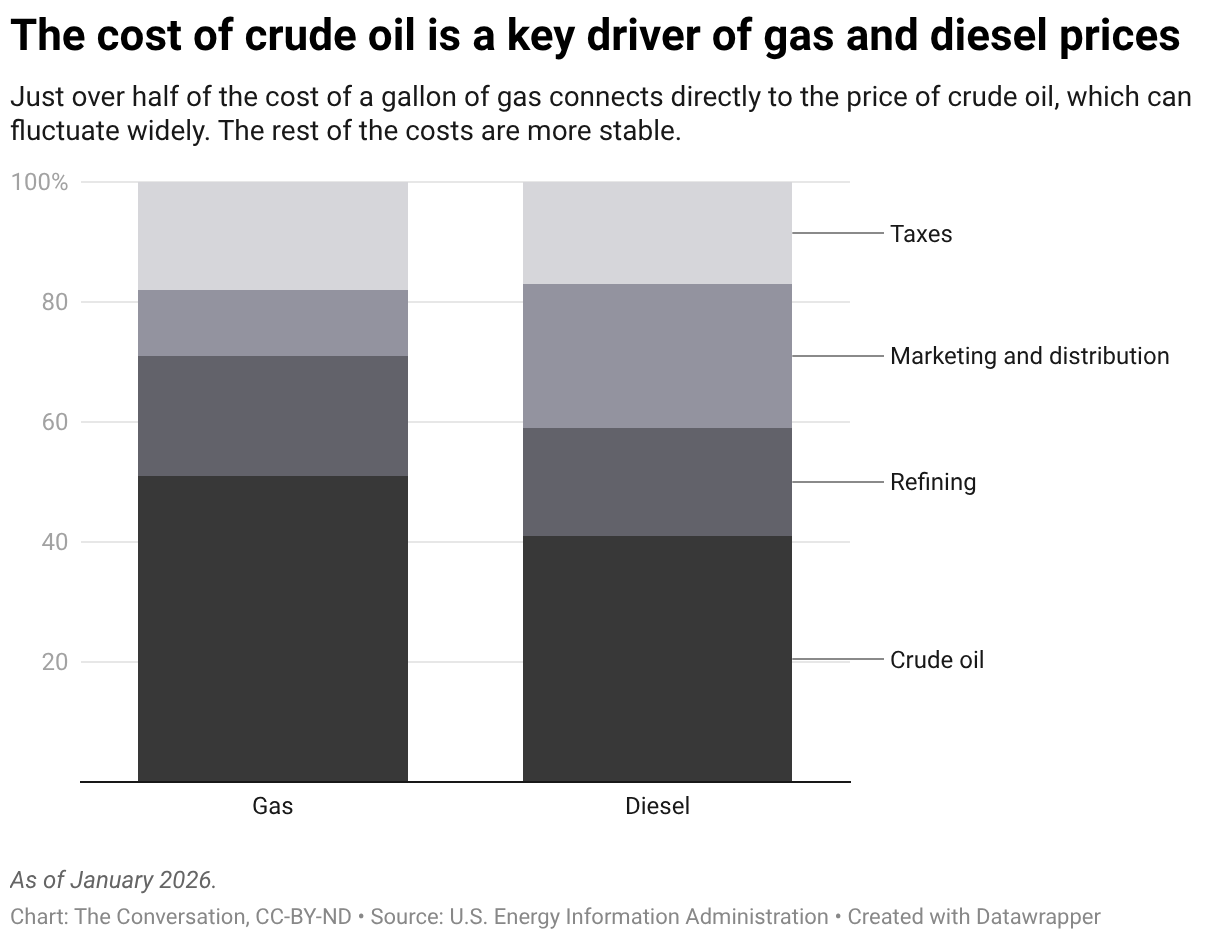
]]>When Chevron reported its highest quarterly profit in six years on July 31, 2026, it was just one detail in a larger picture: Analyst firm Wood Mackenzie estimates the global oil and gas industry is on course for a cash windfall of US$495 billion in 2026. That’s profit above and beyond what the industry expected before the U.S.-Israel war with Iran began.
Three separate bills seeking to tax those profits are now in Congress, and President Donald Trump has even said the oil companies are “making too much money.”
As an applied microeconomist, I am often asked how taxes affect economic activity. Economists have long held a more nuanced view of windfall taxes than either side of the current debate suggests. Advocates often make overly optimistic revenue projections, and opponents often overstate how much such a tax might discourage investment. A 1980s U.S. windfall-tax experiment is instructive on both counts.
Read Full Story on The Conversation
]]>Three separate bills seeking to tax those profits are now in Congress, and President Donald Trump has even said the oil companies are “making too much money.”
As an applied microeconomist, I am often asked how taxes affect economic activity. Economists have long held a more nuanced view of windfall taxes than either side of the current debate suggests. Advocates often make overly optimistic revenue projections, and opponents often overstate how much such a tax might discourage investment. A 1980s U.S. windfall-tax experiment is instructive on both counts.
]]>Despite decades of research, the chaotic nature of turbulence makes it difficult to predict and control. This challenge impedes more than smoother air travel. Solving the turbulence problem could lead to advances in areas ranging from sustainable energy to training a smarter workforce for the era of artificial intelligence (AI).
To advance understanding of turbulence, the National Science Foundation is establishing a new, $30 million Science and Technology Center (STC) at Michigan State University. Georgia Tech is among eight universities supporting the center.
Assistant Professor Qi Tang will join the STC for Transformative Explorations in Multi-Physics and Engineering of Scientific Turbulence (TEMPEST). TEMPEST, launching on Sept. 1, aims to build trustworthy, predictive models of real-world turbulence.
Tang will lead TEMPEST’s modeling and scientific machine learning (ML) efforts. NSF will fund Tang and Georgia Tech with over $1 million from the center’s five-year, $30 million award.
By understanding and predicting turbulence, TEMPEST can unlock new applications, with a focus on fusion energy and national security. The center will also generate long-term research projects with applications in air and space flight, manufacturing, chemistry, and broaden science education and AI fluency.
“Turbulence has resisted prediction for a century,” said Tang, a faculty member in the School of Computational Science and Engineering (CSE).
“STC TEMPEST aims to develop a unified, predictive science that advances fusion energy, improves hypersonic technologies, and deepens our understanding of how stars created the elements that make up our world and ourselves. For everyday people, the center points toward abundant clean energy and faster, more efficient flight."
Turbulence is the motion of a fluid characterized by chaotic changes in pressure and speed. Turbulent flows can occur across all scales, from interactions between subatomic particles to astrophysical scales, including supernovas, black holes, and cosmic rays.
While turbulent flows are common and occur naturally, scientists still do not fully understand them. Small changes in a turbulent flow can produce dramatically different outcomes. Combined with the countless interactions across multiple scales of time and space, this makes turbulence extraordinarily difficult to predict.
“Rather than studying individual pieces of this enormously complex problem in isolation, we are bringing together theory, experimentation, computation and artificial intelligence to develop a deeper understanding of turbulence across scales,” said Michael Murillo, an MSU professor and the director of TEMPEST.
“Our goal is not simply to understand turbulence better, but to make it predictable and controllable in ways that will enable new technologies and scientific discoveries.”
The NSF TEMPEST award supports students and researchers at Michigan State University, Auburn University, Baylor University, Georgia Tech, San José State University, Texas A&M University-Corpus Christi, University of Rochester, and Yale University to combine theory, computation, AI techniques, and experimentation to build trustworthy predictive models of real-world turbulence for high-consequence applications.
Additional partners include Los Alamos National Laboratory, Sandia National Laboratories, Lawrence Livermore National Laboratory, Pacific Fusion, and General Atomics.
Together, TEMPEST researchers will build more accurate and reliable physics-grounded models. The center will test new ideas against real-world observations, then use those results to refine the models.
Tang contributes expertise in ML, scientific computing, and plasma physics to STC TEMPEST.
Earlier this year, Tang received an Early Career Research award from the Department of Energy’s Office of Science. He is using the award to build ML and data science tools that help scientists analyze massive datasets from fusion experiments and simulations.
This interdisciplinary approach is intended to move science from understanding why turbulence behaves as it does to predicting how it will behave. Through prediction and simulation, scientists could eventually engineer solutions to control turbulence in real-world scenarios.
The center will make its data and software broadly available and engage the public through museum exhibitions, immersive media, and educational programs that are expected to reach more than 10,000 K-12 students annually. TEMPEST will also help train an AI-fluent scientific workforce prepared to tackle complex problems across disciplines.
“One reason I am excited to work in TEMPEST is because it aligns perfectly with our School of CSE mission. As a discipline, CSE complements theory and experimentation as a mode of scientific discovery,” Tang said.
“We build computational models to simulate scientific and engineering concepts, like turbulence in this case, so that we can test theories that are too difficult, expensive, or risky for physical experiments.”
]]>But recent research from Georgia Tech’s School of Economics in the Ivan Allen College of Liberal Arts suggests adding an asterisk to earlier research that makes that conclusion, saying previous studies failed to account for one simple fact: people adapt.
Georgia Tech economist Bobby Harris used a massive database of Fitbit step count data to measure how temperature shapes physical activity and found that extreme heat cuts step counts by 6% when compared to ideal weather. And while residents of the warmest regions cut their activity by an average of only 354 steps on days over 100 degrees, those living in the coldest regions cut theirs by 1,081, according to Harris’ analysis.
To be fair, cold bites, too. On days that stay below freezing, people take roughly 1,000 fewer steps. That’s a 12% drop, enough to pack on a pound over the course of a typical Madison, Wisconsin winter, Harris found.
But as the climate grows warmer, how humanity will respond to warmer temperatures remains a significant concern. In fact, earlier research projected that, by 2050, temperature-driven declines in physical activity could contribute to 500,000 premature deaths a year worldwide and annual productivity losses topping $2.4 billion.
Projections like those typically assume everyone responds to heat the same way, with no capacity to adapt, Harris said.
Read Full Story on the IAC News Page
The committee, convened through the National Academies' project Future of Battery Technology Options for Defense Applications, will identify the strengths and weaknesses of future battery technologies, including an examination of performance, safety, and manufacturability across technology and manufacturing readiness levels. The committee will also identify gaps where research investments could potentially improve battery capabilities across technology and manufacturing readiness levels, creating opportunities to leverage commercially available technologies.
With a joint appointment in MSE and the George W. Woodruff School of Mechanical Engineering, McDowell is internationally recognized for his research on batteries and energy storage materials. His work focuses on understanding how materials change during battery operation and using that knowledge to develop safer, more efficient, and more sustainable energy storage systems. McDowell is also co-director of the Georgia Tech Advanced Battery Center. He leads research spanning solid-state batteries, lithium-ion and sodium-ion technologies, and next-generation energy storage materials. “I am very thankful to be selected, and I look forward to working with colleagues on developing recommendations to advance battery technologies in support of our country," said McDowell.
Read Full Story on the MSE Newspage
]]>The committee, convened through the National Academies' project Future of Battery Technology Options for Defense Applications, will identify the strengths and weaknesses of future battery technologies, including an examination of performance, safety, and manufacturability across technology and manufacturing readiness levels. The committee will also identify gaps where research investments could potentially improve battery capabilities across technology and manufacturing readiness levels, creating opportunities to leverage commercially available technologies.
With a joint appointment in MSE and the George W. Woodruff School of Mechanical Engineering, McDowell is internationally recognized for his research on batteries and energy storage materials. His work focuses on understanding how materials change during battery operation and using that knowledge to develop safer, more efficient, and more sustainable energy storage systems. McDowell is also co-director of the Georgia Tech Advanced Battery Center.
]]>This award is part of NASA’s Space Technology Research Grants Program, which supports groundbreaking projects with the potential to transform space science and technology.
Through the three-year, $750,000 award, Mazumdar and her research team will develop laser-based methods to simultaneously measure temperature, chemical species, gas velocity, and other properties in the gases surrounding heat shield materials.
“We aim to implement our measurement techniques in arc jet or plasma jet facilities, like the ones at NASA, to assist with the evaluation of thermal protection systems for next-generation spacecraft,” Mazumdar said.
The project uses ultrafast lasers, which produce extremely short, high-intensity pulses. These pulses allow researchers to study the behavior of molecules on extremely short timescales and measure properties that can improve understanding of the gases surrounding a spacecraft during atmospheric entry.
Mazumdar said she and her students are excited about this project and hope it will help NASA develop new heat shields for spacecraft traveling to destinations such as Mars, Venus, and Titan.
Read Full Story on the ME Webpage
]]>This award is part of NASA’s Space Technology Research Grants Program, which supports groundbreaking projects with the potential to transform space science and technology.
Through the three-year, $750,000 award, Mazumdar and her research team will develop laser-based methods to simultaneously measure temperature, chemical species, gas velocity, and other properties in the gases surrounding heat shield materials.
“We aim to implement our measurement techniques in arc jet or plasma jet facilities, like the ones at NASA, to assist with the evaluation of thermal protection systems for next-generation spacecraft,” Mazumdar said.
]]>Georgia Tech is hosting the 2026 MFEM (Modular Finite Element Methods) Community Workshop, Sept. 22-25. MFEM supports research in computational physics, earth systems modeling, engineering, energy, and other fields.
The four-day workshop is being held at the Georgia Tech Global Learning Center and will focus on improving software for scientific computing and discovery. Participants can also attend online. Registration for the workshop is open through Sept. 11.
“We're very excited and grateful for the opportunity to have this workshop at Georgia Tech,” said Tzanio Kolev, a computational mathematician at Lawrence Livermore National Laboratory (LLNL).
“Georgia Tech has a great reputation in our field, and hosting at universities is a great way to connect with students. We see students as our future colleagues who will improve MFEM for generations to come.”
MFEM is an open-source software library for solving equations in computational models. Scientists and engineers use it to build and test virtual designs on some of the world’s most powerful supercomputers before creating real-world prototypes.
In fact, MFEM powered a tsunami early-warning model that ran on El Capitan, the world’s second-fastest supercomputer. The framework completed a simulation in a fraction of a second, 10 billion times faster than conventional algorithms. Kolev was part of the team that won the 2025 Gordon Bell Prize for the project.
MFEM’s impact extends beyond its original developers. The AWS Center for Quantum Computing uses the software as the foundation for a tool called Palace. This project runs 3D electromagnetic simulations to aid in the design of quantum computing hardware.
“These workshops have been very beneficial for both the broader user community and also for MFEM developers,” said Kolev.
“Every workshop, we are surprised by the ways people are building on our work, seeing what incredible, interesting, amazing things they do with it.”
Next month’s workshop at Georgia Tech will connect MFEM users and developers from national laboratories, academia, government, and industry.
The United Kingdom Atomic Energy Authority joins LLNL and Georgia Tech in sponsoring this year’s workshop. Nearly 20 scientists from Department of Energy (DOE) laboratories are attending in person. They represent LLNL, Los Alamos National Laboratory, Princeton Plasma Physics Laboratory, and the Naval Nuclear Laboratory.
The workshop’s first day features a free, hybrid tutorial. LLNL’s High Performance Computing Innovation Center will lead the tutorial, helping new users get started with MFEM and learn what the software can do. The tutorial requires separate registration for virtual participants.
The workshop will also host a simulation and visualization contest. Participants can submit images and videos of simulations using MFEM, which will be posted in a gallery. The workshop organizers will select an overall winner.
Further workshop activities include:
The MFEM workshop highlights the role open-source software plays in scientific discovery.
By making tools freely available, researchers can build on each other’s work rather than starting from scratch. This shared approach can accelerate innovation, improve software, and make advanced computing tools accessible to a wider community.
Georgia Tech hosts a Center for Scientific Software Engineering and an Open-Source Program Office. This year’s workshop connects these units with the MFEM community to help put the software into the hands of more researchers across science and engineering.
“The MFEM workshop aims to foster collaboration among all MFEM users and developers,” said Qi Tang, a workshop organizer and assistant professor in the School of Computational Science and Engineering.
“Hosting its annual community workshop brings researchers from DOE laboratories, universities, and industry to campus, giving Georgia Tech faculty and students direct access to experts from the field.”
]]>Georgia Tech is hosting the 2026 MFEM (Modular Finite Element Methods) Community Workshop, Sept. 22-25. MFEM supports research in computational physics, earth systems modeling, engineering, energy, and other fields.
The four-day workshop is being held at the Georgia Tech Global Learning Center and will focus on improving software for scientific computing and discovery. Participants can also attend online. Registration for the workshop is open through Sept. 11.
]]>Organized by the Georgia Forestry Foundation (GFF) in partnership with the Ray C. Anderson Center for Sustainable Business at the Georgia Tech Scheller College of Business, Clemson University, and the University of Georgia (UGA) Warnell School of Forestry and Natural Resources, the trip brought together university researchers, foresters, potential carbon credit buyers, and family landowners.
Georgia is the number one forestry state in the country, with more than 22 million of its roughly 24 million forested acres held in private hands. According to the Southern Group of State Foresters, forests and the forest products industry in the Southern U.S. provide for more than 18% of the world’s pulpwood for paper and paper-related products and 7% of the world’s industrial roundwood. The timber industry also supports thousands of rural livelihoods and sequesters enormous amounts of carbon. Yet today, Georgia forests are under pressure due to natural disasters and market changes.
The field tour promoted a Georgia-specific carbon exchange that has the potential to save forests, help companies purchase high quality carbon credits, and provide co-benefits for the entire state.
Across pine-forested Southeast Georgia, the devastation left by Hurricane Helene remains impossible to miss. A year and a half later, the cleanup – which is slow, expensive, and disheartening – is still ongoing across thousands of acres. Downed timber, too old to be sold for profit, lies in heaps. Throughout the field tour, landowners and foresters shared personal narratives that made it easy to feel the weight of what has been lost.
Helene only worsened troubles that were already underway. The markets for timber and pulpwood have been weakening. Demand for paper products has fallen sharply, taking pulpwood prices with it. In the last year alone, three mills have closed in Georgia.
Do I bother to replant? If I plant, will someone actually buy my timber in 20 years? These are the questions landowners across Georgia are wrestling with. Landowners’ decisions today can lead to a future with fewer forested acres, less healthy forests, and forests converted to development – a loss that is permanent.
The pressing question throughout the field tour was: What happens next?
One of the benefits of a field tour is the chance to hear firsthand, personal accounts from the people whose livelihoods depend on forests.
The tour began in Emanuel County at the Willie Hodges Family Farm Estate. Herbert Hodges welcomed the group to the 600-acre property his family has stewarded for four generations. Hodges shows his respect for the land through thoughtful stewardship – for which he was honored when he was named 2025 Conservationist of the Year by the Georgia Association of Conservation Districts. However, Hodges worries whether the fifth generation will keep the land, and he wants to demonstrate to his heirs that the land is worth holding onto. He remembers his father telling him, “Never get rid of the land. As long as you keep it, you have somewhere to live, somewhere to go.”
Matt Hestad, senior vice president of GFF, said, “Mr. Hodges has to identify new opportunities for his property not only to keep his family engaged but also to prove the land is economically valuable, both today and into the future.”
The carbon exchange, if built well, could be exactly that kind of new opportunity.
The initiative to develop a Georgia Carbon Exchange, launched in 2025, is being led collaboratively by the organizers of the field tour. It’s designed to create a voluntary carbon credit marketplace specifically tailored to Georgia’s forest landscape, Georgia’s landowners, and companies that are interested in purchasing high quality carbon credits.
David Eady, director of industry engagement at the Ray C. Anderson Center for Sustainable Business, described the vision: “We're looking at creating a marketplace for companies doing business in Georgia or headquartered in Georgia, so they can acquire credits that specifically benefit local communities and ecosystems. We want to make sure that we can continue to manage our valuable forest resources that make up well over half of the land in Georgia.”
“Companies are concerned about sustainability because their customers are – and one of the things that that's manifested is a market for carbon credits,” said Leslie Boby, director of the UGA Southern Regional Extension Forestry. “Being in forestry, we have the original carbon sequestration system: trees. And we have a lot of trees in Georgia.”
The foundation for the Georgia Carbon Exchange already exists, waiting to be built on.
The January tour was a pilot that can be replicated for other groups of potential carbon buyers, policymakers, and stakeholders who need to understand what is at stake in Georgia’s forests before they can meaningfully invest in their future.
Hestad described what made this first tour valuable: “We need all the players at the table: academics, buyers, and landowners. I feel like we’ve learned from a variety of people about forest management – from a private family landowner about intergenerational challenges, from a recreation-focused landowner about wildlife management, and from landowners who have been impacted by Hurricane Helene. We’ve been provided with context for how a carbon exchange could serve those different sectors of landowners.”
For industry representatives on the tour, the experience was eye-opening. They joined the tour to learn more about recovery efforts, community support, and the mechanics of a carbon exchange. At the end of the tour, they said they had a clearer sense of both the urgency and the opportunity.
Clay said, “Landowners are focused on the economics of forestry, and buyers are looking for quality credits. I think there's a lot of opportunity for both of these things to happen.”
A successful carbon exchange requires trust, understanding, and shared purpose to be cultivated deliberately. Tours like this one are part of that cultivation.
Georgia has everything it needs to make a carbon exchange work: the forests, the science, the institutions, and the will. What it needs now is exactly what the field tour was designed to build: awareness, connection, and shared commitment among the people and organizations whose decisions will shape the future of the state’s forests.
Zach Johnson, procurement manager at Beasley Timber Management, LLC, told the group: “With every one green ton of tree growth, you sequester approximately one metric ton of carbon dioxide from the atmosphere. Let’s find a way to certify this wonderful resource we have and prop up these jobs in Georgia – before it’s too late.”
Maintaining Georgia’s forests is not only about carbon. Well-managed forests filter water, support native wildlife, improve air quality, protect public health, and provide opportunities for outdoor recreation. These are co-benefits that a carbon credit does not fully capture but that are very much part of the value proposition for maintaining Georgia’s private forests. As stated by Yanshu Li, associate professor of forest economics at UGA: “If we take care of our forests, our forests will take care of us.”
Among the pines of Southeast Georgia, a common goal came into focus. The forests are worth saving. And the right people are coming together with the right plan to make it happen.
]]>Written by Jennifer Holley Lux
Photography (unless otherwise noted) by Mike Gregory (Georgia Forestry Association & Foundation)
]]>"One of the goals of the program is to give students the time and support needed to make meaningful progress on their dissertation research while helping them understand the broader policy, economic, and societal implications of their work," said Laura Taylor, director of EPIcenter.
The stipends enable participants to focus exclusively on clearly defined research goals. The program also supports peer discussions, communication training, and interdisciplinary learning opportunities designed to strengthen both their research and professional development.
This year's cohort explored topics ranging from electricity markets and air pollution to critical mineral supply chains and grid modernization, highlighting the breadth of energy-related research taking place across Georgia Tech.
Exploring Complex Energy Challenges
Ana Mazmishvili, who studies environmental and energy economics, used the summer to examine how climate policies affect communities across state lines.
"My research measures who is actually exposed to pollution from power plants when some states adopt climate regulations to cut emissions while neighboring regions do not," Mazmishvili said. "Because air doesn't stop at state borders, the key question is what happens once the pollution is emitted, and who ends up breathing it."
Her work focuses on the Regional Greenhouse Gas Initiative (RGGI), a cap-and-trade program in the Northeast, and investigates whether the benefits and burdens of emissions reductions are distributed equitably between regulated and neighboring states.
Mazmishvili said the program provided valuable time to focus on her job-market paper, a central component of her dissertation.
"The regular meetings with the program director and other fellows create useful accountability checkpoints and let me hear perspectives from people in very different fields," she said. "We're also learning how to make academic research understandable to a general audience, a skill I expect to use well past this summer."
Industrial and systems engineering doctoral student Faeze Fahimi Aghda spent the summer developing an optimization model for the U.S. gallium supply chain, a critical component of many advanced technologies.
Her research uses mathematical modeling to examine where and when domestic gallium processing facilities should be established under the threat of supply disruptions.
"Working on my research through EPIcenter has taught me to look at my problem from a policy point of view rather than focusing only on the math," Fahimi Aghda said. "The feedback within the meetings helped me improve my model."
Ryan Anthony, in the Jimmy and Rosalynn Carter School of Public Policy, explored how one of the largest oil shocks in U.S. history affected electricity customers and whether utility ownership influenced the impact on consumers.
"So far, my research suggests that it mattered a lot,” Anthony said. “Municipal utilities held rates down and absorbed many of the costs, while private, investor-owned utilities passed more costs through to their customers."
Anthony said the program provided critical support for the archival research required for the project.
"My project depends on data that only exists in old government reports, and that kind of archival work is difficult to fund," he said. "EPIcenter gave me the time and space to do it properly."
Connecting Research to Real-World Impact
For Samin Alipour, the summer provided an opportunity to explore how electric grids can adapt to growing numbers of distributed energy resources.
"Most electric distribution systems were built like one-way roads, carrying power from a substation to homes and businesses," Alipour said. "Rooftop solar, batteries, and electric vehicles are turning those roads into two-way systems."
Her research examines how these emerging technologies can be coordinated to increase grid flexibility and clean energy adoption while maintaining safety and reliability and ensuring that costs and benefits are distributed fairly.
With support from EPIcenter, Alipour focused on the economic and policy dimensions of those challenges. "I did not want my research to remain only a technical model," she said. "The program has helped me connect the technical results of my dissertation to economic value, reliability, equity and compensation policy."
One study developed during the summer was accepted for presentation at a specialized power systems conference, an achievement Alipour credits in part to the opportunity to focus on the broader implications of her work.
Building the Next Generation of Energy Scholars
Beyond advancing individual research projects, the Summer Research Program encourages students to engage with colleagues from different disciplines and develop skills for communicating complex ideas to broader audiences.
“Through regular cohort meetings, participants build a community of accountability, discuss research challenges, explore interdisciplinary energy topics, and develop communication skills,” said Gil Gonzalez, program support coordinator for EPIcenter. “Students also write a research-focused blog post for EPIcenter and present their work at the program's fall workshop, which allows them to share their research with the broader Georgia Tech energy community.”
As EPIcenter continues to support interdisciplinary energy scholarship at Georgia Tech, the Summer Research Program equips future leaders with the tools to address complex energy challenges through technological innovation, informed policy, and economic analysis.
]]>"One of the goals of the program is to give students the time and support needed to make meaningful progress on their dissertation research while helping them understand the broader policy, economic, and societal implications of their work," said Laura Taylor, director of EPIcenter.
The stipends enable participants to focus exclusively on clearly defined research goals. The program also supports peer discussions, communication training, and interdisciplinary learning opportunities designed to strengthen both their research and professional development.
This year's cohort explored topics ranging from electricity markets and air pollution to critical mineral supply chains and grid modernization, highlighting the breadth of energy-related research taking place across Georgia Tech.
]]>Join Georgia Tech undergraduate Harrison Burnside on this latest episode of Engineered at Tech as he tours Katherine Graham's lab and discovers how to track pathogens in the Chattahoochee River. The goal is to help local agencies pinpoint sources of pollution in rivers and reservoirs to protect public health.
Watch the video on the COE News page
]]>Join Georgia Tech undergraduate Harrison Burnside on this latest episode of Engineered at Tech as he tours Katherine Graham's lab and discovers how to track pathogens in the Chattahoochee River. The goal is to help local agencies pinpoint sources of pollution in rivers and reservoirs to protect public health.
]]>The Air Quality Index (AQI) measures how clean or polluted the air is. A healthy AQI is between zero and 50, but when wildfire smoke blows in and settles over cities, the AQI can reach levels of 500 or more. Poor air quality changes where and how people spend their time and money, reduces productivity (even for those working indoors), and increases healthcare costs.
“Environmental regulations like the Clean Air Act dramatically improved our air quality over the past 40 years, but as wildfire season becomes the new normal, wildfire smoke is eroding those gains,” Wichman said. According to recent research, wildfire smoke has erased about a quarter of the progress made over previous decades, and more than half in many western states.
Read Full Story on the IAC News Page
]]>The Air Quality Index (AQI) measures how clean or polluted the air is. A healthy AQI is between zero and 50, but when wildfire smoke blows in and settles over cities, the AQI can reach levels of 500 or more. Poor air quality changes where and how people spend their time and money, reduces productivity (even for those working indoors), and increases healthcare costs.
“Environmental regulations like the Clean Air Act dramatically improved our air quality over the past 40 years, but as wildfire season becomes the new normal, wildfire smoke is eroding those gains,” Wichman said. According to recent research, wildfire smoke has erased about a quarter of the progress made over previous decades, and more than half in many western states.
]]>For researchers in Georgia Tech's Cyber-Physical Security (CPSec) Lab, however, the vulnerabilities behind many of these incidents are far from new.
Associate Professor Saman Zonouz leads the CPSec Lab and has studied programmable logic controllers (PLCs) for years. These devices automate critical infrastructure, including water treatment facilities, power grids, manufacturing plants, and transportation systems. The lab’s work has revealed widespread internet exposure and software vulnerabilities that leave many industrial control systems vulnerable to cyberattacks.
"Out of the 16 critical infrastructure sectors defined by the Cybersecurity and Infrastructure Security Agency, four are considered lifelines," Zonouz said. "Of those four, communications, energy, transportation, and water, the water sector is the most vulnerable, which is why it is so often targeted."
PLCs serve as the brains of industrial operations, monitoring sensors and controlling equipment that keep essential services operational.
"Imagine you have a thermostat that controls the temperature of your house. That is a type of controller," Zonouz explained. "The professional version does the same thing in industry."
When these controllers are directly accessible from the internet, attackers can exploit them to disrupt operations, manipulate industrial processes, or interfere with the systems that deliver essential services. Controllers may be intentionally exposed to allow operators to monitor equipment remotely. They can also be unintentionally accessible online because of configuration errors.
However, internet exposure is only part of the problem.
The CPSec Lab maintains a collection of PLCs that researchers reverse engineer to better understand their firmware, communication protocols, and security weaknesses. Their research has found that many controllers contain vulnerabilities that attackers can exploit once they gain access.
"Not only can the attackers see the house they want to rob, but the doors are also left unlocked," Zonouz said.
In 2024, Zonouz and his collaborators presented PLCHound at the ACM Conference on Computer and Communications Security (CCS), introducing an automated system that identifies internet-connected PLCs hidden within massive internet-scale datasets collected by services such as Shodan and Censys. The work was led by Ph.D. student Ryan Pickren. Provost and Executive Vice President for Academic Affairs Raheem Beyah, Assistant Professor Frank Li, and Research Scientist Animesh Chhotaray are co-authors of the study.
Rather than relying on traditional scanning techniques, PLCHound identifies subtle network signatures that reveal industrial devices that prior methods often missed. Using the system, the researchers conducted one of the largest studies of publicly reachable PLCs from major manufacturers.
Their findings showed that previous estimates undercounted the number of internet-accessible industrial controllers by as much as 37 times. Even more concerning, nearly 96% of the identified devices exposed protocols linked to recently disclosed critical vulnerabilities.
The researchers did more than document the problem. After identifying exposed devices, the team launched a large-scale notification campaign, contacting more than 7,000 industrial operators to alert them that their systems appeared vulnerable. The effort enabled many organizations to investigate and address security issues before they could be exploited.
The recent attacks on municipal water systems reinforce concerns researchers have raised for years: many critical infrastructure operators continue to rely on operational technology designed primarily for reliability and performance rather than for cybersecurity.
Improving those defenses, Zonouz said, will require more than simply patching individual vulnerabilities.
The researchers cite the energy sector as a model. Compared with other critical infrastructure sectors, electric utilities generally operate under more mature cybersecurity requirements and undergo routine compliance audits, providing organizations with greater visibility into the devices connected to their networks and the risks they pose.
Implementing those improvements will not be easy. Many municipal water utilities operate with limited budgets and aging infrastructure, leaving little funding available for cybersecurity investments. As attacks on critical infrastructure become more frequent, the researchers argue that gaining visibility into operational technology assets and strengthening oversight are essential first steps to protect the systems communities rely on every day.
The CPSec Lab is a collaborative laboratory within the School of Cybersecurity and Privacy as well as the School of Electrical and Computer Engineering.
]]>For researchers in Georgia Tech's Cyber-Physical Security (CPSec) Lab, however, the vulnerabilities behind many of these incidents are far from new.
]]>Communications Officer II at the School of Cybersecurity and Privacy
]]>As during previous editions, this year’s conference featured more than two dozen scientists, engineers, policy experts, and thought leaders from Georgia Tech and beyond, illustrating how collaboration across fields – from science and engineering to public policy and international affairs – helps to advance strategic research priorities.
“Frontiers is about discovery and connections across disciplines and generations,” says Susan Lozier, dean of the College of Sciences and Betsy Middleton and John Clark Sutherland Chair. “This edition provided an inspiring glimpse into the future of space exploration and the many ways Georgia Tech is contributing to research and missions seeking answers to what lies beyond our planet.”
Commitment to Space
Space research is a key institutional priority at Georgia Tech, which is home to numerous academic and research programs in planetary sciences, robotics, mission design, space policy, and other areas.
The recently established Space Research Institute (SRI) serves as the central hub connecting the broad range of space-related research across campus. Led by Jud Ready, who also serves as principal research engineer at the Georgia Tech Research Institute, SRI has expanded support for space research and commercialization through initiatives such as the CreationsVC Space Fellows Program and Centers, Programs, and Initiatives seed grant program.
SRI’s efforts are in line with Georgia Tech’s long-standing contribution to space exploration. Hundreds of Yellow Jacket alumni work in the space sector, including several graduates who are playing key roles in the Artemis program. To date, more than a dozen Georgia Tech alumni have traveled to space.
Exploring the Final Frontier
The conference featured a series of panels and discussions led by faculty and researchers from the Colleges of Sciences and Engineering as well as the Ivan Allen College of Liberal Arts.
Sessions explored how researchers are studying the processes and conditions that support planetary habitability, seeking to answer one of humanity’s greatest questions: Does life exist beyond Earth? Speakers also examined how analog fieldwork in Earth’s extreme environments can inform space exploration, and how space research, in turn, can deepen our understanding of our own world.
Additional conversations centered on building better space missions through improved understanding of team and individual resilience, data collection, navigation, and the development of advanced technologies like the robots developed through the NASA LASSIE Project.
Frontiers also highlighted Georgia Tech’s commitment to preparing the next generation of space scientists, engineers, and leaders. Student training and engagement were recurring themes throughout the day, with speakers emphasizing opportunities for student-led and student-run missions and research. A panel of Georgia Tech alumni shared their own STEM career journeys, challenging the idea of “one right path” to success — and acknowledging the resources and opportunities available at the Institute.
A highlight of the conference was a fireside chat with Atlanta-native, retired U.S. Army Colonel and NASA Astronaut R. Shane Kimbrough (M.S. Operations Research 1998). Kimbrough, who spent a total of 388 days in space and performed nine spacewalks across three missions, reflected on his career and the evolution of spaceflight. He emphasized the expanding role of public-private and international partnerships in advancing ambitious goals, such as creating a permanent human outpost on the Moon.
Policy and Public
The conference also explored how policy influences space discovery and innovation, with discussions touching on such issues as space security, access, governance, sustainability — and the influence of technology and science fiction on public perception and policy.
Panelists described current policy frameworks governing outer space as struggling to keep pace with rapidly advancing technologies and expanding activities. According to these experts, increasing tensions among commercial, research, and recreational uses of space call for greater coordination among private and government entities to balance competing priorities while maximizing opportunities for innovation and exploration.
The conference was punctuated by a networking lunch connecting attendees with Atlanta’s public astronomy community – including partners at several universities and the Georgia Tech Astronomy Club, which set up telescopes for attendees to safely observe the sun. Later that evening, the Georgia Tech Observatory hosted its Public Night, welcoming the broader Atlanta community to campus for telescope views of Jupiter, the Orion Nebula, and other celestial bodies.
The Observatory Night was a fitting conclusion to a full day focused on Georgia Tech’s commitment and contributions to inspiring future generations of space explorers through research, education, and outreach.
Experience the Frontiers conference in pictures on the College of Sciences’ Flickr account.
]]>Recycled materials promise a cleaner future, but recycled content alone does not necessarily make a product sustainable. At Georgia Tech’s Daedalus Lab, assistant professor, National Science Foundation CAREER Award recipient, and Brook Byers Institute for Sustainable Systems Faculty Fellow Christos Athanasiou and postdoctoral researcher Danqi Sun are working to provide greater certainty to designers and engineers by rethinking how materials are tested for their fracture characteristics. Their article in Science Advances details a new testing protocol that reduces cost, increases speed, and simulates real-world conditions.
Materials shape nearly every part of modern life, from packaging and consumer products to bridges and medical devices. Choosing the right material involves balancing durability, cost, manufacturability, and environmental impact. Yet those decisions are not always guided by a clear understanding of how materials age and fail under real-world conditions, especially for recycled materials like plastics.
One way that materials frequently fail is by cracking. A small crack can begin almost invisibly. Over time, it can spread from regular wear and tear and exposure to common environmental factors like moisture, temperature fluctuations, or even dirt. Eventually, the crack expands, and the part fails. Engineers have studied fracture for more than a century, but connecting the science of cracking to practical decisions about sustainability remains a major challenge.
The characteristics of recycled plastics often vary from those of the same material in unrecycled, or virgin, form. Products made from recycled plastics may be sold with sustainability claims under the assumption that they will perform as if they were made with virgin material. However, premature failure requiring repair or replacement can quickly change the sustainability equation as well as the acceptance of recycled materials by manufacturers and consumers.
Materials rarely fail due to a single factor. They may be exposed to several factors simultaneously, such as mechanical loading, chemical environments, temperature changes, moisture, and time. Traditional fracture protocols test one specimen at a time under carefully controlled laboratory conditions, which bear little resemblance to the real world. To move beyond this limitation, Sun developed an in-situ, high-throughput platform capable of studying how materials degrade and fail under more realistic conditions.
The platform changes conventional fracture testing in three important ways. First, it can test multiple specimens simultaneously rather than one at a time. By monitoring samples in parallel, testing time can be reduced by more than 60%. Second, it allows materials to be tested in realistic environments. In this study, researchers examined virgin and recycled plastics in alkaline environments that resemble conditions encountered in applications like landfill liner membranes and geotextiles. Third, the platform incorporates an imaging technique known as photoelasticity, which reveals the formation of stress fields that form around the origin of a newly developing crack. This allows researchers to see cracks develop earlier than before, giving them a clearer picture of the forces that drive crack growth.
The researchers have made the technology available for licensing through Georgia Tech’s Office of Technology Licensing. “Our goal was to make fracture testing not only faster but also more informative,” Sun said. “By combining high-throughput testing, realistic environments, and full-field stress imaging, we can better understand how materials fail under conditions closer to real-world applications.”
Recycled plastics are often viewed as a greener choice. But according to the study, it’s not always so straightforward. If a recycled product fails prematurely and needs to be replaced frequently, its environmental and economic costs can increase despite its recycled content. As Athanasiou puts it, “Failing materials don’t just break products. They can break sustainability promises.”
For example, comparing virgin polyethylene terephthalate (PET) with recycled PET (rPET) in applications such as landfill geotextiles, the researchers discovered that rPET showed lower resistance to environmental stressors, particularly in alkaline conditions over a pH of 9. In this application, specifying rPET over virgin PET would likely eliminate all of the presumed economic and environmental advantages of using a recycled material.
“Recycling is essential, but recycled content alone does not tell the full story. If a material fails too soon, the environmental benefits can disappear,” Athanasiou said.
For the researchers, the significance of the work extends beyond recycled plastics. The broader goal is to provide a fast, affordable, and realistic platform for evaluating the sustainability of any material choice. Because current testing protocols are costly, not widely available, and limited in the information they yield, engineers, manufacturers, and policymakers often have little choice but to continue to specify non-recycled materials because they will perform as expected. Having cheap and accurate data on recycled materials will help to accelerate their adoption because matching the engineering properties of recycled materials to their most appropriate applications will become more obvious.
The researchers also hope to expand the platform to simulate even more complex environments and apply it to a wider range of materials. Because the system generates large amounts of detailed data, it may enable opportunities to use computational modeling or artificial intelligence to digitally simulate mechanical testing, driving down costs and expanding availability even more.
The larger vision is a future in which sustainability is judged not by labels or assumptions, but by evidence for how a material performs, how long it lasts, how it fails, and what it costs society and the environment over its full lifetime.
Please visit the Daedalus Lab YouTube channel to see an explainer video about this new testing protocol: https://youtube.com/watch?v=zmRhiRIiAkQ
Read the paper here: https://www.science.org/doi/10.1126/sciadv.aeh0456
This research was supported by the National Science Foundation CAREER Award No. 2338508.
]]>The ACS is one of the world’s largest scientific societies, and its Fellows Program recognizes outstanding achievements in scientific research, education, leadership, and service to the chemical profession and honors a select group of members each year.
"Election as an ACS Fellow is a significant honor that recognizes not only scientific excellence but also leadership and service to the profession," said Julia Kubanek, Georgia Tech's vice president for Interdisciplinary Research. "Yuanzhi's pioneering research, her leadership within ACS and the Strategic Energy Institute, and her commitment to advancing interdisciplinary collaboration have strengthened Georgia Tech's impact in chemistry, energy, and environmental research. We are proud to celebrate this well-deserved recognition."
Tang was recognized for her contributions to environmental chemistry, biogeochemistry, and energy-related research, as well as for her leadership and service to the chemical sciences.
"Given her exceptionally energetic research program, which spans topics ranging from the basic understanding of chemical cycling on Earth to creative solutions to recover rare elements from wastes, this honor is richly deserved and completely unsurprising," said Jean Lynch-Stieglitz, chair of the School of Earth and Atmospheric Sciences. "We are lucky to have Yuanzhi as part of EAS."
As SEI executive director, Tang leads Institute-wide efforts to strengthen Georgia Tech's energy research enterprise by connecting expertise across disciplines and fostering partnerships with industry, government, and national laboratories. She also maintains an internationally recognized research program focused on understanding the chemical and biological processes that shape natural and engineered environments.
Established in 2008, the ACS Fellows Program honors a distinguished group of scientists who have made exceptional contributions to chemistry and related fields while also demonstrating dedicated service to the society. With this election, Tang joins 17 Georgia Tech ACS Fellows.
"I’m deeply honored," Tang said. "This recognition reflects the contributions of many outstanding students, postdoctoral researchers, colleagues, collaborators, and mentors throughout my career. I am grateful for the opportunity to work alongside such talented people to advance scientific discovery and build interdisciplinary partnerships that address critical energy and environmental challenges."
Founded in 1876, the American Chemical Society represents more than 170,000 members worldwide and is a leading source of scientific information through its journals, conferences, and educational programs.
]]>The ACS is one of the world’s largest scientific societies, and its Fellows Program recognizes outstanding achievements in scientific research, education, leadership, and service to the chemical profession and honors a select group of members each year.
"Election as an ACS Fellow is a significant honor that recognizes not only scientific excellence but also leadership and service to the profession," said Julia Kubanek, Georgia Tech's vice president for Interdisciplinary Research. "Yuanzhi's pioneering research, her leadership within ACS and the Strategic Energy Institute, and her commitment to advancing interdisciplinary collaboration have strengthened Georgia Tech's impact in chemistry, energy, and environmental research. We are proud to celebrate this well-deserved recognition."
]]>The SCC is home to seven student engineering competition teams and provides workspace, tools, and resources to help students apply classroom learning to real-world engineering challenges.
In his new role, Simmons will provide strategic leadership and operational oversight for student competition teams, facilities, staff, budgets, sponsorships, and safety programs. He also will teach and mentor students through engineering design and experiential learning courses, helping connect classroom instruction with project-based experiences.
“Richard brings a unique combination of industry experience, research leadership, and deep commitment to student success,” said Carolyn Seepersad, Eugene C. Gwaltney, Jr. School Chair. “As an accomplished engineer and a Georgia Tech alumnus, he understands the value of experiential learning and is well-positioned to lead the Student Competition Center.”
Simmons, ME 1993, joined Georgia Tech in 2016 after spending the first 20 years of his career leading research, technology, and business development initiatives in the automotive industry, energy sector, and federal government. After graduating from Tech, he earned his master’s and doctoral degrees from Purdue University and later became a licensed professional engineer.
Over the past decade, Simmons has held several leadership and research positions within Georgia Tech’s Strategic Energy Institute, including founding director of the Energy Policy and Innovation Center and, most recently, director of Research and Studies. He has also taught a variety of courses at the Woodruff School, including ME 2110, Capstone Design, Energy Systems, and Renewable Energy.
Read Full Story on the ME News Page
]]>The SCC is home to seven student engineering competition teams and provides workspace, tools, and resources to help students apply classroom learning to real-world engineering challenges.
In his new role, Simmons will provide strategic leadership and operational oversight for student competition teams, facilities, staff, budgets, sponsorships, and safety programs. He also will teach and mentor students through engineering design and experiential learning courses, helping connect classroom instruction with project-based experiences.
]]>Blending engineering challenges, field experiences, and team-based design projects, the weeklong program in June gave students a dynamic introduction to energy, sustainability, and engineering innovation and a rare opportunity to engage directly with the technologies, infrastructure, people, and ideas that help power the world.
“Our goal is to get outside of the classroom, have fun, and demonstrate how a STEM education can literally help turn on lightbulbs,” said SEI’s director of Research and Studies, Rich Simmons, who also directs Energy Unplugged. “Through hands-on learning, field trips, and real-world experiences, these creative students are learning that everyone can play a role in our energy future. Along the way, they are gaining a deeper understanding of the tradeoffs and challenges engineers face and learning from experts about pathways to an energy career.”
Mousetrap-Powered Cars
Putting those ideas into practice from day one, the camp began with an engineering challenge in which students designed and constructed mousetrap-powered cars. Using the stored potential energy of a mousetrap spring to propel their vehicles, participants explored how energy is converted from one form to another and identified sources of friction and inefficiency that affect the distance traveled. The activity encouraged students to think like engineers, iteratively testing and refining their designs to improve results.
Engineering Optimization and Tradeoffs
Similar problem-solving skills were put to the test during an RC car optimization challenge. Equipped with a battery-powered vehicle and energy-monitoring systems, students were tasked with completing a driving course while maximizing their score by balancing speed, energy consumption, safety, and cargo capacity. Participants had the option to add weights and tennis balls to increase potential points, but doing so increased the risk of penalties from dropped cargo, missed obstacles, or vehicle rollovers. The exercise highlighted the tradeoffs engineers routinely face when optimizing systems under competing constraints.
“The overall interest in green energy among youth is increasing, so having demonstrations and experiments as well as some high-level lectures on the actual science was a great way to engage the students,” said student assistant William Nudd, a senior in mechanical engineering who assisted with the camp. “When I was in their shoes, I had never attended a physics class, so the camp was definitely getting them a step ahead and did a great job introducing and showcasing key concepts related to energy: How does my home get electricity? Where does energy come from? How do power plants operate?”
Trivia, Demos, and Scavenger Hunts
Additional activities throughout the week included energy-themed trivia competitions, a steam engine demonstration, a solar microgrid exercise, and a campus scavenger hunt. Together, they reinforced classroom concepts through interactive learning and encouraged students to connect technical principles with practical applications.
Field Trips to Power Plants
While these activities taught foundational concepts, a highlight of the camp was a series of field trips that allowed students to observe large-scale energy infrastructure in operation. Participants toured the Georgia Power McDonough-Atkinson Plant, where they learned how combined-cycle power plants generate electricity using both gas and steam turbines to improve efficiency. Students also visited the Morgan Falls hydroelectric facility, getting an up-close view of the massive generators and equipment used to convert the energy of flowing water into electricity.
Campus Tours
In addition to exploring regional energy infrastructure, students were introduced to Georgia Tech’s innovation ecosystem through visits to campus makerspaces and research facilities, including the Flowers Invention Studio and The Kendeda Building for Innovative Sustainable Design. Students explored one of the nation’s most advanced examples of sustainable building design during a guided tour of The Kendeda Building, which generates 200% of the energy it consumes. Here they learned how energy efficiency, renewable generation, and resource conservation can be integrated into the built environment.
Final Projects
To bring together the concepts explored throughout the week, students worked in teams on a final design challenge centered around a solar-powered disaster relief trailer on loan from the Footprint Project. Equipped with photovoltaic panels and battery storage, the trailer was originally designed to provide off-grid power during emergencies. Students were challenged to identify additional uses for the system during periods when disaster response was not required. Many teams proposed sustainable food truck businesses powered by the trailer’s solar energy system.
Teams also evaluated cooking technologies such as pressure cookers and slow cookers, comparing energy consumption, power requirements, efficiency, and operating costs. Students examined how energy demand aligned with available solar generation and battery storage while conducting economic analyses to determine business viability and profitability. The project integrated engineering, economics, and sustainability principles while encouraging creative thinking and collaborative problem-solving.
“Energy Unplugged is an inspiring demonstration of how hands-on engineering experiences can spark curiosity and passion in the next generation of STEM leaders,” said student assistant Alvaro Hucker, a senior mechanical engineering student. “Working with this group and seeing the fun they were having brought back fond memories of my own childhood. It was an amazing experience.”
Student Contributors: Alvaro Hucker, Senior, Mechanical Engineering and William Nudd, Senior, Mechanical Engineering.
]]>Student Contributors: Alvaro Hucker, Senior, Mechanical Engineering and William Nudd, Senior, Mechanical Engineering.
]]>Colleagues and friends remember Shelton as a dedicated mentor, collaborator, and educator, whose curiosity, generosity, and sense of humor left a lasting impression on students and peers.
“Sam exemplified the very best of Georgia Tech, and his legacy will continue to inspire generations of engineers and educators,” said Tim Lieuwen, executive vice president for Research at Georgia Tech. “I am deeply grateful for his friendship, mentorship, and leadership. My heartfelt condolences go to his family, and to the many students, colleagues, and friends whose lives he touched.”
A nationally recognized leader in energy systems, Shelton founded SEI as an interdisciplinary organization that brought together engineers, researchers, policy experts, and industry leaders to advance high-impact energy solutions. That vision remains central to SEI’s mission and continues to guide its work today.
“Sam was the quintessential engineer and innovator, whose vision was always accompanied by the development and demonstration of actual products instead of leaving them as promising concepts,” said Srinivas Garimella, Hightower Chair in the College of Engineering and professor in the George W. Woodruff School of Mechanical Engineering. “He had the rare ability to see through nebulous ideas and claims and get to the fundamental engineering truths. I am fortunate to have had the opportunity to seek his advice, which he freely gave. I will miss his friendship and counsel very much.”
During a career of more than 35 years, Shelton made lasting contributions to sustainable energy and engineering innovation. His work spanned combustion research, solar energy technologies, and offshore wind systems. He secured more than $30 million in research funding, held eight patents, founded two energy-focused companies, and helped translate research into real-world energy solutions.
In addition to his research, Shelton was deeply committed to education. During his academic career, he developed undergraduate and graduate courses in energy technology, teaching both in person and online. His Energy 101 course reached tens of thousands of learners through a massive open online course platform, covering topics such as energy supply, independence, economics, and society’s energy demands.
“When I first started at SEI in 2016, Sam and I would meet for lunch to discuss the latest research, consider how far we've come since the Carter administration, and grapple over the world’s energy problems,” said Rich Simmons, SEI’s director of Research and Studies. “Sam was genuine and objective, not working backward from a preconceived notion, but working forward with an open mind to understand, appreciate, and apply the first and second law. He was also colorful and witty! We are all privileged to pay these lessons forward to future energy students.”
Beyond academia, Shelton’s engineering expertise reached a global stage as the designer of the Olympic torch for the 1996 Atlanta Games, an enduring symbol of innovation recognized worldwide. “The Olympics represented world peace, mankind coming together, and overcoming adversity. It was an amazing event to think about, to witness, to live through, and be a part of helping to create it,” Shelton said in a 2016 interview.
Shelton is survived by his daughters, Suzie and Stacy, three granddaughters, and a wide network of students, colleagues, and collaborators. His legacy continues through the programs he built, partnerships he fostered, and the people he helped.
A memorial service celebrating Shelton’s life will be held Aug. 1 at 1 p.m. at The 57th Fighter Group Restaurant in Atlanta. The family asks that, in lieu of flowers, memorial gifts be directed to Roll Call, Georgia Tech’s Fund for Excellence. Donations may be made at gtalumni.org/SamShelton.
]]>Colleagues and friends remember Shelton as a dedicated mentor, collaborator, and educator, whose curiosity, generosity, and sense of humor left a lasting impression on students and peers.
“Sam exemplified the very best of Georgia Tech, and his legacy will continue to inspire generations of engineers and educators,” said Tim Lieuwen, executive vice president for Research at Georgia Tech. “I am deeply grateful for his friendship, mentorship, and leadership. My heartfelt condolences go to his family, and to the many students, colleagues, and friends whose lives he touched.”
]]>Housing and transportation are top priorities for many city mayors, policymakers and public policy researchers—including Brian An, an assistant professor at Georgia Tech’s Jimmy and Rosalynn Carter School of Public Policy. But in February 2021, soon after Winter Storm Uri wreaked havoc in Texas, an eight-hour power outage at his Atlanta home became an epiphany.
“While housing stability had long been on my mind, losing power drove home the importance of another piece of urban infrastructure: reliable access to electricity,” says An, an EPIcenter faculty affiliate and co-director of the Center for Urban Research. “It sparked my interest in studying the intersection of energy and urban policy to help make cities and communities not only socially equitable but also resilient to extreme weather.”
Read Full Story on the EPIcenter News Page
]]>Housing and transportation are top priorities for many city mayors, policymakers and public policy researchers—including Brian An, an assistant professor at Georgia Tech’s Jimmy and Rosalynn Carter School of Public Policy. But in February 2021, soon after Winter Storm Uri wreaked havoc in Texas, an eight-hour power outage at his Atlanta home became an epiphany.
“While housing stability had long been on my mind, losing power drove home the importance of another piece of urban infrastructure: reliable access to electricity,” says An, an EPIcenter faculty affiliate and co-director of the Center for Urban Research. “It sparked my interest in studying the intersection of energy and urban policy to help make cities and communities not only socially equitable but also resilient to extreme weather.”
]]>News Contact: Priya Devarajan, Research Communications Program Manager
]]>Six years after demonstrating that membranes could separate crude oil at the molecular level, Georgia Tech researcher Ryan Lively is part of an international team that has taken the concept a significant step further.
The team, including investigators at the Korea Advanced Institute of Science and Technology (KAIST), discovered that a membrane material widely believed to be non-selective for molecules as small as those found in crude can in fact selectively separate crude oil into lighter and heavier fractions in a way researchers did not expect.
Published in Nature, their findings suggest that using membranes to separate crude oil before distillation could significantly reduce the energy, water, and carbon footprint of petroleum refining.
Lively, the Thomas C. DeLoach Jr. Endowed Professor in Georgia Tech's School of Chemical and Biomolecular Engineering, served as an advisor and corresponding author on the study. Dong-Yeun Koh, an associate professor at KAIST and a former postdoc in the Lively Lab at Georgia Tech, led the study.
Building on Earlier Research
In the 2020 Science paper, Lively and collaborators demonstrated that specially designed membranes could separate crude oil into valuable fractions without relying solely on traditional heat-driven distillation. The work helped establish membrane-based crude oil fractionation as a promising alternative for reducing energy use in refining.
"This work grew directly out of the challenges we identified in our original findings in the 2020 article," Lively said. "One of the key challenges that the KAIST team set out to tackle was the very low oil productivities of the membrane units, which has limited the ability of this concept to leave the lab. Along the way, we not only increased the productivities, but we also uncovered a surprising new mechanism that could make membrane-based crude oil separations even more practical.”
The new study built on that foundation. The researchers investigated polyacrylonitrile (PAN) membranes, a material commonly used as a non-selective support layer in filtration systems. Because the material is porous, the team generally did not expect it to perform precise molecular separations on its own.
But what they found surprised them, Lively said. As crude oil flowed through the membrane, heavier hydrocarbon molecules accumulated within the membrane's pores. Instead of clogging the membrane, the buildup created a stable internal layer that gradually narrowed the pathways through which molecules could travel. Surprisingly, the molecules that caused the buildup in the first place were eventually excluded from entering the membrane, resulting in a steady production of higher quality oil through the narrow pathways that remained.
In effect, the membrane created its own molecular-scale filter. The result was a process that allowed lighter hydrocarbons to pass through while holding back heavier components.
The membrane enriched lighter fractions such as naphtha and kerosene while achieving crude oil flow rates more than 23 times higher those reported in the 2020 paper for whole crude oils
When Buildup Becomes an Asset
In most filtration systems, buildup inside a membrane (or fouling) is considered a problem because it reduces performance.
But according to the researchers, this study demonstrates that something different can happen under the right conditions.
Using a range of analytical techniques, the researchers found that long-chain hydrocarbon molecules accumulated inside the membrane and became an essential part of the separation process. The deposits effectively transformed larger pores into stable transport pathways measuring less than two nanometers across, they deduced based on available experimental evidence.
The membrane maintained consistent separation performance during four weeks of continuous operation, suggesting the filtration pathways remained stable over time.
“The findings challenge traditional assumptions about membrane fouling and may offer new opportunities for designing industrial separation systems that take advantage of similar behavior,” Lively said.
Potential Impact on Refining
Today's refineries heat entire streams of crude oil to separate them into useful products. By using membranes to remove a substantial portion of the lighter hydrocarbons before distillation, refineries could reduce the amount of material that must undergo energy-intensive heating. Alternatively, the refinery can use the membranes to incrementally increase refinery capacity, which is currently not possible using large-scale distillation equipment.
To evaluate the potential impacts of the membrane system, the researchers modeled a refinery process that incorporated a membrane separation step before conventional distillation.
“This study reveals a new scientific principle in which a membrane interacts with a complex mixture and spontaneously forms its own separation channels," Koh said. "Working with real crude oil supplied by HD Hyundai Oilbank allowed us to validate the technology under conditions relevant to industrial operation.”
The team's technoeconomic analysis showed that incorporating the membrane process could reduce distillation energy use by 30%, carbon dioxide emissions by 35%, and water consumption by 20%.
Applied across U.S. atmospheric crude distillation capacity — about 18 million barrels per day — those savings would be equivalent to powering roughly 2.2 million homes, removing about 3 million passenger vehicles from the road, and supplying enough water for approximately 660,000 people each year.
"Turning crude oil into useful products has relied on essentially the same basic approach for more than a century," Lively said. "Membranes offer a path toward achieving those separations with dramatically lower energy requirements and emissions."
The study's findings also suggest that the phenomenon may not be limited to a single membrane chemistry. Researchers observed similar behavior in a second membrane material, raising the possibility that the approach could be extended to other membrane systems.
"This is a terrific piece of research that rewards curiosity," said Andrew LIvington, vice president of research and innovation and professor at Queen Mary University of London, who was not involved with the study. "This work adds significantly to the field of membrane separations of crude oil streams as it tackles the first, hard to achieve separation of heavy hydrocarbons – most work to date has focused on lighter oils – and it uses a simple and readily available membrane."
CITATION:
Jihoon Choi, Hyeokjun Seo, Minyong Lee, Woong-Chul Shin, Jaemin Choi, Keonwoo Choi, Min-Jun Jang, Sung Gap Im, Jae W. Lee, Ryan P. Lively, and Dong-Yeun Koh, "Crude oil fractionation by means of mesoporous polyacrylonitrile membranes," Nature, 2026.
Communities across Georgia and the nation are navigating a range of economic and energy-related pressures. Gas prices, inflation, and the rapid growth of data centers are shaping the cost of goods and services, influencing everyday household financial decisions.
At the same time, ongoing geopolitical tensions are driving fluctuations in global oil markets and fuel prices. The expansion of AI data centers is also increasing demand for land, power, and water resources. And conflicts involving energy infrastructure in parts of the Middle East and Europe have affected supply stability.
Responding to these challenges requires careful analysis of emerging trends, supported by strong research in policy and economics. Faculty Affiliates of Georgia Tech’s Energy Policy and Innovation Center study these complex, interconnected issues affecting energy systems, costs, and access. They analyze emerging trends, evaluate policy options, and identify practical pathways forward.
Read Full Story on the EPIcenter News Page
]]>Communities across Georgia and the nation are navigating a range of economic and energy-related pressures. Gas prices, inflation, and the rapid growth of data centers are shaping the cost of goods and services, influencing everyday household financial decisions.
]]>FIFA President Gianni Infantino likened the scale of each game to that of a Super Bowl. The success of a tournament that large will rely heavily on technology, affecting everything from the players on the pitch, all the way to viewers at home.
On top of the state-of-the-art technology used at many large events, this World Cup will also see the debut of new technology. At the center of much of it will be electrical and computer engineering.
Experts from the Georgia Tech School of Electrical and Computer Engineering (ECE) weigh in on how the field is enabling the technology behind the world’s largest sporting event.
Read Full Story on the ECE News Page
]]>The continued recognition highlights Georgia Tech’s research leadership in advancing energy solutions across technology, science, policy, and economics and in delivering technically advanced solutions that is scalable, secure, and sustainable for the future.
“The scale and integration of our energy ecosystem is among Georgia Tech’s great strengths,” said Executive Vice President for Research Tim Lieuwen. “A defining part of that ecosystem is the Strategic Energy Institute (SEI), our interdisciplinary research institute that brings together the talents of researchers from across disciplines to accelerate energy innovation and deliver real-world solutions.”
SEI integrates energy activities at Georgia Tech by connecting more than 1,000 researchers across the entire energy value chain and enabling collaboration with industry, government, communities, and nonprofits. SEI is deeply engaged in building community, developing resources, promoting thought leadership, and marshaling the full resources of Georgia Tech around tackling the tough energy and environmental problems and opportunities society faces.
“Georgia Tech’s energy leadership is built on the depth of our research and the breadth of our collaborations,” said Yuanzhi Tang, SEI’s executive director. “By connecting expertise across the full energy value chain, we are advancing solutions that enhance affordability, reliability, security, and sustainability.”
U.S. News & World Report evaluates the academic research performance of universities in 51 subject areas using indicators such as publications, citations, and global and regional research reputation. Georgia Tech was assessed among 292 institutions in the U.S. and continues its strong standing in the rankings, claiming the No. 32 spot overall in the nation and No. 9 among public universities.
]]>The continued recognition highlights Georgia Tech’s research leadership in advancing energy solutions across technology, science, policy, and economics and in delivering technically advanced solutions that is scalable, secure, and sustainable for the future.
]]>Gas prices are the most visible sign of the crisis, and the increases are already significant. National average retail gasoline prices are more than $1.20 higher than they were in February, before the conflict escalated.
“Even though U.S. petroleum production often exceeds our consumption, we are not insulated from disruptions in global oil supply because oil is a globally traded commodity,” says director of the Energy Policy and Innovation Center, Laura Taylor. “If supply is restricted anywhere in the world, prices will rise everywhere, including in the U.S.”
Markets expect some relief by fall, with future prices pointing lower than today’s levels. But Tony Harding, assistant professor in the Jimmy and Rosalynn Carter School of Public Policy, cautions, “Prices are likely to remain above pre-conflict levels for the foreseeable future, and temporary relief measures, such as Georgia’s motor fuel tax suspension, will not last forever.”
Taylor puts it plainly: “Wages are not rising faster than prices, so people are feeling the pinch and will continue to do so.”
The impact does not stop at the gas station. For Americans planning summer travel, the timing of this conflict could not be worse. Matthew Oliver, associate professor in the School of Economics, points to commercial air travel as one of the most exposed sectors.
“Jet fuel prices have roughly doubled in the wake of the current oil price spike, putting immediate upward pressure on airfares,” says Oliver.
The ripple effects extend far beyond travel.
“Oil is an input into the supply chain of nearly every good at some point,” says Bobby Harris, assistant professor in the School of Economics. “When input costs go up, prices go up.”
The connection between Middle East tensions and the American dinner table is more direct than many realize, because petrochemicals are a key feedstock for fertilizer production.
“Higher oil prices lead to higher fertilizer prices, which lead to higher food prices,” says Oliver.
Combined with existing tariff pressures and tight supply chains, the strain on household budgets is coming from multiple directions at once.
“If the crisis persists, there will be upward pressure on the prices of nearly every physical good,” Oliver adds.
Washington has tools to respond, but none are silver bullets. The Strategic Petroleum Reserve currently holds around 400 million barrels and can release about 4 million barrels per day, roughly 20% of U.S. daily demand.
“I see the Strategic Petroleum Reserve as a tool to buy time during a crisis,” says public policy professor Dan Matisoff. “But if the conflict drags on, we will ultimately be in a more vulnerable position.”
Quick fixes like price caps or demand subsidies carry trade-offs.
“Subsidies can mitigate the impact of price shocks, but they can also mask important market signals that help balance supply and demand,” says Harding, using Europe’s 2022 energy crisis as a cautionary example.
“People in general tend to undervalue energy efficiency,” says Matisoff. “Think of energy efficiency investments as a sort of hedge or insurance against volatile energy prices.”
That means considering fuel efficiency when buying a car, and looking at heat pumps, electric vehicles, and home energy upgrades when the time is right.
“Higher energy prices increase the value of investing in energy efficiency upgrades to your home and adopting technologies that are less dependent on fossil fuels,” says Harding.
For families navigating uncertainty, both economists and policy experts point to the same practical advice: Reduce your exposure to fossil fuel price swings before the next crisis hits.
]]>It was Ferguson’s own first manufacturing industry job at Glidden Paint in high school that tipped a row of dominoes, clearing his way out of poverty. Following next in the Hall County native’s favor was his receiving the Pell Grant and HOPE Grant, which led to his associate’s degree and first job in education.
Since then, Ferguson has spent the better part of three decades advancing workforce preparation and education access in Georgia, first as chief information officer for the Technical College System of Georgia, and now through his current roles at Tech.
“Access to higher education changed the trajectory of my life. The question now is how we build systems that create those same opportunities for others — whether someone starts their career right out of high school, earns credentials while working, or returns later to pursue advanced technical education or engineering. We need to create flexible pathways that develop talent at every stage of life.”
Steven Ferguson
Ferguson was born into a family of “makers,” who got by on odd jobs and money from their small bait and tackle shop on Lake Lanier and later peddling a variety of goods. At a young age, Ferguson learned salesmanship and picked up the tinkering spirit.
“My dad was always entrepreneurial, and I think you might even consider us manufacturers, always making fishing equipment or other things,” said Ferguson. “From a very young age, I was out making jig heads, tying flies, and bagging hooks or sinkers. It was definitely in my blood.”
When he was in 10th grade, a teacher nominated Ferguson for a new youth apprenticeship program. That opportunity ultimately led to his role as an information technology apprentice at Glidden Paint, which became Ferguson’s first job in the manufacturing industry. The job was a perfect fit for Ferguson, who enjoyed learning more about the manufacturing process and the practical outlet for his computing knowledge.
He continued working there until he began studying computer science at North Georgia College and State University. Later, he transferred to Gainesville College (GC) to participate in a joint enrollment program designed to lead to eventual enrollment for a bachelor’s degree at Tech.
However, before Ferguson completed his time at GC, he had an associate’s degree and, more importantly, a job offer. GC wanted him to train others for careers in information technology.
Read Full Story on the Enrollment Management News Page
]]>It was Ferguson’s own first manufacturing industry job at Glidden Paint in high school that tipped a row of dominoes, clearing his way out of poverty. Following next in the Hall County native’s favor was his receiving the Pell Grant and HOPE Grant, which led to his associate’s degree and first job in education.
Since then, Ferguson has spent the better part of three decades advancing workforce preparation and education access in Georgia, first as chief information officer for the Technical College System of Georgia, and now through his current roles at Tech.
]]>As an energy economist, I am often asked about what contributes to gas prices and what different policies can do to affect them.
The price of a retail gallon of gas is the sum of four things: the cost of crude oil, refining, distribution and marketing, and taxes.
In nationwide figures from January 2026, crude oil accounted for about 51% of the pump price, refining roughly 20%, distribution and marketing about 11% and taxes about 18%. That mix shifts with conditions: When crude oil prices spike, that can drive more than 60% of the price; when the price drops, taxes and logistics are larger shares of the cost.
Because the price of crude oil is the largest element, most of the price at the pump is derived from the global oil market.
Usually, big swings in crude prices come mainly from shifts in global demand and expectations – not from supply disruptions, according to widely cited research in 2009 by the economist Lutz Kilian.
But what is happening in early 2026 with the war in Iran is one of the exceptions: a classic supply shock. Severe disruptions to shipping through the Strait of Hormuz and attacks on Middle East oil infrastructure have taken millions of barrels a day off the global market.
Most drivers generally can’t quickly reduce how much they drive or how much gas they use when prices rise, so gasoline demand doesn’t change much in the short run. That means a jump in crude costs tends to result in people paying more rather than driving less.
Refining turns crude into gasoline at industrial scale. The U.S. doesn’t have a single gasoline market, though. Roughly a quarter of U.S. gasoline is a cleaner-burning blend of petroleum-derived chemicals called “reformulated gasoline,” which is required in urban areas across 17 states and the District of Columbia to reduce smog.
California uses an even stricter formulation that few out-of-state refineries make. California is also geographically isolated: No pipelines bring gasoline in from other U.S. refining regions.
California’s gasoline prices have long run above the national average, explained in part by higher state taxes and stricter environmental rules. But since a refinery fire in Torrance, California, in 2015 reduced production capacity, the state’s prices have been about 20 to 30 cents a gallon higher than what those factors would indicate.
Energy economist and University of California, Berkeley, professor Severin Borenstein has called this the “mystery gasoline surcharge” and attributes it to the fact that there isn’t as much competition between refineries or gas stations in California as in other states. California’s own Division of Petroleum Market Oversight says the surcharge cost the state’s drivers about $59 billion from 2015 to 2024. It’s not exactly clear who is getting that money, but it could be gas stations themselves or refineries, through complex contracts with gas stations.
The distribution and marketing category covers the costs of everything involved in getting the gasoline from the refinery gate to your tank.
Gasoline moves by pipeline, ship, rail and truck to wholesale terminals, and then by local delivery truck to service stations.
At the retailer’s end, the key factors are station rent and labor, the cost to buy gasoline in bulk to be able to sell it, credit card fees of as much as 6 to 10 cents a gallon at current prices, and franchise fees paid to the national brand, such as Sunoco or ExxonMobil, for permission to put their branding on the gas station.
Most gas station operators net only a few cents per gallon on fuel itself – which is why many gas stations are really convenience stores with pumps out front. Borenstein and some of his collaborators have also documented that retail gas prices rise quickly when wholesale costs climb but fall slowly when wholesale costs drop.
The federal government charges a tax on fuel, of 18.4 cents a gallon for gasoline and 24.3 cents a gallon for diesel. States charge their own taxes, ranging from 70.9 cents a gallon for gas in California to 8.95 cents in Alaska.
When gas prices rise, many politicians start talking about temporarily suspending their state’s gas tax. That does reduce prices, but not as much as politicians – or consumers – might hope. Research on past gas tax holidays has found that consumers get about 79% of the reduction in gas taxes. That means oil companies and fuel retailers keep about one-fifth of the tax cut for themselves rather than passing that savings to the public.
Gas tax holidays also reduce funding for what the taxes are designed to pay for, typically roads and bridges. That pushes road and bridge upkeep costs onto future drivers and general taxpayers.
There is an additional problem, too: Taxes on gasoline are supposed to charge drivers for some of the costs their driving imposes on everyone else – carbon emissions, local air pollution, congestion and crashes. But Borenstein has found that U.S. fuel tax levels are already far below the true cost to society. Removing the tax on drivers effectively raises the costs for everyone else.
The 1920 Jones Act is a federal law that requires cargo moving between U.S. ports to travel on vessels built and registered in the U.S., owned by U.S. citizens, and crewed primarily by U.S. citizens and permanent residents. Of the world’s 7,500 oil tankers, only 54 meet this requirement. Only 43 of these can transport refined fuels such as gasoline.
So, despite significant refining capacity on the Gulf Coast, some U.S. gasoline is exported overseas even as the Northeast imports fuel, in part reflecting the relatively high cost of moving fuel between U.S. ports.
Economists Ryan Kellogg and Rich Sweeney estimate that the law raises East Coast gasoline prices by about a penny and a half per gallon on average, costing drivers roughly $770 million a year. In light of the war’s effect on gas prices, the Trump administration has temporarily suspended the Jones Act requirements – an action more commonly taken when hurricanes knock out Gulf Coast refineries and pipeline networks.
The result of all these factors is that the price that drivers see at the pump mostly reflects the global price of crude, plus a stack of domestic costs, only some of which are inefficient.
Tax holidays give a partial, short-lived rebate. Jones Act waivers trim pennies, though permanent repeal may cause more fundamental changes, such as reduced rail and truck transport of all goods, which could lower costs, emissions and infrastructure damage associated with cargo transportation. Harmonizing fuel blends across states and seasons may lower prices somewhat, but likely at the expense of increased emissions.
Ultimately, the best protection against oil price shocks is a more efficient gas-burning vehicle, or one that doesn’t burn gasoline at all. In the meantime, the best I can offer as an economist is clarity about what that $4.30 actually buys.
This article is republished from The Conversation under a Creative Commons license. Read the original article.
]]>Assistant Professor of Economics, Georgia Institute of Technology
Shelley Wunder-Smith
Director of Research Communications
Georgia Institute of Technology
With more than 150 attendees from industry, academia, and research organizations, the event’s high-level engagement underscored the urgency of critical issues facing the energy sector today, including the surging electricity demand, resiliency of the grid, and evolving supply chains, as well as the value of a dedicated space for candid, solutions-oriented dialogue.
“INTERSECT 2026 demonstrated the power of bringing together leaders who are actively shaping the future of energy,” said Laura Taylor, director of EPIcenter. “What began as a forum to explore emerging ideas has grown into a critical platform for aligning perspectives and advancing actionable solutions across the Southeast.”
This year’s program focused on real-world implementation challenges, including managing large-scale load growth and coordinating infrastructure investments to meet demand reliably and affordably. Panels featuring leaders from utilities, global energy corporations, and research organizations emphasized the importance of aligning strategy across sectors to ensure that the Southeast remains competitive and resilient.
Chris Womack, chairman, president, and CEO of Southern Company, delivered the keynote address, highlighting the unprecedented scale of current energy demands.
“Meeting this moment requires us to think differently — serving growth while ensuring reliability, resilience, and long-term value for our customers and communities,” said Womack.
Launched in 2017, the inaugural INTERSECT conference marked the launch of EPIcenter itself and established Georgia Tech’s commitment to connecting research, industry insight, and policy development. It focused on the need to bridge the gap between rapidly advancing technologies and slower-moving regulatory and market frameworks, a theme that continues to shape its mission today.
As INTERSECT 2026 concluded, participants pointed to a shared takeaway: With its industrial base, growing population, and integrated energy systems, the Southeast is uniquely positioned to lead in the next phase of the energy transition. With AI-driven power demand and grid infrastructure playing a significant role going forward, it is imperative to bring together the right voices to shape policies and strategies that will connect ideas to action.
]]>The highly competitive Laboratory Placement program is a paid opportunity offered through the U.S. Department of Energy’s Science Undergraduate Laboratory Internships. It provides students from a wide range of disciplines an opportunity to contribute to cutting-edge research at leading facilities, including Argonne National Laboratory, Ames National Laboratory, Lawrence Berkeley National Laboratory, National Laboratory of the Rockies, Oak Ridge National Laboratory, Princeton Plasma Physics Laboratory, and Savannah River National Laboratory.
The program’s 2026 cohort includes 16 Georgia Tech students from disciplines such as artificial intelligence, materials science, aerospace engineering, nuclear engineering, chemical engineering, mechanical engineering, and physics. Their research placements reflect the interdisciplinary nature of today’s scientific challenges, with projects covering bioinformatics, high-energy and condensed matter physics, accelerator science, environmental management, and advanced materials.
Many of the internships are closely aligned with national energy priorities, with students working in research areas including nuclear energy, hydrogen and chemical systems, materials for energy applications, plasma and fusion sciences, and complex engineered systems.
“Georgia Tech’s deep engagement with the national laboratory system creates unparalleled opportunities for our students to contribute to the future of energy,” said Yuanzhi Tang, executive director of the Strategic Energy Institute. “By connecting interdisciplinary talent with world-class research environments, we are not only advancing discovery but also shaping the next generation of leaders who will drive secure, sustainable, and resilient energy systems.”
Working alongside national lab scientists, students will not only gain access to world-class facilities but benefit from mentorship and professional networks, while contributing to research critical to national security, economic competitiveness, and a more sustainable energy future.
“These internships demonstrate the strength of Georgia Tech’s relationships across the federal research ecosystem,” said Robert Knotts, executive director of Federal Relations in the Office of Institute Relations. “They provide a direct pathway for students to engage in public service through mission-driven research at national laboratories — while strengthening connections that are vital to advancing national priorities in energy, security, and innovation.”
]]>The highly competitive Laboratory Placement program is a paid opportunity offered through the U.S. Department of Energy’s Science Undergraduate Laboratory Internships. It provides students from a wide range of disciplines an opportunity to contribute to cutting-edge research at leading facilities, including Argonne National Laboratory, Ames National Laboratory, Lawrence Berkeley National Laboratory, National Laboratory of the Rockies, Oak Ridge National Laboratory, Princeton Plasma Physics Laboratory, and Savannah River National Laboratory.
]]>“Her outstanding research accomplishments and contributions to the School and Georgia Tech led to this selection,” said Professor Christopher W. Jones, the John F. Brock III School Chair in ChBE@GT.
The $20,000 in discretionary funding from this one-year fellowship will support Jamali’s research activities focused on developing new tools for in situ liquid-phase transmission electron microscopy, stochastic thermodynamics, and nanoscience-based platforms.
The Spencers established the endowment from which the term fellowship funding comes in 2017. This endowment will eventually lead to the establishment of a professorship in ChBE@GT.
“Bob Spencer is a successful alumnus who has remained connected to our chemical engineering program,” according to Jones. “His family’s gift will allow ChBE@GT to support an early career professor at a critical stage of their development—the crucial years just before their promotion and tenure review. We are grateful for their support and generosity.”
Read Full Story on the ChBE Newspage
]]>“Her outstanding research accomplishments and contributions to the School and Georgia Tech led to this selection,” said Professor Christopher W. Jones, the John F. Brock III School Chair in ChBE@GT.
The $20,000 in discretionary funding from this one-year fellowship will support Jamali’s research activities focused on developing new tools for in situ liquid-phase transmission electron microscopy, stochastic thermodynamics, and nanoscience-based platforms.
]]>As an energy economist and an international trade economist, we field a lot of questions during such episodes, because when oil prices go up, manufacturers, businesses and ultimately consumers pay more.
Crude oil may be the most important commodity in the global economic system.
It’s a literal fuel for the industrial economy. It powers the engines that drive transportation and paves the roads vehicles drive on. It’s a source for plastics from which the world’s products get made and packaged, and a key ingredient at some point in almost every supply chain. Even fertilizers that boost the food supply are made from it. In short, it is difficult to imagine modern life without oil and its derivatives.
And when its supply changes, its price changes. Economists explain this using a fundamental model of our field: the supply-demand diagram. When there’s less of something to go around, competition among consumers who want it and companies that need it can drive the price up.
Sometimes this process can play out over time, allowing people to adjust their purchasing or activities to dampen price shocks. But when a significant source of the world’s oil is effectively blocked without much advance notice, such as when the the U.S. and Israeli attacks on Iran closed the Strait of Hormuz, prices can rise sharply in a short period of time.
A natural question many people ask when oil prices spike is: Where does all that additional money go, and who benefits from it?
Some people have written entire books dissecting all the places that money goes when it leaves consumers’ pockets. But ultimately, the bulk of the money heads in the direction of the source of the oil itself – the oil companies.
What they do with the money varies widely, depending on where in the world an oil company is operating and who owns it. What also matters is the business environment – the set of laws and regulations – in which the company operates.
Oil producers in the Middle East face significant new risk because of the war in Iran, including threats to production, processing locations and shipping routes. These risks raise their costs for insurance, security and transportation.
But production costs in the region are relatively low, so higher global oil prices typically still translate into strong profits.
For a major exporter such as Saudi Arabia, the government owns and controls nearly all oil production, so high prices generally benefit the government’s finances and investments, even during a war. In Saudi Arabia, oil revenue has historically been used to fund public spending.
The Permian Basin, the largest oil field in the U.S., is a long way from the Persian Gulf. When global oil prices rise because of the war in Iran, oil companies operating in West Texas effectively get a windfall gain: Prices rise more quickly than costs, at least in the short run.
The immediate effect is more income from higher prices. The money largely goes to company owners – meaning shareholders – through dividends, debt reduction, company-backed purchases of its own stock, and reinvestment in drilling and production. Over time, companies may decide to spend some of that windfall on building more production capacity or pipelines to get more oil and gas to market.
In the North Sea, between the island of Great Britain and Scandinavia, a mix of multinational and government-owned companies produce most of the oil.
In the U.K., private shareholders are the primary beneficiaries of higher profits from increased oil prices, though an additional tax on oil and gas companies’ profits means the government also collects a significant share of the money, which it uses to help pay public expenses.
In Norway, oil revenues flow into the Government Pension Fund Global, the world’s largest sovereign wealth fund, valued at over $2 trillion. Laws govern how much, and for what purposes, money can be withdrawn from the fund, supporting public spending and preserving wealth for future generations. This is a similar model to Alaska’s state-owned program, funded by oil revenue, that pays for government services and sends an annual dividend to every permanent resident.
Russian oil is subject to stringent economic sanctions imposed by major industrial countries as a response to the Russian invasion and occupation of parts of Ukraine. While the U.S. cannot control how much Russia charges for its oil, it can control services needed to move Russian oil around the world. Under current price sanctions, Western shipping, insurance and financing can be used to ship and sell Russian crude oil only if the price is below $60 per barrel.
Russia’s oil industry is dominated by government-controlled companies whose leaders maintain close ties to President Vladimir Putin. The dealings of those shadowy figures are often shrouded in secrecy, but it is likely that they and Putin’s military-industrial complex – not the Russian people – are the main beneficiaries of high oil prices.
Everyday U.S. consumers may not like the idea of their hard-earned cash going into the already deep pockets of any of these groups. But in the short run, there’s not much to do but pay the price. For the long run, however, people around the world are already thinking and talking about, and opting for, sources of energy that don’t depend on fossil fuels.
This article is republished from The Conversation under a Creative Commons license. Read the original article.
]]>As an energy economist and an international trade economist, we field a lot of questions during such episodes, because when oil prices go up, manufacturers, businesses and ultimately consumers pay more.
Everyday U.S. consumers may not like the idea of their hard-earned cash going into the already deep pockets of any of the oil-producing groups. But in the short run, there’s not much to do but pay the price. For the long run, however, people around the world are already thinking and talking about, and opting for, sources of energy that don’t depend on fossil fuels.
]]>
Matthew E. Oliver
Associate Professor of Economics, Georgia Institute of Technology
Tibor Besedeš
Professor of Economics, Georgia Institute of Technology
Shelley Wunder-Smith
shelley.wunder-smith@research.gatech.edu
Eight faculty members received funding for projects that advance Georgia Tech energy research by generating early insights, expanding shared research tools, and exploring solutions related to energy policy, grid reliability, clean energy incentives, and industry‑driven innovation shaping Georgia’s energy future.
By supporting timely, policy-relevant research and engagement that connect Georgia Tech expertise with pressing regional energy challenges, the ACCELERATE program encourages collaboration across the Institute and with external partners, supports graduate student involvement, and amplifies research outputs that inform policy, regulatory, and market decisions.
“ACCELERATE is designed to help early- and mid-career faculty move quickly on ideas that can shape energy policy and practice,” said Laura Taylor, director of EPIcenter. “By supporting both early‑stage collaboration and more developed policy research, the program enables Georgia Tech researchers to engage decision‑makers and stakeholders when it matters most.”
Proposals considered for funding were grounded in policy and behavioral research, including studies that examined how past or potential policies and regulations worked, and analyses of current market and behavioral outcomes that revealed management, policy, or regulatory gaps and opportunities.
Funded projects span a range of disciplines and policy‑focused topics aligned with EPIcenter’s mission, with a strong emphasis on challenges facing Georgia and the Southeast. Collectively, the awards support research development, data creation, stakeholder engagement, and public-facing thought leadership intended to inform energy policy and implementation.
"As electricity demand grows, it is increasingly important to understand how industrial processes could use energy flexibly to enable efficient use of renewable resources like solar and wind,” said Micah Ziegler, assistant professor in the School of Chemical and Biomolecular Engineering and the Jimmy and Rosalynn Carter School of Public Policy. “Support from the EPIcenter ACCELERATE program enables us to ask fundamental questions about how to design flexible systems and supply chains."
Awards ranged from $5,000 to $75,000. Projects that received ACCELERATE funding include:
Measuring the Alignment Between Legislators’ Energy Bill Votes and Their District Characteristics in the Georgia House of Representatives
Faculty Researcher: Clio Andris, Associate Professor, School of City and Regional Planning and School of Interactive Computing
Strengthening Georgia Tech’s National Energy Modeling of Priority Research Areas
Faculty Researcher: Marilyn Brown, Regents' Professor and Brook Byers Professor of Sustainable Systems, Jimmy and Rosalynn Carter School of Public Policy
Protecting Consumers From Price Volatility: Evidence and Policy Lessons From Georgia's Natural Gas Market
Faculty Researcher: Dylan Brewer, Assistant Professor, School of Economics
Can Place-Based Incentives Accelerate the Energy Transition?
Faculty Researcher: Gaurav Doshi, Assistant Professor, School of Economics
The Revolving Door in Utility Regulation
Faculty Researcher: Michelle Graff, Assistant Professor, Jimmy and Rosalynn Carter School of Public Policy
How Do Data Centers Affect Tradeoffs Between Reliability and Decarbonization?
Faculty Researchers: Tony Harding, Assistant Professor, Jimmy and Rosalynn Carter School of Public Policy, and Brian An, Assistant Professor, Jimmy and Rosalynn Carter School of Public Policy
Calculating the Emissions Cost of the Solar Rebound for the United States
Faculty Researcher: Matt Oliver, Associate Professor, School of Economics
Evaluating Long-Duration Flexibility of Industrial Demand in Electric Power Systems
Faculty Researchers: Micah Ziegler, assistant professor, School of Chemical and Biomolecular Engineering and the Jimmy and Rosalynn Carter School of Public Policy, and Constance Crozier, Assistant Professor, H. Milton Stewart School of Industrial and Systems Engineering
ACCELERATE is an annual program open to all Georgia Tech faculty, focusing on policy‑ and decision‑relevant research that advances energy affordability, reliability, resilience, and decarbonization in the region.
More information about EPIcenter’s research areas and programs is available at epicenter.energy.gatech.edu.
]]>Eight faculty members received funding for projects that advance Georgia Tech energy research by generating early insights, expanding shared research tools, and exploring solutions related to energy policy, grid reliability, clean energy incentives, and industry‑driven innovation shaping Georgia’s energy future.
]]>EPIcenter ACCELERATE Program Recipients: Top (Left to Right) - Clio Andris, Marilyn Brown, Dylan Brewer, Gaurav Doshi, Michelle Graff; Bottom (Left to Right) - Tony Harding, Brian An, Matt Oliver, Micah Ziegler, Constance Crozier
In 2018, the company broke ground in Social Circle, a small town an hour east of Atlanta with about 5,000 residents, to build one of its largest U.S. data centers. It opened in 2020.
Local officials called it a win. Shane Short, president and CEO of the Development Authority of Walton County, said the plant generates about $10 million annually in property tax revenue and has led to road improvements and expanded broadband.
Electric vehicle maker Rivian followed Meta’s lead and began construction on a plant near Social Circle in September 2025, adding to the area’s rapid industrial growth.
But for residents, the shift from a largely rural, agricultural economy to an energy-intensive industrial one has put new pressure on power and water systems.
“They’re seeing higher water and power bills, worse air quality, and very few jobs in return for this, while large corporations get tax benefits,” said Ahmed Saeed, an assistant professor in Georgia Tech’s School of Computer Science, describing why residents in some communities push back on new data center development.
Saeed and Josiah Hester, associate professor of interactive computing and computer science and director of the Center for Advancing Responsible AI, have spent the past year studying the energy, water, and financial demands associated with these facilities, and how those costs are distributed.
AI data centers run on specialized chips that use large amounts of electricity. That power generates heat, which requires energy- and water-intensive cooling.
The state is adding capacity based on expected demand, not current use.
Last year, the Georgia Public Service Commission approved an estimated $16 billion expansion for Georgia Power to support that growth. It is expected to produce about 10 gigawatts of electricity at a given time. That’s enough energy to power about 7.5 million homes for a year.
If that demand materializes, the electricity is used. If it doesn’t, the cost still has to be paid.
“Those workloads can put a very large demand on the grid all at once, and then remove it just as quickly,” Saeed said. “That sudden change is difficult for the system to handle.”
That volatility is a separate issue.
Even if data center operators pay for the infrastructure they use, large swings in demand can still strain grid operations, especially during peak periods or extreme weather.
Back in Walton County, the Meta facility is already attracting additional data centers.
Each new site adds power and water infrastructure designed to operate for decades.
The servers inside need to be upgraded every few years.
Saeed and Hester said if Georgia wants to remain an AI and cloud hub, the state needs to set the terms and companies need to meet them.
That starts with disclosure — how much power data centers draw from the grid, how that demand spikes, and how much water they use. It includes clear expectations for how those facilities respond when the grid is under stress, and protections for the communities where they’re built.
The researchers maintain that “build it and hope” is not a strategy.
]]>Georgia is betting $16 billion on power infrastructure to support an AI-driven data center boom that may not materialize — and residents will pay either way.
The story follows two Georgia Tech researchers who argue the state is building for speculative demand: AI workloads drive massive, volatile energy use, data centers become obsolete within years, and efficiency gains only increase total consumption.
In places like Walton and Newton counties, the promised benefits — tax revenue and development — collide with higher utility costs, water strain, and minimal job creation. If demand falls short, the financial burden of overbuilt infrastructure shifts to ratepayers, leaving communities with the costs long after the companies move on.
Building upon a multifaceted relationship, the two are bringing hydrogen fuel cell vehicles and fueling infrastructure to campus — turning Georgia Tech into one of the nation’s most prominent campus-based examples for hydrogen mobility.
“Hyundai Motor Group is proud to strengthen our collaboration with Georgia Tech as we work together to accelerate the future of clean mobility. Georgia Tech’s leadership in innovation and its commitment to developing the next generation of problem-solvers make it a natural partner in advancing technologies,” said Ken Ramírez, executive vice president and head of Global Energy and Hydrogen Business at Hyundai Motor Group. “By combining the university’s excellent research with Hyundai’s global experience, we are creating the foundation for real-world solutions that will help drive the energy transition and inspire future mobility leaders.”
Ramírez is also a 1991 Georgia Tech graduate and a member of the Georgia Tech Advisory Board.
“It’s very fulfilling to donate a handful of our NEXO fuel cell SUVs as part of our expanding relationship with Georgia Tech. Hydrogen-powered NEXO fuel cell vehicles will immediately serve to expand the clean mobility footprint on campus while providing real-world experiences with the cutting edge of zero-emissions transportation technology,” said Randy Parker, president and CEO, Hyundai Motor North America.
“Georgia Tech has a long history of working with industry to move breakthrough technologies from the lab into the real world. By expanding our work with Hyundai, we’re advancing hydrogen research, reducing emissions on our campus, and strengthening Georgia’s role in the future of clean mobility," Georgia Tech President Ángel Cabrera said.
The partnership includes the donation of four Hyundai NEXO fuel cell electric SUVs by Hyundai Motor North America and a hydrogen electrolyzer project, which will be installed at Georgia Tech’s North Avenue Research Area, positioning Tech as one of the most visible real-world test beds for hydrogen mobility in the U.S.
The vehicles and infrastructure will support campus operations and interdisciplinary research. Key areas of focus include:
This initiative connects Georgia Tech’s research enterprise with campus operations, using the Institute as a living laboratory for clean transportation technologies. Faculty and students will study:
Insights gathered from this initiative aim to inform and accelerate the widespread use of hydrogen technology in campuses, fleets, cities, and freight corridors. The initiative also supports Georgia Tech’s strategic plan, which includes the goal of expanding the use of zero-emissions vehicles powered by sustainable energy sources.
The collaboration between Hyundai and Georgia Tech is a testament to the power of aligning academic expertise with corporate innovation. Beyond hydrogen energy, the partnership seeks to advance innovation in the areas of:
In addition, Hyundai’s presence in Georgia underscores its commitment to the region. Georgia is home to the Hyundai Motor Group Metaplant America and also serves as a hub for zero-emissions transportation through HTWO Logistics, a clean logistics partnership that operates Hyundai XCIENT fuel cell heavy-duty trucks in logistics operations near Savannah. The collaboration with Georgia Tech builds on this regional foundation, reinforcing the link between education, research, and Hyundai's long-term goal of achieving carbon neutrality by 2045.
The partnership between Hyundai and Georgia Tech represents more than an investment in research. It’s a shared effort to lead the next generation of mobility advancements. Additional announcements about the partnership’s research projects, educational programs, and vehicle deployment are expected in the coming months.
]]>Georgia Tech researchers have created a new AI model for decision-focused learning (DFL), called Diffusion-DFL. Recent tests showed it makes more accurate decisions than current approaches.
Along with optimizing industrial output, Diffusion-DFL lowers costs and reduces risk. Experiments also showed it performs across different fields.
Diffusion-DFL doesn’t just surpass current methods; it also predicts more accurately as problem sizes grow. The model requires less computing power despite these high-performance marks, making it more accessible to smaller enterprises.
Diffusion-DFL runs on diffusion models, the same technology that powers DALL-E and other AI image generators. It is the first DFL framework based on diffusion models.
“Anyone who makes high-stakes decisions under uncertainty, including supply chain managers, energy operators, and financial planners, benefits from Diffusion-DFL,” said Zihao Zhao, a Georgia Tech Ph.D. student who led the project.
“Instead of optimizing around a single forecast, the model evaluates many possible scenarios, so decisions account for real-world risk and become more robust.”
To test Diffusion-DFL, the team ran experiments based on real-world settings, including:
In each case, Diffusion-DFL made more accurate decisions than current methods. It also performed better as problems became larger and more complex. These results confirm the model’s ability to make important decisions in real-world scenarios with noisy data and uncertainty.
The experiments also show that Diffusion-DFL is practical, not just accurate. Training diffusion models is expensive, so the team developed a way to reduce memory use. This cut training costs by more than 99.7%. As a result, Diffusion-DFL can reach more researchers and practitioners.
“Our score-function estimator cuts GPU memory from over 60 gigabytes to 0.13 with almost no loss in decision quality, reducing the requirement for massive computing resources,” Zhao said. “I hope this expands Diffusion-DFL into other domains, like healthcare, where decisions must be made quickly under complex uncertainty."
Beyond decision-making applications, Diffusion-DFL marks a shift in DFL techniques and in the broader use of generative AI models.
In supply chain management, planners estimate future demand before deciding how much product to stock. In this DFL problem, engineers align ML models with predetermined decision objectives, like minimizing risk or reducing costs.
One flaw of DFL methods is that they optimize around a single, deterministic prediction in an uncertain future.
Diffusion-DFL takes a different approach. Instead of making a single guess, it determines a range of possible outcomes. This leads to decisions based on many likely scenarios, rather than on a single assumed future.
To do this, the framework uses diffusion models. These generative AI models create high-quality data from images, text, and audio.
The forward diffusion process involves adding noise to data until it becomes pure noise. Models trained via forward diffusion can reverse diffusion. This means they can start with noisy data and then produce meaningful insights from training examples.
Real-world data is often noisy and uncertain. Traditional DFL methods struggle in these conditions, but diffusion models are designed to handle them.
Because of this, Diffusion-DFL can explore many possible outcomes and choose better actions. Like image-generation AI, the model works well with complex data from different sources. This enables its use across different industries.
“Diffusion models have achieved significant success in generative AI and image synthesis, but our work shows their potential extends far beyond that,” said Kai Wang, an assistant professor in the School of Computational Science and Engineering (CSE).
“What makes Diffusion-DFL unique is that the specific downstream application guides how the model learns to handle uncertainty.
“Whether we are scheduling energy for power grids, balancing risk in financial portfolios, or developing early warning systems in healthcare, we can explicitly train these highly expressive models to navigate the unique complexities of each domain.”
Zhao and Wang collaborated with Caltech Ph.D. candidate Christopher Yeh and Harvard University postdoctoral fellow Lingkai Kong on Diffusion-DFL. Kong earned his Ph.D. in CSE from Georgia Tech in 2024.
Wang will present Diffusion-DFL on behalf of the group at the upcoming International Conference on Learning Representations (ICLR 2026). Occurring April 23-27 in Rio de Janeiro, ICLR is one of the world’s most prestigious conferences dedicated to artificial intelligence research.
“ICLR is the perfect stage for Diffusion-DFL because it brings together the exact community that needs to see the bridge between generative modeling and high-stakes decision-making for real-world applications,” Wang said.
“Presenting Diffusion-DFL allows us to challenge the traditional training framework of diffusion models. It’s about sparking a broader conversation on how we can align the training objectives of generative AI directly with actual, downstream decision-making needs.”
]]>Georgia Tech researchers have created a new AI model for decision-focused learning (DFL), called Diffusion-DFL. Recent tests showed it makes more accurate decisions than current approaches.
Along with optimizing industrial output, Diffusion-DFL lowers costs and reduces risk. Experiments also showed it performs across different fields.
Diffusion-DFL doesn’t just surpass current methods; it also predicts more accurately as problem sizes grow. The model requires less computing power despite these high-performance marks, making it more accessible to smaller enterprises.
Diffusion-DFL runs on diffusion models, the same technology that powers DALL-E and other AI image generators. It is the first DFL framework based on diffusion models.
]]>The two‑day event took place Feb. 4 – 5, coinciding with the Critical Minerals Ministerial hosted by U.S. Secretary of State Marco Rubio in Washington, D.C., on Feb. 4, which brought together more than 50 nations to strengthen and diversify global critical mineral supply chains. During this ministerial, U.K. Minister Seema Malhotra and U.S. Under Secretary of State Jacob Helberg signed a Critical Minerals Memorandum of Understanding, strengthening bilateral cooperation between the United States and the United Kingdom on critical mineral supply chains.
These broad efforts are supported by White House Executive Order 14363, which defines the Genesis Mission and aims to accelerate scientific discovery through AI. The order identifies critical minerals supply chain resilience as a national security imperative.
In Atlanta, these themes were brought to life in real time. The GEMs-4 workshop brought together researchers, policymakers, national labs, industry leaders, and workforce organizations from both the U.S. and the U.K. to address shared challenges in technology translation, permitting, investment, and talent development.
The state of Georgia’s integrated ecosystem, linking research universities, legacy industries, technical colleges, national labs, and public‑private partnerships, served as a case study. Presenters highlighted how existing industrial assets in the Southeast are being incorporated into emerging clean energy and critical minerals supply chains, offering a model for other regions seeking to build capabilities around extraction, processing, and manufacturing.
A U.K. member of Parliament representing Cornwall, where the U.K. has lithium reserves and deep critical mineral expertise, joined the convening, as well as representatives from the U.K. Critical Mineral Association, Camborne School of Mines, and the University of Kent. Together, they explored opportunities and challenges, from a fundamental science to a commercialization perspective grounded in real-world experience.
The alignment between the ministerial in Washington and the expertise present in Atlanta demonstrated the value of state-level engagement and how national agreements translate into practical collaboration on the ground.
“The Southeast has the research depth, industrial footprint, and collaborative spirit needed to lead in critical minerals innovation,” said Yuanzhi Tang, Georgia Power Professor in the School of Earth and Atmospheric Sciences, executive director of the Strategic Energy Institute, and founding director of the Center for Critical Mineral Solutions at Georgia Tech. “GEMs‑4 showed what’s possible when universities, industry, and government partners align around shared priorities.”
Day one featured strategic dialogue on critical mineral resources, innovation pathways, and partnership models. A recurring theme was the co-production of critical minerals alongside major mineral commodities. “Many critical minerals are produced as byproducts of larger mining operations, making it essential to integrate recovery strategies into existing mineral industries rather than developing entirely new extraction systems,” noted Crawford Elliott, professor of geosciences at Georgia State University.
Day two transitioned to field‑based learning, led by Paul Schroeder, professor of geology at the University of Georgia. Participants visited active operations to better understand how regional industrial strengths can support national and international supply chain goals. Schroeder said, “Connecting people to the long-standing mineral extraction economy at the mining and plant sites, where the work gets done with an amazingly skilled workforce, underscores the unique role of Georgia’s place‑based capacity in advancing national and transatlantic supply chain goals.”
Organizers emphasized that resilient supply chains rely on regional capabilities built over time through university collaboration, industry partnerships, and community engagement. With three years of inter‑university coordination now underpinning the GEMS platform, the 2026 workshop demonstrated how the Southeast is contributing actionable models for U.S.-U.K. cooperation.
“Ecosystem-building at this scale requires participation from every part of the value chain, and we are encouraged by the model GEMs presents,” said Rachel Galloway, Consul General at British Consulate General Atlanta. “The collaboration across universities, industry, and government is exactly what enables long‑term impact on both sides of the Atlantic.”
Through focused dialogue and partnership-building, the symposium strengthened transatlantic collaboration, highlighted regional strengths, and accelerated innovation and translation across the critical minerals value chain, from resource characterization and processing to recycling, manufacturing, and deployment.
For more information about the GEMS initiative, visit: https://gems.research.gatech.edu/.
]]>“The effects move slowly and appear in places people do not connect to energy,” said Tibor Besedes, professor in the School of Economics. “Oil and natural gas are part of the cost structure for an enormous range of goods.”
About 20% of global oil and liquefied natural gas flows through the waterway linking the Persian Gulf to world markets. When that flow is constrained, the impact ripples outward across industries most people never associate with an energy crisis.
“In complex supply chains, a disruption in one critical link, even if only briefly, can cascade through the system, well beyond the initial event,” says Pinar Keskinocak, chair and professor in the H. Milton Stewart School of Industrial and Systems Engineering. “As delays persist and compound, interconnected systems often take a long time to recover, rebalance, and return to normal.”
Early effects are already visible.
Jet fuel availability is tightening, and diesel prices are rising across Asia. China has ordered refineries to stop exporting fuel, creating shortages that are increasing shipping costs for U.S. imports, from consumer electronics to pharmaceuticals.
The strait is also a key corridor for naphtha, a feedstock used to produce plastics, packaging, solvents, textiles, and pharmaceutical components. Roughly 85% of Middle Eastern polyethylene exports move through the strait.
“Consumers won't see the effect of this quickly,” Besedes says, “but the longer the strait is closed, the higher the cost will be of all of these products naphtha is used for.”
Aluminum is equally exposed.
“Smelters require sustained, low-cost energy,” said Chris Gaffney, a professor of the practice in the Stewart School. “The Middle East accounted for roughly 21% of U.S. unwrought aluminum imports in 2025. When energy prices spike or supply is constrained, capacity is reduced or shut down, and those decisions are difficult and slow to reverse.”
Fertilizer is one of the clearest examples of delayed inflation. Natural gas is essential for its production, and Persian Gulf states account for one-third of global urea exports and half of global sulfur exports. Urea prices at the New Orleans import hub have already climbed sharply.
“We won't see the effects quickly, but rather in six to 12 months, depending on the crop and its cycle,” Besedes says. “Without or with less fertilizer, crop yields will decrease, resulting in higher prices.”
On top of all those factors, the strait closure presents a uniquely dangerous vulnerability.
“Unlike a port strike or canal blockage, there is no meaningful way to reroute volume,” says Gaffney. “If it is disrupted, flow is constrained rather than redirected.” Pipeline alternatives replace only a fraction of the 20 million barrels per day that normally transit the strait.
“Choke point vulnerability arises when a large portion of flow depends on a route that is hard to substitute,” said Mathieu Dahan, associate professor in the Stewart School. “Hormuz has no scalable alternatives with sufficient capacity.”
Alan Erera, senior associate chair in the Stewart School expanded on Dahan’s point, noting that strait disruptions raise costs across manufacturing and distribution.
“Ships are rerouted onto longer paths, which drives up fuel and labor costs, ties up vessels and containers for longer periods, and ultimately raises inventory costs for shippers because capital is locked up while goods are still in transit,” Erera said.
Additionally, the strait closure raises the risk of wartime miscalculation.
“We haven’t seen a disruption on this scale since the tanker wars of the late 1980s,” said Larry Rubin, associate professor in the Sam Nunn School of International Affairs. Gulf states' dependence on the strait constrains both regional actors and U.S. strategy, raising risks around crisis decision-making.
Rubin also points to a dimension most coverage has missed entirely. “One thing that has been overlooked by many commentators is the fact that the Iranian people have probably been hit the hardest economically,” he says. “They were already in a challenging situation. The Iranian economy won't recover quickly after the war.”
Meanwhile, for the United States, “The Strategic Petroleum Reserve provides a buffer, and domestic energy production has improved resilience,” says Gaffney. “But the gap remains between enabling capacity and sustaining resilience. Policy can support infrastructure, but it cannot ensure private sector participants invest in resilience when cost pressures rise.”
For policymakers and industry leaders, the disruption reinforces a familiar pattern. "The supply chain remains optimized for efficiency rather than resilience, in part due to the high investment costs required to build flexibility," says Dahan.
Gaffney added that resilience does improve after disruption, but that “it erodes over time if not actively maintained.”
Even if the strait reopens, higher costs and slow restart timelines mean the system will not snap back. Experts suggest that when headlines have moved on from this disruption, it will still be shaping prices across the economy.
]]>