<![CDATA[Georgia Tech Opens Trash Lab to Turn Campus Waste Into New Possibilities]]>27513 Beginning this fall, Georgia Tech students, faculty, and staff will have a new way to rethink waste. The Institute for People and Technology (IPaT) is opening the Trash Lab, a makerspace in Room S27 of the Technology Square Research Building dedicated to plastic recycling, upcycling, and circular-economy innovation.
At the heart of the new lab is the miniTrashpresso, a compact recycling and manufacturing system developed by the sustainability technology company Miniwiz. The machine can take used plastics and other waste materials, process them locally, and transform them into new products in less than five minutes. By bringing manufacturing and recycling together in a single system, the Trash Lab aims to give the Georgia Tech community a way to explore sustainable design, material reuse, and the future of circular manufacturing.
“The launch of IPaT’s new Trash Lab represents an exciting step forward for sustainability at Georgia Tech,” said Jennifer Chirico, associate vice president of Sustainability. “As a living-learning lab, it provides students and researchers with hands-on opportunities to work alongside campus operations, turning used plastics into valuable new products and creating innovative solutions that support a more circular campus.”
A Makerspace Focused on Circular Innovation
The Trash Lab expands Georgia Tech’s growing network of makerspaces and innovation environments by focusing specifically on waste recovery and reuse. Instead of treating used plastics as disposable materials, the lab encourages users to view them as valuable resources that can be transformed into new products.
The miniTrashpresso represents the latest generation of recycling technology developed by Miniwiz. The company originally launched the world’s first mobile recycling line, known as the Trashpresso, to support communities that lacked access to traditional recycling infrastructure. The newer miniTrashpresso is smaller, more energy-efficient, and more portable, making it suitable for campuses and community-based applications.
The modular system uses industrial equipment, including shredders, presses, and heating technologies, to process materials on-site. Advanced heat-induction presses and specialized molds can quickly transform recovered plastics into new objects and components. The system can also be integrated with AI-powered waste-tracking tools and robotic automation technologies that help identify, sort, and process materials more efficiently.
For IPaT leaders, the Trash Lab represents more than the addition of specialized equipment.
“Community resilience and people-centered sustainability are core research areas within IPaT,” said Michael Best, executive director. “Our new Trash Lab will allow the entire Georgia Tech community to not only think about upcycling and plastic reuse but to make and do innovative projects that directly demonstrate sustainable futures.”
Turning Trash Into a Resource
Miniwiz founder Arthur Huang, who developed the miniTrashpresso system, describes upcycling as a practice rooted in centuries of human ingenuity.
“Upcycling is actually recycling old material and turning that into something new,” Huang said.
Throughout history, societies have reused existing materials in construction, manufacturing, and everyday life. According to Huang, modern waste streams, particularly plastic packaging and electronic waste, represent an enormous and often untapped source of raw materials.
The miniTrashpresso was designed around that idea. Rather than transporting waste long distances to centralized facilities, the system enables materials to be processed where they are collected. By reducing transportation needs and creating opportunities for local manufacturing, decentralized recycling systems can help lower the environmental footprint associated with traditional waste management.
Miniwiz estimates that using recycled materials can reduce embedded energy consumption by 60% to 80% compared with using raw materials. The company has developed more than 1,200 upcycled materials and products from everyday waste streams, including plastics, food packaging, coffee cups, and electronic waste.
Since its introduction, Miniwiz technology has been deployed in communities, campuses, and organizations worldwide, including projects in Taiwan, Italy, Singapore, Sweden, Saudi Arabia, Thailand, the United Kingdom, and the United Arab Emirates. According to Huang, Georgia Tech is installing and operating North America’s first miniTrashpresso recycling machine from Miniwiz.
Building a Community Around Sustainability
The new facility is also intended to serve as a gathering place for interdisciplinary collaboration. Students interested in sustainability, materials science, engineering, design, manufacturing, and public policy will have opportunities to experiment with new ideas while working with researchers and campus partners.
“When Michael Best first pitched the idea of the Trash Lab, I expected there to be interest in a space like this given the general momentum toward sustainable practices on campus, but the level of excitement from students, staff, and faculty has been outstanding,” said Tim Trent, IPaT’s lab director for the Trash, Craft, Prototyping, and Usability Labs.
“This is an opportunity to create a gathering point for sustainability initiatives, act as a catalyst for partnerships, and help strengthen the many amazing networks and projects already present on campus,” he said. “The IPaT Innovation Labs have a continuous focus on supporting the overall Georgia Tech research enterprise, and I’m happy we are adding another piece to the portfolio.”
As the Trash Lab opens its doors, members of the Georgia Tech community will be invited to explore how waste materials can be reimagined as resources, prototypes, and products. By combining makerspace culture, advanced recycling technology, and sustainability research, the lab offers a tangible demonstration of how circular economy principles can move from theory into practice.
For Georgia Tech, the Trash Lab is not simply a place to recycle plastic. It is a space where innovation, design, and sustainability intersect, helping transform discarded materials into opportunities for learning, discovery, and impact.
]]> Walter Rich117882983802026-09-01 21:33:0017907067102026-09-29 18:31:5000newsNew IPaT makerspace combines advanced recycling technology, hands-on learning, and sustainability innovation.]]>2026-09-01T00:00:00-04:002026-09-01T00:00:00-04:002026-09-01 00:00:00Walter Rich Research Communications Manager Institute for People and Technology]]>681033681032681031681033image<![CDATA[Trash Lab Ribbon Cutting]]>Celebrating the opening of Georgia Tech's Trash Lab - the newest makerspace on campus which is located in the basement of TSRB. Pictured left-to-right: Tim Trent, director of IPaT's Trash Lab; Arthur Huang, CEO of Miniwiz; Michael Best, executive director of IPaT; Jennifer Chirico, associate vice president of sustainability; and Rob Kadel, executive director of research program administration. They are wearing sunglasses made from recycled plastic created by using the miniTrashpresso machine.]]> image/jpeg17882978932026-09-01 21:24:5317885300062026-09-04 13:53:26681032image<![CDATA[Tim-Arthur-Tai]]> Pictured left to right: Tim Trent, IPaT’s lab director for the Trash Lab; Arthur Huang, CEO of Miniwiz; and Tai Liu, mechanical engineer with Miniwiz. In this picture, they are installing the miniTrashpresso system in the TSRB building and showing the test plastic bowl made using recycled plastic.]]> image/jpeg17882976112026-09-01 21:20:1117882978812026-09-01 21:24:41681031image<![CDATA[Recycled Trashpresso items]]> Recycled plastic items you can make using the Trash Lab include wireless chargers, sunglasses, bowls, and other items.]]> image/jpeg17882974842026-09-01 21:18:0417883548522026-09-02 13:14:12<![CDATA[Essie Knows Best]]>27255 Georgia Tech industrial design students traveled to an Atlanta nursing home expecting to redesign gardening tools for older adults. Instead, they discovered that the residents themselves were their most important teachers. Working alongside horticultural therapy participants at A.G. Rhodes, the students observed how aging changes the way people interact with everyday objects and learned that good design begins with listening, not assumptions. Together, they developed practical solutions that restored small but meaningful moments of independence, proving that the people living with a problem are indispensable partners in solving it.
]]> Josie Giles117869740522026-08-17 13:40:5217869846422026-08-17 16:37:2200newsGeorgia Tech industrial design students traveled to an Atlanta nursing home expecting to redesign gardening tools for older adults. Instead, they discovered that the residents themselves were their most important teachers. Working alongside horticultural therapy participants at A.G. Rhodes, the students observed how aging changes the way people interact with everyday objects and learned that good design begins with listening, not assumptions. Together, they developed practical solutions that restored small but meaningful moments of independence, proving that the people living with a problem are indispensable partners in solving it.]]>2026-08-17T00:00:00-04:002026-08-17T00:00:00-04:002026-08-17 00:00:00680891680891image<![CDATA[essie-final-thumb.jpg]]> LEARNING FROM EXPERIENCE: Georgia Tech industrial design student Olivia Chan (left) works alongside A.G. Rhodes resident Essie Bailey-Demic during a horticultural therapy session. By observing and designing with residents rather than for them, students developed tools that help restore independence.]]> image/jpeg17869810542026-08-17 15:37:3417869810542026-08-17 15:37:34<![CDATA[Helping Patients See Again: How One Doctor Uses Georgia Tech Research to Treat Eye Disease With Precision]]>27255 For Dr. David Chin Yee, a Georgia Tech microneedle is opening new possibilities for treating debilitating eye disease. Developed over two decades, it delivers medication precisely where it’s needed, helping to preserve vision, ease pain, and prolong relief. For patients, that can mean fewer treatments — and more time for daily life.
]]> Josie Giles117804229842026-06-02 17:56:2417849206182026-07-24 19:16:5800newsFor Dr. David Chin Yee, a Georgia Tech microneedle is opening new possibilities for treating debilitating eye disease. Developed over two decades, it delivers medication precisely where it’s needed, helping to preserve vision, ease pain, and prolong relief. For patients, that can mean fewer treatments — and more time for daily life.]]>2026-06-03T00:00:00-04:002026-06-03T00:00:00-04:002026-06-03 00:00:00680406680406image<![CDATA[Dr. David Chin Yee]]> Dr. David Chin Yee is an Atlanta-based retina specialist who collaborates with Georgia Tech researchers on advancing microneedle technology for targeted drug delivery in eye care.]]> image/jpeg17804232982026-06-02 18:01:3817804236022026-06-02 18:06:42<![CDATA[Hot Enough For Ya? Georgia Tech Has an App for That, and It’s More Useful Than You Might Think]]>27513 “They say Atlanta is the city in a forest,” Clayton Patterson, Georgia Tech’s operations manager for horticulture, said, “but there’s a lot of asphalt here, a lot of concrete, and it gets really hot around it. This place turns into an oven, real quick.”
Describing Atlanta’s latest heatwave, “This is great for research, but not so great for residents,” Basu said. “I like to walk and bike everywhere, and it’s too hot. I need to know where the shaded paths are!”
The Cool Routes app currently covers 10 cities in the U.S., including Atlanta. Users choose a city from a dropdown menu, provide a trip start and destination, tell the app whether they’re walking or biking, and select route preferences. The app then generates up to three routes to the user’s destination, allowing them to compare how much cooler one route is from another. Further refinement of routes is offered after that.
]]> Walter Rich117846484212026-07-21 15:40:2117846622862026-07-21 19:31:2600newsSchool of City and Regional Planning Assistant Professor Rounaq Basu knows it, too. So he and his students (supported by the Center for Urban Resilience and Analytics) created the Cool Routes app.]]>2026-07-09T00:00:00-04:002026-07-09T00:00:00-04:002026-07-09 00:00:00680635680635image<![CDATA[Cool Routes]]> Cool Routes App. Photo: Wes McRae/College of Design]]> image/jpeg17846482262026-07-21 15:37:0617846482882026-07-21 15:38:08<![CDATA[Georgia’s First Superfund Research Center to Study Hazardous Industrial Pollution, Remediation]]>27513 A coalition of scientists from six universities and community partners has received a National Institute of Environmental Health Sciences (NIEHS) grant to establish Georgia’s first Superfund Research Center. The center will study the health effects and potential remediation of harmful contaminants in Glynn County, a Georgia coastal community with a long history of industrial pollution.
Superfund sites are highly contaminated areas designated by the U.S. Environmental Protection Agency (EPA) for hazardous waste cleanup. Superfund Research Centers are coordinated research programs — not physical buildings — designed to address complex environmental health problems, reduce exposure to contaminants, and improve public health. Fewer than 24 exist nationwide.
A Community Asking Questions for Decades
For generations, residents of the city of Brunswick and Glynn County have lived near former industrial facilities that produced or used chemicals such as toxaphene, PCBs, and mercury. Many have long suspected that these contaminants were affecting their health, yet lacked scientific evidence to validate their concerns.
That began to change in 2023, when Emory University researchers launched the Glynn County human exposure study at the invitation of residents. The study found elevated levels of legacy pollutants in the blood of many participants, confirming what community members had feared.
“I want more neighbors to have the opportunity to be tested and to learn about the project,” said resident Semona Holmes. “Because now more folks are saying, ‘I want to be tested.’”
Others on the coast echoed the need for continued investigation. “Exposure isn’t always uniform,” said Brunswick resident Michael Staley. “Some residents may have higher levels depending on their proximity, diet, or occupation. I hope this gives our neighbors a clearer understanding of how our communities are affected, because often regular people feel uncertain and overlooked.”
Residents have repeatedly asked for more testing, more transparency, and more opportunities to understand what is in their soil, water, and bodies. “I would like to see an expansion of the exposure study because the soil needs to be tested,” said Larry Owens, who lives near the Hercules-Pinova site, a former chemical plant that closed in 2023.
Another resident, John Freeman, emphasized the need for broad participation. “They need to make sure everybody in our neighborhood knows they are going to be doing research so that everybody will have the chance to come out and get tested and see what’s in their bodies.”
Building on Community Momentum
The new Superfund Research Center will expand this work significantly. Led by Emory University in collaboration with the Georgia Institute of Technology, the University of Georgia, Morehouse School of Medicine, Spelman College, and Texas Tech University, the center will focus on five major research areas:
Human health research — evaluating links between chemical exposures and metabolic diseases.
Toxicity testing — assessing how contaminants harm health.
Environmental sampling — identifying soil, water, and other exposure pathways.
Extreme weather modeling — studying how storms and flooding move hazardous chemicals.
Remediation research — evaluating low‑impact cleanup strategies suitable for sensitive coastal ecosystems.
“By combining cutting-edge exposure science and health research with direct community partnerships, the center will translate complex environmental data into practical information that supports healthier decisions for families, clinicians, and policymakers,” says Dana Barr, professor of environmental health at Emory University and director of the Superfund Research Center.
Barr credited community leadership for the center's existence. “This project is a direct consequence of community support in many forms. We would not be here without your efforts, and we know what that means: We must keep community voices at the forefront of our work, and we need to deliver.”
Community Voices at the Heart of the Work
Residents say the exposure study empowered them to speak up and demand answers.
“After I learned my numbers showed contamination, I started coming to the community meetings,” said Jocelyn Farmer, a fenceline resident. “I wanted to learn more about the study and about my neighborhood.”
Another resident, Eugene Smiley, said that “everyone who lives in this neighborhood should have their blood tested. Yes, I think they should come back and give people a chance to get tested so that we all are aware of what chemicals are in our bodies.”
For many in this coastal Georgia area, the new center represents long-awaited recognition.
“We’ve been living here a long time, and we’ve been exposed to it,” said Victoria Mackey. “If this study had not happened, we would not have known. Now we have chemical awareness. There are generations that have been exposed to these chemicals. The expanded exposure study is needed.”
Community partners also see the center as a turning point.
The research involves working with Healthy Coastal Neighborhoods, a community-driven coalition working at the intersection of environmental quality and public health in Glynn County, Georgia. The coalition brings together community groups, researchers, and residents to address the toxic legacy that has affected coastal Georgia communities for decades. The coalition issued a local news release announcing the new research center on June 10.
“We are honored and truly humbled to be partners in this project,” said Jill Gambill, executive director of the CEAR Hub and senior research associate for the Institute for People and Technology at Georgia Tech-Savannah. “The residents of Glynn County have been asking hard questions about their health and environment for a long time. This center is our opportunity to put Georgia Tech's resources and expertise to work directly for the community.”
Investing in Education, Engagement, and Local Capacity
Funded at approximately $15 million over five years, the center will also support:
“The issue of industrial contamination is inherently complex, and this Superfund Research Center offers a rare opportunity to address it from multiple angles,” says Noah Scovronick, deputy director of the center. “Just as important, the center supports community-led efforts to raise awareness and reduce exposures.”
A Model for the Nation
Although the center’s work is focused on Glynn County, its findings will have national relevance. Communities across the country face similar challenges with legacy pollutants, and the center’s research aims to provide actionable insights for reducing exposure and improving public health.
“Even after production stops, these chemicals can continue entering people’s bodies through lingering exposure pathways,” says Melanie Pearson, associate professor in the Rollins School of Public Health at Emory University. “Understanding how that happens is essential to reducing risk. Partnering with affected residents strengthens the science and ensures it leads to meaningful, real-world benefits.”
]]> Walter Rich117833570282026-07-06 16:57:0817833573112026-07-06 17:01:5100newsA coalition of scientists from six universities and community partners has received a National Institute of Environmental Health Sciences (NIEHS) grant to establish Georgia’s first Superfund Research Center. ]]>2026-07-06T00:00:00-04:002026-07-06T00:00:00-04:002026-07-06 00:00:00Walter Rich]]>680555680556680555image<![CDATA[Some of the researchers and coastal community members participating in the study.]]>Some of the researchers and coastal community members participating in the study: Front row: Melanie Pearson and Kasey McClary from Emory University, Semona Holmes from Urbana Perry Park Neighborhood Planning Assembly, and Rachael Thompson from Glynn Environmental Coalition. Back row: Anita Collins from Urbana Perry Park Neighborhood Planning Assembly, Katy Smith from University of Georgia Marine Extension and Georgia Sea Grant, Noah Scovronick from Emory University, community organizer and activist Jazz Watts, Jill Gambill from CEAR Hub at Georgia Tech, Kimberly Andrews from University of Georgia Marine Extension and Georgia Sea Grant, Alice Keyes from One Hundred Miles, and Etta Brown, who is a resident in the Urbana Perry Park neighborhood, a participant in the initial study of 100 residents, and a vocal supporter of the Superfund Research Center.]]> image/jpeg17833565982026-07-06 16:49:5817833576572026-07-06 17:07:37680556image<![CDATA[Georgia marsh photo]]> Georgia's first Superfund Research Center will address the human and environmental effects of heavily polluted sites located in coastal areas, including this one, in Glynn County, Georgia. (Emory photo by Rob Spahr)]]> image/jpeg17833571782026-07-06 16:59:3817833572492026-07-06 17:00:49<![CDATA[College Recognizes 8 Faculty Members with Excellence Awards]]>27513 Eight faculty members have been honored by the College of Engineering (CoE) for their excellence in research, service, teaching, inventorship, and commercialization.
Candidates for the fifth annual CoE Faculty Excellence Awards were nominated by their peers or submitted self-nominations. Materials were reviewed by a committee of academic and research faculty members within the College.
Two of these faculty award winners, Hong Yeo and Omar Inan, are members of the Institute for People and Technology. Read the full CoE article >>
]]> Walter Rich117794599552026-05-22 14:25:5517794604402026-05-22 14:34:0000newsEight faculty members have been honored by the College of Engineering (CoE) for their excellence in research, service, teaching, inventorship, and commercialization.
Candidates for the fifth annual CoE Faculty Excellence Awards were nominated by their peers or submitted self-nominations. Materials were reviewed by a committee of academic and research faculty members within the College.
Two of these faculty are members of the Institute for People and Technology. Read more >>
]]>2026-05-22T00:00:00-04:002026-05-22T00:00:00-04:002026-05-22 00:00:00680334680334image<![CDATA[College Recognizes 8 Faculty Members with Excellence Awards]]>
College of Engineering Faculty Members with Excellence Awards (Akanksha Menon, Hong Yeo, Kinsey Herrin, Lauren Steimle, Kevin Haas, Omer Inan, Scott Hollister, and Kim Paige).
]]> image/png17794598642026-05-22 14:24:2417794602762026-05-22 14:31:16<![CDATA[Workshop Explores Policy Needs as Data Centers Surge in Georgia]]>27513 Georgia Tech hosted an event on April 21 examining the rapid expansion of data centers and the social and policy issues emerging alongside the growth of AI infrastructure. The program, The Future of Data Centers: Shaping the Social and Policy Landscape of Our AI Infrastructure, was held at the Alumni House and co-sponsored by the Institute for People and Technology and the Brook Byers Institute for Sustainable Systems (BBISS).
Georgia has become the world’s second-largest data center market, a shift that has brought economic opportunity as well as concerns about water use, energy demand, land development, and impacts on host communities. One recurring theme throughout the event was the tendency for environmental and resource issues to overshadow other important policy questions about community impact, transparency, and long-term governan
Introductory remarks were made by Beril Toktay, executive director of the Brook Byers Institute for Sustainable Systems, and Michael Best, executive director of the Institute for People and Technology.
Verghese Jacob, senior vice president of technology at the DayOne corporation, delivered the keynote address. Jacob discussed how DayOne works with governments in Asia to plan data centers and said early policy development and consistent communication can help communities better understand the impact and manage growth for long-term, mutually beneficial partnerships between governments and communities.
The event also included a BBISS Connect Workshop, led by Kristin Janacek, a senior extension professional with BBISS. The workshop built on BBISS’s Sustainability for Data Centers Insights Series and asked participants to contribute to a collaborative “blue paper” intended to guide future research partnerships and responses to funding opportunities.
Two panel discussions explored the social and political dimensions of data center development. The first, moderated by Cindy Lin, an assistant professor in the School of Interactive Computing, focused on international perspectives. Panelists included Celine Benoit of the Atlanta Regional Commission, Matthew Wesley Williams of Groundswell, Kahlil Bostick of Ryan Companies, and Ding Wang of Google Research. They discussed global examples of community-centered planning and the need for transparency in negotiations.
A second panel, moderated by Allen Hyde, an associate professor in the School of History and Sociology, examined collaboration between communities and government agencies. Panelists were Georgia Public Service Commissioner Peter Hubbard; Donnie Beamer, senior technology advisor for the City of Atlanta; Atlanta Journal-Constitution reporter Zachary Hansen; and Michael Czajkowski, director of advocacy for Science for Georgia. The group highlighted the importance of proactive regulation and clear communication with residents as data center development accelerates.
Speakers throughout the day emphasized that Atlanta’s continued growth in the data center sector will require coordinated planning and meaningful engagement with affected communities. The event closed with a call for all stakeholders to be proactive about creating policies that balance the technological and economic promise of the data center building boom with environmental and community concerns.
]]> Walter Rich117774734682026-04-29 14:37:4817774753802026-04-29 15:09:4000newsGeorgia Tech hosted an event on April 21 examining the rapid expansion of data centers and the social and policy issues emerging alongside the growth of AI infrastructure. ]]>2026-04-29T00:00:00-04:002026-04-29T00:00:00-04:002026-04-29 00:00:00Walter Rich]]>680095680096680095image<![CDATA[Data Center Event April 21]]> Left: panelists Cindy Lin, Celine Benoit, Matthew Williams, Ding Wang, and Kahil Bostick. Center: Michael Best and Verghese Jacob. Right: panelists Allen Hyde, Michael Czajkowski, Zachary Hansen, and Donnie Beamer. Not pictured: Peter Hubbard who joined virtually.]]> image/jpeg17774728842026-04-29 14:28:0417774731662026-04-29 14:32:46680096image<![CDATA[Beril Toktay]]> Beril Toktay delivering the welcome and introductory remarks to the attendees. ]]> image/jpeg17774731852026-04-29 14:33:0517774734232026-04-29 14:37:03<![CDATA[Institute for People and Technology Announces Five Faculty Promotions]]>27513 The Institute for People and Technology (IPaT) at Georgia Tech is proud to announce the promotion of five research faculty whose work continues to advance the institute’s mission of shaping people‑centered innovation across disciplines.
Kala Jordan has been promoted to Research Scientist II. With a background spanning biology, health informatics, and STEM education, Jordan brings a multidisciplinary approach to her work. She plays a key role in AI‑CARING, leading studies that support the development of personalized collaborative AI systems designed to improve quality of life for older adults.
Noah Posner has been promoted to Senior Research Scientist. As manager of the Interactive Product Design Lab, Posner focuses on interactive experiences grounded in physical interaction. His research spans CAD‑based prototyping, rapid fabrication, and STEAM education, and he teaches courses in physical prototyping and industrial design.
Peter Presti has been promoted to Principal Research Scientist. Over his 22‑year career at Georgia Tech, Presti has collaborated with major industry partners and federal agencies. His research spans sensor systems, biometrics, wearable computing, signal processing, embedded systems, and integrated hardware‑software prototyping.
Richard Starr has been promoted to Senior Research Scientist. Starr oversees the IPaT Secure Data Enclave, developing and managing the institute’s secure infrastructure for healthcare data. His work ensures campus‑wide compliance with HIPAA, IRB requirements, and partnership agreements.
Andrew Zhao has been promoted to Research Scientist II. Zhao, a Georgia Tech alumnus with bachelor’s and master’s degrees in Computer Science, specializes in social computing. His work examines how social media facilitates information flow and connection, particularly around mental health and elections. He supports the CANDOR Portal and AI‑CARING projects, contributing full‑stack development, data pipelines, LLM fine‑tuning, and infrastructure management.
“These promotions are wonderful and well deserved. Hearty congratulations to Andrew, Kala, Richard, Noah, and Peter!” said Michael Best, executive director of IPaT.
“These promotions are a testament to the outstanding capabilities and contributions of IPaT’s research faculty community,” added Maribeth Gandy Coleman, director of research for IPaT.
]]> Walter Rich117749785582026-03-31 17:35:5817749785902026-03-31 17:36:3000newsThe Institute for People and Technology (IPaT) at Georgia Tech is proud to announce the promotion of five research faculty whose work continues to advance the institute’s mission of shaping people‑centered innovation across disciplines.]]>2026-03-31T00:00:00-04:002026-03-31T00:00:00-04:002026-03-31 00:00:00Walter Rich]]>679802679802image<![CDATA[Five IPaT research faculty]]>Pictured: Kala Jordan, Noah Posner, Peter Presti, Richard Starr, and Andrew Zhao.]]> image/jpeg17749784142026-03-31 17:33:3417749784962026-03-31 17:34:56<![CDATA[Crystal Hanson: A Pillar of Service, Connection, and Excellence at Georgia Tech]]>27513 Crystal Hanson is a quiet but powerful force within the Georgia Institute of Technology — an individual whose influence has shaped programs, strengthened communities, and supported leaders across campus. Her career reflects the profound impact a dedicated staff member can have on an institution, not only through operational excellence but through relationships, mentorship, and an unwavering commitment to service.
A Career Built on Service and Adaptability
Hanson’s journey in higher education began immediately after high school when she joined Purdue University and discovered her passion for supporting students, faculty, and academic communities. She carried that passion across multiple institutions before landing at Tech, building a career grounded in adaptability, resilience, and people-centered service.
Her Georgia Tech chapter began in the School of Civil and Environmental Engineering (CEE), where she supported the Water Resources Engineering group. There, she became a trusted resource for students and faculty alike — a steady presence who celebrated their successes, listened during challenges, and helped build a sense of community.
Hanson credits Lisa Tuttle in CEE with helping her navigate the Georgia Tech landscape. With Tuttle’s help, she also discovered a talent for event planning and administrative leadership, eventually serving as administration manager and supporting the CEE chair with meetings, alumni engagement, and major departmental initiatives. One of her most memorable experiences was coordinating a trip to NATO headquarters in Belgium, an opportunity that deepened her appreciation for global collaboration and institutional history.
“Crystal was an extraordinary contributor throughout her time in CEE, first in the Water Resources Engineering group and later as the trusted manager of the entire administrative support team,” said Donald Webster, Karen and John Huff School Chair in CEE. “In every role, she brought dedication, professionalism, and genuine care for others. Crystal consistently went above and beyond to support the people of CEE — not only through professional challenges, but also during moments of personal crisis — always with compassion, steadiness, and grace. Her presence made our community stronger, more resilient, and more humane.”
A Trusted Partner in Research Leadership
Hanson later transitioned to the Executive Vice President for Research (EVPR) office, where she worked under leaders including Stephen Cross, Christopher Jones, Giselle Bennett, Raheem Beyah, and Julia Kubanek. Her time in this environment was formative. She absorbed the complexities of research administration, budgeting, and strategic planning, all while contributing to a culture where staff felt valued and included.
“When I joined the EVPR office, and it had only three or four people, it seemed everyone was doing two or three jobs,” said Christopher Jones, who joined the office in 2013 and is now the John F. Brock III School Chair in the School of Chemical and Biomolecular Engineering. “Crystal was an immediate fit, bringing with her organizational and management skills, a sense of humor, and an appreciation of our mission. She is someone whom I always look forward to seeing, both then and now.”
After Beyah left the EVPR office to become the dean and Southern Company Chair in the College of Engineering, Kubanek became the new vice president for Interdisciplinary Research (VPIR). Together, Kubanek and Hanson built and expanded the VPIR team, helping to shape its operations and identity.
Among her many contributions, Hanson initiated the Interdisciplinary Research Spotlight Awards, recognizing staff and research faculty who go above and beyond in the Interdisciplinary Research Institutes (IRIs). She also shepherded the Research Faculty Teaching Fellows program, ensuring that research faculty across Georgia Tech and the Georgia Tech Research Institute had opportunities to develop teaching skills in partnership with the Center for Teaching and Learning.
The Connector at the Heart of the VPIR Office
Crystal describes herself as someone who prefers to work behind the scenes: cleaning up after events, coordinating logistics, and taking on nearly any task that needs to be done.
“Crystal is the ultimate behind-the-scenes master organizer and people connector,” said Kubanek. “She develops individual relationships that enable her to organize, in short order, a meeting of numerous campus leaders whose calendars should be impossible to align. She comes bearing snacks and a smile and is the heart of our operation.”
Hanson’s deep institutional knowledge and extensive network positioned her to navigate Georgia Tech’s complex landscape. She serves as a bridge between the VPIR office, the IRIs, GTRI, and campus partners, ensuring that communication flows smoothly and people feel supported, informed, and connected.
“Her deep institutional knowledge and strong networks across campus meant she almost always knew the right person to connect with or the best way to move something forward,” said Punya Mardhanan, a former colleague in VPIR and now assistant director of business operations for the Space Research Institute. “Crystal works incredibly efficiently and often completes things before anyone asks. She never seeks recognition for the many ways she supports her team.”
A Colleague, Advisor, and Steady Source of Wisdom
Hanson’s colleagues consistently describe her as someone who not only gets things done but also makes everyone around her better.
“She’s like a mother hen to the VPIR team,” said Rob Kadel, executive director of research program administration. “I can always go to Crystal and say, ‘Who should I talk to about this?’ and she will know exactly who to talk to. She is never afraid to speak her mind. She’s a trusted advisor.”
Her leadership has also extended beyond formal responsibilities. She played a key role in designing the VPIR workspace during renovations, coordinated team retreats and bonding activities, and infused every gathering with energy and warmth.
“She cares so much about the Georgia Tech community,” said Colly Mitchell, director of events and engagement for the Parker H. Petit Institute for Bioengineering and Bioscience. “Crystal is incredibly responsive, helpful, and friendly. She brings a big burst of energy to every gathering.”
“Words that immediately come to mind when I think of Crystal are collaborative, dependable, responsive, and a true breadth of knowledge,” adds Cynthia Moore, director of operations for the Institute for People and Technology, who worked alongside Hanson for nearly a decade. “Crystal will truly be missed, along with her knowledge of all things Georgia Tech and research.”
A Legacy of Generosity and Excellence
After nearly 14 years at Georgia Tech, Hanson will retire on April 1. She will be remembered as someone who connected people, solved problems, and always went above and beyond.
According to Raheem Beyah, provost and executive vice president for Academic Affairs, “Crystal was simply exceptional. She was a creative thought partner who provided outstanding support and strategic advice, and she became a dear friend. I am a better leader after working with Crystal, and Georgia Tech is a better place because of her. I can’t think of many people who deserve a wonderful retirement more than she does.”
Hanson looks forward to spending more time with her family, including her two daughters and two granddaughters, whose busy schedules she is eager to be part of. She and her husband have plans for travel, concerts — including those of her son-in-law’s band, Grouplove — and perhaps even a cruise around the world.
Georgia Tech extends its deepest gratitude to Crystal Hanson for her years of exceptional service, leadership, and dedication. Her impact will continue to resonate across the VPIR office, the IRIs, and the broader research community.
We wish her joy, adventure, and well-deserved rest in the next chapter of her life.
]]> Walter Rich117742737612026-03-23 13:49:2117742738472026-03-23 13:50:4700newsCrystal Hanson is a quiet but powerful force within the Georgia Institute of Technology — an individual whose influence has shaped programs, strengthened communities, and supported leaders across campus. ]]>2026-03-23T00:00:00-04:002026-03-23T00:00:00-04:002026-03-23 00:00:00Walter Rich Research Communications]]>679708679708image<![CDATA[Crystal Hanson]]>image/jpeg17742732142026-03-23 13:40:1417742732662026-03-23 13:41:06<![CDATA[What Happens When AI Comes to the Cotton Fields]]>27469
Precision agriculture uses tools and technologies such as GPS and sensors to monitor, measure and respond to changes within a farm field in real time. This includes using artificial intelligence technologies for tasks such as helping farmers apply pesticides only where and when they are needed.
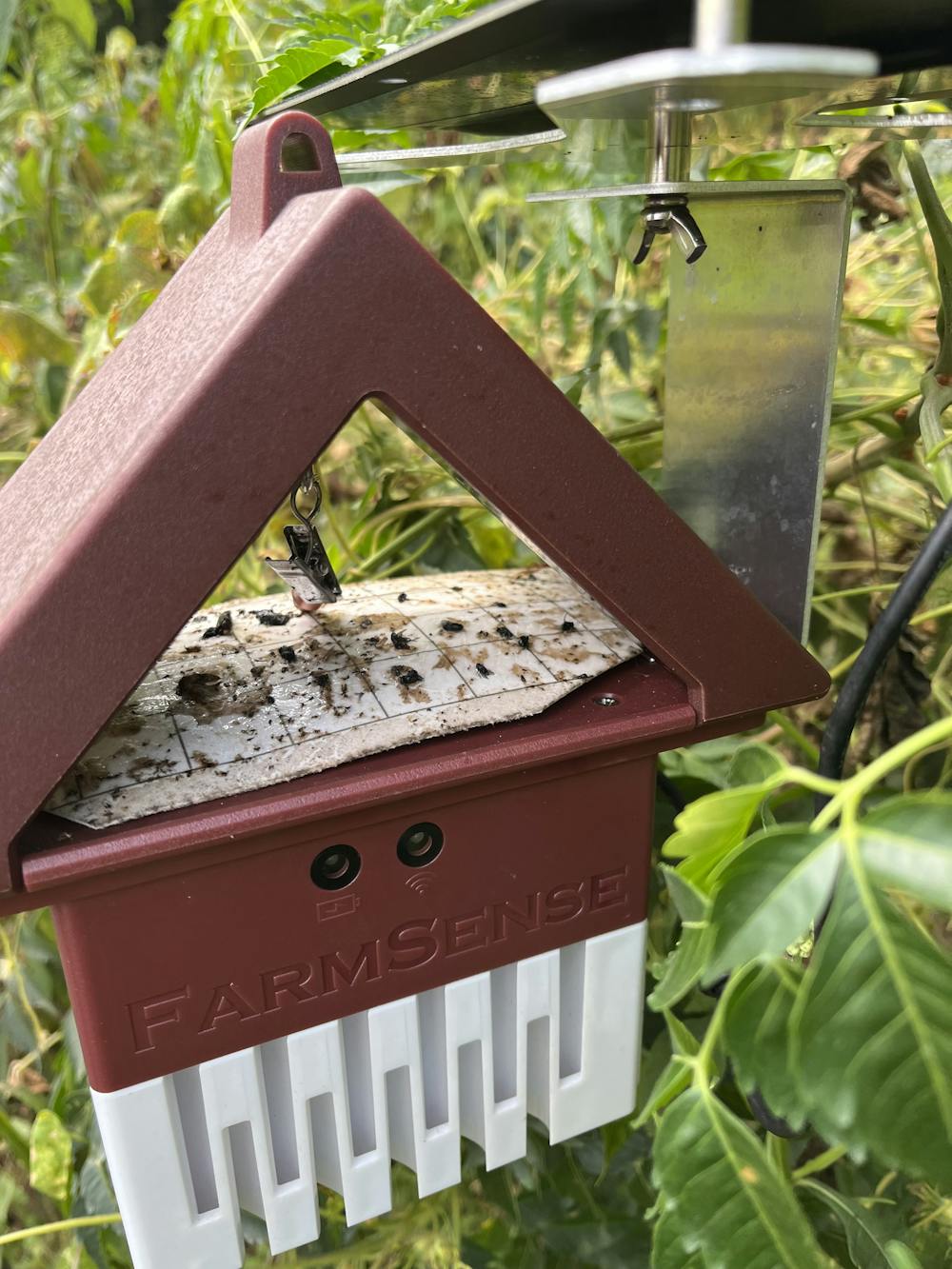
Our team, led by Georgia Southern University and the City of Millen, with support from University of Georgia Cooperative Extension, local high schools and agriculture technology company FarmSense, is piloting AI-powered sensors to help cotton farmers optimize pesticide use. Georgia is one of the top cotton-producing states in the U.S., with cotton contributing nearly US$1 billion to the state’s economy in 2024. But only 13% of Georgia farmers use precision agriculture practices.
Public-Private-Academic Partnership
Innovation drives economic growth, but access to it often stops at major city limits. Smaller and rural communities are frequently left out, lacking the funding, partnerships and technical resources that fuel progress elsewhere.
At the same time, 75% of generative AI’s projected economic impact is concentrated in customer operations, marketing, software engineering and research and development, according to a 2023 McKinsey report. In contrast, applications of AI that improve infrastructure, food systems, safety and health remain underexplored.
Yet smaller and rural communities are rich in potential — home to anchor institutions like small businesses, civic groups and schools that are deeply invested in their communities. And that potential could be tapped to develop AI applications that fall outside of traditional corporate domains.
The Partnership for Innovation, a coalition of people and organizations from academia, government and industry, helps bridge that gap. Since its launch almost five years ago, the Partnership for Innovation has supported 220 projects across Georgia, South Carolina, Kentucky, Tennessee, Virginia, Texas and Alabama, partnering with more than 300 communities on challenges from energy poverty to river safety.
One Partnership for Innovation program provides seed funding and technical support for community research teams. This support enables local problem-solving that strengthens both research scholarship and community outcomes. The program has recently focused on the role of civic artificial intelligence – AI that supports communities and local governments. Our project on cotton field pesticide use is part of this program.
Cotton Pests and Pesticides
Our project in Jenkins County, Georgia, is testing that potential. Jenkins County, with a population of around 8,700, is among the top 25 cotton-growing counties in the state. In 2024, approximately 1.1 million acres of land in Georgia were planted with cotton, and based on the 2022 agricultural county profiles census, Jenkins County ranked 173rd out of the 765 counties producing cotton in the United States.
Cotton is a major part of Georgia’s agriculture industry.Daeshjea Mcgee
The state benefits from fertile soils, a subtropical-to-temperate climate, and abundant natural resources, all of which support a thriving agricultural industry. But these same conditions also foster pests and diseases.
Farmers in Jenkins County, like many farmers, face numerous insect infestations, including stink bugs, cotton bollworms, corn earworms, tarnished plant bugs and aphids. Farmers make heavy use of pesticides. Without precise data on the bugs, farmers end up using more pesticides than they likely need, risking residents’ health and adding costs.
While there are some existing tools for integrated pest management, such as the Georgia Cotton Insect Advisor app, they are not widely adopted and are limited to certain bugs. Other methods, such as traditional manual scouting and using sticky traps, are labor-intensive and time-consuming, particularly in the hot summer climate.
Our research team set out to combine AI-based early pest detection methods with existing integrated pest management practices and the insect advisor app. The goal was to significantly improve pest detection, decrease pesticide exposure levels and reduce insecticide use on cotton farms in Jenkins County. The work compares different insect monitoring methods and assesses pesticide levels in both the fields and nearby semi-urban areas.
We selected eight large cotton fields operated by local farmers in Millen, four active and four control sites, to collect environmental samples before farmers began planting cotton and applying pesticides.
Pest insects are identified by AI as they fly through a light sensor inside this trap.Daeshjea Mcgee
The team was aided by a new AI-based insect monitoring system called the FlightSensor by FarmSense. The system uses a machine learning algorithm that was trained to recognize the unique wingbeats of each pest insect species. The specialized trap is equipped with infrared optical sensors that project an invisible infrared light beam – called a light curtain – across the entrance of a triangular tunnel. A sensor monitors the light curtain and uses the machine learning algorithm to identify each pest species as insects fly into the trap.
FlightSensor provides information on the prevalence of targeted insects, giving farmers an alternative to traditional manual insect scouting. The information enables the farmers to adjust their pesticide-spraying frequency to match the need.
What We’ve Learned
Here are three things we have learned so far:
1. Predictive pest control potential – AI tools can help farmers pinpoint exactly where pest outbreaks are likely – before they happen. That means they can treat only the areas that need it, saving time, labor and pesticide costs. It’s a shift from blanket spraying to precision farming – and it’s a skill farmers can use season after season.
2. Stronger decision-making for farmers – The preliminary results indicate that the proposed sensors can effectively monitor insect populations specific to cotton farms. Even after the sensors are gone, farmers who used them get better at spotting pests. That’s because the AI dashboards and mobile apps help them see how pest populations grow over time and respond to different field conditions. Researchers also have the ability to access this data remotely through satellite-based monitoring platforms on their computers, further enhancing the collaboration and learning.
3. Building local agtech talent – Training students and farmers on AI pest detection is doing more than protecting cotton crops. It’s building digital literacy, opening doors to agtech careers and preparing communities for future innovation. The same tools could help local governments manage mosquitoes and ticks and open up more agtech innovations.
Blueprint for Rural Innovation
By using AI to detect pests early and reduce pesticide use, the project aims to lower harmful residues in local soil and air while supporting more sustainable farming. This pilot project could be a blueprint for how rural communities use AI generally to boost agriculture, reduce public health risks and build local expertise.
Just as important, this work encourages more civic AI applications – grounded in real community needs – that others can adopt and adapt elsewhere. AI and innovation do not need to be urban or corporate to have a significant effect, nor do you need advanced technology degrees to be innovative. With the right partnerships, small towns, too, can harness innovations for economic and community growth.
]]> Kristen Bailey117594150942025-10-02 14:24:5417739259072026-03-19 13:11:4700newsA Georgia Tech team is piloting AI-powered sensors to help cotton farmers optimize pesticide use.]]>2025-09-23T00:00:00-04:002025-09-23T00:00:00-04:002025-09-23 00:00:00Authors:
Debra Lam, founding director of the Partnership for Inclusive Innovation, Enterprise Innovation Institute, Georgia Institute of Technology
Atin Adhikari, professor of Biostatistics, Epidemiology and Environmental Health Sciences, Georgia Southern University
James E. Thomas, senior lecturer in Health Policy and Community Health, Georgia Southern University
]]>678243678243image<![CDATA[A researcher works in a cotton field in Jenkins County, Georgia, as part of a project on AI and pesticide use. Dorothy Seybold]]> A researcher works in a cotton field in Jenkins County, Georgia, as part of a project on AI and pesticide use. Dorothy Seybold]]> image/jpeg17594153092025-10-02 14:28:2917594153092025-10-02 14:28:29<![CDATA[Read This Article on The Conversation]]><![CDATA[Charles Nimo Receives Roland Ewubare Fellowship in Societal Engagement and Impact]]>27513 Georgia Tech doctoral student Charles Nimo has been selected as the newest recipient of the Roland Ewubare Fellowship in Societal Engagement and Impact, a philanthropic program supporting underrepresented graduate students whose research advances community focused, socially relevant scholarship.
Funded by Roland Ewubare, a distinguished Nigerian lawyer and corporate executive, the fellowship recognizes emerging scholars whose master’s or doctoral work meaningfully connects with societal engagement and impact.
The program expands opportunities for graduate researchers committed to addressing real world challenges through innovative, community centered inquiry.
Nimo is a third year Ph.D. student in computer science and a graduate research assistant in the Technologies and International Development Lab led by Michael L. Best, executive director of the Institute for People and Technology and professor in both the Sam Nunn School of International Affairs and the School of Interactive Computing. He is co-advised by Irfan Essa, professor in the School of Interactive Computing.
Nimo’s research explores human centered natural language processing for healthcare, as well as multilingual AI systems in low resource contexts. Nimo develops tools to evaluate and improve the safety, robustness, and global inclusion of language technologies. His broader goal is to build AI systems that are fair, reliable, and effective across diverse languages and cultures, helping ensure that technological advances benefit communities often overlooked in mainstream AI development.
“I’m very grateful to receive this fellowship for societal impact,” Nimo said. “Thank you for this support and believing in the work, and I’m excited to keep building research that translates into real world benefit.”
Nimo earned his B.S. in electrical and computer engineering from Virginia Commonwealth University in Richmond, Virginia, and his M.S. in computer science from the University of Texas at Austin.
]]> Walter Rich117731568892026-03-10 15:34:4917731722432026-03-10 19:50:4300newsGeorgia Tech doctoral student Charles Nimo has been selected as the newest recipient of the Roland Ewubare Fellowship in Societal Engagement and Impact.]]>2026-03-10T00:00:00-04:002026-03-10T00:00:00-04:002026-03-10 00:00:00Walter Rich]]>679558679558image<![CDATA[Charles Nimo ]]> Charles Nimo is a third year Ph.D. student in computer science.]]> image/jpeg17731567692026-03-10 15:32:4917731568402026-03-10 15:34:00<![CDATA[Georgia Tech Students Stretch the Future of Assistive Robotics]]>27513 Now in its fourth year, the Stretch Robot Pitch Competition continues to evolve into one of Georgia Tech’s most imaginative and human‑centered design challenges. Hosted by the TechSAge Rehabilitation Engineering Research Center (part of which is located in CIDI), the competition brings together students from across the Institute to create innovative applications for Stretch – a lightweight, open source mobile manipulator robot with reaching, sensing, and grasping capabilities. Stretch was developed by Hello Robot which was co‑founded by former Georgia Tech professor Charlie Kemp.
With its compact form factor, capable arm, and relatively affordable price, Stretch has already become a favorite among researchers looking to push the boundaries of assistive robotics. The pitch competition invites Georgia Tech students to imagine not just what the robot can do, but what it should do to meaningfully improve daily life for people aging with disabilities.
This year, teams across several disciplines—from engineering, to business, to computing, and the sciences—submitted video pitches outlining how their technology concept tackles real-world problems users face. The winning team earned $1,000 and, more importantly, the chance to spend a semester working with Stretch in Georgia Tech’s Aware Home turning their pitch into a working prototype. Sponsors included TechSAge, AI-CARING, the Institute for People and Technology (IPaT), and Hello Robot.
First place was awarded to “Chef Stretch,” a concept aimed at helping older adults with disabilities determine whether food has spoiled so they can prepare and consume food safely. The five-student team included Caitlin Woodward and Elizabeth Thompson (College of Engineering), Aditi Ashok (Scheller College of Business), and Michelle Gu and Vedita Sawhney (College of Sciences).
While Chef Stretch took the top prize, the judges awarded an honorable mention to Ali Vafaeian (College of Computing) for “Bimanual Clothes Manipulation and Assisted Dressing” with a $500 cash prize. His proposal tackles another essential activity of daily living, dressing, which can be challenging task for many individuals with mobility impairments.
]]> Walter Rich117727347272026-03-05 18:18:4717727347512026-03-05 18:19:1100newsNow in its fourth year, the Stretch Robot Pitch Competition continues to evolve into one of Georgia Tech’s most imaginative and human‑centered design challenges.]]>2026-03-05T00:00:00-05:002026-03-05T00:00:00-05:002026-03-05 00:00:00679531679531image<![CDATA[Chef Stretch]]> Michelle Gu, Aditi Ashok, Caitlin Woodward, Elizabeth Thompson, and Vedita Sawhney pose with Stretch and their award certificates. They won $1000 and the opportunity to develop their concept in the Aware Home. ]]> image/png17727344362026-03-05 18:13:5617727344692026-03-05 18:14:29<![CDATA[IPaT Research Scientists Supporting Pediatric Research]]>27513 The Institute for People and Technology (IPaT) is deeply engaged in advancing pediatric research and clinical innovation through a partnership with the Children’s Healthcare of Atlanta Pediatric Technology Center at Georgia Tech (PTC). The center brings clinical experts from Children’s together with Georgia Tech scientists and engineers to develop technological solutions to problems in the health and care of children. The PTC provides opportunities for interdisciplinary collaboration to create breakthrough discoveries that enhance the lives of children and young adults in Georgia and beyond.
IPaT is supporting research within two of PTC’s three core research pillars: data science, machine learning, and artificial intelligence; and patient‑centered care delivery. PTC’s third research pillar is focused on technologies and devices. With the expertise of IPaT’s research scientists, these joint efforts combine scientific expertise, clinical insight, and shared funding that are helping to transform research innovations into operational tools that directly support pediatric patient care at Children’s.
“IPaT is bringing two core competencies to both of these research pillars,” said Maribeth Gandy Coleman, IPaT’s director of research. “First, we’re advocating for and supporting the use of people-centered techniques to inform the research and co-designing the resulting system with all the stakeholders. Second, we’re also making sure we can translate this research into a real return on investment for Children’s. We are ensuring that what we design can be deployed in the hospital, and that it can be integrated with their existing systems and merge as seamlessly as possible with their existing workflows.”
Supporting Data Science, Machine Learning, and Artificial Intelligence (Pillar 1) Pillar 1 focuses on harnessing artificial intelligence to enable more personalized and predictive pediatric care. The work aims to improve data collection infrastructure, support equitable AI practices, and build a Children’s-Georgia Tech pediatric AI collaboration that integrates advanced AI tools into clinical workflows.
Clinical Deterioration Prediction One of the flagship projects within Pillar 1 involves developing machine learning models that can detect clinical deterioration in hospitalized children. The goal is to identify when a patient needs urgent escalation to the intensive care unit — faster and more accurately than traditional monitoring.
To achieve this, IPaT research scientists are:
Extracting and securely transferring electronic health record (EHR) data from Children’s clinical systems.
Training predictive models using that real‑world data.
Building the software infrastructure required to deploy these models inside Children’s.
Integrating model outputs directly into the EHR using Fast Healthcare Interoperability Resources communication protocols. (FHIR is an international standard for the electronic exchange of healthcare information.)
This infrastructure is intentionally designed not just for this single project but as a repeatable, scalable framework for future AI‑enabled clinical tools developed through the Children’s-Georgia Tech partnership.
AI-Enhanced Decision-Making for Hospital Operations A second emerging project under Pillar 1 aims to address one of healthcare’s most persistent operational challenges: ICU capacity management. Seasonal fluctuations, such as surges in flu or Covid‑19 cases, can create sudden ICU demand surges and staff illnesses, which can make scheduling and staffing decisions challenging.
IPaT is building models that incorporate historical hospital activity, seasonal variation, and real‑time census and staffing levels to predict scheduling needs and help Children’s optimize resource allocation. This research is just beginning, but holds the potential for improving both care delivery and staff well‑being. More importantly, IPaT is applying user-centered design and research techniques along with the engineering work to engage with Children’s people and processes to ensure that these prediction and resource allocation models actually work, and that they will actually be used and useful in the Children’s clinical environment.
Supporting Patient‑Centered Care Delivery (Pillar 2) Pillar 2 seeks to improve pediatric outcomes by focusing on the “whole child” — physical, psychological, social, and emotional well‑being — while accounting for the needs of families, caregivers, and community environments. Particular emphasis is placed on behavioral health, rural healthcare access, and chronic illness in underserved populations.
IPaT contributes to this work on two fronts:
User Experience and Workflow Research IPaT’s user experience (UX) researchers conduct interviews, workflow studies, and design evaluations with Children’s clinicians and staff. This human‑centered research helps shape the interfaces, processes, and technologies needed to deliver patient‑centered care in practical, usable ways. These contributions ensure that tools created through the partnership align with the realities of clinical practice.
Data Integration for Behavioral and Social Insights For Pillar 2 research, IPaT’s secure data enclave enables Children’s EHR data to be transferred, stored, and analyzed in a HIPAA‑compliant environment. Researchers are using this infrastructure to combine clinical data with voluntarily contributed social media information from consenting participants. The aim is to explore indicators of psychological well‑being, behavioral health trends, and early warnings related to self‑harm.
A Secure, Scalable Data Infrastructure to Support Both Pillars The IPaT secure data enclave provides a protected, secure environment for storing and analyzing sensitive patient information. It serves as the backbone connecting Georgia Tech researchers with Children’s clinical systems. Both Pillar 1 and Pillar 2 research initiatives rely on this Georgia Tech IPaT-managed secure infrastructure to safely enable:
EHR data transfer and storage.
Machine learning model development.
Testing and validation workflows.
Eventual operational deployment back into Children’s systems.
This secure, scalable architecture is central to the shared goal of translating research into actionable clinical tools.
Accelerating Pediatric Discovery Georgia Tech’s partnership with Children’s represents a powerful model for cross‑institutional innovation. By aligning IPaT’s strengths in human‑centered design, machine learning, and secure data systems with Children’s clinical expertise, IPaT is helping to build solutions that move quickly from concept to bedside.
As these projects grow, especially with the ongoing expansion of the clinical deterioration system and the launch of the AI-enhanced operations initiative, IPaT research scientists anticipate even greater opportunities to support Children’s mission and improve pediatric health outcomes.
Thank you to Richard Starr for providing insight about these research projects.
]]> Walter Rich117722212012026-02-27 19:40:0117727231052026-03-05 15:05:0500newsThe Institute for People and Technology (IPaT) is deeply engaged in advancing pediatric research and clinical innovation through a partnership with the Children’s Healthcare of Atlanta Pediatric Technology Center at Georgia Tech (PTC). ]]>2026-02-27T00:00:00-05:002026-02-27T00:00:00-05:002026-02-27 00:00:00Walter Rich]]>679477679477image<![CDATA[Photo of the joint Children's and Georgia Tech Pillar 1 team taken September 2025.]]> A photo of the joint Children's and Georgia Tech Pillar 1 research team taken September 2025. Six research faculty members from IPaT are in the picture: Peter Presti, Maribeth Gandy Coleman, Clint Zeagler, Jeremy Johnson, Richard Starr, Kala Jordan and Christine Taylor, a graduate research assistant in IPaT. ]]> image/jpeg17722154692026-02-27 18:04:2917722229092026-02-27 20:08:29<![CDATA[Georgia Insurance Claims Database Provides Health Care Cost Comparisons]]>27513 Georgia residents now have a new way to compare the estimated costs paid for a large variety of health care services in the state, thanks to a searchable “shop for care” resource launched as part of the Georgia All-Payer Claims Database (GA APCD).
The Georgia APCD Cost Comparison Tool (apcd.georgia.gov/cost-comparison-tool) contains information on more than 200 different medical procedures ranging from cardiac stress tests and childbirth to knee replacement and colonoscopies. The resource provides information on the median cost paid for the procedures statewide, along with information on what individual medical facilities and professional providers have been paid for each type of procedure.
For each procedure, the tool identifies medical facility providers nearest to the consumer and includes facility ratings collected by the Centers for Medicare & Medicaid Services (CMS). For each facility providing a specific service, the comparison data includes the median cost for the procedure and the range of costs that were paid. Costs can be filtered by payer category, including commercial, Medicare, and Medicaid. While that data is understandably incomplete and includes caveats, developers of the new service say it provides a much-needed resource for Georgians facing a decision on a costly medical procedure.
“In health care, there are a lot of factors that can drive cost and it’s not always a straightforward equation, so it’s worth doing the research,” said Dr. Jon Duke, an M.D. and principal research scientist in the Georgia Tech Research Institute’s (GTRI) Health Emerging and Advanced Technologies Division, which administers the APCD for the state of Georgia. “This is really just one part of health care decision-making, and it will help patients be more proactive advocates for themselves when considering potential options for care.”
]]> Walter Rich117690202922026-01-21 18:31:3217690203842026-01-21 18:33:0400newsGeorgia residents now have a new way to compare the estimated costs paid for a large variety of health care services in the state, thanks to a searchable “shop for care” resource launched as part of the Georgia All-Payer Claims Database (GA APCD).]]>2026-01-21T00:00:00-05:002026-01-21T00:00:00-05:002026-01-21 00:00:00679048679048image<![CDATA[Georgia Claims Database]]> Georgia residents now have a new way to compare the estimated costs paid for a large variety of health care services in the state, thanks to a resource created by the Georgia All-Payer Claims Database. (iStock photo)]]> image/jpeg17690200022026-01-21 18:26:4217690200332026-01-21 18:27:13<![CDATA[Solar-powered Façade Panel System Wins Seed Grant Award]]>27513 The Institute for People and Technology (IPaT) and the College of Design (CoD) awarded a seed grant to Christian Coles, lecturer in the School of Architecture; Moinak Choudhury, Ph.D., lecturer in the School of Literature, Media, and Communication (LMC); and Janelle Wright, environmental justice programs manager, at the West Atlanta Watershed Alliance (WAWA). Coles will serve as the principal investigator with Choudhury and Wright serving as the co-principal investigators.
Their project, “Designing Futures: Afrofuturist Co-Creation with AI for Community-Led Facade Design” will be realized during a 16-week design studio (ARCH 4016) class that will take place during fall 2026 and serve senior undergraduate architecture students. Participants from diverse majors will join through the Building for Equity and Sustainability Vertically Integrated Project (VIP) team, in partnership with the Center for Sustainable Communities Research and Education (SCoRE). Pre-planning tasks will occur spring semester in preparation for the fall studio class.
The studio class will collaborate with Moinak Choudhury and students in LMC 3403, who bring expertise in technical communication, responsible AI use, and community-based learning to co-create engagement materials and public-facing documentation that strengthen the project’s interdisciplinary links between design, sustainability, and communication.
The final result of the project encompasses students who will design and install a modular, solar-powered façade panel system for the outdoor classroom on WAWA’s campus. This project extends work done by a previous Georgia Tech VIP team.
The panels will serve multiple functions: participatory community engagement, artistic expression, and climate regulation. This project will advance the classroom toward its intended vision as an Afrofuturist learning space with technological nods to the Keneda Building on Georgia Tech’s campus. With the help of this seed grant, interdisciplinary team members will delve into design, engineering, computing, communication, and community partnership.
]]> Walter Rich117677264082026-01-06 19:06:4817677264632026-01-06 19:07:4300newsThe Institute for People and Technology (IPaT) and the College of Design (CoD) awarded a seed grant to Christian Coles, lecturer in the School of Architecture; Moinak Choudhury, Ph.D., lecturer in the School of Literature, Media, and Communication (LMC); and Janelle Wright, environmental justice programs manager, at the West Atlanta Watershed Alliance (WAWA). ]]>2026-01-06T00:00:00-05:002026-01-06T00:00:00-05:002026-01-06 00:00:00Walter Rich]]>678930678930image<![CDATA[Pictured are Christian Coles (left) and Moinak Choudhury (right).]]>Pictured are Christian Coles (left) and Moinak Choudhury (right).]]> image/jpeg17677263182026-01-06 19:05:1817677263582026-01-06 19:05:58<![CDATA[Advancing Neonatal Health Monitoring in Ethiopia]]>27513Soft, wearable system offers continuous wireless monitoring of newborns’ health.
A new, soft, all-in-one, wearable system has been designed for continuous wireless monitoring of neonatal health in low-resource settings. Developed by Georgia Tech researchers using advanced packaging technologies, the system features a chest-mounted patch and a forehead-mounted pulse oximeter that transmits real-time data to a smartphone app.
The wearable device measures and records important clinical parameters such as heart rate, respiration rate, temperature, electrocardiograms, and blood oxygen saturation. Speedy detection of abnormal readings in resource-challenged neonatal units could significantly reduce newborn mortality rates.
The device’s pilot study, conducted at Tikur Anbessa Specialized Hospital (TASH) in Addis Ababa, in collaboration with Abebaw Fekadu, Ph.D., from the Centre for Innovative Drug Development and Therapeutic Trials for Africa (CDT Africa Inc.), and neonatologist Asrat Demtse, M.D., from the TASH department of pediatrics, demonstrated a significant improvement over current vital sign monitoring and recording methods by providing continuous oversight using less medical equipment while also reducing handwritten paper tracking. Vital signs are a group of the most crucial medical data that indicate the status of the body's life-sustaining functions. The pairing of this wearable system with a smartphone app automated the monitoring process and delivered a superior level of neonatal care compared to the current processes at Ethiopia’s best hospital.
Medical staff and parents also observed a reduced need to wake their babies when using the wearable monitoring system. In addition, after participating in the study, 84% of Ethiopian parents said they would use the device at home.
“Professor Hong Yeo and I connected immediately after he gave a brief research talk about a new, wearable cardiac monitor for children,” said Rudy Gleason. “I asked him if we could co-develop a wearable device for newborn babies in Ethiopia that measured not one, but a variety of vital signs. We both thought it was a great idea.”
Yeo and Gleason are faculty members in the George W. Woodruff School of Mechanical Engineering and the Wallace H. Coulter Department of Biomedical Engineering at Georgia Tech. And both are affiliated with Georgia Tech’s Institute for People and Technology, which seeks to improve global health.
In 2009, Gleason and his wife were in the process of adopting a baby from Ethiopia named Kennedy. Before they could bring her home, however, she died — the result, Gleason said, of a seemingly preventable combination of malnutrition and diarrhea.
“This loss redirected my academic teaching, research, and service activities at Georgia Tech,” said Gleason. “Since then, I’ve spent most of my career focused on developing resource-appropriate biomedical devices to reduce maternal and child mortality.”
“When we started this latest study, Ethiopian parents were reluctant to participate. But once we recruited a few mothers in the neonatal intensive care unit (NICU), everyone in the NICU community wanted their child to participate in our wearable health monitoring system.”
According to Yeo, “We designed the wearable patch as a safe, clinical-grade solution with minimal skin irritation. Its key design advantage lies in the use of nanomembranes, which allows the device to be soft and highly conformal to the baby's skin. Wearing the device helps to ensure critical events are not missed since the built-in automation acts as a force multiplier, freeing clinical staff to focus more on complex decision-making rather than manual data acquisition.”
“Rudy has a deep love for the people of Ethiopia. I feel fortunate to have met him as we embark on this project aimed at helping sick babies in the country. Without his support, I could not envision bringing this technology to Ethiopia,” said Yeo.
During the past decade, child mortality rates have decreased in Ethiopia, but newborn deaths have remained mostly unchanged. Both Yeo and Gleason feel their new wearable neonatal device could significantly lower mortality rates for newborns in Ethiopia as they advance this research.
Citation: Zhou, L., Joseph, M., Lee, Y.J. et al. Soft, all-in-one, nanomembrane wearable system for advancing neonatal health monitoring in Ethiopia. npj Digit. Med.8, 575 (2025).
DOI: https://doi.org/10.1038/s41746-025-01974-8
Funding: Gates Foundation (INV-006189) and the National Institutes of Health (R01HD100635). This work was also supported by the Imlay Foundation—Innovation Fund.
]]> Walter Rich117652029442025-12-08 14:09:0417652105772025-12-08 16:16:1700newsSoft, wearable system offers continuous wireless monitoring of newborns’ health.]]>2025-12-08T00:00:00-05:002025-12-08T00:00:00-05:002025-12-08 00:00:00Walter Rich Research Communications]]>678779678778678777678776678779image<![CDATA[Wearable chest-mounted patch and forehead-mounted pulse oximeter shown on a mannequin baby for illustration]]> Wearable chest-mounted patch and forehead-mounted pulse oximeter shown on a mannequin baby for illustration]]> image/jpeg17652028532025-12-08 14:07:3317652028772025-12-08 14:07:57678778image<![CDATA[Wearable chest-mounted patch and forehead-mounted pulse oximeter shown close-up]]> Wearable chest-mounted patch and forehead-mounted pulse oximeter shown close-up]]> image/jpeg17652028182025-12-08 14:06:5817652028342025-12-08 14:07:14678777image<![CDATA[Professor Rudy Gleason with baby and parents at a hospital in Ethiopia]]> Professor Rudy Gleason with baby and parents at a hospital in Ethiopia]]> image/jpeg17652027882025-12-08 14:06:2817652028042025-12-08 14:06:44678776image<![CDATA[Professors Hong Yeo and Rudy Gleason]]> Professors Hong Yeo and Rudy Gleason]]> image/jpeg17652027132025-12-08 14:05:1317652027632025-12-08 14:06:03<![CDATA[Team Revive & Survive Wins Convergence Innovation Competition in Asia]]>27513 Student team Revive & Survive from Waseda University, International Christian University, and Keio University in Japan won the Georgia Tech Institute for People and Technology’s (IPaT) Convergence Innovation Competition (CIC) held in Kuala Lumpur, Malaysia, December 1, 2025. This was the second time the contest was held in Asia. This was the second time the contest was held in Asia—the contest was originally started in 2007 at Georgia Tech.
The winning team members were Taiga Cogger, Ryuichiro Go, Kokoro Cogger, and Taiyo Mitsuoka. The team won $2,000 dollars. The team’s faculty sponsor was Kiichiro DeLuca, a faculty member at Waseda University and partner at WERU Investment, a global early-stage venture capital firm based in Tokyo.
As the winner, the Revive & Survive student team is also invited to be part of Georgia Tech’s Create-X startup launch in summer 2026 as well as Georgia Tech’s Demo Day, August 2026, in Atlanta. Some travel support for the Atlanta trip will be provided.
Revive & Survive’s project empowers communities through regional revitalization and disaster preparedness for a more resilient and sustainable future.
CIC is a competition recognizing student innovation and entrepreneurship responding to today’s global challenges and opportunities. Founded in 2007 in Atlanta, Georgia, CIC is organized by IPaT at the Georgia Institute of Technology.
For the 2025-2026 final pitches and award ceremony, the competition landed in Kaula Lampur, Malaysia. The competition focused on student teams from China, India, Japan, Malaysia, the Philippines, Taiwan, Thailand, and Vietnam. Each year, organizers and participants forge new partnerships and foster more collaborations across the Asian continent. IPaT’s CIC Asia Faculty Fellows help cultivate those team projects and the students showcase their innovative ideas during the competition.
“The CIC students, the support of the faculty fellows, the final competition presentations, and the invited industry forum combine to create a special and unique event,” said IPaT executive director Michael Best. “All of the student finalist projects represented the very best in people-centered technologies responding to global challenges.”
CIC Asia is distinct in how it brings teams from multiple countries together to interact and network. Most innovation competitions are single university or country.
The four runner-up finalist teams each received $1,000 dollars in prize money. The CIC Asia runner-up team projects and team members are listed below:
ChiliCare is an IoT and AI farming app with auto watering, pest detection, microclimate insights, crop plotting, and smart fertilizer guidance. Team Members: Muhammad Haizad bin Murad, Hafiy Azfar bin Mohd Masri, Hazriq Haykal Norrol Farhan, Muhammad Naim bin Mazni. Faculty Fellow: Dr. Masrah Azrifah Azmi Murad. Mentor: Dr. Azrina binti Kamaruddin. University: Universiti Putra Malaysia.
PlaySpot makes booking sports facilities in the Philippines simple, and accessible for everyone. Team Members: Louie Gee G. Cabagay, Alwin Matthew T. Chiong, Daniel Justine R. Jadman, Raphael Luis T. Malolos. Faculty Fellow: Mr. Paulo Luis T. Lozano. University: De La Salle University (The Philippines).
CityFix is a mobile and web platform enabling citizens to quickly report and track municipal issues with GPS, photos, and real-time updates. Team Member: Ng Jia Hong. Faculty Fellow: Ms. Putri Syaidatul Akma Binti Mohd Azmi. University: Multimedia University (Malaysia).
Flow Vending Machine proposed having vending machines which dispense biodegradable pads installed around campus toilets to help women to have easy access to sanitary pads. Team Members: Ava Jeslina binti Mohd Jamil, Abigail Siew Kar Yan, Ashley Shakyna, Geneve Tsen Fan Qin. Faculty Fellow: Ms. Putri Syaidatul Akma, J.D. Mentor: Ms. Raja Razana Bt Raja Razali. University: Multimedia University (Malaysia).
Future Tech Forum
The CIC event took place alongside the Future Tech Forum which was also organized by IPaT. The forum focused on innovations, opportunities, and advancements associated with human-centered AI, sustainable data centers, and digital trust and security. Expert panels and speakers from across Asia and Georgia Tech discussed the state of art in a rapidly changing world, with particular attention to what it means for Asian nations. The event was invitation only and limited to 150 attendees of established leaders and emerging innovators.
Participating technology speakers and panelists included:
Honorable YB Tuan Gobind Singh Deo, Minister, Ministry of Digital, Malaysia
Chee Mun Foong, CEO, YTL AI Labs; and CPO, Ryt Bank
Chen Change Loy, President's Chair Professor, CCDS, NTU; Director, MMLab@NTU; and Co-Associate Director, S-Lab
John Lim Ji Xiong, Chief Digital Officer, GAMUDA
Henry Yang, CMO, Manus
Ding Wang, Senior Researcher, Responsible AI, Google Research
Benjamin Croc, CEO, BrioHR
Tzu Kit Chan, Artificial General Intelligence (AGI), Risks and Safety Advisor of Top Universities in the USA, Singapore, Canada, and France
Hari Krishnan, Co-founder and CEO of Genie Health
Benoit Dubeau, Energy Strategy Manager, APAC, Amazon Web Services (AWS)
Cindy Lin, Professor, School of Interactive Computing, Georgia Tech
Ko Chuan Zhen, Group CEO & Co-Founder, Plus Xnergy, and Executive Director, BM Greentech
Zachary Loh, Market Development Manager, Hydroleap
Nge Foong Kheng, Engineering Manager, APAC, Global Switch
Verghese Jacob, SVP Technology, DayOne
A photo album of the CIC and Future Tech Forum events can be viewed here.
###
]]> Walter Rich117649546772025-12-05 17:11:1717650333612025-12-06 15:02:4100newsStudent team Revive & Survive from Waseda University, International Christian University, and Keio University in Japan won the Georgia Tech Institute for People and Technology’s (IPaT) Convergence Innovation Competition (CIC) held in Kuala Lumpur, Malaysia, December 1, 2025.]]>2025-12-05T00:00:00-05:002025-12-05T00:00:00-05:002025-12-05 00:00:00Walter Rich]]>678766678765678766image<![CDATA[CIC Winner 2025-2026]]> Pictured: CIC winning student team Revive & Survive from Waseda University, International Christian University, and Keio University in Japan. Along with other participants and organizers of the competition.]]> image/jpeg17649544832025-12-05 17:08:0317649549902025-12-05 17:16:30678765image<![CDATA[Four runner ups - CIC 2025-2026]]> From top left, clockwise - Teams Chilicare, Playspot, CityFix, and Flow Vending Machine.]]> image/jpeg17649543992025-12-05 17:06:3917649544702025-12-05 17:07:50<![CDATA[Artist-in-Residence Program Bridges Art and Technology Through Immersive Performance]]>27513 Georgia Tech’s Institute for People and Technology (IPaT) artist-in-residence program recently concluded a new collaboration with Corian Ellisor, a distinguished educator and performer in concert dance and theater. The residency explored the intersection of art and technology, resulting in an innovative, multi-layered experience that invited audiences to engage with themes of joy, peace, and community.
The project began when Clint Zeagler, principal research scientist and IPaT’s director of strategic partnerships, invited Ellisor to “think big” and imagine how technology could amplify his artistic vision. “This was definitely a moment for me to step out of my comfort zone and to think on a bigger scale,” said Ellisor. “Coming from a poor artist background, we’re always just struggling to make anything. This was an opportunity to dream.”
“Artist residencies within Georgia Tech’s research centers and interdisciplinary research institutes help to drive innovation in our research enterprise, to discover new applications of our research within the arts, to build strong connections with community partners, and — most important of all — to create impactful new works of art,” said Jason Freeman, associate vice provost for the arts at Georgia Tech. “IPaT has long been at the forefront of GT’s initiatives to collaborate with Atlanta-area artists. I am thrilled to see the success of this latest collaboration between Clint Zeagler and Corian Ellisor.”
Ellisor, an Atlanta-based performance artist with a focus on dance theater, was selected as the IPaT’s 2025 artist-in-residence. Ellisor has worked with arts communities locally and internationally including Georgia, Texas, Florida, Massachusetts, Washington DC, New York, Guatemala, Sweden, The Netherlands, Germany and The United Kingdom. He was awarded the choreography award at the University of Houston, The Walthall Fellowship through WonderRoot, “Top 20 people to watch in 2013" by Atlanta’s Creative loafing, an Atlanta Beltline Grant in 2014, an artist in residency award with the Lucky Penny in 2015, and the Best Choreography Award at the Houston Fringe Festival in 2019.
World Building Meets Performance Art Ellisor’s concept centered on world building, a technique often used in gaming but adapted here for live performance. The goal was to create an immersive environment where audiences could interact and react, while maintaining an uplifting aesthetic. “I wanted something that leaves the audience feeling good—something hopeful,” Ellisor explained.To develop the project, Ellisor and Zeagler hosted workshops with Georgia Tech students and community members, encouraging free-form creation and dialogue around the question: How do people find joy and peace in a chaotic world? Three teams of Georgia Tech undergraduate students were assigned to collaborate with Ellisor and make an avatar of him. The first team was assigned to reproduce Ellisor’s voice. The second team was assigned to generate a visual likeness of Ellisor. The third team worked on the outside aesthetics of a story booth.
The Story Booth: Technology Meets Emotion A highlight of the residency was the Story Booth, a tech-enabled installation designed to collect personal narratives about joy and solace. Outfitted with full-body scans and voice capture, the booth featured a digital representation of Ellisor and used sentiment analysis to translate stories into color projections. “If someone shared something happy, the booth glowed orange; if it was sentimental, it turned blue,” Ellisor noted. These dynamic visuals illuminated both the booth and its surroundings, creating a striking display of emotion through light.
An Hour of Galleries Time The residency culminated in “An Hour of Galleries Time,” an event combining video installations, interactive storytelling, and live dance performances. Dancers engaged with projected visuals before joining together for a collective performance against a massive, illuminated backdrop—transforming the space into a living canvas of movement and light. The interactive performance was held November 23 at the Goat Farm Arts Center, a visual and performing arts center housed in a 19th-century complex of industrial buildings in west midtown Atlanta.
Reflections on Collaboration Ellisor described the experience as transformative, “I am very happy to have met this community of technologists that I would have never met because our worlds just do not cross at all. Another enlightening experience was trusting myself and trusting the vision—and then letting other people do what they’re supposed to do. Usually as an artist, we are sort of a solo factory. But having the trust in other people to make your vision happen—and it happening—was a really lovely experience.”He added, “I am very grateful to have gone through this with Georgia Tech. There are some tech folks there that were very happy about the final product, which makes me happy.”
]]> Walter Rich117649566482025-12-05 17:44:0817649566972025-12-05 17:44:5700newsGeorgia Tech’s Institute for People and Technology (IPaT) artist-in-residence program recently concluded a new collaboration with Corian Ellisor, a distinguished educator and performer in concert dance and theater. ]]>2025-12-05T00:00:00-05:002025-12-05T00:00:00-05:002025-12-05 00:00:00Walter Rich]]>678769678768678769image<![CDATA[Corian Ellisor ]]> Corian Ellisor performs at the Goat Farm Arts Center, November 23.]]> image/png17649564932025-12-05 17:41:3317649565812025-12-05 17:43:01678768image<![CDATA[Corian and fellow dance artists]]> Corian Ellisor and fellow dance artists at the Goat Farm Arts Center event.]]> image/png17649561172025-12-05 17:35:1717649564782025-12-05 17:41:18<![CDATA[Georgia Tech Ranked No. 7 Globally in Interdisciplinary Science Rankings]]>27561
Georgia Institute of Technology has been ranked 7th in the world in the 2026 Times Higher Education Interdisciplinary Science Rankings, in association with Schmidt Science Fellows. This designation underscores Georgia Tech’s leadership in research that solves global challenges.
“Interdisciplinary research is at the heart of Georgia Tech’s mission,” said Tim Lieuwen, executive vice president for Research. “Our faculty, students, and research teams work across disciplines to create transformative solutions in areas such as healthcare, energy, advanced manufacturing, and artificial intelligence. This ranking reflects the strength of our collaborative culture and the impact of our research on society.”
As a top R1 research university, Georgia Tech is shaping the future of basic and applied research by pursuing inventive solutions to the world’s most pressing problems. Whether discovering cancer treatments or developing new methods to power our communities, work at the Institute focuses on improving the human condition.
Teams from all seven Georgia Tech colleges, 11 interdisciplinary research institutes, the Georgia Tech Research Institute, Enterprise Innovation Institute, and hundreds of research labs and centers work together to transform ideas into real results.
]]> Angela Ayers117635566262025-11-19 12:50:2617636476582025-11-20 14:07:3800newsGeorgia Institute of Technology has been ranked 7th in the world in the 2026 Times Higher Education Interdisciplinary Science Rankings, in association with Schmidt Science Fellows. This designation underscores Georgia Tech’s leadership in research that solves global challenges. ]]>2025-11-20T00:00:00-05:002025-11-20T00:00:00-05:002025-11-20 00:00:00Angela Ayers]]>678686678686image<![CDATA[cancer-researchers.jpg]]>image/jpeg17635911272025-11-19 22:25:2717635911272025-11-19 22:25:27<![CDATA[Foley Scholar 2025 Winners and Finalists]]>27513 The Foley Scholar Awards recognize the achievements of top graduate students whose vision and research are shaping the future of how people interact with and value technology. Previous finalists have originated from the College of Engineering, College of Computer Science, College of Design, and the Ivan Allen College of Liberal Arts.
Winners and finalists for the 2025 Foley Scholar Awards were celebrated at Georgia Tech's hotel and convention center on November 5, 2025. The event was hosted by the Institute for People and Technology (IPaT) with its executive director, Michael Best, serving as the master of ceremonies as each finalist was recognized for their innovative research.
Many winners of this scholarship have moved into faculty positions or became industry leaders in their research areas.
"Both the winners and the finalists represent the brightest minds that Georgia Tech has to offer," said Michael Best. "Our finalist candidate pool is always composed of truly outstanding researchers. Selecting the winners is never easy," said Best.
James Foley, professor emeritus and computing pioneer in graphics and human-computer interaction for whom the awards are named, once again delivered inspiring and valuable insight at the conclusion of the evening's festivities celebrating the achievements of all finalists.
Congratulations to the 2025 Foley Scholar winners who are:
Joon Kum, M.S. student in human-computer interaction was awarded $1,000.
Rachel Lowy, Ph.D. student in human-computer interaction was awarded $5,000.
Niharika Mathur, Ph.D student in human-centered computing was awarded $5,000.
Mohsin Yousufi, Ph.D student in human centered computing was awarded $5,000.
The finalists in the master's category were Umme Ammara, Jo Chung, Joon Kum, and Christine Taylor.
The finalists in the Ph.D. category were Grace Barkhuff, Rachel Lowy, Niharika Mathur, Shravika Mittal, Michelle Reckner, Mohsin Yousufi, Yilun Zha, and Qiao Zhang.
A short description of each finalists' unique research along with their Georgia Tech faculty advisor is listed below:
Umme Ammara is a master's student in human computer interaction advised by Michael Best and Carrie Bruce. Her research vision is using human-centered design to improve healthcare systems in underserved settings.
Jo Chung is a master's student in computer science advised by Betsy DiSalvo. Her research vision is to design interactive systems that empower users through meaningful engagement and equitable access.
Joon Kum is a master's student in human computer interaction advised by Ashok Goel. His research vision is closely aligned with IPaT’s mission and values. He believes in the power of interdisciplinary research to support teachers and students, especially for those who are marginalized and underrepresented.
Christine Taylor is a master's student in human computer interaction advised by Maribeth Coleman. Her core research vision is to design meaningful, human-centered technologies that address high-stakes problems in collaboration with the communities they serve. For example, one of her current research projects focuses on designing an AI predictive tool to detect patient deterioration at Children’s Hospital of Atlanta.
Grace Barkhuff is a Ph.D. student in human-centered computing advised by Ellen Zegura. Her research vision centers around computing education and ethics. For example, her current research seeks to understand how instructors can ethically use GenAI in the higher education classroom.
Rachel Lowy is a Ph.D. student in human-centered computing advised by Jennifer Kim. Her research focuses on building accessible technologies that foster learning, agency, and inclusion for people with disabilities and neurodivergent people, whose cognitive and learning profiles differ from those of the broader population, through strengths-based understandings of their skillsets.
Niharika Mathur is a Ph.D. student in human-centered computing advised by Sonia Chernova and Elizabeth Mynatt. Her research vision involve building human-centered AI systems that not just perform reliably, but also explain themselves in user-aligned ways.
Shravika Mittal is a Ph.D. student in computer science advised by Munmun De Choudhury. Her research goal is to help create a safe, inclusive, and responsible online information ecosystem, one that empowers vulnerable groups with equitable knowledge, the freedom to communicate their struggles openly, and a supportive community.
Michelle Reckner is a Ph.D. student in civil engineering advised by Iris Tien. Her research vision is to develop the most effective decision-making methodologies possible utilizing available data to determine whether to repair old infrastructure or construct new infrastructure while considering the types of infrastructure that will most benefit a community.
Mohsin Yousufi is a Ph.D. student in digital media advised by Yanni Loukissas. His research vision is to investigate and build creative technologies that address systemic epistemic injustices and reinvigorate democratic civic engagement.
Yilun Zha is a Ph.D. student in architecture advised by Ellen Dunham-Jones and Hui Cai. His research addresses food challenges by developing and applying geospatial computational methods to investigate how the design of the built environment and emerging technologies influence dietary behaviors and contribute to diet-related diseases.
Qiao Zhang is a Ph.D. student in computer science advised by Christopher MacLellan. Her research involves designing and investigating human-AI teaming studies—identifying suitable tasks, agent types, and natural paths for alignment and adaptation.
A collection of photos from the November 5, 2025, Foley Scholar awards dinner are available here.
]]> Walter Rich117624551712025-11-06 18:52:5117633916032025-11-17 15:00:0300newsThe Foley Scholar Awards recognize the achievements of top graduate students whose vision and research are shaping the future of how people interact with and value technology. ]]>2025-11-06T00:00:00-05:002025-11-06T00:00:00-05:002025-11-06 00:00:00Walter Rich]]>678565678564678565image<![CDATA[Foley Scholar Award Winners for 2025]]> Pictured (left-to-right): Micheal Best, Mohsin Yousufi, Joon Kum, Rachel Lowy, Niharika Mathur, and James Foley.]]> image/jpeg17624546422025-11-06 18:44:0217633916442025-11-17 15:00:44678564image<![CDATA[Mike and Jim]]> IPaT Executive Director Micheal Best (left) pictured with James Foley, professor emeritus and a computing pioneer in graphics and human-computer interaction.]]> image/jpeg17624542392025-11-06 18:37:1917624546282025-11-06 18:43:48<![CDATA[Wearable Health Equity Workshop]]>27513 The second Wearable Health Equity Workshop was held on October 30, 2025, at the Georgia Tech Marcus Nanotechnology Building. The workshop presented some of the latest wearable health technologies and offered practical solutions for advancing rural healthcare.
The all-day workshop was sponsored by the Georgia Tech Wearable Intelligent Systems and Healthcare Center (WISH Center), the Institute for People and Technology (IPaT), and the Institute for Matter and Systems (IMS).
Academic, clinical, and industry leaders gathered to learn about some of the most exciting wearable technologies and explore proven, practical solutions for improving health in underserved rural areas. Medical professionals from Sioux Falls, South Dakota and Albany, Georgia shared real-world solutions to providing more effective healthcare in their regional, rural areas.
The morning keynote speaker was Philipp Gutruf, Ph.D., an associate professor and associate department head of biomedical engineering at the University of Arizona. Gutruf’s research focuses on creating devices that intimately integrate with biological systems, developing wireless, battery-free, and fully implantable platforms for biosignal monitoring, neurostimulation, and biointerfaces.
The afternoon keynote speaker was Kimberlee McKay, M.D., with Avera Medical Group in Sioux Falls, South Dakota. McKay is a physician-leader in women’s health who has redefined how obstetrics and gynecology are delivered across rural and underserved communities.
A technology panel moderated by Alexander Adams, Ph.D., assistant professor, in the College of Computing at Georgia Tech included: * Andrea Braden, M.D., Founder & CEO of Lybbie and medical director of the Atlanta Birth Center * Farrokh Ayazi, Ph.D., director of the Georgia Tech Analog Consortium, Regents Entrepreneur, and Ken Byers Professorship in Microsystems * Rosa Arriaga, Ph.D., associate professor in the School of Interactive Computing, College of Computing at Georgia Tech * Steve Xu, M.D., CEO Sibel Health, medical director at Querrey Simpson Institute for Bioelectronics Northwestern University was scheduled, but was unable to attend.
In the afternoon, a rural health panel was moderated by Rudolph Gleason, Ph.D., professor in mechanical engineering and biomedical engineering at Georgia Tech. Those panelists were: * Shelly Spires, M.S.M., CEO Albany Area Primary Health Care, Inc. * W. Brad Jones, Ph.D., CEO Life Well Promotions * Ruwanthi Ekanayake, M.D./Ph.D. candidate, Emory University - Rollins School of Public Health and Emory School of Medicine
The best poster awards were won by postdoctoral research fellow Jimin Lee, Ph.D., and mechanical engineering doctoral student Garan Byun. The best rapid talk award winner was Ramy Ghanim, a doctoral student in chemical engineering.
Key faculty organizers of this year’s event included W. Hong Yeo, director of the WISH Center and professor in the Woodruff School of Mechanical Engineering and the Wallace H. Coulter Department of Biomedical Engineering; Clint Zeagler, director of strategic partnerships in IPaT; Josh Lee, research program manager in the WISH Center; Alexander Adams, assistant professor, School of Interactive Computing; and Rudy Gleason, professor in the Woodruff School of Mechanical Engineering and the Wallace H. Coulter Department of Biomedical Engineering.
]]> Walter Rich117628024692025-11-10 19:21:0917628062432025-11-10 20:24:0300newsThe second Wearable Health Equity Workshop was held on October 30, 2025, at the Georgia Tech Marcus Nanotechnology Building. The workshop presented some of the latest wearable health technologies and offered practical solutions for advancing rural healthcare.]]>2025-11-10T00:00:00-05:002025-11-10T00:00:00-05:002025-11-10 00:00:00Walter Rich]]>678589678589image<![CDATA[Wearables Workshop Oct 2025]]> Picture upper left: Philipp Gutruf, Alex Adams, Hong Yeo, and Kimberlee McKay. Picture upper right: workshop attendees. Picture lower left: Rudy Gleason, Shelly Spires, Brad Jones, and Ruwanthi Ekanayake. Picture lower right: Hong Yeo, Garan Byun, and Clint Zeagler.]]> image/jpeg17628023752025-11-10 19:19:3517628024192025-11-10 19:20:19<![CDATA[Georgia Tech Ph.D. Candidate Shazia Awarded Carter Center Digital Democracy Fellowship]]>27513 Shazia, who uses one name, a Ph.D. candidate in sociology at Georgia Tech, has been named the recipient of The Carter Center Digital Democracy Fellowship for the 2025–2026 academic year. The fellowship, jointly supported by The Carter Center and Georgia Tech’s Institute for People and Technology (IPaT), recognizes graduate students working at the intersection of digital technologies and democratic processes.
Open to all Georgia Tech graduate students, the fellowship provides $15,000 in support—disbursed to the recipient’s advisor—and offers a unique opportunity to collaborate with The Carter Center’s Democracy Program. Fellows are expected to engage in IPaT programming and contribute to ongoing research and communications efforts throughout the year.
Shazia’s research centers on the sociopolitical dynamics of the Hazara community in Balochistan, Pakistan. Her dissertation, titled “Assemblages of Security: Violence and (re)Construction of identities in the Case of Hazaras,” explores how digital platforms have reshaped traditional forms of resistance and identity formation. As part of the fellowship, she will focus on how Hazaras have used platforms like Facebook and Twitter (now X) to transform sit-in protests into new modes of democratic struggle.
Her study poses critical questions: How have digital technologies influenced local governance in Balochistan? In what ways have these platforms enabled global advocacy for Hazaras? And how has digital activism contributed to the shaping of Hazara identity both within Pakistan and on the international stage?
“These questions speak directly to the missions of both The Carter Center and IPaT,” said Shazia. “I have always wanted to bring digital democracy into my research because of the 2013 Hazaras protest in Balochistan, Pakistan, which incorporated the use of online digital platforms. Online posts and engagement eventually resulted in the dissolution of the local government.”
The concept of “digital democracy” has gained traction in recent scholarship, often described as a transformative force capable of revolutionizing governance and citizen engagement. Shazia’s work exemplifies this potential, offering insights into how marginalized communities leverage technology for political agency and global visibility.
Her selection as Digital Democracy Fellow underscores Georgia Tech’s commitment to interdisciplinary research and highlights The Carter Center’s ongoing efforts to support democratic engagement through technology.
Shazia will be working closely with Anthony DeMattee, Ph.D., a data scientist in The Carter Center Democracy Program. She is advised by Amit Prasad, professor of sociology in the School of History and Sociology.
“This Fellowship represents the significant partnership between IPaT and the Democracy Program at The Carter Center, centered on the digital transformations of democratic practice,” said Michael Best, executive director of IPaT. “Shazia’s research will focus on how social media platforms have reshaped the politics of a community that is too often overlooked.”
]]> Walter Rich117611470762025-10-22 15:31:1617611491102025-10-22 16:05:1000newsShazia, a Ph.D. candidate in sociology at Georgia Tech, has been named the recipient of The Carter Center Digital Democracy Fellowship for the 2025–2026 academic year. ]]>2025-10-22T00:00:00-04:002025-10-22T00:00:00-04:002025-10-22 00:00:00Walter Rich]]>678414678414image<![CDATA[Shazia]]>Shazia, the Carter Center Digital Democracy Fellow, with Michael Best, Executive Director of the Institute for People and Technology]]> image/png17611468812025-10-22 15:28:0117611470162025-10-22 15:30:16<![CDATA[What Happens When AI Comes to the Cotton Fields]]>27513 Precision agriculture uses tools and technologies such as GPS and sensors to monitor, measure and respond to changes within a farm field in real time. This includes using artificial intelligence technologies for tasks such as helping farmers apply pesticides only where and when they are needed.
Our team, led by Georgia Southern University and the City of Millen, with support from University of Georgia Cooperative Extension, local high schools and agriculture technology company FarmSense, is piloting AI-powered sensors to help cotton farmers optimize pesticide use. Georgia is one of the top cotton-producing states in the U.S., with cotton contributing nearly US$1 billion to the state’s economy in 2024. But only 13% of Georgia farmers use precision agriculture practices.
]]> Walter Rich117600360772025-10-09 18:54:3717600361802025-10-09 18:56:2000newsA Georgia Tech team is piloting AI-powered sensors to help cotton farmers optimize pesticide use.]]>2025-09-23T00:00:00-04:002025-09-23T00:00:00-04:002025-09-23 00:00:00678322678322image<![CDATA[Cotton Field]]>A researcher works in a cotton field in Jenkins County, Georgia, as part of a project on AI and pesticide use. Dorothy Seybold]]> image/jpeg17600361262025-10-09 18:55:2617600361522025-10-09 18:55:52<![CDATA[Lisa Marks Named Interim Chair of Arts, Entertainment, and Creative Technologies]]>27513 Georgia Tech has appointed Lisa Marks, associate professor in the School of Industrial Design, as the interim chair for the new Arts, Entertainment, and Creative Technologies major within the College of Design. The school’s new undergraduate degree, which was approved by the Board of Regents in August, will welcome its first students in Fall 2026.
Marks, an award-winning designer and educator, is known for her research that merges endangered and traditional handcraft with algorithmic modeling to create new methods of production. Before joining Georgia Tech, she worked in New York with clients including Google, Nike, and Swarovski. She holds both undergraduate and graduate degrees from Parsons School of Design.
In her new role, Marks is leading the program’s launch and laying the groundwork for a vibrant student community. “This year, we’re piloting classes and renovating studio spaces to welcome incoming students,” she explained. “My goal is to make sure that when the permanent chair steps in, they inherit a strong, well-planned program and a supportive community.”
For Marks, the opportunity to shape a new academic program is a milestone. “I always thought this was something I might do ten years from now. Getting the chance to help launch a new school so early in my career is both exciting and humbling. This has always been a goal of mine.”
She also emphasized the significance of this moment for the Institute. “At an Institute best known for its strengths in engineering and technology, it’s remarkable to see leadership embrace the arts as essential to innovation. The enthusiasm across campus—from students, faculty, and administration alike—shows how much creative technologies can strengthen every discipline.”
Dean Ellen Bassett highlighted the importance of Marks’ leadership during the program’s formative stage, noting that the degree offers “the most creative option in the state of Georgia for combining talents in design and technology into viable, thriving careers.”
With Marks at the helm, Georgia Tech is positioning its Arts, Entertainment, and Creative Technologies degree to become a national model—blending creativity, arts practice, and technology into a transformative educational experience.
]]> Walter Rich117597607942025-10-06 14:26:3417597608172025-10-06 14:26:5700newsGeorgia Tech has appointed Lisa Marks, associate professor in the School of Industrial Design, as the interim chair for the new Arts, Entertainment, and Creative Technologies major within the College of Design.]]>2025-10-06T00:00:00-04:002025-10-06T00:00:00-04:002025-10-06 00:00:00678270678270image<![CDATA[Lisa Marks, associate professor in the School of Industrial Design, as the interim chair for the new Arts, Entertainment, and Creative Technologies major within the College of Design.]]>Lisa Marks, associate professor in the School of Industrial Design, as the interim chair for the new Arts, Entertainment, and Creative Technologies major within the College of Design.]]> image/jpeg17597606042025-10-06 14:23:2417597606262025-10-06 14:23:46<![CDATA[Liberian Students Awarded Georgia Tech Fellowships in Computer Science]]>27513 In a landmark achievement for higher education and international collaboration, 12 faculty and staff from the University of Liberia have been accepted into the Georgia Institute of Technology’s Online Master of Science in Computer Science (OMSCS) program. This marks the first time Georgia Tech has offered full fellowships to students for its acclaimed online graduate program.
The inaugural cohort began their studies in August, setting a precedent for future scholarship opportunities and academic collaboration between Georgia Tech and Liberian institutions.
The initiative results from a strategic partnership between the University Consortium for Liberia (UCL) and Georgia Tech aimed at expanding access to world-class computer science education for Liberian students. Cynthia Blandford, president and CEO of UCL and former honorary consul for the Republic of Liberia in Atlanta expressed her pride in the milestone.
“The UCL's mission is to help provide brighter futures through education and understanding and this includes student and faculty exchanges, curriculum development, academic scholarships, joint research, and fundraising,” said Blandford.
The announcement follows a 2023 visit to Atlanta by Liberian President Joseph Boakai during which Georgia Tech formally introduced the OMSCS scholarship program for Liberia. Michael Best, executive director of the Institute for People and Technology at Georgia Tech emphasized the program's significance.
“Georgia Tech was delighted to host the president of Liberia,” said Best. “This is the first time the OMSCS degree at Georgia Tech is providing complete fellowships to students. I am so glad Liberia is our partner in this groundbreaking program.”
The OMSCS program, hailed by Forbes as the “greatest degree program ever,” is the first fully accredited online master’s degree in computer science offered by a major U.S. university. It combines academic rigor with the flexibility of online learning, allowing students to earn the same degree as their on-campus peers.
Best added that completing the program will be a personal achievement for the students and a strategic investment in Liberia’s future.
“The graduates of this program will help to ensure that Liberia is a full participant and contributor to our digital age. These students’ advanced training will position them for leadership and impact within Liberia and beyond.”
University of Liberia (UL) President Layli Maparyan is excited about the collaboration with Georgia Tech and UCL.
“The Georgia Tech OMSCS is equipping UL’s computer science faculty and IT staff with a profound degree of capacity building,” she stated. “This positions UL well for planned curricular developments in AI, cybersecurity, and other key IT areas of study. We are profoundly grateful to Georgia Tech for the timely launch.”
The 12 University of Liberia students accepted in the program are:
Harris Barwu
Clarence Carlwolo
Viola Cheeseman
Alieu Farhat
Varney Jarteh
Fredrick Juah
Abubakar Keita
Yougie Kessellie
Josephus Nyumalin
Melvin Soclo
Michael Umunna
Martin Wallace
]]> Walter Rich117574391802025-09-09 17:33:0017580457662025-09-16 18:02:4600newsIn a landmark achievement for higher education and international collaboration, 12 faculty and staff from the University of Liberia have been accepted into the Georgia Institute of Technology’s Online Master of Science in Computer Science (OMSCS) program ]]>2025-09-09T00:00:00-04:002025-09-09T00:00:00-04:002025-09-09 00:00:00Walter Rich]]>677952677952image<![CDATA[University of Liberia President Dr. Layli Maparyan]]>University of Liberia President Layli Maparyan is pictured with students starting the Georgia Tech Online Master Program in Computer Science this fall 2025.]]> image/jpeg17574390612025-09-09 17:31:0117580455922025-09-16 17:59:52<![CDATA[IPaT and GTRI Seed Funding Awarded to Four Projects]]>27513 The Institute for People and Technology at Georgia Tech (IPaT) and the Georgia Tech Research Institute (GTRI) co-sponsored more than $55,000 in seed grant awards to four research projects. These 2025-2026 IPaT/GTRI newly awarded grants provide seed funding for new research collaborations or provide support for new forms of internal and external research community engagement and collaboration.
Congratulations to these four winning project teams:
1) Proposal title: Building a Research to Impact Collaborative on AI and Global Health
Research overview: Research and practice at the intersection of AI and global health has grown rapidly in the last few years, yet most of these efforts are fragmented and disconnected. There is a pressing need for spaces that facilitate knowledge-sharing and resource coordination in this space. We are thus launching a global, interdisciplinary Research to Impact Collaborative (RIC) on AI and global health that will: 1) support knowledge-sharing across research and practice, 2) facilitate student learning, and 3) accelerate cross-sector collaborations. To catalyze the RIC, we will conduct a year-long virtual seminar series and in-person workshops that will bring together researchers, practitioners, and students. This initiative will position Georgia Tech as a leader in AI and global health, build a lasting collaborative, and lay the foundation for interdisciplinary collaborations and future funding.
Team members: Naveena Karusala, Neha Kumar, and Munmun De Choudhury at the School of Interactive Computing; Kai Wang at the School of Computational Science and Engineering; Gari Clifford at the Department of Biomedical Engineering. Additional members: Azra Ismail (Emory University), Anupriya Tuli and Madeline Balaam (KTH), Pushpendra Singh (IIIT-Delhi), Melissa Densmore (University of Cape Town), Naomi Yamashita (Kyoto University), Neha Madhiwalla (ARMMAN), Shirley Yan and Anubhav Arora (Noora Health)
2) Proposal title: Project: Are Data Centers the New Landfills?
Research overview: Data centers are growing rapidly in the U.S., with nowhere more notable than in Georgia, particularly in the Atlanta metropolitan region (Berger, 2025). This expansion continues as policymakers and the data center industry position data centers as a source of innovation in artificial intelligence (AI), national security, and economic growth brought by the financial returns of data centers. Data center energy use has nearly tripled in the last decade to a total of 4.4% of electricity use in the US and may triple again over the next decade (Shehabi et al., 2024). This growth is driven by increasing demands for data-intensive technologies and applications, like AI, and a data center-friendly policy climate in Georgia (see Georgia HB1291). Like landfills, data centers are often sited in ways that impose local external costs, impacting important aspects of everyday life, such as water security, energy prices, taxes, jobs, housing, and air quality. In Georgia, a proposed data center consumes approximately 6 million gallons of water per day, a volume equivalent to filling nine Olympic-sized swimming pools (Mecke, 2025). Furthermore, the tax revenue that Georgia generates from data centers is estimated to be far less than the cost of incentives provided to the industry (e.g. subsidies for equipment), resulting in a negative state fiscal impact of $18 million in 2021 (Hardee et al., 2022). This proposed IPAT Research Grant investigates the trade-offs in constructing data centers, weighing the economic benefits against their external impacts on local Atlanta communities. In doing so, we aim to develop the next generation of responsible and ethical data centers that aim to inform and empower communities exposed to the externalities imposed by data centers. Scholars of data centers argue that community experiences of data centers rarely feature alongside the dominant promises of data centers such as economic growth and technological innovation (Zander 2024). Highlighting these alternative experiences, we will suggest policy and data tools to better site, deploy, and discuss how data centers are built, maintained, and shape the lives of their neighbors.
Team members: Cindy Lin and Josiah Hester, School of Interactive Computing; Allen Hyde, School of History and Sociology; Joe Bozeman III, School of Civil Engineering; Elora Raymond, School of City and Regional Planning; Anthony Harding, School of Public Policy and Jung Ho Lewe, School of Aerospace Engineering.
3) Proposal title: The Sound of Motion: Transforming Artistic Body Movement into Music for Motor Therapy Investigators
Research overview: This research proposal aims to initiate a new collaborative project across the Colleges of Sciences, Computing, and Liberal Arts to start designing and developing a novel platform that enables augmented artistic expression exercise through body movements as instruments. When a person moves their trunk, legs, arms, or a handheld object (e.g., a Wizarding wand), the platform will transform their movement trajectories into the associated sounds of musical instruments (i.e., sonification). Turning the movement trajectories into sounds will enable people with motor disabilities (e.g., Parkinson’s disease; stroke) to express their artistry with their less-impaired body parts. Additionally, developing augmented artistic exercises as a new rehabilitation paradigm may stimulate previously untapped neuromotor strategies and facilitate motor recovery. Furthermore, the quality of artistic movement can be objectively assessed through this platform. Experts in human motor control (Shinohara), sonification and human-AI interaction (Walker), and human-computer interaction in the performing arts (Trajkova) will combine their complementary expertise to design and develop such a multimodal system, demonstrating proof of concept. This interdisciplinary R&D will benefit older adults and individuals with motor impairments by enhancing their well-being by introducing new, enjoyable, engaging, and rewarding artistic expressions or exercises. Such activities can enhance the release of neurotransmitters that facilitate neural plasticity (e.g., dopamine), ultimately leading to improved motor function.
Team members: Minoru Shinohara, College of Sciences; Bruce Walker, College of Computing; Milka Trajkova, Ivan Allen College of Liberal Arts; Joshua Posen, College of Engineering.
4) Proposal title: Generating Space-making Companion Robot Behaviors through Large Language Models (LLMs) for Morally Ambiguous Situations.
Research overview: Increasingly operating in public spaces and urban life, robots can be easily caught in such morally ambiguous situations, which are often dynamic, complex, and unpredictable, presenting novel factors and agencies that can quickly exceed the scope of any projected (or pre-programmed) human-robot interaction. LLMs are well-suited to interpreting specific scenarios and producing logically coherent responses, which makes them ideal for contexts where pre-programming robot behavior is impractical. In this project, we investigate whether and how LLMs can generate appropriate behaviors for a space-making robot reading companion in morally ambiguous situations.
Team members: Yixiao Wang, School of Industrial Design; Tyler Cook, Carter School of Public Policy; Shreyas C Kousik, School of Mechanical Engineering.
]]> Walter Rich117564881882025-08-29 17:23:0817564882982025-08-29 17:24:5800newsThe Institute for People and Technology at Georgia Tech (IPaT) and the Georgia Tech Research Institute (GTRI) co-sponsored more than $55,000 in seed grant awards to four research projects. ]]>2025-08-29T00:00:00-04:002025-08-29T00:00:00-04:002025-08-29 00:00:00Walter Rich]]>677859677859image<![CDATA[screen_1087.png]]>image/png17564880722025-08-29 17:21:1217569935402025-09-04 13:45:40<![CDATA[Georgia Tech Plugged Him In. Now He’s Wired for Problem-Solving]]>27513Scott Gilliland’s winding path led to breakthroughs in wearable tech that solve challenges for people with Parkinson’s and help us understand dolphin communication.
A research team in the Atlantic Ocean listens to dolphins, testing technology that may one day decode their communication system. Thousands of miles away, a Parkinson’s patient may speak more clearly, thanks to a device that helps them overcome speech challenges caused by the condition. One sounds like science fiction; the other is a transformative medical breakthrough. Yet both are rooted in the same field of research: ubiquitous computing.
Scott Gilliland, a senior research scientist at Georgia Tech’s Institute for People and Technology (IPaT), has played a key role in developing these technologies. IPaT connects researchers across disciplines to turn innovative ideas into practical applications. It’s a natural fit for Gilliland, whose work blends human-centered design with embedded systems, which are small computers built into everyday devices to perform specific tasks.
As a researcher, he often partners with colleagues in the College of Computing, where he also earned his bachelor’s and master’s degrees. His work in ubiquitous computing and wearable systems is quietly reshaping how we interact with the world.
“Ubiquitous computing” refers to technology that is embedded in everyday objects and environments — for example, clothing. It makes computing power accessible without being intrusive. Gilliland’s projects span different fields of study that aim for the same goal: real-world benefit through innovative, human-centered technology.
]]> Walter Rich117564059732025-08-28 18:32:5317564060502025-08-28 18:34:1000newsScott Gilliland’s winding path led to breakthroughs in wearable tech that solve challenges for people with Parkinson’s and help us understand dolphin communication.]]>2025-08-28T00:00:00-04:002025-08-28T00:00:00-04:002025-08-28 00:00:00677848677848image<![CDATA[Scott Gilliland]]> Scott Gilliland, senior research scientist at Georgia Tech’s Institute for People and Technology]]> image/jpeg17564057262025-08-28 18:28:4617564057912025-08-28 18:29:51<![CDATA[Cooking Up Confidence: Aware Home Lab and Georgia Tech EXCEL Program Partner to Teach Life Skills]]>27513 A new partnership between Georgia Tech’s Aware Home Research Initiative and the Georgia Tech EXCEL program is helping students with intellectual and developmental disabilities gain essential life skills — starting in the kitchen.
The EXCEL program — short for expanding career, education, and leadership opportunities—is a four-year college experience designed for students with intellectual and developmental disabilities. It leads to two certificates and focuses on academic enrichment, social growth, career development, and independent living.
“We accept students from across the country, not just Georgia,” said Sherri Burrell, EXCEL’s mentorship coordinator. “Our goal is to prepare our students for life after college, and that includes learning how to live independently.”
Burrell joined the EXCEL team in August 2024 and quickly identified a gap in the program: students needed a hands-on space to learn about nutrition, cooking, and healthy living — skills that could not be taught effectively in a traditional classroom. That’s when she connected with Brian Jones, director of research at Georgia Tech’s Aware Home lab.
The Aware Home, a three-story, 5,040-square-foot living laboratory, is designed to simulate a real home environment where Georgia Tech researchers, faculty, and students can develop and test innovative technologies. With its fully equipped kitchen and smart home capabilities, it offers an ideal setting for EXCEL students — many of whom are tactile learners — to engage in real-world, hands-on learning.
The partnership began with current EXCEL students and their Georgia Tech mentors — traditional students who support EXCEL participants in areas like social development, wellness, and life transitions. Together, mentors and mentees learned to prepare simple, nutritious meals. “It wasn’t just beneficial for our EXCEL students,” Burrell noted. “Many of the mentors were also new to cooking. They learned new skills and knowledge right alongside their mentees.”
The collaboration expanded into the EXCEL Summer Academy, a two-week program for high school juniors and seniors interested in applying to EXCEL. During the summer sessions, prospective students visited the Aware Home to explore topics like nutrition, dining, and making healthy food choices. “Even though incoming students are on a meal plan and don’t have kitchens, it’s still important they understand how to make smart decisions about what they eat,” Burrell said.
A Legacy of Research Innovation
Beyond this Excel program educational role, the Aware Home, the first residential laboratory of its type, has a rich legacy of shaping the future of smart home technology. One of its most influential contributors is Shwetak Patel, a Georgia Tech alumnus and now a professor at the University of Washington’s Paul G. Allen School of Computer Science & Engineering. Patel’s time in the Aware Home as a Ph.D. student profoundly influenced his career and the broader field of ubiquitous computing. He described how the Aware Home lab’s impact on his research career fell into three distinct “buckets”:
1. Career Transformation
Patel credits the Aware Home with fundamentally reshaping his career path. His early exposure to real-world research problems in a home-like setting helped him discover his passion for applied computer science and human-centered innovation. “It totally informed the way I do research now,” he said.
2. Living Laboratory Innovation
The Aware Home’s immersive environment allowed Patel to explore practical challenges in home sensing and automation. His doctoral work, Infrastructure Mediated Sensing, focused on detecting water and electricity usage, human presence, and environmental context—technologies that laid the foundation for the smart home industry. This research led to the creation of startups like Zensi and Phyn, and influenced commercial products such as Belkin’s Conserve line, smart meters, and even [Google] Nest and Sense devices. Patel is also a distinguished engineer and health technologies leader at Google who guided many of Google’s smart home technologies. “You can draw a direct line from our early work in the Aware Home to the smart home technologies we see today,” Patel explained.
3. Defining Innovation
Patel’s experience in the Aware Home helped him refine his understanding of innovation—not just as a technical achievement, but as a meaningful solution to everyday problems. “The Aware Home really informed my view on how to do innovation,” he said. “It’s about solving real-world problems in ways that matter to people.”
Helping People Today and in the Future
As the EXCEL program and Aware Home Lab continue to collaborate, they’re not only teaching students how to cook — they’re also contributing to a broader legacy of innovation. With future research opportunities on the horizon, this new partnership and other ongoing research projects across Georgia Tech, such as the Aware Home collaboration with the AI Caring Institute, are poised to further explore how smart environments can support independent living and improve the quality of life.
If you are a researcher, company, or start-up interested in using the Aware Home lab for research, testing, or evaluating in-home technologies, contact Brian Jones, lab director of the Aware Home, at brian.jones@gatech.edu.
]]> Walter Rich117549221992025-08-11 14:23:1917557956432025-08-21 17:00:4300newsA new partnership between Georgia Tech’s Aware Home Research Initiative and the Georgia Tech EXCEL program is helping students with intellectual and developmental disabilities gain essential life skills — starting in the kitchen.]]>2025-08-11T00:00:00-04:002025-08-11T00:00:00-04:002025-08-11 00:00:00Walter Rich, Research Communications]]>677638677639677638image<![CDATA[Aware Home cooking 1]]> Georgia Tech Excel program students and mentors cooking in the Aware Home.]]> image/jpeg17549219022025-08-11 14:18:2217549219842025-08-11 14:19:44677639image<![CDATA[Sherri Burrell - EXCEL’s mentorship coordinator]]> Sherri Burrell, EXCEL’s mentorship coordinator, with a group of Excel students and mentors in the Aware Home where they practice their cooking skills.]]> image/jpeg17549220122025-08-11 14:20:1217549221062025-08-11 14:21:46<![CDATA[Tech Talent On and Off The Screen]]>27513Article originally published in the Georgia Tech Alumni Magazine, Vol. 101, No. 1, Spring 2025
When film director Tamer Shaaban, CS 11, set out to create a commercial announcing Audi’s 2026 debut in Formula 1, he turned to Unreal Engine, a computer program normally used for developing video games. It was a creative decision that’s becoming more common. According to Jason Freeman, Tech’s interim associate vice provost for the arts, new technology is causing different forms of media and entertainment to converge. The ways in which video games and films are created are more similar than a decade ago, and 10 years from now, those methods will merge even more. Whether students plan to pursue a career in animation or one in film, they will need a common set of skills and the ability to respond to fast-changing technology. And Georgia Tech wants its students to be prepared for that.
“There’s an opportunity for us to better develop the workforce as this industry is evolving, and to become thought and research leaders in this space,” says Freeman. “To do this, we need a flagship academic program, something that becomes a hub for all that activity.”
For many years now, the arts have become increasingly visible at Georgia Tech. Rafael L. Bras, Tech’s former provost and Regents’ Professor, was an early champion of integrating the arts into the fabric of campus through works of public art and through collaborations between Georgia Tech students and artists-in-residence.
“Dr. Bras helped us to understand that all GT students, regardless of their discipline of study, needed to embrace creativity to be successful in their careers, and that the arts are essential in teaching our students to flex their creative muscle,” Freeman says.
In the fall of 2026, the Institute plans to launch a bachelor’s of science degree in Arts, Entertainment, and Creative Technologies. The new curriculum, which includes collaboration with departments across campus, focuses on artistic practice, technical innovation, and entrepreneurship. Tech also plans to develop the former Randall Brothers property on Marietta Street as an innovation hub called the Creative Quarter focused on the arts, creativity, design, and technology.
“We have had this reputation for so long as being just an engineering school,” Freeman says. “But bit by bit we’re making clear to the world that the arts are a very important part of our DNA here at Tech as well.”
Here, we feature nine alumni who prove just that (link to full Alumni Magazine article) >>]]> Walter Rich117544879972025-08-06 13:46:3717544880122025-08-06 13:46:5200newsTechnology has transformed the entertainment industry over the years. With imagination, ingenuity, and Tech-earned perseverance, these alumni shine on and off the screen.]]>2025-08-06T00:00:00-04:002025-08-06T00:00:00-04:002025-08-06 00:00:00677591677591image<![CDATA[Tech Talents]]>image/jpeg17544875882025-08-06 13:39:4817544876252025-08-06 13:40:25<![CDATA[Teachers Across Multiple States Prepare to Bring AI Lessons into the Classroom]]>27513 Eighty teachers from four states recently completed intensive training on how to teach artificial intelligence (AI) to middle schoolers, part of a growing initiative to make AI education more accessible and engaging for students across the country.
The AI4GA program, launched through a National Science Foundation grant and now supported by Google, continues to grow through expanded teacher training and curriculum development. It was initially led by Christina Gardner-McCune (University of Florida), Dave Touretzky (Carnegie Mellon University), and Bryan Cox (Georgia Tech). The curriculum was co-designed with educators and faculty, including Georgia Tech’s Judith Uchidiuno.
Now in its fifth teacher cohort, AI4GA is focused on upskilling educators, many of whom don’t have a background in computer science. Participants in the latest group included science, English, math, and social studies teachers from Georgia, Florida, Texas, and New York.
“We did a really good job with Georgia, so now we’re scaling up,” said Cox, Kapor Fellow in Georgia Tech’s Constellations Center for Education in Computing.
The curriculum introduced the cohort to machine learning, automated decision-making, natural language processing, and other foundational concepts in AI. They also learned about AI applications, including autonomous robots and self-driving vehicles.
]]> Walter Rich117534788442025-07-25 21:27:2417534788732025-07-25 21:27:5300newsEighty teachers from four states recently completed intensive training on how to teach artificial intelligence (AI) to middle schoolers, part of a growing initiative to make AI education more accessible and engaging for students across the country.]]>2025-07-25T00:00:00-04:002025-07-25T00:00:00-04:002025-07-25 00:00:00677497677497image<![CDATA[AI Teacher Training]]> Teacher Training for AI Lessons]]> image/jpeg17534785972025-07-25 21:23:1717534786922025-07-25 21:24:52<![CDATA[Taiwan Looks to Strengthen U.S. Manufacturing Ties Through Georgia Tech Innovation Tour]]>27513 The Institute for People and Technology (IPaT) at Georgia Tech recently welcomed a Taiwanese delegation for a multi-day visit aimed at fostering international collaboration in technology, innovation, and economic development.
“This visit exemplifies IPaT’s expanding global initiatives,” said Michael Best, IPaT’s executive director and professor with Georgia Tech’s Sam Nunn School of International Affairs and School of Interactive Computing. “We aim to strengthen Georgia Tech’s relationships with select international universities and companies.”
The delegation, composed of Taiwanese leaders from academia, high-tech corporations, and national media, engaged in a robust agenda that showcased Georgia’s growing role in advanced manufacturing, robotics, and startup innovation.
Tunghai University, one of the visitors on this trip to Atlanta, is already working with Benoit Montreuil, Coca-Cola Material Handling & Distribution Chair and Professor in the H. Milton Stewart School of Industrial and Systems Engineering at Georgia Tech. The delegation had a chance to visit the Georgia Tech Supply Chain & Logistics Institute where Montreuil is the executive director.
The first day of the visit started with a briefing by Stella Xu, director at the Georgia Department of Economic Development, about Georgia’s Quick Start program — Georgia’s internationally acclaimed workforce training program that provides customized training free-of-charge to qualified new, expanding, and existing businesses. Next, the group learned about Georgia AIM (AI Manufacturing) – a statewide effort focused on workforce development and technology adoption for Georgia manufacturers.
Delegates also toured the advanced manufacturing pilot facility run by the Georgia Tech Manufacturing Institute where they observed cutting-edge AI and automation technologies in action.
A lunch hosted at Tech Square by the Georgia Department of Economic Development and IPaT provided an opportunity for informal dialogue and networking. The group then attended expert-led sessions at the Institute for Robotics and Intelligent Machines (IRIM). These included a robotics dialogue with Ye Zhao, assistant professor at the George Woodruff School of Mechanical Engineering, and a tour of the robotic research facilities with Aaron Young, associate professor in the Woodruff School of Mechanical Engineering.
The second day started with a visit to the Curiosity Lab in Peachtree Corners. This facility houses Georgia Tech’s Atrium, a specialized facility that offers hands-on workshops, dedicated research facilities, industry partnerships, networking opportunities and more, setting the stage for Georgia Tech learners and alumni to immerse themselves in real-world innovation and pave the way for future breakthroughs in technology and design.
The afternoon of the second day included a visit to Georgia Tech’s CREATE-X startup accelerator and a pitch from three student innovators who are working to launch a computer vision startup. The group then received an overview of IPaT’s mission and research which included learning about the IPaT Way, a comprehensive approach to people-centered technical innovation. IPaT is exploring new collaboration models to connect research and industry from the Asian region to Georgia Tech research, faculty, and global programs.
The itinerary also included a meeting with representatives from the Metro Atlanta and Columbus Chambers of Commerce, a tour of Hartsfield-Jackson International Airport and the Porsche U.S. Headquarters, and even an opportunity to attend the 2025 Major League Baseball All-Star Game.
The visit underscored Georgia Tech and IPaT’s role as a global hub for innovation and its commitment to fostering international partnerships that drive technological advancement and economic growth for the state of Georgia.
“Georgia Tech’s interdisciplinary and industry strengths are extremely impressive,” said CY Huang, chairman of the GeoAsia Foundation, investment banker, and expert in the semiconductor industry. “We look forward to jointly exploring limitless possibilities for collaboration with Taiwan.”
]]> Walter Rich117534663192025-07-25 17:58:3917534663812025-07-25 17:59:4100newsThe Institute for People and Technology (IPaT) at Georgia Tech recently welcomed a Taiwanese delegation for a multi-day visit aimed at fostering international collaboration in technology, innovation, and economic development. ]]>2025-07-25T00:00:00-04:002025-07-25T00:00:00-04:002025-07-25 00:00:00Walter Rich]]>677491677491image<![CDATA[Taiwanese Delegation]]> Taiwanese delegates meeting with the Institute for People and Technology in the Coda Building.]]> image/png17534658522025-07-25 17:50:5217534661982025-07-25 17:56:38<![CDATA[Building Resilient Communities: Insights from Kait Morano at Georgia Tech]]>27513 In a recent interview on The Weather Channel, Kait Morano, a research scientist from Georgia Tech, discussed disaster resilience and the strategies communities can adopt to withstand extreme weather events. The discussion was particularly focused on the aftermath of hurricanes and the opportunities for rebuilding that they present.
Understanding Resilience: Morano emphasized that while events like Hurricane Helene, Hurricane Milton, and other powerful storms cause widespread devastation, they also provide unique opportunities for transformative change. "Communities can take advantage of funding sources available after extreme events from the federal government, private equity firms, and philanthropic organizations to build back better," she said. “The key is having post-disaster redevelopment plans in place to seize these opportunities and build resilience against increasing storm frequency and severity.”
The Role of Zoning: The conversation also touched on the controversial topic of zoning. Morano acknowledged that while zoning can be politically and publicly contentious, post-disaster scenarios create a window for necessary change. "Often, zoning ordinances inadvertently encourage development in high-risk areas," she explained. “Post-disaster periods allow communities to reassess these policies and potentially shift development to lower-risk areas, enhancing overall safety and resilience.”
Moving Forward: Morano's insights highlight the need for proactive planning and policy reassessment to create safer, more resilient communities. As extreme weather events become more frequent, her expertise underscores the importance of seizing post-disaster opportunities to implement long-term, sustainable changes.
For communities looking to weather the storms of the future, the message is clear: resilience is not just about surviving the next storm, but about preparing and planning to thrive in the face of inevitable challenges according to Morano. ---
Kait Morano is the resilience planning director for the CEAR Hub and research scientist with Georgia Tech. CEAR Hub, a research project supported by Georgia Tech’s Institute for People and Technology, is working with coastal communities to build a future informed by data, guided by strategy, and empowered by knowledge. Their work is organized around three core pillars: environmental sensors and decision support tools, community engagement and planning, and K-12 education and workforce development.
A portion of her interview with The Weather Channel on October 24, 2024 can be found here: https://fb.watch/vvk6ABVAe0/
]]> Walter Rich117301287372024-10-28 15:18:5717527759402025-07-17 18:12:2000newsIn a recent interview on The Weather Channel, Kait Morano, a research scientist from Georgia Tech, discussed disaster resilience and the strategies communities can adopt to withstand extreme weather events. ]]>2024-10-28T00:00:00-04:002024-10-28T00:00:00-04:002024-10-28 00:00:00Walter Rich]]>675443675443image<![CDATA[Kait Morano]]> Kait Morano is the resilience planning director for the CEAR Hub and research scientist with Georgia Tech. ]]> image/png17301286252024-10-28 15:17:0517527760582025-07-17 18:14:18<![CDATA[NASA Summer Camp Inspires Future Climate Leaders]]>27513 The CEAR Hub partnered with the University of Georgia Marine Extension and Georgia Sea Grant to host a week-long NASA Sea Level Changemakers Summer Camp, introducing 14 rising 7th-8th graders to how coastal areas are changing due to sea level rise. CEAR Hub is a project that joins community organizations, local governments, and educational institutions together to develop the knowledge, tools, and strategies that make our communities more resilient.
Set at the UGA Marine Education Center and Aquarium on Skidaway Island, the camp offered students hands-on activities and outdoor educational experiences, where they analyzed real data collected by NASA scientists and learned about community adaptations to flooding.
Students interacted with experts from NASA’s Jet Propulsion Laboratory, the University of Georgia, and the Georgia Institute of Technology, gaining insights into satellite observations, green infrastructure, environmental sensors, and careers related to sea level rise. The camp also included a visit to the Pin Point Heritage Museum, where students engaged with leaders from the historic Gullah Geechee community of Pin Point. The camp concluded with a boat trip to Wassaw Island, where students observed the effects of sea level rise on an undeveloped barrier island and compared these observations with earlier findings from urban environments. Funding from the NASA Science Activation Program ensured that the camp was accessible to all students, eliminating financial barriers for groups traditionally underrepresented in STEM fields.
Russell Clark, a member of the Georgia Tech's Institute for People and Technology (IPaT), is CEAR Hub's principal investigator
]]> Walter Rich117296099452024-10-22 15:12:2517527757922025-07-17 18:09:5200newsThe CEAR Hub partnered with the University of Georgia Marine Extension and Georgia Sea Grant to host a week-long NASA Sea Level Changemakers Summer Camp.]]>2024-10-01T00:00:00-04:002024-10-01T00:00:00-04:002024-10-01 00:00:00Walter Rich]]>675397675397image<![CDATA[CEAR-Nasa students]]> Rising Georgia 7th-8th graders learn how coastal areas are changing due to sea level rise. ]]> image/png17296092652024-10-22 15:01:0517296094572024-10-22 15:04:17<![CDATA[Georgia Sea Level Research and Resilience Efforts Expand]]>27513 A National Oceanic and Atmospheric Administration (NOAA) project funded by the National Centers for Coastal Ocean Science has officially started September 2022 and is projected to be completed in August 2027. The project is led by Georgia Tech scientists and engineers working to aid in emergency planning and response during episodes of flooding along Georgia’s coast.
This coastal infrastructure and resilience research initiative is called the Georgia CEAR Hub. This new phase of research follows the successful efforts of Georgia Tech’s smart sea level sensors research which was a partnership between Chatham county emergency management agency officials, city of Savannah officials, and Georgia Tech scientists and engineers who have been working together for years to install a network of wireless, internet-enabled sea level sensors in key coastal areas.
The new CEAR Hub aims to advance transformative and inclusive resilience tools that address systemic barriers and enhance equitable access to resources and opportunities. The Hub will promote the resilience and sustainability of vulnerable and marginalized Georgia coastal communities through integrative community-driven research, education, training, and outreach to produce equitable, evidence-based, scalable solutions to challenges related to flooding and sea level rise.
Russell J. Clark, senior research scientist in the School of Computer Science at Georgia Tech’s College of Computing, is leading the project. Clark is also a faculty member in the Institute of People and Technology at Georgia Tech. Allen Hyde, assistant professor in the School of History and Sociology in Georgia Tech’s Ivan Allen College of Liberal Arts, will lead a National Science Foundation project focused on youth disaster resilience as part of the effort.
Why We Care
Increasingly frequent floods along the Georgia coast have exposed the acute vulnerabilities of low-income and historically underserved residents to the growing threats of sea level rise (SLR), storm surge, and extreme precipitation under continued climate change. These threats often create severe localized flooding that impacts vulnerable communities and further exacerbates existing inequalities. Communities can benefit from frameworks for transdisciplinary research that integrate knowledge and data streams across social, ecological, and environmental dimensions and advance the design and implementation of evidence-based solutions for coastal resilience.
What We Are Doing
The Community-Direct Spending (CDS) funding for a Coastal Infrastructure and Resilience Research Initiative support the establishment of a Climate Equity and Resilience Hub that promotes the resilience and sustainability of vulnerable and marginalized Georgia coastal communities through integrative community-driven research, education, training, and outreach to produce equitable, evidence-based, scalable solutions to challenges related to flooding and sea level rise.
The Hub has three primary objectives: 1) Establish a Stakeholder Decision Support System that combines a hyper-local water level observing sensor network and a coastal modeling system to provide real-time high-resolution and high-frequency flood data that coastal communities can use to plan for and respond to flood emergencies and design resilience and adaptation strategies for the long-term effects of projected flooding and sea-level rise; 2) to develop a Community Support and Engagement Strategy that includes partnerships with the following organizations: City of Savannah, Chatham County Emergency Management Agency, The Harambee House Citizens for Environmental Justice, Pin Point Betterment Association, Coastal Georgia Indicators Coalition, Tybee Marine Science Center, Savannah-Chatham County schools; 3) Bolster community capacity for engagement in coastal resilience research and planning activities through the development of enhanced K-12 programming and targeted workforce development.
]]> Walter Rich116649801262022-10-05 14:28:4617527752212025-07-17 18:00:2100newsGeorgia Sea Level Research and Resilience Efforts Expand]]>2022-10-05T00:00:00-04:002022-10-05T00:00:00-04:002022-10-05 00:00:00Walter Rich]]>661852661852image<![CDATA[Coastal Erosion]]>image/jpeg16649799392022-10-05 14:25:3916649799392022-10-05 14:25:39<![CDATA[CEAR Hub Hosts International Seminar on Community Resilience]]>27513 The CEAR Hub recently partnered with the U.S. Forest Service to host a two-week international seminar on community resilience. The seminar provided training to 11 community leaders from Honduras, Bangladesh, Samoa, Mozambique, Solomon Islands, Fiji, Tanzania, Nepal, Belize, and Brazil. The participants spent one week in Atlanta and one week in Savannah, learning strategies for building social, environmental, and economic resilience. Numerous CEAR Hub projects were featured as case studies in the seminar, including the Hub’s smart sea-level sensor network in coastal Georgia; emergency management support in Chatham County, GA; resilience planning work in the Gullah Geechee community of Pin Point (Savannah, GA); community garden development and youth engagement in Hudson Hill (Savannah, GA); K-12 education programs at Savannah State University; and environmental health research in Brunswick, GA. Through these examples, participants gained a deeper understanding of climate adaptation options, nature-based solutions, equitable community engagement, and the importance of collaboration in achieving community resilience.
The CEAR Hub lead principal investigator is Russell Clark, senior research scientist at the Georgia Institute of Technology and faculty member of the Institute for People and Technology (IPaT). Several members of the CEAR Hub team are affiliated with IPaT.
About the CEAR Hub Coastal flooding, extreme heat, and other climate hazards are growing threats to communities throughout Georgia’s coast. These threats are especially critical for historically marginalized groups, who often face the most severe impacts and have the least ability to cope.
CEAR Hub is a project that joins community organizations, local governments, and educational institutions together to develop the knowledge, tools, and strategies that make our communities more resilient. CEAR Hub partners work alongside members of vulnerable communities to create fair and just solutions to the climate challenges through community-led research, training, and outreach.
]]> Walter Rich117018086632023-12-05 20:37:4317527751232025-07-17 17:58:4300newsThe CEAR Hub recently partnered with the U.S. Forest Service to host a two-week international seminar on community resilience.]]>2023-12-05T00:00:00-05:002023-12-05T00:00:00-05:002023-12-05 00:00:00672509672509image<![CDATA[CEAR Hub Group Photo-Dec-2023]]> CEAR Hub Group Photo with International Visitors: Dec-2023]]> image/png17018084392023-12-05 20:33:5917018085712023-12-05 20:36:11<![CDATA[Debra Lam: The Future of Innovation Is Low-Tech, Local, and Community-Led]]>27513 The Century of Cities podcast welcomed Debra Lam, Founding Executive Director of the Partnership for Inclusive Innovation, a regional public-private partnership driving innovation, workforce development, and economic opportunity. Debra challenges the long-held belief that innovation must be high-tech, making the case for low and no-tech approaches that prioritize people, process, and place. Debra offers a bold vision for the future of cities. She shares a powerful case study from Thomasville Heights in Atlanta, where drones and collaborative design helped alleviate energy poverty, and she unpacks the kind of decentralized, inclusive leadership needed to scale this work. Her insights remind us that the future of urban innovation lies not in flashy tech but in thoughtful partnerships, empowered communities, and a relentless focus on equity and access.
]]> Walter Rich117519852842025-07-08 14:34:4417519853292025-07-08 14:35:2900newsThe Century of Cities podcast welcomed Debra Lam, Founding Executive Director of the Partnership for Inclusive Innovation]]>2025-07-08T00:00:00-04:002025-07-08T00:00:00-04:002025-07-08 00:00:00677351677351image<![CDATA[Debra Lam]]> Debra Lam is the Founding Director of the Partnership for Inclusive Innovation and an IPaT faculty member.]]> image/jpeg17519849692025-07-08 14:29:2917519851452025-07-08 14:32:25<![CDATA[Best Charts Expansive Vision for Institute for People and Technology]]>35777 On August 1, Michael Best began his new role as executive director of the Institute for People and Technology (IPaT) at Georgia Tech. As the first Interdisciplinary Research Institute executive director with a primary faculty appointment in the Ivan Allen College of Liberal Arts, Best plans to build on IPaT’s greatest strength: the reason that “people” come first in the institute’s name.
“IPaT is and will continue to be the heart and soul of Georgia Tech’s research enterprise, bringing a human-centered approach to understanding the impact and potential of a very broad range of technological innovations,” says Best. “It’s the Interdisciplinary Research Institute that most robustly unites the humanitarians, policy experts, and social scientists of Ivan Allen College with designers, architects, artists, ethicists, scientists, and engineers.”
When IPaT brings together these different mindsets, each with an equal seat at the table, Best says, they can have the greatest possible impact on humanity’s challenges. He cites the explosion of capabilities in artificial intelligence (AI) — and the attendant problems that are also emerging — as one example of how this approach puts people at the center of any inquiry.
“We need to put the questions of responsible and sustainable AI first and foremost,” he says. “Any time we’re thinking about the next deep learning algorithm, we need to have all the right people in the room — ethicists; policymakers; cultural anthropologists — experts capable of addressing the whole range of issues we’re seeing.”
Understanding Challenges Around the Globe
Best also believes that a global perspective, as well as getting out of the lab and into the field, are key to IPaT’s future. He wants to expand the institute’s international footprint. He has conducted most of his research outside the United States, primarily focusing on understanding the impact of information and communication technologies — such as mobile phones — on social, economic, and political development. He was also director of research for the Georgia Tech-Shenzhen campus and founding director of the United Nations University Institute on Computing and Society in the People’s Republic of China.
“If we try to solve our global challenges from a domestic, blinkered viewpoint, we actually won’t solve them at all,” he says. “You can’t solve a global challenge without understanding the challenge from a global perspective.”
While leading IPaT, Best will retain his appointment as a professor in the Sam Nunn School of International Affairs and the School of Interactive Computing, where he directs the Technologies and International Development Lab. He says that his students are always in the field.
“My students are conducting research, working with community partners, engaged with civil society or community-based organizations,” he says. “It is always life-changing for them.”
A Living Organization
Since its inception, IPaT has gained recognition for its work in health and assistive technologies, in addition to smart cities and infrastructure technology. Best sees IPaT’s focus broadening to include human-centered approaches to a wider range of technological innovations in areas such as sustainability, entertainment and the arts, and others.
In consultation with its stakeholders, faculty, and staff, IPaT will be looking to identify some of these new challenges and potential new directions over the next few months. Best expects they will look closely at areas where people and technology intersect with political and social justice issues.
In Best’s view, this is very much in keeping with IPaT’s history and character.
“IPaT is a living organization and always has been — rethinking, recommitting, and occasionally pivoting,” he says. “We are identifying what the next generation of research challenges will be. We’re a research community, and we know that every once in a while, you need to embrace a new question.”
Note: The College of Computing's GVU Center merged with IPaT in 2023.
]]> Stephanie Kadel116916801752023-08-10 15:09:3517518955822025-07-07 13:39:4200newsAs the first Interdisciplinary Research Institute executive director with a primary faculty appointment in the Ivan Allen College of Liberal Arts, Best plans to build on the greatest strength of the Institute for People and Technology: the reason that “people” come first in its name.]]>2023-08-10T00:00:00-04:002023-08-10T00:00:00-04:002023-08-10 00:00:00Stephanie N. Kadel Ivan Allen College of Liberal Arts]]>671372671372image<![CDATA[Michael Best, Executive Director of the Institute for People and Technology]]> Michael Best began his new role as executive director of the Institute for People and Technology on Aug. 1, 2023.]]> image/jpeg16916987652023-08-10 20:19:2516916987652023-08-10 20:19:25<![CDATA[Michael Best Selected as Executive Director of the Institute for People and Technology]]><![CDATA[From Oscars to Emmys: Georgia Tech Alumni Transform Entertainment]]>27513 By the early 2000s, animation had come a long way from the days of Felix the Cat and Walt Disney. Computer-rendered images replaced hand-drawn characters. And the animation process, once the sole domain of creatives, became increasingly technical and mathematical. While stirring more dynamic visuals, the shift created long, laborious projects and ignited industry-wide hunger for a more natural creative process for animation.
DreamWorks Animation, the Universal Pictures–owned studio behind celebrated hits like Shrek and Madagascar, tapped Alex Powell to spearhead a fix. Powell, a Georgia Tech GVU alum (GVU merged into the Institute for People and Technology in 2023) and his wife Bridgette (Wiley) Powell, are both graduates of the College of Computing majoring in computer science.
Omer Inan, Regents’ Entrepreneur and Linda J. and Mark C. Smith Chaired Professor in the School of Electrical and Computer Engineering, won an Academy Award (Oscar) from the Academy of Motion Picture Arts and Sciences for his work on a sub-miniature lavalier microphone. Inan is a faculty member of the Institute for People and Technology.
]]> Walter Rich117518949572025-07-07 13:29:1717518951762025-07-07 13:32:5600newsRamblin’ Wrecks have enlivened the entertainment industry]]>2025-07-07T00:00:00-04:002025-07-07T00:00:00-04:002025-07-07 00:00:00677342677342image<![CDATA[And the award goes to]]>image/jpeg17518946352025-07-07 13:23:5517518946672025-07-07 13:24:27<![CDATA[Jeremy Johnson - Text Line Architect]]>27513The following article was published by Project Safe, June 2025, in their monthly newsletter. Project Safe is a 501c3 nonprofit organization working to end domestic violence through crisis intervention, ongoing supportive services, systems change advocacy, and prevention and education. - - -
In December of 2012, Project Safe established its first Breaking Silence Teen Textline in an effort to communicate with teens the way they’re most comfortable. By 2015, the original textline mode of operation was overwhelmed. We needed a new way of doing things that let us transfer text conversations between phones and locations and was able to track which operator had answered which message while maintaining the message history of each individual user. It was a daunting task, to create a software that, up until this point, didn’t exist in any meaningful form.
Enter Jeremy Johnson, who is currently the assistant director of research engineering, in the Institute for People and Technology (IPaT) at Georgia Tech. IPaT is a research institute at Georgia Tech, and notable in that it’s the only part of the university that explicitly includes “people” in its name and mission. They research how people interact with and experience technology, and work to make that experience better for the users. Margaret Wagner-Dahl, a Project Safe board member at the time, connected Project Safe with Jeremy for help with the obstacles the text line was facing, and a 10-year partnership was born!
Raised in McDonough, Jeremy began his time at Georgia Tech in 1994 and simply never left! He went to work for the school immediately after earning his B.S and went on to earn his Master’s in Computer Science while continuing his work. He recently stepped into a new role at IPaT as the Assistant Director of Research Engineering, where he leads the Institute’s engineering team. Throughout his career at GT he's worked on a diverse range of projects, with helping people as a common theme. These have included a panic-button system for social workers facing dangerous situations, assistive technologies for people with communications impairments, brain-computer interfaces for individuals with locked-in syndromes like ALS, mobile apps to support people in early stages of dementia and their caregivers among others. Currently he's part of a research initiative that aims to use AI to help aging adults remain in their homes longer. Jeremy is a father to two daughters and a partner to Rebecca. His strong relationship with his daughters and his partner cemented his passion for Project Safe’s mission as he saw the necessity of organizations like ours if one of his daughters ever found herself in a dangerous relationship
With the modest initial costs of creating this technology covered by gifts from Project Safe donors, Jeremy got to work creating Safeline. The initial version of the software was still phone-based, and used unique numbers and forwarding technology to distribute messages and assign conversations to operators. It was a game-changer! With logistical challenges removed, operators could just sign in and get straight to work with the messaging history available to them for each conversation they took over! Before long, a student group led by graduate student Erica Pramer built a browser-based version which added more functionality and customization options and became the primary method of communication for text line operators. Once the class project was complete, Jeremy took over the responsibility of maintaining and updating the software on a volunteer basis, and has continued that work for nearly 10 years.
Since 2016 when Safeline was introduced, Project Safe operators have held 2,069 conversations with teens experiencing dating violence using Jeremy’s technology. But, the time has come to pass the torch. In the years since Safeline was first created, texting software has become more or less ubiquitous, and the job of maintaining the software has become more onerous. Earlier this year, Project Safe began the transition to a new service, and Jeremy’s time of maintaining the textline is coming to an end. He calls it “the end of an era” and “bittersweet” to be handing over the reins after such a long time, but acknowledges that commercially available software will be easier to maintain and, with his increasing responsibilities, give him more time for his family and relationship.
Project Safe and the entire state of Georgia owe Jeremy a debt of gratitude! Without his tireless work, the Breaking Silence textline could not have handled the volume of texts it receives as the state’s only Teen Dating Violence Text Line. The countless hours fixing bugs, updating software, and responding to problems have directly helped those 2,069 young people who have used the text line access vital support and services. Thank you Jeremy for your tireless work and unwavering dedication to helping us work towards the vision of EVERYONE being safe in their homes and in their relationships!
]]> Walter Rich117498359512025-06-13 17:32:3117498360042025-06-13 17:33:2400newsIn December of 2012, Project Safe established its first Breaking Silence Teen Textline in an effort to communicate with teens the way they’re most comfortable. ]]>2025-06-13T00:00:00-04:002025-06-13T00:00:00-04:002025-06-13 00:00:00677231677231image<![CDATA[Jeremy Johnson, Assistant Director of Research Engineering]]> Jeremy Johnson, Assistant Director of Research Engineering, Institute of People and Technology at Georgia Tech]]> image/png17498353562025-06-13 17:22:3617498354962025-06-13 17:24:56<![CDATA[Unveiling the Human Stories Behind Brain Implants]]>35575 Electing to have invasive brain surgery isn’t something most people have done. Ian Burkhart isn’t most people.
“When I finished rehabilitation, my doctors and therapist and, most importantly, the insurance company said, ‘For someone with your condition, we feel like you've made all the improvement that you will, have a nice life,’” said Burkhart, who was left with limited feeling and mobility below the neck after a 2010 diving accident injured his spinal cord. “That didn't sit well with me.”
Hoping even a fraction of hand mobility would increase his independence, Burkhart turned to a clinical research trial on a brain-computer interface (BCI) designed to detect movement signals in the brain and send them to a computer to stimulate the arm muscles, bypassing the spinal cord in the hopes of restoring movement.
“I had had four and a half years of never thinking my hand was going to move again,” he recalled. When testing to see if he qualified for the study, researchers stimulated his hand muscles. “I saw my hand move, and that was all I needed to know — I was ready to risk it all for something that may or may not work.”
Burkhart’s story is one of many that reveal the deeply personal side of neurotechnology research. Centering lived experiences like his is central to the mission of the Institute for Neuroscience, Neurotechnology, and Society (INNS), a new Interdisciplinary Research Institute launching this July at Georgia Tech.
“If we want to build neurotechnology that truly serves people, their voices should be part of the scientific process from the very beginning,” said Chris Rozell, a professor in the School of Electrical and Computer Engineering and one of the many researchers at Georgia Tech working to understand and advance BCIs. “Hearing from individuals who live with these devices helps guide more ethical, inclusive, and effective research. The entire field benefits from inclusive conversations like these.”
Life With a Brain Implant
Burkhart and three others recently shared their stories live on the Ferst Center stage at “Wired Lives: Personal Stories of Brain-Computer Interfaces, an event organized by Georgia Tech’s Neuro Next Initiative. Their stories gave over 200 attendees a rare, honest glimpse into the realities of neurological conditions and the path to brain-computer interface research.
“I was at a crossroads in my life at 47 years old,” said Brandan Mehaffie, who told his story of living with early-onset Parkinson’s disease. “I was trying to figure out, do I continue with the status quo and watch my career dwindle into nothing? Watch my life with my family, my kids, not being able to go on hikes or family vacations?”
Mehaffie eventually qualified for deep brain stimulation (DBS) treatment, a procedure where a pacemaker-like device is implanted into the brain to provide electrical stimulation. “It changed my life for the better in ways that I can't even tell you.”
When former U.S. Air Force Sgt. Jennifer Walden’s doctor told her about a clinical trial testing DBS as an epilepsy treatment, she jumped at the chance. “The 48 hours after those seizures are 48 hours where you don't want to live anymore.” Walden explained that her response to medication had dwindled after years of traditional treatment, increasing the frequency and severity of her seizures. “I feared suicide. It's something I didn't want to do, but if something happened in those 48 hours to end my life, I didn't care,” she said.
“I am now probably 99% seizure-free,” she beamed as she recalled her response to DBS on stage. “I don't know how I got so lucky in life, but I don't take it for granted.”
Common themes in their stories were resilience, hope, and a deep desire to give back.
“When I joined the study, it had no physical benefit to me, but that's not why I joined it,” said Scott Imbrie, who experienced a major spinal cord injury and participates in a clinical BCI study at the University of Chicago. “I decided to have invasive brain surgery and have electrodes implanted on my brain to help other people.”
A New Approach to Interdisciplinary Research
Timed alongside the InterfaceNeuro conference at Georgia Tech, the gathering offered a rare opportunity for scientists, engineers, and clinicians to engage directly with the lived experiences of individuals using brain-computer interfaces — a perspective often missing from traditional research settings.
“It makes you think about how we ethically conduct research and how we recruit and interface with patients,” said Eric Cole, a postdoctoral researcher at Emory University, who was reminded that many patients participating in BCI research have been on a long, difficult journey before interacting with researchers. “We should remember to take their experiences seriously and respect them. They're giving up something for research — that part we should always remember.”
“Wired Lives” was one in a series of events highlighting the lived experience of individuals with neurological conditions organized by the Neuro Next Initiative, which has served as the precursor to INNS.
“A core mission of INNS is to consider how neuroscience and neurotechnology impact people’s lives,” said Jennifer Singh, associate professor in the School of History and Sociology, a member of NNI’s executive committee, and a co-organizer of the event. “Their stories matter when it comes to the types of science and technology we pursue and how they benefit the human condition. Many scientists and engineers may never encounter people living with neurological conditions outside of events like this. That will be a priority for INNS — to bring the expertise of lived experiences to the research process.”
Ian Burkhart’s lived experience reminded the audience that not every clinical trial has a happy ending. His BCI was ultimately removed after seven years as research funding ran short, taking his newly improved hand mobility with it. Despite this, Burkhart remained positive.
“I'm so glad I was able to take that risk and have that voluntary brain surgery and participate in this type of research because it's defined my life.” Burkhart went on to found the BCI Pioneers Coalition and his own nonprofit because of his research participation. “It gave me a lot of hope for the future, and a lot of hope that these types of devices are going to be able to help people and improve their quality of life.”
]]> adavidson38117496595082025-06-11 16:31:4817496600782025-06-11 16:41:1800newsFour people who have experienced brain implants shared their personal journeys, offering rare insight into the human side of neurotechnology.]]>2025-06-11T00:00:00-04:002025-06-11T00:00:00-04:002025-06-11 00:00:00Audra Davidson Research Communications Program Manager Neuro Next Initiative]]>677215677216677217677218677219677220677215image<![CDATA[Wired-Lives_050725-41_0.jpg]]> From clinical trial participant to BCI advocate, Ian Burkhart shares his story at “Wired Lives,” organized by Georgia Tech’s Neuro Next Initiative. Photo: Chris McKenney]]> image/jpeg17496585382025-06-11 16:15:3817496602412025-06-11 16:44:01677216image<![CDATA[Wired-Lives_050725-20_0.jpg]]> Brandan Mehaffie shares how deep brain stimulation transformed his life after an early-onset Parkinson’s diagnosis. Photo: Chris McKenney]]> image/jpeg17496587902025-06-11 16:19:5017496602722025-06-11 16:44:32677217image<![CDATA[Wired-Lives_050725-30.jpg]]> Jennifer Walden reflects on the emotional and physical challenges of epilepsy — and the relief that came with a breakthrough treatment. Photo: Chris McKenney]]> image/jpeg17496589562025-06-11 16:22:3617496602992025-06-11 16:44:59677218image<![CDATA[Wired-Lives_050725-12.jpg]]> Scott Imbrie shares his decision to undergo brain surgery — not for personal benefit, but to advance research that could help others. Photo: Chris McKenney]]> image/jpeg17496590522025-06-11 16:24:1217496603302025-06-11 16:45:30677219image<![CDATA[Wired-Lives_050725-01_0.jpg]]> Storytellers, event organizers, and sponsor representatives at "Wired Lives."]]> image/jpeg17496591642025-06-11 16:26:0417496603532025-06-11 16:45:53677220image<![CDATA[Wired-Lives_050725-34_0.jpg]]> Researchers, students, and community members came together to explore the lived experiences behind cutting-edge neurotechnology. Photo: Chris McKenney]]> image/jpeg17496592112025-06-11 16:26:5117496603762025-06-11 16:46:16<![CDATA[InterfaceNeuro Highlights Atlanta’s Growing Role in the Neurotech Revolution]]><![CDATA[New Wearable Brain-Computer Interface]]><![CDATA[From Tragedy to Transformation]]><![CDATA[Designing the Future of Teamwork: Human-AI Collaboration Takes Center Stage in New Competition]]>27513 In a world rapidly embracing artificial intelligence, researchers are turning their attention to a critical question: How can AI agents become not just tools, but true teammates? Christopher MacLellan, assistant professor in the School of Interactive Computing and faculty member of the Institute for People and Technology, and his team are tackling this challenge head-on through a groundbreaking initiative that blends research, competition, and collaboration.
At the heart of their work is a unique human-AI teaming tournament competition — believed to be the first of its kind — designed to explore how people and AI agents can work together effectively. Unlike traditional AI competitions that pit agents against one another, this event emphasizes cooperation. Participants design AI agents that can collaborate with humans or other agents to achieve shared goals in a team tournament setting.
“We’re interested in using cooperative games as a tool to understand how people and agents can team together more effectively,” MacLellan explains. “This competition is a step toward designing AI that doesn’t just follow commands, but anticipates needs and acts as a true partner.”
The competition, now in its second year and hosted in conjunction with the IEEE Conference on Games, invites participants to submit their own AI agents or join as human players teaming up with others’ agents. With up to $1,000 in cash prizes sponsored by IEEE, the August event offers both a fun and meaningful way to contribute to the future of AI development.
More than just a contest, the initiative reflects a broader vision. As MacLellan puts it, “Society is moving toward a future where humans and agents work seamlessly together. We want to design for the best possible futures — where AI agents know how to team back with people.”
This vision challenges the conventional view of AI as mere tools. Instead, it promotes a paradigm where agents are proactive collaborators — anticipating needs, adapting to human behavior, and contributing meaningfully to shared objectives.
For those interested in participating in the upcoming tournament competition or learning more, details including dates and registration information are available on the competition’s official webpage: https://strong-tact.github.io. The competition is taking place online during June and July and the results will be presented at the IEEE 2025 Conference on Games, Aug 26-29.
As AI continues to evolve, efforts like this competition are paving the way for a future where humans and machines don’t just coexist — they thrive together as teammates.
About the Research This research was supported by the Army Research Lab STRONG program awards W911NF2120126, W911NF2120101, W911NF2320203.
Citation: Zhang, Q., Smith, G., Ziyu, L., Dong, Y., Harpstead, E. & MacLellan, C.J. (2025). Dice Adventure: An Asymmetrical Collaborative Game for Exploring the Hybrid Teaming Effects. In Proceedings of the 19th International Conference on the Foundations of Digital Games. https://doi.org/10.1145/3723498.3723793.
]]> Walter Rich117490460732025-06-04 14:07:5317495809392025-06-10 18:42:1900newsIn a world rapidly embracing artificial intelligence, researchers are turning their attention to a critical question: How can AI agents become not just tools, but true teammates?]]>2025-06-04T00:00:00-04:002025-06-04T00:00:00-04:002025-06-04 00:00:00Walter Rich]]>677177677177image<![CDATA[MacLellan - AI Agents]]>Pictured: Interactive PhD students Glen Smith (left) and Qiao Zhang (right) working with Assistant Professor Christopher MacLellan (middle) on the Dice Adventure game.]]> image/png17490454112025-06-04 13:56:5117490458782025-06-04 14:04:38<![CDATA[2025-2026 Undergraduate Sustainability Education Innovation Grants Awarded]]>27513 Congratulations to Danielle Willkens, a faculty member of the Institute for People and Technology(IPaT) and associate professor in the School of Architecture in the College of Design, and Michael Nitsche, also an IPaT faculty member and professor in the School of Literature, Media, and Communication in the Ivan Allen College of Liberal Arts. Both recently received a 2025-2026 Undergraduate Sustainability Education Innovation grant.
These awards are funded by Sustainability Next. Recipients from this round represent six colleges and 15 schools, with total support nearing $150,000. The grants aim to transform instruction using the United Nations Sustainable Development Goals (UN SDGs), which offer a shared blueprint for peace and prosperity for people and the planet.
These awards advance Georgia Tech’s Strategic Plan to connect globally and amplify impact by contributing to global efforts that advance the UN SDGs through education, research, and service. “Over the past several years, these grants have supported the transformation of dozens of courses reaching thousands of Georgia Tech students. Connecting core content to complex, real-world challenges can enhance motivation and learning, while preparing students to advance solutions,” said Rebecca Watts Hull, assistant director of Faculty Development for Sustainability Education Initiatives.All four rounds of grant-funded projects include high enrollment and core courses as well as electives, significantly expanding the reach of Georgia Tech’s sustainability-across-the-curriculum initiatives.
]]> Walter Rich117483585972025-05-27 15:09:5717483600852025-05-27 15:34:4500newsThe grants aim to transform instruction using the United Nations Sustainable Development Goals (UN SDGs), which offer a shared blueprint for peace and prosperity for people and the planet.]]>2025-05-20T00:00:00-04:002025-05-20T00:00:00-04:002025-05-20 00:00:00677132677132image<![CDATA[USEI Grants]]>image/jpeg17483584922025-05-27 15:08:1217483585172025-05-27 15:08:37<![CDATA[Georgia Tech Leads as Robotics World Converges on Atlanta for ICRA 2025]]>27513The IEEE International Conference on Robotics and Automation (ICRA) will be held Monday through Friday at the Georgia World Congress Center.
“This is the flagship robotics conference,” said Seth Hutchinson, a former Georgia Tech professor who served as one of two general chairs for this year’s event. “Most of the robotics researchers you want to hear from or see will be at this conference.”
ICRA will feature more than 2,000 presented research papers. Georgia Tech researchers authored or co-authored 57, including 18 written by faculty and students from the College of Computing.
In addition to the presented research, the conference will have demos, exhibitions, and robotics competitions throughout the week. The competitions include the Earth Rover Challenge for robot navigation over challenging terrain, the Quadruped Robot Challenges, and the Roboracer Autonomous Grand Prix.
More than 130 robotics companies and research institutes will showcase exhibitions. ICRA also hosts a career fair that Hutchinson said provides an excellent opportunity for Georgia Tech students interested in attending.
“We’re able to attract a lot of vendors. For researcher-oriented conferences, there’s no conference where you’ll see this many robotics companies showing up and showing off what they’re doing," he said.
"We have a massive career fair you don’t get at other conferences, so if you’re a student looking for work, this is a good place to be.”
Hutchinson, the former executive director of Tech’s Institute for Robotics and Intelligent Machines, said ICRA comes to Atlanta when worldwide interest in robotics is at an all-time high.
]]> Walter Rich117476791492025-05-19 18:25:4917476791802025-05-19 18:26:2000newsThe world’s largest robotics conference is coming to Atlanta, and 136 researchers and students from Georgia Tech will showcase their novel and groundbreaking contributions to a booming field.]]>2025-05-15T00:00:00-04:002025-05-15T00:00:00-04:002025-05-15 00:00:00677092677092image<![CDATA[Georgia Tech Leads as Robotics World Converges on Atlanta for ICRA 2025]]>Georgia Tech Leads as Robotics World Converges on Atlanta for ICRA 2025]]> image/png17476788852025-05-19 18:21:2517476790112025-05-19 18:23:31<![CDATA[Creativity and Innovation on Display at Spring 2025 TechMade Symposium]]>27513 The George W. Woodruff School of Mechanical Engineering's Spring 2025 TechMade Symposium: Elevating Georgia Tech's Maker Culture brought together students, faculty, and staff to explore research and activities conducted in makerspaces on campus and discuss strategies for elevating the maker culture across Georgia Tech.
TechMade is an initiative across the colleges of engineering, business, and design. Supported by the college's deans, it gives students hands-on exposure to product realization, from design to manufacturing, regardless of their major. The goal is to unify the widespread design and creation opportunities on campus while building a collaborative design community for students and researchers across the Institute.
]]> Walter Rich117476771932025-05-19 17:53:1317476772612025-05-19 17:54:2100newsThe George W. Woodruff School of Mechanical Engineering's Spring 2025 TechMade Symposium: Elevating Georgia Tech's Maker Culture brought together students, faculty, and staff to explore research and activities conducted in makerspaces on campus and discuss strategies for elevating the maker culture across Georgia Tech.]]>2025-05-19T00:00:00-04:002025-05-19T00:00:00-04:002025-05-19 00:00:00677091677091image<![CDATA[Creativity and Innovation on Display at Spring 2025 TechMade Symposium]]>image/jpeg17476770332025-05-19 17:50:3317476770472025-05-19 17:50:47<![CDATA[AI Chatbots Aren’t Experts on Psych Medication Reactions — Yet]]>27513 Asking artificial intelligence (AI) for advice can be tempting. Powered by large language models (LLMs), AI chatbots are available 24/7, are often free to use, and draw on troves of data to answer questions. Now, people with mental health conditions are asking AI for advice when experiencing potential side effects of psychiatric medicines — a decidedly higher-risk situation than asking it to summarize a report.
One question puzzling the AI research community is how AI performs when asked about mental health emergencies. Globally, including in the U.S., there is a significant gap in mental health treatment, with many individuals having limited to no access to mental healthcare. It’s no surprise that people have started turning to AI chatbots with urgent health-related questions.
Now, researchers at the Georgia Institute of Technology have developed a new framework to evaluate how well AI chatbots can detect potential adverse drug reactions in chat conversations, and how closely their advice aligns with human experts. The study was led by Institute for People and Technology (IPaT) faculty member Munmun De Choudhury, J.Z. Liang Associate Professor in the School of Interactive Computing, and Mohit Chandra, a third-year computer science Ph.D. student.
“People use AI chatbots for anything and everything,” said Chandra, the study’s first author. “When people have limited access to healthcare providers, they are increasingly likely to turn to AI agents to make sense of what’s happening to them and what they can do to address their problem. We were curious how these tools would fare, given that mental health scenarios can be very subjective and nuanced.”
De Choudhury, Chandra, and their colleagues will introduce their new framework at the 2025 Annual Conference of the Nations of the Americas Chapter of the Association for Computational Linguistics, April 29–May 4.
]]> Walter Rich117467994982025-05-09 14:04:5817467996372025-05-09 14:07:1700newsAsking artificial intelligence (AI) for advice can be tempting. Powered by large language models (LLMs), AI chatbots are available 24/7, are often free to use, and draw on troves of data to answer questions. Now, people with mental health conditions are asking AI for advice when experiencing potential side effects of psychiatric medicines — a decidedly higher-risk situation than asking it to summarize a report.]]>2025-05-09T00:00:00-04:002025-05-09T00:00:00-04:002025-05-09 00:00:00677054677054image<![CDATA[ Mohit Chandra, a third-year computer science Ph.D. student.]]>image/jpeg17467993892025-05-09 14:03:0917467994182025-05-09 14:03:38<![CDATA[AR/VR Researchers Bring Immersive Experience to News Stories]]>27513 It may not be long before augmented reality/virtual reality (AR/VR) headsets cause them to keep their phones in their pockets when they want to read The New York Times or The Washington Post.
Data visualization and AR/VR researchers at Georgia Tech are exploring how users can interact with news stories through AR/VR headsets and are determining which stories are best suited for virtual presentation.
Tao Lu, a Ph.D. student at the School of Interactive Computing, Assistant Professor Yalong Yang, and Associate Professor Alex Endert led a recent study that they say is among the first to explore user preference in virtually designed news stories. Yang and Endert are also faculty members in the Institute for People and Technology at Georgia Tech.
The researchers will present a paper they authored based on the study at the 2025 Conference on Human Factors in Computing Systems this week in Yokohama, Japan.
Digital platforms have elevated explanatory journalism, which provides greater context for a subject through data, images, and in-depth analysis. These platforms also allow stories to be more visually appealing through graphic design and animation.
Lu said AR/VR can further elevate explanatory journalism through 3D, interactive spatial environments. He added that media organizations should think about how the stories they produce will appear in AR/VR as much as they think about how they will appear on mobile devices.
“We’re giving users another option to experience the story and for designers and developers to show their stories in another modality,” Lu said.
“A screen-based story on a smartphone is easy to use and cost-effective. However, some stories are better presented in AR/VR, which will become more popular as technology gets cheaper. AR/VR can provide 3D spatial information that would be hard to understand on a phone or desktop screen.”
]]> Walter Rich117467990732025-05-09 13:57:5317467991022025-05-09 13:58:2200newsIt may not be long before augmented reality/virtual reality (AR/VR) headsets cause them to keep their phones in their pockets when they want to read The New York Times or The Washington Post.]]>2025-05-09T00:00:00-04:002025-05-09T00:00:00-04:002025-05-09 00:00:00677053677053image<![CDATA[Tao Lu and Yalong Yang]]> Tao Lu, a Ph.D. student at the School of Interactive Computing, with Assistant Professor Yalong Yang]]> image/jpeg17467986752025-05-09 13:51:1517467987652025-05-09 13:52:45<![CDATA[Transforming Aircraft Maintenance With Augmented Reality]]>27513 In the dynamic world of aviation maintenance, precision, quickness, and meticulous documentation are essential. Maribeth Gandy Coleman, director of research and a Regents’ Researcher in Georgia Tech’s Institute for People and Technology (IPaT), has been leading an IPaT translational research team working to advance aircraft maintenance with PartWorks, an Atlanta-based aerospace engineering firm dedicated to extending the life and improving the operational efficiency and availability of commercial and military aircraft and spacecraft.
Coleman, a recognized augmented reality expert at Georgia Tech, has been working with the PartWorks’ engineering team to solve aircraft maintenance challenges, leading to measurable improvements in labor costs, training, repair quality, turnaround time, and maintenance process validation. This research partnership has led to the development of several patented and patent-pending solutions related to aircraft maintenance.
“I could not have hired anybody with the diverse skill sets that both Maribeth and the Georgia Tech team brought to bear,” said Scott Geller, CEO of PartWorks. “We’ve utilized different and complicated skill sets, sometimes in small quantities, that have made our project work very cost-effective. We’ve used an iterative research and development process that hasn’t had a shocking cost or huge surprises. And the Georgia Tech team has been both easy and fun to work with, too.”
This collaboration has led to PartWorks launching a new aircraft maintenance, repair, and overhaul (MRO) augmented reality solution called RepĀR™. Designed for both military and commercial aviation, RepĀR’s augmented reality overlay transforms structural repairs by ensuring accuracy, reducing labor costs, minimizing human error, and accelerating return-to-service timelines.
RepĀR rapidly captures structural repair data, embedding spatial awareness and real-time validation into maintenance workflows. Novice technicians can achieve results beyond their operational experience, while seasoned technicians experience measurable productivity gains.
“RepĀR exemplifies how targeted computer vision applications can deliver immediate value in aerospace manufacturing and maintenance,” said Shelley Peterson, CEO of Wizard Wells. “By precisely identifying fastener locations and validating tool placement, it reduces rework, minimizes human error, and ensures tasks are performed right the first time.”
PartWorks demonstrated RepĀR at the Aviation Week Network’s MRO Americas, which took place April 8 – 10 at the Georgia World Congress Center in Atlanta.
“This collaborative research with industry demonstrates why Georgia Tech has interdisciplinary research institutes such as IPaT, and why you have research faculty,” said Coleman. “You’re probably not going to be able to get some Ph.D. students to do this work. The focus here with PartWorks is on translation. It’s cross-disciplinary collaboration and translation built on augmented reality work we’ve been doing for 25 years and implementing cutting-edge technology crafted to the right context to support aircraft maintenance.”
“This Georgia Tech collaboration and augmented reality MRO research and development are in conjunction with a multiyear contract we’re working on with the Air Force Research Lab (AFRL) in Dayton, Ohio,” said Geller. “We’re appreciative of their partnership and excited to be getting commercial interest in RepĀR from both military and commercial aviation OEMs and MROs as well as space industry companies.”
]]> Walter Rich117454978632025-04-24 12:31:0317467105082025-05-08 13:21:4800newsIn the dynamic world of aviation maintenance, precision, quickness, and meticulous documentation are essential. ]]>2025-04-24T00:00:00-04:002025-04-24T00:00:00-04:002025-04-24 00:00:00Walter Rich, Research Communications]]>676917676917image<![CDATA[Partworks LLC]]> RepĀR aircraft maintenance system being used with a tablet. The system uses a combination of augmented reality, computer vision, and artificial intelligence.]]> image/jpeg17454974832025-04-24 12:24:4317454975452025-04-24 12:25:45<![CDATA[Exploring Diabetes Care Challenges in India]]>27513Georgia Tech researchers help identify the top 10 most pressing challenges to improving diabetes care in India.
With more than 200 million people suffering from or at high risk for diabetes, India is referred to as the diabetes capital of the world. And the complex challenges faced by people living with the disease suggest the need for a diverse range of technological solutions.
So, engineers and clinicians from both India and the U.S., including Georgia Tech researchers, met recently at the Indian Institute of Technology Madras (IIT Madras) in Chennai to identify 10 priority diabetes-related challenges faced by both patients and caregivers in India — challenges that technology could solve in the next decade. The event was organized by IIT Madras’ Shankar Center of Excellence in Diabetes Research (SCoEDR), Emory Global Diabetes Research Center (EGDRC), and Georgia Tech’s Institute for People and Technology (IPaT).
The goal of developing the top 10 list was to incorporate insights from diabetes patients, healthcare professionals, and supportive family members to guide engineers and technologists in identifying key challenges that disproportionately affect people with diabetes and their caregivers. The approach aims to accelerate innovation and entrepreneurship, reducing the time needed to create affordable technological solutions that can help alleviate the burden of diabetes.
Anubama Rajan, co-head of SCoEDR, assistant professor at IIT Madras, and a member of the expert group, said that “clearly defining the problems faced by patients, their caregivers, and doctors is among the most crucial steps in developing technological solutions.”
The Top 10 Problems for Diabetes in India can now be found at stopncd.org. Jithin Sam Varghese, co-director of the EGDRC Diabetes Translational Accelerator, and member of the expert group, encourages anyone interested in developing solutions to work together.
“There is a great need for engineers and doctors to collaborate at the very initial stages of product development to clearly define the problem a technology aims to solve,” says Varghese. “By fostering these early partnerships, we can accelerate the development of impactful solutions.”
As a first step in generating solutions, three of the problems identified — inaccessible diabetes education; delayed detection of asymptomatic diabetic foot disease; and the lack of affordable, protective diabetic footwear — were chosen as problem statements for the DiaTech 10X – Diabetes in India Hackathon. The hackathon, which ended April 13 and had over 170 participants from India and the U.S., invited students to collaborate on innovative solutions for diabetes care. The winning teams proposed artificial intelligence-enabled solutions for diagnosing and monitoring diabetic foot disease using noninvasive approaches.
StopNCD.org strives to bridge the gap between problems, research, and real-world translation of solutions, ensuring that the most innovative solutions reach the communities that need them.
“This diabetes top 10 challenge and DiaTech 10X India hackathon were a perfect opportunity to combine the world-class expertise of Emory and IIT Madras with IPaT’s people-centered approach to technical innovations,” noted Michael Best, executive director of IPaT. “This initiative represents our shared commitment to global health and wellbeing, from Atlanta to India and beyond.”
]]> Walter Rich117458511732025-04-28 14:39:3317458511942025-04-28 14:39:5400newsGeorgia Tech researchers help identify the top 10 most pressing challenges to improving diabetes care in India.]]>2025-04-28T00:00:00-04:002025-04-28T00:00:00-04:002025-04-28 00:00:00676962676962image<![CDATA[Diabetes in India Hackathon]]> Pictured are faculty members from IIT Madras, Emory University, Georgia Tech's Institute for People and Technology, and other members of the diabetes expert group.]]> image/jpeg17458509962025-04-28 14:36:3617458631732025-04-28 17:59:33<![CDATA[Boosting Research with LLMs Workshop ]]>27513 More than 80 participants attended a dynamic half-day workshop exploring how large language models (LLMs) can accelerate scientific discovery across disciplines. The workshop, Boosting Research with LLMs, was held April 1 in the Technology Square Research Building’s ballroom and was co-sponsored by the Institute for People and Technology (IPaT) and the Institute for Data Engineering and Science (IDEaS).
The workshop presented three expert-led panels to uncover practical applications of LLMs for engineers, natural scientists, computer scientists, and social scientists-transforming the way they analyze data, generate insights, and advance research.
The workshop was designed for beginners and required no prior experience with LLMs, making it a unique opportunity to explore cutting-edge Al tools that can enhance research capabilities. The event was open to Georgia Tech faculty, graduate students, researchers and staff.
"The LLM workshop drew in participants with a wide range of interests,” said David Sherrill, Regents’ Professor in the School of Chemistry and Biochemistry, and interim executive director of IDEaS. “It was exciting to hear how LLMs are being used by students and faculty to accelerate their research in science, engineering, and social sciences."
]]> Walter Rich117448166762025-04-16 15:17:5617448167112025-04-16 15:18:3100newsMore than 80 participants attended a dynamic half-day workshop exploring how large language models (LLMs) can accelerate scientific discovery across disciplines.]]>2025-04-02T00:00:00-04:002025-04-02T00:00:00-04:002025-04-02 00:00:00676854676855676854image<![CDATA[Participants LLM workshop]]> One half of the room at the Boosting Research with LLMs Workshop held April 1, 2025]]> image/jpeg17448165092025-04-16 15:15:0917448165752025-04-16 15:16:15676855image<![CDATA[LLM Workshop banner image]]> LLM Workshop event (image).]]> image/png17448165822025-04-16 15:16:2217448166272025-04-16 15:17:07<![CDATA[DolphinGemma: How Google AI is helping decode dolphin communication]]>27513 For decades, understanding the clicks, whistles and burst pulses of dolphins has been a scientific frontier. What if we could not only listen to dolphins, but also understand the patterns of their complex communication well enough to generate realistic responses?
Today, on National Dolphin Day, Google, in collaboration with researchers at Georgia Tech and the field research of the Wild Dolphin Project (WDP), is announcing progress on DolphinGemma: a foundational AI model trained to learn the structure of dolphin vocalizations and generate novel dolphin-like sound sequences. This approach in the quest for interspecies communication pushes the boundaries of AI and our potential connection with the marine world.
This story features three Georgia Tech researchers involved with the project.
]]> Walter Rich117446563152025-04-14 18:45:1517446564192025-04-14 18:46:5900newsDolphinGemma, a large language model developed by Google, is helping scientists study how dolphins communicate — and hopefully find out what they're saying, too.]]>2025-04-14T00:00:00-04:002025-04-14T00:00:00-04:002025-04-14 00:00:00676833676833image<![CDATA[Thad Starner]]>Thad Starner, Professor, School of Interactive Computing]]> image/jpeg17446559412025-04-14 18:39:0117446560652025-04-14 18:41:05<![CDATA[Code Switching in the Digital World]]>27513Technology has transformed how we communicate. Research from the Ivan Allen College of Liberal Arts shows that code-switching — the practice of switching between languages, dialects, accents, tones, or cultures in conversation — is changing with it.
Faculty members in the School of Modern Languages and the Sam Nunn School of International Affairs have published three studies examining how language and cultural code-switching have adapted to the digital age, revealing speakers’ fluency, promoting self-expression, and making messaging more effective. Their research is relevant, as the population of bilingual and bicultural people increases in the United States.
By better understanding code-switching in digital spaces, “we can reveal insights into language dynamics and cultural identity among young bilingual speakers,” says Hongchen Wu, an assistant professor in the School of Modern Languages. “Annotated code-switching datasets are also a valuable resource for training and testing language technologies tailored to bilingual speakers — allowing, for example, an AI-assistant that can understand their code-switching with no struggles.”
]]> Walter Rich117442162142025-04-09 16:30:1417442162412025-04-09 16:30:4100newsTechnology has transformed how we communicate. ]]>2025-04-09T00:00:00-04:002025-04-09T00:00:00-04:002025-04-09 00:00:00676802676802image<![CDATA[Code Switching in the Digital World]]>image/png17442159312025-04-09 16:25:3117442160422025-04-09 16:27:22<![CDATA[New Wearable Brain-Computer Interface]]>27513Micro-brain sensors placed between hair strands overcome traditional brain sensor limitations.
Georgia Tech researchers have developed an almost imperceptible microstructure brain sensor to be inserted into the minuscule spaces between hair follicles and slightly under the skin. The sensor offers high-fidelity signals and makes the continuous use of brain-computer interfaces (BCI) in everyday life possible.
BCIs create a direct communication pathway between the brain's electrical activity and external devices such as electroencephalography devices, computers, robotic limbs, and other brain monitoring devices. Brain signals are commonly captured non-invasively with electrodes mounted on the surface of the human scalp using conductive electrode gel for optimum impedance and data quality. More invasive signal capture methods such as brain implants are possible, but this research seeks to create sensors that are both easily placed and reliably manufactured.
Hong Yeo, the Harris Saunders Jr. Professor in the George W. Woodruff School of Mechanical Engineering, combined the latest microneedle technology with his deep expertise in wearable sensor technology that may allow stable brain signal detection over long periods and easy insertion of a new painless, wearable microneedle BCI wireless sensor that fits between hair follicles. The skin placement and extremely small size of this new wireless brain interface could offer a variety of benefits over traditional gel or dry electrodes.
“I started this research because my main goal is to develop new sensor technology to support healthcare and I had previous experience with brain-computer interfaces and flexible scalp electronics,” said Yeo, who is also a faculty member in Georgia Tech’s Institute for People and Technology. “I knew we needed better BCI sensor technology and discovered that if we can slightly penetrate the skin and avoid hair by miniaturizing the sensor, we can dramatically increase the signal quality by getting closer to the source of the signals and reduce unwanted noise.”
Today’s BCI systems consist of bulky electronics and rigid sensors that prevent the interfaces from being useful while the user is in motion during regular activities. Yeo and colleagues constructed a micro-scale sensor for neural signal capture that can be easily worn during daily activities, unlocking new potential for BCI devices. His technology uses conductive polymer microneedles to capture electrical signals and conveys those signals along flexible polyimide/copper wires — all of which are packaged in a space of less than 1 millimeter.
A study of six people using the device to control an augmented reality (AR) video call found that high-fidelity neural signal capture persisted for up to 12 hours with very low electrical resistance at the contact between skin and sensor. Participants could stand, walk, and run for most of the daytime hours while the brain-computer interface successfully recorded and classified neural signals indicating which visual stimulus the user focused on with 96.4% accuracy. During the testing, participants could look up phone contacts and initiate and accept AR video calls hands-free as this new micro-sized brain sensor was picking up visual stimuli — all the while giving the user complete freedom of movement.
According to Yeo, the results suggest that this wearable BCI system may allow for practical and continuous interface activity, potentially leading to everyday use of machine-human integrative technology.
“I firmly believe in the power of collaboration, as many of today’s challenges are too complex for any one individual to solve,” said Yeo. “Therefore, I would like to express my gratitude to all the researchers in my group and the amazing collaborators who made this work possible. I will continue collaborating with the team to enhance BCI technology for rehabilitation and prosthetics.”
Note: Hodam Kim (postdoctoral research fellow), Ju Hyeon Kim (visiting Ph.D. student from Inha University – South Korea), and Yoon Jae Lee (Ph.D. student) also played a major role in developing this technology.
Funding: National Science Foundation NRT (Research Traineeship program in the Sustainable Development of Smart Medical Devices), WISH Center (Institute for Matter and Systems), and partial research support from several South Korean programs and grants.
]]> Walter Rich117440345372025-04-07 14:02:1717441334512025-04-08 17:30:5100newsMicro-brain sensors placed between hair strands overcome traditional brain sensor limitations.]]>2025-04-07T00:00:00-04:002025-04-07T00:00:00-04:002025-04-07 00:00:00Walter Rich, Research Communications]]>676763676764676763image<![CDATA[A micro-scale brain sensor on a finger]]> A micro-scale brain sensor on a finger. Credit: W. Hong Yeo.]]> image/jpeg17440342852025-04-07 13:58:0517440343612025-04-07 13:59:21676764image<![CDATA[A micro-scale brain sensor placed between hair follicles.]]> A micro-scale brain sensor placed between hair follicles. Credit: W. Hong Yeo.]]> image/jpeg17440343802025-04-07 13:59:4017440344312025-04-07 14:00:31<![CDATA[Kait Morano Shares Insights on Disaster Resilience With Georgia Lawmakers]]>27513 Kait Morano, a community resilience expert from Georgia Tech, presented critical insights to the Georgia State House of Representatives study committee on disaster mitigation and resilience. Her testimony highlighted the importance of strong partnerships, evidence-based decision-making, and community-driven planning to better prepare for and withstand the impacts from natural disasters. Morano serves as the resilience planning director for CEAR Hub, which works closely with Georgia’s coastal communities. She is also a research scientist with Georga Tech’s Institute for People and Technology.
Morano emphasized strategies to address the unique challenges faced by vulnerable coastal communities, underscoring the need for investments in resilience and capacity-building initiatives before a disaster strikes. Her contributions were reflected in the committee's final report, which includes recommendations for creating a dedicated statewide office of resilience, upgrading 911 systems, and bolstering building codes for certain types of facilities. These efforts aim to mitigate the impacts of increasingly frequent and severe disasters on Georgia's communities.
The committee's findings and Morano's testimony underline the vital role of research, collaboration, and proactive planning in building a safer and more resilient Georgia.
]]> Walter Rich117440447532025-04-07 16:52:3317440452102025-04-07 17:00:1000newsKait Morano, a community resilience expert from Georgia Tech, recently presented critical insights to the Georgia State House of Representatives study committee on disaster mitigation and resilience. ]]>2025-03-28T00:00:00-04:002025-03-28T00:00:00-04:002025-03-28 00:00:00676775676775image<![CDATA[Kait Morano]]> Kait Morano]]> image/jpeg17440445102025-04-07 16:48:3017440445302025-04-07 16:48:50<![CDATA[Georgia Tech Undergraduates Win SECOORA Data Challenge]]>27513CEAR Hub undergraduate students Prasun Banerjee and Ananya Shetty have been announced as winners of the 2024 SECOORA Data Challenge. Their project, "Predicting Financial Risk From Flood Damages: A Quantitative Approach Incorporating Urban Infrastructural Measures," aims to build a flood risk management model for the city of Tybee Island, Georgia. The work integrates economic, infrastructure, climate, and water level data with advanced statistical models to improve economic risk prediction from flood-related damages.
Both Banerjee and Shetty are studying computer science at Georgia Tech. Since August 2024, they have been working with Russell Clark, senior research scientist and CEAR Hub project lead, and Kait Morano, CEAR’s resilience planning director, as part of an undergraduate research team implementing processes to ensure the quality and reliability of data from our network of water level sensors.
]]> Walter Rich117428464782025-03-24 20:01:1817428465012025-03-24 20:01:4100newsCEAR Hub undergraduate students Prasun Banerjee and Ananya Shetty have been announced as winners of the 2024 SECOORA Data Challenge. ]]>2025-03-24T00:00:00-04:002025-03-24T00:00:00-04:002025-03-24 00:00:00676660676660image<![CDATA[Prasun Banerjee and Ananya Shetty ]]> Prasun Banerjee and Ananya Shetty ]]> image/png17428463212025-03-24 19:58:4117428464262025-03-24 20:00:26<![CDATA[Maribeth Gandy's 25 Year Journey at Georgia Tech: Pioneering Human-Computer Interaction]]>27513 Maribeth Gandy's journey at Georgia Tech began in 1993 when she enrolled as a computer engineering major. At that time, the concept of human-computer interaction was still in its infancy, and computers were not as integrated into daily life as they are today. Gandy's initial interest in computing was sparked by her love for creating user-facing applications such as games and interactive programs.
During her undergraduate years, Gandy had the opportunity to work as a research assistant on virtual reality projects with Larry Hodges. This experience was transformative as it coincided with a period of significant growth and innovation in computing. The late 1990s saw the emergence of human-computer interaction as a mainstream field with researchers exploring the potential of computers to enhance various aspects of life including entertainment and therapy.
Gandy's work with Hodges involved using virtual reality for immersion therapy to help individuals with PTSD. This groundbreaking research highlighted the potential of computers to provide therapeutic benefits, a concept that was revolutionary at the time. The College of Computing at Georgia Tech attracted numerous influential faculty members during this period including Beth Mynatt, Blair MacIntyre, and Thad Starner who were pioneers in areas such as augmented reality and wearable computing.
Inspired by her experiences, Gandy decided to pursue graduate studies and joined a research lab focused on interactive media. This lab was at the forefront of developing rich, interactive educational and entertainment experiences. Gandy's early career involved building systems and gaining expertise in areas like augmented reality, virtual reality, computer audio, and multimodal interfaces.
In the early 2000s, Gandy worked on augmented reality and wearable computing projects, often using expensive and custom-built hardware. Despite the challenges, she believed in the potential of these technologies to become mainstream. Her work involved demonstrating these concepts to industry sponsors who were initially skeptical about their feasibility as consumer products.
One of the significant projects Gandy worked on was the Designers Augmented Reality Toolkit (DART). The goal of DART was to create an augmented reality authoring tool that non-technologists such as designers, artists, and subject matter experts could use. This tool was built within Macromedia Director, an early software platform that allowed a broader range of people to create interactive computing experiences. By integrating augmented reality capabilities into this platform, Gandy and her team aimed to democratize the creation of AR experiences.
As technology advanced, wearable computing and augmented reality became more accessible to the general public. Innovations in industry led to the development of head-mounted displays and mobile devices with cameras making it easier to deliver augmented reality experiences. This shift made Gandy's work increasingly relevant as companies and startups sought her expertise to develop AR applications and leverage new technologies.
Her growth as a researcher was marked by her transition from a team member to a leader in her field. She gained a deep understanding of the technical aspects of wearable computing and augmented reality, which were still considered futuristic at the time. Her collaboration with Blair MacIntyre, a pioneer in augmented reality, further solidified her expertise and passion for exploring innovative computing solutions.
Throughout her career, she has been driven by the belief that computing can be used for social good and to improve access and experiences for people. Her work has laid the foundation for many of the technologies that are now commonplace and she continues to provide valuable insight in the field of human-computer interaction.
In 2010, the Interactive Media Technology Center (IMTC) where Gandy worked became part of the Institute for People and Technology (IPaT) at Georgia Tech. This transition aimed to create more substantial interdisciplinary research initiatives.
According to Gandy, “IPaT focuses on advocating for the consideration of societal impacts in technology development and fostering collaboration with communities to ensure that research has a positive and widespread impact.”
Gandy now holds two significant roles at Georgia Tech. As the director of research for IPaT, she helps catalyze cross-disciplinary teams to solve real-world problems and open new opportunities with technology. She collaborates with external stakeholders, including community organizations, government agencies, and companies to leverage Georgia Tech's capabilities in addressing various needs.
Additionally, as the assistant vice provost for research faculty, Gandy advocates for and supports research faculty across campus. She works to recruit, mentor, advance, and retain Georgia Tech’s world class research faculty community, ensuring that their work has a meaningful impact on society. Her efforts help bridge the gap between academic research and real-world applications, amplifying the impact of Georgia Tech's research on the world.
Gandy's career is a testament to the evolving landscape of computing and its increasing relevance in everyday life. Her contributions to augmented reality, wearable computing, and human-computer interaction have not only advanced the field, but also demonstrated the importance of interdisciplinary collaboration. By bringing together experts from various domains, Gandy has helped create technologies that are not only innovative but also socially impactful.
Her journey from a computer engineering student to a leader in human-computer interaction research reflects the broader trends in computing where the focus has shifted from purely technical advancements to considering the societal implications and benefits of technology.
]]> Walter Rich117412705662025-03-06 14:16:0617412709362025-03-06 14:22:1600newsMaribeth Gandy's journey at Georgia Tech began in 1993 when she enrolled as a computer engineering major. ]]>2025-03-06T00:00:00-05:002025-03-06T00:00:00-05:002025-03-06 00:00:00Walter Rich]]>676481676481image<![CDATA[Maribeth Gandy Coleman]]> Maribeth Gandy Coleman is a Regent's Researcher and director of research for the Institute of People and Technology at Georgia Tech.]]> image/jpeg17412704342025-03-06 14:13:5417412704802025-03-06 14:14:40<![CDATA[Corian Ellisor Selected as IPaT Artist-in-Residence]]>27513 Corian Ellisor, an Atlanta-based performance artist with a focus on dance theater, was selected as the Institute for People and Technology’s (IPaT) 2025 artist-in-residence. Ellisor will engage with IPaT academics through a structured program to translate, highlight, incorporate, and interpret ongoing research through artistic endeavors utilizing the IPaT Craft Lab.
The Craft Lab is a makerspace supported by IPaT which is designed to promote craft and algorithmic making. The equipment in the lab is particularly well-suited for wearable and flexible electronics systems and can help anyone interested in making soft objects. The lab includes equipment like sewing machines, industrial-grade CNC knitting and embroidery machines, fiber twisting, wire bending, soldering irons, and 3D printers making it unique among Georgia Tech labs to make soft and flexible materials embedded with technology.
Ellisor has worked with arts communities locally and internationally including Georgia, Texas, Florida, Massachusetts, Washington DC, New York, Guatemala, Sweden, The Netherlands, Germany and The United Kingdom.
He has been awarded the choreography award at the University of Houston, The Walthall Fellowship through Wonderroot, “Top 20 people to watch in 2013" by Atlanta’s Creative loafing, an Atlanta Beltline Grant in 2014, an artist in residency award with the Lucky Penny in 2015, and the “Best Choreography Award” at the Houston Fringe Festival in 2019 – a festival that highlights dance, theater and visual art.
Ellisor welcomes the opportunity to engage with students in the classroom as mentor, guest lecturer with respect to choreography and body mechanics, or in leading a movement exercise. If you are faculty or a student interested in having Ellisor speak or collaborate, please contact clintzeagler@gatech.edu.
“IPaT is very excited to be working with Corian Ellisor this year as our first artist-in-residence. We expect that in collaborating with Corian, Georgia Tech faculty, students and researchers will be able to augment and enhance his work with innovative interactive technological elements, said Clint Zeagler, IPaT’s director of strategic partnerships and principal research scientist.
“Our work will be culminating in an artistic interactive performance in the fall of 2025. The goal of this engagement is to both share Georgia Tech’s engineering and technological expertise with the local arts community and also learn from creatives and artists to build bridges back to campus through collaboration with the arts community with Corian Ellisor as our conduit.”
]]> Walter Rich117411887342025-03-05 15:32:1417411975382025-03-05 17:58:5800newsCorian Ellisor, an Atlanta-based performance artist with a focus on dance theater, was selected as the Institute for People and Technology’s (IPaT) 2025 artist-in-residence. ]]>2025-03-05T00:00:00-05:002025-03-05T00:00:00-05:002025-03-05 00:00:00676461676461image<![CDATA[Corian Ellisor ]]>image/png17411882532025-03-05 15:24:1317411883022025-03-05 15:25:02<![CDATA[Human-Computer Interaction Students Showcase Projects at 2025 Interactivity@GT Event]]>27513 Umme Ammara, a first-year student in the master’s program in human-computer interaction (MS-HCI) at Georgia Tech, showcased her projects sponsored by Accenture, Emory University, Morehouse School of Medicine, and the Bill and Melinda Gates Foundation. For the Gates Foundation, she helped develop and deploy an AI-powered maternal health application which is being used by hospitals in Pakistan where doctors in the gynecology ward talk to an application and it automatically converts this verbal information into the patients digital medical record helping to better monitor and track a woman’s medical care.
Her project was among the many displayed at this year’s 2025 Interactivity@GT event held in the Technology Square Research Building and was jointly sponsored by the MS-HCI program and the Institute for People and Technology (IPaT). This year’s event combined a distinguished Atlanta business panel presentation with the annual MS-HCI student research showcase. Some computer science doctoral student research and faculty research was also presented in a separate ballroom. Following the panel, an hour-long one-minute madness session gave Georgia Tech’s MS-HCI students the spotlight to present their research and interests to the audience.
The event hosted an “Innovation in Atlanta” business panel presentation featuring John Yates, partner at Gunderson Dettmer; Donnie Beamer, senior technology advisor for the City of Atlanta; Brooke Perez, regional economic development manager for Georgia Power; and Debra Lam, the founding director of the Partnership for Inclusive Innovation. Yates served as moderator and has been directly or indirectly involved in assisting hundreds of tech companies and entrepreneurs.
“This year's interactivity event brought together an amazing group of students demonstrating an exciting range of the best people-centered technologies on campus,” said Michael Best, executive director of IPaT. “In addition, the Atlanta innovation panel was spectacular and delivered insightful commentary about the optimistic growth and state of entrepreneurship in our city during these uncertain times.”
Jin Kim, a first-year MS-HCI student, presented three projects including a project with the U.S. Coast Guard where she helped develop decision making guidelines related to health care sourcing and supporting resource readiness.
“We get excited about interactivity every year because it’s a great opportunity for our wonderful students to get exposed to the greater Atlanta community,” said Richard Henneman, director of the MS-HCI program at Georgia Tech. “Our students are looking for full time jobs and internships, and this is a great opportunity to talk about their substantial project work with attendees.”
Additional MS-HCI student projects presented included Emily Layton’s sponsored project with Sam’s Club to improve member and associate interactions with their tire and battery centers which resulted in the design of a mobile app. Saba Alemayehu helped redesign a shipping dashboard for United Parcel Service (UPS) allowing small business owners to prioritize features based on their business needs. Ariana Olalde Keller worked on designing new features for an order fulfillment app while interning at The Home Depot to help associates pick and prepare customer orders for in-store pickup or delivery. The new features are currently in development by the Home Depot’s technical team.
“This event is the culmination of what the students work for throughout their time in the [MS-HCI] program. And it's a chance for them to practice their communication skills and network with professionals,” said Carrie Bruce, assistant director of the MS-HCI program.
“Collaborative, industry projects are a keystone of our program specifically because it adds to the experiential component of the education in our program and enables industry to stay connected to us. Throughout the years, we've been tasked with ensuring that we are preparing our students to be ready to help solve real world industry challenges that either are a current problem or design a possible long-term solution.”
]]> Walter Rich117398148592025-02-17 17:54:1917398149212025-02-17 17:55:2100newsThis year’s Interactivity event combined a distinguished Atlanta business panel presentation with the annual MS-HCI student research showcase. ]]>2025-02-17T00:00:00-05:002025-02-17T00:00:00-05:002025-02-17 00:00:00Walter Rich]]>676306676305676306image<![CDATA[MS-HCI students Saba Alemayehu and Emily Layton]]> Pictured are MS-HCI students Saba Alemayehu and Emily Layton.]]> image/jpeg17398147052025-02-17 17:51:4517398147542025-02-17 17:52:34676305image<![CDATA[Atlanta innovation panelists prepare to speak]]> Atlanta innovation panelists prepare to speak while IPaT's Executive Director Michael Best welcomes the audience.]]> image/jpeg17398146122025-02-17 17:50:1217398146852025-02-17 17:51:25<![CDATA[Tackling Global AI Hiring Bias: Prioritizing Collaboration Over Division Between the US, EU, and China]]>27513 While AI-driven systems hold the potential to streamline hiring processes, the issue of hiring discrimination has emerged as a pressing global concern as AI-automated recruitment tools gain widespread adoption. For instance, in August 2023, the US Equal Employment Opportunity Commission (EEOC) reached a landmark settlement with iTutorGroup, a Chinese education technology company, marking the first US case to address AI-driven hiring bias with a foreign company. iTutorGroup was accused of rejecting over 200 candidates solely based on age, a protected status in the US, highlighting the serious ethical risks that AI-driven hiring processes can pose.
As automated tools for job posting, resume screening, and video interviews become more prevalent worldwide, they increasingly influence employment opportunities, often affecting marginalized groups such as women, ethnic minorities, and individuals with disabilities. Addressing bias in these systems demands a collaborative, cross-border effort to design and deploy ethical frameworks, regulatory priorities, and technological innovations to establish a global standard.
This research was conducted by Huaigu Li, Ph.D. student in computer science at the Georgia Institute of Technology, and Michael L. Best, professor at the Sam Nunn School of International Affairs and the School of Interactive Computing at the Georgia Institute of Technology.
]]> Walter Rich117385904422025-02-03 13:47:2217385906192025-02-03 13:50:1900newsWhile AI-driven systems hold the potential to streamline hiring processes, the issue of hiring discrimination has emerged as a pressing global concern as AI-automated recruitment tools gain widespread adoption.]]>2025-02-03T00:00:00-05:002025-02-03T00:00:00-05:002025-02-03 00:00:00Walter Rich]]>676184676184image<![CDATA[Tackling Global AI Hiring Bias]]> Kathryn Conrad / Better Images of AI / Datafication / CC-BY 4.0]]> image/png17385900272025-02-03 13:40:2717385900602025-02-03 13:41:00<![CDATA[Building Toward Community-Owned Resilience Hubs]]>27513 Resilience hubs are trusted, community-serving facilities designed to support residents and coordinate communication and resources in everyday life; and before, during, and after disruptions. Environmental disruptions such as hurricane damage, coastal erosion, flood damage, extreme heat, and wildfire destruction are occurring more frequently and with greater economic costs.
On November 21, 2024, a team from Georgia Tech met with nine other organizations at the Penn Center on St. Helena Island in South Carolina to work towards developing targeted resilience strategies to cope with environmental disaster events. More specifically, the Penn Center workshop’s overall goal was the co-creation of paths toward building community-led and -engaged, scientifically supported resilience hubs, addressing the unique challenges faced by coastal and inland vulnerable communities in the Southeastern United States.
A common definition of community resilience is “the sustained ability of a community to use available resources to respond to, withstand, and recover from adverse situations.”
Part of the process to build these action research partnerships and resilience plans is to bring together community leaders, government representatives, and an interdisciplinary team of researchers—many of whom are from Georgia Tech. Georgia Tech researchers bring expertise from science, engineering, design, humanities, and social sciences.
Some of the researchers at Georgia Tech attending the workshop and supporting the development of Southeastern community-focused resilience strategies included:
Sofía Pérez-Guzmán, assistant professor in the School of Civil & Environmental Engineering;
Allen Hyde, associate professor in the School of History and Sociology, and faculty member of the Institute for People and Technology;
Danielle Willkens, associate professor in the School of Architecture and faculty member of the Institute for People and Technology;
Alexander Robel, associate professor in the School of Earth and Atmospheric Sciences;
Jennifer Hirsch, director of the Center for Sustainable Communities Research and Education at Georgia Tech;
Valerie M. Thomas, Anderson-Interface Chair of Natural Systems and professor in the H. Milton School of Industrial and Systems Engineering with a joint appointment in the School of Public Policy;
Joe F. Bozeman III, assistant professor in the School of Civil and Environmental Engineering with a joint appointment in the School of Public Policy;
Russell Clark, lead principal investigator of the Coastal Equity and Resilience Hub and senior research scientist at the Institute for People and Technology;
Nicole Kennard, assistant director for community-engaged research in the Brook Byers Institute for Sustainable Systems; and
Jung-Ho Lewe, senior research engineer in the Daniel Guggenheim School of Aerospace Engineering.
Participating partner organizations in addition to the Penn Center include:
7 Dimensions Outreach
Atlanta Preservation Center
Center for Sustainable Communities
Coastal Conservation League
Community Church Atlanta
Furman University
Gullah Geechee Futures Project
University of South Carolina: Arnold School of Public Health, the EJ Strong Program, and the Department of Environmental Health Science
Willson Center for Humanities and Arts at the University of Georgia
This work is supported by a Georgia Tech Sustainability Next research seed grant. The seed grant program is administered by the Brook Byers Institute for Sustainable Systems (BBIS) in collaboration with the Renewable Bioproducts Institute (RBI), the Strategic Energy Institute (SEI), and the Institute for People and Technology (IPaT). The program nurtures promising areas for future large-scale collaborative sustainability research, research translation, and high-impact outreach; provides mid-career faculty with leadership and community-building opportunities; and broadens and strengthens the Georgia Tech sustainability community as a whole.
]]> Walter Rich117376432322025-01-23 14:40:3217377271812025-01-24 13:59:4100newsResilience hubs are trusted, community-serving facilities designed to support residents and coordinate communication and resources in everyday life]]>2025-01-23T00:00:00-05:002025-01-23T00:00:00-05:002025-01-23 00:00:00Walter Rich]]>676099676099image<![CDATA[Participants outside of the Frissell Community House at the Penn Center on November 21, 2024]]> Participants outside of the Frissell Community House at the Penn Center on November 21, 2024. Photo credit - Jennifer Hirsch.]]> image/jpeg17376430792025-01-23 14:37:5917377265752025-01-24 13:49:35<![CDATA[Beatriz Palacios Abad Wins Best Paper Award and Impact Award at CSCW 2024]]>27513 Beatriz Palacios Abad, a computer science doctoral student in Georgia Tech’s College of Computing, won both a best paper award and impact recognition award at the 2024 ACM SIGCHI conference on computer-supported cooperative work and social computing (CSCW 2024) held in San José, Costa Rica, November 9-13, 2024.
The ACM SIGCHI best paper awards honor exceptional papers published at the conference. The impact recognition award is given for strong examples of work that demonstrates or has clear potential to demonstrate real-world or practical impact.
Her paper, “Mending the Fabric: the Contentious, Collaborative Work of Repairing Broadband Maps,” was co-authored by Elizabeth Belding at the University of California, Santa Barbara, Morgan Vigil-Hayes at Northern Arizona University, and Ellen Zegura, professor of computer science at Georgia Tech who also serves as Palacios Abad’s advisor.
Her research paper shows that the repair of broadband data maps in the U.S. involves a complex interplay between competition and collaboration among various stakeholders, mediated by the government. The process disproportionately burdens marginalized groups, who are often tasked with correcting the official records that misrepresent their communities. Accurate, repaired maps are crucial for guiding substantial investments in broadband infrastructure, emphasizing the need for better tools and support for long-term, community-driven efforts.
This study underscores the ongoing struggle for better broadband and the critical role of accurate data in shaping policy and infrastructure investments. The paper calls for a more inclusive approach to broadband map repair, recognizing the efforts and challenges faced by those working in digital inclusion.
CITATION: Beatriz Palacios Abad, Ellen Zegura, et. al. “Mending the Fabric: the Contentious, Collaborative Work of Repairing Broadband Maps” Proc. ACM Hum.-Comput. Vol. 8, CSCW2, Article 464 (November 2024). https://doi.org/10.1145/3687003
]]> Walter Rich117314225282024-11-12 14:42:0817376486012025-01-23 16:10:0100newsBeatriz Palacios Abad, a computer science doctoral student in Georgia Tech’s College of Computing, won both a best paper award and impact recognition award at the 2024 ACM SIGCHI conference.]]>2024-11-12T00:00:00-05:002024-11-12T00:00:00-05:002024-11-12 00:00:00Walter Rich]]>675584675584image<![CDATA[Beatriz Palacios Abad]]> Beatriz Palacios Abad]]> image/png17314224262024-11-12 14:40:2617314224562024-11-12 14:40:56<![CDATA[Innovate and Collaborate: Inside TSRB’s Maker Spaces]]>27513 The Technology Square Research Building (TSRB) at Georgia Tech houses two invaluable community maker spaces that embody Tech Square's ethos of collaboration: the IPaT Prototyping Lab and Craft Lab. These spaces, overseen by research technologist Tim Trent, offer more than cutting-edge equipment; they create hubs of interdisciplinary collaboration, skill-building, and innovation among students, faculty, artists, startups, and external partners.
Tim Trent, a research technologist in IPaT (the Institute for People and Technology) with years of experience at Georgia Tech, is passionate about maker spaces' unique role in education and community-building. “Maker spaces are a physical manifestation of Tech Square’s collaborative spirit,” he says. "They bring people together through technology, fostering connections across institutes, departments, and beyond."
]]> Walter Rich117364426752025-01-09 17:11:1517364427102025-01-09 17:11:5000newsThe Technology Square Research Building (TSRB) at Georgia Tech houses two invaluable community maker spaces that embody Tech Square's ethos of collaboration: the IPaT Prototyping Lab and Craft Lab.]]>2025-01-09T00:00:00-05:002025-01-09T00:00:00-05:002025-01-09 00:00:00Walter Rich]]>675983675983image<![CDATA[IPaT Prototyping Lab]]>image/jpeg17364418562025-01-09 16:57:3617364418892025-01-09 16:58:09<![CDATA[School of IC Reels in Best Papers, Industry Awards, and Foley Scholar Awards]]>27513 The honors included best paper and impact awards from the Association of Computing Machinery’s Conference on Computer Supported Cooperative Work (CSCW). IC faculty earned industry recognition from Google and Sony, and the Institute of People and Technology (IPaT) announced its winners of the 2024 Foley Scholarships.
]]> Walter Rich117361869772025-01-06 18:09:3717361870702025-01-06 18:11:1000newsNovember was a banner month for the School of Interactive Computing as faculty and students earned numerous industry, conference, and Georgia Tech accolades and awards.]]>2024-11-25T00:00:00-05:002024-11-25T00:00:00-05:002024-11-25 00:00:00Walter Rich]]>675945675945image<![CDATA[IC Faculty Awards Nov 2024]]>image/jpeg17361869902025-01-06 18:09:5017361870312025-01-06 18:10:31<![CDATA[How cities are reinventing the public-private partnership − Four lessons from around the globe]]>27513 Cities tackle a vast array of responsibilities – from building transit networks to running schools – and sometimes they can use a little help. That’s why local governments have long teamed up with businesses in so-called public-private partnerships. Historically, these arrangements have helped cities fund big infrastructure projects such as bridges and hospitals.
However, our analysis and research show an emerging trend with local governments engaged in private-sector collaborations – what we have come to describe as “community-centered, public-private partnerships,” or CP3s. Unlike traditional public-private partnerships, CP3s aren’t just about financial investments; they leverage relationships and trust. And they’re about more than just building infrastructure; they’re about building resilient and inclusive communities.
As the founding executive director of the Partnership for Inclusive Innovation, based out of the Georgia Institute of Technology, I’m fascinated with CP3s. And while not all CP3s are successful, when done right they offer local governments a powerful tool to navigate the complexities of modern urban life.
Together with international climate finance expert Andrea Fernández of the urban climate leadership group C40, we analyzed community-centered, public-private partnerships across the world and put together eight case studies. Together, they offer valuable insights into how cities can harness the power of CP3s.
]]> Walter Rich117344489732024-12-17 15:22:5317344490172024-12-17 15:23:3700newsLocal governments have long teamed up with businesses in so-called public-private partnerships.]]>2024-12-17T00:00:00-05:002024-12-17T00:00:00-05:002024-12-17 00:00:00Walter Rich]]>675869675869image<![CDATA[RUTA N]]> The Ruta N partnership in Medellín, Colombia, generated thousands of jobs. Jorge Calle/Anadolu Agency via Getty Images]]> image/jpeg17344473582024-12-17 14:55:5817344474222024-12-17 14:57:02<![CDATA[Membrane Biosensor Wins Convergence Innovation Competition in Asia]]>27513 Team Membrane Biosensor from Yuan Ze University, Taiwan won the Georgia Tech Institute for People and Technology’s (IPaT) annual Convergence Innovation Competition (CIC) held for the first time in Taipei, Taiwan, December 7, 2024.
The winning team members were Jia-Wei Chen, Hsu-Hung Kuo, Ngoc-Ngan Dao, and Ngo-My-Uyen Nguyen. The winning team won $2,000 dollars plus each team member were given ACER laptops and other prizes. The team’s faculty sponsor was Alex Wei, dean of the Industrial Academy at Yuan Ze University.
Their innovative membrane biosensor platform offered a rapid, accurate, and cost-effective solution for disease detection, revolutionizing diagnostic systems, and enabling early intervention for improved patient outcomes and control the pandemic.
CIC is a competition recognizing student innovation and entrepreneurship responding to today’s global challenges and opportunities. Founded in 2007 in Atlanta, Georgia, CIC is organized by IPaT at the Georgia Institute of Technology.
This year, the competition expanded globally to Asia to forge new partnerships and foster more collaborations with universities across the Asian continent. IPaT’s CIC Asia Faculty Fellows helped cultivate team projects and the students so they could showcase their innovative ideas in this competition.
“The CIC students, the competition finale, and the forum all far exceeded my expectations,” said IPaT executive director Michael Best. “All four of the student finalist projects represented the very best in people-centered technologies responding to global challenges.”
CIC Asia is distinct in how it brings teams from multiple countries together to interact and network. Most innovation competitions are single university or country.
The three remaining finalist teams each received $1,000 dollars in prize money. The CIC Asia finalist team projects and team members are shown below:
BurnUp was a project from the students at Fulbright University Vietnam. Their project aimed to create a product that protects motorbikes' engines from water penetrating through the exhaust pipe during heavy rain and small floods.
Team members included: Võ Ngọc Đan Khuê, Trần Thanh Tùng, Trương Công Gia Hiếu, Phan Xuân Quang, Trần Nam Anh. The team’s faculty sponsor was Lan Phan, head of the center, Center for Entrepreneurship & Innovation at Fulbright University Vietnam.
GLU@U is a project from a student team at Universiti Putra Malaysia. It is a smart management system for people with abnormal sugar metabolism (i.e. diabetes). It integrates three modules: smart hardware, intelligent data management analysis + decision-making system, and medical passport care management. It uses technologies such as rtCGM, AI, cloud computing, and the Internet of Things to integrate the collection and analysis of relevant user data, the hospital-side SaaS system, and the personal health management app to form a closed loop of digital health monitoring and management inside and outside the hospital. The medical care operation and service system built by GLU@U, as well as the Internet cloud computing platform support system, constitute the full-scene, multi-dimensional operation of GLU@U's "artificial intelligence + chronic disease" intelligent monitoring and digital medical and health management.
Team members included: Jiao Fenglei, Zhang Hua, Jiang Anqi. The team’s faculty sponsor was Iskandar Ishak, associate professor of Computer Science at Universiti Putra Malaysia.
Guardian Crossing is a project from a student team at Universiti Tenaga Nasional. Guardian Crossing is a safety device that leverages deep learning to enhance indicators aimed in reducing accident risk for pedestrians with limited ability when crossing the road.
Team members included: Nur Zafirah binti Mohd Zaini, Wan Qistina binti Wan Izahan Zameree, Syabil Fikri bin Sabri,Muhammad Danial bin Noor Shamsudin. The team’s faculty sponsor was Nur Laila Ab Ghani, lecturer of infomatics at Universiti Tenaga Nasional.
Global Technology Strategy and Workforce Development Forum
The CIC event took place alongside the Global Technology Strategy and Workforce Development Forum which was also organized by IPaT. The forum featured panel discussions on innovation and entrepreneurship, talent development, artificial intelligence (AI), and sustainable business practices. Close to 200 leaders from industry, academia, civil society, and government across Asia attended the forum and witnessed the CIC students presentations and award ceremony.
Prominent figures from Taiwan’s industry, government, academia, and research sectors participating in the forum included Liu Cheng, vice president of Tunghai University; Chang Ruey-Shiong, former president of National Taipei University of Business; Cai Qiyan, CIO of Taiwan Mobile; Albert Weng, Chairman and CEO Assistant of Qisda Corporation; Nicole Chan, chairwoman of the Artificial Intelligence Foundation; and Kai Hua, Chief Technology Officer of Microsoft Taiwan.
The event was also co-hosted by the Lee Kuan Yew Technology Development Foundation, and the Southeast Asia Impact Alliance according to Shelton Chan, managing director for international development, Asia region, with the Georgia Institute of Technology.
The Forum was mainly three panels, one on AI and sustainability, one on workforce development, and one on innovation and entrepreneurship. Panelists were a diverse group of university leaders, industry leaders, policy innovators, and included Georgia Tech faculty and alumni.
“CIC Asia and the Global Technology Strategy and Workforce Development Forum event illustrate ways that IPaT continues to grow Georgia Tech’s global influence,” said Best. “The audience was made up of high-level movers and shakers in the Asian technology ecosystem and I think we really impressed them.”
Pictures of CIC Asia and the Forum can be viewed here.
###
]]> Walter Rich117339456902024-12-11 19:34:5017340126302024-12-12 14:10:3000newsTeam Membrane Biosensor from Yuan Ze University, Taiwan won the Georgia Tech Institute for People and Technology’s (IPaT) annual Convergence Innovation Competition (CIC) held for the first time in Taipei, Taiwan, December 7, 2024. ]]>2024-12-11T00:00:00-05:002024-12-11T00:00:00-05:002024-12-11 00:00:00Walter Rich]]>675832675833675832image<![CDATA[Team Membrane Biosensor]]> Winning check presented to Team Membrane Biosensor. Pictured left-to-right: Michael Best, Three Students from Team Membrane Sensor, and Shelton Chan.]]> image/jpeg17339452672024-12-11 19:27:4717339454212024-12-11 19:30:21675833image<![CDATA[CIC Asia 2024 Group Picture]]> Group picture of participating students, faculty and some attendees to CIC Asia 2024 in Taipei, Taiwan.]]> image/jpeg17339454342024-12-11 19:30:3417339455952024-12-11 19:33:15<![CDATA[Mothbox Workshop Recap]]>27513 Georgia Tech hosted a two-day Mothbox science workshop held on October 28-29, 2024. The workshop was sponsored by the Agile Systems Lab (run by Simon Sponberg in the School of Physics) through the Multidisciplinary Research Initiative with support from the Institute for People and Technology (IPaT). This hands-on workshop was spearheaded by Yash Sondhi, a postdoctoral researcher from the Agile Systems Lab at Georgia Tech.
IPaT’s lab spaces (the Craft Lab and Prototyping Lab) provided both space and technical assistance for the workshop participants. IPaT faculty member Tim Trent manages both labs and provided generous assistance throughout the workshop to build the traps.
The MothBox is an automated light trap that attracts and photographs moths and other nocturnal insects. A raspberry pi (mini-computer) controls a super high-resolution camera and lights, so that the MothBox can be deployed and programmed to collect data at a pre-defined schedule. A computer vision model then processes the images and automatically identifies the insects captured by the trap. Insect censuses are valuable tools for assessing the state of an ecosystem, especially insects’ vast numbers, short lifespan, and proximity to the base of the food chain.
Mothbox was selected as a 2024 WILDLABS Awards winner.
A detailed review of the workshop was posted by WILDLABS.NET discussing the construction of the moth boxes where participants gained hands-on experience building and testing them.
Watch Andy Quitmeyer's Mothbox lecture >> he delivered as a keynote lecture at Georgia Tech on Oct. 29, 2024 in support of the workshop. Andy Quitmeyer, Ph.D., designs new ways to interact with the natural world. His transdisciplinary work spans scientific and design processes, from material exploration and natural experimentation to artistic outreach.
]]> Walter Rich117316114152024-11-14 19:10:1517316130762024-11-14 19:37:5600newsGeorgia Tech’s Institute for People and Technology (IPaT) along with the Multidisciplinary University Research Initiative (MURI) award sponsored a two-day Mothbox science workshop held on October 28-29, 2024. ]]>2024-11-14T00:00:00-05:002024-11-14T00:00:00-05:002024-11-14 00:00:00Walter Rich]]>675640675640image<![CDATA[Mothbox]]> Mothbox under construction.]]> image/jpeg17316113222024-11-14 19:08:4217316113522024-11-14 19:09:12<![CDATA[Foley Scholars 2024 Winners and Finalists]]>27513 The Foley Scholar Awards recognize the achievements of top graduate students whose vision and research are shaping the future of how people interact with and value technology.
Winners and finalists for the 2024 Foley Scholar Awards were celebrated at Georgia Tech's hotel and convention center on November 12, 2024. The event was hosted by the Institute for People and Technology with its executive director, Michael Best, serving as the master of ceremonies as each finalist was recognized for their innovative research. James Foley, professor emeritus and for whom the awards are named for, once again delivered inspiring and valuable insight at the conclusion of the evening's festivities celebrating the achievements of all finalists.
"Congratulations to the awardees and finalists who represent the finest that Georgia Tech has to offer," said Michael Best. "Our judges had a difficult task of selecting winners this year because each finalist was so outstanding," said Best.
Congratulations to the 2024 Foley Scholars who are:
Momin Siddiqui, M.S. student in computer science was awarded $1,000.
Vanessa Oguamanam, Ph.D. student in computer science was awarded $5,000.
Charles Ramey, Ph.D student in computer science was awarded $5,000.
Jiawei Zhou, Ph.D student in human centered computing was awarded $5,000.
The finalists in the master's category were Jordan Brown, Jared Lim, Da Hee (Stephanie) Kim, and Momin Siddiqui.
The finalists in the Ph.D. category were Beatriz Palacios Abad, Adam Coscia, Eric Greenlee, Alexandra Teixeira Riggs, Vishal Sharma, Vanessa Oguamanam, Charles Ramey, and Jiawei Zhou.
A short description of each finalists' unique research along with their Georgia Tech faculty advisor is listed below:
Jordan Brown is a master's student in human computer interaction advised by Andrea Parker. Her research vision is to design and innovate technology that empowers and promotes the emotional and physical wellbeing for underrepresented groups, specifically Black women.
Jared Lim is a master's student in computer science advised by Judith Uchidiuno. His primary research interest is providing computer science opportunities for children from low-resource communities through informal settings or settings outside the traditional classroom.
Da Hee (Stephanie) Kim is a master's student in human computer interaction advised by Mengyao Li. Her research is focused on leveraging robot-mediated intimacy to help couples in long-distance relationships maintain and deepen their emotional intimacy, using an interdisciplinary approach between philosophical, psychological, and human-robot interaction methods and theories.
Momin Siddiqui is a master's student in computer science advised by Chris MacLellan. His research wants to understand how to leverage artificial intelligence to build education technologies that foster a creative, adaptive, and constructionist learning experience for students.
Beatriz Palacios Abad is a Ph.D. student in computer science advised by Ellen Zegura. Her research work lies at the intersection of networking, policy, and human centered computing, focusing on mobile broadband mapping. Her overall research vision is to inform policy and technological efforts in the pursuit of digital inclusion. Specifically, with the goal of supporting localized, community organizing efforts around broadband.
Adam Coscia is a Ph.D. student in human centered computing advised by Alex Endert. His research vision is to develop and deploy responsible and trustworthy AI in education. The advent of generalizable and scalable AI models, namely large language models (LLMs) such as ChatGPT, has catalyzed educational communities to begin integrating LLMs into novel adaptive learning tools, such as chatbots for answering questions about course material, or interactive conversational aids for learning and feedback. Yet LLMs have also been shown to introduce potential pedagogical risks and harms, such as responding with misinformation and discriminatory language and biasing scores when used for grading.
Eric Greenlee is a Ph.D. student in computer science advised by Josiah Hester and Ellen Zegure. His research aims to build relationships with historically marginalized communities and to co-design environmental sensing systems that promote their sovereignty and self-advocacy. He also develops novel electronic cyberinfrastructure that provides information about the environment in both a socially and environmentally sustainable manner.
Alexandra Teixeira Riggs is a Ph.D. student in digital media advised by Anne Sullivan. Their overarching research vision is to develop a set of design recommendations and approaches for queering, or critically reorienting, the design of tangible embodied interactive experiences that explore queer history. They are drawing from several prior projects to conceptualize a body of work, looking to how they have each involved archival ephemera, critical human computer interaction, and tangible making, towards reframing histories and empowering queer communities today.
Vishal Sharma is a Ph.D. student in human centered computing advised by Neha Kumar. As a sociotechnical researcher, he studies the design and use of digital technologies in supporting climate justice. He aims to expand the human-computer interaction scholarship on climate justice, paving the way for a future where technology actively supports sustainable development for all.
Vanessa Oguamanam is a Ph.D. student in computer science advised by Andrea Parker. Her research contributes to the fields of human-computer interaction, digital health equity, and mobile and ubiquitous computing. She conducts empirical research examining the utilization and perceptions of consumer digital health technologies to support mental health among perinatal Black women, assessing the extent to which these tools satisfy their needs. Her insights underscore the importance of nuanced approaches to digital interventions that can accommodate women's unique needs and perspectives with particular intersectional experiences and identities.
Charles Ramey is a Ph.D. student in computer science advised by Thad Starner and Melody Jackson. His research utilizes wearable and embedded computers, along with AI, to enable humans to communicate with, better care for, and work with non-human animals. He believes that advances gained in understanding the sensory, cognitive, and communicative abilities of non-human animals will create a world more empathetic to all species with whom we share our planet.
Jiawei Zhou is a Ph.D. student in human centered computing advised by Munmun DeChoudhury. According to Zhou, information is integral to every aspect of our lives, from personal decisions to professional activities. Careful and mindful approaches to meeting informational needs are vital to navigating the abundance of available information, critically consuming content, and protecting ourselves from misinformation and manipulation. Her goal is to pursue a research agenda on the role of technologies in shaping individual wellbeing and social ecologies, as well as responsible communication and public education of technological capabilities and limitations.
About the James D. Foley Endowment The James D. Foley Endowment, established in 2007, is named for James D. Foley, professor and founder of the GVU Center (now integrated with IPaT as of January, 2023) at Georgia Tech. The award was established by Foley's colleagues and IPaT/GVU alumni to honor his significant contributions in the field of computing, his influence on the work of others, and his dedication to the development of new research directions.
Funds from the Foley Endowment are used to support the students and research activities of the Institute for People and Technology (IPaT), including the Foley Scholars Fellowships, awarded annually to two graduate students on the basis of personal vision, brilliance, and potential impact. Foley Scholars are selected by an advisory board comprised of alumni, current faculty, and industry partners during the fall semester.
]]> Walter Rich117315943632024-11-14 14:26:0317315944192024-11-14 14:26:5900newsThe Foley Scholar Awards recognize the achievements of top graduate students whose vision and research are shaping the future of how people interact with and value technology. ]]>2024-11-14T00:00:00-05:002024-11-14T00:00:00-05:002024-11-14 00:00:00Walter Rich]]>675636675635675636image<![CDATA[Foley-Winners-2024-Orig2-cropped copy.jpg]]> Foley Scholars for 2024-2025: Vanessa Oguamanam, Charles Ramey, and Momin Siddiqui. Jiawei Zhou, bottom right, was unable to attend.]]> image/jpeg17315938062024-11-14 14:16:4617315941692024-11-14 14:22:49675635image<![CDATA[Group picture of Foley 2024 finalists]]> Group picture of Michael Best and Jim Foley with the Foley 2024 finalists with their faculty mentors.]]> image/jpeg17315937052024-11-14 14:15:0517315957752024-11-14 14:49:35<![CDATA[Georgia Tech and The Blk+Cross Launch #WatchtheVoteATL to Fight Election Misinformation]]>27513ATLANTA — (Oct. 21, 2024) – The Institute for People and Technology (IPaT), an interdisciplinary research institute at the Fulton County-based Georgia Institute of Technology, is partnering with The BLK+Cross to build local awareness around, and response capacity to election-related mis- and disinformation across social media and the web. Through the recently launched WatchtheVoteAtl.org, Georgia Tech and The BLK+Cross will track problematic online content and train students and the local community to rapidly identify and counter such content including misinformation during the November 2024 general election cycle.
“I have spent the last two decades examining the role, the promises, and the peril of information technology in political development and democratic deepening,” said Georgia Tech’s Michael Best, executive director of IPaT. “This project’s hyper-focus on Fulton County allows us to have a real-world impact on our own home turf while also creating new globally generalizable methods to identify and respond to online electoral misinformation.”
“The BLK+Cross is thrilled to be working with Georgia Tech’s Institute for People and Technology again on such an important cause — disrupting misinformation and defending our democracy. With the COVID-19 pandemic, we saw first-hand, the threat that mis- and disinformation posed to public health. Now that voting has been designated a social determinant of health, we are excited to be working with IPaT on yet another project that addresses social vulnerability in social media, the new town square. As disinformation continues to run rampant, we are battling bots at this point. It is of critical importance to protect the power local communities have over their own digital narrative, as well as protect our collective right to vote,” said Gail Brooks, principal of The BLK+Cross.
The BLK+Cross will work alongside Amanda Meng, research scientist with the School of Computer Science, and Michael Best, who is also a professor with the Sam Nunn School of International Affairs and the School of Interactive Computing at Georgia Tech, to recruit and train volunteers to be part of a social media monitoring team, research and identify key areas of misinformation, and participate as social media monitors during a high-intensity tracking period around the election day.
This effort coincides with the 60th anniversary of Freedom Summer, when students led the campaign to register Black voters. The WatchtheVoteATL.org platform empowers today’s students to stay informed about key election issues, political platforms, and policies, by helping them determine truth from rhetoric. The initiative enables participants to share critical news and perspectives with their peers, families, and communities, ultimately encouraging informed non-partisan voter registration.
About Georgia Tech’s Institute for People and Technology The Institute for People and Technology's (IPaT) goal is to maximize Georgia Tech’s societal impact through people-centered innovation. They support and connect faculty and students across the entire Georgia Tech campus by blurring the lines between academic disciplines and partnering to translate research results into real-world use. Georgia Tech is at the forefront of science and technology research, and home to state-of-the-art facilities and world-renowned experts who are working every day to find answers to tough problems. IPaT brings together researchers, industry, and other partners to identify technology solutions that will shape our global future. IPaT was created in 2011 to embrace these opportunities and needs, to create a networked research ecosystem of Georgia Tech faculty and industry partners, and to amplify their combined thought leadership and on-the-ground results to create a positive economic and societal impact in critical areas that define much of everyday life.
About The BLK+Cross The BLK+Cross brings over 20 years experience leveraging ethnographic and digital technologies to better understand and engage BIPOC, youth, and socially vulnerable populations through culture.
]]> Walter Rich117295255052024-10-21 15:45:0517301215552024-10-28 13:19:1500newsThrough the recently launched WatchtheVoteAtl.org, Georgia Tech and The BLK+Cross will track problematic online content and train students and the local community to rapidly identify and counter such content including misinformation.]]>2024-10-21T00:00:00-04:002024-10-21T00:00:00-04:002024-10-21 00:00:00Walter Rich]]>675374675374image<![CDATA[WatchtheVoteAtl.org]]> Through the recently launched WatchtheVoteAtl.org, Georgia Tech and The BLK+Cross will track problematic online content and train students and the local community to rapidly identify and counter such content including misinformation.]]> image/jpeg17295251432024-10-21 15:39:0317295251702024-10-21 15:39:30<![CDATA[Russell Clark Named Interim Director of Sustainability]]>27513 Russell Clark, lead principal investigator of the Coastal Equity and Resilience Hub (CEAR) and senior research scientist at the Institute for People and Technology (IPaT), has been named the interim director of sustainability for IPaT where he can help drive the practice and culture of sustainability related to IPaT’s research projects.
“Sustainability has been an important and growing theme for Georgia Tech during the last several years as evidenced by Georgia Tech’s Sustainability Next plan,” said Clark. “I’m looking forward to this new role which aligns with the Institute’s strategic vision and goals.”
Clark has been supporting IPaT in various roles for many years and continues with a joint appointment as faculty in the School of Computer Science. He earned his doctoral degree from the College of Computing at Georgia Tech and was the co-director of the Georgia Tech Research Network Operations Center which supported a variety of research projects across campus.
He was also part of the leadership team creating the Smart Sea Level Sensors project that installed internet-enabled water level sensors across flood-vulnerable Chatham County via a working partnership between officials from the Chatham [County] Emergency Management Agency (CEMA), the City of Savannah, and Georgia Tech scientists.
In addition to IPaT’s research, Clark is working to incorporate educational opportunities for Georgia K-12 students to learn more about resiliency, sustainability, and emergency preparedness. Sharing the latest environmental, economic, and social sustainability research topics are part of his community engagement vision which he has already done by working with Georgia Tech’s Center for Education Integrating Science, Mathematics, and Computing (CEISMC) which enhances PreK-12 and post-secondary STEM education in the state.
At the college level, Clark, through CEAR Hub, is establishing a new Vertically Integrated Projects Program team which engages undergraduate and graduate students in ambitious, long-term, large-scale, multidisciplinary projects. His resilience and sustainable knowledge expertise has been utilized to teach and co-advise students across campus in the School of Civil and Environmental Engineering, the H. Milton Stewart School of Industrial and Systems Engineering, and Georgia Tech’s Lorraine campus in France.
“My long and deep involvement with the Georgia coastal community where I live today has created a passion for pursuing research focused on resilience and sustainability,” said Clark. “I hope to build on Georgia Tech’s rich history of sustainability to forge innovative relationships, elevate research and education, and improve the long-term economic and commercialization potential for the state of Georgia with our current and future research projects.”
]]> Walter Rich117296270982024-10-22 19:58:1817296271582024-10-22 19:59:1800newsRussell Clark, lead principal investigator of the Coastal Equity and Resilience Hub (CEAR) and senior research scientist at the Institute for People and Technology (IPaT), has been named the interim director of sustainability for IPaT.]]>2024-10-22T00:00:00-04:002024-10-22T00:00:00-04:002024-10-22 00:00:00Walter Rich]]>675406675406image<![CDATA[Russell Clark named the interim director of sustainability for IPaT.]]> Russell Clark named the interim director of sustainability for IPaT.]]> image/jpeg17296269012024-10-22 19:55:0117296269882024-10-22 19:56:28<![CDATA[Gillian Hayes Receives IPaT Distinguished Alumni Award]]>27513 Gillian Hayes, who received her doctorate in computer science from Georgia Tech in 2007, was honored with the Institute for People and Technology (IPaT) Distinguished Alumni Award. The IPaT award, a successor to the GVU Alumni Award, recognizes impactful research through people-centered technologies that help to shape the global future.
Her research interests are in human-computer interaction, ubiquitous computing, assistive and educational technologies, and health informatics. She designs, develops, deploys, and evaluates technologies to empower people to use collected data to address real human needs in sensitive and ethically responsible ways.
Hayes delivered IPaT’s distinguished alumni lecture on October 17, 2024 in the ballroom of the Technology Square Research Building. Her lecture, “Community-Engaged Research in Autism and ADHD Technologies,” explored the trajectory of her innovative work, sustained community research partnerships, and emphasized key milestones in the development of autism and ADHD technologies by her lab. Attention-deficit/hyperactivity disorder (ADHD) is a developmental disorder that can affect a person's ability to function in daily life.
Hayes is the vice provost for academic personnel and the Robert A. and Barbara L. Kleist Professor of Informatics at the University of California, Irvine. She holds joint appointments in the Donald Bren School of Information and Computer Science, School of Education, and School of Medicine at UC Irvine.
]]> Walter Rich117292744092024-10-18 18:00:0917292744602024-10-18 18:01:0000newsGillian Hayes, who received her doctorate in computer science from Georgia Tech in 2007, was honored with the Institute for People and Technology (IPaT) Distinguished Alumni Award.]]>2024-10-18T00:00:00-04:002024-10-18T00:00:00-04:002024-10-18 00:00:00Walter Rich]]>675363675363image<![CDATA[Michael Best, executive director of IPaT, presents Gillian Hayes with a gift bag before her IPaT distinguished alumnus talk on Oct. 17, 2024]]>Michael Best, executive director of IPaT, presents Gillian Hayes with a gift bag before her IPaT distinguished alumnus talk on Oct. 17, 2024]]> image/jpeg17292742562024-10-18 17:57:3617292743582024-10-18 17:59:18<![CDATA[Georgia Tech and The Carter Center Award Joint Fellowships Leveraging Technologies to Support Sustainable Peace and Democratic Principles]]>27513 ATLANTA (Oct. 10, 2024) — The Georgia Institute of Technology today announced the recipients of fellowships in which students will collaborate with The Carter Center during the fall 2024 academic semester.
Delaney Gomen received the second Governance and Technology Fellowship to work with the Carter Center’s Democracy Program. Muzna Raheel was awarded the first Peace Tech Fellowship and will partner with the Center’s Conflict Resolution Program.
Gomen’s research interests include democracy and technology, election administration, surveillance, censorship, and digital security education. She is pursuing a Master of Science in computer science at Georgia Tech. Gomen is also serving as a researcher for Assistant Professor Michael Specter, who has a joint appointment in computer science and cybersecurity and privacy. Gomen’s fellowship is funded jointly by the Carter Center’s Democracy Program and Georgia Tech’s Institute for People and Technology.
Raheel’s research interests focus on Middle East conflicts, specifically major causes, players, and conflict dynamics and utilizing data analysis and geographic information systems (GIS) to map conflict zones, humanitarian interventions, and peacekeeping operations. She is pursuing a Master of Science in global development at Georgia Tech. Her fellowship is funded jointly by the Center’s Conflict Resolution Program and Georgia Tech’s Sam Nunn School of International Affairs.
These research fellowships build on the long-term and ongoing collaboration between Georgia Tech and The Carter Center.
The Carter Center Waging Peace. Fighting Disease. Building Hope.
A not-for-profit, nongovernmental organization, The Carter Center has helped to improve life for people in over 80 countries by resolving conflicts; advancing democracy, human rights, and economic opportunity; preventing diseases; and improving mental health care. The Carter Center was founded in 1982 by former U.S. President Jimmy Carter and former First Lady Rosalynn Carter, in partnership with Emory University, to advance peace and health worldwide.
About the Georgia Institute of Technology The Georgia Institute of Technology, or Georgia Tech, is one of the top public research universities in the U.S., developing leaders who advance technology and improve the human condition. The Institute offers business, computing, design, engineering, liberal arts, and sciences degrees. Its more than 47,000 undergraduate and graduate students, representing 50 states and more than 148 countries, study at the main campus in Atlanta, at campuses in Europe and Asia, and through distance and online learning. As a leading technological university, Georgia Tech is an engine of economic development for Georgia, the Southeast, and the nation, conducting more than $1.2 billion in research annually for government, industry, and society.
]]> Walter Rich117286537792024-10-11 13:36:1917290223122024-10-15 19:58:3200newsThe Georgia Institute of Technology today announced the recipients of fellowships in which students will collaborate with The Carter Center during the fall 2024 academic semester.]]>2024-10-11T00:00:00-04:002024-10-11T00:00:00-04:002024-10-11 00:00:00Walter Rich]]>675288675288image<![CDATA[Muzna Raheel and Delaney Gomen pictured (left-to-right).]]> New Carter Center Fellows Muzna Raheel and Delaney Gomen pictured (left-to-right).]]> image/jpeg17286533182024-10-11 13:28:3817286796372024-10-11 20:47:17<![CDATA[IPaT Seed Funding Awarded to Four Projects]]>27513 The Institute for People and Technology at Georgia Tech (IPaT), the Georgia Tech Research Institute (GTRI), and Brook Byers Institute for Sustainable Systems co-sponsored $54,000 in seed grant awards to four research projects. The goal of the grants for 2024-25 is to promote research activities involving faculty and students from the many disciplines represented in IPaT. Engagement grants are also designed to foster new collaborations internal or external to Georgia Tech.
“Congratulations to this year’s four winning research teams,” said Michael Best, executive director of IPaT. “These projects explore sustainability, AI, education, artistic learning, and critical computing. They all advance IPaT’s goal to develop technologies that empower people from all walks of life.”
Congratulations to these winning project teams:
Proposal Title: Making Sustainability Data Public on the Georgia Tech Library Media Bridge Team Members: Yanni Loukissas, associate professor, School of Literature, Media and Communication; Emily Weigel, senior academic professional, School of Biological Sciences; Alison Valk, Jason Wright, and Charlie Bennett with the Georgia Tech Library; Steve Place, Jermaine Clonts, and Svetlana Sorok with the Georgia Tech Office of Sustainability. Research Overview: Our research idea is to study the social effects of fostering creative, public experiences with real-time, sustainability-related data on campus with the long-term goal of learning what a resource-conscious campus community might look like. Our approach will be to develop an interactive data visualization prototype for the Georgia Tech Library Media Bridge that will visualize real-time water use data in 47 student housing buildings. This visualization will serve as an adaptable research instrument through which to explore the potential for public experiences with data. It will challenge student residents to reflect on and take practical steps to change the environmental footprint of the places where they live. This research project is co-funded with Georgia Tech's Brook Byers Institute for Sustainable Systems.
Proposal title: Computational Design AI System to Empower Maker Educators Team members: HyunJoo Oh, assistant professor, School of Industrial Design and School of Interactive Computing; Sehoon Ha, assistant professor, School of Interactive Computing; Sabrina Grossman, program director, Center for Education Integrating Science, Mathematics, and Computing at Georgia Tech. Research overview: The rise of design and fabrication tools like 3D printers and microcontrollers has expanded maker education from K-12 to higher education. However, access remains a challenge, especially for underprivileged youth. Teachers often struggle to lead maker-centered activities due to a lack of design and engineering expertise, which particularly affects students in low-resource districts where school activities may be their only exposure to creative learning. To address this, we propose developing a web-based AI system that empowers teachers to lead kinetic design and engineering projects. Through participatory design with experienced teachers, the system will assist with project design and offer customized instructional guidance by identifying challenging steps and potential recovery solutions and adapting content to meet teachers’ needs.
Proposal title: Democratizing Creative Agency Through Interactive Technologies and Music Education Team members: Moeiini Reilly, research technologist, GTRI, and human-centered computing Ph.D. student with the School of Interactive Computing; Paul Brancato, research engineer, GTRI; Nicole Brancato, composer and music educator. Research overview: Artistic computing learning environments play a crucial role in promoting equity and inclusion in computing by offering diverse opportunities to learn computational thinking through culturally relevant programming. Despite advances in science, technology, engineering, art, and mathematics (STEAM) education, there remains a significant gap in understanding how learners interact with and design creatively in these constructionist settings, as well as how the materiality of computational artifacts influences learning processes, meaning-making, and creative agency. This research seeks to build a framework for centering social and cultural dimensions of artistic learning within computational environments augmented by low-cost, technology-enhanced music education.
Proposal Title: Fostering the Landscape of “Critical Computing” at Georgia Tech Team Members: Richmond Wong, assistant professor, School of Literature, Media, and Communication; Heidi Biggs, assistant professor, School of Literature, Media, and Communication; Carl DiSalvo, professor, School of Interactive Computing; Betsy DiSalvo, professor, School of Interactive Computing. Research Overview: Critical computing interrogates the social values, normative orientations, and unintended consequences of computing applications, and it is quickly coming to occupy a central place in research and practice among Georgia Tech researchers and their larger research communities. We seek to build a transdisciplinary critical computing research community at Georgia Tech spanning computing, the social sciences, humanities, and related disciplines. Through a working group and symposium series, we will explore the methods, concepts, theories, history, funding, and evaluation of critical computing research. We will investigate approaches to critical computing research that foreground issues of social values and ethics, engage in just and equitable research approaches, explore new forms of communication and expression, and seek to pursue meaningful alternatives to the status quo.
]]> Walter Rich117247645372024-08-27 13:15:3717285035472024-10-09 19:52:2700newsThe Institute for People and Technology at Georgia Tech (IPaT), the Georgia Tech Research Institute (GTRI), and Brook Byers Institute for Sustainable Systems co-sponsored $54,000 in seed grant awards to four research projects.]]>2024-08-27T00:00:00-04:002024-08-27T00:00:00-04:002024-08-27 00:00:00Walter Rich]]>674720674720image<![CDATA[IPaT Seed Grants fall 2024]]> Pictured clockwise: Yanni Loukissas, HyunJoo Oh, Richmond Wong, and Moeiini Reilly]]> image/png17247642792024-08-27 13:11:1917247643262024-08-27 13:12:06<![CDATA[Youth Advocacy for Resilience to Disasters: A Transformative Program in Cape Town, South Africa]]>27513 Recently, a team from Georgia Tech and the University of Minnesota conducted a youth disaster resilience program at the Cape Flats YMCA in Cape Town, South Africa. This initiative, known as Youth Advocacy for Resilience to Disasters (YARDs), aims to educate young people about environmental justice, civic engagement, and community resilience.
Originally funded by the National Science Foundation’s Civic Innovation Challenge grant, this particular trip was supported by internal funds from both universities. The program's core objective is to help youth understand and address disasters and climate resilience through the lens of environmental justice.
Participants learn about their community's assets and vulnerabilities, engage in virtual mapmaking, and develop green and gray infrastructure solutions to present to local leaders.
Research support from the University of Minnesota was provided by Nisha Botchwey, dean of the Hubert H. Humphrey School of Public Affairs. She was a co-principal investigator in the original NSF grant and previously worked at Georgia Tech. Katie O’Connell, research scientist at the University of Minnesota, also participated in the project and teaches at both universities.
Allen Hyde, associate professor in the School of History and Sociology in Georgia Tech’s Ivan Allen College of Liberal Arts, is the principal investigator for the YARDs project. He is also a research initiative lead for responsible and ethical technologies with Georgia Tech’s Institute for People and Technology.
“When we were invited to participate in the Sixth World Congress for Social and Racial Inequality in Cape Town, we wanted to leverage some existing connections with the project team and youth organizations in South Africa,” said Hyde. “While the goal was to provide educational opportunities for the youth in Cape Flats, the trip was a deep education on the social and historical conditions of Cape Town and South Africa, and lived experiences of Cape Flats youth for the research team.”
Cape Town was chosen for its unique challenges and existing personal connections among some research team members. Mustafa Shabazz, the YARDs project manager and lecturer for Georgia Tech Professional Education, leveraged his ties with the Cape Flats YMCA to facilitate the program. Ricardo De Reuck, director at the Cape Flats YMCA, welcomed the team’s project to engage the children. The team was also invited to present at the Sixth World Conference on Remedies to Racial and Social Inequality at the University of the Western Cape, further solidifying the team’s decision to conduct a program in South Africa.
Cape Town's coastal location and climate makes it susceptible to both flooding and wildfires, particularly in densely populated areas like Cape Flats. However, upon engaging with the local youth, the team discovered that natural disasters were not their primary concern. Instead, issues like gang activity and crime dominated their daily lives. This insight led to a shift in focus, allowing the youth to develop action plans addressing social issues alongside natural disasters.
The program, condensed into two days, involved 25 youth aged 12 to 16. Despite logistical challenges, such as limited electrical outlets and Wi-Fi connectivity, the participants actively engaged in drawing meaningful maps and creating action plans. The experience highlighted the importance of flexibility, understanding the community's needs, and pivoting when conducting a YARDs program.
The team also explored potential collaborations with the YDentity Museum with the Cape Flats YMCA, which delves into the social and ethnic history of the area. This museum could play a significant role in future projects, amplifying the program's impact.
Overall, the YARDs program in Cape Town was a learning experience for both the participants and the organizers. It underscored the necessity of adapting to the community's needs and the potential for continued collaboration with the Cape Flats YMCA.
“While Savannah, Georgia and Cape Town, South Africa have many differences in their social and economic contexts, both the youth participants and the research team saw many overlaps,” said Hyde. “Our communities in both countries are often unequal. Not only in terms of infrastructure, access to jobs, and educational opportunities, but also access to parks, green space, safety and exposure to violence, and youth programs.”
“YARDs helps youth imagine more resilient and thriving communities, whether that be due to exposure to acute climate disasters like hurricanes and flooding or simmering social disasters like a lack of economic and social opportunity and exposure to violence and gangs that becomes normalized due to everyday exposure. Youth are our future. We must ensure that their voices are heard as we plan, imagine, and design our communities. If ignored, then future generations will likely pay the price.”
]]> Walter Rich117274492302024-09-27 15:00:3017284903102024-10-09 16:11:5000newsA team from Georgia Tech and the University of Minnesota conducted a youth disaster resilience program at the Cape Flats YMCA in Cape Town, South Africa. ]]>2024-09-27T00:00:00-04:002024-09-27T00:00:00-04:002024-09-27 00:00:00Walter Rich]]>675145675144675145image<![CDATA[The YARDs project team at Cape Flats YMCA in Cape Town, South Africa]]> The YARDs project team at Cape Flats YMCA in Cape Town, South Africa]]> image/png17274490562024-09-27 14:57:3617274491322024-09-27 14:58:52675144image<![CDATA[Cape Flats YMCA students working on projected maps with Allen Hyde.]]> Cape Flats YMCA students working on projected maps with Allen Hyde.]]> image/png17274489812024-09-27 14:56:2117274490472024-09-27 14:57:27<![CDATA[Wearables for Health Equity Workshop ]]>27513 The inaugural Wearable Innovations for Health Equity Workshop held on September 10, 2024 at Georgia Tech delivered a variety of new knowledge, insight, and exceptional networking opportunities.
The workshop was jointly sponsored by Georgia Tech’s Wearable Intelligent Systems and Healthcare Center, the Institute for People and Technology, the Emory Global Diabetes Research Center, and the Georgia Center for Diabetes Translation Research. The aim of the event was to raise awareness and discuss the transformative impact of wearable technologies in promoting wellness and increasing equitable health outcomes.
Attendees at the event included health practitioners, researchers, engineers, and patients who shared experiences using some of the latest wearable health devices. Workshop participants came from Georgia Tech, Emory University, Georgia State University, Morehouse School of Medicine, Children’s Healthcare of Atlanta, and the University of Georgia.
Keynote speaker Wei Gao, a professor of medical engineering from the California Institute of Technology, shared some of his latest wearable health technologies combining his chemical engineering background with the latest biochemical sensor technologies being developed in his lab at CalTech.
The second keynote speaker, Tabia Henry Akintobi, professor and chair of community health and preventive medicine at the Morehouse School of Medicine, delivered a detailed overview of her prevention research center program, community health statistics, and touched on health outcomes for different racial and ethnic groups including those with disabilities. She stressed the path forward for wearable health devices included expansion of access to data, approaching technology access through a community-driven social marketing plan, and better representativeness of diverse populations in wearable innovations research.
Poster sessions, panel discussions, and researcher lightning talks were held between the keynote speaker presentations with the event concluding with a reception and networking session at the end of the day.
]]> Walter Rich117265816372024-09-17 14:00:3717265821942024-09-17 14:09:5400newsThe inaugural Wearable Innovations for Health Equity Workshop held on September 10, 2024 at Georgia Tech delivered a variety of new knowledge, insight, and exceptional networking opportunities.]]>2024-09-17T00:00:00-04:002024-09-17T00:00:00-04:002024-09-17 00:00:00Walter Rich]]>674988674988image<![CDATA[Wearables Workshop]]> Wearable Innovations for Health Equity Workshop. Pictured clockwise: W. Hong Yeo, director of the Wearable Intelligent Systems and Healthcare Center at Georgia Tech; Wei Gao, professor at CalTech; Michael Best, executive director of IPaT; Tabia Henry Akintobi, professor at the Morehouse School of Medicine; poster sessions; and lightning talks. ]]> image/jpeg17265812252024-09-17 13:53:4517265815732024-09-17 13:59:33<![CDATA[Staff Spotlight: Supporting Global University Connections]]>27513Faith Sumpter, program and operations manager for the Institute for People and Technology (IPaT) at Georgia Tech, is currently managing logistics for IPaT’s Convergence Innovation Competition (CIC) in Asia under the leadership of IPaT’s Executive Director Michael Best.
CIC was founded in 2007 by the Institute for People and Technology (IPaT). This year, the Asian CIC competition is co-supported by the Shenzhen Georgia Tech Education Foundation, an independent fund in support of Georgia Tech. The competition recognizes student innovation and entrepreneurship with a focus on global challenges and opportunities. Many projects are linked to United Nations sustainable development goals.
Sumpter is coordinating with eight new Asia faculty fellows recruited from IPaT’s strategic partners and anchor universities across Asia. These faculty fellows are experts in their field who have agreed to give advice and mentorship to interested student teams participating in CIC.
In addition to supporting CIC, she manages IPaT’s lending library allowing a wide range of technology to be used by faculty and students. Devices that can be checked out include: phones, tablets, and other mobile and wearable devices; Arduinos, Raspberry Pi’s and other IoT development kits; a variety of sensors; cameras and media capture devices; virtual machines and databases, home automation hubs and sensors; and a wide range of networking equipment.
She previously worked for the University of North Carolina in Ashville, Agnes Scott College, and Chattahoochee Technical College. Sumpter is currently a second-year doctoral student at the University of North Georgia in the higher education, leadership and practice program. Travelling the globe is one of her biggest hobbies and she’s planning to visit Panama and Mexico soon.
]]> Walter Rich117249525062024-08-29 17:28:2617249615742024-08-29 19:59:3400newsFaith Sumpter, program and operations manager for the Institute for People and Technology (IPaT) at Georgia Tech, is currently managing logistics for IPaT’s Convergence Innovation Competition (CIC) in Asia under the leadership of IPaT’s Executive Director Michael Best.]]>2024-08-29T00:00:00-04:002024-08-29T00:00:00-04:002024-08-29 00:00:00Walter Rich]]>674770674770image<![CDATA[Faith Sumpter - 2]]> Faith Sumpter, program and operations manager for the Institute for People and Technology at Georgia Tech.]]> image/jpeg17249614862024-08-29 19:58:0617249615392024-08-29 19:58:59<![CDATA[Rural Georgia High Schools Computer Science Program Reaches New Heights]]>27513 The Georgia Tech-led Computer Science for Rural Georgia High Schools Program recently received additional financial support from the Georgia General Assembly for 2024-25. The program has exploded with unprecedented growth over the last year, going from 800 student participants to 4,400. Participating high school teachers across Georgia met at Georgia Tech Aug. 26 – 27 to share ideas and best practices going into the new school year.
Launched with funding from the state legislature in 2022, the program was developed collaboratively by Georgia Tech’s Center for Education Integrating Science, Mathematics, and Computing (CEISMC) and STEM@GTRI, Georgia Tech Research Institute’s K-12 outreach program.
It focuses on developing coding, music, artificial intelligence, and cybersecurity skills in high school students in rural parts of the state. During its pilot year, the program served 11 schools in eight school districts in Bartow, Chattooga, Effingham, Fayette, Gordon, Haralson, Liberty, and Walker counties.
Today, it serves 39 schools and 24 school districts: Candler, Catoosa, Chattahoochee, Clinch, Decatur, Dooly, Fannin, Grady, Hancock, Houston, Jeff Davis, Jones, Laurens, Lumpkin, Macon, Oglethorpe, Peach, Screven, Stephens, Tattnall, Thomas, Treutlen, and Twiggs counties.
Modules taught to students include introduction to coding, advanced coding, principles of cybersecurity, foundations of AI, introduction to robotics, intermediate coding, intermediate robotics, sensors and data science, website design, sensors, and data science.
“This rural computer science initiative has been transformative for Twiggs County schools,” said Mack Bullard, school superintendent. “We find it very difficult to find computer science teachers who are willing to come to rural Georgia to teach.”
He called partnering with Georgia Tech professors “transformative for our school system. Experiences like robotics and coding in class have excited our kids now that they've been able to see what's possible. From our collaborations with other teachers in this program, I can see future student projects in Twiggs County related to agriculture, such as the building and programming of probes. This computer science program has been phenomenal.”
]]> Walter Rich117248747972024-08-28 19:53:1717248748502024-08-28 19:54:1000newsThe Georgia Tech-led Computer Science for Rural Georgia High Schools Program recently received additional financial support from the Georgia General Assembly for 2024-25. ]]>2024-08-28T00:00:00-04:002024-08-28T00:00:00-04:002024-08-28 00:00:00Walter Rich]]>674758674758image<![CDATA[Rural high school computer science teachers meet on the Georgia Tech campus]]> Rural high school computer science teachers meet on the Georgia Tech campus]]> image/jpeg17248746012024-08-28 19:50:0117248747142024-08-28 19:51:54<![CDATA[Delivering Innovative, Cost-effective Sea Level Sensors for Savannah and Chatham County ]]>27513 The people and resources at the Georgia Institute of Technology played a key role to deliver an innovative, cost-effective, wireless sensor technology platform. This Georgia Tech engineered, low cost technology solution is being used to monitor and measure sea water levels, barometric pressure, and temperature for the city of Savannah and Chatham county in the state of Georgia. While a large team of people were involved with the project, three Georgia Tech faculty members and one graduate student played significant roles to design and create the low power, wireless, sensor measurement technology units that have been placed in more than 40 areas around the city of Savannah and Chatham County to help safeguard this coastal community when major flooding events occur.
Originally funded in 2018 by a Georgia Smart Communities grant, the Smart Sea Level Sensors Project helps the city and the county measure water levels at specific flood points, like at a bridge over water, to help deploy critical resources to specific affected areas. For example, if a specific bridge is drowned from flood waters such as those resulting from a hurricane, the bridge must be closed so an inspector can determine if the bridge is safe to travel on or has been dangerously damaged by the high-water flood event. Sensors mounted on bridges wirelessly transmit water level, temperature, and air pressure data to servers that are accessible by the Chatham Emergency Management Agency (CEMA). The data, sent to and stored at Georgia Tech, is also available to the public and other scientists for analysis and monitoring. Previously, monitoring a flood event relied on data gathered from a single sea water level sensor buoy placed in a harbor slightly offshore with no clear way to identify if specific infrastructure or vulnerable areas were actually flooded with high water levels.
This new, low cost network of wirelessly connected sensors was created thanks to the work of Russell Clark, senior research scientist in Georgia Tech’s School of Computer Science and co-director of the Georgia Tech Research Network Operations Center; Scott Gilliland, research scientist in Georgia Tech’s Interactive Media Technology Center (IMTC), and Peter Presti, senior research scientist also in Georgia Tech’s IMTC. Boris Boeri, a visiting graduate student from Georgia Tech’s Lorraine campus in France, implemented a web interface for debugging and helped with Wi-Fi over-the-air updates. The faculty are all members of Georgia Tech’s Institute for People and Technology (IPaT) which supports and connects faculty and students, like Boeri, across the Georgia Tech campus to translate research results into real-world use.
Finding a Wireless Solution Many of us are familiar with wireless technologies such as Bluetooth, Wi-Fi, and cellular. They work great for their intended purposes, however they require a significant amount of power to work. These proven wireless technologies were not suitable for the Savannah/Chatham project which needed extremely low power wireless connectivity since the sensor units would only use battery power and would be placed in hard to reach areas with large time gaps between checkups and servicing.
Fortunately, Russell Clark, the project lead, knew of a relatively new wireless technology specification called LoRaWAN. The specification is a low power, wide area networking protocol designed to wirelessly connect battery operated ‘things’ to the internet in regional networks. The technology also supports key Internet of Things (IoT) requirements such as bi-directional communication, end-to-end security, mobility and localization services.
“We tested and determined that LoRaWAN communication technology was perfect for this use case,” said Clark. His expertise is in networking; he is currently a member of Georgia Tech’s networking research group. LoRaWAN is only four years old, relatively new in the space of IoT/smart cities, and was designed for low power requirements and long range communications.
“For this high-density sensor deployment project, nothing was commercially available. Competing technologies were tens of thousands in cost. In the past, this type of project wasn’t feasible because of the cost. For our project, our LoRaWAN wireless radio transmission of data taken from the ultrasonic water sensor [and temperature and pressure data] doesn’t need to do anything 99 percent of the time. I may only need data sent a few times a day. LoRaWAN was perfect for this use case. And we were able to create the entire unit for less than $300 in materials,” said Clark.
The project had to deploy infrastructure to receive the radio signals, which can travel up to five miles, from the sensors by installing “gateways” around the county. Gateways relay the signal--most were deployed on county and city infrastructure such as placing them up high on existing poles and buildings. One gateway was placed at the top of Savannah’s city hall and one is on the pole of a tornado siren next to a fire station on Tybee Island.
“We worked with the county and city to determine what spots were available to house these shoebox sized gateways. These gateways then connect to the Internet, such as via an ethernet connection available in a building,” said Clark. “Today, we receive and host the data at Georgia Tech, and we have the support personnel and infrastructure like production servers and backup servers to manage the data over the lifetime of this project.”
Testing, Assembling, and Programming the Sensor Unit Scott Gilliland and Peter Presti, both research scientists in Georgia Tech’s Interactive Media Technology Center (IMTC), were pivotal to creating a small, low cost, weather durable unit.
Clark recruited them and their expertise early in the project.
Gilliland did much of the initial unit testing using a breadboard and connecting various candidate parts and sensors to test their effectiveness, durability, power consumption and scrutinize any features relevant to the project’s scope. Accuracy, low power consumption, and durability in an unfriendly saltwater environment were key factors.
“We took several off-the-shelf radio modules to see if they would really work with low enough power and in a harsh environment using D cell batteries. We found many hobbyist modules and sensors were never designed with drastic power savings in mind,” said Gilliland. “We constantly iterated the design—saving power along the way until we reached our design goals.” The ultra-sonic sensors being used measure water levels with millimeter accuracy.
According to Gilliland, the big challenge for this project was exposure to a harsh environment and from his view, adequate power deliver. The team wanted the unit to run on its own using four D cell batteries for at least a year, and ideally, for multiple years. After testing and identifying suitable component parts, Gilliland was also tasked with programming the firmware which instructs the internal hardware components, such as telling the radio transmitter when to send data and when to turn itself off. Boris Boeri, a visiting Georgia Tech graduate student from Tech’s campus in France, further assisted with programming the hardware.
The team also needed to identify a durable, waterproof weather enclosure to house the electronic and digital circuitry to protect the sensor and radio signal device. Clark and Gilliland worked together to identify and thoroughly test a common outdoor plastic waterproof box unit that could be modified to work with the sensor unit design.
Final Circuit Board Design, Manufacturing, and Assembly Gilliland and Clark did a lot of heavy lifting to bring the sensor design to life, but it was Peter Presti that designed and delivered the final sleek, compact circuit board that fit into the shoebox-sized waterproof housings.
“The design of the circuit board and components is expandable,” said Presti. “We can easily add additional sensors to these units in the future. We also designed the unit so that students at Jenkins High School in Savannah taking an engineering course could examine and fully assemble them using soldering skills and laser cutting equipment sprinkled with a dose of gaining electrical component and microcontroller design knowledge.”
The custom embedded board was built in such a way that high school or college students could program it within an Arduino environment by simply connecting a USB cord to the unit using a computer. Arduino microcontroller boards started in 2005 as a tool for students in Italy to provide a low-cost and easy way for novices and professionals to create devices that interact with their environment using sensors and actuators. Common examples of such devices intended for beginner hobbyists include simple robots, thermostats and motion detectors.
Presti also designed the circuit board schematics using KiCad, which is a free software suite for electronic design automation. It facilitates the design of schematics for electronic circuits. This opens the door for students, like engineering students at Georgia Tech, to gain access to and modify the circuit board design. Circuit board design software can be prohibitively expensive, KiCad is a free software suite.
The final manufacturing of the circuits boards was coordinated and completed by Presti using an outside manufacturing vendor approved for use by state guidelines.
The Project’s Future for Cities is Bright “We have secured a new grant in 2020 to do more research on how we might modify this low cost, LoRaWAN architecture to be more resilient in emergency situations such as when power is cut off during a hurricane,” said Clark.
“The team at Georgia Tech’s Institute for People and Technology (IPaT) is well positioned to bring smart city projects like this together because of the breadth of technical expertise we can harness at Georgia Tech. We would have never gotten this additional funding except for the fact that we have a great, skilled team who have already executed this project. The wireless platform technology we’ve created demonstrates significant potential for other cities to benefit from our distributed, low cost sensor network which could enable smarter cities and better decision making.”
]]> Walter Rich116016472992020-10-02 14:01:3917247710622024-08-27 15:04:2200newsGeorgia Tech played a key role to deliver an innovative, cost-effective, wireless sensor technology platform.]]>2020-10-02T00:00:00-04:002020-10-02T00:00:00-04:002020-10-02 00:00:00Walter Rich]]>639831639832639833639834639836639831image<![CDATA[Savannah and Chatham]]>image/jpeg16016495592020-10-02 14:39:1916016495592020-10-02 14:39:19639832image<![CDATA[Russell Clark, Scott Gilliland, and Peter Presti]]>image/jpeg16016496112020-10-02 14:40:1116016496112020-10-02 14:40:11639833image<![CDATA[Mounted Circuit Board on Laser Cut Acrylic]]>image/jpeg16016497072020-10-02 14:41:4716016497072020-10-02 14:41:47639834image<![CDATA[Sea level ultra-sonic sensor unit nearing completion]]>image/jpeg16016498092020-10-02 14:43:2916016498092020-10-02 14:43:29639836image<![CDATA[Sea level dashboard]]>image/jpeg16016499532020-10-02 14:45:5316016499532020-10-02 14:45:53<![CDATA[Winning Teams Announced at Spring 2021 Convergence Innovation Competition ]]>27513 Two student teams won this year’s Georgia Tech’s 2021 spring semester Convergence Innovation Competition (CIC). As an additional prize, one winning team was also granted a golden ticket to enter Georgia Tech’s Create-X Startup Launch program summer 2021. CREATE-X is a Georgia Tech initiative to instill entrepreneurial confidence in students and empower them to launch successful startups.
The spring 2021 competition was conducted in a completely virtual format with two student teams named winners, and three competitive student teams named as runner ups.
TWO WINNING TEAMS
Team fobbr developed a watchband or bracelet that offers keyless, hands-free access to your work, home, gym, anywhere you need an access card or fob. In today's digitized world, everyone from college students to working professionals need their fobs and access cards everywhere they go. Cities, campuses, and workplaces have started to migrate away from physical keys to digitized cards for building access. Even at Georgia Tech, there is a mixture of access methods: key fobs, physical keys, smart cards, and magnetic card readers. Although digitized keys offer enhanced security, it also provides an additional burden on users. There needs to be a solution that prioritizes the user's experience and ensures seamless interaction with this digitized infrastructure. fobbr is a solution to these problems by offering a hands-free, convenient method for building access. The winning team members are Robert Stout, graduate student in the School of Industrial Design, and Carl Demolder, graduate student in the Woodruff School of Mechanical Engineering.
Team fobbr won a golden ticket to enter the Georgia Tech Create-X Startup Launch program this summer.
Team Neurogram developed an online neuroscience/neurology software that is able to read and share EEG recordings and classify epileptiform discharges, making faster the seizure diagnosis. They combined seizure diagnosis, something that is done by visual inspection, with fast and accurate artificial intelligence technology to decrease the time needed for the patient receive the right treatment and stop seizing. If a seizure lasts more than 30 minutes the risk of death goes from 2.6% to 19%, so there is an urgent need of a fast detection. The diagnosis is still made by a human, but Neurogram can highly decrease the time needed for the doctor to do the diagnosis. The winning team members are Daniele Gavetti De Mari, an undergradaute student studying neuroscience, and Phillip M. Kinney, an undergraduate studying computer science.
THREE RUNNER UP TEAMS
Team Jamiable developed an online support community for musicians. Jamiable is proposed to offer musicians the ability to connect with others online, making profiles to share their interests with friends and writing in public and private forums related to musical, social, and mental health-related discussion. Team members include Jason Smith, Ashvala Vinay, Clara Kennedy, Evan Mi, and Rohit Puntambekar.
Team Nutriful developed an application that make healthy eating easier for its users by accommodating to their culture, preferences, and motivations. Team members include Anunoy Dussa, Neha Deshpande, Saira Poonnen, Zida Wang, and Ziwei Wang.
Team Seedling developed an iOS app for plant owners of all levels that helps organize and monitor the care of your house plants. Team members include Daniella Ruzinov, Ben Melnick, and Joshua McCord.
The Georgia Tech Convergence Innovation Competition (CIC), now in its 14th year, is dedicated to helping students create and showcase innovative and viable products and experiences with the support of campus and industry resources and guidance. CIC categories are determined by community and industry partners and winning entries include a viable end-to-end prototype which operates on converged services, media, networks, and/or platforms.
This year’s convergence areas (competition project focus areas) included the Georgia Tech strategic plan, the United Nations’ sustainable development goals, health and well-being, shaping the human frontier, platforms and services for socio-technical systems, smart cities and inclusive innovation.
]]> Walter Rich116203184692021-05-06 16:27:4917247709962024-08-27 15:03:1600newsTwo student teams won this year’s Georgia Tech’s 2021 spring semester Convergence Innovation Competition (CIC).]]>2021-05-06T00:00:00-04:002021-05-06T00:00:00-04:002021-05-06 00:00:00Walter Rich Georgia Tech Research News]]>647226647226image<![CDATA[Spring 2021 CIC Winners. Pictured clockwise from top-left: Robert Stout, Carl Demolder, Daniele Gavetti De Mari, and Phillip M. Kinney.]]>image/jpeg16203182702021-05-06 16:24:3016203194202021-05-06 16:43:40<![CDATA[Three IPAT Faculty Win Georgia Tech Awards]]>27513 Every year, Georgia Tech hosts the Faculty and Staff Honors Celebration to recognize those who have received accolades and awards throughout the previous academic year. For the 2020-2021 academic year, three faculty members in the Institute of People and Technology (IPaT) were recognized at this year’s virtual award event held April 15, 2021.
Elizabeth Mynatt, executive director of Georgia Tech’s Institute for People and Technology (IPaT) and distinguished professor in the College of Computing, was awarded Georgia Tech’s Class of 1934 Outstanding Interdisciplinary Activities Award.
Mynatt is also a Regents’ Professor in the School of Interactive Computing at Georgia Tech, where she has been a faculty member since 1998. As the executive director of Georgia Tech’s Institute for People and Technology, she leads a research institute that spans the multidisciplinary breadth of Georgia Tech with the purpose to amplify Tech’s leadership in complex social systems such as healthcare, education, media, and humanitarian systems. Mynatt is the past director of the GVU Research Center, an interdisciplinary research center based in the College of Computing whose mandate is to foster research excellence across Georgia Tech at the intersection of people and computation.
Pinar Keskinocak, William W. George Chair and Professor in the H. Milton Stewart School of Industrial and Systems Engineering, was awarded Georgia Tech’s Outstanding Achievement in Research Program Development Award.
Keskinocak is an IPaT faculty member and is the co-founder and director of the Center for Health and Humanitarian Systems. Prior to joining Georgia Tech, she worked at IBM T.J. Watson Research Center. Keskinocak's research focuses on the applications of operations research and management science with societal impact, particularly health and humanitarian applications, supply chain management, and logistics/transportation. Her recent work has addressed infectious disease modeling—including extensive Covid-19 research.
Omar Inan, associate professor in the School of Electrical and Computer Engineering, was awarded Georgia Tech’s Outstanding Doctoral Thesis Advisor Award.
Inan, a faculty member of IPaT, was recently awarded an Academy Award for Technical Achievement by the Academy of Motion Picture Arts and Sciences (popularly known as the Oscars®). Inan’s research focuses on wearable health monitoring technologies; designing clinically relevant medical devices and systems; and translating them from the lab to patient care applications. One strong focus of his research is in developing new technologies for monitoring chronic diseases at home, such as heart failure.
]]> Walter Rich116184965882021-04-15 14:23:0817247709212024-08-27 15:02:0100newsFor the 2020-2021 academic year, three faculty members in the Institute of People and Technology (IPaT) were recognized at this year’s Faculty and Staff Honors Celebration virtual award event held April 15, 2021.]]>2021-04-15T00:00:00-04:002021-04-15T00:00:00-04:002021-04-15 00:00:00Walter Rich]]>646491646491image<![CDATA[Elizabeth Mynatt, Pinar Keskinocak, and Omar Inan]]>image/jpeg16184964462021-04-15 14:20:4616184964462021-04-15 14:20:46<![CDATA[Science and Engineering Day Buzzes with Excitement]]>27513 More than 1,500 parents and children across the Atlanta metropolitan area attended a jam-packed second annual Georgia Tech Science and Engineering Day held on Saturday, March 11 in conjunction with the tenth annual 2023 Atlanta Science Festival. Located across five campus buildings, more than 40 demonstrations, hands-on STEAM activities, tours, and learning opportunities designed to engage and educate participants were offered by students, staff, and faculty volunteers.
Some of this year’s demonstration topics included battery fuel cells, nanotechnology, DNA, immunoengineering, chemistry, engineering, superconductivity levitation, wastewater treatment, aerospace, space outreach, virtual reality, biology, robotics, computing, 3D printing, paper making, and much more.
A parent attending from Peachtree City said, “we’ve discovered our son has an affinity for math and science. He’s handling tenth grade science level coursework, yet he’s only in the seventh grade and can understand math formulas ahead of his age group. We brought him here to expose him to a variety of technologies and advanced equipment that he won’t see or be exposed to in his middle school. The staff and professors here have been very kind to show him how to use some of the equipment we’ve seen. And his eyes have gotten bigger all day because of these interactions.”
Virginia Howell, director of the Roberts C. Williams Museum of Paper Making in the Renewable Bioproducts Institute at Georgia Tech said, “the paper museum is delighted to be part of the Georgia Tech Science and Engineering Day. It's a great opportunity for people to learn more about the paper museum and get hands-on experience in making a sheet of paper to take home. We offer workshops, classes, and tours to students across the state of Georgia. Kids have been lined up all day to participate at our tables today.”
Demonstrations included how to extract DNA, seeing LIDAR in action, experiencing heat sensing sensors, how x-rays are used, viewing scanning electron microscopes, playing a virtual reality game, experiencing chemical reactions, watching 3D printing, making slime, showing atom-level nano materials in synthesized materials, neuroscience demos, liquid nitrogen experiments, and many more.
Presentation areas were hosted by the Institute for Electronics and Nanotechnology, the Institute for Robotics and Intelligent Machines, and the Institute for Bioengineering and Biosciences who provided valuable space in their buildings to house demonstrations. The Ford Environmental Science & Technology Building and Molecular Science & Engineering Building also donated space for demonstrations.
Another tour offering during Science and Engineering Day was the Flowers Invention Studio at Georgia Tech which offers more than 5,000 square feet of industrial makerspace equipment.
“We are the largest student-run maker space in the nation,” said Lillian Tso, president of the Invention Studio and a fourth-year mechanical engineering student. “We house industrial grade equipment for prototyping and manufacturing—we support anything that students want to build. We're open for all students of all majors of all years. They can use our equipment for free which includes CNC machines, more than 50 3D printers, waterjets, laser cutters, and many other professional-level tools. This is our first year participating in the Georgia Tech Science and Engineering Day. We wanted to do a lot more outreach to the Georgia Tech campus and the greater Atlanta community."
Lucas Garza, president-elect of the Invention Studio, added, “we’ve had a busy day offering tours of our studio throughout the festival.”
Located in the mezzanine of the Marcus Nanotechnology Building, Ethan Sirak, a fourth-year aerospace student with the Georgia Space Grant Consortium, was providing kids with exposure to space facts and allowing them to perform crafts related to planets and space. The consortium is an organization under NASA which aims to promote STEM exposure to kids of all ages. He also assists with the Aerospace Engineering Outreach Program. He was partnered at his hands-on learning table with Bill McNutt Jr., a senior aerospace engineering student.
A young participant from Suwanee, Georgia, said, “I want to go to school at Georgia Tech because of aerospace engineering. I want to go on good adventures in future space flight and design things.”
His mom, a sixth-grade science teacher added, “I love coming to science fairs to get new ideas for my students and I love to bring my family because we just have a great time. This is our very first science fair here at Georgia Tech. We've been to ones in north Georgia because that's pretty close to where we live. But when we saw this was available, we're like, yeah, we're coming down to Tech for this today—and having a great time.”
While attendees were able to get a peek into one of the nation’s most research-intensive universities, the event also allowed the many researchers and students participating the opportunity to share their science and engineering work with the public.
One of the more unique tables was manned by Alison Reynolds, an instruction archivist with research services in the Georgia Tech library. She was displaying a selection of unique items from Georgia Tech’s science fiction archives and special collections. She said, “we’ve been teaching with science fiction since 1971 and our collection is now one of the largest science fiction collections in the United States. We wanted to display part of our special collection.”
“I had several Georgia school systems reach out to me that were interested in attending this event,“ said Leslie O 'Neill, education outreach manager with the Southeastern Nanotechnology Infrastructure Corridor (SENIC) at Georgia Tech. “Georgia Tech plays a vital part in its community. We wanted to showcase the campus; the student, faculty and staff research; and the amazing science and engineering being done. We’ve had a fantastic turnout this year for this event.”
]]> Walter Rich117247705572024-08-27 14:55:5717247706042024-08-27 14:56:4400newsMore than 1,500 parents and children across the Atlanta metropolitan area attended a jam-packed second annual Georgia Tech Science and Engineering Day held on Saturday, March 11 in conjunction with the tenth annual 2023 Atlanta Science Festival.]]>2023-03-13T00:00:00-04:002023-03-13T00:00:00-04:002023-03-13 00:00:00Walter Rich]]>674732674732image<![CDATA[A young participant that is experiencing virtual reality for the first time at Georgia Tech]]> A young participant that is experiencing virtual reality for the first time at Georgia Tech]]> image/jpeg17247704722024-08-27 14:54:3217247704962024-08-27 14:54:56<![CDATA[Industry Innovation Day Features Brain and Technology]]>27513 More than 150 people attended Industry Innovation Day and the GVU Spring Research Showcase on April 19 held at the Technology Square Research Building conference center on the Georgia Tech campus. This year’s event centered around the brain and neuro-related technologies, and touched on topics ranging from brain computer interaction, cognitive aids, psychology, the future of work, artificial intelligence and various other topics that surfaced due to audience questions. The event was sponsored by the Georgia Tech Institute of People and Technology (IPaT) and the Georgia Tech Neuro community.
The keynote speaker this year was Thomas Reardon, vice president and head of neural interfaces at Meta Reality Labs. Reardon is a highly regarded neuroscientist and entrepreneur who founded CTRL-labs which was acquired by Meta (Facebook) in 2019. He currently leads a team of computational neuroscientists and biotech engineers working to connect neurons to machines via a novel non-invasive neural interface technology. Reardon’s talk topic for this year’s annual Industry Innovation Day was “Consumer Neural Interfaces: View from Meta Reality Labs.” In addition to providing an informative lecture about neural technology, he briefly displayed some of the capabilities of his Meta team’s wrist-mounted, non-invasive device that was able to translate neuro hand activity into its corresponding robotic hand movements.
“Our undergraduate degree in neuroscience is one of the Institute’s most popular degrees,” said Julia Kubanek, vice president for interdisciplinary research at Georgia Tech, who gave several introductory remarks. “The neuroscience area integrates many disciplines across campus such as the arts, humanities, social science, computer science, engineering, business, design, and the basic sciences and is a great example of the true integration of interdisciplinary research in many forms across Georgia Tech. We are particularly grateful for the participation today of companies and other organizations that collaborate with the Georgia Tech community of researchers.”
Leigh McCook, interim executive director of IPaT, emphasized the need to have dialogue and conversations between industry partners and community partners with Georgia Tech researchers to develop supportive research projects and create greater impact in the area of the human technology frontier.
“The neuro space and the IPaT space are natural partners for each other,” said Chris Rozell, professor and Julian T. Hightower Chair in the School of Electrical and Computer Engineering. “This is a perfect day to come together and talk about what the human frontier looks like. Georgia Tech hired its first neuro engineer more than 30 years ago long before it was cool to be an engineer studying neuro. Today, we have more than a 100 faculty spanning six colleges studying neuro-related topics with the additional involvement of Emory University and Georgia State University. We’ve had an incredible trajectory over the last decade and we’ve fostered a growing and active community.”
Following Reardon’s keynote were two interactive panel sessions. The first panel was focused on “brain computer input and output” was led by moderator Michelle LaPlaca, professor in the Wallace H. Coulter Department of Biomedical Engineering. Her research interests are in neurotrauma, injury biomechanics, and neuroengineering as they relate to traumatic brain injury.
The panelists were:
Melody Moore Jackson, professor in the School of Interactive Computing Omer Inan, professor in the School of Electrical and Computer Engineering Carlos Bremer, president North America Division - Global VP of Knowledge at brain4care Isaac Clements, CTO and co-founder of BioCircuit Technologies The second panel was focused on the “future of cognitive and psychological aids” and was moderated by Maribeth Gandy Coleman, director of research at the Institute for People and Technology where her work has been focused on the intersection of technology for mobile/wearable computing, augmented reality, AI, human computer interaction, healthcare, assistive technology, and gaming.
The panelists were:
Jennifer R. DuBose, director of the SimTigrate Design Lab Tansu Celikel, chair of the School of Psychology Deborah Backus, vice president of research and innovation, Shepherd Center Barbara Olasov Rothbaum, director of the Emory Healthcare veterans program and chair in neuropsychopharmacology, Emory University School of Medicine “I am really pleased with the connections we were able to foster today,” said Clint Zeagler, co-director of strategic partnerships for IPaT and principal research scientist. “Key to translational and impactful research outcomes are transdisciplinary collaboration across campus and with industry and corporate partners. Events like this with both academic and industry experts allow for deep conversations and spark interesting and innovative projects.”
]]> Walter Rich117247700962024-08-27 14:48:1617247701442024-08-27 14:49:0400newsMore than 150 people attended Industry Innovation Day and the GVU Spring Research Showcase on April 19 held at the Technology Square Research Building conference center on the Georgia Tech campus.]]>2023-04-24T00:00:00-04:002023-04-24T00:00:00-04:002023-04-24 00:00:00Walter Rich]]>674730674730image<![CDATA[Meta Lab's Thomas Reardon (pictured on screen) and Chris Rozell, professor and Julian T. Hightower Chair in the School of Electrical and Computer Engineering]]> Meta Lab's Thomas Reardon (pictured on screen) and Chris Rozell, professor and Julian T. Hightower Chair in the School of Electrical and Computer Engineering]]> image/jpeg17247700232024-08-27 14:47:0317247700422024-08-27 14:47:22<![CDATA[Michael Best Selected as Executive Director of the Institute for People and Technology]]>27513 The Georgia Institute of Technology has selected Michael L. Best as the new executive director of the Institute for People and Technology (IPaT) effective August 1, 2023. Best is a professor at the Sam Nunn School of International Affairs and the School of Interactive Computing where he directs the Technologies and International Development Lab. He was founding director of the United Nations University Institute on Computing and Society (UNU-CS) in the Macau special administrative region in the People’s Republic of China. He has also served as a fellow and faculty associate of the Harvard Berkman Klein Center for Internet and Society.
He holds a Ph.D. and master’s degree from MIT and has served as director of Media Lab Asia in India and head of the eDevelopment group at the MIT Media Lab. He received his computer science and engineering bachelor’s degree from the University of California, Los Angeles.
“Both Chaouki Abdallah, executive vice president for research, and I see a bright future for IPaT with professor Michael Best coming onboard as executive director of IPaT,” said Julia Kubanek, vice president for interdisciplinary research at Georgia Tech. “Mike is our first Interdisciplinary Research Institute executive director with a primary faculty appointment in the Ivan Allen College of Liberal Arts. He brings his deep experience integrating technology and social sciences to this new role. With the rapid deployment of AI in daily life, IPaT – now combined with the GVU Center – plays a critical role in addressing not only how people interface with new technologies, but also how people should control and direct technology to meet the needs of diverse communities.”
“I’m especially appreciative of the search committee members and of professor Pinar Keskinocak for chairing the search. Together they brought forward an excellent slate of candidates. The IPaT community came out in force to meet with our four finalists and provided valuable feedback. In serving as interim executive director since January 2022, Leigh McCook has provided strong leadership and supported the merged IPaT and GVU community. Leigh will serve in this role until August 1, after which she will return to her earlier roles in IPaT and GTRI.”
Best serves as associate editor for global computing with Communications of the ACM and co-founder and editor-in-chief emeritus of the journal Information Technologies and International Development. Best has published over 100 peer-reviewed papers in books, journals, and conferences since joining Georgia Tech in 2003. He has delivered more than 100 invited and keynote lectures across the USA and internationally.
While research faculty at MIT, he served as a research fellow in the Center for International Development at Harvard University, conducting policy, strategy, and technical research in information and communication technologies for social and economic development.
In 2015, Best took a leave of absence from Georgia Tech to become founding director of the UNU Institute on Computing and Society. UNU-CS was the “people and technology” research arm of the United Nations, and Best was responsible for strategic development, government relations, research visioning, budget, and administrative supervision. As director, he recruited, hired, and supervised over 40 staff and researchers and managed an annual budget of $4 million.
“I am thrilled to take on this leadership role with IPaT,” said Best. “The intersection of people and technology – where science and engineering connect with societies and communities – defines today’s greatest challenges and opportunities. AI technologies or mRNA vaccines are as much about people, society, and policy as they are about neural networks or vaccine systems. IPaT’s ongoing purpose is to strengthen Georgia Tech’s leading research at this intersection.”
The Institute for People and Technology (IPaT) brings together researchers across Georgia Tech to support world-class research, engage students, and collaborate with industry, government, and nonprofit partners. IPaT’s goal is to maximize Georgia Tech’s societal impact through people-centered innovation. IPaT was created in 2011 to embrace opportunities and needs to create a networked research ecosystem of Georgia Tech faculty and industry partners, and to amplify their combined thought leadership and on-the-ground results to create a positive economic and societal impact in critical areas that define much of everyday life.
Michael Best will be the second executive director of IPaT, succeeding the founding director Elizabeth Mynatt.
]]> Walter Rich117247699002024-08-27 14:45:0017247699432024-08-27 14:45:4300newsMichael Best Selected as Executive Director of the Institute for People and Technology]]>2023-05-22T00:00:00-04:002023-05-22T00:00:00-04:002023-05-22 00:00:00Walter Rich]]>674729674729image<![CDATA[Michael Best Selected as Executive Director of the Institute for People and Technology]]> Michael Best Selected as Executive Director of the Institute for People and Technology]]> image/jpeg17247698342024-08-27 14:43:5417247698552024-08-27 14:44:15<![CDATA[Research Interns Selected for Summer 2023]]>27513 Seven students were hired for the 2023 summer research internship program created by the Institute for People and Technology (IPaT) in 2021. The program is run in partnership with Serve-Learn-Sustain. The summer program is an opportunity for students looking to gain real-world experience related to research and community engagement. For 2023, the internship program duration is 12 weeks (May 15th to August 4th). All Georgia Tech students were invited to apply. This year’s summer interns will receive up to $6,000 for a full-time internship with stipends paid bi-weekly.
The seven selected Georgia Tech students for IPaT’s 2023 summer research internship program are:
Ritu Atreyas, junior majoring in computer science Corinne Cutts, sophomore majoring in psychology William Dyches, junior majoring in electrical engineering Alexa Hanna, senior majoring in computer science Geehoon Jung, junior majoring in computer engineering Amrita Manickandan, junior majoring in computer science Suchir Sur, junior majoring in mechanical engineering Summer research projects available included:
* Aware Home: seeking students interested in evaluating, deploying, and integrating home sensing and automation tools and services to support research and demonstrations.
* Aware Home SmartBathroom Fixture Automation: seeking students interested deploying and configuring a home robotic research platform in the home to support research, academic, and demonstration capabilities. Read more about this project here.
* Coastal Equity and Resilience (CEAR) Hub: seeking students who are interested in working with diverse project teams addressing flooding on the Georgia coast. We are looking for application software developers, IoT sensor experience (e.g.Arduino), data analytics, community outreach and engagement, K-12 summer camp leads, etc.
* Esports User Research: seeking students for work in one of four projects relating to 1) novel fan experiences in mixed reality, 2) teamwork interventions to improve esport athlete performance, 3) health and safety support for esports athletes, and 4) scholastic gaming to support STEAM engagement in at-risk K-12 students."
* Augmented/Virtual Reality and Wearable Computing: seeking students interested in performing research and development in the areas of augmented/virtual reality and wearable computing. We are creating innovative systems to help diverse populations in the areas of work, healthcare, education, and entertainment.
* CellWatch is a mobile app that allows you to record, view, and analyze cellular connectivity. This app is part of a research project focused on measuring and characterizing the availability and quality of mobile broadband in rural areas. Through this project we hope to collaborate with rural and tribal communities in the US in order to inform policy and technological changes in the pursuit of digital inclusion. Building a mobile app (Android) that can record, view and analyze cellular connectivity. We are initially building a mobile app (Android) that can record, view and analyze cellular connectivity. It's a cellular speed test app. Students would help with Android, Kotlin software development for building this app. Students will also help to develop a web dashboard app; Javascript, React experience is needed and familiarity with integrating Google Maps in apps would help as well.
* Other projects may be available
]]> Walter Rich117247694412024-08-27 14:37:2117247695162024-08-27 14:38:3600newsSeven students were hired for the 2023 summer research internship program created by the Institute for People and Technology (IPaT) in 2021.]]>2023-05-19T00:00:00-04:002023-05-19T00:00:00-04:002023-05-19 00:00:00Walter Rich]]>674728674728image<![CDATA[IPaT’s 2023 summer research interns]]> IPaT 2023 Summer Research Interns: Clockwise starting from the top left, Ritu Atreyas, Corinne Cutts, William Dyches, Alexa Hanna, Geehoon Jung, Amrita Manickandan, and Suchir Sur]]> image/jpeg17247693172024-08-27 14:35:1717247693652024-08-27 14:36:05<![CDATA[New Summer Internship Program for High School Students]]>27513 This summer, five students in Georgia participated in the Institute for People and Technology’s (IPaT) inaugural summer research program at Georgia Tech specifically designed for high school students. Students participating in the summer 2023 inaugural class included:
Ryan Elchahal from Westminster High School Nekele Hayes from Campbell High Morgan Hildebrand from Harrison High School Harrison Lueder from Maynard Jackson High School Lilith (Ace) Magerko from Dekalb School of the Arts Nekele Hayes is a high school junior and while the other students are seniors in high school. Nathan Williams, a Dekalb County school teacher, was onsite helping to support the program.
The goal of IPaT’s high school summer internship program is to expose high school students interested in careers in science, technology, engineering, and math (STEM) to ongoing research at the Institute for People and Technology. Project areas will include Esports, augmented reality/cognitive aid design, and technologies for aging in place (Aware Home).
The team of IPaT faculty and staff members supporting the program includes:
Maribeth Coleman – Director of Research (IPaT)/Principal Research Scientist Scott Robertson – Senior Research Scientist Brian Jones – Principal Research Engineer/Director of the Aware Home Laura Levy – Senior Research Scientist Clint Zeagler, Senior Research Scientist Tim Trent, Research Technologist II Noah Posner, Research Scientist II Kala Jordan, Research Technician II Cynthia Moore, Assistant Director-Business Operations Marcia Chandler, Administrative Operations Coordinator Christine Robinson, Senior Administrative Professional Leigh McCook, interim Executive Director, IPaT
At the end of the internships, students presented their projects in the large Georgia Tech Research Institute auditorium on July 21. Morgan Hildebrand, Harrison Lueder, and Ace Magerko presented their Fidget Focus project. The aim of their project was to boost productivity in virtual meetings using a browser-specific Chrome extension for distraction free collaboration. Nekele Hayes and Ryan Elchahal presented their Vidsight project. An iOS app for life skills training and appliance education using machine learning and computer vision.
]]> Walter Rich117247690042024-08-27 14:30:0417247690412024-08-27 14:30:4100newsThis summer, five students in Georgia participated in the Institute for People and Technology’s (IPaT) inaugural summer research program at Georgia Tech specifically designed for high school students.]]>2023-06-15T00:00:00-04:002023-06-15T00:00:00-04:002023-06-15 00:00:00Walter Rich]]>674727674727image<![CDATA[IPaT HS internship 2023]]> High School Students holding their internship completion certificates. Kala Jordan from IPAT pictured far right.]]> image/jpeg17247688802024-08-27 14:28:0017247689402024-08-27 14:29:00<![CDATA[Exploring Art and AI in Georgia Tech's School of Literature, Media, and Communication]]>27513 Painting may seem old school, but it’s a profoundly technological practice. From the tech behind brushes to the mathematics of perspective, artists of all kinds have long placed themselves where science, technology, and art meet. But it’s never been more challenging to pinpoint where a relentless ocean of technology splashes over the ever-shifting sands of artistic expression amid the rise in artificial intelligence tools such as DALL-E and ChatGPT capable of generating images, text, and even music from relatively simple text prompts. This landscape has proven fertile ground for School of Literature, Media, and Communication (LMC) resident painter Mark Leibert, who for years has turned to algorithms and computational methods to help inspire and refine his work. Leibert and collaborators from the Georgia Tech Research Institute (GTRI) have gone even further, recruiting a team of student researchers in the Art & AI Vertically Integrated Project (VIP) to explore the artistic implications of AI and the technological implications of art. In fact, they were well ahead of the recent public buzz over artificial intelligence tools, having launched four years ago — before DALL-E and ChatGPT became household names.
Read more about art and AI in Georgia Tech's School of Literature, Media, and Communication >>]]> Walter Rich117247684022024-08-27 14:20:0217247684502024-08-27 14:20:5000newsPainting may seem old school, but it’s a profoundly technological practice.]]>2023-07-12T00:00:00-04:002023-07-12T00:00:00-04:002023-07-12 00:00:00Walter Rich]]>674724674724image<![CDATA[DALL-E image]]> An image generated by the DALL-E stable diffusion engine. DALL-E is one of the tools Art & AI students use to exploring the boundaries of AI art.]]> image/jpeg17247682742024-08-27 14:17:5417247683152024-08-27 14:18:35<![CDATA[IPaT Awards Seed Funding to Five Research Projects]]>27513 The Institute of People and Technology at Georgia Tech (IPaT) co-sponsored more than $70,000 in grant awards to five research projects. The other research co-sponsors were the Georgia Tech Research Institute (GTRI) and the Institute for Data Engineering and Science (IDEaS). The IDEaS grant also involved other interdisciplinary research co-sponsors at Georgia Tech. A complete list of IDEaS awardees are listed here.
“Congratulations to this year’s grant awardees, which bring together a diverse set of scholars advancing important new lines of interdisciplinary inquiry,” said Michael Best, executive director of IPaT. “The funded projects in the arts, assistive healthcare, AI, and beyond will further Georgia Tech’s impact at the intersections of people and technology.”
The goal of the IPaT/GTRI co-sponsored research and engagement grants for 2023-2024 is to promote research activities involving faculty and students from many disciplines represented in IPaT. Five winning projects were selected based on their early-stage research which have a high probability of leading to extramural funding and include a strong interdisciplinary component. Engagement grants are also designed to foster new engagements and collaborations, whether internal or external to Georgia Tech.
The goal of the IPaT/IDEaS co-sponsored research include identifying prominent emerging research directions on the topics of artificial intelligence (AI), shaping IDEaS future strategy in this initiative area, and building an inclusive and active community of Georgia Tech researchers. Proposals could include external collaborators, identifying and preparing groundwork for competing in large-scale grant opportunities in AI, and AI use in other research fields.
Congratulations to the winning project teams listed below:
Proposal title: Artificial Intelligence Based Abstract Review Assistant (AIARA) Team members: Michael Cross, research scientist, GTRI; Paula Gomez, senior research engineer, GTRI; Mark Riedl, professor, associate director of the Georgia Tech Machine Learning Center, School of Interactive Computing Award and sponsors: $20,000 (IPaT/GTRI) Overview: Scientific committee members are promoting the use of artificial intelligence tools such as Google’s BARD and OpenAI’s Chat GPT to help with the blind review process to support the peer review process such as articles submitted for annual science-related conferences. Considering that the peer review process is made up of well-structured tasks that include analysis of a set number of abstract components (title, keywords, structure, outcomes, references) or paper components (the introduction, methods, results, discussion, length, clarity and structure), peer review is an excellent candidate for trained AI to address topics such as duplicate submissions, self-plagiarism, incomplete reviews, comment quality assessment, and the overall standardization of scores for the final selection of articles.
Proposal title: Toward Fairer Diagnosis and Care of Type 2 Diabetes: A Long-Term and Pipeline-Level View Team members: Gabriel Garcia, assistant professor in the H. Milton Stewart School of Industrial and Systems Engineering; Juba Ziani, assistant professor in the H. Milton Stewart School of Industrial and Systems Engineering; Jovan Julien, postdoctoral fellow, Harvard Medical School Award and sponsors: $16,034 (IPaT) Overview: Type-2 Diabetes Mellitus (T2DM) is one of the most common chronic diseases in the United States, affecting about 10% of Americans. While T2DM is irreversible, its early disease stages – i.e., pre-diabetes – are reversible. Accordingly, early screening, detection, and treatment are critical to reducing the rates of progression to T2DM and mitigating the adverse effects of T2DM among those who already have it. Yet, in the United States, T2DM can often go undetected until its later stages with each missed detection stage leading to worsening health outcomes and increasing financial burden. Further, people from disadvantaged and underserved groups often face lower access to care, leading to more missed detection and greater downstream disease burden. In this research, our goal is to build a mathematical model to optimize investments across screening and treatment resources while reducing disparities across disadvantaged populations.
Proposal title: ASTRO! - Manysourcing the Design and Behavior of Future Robotic Guide Dogs Team members: Bruce Walker, professor, School of Psychology and School of Interactive Computing Award and sponsors: $15,375 (IPaT) Overview: ASTRO! is an interdisciplinary collaborative project to engage many people in the ideation and creative design of future robotic guide dogs. As the technology and engineering advance towards a robotic assistant, we also must consider design and human-robot interaction issues. We will ask many people--through interviews, focus groups, and surveys--what capabilities a robotic guide should have. We will also ask how they should look and feel. We will consider how they will behave. And finally, we will investigate how humans and robotic assistants will communicate. Students in many classes at Georgia Tech and beyond will study various aspects of this research and design challenge. We will also host a weekend “design-a-thon” for ideating and brainstorming robot designs and interaction patterns, and crafting up all kinds of prototypes and mockups. The outcomes of this project will influence the design of robotic assistants, and more broadly will help us design advanced technology so it is accepted into society.
Proposal title: Data-Driven Platform for Transforming Subjective Assessment into Objective Processes for Artistic Human Performance and Wellness Team members: Milka Trajkova, research scientist, School of Literature, Media, and Communication; Brian Magerko, professor, School of Literature, Media, and Communication Award and sponsors: $15,000 (IPaT/IDEaS) Overview: Artistic human movement at large, stands at the precipice of a data-driven renaissance. By leveraging novel tools, we can usher in a transparent, data-driven, and accessible training environment. The potential ramifications extend beyond dance. As sports analytics have reshaped our understanding of athletic prowess, a similar approach to dance could redefine our comprehension of human movement, with implications spanning healthcare, construction, rehabilitation, and active aging. Georgia Tech, with its prowess in AI, HCI, and biomechanics is primed to lead this exploration. To actualize this vision, we propose the following research questions with ballet as a prime example of one of the most complex types of artistic movements: 1) What kinds of data - real-time kinematic, kinetic, biomechanical, etc. captured through accessible off-the-shelf technologies, are essential for effective AI assessment in ballet education for young adults?; 2) How can we design and develop an end-to-end ML architecture that assesses artistic and technical performance?; 3) What feedback elements (combination of timing, communication mode, feedback nature, polarity, visualization) are most effective for AI- based dance assessment?; and 4) How does AI-assisted feedback enhance physical wellness, artistic performance, and the learning process in young athletes compared to traditional methods?
Proposal title: Voice+: Locating the Human Voice in a Technology-Driven World Team members: Andrea Jonsson, assistant professor, School of Modern Languages; Stuart Goldberg, associate professor, School of Modern Languages Award and sponsors: $3,800 (IPaT) Overview: The Voice + Research Lab is an Interdisciplinary Voice Studies Lab that explores the human voice from a variety of perspectives and integrates knowledge and methodologies from different disciplines. It encompasses a wide range of topics related to the voice, including vocal production, vocal health, cultural and historical aspects of vocal expression, and the artistic and expressive use of the voice. Interdisciplinary voice studies aim to provide a holistic understanding of the voice and its multifaceted aspects, fostering collaboration among experts in various fields to explore sound and structures of the human voice.
]]> Walter Rich116981610742023-10-24 15:24:3417241626532024-08-20 14:04:1300newsThe Institute of People and Technology at Georgia Tech (IPaT) co-sponsored more than $70,000 in grant awards to five research projects. The other research co-sponsors were the Georgia Tech Research Institute (GTRI) and the Institute for Data Engineering and Science (IDEaS).]]>2023-10-24T00:00:00-04:002023-10-24T00:00:00-04:002023-10-24 00:00:00Walter Rich]]>672156672156image<![CDATA[IPaT Seed Grant Winners 2023]]> IPaT Seed Grant Winners 2023]]> image/png16981608612023-10-24 15:21:0116981608992023-10-24 15:21:39<![CDATA[Russell Clark receives CEISMC Impact Award]]>27513Russell Clark(right), senior research scientist in the Institute for People and Technology, was honored with a CESIMC Impact Award during the Celebrating Three Decades of CEISMC event in Atlanta last month.
Georgia Tech’s Center for Education Integrating Mathematics and Computing (CEISMC), has served as the primary connection point between Georgia Tech faculty, students and the K-12 STEM education community. The recipients of the Impact Award are recognized for significant contributions to CEISMC over the years. Clark began working with CEISMC early in his career and has continued to partner and collaborate with CEISMC for many years. Tim Cone, senior program director of Georgia Tech Savannah CEISMC, presented the award to Clark and thanked him for his contributions to the Savannah and Atlanta programs.
Clark is the lead principal investigator for the Coastal Equity and Resilience (CEAR) Hub. This is a project that joins community organizations, local governments, and educational institutions together to develop the knowledge, tools, and strategies that make our communities more resilient. CEAR Hub partners work alongside members of vulnerable communities to create fair and just solutions to climate challenges through community-led research, training, and outreach.
]]> Walter Rich117196002512024-06-28 18:44:1117238216042024-08-16 15:20:0400newsRussell Clark (right), senior research scientist in the Institute for People and Technology, was honored with a CESIMC Impact Award during the Celebrating Three Decades of CEISMC event in Atlanta last month. ]]>2024-06-28T00:00:00-04:002024-06-28T00:00:00-04:002024-06-28 00:00:00Walter Rich]]>674272674272image<![CDATA[Russ Clark receives CEISMC Impact Award]]>Russ Clark receives CEISMC Impact Award]]> image/jpeg17195998102024-06-28 18:36:5017195998482024-06-28 18:37:28<![CDATA[Research Interns Present Summer Projects]]>27513 Seven Georgia Tech students selected for the 2024 summer research internship program sponsored by the Institute for People and Technology (IPaT) presented their projects on August 2. The summer program is an opportunity for students looking to gain real-world experience related to research and community engagement. Summer interns received up to $7,000 for full-time research-related work.
The students’ 2024 summer research projects included:
Grace Littler, a junior majoring in architecture, worked with Jennifer DuBose, executive director of the SimTigrate Design Lab. She helped gathered data for a NIH proposal from New Horizons, a group in Atlanta, studying sleep and environment issues. She also participated in research activities related to neurorehabilitation centers.
Seongjin Kim, a sophomore majoring in electrical engineering, worked with Celeste Mason, research scientist at IPaT, and Thad Starner, professor in the School of Interactive Computing, on a passive haptic learning and rehabilitation project related to piano playing.
According to Kim, “playing musical instruments is beneficial for people's mental health and cognitive abilities, but it is also a time-consuming process. The Passive Haptic Learning (PHL) project aims to help people learn piano faster through wearable gloves that use actuator-caused haptic vibrations to stimulate the cutaneous sensory mechanoreceptors in the user's hands. This makes technical practice sessions more efficient as PHL gloves build up procedural memory, and it is a more efficient use of time as the learning process becomes passive, meaning that users may perform other tasks while wearing the gloves.”
Over the summer, the PHL gloves transitioned from using wired connections to flexible PCBs to enhance the glove's electromechanical integrity, and the flexible PCB design and assembly procedure has been simplified. Moreover, an ergonomic form factor was developed to complement the new circuitry.
Shreya Sasmal, a junior majoring in computational media, worked with Kala Jordan, research scientist in IPaT, and Maribeth Coleman, director of research for IPaT. Her project’s goal was to digitize instruction manuals focused on mechanical repair and maintenance to create a more efficient repair process and speed up knowledge transfer between workers.
Nathan Lin, a senior majoring in computational media, worked with IPaT scientists Peter Presti, senior research scientist, and Brian Jones, senior research engineer, on the Aware Home smart bathroom project. Lin programmed and built a full-stack application that can report data of deployable smart toilet seats for occupational therapists to review data.
Sameer Arora, a sophomore majoring in computer science, worked with Peter Presti, senior research scientist, and associate professor, Rosa Arriaga in the School of Interactive Computing, on a prolonged exposure therapy iOS mobile app. He programmed and built the Prolonged Exposure Collective Sensing System for PTSD on iOS which was already available on Android devices. This programming project was funded by the National Science Foundation.
Siddharth Jain, a undergraduate student in the Wallace H. Coulter Department of Biomedical Engineering at Georgia Tech and Emory University, who worked with Matt Sanders, director of research computing and data at Georgia Tech. Jain architected “Control Point,” a smart interface between legacy operating system built devices and smart environments. Control Point is a component for secure data transfer between legacy devices and modern systems, acting as a bridge that ensures efficient data flow and compliance with industry standards.
Matthew Perry, a junior majoring in computer engineering, worked with Brian Jones, senior research engineer, at the Aware Home. Perry previously worked for the Aware Home for five semesters as a student assistant. His summer research internship accomplishments were numerous
He developed the third hardware revision of the Gait Speed Clinic Device from TechSage D3.3. The overall goal of this new printed circuit board was to reduce production time, reduce required experience, and reduce the cost of the system to allow for more clinics to access the device.
He also revised and setup the Aware Home's network infrastructure to allow the two main floors of the home to be isolated yet managed as one. This was implemented by using new network hardware that allowed for VLANs and more detailed firewall rules. All devices on the old network, as well as new devices, were moved to this new network. Smart home devices on this network are controlled and collect data through “Home Assistant” granting future researchers in the home greater access to device history.
Additionally, he developed the Smart Bathroom's (TechSage D1.1) grab bar system to allow automated and manual movement via actuators. He implemented a button box for physical therapists to move the grab bars to the desired position. In the future, these positions can be saved for a voice command system to utilize.
]]> Walter Rich117229499632024-08-06 13:12:4317232472782024-08-09 23:47:5800newsSeven Georgia Tech students selected for the 2024 summer research internship program sponsored by the Institute for People and Technology (IPaT) presented their projects on August 2. ]]>2024-08-06T00:00:00-04:002024-08-06T00:00:00-04:002024-08-06 00:00:00Walter Rich]]>674502674502image<![CDATA[2024 Summer Research Interns working for the Institute for People and Technology at Georgia Tech]]> 2024 Summer Research Interns working for the Institute for People and Technology at Georgia Tech, pictured with IPaT faculty and staff members.]]> image/jpeg17229497272024-08-06 13:08:4717229498302024-08-06 13:10:30<![CDATA[Interactive Computing Faculty Earn Test of Time Awards for Impactful Research]]>27513More than a decade after publication, the research impact of School of Interactive Computing faculty members Judy Hoffman and James Hays still resonates.
Hoffman, an assistant professor in computer vision and IPaT faculty member, received a test of time award Thursday at the International Conference on Machine Learning (ICML) in Vienna, Austria, for a paper she co-authored in 2014.
Hays, an associate professor in computer vision and robotics and IPaT faculty member, will receive a test of time award next week at the 2024 SIGGRAPH conference in Denver for a paper he co-authored in 2012. SIGGRAPH is the official conference hosted by the Association for Computing Machinery’s (ACM) Special Interest Group on Computer Graphics and Interactive Techniques.
ICML, SIGGRAPH, and other computer science conferences recognize researchers whose work is at least 10 years old and has had a lasting impact since publication.
]]> Walter Rich117228651672024-08-05 13:39:2717228652742024-08-05 13:41:1400newsMore than a decade after publication, the research impact of School of Interactive Computing faculty members Judy Hoffman and James Hays still resonates. ]]>2024-08-05T00:00:00-04:002024-08-05T00:00:00-04:002024-08-05 00:00:00Nathan Deen]]>674488674488image<![CDATA[Judy Hoffman and James Hays]]> Judy Hoffman and James Hays]]> image/jpeg17228649202024-08-05 13:35:2017228649492024-08-05 13:35:49<![CDATA[Handheld, Wireless 3D Scanner Added to Craft Lab]]>27513 The Craft Lab, a unique campus makerspace sponsored by the Institute for People and Technology (IPaT), recently added new equipment, including an Artec Leo 3D scanner.
Artec Leo is a wireless, handheld professional 3D scanner designed to make scanning easy and effortless. It allows students, engineers, product designers, CAD technicians, VFX artists, archeologists, game designers, and virtual reality app developers to create precise and workable 3D models out of a diverse range of physical objects and surfaces. The Artec Leo scanner captures an object as the user simply moves around the object as if filming a video. A 3D replica is built in real time on a display as the capture is occurring.
“The Artec Leo is a great addition to our capabilities. It is one of those tools that ups your game on what kind of work you can do,” said Noah Posner, a research scientist in IPaT and manager of the Interactive Product Design Lab in the College of Design. “It is just so easy compared to other 3D scanners I have used in the past. It is fast, portable, and does a great job at capturing geometry. It is also fast and versatile enough to capture a scan of a person in instances where we are designing wearable devices.”
Additional equipment and upgrades are also being installed in the Craft Lab and its companion space, the Prototyping Lab:
Bambu Lab X1E printer– This 3D printer excels in handling high-temperature materials for versatile and precise 3D printing. Its AI algorithm enhances print quality by rectifying initial layer flaws, ensuring consistent results. This printer supports various high-performance materials, making it ideal for both intricate prototypes and everyday items.
Epilog Fusion Galvo Laser– This laser machine combines fast engraving and produces a variety of marks on metal including deep engraving, polished white marks, and deep black annealed etching. It makes an excellent companion and expansion to the existing capabilities of the Prototyping Lab’s 48” x 36” CO2 laser cutter from Epilog while sharing the same software workflow.
Kniterate– This compact digital knitting machine turns digital designs into knitted garments automatically. It is a first-of-its-kind, fully automated knitting machine meant for desktop/small-scale use and makes these operations more accessible than traditional industrial machines.
Equipment Upgrade:
Added a digital motor and encoder to the industrial leather stitcher – While the industrial equipment normally comes with a clutched motor that is difficult for new users to control, the lab has replaced it with a digital servo motor that can be run much slower without compromising the power benefits of industrial equipment. They also added a digital encoder, which ensures the needle always ends down in the material being stitched, allowing for precise control, and can be raised with the foot pedal instead of manually moving the handwheel. Those upgrades make the machine more user-friendly and easier to use.
“We are committed to the continuous improvement of IPaT’s Craft and Prototyping Labs, as spaces leveraged by the entirety of campus,” said Tim Trent, director of these spaces and IPaT faculty member. “From the Prototyping Lab’s inception in 2006 through the Craft Lab’s opening in 2022 and on to today, we are always looking to find ways to collaborate with and meet the needs of our users, whether they are individual researchers, student groups, or whole departments at Tech.”
The IPaT Craft Lab is located in the Technology Square Research Building, Room 225B. The IPaT Prototyping Lab is located on the basement level in Room S21. Equipment in the lab may be used for academic and research purposes across the entire Georgia Tech community. Contact the Craft Lab staff at craftlab@cc.gatech.edu or the Prototyping Lab staff at protolab@cc.gatech.edu.
]]> Walter Rich117225351422024-08-01 17:59:0217225351822024-08-01 17:59:4200newsThe Craft Lab, a unique campus makerspace sponsored by the Institute for People and Technology (IPaT), recently added new equipment, including an Artec Leo 3D scanner. ]]>2024-08-01T00:00:00-04:002024-08-01T00:00:00-04:002024-08-01 00:00:00Walter Rich]]>674478674478image<![CDATA[Artec Leo]]> Artec Leo handheld 3D scanner being used for capture. ]]> image/jpeg17225349892024-08-01 17:56:2917225350682024-08-01 17:57:48<![CDATA[Research Interns Selected for Summer 2024]]>27513 Seven students were hired for the 2024 summer research internship program created Georgia Tech's Institute for People and Technology (IPaT) in 2021. The summer program is an opportunity for students wanting real-world experience related to research and community engagement. For 2024, the internship program duration is 12 weeks (May 13th to August 2nd) and all Georgia Tech students were invited to apply. This year’s summer interns will receive up to $7,000 for a full-time internship paid bi-weekly.
The seven selected Georgia Tech students for IPaT’s 2024 summer research internship program, and projects, and their research mentors are:
Sameer Arora, a computer science sophomore, who will work with Peter Presti, senior research scientist, on the prolonged exposure therapy iOS mobile app.
Siddharth Jain, undergraduate student in the Wallace H. Coulter Department of Biomedical Engineering at Georgia Tech and Emory University.
Seongjin Kim, an electrical engineering sophomore, who will work with Celeste Mason, research scientist, on a passive haptic learning and rehabilitation project.
Nathan Lin, a computational media senior, who will work with Peter Presti and Brian Jones, principal research scientist, on the Aware Home smart bathroom project.
Grace Littler, an architecture undergraduate, who will work with Jennifer DuBose, executive director of the SimTigrate Design Lab. The SimTigrate Design Lab is an interdisciplinary research lab using evidence-based design to improve the medical experience for patients and providers.
Matthew Perry, a computer engineering junior, will work with the Aware Home researching gait speed and the smart bathroom.
Shreya Sasmal, a computational media junior, who will be working with Kala Jordan, research scientist, and Maribeth Coleman, director of research for IPaT, on an augmented reality/artificial intelligence project.
]]> Walter Rich117164836542024-05-23 17:00:5417223425942024-07-30 12:29:5400newsSix students were hired for the 2024 summer research internship program created by the Institute for People and Technology (IPaT) in 2021. ]]>2024-05-23T00:00:00-04:002024-05-23T00:00:00-04:002024-05-23 00:00:00Walter Rich]]>674066674066image<![CDATA[IPaT Summer Interns 2024]]> Michael Best, executive director of IPaT (far left), welcomes IPaT's 2024 Georgia Tech summer research interns and their research mentors at a kickoff meeting.]]> image/jpeg17164834022024-05-23 16:56:4217164835592024-05-23 16:59:19<![CDATA[IPaT Names New Research Initiative Leads]]>27513The Institute for People and Technology (IPaT) at Georgia Tech has named Rudy Gleason, Danielle Willkens, Allen Hyde, and Lisa Marks to lead four new research concentrations within IPaT starting July 1, 2024.
These Georgia Tech faculty members will lead one of the following research areas for IPaT: global health equity and wellbeing; just, resilient, and informed communities; responsible and ethical technologies; and arts, expression, and creative technologies. They hold positions in colleges and centers across campus, and will be instrumental in promoting transdisciplinary collaborative research and engagements.
BACKGROUND: In the fall of 2023, the Institute for People and Technology (IPaT) went through a strategic planning exercise and redefined its research concentrations to better align with its values. These new concentrations are also aspirational, encouraging IPaT researchers and academics to engage in new research domains that IPaT is uniquely equipped for generating new innovation. IPaT is one of Georgia Tech’s ten interdisciplinary research institutes (IRIs) that bring together researchers from different disciplines to address topics of strategic importance to Georgia Tech.
IPaT RESEARCH INITIATIVE LEAD DETAILS:
1. “Global Health Equity and Wellbeing” research will be led by Rudy Gleason. Research concentration: From pediatrics to aging, we are protecting health both locally and worldwide. IPaT's continuum of healthcare research is working to promote and enable vibrant and lifelong physical and mental health. Accomplished scholars and clinicians work together to transform healthcare delivery systems by creating novel and easily accessible health and wellness technologies. IPaT has led breakthroughs in health information technology, approaches for increasing patient engagement and treatment adherence, clinical process improvements, and new healthcare delivery knowledge. Bio: Rudolph (Rudy) L. Gleason is a professor in the School of Mechanical Engineering and School of Biomedical Engineering in the College of Engineering. Gleason’s research program has two key and distinct research aims. The first research aim is to quantify the link between biomechanics, mechanobiology, and tissue growth and remodeling in diseases of the vasculature and other soft tissues. The second research aim is to translate engineering innovation to combat global health disparities and foster sustainable development in low-resource settings around the world.
2. “Just, Resilient, and Informed Communities” research will be led by Danielle Willkens. Research concentration: Discovering strategies that benefit and inform communities from all walks of life. IPaT’s work in this area focuses on the daily lives of communities – how they live, work, and play. We are finding innovative approaches to shaping sustainable cities with research that thinks globally while acting locally. We're examining the transformative role of technology in transportation, civic engagement, and disaster recovery focusing on novel communication and information technologies to aid communities. Bio: Danielle Willkens is an associate professor in the School of Architecture in the College of Design. Willkens, Assoc. AIA, FRSA, LEED AP BD+C, is a practicing designer, researcher, and FAA Certified Remote Pilot who is particularly interested in bringing architectural engagement to diverse audiences through interactive projects. Her experiences in practice and research include design/build projects, public installations, and on-site investigations as well as extensive archival work in several countries. She was an inaugural Mellon History Teaching Fellow at Dumbarton Oaks, exploring the project “From Plantation to Protest: Visualizing Cultural Landscapes of Conflict in the American South.” She currently has several research, documentation, and visualization projects in Selma, AL and Atlanta, GA supported by National Park Service’s African American Civil Rights Grants. She is also leading efforts on heritage documentation and sustainable tourism, alongside a number of collaborators, at the Penn Center, SC, Valencia, Spain, and Petra, Jordan.
3. “Responsible and Ethical Technologies” research will be led by Allen Hyde. Research concentration: Evaluating potential consequences to mitigate negative effects. IPaT is shaping the human-technology frontier by growing human capabilities at every level. We're exploring new ideas in user experiences that foster creativity, stimulate learning and enable productive collaboration. Through this initiative, we're researching a variety of wearable computing, assistive, augmented reality, and gaming technologies. In addition, to insuring the alignment of these and other future technologies with responsible and ethical practices. Bio: Allen T. Hyde is an associate professor in the School of History and Sociology in the Ivan Allen College of Liberal Arts. Hyde is a quantitative scholar whose main research areas are stratification and inequality, urban sociology, work and occupations, climate and disaster resilience, and immigration. He is currently conducting research on the effects of race/ethnicity and immigration status on homeownership, social and demographic change in Clarkston, GA (known as the most diverse square mile in America), and Principal Investigator for the Youth Advocacy for Resilience to Disasters Program research project funded by the National Science Foundation's Civic Innovation Challenge. He has also been Principal Investigator for a National Science Foundation Innovation Corps (I-Corps) grant. He received his Ph.D. from the Department of Sociology at the University of Connecticut and has published research articles in journals like Social Science Research, Research in Social Stratification and Mobility, Social Currents, Environmental Sociology, Social Indicators Research, City & Community, and Sociological Perspectives.
4. “Arts, Expression, and Creative Technologies” research will be led by Lisa Marks. Research concentration: Using advanced technology to enhance creative processes, artistic expression, and innovation. Through our research, IPaT is merging physical and digital worlds with innovative creative ideas. The creative uses of technology are endless. We seek to identify, nurture, and grow creative and artistic ideas which may unlock new processes, inspire practical solutions with outside the box thinking, or simply lead to new forms of art expression. Bio: Lisa Marks is an assistant professor in the School of Industrial Design in the College of Design. Marks is a designer and educator teaching studio courses in the undergraduate and graduate programs at Georgia Tech. Her current research focuses on methods of combining endangered and traditional handcraft with algorithmic modeling in order to produce new modes of production. She has a Master of Industrial Design from Parsons School of Design and worked in New York for clients including Google, Nike, and Swarovski.
]]> Walter Rich117195917032024-06-28 16:21:4317196866162024-06-29 18:43:3600newsThe Institute for People and Technology (IPaT) at Georgia Tech has named Rudy Gleason, Danielle Willkens, Allen Hyde, and Lisa Marks to lead four new research concentrations within IPaT. ]]>2024-06-28T00:00:00-04:002024-06-28T00:00:00-04:002024-06-28 00:00:00Walter Rich]]>674270674270image<![CDATA[New IPaT Research Initiative Leads]]> New IPaT Research Initiative Leads as of July 1, 2024.]]> image/jpeg17195883982024-06-28 15:26:3817195885672024-06-28 15:29:27<![CDATA[Scientist Spotlight: Teaching Technical Topics to High Schools]]>27513David Peeler, a research scientist with the Institute for People and Technology (IPaT) at Georgia Tech, dedicates his time to supporting high teachers and students across the state of Georgia by teaching computer programming-related topics.
Peeler is a key team member supporting Georgia Tech’s Rural Computer Science Initiative launched in 2022. This initiative offers co-teaching lessons prepared by Georgia Tech faculty and offers virtual classes in computer science to expose Georgia high school students to a variety of technical topics and career pathways.
“I’ve created and taught Java professional development courses for high school teachers to learn and use in their classes,” said Peeler. “Part of my job is to be on call for instructors who need me to troubleshoot problems. In addition, we typically have a week of in-class instruction where I virtually beam into the class to teach directly, then we introduce a project for them to try and tackle on their own based from the in-class material that we taught. I really like what I’m doing for Georgia high schools.”
Peeler has also created an instructional module introducing students to robotic programming. Students develop and deploy code using the MakeCode environment which is an online platform and toolset developed by Microsoft that enables users, especially beginners and students, to learn programming and computer science concepts through blocked-based coding.
Through this initiative and with the help of Peeler, Georgia Tech is empowering the next generation of tech-savvy leaders fostering interest in STEM fields and opening doors to exciting career opportunities.
“I'm extremely proud to be a part of this initiative and kickstarting the next generation of high school students in the computer science realm,” said Peeler.
]]> Walter Rich117194951622024-06-27 13:32:4217194952832024-06-27 13:34:4300newsDavid Peeler, a research scientist with the Institute for People and Technology (IPaT) at Georgia Tech, dedicates his time to supporting high teachers and students across the state of Georgia.]]>2024-06-27T00:00:00-04:002024-06-27T00:00:00-04:002024-06-27 00:00:00Walter Rich]]>674250674250image<![CDATA[David Peeler]]> David Peeler with Leigh McCook, director of STEM@GTRI]]> image/jpeg17194949372024-06-27 13:28:5717194950132024-06-27 13:30:13<![CDATA[Georgia Tech Introduces New Computer Science Fellowship During Liberian Presidential Visit]]>27513Georgia Tech’s Institute for People and Technology (IPaT) and the College of Computing have announced the Online Master of Science in Computer Science (OMSCS) fellowship for students and faculty at the University of Liberia. These fellowships cover full tuition for the degree program.
“We are pleased to be able to offer this fellowship program to the people of Liberia,” said Steven McLaughlin, provost and executive vice president for academic affairs. “The value of a Georgia Tech degree is well-documented and programs such as this one help us deliver on our commitment to empower people of all backgrounds and stages of life to learn and contribute to technological and human progress.”
Michael Best, executive director of IPaT, made the announcement during a luncheon hosted at Georgia Tech on May 11. Joseph N. Boakai, the 26th president of the Republic of Liberia, attended along with a Liberian delegation and representatives from the University Consortium for Liberia (UCL). The UCL provides scholarships, facilitates student exchange programs, study abroad opportunities, and service-learning initiatives between Liberia and partner organizations worldwide. This was President Boakai’s first official visit to the U.S. since becoming president in January.
“Education is the key to building a successful nation, and Georgia Tech is making great research and academic contributions to the Republic of Liberia and to the world,” said President Boakai. “The OMSCS fellowship program will provide the people of Liberia with an additional opportunity to benefit from this relationship and help advance our country.”
The OMSCS program, where coursework is done asynchronously, is one of Tech’s most successful global degree programs and is designed for students seeking a top-ranked degree with the flexibility to fit their studies around work and family commitments.
The purpose of the president’s visit was to thank assembled UCL members for their partnership in Liberia’s post-conflict development. In addition to Georgia Tech leadership, UCL members from Clark Atlanta University, Kennesaw State University, Fort Valley State University, Savannah State University, and the University of Georgia were also in attendance, along with Cynthia Blandford, UCL president.
Best, who also serves as a professor with Tech’s Sam Nunn School of International Affairs and School of Interactive Computing, has a longstanding relationship with Liberia. His involvement began in 2005, just two years after the end of their civil war. His research focuses on information and communication technologies for social, economic, and political advancement. In Liberia, he has partnered in the development of their national information and communications technology and telecommunications policy, created and deployed technology-focused workforce development programs, outfitted computer facilities for public sector units, helped found the iLab Liberia technology and innovation hub, and developed novel digital systems to support that country’s post-conflict healing and reconciliation.
“President Boakai’s visit to Georgia Tech, just four months into his administration, underscores our deep ties and lasting partnership,” said Best. “These new OMSCS fellowships were received with remarkable enthusiasm, demonstrating that the relationship between the Republic of Liberia and Georgia Tech continues to flourish.”
]]> Walter Rich117165557002024-05-24 13:01:4017165558382024-05-24 13:03:5800newsGeorgia Tech’s Institute for People and Technology (IPaT) and the College of Computing have announced the Online Master of Science in Computer Science (OMSCS) fellowship for students and faculty at the University of Liberia. These fellowships cover full tuition for the degree program.]]>2024-05-24T00:00:00-04:002024-05-24T00:00:00-04:002024-05-24 00:00:00Laurie Haigh]]>674062674062image<![CDATA[Liberia President visits Georgia Tech-May-2024]]> Pictured left-to-right: Sara Beysolow Nyanti, minister of foreign affairs; Chaouki Abdallah, executive vice president for research at Georgia Tech; Steven McLaughlin, provost at Georgia Tech; Joseph Boakai, President of Liberia; Michael Best, executive director of IPaT at Georgia Tech; Bernard Kippelen, vice provost for international initiatives at Georgia Tech; Cynthia Blandford, president of the University Consortium for Liberia.]]> image/jpeg17164722472024-05-23 13:50:4717165766442024-05-24 18:50:44<![CDATA[IPaT Hosts High School Computer Science Teachers]]>27513 On March 25-26, the Institute for People and Technology (IPaT) hosted the spring gathering of rural Georgia high school computer science teachers participating in a state funded program to help high schoolers learn computer programming.
The Georgia Tech Rural Computer Science Initiative offers co-teaching lessons prepared by Georgia Tech professors. The program offers virtual classes in computer science to help develop career pathways by exposing high school students to critical areas such as coding, cybersecurity, artificial intelligence, sensors, and data visualization. The program is funded by the Georgia General Assembly.
The initiative, launched in 2022, includes 16 school districts, 19 high schools, and has taught 1,329 students. Continued growth of the program is expected in 2024 as the number of districts participating will grow to 24 school districts.
The program is run by Lizanne DeStefano, director of Georgia Tech’s Center for Education Integrating Science, Mathematics and Computing (CEISMC), and Leigh McCook, director with the Georgia Tech Research Institute (GTRI). There are now thirteen Georgia Tech employees supporting the program across CEISMC, GTRI, and IPaT.
The meeting was designed to gather feedback and envision future directions to make the program even more successful.
]]> Walter Rich117139750432024-04-24 16:10:4317139751192024-04-24 16:11:5900newsOn March 25-26, the Institute for People and Technology (IPaT) hosted the spring gathering of rural Georgia high school computer science teachers participating in a state funded program to help high schoolers learn computer programming.]]>2024-03-29T00:00:00-04:002024-03-29T00:00:00-04:002024-03-29 00:00:00Walter Rich]]>673829673829image<![CDATA[Georgia high school computer science teachers participating in the Georgia Tech Rural Computer Science Initiative]]> Georgia high school computer science teachers participating in the Georgia Tech Rural Computer Science Initiative]]> image/jpeg17139749582024-04-24 16:09:1817139749822024-04-24 16:09:42<![CDATA[L[ux] Lab Hosts Medical Device Usability Study]]>27513Ethos Medical recently made use of the College of Design’s L[ux] Lab to conduct a usability study of its needle guidance system prototype. Founded by Georgia Tech students (now alumni), Ethos Medical won the 2019 Georgia Tech InVenture Prize for their first-of-its-kind medical device.
Using ultrasound imaging technology coupled with a custom-built guidance tool, they invented a guidance system to help physicians navigate needles into the spine accurately and safely. In 2020, they were awarded a Phase I grant from the National Science Foundation’s Small Business Innovation Research program, followed by a Phase II grant in 2021.
Ethos Medical’s co-founders Cassidy Wang, CEO, and Lucas Muller, CTO, personally oversaw the study held in the Technology Square Research Building lab space, working with physicians from local hospitals to better understand the human factors of their novel device.
“Creature and our engineering partner, Enginuity Works, are working to improve the design, human factors, and usability of the system. By using the L[ux] Lab and bringing in emergency room doctors, we can observe physicians using the system and evaluate how well our system integrates with their work process,” said Carroll, founder of Creature.
Several Georgia Tech students from the SimTigrate Design Lab were also present, gaining hands-on experience with the planning and execution of such a study.
Part of the study’s goals are to assess how emergency room clinicians may adapt their existing workflow for performing lumbar punctures to one that incorporates this new needle guidance system while considering realistic procedural and safety constraints. A second goal is to evaluate the ability of clinicians to accomplish specific tasks that require interaction with the user interfaces of the system and identify interfaces and interactions that they perceive to be unintuitive or difficult to perform.
The L[ux] Lab, part of the SimTigrate Design Lab space, is an interdisciplinary research lab using evidence-based design to improve the medical experience for patients and providers. SimTigrate – combining concepts of simulation and integration – grew out of the Healthy Environments Research Group which involved Georgia Tech and Emory University with the goal of improving healthcare outcomes. The lab is affiliated with the Georgia Tech College of Design and is led by Jennifer DuBose, executive director of the SimTigrate Design Lab and principal research associate in the College of Design.
“We’re fortunate that the L[ux] Lab’s simulated clinical environment is so conducive to medical device usability testing, and we’re grateful for all the support shown by Jennifer and the rest of the folks at SimTigrate,” said Wang, CEO of Ethos Medical. “We’ve already begun making improvements to address the friction points discovered during the clinicians’ hands-on interactions. We’re also seeing that many of these practitioners are excited about the capabilities our device brings to the point of care, both for lumbar punctures and beyond!”
]]> Walter Rich117134704072024-04-18 20:00:0717134704652024-04-18 20:01:0500newsEthos Medical recently made use of the College of Design’s L[ux] Lab to conduct a usability study of its needle guidance system prototype.]]>2024-04-18T00:00:00-04:002024-04-18T00:00:00-04:002024-04-18 00:00:00Walter Rich]]>673761673762673761image<![CDATA[Cassidy Wang]]> Cassidy Wang interacting with a physician who is testing Ethos' needle guidance system.]]> image/jpeg17134696072024-04-18 19:46:4717134697712024-04-18 19:49:31673762image<![CDATA[Lucas Muller]]> Lucas Muller plays the role of patient as a clinician tests the needle testing system as others observe.]]> image/jpeg17134697912024-04-18 19:49:5117134702002024-04-18 19:56:40<![CDATA[NSF Award to Launch Study of How Older Adults Interact With Robots]]>27513 With the number of older adults in the U.S. population rising and straining the systems in place to take care of them, Matthew Gombolay sees a solution — robots.
Gombolay received a National Science Foundation (NSF) CAREER Award for research that could make assistive robots the standard of care for older adults. The award is the most prestigious the NSF offers to early-career faculty.
“When people age, they deserve to age with dignity and not just be locked away,” said Gombolay, an assistant professor in Georgia Tech’s School of Interactive Computing. “If you don’t have enough resources or access to home nurses or adult children who have extra time to take care of you, what’s going to happen?”
Gombolay will receive nearly $600,000 to collect the largest data set of its kind on how older adults interact and communicate with assistive robots. Gombolay will then use that data to create algorithms that can be deployed in assistive robots and understand the needs of older adults.
]]> Walter Rich117132893182024-04-16 17:41:5817132893642024-04-16 17:42:4400newsWith the number of older adults in the U.S. population rising and straining the systems in place to take care of them, Matthew Gombolay sees a solution — robots.]]>2024-03-01T00:00:00-05:002024-03-01T00:00:00-05:002024-03-01 00:00:00Walter Rich]]>673723673723image<![CDATA[Matthew Gombolay]]> Matthew Gombolay]]> image/jpeg17132891972024-04-16 17:39:5717132892152024-04-16 17:40:15<![CDATA[Safe and Secure Elections Require Interdisciplinary Collaboration]]>27513 As nearly half of the world’s voting population heads to the polls this year, technology’s impact on elections will be front and center.
It’s a complex issue that is, unfortunately, awash in misunderstanding and misinformation. What’s more, according to Richard DeMillo, professor and founder of the School of Cybersecurity and Privacy (SCP) at Georgia Tech, there is a tendency in technology fields to hyperfocus on technical problems at the expense of complex social realities. “There are famous mathematicians who trained their students to not worry about the real world,” DeMillo says. “But the real world has a way of intruding.”
As a new dean at Georgia Tech in the early 2000s, DeMillo saw voting technology burst into national headlines after the highly contested presidential election between George W. Bush and Al Gore. Congress authorized billions of dollars for states to purchase voting machines, with little to no oversight, and Georgia’s secretary of state was one of the biggest spenders of these federal funds in an attempt to create what DeMillo remembers as “an unambiguously unbiased way of voting.” DeMillo and his cybersecurity colleagues at Georgia Tech put this idea to the test. “It didn’t take much to hack a voting machine in 2002,” he says.
DeMillo has since developed the Safe and Secure Elections research group, an interdisciplinary team from computer science, systems engineering, cognitive science, and international affairs that works on election security in the U.S. and abroad.
]]> Walter Rich117132051682024-04-15 18:19:2817132052112024-04-15 18:20:1100newsAs nearly half of the world’s voting population heads to the polls this year, technology’s impact on elections will be front and center. ]]>2024-04-15T00:00:00-04:002024-04-15T00:00:00-04:002024-04-15 00:00:00Walter Rich]]>673709673709image<![CDATA[Voting]]>image/jpeg17132049332024-04-15 18:15:3317132049612024-04-15 18:16:01<![CDATA[Researcher to Advise WHO on Addressing Loneliness and Social Isolation]]>27513The World Health Organization (WHO) has launched a new initiative to raise global awareness of loneliness and social isolation and to reduce their impact.
To stay informed by global experts as it plans potential policies on the subject, the WHO has created the Technical Advisory Group on Social Connection (TAG-SC). The 20-member committee will serve as an advisory body to guide the WHO on how it can increase political visibility, measure the extent of the problem, and identify effective interventions.
Munmun De Choudhury, an associate professor in the School of Interactive Computing, is one of three U.S. experts on the internationally diverse committee.
De Choudhury is renowned for her research on the role of social media and how it shapes and influences mental health. She will serve a two-year term on the advisory group, providing insight to the TAG-SC on how social media and other technologies can affect loneliness and social connection.
“TAGs are the highest level of technical advisors at WHO and are noted to wield significant power as an independent body in shaping evidence-based policies and reforms on issues threatening global health,” De Choudhury said.
“My involvement will center around how social media use relates to mental health and well-being outcomes, spanning varied populations, platforms, and cultural contexts, including the Global North and the Global South.”
The advisory group’s findings will be part of a report that the WHO shares with its member states and partners. The report could guide relevant discussions within the United Nations General Assembly.
“We’re thinking about this question on a global stage, and an organization like WHO can help make this a global focus,” she said. “It’s an issue that is of significance everywhere in the world.”
The WHO estimates that loneliness and social isolation can increase the risk of mortality by 14-32%, which is on par with other well-known risk factors such as smoking and excessive drinking. The Covid-19 pandemic has exacerbated the problem.
“The harmful effects of loneliness are not just harmful mentally, but there are physical health aspects,” De Choudhury said. “Studies have shown that people who felt lonely have shorter life spans than those who felt supported.
“There is an increased risk of things like cardiovascular disease or stroke, and suicide rates are also higher. To ensure our society wants to feel good and healthy, we must tackle this as a problem.”
The TAG-SC will advise the Secretariat of the WHO Commission on Social Connection, which comprises two co-chairs and nine commissioners tasked with making the harms of social isolation and loneliness a global health priority.
De Choudhury said the first step for TAG-SC is to measure the global impact of loneliness. They will do this by developing culturally aware measurement tools to assess the problem in different parts of the world. The process will inform any research, data collection initiatives, or interventions WHO may recommend.
“To take on this challenge, we must figure out the extent of the problem,” she said. “Before we can collect any data or identify potential mitigation strategies, we need to know what we should be measuring, and that’s where this committee plays a role.”
This recognition is the second major committee appointment De Choudhury has received in the last two years. She recently advised the National Academies of Sciences, Engineering, and Medicine (NASEM) on a 250-page report in December detailing social media’s impact on the health of adolescents and children.
Photo by Terence Rushin/College of Computing.
]]> Walter Rich117129345942024-04-12 15:09:5417129347682024-04-12 15:12:4800newsThe World Health Organization (WHO) has launched a new initiative to raise global awareness of loneliness and social isolation and to reduce their impact.]]>2024-04-12T00:00:00-04:002024-04-12T00:00:00-04:002024-04-12 00:00:00Nathan Deen]]>673698673698image<![CDATA[Munmun De Choudhury]]> Munmun De Choudhury, an associate professor in the School of Interactive Computing, is one of three U.S. experts on the internationally diverse committee.]]> image/jpeg17129344792024-04-12 15:07:5917129345072024-04-12 15:08:27<![CDATA[Convergence Innovation Competition Expanding to Asia]]>27513The Convergence Innovation Competition (CIC), one of Georgia Tech’s oldest and most storied innovation competitions, is expanding to five Asian countries: China, Malaysia, Taiwan, Thailand, and Vietnam. Founded in 2007, the competition is organized by the Institute for People and Technology (IPaT) and has been sponsored in the past by AT&T, Verizon, Google, Cisco, Siemens, Panasonic, NTT, and other companies.
CIC aims to build entrepreneurial confidence, people-centered mindsets, and encourage innovation while responding to today’s global challenges and opportunities. Innovative projects in the contest are expected to align with the 17 United Nations sustainability goals and can fall within IPaT’s current research focus areas.
“It seemed only natural that the Convergence Innovation Competition would one day expand beyond our campus walls,” said Michael Best, executive director of IPaT and professor with the Sam Nunn School of International Affairs. “Georgia Tech attracts talent across the world and our researchers collaborate with many international institutions and faculty. With the Asian expansion of CIC, we are creating a competition where global teams can tackle global challenges, showcasing meaningful innovations which align with IPaT’s people-centered research.”
During his most recent and very tightly scheduled Asian innovation competition roadshow tour this spring, Best visited Sun Yat-sen and Yuan Ze University in Taiwan; Universiti Tenaga Nasional, Universiti Malaya, Multimedia University, and Universiti Putra in Malaysia; and King Mongkut's University of Technology North Bangkok in Thailand.
All of these universities were excited to partner with Georgia Tech and be among the first southeast Asian anchor universities to help sponsor and support the competition according to Best who is also a professor in the School of Interactive Computing.
Best was specifically seeking to identify faculty fellows at each university who would be responsible for advertising the CIC Asia opportunity among students at their university, encouraging team submissions, while also providing advice and mentorship to participating student teams.
As added support, the Shenzhen Georgia Tech Education Foundation is helping to organize this year’s competition with the assistance of Shelton Chan, managing director of the foundation.
CIC semi-finalists will receive travel support to attend a gala competition on December 7th in Taiwan. The finalist will go on to receive travel support to visit innovation events and engage with entrepreneurship programs at Georgia Tech in Atlanta. In addition, the semi-finalist teams will receive $1,000 while the finalist team will receive $2,000 to help launch their ideas.
]]> Walter Rich117122399862024-04-04 14:13:0617122400572024-04-04 14:14:1700newsThe Convergence Innovation Competition (CIC), one of Georgia Tech’s oldest and most storied innovation competitions, is expanding to five Asian countries.]]>2024-04-04T00:00:00-04:002024-04-04T00:00:00-04:002024-04-04 00:00:00Walter Rich]]>673611673612673611image<![CDATA[Andri Andriyana]]>Michael Best with professor Andri Andriyana, director, International Relations Centre at the Universiti Malaya.]]> image/jpeg17122397092024-04-04 14:08:2917122397802024-04-04 14:09:40673612image<![CDATA[Shelton Chan]]> Shelton Chan, managing director of the Shenzhen Georgia Tech Education Foundation, with Michael Best]]> image/jpeg17122398122024-04-04 14:10:1217122399222024-04-04 14:12:02<![CDATA[Video Illustrates Interactive Tech Created to Help Understand Dolphin Communication]]>27513 Computers and dolphins don’t typically occupy the same space. However, Georgia Tech researchers and marine biologists from the Wild Dolphin Project have been swimming with the two for more than a decade.
The Wild Dolphin Project is the world’s longest-running underwater dolphin research project, and this week, the organization is celebrating its 40th anniversary.
Referred to as the “Jane Goodall of the sea” by National Geographic, Denise Herzing is the founder and research director of theWild Dolphin Project. She and Georgia Tech College of Computing Professor Thad Starner began collaborating in 2011 on interactive technologies to aid the project’s study of a specific pod of Atlantic spotted dolphins.
See how Scott Gilliland, senior research scientist in Georgia Tech's Institute for People and Technology, is supporting their research as he demonstrates the CHAT (cetacean hearing augmented telemetry) device.
]]> Walter Rich117104453852024-03-14 19:43:0517104453832024-03-14 19:43:0300newsComputers and dolphins don’t typically occupy the same space. However, Georgia Tech researchers and marine biologists from the Wild Dolphin Project have been swimming with the two for more than a decade.]]>2024-03-14T00:00:00-04:002024-03-14T00:00:00-04:002024-03-14 00:00:00Kevin Beasley]]>673405673405image<![CDATA[Dolphins]]> Dolphins swimming]]> image/jpeg17104449992024-03-14 19:36:3917104449982024-03-14 19:36:38<![CDATA[Carter Center and Georgia Institute of Technology Commemorate New Joint Fellowship]]>27513ATLANTA (Feb. 23, 2024) — The Carter Center and Georgia Institute of Technology today commemorated the new joint Governance and Technology Fellowship.
The Center’s Democracy Program and Georgia Tech’s Institute for People and Technology are supporting one fellowship during the spring 2024 academic semester for a doctoral candidate researching the intersection of technology and democratic governance.
“I am thrilled to visit Georgia Tech again and celebrate our strong partnership,” said Carter Center CEO Paige Alexander. “There is an important relationship between technology and democracy. Together, we are committed to promoting secure and transparent technologies that reinforce democratic principles.”
The fellow, Daniel Nkemelu, who is from Nigeria, is working closely with the Carter Center’s Democracy Program director, data scientist, and members of the digital threats to democracy initiative.
The fellowship builds on the institutions’ long collaboration, including with Michael Best, executive director of the Institute for People and Technology, who played an important role in establishing this fellowship.
“From social media platforms to computer-based voting machines, technologies today are profoundly impacting democracies across the globe,” said Georgia Tech President Ángel Cabrera. “This new fellowship and our ongoing partnership with The Carter Center express a shared commitment to strong democracies supported by secure technologies.”
The fellowship began in January. It aims to advance the fellow’s research agenda and give access to experts in democratic elections and participatory democracy. The fellow will also connect the Carter Center’s Democracy Program with Georgia Tech’s Institute for People and Technology research.
The Carter Center Waging Peace. Fighting Disease. Building Hope.
A not-for-profit, nongovernmental organization, The Carter Center has helped to improve life for people in over 80 countries by resolving conflicts; advancing democracy, human rights, and economic opportunity; preventing diseases; and improving mental health care. The Carter Center was founded in 1982 by former U.S. President Jimmy Carter and former First Lady Rosalynn Carter, in partnership with Emory University, to advance peace and health worldwide.
About the Georgia Institute of Technology The Georgia Institute of Technology, or Georgia Tech, is one of the top public research universities in the U.S., developing leaders who advance technology and improve the human condition. The Institute offersbusiness, computing, design, engineering, liberal arts,andsciences degrees. Its more than 47,000 undergraduate and graduate students, representing 50 states and more than 148 countries, study at the main campus in Atlanta, at campuses in Europe and Asia, and through distance and online learning.
As a leading technological university, Georgia Tech is an engine of economic development for Georgia, the Southeast, and the nation, conducting more than $1.2 billion in research annually for government, industry, and society.
]]> Walter Rich117087021602024-02-23 15:29:2017087813242024-02-24 13:28:4400newsThe Carter Center and Georgia Institute of Technology today commemorated the new joint Governance and Technology Fellowship.]]>2024-02-23T00:00:00-05:002024-02-23T00:00:00-05:002024-02-23 00:00:00Walter Rich]]>673195673198673195image<![CDATA[Carter Center Fellow from Georgia Tech]]> Pictured left-to-right: Georgia Tech President Ángel Cabrera, Daniel Nkemelu, and Carter Center CEO Paige Alexander.]]> image/jpeg17087210122024-02-23 20:43:3217087210122024-02-23 20:43:32673198image<![CDATA[IPaT-Carter Center-2]]> Pictured left-to-right: Daniel Nkemelu, Paige Alexander, and Michael Best, executive director of IPAT]]> image/jpeg17087812952024-02-24 13:28:1517087812942024-02-24 13:28:14<![CDATA[Atlanta Researchers Use Mellon Grant to Launch New AI Ethics Network]]>27513 Atlanta communities most vulnerable to bias and inequity in artificial intelligence (AI) are the focus of a new Atlanta-based ethics initiative being funded by a $1.3 million Mellon Foundation grant.
The Atlanta Interdisciplinary Artificial Intelligence (AIAI) Network, which is set to formally kick off during an event at Science Gallery Atlanta from 4 to 7 p.m. Oct. 4, brings together computing, humanities, and social justice researchers from Georgia Tech, Clark Atlanta University, Emory University, and community partner DataedX.
Carl DiSalvo, Georgia Tech School of Interactive Computing professor, and faculty member of the Institute for People and Technology, is an AIAI co-principal investigator (co-PI). Andre Brock, an associate professor in the School of Literature, Media, and Communication serves on the network’s steering committee.
DiSalvo said the idea for the AIAI Network had been in the works for years. However, the researchers now have the needed funding thanks to the Mellon Foundation. The grant allows the network to hire its first graduate students for the 2023-2024 academic year.
Read more at cc.gatech.edu >>]]> Walter Rich117084409632024-02-20 14:56:0317084436512024-02-20 15:40:5100newsAtlanta communities most vulnerable to bias and inequity in artificial intelligence (AI) are the focus of a new Atlanta-based ethics initiative being funded by a $1.3 million Mellon Foundation grant.]]>2024-01-05T00:00:00-05:002024-01-05T00:00:00-05:002024-01-05 00:00:00Walter Rich]]>673144673144image<![CDATA[Carl DiSalvo, Georgia Tech School of Interactive Computing professor]]> Carl DiSalvo, Georgia Tech School of Interactive Computing professor]]> image/jpeg17084407952024-02-20 14:53:1517084407942024-02-20 14:53:14<![CDATA[Researchers Earn $1.8M to Increase Air Pollution Data Literacy]]>27513 Georgia Tech researchers Jessica Roberts, Alex Endert, and Jayma Koval earned a $1.8 million grant from the National Science Foundation to boost their efforts in promoting air pollution data literacy among middle school students and the public.
The grant will fund the researchers’ top two projects — designing and installing a public information kiosk and organizing a summer camp that uses environmental data to teach data literacy to middle schoolers.
Air Quality Index (AQI) data that is readily available helps people decide whether it’s safe for a morning jog or to send their kids outside to play. However, the researchers want to help people understand the big picture.
“The AQI is good for helping make just-in-time decisions,” said Roberts, an assistant professor in the School of Interactive Computing who researches how technology influences social learning experiences.
“It doesn’t help us think about what’s causing all this. ‘How can I allocate my resources toward pollution mitigation efforts? What should I do as far as where I live and the situation around me?’”
Data visualization provides perspective
Roberts said most people know enough about AQI that they understand safe and dangerous levels, which helps them in the present. However, environmental and air quality data that provides insight into long-term trends and solutions tends to be more complex.
“There are a lot of questions about how to get from this AQI value — this little number on your phone — to all the complex online data repositories that are available,” she said. “Air quality sensors spit out data all the time, but people don’t know how to access them. There’s nothing that bridges this simple number with these complex numbers.”
To solve this problem, Roberts approached Endert, an associate professor in the School of Interactive Computing and faculty member of the Institute for People and Technology, who designs interactive visualization tools that make data more understandable.
“What excites me about this project is that it allows people to reason about their data through the visualization of air quality and places where they live and allows them to ask questions,” Endert said. “‘Why is it worse over here but not as bad where I live? What’s causing that? Why is it bad this time of the year but better at other times?”
]]> Walter Rich117084434062024-02-20 15:36:4617084435802024-02-20 15:39:4000newsAtlanta residents will soon have easy access to air pollution data that enables them to make data-driven decisions that positively impact their local environment. ]]>2024-01-09T00:00:00-05:002024-01-09T00:00:00-05:002024-01-09 00:00:00673145673145image<![CDATA[Air Quality Index (AQI) data]]> Air Quality Index (AQI) data]]> image/png17084431552024-02-20 15:32:3517084431552024-02-20 15:32:35<![CDATA[Interactivity@GT Offers Networking Opportunities for MS-HCI/IPaT Students]]>27513 Through the Master’s Program in Human-Computer Interaction (MS-HCI) at Georgia Tech, students like Rajath Pai don’t have to wait long to gain first-hand industry experience.
Pai, a first-year student in the two-year MS-HCI program, has already helped Starbucks design its app to entice customers to try new menu items.
Pai and fellow MS-HCI students had more opportunities on Feb. 6 to meet industry representatives during Interactivity@GT.
Organized by MS-HCI at Georgia Tech and the Institute for People and Technology (IPaT), Interactivity@GT replaces the former GVU Spring Showcase. The event provides Ph.D. and master’s students with the chance to promote their research and design work.
A keynote speech by Karen Holtzblatt, co-founder of InContext Enterprises and co-creator of contextual inquiry, kicked off the half-day event. Contextual inquiry is considered industry standard practice for gathering field data to understand how technology impacts the way people work.
After the keynote, MS-HCI students made one-minute pitches about their work to industry representatives for potential employment opportunities. Along with Ph.D. students representing IPaT, the MS-HCI students then showcased their research through a two-hour poster and networking session.
“I think this event is unique,” said Dick Henneman, director of the MS-HCI program at Georgia Tech. “Other programs might have a job fair, but our students are making connections with alumni and other company-sponsored projects.
“Right now, there’s a bit of a slump in the tech market. Our students have something unique that sets them apart, and that’s being from our MS-HCI program, which distinguishes them from the person who went to a 12-week UX bootcamp.”
Companies participating in Interactivity@GT included Starbucks, Cox Enterprises, Delta Air Lines, FanDuel, HSBC, NCR, State Farm, Infoblox Home Depot, and Verizon.
Carrie Bruce, the assistant director of the MS-HCI program, said the program has built a strong network of connections since it started almost 30 years ago. MS-HCI alumni have provided a stable core for that network.
“We’ve pushed out a lot of fabulous students who’ve been in industry for 10 years or more, and now they’re in leadership positions,” she said. “We’ve got people who know our program from varied perspectives at companies around the world.”
Pai said he connected with an MS-HCI alumni working at Starbucks who was happy to advise him on his first-year research project.
“She gave us some much-needed industry feedback and guided us on how we’re supposed to do something or what we could have done better,” he said.
Working with the alumna, Pai gained insight into how Starbucks customers think about their environment when they’re using the app. Pai found that many customers use the app to order items they are already familiar with, and they are unlikely to deviate from their routine.
Pai suggested the idea of drink maps, which tell customers which menu items are trending at nearby stores. Seeing a drink they haven’t tried trending at other stores might persuade customers to try something new.
“The experience gives us immediate insight into what is expected of us in industry,” Pai said. “We’re learning the methods in class but also learning how they are applied in industry, which helps us to build things and processes that would work in industry.”
The MS-HCI program at Georgia Tech is a four-semester interdisciplinary program and a collaborative effort among four Georgia Tech schools — the School of Interactive Computing, the School of Industrial Design, the School of Literature, Media, and Communication, and the School of Psychology.
For more information about the program and the admission process, visit the MS-HCI website.
]]> Walter Rich117078595322024-02-13 21:25:3217078598172024-02-13 21:30:1700newsThrough the Master’s Program in Human-Computer Interaction (MS-HCI) at Georgia Tech, students like Rajath Pai don’t have to wait long to gain first-hand industry experience.]]>2024-02-13T00:00:00-05:002024-02-13T00:00:00-05:002024-02-13 00:00:00Walter Rich]]>673071673071image<![CDATA[Rajath Pai]]> Pai, a first-year student in the two-year MS-HCI program, has already helped Starbucks design its app to entice customers to try new menu items.]]> image/jpeg17078593812024-02-13 21:23:0117078594702024-02-13 21:24:30<![CDATA[Craft Lab Installs New Ultra-High-Definition 3D Printer ]]>27513The Craft Lab has a new industrial 3D printer, a 3D Systems Projet 2500 Plus. This machine, purchased in collaboration with College of Computing through tech fees, is the first of its kind on campus, replacing an older Projet previously run in the Institute for People and Technology (IPaT)/GVU labs.
This new printer is capable of rapid production of high-quality plastic parts with a suite of materials ranging from high-performance engineering materials, USP-VI (bio-compatible) certified materials, and flexible elastomers. Additionally, it allows for rapid fabrication of watertight, high-resolution parts (up to 1600 x 900 DPI with 32 micron layers) while yielding fully cured parts direct from the machine.
“I think it's a really exciting addition to the suite of additive manufacturing capabilities on campus,” said Tim Trent, manager of the Craft Lab and faculty member of IPaT. “These are industry-standard machines that provide us the opportunity to experiment with some different capabilities that complement the capabilities of other equipment on campus. In particular, the bio-compatible materials is a super exciting feature as it means we can do proof-of-concept prototypes in materials that would be acceptable for medical devices.”
Previous projects leveraging the technology of Craft Lab 3D printers include:
* The Wild Dolphin Project from the Contextual Computing Group. Compared to traditional fused deposition modeling machines, the resin-based multi-jet process allowed the team to fabricate fully waterproof cases to house their custom electronics for deployment in the Atlantic Ocean.
* A. Fatih Sarioglu's work in cancer research building 3D-printed traps lined with antigens to capture the white blood cells in a sample. The fine resolution needed for the microfluidics work combined with the need for a bio-compatible material made the previous generation Projet an ideal choice. Sarioglu is an assistant professor in Georgia Tech’s School of Electrical and Computer Engineering.
The Craft Lab’s newest ultra-high-definition 3D printer will continue to support work like the projects mentioned above while advancing material options, reducing manufacturing time, and providing support for new features previously unavailable in the older model.
About the Craft Lab: The Craft Lab is a unique makerspace sponsored by the Institute for People and Technology which is designed to promote craft and algorithmic making. The equipment in the lab is particularly well-suited for wearable/flexible electronic systems and is available to anyone interested in making soft objects. The lab includes equipment like sewing machines, CNC knitting and embroidery machines, soldering irons, and 3D printers. Lab users must complete a lab training session before being allowed to access the lab. It is located in the Technology Square Research Building (TSRB), Room 225B. Questions about the lab should be directed to Tim Trent, lab manager, at tim.trent@gatech.edu.
]]> Walter Rich117066262312024-01-30 14:50:3117066262972024-01-30 14:51:3700newsThe Craft Lab has a new industrial 3D printer, a 3D Systems Projet 2500 Plus. ]]>2024-01-30T00:00:00-05:002024-01-30T00:00:00-05:002024-01-30 00:00:00Walter Rich]]>672898672899672898image<![CDATA[Tim Trent with 3D Systems Projet 2500 Plus]]> Tim Trent with the new 3D Systems Projet 2500 Plus]]> image/jpeg17066260052024-01-30 14:46:4517066263262024-01-30 14:52:06672899image<![CDATA[3D printed Tech Tower sitting on a coin]]> 3D printed Tech Tower sitting on a coin]]> image/jpeg17066261072024-01-30 14:48:2717066261402024-01-30 14:49:00<![CDATA[New Robot Musician]]>27513 The robot medusai knows where you are. It must—because it plays music with you.
Made from beautifully fabricated steel and eight mobile arms, medusai can play percussion and strings with human musicians, dance with human dancers, and move in time to multiple human observers.
It uses AI-driven computer vision to know what human observers are doing and responds accordingly through snake gestures, music, and light. Gil Weinberg, the director of Georgia Tech’s Center for Music Technology, knows it’s unsettling. Wienberg is also a faculty member of the Institute for People and Technology.
]]> Walter Rich117060215332024-01-23 14:52:1317060225612024-01-23 15:09:2100newsMade from beautifully fabricated steel and eight mobile arms, medusai can play percussion and strings with human musicians.]]>2024-01-22T00:00:00-05:002024-01-22T00:00:00-05:002024-01-22 00:00:00672840672840image<![CDATA[Robot Musician-3]]> Made from beautifully fabricated steel and eight mobile arms, medusai can play percussion and strings with human musicians.]]> image/png17060225012024-01-23 15:08:2117060225342024-01-23 15:08:54<![CDATA[Convergence Innovation Competition Names Two Winners]]>27513Both fadpad and NaloPack won this year’s Georgia Tech Convergence Innovation Competition (CIC) for fall 2023. The CIC judges felt both teams deserved to be named winners based on their innovative ideas. Sponsored twice every year by Georgia Tech’s Institute for People and Technology (IPaT), the Convergence Innovation Competition is dedicated to helping students create and showcase innovative, viable products and experiences with the support of campus and industry resources along with guidance.
Fadpad is a multilayered add-on that goes directly on top of a menstrual pad to collect a blood sample. The blood sample is then shipped to a lab for testing. The fadpad team has shown that their approach can effectively detect biomarkers present in diseases like HPV, HIV, and other sexually transmitted infections. They recently earned one of the top prizes at the 2023 Collegiate Inventors Competition at the National Inventors Hall of Fame.
The fapad team includes Rhea Prem, who graduated with a bachelor of science in computer engineering; Netra Gandhi, who graduated with a bachelor of science in biomedical engineering; Ethan Damiani, who will graduate with a bachelor of science in biochemistry this fall; and Girish Hari, who will be completing a master of science in computer science this fall.
NaloPak is a design-driven carry sling bag allowing a wearer to quickly access two Naloxone nasal sprays to quickly reverse an opioid overdose. The specially designed bag system also advertisers that the wearer is carrying this lifesaving medicine. Instructions to use Naloxone are also highly visible if the medicine needs to be rapidly deployed to save a life.
NaloPak was envisioned by Rae Bloom who is an industrial design student graduating next spring 2024.
This year’s sole finalist was a product application named “becalming.” The future vision of her app is to combat bad mental health practices. It’s a product that is still in the early stages of design and development. Becalming is spearheaded by Sai Sanjana Prakash, who is pursuing a bachelor of science in both biomedical engineering and computer science.
This year’s fall 2023 competition judges were:
Russell Clark, Institute for People and Technology at Georgia Tech
Rahul Saxena, CREATE-X at Georgia Tech
]]> Walter Rich117013828532023-11-30 22:20:5317013829122023-11-30 22:21:5200newsBoth fadpad and NaloPack won this year’s Georgia Tech Convergence Innovation Competition (CIC) for fall 2023. ]]>2023-11-30T00:00:00-05:002023-11-30T00:00:00-05:002023-11-30 00:00:00Walter Rich]]>672484672484image<![CDATA[CIC winners and finalist fall 2023]]> (left-to-right) Ethan Damiani, Rae Bloom (CIC fall 2023 winners) and Sai Sanjana Prakash (finalist).]]> image/jpeg17013826202023-11-30 22:17:0017013827682023-11-30 22:19:28<![CDATA[Craft Lab Hosts Student Community-building Event]]>27513Mid-November’s autumn transition foreshadows the stress of preparations for the Thanksgiving holiday, the imminent wrap up of final projects, and the near-term arrival of final exams as the end of the semester approaches. To alleviate some of the forthcoming stress, Hannah Hendricks, a master’s student in digital media (DM), and Allie Teixeira Riggs, a doctoral student in DM, hosted a fun community event for DM students using the Institute for People and Technology’s (IPaT) Craft Lab resources.
The purpose of the event was to let students relax, decompress, bond, and gain new insight into the capabilities of the Craft Lab which provides equipment such as industrial sewing machines, knitting and embroidery machines, 3D printers, and a number of other tools. Tim Trent, manager of the Craft Lab, and Arianna Mastali, a graduate research assistant in the lab, hosted 12 DM students at this community event.
Student feedback from the event included:
“It was a supersensory experience for me. Throughout my life, I feared the sewing machine, but the experience yesterday of understanding the mechanics of it and the wonderful workings of the sewing machine after using it has made me mindful of the possibilities. Also, the aspect of community building through knitting is an exciting concept and takeaway.”
“The [Craft Lab] experience was transformative, I learned quite a few things, and it was a safe space to be outside my comfort zone in terms of trying out something new. It was a great opportunity to meet new people within different fields of expertise.”
“It was interesting to learn about and see a nitty gritty industrial sewing machine and the rotational knitting machine. I learned more about the equipment in the Craft Lab.”
“I liked the bringing people together aspect of the event, sharing what we know, crafts we have done, and the digital media/computational craft we can do [using the lab].
“I could definitely see this event happening again where we meet and do a particular craft for a day.”
“It is incredibly rewarding to see student-led events like this happen,” said Trent. “When I first envisioned the Craft Lab, I was excited by the potential to take equipment that was already being used for research and open its accessibility and use to create a community space for folks to explore and learn new things. The feedback and energy over the past year, as seen in events like this DM student night, have re-affirmed the importance of the lab spaces IPaT provides, and I'm excited to see where we can progress forward.”
About the Craft Lab: The Craft Lab is a unique makerspace sponsored by IPaT which is designed to promote craft and algorithmic making. The equipment in the lab is particularly well-suited for wearable/flexible electronic systems and is available to anyone interested in making soft objects. The lab includes equipment like sewing machines, CNC knitting and embroidery machines, soldering irons, and 3D printers. Lab users must complete a lab training session before being allowed to access the lab.
]]> Walter Rich117000756582023-11-15 19:14:1817000757122023-11-15 19:15:1200newsHannah Hendricks, a master’s student in digital media (DM), and Allie Teixeira Riggs, a doctoral student in DM, hosted a fun community event for DM students using the Institute for People and Technology’s (IPaT) Craft Lab resources.]]>2023-11-15T00:00:00-05:002023-11-15T00:00:00-05:002023-11-15 00:00:00Walter Rich]]>672392672393672392image<![CDATA[Arianna Mastali (MS-HCI) demonstrates the use of the Craft Lab knitting machine. ]]>Foley Scholar MS student Arianna Mastali (MS-HCI) demonstrates the use of the Craft Lab knitting machine.]]> image/jpeg17000746292023-11-15 18:57:0917000755942023-11-15 19:13:14672393image<![CDATA[Allie Riggs (PhD DM) demonstrates the use of an industrial sewing machine.]]>Foley Scholar finalist Allie Riggs (PhD DM) demonstrates the use of an industrial sewing machine.]]> image/jpeg17000747772023-11-15 18:59:3717000754962023-11-15 19:11:36<![CDATA[Zeagler Selected for Emerging Leaders Program]]>27513Clint Zeagler, principal research scientist in the Institute for People and Technology (IPaT), was selected to join Georgia Tech’s Emerging Leaders Program for 2023-2024. Zeagler is also serving as the interim co-director of strategic partnerships for IPaT.
The Emerging Leaders Program is a collaboration between the Office of the Provost, the Office of the Executive Vice President for Research, the Institute for Leadership and Social Impact, and the Office of the Vice Provost for Faculty. Over the course of six months, participants take part in several activities—workshops, small-group work, and coaching—to contribute to leadership development. Zeagler is joining the eighth cohort of Georgia Tech’s Emerging Leaders Program. This is the first year the program has been open to senior and principal non-tenure track faculty and research faculty.
Zeagler’s research background encompasses industrial design, fashion design, and human centered computing. During his time at Georgia Tech, he has taught and created new and interdisciplinary coursework for the College of Computing, Ivan Allen College of Liberal Arts, and the College of Design. Zeagler became part of the IPaT team in 2013 helping create the Wearable Computing Center and acted as its program manager. As IPaT’s co-director of strategic partnerships for IPaT, he is engaging with both external and internal partners to develop rewarding research and scholarly endeavors.
His interest in fashion (Master of Arts in fashion, Domus Academy, Milan), industrial design, textiles (Bachelor of Science, industrial design, Georgia Tech, minor in textile manufacturing) and computing (Ph.D. in human centered computing, Georgia Tech) drives his research on electronic textiles and on-body interfaces at the Georgia Institute of Technology. He is a member of the NASA Wearable Technology Cluster and interacts with the NASA Georgia Space Grant Consortium
Georgia Tech’s eighth cohort of faculty members selected for the Emerging Leaders Program can be found here.
]]> Walter Rich116996340192023-11-10 16:33:3916996340662023-11-10 16:34:2600newsClint Zeagler, principal research scientist in the Institute for People and Technology (IPaT), was selected to join Georgia Tech’s Emerging Leaders Program for 2023-2024. ]]>2023-11-10T00:00:00-05:002023-11-10T00:00:00-05:002023-11-10 00:00:00Walter Rich]]>672350672350image<![CDATA[Clint Zeagler]]> Clint Zeagler]]> image/png16996339102023-11-10 16:31:5016996339392023-11-10 16:32:19<![CDATA[Rehabilitation Engineering Research Center on Aging With Disability Renews Grant]]>27513In the United States, 46% of Americans 75 and older and 24% of those 65 to 74 report having a disability, according to estimates from the Census Bureau’s 2021 American Community Survey.
TechSAge recently received a $4.6 million grant from the National Institute on Disability, Independent Living, and Rehabilitation Research to support another five years of work — the project’s third five-year grant.
“We aren’t starting from scratch,” said Elena Remillard, TechSAge project coordinator who also serves as the site principal investigator for Georgia Tech. “Our team has spent years establishing an infrastructure of research resources, like our participant registry, building technology prototypes, and contributing to the limited knowledge base on aging with disability. We’re ready to dive into the research.”
TechSAge projects include a Smart Bathroom developed to optimize the environment for safe transfers by individuals with limited mobility, a Zoom-based tai chi exercise program, fall detection devices for wheelchair users, robotic showers, wayfinding robots, and rehabilitation training programs.
The goal of TechSAge is to meet the needs of people aging with long-term disabilities where they live, work, and play by conducting advanced engineering research and developing innovative technologies. “It’s about more than meeting basic needs at home,” Remillard said. “People with disabilities are living longer, working longer, and should be able to continue engaging in all the activities they need and want to do. We’re developing user-centered tech solutions to support a wide range of everyday activities, from self-care to exercise.”
TechSAge started at Georgia Tech 10 years ago, first led by Tech faculty members Jon Sanford, Wendy Rogers, and Tracy Mitzner as co-directors. Today, the RERC is a multi-site center including faculty from Georgia Tech, the University of Illinois Urbana-Champaign, and Georgia State University.
The current project director is Laura Rice, associate professor of kinesiology and community health at Illinois. The leadership team includes Sanford, now research professor of occupational therapy at Georgia State; Rogers, now professor of kinesiology and community health at Illinois; Mitzner, principal research scientist at Person in Design; and Remillard, senior research scientist at the Center for Inclusive Design and Innovation in the College of Design at Georgia Tech.
The research projects engage students at all levels, including undergraduates, graduates, and postdocs, and emphasize training in universal design and accessibility.
Over the last five years, the team has focused on ramping up their interventions and technology solutions to assist older adults with long-term disabilities. Sanford and Georgia Tech researcher Brian Jones have spearheaded the smart bathroom utilizing Georgia Tech’s Aware Home, directed by Jones and supported by Georgia Tech’s Institute for People and Technology. It is a three-story, 5,000-square-foot facility designed to facilitate research and develop innovations in a controlled home environment.
“We developed the smart bathroom to explore how the bathroom environment should automatically adjust to the changing needs of older adults with disabilities over the course of a day or the long term. That goal requires real-time measurement as a user approaches the bathroom and as they interact with the bathroom environment and fixtures during the process of transferring on and off the toilet, or into and out of the bathtub, or shower,” said Jones.
“We have instrumented the space with sensors in the floor, the toilet seat, and the grab bars used for toilet transfer or bathing. We have designed everything to allow for lots of flexibility in the environment, which allows users to adjust the fixtures to their preferences. The Aware Home at Georgia Tech is a valuable resource for this research. During this next phase of funding, we will advance our bathroom transfer studies while further automating the smart bathroom environment and repackage some of the components to move into real homes with a long-term goal of reducing falls.”
]]> Walter Rich116980834262023-10-23 17:50:2616993650812023-11-07 13:51:2100newsIn the United States, 46% of Americans 75 and older and 24% of those 65 to 74 report having a disability, according to estimates from the Census Bureau’s 2021 American Community Survey. Projects associated with the Rehabilitation Engineering Research Center (RERC) on Technologies to Support Aging Among People With Long-Term Disabilities, also known as “TechSAge,” are exploring the potential of technology to support people aging with disabilities. TechSAge recently received a $4.6 million grant from the National Institute on Disability, Independent Living, and Rehabilitation Research to support another five years of work — the project’s third five-year grant.]]>2023-10-23T00:00:00-04:002023-10-23T00:00:00-04:002023-10-23 00:00:00Walter Rich]]>672137672138672137image<![CDATA[Smart Bathroom]]> Smart Bathroom]]> image/png16980835442023-10-23 17:52:2416980835862023-10-23 17:53:06672138image<![CDATA[TechSAge Team Members]]> TechSAge Team Members]]> image/png16980836742023-10-23 17:54:3416980836992023-10-23 17:54:59<![CDATA[Foley Scholars 2023 Winners and Finalists ]]>27513The Foley Scholar Awards recognize the achievements of top graduate students whose vision and research are shaping the future of how people interact with and value technology. Winners and finalists for the 2023 Foley Scholar Award were celebrated at Georgia Tech’s hotel and convention center on October 30, 2023. The event was hosted by the Institute for People and Technology with its executive director, Michael Best, serving as the master of ceremonies as each finalist was recognized for their innovative research. James Foley, professor emeritus and for whom the awards are named for, joined in the evening’s festivities to celebrate the achievements of all finalists.
“Congratulations to the two awardees and all the finalists who represent the best that Georgia Tech has to offer,” said Michael Best. “Departing from previous years, this year we only awarded two prizes making them even more precious. Next year we will return to awarding multiple prizes among the finalist,” said Best.
Congratulations to the newly named Foley Scholars for 2023-2024 who are:
Karthik Seetharama Bhat, Ph.D. student in Human-Centered Computing, in the in the doctoral category who was awarded $5,000.
Arianna Mastali, master’s student in Human-Computer Interaction, in the master’s category who was awarded $1,000.
The finalists in the Ph.D. category were Karthik Seetharama Bhat, Arpit Narechania, Sachin Pendse, and Alexandra Teixeira Riggs.
The finalists in the master’s category were Arianna Mastali and Josey Benandi.
A short description of each finalists’ unique research along with their Georgia Tech faculty advisor is listed below:
Karthik Seetharama Bhat is a Ph.D. student in Human-Centered Computing and is advised by Neha Kumar. Bhat’s research explores the future of carework by studying how emerging technologies can support and augment caregiving interactions and relationships. His research examines telehealth efforts in India to understand technology adoption for formal and informal caregiving across socioeconomic, geographic, and cultural boundaries. He is designing new technologies and technology-aided workflows as probes into the potential futures of telehealth. He is also examining the role that emerging AI and data-driven technologies (like conversational agents) could play in informal care environments. He has partnered with ARMMAN—a Mumbai-based NGO that is employing mHealth technologies towards improving maternal and child health outcomes through information provision and care delivery to pregnant women and new mothers. He is also working on the design and deployment of a chatbot that can perform automated tasks that reduce burdens on community health workers who moderate a chat-based online health community for maternal and child health. This is a collaborative study with researchers at IIIT Delhi, India, and SWACH Foundation—an NGO in Haryana, India, that runs multiple WhatsApp-based online health communities for maternal and child health, serving thousands of pregnant women and new mothers from rural and urban regions of north India.
Arpit Narechania is a Ph.D. student in Computer Science, advised by Alex Endert. Narechania designs mixed-initiative, guidance-enriched interfaces that facilitate visual communication of appropriate and timely guidance between users and systems, and promotes the design of new visualization tools for enhanced human-data experiences from data preparation through analysis. He also develop tools that augment visualization interfaces with the querying power of natural language. A recent team research project of his examined how misrepresentation using fertility maps could change how funds are distributed to different locales and how people perceive the state of fertility in India. This project involved 16 cartographers and GIS experts from 13 global organizations such as the World Bank, UN, NASA, CDC. His team findings revealed that even the most expert map-makers find choosing appropriate binning methods challenging; this is due to limited knowledge, lack of awareness of harmful implications of using arbitrary binning methods, and organizational protocols conflicting with cartographic principles and map-maker’s preferences. His research team invented “Resiliency”, a new “goto” binning method. As a result of this research, the World Bank invited him, Dr. Clio Andris, and Dr. Alex Endert [fellow team members] to give a talk, and the United Nations offered to integrate this new map-making method into their website.
Sachin Pendse is a Ph.D. student in Human-Centered Computing and is advised by Munmun De Choudhury and Neha Kumar. Pendse is addressing mental health challenges and the positive role that technology can play. There are diverse and effective approaches to treating mental health concerns, but the process of being diagnosed and finding care can be extremely intimidating. Individuals in distress are confronted with diverse barriers, including the stigma associated with being labeled as mentally ill, the trial-and-error process of determining the medication or forms of therapy that work best for an individual, and economic or cultural factors that limit access. Navigating the pathway to care can be an ordeal as taxing as the experience of mental illness itself. He is working to better understand where technology-mediated support may be able to reduce and eliminate mental health-related barriers. He examines the role that identity and culture play in how people experience distress, and studies people from diverse backgrounds, including people in geographically sparse areas, people with limited financial means to access care, and people from minority backgrounds. He is using a mixed methods approach to understand the role that technology-mediated mental health support systems (such as helplines, online support communities, or Google search results) play in helping connect individuals in distress with effective, culturally valid support as they journey upon a pathway to care.
Alexandra Teixeira Riggs is a Ph.D. student in Digital Media, advised by Anne Sullivan. One of Riggs’s research projects, entitled “Button Portraits: Embodying Queer History with Interactive Wearable Artifacts,” is a wearable experience that explores Atlanta’s queer history using artifacts from the Gender and Sexuality Collections at Georgia State University. The project uses archival buttons from the collection to reveal oral histories of two Southern queer activists, linking the activists’ own objects to specific audio fragments. As a case study, “Button Portraits” offers insights on how wearability, embodiment, and queer archival methods can shape the design and experience of tangible historical narratives and their ability to call for reflection on our relationships to archival materials and history. By designing tangible experiences that center around queer community, history, and identity, she hopes to continue to express, loudly and proudly, that queer and trans people have always existed and will continue to exist, and that the design of technology, importantly, must center these histories, communities, and identities.
Arianna Mastali is a master’s student in Human-Computer Interaction, advised by Melody Jackson. Mastali has been working on a wearable activity and gait detection monitor for sled dogs and other canine athletes, called WAG’D. During her last undergraduate semester, she discovered the field of animal-centered computing. The WAG’D device consists of an IMU and a load cell and is focused on measuring gait anomalies
and pull force in order to minimize injuries within sled dog racing. Her research team conducted several interviews with mushers and veterinarians who have been a part of the Iditarod in order to learn about the most common injuries in sled dogs and the existing methods to detect them. This work has significance as it will not only help better detect injuries, but will help dog owners and veterinarians better monitor dogs in order to prevent injuries.
Josey Benandi is a master’s student in Human-Computer Interaction, advised by Agata Rozga. Benandi is currently working on a project called the Care Coordination Study, which is funded by the AI-CARING Institute through the National Science Foundation. This project involves conducting qualitative research in the form of semi-structured interviews with people diagnosed with Mild Cognitive Impairment and their informal caregivers, so that we may better understand how these folks manage their day-to-day activities, what challenges they face in doing so, and how they go about overcoming those challenges. The Care Coordination Study has been a joint effort between myself, Dr. Agata Rozga, Dr. Tracy Mitzner, and other students, where Josey has taken the lead role in all research activities. She is seeking to create a qualitative codebook of the findings which will serve as a guide for other researchers within AI-CARING and beyond whose work may require precedent real-world data regarding the experiences of those diagnosed with and those coordinating care for those diagnosed with Mild Cognitive Impairment.
About the James D. Foley Endowment
The James D. Foley Endowment, established in 2007, is named for Dr. James D. Foley, professor and founder of the GVU Center (now integrated with IPaT as of January, 2023) at Georgia Tech. The award was established by Dr. Foley's colleagues and GVU alumni to honor his significant contributions in the field of computing, his influence on the work of others, and his dedication to the development of new research directions.
Funds from the Foley Endowment are used to support the students and research activities of the Institute for People and Technology (IPaT), including the Foley Scholars Fellowships, awarded annually to two graduate students on the basis of personal vision, brilliance, and potential impact. Foley Scholars are selected by an advisory board comprised of alumni, current faculty, and industry partners during the fall semester.
]]> Walter Rich116987585262023-10-31 13:22:0616987587692023-10-31 13:26:0900newsThe Foley Scholar Awards recognize the achievements of top graduate students whose vision and research are shaping the future of how people interact with and value technology. Winners and finalists for the 2023 Foley Scholar Award were celebrated at Georgia Tech’s hotel and convention center on October 30, 2023. The event was hosted by the Institute for People and Technology with its executive director, Michael Best, serving as the master of ceremonies as each finalist was recognized for their innovative research.]]>2023-10-31T00:00:00-04:002023-10-31T00:00:00-04:002023-10-31 00:00:00Walter Rich]]>672221672222672221image<![CDATA[Foley Scholar winners 2023]]> Foley Scholar winners 2023 Arianna Mastali and Karthik Seetharama Bhat.]]> image/png16987580572023-10-31 13:14:1716987580942023-10-31 13:14:54672222image<![CDATA[Foley Scholar 2023 Finalists]]> Foley Scholar 2023 Finalists with Michael Best, IPaT's executive director (far left). Then left-to-right are Arianna Mastali, Josey Benandi, Karthik Seetharama Bhat, Arpit Narechania, Sachin Pendse, and Alexandra Teixeira Riggs.]]> image/png16987581172023-10-31 13:15:1716987583932023-10-31 13:19:53<![CDATA[Supporting Research Across IPaT Labs]]>27513Tim Trent is known at Georgia Tech’s Institute for People and Technology (IPaT) for his dedicated and enthusiastic research, operations, and makerspace support. Last year, Trent, a faculty member of IPaT and a computer science graduate of Georgia Tech, helped unveil the Craft Lab, Georgia Tech’s newest makerspace — and one of several makerspaces he manages. The Craft Lab, located in the Technology Square Research Building (TSRB) Room 225B, is a unique makerspace that offers students hands-on industrial tools to delve into computational craft, e-textiles, and soft electronics. The equipment in the lab is particularly well-suited for wearable and flexible electronic systems and making soft goods.
“The Craft Lab is a new makerspace launched during GVU’s 30th anniversary. What is exciting to me is that we’ve gathered crafting tools and industrial precision machines in a single location,“ said Trent. “I have never seen a makerspace at Georgia Tech with the types of capabilities we have concentrated in our new lab.”
Trent also supports the IPaT/GVU prototyping lab. This lab houses 3D printers, a waterjet, CNC mills, CNC Router, saws, metal grinders, drill press, and other tools found in traditional makerspaces including surface-mount printed circuit board production and silk screening. The prototyping lab is located in the TSRB basement, Room S21.
“The Craft Lab has industrial machines that can really help folks when they have gotten past the initial prototype stage of their research,” said Trent. “For example, if someone needed to make 100 versions of something like sensor embedded clothing to deploy it, being able to have the speed and consistency of our industrial sewing machines could be critical to meet research timelines and prototype creation needs.”
In addition to managing laboratories, Trent provides diverse operational support for IPaT that spans audiovisual services, website management and programming, and event support.
“Tim is an asset to IPaT and the IPaT community. He never hesitates to assist in any capacity,” said Cynthia Moore, assistant director for business operations for IPaT. “During our annual Foley Scholars event, Tim was readily available and jumped in where needed, from assisting with A/V needs to providing tours of IPaT's labs. As a research technologist, Tim has become the go-to person for all things lab support, A/V needs, and so much more for IPaT.”
“Tim Trent and his research faculty colleagues at IPaT are a critical component of Georgia Tech’s complex research enterprise,” said Maribeth Gandy Coleman, director of research for IPaT and a Regents’ Researcher.
“The mission of IPaT is to advocate for and support the use of human-centered techniques throughout the research life cycle. Toward this goal, IPaT provides a variety of core facilities and services for the campus community, which spans a wide array of disciplines. Tim’s unique expertise lies at the intersection of technology, human computer interaction, and design coupled with many years of experience in research operations. This skill set allows him to support faculty and students throughout the human-centered design process of user experiences that involve the integration of computing devices with the physical world and objects. Tim helps researchers utilize our lab facilities to create a wide range of prototypes, starting with low fidelity prototypes using cardboards and paper all the way to systems ready for deployment with complex embedded hardware and tangible 3D components.
“He is an experienced human computer interaction researcher, which means that he understands the methods employed by the IPaT community as well as the requirements of systems intended for scientific experiments. Tim’s contributions to Georgia Tech research both catalyze new projects that otherwise might not be possible and amplify their impact, to the benefit of society,” said Coleman.
]]> Walter Rich116957381712023-09-26 14:22:5116957605692023-09-26 20:36:0900newsTim Trent is known at Georgia Tech’s Institute for People and Technology (IPaT) for his dedicated and enthusiastic research, operations, and makerspace support. ]]>2023-09-19T00:00:00-04:002023-09-19T00:00:00-04:002023-09-19 00:00:00Walter Rich]]>671844671844image<![CDATA[Tim Trent]]> Tim Trent]]> image/jpeg16957605412023-09-26 20:35:4116957605412023-09-26 20:35:41<![CDATA[A Morning With Walt Disney Animation Studios]]>27513On Sept. 22, representatives from Walt Disney Animation Studios visited Georgia Tech to describe career opportunities available with the animation filmmaking division. The event was hosted by the School of Literature, Media, and Communication in the Ivan Allen College of Liberal Arts and Georgia Tech’s Institute for People and Technology (IPaT).
Nicole Méndez Dial, associate manager for school relations, and Erika Becerra, senior recruiter, both from Walt Disney Animation Studios, delivered career information about Disney in a panel format with four Georgia Tech faculty members who have expertise in animation and filmmaking. Joining Dial and Becerra were:
John Thornton, senior academic professional and director of film and media production, Ivan Allen College.
Brian Magerko, professor and director of graduate studies in digital media, Ivan Allen College.
Maribeth Coleman, Regents' Researcher and director of research, IPaT.
Jay Bolter, professor and director of computational media, Ivan Allen College.
Opening remarks and introductions were delivered by Kelly Ritter, chair of the School of Literature, Media, and Communication. Clint Zeagler, co-director of strategic partnerships with IPaT, ended the event with information and closing remarks.
The discussion started with interdisciplinary collaboration and the future of work in animation and film. It ended with detailed information about animation careers with Walt Disney Animation Studios, including computer graphics, animation, visual effects, storytelling, production, and technology. Disney also stressed the importance of attending SIGGRAPH, the international Association for Computing Machinery's special interest group on computer graphics and interactive techniques, which holds a major conference each year. Dial said that Disney’s animation studios interact with the research community through global collaborations. Their publications can be found here: disneyanimation.com/publications.
Located in California, Walt Disney produced its first animated film, Snow White and the Seven Dwarfs, in 1937. The studio is marking 100 years of animation filmmaking since its inception in 1923.
]]> Walter Rich116957369492023-09-26 14:02:2916957372202023-09-26 14:07:0000newsOn Sept. 22, representatives from Walt Disney Animation Studios visited Georgia Tech to describe career opportunities available with the animation filmmaking division. The event was hosted by the School of Literature, Media, and Communication in the Ivan Allen College of Liberal Arts and Georgia Tech’s Institute for People and Technology (IPaT).]]>2023-09-22T00:00:00-04:002023-09-22T00:00:00-04:002023-09-22 00:00:00Walter Rich]]>671826671827671826image<![CDATA[Panel discussion]]> Panel discussion]]> image/jpeg16957369632023-09-26 14:02:4316957369632023-09-26 14:02:43671827image<![CDATA[Pictured left to right: Clint Zeagler, Jay Bolter, Nicole Dial, Kelly Ritter, Erika Becerra, Brian Magerko, John Thornton, Maribeth Coleman]]> Pictured left to right: Clint Zeagler, Jay Bolter, Nicole Dial, Kelly Ritter, Erika Becerra, Brian Magerko, John Thornton, Maribeth Coleman]]> image/jpeg16957370712023-09-26 14:04:3116957370712023-09-26 14:04:31<![CDATA[Considering People and Technology]]>27513Event Overview
On Aug. 24, the Institute for People and Technology (IPaT) sponsored its first fall program aptly named Considering People and Technology. This large IPaT community event focused on people and technology, past and present, and kicked off with a GVU Brown Bag lecture presented by IPaT's new executive director, Michael Best. His talk was titled, “Considering IPaT: Celebrating the Past and Inventing the Future.”
After the lecture, IPaT offered a tour of its labs, a panel discussion featuring distinguished members of the Georgia Tech community in a continuing discussion about people and technology, and ended with a high-spirited reception for guests and speakers. More than 115 people across Georgia Tech, Emory, and other organizations attended Best’s talk delivered to this standing-room-only crowd in the first-floor ballroom in the Technology Square Research Building. This was followed by another large crowd that attended the panel discussion held later in the afternoon.
The panel discussion, focused on the future of people and technology, was moderated by Maribeth Gandy Coleman, director of research for IPaT and a Regents’ Researcher. She is a computer scientist focused on developing novel and scientifically validated systems at the “human technology frontier” designed for purposes such as training, rehabilitation, and cognitive therapy.
Eight distinguished Georgia Tech faculty members across academic disciplines participated in the discussion:
Gen. Philip Breedlove, former NATO Supreme Allied Commander Europe and distinguished professor in the Sam Nunn School of International Affairs, Ivan Allen College of Liberal Arts.
Margarita Gonzalez, principal researcher and senior technologist for digital innovation at the Georgia Tech Research Institute in the Information and Communications Lab.
Tansu Celikel, chair of the School of Psychology, College of Sciences.
Matthew Gombolay, assistant professor in the School of Interactive Computing, College of Computing.
Lisa Marks, assistant professor in the School of Industrial Design, College of Design.
Sabir Khan, associate professor and director of the Architecture International Education Program in the School of Architecture, College of Design.
Kirk Bowman, Regents' Entrepreneur and John R. Wilcox Term Professor of Global Development and Identity in the Sam Nunn School of International Affairs, Ivan Allen College of Liberal Arts.
Ruthie Yow, service learning and partnerships specialist, Serve-Learn-Sustain.
Julia Kubanek, Georgia Tech’s vice president for Interdisciplinary Research, delivered closing remarks for the event.
Considering IPaT: Celebrating the Past and Inventing the Future
“This is a really exciting time to be part of the IPaT family. What IPaT is doing in my estimation cannot be underestimated in terms of the intellectual promise and real-world impact,” said Best. “In addition to IPaT moving to a brand-new space on campus, we’ve also merged with the GVU Center, which has combined two intellectual and research powerhouses along with extraordinary communities where useful synergies and economies of scale will let us build not 1+1=2, but 1+1=20.”
Best, who just started his first year as IPaT’s executive director, is looking for ways to build on IPaT’s strengths to make sure that Georgia Tech’s interdisciplinary community is thinking about the people and technology nexus so that it’s meaningful, creative, and fun when conducting research in partnership with IPaT.
“There is nothing out there, whether it's climate change or political upheaval, that do not have a profound people and technology interface,” said Best. “If you care about global challenges and responding to them, IPaT is the place to be. This is where it's happening.”
Best went on to connect his global perspective to responses to any global challenge. “I'm a professor in the Sam Nun School of International Affairs, I’ve worked with the United Nations, and all of my research work prior to the pandemic occurred outside of the U.S. I'm going to bring my global and international perspective to what I do as the executive director of IPaT. I think that there's an enormous amount of opportunity for building global engagements, especially if we’re focusing on global challenges.”
IPaT is one of 10 Georgia Tech interdisciplinary research institutes (IRI). The goal of these IRIs is to bring together researchers from different disciplines to address topics of strategic importance to Georgia Tech.
IPaT activities encompass industry and community partnership programs, industry engagement projects, and providing research infrastructure and laboratories. It also provides thought leadership, performs outreach and communication to the general public about research, provides research seed and engagement grants, and organizes symposiums and speaker events. This is in addition to the research engineers and scientists who also provide software design and development support.
Panelists Share Thoughts on the Future of People and Technology
Maribeth Gandy Coleman, director of research for IPaT, encouraged each panelist to share challenges or opportunities in the future related to people and technology. Here are some of the thoughts they shared:
Gen. Philip Breedlove recalled major advances in cockpit fighter technology ranging from better aircraft handling, new laser range targeting, and the arrival of night vision inside pilot helmets. He envisions artificial intelligence (AI) assisting fifth-generation aircraft fighter pilots by processing data from a myriad of sensors, synthesizing the data to the most important things, and displaying this information in a way that is immediately usable and visible to the pilot to fulfill the need for different types of missions. He also stated that sixth-generation fighter planes are probably being designed with new pilot-plane advancements further incorporating AI.
Margarita Gonzalez commented that although AI advances seem to be accelerating, AI cannot imitate human empathy, emotional understanding, human imagination, human intuition, and our human capacity to self-reflect. She acknowledged Peter-Paul Berbeek’s work on technology mediation theory, and more broadly the morality of technology. She remarked, “One of the greatest challenges that we face is to holistically understand the implications of our technology-mediated existence.” According to Gonzalez, “The future opportunity in the people and technology space is to update or upgrade our normative framework, the set of ethical principles and values that guide our behavior, and creative technology integration through our lives.”
Tansu Celikel said, “we’re entering a new era where AI will be integrated into everything and it’s time to start thinking about human AI core evolution.” He was referring to the cognitive evolutionary pressure for humans to be able to keep up with the additional AI intelligence that is emerging alongside human intelligence. He remarked that new cognition for humans and human-made devices will give rise to new technologies that will then become part of society and we’ll need to be co-evolving with these advancements as a community.
Matthew Gombolay previously worked with the U.S. Navy to help improve ship defenses with decision support tools to help a naval tactical action officer decide what weapons and countermeasure defenses to deploy, along with when, where, and how, among a set of distributed ships to defend themselves against a raid of enemy anti-ship missiles. He stated, “There is actually no middle ground where a machine and the human are collaborating and communicating to decide what are my possible lifesaving options?” He stressed that cultural factors, team factors, and profession-related factors influence decision-making in different settings. “I think that we need to invest a lot in defining cultural-specific components for AI, and then enabling end users to actually be able to communicate with these systems and decide what is the most efficacious course of action and collaborate on making that happen.”
Lisa Marks commented that the best invention humans have created was string. And the invention of string led to spindles and whorls, which became the basis for gears and pulleys, in combination with the invention of the loom, which became a basis for computation and computers. “When I started working at Georgia Tech, I did not expect that my research in lace was going to go to outer space and the depths of the ocean,” said Marks. She said that AI will be helping to create new, complex structures, such as coral building objects, or other objects with specific properties to help solve more of tomorrow’s problems such as the loss of coral or the collection of space debris.
According to Sabir Khan, “History is full of examples where technology was partly responsible for the destruction of people, cultures, and society.” He said AI will be part of the future in warfare. He also said that we’ll need to be more mindful of the intersection of society and technology as advancements are achieved.
Kirk Bowman emphasized that new technologies can empower one group over another and more inequality can result, such as the invention of barbed wire to separate or corral people. He also noted that new technology can help bridge inequality such as the use of Velcro, instead of pins, by female football players to help keep their head scarves attached to enable them to play in a world championship. He stressed that one of the opportunities that we have is think more deeply about whether local communities need a new technology or need, perhaps, a lower technology solution.
Ruthie Yow said, “In our group, we imagine that communities are not people in places with problems, but rather they are people in places with gifts and strengths.” She utilizes asset-based community development, which is about the identification of assets, the connection of assets, and the mobilization of assets in a local community. She recalled a project requiring seniors to interact with an app to help save home energy, but the problem was seniors couldn’t use the app. The solution was to pair young people in the community with seniors to help them use the app. This intergenerational collaboration delivered many benefits to both the seniors and the teens and made a positive impact in the community. She sees future technology opportunities as a way to mobilize gifts and to draw together the strengths of communities.
Julia Kubanek closed the event by saying, “Our goal [at Georgia Tech] is to be able to open our minds, use the imagination that technology does not bring us, immerse ourselves in an environment that's new to us, like the new communities that Ruthie deals with, and teach our students and ourselves how to think more critically to solve problems and make new discoveries.”
]]> Walter Rich116955757222023-09-24 17:15:2216955761252023-09-24 17:22:0500newsOn Aug. 24, the Institute for People and Technology (IPaT) sponsored its first fall program aptly named Considering People and Technology. This large IPaT community event focused on people and technology, past and present, and kicked off with a GVU Brown Bag lecture presented by IPaT's new executive director, Michael Best. His talk was titled, “Considering IPaT: Celebrating the Past and Inventing the Future.”]]>2023-08-24T00:00:00-04:002023-08-24T00:00:00-04:002023-08-24 00:00:00Walter Rich]]>671801671802671801image<![CDATA[Michael Best]]>Michael Best]]> image/jpeg16955757342023-09-24 17:15:3416955757342023-09-24 17:15:34671802image<![CDATA[Panelists]]> Panelists]]> image/jpeg16955757832023-09-24 17:16:2316955757832023-09-24 17:16:23<![CDATA[Maribeth Coleman Named Regents’ Researcher]]>27513Maribeth Coleman, director of Research and associate director of Interactive Media for the Institute for People and Technology (IPaT), was named a Regents’ Researcher by the University System of Georgia’s Board of Regents (BOR).
Regents’ distinctions may be granted to outstanding faculty members for a period of three years by the BOR and are awarded only after unanimous recommendation from the president of the recipient’s university, their chief academic officer and dean, and three additional members of the faculty who are named by the university president. Approval by the chancellor and the BOR Committee on Academic Affairs is also required. These distinctions are given to those who make outstanding contributions to their respective institutions.
Coleman received her bachelor’s, master’s, and doctoral degrees in computer science from Georgia Tech. She has more than 23 years of experience as a research faculty member in catalyzing, funding, and conducting transdisciplinary research programs in the areas of computer science and human computer interaction, with a focus on augmented/virtual reality and wearable technologies applied to healthcare, assistive technology, education, and the future-of-work.
In 2017, she received the GVU 25th Anniversary Impact Award. In 2022, she was one of three finalists for an Atlanta Women in Technology award in recognition of her research contributions as well as her record of supporting historically underrepresented groups in the technology field. Additionally, she presented a TEDx talk on the importance of diversity in teams in the context of her NASA-funded augmented reality research program.
She currently leads a team of a dozen full-time research faculty within IPaT, along with a large community of student assistants. In her role as director of research, she is charged with developing processes to help connect principal investigators and teams across campus with research faculty to provide continuity and capacity to their research programs.
]]> Walter Rich116927351582023-08-22 20:12:3816927352352023-08-22 20:13:5500newsMaribeth Coleman, director of Research and associate director of Interactive Media for the Institute for People and Technology (IPaT), was named a Regents’ Researcher by the University System of Georgia’s Board of Regents (BOR).
Regents’ distinctions may be granted to outstanding faculty members for a period of three years by the BOR and are awarded only after unanimous recommendation from the president of the recipient’s university, their chief academic officer and dean, and three additional members of the faculty who are named by the university president. Approval by the chancellor and the BOR Committee on Academic Affairs is also required. These distinctions are given to those who make outstanding contributions to their respective institutions.
]]>2023-08-22T00:00:00-04:002023-08-22T00:00:00-04:002023-08-22 00:00:00671452671452image<![CDATA[image0-copy-Maribeth-smaller.jpg]]>Maribeth Coleman, director of Research and associate director of Interactive Media for the Institute for People and Technology (IPaT), was named a Regents’ Researcher by the University System of Georgia’s Board of Regents (BOR). ]]> image/jpeg16927351682023-08-22 20:12:4816927351682023-08-22 20:12:48<![CDATA[IPaT Summer Interns Present Research Projects]]>27513Seven Georgia Tech students hired for the 2023 summer research internship program sponsored by the Institute for People and Technology (IPaT) presented their projects on Aug. 4. The program is run in partnership with Serve-Learn-Sustain, and this paid summer experience is tailored to students looking to gain real-world experience related to research and community engagement. Students received up to $6,000 for their full-time research internship. Below are the students and their final projects.
* Alexa Hanna, a senior majoring in computer science, presented “Integrating Esports Into Cybersecurity Education.”
* Amrita Manickandan, a junior majoring in computer science, presented “Augmented Reality Aircraft Maintenance Project.”
* Corinne Cutts, a sophomore majoring in psychology, presented her experience working with the Cognitive Empowerment Program focusing on the installation of smart home technology and safety.
* Geehoon Jung, a junior majoring in computer engineering, presented work and research related to the Aware Home. The home is an interdisciplinary research facility aimed at addressing the fundamental technical, design, and social challenges for people in a home setting. Machine learning approaches for indoor location using the Apple watch and Bluetooth were explored.
* William Dyches, a junior majoring in electrical engineering, presented a proposed solution and analysis of using satellites to deliver water level sensor information to support the Coastal Equity and Resilience Hub, which is working to help communities across coastal Georgia reduce the impacts of extreme weather and climate change.
* Suchir Sur, a junior majoring in mechanical engineering, helped to develop a working simulation of a moving toilet system to assist people with impairment issues or disabilities. His research was done with Georgia Tech’s Aware Home research team.
* Ritu Atreyas, a junior majoring in computer science, worked on a user interface related to CellWatch, a mobile app that allows you to record, view, and analyze cellular connectivity. This research project is focused on measuring and characterizing the availability and quality of mobile broadband in rural areas.
IPaT congratulates each intern for helping to further people and technology research this summer.
]]> Walter Rich116923796302023-08-18 17:27:1016923797872023-08-18 17:29:4700newsSeven Georgia Tech students hired for the 2023 summer research internship program sponsored by the Institute for People and Technology (IPaT) presented their projects on Aug. 4. The program is run in partnership with Serve-Learn-Sustain, and this paid summer experience is tailored to students looking to gain real-world experience related to research and community engagement. Students received up to $6,000 for their full-time research internship. Below are the students and their final projects.]]>2023-08-18T00:00:00-04:002023-08-18T00:00:00-04:002023-08-18 00:00:00671428671428image<![CDATA[MicrosoftTeams-image (7)-2 copy.jpg]]> IPaT 2023 summer interns with IPaT research faculty members]]> image/jpeg16923796452023-08-18 17:27:2516923796452023-08-18 17:27:25<![CDATA[Science and Engineering Day Buzzes with Excitement - Cloned]]>34528 More than 1,500 parents and children across the Atlanta metropolitan area attended a jam-packed second annual Georgia Tech Science and Engineering Day held on Saturday, March 11 in conjunction with the tenth annual 2023 Atlanta Science Festival. Located across five campus buildings, more than 40 demonstrations, hands-on STEAM activities, tours, and learning opportunities designed to engage and educate participants were offered by students, staff, and faculty volunteers.
Some of this year’s demonstration topics included battery fuel cells, nanotechnology, DNA, immunoengineering, chemistry, engineering, superconductivity levitation, wastewater treatment, aerospace, space outreach, virtual reality, biology, robotics, computing, 3D printing, paper making, and much more.
A parent attending from Peachtree City said, “we’ve discovered our son has an affinity for math and science. He’s handling tenth grade science level coursework, yet he’s only in the seventh grade and can understand math formulas ahead of his age group. We brought him here to expose him to a variety of technologies and advanced equipment that he won’t see or be exposed to in his middle school. The staff and professors here have been very kind to show him how to use some of the equipment we’ve seen. And his eyes have gotten bigger all day because of these interactions.”
Virginia Howell, director of the Roberts C. Williams Museum of Paper Making in the Renewable Bioproducts Institute at Georgia Tech said, “the paper museum is delighted to be part of the Georgia Tech Science and Engineering Day. It's a great opportunity for people to learn more about the paper museum and get hands-on experience in making a sheet of paper to take home. We offer workshops, classes, and tours to students across the state of Georgia. Kids have been lined up all day to participate at our tables today.”
Demonstrations included how to extract DNA, seeing LIDAR in action, experiencing heat sensing sensors, how x-rays are used, viewing scanning electron microscopes, playing a virtual reality game, experiencing chemical reactions, watching 3D printing, making slime, showing atom-level nano materials in synthesized materials, neuroscience demos, liquid nitrogen experiments, and many more.
Another tour offering during Science and Engineering Day was the Flowers Invention Studio at Georgia Tech which offers more than 5,000 square feet of industrial makerspace equipment.
“We are the largest student-run maker space in the nation,” said Lillian Tso, president of the Invention Studio and a fourth-year mechanical engineering student. “We house industrial grade equipment for prototyping and manufacturing—we support anything that students want to build. We're open for all students of all majors of all years. They can use our equipment for free which includes CNC machines, more than 50 3D printers, waterjets, laser cutters, and many other professional-level tools. This is our first year participating in the Georgia Tech Science and Engineering Day. We wanted to do a lot more outreach to the Georgia Tech campus and the greater Atlanta community."
Lucas Garza, president-elect of the Invention Studio, added, “we’ve had a busy day offering tours of our studio throughout the festival.”
Located in the mezzanine of the Marcus Nanotechnology Building, Ethan Sirak, a fourth-year aerospace student with the Georgia Space Grant Consortium, was providing kids with exposure to space facts and allowing them to perform crafts related to planets and space. The consortium is an organization under NASA which aims to promote STEM exposure to kids of all ages. He also assists with the Aerospace Engineering Outreach Program. He was partnered at his hands-on learning table with Bill McNutt Jr., a senior aerospace engineering student.
A young participant from Suwanee, Georgia, said, “I want to go to school at Georgia Tech because of aerospace engineering. I want to go on good adventures in future space flight and design things.”
His mom, a sixth-grade science teacher added, “I love coming to science fairs to get new ideas for my students and I love to bring my family because we just have a great time. This is our very first science fair here at Georgia Tech. We've been to ones in north Georgia because that's pretty close to where we live. But when we saw this was available, we're like, yeah, we're coming down to Tech for this today—and having a great time.”
While attendees were able to get a peek into one of the nation’s most research-intensive universities, the event also allowed the many researchers and students participating the opportunity to share their science and engineering work with the public.
One of the more unique tables was manned by Alison Reynolds, an instruction archivist with research services in the Georgia Tech library. She was displaying a selection of unique items from Georgia Tech’s science fiction archives and special collections. She said, “we’ve been teaching with science fiction since 1971 and our collection is now one of the largest science fiction collections in the United States. We wanted to display part of our special collection.”
“I had several Georgia school systems reach out to me that were interested in attending this event,“ said Leslie O 'Neill, education outreach manager with the Southeastern Nanotechnology Infrastructure Corridor (SENIC) at Georgia Tech. “Georgia Tech plays a vital part in its community. We wanted to showcase the campus; the student, faculty and staff research; and the amazing science and engineering being done. We’ve had a fantastic turnout this year for this event.”
]]> jhunt7116920296502023-08-14 16:14:1016920296502023-08-14 16:14:1000newsMore than 1,500 parents and children across the Atlanta metropolitan area attended a jam-packed second annual Georgia Tech Science and Engineering Day held on Saturday, March 11 in conjunction with the tenth annual 2023 Atlanta Science Festival. Located across five campus buildings, more than 40 demonstrations, hands-on STEAM activities, tours, and learning opportunities designed to engage and educate participants were offered by students, staff, and faculty volunteers.]]>2023-03-13T00:00:00-04:002023-03-13T00:00:00-04:002023-03-13 00:00:00Walter Rich]]>670298670298image<![CDATA[virtual-reality-v2a-3x5_ratio.jpg]]> A young participant that is experiencing virtual reality for the first time at Georgia Tech]]> image/jpeg16796844232023-03-24 19:00:2316796844232023-03-24 19:00:23<![CDATA[New Summer Internship Program for High School Students]]>27513This summer, five students in Georgia will be participating in the Institute for People and Technology’s (IPaT) inaugural summer research program at Georgia Tech specifically designed for high school students. Students participating in the summer 2023 inaugural class include:
Ryan Elchahal from Westminster High School
Nekele Hayes from Campbell High
Morgan Hildebrand from Harrison High School
Harrison Lueder from Maynard Jackson High School
Lilith (Ace) Magerko from Dekalb School of the Arts
Nekele Hayes is a high school junior and while the other students are seniors in high school. Nathan Williams, a Dekalb County school teacher, is onsite helping to support the program.
The goal of IPaT’s high school summer internship program is to expose high school students interested in careers in science, technology, engineering, and math (STEM) to ongoing research at the Institute for People and Technology. Project areas will include Esports, augmented reality/cognitive aid design, and technologies for aging in place (Aware Home).
The team of IPaT faculty and staff members supporting the program includes:
Maribeth Coleman – Director of Research (IPaT)/Principal Research Scientist
Scott Robertson – Senior Research Scientist
Brian Jones – Principal Research Engineer/Director of the Aware Home
Christine Robinson, Senior Administrative Professional
Leigh McCook, interim Executive Director, IPaT
]]> Walter Rich116868371422023-06-15 13:52:2216868372412023-06-15 13:54:0100newsThis summer, five students in Georgia will be participating in the Institute for People and Technology’s (IPaT) inaugural summer research program at Georgia Tech specifically designed for high school students. ]]>2023-06-15T00:00:00-04:002023-06-15T00:00:00-04:002023-06-15 00:00:00Walter Rich]]>670982670982image<![CDATA[Image copy-cropped.jpg]]>High School students participating in the summer 2023 inaugural class.]]> image/jpeg16868371492023-06-15 13:52:2916868371492023-06-15 13:52:29<![CDATA[Space Lace: Net Fishing in Low Earth Orbit]]>27513 Lisa Marks is launching the ancient craft of fishing villages into space vehicle design. Her work adapting traditional textile handcraft to modern problems created a unique opportunity for collaboration cleaning up space debris.
According to NASA's Orbital Debris Program Office (OPDO), this debris jeopardizes future space projects. Large objects like rocket bodies and non-functional satellites are the source of fragmentation debris.
The OPDO website says removal of even five of the highest-risk objects per year could stabilize the low Earth orbit debris environment.
A mutual connection at Tech's GVU recommended that the team speak to Lisa Marks, assistant professor in the School of Industrial Design, based on her work combining traditional textile with new materials and methods.
“There’s a lot of different projects on space debris happening all around the world,” Marks said, “and there’ve been a few concept papers talking about using a net.”
“But all the drawings of the net are basic concepts, just a square with a few hatches through it. No one has figured out what that net might be.”
Marks researches ways to combine traditional textile handcraft with algorithmic modeling. “I specialize in analyzing the shape of every stitch and how we can use that stitch differently. Can we create new patterns through coding, or make it larger and out of wood?”
“It allows me to think really creatively about how we can use different textiles.”
This innovative, exploratory approach is a natural fit to create a net for a job no has ever done. “There's a lot of technical considerations with this,” Marks said.
]]> Walter Rich116845163292023-05-19 17:12:0916845164452023-05-19 17:14:0500newsLisa Marks is launching the ancient craft of fishing villages into space vehicle design. Her work adapting traditional textile handcraft to modern problems created a unique opportunity for collaboration cleaning up space debris.]]>2023-05-19T00:00:00-04:002023-05-19T00:00:00-04:002023-05-19 00:00:00walter.rich@research.gatech.edu]]>670849670849image<![CDATA[feature.handsholdinglace.png]]> Static Nets Catch Fish; Slippery Nets Catch Rockets]]> image/png16845163472023-05-19 17:12:2716845163472023-05-19 17:12:27<![CDATA[Science and Engineering Day Buzzes with Excitement]]>27513 More than 1,500 parents and children across the Atlanta metropolitan area attended a jam-packed second annual Georgia Tech Science and Engineering Day held on Saturday, March 11 in conjunction with the tenth annual 2023 Atlanta Science Festival. Located across five campus buildings, more than 40 demonstrations, hands-on STEAM activities, tours, and learning opportunities designed to engage and educate participants were offered by students, staff, and faculty volunteers.
Some of this year’s demonstration topics included battery fuel cells, nanotechnology, DNA, immunoengineering, chemistry, engineering, superconductivity levitation, wastewater treatment, aerospace, space outreach, virtual reality, biology, robotics, computing, 3D printing, paper making, and much more.
A parent attending from Peachtree City said, “we’ve discovered our son has an affinity for math and science. He’s handling tenth grade science level coursework, yet he’s only in the seventh grade and can understand math formulas ahead of his age group. We brought him here to expose him to a variety of technologies and advanced equipment that he won’t see or be exposed to in his middle school. The staff and professors here have been very kind to show him how to use some of the equipment we’ve seen. And his eyes have gotten bigger all day because of these interactions.”
Virginia Howell, director of the Roberts C. Williams Museum of Paper Making in the Renewable Bioproducts Institute at Georgia Tech said, “the paper museum is delighted to be part of the Georgia Tech Science and Engineering Day. It's a great opportunity for people to learn more about the paper museum and get hands-on experience in making a sheet of paper to take home. We offer workshops, classes, and tours to students across the state of Georgia. Kids have been lined up all day to participate at our tables today.”
Demonstrations included how to extract DNA, seeing LIDAR in action, experiencing heat sensing sensors, how x-rays are used, viewing scanning electron microscopes, playing a virtual reality game, experiencing chemical reactions, watching 3D printing, making slime, showing atom-level nano materials in synthesized materials, neuroscience demos, liquid nitrogen experiments, and many more.
Another tour offering during Science and Engineering Day was the Flowers Invention Studio at Georgia Tech which offers more than 5,000 square feet of industrial makerspace equipment.
“We are the largest student-run maker space in the nation,” said Lillian Tso, president of the Invention Studio and a fourth-year mechanical engineering student. “We house industrial grade equipment for prototyping and manufacturing—we support anything that students want to build. We're open for all students of all majors of all years. They can use our equipment for free which includes CNC machines, more than 50 3D printers, waterjets, laser cutters, and many other professional-level tools. This is our first year participating in the Georgia Tech Science and Engineering Day. We wanted to do a lot more outreach to the Georgia Tech campus and the greater Atlanta community."
Lucas Garza, president-elect of the Invention Studio, added, “we’ve had a busy day offering tours of our studio throughout the festival.”
Located in the mezzanine of the Marcus Nanotechnology Building, Ethan Sirak, a fourth-year aerospace student with the Georgia Space Grant Consortium, was providing kids with exposure to space facts and allowing them to perform crafts related to planets and space. The consortium is an organization under NASA which aims to promote STEM exposure to kids of all ages. He also assists with the Aerospace Engineering Outreach Program. He was partnered at his hands-on learning table with Bill McNutt Jr., a senior aerospace engineering student.
A young participant from Suwanee, Georgia, said, “I want to go to school at Georgia Tech because of aerospace engineering. I want to go on good adventures in future space flight and design things.”
His mom, a sixth-grade science teacher added, “I love coming to science fairs to get new ideas for my students and I love to bring my family because we just have a great time. This is our very first science fair here at Georgia Tech. We've been to ones in north Georgia because that's pretty close to where we live. But when we saw this was available, we're like, yeah, we're coming down to Tech for this today—and having a great time.”
While attendees were able to get a peek into one of the nation’s most research-intensive universities, the event also allowed the many researchers and students participating the opportunity to share their science and engineering work with the public.
One of the more unique tables was manned by Alison Reynolds, an instruction archivist with research services in the Georgia Tech library. She was displaying a selection of unique items from Georgia Tech’s science fiction archives and special collections. She said, “we’ve been teaching with science fiction since 1971 and our collection is now one of the largest science fiction collections in the United States. We wanted to display part of our special collection.”
“I had several Georgia school systems reach out to me that were interested in attending this event,“ said Leslie O 'Neill, education outreach manager with the Southeastern Nanotechnology Infrastructure Corridor (SENIC) at Georgia Tech. “Georgia Tech plays a vital part in its community. We wanted to showcase the campus; the student, faculty and staff research; and the amazing science and engineering being done. We’ve had a fantastic turnout this year for this event.”
]]> Walter Rich116790789582023-03-17 18:49:1816796844632023-03-24 19:01:0300newsMore than 1,500 parents and children across the Atlanta metropolitan area attended a jam-packed second annual Georgia Tech Science and Engineering Day held on Saturday, March 11 in conjunction with the tenth annual 2023 Atlanta Science Festival. Located across five campus buildings, more than 40 demonstrations, hands-on STEAM activities, tours, and learning opportunities designed to engage and educate participants were offered by students, staff, and faculty volunteers.]]>2023-03-13T00:00:00-04:002023-03-13T00:00:00-04:002023-03-13 00:00:00Walter Rich]]>670298670298image<![CDATA[virtual-reality-v2a-3x5_ratio.jpg]]> A young participant that is experiencing virtual reality for the first time at Georgia Tech]]> image/jpeg16796844232023-03-24 19:00:2316796844232023-03-24 19:00:23<![CDATA[What is a Line? Interdisciplinary Research Exhibit Highlights Culture, Craft, and Computation Possibilities]]>27513Vernelle A.A. Noelcan connect culture, cognition, and computing with lines.
A computational design scholar, architect, and artist, Noel is the curator of the Graham Foundation-funded exhibit Design and Making in the Trinidad Carnival: Histories, Re-imaginations, and Speculations of Computational Design Futures.
The exhibition showcases Noel’s investigations and re-conceptualizations of the craft of wire-bending in the Trinidad Carnival. It also answers the interdisciplinary question, “What is a line?” through traditional and new expressions.
And after a walk through this exhibit, you will never look at a line the same way again. The lines Noel curated will be especially poignant during Trinidad and Tobago’s Carnival, which happens February 20 and 21 this year.
]]> Walter Rich116769204872023-02-20 19:14:4716769204872023-02-20 19:14:4700news2023-02-20T00:00:00-05:002023-02-20T00:00:00-05:002023-02-20 00:00:00Ann Hoevel]]>665988665988image<![CDATA[Design and Making in the Trinidad Carnival: Histories, Re-imaginations, and Speculations of Computational Design Futures]]>image/png16769202142023-02-20 19:10:1416769202142023-02-20 19:10:14<![CDATA[Supporting HIPAA Compliant Healthcare Research at Georgia Tech]]>27513 Many years ago, Georgia Tech’s Office of the Executive Vice President (EVPR), the Institute for People and Technology (IPaT), and the Georgia Tech Research Institute (GTRI) made a significant investment of people and resources to create a HIPAA compliant, highly secure, data-rich resource named the Protected Health Data Infrastructure (PHDI) which is currently housed in the Coda data center at Tech Square and jointly operated by IPaT and GTRI.
PHDI’s location is apt since Coda serves as the pinnacle of innovation for Midtown Atlanta’s Tech Square and houses some of Georgia Tech’s most cutting-edge research labs, including PHDI’s tightly controlled, highly specialized environment devoted to storing sensitive, complex, healthcare-related data. For example, the PHDI environment is outfitted with secure review rooms and layers of data security coupled with tightly-controlled access restrictions.
One of the big benefits of Georgia Tech’s PHDI and team, among many other benefits, is that researchers have access to many types of detailed, sensitive healthcare data including the Center for Medicaid and Medicare Services (CMS) Medicaid dataset from 2005-2016 with more CMS data (2017-2019) scheduled to be added.
Other health data stored include electronic medical records (EMR) from physicians including lab results, vital signs, demographics, diagnoses, and medical notes. Data held in Georgia Tech’s PHDI is not restricted to text and includes x-ray, magnetic resonance imaging (MRI), and computed tomography (CAT) scan data. Future collaborations with AI Caring whose mission is to develop the next generation of personalized collaborative AI systems will require new data types to be stored in the PHDI environment to further science in artificial intelligence as it relates to healthcare and aging. The amount of data stored in Georgia Tech’s PHDI environment grows each year.
According to Matt Sanders, director of research operations for IPaT and a key faculty member of the PHDI team, “Georgia Tech’s PHDI environment and support team is special for three reasons. First, PHDI is a secure enclave with very specific physical, technical, and administrative safeguards in place. Second, our PHDI (IPaT and GTRI) team members have in-depth experience supporting numerous and varied research projects dealing with sensitive healthcare data, and thirdly, our team serves as consulting experts to help Georgia Tech and industry researchers properly approach working with complex healthcare data that may or may not require the use of the PHDI environment which can help researchers save time and expenses.”
One of the valuable resources on the PHDI team, among many, is Richard Starr. Starr, a research scientist with IPaT, has acquired deep academic and industry expertise associated with health data management and healthcare research during his many years working to advance Georgia Tech healthcare research projects. He noted, “the original use case for this [PHDI] environment was the CMS Medicaid data set that Tech purchased which was focused on southern states and some other large states from 2005-2009. Today, we’re gathering data from across the United States and will eventually have the CMS data updated to 2019. We know how to properly collect data from other healthcare sources like hospital systems, or state health departments, and store it to meet HIPAA requirements. Georgia Tech spends more than $100,000 on healthcare data each year to improve PHDI as a resource for researchers. The startup cost to build PHDI was high because of the complex data and supporting infrastructure, and now we’re well equipped to assist with even more complex healthcare data research.”
OneGT Operating Model PHDI has a OneGT operating model with support from Georgia Tech’s EVPR, IPaT, Pediatric Technology Center (PTC), GTRI-ICL, GTRC, OIT cybersecurity and network services, GTRI information systems, GTRI research security, and other Georgia Tech unit and lab IT and research professionals. The PHDI team provides healthcare data management, compliance, and domain expertise including: operational relationship and process management with sponsors and data owners; streamlined research pipelines through standard data transfer and ETL processes, databases and tools, training, software development, cohort and project identification/development; and streamlined Institutional Review Board (IRB) applications, data usage agreement(s) and contracting processing with Georgia Tech’s legal, contracting and partnerships work with GTRC, as well as HIPAA security and compliance assistance for project development and implementation.
PHDI is a Secure Enclave PHDI supports projects, datasets, and users from any Georgia Tech or GTRI unit where PHI/PII compliance needs are required including HIPAA, HITECH, CMS, and sponsor specific requirements for fully identifiable, limited data sets, and de-identified data. PHDI is a secure enclave with modest compute and storage resources which can be provisioned to host project specific storage, applications, and services for analytics, research data collection, and systems integrations.
Researcher access to the environment requires CITI HIPS and IRB training and approval. Projects and/or data as well as all administrative, network, security, and compliance resources are segmented from one another with rigid role-based access, network, storage, and system controls. PHDI follows the HITRUST Common Security Framework as well as United States National Security Agency best practices to achieve HIPAA compliance, and undergoes an annual risk assessment, third party certification, and security penetration testing.
Protected data does not enter or leave the environment without agreed upon procedures and approvals (based on contracts, data usage agreements (DUAs), IRB requirements, etc.). Policies are enforced through the separation of roles (researchers, data management, compliance, administration). Data access models include secure review rooms, remote access over 2FA VPN, as well as secure mobile and web services utilizing web application firewalls (WAF). Restrictions and auditing of activities including file upload/download and cut/copy/paste are also provided.
Technical safeguards include multiple layers of differing security protocols protecting data in transit and data at rest with multiple vendor products as well as routine auditing, alerting, and reporting. The PHDI environment also mandates administrative safeguards and undergoes periodic (annually, or when significant change or threat merits) risk assessment and management processes to gauge the security of the environment and develop plans for mitigations of any deficiencies. Contact the PHDI team for more details about physical, technical, and administrative safeguards.
PHDI Healthcare Projects - Past and Present
The PHDI team is currently supporting GTRI after they were contracted to serve as the system integrator for the Georgia Department of Community Health Medicaid Enterprise System Transformation (MEST) project. This project is focused on modularization and modernization of Georgia’s Medicaid Management Information System (MMIS). Integration costs for the State of Georgia will exceed several $100 million dollars to modernize the system and could take a decade to complete. PHDI serves as the model for several of the policies and procedures for the project. The team is also providing technical consultation and project work.
During the covid pandemic, Georgia’s Department of Public Health (GDPH) needed the PHDI team’s help to automate high volume testing information coming from testing locations across the State into numerous private labs to determine whether a test was positive or negative for covid. Richard Starr’s involvement where he and GDPH dedicated many long days and a tremendous amount of hours helping create this very successful system. It automatically contacted individuals to give them their test results. This was an extraordinary, complex system modification of the existing GDPH system with Starr helping to modify the existing Oracle backend reporting and communications.
The PHDI team, School of Computational Science and Engineering, and GTRI - Information and Communications Laboratory (ICL worked with UCB, a corporation headquartered in Belgium, looking at epilepsy drug data. UCB was seeking to produce a new first line treatment for epilepsy by looking at early success treatments modeled against patient profiles using claims data, EHR data and other data.
Winship Cancer Center and Northside Hospital employed the PHDI team to assist in converting their data into a more research-friendly format called the Observational Medical Outcomes Partnership (OMOP) Common Data Model.
The Centers for Disease Control (CDC) engaged the PHDI team to design and build proof of concepts to automate coroner reporting and sexually transmitted infections (STI) lab reporting across the U.S.
Washington State’s Department of Health was looking for insight into mobility devices by looking at health data. The PHDI team supported this project.
Oregon Health Science University sought the PHDI team’s assistance with building a training data set for use with machine learning related to cognitive impairment. Machine learning is enhanced when trained using better data. In this case, audio and visual data is part of the training data set being built in the PHDI environment.
For more than 10 years, the PHDI team has been helping Children’s Healthcare of Atlanta (CHOA) with projects. Currently, the team is collecting their bedmaster cardiac intensive care unit (CICU) beds which stream real-time, smart data and other patient vitals to gain insight in the CICU. The PHDI team is also helping CHOA collect and examine medical data related to central line infections to gain insights. Another project involved using AI machine learning to look at medically complex patients as defined by CHOA to minimize further complications and improve treatment outcomes.
Research is ongoing with Nicoleta Serban’s healthcare access and disparities research using CMS data. Serban is the Peterson Professor of Pediatric Research in the H. Milton Stewart School of Industrial and Systems Engineering at Georgia Tech.
Jon Duke, director of the Center for Health Analytics and Informatics and principal research scientist at GTRI, has engaged the PHDI team to assist his lab with handling a large all payers claims database research project. All-payer claims databases (APCDs) are large State databases that include medical claims, pharmacy claims, dental claims, and eligibility and provider files collected from private and public payers.
Internal faculty and staff at Georgia Tech from GTRI, the College of Computing, and Center for Inclusive Design and Innovation in the College of Design have engaged the PHDI team for projects.
Healthcare Data Consulting Expertise In addition to leading or supporting healthcare data projects, the PHDI team also provides cybersecurity consulting services related to healthcare data. The team is available to both Georgia Tech and health-related industry research projects to help them pursue data-driven solutions in addition to solving a variety of issues—many examples of the PHDI’s team capabilities are mentioned in the projects above.
According to Sanders, “before the formation of IPaT more than 10 years ago, Georgia Tech had the Health Systems Institute along with disparate teams spread across campus working on diverse and important healthcare data projects. Since IPaT was formed to better integrate Tech’s overall healthcare research community, Georgia Tech has landed large research awards and industry projects because we now have better resources [such as PHDI] and expertise to win and manage very large, very diverse multi-year healthcare projects.”
]]> Walter Rich116711138592022-12-15 14:17:3916711138592022-12-15 14:17:3900news2022-12-15T00:00:00-05:002022-12-15T00:00:00-05:002022-12-15 00:00:00Walter Rich]]>663912663912image<![CDATA[Matt Sanders and Richard Starr pictured]]>image/jpeg16711136672022-12-15 14:14:2716711136672022-12-15 14:14:27<![CDATA[Craft Lab is Tech’s Newest Makerspace]]>27513 Opened on November 2, 2022, the newly launched Craft Lab is Georgia Tech’s most recently unveiled makerspace funded through technology fee and renovation funds. The lab is located in the Technology Square Research Building (TSRB) room 225B. This makerspace, sponsored by the Institute for People and Technology and the GVU Center, offers students hands-on, industrial tools to delve into computational craft, e-textiles, and soft electronics.
Some of the projects a student could build include creating touch sensitive clothing and flexible on body electronics—among unlimited options just in this realm of thought. A creator can employ digital textile fabrication mixed with hand crafted designs blended with technology to make new functional items or use the lab to create expressive art through a variety of craft-related mediums. Equipment available to students span the areas of electronics, knitting, metal, sewing, wire, embroidery, 3D printing, fabric, and paper. While this is a new lab space, users of the space have already included students from the College of Computing, College of Engineering (mechanical and electrical engineering students), College of Design (industrial design students), School of Physics, GVU, and the School of Literature, Media, and Communication (digital media students).
Before the Craft Lab was formalized, a small nook with embroidery and sewing machines existed in GVU to support on-body interactions research using conductive textiles. Research was led by Thad Starner, professor in Interactive Computing and leader of the Contextual Computing Group. Key members of the project at the time were Scott Gilliland and Clint Zeagler (both now Senior Research Scientists in IPaT). Gilliland offered technical expertise to projects while Zeagler’s love of working with fabrics, textiles, and textile manipulations to create on body interfaces led him to acquire a handful of large, industrial embroidery and sewing equipment machines.
According to Zeagler, “interest in using these machines grew resulting in the presentation of several science papers at academic conferences. We began to realize there were students that wanted to use the machines, but couldn’t because there was no infrastructure in place to train people or simply help them use these industrial machines.”
Tim Trent, research technologist with GVU and manager of the Craft Lab, pitched the idea of a dedicated space in TSRB to relocate the machines, add new equipment, enable easy access, and continue the work of Starner, Gilliland, and Zeagler while creating processes and procedures to foster learning, training, and safety similar to the existing GVU Prototyping Lab, also managed by Trent.
The Craft Lab immediately began supporting educational courses when Yaling Liu, an instructor in Industrial Design, discovered the makerspace lab. She teaches a course called soft goods design which focuses on product opportunities that highlight the user and environmental benefits from soft, sustainable material explorations. Her course also explores ways of incorporating social trends that satisfy consumers’ desire for responsibility, functionality, inclusivity, and aesthetics.
“It thrilled me to find out about the existence of the Craft Lab, which provides a distinct set of tools for industrial design (ID). The Craft Lab fills in the missing parts of the resource that ID students need,” said Liu. “For the ID Soft Goods Design course, it has been challenging to find a dedicated place that provides the relevant tools that the course needs. I was so glad to find out that the Craft Lab offers a great selection of machines and a generous working space. At the lab, I have easy access to the resources that make lectures and projects run more efficiently.”
Of course, the Craft Lab was primarily created for student use and Arianna Mastali wasted no time putting it to good use. Mastali is a master’s student studying human computer interaction at Georgia Tech.
“The Craft Lab has been very useful for me as a resource to further my crafting skills,” said Mastali. “I actually learned how to sew while at Georgia Tech from learning how to make letter shirts in my band service fraternity. Now, that knowledge has come in handy in my research involving wearable technology for canine athletes.”
“I have been working on a research team in the animal-centered computing lab and we created a wearable activity and gait detection monitor for sled dogs and other canine athletes. As a part of this prototype, we needed a soft pouch for the wearable device to be placed in and connect to the dog’s harness. This was where my sewing skills came in handy when I created pockets made out of neoprene. I am sure that my sewing skills will be needed again someday for research in wearables, so it’s nice to know that the Craft Lab will be there when that day comes.”
She’s also had fun using the Craft Lab for a personal project—once creating an extravagant, rainbow tinsel vest to wear at a concert. “I got so many compliments on my vest from friends and concert goers,“ said Mastali. “It took me about two days to make the vest. And I really felt great about my Georgia Tech Craft Lab creation when someone asked me, ‘so, where did you buy that vest?.’”
]]> Walter Rich116705338542022-12-08 21:10:5416705338542022-12-08 21:10:5400news2022-12-08T00:00:00-05:002022-12-08T00:00:00-05:002022-12-08 00:00:00Walter Rich]]>663754663755663754image<![CDATA[Craft Lab Ribbon Cutting]]>image/jpeg16705336192022-12-08 21:06:5916705336192022-12-08 21:06:59663755image<![CDATA[Arianna Mastali's vest]]>image/jpeg16705337242022-12-08 21:08:4416705337242022-12-08 21:08:44<![CDATA[Curamei Wins Convergence Innovation Competition]]>27513Curamei was named the winner of the Georgia Tech Convergence Innovation Competition (CIC) for fall 2022. Curamei, founded by Aditya Singh and his father, seeks to save healthcare providers time and money by connecting siloed clinical workflows into a single, easy-to-use place to search, view, and manage information across a healthcare clinic's operations. Their software platform sits atop existing workflows currently used in clinics—consolidating and connecting the data. Their platform offers a simple, easy-to-use interface to gain more insight about their patients and more easily view a patient’s accumulated electronic health data. They have partnered with two clinics in Florida to pilot their provider-facing platform.
Singh, an undergraduate computer engineering student in the College of Engineering, not only won first place, but he also earned entry into Georgia Tech’s CREATE-X program where he will participate in the “CREATE-X LAUNCH” phase of the program. This startup launch phase provides startups with $5,000 in seed funding and $30,000 worth of in-kind services, including legal and accounting services, coaching, space, mentorship, visibility, and IP protection. Startup Launch is a 12-week summer program where students and alumni “intern” to launch their own startup. Teams receive coaching and mentorship from experienced entrepreneurs and notable Georgia Tech alumni and gain access to Atlanta's rich entrepreneurial ecosystem.
John Avery, Advanced Technology Development Center (ATDC) at Georgia Tech
Rahul Saxena, CREATE-X at Georgia Tech
Leigh McCook, Institute for People and Technology
In addition to Curamei, there were three other finalist teams competing for first place in the final stage of judging. The three finalist teams were:
Scanner Digital Demonstrator This team developed a digital demonstrator prototype aimed at providing students an opportunity to gain hands-on learning experience by replacing a physical instrument when these physical instruments are not readily available. They presented a laser scanner which could be applied in a building construction scenario. Team members are Steven Kangisser, doctoral student in the School of Building Construction, and Abhishek Shankar, a graduate student in the School of Industrial Design.
Leftover Formula This team developed an app that allows users to take a picture of their the inside of their refrigerator, and based on that picture get, offers recipes they can make using the ingredients identified by the app. Team members are Raj Janardhan, Kartik Narang, Harsha Karanth, and Ninaad Lakshman. They are undergraduate computer science students in the College of Computing.
Positive Social This team built a keyboard extension [application] that reframes negative texts into more positive texts. Team members are Taiwei Shi, Yuting Shen, Yuqing Huang, and Shih-Huan Chou. They are undergraduate computer science students in the College of Computing.
]]> Walter Rich116699307902022-12-01 21:39:5016699307902022-12-01 21:39:5000news2022-12-01T00:00:00-05:002022-12-01T00:00:00-05:002022-12-01 00:00:00Walter Richwalter.rich@research.gatech.edu]]>663597663597image<![CDATA[Aditya Singh, an undergraduate computer engineering student in the College of Engineering and CIC winner (middle).]]>image/jpeg16699306812022-12-01 21:38:0116699306812022-12-01 21:38:01<![CDATA[GVU 30th Anniversary Impact Awards]]>27513 GVU recognized 10 individuals from academia and industry with their distinguished Impact Award ceremony on November 2, 2022. The GVU Impact Award winners were: Laurie Baird, Clint Zeagler, Matthew (Matt) Sanders, Russell (Russ) Clark, Carrie Bruce, Dick Henneman, Heather Pritchett, Neha Kumar, Ashok Goel, and Melody Moore Jackson (all winners are profiled below).
GVU launched the Impact Awards in 2007 to recognize individuals who have been instrumental in building a deeper understanding of human perspectives on technology, in envisioning and creating the technological landscape of the future, or in shaping and supporting their community.
Previous Impact Awards were presented in 2012 and in 2017. This year (2022), to commemorate the 30th anniversary of the founding of the GVU Center, they are again honoring and celebrating the contributions of a handful of passionate, skillful, and committed individuals. Each of the individuals featured embodies the interdisciplinary mindset and real-world impact that is a hallmark of GVU.
The Georgia Tech GVU Center is a university-wide interdisciplinary research center dedicated to improving the human condition through technology. Founded in 1992 as the Graphics, Visualization, and Usability Center, GVU has grown to include over 100 faculty and almost 400 students who span all six colleges at Georgia Tech. Together, this group brings together deep insight into human behavior, culture, and abilities, coupling it with the technological innovation and creativity to imagine, design, and build the future.
“Building on this 30-year heritage, GVU has established itself as one of the U.S.’s preeminent academic research centers,” said Keith Edwards, director of the GVU Center and professor in the School of Interactive Computing at the Georgia Institute of Technology.
“As computing technology weaves its way through our society, GVU’s focus areas have extended far beyond the original graphics, visualization, and usability, to encompass virtually every facet of the human use of interactive technology, including augmented reality, digital civic GVU Impact Awards engagement, collaborative work, educational technologies, digital media, gaming, health informatics, technology for international development, mobile and ubiquitous computing, music technology, social computing, and more.”
A profile of each 2022 GVU Impact Award winner is featured below.
Laurie Baird Laurie Baird is visionary technology entrepreneur, strategist, and product leader, as well as a longtime friend and advisor to the GVU Center. Her career has spanned the telecommunications and entertainment industries, with roles in over a dozen companies ranging from well-established market leaders to small startups. She has served as Product Director at BellSouth, a Media and Entertainment Strategist at EPSN, a Research Fellow and Executive Board Member for the Futures of Entertainment consortium, Managing Director at You.i TV, and many other roles.
As Director of Technology Partnerships for Turner Broad-casting, Laurie served as a conduit between GVU research and Turner for many years, and grew her connections to Georgia Tech as an Executive in Residence at the Institute for People and Technology. In these roles, she facilitated joint projects between Georgia Tech faculty and students with leaders inside Turner Broadcasting.
Laurie’s devotion to mentoring and civic engagement is notable as well. She served as the President of the Southeast Chapter of Women in Cable Telecommunications (WICT), and worked to build partnerships and programs between GVU faculty and students and WICT. She also managed the development of an innovative Augmented Reality applica-tion for civic engagement as a part of Midtown Buzz, a part-nership between Georgia Tech and the Midtown Alliance.
She has been a member of the GVU Advisory Board since its founding, and has been extremely active in that role, helping to guide the Center’s leadership and build bridges to industry and non-profit groups.
Clint Zeagler While teaching textiles and fashion design studio classes at the Savannah College of Art & Design, Clint Zeagler realized that his true passion was in bridging the gap between the diverse disciplines of Fashion Design and Human-Centered Computing.
Clint has realized that passion through his research and teaching on electronic textiles and on-body interfaces, areas that demand not only technological innovation but also creative sensibilities around design and artistic expression. Clint has been at the forefront of these areas, helping lead partnerships with Google, NASA, the Atlanta Braves and more. He’s been a leader within GVU for over 15 years.
Beyond just research excellence, Clint has had great impact through his outreach to educators and the public. Clint was one of the creators of the Electronic Textile Interface Swatch Book, a tool to help facilitate interactions between the skill and craft-based design disciplines such as fashion, and technical disciplines such as computer science and electrical engineering. Clint led a series of National Endowment for the Arts-funded workshops at colleges across the US.
Clint led the creation of a special exhibit on the history of wearable computing that has been seen by thousands at the Computer History Museum, the Museum of Design Atlanta, and other venues around the world. His work has explored the use of electronic textiles in artistic expression as well, including co-designing music performance systems and interactive electronic costumes for live stage performances.
Five years ago, at the 25th anniversary celebration of GVU, Clint led the development of an installation called Nostalgic Futures, which reflected on and celebrated the history of GVU research. This installation later was later further developed and expanded into the “Tire Tracks” report that showed how early investments in academic research translate into economic impact.
A Foley Scholars winner and graduate of Georgia Tech’s Human-Centered Computing Ph.D. program, Clint is an embodiment not only of the interdisciplinary spirit of collaboration that GVU fosters, but also the impacts that we aim to have. Clint serves as co-director of strategic partnerships within the Institute for People and Technology.
Matt Sanders and Russ Clark Matt Sanders and Russ Clark are instrumental in supporting the research enterprise at GVU and the Institute for People and Technology, as well as accomplished researchers. Matt and Russ co-direct Georgia Tech’s Research Network Operations Center, a unique campus resource that makes Georgia Tech’s extensive network available as a site for research by faculty and students.
This includes not only the technical infrastructure but also the community infrastructure. Both Matt and Russ have been instrumental in creating partnerships with industry and community organizations, and are the principal leaders of Georgia Tech’s Convergence Innovation Competition, a unique program that leads students through the process of creating viable product prototypes in conjunction with industry partners. The RNOC lending library, which loans mobile technologies to students engaged in research and innovation activities, grew out of these community efforts.
Both Matt and Russ wear many hats. They are experts in computer networking, and work to ensure that the campus network remains at the forefront of Internet and IoT research. Matt also serves as the Director of Research Operations for IPaT, where he leads the development of lab infrastructure, both physical and virtual, for the researchers across Georgia Tech. Russ maintains an extensive research portfolio, most notably his work in Savannah with IoT-based sea-level sensing.
Carrie Bruce and Dick Henneman Carrie Bruce and Dick Henneman are the leaders of Georgia Tech’s Masters in Human-Computer Interaction (HCI) program, a unique interdisciplinary program that brings together the schools of Interactive Computing, Psychology, Industrial Design, and Literature, Media, and Communication.
Carrie, as the program’s Research Director, has made substantial contributions to the program’s reputation in academia and industry. Through her teaching, she develops the UX leaders of the future and is a role model for advocating for accessibility and inclusive design.
Dick, as the Program Director, does an outstanding job of building a close-knit community of current students, alumni, faculty, and industry partners. He’s also a champion of diversity, equity, and inclusion in the program.
Together Carrie and Dick not just led, but have grown the program dramatically while maintaining its high standards.
For example, in the year before they began their leadership there were 25 Spring graduates from the program. In Spring 2023 there will be 65. Applications increased from approximately 375 for Fall 2014 to over 1000 for Fall 2022, an indicator that the reputation of the program continues its stellar rise.
This unique program is essential to the GVU Center, and to the Schools here that participate in it. Together, Carrie and Dick have ensured that the program maintains its position as one of the top ranked HCI programs in the entirety of the US. Their dedication to the students and commitment to standards of excellence is unmatched. GVU and Georgia Tech owe much to their leadership over the last 7+ years.
Heather Pritchett Heather Pritchett is Technical Director at Walt Disney Animation Studios in Burbank, California. Heather says she didn’t plan on being with Walt Disney for over two decades. When she graduated with her Masters in Computer Science she just planned on working with some visual effects company. But after seeing The Lion King, and being impressed by the computer graphics in the film, she decided to join Disney.
During her time at the Studio she has worked on theme park projects, video games, shorts, live action films, and animated films, both hand drawn and digital, including many you and your family will have seen (such as Wreck It Ralph, Frozen, and many more, including Strange Worlds which is hitting theaters this fall).
She serves as a steward of Disney’s animation pipeline, developing the procedures and tools that allow the creation of assets and their movement between Story all the way through to Lighting. Heather is a frequent mentor to new hires, and also volunteers for organizations like Girls Who Code, PyLadies, and Django Girls.
Heather has a Bachelor of the Arts in Theater from UGA and a Masters in Computer Science from Georgia Tech. She was also one of the first students to work with the GVU Center upon its founding in 1992.
Neha Kumar Neha Kumar is an Associate Professor in the Sam Nunn School of International Affairs, and has a joint appointment with the School of Interactive Computing. Neha has been critical in helping to bridge disparate fields including human-computer interaction, international affairs, and gender studies.
She’s been instrumental in helping to lead the application of human-centered computing to global development. For example, her work has impacted healthcare delivery and healthcare outcomes in frontline health work in low-resource parts of India. Other common themes of her work include focusing on women’s wellbeing, fostering community knowledge networks in under-resourced parts of India, addressing mental health challenges through technology, and critiquing the role of AI toward vocational or “gig” work. She brings a unique perspective to her work, being trained in computer science, design, and ethnography.
Neha is passionate about community building: she’s a champion for work at the intersection of global development and computing, not only within the GVU community and across campus, but nationally and internationally as well. In 2015 she co-founded HCI Across Borders, aimed at promoting cross-border collaboration in HCI. Most recently, she serves as the President of SIGCHI, the largest and most important professional organization for research in human-computing interaction, with worldwide reach, where she is focused on maximizing the impact of computing.
Ashok Goel Ashok Goel is a world leader in Cognitive Systems, a field that sits at the intersection of artificial intelligence and cognitive science. Ashok has made seminal contributions to the field that have impacted the world far beyond Georgia Tech, but that have also changed the way we teach here.
For example, his work on computational design and creativity looked at how computational systems could draw lessons from nature to inspire new design thinking in humans, such as drawing analogies from biological systems in nature. Over the last decade or so, much of Ashok’s research has focused on human learning and education, and in 2014 he developed a popular online course in Knowledge-Based AI taught here at Georgia Tech; building on that experience in 2016 he created Jill Watson, a virtual teaching assistant capable of answering common questions from students’ in online discussions.
Ashok has been recognized nationally and internationally for his accomplishments and his leadership. He was named the Association for the Advancement of AI (AAAI) Outstanding Educator Award in 2019, a Fellow of the AAAI in 2021, and a Fellow of the Cognitive Science Society in 2022.
Not content with laurels, Ashok led the creation of the National AI Institute for Adult Learning and Online Education, launched in July 2021 by the National Science Foundation. This institute will ensure that research innovations, such that those that led to Jill Watson, are translated to new approaches to adult learning and retraining.
Melody Moore Jackson Not many people can say they’ve been instrumental in catalyzing two separate and very distinct fields, but Melody Moore Jackson is one such person.
Melody was an early pioneer in the field of Brain-Computer Interfaces, the idea of being able to control a computer directly from detected brain signals. This research is potentially life changing, especially for those who suffer from conditions such as ALS that result in very limited motor ability. Melody’s group was the first to design and evaluate an invasive implant to register brain activity in locked-in patients, before later moving to non-invasive approaches. Melody’s work led to the creation of new interaction techniques that allow patients to communicate using only brain signals.
Melody’s more recent work is in the field of Animal Computer Interaction, a field she essentially invented and continues to help lead. As an example of her creativity, Melody realized from her own work as a service dog trainer that such dogs often know much more than they can easily communicate. From this insight, Melody led the creation of a number of wearable computing devices for service dogs that allow them to communicate in new ways with their handlers — a bomb sniffing dog might be able to detect the exact chemical composition of an explosive, for instance, and radio this back to a handler through interactions done by the animal on a service vest. Melody’s innovations have been adopted by service animal organizations across the country, as well as those who work with service animals.
Animal Computer Interaction has rapidly crystalized as its own field, with the ACI Conference which Melody helped to found now in its ninth year. Melody continues to be at its forefront. She’s a powerful exemplar of the importance of work that sits in the spaces between established disciplines.
]]> Walter Rich116681094702022-11-10 19:44:3016681094702022-11-10 19:44:3000news2022-11-03T00:00:00-04:002022-11-03T00:00:00-04:002022-11-03 00:00:00Walter Rich]]>663085663085image<![CDATA[GVU 2022 Impact Award winners]]>image/jpeg16681092542022-11-10 19:40:5416681092542022-11-10 19:40:54<![CDATA[Thomas Kurfess Awarded Outstanding Lifetime Service Award]]>27513 The North American Manufacturing Research Institution of SME (NAMRI | SME) has awarded their 2022 Outstanding Lifetime Service Award to Thomas R. Kurfess, professor in the George W. Woodruff School of Mechanical Engineering at Georgia Tech. Kurfess is the executive director of Georgia Tech’s Manufacturing Institute and holds the HUSCO/Ramirez Distinguished Chair in Fluid Power and Motion Control. SME was formerly known as the Society of Manufacturing Engineers. SME, headquartered in Southfield, Michigan, is a professional association dedicated to educating and promoting the manufacturing industry.
Kurfess, and two other Georgia Tech alumni were recognized at the 50th annual North American Manufacturing Research Conference (NAMRC) for their accomplishments in the manufacturing industry.
Georgia Tech alumni Thomas Feldhausen and Kyle Saleeby both received the Sandra L. Bouckley Outstanding Young Manufacturing Engineer Award. The award recognizes exceptional contributions in manufacturing made by engineers 35 or younger.
Kurfess first joined the faculty at Georgia Tech in 1994 and has taken on a variety of special assignments in addition to his teaching and research. From 2019-2021, Kurfess served as the chief manufacturing officer at ORNL, where he was responsible for strategic planning for ORNL in advanced manufacturing. He was also the founding director for ORNL's Manufacturing Science Division. He served as the assistant director for advanced manufacturing at the Office of Science and Technology Policy in the executive office of the President of the United States of America from 2012-2013, where he was responsible for coordinating federal advanced manufacturing research and development. He is the current executive director of the Georgia Tech Manufacturing Institute, having been appointed in June of 2022.
Previously, Kurfess was awarded the SME Albert M. Sargent Progress Award for the development of large-scale computing capabilities leveraging low-cost, high-performance computing systems to analyze large-scale manufacturing metrology data sets.
Kurfess is a member of the National Academy of Engineering and a fellow of the American Association for the Advancement of Science (AAAS), the American Society of Mechanical Engineers (ASME) and the Society of Manufacturing Engineers (SME). He was president of SME in 2018 and currently serves on the ASME Board of Governors.
For more information about these award winners, view the Woodruff School of Mechanical Engineering’s October 19, 2022 news release.
]]> Walter Rich116662879962022-10-20 17:46:3616662880182022-10-20 17:46:5800news2022-10-20T00:00:00-04:002022-10-20T00:00:00-04:002022-10-20 00:00:00Walter Rich]]>658806658806image<![CDATA[Tom Kurfess]]>image/png16548927942022-06-10 20:26:3416548927942022-06-10 20:26:34<![CDATA[IPaT Summer Interns Dive Into Projects]]>27513 The Institute for People and Technology’s summer research internship program is an opportunity for Georgia Tech students looking to gain real-world experience related to research and community engagement. Students receive $6,000 for participating as a full-time intern. The internship program duration is 12 weeks (May 16th to August 6th).
As a reminder, the six selected Georgia Tech students for IPaT’s 2022 summer internship program were:
• Chenjun Ren - majoring in computer science. (advisor - Laura Levy) • Eric Chang - majoring in computer science. (advisor - Clint Zeagler) • Colin Logan - majoring in computer science. (advisor - Maribeth Coleman) • Cancan Wang - majoring in mathematics. (advisor - Jennifer DuBose) • Nihar Kalsekar - majoring in computer science. (advisor Russ Clark) • Jacob Williams - majoring in computer science. (advisor - Peter Presti)
Learn about each intern’s 2022 summer project described in their own words below:
Chenjun Ren’s project description: For the summer of 2022, I am working on creating a web application that will be used to gather data in the upcoming fall semester. The web application will be targeted toward esports players and measure the impact of burnout on various metrics such as performance and player health. The reason I chose this project as my focus for this summer is that I am heavily involved in the esports and gaming community and I play a variety of different games ranging from triple-A titles, such as Elden Ring, the Witcher, etc, to esports titles, such as League of Legends, Call of Duty, Valorant, Overwatch, CSGO, etc. Moreover, it has come to my attention that esports players do not have the same support system compared to players in traditional sports such as soccer or football and I hope to change that by creating an app that will help coaches monitor their players to ensure everyone is healthy both physically and mentally.
Eric Chang’s project description: For the summer of 2022, I am working on the AI Caring team which is finding ways to implement artificial intelligence in the lives of aging individuals dealing with mild cognitive impairment. Primarily, my sub-team is focused on activities in the kitchen and how we can make it a safer and simpler environment to be in. In order to have an effective form of AI, we are looking to talk with as many people as possible to identify needs in the community and see how we can create a system that caters to the individual struggles that people deal with without detracting from their personal habits and behaviors. I find this project to be incredibly rewarding because I have family that deals with mild cognitive impairment (MCI) and I know that for many individuals, relying on full-time assistance by a caretaker is either not an option, or something that people simply do not want to do. Using advanced technologies to combat this issue is exciting, and I hope that in the near future, people will learn to accept newer forms of artificial intelligence (AI) at home and use it as a way to improve their own lives.
Colin Logan’s project description: For the summer of 2022, I am working on a NASA-sponsored project that aims to investigate the design and benefit of implementing augmented reality into cognitive aids. By de-emphasizing distracting visual and auditory elements in the environment using augmented reality, these aids could be used for supporting attention and focus for various tasks so that they are completed efficiently. Specifically, these aids could be used during long-term spaceflight, as skill-degradation can occur after training, and not every task can be taught on the ground. I am a member of a sub-team that focuses on writing the code for the simulation that will be used to test the participants’ attention using varying levels of augmented reality. I enjoy working on this project because I find augmented reality to be fascinating, especially with how it is used in the gaming industry with games such as Pokémon GO. Furthermore, this is the first work on testing augmented reality to support attention via de-emphasis, so I feel I am a part of a special project that will help develop the technology and guidelines for future studies in this field. Through this new technology, I hope I can make a positive impact on peoples’ lives.
Cancan Wang’s project description: I am working on collecting data, transferring data into spreadsheets, and conducting preliminary data analysis on Social Engagement Study within the Cognitive Empowerment Program (CEP) research in the SimTigrate Design Lab. The study investigates the impact of physical and visual privacy on social engagement for people living with mild cognitive impairment (MCI). The project offers me a great chance to apply theoretical data analysis skills to realistic problems. It is very interesting because it is the interdisciplinary research to combine medical science, architectural design, and technology to investigate the impacts caused by social environment and home environment. I could not only improve myself but also hopefully make some contributions to the group and society, which would be so meaningful. The challenging part for me is collecting a variety of data by observing people. Since a crowd is unpredictable and difficult to track, I have to get familiar with the observation process, focus more and practice my multitasking ability. However, communicating and collaborating with colleagues help me to continue the project quite well.
Nihar Kalsekar’s project description: I am working on building a monitoring tool which will allow an entire team to keep a track of the Amazon Web Services/cloud computing (AWS) resources being used. The tool will be sending weekly updates to the whole team regarding the active AWS resources (resources currently in use). What interests me about this project is the steep learning process and the journey of building the tool from scratch. As someone who never worked with cloud technologies before, I desperately wanted to get familiar with AWS and this project provides the perfect opportunity to do so. The challenging part will certainly be navigating through various technologies/languages which I will be using for the very first time. However, I am confident that with the support and help of my mentor and others around me, the project will be a relatively smooth journey.
Jacob Williams’ project description: I’m using machine learning to analyze the Roane State Community College dataset, a collection of grade point average (GPA) data, personal information, and written reports on students who attended Roane State in the past 10 years. Though the project is mainly exploratory, I hope to predict the onset of students' academic struggles, the underlying causes, and what interventions can best help them. In doing case studies of individual students, I’ve found both heartbreaking struggles and triumphant acts of persistence. This dataset offers a lot of interesting challenges — from the wide variety of disparate information to the sensitive nature of its contents. But also from a personal level, I find it incredibly rewarding. As someone who struggled with chronic illness over my time at Georgia Tech, I’ve taken a semester off, unenrolled, reenrolled, withdrawn from classes, completed incompletes, and transferred classes in between. I am one of those pesky data points that breaks my code and makes me tear out my hair. And that makes it a lot of fun.
]]> Walter Rich116565127712022-06-29 14:26:1116621243322022-09-02 13:12:1200news2022-06-29T00:00:00-04:002022-06-29T00:00:00-04:002022-06-29 00:00:00Walter Rich]]>659152659152image<![CDATA[Internship]]>image/jpeg16565126162022-06-29 14:23:3616565126162022-06-29 14:23:36<![CDATA[GVU IPaT Research and Engagement Grant Winners Announced]]>27513 Earlier this summer, the GVU Center and the Institute for People and Technology (IPaT), with additional support from GTRI, announced the call for proposals for Research and Engagement Grants for 2022-2023. As in past years, they are supporting two separate types of grant proposals: Research Grants that will provide seed funding for new research collaborations, and Engagement Grants that will provide support for new forms of internal and external community engagement and collaboration.
Congratulations to the three winning grants comprised of five faculty members, and one graduate student. Each team’s project focus and members are as follows:
Proposal to host a series of electronic music artist residencies to create awareness and additional pathways for STEAM learning. Financial support for the project is being provided by GTRI through the STEM@GTRI program, in partnership with GVU and IPaT. Awardees are Noura Howell, assistant professor, in digital media at Georgia Tech; and Alexander Cohen, technical director of the School of Music at Georgia Tech.
Proposal for a study of a user-centered approach of deep-fake detection aid design. Awardees are Zachary Tindler, graduate student in the School of Psychology in the College of Sciences; Richard Catrambone, professor of psychology in the College of Sciences; and John Stasko, Regents Professor and interim school chair in the School of Interactive Computing.
Proposal to establish a media arts residency. Awardee is Yanni Alexander Loukissas, associate professor of digital media in the School of Literature, Media and Communication.
About the Grants
RESEARCH GRANTS Research Grants will provide seed funding to conduct interdisciplinary research. The objective of the Research Grant program is to promote research activities involving faculty and students from the many disciplines represented in GVU and IPaT. We seek bold new work that by its preliminary nature would be difficult to fund through ordinary channels. Preference will be given to early-stage research with a high probability of leading to extramural funding, and with a strong interdisciplinary component. All funds must be spent by the end of the spring semester.
Research Grant proposals can be either single-semester (fall or spring) or academic year (fall and spring) duration. We expect most research proposals will request funding for a GRA between ⅓ and ½ time for the proposal duration. Proposals can also request research faculty time; in these cases, it is highly encouraged but not required to collaborate with academic faculty as well as GTRI research faculty. Proposals from academic faculty can request other critical resources, such as materials and supplies, but cannot include academic faculty salary support.
ENGAGEMENT GRANTS Engagement Grants are designed to foster new sorts of engagements and collaboration, whether internal or external to Georgia Tech. Examples of potential engagement grants could include:
• Support for an artist-in-residence (or X-in-residence) program • Support for new sorts of community engagements, such as installation spaces or "pop up" displays of research • Support for new faculty and student workshops, seminars or social events • Support for new undergraduate "hack fests" or laboratories
]]> Walter Rich116617796442022-08-29 13:27:2416618922122022-08-30 20:43:3200news2022-08-29T00:00:00-04:002022-08-29T00:00:00-04:002022-08-29 00:00:00Walter Rich]]>660619660619image<![CDATA[Research and Engagement Grants]]>image/jpeg16617794662022-08-29 13:24:2616617794662022-08-29 13:24:26<![CDATA[IPaT Celebrates Two IPaT Members with STAR Award]]>27513Shawn Imtiazuddin and Cynthia Moore were recognized with the 2021-2022 Star Award from Georgia Tech’s Institute of People and Technology (IPaT). The IPaT Star Award is presented to members of the IPaT community who have made significant achievements contributing to the fulfillment of the mission of IPaT and of Georgia Tech. Georgia Tech faculty and staff are eligible for this award.
Shawn Imtiazuddin serves as the systems support engineer for IPaT handling a variety of technical tasks to support IPaT operations. Cynthia Moore serves as the assistant director for business operations and is part of IPaT’s leadership team.
According to Leigh McCook, interim executive director of IPaT, “Shawn worked tirelessly throughout the pandemic on all types of moves, including data center, offices, and more. Shawn shouldered an incredible amount on the operations side, and consistently performed to support our IPaT faculty and projects no matter the obstacles faced during these times. In addition, Shawn approached every project with a positive attitude and smile on his face. Thank you Shawn for your well deserved award!”
“Cynthia, despite losing several key personnel in finance, ensured all project financial administration was handled seamlessly while she took the lead role on recruiting and hiring. Due to the timing and nature of the marketplace, this meant that Cynthia had to take on more work and responsibilities during these times to keep IPaT running and successful than originally intended - and all of this in the midst of a major office move for IPaT- for that we sincerely thank Cynthia. In addition, she has been essential to this transition time and to helping the interim director and leadership team and IPaT staff to continue to provide the resources, services, and programs that IPaT delivers to faculty and staff across Georgia Tech. Thank you for all that you do Cynthia!”
]]> Walter Rich116615463432022-08-26 20:39:0316615463782022-08-26 20:39:3800news2022-07-13T00:00:00-04:002022-07-13T00:00:00-04:002022-07-13 00:00:00Walter Rich]]>660607660607image<![CDATA[Shawn Imtiazuddin and Cynthia Moore]]>image/jpeg16615462602022-08-26 20:37:4016615462602022-08-26 20:37:40<![CDATA[Scheller College of Business Partners With Fiserv to Advance Financial Inclusion]]>27513 The Financial Services Innovation Lab (FSIL), which serves as an interface between the financial services industry and faculty and students at Georgia Tech, is partnering with Fiserv, a leading global provider of payments and financial services technology with a flagship presence in Georgia, on a new initiative to better understand consumer financial health. Through this new initiative, FSIL researchers will leverage data to generate insights into household financial behavior, which will be relevant to policy makers, consumers, and small businesses.
The three-year partnership, funded by Fiserv, has a goal of increasing financial and payments inclusion.
“With the annual inflation rate in the U.S. at a four-decade high, understanding the financial health of U.S. consumers and offering innovative ways to increase their financial resiliency is paramount,” said Sudheer Chava, Alton M. Costley Chair Professor of Finance at Scheller, who leads FSIL. Chava is also a faculty member of Georgia Tech's Institute of People and Technology.
“By combining insights from unique data from Fiserv with our team’s expertise in household finance and big data analysis, we intend to deliver high-value insights about how major economic trends such as inflation affect U.S. consumers and small businesses, said Chava.”
As a company that enables money movement for thousands of financial institutions and millions of people and businesses, Fiserv will enable FSIL to construct a comprehensive picture of consumer spending and financial health. This will allow researchers to generate valuable insights about how consumers and small businesses are impacted by sudden economic changes as well as larger economic trends.
“At Fiserv, we believe data can be used for the greater good, to not only understand the financial health of consumers and small businesses, but to actively create opportunities to further financial inclusion,” said Prasanna Dhore, Chief Data Officer at Fiserv. “By partnering with Georgia Tech, we will be able to grow our understanding of the populations and businesses who use our solutions every day, and take steps to positively impact people’s financial lives.”
FSIL was created to establish the Scheller College of Business and Georgia Tech as the hub for finance education, research, and industry. FSIL engages faculty, students, businesses, and practitioners through five interconnected channels: socially relevant research, student learning experiences, events, recruiting, and facilitation of fintech entrepreneurship.
FSIL research focuses on three major streams (1) Responsible and Sustainable Finance (2) FinTech, Crypto and Blockchain and (3) Machine Learning and Natural Language Processing (NLP) and students from Scheller and across Georgia Tech work on research projects focused in these areas. FSIL supports students at the undergraduate, Masters (Master of Quantitative and Computational Finance (QCF) program and MBA program) and at the doctoral level.
This new partnership with Fiserv will further elevate FSIL research capabilities in household finance, providing better insights that will ultimately benefit the consumer and the community.
]]> Walter Rich116594687372022-08-02 19:32:1716594688022022-08-02 19:33:2200news2022-07-22T00:00:00-04:002022-07-22T00:00:00-04:002022-07-22 00:00:00news@scheller.gatech.edu]]>659862659862image<![CDATA[Georgia Tech and Fiserv logos]]>image/jpeg16594687732022-08-02 19:32:5316594687732022-08-02 19:32:53<![CDATA[Health data silos are growing: Can CDS Hooks help bridge the gaps?]]>27513 The CDS Hooks API is a new specification that builds on FHIR, describing how EHRs can automatically invoke external platforms or apps. For the first time, by CDS Hooks invoking FHIR apps, EHR-only users can have insights relevant to the clinical situation and within their EHR workflow based on data sourced outside of it. CDS Hooks is potentially a powerful way to ensure that all patient data can be accessed via the EHR.
Data interoperability has long been a challenge that has become increasingly important as healthcare moves toward a value-based care model. Being able to share clinical records and other patient data among providers and across different systems is key to helping meet the goals of cost-efficient care with better patient outcomes.
But does the current application of standards bind medical records, patient-generated data and clinical decision support (CDS) tools into a continuous workflow to benefit providers and their patients?
Finding a cure for data access through FHIR integration
Before we dig deeper into this issue, let’s look at how far we’ve come. In 2016, the 21st Century Cures Act enshrined healthcare data access into law by addressing some of the ongoing challenges with regard to data interoperability and electronic health records (EHRs). It required certified EHRs to support patient-facing APIs to allow for increased data access, transparency and interoperability across different vendors and third-party applications. It also outlawed ‘data blocking’ ensuring access to EHR data.
Implementation of the law led to the Office of National Coordinator of Health IT (ONC) and Centers for Medicare and Medicaid Services (CMS) issuing a final rule in 2020 that designated HL7’s Fast Healthcare Interoperability Resources (FHIR) as the protocol of choice for application programing interface (API)-based data exchange. In addition to its RESTFul API, FHIR provides a standard for packaging health data into its Resources, providing a broad, but not tightly prescriptive, foundation upon which EHRs, practice management systems, digital health applications and consumers can seamlessly exchange largely structured health information. Substitutable Medical Applications and Reusable Technologies (SMART), adds a technology layer to FHIR to provide security and workflow standards needed for FHIR to support EHR connected apps.
One of the challenges with FHIR-based APIs is that they are almost entirely “read only.” This means that they’re best suited for workflows and user actions that begin in other systems, like FHIR apps that require EHR data. So, an action in the third-party solution prompts the FHIR API to call the EHR and return data that is needed to complete the workflow in real time. It generally doesn’t work in the opposite direction, which leaves important patient and other data in separate platforms and not always taken into account when EHRs are a primary source of information.
CDS Hooks: Creating a continuous loop of patient information
The CDS Hooks API is a new specification from the SMART group that builds on FHIR, describing how EHRs can automatically invoke external platforms or apps. For the first time, by CDS Hooks invoking FHIR apps, EHR-only users can have insights relevant to the clinical situation and within their EHR workflow based on data sourced outside of it.
This is a particularly exciting prospect for healthcare IT companies that connect with healthcare data stores — like remote patient monitoring (RPM) continuous glucose monitoring (CGM), patient-reported outcomes (PRO) data and more — outside the context of the EHR. Now, with CDS Hooks, this important information can be made available automatically and directly within the EHR workflows.
Removing data silos within the healthcare workflow
CDS Hooks has largely been an academic exercise. But it has growing support among EHRs, and I believe that the time has come for its adoption in the broader commercial world.
With their nearly universal adoption, 95% of healthcare data has resided in EHRs. However, the data silos where the rest of the data are stored have grown in scale and significance with the advent of ever more sophisticated consumer apps, devices like Apple watches and Fitbits, and other healthcare tools, like blood pressure cuffs and continuous glucose monitors, and more ubiquitous remote patient care. The growth in the adoption of these technologies and devices is exponential, and many of them take measurements every few minutes, resulting in an increase in patient generated data that will soon dwarf that residing in the EHR.
CDS Hooks is potentially a powerful way to ensure that all patient data can be accessed via the EHR. Importantly, it offers a way for this multitude of home data stores to have a timely entry point into the clinical workflow. So, when an action is taken in the EHR, such as a physician writing a prescription, CDS Hooks-enabled platforms, with access to home-generated data can be notified and respond appropriately. This clinical decision support can help ensure the patient receives the best treatment, taking into account all known variables, regardless of where the data resides.
Conquering alert fatigue by integrating FHIR and CDS Hooks
Alert fatigue is another issue that has become all too common with the growing amount of patient health data being generated. With devices taking measurements frequently throughout the day, it’s easy for medical records and providers to be overwhelmed and ‘tune out’ if they are notified of every reading. Yet, clinical insights from this data can be important and usable if provided usefully and appropriately in the context of the clinical workflow.
The CDS Hooks specification envisions three different types of CDS Cards that may render to a user: informational cards, suggestions cards or app link cards that would launch a FHIR app. Each of these card types could be applied to support the problem of siloed health data. First, a CDS card could notify the clinician upon opening the patient chart that some patient-generated health data needs to be reviewed. For example, a patient with a continuous glucose monitor who spent more than 5% of their time over the last two weeks in a very low glucose range. This would be an informational card. Additionally, the CDS card could allow for direct launch of the SMART app to visualize the supporting data in greater detail (app launch card) or to order a new prescription to address the highlighted issue (a suggestion card).
Despite the best efforts of earlier standards, and now FHIR, the challenges of using patient data silos have grown in significance because there are an ever-increasing number of increasingly sophisticated and clinically relevant sources of patient-generated data operating outside of traditional EHRs. Now is the time to consider adoption of CDS Hooks to complement FHIR and bridge this gap to ensure that patient data from third-party systems and home data stores is incorporated into EHR workflows and made actionable. By automatically presenting patient data in the EHR workflow at the appropriate time, providers will have a more complete picture of an individual’s health and clinical status and be able to more quickly and efficiently make better decisions that improve outcomes.
By MARK BRAUNSTEIN
Rimidi, Inc. Board of Directors member, Mark Braunstein, M.D., is also a long-time advisor to the company. He is Professor of the Practice Emeritus at Georgia Tech where he developed a unique health Informatics graduate seminar in which student teams work under the mentorship of a domain expert to develop a FHIR app to solve a problem they posed. While at Georgia Tech, Braunstein was a faculty member of the Institute of People and Technology.
Original article was posted at medcitynews.com on July 26, 2022.
]]> Walter Rich116594662712022-08-02 18:51:1116594662712022-08-02 18:51:1100news2022-08-02T00:00:00-04:002022-08-02T00:00:00-04:002022-08-02 00:00:00Walter Rich]]>659857659857image<![CDATA[Photo: Filograph, Getty Images]]>image/jpeg16594661362022-08-02 18:48:5616594661362022-08-02 18:48:56<![CDATA[Outstanding Innovation in Service Systems Engineering Award]]>27513 Professors Turgay Ayer and Chelsea White, both in the Georgia Tech H. Milton Stewart School of Industrial and Systems Engineering, were part of a six-member team that won second place in the Outstanding Innovation in Service Systems Engineering Award competition during the annual Institute of Industrial and Systems Engineering (IISE) Conference and Expo held May 21-24 in Seattle. The annual award is co-sponsored by IISE and Penn State’s Harold and Inge Marcus Department of Industrial and Manufacturing Engineering.
The team of researchers from the American Red Cross, Georgia Tech and Duke University developed analytics-based methods to improve blood-collection operations.
The researchers focused on the system of regional-level blood collection for cryoprecipitate, a frozen blood product that can be used to help people who cannot clot. The product must be processed from whole blood — which includes blood cells, plasma and various proteins and other factors — within eight hours of collection. By implementing a decision support analytics tool to guide how and when whole blood is collected from various sites in its southern regions, the American Red Cross produced 20% more cryoprecipitate (about 1,000 units) per month at a 40% lower cost per unit. Based on this outcome, the American Red Cross plans to implement the approach in other regions.
Team members included Turgay Ayer, professor, Georgia Tech; Can Zhang, assistant professor, Duke University; Chelsea White, professor, Georgia Tech; Zeynep Ozkaynak, director of operations, American Red Cross; Kevin Lee, engineering, American Red Cross; and Mary Deck, chief of manufacturing, American Red Cross.
Ayer is also a member of Georgia Tech Institute of People and Technology, and White is a faculty member of Georgia Tech's Manufacturing Institute.
Service systems engineering is the end-to-end design and management of every component needed to meet a specific need, according to Vittaldas Prabhu, Charles and Enid Schneider Faculty Chair in Service Systems Engineering and director of Penn State’s Service Systems Engineering initiative. He said that each of the winning projects clearly and effectively demonstrated how service systems engineering connects seemingly disparate items to understand an entire system, allowing the researchers to then engineer the system in streamlined fashion to achieve the desired results.
The annual award is co-sponsored by IISE and Penn State’s Harold and Inge Marcus Department of Industrial and Manufacturing Engineering (IME) and recognizes “organizations for the development of innovative techniques to improve the performance of service industries,” according to the IISE website.
“The world — and the systems it comprises — can be made more efficient through service systems engineering,” said Vittaldas Prabhu, Charles and Enid Schneider Faculty Chair in Service Systems Engineering and director of Penn State’s Service Systems Engineering initiative. “This year’s winners represent how streamlining and improving the processes by which industry and service systems operate can produce significant benefits across many different fields.”
]]> Walter Rich116593874712022-08-01 20:57:5116593888372022-08-01 21:20:3700news2022-08-01T00:00:00-04:002022-08-01T00:00:00-04:002022-08-01 00:00:00Walter Rich]]>659836659836image<![CDATA[Blood Donation]]>image/jpeg16593873352022-08-01 20:55:3516593873352022-08-01 20:55:35<![CDATA[Emory + Georgia Tech AI.Humanity Seed Grant Recipients ]]>27513 Emory University and Georgia Institute of Technology have announced the inaugural recipients of the $100,000 seed funding as part of their collaborative AI.Humanity Seed Grant Program.
The AI.Humanity Seed Grant Program is an extension of the existing partnership between the two universities forged through Emory’s Constructive Collisions programming early this year. The grant recipients will use the funding to spur new research collaborations and expand existing partnerships to leverage artificial intelligence (AI) to improve society and the quality of human life. Projects may incorporate research including, but not limited to, aspects of ethical and social considerations, social justice, health disparities or bias in AI data.
The winning proposals were selected from a pool of more than a dozen entries across the two universities. The recipients of the AI.Humanity seed grants are:
Marcos Schechter (Emory University, School of Medicine, Department of Medicine) and Rosa Arriaga (Georgia Tech, School of Interactive Computing and Institute of People and Technology) for their proposal titled “Diabetic Ulcer Computational Sensing System (DUCSS).” Schechter and Arriaga will co-lead a team of collaborative co-investigators as they explore computational approaches to detect changes in diabetic foot ulcers through models that analyze and interpret heterogeneous data and provide AI-driven interfaces that connect patients and clinicians. The team’s proposed human-centered computational sensing system will bridge current gaps and address the clinical challenge of automating wound screening and monitoring by characterizing ulcer severity and wound progression and predicting wound healing and recurrence. Additionally, the team will focus on underserved and minority communities to promote technologies to reduce disparities. This pilot proposal will enroll persons from underserved communities at Grady Memorial Hospital, a public hospital where more than 250 people are hospitalized with diabetic foot ulcers annually.
Marcela Benítez (Emory University, Emory College of Arts and Sciences, Department of Anthropology) and Jacob Abernethy (Georgia Tech, School of Computer Science) for their proposal titled “AI Forest: Cognition in the Wild.” In the proposed study, Benítez and Abernethy plan to develop and implement “smart” testing stations for long-term cognitive assessment and monitoring of wild capuchin monkeys at the Taboga Forest Reserve in Costa Rica. These testing stations will rely on AI and deep machine learning to recognize and track wild monkeys in real-time, allowing for targeted behavioral assessment and cognitive testing. The stations will also provide a novel method for long-term monitoring of cognitive abilities in wild animals. In doing so, the team will achieve an unprecedented level of control in a wild environment, providing opportunities for several studies linking cognitive performance to natural behaviors and, ultimately, overall fitness.
Lance Waller (Emory University, Rollins School of Public Health, Department of Biostatistics and Bioinformatics) and John Taylor (Georgia Tech, Department of Civil and Environmental Engineering) for their proposal titled, “Applying Machine Learning Techniques to Improve Epidemiological Models Accounting for Urban Infrastructure Networks, Human Behavioral Change, and Policy Interventions.” This project will examine novel infectious diseases, which can be dangerous and require rapid public health response but can be challenging to model, especially in the early stages of a potential major outbreak. Particular to the team’s proposed research are the characteristics of urban infrastructure networks (e.g., transport networks), which add density to and alter the order and structure of contact networks, often accelerating local disease transmission in the event of widespread infectious disease. The team proposes extending epidemiological models to incorporate the complex role of local differences in contact networks and the dynamic nature of human-human and human-infrastructure interaction networks in shaping disease transmission, human behavioral change and policy interventions within metropolitan areas. The project’s goal is to provide more accurate results than homogeneous mixing models and remain computationally feasible for guiding rapid policy decisions.
Emory’s senior vice president for research, Deborah Bruner, shares her sentiments on the continued collaborations. “These teams are partnering to revolutionize AI and promote equity and the improvement of the overall quality of human life,” says Bruner. “This is an exciting time for research departments at Emory and Georgia Tech. Congratulations to each of the winning teams.”
]]> Walter Rich116593766992022-08-01 17:58:1916593766992022-08-01 17:58:1900news2022-08-01T00:00:00-04:002022-08-01T00:00:00-04:002022-08-01 00:00:00Walter Rich]]>659814659814image<![CDATA[Marcos Schechter (left) and Rosa Arriaga]]>image/jpeg16593765742022-08-01 17:56:1416593765742022-08-01 17:56:14<![CDATA[Consciously Improving NASA Missions and Operations]]>27513 Most likely you’ve heard of virtual reality and augmented reality, but are you familiar with diminished reality? Diminished reality is probably one of the most unfamiliar forms of computer-aided reality, yet multiple uses of its application can be found all around you. In fact, many of us are using diminished reality to significantly improve our cognitive abilities on a regular basis.
For example, you consciously know reducing the volume of the radio when merging onto a busy highway helps to enhance your driving safety and increase your awareness at that moment. Some workers in a busy office will use noise-canceling headphones to reduce distractions and improve focus and productivity. Or they might strategically place blinders, large notebooks, or their wide screen monitor in a specific location to reduce visual distractions when working in an open office environment. These are examples of diminishing reality to improve productivity and focus. Conversely, augmented reality typically involves adding information or graphics, such as arrows on a map or infographics into a heads-up display to provide additional useful information.
Realizing the benefits of improving cognitive skills, especially in perilous, deep space missions such as traveling to Mars, the National Aeronautics and Space Administration (NASA) selected Anne McLaughlin, professor at North Carolina State University and alumna of the Georgia Tech psychology department, Maribeth Gandy Coleman, principal research scientist at Georgia Tech, and Vicky Byrne, a specialist in medical human factors, with KBR and the NASA Johnson Space Center, to develop cognition aids to help astronauts with a myriad of potential, critical tasks.
The same cognition aid research could also be useful for healthcare workers, emergency personnel, and individuals involved in complex operating environments—such as working in a space station, hospital emergency room, or a complex control room.
“We want to develop novel cognitive aids that assist in long-term space flight,” said McLaughlin who specializes in human factors psychology to help design technical systems that are safer, easier to operate, and perhaps more enjoyable to use. “As psychologists, we know human cognition is extremely limited, especially our memory. A cognition aid can make us more powerful in dealing with the job at hand by improving our memory or drawing our attention to the most important tasks. Astronauts typically deal with many unexpected events and handle numerous simultaneous procedures in small, confined spaces.“
Working closely with McLaughlin is Coleman, associate director of interactive media for the Institute for People and Technology at Georgia Tech. Her research expertise is in the areas of augmented reality, mobile computing, and human-computer interaction. These three researchers want to design, evaluate, and create better virtual environments and leading-edge methods to help users deal with difficult situations.
“As an augmented reality researcher, it is essential to work with researchers such as Anne and Vicky to fully understand how to most effectively support users with our new technologies,” said Coleman. “We’ve got to mediate tasks within a potentially stressful workspace environment so that we don’t remove too much sensory (visual or auditory) information. Similar concerns arise when adding information. Furthermore, our technologies will probably need to help facilitate real-time conversations and provide timely, relevant information presented in the best way and right amount to the user in stressful moments. For NASA, we’re testing a suite of design hypotheses in a systematic study exploring the various ways people could be effectively aided in their tasks.”
Ultimately, their cognitive solutions would be delivered using commercially available augmented reality capable hardware such as virtual reality headsets, in-ear communication devices, bone-conducting headphones, haptic (touch) devices, or other heads-up displays.
Much of their research aligns with NASA’s Human Research Roadmap established in 2005 where NASA focuses research investment on investigating and mitigating the highest risks to astronaut health and performance in support of exploration missions.
“I see our work as heralding in a new class of cognition aids, which can be based on diminishing reality, not just augmenting it, and directing attention where we intentionally remove distractions to increase your attention,” said McLaughlin. “Our research can be applied to all kinds of domains where people are doing work in intense environments and situations such as in emergency medical environments, search and rescue, military, healthcare, in addition to space missions.”
]]> Walter Rich116565286852022-06-29 18:51:2516584295652022-07-21 18:52:4500news2022-06-29T00:00:00-04:002022-06-29T00:00:00-04:002022-06-29 00:00:00Walter Rich]]>659161659572659161image<![CDATA[Luca Parmitano]]>image/jpeg16565285832022-06-29 18:49:4316565285832022-06-29 18:49:43659572image<![CDATA[Kala Jordan-research engineer II-using a VR/AR headset.]]>image/jpeg16584295352022-07-21 18:52:1516584295352022-07-21 18:52:15<![CDATA[IPaT Holding Office Hours during Four Days of Faculty Research Engagement]]>27513 Every year, the Institute of People and Technology (IPaT) seeks input from Georgia Tech faculty and research groups across campus to personally engage with IPaT leadership to discuss their research needs and aspirations. This year, we also would like feedback on how we might better help the IPaT community in developing and fostering strategic internal and external partnerships that support their research initiatives. IPaT calls these 30-minute meetings, “office hours,” and these meetings are scheduled to be held Monday, February 28throughThursday, March 3, 2022.
Georgia Tech faculty members and research groups can schedule to meet with IPaT leadership by signing up here to pick a day and time: https://b.gatech.edu/3Jh9iSc.
IPaT brings together researchers from across Georgia Tech to support world-class research, engage students, and collaborate with industry, government, and nonprofit partners.
IPaT’s goal is to maximize Georgia Tech’s societal impact through people-centered innovation. IPaT supports and connects faculty and students across the entire Georgia Tech campus by blurring the lines between academic disciplines and partnering to translate research results into real-world use.
One of ten Georgia Tech interdisciplinary institutes (IRIs), IPaT brings together researchers, industry, and other partners to identify technology solutions that will shape our global future. IPaT was created in 2011 to embrace these opportunities and needs, to create a networked research ecosystem of Georgia Tech faculty and industry partners, and to amplify their combined thought leadership and on-the-ground results to create a positive economic and societal impact in critical areas that define much of everyday life.
]]> Walter Rich116451055522022-02-17 13:45:5216566223012022-06-30 20:51:4100news2022-02-17T00:00:00-05:002022-02-17T00:00:00-05:002022-02-17 00:00:00Walter Rich]]>655544655544image<![CDATA[IPaT Offering Four Days of Faculty Research Engagement]]>image/jpeg16451054572022-02-17 13:44:1716451054572022-02-17 13:44:17<![CDATA[Smart Sea Level Sensors Program Contributing to Global Ocean Monitoring]]>27513 Georgia Tech’s Smart Sea Level Sensors Program is receiving $500,000 in funding for its support of the Integrated Ocean Observing System (IOOS®), a national-regional partnership working to provide new tools and forecasts to improve safety, enhance the economy, and protect the environment here in the United States. IOOS is also a major contributor to the Global Earth Observing System which involves 70 countries.
With this new grant, the Georgia Tech team will collaborate closely with the Southeast Coastal Ocean Observing Regional Association (SECOORA) which supports and maintains a broad network of observing infrastructure and data tools such as monitoring sea levels and other data for a four-state region. Georgia Tech’s Smart Sea Level Sensors Program has more than 50 wireless, internet-enabled sensors placed in the city of Savannah and surrounding county, flood vunerable areas. SECOORA earned an overall award of more than $4 million to support the southeast region of the United States (Georgia, North Carolina, South Carolina, and Florida). SECOORA is one of 11 federally recognized regional coastal observing systems that comprise the NOAA led United States Integrated Ocean Observing System (IOOS®).
The IOOS program is headquartered within the National Oceanic and Atmospheric Administration (NOAA) which is a bureau in the Department of Commerce. NOAA’s products and services support economic vitality and affect more than one-third of America’s gross domestic product.
"More than 40% of the U.S. population lives along the coast, and even more rely on the ocean, coast, and Great Lakes for their livelihoods, weather, and services every day," said Carl C. Gouldman, director, U.S. IOOS Office. "The IOOS Regional Associations link on-the-ground needs to our national system, ensuring its flexibility, responsiveness, and diversity while coordinating a network of regional coastal observing systems."
Federally certified to gather and manage high-quality observing data, the Regional Associations give diverse groups—including state, local, and tribal governments, national partners, academia, and local networks—a voice in shaping a responsive and flexible national observing system. This network is customized to meet regional needs that help us understand and forecast changes in our ocean and climate, prepare for and respond to coastal disasters, and balance the needs of resource use, economic development, and environmental stewardship.
Having information about our environment is key to sustaining our planet, our way of life, and future generations. More than 23 percent of the world's population live within a 100-kilometer distance and 100-meter elevation coastlines, at densities about three times higher than the global average. Twenty five percent of Earth's biological productivity and an estimated 80 to 90 percent of global commercial fish catch is concentrated in coastal zones. Enhanced observations and data integration will improve our early warning and forecasting abilities, allowing our coastal communities to better prepare and respond to potential danger.
“We are deeply appreciative of this partnership with SECOORA that will enable us to expand our sensor coverage and to enhance the overall data quality and utility for the communities we serve,” said Russell Clark, who helps lead Georgia Tech’s Sea Level Sensors Program.
Clark is a senior research scientist in Georgia Tech’s School of Computer Science, co-director of the Georgia Tech Research Network Operations Center, and a faculty member in the Georgia Tech Institute for People and Technology.
BACKGROUND
The United States along with 70 other countries, the European Commission and 46 international organizations have joined together to build the Global Earth Observing System of Systems (GEOSS) over the next 10 years. The Group on Earth Observation (GEO) is an international partnership leading a worldwide effort to build GEOSS. The ultimate goal of GEOSS is to monitor the “pulse of the planet.” The objective is to link all observing platforms, identify gaps in global observing capacity, and facilitate exchange of data and information for improved decision-support. The global ocean component of GEOSS is the Global Ocean Observing System (GOOS). The United States' Integrated Ocean Observing System (IOOS) is a major contribution to GOOS.
The Integrated Ocean Observing System (IOOS) is important because it provides integrated environmental and climatological information about coastal and ocean ecosystems, which is critical for the safety of future populations and for sustaining the environment.
]]> Walter Rich116346581912021-10-19 15:43:1116566210132022-06-30 20:30:1300newsGeorgia Tech’s Smart Sea Level Sensors Program is receiving $500,000 in funding for its support of the Integrated Ocean Observing System (IOOS®), a national-regional partnership working to provide new tools and forecasts to improve safety, enhance the economy, and protect the environment here in the United States.]]>2021-10-19T00:00:00-04:002021-10-19T00:00:00-04:002021-10-19 00:00:00Walter Rich]]>651815651815image<![CDATA[Russell Clark assembling a sea level sensor on Georgia coastline]]>image/jpeg16346580462021-10-19 15:40:4616346584212021-10-19 15:47:01<![CDATA[Cisco Sustains Research Support with Georgia Tech ]]>27513 Cisco is widely known as a worldwide technology leader that has been making the Internet work with its agile networking routers since 1984. Therefore, it comes as no surprise that the Georgia Institute of Technology and Cisco, which has maintained a strong and lengthy geographic presence in Atlanta, have maintained a relationship spanning decades related to information technology, communications, and varied research projects.
Over the course of time, that relationship has blossomed into Cisco’s active support of research initiatives at the Institute—many projects conducted specifically with the research faculty expertise residing within Georgia Tech’s Institute for People and Technology (IPaT). Several Cisco supported research projects included the Georgia Tech Research Network Operations Center (GT-RNOC). GT-RNOC accelerates innovation in networking, computing, sensing, mobility and convergence by enabling communities of collaboration and includes partnerships with industry. Outside of IPaT, many other entities across the Institute have conducted projects with the support of Cisco.
Cisco’s current chair and CEO, Chuck Robbins, spearheaded many of those early joint research initiatives when he led initiatives for Cisco’s southeast region. While in Atlanta, Robbins also served as a member of the Georgia Tech advisory board working with the president of Georgia Tech.
"Cisco Research is super excited to partner with Georgia Tech IPAT to fund several research projects in the Future of Work area. As the world is grappling to deal with the one-in-a-century pandemic, a key aspect of remote work that was particularly of grave concern is remote worker wellness and productivity, which is one of the key themes along with GT researchers are conducting cutting edge research in,” said Ramana Kompella, a Distinguished Engineer and the Head of Research in the Emerging Tech and Incubation group at Cisco where he leads university research collaborations.
“In addition, Cisco Research is excited to fund research along the usage of AR/VR in improving worker productivity, improving contact-less inventory management toward efficient contactless supply chains, and other themes that will better prepare the world to deal with disruptions due to covid. If these projects are successful, this research can help achieve significant societal impact, which is especially exciting for Cisco Research.”
One of the early Cisco projects with Tech was called CMX, an acronym for connected mobile experiences. This project was focused on the application-side of telecommunications. Many projects have been undertaken since in a wide variety of areas. As a supporter for student projects, Cisco has been a major sponsor for Georgia Tech’s Convergence Innovation Competition (CIC), a bi-annual event dedicated to helping students create innovative and viable products and experiences with the support of industry guidance and campus resources.
In early 2021, Cisco continued its research support with Georgia Tech by sponsoring the following five research projects:
1) Cognitive AR Toolkit: Manipulating Augmented Reality to Enhance Healthcare Work Environments The high-level goal of this research is to develop augmented reality (AR) techniques to support workers’ cognitive processes while performing tasks in healthcare settings. Specifically, the augmentations will be used to enhance and/or diminish signals from the environment in order to help the [healthcare] worker focus attention, maintain situational awareness, and make effective decisions.
The principal investigator is Maribeth Gandy Coleman, principal research scientist in Georgia Tech’s Institute of People and Technology and Interactive Media Technology Center.
2) Understanding and Improving the Wellness of the Remote Worker in a Post-Pandemic World The proposed deliverables of the project involve developing innovative technologies that will contribute towards reducing workplace stress and contribute to changing work life into one full of engagement, high energy, dedication, and absorption in work for people specifically engaged in remote work.
The principal investigator is Munmun De Choudhury, professor in Georgia Tech’s School of Interactive Computing.
3) Smart Homes for Effective and Safe Remote Work During a Pandemic and Beyond This project will develop and validate methods that utilize smart home technologies to support home office workers. Passive sensing technology will be deployed to capture working conditions and develop ways to optimize remote working in a shared dwelling space. Through multimodal sensor data analysis, they will be able to infer challenges to working from home. The key motivation for this project is for home office workers to maintain their effectiveness as well as their mental health. Sensing and analysis methods should allow the team to recognize mental health challenges, either directly or indirectly, and to provide the basis for effective intervention. The proposed work will be conducted within the Aware Home Research Initiative (AHRI) at the Atlanta campus of Georgia Tech. The Aware Home is a purpose-built single-family home with integrated state-of-the-art smart home technology.
Project leaders: Thomas Ploetz, associate professor in the School of Interactive Computing. Siva Jayaraman, director of strategic partnerships for the Institute for People and Technology. Additional research team members include: David Anderson, Brian Jones, Laura Levy, Mehrab Bin Morshed, and You Wang.
4) Autonomous Mobile Sensing Platforms for Inventory Auditing Inventory management continues to be an important challenge for a wide range of industries. From ports to warehouses to large-scale outdoor storage depots, it is difficult to track the location, quantity, and status of materials and supplies. This project will advance the field of automated inventory auditing through the use of novel techniques leveraging mobile, autonomous devices that continuously explore and document outdoor storage spaces to inventory tagged items. The project will incorporate Active ID tags that include shipping conditions such as shock and temperature exposure. The locations of tagged items will be determined through the integration of multiple sources including robot location and tag signal triangulation. The inventory service will include cloud-based interactions to correlate tag-id with products to provide up to date, near real-time inventory status.
The principal investigators are Russell J. Clark, senior research scientist in the School of Computer Science, and Stephen Balakirsky, chief scientist, Aerospace, Transportation & Advanced Systems Laboratory located in the Georgia Tech Research Institute (GTRI).
5) Dynamic Social Spaces Support Group Activity Awareness Online and remote work has often suffered several shortcomings, especially the casual and social interactions that happen when people are in the same space. These interactions come in many forms: casual conversation in the halls, quick impromptu meetings spurred by a comment or seeing what someone is working on, and the awareness of someone’s workflow and activity that lets colleagues know if it’s a good time to interrupt them or not. This project will create and study immersive social spaces with dynamic content, designed to support awareness of group activity, and promote serendipitous interactions that reduce out-of-band interruptions. The project team will build working prototypes of virtual reality (VR) spaces designed to be visited throughout the day by members of a work team or class, to create opportunities for serendipitous interaction.
The principal investigator is Blair MacIntyre, professor in Georgia Tech’s School of Interactive Computing.
]]> Walter Rich116351720092021-10-25 14:26:4916566209592022-06-30 20:29:1900newsGeorgia Tech and Cisco have maintained a relationship spanning decades related to information technology, communications, and varied research projects.]]>2021-10-25T00:00:00-04:002021-10-25T00:00:00-04:002021-10-25 00:00:00Walter Rich]]>652004652004image<![CDATA[Cisco remote work research]]>image/jpeg16351716752021-10-25 14:21:1516351716752021-10-25 14:21:15<![CDATA[MzCare Team Wins Convergence Innovation Competition and Entry into the CREATE-X Program]]>27513 Team MzCare won the Fall 2021 Georgia Tech Convergence Innovation Competition (CIC). This annual competition is produced by the Institute for People and Technology (IPaT) in the fall and spring and is open to all undergraduate and graduate students at Georgia Tech to showcase entrepreneurial ideas aligned with IPaT’s diverse research focus areas, Georgia Tech's strategic plan, and includes the United Nations’ sustainable development goals.
Winning teams received prizes and golden tickets to enter Georgia Tech’s distinguished CREATE-X program. Both the CIC and CREATE-X programs seek to help students advance entrepreneurial ideas.
IPaT’s CIC supports student innovation, technology transfer, and external partnerships with student projects focused on IPaT’s research pillars that include: lifelong health and well-being; shaping the human-technology frontier by augmenting human capabilities; socio-technical systems research leading to new infrastructure technologies that support communities; and smart cities and inclusive innovation to improve daily lives of communities. CIC is supported in part by a long standing partnership with Verizon Wireless. IPaT and GT are appreciative of this support and the growing collaboration with Verizon and hope to continue the same in upcoming years.
The CREATE-X program allow students to receive academic credit that count towards graduation in addition to the valuable knowledge, skills, abilities, and experiences provided by the program to help students confidently pursue entrepreneurial opportunities.
This fall’s winning team members are Mannan Bhola, who is pursuing a master of science in bioinformatics, and Tejas Bhuwania, who is pursuing a master of science in computer science. Team MzCare won for their startup idea to provide state of the art ovarian cancer detection, diagnostic, and metabolome profiling kits; establish a non-fungible token (NFT) marketplace for exchanging health data; and incentivize patients to share their data.
As the winning team, Bhola and Bhuwania received a golden ticket for their MzCare project to enter the CREATE-X 2022 summer program. They also received additional prizes for participating in this year’s competition.
Team MzCare’s diagnostic kit screens for biomarkers to enable early detection for ovarian cancer. Early detection and treatment for ovarian cancer greatly increases successful patient outcomes. Using the collected health data from their screening kits, the team also envisioned a new data-focused marketplace for patient health data and healthcare companies (i.e. pharmaceutical companies) to conduct business using Ethereum blockchain technology.
Team CSMwear was the runner-up in this year’s fall 2021 CIC competition. The runner-up team members are Nathan Zavanelli, a doctoral student in the bioengineering program, and Sung Hoon (Josh) Lee, a doctoral student in the School of Electrical and Computer Engineering. Team CSMwear developed a flexible patch that measures chest-surface heart vibrations and uses deep learning to classify cognitive stress in dementia patients.
As runner-up, they received a CREATE-X accelerated application entry allowing them to skip the first two interview rounds and automatically advance to the final round of interviews to possibly enter the summer 2022 CREATE-X program. They also received additional prizes for participating in this year’s competition.
The final round judges this year were John Avery, director of the Advanced Technology Development Center (ATDC); Brandon Monteith, director of strategy and finance for Tempus Ex; Burunda Prince, chief operating officer for the Russell Center for Innovation and Entrepreneurship; and Rahul Saxena, interim director for the Create-X program at Georgia Tech. More than 40 judges participated in earlier evaluation rounds.
]]> Walter Rich116373404542021-11-19 16:47:3416566199742022-06-30 20:12:5400news2021-11-19T00:00:00-05:002021-11-19T00:00:00-05:002021-11-19 00:00:00Walter Rich]]>653040653041653042653040image<![CDATA[MzCare Team]]>image/jpeg16373401172021-11-19 16:41:5716373401332021-11-19 16:42:13653041image<![CDATA[CSMwear Team]]>image/jpeg16373401722021-11-19 16:42:5216373401862021-11-19 16:43:06653042image<![CDATA[MzCare Team Presenting to Judges]]>image/jpeg16373402302021-11-19 16:43:5016373402302021-11-19 16:43:50<![CDATA[George Family Foundation Awards Four Fellowships]]>27513 The George Family Foundation, established by Georgia Institute of Technology alumnus Bill George and his wife Penny, through Georgia Tech’s Institute for People and Technology, recently awarded four student fellowship grants. Each grant of $3,750 was awarded to select students based on academic strength and commitment to health systems as a domain of study and/or sustained career commitment.
The student grant winners in Fall 2021 were:
Abigail Kettle, a master’s student pursuing a health systems degree in the Stewart School of Industrial and Systems Engineering
Daniel Kim, a doctoral student in the Stewart School of Industrial and Systems Engineering
Niharika Mathur, a doctoral student in human centered computing in the School of Interactive Computing
Jasmine Moore, a doctoral student in human centered computing in the School of Interactive Computing
The mission of the George Family Foundation is to foster wholeness in mind, body, spirit and community by developing authentic leaders and supporting transformative programs serving the common good.
George received his Bachelor of Science in industrial engineering with high honors from Georgia Tech, his MBA with high distinction from Harvard University, where he was a Baker Scholar, and honorary PhDs from Georgia Tech, Mayo Medical School, University of St. Thomas, Augsburg College and Bryant University. He is the former chairman and chief executive officer of Medtronic.
]]> Walter Rich116391681522021-12-10 20:29:1216566199312022-06-30 20:12:1100news2021-12-10T00:00:00-05:002021-12-10T00:00:00-05:002021-12-10 00:00:00Walter Rich]]>653609653609image<![CDATA[The George Family Foundation]]>image/jpeg16391679422021-12-10 20:25:4216391679422021-12-10 20:25:42<![CDATA[IPaT Awards Five Research Fellowships]]>27513 The Institute for People and Technology’s (IPaT) newly launched IPaT Research Fellowship Program awarded new research grants this fall to five graduate students. This new IPaT fellowship program aims to bring together students and researchers from across the Georgia Tech campus to partner with industry mentors and collaborators in the IPaT ecosystem.
IPaT research fellowships initiate new avenues of research or further existing research activities. The fellowship provides funding in partnership with sponsors, as well as resources and access to assets – labs, technologies, data - that IPaT oversees. This year’s funding is generously provided by Verizon Wireless.
The IPaT Fellowship Program grant winners in Fall 2021 were:
Brandon Biggs, a doctoral student in human centered computing in the School of Interactive Computing
Ciabhan Connelly, a doctoral student in human centered computing in the School of Interactive Computing
Daniel Kim, a doctoral student in the Stewart School of Industrial and Systems Engineering
Natalie Mueller, a master’s student majoring in computer science in the College of Computing
Sachin Pendse, a doctoral student in human centered computing in the School of Interactive Computing
Grant proposal submissions by the students were focused on one of IPaT’s four research pillars:
1) Lifelong Health and Well-Being From pediatrics to aging, IPaT's continuum of healthcare research is working to promote and enable vibrant and lifelong physical and mental health. Accomplished scholars and clinicians work together to transform healthcare delivery systems by creating novel and easily accessible health and wellness technologies. IPaT has led breakthroughs in health information technology, approaches for increasing patient engagement and treatment adherence, clinical process improvements, and new healthcare delivery knowledge.
2) Smart Cities and Inclusive Innovation IPaT’s work in this area focuses on the daily lives of communities – how they live, work and play. We are finding innovative approaches to shaping sustainable cities with research that thinks globally while acting locally. We're examining the transformative role of technology in transportation, civic engagement, and disaster recovery focusing on novel communication and information technologies to aid communities during disaster and crisis situations.
3) Shaping the Human-Technology Frontier IPaT is shaping the human-technology frontier by augmenting human capabilities at every level. We're exploring new ideas in user experiences that foster creativity, stimulate learning and enable productive collaboration. Through this initiative, we're researching and developing novel wearable computing, assistive, augmented reality, and gaming technologies.
4) Platforms and Services for Socio-Technical Systems Through our socio-technical systems research, IPaT is merging physical and digital worlds with complex data analytic and communication capabilities. We are building new network infrastructure technologies with the goal of creating connected systems that support communities. IPaT is also leveraging the wealth of expertise across Georgia Tech's colleges and schools, as well as partner institutions, to understand and enable fundamental change of complex enterprise systems.
]]> Walter Rich116391715362021-12-10 21:25:3616566198792022-06-30 20:11:1900news2021-12-10T00:00:00-05:002021-12-10T00:00:00-05:002021-12-10 00:00:00Walter Rich]]>653611653611image<![CDATA[IPaT Research Fellowship Program]]>image/jpeg16391714272021-12-10 21:23:4716391714272021-12-10 21:23:47<![CDATA[Leigh McCook Named Interim Executive Director of the Institute for People and Technology]]>27513 Effective January 1, 2022, Leigh McCook, principal research associate at Georgia Tech, began serving as interim executive director for the Institute for People and Technology (IPaT). McCook currently serves as deputy director for IPaT, director of STEM programs for the Georgia Tech Research Institute (GTRI), and previously served as division chief for fifteen years in GTRI’s socio-technical systems division in the Information and Communications Lab. She has been with Georgia Tech for more than 30 years.
Elizabeth Mynatt, the former executive director of IPaT and Regents’ Professor in the College of Computing, started a new role as the dean at Northeastern University’s Khoury College of Computer Sciences.
As deputy director in IPaT, McCook works to build new research partnerships across campus as well as develop government, industry, and international programs. While she continues to conduct research, McCook's focus has centered on growing IPaT’s research portfolio of state government and industry projects, particularly in education, humanitarian systems, health and smart cities.
McCook’s GTRI activities include directing research and outreach programs for regional and national centers and managing a variety of research and STEM programs funded by federal, state, and local agencies.
Her career expertise includes technology transfer, research translation, outreach, planning, and program management, specifically in areas related to emergency preparedness and response, homeland security, community resiliency, and education. She has managed researchers working a variety of programs in health, learning technology, planning, technology assessment, and integration, policy analysis and research, technology transfer, education, training, public safety, humanitarian, and emergency response.
McCook served as program manager for the Georgia Emergency Management Agency (GEMA) Homeland Security/Emergency Response programs at the Georgia Tech Research Institute since 2000. Twenty years of program support to GEMA has resulted in over $53M work of funded project work at GTRI.
McCook’s experience also includes having served as associate director for technology transfer and outreach for EPA’s Hazardous Substance Research Centers (South & Southwest). In this capacity she led technology transfer, research translation, and outreach activities for the five-university consortium.
McCook has served as principal investigator (PI) or co-PI on projects for the Centers for Disease Control and Prevention, the Georgia Department and Family and Child Services, the Governor’s Office of Student Achievement, the Atlanta Urban Area Security Initiative, and the Department of Homeland Security (DHS) Southeast Regional Research Initiative.
]]> Walter Rich116433104112022-01-27 19:06:5116566197842022-06-30 20:09:4400news2022-01-13T00:00:00-05:002022-01-13T00:00:00-05:002022-01-13 00:00:00Walter Rich]]>654888654888image<![CDATA[Leigh McCook]]>image/jpeg16433102342022-01-27 19:03:5416433102342022-01-27 19:03:54<![CDATA[Aware Home Research Seed Grant Winners]]>27513 Five winners were announced for the Institute for People and Technology (IPaT) and Institute of Robotics and Intelligent Machines (IRIM) seed grant program for Georgia Tech’s Aware Home Research Initiative.
The spring 2022 seed grant awardees are:
Charles "Clint" Zeagler, senior research scientist, Institute of People and Technology and program manager for the Wearable Computing Center
Omer Inan, associate professor and Linda J. and Mark C. Smith Chair in the School of Electrical and Computer Engineering
Sonia Chernova, associate professor in the School of Interactive Computing
Ye Zhao, assistant professor in the George Woodruff School of Mechanical Engineering
Zsolt Kira, assistant professor in the School of Interactive Computing
The primary objective of the IRIM/IPaT Aware Home seed grant program is to spark a revitalization of healthcare robotics research in IPaT’s Aware Home.
The Aware Home Research Initiative (AHRI) at the Georgia Institute of Technology is an interdisciplinary research endeavor aimed at addressing the fundamental technical, design, and social challenges for people in a home setting. Central to this research is the Aware Home, a 3-story, 5040 square foot facility designed to facilitate research, while providing an authentic home environment.
Proposals to develop infrastructure (including software) that will support interdisciplinary healthcare robotics research were encouraged, as were proposals that develop research areas that are not well represented at Georgia Tech.
Facilities in the Aware Home include a mobile manipulator with a bimanual torso (Clearpath mobile platform, with a pair of Kinova robot arms, and computer vision system) as well as a network of “smart home” sensing technologies. These platforms will be available for use by projects funded under this program.
One goal for these seed grants is to strengthen collaborative and interdisciplinary efforts between IPaT and IRIM.
]]> Walter Rich116420139942022-01-12 18:59:5416566197132022-06-30 20:08:3300news2022-01-12T00:00:00-05:002022-01-12T00:00:00-05:002022-01-12 00:00:00Walter Rich]]>654376654376image<![CDATA[Inside hallway - Georgia Tech Aware Home ]]>image/jpeg16420138942022-01-12 18:58:1416420138942022-01-12 18:58:14<![CDATA[VirusTrack Wins Convergence Innovation Competition]]>27513 Team VirusTrack was named the winner of the Georgia Tech Convergence Innovation Competition (CIC) for spring 2022. The winning team members are Zeou Dou and Wensi Chen who are doctoral students focused on environmental engineering. They have developed a new and novel viral storage device designed to hold viruses collected specifically from wastewater with the vision of enabling a large-scale monitoring healthcare network. Their unique, small storage vials use a pre-filled, nano-designed substrate to store, filter, and trap viruses allowing for stable, non-refrigerated transportation to public health testing sites.
Eliminating the need to refrigerate or freeze live virus testing samples gathered from multiple field locations offers significant cost-savings, since the requirement to properly chill or freeze test samples are no longer necessary. Also, the container vials better preserve the field-collected sample viruses and extend their storage time which extends the useful time for testing. Just before sample testing, the live viruses are freed from the nano-designed substrate by using a quick burst of ultrasonic energy to break up the substrate.
As the winning team, VirusTrack has earned entry into Georgia Tech’s CREATE-X program where the team will participate in the “CREATE-X LAUNCH” phase of the program. This startup launch phase provides teams with $5,000 in seed funding and $30,000 worth of in-kind services, including legal and accounting services, coaching, space, mentorship, visibility, and IP protection. Startup Launch is a 12-week summer program where students and alumni “intern” to launch their own startup. Teams receive coaching and mentorship from experienced entrepreneurs and notable Georgia Tech alumni and gain access to Atlanta's rich entrepreneurial ecosystem.
Sponsored twice every year by Georgia Tech’s Institute for People and Technology (IPaT), the Convergence Innovation Competition (CIC) is dedicated to helping students create and showcase innovative and viable products and experiences with the support of campus and industry resources and guidance.
The CIC reflects the values of the competition and focuses on objectives from Georgia Tech’s strategic plan, the Institute for People and Technology’s research pillars, and the United Nations’ Sustainable Development goals. Team VirusTrack’s innovative wastewater testing approach and refrigeration-free sample storage technology supports IPaT’s research pillars to promote health and well-being, in addition to supporting platforms and services for socio-technical systems. Team VirusTrack also supported Georgia Tech’s strategic plan by amplifying health and well-being, and delivering an innovative, new nano-storage technology designed to capture and filter viruses for a global benefit.
The runner-up team was WubFi. WubFi developed an ergonomic wireless stethoscope monitoring device to improve pulmonary diagnoses with a continuous, portable, noise-controlled wearable device that provided real-time automatic diagnosis using the latest ultra-wideband, wireless technology. The WubFi co-founders are Bryan Starbuck and Josh Lee, doctoral students in robotics.
Team BuzzEx won honorable mention for their Uber-like delivery app for packages. Team members include Faris Durrani, Austin McDaniel, Aravind Vengarai Sathyanarayanan, and Min Htat (Reynold) Kyaw, all of whom are computer science majors.
Judging this semester’s competitive CIC projects were John Avery, director of the Advanced Technology Development Center; Burunda Prince, chief operating officer at the Russell Center for Innovation & Entrepreneurship; and Rahul Saxena, associate director of the Georgia Tech CREATE-X program.
]]> Walter Rich116506367642022-04-22 14:12:4416566196012022-06-30 20:06:4100news2022-04-22T00:00:00-04:002022-04-22T00:00:00-04:002022-04-22 00:00:00Walter Rich]]>657505657505image<![CDATA[Team VirusTrack]]>image/jpeg16506366612022-04-22 14:11:0116506366612022-04-22 14:11:01<![CDATA[Summer Research Interns Selected]]>27513 Six students were hired for the 2022 summer research internship program created by the Institute for People and Technology (IPaT). This summer program is an opportunity for students looking to gain real-world experience related to research and community engagement. For 2022, the internship program duration is 12 weeks (May 16th to August 6th). All Georgia Tech students were invited to apply. This year’s summer interns will receive $5,000 for a full-time internship.
The six selected Georgia Tech students for IPaT’s 2022 summer research internship program are:
Chenjun Ren - majoring in computer science. (faculty advisor - Laura Levy)
Eric Chang - majoring in computer science. (faculty advisor - Clint Zeagler)
Colin Logan - majoring in computer science. (faculty advisor - Maribeth Coleman)
Cancan Wang - majoring in mathematics. (faculty advisor - Jennifer DuBose)
Jacob Williams - majoring in computer science. (faculty advisor - Peter Presti)
IPaT summer 2022 research projects available included:
Smart Sea Level Sensors: we have a wide range of opportunities for students to work with this diverse project team addressing flooding on the Georgia coast. We are looking for application software developers, IoT sensor experience (e.g. Arduino), data analytics, community outreach and engagement, K-12 summer camp leads, etc
Air Quality Monitoring: we have a growing project both in Atlanta and Savannah working on low-cost monitoring solutions for both indoor and outdoor air quality. We are looking for application software developers, data analytics, community outreach, and engagement.
Urban Heat Island Measurement: we are kicking off a heat island measurement campaign with the Atlanta Science Festival this Spring that will go through the summer. We are looking for application software developers, data analytics, community outreach, and engagement.
RNOC: We are looking for people interested in platforms architectures. This work includes exploring and building containers, orchestration, and AWS in support of various IoT and Mobile projects.
Students interested in performing research and development in the areas of augmented/virtual reality and wearable computing. We are creating innovative systems to help diverse populations in the areas of work, healthcare, education, and entertainment.
Seeking student researchers that are interested in developing expertise with design, software development (particularly in game engines such as Unity3D and Unreal Engine), and human-computing interaction research methods in these domains.
Architectural Design Research: The student would spend the summer of 2022 supporting the SimTigrate Design Lab (SDL) by conducting/supporting data collection and analysis tasks on two studies within the Cognitive Empowerment Program (CEP) research. For the social engagement study (see study description below), the student would be conducting field observations at Emory's Cognitive Empowerment Center (6 Executive Park NE) 2 or 3 times a week. The student would also support the SDL team to transfer the collected data into spreadsheets and to conduct preliminary analysis of that data. for the home design study (see study description below), the student would be helping the SDL team to conduct, transcribe, and analyze interviews with CEP members, care-partners, and staff.
Brief description of Social Engagement Study: investigating the impact of physical and visual privacy on social engagement for people living with mild cognitive impairment (MCI). The study aims at identifying environmental features in social spaces which are likely to facilitate and encourage social interactions for people with MCI in therapeutic settings such as the Cognitive Empowerment Center.
Brief description of Home Study: investigating tasks, behaviors and challenges that people living wtih MCI face at home. The study is aimed at understanding patterns of home environments that facilitate or hinder cognitive-aging-in-place outcomes such as functional independence and comfort.
]]> Walter Rich116511560612022-04-28 14:27:4116566195592022-06-30 20:05:5900news2022-04-28T00:00:00-04:002022-04-28T00:00:00-04:002022-04-28 00:00:00Walter Rich]]>657729657729image<![CDATA[Six students were hired for the 2022 summer research internship program created by the Institute of People and Technology (IPaT). ]]>image/jpeg16511558712022-04-28 14:24:3116511558712022-04-28 14:24:31<![CDATA[Esports Research and Industry Collaboration Supported by VIP Program]]>27513 Georgia Tech’s Vertically Integrated Projects (VIP) Program is a transformative approach to enhancing higher education by engaging undergraduate and graduate students in ambitious, long-term, large-scale, multidisciplinary project teams that are led by faculty. This unique learning program has been meticulously assessed and developed for more than 20 years at Georgia Tech.
Laura Levy, research director for Gaming & Esports Applied Research (GEAR), and senior research scientist in the Institute for People and Technology at Georgia Tech, leads several esports-focused VIP teams each semester.
“I’ve been involved in the VIP education program for five years, and created this VIP to support esports research and prepare students for careers in the esports industry,” said Levy. “Fortunately, every semester we’ve had a student hired directly into the industry either locally or nationally and we usually have two students get internships in the gaming/esports industry. Many of our VIP students start their careers in the technology industry.”
In the VIP program, teams of Georgia Tech undergraduate students – from various years, disciplines and backgrounds – work with faculty and graduate students in their areas of scholarship and exploration. Undergraduate students earn academic credit for their work and have direct experience with the innovation process, while faculty and graduate students benefit from the extended research efforts, industry collaboration, and other interactions of their teams such as working with Georgia’s Department of Education or other national organizations.
The VIP program extends project-based learning beyond a single semester, with students participating for up to three years. It provides a longer duration of time and context for students to gain deeper insights into their field of study, to learn and practice professional skills, to make substantial contributions to real-world projects, and to experience different roles on large, multidisciplinary teams.
Within the VIP Future Experience of Esports course, there are four teams focused on how augmented reality can elevate the esports fan experience; studying factors to improve esports player performance; working to improve player health and safety; and improve engagement with science, technology, engineering, arts and mathematics (STEAM) via esports in Georgia’s K-12 education to improve engagement leading to decreased truancy rates and stronger interest in STEAM career-related areas.
The VIP program has allowed Levy to excel as an educator at Georgia Tech. In 2021, she was awarded the Student Recognition of Excellence in Teaching: Class of 1934 CIOS Honor Roll at Georgia Tech. This placed her among the top 50 professors on campus based on course instructor opinion surveys (CIOS) scores.
“I’m hoping our esports research and student educational programs help to embed Georgia Tech and the state of Georgia into the esports industry which is projected to grow into a global, three-billion-dollar industry by 2027,” said Levy. “Esports online gaming is shifting to a spectator sport with a huge base of participants rivaling traditional music and entertainment sectors in size and potential revenue.”
]]> Walter Rich116548036112022-06-09 19:40:1116566195272022-06-30 20:05:2700news2022-06-09T00:00:00-04:002022-06-09T00:00:00-04:002022-06-09 00:00:00Walter Rich]]>658772658770658772image<![CDATA[A Georgia Tech VIP class team attending an esports event in Los Angeles in 2019 with Laura Levy (holding the sign). ]]>image/jpeg16548034242022-06-09 19:37:0416548034242022-06-09 19:37:04658770image<![CDATA[VIP fall 2021 student class - esports]]>image/jpeg16548005182022-06-09 18:48:3816548032532022-06-09 19:34:13<![CDATA[Advancing the Future of Work]]>27513 The National Science Foundation (NSF) has identified the “Future of Work at the Human-Technology Frontier” as one of their 10 “Big Ideas” for future NSF Investments—research investment areas at the cutting-edge of science and engineering. These strategic, forward-looking research areas represent unique opportunities to position our Nation at the cutting edge of global science and engineering leadership by bringing together diverse disciplinary perspectives to support convergence research—research that utilizes multiple domains of expertise focused on common goals.
The Institute of People and Technology (IPaT) in collaboration with other departments and Colleges at Georgia Tech is advancing research into the “future of work” in alignment with the goals of the NSF big ideas program which is to support multi-disciplinary research to sustain economic competitiveness, promote worker well-being, lifelong and pervasive learning, quality of life, and illuminate the emerging social and economic context and drivers of innovations that are shaping the future of jobs and work.
Clint Zeagler, senior research scientist and IPaT faculty member, is leading or co-leading many projects to advance insight into the future of work at Georgia Tech.
According to Zeagler, “advances in technology are most certainly going to change the way we work in the future. We will also see changes in the way future work is performed. For example, the pandemic abruptly changed the way we work—greatly increasing the importance of remote work. As a result, some of us found out that we worked from home using the latest telepresence technologies much better than we performed in our previous workspace offices, while other people found out that it was almost impossible to work at home.”
Zeagler’s research involves teaming with diverse researchers at Georgia Tech and researchers across the United States to find answers, best practices, and develop new technologies across many areas of research. Some of the research areas he is immersed in include augmented reality (AR), cognitive AR, telepresence, wearable technology, accessibility, and artificial intelligence (AI).
Zeagler highlighted additional future of work research areas will most likely include: wearable heads-up displays that assist workers in factories; incorporating virtual “remote experts” to help on-site technicians solve difficult problems; better integration of robots and systems with artificial intelligence; and faster, more immersive training covering new or emerging career disciplines.
Zeagler’s most recent colleagues and collaborators on his projects come from transdisciplinary units across campus including Paul Baker, senior director of research and strategic innovation, in the Center for Advanced Communications Policy; Matthew Gombolay, assistant professor, in the Institute for Robotics and Intelligent Machines (IRIM); Maribeth Coleman, principal research scientist and associate director of interactive media, from IPaT; Keaton Fletcher, assistant professor, from the School of Psychology; and researchers from the Georgia Tech Research Institute (GTRI).
Some specific initiatives Zeagler is currently involved in include a NASA-sponsored project using cognitive AR to help guide an astronaut doing maintenance on the international space station. In this project, cognitive AR is being applied using a headset so that outside, non-relevant details and distractions (like equipment beeping) would be diminished so the important maintenance tasks at hand can be focused on to complete a repair or maintenance task fast and efficiently.
This type of cognitive AR work is also being explored on a similar project supporting nurses in an emergency setting to help nurses ignore distracting noises and beeping alarms so that nurses can complete the most pressing tasks. Part of the problem that needs solving is contextual notifications—sending critical messages to the user at the right time, in the best way, within the correct situational context. Cisco is sponsoring this pioneering healthcare-related research.
With robotics rising in importance, Zeagler says we’ll need more workers with skills in robotics. Both IPaT and the Institute for Robotics and Intelligent Machines (IRIM) at Georgia Tech have recognized this and recently sponsored an internal seed grant focused on the future of work in home healthcare robotics.
Another funding opportunity arose when the Georgia Tech office of the executive vice president for research (EVPR) announced a “Building Teams Seed Grant” to further research in support of the future of work at the human-technology frontier. The goal is to bring together members of the Georgia Tech community already working in the future of work to find common themes and areas for collaboration to build larger and more robust research initiatives.
According to Zeagler, “IPaT sees the future of work as an important research area in the human-technology frontier. Work has changed, the way we work is going to change, and the way we work has changed over the last three years. IPaT, which is a hub on campus for the human-technology frontier, is looking to build partnerships across the Georgia Tech campus, nurture ongoing team research into this area, and apply for more external funding to support these interdisciplinary and transdisciplinary research collaborations that will define our future.”
]]> Walter Rich116510705562022-04-27 14:42:3616510705562022-04-27 14:42:3600news2022-04-27T00:00:00-04:002022-04-27T00:00:00-04:002022-04-27 00:00:00Walter Rich]]>657667657668657667image<![CDATA[Georgia Tech researchers visualizing the future of work]]>image/png16510703512022-04-27 14:39:1116510703512022-04-27 14:39:11657668image<![CDATA[Clint Zeagler, senior research scientist and IPaT faculty member, is leading or co-leading many projects to advance insight into the future of work at Georgia Tech. ]]>image/jpeg16510704192022-04-27 14:40:1916510704442022-04-27 14:40:44<![CDATA[Georgia Tech Manufacturing Institute Begins Search for New Executive Director]]>27513 The Georgia Tech Manufacturing Institute (GTMI) has initiated a search for a the position of Executive Director. The Executive Director provides intellectual leadership and organizational oversight for GTMI. This person will build the manufacturing research portfolio of Georgia Tech by serving as an advocate for research engagement with companies, state and federal government agencies, and other entities within Georgia Tech. As a service-oriented leader, they work with researchers and staff to develop collaborations and initiatives; proactively prepare and coordinate preparation of major research grant applications; build communities of interest across campus; cultivate thought leadership; educate key stakeholders and prepare the future workforce; increase the profile of Georgia Tech and its research community; and otherwise attract research partners to Georgia Tech.
GTMI's mission is to convene industry leaders, government partners and top researchers to collaborate on the grand challenges facing the U.S. manufacturing industry today: accelerating technology development and deployment, creating quality jobs, ensuring global competitiveness, and advancing economic and environmental stability. GTMI moves innovations from the lab to the market, spanning the entire innovation value chain, from raw materials and recycled resources to prototypes and finished products. These efforts include the development of materials, systems, processes, education, and policies that impact the manufacturing marketplace.
Nominations and Applications All nominations should be directed in confidence to the search committee chair or any member of the search committee. To access the application:
1. Log into OneUSG. You will land on the Employee Self Service Page. 2. Select the Recruiting Self Service Tile, then go to the Recruiting Self Service Page. 3. Click on ‘Apply For Jobs’ tile, then Click on ‘View all jobs’ option. 4. At the top in the search bar type ‘240914’ and press enter
Interested candidates would submit the following application materials:
1. A cover letter not to exceed two pages that summarizes the candidate’s qualifications, includes a brief statement of their vision for GTMI, and articulates their commitment to DEI initiatives 2. A curriculum vitae 3. The names and contact information for three references
While applications and nominations will be received until the Executive Director is selected, interested parties are encouraged to respond by April 4, 2022 at 9 am EDT, to assure full consideration.
]]> Walter Rich116481286132022-03-24 13:30:1316481286132022-03-24 13:30:1300news2022-03-24T00:00:00-04:002022-03-24T00:00:00-04:002022-03-24 00:00:00Walter Rich]]>656607656607image<![CDATA[GTMI building entrance]]>image/png16481284252022-03-24 13:27:0516481284252022-03-24 13:27:05<![CDATA[BIPOC Youth Learn Map-Making to Build Disaster Resilience]]>27513 Because natural disasters disproportionately affect underserved communities, middle school students in Savannah, Ga., are learning to use mapping tools to design infrastructure changes that could protect their neighborhoods.
MetroLab Network has partnered with Government Technology to bring its readers a segment called the MetroLab Innovation of the Month series, which highlights impactful tech, data and innovation projects underway between cities and universities. In a special series, the Innovation of the Month is currently focusing on the award-winning and innovative projects championed by MetroLab’s member universities and civic partners that advanced to Stage 2 of the NSF Civic Innovation Challenge. If you’d like to learn more or contact the project leads, please contact MetroLab at info@metrolabnetwork.org for more information. - - - - In this month’s installment of the CIVIC Stage 2 Innovation of the Month series, we highlight a project called Visualizing Resilience: BIPOC Youth Advocacy through Mapmaking from Savannah, Ga. The project is empowering young people to challenge and redefine the stories that maps tell about their lives and communities in a bid to make their communities more resilient in the face of disasters. MetroLab’s Elias Gbadamosi spoke with the team’s civic and academic partners about their engagement process and implementation plan in Stage 2 of the Civic Innovation Challenge.
Elias Gbadamosi: Can you tell us about your project and what the origin was?
Yanni Loukissas: In this program, we are developing a curriculum based on previous work our co-principal investigator Nisha Botchwey did to develop a youth advocacy program, called Youth Engagement and Action for Health (YEAH!), for middle school students around healthy communities. The new program will focus on disaster resilience and integrating community mapping workshops using Map Spot. Map Spot came out of a collaboration between data artist Jer Thorp and me to develop local spaces for grass-roots map-making, where people can creatively and collaboratively explore data. Map Spot empowers people to understand, but also challenge and even redefine the stories that maps and data tell about their lives and about the places they live. Youth will use Map Spot to develop and present infrastructure recommendations that can make their communities more resilient in the face of intersecting disasters.
Allen Hyde: This project also builds on a larger initiative at Georgia Tech, the Smart Sea Level Sensors project in Savannah, where we developed a strong relationship with the nonprofit Harambee House, Savannah State University and the city of Savannah Office of Sustainability.
Through the planning grant phase, we identified that youth were a sizable yet vulnerable demographic in Savannah's West Side neighborhoods like Hudson Hill, and Harambee House prioritizes training youth to become future leaders in the fields of racial and environmental justice. We reached out to Savannah and Chatham County Public School System to pilot our program designed to help youth become advocates for disaster resilience and preparedness in their community: Youth Advocacy for Resilience to Disasters (YARDs).
]]> Walter Rich116457322252022-02-24 19:50:2516457323182022-02-24 19:51:5800news2022-02-24T00:00:00-05:002022-02-24T00:00:00-05:002022-02-24 00:00:00Walter Rich]]>655763655763image<![CDATA[BIPOC Youth Learn Map-Making to Build Disaster Resilience]]>image/jpeg16457320162022-02-24 19:46:5616457320162022-02-24 19:46:56<![CDATA[Governor Kemp Announces Georgia’s Participation in CyberStart America]]>27513 Atlanta, GA – Today, Governor Brian P. Kemp announced Georgia’s participation in CyberStart America, an innovative, online cybersecurity talent search and competition sponsored by the National Cyber Scholarship Foundation (NCSF) and the SANS Institute. The competition is open to all high school students to explore their aptitude for cybersecurity and computer science, with participants able to win scholarships and prizes and recognition for their schools. A partnership between the University of North Georgia, the Georgia Cyber Center at Augusta University, Georgia Tech Research Institute (GTRI), and the Georgia Department of Education created "CyberStart America in Georgia" to promote CyberStart within the state and provide $100,000 in cash prizes to Georgia students, teachers, and schools.
"As the need for cybersecurity personnel continues to grow for American businesses, our state is uniquely positioned to provide the workforce that will meet this need," said Governor Brian Kemp. "Thank you to the University of North Georgia, Georgia Cyber Center at Augusta University, Georgia Tech Research Institute, and Georgia Department of Education for working to bring this project to fruition. CyberStart America will offer our students the opportunity to find their place in a fast-growing cybersecurity industry."
To address the significant shortage of cybersecurity professionals, CyberStart America offers a free, entertaining opportunity to excite high school students about the field. Registration is open until the game ends, April 27th, 2022. As of February, Georgia is second in the nation for registrations with over 4,600 students from more than 200 schools participating.
“Thank you to Governor Kemp for his leadership in training the next generation of Cyber Stars,” said Michele Guel, President, National Cyber Scholarship Foundation. “Georgia is paving the way in urgently addressing the country’s significant gap in our cyber talent pipeline. We look forward to partnering with the Governor’s Office to recruit thousands of Georgia’s students to this effort.”
Cybersecurity threats from all around the world are a critical issue for the state and country. Those interested in the field can find successful careers protecting personal data and the operations of organizations like hospitals, schools, corporations, and government agencies, with cybersecurity jobs in nearly every industry. Critical skills are also needed by military and intelligence agencies helping to shape the future of cyber conflict and defense. Currently, there is a need for tens of thousands of additional cybersecurity professionals, requiring a robust cybersecurity workforce pipeline.
The CyberStart America program is a series of online challenges that allow students to act as cyber protection agents, solving cybersecurity-related puzzles and exploring related topics such as code breaking, programming, networking, and digital forensics. Participating students and their teachers do not need prior knowledge or experience in information technology or cybersecurity to take part. The program is free for participants, and all Georgia students in grades 9-12 are invited.
Students who do well in the program can earn access to scholarships and advanced training. Last year 32,000 students from 4,800 schools around the country participated, including 400 Georgia students, and NCSF awarded over $4 million in scholarships and advanced training, with 15 Georgians taking home top honors and scholarships.
This year, the CyberStart America in Georgia partners teamed up to raise $100,000 from the private sector to fund district, school, and student incentives for the game. The district level prizes were determined based on total student registrations as of December 31, 2021.
The 10 CyberStart Districts of Distinction are:
1. Buford City School District 2. Cherokee County School District 3. Columbia County School District 4. Dalton City School District 5. Forsyth County Schools 6. Fulton County School System 7. Gwinnett County Public Schools 8. Muscogee County School District 9. Peach County School District 10. Valdosta City School District
One high school in each of the 10 Districts will be recognized as a Cyber Opportunity School and will receive $5,000 to use toward cyber programs.
For local school districts, teachers, or students within the State of Georgia, more information on CyberStart America in Georgia and the available prizes can be found here: https://ung.edu/cyber-operations/cyberstart-georgia.php
To learn more about CyberStart America, visit cyberstartamerica.org. High school students should register via this website to play for free.
About CyberStart America CyberStart America is a free national program for high school students, aiming to uncover hidden cyber talents, and to identify and develop the next generation of cyber superstars. CyberStart America’s immersive, gamified learning platform can take students from zero cybersecurity knowledge to possessing the skills necessary to compete in a national-level Capture the Flag challenge in a matter of weeks. Students new to the field with a strong aptitude, as well as students with existing interest in the field, can use the platform to train and qualify for the National Cyber Scholarship Competition, allowing them to compete for life-changing college scholarship opportunities.
About The National Cyber Scholarship Foundation (NCSF) The National Cyber Scholarship Foundation (NCSF) is a national nonprofit whose mission is to identify, nurture and empower the next generation of cybersecurity experts and eliminate the cybersecurity skills gap in the United States. NCSF aims to support the entry of thousands of highly talented students to the cybersecurity industry by providing enrichment opportunities, world-class training, and scholarships to fund degree-level study.
]]> Walter Rich116454764432022-02-21 20:47:2316454764432022-02-21 20:47:2300news2022-02-18T00:00:00-05:002022-02-18T00:00:00-05:002022-02-18 00:00:00Walter Rich]]>655651655651image<![CDATA[CyberStart America]]>image/jpeg16454762272022-02-21 20:43:4716454762272022-02-21 20:43:47<![CDATA[Georgia Tech Aims To Be ‘Startup U’ With Sports-Focused VC Fund]]>27513 Georgia Tech is launching a sports-focused venture fund backed by deep-pocketed donors as the latest step in efforts the school says will help its intercollegiate athletes.
The new GTAA Venture Investment Fund gives donors the opportunity to invest and incubate early stage, sports-focused startups founded by Tech students and alumni. The institutionally backed fund, catered for sports-related companies and products, is believed to be one of the first of its kind in the Power Five.
Tech athletic director Todd Stansbury believes the chance to be an equity partner in student-driven enterprises while providing access and resources is a true win-win. The former Oregon State athletic director envisions the Tech VC fund as further setting the school apart from others as “Startup U,” with a renewed focus on sports innovation, something he desired since he returned to his alma mater in 2016.
“We have to play to our strengths,” Stansbury said. “There are certain things that we can’t do that many of our athletic peers can do. This is an area that fits right into the wheelhouse of what Georgia Tech is all about, especially as it’s related to entrepreneurship and innovation.”
The Georgia Tech Athletic Association (GTAA), a nonprofit organization overseen by a board of trustees, went through a laborious process last year to start the fund. With the support of Tech’s foundation, the donor-driven initiative is ready to identify dozens of startups—ranging from analytics-focused to performance-based—within the next year and make offers to at least six by the end of summer.
GTAA has doubled down on innovation entering this year with a roughly $12 million reserve fund deficit that it couldn’t address last fiscal year as a result of the ongoing COVID-19 pandemic. The athletic department looks at this pilot initiative as a potential revenue stream to aid recovery, especially if it finds the next unicorn, or billion-dollar startup.
Tech has lofty goals of potentially incubating an on-campus success story like Gatorade, the Pepsi Co.-owned sports drink invented in a University of Florida lab.
GTAA, which projects to make $95 million in revenue this fiscal year, doesn’t garner the massive athletic budget compared to college football powerhouses like the nearby University of Georgia ($150 million). So the world-renowned research university is taking a different approach by investing in student-founded companies that they hope can pay dividends back to the athletic program.
“We’re betting on the best and brightest,” Stansbury said.
GTAA has already made its first splash as an angel investor for Create X startup LZRD Tech, founded by a pair of Tech graduates including former lacrosse player Mike Pullen. LZRD Tech’s protective compression arm sleeve, which was recently approved by the NCAA, is an example of what’s possible with help from the new fund. Tech running back Dontae Smith is among other football players interested in sporting the sleeve when the 2022 season rolls around this fall.
“We’re really focused on the (startups) that are going to be profitable but also ones that can be a differentiator for our coaches, student athletes and our teams,” said Tech assistant athletic director for innovation Doug Allvine, who mentioned Tech outfitter Adidas as a potential investor for LZRD Tech.
GTAA has a long-term partnership deal with Legends and envisions creating an online marketplace where donors and alumni can explore a list of Tech-backed startups. Some of the early stage companies may go beyond sports and deeper into entertainment.
“Our goal long-term is make this a significant revenue stream, with a lot of upside,” Stansbury added.
Article by Eric Jackson. Originally posted by Sportico, Feb 18, 2022.
]]> Walter Rich116452126822022-02-18 19:31:2216454758392022-02-21 20:37:1900news2022-02-18T00:00:00-05:002022-02-18T00:00:00-05:002022-02-18 00:00:00Walter Rich]]>655605655605image<![CDATA[Georgia Tech hopes its new sports-focused VC fund will uncover student projects that contribute to the athletic budget and lead to more celebrations.]]>image/jpeg16452124372022-02-18 19:27:1716452127162022-02-18 19:31:56<![CDATA[Tech Launches New AI Institute Devoted to Supporting Aging Adults]]>27513 Georgia Tech and four partner universities launched their Collaborative Assistance and Responsive Interaction for Networked Groups (AI-CARING) institute with a nationwide, virtual kickoff event on October 20, 2021. This newly formed National Science Foundation (NSF) artificial intelligence (AI) research institute seeks to create a vibrant discipline focused on personalized, collaborative AI systems that will improve the quality of care for the aging. These AI systems will learn individual models of human behavior and how they change over time and use that knowledge to better collaborate and communicate in caregiving environments.
By 2050, nearly 20 percent of the US population will be 65 or older in age. And over 77 percent of adults ages 65-79 will have one or more chronic health conditions. Annually, more than $250 billion is spent on caregiving for Alzheimer’s and dementia alone. The institute is one of two new NSF AI institutes awarded to Georgia Tech with $40 million in funding to accelerate AI innovation.
The nationwide kickoff event was led by Sonia Chernova, associate professor of interactive computing at Georgia Tech, and the lead principal investigator (PI) for the AI-CARING institute. The grant’s co-PI Elizabeth Mynatt, executive director of Georgia Tech’s Institute for People and Technology (IPaT), helped describe many of the new AI institute’s research goals and approaches. They were joined with presentations by research leaders from Carnegie Mellon University, Oregon State University, and the University of Massachusetts Lowell.
Researchers in the AI-CARING institute are primarily looking to imbed new technologies in homes by designing, developing, and deploying interactive, intelligent systems over extended periods of time. The research universities partnering with this new NSF AI-CARING institute led by Georgia Tech include Carnegie Mellon University, University of Massachusetts Lowell, Oregon State University, and Oregon Health and Sciences University.
In addition to the university partnerships, AI-CARING is partnering with three established research groups. The first one is the Rehabilitation Engineering Research Center on Technologies to Support Aging-in-Place for People with Long-Term Disabilities (RERC TechSAge), a collaborative center based at the Georgia Institute of Technology and the University of Illinois at Urbana-Champaign. TechSAge features multidisciplinary research, development, and training projects that are dedicated to understanding the needs of, and developing supportive technologies for, people aging with long-term disabilities.
The second partner group is the Rehabilitation Engineering Research Center (RERC) on Wireless Technologies (Wireless RERC). Their mission is to integrate established wireless technologies with emerging wirelessly connected devices and services for a transformative future where individuals with disabilities achieve independence, improved quality of life, and enhanced community participation.
The third group is the Rehabilitation Engineering Research Center on Accessible Public Transportation (RERC-APT) based at Carnegie Mellon University. They are researching and developing methods to empower consumers and service providers in the design and evaluation of accessible transportation equipment, information services, and physical environments.
Some examples of daily life activities that could benefit from advancing AI technologies include: improving health and wellness; taking medication; improving safety at home; improving socialization; easier communications (phone, video conferencing, email); improving transportation (car, cab, public transit, etc.); helping with cooking, house cleaning, laundry; easier shopping (i.e groceries); managing personal finances; rehabilitation (recovering from a fall or illness); and assisting in many other life activity areas.
Assistance with aging individuals experiencing mild cognitive impairment (MCI) and dementia is also a significant part of the planned AI research. The Georgia Institute of Technology and Emory University's Brain Health Center recently launched an innovative research and therapy program for people with mild cognitive impairment (MCI) known as the Cognitive Empowerment Program. That new program will help to support AI-CARING research focused on MCI.
AI-CARING institute researchers will be working into 2026 across a five-year time span. At this time, there are 18 nationwide AI Institutes funded by the National Science Foundation (NSF) with a total investment of $360 million in funding as of 2021.
]]> Walter Rich116373638162021-11-19 23:16:5616394286492021-12-13 20:50:4900news2021-10-22T00:00:00-04:002021-10-22T00:00:00-04:002021-10-22 00:00:00Walter Rich]]>653660653059653660image<![CDATA[AI-CARING Institute - aging adults]]>image/jpeg16394284732021-12-13 20:47:5316394284732021-12-13 20:47:53653059image<![CDATA[Researchers in the AI-CARING institute are primarily looking to imbed new technologies in homes .]]>image/jpeg16373636832021-11-19 23:14:4316373636832021-11-19 23:14:43<![CDATA[Building Community Resilience to Intersecting Disasters]]>27513 A Georgia Tech and Savannah State University project focused on building community resilience to intersecting disasters situated in the City of Savannah has earned a $1 million grant award from the National Science Foundation (NSF) Civic Innovation Challenge (CIC). This project is a collaboration of NSF, Department of Energy Vehicle Technology Office, Department of Homeland Security Science and Technology Directorate, Federal Emergency Management Agency, and the MetroLab Network. Civic partners participating with the project include the City of Savannah, the Savannah Chatham County Public School System, and the Harambee House.
Allen Hyde, assistant professor in the School of History and Sociology at the Georgia Institute of Technology, is the principal investigator (PI) for the project. He is working closely with Co-principal investigators on this project including Nisha Botchwey, associate Dean of Academic Programs at Georgia Tech and professor of City and Regional Planning; Yanni Loukissas, associate professor of digital media in the School of Literature, Media, and Communication at Georgia Tech; Mildred McClain, Ph.D., executive director of the Harambee House; and Philip Omunga, assistant professor in the department of Political Science and Public Affairs at Savannah State University.
The research is entitled, “Visualizing Resilience: BIPOC Youth Advocacy through Mapmaking.” BIPOC refers to Black, Indigenous, and People of Color. The project seeks to address intersecting disasters which include natural disasters like hurricanes and flooding, but also industrial pollution, the pandemic, and systemic racism in coastal communities of color. The city and surrounding areas were subject to four hurricanes and three mandatory evacuations from 2016-2019.
“I hope to see youth become better advocates for disaster resilience in their community. Maybe this becomes a career path for them, and they become leaders in the future,” said Hyde. “I also want to see the city and local governments and partners become energized around disaster preparedness. I think 2020-2021 has been a wakeup call for disasters of all types from hurricanes to flooding to wildfires to drought to COVID-19. This is the current reality, and we need to better prepare and become more resilient.”
This project will engage BIPOC youth living within frontline, Savannah-area coastal communities in disaster resilience planning through mapmaking and advocacy. Map Spot, a creative and accessible mapmaking tool, as well Youth Advocacy for Resilience to Disasters (YARDs), a curriculum adapted from a validated program, will be introduced to educate and empower middle-school age participants to advocate for infrastructural improvements in their neighborhoods related to disasters and their effects.
The mapmaking tool and tailored curriculum will guide middle-school aged participants enrolled in after-school clubs to map the effects of intersecting disasters in their communities and identify infrastructural improvement projects to address them, and advocate for themselves and their neighbors by presenting their maps to community leaders, local experts, and public officials.
The project will also contribute to research in three different areas: 1) It will strengthen disaster resilience scholarship by illuminating how BIPOC youth, a vulnerable yet relatively understudied group, can promote resilience in their communities; 2) It will introduce and evaluate a tool as well as a paired curriculum for digital civics, which can help BIPOC youth do the work of resilience planning. 3) It will benefit scholarship on youth advocacy by demonstrating its relationship to self-efficacy, collective efficacy, and broadening community networks.
Research has shown that engaging youth in advocacy and disaster preparedness can substantially enhance disaster resilience. The project and its Visualizing Resilience framework will engage with coastal communities on the west side of Savannah, Georgia, where the project team already has significant experience in disaster-related data collection, community engagement, and resilience planning. Following the pilot, the Visualizing Resilience framework they will use will be transferred to other communities at risk of disasters in Georgia and across the United States.
"During Stage 1 of the NSF Civic Innovation Challenge that included work with Metrolab, we did additional community engagement with the Harambee House and City of Savannah's Office of Sustainability, as well as a deep dive into data and the history of communities on the west side of Savannah,” said Hyde. “We realized that youth were a large and vulnerable population in many of these communities, and we also believe that youth are an excellent group to engage as they open doorways into families that may be busy with work and other activities, but more importantly they are the future.”
“We especially hope to see these youth learn from our YARDS curricula and become advocates for disaster resilience in their community and advocate for local level infrastructure changes to local leaders. We hope that this helps cultivate a new generation of leaders that is empowered to make positive social change in their community and prepare for a future that is resilient to the many disasters that threaten coastal communities in the 21st century."
]]> Walter Rich116345778162021-10-18 17:23:3616345778162021-10-18 17:23:3600newsA Georgia Tech and Savannah State University project focused on building community resilience to intersecting disasters situated in the City of Savannah has earned a $1 million grant award from the National Science Foundation (NSF)]]>2021-10-18T00:00:00-04:002021-10-18T00:00:00-04:002021-10-18 00:00:00Walter Rich]]>651771651771image<![CDATA[Civic Innovation Challenge - Mapping2]]>image/jpeg16345777602021-10-18 17:22:4016345777602021-10-18 17:22:40<![CDATA[Chatham County Symposium on Climate Change and Sea Level Rise]]>27513 On September 14, 2021, Chatham County Commission Chairman Chester Ellis organized a public symposium focused on climate change and sea level rise. The symposium included speakers from Georgia Tech, Skidway Institute of Oceanography, Goodwyn Mills & Cawood, Savannah State University, and the Savannah Chatham Metropolitan Planning Commission. Residents in the Savannah and Chatham County area had the opportunity to get a variety of questions answered by a panel of experts.
One of those expert presenters and panelists was Russell Clark, senior research scientist in Georgia Tech’s School of Computer Science and co-director of the Georgia Tech Research Network Operations Center. Clark, who is also a faculty member in the Georgia Tech Institute of People and Technology, helps lead the Smart Sea Level Sensors Project which has installed a network of more than 50 internet-enabled water level sensors across flood-vulnerable Chatham County. The project involves a working partnership between officials from the Chatham Emergency Management Agency (CEMA) and the City of Savannah—together with a diverse team of scientists and engineers from Georgia Tech.
The project, one of the first of its kind in the region, not only measures and monitors sea level, but is complemented by a suite of modeling tools to inform flood risk and vulnerability, including a high-resolution coastal ocean model as well as an integrated hydrological model to capture surface runoff during high precipitation events.
This Chatham County integrated technology framework designed by Georgia Tech scientists and engineers enables the assessment of short-and long-term coastal flooding risk and vulnerability that are required to inform planning for flood mitigation strategies in Chatham County and high-density population areas, such as the city of Savannah, Georgia.
At the symposium, Clark briefly described the novel LoRaWAN wireless technology being used and presented the Smart Sea Level Sensors Project public data portal/dashboard to review sea level sensor data in Chatham County. The project team is also building an emergency planning portal to flag bridges and other critical infrastructure at flood risk. In addition, they are with building a 3-day flood forecasting model for the county.
The other expert presenters and panelists that joined Clark at the climate change and sea level rise symposium were:
Clark Alexander, director and professor in the Skidaway Institute of Oceanography at the University of Georgia
Jackie Jackson, director of advance planning and special projects, Savannah Chatham Metropolitan Planning Commission
Carol Pride, professor and chair of the Department of Marine and Environmental Science, Savannah State University
Courtney Reich, vice president, environmental, for the engineering and architecture firm of Goodwyn Mills Cawood (GMC)
The full September 14, 2021, Chatham County symposium can be viewed here.
]]> Walter Rich116333552762021-10-04 13:47:5616333552762021-10-04 13:47:5600news2021-10-04T00:00:00-04:002021-10-04T00:00:00-04:002021-10-04 00:00:00Walter Rich]]>651336651336image<![CDATA[Russell Clark presenting - senior research scientist at Georgia Tech]]>image/jpeg16333551192021-10-04 13:45:1916333551492021-10-04 13:45:49<![CDATA[Summer Interns Present Research Findings]]>27513 The Institute of People and Technology’s (IPaT) inaugural summer research internship program concluded on August 4, 2021, with 13 research-related presentations delivered virtually by 15 students. The students were hired as IPaT’s first class of summer research interns working on a variety of research projects under the supervision of select IPaT faculty researchers. This internship gave undergraduate and graduate students—most of whom working remotely—an opportunity to actively delve into ongoing Georgia Tech research projects.
For 2021, the internship program duration was 12 weeks (May 17th to August 6th). Summer interns received $5,000 for a full-time internship.
Project topics ranged from sensors, smart home devices, climate change, health, esports, augmented and virtual reality, community engagement and policy, and health-related research.
IPaT faculty members were thoroughly impressed by their research presentations—giving a generous round of virtual praise and applause to all of the summer intern presenters.
The research projects, presenters, project areas, and their faculty research sponsors are shown below:
Diminished Reality: Reduce Distractions Jason Gao, School of Computer Science, undergraduate Research area: Augmented and virtual reality Faculty sponsor: Maribeth Coleman
Tracking sea water level from the Savannah area. Public facing dashboard. Austin Ang, School of Computer Science, undergraduate Research area: Smart Sea Level Sensors Faculty sponsor: Russell Clark
Tracking temperature data throughout Atlanta to visualize the areas and community that were most impacted by extreme heat Elizabeth Karivelil, School of Civil and Environmental Engineering, undergraduate Simrill Smith, School of Civil and Environmental Engineering, undergraduate Research areas: UrbanHeatATL and Smart Sea Level Sensors Faculty sponsor(s): Russell Clark; Georgia Tech’s Serve-Learn-Sustain Program
Smart Bathroom--create a smart home that's accessible to aging individuals and individuals’ w/disabilities Ana Hererra, Woodruff School of Mechanical Engineering, undergraduate Research area: Aware Home - Smart Bathroom Faculty sponsors: Brian Jones, Jon Sanford, Peter Presti
Rainfall Impacts Water Level & Dense Tree Canopy Blocks LoRaWAN Mark Putman, Department of Biomedical Engineering, undergraduate Mark Leggiero, Woodruff School of Mechanical Engineering, undergraduate Research area: Smart Sea Level Sensors Faculty sponsor: Russell Clark
Identify early student patterns for poor acedemic performance & identify weakness of success coaches in aiding students academically David Peeler, School of Computer Science, undergraduate Research area: Learning from Text Data "Roane State" Faculty sponsors: Peter Presti, Clint Zeagler, Laura Levy
Optimizing Player Performance Kaleb Sixto, Computational Media, undergraduate Benjamin Koehler, Computational Media, undergraduate Research area: Esports Faculty sponsor: Laura Levy
Google Home Smart Home Devices. Connecting Google Home w/smart home devices and creating customized applications to enable real-time use intervention Jiachen Li, School of Computer Science, graduate Research area: Programmable Google home Faculty sponsors: Beth Mynatt, Brian Jones
Digit Calendaring for Older Adults with MCI and their Care Parents Tamara Zubatiy, School of Interactive Computing, graduate Research area: Cognitive Empowerment Faculty sponsor: Beth Mynatt
Medication Management for Older Adults Using Conversational Agents Niharika Mathur, Human Computer Interaction, graduate Research area: Cognitive Empowerment Faculty sponsor: Beth Mynatt
Community Engagement and Policy Yasamin Khorashahi, School of Public Policy, undergraduate Research areas: UrbanHeatATL Faculty sponsor(s): Russell Clark; Georgia Tech Serve, Learn, Sustain Program
Map data in Atlanta - gaining an in-depth analysis of the mobile sensor response Reyla Ponder, School of Civil and Environmental Engineering, undergraduate Research areas: UrbanHeatATL Faculty sponsor(s): Russell Clark; Georgia Tech’s Serve-Learn-Sustain Program
]]> Walter Rich116287756632021-08-12 13:41:0316287948052021-08-12 19:00:0500newsThe Institute of People and Technology’s (IPaT) inaugural summer research internship program concluded on August 4, 2021, with 13 research-related presentations delivered virtually by 15 students.]]>2021-08-12T00:00:00-04:002021-08-12T00:00:00-04:002021-08-12 00:00:00Walter Rich]]>649585649585image<![CDATA[IPaT 2021 summer interns: Pictured: Ben Koehler, Ana Herrera, Kaleb Sixto, Daniel Keehn, David Peeler, Jason Gao, Amandeep Singh (not all interns are pictured)]]>image/jpeg16287753772021-08-12 13:36:1716287753772021-08-12 13:36:17<![CDATA[New AI Institute Builds Tech to Support Aging]]>27513 A team of researchers led by Sonia Chernova, associate professor of interactive computing at Georgia Tech, has won a five-year, $20 million grant from the National Science Foundation to build intelligent systems that support aging. The grant’s co-PI is Elizabeth Mynatt, director of the Institute for People and Technology (IPaT) at Georgia Tech—IPaT’s expertise in technology for “aging in place” will play a key role in the funded research program.
Most older adults prefer to remain in their own homes. But safety concerns, medication schedules, and isolation can all make it difficult for them to do so.
“Imagine an aging parent who no longer remembers to turn the stove off after cooking,” said Mynatt. “An intelligent system could support meal preparation activities, such as reminding older adults warm up a prepared meal, detecting when the stove is left on, and sending a reminder to turn it off. Then, if the stove wasn’t turned off, the system could send an alert to a caregiver.”
Now, imagine that system extended to support a full calendar of appointments, medication reminders, and schedules for multiple caregivers, among other things.
“Our goal is to create systems that help people take care of people,” Mynatt said. “Care can be a complicated task, requiring coordination and decision making across family members managing day to day demands.”
“This kind of personalized AI presents a fascinating series of technical challenges as well,” Chernova said. “Most AI agents focus on a single choice or action — a sale, for example — and then use data from as many people as possible to understand it. But in this case, the AI is gathering in-depth data on a single person and their care team.”
“We need AI systems that can interact with users over weeks or months or even years,” Chernova said. “And in order to help someone, you need to understand their values and their relationships with other people.”
“The goal is emphatically not to replace human caretakers,” Chernova said, but to lend them a hand.
“AI is not going to become a home nurse,” she said. “Caring for an older relative or friend can be overwhelming. Our AI system seeks to support human caregivers by offloading some of the logistics and reminders, so that people can focus on the more positive aspects of care.”
The award builds upon decades of work at Georgia Tech, both in artificial intelligence, and — through IPaT— understanding the technological needs of older adults. The new systems will be tested with Georgia families through existing programs, including the Emory-Georgia Tech Cognitive Empowerment Program, which currently serves over 100 people diagnosed with mild cognitive impairment.
“The AI-CARING Institute builds on our existing strengths in AI and in technology for aging. It will create not only novel solutions but a new generation of researchers focused on the interaction between the two,” said Charles Isbell, dean and John P. Imlay, Jr. Chair of Computing. “Our aim in the College of Computing is to build cutting-edge technologies that improve the lives of everyone, and I can’t think of a better example than AI-CARING.“
“I am delighted to announce the establishment of new NSF National AI Research Institutes as we look to expand into all 50 states,” said National Science Foundation Director Sethuraman Panchanathan. “These Institutes are hubs for academia, industry, and government to accelerate discovery and innovation in AI. Inspiring talent and ideas everywhere in this important area will lead to new capabilities that improve our lives from medicine to entertainment to transportation and cybersecurity and position us in the vanguard of competitiveness and prosperity.”
AI-CARING will include faculty from Georgia Tech, Carnegie Mellon University, Oregon State University, the University of Massachusetts-Lowell and Oregon Health & Science University, and has Amazon and Google as industry sponsors. The core researchers will connect with other higher education institutions, nonprofits, and government entities across the country in order to provide education and workforce opportunities to diverse groups.
In partnership with the United States Department of Agriculture, the National Institute of Food and Agriculture, the U.S. Department of Homeland Security Science & Technology Directorate, and the U.S. Department of Transportation Federal Highway Administration, the NSF is funding 11 centers within its National AI Research Institutions program. Georgia Tech has been awarded two of the grants: AI-CARING and AI4Opt, or AI for Advances in Optimization, led by PI Pascal Van Hentenryck, the A. Russel Chandler III chair of Industrial and Systems Engineering.
]]> Walter Rich116275723192021-07-29 15:25:1916275725182021-07-29 15:28:3800newsThe grant’s co-PI is Elizabeth Mynatt, director of the Institute for People and Technology (IPaT) at Georgia Tech—IPaT’s expertise in technology for “aging in place” will play a key role in the funded research program.]]>2021-07-29T00:00:00-04:002021-07-29T00:00:00-04:002021-07-29 00:00:00Walter Rich]]>649126649126image<![CDATA[New NSF AI Caring Institute at Georgia Tech]]>image/png16275681312021-07-29 14:15:3116275734402021-07-29 15:44:00<![CDATA[Research Faculty Promotion in the Spotlight]]>27513 On May 21, 2021, faculty across campus gathered virtually for a special workshop that highlighted the research faculty promotion process at Georgia Tech. The main goal of the workshop was to learn best practices and strategies for success within the research faculty promotions process.
The workshop allowed senior Georgia Tech research professionals to share valuable insights about the current research faculty promotion process, including how to determine when to apply, how to prepare successful packages for promotion committee review, how to have conversations with supervisors about the promotion process, and how to map job accomplishments to the promotion criteria shown in the Georgia Tech faculty handbook.
Improving the research faculty promotion process started in March, 2020, when Bonnie Ferri, vice provost for graduate education and faculty development, enlisted the help of Maribeth Coleman, principal research scientist at Georgia Tech, and Jeanne Balsam, secretary of the faculty and principal research associate at the Georgia Tech Research Institute (GTRI). Coleman is affiliated with the Institute of People and Technology (IPaT) and the Interactive Media Technology Center.
According to Coleman, she and Balsam convened a faculty promotion reviewtaskforce committee which recruited a diverse, but highly relevant group of 17 people, including Julia Kubanek who was recently named the vice president for interdisciplinary research at Georgia Tech.
“The purpose of the taskforce was to examine the research faculty promotion process from all angles to seek any and all improvements to the process,” said Coleman. “Improvements could include increasing the number of people applying for promotions, streamlining the process, improving any equity areas, boosting the number of successful promotions, etc.”
The taskforce committee reviewed materials such as the faculty handbook, spoke with recent research faculty promotion candidates, and surveyed people recently appointed to serve on research faculty promotion committees to hear their feedback.
Since Coleman and Balsam previously served together on a Georgia Tech institute-wide promotions committee, they used this earlier networking opportunity as a springboard to survey those previous faculty and administrative committee members to identify issues with the current research faculty promotions process.
This investigative committee work discovered two areas for immediate improvement: enhance existing training and build a better community for research faculty at Georgia Tech.
The taskforce found that while there is some existing research faculty training on campus, the training focuses narrowly on material due dates, improving your resume, examples of resumes, how to interpret the handbook, etc.
“Part of the problem is that research faculty candidates vary wildly in their actual job descriptions. And by necessity, the faculty handbook is quite vague as a result regarding promotion criteria,” said Coleman. “Interpreting the broad promotion requirements isn’t clear for many faculty for their specific job role. Also, there isn’t much infrastructure in their colleges and units for some research faculty to tap into for help guiding them through the promotion process because there are so few research faculty in some departments on campus. As a result, many research faculty have never been promoted because they didn’t understand the process to move their careers forward.”
The taskforce discovered that in addition to offering better training for research faculty, more training for promotion committee review members is needed to better understand the promotions process for non-tenured research faculty. Additional training is also needed for supervisors who may not know how to nurture the career of a research scientist or how to properly evaluate the performance of a research faculty member.
Immediate steps have been taken as a result of the taskforce’s findings. First, a small training program has started to help train faculty members serving on the Institute-wide promotion committee. Second, a package of research faculty promotion materials was presented to the Institute promotion committee to raise awareness of the issue and to clarify—and state the need—to improve the research faculty promotion process as an ongoing initiative. Thirdly, a new workshop has been created to help candidates improve the creation of their promotion candidate materials. This new workshop is meant to be more of a question-and-answer session to make it more interactive and better address specific concerns that participants may ask.
Coleman and Balsam said that if anyone at Tech needs assistance to improve their internal department research faculty promotion process, they can contact them directly. Some units may need help such as creating better scoring criteria or a better translation matrix which helps show how someone’s skills and experience map to the desired requirements for promotion. And they are willing to help with some light coaching to advise both candidates and departments about the promotion process, or repeat the new workshop to smaller groups on campus upon request.
“More than 84 people joined the May workshop. I think this high participation among faculty showed there is a real appetite to learn more about the promotion process,” said Coleman.
“We had many people thanking us for holding this workshop. I heard from many faculty members thinking they might not ever get promoted, but now that I’ve attended this workshop, I feel confident I can get promoted.”
]]> Walter Rich116275005592021-07-28 19:29:1916275007862021-07-28 19:33:0600newsOn May 21, 2021, faculty across campus gathered virtually for a special workshop that highlighted the research faculty promotion process at Georgia Tech. The main goal of the workshop was to learn best practices and strategies for success within the research faculty promotions process.]]>2021-07-28T00:00:00-04:002021-07-28T00:00:00-04:002021-07-28 00:00:00Walter Rich]]>649112649112image<![CDATA[Research Faculty Promotion in the Spotlight]]>image/jpeg16275004092021-07-28 19:26:4916275004392021-07-28 19:27:19<![CDATA[Uniquely Designed Research Reveals Resilience Among LGBTQ+ Individuals During the Pandemic]]>27513 ATLANTA—When the COVID-19 pandemic hit, Kristie Seelman saw an opportunity to empirically counter a false narrative about LGBTQ+ individuals many consider “at risk.” New research could document their resiliency and strength.
“The idea of studying resilience and COVID came to me while I was on a run, when the pandemic was feeling very overwhelming,” Seelman said. “I began thinking about how Beth and I could use the opportunity to forefront stories about what’s going right for people. Beth and I talked through some ideas and landed on doing a mixed-methods project.”
They are using multimedia technologies – video, audio, photography and written text – through a longitudinal, diary-based study to document how LGBTQ+ adults demonstrate resilience and coping strategies during the COVID-19 pandemic.
“We believe our study will counter predominant narratives of LGBTQ+ people in the Southeast as being ‘at risk’ by demonstrating the creativeness, resourcefulness and strength of this population,” Seelman said. “It will show how these adults coped with social, psychological, financial and physical health challenges during the pandemic, whether or not they are due to the crisis. It also will document how adherence to social distancing guidelines may impact the relationship between LGBTQ+ adults’ social connectedness and their mental health.”
The project’s design is unusual for social science research in that it gives those who participate the opportunity to share their stories in multiple digital formats – a far cry from a standard online survey. “We wanted participants to be able to tell their stories in the format that worked best for them,” explained Mynatt. Also important is the project’s community advisory board made up of people who identify within the LGBTQ+ community, live in the Southeast and are leaders connected to the community in various ways.
“Our advisory board is guiding our methodology and how we want to use the data when the study is complete,” Seelman said. “We will use the wisdom of this group to understand what will make the best impact in reaching the public with these stories.”
The research explores themes that include hope, social and emotional connections, health, pets, nature, arts and culture, and future visioning.
“We’re using the strength of the digital technologies available to us to allow people to bring in a variety of topics that will enrich the data and encourage different ways of sharing,” Mynatt said. “They can choose whether they’re willing to have those stories shared with the public in some way in the future or kept just for research purposes. We believe others will be inspired by experiencing these stories, both now on the project website and in future project exhibitions.”
Already they’re seeing evidence of strength, hope and resilience among their LGBTQ+ subjects.
“In general, there’s been a lot of discussion around reexamining and investing in relationships. These people are finding ways to maintain or strengthen connections with the friends and family they really want to have strong relationships with. They’re being really creative about that,” Seelman said.
“The other thing that has struck me is how they talk about their relationship to work. They’ve been having deeper reflections about their jobs or what they do for a living, how it contributes to their life purpose, and how this may shift their perspective towards not being willing to just sacrifice everything for a paycheck. There’s something about the pandemic that is making some people step back and evaluate their relationship to capitalism and employment and think about how to prioritize their life.
“It’s a joy to read and see and hear what people are sharing. They have a lot to grapple with and offer a lot of lessons learned,” she said. She also feels the research taps into a larger truth.
“We’re showing this community has strengths and ways of creatively approaching the pandemic by sharing energy and resources with each other and getting through this together.”
Seelman hopes the work will have a long-term impact. “Decades from now, when people are looking to learn from this moment in time during the pandemic, they’d be able to find these stories and learn from them. Sharing how you get through a really difficult global event like this can inform people in the future, too.”
Story by Sumar Deen & Jennifer Giarratano. Originally posted at Georgia State University on June 15, 2021.
]]> Walter Rich116238507522021-06-16 13:39:1216238507522021-06-16 13:39:1200newsThey are using multimedia technologies – video, audio, photography and written text – through a longitudinal, diary-based study to document how LGBTQ+ adults demonstrate resilience and coping strategies during the COVID-19 pandemic.]]>2021-06-16T00:00:00-04:002021-06-16T00:00:00-04:002021-06-16 00:00:00Walter Rich]]>648151648151image<![CDATA[Flag-pride]]>image/jpeg16238503562021-06-16 13:32:3616238503562021-06-16 13:32:36<![CDATA[IPaT Launches Inaugural Summer Research Internship Program]]>27513 In May 2021, the Institute of People and Technology (IPaT) at Georgia Tech hired five student interns for its inaugural summer internship program. IPaT’s new summer internship program is an opportunity for students looking to gain real-world experience related to research and community engagement. For 2021, the internship program duration is 12 weeks (May 17th to August 6th). All Georgia Tech students were invited to apply. This year’s summer interns will receive $5,000 for a full-time internship, and these internships can be done 100 percent virtually this year as an option.
The six selected Georgia Tech student interns for IPaT’s inaugural summer internship program are:
Ben Koehler from Alpharetta, GA, majoring in computational media
Kaleb Sixto from Tucker, GA, majoring in computational media
Daniel Keehn from Marietta, GA, majoring in computational media
David Peeler from Augusta, GA, majoring in computer science
Jason Gao from Alpharetta, GA, majoring in computer science
Ana Herrera from Santo Domingo, Dominican Republic, majoring in mechanical engineering
Amandeep Singh from Chandigarh, India, majoring in Analytics
IPaT summer 2021 research projects available included (partial list):
Smart Sea Level Sensors: we have a wide range of opportunities for students to work with this diverse project team addressing flooding on the Georgia coast. Seeking application software developers, IoT sensor experience (e.g. arduino), data analytics, community outreach and engagement, K-12 summer camp leads, etc.
Air Quality Monitoring: we have a growing project both in Atlanta and Savannah working on low-cost monitoring solutions for both indoor and outdoor air quality. Seeking application software developers, data analytics, community outreach and engagement.
Urban Heat Island Measurement: we are kicking off a heat island measurement campaign with the Atlanta Science Festival this spring that will go through the summer. Seeking application software developers, data analytics, community outreach and engagement.
RNOC: seeking people interested in platforms architectures. This work includes exploring and building containers, orchestration, and AWS in support of various as IoT and mobile projects.
Augmented/virtual reality: students interested in performing research and development in the areas of augmented/virtual reality and wearable computing. We are creating innovative systems to help diverse populations in the areas of work, healthcare, education, and entertainment.
Development: student researchers that are interested in developing expertise with design, software development (particularly in game engines such as Unity3D and Unreal Engine), and human-computing interaction research methods in these domains.
]]> Walter Rich116209170492021-05-13 14:44:0916237646402021-06-15 13:44:0000newsIPaT’s new summer internship program is an opportunity for students looking to gain real-world experience related to research and community engagement.]]>2021-05-13T00:00:00-04:002021-05-13T00:00:00-04:002021-05-13 00:00:00648120648120image<![CDATA[IPaT 2021 summer interns: Pictured: Ben Koehler, Ana Herrera, Kaleb Sixto, Daniel Keehn, David Peeler, Jason Gao, Amandeep Singh]]>image/jpeg16237645792021-06-15 13:42:5916237645792021-06-15 13:42:59<![CDATA[Georgia Tech Helps Tucker Middle School Students Win National Award for Anti-human Trafficking Device]]>27513 With technical assistance from a team of Georgia Tech faculty, students at Tucker Middle School in Tucker, Georgia, have won a combined $80,000 for their efforts to fight against human trafficking. The middle school students were recently named the Community Choice Award Winners in the Samsung Solve for Tomorrow Contest—a national competition that challenges public school students in grades 6-12 to use STEM (science, technology, engineering and math) skills to address real-world change in their communities.
Winning the Community Choice Award garnered the school $15,000 in prize money. As a national finalist, Tucker Middle also won $65,000 in Samsung technology and classroom supplies for their project to combat human trafficking at the Atlanta Hartsfield International Airport.
“This opportunity to support STEM at Tucker Middle School is a fantastic demonstration of how STEM@GTRI’s sustained collaborations with K12 educators enhance our mission to engage, impact, and inspire Georgia’s students and teachers in STEM,” said Tyler Kinner, research scientist at the Georgia Tech Research Institute (GTRI).
“Without Andrea Wright, DeKalb county’s STEM coordinator, and Nathan Williams, Tucker Middle’s STEM coordinator, not only would STEM@GTRI have missed the opportunity to support these students – but the students themselves may never have engaged in the Solve for Tomorrow Challenge. We are grateful for educators across the state who connect with STEM@GTRI to go beyond the classroom walls and connect students with the real-world science and engineering here at GTRI and Georgia Tech.”
STEM@GTRI is the Georgia Tech Research Institute’s K12 outreach program. Funded by the State of Georgia, the mission of STEM@GTRI is to inspire, engage, and impact Georgia educators and students by providing access to experts in the fields of science, technology, engineering, and math.
For their STEM project submission, the students proposed creating a silent alarm unit located inside each airplane bathroom to combat human trafficking. Once engaged, a silent alarm would trigger, immediately notifying on-site authorities. Information regarding the unit, including instructions and a warning of consequences if misused, would accompany each unit in multiple languages. Engaging the unit required precise actions, as to avoid unintentional engagement by curious children, an accidental bump, or the custodial staff while cleaning. The school plans to use the prize money by setting up an innovation lab at Tucker Middle.
To provide ongoing technical guidance on the technology design and continued feedback on the overall design of the solution, Clint Zeagler, senior research scientist with the Institute of People and Technology (IPaT) and GVU Center at Georgia Tech, met with the Tucker Middle School team frequently.
The team and their teachers also received a special invitation to sit in on a teacher professional learning session through GTRI’s Explorer’s Guild program, where they learned 3D modelling concepts and skills. As the Tucker team advanced through the competition, eventually to the Samsung top ten national finalist stage, STEM@GTRI and IPaT continued to support the team by providing technical guidance, mock judging, and pitch coaching. Georgia Tech faculty support was provided by Therese Boston (GTRI), Clint Zeagler (IPaT), Kevin Berman (GTRI), and Tyler Kinner (GTRI).
Since its inception in 2010, the Samsung Solve for Tomorrow Contest has awarded $18 million in Samsung technology and classroom materials to more than 2,500 public schools in the United States.
About the Georgia Tech Research Institute The Georgia Tech Research Institute (GTRI) is the nonprofit, applied research division of the Georgia Institute of Technology. Founded in 1934 as the Engineering Experiment Station, GTRI has grown to more than 2,700 employees supporting eight laboratories in over 20 locations around the country, and performs more than $600 million of problem-solving research annually for government and industry.
Each day, GTRI's science and engineering expertise is used to turn ideas into workable solutions for our customers. We take the best ideas, often co-developed with our Georgia Tech academic partners, and turn them into systems applications that provide a significant technological advantage over other approaches.
About the Institute for People and Technology The Institute for People and Technology (IPaT) brings together researchers from across Georgia Tech to support world-class research, engage students, and collaborate with industry, government, and nonprofit partners. Our goal is to maximize Georgia Tech’s societal impact through people-centered innovation. IPaT supports and connects faculty and students across the entire Georgia Tech campus by blurring the lines between academic disciplines and partnering to translate research results into real-world use.
Media Contact: Walter Rich Research Communications, Georgia Tech walter.rich@research.gatech.edu
]]> Walter Rich116230929762021-06-07 19:09:3616231153822021-06-08 01:23:0200newsWith technical assistance from a team of Georgia Tech faculty, students at Tucker Middle School in Tucker, Georgia, have won a combined $80,000 for their efforts to fight against human trafficking.]]>2021-06-07T00:00:00-04:002021-06-07T00:00:00-04:002021-06-07 00:00:00Walter Rich]]>647962647962image<![CDATA[Tucker Middle School]]>image/jpeg16230928112021-06-07 19:06:5116230928112021-06-07 19:06:51<![CDATA[The Indelible Value of People and Relationships in Manufacturing]]>27513 A stellar product can only get a company so far in today’s global marketplace. A truly successful enterprise needs to be able to make quick adaptations to its manufacturing lines so it can respond as the market changes. It’s a tricky process requiring a deep understanding of the data and the organization’s systems and culture, which is why firms seek the guidance of the Georgia Tech Manufacturing Institute (GTMI).
“We help companies overcome barriers by applying researched technology and Georgia Tech's expertise to the problem,” said Andrew Dugenske, director of the Factory Information Systems Center and principal research engineer at GTMI. He just completed a major effort with Steelcase, a century-plus-old company that designs workspaces around the people who use them.
“We like to say we are students of the workplace,” said Paul Noll, senior researcher at Steelcase. “We watch how people work. We study their behaviors. We study the activity. We learn, and then we build our products and services to support what we see.”
Steelcase approached GTMI, Noll said, not only because of the Institute’s superior reputation in manufacturing but also because they’ve found everyone at Tech has a natural curiosity for both the task and the culture of their partners.
“It was very much the professional work environment at Tech as well as the expertise,” added Edward Vander Bilt, who leads the partnership at Steelcase.
Merging Expertise with Technology
Fundamental to their relationship is the Industrial Internet of Things, a term for using the information from the various sensors, computers, and robotic devices a company uses in manufacturing, to refine, even redefine the way the assembly line operates.
GTMI worked with Steelcase on an array of projects designed to improve the intelligence, responsiveness, and adaptability of their manufacturing lines. In one endeavor, they improved assembly lines by embedding them with Georgia Tech’s digital architecture. The digital systems move information from the lines into the cloud, where it can be processed. Then Steelcase uses the data to decide how to alter manufacturing processes.
“One of the big challenges of manufacturing is that some companies have legacy equipment, so it can't easily transfer the information about its activities into the cloud," said GTMI’s Dugenske. “We have developed a method to retrofit these lines so companies can use the Industrial Internet of Things to their advantage.”
Now the company has expanded this capability to all its lines throughout North America.
“We’ve been using our digital architecture with several companies, and it’s worked really well for them,” added Dugenske.
Collaboration is the Name of the Game
Helping a firm improve elements as indelible as production processes isn’t something that can be accomplished after just a few high-level meetings. It’s a mission that requires understanding the wisdom of employees working on the lines.
“It was extremely collaborative,” said Vander Bilt. “Andrew Dugenske visited all of our factories in North America, observing and talking with the plant managers and leaders in a whole variety of disciplines to better understand how we operate as a company.”
And when it came time to implement the findings, Dugenske headed back on the road to help put those recommendations into practice.
“It was quite intense,” added Vander Bilt, who said that one of the most valuable elements came from working with the graduate and undergraduate students.
Students built and installed prototypes in the factories and worked with Steelcase’s engineers to adjust to the conditions of each location. Vander Bilt said this gave the company high confidence that the solutions were the right ones.
Working at the Intersection of People and Technology
Steelcase and Georgia Tech have been working together since 2005 on projects around working environments and merging the physical and digital worlds.
“From the beginning of our relationship, they've described themselves as designing the future of how people interact with each other,” said Beth Mynatt, executive director of Tech’s Institute for People and Technology (IPaT).
Now, at the tail end of the COVID-19 pandemic, that future looks a little different than it did at the start of 2020, and remote working looks like it will be part of everyday life, added Mynatt.
Siva Jayaraman, IPaT’s strategic partnerships director, introduced Steelcase to GTMI. He has been working with the company for years on combining the physical and digital worlds through projects like telemedicine booths and spaces fostering collaboration and anonymity to help workers avoid the sometimes stultifying norms of business hierarchies.
“They’re trying to understand the evolving needs of workers and the new modalities, whether that’s remote, in the office, or both," said Jayaraman. “Nobody knows clearly what that is going to look like, but we are helping them to understand it.”
Noll said he values the opportunity to explore the emerging thinking around human-centered technology that happens at GTMI, IPaT, and elsewhere at the Institute.
“Technology is integral to the work, but at the end of the day, we're still human, and we want to be sure the decisions we make about bringing technology into our work are smart, responsible, and human-centered,” said Noll. “That’s why we like working with Tech.”
And when Noll says he likes working with Tech, he means it. Steelcase is also collaborating with the Scheller School of Business, the Supply Chain and Logistics Institute, the Institute for Robotics and Intelligent Machines, the School of Materials Science and Engineering, and the School of Aerospace Engineering, to name a few.
It may be the Institute’s exceptional reputation that brings some companies to engage. Still, in the end, it's the quality of the people that solidifies those relationships for years to come.
“We’ve found the more we invest in our relationships, the collaboration, the cooperation, the energy, expertise, and engagement, the more we value that partnership,” said Vander Bilt.
In this case, Steelcase had a hunch their manufacturing lines held information that would help them become more agile and efficient. And from their history working with Georgia Tech, they had a hunch that GTMI had the best people to do it. They were right.
Writer: David Terraso
Media Contact: Walter Rich Research Communications, Georgia Tech walter.rich@research.gatech.edu
]]> Walter Rich116226671472021-06-02 20:52:2716227288542021-06-03 14:00:5400newsSteelcase and Georgia Tech work to improve both manufacturing and office environments.]]>2021-06-02T00:00:00-04:002021-06-02T00:00:00-04:002021-06-02 00:00:00Walter Rich]]>647898647898image<![CDATA[Steelcase Office]]>image/jpeg16226665112021-06-02 20:41:5116226665112021-06-02 20:41:51<![CDATA[Omer Inan Receives an Academy Award for Technical Achievement]]>27513 As career highlights go, most Georgia Tech School of Electrical and Computer Engineering (ECE) faculty look forward to becoming IEEE Fellows, CAREER Award winners, perhaps even a member of the coveted National Academy of Engineering (NAE). Few have set their sights on acclaim from another academy: the Academy of Motion Picture Arts and Sciences (popularly known as the Oscars®), including ECE associate professor Omer Inan.
But on January 6, 2021, Inan unexpectedly received an email from David Rubin, president of the Academy of Motion Picture Arts and Sciences with the news that he and his former colleague from Countryman Associates, Chris Countryman, would be receiving an Academy Award for Technical Achievement for their work on a series of sub-miniature lavalier microphones.
Inan, who is also a faculty member of the Institute of People and Technology at Georgia Tech, whose research focuses on wearable health monitoring technologies, began working at Countryman while he was finishing his doctoral studies at Stanford University. As a course TA, he was asked to share a job description for internships at Countryman Associates, a Menlo Park, California-based manufacturer of direct boxes and microphones used by audio professionals around the world. The opportunity appealed to him, so he applied, and along with several of his students, began interning. He worked part-time at Countryman as a design engineer for the final two years of his doctoral studies, from 2007 to 2009.
Upon graduating, Inan started full-time with Countryman as chief engineer from 2009 to 2013. While there, Inan and Chris Countryman improved on the B3 and B6 lavalier microphones invented by the company’s founder and Chris’s father, Carl Countryman.
“Those years included a combination of better understanding our own designs, and then learning how to improve upon them; I really enjoyed the challenge of it,” said Inan.
The term lavalier refers to a pendant that hangs from a necklace and is thought to get its name from the French actress Eve Lavalliere (1866 – 1929). In the mid-20th century as film and television began to flourish, actors and presenters would wear cigar-size personal microphones hung from their neck with a cord.
Lavalier microphones became smaller and smaller as engineering improved. Modern day lavaliers can now be hidden in plain sight almost anywhere—in a person’s hairline, behind a shirt button, in a pair of eyeglasses, or in a flower arrangement—and are used in a variety of entertainment settings including live theater, concerts, television, and motion pictures.
In addition to the B3 and B6, Inan and Countryman also designed the B2D lavalier microphone. Differing from the B3 and B6 which are omnidirectional and capture sound from all directions, the B2D is a directional microphone which is particularly suited to a loud environment as it isolates sound coming from a specific source, like an actor’s voice, and dulls ambient noise.
The Technical Achievement Award is for the series of B3, B6, and B2D Countryman lavalier microphones. These lavalier microphones lead the industry due to their small size, rugged construction, and high-quality output. Each product in the series is designed to be easily hidden, extremely durable, and able to provide full frequency sound pickup without compromising the visual aesthetics of a scene. The B6 and B2D microphones are also the smallest in the world, measuring the diameter of a No. 2 pencil lead.
Inan thrived at Countryman and valued the benefits of working with a tight-knit engineering team at a small family-owned business. In addition to the design team, the Menlo Park headquarters of Countryman also included the production line, with injection molding, soldering, audio testing, mechanical fixtures, painting stations, and all of the elements required for producing these high-quality products. For Inan, the satisfaction of seeing products that he and Countryman conceived with the other engineering team members go from concept to prototype to final product, all under the same roof, was both exciting and rewarding. He particularly enjoyed working with Countryman, who was a fellow Stanford alumnus.
“Chris and I had complementary skill sets. It was a great partnership bouncing ideas off one another. We worked hard but had fun in a truly unique environment. We set high standards for the products we wanted to develop, always aiming for industry-leading technical performance, but also loved to listen for hours to some of our expert users around the world telling us about their needs,” said Inan.
Inan also loved traveling around the country and meeting users in person. Hearing about the problems they encountered, seeing their environment, and getting their feedback on sound and usability was invaluable in turning out award-winning equipment. He found himself on theatrical stages, in television studios and theme parks, and fitted everyone from newscasters to CEOs with microphones unique to their needs.
Working with sound engineers onsite, he learned how to hide the microphones and cabling on a user’s body with tape and other fasteners all while meticulously testing the frequency response and quality of the audio output.
What Inan didn’t know at the time was how these experiences in industry would impact his future research endeavors. After starting as an assistant professor at Georgia Tech in 2013, the connection between his work at Countryman and his interest in medical devices and non-invasive physiological monitoring of disease began to merge.
Inspired by his past as a varsity track and field athlete at Stanford, Inan had the interesting idea that a knee brace could include miniature microphones to capture the subtle sounds produced by the knee during movement.
“I became curious about how these sounds might reflect the underlying health of the structures and tissues within the knee, such as ligaments, the meniscus, and the cartilage. While the research problem required advanced engineering and computing capabilities completely outside the domain of audio—machine learning, embedded systems design, and biomechanics to name a few—the idea of taping miniature microphones and accelerometers to the body to accurately sense acoustics with high fidelity was a familiar concept,” said Inan.
This idea from Inan started as a bench-top prototype that his graduate students wheeled together with him to the Bobby Dodd Stadium at Georgia Tech for initial testing with student-athletes convalescing injuries. Through these initial studies, Inan’s group learned about the nuances of joint sounds, how to accurately measure them, and how to process them to extract meaningful information. Since then, the group has improved the hardware and the data analytics aspects of the work, with the most recent implementation of the device being an instrumented knee brace deployed in clinical studies at two different sites.
One question Inan got over and over was about the famous golden “Oscar” statuette. How heavy is it? Where would he put it? Some were sad to learn that Technical Achievement Awards get a certificate, not a statuette. When ECE faculty, staff, and students found out that he wouldn’t receive the well-known trophy, a team set to work and made a 3D printed version of Oscar in the Interdisciplinary Design Commons (IDC) makerspace. The one-of-a-kind statuette was presented to Inan. The gesture was a touching surprise and a perfect culmination to his brush with Hollywood.
When Inan was interviewed by the Academy for their online ceremony which aired February 13, 2021, he attempted to end with a joke about mic-dropping.
“I tried to make what ended up being a total Dad-joke about dropping the mic, but if it was a Countryman lavalier it wouldn’t be very impressive because it’s so small. It fell a bit flat,” he laughed.
But he ended up with his own personal mic-drop moment, anyway.
“This statuette is a really fitting end to this Academy Award adventure and how the technology ended up in my research at Georgia Tech. It symbolizes the ingenuity, creativity, and community here and honestly this plastic 3D printed version means more to me than the real thing,” said Inan.
]]> Walter Rich116152348782021-03-08 20:21:1816152379752021-03-08 21:12:5500newsOmer Inan and his former colleague from Countryman Associates, Chris Countryman, received an Academy Award for Technical Achievement for their work on a series of sub-miniature lavalier microphones.]]>2021-03-08T00:00:00-05:002021-03-08T00:00:00-05:002021-03-08 00:00:00Ashlee Gardner ashlee.gardner@ece.gatech.edu
]]>644844644846644845644848644849644844image<![CDATA[Omer Inan Wins Technical Achievement Award]]>image/jpeg16146546502021-03-02 03:10:5016146546502021-03-02 03:10:50644846image<![CDATA[Omer Inan with the B3]]>image/jpeg16146550212021-03-02 03:17:0116146550212021-03-02 03:17:01644845image<![CDATA[Omer Inan and Chris Countryman]]>image/jpeg16146549132021-03-02 03:15:1316146549132021-03-02 03:15:13644848image<![CDATA[Still from Technical Achievement Awards Ceremony]]>image/png16146562082021-03-02 03:36:4816146562082021-03-02 03:36:48644849image<![CDATA[B3 and B6 Microphones]]>image/jpeg16146564632021-03-02 03:41:0316146564632021-03-02 03:41:03<![CDATA[Inventors of World’s Smallest Lavalier Microphone Tapped for Technical Achievement Award]]><![CDATA[17 SCIENTIFIC AND TECHNICAL ACHIEVEMENTS TO BE HONORED WITH ACADEMY AWARDS®]]><![CDATA[Diyi Yang Named to IEEE's AI's 10 to Watch List ]]>27513 Diyi Yang, an assistant professor at the School of Interactive Computing, has been named to IEEE’s The Future of AI: AI’s 10 to Watch 2020 list.
Yang is also a current seed grant winner from the GVU/Institute for People and Technology (IPaT)/Georgia Tech Research Institute (GTRI) Seed Grant program.
The IEEE list recognizes 10 young academics who have demonstrated outstanding achievements in artificial intelligence. Yang has distinguished herself by pioneering an approach that couples machine learning with social psychology and sociology to model human communication in social context using natural language processing.
“I am deeply honored to receive this and would like to thank IEEE for the recognition. This would not have been possible without the support and efforts from so many students, mentors, and collaborators,” said Yang.
Yang joined Georgia Tech in August 2019 after earning her doctorate from Carnegie Mellon University that same year. Yang’s lab, Social Language and Technologies (SALT), researches both content and social aspects of human language and develops interventions to facilitate human-human and human-machine communication.
Those making the 2020 list were chosen based on a worldwide call asking for nominations of people who have received a Ph.D. since 2014. Final selections were made by IEEE’s editorial and advisory board members and based on reputation, impact, scientific quality, expert endorsement, and diversity.
]]> Walter Rich116152252882021-03-08 17:41:2816152254652021-03-08 17:44:2500newsDiyi Yang, an assistant professor at the School of Interactive Computing has been named to IEEE’s The Future of AI: AI’s 10 to Watch 2020 list.]]>2021-03-08T00:00:00-05:002021-03-08T00:00:00-05:002021-03-08 00:00:00Allie McFadden]]>645093645093image<![CDATA[Diyi Yang is an assistant professor in the School of Interactive Computing ]]>image/jpeg16152250852021-03-08 17:38:0516152250852021-03-08 17:38:05<![CDATA[Jessica Pater Wins iSchools 2021 Doctoral Dissertation Award]]>27513Jessica Pater, who received her Ph.D. from the Georgia Institute of Technology School of Interactive Computing, was named the winner of the iSchools 2021 Doctoral Dissertation Award.
The iSchools Doctoral Dissertation Award is an annual competition recognizing the year’s most outstanding dissertations from across iSchools membership. The iSchools organization was founded in 2005 by a collective of information schools dedicated to advancing the information field in the 21st century. The organization seeks to harness the power of information and technology, and maximizing the potential of humans. They promote an interdisciplinary approach to understanding the opportunities and challenges of information management.
Pater’s winning dissertation is titled Digital Self-Harm: Implications of Eating Disordered Behaviors Online.
According to the dissertation award committee, “the thesis addressed a significant and highly sensitive social problem, taking an intellectually rigorous approach that has widespread potential impact; and that the thesis demonstrates careful scholarship, with a clear engagement with previous literature and a systematic review, with excellent synthesis.”
Overall, the thesis, in the words of one dissertation reviewer, “is a clear example case for the vital value of information science for the global community.”
Pater is currently a research scientist and manager of the Health Services and Informatics Research Lab in the Parkview Research Center (PRC) in Fort Wayne, Indiana. Her research explores how the use of digital technologies impact health and social norms. She conducts studies and designs technologies focused on supporting the mental health needs of patients and those providing treatment and support.
Pater earned her undergraduate, graduate, and doctoral degrees from Georgia Tech.
]]> Walter Rich116148812832021-03-04 18:08:0316148812952021-03-04 18:08:1500newsJessica Pater, who received her Ph.D. from the Georgia Institute of Technology School of Interactive Computing, was named the winner of the iSchools 2021 Doctoral Dissertation Award.]]>2021-03-04T00:00:00-05:002021-03-04T00:00:00-05:002021-03-04 00:00:00645005645005image<![CDATA[Jessica Pater, Ph.D. ]]>image/jpeg16148811532021-03-04 18:05:5316148811532021-03-04 18:05:53<![CDATA[Two Georgia Tech Teams Awarded NSF Civic Innovation Challenge Awards]]>27513 The National Science Foundation (NSF), in partnership with the U.S. Department of Energy and the U.S. Department of Homeland Security, has awarded 52 teams of civic and academic partners $50,000 to support refinement of their civic concepts for ready-to-implement, research-based pilot projects addressing “communities and mobility” or “resilience to natural disaster.”
A Georgia Tech team was selected in the “communities and mobility” category, and another Georgia Tech team was selected in the “resilience to natural disaster” category. If their projects are selected to proceed to stage-2, after this stage-1 pilot project award, each team could receive up to $1 million each to carry out these civic concepts.
Award in the communities and mobility category:
For this project, Georgia Tech researchers in collaboration with several Metro Atlanta transit services, are piloting a “next-generation on-demand transit system” in Gwinnett County and the city of Smyrna. The goal is to fundamentally transform accessibility to jobs, healthcare, education, and quality food. By solving the infamous first/last mile problem in a sustainable way, the pilot program hopes to fundamentally transform public transit into a flexible, scalable, and affordable system that meets the needs of all residents regardless of where they live in the service area.
The principal investigator is Pascal Van Hentenryck, the A. Russell Chandler III Chair and Professor in the H. Milton Stewart School of Industrial and Systems Engineering at Georgia Tech. Van Hentenryck heads a research lab dedicated to solving the "first/last mile" problem, traffic congestion, and fostering sustainability. His Georgia Tech co-principal investigators include: Christopher Le Dantec, associate professor in the digital media program in the School of Literature, Media, and Communication; Kari Watkins, Frederick Law Olmsted associate professor in the School of Civil and Environmental Engineering and faculty member in the Institute of People and Technology; and Subhrajit Guhathakurta, professor and chair in the School of City & Regional Planning.
Award in the resilience to natural disaster category:
For this project, Georgia Tech is teaming with others to explore what kinds of data are needed to understand and enhance community-level disaster resilience in the face of multiple ongoing disasters (hurricanes, flooding, heat waves, air pollution, and pandemics) as well as their intersections with longstanding social inequities resulting from systemic racism? Georgia Tech, Savannah State University, The Harambee House, and The City of Savannah are partnering with residents in historically marginalized communities on the west side of Savannah, Georgia to show how universities and communities can work together to co-create these data, build relationships, and redefine what environmental justice looks like.
The principal investigator is Allen Hyde, assistant professor in the School of History and Sociology in the Ivan Allen College of Liberal Arts at Georgia Tech. His co-principal investigators include: Nisha Botchwey, associate professor in the School of City & Regional planning at Georgia Tech; Yanni Loukissas, assistant professor in the School of Literature, Media, and Communication at Georgia Tech; and Mildred McClain, executive director at the Harambee House in Savannah, Georgia.
About the Civic Innovation Challenge: The Civic Innovation Challenge is a research and action competition that aims to fund ready-to-implement, research-based pilot projects that have the potential for scalable, sustainable, and transferable impact on community-identified priorities. The Challenge is led by the National Science Foundation, in partnership with the Department of Energy and the Department of Homeland Security.
]]> Walter Rich116137603192021-02-19 18:45:1916137616542021-02-19 19:07:3400newsTwo professors at the Georgia Institute of Technology have each been awarded Civic Innovation Challenge Stage 1 grants from the National Science Foundation (NSF) to further their research in bringing solutions to community problems.]]>2021-02-19T00:00:00-05:002021-02-19T00:00:00-05:002021-02-19 00:00:00644504644504image<![CDATA[Civic Innovation Challenge]]>image/jpeg16137603542021-02-19 18:45:5416137603542021-02-19 18:45:54<![CDATA[Esports Symposium and Invitational Tournament Held at Georgia Tech]]>27513 More than 300 people participated in Georgia Tech’s inaugural esports symposium and esports invitational tournament which was held virtually on December 8, 2020. This event, hosted by Georgia Tech’s Institute of People and Technology (IPaT) and the Office of the Executive Vice President for Research (EVPR), combined two engaging panels discussing the topics of “esports and universities” and “esports and Atlanta,” as well as an invitational tournament of Rocket League contested by Georgia Tech students.
The Georgia Tech athletics department also co-sponsored the event, which was produced by SkillShot Media, a turn-key esports production company, which organized and ran the four-hour event and conducted the competitive, online multi-player video game competition which involved cars playing soccer in a multi-player video game called Rocket League.
SkillShot, based in Alpharetta, Georgia, also provides hands-on training for educators who need a deeper understanding of the entire esports ecosystem. Topics include tournament organization, production, coaching, and program setup. Georgia Tech's EVPR office is supporting these esports educational events as they could lead to new workforce development initiatives within the state of Georgia.
The four competing teams in the Rocket League esports competition consisted of Georgia Tech students who were invited to show their skills and compete for prizes.
The winning team members were: Tanner Price, undergraduate in computer science Khalil Tafiti, undergraduate in civil engineering Alec Webley, dual-enrolled student with his high school
The runner up team members were: Rithvi Ravichandran, undergraduate in biomedical engineering Charles Haskell, undergraduate in mechanical engineering Carson Clements, undergraduate in the School of Earth and Atmospheric Sciences
Each winning and runner up team member was awarded the Oculus Quest 2 virtual reality (VR) gaming headset.
Raheem Beyah, Georgia Tech's vice president for interdisciplinary research, gave the opening remarks as the esports symposium started followed by additional opening remarks delivered by Beth Mynatt, executive director of IPaT.
The first panel at the symposium focused on universities and their impact on the future of esports. The panelists were: Abhinav Venkatesan, vice president of Georgia Tech Esports; Michael Brooks, executive director of National Association of Collegiate Esports (NACE); and Lucas Bailey, assistant director of Georgia State University Esports. The panel was moderated by Laura Levy, research director of gaming and esports applied research at Georgia Tech.
The National Association of Collegiate Esports is a nonprofit membership association with more than 170 member institutions. They are developing the structure and tools needed to advance collegiate esports in the varsity space.
The second panel was structured as a fireside chat focusing on the rapid growth of esports and Atlanta’s contribution. The participants were Todd Harris, founder and CEO of Skillshot Media; and Grant Wainscott, vice president of ecosystems for the Metro Atlanta Chamber. Harris’ company Skillshot Media has hosted thousands of esports tournaments, paid out over $10M in prizes for competitive video games and delivered over 1 billion views of esports content. Wainscott is the vice chairman of the newly formed Atlanta Esports Alliance, a division of the Atlanta Sports Council that focuses on attracting and managing esports events and investments to the metro Atlanta region.
“We were excited to host the first esports summit and invitational here at Georgia Tech and aim to build on the event’s success to make it an annual event that brings the larger Atlanta community into the emerging world of esports,” said Siva Jayaraman, director of partnerships at Georgia Tech’s Institute of People and Technology (IPaT).
]]> Walter Rich116081468002020-12-16 19:26:4016085824902020-12-21 20:28:1000newsMore than 300 people participated in Georgia Tech’s inaugural esports symposium and esports invitational tournament which was held virtually on December 8, 2020.]]>2020-12-16T00:00:00-05:002020-12-16T00:00:00-05:002020-12-16 00:00:00642172642175642192642172image<![CDATA[Esports Symposium Tournament - Screen Image]]>image/png16081467252020-12-16 19:25:2516081481252020-12-16 19:48:45642175image<![CDATA[Esports Panel with Laura Levy Moderating]]>image/png16081471202020-12-16 19:32:0016081481632020-12-16 19:49:23642192image<![CDATA[Rocket League Video Game]]>image/jpeg16082167752020-12-17 14:52:5516082167752020-12-17 14:52:55<![CDATA[IPaT is Excited to Share Our Latest Seed Grant Program Winners]]>27513 We are excited to congratulate the winners of this year’s GVU/Institute for People and Technology (IPaT)/ Georgia Tech Research Institute (GTRI) Seed Grant Program. These projects represent the interdisciplinary spirit of our community.
The winning projects include:
Sorting Through the Racks and CAPTCHAs: Exploring the Use and Regulation of Automation Tools by Communities of Online Fashion Resellers in Poshmark.com Faculty project team members: Christopher Le Dantec (LMC), Robert Rosenberger (Public Policy), Sara Miles Espinosa (LMC)
Electrochromic Skin: Exploring the Design and Fabrication of Epidermal Displays for Somatic Data-Awareness Faculty project team members: Sang Leigh (Industrial Design), W. Hong Yeo (Mechanical Engineering), Noah Posner (College of Design)
COVID-19 and Child Maltreatment Through Two Different Lenses: Online Media and Official Administrative Reports Faculty project team members: Diyi Yang (Interactive Computing), Lindsey Bullinger (Public Policy)
Healing Justice: Co-Designing for Black Communities Faculty project team members: Susana Morris (LMC), Brooke Bosley (LMC)
Alone Together: Empowering Student Community Building and Content Engagement Through Digital Collaboration in Remote Learning Faculty project team members: Laura Levy (IMTC), Anne Sullivan (LMC)
Going Pro: Bridging the Gap Between Georgia K-12 Students, STEM Education, and the e-Sports Industry Faculty project team members: Laura Levy (IMTC), Sean Mulvanity (Bradwell Institute), Richard Catrambone (Psychology), Bryan Cox (GA Department of Education), Lien Diaz (Constellations Center)
Developing a New Cellular-based Sensor Platform for IoT/Smart Cities Projects Faculty project team members: Russ Clark (Computer Science), Peter Presti (IMTC), Scott Gilliland (IMTC)
]]> Walter Rich116073692672020-12-07 19:27:4716081523962020-12-16 20:59:5600newsCongratulations to the winners of this year’s GVU/Institute for People and Technology (IPaT)/ Georgia Tech Research Institute (GTRI) Seed Grant Program. These projects represent the interdisciplinary spirit of our community.]]>2020-11-24T00:00:00-05:002020-11-24T00:00:00-05:002020-11-24 00:00:00Walter Rich]]>641904641904image<![CDATA[Research and Engagement Grants]]>image/jpeg16073690442020-12-07 19:24:0416073690442020-12-07 19:24:04<![CDATA[Two Student Teams Win Georgia Tech’s Fall 2020 Convergence Innovation Competition]]>27513 Two student teams won this year’s Georgia Tech’s fall semester 2020 Convergence Innovation Competition (CIC) with one winning team also winning a golden ticket to enter Georgia Tech’s Create-X Startup Launch program summer 2021.
The Convergence Innovation Competition is dedicated to helping students create and showcase innovative and viable products and experiences with the support of campus and industry resources and guidance. CIC categories are determined by community and industry partners and winning entries will include a viable end-to-end prototype which operates on converged services, media, networks, and/or platforms.
This year’s competition was conducted in a completely virtual format with two teams named winners, one runner-up team, and one honorable mention team.
The two winning teams (team name and team members):
The 808 Wave-- a music-tech company dedicated to helping undiscovered music creatives connect and collaborate. Winning team members were Saribek Hovakimain and Abhinav Goyal, both undergraduate computer science students.
SCHOOL -- a novel education platform mimicking physical interactions in the virtual world in the context of a learning experience. Their project team recognizes the challenges for student experience, especially in the current pandemic situation. Winning team members include: Warren Borders, undergraduate in computer engineering; Reagan Lausier, undergraduate in industrial engineering; Shivam Patel, undergraduate in industrial engineering; Najaah Chambliss, undergraduate in computer science; and Komal Shrivastava, undergraduate in computer science. SCHOOL also won a golden ticket to enter the Georgia Tech Create-X Startup Launch program this summer.
The runner-up team: FoodSaver -- a food management app to reduce food waste in a fridge. Team members include: Woongrae Cho, undergraduate in computer science; Heejoo Cho, undergraduate in industrial engineering; Juntae Kim, undergraduate in computer science; and Ben Pooser, undergraduate in computer science.
Honorable mention went to:
Burdell’s List -- a students-only, classified advertisement platform for students to solicit and provide services and products within the Georgia Tech community. Shane Woodruff, undergraduate in computer science; Youyi Shi, graduate student in the school of Computational Science and Engineering; Naseem Sadek, undergraduate student in biomedical engineering; and Griffin Goggans, undergraduate in industrial engineering.
]]> Walter Rich116062317312020-11-24 15:28:5116062317312020-11-24 15:28:5100newsTwo student teams won this year’s Georgia Tech’s fall semester 2020 Convergence Innovation Competition (CIC) with one winning team also winning a golden ticket to enter Georgia Tech’s Create-X Startup Launch program summer 2021.]]>2020-11-24T00:00:00-05:002020-11-24T00:00:00-05:002020-11-24 00:00:00Walter Rich]]>641624641624image<![CDATA[CIC 2020 logo]]>image/jpeg16062316192020-11-24 15:26:5916062316192020-11-24 15:26:59<![CDATA[With NIH grant, Georgia Tech, Emory, and Morehouse researchers aim to increase COVID-19 testing for people affected by diabetes ]]>27513 Georgia Tech researchers, in collaboration with Emory University and the Morehouse School of Medicine, have received a $5 million grant from the National Institutes of Health to increase COVID-19 testing for people affected by diabetes in Georgia. The grant was specifically awarded to The Georgia Center for Diabetes Translation Research (GCDTR), which is a joint collaboration among the three institutions.
A part of the Rapid Acceleration of Diagnostics (RADx) initiative, the RADx Underserved Populations (RADx-UP) program will support research that aims to better understand COVID-19 testing patterns among underserved and vulnerable populations; strengthen the data on disparities in infection rates, disease progression and outcomes; and develop strategies to reduce disparities in COVID-19 testing.
“We are establishing a technology ecosystem to optimize COVID-19 testing by identifying where, with whom, and how to intervene in underserved populations most severely affected by COVID-19 disease,” said Mynatt.
“Our team at Georgia Tech is well-prepared to contribute to this project as we already have faculty that are developing predictive models that anticipate testing needs and determine emergent barriers to optimal testing experiences that account for the needs and attitudes of racial/ethnic minority, rural, and socially vulnerable populations. We will be iteratively optimizing the design, deployment, and evaluation of COVID-19 testing. Working with our community partners, we will determine how to best deploy testing resources, and how to improve the testing experience, including tailoring messaging and educational materials to address community needs and barriers to testing.”
K.M. Venkat Narayan, M.D., M.Sc., MBA, Ruth and O.C. Hubert Professor of Global Health at Emory University’s Rollins School of Public Health, is the principal investigator on the project.
Tabia Henry Akintobi, Ph.D., M.P.H., Morehouse School of Medicine Professor of Community Health and Preventive Medicine and Director, Prevention Research Center, is serving as lead investigator at Morehouse.
“People with or at risk of diabetes are disproportionately impacted by COVID-19 and its complications,” says Narayan. “This project will facilitate testing for COVID-19 in these populations in Georgia.”
“Obstinate diabetes disparities are exacerbated by the pandemic and require strategic community-clinical partners,” notes Henry Akintobi. “Understanding community readiness and knowledge are essential towards approaches that are community-informed and contextually sensitive, thereby improving success and advancing health equity.”
The study will optimize testing for minority populations affected by diabetes and associated comorbidities, including pre-diabetes and obesity. An iterative testing strategy will be implemented at federally qualified health centers that provide care for uninsured and at-risk individuals and offer community engagement techniques.
“It is critical that all Americans have access to rapid, accurate diagnostics for COVID-19, especially underserved and vulnerable populations who are bearing the brunt of this disease,” said NIH Director Francis S. Collins, M.D., Ph.D. “The RADx-UP program will help us better understand and alleviate the barriers to testing for those most vulnerable and reduce the burden of this disease on all Americans.”
About the Georgia Center for Diabetes Translation Research (GCDTR) Established in 2016 (P30DK111024) as a partnership among Emory University (schools of public health, medicine, nursing, business, college of arts and sciences), Morehouse School of Medicine, and Georgia Institute of Technology, GCDTR embarked on the vision of promoting translation research to generate and disseminate knowledge that influences practice and policy. The GCDTR embraces a comprehensive approach of addressing all populations that disproportionately experience diabetes and its complications based on their: 1) demographic characteristics (e.g., gender, race/ethnicity/culture, sexual orientation, socioeconomic status), 2) position over the lifespan (e.g., youth, pregnant, elderly), 3) geographic location (e.g., rural, urban), and 4) associated co-morbidities (e.g., cardiovascular disease, depression, HIV, COVID-19). GCDTR will strive for equity and will operationalize this through: (a) an overarching theme of reducing diabetes disparities across age, race/ethnicity, gender, socioeconomic status, geography, sexual orientation, and associated comorbidities; (b) a core dedicated to socioecological and behavioral science approaches to promote equity at the population and community level; (d) a core dedicated to reducing disparities in diabetes prevention, access to care, and healthcare quality with a patient-centered focus across healthcare systems; and (e) vision, philosophy, and leadership structure embracing an inclusive and active approach to advance equity as an aspirational goal.
About the Georgia Tech Institute for People and Technology The Institute for People and Technology (IPaT) brings together researchers from across Georgia Tech to support world-class research, engage students, and collaborate with industry, government, and nonprofit partners. Our goal is to maximize Georgia Tech’s societal impact through people-centered innovation. IPaT supports and connects faculty and students across the entire Georgia Tech campus by blurring the lines between academic disciplines and partnering to translate research results into real-world use. Georgia Tech is at the forefront of science and technology research, and home to state-of-the-art facilities and world-renowned experts who are working every day to find answers to tough problems. IPaT brings together researchers, industry, and other partners to identify technology solutions that will shape our global future. IPaT was created in 2011 to embrace these opportunities and needs, to create a networked research ecosystem of Georgia Tech faculty and industry partners, and to amplify their combined thought leadership and on-the-ground results to create a positive economic and societal impact in critical areas that define much of everyday life.
Media contact: Walter Rich walter.rich@research.gatech.edu
]]> Walter Rich116037157672020-10-26 12:36:0716037157872020-10-26 12:36:2700newsGeorgia Tech researchers, in collaboration with Emory University and the Morehouse School of Medicine, have received a $5 million grant from the National Institutes of Health to increase COVID-19 testing for people affected by diabetes in Georgia. The grant was specifically awarded to The Georgia Center for Diabetes Translation Research (GCDTR), which is a joint collaboration among the three institutions.]]>2020-10-26T00:00:00-04:002020-10-26T00:00:00-04:002020-10-26 00:00:00Walter Rich]]>640569640569image<![CDATA[Covid-19 testing in progress]]>image/jpeg16037155392020-10-26 12:32:1916037155392020-10-26 12:32:19<![CDATA[Fall 2020 Convergence Innovation Competition Accepting Entries]]>27513 The Georgia Tech Convergence Innovation Competition (CIC) (cic.gatech.edu) has shifted to a virtual format for Fall 2020. This bi-annual competition is dedicated to helping students create and showcase innovative and viable products and experiences with the support of campus and industry resources and guidance.
The competition organizers are particularly interested in the intersections of the convergence areas (i.e. projects that combine the focus on health and well-being with issues of environmental justice and poverty). This is a shift from the previous category model. The new convergence areas encourage competition participants to adapt and focus their creativity in response to current local, national, and global concerns.
The two-part judging process will include a preliminary review of submission materials the week of November 10th. Selected finalists will be invited to demonstrate their projects and field questions from judges in a second round before winners are announced November 20th.
Students from all majors at any level and from all campuses are encouraged to participate. Best of luck to all of the participants, and thanks to all of this year’s judges. Learn more about the Convergence Innovation Competition (CIC), including sponsorship and judging opportunities, at cic.gatech.edu.
]]> Walter Rich116033112392020-10-21 20:13:5916033115272020-10-21 20:18:4700newsThe Georgia Tech Convergence Innovation Competition (CIC) (cic.gatech.edu) has shifted to a virtual format for Fall 2020. This bi-annual competition is dedicated to helping students create and showcase innovative and viable products and experiences with the support of campus and industry resources and guidance.]]>2020-10-06T00:00:00-04:002020-10-06T00:00:00-04:002020-10-06 00:00:00Walter Rich]]>640463640463image<![CDATA[CIC Student Participant - Spring 2020]]>image/jpeg16033112962020-10-21 20:14:5616033112962020-10-21 20:14:56<![CDATA[Elizabeth Mynatt Named Finalist for 2020 Women of the Year in STEAM Award]]>27513 Women in Technology (WIT) have named Elizabeth Mynatt, a Distinguished Professor in the College of Computing at the Georgia Institute of Technology, as a finalist for WIT’s 2020 Women of the Year in STEAM Award. She is one of three finalists in the technology category for this annual WIT sponsored Women of the Year award held in Atlanta, Georgia.
Mynatt is also the executive director of the Institute for People and Technology (IPaT), a University System of Georgia Regents' Professor, and the director of the Everyday Computing Lab.
At Georgia Tech, her research includes supporting informal collaboration and awareness in office environments, enabling creative work and visual communication, and augmenting social processes for managing personal information. She is also one of the principal researchers in the Aware Home Research Initiative; investigating the design of future home technologies, especially those that enable older adults to continue living independently as opposed to moving to an institutional care setting.
Over the past 15 years, Mynatt’s research has focused on the role of ubiquitous computing in health. She’s worked with several partners, including the Centers for Disease Control and Prevention and Columbia Medical, to understand the design and adoption of socio-technical computer-based systems that enable people to alter their behavior as a means of improving their health. She’s currently a principal investigator on the MyPath project, an application that provides breast cancer patients with personalized recommendations during their cancer journey. The National Cancer Institute has sponsored the research, and it was also featured in a report to President Barack Obama by the President’s Cancer Panel.
Mynatt is an internationally recognized expert in the areas of ubiquitous computing and assistive technologies.
This year, the WIT 2020 Women of the Year in STEAM Award event will be held as a virtual gala on November 12. The WIT Awards celebrate female visionaries, ground-breakers in business and remarkable leaders who make a difference in the Atlanta community. The Coca-Cola Company is the title sponsor of the event.
Previous WIT Women of the Year Award winners from Georgia Tech include:
Lynn Fountain, GTRI Principal Research Scientist - 2019 Sherry Farrugia, Chief Operating & Strategy Officer for the Children’s Healthcare of Atlanta Pediatric Technology Center at Georgia Tech - 2018 Maryam Alavi, Dean of Scheller College of Business at Georgia Tech - 2017 Jill Gostin, GTRI Principal Research Scientist - 2016 Leanne West, Chief Engineer of Pediatric Technology at Georgia Tech - 2014 Lora Weiss, Chief Technology Officer and Deputy Director for Research for GTRI - 2012 Margaret Loper, GTRI Principal Research Scientist - 2010
]]> Walter Rich116021693712020-10-08 15:02:5116021694642020-10-08 15:04:2400newsWomen in Technology (WIT) have named Elizabeth Mynatt, a Distinguished Professor in the College of Computing at the Georgia Institute of Technology, as a finalist for WIT’s 2020 Women of the Year in STEAM Award.]]>2020-10-06T00:00:00-04:002020-10-06T00:00:00-04:002020-10-06 00:00:00Walter Rich]]>640013640013image<![CDATA[Elizabeth Mynatt]]>image/jpeg16021694262020-10-08 15:03:4616021694262020-10-08 15:03:46<![CDATA[LGBTQ+RISE UP Covid-19 Project Launched]]>27513 Georgia Tech and Georgia State University have teamed up on a project called LGBTQ+ RISE UP. The goal of the project is to use multimedia technology through a longitudinal, diary-based study to empower the LGBTQIA+ community to understand and document how LGBTQIA+ adults demonstrate resilience and coping strategies during the COVID-19 pandemic.
This covid-related research project is being led by Regents' Professor Elizabeth Mynatt, executive director of the Institute for People and Technology at Georgia Tech, and Kristie Seelman, associate professor in the School of Social Work at the Andrew Young School of Policy Studies at Georgia State University.
Mynatt, who is also a distinguished professor in the College of Computing, said that, “it is very important to us that we recruit a diverse, multi-generational sample of LGBTQIA+ adults in the Southeast for this project.” The research team hopes to recruit more than 100 participants in this study.
According to Seelman, “we expect that the data from this study will inform the knowledge base about resilience and coping among LGBTQIA+ adults in the Southeast, both specific to this pandemic and in broader terms.”
During this year-long project, they will ask participants to complete diary entries on topics related to resilience and coping. Participants can respond through typed text, audio, video, and/or photography on the project website. They will also invite about a third of the participants to complete online video interviews with a trained member of the research team to share more about their strategies of resilience. The research team plans to create public-facing ways of sharing the stories they hear, such as through social media, public art, and/or a library archive.
The project was made possible by funding provided by the Public Interest Technology University Network (PITUN) collaboration network aided by Ellen Zegura, professor of computer science at Georgia Tech and co-lead on the PITUN fellowship program providing funding.
]]> Walter Rich116020078672020-10-06 18:11:0716020082032020-10-06 18:16:4300newsGeorgia Tech and Georgia State University have teamed up on a project called LGBTQ+ RISE UP. The goal of the project is to use multimedia technology through a longitudinal, diary-based study to empower the LGBTQIA+ community to understand and document how LGBTQIA+ adults demonstrate resilience and coping strategies during the COVID-19 pandemic.]]>2020-10-06T00:00:00-04:002020-10-06T00:00:00-04:002020-10-06 00:00:00Walter Rich]]>639946639946image<![CDATA[LGBTQ+RISE UP graphic]]>image/jpeg16020077242020-10-06 18:08:4416020077242020-10-06 18:08:44<![CDATA[Georgia Tech Receives Google Grant to Study Impact of Pandemic Information Seeking on Vulnerable Populations]]>27513Georgia Tech will receive $155,000 from Google’s Covid-19 AI for Social Good program to investigate patterns and impact of pandemic information-seeking amongst vulnerable populations, such as older adults, low-income households, and Black and Hispanic adults. These populations have experienced disproportionately high rates of Covid-19-related death, severe sickness, and life disruptions like job loss.
Factors like higher rates of underlying health problems, reduced access to health care, and structural inequities shape access to critical resources. These same populations, however, also often have less access to the types of online information designed to improve health outcomes.
This project, led by principal investigator Andrea Grimes Parker, an associate professor in the School of Interactive Computing and member of the Institute for People and Technology, will investigate how vulnerable and marginalized populations use technology for information seeking during the Covid-19 pandemic, as well as the impact of information exposure on their psychological wellbeing over time.
“The Covid-19 pandemic has brought further attention to systemic disparities in health that have long existed in the United States,” Parker said. “Within a public health crisis, the information that people are exposed to has huge implications for how attitudes around the pandemic are shaped, how people respond, and thus the course of the pandemic.
“Our work will provide both qualitative and quantitative evidence of the particular ways in which Covid-19 information exposure is tied to outcomes such as mental health in those most vulnerable to Covid-19 mortality and morbidity.”
Researchers will examine this information exposure over time. Their findings will help to shape recommendations for crisis information communication, particularly online, in the future. This work builds upon existing work by Parker and collaborators at Northeastern University.
Parker and colleagues Professors Miso Kim and Dr. Jacqueline Griffin began their collaboration investigation how well crisis apps – mobile apps designed to provide help during emergency situations – support older adults. This work was published at the 2020 ACM Conference on Human Factors in Computing Systems.
When the pandemic began, they expanded their focus to additional groups of vulnerable to poor health, such as low-income and racial and ethnic minority populations. The team, in collaboration with Professor Stacy Marsella, also expanded their focus beyond crisis apps, designing a survey to investigate information seeking practices in vulnerable populations amidst the pandemic.
This survey has been distributed to over 600 individuals in Massachusetts and Georgia to date. Parker’s new Google funding will enable the team to iterate on and expand the dissemination of this survey, conduct longitudinal analyses, and compliment the quantitative analysis with a qualitative component that will help unpack the nuances behind information-seeking practices and resulting Covid-19 attitudes, behaviors, and mental health outcomes.
This funding is part of Google.org’s $100 million commitment to Covid-19 relief efforts. Organizations receiving funds were selected through a competitive review. Funding focus areas include health equity, disease spread monitoring and forecasting, frontline health worker support, secondary public health effects, and privacy-preserving contact tracing efforts.
]]> Walter Rich116008985582020-09-23 22:02:3816016706442020-10-02 20:30:4400newsThese populations have experienced disproportionately high rates of Covid-19-related death, severe sickness, and life disruptions like job loss.]]>2020-09-14T00:00:00-04:002020-09-14T00:00:00-04:002020-09-14 00:00:00David Mitchell
]]>639090639090image<![CDATA[Covid-19 Google Grant]]>image/jpeg16001120992020-09-14 19:34:5916001120992020-09-14 19:34:59<![CDATA[May Wang Inducted as IAMBE Fellow]]>27513 May Dongmei Wang, professor in the Wallace H. Coulter Department of Biomedical Engineering at Georgia Tech and Emory, and faculty member of the Institute of People and Technology, was one 31 newly inducted Fellows of The International Academy of Medical and Biological Engineering (IAMBE) that were welcomed on September 18, 2020 during the Virtual Meeting of 2020 Carnegie Mellon Forum on Biomedical Engineering and Annual Symposium of International Academy of Medical and Biological Engineering (BME Forum).
The IAMBE, affiliated with the International Federation of Medical and Biological Engineering (IFMBE), is made up of fellows who are recognized for their outstanding contributions to the profession of medical and biological engineering.
Wang, a Kavli Fellow and Georgia Cancer Coalition Distinguished Cancer Scholar, is also a researcher in both the Petit Institute for Bioengineering and Bioscience, and the Institute for People and Technology at Georgia Tech. She also is director of the Biomedical Big Data Initiative, co-director of the Georgia Tech Center for Bio-Imaging Mass Spectrometry, and principal investigator of the Biomedical Informatics and Bio-Imaging Laboratory (Bio-MIBLab) at Georgia Tech and Emory.
Bio-MIBLab research focuses primarily on translational biomedical informatics with the goal of developing software applications and algorithms that solve real-world clinical problems – essential tools for personalized, predictive, and preventive medicine. Recently, Wang and her team were involved in an international study providing insight on mHealth data collection and analysis, and provided key insights in identifying technologies to address the Covid-19 pandemic.
Her election to IAMBE was initiated by nominations (from current Fellows) that were then screened by the membership committee. Election is conducted by a vote of Fellows (there currently are less than 200, world-wide).
]]> Walter Rich116008673952020-09-23 13:23:1516008674222020-09-23 13:23:4200newsWang recognized for outstanding contributions to medical and biological engineering]]>2020-09-22T00:00:00-04:002020-09-22T00:00:00-04:002020-09-22 00:00:00Walter Rich]]>639403639404639403image<![CDATA[May Wang]]>image/jpeg16008067732020-09-22 20:32:5316008067732020-09-22 20:32:53639404image<![CDATA[IAMBE Fellows]]>image/jpeg16008068472020-09-22 20:34:0716008068472020-09-22 20:34:07<![CDATA[Georgia Tech’s New Georgia Smart Communities Challenge Winners Empower Development Throughout the State ]]>27513 Georgia Tech’s Georgia Smart Communities Challenge (Georgia Smart) empowers local governments to think outside of the box and use innovation to improve their communities. So, it was only fitting that program administrators used technology to announce this year’s new grant recipients in an interactive virtual ceremony on August 6.
The 2020 winning communities are Clayton County, and the cities of Sandy Springs, Savannah, and Valdosta. In previous years, the announcement was made in one of the winning communities. This year, the ongoing health pandemic forced organizers to get creative, and rather than cancel the event, they shifted it online.
Georgia Smart is an award-winning program that enables smart local development within Georgia. Georgia Smart welcomes communities of any size within the state to apply for technical and financial assistance that will help them to envision, explore, and plan for their smart future. Selected communities are supported in several ways; they receive:
· Up to $100,000 in grant funding to develop their pilot.
· Technical assistance and funding for a Georgia Tech researcher.
· Access to a network of peer governments to share best practices.
· Access to a local, national, and international network of experts for advice on piloting a smart community.
“As an institution of Georgia, Georgia Tech is foremost committed to making our state better,” said Georgia Tech President Ángel Cabrera. “We’re very excited about Georgia Smart’s third class of winners, who will be able to use our preeminent research and technology to improve lives, livelihoods, safety, and equity — no matter their community’s size, population, demographics, or income level.”
The summary of the new projects follows:
Smart Pedestrian Planning, Clayton County – This project will build a decision support system for transport project prioritization to promote mobility and equity, and to identify smart technologies to support walkability throughout the community. The plan calls for engagement with high school students for data collection tasks and use of Georgia Tech’s semi-automated Geographic Information System collection process to gather sidewalk data. Georgia Tech researchers involved in this project include Randall Guensler, Arthi Rao, and Catherine Ross. Partner organizations include the cities of Lake City and Morrow, as well as the Rotary Club of Lake Spivey/Clayton County.
Streamlining Suburban Transit, Sandy Springs – This project will develop a pilot transit signal priority system for the MARTA bus service through the use of an application programming interface, with the goal of reducing transit time for riders. Georgia Tech researchers Michael Hunter and Kari Watkins will partner with this project team. Collaborators include MARTA and the City of Dunwoody.
Civic Data Science for Equitable Development, Savannah – The city of Savannah plans to build new decision-making tools using a city data hub and analytics platform for programmatic outcomes for vacant and blighted properties. The project will build on work started through the 2018 Georgia Smart Albany project. Georgia Tech researchers Clio Andris and Omar Isaac Asensio will assist with the project. They will work with a number of partner agencies including the City of Savannah Housing and Neighborhood Services Department, City of Savannah Information Technology Department, Coastal Georgia Indicators Coalition, Chatham County/City of Savannah Land Bank Authority Inc., Community Housing Services Agency Inc., the Center for Community Progress, and the civic data technology company Tolemi.
Traffic Monitoring and Communication System, Valdosta - This project includes development of a smart traffic management system that will connect all 128 traffic signals in Valdosta for increased safety and efficiency. Georgia Tech researcher Baabak Ashuri will lead the research activities. Valdosta State University researcher Barry Hojjatie will serve as co-principal investigator on the project. Partners include Southern Georgia Regional Commission, Valdosta-Lowndes Development Authority, Valdosta State University, Industry: Temple, Applied Information.
“Georgia Tech’s Smart Community Challenge drives communities to think broadly about how technology and automation can be a part of their future, connecting their citizens to solutions,” said Anne Kaiser, vice president, Georgia Power Community & Economic Development. “Smart solutions, focused on the most critical challenges, help improve the quality of life and foster inclusive innovation. Georgia Power is proud to support a program that enables a more connected Georgia focused on building resilient and sustainable communities.”
This new class showcases an expansion of the Georgia Smart program and includes 17 additional community partners assisting with projects, and new Georgia Tech multidisciplinary teams for community research impact. Additionally, technical funding assistance has more than doubled this year compared to the past two years. Since Georgia Smart’s pilot launch, close to $2M has been provided and leveraged for the program.
Apart from naming the new program recipients, Georgia Smart provided updates from the 2019 winning communities:
Smart Uptown Digital Twin - Led by the city of Columbus, this program included installing public Wi-Fi gateways on Georgia Power light poles, digital twin model improvements, and using video and Array of Things sensor data for traffic pattern analysis related to Covid-19 lockdowns.
Smart Neighborhood Public Kiosks - Led by a collaboration between the city of Macon and Bibb County, this project developed a digital equity road map to support the installation of digital kiosks in areas of need within the community. The goal was to provide access to digital city services, citywide information, and internet connectivity to underserved regions of the community.
Smart Corridor Study - Led by the city of Woodstock, this team created the Smart Woodstock Master Plan, and completed a smart corridor study for their downtown district that focused on parking, transportation efficiency, and pedestrian and bicycle safety. Hundreds of citizens survey responses will be integrated into the planning documents.
Walking School Bus Application - Led by the city of Milton, this project developed a smartphone application to promote safe walking and biking to school. This project created a network of devices, such as smartphones, to connect students and parents, and to arrange supervised groups, designate safe primary routes, and provide wait times for students wishing to join the walking/biking groups.
Previous projects have also included work in Chatham County to install sea level sensors to measure flood risk during natural disasters and storms. In Albany, an automated housing registry system was put in place to consolidate department data, improve efficiency, and build a coalition of collaborating departments that meet weekly to integrate the system into the city’s operations. Meanwhile, Gwinnett County just won the National Association of Counties achievement award for their Connected Vehicle Technology Master Plan, and Chamblee is finalizing their Best Practices with AV Shuttles report.
Thursday’s virtual event also highlighted the work that Georgia Tech students completed as part of the Smart Community Corps summer internship program.
“Our commitment with Georgia starts with nurturing the next generation of leaders in bettering communities and improving the human condition, said Debra Lam, managing director of Smart Cities and Inclusive Innovation at Georgia Tech. “We are fortunate to have had Georgia Tech students from various disciplines and backgrounds pivot virtually, and work with and learn from the local communities this summer.”
The Smart Community Corps program is supported by Georgia Tech’s Serve-Learn-Sustain program, the Student Government Association, and Tech’s Career Center, along with funds from Microsoft, the Environmental Protection Agency, and the Community Foundation of Central Georgia. This year’s class is double that of last year’s, with 13 undergraduate and graduate students in disciplines ranging from computational media, to civil engineering, to computer science. In addition to the Georgia Smart community projects, the students also created an economic and community plan for the city of Douglas and assisted the Environmental Protection Agency with a national life cycle assessment model that was utilized by the city of LaGrange and Southeast Georgia Coastal Coalition.
Another bonus to the Aug. 6 event was the addition of a panel discussion, entitled “Georgia Inclusive Innovation,” that included state government and business leaders:
· Geoff Duncan - Lieutenant Governor, State of Georgia
· Doug Hooker - Executive Director, Atlanta Regional Commission
· Maria Thacker Goethe - President and CEO, Georgia Bio; CEO, Center for Global Health Innovation
· Aarti Tandon - CEO, Smart City Expo Atlanta | Moderator
Collaborators in the Georgia Smart program include Georgia Tech, the Atlanta Regional Commission, the Georgia Association of Regional Commissions, Association County Commissioners of Georgia, Georgia Chamber of Commerce, Georgia Municipal Association, Georgia Department of Community Affairs, Georgia Department of Economic Development, Georgia Planning Association, Metro Atlanta Chamber of Commerce, Technology Association of Georgia, and Georgia Power.
“This year’s grant recipients demonstrate the tremendous potential that technological innovation holds to transform communities and improve quality of life,” said Doug Hooker, executive director of the Atlanta Regional Commission (ARC). “ARC is proud to be a partner of the Georgia Smart program, helping to foster the development of stronger and more equitable communities across the state. These projects will show other communities what’s possible when you think outside the box to find creative ways of addressing our big challenges.”
]]> Walter Rich115967445502020-08-06 20:09:1015967446802020-08-06 20:11:2000news2020-08-06T00:00:00-04:002020-08-06T00:00:00-04:002020-08-06 00:00:00Denise Ward
Institute Communications
]]><![CDATA[A Letter to Our Community - Summer 2020]]>27980 It’s been a turbulent spring in our country and around the world. We’ve faced a global pandemic that continues to impact our communities in countless ways – our health, work, the economy, and more.
As we work to resume research activities on campus and out in the world, I want to make two important points. First and foremost, our priority is the safety and wellbeing of our students, staff, faculty, partners, and research participants. We have important work to do, especially now, but we are meeting those priorities with deliberate planning and patience to protect the wellbeing of our community. Second, I want to thank and applaud our IPaT team for your dedicated work during these challenging times. You’ve given your best game when none of us had best games to give. While we’ve been physically separated, it has been tremendously important to continue to draw strength and inspiration from each other.
As we begin to ramp up on-campus research this summer and into the fall, things will be different at the Institute for People and Technology in many ways. We’re taking extra steps to protect the health of our faculty, staff, students, and collaborators. And we will continue meeting as a community to have frank discussions about how to proceed safely.
And now, we’re asked to do more. Much more.
Although we’ve started to resume some semblance of our normal lives, these challenging times are now about more than a pandemic wreaking havoc across the globe. They’re also about generations of racial injustice and terrible loss of life –Ahmaud Arbery, Rayshard Brooks, George Floyd, Breonna Taylor, and far too many others.
This past month I’ve appreciated candid conversations I’ve had with colleagues, friends, and family. We’ve talked about meaningful actions to end the violence inflicted on Black communities, to combat racial injustice, both historic and current, and how to actively work toward social justice and equity in every facet of our lives, including here at Georgia Tech.
IPaT has a relatively unique role on the Georgia Tech campus. Our four-part mission calls us to catalyze our community, to provide the continuity and capacity to address important societal challenges and to advocate and educate for change that improves the human condition. We will lead through empowering voices that have been ignored, we will foment change by dedicating our time, energy and resources in new ways, and we will make a real difference through stubborn persistence and dedication. We are, and will continue to be, engaged in serious conversations about how our actions should change as part of the changes we want to see in the world. We are not interested in a “toothless” response and are critiquing our core priorities, operations, and activities to enable sustained systemic change.
We’re committed to not only saying that Black Lives Matter, but also putting these words into concrete action in our daily lives in the academic community. We will:
Amplify Black voices. Earlier this month, STEM and academia paused work to reflect on the critical changes needed in these communities. We’ll do our part to acknowledge and amplify the significant contributions of our Black colleagues, encourage more Black students in STEM, and fight systemic racism that creates barriers to advancement and equality.
Incorporate social justice throughout our work. We’re proud of our ongoing social justice research, like partnering with Georgia State University to address inequity through computing or supporting research that examines the erasure of Black women’s voices in social movements. But we can – and will – do more by encouraging collaboration and fostering conversations about diversity and inclusion in research. Specifically, we will regularly incorporate speakers and open discussions surrounding social justice into our weekly Think Tank series.
Provide pivotal research and educational experiences for our students. We can amplify our impact through the lives of our students with the research experiences, innovation activities, and educational opportunities they have with us. As one example, we are changing our twice-yearly student innovation competition (CIC) to systemically incorporate issues of equity and diversity, sustainability, and universal design; addressing the design of innovation categories, the training we offer students, and our judging criteria.
Be vigilant in monitoring for gaps in communication about key resources and opportunities. We want to ensure the opportunities are equally available to all members of our community, and we commit to an active role in reducing current disparities and bias.
Guided by our values, we will do all of this through partnership. Our campus and our city offer deep experience, wisdom, and courage and we will work to connect this richness throughout our community, including students new to the US, researchers new to these challenges, and partners seeking to promote social justice. We will continue to seek out voices from our Black leaders, our Black staff, and Black colleagues and look for their guidance to actively marshal our resources to be bolder and better than we have been to forge a more equitable society.
I encourage everyone to keep these conversations going and we invite your input. You are always welcome to share your ideas at ipat@gatech.edu for actions that we can take individually and collectively as the IPaT community. You can also reach me directly at mynatt@gatech.edu. We have important work to do.
I encourage everyone to take time during the upcoming holiday to rest and reflect on our nation’s challenging history and legacy and come out on the other side ready for change. This is “not a moment, it’s a movement” to create change within our spaces on campus, in our community, and throughout our nation.
Elizabeth Mynatt
Executive Director
Institute for People and Technology
]]> Alyson Key115935452262020-06-30 19:27:0615936193212020-07-01 16:02:0100news2020-07-01T00:00:00-04:002020-07-01T00:00:00-04:002020-07-01 00:00:00<![CDATA[Responding to COVID-19]]><![CDATA[Tech Moving Forward]]><![CDATA[Public Interest Technology Fellowship Program]]><![CDATA[From #hashtags to Movements: Performance, Collective Narrative, and Erasure, a Black Feminist Perspective]]><![CDATA[IPaT Thursday Think Tank series]]><![CDATA[IPaT Student Opportunities]]><![CDATA[Convergence Innovation Competition (CIC)]]><![CDATA[IPaT Covid-19 Ramp-Up and Recovery Planning]]>27980 As the Georgia Tech community prepares to phase in a return to in-person teaching, learning, and working this summer and into the fall, we’re providing guidance on the changes that you can expect in IPaT’s research labs and spaces.
By and large, we’ll continue to operate as we have been since the March research ramp-down with IPaT faculty and staff working from home during phases I & II of the research ramp-up this summer — you might also hear this referred to as “recovery.” We appreciate having a dedicated set of folks who work on campus as needed to support our remote research operations. Thanks to Matt, Don, Faith, Shawn, Brian, Peter and Cynthia for supporting us all!
Efforts are underway to develop the protocols for activity on campus, including human subjects research. Please consult these Georgia Tech guidelines for conducting research studies during the summer. We will also be developing resources and examples for conducting field research based on these guidelines.
Summer changes to our research laboratories and spaces
With phase I of the ramp-up, we are primarily focused on restarting Aware Home projects and on-site research operations activities, which were deferred during ramp-down. We are also coordinating with the GVU Center to allow projects requiring the Prototyping Lab to restart.
Before visiting IPaT spaces
Access to our spaces (TSRB, the Aware Home, Centergy, 828 W Peachtree, and Coda 17) is now limited to faculty and staff on our essential personnel list. During ramp-up phases I & II, we will need to coordinate access to all IPaT spaces at least one day before your arrival. If you need to visit our campus spaces, please contact IPaT’s Faith Sumpter, Don Schoner, and Matt Sanders (via Microsoft Teams or email) or reach out to IPaT leadership directly. We will be coordinating to minimize simultaneous visits, assisting with tasks that require access, and ensuring that visitors take appropriate safeguards (cleaning, etc.) when accessing our spaces. These safeguards include assisting with deliveries of supplies and equipment for remote work and field research in order to reduce the overall number of people in spaces and visits to campus.
Inside IPaT spaces
TSRB, Centergy, and Coda are all on the list of buildings that require face coverings. Face coverings are also required in the Aware Home. While each employee and student will receive one face mask from Georgia Tech, the Institute highly recommends that everyone acquire their own cloth facemasks.
All of the common areas in our spaces have been cleaned, and these areas will continue to be cleaned with higher frequency going forward. Offices and labs are our responsibility to clean. We are in the process of providing hand sanitizer and cleaning supplies in each location. We have issued hand sanitizer and a mask to those on the essentials list who are coming to campus often.
We have posted signage to indicate room occupancy and reminders about daily self-checks. Where possible, you will see signs to indicate which doors you should use for exit/entrance as well as directional and wait location signage in congested areas. For example, we’ve marked the Centergy suite glass door as the entrance, and the side doors on either end of the suite as exits.
Fall semester considerations
As Georgia Tech announces details for the return of students (courses, research, VIP, CIC, etc.), human subjects research, and fieldwork, we will need your help to understand how research and facilities needs will change in the fall. We expect to see activities around cleaning, personal protective equipment (PPE), occupancy, and signage evolve in preparation for the fall semester when in-person student activities resume. IPaT will work to develop cleaning protocols specific to each of our spaces as well as acquire and manage required PPE for on-campus and fieldwork.
We anticipate needing to more closely manage our open collaborative areas and closed labs in support of these research and academic needs. Be on the lookout for a future meeting in mid-July to collect information and brainstorm how we should prioritize and proceed.
While we will not be providing in-person tours of the Aware Home, we plan to create virtual tours for students, researchers, and community partners.
If you have questions, please reach out to the facilities team or directly to IPaT’s Beth Mynatt, Matt Sanders, Leigh McCook, and Cynthia Moore.
For IPaT staff
We will continue to utilize teleworking, split shifts, staggered shifts, and other measures that promote physical distancing. We’re working with team members to identify the appropriate return to work options based on the needs of our community and of each individual.
Employees may utilize appropriate leave options as necessary. Contact IPaT’s Cynthia Moore and Georgia Tech Human Resources to identify appropriate leave options. Individuals who fall into Georgia Department of Public Health (GDPH) and Centers for Disease Control and Prevention (CDC) categories for higher risk of severe illness with Covid-19 may request alternate work arrangements.
]]> Alyson Key115936052582020-07-01 12:07:3815936190392020-07-01 15:57:1900news2020-07-01T00:00:00-04:002020-07-01T00:00:00-04:002020-07-01 00:00:00636673636673image<![CDATA[TECH Moving Forward - IPaT Ramp-Up and Recovery Planning]]>image/png15936189942020-07-01 15:56:3415936189942020-07-01 15:56:34<![CDATA[Georgia Smart Communities Share Project Updates]]>27980 The latest class of the Georgia Smart Communities Challenge program is sharing mid-term progress reports.
Georgia Smart is a funding and technical assistance pilot program open to Georgia governments to develop and implement projects around mobility, equity, and smart resilience with assistance from Georgia Tech researchers. In June, the challenge named four new grant recipients – Columbus Muscogee County, Macon-Bibb County, the City of Milton, and the City of Woodstock.
During a recent virtual meeting, city and county representatives and their Georgia Tech partners discussed the status of their projects and the challenges they’ve faced along the way.
Macon Smart Neighborhoods
Macon-Bibb County is developing a system of smart kiosks to promote digital equity in underserved and at-risk areas. One in three Macon-Bibb County households doesn’t have access to broadband internet, while 1 in 5 is without access to a computer or smart device.
“The real problem is not folks having access to the internet, but having it at home,” said Joe Nabhan, GIS manager, Macon-Bibb County Government. “That’s especially important during these times when a lot of people are at home and not able to go out as much.”
Residents can use the kiosks at several locations around the county to find information about elections, public health, safety, crime, and government services.
Arthi Rao, research scientist, Center for Quality Growth and Regional Development, is leading research for the Smart Neighborhood project. She’s collaborating with the county to figure out where the kiosks are needed most, looking at residents’ income, education, and age, which influences social isolation and reduced mobility. Her team also launched an online survey for residents.
“We wanted to use community wisdom in terms of where they thought would be the ideal places for these kiosks and where we might optimize usage,” Rao said during March’s mid-term meeting.
Milton Smarter Safer Routes to School
The City of Milton is developing an interactive smartphone app that will provide real-time communication for parents of students who want to walk to school in a group, known as a “walking school bus.” Parents can use the app to see their kids’ real-time location, who’s walking with them, and confirm that they’ve arrived at school.
Encouraging students to walk or bike to school reduces car congestion from school drop-offs and pick-ups and promotes health and wellness. Studies show that fewer than 10% of school-aged students in the U.S. walk or bike to school in the morning, a significant decrease over the past 50 years.
“We’ve seen the results of what walking to school can do in terms of bolstering communities and social interaction, and physical activity is associated with better cognitive performance. So, our kids can do better in school if they have that morning walk to school,” said Kari Watkins, associate professor, School of Civil and Environmental Engineering. She’s leading the project with senior research engineer Angshuman Guin of civil engineering.
In the months since first launching the project, Milton officials and Georgia Tech researchers have surveyed and met with school leaders, parents, and students to get their feedback. “It gave us a lot of insight into how kids walk to school, what they like about walking to school, and what parents thought about the prospect of having an app that would assist with it,” said Michele McIntosh-Ross, principal planner, City of Milton.
Researchers have mapped current school routes, collected video data of students on their walks, and helped to develop and analyze the survey. The data will assist the city in gauging where to focus their efforts to create more walkable communities.
The project team will test the app this summer; their goal is to make it available to families in August.
Woodstock Smart Master Plan and Corridor Study
Significant population growth in the City of Woodstock, along with 100,000 event attendees every year, has caused traffic congestion and a parking shortage for residents, business owners, and visitors to downtown.
The city is addressing these challenges with SmartWoodstock, a masterplan for optimizing infrastructure needs and modeling land-use changes. Researchers are concentrating on the quarter-mile radius around downtown Woodstock. Ramachandra Sivakumar, senior research engineer, Center for Spatial Planning Analytics and Visualization, said the area “captures the essence of what’s happening in terms of dining, retail, wellness, and other points of interest. The quarter-mile is the sweet spot.”
The project team surveyed residents in person and online about the benefits of smart technology that are most important to them, receiving hundreds of responses. “We’re fortunate because we have an involved community in the downtown district,” said Katie O’Connor, senior city planner, City of Woodstock.
Survey results show that improved vehicle, pedestrian, and bicycle safety, as well as transportation travel times, are all important to residents. The results will help the city to determine the most useful technologies for the downtown corridor, like license plate readers, roadside sensors, and smart parking meters.
While the first year of the project has focused on planning, the second and third years will be a pilot project that implements technology.
Columbus Smart Uptown
The City of Columbus is developing technologies for its uptown district to promote safety, security, and a smart transportation system. Proposed technologies include free public wi-fi, license plate readers, and sensors. The city has already installed two sensors, which are collecting data, and have tapped into video feeds from the police department.
City officials are partnering with Georgia Tech to find suitable locations for Internet of Things devices and analyze data to provide better service and reduce response time for first responders. A significant component of the project is digital twin technology – a virtual model of the uptown district. The digital twin will incorporate new and existing city data, providing insights for more effective decision-making like reducing traffic accidents for safer streets.
“We want to evaluate street conditions and see the potential causes [of crashes] and safety concerns,” said Neda Mohammadi, postdoctoral fellow, School of Civil and Environmental Engineering. She’s collaborating on the project with John Taylor, professor, School of Civil and Environmental Engineering and Director of Network Dynamics Lab, and Russ Clark, senior research scientist, School of Computer Science.
“A huge amount of work has gone in already into phase one. It’s amazing what Georgia Tech can do with raw numbers to turn them into something that we can begin to start using and comprehending,” said Andrew Lesh, application developer, Columbus Consolidated Government.
Including the 2018 inaugural class, which is continuing work on their projects, Georgia Smart now has a total of eight smart community projects across the state.
“The program is a true testament of Georgia's innovation and collaboration efforts," said Debra Lam, managing director of Smart Cities and Inclusive Innovation at Georgia Tech. "While some states can claim a sole smart city or two, Georgia can showcase a diverse group of communities, each pursuing different smart applications to improve their quality of life. The projects can also serve as models for other local communities and beyond.”
The Georgia Institute of Technology organizes Georgia Smart in partnership with Georgia Power, Atlanta Regional Commission (ARC), Association County Commissioners of Georgia, Georgia Centers for Innovation, Georgia Chamber, Georgia Department of Community Affairs, Georgia Municipal Association, Metro Atlanta Chamber, and Technology Association of Georgia, Georgia Planning Association, and the Global City Teams Challenge.
]]> Alyson Key115874779382020-04-21 14:05:3815918870142020-06-11 14:50:1400newsRecently, the latest class of the Georgia Smart Communities Challenge program shared their mid-term progress reports.]]>2020-04-21T00:00:00-04:002020-04-21T00:00:00-04:002020-04-21 00:00:00Alyson Powell Key
Research Communications Program Manager
Institute for People and Technology
]]>634641634638634639634640634641image<![CDATA[Columbus Consolidated Government]]>image/jpeg15875655872020-04-22 14:26:2715875655872020-04-22 14:26:27634638image<![CDATA[Macon-Bibb County]]>image/jpeg15875652832020-04-22 14:21:2315875652832020-04-22 14:21:23634639image<![CDATA[City of Milton]]>image/jpeg15875653862020-04-22 14:23:0615875653862020-04-22 14:23:06634640image<![CDATA[City of Woodstock]]>image/jpeg15875654432020-04-22 14:24:0315875654432020-04-22 14:24:03<![CDATA[Spring 2020 Convergence Innovation Competition Closes with Virtual Finale]]>27980 Innovations in health and wellness, student experiences, and the global COVID-19 response were all recognized during the finale of the Spring 2020 Convergence Innovation Competition (CIC). The Institute for People and Technology and the Research Network Operations Center announced the winning projects live online on April 15.
Now in its 12th year, the CIC is an opportunity for Georgia Tech students to create technology products, applications, and experiences in categories determined by campus, industry, and community partners. Each fall and spring semester, they work individually or on teams to submit projects.
“The CIC is always one of my favorite events each year,” said Beth Mynatt, executive director, Institute for People and Technology. “It’s an opportunity to celebrate the innovation of our students and recognize the partnerships that we have at Georgia Tech and in the broader community.”
Previously, IPaT and RNOC hosted the competition’s finale at our Centergy Building location in Midtown. But with the coronavirus pandemic and a transition to remote learning, the CIC team pivoted to a virtual format for spring 2020. Students had an additional week to submit competition materials, including a demonstration video to anticipate judges’ questions, which they would typically answer in person.
“It’s been inspiring to see the dedication, determination, and agility demonstrated by the students given the challenges that they faced,” said Matt Sanders, co-director, Research Network Operations Center.
Judges reviewed each submission online and scored them through a secure, electronic platform. Here are the winning projects in each category:
Create and Perform
First place - TeamSpot is an app that helps students form teams by providing detailed personal profiles, skills, experience, and other information. (Team: Amiel Berchenko, Ruiyang Qin, Jayden Sun)
Second place - AirNotes is the first 100% Siri-based note-taking app for hands-free notes. (Team: Tiffany Hsieh, Michael Koohang, Will Said, Ashley Tan)
Health on the Move
First place - GymSplat is an app that reduces congestion at the gym, creating a more comfortable and productive workout environment. (Team: Anshul Ahluwalia, Kimia Kavanroodi, Maksim Tochilkin, Filipp Zakharchenko)
Second place - GT Mental Health App helps Georgia Tech students discuss minor mental health concerns, receive support from other students, and learn about Tech’s mental health services. (Team: Michael Ditto, Chris Draper, Matthew Wang)
CIC organizers also announced a special Global Response award, which recognizes students whose projects addressed the response to the COVID-19 pandemic.
Global Response
First place - Food4me helps users find the perfect nearby restaurant to accommodate them no matter their dietary restrictions. (Team: Benjamin Holmes, Kalyani Prasanna Jagdale, Guneet Khosla, Malarvizhi Vasudevan)
Second place - StoreStash offers a gig economy where Georgia Tech students with extra storage space can take in items and make money passively while their peers save money compared to conventional storage units. (Team: Michael Chen, Kunal Sharma, Gabe Wilson)
CourseShop(Team: Yuhang Li, Rahil Patel, Jiayi Ye), a platform for helping students to prioritize and select college courses, received an honorable mention award.
In addition to their CIC win, the team behind Food4me also received a “golden ticket” to participate in this summer’s CREATE-X Startup Launch 2020 and further develop their application. The program helps Georgia Tech students to advance their projects from the idea stage, or beyond, into fully functioning and viable startups.
The CIC is open to current Georgia Tech graduate and undergraduate students, and those enrolled in the Institute the previous semester. Learn more about the competition, including sponsorship opportunities, on the CIC website.
]]>634822634822image<![CDATA[Spring 2020 Convergence Innovation Competition (Health on the Move, Create and Perform, and Global Response to COVID-19)]]>image/png15881021682020-04-28 19:29:2815881023082020-04-28 19:31:48<![CDATA[A Letter to Our Community]]>27980 Over the past few weeks, the global coronavirus pandemic has affected our way of life – our physical and mental wellness, families, and society. I hope that you’re staying safe and healthy during these unprecedented times.
In IPaT, we’re also sharing our insight and expertise to help address the challenges we’re seeing and experiencing in our health care system, economy, at work, and in the now virtual classroom. In the past two weeks, we’ve been part of a large team transforming large conferences to virtual reality experiences, and connecting those coordinating moving hand sanitizer supplies from Atlanta sports stadiums to Atlanta hospitals. Much of our work focuses on the most vulnerable in this crisis: healthcare workers on the frontlines, older adults with early-stage Alzheimer’s isolated at home, and children and families struggling to make distance learning accessible.
Looking forward, we will continue to build new partnerships and initiatives that tackle the myriad of challenges stemming from this once in a century pandemic. While we still have many weeks and months ahead that will test our resolve, I’m confident that we’ll continue to persevere. #WeCanDoThat
Stay safe. Stay well. Stay connected.
Elizabeth Mynatt Executive Director Institute for People and Technology]]> Alyson Key115857780492020-04-01 21:54:0915857847782020-04-01 23:46:1800news2020-04-01T00:00:00-04:002020-04-01T00:00:00-04:002020-04-01 00:00:00633997633997image<![CDATA[IPaT Executive Director Beth Mynatt with MyCEP tablet application]]>image/png15857847172020-04-01 23:45:1715857847172020-04-01 23:45:17<![CDATA[IPaT Faculty Share COVID-19 Insights and Expertise]]>27980 Optimizing the Supply Chain
In a natural disaster or health emergency, shortages in food and medical supplies are the result of an imbalance in supply and demand. With the goal of better matching vaccine supply to demand, Georgia Tech's Pinar Keskinocak, School of Industrial and Systems Engineering is studying a new strategy where limited vaccine inventory is distributed equally to regions that experience a positive uptake rate.
Climate scientists are calling out inaction in the global response to climate change, and drawing parallels as a "cautionary tale" in slowing down the coronavirus pandemic. "Both [coronavirus and climate change] demand early aggressive action to minimize loss," said Kim Cobb, School of Earth and Atmospheric Sciences.
For the first time in its 26-year history, IEEE VR, a conference that examines the latest research and advancements in virtual reality (VR) took place entirely online. The entire 2020 event convened in Mozilla Hubs, an online platform for remote virtual experiences (Lead researcher: Blair MacIntyre, School of Interactive Computing). Georgia Tech researchers (Maribeth Gandy Coleman and Laura Levy, Interactive Media Technology Center) also launched a study during IEEE VR to look at social VR and the conference experience.
Georgia Tech's Jennifer DuBose and Craig Zimring (School of Architecture, SimTigrate Design Lab), in collaboration with the Emory University School of Medicine, are studying how the physical environment can make it safer for health care workers to don and doff (put on and take off) personal protective equipment (PPE) required for working with patients with infectious diseases. SimTigrate Design Lab is also designing safer and more efficient biocontainment units (BCU), recently sharing their work with Chinese healthcare designers and hospital administrators.
Empowering People Living With Mild Cognitive Impairment
The Cognitive Empowerment Program is a joint effort between Emory University’s Brain Health Center and Georgia Tech (Lead researchers: Jennifer DuBose and Craig Zimring, School of Architecture and SimTigrate Design Lab; Beth Mynatt, Institute for People and Technology) to empower people living with mild cognitive impairment (MCI), a distinct decline in thinking. Due to concerns about COVID-19, the Cognitive Empowerment Program has suspended in-person programming at 6 Executive Park in Atlanta and will now provide virtual programming to complement smart home technologies and a tablet application that are currently part of the program.
]]> Alyson Key115852334682020-03-26 14:37:4815852420752020-03-26 17:01:1500news2020-03-26T00:00:00-04:002020-03-26T00:00:00-04:002020-03-26 00:00:00632658603574456481633843633800632658image<![CDATA[Coronavirus Disease 2019 (COVID-19). Source: cdc.gov]]>image/png15821413162020-02-19 19:41:5615821413162020-02-19 19:41:56603574image<![CDATA[vaccine]]>image/jpeg15206139632018-03-09 16:46:0315206139632018-03-09 16:46:03456481image<![CDATA[Protecting health care workers]]>image/jpeg14492563342015-12-04 19:12:1414758951992016-10-08 02:53:19633843image<![CDATA[Cognitive Empowerment Program at Executive Park]]>image/png15852352962020-03-26 15:08:1615852352962020-03-26 15:08:16633800image<![CDATA[IEEE VR Conference Moves Online]]>image/png15850842642020-03-24 21:11:0415850842642020-03-24 21:11:04<![CDATA[Convergence Innovation Competition Shifting to Virtual Format]]>27980 This semester’s Convergence Innovation Competition will shift to a virtual format for spring 2020 out of an abundance of caution, and to accommodate Georgia Tech’s transition to remote learning.
Teams will submit a demonstration video, which shows the value of their solution. Judges will then review the videos and score the projects at their own pace. The dates for the competition have shifted to allow teams additional time to update their video entries.
Students must submit competition entries by Sunday, April 5, at midnight. Judges will evaluate submissions from April 6-13,and we’ll announce winners via live stream on Wednesday, April 15.
The categories for this semester’s CIC are Climate Solutions,Create and Perform, and Health on the Move. Students can find details on each category on the CIC website. With the change in format, we will also give special recognition to teams that directly address COVID-19 precautions, response, mitigations, or adaptations. If you have a question about the competition, including how to best pitch your idea in one of the categories, send an email to RNOC.
Best of luck to all of the participants, and thanks to all of our judges.
Learn more about the CIC, including sponsorship and judging opportunities, at cic.gatech.edu.
]]>633788633788image<![CDATA[Fall 2019 Convergence Innovation Competition]]>image/jpeg15850758782020-03-24 18:51:1815850758782020-03-24 18:51:18<![CDATA[Former Georgia Tech Students Launch Beauty Tech Startup]]>27980 An app for makeup lovers that began as a class project at Georgia Tech has now transformed into a tech startup that’s helping to make the beauty industry more inclusive.
Anisha Matharu, ID 2019 and Sabrina Moin met in class in 2019. Their original class project idea was to create an app to find makeup dupes – less expensive products that are comparable to more expensive, high-end brands. During the customer discovery process, though, the app began to evolve and take shape.
“We realized that the customers’ main problem wasn’t the ability to find dupes but being able to know what looks good on them and suits their skin tone,” Matharu said.
People with deep complexions especially have trouble visualizing how an online product will look on their skin because models are often white or have lighter complexions. Social media sites aren’t much help either because of photo retouching and filters. Both the beauty industry and makeup wearers of color applaud brands like Fenty Beauty and The Lip Bar for offering a wider range of makeup color samples, known as swatches, modeled by people on both the lightest and darkest ends of the color spectrum.
Matharu and Moin’s app, swatchcandy, adds data science and a proprietary color matching algorithm to the mix by personalizing the makeup buying process and making it more inclusive. App users upload a picture and input their foundation shade – or take a quiz to find their shade – to see unretouched photos of makeup on people who closely match their own complexion.
The CIC and CREATE-X Experience
Before officially launching the swatchcandy app for iOS in January, the former classmates turned business partners got an early taste of entrepreneurship during the Convergence Innovation Competition (CIC) in spring 2019. The competition, now in its 12th year, is for Georgia Tech undergraduate and graduate students to create products and services in categories selected by campus, industry, and community partners.
An early version of the app won first place in the CIC’s Climate Solutions category, which initially didn’t seem like a good fit. The team submitted their project anyway and proposed the app as a solution for packaging waste – the easier it is to find your perfect makeup shade, the less likely you are to throw away a partially used product.
Matharu’s advice to students considering submitting their projects to the CIC: “Don’t let the categories restrict your creativity.”
During the competition’s final judging event, the team gained valuable experience with pitching swatchcandy to industry professionals and Georgia Tech faculty. Moin remembers, “It was great to talk to them, network with them.”
Moin added, “The competition held us accountable because we had to present what we’d done so far. It helped us to explain our idea and start to realize it as a project that could be successful outside of school.”
The team also met an associate director from CREATE-X who encouraged them to apply for Startup Launch, which partners with students to turn their ideas into viable startups. Through the program, Moin and Matharu officially registered as a company and learned effective business strategies with the help of ongoing mentorships.
The business partners are currently continuing to build out the app’s database, make improvements based on user feedback, and build relationships with cosmetic companies.
CREATE-X is currently accepting applications for Startup Launch 2020. Apply at create-x.gatech.edu. One winning team from the Spring 2020 CIC will receive a "golden ticket" to participate in this summer’s Startup Launch and further develop their project.
Submissions for the Spring 2020 Convergence Innovation Competition are due by March 29 at 11:59 p.m. Sign up for the competition at cic.gatech.edu.
]]>632598632640632601632600632598image<![CDATA[Swatchcandy]]>image/png15820478292020-02-18 17:43:4915820478292020-02-18 17:43:49632640image<![CDATA[Team swatchcandy (formerly myshadow) at the Spring 2019 Convergence Innovation Competition]]>image/jpeg15821222262020-02-19 14:23:4615821222262020-02-19 14:23:46632601image<![CDATA[Swatchcandy]]>image/png15820479352020-02-18 17:45:3515820479352020-02-18 17:45:35632600image<![CDATA[Swatchcandy app]]>image/png15820478772020-02-18 17:44:3715820478772020-02-18 17:44:37<![CDATA[Convergence Innovation Competition]]><![CDATA[CREATE-X]]><![CDATA[Spring 2019 Convergence Innovation Competition Winners Announced]]><![CDATA[Georgia Tech Professor to Serve on State Health Reform Commission]]>27980 Nicoleta Serban, Virginia C. and Joseph C. Mello Professor in the H. Milton Stewart School of Industrial and Systems Engineering (ISyE), will serve on a new commission examining how the state of Georgia can improve behavioral health services.
Georgia Governor Brian Kemp’s office announced the formation of the 24-member Georgia Behavioral Health Reform & Innovation Commission in September. Appointees are state legislators, judges, subject matter experts, and citizens. The commission will review Georgia's behavioral health system, including access to and delivery of critical mental health services, and provide recommendations for reform and innovation.
Serban's primary role on the commission is as a member of the Workforce and System Development Subcommittee chaired by Gwen Skinner, vice president of Operations for Devereux Advanced Behavioral Health.
"Serving on the commission is an excellent opportunity to inform policy and reform using health analytics," Serban said.
Serban’s research focuses, in part, on health care delivery and health policy. Recently, she and her research group have examined children's Medicaid data nationwide, including access to mental health services. Serban's research has also discovered gaps in behavioral therapy for children with attention deficit hyperactivity disorder (ADHD). In 2018, Serban and collaborators from Emory University and Georgia HOPE received funding from the Robert Wood Johnson Foundation to research the delivery of mental and behavioral health services for children at school and at home.
She leads the Health Analytics initiative, a collaborative network of clinicians, health care providers, and public health entities. Serban has also authored or co-authored two books about the health care system, "Understanding and Managing the Complexity of Healthcare," published by MIT Press and "Healthcare System Access: Measurement, Inference, and Intervention," published by Wiley.
In 2019, the Georgia General Assembly allocated $20 million for local health departments to treat mental health issues and doubled funding for APEX, a school-based counseling services program.
]]>629264629264image<![CDATA[Virginia C. and Joseph C. Mello Professor Nicoleta Serban]]>image/png15744441302019-11-22 17:35:3015744441302019-11-22 17:35:30<![CDATA[Robert Wood Johnson Foundation Selects Serban for Leadership Development Program]]><![CDATA[Study Finds Gaps in Treatment for Children with ADHD on Medicaid]]><![CDATA[Nicoleta Serban Appointed as Virginia C. and Joseph C. Mello Professor]]><![CDATA[Workshop Kicks Off Joint, Interdisciplinary Public Interest Technology Fellowship Program]]>27980 Georgia Institute of Technology's College of Computing and Georgia State University’s Andrew Young School of Policy Studies recently hosted a half-day workshop to kick off their new collaborative research fellowship. The Southeast Region Public Interest Technology Fellows Program will pair social scientists from Georgia State with technologists from Georgia Tech to address social challenges through computing. The program is part of Georgia Tech's new Center for Computing and Society.
Around 40 faculty members and graduate students participated in the January 9 workshop at the Institute for People and Technology to meet potential collaborators, learn more about each other’s research, and explore ideas for joint projects in public interest technology.
Ellen Zegura, the Stephen Fleming Chair in Telecommunications at Georgia Tech’s School of Computer Science and fellowship program co-lead, opened the workshop. She presented examples of Georgia Tech’s current work in public interest technology – projects that examine topics like the implications of smart technology in public housing and deciphering hate symbols on social media.
“This [workshop] is meant to jumpstart the conversation for some interesting funding proposals to be written,” Zegura said. “This topic calls for disciplinary expertise that we have in spades at both Georgia Tech and Georgia State. This work is really calling for this type of partnership.”
Georgia State’s Susan M. Snyder, assistant professor in the School of Social Work, and Scott Jacques, associate professor in the Department of Criminal Justice & Criminology, co-organized the workshop. They presented overviews of the university’s research in child welfare, education, homelessness, health disparities, poverty, and criminal justice and how these areas connect to technology.
Together with Georgia Tech’s expertise in computing, Jacques said Georgia State offers valuable knowledge in addressing the region’s pressing social issues. “Georgia Tech and Georgia State are the perfect match for tackling inequality, especially in the South. This is the kind of collaboration that our state needs.”
During a breakout session Snyder described as a “speed-dating round for research,” workshop participants presented their individual research strengths and areas where they could use more expertise.
Next, in teams, the researchers will write seed grant proposals for their projects, which will be funded with mini-grants. At the end of the two-semester program, the teams will present their collaborative projects during a public showcase.
About the Fellowship Program
In 2018, the Ford Foundation and New America formed the Public Interest Technology University Network (PIT-UN). The purpose of the network is to encourage the development of education and research in "the study and application of technology expertise to advance the public interest, generate public benefits, and promote the public good."
Georgia Tech and 20 other colleges and universities across the country are charter members of the network, and in 2019 the institute received a $180,000 grant to develop a regional faculty fellow program in public interest technology. Sixteen faculty members—eight from Georgia Tech and eight from Georgia State—will work together in pairs to develop interdisciplinary projects addressing historic and ongoing inequity challenges in the southeastern United States.
The Ford Foundation, New America, and the Hewlett Foundation all support PIT-UN. The grant is the first of its kind awarded by the organization.
]]>631098631099631100631098image<![CDATA[Public Interest Technology Workshop]]>image/jpeg15790961232020-01-15 13:48:4315790961232020-01-15 13:48:43631099image<![CDATA[Public Interest Technology Workshop]]>image/jpeg15790961882020-01-15 13:49:4815790961882020-01-15 13:49:48631100image<![CDATA[Public Interest Technology Workshop]]>image/jpeg15790962492020-01-15 13:50:4915790962492020-01-15 13:50:49<![CDATA[Georgia Tech and People Power Collaborate on Senior Care Project]]>27980 Georgia Tech’s Institute for People and Technology (IPaT) and IoT software company People Power are working together to collect and analyze data from in-home sensors as part of a study to better understand certain behaviors of people with mild cognitive impairment (MCI). The neurological condition creates increased challenges with memory, problem-solving, and spatial ability.
As part of the Cognitive Empowerment Program (CEP), Georgia Tech researchers first explored the People Power IoT System in the technology-equipped Aware Home, a 5,000 square foot home designed to facilitate research. The CEP’s technology team focuses on designing interventions and applications, as well as collecting data in the homes of study participants including sleep patterns, bathroom and kitchen habits, and more.
The team will use the data to empower CEP members and their care partners, through mobile apps and in-home interventions supporting independence. They'll also share key information with the CEP therapeutic team to identify where members may need further training on strategies to compensate for cognitive impairment.
“Changes in daily habits provide key indicators for informing lifestyle interventions that combat a decline in cognitive function. Through this collaboration, we have the unique opportunity to collect critical data to inform care and empower people with MCI and their care partners,” said Elizabeth Mynatt, executive director of the Institute for People and Technology and co-director of the CEP technology core.
In the Aware Home Research Initiative (AHRI), the People Power IoT System will provide device and data management and a framework for creating machine learning microservices, allowing researchers to more effectively conduct long-term studies and collect and view data, according to Brian Jones, director of the Aware Home initiative.
“What People Power is providing is the opportunity to hit the ground running on this project,” said Jones. “We can have different studies running, view all of the homes in each study, and through a web browser see the status of in-home devices that provide the system with data.”
Although the joint effort between IPaT and People Power currently focuses on adults with MCI, Jones envisions expanding it to other data science research at Georgia Tech.
People Power is a leading provider of consumer and institutional services for senior care, energy management and home security. The company’s recent introduction of a comprehensive senior care solution that brings together agencies, caregivers, clients and their families for improved senior care reconfirms their mission of helping with life’s important challenges with easy-to-use technology.
“Collaborating with Georgia Institute of Technology’s Aware Home Research Initiative is a real honor for our company,” said Gene Wang, CEO and co-founder of People Power Co. “As a technology provider for senior care solutions that address technical, design and social challenges of aging, we are delighted to assist in this important research initiative with one of the top research universities in the country.”
The company also recently partnered with the University of California Berkeley to design senior care technology for people with dementia. Learn more about People Power on their website.
]]>629927629910629927image<![CDATA[Hands of older adult]]>image/jpeg15760871372019-12-11 17:58:5715760871372019-12-11 17:58:57629910image<![CDATA[Georgia Tech Aware Home]]>image/jpeg15760705022019-12-11 13:21:4215760705022019-12-11 13:21:42<![CDATA[IPaT 2019 Year in Review]]>27980 Dear IPaT Community,
Happy holidays! We're quickly approaching the close of 2019, a time for reflection and looking forward to the year ahead. Before we usher in a new decade, we'd like to thank you for partnering with the Institute for People and Technology in our mission to shape the future of human-centered systems to promote satisfying, healthy, and productive lives.
In 2019, IPaT engaged faculty, students, and communities in new research initiatives such as the Cognitive Empowerment Program, dedicated to helping people with MCI and their caregivers to live healthy and fulfilling lives. We also continued to support the success of ongoing programs like the Georgia Smart Communities Challenge, which welcomed a new class of cities from across the state to develop pilot projects around mobility, equity, and smart resilience.
Our “Year in Review” is just a glimpse into how your contributions are shaping the world. We’re looking forward to what we’ll accomplish in 2020 and beyond. Thank you, and have a safe and enjoyable holiday season!
Elizabeth D. Mynatt Executive Director, Institute for People and Technology at Georgia Tech
January
In January, the MyPath project was recognized by iSchools, a consortium of more than 100 institutions worldwide dedicated to advancing the information field. The mobile application, created by IPaT Executive Director Beth Mynatt’s Everyday Computing Lab, provides personalized recommendations to breast cancer patients on everything from side effects to insurance. Maia Jacobs, who received her Ph.D. from Georgia Tech for her work on MyPath, was also named the winner of the 2019 iSchools Doctoral Dissertation Award.
For our 2019 Spring Town Hall, we hosted a focused discussion examining “The Future of Work at the Human-Technology Frontier.” Georgia Tech's Maribeth Gandy Coleman and Rich DeMillo gave talks on this topic, while Jon Sanford, Keaton Fletcher, and Brad Fain provided project briefs on the "Future of Work for Health and Humanitarian Services." The town hall wrapped up with a panel discussion on "Convergent Research on the Future of Work at the Human-Technology Frontier," featuring Lizanne DeStefano, Kaye Husbands Fealing and Leigh McCook.
February
Each year, IPaT sets aside one week of “office hours” for Georgia Tech faculty. It’s a time to discuss their strategic research goals, activities, and events for the next year and how IPaT can support these efforts. This year we met with more than 20 faculty, students, and staff from across the Georgia Tech campus to collectively brainstorm how we can support emerging research ideas.
We kicked off a new semester of the IPaT Thursday Think Tank in February. Each week, we invite the Georgia Tech as well as broader off-campus communities to discuss a focused topic from one of our four research areas. During the spring 2019 semester, some topics included the complex cultural forces surrounding wearable technology, Georgia Tech’s role in closing the STEM gap in the workforce, and what connected technology means for Atlanta’s future.
March
Leaders in sports innovation from Georgia Tech, local professional sports teams, and industry gathered at Bobby Dodd Stadium in March for the second annual Georgia Tech Sports Innovation Symposium. IPaT's Siva Jayaraman also participated as a panelist. The goal of the symposium is to increase awareness and share related efforts around sports innovation, with the ultimate vision of making Atlanta the global leader in the field, including the creation of a Georgia Tech sports innovation website, hosted by IPaT.
April
On April 9-10, student teams gathered at Georgia Tech's campuses in Atlanta and Metz, France, for the finale of the Convergence Innovation Competition (CIC). The CIC is a bi-annual event dedicated to helping students create innovative and viable products and experiences with the support of campus resources and industry guidance. Congratulations to the winning teams in the categories of Health and Wellness (Care Connect), Climate Solutions (myshadow), and Players and Fans (Fly Aware).
On April 18, IPaT and the Children's Healthcare of Atlanta Pediatric Technology Center hosted a day-long look at the topic of Agile Health, this year's theme for Industry Innovation Day. We welcomed healthcare experts, researchers, business leaders, and non-profit organizations to Tech Square to listen to a keynote from Becky Chapman Weaver of St. Baldrick's Foundation, who outlined the organization's mission to support research to end childhood cancer. Our second keynote speaker, Hansa Bhargava of WebMD and Medscape, discussed how technology can address maternal deaths, the opioid crisis, and more. And, a panel featuring Georgia Tech's Jon Duke, May Wang, and Beth Mynatt, and Shantanu Nigam of Jvion examined how technology, including artificial intelligence, is changing the way we tackle healthcare challenges.
As part of Industry Innovation Day, we hosted a book launch for All Data Are Local: Thinking Critically in a Data-Driven Society by Georgia Tech LMC Assistant Professor Yanni Loukissas. The book, published by MIT Press, examines how to analyze data settings rather than data sets, acknowledging the meaning-making power of the local.
At the end of April, researchers from IPaT moved into the Coda Building in Tech Square. IPaT and colleagues from the Georgia Tech Research Institute are located on the building’s 14th-floor research neighborhood, which applies data analytics to a variety of different disciplines and encourages collaboration between Georgia Tech researchers and industry.
May
The Smart Cities Dialogue conference, hosted by Georgia Tech’s Smart Cities and Inclusive Innovation Initiative, focused on developing smarter, more social communities. Guests experienced “research in action” and discovered Georgia Tech’s solutions in the smart cities domain.
On May 22, we hosted our annual research retreat, where we discussed research priorities, emerging opportunities, and campus initiatives. Georgia Tech Professors Kim Cobb, Jason Freeman, and Blair MacIntyre, Associate Professor Christopher Le Dantec, CEISMC Executive Director Lizanne DeStefano, and Assistant Athletic Director for Innovation Doug Allvine each presented “top of mind” talks to motivate and inform research initiatives. Break out groups focused on smart communities, the future of work in healthcare, mixed reality experiences, and future student experiences at Georgia Tech.
June
The University System of Georgia (USG)’s Board of Regents appointed Institute for People and Technology (IPaT) Executive Director and College of Computing Distinguished Professor Beth Mynatt as Regents Professor. Regents Professorships represent the highest academic and research recognition granted by the USG and demonstrate distinction and achievement in research both nationally and internationally. The Georgia Tech Office of the President, Office of the Provost, College of Computing, and other faculty unanimously recommended Mynatt for the recognition.
After a successful launch in 2018, Georgia Tech’s Georgia Smart Communities Challenge named four new grant recipients during a special event at the government center in Macon on June 18. The 2019 winning proposals are Columbus Smart Uptown, Macon Smart Neighborhoods, Milton Smarter Safer Routes to School, and Woodstock Smart Master Plan and Corridor Study.
July
Students from Georgia Tech and universities across the country participated in two summer programs to support local communities exploring smart technology and development. The Civic Data Science (CDS) program supports a 10-week immersive research experience for undergraduate students interested in contributing to the field of data science. And, the Georgia Smart Community Corps is a full-time summer fellowship for Georgia Tech students to create livable and equitable communities through smart technology and data implementation.
IPaT’s support and administrative staff (human resources, finance, marketing & communications, and programs & operations) convened in July for a half-day retreat at Coda. The team discussed the fiscal year in review, future goals, and Workday.
The "Internet of Things for Sustainability is Smart Business Conference" explored catalysts and use cases of the key promises and challenges related to the application of Internet of Things (IoT) technologies toward building a sustainable world. The conference also highlighted opportunities for businesses at the intersection of IoT and sustainability.
August
In August, IPaT’s research faculty met at Coda for a day-long retreat to discuss future research goals, effective collaboration with support staff, and career mentoring and development.
September
As part of the 2019 IPaT Fall Town Hall, we welcomed Scott Davis of North Highland Group for a “fireside chat” with IMTC Director Maribeth Gandy Coleman and GVU Director Keith Edwards to discuss research and development related to the Human-Technology Frontier – research needs, challenges, and opportunities for academic and industry collaborations. The event also featured a panel on “Charting the Human-Technology Frontier” with Georgia Tech Professors Thad Starner, Anna Stenport, and Gil Weinberg.
The 2019 Georgia Smart Fall Workshop featured final presentations by the first class of the Georgia Smart Communities Challenge (Albany, Chatham, Chamblee, Gwinnett) as well as introduced the second class (Macon, Columbus, Milton, and Woodstock). The smart community projects tackle challenges in mobility and resilience using technology and research. Angela Siefer, executive director of the National Digital Inclusion Alliance (NDIA), also gave a keynote on digital inclusion.
The mission of Health Connect South is to serve the health community as a sustainable platform for regional health collaborations. Through their collective work, they seek to define and advance the Southeast’s role in the future of health. At the 2019 Health Connect South, IPaT Executive Director Beth Mynatt chaired a panel on "Pediatric Cancer: How Partnering Together Changed the Prognosis of Pediatric Cancer."
The National Science Foundation’s Convergence Accelerator awarded Georgia Tech a grant of $499,753 to develop the Competency Catalyst project in conjunction with the University System of Georgia (USG). The Center for 21st Century Universities (C21U) will work in partnership with a team that includes IPaT Executive Director Beth Mynatt, Research Scientist Laura Levy, and other university faculty, researchers, and educational technology leaders from across the country. They'll oversee the successful implementation of the project, which helps working professionals identify emerging technological areas that are in demand.
As part of our ongoing IPaT Thursday Think Tank series, we invited new Georgia Tech faculty to learn more about IPaT's mission and vision. Other topics for the fall 2019 semester include how esports can inspire students in developing STEM skills, the pathway to commercialization of medical technologies (moderated by the Global Center for Medical Innovation), and detecting and measuring the impact of food insecurity at Georgia Tech.
November
Eighteen student teams participated in the Fall 2019 Convergence Innovation Competition live demo and judging finale on November 13 at IPaT’s Centergy Building location. QuickSip, an application that aims to simplify the ordering process and reduce wait times at busy bars, was the big winner of the competition. The team won first place in the Health on the Move category and a “golden ticket” to participate in this summer’s CREATE-X Startup Launch 2020.
In November, we continued our IPaT In-Depth series examining one research topic and the people at Georgia Tech transforming the field. This semester we focused on aging and the array of research initiatives, centers, and partnerships that are helping older adults to take their power back. The work of Georgia Tech’s Beth Mynatt, Tracy Mitzner, Brian Jones, Brad Fain, Christopher Hertzog, Craig Zimring, and Jennifer DuBose was featured in the article.
With the goal of faster development, testing, and distribution of evidence-based interventions for mild cognitive impairment (MCI), the Cognitive Empowerment Program (CEP) announced the support of five new seed grants for interdisciplinary teams from Georgia Tech and Emory University. In January 2020, the Georgia Institute of Technology and Emory University’s Brain Health Center will open CEP, which is funded by $23.7 million in grants from the James M. Cox Foundation and Cox Enterprises.
December
For the first time, the International Telecommunication Union (ITU), a specialized agency of the United Nations responsible for issues related to information and communications technologies, convened its international academic conference in the United States. Georgia Tech hosted the 2019 ITU Kaleidoscope Conference, December 4-6, which brought together universities, industry, and research institutions for talks, panels, and a research showcase on emerging advancements in ICTs for Digital Health.
]]> Alyson Key115756485072019-12-06 16:08:2715760147952019-12-10 21:53:1500news2019-12-10T00:00:00-05:002019-12-10T00:00:00-05:002019-12-10 00:00:00629904617953629875629876629877629870629871629874622590624043629872623251628992628969629873629904image<![CDATA[Happy Holidays from the Institute for People and Technology]]>image/jpeg15760147512019-12-10 21:52:3115760147512019-12-10 21:52:31617953image<![CDATA[Tablet computer running MyPath app]]>image/jpeg15503552582019-02-16 22:14:1815503552582019-02-16 22:14:18629875image<![CDATA[2019 Georgia Tech Sports Innovation Symposium]]>image/jpeg15759921382019-12-10 15:35:3815759921382019-12-10 15:35:38629876image<![CDATA[Spring 2019 Convergence Innovation Competition]]>image/jpeg15759921722019-12-10 15:36:1215759921722019-12-10 15:36:12629877image<![CDATA[2019 IPaT Industry Innovation Day]]>image/jpeg15759925582019-12-10 15:42:3815759925582019-12-10 15:42:38629870image<![CDATA[All Data Are Local Book Launch]]>image/jpeg15759919052019-12-10 15:31:4515759919052019-12-10 15:31:45629871image<![CDATA[IPaT in the Coda Building]]>image/jpeg15759919552019-12-10 15:32:3515759919552019-12-10 15:32:35629874image<![CDATA[2019 IPaT Research Retreat]]>image/jpeg15759920762019-12-10 15:34:3615759920762019-12-10 15:34:36622590image<![CDATA[Georgia Smart Communities Challenge]]>image/jpeg15608885892019-06-18 20:09:4915608885892019-06-18 20:09:49624043image<![CDATA[CDS 2019]]>image/jpeg15651178812019-08-06 18:58:0115651178812019-08-06 18:58:01629872image<![CDATA[Fall 2019 IPaT Town Hall]]>image/jpeg15759920032019-12-10 15:33:2315759920032019-12-10 15:33:23623251image<![CDATA[Georgia Smart Fall Workshop]]>image/png15628753392019-07-11 20:02:1915628753392019-07-11 20:02:19628992image<![CDATA[Team QuickSip]]>image/jpeg15737558912019-11-14 18:24:5115737558912019-11-14 18:24:51628969image<![CDATA[Tracy Mitzner]]>image/jpeg15737446762019-11-14 15:17:5615737446762019-11-14 15:17:56629873image<![CDATA[ITU Kaleidoscope Research Showcase]]>image/jpeg15759920432019-12-10 15:34:0315759920432019-12-10 15:34:03<![CDATA[Cognitive Empowerment Program Announces Inaugural Seed Grant Recipients]]>27980 With the goal of faster development, testing, and distribution of evidence-based interventions for mild cognitive impairment (MCI), the Cognitive Empowerment Program (CEP) is supporting several new seed grants.
People with MCI have difficulty with memory, problem-solving, or spatial ability. The condition affects an estimated 15 - 20% of people over the age of 65. In January 2020, the Georgia Institute of Technology and Emory University’s Brain Health Center will open CEP, which is funded by $23.7 million in grants from the James M. Cox Foundation and Cox Enterprises.
The program includes four components: the therapeutics core, built environment core, technology core, and the innovation accelerator. The Innovation Accelerator (IA) is supporting the seed grant program and engaging academic and research faculty to lead teams of students and persons with MCI to identify needs and explore creative solutions together through a multidisciplinary, co-design process.
In many cases, solutions developed to support people with MCI may have broader applicability to other user groups, and the wider community interested in health, aging, and cognition.
Each year for the next three years, the CEP's Innovation Accelerator (IA) will award $150,000 in seed grants to grow the body of literature in the MCI space. This inaugural seed grant year, the IA has awarded five seed grants to interdisciplinary teams from Georgia Tech and Emory. Here are the seed grant recipients for 2019 - 2020:
Everyday Memory Intervention for Caring Dyads
Principal Investigators:
Ann Pearman, Georgia Institute of Technology
Chris Hertzog, Georgia Institute of Technology
Collaborator:
Ken Hepburn, Emory University
This intervention is designed to help both CEP members and their care partners (caring dyads) learn new techniques to help improve their everyday memory and functioning. Investigators will teach both people strategies to manage their everyday functioning with a focus on self-regulation and dyadic interaction.
Identifying Barriers and Technological Interventions to Support Adherence Behaviors in Mild Cognitive Impairment
Investigators: Kayci L. Vickers, Emory University School of Medicine (PI) Dr. Felicia C. Goldstein, Emory University School of Medicine (Co-I) Maribeth Gandy Coleman, Georgia Institute of Technology (Co-I) Laura Levy, Georgia Institute of Technology (Co-I)
Past research has shown that up to 40% of older adults do not adhere properly to prescribed medications, and that these rates are higher among individuals with Mild Cognitive Impairment (MCI). Although it has been less well-studied, there is growing evidence that behavioral recommendations such as changing one’s diet, exercising more, becoming more cognitively active, and engaging in regular social activities are more difficult to carry out and therefore are likely to result in even higher rates of non-adherence. The proposed study aims to understand the major barriers to adherence to these types of regimens in individuals with MCI and their care partners, and to co-design technological solutions for overcoming these barriers.
Development and Testing of a Social Game with the Therapeutic Potential for Individuals with MCI and their Families
Investigators:
Chantal Kerssens, Georgia Institute of Technology (PI)
Maribeth Gandy Coleman, Georgia Institute of Technology (Co-I)
Laura Levy, Georgia Institute of Technology (Co-I)
Subject Matter Experts:
Cecile Janssens, Emory University
Tracy Mitzner, Georgia Institute of Technology
Dr. Molly Perkins, Emory University School of Medicine
Suzette Binford, Emory University
The proposed project aims to create, implement and test an adapted version of a well-known game, such as Scrabble, for people with MCI and their family members. Many couples and families seek opportunities to stay active, physically and mentally, to support their brain health.
Feasibility of Using Tele-Technology for Mind-Body Interventions for People with Mild Cognitive Impairment
Investigators:
Tracy L. Mitzner, Georgia Institute of Technology
Dr. Patricia C. Griffiths, Emory University
Group mind-body classes, such as tai chi and mindfulness, have the potential to provide both physical and social health benefits. Unfortunately, there are substantial logistical, cultural, and structural barriers for adults aging with cognitive disabilities, such as Mild Cognitive Impairment (MCI), to engage in group exercise classes. Barriers include lack of transportation to classes, fear of negative stereotypes, and a dearth of instructors with appropriate training. Teletechnology, such as videoconferencing with audio and video exchange, provides the opportunity for people to deliver and attend group exercise classes remotely, with great potential to support people with MCI.
Feasibility of Measuring Natural Gait Speed In-Home to Quantify Falls Risk in Individuals with MCI
Investigators:
Jon Sanford, Georgia Institute of Technology
Joe Nocera, Emory School of Medicine
Dawn Fletcher, Brain Health Center (Co-I)
The purpose of the proposed pilot project is to demonstrate the feasibility of using continuous measures of naturalistic gait speed during an individual’s normal, everyday activity in the home environment and if the captured measures can provide a more reliable assessment of mobility and fall risk in individuals with MCI.
]]>623223623223image<![CDATA[MCI Empowerment Program]]>image/png15628708492019-07-11 18:47:2915628708492019-07-11 18:47:29<![CDATA[Technology for Connected and Independent Living]]>27980 Internet of Things (IoT) devices like smart thermostats, lightbulbs, and door locks show promising potential to support independent living for people aging with mobility disabilities. But there are challenges in selecting, installing, configuring, and using these devices.
Georgia Tech researchers are using augmented reality (AR) tools to help older adults with disabilities to choose smart home technology for their individual needs that will work in their homes.
The project is now in its second year. During the first year, researchers wanted to know what older adults with disabilities knew about smart home tech – Do they use it? If not, why? Study participants provided feedback about which products they're most interested in and tried out the voice-activated Amazon Echo, a device that’s easier to use for someone with a mobility impairment.
Researchers found, “There’s a lot of misunderstanding or incorrect expectations around what the devices do or how they work,” said Maribeth Gandy Coleman, the project’s principal investigator and director of Georgia Tech’s Interactive Media Technology Center.
Some study participants were hesitant to use the products because they felt overwhelmed or assumed that they wouldn’t be able to use them.
Currently, Coleman, along with Research Scientist Laura Levy and Research Technician Ben Thompson, are taking what they learned in the first year and have built a prototype that uses AR as a guided home tour. Study participants, with assistance, use a smartphone and AR-tracking product information cards to test different smart home technologies. Is the wi-fi strong enough in a particular corner of their home? Can they reach the device? Is the electrical outlet close enough?
“By situating virtual information for the person in the real world, we can help them better figure out what smart home tech would be best for them and their environment. It would help them be able to preview what the user experience would be like in their home,” Coleman explained.
There’s also an interactive, printed floor plan. “You’re able to see a bird’s eye view of the whole house.”
Potential consumers can develop she calls “a more robust mental model” of how smart home tech works, which could help them choose what to buy, where to install it, and how to fix any technical problems.
During the study, Coleman and her team discovered accessibility barriers with commercial augmented reality products. Microsoft’s HoloLens interface was difficult to use for people with certain mobility impairments because it involves pointing and pinching motions. Participants also had difficulty putting on and taking off the AR headset.
In addition to supporting consumers in finding the right smart home tech, Gandy said the AR experience could also help technology designers to create more accessible AR and VR products for older people as well as those with cognitive and physical disabilities, which impacts how they use these products at home and work.
"This could be critical if future job training is done through virtual reality," she said. "You could inadvertently be excluding someone from a job, not because they couldn't do the job but because the training was inaccessible. Better technology doesn't necessarily mean more accessible; it can mean less accessible."
This project is supported by TechSAge, a Rehabilitation Engineering Research Center (RERC) to support aging-in-place for people with long-term disabilities. The center is a collaboration between Georgia Tech and the University of Illinois at Urbana-Champaign. A grant from the National Institute on Disability, Independent Living, and Rehabilitation Research (NIDILRR) funds the center.
]]>629208629208image<![CDATA[Augmented Reality Home Tour Demo]]>image/png15743546772019-11-21 16:44:3715743546772019-11-21 16:44:37<![CDATA[Helping Aging Adults Take Their Power Back]]>27980 As we age, we lose so many of the abilities we once prized. The simple tasks aren’t easy anymore. Things like climbing steps, walking on the sidewalk, cooking, and even going to the bathroom become achievements to us when we perform them without incidence, embarrassments when we fail. After spending a lifetime gaining experience and wisdom, we find our bodies, and sometimes our minds conspiring to undo all we have achieved.
The Institute for People and Technology (IPaT) at the Georgia Institute of Technology is working to help people take their power back through an array of research initiatives, centers, and partnerships, including the new Cognitive Empowerment Program in collaboration with the Emory Brain Health Center at Emory University.
“With our work in aging, we want to help people achieve the priorities and goals they have for their third stage of life,” said Beth Mynatt, executive director of IPaT and Regents Professor in the College of Computing at Georgia Tech. “We think technologies and different healthcare approaches, like help at home and a focus on social connections and community, can help people do this.”
Improving Health Outcomes
Tele Tai Chi
Tracy Mitzner, a research scientist in the School of Psychology, is working on an evidence-based program with world-renowned tai chi instructor Paul Lam on a project designed to help older people with mobility impairments increase both their activity level and their social connections.
"A strong social connection has very significant health outcomes,” said Mitzner, who’s also co-director of TechSAge, a collaborative research center with the University of Illinois at Urbana-Champaign, which supports aging-in-place for people with long-term disabilities. “And a lack of social connection increases your mortality risk. So, it's not just about feeling good; it's directly tied to your health.”
The Tele Tai Chi program brings together a group of older adults through OneClick.chat, a web-based video conferencing platform. They will not only learn tai chi through the system, but they’ll also participate in social time, much like one does in a traditional class.
Measuring gait speed
Known as an extremely accurate, fast, and simple health indicator, doctors use walking speed and changes to predict significant health issues like physical and cognitive decline, quality of life, hospitalizations, and even mortality.
Brian Jones, director of the Aware Home Research Initiative, is collaborating with Ted Johnson, director of the Center for Health in Aging at Emory, to test a system they placed in doctor’s offices and medical centers in Atlanta and Oregon. It measures a person’s gait speed as they walk from the waiting room to the exam room, and is designed to be a quick and unobtrusive method for detecting issues that otherwise may go unnoticed.
Enhancing the Quality of Life
Smart Bathroom
Jones has also just completed a trial testing a bathroom that helps people get on and off the toilet. It uses off-the-shelf technology to observe the person’s gait, posture, and their speed of movement. The Smart Bathroom uses that information to raise or lower the toilet and grab bars to assist with the mount or dismount.
“Our next trial of the Smart Bathroom will involve testing it with people who use a wheelchair and people who use a walker,” said Jones.
HomeLab
To learn if people can and will use a piece of assistive technology in the home, it pays to test it in their home. “There’s only so much you can do in the lab,” said Brad Fain, director of HomeLab and principal research scientist at Georgia Tech Research Institute. “People get tired, and older adults get tired even quicker.”
HomeLab deploys products in the home to observe how people interact with them over time so the lab can test assumptions or make improvements. With a network of more than 600 homes of people aged 50 and older, HomeLab has assessed systems such as a wearable device that reminds users when its time for their medication, an in-home medication dispenser, and a smart mirror.
“It's real-world, and it gives people a lot more experience with the product or service we’re testing,” added Fain.
A recent trial involved testing commercial activity trackers (FitBit, Nike+ Fuel Band, Striiv, and MyFitnessPal) with older adults to see if knowing their actual level of daily activity would inspire them to change their behavior.
“We saw real change with people trying to increase their activity level by adding just a bit more to what they’re already doing, like taking the long way when they went for a walk or took the dog for a stroll,” said Fain.
Everyday Memory Intervention
One of the more frightening aspects of aging is a dwindling memory. “It’s something other people may be aware of before you are,” said Christopher Hertzog, a professor in Georgia Tech’s School of Psychology.
Scientists typically measure memories with diaries people use at the end of each day. "But they forget what happened during the day, and often once they’ve forgotten it, then it’s gone,” said Hertzog.
One of his current projects, Everyday Memory Intervention, gets around that end-of-the-day problem by using a smartphone for people to record the events as they happen. It’s an attempt to overcome the difficulties of measuring memory in the real world. One of the problems with current mnemonics training is that while people can learn to memorize the information, they have more difficulty transferring that training into something useful in real life.
“What we’re doing,” he said, “is turning that on its head and focusing on helping people remember the target behavior in their everyday life,” basically cutting out the middleman.
Cognitive Empowerment Program
In January 2020, IPaT, in partnership with the Emory Brain Health Center and the SimTigrate Design Lab in Georgia Tech’s College of Design, will open the Cognitive Empowerment Program (CEP) at Emory's Brain Health Center. The program is made possible by $23.7 million in grants from the James M. Cox Foundation and Cox Enterprises. CEP has four major pieces: the therapeutics core, built environment core, technology core, and the innovation accelerator. Together they will provide a holistic approach to managing mild cognitive impairment (MCI), a neurological condition that occurs between the typical cognitive decline of aging and dementia.
Memory problems, as well as difficulties with language, judgment, and general thinking to a degree that is greater than typically experienced in healthy aging, all characterize MCI. People with MCI may stay at that stage, or the condition may be a precursor to a dementia disorder such as Alzheimer’s disease, vascular dementia, or another neurological condition. It rarely reverses. The American Academy of Neurology estimates that about 14.9 percent of Americans over the age of 65 develop mild cognitive impairment.
“There’s a use it or lose it type of aspect about human cognitive capabilities,” said Mynatt. "So, if we can delay, stop, or even reverse the trends associated with cognitive decline, we can help people improve their quality of life.”
This year the World Health Organization released a report on reducing the risks of cognitive decline and dementia. Chief among its recommendations is for people to increase their physical activity.
“The idea behind the empowerment program was really to put a structure to the recommendations given by a physician for how patients can manage their diagnosis,” said Amy Rodriquez, director of therapeutic programs at CEP and assistant professor in Emory School of Medicine’s Department of Neurology. “We’re saying we can support these patients in making changes that could impact the course of their condition.”
A person with MCI may find that the instrumental activities of daily living are more difficult than before, said Rodriguez. Things like managing finances, getting to places on time, navigating, even dressing, become challenging.
Emory’s cognitive neurology clinic will refer older adults to the program where they can engage in a host of activities known to stimulate their cognition. They’ll also have the opportunity to join groups to learn strategies for supporting memory, exercise, including strength training and yoga, take part in a book club or art class, and cook in the demo kitchen. These are all activities meant to empower people with MCI, boost their social engagement, and support their continued independence.
Craig Zimring, director of the built environment core at CEP and director of the SimTigrate Design Lab, is overseeing space design. Zimring’s team will concentrate on how the center’s environment impacts people’s behavior. Made with the principles of universal design, it will be easy to navigate no matter what physical ability a person possesses. It’s also a visually open space with generous natural lighting, a layout intended to encourage interaction and co-design between program participants and researchers. The team will survey how people use the center; are they being social, reaching out to others? They'll analyze the environment, including noise and temperature.
“I want people to be able to look in at the research we're doing and say, 'That looks neat. What are you creating? Lemme tell you my thoughts about it,” said Jennifer DuBose, director of the innovation accelerator core at CEP and associate director of the SimTigrate Design Lab.
The innovation accelerator will offer seed grants to support research aimed at developing, testing, and disseminating evidence-based interventions for MCI. DuBose is also getting students in on the action. They will be busy developing solutions related to some of the difficulties people with MCI experience in their daily lives. The most promising solutions will be picked up and worked on by researchers at CEP, who will test some in the real world.
The technology core, directed by Mynatt, will design interventions and apps, as well as sense and gather data, connecting the program to participant’s homes and daily activities. One of her projects involves creating a Siri-like social assistant for people with MCI and their care partners. Key goals driving work in participant homes include facilitating important activities such as physical exercise and healthy nutrition while detecting and reversing harmful situations such as poor sleep.
While they have funding for three years, Rodriguez said, they’re working to create ways to sustain the center that empowers patients, families, and staff as co-designers.
“First and foremost, it’s about empowerment; how can we systematically increase people’s sense of empowerment?” said Mynatt. “You can take scans of people’s brains all day long, but we want to empower the people.”
]]>628969628970628972628969image<![CDATA[Tracy Mitzner]]>image/jpeg15737446762019-11-14 15:17:5615737446762019-11-14 15:17:56628970image<![CDATA[Paul Lam]]>image/jpeg15737448132019-11-14 15:20:1315737448132019-11-14 15:20:13628972image<![CDATA[Smart Bathroom]]>image/jpeg15737450062019-11-14 15:23:2615737450062019-11-14 15:23:26<![CDATA[TechSAge RERC]]><![CDATA[Aware Home Research Initiative]]><![CDATA[Center for Health in Aging]]><![CDATA[HomeLab]]><![CDATA[Emory Brain Health Center]]><![CDATA[SimTigrate Design Lab]]><![CDATA[Cognitive Empowerment Program]]><![CDATA[Fall 2019 Convergence Innovation Competition Winners Announced]]>27980 An application that makes it easier to order drinks at your local bar was the big winner of the Fall 2019 Convergence Innovation Competition (CIC). The Institute for People and Technology and the Research Network Operations Center hosted the finale of the competition on November 13 at IPaT’s Centergy Building location.
QuickSip, which won first place in the competition’s Health on the Move category, aims to simplify the ordering process and reduce wait times for service at busy bars. The application uses a messaging service for real-time drink ordering and status updates.
Georgia Tech students Renner Brown, Thomas Horton, Whitney Nelson, and Cameron Pepe developed QuickSip. In addition to their CIC win, the team also earned a “golden ticket” to participate in this summer’s CREATE-X Startup Launch 2020 and further develop their application.
Eighteen teams participated in the Fall 2019 CIC live demo and judging finale. Here’s a look at the full list of winning projects in each category:
Players and Fans
1st place - Handl is an app that uses QR codes to facilitate exchanging contact and social media information.
2nd place - CryptoPass is a green password manager that uses decentralization to save energy and is always available.
(Team: Nathan Hazelton, Zach Sanchez, Jacob Watson, Jacob Zipper)
Students participating in the CIC create technology products, applications, and experiences in categories determined by campus, industry, and community partners. Each fall and spring semester, they work individually or on teams and can submit class projects or projects unrelated to a class. Current Georgia Tech graduate and undergraduate students, as well as those enrolled in the Institute the previous semester, are all eligible to participate in the competition.
RNOC also provides access to the App Lab in the Technology Square Research Building, where students can get help with their projects and check out mobile devices for testing.
Learn more about the CIC, including sponsorship opportunities, at cic.gatech.edu.
]]>628992628994628998628997628999628993628992image<![CDATA[Team QuickSip]]>image/jpeg15737558912019-11-14 18:24:5115737558912019-11-14 18:24:51628994image<![CDATA[Team Handl]]>image/jpeg15737560282019-11-14 18:27:0815737560282019-11-14 18:27:08628998image<![CDATA[Team LetzChill]]>image/jpeg15737561682019-11-14 18:29:2815737561682019-11-14 18:29:28628997image<![CDATA[Team LDR]]>image/jpeg15737561062019-11-14 18:28:2615737561062019-11-14 18:28:26628999image<![CDATA[Team Stumble]]>image/jpeg15737562182019-11-14 18:30:1815737562182019-11-14 18:30:18628993image<![CDATA[Team CryptoPass]]>image/jpeg15737559722019-11-14 18:26:1215737559722019-11-14 18:26:12<![CDATA[Convergence Innovation Competition]]><![CDATA[Convergence Innovation Competition Looking for Student Participants]]>27980 Georgia Tech’s Institute for People and Technology (IPaT) and the Research Network Operations Center (RNOC) are looking for undergraduate and graduate students for this semester’s Convergence Innovation Competition.
Students participating in the competition, also known as the CIC, create technology products, applications, and experiences in categories determined by campus, industry, and community partners. Each fall and spring semester, they work individually or on teams and can submit class projects or projects unrelated to a class. Current Georgia Tech graduate and undergraduate students, as well as those enrolled in the Institute the previous semester, are all eligible to participate.
Here are the categories for the Fall 2019 Convergence Innovation Competition:
Climate Solutions, in partnership with the Georgia Tech Global Change Program, is focused on developing practical solutions related to climate change. Solutions may contribute to limiting carbon emissions, coping with environmental, social, or business changes, or promoting a greater understanding of how climate change impacts wellbeing and prosperity.
Health on the Move promotes the vision that all individuals — regardless of age, socioeconomic status, or health — fully engage in life, sustaining relationships, independence, and quality of life while continuing to learn, grow, and contribute to society. Innovation in this category will support health and wellbeing in any phase of life.
Players and Fans encompasses innovations that benefit athletes, artists, entertainers, esports gamers, fans, team owners, or professionals, whether at the amateur, youth, or professional level. Solutions could focus on improving performance, expanding access and interest in the craft, lowering financial or other barriers to participation, skills acquisition, injury prevention, and enhancing the fan experience.
Competition organizers are reminding students that the solutions outlined in these categories are suggestions to spark ideas. If you have a question about whether your idea fits, send an email to RNOC.
RNOC also provides access to the App Lab in the Technology Square Research Building, where students can get help with their projects and check out mobile devices for testing.
Students must submit competition entries on the project submission page by Sunday, November 10, at midnight. The invitation-only CIC demo and judging event is on Wednesday, November 13, from 4-7 pm at IPaT’s Centergy Building location.
Winning CIC entries include a working end-to-end prototype and a value proposition model. Previous winners have leveraged their CIC experience to participate in other competitions, find internship and job opportunities, and commercialize their projects.
Learn more about the CIC, including sponsorship opportunities, at cic.gatech.edu.
]]>628616628616image<![CDATA[Spring 2019 Convergence Innovation Competition]]>image/jpeg15729730712019-11-05 16:57:5115729730712019-11-05 16:57:51<![CDATA[Convergence Innovation Competition]]><![CDATA[Georgia Tech Launches Sports Innovation Initiative]]>27980 The Institute for People and Technology, Georgia Tech Athletics, and other campus units have partnered to create SPRINT, or the Sports Research, Innovation, and Technology initiative. SPRINT centralizes and expands the Institute’s sports-related research, with the vision of making Atlanta a global leader in sports innovation.
The initiative will focus on three components:
Athletic performance (athlete health and human performance, wearables, and analytics)
Fan engagement (in-game engagement, relationship management, segmentation, communications, sales, and customer marketing)
Doug Allvine is leading the effort as assistant athletics director for innovation, a role created in 2017 by Athletic Director Todd Stansbury within the Georgia Tech Athletic Association.
“The Georgia Institute of Technology is a leading research university,” said Stansbury. “Applying our research innovation to sports is a huge opportunity for faculty and students, and gives our teams on and off the field a competitive advantage. Sports innovation creates opportunities for research, grants, corporate partnerships, industry collaboration, and student advancement.”
“Georgia Tech researchers have examined the critical role of technology through the lens of sports for many years,” said IPaT Executive Director Beth Mynatt. “IPaT and our partners are excited to convene multidisciplinary research teams engaged in pioneering work that improves human performance and enhances the fan experience.”
To learn more about SPRINT, including research, news, events, and student and partnership opportunities, visit the SPRINT website.
]]> Alyson Key115692531642019-09-23 15:39:2415708091242019-10-11 15:52:0400newsThe interdisciplinary SPRINT initiative focuses on sports-related research and innovation.]]>2019-09-23T00:00:00-04:002019-09-23T00:00:00-04:002019-09-23 00:00:00Alyson Powell Key
Marketing Communications Manager
Institute for People and Technology
]]>623232623232image<![CDATA[DETECT]]>image/png15628712872019-07-11 18:54:4715628712872019-07-11 18:54:47<![CDATA[IPaT to Host 2014 People & Technology Forum Nov 11-12]]>27980ATLANTA - Georgia Tech’s Institute for People and Technology hosts its annual People & Technology Forum on November 11-12, 2014 at the Georgia Tech Global Learning Center. The 2014 Forum will focus on “Connected Life” with keynotes and panel discussions providing thought-provoking discussions with insightful business leaders, brilliant researchers, and entrepreneurs examining how emerging technologies will shape the future of our society.
Keynotes this year include:
Kwanza Hall, District 2 City Councilman, City of Atlanta
Jia Chen, Director, Health Solutions for Smarter Cities, IBM
Bill Stead, Associate Vice Chancellor for Health Affairs and Chief Strategy Officer, Vanderbilt University Medical Center
Jeff Leddy, Chief Executive Officer, Verizon Telematics
Kwanza Hall represents District 2, the heart of Atlanta and the city’s most diverse council district. Before his election to the Atlanta City Council, Hall served on the Atlanta Board of Education. He currently serves on the boards of Leadership Atlanta, the Metro Atlanta Arts Fund, Atlanta Medical Center, and the Downtown and Midtown Improvement Districts.
MIT’s Technology Review Magazine honored Jia Chen as one of 35 leading worldwide technology innovators under the age of 35 in 2005. In 2006, Small Times magazine honored her as Best Researcher of the Year, and NASA’s Nanotech Briefs recognized her as one of the top 15 innovators of Nano50.
Bill Stead is a Founding Fellow of both the American College of Medical Informatics and the American Institute for Engineering in Biology and Medicine. He is also the founding Editor-in-Chief of the Journal of the American Medical Informatics Association. His awards include the Collen Award for Excellence in Medical Informatics and the Lindberg Award for Innovation in Informatics. Most recently, the American Medical Informatics Association named the Award for Thought Leadership in Informatics in his honor.
Jeff Leddy was the founder of Hughes Telematics in 2006 and provided executive leadership in the development of the company’s strategic vision and implementation of its connected car services. He presently serves on the board of Global Eagle Entertainment, the leading full service platform offering both content and connectivity for the worldwide airline industry.
2014 panels will include:
Smart Cities in a World of Big Data and Ubiquitous Connectivity
Technology for Patients at Home: A Global, Current Health Informatics Perspective
Smart and Autonomous Transportation
In addition to keynote and panel sessions, attendees will have the opportunity to interact with over 100 student, faculty and startup demos including a showcase of student innovations from the Convergence Innovation Competition’s (CIC) GT Journey competition. The Fall CIC is aligned with the GT Journey project, which supports students and the entire campus community in the creation of applications, immersive experiences, and crowd sourced campus information. Entries will be working end-to-end prototypes with a strong emphasis on a user experience that enhances or improves campus life.
For more information about the event and to register please visit ipatforum.gatech.edu
]]> Alyson Key114119889462014-09-29 11:09:0615704607122019-10-07 15:05:1200newsGeorgia Tech’s Institute for People and Technology hosts its annual People & Technology Forum on November 11-12, 2014 at the Georgia Tech Global Learning Center. The 2014 Forum will focus on “Connected Life” with keynotes and panel discussions providing thought-provoking discussions with insightful business leaders, brilliant researchers, and entrepreneurs examining how emerging technologies will shape the future of our society.]]>2014-09-29T00:00:00-04:002014-09-29T00:00:00-04:002014-09-29 00:00:00Renata LeDantec Marketing & Communications Director, Institute for People & Technology at Georgia Tech 404.324.3307]]>386511386511image<![CDATA[Health Tech Startup Seminars]]>image/png14492462752015-12-04 16:24:3514758943472016-10-08 02:39:07<![CDATA[Georgia Tech Joins National MetroLab Network]]>27980 Georgia Tech and Georgia State University are partnering with the City of Atlanta as founding members in the MetroLab Network, part of the Obama Administration’s “Smart Cities” initiative to help communities tackle local challenges and improve city services.
Supported by a $1 million grant from the John D. and Catherine T. MacArthur Foundation, the MetroLab Network seeks to research, develop and deploy technologies to address challenges in the nation’s urban areas such as reducing traffic congestion, fighting crime, fostering economic growth, and managing the effects of a changing climate.
“The MetroLab Network provides a forum for cities and universities to partner both within their own cities and to develop and diffuse solutions across cities using city-university partnerships on research and practice as the mechanism for that collaboration,” said Dr. Jennifer Clark, director of Georgia Tech’s Center for Urban Innovation. “[The] framework creates a sustained partnership rather than a project by project partnership.” Clark attended the announcement of the initiative during the Smart Cities Forum at the White House in September.
“How do we move from a 20th century city to a 21st century city using a world-class university as the research driver and a global city as the test bed?” Dr. Clark asked.
The Atlanta partnership is one of more than 20 city-university collaborations being supported by the initiative. Established city-university partnerships have produced transportation and water infrastructure projects that have increased efficiency and reduced the environmental impact. By becoming members of MetroLab, Georgia Tech will not only partner with Georgia State and the City of Atlanta, but also other cities in the network.
“The idea is to do this in a way that we can share best practices across the country, so that we can deploy these technology cases in multiple cities at the same time,” Dr. Clark said.]]> Alyson Key115632201082019-07-15 19:48:2815704606722019-10-07 15:04:3200newsGeorgia Tech and Georgia State University are partnering with the City of Atlanta as founding members in the MetroLab Network.]]>2015-10-02T00:00:00-04:002015-10-02T00:00:00-04:002015-10-02 00:00:00Alyson Powell
Institute for People and Technology
]]>618982618982image<![CDATA[Tech Tower Atlanta aerial]]>image/jpeg15520544222019-03-08 14:13:4215520544222019-03-08 14:13:42<![CDATA[White House's MetroLab Fact Sheet]]><![CDATA[City of Atlanta press release]]><![CDATA[Smart City Leader to Give Keynote at Industry Innovation Day]]>27980 IPaT is excited to announce the addition of keynote speaker Aaron Deacon to the lineup of dynamic speakers for our first Industry Innovation Day on April 13th in Tech Square.
Deacon is the managing director of KC Digital Drive, a nonprofit civic tech startup supporting technology projects that increase economic prosperity and improve the quality of life for people in Kansas City, Missouri. KC Digital Drive focuses on the human side of technology by addressing the digital divide, supporting high-impact technology pilot projects, and elevating Kansas City’s position as a leading digital city. Working closely with the Kansas City mayors’ offices, KC Digital Drive was designed to drive innovation and collaboration in Kansas City and capitalize on next generation infrastructure. The organization covers a broad range of issues including education, health care, the arts, entrepreneurship, sustainability and digital inclusion.
Deacon has been an instrumental leader in helping Kansas City prepare to be the first market for Google Fiber. He helped create the Building the Gigabit City community brainstorming session, led the Give Us a Gig initiative for neighborhood education, engagement and advocacy, and organized the Gigabit City Summit to explore city infrastructure issues around next generation networks and help cities develop community playbooks to take advantage of ultra high-speed broadband.
Industry Innovation Day builds on the success of the previous IPaT industry oriented event, the People and Technology Forum, and serves to showcase research at IPaT and Georgia Tech as well as highlight the many avenues of collaboration with industry, government, and non-profit partners.
We’ll start with the 'Work with Tech' breakfast session discussing the spectrum of ways industry and government agencies can engage with Georgia Tech. You will also hear plans for Georgia Tech's new high performance computing building designed for industry-academia collaboration, and learn about the Tech Square innovation district, which attracts established companies and supports start-ups. Panelists include: Jarrett Ellis, research associate at Georgia Tech Research Corporation; Greg King, associate vice president for economic development at Georgia Tech; Leigh McCook, deputy director of the Institute for People and Technology; and Caroline Wood, senior director of corporate relations at Georgia Tech. Siva Jayaraman, strategic partnerships manager at IPaT, will moderate the session.
The day will continue with a thought-provoking keynote and panel discussions on this year’s theme of Smart and Connected Communities. Business leaders, researchers, city officials and entrepreneurs will examine how the next wave of innovative, integrated technologies is going to help communities across Georgia, the US and the world become more connected, resilient and sustainable. After lunch, explore future technology at the GVU & Digital Media Showcase, and open house tours of Tech Square innovation centers and labs including ATDC, SimTigrate, and the Interoperability & Integration Innovation Lab (I3L).
Industry Innovation Day attendees are also invited to the reception for our Convergence Innovation Competition on April 12th to see research demonstrations from Georgia Tech students. The theme of this year's competition is Connected Living, and students will present demos in the categories of connected home, connected car, and connected community. The reception is from 6 - 7pm at the Institute for People and Technology, 75 5th Street NW, Suite 600, Atlanta, GA 30308.]]> Alyson Key115632192652019-07-15 19:34:2515704606362019-10-07 15:03:5600newsIPaT is excited to announce the addition of keynote speaker Aaron Deacon to the lineup of dynamic speakers for our first Industry Innovation Day on April 13th in Tech Square.]]>2016-03-15T00:00:00-04:002016-03-15T00:00:00-04:002016-03-15 00:00:00Alyson Powell
Institute for People and Technology
]]>623399623399image<![CDATA[Aaron Deacon]]>image/jpeg15632191582019-07-15 19:32:3815632191582019-07-15 19:32:38<![CDATA[Register for Industry Innovation Day]]><![CDATA[Industry Innovation Day website]]>